Composer/musicologist Robert Carl gives his perspective of the “new common practice”, a term which attempts to describe the current state of compositional and performance practices. I first heard that term from Alvin Curran, a composer who indulges (most successfully) in a wide variety of musical practices. And the term appears now to be generally accepted by contemporary musicians and music journalists as a way to give a name to this historical moment in music history.
That’s great but Carl’s book goes beyond mere academic musical history and invites listeners of all stripes to experience and engage with these interesting, increasingly divergent practices. His lucid writing gave this reviewer marvelous insights into the current “scene”, the variety of music and performances that adventurous listeners will encounter.
Professor Carl’s earlier publication presented a comprehensive analysis (the last word in this writer’s opinion) of Terry Riley’s manifesto of minimalism, “In C”. That book provided me with insights to a work I thought I knew well. Well, I like it even more after reading that book. And his friendly, knowledgeable writing is very much evident in this most recent tome from one of the finest writers on the subject.
Robert Carl (1954- ) is a prolific composer and a wonderfully readable scholar of music. His music partakes creatively from a wide variety of musical practices so, in that time honored adage, he “writes what he knows”. His passion for new music feeds directly to my insatiable curiosity for what the heck they’re all doing these days. It is an adventure worth your time and Carl is a dutiful docent, offering context and analysis for the eternally curious. You will not be disappointed.
This photo was taken by me on my iPhone. What caught my eye was the effects caused by the raindrops, and the lighting on this commercial mural just off State Street in Santa Barbara. This (mostly) epitomizes the spirit of the title of this speculative essay.
The embattled National Public Radio in the United States happily (in spite of draconian funding cuts) still pursues intelligent discussions on a huge variety of relevant issues present, past, and evolving. Such is the case with a recent series of discussions (some shorter, some longer) that have focused on AI generated music. Of course the primary genre in these discussions is that of “pop” (read “economically viable”). But what of all the music that makes no money? Like mine, lol, but they make me happy.
My point here is not to denigrate NPR, rather to append a perspective on my musings about new classical music and AI. Since I am hardly an expert on this, all I can reasonably do is provide an interesting example that I have stumbled upon.
Henry Lowengard “Living Large”
OK, this is probably my first encounter with AI in music, at least as far as I am aware. It is an album on Bandcamp by a friend of mine. Henry Lowengard is a musician, actor, instrument builder, programmer, hacker, and performer. He was interviewed by another friend of mine who has a radio program out of Kingston, New York. Here is the fascinating program that aired last year in which program host Peter Wetzler interviewed Mr. Lowengard about this album.
Peter Wetzler in his studio
Peter is a composer, pianist, and a driving force in the arts community that is Kingston. His weekly show features music from all times and all places. He frequently plays new music and has introduced this writer to a great deal of music.
So, to the album at hand. Give it a listen. It’s a fascinating album that puts this listener in the mind of composers like Ken Nordine, Robert Ashley, Pamela Z, Charles Amirkhanian, and Laurie Anderson. Not that other listeners will have the same experience.
Henry Lowengard
Give a listen to that broadcast in which Henry talks about how he made the album. That helped me to grasp what was going on. It reminded me of the free floating improvisational texts that comprise Ashley’s operas, in particular, Perfect Lives. The pieces on Lowengard’s album are stream of consciousness. But whose consciousness? Henry’s or AI’s?
Apparently, Henry uses various programs and programs via the large language model of AI. His commands instruct it to produce some kind of music with some kind of texts. He is not actually writing the music or the texts. Rather he is asking AI to interpret his very linguistic ideas to produce both text and sound.
This album surely has its antecedents but, in many ways it also sounds like nothing I’ve heard before. If you like creative experimentation, give this a listen. It is but one incarnation of AI non-pop music. I doubt it will crack the Billboard charts but it made it into my listening queue and I’m glad it did.
An overflow crowd packed the lovely auditorium at Berkeley’s David Brower Center this past January 19th. Octogenarians (and younger folks as well) populated both stage and audience in a show of appreciation for a man whose work as music director of KPFA (1969- 1992) and subsequently as an arts promoter and curator of new music in California’s Bay Area continues to enhance the artistic reputation of the Bay Area.
A rare and exciting aspect of this evening were the rare opportunities to hear Charles’ music, including representative sound poetry classics and a recent major opus capped off by a world premiere of a new work.
The hands of the artist. Photo by Allan J. Cronin
The genuine affection, appreciation, and respect was palpable as the honored guest demonstrated his skill at hosting when a couple of technical glitches slowed (but did not stop) the amiable birthday celebration. The audience waited calmly and quietly.
Both the guest of honor and the host (Liam Herb) used a well honed, self effacing humor used most skillfully to entertain the sympathetic audience while the technical difficulties were surmounted in real time.
Panel discussion featuring (left to right) Susan Stone, Anthony Gnazzo, Paul Dresher, Charles Amirkhanian, Sarah Cahill, and Liam Herb (Photo by Allan J. Cronin, Creative Commons license)
Herb, a composer and performer, introduced himself in the midst of the technical resolutions, graciously announcing that, as producer, he accepts responsibility for the glitches. Charles maintained his familiar master of ceremonies crowd pleasing good humor as Herb worked goodnauturedly (if that’s a word) with the rest of the crew to resolve the issues and get on with the show.
The formal opening remarks were given by Other Minds’ associate director, Blaine Todd. And the evening began in force.
Blaine Todd (photo by Allan J. Cronin, Creative Commons license)
The program glided past the initial hiccup to present a film about our guest of honor. The bevy of fans and bona fide new music professionals sat with rapt attention as the film, featuring the familiar faces of several “Bang on a Can” artists.
The late great Robert Black interviewed by Amirkhanian in the streaming premiere of Audible Autopsy. (Photo of film appearance by Allan J. Cronin)
Excerpts from the 2015 Other Minds 20 documentary featured Julia Wolfe, David Lang, and Peter Gordon (now, it seems elder statesmen (and women) in their own right.
Production manager Liam Herb then served as moderator for a conversation or live interview (with Amirkhanian) for the next segment. This was followed by some videos with music by the guest of honor:
Real Time/T.V. Time Video with Amirkhanian’s “Muchrooms”
The film, presented in its entirety was accompanied by “Muchrooms”, from the CD recording of that standalone work.
Next was Amirkhanian’s and Carol Law’s classic collaboration: History of Collage (1981). This is a major work and a great collaboration with his partner in life and arts. I’m pleased to add my own shot from the performance at the Other Minds 23 experience, my favorite OM festival(so far).
History of Collage (1981) photo by Allan J. Cronin taken at the Other Minds 23 wonderful live performance of this work (Photo by Allan J. Cronin is Creative Commons license 2015)
We also heard and saw Audience (1978) with photography by Law and music/poetry by Amirkhanian followed by Chairs with photography by James Petrillo and music/poetry by Amirkhanian (excerpts from Seat Belt, Seat Belt (1973).
There followed a panel discussion led by Carol Law with Betsy Davids discussing David’s’ work and her connections via her work as a book artist. These two embody the experimental visual arts that characterize the skills of these fellow artists both onstage and off tonight. In fact, interactive collaboration and both respect and friendship were everywhere to be seen in this warm and pleasantly nostalgic evening.
Carol Law speaking with Betsy Davids (Photo by Allan J. Cronin, Creative Commons license)
This was followed by a recording of a major opus, Ratchet Attach It (2021) recently played at one of the (still ongoing) Other Minds Festival. This work is a major opus by Mr. Amirkhanian, one I’m pleased to say I heard live at the Chinese Theater in San Francisco a few years ago. Scored for a huge percussion ensemble, with audio recordings, and a conductor who moves between the podium and a space among the performers playing with the ensemble. It is perhaps one of his most integrated and evolved compositions. Stunning to hear it live. Glad to hear the (always too short) excerpts.
In fact Mr. Amirkhanian, a fixture in the arts of the Bay Area, continues to influence musical taste and present new and interesting music as he has for well over 50 years. His work as Executive Director of Other Minds includes the fabulous OM Records as well as the annual Other Minds Festival and a continual flow of carefully curated concert events by luminaries (or soon to be luminaries) throughout the Bay Area and beyond. There is also the huge archive of thousands of hours of interviews and concerts that are available in streaming audio and video via the Other Minds website.
Many of the artists featured in the Other Minds concert series continue to work, innovate, and expand musical concepts. An Other Minds commission, Henry Brant’s Organ Concerto, Ice Field, earned him a Pulitzer Prize. Many have gone on to greater achievements in their respective careers. Of course not every composer started their musical careers at Other Minds concerts. Many mid or late career musicians have joyfully been represented over the years. Its one of those festivals that innovative musicians seek to participate.
Such achievements reflect on Amirkhanian’s leadership and curatorial acumen, but more importantly his relationships with his fellow artists. Charles has earned a reputation for his support and his collaborative nature. Arguably, everyone in the house (and the overflow in the lobby) all have a degree of connection to Charles and his guests. It is why we’re all here tonight.
Charles Amirkhanian and Joseph Bohigian performing with Liam Herb’s electronics (Photo by Allan J. Cronin, Creative Commons license)
Following a brief intermission we were treated to a world premiere of a new work by our guest of honor, Noose Ratchet (2025) for two percussionists and electronics. Amirkhanian performing and/or promoting his own music is a relatively rare event and this alone was certainly worth the trip.
The work is arguably a trio for two percussionists playing ratchets, a curious instrument whose sound, if not entirely ubiquitous, is familiar. And the two play interactively with the electronics (the third member of the trio). Extended techniques and other duties get assigned (when in doubt it’s responsibility of the percussion section, right)?
There followed a lively and friendly panel discussion amongst frequent and past collaborators Susan Stone, Anthony Gnazzo, Paul Dresher, Sarah Cahill, and Liam Herb. This truly felt like a gathering of friends.
This listener hears the influence, or at least some common elements of Morton Feldman, La Monte Young, and a too little known David Toub. What are those common elements? The long, frequently slow development of Feldman and Toub along with long held tones of La Monte Young.
Emilie Cecilia Lebel (photo from composer’s website)
What we have here are two solo piano pieces by Canadian composer Emilie Cecilia Lebel (1983- ). After reviewing her nicely organized website I came to the conclusion that this composer works in drones, long held tones, and long form works that not infrequently bleed into sound installation and ambient musics categories. She writes for piano and other instruments including works that are suitable for traditional concert stages as well as works that function in a more ambient mode like gallery installations or site specific sound design.
These two works are best heard in an environment that allows the listener to focus on the slow development of ideas that both these works share. That environment can be a recital hall or, as in this listener’s case, a CD player attached to some good headphones, reclining with eyes closed. Despite said slow development, these pieces compelled this listener to stay put and really enjoy the way this music unfolds as the initially perceived sparseness gives way to allow the structure and logic to emerge.
Despite the perceived similarities to the sound world of other composers as mentioned above, these pieces have a unique and developed voice. In a sense they are the next generation containing the musical DNA of their predecessors.
One of the things I had to look up was the “e bow drone”. This little electromagnetic device is more commonly found in jazz and fusion, perhaps rock bands as well. Primarily used with electric guitars and basses, this device excites a targeted string on a given instrument to produce long held tones. Exactly how it is used by the performers is doubtless indicated in the score but, suffice it to say that it works well here. These held tone fades from foreground to background and back again as the music relates always to the anchor of the drone.
Both pieces utilize this drone apparently as both a structural and sonic tool. By that I mean that the music unfolds partly via its relationship to the drone tone. Within that framework the pianist plays a variety of chords, arpeggios and near melodic lines that produce cadences which delineate the structure. And here I’m only relating this listener’s experience. I do not have the knowledge to attempt a more sophisticated analysis but I guess the point is that such analysis, while doubtless interesting, is not essential to the appreciation of this music and I respectfully leave this to those with more sophisticated training than I.
The two works presented are here performed by the artists who commissioned them. Technical concerns aside, these works are satisfying to the listener able to focus on the flow of the music. These are well developed, engaging pieces that conceivably could be successful as a concert performance or an ambient sound installation.
This release is another valuable feather in the cap of the Vancouver based Redshift Records. This label celebrates Canadian Composers new and old (mostly new). Interested listeners would do well also to check out Riparian Acoustics, a marketing organization with some fascinating curatorial radar. (N.B. This reviewer has published at least two other Redshift productions reviews here and here).
This is a composer I’m delighted to have made it onto my personal radar. She deserves to be a person of interest for successful artistic transgressions, so to speak. Enjoy!
İlhan Kemaleddin Mimaroğlu (1926-2012) photo credit unknown, fair use
Portrait of Ahmet M. Ertegun and Nesuhi Ertegun, Turkish Embassy (record room), Washington, D.C., 193- (Photo credit: Wikipedia)
It would be difficult to underestimate the impact of Turkish immigrant brothers Ahmet and Nesuhi Ertegun on the American music industry in the last half of the 20th century with their promotion and production of jazz and rhythm and blues artists. Their lesser known colleague, Ilhan Mimaroglu labored under a slightly different esthetic. In addition to having been involved with the production of many artists’ work on the Atlantic label (including Charles Mingus, Freddie Hubbard, et al) his study of the developing techniques of electronic and tape-based music helped him develop a unique voice as a composer where he worked with electronics, tape, acoustic instruments, musique concrete, and combinations of these media. He was equally skilled in the art of music production and recording and he utilized this knowledge to produce an impressive body of work which deserves to be better known. He also curated the sub label Finnadar to release his own music and that of other artists with similar vision like Anthony Braxton, Frederic Rzewski, Morton Feldman and others.
Mimaroglu wrote a number of works reflecting his political views during the same turbulent years during which Atlantic records shaped the popular soundtrack of the sixties era. Using his knowledge of studio technology in combination with emerging developments in electronic music synthesis he created many purely electronic studies, musique concrete, at least 4 string quartets, solo piano pieces, and more that has yet to be fully catalogued.
First let me clarify the term ‘Agitprop’. This is a hybrid word or ‘portmanteau’ for the terms ‘agitation’ and ‘propaganda’. The word appears to have first been coined and used in conjunction with the Russian Bolshevik revolution and it’s political tactics. The idea was to create a form of propaganda that would not only inform but also encourage action.
This unusual piece, a concatenation of an electronic score, the Freddie Hubbard Quintet, organ, and strings is perhaps his greatest example of Mimaroglu’s brand of political music. It is by no means his only agitprop/ political piece but it may be his finest and one of the best works of this thorny, frequently controversial genre.
The title is a combination of the name of the town (Son My), the location of the My Lai massacre, and the ironic words, “Sing me a song of Songmy”. The collage and non-linear format of the piece actually contains a dizzying mix of concurrent horrors including the Sharon Tate murders and others whose subjects await a comprehensive analysis by a historian and/or a musicologist. The work includes poetry by Fazil Husnu Daglarca, news clippings, etc. Luciano Berio did something similar in his similarly political masterpiece, Sinfonia (1968). That work is rife with musical and textural references subsequently enumerated by the late American composer/musicologist, Alan Stout.
This is also one of the most expensive productions of a mix of evolving musical genres with a strongly controversial and ugly subject. It can stand in comparison to Picasso’s Guernica for its power to provoke. Add the thorny early electronics with the free jazz of Hubbard and the jazz/blues inflected writing, and you have a powerful indictment of war crimes but hardly a best seller. And it is only with the healing of time and the fading of the sting of those memories that this work has begun to be appreciated more fully.
Ever since the introduction of digital recording in the 1980s there has been an ongoing controversy as to the merits of the new medium over the old. And unlike the leap from acoustic to electrical recording which happened about 1929 and the move to stereo recording in the mid 1950s the adoption of digital recording in the 1980s was not universally embraced as a step forward in recording technology by audiophiles.
So what is the issue? Well it’s really quite simple. Acoustic recording involved a needle connected to a membrane which vibrated analogously (more or less) to the sounds stimulating that membrane. Electrical recording basically extended this technology by having the membrane (in the microphone) translate the sounds into analogous electrical impulses which were then recorded to a disc and later to magnetic tape. This in turn would be used to drive a cutting lathe which cut the vinyl discs. The discs are played with a needle in the groove which reads the little bumps and translates them into electrical impulses which are amplified to drive speaker cones which excite the air and produce sound.
Digital recording involves a sampling technique in which certain sounds or parts of sounds get encoded digitally and then reproduced or re-converted back to electrical impulses which then drive speaker cones. The problem is that this is a sampling involving choices on the part of programmers as to which sounds/parameters will get encoded. So potentially this would not be as accurate a representation of the sound as analog recording which responded directly to the sound as it occurred. Of course more sampling containing more information produces a better recording than one which uses less sampling.
Now to be fair, all recording technologies have their flaws. Even the best analog recordings do not reproduce the experience of hearing the sound live and in person. Characteristics and flaws in the analog equipment can and do limit aspects of the recording. There is a limit to what this equipment can record so there are choices made even in the best case scenario as to what portions of the sound spectrum will get captured. The frequency range and dynamic range are limited for example. But the sonic experience of an analog recording is said by connoisseurs to be a warmer and more genuine sound than digital.
Certainly most people can hear the difference between early digital recordings and more recent ones. That is because the sampling has gotten better, a wider range of frequencies and dynamics are being included. But die hards will insist that analog recording was the finest recording technology for reproducing a satisfying listening experience and for faithfully reproducing the experience of the live sound.
I am not an engineer but as a person with ears I still enjoy the warm sound of analog recording. Of course I listen to digital recordings because it is the dominant technology and I want to hear new recordings. I am not advocating a change here, just pointing out the essential differences.
OK, you ask, this is all about sound but your title said it wasn’t all about sound. So what gives?
Well my intention here is to use this simple exposition of recording technology as a metaphor for the digital sampling of opinions which are rampant in today’s business driven culture. Everywhere we are asked for our opinions. Whether you are approached by an interviewer, filling out a warranty card, or evaluating some experience you’ve just had at a concert or theater your opinions are being surveyed and placed into some sort of database which in turn undergoes some kind of analysis and that analysis, in turn, drives future choices made in a given business model.
Most of the audience at the première of Igor Stravinsky‘s Le Sacre du Printemps (The Rite of Spring) were rather famously not pleased with their listening experience on that night in 1913. Yet today there are few people who would deny that this music is one of the most significant compositions of the twentieth century. Modern business practices however would dictate that such music should not be programmed because it displeased the audience who would likely not return if they expected a repeat of such an experience.
The great musicologist/conductor/composer Nicolas Slonimsky (1894-1995) identified this phenomenon in his marvelous Lexicon of Musical Invective (1953) in which he documents quite a number of critical reviews of music which is now acknowledged as great but which, on first hearing by said critics, was described as inferior. The point is well-taken. Our initial experience of a new piece of music may be very different from our subsequent opinion after hearing it again.
With the elevation of statistical modeling to a religious practice there is increasing belief that those models embody the essence of truth and clear vision. But what are the motivations behind this modeling? Anyone who has taken a statistics course or who thinks about it for a bit will realize that statistics can obscure outcomes just as efficiently as they can clarify it. So if the motivation is profit (as it should be in a business model) then there would necessarily be less of a focus on quality (whatever that is).
I have had many exciting and joyful experiences of hearing a new piece of music at a concert which I had never heard before. I have experience the exhilaration of discovery. Now not every new piece of music has this effect and, as I’ve said before, I have had that exhilaration of discovery after a second or third hearing.
I used to be very much a fan of classical broadcast radio. At the time, in my adolescence, classical music was an adventure of discovery. Of course I heard a lot of average and even poor music alongside the masterpieces but I also recall that there was an element of risk at times in programming new and less familiar music. Sometimes I was bored, sometimes I was repelled, but sometimes I discovered something new to add to my listening repertoire choices.
That was in Chicago in the 1970s and 80s with Zenith’s WEFM, WFMT and the late lamented independent WNIB. But radio seems to have changed in similar fashion in terms of its programming to that of the concert hall. Those radio stations frequently broadcast concerts of various orchestras including the Chicago Symphony, Milwaukee Symphony, Boston Symphony and various foreign orchestras. Their programming also contained a fair amount of new music.
Over the last 5-10 years or so I have found classical broadcast radio to be increasingly dull and predictable. Sure it’s good to hear Beethoven Symphonies and Mozart Piano Concertos but some stations have gone to a “request” model for their broadcasting which has resulted in an over representation of Bolero, the 1812 Overture and the broadcasting of what one writer called “wallpaper music”. Wallpaper music is a reference to any number of newly recorded repertoire which is so mediocre as to make me almost scream with boredom and ennui.
I am not advocating ditching digital recording or a libertarian approach to concert programming. Certainly both radio stations and concert organizations need to make at least a slim profit to survive. What I am advocating is the inclusion of adventure and discovery in those business models to which I referred earlier.
Democratizing musical programming and playing to the center or the majority appears to produce mediocrity. Every concert program and every broadcast classical station now are largely the same. Of course there are notable exceptions as some orchestras employ resident composers and play the occasional premiere of a new work. Less common is a second performance of a new work.
There are adventurous festivals of new music which program interesting music. But these stand outside of the vast majority of classical programming today. So, at the end of the day (or the end of this little essay) listen to what gives you joy, but don’t be afraid of new musical ideas. And just be aware of new (and old) sound recording/reproducing technology and its impact on what you hear. It is not just about the music, it’s about the sound.
After agonizing about writing a “best of” blog and publishing it before January 1, I decided to take a pause and enjoy the holidays. So here I look back on my 2023 in the rear view mirror but with memories still pretty fresh.
Regular readers of this blog likely already know of my oft shared opinion of the superfluous nature of “best of” lists and of my acquiescence in producing such on an annual basis. I certainly don’t think of this as a meaningless exercise and I think the process has grown on me. It is a chance to achieve a perspective which would be missed by simply plowing on ahead with the usual flow of reviews and articles. But drawing down that 12 month perspective is an opportunity to evaluate those months, to see where we’ve been and to hopefully get a smidgen of insight into where I/we are likely headed.
My Facebook friends will recognize the representative meme at the head of this article which is one of the more cloying aspects of “AI”, whatever that is. So indulge me for a moment to look at this seemingly new intrusion into the reality we thought we knew. So, what is “AI” and what will it do to us? Ultimately I’m not the one to answer that question but I’d like to throw some ideas to add to the speculation.
First, the choices a composer makes, like the choices of a painter, a writer, etc. are the stuff of the mystery of creation itself. Why “A major”, or why that tuning, or scale, or rhythm, or orchestration, etc? So along comes the notion of removing, or at least distancing, the artist from their creative product. That notion started not with famed proponent John Cage but rather with Johannes Chrysostymous Wolfgang Amadeus Mozart in his K. 516f musical dice game. Voila! Algorithmic composition (actually fairly common practice in the classical era). An early manifestation of “AI”? Perhaps.
Lejaren Hiller (1924-1994) was the first composer to employ electronic data processing in a musical work in his Fourth String Quartet subtitled “Iliac Suite” in 1957. There followed similar experiments with various iterations of electronic creations at music centers worldwide including The University of Illinois at Champaign, Columbia-Princeton, Stanford, The University of California Berkeley and San Diego, The San Francisco Tape Music Center (later subsumed into the Mills College Center for Contemporary Music, IRCAM in Paris, Israel Electronic Music Studio, and counterparts in the Nordic countries, Germany, Belgium, etc. Proto “AI”?
While historically interesting I raise this issue to say that, as far as I can tell, “AI” has not made this writer’s greatest hits list but it is interesting and maybe even useful. With that, my concern for the subject officially goes to the back burner for a later time.
2023 has been a year of great personal changes for the writer of this blog. A job change, a geographical relocation, and many things unrelated to this blog characterized a busy year for New Music Buff. So here in a sort of holiday tradition I present my “Best of 2023” from my little listener’s corner of the world. For the sake of simplicity I present a more or less chronological exposition of my sonic adventures. (N.B. Not one portion of this article made use of “AI”).
I begin with not with my 20 most read posts, a practice that characterized previous iterations of this annual exercise. Instead I am providing my top 20 favorite releases that were reviewed in 2023. Please note a couple of caveats. First, I receive a lot of review requests, more than I can even listen to, much less give a reasonably intelligent review. Albums that I’ve not reviewed should not be assumed to be bad or insignificant and my reviews are personal observations. I really only review albums that interest me anyway. Second, this article is only one reviewer’s opinion and not intended to be definitive or to supersede anyone else’s opinions. Third, this is not the end of my attention to music that was released in 2023. Some releases require more time to give a fair listen and a respectful review. There are more to come in 2024.
First a few stats: 2023 saw the publication of some 45 blog posts on New Music Buff, earning me 9693 views for the year. I rarely get comments on my posts (though I welcome and invite comments both positive and negative). Not bad, I think, for the overall less appreciated musical styles that fuel my desire to write about.
Now, in chronological order (of publication) are my personal favorites as a listener:
Neuma 158
Binaural Beats in the Tudor Rainforeststarted my new year with a bang. Reviewing this disc required me to take a closer look at the astounding work of David Tudor and his unique contributions to new music. This important release is a recording of a work which, by its own concept cannot receive a “definitive” performance. But this recording comes mighty close, involving “binaural” recording utilizing a mobile set of binaural microphones which are worn by the recordist. In addition this recording involved a collaboration with Pauline Oliveros and a group called, “Composers Inside Electronics”. The recording was done during Oliveros’ tenure at UCSD. Rainforest IV is so called because it is the fourth iteration of the instructions that form the original concepts of Tudor’s composition, “Rainforest”. It is an immersive sonic experience heard on headphones but actually not bad even heard on stereo speakers. A rich and wonderful release.
Starkland S-236
From a 1960s electroacoustic to a budding 21st Century composer Kotoka Suzuki released on the reliably interesting and even visionary Starkland label. Next Gen Electroacoustic: Kotoka Suzukiwill introduce the listener to this rising star who doubtless will produce more of her compelling compositions.
Sony 194399434826
Igor Levit is a fine concert pianist whose albums are effectively redefining the way we, as listeners, perceive the western classical oeuvre. Igor Levit: Defining Tristandoes for the various musical pieces inspired by the Tristan legend what Levit did for the concept of the great keyboard variations in which he selected Beethoven’s “Diabelli Variations” and Frederic Rzewski’s “El Pueblo Unido Variations” to join his recording of the Bach “Goldberg Variations” in a 3 disc package placing these three large sets of variations as emblematic of the genre in three different centuries (18th, 19th, and 20th). Levit, by his recorded output, is providing a valuable perspective which may influence repertory choices for years to come.
Levit’s traversal of the Tristan legend here ranges from the second recording of Hans Werner Henze’s too seldom heard “Tristan Preludes” back to works by Wagner (of course) and Liszt. He even slips in his wonderful solo piano transcription of the Adagio of Mahler’s unfinished 10th Symphony into the mix. This is a very compelling Tristan anthology by a deservedly still rising star.
Cantaloupe
This Cantaloupe release by Bang on a Can composer and master clarinetist Evan Ziporyn is both masterful and great fun. Evan Ziporyn: Bang on a Popconsists of transcriptions of “pop” songs for multiple clarinets all played by Ziporyn via his very effective multi-track recordings. The album is very personal and pretty much cliche free with these engaging and insightful transcriptions. It is an homage to the songwriters as well as a showcase for Ziporyn both as composer and as performer.
Microfest MF 23
The Young Person’s Guide to Ben Johnston is an ideal way to introduce listeners to the wonderful world of the late Ben Johnston’s music. Johnston, a student and colleague of Harry Partch shows his compositional skills utilizing non-traditional western tunings in these representative works. Johnston here does for some quasi pop tunes what Evan Ziporyn did with his clarinetist perspective for the tunes on Pop Matters. But Johnston’s pretty, accessible work belies fascinating complexities that don’t actually sound complex to the listener. This disc contains Johnston’s last completed work, “Ashokan Farewell” (which Johnston took to be a public domain folk tune but is in fact a piece written by Jay Ungar). It is paired with the 4th String Quartet (a set of ingenious variations on “Amazing Grace”) from 1982 and the 9th String Quartet of 1997. Profound, lovely to listen to, and a great homage.
DVD OM 4001
This DVD is a major addition to the discography of Charles Amirkhanian’s sound poetry as fine sampling of one aspect of Carol Law’s (Amirkhanian’s life partner) complementary visual art. These collaborations are also important contributions to the visual and performative aspect of these collaborative works. Amirkhanian has been a fine curator and promoter of the work of others but he has rather seldom stepped into the spotlight himself. This quirky genre got some fabulous exposure at the 7 day Other Minds 23 festival in 2018 in which Amirkhanian’s work was presented in the (surprisingly varied) context of sound poetry of the amazing international collection of artists who were hosted at those events. This DVD should be in the collection of anyone interested in new music sound poetry and performance art. It is both entertaining and mind bending featuring a juxtaposition of images and sound reviewed in greater detail in the post “Dyadic Dreams”. But words cannot do justice to these works. You really have to see them.
Cedille CDR 90000 210
Readers of this blog know my fondness for the Chicago based label Cedille and their promotion of Chicago based musicians. This disc stands out in this group’s embrace of non-traditional composers alongside more traditional works. The inclusion of works by DJ composer Jlin and the academy based genre defying duo Flutronics alongside composers like Danny Elfman and Philip Glass demonstrate the wide ranging repertoire of Third Coast Percussion. Much more information can be found in Perspectives: Spectacular World Premiere Recordings from Third Coast Percussionon my blog. This one reimagines the percussion ensemble.
Neuma 176
This disc is a good example of why listeners and collectors should pay attention to the Neuma record label. Philip Blackburn, who had been the very successful curator of Innova records, took over the defunct Neuma label which was founded with the intention of promoting largely electroacoustic music though not exclusively.
Agnese Toniutti‘s New Music Visionis actually a review of two discs by this rising star, a dedicated new music pianist that needs to be on your radar. The other Neuma disc contains Toniutti’s traversal of John Cage’s reluctant masterpiece, “Sonatas and Interludes for prepared piano”.
The disc pictured here is Toniutti’s vision beyond the Cage work. This one focuses on mostly living composers Lucia Dlugoszewski, Tan Dun, Philip Corner, and Toniutti’s herself. Basically, if Toniutti plays it, you should probably at least give a listen.
2023 saw the completion of Bay Area pianist Sarah Cahill’s epic survey of piano music by female composers. Cahill is another (predominantly) new music focused pianist about whom I would also assert that, if she plays it, you should probably give at least one listen.
The End of the Beginning: Sarah Cahill’s “The Future is Female” Trilogy Completedwill tell you all you need to know about this trilogy which encompasses about 300 years of music history and sheds light on some fascinating and substantial music written by women. Most of the works on this trilogy of albums are, in fact, world premieres but, fear not, even the pieces which are not premieres are likely not in your collection. This is a brilliant selection of music that effectively throws down the gauntlet to challenge other artists to explore this repertory. This trilogy is a true landmark and a joy to the ears.
This third volume in the wonderful Catalyst Quartet’s survey of another unjustly neglected group of composers focuses on the music of three black Americans of the twentieth century. Catalyzing Blackness, Volume Three: The Catalyst Quartet plays 20th Century music by Black Americans was nominated (but didn’t win) for a Grammy Award and, happily, I’m told that more volumes are in preparation. Again, this music is a pleasant revelation that does for black composers what Sarah Cahill has done for women composers (N.B. The first volume by the Catalyst Quartet focused on the black female composer Florence Price). And here’s hoping that Coleridge Taylor Perkinson, George Walker and William Grant Still will become household names in the concert hall.
Microfest MF 21
Son of Partch, Carrying on a Traditionis a really wonderful disc which, though I reviewed it in exceedingly positive terms, provoked a strongly negative reaction from the artist. The reaction apparently also provoked enough interest to have made this review one of my most read of 2023.
But, aside from the unfortunate negative reaction, I still maintain that this is a fine release worthy of attention from anyone who likes new music, microtonality, and the music of Harry Partch. Cris Forster is a composer, theoretician, and instrument builder clearly descended from the Partch tradition. His work deserves attention and this disc is a very satisfying experience.
Islandia IMR 011
Steven Schick is a master percussionist and conductor. This release is the first volume of his personal choices of solo percussion repertoire. Solo Percussion Manifesto Volume I: Steven Schick’s “A Hard Rain” is a manifesto of sorts and does for solo percussion music what Sarah Cahill has done for women composers and the Catalyst Quartet is doing for black composers. There are not many recordings of solo percussion music and Maestro Schick essentially presents his favorite works in definitive performances on a label produced by Bang on a Can cellist Maya Beiser. The second volume is in my review queue and, if this first volume is any indication, it will be a landmark survey.
Cedille
Rising Star Seth Parker Woods’ “Difficult Grace” is a Classic in the Making. Here’sanother Grammy nominee that did not win but, this second album by this fine American new music cellist is a winner in my book (er, blog). This is actually the audio of what was developed as a staged performance but the music speaks for itself. Keep an eye/ear out for this rising star who, even now, is storming the new music cello scene in invigorating ways.
Neuma 128
A Reason to Listen: Roger Reynolds’ Latest, “For a Reason”,new recordings on Neuma Records. Here we see Neuma following its original electroacoustic mission with this remarkable set in celebration of Roger Reynolds’s 90th year. This is a lavish 2 CD box set with a beautiful booklet and lucid liner notes. It is a worthy production which showcases recent works by this prolific and important American composer.
Readers of this blog likely are aware of my interest in music that is suppressed and/or neglected so this disc grabbed my attention immediately. Israel does a great job of funding the arts and this can be seen in the proliferation of truly fine performers nurtured by that funding. Less well known are the composers who have flourished in the art healthy politics of this country. Some 50 years of history are represented here. This is but a sampling, albeit finely curated, of several generations of composers displaying a plurality of styles with substantial results. This entertaining disc will whet the appetites of intelligent and curious listeners and, hopefully, bring about more recognition of the world class composers who deserve an audience.
There are many ways to debut on the world stage and there are many ways to represent political activism. Violist Noémie Chemali has chosen, as her important first impression in her recorded debut, a selection of music from young composers whose heritage includes political oppression. The albums profits are promised to MSF, also known as Doctors Without Borders. These works are not directly political, rather they are a carefully curated selection of new works produced by composers who, in varying degrees, have experiences of dealing with or having friends and family whose lives are negatively impacted by political conflicts and oppression. This is gorgeous music by emerging talents.
The good news is that these wonderfully creative artists persevere in creating great art and it is the celebration of that creative drive that lies at the heart of this fine release. While the pieces here variously reference tunings, rhythms, and melodies representative of their individual ethnic heritages, they are not confrontational. Rather the music here stands as evidence of the beauty of artistic invention which stands defiantly in contrast to the cruelty of oppression and warfare. That gentle activism casts a kinder and gentler image of people more commonly represented in the media as terrorists (actually a numerical minority) in a culture with ancient roots and a powerful artistic soul (the better descriptor of the actual majority).
Links to the composers’ web sites can be accessed by clicking the names of said composers.
This, the composer’s Opus 13C, is based on an Arabic rhythm called “Al Mouraba”. It is for solo viola and is cast in the unusual meter of 13/4, using an Arabic scale. The music imitates traditional music which ostensibly enticed horses to dance in times past.
This musical impression of a poem of the same name by Mahmoud Darwish. It is, in the composer’s description, a meditation on the random elements that affect our lives. It is scored for viola, cello, and double bass.
3. Cadenza from “The Brown Texts”; movement one (2017-2020)
4. Cadenza from “The Brown Texts”;movement two
The term “cadenza” derives from the word “cadence” and it generally refers to the improvisations (by the soloist) in a concerto. The notion of a solo cadenza does not appear, as far as this listener’s encounters, until the mid to late twentieth century. Penderecki’s Cadenza for Viola is the only example that immediately comes to mind. Though that work is sometimes performed separate from the viola concerto from which it derives, its origin is in the classical/romantic tradition of a virtuoso work that displays the skills of the soloist. As with the previous work, this one is a musical rendition of originally poetic ideas, those of the late Nadia Tueni. And, unlike any other cadenza I’ve known, it is cast in two separate movements. The piece is a fine showcase for Ms. Chemali’s technical and interpretive skills.
Noemie Chemali:
5. “Kadishat” (2021)
Delightfully, Ms. Chemali has chosen to include one of her own compositions. She describes this as a set of variations on the ancient Aramaic Trisagion “Qadishat aloho”, a tune which has been firmly ensconced in the composer/performer’s consciousness from having heard it since her childhood. One could characterize it as one of the greatest hits of the Eastern Orthodox Church and one of its most deeply felt pieces. Chemali casts this work for violin, viola, and cello. This writer is reminded of another fine example of the incorporation of sacred hymns into the classical music tradition, that of Carolyn Shaw’s fine “In Manus Tuas” which mines that composer’s memory of hearing a sacred chant. Both works reflect the composer’s internal process of hearing and attempt to convey that spiritual experience to the listener.
This piece, another musical expression of a literary work, namely, the Armenian fable that provides the title for this work which is cast for cello, voice, and electronics. It is presented here in a transcription for viola by the soloist. The fable deals with the strength in numbers that rise up against those in positions of power. It is a delightful work with dark implications.
This work, scored for viola, harp, and flute is cleverly written in three movements which, in turn, each give a solo to each of the musicians who are, in turn, accompanied by the others in the group. “Dohree” is an Arabic word which translates as “my turn”.
Six pieces over eight tracks with chamber groups ranging from solo viola to viola with electronics (in the Kouyoumdjian work) and small chamber groupings in the others. All in all a fine and engaging selection of music that bear witness to the beauty and creativity of people living with oppression. This music reflects the human experience that can get erased by merely identifying ethnicity.
In addition to Ms. Chemali this recording includes the following musicians: Shaleah Feinstein, violin; Raffi Boden, violoncello; Kebra-Seyoun Charles, double bass; Lauren Scanio, flute; Deanna Cirielli, harp. They really do honor to the spirit of this music and this album is beautifully recorded as well.
Kouyoumdjian was the only composer known to this reviewer prior to hearing this album but she is apparently in very good company here and listeners would do well to make note of these rising stars. We will doubtless hear from them again. Here’s hoping.
Noemi Chemali (from the Orchestra of St. Luke’s web page)
This is the artist’s biography as it appears on her website (linked above):
French-Lebanese-American violist Noémie Chemali received her Bachelor’s degree from McGill University’s Schulich School of Music, her Artist Diploma from the Robert McDuffie Center for Strings at Mercer University, and her Master’s Degree from The Juilliard School. Her principal teachers include Becca Albers, Hsin-Yun Huang, and Carol Rodland.
During her time at Juilliard, she made her Carnegie Weill Hall solo debut in the UN Chamber Music Society’s Arabic Language Day concert and collaborated with dancers of the New York City Ballet. During her time at the McDuffie Center for Strings, she performed alongside faculty members of the Cavani and Ehnes String Quartets. In 2019, she also performed in “A Night of Georgia Music,” a tour the American South with violinist Robert McDuffie, guitarist Mike Mills of the band R.E.M., and pianist Chuck Leavell of the Allman Brothers Band/Rolling Stones. Some performance highlights from McGill include playing a concert with clarinetist David Krakauer in a program of Klezmer music, being selected to perform a chamber work by John Rea in a concert presented by the Société de musique contemporaine du Québec (SMCQ) alongside Schulich faculty and students, and participating in the 2018 Musical Chairs Chamber Music Festival, where she collaborated with students from the Mozarteum (Austria) and the Yong Siew Toh Conservatory of Music (Singapore).
Noemie has spent her summers at music festivals such as The Music Academy of the West, Sarasota Music Festival, Orford Musique, The Lunenburg Academy of Music Performance (LAMP), Scotia Festival of Music, Manhattan in the Mountains, and Green Mountain music festivals. While Ms. Chemali was a fellow at the Music Academy of the West, she played under the baton of esteemed conductors Larry Rachleff, Stéphane Denève, Gustavo Dudamel, and James Conlon. While at Sarasota Music Festival, she served as principal violist of the festival orchestra under the baton of Jeffrey Kahane and performed in a faculty concert as a member of a quintet with bassoonist Frank Morelli. She has, throughout the years, participated in various masterclasses with artists such as Joseph Silverstein, Ida Kavafian, Cynthia Phelps, Karen Dreyfus, Richard O’Neill, James Dunham, Jutta Puchhammer and the Pacifica String Quartet.
Passionate about diversifying musical audiences, she co-founded the Hildegard Project, which aims to bring music written by women composers to women’s shelters in the greater Montreal area and was invited to speak about her work at the Classical Evolution/Revolution Conference in Santa Barbara, CA. Most recently, she founded Music@Daybreak, an interdisciplinary performance and research project which features performances at homeless shelters in collaboration with the Sociology department at Mercer University.
Noémie is the recipient of a Juilliard Career Grant, George J. Jakob Global Enrichment Grant, Gluck Community Engagement Fellowship, Juilliard Entrepreneurship Grant, Barenboim-Said Foundation (USA) Grant, and a Lower Manhattan Cultural Council Creative Engagement Grant. In January 2024, she will be releasing Opus 961, her debut album of music written by contemporary Lebanese composers.
Her website includes some YouTube videos reflecting the artist’s fascinating choices of repertory. Along with fervent activism, she demonstrates a pretty unique take on what she chooses to play. Her biography evidences an eclectic group of collaborators and influences that will likely characterize her career.
This is quite an impressive first impression from an artist who greets us at the beginnings of what this reviewer believes will be a long and interesting career representing a new generation of musicians with a unique and (hopefully more effective) approach to the ills of our age. Great art inspires, if not action, at least hope. And we desperately need hope. Thanks for that Ms. Chemali.
Just had to post this for all my readers and friends but especially those living near or able to get to Rome. Curran’s wife, Dr. Susan Levenstein, graciously sent this announcement to me. She is an American physician (and webmaster).Her very entertaining memoir, “Dottoresa” is her accounting of moving her practice to Italy.
Alvin Curran, (1938- ) is the co-founder of the seminal live electric music performance group, “Musica Elletronica Viva” along with his late colleagues Frederic Rzewski (1938-2021) and Richard Teitelbaum (1939-2020). The group formed in 1966 and later included kindred spirits including George Lewis and Garrett List among others. The group did its final tour in 2016.
Click on Curran’s name to look at his fascinating and well organized website which gives a fairly comprehensive accounting of the incredible range of musical styles and a very large bevy of collaborators.
Curran discussing some of his work with interviewer Charles Amirkhanian in Berkeley in 2016 (photo by Allan J. Cronin)
Curran, who taught at the venerable Mills College in Oakland, California is an always welcome visitor in the Bay Area. While he has made his home in Italy for many years now, he is truly an artistic citizen of the world. The warm and affable composer exudes an infectious enthusiasm which doubtless is why he has so many collaborators. His aesthetic which he documented in an article called, “The New Common Practice” in 1994 documents his all inclusive style, one that is very difficult to convey. His works include music for piano, chamber ensembles, orchestra, and even things most folk never thought of as musical.
He is a giant in late twentieth and early twenty first century music and this retrospective is most welcome.
“HEAR ALVIN HERE”
ALVIN CURRAN
…a retrospective
part of the #CHAMBERMUSIC series
The show consists in a listening room where a new sound work plays continuously—a mixtape comprising fragments from many different compositions, improvisations, and installations. It leads the audience on an autobiographical listening journey, freely mixing styles, periods, and languages, from free improvisation to Fluxus to Artificial Intelligence, from compositions for shiphorns to works for hundreds of musicians, from Sargentini’s L’Attico and the Beat 72 to MAXXI and the Tate, from Angelo Mai and The American Pavilion of Expo 58 to No Mans Land and the Théâtre de Chaillot.
The Museum of Contemporary Art of Rome (MACRO), Via Nizza, 138
inauguration September 20, 2023, from 6 pm to 9 pm
running until March 17, 2024
***************
Curran in performance at the Pacific Film Archive in Berkeley in 2014.
Utter the name “Israel” and probably only a handful of people will think, “classical music”. As a lifelong new music fan I’ve made many wonderful discoveries by looking at work done by composers in countries that aren’t part of the typical America, Germany, Italy, France, Russia nexus. Throw in the Nordic countries, Canada, and Australia more recently and you have perhaps 90% of what is marketed (even if not efficiently distributed) as new classical music. Israel, at 75, remains a young country but its participation with world class classical composers and musicians is among their proudest contributions to the world at large and those contributions are both extensive and interesting.
Neuma 177
This fine release gives only the briefest taste with a curious selection of pieces that will likely lead listeners to the “more where that came from” path to discover a huge trove of music that really needs to be heard. The only problem with this release is that it’s not a 20 or 30 CD box set of representative western classical music from a comparatively new country in a very old artistic/cultural hotbed.
This fine Neuma release is actually a very nice taste whetting collection of three generations of Israeli composers. I wish I could call it “representative” but that would be a tall order. It is an intelligent selection that will hopefully inspire further exploration of Israel’s classical music artistic legacy. Israel is, in many ways, a country of challenges and this release is, similarly, an extension of this country’s challenges to the canon of western art music in its way and a gentle nudge to curious listeners.
Professor Robert Fleisher (photo: Darsha Primich, courtesy Navona Records)
This project began with a 1986 Israel residency by American composer/musicologist (now Professor Emeritus at NIU) Robert Fleisher. The culmination of this residency resulted in his marvelous book, “Twenty Israeli Composers” (1997) and all but one track on this disc from an earlier concert at NIU in 1987. which was fortunately recorded rather nicely. You can download the book for free by clicking on the title above. Fleisher wrote the very useful liner notes which are also available as a free download. Those two sources can help guide the avid listener to a wider range of music from Israel’s first 75 years.
Track list
German refugee Paul Frankenburger (1897-1984), better known as Paul Ben-Haim is doubtless the one name in this collection that listeners may have heard. He emigrated to the (then British Mandate of Palestine) in 1933 just ahead of the onslaught of the Third Reich in Germany. He Hebraicized his name when he became an Israeli citizen at that country’s inception in 1948. Truly, he was there at the beginning.
His pupils Tvi Avni, Eliahu Inbal, Henri Lazarof, Ami Maayani, Ben-Zion Orgad, and Shulamit Ran (to name just a few) all went on to make significant impacts on the musical world. Some made their careers in Israel, others established the Israeli artistic diaspora but that is another story.
The disc opens with one of Ben-Haim’s finest and best known compositions, his 1943 protominimal “Toccata” for piano. This brief piece is a virtuoso showpiece that this listener found immediately appealing having heard it played as an encore after a concerto performance. Here, a wonderful rendition by Liora Ziv-Li makes a strong case for this piece to be heard more often. This first release of this live performance is, happily, not the only recording of the work. Ben-Haim whose style is of a post romantic/nationalistic style somewhat like an Israeli Aaron Copland, creative and nationalist with just a dash of liturgical. His work is fairly well represented on recordings and on YouTube but he is far less known outside his adopted country where his pedagogy also sowed further seeds.
This second track is one of two (with Tsippi Fleischer’s “The Gown of Night”) that did not appear on the 1987 concert referenced in the intro. Bashrav (2004) by Betty Olivero (the first Israeli born composer represented on this recording) was recorded in Tel Aviv in 2020. The inclusion of this work can stand as a challenge to get listeners to hear one of the finest living composers from Israel. Olivero (1954- ) is very well known in Israel but less so elsewhere despite the fact that some major American orchestras have embraced her work. She is a lyrical and substantive composer whose work is quite appealing. Bashrav is an instrumental chamber orchestra piece based on a Turkish/Iranian musical form from which the work’s title is drawn. It was commissioned and first performed by the San Francisco Contemporary Chamber Players. This is the first commercial recording.
Now we come to another name changer. Tzvi Avni (1927- ) was born Hermann Jakob Steinke in Saarbrucken, Germany. He, like Ben-Haim (with whom he later studied) fled Germany (in 1935) for the safety of the British Mandate of Palestine and took a name reflecting his adopted national alliance. Avni is probably the second best known Israeli composer outside of Israel. His somewhat Stravinskian (to this listener’s ears) neoclassicism is another voice seriously in need of a wider hearing. His brief Capriccio (1955/1975) for piano has had several recordings and performances and the release of this live recording provides an opportunity to hear the work as well as the opportunity to hear another artist’s interpretation of the work. Avni had the foresight to tap into the emerging world of electronic and computer music and added a stint at the justly famed Columbia Princeton Electronic Music Studio to his musical training. Sadly, though he may have name recognition, his representation in recordings is nothing short of abysmal.
Ami Maayani (1936-2019) is, in this writer’s opinion, the third best known composer of those represented here outside of Israel. He was the founder of several fine Israeli music ensembles including the Israel Youth Orchestra. Like Avni, he chose to supplement his traditional music studies at the fledgling Columbia Princeton Electronic Music Center. He also counts Paul Ben-Haim among his teachers. His musical style derives from Arabic traditional music (one of the few folk musics routinely incorporating the microtonal quarter tone) as well as Ashkenazi and Sephardic folk music. In addition to training in music, he studied architecture and has written several books.
While he has written more experimental work, the majority of his available music sounds basically tonal with folk and sometimes electronic elements. Maayani was a prolific composer who, like his “best known” colleagues, suffers from a distribution problem. His architectural work is represented in several portions of Israel’s infrastructure. His three volume study in Hebrew of Richard Wagner challenged Israel’s (understandable) dislike of Wagner’s music. And now time is nigh for a fair reckoning of Maayani’s own music. This is not the first recording of his Arabesque No. 2 (1973) scored for flute and harp. His sister Ruth Maayani (1948-1921), herself an accomplished musician plays the harp in this 1987 performance. His orchestral work, “Qumran” (1970) was the first Israeli composition to be performed in Germany after World War II (even that took nearly thirty years to achieve).
Now we come to another refugee from early to mid century European fascism. Abel Ehrlich (1915-2003) was born in east Prussia and took a more circuitous route to Israel, arriving in the Palestine Mandate in 1939. Unlike some of his predecessors he made no changes to his name. He did study at the Eretz-Israel Conservatory in Jerusalem and went on to write music and teach at Israel Conservatory, the Rubin Academy of Music, Jerusalem; the Rubin Academy of Music, Tel Aviv; Bar-Ilan University and Oranim Academic College. He was of an age that didn’t create a web page but even Wikipedia has very little to say about him except that he was recognized during his lifetime with various prizes and I was able to find this laudatory 2004 concert review in Ha’aretz which reports a count of some 3500 compositions (sic)! It also makes mention of one of his best known compositions, his 1953 “Bashrav” for solo violin. This is a piece based on the Arabic musical form for which it is named. Astute listeners/readers will recognize the name from the earlier Betty Olivero work with which it shares both its name and structure. Would that a performance could have been included here but listeners can easily find several recordings of that other Bashrav on YouTube.
Abel is represented on this recording by two works, both from 1986 and both world premiere recordings from the 1987 concert that forms the core of this album. Track five documents a piano work called, “The Death of Dan Pagis”. It is a sort of lament for Pagis (1930-1986) some of whose poetry Abel set musically but was sadly never heard by the poet. Track eight gives us a hearing of Ehrlich’s “The Dream About Strange Terrors” for two flutes. Both are brief but effective works and, like much of the music here (and a lot of art) seem to be a form of sublimation, a Freudian derived term which refers to an adaptive psychological mechanism, a transformation of pain, anxiety, anger, etc. into something positive. The otherwise informative liner notes say little about these two works but given the composer’s history, both works would seem to fall into that category. Both are in a sort of mid century post romantic style that challenge the performers but speak pretty directly, in a musical sense, to the listener.
Track six introduces us to another native born Israeli composer, Tsippi Fleischer (1948- ). This one is a graphic score which is realized electronically. “The Gown of Night” (1988) is a setting of a poem. It is performed in the original Arabic. The English translation is below.
THE GOWN OF NIGHT Muhammad Ghana’im
The gown of night Envelops the desert Engulfing tent and well From the boundaries of night The howling of jackals descends To raise the dawn Engulfing tent and well Then came the dawn …
A portion of the graphic score is reproduced in both physical and digital formats of the album. It is one of the pieces that has actually been released before but those releases on small limited distribution independent labels has likely remained obscure to all but the most tenacious listeners and collectors. It is a fine example of purely electronic music and was composed using recordings of Bedouin children reciting the poem.
I was astounded and oh so pleased to learn that all of Fleischer’s recorded output (including liner notes) is available for free downloads via her website the link for which can be accessed by clicking on the composer’s name in this review. Well, brava Maestra Fleischer for striking a blow against obscurity.
Arie Shapira (1915-2013) is another substantial and prolific composer with no personal website, no government generated website, no publisher generated website, and a way too brief Wikipedia page. In fact Professor Fleisher’s book remains the “go to” resource for this man’s work. A quick look on the discogs site, not surprisingly, list only two CD releases.
He is represented in this collection by “Off Piano” (1984) written for the Michal Tal who performs it here. The 1984 premiere was broadcast by Israeli media. This all too brief work immediately suggested the pianistic fireworks of Frederic Rzewski.
Tracks nine, ten, and eleven comprise the second largest offering by time of all the composers on this album. The “Three Romances” (1986) for piano by Ari Ben-Shabetai (1954- )The works, premiered in 1986 and were written for Liora Ziv-Li whose 1987 performance are on the present disc. Ostensibly an homage to Robert Schumann’s similarly titled work are a modernist and highly virtuosic set of pieces.
Lastly we have by far the longest offering of music of all the represented composers with Oded Zehavi’s “Wire” (1986) for chamber orchestra and soprano (Zehavi plays the piano part in the ensemble). Born in 1961, he is by far the youngest composer this collection. Wire is a setting of a poem in Hebrew by Chaya Shenhav, English text given below.
In those awful shadowless minutes before sunset when greenish lights rise from the valley When the trees on the slopes glow with a sudden great light but beingless, perhaps, And the children slowly climb the path, their faces shining with a strange brightness . . . Call out to them quickly, “speak,” “shout,” like the partridges screaming in the valley scream, You see, you know, don’t you? that they are moving away
This release is a testament to Professor Fleisher’s musicological efforts that help raise awareness that Israel has some truly world class composers of new classical music. It is also a fine place for listeners to begin their explorations of this repertoire.
Roger Reynolds (1934- ) turns 90 next year. This prolific American artist’s work is being collected and preserved by the Library of Congress. The present recording is the most recent release documenting Reynolds’ music, now numbering about 30 CDs and DVDs. And this is but a fraction of his musical works.
I first encountered Reynolds’ music when I heard a broadcast of the first commercial recording of his music. The disc, released in 1969 on Nonesuch records documented performances of Frederic Myrow’s “Songs from the Japanese” (1964) paired with Reynolds’ “Quick are the Mouths of the Earth” (1965), a work that actually uses the text of the title to derive the music. I recall that the sound of this music sent chills up my spine and sent me to a record store to purchase a copy. This first encounter was a visceral experience, one of many I would encounter as I heard his subsequent music, and that of his contemporaries.
Reynolds has been a prolific composer, writer, and reader. His father was an architect, Roger would go on initially to study engineering and then also encountered some of the new interest in experimental music at the ONCE Festival in Ann Arbor, Michigan in the early 60s. His studies in music and literature continued to be wide ranging and the fine liner notes by Thomas May in “For a Reason” are extremely useful in grasping the range of inspirations that inform Reynolds’ music. This is one of those gorgeous new music releases that will likely become one of those odd but much sought after collectibles. The booklet jdesign by Karen Reynolds, Stacie Birky Greene, and producer Philip Blackburn is by itself, worth the price of this release.
While listeners can certainly appreciate Reynolds’ work without those details, they add a dimension of understanding and provide contexts as well. In some ways, Reynolds is unclassifiable but this writer finds him to be the consummate experimentalist and modernist, two aspects that appear to have been in his work from the very beginning. His work is rarely easy listening but, even if you don’t get it on first hearing, his compositions tend to reveal weight and substance with repeated listenings.
That said, Reynolds’ music produces sounds that might be heard as romantic, expressionist, and even classical at times. Much of his work, as is the case with most of this 2 CD set, is electroacoustic. It is not heavily dissonant or overly complex to the listener’s ear but his music presents unique challenges to performers. And, as mentioned, this beautifully designed set includes a decent set of liner notes to help navigate this voyage.
Three of the four works here are “electroacoustic”, meaning that some form of electronics interacts with the performer. The one work that does not fit that category pretty much needs it’s own category. Pieces for speaking pianist are getting more common in the last 20 years or so but pieces for speaking percussionist are far less common. Frederic Rzewski’s “To the Earth” for speaking percussionist playing on clay flower pots comes to mind. Of course John Cage also wrote in this genre but Reynolds’ essay is the longest, most complex work this listener has encountered for solo percussionist with speaking duties.
The first track is “Dream Mirror” (2010), the first of Reynolds’ “Sharespace” series of compositions in which an instrumental performer interacts in the shared performance space with a computer musician in a duet. This first sharespace work is for guitar and computer musician. It features the fine Mexican guitarist, Pablo Gomez Cano. The fact that Cano is not a familiar name is likely that his work has focused on challenging new music such as this. Dream Mirror is a big work, at over 20 minutes in performance, but it has a chamber music quality consistent with the composer’s focus on the interaction of this duet in their shared performance space.
The second track introduces listeners to the fourth in the Sharespace series, this time, for violin. “Shifting/Drifting” (2015) was written for Irvine Arditti, one of the finest working musicians of our time supporting new music via his solo efforts and his work with his esteemed “Arditti Quartet”. Like the preceding track, this big duet takes some 20+ minutes in performance.
On to CD 2 for the third offering, “Here and There” (2018), both the longest work and the most recent. This one is for solo percussionist with a substantial speaking part designed to be spoken by the percussionist (in this case, Steven Schick, one of Reynolds’ fellow faculty at UCSD). Solo percussion works are relatively uncommon, though readers will want to familiarize themselves with volume one of Mr. Schick’s ongoing series of the solo percussion repertoire Hard Rain.
This will likely become a showpiece but, at the time of this writing only Schick and the ubiquitous William Winant come to mind as being both willing and able to perform this work right now. And it is apparently a beast of a challenge for the performer but remarkably engaging for the listener. The texts, from Samuel Beckett, are referenced in the liner notes. Not surprisingly, Schick delivers a stunning performance, setting a bar for successive performers and performances. The texts are non-narrative and have a more musical than didactic or dramatic function.
Last but not least is the earliest work on the album, “Sketchbook”(1985), originally written for Joan LaBarbara but never performed. Here, singer, Liz Pearse effectively took a page from Irvine Arditti (whose doctoral studies resulted in research that culminated in John Cage being able to finish his partially completed solo violin work, “Freeman Etudes”). Pearse, also pursuing doctoral studies came upon this work and collaborated with Reynolds in creating a performance. His texts here come from Milan Kundera. The work, while dramatic and challenging, is not a species of opera or monodrama but, like the preceding works, a piece that, like Reynolds, thrives on collaboration. In addition to requiring some pianistic skills, the singer collaborates with interactive computer electronics.
These four works, despite their differences, clearly fit Reynolds’ interest in literature, collaboration, and in various technical aspects described in the well documented liner notes. Those notes provide technical detail and insights beyond the scope of your humble reviewer’s skills but what I can tell you is that this release is a marvelously engaging experience revealing fascinating aspects of this composer’s work.
The experience of listening and reading and the visual experience of the graphics was an immersive one and a delightful use of my time. Heads up to all my fellow new music aficionados. This is truly spectacular.
Every solo artist, regardless of what instrument they play seeks to define themselves. Generally that means setting limits. Some set limits by specializing in an era (baroque, classical, etc.). Some specialize in working with electronics, some with jazz, some with experimental music, some with standard recital repertoire, etc. Seth Parker Woods (1984- ) seems almost unaware of such limits. He plays what he chooses. And, oh, what choices. From standard classics to the leading edge of musical creativity woods is poised at the beginning of a very promising career.
Seth Parker Woods (photo from his faculty page at USC Thornton School of Music)
This album is in fact the musical portions of what was produced as a staged presentation with Woods playing, singing, talking. No doubt something is lost without the staging but Woods’ asserts himself with great clarity on the sonic aspect alone. Think of this as a sort of cast album, though it is more than just a souvenir. It is Woods’ second album and it has this writer enthralled at where he may go next. You will be too.
Parker’s first solo release “asinglewordisnotenough” available on bandcamp reveals his dedication to new and recent music.
I feel privileged to have known this artist via digital media and to have watched with increasing interest his development as a true rising star in the new music world. I only recently acquired his first album via bandcamp. It was released “across the pond” when he was completing his Ph.D. at the University of Huddersfield.
Born in Houston, his father, a jazz and gospel singer, Woods was exposed to a great deal of music. He rehearsed in a home studio and somehow came to a fascination and deep appreciation for a wide variety of repertory.
His affiliations continue to be wide ranging from Peter Gabriel to George Lewis. He has appeared on many recordings but this is only the second disc dedicated entirely to Woods as performer and the first such solo efforts on a US label. Woods is apparently able and willing to tackle music of all eras and genres including the wildly experimental, like his “Ice Cello” homage to Charlotte Moorman and the theatrical, which brings to the the album at hand.
Track listing.
Four of the seven works presented are world premieres. And, despite this being a sort of “cast album” which lacks the visuals, this is a major release that presents a characteristic variety of musical choices and is a fine calling card for the artist. This is one classy production.
Frederic Gifford (photo from composer’s website)
He begins with the title track, “Difficult Grace” by Chicago based composer Frederic Gifford (1972- ). It is a setting of poetry by Dudley Randall subjected to some Cageian mesostic like manipulation. This first track tells us we are dealing with modern music and sort of sets the tone of this project. This is a complex work in concept (lucidly described in the composer’s notes) and involves projections of the texts onto the performer as well as electronics which, by careful use of both the sounds and the spoken text (spoken by the cellist) which then contributes to the musical structure. Photographs in the booklet show some of the striking visual design for this project.
Coleridge Taylor Perkinson (photo from Wikipedia)
Woods follows with what is to this listener a stunningly beautiful piece, “Calvary Ostinato” (1973) by the late, sadly neglected Coleridge Taylor Perkinson (1932-2004), a black American composer (actually represented admirably in a fine earlier Cedille release CDR 90000 087). The Ostinato is one movement from Perkinson’s “Lamentations: Black/Folk Song Suite For Solo Cello” (1973). Woods’ performance is available on YouTube. It’s truly enthralling. One gets the feeling that Woods really gets inside the music he performs and that deep feel for the music is delightfully obvious in this track, the second oldest work on the disc and one that is for the solo cello sans electronics or vocals but using a dazzling variety of extended instrumental techniques, none involving a bow.
Monty Adkins (photo from electro cd website)
Then we hear Monty Adkins’ (y. 1972- ) “Winter Tendrils” (2019) written for cellist who, in addition to playing his instrument, is asked to use his voice and work with electronics, albeit in a different manner than the title track. Adkins worked closely with Woods on the creation of this work. The work essentially an impressionistic piece with clever use of counterpoint to depict fresh fallen snow on the branches of a tree.
Nathalie Joachim (1983- ), a Haitian-American vocalist, flautist, and composer, is represented by two works. The first, “The Race 1915” (2019), a work that contributes to the Chicago centered Cedille label by its use of historical quotations from The Defender, a major and influential black newspaper in Chicago. Woods is again asked to use his vocal skills in this work which celebrates efforts to undo social inequalities.
The multitalented Joachim lends her vocal skills to Woods’ performance in Joachim’s second piece on the album, “Dam Men Yo” (2017). The title is Haitian Creole for “they are my ladies”. It is a sort of black feminist peaen celebrating the strength of the women with whom the composer was raised in her native Haiti. (NB: Haiti is the site of the only successful slave revolt in history, a fact that continues to be reflected in their turbulent politics).
Alvin Singleton (photo from Schott website)
In between those two pieces we get to hear perhaps the best known composer in this mix, Alvin Singleton (1940- ). Singleton is represented by “Argoru II” (1970) for solo cello (the Argoru series is a set of pieces for solo instruments akin to Luciano Berio’s “Sequenza” series). The title is from the Twi language (spoken in Ghana) and translates as “to play”. It is a virtuosic piece employing extended instrumental techniques which Woods accomplishes with almost supernatural ease. He does honor to this living elder statesman of American music.
Ted Hearne (photo by Jen Rosenstein from composer’s website)
And here we are back in Chicago now with Maestro Woods’ performance of a work by Chicago born composer Ted Hearne (1982- ), a name which did make it to this writer’s musical radar but one whose work I have just begun to explore. But this is a fine example of one of the reasons for my admiration for Woods’ scope of musical interest. I think he is one of those artists to whom I will turn to look for good new music. His instincts for repertory choices are amazing.
This is perhaps the most unusual entry on this disc as well as one that, if any controversy is forthcoming, it will likely originate with this set of songs to poetry by Keri Alabi. A casual listen to some of Hearne’s music on YouTube suggests a sort of post minimalist ethic but this last work is not discernibly minimal. Like the music that preceded it, this cycle is overtly about politics and equality.
Hearne’s little 6 movement song cycle is a combination of poetry, electronics, cello (of course), and the voice of said cellist. Hearne’s expletive title, “free fucked”, is apparently very much in line with the composer’s assertive and playfully humorous style.
We return in these tracks to the avant garde and complex with which the album opened. Again we have a multitasking role for the cellist demanding his vocal participation and working in a distinctly electroacoustic genre. Hearne lends his voice to the final track of this unusual work.
While political themes and references abound in this release it is as much about black politics and civil rights as well as feminist, gender, and global equality issues. But ultimately this recording is a landmark in the career of this fine young musician who works fearlessly with a variety of composers, poets, designers, political activists, progressive ideas, and new music in general.
Cedille is one of my top favorite new music record labels and has been since they first started in 1987. Their releases (not limited to new music) are consistently well recorded and produced but producer James Ginsburg really pulls out all the stops on this one. From concept to recording, from lucid liner notes to gorgeous package design this has all the marks of a classic and collectible release. I mean, the music is great, but the whole package is something you’ll want to own. That’s right, I’m calling for “collector’s item” status here. Now is the time to get your copy.
Aaron Jay Myers’ third album grabbed my attention immediately and didn’t let go til the album ended. Working un-self consciously in a stunning plurality of styles (this guy clearly paid attention to his 20th century music history classes) he has produced some mighty substantial works. His ability to integrate a wide variety of techniques and styles into his artistic persona is simply astounding. His references to other composers’ works, rather than sounding derivative, evoke nostalgic homage, at least in this listeners ears. Indeed there seem to be more references per square inch than in a Thomas Pynchon novel. And the fact that he shares this writer’s passion for Star Trek, Deep Space Nine only endeared him more to me (more on that later).
His very listenable music seemingly embraces the whole of the twentieth century stylistically and his very judicious use of extended techniques for pretty much all instruments including voice demonstrate a firm understanding of where those techniques best serve his artistic vision. Fortunately he has managed to find performers who both meet his technical demands and have a real grasp of his musical vision. This Neuma release is truly something special.
There are six works divided among the thirteen tracks. These chamber works were written between 2011 and 2021. None require more than ten minutes or so of your time and left this listener satisfied with the music and optimistic for the future of classical music in general.
“Save One Life, You Save the World Entire” (2017) for the unusual combination of flute and baritone saxophone opens this album with a surprisingly engaging work. It sounds like a challenge for the musicians who handle those challenges seamlessly and engage the listener in this rather brief essay.
When I listen to “Late Night Banter” (2011 rev. 2015) now, I do so in bare feet (it knocks my socks off). This piece for ten musicians with a conductor is a finely crafted piece that grabbed this listener’s attention by that craftsmanship but also by what seem to be a plethora of sonic references to 20th century music. The style of Stravinsky, an homage to Luciano Berio, etc. These brief references evoked emotional responses which led me to recall similar emotions I had attached to the apparent (at least to me) object of said reference. Even minimalist references occur matter of factly. Such efforts can sound derivative or at least imitative but not so in this piece. Rather it had the quality of a tour of the twentieth century in respectful jogs of memory. But even if you don’t get the references, this is a substantial and entertaining work. The evanescence of those references had me questioning whether they were actually there or just my mental figment. (I guess I’ll just have to listen again). Either way I was thrillingly engaged.
Avery Brooks as Captain Benjamin Sisko, commander of Deep Space Nine
“You Get On My Nerves, And I Don’t Like Your Hat” (2020) is the Deep Space Nine reference mentioned at the beginning of this review. If you haven’t seen this series I highly recommend it. And so, apparently, does Aaron Michael Myers. This work for vocal quartet (SATB) takes its title from a witty utterance by Captain Sisko (my fave Star Trek Captain). Of course you don’t have to know Star Trek lore to appreciate this work, but it helps. It is a challenging work for four unaccompanied soloists which reflects the composer’s sense of humor as well as his connection to pop culture.
Aaron Jay Myers
“Lichens III” (2018) is scored for soprano voice but the singer also does the work of a percussionist. In addition to the vocal challenges the singer is asked to perform on “body percussion”, the various sounds one can make by percussing (pounding) on one’s body. It is more commonly an idiom of folk and blues but soloist Stephanie Lamprea handles both the singing and the percussing as though it is her everyday practice accomplished with ease.
Clairsentience (2016) is another wind instrument duo, this time for clarinet and alto saxophone, a similarly unusual choice of instruments. This one is about twice the duration of that first piece and every bit as engaging as well as challenging.
The last track is a marvel of multitasking. Other than Aaron Trant (who does a fine job) on drums, all of the parts (three electric guitars, and bass) are handled by the composer. “Perception Stains Reality” (2002) is a tour de force consistent with the other works on this disc. Here he shows his rock/pop sensibilities, clearly as essential a part of his artistic endeavors as his “classical” training.
Myers is one to put on your hot list. He is certainly on mine. If you can hear a performance of his work, whether live or recorded, you would do well to check it out.
There were no percussion ensembles in Western music until the early twentieth century, at least not anything close to the size and instrumental diversity we see now, but since then there have been a variety of percussion ensembles which have popped up. some touring, some recording, but all investigating the possibilities of this collection of pitched and unpitched instruments. Notable examples from this writer’s memory include the Paul Price Percussion Ensemble, the Donald Knaack Percussion Ensemble, Amadinda, and the Canadian group, “Nexus”. Each of these ensembles (the list is not comprehensive) has put their own stamp on the flexibly nebulous group subsumed under the title, “Percussion Ensemble”.
All of these groups have chosen which instruments to include in their group, which to exclude, and they have done their own curation of music to expand their respective repertoires and the percussion group repertoire as a whole. And the present recording presents yet another Third Coast Percussion CD on Cedille Records for this busy Chicago based group. The relationship between this energetic ensemble and the equally energetic Cedille Records has been a mutually beneficial one artistically. this release is the fifth release for that label. They have at least nine other albums as a group and have collaborated on many more recordings.
As noted on the album this disc contains all world premiere recordings that reflect varying degrees of collaboration. One of the unifying threads of this CD is the variety of compositional approaches. The Elfman piece being perhaps the most traditionally notated and structured. The others involve different compositional methods which are not exactly traditional in classical music. It is the exploration of such non-traditional methods and the expansion of the definition of composition that is a characteristic of this always interesting classically trained group of musicians.
Let me just start by saying WOW!!!
The first work on the album is by Danny Elfman (1953- ) is best known for his work in movies and television as the composer of “The Simpsons” theme and similarly energetic scores for Tim Burton’s films among others. His roots were in his work with the unusual pop band “Oingo Boingo” whose manic style is still present in much of Elfman’s work. And this is not his first appearance in this new music blog either. His Violin Concerto was reviewed here. He manages to succeed in pop, film, and the concert hall, a feat that few can match.
Elfman’s rather blandly named, Percussion Quartet (2019) is appropriately described in the liner notes as the most conventional work here in terms of how it was written. It is fully notated in in traditional notation and consists of four movements ranging in length from about 4 minutes to about 6 and a half. The work resembles traditional sonata forms with Elfman’s energetic and sometimes quirky melodies that successfully draw the listener through the composer’s journey. That bland title is almost ironic as it belies the really entertaining qualities of this piece. Third Coast’s realization is definitive as one would hope for a world premiere recording.
The second composition is a transcription by Third Coast of a popular Philip Glass piano work, “Metamorphosis No. 1.” But this is a transcription influenced by another transcription, that of the Brazilian group, “Uakti”. So this can be said to be tantamount to a collaboration with another performing ensemble. Clocking in at nearly ten minutes this track is a familiar interlude that cleanses the aural pallet for what is to come.
Photo by Cary Huws
And what does come next is a collaboratively composed seven movement work entitled, “Perspective”. This more poetic title is the source of the album’s title. This work by Jlin (Jerrilynn Patton 1987- ) was originally written by first recording multiple tracks or layers and then working with the musicians of Third Coast to transcribe these ideas into traditional notation and into a form playable by the quartet of percussionists. This, of course, resembles the methodology that brought forth the wonderful Devonte Hynes album (also on Cedille) reviewed here.
The music is arguably entirely composed by Jlin with the orchestration creatively realized by Third Coast Percussion (doubtless in direct discussion with Jlin). What results is a dizzying and energetic set of movements whose styles derive in part from minimalism and from the rhythmic complexities of African drumming and contemporary dance music. Jlin, who hails from Gary, Indiana, works from a perspective of a DJ spinning dance music. But this is hardly your typical DJ. This is a fascinating musical mind who just happened to have started with DJ equipment.
Flutronix (photo from their website)
Another example of Third Coast Percussion’s creative collaborations has resulted in “Rubix”, a three movement work written (mostly) by Flutronix, a genre busting duo. Flutronix is Nathalie Joachim and Allison Loggins-Hull, both classically trained flautists who aren’t afraid to cross dated boundaries to create music that speaks their minds.
This is some high energy music which reflects a variety of styles but always demands much from all players involved. The duo, whose rendition of Steve Reich’s “Vermont Counterpoint” demonstrates their virtuosity and interpretive rigor. Rubix is essentially a chamber work for flutes and percussion but their defiance of categories seems to be as much a critical element of their music as is their virtuosity. Bottom line is that this is engaging, creative work that leaves the listener wanting more even as they may be unsure what they just heard. Kudos, all!
This album is satisfying on several levels. It is a return to the label that contained the composer’s his first big release, the three disc set on DG which contained “Drumming” (1971), “Six Pianos”, and “Music for Mallet Instruments, Voices, and Organ” (both from 1973). Of course it was the ECM release of “Music for 18 Musicians” (1974-6) that became his signature work incorporating the experimentation heard in the music in that DG box set into the composer’s now familiar mature compositional language. The present release, also available on vinyl, seemingly reflects the post experimental composer’s grappling with the oh, so classical form of the string quartet. It’s a truly fine release and an homage to the composer.
DG 2740 106
Like many of his peers, Reich eschewed many of the conventions of western art music. His work at the San Francisco Tape Music Center helped him discover “phasing” and use of the speaking voice as a compositional element. His study with master drummers in Ghana taught him about quasi improvisational large ensembles and his subsequent study of Hebrew cantillation further refined his understanding of speech and song in his compositional contexts.
As he is quoted in the accompanying booklet, Reich never thought of attempting to use the string quartet form in his work. But along came the delightfully forward looking and genre breaking Kronos Quartet. That collaboration brought forth his landmark, “Different Trains” (1988). And the rest is, as they say, history. “Triple Quartet” for string quartet and tape (but no voices) came in 1998 and his WTC 9/11 (2010) which used sampled voices much as he did in Different Trains.
To be fair, Reich never appears to have intended to engage with the classical form of the string quartet (or any other classical forms for that matter). He uses the convenient availability of musicians sympathetic and sufficiently skilled to perform his compositions. The fact that they happen to be in string quartets is incidental. Much as the inclusion of a singer (as Schoenberg did) bent the quartet to fit his compositional goals, many have subsequently done similar alterations and additions to that classical ensemble. The difference is that Schoenberg adding a soprano, Kirchner (among others) adding electronics, etc. did so but clearly defined their works as “string quartets”. Reich did not do this but this disengagement with classical forms (string quartet, concerto, symphony, etc.) does not detract from the absolute quality of his music.
It would be unfair and would miss the point to try to judge these works via comparison and contrast with Haydn, Beethoven, Bartok, etc. In fact these works are not a part of that canon. Ultimately they stand on their own as part of Reich’s unique vision as a composer and, as such, they succeed very well.
WTC 9/11 and Different Trains are political statements with specific spoken word samples entered into a musical counterpoint. They succeed very well as protest and memorial for the respective events they frame. Triple Quartet, however, is absolute music concerned solely with Reich’s largely contrapuntal techniques of shifting repeated patterns. All three works succeed very well in their ability to engage audiences. All three are finely wrought compositions by by a major composer true to his maverick, experimental beginnings, true to the artist’s personal vision.
The Mivos Quartet does a fine job of navigating these technically difficult works and produce a fitting homage to a wonderful composer and make a strong case for the deeply substantial nature of this music. This is a great release. Highly recommended.
Every Starkland release is an event and this one is no different. This is a composer new to this writer and likely new to most of the new music community. But fear not of the unknown. Advance praise from the likes of John Chowning (one of the reigning bright lights of electronic music) of Stanford certainly add a heady air of anticipation as we are now privileged to hear what is definitely leading edge and the future of electroacoustic composition. And Starkland releases always feature carefully chosen repertoire which is not infrequently a harbinger of success for the chosen artist. This young Japanese composer reveals a distinctive voice that heralds her as a rising star in the field of what is called by some “electroacoustic” music.
The only problem for listeners or reviewers is the fact that this is a new composer. And though she is clearly a rising star we know very little about her and her work so a bit of background is necessary.
Suzuki was born in Japan. She studied at the estimable Jacobs School of Music at Indiana University where she earned a B.A. in music. She followed this with a D.M.A.. from Stanford University where she was mentored by the late great Jonathan Harvey (1939-2012). Another stellar antecedent and influence, John Chowning, the composer and sound engineer whose work has virtually defined electronic music synthesis as we now know it. He provides appreciative and insightful liner notes on this former student.
I do feel the need to express a disclaimer here regarding the musical genre known as “electroacoustic”. This has been, for me personally, an entertainment minefield. Attempts to join electronics with acoustic instruments go back at least to Edgar Variese (1883-1965) who used electronic interpolations (produced on magnetic tape) between the orchestral sections of his work Deserts (1950-54). This parallel construction strategy (electronic segments performed/played separate from acoustic instrument sections) seems to have had an echo in the so called “Third Stream” music promoted by Gunther Schuller. Third Stream compositions sometimes similarly segregated the jazz combo with the orchestral sections of a given work. This strategy, now seldom used, was innovative in its time but sounds very dated in this new millennium, There are, however, shining examples of more successful integration of electronic and acoustic media such as Mario Davidovsky’s (1937-2019) ten “Synchronisms”and some of Milton Babbit’s (1916-2011) works. There are others of course but that discussion is beyond the scope of this review.
Suffice it to say that many attempts at combining electronics with acoustic instruments have failed to tickle this listener’s fancy and made me skeptical of this genre though that is changing the more I listen (so its not clear if my perceptions are due to better composition techniques or my learning curve). But be not afraid.
This album, no doubt due to the many successful antecedents of works by the likes of Mr. Harvey and Mr. Chowning, is successful enough in its construction as to suggest it may be a landmark in the evolution of said genre. It certainly works for this listener and explains my title for this review. In fact this album is a new statement, tantamount to a manifesto on “electroacoustic” music. In addition to clearly having mastered the electronics (including judicious use of technology), Suzuki also writes for acoustic instruments from her native Japan. She even uses paper instruments. And in music that deals with elegy, evanescence, and impermanence her choices are most apt.
Kataro Suzuki
This is the first disc devoted entirely to Suzuki’s work and no label, save for Starkland, Innova, and the newly revived Neuma can be said to be more notable in their attention to electronic and electroacoustic work. Works do appear on other labels of course but Starkland Innova, and Neuma seem to have a more efficient curatorial radar with this genre. I certainly feel confident that we will hear much more from this hard working, emerging artist.
There is a theme of darkness, homage, mystery, and sadness that pervades this album. It is about night, darkness, loss, and cherished memories. But darkness does not here translate to sadness, rather it seems to be about what follows sadness and honoring those memories.
There are 7 compositions represented on 7 tracks:
Epiphyllum Oxypetalum (Queen of the Night) (2009) takes its title from the Latin taxonomic name of the above pictured Dutchman’s Pipe or, more elegantly, Queen of the Night cactus. It is a nocturnal blooming species, a perfect choice for this non-narrative tone poem about the composer’s dreams. These aural images stand in for the visuals that only the dreamer can fully recall but can hopefully elicit in the listener.
Inspired by a 1933 essay, “In Praise of Shadows” (2015), is a eulogy about evanescence. It is simultaneously about the visual importance of shadow in eastern visual art and the relative loss or obscuring of those images as they are impacted by modern technology. We lose the shadows when we light them but lose their impact as they succumb to it. In a marvelously clever parallel metaphor the composer makes use of paper instruments as a part of the sonic fabric. Their impermanence is also their value here.
Minyo (1997), the earliest composition here incorporates Japanese folk songs commonly sung by workers and incorporates some of the acoustic instruments which commonly accompany these songs. Here the use of electronics is fairly subtle, sometimes imitative augment the acoustic string quartet. Doubtless the songs used would be more familiar to native Japanese but this hardly detracts from the beauty of this work, an homage of sorts to the Melodie’s and instruments of the composer’s native land.
Automata (Mechanical Garden) is an homage to the late Folkmar Hein, former director of the Electronic Music Studio at TU Berlin. The piece uses mechanical sounds of increasing complexity, mechanical devices evolving in complexity to become automatic, perhaps a mechanical analogue of a golem not (at least not yet) out of control as the golem of legend.
Reservoir (2013) is a 24 channel work for voice and electronics. It was inspired by an anonymous post on a “suicide blog” (I didn’t know such things existed). The text of the anonymous poster, the replies, and presumably the poster have all disappeared. This, perhaps the most complex and ambitious piece featured here, is a remarkably powerful work and, appropriately, the texts are provided in English.
Sagisō or White Egret Flower
Sagisō (2012) is a miniature representing this fringed orchid species native to Japan. It is said by some to represent a White Egret in flight.
White Egret (photo by Allan J. Cronin)
Shimmer, Tree (In Memoriam Jonathan Harvey) (2014) is a two movement work in honor of one of Suzuki’s cherished mentors who died in 2012. It is a sort of mini concerto for piano and electronics. This is the longest and, to this listener’s ears, the most forward looking and substantial work on the disc. Harvey would have been proud.
The Spektral Quartet (in Minyo), tenor/countertenor Javier Hagen (in Reservoir), and pianist Cristina Valdes discharge their duties admirably. The album is mixed and produced by the composer and mastered by the inimitable Silas Brown.
This listener looks forward with eager anticipation to more from this fine composer.
DISCLAIMER: Though I received this album well before it’s 2022 release date, I was unable to complete my review in a timely manner. I did, however, include this release in my “best of” for 2022.
Let me start with a positive image from a brief photography trip which I managed this year. It was one of the highlights of what has been a difficult year for many of us. Weather, politics, COVID, itinerant employment issues, financial, and personal difficulties were an encumbrance but now stand in relief to the many positive aspects of 2022.
First, let me say that nothing musical fell into the category of “worst of” so fear not, what follows is essentially my “best of” from 2022. In my head I blame the aforementioned encumbrances for delays and sheer lack of production on my part. Whether that is the ultimate truth does not matter really so here, for better or worse, is my celebration of the positive experiences enumerated in this music blog in 2022.
This is one of the albums that stoked my interest.
My first post for the year struck a sad note. It was my personal tribute to a composer, A Belated Fan Letter: Homage to George Crumb described George Crumb, who had been one of my “gateway drugs”, so to speak, which helped put me on the exciting roads of new music upon with I continue to travel with great joy. Recordings of his complete works are still being released on the visionary Bridge Records.
Hannah Collins debut on Sono Luminus was a compelling offering from this rising star.
Carolyn Shaw’s striking and much performed “In Manus Tuas” (on solo viola as well as solo cello) was originally written for Collins. Her selections on this album, including that Shaw work, suggest to this writer/listener that she has both vision and an encyclopedic knowledge of music, especially that written for her instrument. She will be among the major shapers of this repertoire via her vision as well as her interpretive talents. And Sono Luminus’ superb sonics certainly helps make this a great release.
The first volume of Sarah Cahill’s landmark trilogy of piano music by women composers.
I have followed the work of Sarah Cahill since her first solo CD (music of Ravel). Like Collins, she has been an artist who, by her intelligent selection of repertoire, serves as a guide to listeners (and musicians) as well. She has championed many composers as a pianist and as a broadcaster on her weekly KALW broadcasts. Her curation of concerts throughout the Bay Area, such as her solstice concerts at Oakland’s Chapel of the Chimes, have showcased a large variety of creative performers.
As she focuses her lens on women composers (neglected is implied) she embraces a stunning range of styles from the baroque era to the present and it seems as though she can play anything she chooses well. She is also collaborative with an amazing ability to discern the substance in the works she chooses to play. And she has discovered (or rescued?) much music from obscurity via scholarship and intelligent collaboration. Can’t wait for the next release. She is consistently interesting and relevant.
This release on Lars Hannibal’s OUR records was a brilliant new recording of some of Ligeti’s music and introduced me to Kodaly’s solo choral works.
This album was sent to me by a friend. I knew the Ligeti pieces but heard them with new ears in this release and I was amazed by the Kodaly works too. Marcus Creed may not be as well known in the U.S. as he is across the pond but he should be.
Another debut album by a cellist.
This album was kindly sent to me for review by John Schneider of Microfest records. Read the review. Listen to this album. And watch for more from Chris Votek, another rising star in 2022.
Dan Lippel’s virtual manifesto displaying his vision and skill as he furthers the mission of the guitarist in all their guises.
Dan Lippel is one of the founders of the fabulous new music label, New Focus Recordings. Here he is acoustic, electric, conventional, and experimental but always interesting. Keep his name on your radar.
Languishing no longer.
This is a gorgeously designed, very collectible art object. It is a beautiful hard cover, full color book which also contains a CD of a recording (from acetate masters) which had languished in the archives of the Eastman/Rochester Music School where Harry Partch gave this lucid lecture/performance in 1942. Mr. Schneider, who sent me the Votek release as well, fronts an ensemble called PARTCH which, in addition to performing Harry Partch ‘s work, is recording Partch’s complete works for David and Becky Starobin’s Bridge label. This one is both eye and ear candy to my ears.
Rescuing those acetate masters from obscurity is a major find that rises in significance (in the musical sense) almost to the level of the archeological discovery of Tut’s Tomb. Schneider is a musician, a composer, a radio broadcaster, and an archivist and now a sonic archeologist I suppose. He also sports a collection of authentic copies of Partch’s curious instruments which were built to play the microtonal scales required. Partch is a major American composer whose work is now gaining its rightful place among the best of American classical music.
Seminal work by an American post minimalist composer.
I first discovered Mr. Susman’s work when I was asked to review a performance of another composer’s work. I heard one of his works played by the remarkable San Jose Chamber Orchestra on that same concert. Here we have another multi volume release of these lovely and significant piano works. The remarkable pianist (mentioned often in these pages) has contracted to record all 4 books of this sort of “Well Tempered Clavier” type gesture which effectively provides much insight to this composer. Nicolas Horvath, known for marathon concerts performing (and subsequently recording) all of Philip Glass’ piano music, among others. (We’re talking 15 hours or so. There is also a 35 hour live rendition of Erik Satie’s “Vexations” on you tube.) Who better to record these? The remaining three volumes are due some time this year. Who better to take on this post minimalist set of pieces? Can’t wait for the next volume.
Kondonassis’ new music manifesto for the Harp (and the earth).
Yolanda Kondonassis is about as household a name that you can find among harpists. These five minute (more or less) pieces are a significant addition to the solo harp repertoire. They are forward looking works for her instrument. Very interesting work, excellently performed.
New piano music written for Jacob Greenberg
I remain in awe at the curatorial and historically aware work of this truly fine pianist. Greenberg helped me grasp the historical context of the Second Viennese School in a new way with his earlier release “Book of the Hanging Gardens”. In that release he played all the Debussy Preludes along with Schoenberg’s pre twelve tone song cycle, Webern’s Variations, and the Berg Sonata which helped this listener to better grasp the historical context of this music. This small collection of works written for him reflects a collaborative and visionary ethic akin to that of Sarah Cahill’s. Keep an ear out for this guy.
Lou Harrison’s brief Solo Violin Sonata
I have received some good natured teasing about the fact that this, one of my longer reviews, is of a 15 minute piece of music. But this act of musical archeology by the bay area’s Kate Stenberg (who is a regular collaborator with Sarah Cahill BTW) has made the first recording of this little work. It’s Webernian duration belies a style very much in character with this beloved composer’s other work. My review was as much about the music and the recording as it was about the dedication of Stenberg to new music. This release is from Other Minds, another shining example of advocacy of new music and collaboration among composers and performers. Get it. Listen to it. And don’t miss a chance to hear Stenberg live performances or to hear anything Harrison has written.
Music between the wars
The Chicago based Cedille label is one of my favorite classical music labels. Producer James Ginsburg has a golden ear and Cedille is the finest Chicago based classical label since the justly fabled Mercury records. All their releases deserve attention but this two disc set of little known works for String Trio written between the world wars is a feast of substantive, if slightly conservative, voices. This one is a great listen and, trust me, none of this music is in your collection.
Other Minds Executive and Artistic Director of Other Minds Charles Amirkhanian applauds a rare performance of his own music at OM 26.
While circumstances conspired to limit my attendance to only one of the three days of OM 26, I would be loathe to leave this world class music festival off my “best of” list. My first published blog of 2023 was of the 30th anniversary celebration which showcased Marc-Andre Hamelin’s stunning reading of Charles Ives’ massive Concord Sonata. Anything OM does deserves your attention but the roughly annual festival continues to present composers and performers from around the world. Not to be missed.
Volume two of three
Another exciting release of Cahill’s visionary series. Like the previous volume (and the aforementioned Cedille release) the consumer will suffer no unnecessary duplications if the music herein. Fascinating and expertly done. This set (the third volume due this year) is a testament to Cahill’s encyclopedic knowledge of piano music as well as her collaborative nature and, of course, her skills as a pianist.
A new voice in electroacoustic composition Kataro Suzuki.
I’m cheating a bit here since I wasn’t able to complete my review until 2023 but this Starkland disc was released in 2022 and definitely earns its place in my “best of” list. This rising star is another one to watch. Starkland, run by the dynamic Tom Steenland is one of those labels that reliably finds interesting and substantive new music. This one is no exception. It goes a long way to alleviating my skepticism of the electroacoustic genre.
DVD OM 4001
And, in order to be fair I must cheat equitably. Charles Amirkhanian kindly sent me this exciting and excellent DVD of his collaboration with his partner in life and in artistic crimes, Carol Law. My more extensive review will appear shortly but this was a major release in 2022. Amirkhanian spends far less time promoting and performing his own unique compositions so this is an especially welcome release.
Neuma
Last but not least of my best of 2022 is this wonderful Neuma release which, when I began my research to write a cogent and informed review, left me stunned at how little I actually knew about composer David Tudor and the astounding dimensions of this unusual piece that evolves with every performance. After gathering a whole ton of data I finally decided that I could not write a comprehensive review without more research so I settled on a tasteful (I hope) summary with the expectation that I will write a larger piece on Tudor and his work. The review will be out very shortly. This is an amazing and significant release.
Happy 2023 to all my readers and thanks to those who kept reading my blog during more fallow times. I have many blogs currently in preparation that I look forward to sharing in the months to come. Peace, health, and music to all.
On the back of the CD case, in the right upper hand corner, like a warning on the back of a medicine bottle, an entreaty:
“Binaural Recording: Please use headphones.”
Even those of you who think they know this masterpiece of experimental electronics by David Tudor (1926-1996) will find here a unique and important collaboration in this production initiated by Pauline Oliveros, then director of the Center for Music Experiment (CME) at UCSD. She invited a group called CIE (Composers Inside Electronics). And the resulting product of that collaboration documented here advances the understanding of this music and will henceforth be an influence on all future performances.
Unfortunately for this writer’s timing, the wealth of information gathered in the course of researching this review, the sheer volume of possibilities in performance and the wider scope of historical and technical elements embraced by this work required a deeper reading and contemplation on my part. In short, it has taken some time for this reviewer to get a grasp of how to express the significance of the deeply substantive work at hand. I simply didn’t know enough about the history of electronic music and the work of this seminal musician.
So now, after some serious study, this is my perspective on this landmark composition and, in particular, the deeper significance of this performance. In short, there will likely be many more performances of this work but this one will always be a standout. Not the ultimate version perhaps, but one of the most memorable.
David Tudor ca. 1950
David Tudor was a pianist who championed contemporary piano music and then began a career as a composer. But he was no ordinary composer. Taking inspiration from the composers whose work he championed, Tudor developed musical ideas with structures that contain indeterminate elements within a larger structure. Such is the case with Rainforest which was first developed in 1968 against a cultural backdrop of the height of the psychedelic sixties and the political “days of rage”, a time of artistic innovation like Allen Kaprow’s “happenings” which expanded the concepts of what constituted art, a time of wild experimentation. His work crossed paths with the San Francisco Tape Music Center (which later became the Mills College New Music Center). Tudor traversed some of the same territory as Donald Buchla, Pauline Oliveros, Maggie Payne, Morton Subotnick, Ramon Sender, as well as many others.
The first iteration of Tudor’s innovative and experimental “Rainforest” was in 1968. It is a testament to Tudor’s creativity to have created a structure that contains the indeterminate sonic events called for in the score (not a formal score but a set of performance instructions) in such a way that the piece evolves with each iteration, each performance. That, rather than the varying sonic content, is the heart of this major work of contemporary sonic art.
First, this is a binaural recording, meaning that it was recorded with a technology intended to deliver the sound directly to headphones of the listener hopefully producing an experience much as would have been experienced by sitting in the audience. Earlier versions of this technology involved, basically, microphones embedded in the ear canals of an anthropomorphic head which is placed in front of the performance as a listener would sit in their seat. However, the present recording recording involved another generation of this technology which is particularly well suited to this music. Here the microphones are worn in the ears of the recordist(s) as they meander through the space in which the piece is being performed. The result is the listener being able to (almost literally) get inside the head of the person wandering within the space and listening to the sounds created, sometimes at a distance, sometimes more closely.
Despite the entreaty that the listener wear headphones when listening to this recording (you really should try that at least once), one can play this recording as one would any other musical recording. It can also be appreciated by playing it on speakers in any space as a sort of sound installation. This piece challenges conventional concepts of music and its audience.
Jacob Greenberg will be a name familiar to many primarily for his essential role as the keyboard artist in ICE, one of those fine New York based new music ensembles that can play just about anything. At one time composers were forming their own ensembles to play the strange and difficult music they were writing (Steve Reich, Philip Glass, Michael Nyman, Steve Martland to name a few). Now ensembles like ICE are ready made, able to provide a flexible instrumentation and, with each musician, a stunning level of technical competence and a true affinity for the music of now.
Mr. Greenberg here is one of those multitasking, technically refined artists whose curatorial ear makes him an artist you need to have on your radar. In an earlier blog post I reviewed his solo (mostly) piano release Hanging Gardens in which he created an insightful contextualization by the choices of repertoire he made for the album. In response to this review he sent me a copy of this, the latest of his solo piano (mostly) projects.
The context of this album is of compositions all commissioned by Greenberg and written for him over the span of 2013-2019. It is a marvelously diverse collection which speaks to the wide scope of his interests and skills as well as the range of personal relationships he cultivates with other musicians.
The disc begins with music by probably the best known composer on this release, Japanese composer Dai Fujikura (1977- ). White Rainbow (2016) is a sort of tone poem for harmonium evoking the visual atmospheric phenomenon of a “fogbow” or “white rainbow”. It has an impressionistic feel much like Debussy. This is followed by the more experimental “Bright Codes” (2015-2018) for piano, four pieces which can be played in any order, but with the caveat that they be played without pause.
The next 5 tracks are dedicated to the 2018 “Funf Worte” (Five Words) by Amy Williams, five miniatures, each exploring a single German word. The piece is for harmonium and voice and the voice is the wonderful new music soprano, Tony Arnold. This is followed by a much larger piece for solo piano, “Cineshape 4” (2016) developed after the structure of the film “Run, Lola, Run” (1998). this virtuosic piece starts three times, each time developing differently analogously to said film.
“The Memory of Now” (2021) by IONE. This is a work for harmonium and voice. This time the voice is of the composer IONE, poet, dramatist, musician, playwright, and life partner of the late, great Pauline Oliveros. The piece has improvisational, indeterminate elements which require the performer(s) to listen to internal and external sounds.
The album ends with two large and powerful pieces by Nathan Davis. “Ghostlight” (2013) and “Seedling” (2019). Ghostlight is for “lightly prepared piano” and evokes the ambiance of those small single lights that shines on a darkened stage when the theater is closed. The preparations hep produce the ghostly microtones and gong-like sounds.
Seedling for harmonium and electronics brings us back to the sounds again of a harmonium. This is the only track which has appeared before and it was on the wonderful ICE release on Starkland Records (On the Nature of Thingness).
This sampling of some of the latest in contemporary composition reflects the use of extended instrumental and vocal techniques. It also makes use of experimental compositional techniques that demand deep involvement of the musicians in the execution of the music in ways that diverge from the conventional classical music paradigm. And it is the expansion of old paradigms that are ultimately what makes Greenberg and his ICE colleagues so compelling.
OK, I admit that using the term “rogue” is a stretch. But titles of reviews should help draw the reader to it. And “clickbait” is the new “catchy”. But, in another sense one doesn’t generally think of the bass clarinet as a standalone recital instrument, even with electronics. Increasingly, it seems, new music purveyors are liberating instruments once unthinkable outside an orchestra or chamber ensemble. Jazz players have long used the bass clarinet as a solo instrument alongside the ubiquitous family of saxophones and the flute as the woodwinds that comprise most jazz ensembles,
Classical music has been slow to accept the bass clarinet until relatively recently. I don’t know when the first use of a bass clarinet either as a standalone solo or as part of a chamber ensemble occurred but certainly post 1950. Without getting in to the “whys” of this one can simply embrace the increasing presence of this instrument and its fascinating players.
Here, we get another of the subgenre of “COVID Isolation music”, itself a category worth further exploration.
There are five selections with composition dates ranging from 1983 to 2020 and composers from the still underappreciated Isang Yun to a new name, Hidiaki Aomori, a composer and friend of the soloist. And the remainder are risen and rising stars including the late conductor/composer Pierre Boulez, Grawmeyer Award winner Unsuk Chin, and the prolific Japanese composer Dai Fujikura.
The Fujikura work opens this isolated recital with a melancholy piece which appears to be a set of variations and has the character of a cadenza calling upon both technical and interpretive skills of the performer. And do I hear a nod to minimalism at the end? “Contour” (2020) is a fine opener where Lee displays her technical skills and insight to the composer’s vision.
Then its back to 1985 with one of the technical peaks of Boulez’ work at IRCAM, “Dialogue de L’Ombre Double” for bass clarinet with inscrutably complex electronics. This once leading edge example of the avant garde in its day actually sounds a bit dated but the soloist here seems to humanize the piece with her warm interpretation. And, despite what you may hear in the other tracks here, it is the only one using electronics on this disc.
Isang Yun (1917-1995), the late prolific Korean master is beginning to get more of a reckoning, and this 1983 piece, “Monolog for Bass Clarinet” is a fine entry to the expanding recorded oeuvre of this mid/late-twentieth century embattled and neglected genius. This piece speaks deeply of alone-ness.
Unsuk Chin (1961- ), a rising star and Grawmeyer Award winner is represented by a bass clarinet solo from her much lauded opera “Alice in Wonderland”. This stand alone solo, titled “Advice from a Caterpillar” is a maze of hallucinatory nods to Gershwin, Carl Stalling, and perhaps Prokofiev (in a “Peter and the Wolf” sense) using multiphonics and seems to expand the possibilities of this instrument to limits which might only be transcended with electronic assistance.
Hideaki Aomori‘s “Split” is a rather personal addition, a submission from one friend to another, a gift from one alone to another alone. It is another fine solo work which sits stylistically somewhere between the technical extremes of Boulez and Unsuk Chin and the more melodic work of Fujikura and Yun.
This is a very personal disc on many levels and it is a fine calling card by which to introduce listeners to this fine musician.
Were it not for the wishes of some of my valued readers I would not produce such a list. It has no more validity other than, “These are my personal choices”. But there is some joy to be had in contemplating these past 12 months as I have lived them on this blog. So here goes.
My home base is in California, about 90 miles north of Los Angeles though I sometimes travel for work
First I have to tell everyone that March, 2022 will mark the 10th anniversary of this blog, a venture which has been a rich and exciting one. Future blogs will soon include, in addition to album/concert reviews, some articles on subjects which I hope will be of interest to the select group of people who read this material and who share my interest in this music (which I know can be anywhere from difficult to repulsive to many ears). But I have deduced that my readers are my community, a community of kindred spirits freed from the boundaries of geography, a number rather larger than I had imagined was possible and one that I’ve come to cherish. Bravo to all of you out there.
Since February of 2021 I have worked periodically in Washington State, not in a cabin in Mt. Rainier National Park but in Tacoma, just south of Seattle.
COVID 19 has reduced the number of live performances worldwide and I have not attended a live performance since early 2020. But, happily, musicians have continued to produce some amazing work, some of which gets sent to me, and a portion of that gets to be subjected to the analytic scrutiny of my blog.
My lack of attention to any music should never be construed as deprecatory, rather it is simply a matter of limited time to listen. So if I have provided a modicum of understanding or even just alerted someone to something new I am pleased and if ever I have offended, I apologize. All this is my personal celebration of art which has enhanced my spirit and which I want to share with others. Look what Ive found!!!
So, to the task at hand (the “best of” part):
The formula I’ve developed to generate this “favorites retrospective” has been to utilize WordPress’ useful statistics and look at the top viewed posts. From these most visited (and presumably most read) articles I produce a list of ten or so of my greatest hits from there. Please note that there are posts which have had and continue to have a fairly large readership from previous years and they’re not necessarily the ones I might have expected but the stats demand their inclusion here.
Following that I then toss in a few which are my personal faves (please read them) to produce what I hope is a reasonably cogent and readable list. Following my own description of my guiding principles I endeavor to present the perspective of person whose day job and energies are spent in decidedly non-musical efforts but whose interest and passion for new music drives this blog where I share those interests.
As a largely self taught writer (and sometime composer) I qualify my opinions as being those of an educated listener whose allegiances are to what I perceive as pleasing and artistically ideal based on my personal perception of the composer’s/performer’s intent. I am not a voting member for the Grammys and I receive no compensation for favorable reviews. I have the hope/belief that my blogs will ultimately garner a few more listens or performances of art that I hope brings my readers at least some of the joy I feel.
New Music Buff’s Best of 2021
As of this writing I have published 37 blog posts in 2021. COVID, job and personal stressors have resulted in my failing to post at all in December, 2020, January, June, and July of 2021. And only one post in February, 2021. Surprisingly I have managed to get just over 9300 views so far this year (a little more views than last year actually) and it is my plan to publish 4-5 blogs per month going forward into my tenth year.
Me with my listening buddy, Clyde
Not surprisingly, most of my readers are from the United States but I’m pleased to say that I’ve had hits from 192 countries at last count. Thanks to all my readers, apologies to the many countries who didn’t make the cut this year (you’re all welcome to try again in 2022). So, following the United States here are the subsequent top 25 countries who have viewed the blog:
Canada, United Kingdom, Germany, China, France, Netherlands, Spain, Australia, Ireland, India, Italy, Turkey, Nigeria, Japan, Brazil, South Korea, Denmark, Belgium, Sweden, Finland, Russia, Poland, Philippines, Ghana, Norway.
Top Ten Most Read of 2021
The following are the most seen articles of 2021. Some of these are articles whose popularity surprise me as they were written some time ago and are not necessarily, in my opinion, my best work. But readership is readership and I am grateful for that.
Top article, Linda Twine, a Musician You Should Know. Twine is a musician and composer who has worked for some years in New York theater. I chose to profile her and I guess she is well liked because this article from 2018 is one of my top performers. Kudos, Ms. Twine.
Next up is, The Three Black Countertenors, an article suggested by my friend Bill Doggett whose website is a must visit for anyone interested in black classical musicians. This one, from 2014, continues to find readers. It is about the first time three black countertenors appeared on the same stage. Countertenors are themselves a vocal minority when considered in the company of sopranos, baritones, tenors, contraltos, and basses. Being black adds another level of minority in the world of operatic voices so this was indeed historic.
Art and the Reclamation of History is the first of the articles written this year to make the top ten most read. It is about a fabulous album and I hope more people read about it. This Detroit based reed quintet is doing something truly innovative. You really need to hear this.
Centaur CRC 3836
Number four is another from this past year, Kinga Augustyn Tackles the Moderns. This album, kindly sent to me by the artist is worth your time if you like modern music. This young Polish/American violinist has both technique and vision. She is definitely an artist to watch.
Number five is a truly fabulous album from Cedille records, David Schrader Plays Sowerby and Ferko. This double CD just fires on all cylinders, a fine artist, excellent recording, interesting and engaging repertoire, amazing photography, excellent liner notes, and love for all things Chicago. This one is a major classic release.
The Jack Quartet Plays Cenk Ergun was a pleasant surprise to this blogger. The Jack Quartet has chosen wisely in deciding to release this recording of new string quartet music by this young Turkish composer of serious substance. I’m glad that many folks read it.
Number seven on this years hit list among my readers is another album sent directly to me by the artist, one whose work I had reviewed before.
Catherine’s Oboe: Catherine Lee’s New Solo Album, “Alone Together” is among the best of the COVID lockdown inspired releases that flooded the market this year. It is also one of the finest examples of the emerging latest generation of “west coast” composers. Dr. Lee is a master of the oboe and related instruments and she has been nurtured on the artistic ideas/styles that seem to be endemic among composers on the west coast of the United States. She deserves to be heard.
Number Eight is an article from 2014, Classical Protest Music: Hans Werner Henze’s “Essay on Pigs” (Versuch uber Schweine). This 1968 noisy modernist setting of leftist political poetry combines incredible extended vocal techniques with the dissonant modernism of Hans Werner Henze’s work of that era. Also of note is that his use of a Hammond Organ and electric bass guitar was allegedly inspired by his having heard the Rolling Stones. It’s a classic but warn anyone within earshot lest they be terrified.
“Dreams of a New Day”, a Landmark Recording Project from Cedille is a virtual manifesto/survey of art song by black composers. Liverman is an amazing singer and the recording by my favorite Chicago record company is pure beauty. This 2021 release ranks ninth among my most read blogs from the past 12 months.
As it happens there is a three way tie for the number ten spot:
Black Composers Since 1964: Primous Fountain is one of a short series of articles I wrote in 2014. I used the date 1964, 50 years prior to the date of the blog post, because it was the year of the passing of the (still controversial) voting rights act. As a result of this and a few related articles I have found myself on occasion categorized as a sort of de facto expert on black music and musicians. I am no expert there but I have personally discovered a lot of really amazing music by black composers which is way too little known and deserves an audience.
Primous Fountain arrives in Moldova to oversee the performances of his music.
I am pleased to tell you that this too little known composer (and fellow Chicagoan) is being recognized by no less than Michael Tilson Thomas who will conduct an entire program of his works in Miami next year. If my blog has helped in any way then I am pleased but the real honors go, of course, to Mr. Fountain and Mr. Thomas (who first conducted this composer’s music many years ago). Stay tuned.
My “comeback blog”, The Loneliness of the Long Distance Blogger was written to sort of reintroduce myself to the blogosphere and provide some background (excuses?) for my absence. I guess it was a decent read.
And the third contender for my tenth most read of 2021 is, Kenneth Gaburo, the Avant-Garde in the Summer of Love. This is among the first volley of releases on the revived Neuma label with Philip Blackburn at the helm. Blackburn’s instincts guided Innova records to release many wonderful recordings of music rarely on the radar of larger record companies and this first volley was a harbinger of even more wonderful releases to come. Just do a Neuma search and see what I mean.
The Ones That Didn’t Make the Top Ten
I would be negligent and boringly formulaic to simply report on these top ten. This is not a democratic blog after all, lol. So here are my choices for the ones that many of my dear readers may have missed and should definitely check out. It is anything but objective. They are, in no particular order:
Solo Artist Pamela Z releases “a secret code”. This is another Neuma release, one of a truly original and interesting artist who pretty much defies categories but the territory she explores will amaze you.
Lou Harrison: Concerto for Piano with Javanese Gamelan, a very special performance of an underappreciated masterpiece is just unabashedly excellent. It is a recording of a 2017 performance (in honor of the composer’s 100th birthday anniversary) in Cleveland by performers who have had a close relationship with this major American composer. I love the music. I love the performers. It’s a digital only release but you can get a download of the album and the fine liner notes from Bandcamp.
Fixing a Hole to Keep the Music Playing: Starkland brings back Guy Klucevsek’s “Citrus, My Love” is also a digital only release, also available on Bandcamp of an album long out of print but essential to the oeuvre of Guy Klucevsek. Like Philip Blackburn, Tom Steenland (who heads Starkland records) is a musical visionary who has released some of my personal favorite albums. If Tom (or Philip) likes it I will at least give it a listen.
Dennis Weijers: Skill and Nostalgia in an Auspicious Debut Album is a sort of personal discovery for me. This reworking of Philip Glass’ “Glassworks” and Steve Reich’s “Variations for Winds, Strings, and Keyboards” scored for solo accordion and electronics pretty much knocked me over as soon as I heard it. Read the blog to see why but you have to hear this. This is NOT your granddaddy’s accordion.
Vision, Virtuosity, and Interpretive Skill: Igor Levit’s “On DSCH” is an album I just can’t stop listening to. I raved about his earlier set of piano variations by Bach, Beethoven, and the late Frederic Rzewski and I look forward to this man’s musical vision as he expands the concert repertoire with works you probably haven’t heard or at least haven’t heard much. You owe it to yourself to watch this artist.
Black Artists Matter: The Resurrection of the Harlem Arts Festival, 1969 is one of the relatively few times when I write about so called “pop” music. It is wholly unconscionable that these filmed performances from 1969 (many of which predated Woodstock) languished for 50 years in the filmmaker’s basement and were nearly lost. One of the recurring themes in this blog is the lament over unjustly neglected music and this is a glaring example. I was delighted to see that the filmmaker Questlove received an award at the Sundance Festival for his work on this essential documentary of American music.
Less “flashy” but sublimely beautiful is Modern Tuning Scholarship, Authentic Bach Performance: Daniel Lippel’s “Aufs Lautenwerk”. This is a masterpiece of scholarship and a gorgeous recording on a specially made Well-Tempered Guitar played with serious passion and interpretive genius by a man who is essential to the productions of New Focus recordings as well as being a fine musician himself. Read the review or the liner notes for details but just listen. This is another one that I can’t stop listening to.
Unheard Hovhaness, this Sahan Arzruni album really rocked my geeky world. Arzruni, a frequent collaborator with Hovhaness turns in definitive performances of these previously unheard gems from the late American composer. A gorgeous physical production and a lucid recording make this another disc that lives on my “frequently played” shelf.
Only the Lonely, Frank Horvat’s “Music for Self Isolation” is yet another release from this emerging Canadian composer. This is one of my favorite COVID Isolation albums, a unique response to this pandemic from an eminently listenable and endlessly creative composer.
OUR 6.220674
New Music from Faroese Master Sunleif Rasmussen with soloist Michala Petri is an album of world premieres by this master composer from the Faroe Islands. It is also a tribute to the enduring artistry of Michala Petri. I had the honor and pleasure of meeting both of these artists some years ago in San Francisco and anything they do will demand my attention, they’re that good.
Last but not least, as they say, Robert Moran: Points of Departure is another triumph of Philip Blackburn’s curation on Neuma records. I have personally been a fan of Moran’s music since I first heard his work at the Chicago iteration of New Music America in 1982. Blackburn’s service to this composer’s work can be likened to similar service done by David Starobin at Bridge Records (who have embarked on complete works projects with several contemporary composers) and Tom Steenland’s work with Guy Klucevsek and Tod Dockstader at Starkland records. Blackburn had previously released the out of print Argo recordings of Moran’s work and now, at Neuma has released this and a few other new recordings of this major American composer’s work.
My apologies to the albums I’ve reviewed which didn’t make it to this year’s end blog but I have to draw a line somewhere. Peace, health, and music. And thank you for reading.
Pamela Z first came to this writer’s attention when the fine Starkland label under the very insightful guidance of Tom Steenland released a cutting edge, surround sound 5.1 DVD release in 2000 which featured her along with other similarly interesting musicians in a forward looking recording.
Starkland ST-213
The first CD dedicated entirely to Ms. Z’s work was also a Starkland release (A Delay is Better, 2004) was quickly added to my music collection when I was still a Chicago resident. Since moving to California in 2005 I have had the pleasure of seeing Pamela’s work live on numerous occasions (something which I highly recommend). She is a fascinating performer to watch as well as hear. These releases are the only ones dedicated entirely to her work currently available to the general public though her crowd funded DVD, Baggage Allowance may be obtainable through her web site. Much of her presence on recorded media is as a collaborator so this new disc of largely new work is a truly welcome addition to her catalog and an opportunity to see a unique talent.
Pamela Z performing at Other Minds 23 in 2018
Her visual presence and gestures are an important part of her work but it is the hearing part with which we are concerned here. Philip Blackburn at Neuma records has chosen to release a new disc consisting of performances of more recent compositions. Z maintains a busy schedule of composing and performing world wide and her quirky creativity has not failed her. Let me say that I use the word “quirky” just to indicate that her work is unique, a technological expansion of the tired “one man band” cliché in which she uses a variety of compositional electronics (some made exclusively for her) to facilitate her uniquely recognizable style. It is difficult to describe her work in a way that can easily be understood without actually having heard her work. Suffice it to say that, generally speaking, she works with live recording and subsequent looping of those sounds. She is able to turn loops on and off as the piece progresses. Her texts come from a variety of sources, including found texts. And the presentation of these texts are sometimes sung and sometimes spoken.
She has had great success as a collaborator with spoken word narration, singing (she also has a beautifully trained soprano voice), and performing with other musicians. These collaborations are listed on her web site and are worth your time to explore.
The photo of the back cover of this new album serves both to provide a listing of the tracks but also to display one of the wearable electronic devices mad for her which she uses (to pleasantly theatrical effect) in performance. From her web site: “She uses MAX MSP and Isadora software on a MacBook Pro along with custom MIDI controllers that allow her to manipulate sound and image with physical gestures.”
Z is a vocalist, an operatically trained singer and voice over artist who has pioneered the use of complex delay and looping systems to produce her work. She is apparently enamored of language (she has studied English, French, Italian, and Japanese). Her combination of spoken and sung passages combined with the looping/delay technology, and, increasingly, writing for other instrumentalists is the basic medium(s) with which she works.
In my mind she shares conceptual space with artists like Amy X Neuberg, Meredith Monk, and Diamanda Galas, at least that is the way I have them filed in my collection. In fact, each of these performers has their own distinct style and aesthetic, each a separate origin story. What they have in common in this listener’s mind is the fact that they are women, the fact that their voice is their primary instrument, and the fact that each uses that voice, sometimes with some augmentation, to achieve their compositional and performance goals. (I nurture a personal fantasy of some day hearing one or all of these women doing their cover of a piece like Rzewski’s “Coming Together” or some similar speaking pianist type work but that’s a topic for another blog).
The ten tracks on this release represent Ms. Z’s more recent work. Taken as a whole this album has an almost existential/apocalyptic character at times. There are 10 tracks ranging from about 4 to 10 minutes each and they span the years from 2003 to 2018 with one track from 1995. The overall feel of this is rather darker in tone than the Starkland disc but it also reflects her further artistic development and that alone is worth the purchase price. The album is recorded, edited, and mixed by the artist who also supplies the brief but clear and useful liner notes.
The first track, Quatre Couches/Flare Stains is a studio mix of two pieces (Quatre Couche from 2015 and Flare Stains from 2010), two works she has combined in her live performances. So this is mix is a 2021 artistic mashup reflecting what she has gleaned from her live performances and incorporating that learning into a new compositional experience.
Unknown Person (2010) is an excerpt from the aforementioned “Baggage Allowance” (2010) which uses found texts collected during the composition process as lyrics and is a work with many metaphorical dimensions that touch on existential ideas that touch us all.
Other Rooms (2018) is constructed around vocal samples of an interview with playwright Paul David Young.
A piece of π (2012) utilizes the first 200 digits which express the value of that mathematical constant. Z recounts further details of her process in the liner notes.
Site Four (2017) is a section of music which was composed for a dance work.
He Says Yes (2018) is an excerpt from music for a theater piece.
Typewriter (1995) is the outlier here. It is one of Z’s live performance staples which utilizes the beautifully designed MIDI controllers which she wears and which control the electronics as she moves her body through the performance space. Even without the visuals, one can get an idea of this seminal work and how it influenced her later developments.
The disc ends with a trilogy of works, The Timepiece Triptych, which consists of Declaratives in the First Person (2005), Syrinx (2003), and De-Spangled (2003). This trilogy is a virtual compendium of the techniques which Z has thus far developed. Using sampling, linguistics, spoken voice, singing voice, and her signature electronics this artist presents work which functions on many levels. It is entertaining, it is thought provoking, it is funny, it is sad, it is personal, it is self referential, it refers to us all. Denotation, connotation, musical/electronic alchemy, language (both spoken and sung) all come together to create art which is engaging and, watch out, sometimes subversive.
Though I earlier made reference to my filing preferences for this and (what I consider) similar artists there is, in the end no one quite like Pamela. She is the Alpha and the Omega, the A and, of course, the Z.
This is not a Philip Glass album. This is also not a tortured Magritte metaphor. It is a Maya Beiser album. Yes, she is playing her transcriptions of several of Philip Glass’ pieces: (Piano) Etude No. 5, Etude No. 2, Mad Rush, Music in Similar Motion, and four movements from Glass’ score to the third of Godfrey Reggio’s trilogy (Koyaanisqatsi, Powaaqatsi, Naqoyqatsi): Naqoyqatsi, Massman, New World, and Old World.
It was after my second hearing of the disc that it occurred to me that Beiser’s transcriptions for cello with electronic looping and layering are in fact her own recompositions of these works in her own image, so to speak. Think Stravinsky’s Tchaikovsky transcriptions in “The Fairy’s Kiss” or Henze’s reworking of Telemann in his Telemanniana (other examples abound). Of course Beiser is working on a smaller scale but she is recomposing these works from a very personal perspective much as those composers did. I had been expecting to not like this album but once heard…
Beiser, a founding and long time member of the Bang on a Can All Stars, cut an elegant figure even when she was at the back of that venerable performing ensemble (got to be good looking cuz she’s so hard to see?). She has always been a highly skilled and accomplished cellist and a thoughtful, intelligent musician. That is true of all the members of the All Stars who started as highly skilled musicians with an interest in new music. Beiser is certainly also a member of the “glam classical” musicians following in the traditions of performers like Nigel Kennedy, Yuja Wang and, well… back at least to Liberace and perhaps Chopin and Liszt. The appellation, “glam classical” is descriptive rather than pejorative in intent. The reality is that all the aforementioned artists remained fine musicians throughout their careers. An imposing physical presence, after all, does not necessarily detract from the music. Quite the opposite sometimes.
Amazon lists this release as Beiser’s 14th album and she comes out strong on all fronts. Her playing, her interpretive skills, and her arrangements make for a very strong, complex, but listenable album. The first two etudes will be familiar to most listeners and are perhaps the most methodical with clear structures though very different from the piano originals. “Mad Rush” (also originally a piano piece) and “Music in Similar Motion” (originally for the Philip Glass Ensemble) both come off as driving ritual symphonic pieces, thrilling new readings of the original compositions (Music in Similar Motion a personal favorite for this writer and this version really rocks). The last four excerpts from Naqoyqatsi are the most lyrical and easy listening works, but again Beiser creates the music in her own personal context, glamorous but authentic and with a warmth that lasts long after the last tones fade. Fabulous album!
I make reference to “Gabriel’s Oboe” (from the Morricone score to The Mission) in a slightly ironic way to introduce an album in which the artist, Dr. Catherine Lee is on a Mission of a different sort from that of Gabriel in the film. Lee’s mission is the liberation and expansion of the role of her chosen instrument(s).
While many instruments fit comfortably into a solo role such as keyboard instruments, violins, and cellos this is not the case with the oboe and it’s double reed relatives the oboe d’amore and the english horn (Lee is a master of all of these). Indeed many instruments which have populated orchestras and chamber groups for ages have seldom if ever stood on their own. In a phenomenon which I term, “refugees from the orchestra” there have been many instances in which artists have taken their instruments out of the context of those ensembles and began to establish a performing tradition and commission a repertoire suitable for such a venture. In fact there are two west coast musicians who are renowned for their work in liberating their respective instruments from orchestras and into their own domains: Bertram Turetzky (professor emeritus at UC San Diego literally wrote the book on expanded techniques for double bass) and Stuart Dempster (trombonist extraordinaire who also “wrote the book” on the modern trombone). Dr. Lee is poised to make a similar mark on the musical world.
Lee’s previous album reviewed here, “Social Sounds” (2013) focused on music by Canadian composers. The present album (released May, 2021) parallels the tenor of these crazy pandemic times in both title and content. Recorded mostly in 2019 it arguably has some prescience the way good art tends to achieve. Here she includes composers whose milieu includes northern California and the Pacific Northwest in addition to Canada. The six compositions represented here touch on many mythological and actual beings from whom the artists derive their inspiration. Dr. Lee was apparently pleased with my review of her first solo disc graciously sent me a copy of this new effort.
Hurricane Ridge
Now for the last 18 months I have been on a travel contract living and working near Tacoma, Washington. My tenure in my “day job” has run pretty much concurrently with the rise of the pandemic and its attendant restrictions. As a result I had not explored this beautiful area of the world until recently. I decided to remedy this by taking a car trip to explore a bit of the Olympic Peninsula, the westernmost portion of the lower 48 states, and I took this CD along to provide a soundtrack for my trip. This journey of two days took me around and through parts of the Olympic National Park and through various tribal lands where native peoples have lived for thousands of years. Throughout the drive I let the disc play repeatedly and found it curiously satisfying as a soundtrack for the images I saw through my windshield (I did not bring music along on my hikes). Metaphorically Lee accompanied me on this journey.
Mount Baker, WA
This disc also appears to derive inspiration from several musical mythologies and persons which are also associated with the regions which span from the San Francisco Bay Area north into the Oregon, Washington, and Canada. John Cage, Pauline Oliveros (Lee holds a certification in Oliveros’ “Deep Listening” techniques), Harry Partch, Lou Harrison, Henry Cowell, spectralists (Wyschnedgradsky, Haba, Radulescu, etc.), Morton Feldman, Raymond Murray Schaeffer, Henry Brant and professor Lee who shares one of her own compositions much as she did on the first disc. There are six tracks containing six compositions which, though of different character, share a connection via the historical and mythological dimensions that comprise their roots. This is more about drones than rhythmic complexity and about images more than linear narratives.
The recording begins with the only actual solo composition, Jordan Nobles‘ “Nocturne” (2013). This is in fact a realization of a composition for a “spatialized” chamber group in which the instruments play “self paced melodies”. This track is a somber Cagean etude realized from this material for solo oboe. Spatial dynamics are the realm of both Raymond Murray Schaeffer as well as Henry Brant.
The second track is by the only composer on this recording with whom I have some familiarity, Dana Reason, a pianist and sound artist with roots in (the now mythological) Mills College and who is also certified in Oliveros’ “Deep Listening”. It is Pauline Oliveros whose spirit presides in this work. Her “Chanson de Fleurs: Eleanor of Aquitaine” (2017) is a sort of sonic narrative for oboe and soundscape evoking the mythology of the medieval French Queen. This is music that skirts the boundaries between didacticism and program music. It evokes images of the archetype of the eternal feminine. It is a lush and evocative work that brought images to this listener’s mind.
Taylor Brook‘s “Alluvium” (2017) is for oboe d’amore, a slightly lower pitched version of the modern oboe which was popular in the baroque era. It includes an electronic accompaniment and plays on the tuning problems common to these woodwind instruments. The recorded tape is the foil against which the soloist plays and deals with the tuning issues which in turn results in spectral harmonies which are rich and beautiful.
Julian Snow‘s “Red Eyes, Green Lion’s Teeth, Golden Heads” (2017) is also for oboe d’amore and recorded sounds. Here is a piece which ostensibly evokes the sprites and devas of “the flies and dandelions” of the composer’s back yard. Snow seems to channel the world music explorations of Henry Cowell and Lou Harrison in spirit.
Matt Carlson‘s “Chiasmus” (2018) for English Horn and Synthesizer attempts to metaphorically use the literary device of Chiasmus (a type of repetition for emphasis like “all for one and one for all”). This piece is, at 14:20, the longest piece on the disc. It consists of several short movements utilizing a minimalist dearth of materials to create variation structures. It is virtually a concerto whose virtuosic demands are interpretive rather than technical. It is a highly engaging piece that gave this listener joy in both passive and active listening. He seems to channel musical deities like Morton Feldman and Alan Hovhaness, a lovely experience.
The final conjuring on this disc is by Catherine Lee who presents “Silkys” (2020) a meditation for oboe and environmental sounds, a collaboration with sound artist Juniana Lanning. This is a meditation on the life of the domestic silk moth, again a soundscape rather than a narrative. Dr. Lee’s fascination with the natural world is also reflected in the cover art which is the artist’s own photomicrograph of the exoskeleton of a bombyx mori.
This is a subtle but widely embracing collection of music seems to be a logical next installment in Professor Lee’s mission to lead her tribe of double reeds to a new vision appropriate to the new century. Brava! Long live Catherine’s Oboe.
Oh, no! Not another Beethoven tribute. Up til now I’ve successfully avoided the avalanche of Beethoven tributes. Those old enough (as is this writer) will recall a similar avalanche from 1970, Beethoven’s 200th birthday. That year gave us countless new recordings of everything Beethoven wrote or almost wrote (the reconstruction of the Beethoven 10th for example. It also gave us some clever contemporary works influenced by the master, most notably perhaps, Mauricio Kagel’s “Ludwig van”.
2020 saw an overwhelming fattenning of the volume of new recordings of Beethoven’s works by yet another generation of appreciative artists. This blogger has declined to review these because these new readings become matters of personal preference and it I think these preferences are best left to water cooler (or social media) discussions. It is curious, though, that no one (as far as I know) has attempted to record the re-orchestrations of Beethoven’s work by the likes of Felix Weingartner but that is a matter for another blog perhaps.
Track List: 1 Ludwig’s Night Out (for guitar, keys, bass and drums) EroicAnization (for Di.J. and chamber ensemble) 2 Eroica Erupted 3 Eroica Extracted 4 Erotic Eroica 5 Eulogy Eroica feat. Chanda Rule 6 Erroneous Eroica 7 Eka Tala Eroica 8 Für Elise Charleston (for chamber ensemble)
So along comes ensemble KONTRASTE who chose to commission Gene Pritsker to write a piece for said anniversary. Pritsker continues to be both prolific and interesting in his blending of classical, jazz, klezmer, rap, and hip-hop into a coherent musical style. And the result is the six movement EroicAnization written for the ensemble. In the time of Covid the recording was done in studio in Nuremberg by the ensemble with Pritsker recording the guitar parts in New York.
The work is bookended by two shorter works, “Ludwig’s Night Out”, a humorous deconstruction of Beethoven’s Violin and Piano Sonata No. 7. The work is described by the composer as an imaginary trip to town by the elder composer where he visits various night clubs. It is all in good fun and provides a nice introduction to the more complex six movement EroicAnization where he uses sampling alongside the ensemble in a wild humorous ride. He includes the sweet voice of Chandra Rule in the Elegy section. It is in many ways a summation of musical styles up to this moment as he embraces the genres mentioned above.
The ending bookend piece is another less complex but no less entertaining short tribute which embraces klezmer and jazz, something one could imagine having existed during the brief Weimar Republic before toxic takeover of National Socialism, the doomed to failure Nazi regime. In many ways this album is an island of manic joy in these peculiarly apocalyptic times.
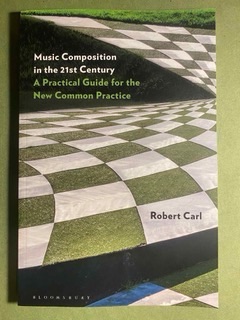
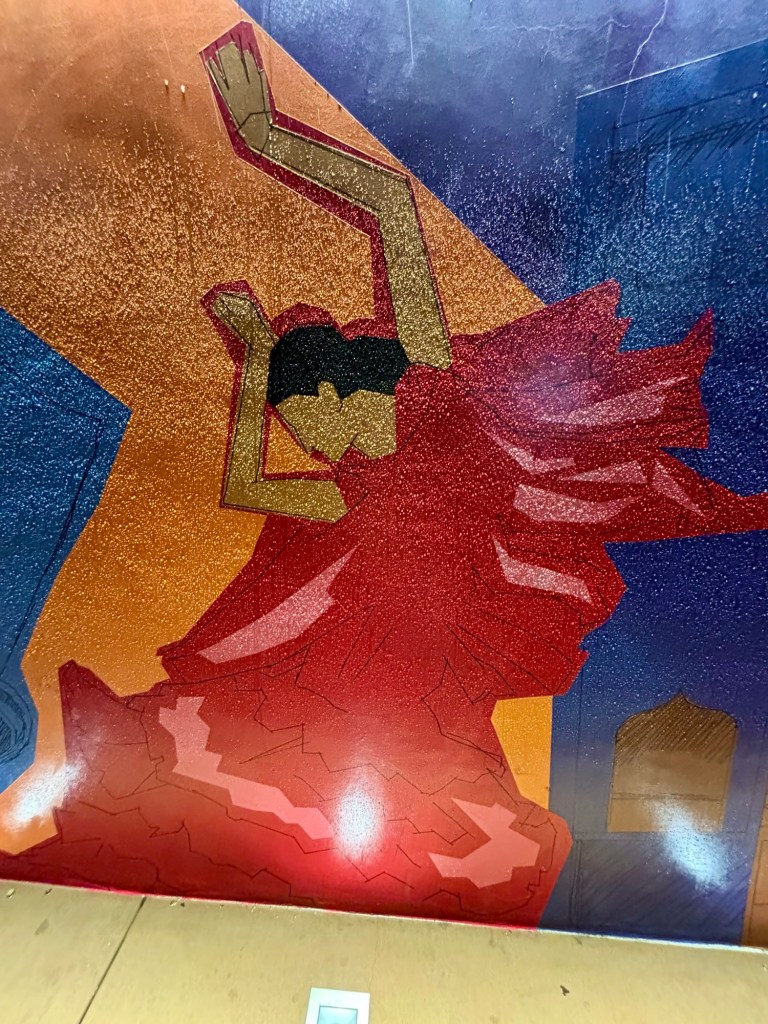


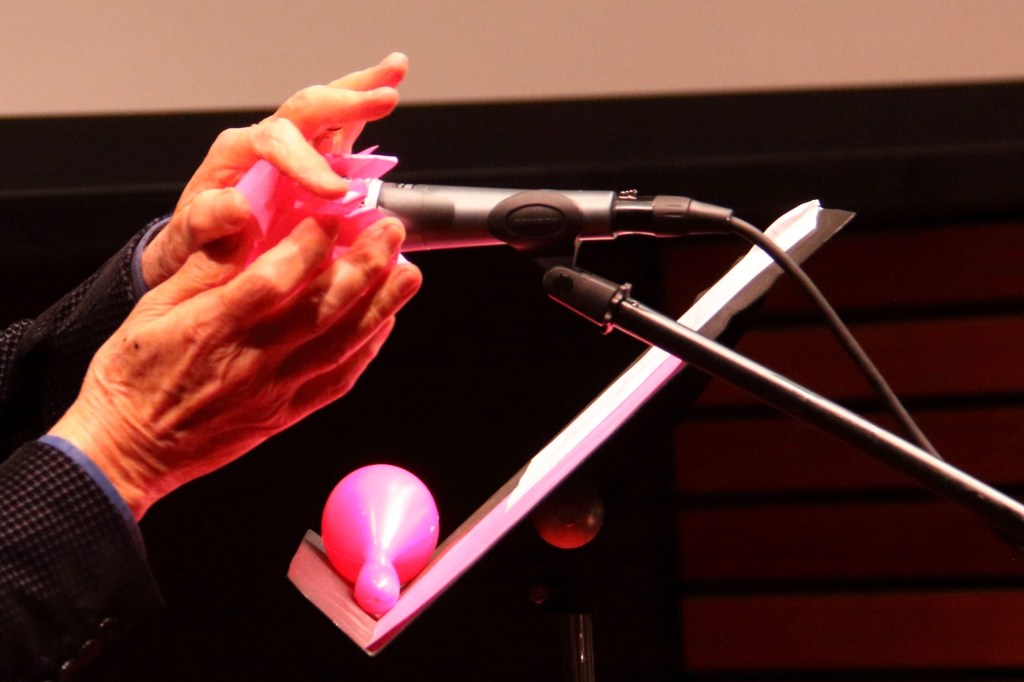


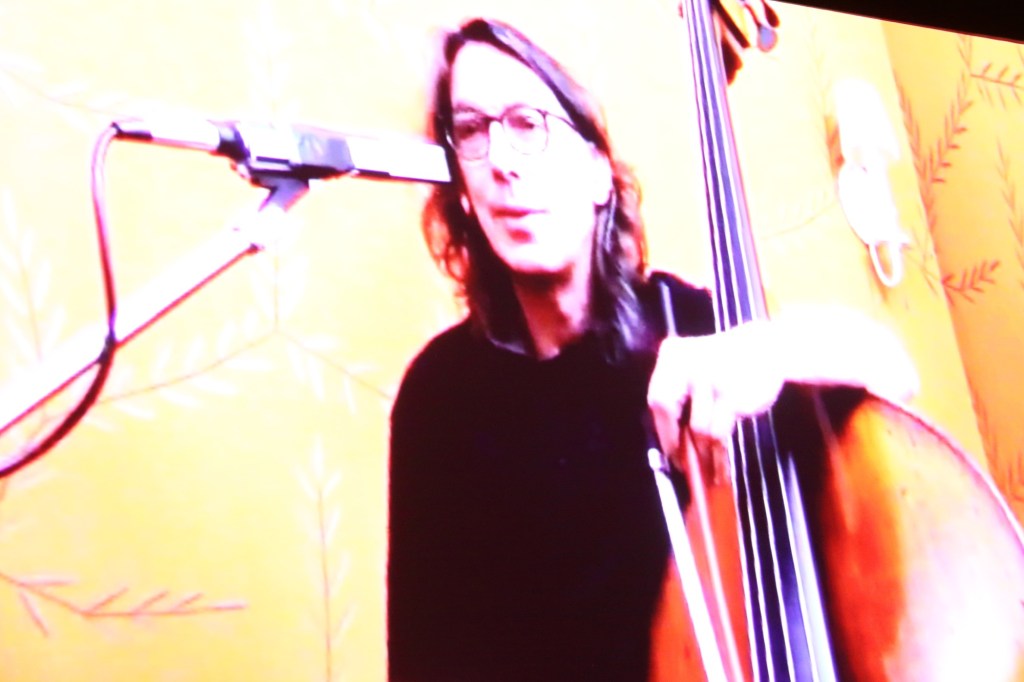


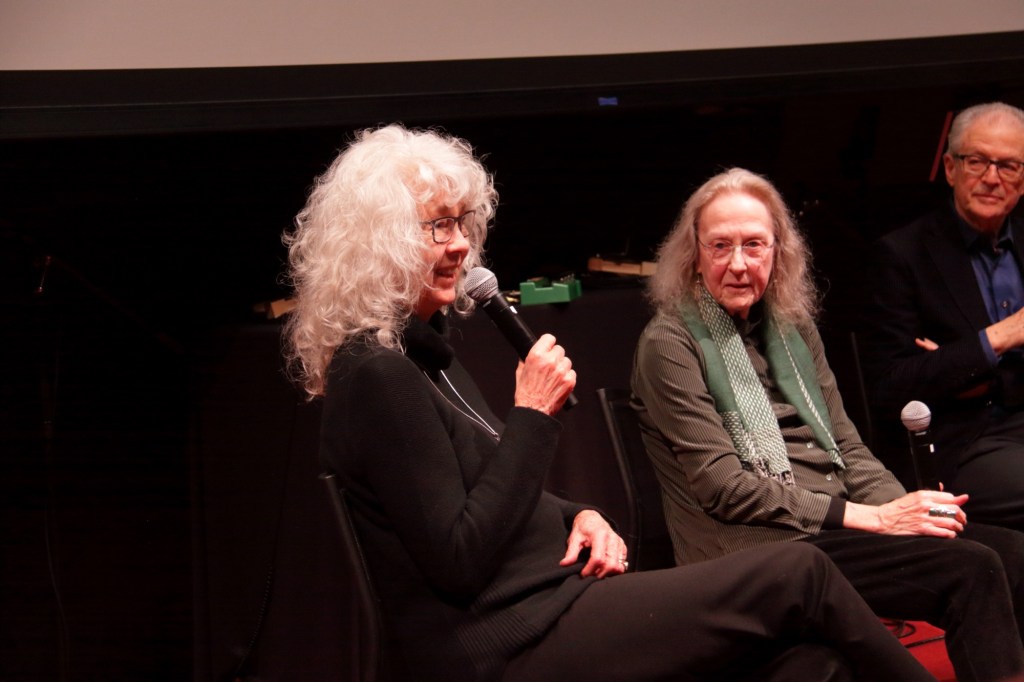


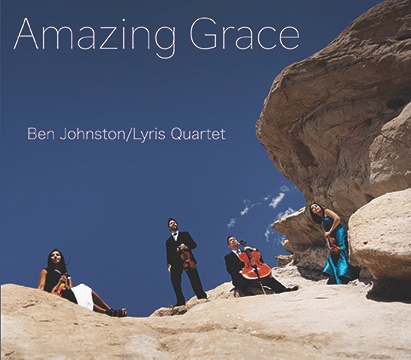


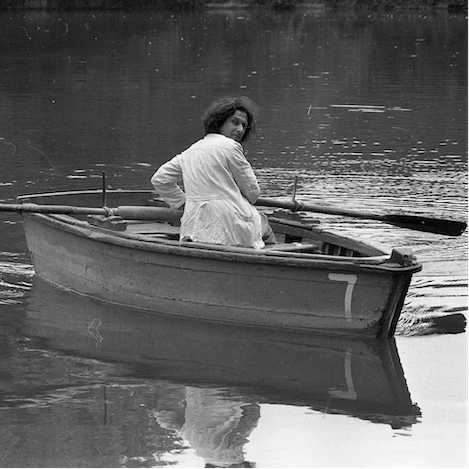

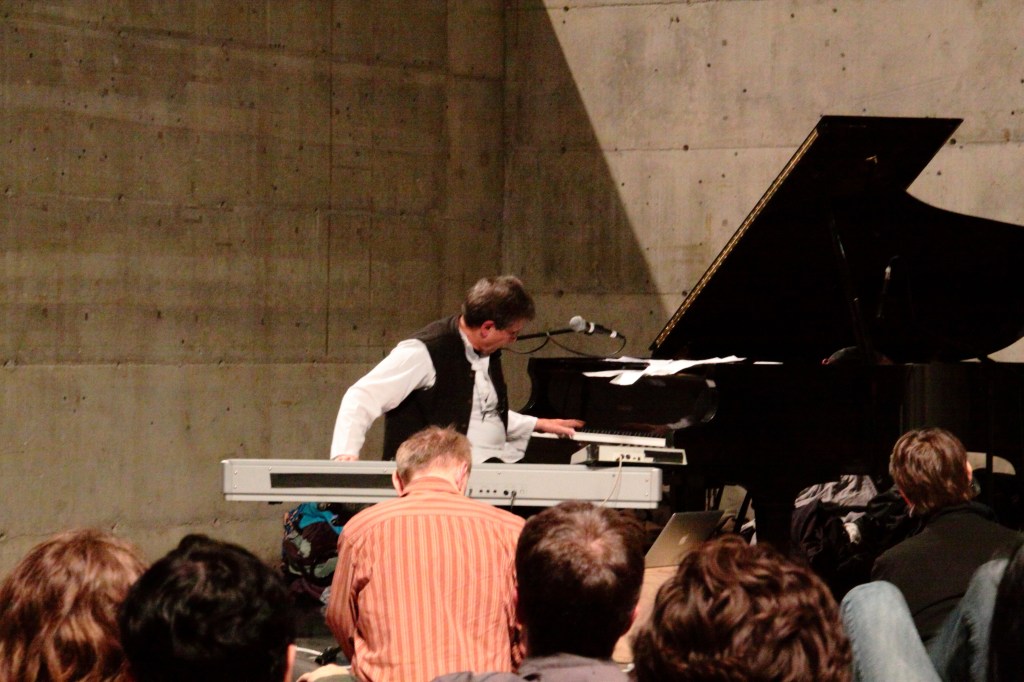




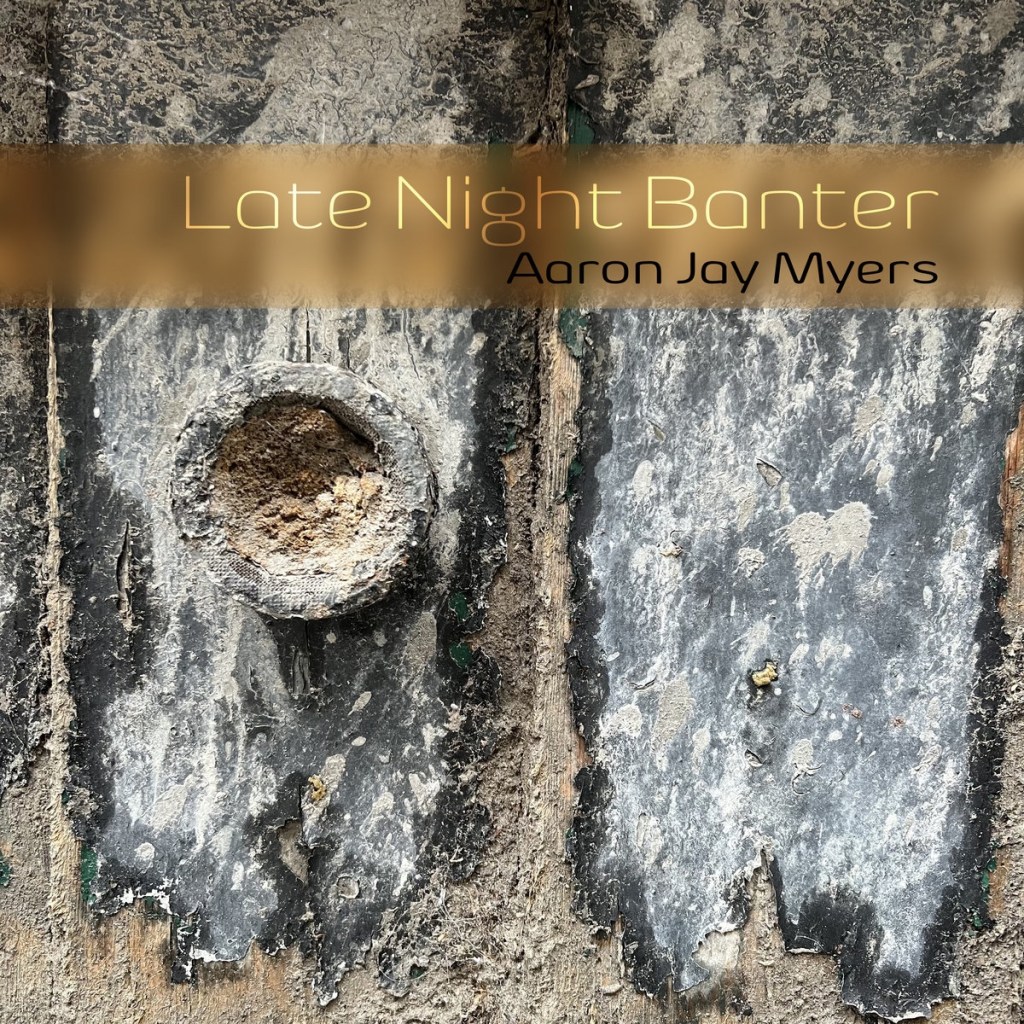
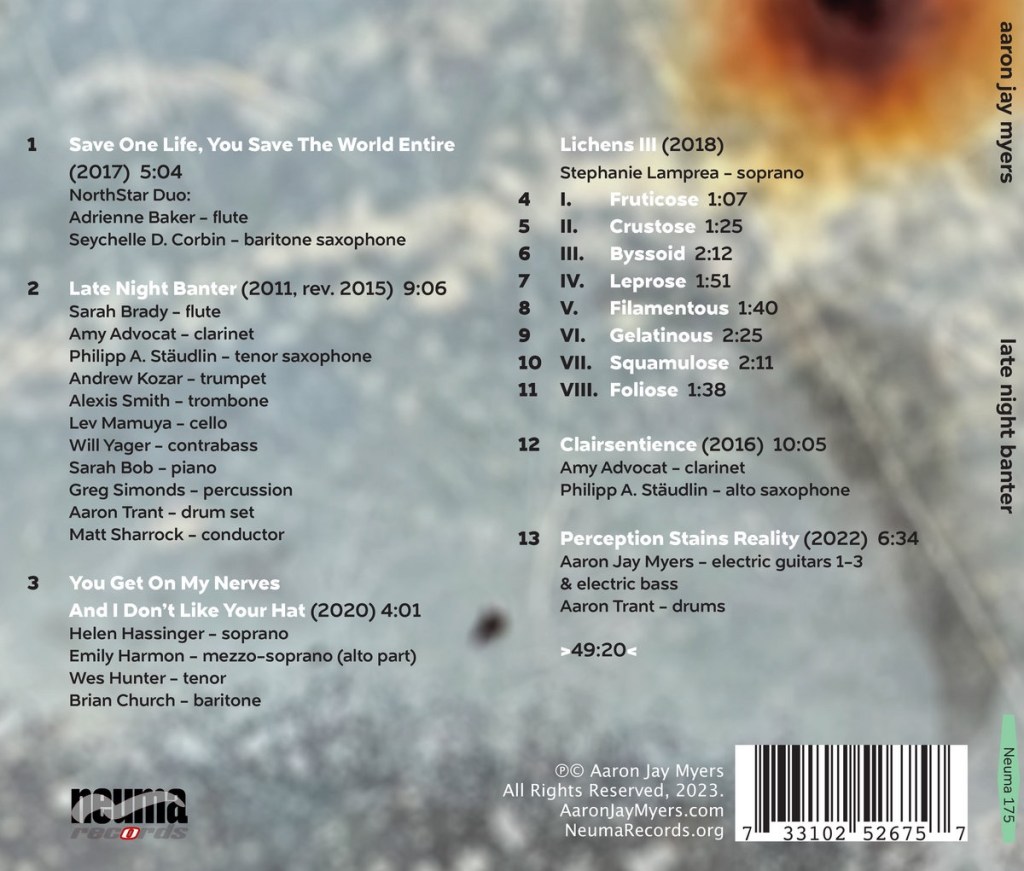




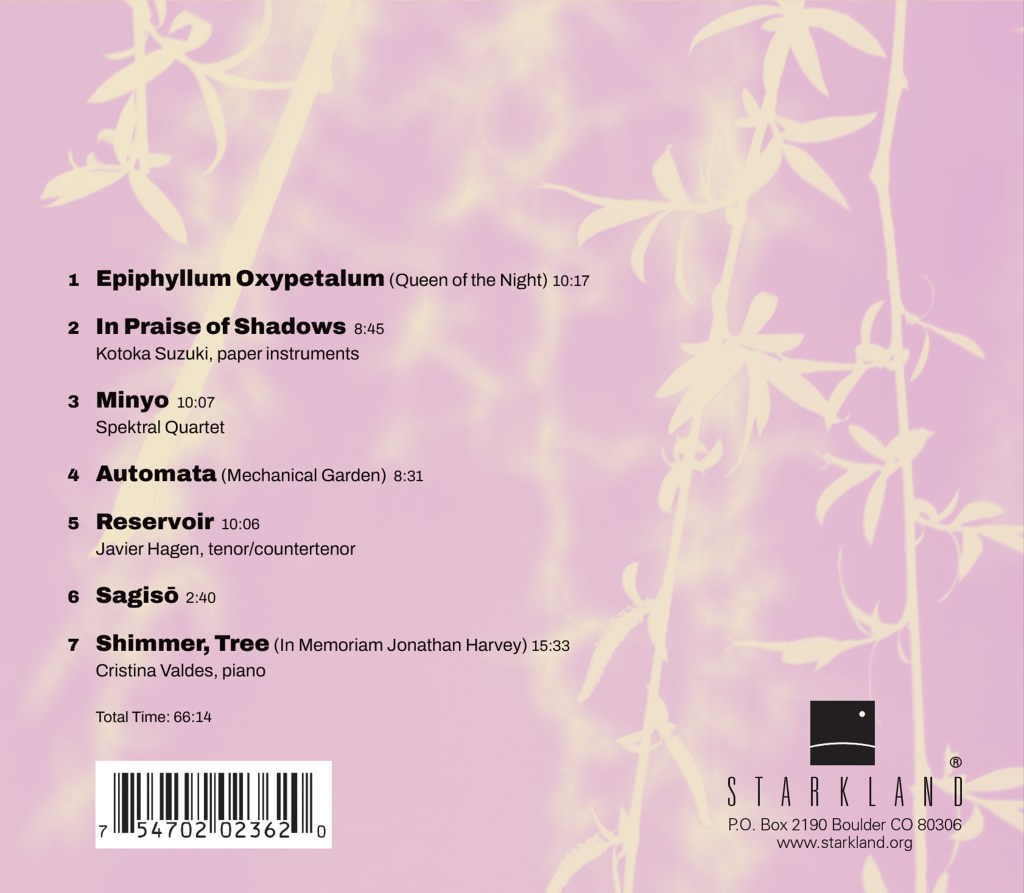




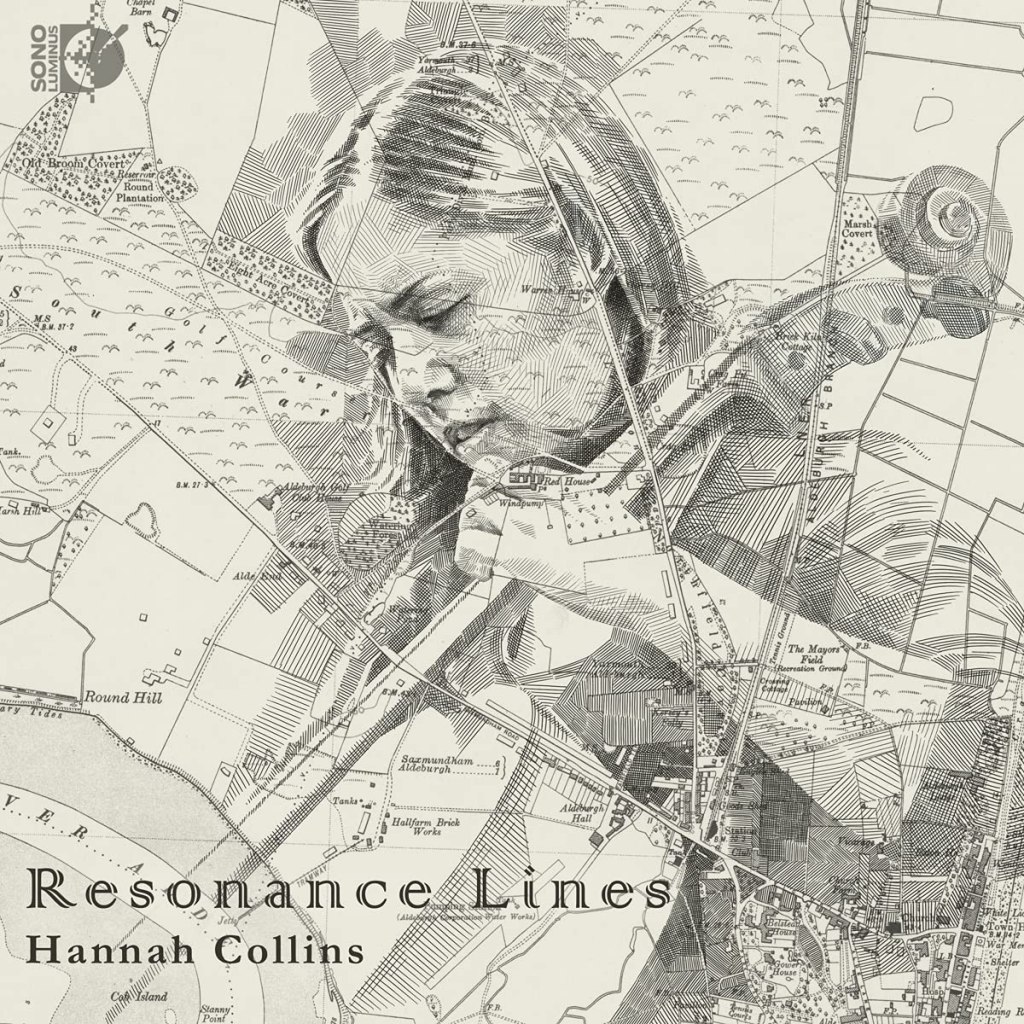




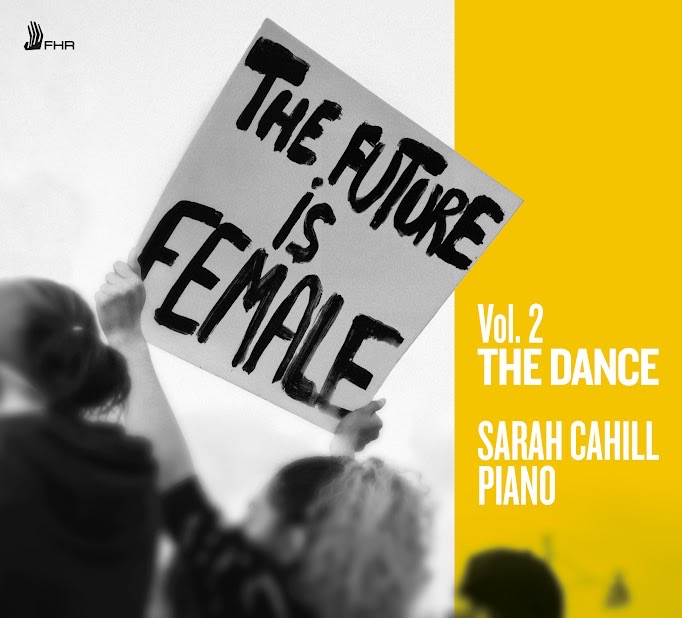





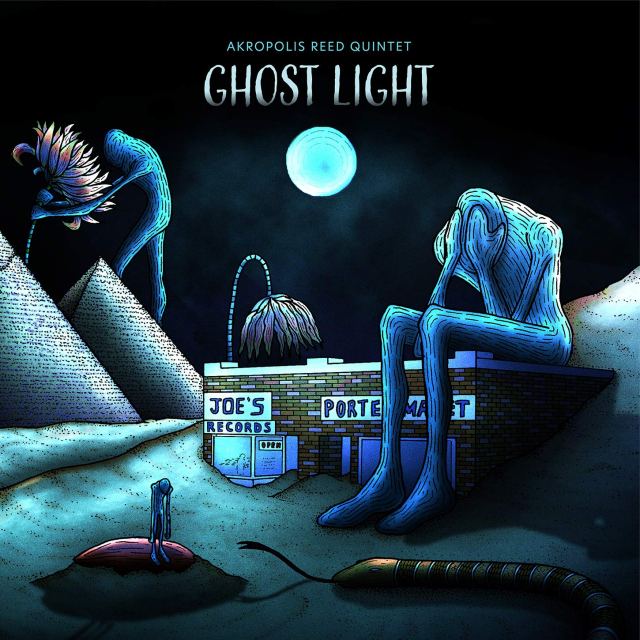
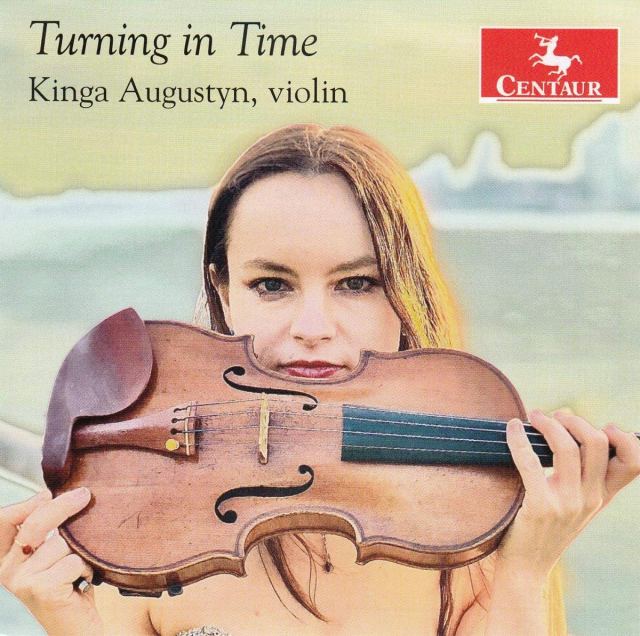
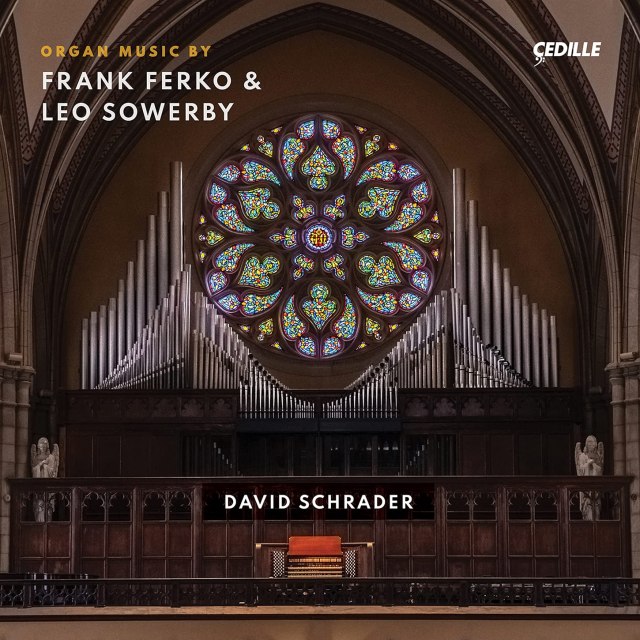
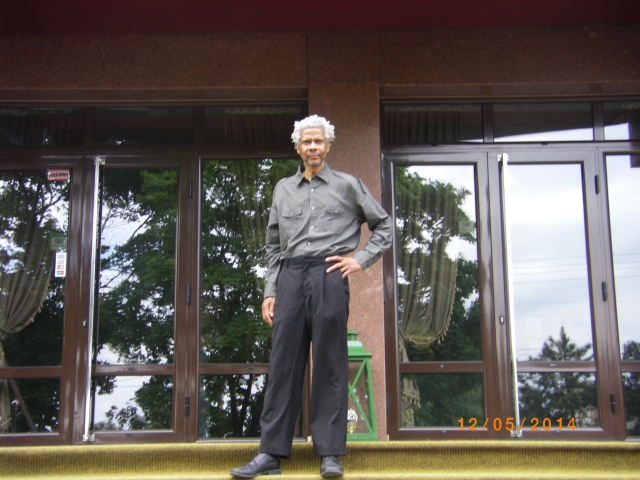
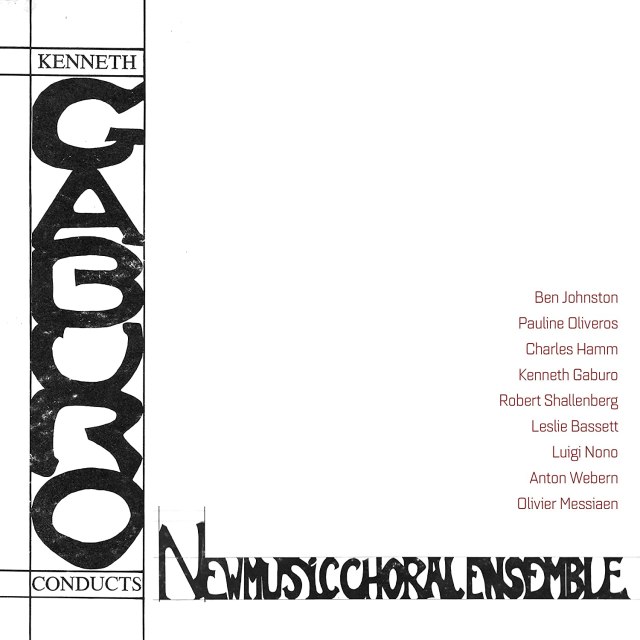

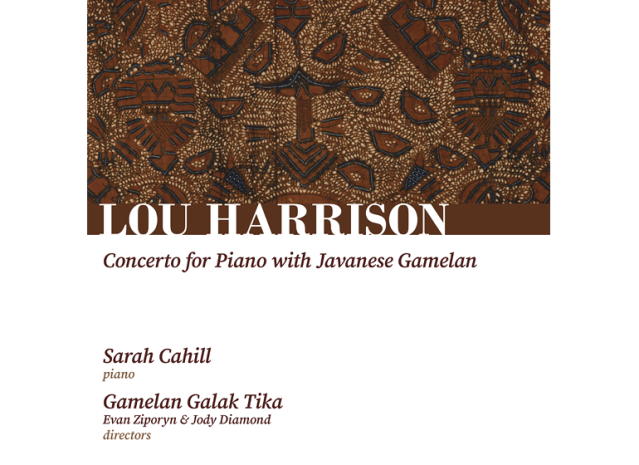
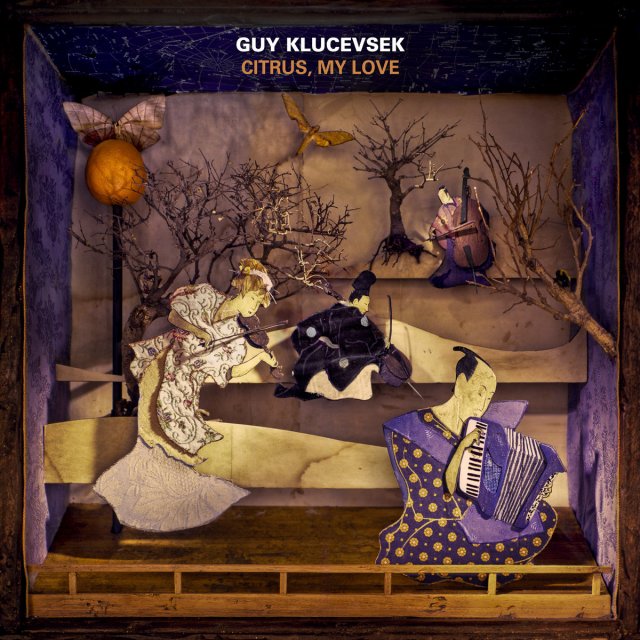

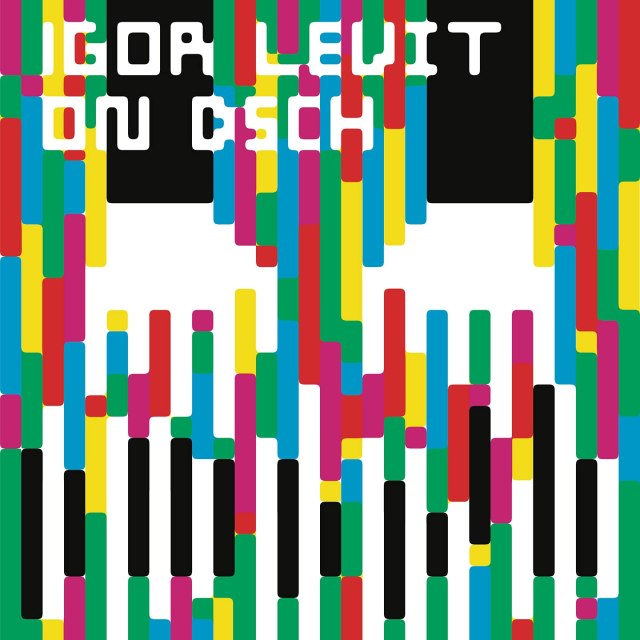

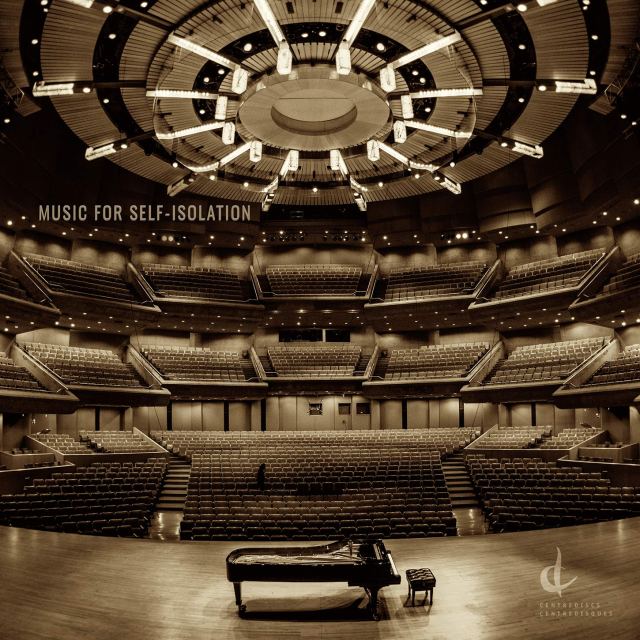
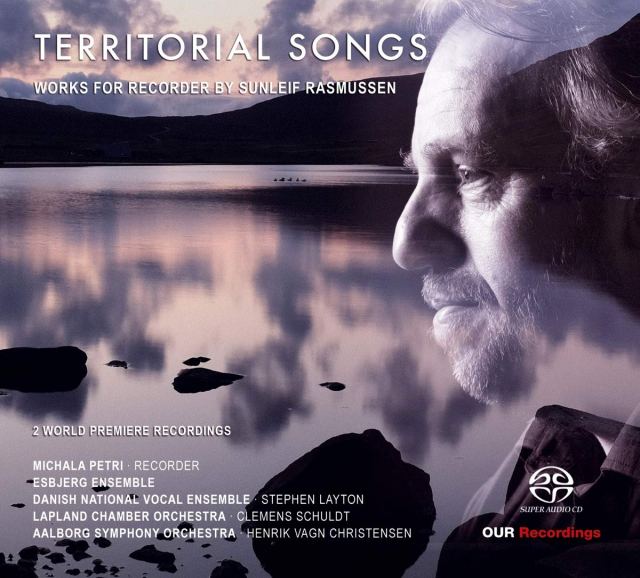
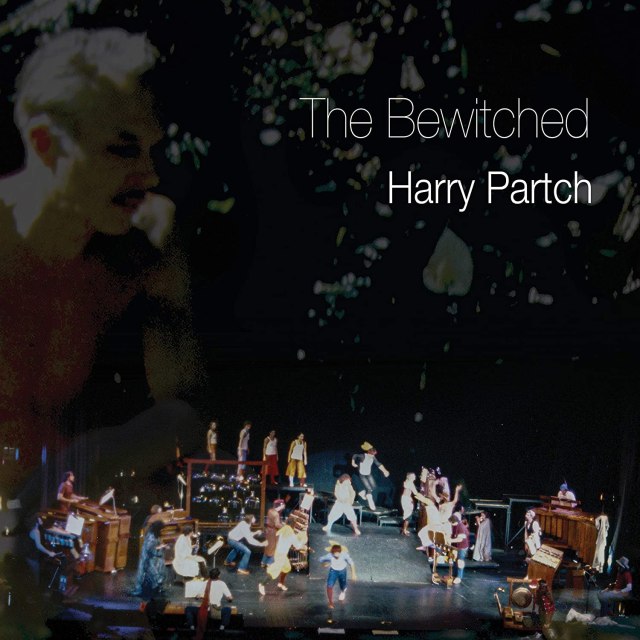
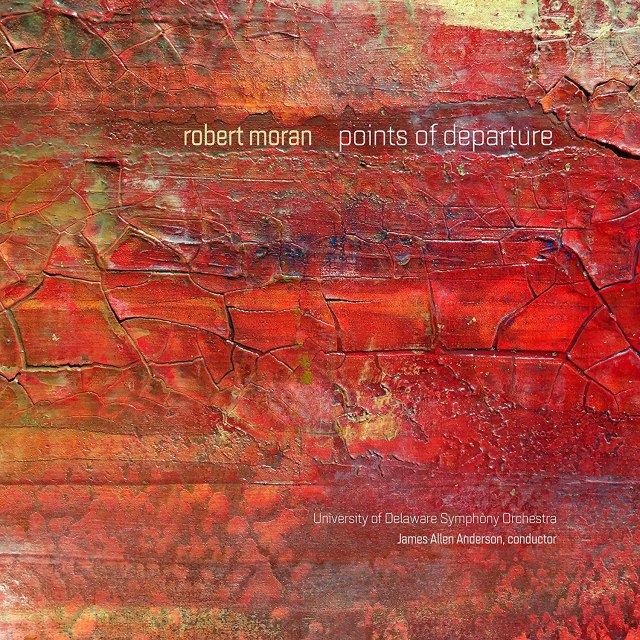



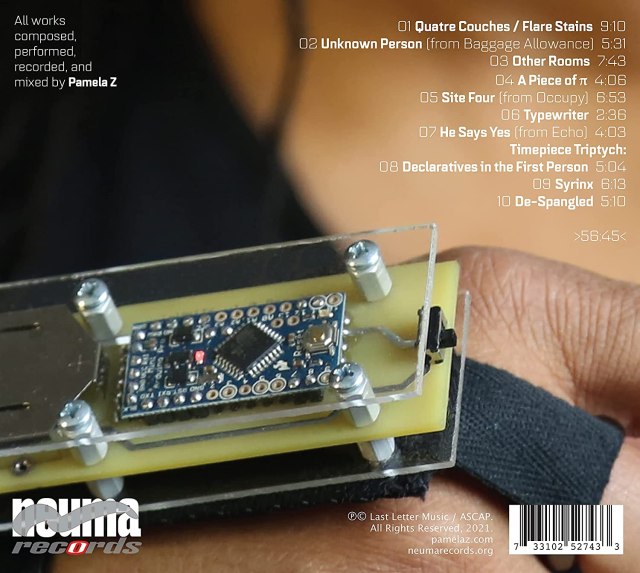




 New Music Buff