…tell the old story for our modern times. Find the beginning.
-Homer, The Odyssey (Emily Wilson translation)
When I first got the email notice of this concert, I was, to say the least, intrigued. A two piano concert at Littlefield Concert Hall on the campus of Mills College featuring two composer/performers who figured prominently in that Temple of new music and in my personal listening life. Alas, I live some 350 miles from that location. But further intrigue came from the featured artists: Sarah Cahill and Joseph Kubera, two of the finest working new music pianists anywhere and both worked with the evening’s composers. This was just too compelling and I decided that I would regret missing this if I failed to go hear it.
So it was, I planned my little odyssey, leaving at about 9AM from Santa Barbara on a nice lightly trafficked trip, more a pilgrimage than an odyssey. A pilgrimage, frequently defined as a personal spiritual journey ostensibly in search of insight or enlightenment is how I’ve come to identify my listener’s adventure to the secular temple of Mills College featuring music of former Mills faculty Robert Ashley (1930-2014) and Robert Sheff (1945-2020), better known by his stage name, “Blue Gene Tyrrany”.
Robert Ashley (copyright unknown)
“Bob and Blue” (copyright by Other Minds)
The two featured composers had a strong connection to the Bay Area, mostly via their work at Mills College. This intelligent but modest production left little room to print program notes so the performers spoke of the music at various points during the concert and the excellent liner notes were made available by a QR code in the program book.
Sarah Cahill, pianist, radio host, producer, tireless advocate for new music (photo copyright by Other Minds)
Joseph Kubera, pianist, member of the SEM ensemble, Downtown Music, and countless collaborations promoting new music with many fine recordings to his name. (Photo copyright by Other Minds)
Our two performers are no strangers to each other or the composers on the program, having collaborated on numerous performances and recordings. The well rehearsed duo turned in riveting performances of this largely unknown repertoire which made a strong case that it be better known. Their playing and choice of repertoire compelled this listener’s attention such that I forgot to take all but a few performance shots. See those program notes for further biographical info on these two fine musical celebrants.
Entrance to Littlefield Concert Hall (copyright by author)
Mills College has long been a temple, a Mecca for new music in the Bay Area of California. Its roster of faculty and students comprises some of the finest post 1945 composers and performers. Darius Milhaud (1892-1974) and Luciano Berio (1925-2003) and students as diverse as Terry Riley (1935- ), Steve Reich (1936- ), and Dave Brubeck (1920-2012) to name but a few. Many artistic spirits musical and otherwise, exert their presence here. It’s a perfect destination for a pilgrimage.
A bust of frequent Mills visitor Lou Silver Harrison (1917-2003) in the lobby, a persistent benevolent spirit. (photo copright by author)
The concert was organized by Charles Amirkhanian and his Other Minds organization, another guiding light in the San Francisco/Oakland new music scene. Pianists Sarah Cahill and Joseph Kubera were to be the celebrants in the concert ritual paying homage to “Bob and Blue” as well as to the oracular Mills College.
Scene from the lobby (photo copyright by author)
Let me tell you about this concert hall. It is the work of legendary California architect Julia Morgan (1872-1957) who famously also worked on Hearst Castle. This is one of her several architectural gems on campus. Her spirit was also witness to this celebration by virtue of her fine architecture.
Stage at Littlefield Hall showing the ornate, colorful detailed designs (photo copyright by the author)
Look at that ceiling and those chandeliers (photo copyright by the author)
Two pianos, a new Steinway stage left and a slightly worn Baldwin stage right were placed such that the pianists seated at their respective keyboards could see each other. The Steinway with its lid open to reflect the sound to the audience and that well worn Baldwin with no lid at all (for reasons to be revealed later). The sonics of the hall and tuning of those pianos were excellent.
Unseen Worlds’ wonderful survey of Blue’s ensemble works.
The concert opened with Blue Gene Tyrrany’s peaen to old Route 66 in his “Decertified Highway of Dreams” (1999) for two pianos. It was clear from this first selection, that our performers were well rehearsed and in sync despite rhythmic complexities inherent in this quite beautiful work. It is cinematic and sweetly nostalgic, a fine example of “Blue”’s genius. The performance was riveting and worthy as the first performance ritual of the evening.
This was followed by a real rarity, a performance of Robert Ashley’s Piano Sonata (1959, 1979, 1985). In fact, it appears to have been the first complete performance of the two piano version of this impressive serially structured piece. Previous recordings are available, one with the composer performing the first movement at the ONCE Festival from 1966, the other by Blue Gene Tyrrany on his album, “Just for the Record”. This writer also found some useful analysis by musicologist Kyle Gann on his website. Gann worked with Ashley and later published a fine survey of Ashley’s music that is well worth your time. The result was a convincing, almost romantic sounding performance of this foundational work in Ashley’s oeuvre.
This was followed by a solo rendition by Joe Kubera of Tyrrany’s “The Drifter” (1994), which was written for Mr. Kubera. He spoke briefly about the structure of this work (which he also recorded on his recent “Horizons” album). This piece has a meandering quality created by the intricate evolving structure. Kubera’s performance was hypnotic and a fine tribute.
The second half began with Ms. Cahill solo at that stage left Steinway playing first Tyranny’s “Nocturne With and Without Memory” (1989), one of his better known works. Then she played his “Spirit” (1996/2002), a piece that is a sort of homage to the experimental composer/performer Henry Cowell (1897-1965). It was rather unusual in that it involved harmonics over which the pianist plays. The title is an homage to Cowell’s famous piano piece, “The Banshee”, a malevolent spirit in Irish mythology. Both were vintage Blue Gene pieces.
Two pianists, one piano.
Then Kubera returned, taking a seat at the blemished Baldwin with Cahill standing at that same piano, at a 90 degree angle to Kubera. Here, in these two obscure Ashley pieces, Viva’s Boy (1991), and “Details” (2b, 1962), Cahill played like a chef at a chef’s table, playing the strings inside the piano while Kubera manned the keyboard. These true rarities getting perhaps their first performance, were certainly a highlight of the concert.
It was Blue Gene Tyrrany’s spirit that was the final ritual celebration on this magical night with both pianists at their respective pianos to give a heartfelt reading of his, “A Letter From Home” (2002). This brought this learned, well rehearsed, beautifully collaborative evening’s ritual to a satisfying close.
The modest, self selected audience, applauded warmly and gave an extended, much deserved ovation and seemed as enthralled as this listener whose musico-spiritual pilgrimage found an ecstatic height. I drove home that same night, blessedly lifted, if only briefly, from the chaos of the world by this wonderful artistic ritual. They will now take this great program to New York.
Chandos is one of my favorite classical labels with an intelligent selection of repertoire. The Neave Trio consisting of violinist Anna Williams, cellist Mikhail Veselov, and pianist Eri Nakamura is clearly a fit for Chandos. This trio’s releases have been consistently interesting and creative. This most recent release is a perfect example.
The recording includes three works by three composers (and a brilliant arranger) for piano trio. The first is by the venerable Brahmsian Charles-Camille Saint-Saens, his second Piano Trio Op. 92 (1892). I am not familiar with the chamber music portion of this prolific, virtuoso pianist/composer’s oeuvre but I’ve yet to have heard anything by him that failed to impress. Indeed, this 5 movement trio is a gloriously engaging fin de siècle salon music. Cast in 5 movements, it is a handsome piece of chamber music that deserves more hearings. And The Neave Trio clearly make a case for that in a lively execution of this virtuosic music.
The next work is a fine example of the curiosity and vision of these artists. These two movements for piano trio entitled “Soir-Matin” Op. 76 (1907) are by a composer wholly unknown, even to your eclectically curious reviewer. Mélanie Hélène“Mel” Bonis(1858-1937) is a new name to this listener and likely to most listeners. The lack of recognition of female composers is slowly being remedied by artists such as these who have here found a composer whose reputation deserves at least a little boost. I mean, she was a student of Cesar Franck and her music was lauded by no less than Saint-Saens. She was also a classmate of Debussy at the Paris Conservatoire. And this leads us to…
As if these first two entries alone weren’t enough to recommend this fine release, behold the ear opening arrangement (yes, for piano trio) of the masterful La Mer (1905) by Claude Debussy. The arrangement is by one Sally Beamish from 2013.
As a listener, I have frequently been amazed by the power of the long tradition of “arrangements” of music generally better known in a different form. Some use reduced forces to allow music to be performed more affordably (chamber ensemble vs. orchestra). Take Maurice Ravel’s brilliant orchestration of Modest Mussorgsky’s “Pictures at an Exhibition”, or the two piano arrangement of Igor Stravinsky’s seminal “Rite of Spring” ballet (1913) as examples. Comparatively few people even know that Pictures at an Exhibition was originally a solo piano piece. But both versions each have their charms, and each communicate the musical message differently. And though audiences are doubtless more familiar with the colorful orchestral original, The Rite of Spring, reduced to the work of four busy hands on two keyboards is a more portable experience. Especially before the flourishing of the recording industry, it made this music accessible to more listeners at less cost (2 musicians instead of a whole orchestra).
In both cases, the one vastly and gloriously expanding the evoked pictures described in sound, the other compacting a big orchestral tapestry into a more intimate “salon” experience. Each carries its own message and provides its own insights.
And it is here in the last three tracks of this fine album that we hear the ultimate glory, the real reason you want to add this disc to your collection. I have not heard any but the original orchestration (requiring an orchestra of some 60 musicians) of this French impressionist masterpiece. I could not imagine how one could squeeze these fully orchestrated harmonies and have that make sense to a listener using but three instruments. But the Neaves (if I may mint a friendly collective noun), with this arrangement by Beamish, provided this listener with a revelatory experience comparable to Joshua Rifkin’s brilliant arrangement of Joni Mitchell’s “Clouds” sung by the equally brilliant Judy Collins. Or, even more eclectic, the Anton Webern orchestration of the J.S. Bach Ricercar from his Musical Offering. The point here is that great performances of great arrangements have the effect of opening your ears and mind.
So let the “The Neaves” open your ears and mind with this delightfully unusual and very effective recording.
Who knew? I mean I’ve read many books on this, my desert island composer. Alfred Einstein, Peter Gay, the Dover edition of the collected letters, etc. Perhaps I missed the mention of a starling somewhere in there. But, here we have it, an naturalist writer augmenting mountains of musicology with this delightful volume chronicling this ornithologist’s efforts to find and raise an actual contemporary starling after learning that Mozart had bought one to keep as a pet (curiously, one who charmed Mozart by singing the tune from his most recent piano concerto as a way of greeting the composer at the pet shop).
Lyanda Fern Lynn Haupt is a naturalist, avid birder, environmentalist, and writer based in Seattle, Washington. The book at hand in this belated review was published in 2017. I don’t recall how I came across this charming and engaging account of the author finding, raising, and keeping a starling as a household pet some time after learning that famed Viennese composer, Wolfgang Amadeus Mozart had had a pet starling. Most likely NPR, Amazon, or even Facebook are to blame.
This book is a curious mixture of ornithology, history, musicology, and autobiographical memoir. The author’s seemingly encyclopedic knowledge of things avian adds meaningfully to this unique and adventurous volume. She has hands on, intimate knowledge of rescuing and raising many bird species.
The book is a seriously engaging read even if you know little about birds or Mozart. It reads like an intellectual and very personal account by an astute and compassionate writer who draws you in to her infectious curiosity. I guess it’s safe to call this one a “page turner”.
Here is the book with its star (ling).
Apparently Mozart was enamored of song birds and birds in general. One he would echo in his later opera, “The Magic Flute”. It is this work, more specifically the “Vogelfänger” or “bird catcher” character from which I derived my (hopefully clickable) title.
Mozart acquired this bird in 1784 in a Viennese pet shop where the bird demonstrated his talent at vocal mimicry by singing the opening tune of the last movement of Mozart’s just recently finished Piano Concerto No. 17 K. 453 of 1784. It’s a minor mystery as to how the bird learned this but it has been suggested that Mozart may have taught it to the quick little learner. That’s a charming and satisfying explanation anyway.
In fact the author pens an imagined version of Mozart’s bringing the new pet into their home. As the author acknowledges, the story of this little pet is omitted by many of Mozart’s many biographers. But she manages to put together a charming and believable narrative which serves to satisfy fans of the composer while using this imagined narrative to also discuss the characteristics of this often maligned bird species.
She goes on to recount how starlings (which are not native to North America) were introduced by one Eugene Schieffelin, an Anglophile pharmacist from the Bronx who, as a result of his love of Shakespeare joined with the curiously named “American Acclimatization Society of New York” endeavoring to bring all the birds mentioned in Shakespeare to New York. And while many of the bird species perished, the starlings flourished in an invasive manner.
The author speculates that those 80 or so birds released in 1890 were likely the direct genetic antecedents of the very bird she captured and raised. This, she says, explains the lack of many genetic characteristics of the starling species (apparently 80 birds is an insufficient sample of the full genetic expression of the species). So we have, essentially a North American variant of that which resides in Stratford on Avon.
The writing moves its focus deftly from telling the stories of her experience with a starling she kidnapped and raised to interesting facts about starlings in general, to her reconstruction (absent a wealth of facts faded in over 200 years of history) of the experiences Mozart must have had. This includes a trip ti Vienna.
I’m going to stop my summation here and suggest that there is much more to the narratives within this volume. It is part science, part mystery, ornithology, history, autobiography, and an intellectual quest.
If you like music, like Mozart, like birds, like a good adventure story, here is a gorgeously written book that is a compelling, entertaining, and informative read.
An overflow crowd packed the lovely auditorium at Berkeley’s David Brower Center this past January 19th. Octogenarians (and younger folks as well) populated both stage and audience in a show of appreciation for a man whose work as music director of KPFA (1969- 1992) and subsequently as an arts promoter and curator of new music in California’s Bay Area continues to enhance the artistic reputation of the Bay Area.
A rare and exciting aspect of this evening were the rare opportunities to hear Charles’ music, including representative sound poetry classics and a recent major opus capped off by a world premiere of a new work.
The hands of the artist. Photo by Allan J. Cronin
The genuine affection, appreciation, and respect was palpable as the honored guest demonstrated his skill at hosting when a couple of technical glitches slowed (but did not stop) the amiable birthday celebration. The audience waited calmly and quietly.
Both the guest of honor and the host (Liam Herb) used a well honed, self effacing humor used most skillfully to entertain the sympathetic audience while the technical difficulties were surmounted in real time.
Panel discussion featuring (left to right) Susan Stone, Anthony Gnazzo, Paul Dresher, Charles Amirkhanian, Sarah Cahill, and Liam Herb (Photo by Allan J. Cronin, Creative Commons license)
Herb, a composer and performer, introduced himself in the midst of the technical resolutions, graciously announcing that, as producer, he accepts responsibility for the glitches. Charles maintained his familiar master of ceremonies crowd pleasing good humor as Herb worked goodnauturedly (if that’s a word) with the rest of the crew to resolve the issues and get on with the show.
The formal opening remarks were given by Other Minds’ associate director, Blaine Todd. And the evening began in force.
Blaine Todd (photo by Allan J. Cronin, Creative Commons license)
The program glided past the initial hiccup to present a film about our guest of honor. The bevy of fans and bona fide new music professionals sat with rapt attention as the film, featuring the familiar faces of several “Bang on a Can” artists.
The late great Robert Black interviewed by Amirkhanian in the streaming premiere of Audible Autopsy. (Photo of film appearance by Allan J. Cronin)
Excerpts from the 2015 Other Minds 20 documentary featured Julia Wolfe, David Lang, and Peter Gordon (now, it seems elder statesmen (and women) in their own right.
Production manager Liam Herb then served as moderator for a conversation or live interview (with Amirkhanian) for the next segment. This was followed by some videos with music by the guest of honor:
Real Time/T.V. Time Video with Amirkhanian’s “Muchrooms”
The film, presented in its entirety was accompanied by “Muchrooms”, from the CD recording of that standalone work.
Next was Amirkhanian’s and Carol Law’s classic collaboration: History of Collage (1981). This is a major work and a great collaboration with his partner in life and arts. I’m pleased to add my own shot from the performance at the Other Minds 23 experience, my favorite OM festival(so far).
History of Collage (1981) photo by Allan J. Cronin taken at the Other Minds 23 wonderful live performance of this work (Photo by Allan J. Cronin is Creative Commons license 2015)
We also heard and saw Audience (1978) with photography by Law and music/poetry by Amirkhanian followed by Chairs with photography by James Petrillo and music/poetry by Amirkhanian (excerpts from Seat Belt, Seat Belt (1973).
There followed a panel discussion led by Carol Law with Betsy Davids discussing David’s’ work and her connections via her work as a book artist. These two embody the experimental visual arts that characterize the skills of these fellow artists both onstage and off tonight. In fact, interactive collaboration and both respect and friendship were everywhere to be seen in this warm and pleasantly nostalgic evening.
Carol Law speaking with Betsy Davids (Photo by Allan J. Cronin, Creative Commons license)
This was followed by a recording of a major opus, Ratchet Attach It (2021) recently played at one of the (still ongoing) Other Minds Festival. This work is a major opus by Mr. Amirkhanian, one I’m pleased to say I heard live at the Chinese Theater in San Francisco a few years ago. Scored for a huge percussion ensemble, with audio recordings, and a conductor who moves between the podium and a space among the performers playing with the ensemble. It is perhaps one of his most integrated and evolved compositions. Stunning to hear it live. Glad to hear the (always too short) excerpts.
In fact Mr. Amirkhanian, a fixture in the arts of the Bay Area, continues to influence musical taste and present new and interesting music as he has for well over 50 years. His work as Executive Director of Other Minds includes the fabulous OM Records as well as the annual Other Minds Festival and a continual flow of carefully curated concert events by luminaries (or soon to be luminaries) throughout the Bay Area and beyond. There is also the huge archive of thousands of hours of interviews and concerts that are available in streaming audio and video via the Other Minds website.
Many of the artists featured in the Other Minds concert series continue to work, innovate, and expand musical concepts. An Other Minds commission, Henry Brant’s Organ Concerto, Ice Field, earned him a Pulitzer Prize. Many have gone on to greater achievements in their respective careers. Of course not every composer started their musical careers at Other Minds concerts. Many mid or late career musicians have joyfully been represented over the years. Its one of those festivals that innovative musicians seek to participate.
Such achievements reflect on Amirkhanian’s leadership and curatorial acumen, but more importantly his relationships with his fellow artists. Charles has earned a reputation for his support and his collaborative nature. Arguably, everyone in the house (and the overflow in the lobby) all have a degree of connection to Charles and his guests. It is why we’re all here tonight.
Charles Amirkhanian and Joseph Bohigian performing with Liam Herb’s electronics (Photo by Allan J. Cronin, Creative Commons license)
Following a brief intermission we were treated to a world premiere of a new work by our guest of honor, Noose Ratchet (2025) for two percussionists and electronics. Amirkhanian performing and/or promoting his own music is a relatively rare event and this alone was certainly worth the trip.
The work is arguably a trio for two percussionists playing ratchets, a curious instrument whose sound, if not entirely ubiquitous, is familiar. And the two play interactively with the electronics (the third member of the trio). Extended techniques and other duties get assigned (when in doubt it’s responsibility of the percussion section, right)?
There followed a lively and friendly panel discussion amongst frequent and past collaborators Susan Stone, Anthony Gnazzo, Paul Dresher, Sarah Cahill, and Liam Herb. This truly felt like a gathering of friends.
This listener hears the influence, or at least some common elements of Morton Feldman, La Monte Young, and a too little known David Toub. What are those common elements? The long, frequently slow development of Feldman and Toub along with long held tones of La Monte Young.
Emilie Cecilia Lebel (photo from composer’s website)
What we have here are two solo piano pieces by Canadian composer Emilie Cecilia Lebel (1983- ). After reviewing her nicely organized website I came to the conclusion that this composer works in drones, long held tones, and long form works that not infrequently bleed into sound installation and ambient musics categories. She writes for piano and other instruments including works that are suitable for traditional concert stages as well as works that function in a more ambient mode like gallery installations or site specific sound design.
These two works are best heard in an environment that allows the listener to focus on the slow development of ideas that both these works share. That environment can be a recital hall or, as in this listener’s case, a CD player attached to some good headphones, reclining with eyes closed. Despite said slow development, these pieces compelled this listener to stay put and really enjoy the way this music unfolds as the initially perceived sparseness gives way to allow the structure and logic to emerge.
Despite the perceived similarities to the sound world of other composers as mentioned above, these pieces have a unique and developed voice. In a sense they are the next generation containing the musical DNA of their predecessors.
One of the things I had to look up was the “e bow drone”. This little electromagnetic device is more commonly found in jazz and fusion, perhaps rock bands as well. Primarily used with electric guitars and basses, this device excites a targeted string on a given instrument to produce long held tones. Exactly how it is used by the performers is doubtless indicated in the score but, suffice it to say that it works well here. These held tone fades from foreground to background and back again as the music relates always to the anchor of the drone.
Both pieces utilize this drone apparently as both a structural and sonic tool. By that I mean that the music unfolds partly via its relationship to the drone tone. Within that framework the pianist plays a variety of chords, arpeggios and near melodic lines that produce cadences which delineate the structure. And here I’m only relating this listener’s experience. I do not have the knowledge to attempt a more sophisticated analysis but I guess the point is that such analysis, while doubtless interesting, is not essential to the appreciation of this music and I respectfully leave this to those with more sophisticated training than I.
The two works presented are here performed by the artists who commissioned them. Technical concerns aside, these works are satisfying to the listener able to focus on the flow of the music. These are well developed, engaging pieces that conceivably could be successful as a concert performance or an ambient sound installation.
This release is another valuable feather in the cap of the Vancouver based Redshift Records. This label celebrates Canadian Composers new and old (mostly new). Interested listeners would do well also to check out Riparian Acoustics, a marketing organization with some fascinating curatorial radar. (N.B. This reviewer has published at least two other Redshift productions reviews here and here).
This is a composer I’m delighted to have made it onto my personal radar. She deserves to be a person of interest for successful artistic transgressions, so to speak. Enjoy!
Leonard Bernstein‘s liberal political sympathies are well known. But they were never as clearly presented in his music as they were in his ‘Mass’ from 1971. The work was commissioned for the opening of the Kennedy Center for the Performing Arts in Washington, DC and dedicated to the memory of John F. Kennedy.
In using the structure of the Catholic Mass Bernstein echoes the embrace of Christianity of previous Jewish composers like Schoenberg and Mahler. Mahler embraced Christianity at least partly to get work in the increasingly antisemitic atmosphere of late nineteenth century Europe. Schoenberg’s dalliance with Christianity was more that of an existential crisis as he watched the rise of the Nazi party and their genocidal horrors. Bernstein’s embrace of Christianity seems a combination of homage and disappointment. He knew well the glories of liturgical settings of the traditional texts by the likes of Bach, Haydn, Mozart and Beethoven and had himself made an a capella setting of the mass using music he had originally written for Jean Anouilh’s play, “The Lark”.
He also knew well the suffering and deaths occurring in the protests against the Vietnam war and the struggles of American citizens for equality in the Civil Rights movement as well as the struggles in the war itself and the failure of religious institutions to stem the tide of violence.
Bernstein had dealt with religious themes in his first Symphony from 1942, which set texts from the Biblical “Lamentations of Jeremiah” in the last movement. His Chichester Psalms of 1965 set three Psalms in Hebrew. And, his Third Symphony, “Kaddish” (1963) can be seen as a forerunner to the 1974 “Mass”. His final symphony became a post hoc requiem subsequently dedicated to John F. Kennedy when, just weeks before the premiere, he was assassinated in Dallas. The composer dedicated the work to the late president. He also performed Mahler’s “Resurrection” symphony the day after John F. Kennedy’s assassination presenting it as a peaceful response to the murder.
Bernstein was no stranger to politics and progressive ideas and his activism is central to his life and legacy.
The traditional mass is a ritual of sacrifice which the composer uses to talk about the sacrifices of lives and culture occurring during the ongoing Vietnam war. It laments the ineffectiveness of religion in dealing with sociopolitical crises. The full title of the score at hand is ‘Mass, a piece for singers, players, and dancers’. It was commissioned by Jacqueline Kennedy as the inaugural work for the opening of the newly completed Kennedy Center for the Performing Arts in Washington D.C. The first performance took place at the new Kennedy Center on September 8, 1971.
Richard Nixon had declined to attend ostensibly to not draw focus from Jacqueline Kennedy Onassis but subsequent research has determined that he had been warned by FBI headJ. Edgar Hoover of the possibility of “subversive” texts within the piece. He was apparently referring to the latin texts of the mass. So, for “security” reasons, Nixon stayed home that night.
A landmark set of recordings of Schoenberg’s chamber music for strings
The Juilliard Quartet, founded in 1946 by composer William Schuman (1910-1992) is a highly respected and justly lauded ensemble. This fine CD set includes two complete cycles of Arnold Schoenberg’s String Quartets. It also includes the composer’s too little known String Trio of 1945 and a ravishing string sextet version of Verklärte Nacht. This 7 CD set documents a bit of recording history as well, offering the original mono recordings of his numbered string quartets alongside the Grammy winning (Steven Epstein, producer) 1978 stereo recording (which also included an early unnumbered string quartet in D major).
I grew up expanding my musical horizons with that 1978 release, offered here for the first time on CD format. But the present box set was my first hearing of the 1951 mono recordings of the numbered quartets.
I would venture a guess that most listeners, even those drawn to the sorts of modernism that characterizes my blog reviews, probably own no more than one set of the Schoenberg String Quartets. They just don’t seem to get the same love that other modernists like Bartok, Ravel, Debussy, and maybe even Elliott Carter get from fans of new music. (All of these composers, by the way, have had their quartets recorded by the Julliard Quartet). But hearing two readings across just over a thirty year span by two different generations of this iconic ensemble does much to suggest that Arnold deserves at least another reckoning and perhaps an elevation of his reputation as a brilliant musical mind. It is also a fine testament to the enduring creative interpretive skills in the various generations who have been The Julliard String Quartet.
For that reason alone (the inclusion of those 1951 recordings), discerning listeners will want to own this wonderful set. The production is itself a work of homage and respect with some lovely nostalgia inducing reproductions of the original cover art. And the photographic image of a vinyl record that adorns several CD helps set that tone, one which virtually screams “COLLECTOR’S ITEM”.
I fell in love when I opened the box
The Juilliards have helped identify and characterize the whole of string quartet literature much as the Guarneri Quartet, the Arditti, Kronos, etc. have. Having a work performed and recorded by any of these (to name but a few performers) virtually assures the accepted work a place in the actively performed canon of concert works. It is a stamp of authenticity.
The Quartets span most of the creative span of the composer’s career. That early D Major Quartet (1897), First Quartet (1905), and the Second Quartet (1908) were written before his 12 tone method had been fully developed. We hear the 12 tone method in the Third and Fourth Quartets and the Trio.
That Second Quartet is apparently the first time a soprano had been used as an adjunct to the ensemble. Uta Graf sings in the 1951 recording and Benita Valente in the 1975 cycle. The text (curiously not included in the otherwise delightful and intelligent notes) are by poet Stefan George (1868-1933). I include them here in English for interested listeners:
Rapture I feel air from another planet. The faces that once turned to me in friendship Pale in the darkness before me.
And trees and paths that I once loved fade away So that I scarcely recognize them, and you bright Beloved shadow—summoner of my anguish—
Are now extinguished completely in deeper flames In order, after the frenzy of warring confusion, To reappear in a pious display of awe.
I lose myself in tones, circling, weaving, With unfathomable thanks and unnamable praise; Bereft of desire, I surrender myself to the great breath.
A tempestuous wind overwhelms me In the ecstasy of consecration where the fervent cries Of women praying in the dust implore:
Then I see a filmy mist rising In a sun-filled, open expanse That includes only the farthest mountain retreats.
The land looks white and smooth like whey. I climb over enormous ravines. I feel like I am swimming above the furthest cloud
In a sea of crystal radiance— I am only a spark of the holy fire I am only a whisper of the holy voice.
Litany Deep is the sadness that gloomily comes over me, Again I step, Lord, in your house.
Long was the journey, my limbs are weary, The shrines are empty, only anguish is full.
My thirsty tongue desires wine. The battle was hard, my arm is stiff.
Grudge peace to my staggering steps, for my hungry gums break your bread!
Weak is my breath, calling the dream, my hands are hollow, my mouth fevers.
Lend your coolness, douse the fires, rub out hope, send the light!
Still active flames are glowing inside my heart; in my deepest insides a cry awakens.
Kill the longing, close the wound! Take love away from me, and give me your happiness!
Schoenberg said he had been inspired by the poetry to compose these angular, expressionistic melodies. The poetry, like the music reflects tenor of the times.
In addition to the quartet cycles, this set is intelligently filled out by the inclusion of the string sextet version of the 1899 Verklärte Nacht. Here the Julliards (consisting of Robert Mann and Joel Smirnoff, violins; Samuel Rhodes, viola; Joel Krosnick, cello) are augmented by two exceptionally worthy soloists, Yo Yo Ma on cello and Walter Trampler on viola. It is followed on the disc with a powerful reading of the masterful String Trio from 1946. It is an illustration of the historical development of the composer over that 44 year period. I listened casually the first time but more carefully in subsequent hearings as the disc moved from the last track division of Verklärte Nacht to the first of the Trio finding this to be a lucid illustration of the composer’s seemingly natural development from post Wagnerian harmonies of fin de siecle Transfigured Night to those of the now fully developed 12 tone compositional method so beautifully integrated in the post war String Trio (played here by Robert Mann, Samuel Rhodes, and Joel Krosnick).
I used the term “post war” in my previous paragraph as a convenient segue to the last piece in this collection. The Trio is offered in a 1965-6 recording (stereo) played by Robert Mann, Rafael Hillyer, and Claus Adam. It is followed by the anti fascist “Ode to Napoleon Bonaparte” from 1942, a setting of a text by Lord Byron. Here the Julliards are joined by Glenn Gould on piano and speaker John Horton. It is one of Schoenberg’s politically tinged works. It has much in common with A Survivor from Warsaw (1947) and Schoenberg can only really be understood in the context of his turbulent times.
Perhaps there’s a parallel to our turbulent present. Maybe Schoenberg can be better understood if his listeners have experienced a certain amount of existential angst. We certainly have a lot of that. But, ultimately, this box set is a cause for joy and even optimism. It is a loving document of compositional, performance, and recording excellence.
Cover of the original vinyl release of “Der Floss der Medusa”
The 1913 riotous premiere of Stravinsky’s “Rite of Spring” is pretty well known in classical music history. Sandwiching the premiere of his masterpiece of modernism between well known conservative chestnuts such as “Les Sylphides” (an orchestration by Alexander Glazunov of piano music by Chopin, 1907-9) which opened the concert along with Carl Maria von Weber’s “Les Spectre de la Rose” (an 1841 Berlioz orchestration of Weber’s 1819 piano piece, “Invitation to the Dance”) and Alexander Borodin’s “Polovtsian Dances” from his opera “Prince Igor” (1887-1890) which were programmed to follow it. Combine these (familiar to audiences) conservative works with the Rite’s original choreography by Vaclav Nijinsky and the subject of pagan ritual that form the scenario played before an audience consisting of elite concert goers seeking a familiar easy experience along with a burgeoning group of bohemian leaning audience members (who loved the Rite’s loud, subversive nature of both music and staging) and you have a formula for conflict. Speculation is that Stravinsky and/or his producers planned this event to create a contrast for his new modernist work but more likely it was a largely a product of its time and of human nature.
Fifty two years later, Hans Werner Henze appears to have had nothing in mind (at least initially) other than the premiere of his new work, “Das Floß der Medusa” (The Raft of the Medusa) on December 9, 1968 in Hamburg’s “Planten und Blomen” Hall. The recording which was later released on DGG LPs had been done sans audience on the previous days, December 4-8th, and preparations were being made for that night’s world premiere performance before an audience.
An article would later run in the German magazine Der Spiegel describing the event. I present the text of that article in my own translation:
Der Spiegel, December 12, 1968
“What is necessary”, says Hans Werner Henze, 42, “are not museums, opera houses and world premieres … What is necessary is the creation of mankind’s greatest work of art: the world revolution.”
Last Monday, Henze’s “Das Floss der Medusa,” an “Oratorio volgare e militare, in due parti” commissioned by the NDR, was to be premiered in Hamburg — instead, there was a revolution in the hall.
The 1060 seats in Hall B by Planten un Blomen were fully occupied, the NDR Symphony Orchestra was already tuning the instruments, on the podium were ready: Edda Moser (soprano), Dietrich Fischer-Dieskau (baritone) and Charles Regnier (speaker) , the North German Radio Choir, the RIAS Chamber Choir and the St. Nikolai Boys’ Choir. The game could begin, and it began — a duo volgare e militare between NDR and SDS.
Because the Berlin SDS friends under Gaston Salvatore, summoned by Henze, didn’t want to do without this premiere of the APO (Außerparlamentarische Opposition) man Henze any more than the socialist students of the Hamburg Music Academy — albeit for different reasons: The Hamburgers cared about Henze’s music as reactionary to expose the Berliners, to bring their Hamburg colleagues to reason and to divert attention to the middle-class audience. Action against Henze, argued the Berlin “Project Group Culture and Revolution,” would only benefit the bourgeois enemy.
Che Guevara (1928-1967)
After three days of palaver, the Hamburg wing was lame. For example, the intention to ask the composer to explain the structures of his music when he played Medusa was abandoned, as was the plan to intervene in the choral singing, and the attempt to expose Henze’s listeners to Henze as culinary Henze consumers.
On Monday evening, Berliners and Hamburgers moved in socialist harmony to Planten un Blomen, the premiere location that Henze claims to have confused with Blohm & Voss. At least that’s how the Berlin SDS had informed the Hamburg SDS.
NDR program director Franz Reinholz, to whom Henze owes the “Medusa” commission, knows otherwise: “Henze,” Reinholz assures, “inspected the hall himself beforehand. He was also informed about the audience.” shipyard workers, it was, the socialist students recognized once again, an audience of “rich bastards.”
Shortly before 8 p.m. the squad was ready for action in Hall B. And before the conductor Henze stepped out of the artist’s room, Che was already in the hall: the agitators had pinned a Che Guevara portrait to the desk; it was intended to remind us of what had been concealed in the program with Henze’s approval: the oratorio is dedicated to the Latin American freedom fighter.
NDR program director Franz Reinholz didn’t appreciate this memento at all – he tore down the poster. He felt that politics and art did not go together.
The students didn’t think so. They put up a new poster and hoisted the red flag, and a team of anarchists, who had come with duck decoys and other hunting instruments, hung a black one next to it. Then the radio hit, the police joined in, the RIAS Chamber Choir began, but not in unison. “Lower the red flag,” demanded one singer, two singers left sobbing: “We are Berliners and have had enough of red flags.” to whose honor they should sing, left the stage and never came back.
The composer, however, was determined to prove his revolutionary sentiment to his comrades for the first time by saying, “The red flag,” said Henze, “it stays.”
While NDR director Gerhard Schröder (SPD), long since in the safe broadcasting van, stopped the live tumult at 8:19 p.m. and radioed his listeners a recording of the dress rehearsal, his deputy, Freiherr von Hammerstein-Equord (CDU), countered in the hall the resistance of the demonstrators banners and placards; A little later, a squad of 25 police officers, visors on combat helmets, broke into the hall. “Nazis!” “Fascists!” shouted the audience. One artist yelled enthusiastically, “Down with the Reds!”
“The police,” Hammerstein explained, “were ready at the request of the NDR, which considered demonstrations possible and had to ensure the safety of its employees, the audience and valuable instruments.”
Ernst Schnabel, librettist
NDR employee Ernst Schnabel, librettist of “Medusa”, felt the precautions thoroughly. Several police officers threw him through a glass door, expedited him with six other delinquents to police headquarters, took his fingerprints, and locked him in cell 7 until midnight. Schnabel to Hammerstein-Equord: “We don’t have breakfast together anymore.”
Meanwhile, Hammerstein kept order in Planten un Blomen. When Henze informed the audience: “The intervention of the police prevented the discussion,” Hammerstein snatched the microphone from his hand. The hands in the stalls responded with rhythmic Ho Chi Minh clapping, and Henze clapped along — three times. Then he disappeared through a back door.
At that time the “raft of the Medusa” was already well advanced in the ether waves — on the usual counter-revolutionary course.
“Wherever”, the “Süddeutsche Zeitung” judged, “the choirs sang, there was the old, floating, iridescent Henze sound, which doesn’t hurt anyone and never becomes distinctive. The orchestra … strangely often reminded of Richard Strauss.”
The music critic Heinrich von Lüttwitz saw “Medusa” as a “tragi-comic absurdity” full of “romantic colours”, with “sometimes clumsy, sometimes fussy recitatives and melodramas”.
Henze biographer Klaus Geitel saw the “raft” in the “ocean of an emotional but overly extended, lyrically colored monotony”.
It may be that, as Henze puts it, this evening “brought him a little further” politically. But the Henze fans in the APO have failed — that’s how the currently most thoroughly analyzing music theorist Heinz-Klaus Metzger, who identifies with the “anti-authoritarian wing of the SDS,” puts it.
‘The APO, Metzger predicts, ‘will only have created meaningful conditions when German musicians no longer refuse to perform under a red or even a black flag, but instead perform a work by Henze. And for strictly musical reasons. Unfortunately, not even Tucholsky’s bon mot applies to this composer: “Because of bad weather, the German revolution took place in music.”
______________________________________
——————————————————–
So it went in 1968. The Oratorio performance was cancelled and the world premiere had to wait until January 29, 1971 when it was performed in Vienna by the ORF Orchestra conducted by Miltiades Carides. The recording of the first performance was achieved prior to the performance with the audience. That recording was released in 1969.
Many more performances followed but one of those performances, in 2001, was attended by a former chorister, Henning Sidow. He was twelve years old at that 1968 non-concert. And the following article on his experiences of that attempted performance was published in Der Spiegel in 2013.
————————————————–
__________________________________
Blaze at the choral-concert. How the “Raft of the Medusa” went down.
He was anxiously awaiting the big performance: when he was twelve, Henning Sidow was supposed to perform on stage with the NDR boys’ choir in Hamburg. And indeed, the live performance of the oratorio was exciting – but for completely unexpected reasons.
The boys’ choir was founded in 1960 as the choir of the North German Radio and has been connected to the main church of St. Nikolai since 1967.
“As a twelve-year-old in 1968, I had only vague ideas about the political and social turmoil of the time. But on December 9th, as a member of the St. Nikolai boys’ choir, they became tangible experiences for me as a result of the unsuccessful premiere of the oratorio “Das Raft der Medusa” by composer Hans Werner Henze in Hall B in Hamburg’s Planten un Blomen Park.
I had been in the boys’ choir for four years, which belonged to the NDR until 1967 and was then taken over by the St. Nikolai parish in Hamburg. We “experienced” boys felt quite up to the task of taking part in Henze’s musically demanding oratorio and also appearing in a world premiere that was to be broadcast live on the radio.
The play tells the tragic story of the French frigate “Medusa”, which ran aground as the only ship in a convoy on the way to Senegal in 1816. Since there were not enough lifeboats for the 400 people on board, the crew built a raft that could accommodate around 150 men, women and children and which was to be pulled ashore by the boats. But the officers fled in the boats, leaving the people on the raft to fend for themselves. On the day of the accidental rescue 13 days later, there were only 15 survivors. The others fell victim to starvation, lack of water or cannibalism.”
Hide and seek in the empty hall
“Our boys’ choir was supposed to portray the children on the raft – first as living, then as dead. A difficult piece with a socially critical background, this “Raft of the Medusa”, we knew that. It meant not only intensive rehearsals, but also many afternoons and evenings of rehearsals. What we didn’t know was that the premiere was never to take place.
The location of the event and the preparations fascinated me. The hall seemed huge to me as a child. Large platforms were set up here for the performance, with countless instruments on them. There were people everywhere: stagehands, technicians, orchestra musicians, choristers and soloists – it was just teeming. Now we guys were added.
We had a lot of waiting time and were able to explore everything. So we crawled under the stage construction, played hide and seek, crawled under the platforms and shimmied over wooden struts until we got too many splinters in our fingers. And right next door there was another hall, several stories high – a gigantic glass box. There was no event taking place at the time, so the hall was yawning and unlit. We strolled through them, hearts in our pants because of the darkness and the eerie acoustics of the room.”
Protest in the concert hall
“Then things got serious, rehearsals began. In my memory, Hans Werner Henze was a small man who was already a bit bald at the time, but incredibly energetic. He radiated a mixture of warmth, ingenious artistry and normality. We boys found him sympathetic, but he had no airs and graces and met everyone completely naturally, friendly and patiently. He treated us as if we were adults, which I found very beneficial. When I was a child, I was used to other well-known personalities whom we had met here and there through our performances to be treated and professionally not taken very seriously.
Henze was excellent at conveying his music to the participants, it was lively, colorful and exciting like the story itself. The dramatic story and the historical background that he and the music told us captivated me even then. Conducting, however, was not his thing, I remember his somewhat awkward gestures. But that’s not so important in a professional ensemble, as long as the right impulses and cues come. In any case, we children liked and admired him and his music.
On December 9, 1968, as far as I can remember, the hall was filled to the last seat with an audience. There was talk of more than 1000 guests. Henze was already at the desk. But just before it started, there was a small crowd in front of the stage. A few protesting students stood directly in front of the podium and hung red flags to the left and right of Henze’s desk. It was not clear whether the master just put up with this or whether it had been agreed with him, as was later speculated. In any case, he didn’t seem to put up much resistance to the activities.”
The situation is escalating
“Shortly thereafter, the audience and the choir became restless. Because one of the choirs, the RIAS Chamber Choir, came from Berlin, the enclosed city. Red flags were literally a red rag for many who lived there. At first I – and I’m sure my fellow boys too – didn’t understand much of what was happening down there. But when voices from the Berlin choir grew louder and louder, refusing to sing under “the red flag”, I understood what it was all about. The adults feared that they and the music would be exploited by demonstrating communist students. In addition, a large portrait of Ché Guevara has now been erected, to which the work is dedicated.
Henze’s efforts to get the performance started were nipped in the bud by the boycott of the Berlin singers. The removal of the communist symbols was demanded louder and louder from the podium, before they would refuse to sing a single note. In the meantime it was getting more and more restless in the auditorium and in front of the stage there were small scuffles between the demonstrators and some spectators who got involved. Negotiations between the choir and the composer were taking place behind the scenes as to the conditions under which the performance could still take place.
We boys watched the whole thing with suspense, since the circumstances had now reversed: the auditorium had become the stage, and we on the podium had a box view of this live cultural scandal. Music was out of the question. In the back of the hall, the doors flew open and police officers in full riot gear marched in. Like a horde of ants, they came down the aisles from several sides to the podium. I don’t remember how many there were, maybe a hundred. They looked particularly martial with their helmets with full visors and the shields they – to protect against what actually: a few students, musicians and false notes? – carried in front of them.”
A dark chapter
“Henze had meanwhile disappeared unnoticed and downstairs young people were having their arms twisted behind their backs in order to be taken away. Among them was Ernst Schnabel, who wrote the text of the play. He was later charged with “resisting the authority of the state”. On the other hand, part of the audience did not like the actions of the police and protested, which did not prevent the state authorities from their plan to convict the “perpetrators” in flagrante delicto.
I can’t remember exactly how long the commotion lasted. In any case, it never came to a performance, and at some point we left the stage disappointed. It was incomprehensible to us children why a few red flags and the likeness of a bearded South American led to such an uproar. For us it was about art, about music. We felt cheated of our work.
The newspapers reported extensively on this event in the following days. Some tabloids insisted on turning it into a real political scandal. To this day it is unclear to me what the state authorities were thinking when they made this appearance. That’s for sure
That she was thin-skinned in those times and liked to overreact on such occasions. The fear that the ideology that prevailed behind the Iron Curtain could also spread to the West was too great.
For Hans Werner Henze, who died in 2012, this scandal is said to have been a dark chapter in his artistic career. Later, it is said, he did not want to be reminded of it.
My own memories of that evening only surfaced again years later: at the much delayed premiere in June 2001 in Hamburg’s Laeiszhalle. After 33 years I experienced “The Raft of the Medusa” a second time. The fact that I was still able to silently speak and sing along to the lyrics and the music showed how much the piece and the story it was based on had impressed me at the time. None of it was lost. I left the performance deeply touched.”
So, here we are some 46 years after the riotous non-premiere of Henze’s fine oratorio/requiem, 111 years since the famed “riots at the Rite”. The Stravinsky has since firmly taken its place in the commonly performed orchestral and ballet repertory. The Henze work, never laying any claim to the seminal and visionary compositional methods that characterize Stravinsky’s landmark work, continues to receive performances and recordings having established itself as a substantial work, and himself as a significant composer with a rich and varied career.
NB: All translations are my own efforts. Historical photos are included under fair use terms.
There is an aptness that accompanies the publication of my first blog of the new year. Much as we aspire to review our past year and resolve improvements for the next, this book effectively plays a similar role.
Arnold Schoenberg (1874-1951) was born into tumultuous times. His life intersected with political change, social changes, two world wars, and huge changes in the way music would be written and heard. His life and the above mentioned changes in the world are the subjects of Harvey Sachs’ relatively brief review of Schoenberg’s life and career. But the relative brevity does not sacrifice the apparent aim of presenting this composer’s work in the context of the times thereby providing the reader/listener with a perspective that aids an understanding of the man, his music, and his (arguably still evolving) place in history.
“You can see it isn’t easy to get on with me. But don’t lose heart because of that.”- Arnold Schoenberg
At 272 pages this book wisely focuses on the composer’s published work and the drama of its performance along with critical and audience responses. This is not a comprehensive review of all things Schoenberg. While Sachs makes references to the composer’s earlier works, he focuses primarily on the published music and the responses of musicians, critics, and audiences. More importantly he focuses on the massive socio-political changes that paralleled the music thereby providing a useful context for future listeners and performers to better understand Schoenberg and his place in musical history.
Sachs places less emphasis on the composer’s paintings and even his writings. What the author achieves is a very readable and understandable essay that listeners (your humble reviewer included) can use to take another look/listen and to come to a new reckoning of Schoenberg and his place in the world. To, as the subtitle suggests, better understand, “Why he matters.”
I must admit that I did not understand and appreciate the music of Arnold Schoenberg immediately, and even when I ventured to read this volume, I found that my familiarity with this composer was limited primarily to “Transfigured Night”, “Pierrot Lunaire”, the “Second String Quartet”, Moses und Aron” (the Solti recording), Piano Concerto, Violin Concerto, the String Trio, and a fleeting listen or two to the piano music.
The joy of this book was in its chronological exposition of all of the composer’s major works and their historical and political contexts. As a result I found myself listening for the first time (or at least the first in many years) to the two chamber symphonies, the other string quartets, etc. It was an opportunity to reset my perceptions/misperceptions and acquire a better understanding and appreciation of his oeuvre.
As Sachs concludes:
“There are cycles in the arts. Perhaps we have reached the end of one great, centuries long cycle of individualistic European Art Music and its global offshoots. We cannot know. But, in the unlikely case that the subspecies Homo Sapiens Sapiens doesn’t destroy itself in the meantime, there is good reason to expect that sooner or later a new cycle will begin. And, for now, we have an enormous treasure of outstanding creations that continue to speak to anyone who is willing to listen to them.”
For the humble listener, a musician’s technical and interpretive performance skills are one of the most compelling reasons to buy a concert ticket or a recording of said musician. But your humble reviewer has another, perhaps equally important reason for investing time and money in the work of a musician. And that skill is what I like to call “musical radar”. It is the (sometimes uncanny) ability of such gifted musicians to intelligently choose repertoire.
Conductor Kellen Gray demonstrates a keen sense of what music sounds good and also has the weight of substance. Following in the footsteps of incisive conductors like Leopold Stokowski (1882-1977), Dean Dixon (1915-1976), and Paul Freeman (1936-2015) Gray is clearly a champion for contemporary music and is now into the second volume of what this listener hopes will be many more releases of substantive music by black composers whose work has lain fallow for reasons unrelated to quality.
The first volume included early to mid twentieth century masterworks like William Levi Dawson’s 1934 “Negro Folksong Symphony”, William Grant Still’s First Symphony “Afro American” (1930), and George Walker’s “Lyric for Strings” (1946, orch 1990). These are certainly great and foundational works that deserve a place in concert programs but these works have had at least some exposure via recordings. Nonetheless they are fine foundation on which to build this series. Gray demonstrates a depth of understanding for these works and his skills as a conductor were displayed well here. But that was just the first volley in an exciting survey in progress.
In this second volume we see more deeply the acumen of this conductor’s musical radar. These are new commercial recordings of orchestral works by mid to late 20th century black composers, works of obvious substance that remain unjustly neglected. It is this “not the usual suspects” angle that finds this enterprising conductor demonstrating his personal perspective and respect for music history. And they are revelatory. Hearing these definitive performances will leave listeners wanting more as we get to hear some very exciting music that deserves at least a reckoning if not a place in the repertoire.
The four victims of the Birmingham Church bombing.
The disc begins with Margaret Bonds’ “Montgomery Variations” (1964), a classical set of variations, in this case on a gospel tune, “I want Jesus to walk with me”. But this work was “lost” and was only rediscovered in 2017. Its neglect was likely due both to the work being by a black woman, and the fact that it is a response to the 1963 Birmingham church bombing, a hate crime that killed four little girls. So, here it is, Bonds’ only surviving purely orchestral work getting a truly fine hearing. And what a great piece it is.
Margaret Bonds (1913-1972)
The work is structured in distinct sections with titles (Decision, Prayer Meeting, March, Dawn in Dixie, One Sunday in the South, Lament, Benediction). Each title is reflected in the musical mood of each section. It is an overt and powerful denunciation of a horrific hate crime. It is harrowing at times, somber and reverent at others, but Bonds’ composition is also effective in the metaphorical quality of the music itself. It is also very nearly a concerto for orchestra in its broad symphonic dimensions and clever orchestration most deftly handled in this recording.
The genre of “variations” is common throughout musical practice but only took on the guise of monolithic large orchestral works in the late 19th century. Well known examples include, Elgar’s “Enigma Variations”, Britten’s “Variations and Fugue on a theme of Henry Purcell”, Brahms’ “Haydn Variations”, etc. It’s hard to say if this work will find a place in the concert hall alongside those proven classics but Maestro Gray and the talented musicians of his Royal Scottish National Orchestra really make a strong case to do just that.
Ulysses Kay (1917-1995)
Next we are introduced to Ulysses Kay’s “Concerto for Orchestra” (1948). This work, first performed by the similarly incisive conductor, Leopold Stokowski has been sorely in need of a new recording and Maestro Gray serves up a taught and insightful performance that, like all the works on this release, stand as a challenge to performers, broadcasters, and listeners to not let this music fade into obscurity. The “Concerto for Orchestra” genre was first heard in a 1925 Hindemith work with that title and the work best known in the genre is without doubt Bartok’s 1943 “Concerto for Orchestra”. Where Kay’s work will stand in relation to other concerti for orchestra remains to be seen/heard (as with the Bonds work) but at least it now has a chance to be heard in all its glory.
It is one of Kay’s major works and it is of grand symphonic scale. This neoclassical work was written in 1948 and is cast in three movements. The work is eminently listenable but it puts challenges to the orchestra which this orchestra handles quite well.
Coleridge Taylor Perkinson (1932-2004)
The disc concludes with a rather brief work by a composer with whom even adventurous listeners (including myself) have limited familiarity. Coleridge Taylor-Perkinson. It is the only work here that comes from the 21st century. This 2001 Concert Overture subtitled, “Worship” reflects Perkinson’s exposure to black church music which he utilizes in this tone poem written for a sizable orchestra.
Gayle Murchison’s fine liner notes help guide the listener by providing context and by understandable descriptions of the compositional processes. This is an exciting release that builds nicely on the first volume and leaves this listener excitedly anticipating Kellen Gray’s next installment.
When Bassist Robert Black (1956-2023) succumbed to colon cancer this past June, the music world lost one of its finest advocates, performers, and teachers. This posthumous release of composer John Luther Adams’ (1953- ) works for solo and multiple bassists receive definitively beautiful renditions here in this satisfying release in which Maestro Black plays all parts (two works are for solo double bass and one work is for 5 double basses). It strikes this listener as a fitting eulogy for Robert Black and his fine performance legacy.
Robert Alan Black (1956-2023)
First, let me say that the Cold Blue label has defined its own take on post minimalist experimentation, it’s one of those labels that I recommend you just buy anything they choose to release. So this chamber music by John Luther Adams fits most comfortably within the little niche that Cold Blue defines (sort of). In fact this is Adams’ 9th CD on this label. And Robert Black is perhaps the ideal musician to plumb the sonic depths of this “other John Adams”. This listener can’t imagine these works having been done better. These performances are definitive, an example of interpretation with which all subsequent performers will have to contend.
The opening work, “Those High Places” (2007) is a work in three movements, originally for solo violin, played here for the first time on a double bass. Black pretty much reimagines Adams’ piece for his instrument. This is not mere transcription. This version is virtually a new work in the soloist’s sensitive and insightful hands.
Those three movements serve, as do the last three tracks on this album, as bookends, nicely framing the centerpiece, “Darkness and Scattered Light” (2023). Unlike those bookends, this work is in one large movement and is scored for 5 double basses. This multitrack recording is an essential and very effectively produced effort that does as much justice to the composer’s intent as does the effort of the performer.
The last three tracks are, in their compositional processes, intimately linked to that first three tracks. Both rely on special tunings to produce the intended effects.
This release is also a fine example of the artistic style that characterizes the look that accompanies the sounds within. The photography, the overall design, visually pleasing, creating a metaphor for the sound of the recording, and paying respectful homage to composer and performer. This just fires on all cylinders for me. This is Cold Blue at their best.
I rarely write about jazz, mostly because it is a genre with which I am less familiar. I confess to a lack of knowledge (though I’m working on it) of jazz, especially of the last twenty years or so. And as a result I have some reluctance to write about jazz but when I first listened to this disc I found that the music spoke to this listener’s ears immediately and directly. My desire to “understand” the music vanished in the face of this seriously entertaining and eminently listenable release.
All the music was written by Andrew Rathbun who has 18 previously released albums listed on his nicely designed website. This album seems to draw in part on bebop (think John Coltrane et al) and the band consisting of Rathbun on tenor and soprano saxophone (with a little help from multitracking), Gary Versace on piano, John Hebert on bass, and Tom Rainer on drums. though the saxophone clearly holds the lead here, Rathbun includes ample solo opportunities for each of the musicians. And they play with the coordination only accomplished by hours of practice and, I’m guessing, some personal musical familiarity.Kudos to all.
All 8 tracks succeed in their ability to engage the listener and they range from Post Bebop to a pleasant lounge jazz feel. There are many moods here nicely sequenced for a great listening experience. Though released on the Danish label Steeplechase, Rathbun is a Toronto native with a degree in performance from the New England Conservatory and a Doctorate in Jazz Studies from the Manhattan School of Music. He now teaches at Western Michigan University in Kalamazoo, a North American (to coin a term).
This is a highly entertaining release and has sent this listener to the composer’s website to begin to hear some of his other work which apparently includes forays into classical realms as well. This release now puts Rathbun on my listener’s radar which will alert me to pay attention to the next project from a truly fine musician/composer.
Just had to post this for all my readers and friends but especially those living near or able to get to Rome. Curran’s wife, Dr. Susan Levenstein, graciously sent this announcement to me. She is an American physician (and webmaster).Her very entertaining memoir, “Dottoresa” is her accounting of moving her practice to Italy.
Alvin Curran, (1938- ) is the co-founder of the seminal live electric music performance group, “Musica Elletronica Viva” along with his late colleagues Frederic Rzewski (1938-2021) and Richard Teitelbaum (1939-2020). The group formed in 1966 and later included kindred spirits including George Lewis and Garrett List among others. The group did its final tour in 2016.
Click on Curran’s name to look at his fascinating and well organized website which gives a fairly comprehensive accounting of the incredible range of musical styles and a very large bevy of collaborators.
Curran discussing some of his work with interviewer Charles Amirkhanian in Berkeley in 2016 (photo by Allan J. Cronin)
Curran, who taught at the venerable Mills College in Oakland, California is an always welcome visitor in the Bay Area. While he has made his home in Italy for many years now, he is truly an artistic citizen of the world. The warm and affable composer exudes an infectious enthusiasm which doubtless is why he has so many collaborators. His aesthetic which he documented in an article called, “The New Common Practice” in 1994 documents his all inclusive style, one that is very difficult to convey. His works include music for piano, chamber ensembles, orchestra, and even things most folk never thought of as musical.
He is a giant in late twentieth and early twenty first century music and this retrospective is most welcome.
“HEAR ALVIN HERE”
ALVIN CURRAN
…a retrospective
part of the #CHAMBERMUSIC series
The show consists in a listening room where a new sound work plays continuously—a mixtape comprising fragments from many different compositions, improvisations, and installations. It leads the audience on an autobiographical listening journey, freely mixing styles, periods, and languages, from free improvisation to Fluxus to Artificial Intelligence, from compositions for shiphorns to works for hundreds of musicians, from Sargentini’s L’Attico and the Beat 72 to MAXXI and the Tate, from Angelo Mai and The American Pavilion of Expo 58 to No Mans Land and the Théâtre de Chaillot.
The Museum of Contemporary Art of Rome (MACRO), Via Nizza, 138
inauguration September 20, 2023, from 6 pm to 9 pm
running until March 17, 2024
***************
Curran in performance at the Pacific Film Archive in Berkeley in 2014.
Samuel Taylor Coleridge begat Samuel Coleridge-Taylor, who begat Coleridge Taylor Perkinson… Wait, that’s not right. But these three men, listed in chronological order, became intertwined, much as they were admired, by their names. Samuel Taylor Coleridge (1792-1834) is the great (white) British poet. Samuel Coleridge-Taylor (1875-1912), named in honor of that poet (and the subject of this review) was a much lauded, though subsequently neglected British composer, as it happens a black British composer. Taylor Coleridge Perkinson (1932-2004), a much lauded and subsequently neglected black American composer named in honor of those predecessors. Stick with me, this comes together (for the purposes of this review) with the name of the orchestra on this recording, “Chineke”, a word taken from the African Igbo religion, meaning, “God”. Add an exclamation point and you get “Chineke!”, the orchestra which was founded in 2015 by the double bass player, Chi-chi Nwanoku CBE, to provide career opportunities for Black and ethnically diverse classical musicians in the UK and Europe.
All that to introduce listeners to this landmark of the recording industry, fulfilling in part the mission of this fine orchestra. This two CD set provides an intelligent selection of the music of Samuel Taylor-Coleridge which is nothing short of revelatory. Knowledge (at least outside of Britain) of his music, up until this release pretty much limited to his fine choral work “Hiawatha’s Wedding Feast” and perhaps a short orchestra movement. The late great Paul Freeman included an aria from that choral work and one movement (Danse Negre) from his African Suite in his defining set of recordings on Columbia/Sony, “Black Composers”. These brief pieces were the introduction for many people, this writer included, to this composer’s work.
The last family Christmas card, 1912
Chineke! now presents a far more representative selection of this man’s work with a truly nice touch of alreleasing the first recording of music by Coleridge-Taylor’s daughter Gwendolyn Avril Coleridge-Taylor (1903-1998) who wrote under the pen name Peter Riley (it is hardly a secret that both black people and women suffer from lack of recognition in the world of classical music).
Coleridge-Taylor’s output was large, comprising some 82 pieces with opus numbers and unpublished works as well. That’s a lot of music from a man who died at age 37 from pneumonia. This two disc set does a very nice job of presenting music from all eras of his brief career. From the Opus 2 Nonet (1894) to the Opus 80 Violin Concerto (1912) this release provides a larger perspective on this artist (dubbed by white musicians in New York, in what today would be judged a pejorative appellation, “The Black Mahler”). My guess is that the same people who would speak condescendingly about Coleridge-Taylor were also not appreciative of that Jewish Austrian conductor/composer.
Though it appears that all these works have appeared previously in recordings (appropriately on mostly British labels) this collection does a great service in demonstrating the arc of his truncated life’s work. Only the Avril Coleridge-Taylor work, “Sussex Landscape” (1940), is a world premiere recording.
Track list
For the purposes of this review I will be discussing these works in chronological order rather than the order on the recordings. Even a short career demonstrably goes through changes over time, led by social, political, historical, and musical experiences. A photo (above) shows the order on the discs.
The Nonet Op. 2 (1894) for strings, winds, and piano was written by the 19 year old (still a student at the Royal College of Music). This unusual combination, nearly a chamber orchestra in dimension as is the grand, late romantic, Brahmsian dimension. His skill in orchestration is evident here and serves to clarify the musical lines in these four large movements. It is virtually a symphony with a virtuoso piano obbligato.
Here, emissaries of the nascent Harlem Renaissance came to England in the the form of a 1896 concert by the Fisk Jubilee Singers who presented a program of “Negro Spirituals” (Fisk is one of the so called “Historically Black Colleges and Universities” which were formed to provide educational opportunities for Black Americans who were barred from admittance to other colleges). The following year Coleridge-Taylor met the Black American poet Paul Laurence Dunbar (1872-1906), who had come to England on a literary tour. His parents were freed slaves in Kentucky. Both of these experiences had a profound effect on Coleridge-Taylor and his music. Coleridge-Taylor would attend the first Pan-African Conference in London in July 1900. There he would explore the ideas and philosophies of Pan-Africanism which emphasised the importance of a shared African heritage. The orchestral works “Ballade in A minor” Op. 33 and the “African Suite” Op. 35, (both 1898) reflect those influences.
The two movement Ballade is a grand romantic work with no particular program but one that demonstrates the composer’s amazing command of the orchestra. The African Suite, one of his more popular works, was directly influenced by the work of Dunbar (whose career, like Coleridge-Taylor’s, also ended prematurely).
The two movement “Romance” Op. 39 (1899) for violin and orchestra is a foreshadowing of the later Violin Concerto. It is a heavily late romantic work with a beautiful and substantial violin part.
His “Petite Suite” Op. 77 (1911) is among his most popular works and arguably served as a precursor to what would later be termed, “Light Music”. The second movement strikes deep into this writer’s memory as one of those pieces whose charm prompted me to find out what it was so I might hear it again. Very charming and immediately listener friendly music.
The first work on this set, The five movement, “Othello” Orchestral Suite Op. 79 was published in 1909 and first performed in 1911. It was conceived and written as an orchestral suite, not a suite of music drawn from another work and is complete as performed here. It is a stunning example of the composer’s skills with orchestration and with dramatic writing.
Maud Powell (1867-1920)
Now we come to the Op. 80 Violin Concerto of 1911-2 which is dedicated to American violinist Maud Powell, a staunch advocate for female musicians, black composers, and new music in general (an early model for the likes of Rachel Barton Pine). This work of high late romanticism echoes Brahms and Bruch in its Melodie’s, it’s harmonies, and the grand sweep of its gorgeously orchestrated three movements. It is easy to imagine this as a regular repertoire piece.
Avril Coleridge Taylor (1903-1998)
Last and most certainly not least is the world premiere recording by Coleridge-Taylor’s daughter, Gwendoline Avril Coleridge-Taylor (1903-1998), her “Sussex Landscape” Op. 27 (1940). This is just a taste of her 60+ compositions but it is compelling enough to prompt listeners (and hopefully progressive organizations such as “Chineke!”) to pursue more exploration of her oeuvre.
Chineke! Truly achieves their goal in producing this wonderful portrait of a composer whose work has, until very recently languished in relative obscurity. Even this writer, whose obsessive interest in the new and interesting, has been seriously transformed by this release. You really have to hear this release. My thanks and congratulations to everyone involved in this fine Chineke! release.
Roger Reynolds (1934- ) turns 90 next year. This prolific American artist’s work is being collected and preserved by the Library of Congress. The present recording is the most recent release documenting Reynolds’ music, now numbering about 30 CDs and DVDs. And this is but a fraction of his musical works.
I first encountered Reynolds’ music when I heard a broadcast of the first commercial recording of his music. The disc, released in 1969 on Nonesuch records documented performances of Frederic Myrow’s “Songs from the Japanese” (1964) paired with Reynolds’ “Quick are the Mouths of the Earth” (1965), a work that actually uses the text of the title to derive the music. I recall that the sound of this music sent chills up my spine and sent me to a record store to purchase a copy. This first encounter was a visceral experience, one of many I would encounter as I heard his subsequent music, and that of his contemporaries.
Reynolds has been a prolific composer, writer, and reader. His father was an architect, Roger would go on initially to study engineering and then also encountered some of the new interest in experimental music at the ONCE Festival in Ann Arbor, Michigan in the early 60s. His studies in music and literature continued to be wide ranging and the fine liner notes by Thomas May in “For a Reason” are extremely useful in grasping the range of inspirations that inform Reynolds’ music. This is one of those gorgeous new music releases that will likely become one of those odd but much sought after collectibles. The booklet jdesign by Karen Reynolds, Stacie Birky Greene, and producer Philip Blackburn is by itself, worth the price of this release.
While listeners can certainly appreciate Reynolds’ work without those details, they add a dimension of understanding and provide contexts as well. In some ways, Reynolds is unclassifiable but this writer finds him to be the consummate experimentalist and modernist, two aspects that appear to have been in his work from the very beginning. His work is rarely easy listening but, even if you don’t get it on first hearing, his compositions tend to reveal weight and substance with repeated listenings.
That said, Reynolds’ music produces sounds that might be heard as romantic, expressionist, and even classical at times. Much of his work, as is the case with most of this 2 CD set, is electroacoustic. It is not heavily dissonant or overly complex to the listener’s ear but his music presents unique challenges to performers. And, as mentioned, this beautifully designed set includes a decent set of liner notes to help navigate this voyage.
Three of the four works here are “electroacoustic”, meaning that some form of electronics interacts with the performer. The one work that does not fit that category pretty much needs it’s own category. Pieces for speaking pianist are getting more common in the last 20 years or so but pieces for speaking percussionist are far less common. Frederic Rzewski’s “To the Earth” for speaking percussionist playing on clay flower pots comes to mind. Of course John Cage also wrote in this genre but Reynolds’ essay is the longest, most complex work this listener has encountered for solo percussionist with speaking duties.
The first track is “Dream Mirror” (2010), the first of Reynolds’ “Sharespace” series of compositions in which an instrumental performer interacts in the shared performance space with a computer musician in a duet. This first sharespace work is for guitar and computer musician. It features the fine Mexican guitarist, Pablo Gomez Cano. The fact that Cano is not a familiar name is likely that his work has focused on challenging new music such as this. Dream Mirror is a big work, at over 20 minutes in performance, but it has a chamber music quality consistent with the composer’s focus on the interaction of this duet in their shared performance space.
The second track introduces listeners to the fourth in the Sharespace series, this time, for violin. “Shifting/Drifting” (2015) was written for Irvine Arditti, one of the finest working musicians of our time supporting new music via his solo efforts and his work with his esteemed “Arditti Quartet”. Like the preceding track, this big duet takes some 20+ minutes in performance.
On to CD 2 for the third offering, “Here and There” (2018), both the longest work and the most recent. This one is for solo percussionist with a substantial speaking part designed to be spoken by the percussionist (in this case, Steven Schick, one of Reynolds’ fellow faculty at UCSD). Solo percussion works are relatively uncommon, though readers will want to familiarize themselves with volume one of Mr. Schick’s ongoing series of the solo percussion repertoire Hard Rain.
This will likely become a showpiece but, at the time of this writing only Schick and the ubiquitous William Winant come to mind as being both willing and able to perform this work right now. And it is apparently a beast of a challenge for the performer but remarkably engaging for the listener. The texts, from Samuel Beckett, are referenced in the liner notes. Not surprisingly, Schick delivers a stunning performance, setting a bar for successive performers and performances. The texts are non-narrative and have a more musical than didactic or dramatic function.
Last but not least is the earliest work on the album, “Sketchbook”(1985), originally written for Joan LaBarbara but never performed. Here, singer, Liz Pearse effectively took a page from Irvine Arditti (whose doctoral studies resulted in research that culminated in John Cage being able to finish his partially completed solo violin work, “Freeman Etudes”). Pearse, also pursuing doctoral studies came upon this work and collaborated with Reynolds in creating a performance. His texts here come from Milan Kundera. The work, while dramatic and challenging, is not a species of opera or monodrama but, like the preceding works, a piece that, like Reynolds, thrives on collaboration. In addition to requiring some pianistic skills, the singer collaborates with interactive computer electronics.
These four works, despite their differences, clearly fit Reynolds’ interest in literature, collaboration, and in various technical aspects described in the well documented liner notes. Those notes provide technical detail and insights beyond the scope of your humble reviewer’s skills but what I can tell you is that this release is a marvelously engaging experience revealing fascinating aspects of this composer’s work.
The experience of listening and reading and the visual experience of the graphics was an immersive one and a delightful use of my time. Heads up to all my fellow new music aficionados. This is truly spectacular.
The first time I heard Native American Music was on a Pete Seeger album when I was in high school. Later I heard the Native American flute player R. Carlos Nakai whose artistry was being marketed in a “new age” context.
I had known for some years that American composer Charles Wakefield Cadman (1881-1946), famed for his song, based on “indian themes” which was famously conscripted for use in a beer commercial. Many on the baby boomer ranks will likely recall the melody if I provide a small portion of the lyrics, “From the land of sky blue waters…”
In fact there was a relatively short lived group of American composers known as “ Indianists” who attempted to incorporate Native American music into their work. This group flourished from roughly 1880 to about 1920 and included Cadman along with Charles Sanford Skilton, Arthur Nevin, and Arthur Farwell among a few others. This interest parallels the burgeoning interests in the incorporation of “folk music”, especially that of the land of the composers’ origin. Bela Bartok and Zoltan Kodaly famously travelled the Eastern European countryside recording and transcribing music that would later be included in their own compositions. This archeology of sound approach was also done in the United States with people like Charles Seeger and his second wife, Ruth Crawford collected and transcribed American folk music. John and Alan Lomax carried this on further in their massive sound recording projects.
Florence Tsianina Evans (1882-1985), known as Tsianina Redfeather, a member of the Creek/Muskogee Nation, was a s classically trained singer, activist and educator who toured with Charles Wakefield Cadman singing his “Indianist” compositions including an opera “Shanewis” (produced at the Met) in which she collaborated on the libretto and sang the title role.
As far as I can determine, the majority of music collected by these people paid most attention to music whose origins come from three distinct sources, first are the colonialists who brought their folk traditions with them, second are the music of the forcibly relocated slave populations, and third, Native American music. Interest in “American” folk music and the parallel folk traditions of slaves drove much of the folk revival of the 1950s and 60s as well as driving the folk nationalism of American classical composers. Much less attention was given to actual indigenous musics.
To be fair, many native Americans seem to have a different relationship to music but that’s the realm of cultural anthropologists. I’m just glad to see/hear indigenous composers getting some exposure. It’s beautiful and it’s now a part of the whole of “American music”, a part that deserves to be better known. And, of course, mention must be made that Raven Chacon, a Navajo composer, was the first Native American to win a Pulitzer Prize in music for 2022.
So the recording being reviewed here can be seen as a reckoning of sorts. It presents classical music written by indigenous artists and incorporating indigenous music. Therein lies the importance of this release. The Lakota Music Project is a lovingly produced album giving voice to five Native American composers who work largely in the western classical idiom but composers whose work reveals distinct creative voices worthy of a wider audience.
Credit must be given to innovative conductor Delta David Gier who appears to be one of those visionary musicians poised to make change and open minds as well as ears. This writer fondly hopes that this release will be the first of many by the South Dakota Symphony and by musicians in general exploring these uniquely American voices.
This disc, the first commercial recording by the South Dakota Symphony, features five commissioned compositions by four Native American composers:
Brent Michael Davids (photo courtesy composer)
1. Black Hills Olowan by Brent Michael Davids (13:25) The album opens with this hybrid orchestral/choral work that embraces the western classical tradition as well as the indigenous music of Native Americans. David’s works as a film composer and this seems evident in the rich sound painting in his work.
Jeffrey Paul (from website)
2.Wind on Clear Lake by Jeffery Paul II is one of two works by this composer/performer who also happens to be the principal oboe of the South Dakota Symphony. This work incorporates a Lakota song.
Jerod Impichchaachaaha’ Tate–Photo by Shevaun Williams
3. Waktégliolówaŋ (Victory Songs) by Jerod Impichchaachaaha’ Tate. Perhaps the most familiar name in this list of composers, Tate is known as a composer, conductor, and pianist of Chickasaw heritage. His entry here is the largest work on the album, a major song cycle. Tate was composer in residence with the South Dakota Symphony in 2017.
4. Desert Wind by by Jeffrey Paul II is the second entry on the disc by Mr. Paul. It is a sort of mini concerto for cedar flute and orchestra.
5. Amazing Grace (Arr. T. Wiprud for Orchestra) is an interesting set of variations on the familiar hymn. Wiprud is a fantastically busy musician which he documents nicely on his website. He is the successor to Tate as composer in residence.The choice of this song and this arrangement make for a rather spectacular finale to this forward looking collections of new music by Native American composers. The song, an old tune, was given new lyrics by a slave trader after he had the personally devastating revelation of the evils of his pursuits. It was incorporated into civil rights efforts and is arguably one of the most familiar hymn tunes. It’s use here can be read as a sort of attempt at reconciliation for the colonial atrocities that have plagued the United States since it’s “discovery” by Christopher Columbus in 1492.
Much work needs to be done investigating and celebrating the plurality of music subsumed under the term, “Native American Music” and this album takes a significant step in promoting the living composers, singers, dancers, and musicians who’s work was the whole of “American Music”.
NB, I have made corrections on errors very publicly posted on the composer’s website. The changes are factual corrections and copyright citations. My blog is intended to provide the perspective of an avid listener and to promote music which I believe deserves attention and I believe I have done that. I’m always happy to correct errors of fact but I retain the right to my opinion. To be clear, I like the album very much.
I hope that my flippant title for this review does not offend. But an artist who creates new acoustic instruments of unusual tunings which he plays and for which he has written music sounds a lot like spiritual progeny to Harry Partch. Partch had no children and even if he did it is unlikely they would have followed in his footsteps. Strictly speaking, Cris Forster may be more like “nephew of Partch” given that he is following his own distinct trajectory and is doing so in a very different time. But he embodies the ethic and has made it his life’s work to compose in non-standard tunings and to create instruments capable of playing those tunes accurately and effectively. Forster is, in a metaphorical sense, a sort of spiritual progeny, one that would have made daddy proud.
The instruments are themselves works of art. This is Chrysalis II. Chrysalis I is on the album cover. Photos from CD booklet.
Cris Forster (1948- ) was born in Brazil, became a US citizen in 1966, and earned a degree in history from UC Santa Cruz in 1970. After graduating in 1974 from Lone Mountain College (now the University of San Francisco) with a degree in piano performance, he began building his own instruments in 1975 and, in 1976 (two years after Partch died), he began a four year stint as curator, archivist, and performer for the Harry Partch Foundation. While there he maintained the original Partch instruments, created what I’m calling “Post Partch” instruments, and subsequently performing both Partch’s music and his own compositions. In 2000 he published “Musical Mathematics”, a comprehensive accounting of his researches.
Harmonic/Melodic Canon, another beautiful “post Partch” instrument.
Forster also wrote this nearly 1000 page tome to describe his work, available on Amazon. It is arguably a continuation of Harry Partch’s defining book, “Genesis of a New Music”. I guess that makes this a “post Partch” book.
It is fairly easy to write about Forster, his book, his CD. But it is extremely difficult to communicate meaningfully about the sound of his music and how these beautiful but odd looking instruments are played. To that end I will provide a few YouTube links so that readers can experience the music itself: “A child said What is the grass” (1986); “Blue Nights” (2013). These are from Forster’s YouTube channel where you can see/hear more. Don’t worry about the unusual tuning. After a few listens (at least for this listener) one begins to hear it as the beautiful music that it is, a worthy successor to the Partch legacy.
There are eleven tracks featuring selections from two large works, Song of Myself: Intoned Poems of Walt Whitman (1977) written for Chrysalis I, Harmonic/Melodic Canon, and Voice; and Ellis Island/Angel Island (1978-2023) for a larger ensemble but without voice consisting of four groups of instruments: Stringed instruments: Chrysalis I, Chrysalis II, Harmonic/Melodic Canon, Bass Canon, and Just Keys; percussion instruments: Diamond Marimba I, Diamond Marimba II, and Bass Marimba; friction instrument: Glassdance; and wind instruments: Simple Flutes. And the informative liner notes are by Heidi Forster who also plays in the ensemble.
1.Song of Myself: Intoned Poems of Walt Whitman Song of Myself (Excerpts): No. 2, “A Child Said What Is the Grass?” Cris Forster: voice, Chrysalis I
2. Ellis Island/Angel Island (Excerpts): X. Blue Nights David Boyden, Heidi Forster, Isabelle Jotterand, Benjamin Koscielak playing Glassdance, Just Keys, Bass Canon, and Bass Marimba
3. Ellis Island/Angel Island (Excerpts): IX. Dream Time Jacob Richards playing Diamond Marimba II
4. Song of Myself (Excerpts): No. 10, “The Past and Present Wilt – I Have Fill’d Them, Emptied Them” Voice and Harmonic/Melodic Canon played by David Boyden
5. Song of Myself (Excerpts): No. 11, “The Spotted Hawk Swoops by and Accuses Me, He Complains of My Gab and My Loitering Voice and Harmonic/Melodic Canon played by David Boyden
6. Ellis Island/Angel Island (Excerpts): “I. Good-Bye” Just Keys played by Isabelle Jotterand
7. Ellis Island/Angel Island (Excerpts): “II. Farewell” Just Keys played by Isabelle Jotterand
8. Ellis Island/Angel Island (Excerpts): “III. Far Away” Just Keys played by Cris Forster
9. Ellis Island/Angel Island (Excerpts): “VII. Lullaby” Glassdance played by Heidi Forster
10. Ellis Island/Angel Island (Excerpts): XI. Wild Flower Cris Forster and Benjamin Koscielak playing Diamond Marimba II and Bass Marimba
11. Ellis Island/Angel Island (Excerpts):“IV. The Harbor” Heidi Forster, Benjamin Koscielak, and Jacob Richards playing Glassdance, Bass Marimba, and Diamond Marimba II
The tuning sounds unusual at first but it grows on the listener. Happily there are plans to release the rest of the Whitman settings. Meanwhile we have this lovely release produced by John Schneider and Heidi Forster (with Cris Foster doing the recording and Scott Fraser the mastering) to listen to while we wait.
This album, largely a re-release of Barton’s groundbreaking recording of 1987 without the Violin Concerto No. 4 in D Major by CHEVALIER J.J.O. DE MEUDE-MONPAS (FL. C. 1786) but with the wonderful addition of Florence Price’s Second Violin Concerto of 1952. That alone is worth the price of this disc.
Rachel Barton
Rachel Barton Pine who made her debut at age 10 with the Chicago Symphony is a world renowned violinist and activist. With this, her 22nd release for Cedille she is clearly a darling of that fabulous hometown label. Her wide range of repertoire reflect a unique sensibility and a revelatory exploration of the work of black composers.
Cedille records has a pretty amazing history of paying attention to black composers. Four of their releases featured the late great black conductor Paul Freeman (1936-2015) whose groundbreaking survey of black composers for Columbia records remain indisputable evidence of their inexcusable neglect as artists. The Cedille recordings mentioned are an extension of Freeman’s original survey.
So let’s take a look at this new release.
JOSEPH BOLOGNE, CHEVALIER DE SAINT-GEORGES (1745-1799) Violin Concerto in A major, Op. 5, No. 2 (1775) (23:44) 1 Allegro moderato (10:22) 2 Largo (8:35) 3 Rondeau (4:35)
The new lavish biopic will happily reignite interest in this composer. The late conductor Paul Freeman (1936-2015) is the person who really first rescued this man’s work from oblivion. In the first volume of his landmark Black Composers series released March 8th, 1974. He devoted an entire disc to four works by this composer, a contemporary of Mozart and every bit the Austrian’s equal both as composer and performer. Freeman released recordings of his first (of two) symphonies, the first (of some 18) string quartets, one of the few surviving arias from his first opera, “Ernestine”, and the last of his eight symphonies concertante. Barton’s beautiful reading of the A major violin concerto of 1775 (he wrote 14) is her entry into this much needed and ongoing revival. Her reading is warm and very much up to the challenge of the virtuosity of the writing.
JOSÉ WHITE LAFITTE (1835–1918) Violin Concerto in F-sharp minor (21:32) 4 Allegro (11:39) 5 Adagio ma non troppo (4:50) 6 Allegro moderato (4:58)
This composer, also first brought to light by Maestro Freeman in its premiere recording in volume 7 of the Black Composers series released in June, 1975. The wonderful Aaron Rosand played the violin. Barton’s, released in 1997 is only the second recording of this little known Afro-Cuban composer. The concerto fits with her passion for the high romantic era where virtuosity was (nearly) all.
SAMUEL COLERIDGE-TAYLOR (1875–1912) Romance in G major for Violin and Orchestra, Op. 39 (12:32) Encore Chamber Orchestra Daniel Hege, conductor
This brief Romance for violin and orchestra mirrors similar works by Beethoven and Dvorak. Again her facility with high romanticism serves her well in one of this black English composer’s best known works.
FLORENCE PRICE (1887-1953) Violin Concerto No. 2 (1952) (14:42) Royal Scottish National Orchestra Jonathon Heyward, conductor
This, along with Price’s first concerto, fourth symphony we’re found in 2009 in a now abandoned house that once belonged to Price. The second concerto is presented in its second recording (both concerti were released on Albany Records in 2018. I haven’t heard that one but after hearing this performance from 2022 it’s hard to imagine it being done better.
This is the most recent recording by Italian pianist Agnese Toniutti. (her third release by my research). It is also the most recent recording of John Cage’s masterful Sonatas and Interludes (1946-8) for prepared piano, a defining work for that unusual instrument. It has been recorded at least 30 times but is rather rarely heard in live performance.
John Cage is perhaps best known for his challenges to the philosophy and the very definition of music itself epitomized in his infamous silent piece titled 4’33” premiered in 1952. The composer eschewed the notion of a “masterpiece” but irony loving “fate” would hand him that title at least for this set of pieces.
Toniutti, a graduate of The Conservatory of Venice, seems to be as much a researcher and activist as she is a widely skilled pianist. While doubtless schooled in the commonly played repertoire for her instrument, she favors new music and music undeservedly neglected in her performances and recordings as well as the commissioning of new works and finding yet unplayed that strike her fancy.
The Sonatas and Interludes, now some 80 years old doesn’t really qualify as “new music” per se nor can it really be called neglected having been recorded 30+ times. In the context of this release this cycle of pieces seems to function much as a new recording of the Goldberg Variations or the late Beethoven Sonatas might function to introduce the skills of a musician whose trajectory was aimed at the conventional recital hall circuit. Toniutti clearly has other plans.
I won’t attempt to compare this most recent interpretation to the other available recordings. I believe this recording does much to validate the music as an essential work in the western canon of art music and to display the estimable understanding and widely skilled competence of the performer whose work is and will continue to embrace new music and advocate for that music to earn an esteemed place in the minds and hearts of listeners and other performers.
This is a very enjoyable recording whether it is to be a collector’s only recording of this music or one that stands most favorably in comparison to previous recordings. If this is to be your first recording of this work or if you simply want to hear another interpretation, you will not be disappointed. This is a wonderful performance.
Pianist Agnese Toniutti previously released a very forward looking recording on Neuma Records. The 2021 release pictured below is a collection of much more recent music. I listened numerous times and didn’t feel I “got it” well enough to say something reasonably intelligent (if not insightful) until this second release. And while I may not fully understand these “subtle matters” I now have a better context.
Neuma 138
This collection which I had yet to review represents Toniutti’s understanding and appreciation as well as her apparent mission to expand the experimental repertoire for piano. Here is a fascinating set of composers, each with a unique view of her instrument. Just listen, trust this artist. You’ll be glad you did.
Track listing
Keep your eyes and ears open for Agnese Toniutti, an advocate for and a master of the avant garde. And to Ms. Toniutti, I greet you at the beginning of a great career.
There were no percussion ensembles in Western music until the early twentieth century, at least not anything close to the size and instrumental diversity we see now, but since then there have been a variety of percussion ensembles which have popped up. some touring, some recording, but all investigating the possibilities of this collection of pitched and unpitched instruments. Notable examples from this writer’s memory include the Paul Price Percussion Ensemble, the Donald Knaack Percussion Ensemble, Amadinda, and the Canadian group, “Nexus”. Each of these ensembles (the list is not comprehensive) has put their own stamp on the flexibly nebulous group subsumed under the title, “Percussion Ensemble”.
All of these groups have chosen which instruments to include in their group, which to exclude, and they have done their own curation of music to expand their respective repertoires and the percussion group repertoire as a whole. And the present recording presents yet another Third Coast Percussion CD on Cedille Records for this busy Chicago based group. The relationship between this energetic ensemble and the equally energetic Cedille Records has been a mutually beneficial one artistically. this release is the fifth release for that label. They have at least nine other albums as a group and have collaborated on many more recordings.
As noted on the album this disc contains all world premiere recordings that reflect varying degrees of collaboration. One of the unifying threads of this CD is the variety of compositional approaches. The Elfman piece being perhaps the most traditionally notated and structured. The others involve different compositional methods which are not exactly traditional in classical music. It is the exploration of such non-traditional methods and the expansion of the definition of composition that is a characteristic of this always interesting classically trained group of musicians.
Let me just start by saying WOW!!!
The first work on the album is by Danny Elfman (1953- ) is best known for his work in movies and television as the composer of “The Simpsons” theme and similarly energetic scores for Tim Burton’s films among others. His roots were in his work with the unusual pop band “Oingo Boingo” whose manic style is still present in much of Elfman’s work. And this is not his first appearance in this new music blog either. His Violin Concerto was reviewed here. He manages to succeed in pop, film, and the concert hall, a feat that few can match.
Elfman’s rather blandly named, Percussion Quartet (2019) is appropriately described in the liner notes as the most conventional work here in terms of how it was written. It is fully notated in in traditional notation and consists of four movements ranging in length from about 4 minutes to about 6 and a half. The work resembles traditional sonata forms with Elfman’s energetic and sometimes quirky melodies that successfully draw the listener through the composer’s journey. That bland title is almost ironic as it belies the really entertaining qualities of this piece. Third Coast’s realization is definitive as one would hope for a world premiere recording.
The second composition is a transcription by Third Coast of a popular Philip Glass piano work, “Metamorphosis No. 1.” But this is a transcription influenced by another transcription, that of the Brazilian group, “Uakti”. So this can be said to be tantamount to a collaboration with another performing ensemble. Clocking in at nearly ten minutes this track is a familiar interlude that cleanses the aural pallet for what is to come.
Photo by Cary Huws
And what does come next is a collaboratively composed seven movement work entitled, “Perspective”. This more poetic title is the source of the album’s title. This work by Jlin (Jerrilynn Patton 1987- ) was originally written by first recording multiple tracks or layers and then working with the musicians of Third Coast to transcribe these ideas into traditional notation and into a form playable by the quartet of percussionists. This, of course, resembles the methodology that brought forth the wonderful Devonte Hynes album (also on Cedille) reviewed here.
The music is arguably entirely composed by Jlin with the orchestration creatively realized by Third Coast Percussion (doubtless in direct discussion with Jlin). What results is a dizzying and energetic set of movements whose styles derive in part from minimalism and from the rhythmic complexities of African drumming and contemporary dance music. Jlin, who hails from Gary, Indiana, works from a perspective of a DJ spinning dance music. But this is hardly your typical DJ. This is a fascinating musical mind who just happened to have started with DJ equipment.
Flutronix (photo from their website)
Another example of Third Coast Percussion’s creative collaborations has resulted in “Rubix”, a three movement work written (mostly) by Flutronix, a genre busting duo. Flutronix is Nathalie Joachim and Allison Loggins-Hull, both classically trained flautists who aren’t afraid to cross dated boundaries to create music that speaks their minds.
This is some high energy music which reflects a variety of styles but always demands much from all players involved. The duo, whose rendition of Steve Reich’s “Vermont Counterpoint” demonstrates their virtuosity and interpretive rigor. Rubix is essentially a chamber work for flutes and percussion but their defiance of categories seems to be as much a critical element of their music as is their virtuosity. Bottom line is that this is engaging, creative work that leaves the listener wanting more even as they may be unsure what they just heard. Kudos, all!
Make no mistake. This release, a long time in coming, is an essential document of the work of two Bay Area artists whose contributions (frequently behind the scenes) receives some richly deserved attention.
The dyad here consists of Carol Law and Charles Amirkhanian, partners in both life and art, collaborators in sound and image now release this collection of their collaborative works from 1973 to 1985 entitled, “Hypothetical Moments: Collaborative Works (1975-1985)”. This lovingly produced DVD brings together a series of performance art pieces demonstrating an intimate set of collaborations between these two Bay Area artists. Law is a photographer and visual artist whose art works have been displayed internationally in several galleries. Her designs can also be found in some of the striking wearable art she made as promotional/souvenir collectible items sold at concerts and online from the OM store. Amirkhanian is a composer and sound artist as well as a broadcaster and producer who has curated concerts and produced radio programs promoting new and innovative music in the bay area (and beyond) since about 1969.
Carol Law and Charles Amirkhanian acknowledging audience applause at OM 23 in 2018 (Photo by Allan Cronin, Creative Commons License)
Their respective artistic outputs include both individual and collaborative works but, until now, the only chance to experience their collaborative efforts has been in the rare occasions in which these works were performed live. The booklet accompanying this DVD gives a partial list of live performances the most recent of which was in 2018 when OM 23 “The Wages of Syntax” presented a 6 day series of concerts which was an international survey of linguistic sonic arts. Visual analogues and deconstructions of vocal sounds as practiced by artists inspired by language and the expansion of the very definition of art, music, and performance.
Dominic Murcott, peripatetic conductor/drummer about to lead a major new opus by Charles Amirkhanian. (Photo by Allan Cronin, Creative Commons license)
My tardiness in completing this review afforded me a unanticipated perspective on Amirkhanian’s art. The performance of his new composition, “Ratchet Attach It” (2021) at OM 26, pictured here integrates his roots as a percussionist with his penchant for spoken word and sound sampling.
Charles Amirkhanian performing in front of images by Carol Law at OM 23 in 2018 (Photo by Allan Cronin, Creative Commons License)
The collaborations here have roots going back at least to the early twentieth century with the experimental visual innovations of Vassily Kandinsky, Picasso, Miro, and the photographic experiments of Man Ray, etc. Their sonic antecedents include the work of Gertrude Stein, James Joyce, Antonin Artaud, Luigi Russolo, and a panoply of sound artists that Law and Amirkhanian visited in the late 1960s.
In addition to these early experiments one must understand that these creative meldings of sonic and visual art were flourishing in the Bay Area, most obviously in San Francisco where Allan Kaprow’s “happenings”, Bill Graham’s rock concert productions, and similar sound/light shows dominated the fare at performance venues like the Fillmore and similar spaces where innovation in pop/rock music mixed with innovation in visual light shows combined with bands performing for audiences immersing them in mind manifesting artistic assaults that drew crowds frequently also experimenting with not yet illegal psychedelic drugs (the word “psychedelic” is a neologism which means “mind manifesting”). The emblematic event here was the so called “Trips Festival“, a three day event held in 1966 at the Longshoreman’s Hall. I have elsewhere referred to Mr. Amirkhanian as the “Bill Graham of new music”, a comparison which still seems valid.
speaking is speaking (by Bay Area poet Richard Brautigan)
We repeat what we speak and then we are speaking again and that speaking is speaking. Tokyo June sometime, 1976
Well, drugs are not the issue here but mind expansion is. What is documented here is the multimedia collaboration of two essential Bay Area artists who, via their individual and collective efforts effectively expanded the possibilities of both visual and sonic media. These are innovative on many levels. Amirkhanian’s unique take on sound poetry (his anthology “10 + 2: 12 American Text Sound Pieces”) is an essential survey of that genre released on vinyl (now available on OM records ). And Law’s photographs, design, deconstruction and collage methods are integrated into her own unique style of visual art. The performances on this DVD constitute another uniquely San Francisco Bay Area chapter in multimedia, collaborative performance art now made available to a larger audience.
Other Minds (OM 1006-2)
This defining anthology of Law and Amirkhanian’s explorations of sound poetry (first released on vinyl in 1975 on the now defunct 1750 Arch Records) has defined the genre for many (this writer included). Aram Saroyan, Clark Coolidge and Beth Anderson would later appear live at Other Minds 23 in 2018 which outdid the aforementioned “Trips Festival” in a week long festival of sound poetry from an international roster of poets and sound artists.
Now keep in mind that the original presentations of these works from the early 80s utilized the technology of its era, analog recording, magnetic tape, and slide projectors (remember those?). So this 21st century rendition takes this work into contemporary technology and makes available for the first time since their premieres the original marriage of sound and image as intended by the artists. Without getting into McLuhan-esque analyses of the differences and subsequent meanings of the original media versus those on this DVD one need only celebrate the fact that listeners/viewers can now see these works with their originally intended melding of sound and image.
There are 12 tracks:
History of Collage (1981) (original audio release on Mental Radio CRI, 1985)
Audience (1978)
Tremolo Bank (1982)
Dog of Stravinsky (1982) (original audio release on Mental Radio CRI, 1985)
Maroa (1981) (original audio release on Mental Radio CRI, 1985)
Hypothetical Moments (in the intellectual life of southern California) (1981) (original audio release on Mental Radio CRI, 1985)
Awe (1973)
Andas (1982)
Dreams Freud Dreamed (1979)
Too True (1982)
The first nine tracks are the digital adaptation of sound and image accomplished by Dave Taylor. These are the pieces originally performed live in an era using equipment as distant from current technology as MP 3 files are now from magnetic tape. The last three bonus tracks are actual live performance videos (restored by Jim Petrillo) of three 1985 performances which give some of the flavor of the original experience of these works.
Several of these pieces have been released as audio only tracks on Amirkhanian’s CD releases (as noted) and, while they certainly work as audio only experiences, the images add a welcome dimension. The equally striking design by OM resident design master Mark Abramson add a deserving touch of class to the videos and the accompanying booklet which features informative texts on the works as well as a nostalgic collection of photographs featuring the dyadic duo.
I am honored to have a quote reprinted there from my blog review of OM 23 where I and a sizable audience were treated to a fabulous week long live experience of sound poetry featuring this duo’s work alongside that of exhilarating selections of other similar minds’ work. Of course nothing can take the place of the live experience but this production comes close.
This is a must have collectible document for anyone interested in sound poetry and Bay Area artists.
“Whereof one cannot speak, thereof one must remain silent.”- Ludwig Wittgenstein (1921)
On the back of the CD case, in the right upper hand corner, like a warning on the back of a medicine bottle, an entreaty:
“Binaural Recording: Please use headphones.”
Even those of you who think they know this masterpiece of experimental electronics by David Tudor (1926-1996) will find here a unique and important collaboration in this production initiated by Pauline Oliveros, then director of the Center for Music Experiment (CME) at UCSD. She invited a group called CIE (Composers Inside Electronics). And the resulting product of that collaboration documented here advances the understanding of this music and will henceforth be an influence on all future performances.
Unfortunately for this writer’s timing, the wealth of information gathered in the course of researching this review, the sheer volume of possibilities in performance and the wider scope of historical and technical elements embraced by this work required a deeper reading and contemplation on my part. In short, it has taken some time for this reviewer to get a grasp of how to express the significance of the deeply substantive work at hand. I simply didn’t know enough about the history of electronic music and the work of this seminal musician.
So now, after some serious study, this is my perspective on this landmark composition and, in particular, the deeper significance of this performance. In short, there will likely be many more performances of this work but this one will always be a standout. Not the ultimate version perhaps, but one of the most memorable.
David Tudor ca. 1950
David Tudor was a pianist who championed contemporary piano music and then began a career as a composer. But he was no ordinary composer. Taking inspiration from the composers whose work he championed, Tudor developed musical ideas with structures that contain indeterminate elements within a larger structure. Such is the case with Rainforest which was first developed in 1968 against a cultural backdrop of the height of the psychedelic sixties and the political “days of rage”, a time of artistic innovation like Allen Kaprow’s “happenings” which expanded the concepts of what constituted art, a time of wild experimentation. His work crossed paths with the San Francisco Tape Music Center (which later became the Mills College New Music Center). Tudor traversed some of the same territory as Donald Buchla, Pauline Oliveros, Maggie Payne, Morton Subotnick, Ramon Sender, as well as many others.
The first iteration of Tudor’s innovative and experimental “Rainforest” was in 1968. It is a testament to Tudor’s creativity to have created a structure that contains the indeterminate sonic events called for in the score (not a formal score but a set of performance instructions) in such a way that the piece evolves with each iteration, each performance. That, rather than the varying sonic content, is the heart of this major work of contemporary sonic art.
First, this is a binaural recording, meaning that it was recorded with a technology intended to deliver the sound directly to headphones of the listener hopefully producing an experience much as would have been experienced by sitting in the audience. Earlier versions of this technology involved, basically, microphones embedded in the ear canals of an anthropomorphic head which is placed in front of the performance as a listener would sit in their seat. However, the present recording recording involved another generation of this technology which is particularly well suited to this music. Here the microphones are worn in the ears of the recordist(s) as they meander through the space in which the piece is being performed. The result is the listener being able to (almost literally) get inside the head of the person wandering within the space and listening to the sounds created, sometimes at a distance, sometimes more closely.
Despite the entreaty that the listener wear headphones when listening to this recording (you really should try that at least once), one can play this recording as one would any other musical recording. It can also be appreciated by playing it on speakers in any space as a sort of sound installation. This piece challenges conventional concepts of music and its audience.
The fanciful subtitle of this release, “The Dance” is a follow up to the first volume titled, “In Nature” (a third volume titled, “At Play” is due out in March, 2023). These vague titles are fanciful and more connotative than specific. They seem to reflect the nature of the project and the nature of Sarah Cahill‘s style of conceptualizing what must be an overwhelming undertaking, Beginning with the simple concept of female composers (the term “neglected” would be redundant here) Cahill has produced a sweeping survey ranging from the baroque era (the earliest piece so far in this anthology is from 1687) to the present and her survey seems to know few geographical boundaries in this representative survey of keyboard music. Of course we are talking about basically the paradigm of western classical music but non-western influences are of course included via the composers’ individual talents. Many of these works were presented in Cahill’s fine YouTube series which can give listeners further clues to the pianist’s varied interests.
The cover art (which I had described as “drab” in the first review) now seems to aptly reflect the struggle for equality and now nicely represents this project in an iconic way with the same monochrome cover photo on each of the three volumes and a primary color panel with the disc title. Green for Volume I, Yellow for Volume II (I’m guessing “red” for Vol III?). This survey is shaping up to be an influential as well as hugely entertaining anthology.
What struck this listener is Cahill’s facility with both technique and interpretation of a mighty diverse set of pieces. Known primarily for her work with music written after 1950, she demonstrates in these recordings an impressive command of baroque, classical, romantic, and modern idioms. I have never heard her play Bach but I wouldn’t miss an opportunity to hear her do the Goldberg Variations.
This was particularly striking in her reading of the keyboard suite that opens this release. This is apparently not the first recording of Elisabeth JACQUET DE LA GUERRE‘s (1665-1729) Suite no. 1 in d minor (the complete suites for harpsichord were recorded by harpsichordist Carol Cerasi in 1998) but Cahill seems to channel the spirits of the pioneering efforts of Wanda Landowska and Rosalyn Tureck whose abilities to play harpsichord music effectively on the modern piano helped set the standard for this practice in the twentieth century and beyond. This late French baroque suite is a thoroughly engaging way to draw the listener in. With echoes of Bach and Couperin this virtually unknown composer is seriously engaging and substantive. This recording includes five (of nine) movements of the suite. One hopes to hear more of this woman’s music and Cahill is very much up to the task of providing a definitive performance.
With the next track we hear the music of Clara SCHUMANN (1819-1896), better known as the wife of Robert Schumann (1810-1856). Clara was in fact a highly accomplished virtuoso and composer whose works are only now getting the recognition they deserve. The piece chosen here is her Variations on a Theme of Robert Schumann Op. 20. These seven variations were a gift for her husband on his 43rd birthday in 1853. Sadly it was to be the last birthday he would celebrate with his family. Robert Schumann was infamously institutionalized in 1854 and died in 1856. The work has all the splendor of high romanticism with the virtuosity associated with the great composer/pianists (Brahms, Schumann, Liszt, Rubinstein, et al). And, as with the previous piece, Cahill seems very at home in her reading of this wonderful set of variations.
Germaine TAILLEFERE (1892-1983) is next up with her three movement partita of 1957. The title “Partita” suggests a connection with the baroque suite which opens this collection. The connection is one of form, not harmony or melody. The three movements here are “Perpetuum Mobile”, “Notturno”, and “Allegramente”. Taillefere, who is perhaps best known for her lively Harp Concertino of 1927, was the only female member of France’s celebrated “Les Six” (the other members were, Louis Durey, Georges Auric, Arthur Honneger, Darius Milhaud, and Francis Poulenc). This largely neoclassical group of composers developed their styles in the shadow of Debussy and Ravel. Cahill’s first album was a fine reading of Ravel’s piano music and she is very much in her element with this delightful three movement work which echoes Ravel to some degree,
Zenobia POWELL PERRY (1908-2004) is the first composer in this collection to be born in the twentieth century. She was a black composer/conductor/pianist and teacher. Her work appeared before in this blog in coverage of her opera “Tarawa House” which was given a revival in Modesto, CA in 2014. Her “Rhapsody” (1960) is in a sort of Neo-romantic style with some challenging virtuosity required. This is a fine introduction to her work which deserves serious reassessment and more performances. Musicologist Jeannie Gayle Pool continues to publish, preserve, and advocate for this neglected American artist. Pool maintains the website for this composer and is a useful, informative site,
Madeleine DRING (1923-1977), a British composer/pianist, a new name to this writer, is characterized by her use of popular and jazz idioms. Cahill here plays two (of five) movements of her “Color Suite” (1963). This whets the listener’s appetite for more of this interesting composer whose work was well known during her career but whose star has dimmed since her passing. Dring is one of many women composers of that era whose work, though influential, has not been incorporated into the repertory of contemporary classical musicians.
Betsy JOLAS (1926- ), a French born American composer whose career has included work as a composer, pianist, and teacher. No stranger to the Bay Area, Jolas taught at UC Berkeley and Mills College as well as Harvard and Yale. The listener accessible nature of her music belies the innovation and complexities it contains. Though she has been recognized throughout her career her work is due for a new reckoning. Her brief “Tango Si” (1984) is entertaining and sufficiently compelling to spark interest in her work going forward.
Elena KATS-CHERNIN (1957- ) hails from Uzbekistan and migrated to Australia where she studied at the New South Wales Conservatorium and subsequently with Helmut Lachenmann in Germany. Kats-Chernin has been a prolific composer and is now perhaps mid-career and, happily, pretty well known. “Peggy’s Rag” (1996) is one of a set of several rags written between 1995 and 1999. This work is dedicated to Australian composer Peggy Glanville-Hicks (1912-1990), another artist, another female composer deserving of a revival.
Meredith MONK (1942- ) has long been one of this reviewer’s favorite “downtown” composers whose initial musical ventures were first heard in her New York SOHO loft. She, along with other rising stars, including Philip Glass, Steve Reich, Phill Klein, Rhys Chatham, etc., are now the historically recognized mavericks who’s creative ideas formed in contrast to the power elite of the “uptown” composers heard commonly at Lincoln Center.
Monk was initially trained as a dancer and that has been evident in most of her output. But she is perhaps best known for her exploration of extended vocal techniques (which she also teaches). It is fitting that her “St. Petersburg Waltz” (1997) is included in this dance themed installment of music by women composers. Despite being an “east coast” composer initially, Monk has achieved international recognition and has a particularly large following in the Bay Area. No surprise then that our pianist guide in this journey has a long standing familiarity with Monk’s work. Cahill demonstrates her grasp of Monk’s minimalist inflected style most admirably and, as in the preceding tracks, leaves the listener wanting more.
Gabriela ORTIZ (1964) is a Mexican composer. Born in Mexico, trained in England, and now teaching in Mexico. Her light shines brightly even in the glare of the heavily politicized immigration issues that dominate the media and is another in a long line of world class composers from that underrated country. Ortiz, in addition to her academic appointments, has produced a large number of works in multiple formats from piano and chamber music, to orchestral, dance, and opera. Her work draws in part on the folk music traditions she absorbed in her childhood and she has amassed a significant number of international commissions and recordings.
Ortiz is also an accomplished pianist and the work chosen here is “Preludio y Estudio No. 3″(2011), one of four two part compositions. Cahill’s brief but useful notes provide the listener with her personal insights to the underlying complexities that drive this music. The incorporation of folk and non-classical elements has been embraced by composers for hundreds of years and Ortiz succeeds in incorporating such elements into her personal style,. As with all of these works, Cahill produces interpretations that, if not absolutely definitive (there are always detractors) stand as a challenge to subsequent interpreters, a necessary element in such a grand project.
This volume ends with the most recently composed work by the youngest composer of the lot, Theresa WONG (1976- ). Wong, a graduate of Mills College, is cherished performer in the Bay Area and beyond, As both composer and performer she has maintained an active schedule and has produced a great deal of music documented in a large and growing discography. Her collaborations have included many of the established Bay Area artistic royalty (including Ms. Cahill, of course).
“She Dances Naked Under the Palm Trees” (2019) is a composition for which the backstory (provided in Cahill’s notes) is particularly useful for the listener. It is the incorporation of extramusical ideas and musical. quotation that drive the drama here to some extent.. The music certainly stands on its own but the addition of the technical insights will send the listener back for repeated hearings and the music will guide the listener to seek more of the work of this wonderful artist whose star continues to rise.
The last disc in this landmark anthology (due next year) will ultimately contain only a portion of the approximately 70 pieces which Cahill has chosen. Like her previous anthology (of politically influenced music) “A Sweeter Music” released in 2013, the limitations of time and money prevent a more complete vision of said anthologist but there is more than enough to provoke further interest by listeners and artists and isn’t that the point?
William Robin is a musicologist whose credentials (nicely enumerated on his web site) are more than adequate to the task at hand. This is a socioeconomic and political perspective on the seminal Bang on a Can organization. At its core, Bang on a Can is the foundational work of three people now recognized as major American composers: Julia Wolfe, David Lang, and Michael Gordon, all of whom met as students at Yale University.
Julia Wolfe, image from composer’s web site
This is the (much needed) first book on the history of the collaboration of these composers and how their work helped transform and move ahead the new music scene. First in New York, then nationally, and now internationally these individuals experimented and embraced innovative ideas while navigating the labyrinth of of social, political and economic hurdles involved in the production and promotion of non-pop new music. Therein lies the “agony” referenced in my title. This essential background information makes for some slow going reading but also serves to demonstrate how daunting their task has been.
David Lang, image from composer’s web site
The book documents the early efforts both to define their concepts and to learn the politics of the new music economy. But, painful as they are, these efforts are ultimately instructive for anyone involved in the production of new music. This reader comes away with a new found respect for those who wrangle with the varied and complex elements behind the production of concerts in general, and new music in particular. It is “how the sausage is made” so to speak. And it is a useful perspective for the average listener to better understand the incredible complexity of new music production and promotion.
Michael Gordon, image from the composer’s web site
The book is divided into 7 chapters and an epilogue which focuses not just on the trials and tribulations of the gestation of Bang on a Can but also its context among several other new music initiatives that preceded BOC. Meet the Composer, New Music America, and the New York Philharmonic’s New Horizons Festival loomed large in their time and the “downtown” loft scene which nurtured the likes of Philip Glass, Meredith Monk, Rhys Chatham, etc. contributed to the promotion of new music during their respective eras.
Robin identifies the innovative efforts by BOC in their use of marathon open air concerts to showcase their innovative programming which effectively blurred the lines of genres like jazz, free jazz, classical, pop, rock, etc. But their challenges were essentially the some, the politics of concert production, funding, advertising, etc. They characterized their efforts in contrast to the economically dominant Lincoln Center. The evolution of BOC from its beginnings through the establishment of the Bang on a Can All Stars touring ensemble, the establishment of a record label (Cantaloupe) and their later performances at Lincoln Center, the stodgy institution against which they railed dubbing their music as “downtown” as an alternative to the “uptown” mainstream. There is the beginnings of a history of new music in recordings that remains to be written but the point here is context and the socioeconomic and political motivations involved.
Author William Robin does his work well in this academic tome which is richly annotated and referenced with a bibliography to take the interested reader to a wealth of information on new music and its production. And while this is more about “how the sausage is made” so to speak, it is a necessary exposition which provides both history and context, something to think about the next time you buy a ticket to hear new music. Admittedly its not a pretty picture but it certainly illuminates the side of new music virtually unknown to the average listener.
While this reader had hoped for more information on the music performed (which deserves a book unto itself) this book takes its place alongside Tom Johnson”s “The Voice of New Music”, Kyle Gann’s “Downtown Music”, Renee Levine Packer’s wonderful history of the Buffalo New Music scene, “This Life of Sounds”, Benjamin Piekut’s “Experimentalism Otherwise”, George Lewis’ “A Power Stronger than Itself”, Luciano Chessa’s “Luigi Russolo, Futurist”, and David Bernstein’s “The San Francisco Tape Music Center” (to name a few) as an essential history of new music.
This is John Pitts‘ second incursion into adapting non-western music for the conventional piano. In doing so he follows a long tradition of fascination with non-western musics by western composers. Listeners will likely be familiar with Beethoven or Mozart who imitated Turkish music to add an exotic dimension to their compositions (Beethoven with his Turkish March sequence in the finale of the 9th Symphony; Mozart imitating Turkish music to add the exotic sound to enhance the geographic setting of his opera, The Abduction from the Seraglio). This fascination gained traction over the years as the great romantics such as Rimsky-Korsakov, Stravinsky, Debussy (whose encounter with gamelan music at the Paris World Fair was formative), and their successors took on similarly exotic interests in their music.
Serious study of non-western music with attention to tunings and rhythms is virtually unknown in the western canon before the twentieth century. Colin McPhee, the Canadian-American composer did his landmark study of Balinese Gamelan music in the 1920s and 1930s (some of which is influenced Benjamin Britten’s ballet, The Prince of the Pagodas) which was the first of a series of such explorations done subsequently by the likes of Lou Harrison, Terry Riley, La Monte Young, Alan Hovhaness, David Fanshawe, and others of Balinese, Javanese, Chinese, Japanese, Korean, and other cultures. Unlike their forebears, this new generation studied tunings, instrument construction, rhythmic construction, performance practice, compositional methods, etc. instead of basically just fitting the music to the mold of the western paradigm.
The present volume is, as mentioned, the second such effort by British composer/musicologist John Pitts. His first effort detailed suggestions for playing Hindustani Ragas (raags in the British spelling) and was reviewed here on this blog. In that study, as in this one, Pitts takes the fixed tuning of the piano that is familiar to western ears as a given, without getting into the complex issues of tuning (that is a subject unto itself). Neither Hindustani Ragas nor Javanese composition can be played on pianos tuned to the current western standard of twelve tone equal temperament but there are riches to be had in understanding compositional techniques other than tuning and harmony. Pitts uses the piano as a starting point from which to learn about music of other cultures. This appears to have grown out of his own efforts as a western trained musician trying to learn what techniques can be incorporated into the creative processes of western music. Many of the author’s compositions appear to be in part the product of lessons learned from his study of various musical systems including gamelan (Javanese and Balinese), Hindustani raga, and balafon music from Burkina Faso.
For the present volume Pitts consulted with western gamelan masters including Jody Diamond and other members of the international gamelan community. He did his homework well and one of the strengths of this book is in its remarkably lucid exposition of javanese music in a way that is understandable by anyone with a reasonable grasp of western music theory. Here is where the use of the piano serves as a springboard from which one might grasp this musical system in part via the differences in the two. It is this pedagogical aspect to which I refer in my parody in the title of this article. As one with a largely self driven learning of music this volume presents an opportunity to expand my knowledge of gamelan music. It is a friendly approach which makes me no longer “afraid to ask” or afraid to learn.
In the space of approximately 50 pages the author provides a marvelous distillation of the essentials of gamelan music including terminology, descriptions of the various traditional instruments commonly used, and, most crucially, descriptions of some of the processes of composition, melody, and performance practice. There seems to be more data here than one would reasonably expect to fit in those pages. It is a concise reference which many listeners and musicians will want to keep close at hand. These pages alone are worth the price of the book.
What follows is about seventy pages of transcriptions by the author of a traditional javanese composition playable by one or more pianists. Don’t get me wrong, this doesn’t simplify the learning of these processes. Rather it clarifies the material so that these concepts are learnable by motivated individuals. The transcriptions are the musical description, if you will, of the processes outlined in the preceding chapters. These are basically teaching etudes in lucidly engraved western notation. Even if the reader lacks sufficient skill at the keyboard (as is the case with your humble reviewer) to actually play these works, the illustration of the concepts described verbally can be understood more completely when one sees them in western notation.
As a listener to a wide variety of music I personally find it useful to be able to learn about music which had previously been just a bit out of reach due to my perception of its impenetrable nature and the lack of easily accessible guides such as this. While it has taken me a while to grasp some of the concepts so as to be able to write a reasonably coherent review of the book I’m gaining insights that are aiding my understanding of gamelan music. The book requires some work to understand largely due to the unusual nature of this music but grasping more as I continue to read and re-read, I find it both compelling and rewarding.
Mr. Pitts concludes with a comprehensive and insightful description of his justification of using the ubiquitous piano as his starting point. He compares it briefly with the common nineteenth century practice of imitating various asian musics with western instruments as noted at the beginning of this review and goes on to enumerate other benefits to be had by using the piano as a learning tool in the study of this music. The book concludes with a very useful bibliography and links to internet resources for those who want to go further in gamelan studies. Far from the dreaded “cultural appropriation”, Pitts’ work is more of a respectful anthropological exploration which acknowledges the value of this music and looks to learn from it. That is celebration and it is invaluable.


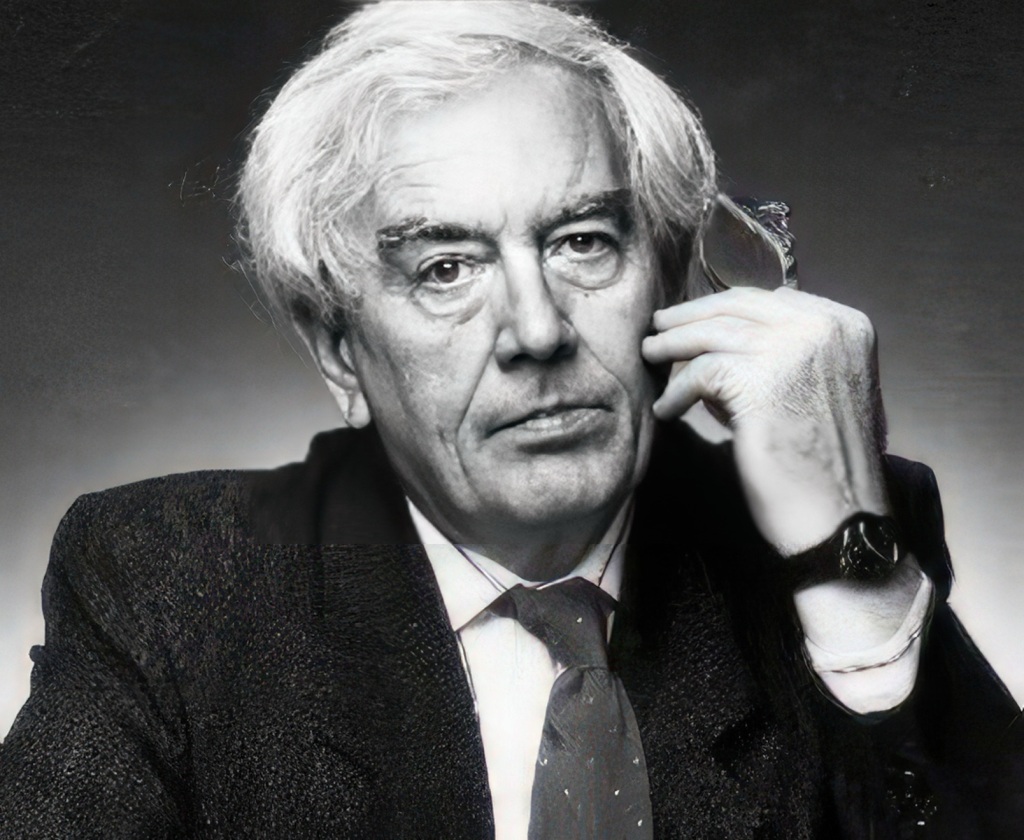


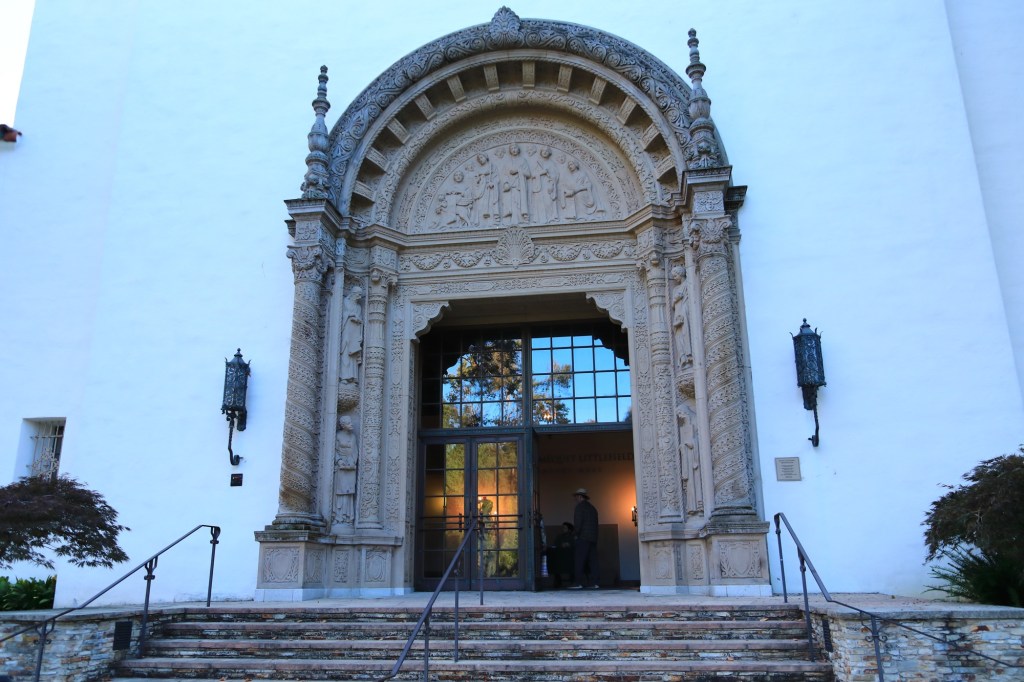


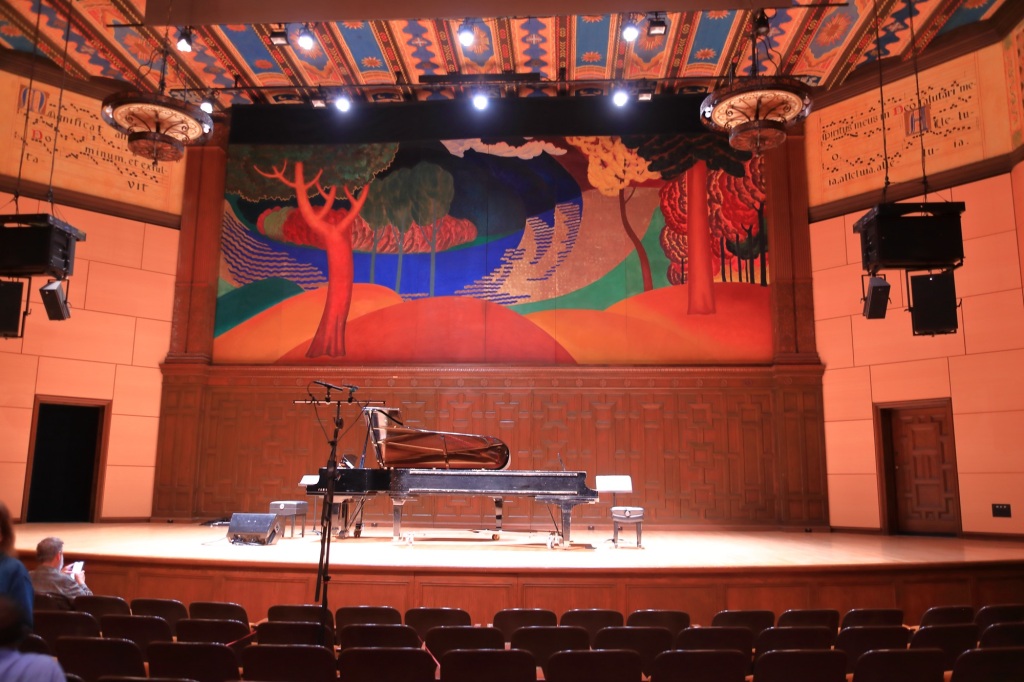
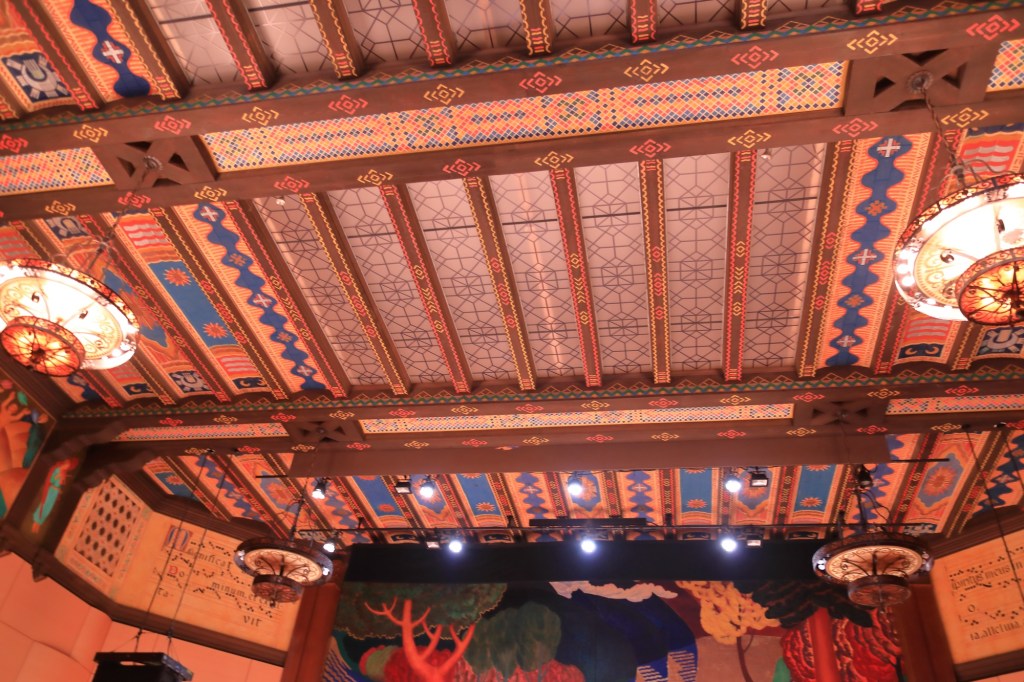
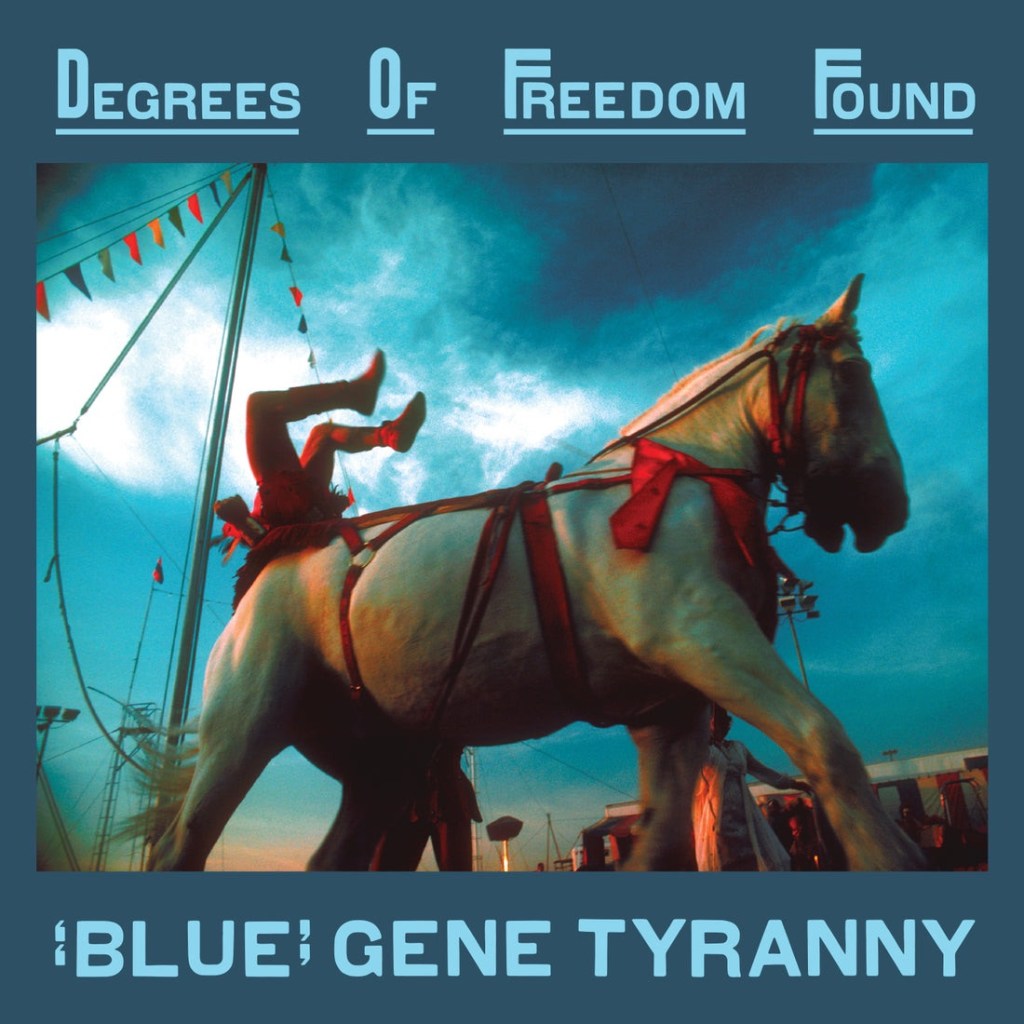


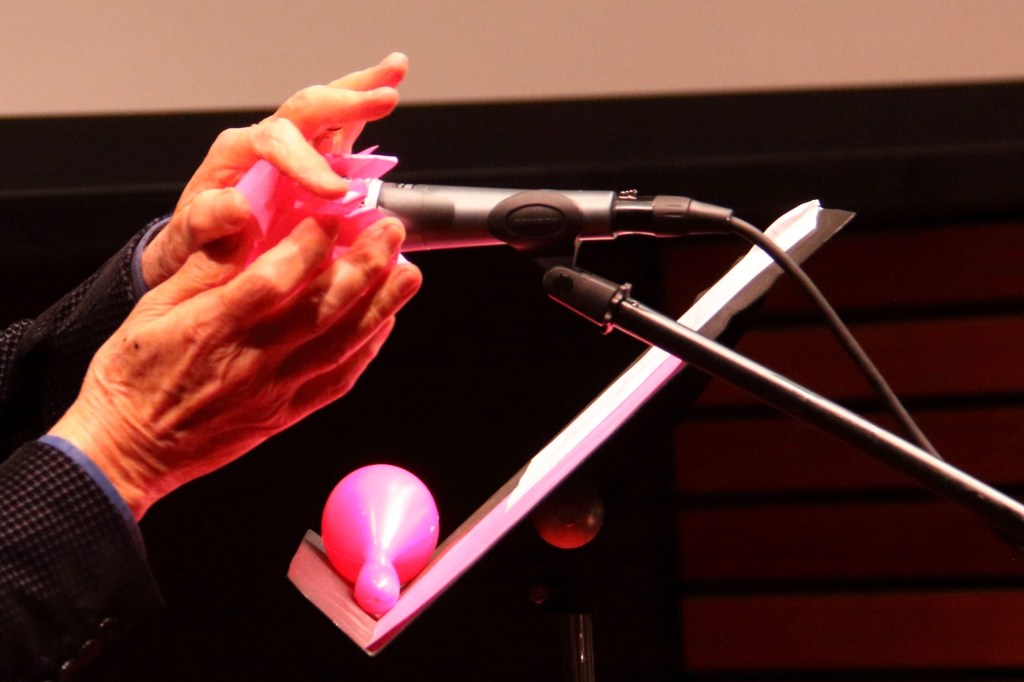


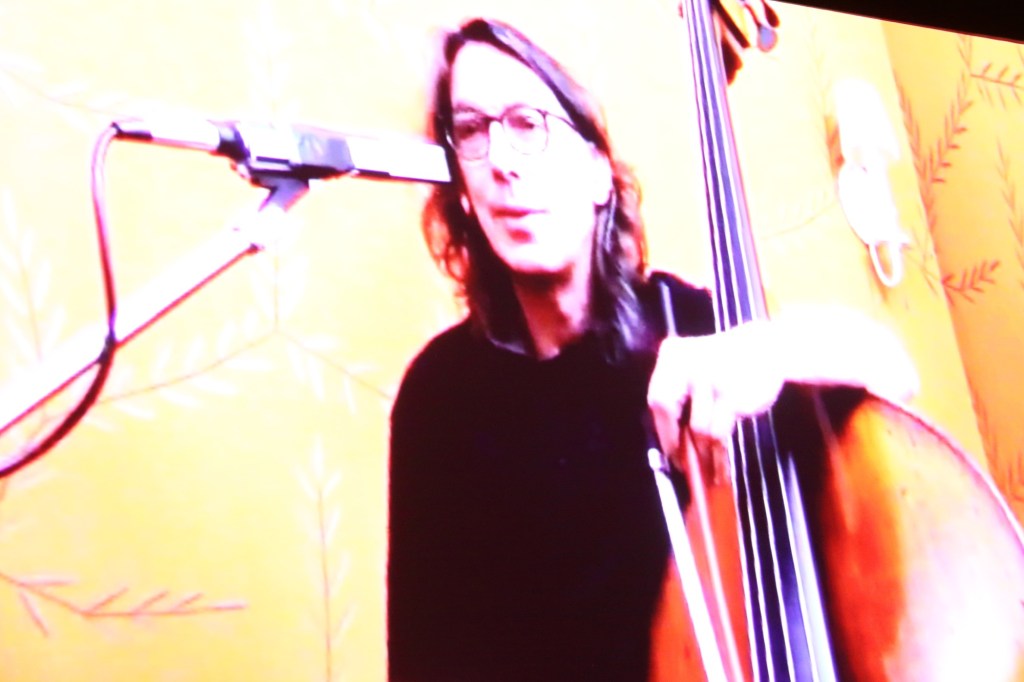


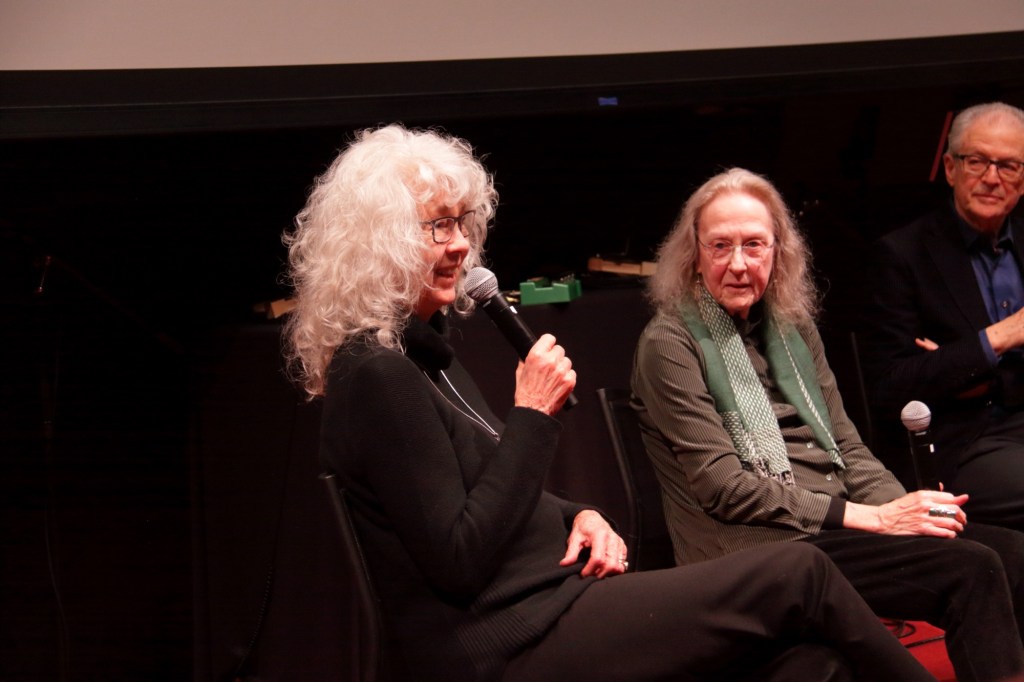


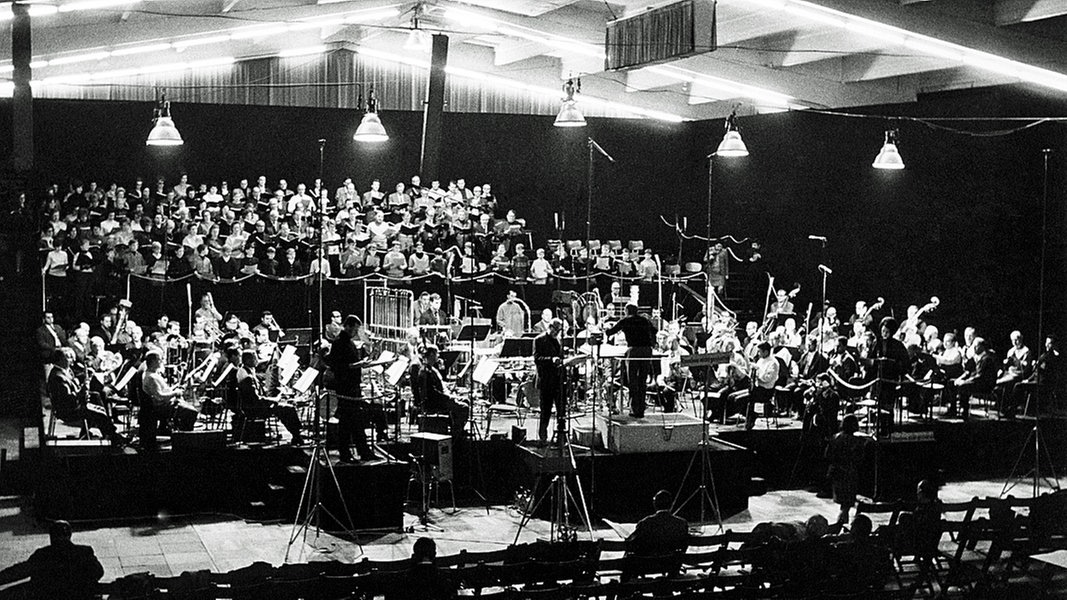
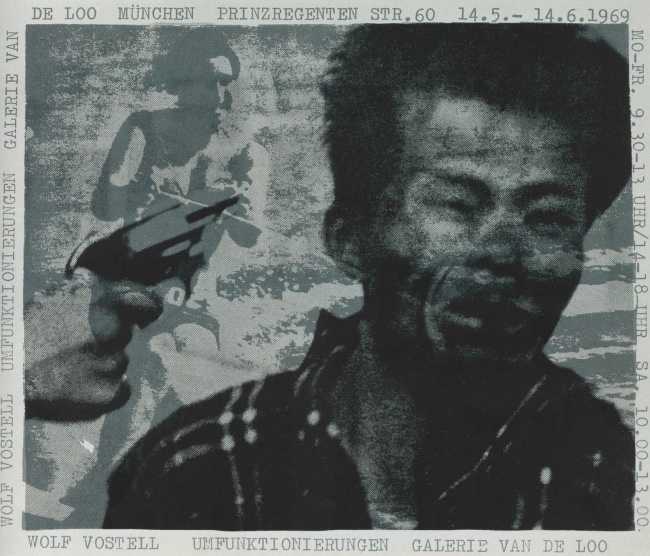
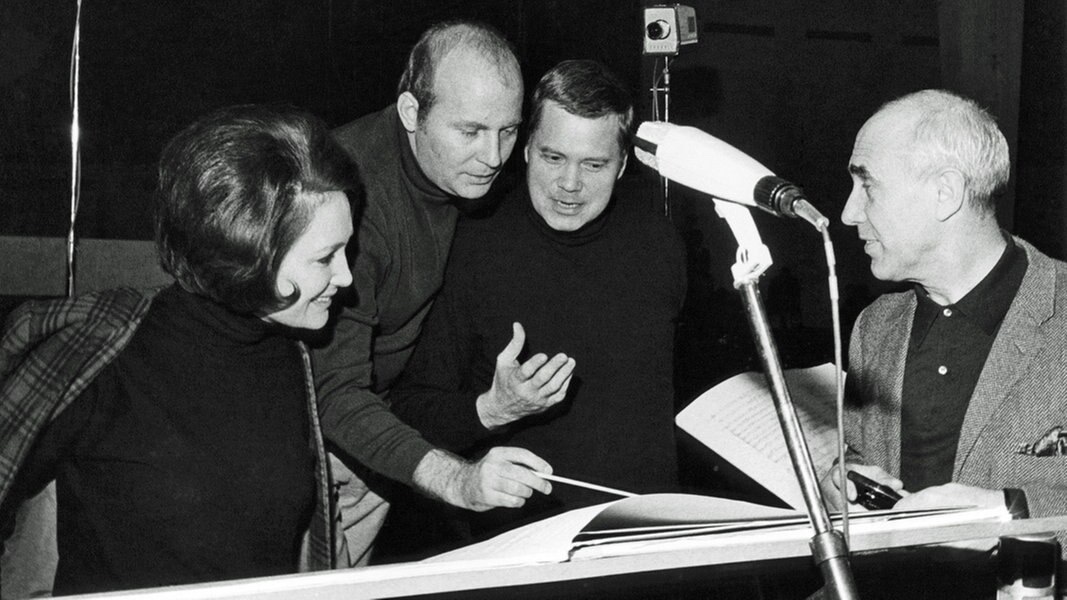
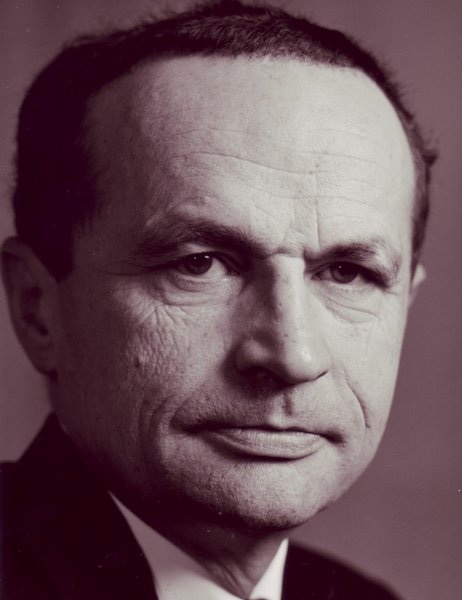


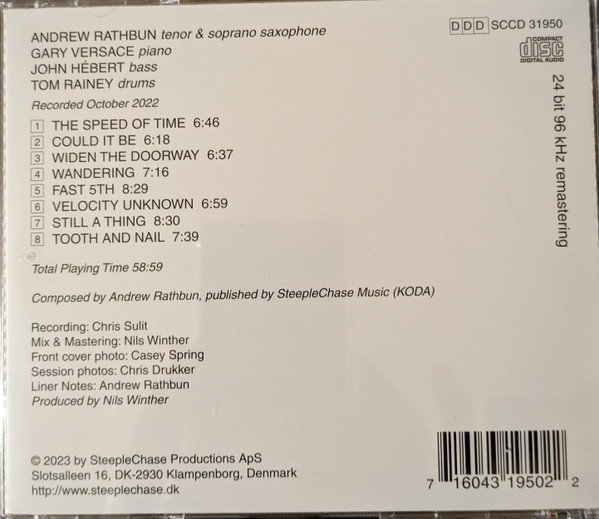

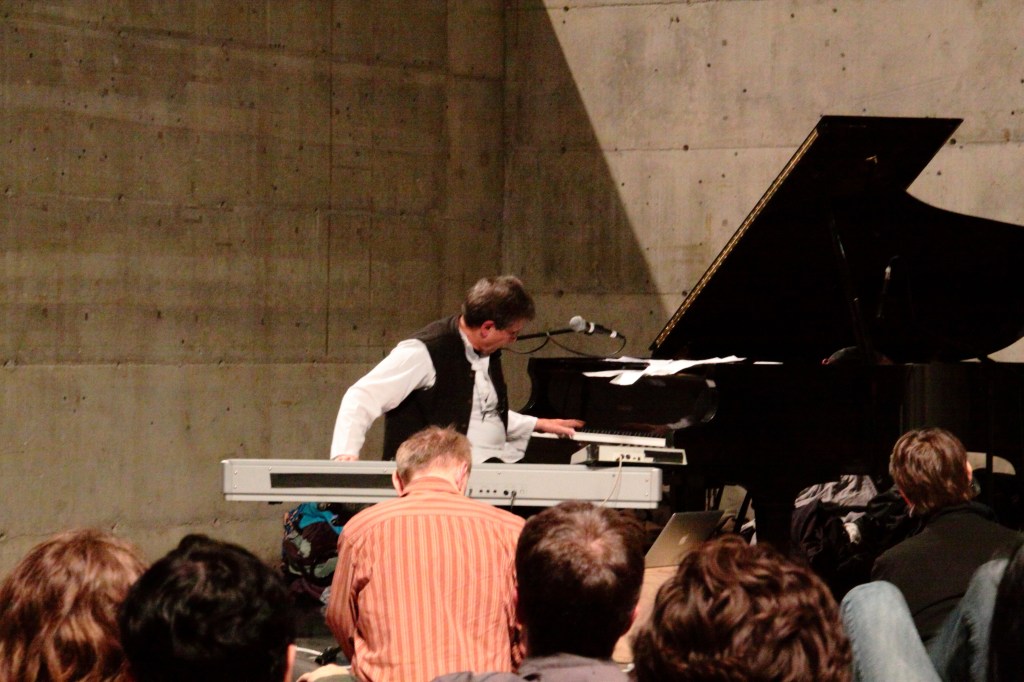
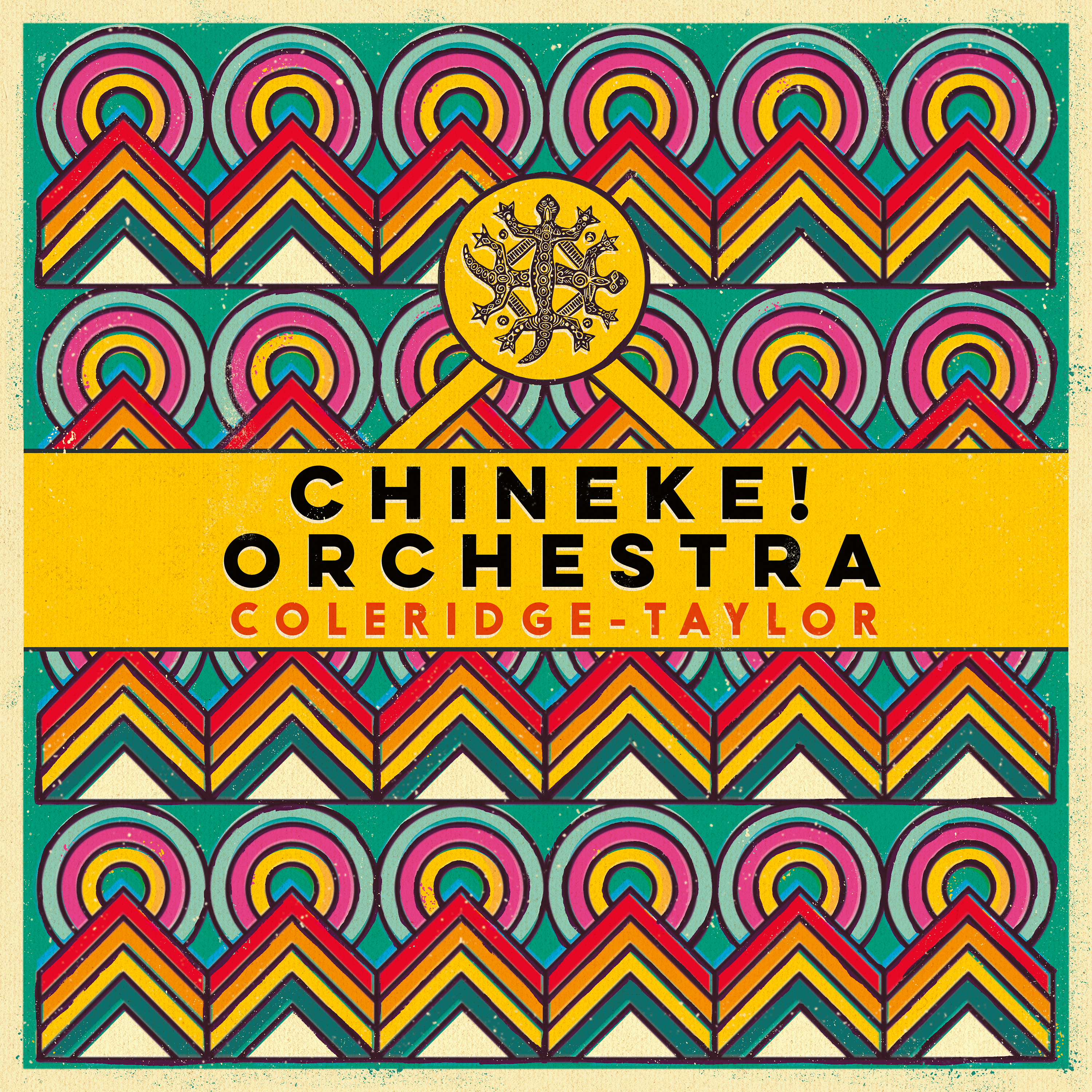


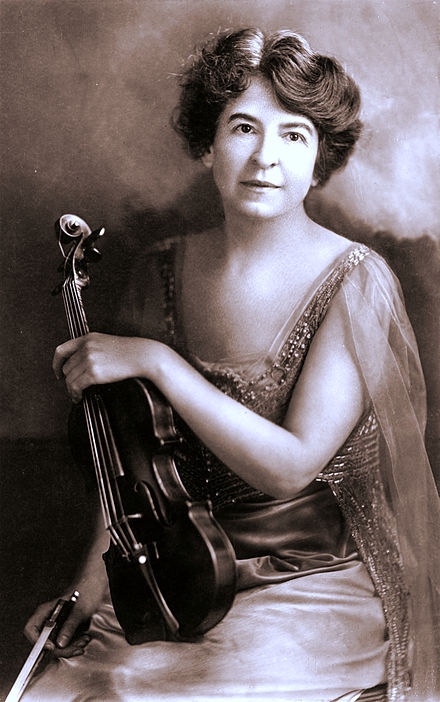


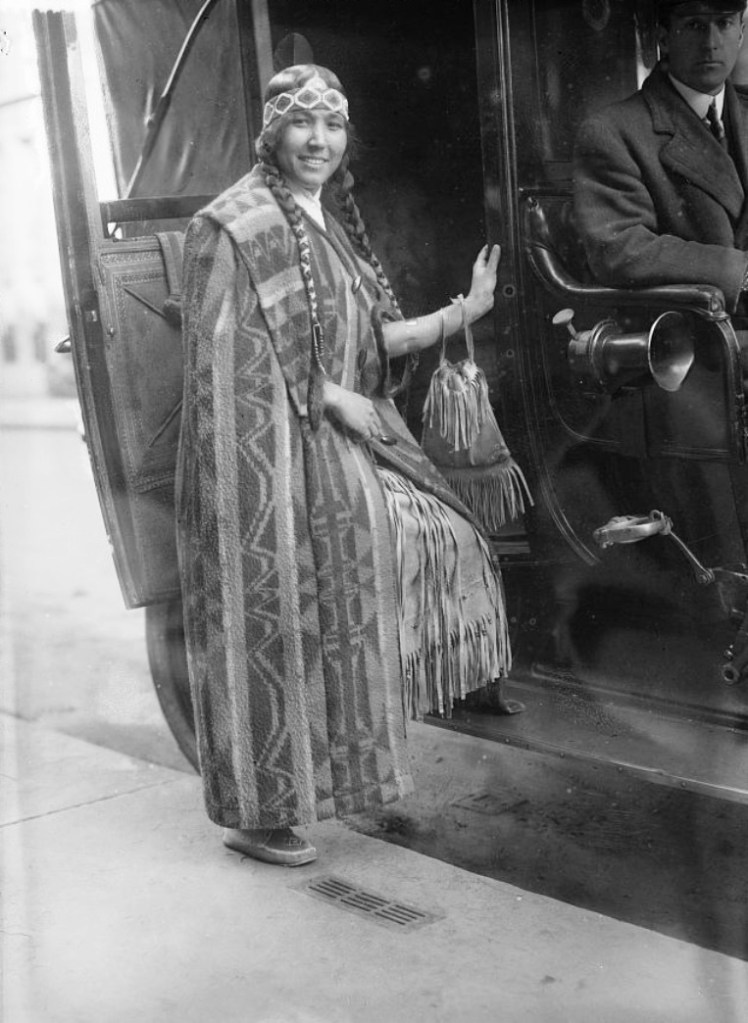


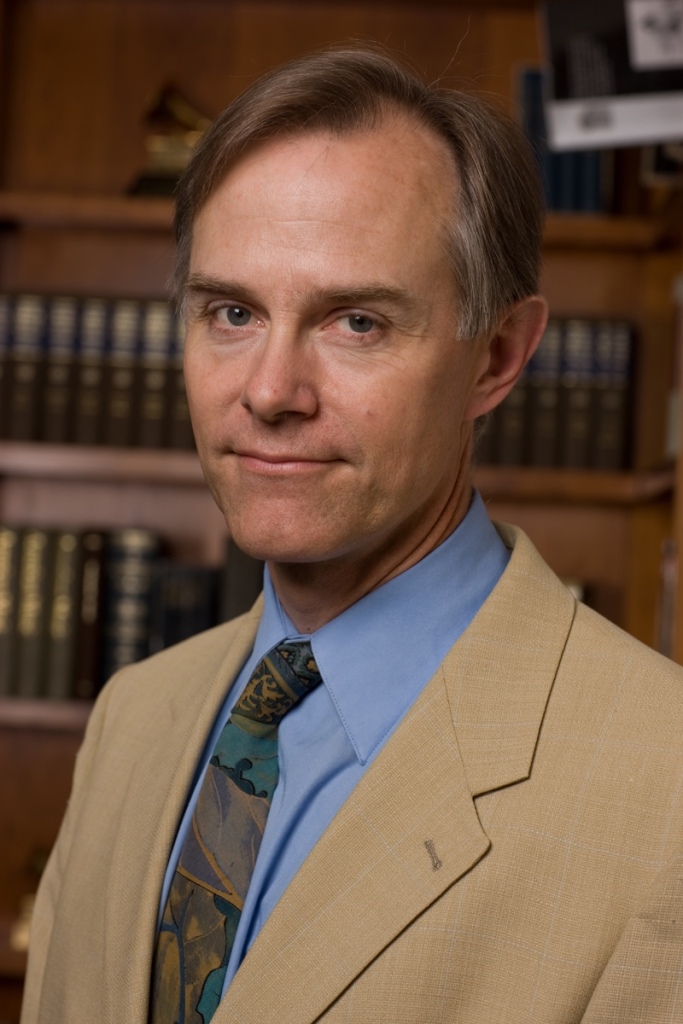


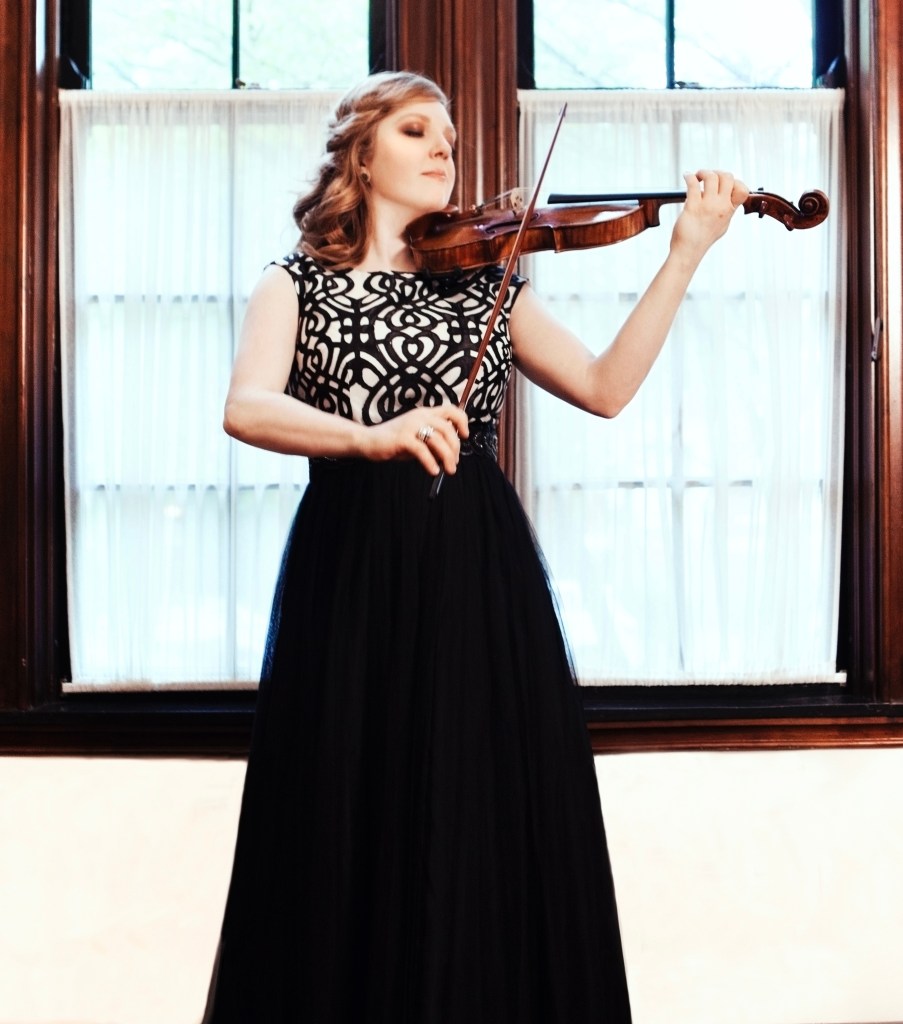
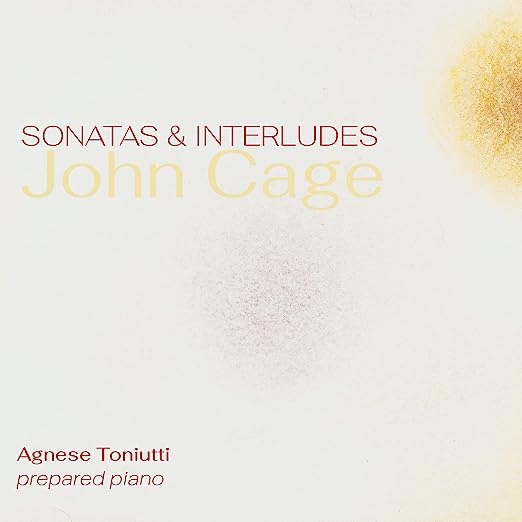


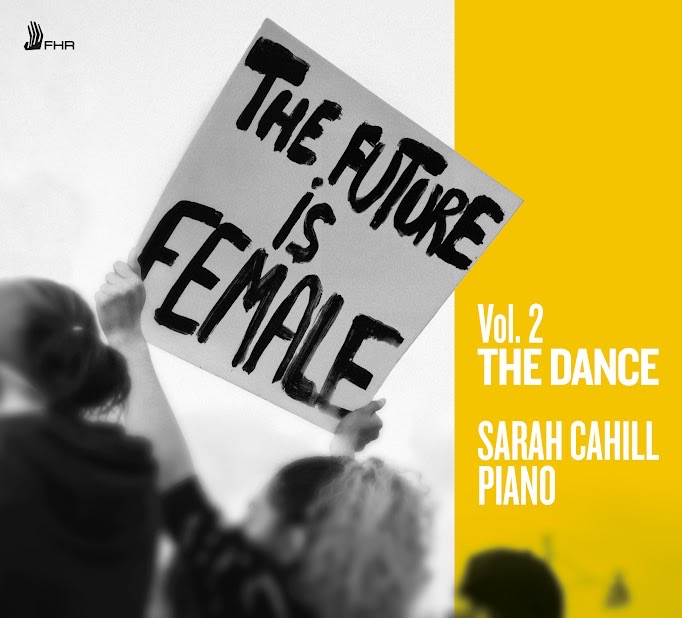


 New Music Buff