İlhan Kemaleddin Mimaroğlu (1926-2012) photo credit unknown, fair use
Portrait of Ahmet M. Ertegun and Nesuhi Ertegun, Turkish Embassy (record room), Washington, D.C., 193- (Photo credit: Wikipedia)
It would be difficult to underestimate the impact of Turkish immigrant brothers Ahmet and Nesuhi Ertegun on the American music industry in the last half of the 20th century with their promotion and production of jazz and rhythm and blues artists. Their lesser known colleague, Ilhan Mimaroglu labored under a slightly different esthetic. In addition to having been involved with the production of many artists’ work on the Atlantic label (including Charles Mingus, Freddie Hubbard, et al) his study of the developing techniques of electronic and tape-based music helped him develop a unique voice as a composer where he worked with electronics, tape, acoustic instruments, musique concrete, and combinations of these media. He was equally skilled in the art of music production and recording and he utilized this knowledge to produce an impressive body of work which deserves to be better known. He also curated the sub label Finnadar to release his own music and that of other artists with similar vision like Anthony Braxton, Frederic Rzewski, Morton Feldman and others.
Mimaroglu wrote a number of works reflecting his political views during the same turbulent years during which Atlantic records shaped the popular soundtrack of the sixties era. Using his knowledge of studio technology in combination with emerging developments in electronic music synthesis he created many purely electronic studies, musique concrete, at least 4 string quartets, solo piano pieces, and more that has yet to be fully catalogued.
First let me clarify the term ‘Agitprop’. This is a hybrid word or ‘portmanteau’ for the terms ‘agitation’ and ‘propaganda’. The word appears to have first been coined and used in conjunction with the Russian Bolshevik revolution and it’s political tactics. The idea was to create a form of propaganda that would not only inform but also encourage action.
This unusual piece, a concatenation of an electronic score, the Freddie Hubbard Quintet, organ, and strings is perhaps his greatest example of Mimaroglu’s brand of political music. It is by no means his only agitprop/ political piece but it may be his finest and one of the best works of this thorny, frequently controversial genre.
The title is a combination of the name of the town (Son My), the location of the My Lai massacre, and the ironic words, “Sing me a song of Songmy”. The collage and non-linear format of the piece actually contains a dizzying mix of concurrent horrors including the Sharon Tate murders and others whose subjects await a comprehensive analysis by a historian and/or a musicologist. The work includes poetry by Fazil Husnu Daglarca, news clippings, etc. Luciano Berio did something similar in his similarly political masterpiece, Sinfonia (1968). That work is rife with musical and textural references subsequently enumerated by the late American composer/musicologist, Alan Stout.
This is also one of the most expensive productions of a mix of evolving musical genres with a strongly controversial and ugly subject. It can stand in comparison to Picasso’s Guernica for its power to provoke. Add the thorny early electronics with the free jazz of Hubbard and the jazz/blues inflected writing, and you have a powerful indictment of war crimes but hardly a best seller. And it is only with the healing of time and the fading of the sting of those memories that this work has begun to be appreciated more fully.
Leonard Bernstein‘s liberal political sympathies are well known. But they were never as clearly presented in his music as they were in his ‘Mass’ from 1971. The work was commissioned for the opening of the Kennedy Center for the Performing Arts in Washington, DC and dedicated to the memory of John F. Kennedy.
In using the structure of the Catholic Mass Bernstein echoes the embrace of Christianity of previous Jewish composers like Schoenberg and Mahler. Mahler embraced Christianity at least partly to get work in the increasingly antisemitic atmosphere of late nineteenth century Europe. Schoenberg’s dalliance with Christianity was more that of an existential crisis as he watched the rise of the Nazi party and their genocidal horrors. Bernstein’s embrace of Christianity seems a combination of homage and disappointment. He knew well the glories of liturgical settings of the traditional texts by the likes of Bach, Haydn, Mozart and Beethoven and had himself made an a capella setting of the mass using music he had originally written for Jean Anouilh’s play, “The Lark”.
He also knew well the suffering and deaths occurring in the protests against the Vietnam war and the struggles of American citizens for equality in the Civil Rights movement as well as the struggles in the war itself and the failure of religious institutions to stem the tide of violence.
Bernstein had dealt with religious themes in his first Symphony from 1942, which set texts from the Biblical “Lamentations of Jeremiah” in the last movement. His Chichester Psalms of 1965 set three Psalms in Hebrew. And, his Third Symphony, “Kaddish” (1963) can be seen as a forerunner to the 1974 “Mass”. His final symphony became a post hoc requiem subsequently dedicated to John F. Kennedy when, just weeks before the premiere, he was assassinated in Dallas. The composer dedicated the work to the late president. He also performed Mahler’s “Resurrection” symphony the day after John F. Kennedy’s assassination presenting it as a peaceful response to the murder.
Bernstein was no stranger to politics and progressive ideas and his activism is central to his life and legacy.
The traditional mass is a ritual of sacrifice which the composer uses to talk about the sacrifices of lives and culture occurring during the ongoing Vietnam war. It laments the ineffectiveness of religion in dealing with sociopolitical crises. The full title of the score at hand is ‘Mass, a piece for singers, players, and dancers’. It was commissioned by Jacqueline Kennedy as the inaugural work for the opening of the newly completed Kennedy Center for the Performing Arts in Washington D.C. The first performance took place at the new Kennedy Center on September 8, 1971.
Richard Nixon had declined to attend ostensibly to not draw focus from Jacqueline Kennedy Onassis but subsequent research has determined that he had been warned by FBI headJ. Edgar Hoover of the possibility of “subversive” texts within the piece. He was apparently referring to the latin texts of the mass. So, for “security” reasons, Nixon stayed home that night.
Cover of the original vinyl release of “Der Floss der Medusa”
The 1913 riotous premiere of Stravinsky’s “Rite of Spring” is pretty well known in classical music history. Sandwiching the premiere of his masterpiece of modernism between well known conservative chestnuts such as “Les Sylphides” (an orchestration by Alexander Glazunov of piano music by Chopin, 1907-9) which opened the concert along with Carl Maria von Weber’s “Les Spectre de la Rose” (an 1841 Berlioz orchestration of Weber’s 1819 piano piece, “Invitation to the Dance”) and Alexander Borodin’s “Polovtsian Dances” from his opera “Prince Igor” (1887-1890) which were programmed to follow it. Combine these (familiar to audiences) conservative works with the Rite’s original choreography by Vaclav Nijinsky and the subject of pagan ritual that form the scenario played before an audience consisting of elite concert goers seeking a familiar easy experience along with a burgeoning group of bohemian leaning audience members (who loved the Rite’s loud, subversive nature of both music and staging) and you have a formula for conflict. Speculation is that Stravinsky and/or his producers planned this event to create a contrast for his new modernist work but more likely it was a largely a product of its time and of human nature.
Fifty two years later, Hans Werner Henze appears to have had nothing in mind (at least initially) other than the premiere of his new work, “Das Floß der Medusa” (The Raft of the Medusa) on December 9, 1968 in Hamburg’s “Planten und Blomen” Hall. The recording which was later released on DGG LPs had been done sans audience on the previous days, December 4-8th, and preparations were being made for that night’s world premiere performance before an audience.
An article would later run in the German magazine Der Spiegel describing the event. I present the text of that article in my own translation:
Der Spiegel, December 12, 1968
“What is necessary”, says Hans Werner Henze, 42, “are not museums, opera houses and world premieres … What is necessary is the creation of mankind’s greatest work of art: the world revolution.”
Last Monday, Henze’s “Das Floss der Medusa,” an “Oratorio volgare e militare, in due parti” commissioned by the NDR, was to be premiered in Hamburg — instead, there was a revolution in the hall.
The 1060 seats in Hall B by Planten un Blomen were fully occupied, the NDR Symphony Orchestra was already tuning the instruments, on the podium were ready: Edda Moser (soprano), Dietrich Fischer-Dieskau (baritone) and Charles Regnier (speaker) , the North German Radio Choir, the RIAS Chamber Choir and the St. Nikolai Boys’ Choir. The game could begin, and it began — a duo volgare e militare between NDR and SDS.
Because the Berlin SDS friends under Gaston Salvatore, summoned by Henze, didn’t want to do without this premiere of the APO (Außerparlamentarische Opposition) man Henze any more than the socialist students of the Hamburg Music Academy — albeit for different reasons: The Hamburgers cared about Henze’s music as reactionary to expose the Berliners, to bring their Hamburg colleagues to reason and to divert attention to the middle-class audience. Action against Henze, argued the Berlin “Project Group Culture and Revolution,” would only benefit the bourgeois enemy.
Che Guevara (1928-1967)
After three days of palaver, the Hamburg wing was lame. For example, the intention to ask the composer to explain the structures of his music when he played Medusa was abandoned, as was the plan to intervene in the choral singing, and the attempt to expose Henze’s listeners to Henze as culinary Henze consumers.
On Monday evening, Berliners and Hamburgers moved in socialist harmony to Planten un Blomen, the premiere location that Henze claims to have confused with Blohm & Voss. At least that’s how the Berlin SDS had informed the Hamburg SDS.
NDR program director Franz Reinholz, to whom Henze owes the “Medusa” commission, knows otherwise: “Henze,” Reinholz assures, “inspected the hall himself beforehand. He was also informed about the audience.” shipyard workers, it was, the socialist students recognized once again, an audience of “rich bastards.”
Shortly before 8 p.m. the squad was ready for action in Hall B. And before the conductor Henze stepped out of the artist’s room, Che was already in the hall: the agitators had pinned a Che Guevara portrait to the desk; it was intended to remind us of what had been concealed in the program with Henze’s approval: the oratorio is dedicated to the Latin American freedom fighter.
NDR program director Franz Reinholz didn’t appreciate this memento at all – he tore down the poster. He felt that politics and art did not go together.
The students didn’t think so. They put up a new poster and hoisted the red flag, and a team of anarchists, who had come with duck decoys and other hunting instruments, hung a black one next to it. Then the radio hit, the police joined in, the RIAS Chamber Choir began, but not in unison. “Lower the red flag,” demanded one singer, two singers left sobbing: “We are Berliners and have had enough of red flags.” to whose honor they should sing, left the stage and never came back.
The composer, however, was determined to prove his revolutionary sentiment to his comrades for the first time by saying, “The red flag,” said Henze, “it stays.”
While NDR director Gerhard Schröder (SPD), long since in the safe broadcasting van, stopped the live tumult at 8:19 p.m. and radioed his listeners a recording of the dress rehearsal, his deputy, Freiherr von Hammerstein-Equord (CDU), countered in the hall the resistance of the demonstrators banners and placards; A little later, a squad of 25 police officers, visors on combat helmets, broke into the hall. “Nazis!” “Fascists!” shouted the audience. One artist yelled enthusiastically, “Down with the Reds!”
“The police,” Hammerstein explained, “were ready at the request of the NDR, which considered demonstrations possible and had to ensure the safety of its employees, the audience and valuable instruments.”
Ernst Schnabel, librettist
NDR employee Ernst Schnabel, librettist of “Medusa”, felt the precautions thoroughly. Several police officers threw him through a glass door, expedited him with six other delinquents to police headquarters, took his fingerprints, and locked him in cell 7 until midnight. Schnabel to Hammerstein-Equord: “We don’t have breakfast together anymore.”
Meanwhile, Hammerstein kept order in Planten un Blomen. When Henze informed the audience: “The intervention of the police prevented the discussion,” Hammerstein snatched the microphone from his hand. The hands in the stalls responded with rhythmic Ho Chi Minh clapping, and Henze clapped along — three times. Then he disappeared through a back door.
At that time the “raft of the Medusa” was already well advanced in the ether waves — on the usual counter-revolutionary course.
“Wherever”, the “Süddeutsche Zeitung” judged, “the choirs sang, there was the old, floating, iridescent Henze sound, which doesn’t hurt anyone and never becomes distinctive. The orchestra … strangely often reminded of Richard Strauss.”
The music critic Heinrich von Lüttwitz saw “Medusa” as a “tragi-comic absurdity” full of “romantic colours”, with “sometimes clumsy, sometimes fussy recitatives and melodramas”.
Henze biographer Klaus Geitel saw the “raft” in the “ocean of an emotional but overly extended, lyrically colored monotony”.
It may be that, as Henze puts it, this evening “brought him a little further” politically. But the Henze fans in the APO have failed — that’s how the currently most thoroughly analyzing music theorist Heinz-Klaus Metzger, who identifies with the “anti-authoritarian wing of the SDS,” puts it.
‘The APO, Metzger predicts, ‘will only have created meaningful conditions when German musicians no longer refuse to perform under a red or even a black flag, but instead perform a work by Henze. And for strictly musical reasons. Unfortunately, not even Tucholsky’s bon mot applies to this composer: “Because of bad weather, the German revolution took place in music.”
______________________________________
——————————————————–
So it went in 1968. The Oratorio performance was cancelled and the world premiere had to wait until January 29, 1971 when it was performed in Vienna by the ORF Orchestra conducted by Miltiades Carides. The recording of the first performance was achieved prior to the performance with the audience. That recording was released in 1969.
Many more performances followed but one of those performances, in 2001, was attended by a former chorister, Henning Sidow. He was twelve years old at that 1968 non-concert. And the following article on his experiences of that attempted performance was published in Der Spiegel in 2013.
————————————————–
__________________________________
Blaze at the choral-concert. How the “Raft of the Medusa” went down.
He was anxiously awaiting the big performance: when he was twelve, Henning Sidow was supposed to perform on stage with the NDR boys’ choir in Hamburg. And indeed, the live performance of the oratorio was exciting – but for completely unexpected reasons.
The boys’ choir was founded in 1960 as the choir of the North German Radio and has been connected to the main church of St. Nikolai since 1967.
“As a twelve-year-old in 1968, I had only vague ideas about the political and social turmoil of the time. But on December 9th, as a member of the St. Nikolai boys’ choir, they became tangible experiences for me as a result of the unsuccessful premiere of the oratorio “Das Raft der Medusa” by composer Hans Werner Henze in Hall B in Hamburg’s Planten un Blomen Park.
I had been in the boys’ choir for four years, which belonged to the NDR until 1967 and was then taken over by the St. Nikolai parish in Hamburg. We “experienced” boys felt quite up to the task of taking part in Henze’s musically demanding oratorio and also appearing in a world premiere that was to be broadcast live on the radio.
The play tells the tragic story of the French frigate “Medusa”, which ran aground as the only ship in a convoy on the way to Senegal in 1816. Since there were not enough lifeboats for the 400 people on board, the crew built a raft that could accommodate around 150 men, women and children and which was to be pulled ashore by the boats. But the officers fled in the boats, leaving the people on the raft to fend for themselves. On the day of the accidental rescue 13 days later, there were only 15 survivors. The others fell victim to starvation, lack of water or cannibalism.”
Hide and seek in the empty hall
“Our boys’ choir was supposed to portray the children on the raft – first as living, then as dead. A difficult piece with a socially critical background, this “Raft of the Medusa”, we knew that. It meant not only intensive rehearsals, but also many afternoons and evenings of rehearsals. What we didn’t know was that the premiere was never to take place.
The location of the event and the preparations fascinated me. The hall seemed huge to me as a child. Large platforms were set up here for the performance, with countless instruments on them. There were people everywhere: stagehands, technicians, orchestra musicians, choristers and soloists – it was just teeming. Now we guys were added.
We had a lot of waiting time and were able to explore everything. So we crawled under the stage construction, played hide and seek, crawled under the platforms and shimmied over wooden struts until we got too many splinters in our fingers. And right next door there was another hall, several stories high – a gigantic glass box. There was no event taking place at the time, so the hall was yawning and unlit. We strolled through them, hearts in our pants because of the darkness and the eerie acoustics of the room.”
Protest in the concert hall
“Then things got serious, rehearsals began. In my memory, Hans Werner Henze was a small man who was already a bit bald at the time, but incredibly energetic. He radiated a mixture of warmth, ingenious artistry and normality. We boys found him sympathetic, but he had no airs and graces and met everyone completely naturally, friendly and patiently. He treated us as if we were adults, which I found very beneficial. When I was a child, I was used to other well-known personalities whom we had met here and there through our performances to be treated and professionally not taken very seriously.
Henze was excellent at conveying his music to the participants, it was lively, colorful and exciting like the story itself. The dramatic story and the historical background that he and the music told us captivated me even then. Conducting, however, was not his thing, I remember his somewhat awkward gestures. But that’s not so important in a professional ensemble, as long as the right impulses and cues come. In any case, we children liked and admired him and his music.
On December 9, 1968, as far as I can remember, the hall was filled to the last seat with an audience. There was talk of more than 1000 guests. Henze was already at the desk. But just before it started, there was a small crowd in front of the stage. A few protesting students stood directly in front of the podium and hung red flags to the left and right of Henze’s desk. It was not clear whether the master just put up with this or whether it had been agreed with him, as was later speculated. In any case, he didn’t seem to put up much resistance to the activities.”
The situation is escalating
“Shortly thereafter, the audience and the choir became restless. Because one of the choirs, the RIAS Chamber Choir, came from Berlin, the enclosed city. Red flags were literally a red rag for many who lived there. At first I – and I’m sure my fellow boys too – didn’t understand much of what was happening down there. But when voices from the Berlin choir grew louder and louder, refusing to sing under “the red flag”, I understood what it was all about. The adults feared that they and the music would be exploited by demonstrating communist students. In addition, a large portrait of Ché Guevara has now been erected, to which the work is dedicated.
Henze’s efforts to get the performance started were nipped in the bud by the boycott of the Berlin singers. The removal of the communist symbols was demanded louder and louder from the podium, before they would refuse to sing a single note. In the meantime it was getting more and more restless in the auditorium and in front of the stage there were small scuffles between the demonstrators and some spectators who got involved. Negotiations between the choir and the composer were taking place behind the scenes as to the conditions under which the performance could still take place.
We boys watched the whole thing with suspense, since the circumstances had now reversed: the auditorium had become the stage, and we on the podium had a box view of this live cultural scandal. Music was out of the question. In the back of the hall, the doors flew open and police officers in full riot gear marched in. Like a horde of ants, they came down the aisles from several sides to the podium. I don’t remember how many there were, maybe a hundred. They looked particularly martial with their helmets with full visors and the shields they – to protect against what actually: a few students, musicians and false notes? – carried in front of them.”
A dark chapter
“Henze had meanwhile disappeared unnoticed and downstairs young people were having their arms twisted behind their backs in order to be taken away. Among them was Ernst Schnabel, who wrote the text of the play. He was later charged with “resisting the authority of the state”. On the other hand, part of the audience did not like the actions of the police and protested, which did not prevent the state authorities from their plan to convict the “perpetrators” in flagrante delicto.
I can’t remember exactly how long the commotion lasted. In any case, it never came to a performance, and at some point we left the stage disappointed. It was incomprehensible to us children why a few red flags and the likeness of a bearded South American led to such an uproar. For us it was about art, about music. We felt cheated of our work.
The newspapers reported extensively on this event in the following days. Some tabloids insisted on turning it into a real political scandal. To this day it is unclear to me what the state authorities were thinking when they made this appearance. That’s for sure
That she was thin-skinned in those times and liked to overreact on such occasions. The fear that the ideology that prevailed behind the Iron Curtain could also spread to the West was too great.
For Hans Werner Henze, who died in 2012, this scandal is said to have been a dark chapter in his artistic career. Later, it is said, he did not want to be reminded of it.
My own memories of that evening only surfaced again years later: at the much delayed premiere in June 2001 in Hamburg’s Laeiszhalle. After 33 years I experienced “The Raft of the Medusa” a second time. The fact that I was still able to silently speak and sing along to the lyrics and the music showed how much the piece and the story it was based on had impressed me at the time. None of it was lost. I left the performance deeply touched.”
So, here we are some 46 years after the riotous non-premiere of Henze’s fine oratorio/requiem, 111 years since the famed “riots at the Rite”. The Stravinsky has since firmly taken its place in the commonly performed orchestral and ballet repertory. The Henze work, never laying any claim to the seminal and visionary compositional methods that characterize Stravinsky’s landmark work, continues to receive performances and recordings having established itself as a substantial work, and himself as a significant composer with a rich and varied career.
NB: All translations are my own efforts. Historical photos are included under fair use terms.
There are many ways to debut on the world stage and there are many ways to represent political activism. Violist Noémie Chemali has chosen, as her important first impression in her recorded debut, a selection of music from young composers whose heritage includes political oppression. The albums profits are promised to MSF, also known as Doctors Without Borders. These works are not directly political, rather they are a carefully curated selection of new works produced by composers who, in varying degrees, have experiences of dealing with or having friends and family whose lives are negatively impacted by political conflicts and oppression. This is gorgeous music by emerging talents.
The good news is that these wonderfully creative artists persevere in creating great art and it is the celebration of that creative drive that lies at the heart of this fine release. While the pieces here variously reference tunings, rhythms, and melodies representative of their individual ethnic heritages, they are not confrontational. Rather the music here stands as evidence of the beauty of artistic invention which stands defiantly in contrast to the cruelty of oppression and warfare. That gentle activism casts a kinder and gentler image of people more commonly represented in the media as terrorists (actually a numerical minority) in a culture with ancient roots and a powerful artistic soul (the better descriptor of the actual majority).
Links to the composers’ web sites can be accessed by clicking the names of said composers.
This, the composer’s Opus 13C, is based on an Arabic rhythm called “Al Mouraba”. It is for solo viola and is cast in the unusual meter of 13/4, using an Arabic scale. The music imitates traditional music which ostensibly enticed horses to dance in times past.
This musical impression of a poem of the same name by Mahmoud Darwish. It is, in the composer’s description, a meditation on the random elements that affect our lives. It is scored for viola, cello, and double bass.
3. Cadenza from “The Brown Texts”; movement one (2017-2020)
4. Cadenza from “The Brown Texts”;movement two
The term “cadenza” derives from the word “cadence” and it generally refers to the improvisations (by the soloist) in a concerto. The notion of a solo cadenza does not appear, as far as this listener’s encounters, until the mid to late twentieth century. Penderecki’s Cadenza for Viola is the only example that immediately comes to mind. Though that work is sometimes performed separate from the viola concerto from which it derives, its origin is in the classical/romantic tradition of a virtuoso work that displays the skills of the soloist. As with the previous work, this one is a musical rendition of originally poetic ideas, those of the late Nadia Tueni. And, unlike any other cadenza I’ve known, it is cast in two separate movements. The piece is a fine showcase for Ms. Chemali’s technical and interpretive skills.
Noemie Chemali:
5. “Kadishat” (2021)
Delightfully, Ms. Chemali has chosen to include one of her own compositions. She describes this as a set of variations on the ancient Aramaic Trisagion “Qadishat aloho”, a tune which has been firmly ensconced in the composer/performer’s consciousness from having heard it since her childhood. One could characterize it as one of the greatest hits of the Eastern Orthodox Church and one of its most deeply felt pieces. Chemali casts this work for violin, viola, and cello. This writer is reminded of another fine example of the incorporation of sacred hymns into the classical music tradition, that of Carolyn Shaw’s fine “In Manus Tuas” which mines that composer’s memory of hearing a sacred chant. Both works reflect the composer’s internal process of hearing and attempt to convey that spiritual experience to the listener.
This piece, another musical expression of a literary work, namely, the Armenian fable that provides the title for this work which is cast for cello, voice, and electronics. It is presented here in a transcription for viola by the soloist. The fable deals with the strength in numbers that rise up against those in positions of power. It is a delightful work with dark implications.
This work, scored for viola, harp, and flute is cleverly written in three movements which, in turn, each give a solo to each of the musicians who are, in turn, accompanied by the others in the group. “Dohree” is an Arabic word which translates as “my turn”.
Six pieces over eight tracks with chamber groups ranging from solo viola to viola with electronics (in the Kouyoumdjian work) and small chamber groupings in the others. All in all a fine and engaging selection of music that bear witness to the beauty and creativity of people living with oppression. This music reflects the human experience that can get erased by merely identifying ethnicity.
In addition to Ms. Chemali this recording includes the following musicians: Shaleah Feinstein, violin; Raffi Boden, violoncello; Kebra-Seyoun Charles, double bass; Lauren Scanio, flute; Deanna Cirielli, harp. They really do honor to the spirit of this music and this album is beautifully recorded as well.
Kouyoumdjian was the only composer known to this reviewer prior to hearing this album but she is apparently in very good company here and listeners would do well to make note of these rising stars. We will doubtless hear from them again. Here’s hoping.
Noemi Chemali (from the Orchestra of St. Luke’s web page)
This is the artist’s biography as it appears on her website (linked above):
French-Lebanese-American violist Noémie Chemali received her Bachelor’s degree from McGill University’s Schulich School of Music, her Artist Diploma from the Robert McDuffie Center for Strings at Mercer University, and her Master’s Degree from The Juilliard School. Her principal teachers include Becca Albers, Hsin-Yun Huang, and Carol Rodland.
During her time at Juilliard, she made her Carnegie Weill Hall solo debut in the UN Chamber Music Society’s Arabic Language Day concert and collaborated with dancers of the New York City Ballet. During her time at the McDuffie Center for Strings, she performed alongside faculty members of the Cavani and Ehnes String Quartets. In 2019, she also performed in “A Night of Georgia Music,” a tour the American South with violinist Robert McDuffie, guitarist Mike Mills of the band R.E.M., and pianist Chuck Leavell of the Allman Brothers Band/Rolling Stones. Some performance highlights from McGill include playing a concert with clarinetist David Krakauer in a program of Klezmer music, being selected to perform a chamber work by John Rea in a concert presented by the Société de musique contemporaine du Québec (SMCQ) alongside Schulich faculty and students, and participating in the 2018 Musical Chairs Chamber Music Festival, where she collaborated with students from the Mozarteum (Austria) and the Yong Siew Toh Conservatory of Music (Singapore).
Noemie has spent her summers at music festivals such as The Music Academy of the West, Sarasota Music Festival, Orford Musique, The Lunenburg Academy of Music Performance (LAMP), Scotia Festival of Music, Manhattan in the Mountains, and Green Mountain music festivals. While Ms. Chemali was a fellow at the Music Academy of the West, she played under the baton of esteemed conductors Larry Rachleff, Stéphane Denève, Gustavo Dudamel, and James Conlon. While at Sarasota Music Festival, she served as principal violist of the festival orchestra under the baton of Jeffrey Kahane and performed in a faculty concert as a member of a quintet with bassoonist Frank Morelli. She has, throughout the years, participated in various masterclasses with artists such as Joseph Silverstein, Ida Kavafian, Cynthia Phelps, Karen Dreyfus, Richard O’Neill, James Dunham, Jutta Puchhammer and the Pacifica String Quartet.
Passionate about diversifying musical audiences, she co-founded the Hildegard Project, which aims to bring music written by women composers to women’s shelters in the greater Montreal area and was invited to speak about her work at the Classical Evolution/Revolution Conference in Santa Barbara, CA. Most recently, she founded Music@Daybreak, an interdisciplinary performance and research project which features performances at homeless shelters in collaboration with the Sociology department at Mercer University.
Noémie is the recipient of a Juilliard Career Grant, George J. Jakob Global Enrichment Grant, Gluck Community Engagement Fellowship, Juilliard Entrepreneurship Grant, Barenboim-Said Foundation (USA) Grant, and a Lower Manhattan Cultural Council Creative Engagement Grant. In January 2024, she will be releasing Opus 961, her debut album of music written by contemporary Lebanese composers.
Her website includes some YouTube videos reflecting the artist’s fascinating choices of repertory. Along with fervent activism, she demonstrates a pretty unique take on what she chooses to play. Her biography evidences an eclectic group of collaborators and influences that will likely characterize her career.
This is quite an impressive first impression from an artist who greets us at the beginnings of what this reviewer believes will be a long and interesting career representing a new generation of musicians with a unique and (hopefully more effective) approach to the ills of our age. Great art inspires, if not action, at least hope. And we desperately need hope. Thanks for that Ms. Chemali.
For the humble listener, a musician’s technical and interpretive performance skills are one of the most compelling reasons to buy a concert ticket or a recording of said musician. But your humble reviewer has another, perhaps equally important reason for investing time and money in the work of a musician. And that skill is what I like to call “musical radar”. It is the (sometimes uncanny) ability of such gifted musicians to intelligently choose repertoire.
Conductor Kellen Gray demonstrates a keen sense of what music sounds good and also has the weight of substance. Following in the footsteps of incisive conductors like Leopold Stokowski (1882-1977), Dean Dixon (1915-1976), and Paul Freeman (1936-2015) Gray is clearly a champion for contemporary music and is now into the second volume of what this listener hopes will be many more releases of substantive music by black composers whose work has lain fallow for reasons unrelated to quality.
The first volume included early to mid twentieth century masterworks like William Levi Dawson’s 1934 “Negro Folksong Symphony”, William Grant Still’s First Symphony “Afro American” (1930), and George Walker’s “Lyric for Strings” (1946, orch 1990). These are certainly great and foundational works that deserve a place in concert programs but these works have had at least some exposure via recordings. Nonetheless they are fine foundation on which to build this series. Gray demonstrates a depth of understanding for these works and his skills as a conductor were displayed well here. But that was just the first volley in an exciting survey in progress.
In this second volume we see more deeply the acumen of this conductor’s musical radar. These are new commercial recordings of orchestral works by mid to late 20th century black composers, works of obvious substance that remain unjustly neglected. It is this “not the usual suspects” angle that finds this enterprising conductor demonstrating his personal perspective and respect for music history. And they are revelatory. Hearing these definitive performances will leave listeners wanting more as we get to hear some very exciting music that deserves at least a reckoning if not a place in the repertoire.
The four victims of the Birmingham Church bombing.
The disc begins with Margaret Bonds’ “Montgomery Variations” (1964), a classical set of variations, in this case on a gospel tune, “I want Jesus to walk with me”. But this work was “lost” and was only rediscovered in 2017. Its neglect was likely due both to the work being by a black woman, and the fact that it is a response to the 1963 Birmingham church bombing, a hate crime that killed four little girls. So, here it is, Bonds’ only surviving purely orchestral work getting a truly fine hearing. And what a great piece it is.
Margaret Bonds (1913-1972)
The work is structured in distinct sections with titles (Decision, Prayer Meeting, March, Dawn in Dixie, One Sunday in the South, Lament, Benediction). Each title is reflected in the musical mood of each section. It is an overt and powerful denunciation of a horrific hate crime. It is harrowing at times, somber and reverent at others, but Bonds’ composition is also effective in the metaphorical quality of the music itself. It is also very nearly a concerto for orchestra in its broad symphonic dimensions and clever orchestration most deftly handled in this recording.
The genre of “variations” is common throughout musical practice but only took on the guise of monolithic large orchestral works in the late 19th century. Well known examples include, Elgar’s “Enigma Variations”, Britten’s “Variations and Fugue on a theme of Henry Purcell”, Brahms’ “Haydn Variations”, etc. It’s hard to say if this work will find a place in the concert hall alongside those proven classics but Maestro Gray and the talented musicians of his Royal Scottish National Orchestra really make a strong case to do just that.
Ulysses Kay (1917-1995)
Next we are introduced to Ulysses Kay’s “Concerto for Orchestra” (1948). This work, first performed by the similarly incisive conductor, Leopold Stokowski has been sorely in need of a new recording and Maestro Gray serves up a taught and insightful performance that, like all the works on this release, stand as a challenge to performers, broadcasters, and listeners to not let this music fade into obscurity. The “Concerto for Orchestra” genre was first heard in a 1925 Hindemith work with that title and the work best known in the genre is without doubt Bartok’s 1943 “Concerto for Orchestra”. Where Kay’s work will stand in relation to other concerti for orchestra remains to be seen/heard (as with the Bonds work) but at least it now has a chance to be heard in all its glory.
It is one of Kay’s major works and it is of grand symphonic scale. This neoclassical work was written in 1948 and is cast in three movements. The work is eminently listenable but it puts challenges to the orchestra which this orchestra handles quite well.
Coleridge Taylor Perkinson (1932-2004)
The disc concludes with a rather brief work by a composer with whom even adventurous listeners (including myself) have limited familiarity. Coleridge Taylor-Perkinson. It is the only work here that comes from the 21st century. This 2001 Concert Overture subtitled, “Worship” reflects Perkinson’s exposure to black church music which he utilizes in this tone poem written for a sizable orchestra.
Gayle Murchison’s fine liner notes help guide the listener by providing context and by understandable descriptions of the compositional processes. This is an exciting release that builds nicely on the first volume and leaves this listener excitedly anticipating Kellen Gray’s next installment.
This album is satisfying on several levels. It is a return to the label that contained the composer’s his first big release, the three disc set on DG which contained “Drumming” (1971), “Six Pianos”, and “Music for Mallet Instruments, Voices, and Organ” (both from 1973). Of course it was the ECM release of “Music for 18 Musicians” (1974-6) that became his signature work incorporating the experimentation heard in the music in that DG box set into the composer’s now familiar mature compositional language. The present release, also available on vinyl, seemingly reflects the post experimental composer’s grappling with the oh, so classical form of the string quartet. It’s a truly fine release and an homage to the composer.
DG 2740 106
Like many of his peers, Reich eschewed many of the conventions of western art music. His work at the San Francisco Tape Music Center helped him discover “phasing” and use of the speaking voice as a compositional element. His study with master drummers in Ghana taught him about quasi improvisational large ensembles and his subsequent study of Hebrew cantillation further refined his understanding of speech and song in his compositional contexts.
As he is quoted in the accompanying booklet, Reich never thought of attempting to use the string quartet form in his work. But along came the delightfully forward looking and genre breaking Kronos Quartet. That collaboration brought forth his landmark, “Different Trains” (1988). And the rest is, as they say, history. “Triple Quartet” for string quartet and tape (but no voices) came in 1998 and his WTC 9/11 (2010) which used sampled voices much as he did in Different Trains.
To be fair, Reich never appears to have intended to engage with the classical form of the string quartet (or any other classical forms for that matter). He uses the convenient availability of musicians sympathetic and sufficiently skilled to perform his compositions. The fact that they happen to be in string quartets is incidental. Much as the inclusion of a singer (as Schoenberg did) bent the quartet to fit his compositional goals, many have subsequently done similar alterations and additions to that classical ensemble. The difference is that Schoenberg adding a soprano, Kirchner (among others) adding electronics, etc. did so but clearly defined their works as “string quartets”. Reich did not do this but this disengagement with classical forms (string quartet, concerto, symphony, etc.) does not detract from the absolute quality of his music.
It would be unfair and would miss the point to try to judge these works via comparison and contrast with Haydn, Beethoven, Bartok, etc. In fact these works are not a part of that canon. Ultimately they stand on their own as part of Reich’s unique vision as a composer and, as such, they succeed very well.
WTC 9/11 and Different Trains are political statements with specific spoken word samples entered into a musical counterpoint. They succeed very well as protest and memorial for the respective events they frame. Triple Quartet, however, is absolute music concerned solely with Reich’s largely contrapuntal techniques of shifting repeated patterns. All three works succeed very well in their ability to engage audiences. All three are finely wrought compositions by by a major composer true to his maverick, experimental beginnings, true to the artist’s personal vision.
The Mivos Quartet does a fine job of navigating these technically difficult works and produce a fitting homage to a wonderful composer and make a strong case for the deeply substantial nature of this music. This is a great release. Highly recommended.
One of the undeniable positive effects of the Black Lives Matter movement is exemplified in this amazing release. The Harlem Arts Festival, which ran from June 29 to August 24, 1969 (on Sundays at 3 PM) featured some profoundly important musicians (only one of whom went on to play at the fabled “Woodstock Festival” which ran from August 15-18, 1969 in Bethel, New York). This festival which was held on six Sundays in the summer of 1969 was documented in about 40 hours of footage which then languished in a basement for some 50 years.
Questlove
Along comes Ahmir Khalib Thompson, known professionally as Questlove, an American musician, songwriter, disc jockey, author, music journalist, and film director. Along with restoring the original footage, Questlove, as director of this auspicious release intercuts contemporary interviews (mostly with people who attended the festival) with carefully chosen performance footage which contextualizes the concert series effectively making this release into a sociological as well as historical document which emphasizes the significance of the festival leaving the viewing audience to contemplate why such important footage had been left to languish in a basement for 50 years.
In fact there had been efforts to capitalize on the popularity of pop concert footage evidenced by Michael Wadleigh’s well documented Woodstock Festival which quickly became a defining document of the era. The fact that production funding was easily obtained for that film (for which the young Martin Scorsese and his frequent collaborator, Thelma Schoonmaker contributed their editing skills)is a matter of record. But the efforts failed and the concert footage of the Harlem Cultural Festival would not be seen until 2021.
A quick look at the lineup for the Harlem Festival (original poster on right) demonstrates the obvious blackness of the performers in direct counterpoint to the equally obvious whiteness of the Woodstock Festival (Quill, Country Joe McDonald, Santana, John Sebastian, Keef Hartley Band, The Incredible String Band, Ravi Shankar, Canned Heat, Mountain, Grateful Dead, Creedence Clearwater Revival, Janis Joplin with The Kozmic Blues Band, Sly and the Family Stone, The Who, Jefferson Airplane, Nicky Hopkins, Joe Cocker and The Grease Band, Country Joe and the Fish, Ten Years After, The Band, Johnny Winter, Edgar Winter, Blood, Sweat & Tears, Crosby, Stills, Nash & Young, Paul Butterfield Blues Band, Sha Na Na, Jimi Hendrix / Gypsy Sun & Rainbows). The only black musicians (ironically in a concert of predominantly blues based rock) at Woodstock were Sly and the Family Stone and Jimi Hendrix. And the audience at each of these festivals pretty much reflected the racial demographic onstage.
Questlove’s effort won “Summer of Soul (…Or, When the Revolution Could Not Be Televised)” both the Grand Jury Prize and an Audience Award at the Sundance Film Festival in 2021. It was released January 28, 2021 (Sundance) and June 25, 2021 (United States) and is currently streaming on Hulu.
Why am I featuring this pop music documentary on this modern classical blog? Well it is a contemporary release of music which has been and continues to be influential in our modern culture. A quick look at some of my previous blogs will reveal reviews of concerts and CDs featuring electric guitars, Hammond Organs, etc. And the repetitive figures and simpler harmonic structures endemic to “rock” have infiltrated the classical realm via minimalism.
Mavis Staples (l) with Mahalia Jackson
We live in an age where the last two Pulitzer Prizes in music went to (very deserving) black composers, Anthony Davis (2020) and Tania Léon (2021). Maestro Davis once shared with me that he seeks inspiration studying the music of James Brown and doubtless there are many more such instances of “pop music” influencing “classical music” which I shall leave for musicologists to explore. But the bottom line is that this film brings to light the fact that there are some 40 hours of amazing concert footage that remains largely unseen and which contains marvelous and significant historical events (the final cut of the film reportedly only uses about 35% of the original film). The moment in which Mahalia Jackson hands the microphone back to Mavis Staples alone is a metaphorical “passing of the torch” from one generation to the next, a truly beautiful moment regardless of one’s race.
It is probably worth noting that the attempt to recreate the success of Woodstock with the December 6, 1969 “Altamont Speedway Free Festival” which was sullied by the tragic death of a concertgoer at the hands of the Hell’s Angels who had been hired to provide security for the event. By contrast, when the New York City Police Department refused to provide security for the Sly and the Family Stone segment of the Harlem Cultural Festival, the Black Panthers were engaged (rather more successfully) to provide security for that event. Read what you will into those facts.
One hopes that the release of Summer of Soul will result in the subsequent release of more of that concert footage from a more innocent (or naive?) time so we may see these fine young musicians near the beginnings of their wonderful careers (well, one could argue that Stevie Wonder was more mid-career at this point). Questlove’s directorial efforts backed by producers David Dinerstein, Robert Fyvolen, and Joseph Patel have brought to light this important cultural event placing it in its proper historical perspective in the development and performance of new music. Festival producer and filmmaker Hal Tulchin documented the six-week festival in 1969 and called the project “Black Woodstock” in hopes of helping the film sell to studios. After everyone turned him down, 40 hours of unseen footage sat in his basement for half a century. Sadly, Tulchin died in 2017.
I haven’t looked to see how many different cuts exist of the Woodstock Film but the 1994 director’s cut clocks in at 224 minutes and the latest CD release contains no fewer than 4 discs. Would that something similar will happen with the yet unseen film of these fine performers. The sort of “cancel culture” that helped keep this film in a basement for 50 years may be seeing its influence wane. Meanwhile there remains joy in both this film and in the anticipation of seeing more of this historic event, a vital part of music history and American history. Bravo Questlove!
This is a marvelous disc which functions well on several levels. First it is a fine disc of new string quartet music played by wonderful musicians (who wrote most of the music here as well). Second it is a disc of music which is designed to put forth sociopolitical reactions/opinions. This Zoho label production succeeds quite well in these areas.
Starting with the lovely cover art by Aodán Collins, this Sirius Quartet album is their first full album since 2016. It is, above all, a political statement, or rather, a series of political statements in the form of inventive compositions by these wonderfully talented musicians. Each track is incredibly entertaining and each has a closely associated subtext of sorts reflecting a variety of sociopolitical issues. The Sirius Quartet consists of Fung Chern Hwei and Gregor Huebner, violins; Ron Lawrence, viola; and Jeremy Harman, cello.
This disc contains ten works on ten tracks, each with an underlying political component. All appear to have been written from 2016 to the present though the composition dates are not given explicitly.
The first work, Beside the Point, is by first violinist Fung Chern Hwei and it is a friendly scherzo-like piece which sets the tone for what is to come. The composer describes this piece as his statement against discrimination and it is a plea for equality. It is a relatively brief but very compelling work.
Next up is a track written by cellist Jeremy Harman called Currents. It is another scherzo-like affair, slightly longer than the first piece and its political subtext is described by the composer as evoking currents of elements both dark and light whose powers affect us daily. Another well-written and very exciting piece.
The eponymous New World, November 9, 2016 is essentially an angry lament in response to the election of Donald Trump as president on that date. The work quotes judiciously and effectively from Dvorak and Shostakovich in the longest work here coming in at 10:16. It relies on some extended techniques at times but is an essentially tonal work as are its companions on this disc. This piece is also distinguished as having won the 2017 New York Philharmonic’s “New World Initiative” competition’s grand prize and it is acknowledged as the seed work which eventually spawned this entire album.
#Still by second violinist Gregor Huebner is perhaps the most gut wrenching piece here. It’s based on the Abel Meeropol song, Strange Fruit (whose title refers to lynched bodies hanging from trees) iconically recorded by Billie Holiday in 1939. Sadly its themes remain painfully relevant today and this heartfelt plea for peace and equality is a strikingly powerful work with an adagio section which rivals the Barber Adagio in its beauty.
Huebner’s cover of the Beatles song, Eleanor Rigby occupies the next track. It is very much in keeping with the political theme of the album with the song’s words about a sad individual “buried along with her name”. As such it is also one of the finest transcriptions/covers for string quartet that this reviewer has heard. This is some seriously interesting writing which elevates this to a well crafted piece in it’s own right and not merely a “this string quartet plays…” generic piece. Jazz inflections seem to invoke Stephane Grapelli and Django Reinhardt at times and a few extended techniques remind us that we are listening in the 21st century.
More Than We Are by cellist Jeremy Harman is described as an “aspirational” composition which was written after the birth of the composer’s son, Silas. It is an emotional piece, perhaps a paean to hope.
To a New Day by Fung Chern Hwei is, of all things, a celebration of hope for healing politics in the composer’s native country of Malaysia (politics outside of the US and Europe are important too after all). May 9, 2018 was the date of an election whose result will hopefully heal political wounds and put that country on a more humane and progressive agenda. There may be more specific references embedded in the music here but that must be left for listeners and musicologists to debate in the future. It is another gorgeous example of good string quartet writing.
Hwei describes this next piece, “30th Night, Worshiping Heaven and Earth” as a “repurposed prayer”. It is, he says, an “unapologetically Chinese/Malaysian piece” which uses a combination of Chinese folk melody and specific attention to language to suggest a subversive theme which seeks to encourage a humane approach from a traditionally oppressive government. It is the only track with vocals.
The penultimate track is another brilliant arrangement (by Huebner) of a rock/pop song, Radio Head’s “Knives Out”. The political content is expressed by reference to the song’s lyrics and also by musical references which are inserted throughout. Again an experience of the cover genre that rises above the ordinary.
The album ends with an arrangement by Fung Chern Hwei of the late Stanley Myers’ lovely Cavatina from his score to “The Deer Hunter”. Like the previous covers this one stands head and shoulders above the usual level of musical discourse for this genre.
All in all an immensely satisfying album. Kudos to Grammy winning producer and writer (he wrote the wonderful liner notes here) Kabir Seghal and, of course, to the musicianship of this fine ensemble of composer/musicians. Art continues to struggle in these uncertain times but its struggle can bring forth some amazing creativity and this one sounds like a winner.
Lara Downes has proven herself as a virtuoso pianist in solo, chamber, and with orchestra. She has demonstrated facility with standard repertoire as well as an intelligent selection of contemporary composers. In this sort of mid-career place she has begun releasing a more personal kind of album of which this is the third incarnation. The “series’ to which I refer is the perception of this reviewer, not one defined as such by Ms. Downes but stick with me. Her previous releases have been organized on one level or another on themes just like most album of any stripe. The difference is a more sociopolitical focus.
One look at the eclectic musical choices here and one sees Downes sharing her spotlight with kindred spirits (composers and performers both) while her themes take on more socially conscious ideas. The first of these was America Again (2016) which is a beautiful collection of short piano pieces predominantly though not exclusively by black composers. It is a very personal choice of repertoire reflecting her profound knowledge of the repertoire as well as the neglect of black composers. The second was Lenny (2018), a tribute to Leonard Bernstein. It includes a marvelously varied group of guest artists and, much as Lenny did, blurs the line between the “classical” and the “vernacular”. It was a love song to a cherished artist (this writer included in the cherishing).
She does something similar here in this album whose title is taken, appropriately enough, from Georgia O’Keefe, “I want real things, live people to take hold of, to see, and talk to, music that makes holes in the sky, I want to love as hard as I can.” In the essay that opens the program booklet Downes speaks briefly of her relationship with women in general and women as composers and as performers.
The album opens with a 1949 piece by Florence Price, a black American composer much of whose whose work has recently been rediscovered and recorded. Her work was also featured on the America Again album. This is a mid-century romantic piece for solo piano.
The second track, and the one that hooked this listener big time is this recording of Judy Collins early song, Albatross (1966) which appeared on her album Wildflowers which in turn provided some of the design elements of the album. The liner notes to the present album also note this connection.
In place of detailed liner notes there is a fascinating conversation between two of the women involved with this album, Lara Downes and Judy Collins. A lovely black and white portrait is included in the liner notes. Their discussion centers primarily on the Albatross song but also touches on the nature of political activism in which Downes laments not being active in marches. Collins tells her (and this writer agrees wholeheartedly) she belongs at the piano. Indeed her activism, though of a gentler nature, gets ideas out most effectively utilizing her incredible talents as a pianist, historian, and fellow musician.
Rather than go through an analysis of each of these pieces I am simply going to provide a track list. It appears that this album is designed to be heard and contemplated as a sonic document first and as a research project at a later time (one hopes for more detail at some point because these are interesting pieces).
1. Memory Mist (1949) by Florence Price
2. Albatross (1967) by Judy Collins
3. A Tale of Living Water (2010) by Clarice Assad
4. Dream Variation with Rhiannon Giddens (1959) by Margaret Bonds and Langston Hughes
5. Ellis Island with Simone Dinnerstein (1981) by Meredith Monk
6. Don’t Explain with Leyla McCalla (1944) by Billie Holiday
7. Willow Weep for Me (1932) by Ann Ronel (arr. by Hyungin Choi)
8. Venus Projection (1990) by Paula Kimper
9. Morning on the Limpopo: Matlou Women (2005) by Paola Prestini
10. Farther from The Heart with Hila Pittman (2016) by Eve Beglarian and Jane Bowles
11. Favorite Color (1965) by Joni Mitchell (arr. by Nora Kroll-Rosenbaum)
12. Noises of Gratitude (2017) by Jennifer Higdon
13. Arroyo, Mi Niña with Mogos Herrera (2018) trad. arr. by Lara Downes
14. Music Pink and Blue (2018) by Elena Ruehr
15. Idyll (1946) by Hazel Scott
16. Blue Piece with Rachel Barton Pine (2010) by Libby Larsen
17. Bloom (2018) by Marika Takeuchi
18. Just for a Thrill with Alicia Hall Moran (1936) by Lil Hardin-Armstrong (arr. by Hyungin Choi)
19. Agwani (Doves) (2009) by Mary Kouyoumdjian
20. What Lips My Lips Have Kissed (2014) by Georgia Stitt
21. Rainbow (n.d.) by Abbey Lincoln and Melba Liston (arr. by Laura Karpman)
22. All the Pretty Little Horses with Ifetayo Ali-Landing and The Girls of Musicality (Trad. arr. by Lara Downes and Laura Karpman)
In these 22 tracks all the music is by women composers and, most charmingly a selection of women performers who appear as sort of cameos on different tracks. The music ranges from the mid-twentieth century to the present and embraces a variety of genres (classical, folk, blues, etc.). The end result is a charming and very intimate document but also one which is somehow gently subversive as it presents the best in musical and performance quality as an acknowledgement of the accomplishments of women in general, (to paraphrase Ms. O’Keefe) making music as hard as they can.
Robert Sirota (1949- ) is an American composer. A native New Yorker, his earliest compositional training began at the Juilliard School; he received his bachelor’s degree in piano and composition from the Oberlin Conservatory, where he studied with Joseph Wood and Richard Hoffman. A Thomas J. Watson Fellowship allowed him to study and concertize in Paris, where his principal teacher was Nadia Boulanger. Returning to America, Sirota earned a Ph.D. from Harvard University, studying with Earl Kim and Leon Kirchner.
Before becoming Director of the Peabody Institute of the Johns Hopkins University in 1995, Sirota served as Chairman of the Department of Music and Performing Arts Professions at New York University and Director of Boston University’s School of Music. From 2005-2012, he was the President of Manhattan School of Music, where he was also a member of the School’s composition faculty.
Robert Sirota (from website)
Prior to encountering this disc this reviewer had not encountered Sirota’s work and, frankly, didn’t expect American Romanticism to flow from the Manhattan School. That’s not intended as a critique of the Manhattan School which seems to be more interested in the compositional direction of composers like Morton Feldman and faculty member Nils Vigeland is a huge Feldman supporter.
But no matter. We have a disc of purportedly “romantic” music with an American theme. The disc begins with Dvorak’s String Quartet No. 12 Op. 96. It dates from 1893, the same year as his 9th Symphony. It is debatable as to how “American” these works are. Dvorak was enamored of negro spirituals and his melodies, while not directly quoting, do seem to capture some of the spirit of these musics.
Not having heard the piece in some years I was grateful to find it still as interesting as ever. It’s not up there with Beethoven’s or Brahms maybe but there is much to enjoy in this particular piece and it is given her a loving performance. This piece has earned a deserved place in the repertoire.
Next up is the main point of this album, Robert Sirota’s Second String Quartet subtitled, “American Romantic”. It is an episodic piece which takes the listener to various places and, like the Dvorak, uses no direct quotes but manages to capture a certain spirit or Zeitgeist with each of its four movements. His harmonic language seems to be that of some slightly extended tonality but unquestionably romantic. His use of motives seem to trigger memories of familiar tunes. Each movement is focused on a different physical place and time of day.
Sirota’s American Pilgrimage begins in the first movement, Morning: Waldo County, Maine with broad strokes using motives that suggest or are fragments of familiar tunes. He moves in the second movement to Midday: Mother Emmanuel Church, Charleston, South Carolina, the site of the awful church shooting from a few years ago. This pizzicato dominant movement continues the suggestive use of motives and has moments of searing sadness and pain. His program is not explicit but this is protest music as well as music of sadness.
The third movement, Sunset: High Desert, Santa Fe, New Mexico sort of takes the place of a scherzo. Despite his basically tonal palette the composer makes strategic use of dissonances for color and effect. This movement is actually more contemplative with a few moments of more kinetic writing. He ends with the fourth movement Evening: Manhattan, the most extensive movement. It opens with a whirlwind like theme and moves quickly (given that it is evening). As with most classical quartets he uses fourth movement to do a bit of summing up, echoes of what has gone before mix with new material.
Finally we get to hear the string quartet version of probably the most famous piece of American Romanticism, the lovely (if overplayed) Adagio for strings from Samuel Barber’s sole string quartet. It’s not clear why the entire quartet was not included but this piece does a nice job of putting a programmatic cap on this satisfying little chamber music program.
Sirota’s idiosyncratic use of melodic fragments and basically tonal idiom are intriguing enough that alert listeners are likely to seek out more of his music. The Sirota is clearly the reason to buy this album but, as a program, the other pieces frame it well and this CD is a very satisfying experience.
Chef and host Philip Gelb (left) introduces Rashaan Carter
Friday August 17th was one of the last of Mr. Gelb’s famed Masumoto peach dinners incorporating the incredible peak of the harvest peaches into his magical vegan creations. It is ostensibly among the last of his famed dinner concert series which has now run about 13 years. Whether the series is ending remains to be seen but the opportunity to partake of Gelb’s culinary art should never be missed and this night we had the opportunity to hear a fine young musician as well.
Phil started me with this tasty IPA, perhaps the only item that was not peach related.
Dinner for about twenty happy diners began with this delicious corn soup. Gelb has an eye for artistic presentation.
A little peach based salsa added a bit of fire for those of us who enjoy spicy things.
And on to the Baiganee (eggplant fritters) with peach kuchela and peach chutney.
The main course was Jerk Stewed Tempeh, Rice, and Peas Calaloo. Unfortunately my eating got a bit ahead of my picture taking but you get the idea.
Peaches are, as I said earlier, from the Masumoto family farm near Fresno where three generations have been producing some of the finest fruit in the state. The tempeh is also locally sourced from Rhizocali Tempeh of Oakland. It doesn’t get better than this.
The tradition here puts the musician on stage just before dessert. Rashaan Carter is an American musician from Washington D.C. who now resides in New York. He was passing through the bay area and Philip Gelb extended an invitation which he graciously accepted.
He began with an improvisation which he had initially done for a dance piece depicting the lynching of a black American woman Laura Nelson and her son in Oklahoma in 1911. Now this could really bring down the mood of the evening but for the fact that Carter spoke of and subsequently played this piece with such passion that all one could really feel is the tragedy of the act and the heroic expression of what is essentially protest music dedicated to her memory.
Rashaan has no small bit of the Blarney. His running commentary during the performance was as entertaining as that of a stand up comic as he engaged most thoughtfully with the evening’s clearly appreciative audience.
He graced us with what he said was originally intended to be a performance of a Charlie Haden piece but decided he wanted to do his own piece as a sort of homage. Indeed he captured Haden’s spirit oh so well in another virtuosic and passionate performance.
He ended with another sort of tribute, this time to Henry Threadgill. Again his gift of gab provided just the right segue into the next piece and his familiarity with Threadgill was immediately apparent. His facility with the acoustic bass produced nearly vocal sounding lines in a performance that did honor to Threadgill and left the evening’s audience very pleased.
We concluded with Blueberry polenta cake with peach ice cream and blueberry raspberry sauce, all vegan, all absolutely delicious.
And we will all keep an ear out for Rashaan Carter from this point on. Bravo!
The relationship between politics and music is complex and varied. There are many instances of clashes between these two disciplines from the politics of state and church sponsored music to its repression by those same institutions.
After centuries of Catholic church sponsored music a decision was made in 1903 to repress the performance of anything but Gregorian chant and any instruments except for the ubiquitous organ. The reasons for this decree have been discussed but the end result was less work for musicians.
More recently the Nazi “degenerate art” concepts and the later proscriptions on “formalist music” in Soviet Russia similarly put artists and musicians out of work. In fact many were jailed or killed. Shostakovich and Prokofiev were high profile musicians who endured bans on performances of their music based ostensibly on claims that it brought (or potentially brought) harm to the state’s political visions.
Even more recently the blacklist created by Joseph McCarthy and his acolytes perpetrated a similar assault on actors, directors and writers like Dalton Trumbo (recently dramatized in the excellent film Trumbo with Bryan Cranston leading the fine cast). This sad chapter of history did not completely end until the 1970s and only recently have efforts succeeded in restoring suppressed screen credits to these films. Many lives were destroyed or irreparably harmed. One hopes, of course, that such travesties will not be repeated but the recent efforts to eliminate the NEA suggest that such struggles remain with us.
On February 18th Other Minds will present a centennial celebration of two composers’ births. Lou Harrison certainly expressed some political themes in some of his music but did not incur state sponsored political wrath. Unfortunately this was not the case with the other honoree of Other Minds’ 22nd season.
In 1967 Korean composer Isang Yun was kidnapped by South Korean intelligence officers and taken to South Korea to face accusations of collaboration with the communist government of North Korea. He was held for two years and was subjected to interrogation and torture based on information later acknowledged to have been fabricated. Even so South Korea declined to allow the ailing composer’s request to visit his hometown in 1994. He died the following year in his adoptive home in Berlin, Germany.
A petition signed by over 200 artists including composers Karlheinz Stockhausen, Hans Werner Henze, Gyorgy Ligeti and conductors Otto Klemperer and Joseph Keilberth among the many was sent to the South Korean government in protest. A fine recent article by K. J. Noh, Republic of Terror, Republic of Torture puts the incident in larger political context. It is a lesson sadly relevant even now in our politically turbulent times.
The concert will feature works from various points in his career, both before and after the aforementioned incident. It is a fine opportunity to hear the work of this too little known 20th century master. Conductor and pianist Dennis Russell Davies knew and worked with both Harrison and Isang. It is so fitting that he will participate along with his wife, justly famed new music pianist Maki Namekawa, in this tribute to the the late composer. This can’t right the wrongs but what better way to honor a composer than by performing his music?
The performance is at 7:30 PM at the historic Mission Dolores Basilica at 3321 16th Street
San Francisco, CA 94114. Tickets available (only $20) at Brown Paper Tickets.
The lovely cover photo for this album by San Francisco born pianist Lara Downes is reminiscent of any number of socially conscious folk/rock stars of the 60s and 70s. It would seem that this is no accident. This delightful album of short pieces by a wide variety of American composers takes its title from the Langston Hughes (1902-1967) poem, Let America Be America Again (1935). By so doing the pianist places this interesting selection of short piano pieces firmly in the context of black racial politics and the artistic expression of black America as well as those influenced by this vital vein of American culture (both musical and literary). It is a graceful and deeply felt effort and I hope that the metaphor of the title of my review is not too tortured a one to reflect that.
This is also a very personal album. Downes seems to share some deeply felt connections with her materials. This artist, born to a white mother and a black father, invokes a careful selection of short piano pieces steeped sometimes in jazz and blues but also the political directness (and optimism) which was characteristic of the inter-war years that brought forth the Hughes poem. There is both sadness and celebration in these virtuosic and technically demanding little gems (most apparently recorded for the first time or at least the first time in a while). The pianist’s comments on each individual piece are also critical to the understanding of this disc as she shares the impact and meaning that the music has had for her.
There are 21 tracks by 19 composers in all and the selections themselves are quite a feat. They range from the 19th to the 21st centuries and are composed by both men and women of a variety of racial and ethnic backgrounds. All seem to share the sort of populist charm befitting the idealized America yearned for in the poem which is to say that they represent a kind of idealized or hopeful nationalism. Downes is well acquainted with a large variety of American music and recognizes no distinction between classical and so-called “vernacular” traditions.
In fact none of these things are atypical for this artist. Her previous albums Exiles Cafe (2013) featured music by composers exiled from their homelands, A Billie Holiday Songbook (2015) celebrated the life of this iconic black artist and her American Ballads (2001) demonstrated her deep mastery and affection for populist (but not jingoistic) nationalism. Her tastefully issue oriented albums define a very individual path and the present album appears to be a very logical and well executed next entry into her discography.
This disc shares a similar heritage to that of Alan Feinberg’s four discs on Argo/Decca entitled, The American Innovator, The American Virtuoso, The American Romantic and Fascinating Rhythm: American Syncopation. Another notable antecedent is Natalie Hinderas’ groundbreaking two disc set of music by African-American composers.
And now on to the music:
Morton Gould (1913-1996) was a Pulitzer Prize winning composer and conductor with a style informed by his study of jazz and blues in a vein similar to that of Bernstein and Copland. He is represented here by American Caprice (1940).
Lou Harrison (1917-2003) was a composer, conductor and teacher. He was a modernist and an innovator in the promotion of non-western musical cultures. His New York Waltzes (1944-1994) are three brief essays in that dance form.
The traditional folk song Shenandoah (apparently in the pianist’s transcription) is next. This tune will be familiar to most listeners as a popular selection by choral groups and the melody is a common metaphor for things American.
Amy Marcy Cheney Beach (1867-1944) was one of the first successful female American composers. Her “From Blackbird Hills” Op. 83 (1922) is representative of her late romantic style and her incorporation of Native American (Omaha) elements in her music.
Samuel Coleridge-Taylor (1875-1912) is a English composer with Creole roots, a black composer, known as the “African Mahler” in his day. Deep River (1905) is his setting of this spiritual which also was one of Marian Anderson’s signature pieces.
Dan Visconti (1982- ) was commissioned by the International Beethoven Festival to write his Lonesome Roads Nocturne (2013) for Lara Downes. It receives its world premiere recording in this collection.
Swiss-American composer and teacher Ernest Bloch (1880-1959) is certainly deserving of more attention. His At Sea (1922) is used here to represent the sea voyages of the many immigrants (willing and unwilling) whose journey defined in part who they were.
George Gershwin (1898-1937) mastered both the vernacular tradition (as one of the finest song writers of the 20th Century) and the classical tradition in his too few compositions written in his sadly abbreviated life. His opera Porgy and Bess (1935) is contemporary with the Langston Hughes poem mentioned earlier. Downes most arrestingly chooses the arrangement of “I loves you, Porgy” by the classically trained iconic singer, musician and civil rights activist Nina Simone (1933-2003). Quoting from Downes’ notes (Nina Simone expresses what she knew) “…about being a woman, being black and about being strong and powerless all at the same time.” Indeed one of the most potent lines of the Hughes poem reads, “America was never America to me.”
Angelica Negrón (1981- ) was born in Puerto Rico and now lives and works in New York. Her Sueno Recurrente (Recurring Dream, 2002) is a lovely little nocturne which is here given its world premiere.
Leonard Bernstein (1918-1990) held credentials as composer, conductor, teacher and ardent civil rights supporter. His Anniversary for Stephen Sondheim (1988) is one of a series of Anniversary piano pieces he wrote. Bernstein did much to help modern audiences (including this reviewer) comprehend the vital musicality of jazz and blues. Like Downes, he drew little distinction between popular and classical and celebrated all the music he believed was good.
David Sanford (1963- ) is a trombonist, teacher and composer who works in both classical and jazz idioms. His work Promise (2009) was written for Downes and this is the world premiere recording.
Howard Hanson (1896-1981) was a conductor, teacher and Pulitzer Prize winning composer (though not at all an advocate of ragtime, jazz or blues). His brief but lovely piano piece Slumber Song (1915) is a nice discovery and one hopes that it will be taken up by more pianists.
Scott Joplin (1867/68-1917) was discovered largely due to the scholarship and recordings of musicologist Joshua Rifkin (who incidentally did some arrangements for folkie Judy Collins) whose three volumes of piano rags on Nonesuch records introduced this wonderful black composer’s work to a wider audience once again. Marvin Hamlisch famously incorporated Joplin’s music into his score for the motion picture The Sting (1973). Downes chooses the Gladiolus Rag (1907) to represent this composer.
Irving Berlin (born Israel Isidore Baline 1888-1989) is another of the greatest song composers this country has produced. In another characteristically clever choice Downes chooses the arrangement of this hugely optimistic song, “Blue Skies”(1926) by the great jazz pianist Art Tatum (1909-1956).
Florence Price (1887-1953) was a black female composer (the first to have one of her orchestral works programmed by a major symphony orchestra) whose work is only recently getting some much needed exposure. Her Fantasy Negre (1929) is based on a spiritual, “Sinner, Please Don’t Let This Harvest Pass”. Price was involved in the New Negro Arts Movement of the Harlem Renaissance and was professionally connected with Langston Hughes among others.
Aaron Copland (1900-1990) is perhaps the most iconic American composer. Dubbed the “Dean of American Composers” his earliest work has strong jazz influences and his later work created the American romantic/nationalist sound incorporating folk songs and rhythms. For this recording the artist chose the first of the composer’s Four Piano Blues (1926) which also appeared on her 2001 album of American Ballads.
Edward Kennedy “Duke” Ellington (1899-1974) was a composer and band leader whose sound virtually defined the Harlem Renaissance during his tenure at the famed Cotton Club. Melancholia (1959) is the piece chosen here, again a nice little discovery.
Roy Harris (1898-1979) was, like Copland, a populist but the Oklahoma born composer studied Native American music as well as American folk songs. His American Ballads (1946) was included on Downes’ American Ballads album. Here she includes an unpublished work from a projected (but never finished) American Ballads Volume II. This piece is a setting of the spiritual, “Lil Boy Named David”.
The album concludes with one of the ultimate hopeful dreamer songs, Harold Arlen’s (1905-1986) Over the Rainbow (1939) from his score for The Wizard of Oz (1939). The adolescent yearning of Dorothy for something better than her dust bowl farm life touched a chord in many over the years and it is a fitting conclusion to this beautiful and hopeful collection.
As mentioned earlier the insightful liner notes by Lara Downes complement this production and tactfully position its politics. She shares a personal journey that is as American as the proverbial apple pie. The album is dedicated to the artist’s ancestors in recognition of their struggles as well as to her children in hopes that dreams for a better future can become their reality.
This beautiful sound of this album is the result of work of Producer Dan Merceruio and Executive Producer Collin J. Rae along with Daniel Shores and David Angell. The lovely photography is by Rik Keller and as with the previous release Skylark: Crossing Over (reviewed here) the graphic design by Caleb Nei deserves special mention for its ability to truly complement this disc.
It is scheduled for release on October 28, 2016.
A shamanic effort to raise consciousness and further socially progressive ideas.
For Black History Month this year I have posed a question: How has the 1964 Civil Rights Act impacted black composers? I assumed, even as I posed the question, that there had been relatively little progress but I have been able to document an increase in recordings of music by black composers. However what I am finding and expect will continue to find is far less than the dream envisioned by the likes of Dr. Martin Luther King, Jr., Malcolm X and others who are of that generation. I have received some responses, two of which I have published here, which are carefully diplomatic though not without a note of skepticism. I have received other responses which are far less optimistic which I have agreed not to publish. And I will continue to write on this subject even after this American 28 day annual celebration of Black History Month. I did receive the following less optimistic reply from a concert promoter named Bill Doggett. He is the nephew of the late keyboard player whose name he shares. The musician Bill Doggett played with various jazz and rhythm and blues groups. The concert promoter who carries on a commitment to black music agreed to write a response to my question and asked that I publish it. Here on the last day of Black History Month is Mr. Doggett’s commentary:
As we mark the end of Black History Month 2014, The 50th Anniversary of the 1964 Civil Rights Act and the critical new “My Brother’s Keeper”Initiative http://www.whitehouse.gov/my-brothers-keeper launched by the first African-American President, Barack Obama, the impact of these events on and for current and future contemporary African-American composers has promise
However, the promise is still a mixed one…
That is to say, while there was a major flowering and great showcase of programming and recording of music by contemporary black composers during the late 1960s-70s, i.e. Primous Fountain, George Walker, Adolphus Hailstork et al, eager and invited programming of new music by black composers in symphony subscription concerts, much of that came to a screeching halt with the social conservatism that arrived during the administrations of President George H Walker Bush and with George Bush.
Adolphus Hailstork (1941- )
Primous Fountain (1949- )
The social political pulse of the country changed……from the heightened sense of social responsibility and accountability of the era of LBJ’s “The Great Society” If you will, there was a cultural “backlash” to the perception of “African-American” as synonymous with “welfare mother”, “food stamps”,”housing projects run amok”…and “drugs”. The social political tempo of the country was mirrored and linked to the iconic Nancy Reagan motto “Just Say No” Anti Drug campaign.
Symphony orchestras stopped aggressively inviting and programming new music by Black Composers-except during February, Black History Month.
Yet, there were silver linings and sunshine in the dark clouds: Anthony Davis’ 1986 landmark opera: X, The Life and Times of Malcolm X premiered at the recently closed New York City Opera,1995 Olly Wilson’s Shango Memory for Orchestra, commissioned for the 150th Anniversary of The New York Philharmonic,1997, Amistad: The Story of The Slave Ship Rebellion premiered at Lyric Opera of Chicago, the emergence of a new important generation of composers in the late 1990s including Jonathan Bailey Holland, James Lee III, Trevor Weston and Anthony R. Green.
Anthony Davis (1951- )
The challenge in 2014 for Black Composers is one that was on full view at the recent Sphinx Con think tank conference in Detroit sponsored by Aaron Dworkin’s Sphinx Music www.sphinxmusic.org
Anthony R. Green (1984- )
Artistic administrators and the major symphony orchestras consist of predominantly upper to upper middle class white male and female musicians who are not interested in notable change that embraces a deep commitment to diversity in the classical performing arts.
As Dworkin as passionately stated, Black Musicians only make up at maximum 2% of the composition of America’s orchestras. Institutionally, American orchestras and their administrations are comfortable in this ivory tower status. The entrenched practice of holding auditions with screens actually makes it nearly impossible to advance the goal of making Symphony Orchestras more ethnically diverse.
Jonathan Bailey Holland (1974- )
This applies even more so to the world of The Black Composer. Black Composers’ music is in 2014 rarely programmed on subscription concerts, excepting special events: like “A Black History Month Concert”
Worse, at Sphinx Con, one white male presenter declared quite openly and declaratively…. that because white men are in charge of most of the leading artistic organizations, that white male privilege…..reigned and Black and Latinos seeking more rapid diversity….needed to get over it
Worse still, the suggestion followed that White Male dominated artistic organizations should be PROUD OF their “incremental change” of 1% or 2% improvements ….
THAT is not a recipe for creative collaboration with American orchestras that the established and emerging contemporary Black Composer need to embrace.
In this light, thank goodness for the progressive vision and work of Conductor, Leonard Slatkin and The Detroit Symphony for inviting a conversation about nurturing and developing Diversity in Classical Music. On March 9/10 2014, there is a showcase of music by contemporary African-American composers and a related Symposium. A similar new energy has found its way to The Atlanta Symphony Orchestra with the hiring of African-American conductor, Joseph Young as Assistant Conductor and Music Director of The Atlanta Youth Orchestra.
Indeed, promise….is on the horizon. Let us collectively ensure that we are called
to celebrate the truth of the old Negro Spiritual “This Little Light of Mine…Im gonna let it shine…”
I have articles currently in preparation on Anthony Davis, Primous Fountain, Jonathan Bailey Holland and Anthony R. Green among others. If you don’t know these composers you should give a listen to their work. I continue to welcome comments both on my question and on the composers and their music.
President Lyndon B. Johnson meets with Martin Luther King, Jr. (Photo credit: Wikipedia)
There is no doubt that rhythm and blues is the soundtrack of the Civil Rights Movement but in this, the 50th anniversary of the 1964 Civil Rights Act, I am issuing a programming challenge to the classical music world. Hey there all you classical music stations, both internet based and broadcast. Hey there Spotify and Pandora. Have you explored the music written for and about the Civil Rights era? Well, here’s your chance.
I begin my programming day with Joseph Schwantner’s “New Morning for the World” (“Daybreak of Freedom”), written in 1982. Comparisons to Copland’s “Lincoln Portrait” are made due to the similarity in character and the use of a narrator. The other work on this Oregon Symphony CD under the late great James De Preist is a work by an older composer Nicolas Flagello. The cantata, “The Passion of Martin Luther King” from 1968, was composed in the shadow of the assassination of Dr. King and first performed in 1969. Both works deserve more hearings for their musical accomplishments as well as for the subject of their dedications.
Moving on to the next segment I will move on to Adolphus Hailstork‘s 1978 “Epitaph for a Man Who Dreamed” followed by William Grant 1930 Symphony No. 1 “Afro-American”. Still is rightfully known as Dean of Afro-American composers. A contemporary of Aaron Copland, his accomplishments established without a doubt the place in classical music for black composers. Hailstork acknowledges his debt to the older master. He is the next generation of black musicians contributing to the repertoire. I will conclude this segment with Hailstork’s Symphony No. 2 which contains his impressions upon visiting the slave market areas of western Africa, places where began the shameful history of black slavery.
And on we go now to Luciano Berio’s 1968 “O King”, a chamber piece later incorporated into his masterwork, “Sinfonia” of the same year. I program the version from Sinfonia, it’s my favorite rendering. The vocal parts of this piece are solely comprised of the name “Martin Luther King”. Also from 1968 there is Michael Colgrass’ “The Earth’s a Baked Apple” which is subtitled, “A Musical Celebration in Honor of Dr. Martin Luther King, Jr.” (psst, I have a bootleg of it).
We move on to afternoon programming featuring Anthony Davis’ opera, “X”, based on the life of Malcolm X. This is a work that deserves a new production. Following this I will move on to Duke Ellington‘s 1943 “Black, Brown and Beige” Suite and then his “Three Black Kings” titled in French with rhyming wordplay as “Les Trois Roi Noir”.
Album cover
The program would be incomplete without programming the wonderful Other Minds CD of Sarah Cahill’s album “A Sweeter Music” featuring a diverse collection of compositions written for her on commission by Terry Riley, Meredith Monk, Frederic Rzewski, Kyle Gann, Carl Stone, Phil Kline, Yoko Ono and The Residents. The title is taken from Dr. King’s Nobel Prized lecture in which he refers to peace as “a sweeter music”.
Cover of Dizzy Gillespie
I will end my fantasy program with Dizzy Gillespie’s “Brother K’ and Hale Smith’s “In Memoriam Dr. Martin Luther King, Jr.” But fear not I leave you with a useful reference I have recently discovered. “A Catalog of Music Written in Honor of Martin Luther King, Jr.” edited by Anthony McDonald.
Stay tuned for more on these subjects coming up during February for Black History Month. Peace, Dr. King.
A mural painted on the side of the African American Museum depicts the Hough riots, the civil rights movement and a family looking towards a bright new future for the city and the community. (Photo credit: Wikipedia)
English: The American composer Alvin Curran playing the shofar in his composition “Shofar 3,” for shofar and live electronics (2007). Photo taken at a concert of Curran’s music in Warner Concert Hall, Oberlin Conservatory of Music, Oberlin College, Oberlin, Ohio, United States. (Photo credit: Wikipedia
Alvin Curran (1938- ) is an American composer currently living and teaching in Rome whose career began as an expatriate artist working with the cutting edge improv electronics group Musica Elletronica Viva (MEV) in 1966. He turns 75 on December 13, 2013.
Curran was born in Providence, Rhode Island. His father was a musician in a dance band and he learned to play piano and trombone early on. He was exposed to big band music, jazz, traditional Jewish music and western classical music during his formative years. Following his father’s example he also played in dance bands during boat crossings of the Atlantic. He earned a B.A. in music from Brown University in 1960 where he studied composition with Ron Nelson. He went on to complete his M.M. at Yale in 1963 were he studied with Elliott Carter and Mel Powell.
A 1964 Ford Foundation grant allowed him to go study in Darmstadt where he met the likes of Stravinsky, Xenakis, Berio, Yuji Takahashi, Andriessen, Remo Remotti, and above all Frederic Rzewski. He joined with Rzewski, Richard Teitelbaum and Allan Bryant, all fellow expatriate American musician/composers, with whom he formed the legendary ‘Musica Elettronica Viva‘ or MEV. This was in early 1966 where their use of largely home made electronics in their improvisational ensemble live performances preceded the days of easily obtainable and operated electronic musical instruments. That wouldn’t begin to happen until about 1964 when Don Buchla, in collaboration with Ramon Sender, Morton Subotnick and the San Franciso Tape Music Center created the first modular instrument, the “music easel” later known as the ‘Buchla Box’ and Robert Moog on the east coast developed the “Moog” synthesizer. Curran crossed paths with many of these people during his tenure teaching (1999-2006) at Mills College in Oakland where the San Francisco Tape Music Center had been integrated into the Mills Center for Contemporary Music.
Curran says that during all his years in Rome he met and interacted with many in the Italian avantgarde and new music circles like Franco Donatoni and Guiseppe Chiari. He was mentored by the reclusive (think Thomas Pynchon) Giacinto Scelsi who held regular salons at his villa. It was in these days that Curran developed his individual style further. He lived and taught in Rome from 1966 to 1999 and was very active on the European scene. After his teaching stint at Mills College Curran returned again to Rome.
Buchla 100 series modular synthesizer at NYU (Photo credit: Wikipedia)
In addition to electronics he uses acoustic instruments ranging from conventional instruments such as piano, strings, woodwinds, voices, etc. to the ancient shofar and environmental sounds including site-specific sound installations, multi-media works and film scores. His works include the massive set of piano pieces ‘Inner Cities’ (1993-2010) which lasts about 6 hours in a complete performance, the early multi-media Songs and Views from the Magnetic Garden (1973), Maritime Rites (1984) written to be played by musicians in boats in various harbors incorporating, of course, the ambience of the given harbor’s acoustic properties. Maritime Rites has been performed in its various incarnations in Central Park in New York as well as Philadelphia, Berlin and Sydney.
In a wonderful interview from 2003 with the ever vigilant composer/journalist Frank Oteri (published online at New Music Box) he was asked about the political and ethnic/religious content of his music. Curran replied that he did not set out to express these things as aspects of himself, that the pieces just happened due to an inspiration at the time. He says that he is composing all the time and his influences are as wide ranging as his teachers and his milieu. His style varies widely in part due to his many influences but also because a given style seems to work for the piece. It sounds as though music is channeled through him.
Unfortunately, as with most expatriate composers, his music is generally less well known in his native country but there are quite a few recordings including some recent releases of some out of print recordings. In addition there are quite a few videos on YouTube including pianist Kurt Jordan’s live performance of Inner Cities 1-13 from 2009 at Azusa Pacific University which is more than the previously complete recording by Daan Vandewalle who recorded 1-11 (as of 2010 there are 14 parts according to Curran’s official web site). As is frequently the case with much contemporary music YouTube provides a great resource, especially for the casual and/or cash-strapped listener. It is a really good way to get familiar with this man’s diverse and fascinating music.
Not infrequently his music takes on sociopolitical issues as well as inspiration from the composer’s Jewish heritage. His Schtetl Variations (1987), dedicated to Morton Feldman is an improvisatory meditation on these poor villages of eastern Europe and Russia (think of Fiddler on the Roof) which became the settings for the notorious anti-semitic pogroms. A later piano piece called 11 Schtetl Settings (1988) continues his exploration of this part of his ancestry. Animal Behavior (1992) for sampler keyboard and optional percussion is a pretty transparent indictment of 1990s American politics. And the list goes on.
His “Nineteen Eighty Five: Piece for Peace” (1985) involved three ensembles performing at 3 different radio stations in Venice, Amsterdam and Frankfurt (which was simulcast by all three countries) is a a sort of precursor to what is perhaps his most integrated and powerful political composition, his ‘Crystal Psalms’ of 1988. Here the historical, sociopolitical, ethnic and even geographical are joined to the avant garde in a stunning sonic commemoration and condemnation of the fascism and genocide that characterized the horrors of the second world war.
Interior of a Berlin Synagogue after Kristallnacht
Seventy Five years ago this November (9th and 10th) Jewish shops and synagogues were vandalized and looted over those two nights throughout much of Nazi Germany and Austria in a most extreme incarnation of the “pogroms” that became known as “Kristallnacht” or the “Night of Broken Glass“. It was one of the first major and overt expressions of Hitler’s genocidal plans then still being formulated. Unfortunately this event continues to be imitated by like-minded hateful individuals and groups worldwide. So the sociopolitical context of this musical work written for the 50th anniversary of that event sadly has an ongoing relevance for our contemporary world even 25 years after its creation.
At its most basic level this piece is a sort of concerto for six instrumental ensembles playing in radio stations in six different countries live mixed by the composer and broadcast throughout Northern Europe on October 20th of 1988. There is no text as such but the sounds of people praying and the apparently random Hebrew letters and German numbers are scattered throughout the piece along with environmental and found sounds on the tape Curran prepared which plays throughout the performance as a sort of political pedal point.
English: “Hebrew alphabet” in Hebrew, modern serif typeface. (Photo credit: Wikipedia)
The liner notes of the recording describe the piece as “radio concert for six choruses; six sextets each including a quartet (violas, cellos, bass clarinets, bass flutes, trombones, tenor sax/tuba) plus accordion and percussion; tape.” All were individually conducted with the conductors coordinated by a click track and mixed live by the composer. The recording on New World records is the document of that broadcast.
The effect is that of a collage connected by the electronic nervous system, the radio stations, which link the various performances. The program is largely implicit here and listening to this piece evokes images that can vary from one listener to the next as any great piece of art provokes different experiences. The sound images here are not pretty and the work is very emotionally intense. Those images are guided by the tone of the music and fueled by the cryptic words and sounds mixed in with the live performances. It is, in effect, his Mitzvah to the memories of the fallen. You will not come away unmoved.
Kristallnacht occurred in November of 1938, a month before Curran was born but the impact of that action continues to resound from that generation to this. As a politically aware artist he was compelled to respond and he did so in a most emphatic, creative and powerful manner. Perhaps it is the inherited duty of one generation to exorcise the demons and the atrocities of the previous ones. Curran has certainly contributed most memorably to such an effort with this work.
Thank you, Mr. Curran, for your prolific and varied contributions to music and your efforts through your art to exorcise the demons of our collective past. I wish you a happy 75th birthday and wishes for many more creative years to come.
President Lyndon B. Johnson signs the 1964 Civil Rights Act as Martin Luther King, Jr., and others, look on. (Photo credit: Wikipedia)
Album cover
It is fitting that this CD, this music has been released in the 50th anniversary year of the March on Washington and just prior to the 50th anniversary of the Civil Rights Act of 1964. The series of 18 pieces in this major commissioning project by the wonderful bay area pianist, producer and new music advocate Sarah Cahill called “A Sweeter Music”, its title taken from a phrase in Martin Luther King, Jr.’s 1964 Nobel Prize lecture. Though only 8 composers are represented on this recording this is a fine document of some truly wonderful and heartfelt music. And Cahill’s introductory note indicates that there are plans to record the other ten pieces as well.
The project was planned to include video projections by Cahill’s husband, the skillful video artist John Sanborn. The first formal performance took place on the Berkeley campus and the video projections across three screens added a dramatic perspective on the various pieces. I was present at the first performance in Berkeley and later at a small multi-purpose hall in Point Reyes in the north bay. At the smaller venue the projections were limited to a single screen but the images still added to the impact. At the time of this writing Sanborn has posted some of these videos on You Tube ( http://www.youtube.com/user/sanborn707?feature=watch).
Still from one of Sanborn’s videos.
Each of the recitals contained a selection of the pieces commissioned. Sarah Cahill kindly provided the complete list which includes: Be Kind to One Another by Terry Riley, Peace Dances by Frederic Rzewski, There is a Field by Jerome Kitzke, Dar al-Harb by Preben Antonsen, The Olive Branch Speaks by Mamoru Fujieda, The Long Winter by Phil Kiline, Two, Entwined by Paul Dresher, War is Just a Racket by Kyle Gann, B’midbar by Larry Polansky, drum no fife by The Residents, Devotion to Peace by Michael Byron, Sonamu by Carl Stone, After the Wars by Peter Garland, A New Indigo Peace by Pauline Oliveros, Movement (Deep in My Heart) by Ingram Marshall, Study War No More by Bernice Johnson Reagon, toning by Yoko Ono and excerpts from Steppe Music by Meredith Monk.
The pieces represented on this recording are a diverse set including those by Frederic Rzewski, Terry Riley, Meredith Monk, Yoko Ono, The Residents, Phil Kline, Kyle Gann, and Carl Stone. Missing from this disc, and planned for a future release, are the pieces by Jerome Kitzke, Larry Polansky, Pauline Oliveros, Preben Antonsen, Sanborn’s images definitely enhanced the experience of the music and this writer hopes that some day this music might be released in a DVD format with those images but the pieces here stand easily on their own merits.
The disc opens with Terry Riley’s ‘Be Kind to One Another (rag)’ (2008-10). Riley takes his title from a statement made by Alice Walker which followed the 9/11 attack on the World Trade Center. Rather than express an anti-war stance Riley harkens to the days of his youth when he played barrel house piano music while he studied composition. This is a jaunty and entertaining but substantial piece which expresses the wish for kindness. It is a challenging work to play but not to hear.
‘Steppe Music’ (1997) is apparently a reworking of a 30 minute piano piece (the piece at hand lasts about 8 minutes) commissioned by Sarah Cahill for another masterful pianist, Nurit Tilles. Meredith Monk is of course best known for her extended vocal techniques and dance/theater pieces. Little of her piano music has been recorded and one hopes that there will be more to come. This is a less literal contribution which, the composer says, is about “color, texture, resonance, and gesture…”. Like her performance pieces this is music about images which evoke emotion and it is unlike any of Monk’s recorded piano music.
The seven ‘Peace Dances’ (2007/8) were written by a composer/pianist well-known for his political statements in music as well as for his virtuosic music. Frederic Rzewski is probably best known for his massive set of variations on the protest song ‘El Pueblo Unido Jamas Sera Vencido‘ (The People United Will Never Be Defeated) commissioned in 1976 for Ursula Oppens. His catalog contains a great deal of music with explicit and implicit political references. Rzewski’s music sounds deceptively simple but is in fact very challenging to play. These are part of a much larger set of compositions called “Nanosonatas”. The dances here contain a variety of musical and political references that will entertain and frustrate musicologists for years to come but present the listener with some welcome additions to the repertoire. Cahill plays them effortlessly and repeated listenings reveal more of the rich textures. Rzewski’s inspiration, like that which inspired this series, is rooted in the same struggles as represented by Martin Luther King, Pete Seeger, gospel music and contemporary folk music. The last of these dances was a birthday present for the 100th birthday of Elliott Carter.
Kyle Gann’s ‘War Is Just a Racket’ (2008) is written for speaking pianist. He takes Christian Wolff’s ‘Accompaniments’, which was written for Frederic Rzewski in 1972 requiring the pianist to sing and speak as well as play. It reminds this writer of Rzewski’s own ‘De Profundis’ of 1992 for speaking pianist using a text by Oscar Wilde. Gann takes as his text a very interesting text by one General Smedley Butler who gave this speech in 1933. Like Rzewski, Gann is no stranger to politics in his music. This addition to the “speaking pianist” repertoire is spoken with feeling by Cahill as she pounds out the angry chords and melodies. This is perhaps the most literal of the pieces on the disc and probably the least friendly to a conservative audience.
Sonamu (2010) was written by Carl Stone for piano and electronics. It’s not the electronics your grandmother listened to either. Stone uses a computer to perform “spectral convolution”, a process, the composer explains, which isolates various aspects of the sounds to “…shape and enclose the pitch and harmonies of separate voices…”. The intention stated by Stone is to evoke ghosts and memories of the aftermath of war. This most complex and abstract piece reminds me of the ghost electronics compositions by Morton Subotnick. This piece requires repeated listenings and would no doubt be enhanced by Sanborn’s images.
Composer Phil Kline describes a process of using various musical fragments edited together to evoke images of living in a land under siege. Kline was an eyewitness to the World Trade Center disaster and his personal experiences contained metaphorically in ‘The Long Winter’ (2009) have a memorial-like quality. In the liner notes he describes his fantasy images leading to the realization that he (and we) do live in a land (or perhaps a world?) under siege. The piece is in two sections ‘Crash’ and ‘Embers’.
Yoko Ono’s ‘Toning’ (2008) purports to be an effort to heal both performer and audience through sound. As with much of her work this piece has an anti-art quality like the work she produced for the Fluxus performances. This is perhaps the technically simplest of the pieces on this recording. I think that reactions will vary to this music much the way that they vary to Ono’s oeuvre. Those familiar with her work will see the threads that connect and others may simply dismiss her work entirely.
The enigmatic San Francisco based group “The Residents” aspire to anonymity as individuals in the hope that their audiences will focus on their art. This is clearly one of their performance art pieces and is fairly explicit in its anti-war stance. It consists of recorded voices and sounds in addition to the live piano performance and demonstrates the eclectic range involved in these commissions.
This CD was recorded at the recital hall at the University of California at Santa Cruz by Tom Lazarus. It was released as another of the fine recordings of contemporary music on the Other Minds label with Charles Amirkhanian of ‘Other Minds’ as executive producer. It is a major addition to the recordings of this political classical genre and a significant contribution to the solo piano repertoire as well as a snapshot of an eclectic range of contemporary music of the moment. Highly recommended.
Disruptions, dissatisfactions and even stronger reactions are not actually that uncommon in classical concerts. But some of these disruptions have taken on a sort of mythical dimension while others remain lesser known. The significance of these disruptions is usually based on failure of expectation or fulfillment of a foregone conclusion. Either the audience is unpleasantly surprised by the music or they come with preconceived notions of the inherent difficulty and/or insignificance of modern music. I think that these events signal a revolution not so much in music as in hearing. Audiences’ horizons are being expanded and many rebel against being taken out of their comfort zones. It is much like the paradigm shifts in science delineated by Thomas Kuhn in ‘The Structure of Scientific Revolutions’. Indeed some of these concerts seem to signal aesthetic revolutions.
English: Kiss to the Earth. 2nd variant. Scenery sketch. 1912 (from a reproduction) For Diaghilev’s production, Théâtre des Champs-Élysées, Paris, 1913 (Photo credit: Wikipedia)
May 29th, 2013 will mark the 100th anniversary of the first performance of Igor Stravinsky’s ‘The Rite of Spring’ at the then newly constructed Champs-ÉlyséesTheatre in Paris. The performance was a dance concert with the Ballets Russe with the mercurial Vaclav Nijinsky and with choreography by Serge Dhiagalev and sets by Nicholas Roerich with Pierre Monteux conducting the orchestra. The audience reaction disrupting the performance and the composer subsequently sneaking out the back way is the stuff of legend now (if not strictly truth). The public and the news media love anniversaries so it is no surprise that a great deal of writing, lectures and concerts fill this, the year of that anniversary.
The score went through several revisions (1921, 1926, 1929 and 1943). It is the 1929 score that is the one most performances now follow. Curiously the 1943 revision of the Sacrificial Dance has never been performed as far as I can determine. The Paul Sacher Foundation is making the 1913 version of the score available for the first time in celebration of the centennial.
The first work on that concert was a performance of Les Sylphides, a ballet consisting of piano music by Frederic Chopin orchestrated by Alexander Glazounov. For this concert orchestrations were commissioned from Anatoly Liadov, Nicholas Tcherepnin, Sergey Taneyev and Igor Stravinsky. It was followed by the Hector Berlioz 1841 orchestration of Carl Maria von Weber’s piano piece,’Invitation to the Dance’ (1819). This certainly satisfied mainstream expectations but provided a stark contrast for the next work which was the now infamous Rite of Spring. In the tradition of well-trained professional performers the musicians and dancers continued in spite of the disruptions and even concluded with another tamer work, the ‘Polovetsian Dances’ from Alexander Borodin’s Opera ‘Prince Igor’ (1887).
Musikverein – Dumbastrasse – Innere Stadt -Vienna- (Photo credit: Million Seven)
Almost two months before on March 31, 1913 there was a concert in the Musikverein in Vienna by the RSO Wien (Vienna Radio Symphony) under the direction of Arnold Schoenberg. Alex Ross brought this incident to my attention in his blog. The music on the concert was Anton Webern’s ‘Six Orchestral Pieces’ (1909-13), Alexander Zemlinsky’s ‘Four Songs on Poems by Maurice Maeterlinck’ (1913), Arnold Schoenberg’s ‘First Chamber Symphony in E major Opus 9’ (1906, played in version with an augmented string ensemble of 1913), two (out of five) of Alban Berg’s ‘Altenberg Lieder Opus 4’ of 1912 (“Sahst du nach dem Gewitterregen den Wald”, op. 4/2 and “Über die Grenzen des All”, op. 4/3) and the last programmed (but not played due to the police shutting the concert down) first of Gustav Mahler’s ‘Kindertotenlieder’ (1904).
Photo of Arnold Schoenberg in Los Angeles, believed to be taken in 1948. (Photo credit: Wikipedia)
Even before this there was the unwelcome reception of musicians and audiences to Claude Debussy’s 1902 opera ‘Pelleas and Mellisande’. Both the musical language and the frank treatment of sex in the libretto contributed to the initial hostile reception. Of course the work is now acknowledged as a masterpiece.
The 1926 première of George Antheil’s ‘Ballet Mecanique’ (1924) in Paris was promoted as radical new music seemingly to create another controversy like that of the Rite of Spring some 13 years before in the very same theater. As near as I can determine there was only one other work on the program (Symphony en fa) and it is not clear whether or not it was the first or last piece on the program (though I suspect it was last). The audience was clearly divided and perplexed by the music and likely also by the technical failures that occurred in this complex work whose demands on mechanically operated instruments wouldn’t actually be executable as the composer intended until the year 1999 . The première in Carnegie Hall New York in 1927, again a concert entirely of Antheil’s works also created controversy and supposedly the controversy continued outside the concert hall with some minor rioting in the street. This concert was duplicated by conductor/historian Maurice Peress and recorded on CD. That concert began with the 1925 Jazz Symphony (played by the W.C. Handy orchestra) followed by the 1923 Sonata for Violin, Piano and Drum and then the String Quartet of 1925. The second half of the concert contained the Ballet Mecanique. While both the Paris and New York premieres were significant and somewhat controversial they did not quite have the impact of the Rite of Spring.
English: Shiraz Art Festival: David Tudor (left) and John Cage performing at the 1971 festival.(Photo courtesy Cunningham Dance Foundation archive) (Photo credit: Wikipedia)
On August 29th, 1952 pianist David Tudor performed one of the most controversial musical pieces of all time. In Woodstock, New York audiences sat (mostly perplexed) as Tudor opened and closed the lid of the piano and marked time with a stopwatch. It was the première of 4’33” by John Cage in the aptly named “Maverick” concert hall. Kyle Gann writes in his book, ‘No Such Thing as Silence’ (written in commemoration of the 50th anniversary of the première) that, like the Schoenberg concert, the program consisted of other contemporary pieces. Morton Feldman’s ‘Extensions 3’ (1952) began the program followed by one of the pieces from Christian Wolff’s ‘For Prepared Piano’ (1951) and then the very complex Piano Sonata no. 1 (1946) by Pierre Boulez.
Cage’s was the penultimate work which was followed by Henry Cowell’s ‘Banshee’ (1925). The concert was followed by a question and answer session. There was no riot in the cool intellectual atmosphere of this concert venue but Gann states that one artist exclaimed at one point, “Good people of Woodstock, let’s run these people out of town.”
John Cage would have a much more unpleasant experience at the hands of the New York Philharmonic with the première of his ‘Atlas Eclipticalis’ (1962). On February 9, 1964 under the baton of Leonard Bernstein this piece was performed as part of a series of contemporary pieces played by the orchestra that year. Concert programmers sandwiched the work between performances of Vivaldi’s ‘Four Seasons’ and the Tchaikovsky 6th Symphony.
Benjamin Piekut, in his excellent book, “Experimentalism Otherwise”, investigated the circumstances surrounding this concert attempting to separate history from legend by interviewing some of the musicians who participated. He reports that there were technical problems with contact microphones, mixing consoles and amplification. But there was also rebellion by the musicians some of whom destroyed the contact microphones and/or declined to play the notes provided. These technical issues which occurred seem similar to the Antheil concert in that technology was behind the composer’s intentions but the willful destruction and misuse of the technology by the musicians themselves suggests an added level of hostility which of course did not help the audience’s reaction which was anything but favorable.
A 1971 concert by the Boston Symphony under Michael Tilson Thomas included a work for 4 organs and maracas by Steve Reich. The piece, titled simply ‘Four Organs’ (1970) is a study in ‘augmentation’ the lengthening of notes and musical phrases, stretching time as it were. The maracas simply play steady 8th notes creating a pulse that the musicians can count. They wind up having to count up to 120 beats at times and concentration is paramount in a successful performance of this music.
The first recording of Four Organs
The piece had been premiered at the Guggenheim Museum in 1970 and was reportedly pretty well received. The context of a new music concert in a non-traditional venue no doubt contributed to the more favorable response because the audience was expecting a challenge. Reich was skeptical about the presentation of this music in a more traditional venue and indeed he was correct in assuming that it would receive a different response.
The theme of the concert was ‘multiples’. The first piece on the program was the Sinfonia for two orchestras by Johann Christian Bach (one of the sons of J.S. Bach). It was followed by Mozart’s Notturno for four orchestras and the Bartok Music for Strings, Percussion and Celesta of 1936. Again the newest and most controversial piece would hold the penultimate position followed by Franz Liszt’s Hexameron Variations for six pianos.
English: Michael Tilson Thomas (Photo credit: Wikipedia)
Michael Tilson Thomas, who was at one of the farfisa organs (along with the composer, Ayrton Pinto and Newton Wayland), reports that there were wide differences in the reactions to the music, a great deal of noisy reactions both pro and con. Thomas appeared to like the music (and likely the reaction to it) well enough to program the piece again in 1973 in New York’s Carnegie Hall to an even more hostile response which, according to Thomas, included a woman who came to the stage and banged her head against it saying, “Stop, please, I surrender”. Clearly the issue here in not one of technology but definitely one of failure to meet expectations of many listeners. It was a very different sound especially in the context of the concert hall and programmed with far more conservative music preceding and following it.
These are just a few of the most prominent such responses in the twentieth century. One is left to wonder when and where such a strong reaction might occur again. It is one of the joys, I believe, of going to concerts. The audience response is a valuable part of the experience.
I just learned last night that the great German composer Hans Werner Henze died on Saturday October 27th at the age of 86. I have been fascinated by this man and his music since the mid 1970s. While generally classified as a sort of neo-romantic these days I recall the man and the music of controversy.
Henze was, for me, one of the great political composers and stands with the likes of Luigi Nono, Hans Eisler. His compositions like ‘Essay on Pigs’, ‘The Raft of the Frigate Medusa’, ‘El Cimmaron’, and the 6th Symphony stand out as some of the finest political commentary achieved in classical music. The premiere of The Raft of the Frigate Medusa had to be cancelled due to political protests which broke out in the concert hall and among the musicians themselves.
Though he may be better known for his wonderful operas and film scores (which I like as well) I will always remember when DGG suddenly dropped Henze from their catalog in the 1970s due to how politically hot he was. I recall his interview in Stereo Review, I believe, where he discussed his homosexuality and denigrated his German homeland for their discriminatory practices. Henze had moved to Italy where he spent many productive years.
Much of his music has, for me, a sort of “in your face” quality that reminds me of the expressionism of Schoenberg and the sound world of Varese. Pieces like the Essay on Pigs will still not fail to offend, repel and fascinate listeners because of it’s dissonant style and unusual extended vocal techniques as well as the political content of the text. One of my favorite Henze pieces will always be the noisy and very dissonant 6th Symphony which he composed during a stay in Cuba. And while his style mellowed somewhat after that his compositional approaches were frequently pushing the envelope using tape, spoken voices and dissonances that worked well in the context of his work.
The sweeping grandiose orchestral works include ballets, 10 symphonies, various concerti. His operas are rather frequently performed. And his chamber music, including 5 string quartets, deserve more attention. It is clear as to why he is considered a sort of neo-romantic and I don’t think that that is at odds with his political convictions. Henze seems to me to have been an idealist, supporting progressive and radical political ideas as a part of his grand and all embracing style. Harsh sounds did not need to be excluded from his sonic pallete. He seems to have embraced a wide variety of techniques and sustained a long and productive career. Perhaps he was the ideal post-modern romantic.
RIP, Hans. We go on listening. Thank you for the sounds.


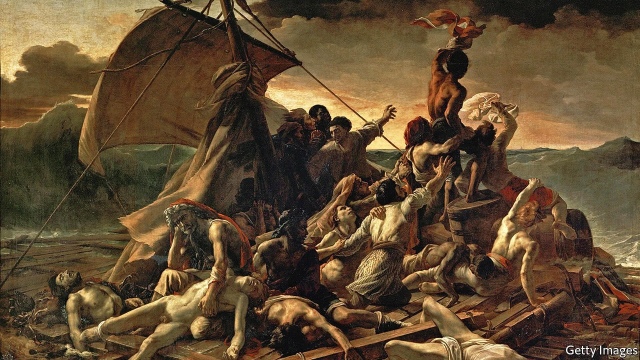

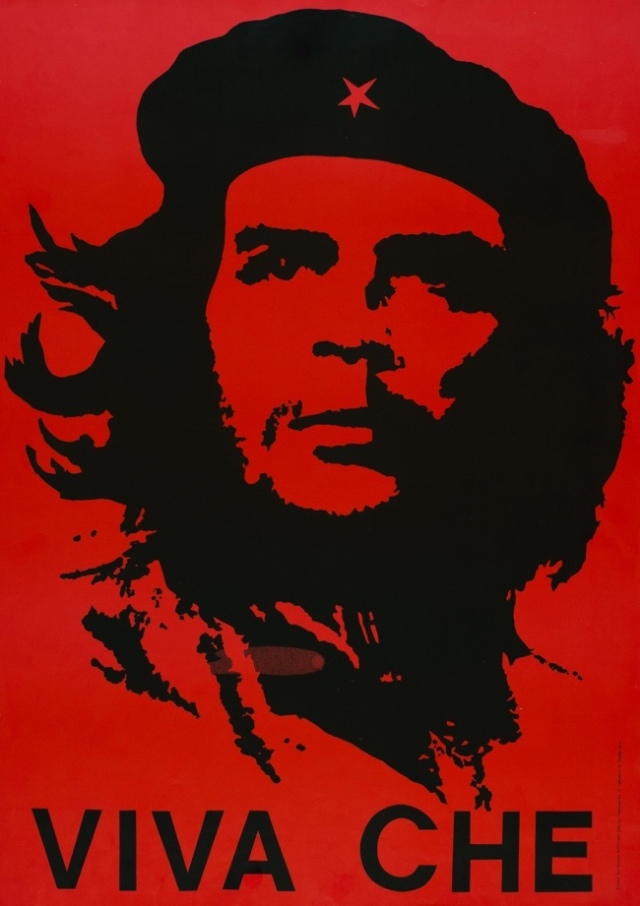


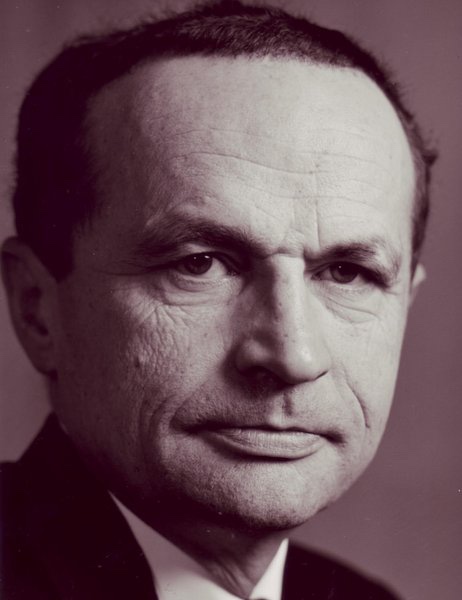


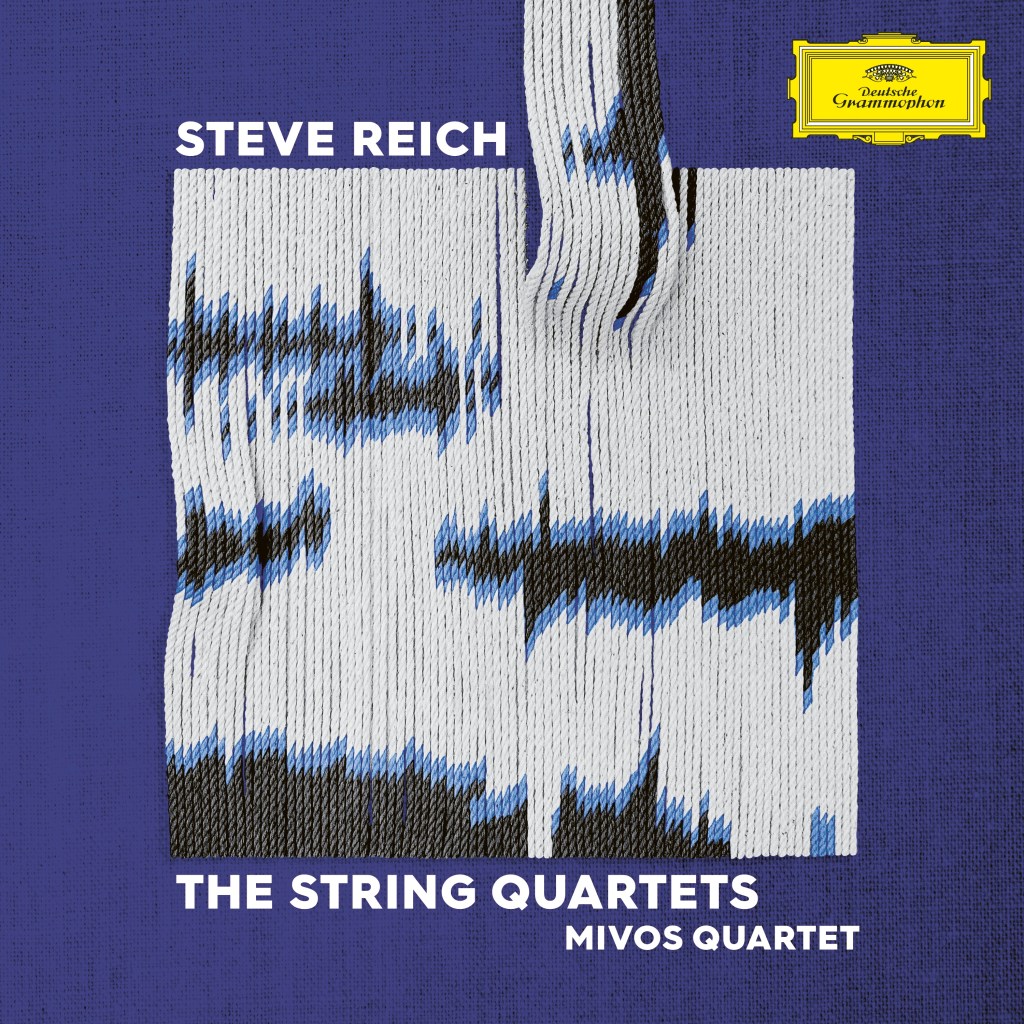
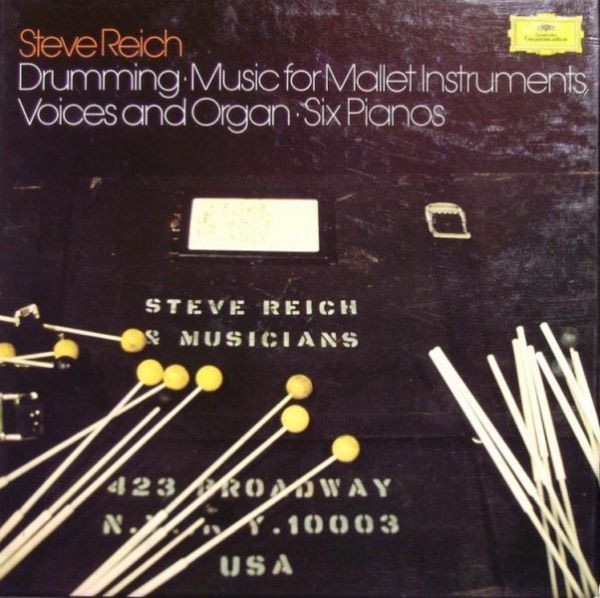
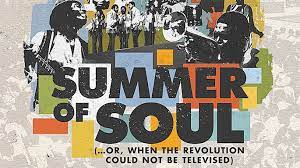
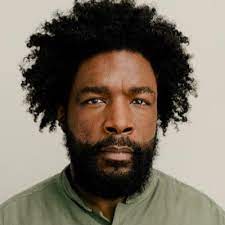
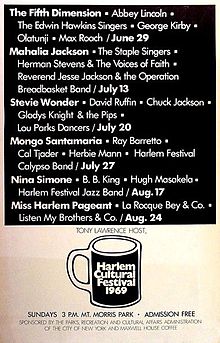
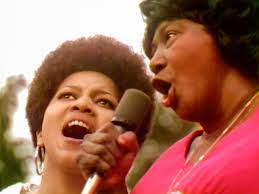
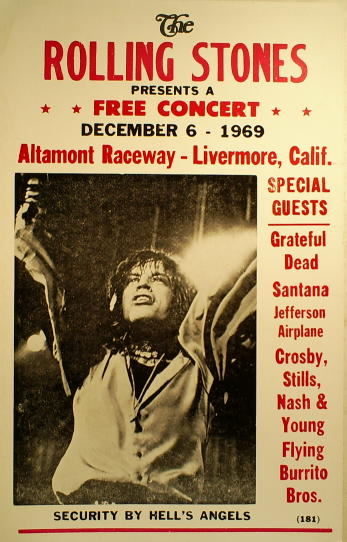

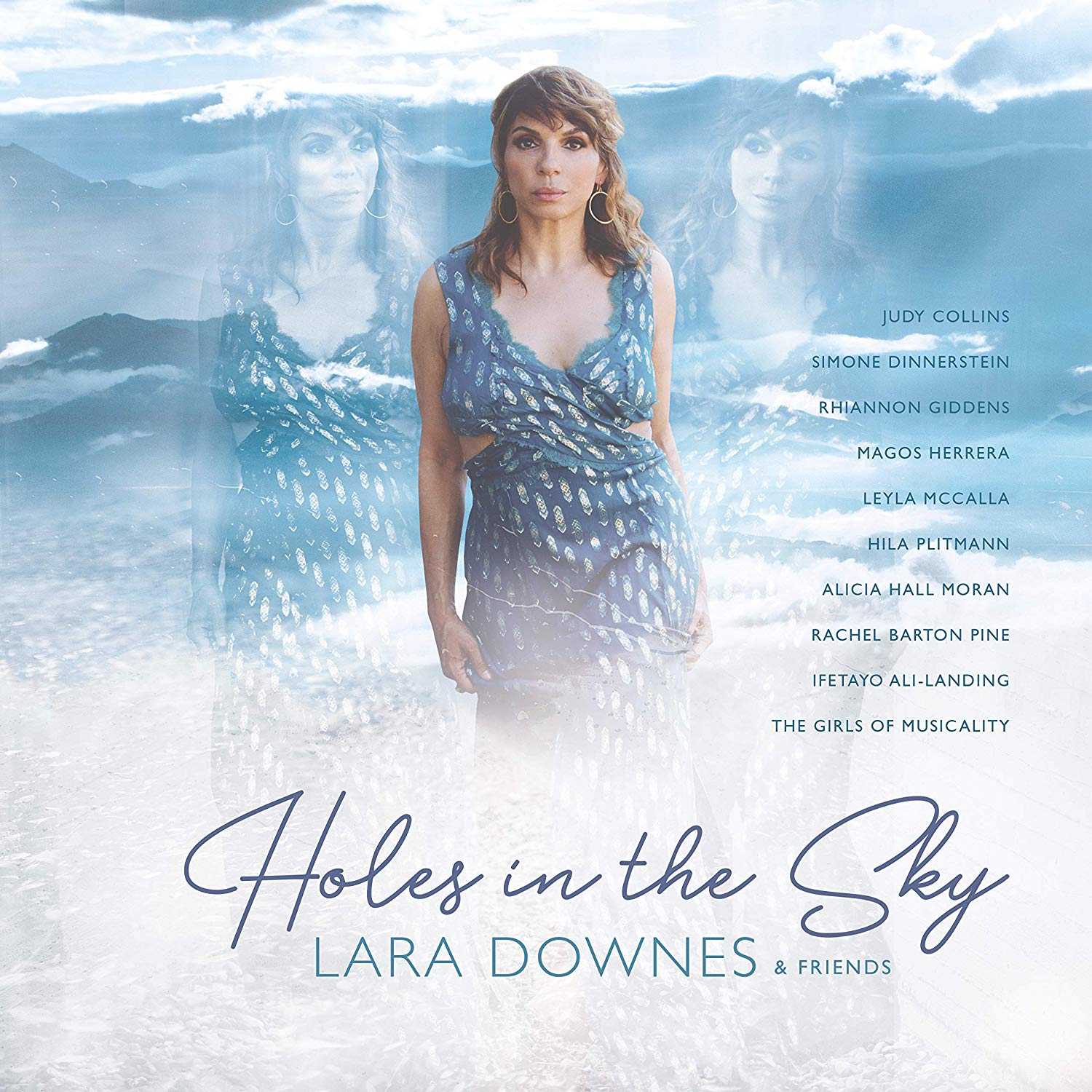


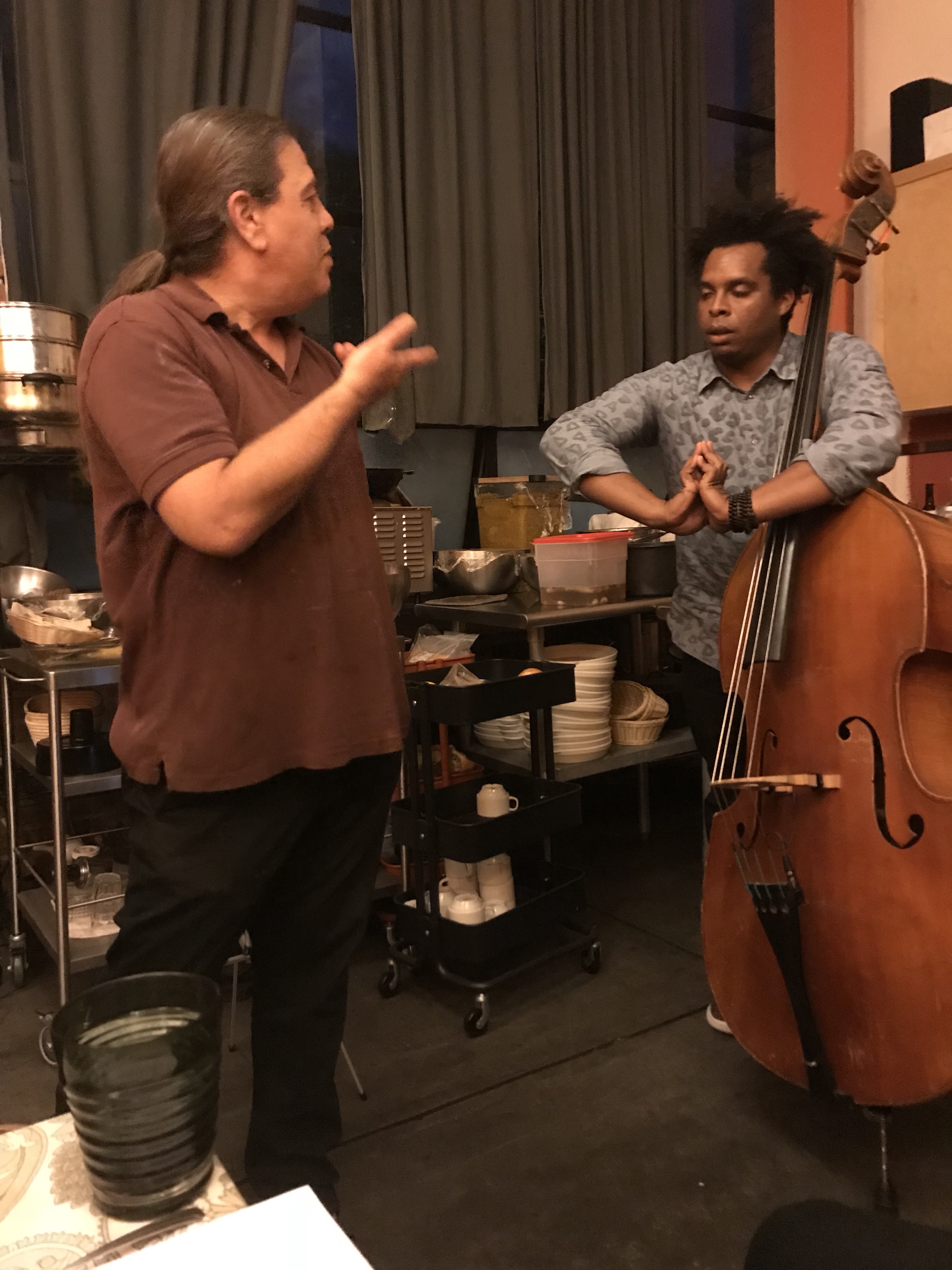
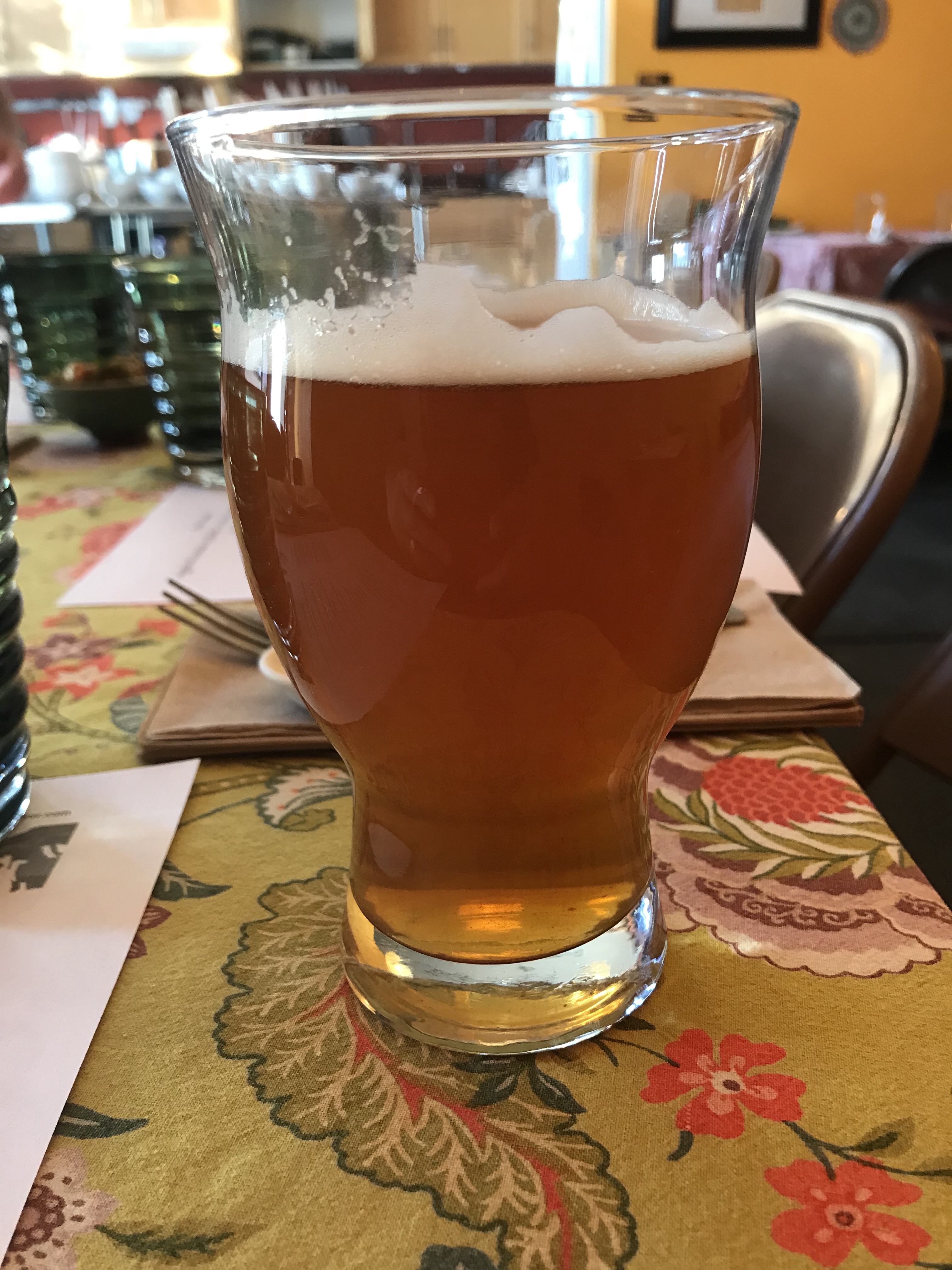

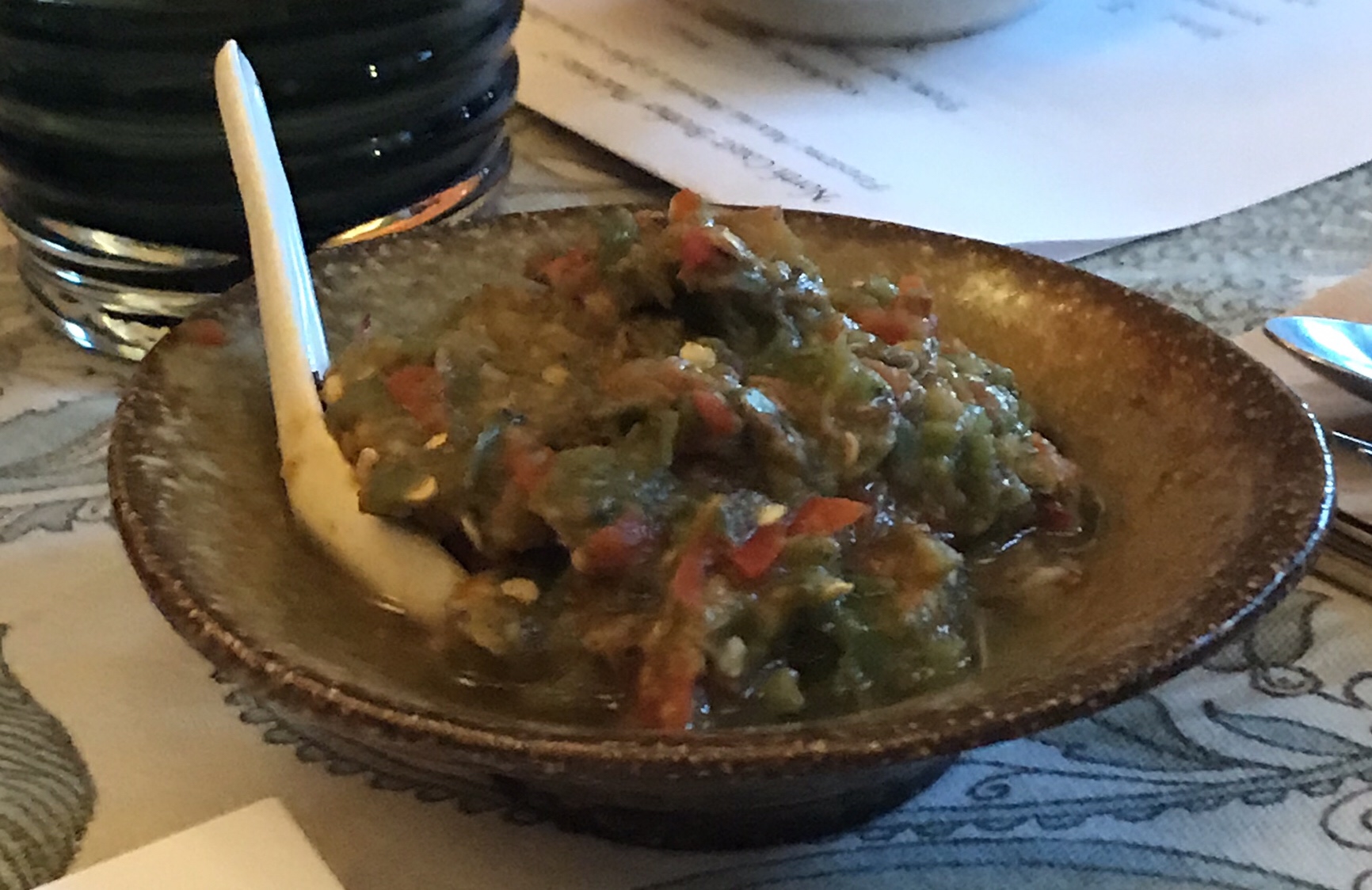
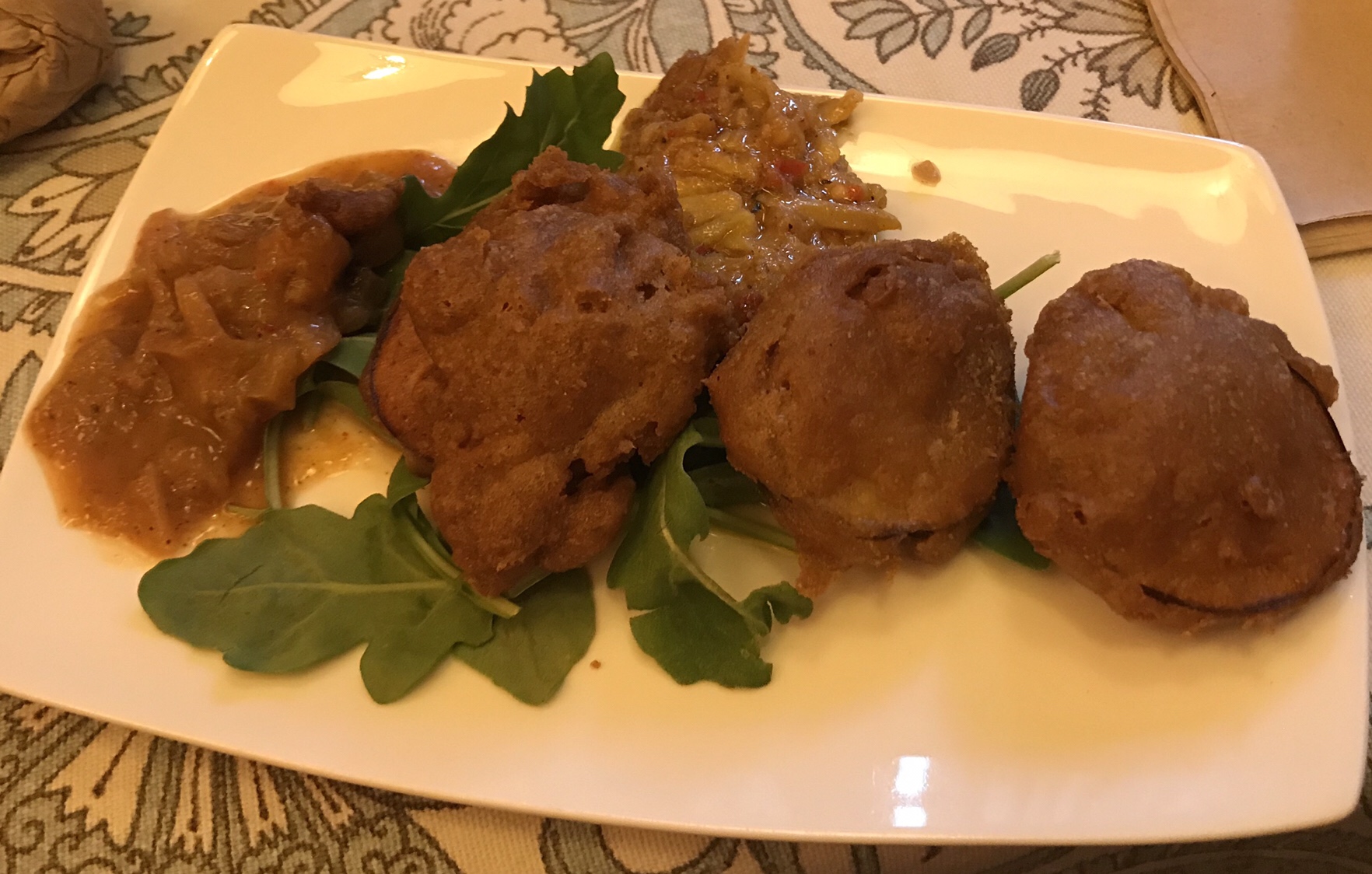
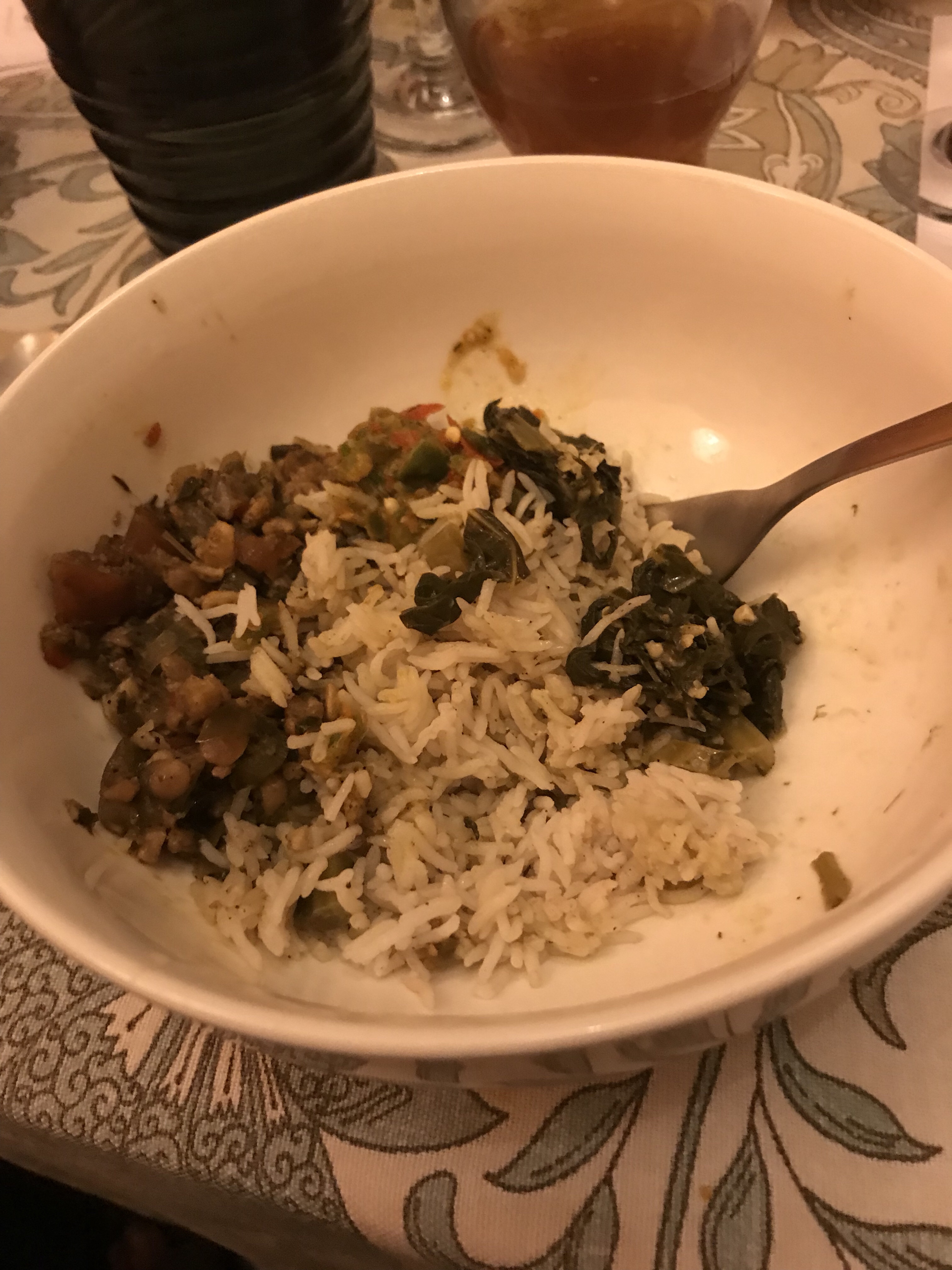

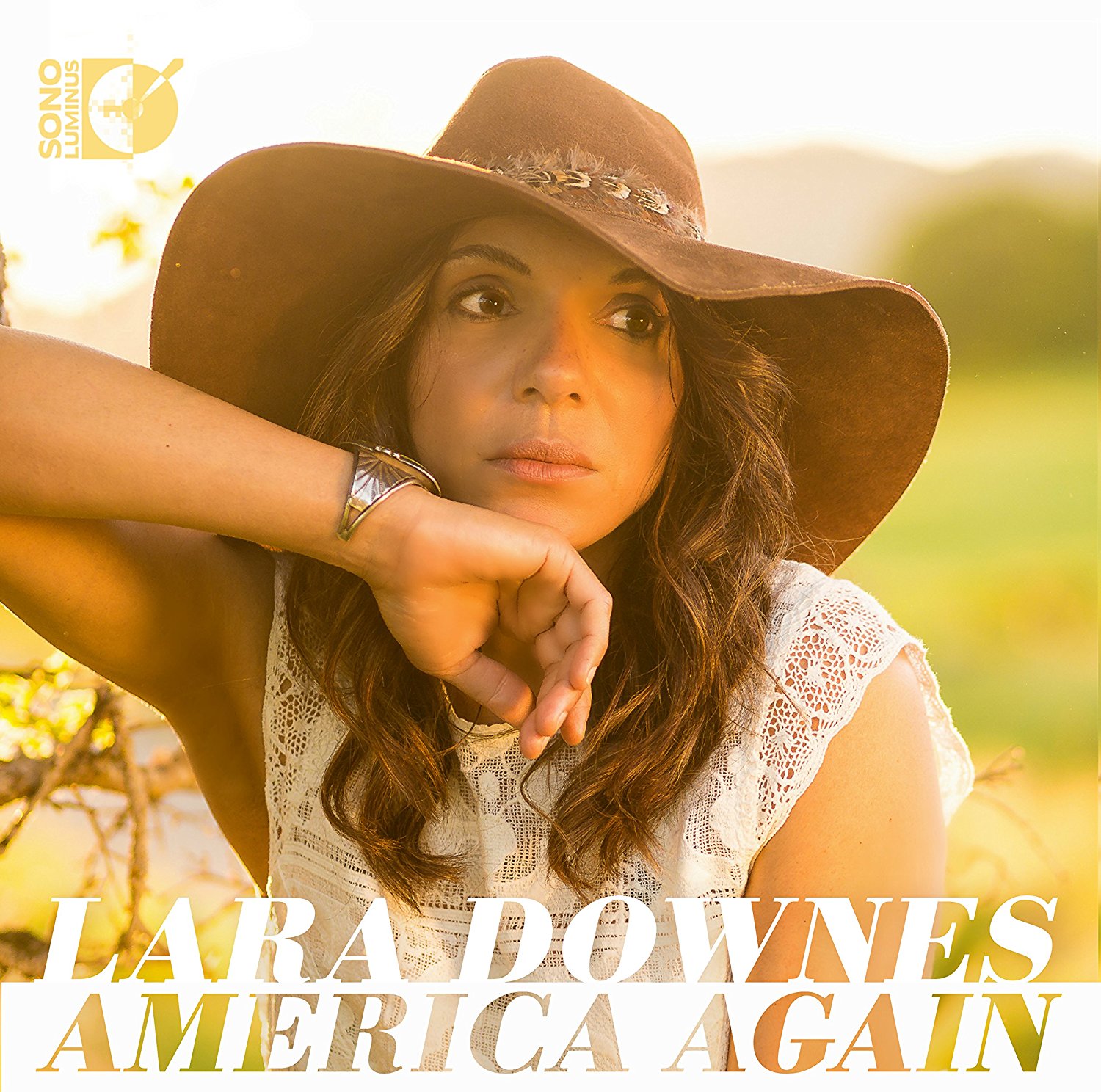
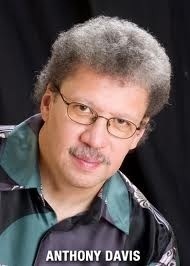


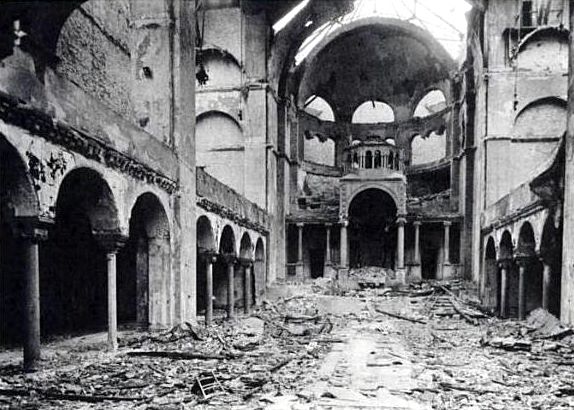


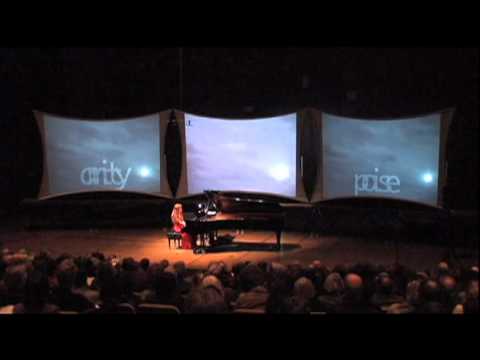


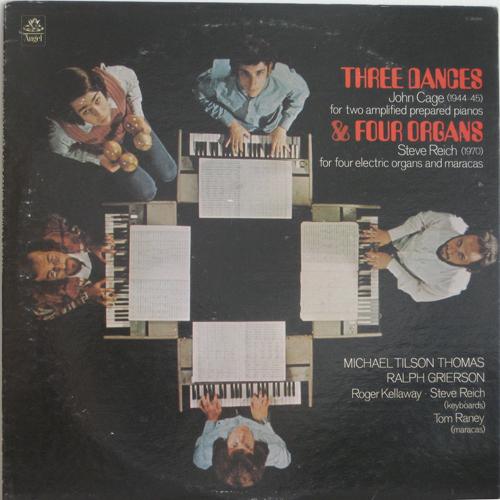

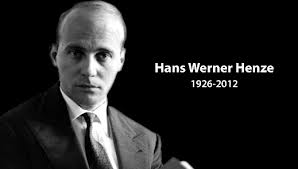

 New Music Buff