İlhan Kemaleddin Mimaroğlu (1926-2012) photo credit unknown, fair use
Portrait of Ahmet M. Ertegun and Nesuhi Ertegun, Turkish Embassy (record room), Washington, D.C., 193- (Photo credit: Wikipedia)
It would be difficult to underestimate the impact of Turkish immigrant brothers Ahmet and Nesuhi Ertegun on the American music industry in the last half of the 20th century with their promotion and production of jazz and rhythm and blues artists. Their lesser known colleague, Ilhan Mimaroglu labored under a slightly different esthetic. In addition to having been involved with the production of many artists’ work on the Atlantic label (including Charles Mingus, Freddie Hubbard, et al) his study of the developing techniques of electronic and tape-based music helped him develop a unique voice as a composer where he worked with electronics, tape, acoustic instruments, musique concrete, and combinations of these media. He was equally skilled in the art of music production and recording and he utilized this knowledge to produce an impressive body of work which deserves to be better known. He also curated the sub label Finnadar to release his own music and that of other artists with similar vision like Anthony Braxton, Frederic Rzewski, Morton Feldman and others.
Mimaroglu wrote a number of works reflecting his political views during the same turbulent years during which Atlantic records shaped the popular soundtrack of the sixties era. Using his knowledge of studio technology in combination with emerging developments in electronic music synthesis he created many purely electronic studies, musique concrete, at least 4 string quartets, solo piano pieces, and more that has yet to be fully catalogued.
First let me clarify the term ‘Agitprop’. This is a hybrid word or ‘portmanteau’ for the terms ‘agitation’ and ‘propaganda’. The word appears to have first been coined and used in conjunction with the Russian Bolshevik revolution and it’s political tactics. The idea was to create a form of propaganda that would not only inform but also encourage action.
This unusual piece, a concatenation of an electronic score, the Freddie Hubbard Quintet, organ, and strings is perhaps his greatest example of Mimaroglu’s brand of political music. It is by no means his only agitprop/ political piece but it may be his finest and one of the best works of this thorny, frequently controversial genre.
The title is a combination of the name of the town (Son My), the location of the My Lai massacre, and the ironic words, “Sing me a song of Songmy”. The collage and non-linear format of the piece actually contains a dizzying mix of concurrent horrors including the Sharon Tate murders and others whose subjects await a comprehensive analysis by a historian and/or a musicologist. The work includes poetry by Fazil Husnu Daglarca, news clippings, etc. Luciano Berio did something similar in his similarly political masterpiece, Sinfonia (1968). That work is rife with musical and textural references subsequently enumerated by the late American composer/musicologist, Alan Stout.
This is also one of the most expensive productions of a mix of evolving musical genres with a strongly controversial and ugly subject. It can stand in comparison to Picasso’s Guernica for its power to provoke. Add the thorny early electronics with the free jazz of Hubbard and the jazz/blues inflected writing, and you have a powerful indictment of war crimes but hardly a best seller. And it is only with the healing of time and the fading of the sting of those memories that this work has begun to be appreciated more fully.
A landmark set of recordings of Schoenberg’s chamber music for strings
The Juilliard Quartet, founded in 1946 by composer William Schuman (1910-1992) is a highly respected and justly lauded ensemble. This fine CD set includes two complete cycles of Arnold Schoenberg’s String Quartets. It also includes the composer’s too little known String Trio of 1945 and a ravishing string sextet version of Verklärte Nacht. This 7 CD set documents a bit of recording history as well, offering the original mono recordings of his numbered string quartets alongside the Grammy winning (Steven Epstein, producer) 1978 stereo recording (which also included an early unnumbered string quartet in D major).
I grew up expanding my musical horizons with that 1978 release, offered here for the first time on CD format. But the present box set was my first hearing of the 1951 mono recordings of the numbered quartets.
I would venture a guess that most listeners, even those drawn to the sorts of modernism that characterizes my blog reviews, probably own no more than one set of the Schoenberg String Quartets. They just don’t seem to get the same love that other modernists like Bartok, Ravel, Debussy, and maybe even Elliott Carter get from fans of new music. (All of these composers, by the way, have had their quartets recorded by the Julliard Quartet). But hearing two readings across just over a thirty year span by two different generations of this iconic ensemble does much to suggest that Arnold deserves at least another reckoning and perhaps an elevation of his reputation as a brilliant musical mind. It is also a fine testament to the enduring creative interpretive skills in the various generations who have been The Julliard String Quartet.
For that reason alone (the inclusion of those 1951 recordings), discerning listeners will want to own this wonderful set. The production is itself a work of homage and respect with some lovely nostalgia inducing reproductions of the original cover art. And the photographic image of a vinyl record that adorns several CD helps set that tone, one which virtually screams “COLLECTOR’S ITEM”.
I fell in love when I opened the box
The Juilliards have helped identify and characterize the whole of string quartet literature much as the Guarneri Quartet, the Arditti, Kronos, etc. have. Having a work performed and recorded by any of these (to name but a few performers) virtually assures the accepted work a place in the actively performed canon of concert works. It is a stamp of authenticity.
The Quartets span most of the creative span of the composer’s career. That early D Major Quartet (1897), First Quartet (1905), and the Second Quartet (1908) were written before his 12 tone method had been fully developed. We hear the 12 tone method in the Third and Fourth Quartets and the Trio.
That Second Quartet is apparently the first time a soprano had been used as an adjunct to the ensemble. Uta Graf sings in the 1951 recording and Benita Valente in the 1975 cycle. The text (curiously not included in the otherwise delightful and intelligent notes) are by poet Stefan George (1868-1933). I include them here in English for interested listeners:
Rapture I feel air from another planet. The faces that once turned to me in friendship Pale in the darkness before me.
And trees and paths that I once loved fade away So that I scarcely recognize them, and you bright Beloved shadow—summoner of my anguish—
Are now extinguished completely in deeper flames In order, after the frenzy of warring confusion, To reappear in a pious display of awe.
I lose myself in tones, circling, weaving, With unfathomable thanks and unnamable praise; Bereft of desire, I surrender myself to the great breath.
A tempestuous wind overwhelms me In the ecstasy of consecration where the fervent cries Of women praying in the dust implore:
Then I see a filmy mist rising In a sun-filled, open expanse That includes only the farthest mountain retreats.
The land looks white and smooth like whey. I climb over enormous ravines. I feel like I am swimming above the furthest cloud
In a sea of crystal radiance— I am only a spark of the holy fire I am only a whisper of the holy voice.
Litany Deep is the sadness that gloomily comes over me, Again I step, Lord, in your house.
Long was the journey, my limbs are weary, The shrines are empty, only anguish is full.
My thirsty tongue desires wine. The battle was hard, my arm is stiff.
Grudge peace to my staggering steps, for my hungry gums break your bread!
Weak is my breath, calling the dream, my hands are hollow, my mouth fevers.
Lend your coolness, douse the fires, rub out hope, send the light!
Still active flames are glowing inside my heart; in my deepest insides a cry awakens.
Kill the longing, close the wound! Take love away from me, and give me your happiness!
Schoenberg said he had been inspired by the poetry to compose these angular, expressionistic melodies. The poetry, like the music reflects tenor of the times.
In addition to the quartet cycles, this set is intelligently filled out by the inclusion of the string sextet version of the 1899 Verklärte Nacht. Here the Julliards (consisting of Robert Mann and Joel Smirnoff, violins; Samuel Rhodes, viola; Joel Krosnick, cello) are augmented by two exceptionally worthy soloists, Yo Yo Ma on cello and Walter Trampler on viola. It is followed on the disc with a powerful reading of the masterful String Trio from 1946. It is an illustration of the historical development of the composer over that 44 year period. I listened casually the first time but more carefully in subsequent hearings as the disc moved from the last track division of Verklärte Nacht to the first of the Trio finding this to be a lucid illustration of the composer’s seemingly natural development from post Wagnerian harmonies of fin de siecle Transfigured Night to those of the now fully developed 12 tone compositional method so beautifully integrated in the post war String Trio (played here by Robert Mann, Samuel Rhodes, and Joel Krosnick).
I used the term “post war” in my previous paragraph as a convenient segue to the last piece in this collection. The Trio is offered in a 1965-6 recording (stereo) played by Robert Mann, Rafael Hillyer, and Claus Adam. It is followed by the anti fascist “Ode to Napoleon Bonaparte” from 1942, a setting of a text by Lord Byron. Here the Julliards are joined by Glenn Gould on piano and speaker John Horton. It is one of Schoenberg’s politically tinged works. It has much in common with A Survivor from Warsaw (1947) and Schoenberg can only really be understood in the context of his turbulent times.
Perhaps there’s a parallel to our turbulent present. Maybe Schoenberg can be better understood if his listeners have experienced a certain amount of existential angst. We certainly have a lot of that. But, ultimately, this box set is a cause for joy and even optimism. It is a loving document of compositional, performance, and recording excellence.
Cover of the original vinyl release of “Der Floss der Medusa”
The 1913 riotous premiere of Stravinsky’s “Rite of Spring” is pretty well known in classical music history. Sandwiching the premiere of his masterpiece of modernism between well known conservative chestnuts such as “Les Sylphides” (an orchestration by Alexander Glazunov of piano music by Chopin, 1907-9) which opened the concert along with Carl Maria von Weber’s “Les Spectre de la Rose” (an 1841 Berlioz orchestration of Weber’s 1819 piano piece, “Invitation to the Dance”) and Alexander Borodin’s “Polovtsian Dances” from his opera “Prince Igor” (1887-1890) which were programmed to follow it. Combine these (familiar to audiences) conservative works with the Rite’s original choreography by Vaclav Nijinsky and the subject of pagan ritual that form the scenario played before an audience consisting of elite concert goers seeking a familiar easy experience along with a burgeoning group of bohemian leaning audience members (who loved the Rite’s loud, subversive nature of both music and staging) and you have a formula for conflict. Speculation is that Stravinsky and/or his producers planned this event to create a contrast for his new modernist work but more likely it was a largely a product of its time and of human nature.
Fifty two years later, Hans Werner Henze appears to have had nothing in mind (at least initially) other than the premiere of his new work, “Das Floß der Medusa” (The Raft of the Medusa) on December 9, 1968 in Hamburg’s “Planten und Blomen” Hall. The recording which was later released on DGG LPs had been done sans audience on the previous days, December 4-8th, and preparations were being made for that night’s world premiere performance before an audience.
An article would later run in the German magazine Der Spiegel describing the event. I present the text of that article in my own translation:
Der Spiegel, December 12, 1968
“What is necessary”, says Hans Werner Henze, 42, “are not museums, opera houses and world premieres … What is necessary is the creation of mankind’s greatest work of art: the world revolution.”
Last Monday, Henze’s “Das Floss der Medusa,” an “Oratorio volgare e militare, in due parti” commissioned by the NDR, was to be premiered in Hamburg — instead, there was a revolution in the hall.
The 1060 seats in Hall B by Planten un Blomen were fully occupied, the NDR Symphony Orchestra was already tuning the instruments, on the podium were ready: Edda Moser (soprano), Dietrich Fischer-Dieskau (baritone) and Charles Regnier (speaker) , the North German Radio Choir, the RIAS Chamber Choir and the St. Nikolai Boys’ Choir. The game could begin, and it began — a duo volgare e militare between NDR and SDS.
Because the Berlin SDS friends under Gaston Salvatore, summoned by Henze, didn’t want to do without this premiere of the APO (Außerparlamentarische Opposition) man Henze any more than the socialist students of the Hamburg Music Academy — albeit for different reasons: The Hamburgers cared about Henze’s music as reactionary to expose the Berliners, to bring their Hamburg colleagues to reason and to divert attention to the middle-class audience. Action against Henze, argued the Berlin “Project Group Culture and Revolution,” would only benefit the bourgeois enemy.
Che Guevara (1928-1967)
After three days of palaver, the Hamburg wing was lame. For example, the intention to ask the composer to explain the structures of his music when he played Medusa was abandoned, as was the plan to intervene in the choral singing, and the attempt to expose Henze’s listeners to Henze as culinary Henze consumers.
On Monday evening, Berliners and Hamburgers moved in socialist harmony to Planten un Blomen, the premiere location that Henze claims to have confused with Blohm & Voss. At least that’s how the Berlin SDS had informed the Hamburg SDS.
NDR program director Franz Reinholz, to whom Henze owes the “Medusa” commission, knows otherwise: “Henze,” Reinholz assures, “inspected the hall himself beforehand. He was also informed about the audience.” shipyard workers, it was, the socialist students recognized once again, an audience of “rich bastards.”
Shortly before 8 p.m. the squad was ready for action in Hall B. And before the conductor Henze stepped out of the artist’s room, Che was already in the hall: the agitators had pinned a Che Guevara portrait to the desk; it was intended to remind us of what had been concealed in the program with Henze’s approval: the oratorio is dedicated to the Latin American freedom fighter.
NDR program director Franz Reinholz didn’t appreciate this memento at all – he tore down the poster. He felt that politics and art did not go together.
The students didn’t think so. They put up a new poster and hoisted the red flag, and a team of anarchists, who had come with duck decoys and other hunting instruments, hung a black one next to it. Then the radio hit, the police joined in, the RIAS Chamber Choir began, but not in unison. “Lower the red flag,” demanded one singer, two singers left sobbing: “We are Berliners and have had enough of red flags.” to whose honor they should sing, left the stage and never came back.
The composer, however, was determined to prove his revolutionary sentiment to his comrades for the first time by saying, “The red flag,” said Henze, “it stays.”
While NDR director Gerhard Schröder (SPD), long since in the safe broadcasting van, stopped the live tumult at 8:19 p.m. and radioed his listeners a recording of the dress rehearsal, his deputy, Freiherr von Hammerstein-Equord (CDU), countered in the hall the resistance of the demonstrators banners and placards; A little later, a squad of 25 police officers, visors on combat helmets, broke into the hall. “Nazis!” “Fascists!” shouted the audience. One artist yelled enthusiastically, “Down with the Reds!”
“The police,” Hammerstein explained, “were ready at the request of the NDR, which considered demonstrations possible and had to ensure the safety of its employees, the audience and valuable instruments.”
Ernst Schnabel, librettist
NDR employee Ernst Schnabel, librettist of “Medusa”, felt the precautions thoroughly. Several police officers threw him through a glass door, expedited him with six other delinquents to police headquarters, took his fingerprints, and locked him in cell 7 until midnight. Schnabel to Hammerstein-Equord: “We don’t have breakfast together anymore.”
Meanwhile, Hammerstein kept order in Planten un Blomen. When Henze informed the audience: “The intervention of the police prevented the discussion,” Hammerstein snatched the microphone from his hand. The hands in the stalls responded with rhythmic Ho Chi Minh clapping, and Henze clapped along — three times. Then he disappeared through a back door.
At that time the “raft of the Medusa” was already well advanced in the ether waves — on the usual counter-revolutionary course.
“Wherever”, the “Süddeutsche Zeitung” judged, “the choirs sang, there was the old, floating, iridescent Henze sound, which doesn’t hurt anyone and never becomes distinctive. The orchestra … strangely often reminded of Richard Strauss.”
The music critic Heinrich von Lüttwitz saw “Medusa” as a “tragi-comic absurdity” full of “romantic colours”, with “sometimes clumsy, sometimes fussy recitatives and melodramas”.
Henze biographer Klaus Geitel saw the “raft” in the “ocean of an emotional but overly extended, lyrically colored monotony”.
It may be that, as Henze puts it, this evening “brought him a little further” politically. But the Henze fans in the APO have failed — that’s how the currently most thoroughly analyzing music theorist Heinz-Klaus Metzger, who identifies with the “anti-authoritarian wing of the SDS,” puts it.
‘The APO, Metzger predicts, ‘will only have created meaningful conditions when German musicians no longer refuse to perform under a red or even a black flag, but instead perform a work by Henze. And for strictly musical reasons. Unfortunately, not even Tucholsky’s bon mot applies to this composer: “Because of bad weather, the German revolution took place in music.”
______________________________________
——————————————————–
So it went in 1968. The Oratorio performance was cancelled and the world premiere had to wait until January 29, 1971 when it was performed in Vienna by the ORF Orchestra conducted by Miltiades Carides. The recording of the first performance was achieved prior to the performance with the audience. That recording was released in 1969.
Many more performances followed but one of those performances, in 2001, was attended by a former chorister, Henning Sidow. He was twelve years old at that 1968 non-concert. And the following article on his experiences of that attempted performance was published in Der Spiegel in 2013.
————————————————–
__________________________________
Blaze at the choral-concert. How the “Raft of the Medusa” went down.
He was anxiously awaiting the big performance: when he was twelve, Henning Sidow was supposed to perform on stage with the NDR boys’ choir in Hamburg. And indeed, the live performance of the oratorio was exciting – but for completely unexpected reasons.
The boys’ choir was founded in 1960 as the choir of the North German Radio and has been connected to the main church of St. Nikolai since 1967.
“As a twelve-year-old in 1968, I had only vague ideas about the political and social turmoil of the time. But on December 9th, as a member of the St. Nikolai boys’ choir, they became tangible experiences for me as a result of the unsuccessful premiere of the oratorio “Das Raft der Medusa” by composer Hans Werner Henze in Hall B in Hamburg’s Planten un Blomen Park.
I had been in the boys’ choir for four years, which belonged to the NDR until 1967 and was then taken over by the St. Nikolai parish in Hamburg. We “experienced” boys felt quite up to the task of taking part in Henze’s musically demanding oratorio and also appearing in a world premiere that was to be broadcast live on the radio.
The play tells the tragic story of the French frigate “Medusa”, which ran aground as the only ship in a convoy on the way to Senegal in 1816. Since there were not enough lifeboats for the 400 people on board, the crew built a raft that could accommodate around 150 men, women and children and which was to be pulled ashore by the boats. But the officers fled in the boats, leaving the people on the raft to fend for themselves. On the day of the accidental rescue 13 days later, there were only 15 survivors. The others fell victim to starvation, lack of water or cannibalism.”
Hide and seek in the empty hall
“Our boys’ choir was supposed to portray the children on the raft – first as living, then as dead. A difficult piece with a socially critical background, this “Raft of the Medusa”, we knew that. It meant not only intensive rehearsals, but also many afternoons and evenings of rehearsals. What we didn’t know was that the premiere was never to take place.
The location of the event and the preparations fascinated me. The hall seemed huge to me as a child. Large platforms were set up here for the performance, with countless instruments on them. There were people everywhere: stagehands, technicians, orchestra musicians, choristers and soloists – it was just teeming. Now we guys were added.
We had a lot of waiting time and were able to explore everything. So we crawled under the stage construction, played hide and seek, crawled under the platforms and shimmied over wooden struts until we got too many splinters in our fingers. And right next door there was another hall, several stories high – a gigantic glass box. There was no event taking place at the time, so the hall was yawning and unlit. We strolled through them, hearts in our pants because of the darkness and the eerie acoustics of the room.”
Protest in the concert hall
“Then things got serious, rehearsals began. In my memory, Hans Werner Henze was a small man who was already a bit bald at the time, but incredibly energetic. He radiated a mixture of warmth, ingenious artistry and normality. We boys found him sympathetic, but he had no airs and graces and met everyone completely naturally, friendly and patiently. He treated us as if we were adults, which I found very beneficial. When I was a child, I was used to other well-known personalities whom we had met here and there through our performances to be treated and professionally not taken very seriously.
Henze was excellent at conveying his music to the participants, it was lively, colorful and exciting like the story itself. The dramatic story and the historical background that he and the music told us captivated me even then. Conducting, however, was not his thing, I remember his somewhat awkward gestures. But that’s not so important in a professional ensemble, as long as the right impulses and cues come. In any case, we children liked and admired him and his music.
On December 9, 1968, as far as I can remember, the hall was filled to the last seat with an audience. There was talk of more than 1000 guests. Henze was already at the desk. But just before it started, there was a small crowd in front of the stage. A few protesting students stood directly in front of the podium and hung red flags to the left and right of Henze’s desk. It was not clear whether the master just put up with this or whether it had been agreed with him, as was later speculated. In any case, he didn’t seem to put up much resistance to the activities.”
The situation is escalating
“Shortly thereafter, the audience and the choir became restless. Because one of the choirs, the RIAS Chamber Choir, came from Berlin, the enclosed city. Red flags were literally a red rag for many who lived there. At first I – and I’m sure my fellow boys too – didn’t understand much of what was happening down there. But when voices from the Berlin choir grew louder and louder, refusing to sing under “the red flag”, I understood what it was all about. The adults feared that they and the music would be exploited by demonstrating communist students. In addition, a large portrait of Ché Guevara has now been erected, to which the work is dedicated.
Henze’s efforts to get the performance started were nipped in the bud by the boycott of the Berlin singers. The removal of the communist symbols was demanded louder and louder from the podium, before they would refuse to sing a single note. In the meantime it was getting more and more restless in the auditorium and in front of the stage there were small scuffles between the demonstrators and some spectators who got involved. Negotiations between the choir and the composer were taking place behind the scenes as to the conditions under which the performance could still take place.
We boys watched the whole thing with suspense, since the circumstances had now reversed: the auditorium had become the stage, and we on the podium had a box view of this live cultural scandal. Music was out of the question. In the back of the hall, the doors flew open and police officers in full riot gear marched in. Like a horde of ants, they came down the aisles from several sides to the podium. I don’t remember how many there were, maybe a hundred. They looked particularly martial with their helmets with full visors and the shields they – to protect against what actually: a few students, musicians and false notes? – carried in front of them.”
A dark chapter
“Henze had meanwhile disappeared unnoticed and downstairs young people were having their arms twisted behind their backs in order to be taken away. Among them was Ernst Schnabel, who wrote the text of the play. He was later charged with “resisting the authority of the state”. On the other hand, part of the audience did not like the actions of the police and protested, which did not prevent the state authorities from their plan to convict the “perpetrators” in flagrante delicto.
I can’t remember exactly how long the commotion lasted. In any case, it never came to a performance, and at some point we left the stage disappointed. It was incomprehensible to us children why a few red flags and the likeness of a bearded South American led to such an uproar. For us it was about art, about music. We felt cheated of our work.
The newspapers reported extensively on this event in the following days. Some tabloids insisted on turning it into a real political scandal. To this day it is unclear to me what the state authorities were thinking when they made this appearance. That’s for sure
That she was thin-skinned in those times and liked to overreact on such occasions. The fear that the ideology that prevailed behind the Iron Curtain could also spread to the West was too great.
For Hans Werner Henze, who died in 2012, this scandal is said to have been a dark chapter in his artistic career. Later, it is said, he did not want to be reminded of it.
My own memories of that evening only surfaced again years later: at the much delayed premiere in June 2001 in Hamburg’s Laeiszhalle. After 33 years I experienced “The Raft of the Medusa” a second time. The fact that I was still able to silently speak and sing along to the lyrics and the music showed how much the piece and the story it was based on had impressed me at the time. None of it was lost. I left the performance deeply touched.”
So, here we are some 46 years after the riotous non-premiere of Henze’s fine oratorio/requiem, 111 years since the famed “riots at the Rite”. The Stravinsky has since firmly taken its place in the commonly performed orchestral and ballet repertory. The Henze work, never laying any claim to the seminal and visionary compositional methods that characterize Stravinsky’s landmark work, continues to receive performances and recordings having established itself as a substantial work, and himself as a significant composer with a rich and varied career.
NB: All translations are my own efforts. Historical photos are included under fair use terms.
Though this was ostensibly Randall Goosby ’s show, the music making was a wonderfully integrated duo with pianist Zhu Wang, These two fine young musicians shared the virtuosic duties that the music in this concert demands. Both are clearly hard working and dedicated artists. Both have technical and interpretive prowess. And they clearly embody a mutual respect for each other.
Pianist Zhu Wang
The music on the program served to demonstrate the duo’s creative selection of music:
Coleridge-Taylor: Suite for Violin and Piano, op. 3 Brahms: Violin Sonata No. 2 in A Major, op. 100 (“Thun”) Still: Suite for Violin and Piano Price:Two Fantasies Strauss: Violin Sonata in E-flat Major, op. 18
Curiously, due to this reviewer’s lack of familiarity with the violin and piano repertoire and having written some recent reviews of black composers’ music, the only familiar pieces were two of the three pieces by black composers. Now, overall, this is a marvelously chosen set of pieces that reflect the eclecticism and technical skill of both of these musicians.
The classic Paul Freeman conducted set of music by black composers.
The Brahms was perhaps the most familiar to audiences but the other works were equally substantive and worthy of being heard. It is these rather visionary choices that characterizes this duo as fresh and innovative. In addition their obvious knowledge of the music along with their enthusiasm and affection for it conspired to make for a delightful evening and even nudged this reviewer to try to become more familiar with the violin and piano repertory in general.
Samuel Coleridge-Taylor (1875-1912) was a black British composer who has of late had a much needed revival of his music. He was named in honor of the celebrated British poet Samuel Taylor-Coleridge (1772-1834). During his rather brief lifetime, Samuel had been hailed as “the British Mahler but, after his death, his music lay largely fallow until revived by the late, great American black conductor, Paul Freeman (1935-2015). His revelatory series for Columbia records (now Sony) opened listeners’ ears to a fascinating selection of music by black composers internationally.
The Coleridge-Taylor opus 3 Suite for violin and piano (1893) is an early work cast in the high romantic late 19th century style of broad melodies and virtuosic demands. It served as the introduction to an intoxicating evening of (partly) seldom performed works alongside some fairly established works in the repertoire.
The Johannes Brahms (1833-1897) second violin sonata (of three) was written in 1879 and was named “Thun” after the Swiss city where he composed it. The three movements follow the classical fast, slow, fast structure common to this genre.
It is a product of high romanticism and it remains a staple of the repertoire. It, as with most of this composer’s music, is technically challenging for both instrumentalists. It was a fine vehicle to confirm the incredible technical skills of these young artists.
William Grant Still (1895-1978) was one of the finest composers of the early to mid twentieth century. Like Coleridge-Taylor and Florence Price (1887-1953), his music was lauded during his lifetime but was neglected until fairly recently in the aforementioned Black Composers set. These musical choices revealed another aspect of this delightful pair of musicians, that of being essentially musical archeologists uncovering forgotten gems much as Lord Carnarvan’s work availed the world to the marvelous Egyptian art of King Tut’s tomb.
Still’s Suite for Violin and Piano was inspired by three sculptures–Richmond Barthé’s African Dancer, Sargent Johnson’s Mother and Child, and Augusta Savage’s Gamin. Written in 1943, it synthesizes elements of blues, pop, and classical music to create musical description of this ethnically inflected visual art.
Richmond Barthé’s African Dancer
Sargent Claude Johnson’s Mother and Child (ca. 1932)
Augusta Savage’s Gamin
The three movements comprise essentially tone poems based on the visual artwork. It was after the second piece, depicting the Mother and Child sculpture that the spell cast by the duo’s that revealed the “Thrall” of this blog’s title.
Goosby embodies a calm and casual confidence and he let the audience know early on that it is OK to applaud after a single movement if you are so inclined. He has a warmth that put the audience at ease, embracing us in a most genial manner. There is, of course, nothing wrong with musicians who might seem more aloof but Goosby’s warmth was both generous and welcome. However, it became clear that this audience, after hearing that gorgeous second movement so beautifully played, paused in a seemingly hypnotic response to the impassioned performance that captured the beauty of the music. It felt as though we had become collectively and deeply engaged. That is the meaning of “thrall” and that was a beautiful experience that spoke of connections between composer, performers, and audience that represent the pinnacle of the art of chamber music performance. All three movements were wonderfully executed but that moment and the collective reaction was a truly moving experience.
Following a brief intermission we got to hear both of Florence Price’s two Fantasies for Violin and Piano (1933, 1940). Though I’ve become familiar with much of Price’s work (her three surviving symphonies and Goosby’s own reading of her two violin concerti have been released in the last couple of years) I had not heard these fantasies before.
Though written only seven years apart, the works embody distinctively different qualities. Both are certainly “capricious”, embodying a variety of moods, but the second is a bit longer and seemed to reflect the composer’s maturing style. Both works were enjoyable and seemed to please the audience.
This led us to the final work on the program, the Violin and Piano Sonata (1888) by Richard Strauss (1864-1949). Best known for his big orchestral tone poems and his grand operas, this was an early work which has found an audience due to its lyrical and friendly character.
It is cast in three movements, and it was at the end of the slow movement that we again saw/heard a sort of “agreed upon” silence in which the audience seemed to have shared a deep impact from that lovely movement played so passionately. No one applauded as a reverent silence came upon us.
The much busier third movement again presented the virtuosity and broad melodies of high romanticism. And there was applause and, much deserved standing ovations. It was a joy to have heard these talented and hard working musicians in an ecstatic night of chamber music.
Santa Barbara conductor Nir Kabaretti (photo copyright David Bazemore)
It was the day before Passover and all through the lovely acoustics of the Granada Theater, nostalgia was afoot. It came in the form of a Mozart Overture, a Mahler Symphony, and some new music for clarinet, the klezmer clarinet of David Krakauer. (N.B. Klezmer is a style of playing common to the Ashkenazi Jewish communities of Eastern Europe and Russia).
Maestro Kabaretti’s thoughtfully crafted program featured the integration on non-western vernacular (folk) musics into the western classical idiom. The incorporation of an age’s popular music into the newly written concert music of that era is a time honored tradition in music history.
Today’s concert would feature Wolfgang Amadeus Mozart’s imitation of the exotic music (to Viennese audiences) of Turkish Janissary music in the overture to his opera, “The Abduction from the Seraglio”. The plot consists of a story that involves a Turkish Pasha who has kidnapped the lover of the leading man. (Spoiler: He rescues her).
There was a personal nostalgia in that the first opera recording I bought was the budget LP of the Josef Krips conducted performance of that opera. The overture quotes some of the music of the opera and sets the exotic locale with the imitation of Turkish music.
The relative exoticism of Turkish music was imitated by Mozart in his 5th Violin Concerto, subtitled “Turkish”, as well. Listeners may recall the imitation of Turkish martial music in the finale of Beethoven’s 9th Symphony (just after the cherub stands before God). Mozart’s inclusion of piccolo, triangle, big drum, and cymbals (rarely seen in classical era orchestras) typify the European imitation of this ethnic music.
Mozart’s overture works well as a standalone piece and Kabaretti’s Santa Barbarans stimulated at least this listener’s sense of nostalgia in a beautifully crafted reading of this music. From the familiar opening notes this overture this listener was transported to nostalgic reverie and simultaneously enthralled by the energetic reading of the work. It was a delightful balance of both nostalgia and an opportunity to somehow hear this work anew.
Clarinetist David Krakauer (c)Linus Lintner Fotografie
What followed that delightful overture brought featured performer David Krakauer to the stage for a performance of a new (2018) concerto for klezmer clarinet. But before that, we were treated to what Krakauer described as “an arrangement” of a classic klezmer wedding tune. The affably chatty Krakauer is apparently possessed of a genuine humility here because this was virtually a mini concerto for clarinet and string orchestra whose style had some resemblance to the Mahler Symphony programmed post intermission.
Krakauer is a seriously accomplished musician, composer, musicologist, and teacher. His technical and interpretive skills are of Olympian dimension and his ability to relate to fellow musicians and the audience were a joy to behold. Readers of this blog might recall an earlier review of yet another klezmer concerto also championed by Krakauer. You can read that blog entry here.
The youngest music by the youngest composer on the program was next. Wlad Marhulets (1986- ) is a Polish born and educated composer. His name had been unfamiliar to me but a quick look at his website and a few listens on YouTube revealed this man to be a marvelously skilled and creative composer. Put this man’s name on your listener’s radar.
Doubtless our soloist had some input on the performance of this concerto but Marhulets appears to have an in depth understanding of klezmer performance along with a solid grounding in western classical music and a marvelously nuanced skill at orchestration. This is a substantial concerto and a great addition to the repertory.
Like the Mahler Symphony which would follow in the second half of the concert, Mr. Marhulets demonstrated a range of compositional skills. He can evoke humor, terror, nostalgia, joy. He handles a large orchestra augmented by an electric bass guitar and a drum kit. And he has a subtle but effective sense of orchestral color. The soloist, who has a lot to do, winds in and out of passages that pit his clarinet variously against the full orchestra and in duet pairings, sometimes fleetingly, that suggest images of pub, dance hall, and street concerts. All of these the natural milieu of Klezmer music.
The concerto began loudly, raucously, and assertively. The soloist navigated the complex rhythms and subtle balances of texture as only a master musician can do. Kabaretti and his fine orchestra were clearly up to the significant challenges of this music and clearly enjoyed their labors.
The loud, declarative, opening gave way to a lovely and lyrical slow movement followed by a long and engaging cadenza, sometimes punctuated briefly at times by the orchestra. It then led into a really fun (though hardly trite) finale.
Following a richly deserved standing ovation, Krakauer and the orchestra gifted the audience with an encore. Echoes of klezmer in the many moods evoked by this afternoon’s music making left this listener reflecting on the chaos in our world here, in this beautiful hall, in this beautiful city, on the eve of Passover. I fancy that there is a gentle activism here, one in which the sharing of the beauty of a culture’s esteemed artists (composers and performers) acts as a proud display of some of the best that that culture has to offer. The quality of the music and the music making can’t fix the world’s problems but they can give us hope and joy. Great art elevates the soul. At least that’s what this reviewer felt.
The intermission was needed to replenish listeners’ emotional reserves for the second half. No doubt the musicians needed to recharge as well.
The Mahler First Symphony (1888) triggers more personal nostalgia for two reasons. One, my first Mahler purchase was the Bruno Walter reading of this and the ninth symphony. Second, I will forever associate that first movement depicting dawn in its opening. Astute listeners may recognize television and film composer Alexander Courage’s appropriation of this music in his now iconic theme for the original Star Trek series (which debuted in 1964 when your humble reviewer was 9 years old). I would encounter Mahler some years later.
It is difficult over 100 years after the symphony’s premiere to understand how radical this music seemed to players and listeners. Its Budapest premiere has been described as a disaster mediated by uncooperative musicians in the orchestra and an unsympathetic audience. After his death in 1911, Mahler’s compositional star rose to new heights when the late, great Leonard Bernstein championed his work during his long and fruitful career, even reintroducing Mahler’s music to the Vienna of its beginnings. This is the Vienna where Maestro Kabaretti was trained. And he gets this music deeply.
To be fair, this piece presents many challenges for players and conductors but, when it is well done, it thrills audiences. Maestro Kabaretti and his Santa Barbarans delivered as fine a performance of this symphony that this reviewer has heard. It was positively thrilling and, unlike the musicians who played in the disastrous premiere, the Santa Barbara Symphony clearly enjoyed their hard work and respected their leader.
This was a thrilling and invigorating concert experience. The hometown orchestra put in a world class performance and our esteemed soloist was matched in his expertise by their skills. The nearly full house was most obviously pleased as was this reviewer.
There is an aptness that accompanies the publication of my first blog of the new year. Much as we aspire to review our past year and resolve improvements for the next, this book effectively plays a similar role.
Arnold Schoenberg (1874-1951) was born into tumultuous times. His life intersected with political change, social changes, two world wars, and huge changes in the way music would be written and heard. His life and the above mentioned changes in the world are the subjects of Harvey Sachs’ relatively brief review of Schoenberg’s life and career. But the relative brevity does not sacrifice the apparent aim of presenting this composer’s work in the context of the times thereby providing the reader/listener with a perspective that aids an understanding of the man, his music, and his (arguably still evolving) place in history.
“You can see it isn’t easy to get on with me. But don’t lose heart because of that.”- Arnold Schoenberg
At 272 pages this book wisely focuses on the composer’s published work and the drama of its performance along with critical and audience responses. This is not a comprehensive review of all things Schoenberg. While Sachs makes references to the composer’s earlier works, he focuses primarily on the published music and the responses of musicians, critics, and audiences. More importantly he focuses on the massive socio-political changes that paralleled the music thereby providing a useful context for future listeners and performers to better understand Schoenberg and his place in musical history.
Sachs places less emphasis on the composer’s paintings and even his writings. What the author achieves is a very readable and understandable essay that listeners (your humble reviewer included) can use to take another look/listen and to come to a new reckoning of Schoenberg and his place in the world. To, as the subtitle suggests, better understand, “Why he matters.”
I must admit that I did not understand and appreciate the music of Arnold Schoenberg immediately, and even when I ventured to read this volume, I found that my familiarity with this composer was limited primarily to “Transfigured Night”, “Pierrot Lunaire”, the “Second String Quartet”, Moses und Aron” (the Solti recording), Piano Concerto, Violin Concerto, the String Trio, and a fleeting listen or two to the piano music.
The joy of this book was in its chronological exposition of all of the composer’s major works and their historical and political contexts. As a result I found myself listening for the first time (or at least the first in many years) to the two chamber symphonies, the other string quartets, etc. It was an opportunity to reset my perceptions/misperceptions and acquire a better understanding and appreciation of his oeuvre.
As Sachs concludes:
“There are cycles in the arts. Perhaps we have reached the end of one great, centuries long cycle of individualistic European Art Music and its global offshoots. We cannot know. But, in the unlikely case that the subspecies Homo Sapiens Sapiens doesn’t destroy itself in the meantime, there is good reason to expect that sooner or later a new cycle will begin. And, for now, we have an enormous treasure of outstanding creations that continue to speak to anyone who is willing to listen to them.”
Regular readers of this blog are doubtless aware of my “underdog” interests. Whether suppressed by fascist regime, (as in London Records “Entartete Musik” series and Chandos “ARC”ensemble recordings), or just somehow eclipsed by more “spectacular” (by which I mean, “producing a spectacle” like Stravinsky’s Rite of Spring) but, as exemplified by Cedille Records’ “Avant L’ Orage”, music can be oppressed, disliked, or overlooked and such music, in my humble opinion, deserves another listen, a second chance. With this release, NAXOS puts forward a second chance on these stage works by a man better known for his stride piano and ragtime works. No, it’s not Scott Joplin. Guess again.
Esoteric as this my interests have ranged, I couldn’t have guessed that I refer here to James Price Johnson (1894-1955), so don’t feel bad if you guessed wrong. Johnson’s burial site is in Queens, New York. His grave, unmarked since his burial, didn’t get a headstone until 2009. And this is the man whose composition, “Charleston” (1923) became ubiquitous and emblematic of the so called “Jazz Age”.
Apparently Johnson had a fair amount of success as a composer of stage works. And he collaborated and/or influenced people like William Grant Still, Duke Ellington, Count Basie, Jelly Roll Morton, Willie “The Lion” Smith, Art Tatum, and Thelonius Monk, among many others. Fats Waller was one of his students.
Johnson is arguably an artistic descendant of Scott Joplin whose work Johnson both performed and recorded. And in addition to his solo piano work he apparently also wrote stage works. The works presented on this release are short operas, lovingly reconstructed by the late James Dapogny (1940-2019), a composer, pianist, and jazz musicologist. Dapogny provided an accounting of his work reviving these historically and culturally significant works that also happen to be well written and very entertaining.
The liner notes written by University of Michigan doctoral candidate Cody M. Jones provide a very useful context for understanding both the music and it’s unreasonable neglect. Jones identifies these works as part of the “shadow culture” (a concept made by opera historian Naomi André referring to art produced by black artists which was willfully neglected during the “Jim Crow” era).
Jones writes that these works may have been inspired by George Gershwin’s Porgy and Bess (1936). It appears that The Dreamy Kid (1937) was Johnson’s first stage work and De Organizer (ca. 1938-9) was his second (and last) work for the stage.
The Dreamy Kid was written to an existing play by Eugene O’Neill but apparently was never completed. Its fragments were found during Dapogny’s research on De Organizer. So that makes this a world premiere recording of this piece.
Track listing
Two stage works with libretti, one by the estimable hero of the Harlem Renaissance, Langston Hughes, and the other (actually a stage play, not a libretto) by Eugene O’Neill. These recordings owe a debt to the conductor Kenneth Kiesler (1953- ) and the late James Dapogny (1940-2019), composer, musicologist, and jazz musician. Dapogny and Kiesler also contribute the brief but useful program notes.
“De Organizer” (ca. 1930) received acclaimed revival performances in Michigan, New York, and Chicago in 2002. Both the New York Times and the Chicago Tribune featured strongly positive reviews.
“De Organizer” is an apparently complete recording Its libretto was written by the Harlem Renaissance writer Langston Hughes (1902-1967). The work received only one performance in Carnegie Hall in 1941 as a benefit for the International Ladies Garment Workers Union. This work shares a similar fate with that of Marc Blitzstein’s “The Cradle Will Rock” (1937), famously suppressed for its pro union themes.
The second work is a set of excerpts of an incomplete opera called, “The Dreamy Kid” based on a stage play by the great American playwright, Eugene O’Neill (1888-1953) and its tale of racial violence at the hands of police is sadly a timely theme and a precursor of sorts for the politically infused operas of the Pulitzer Prize winning Anthony Davis.
Both works make use of jazz and blues forms (both distinctly African American art forms) and will remind the listener of Gershwin’s admiring appropriation of these forms. Jazz and Blues ubiquitously informed western classical worldwide as seen in the work of Gershwin, Aaron Copland, and Maurice Ravel, among others so the reconstruction and revival of Johnson’s theater works fill a gap in the history of western music as a whole. This is a very entertaining recording of some truly substantial music that can now take its place with Joplin’s “Treemonisha” as great American music.
Samuel Taylor Coleridge begat Samuel Coleridge-Taylor, who begat Coleridge Taylor Perkinson… Wait, that’s not right. But these three men, listed in chronological order, became intertwined, much as they were admired, by their names. Samuel Taylor Coleridge (1792-1834) is the great (white) British poet. Samuel Coleridge-Taylor (1875-1912), named in honor of that poet (and the subject of this review) was a much lauded, though subsequently neglected British composer, as it happens a black British composer. Taylor Coleridge Perkinson (1932-2004), a much lauded and subsequently neglected black American composer named in honor of those predecessors. Stick with me, this comes together (for the purposes of this review) with the name of the orchestra on this recording, “Chineke”, a word taken from the African Igbo religion, meaning, “God”. Add an exclamation point and you get “Chineke!”, the orchestra which was founded in 2015 by the double bass player, Chi-chi Nwanoku CBE, to provide career opportunities for Black and ethnically diverse classical musicians in the UK and Europe.
All that to introduce listeners to this landmark of the recording industry, fulfilling in part the mission of this fine orchestra. This two CD set provides an intelligent selection of the music of Samuel Taylor-Coleridge which is nothing short of revelatory. Knowledge (at least outside of Britain) of his music, up until this release pretty much limited to his fine choral work “Hiawatha’s Wedding Feast” and perhaps a short orchestra movement. The late great Paul Freeman included an aria from that choral work and one movement (Danse Negre) from his African Suite in his defining set of recordings on Columbia/Sony, “Black Composers”. These brief pieces were the introduction for many people, this writer included, to this composer’s work.
The last family Christmas card, 1912
Chineke! now presents a far more representative selection of this man’s work with a truly nice touch of alreleasing the first recording of music by Coleridge-Taylor’s daughter Gwendolyn Avril Coleridge-Taylor (1903-1998) who wrote under the pen name Peter Riley (it is hardly a secret that both black people and women suffer from lack of recognition in the world of classical music).
Coleridge-Taylor’s output was large, comprising some 82 pieces with opus numbers and unpublished works as well. That’s a lot of music from a man who died at age 37 from pneumonia. This two disc set does a very nice job of presenting music from all eras of his brief career. From the Opus 2 Nonet (1894) to the Opus 80 Violin Concerto (1912) this release provides a larger perspective on this artist (dubbed by white musicians in New York, in what today would be judged a pejorative appellation, “The Black Mahler”). My guess is that the same people who would speak condescendingly about Coleridge-Taylor were also not appreciative of that Jewish Austrian conductor/composer.
Though it appears that all these works have appeared previously in recordings (appropriately on mostly British labels) this collection does a great service in demonstrating the arc of his truncated life’s work. Only the Avril Coleridge-Taylor work, “Sussex Landscape” (1940), is a world premiere recording.
Track list
For the purposes of this review I will be discussing these works in chronological order rather than the order on the recordings. Even a short career demonstrably goes through changes over time, led by social, political, historical, and musical experiences. A photo (above) shows the order on the discs.
The Nonet Op. 2 (1894) for strings, winds, and piano was written by the 19 year old (still a student at the Royal College of Music). This unusual combination, nearly a chamber orchestra in dimension as is the grand, late romantic, Brahmsian dimension. His skill in orchestration is evident here and serves to clarify the musical lines in these four large movements. It is virtually a symphony with a virtuoso piano obbligato.
Here, emissaries of the nascent Harlem Renaissance came to England in the the form of a 1896 concert by the Fisk Jubilee Singers who presented a program of “Negro Spirituals” (Fisk is one of the so called “Historically Black Colleges and Universities” which were formed to provide educational opportunities for Black Americans who were barred from admittance to other colleges). The following year Coleridge-Taylor met the Black American poet Paul Laurence Dunbar (1872-1906), who had come to England on a literary tour. His parents were freed slaves in Kentucky. Both of these experiences had a profound effect on Coleridge-Taylor and his music. Coleridge-Taylor would attend the first Pan-African Conference in London in July 1900. There he would explore the ideas and philosophies of Pan-Africanism which emphasised the importance of a shared African heritage. The orchestral works “Ballade in A minor” Op. 33 and the “African Suite” Op. 35, (both 1898) reflect those influences.
The two movement Ballade is a grand romantic work with no particular program but one that demonstrates the composer’s amazing command of the orchestra. The African Suite, one of his more popular works, was directly influenced by the work of Dunbar (whose career, like Coleridge-Taylor’s, also ended prematurely).
The two movement “Romance” Op. 39 (1899) for violin and orchestra is a foreshadowing of the later Violin Concerto. It is a heavily late romantic work with a beautiful and substantial violin part.
His “Petite Suite” Op. 77 (1911) is among his most popular works and arguably served as a precursor to what would later be termed, “Light Music”. The second movement strikes deep into this writer’s memory as one of those pieces whose charm prompted me to find out what it was so I might hear it again. Very charming and immediately listener friendly music.
The first work on this set, The five movement, “Othello” Orchestral Suite Op. 79 was published in 1909 and first performed in 1911. It was conceived and written as an orchestral suite, not a suite of music drawn from another work and is complete as performed here. It is a stunning example of the composer’s skills with orchestration and with dramatic writing.
Maud Powell (1867-1920)
Now we come to the Op. 80 Violin Concerto of 1911-2 which is dedicated to American violinist Maud Powell, a staunch advocate for female musicians, black composers, and new music in general (an early model for the likes of Rachel Barton Pine). This work of high late romanticism echoes Brahms and Bruch in its Melodie’s, it’s harmonies, and the grand sweep of its gorgeously orchestrated three movements. It is easy to imagine this as a regular repertoire piece.
Avril Coleridge Taylor (1903-1998)
Last and most certainly not least is the world premiere recording by Coleridge-Taylor’s daughter, Gwendoline Avril Coleridge-Taylor (1903-1998), her “Sussex Landscape” Op. 27 (1940). This is just a taste of her 60+ compositions but it is compelling enough to prompt listeners (and hopefully progressive organizations such as “Chineke!”) to pursue more exploration of her oeuvre.
Chineke! Truly achieves their goal in producing this wonderful portrait of a composer whose work has, until very recently languished in relative obscurity. Even this writer, whose obsessive interest in the new and interesting, has been seriously transformed by this release. You really have to hear this release. My thanks and congratulations to everyone involved in this fine Chineke! release.
Utter the name “Israel” and probably only a handful of people will think, “classical music”. As a lifelong new music fan I’ve made many wonderful discoveries by looking at work done by composers in countries that aren’t part of the typical America, Germany, Italy, France, Russia nexus. Throw in the Nordic countries, Canada, and Australia more recently and you have perhaps 90% of what is marketed (even if not efficiently distributed) as new classical music. Israel, at 75, remains a young country but its participation with world class classical composers and musicians is among their proudest contributions to the world at large and those contributions are both extensive and interesting.
Neuma 177
This fine release gives only the briefest taste with a curious selection of pieces that will likely lead listeners to the “more where that came from” path to discover a huge trove of music that really needs to be heard. The only problem with this release is that it’s not a 20 or 30 CD box set of representative western classical music from a comparatively new country in a very old artistic/cultural hotbed.
This fine Neuma release is actually a very nice taste whetting collection of three generations of Israeli composers. I wish I could call it “representative” but that would be a tall order. It is an intelligent selection that will hopefully inspire further exploration of Israel’s classical music artistic legacy. Israel is, in many ways, a country of challenges and this release is, similarly, an extension of this country’s challenges to the canon of western art music in its way and a gentle nudge to curious listeners.
Professor Robert Fleisher (photo: Darsha Primich, courtesy Navona Records)
This project began with a 1986 Israel residency by American composer/musicologist (now Professor Emeritus at NIU) Robert Fleisher. The culmination of this residency resulted in his marvelous book, “Twenty Israeli Composers” (1997) and all but one track on this disc from an earlier concert at NIU in 1987. which was fortunately recorded rather nicely. You can download the book for free by clicking on the title above. Fleisher wrote the very useful liner notes which are also available as a free download. Those two sources can help guide the avid listener to a wider range of music from Israel’s first 75 years.
Track list
German refugee Paul Frankenburger (1897-1984), better known as Paul Ben-Haim is doubtless the one name in this collection that listeners may have heard. He emigrated to the (then British Mandate of Palestine) in 1933 just ahead of the onslaught of the Third Reich in Germany. He Hebraicized his name when he became an Israeli citizen at that country’s inception in 1948. Truly, he was there at the beginning.
His pupils Tvi Avni, Eliahu Inbal, Henri Lazarof, Ami Maayani, Ben-Zion Orgad, and Shulamit Ran (to name just a few) all went on to make significant impacts on the musical world. Some made their careers in Israel, others established the Israeli artistic diaspora but that is another story.
The disc opens with one of Ben-Haim’s finest and best known compositions, his 1943 protominimal “Toccata” for piano. This brief piece is a virtuoso showpiece that this listener found immediately appealing having heard it played as an encore after a concerto performance. Here, a wonderful rendition by Liora Ziv-Li makes a strong case for this piece to be heard more often. This first release of this live performance is, happily, not the only recording of the work. Ben-Haim whose style is of a post romantic/nationalistic style somewhat like an Israeli Aaron Copland, creative and nationalist with just a dash of liturgical. His work is fairly well represented on recordings and on YouTube but he is far less known outside his adopted country where his pedagogy also sowed further seeds.
This second track is one of two (with Tsippi Fleischer’s “The Gown of Night”) that did not appear on the 1987 concert referenced in the intro. Bashrav (2004) by Betty Olivero (the first Israeli born composer represented on this recording) was recorded in Tel Aviv in 2020. The inclusion of this work can stand as a challenge to get listeners to hear one of the finest living composers from Israel. Olivero (1954- ) is very well known in Israel but less so elsewhere despite the fact that some major American orchestras have embraced her work. She is a lyrical and substantive composer whose work is quite appealing. Bashrav is an instrumental chamber orchestra piece based on a Turkish/Iranian musical form from which the work’s title is drawn. It was commissioned and first performed by the San Francisco Contemporary Chamber Players. This is the first commercial recording.
Now we come to another name changer. Tzvi Avni (1927- ) was born Hermann Jakob Steinke in Saarbrucken, Germany. He, like Ben-Haim (with whom he later studied) fled Germany (in 1935) for the safety of the British Mandate of Palestine and took a name reflecting his adopted national alliance. Avni is probably the second best known Israeli composer outside of Israel. His somewhat Stravinskian (to this listener’s ears) neoclassicism is another voice seriously in need of a wider hearing. His brief Capriccio (1955/1975) for piano has had several recordings and performances and the release of this live recording provides an opportunity to hear the work as well as the opportunity to hear another artist’s interpretation of the work. Avni had the foresight to tap into the emerging world of electronic and computer music and added a stint at the justly famed Columbia Princeton Electronic Music Studio to his musical training. Sadly, though he may have name recognition, his representation in recordings is nothing short of abysmal.
Ami Maayani (1936-2019) is, in this writer’s opinion, the third best known composer of those represented here outside of Israel. He was the founder of several fine Israeli music ensembles including the Israel Youth Orchestra. Like Avni, he chose to supplement his traditional music studies at the fledgling Columbia Princeton Electronic Music Center. He also counts Paul Ben-Haim among his teachers. His musical style derives from Arabic traditional music (one of the few folk musics routinely incorporating the microtonal quarter tone) as well as Ashkenazi and Sephardic folk music. In addition to training in music, he studied architecture and has written several books.
While he has written more experimental work, the majority of his available music sounds basically tonal with folk and sometimes electronic elements. Maayani was a prolific composer who, like his “best known” colleagues, suffers from a distribution problem. His architectural work is represented in several portions of Israel’s infrastructure. His three volume study in Hebrew of Richard Wagner challenged Israel’s (understandable) dislike of Wagner’s music. And now time is nigh for a fair reckoning of Maayani’s own music. This is not the first recording of his Arabesque No. 2 (1973) scored for flute and harp. His sister Ruth Maayani (1948-1921), herself an accomplished musician plays the harp in this 1987 performance. His orchestral work, “Qumran” (1970) was the first Israeli composition to be performed in Germany after World War II (even that took nearly thirty years to achieve).
Now we come to another refugee from early to mid century European fascism. Abel Ehrlich (1915-2003) was born in east Prussia and took a more circuitous route to Israel, arriving in the Palestine Mandate in 1939. Unlike some of his predecessors he made no changes to his name. He did study at the Eretz-Israel Conservatory in Jerusalem and went on to write music and teach at Israel Conservatory, the Rubin Academy of Music, Jerusalem; the Rubin Academy of Music, Tel Aviv; Bar-Ilan University and Oranim Academic College. He was of an age that didn’t create a web page but even Wikipedia has very little to say about him except that he was recognized during his lifetime with various prizes and I was able to find this laudatory 2004 concert review in Ha’aretz which reports a count of some 3500 compositions (sic)! It also makes mention of one of his best known compositions, his 1953 “Bashrav” for solo violin. This is a piece based on the Arabic musical form for which it is named. Astute listeners/readers will recognize the name from the earlier Betty Olivero work with which it shares both its name and structure. Would that a performance could have been included here but listeners can easily find several recordings of that other Bashrav on YouTube.
Abel is represented on this recording by two works, both from 1986 and both world premiere recordings from the 1987 concert that forms the core of this album. Track five documents a piano work called, “The Death of Dan Pagis”. It is a sort of lament for Pagis (1930-1986) some of whose poetry Abel set musically but was sadly never heard by the poet. Track eight gives us a hearing of Ehrlich’s “The Dream About Strange Terrors” for two flutes. Both are brief but effective works and, like much of the music here (and a lot of art) seem to be a form of sublimation, a Freudian derived term which refers to an adaptive psychological mechanism, a transformation of pain, anxiety, anger, etc. into something positive. The otherwise informative liner notes say little about these two works but given the composer’s history, both works would seem to fall into that category. Both are in a sort of mid century post romantic style that challenge the performers but speak pretty directly, in a musical sense, to the listener.
Track six introduces us to another native born Israeli composer, Tsippi Fleischer (1948- ). This one is a graphic score which is realized electronically. “The Gown of Night” (1988) is a setting of a poem. It is performed in the original Arabic. The English translation is below.
THE GOWN OF NIGHT Muhammad Ghana’im
The gown of night Envelops the desert Engulfing tent and well From the boundaries of night The howling of jackals descends To raise the dawn Engulfing tent and well Then came the dawn …
A portion of the graphic score is reproduced in both physical and digital formats of the album. It is one of the pieces that has actually been released before but those releases on small limited distribution independent labels has likely remained obscure to all but the most tenacious listeners and collectors. It is a fine example of purely electronic music and was composed using recordings of Bedouin children reciting the poem.
I was astounded and oh so pleased to learn that all of Fleischer’s recorded output (including liner notes) is available for free downloads via her website the link for which can be accessed by clicking on the composer’s name in this review. Well, brava Maestra Fleischer for striking a blow against obscurity.
Arie Shapira (1915-2013) is another substantial and prolific composer with no personal website, no government generated website, no publisher generated website, and a way too brief Wikipedia page. In fact Professor Fleisher’s book remains the “go to” resource for this man’s work. A quick look on the discogs site, not surprisingly, list only two CD releases.
He is represented in this collection by “Off Piano” (1984) written for the Michal Tal who performs it here. The 1984 premiere was broadcast by Israeli media. This all too brief work immediately suggested the pianistic fireworks of Frederic Rzewski.
Tracks nine, ten, and eleven comprise the second largest offering by time of all the composers on this album. The “Three Romances” (1986) for piano by Ari Ben-Shabetai (1954- )The works, premiered in 1986 and were written for Liora Ziv-Li whose 1987 performance are on the present disc. Ostensibly an homage to Robert Schumann’s similarly titled work are a modernist and highly virtuosic set of pieces.
Lastly we have by far the longest offering of music of all the represented composers with Oded Zehavi’s “Wire” (1986) for chamber orchestra and soprano (Zehavi plays the piano part in the ensemble). Born in 1961, he is by far the youngest composer this collection. Wire is a setting of a poem in Hebrew by Chaya Shenhav, English text given below.
In those awful shadowless minutes before sunset when greenish lights rise from the valley When the trees on the slopes glow with a sudden great light but beingless, perhaps, And the children slowly climb the path, their faces shining with a strange brightness . . . Call out to them quickly, “speak,” “shout,” like the partridges screaming in the valley scream, You see, you know, don’t you? that they are moving away
This release is a testament to Professor Fleisher’s musicological efforts that help raise awareness that Israel has some truly world class composers of new classical music. It is also a fine place for listeners to begin their explorations of this repertoire.
“Music in Exile” is but one of many projects that are attempting to find, perform, and in many cases publish music neglected for many reasons, mostly political. Alberto Hemsi (1898-1975) is not a familiar name to this reviewer and will likely not be familiar to the average listener. But such are the hazards of resurrecting neglected music. This release in the 6th in the Music in Exile series and, like it’s predecessors, it is a loving adventure of discovery.
The ARC (artists of the royal conservatory) Ensemble here bring to a CD player near you an (apparently representative selection) of the extant works of this composer and ethnomusicologist. Hemsi spent 17 years collecting and publishing harmonizations of Sephardic Melodie’s he collected throughout the countries of the former Ottoman Empire.
Alberto Hemsi (photo from University of Michigan website fair use)
The composer’s widow donated his manuscripts to the European Institute of Jewish Music in 2004 where The Hemsi Collection has become a significant part of one the largest collections of Judeo-Spanish music. Spain, in 1492, famously funded Christopher Columbus’ expedition of discovery and, infamously in that same year, officially exiled all of the Jews in Spain. Now some 500 years later the work of Hemsi is helping to preserve some of that culture.
Of course, like Bartok, Kodaly, Copland, and sundry like minded composers who incorporated similar song collecting ventures into the late romantic nationalist traditions in the late 19th and early to mid 20th century classical compositions. But this disc is actually more about Hemsi’s own compositions.
Track listing
The two works that comprise the first six tracks of this recording, the “Danzi Nuziali Greche” Op. 37 bis (1957) for cello and piano, and the “Tre Arie Antiche” Op. 30 (ca. 1945) for string quartet are fine examples of Hemsi’s direct incorporation of his collected folk musics into these charming chamber works.
But, for this listener, the pre 1945 works provide a compelling insight to this fine composer’s works that are not explicitly expositions of folk songs. Don’t get me wrong. All of these works are receiving world premiere recordings in this release, making them valuable additions to the history of music. But this listener was pleasantly drawn to Hemsi’s contributions to the western classical canon.
The three movement Violin and Piano Sonata Op. 27 (1942) is the longest work here and demonstrates the composer’s facility with larger compositional architectures. The same can be said of the “Quintet for Viola and String Quartet Op. 28 (ca. 1943). This very substantial music, composed in the shadow of the Second World War reveal a hopeful and talented composer producing music that would not see public performance in his lifetime.
The album concludes with the Meditation Op. 16 (ca. 1930). It Carrie’s the subtitle “in Armenian Style”. Hemsi’s folk song documentation also included Armenian Melodie’s, music of yet another culture of exile. It is doubtless influenced by some sense of the reality of the Armenian genocide which was vehemently denied until the 21st century.
We have yet another album of suppressed, oppressed, neglected music to add to an important and growing collection of music that arguably began with that of the Nazi declared “Entartete Musik” where music and composers were vilified viciously and directly. But this collection reminds listeners that the neglect and marginalization of art neither began or ended with “The Third Reich” and that there remains a great deal of research to be done and much joy to be derived from bringing such music to light as this disc does admirably.
Kudos to Chandos records and the fine Canadians of the ARC Ensemble for the joyful presentations of music that needs no longer languish in obscurity.
Every solo artist, regardless of what instrument they play seeks to define themselves. Generally that means setting limits. Some set limits by specializing in an era (baroque, classical, etc.). Some specialize in working with electronics, some with jazz, some with experimental music, some with standard recital repertoire, etc. Seth Parker Woods (1984- ) seems almost unaware of such limits. He plays what he chooses. And, oh, what choices. From standard classics to the leading edge of musical creativity woods is poised at the beginning of a very promising career.
Seth Parker Woods (photo from his faculty page at USC Thornton School of Music)
This album is in fact the musical portions of what was produced as a staged presentation with Woods playing, singing, talking. No doubt something is lost without the staging but Woods’ asserts himself with great clarity on the sonic aspect alone. Think of this as a sort of cast album, though it is more than just a souvenir. It is Woods’ second album and it has this writer enthralled at where he may go next. You will be too.
Parker’s first solo release “asinglewordisnotenough” available on bandcamp reveals his dedication to new and recent music.
I feel privileged to have known this artist via digital media and to have watched with increasing interest his development as a true rising star in the new music world. I only recently acquired his first album via bandcamp. It was released “across the pond” when he was completing his Ph.D. at the University of Huddersfield.
Born in Houston, his father, a jazz and gospel singer, Woods was exposed to a great deal of music. He rehearsed in a home studio and somehow came to a fascination and deep appreciation for a wide variety of repertory.
His affiliations continue to be wide ranging from Peter Gabriel to George Lewis. He has appeared on many recordings but this is only the second disc dedicated entirely to Woods as performer and the first such solo efforts on a US label. Woods is apparently able and willing to tackle music of all eras and genres including the wildly experimental, like his “Ice Cello” homage to Charlotte Moorman and the theatrical, which brings to the the album at hand.
Track listing.
Four of the seven works presented are world premieres. And, despite this being a sort of “cast album” which lacks the visuals, this is a major release that presents a characteristic variety of musical choices and is a fine calling card for the artist. This is one classy production.
Frederic Gifford (photo from composer’s website)
He begins with the title track, “Difficult Grace” by Chicago based composer Frederic Gifford (1972- ). It is a setting of poetry by Dudley Randall subjected to some Cageian mesostic like manipulation. This first track tells us we are dealing with modern music and sort of sets the tone of this project. This is a complex work in concept (lucidly described in the composer’s notes) and involves projections of the texts onto the performer as well as electronics which, by careful use of both the sounds and the spoken text (spoken by the cellist) which then contributes to the musical structure. Photographs in the booklet show some of the striking visual design for this project.
Coleridge Taylor Perkinson (photo from Wikipedia)
Woods follows with what is to this listener a stunningly beautiful piece, “Calvary Ostinato” (1973) by the late, sadly neglected Coleridge Taylor Perkinson (1932-2004), a black American composer (actually represented admirably in a fine earlier Cedille release CDR 90000 087). The Ostinato is one movement from Perkinson’s “Lamentations: Black/Folk Song Suite For Solo Cello” (1973). Woods’ performance is available on YouTube. It’s truly enthralling. One gets the feeling that Woods really gets inside the music he performs and that deep feel for the music is delightfully obvious in this track, the second oldest work on the disc and one that is for the solo cello sans electronics or vocals but using a dazzling variety of extended instrumental techniques, none involving a bow.
Monty Adkins (photo from electro cd website)
Then we hear Monty Adkins’ (y. 1972- ) “Winter Tendrils” (2019) written for cellist who, in addition to playing his instrument, is asked to use his voice and work with electronics, albeit in a different manner than the title track. Adkins worked closely with Woods on the creation of this work. The work essentially an impressionistic piece with clever use of counterpoint to depict fresh fallen snow on the branches of a tree.
Nathalie Joachim (1983- ), a Haitian-American vocalist, flautist, and composer, is represented by two works. The first, “The Race 1915” (2019), a work that contributes to the Chicago centered Cedille label by its use of historical quotations from The Defender, a major and influential black newspaper in Chicago. Woods is again asked to use his vocal skills in this work which celebrates efforts to undo social inequalities.
The multitalented Joachim lends her vocal skills to Woods’ performance in Joachim’s second piece on the album, “Dam Men Yo” (2017). The title is Haitian Creole for “they are my ladies”. It is a sort of black feminist peaen celebrating the strength of the women with whom the composer was raised in her native Haiti. (NB: Haiti is the site of the only successful slave revolt in history, a fact that continues to be reflected in their turbulent politics).
Alvin Singleton (photo from Schott website)
In between those two pieces we get to hear perhaps the best known composer in this mix, Alvin Singleton (1940- ). Singleton is represented by “Argoru II” (1970) for solo cello (the Argoru series is a set of pieces for solo instruments akin to Luciano Berio’s “Sequenza” series). The title is from the Twi language (spoken in Ghana) and translates as “to play”. It is a virtuosic piece employing extended instrumental techniques which Woods accomplishes with almost supernatural ease. He does honor to this living elder statesman of American music.
Ted Hearne (photo by Jen Rosenstein from composer’s website)
And here we are back in Chicago now with Maestro Woods’ performance of a work by Chicago born composer Ted Hearne (1982- ), a name which did make it to this writer’s musical radar but one whose work I have just begun to explore. But this is a fine example of one of the reasons for my admiration for Woods’ scope of musical interest. I think he is one of those artists to whom I will turn to look for good new music. His instincts for repertory choices are amazing.
This is perhaps the most unusual entry on this disc as well as one that, if any controversy is forthcoming, it will likely originate with this set of songs to poetry by Keri Alabi. A casual listen to some of Hearne’s music on YouTube suggests a sort of post minimalist ethic but this last work is not discernibly minimal. Like the music that preceded it, this cycle is overtly about politics and equality.
Hearne’s little 6 movement song cycle is a combination of poetry, electronics, cello (of course), and the voice of said cellist. Hearne’s expletive title, “free fucked”, is apparently very much in line with the composer’s assertive and playfully humorous style.
We return in these tracks to the avant garde and complex with which the album opened. Again we have a multitasking role for the cellist demanding his vocal participation and working in a distinctly electroacoustic genre. Hearne lends his voice to the final track of this unusual work.
While political themes and references abound in this release it is as much about black politics and civil rights as well as feminist, gender, and global equality issues. But ultimately this recording is a landmark in the career of this fine young musician who works fearlessly with a variety of composers, poets, designers, political activists, progressive ideas, and new music in general.
Cedille is one of my top favorite new music record labels and has been since they first started in 1987. Their releases (not limited to new music) are consistently well recorded and produced but producer James Ginsburg really pulls out all the stops on this one. From concept to recording, from lucid liner notes to gorgeous package design this has all the marks of a classic and collectible release. I mean, the music is great, but the whole package is something you’ll want to own. That’s right, I’m calling for “collector’s item” status here. Now is the time to get your copy.
Being asked to review this retrospective of the work of this virtually uncategorizable dancer, singer, composer, dramatist is the telling of my personal experience of growing up nurtured by this artist. Monk is not, of course the only artist whose presence has nurtured me and so many friends but her work is a case where I learned how to tune my curious radar to find more of the music that touched me deeply.
I first discovered her work when I purchased her album, “Key” (1971), self released and marketed via the late lamented New Music Distribution Center in New York. That album, later released on the Lovely Music label along with two releases on the great German avant garde label Wergo (Our Lady of Late, 1973 and Songs from the Hill/Tablet, 1979), constitute the minimalist, SOHO loft music which characterizes her style even now. But with her first ECM release she clearly hit her stride. Those early albums are definitely worth hearing but her mature style blossomed on ECM. It was, in retrospect, a sort of quantum leap, if you will.
LP album cover of “Key”“Our Lady of Late”“Songs from The Hill”
In that first album one can find Dick Higgins among the singers and Colin Walcott producing and playing percussion (as well as singing). Walcott, along with the yet to be known Julius Eastman would later participate in the Dolmen Music release. Monk, who studied dance at Sarah Lawrence College along with fellow student Alwyn Nikolais established “The House”, her flexible performing group in 1968 at a time which saw a great deal of artistic energy in and around Manhattan’s SOHO district where she encountered musicians like Philip Glass, Steve Reich, and performers sympathetic to new innovations and ideas. She also taught and continues to teach her characteristic extended vocal techniques. Monk, along with John Cage, Philip Glass, and Robert Ashley was featured in Peter Greenaway’s “Four American Composers (1983).
The release of her first ECM disc, “Dolmen Music” (1981) can now be seen as a sort of watershed event. It was followed by “Turtle Dreams” (1983) a work which was prominently featured at New Music America 1982 in Chicago along with Robert Ashley’s “Perfect Lives”. Monk’s appearance on ECM occurred at about the same time as Steve Reich’s masterful “Music for 18 Musicians”. Monk found her mature voice more or less at the same time that Steve Reich and Philip Glass had found theirs. And anyone following new music in those years will recall the flow of new musical ideas that established many now acknowledged masters as legitimate artists.
While the major masterpiece, “Dolmen Music” dominates the album, Monk’s quirky mix of humor and pathos in pieces like “Gotham Lullaby” and “Biography” remain signature pieces in her oeuvre. And Turtle Dreams was made into a performance film for public television by visual artist Ping Chong in 1983, now available on YouTube.
She followed with “Do You Be” (1987) and “Book of Days” (1990) which also exists in at least two film versions and the CD itself which has been described as a “film for the ears”.
Following “Facing North” (1992) Monk released her only opera (though she refers to much of her works as “operas” this is the only one that comes close to the more generic concept of western music operas) to date, “Atlas” (1993) which was commissioned and subsequently performed at the Houston Opera. This represented another phase in her artistic development as she utilized her structured improvisation techniques along with her now familiar extended vocal techniques with an expanded set of performers both vocal and instrumental. Atlas is arguably similarly creative (and transgressive) as Philip Glass’ 1976 “Einstein on the Beach”. Both were developed in an unconventional manner and uses a similar harmonic language with really none of the standard conventions of western music in opera. Would that we can some day see a filming of this work.
I was privileged to see Monk in person for the first time when she performed excerpts from “Volcano Songs” (1997) in Chicago. Those images involving, among other things, light sensitive areas where Monk lay down and left a ghostly shadow upon arising. In addition to her engaging minimalist inflected music, Monk is a master at creating compelling images.
“Mercy” (2002) was followed by “Impermanence” (2008) which I was thrilled to see at Stanford. “Songs of Ascension” (2011) was another landmark in this piece conceived and performed in conjunction with installation artist Ann Hamilton in her tower in Northern California. Attendees to this event were brought in by bus due to the lack of actual parking facilities in that tower. I wish I could have experienced this but hopefully a cohesive video release will be forthcoming. Excerpts are available for viewing on YouTube and on Monk’s website.
“Piano Songs” (2014) by the wonderful new music championing pianists Bruce Brubaker and Ursula Oppens filled an inexcusable gap in the documentation of Monk’s piano music. And following her receiving the National Medal for the Arts in 2015 she released “On Behalf of Nature”(2016).
Monk is a well documented artist largely due to her productive affiliation with Manfred Eicher and ECM and, while gaps remain these recordings represent a major artistic accomplishment and an enduring legacy for new music, for women composers, for western art music. This lovely box set is truly a joy to behold.
Meredith Monk performing an encore at the final concert of OM 21 (2016) in San Francisco
Though I have enjoyed Downes’ albums since I first heard “America Again” (2016) I found myself approaching this new release with some trepidation. 24 tracks by multiple composers, most of their names unfamiliar to me left me with few clues as to the character of this album. So I decided to take Lara on a trip with me. I had a few hours of errands to do which required a bit of driving, a fine opportunity to hear this music while strapped into the driver’s seat. This sort of passive listening would give me a first impression and I wouldn’t be tempted to any distractions (other than driving).
After the first two or three tracks I found myself inextricably drawn into Downes’ obviously very personal choices. As with all her albums (this one is her tenth by my count), she shares a diverse cornucopia of music featuring music from Bach to young contemporary composers (women and men) and styles from classical to jazz, gospel, blues, and pop. On all tracks she has ample opportunity to exert her interpretive skills and her virtuosity. These are a quirky but ultimately eye opening (or ear opening?) pieces that draw the listener in. Her choice in repertoire has always been both creative and, some might say, “transgressive” because of her lack of respect for boundaries like “classical”, “jazz”, “pop”, “folk”, “male composers”, “female composers”, etc. whereby Benny Golson stands beside Aaron Copland or Rhiannon Giddens and Judy Collins alongside Bernstein, etc. But I prefer to think of her work as “inclusive”. Music is best appreciated not by racial, political, or gender issues but on its own merits. Here she sets her sights on the elusive concept of “love”, another concept that does best when it transgresses boundaries and embraces inclusion.
Downes’ keyboard mastery and her ability to clearly articulate the inner details of this music succeeded very well in engaging this listener from the very start. After about 12 tracks I had to stop, pull over, and look at the track listings. This far ranging but ultimately cohesive selection sounding at times like a fin de siecle drawing room recital of unabashedly romantic music. Of course many of these pieces are of more recent vintage but Downes succeeds in making her choices sound inevitably related to each other. There is much to explore here and the pieces seem to fit together like a sonic jigsaw puzzle into a cohesive whole while retaining their individual detail and beauty, indeed “love at last.”
Rather than attempting to delve into the individual composers here I am choosing to review this in the context of its presentation. It is a characteristic of Ms. Downes’ releases to identify some sort of context, sometimes fairly specific, sometimes cleverly vague in which to present a carefully chosen portion of her repertoire. Here Ms. Downes gives a loving and personal gift to her fans.
Of course I will look into all the composers and music presented here over time but, for now I just want to listen and savor these gifts. You will too.
The first time I heard Native American Music was on a Pete Seeger album when I was in high school. Later I heard the Native American flute player R. Carlos Nakai whose artistry was being marketed in a “new age” context.
I had known for some years that American composer Charles Wakefield Cadman (1881-1946), famed for his song, based on “indian themes” which was famously conscripted for use in a beer commercial. Many on the baby boomer ranks will likely recall the melody if I provide a small portion of the lyrics, “From the land of sky blue waters…”
In fact there was a relatively short lived group of American composers known as “ Indianists” who attempted to incorporate Native American music into their work. This group flourished from roughly 1880 to about 1920 and included Cadman along with Charles Sanford Skilton, Arthur Nevin, and Arthur Farwell among a few others. This interest parallels the burgeoning interests in the incorporation of “folk music”, especially that of the land of the composers’ origin. Bela Bartok and Zoltan Kodaly famously travelled the Eastern European countryside recording and transcribing music that would later be included in their own compositions. This archeology of sound approach was also done in the United States with people like Charles Seeger and his second wife, Ruth Crawford collected and transcribed American folk music. John and Alan Lomax carried this on further in their massive sound recording projects.
Florence Tsianina Evans (1882-1985), known as Tsianina Redfeather, a member of the Creek/Muskogee Nation, was a s classically trained singer, activist and educator who toured with Charles Wakefield Cadman singing his “Indianist” compositions including an opera “Shanewis” (produced at the Met) in which she collaborated on the libretto and sang the title role.
As far as I can determine, the majority of music collected by these people paid most attention to music whose origins come from three distinct sources, first are the colonialists who brought their folk traditions with them, second are the music of the forcibly relocated slave populations, and third, Native American music. Interest in “American” folk music and the parallel folk traditions of slaves drove much of the folk revival of the 1950s and 60s as well as driving the folk nationalism of American classical composers. Much less attention was given to actual indigenous musics.
To be fair, many native Americans seem to have a different relationship to music but that’s the realm of cultural anthropologists. I’m just glad to see/hear indigenous composers getting some exposure. It’s beautiful and it’s now a part of the whole of “American music”, a part that deserves to be better known. And, of course, mention must be made that Raven Chacon, a Navajo composer, was the first Native American to win a Pulitzer Prize in music for 2022.
So the recording being reviewed here can be seen as a reckoning of sorts. It presents classical music written by indigenous artists and incorporating indigenous music. Therein lies the importance of this release. The Lakota Music Project is a lovingly produced album giving voice to five Native American composers who work largely in the western classical idiom but composers whose work reveals distinct creative voices worthy of a wider audience.
Credit must be given to innovative conductor Delta David Gier who appears to be one of those visionary musicians poised to make change and open minds as well as ears. This writer fondly hopes that this release will be the first of many by the South Dakota Symphony and by musicians in general exploring these uniquely American voices.
This disc, the first commercial recording by the South Dakota Symphony, features five commissioned compositions by four Native American composers:
Brent Michael Davids (photo courtesy composer)
1. Black Hills Olowan by Brent Michael Davids (13:25) The album opens with this hybrid orchestral/choral work that embraces the western classical tradition as well as the indigenous music of Native Americans. David’s works as a film composer and this seems evident in the rich sound painting in his work.
Jeffrey Paul (from website)
2.Wind on Clear Lake by Jeffery Paul II is one of two works by this composer/performer who also happens to be the principal oboe of the South Dakota Symphony. This work incorporates a Lakota song.
Jerod Impichchaachaaha’ Tate–Photo by Shevaun Williams
3. Waktégliolówaŋ (Victory Songs) by Jerod Impichchaachaaha’ Tate. Perhaps the most familiar name in this list of composers, Tate is known as a composer, conductor, and pianist of Chickasaw heritage. His entry here is the largest work on the album, a major song cycle. Tate was composer in residence with the South Dakota Symphony in 2017.
4. Desert Wind by by Jeffrey Paul II is the second entry on the disc by Mr. Paul. It is a sort of mini concerto for cedar flute and orchestra.
5. Amazing Grace (Arr. T. Wiprud for Orchestra) is an interesting set of variations on the familiar hymn. Wiprud is a fantastically busy musician which he documents nicely on his website. He is the successor to Tate as composer in residence.The choice of this song and this arrangement make for a rather spectacular finale to this forward looking collections of new music by Native American composers. The song, an old tune, was given new lyrics by a slave trader after he had the personally devastating revelation of the evils of his pursuits. It was incorporated into civil rights efforts and is arguably one of the most familiar hymn tunes. It’s use here can be read as a sort of attempt at reconciliation for the colonial atrocities that have plagued the United States since it’s “discovery” by Christopher Columbus in 1492.
Much work needs to be done investigating and celebrating the plurality of music subsumed under the term, “Native American Music” and this album takes a significant step in promoting the living composers, singers, dancers, and musicians who’s work was the whole of “American Music”.
Anthony McGill’s star rises rapidly higher with the release of this new album. His previous Cedille release was music for woodwind soloists and orchestra and featured Anthony’s brother, flautist Demarre McGill as well. And this one is a real gem that introduces listeners to four composers whose work defines to significant degree the current state of American music. From the very well known work of Richard Danielpour to three less familiar names listeners will want to know better, this is one fine chamber music recording.
I was first introduced to the clarinet and string quartet genre via the 1957 RCA recording of Mozart’s A major Clarinet Quartet played by Benny Goodman with the Boston String Quartet (paired with Mozart’s Clarinet Concerto and this disc was my first hearing of both works). I later heard the Brahms Clarinet Quintet (McGill recorded both of these on a 2014 Cedille release) and other essays in this genre but the Mozart and Brahms are forever my reference point as I imagine they are for most listeners.
Anthony McGill (photo copyright 2014 by Chris Lee)
All of these works are essentially clarinet quintets though only one bears that specific title. All but one work are recorded premieres but all are fulfilling listening experiences beautifully performed by Mr. McGill and the fabulous Pacifica Quartet . This album is almost as much an homage to the clarinet quintet genre as it is to the people and historical events that provided inspiration for the music. This is music with messages for all who want to hear them.
Pacifica Quartet (photo from their website)
All four works here are inspired by “American Stories”, as Maestro McGill says in his introductory notes, “Through music we connect with our stories.” The music here is about pain, struggle, memorial, and hope. It is more elegy than lamentation and, ultimately more music than history. But, as music, it succeeds very well and one hopes that these works will help preserve the histories described. This is beautiful and lyrical music with immediate appeal and substance that demands repeated hearings.
Richard Danielpour
Richard Danielpour’s “Four Angels” (2020) is in one movement divided into four sections, each lamenting the death of four little girls (Addie May Collins, Carol Denise McNair, Cynthia Wesley, Carole Rosamond Robertson) who were killed in the bombing of the 16th Street Baptist Church in 1963 by Ku Klux Klan members. Danielpour says in his notes, “This music also stands as a small testament to the choice for a better path, one consisting of the compassion and understanding that we must have for one another.”, a statement that could be applied to all the works herein.
James Lee III (photo from composer’s website)
James Lee III is represented by his four movement “Clarinet Quintet”(2019) here in its premiere recording. This rising star states in his liner notes that this quintet is inspired by his reading of the experiences of Native Americans. It is also, via quotation in the first movement, homage to Black American composers who preceded him. The scherzo movement is named “Awashoha”, a Choctaw word meaning, “play here”. The metaphors he attaches to his classical forms are gentle impressionistic clues to his compositional processes. It is a deeply felt work and listeners are advised to explore his well organized website.
Ben Shirley (Photo from composer’s website)
Ben Shirley’s “High Sierra Sonata” (2019) is in three movements and, according to the composer, is somewhat autobiographical, inspired by his fall into addiction and subsequent recovery. He specifically references his experience as a volunteer for an athletic event in the Eastern Sierra Mountains in eastern California where the unpredictable changes in weather provided him with a metaphor for life’s unpredictable nature, both in his life and others.
Valerie Coleman (Photo by Matthew Murphy from the composer’s website)
The recording concludes with “Shotgun Houses” (2000) by Valerie Coleman. This work, the only one on this release that is not a premiere recording, is an homage to fellow Louisville resident Muhammad Ali and references the architectural style known as “shotgun houses” known to both Ali and Coleman when they resided there. She states that the opening movement is a general homage to southern black culture, the second an homage to Ali’s mother, and the third a celebration of Ali’s triumph in the 1960 Olympics which essentially launched his fame.
This album is satisfying on several levels. It is a return to the label that contained the composer’s his first big release, the three disc set on DG which contained “Drumming” (1971), “Six Pianos”, and “Music for Mallet Instruments, Voices, and Organ” (both from 1973). Of course it was the ECM release of “Music for 18 Musicians” (1974-6) that became his signature work incorporating the experimentation heard in the music in that DG box set into the composer’s now familiar mature compositional language. The present release, also available on vinyl, seemingly reflects the post experimental composer’s grappling with the oh, so classical form of the string quartet. It’s a truly fine release and an homage to the composer.
DG 2740 106
Like many of his peers, Reich eschewed many of the conventions of western art music. His work at the San Francisco Tape Music Center helped him discover “phasing” and use of the speaking voice as a compositional element. His study with master drummers in Ghana taught him about quasi improvisational large ensembles and his subsequent study of Hebrew cantillation further refined his understanding of speech and song in his compositional contexts.
As he is quoted in the accompanying booklet, Reich never thought of attempting to use the string quartet form in his work. But along came the delightfully forward looking and genre breaking Kronos Quartet. That collaboration brought forth his landmark, “Different Trains” (1988). And the rest is, as they say, history. “Triple Quartet” for string quartet and tape (but no voices) came in 1998 and his WTC 9/11 (2010) which used sampled voices much as he did in Different Trains.
To be fair, Reich never appears to have intended to engage with the classical form of the string quartet (or any other classical forms for that matter). He uses the convenient availability of musicians sympathetic and sufficiently skilled to perform his compositions. The fact that they happen to be in string quartets is incidental. Much as the inclusion of a singer (as Schoenberg did) bent the quartet to fit his compositional goals, many have subsequently done similar alterations and additions to that classical ensemble. The difference is that Schoenberg adding a soprano, Kirchner (among others) adding electronics, etc. did so but clearly defined their works as “string quartets”. Reich did not do this but this disengagement with classical forms (string quartet, concerto, symphony, etc.) does not detract from the absolute quality of his music.
It would be unfair and would miss the point to try to judge these works via comparison and contrast with Haydn, Beethoven, Bartok, etc. In fact these works are not a part of that canon. Ultimately they stand on their own as part of Reich’s unique vision as a composer and, as such, they succeed very well.
WTC 9/11 and Different Trains are political statements with specific spoken word samples entered into a musical counterpoint. They succeed very well as protest and memorial for the respective events they frame. Triple Quartet, however, is absolute music concerned solely with Reich’s largely contrapuntal techniques of shifting repeated patterns. All three works succeed very well in their ability to engage audiences. All three are finely wrought compositions by by a major composer true to his maverick, experimental beginnings, true to the artist’s personal vision.
The Mivos Quartet does a fine job of navigating these technically difficult works and produce a fitting homage to a wonderful composer and make a strong case for the deeply substantial nature of this music. This is a great release. Highly recommended.
One of the undeniable positive effects of the Black Lives Matter movement is exemplified in this amazing release. The Harlem Arts Festival, which ran from June 29 to August 24, 1969 (on Sundays at 3 PM) featured some profoundly important musicians (only one of whom went on to play at the fabled “Woodstock Festival” which ran from August 15-18, 1969 in Bethel, New York). This festival which was held on six Sundays in the summer of 1969 was documented in about 40 hours of footage which then languished in a basement for some 50 years.
Questlove
Along comes Ahmir Khalib Thompson, known professionally as Questlove, an American musician, songwriter, disc jockey, author, music journalist, and film director. Along with restoring the original footage, Questlove, as director of this auspicious release intercuts contemporary interviews (mostly with people who attended the festival) with carefully chosen performance footage which contextualizes the concert series effectively making this release into a sociological as well as historical document which emphasizes the significance of the festival leaving the viewing audience to contemplate why such important footage had been left to languish in a basement for 50 years.
In fact there had been efforts to capitalize on the popularity of pop concert footage evidenced by Michael Wadleigh’s well documented Woodstock Festival which quickly became a defining document of the era. The fact that production funding was easily obtained for that film (for which the young Martin Scorsese and his frequent collaborator, Thelma Schoonmaker contributed their editing skills)is a matter of record. But the efforts failed and the concert footage of the Harlem Cultural Festival would not be seen until 2021.
A quick look at the lineup for the Harlem Festival (original poster on right) demonstrates the obvious blackness of the performers in direct counterpoint to the equally obvious whiteness of the Woodstock Festival (Quill, Country Joe McDonald, Santana, John Sebastian, Keef Hartley Band, The Incredible String Band, Ravi Shankar, Canned Heat, Mountain, Grateful Dead, Creedence Clearwater Revival, Janis Joplin with The Kozmic Blues Band, Sly and the Family Stone, The Who, Jefferson Airplane, Nicky Hopkins, Joe Cocker and The Grease Band, Country Joe and the Fish, Ten Years After, The Band, Johnny Winter, Edgar Winter, Blood, Sweat & Tears, Crosby, Stills, Nash & Young, Paul Butterfield Blues Band, Sha Na Na, Jimi Hendrix / Gypsy Sun & Rainbows). The only black musicians (ironically in a concert of predominantly blues based rock) at Woodstock were Sly and the Family Stone and Jimi Hendrix. And the audience at each of these festivals pretty much reflected the racial demographic onstage.
Questlove’s effort won “Summer of Soul (…Or, When the Revolution Could Not Be Televised)” both the Grand Jury Prize and an Audience Award at the Sundance Film Festival in 2021. It was released January 28, 2021 (Sundance) and June 25, 2021 (United States) and is currently streaming on Hulu.
Why am I featuring this pop music documentary on this modern classical blog? Well it is a contemporary release of music which has been and continues to be influential in our modern culture. A quick look at some of my previous blogs will reveal reviews of concerts and CDs featuring electric guitars, Hammond Organs, etc. And the repetitive figures and simpler harmonic structures endemic to “rock” have infiltrated the classical realm via minimalism.
Mavis Staples (l) with Mahalia Jackson
We live in an age where the last two Pulitzer Prizes in music went to (very deserving) black composers, Anthony Davis (2020) and Tania Léon (2021). Maestro Davis once shared with me that he seeks inspiration studying the music of James Brown and doubtless there are many more such instances of “pop music” influencing “classical music” which I shall leave for musicologists to explore. But the bottom line is that this film brings to light the fact that there are some 40 hours of amazing concert footage that remains largely unseen and which contains marvelous and significant historical events (the final cut of the film reportedly only uses about 35% of the original film). The moment in which Mahalia Jackson hands the microphone back to Mavis Staples alone is a metaphorical “passing of the torch” from one generation to the next, a truly beautiful moment regardless of one’s race.
It is probably worth noting that the attempt to recreate the success of Woodstock with the December 6, 1969 “Altamont Speedway Free Festival” which was sullied by the tragic death of a concertgoer at the hands of the Hell’s Angels who had been hired to provide security for the event. By contrast, when the New York City Police Department refused to provide security for the Sly and the Family Stone segment of the Harlem Cultural Festival, the Black Panthers were engaged (rather more successfully) to provide security for that event. Read what you will into those facts.
One hopes that the release of Summer of Soul will result in the subsequent release of more of that concert footage from a more innocent (or naive?) time so we may see these fine young musicians near the beginnings of their wonderful careers (well, one could argue that Stevie Wonder was more mid-career at this point). Questlove’s directorial efforts backed by producers David Dinerstein, Robert Fyvolen, and Joseph Patel have brought to light this important cultural event placing it in its proper historical perspective in the development and performance of new music. Festival producer and filmmaker Hal Tulchin documented the six-week festival in 1969 and called the project “Black Woodstock” in hopes of helping the film sell to studios. After everyone turned him down, 40 hours of unseen footage sat in his basement for half a century. Sadly, Tulchin died in 2017.
I haven’t looked to see how many different cuts exist of the Woodstock Film but the 1994 director’s cut clocks in at 224 minutes and the latest CD release contains no fewer than 4 discs. Would that something similar will happen with the yet unseen film of these fine performers. The sort of “cancel culture” that helped keep this film in a basement for 50 years may be seeing its influence wane. Meanwhile there remains joy in both this film and in the anticipation of seeing more of this historic event, a vital part of music history and American history. Bravo Questlove!
The displacements of war, genocide, and oppressive politics has condemned legions of composers and their music to languish in obscurity until resurrected by later generations. I recall Aaron Copland opining in an interview that there are likely more than a few masterpieces to be found from the years between the great wars (about 1918 to 1945). This album is a shining example which seems to validate Copland’s assertion.
Karl Rathaus (1895-1954) was born in the eastern Austro-Hungarian Empire. Like many (primarily) Jewish composers. He emigrated to the United States to avoid the rising fascist regime. Not all such emigres were able to make a living in the Hollywood film industry and Rathaus labored in relative obscurity in the academy, namely Queens College.
Along comes the enterprising Polish-Canadian pianist Daniel Wnukowski whose knowledge of and affinity for Rathaus’ music brings us the present disc. This is virtuosic music that he seems born to play. The music seems to embody elements of Impressionism, Expressionism, Modernism (of the Rudhyar and Cowell variety), and doubtless others not immediately apparent to your humble reviewer.Wnukowski breathes life into these heretofore forgotten works.
Certainly this is a genre disc that takes its place alongside Decca/London’s “Entartete Musik” and their ilk but it also stands out with a distinctive, powerful, and entertaining voice which serves to illuminate the folly and destructiveness of fascist politics.This is music that deserves serious attention and would likely enthralling a recital audience.
This is a loving set of interpretations that will probably have listeners anxiously awaiting the next volume in this important series.That is definitely true for this reviewer.
Leonard Bernstein’s 1971 Mass was commissioned by Jacqueline Kennedy for the opening of the new John F. Kennedy Center for the Performing Arts in Washington, D.C. The premier generated both controversy and paranoia (by Nixon and his crew) but the recording sold well.
This is by my count the fifth commercial recordings not counting the one DVD release. In addition there are numerous full performances available on YouTube. All have their individual highs and lows.
This work is in many ways the single work that embraces all the facets of a truly multifaceted composer. There is serious classical music passages, cheesy electronic music, excellent choral writing, showtunes, dancing, and, above all, political protest.
This writer fell in love with the original Columbia vinyl boxed set on the mid seventies and that recording remains a critical reference point but the joy of multiple interpretations begins to show the depth and complexity of this work. It is, in this writer’s mind this composer’s song of the earth, struggling with all its complexities both beautiful ones and sad ugly realities.
The present release is very enjoyable but is marred at points by some clunky miking if the singers. No doubt this is due in part to the fact that this is a document taken from several live performances. That makes it difficult to hear the words at times.
Nezet-Seguin is strongest in his interpretation of the orchestral parts where he elevates the discourse effectively placing Bernstein alongside the great masters who he championed as a conductor. If his and the singers’ interpretation don’t swing the way Bernstein’s own did I would assert that it’s OK to hear those passages differently. Every serious interpretation is effectively a dialogue between composer, performers, and audience. And this one is moving.
Shostakovich dealt with a great deal of adversity as a result of wars, the revolution, and Stalinism. That is sad but it makes for some really amazing stories. So it is with this symphony.
It was composed in 1936 and would mark the entry of more post-romantic elements into the composer’s work which gives it a Mahler-like cast at times. Unfortunately the politics resulted in the composer withdrawing the symphony. During WWII the score was lost and reconstructed from surviving orchestral parts and the present two piano transcription by the composer. The world premiere occurred in 1961 under Kiril Kondrashin.
It is the two piano “reduction” which is featured here. Reduction refers to the transcription of the piece for two pianos but the grand symphonic nature shines through with amazing lucidity. Of course this is as much due to the skill of the transcription but also of the artists. If you have never heard a great transcription this will amaze you.
Davies and Namekawa have established quite a name for themselves as a duo piano team. Davies, the long established conductor and his life partner Namekawa, herself a dazzling pianist have collaborated for some time now as a duo and this recording is testament to what they can do. Here they joyfully share their interests and insights on this masterpiece. Even if you have and know the orchestral version you will want to hear this.
There are three movements here. The outer movements are long extended compositions with a small(but amazing) interlude in between. This is not the Shostakovich of the famed 5th symphony. Rather it is a sort of transitional piece between the student work of the first symphony and the social realism of the second and third symphonies. While deeply intelligent the work has no intended program and one could almost pass this off stylistically as a lost Mahler work.
Fear not, though, the composer’s fingerprint is here. After all this is his 4th essay in the symphony genre. Unfortunately a perfect storm of politics conspired to almost destroy this work. Fortunately both this reduction and the reconstruction make the work available. It is especially curious for the Shostakovich enthusiast to listen to this work and imagine the care that must have been taken to avoid being associated with non state-approved music. It’s a good example of how politics places additional meaning on a piece of music that originally had none.
The recordings is lucid and is due for release on February 8th. One added sort of irony. The work is scheduled for its west coast premiere in San Francisco on February 10th.
The relationship between politics and music is complex and varied. There are many instances of clashes between these two disciplines from the politics of state and church sponsored music to its repression by those same institutions.
After centuries of Catholic church sponsored music a decision was made in 1903 to repress the performance of anything but Gregorian chant and any instruments except for the ubiquitous organ. The reasons for this decree have been discussed but the end result was less work for musicians.
More recently the Nazi “degenerate art” concepts and the later proscriptions on “formalist music” in Soviet Russia similarly put artists and musicians out of work. In fact many were jailed or killed. Shostakovich and Prokofiev were high profile musicians who endured bans on performances of their music based ostensibly on claims that it brought (or potentially brought) harm to the state’s political visions.
Even more recently the blacklist created by Joseph McCarthy and his acolytes perpetrated a similar assault on actors, directors and writers like Dalton Trumbo (recently dramatized in the excellent film Trumbo with Bryan Cranston leading the fine cast). This sad chapter of history did not completely end until the 1970s and only recently have efforts succeeded in restoring suppressed screen credits to these films. Many lives were destroyed or irreparably harmed. One hopes, of course, that such travesties will not be repeated but the recent efforts to eliminate the NEA suggest that such struggles remain with us.
On February 18th Other Minds will present a centennial celebration of two composers’ births. Lou Harrison certainly expressed some political themes in some of his music but did not incur state sponsored political wrath. Unfortunately this was not the case with the other honoree of Other Minds’ 22nd season.
In 1967 Korean composer Isang Yun was kidnapped by South Korean intelligence officers and taken to South Korea to face accusations of collaboration with the communist government of North Korea. He was held for two years and was subjected to interrogation and torture based on information later acknowledged to have been fabricated. Even so South Korea declined to allow the ailing composer’s request to visit his hometown in 1994. He died the following year in his adoptive home in Berlin, Germany.
A petition signed by over 200 artists including composers Karlheinz Stockhausen, Hans Werner Henze, Gyorgy Ligeti and conductors Otto Klemperer and Joseph Keilberth among the many was sent to the South Korean government in protest. A fine recent article by K. J. Noh, Republic of Terror, Republic of Torture puts the incident in larger political context. It is a lesson sadly relevant even now in our politically turbulent times.
The concert will feature works from various points in his career, both before and after the aforementioned incident. It is a fine opportunity to hear the work of this too little known 20th century master. Conductor and pianist Dennis Russell Davies knew and worked with both Harrison and Isang. It is so fitting that he will participate along with his wife, justly famed new music pianist Maki Namekawa, in this tribute to the the late composer. This can’t right the wrongs but what better way to honor a composer than by performing his music?
The performance is at 7:30 PM at the historic Mission Dolores Basilica at 3321 16th Street
San Francisco, CA 94114. Tickets available (only $20) at Brown Paper Tickets.
The American composer Lou Harrison (1917-2003) and Korean composer Isang Yun (1917-1995) turn 100 this year and Other Minds 22 has a wonderful celebration that is not to be missed. On February 18th at 7:30 PM in the beautiful, historic Mission Dolores Basilica in San Francisco’s famed Mission District. This is actually only the first of two concerts which will comprise the Other Minds season 22 which is subtitled, “Pacific Rim Centennials”. It is curated by Charles Amirkhanian, the reliable arbiter of modern musical tastes in the Bay Area and beyond. (The second concert, scheduled for May 20, will be an all Lou Harrison concert closer to the composer’s May 14th birthday.)
Yun Isang (1917-1995)
Harrison is well known to new music aficionados, especially on the west coast for his compositions as well as his scholarship and teaching. His extensive catalog contains symphonies, concertos, sonatas and other such traditional classical forms as well as some of the finest of what we now call “world music” featuring instruments from non-western cultures including the Indonesian gamelan. He is also the man responsible for the preparation and premiere of Charles Ives’ Third Symphony in 1946 which was subsequently awarded a Pulitzer Prize.
Yun is perhaps less of a household name but is known for his many finely crafted compositions in the modern western classical tradition and, later, incorporating instruments and techniques from his native Korea. He was infamously kidnapped by South Korean intelligence officers in 1967 and taken from his Berlin home to South Korea where he was held and tortured due to allegations (later proven fabricated) of collaboration with North Korea. Over two hundred composers and other artists signed a petition for his release. After several years he was returned to his adopted home in Berlin in 1969 where he continued to compose prolifically and teach until his death in 1995.
Dennis Russell Davies (from the American Composers Orchestra site)
This celebratory and memorial concert will feature world renowned artists including Grammy Award winning conductor and pianist Dennis Russell Davies who knew and collaborated with both Harrison and Isang. Other artists will include pianist Maki Namekawa, violinist Yumi Hwang-Williams, percussionist William Winant (with his percussion group), and the Other Minds Ensemble.
The program is slated to consist of:
Sonata No. 3 for Piano
(1938, Lou Harrison)
Dennis Russell Davies
Kontraste I for Solo Violin
(1987, Isang Yun)
Yumi Hwang-Williams
Gasa, for Violin & Piano
(1963, Isang Yun)
Yumi Hwang-Williams, Dennis Russell Davies
Grand Duo for Violin and Piano (excerpts)
(1988, Lou Harrison)
IIII. Air
II. Stampede
Yumi Hwang-Williams, Dennis Russell Davies
Intermission
Canticle No. 3
(1941, Lou Harrison)
William Winant Percussion Group
Joanna Martin, ocarina
Brian Baumbusch, guitar
Dan Kennedy, Loren Mach, Ben Paysen, William Winant, Nick Woodbury, percussion
Dennis Russell Davies, conductor
Interludium A
(1982, Isang Yun)
Maki Namekawa, piano
Suite for Violin, Piano & Small Orchestra
(1951, Lou Harrison)
I. Overture
II. Elegy
III. First Gamelan
IIII. Aria
V. Second Gamelan
VI. Chorale
Yumi Hwang-Williams, violin
Maki Namekawa, piano
The Other Minds Ensemble:
Joanna Martin and Janet Woodhans, flute
Kyle Bruckman, oboe
Meredith Clark, harp
Evelyn Davis, celesta
Andrew Jamieson, tack piano
Emil Miland and Crystal Pascucci, cello
Scott Padden, bass
William Winant, percussion
Dennis Russell Davies, conductor
Other Minds is also co-sponsoring (with the Berkeley Art Museum/Pacific Film Archive) a screening of the 2015 German television produced film, Isang Yun: In Between North and South Korea on February 19th (4:15PM) at the Pacific Film Archive in Berkeley. Dennis Russell Davies and composer Charles Boone will also be present to discuss the film.
If you do know these composers you probably already have your tickets but if you don’t know them you owe it to yourself to check out these performances.
The lovely cover photo for this album by San Francisco born pianist Lara Downes is reminiscent of any number of socially conscious folk/rock stars of the 60s and 70s. It would seem that this is no accident. This delightful album of short pieces by a wide variety of American composers takes its title from the Langston Hughes (1902-1967) poem, Let America Be America Again (1935). By so doing the pianist places this interesting selection of short piano pieces firmly in the context of black racial politics and the artistic expression of black America as well as those influenced by this vital vein of American culture (both musical and literary). It is a graceful and deeply felt effort and I hope that the metaphor of the title of my review is not too tortured a one to reflect that.
This is also a very personal album. Downes seems to share some deeply felt connections with her materials. This artist, born to a white mother and a black father, invokes a careful selection of short piano pieces steeped sometimes in jazz and blues but also the political directness (and optimism) which was characteristic of the inter-war years that brought forth the Hughes poem. There is both sadness and celebration in these virtuosic and technically demanding little gems (most apparently recorded for the first time or at least the first time in a while). The pianist’s comments on each individual piece are also critical to the understanding of this disc as she shares the impact and meaning that the music has had for her.
There are 21 tracks by 19 composers in all and the selections themselves are quite a feat. They range from the 19th to the 21st centuries and are composed by both men and women of a variety of racial and ethnic backgrounds. All seem to share the sort of populist charm befitting the idealized America yearned for in the poem which is to say that they represent a kind of idealized or hopeful nationalism. Downes is well acquainted with a large variety of American music and recognizes no distinction between classical and so-called “vernacular” traditions.
In fact none of these things are atypical for this artist. Her previous albums Exiles Cafe (2013) featured music by composers exiled from their homelands, A Billie Holiday Songbook (2015) celebrated the life of this iconic black artist and her American Ballads (2001) demonstrated her deep mastery and affection for populist (but not jingoistic) nationalism. Her tastefully issue oriented albums define a very individual path and the present album appears to be a very logical and well executed next entry into her discography.
This disc shares a similar heritage to that of Alan Feinberg’s four discs on Argo/Decca entitled, The American Innovator, The American Virtuoso, The American Romantic and Fascinating Rhythm: American Syncopation. Another notable antecedent is Natalie Hinderas’ groundbreaking two disc set of music by African-American composers.
And now on to the music:
Morton Gould (1913-1996) was a Pulitzer Prize winning composer and conductor with a style informed by his study of jazz and blues in a vein similar to that of Bernstein and Copland. He is represented here by American Caprice (1940).
Lou Harrison (1917-2003) was a composer, conductor and teacher. He was a modernist and an innovator in the promotion of non-western musical cultures. His New York Waltzes (1944-1994) are three brief essays in that dance form.
The traditional folk song Shenandoah (apparently in the pianist’s transcription) is next. This tune will be familiar to most listeners as a popular selection by choral groups and the melody is a common metaphor for things American.
Amy Marcy Cheney Beach (1867-1944) was one of the first successful female American composers. Her “From Blackbird Hills” Op. 83 (1922) is representative of her late romantic style and her incorporation of Native American (Omaha) elements in her music.
Samuel Coleridge-Taylor (1875-1912) is a English composer with Creole roots, a black composer, known as the “African Mahler” in his day. Deep River (1905) is his setting of this spiritual which also was one of Marian Anderson’s signature pieces.
Dan Visconti (1982- ) was commissioned by the International Beethoven Festival to write his Lonesome Roads Nocturne (2013) for Lara Downes. It receives its world premiere recording in this collection.
Swiss-American composer and teacher Ernest Bloch (1880-1959) is certainly deserving of more attention. His At Sea (1922) is used here to represent the sea voyages of the many immigrants (willing and unwilling) whose journey defined in part who they were.
George Gershwin (1898-1937) mastered both the vernacular tradition (as one of the finest song writers of the 20th Century) and the classical tradition in his too few compositions written in his sadly abbreviated life. His opera Porgy and Bess (1935) is contemporary with the Langston Hughes poem mentioned earlier. Downes most arrestingly chooses the arrangement of “I loves you, Porgy” by the classically trained iconic singer, musician and civil rights activist Nina Simone (1933-2003). Quoting from Downes’ notes (Nina Simone expresses what she knew) “…about being a woman, being black and about being strong and powerless all at the same time.” Indeed one of the most potent lines of the Hughes poem reads, “America was never America to me.”
Angelica Negrón (1981- ) was born in Puerto Rico and now lives and works in New York. Her Sueno Recurrente (Recurring Dream, 2002) is a lovely little nocturne which is here given its world premiere.
Leonard Bernstein (1918-1990) held credentials as composer, conductor, teacher and ardent civil rights supporter. His Anniversary for Stephen Sondheim (1988) is one of a series of Anniversary piano pieces he wrote. Bernstein did much to help modern audiences (including this reviewer) comprehend the vital musicality of jazz and blues. Like Downes, he drew little distinction between popular and classical and celebrated all the music he believed was good.
David Sanford (1963- ) is a trombonist, teacher and composer who works in both classical and jazz idioms. His work Promise (2009) was written for Downes and this is the world premiere recording.
Howard Hanson (1896-1981) was a conductor, teacher and Pulitzer Prize winning composer (though not at all an advocate of ragtime, jazz or blues). His brief but lovely piano piece Slumber Song (1915) is a nice discovery and one hopes that it will be taken up by more pianists.
Scott Joplin (1867/68-1917) was discovered largely due to the scholarship and recordings of musicologist Joshua Rifkin (who incidentally did some arrangements for folkie Judy Collins) whose three volumes of piano rags on Nonesuch records introduced this wonderful black composer’s work to a wider audience once again. Marvin Hamlisch famously incorporated Joplin’s music into his score for the motion picture The Sting (1973). Downes chooses the Gladiolus Rag (1907) to represent this composer.
Irving Berlin (born Israel Isidore Baline 1888-1989) is another of the greatest song composers this country has produced. In another characteristically clever choice Downes chooses the arrangement of this hugely optimistic song, “Blue Skies”(1926) by the great jazz pianist Art Tatum (1909-1956).
Florence Price (1887-1953) was a black female composer (the first to have one of her orchestral works programmed by a major symphony orchestra) whose work is only recently getting some much needed exposure. Her Fantasy Negre (1929) is based on a spiritual, “Sinner, Please Don’t Let This Harvest Pass”. Price was involved in the New Negro Arts Movement of the Harlem Renaissance and was professionally connected with Langston Hughes among others.
Aaron Copland (1900-1990) is perhaps the most iconic American composer. Dubbed the “Dean of American Composers” his earliest work has strong jazz influences and his later work created the American romantic/nationalist sound incorporating folk songs and rhythms. For this recording the artist chose the first of the composer’s Four Piano Blues (1926) which also appeared on her 2001 album of American Ballads.
Edward Kennedy “Duke” Ellington (1899-1974) was a composer and band leader whose sound virtually defined the Harlem Renaissance during his tenure at the famed Cotton Club. Melancholia (1959) is the piece chosen here, again a nice little discovery.
Roy Harris (1898-1979) was, like Copland, a populist but the Oklahoma born composer studied Native American music as well as American folk songs. His American Ballads (1946) was included on Downes’ American Ballads album. Here she includes an unpublished work from a projected (but never finished) American Ballads Volume II. This piece is a setting of the spiritual, “Lil Boy Named David”.
The album concludes with one of the ultimate hopeful dreamer songs, Harold Arlen’s (1905-1986) Over the Rainbow (1939) from his score for The Wizard of Oz (1939). The adolescent yearning of Dorothy for something better than her dust bowl farm life touched a chord in many over the years and it is a fitting conclusion to this beautiful and hopeful collection.
As mentioned earlier the insightful liner notes by Lara Downes complement this production and tactfully position its politics. She shares a personal journey that is as American as the proverbial apple pie. The album is dedicated to the artist’s ancestors in recognition of their struggles as well as to her children in hopes that dreams for a better future can become their reality.
This beautiful sound of this album is the result of work of Producer Dan Merceruio and Executive Producer Collin J. Rae along with Daniel Shores and David Angell. The lovely photography is by Rik Keller and as with the previous release Skylark: Crossing Over (reviewed here) the graphic design by Caleb Nei deserves special mention for its ability to truly complement this disc.
It is scheduled for release on October 28, 2016.
A shamanic effort to raise consciousness and further socially progressive ideas.
German composer Hans Werner Henze (1926-2012) left Germany in 1953 because of his dissatisfaction with German intolerance of both his leftist politics and his homosexuality. He settled in Italy where he lived with his partner and had a long, prolific career composing music for orchestra, chamber ensembles, theater, soloists and film. Much of his music was an expression of his politics.
The “Versuch über Schweine”or in English, “Essay on Pigs” of 1968 is scored for woodwinds, brass, strings, percussion, “beat organ” and electric guitar with vocal soloist. It was created at one of the composers most overtly political periods which included the Sixth Symphony (1969), El Cimarrón (1969-70) and Das Floss Der Medusa (1968). Indeed there was much political conflict in the world at this time. The musicians have a challenging instrumental score to interpret but this is no ordinary vocal part as it calls for the extended vocal techniques of the singer for whom it was written. Henze was reportedly very impressed with having heard the Rolling Stones and this encounter appears to have influenced his musical sound as well.
As near as I can determine the work was performed only once on February 14, 1969 with Roy Hart and the English Chamber Orchestra conducted by the composer and subsequently recorded with those forces. The vocalist in the Deutsche Gramophone recording is Roy Hart as well and he appears to be an early practitioner of what we now call ‘extended vocal techniques’. He precedes the likes of Cathy Berberian, Diamanda Galas, Julius Eastman, Joan La Barbara and Meredith Monk. Monk’s students like Robert Een, Andrea Goodman and Anthony De Mare (among others) also carry on the tradition but I know of no one who has attempted this piece since Hart.
English: Photo of Gaston Salvatore (Photo credit: Wikipedia)
Essay on Pigs is a setting of poetry by Chilean poet Gaston Salvatore (1941- ) who collaborated with Henze on several works. The music reflects the angry and sometimes hysterical tone of the poetry making this anything but easy listening.
I recall a musicologist, Dr. Richard Norton, who had corresponded with Henze, playing this piece in its entirety (some 20+ minutes) during one of his classes (at the University of Illinois Chicago in the mid-seventies). I always felt that was a sort of revolutionary act to do that. From what I recall I think I was probably the only person in the class who was already familiar with the work. The reaction of confusion or stunned silence from my fellow students was what one would expect from anyone who had not heard the piece before.
I have been unable to find any critical reviews or reports of audience reactions to performances but this is a piece that has the potential to clear a room or provoke anger. It must have been quite a show. The piece certainly deserves a revival and I think it is a very significant piece of political music whose expressionism reflects well the issues of the times. The problem is finding a vocalist to navigate this highly unique and unusual piece.. Any takers?
Disruptions, dissatisfactions and even stronger reactions are not actually that uncommon in classical concerts. But some of these disruptions have taken on a sort of mythical dimension while others remain lesser known. The significance of these disruptions is usually based on failure of expectation or fulfillment of a foregone conclusion. Either the audience is unpleasantly surprised by the music or they come with preconceived notions of the inherent difficulty and/or insignificance of modern music. I think that these events signal a revolution not so much in music as in hearing. Audiences’ horizons are being expanded and many rebel against being taken out of their comfort zones. It is much like the paradigm shifts in science delineated by Thomas Kuhn in ‘The Structure of Scientific Revolutions’. Indeed some of these concerts seem to signal aesthetic revolutions.
English: Kiss to the Earth. 2nd variant. Scenery sketch. 1912 (from a reproduction) For Diaghilev’s production, Théâtre des Champs-Élysées, Paris, 1913 (Photo credit: Wikipedia)
May 29th, 2013 will mark the 100th anniversary of the first performance of Igor Stravinsky’s ‘The Rite of Spring’ at the then newly constructed Champs-ÉlyséesTheatre in Paris. The performance was a dance concert with the Ballets Russe with the mercurial Vaclav Nijinsky and with choreography by Serge Dhiagalev and sets by Nicholas Roerich with Pierre Monteux conducting the orchestra. The audience reaction disrupting the performance and the composer subsequently sneaking out the back way is the stuff of legend now (if not strictly truth). The public and the news media love anniversaries so it is no surprise that a great deal of writing, lectures and concerts fill this, the year of that anniversary.
The score went through several revisions (1921, 1926, 1929 and 1943). It is the 1929 score that is the one most performances now follow. Curiously the 1943 revision of the Sacrificial Dance has never been performed as far as I can determine. The Paul Sacher Foundation is making the 1913 version of the score available for the first time in celebration of the centennial.
The first work on that concert was a performance of Les Sylphides, a ballet consisting of piano music by Frederic Chopin orchestrated by Alexander Glazounov. For this concert orchestrations were commissioned from Anatoly Liadov, Nicholas Tcherepnin, Sergey Taneyev and Igor Stravinsky. It was followed by the Hector Berlioz 1841 orchestration of Carl Maria von Weber’s piano piece,’Invitation to the Dance’ (1819). This certainly satisfied mainstream expectations but provided a stark contrast for the next work which was the now infamous Rite of Spring. In the tradition of well-trained professional performers the musicians and dancers continued in spite of the disruptions and even concluded with another tamer work, the ‘Polovetsian Dances’ from Alexander Borodin’s Opera ‘Prince Igor’ (1887).
Musikverein – Dumbastrasse – Innere Stadt -Vienna- (Photo credit: Million Seven)
Almost two months before on March 31, 1913 there was a concert in the Musikverein in Vienna by the RSO Wien (Vienna Radio Symphony) under the direction of Arnold Schoenberg. Alex Ross brought this incident to my attention in his blog. The music on the concert was Anton Webern’s ‘Six Orchestral Pieces’ (1909-13), Alexander Zemlinsky’s ‘Four Songs on Poems by Maurice Maeterlinck’ (1913), Arnold Schoenberg’s ‘First Chamber Symphony in E major Opus 9’ (1906, played in version with an augmented string ensemble of 1913), two (out of five) of Alban Berg’s ‘Altenberg Lieder Opus 4’ of 1912 (“Sahst du nach dem Gewitterregen den Wald”, op. 4/2 and “Über die Grenzen des All”, op. 4/3) and the last programmed (but not played due to the police shutting the concert down) first of Gustav Mahler’s ‘Kindertotenlieder’ (1904).
Photo of Arnold Schoenberg in Los Angeles, believed to be taken in 1948. (Photo credit: Wikipedia)
Even before this there was the unwelcome reception of musicians and audiences to Claude Debussy’s 1902 opera ‘Pelleas and Mellisande’. Both the musical language and the frank treatment of sex in the libretto contributed to the initial hostile reception. Of course the work is now acknowledged as a masterpiece.
The 1926 première of George Antheil’s ‘Ballet Mecanique’ (1924) in Paris was promoted as radical new music seemingly to create another controversy like that of the Rite of Spring some 13 years before in the very same theater. As near as I can determine there was only one other work on the program (Symphony en fa) and it is not clear whether or not it was the first or last piece on the program (though I suspect it was last). The audience was clearly divided and perplexed by the music and likely also by the technical failures that occurred in this complex work whose demands on mechanically operated instruments wouldn’t actually be executable as the composer intended until the year 1999 . The première in Carnegie Hall New York in 1927, again a concert entirely of Antheil’s works also created controversy and supposedly the controversy continued outside the concert hall with some minor rioting in the street. This concert was duplicated by conductor/historian Maurice Peress and recorded on CD. That concert began with the 1925 Jazz Symphony (played by the W.C. Handy orchestra) followed by the 1923 Sonata for Violin, Piano and Drum and then the String Quartet of 1925. The second half of the concert contained the Ballet Mecanique. While both the Paris and New York premieres were significant and somewhat controversial they did not quite have the impact of the Rite of Spring.
English: Shiraz Art Festival: David Tudor (left) and John Cage performing at the 1971 festival.(Photo courtesy Cunningham Dance Foundation archive) (Photo credit: Wikipedia)
On August 29th, 1952 pianist David Tudor performed one of the most controversial musical pieces of all time. In Woodstock, New York audiences sat (mostly perplexed) as Tudor opened and closed the lid of the piano and marked time with a stopwatch. It was the première of 4’33” by John Cage in the aptly named “Maverick” concert hall. Kyle Gann writes in his book, ‘No Such Thing as Silence’ (written in commemoration of the 50th anniversary of the première) that, like the Schoenberg concert, the program consisted of other contemporary pieces. Morton Feldman’s ‘Extensions 3’ (1952) began the program followed by one of the pieces from Christian Wolff’s ‘For Prepared Piano’ (1951) and then the very complex Piano Sonata no. 1 (1946) by Pierre Boulez.
Cage’s was the penultimate work which was followed by Henry Cowell’s ‘Banshee’ (1925). The concert was followed by a question and answer session. There was no riot in the cool intellectual atmosphere of this concert venue but Gann states that one artist exclaimed at one point, “Good people of Woodstock, let’s run these people out of town.”
John Cage would have a much more unpleasant experience at the hands of the New York Philharmonic with the première of his ‘Atlas Eclipticalis’ (1962). On February 9, 1964 under the baton of Leonard Bernstein this piece was performed as part of a series of contemporary pieces played by the orchestra that year. Concert programmers sandwiched the work between performances of Vivaldi’s ‘Four Seasons’ and the Tchaikovsky 6th Symphony.
Benjamin Piekut, in his excellent book, “Experimentalism Otherwise”, investigated the circumstances surrounding this concert attempting to separate history from legend by interviewing some of the musicians who participated. He reports that there were technical problems with contact microphones, mixing consoles and amplification. But there was also rebellion by the musicians some of whom destroyed the contact microphones and/or declined to play the notes provided. These technical issues which occurred seem similar to the Antheil concert in that technology was behind the composer’s intentions but the willful destruction and misuse of the technology by the musicians themselves suggests an added level of hostility which of course did not help the audience’s reaction which was anything but favorable.
A 1971 concert by the Boston Symphony under Michael Tilson Thomas included a work for 4 organs and maracas by Steve Reich. The piece, titled simply ‘Four Organs’ (1970) is a study in ‘augmentation’ the lengthening of notes and musical phrases, stretching time as it were. The maracas simply play steady 8th notes creating a pulse that the musicians can count. They wind up having to count up to 120 beats at times and concentration is paramount in a successful performance of this music.
The first recording of Four Organs
The piece had been premiered at the Guggenheim Museum in 1970 and was reportedly pretty well received. The context of a new music concert in a non-traditional venue no doubt contributed to the more favorable response because the audience was expecting a challenge. Reich was skeptical about the presentation of this music in a more traditional venue and indeed he was correct in assuming that it would receive a different response.
The theme of the concert was ‘multiples’. The first piece on the program was the Sinfonia for two orchestras by Johann Christian Bach (one of the sons of J.S. Bach). It was followed by Mozart’s Notturno for four orchestras and the Bartok Music for Strings, Percussion and Celesta of 1936. Again the newest and most controversial piece would hold the penultimate position followed by Franz Liszt’s Hexameron Variations for six pianos.
English: Michael Tilson Thomas (Photo credit: Wikipedia)
Michael Tilson Thomas, who was at one of the farfisa organs (along with the composer, Ayrton Pinto and Newton Wayland), reports that there were wide differences in the reactions to the music, a great deal of noisy reactions both pro and con. Thomas appeared to like the music (and likely the reaction to it) well enough to program the piece again in 1973 in New York’s Carnegie Hall to an even more hostile response which, according to Thomas, included a woman who came to the stage and banged her head against it saying, “Stop, please, I surrender”. Clearly the issue here in not one of technology but definitely one of failure to meet expectations of many listeners. It was a very different sound especially in the context of the concert hall and programmed with far more conservative music preceding and following it.
These are just a few of the most prominent such responses in the twentieth century. One is left to wonder when and where such a strong reaction might occur again. It is one of the joys, I believe, of going to concerts. The audience response is a valuable part of the experience.


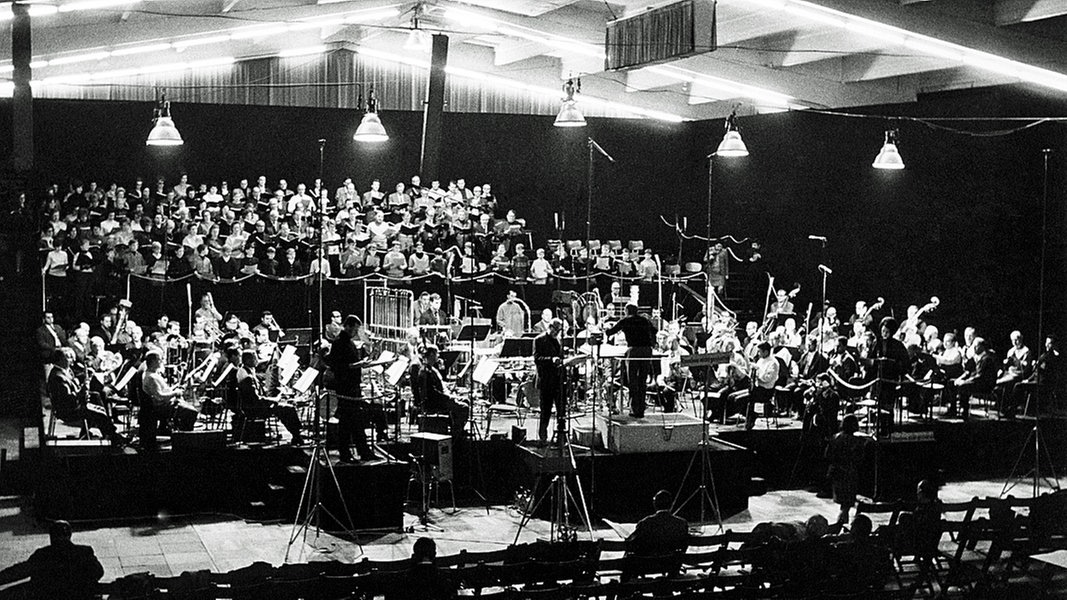
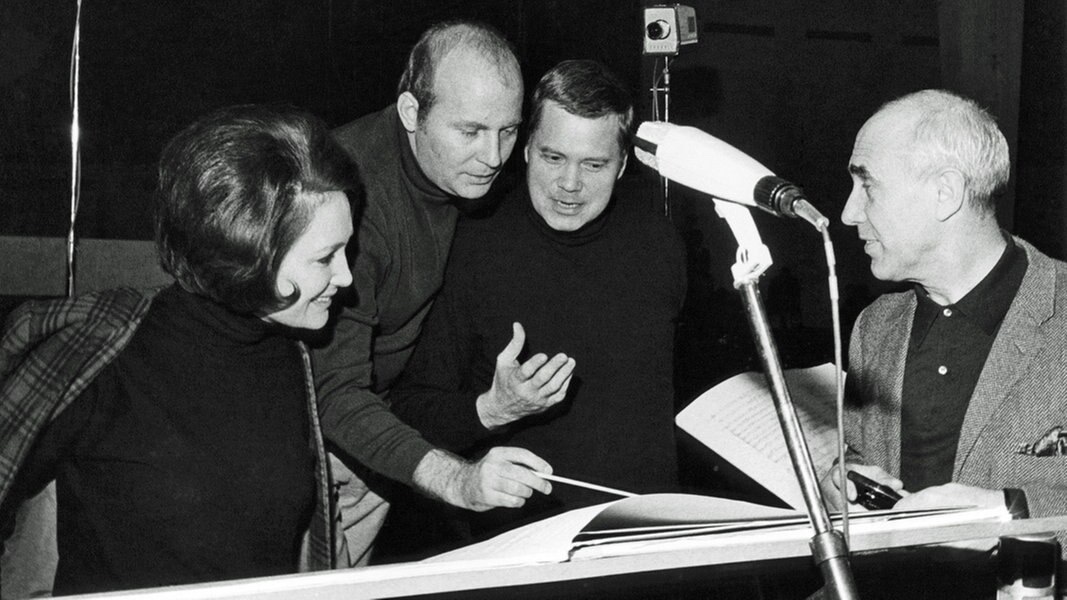
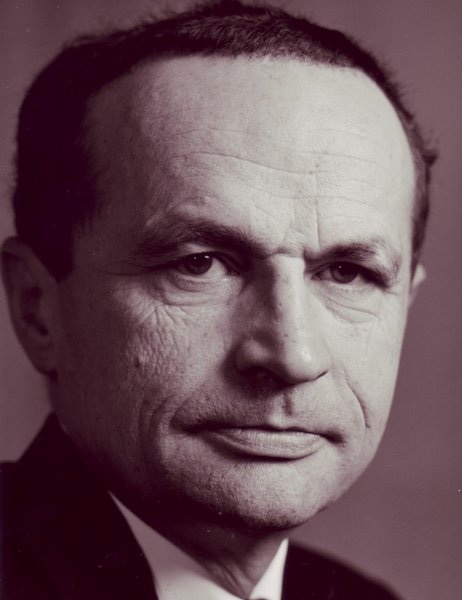


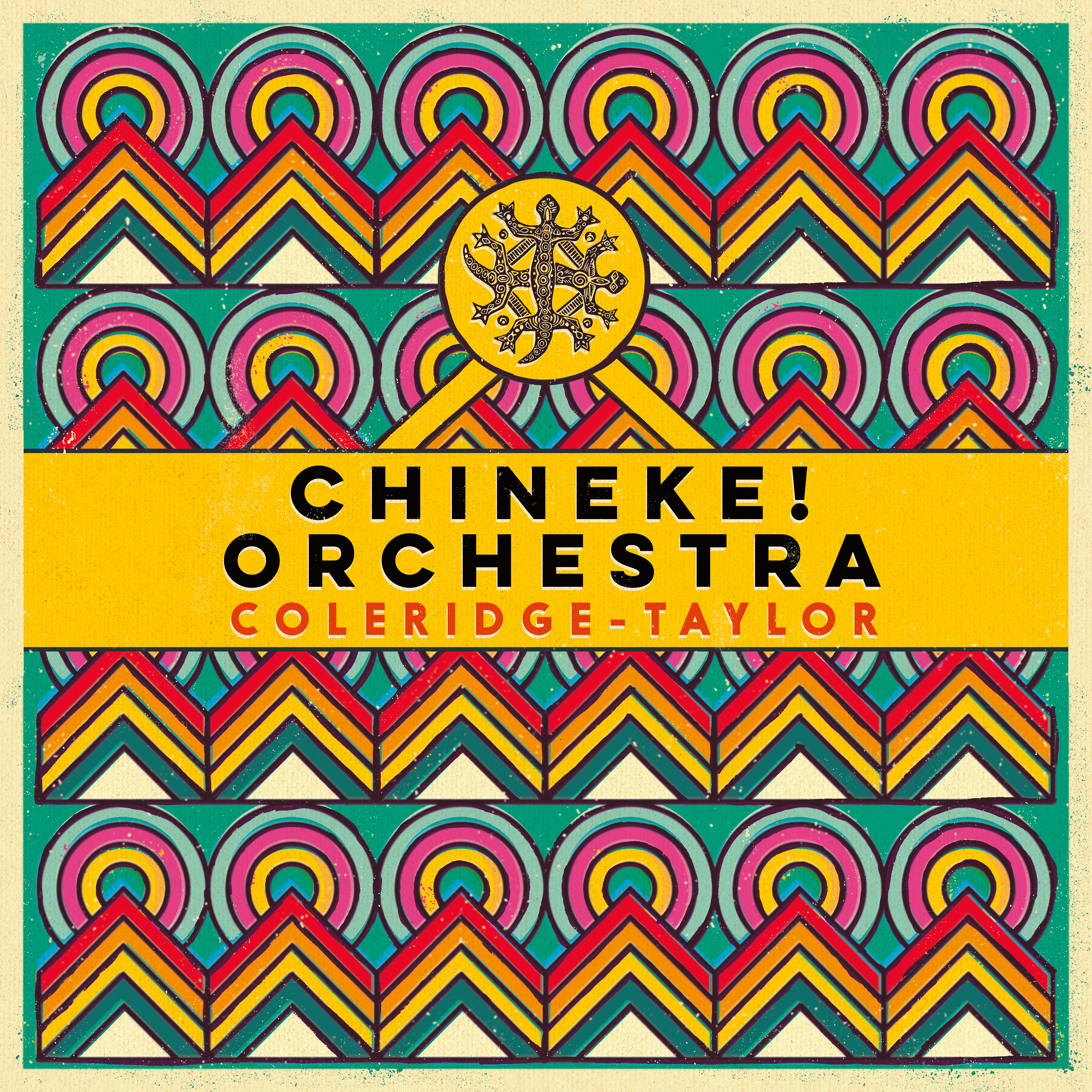


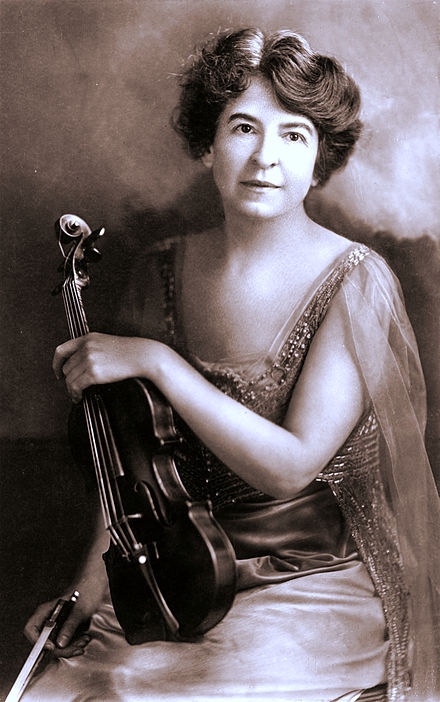


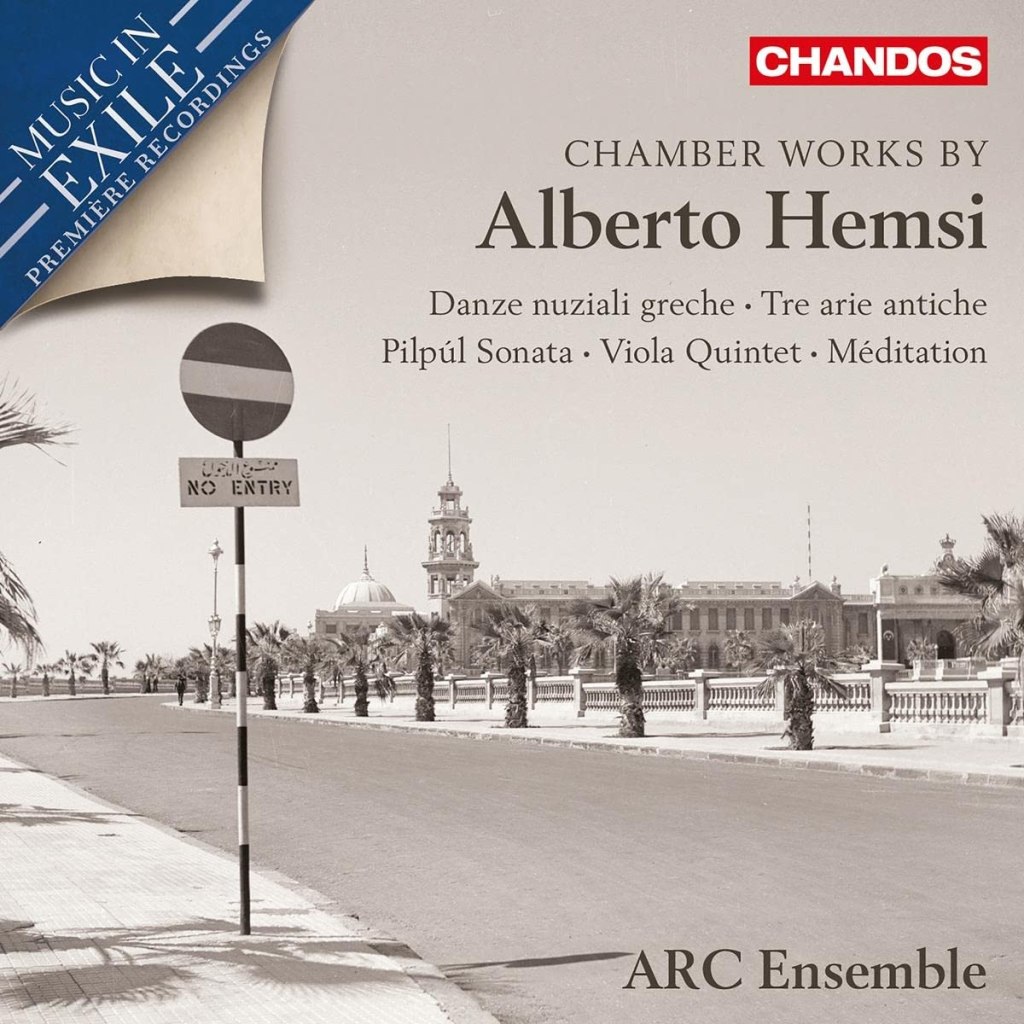
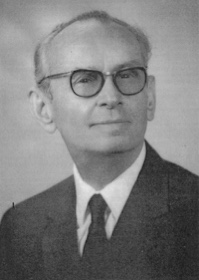


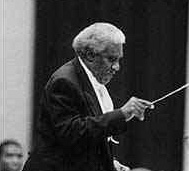




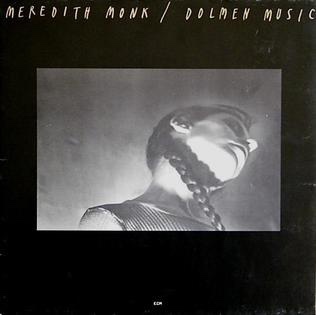


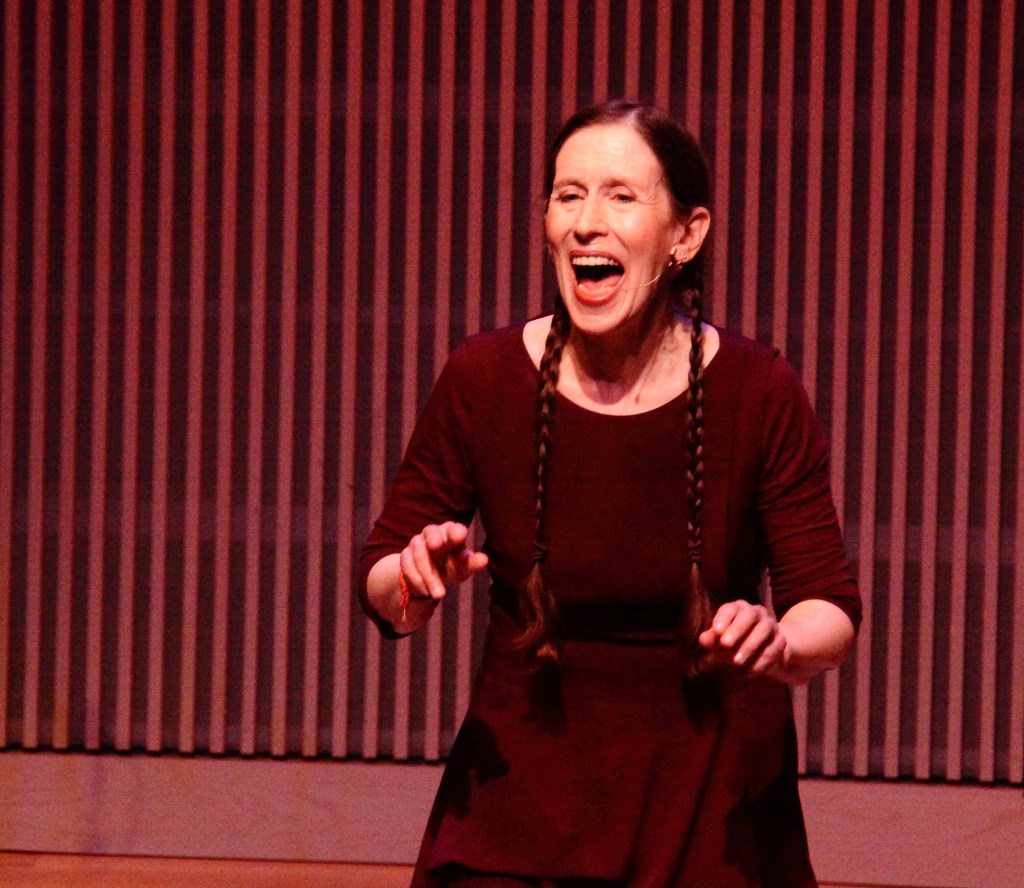

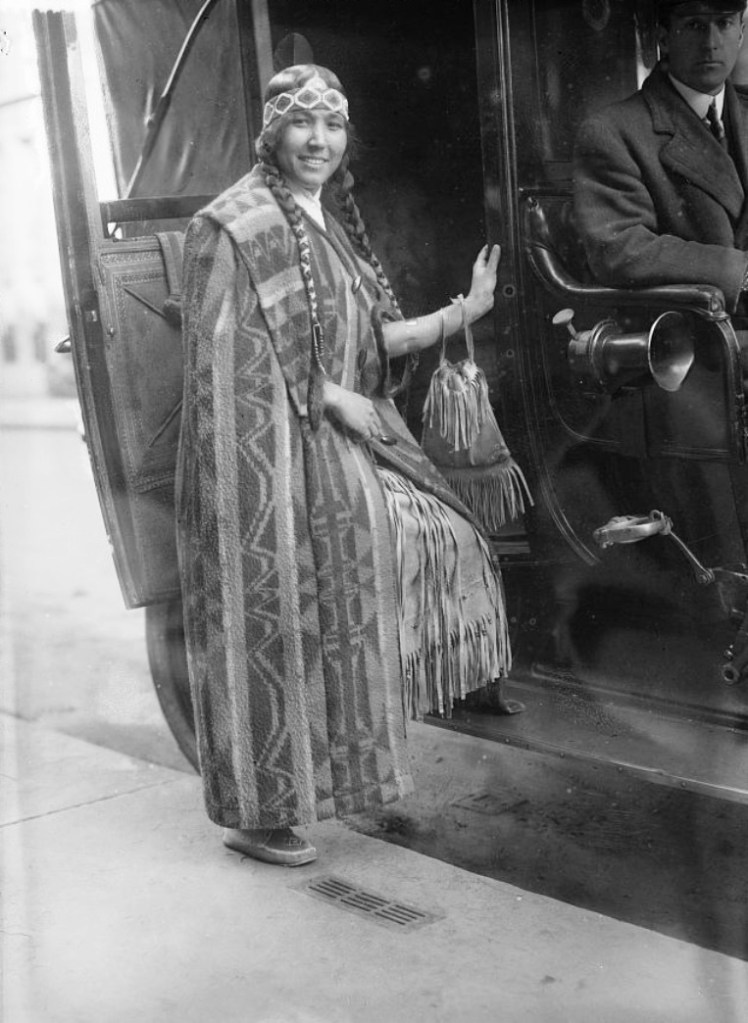


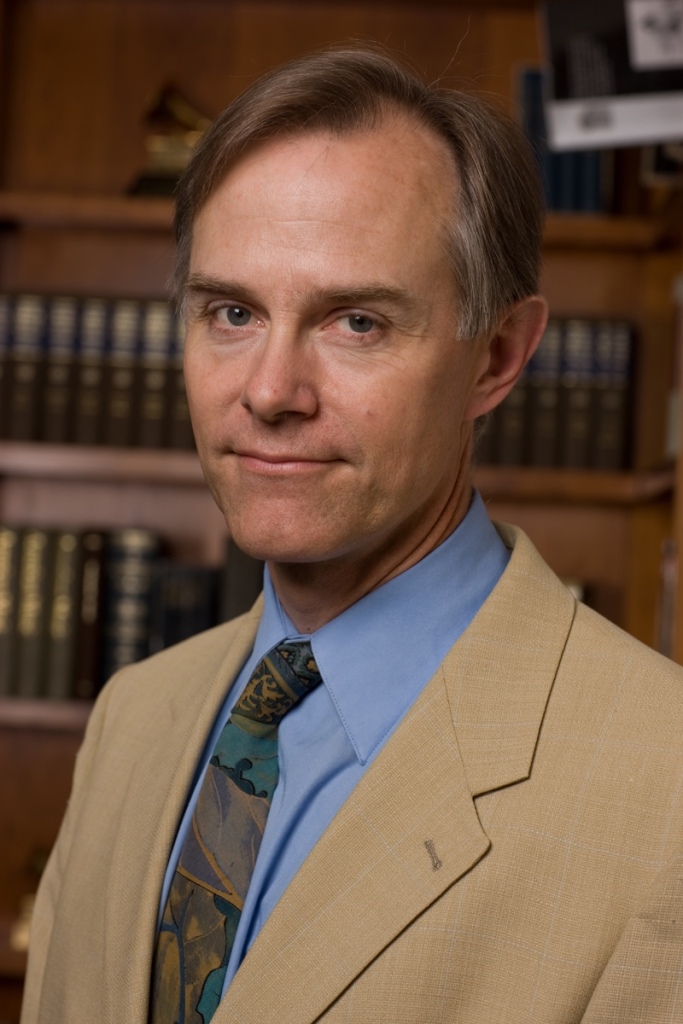
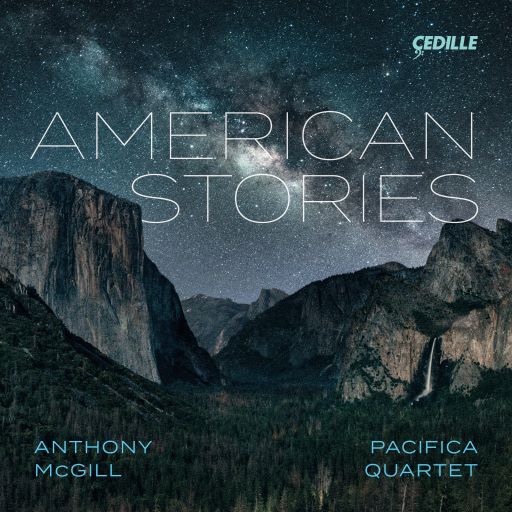


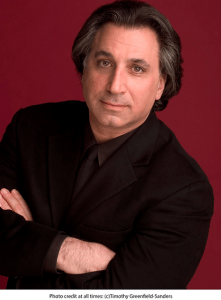


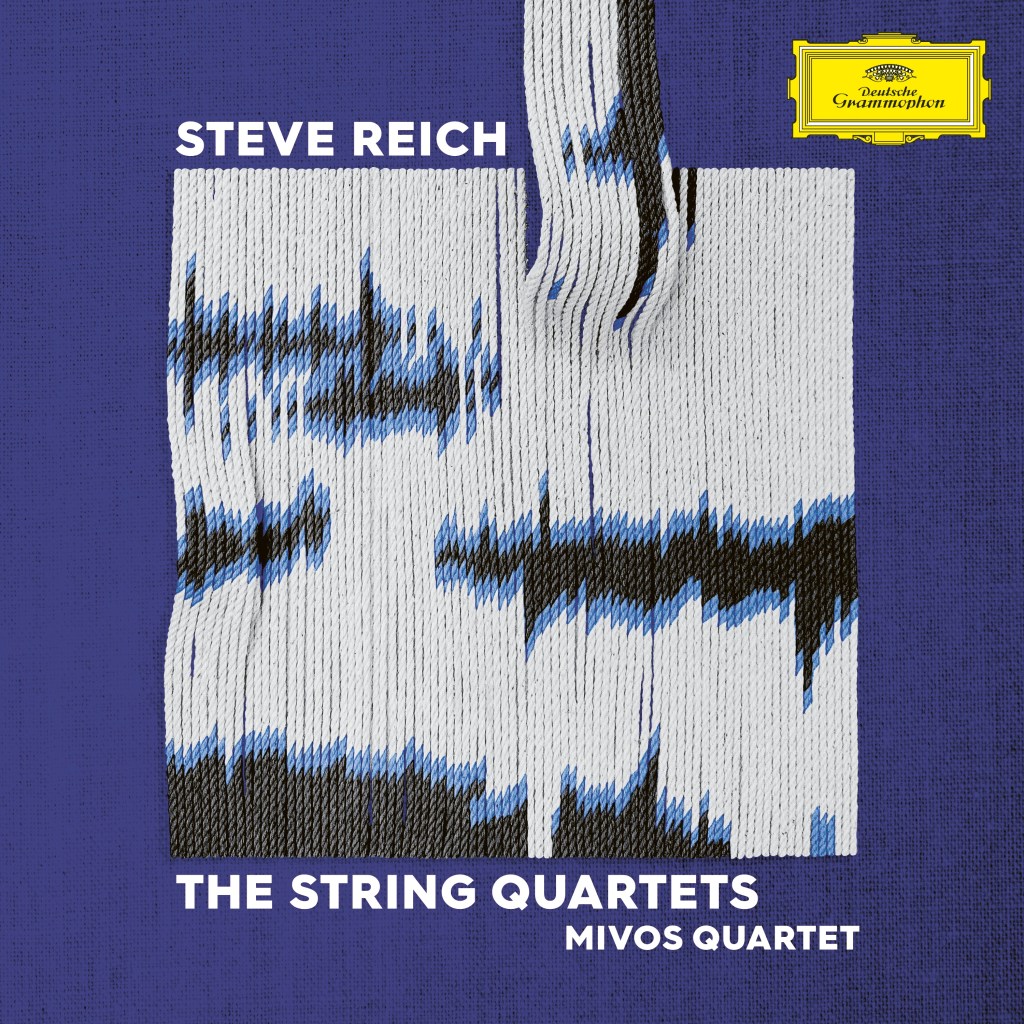
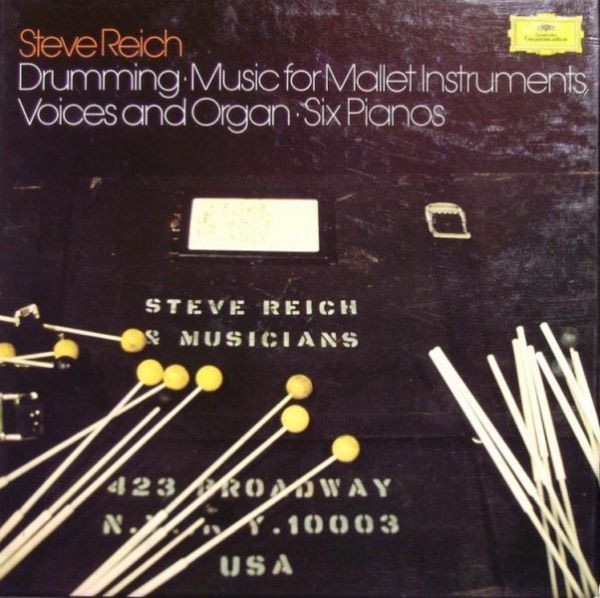




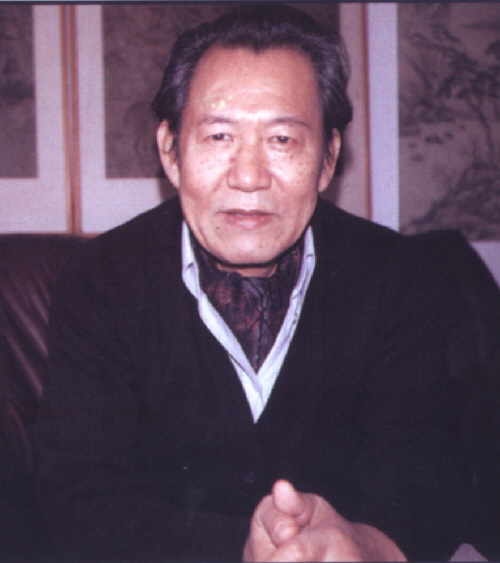

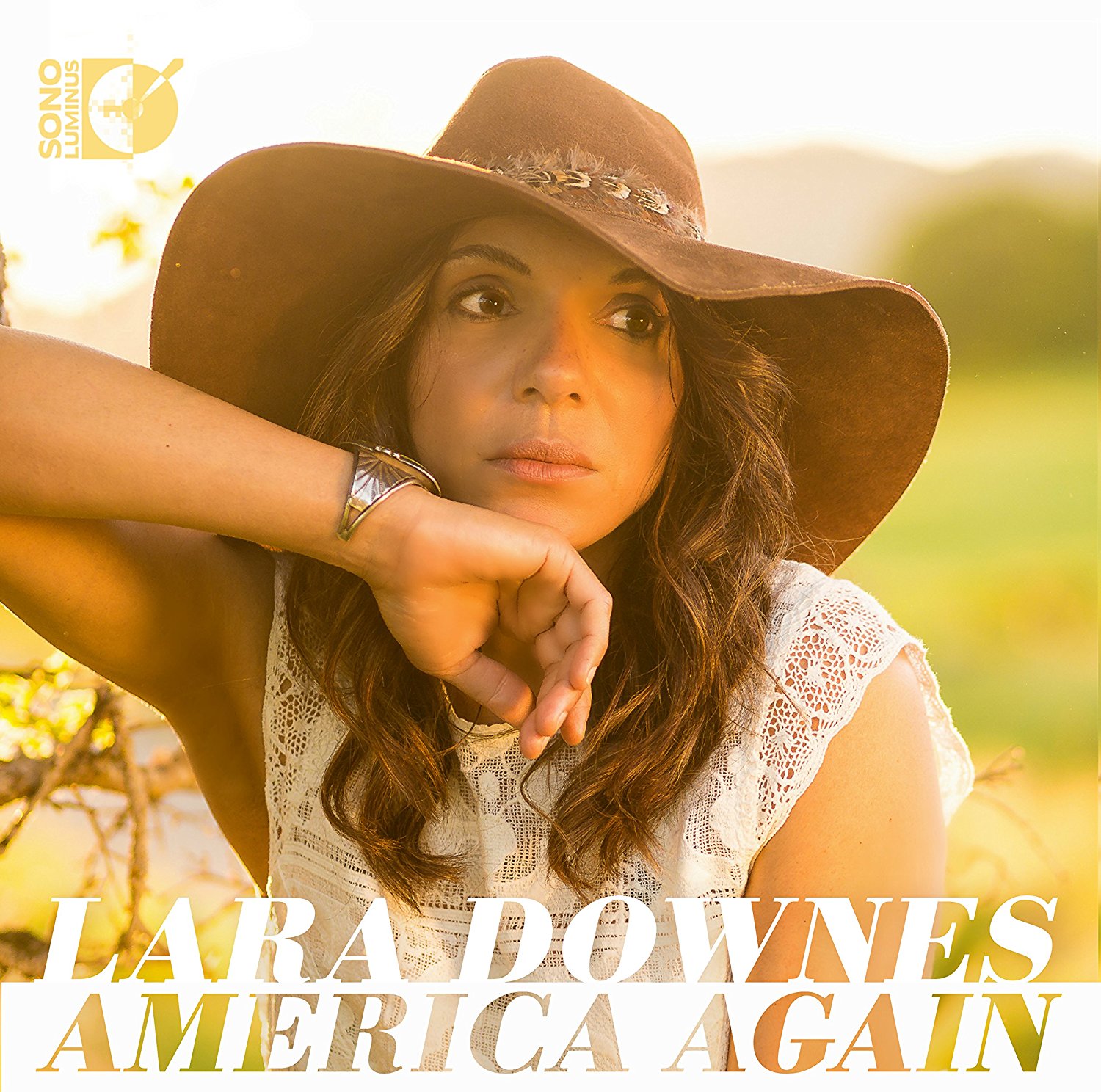


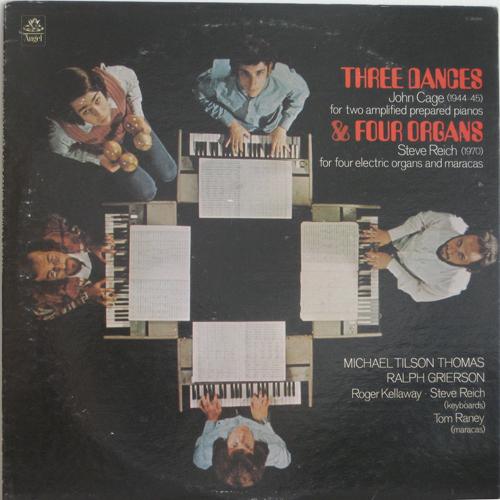

 New Music Buff