New Music Buff’s Best of 2023


Attack of the Music Memes

After agonizing about writing a “best of” blog and publishing it before January 1, I decided to take a pause and enjoy the holidays. So here I look back on my 2023 in the rear view mirror but with memories still pretty fresh.

Regular readers of this blog likely already know of my oft shared opinion of the superfluous nature of “best of” lists and of my acquiescence in producing such on an annual basis. I certainly don’t think of this as a meaningless exercise and I think the process has grown on me. It is a chance to achieve a perspective which would be missed by simply plowing on ahead with the usual flow of reviews and articles. But drawing down that 12 month perspective is an opportunity to evaluate those months, to see where we’ve been and to hopefully get a smidgen of insight into where I/we are likely headed.

My Facebook friends will recognize the representative meme at the head of this article which is one of the more cloying aspects of “AI”, whatever that is. So indulge me for a moment to look at this seemingly new intrusion into the reality we thought we knew. So, what is “AI” and what will it do to us? Ultimately I’m not the one to answer that question but I’d like to throw some ideas to add to the speculation.

First, the choices a composer makes, like the choices of a painter, a writer, etc. are the stuff of the mystery of creation itself. Why “A major”, or why that tuning, or scale, or rhythm, or orchestration, etc? So along comes the notion of removing, or at least distancing, the artist from their creative product. That notion started not with famed proponent John Cage but rather with Johannes Chrysostymous Wolfgang Amadeus Mozart in his K. 516f musical dice game. Voila! Algorithmic composition (actually fairly common practice in the classical era). An early manifestation of “AI”? Perhaps.

Lejaren Hiller (1924-1994) was the first composer to employ electronic data processing in a musical work in his Fourth String Quartet subtitled “Iliac Suite” in 1957. There followed similar experiments with various iterations of electronic creations at music centers worldwide including The University of Illinois at Champaign, Columbia-Princeton, Stanford, The University of California Berkeley and San Diego, The San Francisco Tape Music Center (later subsumed into the Mills College Center for Contemporary Music, IRCAM in Paris, Israel Electronic Music Studio, and counterparts in the Nordic countries, Germany, Belgium, etc. Proto “AI”?

While historically interesting I raise this issue to say that, as far as I can tell, “AI” has not made this writer’s greatest hits list but it is interesting and maybe even useful. With that, my concern for the subject officially goes to the back burner for a later time.

2023 has been a year of great personal changes for the writer of this blog. A job change, a geographical relocation, and many things unrelated to this blog characterized a busy year for New Music Buff. So here in a sort of holiday tradition I present my “Best of 2023” from my little listener’s corner of the world. For the sake of simplicity I present a more or less chronological exposition of my sonic adventures. (N.B. Not one portion of this article made use of “AI”).

I begin with not with my 20 most read posts, a practice that characterized previous iterations of this annual exercise. Instead I am providing my top 20 favorite releases that were reviewed in 2023. Please note a couple of caveats. First, I receive a lot of review requests, more than I can even listen to, much less give a reasonably intelligent review. Albums that I’ve not reviewed should not be assumed to be bad or insignificant and my reviews are personal observations. I really only review albums that interest me anyway. Second, this article is only one reviewer’s opinion and not intended to be definitive or to supersede anyone else’s opinions. Third, this is not the end of my attention to music that was released in 2023. Some releases require more time to give a fair listen and a respectful review. There are more to come in 2024.

First a few stats: 2023 saw the publication of some 45 blog posts on New Music Buff, earning me 9693 views for the year. I rarely get comments on my posts (though I welcome and invite comments both positive and negative). Not bad, I think, for the overall less appreciated musical styles that fuel my desire to write about.

Now, in chronological order (of publication) are my personal favorites as a listener:

Neuma 158

Binaural Beats in the Tudor Rainforest started my new year with a bang. Reviewing this disc required me to take a closer look at the astounding work of David Tudor and his unique contributions to new music. This important release is a recording of a work which, by its own concept cannot receive a “definitive” performance. But this recording comes mighty close, involving “binaural” recording utilizing a mobile set of binaural microphones which are worn by the recordist. In addition this recording involved a collaboration with Pauline Oliveros and a group called, “Composers Inside Electronics”. The recording was done during Oliveros’ tenure at UCSD. Rainforest IV is so called because it is the fourth iteration of the instructions that form the original concepts of Tudor’s composition, “Rainforest”. It is an immersive sonic experience heard on headphones but actually not bad even heard on stereo speakers. A rich and wonderful release.

Starkland S-236

From a 1960s electroacoustic to a budding 21st Century composer Kotoka Suzuki released on the reliably interesting and even visionary Starkland label. Next Gen Electroacoustic: Kotoka Suzuki will introduce the listener to this rising star who doubtless will produce more of her compelling compositions.

Sony 194399434826

Igor Levit is a fine concert pianist whose albums are effectively redefining the way we, as listeners, perceive the western classical oeuvre. Igor Levit: Defining Tristan does for the various musical pieces inspired by the Tristan legend what Levit did for the concept of the great keyboard variations in which he selected Beethoven’s “Diabelli Variations” and Frederic Rzewski’s “El Pueblo Unido Variations” to join his recording of the Bach “Goldberg Variations” in a 3 disc package placing these three large sets of variations as emblematic of the genre in three different centuries (18th, 19th, and 20th). Levit, by his recorded output, is providing a valuable perspective which may influence repertory choices for years to come.

Levit’s traversal of the Tristan legend here ranges from the second recording of Hans Werner Henze’s too seldom heard “Tristan Preludes” back to works by Wagner (of course) and Liszt. He even slips in his wonderful solo piano transcription of the Adagio of Mahler’s unfinished 10th Symphony into the mix. This is a very compelling Tristan anthology by a deservedly still rising star.

Cantaloupe

This Cantaloupe release by Bang on a Can composer and master clarinetist Evan Ziporyn is both masterful and great fun. Evan Ziporyn: Bang on a Pop consists of transcriptions of “pop” songs for multiple clarinets all played by Ziporyn via his very effective multi-track recordings. The album is very personal and pretty much cliche free with these engaging and insightful transcriptions. It is an homage to the songwriters as well as a showcase for Ziporyn both as composer and as performer.
Microfest MF 23

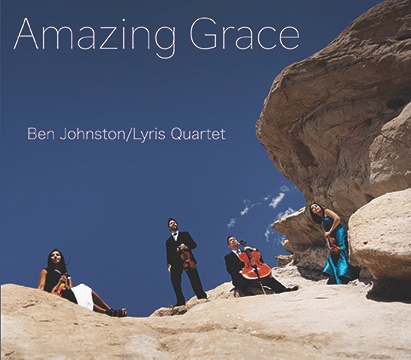
The Young Person’s Guide to Ben Johnston is an ideal way to introduce listeners to the wonderful world of the late Ben Johnston’s music. Johnston, a student and colleague of Harry Partch shows his compositional skills utilizing non-traditional western tunings in these representative works. Johnston here does for some quasi pop tunes what Evan Ziporyn did with his clarinetist perspective for the tunes on Pop Matters. But Johnston’s pretty, accessible work belies fascinating complexities that don’t actually sound complex to the listener. This disc contains Johnston’s last completed work, “Ashokan Farewell” (which Johnston took to be a public domain folk tune but is in fact a piece written by Jay Ungar). It is paired with the 4th String Quartet (a set of ingenious variations on “Amazing Grace”) from 1982 and the 9th String Quartet of 1997. Profound, lovely to listen to, and a great homage.

DVD OM 4001

This DVD is a major addition to the discography of Charles Amirkhanian’s sound poetry as fine sampling of one aspect of Carol Law’s (Amirkhanian’s life partner) complementary visual art. These collaborations are also important contributions to the visual and performative aspect of these collaborative works. Amirkhanian has been a fine curator and promoter of the work of others but he has rather seldom stepped into the spotlight himself. This quirky genre got some fabulous exposure at the 7 day Other Minds 23 festival in 2018 in which Amirkhanian’s work was presented in the (surprisingly varied) context of sound poetry of the amazing international collection of artists who were hosted at those events. This DVD should be in the collection of anyone interested in new music sound poetry and performance art. It is both entertaining and mind bending featuring a juxtaposition of images and sound reviewed in greater detail in the post “Dyadic Dreams”. But words cannot do justice to these works. You really have to see them.

Cedille CDR 90000 210

Readers of this blog know my fondness for the Chicago based label Cedille and their promotion of Chicago based musicians. This disc stands out in this group’s embrace of non-traditional composers alongside more traditional works. The inclusion of works by DJ composer Jlin and the academy based genre defying duo Flutronics alongside composers like Danny Elfman and Philip Glass demonstrate the wide ranging repertoire of Third Coast Percussion. Much more information can be found in Perspectives: Spectacular World Premiere Recordings from Third Coast Percussion on my blog. This one reimagines the percussion ensemble.

Neuma 176

This disc is a good example of why listeners and collectors should pay attention to the Neuma record label. Philip Blackburn, who had been the very successful curator of Innova records, took over the defunct Neuma label which was founded with the intention of promoting largely electroacoustic music though not exclusively.

Agnese Toniutti‘s New Music Vision is actually a review of two discs by this rising star, a dedicated new music pianist that needs to be on your radar. The other Neuma disc contains Toniutti’s traversal of John Cage’s reluctant masterpiece, “Sonatas and Interludes for prepared piano”.

The disc pictured here is Toniutti’s vision beyond the Cage work. This one focuses on mostly living composers Lucia Dlugoszewski, Tan Dun, Philip Corner, and Toniutti’s herself. Basically, if Toniutti plays it, you should probably at least give a listen.

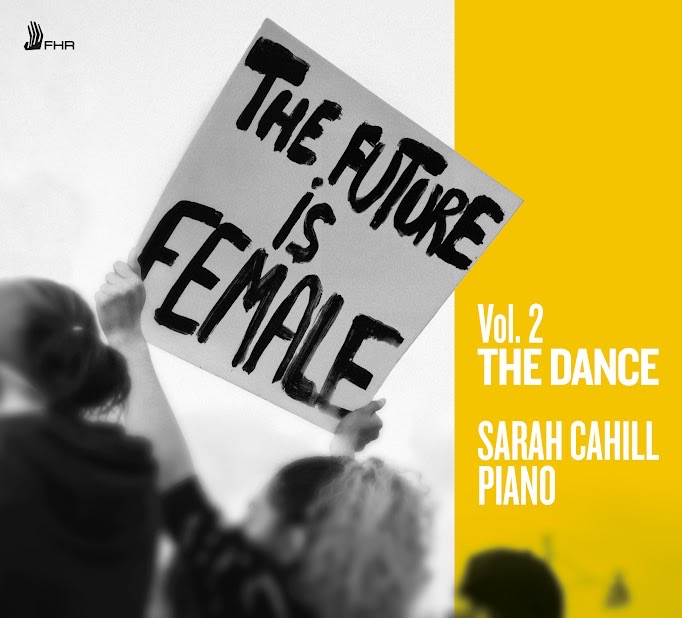
2023 saw the completion of Bay Area pianist Sarah Cahill’s epic survey of piano music by female composers. Cahill is another (predominantly) new music focused pianist about whom I would also assert that, if she plays it, you should probably give at least one listen.

The End of the Beginning: Sarah Cahill’s “The Future is Female” Trilogy Completed will tell you all you need to know about this trilogy which encompasses about 300 years of music history and sheds light on some fascinating and substantial music written by women. Most of the works on this trilogy of albums are, in fact, world premieres but, fear not, even the pieces which are not premieres are likely not in your collection. This is a brilliant selection of music that effectively throws down the gauntlet to challenge other artists to explore this repertory. This trilogy is a true landmark and a joy to the ears.

This third volume in the wonderful Catalyst Quartet’s survey of another unjustly neglected group of composers focuses on the music of three black Americans of the twentieth century. Catalyzing Blackness, Volume Three: The Catalyst Quartet plays 20th Century music by Black Americans was nominated (but didn’t win) for a Grammy Award and, happily, I’m told that more volumes are in preparation. Again, this music is a pleasant revelation that does for black composers what Sarah Cahill has done for women composers (N.B. The first volume by the Catalyst Quartet focused on the black female composer Florence Price). And here’s hoping that Coleridge Taylor Perkinson, George Walker and William Grant Still will become household names in the concert hall.

Microfest MF 21

Son of Partch, Carrying on a Tradition is a really wonderful disc which, though I reviewed it in exceedingly positive terms, provoked a strongly negative reaction from the artist. The reaction apparently also provoked enough interest to have made this review one of my most read of 2023.

But, aside from the unfortunate negative reaction, I still maintain that this is a fine release worthy of attention from anyone who likes new music, microtonality, and the music of Harry Partch. Cris Forster is a composer, theoretician, and instrument builder clearly descended from the Partch tradition. His work deserves attention and this disc is a very satisfying experience.

Islandia IMR 011

Steven Schick is a master percussionist and conductor. This release is the first volume of his personal choices of solo percussion repertoire. Solo Percussion Manifesto Volume I: Steven Schick’s “A Hard Rain” is a manifesto of sorts and does for solo percussion music what Sarah Cahill has done for women composers and the Catalyst Quartet is doing for black composers. There are not many recordings of solo percussion music and Maestro Schick essentially presents his favorite works in definitive performances on a label produced by Bang on a Can cellist Maya Beiser. The second volume is in my review queue and, if this first volume is any indication, it will be a landmark survey.

Cedille

Rising Star Seth Parker Woods’ “Difficult Grace” is a Classic in the Making. Here’s another Grammy nominee that did not win but, this second album by this fine American new music cellist is a winner in my book (er, blog). This is actually the audio of what was developed as a staged performance but the music speaks for itself. Keep an eye/ear out for this rising star who, even now, is storming the new music cello scene in invigorating ways.

Neuma 128

A Reason to Listen: Roger Reynolds’ Latest, “For a Reason”,new recordings on Neuma Records. Here we see Neuma following its original electroacoustic mission with this remarkable set in celebration of Roger Reynolds’s 90th year. This is a lavish 2 CD box set with a beautiful booklet and lucid liner notes. It is a worthy production which showcases recent works by this prolific and important American composer.

Readers of this blog likely are aware of my interest in music that is suppressed and/or neglected so this disc grabbed my attention immediately. Israel does a great job of funding the arts and this can be seen in the proliferation of truly fine performers nurtured by that funding. Less well known are the composers who have flourished in the art healthy politics of this country. Some 50 years of history are represented here. This is but a sampling, albeit finely curated, of several generations of composers displaying a plurality of styles with substantial results. This entertaining disc will whet the appetites of intelligent and curious listeners and, hopefully, bring about more recognition of the world class composers who deserve an audience.

So, finally, went my 2023.

Two Sono Luminus Discs of New Music by Icelandic Composers (mostly)


DSL- 92267

There are, by my count, at least 8 discs on this fine audiophile label dedicated to music by composers from Iceland. That country’s musical prowess deserves to be better known as does their world class orchestra. I’m reviewing these back to back releases together because they are both Iceland Symphony recordings presenting new music by (mostly) Icelandic composers. And they have a secret connection.

This first disc is a nice mix of music by five different composers in works that really give the orchestra an opportunity to shine. Under the direction of composer/conductor Daniel Bjarnason we are availed of the sound of now, or at least Bjarnason’s “now”.

Track list

This disc, which seems to have a “outer space”theme in large part, opens with a large orchestral work from the most deservedly best known Icelandic classical composer, Anna Thorvaldsdottir. “Catamorphosis” is a 20+ minute work for full orchestra and then some. Her style initially reminded this listener of the sound mass of music like Ligeti and Penderecki. But her harmonic language is more lush and romantic. She has an astounding skill in writing for large orchestra, producing at times the modern equivalent of Impressionism. Her use of motives suggest she has digested ideas from minimalist/pattern composers. And at the end of the day (or the review), one realizes that she has developed her own voice.

The subtle colors of this work are well defined by the orchestra under Bjarnason’s truly expert guidance but also via the sonics that the Sono Luminus engineers are able to capture. This sounds like a difficult work to perform but Bjarnason manages to create a definitive performance and Sono Luminus’ sonics are, as always first rate.

Catamorphosis (2022) is typical of Thorvaldsdottir’s writing for large orchestra reflecting her skills as an orchestrator as well as her imagination, her ability to create a wide palette of subtle sound forms that suggest a sort of post impressionist style. The poetic and metaphorical titles tell little about the musical content (or structure for that matter). But her ability to create cohesive and compelling compositions such as this provide an experience that will likely evoke images for the listener, a sort of movie for the mind. So feel free to conjure your own images in this 7 part (played without pause) work and/or listen and watch a recent Elephilharmonie performance on YouTube here.

Missy Mazzoli’s comparatively brief “Symphony for Orbiting Spheres” (2014 rev 2016) taps into a vein of inspiration seemingly related to the cosmic images of Thorvaldsdottir. Mazzoli incorporates an electronic keyboard and harmonicas, among several less common instruments used in symphony orchestras, to create her own sonic cosmic fantasy. Please click the link on her name above to learn more about this rising star from her nicely designed website.

Daniel Bjarnason demonstrates his own formidable compositional chops with “From Space I Saw Earth” (2019). And this track also provides a link of sorts to the other album reviewed in this blog entry. This work, written on commission for the 100th anniversary of the LA Philarmonic, is a work that requires three conductors. The premiere was led by Zubin Mehta, Gustavo Dudamel, and Esa-Pekka Salonen, all of whom have significant connections to the orchestra (Mehta as conductor Emeritus, Dudamel as present chief conductor, and Salonen as conductor laureate). That was the premiere but this recording is conducted by Bjarnason along with Kornilios Michalaidis, and the then incoming chief conductor of the Iceland Symphony, Eva Ollikainen. Therein lies the “secret connection” to which I referred earlier.

María Huld Markan Sigfúsdóttir (1980- ) is a violinist and composer. Her orchestral work, “Clockworking” is a sort of post minimalist work with a gently driving Ostinato in the percussion. It reminds this reviewer variously of Birtwistle’s “Chronometer”, Ligeti’s “Poeme Symphonique”, to name a few but it is not derivative of these in any way. It is a very listenable and enjoyable orchestral work.

Bára Gísladóttir (1989- ) is a composer, vocalist, and double bass player based in Copenhagen. This, the briefest work on the album is at times the quietest and at others the loudest work here. I would add that it is also the most avant garde. Relying on a battery of percussion and what appears to be some extended instrumental techniques the composer creates a world that to this reviewer’s ears sound a bit like Gyorgy Ligeti’s work “Atmospheres” (1968). That’s not meant to say it’s derivative, just that it could conceivably be used for that famous psychedelic sequence from Stanley Kubrick’s masterful “2001, A Space Odyssey” where my own young ears first heard the Ligeti work.

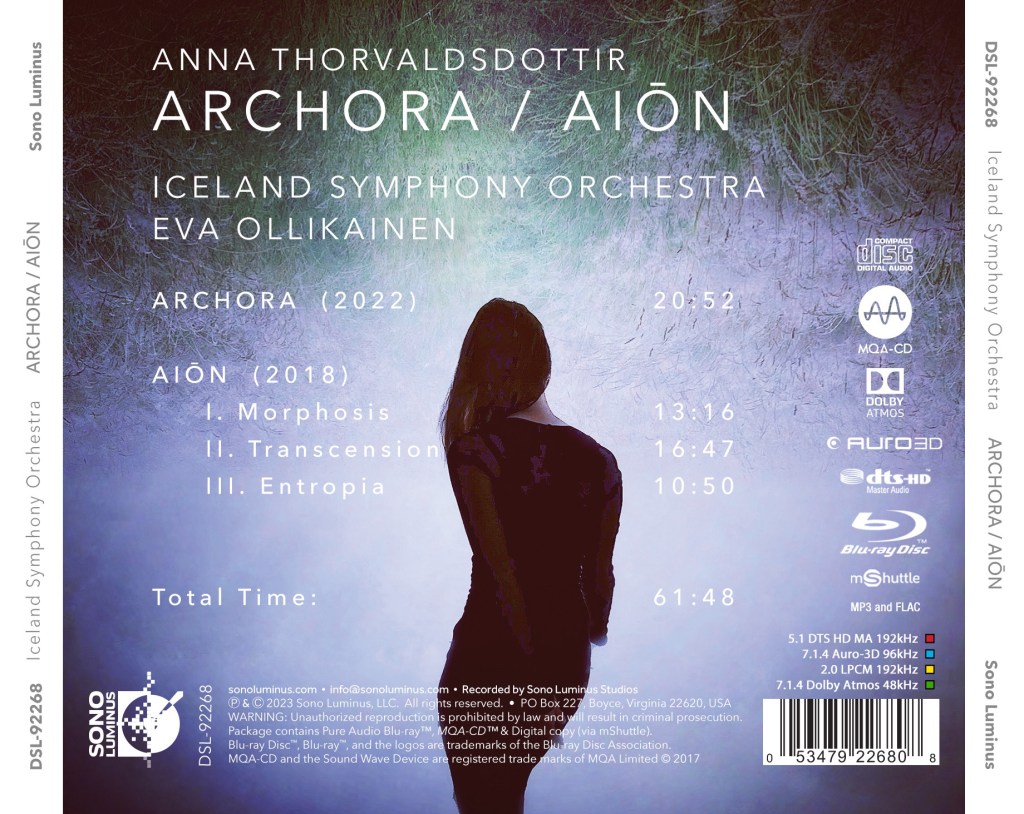
DSL- 92268

As fabulous as that first disc is, this release, dedicated entirely to the work of Anna Thorvaldsdottir, is a worthy endeavor. In addition to that we are treated to the sublime and insightful artistry of the first female principal conductor of the Iceland Symphony, Eva Ollikainen who leads the Iceland Symphony on this disc.

Like the above release, the Iceland Symphony Orchestra demonstrates their world class artistry. This is not easy music to play but, under Ollikainen, as they have under her predecessor, they are able to articulate the intricately orchestrated sounds by this really astounding composer.

Just two works here. “Archora” (2022) and “Aion” (2018). Both are works of grand concept and could easily be called symphonies but the composer seems fond of metaphoric poetic titles. Regardless of the names given these works they demonstrate the composer’s grand sonic visions and her mastery of the orchestra, a mastery grasped very clearly by the Iceland Symphony’s new artistic director and conductor, Eva Ollikainen (1982- ). She holds the distinction of being the first woman to hold the post to which she was appointed in 2019.

Track list

There are only two works presented but both are stunning examples of some of the finest new music being produced today. Yes, it’s great to see women having a greater presence (both as composers and conductors) but, truly, Thorvaldsdottir is “the bomb”, so to speak. Her creativity, her mastery of the orchestra are simply a revelatory as well as entertaining listening experience.

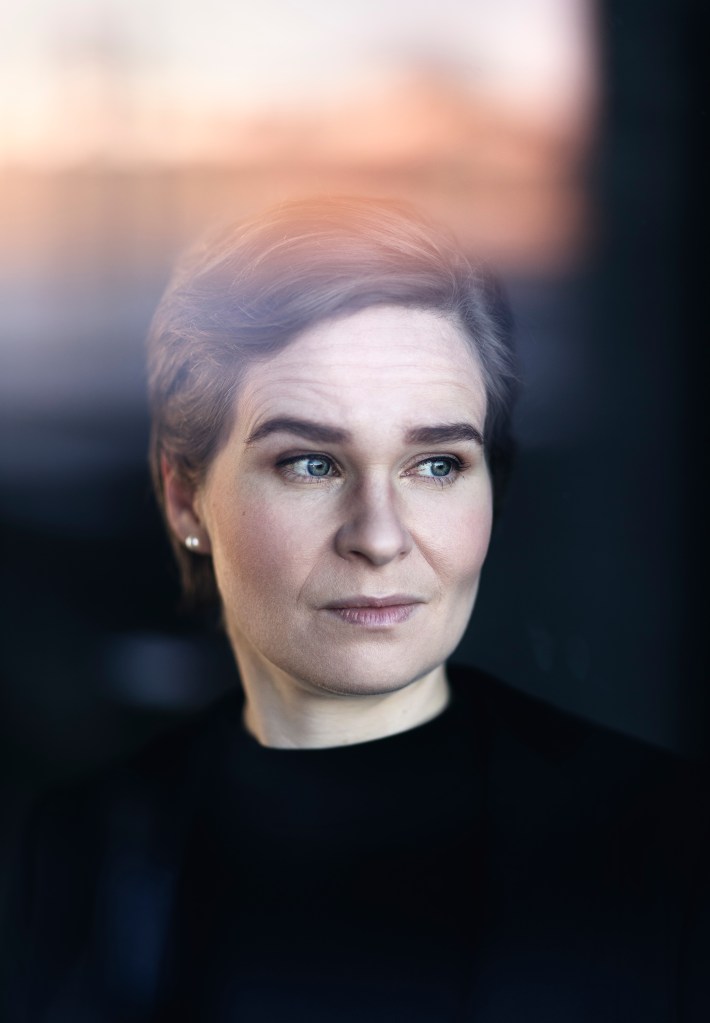
Eva Ollikainen

This release is also a landmark which showcases the formidable talent of the Icelandic Symphony’s new conductor. In addition to breaking gender barriers she is quite simply a rising star and one of the finest interpreters of new music today.

“Archora” (2022) is the most recent work here and it’s another of Thorvaldsdottir’s sprawling cinematic tone poems. No specific story here but the composer’s mastery of orchestral color will doubtless evoke images and feelings in the listener. Thorvaldsdottir is creating a sort of sonic (as opposed to literal) mythology. Her reference points seem to be largely in Greek and Roman mythology but also in Nordic and Northern European myths. Eva Ollikainen conducted the world premiere at the 2022 BBC Proms. You can hear that performance on YouTube here. But the Sono Luminus recording captures more of the subtle sound colors of this engaging work.

The composer’s three movement, “Aion” (2018) concludes this recording. Aion is a Greek God of time. The composer is concerned with various aspects of time in her work. This large three movement work is virtually a symphony with an augmented orchestra, extended instrumental techniques, and an optional choreographic accompaniment. (Tell me that’s not cinematic). There is an example of the optional choreography here.

This recording is also a fine introduction to conductor Eva Ollikainen who clearly has a grasp of this music. Various examples of her interpretive genius can be found on YouTube ranging from Beethoven to new contemporary masters.

These are two truly fine discs both musically and for sheer sonic detail. They’re available in streaming and hard copy CD as well as Blue Ray Audio. These are a fabulous listening experience. Enjoy!

My 2022, Best of and Worst of…


Mount Lassen in Northeastern California

Let me start with a positive image from a brief photography trip which I managed this year. It was one of the highlights of what has been a difficult year for many of us. Weather, politics, COVID, itinerant employment issues, financial, and personal difficulties were an encumbrance but now stand in relief to the many positive aspects of 2022.

First, let me say that nothing musical fell into the category of “worst of” so fear not, what follows is essentially my “best of” from 2022. In my head I blame the aforementioned encumbrances for delays and sheer lack of production on my part. Whether that is the ultimate truth does not matter really so here, for better or worse, is my celebration of the positive experiences enumerated in this music blog in 2022.

This is one of the albums that stoked my interest.

My first post for the year struck a sad note. It was my personal tribute to a composer, A Belated Fan Letter: Homage to George Crumb described George Crumb, who had been one of my “gateway drugs”, so to speak, which helped put me on the exciting roads of new music upon with I continue to travel with great joy. Recordings of his complete works are still being released on the visionary Bridge Records.

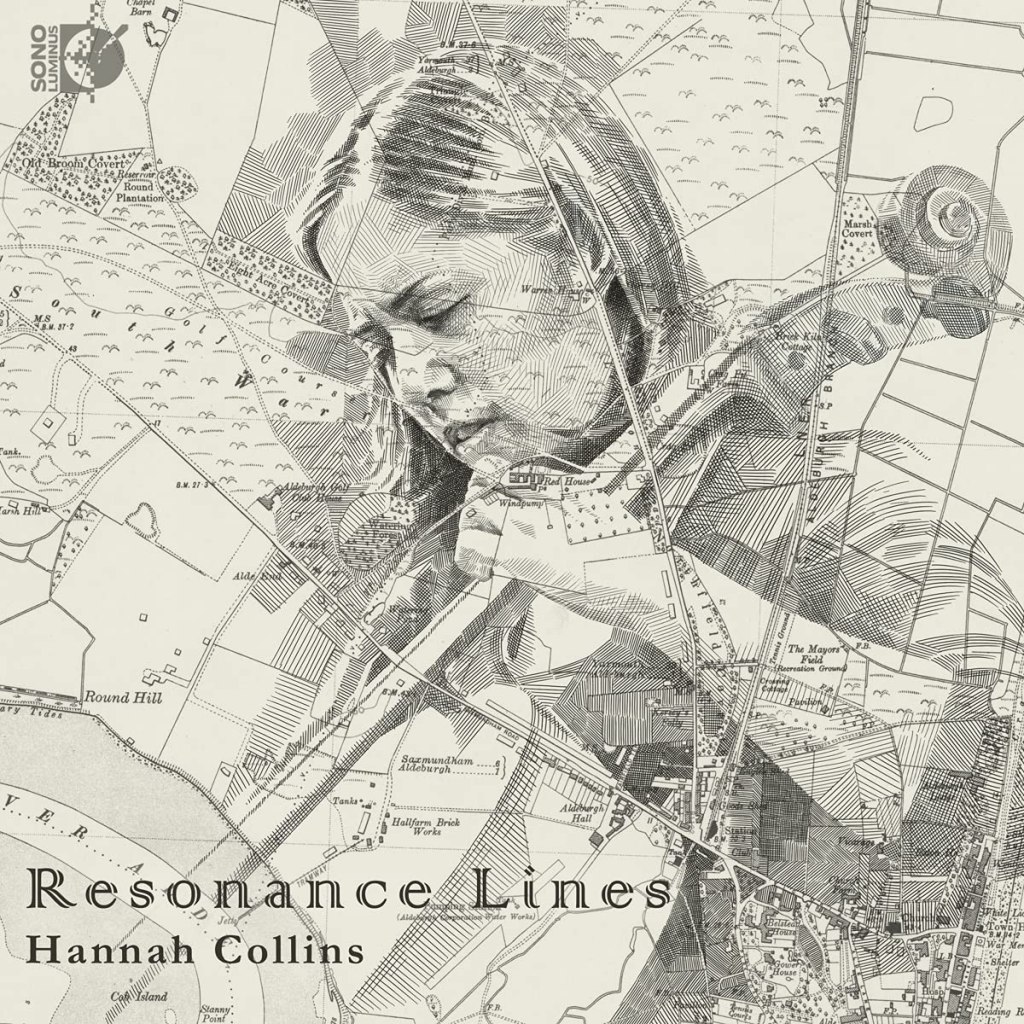
Hannah Collins debut on Sono Luminus was a compelling offering from this rising star.

Carolyn Shaw’s striking and much performed “In Manus Tuas” (on solo viola as well as solo cello) was originally written for Collins. Her selections on this album, including that Shaw work, suggest to this writer/listener that she has both vision and an encyclopedic knowledge of music, especially that written for her instrument. She will be among the major shapers of this repertoire via her vision as well as her interpretive talents. And Sono Luminus’ superb sonics certainly helps make this a great release.

The first volume of Sarah Cahill’s landmark trilogy of piano music by women composers.

I have followed the work of Sarah Cahill since her first solo CD (music of Ravel). Like Collins, she has been an artist who, by her intelligent selection of repertoire, serves as a guide to listeners (and musicians) as well. She has championed many composers as a pianist and as a broadcaster on her weekly KALW broadcasts. Her curation of concerts throughout the Bay Area, such as her solstice concerts at Oakland’s Chapel of the Chimes, have showcased a large variety of creative performers.

As she focuses her lens on women composers (neglected is implied) she embraces a stunning range of styles from the baroque era to the present and it seems as though she can play anything she chooses well. She is also collaborative with an amazing ability to discern the substance in the works she chooses to play. And she has discovered (or rescued?) much music from obscurity via scholarship and intelligent collaboration. Can’t wait for the next release. She is consistently interesting and relevant.

This release on Lars Hannibal’s OUR records was a brilliant new recording of
some of Ligeti’s music and introduced me to Kodaly’s solo choral works.

This album was sent to me by a friend. I knew the Ligeti pieces but heard them with new ears in this release and I was amazed by the Kodaly works too. Marcus Creed may not be as well known in the U.S. as he is across the pond but he should be.

Another debut album by a cellist.

This album was kindly sent to me for review by John Schneider of Microfest records. Read the review. Listen to this album. And watch for more from Chris Votek, another rising star in 2022.

Dan Lippel’s virtual manifesto displaying his vision and skill as he furthers the mission of the guitarist in all their guises.

Dan Lippel is one of the founders of the fabulous new music label, New Focus Recordings. Here he is acoustic, electric, conventional, and experimental but always interesting. Keep his name on your radar.

Languishing no longer.

This is a gorgeously designed, very collectible art object. It is a beautiful hard cover, full color book which also contains a CD of a recording (from acetate masters) which had languished in the archives of the Eastman/Rochester Music School where Harry Partch gave this lucid lecture/performance in 1942. Mr. Schneider, who sent me the Votek release as well, fronts an ensemble called PARTCH which, in addition to performing Harry Partch ‘s work, is recording Partch’s complete works for David and Becky Starobin’s Bridge label. This one is both eye and ear candy to my ears.

Rescuing those acetate masters from obscurity is a major find that rises in significance (in the musical sense) almost to the level of the archeological discovery of Tut’s Tomb. Schneider is a musician, a composer, a radio broadcaster, and an archivist and now a sonic archeologist I suppose. He also sports a collection of authentic copies of Partch’s curious instruments which were built to play the microtonal scales required. Partch is a major American composer whose work is now gaining its rightful place among the best of American classical music.

Seminal work by an American post minimalist composer.

I first discovered Mr. Susman’s work when I was asked to review a performance of another composer’s work. I heard one of his works played by the remarkable San Jose Chamber Orchestra on that same concert. Here we have another multi volume release of these lovely and significant piano works. The remarkable pianist (mentioned often in these pages) has contracted to record all 4 books of this sort of “Well Tempered Clavier” type gesture which effectively provides much insight to this composer. Nicolas Horvath, known for marathon concerts performing (and subsequently recording) all of Philip Glass’ piano music, among others. (We’re talking 15 hours or so. There is also a 35 hour live rendition of Erik Satie’s “Vexations” on you tube.) Who better to record these? The remaining three volumes are due some time this year. Who better to take on this post minimalist set of pieces? Can’t wait for the next volume.

Kondonassis’ new music manifesto for the Harp (and the earth).

Yolanda Kondonassis is about as household a name that you can find among harpists. These five minute (more or less) pieces are a significant addition to the solo harp repertoire. They are forward looking works for her instrument. Very interesting work, excellently performed.

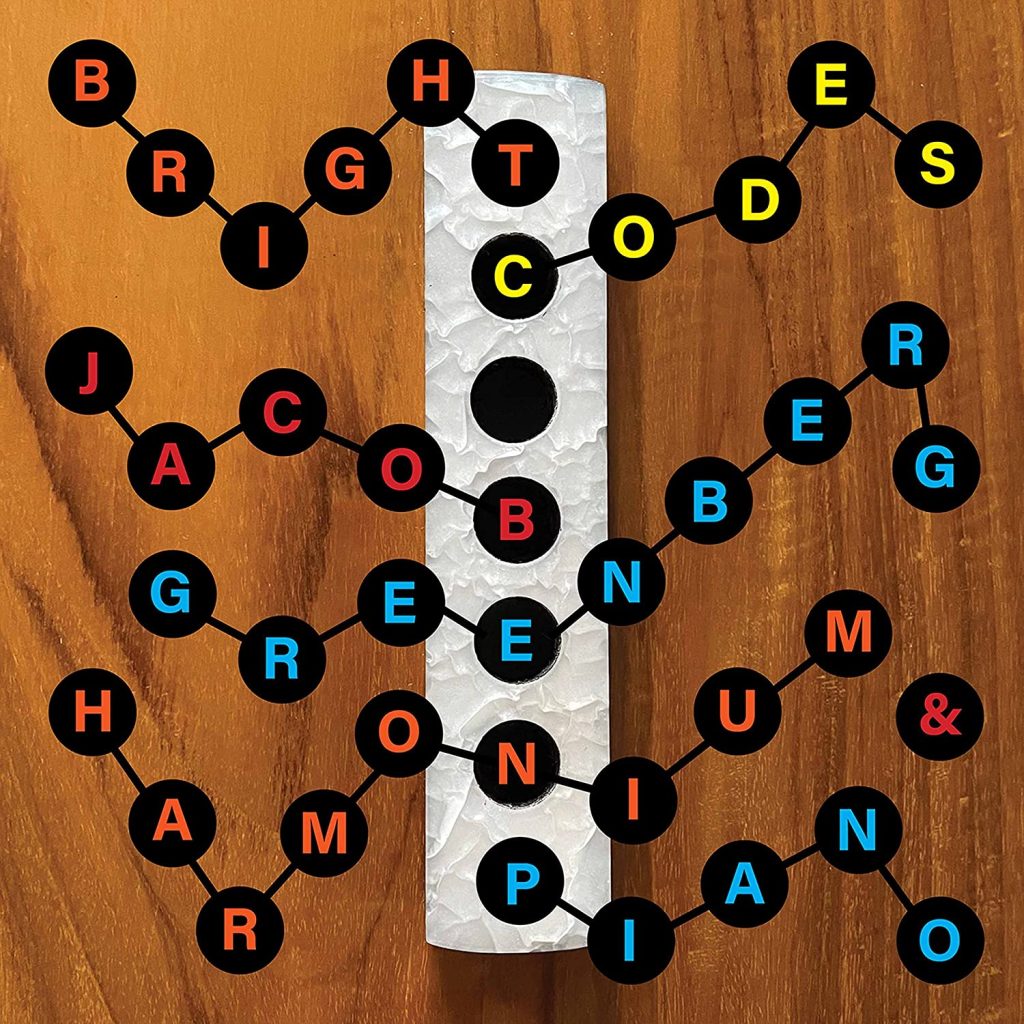
New piano music written for Jacob Greenberg

I remain in awe at the curatorial and historically aware work of this truly fine pianist. Greenberg helped me grasp the historical context of the Second Viennese School in a new way with his earlier release “Book of the Hanging Gardens”. In that release he played all the Debussy Preludes along with Schoenberg’s pre twelve tone song cycle, Webern’s Variations, and the Berg Sonata which helped this listener to better grasp the historical context of this music. This small collection of works written for him reflects a collaborative and visionary ethic akin to that of Sarah Cahill’s. Keep an ear out for this guy.

Lou Harrison’s brief Solo Violin Sonata

I have received some good natured teasing about the fact that this, one of my longer reviews, is of a 15 minute piece of music. But this act of musical archeology by the bay area’s Kate Stenberg (who is a regular collaborator with Sarah Cahill BTW) has made the first recording of this little work. It’s Webernian duration belies a style very much in character with this beloved composer’s other work. My review was as much about the music and the recording as it was about the dedication of Stenberg to new music. This release is from Other Minds, another shining example of advocacy of new music and collaboration among composers and performers. Get it. Listen to it. And don’t miss a chance to hear Stenberg live performances or to hear anything Harrison has written.

Music between the wars

The Chicago based Cedille label is one of my favorite classical music labels. Producer James Ginsburg has a golden ear and Cedille is the finest Chicago based classical label since the justly fabled Mercury records. All their releases deserve attention but this two disc set of little known works for String Trio written between the world wars is a feast of substantive, if slightly conservative, voices. This one is a great listen and, trust me, none of this music is in your collection.

Other Minds Executive and Artistic Director of Other Minds Charles Amirkhanian applauds a rare performance of his own music at OM 26.

While circumstances conspired to limit my attendance to only one of the three days of OM 26, I would be loathe to leave this world class music festival off my “best of” list. My first published blog of 2023 was of the 30th anniversary celebration which showcased Marc-Andre Hamelin’s stunning reading of Charles Ives’ massive Concord Sonata. Anything OM does deserves your attention but the roughly annual festival continues to present composers and performers from around the world. Not to be missed.

Volume two of three

Another exciting release of Cahill’s visionary series. Like the previous volume (and the aforementioned Cedille release) the consumer will suffer no unnecessary duplications if the music herein. Fascinating and expertly done. This set (the third volume due this year) is a testament to Cahill’s encyclopedic knowledge of piano music as well as her collaborative nature and, of course, her skills as a pianist.

A new voice in electroacoustic composition Kataro Suzuki.

I’m cheating a bit here since I wasn’t able to complete my review until 2023 but this Starkland disc was released in 2022 and definitely earns its place in my “best of” list. This rising star is another one to watch. Starkland, run by the dynamic Tom Steenland is one of those labels that reliably finds interesting and substantive new music. This one is no exception. It goes a long way to alleviating my skepticism of the electroacoustic genre.

DVD OM 4001

And, in order to be fair I must cheat equitably. Charles Amirkhanian kindly sent me this exciting and excellent DVD of his collaboration with his partner in life and in artistic crimes, Carol Law. My more extensive review will appear shortly but this was a major release in 2022. Amirkhanian spends far less time promoting and performing his own unique compositions so this is an especially welcome release.

Neuma

Last but not least of my best of 2022 is this wonderful Neuma release which, when I began my research to write a cogent and informed review, left me stunned at how little I actually knew about composer David Tudor and the astounding dimensions of this unusual piece that evolves with every performance. After gathering a whole ton of data I finally decided that I could not write a comprehensive review without more research so I settled on a tasteful (I hope) summary with the expectation that I will write a larger piece on Tudor and his work. The review will be out very shortly. This is an amazing and significant release.

Happy 2023 to all my readers and thanks to those who kept reading my blog during more fallow times. I have many blogs currently in preparation that I look forward to sharing in the months to come. Peace, health, and music to all.

Rising Star Cellist Hannah Collins Defines Her Vision for Her Instrument in “Resonance Lines”


Sono Luminus DSL-92252

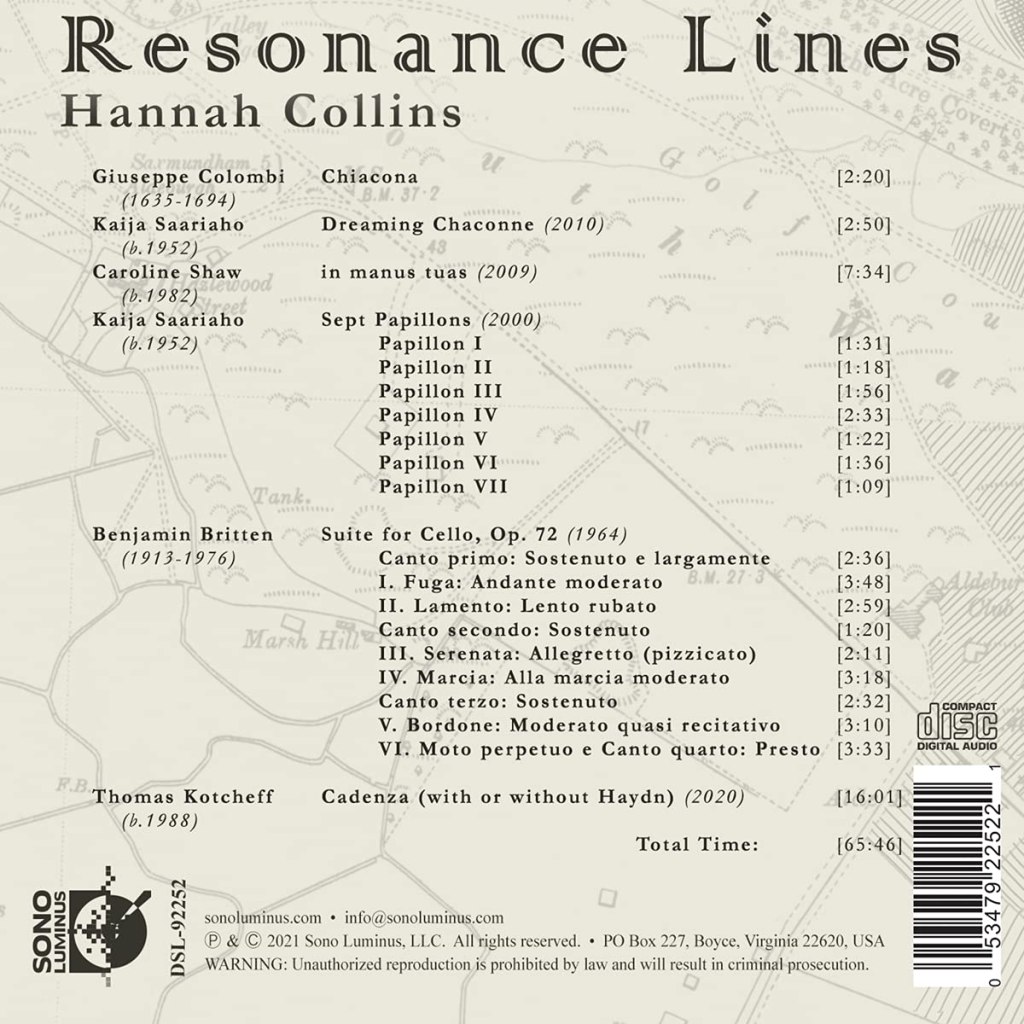
Having chosen a debut album featuring solo cello without electronics or accompaniment the Sono Luminus label virtually guarantees that every one of the subtleties of the performer’s skills will be heard in all their glory. And so we have an auspicious solo debut album by a skilled and talented artist with a unique and intelligent vision in her choice of repertoire for her instrument. Hannah Collins has a beautifully designed web page describing her background so I will focus only on the music on this release.

Even a brief glance makes it obvious that Collins’ radar captures a wide range of music which encompasses five centuries of compositional efforts by both a consciously curated selection of composers that reflect both racial and gender diversity and who themselves represent a substantive variety of styles and visions. She begins with a rather obscure baroque composer (I had never heard of him), Giuseppe Colombi (1635-1694). His Chiacona (1670) is apparently the first identified composition for solo cello (the famous solo cello suites by J.S. Bach wouldn’t come along until 1717-1723).

This arguably foundational work of the solo cello genre is then followed by the very fine Finnish composer Kaija Saariaho (1952- ) whose Dreaming Chaconne (2010) is in fact a variation on the Colombi piece.

The third track, “In manus tuas” (Into your hands) by the equally fine American composer, Carolyn Shaw (1982- ) was written for Ms. Collins, and is an aural peek inside the mind of the composer as she recalls a performance of a motet by 16th century English composer Thomas Tallis (1505-1585). Shaw evokes a sonic memory moment of hearing a performance of “In manus tuas Domine” in Christ Church in New Haven, Connecticut which made a strong impression on her. It is a work that appears to be destined to become a modern classic. It creates spectral harmonics that engulf the listener inside Shaw’s memory of the event. The composition’s title also function metaphorically as she offers her music into the hands of the artist and the minds of the listeners. It is a challenge both technically and interpretively and Collins rises to those challenges with seeming ease.

The next seven tracks are given to another Saariaho composition, “Sept Papillons” (2000). This earlier work from her extensive catalog is also given to extended instrumental techniques as she evokes the seven butterflies of the title. This set of pieces was written for the fine Finnish cellist, Anssi Karttunen. It was at the 2008 Creative Dialogue Workshop in Santa Fe, New Mexico (run by Karttunen) that Collins encountered this music and the extended techniques required for its performance. Saariaho’s sound world is like that of an incarnation of Debussy and his impressionist aesthetic. There is apparently no visual program here but the music recalls, in this listener’s mind, Saariaho’s earlier “Nymphea” (1987) for string quartet and electronics which was inspired by Monet’s famed “Water Lilies” of 1906.

This fine disc includes the first (of three) suites for solo cello by Benjamin Britten. All three of these (1964, 1967, 1971) had all been composed for the Russian virtuoso Mstislav Rostropovich. Like the the Saariaho and Shaw pieces these suites are inspired by earlier works, in this case the Bach suites of the early 18th century. Collins plays the first (Opus 72) of these and her performance makes this listener hope that she will later record the other two.

While modeled on earlier music, the Britten work utilizes techniques that would likely be unfamiliar to cellists before the 20th century. It is homage both to Bach and to Maestro Rostropovich. And Collins’ playing furthers this homage to both of these past masters.

The final track is a work by one Thomas Kotcheff (1988- ). Like the first track, this young composer is unfamiliar to this writer. His work, “Cadenza (with or without Haydn)” of 2020” carries on the theme of homage. In a nod to the late great Frederic Rzewski (1938-2021) whose “Cadenza with or without Beethoven” (2003) is an extended cadenza which can be played on its own or as part of the Beethoven 4th piano concerto.

Kotcheff’s work is a cadenza for Haydn’s C major cello concerto. Like the Rzewski, it can be performed with the concerto or as a solo work on its own. Also like the Rzewski, the more modern aspects of this “cadenza” might confuse audiences anticipating more conventional music that fits with the context of the concerto for which it was written and the music stands very strongly on its own.

Like a lot of solo artists are doing these days, Collins’ debut solo album is like her personal manifesto of music for her chosen instrument. It is a fine foundation anticipating what will likely be an enlightening as well as entertaining career.

Ravel and Bartok Go Electric


Sono Luminus SLE-70028

While this album is not likely to cause as much of a stir as Bob Dylan did when he went electric in 1965 at the Newport Folk Festival it is revelatory in its own way. Of course Ravel and Bartok did not write for even acoustic guitar but they, like all western classical musicians, were very familiar with the art of transcription. Functional electric instruments wouldn’t come into use until the late 1940s. But the art of transcription (essentially a synonym for “Covers” as used in pop music) can be applied to any instrument and, at its best, transcription brings out perspectives in the music that were not obvious in its original incarnation. That is what is achieved here.

There are no liner notes but it appears that these musicians have done the transcribing themselves. And their backgrounds include having played guitar with the likes of Chris Cornell, Natalie Merchant, Rufus Wainwright, Joan Baez, Patti Smith, Ian Hunter, and others. Their facility with their guitar playing comes from (the more traditional role of the guitar) in rock/pop genres and here they apply this knowledge to playing classical repertoire which they came to love. Why can’t they have both?

A more pedestrian choice of repertoire for a debut might have been Bach inventions or Scarlatti sonatas (which worked remarkably well for Wendy Carlos) but these guys made what, on first look, seems very unusual choices. Ravel’s Mother Goose Suite (hardly that composer’s best known work) and 6 (of the 44) duos for violins by Bela Bartok (among the composer’s least known compositions). So I approached this release with a great deal of skepticism.

Well, the sounds they create, recorded so lucidly too, instantly won me over. This is a spectacular release and makes a very enjoyable listening experience. Their transcriptions provided a perspective that sent this listener back to the original compositions for another listen. I had a minimal familiarity with the Ravel and even less familiarity with the Bartok but the sheer energy of their performances combined with a real feel for the jazz roots that underlie the Ravel as well as a curious set of sounds chosen for the Hungarian folk derived Bartok effectively recasts these pieces in a very different perspective.

Like Bob Dylan, they thrust the modern electric guitar center stage and provide what will be for some, a jarring or disturbing experience. Purists may find these transcriptions sacrilegious but I suspect that many will be charmed and (perhaps their endgame) may find electric guitars to be anywhere from acceptable to revelatory as instruments which can do justice in the classical world.

Electric guitars are now pretty common in folk as well as rock and blues. Dylan gets significant credit for this and these guys seem to be aiming at a similar goal, that of bringing electric guitars into legitimacy in the performance of classical music. Whether this eventually happens remains to be seen but this is a mighty well conceived and executed effort and, in the end, it is a very fine piece of sonic art. Kudos to Jack Petruzzelli and Cameron Greider as well as to Sono Luminus.

Pauline Kim Harris’ Solo Debut: Heroine


heroine

Sono Luminus DSL-92235

Pauline Kim Harris is a marvelously accomplished violinist.  Her resume includes her work as composer as well as performer.  At first glance this disc would seem to be an unusual choice for a solo debut but a quick look at her discography reveals that we have here a musician who has chosen experimental and potentially cutting edge music to define her work.  This album is a collaboration with another musician, Spencer Topel, who has chosen a similarly difficult and complex challenge to define his career.

I have chosen for the scope of this review to forego attempts at analyzing these nascent artists and their uniquely defined personas as musicians and have simply provided links to their respective websites.  What I feel obligated to do however is look at the nature of this genre of this music.  Is it ambient?  Is it drone? Is it transcription?  And who is the intended audience?  Musicians? Listeners sitting in a seat in a concert hall?  Background music a la Eno’s Music for Airports?  How will this disc be used?

One clue as to this music’s intended purpose is the recording label itself.  Sono Luminus, a new music label defined largely by a concern with producing the finest sound via digital signal processing.  This independent classical label has sent me several CDs which are reviewed (most favorably) elsewhere in these pages.  One of the things that is notable about this label is the intelligent choice of programming.  Rather than settle simply for quality sound alone they seem to focus their repertoirial radar on new and/or unusual music which is not being heard on other labels.  Their choices have been intelligent in the past.

OK, now to the disc.  There are but two pieces here.  One is a sort of deconstruction of the Chaconne from Bach’s solo violin partita (BWV 1004).  This much lauded masterpiece has received a great deal of attention and composers such as Feruccio Busoni have done transcriptions of the work.  Another recent recording (reviewed here) features a just intonation version of the work.  I’m not sure what Bach would have thought of either of these but the fact is that this is a work very much representative of western music in the high baroque era and one which endures in performances to this day.

The sound, of course, is wonderful.  The range and the clarity of the recording beg to be heard on the highest quality sound system the listener can commandeer.  It is beautiful. It is in a tonal idiom.  But what volume is needed?  Well that depends on your listening context.  For the purpose of this review I listened on my factory sound system in my 2015 Toyota RAV 4.  Not the highest end of audio reproduction but one which did allow me to perceive the quality of the recording.

So I listened at a volume which allowed the music to be heard above road and traffic noise.  I wondered if I would have appreciated this from an audience seat.  Hmm, not sure.  Then the more ambient notion suggested itself to me.  Maybe this could be music that is played in the foyer of a concert hall before the concert and during intermissions (regardless of the content of the actual concert to be heard).  Intriguing idea but I know of no one willing to consider this notion in any sizable venue.

I listened to the second track, a “reimagining” of Deo Gratias by renaissance composer Johannes Ockeghem.  Same thoughts…dedicated listener in a chair, music to modify a sonic space.  Both tracks are listed as “Composed by Pauline Kim Harris and Spencer Topel.”  So the artists think of these as their compositions.  Fine by me.  The long standing and ongoing tradition of working with older music and recasting it by changing its instrumentation, writing variations, changing its performance context, etc. is well known and has been put to good use in any number of subsequently respected musical compositions.

So in the end I remain undecided as to the intent (other than experimentalism) of these pieces and will leave my readers with the suggestion that they simply listen and utilize the music as it fits your own life.  It is certainly beautiful but it is not dramatic or assertive, rather it almost subsists inviting listeners to contemplate and choose to do more deeply or to simply allow the music to exist as a pleasing sound object (the listener indeed may be the “Heroine” of the title).  Either way this disc provides much more than what initially meets the ear.  And that would seem to be a significant artistic achievement.

LA Percussion in High Definition


Having been a bit overwhelmed with a LOT of percussion recordings lately I placed this Los Angeles Percussion Quartet recording a bit further back in my review queue.  My apologies but I did it because I really wanted to give this recording my full attention and then to have something useful to say.

So I listened.  I put this on in my car when making a trip long enough to allow me to hear one of the two discs without interruption.  And I chose a relatively non-distracting drive in which I could actually pay attention to the music without incurring some danger on the road.

Of course the first thing that strikes the listener here is the lucidity of the recording.  Sono Luminus is showing off their signal processing prowess as well as their sensitivity with things like microphone placement and all the things that only great engineers know.

Let me make one thing very clear.  I am not a fan of sonic spectacle for its own sake.  I recall one incarnation of vinyl/analog fetish releases which a friend drooled over but whose content bored me to death.  Fortunately Sono Luminus seems to be steering clear of that sand trap.

This two disc set (well, three if you count the Blu-Ray Audio disc) collects music by largely little known composers (at least to these ears).  But fear not, this is not music that sounds like someone knocked over the stainless steel pot rack at Sur le Table.  Quite the opposite.  This is some intelligent music which compels the listener to stick with each piece and follow its development.  This is apparently the fourth album by LAPQ, the previous three also being Sono Luminus productions.

The first disc begins with the first of two Icelandic composers both of whom were represented on a previously reviewed discDaniel Bjarnason is a conductor and composer and his Qui Tollis, a work of wide dynamic range and a variety of moods from more assertive to more contemplative.  The second work is by the current darling of Icelandic classical music.  I am speaking, of course, of the very talented Anna Thorvaldsdottir.  Her work, Aura, is more consistently contemplative in nature and, like all her work, the listener is rewarded for paying close attention as she weaves magical impressionistic tapestries.

Memory Palace by Brooklyn based Christopher Cerrone piqued serious interest in this listener.  This man would seem to be a composer whose work deserves watching/listening.  This five movement suite for percussion indeed makes for compelling listening as he moves through a variety of moods and isn’t afraid of frank melodic invention during the journey.  This does not strike this reviewer as run of the mill percussion music (not that the preceding two works did either).  Rather this work suggests a distinctive compositional voice worthy of further attention.  Mr. Cerrone’s collection of awards including a Rome Prize and a runner up for a Pulitzer Prize suggests that he will be heard from again soon.

Fear-Release by Ellen Reid is a shorter though no less rewarding journey down yet another compositional path for percussion.  At just short of nine minutes this is a compact movement which relies on a fairly wide dynamic range and strategic use of silences and is a fitting close to the first disc.

The brief, rather poetic, liner notes draw a parallel between the multiplicity of languages found in the Los Angeles area and the multiplicity of musical languages found on this recording.  Indeed these are distinctive voices that extract a wide variety of sound from this percussion quartet.  This reviewer is somehow strongly reminded of Nexus, the Canadian percussion group which dominated the 1990s for a bit.  The similarity is in their enthusiasm and in their musical skills.  LAPQ is a distinct ensemble in its way and is a group that is not shy to be innovative.

I have to say, though, that I could have used a great deal more info and commentary on these compositions.  As one would benefit from multilingual dictionaries in Los Angeles the listener could gain much from learning more about the structure and intentions behind these fascinating compositions.  And, unless I have failed to find them (I looked closely) the liner notes carry lovely photos but fail to name the musicians whose sound was so lovingly preserved.  They are: Matt Cook, Justin DeHart, Nick Terry, and Justin Hills.

The concluding work coming in at almost 40 minutes is divided into tracks but is in fact one large movement.  It is probably the most contemplative work here though it has some pretty assertive moments.  I Hold the Lion’s Paw by Andrew McIntosh is a great show piece for demonstrating the range of these musicians.  Though continuous this piece delves through a variety of moods and uses apparently a wide variety of instruments as well.

Fans of percussion will love this disc as will fans of audio porn (there is something erotic about technology for the ears).  This is not easy listening and though seeking innovation makes no moves toward populism.  This is serious music making.


Dark Queen Mantra, Celebrating Terry Riley at 80


Terry Riley (1935- ) turned 80 on June 24, 2015 and happily we are still celebrating this treasure of American music.  His iconic work “In C” (1964) is one of the defining works of the minimalist movement and Riley’s trippy album, “Rainbow in Curved Air” (1969) has also endured well.  But these works typify his early style and his work has evolved though his primary influences continue to be jazz and Hindustani music for the most part to a very personal style.

His discography boasts at least 30 albums and his compositions range from various chamber music pieces, solo and duo piano music, orchestral music, concertos and even music drama.  His influence on musicians is wide ranging and even includes that familiar intro to Baba O’Riley by the The Who (the title is actually an homage to Meher Baba and Terry Riley and that intro derives from Riley’s first Keyboard Study).  In recent years he has achieved much deserved success in collaboration with his son Gyan Riley who is a composer in his own right and an extraordinary guitarist.  Their collaborations have been a true highlight in both musicians’ careers.

This disc is a production from the truly wonderful Sono Luminus label whose recordings continue to set a high bar for production and excellence in sound as well as in intelligent programming.

Three works are presented here.  The first is Dark Queen Mantra (2015) for electric guitar and string quartet.  It is obviously the centerpiece and it is a fine work commissioned in honor of Riley’s 80th and written for the forces who perform it here. The amazing and versatile Del Sol Quartet and Gyan Riley seem a natural pairing.  These California based musicians seem to pour the whole of their artistic hearts and souls into this performance and Gyan Riley, a fine musician in his own right, always seems to be at his very best in his collaborations with his dad.  (Indeed anyone who had the pleasure of seeing their live sets can testify as to their beautiful musical intimacy.)

So it is we have a definitive recording of yet another fine piece from this beloved composer.  The choice to follow it with Mas Lugares (2003) by the late Stefano Scodanibbio (1956-2012) is an inspired and very appropriate choice (Riley was fond of this composer and helped promote his work).  Scodanibbio collaborated with Riley and recorded two albums with him (Lazy Afternoon Among the Crocodiles, 1997 and Diamond Fiddle Language, 2005).  This work for string quartet is dedicated to Luciano Berio and is a sort of deconstruction via the lens of the composer’s vision of madrigals by the early baroque master Claudio Monteverdi.  It is truly a joy to hear more of this composer’s music and this serves as a loving homage by the Del Sol and, by association, with Riley.

The concluding music is again by Terry Riley and it comes from the rich period of his collaboration with another set of fine California based musicians, the Kronos Quartet. They Wheel and the Mythic Birds Waltz (1983) first appeared on a Gramavision disc and this is a welcome reprise.  It is via his writing for the Kronos that Riley produced most of his string quartet writing and it is a fine repository for his compositional talents.

For its sound and its compositional and performance content this is one of the finest discs to come across this reviewer’s desk and it is a beautiful homage to Riley (father and son), the Del Sol Quartet, the Kronos Quartet and to the late Stefano Scodanibbio.  This is a gorgeous and deeply satisfying album.  Kudos to all.

Recurrence: New Icelandic Orchestral Music


“Well I’ve never been to Iceland, but I really like the music.”  Please excuse the Hoyt Axton paraphrase but this music brings joy to this listener’s heart.

Wow!  Even as a writer with an avowed fondness for music from the Nordic regions I am pleased to say that I am just stunned at this recording.  This is all new music written in the last few years by Icelandic composers and performed by the Iceland Symphony which seems well prepared to handle these large works.

These seven tracks document five works by living composers and, I dare say, rising stars in the classical orchestral realm as well.  Only one of these composers is likely to ring a bell in all but a few listeners and that is Anna Thorvaldsdottir, probably the best known musician from Iceland since Björk.  And it is worth noting that three of the five works are by female composers.

There is a consistency in the large orchestral sounds from these composers that provide a unity for the listener and a challenge for the recording engineers.  In fact this is ideal to show off the sonic facility of the Sono Luminus label and the skills of producer Dan Merceruio and recording engineer Daniel Shores.  This is the sort of album that stereo salons use to show off the range of their amps and speakers.  It is indeed thrilling to hear and the better your sound system, the more exciting this will be.  Those blessed with Blue Ray Audio capability will doubtless get the best sound of all.  Both standard CD and Blue Ray Audio discs are included in this package.

In order of appearance the composers are: Thurídur Jónsdóttir (1967- ), Hlynur Vilmarsson, María Huld Markan Sigfúsdóttir (1980- ), Daniel Bjarnason (1979- ), and Anna Thorvaldsdottir (1977- ).  Bjarnason is also the very capable conductor of the Iceland Symphony in this recording.

The music, Flow and Fusion, bd, Aequora, Emergence (three movements), and Dreaming are not given composition dates but are presumably recent compositions by these young artists.  There are liner notes which are useful to the listener but the main point here seems to be the glorious sound.  One hears influence and/or homage to some of the great sonic experimenters of the late 1950s and 60s like Penderecki, Xenakis, Lutoslawski and probably some Icelandic composers whose works have yet to be heard outside of Iceland.

The album has the notation below the title of “ISO Project 1” so here’s hoping that there will be at least a second volume and that we be given the opportunity to hear more from the rich musical landscape of Iceland.  Bravo!  Brava!  Keep it coming.


Nordic Affect: Raindamage, Wonderful Music from Iceland


Sono Luminus SLE-70008

Definitely an unusual beginning to this sonorous album of chamber music from the happy, creative place called Iceland.  Some of these tracks are electroacoustic combining some sort of electronic sound producing and/or manipulating components along with the live musical performance.

Nothing familiar here but a lot worth listening to.  This is a collection of recent chamber music from what is apparently some of the finest composers working in Iceland today. And as a Sono Luminus product it is a sound object of the highest order.  It is a beautifully recorded set of pieces that goes a long way to demonstrate the high quality and creativity of both the compositional and performance to be found in this distant corner of the world.

There are six works represented here.  Three are exclusively electronic, one for acoustic instruments with electronics and two are for acoustic instruments alone.  All seem to share the eclecticism of modern composers and, to this writer’s ear, a rather distinct style which seems to come out of the Nordic regions these days.

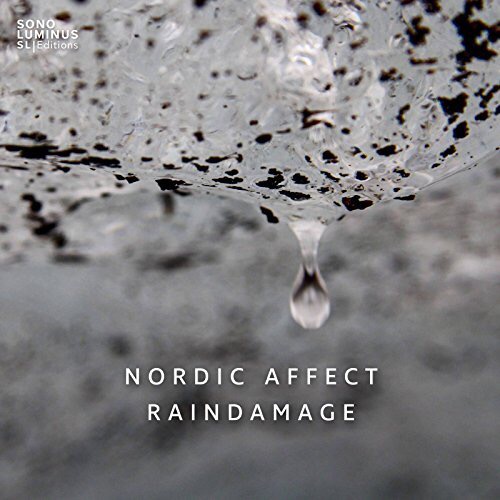
Iceland has a long and proud musical history and has amassed a large creative classical repertoire in (at least) the 20th and 21st centuries.  Perhaps one can hear the “sounds of the north” in these works or perhaps that is simply the analogous associations of this listener’s mind but there does seem to be some affinity between the lovely cover photograph of melting ice and some of the sounds herein.

At any rate this is fascinating music beautifully performed by Nordic Affect, a more or less fixed ensemble of violin, viola, cello, and harpsichord with occasional electronic supplementation.  Performers include Halla Steinun Stefásdóttir, Violin; Guòrún Hrund Haróardóttir, Viola; Hanna Loftsdóttir, Cello; Guòrún Óskarsdóttir, Harpsichord with Nava Dunkelman on drum in the last track.

The composers Úlfur Hansson, Valgeir Sigurðsson, and Hlynur Aðils Vilmarsson are completely unknown to this writer though it is noted that Hansson studied at Mills College in California, itself quite a hotbed of new music innovation.  No matter, though, these are some amazing composers doing cutting edge work and deserve your attention.

All in all this is one fine disc of chamber music.


Skylark: Crossing Over, bringing the chamber choir to the mainstream


skylark

Sono Luminus continues their dedication to high quality performances and recordings of a wide variety of music from the 20th and 21st centuries.  In this lovely  disc we are treated to a great deal of interesting and very listenable a capella choral music from the mid-twentieth century to the present.

It is this reviewer’s perception that a capella choral music is somewhat of an outlier in the classical music field and is generally not as well known as solo instrumental, orchestral, chamber music and such. (Band music is a similarly neglected area which is not frequently explored by many composers and not as familiar to audiences.)   It is not an area very familiar to me but this recording appears to be one that can expand this niche considerably by virtue of the sheer beauty of these recordings.

There are eight pieces by seven composers of varying levels of familiarity.  The most familiar names here are those of the late John Tavener (1944-2013) and William Schuman (1910-1992).  (Schuman was also no stranger to writing for band music.)  Some listeners may have heard of Jon Leifs (1899-1968), an Icelandic composer who should definitely be better known.  (Curiously the only comprehensive information available in English on this composer is in Wikipedia.)

The remaining composers, Daniel Elder (1986- ), Nicolai Kedrov (1871-1940), Robert Vuichard (1985- ) and (fellow Icelander) Anna Thorvaldsdottir (1977- ).  Thorvaldsdottir may be familiar to listeners via her earlier Sono Luminus release (reviewed here) as well as numerous other releases which definitely mark her as a rising star.

The disc opens with Elegy (2013) by Daniel Elder.  It is the only piece which features soloists and is a touching piece which demonstrates the composer’s skill with this specialized genre.

Butterfly Dreams (2002) by John Tavener is a series of eight choral meditations based on Chuang Tse known for his “…Am I a man dreaming he is a butterfly or a butterfly dreaming he is a man?”.  Tavener’s work has pushed the solo choral genre more to the mainstream than nearly any composer of the last 50 years and this piece is a good example of how he has managed to do this.  Tavener’s inspiration comes in part from the choral styles of eastern rite church music, a rich and sonorous sound.

Otche Nash by Nicolai Kedrov is apparently a classic in sacred music circles.  In Latin this would be Pater Noster and in English, Our Father.  This is a beautiful setting of the classic Christian Prayer.

Requiem (1947) by Jon Leifs is based on Icelandic folk poetry.  It was written in response to his grief at the loss of his daughter who drowned at the age of 18.  While not exactly representative of Leifs’ modern style it is a good example of the power of his invention in this heartfelt homage.  This is perhaps the composer’s best known work.

Heliocentric Meditation by Robert Vuichard is another example of the deep knowledge of the specialized techniques available to composers in this genre.  Vuichard appears to be a niche choral composer and one who has considerable skill.  There is a rather modernist feel to this powerful meditation.

William Schuman’s Carols of Death (1958) is a sort of modern classic which has been recorded many times.  There are three movements, each on a separate track.  It is curious how well these pieces fit in style with the rest of the disc given the date of composition.

Beyond the Veil (2005) is a setting by Anna Thorvaldsdottir of an old Icelandic psalm.  It is a prayer which is, in part, a meditation on death.  The composer has a mystical/impressionistic style that suits this music particularly well.

Funeral Ikos (1981) by John Tavener is definitely a modern classic.  This piece pretty much marks the beginning of the change from his early modernist style to the sort of “holy minimalist” (if you will) style that followed his conversion to and immersion in eastern rite sacred music.

Skylark is a chamber choir (five voices to each part, SATB) and this is their second album.  They were formed in 2011 and are under the direction of Matthew Guard.

This review is basically about the music but I have to say that this is also one of the most beautiful booklets I have seen.  It is short on info about the music but the photography and graphic design by Collin J. Rae and Caleb Nei deserve special recognition as well.  Each page features a photograph and texts of these pieces are tastefully printed across the photos.  This really enhances the experience and seems to be in harmony with the overall production.

Dan Mercurio, producer, has definitely made something special here and one hopes that this will help promote this compositional and performance niche to a more common experience and will encourage composers to write for a capella choir as well.  Daniel Shores is the recording and mastering engineer.  I am unable to assess the DVD audio and can only imagine how it must sound.  The CD itself is amazing to hear.

For an album ostensibly about death there is great joy and beauty to be found here.  Highly recommended, and not just to fans of choral music.


New Cello Music: Michael Nicolas’ Transitions


nicolastrans

Michael Nicolas is the new cellist of Brooklyn Rider as well as member of the International Contemporary Ensemble and numerous other affiliations.  This French Canadian/Taiwanese young man now residing in New York is definitely an emerging artist to watch and his debut album does much to demonstrate why he deserves serious attention.

This selection of mid/late twentieth and twenty first century cello pieces comprises an intelligent survey of this repertoire introducing new music and providing a younger performer’s take on some classics of solo cello with electronics as well some more recent works.  As he says in his liner notes this survey is concerned with the dichotomy between the solo instrument and the attendant electronics in various guises (even the quasi-Max Headroom cover art seems to reflect this).  Erin Baiano did the photography and Caleb Nei did the graphic design.  If I have a criticism of this fine album it is perhaps that the liner notes provide less detail than this listener prefers so I have tried to provide a few details here.

Beginning with Mario Davidovsky‘s classic Synchronisms No. 3 (1964) for cello and electronic sounds (one of twelve such works for solo instrument with electronics) and continuing with Steve Reich‘s Cello Counterpoint (2003) Nicolas begins his survey with two relatively well-known pieces in this genre and he certainly does them justice.  These pieces serve as Nicolas’ sort of homage to the past which he follows with some very current compositions.

He introduces some pieces unfamiliar to this writer.  David Fulmer‘s Speak of the Spring (2015) is a piece for solo cello with electronics.  Fulmer is a composer/performer apparently worth watching from a quick read of his web site.  As I was unable to determine the date of composition I contacted the composer who graciously responded despite his busy travel schedule: “The work was written last year, in 2015 specifically for Michael Nicolas and this particular project (cello and electronics). Michael had asked me for a piece for his recording project, and having known him (we went to school together) for many years, and admiring his playing so much, I was very interested in writing this piece for him. As for perspective…as a string player, I always enjoy writing string works. I’m interested in the beautiful timbres that the strings have. Tuning is also an important concept for me; at the end of the work, the cello electronics (pre-recorded cello) is scordatura.All of the prerecorded lines are recorded by Michael. I see this as a work written for Michael, played by Michael, and many versions of Michael.”

Next are two pieces by Annie Gosfield for cello and sampler.  Four Roses (1997) and “…and a Five Spot” (2015, commissioned by Nicolas as a companion to the former).  Both pieces are basically lyrical with spectral effects, microtonal passages, extended techniques and the samples of course.  The first piece is more assertive and direct while the second seems more introspective.  Both appear to be typical of Gosfield’s fully developed style.

Next up is a piece by the Icelandic composer Anna Thorvaldsdottir whose album length “In the Light of Air” performed by ICE was reviewed here.  Her piece on this disc for solo cello and electronics Transitions (2015) has a similarly ethereal character but one gets the impression that her approachable style belies complexities that underlie her work.

The last piece is flexura (2015) by Jaime E. Oliver La Rosa, a Peruvian born composer now working in New York.  This piece functions almost like a bookend with the Davidovsky piece that opens this disc (Davidovsky also comes from South America having been born in Argentina).  La Rosa holds a PhD. in computer music from the University of California San Diego and is developing open source software (and hardware) for live performance.  His MANO controller can be seen in the video on his website.  This last piece inhabits a similar sound world to that of the Davidovsky.  It is thorny and modern sounding and works as a showcase for the cellist.  Strictly speaking I suppose this piece is more of a duet in that there are two musicians required to perform it.

As always the impeccable production by Sono Luminus makes for a wonderful listening experience and this is quite an impressive debut for this interesting young musician. Kudos to producer Dan Mercurio recording technician David Angell  and executive producer Collin J. Rae.

Perhaps I am premature in saying this but this release has the earmarks of a being classic survey of the current status of this genre.  One of the joys of such a project is to hear new interpretations of established works and to hear an intelligent selection of new pieces.  Definitely want to hear more from Mr. Nicolas as well as from the composers represented.


ICE in Iceland, Music of Anna Thorvaldsdottir


In the Light of Air Sono Luminus DSL 92192

In the Light of Air
(Sono Luminus DSL 92192)

For some years now I have greatly enjoyed the contemporary music coming out of the Nordic countries.  Norway, Sweden, Denmark, Finland and the Faeroe Islands.  But I have also been aware of the truly rich musical culture of neighboring Iceland which, it seems, is less well known for its musical heritage.  Composers such as Jón Leifs and Thorkell Sigurbjornssen (among others) have created some wonderful music in the twentieth century that definitely needs to be heard more often and the present composer Anna Thorvaldsdottir is certainly a rising star in the twenty-first century, a proud example of Iceland’s best

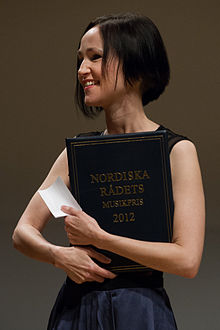
Þorvaldsdottir (in Icelandic script) was born in 1977 in Iceland.  She earned a B.A. in music composition at the Iceland Academy of the Arts in 2004 and went on to an M.A. and Ph.D. in composition at the University of California, San Diego finishing in 2011.  She has received numerous awards, most recently the Nordic Council Music Prize in 2012 for her orchestral work, “Dreaming” (2008).

Anna Thorvalsdottir accepting the Nordic Council Music Prize in 2012.

Anna Thorvalsdottir accepting the Nordic Council Music Prize in 2012.

Her music can be found on 8 CD releases of which three, including the present disc, are devoted entirely to her works. The other two discs devoted to her music can be found on Deutsche Grammaphon  and, now only available as a digital download, a disc originally released on Bandcamp and now also available on Innova.  Worth noting is another disc on the Sono Luminus label that contains her chamber work, “Shades of Silence” (2012).  Here her work is presented along with that of several other Icelandic composers placing her in context with her peers.

In the Light of Air (2013-2014) is a five movement suite written for and performed by ICE (The International Contemporary Ensemble).  The work is scored for viola, piano, cello, percussion, fixed electronics and installation. There is an intended visual component here and there is a high definition video of a performance of this work on Vimeo.  It puts this reviewer in the mind of the work of George Crumb some of whose chamber works (Black Angels and Vox Balenae for example) require various stagings that are not conventional in standard chamber music performances.  You can judge for yourself as to whether the staging enhances the work but the music does stand on its own.

The five movements, Luminance, Serenity, Existence, Remembrance and Transitions flow seamlessly into one another evoking a dream-like, even impressionistic feeling.  It would appear that this composer has studied a great deal of compositional techniques and has integrated those most useful to her in her work.  We hear microtones, glissandi, harmonics, alternate tunings, vocalizations, drones, even some spectral passages.  But throughout these techniques do homage to the past by their use in this clearly 21 st Century music.  There is an overall mysterious, somber and meditative tone that seems to evoke the sometimes barren landscapes of the composer’s native Iceland.  She seems  to travel in sound worlds not too distant from Morton Feldman but also Pauline Oliveros with a dash of Debussy perhaps. I don’t know, but quality (and sometimes lack) of light north of the Arctic Circle must certainly affect the way people think and create.  But keep in mind that Iceland consistently makes the top ten lists for happiest countries in the world. Perhaps funding for the arts, such as they provide, contributes to that happiness.  When the result is music like this one can’t help but feel at least hopeful.

ICE executes the performance with their usual virtuosity and care adding another significant work to their large and growing repertoire of contemporary music.  The recording, in keeping with the Sono Luminus mission is lucid and detailed.  (Unfortunately I was unable to evaluate the DVD 5.1 audio which is included in this release.  I have no doubt that this is a great listening experience but that will have to wait until I upgrade my sound system.)

Having heard this disc and some of the excerpts of other works available on the composer’s web page I think this is an artist whose work certainly deserves attention and one whose star will no doubt rise further.   Kudos to Sono Luminus on promoting this music.  Highly recommended.