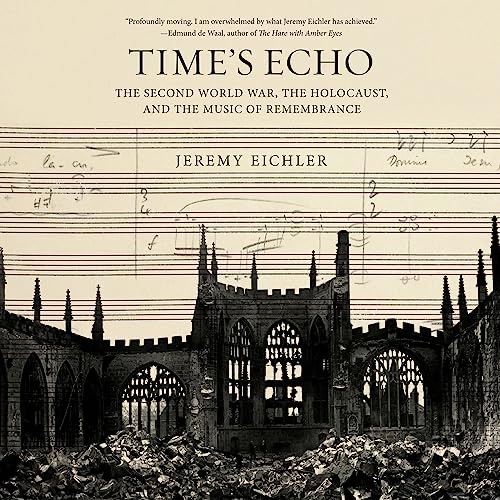
Art as a voice of protest: Jeremy Eichler’s compelling micro history, “Time’s Echo”


Though the author’s scope ranges from the early 19th century to the present day, it is not a comprehensive history, rather it is a sort of micro history of a musical genre born of sadness, hate, anger, and political dominance. It is a genre I have chosen to call “classical protest music”. And, for the sake of this review, I am referring to the incorporation of protest as a valid and effective modality for the contemporary composer.of so called “western art music”, Until the very late 19th century, music served mostly entertainment, celebration, worship, and memorial functions. But this is about a new, if frequently discomforting voice for this art form.

Music, like drama, and sometimes poetry are art forms that burn most brightly in performance. They exist on a page or even simply within the artist’s mind but come fully alive only in the temporal realm of performance. They then come to exist in the memories of the individuals who experience it. And those memories also exist concurrently within the overall social reality. Politics, philosophy, economics, and spirituality which ultimately frame art are now incorporated into the art form as it talks back to history.

The function of protest music in the popular or vernacular genre, one that arguably has had a greater impact in fomenting political change than protest music in the guise of the western classical tradition, has been well documented. Not so with music of the concert hall classical format.

Jeremy Eichler’s beautifully researched and written micro history makes a case for this art form framing (or reframing) history. Of course, not all expressions of protest hit the target of actually influencing history, but this book is not about that. It is about the birth of a concept little known in music until the late 19th and early 20th century. It is a genre which persists today in the so called political classical genre.

The book is filled with historical facts and people which become metaphors as the author elucidates the historical contexts that, in retrospect, can be seen as the genesis of art not just passively responding to historical events. They are attempts to use art to comment about and, hopefully influence history and to express outrage, sadness, and to call for change.

Music, ever the realm of entertainment and celebration, now increasingly finds purpose and mechanism to participate, not only as a supplier of entertainment and homage, but also as “a voice crying in the wilderness” in dialogue with the social/political milieu.

Eichler chooses four musical pieces by four different composers from four different time periods to tell the story of the evolution of western art music to speak with in an informed, publicly intellectual voice. In its ideal presentation, it succeeds best when it resonates with the hearts and minds of the audience. That can and sometimes does “go viral” (in common parlance) and subsequently influences public opinion.

The musical exemplars the author chooses includes:

Richard Strauss (1864-1949) “Metamorphosen” (1946)

Arnold Schoenberg (1874-1951) “A Survivor from Warsaw” (1947)

Benjamin Britten (1913-1976) “War Requiem”(1962)

Dimitri Shostakovich (1906-1975) “Symphony No. 13 ‘Babi Yar’” (1962)

Each composer, each work is subjected to historical, philosophical, and (I would say) spiritual/mystical analysis. And, to accomplish this, he goes back first to the early 19th century to discuss the rise of the idealized German gconcept of “Bildung” and the subsequent rise of antisemitism famously touted as a necessary fact by Richard Wagner (1813-1883) and subsequently amplified to the extreme of The Shoah.

Many musical works are referenced here, but John Foulds “A World Requiem” (1923), which is a large grandiose work of post romantic grandeur that seems to embody many of the elements that have come to characterize classical protest music. The work, written for large forces incorporates both liturgical and non-liturgical texts from disparate sources (not just western literature). It was conceived seemingly as a sort of final statement, a “requiem to end all requiems”, so to speak. Though popular in its day, it no more succeeded in preventing violence and hatred than Alexander Scriabin (1872-1915) in his unfinished Mysterium” succeeded in making the composer an immortal in a transcendent realm described from the spiritual imagination of Theosophical writings. But it did make a huge impact on protest as a valid modality for the artist. Protest in any modality doesn’t always have the intended impact. The point is the statement itself.

Foulds’ work can be seen as a sort of precursor, if not template for Britten’s “War Requiem”. More importantly the success of Foulds’work revealed a sympathetic audience who doubtless saw in it a clarion call, a grandly hopeful expression to an audience hungry to resolve the hatred, anger, and sadness of the increasingly divided and chaotic world as it evolved post 1919. It spoke to a fervent hope for healing and transcendence and remains a historically significant work of musical art.

Doubtless, many composers were delighted to identify this burgeoning need. Countless works followed Foulds’ noble effort and continue to this day in larger and smaller forces. Protest music, visual art, poetry, and drama are born of pain, sorrow, and hope derived from a sometimes pleading, sometimes shouting optimism. Much like audience engagement in sing alongs, audiences are invited to participate politically, emotionally and share the pain, sadness, and outrage as art speaks back to society rather than simply decorating it or celebrating it. Now, art embraces critique, not simply memorial.

Eichler discusses each composer and work, contextualizing them historically, geographically, emotionally, and philosophically/spiritually.
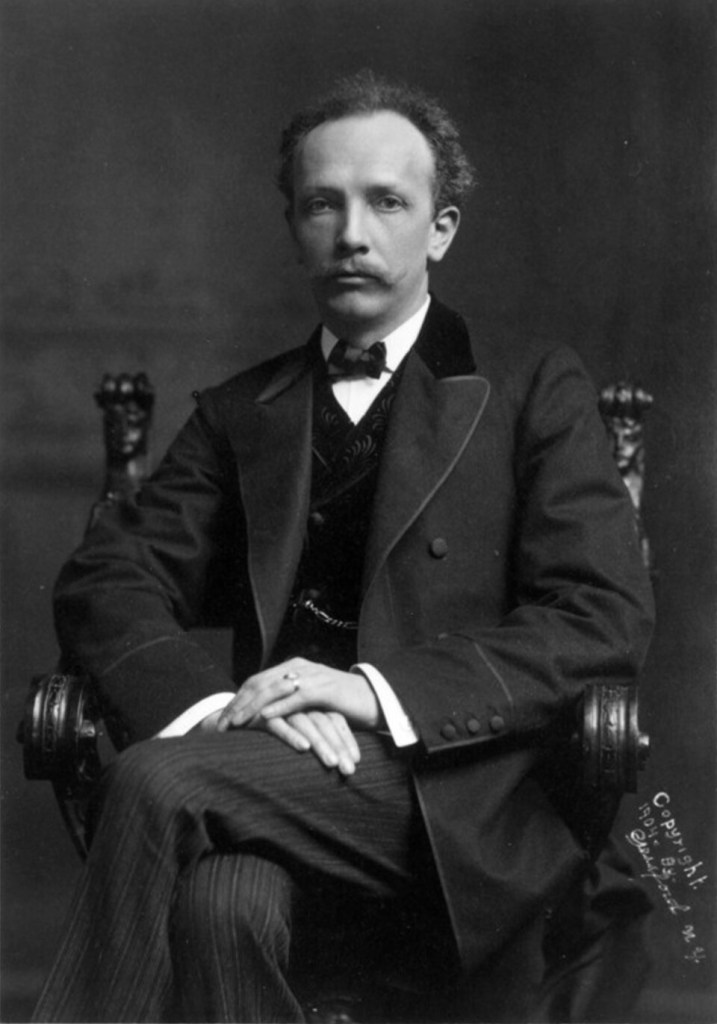
Richard Strauss

He begins then, with Richard Strauss (1864-1949) and the only work cited here that does not have a vocal component or a text. It is also more a personal reaction rather than an a work explicitly engaging with politics and history. It remains the most unique and enigmatic piece in the oeuvre of a man who remained, if not always happily, employed from the late nineteenth century, through two world wars and horrific historical events and wildly differing leaders. To this listener’s ears, it seems more of a catharsis, a musical processing of the composer’s emotions and possibly exorcizing them and containing them in this music. It is truly a powerful piece but it does not rise to the more explicit protest works that would follow in the mid twentieth century.
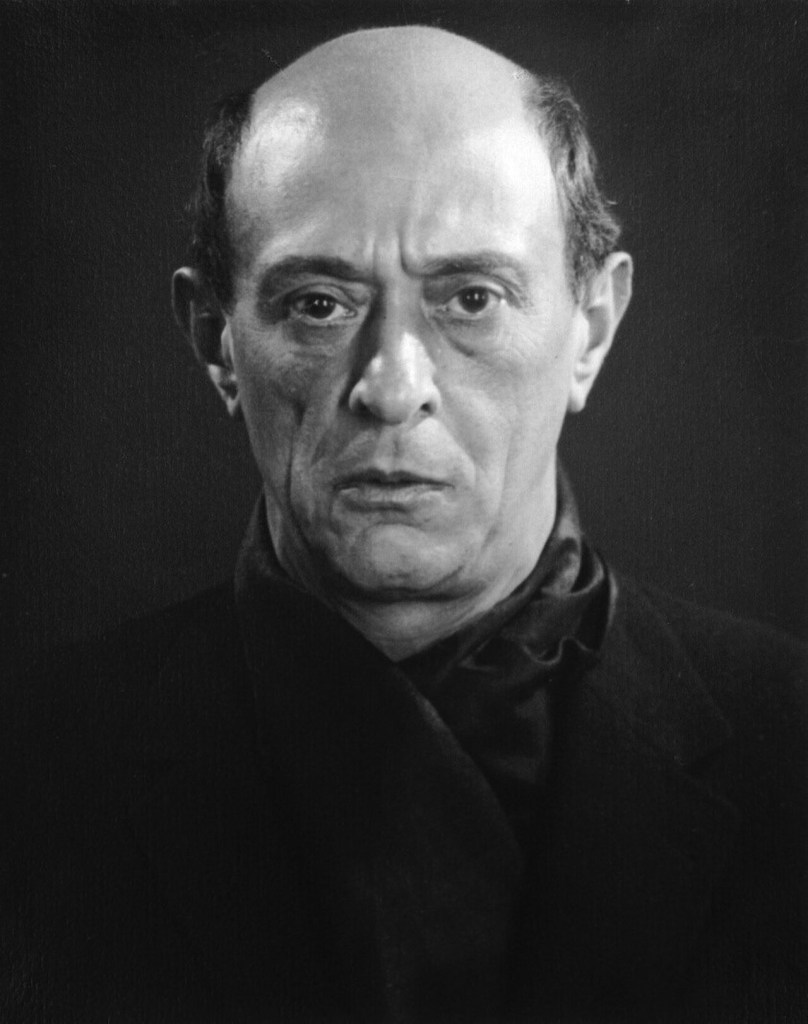
Arnold Schoenberg

A very convincing and insightful analysis is made of the next exemplar of the genre. Eichler’s biographical, historical, and philosophical/spiritual contextualizing of “A Survivor from Warsaw” (1947) seems an unusual choice. But, the fact that this brief monodrama is probably the first major public utterance of the rising awareness of the atrocities described by the narrator and focused attention in a way that only art can. It was also the development of the composer’s revolutionary serially organized music which was, perhaps ironically, very well suited to express the horrors of this age of “great wars”.

This section of the book is a masterful integration of political, historical, spiritual elements that provide a compelling mini history, linking individuals and events that shed a fascinating (and devastating) light on this era in musical history. It also places the composer most definitely as a protester, a would be agent of progressive political change. It led this listener to seek to experience more of Schoenberg’s music and was gratified to hear it forever differently and, more so than ever, more essential within western art music.

The work was a resounding success at its world premiere in, of all places, New Mexico. The Albuquerque Civic Symphony conducted by Kurt Frederick. 1600 people crowded into the Carlisle Gymnasium on November 4, 1948 were so pleased that the work was repeated, in full, to a deeply moved audience.

Hearing this music now, available in many fine interpretations on CD and in video formats, it is all the more stunning that this hardly easy listening tale about horrific events played so well and hit so deeply. And I will never again think of this as one of the composer’s lesser works.
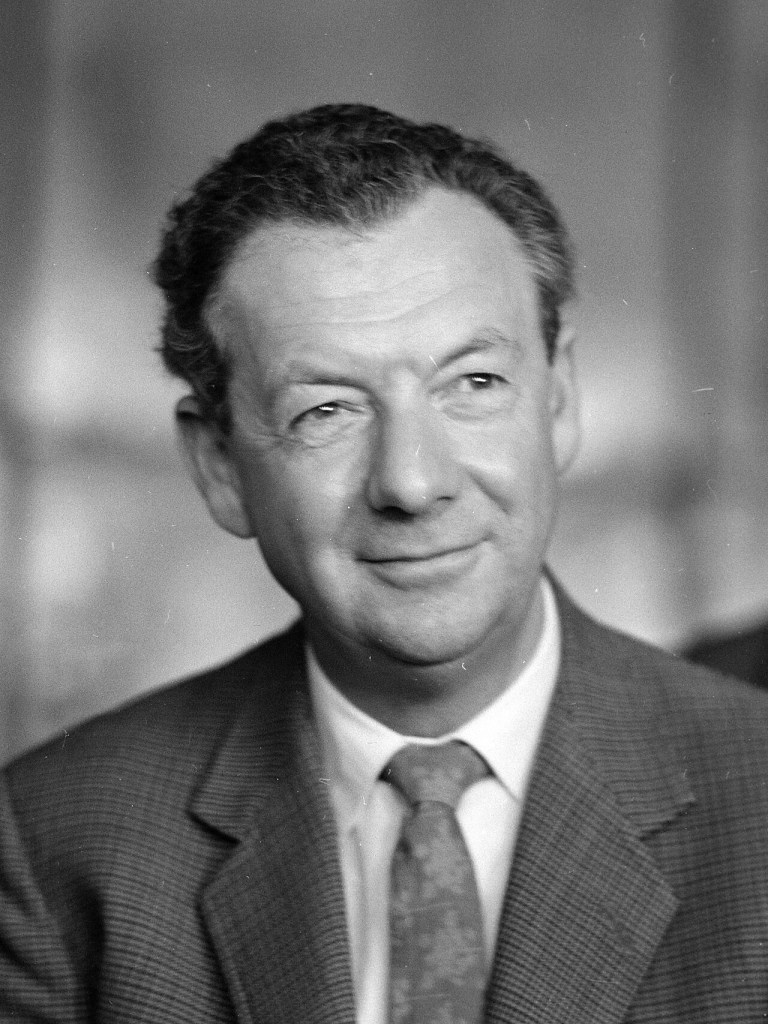
Benjamin Britten

Moving on to Benjamin Britten and his 1962 “War Requiem”. This music has a prominent place for this writer, having heard a performance by the Chicago Symphony conducted by Mstislav Rostropovich. The cellist, turned conductor was a lifelong progressive political advocate who facilitated a meeting which would become a friendship between Britten and Dmitri Shostakovich among his accomplishments.

But, I digress. Eichler’s framing of this composer and music shows a true pacifist composer who encountered the horrors of the First World War as well as subsequent atrocities perhaps one step removed geographically and culturally from the experience of Strauss and Schoenberg. He was a student, then a composer/pianist much admired and supported by the British as he steadily earned his place on the world stage.

Early in his rising successes, he managed to insinuate himself to play piano in a series of concerts with Yehudi Menuhin, that toured through war torn Europe to great acclaim. And it is here that the composer encountered first hand, the sights, the stories, the emotions that would forever inform and transform him and his music.

This experience is likely one of the seeds that led to the 1962 requiem. Britten utilized the form and Latin texts of the “Missa Pro Defunctis” , the Roman Catholic funeral rites. And he adds a chamber group that plays onstage in front of the full orchestra and chorus (I recall seeing a children’s chorus singing from the topmost seats in Orchestra Hall). The chamber group supports a tenor and a baritone who sing Britten’s settings from the late soldier, then poet/activist Wilfred Owen’s vividly sad and angry poetry. This is a guise not unlike what Leonard Bernstein would do in his anti war “Mass” some 12 years later.

Notably, the premiere was to have included tenor Peter Pears (Britten’s life and musical partner), baritone Dietrich Fischer-Dieskau, and soprano Galina Vishnevskaya (later the wife of Mstislav Rostropovich). However the Soviet government prevented her from performing this politically hot work. The hope of symbolically including British, German, and Russian artists was to further emphasize the message of the work. Though Vishnevskaya did participate in the glorious 1963 DECCA recording, she was replaced (most successfully) by the fine British soprano Heather Harper for the premiere. Britten himself conducted the chamber group at the premiere with Meredith Davies leading the large orchestra, choir and soloists.
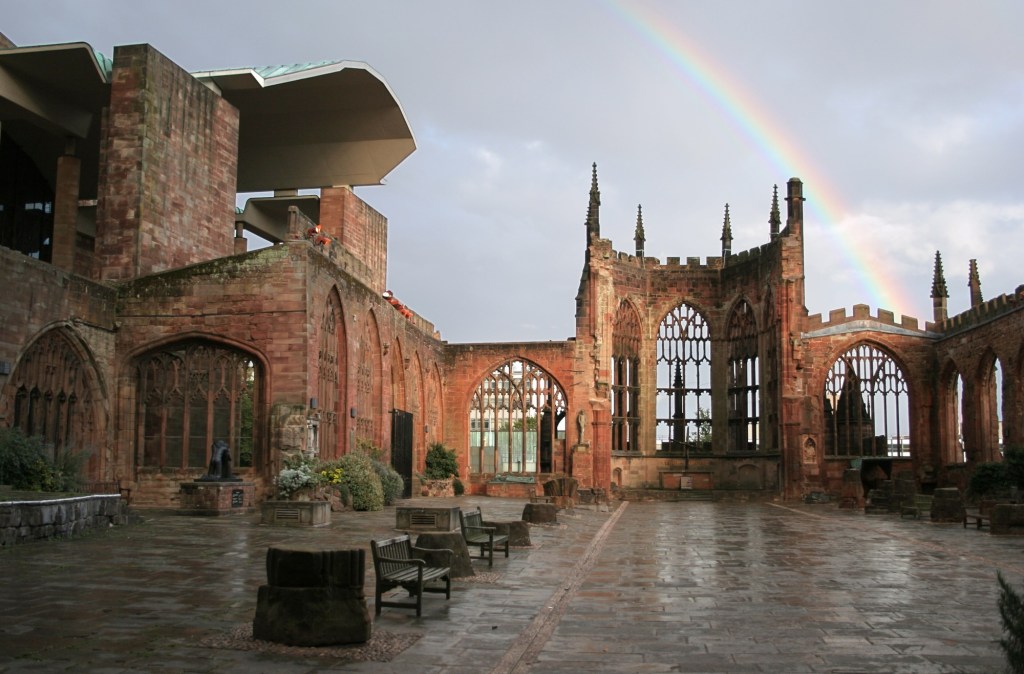
The roofless remains of the original Coventry Cathedral

In discussing the War Requiem, Eichler recounts his pilgrimage to the site of the newly rebuilt Coventry Cathedral which had been very badly damaged in the war and the work was commissioned to celebrate the consecration of the new edifice which was built next to the 14th century ruins, ruins through which the audience passed following the very successful premiere on July 27th, 1962. Eichler reports that his own experience walking through the ruins was a powerful experience even now, but especially when one knows this history.
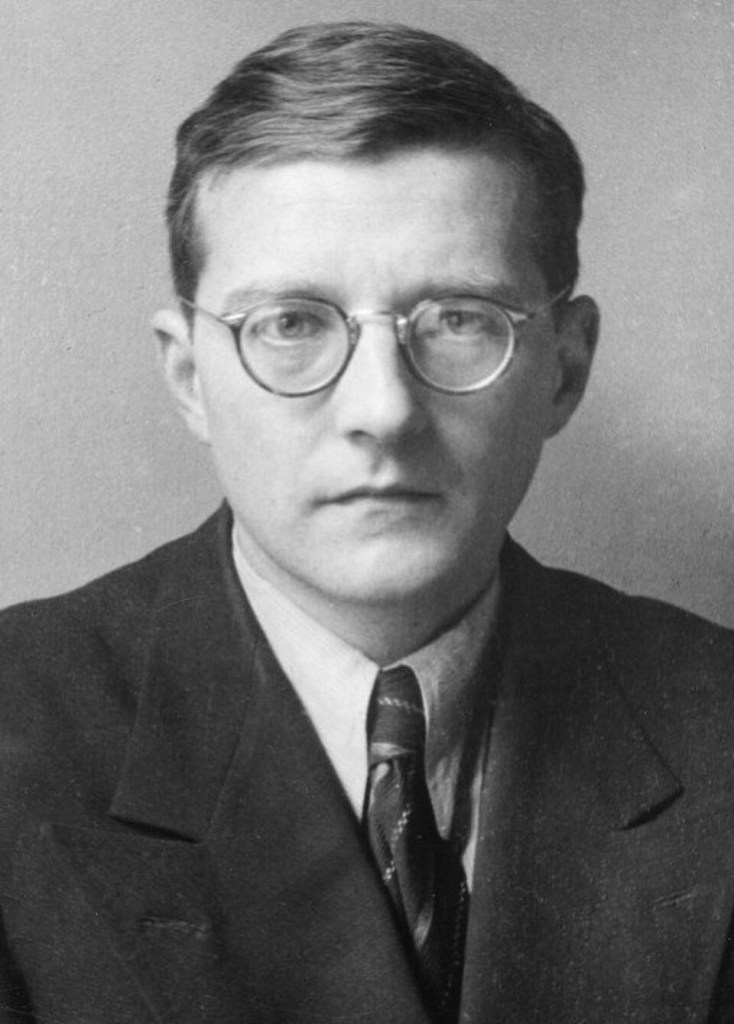
Dmitri Shostakovich

For the book’s finale, Eichler chose a too little known Shostakovich Symphony, his 13th (1962) ( later titled “Babi Yar”). The composer had worked under the repression of the Soviet Empire at least since his opera “Lady Macbeth of the Mtsensk District” disturbed the Soviet leadership in the 1930s. But he managed to get in a few significant political punches during his long career and continued to produce substantial and fresh new music until his death in 1975.

His 5th Symphony won him favor again with the Soviets and the composer’s 7th Symphony “Leningrad”, a paean to the ultimate victory over Nazi forces in 1944 is the stuff of legend, being performed on March 29th of 1942, literally during the siege of Leningrad. Musician soldiers were relieved of their war duties in order to have enough musicians to perform it and strategic bombing raids were done to redirect Nazi bombings and ensure that the music would be heard at its embattled premiere.

Eichler’s choice of the 13th Symphony is an apt choice to fit the author’s thesis. The work is a cri de couer, an angry lament raising the awareness of a genocidal slaughter, the evidence of which survived multiple efforts to erase the facts and the evidence from history. It sets the words of the fine Russian poet Yevgeny Yevtushenko (1932-2017) in his poem “Babi Yar” that provided the words. It refers, of course to the genocidal mass murders of Jews, dissidents, and others deemed not worthy of being allowed to live in the Nazi regime at the ravine so named. Accounts vary and much had been done to cover up the murders which numbered up to 30, 000 a day. In fact, there did not exist a memorial for some 100, 000 killed at Babi Yar until 1992.

The 13th Symphony premiered on December 18, 1962 in the Great Hall of the Moscow Conservatory. Kiril Kondrashin conducted. Despite controversy and attempts to tamper with the words, pressure to stop the premiere, it was a rousing success. This was only some seven months after the premiere of the Britten War Requiem.

Eichler’s account could have ended here but for the fact that, in addition to facilitating a meeting between Britten and Shostakovich, Mistislav Rostropovich smuggled a copy of the 1963 DECCA recording of the War Requiem and a score so that Shostakovich could hear it. And listen he did, with enthusiasm such that Shostakovich was inspired to respond in what would become the composer’s 14th Symphony which was dedicated to Britten. Hence the arts had a conversation about the atrocities of war like never before.

The work, incorporating poems by various poets on the subject of death was premiered officially on September 29th, 1969 in Leningrad by the Moscow Chamber Orchestra conducted by Rudolph Barshai. It appears to be inspired in part by the composer’s 1962 orchestration of Modest Mussorgsky’s song cycle, “Songs and Dances of Death” (ca. 1875) and perhaps Gustav Mahler’s “Kindertotenlieder” (1904).

The response at the premiere, hardly devoid of criticism, was another resounding success for the aging, ailing composer. The UK premiere was conducted at Aldeburgh by its dedicatee, Benjamin Britten, also to great acclaim.

Eichler’s book elegantly describes the genesis of these five works inspired by the history of very real and very shameful atrocities of some 50 years of conflicts which, though they may never be resolved, are truly “Time’s Echo” encased in artistic amber as it were. The memory of this reviewer’s experience of witnessing Maestro Rostrpovich’s reading of Britten’s Requiem so many years later and indeed all subsequent performances of the music chosen here by Eichler hold out a glimmer of hope that these echoes of their time will preserve both the memories of the atrocities themselves as well as the just outrage of the artist’s products in sound for posterity.
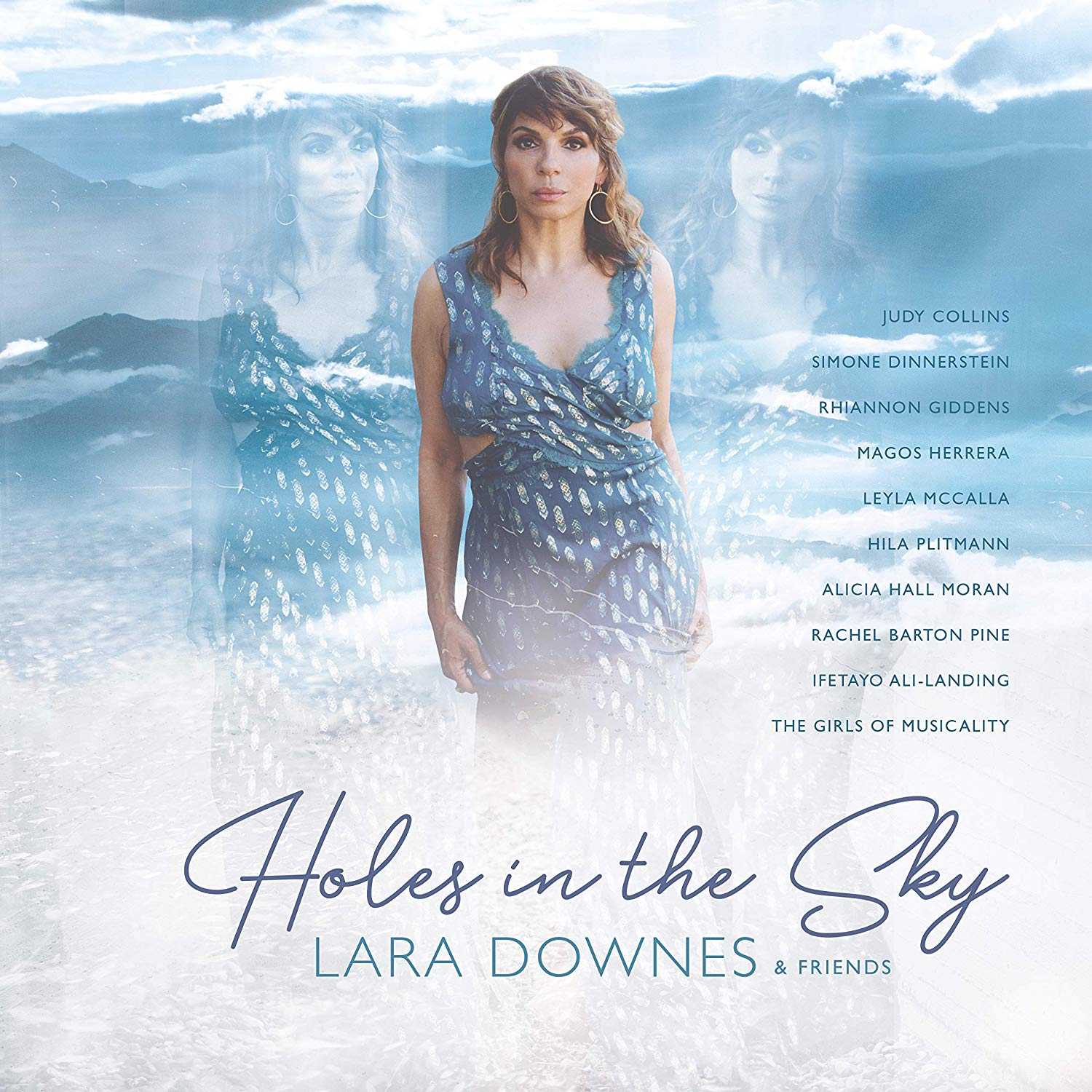
Holes in the Sky, Lara Downes Channels the Collective Artistry of the Feminine


downesholes

Sony/Portrait

Lara Downes has proven herself as a virtuoso pianist in solo, chamber, and with orchestra.  She has demonstrated facility with standard repertoire as well as an intelligent selection of contemporary composers.  In this sort of mid-career place she has begun releasing a more personal kind of album of which this is the third incarnation.  The “series’ to which I refer is the perception of this reviewer, not one defined as such by Ms. Downes but stick with me. Her previous releases have been organized on one level or another on themes just like most album of any stripe.  The difference is a more sociopolitical focus.

One look at the eclectic musical choices here and one sees Downes sharing her spotlight with kindred spirits (composers and performers both) while her themes take on more socially conscious ideas.  The first of these was America Again (2016) which is a beautiful collection of short piano pieces predominantly though not exclusively by black composers.  It is a very personal choice of repertoire reflecting her profound knowledge of the repertoire as well as the neglect of black composers.  The second was Lenny (2018), a tribute to Leonard Bernstein.  It includes a marvelously varied group of guest artists and, much as Lenny did, blurs the line between the “classical” and the “vernacular”.  It was a love song to a cherished artist (this writer included in the cherishing).

She does something similar here in this album whose title is taken, appropriately enough, from Georgia O’Keefe, “I want real things, live people to take hold of, to see, and talk to, music that makes holes in the sky, I want to love as hard as I can.”  In the essay that opens the program booklet Downes speaks briefly of her relationship with women in general and women as composers and as performers.

The album opens with a 1949 piece by Florence Price, a black American composer much of whose whose work has recently been rediscovered and recorded.  Her work was also featured on the America Again album.  This is a mid-century romantic piece for solo piano.

The second track, and the one that hooked this listener big time is this recording of Judy Collins early song, Albatross (1966) which appeared on her album Wildflowers which in turn provided some of the design elements of the album.  The liner notes to the present album also note this connection.

In place of detailed liner notes there is a fascinating conversation between two of the women involved with this album, Lara Downes and Judy Collins.  A lovely black and white portrait is included in the liner notes.  Their discussion centers primarily on the Albatross song but also touches on the nature of political activism in which Downes laments not being active in marches.  Collins tells her (and this writer agrees wholeheartedly) she belongs at the piano.  Indeed her activism, though of a gentler nature, gets ideas out most effectively utilizing her incredible talents as a pianist, historian, and fellow musician.

Rather than go through an analysis of each of these pieces I am simply going to provide a track list.  It appears that this album is designed to be heard and contemplated as a sonic document first and as a research project at a later time (one hopes for more detail at some point because these are interesting pieces).

1. Memory Mist (1949) by Florence Price

2. Albatross (1967) by Judy Collins

3. A Tale of Living Water (2010) by Clarice Assad

4. Dream Variation with Rhiannon Giddens (1959) by Margaret Bonds and Langston     Hughes

5. Ellis Island with Simone Dinnerstein (1981) by Meredith Monk

6. Don’t Explain with Leyla McCalla (1944) by Billie Holiday

7. Willow Weep for Me (1932) by Ann Ronel (arr. by Hyungin Choi)

8. Venus Projection (1990) by Paula Kimper

9. Morning on the Limpopo: Matlou Women (2005) by Paola Prestini

10. Farther from The Heart with Hila Pittman (2016) by Eve Beglarian and Jane Bowles

11. Favorite Color (1965) by Joni Mitchell (arr. by Nora Kroll-Rosenbaum)

12. Noises of Gratitude (2017) by Jennifer Higdon

13. Arroyo, Mi Niña with Mogos Herrera (2018) trad. arr. by Lara Downes

14. Music Pink and Blue (2018) by Elena Ruehr

15. Idyll (1946) by Hazel Scott

16. Blue Piece with Rachel Barton Pine (2010) by Libby Larsen

17. Bloom (2018) by Marika Takeuchi

18. Just for a Thrill with Alicia Hall Moran (1936) by Lil Hardin-Armstrong (arr. by               Hyungin Choi)

19. Agwani (Doves) (2009) by Mary Kouyoumdjian

20. What Lips My Lips Have Kissed (2014) by Georgia Stitt

21. Rainbow (n.d.) by Abbey Lincoln and Melba Liston (arr. by Laura Karpman)

22. All the Pretty Little Horses with Ifetayo Ali-Landing and The Girls of Musicality (Trad. arr. by Lara Downes and Laura Karpman)

In these 22 tracks all the music is by women composers and, most charmingly a selection of women performers who appear as sort of cameos on different tracks.  The music ranges from the mid-twentieth century to the present and embraces a variety of genres (classical, folk, blues, etc.).  The end result is a charming and very intimate document but also one which is somehow gently subversive as it presents the best in musical and performance quality as an acknowledgement of the accomplishments of women in general, (to paraphrase Ms. O’Keefe) making music as hard as they can.


Political Classical: Frank Horvat’s “For Those Who Died Trying”


horvatdiedtrying

Atma ACD2 2788

Frank Horvat (1974- )is a Canadian composer and musician with a profound interest in social justice and human rights.  In this 35 movement string quartet he is concerned with memorializing the lives of 35 activists who died while furthering the cause of human rights.  This work is made even more compelling by including photos from a photo essay of the subjects taken by Luke Duggleby, a Thai-based photographer and journalist.

Without a doubt this is a shining example of what I have termed, “Political Classical”, a genre of protest music which seems to have emerged in the twentieth century.  This work takes its place now with Frederic Rzewski’s Pueblo Unido Variations, and works by composers like Luigi Nono, Hans Werner Henze, and countless others who have chosen to use their expertise in the classical genre to write works analogous to the folk protest music which is perhaps better known to the listening public.

With songs one has the words which can directly or indirectly evoke the particular issue being addressed.  But, other than a dedication in the program notes, how does one imbue their music with the intended meaning for a given protest work.  Well, Mr. Horvat has chosen to utilize only the letters from these victims’ names to form the musical material for each portrait.  That is he uses the letters which correspond to musical notes.  Most famously this practice is known through the B, A, C, H (corresponding in German notation as B flat, A, C, B) theme which is the basis for Bach’s Art of Fugue.

By itself this can be a bland and meaningless exercise but Horvat manages to work within this carefully limited framework to create 35 very convincing portraits of these Human Rights Heroes.  The 35 movements are relatively brief and put this listener in the mind of composers who have  succeeded quite well with such a format such as Alan Hovhaness and Lou Harrison.  Both of these composers and the man in discussion here work in a basically tonal framework with a balanced and judicious use of dissonance.  What is curious is how he seems to succeed in evoking these people purely through sound.

In comes the Mivos Quartet whose job it is to make sense of the composer’s intentions and breath life into the notes on the page.  This New York based string quartet consists of Olivia de Prato, violin; Maya Bennardo, violin; Victor Lowrie Tafoya, viola; and Tyler J. Borden, cello.  And let’s just say they are up to the task.  Each movement takes on its individual character but retains a larger connection to the work as a whole.  Perhaps this is also a metaphor for the nature of individuality as part of the larger concept of humanity and why each perspective is vital to our collective survival.

Before I wax too philosophical let me just say that, at least in terms of this recording, this is a document of classical string quartet which also serves as a memorial to the victims it references and, hopefully, as a sort of wake up call to those who, for whatever reason, are unaware of these atrocities.  Ultimately, I suppose, the goal is the amelioration of inhumane practices.  But until then we may find comfort in the beauty which this composer has brought to this work.  This would seem to be a stab at acknowledgement of sacrifice in the name of human rights seeking justice but, for now, we must settle for beauty even if it brings tears which are a mix of both sadness and joy.

Gourmet Vegan with Solo Bass


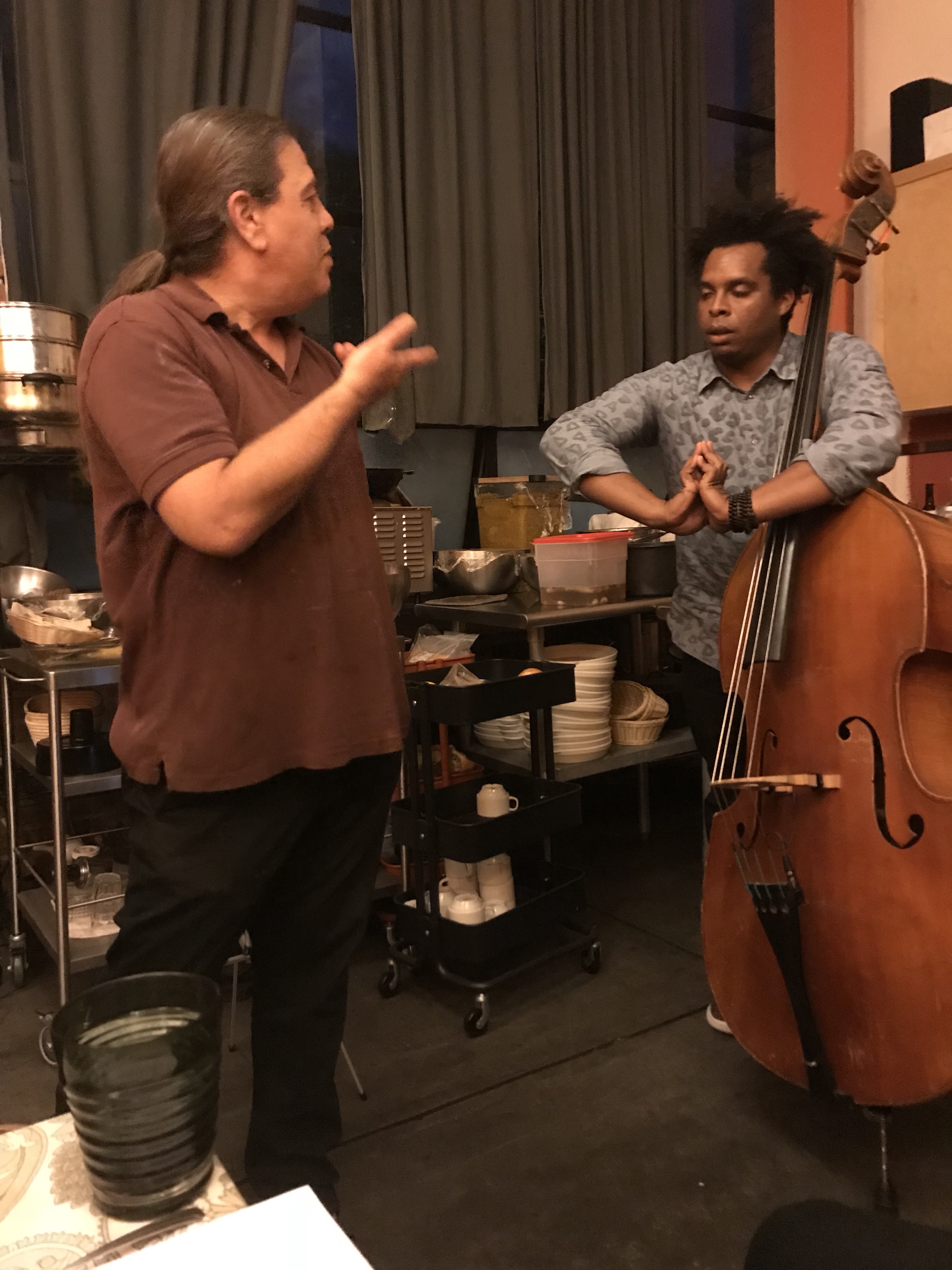
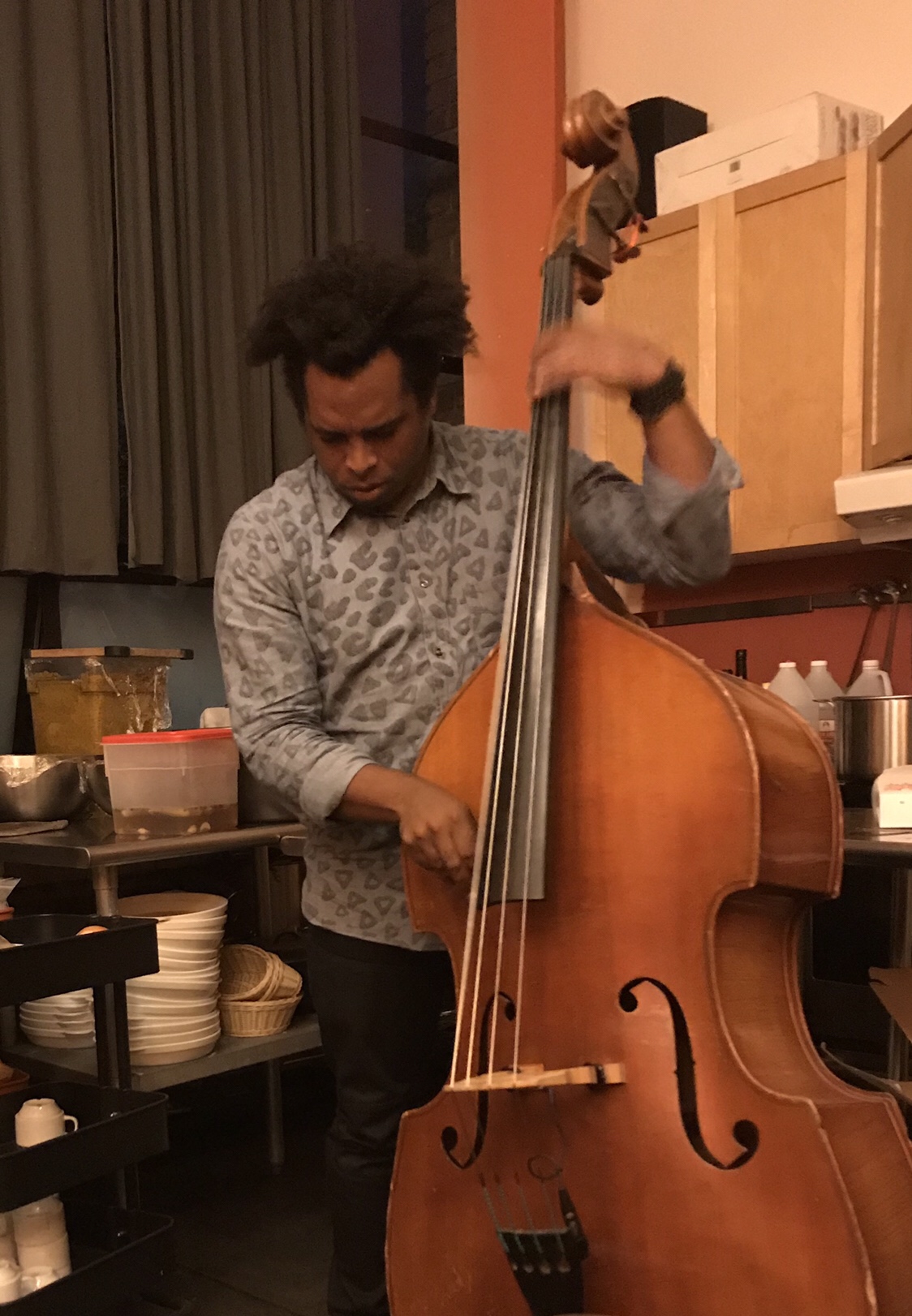
Chef and host Philip Gelb (left) introduces Rashaan Carter

Friday August 17th was one of the last of Mr. Gelb’s famed Masumoto peach dinners incorporating the incredible peak of the harvest peaches into his magical vegan creations.  It is ostensibly among the last of his famed dinner concert series which has now run about 13 years.  Whether the series is ending remains to be seen but the opportunity to partake of Gelb’s culinary art should never be missed and this night we had the opportunity to hear a fine young musician as well.

img_0277

Phil started me with this tasty IPA, perhaps the only item that was not peach related.

img_0278

Dinner for about twenty happy diners began with this delicious corn soup.  Gelb has an eye for artistic presentation.

img_0279

A little peach based salsa added a bit of fire for those of us who enjoy spicy things.

img_0281

And on to the Baiganee (eggplant fritters) with peach kuchela and peach chutney.

img_0283

The main course was Jerk Stewed Tempeh, Rice, and Peas Calaloo.  Unfortunately my eating got a bit ahead of my picture taking but you get the idea.

Peaches are, as I said earlier, from the Masumoto family farm near Fresno where three generations have been producing some of the finest fruit in the state.  The tempeh is also locally sourced from Rhizocali Tempeh of Oakland.  It doesn’t get better than this.

img_0289

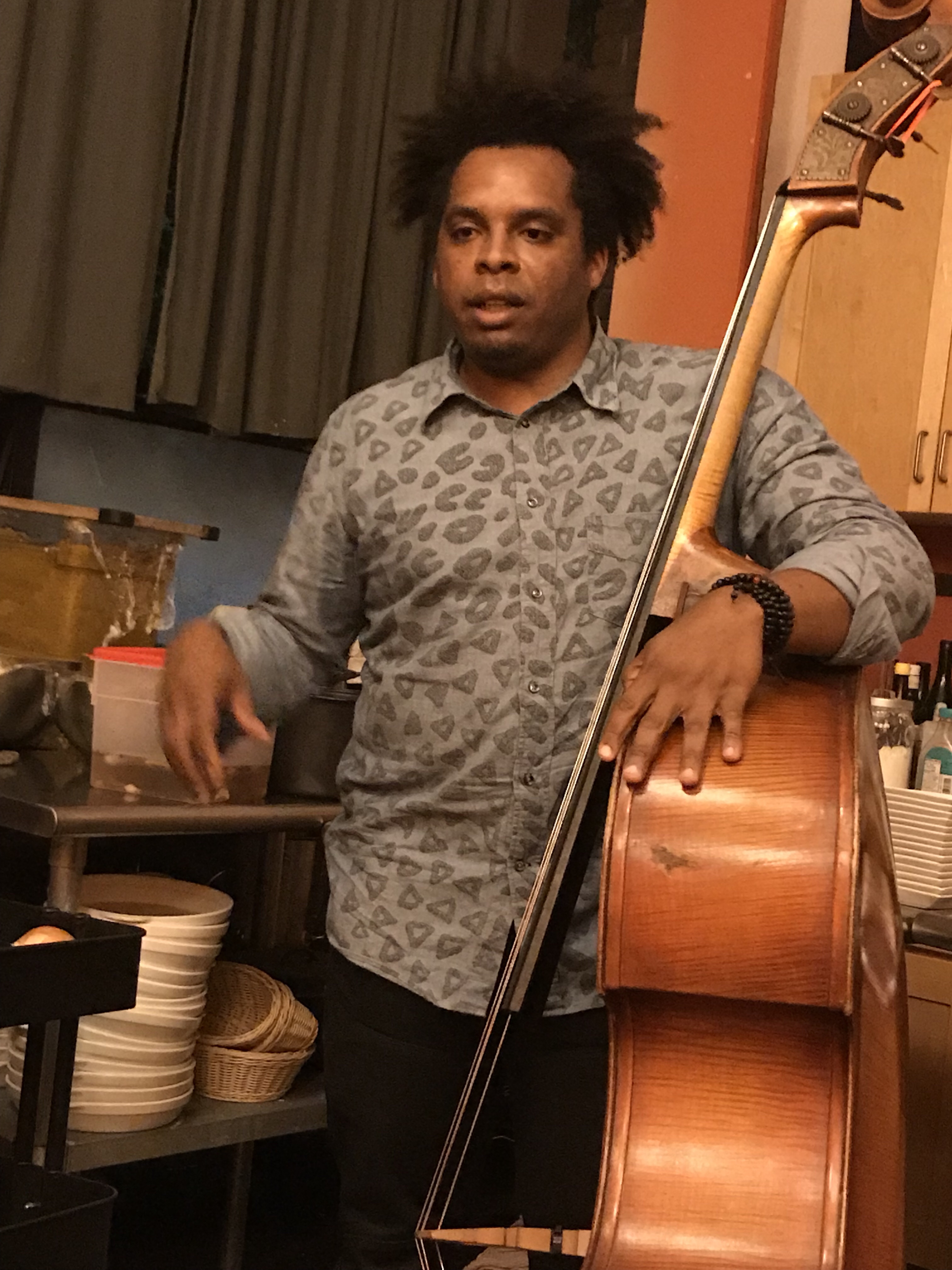
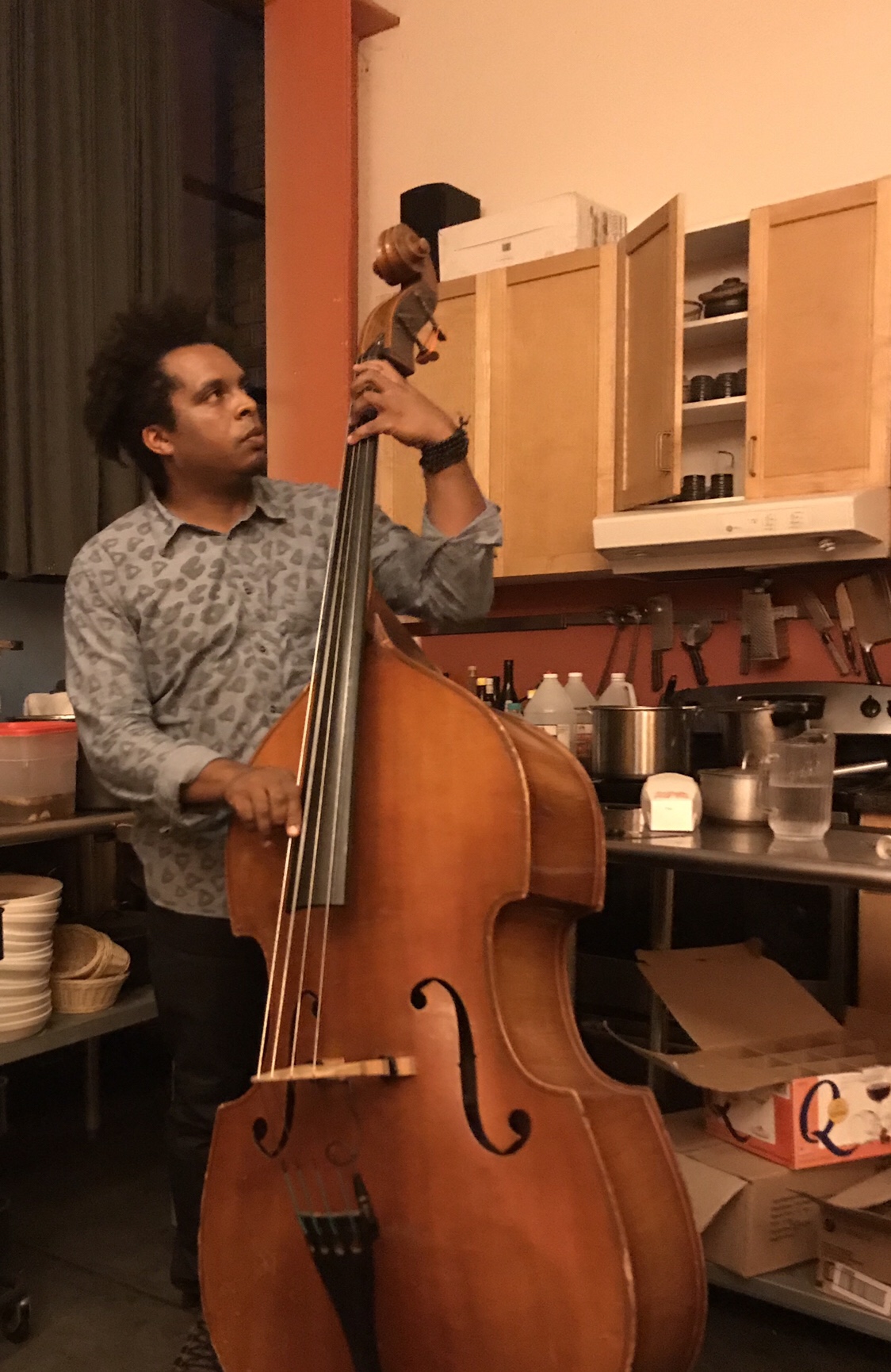
The tradition here puts the musician on stage just before dessert.  Rashaan Carter is an American musician from Washington D.C. who now resides in New York.  He was passing through the bay area and Philip Gelb extended an invitation which he graciously accepted.

He began with an improvisation which he had initially done for a dance piece depicting the lynching of a black American woman Laura Nelson and her son in Oklahoma in 1911.  Now this could really bring down the mood of the evening but for the fact that Carter spoke of and subsequently played this piece with such passion that all one could really feel is the tragedy of the act and the heroic expression of what is essentially protest music dedicated to her memory.

img_0290

Rashaan has no small bit of the Blarney.  His running commentary during the performance was as entertaining as that of a stand up comic as he engaged most thoughtfully with the evening’s clearly appreciative audience.

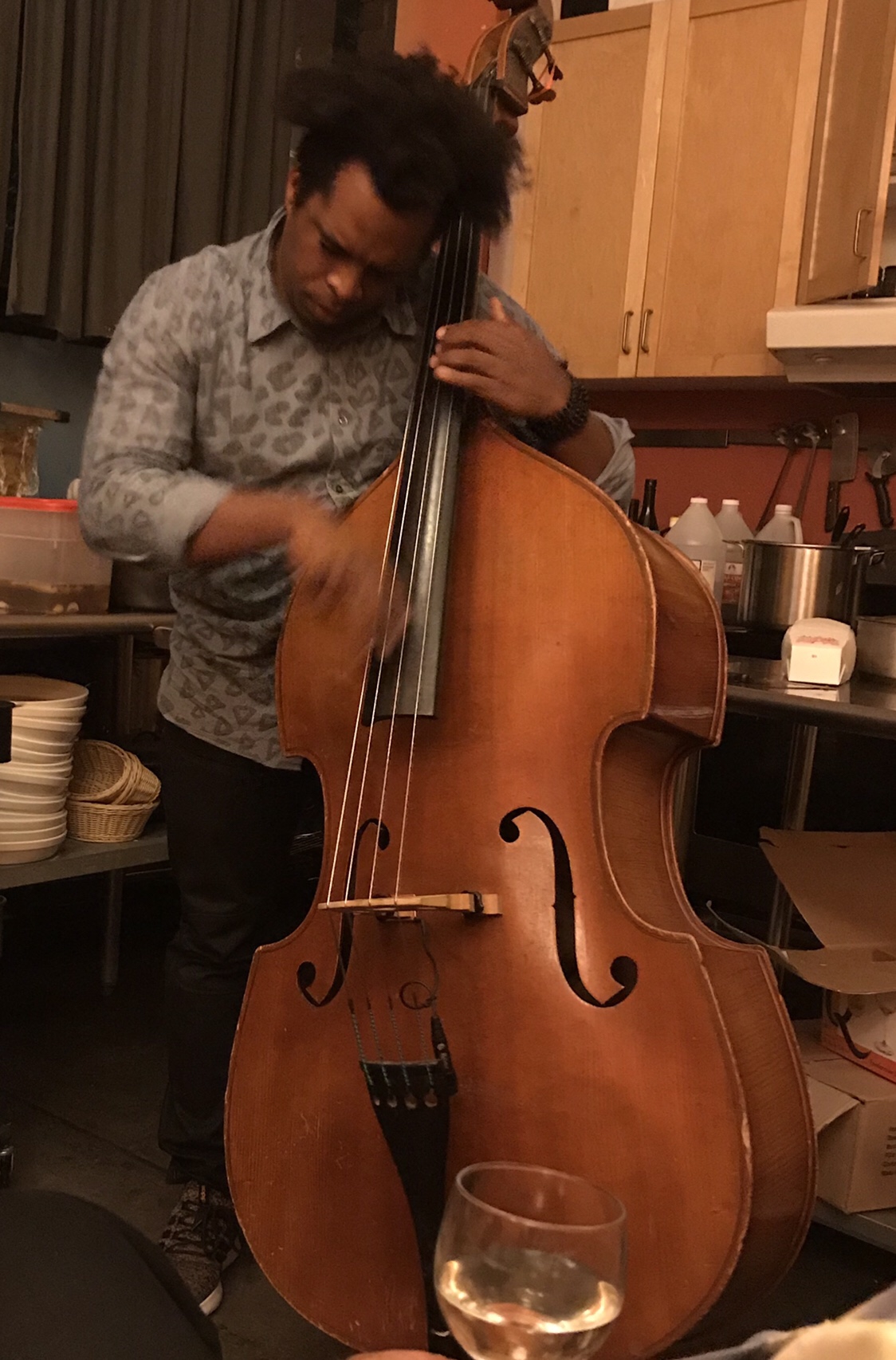
He graced us with what he said was originally intended to be a performance of a Charlie Haden piece but decided he wanted to do his own piece as a sort of homage.  Indeed he captured Haden’s spirit oh so well in another virtuosic and passionate performance.

img_0286

He ended with another sort of tribute, this time to Henry Threadgill.  Again his gift of gab provided just the right segue into the next piece and his familiarity with Threadgill was immediately apparent.  His facility with the acoustic bass produced nearly vocal sounding lines in a performance that did honor to Threadgill and left the evening’s audience very pleased.

We concluded with Blueberry polenta cake with peach ice cream and blueberry raspberry sauce, all vegan, all absolutely delicious.

img_0288

And we will all keep an ear out for Rashaan Carter from this point on.  Bravo!

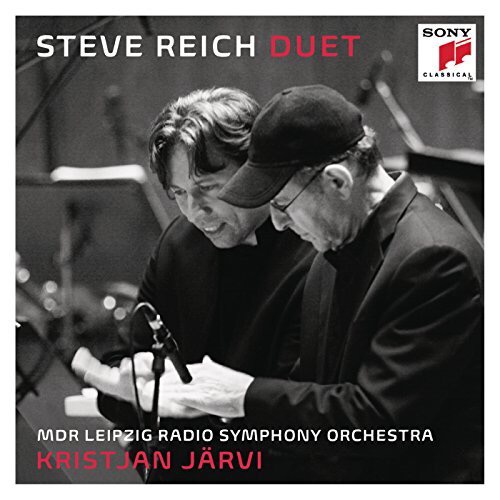
Kristjan Järvi Celebrates Steve Reich’s 80th


Kristjan Järvi (1972- ) is the youngest son of justly famed conductor Neeme Järvi.  He is also a frequent collaborator with the talented and ubiquitous Gene Pritsker among others.  This double CD represents a portion of his concerts in celebration of Reich’s 80th birthday.  There are apparently recordings available on the streaming service Medici TV of several other Reich works including the Three Movements for Orchestra (1983) and Desert Music (1986).  All these stemmed from a residency (2013-2014) that Reich enjoyed with the MDR Leipzig Radio Symphony and Chorus.

This 80th birthday tribute gives us yet another opportunity to hear another generation (other than Reich’s) interpreting this music.  For years only Reich and his ensemble had access to his scores but this is not the case with his orchestral and choral works.  Some may still consider Reich to be a difficult or experimental composer and this has limited the programming (and no doubt the commissioning) of music for such larger ensembles.  It is delightful to hear how other musicians respond to and interpret Reich’s music.  

In fact Reich’s music for larger ensembles is definitely worth hearing and hearing in different interpretations.  This set gives us the world premieres of beefed up orchestrations of You Are and Daniel Variations.  This writer looks forward to the orchestral version of Tehillim (1981) as well.  

This handsome two disc set includes the early Clapping Music (1971), Duet (1993), The Four Sections (1987), You Are Variations (2004),  and Daniel Variations (2006).  It is not a greatest hits compilation.  Rather it is a personal survey by a wonderful young musician.  Kristian Järvi is a conductor, composer and new music raconteur who is at the beginnings of a very promising career.  This album is a love song if you will.  Järvi clearly understands and loves this music and the opportunity to record these works, especially perhaps the intimate Clapping Music with the participation of the composer.

The Four Sections is tantamount to being a concerto for orchestra and is among this reviewer’s favorites among Reich’s works.  It has received too few performances and to date only two recordings.  This is the first live recording and gives insight into the amazing competence of both conductor and orchestra.  The 1993 Duet for Two Violins and String Orchestra is Reich’s homage to a musician of a generation preceding his, the wonderful violinist, conductor, and pedagogue, Yehudi Menuhin on his 80th birthday.  Soloists Andreas Hartmann and Waltraut Wachter handle this all too brief piece with skill and insight.  

The second disc contains studio recordings of the large orchestra versions of two very personal works.  These recordings alone are adequate reason to purchase this set.  Reich has gained much from tapping his Jewish heritage (musical, linguistic, and literary) in service of his art.  Both of these pieces feature texts from a variety of sources including the Bible, Hasidic aphorisms, the writings of Ludwig Wittgenstein among others.  In both works the texts determine to some degree the rhythmic choices of the music. 

You Are Variations is a four movement orchestral/choral work which sets a different aphorism in each movement.  It is among the composer’s more personal works and includes quotations from Wittgenstein (the subject of Reich’s undergraduate studies) along with Biblical and Talmudic texts in a beautiful existential meditation.

Daniel Variations is a powerful overtly political work written in response to the tragic murder of journalist Daniel Pearl who was beheaded by extremists in Pakistan in 2002. It is a deeply felt and very pained work which expresses the tragedy and creatively makes a link with the Book of Daniel as well as Pearl’s own words.  Reich is no stranger to political protest on his music and this is among his finest in that genre.

If you don’t know Reich’s music this is not a bad place to start.  If you are already a fan (as I’ve been for years) you will want this set to round out your collection.  

Classical Protest Music: Hans Werner Henze “Essay on Pigs” (Versuch über Schweine)


German composer Hans Werner Henze (1926-2012) left Germany in 1953 because of his dissatisfaction with German intolerance of both his leftist politics and his homosexuality. He settled in Italy where he lived with his partner and had a long, prolific career composing music for orchestra, chamber ensembles, theater, soloists and film. Much of his music was an expression of his politics.

The “Versuch über Schweine”or in English, “Essay on Pigs” of 1968 is scored for woodwinds, brass, strings, percussion, “beat organ” and electric guitar with vocal soloist. It was created at one of the composers most overtly political periods which included the Sixth Symphony (1969), El Cimarrón (1969-70) and Das Floss Der Medusa (1968). Indeed there was much political conflict in the world at this time.   The musicians have a challenging instrumental score to interpret but this is no ordinary vocal part as it calls for the extended vocal techniques of the singer for whom it was written. Henze was reportedly very impressed with having heard the Rolling Stones and this encounter appears to have influenced his musical sound as well.

As near as I can determine the work was performed only once on February 14, 1969 with Roy Hart and the English Chamber Orchestra conducted by the composer and subsequently recorded with those forces. The vocalist in the Deutsche Gramophone recording is Roy Hart as well and he appears to be an early practitioner of what we now call ‘extended vocal techniques’. He precedes the likes of Cathy Berberian, Diamanda Galas, Julius Eastman, Joan La Barbara and Meredith Monk. Monk’s students like Robert Een, Andrea Goodman and Anthony De Mare (among others) also carry on the tradition but I know of no one who has attempted this piece since Hart.

English: Photo of Gaston Salvatore

English: Photo of Gaston Salvatore (Photo credit: Wikipedia)

Essay on Pigs is a setting of poetry by Chilean poet Gaston Salvatore (1941-  ) who collaborated with Henze on several works. The music reflects the angry and sometimes hysterical tone of the poetry making this anything but easy listening.

I recall a musicologist, Dr. Richard Norton, who had corresponded with Henze, playing this piece in its entirety (some 20+ minutes) during one of his classes (at the University of Illinois Chicago in the mid-seventies). I always felt that was a sort of revolutionary act to do that. From what I recall I think I was probably the only person in the class who was already familiar with the work. The reaction of confusion or stunned silence from my fellow students was what one would expect from anyone who had not heard the piece before.

I have been unable to find any critical reviews or reports of audience reactions to performances but this is a piece that has the potential to clear a room or provoke anger.  It must have been quite a show. The piece certainly deserves a revival and I think it is a very significant piece of political music whose expressionism reflects well the issues of the times.  The problem is finding a vocalist to navigate this highly unique and unusual piece..  Any takers?

Enhanced by Zemanta

Abraham Lincoln and the Avant Garde


Abraham Lincoln’s speeches and writings are well liked and frequently quoted in many contexts. Perhaps their most famous use in music is that of Copland’s ‘Lincoln Portrait’ for narrator and orchestra. And without doubt his most famous words are those of the ‘Gettysburg Address’ first read on Thursday November 19th, 1863 at the dedication of the Soldier’s National Cemetery in Gettysburg, Pennsylvania. That’s 150 years ago.

20130409-215729.jpg

Those words were brought to the service of the avant garde in 1967 when Salvatore Martirano employed them in his overtly political ‘L’s GA’ for “gassed masked politico”, “helium bomb”, three 16mm movie projectors and two channel tape recorder. The piece was updated to a version for three video tapes played simultaneously on three monitors sometime in the 1980s.

<code><br />
20130409-210826.jpg

Salvatore Martirano (1925-1999) was a major pioneer in electronic music. He graduated from Oberlin College in 1951 where he studied composition with Herbert Ellwell. In 1952 he completed a masters degree at the Eastman-Rochester School having studied with Bernard Rogers. He studied with Luigi Dallapicola in Italy from 1952 to 1954 on a Fulbright Fellowship.

While his early work is influenced by the twelve tone traditions which also characterize Dallapicola’s music nothing in his various teachers’ work could possibly prepare one for the music he would produce in his mature works. His long association with the University of Illinois afforded him access to technology and developers with cutting edge ideas that he absorbed and mastered. Until a fair assessment is made of the work and achievements of the computer labs there it is difficult to say if they exceeded that of the Columbia Princeton lab (with the brilliant Milton Babbitt at the punchcards).

The piece at hand in this essay defies verbal description and is not easy listening. It utilizes the text of the Gettysburg Address read by a man in a gas mask breathing helium (which raises the pitch of his voice in a cartoon-like way), 3 sixteen millimeter film projectors and electronic score on tape. The original recording lasts some 25 minutes. I recall that the version for three videotapes on simultaneously running monitors lasted about the same time. But the experience is one of a complex wall of sound and images that is unrelenting until it actually ends. It was embraced as a sort of “cri de coeur” in sympathy with the escalating anti-war protests of the time.

Unfortunately the posts on you tube do not contain the video footage which definitely enhances the experience of this true multimedia masterpiece. And it is a prime example of classical political protest music. It is and should be disturbing.

But even in retrospect I doubt that the passing of time can be seen to have diminished the importance of this composition both as music and of sociopolitical protest (that never seems to become irrelevant actually). This work certainly deserves to be heard and experienced much more widely and studied along with Martirano’s other mature works and the body of work which has come out of the hybridization of music and technology of that era.