Young American Inventions: Music by Steven Ricks


Young American Inventions (New Focus FCR 158)

Young American Inventions
(New Focus FCR 158)

Let me say at the beginning here that this disc contains music of a rather experimental nature.  It has underlying complexities and this is not the kind of CD one would have playing at most parties except perhaps to clear the room.  That being said this is not bad music but it is challenging listening.

I had not been familiar with Steven Ricks (1969- ) or his music prior to receiving this disc for review.   Ricks earned his B.M. in Composition in 1993 from Brigham Young University, and M.M. (also in composition) from the University of Illinois at Urbana in 1995, a Certificate of Advanced Musical Studies from King’s College in 2000 and  Ph.D. from the University of Utah in 2001.  His teachers have included Morris Rosenzweig, Sir Harrison Birtwistle, Bill Brooks, and Michael Hicks.

He is currently on the Board of Advisors of the Barlow Endowment, and an Associate Professor of Music Theory and Composition at BYU where he also directs the Electronic Music Studio.  His works fall primarily into the realm of the “electroacoustic”.  His training and interests seem to put him into orbits that likely include Milton Babbitt, Mario Davidovsky, Lejaren Hiller and perhaps Salvatore Martirano (all, by my definition, great composers but difficult listening and with electroacoustic outputs primarily).

I must confess that I know relatively little about the forefront of electronic music these days and I am working on catching up on this history (which seems to exist almost completely separate from classical music per se).  Even the hybrid of “electroacoustic” music seems, for this writer at least, to remain rather marginal in terms of its listening audience and its prevalence in the concert hall.

Now, having loaded the reader with these prefaces, apologies and excuses, I move on to the music itself.

I listened numerous times to the tracks on this disc.  Sometimes I listened with direct intention and concentration, other times I listened with this disc playing ambiently (can I use that term here?) whilst pursuing other tasks (not recommended).  The music is assertive and, at times downright intrusive.

I get the feeling overall of a great deal of experimentation and complexity that nearly raises Milton Babbitt’s famous question, “Who cares if you listen?”.  Certainly the composer and performers care but that doesn’t rule out the likelihood that this music may speak to a limited audience who are better trained and more familiar with these techniques/ideas.

What I like about this disc, though, is that bold, experimental, doesn’t matter who is listening approach.  Were it not for such innovation a lot of good musical ideas would never have been expressed.  This music is experimental and perhaps more than a little “inside”, meaning that other composers/scholars might get things that the average listener would probably miss.  Call it an adventure.

Curiously I was/am intrigued by Ricks’ interest in algorithmic composition (an iffy genre as well, I know).  I was pleased to find that he has available for free download on his site a program he wrote called Universal Music Machine and I have been rather entertained by it both as a compositional tool and as a teaching/learning method.   And I promise to post mp3 files of any masterpieces I might generate.

There are 9 separately identified pieces here written between 2001-2014.  Two are multi-movement works and all but two involve electronics in performance to some degree.

The opening track, Ten Short Musical Thoughts (2002) serves well as an introduction.  It makes use of sampling and of algorithmic composition.  Indeed these are short musical ideas with some spoken word comments integrated with the music.

If you are not watching/listening closely you may miss the transition between the opening track and the next, “Young American Inventions” (2007) for solo piano and electronics.  The title, a mashup of David Bowie’s “Young Americans” and Steve Martland’s “American Inventions” reflects Ricks’ eclectic interests and fascination with both contemporary classical as well as popular culture.  Pianist Scott Holden navigates the challenging keyboard part accompanied by the electronic score.  Here is where Ricks’ work reminds me of Mario Davidovsky’s “Synchronisms” series.

The four movement, “Extended Play” (2007) continues the pop culture references as the composer states that those four movements are intended to mimic or approximate the four tracks which are found on most vinyl EP productions.  The ensemble composition, which is also full of more specific references to both classical and popular music, is executed by Flexible Music and is the most easily accessible work on this disc (to this listener’s ear).

“Ossifying (Keeping us from…) (2012), listed as “electroacoustic” is a piece of sound art like the opening track (no live performers in the concert hall here) and is one of the most experimental pieces on the disc.  It seems both deeply personal and inextricably self-referential.

“Geometria Situs” (2012) is the musical portion of a multimedia work called “WRENCH” which was written for and performed by Hexnut.  Mezzo-soprano Michaela Riener handles the delicate vocal lines with grace and ease.

“Sounded along dove dôve” (1999) is the last of the non-live “electroacoustic” pieces and, like its predecessors, is similarly cryptic and self-referential, a puzzle perhaps, in which the components of language itself are used as determinants of the settings of the texts.

A bit of an “aww” moment occurs with “Waves/Particles” (2008) which is performed by the Canyonlands Ensemble conducted by the composer’s former teacher Morris Rosenzweig.  Rosenzweig founded the ensemble in 1977.  This is both homage and acknowledgement between the two generations of artists.  It is lovingly played.

“Young American Inventions REMIX” (2014) invokes another pop culture metaphor of remixing a song.  This is another iteration/elaboration of the material in the earlier version of this piece.  Scott Holden is the soloist once again with the electronics.

“Stilling” (1997, rev. 2011) is a piece for solo piano.  This is described by the composer as being an impressionistic piece, perhaps a sort of tone poem.  The language is thorny and modern.  The very capable pianist here is Keith Kirchoff.

The lucid liner notes are by Jeremy Grimshaw.  The New Focus recording is clean and clear.  So if you enjoy adventures in experimental/electroacoustic music this is your disc.


Spirituals Re-Imagined


411Wkh4lXuL._SS280
I managed to squeeze a delightful brunch meeting with my busy friend and colleague Bill Doggett on New Years Day.  It was there at a favorite Oakland cafe that we discussed many topics and Bill gave me a copy of this beautiful CD by a young black composer whose work is entirely new to me.

Okpebholo

Shawn Opkebholo (1981- )

Shawn Okpebholo (1981-  ) was born in Lexington, Kentucky.  He earned his B.A. in music at Asbury College and his M.M. and D.M.A. degrees at the  Unniversity of Cincinatti.  Doctor. Okpebholo is currently on faculty at Wheaton College  in Illinois.

The present disc is Opkebholo’s first CD dedicated entirely to his own compositions and is the composer’s “reimagining” of spirituals.  Drawing on the folk tradition of spirituals, worksongs, etc. as well as classical art song traditions he fashions his personal take on these much loved melodies.

I do feel compelled to mention the beauty of the photography and album design.  Greg Halvorsen Schreck took the pictures and Jeremy Botts did the overall design.  Powerful stuff.

In a slight deviation from the classic voice and piano arrangements the composer chose to score this little cycle for baritone, mezzo-soprano, viola and flue along with piano.  For this writer this was an interesting and suitably entertaining choice.

jnai

J’nai Bridges

Willnewheadshot

Will Liverman

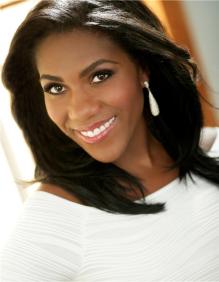
The singers Will Liverman, baritone and J’nai Bridges, mezzo-soprano are marvelous and sensuous voices and discharge their duties most beautifully.  The pianist Paul Tuntland Sànchez is also a composer and very accomplished soloist.

Sanchez_Photo

Paul Tuntland Sanchez


The violist is Dorthy White Opkebholo and is the composer’s wife.  She is an accomplished musician in her own right.

The flute is played by Caen Thomason-Redus.

This is a beautiful recording of these loving arrangements of spirituals which can occupy that place in the literature populated by the likes of Aaron Copland’s Old American Songs.  A must for art song and folk song fans and a great opportunity to hear some fine musicians at the beginnings of what is hoped to be long and successful careers.

all spring, Music of Emily Doolittle


doolittle

Emily Doolittle (1972- ) was born in Halifax, Nova Scotia.  She earned a B. Mus. from Dalhousie University in 1995 having studied with Dennis Farrell and Steve Tittle.  She went on to earn an M. Mus. in 1999 from Indiana University where she studied with Don Freund.  She completed her Ph.D. at Princeton in 2007 studying with Barbara White, Steve Mackey and Paul Lansky.  In addition she studied with Louis Andriessen from 1997-1999.

Doolittle now lives in Glasgow, UK having just left a faculty position at the Cornish school in Seattle, WA.  where she taught since 2008.  A quick look at her CV reveals a very busy composer and academic with an extensive list of compositions, performances, research, teaching etc. such that this reviewer is amazed to find that the present release is the first CD dedicated exclusively to her music.

I was pleased to be able to get a perspective from the composer that helped me understand the context of this disc in terms of the rest of her work.  She wrote:

“As I was making choices of what to include on this CD, I realized that my music divides itself into several (sometimes overlapping) categories. Over the next few years, I’m hoping to be able to record two or three more CDs. The one that I sent you is the one for fairly standard-ish chamber ensembles, with pieces that would sit fairly comfortably with chamber music of any era. At the moment I’m applying for funding to record a CD of pieces for one or two instruments/voices — these pieces also have a fairly similar musical language to the pieces on “all spring”. After that, I’d like to record a CD of my bird and animal song influenced music, which tends to be more experimental (in terms of sounds used and structure), and often involves some improvisation. And then I have a number of pieces that are harder to figure out how to present to a larger audience — site-specific pieces, pieces for amateurs or children, etc. So I guess I see this CD as both the culmination of one project, and the beginning of a larger project. And I think that getting this sort of overview of my compositions to date will help give me ideas about the directions I’m most interested in going in in the next few years. (I’m at a bit of a transitional time — I just left a full-time teaching position at Cornish College of the Arts in Seattle to move to Glasgow. I’m hoping to find part time teaching here, but mostly I want to devote a lot more time to composing than I’ve been able to in the last few years.)”

I was also unaware that there was such a thing as “zoo-musicology” or the study of things musical generated by the members of the animal kingdom.  Who knew?  I was familiar with Olivier Messiaen’s transcriptions and use of bird song but until now I was not aware that work was still being done in this area.  Alas, that will have to be the subject of another review as this disc, while later analysis might reveal zoomusicological influences, is ostensibly more in the category of absolute music or perhaps metaphorical music.  What is quite clear is the picture of an artist with wide-ranging interests who is working to shape her oeuvre and her research interests into a more unified effort which promises potentially fascinating results yet to be heard.

The CD is a very pleasant listening experience.  Nothing here sounds experimental, rather these works are beautifully composed and lovingly played by the Seattle Chamber Players (and friends).  All were composed from 2000 to 2014 and share a sort of romantic and nostalgic flavor and demonstrate the delicate nuances of this composer’s palette.

The first two works, “Four Pieces About Water” (2000) in four short movements and the single movement “falling still” (2000/2009) are purely instrumental as is the fourth piece on the disc “col”(2002/2014).  (Please note that all spellings are as they appear on the disc.)

Tracks 6-10 comprise the album’s title piece, “all spring”(2004) features the poetry of Canadian poet Rae Crossman and the final and longest piece, “Why the parrot repeats human words” (2005) features a text by the composer in which she tells her version of a Thai folk tale (think perhaps of a Canadian Peter and the Wolf maybe).  Both these works feature the beautiful spoken and singing voice of Maria Mannisto.

The ample and lucid notes are by the composer.  The recording was engineered by Doug Haire at the Jack Straw Cultural Center in Seattle and mastering was by John D. S. Adams at Stonehouse Sound in Mahone Bay, Nova Scotia for this Composer’s Concordance label release.

Certainly this writer will be looking forward to hearing more from this fascinating artist as she reveals more of her work on recordings and goes on to who knows what new and interesting areas in this (now) post-Boulez world.  Brava!


The Big Piano Variations, a great new recording of Bach, Beethoven and Rzewski


71Dr+79MpxL._SL1200_

Let me start by saying that I specifically requested the opportunity to review this October, 2015 release because I was pleased and fascinated to see this representation of three major masterworks of the large variation form included in a single collection.  To my knowledge this is the first time that these three works have been represented in a single release.

Variation form is one of the staples of the composer’s arsenal of techniques for well over 400 years now but the form is most commonly used as one technique in one  of several movements of a larger work. Consequently these types of variations generally last a few minutes.  A favorite example is the variations movement from Schubert’s “Trout” Quintet, a set of variations on his song, “Die Forelle” (trout in English) which subsequently lends the title to the entire work for piano quintet. This variation movement runs about 7 minutes or so in performance.  The Goldberg Variations (1741) can run up to 2 hours if one includes all the repeats but generally performances take about an hour.

So, along comes Johann Sebastian Bach who is commissioned by one Count Herman Karl von Keyserling (1697-1764) to compose some music for harpsichord (the predominant keyboard instrument of the day) to be performed by his personal musician Johann Gottlieb Goldberg (1727-1756) to aid the count’s insomnia.  The original intent apparently was to have the player perform one or two of said variations as a sleep-inducing remedy upon the Count’s request.  The work, using a brief Sarabande from the Bach’s own Anna Magdalena Notebook collection of pieces, has since taken the performer’s name as the Goldberg Variations.

It is not clear when the practice of performing the work in it’s entirety began but there is little doubt that Glenn Gould’s 1955 recording for Columbia Records (now Sony Classical) placed this piece firmly in the repertoire and in the minds and hearts of musicians and the listening public.  The variations had been recorded before by Rudolf Serkin, Wanda Landowska, Claudio Arrau, Ralph Kirkpatrick, Gustav Leonhardt and Roslyn Tureck but Gould’s quirky interpretation apparently defined a moment.

In 1819 the publisher Anton Diabelli composed a waltz and sent it out to many composers of the time asking them to write a variation on his piece with the promise that the collection would then be published.  This was not an uncommon practice at the time and it is certainly a workable business plan.

Indeed Diabelli did publish a compendium of these 50 plus variations by many composers of the day (including Franz Schubert and the 11 year old Franz Liszt) as Vaterländischer Künstlerverein (the link will take you to the downloadable score of the non-Beethoven variations on the waltz) but these are largely now forgotten.  Beethoven apparently balked at the idea or simply saw a larger potential in Diabelli’s brief waltz because he chose to write not one but 33 variations on the theme which subsequently became Volume II of Diabelli’s project.

Unlike the Goldberg Variations the Diabelli Variations (1823) were intended as a concert piece to be performed in its entirety.  Like most of Beethoven’s music this piece found a place in the repertoire and remains a staple for many pianists.  It is not clear if Beethoven was familiar with Bach’s work but the gesture is certainly similar in creating a large cohesive set of variations.

In 1975 the fabulous pianist Ursula Oppens commissioned Frederic Rzewski to write a set of variations that could be a companion piece to the Diabelli Variations.  Rzewski composed the music and Oppens premiered it in 1976.  Her subsequent recording from 1979 was nominated for a Grammy Award.

Frederic Rzewski (1938- ) is a composer/performer as were Bach and Beethoven.  He is a highly virtuosic pianist and a prolific composer whose influence extends widely from his involvement in the European avant garde including his own innovative use of early electronics in his ensemble Musica Elletronica Viva with Alvin Curran, Richard Teitelbaum, Allan Bryant, Carol Plantamura and John Phetteplace.

Rzewski’s variations are based on a revolutionary song by Sergio Ortega called, “El Pueblo Unido Jamás Será Vencido” (The People United Will Never Be Defeated), a song popular during the Chilean revolution that deposed Salvador Allende.  Unlike Bach and Beethoven, Rzewski’s music frequently takes on political associations, usually pretty explicitly as seen in this piece.

There are  36 Variations (6 groups of 6) and, like the preceding pieces are a reflection of much of the performance practice of their respective times.  Various “extended techniques” include slamming the lid of the keyboard, whistling and others are carefully integrated into this very cohesive mostly tonal work.

This piece seems to be gaining ground as familiar repertoire in the concert hall and, whether by accident or design, the inclusion of this piece along with the other two by Sony (who, you will recall released the establishing version of the Goldberg Variations) in effect is a major acknowledgement of this piece as perhaps the foremost representation of the large variation form in the 20th century much as the Goldberg and Diabelli Variations represent the 18th and 19th.  Bravo, Sony!

The interest here too is the emergence of a new artist, the Russian pianist Igor Levit (1987- ). This is his third release on Sony Classical, the previous two being the 2 disc set of the Beethoven late piano sonatas and the 2 disc set of the Bach Partitas for keyboard.

I won’t go into the nuances of interpretation that distinguish Levit from other performers of these variations except to say that he has to my ears a lighter touch, more Chopin in spirit than Liszt perhaps.  His performances leave no doubt as to his virtuosity and interpretive abilities but, of course, there are always discussions of individual preferences for one or another pianist in such repertoire.  What is undeniable is his ability to grasp the larger picture and to perform these large masterpieces in such a way as to convince the listener of the integrity of each work and to hold the interest of the listener throughout the performances.  There is, in the end, no definitive recording of any music really but these are certainly candidates in the debate.

In short this is a fine set of discs, beautifully recorded, which would please anyone interested in classical music and piano music in general.  Over time one might want to hear other interpretations but these recordings are extremely satisfying and represent  their composers as well as any I’ve heard.

Manhattan in Charcoal, a chamber opera by Gene Pritsker


Manhattan in Charcoal  COMCON 0021

Manhattan in Charcoal
COMCON 0021

The efforts to establish a new and functional role for opera in the late twentieth and early twenty first century have produced a wide variety of styles.  One can certainly see the 1976 Philip Glass opera Einstein on the Beach as a landmark in these efforts in the conventional opera house but the development of chamber opera pioneered composers like recent National Medal of Arts winner Meredith Monk and Eric Salzman (both of whom created innovative works in this genre before Einstein) deserve attention as well.

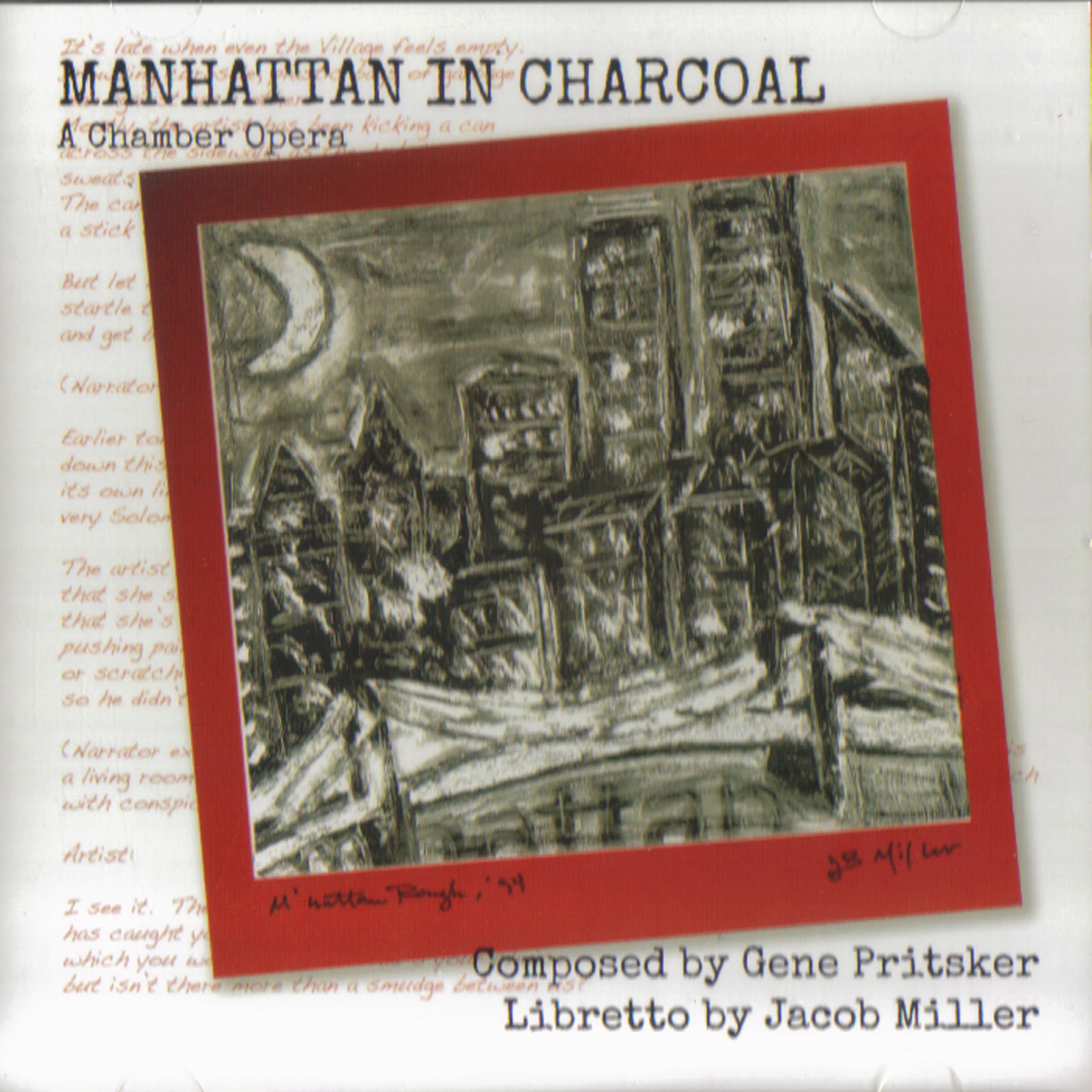
This recording appears to fit into that tradition of chamber opera.  Manhattan in Charcoal (2014) by Gene Pritsker with libretto by poet Jacob Miller requires six singers and a narrator along with a chamber ensemble of about a dozen musicians.  I don’t know much about how this piece has been staged but it works well as theater for the ears.

I knew little of Pritsker’s work prior to receiving this disc for review and I read that his repertoire of techniques range rather widely from classical, to jazz, rock and rap influences.  So I embarked on a bit of a learning mission.  Fortunately I found his You Tube channel here.  I found his web site a bit too busy and distracting even if it does seem quite comprehensive.  (I dare you to try to sleep after confronting his oeuvre.)

Here is a man born in Russia, moved to Brooklyn at age 8 and attended the Manhattan School of Music graduating in 1994.  While there he teamed up with conductor Kristjan Järvi to create the Absolute Ensemble.   He counts approximately 500 compositions ranging from solo pieces to orchestral and vocal works.  My journey of learning left my head spinning but it was not an unpleasant spin.  Pritsker’s work incorporates jazz, rap, beat boxing and eclectic instrumentation as well.  He has been active in the Manhattan downtown scene and may very well be the next generation of musical magicians to successfully grace that hotbed of musical eclecticism.

His style is mostly tonal and any experiments appear to have been done prior to the composition of the present work.  I must say that his eclecticism and embrace of a wide variety of musical devices puts me in the mind of some of Stravinsky’s work at  times.  But Pritsker is not derivative, rather he wields a large pallete.

What we have here is a form of cabaret, well suited to small venues and friendly to audiences.  It is well within the style and practice of such music and this piece is a good example of the updating of those traditions with contemporary instruments, music and modern performance practice.

The story is not unlike that of La Bohéme and, though hardly Puccini from a musical perspective, is as much a reworking of that old gem as West Side  Story was a reworking of Romeo and Juliet.  Here, however, we don’t see the romantic guise of Puccini but rather the unnecessary tragedy of a Romeo and Juliet beset not by family rivalries but by economic and social realities and perhaps by the inability to see them for what they really are.

This is apparently the first opera (of six) by Pritsker for which he did not write the libretto.  I’m not sure what impact that has had on his overall effort but his ability to set the English language to music is admirable.  All in all a thoroughly satisfying little drama which leaves the audience questioning these issues much as the protagonist has done.

The Ensemble Formerly Known as Zeitgeist (?), Music by Scott Miller


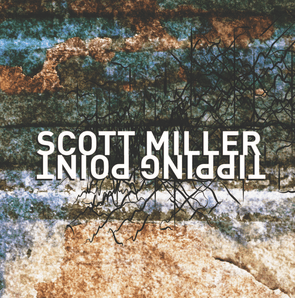
Scott Miller- Tipping Point (New Focus fcr 161)

Scott Miller- Tipping Point (New Focus fcr 161)

ADDENDUM:  Mr. Miller kindly supplied the correct composition dates for the pieces in this album and they have been placed in the text.  Also I was pleased to receive a link to their discography:(http://www.zeitgeistnewmusic.org/discography.html)  I hope that is a recent addition and not my oversight (apologies if it’s an oversight).


I was particularly pleased to receive this disc for review as I am a long time fan of the Minnesota based Zeitgeist ensemble.  This varied ensemble has been a vital part of the new music scene in Minnesota since about 1977 (I still have some of their vinyl LPs).  Happily they are in the process of making these out of print items available again on CDs via their website.

Curiously there is very little on the ensemble’s web site or on the internet in general on the history of this group prior to about the year 2000  A Google search yields few references to this group and Discogs does not have much listed in their discography of Zeitgeist.  Their Wikipedia page is also in serious need of updating. The Innova records site is perhaps the most useful in identifying the albums released by this group in its various configurations and solo or other collaborations by its members (though the re-release of the older discs are not distributed there).  I realize that this group began in the pre-internet era but perhaps it is time to clarify this and present a comprehensive history and discography of this significant new music ensemble.

Scott Miller

Scott Miller

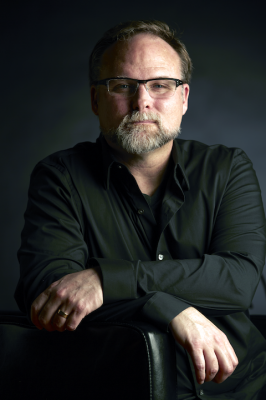
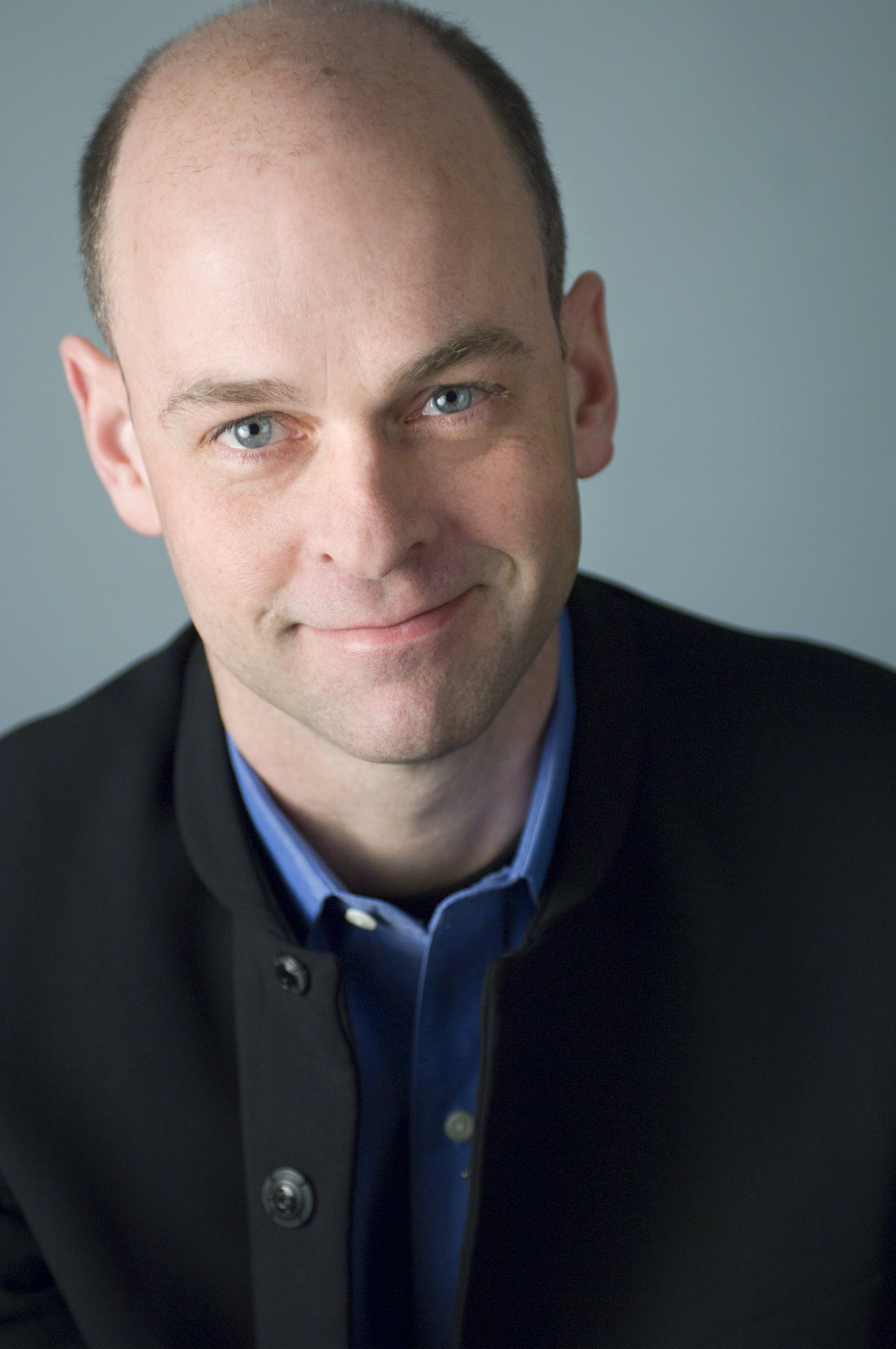
The present disc is a collection of recent works by Scott Miller, a Minnesota based composer and teacher whose association with Zeitgeist goes back to 1993.  He is currently the president of SEAMUS (Society for Electro Acoustic Music in the United States) and professor of music at St. Cloud State University.  You can find his work on youtube and Sound Cloud.

Now let me say here that it is my observation that electroacoustic music, while not an uncommon genre, seems to be a specialized one which, like Zeitgeist, is not consistently well-promoted.  At least that is my explanation (excuse perhaps) for my limited knowledge of Mr. Miller’s music up to this point.

The CD is a collection of six tracks with vocals by soprano Carrie Henneman Shaw on tracks  2, 4 and 6.  Each track is a separate work and they are listed in the proper order on the back of the CD case but are discussed out of order in the notes for some reason.

But now I must stop my whining and criticisms (and thinly veiled references to Prince) and turn to the actual music. This is really wonderful music, well-performed and well worth your attention.  And if the term “electroacoustic” puts you off don’t worry.  What we have here is an artist who has managed to integrate a variety of techniques into an effective musical language that transcends mere experimentalism to yield some really good music.

The first piece, the one from which the album receives its title, is Tipping Point (2010) and was originally included on the SEAMUS CD Volume 20 (EAAM-2011).  This is a remixed and remastered version of that recording from 2010.  This writer hears echoes and homages to (or influences by, you decide which) Terry Riley, Steve Reich as well as perhaps Morton Subotnick and even the thornier sound of Mario Davidovsky at times.  To my ears this is an integration of many ideas which work effectively together.

The second track, Forth and Back (2003) is the longest track and is a setting of the poem by Catalan poet Felip Costaglioli.  The setting is atmospheric, appropriate to the lovely texts and the vocal writing is simply beautiful.  Carrie Henneman Shaw delivers this work with the success of interpretation that one would expect of a musician who understands the composer’s intent.  Not an explicitly virtuosic piece it nonetheless challenges the performer with sotto voce passages that I imagine are quite a balancing act for a singer.  This is a beautiful piece and the fact of its electroacoustic aspects take on far less important place than the effectiveness of the setting.

Next up is Pure Pleasure (2008) is a percussion piece.  The composer goes into some detail in the notes as to the genesis of this piece and that is interesting but so is the act of listening to it.  This is one of the more obviously experimental works here.

Twilight (2008-13) is actually a portion of a larger work, a collaboration between Miller, Pat O’Keeffe and video artist Rosemary Williams called, The Cosmic Engine.  This is a multi-media chamber opera which premiered in 2008 and this section was revised in 2013.  The text is by Walt Whitman.  Again, Shaw does a lovely job with the lyrical vocal lines.

Funhouse (2003) is a marvelous use of electroacoustic methods.  It is a piece with rather complex origins as explained in the notes but, consistent with its title, this is a fun piece to hear and, I imagine, to play.  Along with the percussion piece it represents the more overtly experimental work of this artist.

The final track, Consortia (2013), as  with Twilight, is an outgrowth or by product of work on the multimedia opera, The Cosmic Engine.  Here the composer enlists computer processing to create a sort of live polyphony with live mixing of tracks of pre-recorded and live improvisational structures based on some renaissance tunes and techniques.  I will leave it to the listener to read through the technical details but the result is a pretty entertaining piece of music.

Zeitgeist does a wonderful job here playing with passion and dedication.  I can only hope that we hear more from both Zeitgeist and Mr. Miller.

The recording done at Wild Sound Recording Studio in Minneapolis (Mark Zimmerman, master engineer on tracks 1 and three; Steve Kaul, master engineer on tracks 2 and 4-6) is lucid and warm.  The art and design by Raul Keller makes for an attractive product.  This release from New Focus Recordings belongs in the collection of any new music fan and certainly every Zeitgeist fan.

ICE in Iceland, Music of Anna Thorvaldsdottir


In the Light of Air Sono Luminus DSL 92192

In the Light of Air
(Sono Luminus DSL 92192)

For some years now I have greatly enjoyed the contemporary music coming out of the Nordic countries.  Norway, Sweden, Denmark, Finland and the Faeroe Islands.  But I have also been aware of the truly rich musical culture of neighboring Iceland which, it seems, is less well known for its musical heritage.  Composers such as Jón Leifs and Thorkell Sigurbjornssen (among others) have created some wonderful music in the twentieth century that definitely needs to be heard more often and the present composer Anna Thorvaldsdottir is certainly a rising star in the twenty-first century, a proud example of Iceland’s best

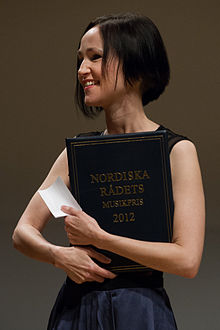
Þorvaldsdottir (in Icelandic script) was born in 1977 in Iceland.  She earned a B.A. in music composition at the Iceland Academy of the Arts in 2004 and went on to an M.A. and Ph.D. in composition at the University of California, San Diego finishing in 2011.  She has received numerous awards, most recently the Nordic Council Music Prize in 2012 for her orchestral work, “Dreaming” (2008).

Anna Thorvalsdottir accepting the Nordic Council Music Prize in 2012.

Anna Thorvalsdottir accepting the Nordic Council Music Prize in 2012.

Her music can be found on 8 CD releases of which three, including the present disc, are devoted entirely to her works. The other two discs devoted to her music can be found on Deutsche Grammaphon  and, now only available as a digital download, a disc originally released on Bandcamp and now also available on Innova.  Worth noting is another disc on the Sono Luminus label that contains her chamber work, “Shades of Silence” (2012).  Here her work is presented along with that of several other Icelandic composers placing her in context with her peers.

In the Light of Air (2013-2014) is a five movement suite written for and performed by ICE (The International Contemporary Ensemble).  The work is scored for viola, piano, cello, percussion, fixed electronics and installation. There is an intended visual component here and there is a high definition video of a performance of this work on Vimeo.  It puts this reviewer in the mind of the work of George Crumb some of whose chamber works (Black Angels and Vox Balenae for example) require various stagings that are not conventional in standard chamber music performances.  You can judge for yourself as to whether the staging enhances the work but the music does stand on its own.

The five movements, Luminance, Serenity, Existence, Remembrance and Transitions flow seamlessly into one another evoking a dream-like, even impressionistic feeling.  It would appear that this composer has studied a great deal of compositional techniques and has integrated those most useful to her in her work.  We hear microtones, glissandi, harmonics, alternate tunings, vocalizations, drones, even some spectral passages.  But throughout these techniques do homage to the past by their use in this clearly 21 st Century music.  There is an overall mysterious, somber and meditative tone that seems to evoke the sometimes barren landscapes of the composer’s native Iceland.  She seems  to travel in sound worlds not too distant from Morton Feldman but also Pauline Oliveros with a dash of Debussy perhaps. I don’t know, but quality (and sometimes lack) of light north of the Arctic Circle must certainly affect the way people think and create.  But keep in mind that Iceland consistently makes the top ten lists for happiest countries in the world. Perhaps funding for the arts, such as they provide, contributes to that happiness.  When the result is music like this one can’t help but feel at least hopeful.

ICE executes the performance with their usual virtuosity and care adding another significant work to their large and growing repertoire of contemporary music.  The recording, in keeping with the Sono Luminus mission is lucid and detailed.  (Unfortunately I was unable to evaluate the DVD 5.1 audio which is included in this release.  I have no doubt that this is a great listening experience but that will have to wait until I upgrade my sound system.)

Having heard this disc and some of the excerpts of other works available on the composer’s web page I think this is an artist whose work certainly deserves attention and one whose star will no doubt rise further.   Kudos to Sono Luminus on promoting this music.  Highly recommended.

BMOP Opening Concert Commemorates Armenian Genocide


BMOP20_logo

ADDENDUM:  Unfortunately the pianist Nareh Arghamanyan will not be able to perform.  BMOP informs me that they are substituting a piece by the wonder.ful Israeli composer Betty Olivero called Neharot Neharot (2006-7) for two string orchestras, accordion, percussion, tape and viola.  It will feature none other than violist extraordinaire Kim Kashkashian.  

The Boston Modern Orchestra Project begins it 20th season on Sunday October 18th with a concert in honor of the 1915 Armenian genocide with a celebration of that country’s artistic heritage.  Titled Resilient Voices 1915-2015, the concert will feature works by Komitas (1869-1935), Alan Hovhaness (1911-2000), Dmitri Shostakovich (1906-1975) and Tigran Mansurian (1939- ).

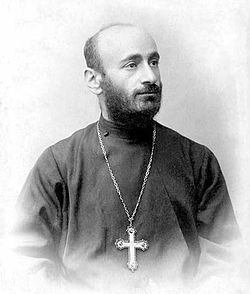
Komitas_1902

Komitas, born Soghomon Soghomonian, is generally regarded as the foundational composer for Armenian classical music in the 20th and 21st centuries.  Like Bartok and Kodaly, he collected and transcribed folk music from his country.  He is considered an early founder of the practice of ethnomusicology collecting Armenian and Kurdish folk music.  He was ordained a priest in the Armenian rite church and took the name Komitas.  The impact of the genocide affected him deeply and he spent the last 20 years of his life in a psychiatric facility where he died in 1935.

Alan Hovhaness

Alan Hovhaness

American composer Alan Hovhaness also embraced a musicological approach to his composition by including Armenian folk songs and that of other musical cultures he had explored including Korean and South Asian. He also acknowledges a debt to Komitas (Hovhaness released a recording on his own Poseidon label of him performing Komitas’ complete piano music).

Hovhaness remains less well-represented than he deserves in the concert hall so this performance of Khrimian Hairig (1944, rev 1948) is a welcome one.  The piece is in three continuous movements titled, “Chalice of Holiness”, “Wings of Compassion” and “Triumph of Faith”.  It is scored for string orchestra with solo trumpet.  The solo here will be played by prominent new music trumpeter Terry Everson (whose talents are to be required in the next piece on the program).  Hairig was a prominent Armenian cleric and mystic of the 19th century.

This work is early in Hovhaness’ prolific output and is characteristic of his Armenian period utilizing Armenian folk melodies and writing on Armenian themes.  He would later gain wider fame when Leopold Stokowski premiered his 2nd Symphony “Mysterious Mountain” in 1955 on NBC television.  Hovhaness died in 2001 leaving over 400 compositions of which 67 are symphonies.

Arghamanyan_Nareh

Nareh Arghamanyan

The Armenian connection to the next piece is apparently the BMOP début of the young Armenian pianist, Nareh Arghamanyan (1989- ) in the First Piano Concerto Op. 35 (1933) of Dmitri Shostakovich.  This unusual piece is scored for piano, string orchestra and trumpet (I told you Everson would be back).  It is one of those neo-baroque experiments and quotes from well-known classical pieces.  It is quite challenge for a pianist and the début of this rising artist will doubtless be one of the highlights of the concert.

The title of the concert is Resilient Voices 1915-2015 and is given in commemoration of the Armenian Genocide (1915-1923) but more so in celebration of the voices and the talents that have endured.  Controversy remains evidenced by the fact that Azerbaijan and Turkey continue to deny the genocide but the estimated death toll was 1.5 million and this is the event for which the term “genocide” was first used.

Artistic Director and Conductor Gil Rose

Artistic Director and Conductor Gil Rose

It is the genius of Gil Rose, conductor and artistic director whose creative vision in a couple of releases  I recently reviewed ( Anthony Davis and Irving Fine) that first alerted me to the work of this fine ensemble (a little late, I know).  But I discovered a great orchestra with some of the most innovative programming with attention to new and recent music.  I was graciously offered a seat at this concert but it will have to be one of my regrets.  This sounds like a fantastic program.

Tigran Mansurian

Tigran Mansurian

How very appropriate then to have the BMOP premiere of the Requiem (2009) by Tigran Mansurian (1930- ) by far Armenia’s best known living composer.  The Requiem was written in memory of the holocaust and is scored for large orchestra, chorus and soprano and baritone soloists (not announced when last I checked yesterday).  Gil Rose conducts the Harvard-Radcliffe Collegium Musicum with the Boston University Marsh Chapel Choir.  This is indeed a species of political music and BMOP is to be applauded for this as a contribution to the recognition of human rights. through music.

Tigran Mansurian at the piano at Other Minds in San Francisco.

Tigran Mansurian at the piano at Other Minds in San Francisco.

Mansurian previously appeared at the Other Minds 20th Anniversary concert (also dedicated to the holocaust) in March of 2015 in San Francisco.  At that concert I captured a moment from the pre-concert discussion in which Mansurian agreed to sing a traditional Armenian song accompanying himself at the piano, a very personal moment from a composer whose art is deeply felt.

Please, BMOP, record this.  Thanks in advance!!!

The Varieties of E#, a new Elliott Sharp Release on Starkland


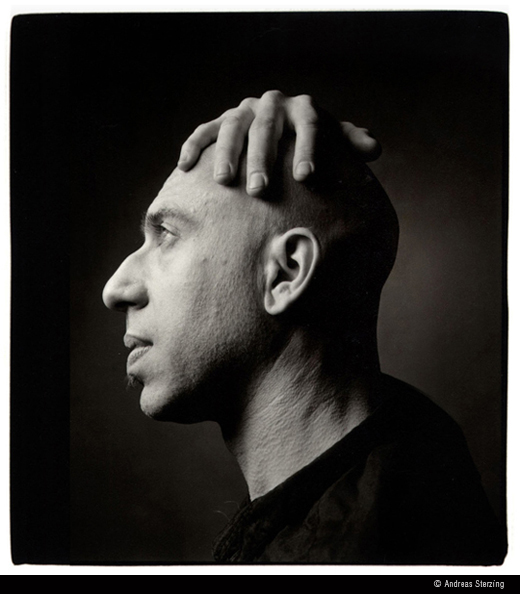
Elliott Sharp

Elliott Sharp

I think the first time I heard of Elliott Sharp was when a friend played a vinyl copy of 1988s Larynx. I later got hooked on the delightfully noisy string quartets of 1987s Hammer, Anvil, Stirrup. With 89 albums to his credit (according to discogs.com) Sharp writes and plays music in a range of styles and for a range of ensembles.

Only two years older than John Zorn their musical paths are similar in that they both learned multiple instruments as children. While they are both incredibly creative, intelligent and productive artists, Sharp initially took a more traditionally academic path while Zorn is largely self taught (an amazing feat in itself).

Sharp studied music, anthropology, improvisation and electronic music with teachers like Benjamin Boretz, Roswell Rudd, Morton Feldman and Lejaren Hiller. His music frequently uses Fibonacci numbers, fractals, chaos theory and genetic metaphors. His collaborators have included blues guitarist Hubert Sumlin, Qawalli singer Nusret Fateh Ali Khan (and many others) and practically a who’s who of the Downtown New York scene.

He produced the Nonesuch album of Ornette Coleman covers by John Zorn (Spy vs. Spy, 1988) which is definitely worth a listen. It is one of a series of such recordings of covers of various artists which have also included Ennio Morricone among others.

The present recording comprises works written between 2004-2008 and, like the previous release of music by Martin Bresnick (reviewed previously in this blog here), comprises a sort of snapshot of the composer’s recent work. Like the Bresnick disc this recording samples Sharp’s writing for a variety of ensembles and is an effective portrait of his mature style.

As a long-standing performer in the New York downtown scene Sharp experimented with a variety of compositional and  instrumental techniques consistent with his scientific interests.  Now such experimentation by itself is of little interest except on a theoretical level but what we hear in the works in this recording is a composer who has integrated these techniques into a sound that is pretty uniquely identifiable as Elliott Sharp much as J.S. Bach’s techniques are easily recognizable in identifying that composer.

The first work (and the one that lends its title to the album) is The Boreal (2008).  It is the most recent of the compositions and is another chapter in Sharp’s reinvention of string quartet writing.  Written for the noted JACK quartet, it involves the use of different types of non-traditional bows fashioned by the composer and creates sounds full of harmonics. It is probably unlike any string quartet music you have ever heard and it expands the notion of what that traditional classical ensemble can do.  The recording, though recorded live at the Ostrava Festival, is remarkably free of ambient noise which allows the listener to hear the subtleties of the rather wide dynamic range to be heard without the interference.  The work resides in more or less the same sound world as his other quartets and its four movements seem to follow logically creating a conceptual whole as with any of the more conventional quartets in the repertory.

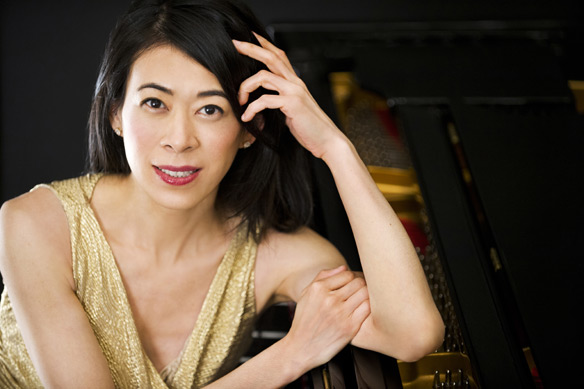
Jenny Lin

Jenny Lin

The second work, Oligosono (2004) is for solo piano.  As the liner notes tell us it is Sharp’s application of extended instrumental techniques which he developed on his guitars to the piano (a pretty interesting accomplishment).  It is written for and played by the wonderful Jenny Lin who navigates the inside of the piano as well as the keyboard in some rhythmically complex and virtuosic playing.  She executes the three movements with seeming ease.

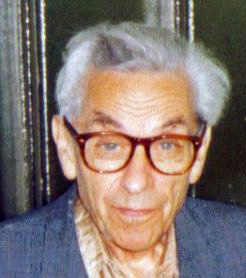
Paul Erdös "Erdos head budapest fall 1992" by Topsy Kretts - Own work. Licensed under CC BY 3.0 via Commons - https://commons.wikimedia.org/wiki/File:Erdos_head_budapest_fall_1992.jpg#/media/File:Erdos_head_budapest_fall_1992.jpg

Paul Erdös

Now we come to the composer’s work for larger ensembles.  Proof of Erdös (2006) is named for the mathematician Paul Erdös (1913-1996) perhaps most famous for the Erdös Number which is an indicator of the degree of separation a given person has with another (Erdös’ number would be a zero and his direct collaborators would be a one.  I’m guessing my Erdös Number with regard to Mr. Sharp would probably be at best a three for having reviewed this album).

Proof of Erdös is a four movement work written for Orchestra Carbon (one of Sharp’s various ensembles) and it is ably conducted by the American composer/conductor David Bloom.  It is a studio recording.  The work shares some of the sound world of the last piece on the album but the ensemble is more of a chamber group than the full orchestra but produces a similarly large and complex sonic image.

On Corlear’s Hook (2007) is a work for full orchestra and, for this reviewer, it is a great opportunity to hear Sharp’s ability to write for large orchestra.  It’s title is taken from a the lower east side neighborhood in Manhattan where Sharp resided with his family.  As the composer says in the notes there is no attempt to be programmatic or pictorial that the music is, “a reflection of the spectra of my existence (there) from one frequency band to another”.

The performance by the fine Janacek Philharmonic is conducted by the German conductor Peter Rundel (1958- ). Rundel, whose credits include a Grand Prix du Disque for his recording of the works of Jean Barraque (1928-1973), delivers a convincing performance of this tour de force.  The four movements, reflecting Sharp’s “spectra” coalesce to a unity which suggests that this piece could easily be called “symphony” if one wanted to use that apparently dated term.  The audience seems attentive or at least respectfully quiet which makes for a pretty definitive recording.

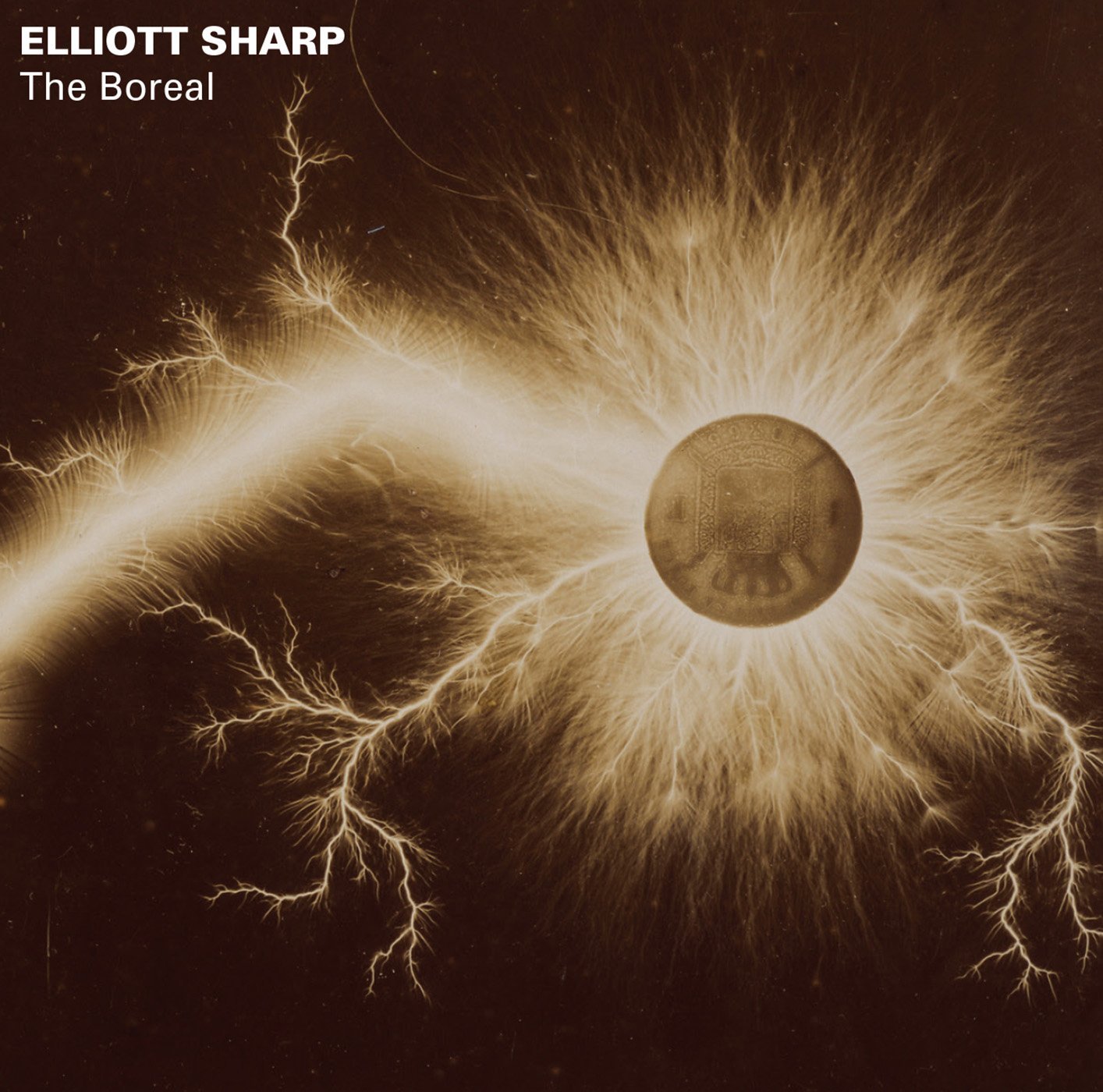
A great debt is acknowledged here to the fine work of the Ostrava Days festival under the guidance of Petr Kotik (1942- ) for curating this amazing annual new music event.  There are very useful liner notes by legendary boundary defying cellist (and sometime Sharp collaborator) Frances-Marie Uitti.   Sharp himself provides notes in the accompanying booklet. As usual with Starkland the recording is of very high quality and Tom Steenland’s gift for graphic design (using an 1888 photo of electrical “effluvia” from the surface of a coin) is well suited to represent the contents of the recording.

The Boreal Starkland ST-222

The Boreal
Starkland ST-222

Like many of Starkland’s releases this album challenges the listener but meeting that challenge and giving this a serious listen is ultimately very rewarding.  This is a fine example of a composer whose work deserves to be better known and this is a good sampling of some of his most refined work.  Hopefully this release will help to position Sharp as a composer with roots in the downtown improv scene who has taken his experimentation successfully into the larger world of the contemporary classical scene.


Percussion Extravaganza: Music of Axel Borup-Jorgenson


Axel Borup-Jørgensen (1924-2012)

Axel Borup-Jørgensen (1924-2012)


While I listen to a great deal of music I realize that I have a far less than comprehensive view of the percussion genre. And this is a composer about whom I knew nothing at all until I received this disc for review. Axel Borup-Jørgensen (1924-2012) was a highly respected and decorated Danish composer. This makes him a contemporary of two Danish composers whose work I do know, Per Nørgård (1932- ) and Ib Nørholm (1931- )

A bit of research reveals that there is a soundcloud page with a great selection of his works here. He is reportedly best known for his orchestral work Nordisk Pastorale Op. 51 (1965).

He is described as a modernist but not in the redefining the nature of music modernism of Cage and his peers nor is it simply academic modernism heaping unending honors to and variations on Schoenberg’s methods. This composer’s modernism is creative but not particularly difficult listening.

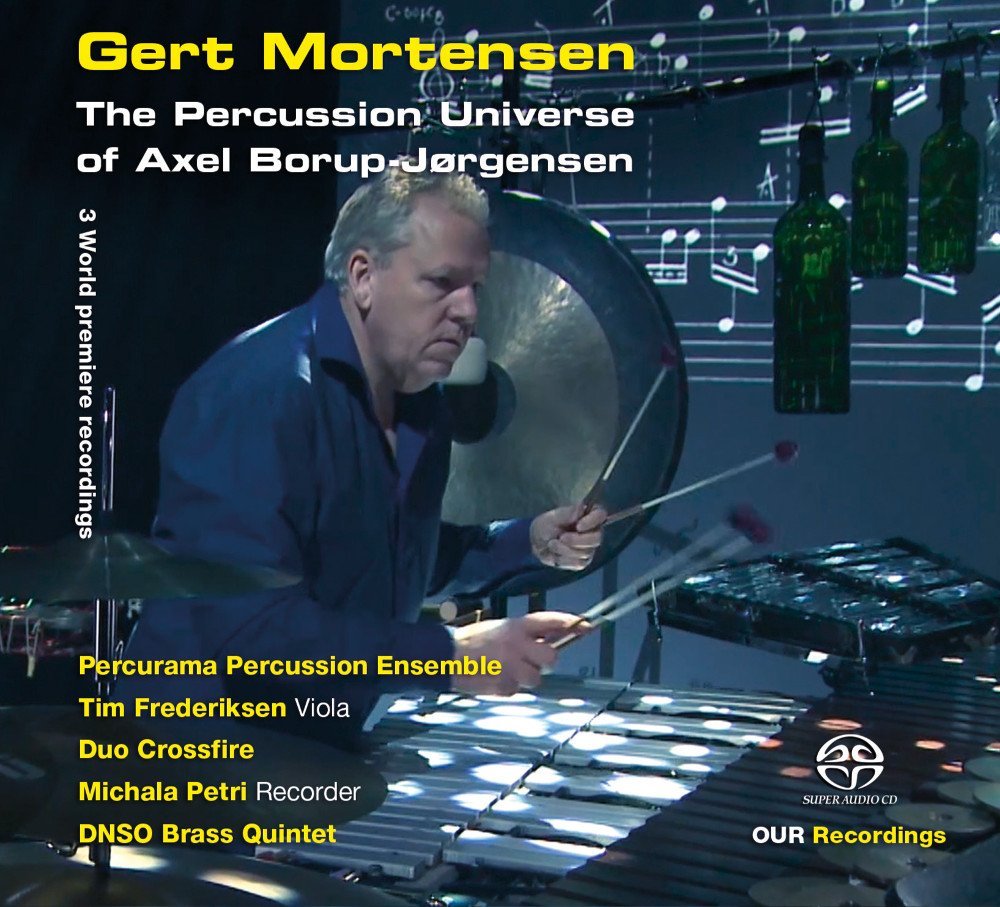
The Percussion Universe of Axel Borup-Jorgensen (OUR recordings 6.220608)

The Percussion Universe of Axel Borup-Jorgensen
(OUR recordings 6.220608)

But now we come to the disc at hand, a selection of his work for various groupings of percussion, sometimes with additional solo instruments such as viola, recorder and, in one track, a brass quintet. This is an excellent recording which, one customer review noted, would be a good audiophile test disc. The performances are dedicated and virtuosic. Violist Tim Frederiksen and recorder virtuoso Michaela Petri lend their substantial talents to this recording as does the Brass Quintet of the Danish National Radio Symphony Orchestra.
Now to the music itself. I must confess that this music, unfolding slowly, using a wide range of percussion instruments was not easy to grasp but requires a bit of concentration. I think this disc will be more interesting as I learn some of this man’s other compositions and place them in context.   I think this recording will be of great interest to percussionists as well as devotees of this composer.  And three of the five works featured  on this recording are world premieres.

All this is held together by veteran percussionist and conductor Gert Mortensen.  The album was recorded at the Concert Hall of the Royal Danish Academy of Music.  It was produced, mixed and mastered by Preben Iwan with thankfully informative liner notes by Jens Brincker and Henrik Friis were translated by John Irons.

The Danes have a rich musical history which this disc celebrates and the documentation of this lesser known composer’s work is a welcome addition to the catalog.

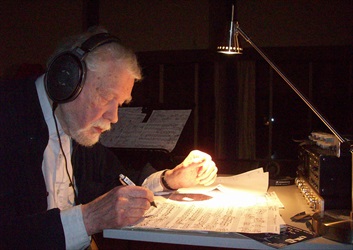
Axel Borup-Jørgensen at his work desk.

Axel Borup-Jørgensen at his work desk.


Copyright, Copyleft, Creative Commons, the Presidency and Artists’ Rights


Curiously enough the upcoming presidential elections have brought to some prominence the name of Lawrence Lessig, a Harvard Law Professor and intellectual property expert who now, as ‘Larry Lessig’ has thrown his hat into the ring as a presidential candidate.  And it is this man’s work on copyright and commons issues that speaks to my concerns in this blog to the impact of these practices on music.  Lessig makes his case in ‘The Future of Ideas’ and in the later freely available, Creative Commons licensed, ‘Remix’ in which he advocates for reform of copyright laws to foster creativity.

Lawrence Lessig

Lawrence Lessig

Few would argue that copyright law is overdue for a major overhaul and fewer still would deny that non-top forty composers gain little from the present form of these laws aside from the ability to deny performance, recording and distribution rights (assuming, of course, that they can afford an attorney and litigation costs).  Yet current copyright law appears to be the dominant practice.

Much of my thinking here has also been influenced by the work of Lewis Hyde whose ‘The Gift’ and ‘Common as Air’ are essential reading as well.  A subject for a future blog most likely.

Professor Lewis Hyde

Professor Lewis Hyde

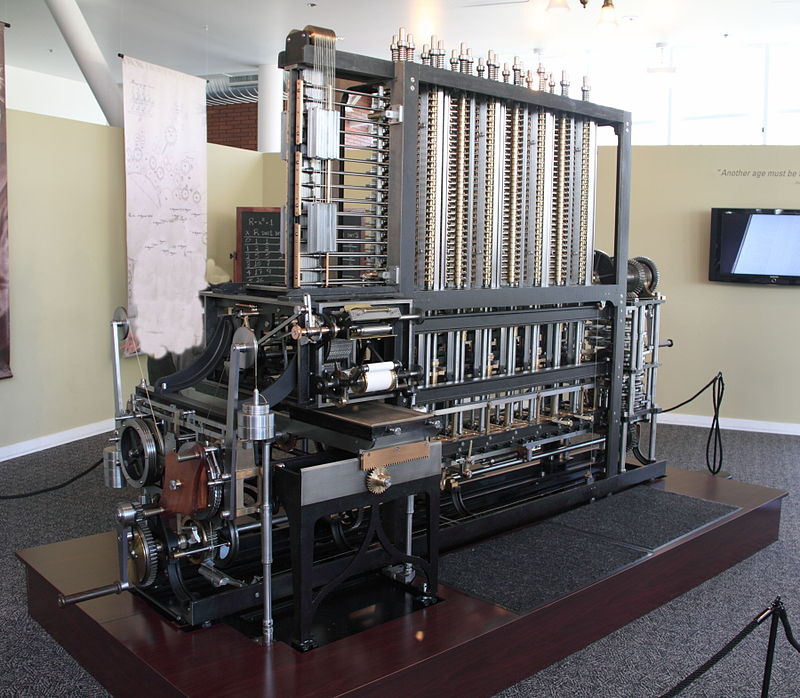
There are notable exceptions such as Frederic Rzewski‘s embrace of “Copyleft” and others embrace (including yours truly)  of the Creative Commons licensing.  My very basic understanding of these non-traditional licenses is that they allow for use and distribution of the artists’ works without charge unless a profit is made.  This worked well for me when a photo which I uploaded to Wikipedia (they recommend Creative Commons licensing for media uploads), a picture I had taken of the working model of Babbage’s Difference Engine at the Computer History Museum in Menlo Park, California, was found by someone at Harper Collins who contacted me and negotiated a fair price to include this photo in Walter Isaacson’s ‘The Innovators’.

Babbage Difference Engine at the Computer History Museum

Babbage Difference Engine at the Computer History Museum

Now I believe I tread more contentious ground with my concerns about the consumers, the listeners, the audience.  As an avid listener to new music I have encountered barriers that block my ability to listen to new music.  High ticket or CD prices and geographical distance are well-known barriers. However some  artists like La Monte Young hold their work so tightly under copyright so as to effectively limit the availability of both live and recorded performances, restricting access to perhaps thousands of listeners (Would you believe maybe hundreds?)

La Monte Young

La Monte Young

Others such as my friends David Toub, Kyle Gann and many others put much of their work, scores and recordings, online for all to access.

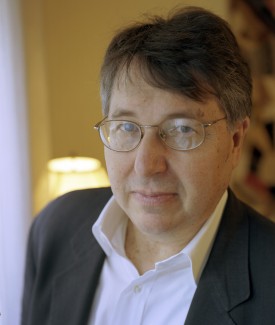
David Toub

David Toub


Kyle Gann

Kyle Gann

As an avid listener and collector of new music I have amassed an archive of air checks, live recordings, bootlegs, free copies, etc. of a great deal of new music.  Indeed there are vaults of broadcast and other live recordings that languish awaiting the ravages of time to destroy them.  If I didn’t catch the original broadcast there seems to be no way to access these recordings, even just to listen.

I am a listener and like to promote what I think sounds interesting.  I do not and will not sell these recordings but I have given them away to interested folks.  I see this as sort of dissemination of what might not be heard at all.

I am aware that the nature of the music I tend to address in this blog appeals to a rather small audience.  I once had the experience while driving and playing a favorite CD having a friend comment, “You know I think that if someone broke into your car they probably wouldn’t steal your CDs.”  Some months later I did find my car stereo gone and, as predicted, the CDs were left on the seat untouched.  My point is that promoting this music by making it available to interested listeners may help promote the music and is not likely to take money out of the artist’s pocket.  Just my opinion of course.

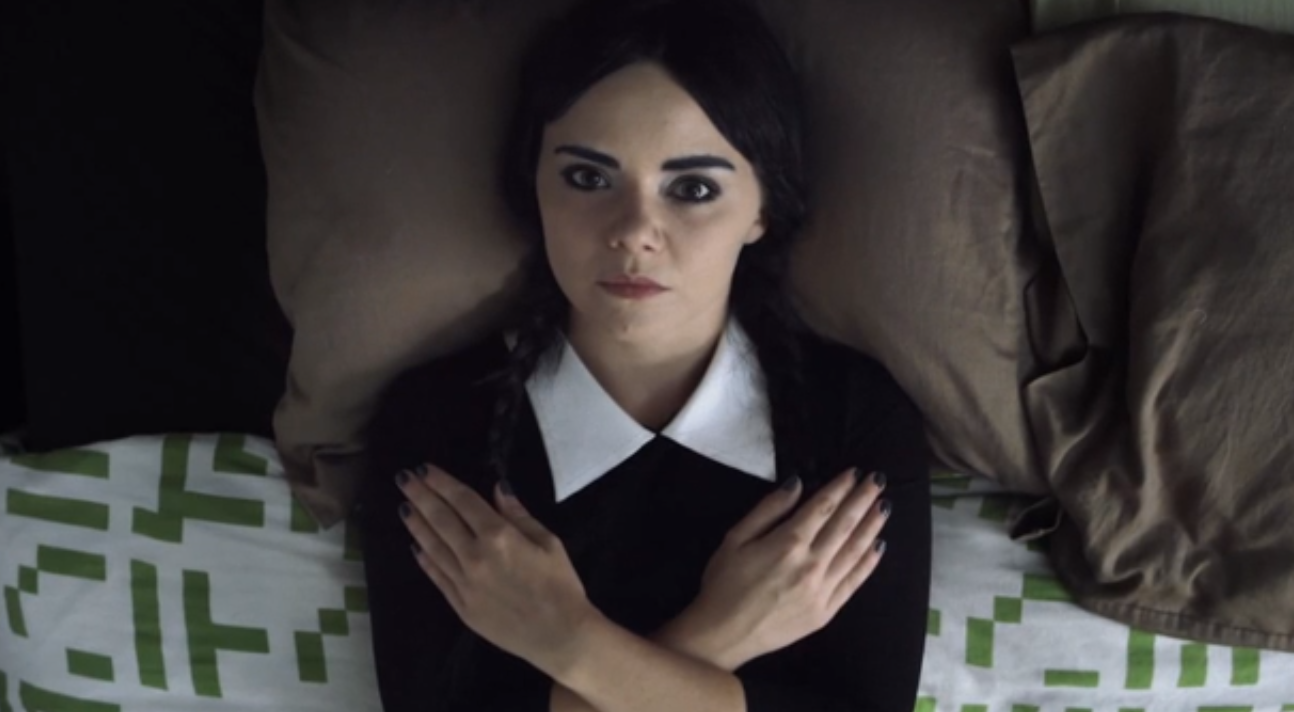
Another current issue, that of the freely distributed YouTube  short film series, ‘Adult Wednesday Addams’ may serve as a useful parable here.  These 3-5  minute films by star Melissa Hunter and her crew were pulled from Melissa’s YouTube channel after an injunction was obtained by the estate of Charles Addams whose drawings served as the basis for The Addams Family television series and subsequent films.

However one can still easily find these episodes which appear, at least for a time, on others’ YouTube channels.  No money was apparently made here and Hunter’s site appears to be respecting the terms of the injunction.  The videos which are at once creative, entertaining, darkly funny and nostalgic certainly serve to illuminate the talents of Hunter and her associates and do not appear to present a credible threat to the Charles Addams Estate.  And it appears now that they can’t really make this Lessigian Remix (apologies for the clunky neologism) go away, ever.  So this raises the question of what such an injunction actually accomplishes.

Melissa Hunter in character as Adult Wednesday Addams

Melissa Hunter in character as Adult Wednesday Addams

I am in the process of cataloging and digitizing my archives and look forward to both listening and sharing them with folks who actually might have considered stealing those quirky CDs from my car.

I appreciate comments of course.

End of an Era and a Summation: In the Mood for Food Dinner/Concert Series


Philip Gelb performing at the June 21, 2015 Garden of Memory Concert at Oakland's Chapel of the Chimes.

Philip Gelb performing at the June 21, 2015 Garden of Memory Concert at Oakland’s Chapel of the Chimes.

For a variety of reasons I have not been able to spend any time with this blog for the last month or two but recent events tell me that I must find the time to get back online and publish.  My apologies to all who are awaiting reviews and such.  They will now be forthcoming.

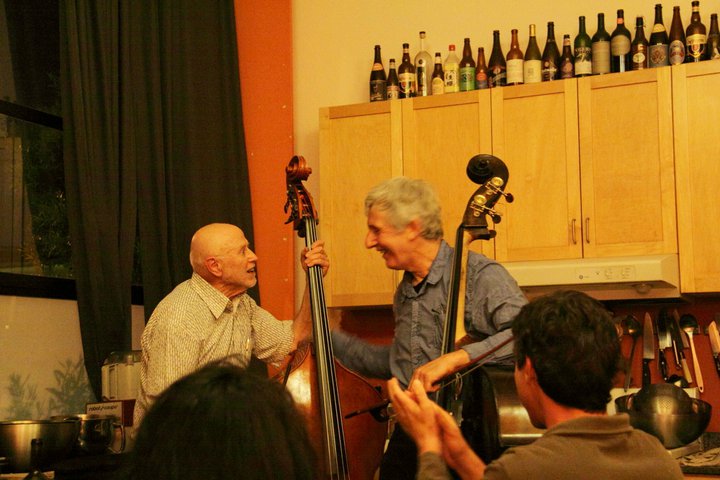
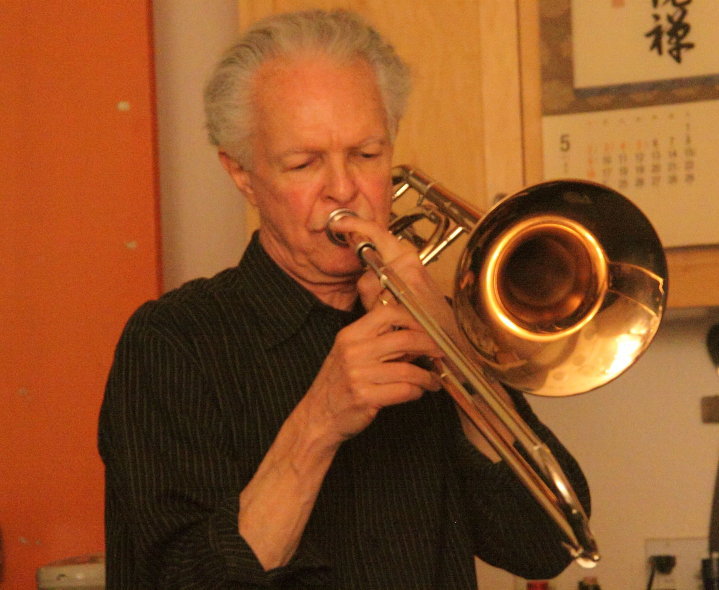
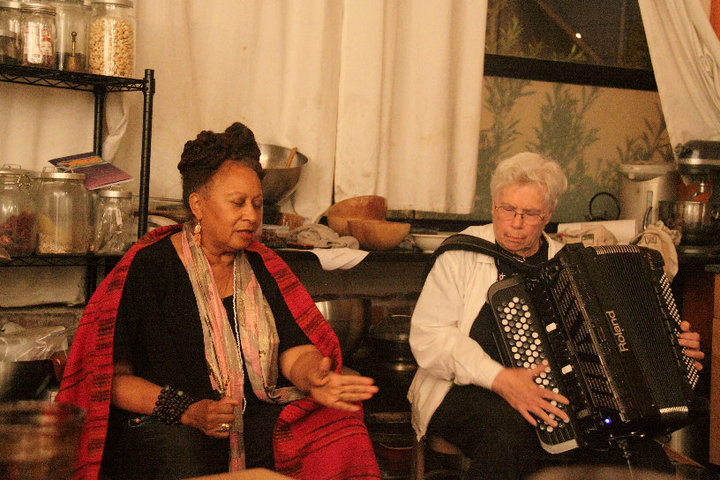
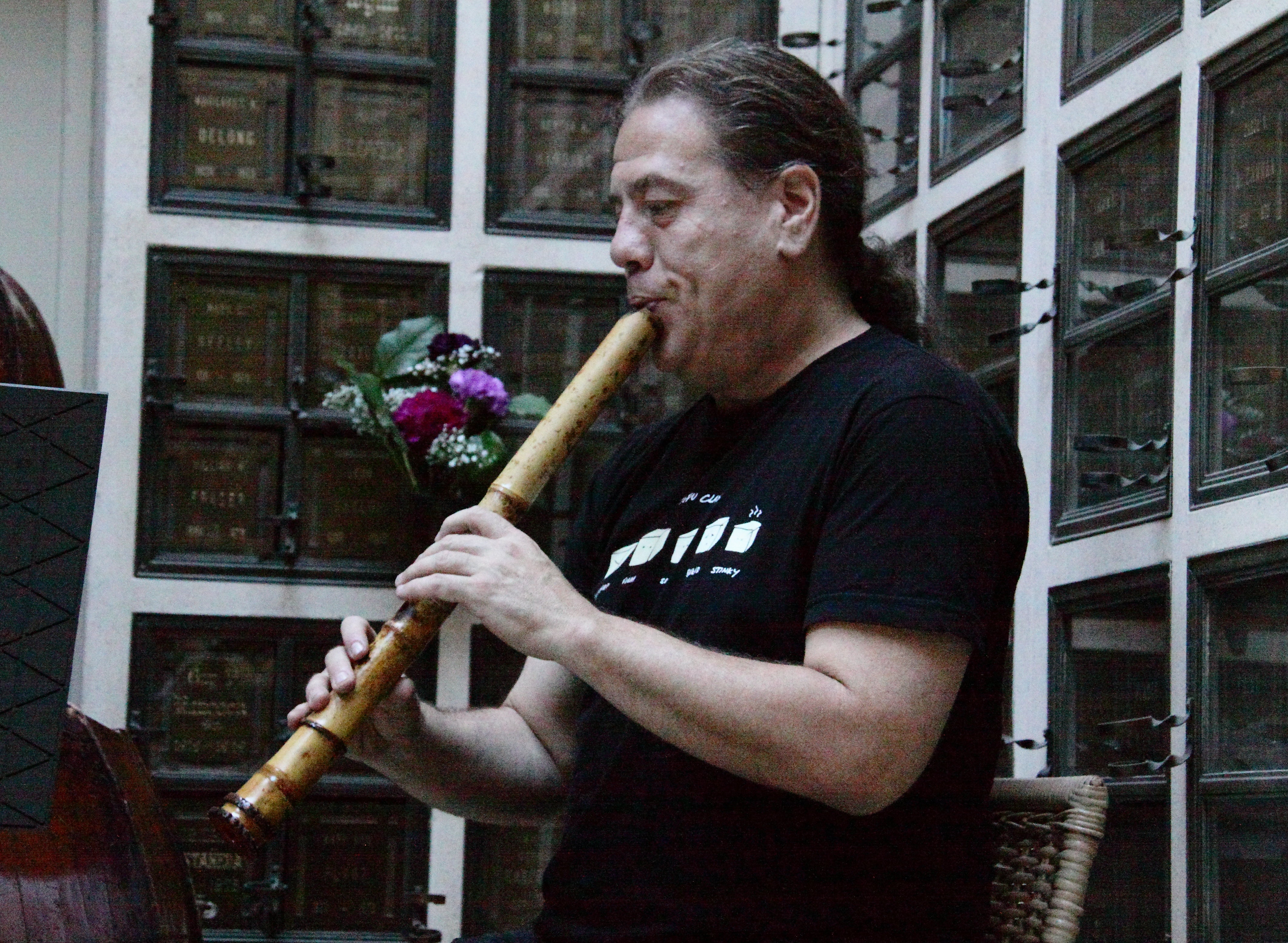
This past Saturday night June 27, 2015 is among the last of this East Bay series which has been with us for the last 10 years.  Philip Gelb, vegan chef extraordinaire, shakuhachi player and teacher has announced that he will be relocating to New York in the next few months.

I personally discovered this series shortly after I moved to the bay area.  In a nondescript West Oakland neighborhood in a modest loft live/work space I found a vegan dinner which also featured a performance by Bay Area composer/performer Pamela Z.  One concert/dinner and I was hooked.   The opportunity to meet and hear many wonderful musicians and enjoy the amazing culinary magic was just too much to resist.  I have been a regular attendee at many of these concerts and they all are valued memories.

Philip Gelb with Joelle Leandre at one of his dinner/concerts.

Philip Gelb with Joelle Leandre at one of his dinner/concerts.

Phil, who studied music, ethnomusicology and shakuhachi has been a familiar performer in the Bay Area.  In addition to performing and teaching the Japanese bamboo flute, Phil has run a vegan catering business and began this series some ten years ago modeled on a creative music series founded in part by the late Sam Rivers.  As a musician Phil has gotten to know many talented and creative musicians who performed on his series.  Phil is a friendly, unpretentious man with great talents which he successfully combined here.

phil1011

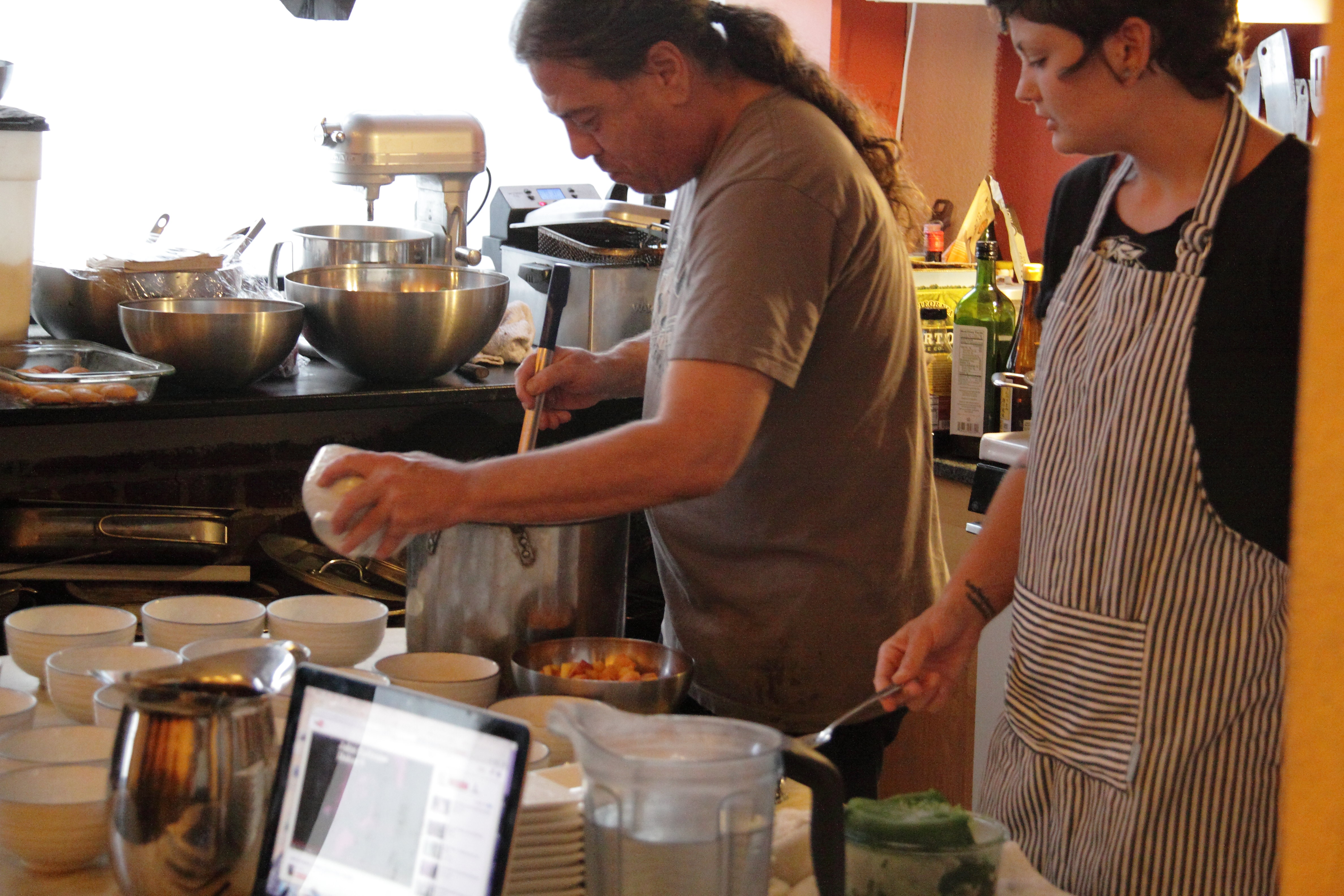
Phil and sous chef Cori preparing the evening’s feast.

The 20 seats were sold out for the annual Masumoto Peach dinner.  At the peak of the harvest each year Phil has put together multiple course dinners featuring locally grown organic peaches from the now four generation Masumoto family orchard near Fresno .  In fact a recent film (information on the Masumoto page linked above) has been made about them called, “Changing Seasons” and one of the filmmakers was in attendance.  There was a short discussion with Q and A at one point.

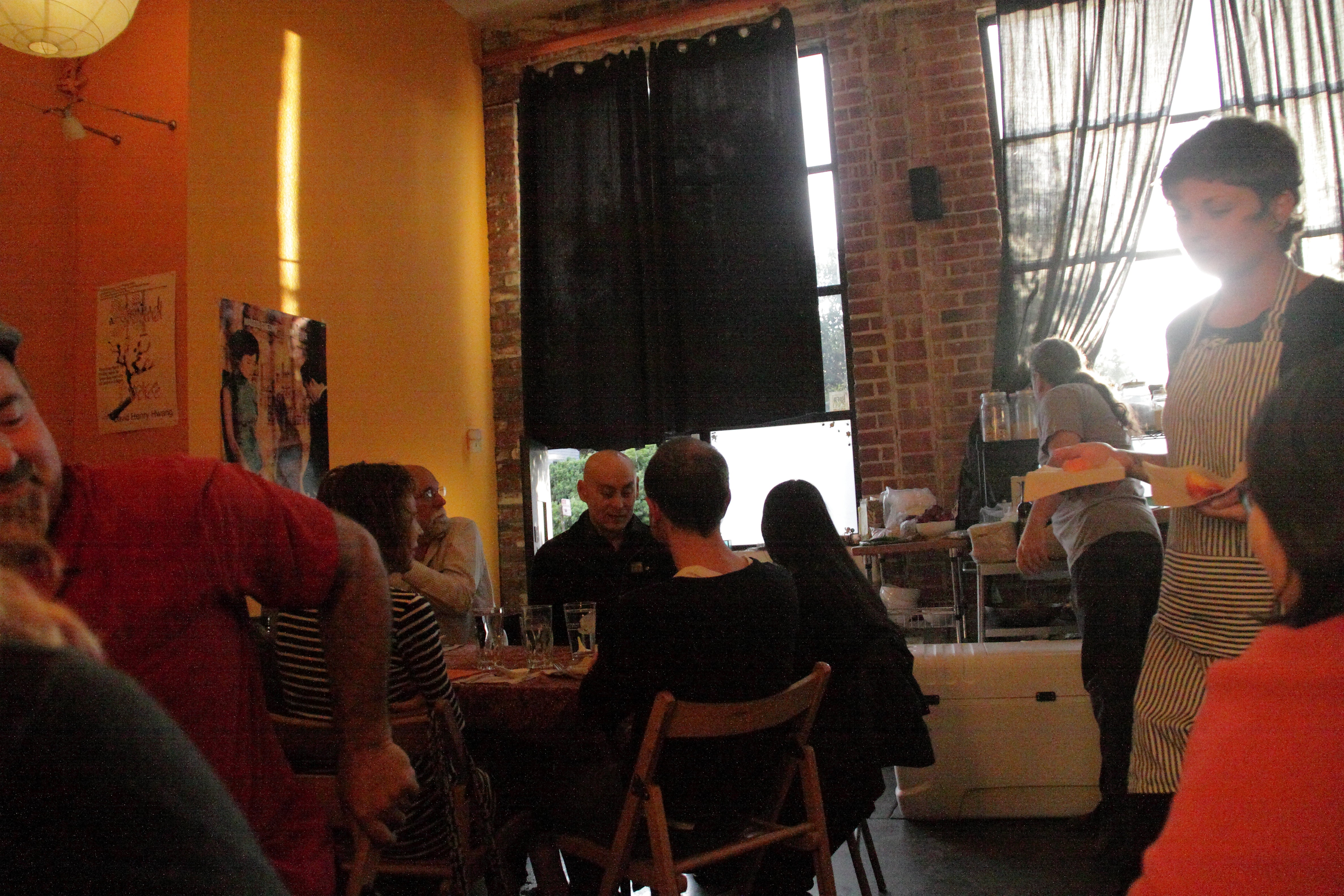
Happy diners anticipating the next course.

Happy diners anticipating the next course.

No music this night but wonderful food and friendly conversations filled the evening.  The meal began with, of course, a taste of the actual peaches.

sous chef Cori serving the peach halves that began the dinner.

sous chef Cori serving the peach halves that began the dinner.

The next course, a peach tomato gazpacho.

phil1014

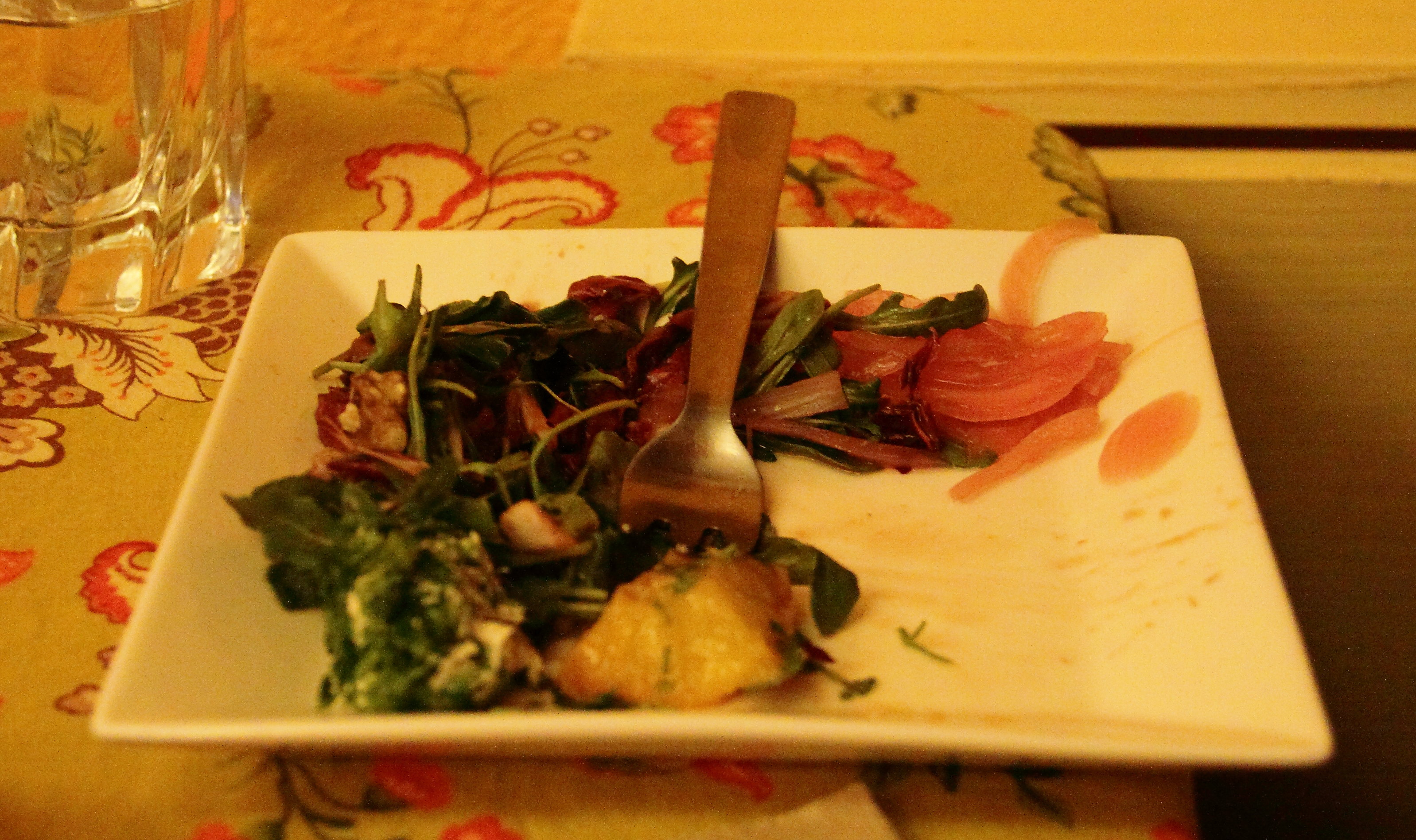
Followed by a grilled peach salad with cashew cheese balls, arugula radicchio,, pickled red onions, and a cherry balsamic dressing.

phil1016

Oh, yes, a nice Chimay to quench the thirst.

phil1015

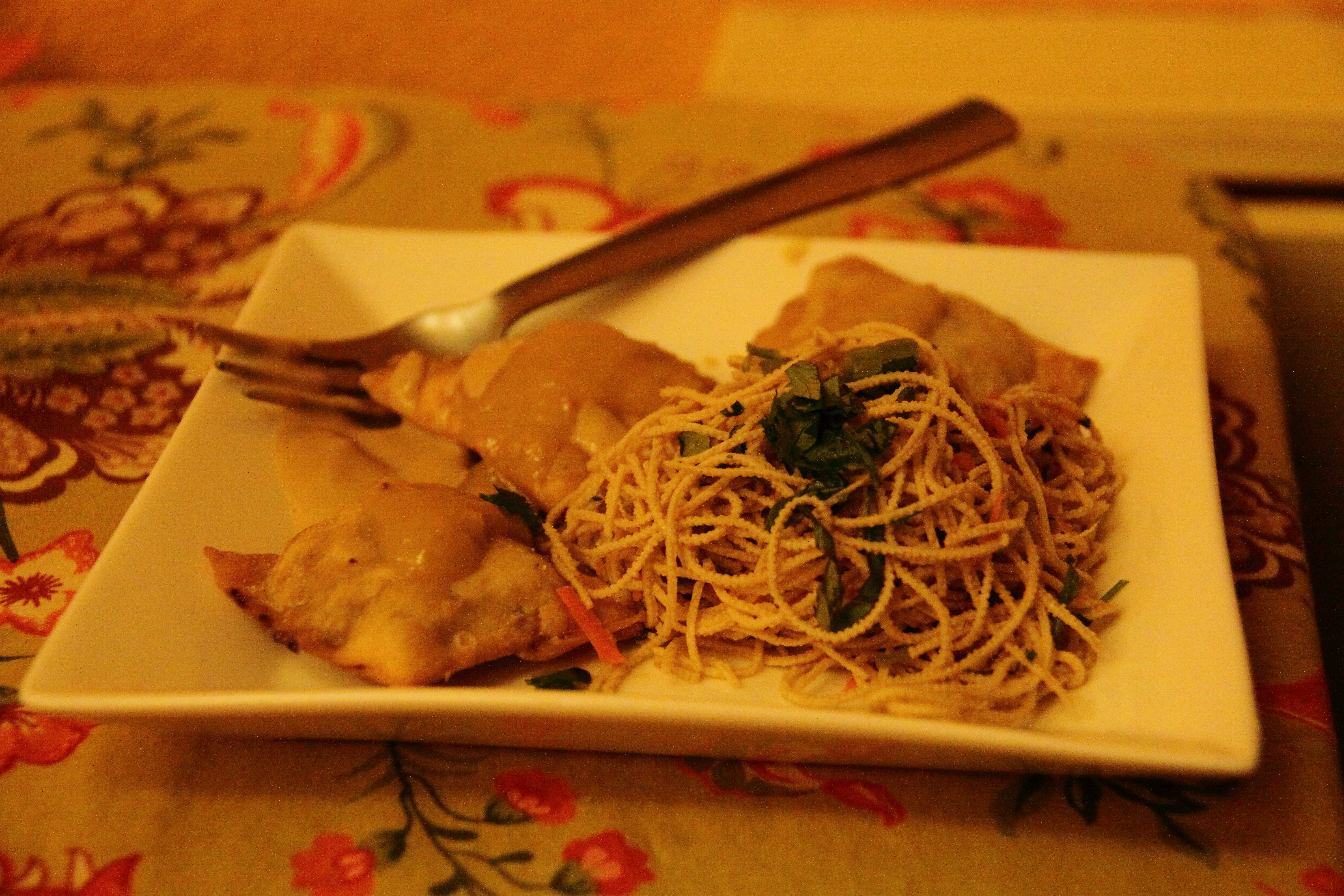
And then tempeh char siu wontons (from the local Rhizocali Tempeh), flat tofu noodles, a really great hot peach mustard and peach sweet and sour sauce.

phil1018

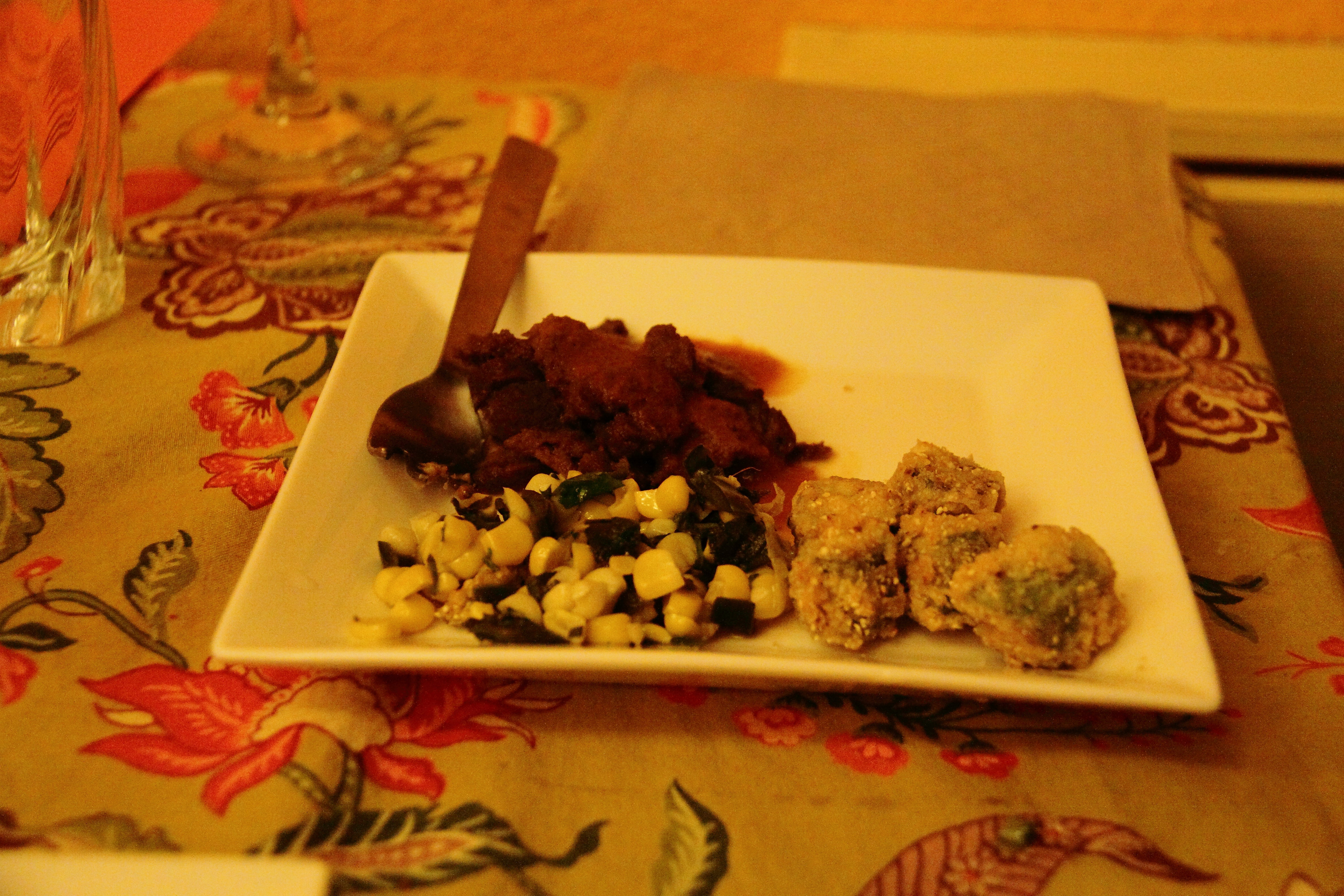
The main course: peach grilled seitan, peach barbecue sauce, roasted corn and peppers, and some crunchy fried okra.

phil1020

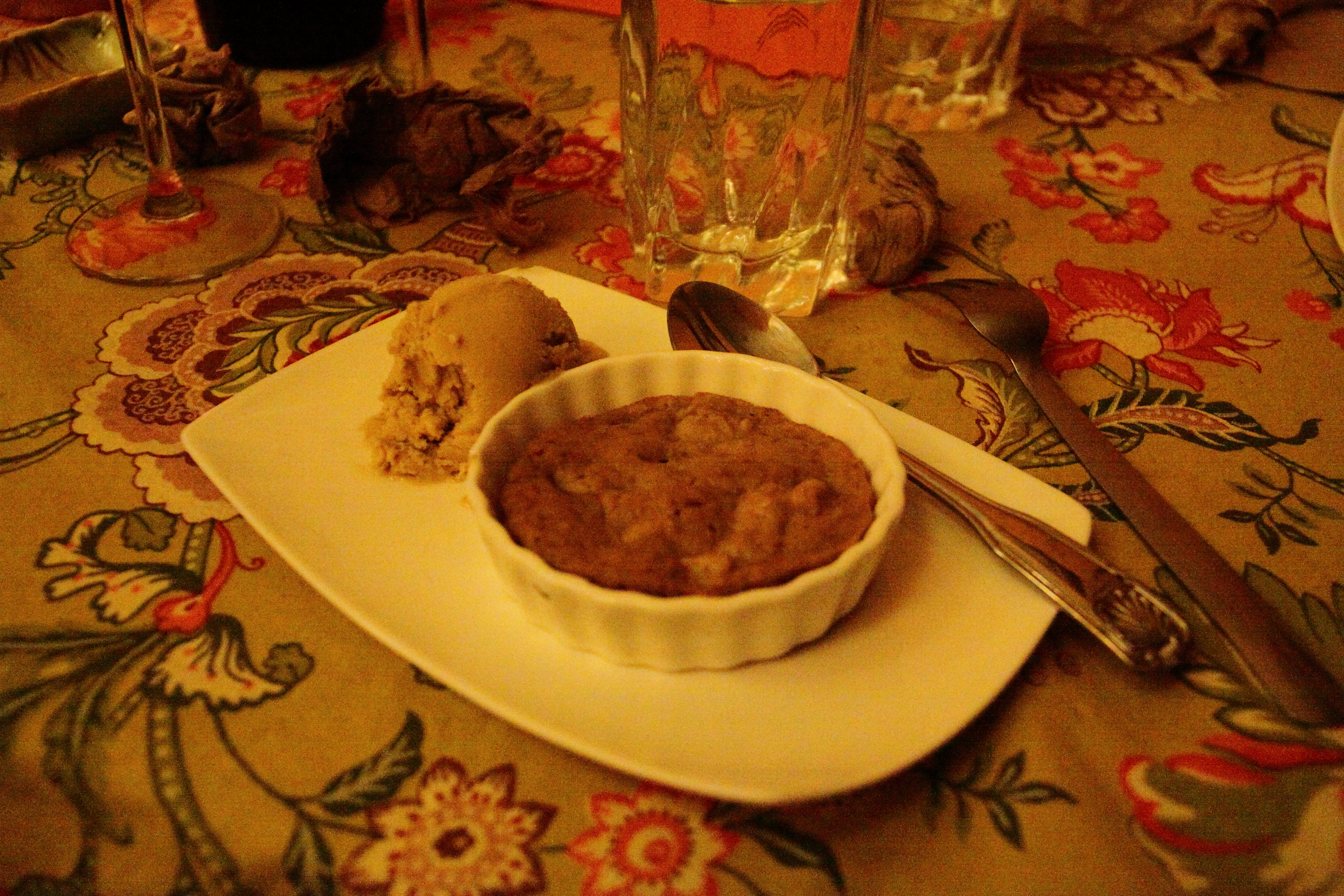
And, for dessert, peach rosewater cake with peach walnut sorbet.  As is his custom Phil went around offering more of that sorbet which most folks, present writer  included, availed themselves.

phil1021

This was a thoroughly enjoyable evening.

But, as I said, this tradition is coming to an end.  Not to fear, however.  Phil is in the process of writing a cookbook sharing the secrets of his culinary mastery and the book will also document some of the many musicians whose talents graced many an evening here.

La Donna Smith and India Cooke playing an improvised duet.

La Donna Smith and India Cooke playing an improvised duet.

Bassists Mark Dresser and Barre Phillips play together for the first time at In the Mood for Food.

Bassists Mark Dresser and Barre Phillips play together for the first time at In the Mood for Food.

The amazing Stuart Dempster at Phil's loft a few years ago.

The amazing Stuart Dempster at Phil’s loft a few years ago.

Gyan Riley, Terry Riley and Loren Rush attending the dinner/concert which featured Stuart Dempster.

Gyan Riley, Terry Riley and Loren Rush attending the dinner/concert which featured Stuart Dempster.

Pauline Oliveros and her partner Ione performing at a recent dinner.

Pauline Oliveros and her partner Ione performing at a recent dinner.

So this little sampling of photos provides some idea of the scope and significance of this series.  Happily it is being documented in a book for which an Indiegogo campaign is presently in process.  You can donate and receive any or many of a variety of perks ranging from a copy of the book for $40 and perks including an invitation to celebratory dinners planned in both New York and Oakland.  My copy and my dinner invite are reserved.

There are 34 days left in the campaign at the time of this writing and the project is now at 106% of its funding goal.  This is a piece of Bay Area music and culinary history that will please music enthusiasts and those who appreciate creative vegan cuisine.

Here is a list of musicians taken from the campaign site to give you an idea of the scope of the series:

Tim Berne – alto saxophone (Brooklyn)

Shay Black – voice, guitar (Berkeley via Ireland)

Cornelius Boots shakuhachi/bass clarinet

Monique Buzzarte – trombone, electronics (NYC)

Chris Caswell (2) – harp (Berkeley)

Stuart Dempster – trombone (Seattle)

Robert Dick (flute) NYC

Mark Dresser (2) – bass (Los Angeles)

Mark Dresser/Jen Shyu duet – bass, voice/dance

Sinan Erdemsel – oud (Istanbul)

Sinan Erdemsel/ Sami Shumay duet – oud, violin

Gianni Gebbia – saxophones (Palermo, Italy)

Vinny Golia- winds (Los Angeles)

Lori Goldston – cello (Seattle)

Frank Gratkowski (2) – clarinets, alto sax (Berlin)

Daniel Hoffman/Jeanette Lewicki duet violin, voice/accordion (Berkeley, Tel Aviv)

Shoko Hikage – koto (Japan-San Francisco)

Yang Jing – pipa (Beijing)

Kaoru Kakizakai (4) – shakuhachi (Tokyo)

Marco Lienhard shakuhachi (Zurich-NYC)

Mari Kimura – violin, electronics (Tokyo-NYC)

Yoshio Kurahashi (5) – shakuhachi (Kyoto)

Joelle Leandre – contrabass (Paris)

Oliver Lake – alto sax (NYC)

Riley Lee (2) shakuhachi (Australia)

Jie Ma – pipa (China, LA)

Thollem Mcdonas Jon Raskin duet piano/sax (wanderer/Berkeley)

Roscoe Mitchell – alto, soprano saxophones (Oakland)

David Murray – tenor sax (Paris)

Michael Manring (5) – electric bass (Oakland)

Hafez Modirzadeh – winds (San Jose)

John Kaizan Neptune – shakuhachi (Japan)

Rich O’Donnell – percussion (St. Louis)

Pauline Oliveros (2) – accordion (NY)

Tim Perkis/John Bischoff duet computers (Berkeley)

Barre Phillips solo and duet with Mark Dresser – contrabass (France)

Alcvin Ramos shakuhachi (Vancouver)

Tim Rayborn/Annette duet oud, strings, recorders (Berkeley/Germany)

Jon Raskin/Liz Albee duet sax/trumpet (Berkeley/Berlin)

Jane Rigler – flute (Colorado)

Gyan Riley (5) – guitar (NYC)

Terry Riley (2) – voice, harmonium (universe)

Diana Rowan (2) – harp (Berkeley/Ireland)

Bon Singer/Shira Kammen duet (voice, violin) (Berkeley)

LaDonna Smith/India Cooke duet (2) violin, viola (Birmingham, AL, Oakland)

Lily Storm/Diana Rowan – voice, harp (Oakland/Ireland)

Lily Storm/Dan Cantrell (2) – voice/accordion (Oakland)

Howard Wiley – tenor Saxophone solo and duet with Faye Carol voice

Theresa Wong/ Ellen Fullman duet

Amy X (3) – voice, electronics (Oakland)

Pamela Z – voice, electronics (San Francisco)

The South Shore by Michael Vincent Waller, Radicalism in Context


In 1976 the premiere of Henryk Gorecki‘s tonal and melodic 3rd Symphony stood out as unusual in the context of the usual avant-garde fare heard at the annual Warsaw Autumn Festival.  I recall a similar experience when I first heard the music of Lou Harrison given his association with Henry Cowell and John Cage.  It was not what I expected to hear.

This young composer graciously sent me a copy of this, his major label debut for me to review. I noted that it was on the Experimental Intermedia label which was founded by Phill Niblock and is known for recording of a great deal of challenging and interesting avant-garde music by various composers including Phil Niblock, Jackson Mac Low, Guy Klucevsek, Ellen Fullman, David Behrman and many others. I have been a great fan of this record label for many years and own most of their titles.  But what I heard listening to this beautiful 2 disc set of relatively short pieces mostly for acoustic instruments seems radical in the context of this label’s usual fare.

The Southern Shore  XI  136

The South Shore
XI 136

Don’t get me wrong.  This does not appear to be conservative music.  Waller has studied with La Monte Young, Marian Zazeela and Bunita Marcus giving him a healthy pedigree in the avant-garde.  Indeed his earlier works were concerned with alternate tunings.  By earlier works, of course, I am only referring to a few years before the present music under consideration here because this composer, not yet 30, is presenting a fully developed sound.  Here he is concerned with alternate scales, church modes as opposed to the western diatonic scales.  There are a few instances of the use of quarter tones but, for the most part, he seems concerned with exploring the impact of different modes within the tuning of equal temperament which dominates western music.

For all the technical interest one might have in analyzing this composer’s use of modes the important thing here is the emotional impact of the music.  These frequently somber but beautiful melodies and motives speak very directly to the listener, at least this listener anyway.  This two disc set provides an excellent survey of the composer’s output over the last two or three years.

The titles are somewhat enigmatic and reflect a very personal approach.  He does not seem concerned with classical forms nor is he apparently opposed to them.  Again analysis will not reveal as much as just listening.  He creates beautiful contours of almost vocal quality at times.  I am given to wonder how he will confront music for voices and imagine that his style will serve him well.  I am tempted to compare him to Arvo Part perhaps but I don’t want to suggest that his work is derivative or, for that matter, even influenced by Part’s work.  I just get a similar feeling listening to Waller’s music.

This disc of chamber music for mostly acoustic instruments employs quite of few fine musicians who seem to be inspired to play their best by this music.  Pianists include Yael Manor, Charity Wicks, Nicolas Horvath and Marija Ilic.  Violinists include Conrad Harris, Pauline Kim-Harris, Jessica Park and Esther Noh.  Violists are Daniel Panner, Cyprien Busolini and Erin Wight.  On cello we hear Christine Kim, Deborah Walker and Clara Kennedy.  Carson Cooman is featured on Organ.  Flautists are Amélie Berson, Itay Lantner and Luna Cholang Kang.  Pierre Stéphane Meugé plays alto sax, Didier Aschour plays electric guitar (the only non-acoustic instrument on this recording), Thierry Madiot plays trombone, Katie Porter is on clarinet and Devin Maxwell plays percussion.  All play in various groupings from solo to small chamber ensembles.

The detailed and very helpful liner notes are by “Blue” Gene Tyrrany aka Robert Sheff.  The beautiful cover was photographed by Phill Niblock.

This is an album of miniatures with no track lasting longer than about ten minutes though there are works which are cast in several movements.  The pieces were all written in the last 4 years and constitute an excellent survey of this emerging talent.

Certitude and Joy, the World of Wold


MinMax 019

MinMax 019

This is one of those operas whose title evokes irony right at the start.  Like Ruggero Leoncavallo‘s “Cavalleria Rusticana” (Rustic Chivalry) and Virgil Thomson‘s “Four Saints in Three Acts” the title Certitude and Joy hardly seems to evoke the right emotions in this harrowing story taken right from the headlines of a case in 2005 in which a mother kills her children and dumps their bodies in San Francisco Bay.  This is contrasted with the biblical story of Abraham and Isaac in which God tells Abraham to slay his son.  Of course God stopped Abraham in the bible story but that was not the case with the more recent story.

English: portrait of composer Erling Wold, pai...

English: portrait of composer Erling Wold, painted by Lynne Rutter. oil on panel, 2002 (Photo credit: Wikipedia)

Erling Wold (1958- ) is a composer of whom I had been only distantly aware.  He is a California native and has studied with Andrew Imbrie, Gerard Grisey and John Chowning.  That right there gives you a clue to this man’s compositional range and skills.  He completed a Ph.D. from the University of California Berkeley in 1987 and has worked for Yamaha creating new synthesizer programs in addition to pursuing his musical interests.

The San Francisco Bay Area has such a rich and varied musical culture that it is not all that surprising to me that I hadn’t come to know this fascinating composer.  And it’s taken me a while to absorb enough about Mr. Wold to feel that I could write something intelligent about this CD.

The composer’s web site (click here) contains a plethora of scores and sound recordings of this prolific and interesting composer.  And there are numerous offerings on You Tube and there is a blog linked on his web site in which he discusses a variety of topics not the least of which is his own music.  It seems that he has created several operas including one based on William S. Burroughs’ early but long suppressed novel, Queer.  His chamber operas, A Little Girl Contemplates Taking the Veil and his opera on Pontius Pilate illustrate his interest in both religious and political themes.

I won’t even try to get into his orchestral, chamber and solo piano works.  That is the job of a future blog which I can assure you will happen.  But the main point of this blog is to look at this most recent offering of his chamber opera Certitude and Joy.

As best as I can describe in words, Wold’s accompaniment figures remind me of Philip Glass or John Adams at times but he is not a simple derivative  of these composers.  His vocal lines, almost all sung as opposed to spoken, are more like recitatives than arias and  suggest a more ensemble feel as opposed to the grand opera style of arias, duets, etc.

Aldous Huxley, Famous Last Words

Aldous Huxley, Famous Last Words (Photo credit: Wikipedia)

His libretto, ripped from the headlines so to speak, is a combination of philosophical musings, imagined dialogue and commentary from texts as diverse as Aldous Huxley’s writings on psychedelics and the more pedestrian musings of newspaper columns.  I think there is some affinity for Robert Ashley’s mysterious texts but again nothing derivative.  The work is perhaps political as social commentary but not as social protest.

What is important is that this work, thinly scored (though hardly thin in sound) for two pianos and a cast of singers, speaks directly and affectingly to the audience.  He manages to tell this tale in a fairly straightforward manner with occasional digressions for philosophical commentary.  But he never loses control of the narrative which flows on drawing you in to this sad story and leaves you with the questions he raises, albeit rhetorically, about the nature of religious revelation, mental  illness and the current state of our society and our world.  This is a tall order but Wold manages to fill it with just the right amount of drama and music that leaves the listener (and viewer if you see it live in person or on You Tube) seemingly with exactly the emotions I think the composer wrestled with in writing it.

Like the aforementioned Four Saints and Cavalleria, Certitude and Joy is a listener friendly opera with messages that are disturbing and go to the core of what it means to be human.  The performances by the fine duo piano team of Keisuke Nakagoshi and Eva-Maria Zimmerman (ZOFO) and singers Laura Bohn, Talya Patrick, Jo Vincent Parks, Kerry Mehling, Tranvis Santell Rowland with Bob Ernst, speaker and a cameo by the composer (I’ll leave that for listeners to find).  The beautiful recording on Paul Dresher’s MinMax label is distributed by Starkland and is available on Amazon and other outlets.  A worthwhile experience for all lovers of contemporary opera and drama.

A Glorious Other Minds 20th Anniversary


The 20th Other Minds festival completed its three concert run on March 6, 7 and 8 of 2015.  This was the first time in which composers who had appeared before came for a second time.  Ten composers were featured and a total of some 25 or so works were performed.  It also marked the first time that a full symphony orchestra was featured.

Ruth Asawa San Francisco School of the Arts Orchestra just fitting on the stage at SF Jazz

Ruth Asawa San Francisco School of the Arts Orchestra just fitting on the stage at SF Jazz

The first night opened with the wonderful guitarist David Tanenbaum performing music by the late Peter Sculthorpe who was to have attended this festival.  Sculthorpe sadly passed away in August of 2014.  Tanenbaum played his “From Kakadu” (1993) a suite for guitar in four movements.  This was moving and quite virtuosic music which was performed with passion and ease.

Lou Harrison (1917-2003)

Lou Harrison (1917-2003)

Tanenbaum followed Sculthorpe’s piece with the last composition by the beloved Lou Harrison called Scenes fromNek Chand (2001-2) played on a National Steel Guitar in just intonation.  As with the Sculthorpe, Tanenbaum displayed his well-known facility in interpretation of new music and left the appreciative audience wanting more.

David Tanenbaum holding his National Steel Guitar as he acknowledges the warm applause

David Tanenbaum holding his National Steel Guitar as he acknowledges the warm applause

Next up was a too rare opportunity to hear a composition by Other Minds Artistic Director Charles Amirkhanian.  Bay area violinist Kate Stenberg took the stage to perform the solo violin part with prerecorded tape.  The piece called Rippling the Lamp (2007) is a musical depiction of a visual the composer saw involving the reflection of a lamp in water.  But regardless of the genesis this was a powerful and engaging piece even on a purely musical level.  Stenberg executed her part flawlessly in what was an almost romantic piece at times.

Kate Stenberg playing Amirkhanian's Rippling the Lamp.

Kate Stenberg playing Amirkhanian’s Rippling the Lamp.

Charles Amirkhanian warmly embraces Kate Stenberg following her performance of his piece.

Charles Amirkhanian warmly embraces Kate Stenberg following her performance of his piece.

And the first half concluded with a performance by the Del Sol Quartet of the world premiere of Miya Masaoka‘s Second String Quartet “Tilt” (2014-5).  This was a complex piece requiring a great deal of knowledge of special performance techniques that would be a challenge for any string quartet.  This complex work was difficult to grasp in only one hearing but it was a joy to see how easily these musicians handled the work.

The Del Sol Quartet performing Miya Masaoka's Second String Quartet

The Del Sol Quartet performing Miya Masaoka’s Second String Quartet

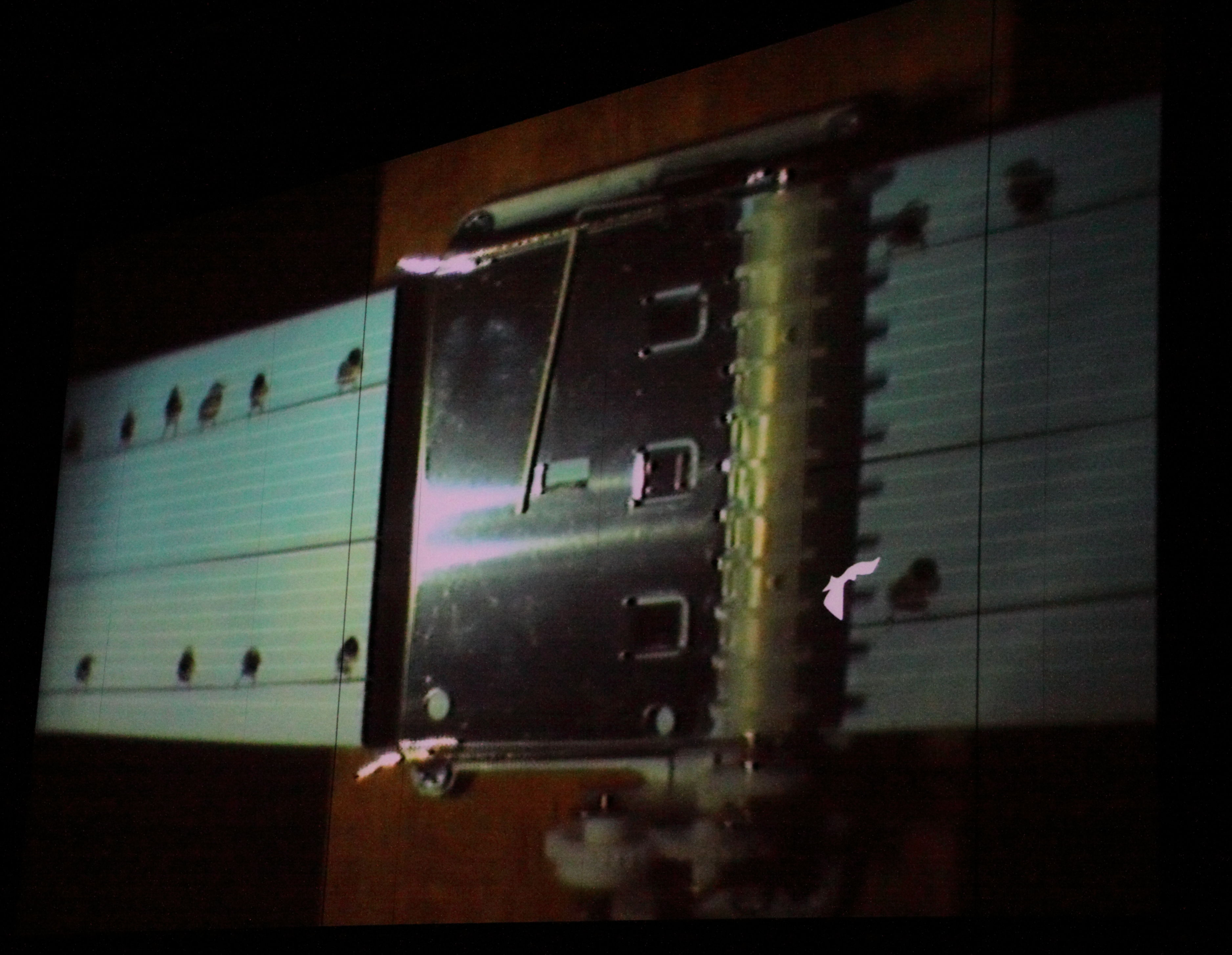
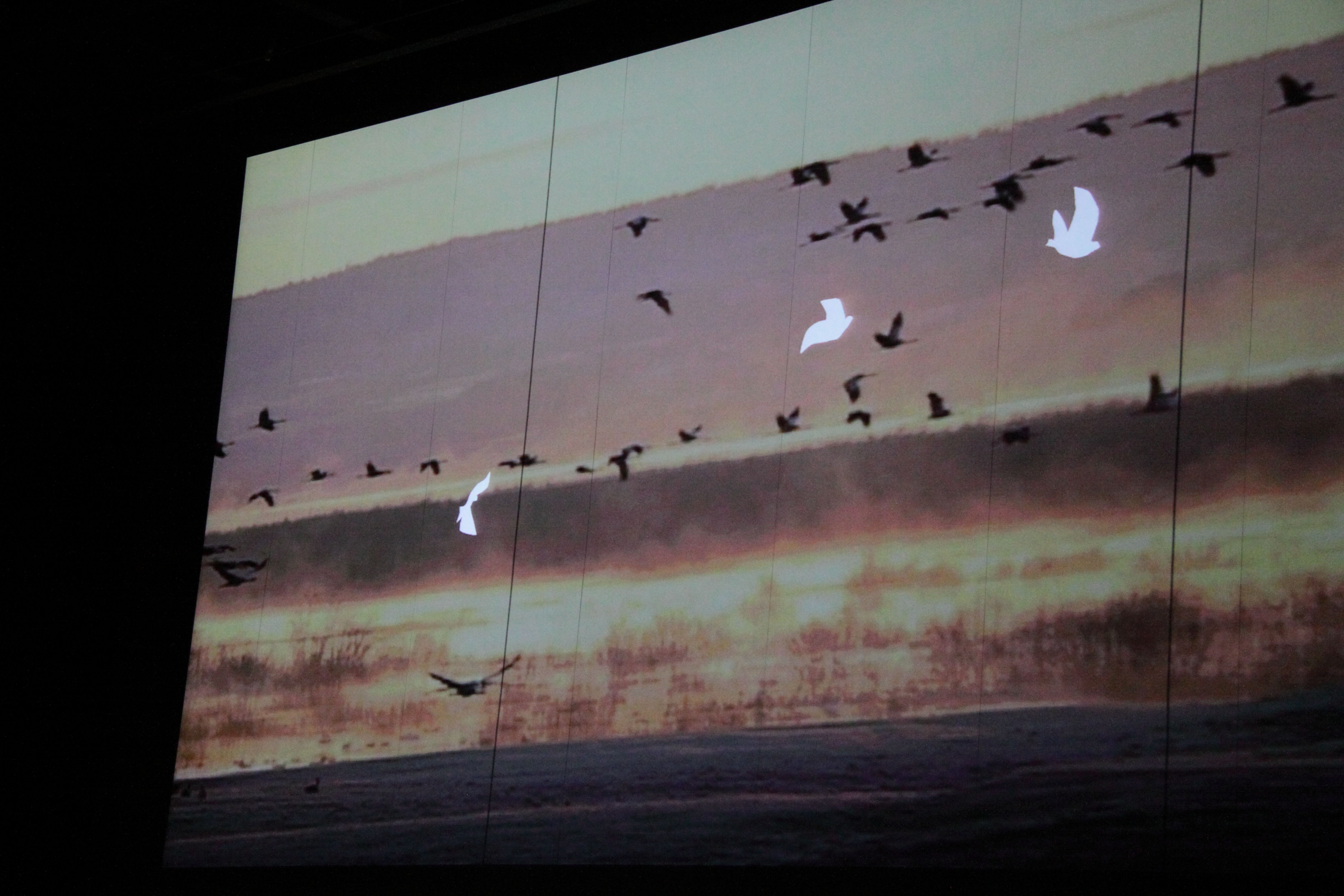
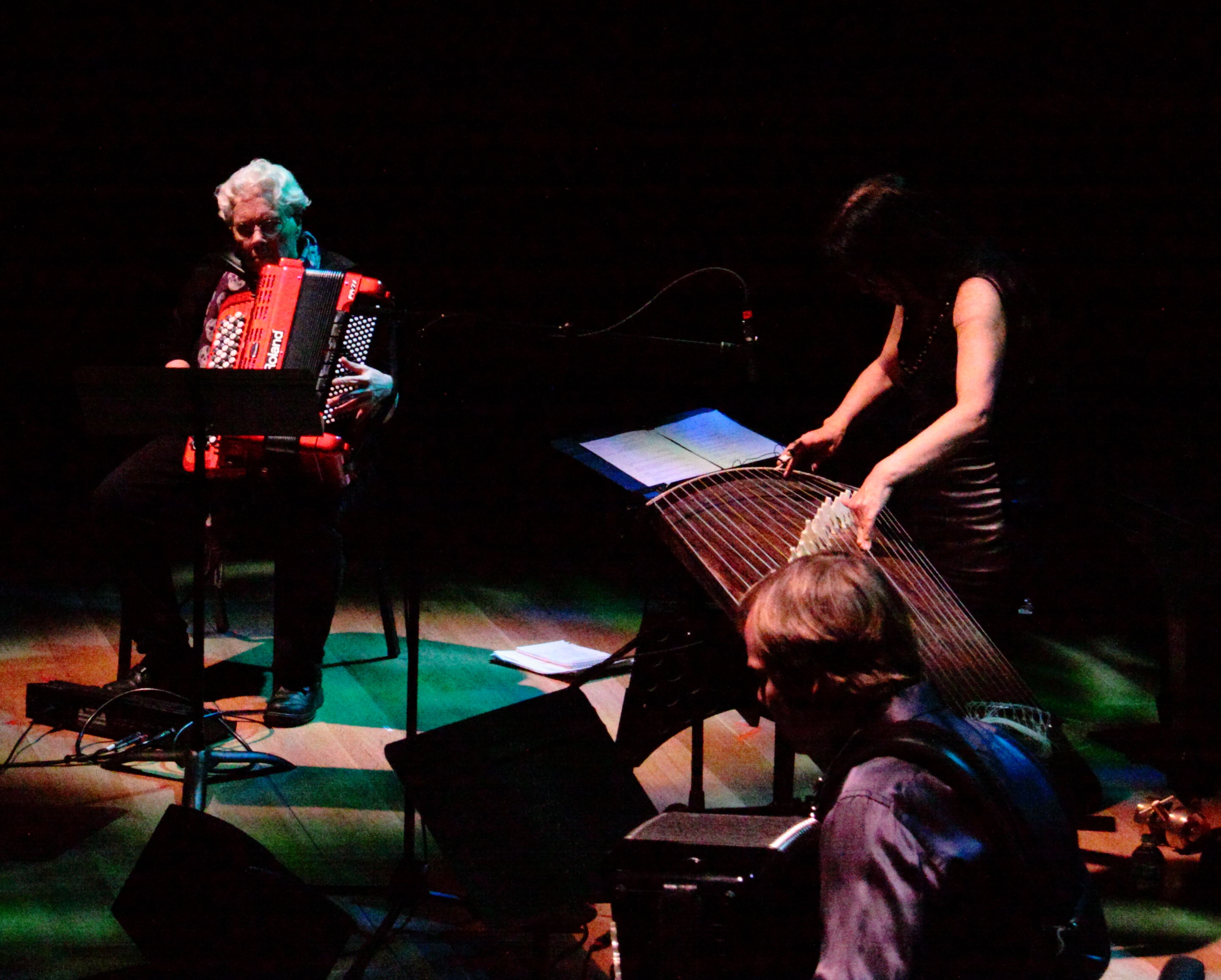
Following intermission we came to know what the origami birds were all about.  These along with video projections and a great deal of electronics came together to give utterance to Maja S.K. Ratkje’s Birds and Traces II (2015), another world premiere.  This was by far one of the most complex pieces involving a great deal of media as well as performers Kathy Hinde and accordionist Frode Haltli.  In addition to electronics and voice the musicians used bird whistles, computer controlled slide whistles and animated sculpture along with the projected videos.  This was more of the character of one of Allan Kaprow‘s “happenings” from the 1960s.  Truly a maverick piece in a concert series that prides itself on such.  The audience was clearly entertained.

Maja S.K. Ratkje, voice and electronics

Maja S.K. Ratkje, voice and electronics

OM200018 OM200019

Three scenes from the video

Three scenes from the video

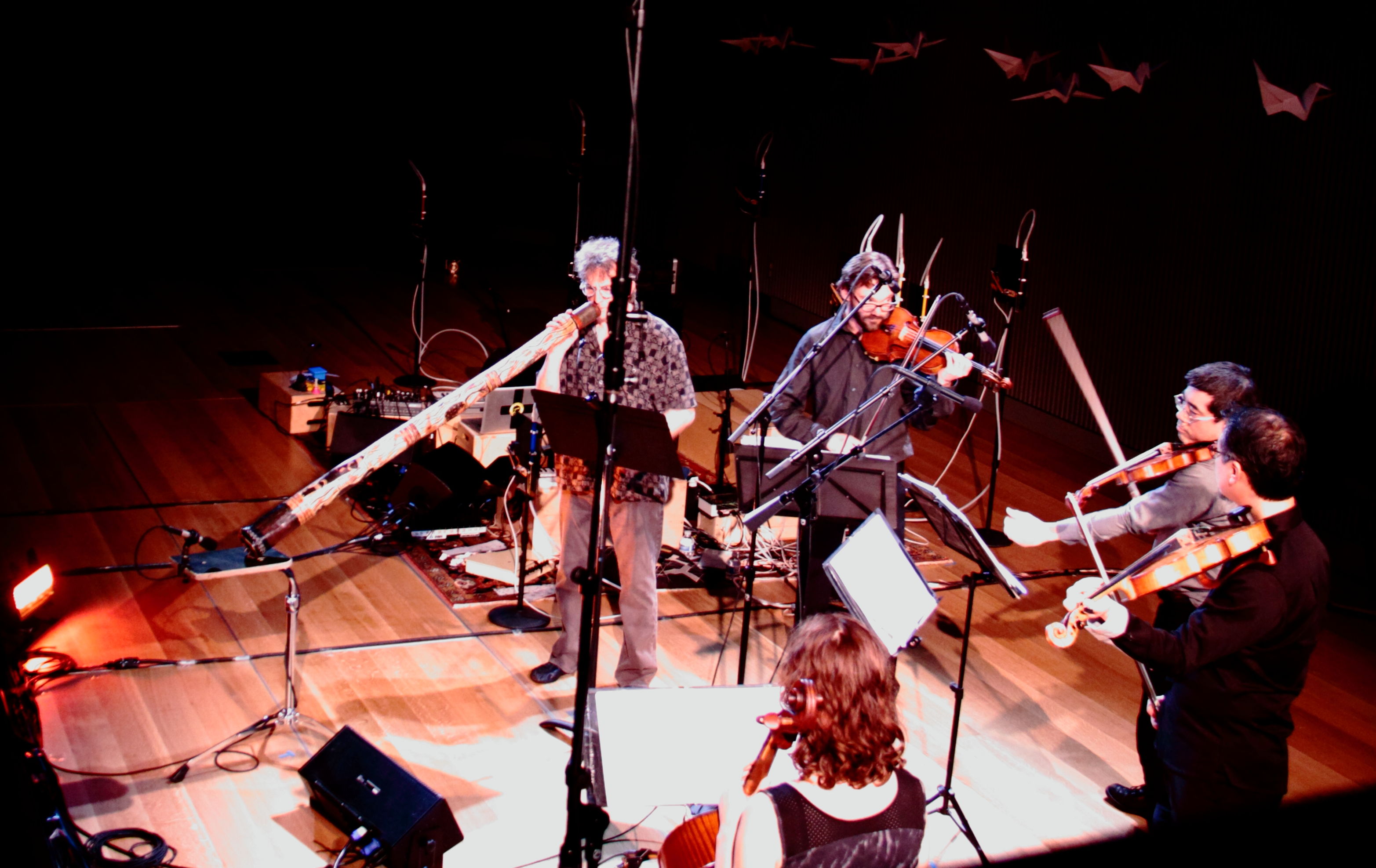
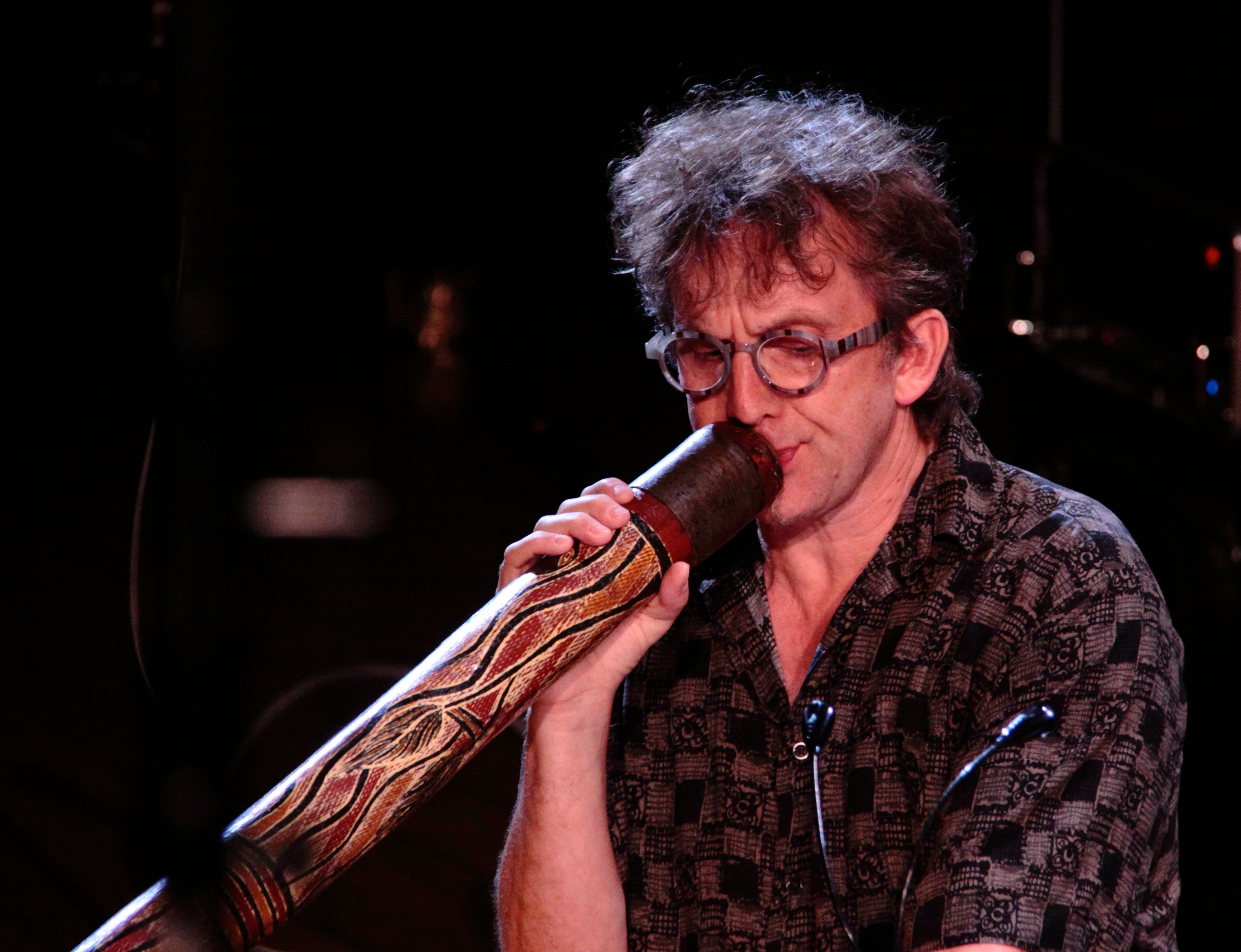
The first night concluded with a performance of Peter Sculthorpe’s String Quartet No. 14 “Quamby”(1998) which includes a didjeridu.  Stephen Kent, who played the didjeridu, spoke a warm dedication in memory of the late composer.  The Del Sol Quartet along with Kent gave a deeply emotional reading of this beautiful work (I went a bought a copy of their recording of all of the composer’s string quartets with didjeridu right after this performance).  I had heard that uniquely Australian instrument before but had no idea how expressive it could be.  The audience was clearly moved and this was a fitting deeply felt tribute to the composer.

OM200023

The Del Sol String Quartet with Stephen Kent on didjeridu

The Del Sol String Quartet with Stephen Kent on didjeridu

I took the opportunity to speak to a few people after this performance and it confirmed for me that this performance affected and moved us all in what I think is the highest achievement of a composer and a performer, that of communicating emotionally with a audience.  We all seemed to share the sadness of Mr. Sculthorpe’s passing but also the joy of his having been with us to make this music which lives on.

Peter Sculthorpe (1929-2014)

Peter Sculthorpe (1929-2014)

Those animated origami sculptures remained (though no longer animated) just above the stage for the remaining two nights and certainly added a bit of unusual flair which distinguished the look of this year’s series.  It is also worth mentioning that the stage management and creative lighting add to the professional and polished look for this series and those commonly unsung heroes deserve credit for their fine work.

Let me also mention that this year’s program booklet surveying the whole of the Other Minds series was chock full of beautiful by resident photographer extraordinaire John Fago.


The second concert opened with what was, for this writer, worth the price of admission, that of Charles Amirkhanian performing his sound poetry live with multi-track tape.  His roles as sort of the Bill Graham of the avant-garde and his previous work as music director at KPFA could satisfy a life’s work just by themselves but he is also an accomplished composer and one of the most interesting and innovative sound poets/artists of the late 20th and early 21st centuries.  So this live performance would have brought me to the theater were it the only thing on the program.

Charles Amirkhanian performing his sound poetry live with tape.

Charles Amirkhanian performing his sound poetry live with tape.

The pieces performed, Dumbek Bookache (1986), Ka Himeni Hehena (The Raving Mad Hymn, 1997) and Marathon (1997) all demonstrate the composer’s love of language and sound and, as Mr. Amirkhanian advised, his background as a percussionist.  This is music that seems to fit somewhere between poetry and music and, prior to hearing his work, I didn’t even know that there was a such a space.  His mellifluous voice, no doubt seasoned by years of hosting radio, executed the complex rhythms in sync with the tape flawlessly, just as the composer intended.

There is a humor and playfulness that is engaging as he deconstructs and reconstructs words and sounds (Amirkhanian is possessed of a great sense of humor).  The first and last pieces were plays on English language words and sounds.  The middle piece utilizes Hawaiian native language as its material.  All reflect the composer’s deep understanding and love of the sounds of languages and are intricately constructed musical compositions that deserve to be heard more frequently.  And recorded too.

Wallen performing her birthday song with the captive host of the evening looking on amused.

Wallen performing her birthday song with the captive host of the evening looking on amused.

Next we met Errollyn Wallen who performed 7 songs from her Errollyn Wallen Songbook but before she did that she surprised Mr. Amirkhanian with a newly composed song for his 70th birthday and for Other Minds 20th.  He sat, captive but appreciative as she rolled out the surreptitiously rehearsed dittie in which she called him “Charlesey” in a clearly affectionate tribute.

Errollyn Wallen at the piano with the Del Sol String Quartet.

Errollyn Wallen at the piano with the Del Sol String Quartet.

Wallen, in her set, sang first at the piano, then standing at a stage mic accompanied by the ever versatile Del Sol Quartet.  She sings a difficult to describe type of song that owes as much to jazz and pop and it does to classical and seems to have as much fun with language in song and Amirkhanian has with spoken words.  Wallen is a skilled and virtuosic performer and, as I found later when I chatted with her in the lobby during intermission, a delightful conversationalist.  Her performance left the audience wanting more but it was time for intermission and, after a grateful bow, she exited the stage.

This is the first time that this writer had heard her work and I can tell you that its friendly melodies and rhythms combined with her facility with lyrics make for a really compelling experience.

Pauline Oliveros, Miya Masaoka and Frode Haltli performing Oliveros' Twins Peeking at Koto (2014)

Pauline Oliveros, Miya Masaoka and Frode Haltli performing Oliveros’ Twins Peeking at Koto (2014)

After intermission we were treated to another world premiere from the great Pauline Oliveros.  Pauline, a beloved teacher and performer in the bay area, is based now in Kingston, New York but, as she acknowledges, she maintains ties with the bay area through performances, teaching, composing and now apparently through leaving her archive to Mills College where she was one of the founders of the Mills Tape Music Center (now the Mills Center for Contemporary Music).  Mr. Amirkhanian referred to her as the “Dean of American Composers”, a title once given to Aaron Copland, but equally suitable for this major composer/theorist/teacher/performer whose very presence adds to the auspicious nature of this series of concerts.

Her score is a written set of instructions for a sort of controlled improvisation that is common in her output.  Pauline’s warm personality and sense of humor are a part of this work which references the San Francisco landmark Twin Peaks and punningly refers to twin accordions as they peek at the koto which was played by Miya Masaoka.  Frode Haltli, who had performed yesterday did double duty as the second accordion in this work which requires, as does most of Oliveros’ work, close listening by performers as they execute the instructions creating the piece.  The most important lesson Oliveros has taught is the active nature of listening and that includes the performers as well as the audience because listening is itself a creative act.  And all who participated in active listening as the performers clearly did came to experience her wonderful view of the world of sound.

OM202024 OM202026 OM202027

Four views of Don Byron and his quartet.

Four views of Don Byron and his quartet.

Don Byron, backed by veterans double bassist Cameron Brown and drummer John Betsch along with a young and interesting Cuban pianist, Aruán Ortiz.  In addition to some amazing work on clarinet (playing sometimes inside the piano) the peripatetic Byron crooned a cover of a blues song in his unique vocal style announcing the disclaimer  that it was a “cover and this was supposed to be all new music but what the hell”.  Byron’s good humor, stage presence and eclecticism was supported well by his quartet who were given some nice opportunities to show off their chops.  A very satisfying set leaving the audience and this writer once again aching for more.

Tigran Mansurian singing an Armenian tune and accompanying himself at the piano.

Tigran Mansurian singing an Armenian tune and accompanying himself at the piano.

The last concert of OM 20 took place uncharacteristically in a matinee performance at 4PM.  This concert, also uncharacteristically, was given a political theme.  Sunday’s concert was dedicated in memory of the victims of the Armenian genocide which took place 100 years ago at the hands of the Ottoman Turks, a fact recognized by most countries but not, unfortunately, by the Turkish government.

This last concert occurred on what would have been the 104th birthday of famed Armenian-American composer Alan Hovhaness and this was acknowledged as well.  In the pre-concert discussion we learned that Mr. Mansurian had met Mr. Hovhaness and very much liked his music.  Then, in what I learned was a spontaneous decision, Charles Amirkhanian asked Mr. Mansurian to play some music by Komitas, an Armenian composer who collected Armenian folk songs and wrote music based on those distinctive tunes.  Komitas stopped composing after the 1915 genocide as he saw these atrocities and had much of his research destroyed.  Tigran Mansurian seemed almost to jump at the opportunity and he immediately went to the piano and gave a very focused rendition of one of his favorite tunes.

Charles Amirkhanian giving the background for his tape composition Miatsoom.

Charles Amirkhanian giving the background for his tape composition Miatsoom.

Opening Sunday afternoon’s concert was another opportunity to hear one Mr. Amirkhanian’s major musical creations.  This one, Miatsoom (1994-7), a word meaning, appropriately for this year’s festival, Reunion was, he said, about the only trip he ever took to Armenia accompanied by his father (born in 1915) to visit relatives in that country.  The piece is a sonic travelogue about that trip.  It features the voice of the composer’s father Benjamin and various sounds and voices from that visit.  Clearly this trip and this piece are very personal and cherished  things close to the composer’s heart.  Bringing the sounds of Armenia and its people into the concert space seemed like a wonderful way to set the tone for this concert as both celebration and memorial.  And isn’t the key to a memorial the act of memory, of remembering?

SOTA orchestral string with piano to accompany soprano Hasmik Papian in Mansurian's Canti Paralleli.

SOTA orchestral string with piano to accompany soprano Hasmik Papian in Mansurian’s Canti Paralleli.

The Canti Paralleli (2007-8) by Tigran Mansurian were written in memory of his late wife who by coincidence had also been one of the soprano soloist’s teachers.  These settings of Armenian poetry were lovingly delivered by Ms. Papian.  Her beautiful voice filled the hall with what seemed to be an air of sadness.  The SOTA orchestra with a pretty accomplished young pianist rendered these somber tunes poignantly in this U.S. premiere.

OM203021

The triumphant soloist and conductor accept the gratitude of the audience, the producers and the composer.

The triumphant soloist and conductor accept the gratitude of the audience, the producers and the composer.

Following intermission we were treated to an even more recent work by Mr. Mansurian, the 2011 Romance for Violin and Strings, also in a U.S. premiere.  The violin was played with both passion and virtuosity by the Armenian-American violinist Movses Pogossian.  The orchestra seemed to rally behind him nicely accompanying him in what was a beautiful, almost romantic piece that would no doubt please any concert audience.

OM203026

Movses Pogossian with the SOTA orchestra conducted by Bradley Hogarth.

Movses Pogossian with the SOTA orchestra conducted by Bradley Hogarth.

I haven’t yet mentioned our young conductor for this evening.  Bradley Hogarth is a trumpet player and an accomplished conductor who leads this wonderful youth orchestra.  Their ability to fit on stage in the final work requiring some 60 musicians was in doubt but fit they did.  And their performance of Michael Nyman’s Second Symphony (2014), another U.S. premiere was nothing short of amazing.


Mr. Nyman, who was unfortunately unable to attend due to illness, began writing symphonies in 2014 and has of the time of this writing written no fewer than 11 such works.  This second symphony was written for a youth orchestra in Mexico where it received its world premiere.  The four movement work traverses familiar territory with Nyman’s characteristic driving rhythms.  It is hard to imagine that he actually had a youth orchestra in mind because this work for strings, woodwinds, brass, piano, percussion and harp was anything but simple or easy to play.  Nonetheless the orchestra under Hogarth’s direction discharged their duties in an electrifying performance that brought the audience to its feet with appreciation.

All in all a very successful and satisfying set of concerts, a successful 20th anniversary.  Time to look forward to OM 21.  It would be hard to top this but I am sure that Other Minds will give its all to do so.  Thanks to all who composed, performed, supported and attended.  And, yes, that’s me sporting the OM 20 t-shirt with Mr. Amirkhanian.  See you next year if not sooner.

New music buff gets a photo-op with Charles Amirkhanian.

New music buff gets a photo-op with Charles Amirkhanian.

Philip Gelb’s Gourmet Vegan with Joelle Leandre in the East Bay


The door is open to the underground restaurant.

The door is open to the underground restaurant.

On Sunday February 15th I had the pleasure of attending one of my favorite underground restaurant/performance venues in West Oakland.  In a nondescript neighborhood of light industry, warehouses and loft spaces Philip Gelb has been running “In the Mood for Food” (a take of the title of one of his favorite films, “In the Mood for Love”) his occasional dinner/concert series since 2005.

Philip Gelb with Joelle Leandre

Philip Gelb with Joelle Leandre

Philip is an amazing vegan chef as well as a shakuhachi player/teacher whose cuisine is known to a fortunate group of people which includes this writer.  Combining incredibly creative dishes sometimes at the behest of a given artist (Amy X Neuberg requested a “purple” theme and got it when she appeared ) with his wide network of artist friends, many of whom he has performed with.  Phil has been doing these occasional events with a maximum audience of about 20 people (including the featured performer) at a rate of at least once every month or two.

Potato Sorrel Soup

Potato Sorrel Soup

First let me say that I am not a vegan but if vegan fare always tasted this good I could easily make the transition (OK, I would have a hard time giving up pizza) to vegan fare.  Phil’s fresh locally shopped ingredients are transformed by his gustatory alchemy into a variety of delectable dishes in a wide range of cuisines.  His network in gourmet vegan food practitioners is rivaled only by his musical network.  Japanese is one of his specialties but I have personally partaken of various middle eastern and Caribbean cuisines with equal satisfaction.

Mushroom Pate, Carrot Walnut Pate and Rosemary Bread, didn't get a picture of the fresh salad greens.

Mushroom Pate, Carrot Walnut Pate and Rosemary Bread, didn’t get a picture of the fresh salad greens.

This night’s selection featured a creamy Potato Sorrel Soup followed by a salad plate consisting of rich Mushroom Pate, Carrot Walnut Pate, a freshly baked Homemade Rosemary Bread with Salad Greens and a tart Citrus Dressing. The main course consisted of Cassoulet, Oat Pilaf and Herbed Collards, all very tasty and very filling.

The main course of Cassoulet, Oat Pilaf and Herbed Collards.  It tastes even better than it looks in Phil's characteristically beautiful presentations, trust me.

The main course of Cassoulet, Oat Pilaf and Herbed Collards. It tastes even better than it looks in Phil’s characteristically beautiful presentations, trust me.

A feast such as this could not easily be upstaged but, in the little break before the dessert course, we were treated to a wonderful performance by Joëlle Léandre, the French Double Bass virtuoso, singer and composer whose work traverses a wide range of musical genre from John Cage to free jazz and categories that defy easy classification.  She has amassed a discography of over 100 albums to date and has performed with artists including Pierre Boulez, John Cage, Giacinto Scelsi, Derek Bailey, Barre Phillips (who appeared at this series a couple of years ago), Anthony Braxton, George Lewis, India Cooke (also one of Phil’s previous guest artists), Evan Parker, Irene Schweizer, Steve Lacy, Maggie Nicols, Fred Frith, Carlos Zingaro, John Zorn, Susie Ibarra, J.D. Parran, Kevin Norton, Sylvie Courvoisier and Pauline Oliveros (another recently appearing artist at this series).  Oh, and she has also performed and recorded with Mr. Gelb.

Leandre is a friendly and engaging person both in her playing and in conversation and we all had opportunities to speak with her and experience her charming personality as she related various observations and anecdotes.  These dinner/concerts are a uniquely intimate experience which you cannot get in the average concert setting.

Leandre embraced and nearly danced with her instrument.

Leandre embraced and nearly danced with her instrument.

Ms. Léandre treated us with three separate improvisations in which she demonstrated her facility with a wide range of double bass techniques including various bowing techniques, pizzicati, percussive techniques and wordless vocals that mixed seamlessly with her very intense and passionate performances.  Unfortunately it is nearly impossible to really describe with any accuracy the music we experienced this night.  But suffice it to say that it was played in a manner that communicated very effectively with the very appreciative audience.  I asked her if she always plays with such passion and she rather matter of factly simply said, “yes”.

Her command of a wide variety of playing techniques blended together with her voice in an almost orchestral sound  tapestry driven by Joelle's passionate playing.

Her command of a wide variety of playing techniques blended together with her voice in an almost orchestral sound tapestry driven by Joelle’s passionate playing.

I was so taken with the performances that I failed to get a photo of the delicious dessert course which consisted of a Waffle Sundae comprised of a very fresh chocolate-buckwheat waffle covered with chocolate pistachio ice cream, maple walnuts and chocolate port sauce.  An amazing vegan sweet treat enjoyed by all.

The clearly happy audience lingered to talk with each other, with Phil and sous chef Cori as well as with Ms. Leandre who had a great selection of recent CDs and a couple of books available for purchase which she graciously signed.  Overall this was an extremely satisfying evening, certainly for this blogger and clearly for the other guests but also for our wonderful performer who left to get some sleep before her scheduled performances tomorrow at the Berkeley Arts Festival.

The performer pauses looking wistfully as the muse descends upon her.

The performer pauses looking wistfully as the muse descends upon her.


Irving Fine’s Complete Orchestral Music, a vital addition to his discography


BMOP 1041

BMOP 1041

Irving Gifford Fine (1914-1962) was an American composer.  Born in Boston, Massachusetts, Fine studied with Walter Piston at Harvard earning Bachelor’s and Master’s degrees.  He studied  conducting with Serge Koussevitsky and composition with Nadia Boulanger.  At the time of his death at age 47 he completed only a handful of works for orchestra, chorus and various chamber ensemble and solo works.  But what he lacked in quantity did not lack in quality.  The Irving Fine Society maintains a very useful web page which can be found here.

Fine is sometimes identified with a sort of loose knit group of composers called the Boston School which included Fine along with Arthur Berger, Lukas Foss, Alexei Haieff, Harold Shapero and Claudio Spies.  He taught at Brandeis University which now has an endowed chair named in his honor.  Eric Chasalow currently holds  this position.

fine

Curiously his music, which has a generally very friendly neoclassical feel to it, even when he dabbles in twelve tone writing, has received relatively few performances and even fewer recordings.  The Boston Modern Orchestra Project under the inspired guidance of Gil Rose has stepped in to fill a bit of that void in this very welcome and vital addition to Fine’s discography.

This recording of Fine’s complete orchestral music spans his entire musical career with his Symphony being his last completed work from 1962, the year of his death.  Also included are the 1947 Toccata Concertante, Notturno for Strings and Harp (1951), Serious Song (1955) for string orchestra, Blue Towers (1959), Diversions for Orchestra (1960) and Symphony (1962).

All have been recorded before but the Symphony was a release of a live performance by Erich Leinsdorf and the Boston Symphony from 1962 so this is the first studio recording.  The Notturno for Strings and Harp and the Serious Song have received a couple of recordings.  And interested listeners would be advised to locate a recording of Fine’s String Quartet (1952) and Fantasia for String Trio (1957) which I believe to be sort of hidden masterpieces.  Any string quartets out there willing to take on these neglected works?

As usual the BMOP under Gil Rose turn in fantastic performances.  Blue Cathedral and Diversions are among the composer’s lighter fare but deserve at least occasional attention.  But the Toccata, Serious Song and Notturno should be a part of the repertoire with regular performances.  They are masterful and pretty audience friendly.

The big treat here is the Symphony.  As far as I can tell it has not been programmed, much less, recorded, since the Boston Symphony did it under Leinsdorf.  What a shame that this work hasn’t been heard for so long and how wonderful it is to have this great new recording of an American masterpiece.  Cast in three movements (Intrada, Capriccio and Ode) this 20 minute work is one of the composer’s finest pieces and leaves the listener wondering what other works he might have crafted had he lived longer.

Blackness, Race and Music, What I Have Learned So Far


Two years ago, when I was just at the start of my blogging adventures, I decided it would be a good idea to do a few articles in honor of Black History Month. I am not black and I have no expertise in the area of black music but, in keeping with the personal perspective of this blog, I decided that my interest in these subjects is sufficient reason to express some opinions and ideas.  I chose Carl van Vechten’s portrait of William Grant Still, considered by many to the first major black composer to receive recognition in the 20th Century as my symbol for this article.  Much of his music remains unknown and little performed though there have been some significant recordings released in the last few years.

I called that first set of articles “Black Classical”. Curiously my brief article on black conductors has been one of my most read pieces (947  views as of the time I write these words).   So I continued to write on this subject in the following year. For my second set of articles I took the opportunity to look at the 50 year anniversary of the Civil Rights Act of 1964, by all measures a landmark piece of legislation. I asked a question, in part rhetorical because I had a basic idea of the answers I expected, but also to elicit opinions and to discuss issues of race and music.

I sent queries to a random set of composers and conductors and received a few very gracious replies. Comments ranged from carefully worded egalitarian musings on how black music and music by other racial minorities should be integrated and heard throughout the concert seasons to seemingly careful statements suggesting that this might not even be the right question or that it shouldn’t be asked. Not all comments were published but I am grateful to all who replied. And I have been able to continue this discussion in the various groups on Facebook.

I learned in a (yet to be published) interview with Anthony Davis some fascinating perspectives. Professor Davis did not address my question as I originally asked but he provided some valuable food for thought. It is worth noting that Davis is a composer whose politics are frequently very much in evidence in his music. In a discussion of the current state of music he commented regarding John Cage‘s apolitical stance by saying that, “John Cage’s silence is the silence of white privilege.” One could argue that taking an apolitical stance may have contributed to Cage’s ability to get grants and commissions.  Politically charged music generally does not fare as well.

In general I found more or less what I expected. The Civil Rights Act of 1964 has had little, if any, benefit for black musicians and composers. And given the ongoing killing of unarmed black men by police one must wonder if we have been going backwards as a society. But I don’t want to do a grand social critique here. That is a subject for another blog and is a bit outside of my scope at least for now.

I found some musicians who did not want to address racial and discriminatory issues. It seems the issue is too “hot” and that one could face consequences for even asking the question. And some did not feel sufficiently well-versed in Civil Rights history to make a truly informed assessment of this issues.  Perhaps it is a form of white privilege that allows me to ask such a question. We shall see if any reactions result in verbal attacks or (not likely I think) in a reduction in my readership.

What I have learned is that black classical musicians (who are not in short supply) occupy very few prominent positions in academia, in the public sphere of conductors and performers and in the representation in recorded performances of what is a rich but virtually untapped repertoire.  The inequality remains with perhaps some progress but not enough to pronounce the issues here as resolved to a truly significant degree.  But there is a vibrant community of black musicians who are working as did their predecessors to contribute to our collective culture and the discussions are both lively and stimulating.

In 2014 there was a performance by the Cincinnati Symphony of an Oratorio, “The Ordering of Moses” (1937) by R. Nathaniel Dett. The premiere performance of the piece (a beautiful and listener friendly piece of music) was broadcast live. But that broadcast was truncated, leaving out the finale when white listeners complained about music by a black composer getting so much airtime. Happily the entire piece was broadcast uninterrupted and made available in streaming format. However there is no commercial recording of this grand biblical choral work.

I was pleased to be able to review the fully staged performance in May, 2014 of Zenobia Powell Perry‘s opera Tawawa House (1984) in the unlikely venue of Modesto, California by Townsend Opera.  It was a heartfelt and beautiful production and was reviewed here.

Another interesting event in 2014 was the first appearance of three black counter tenors in a performance of a Purcell Opera in Los Angeles.  My blog on this subject can be found here.  I was pleased to make the acquaintance of Mr. Bill Doggett who has been very helpful in keeping me up on the latest developments with black musicians and composers and was the person who alerted me to this historic event.

Coming up in March at the Other Minds festival there will be performances by Errollyn Wallen and Don Byron.

I have been able to dialog with various black musicians on Facebook most notably through the groups Black Composers, The National Association of Negro Composers and Opera Noir.  Composer, performer and conductor Anthony R. Green is posting the name of a black composer every day for the month of February with examples of their work.

Some recent films have done much to tell the very unpretty history of black people in the United States including: 12 Years a Slave (2013), after Solomon Northrup‘s harrowing memoir,  Fruitvale Station (2013), a retelling of the execution style shooting of Oscar Grant at the hands of police in Oakland, California, Selma (2014), a dramatization of the 1965 march in support of voting rights (musical direction by Jason Moran).  And this trend, happily, seems to be on the rise providing artistic historical narratives to aid in the processing of the complex, shameful and painful histories depicted.  The lack of recognition by the motion picture industry supports my arguments for the poor representation and acknowledgement of black artists in general.

I have to mention that the wonderful set of recordings by Paul Freeman originally released on Columbia records remains available as a boxed set of 9 vinyl records with notes from the College Music Society now being offered at only $17.50 (that is not a typo either) via mail order.  I’m going to buy a couple of extra copies to give away as gifts.  It’s a really nice set.

Perhaps the most useful thing I learned is the egalitarian approach by conductor Michael Morgan who stated his desire that music by ethnic groups be integrated into programming on a regular basis rather than being highlighted in a given month.  (I am pleased to report that maestro Morgan will be receiving an award for his service to new music from the American Composers Forum.)  I am now using that approach with this blog in which I will continue to highlight the work of musicians and other artists whose work I find interesting and worth promoting.  So please stay tuned.


Other Minds 20 and Why You Shouldn’t Miss It


Official Other Minds Logo

Official Other Minds Logo

The three days of concerts scheduled for March 6, 7 and 8 of this year at the beautiful SF Jazz Center will mark the 20th anniversary of Other Minds opening the ears and minds of bay area new music audiences.  Previously composers could only appear once at this festival (thought performers frequently return) but the anniversary celebration is marked by the return of several alumni.  In fact the entire program consists of composer alums.

Other Minds is an annual festival of new and unusual music curated by bay area composer, producer, broadcaster Charles Amirkhanian and his crew at Other Minds.  Along with co-founder, now president emeritus Jim Newman and a varied and sometimes changing crew of talented and dedicated archivists, fund-raisers and coordinators this festival was born in 1993.

OLYMPUS DIGITAL CAMERA

Every year (though the actual month has changed for various reasons related to venue availability and funding) an international group of composers is brought together first at the Djerassi Arts Center just west of Palo Alto where they share their work and ideas with each other for a week in preparation for the performances of their work to come at the concert series.  This residency is a sort of private retreat open only to the composers and the staff of the center.  And given the range of musical styles it must be a fascinating thing to witness as composers largely unfamiliar with each others’ work gather to share and wonder at each others’ strange and innovative ideas.  Who knows what seeds may have been sown?

Sadly, Dr. Carl Djerassi who founded the center passed away on January 30, 2015.  His arts advocacy will live on through his beloved Djerassi Arts Center and this OM 20 will be a testament to that legacy.

What makes this festival so significant is the fine tuned and prescient nature of the selected composers.  Just a quick look at the list of composers and performers who have participated in the past looks almost like a who’s who of new music as practiced in the late 20th and early 21st centuries.  One of their commissions, Henry Brant’s (1913-2008)  won a Pulitzer Prize (Ice Field, 2001, Pulitzer Prize, 2002).  And it is programming with a uniquely west coast ethic, whatever that means.  I just know these programs are a different take on new music than that of the east coast.  Not a value judgement there, just a celebration of a different, equally important, point of view.


WHY YOU SHOULDN’T MISS OM 20

First you will find a generous (though hardly complete) selection of music by Charles Amirkhanian (1945- ) who has been at the helm of this festival from the beginning and was for 23 years the music director of KPFA radio where his programming and interviews with composers and performers of new music spanned a wide and eclectic gamut of styles and techniques.  Perhaps most significant has been his support of northern California composers whose work would otherwise have been poorly represented.  Amirkhanian’s keen ear has introduced a great deal of new and interesting music to bay area audiences and beyond.

Executive Director Charles Amirkhanian in his ...

Executive Director Charles Amirkhanian in his office with ASCAP award in background (Photo credit: Wikipedia)

In addition to his abilities as producer and interviewer Charles is also a noted composer.  Trained as a percussionist, he has written quite a bit of music which deserves recognition for its innovation.  His best known works are those with tape recording, sound poetry and the uses of language.   His music will be featured in several performances and will be a welcome and tantalizing complement to the overall diverse tone that characterizes OM programming.

Amirkhanian’s oeuvre will be represented by “Rippling the Lamp” (2007) for violin and tape, three short pieces for voice and tape, “Dumbek Bookache IV” (1988), “Ka Himeni” (1997), “Marathon” (1997) and, on the third concert, “Miatsoom” (1994-97), a piece based on sounds (vocal, ambient and musical) recorded during the only trip Charles and his father made to Armenia in 1994.  This approximately half hour work is typical of his ability to create a fascinating and meaningful sound collage.  Miatsoom is Armenian for reunion, indeed the apparent theme of OM 20.

In an uncharacteristically political expression this year’s festival is in commemoration of the 100th anniversary of the Armenian genocide.  Amirkhanian is the descendant (both he and his father Benjamin were born here) of Armenian immigrants and grew up in Fresno, California.  The genocide of 1915 (also the year of Benjamin’s birth) was in fact only the most infamous and fatal of the ongoing abuses by the Ottoman Turk government in response to Armenians seeking equal rights (a familiar social issue both then and still today).  Charles has been tactfully apolitical in his programming but his music at times has paid respectful homage to his ancestry and their struggles. It seems right to pay respect to one’s ancestors and perhaps acknowledge that we still have much to do and learn in our imperfect world.

Tigran Mansurian

Tigran Mansurian

Appropriately the esteemed Armenian composer Tigran Mansurian (1939-  ) has been welcomed back and will be represented by two major works.  Romance for Violin and Strings (2011) and Canti Paralleli (2007-8) for soprano and string orchestra are both scheduled for the third concert of the festival.  I was unable to find any details about these pieces but Mansurian’s work certainly deserves to be better known and these performances are a welcome opportunity to hear this major compositional voice.

Lou Harrison

Lou Harrison (Photo credit: Wikipedia)

Homage will be paid to two past masters who are no longer with us, American  composer Lou Harrison (1917-2003) and Australian composer Peter Sculthorpe (1929-2014).  Harrison was a beloved bay area figure whose work with gamelan and other world musics led him to experimentation with alternate tuning systems.  Harrison will be represented by his “Scenes from Nek Chand” (2001-2) played on a National Steel Guitar tuned in just intonation by the wonderful guitarist David Tannenbaum who will also play Sculthorpe’s “From Kakadu” (1993) for conventionally tuned classical guitar.  Sculthorpe, born in Tasmania, was one of Australia’s best known composers who essayed widely in chamber, choral and orchestral music. His 14th string quartet (with didgeridoo played by Stephen Kent) “Quamby” (1998), played by the amazing Del Sol Quartet (who recorded all 18 of the composer’s string quartets) is scheduled to conclude the first concert.

Peter Sculthorpe

Peter Sculthorpe


Pauline Oliveros

Pauline Oliveros

Pauline Oliveros (1932- ) is one of the grand ladies of new music.  Her theoretical work in defining music and the act of listening as partners in the creative process and her subsequent compositions including ground breaking work with early electronics with the San Francisco Tape Music Center and later at Mills College characterize her wide range of interests and her insights.  Her principal instrument, strangely enough, is an accordion and she will be performing as well.  OM has commissioned a new work from her, “Twins Peeking at a Koto” (2015, world premiere) for two accordions and koto.  to be presented at the second concert.  Playing the koto will be Miya Masaoka (1958-  ) whose second string quartet will receive its world première on the first night by the  Del Sol Quartet.  Masaoka, Japanese/American native of Washington D.C., is a New York based composer whose work brings her to the west coast frequently where she is a founding member of the Bay Area experimental improv trio Maybe Monday.  Her work involves improvisation and frequently uses unusual sound sources like bees and even cockroaches (not to worry, no insects are slated to perform) and creates site specific multi-disciplinary works in collaboration with musicians and dancers.

Miya Masaoka

Miya Masaoka

Errolyn Wallen (1958-  ) can be said to embody the OM ethic.  Born in Belize, Wallen  left the Dance Theater of Harlem to study composition in England and says of her work, “We don’t break down barriers in music…we don’t see any.”  Her Percussion Concerto (1994)  was the first work by a black woman to have been performed at the London Proms Concerts.   Her “London’s Burning and other songs” will be played on the second night by the SOTA string quartet and Wallen voice and piano.

Errollyn Wallen

Errollyn Wallen

Don Byron (1958- ) similarly states that he strives for “a sound beyond genre”.  Steeped in classical, jazz and folk musics, Byron’s quartet (Don Byron, clarinet; Aruán Ortiz, piano; Cameron Brown, bass; John Betsch, drums) is featured at the conclusion of the second night of the festival.

Don Byron

Don Byron

Maja S.K. Ratkje (1973- ) from Norway whose work is perhaps related to Mr. Amirkhanian’s  in her exploration of the possibilities of the human voice.  Her “Traces 2” (2014-5) will receive its U.S. premiere on the first night’s concert.

Maja Ratkje

Maja Ratkje

The third concert will be unusual for two reasons.  First it will take place beginning at 3PM and, second it will feature a full orchestra.  This night will conclude with U.S. premiere of the Second Symphony (2014) by Michael Nyman (1945- ) .  Nyman is perhaps best known for his numerous wonderful film scores but is also highly accomplished in his work in the concert hall.  In the past three years Nyman has turned for the first time to the Symphony form and has completed to date no fewer than 11  symphonies.  Quite a feat.

Michael Nyman in Sant Cugat del Vallès

Michael Nyman in Sant Cugat del Vallès (Photo credit: Wikipedia)

Tickets still available as low as $15/night.  Quite a festival!


Meredith Monk and Eric Salzman, a Labor of Love


Labor Records LAB 7094

Labor Records LAB 7094

New music aficionados in the 1970s had access to quite a bit of new and unusual music on the Nonesuch label under the watchful eye of Theresa Sterne.  In fact, Salzman was among the wonderful producers along with people like Joshua Rifkin who put that label at the forefront of contemporary music releases.

Two most unusual dramatic pieces, The Nude Paper Sermon (1969) and Civilization and Its Discontents (1977) caught my ear (yes, I have them on vinyl).  I was looking to see if these had ever been reissued (they have) and ran across this disc containing music by Eric Salzman (who was involved in both of the aforementioned discs) and by Meredith Monk.

Eric Salzman

Eric Salzman

Eric Salzman (1933- ) is a composer, scholar, broadcaster, producer and theorist.  He studied at Columbia University(BA 1954) with Jack Beeson, Lionel Trilling, Otto Luening and Vladimir Ussachevsky.  His graduate work at Princeton University (MFA 1956) was with Milton Babbitt, Roger Sessions, Earl Kim, Edward T. Cone, Arthur Mendel, Oliver Strunk and Nino Pirotta.  A 1956-8 Fulbright fellowship allowed him to work with Goffredo Petrassi and at Darmstätdter Ferienkurse with Karlheinz Stockhausen, Bruno Maderna and Luigi Nono.

He has written for various news media and wrote for the wonderful Stereo Review magazine from 1966.  His academic credits and publications are also highly regarded.  He was the music director at WBAI, a Pacifica Radio Station during the 60s and 70s.  In short he is a living treasure of American music.


His music, unfortunately, is less well-known I think than his writings but what little I have been able to hear of his work (you can hear excerpts of various pieces on his web site) has piqued my interest to seek out more.  He is uncompromisingly innovative and experimental which may put off the casual listener but has wonderful revelations to those who lend their ear.  This disc on Labor Records (who have also issued the aforementioned dramatic works) contains a new aural drama or radio drama if you prefer.

Now I doubt that anyone who actually seeks out a recording by the likes of Salzman and Monk will be put off by innovative and experimental ideas but these works are quite listener friendly and represent mature work by both artists.  This very welcome recording gives listeners an opportunity to hear the vibrant mature work of two clearly still vital living masters.

Salzman’s “Jukebox in the Tavern of Love” (2008) was written on commission from the Western Wind Vocal Ensemble and was performed in Brooklyn’s “Bargemusic” in 2009.  The libretto is by Valeria Vasileski and the action takes place in a New York bar during a power outage.  The cast of characters reminds this writer of any number of, “a man walks into a bar…” jokes.  We meet a nun, a Rabbi, a Broadway Dame, a poet, and a Con Ed worker all culled from the composer and librettists perceptions of the individuals that make up Western Wind.  And these characters comment on the subject of love in this re-visioning of the madrigal opera genre.


Meredith Monk

Meredith Monk

Meredith Monk (1942- ) is a dancer, composer, vocalist, choreographer, filmmaker and new music innovator in extended vocal techniques.  She is among the best known of the composers who comprised the loosely defined “downtown” new music scene in New York in the 1970s.  She graduated Sarah Lawrence College in 1964 having studied with Beverly Schmidt Blossom.  She is best known for her numerous recordings on Manfred Eicher’s ECM label.

Basket Rondo (2007), also written for the Western Wind Vocal Ensemble, is vintage Monk.  The eight movements take the listener through a series of extended vocal sound worlds.  Monk’s work is always more evocative than literal and this work could suggest whatever the listener perceives or could simply be appreciated as musical expression. Her creative vision that underlies this piece involves a pre-industrial society singing a sort of work song.  Monk’s ability to export her extended vocal techniques through her workshops made it possible for her to write in her idiomatic style for singers not otherwise familiar with these techniques.

The piece is cast in eight movements  suggesting the “rondo” I suppose.  And I’m guessing the baskets represent the fruits of their labors.  But the important thing is that Monk’s re-visioning of medieval history in these dream like dance/vocal dramas succeeds in creating mesmerizing aural theater regardless of what plays in your head when you hear it.

The Grammy nominated Western Wind Vocal Ensemble (much of whose work is with Medieval and Renaissance music) has a well-deserved reputation as being among the finest small vocal ensembles working today.  This disc allows them to demonstrate their ability to move easily into the contemporary music world.  Their performances here are superb and a very welcome addition to the discography of these two composers.  I cannot think of anyone who could have written this music other than the present composers.  Here are two works by composers whose idiosyncratic methods have produced music that identifies them much as a thumb print identifies a check writer (or a criminal, for that matter, I suppose).  That is a mark of true mastery. And it would be a crime to miss hearing these works.


Finding Angels, Energetic Eclecticism from Howard Hersh


Angels and Watermarks

Angels and Watermarks

Howard Hersh (1940- ) studied music and earned Bachelor’s and Master’s degrees at Stanford University.  He is a California native and he succeeded Charles Amirkhanian as music director at KPFA.  His Pony Concerto (2005), Braided River Nights (2004) and Sonata for Violin and Percussion with String Bass obligato (2000) were released on Albany Records in 2007 and his Dancing at the Pink House (2006) is available as a free download on Bandcamp.

I had not been familiar with Mr. Hersh’s music when I agreed to review this disc but I found that liked it immediately and it made my  list of favorite releases for 2014. The  featured piece here is the Concerto for Piano and Ten Instruments (2008) and it is a tour de force.  Hersh writes in a tonal idiom that sounds to this reviewer’s ears like a mix of Conlon Nancarrow and Francis Poulenc.  This concerto is virtuosic in the extreme but not the empty virtuosity of the romantic composer pianists (Anton Rubinstein bores me to tears).  This work in three movements sounds very difficult to play but manages to remain playful and entertaining, never taking itself too seriously.  Pianist Brenda Tom does a fantastic job (she must have fingers of steel) and is very ably supported by the small ensemble conducted by Barbara Day Turner.  Rapid attacks, scales and arpeggios keep the soloist very busy and the ensemble clearly listens and collaborates in what is an electrifying performance.

The other pieces on the disc are a sort of strange contrast to the concerto.  First is a suite for harpsichord, Angels and Watermarks (2004) was composed during Hersh’s residency at the Djerassi Arts Center.  The piece is in five movements and is a significant contribution to the contemporary literature for that instrument.  Cast in the manner of a baroque suite, each movement plays on familiar forms.  The first movement is a ponderous prelude which is followed by a playful moto perpetuo, a gentle lullaby, then a spectacular jazz inflected toccata and finally a sort of non-literal recapitulation of the prelude.  Again we are treated to the dynamic keyboard work of Brenda Tom who executes each movement flawlessly and with great expressiveness.

The final work on the disc is Dream (2012)  which the composer (who wrote the liner notes) says is his exploration of how to incorporate tonal harmony in his work.  It is a soft, slow meandering piece in which he manages to make his explorations into a beautiful and restful work.  Brenda Tom is the dedicatee of both this and the harpsichord suite and she demonstrates her ability to work with soft expressive textures.

All in all a great CD which will delight any new music fan.  It is available from CD Baby and Amazon.  Highly recommended.

Game of the Antichrist, a spectacular new music drama by Robert Moran


Cover of Game of the Antichrist

Game of the Antichrist (Innova 251)

Despite the title, this is neither a Stephen King adaptation or that of a given miniseries.  This is an actual medieval mystery play which was performed to disseminate religious ideas during that period.  The medieval passion plays are better known but eclectic composer Robert Moran managed to find an actual drama and added to it his unique blend of experimentalism, minimalism, jazz and lyrical melodies to create this visually and musically striking (there is a Video here) setting of this forgotten little play.

Moran (1937- ) studied in Vienna with Hans Erich Apostel, a student of both Berg and Schoenberg.  He earned a master’s degree from Mills College having studied with Darius Milhaud and Luciano Berio.  He has produced everything from electronic music, to happenings involving whole cities and has written in musical styles derived from chance operations to minimalism and is not afraid to write beautiful melodies.  His collaboration with Philip Glass in The Juniper Tree (1985) is a fine example of his facility with vocal writing and music drama.

This drama is performed in a cathedral space and Moran takes advantage of the resonant space by the inclusion of Alphorns, harp and organ whose tones are transformed in part by that space.  Musical styles vary suited to the unfolding drama and work well with the staging of the piece.

Moran, who professes a love of opera since about the age of 9 or 10 has a great sense of the dramatic and for beautiful vocal writing.  He says he listens to operas all the time.  His 2011 Trinity Requiem was written for similar forces and performed in a similarly resonant space also to great effect.  And his sense of eclecticism allows him to select from a wide variety of musical styles and effects.

The end result is, for this reviewer, a very successful integration of the composer’s various skills and influences.  It would be hard to imagine a better setting of this piece.  He starts with an anonymous text from Quirinus Monastery Cloister Tegernsee in Bavaria ca. 1150 and, with Alexander Hermann, creates a realization for performance.  The piece is scored for children’s chorus, vocal ensemble, soprano, mezzo-soprano, counter-tenor, oboe, english horn, Alp horn, Bar piano and organ.  In addition there are two other defined ensembles consisting of harp (representing the Heathen and his Babylonian followers), guitar, recorders and synthesizer (representing the Synagogue and Jerusalem), trumpets, horn, trombone, bass trombone, tuba and percussion (representing the Church and its Devotees).

There are roles for dancers and, in the performance depicted on the CD cover, choreography by Jarkko Lehmus and Bettina Hermann design by George Veit and menacing puppets created by Fabian Vogel.  Unfortunately there are no current plans to release a DVD of this work but settling for the music alone is hardly a terrible sacrifice.  Moran brings his eclectic musical range, knowledge of opera and music theater combined with careful selection of dramatic text to create a piece that can work as aural theater as well.

The disc concludes with another piece, Within a Day (2014), of aural theater which, in this case, has no specified stage actions.  It is a collaboration with the Thingamajigs Performance Group, Edward Shocker’s improvisational ensemble.  It is an example of Moran’s ability to write less determined music as well as his ability to collaborate with other creative artists.  The piece premiered at San Francisco’s Center for New Music in January, 2014 and subsequently recorded in Lisser Hall at Mills College in May, 2014.  It is a collective improvisation based on what appears to be an indeterminate score by the composer.

This is a clearly different music with more abstract aims and it contrasts strangely with the music drama but this is a good example of Moran’s facility with the art of composition as well as collaboration (Can you get more collaborative as a composer than an indeterminate score?).  This more ambient sort of music is a little sonic theater for the mind based loosely on Moran’s interest in Tibetan texts invoking the gods and goddesses through their chants.

This disc made one of my best of 2014 and I highly recommend it for listeners interested in music drama and sound theater.

My 2014, a Summation and (sort of) “Best of…” List


The stage at Kanbar Hall stands ready to receive performers on opening night of OM 18

The stage at Kanbar Hall stands ready to receive performers on opening night of OM 18

As New Music Buff heads on into its fourth year in the online realm I find that I have a steadily increasing readership averaging 18 hits per day with an international reach of about 88 countries. I say readers, not followers because the stats provided have no way to track returning visitors but you know who you are.  And I thank WordPress for their entertaining summary published earlier here.


Last year I provided a list of my greatest hits (i.e. my most read articles in 2013) so here is a list of 2014’s top ten:

Black Classical Conductors (Black Classical Part Two)
This is a 2013 article which continues to be popular. I did an addendum called: Black Conductors, A Belated Addendum  and received a note from Tania Leon who remarked quite correctly that she is indeed a black American conductor.  Clearly I will need to expand this survey once again.

Maybe Music Remains Forever
This review of the excellent newly released Martin Bresnick CD went the equivalent of viral for my blog and I was pleased to have discovered the work of this wonderful American composer.

Primous Fountain World Tour Begins in Moldova
This relatively little known living black American composer was a child prodigy whose second symphony was commissioned by Quincy Jones had his sixth symphony premiered in Moldova in 2014.

Tawawa House in Modesto?
I was granted a comp ticket to see this really great performance of a little known 20th century opera by a black female American composer, Zenobia Powell Perry.  It was a great experience, a passionate, entertaining performance and put Modesto on the musical map for me.

Other Minds 18, Three Nights on the Leading Edge
Curiously this review was read more than the one about the 2014 Other Minds 19. More to come about the upcoming Other Minds 20.  For anyone who doesn’t know this is my favorite new music festival.

Far Famed Tim Rayborn Takes on the Vikings
This article about a 2013 performance by this very talented multi-instrumentalist, singer and scholar/historian continues to be popular. I’m hoping to catch another of his performances in 2015.

Black Composers Since the 1964 Civil Rights Act: Primous Fountain
I started in 2013 writing an occasional series of articles for Black History Month. I had no idea how popular this would become. The theme for the 2014 series is given in the title and you can rest assured that I will continue the series in 2015.

Tom Johnson and Samuel Vriezen, Great New Recording
A review of a crowd sourced recording project and one of my favorites of 2014.

Black Composers Since the 1964 Civil Rights Act
This is the introductory article for the 2014 series. Many thanks for the comments and support on this article and its successors.  I plan to give my summation of the various responses on this received both on and off the books.

Abraham Lincoln and the Avant Garde
This is one of an ongoing series of articles on political expression in music. It was after I friended Dorothy Martirano on Facebook and mentioned this piece that the article got a few new readers. Perhaps I should have mentioned the composer in my title.  Kudos to the late great Salvatore Martirano, gone too soon and too little known even now some twenty years after his passing.


SOME OF MY FAVORITES FROM 2014

Now regarding my personal favorite recordings of 2014 I have to insert a disclaimer to the effect that I make no claim whatsoever to this list being comprehensive or representing anything more than a few of my personal favorite recordings encountered in this past year. My apologies in advance to those I missed. I hope to catch up some day. So, in no particular order:

Mysterienspiel 2012

Game of the Antichrist by Robert Moran (Innova 251)
I promise a more comprehensive review soon but this is a great CD by a too little known American composer.  Mr. Moran recommended the disc to me after I wrote to him praising his wonderful “Trinity Requiem”.  I plan a more comprehensive article soon.  Meanwhile here is a link to a performance on Vimeo.

AZ spread

Alcatraz/Eberbach by Ingram Marshall and Jim Bengston  (Starkland S-2019)

This DVD is essentially the completion of a collaboration of photographer Jim Bengston and composer Ingram Marshall.  As such it is the most complete artistic statement superseding the audio only release (still worth having by the way) from some years ago.


Who Has the Biggest Sound? by Paul Dolden. (Starkland ST-220)
A difficult to categorize recording that brings two major works by this (previously unknown to me) Canadian composer to the listening audience. I reviewed this disc here.  I am still working on absorbing its subtleties.

221CoverB

Prayers Remain Forever by Martin Bresnick (Starkland ST-221)
In addition to providing me with quite a few readers the opportunity to review this recording introduced me to the work of this too little known living American composer.  My review garnered quite an amazing amount of readers as well as an appreciative response from Mr. Bresnick himself.  And now I find myself buying his other recordings.  Really great music.


Album cover

Album cover

Notes from the Underground by Anthony Davis. (BMOP sound 1036)

I have been a fan on Anthony Davis and his music for some years now and I was pleased to be able to review this disc.   I  was later able to obtain an interview with Professor Davis which will be forthcoming later this year.
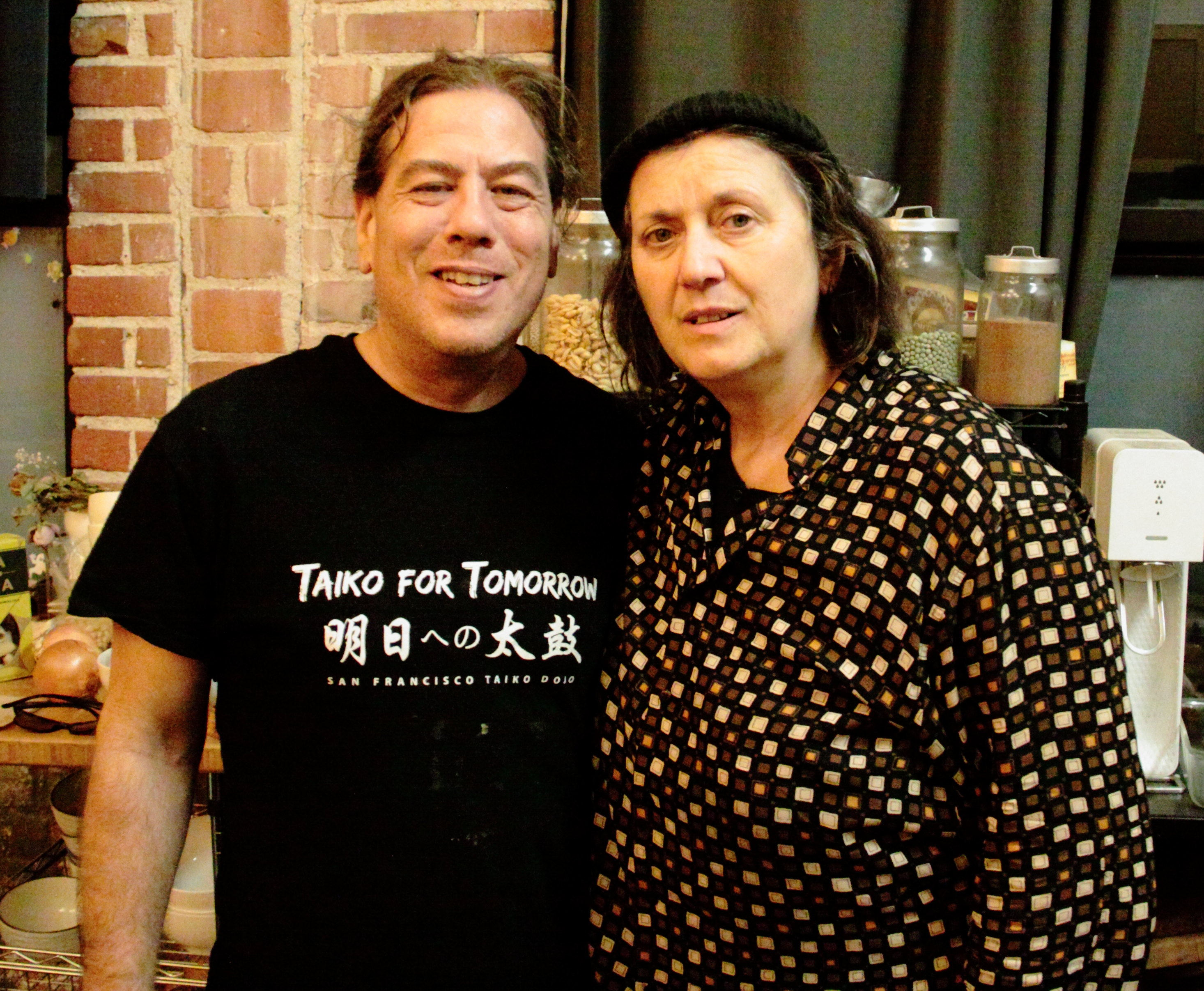
download

Tom Johnson/Samuel Vriezen Chord Catalog/Within Fourths, Within Fifths. (Edition Vandelweiser)

I eagerly reviewed this crowd sourced CD in which I was proud to be one of the contributors to its production.  It is only the second recording of Johnson’s landmark of minimalism and an opportunity to hear the work of the fine composer/performer Samuel Vriezen.

basketmonk

Basket Rondo/Jukebox in the Tavern of Love by Meredith Monk/Eric Salzman. (Labor LAB 7094)

This Labor Records release would have escaped my attention were it not for my having run across it while researching another new music article.  New music aficionados might remember Eric Salzman for earlier works such as “Civilization and It’s Discontents” and his involvement with Nonesuch records or one of his many other significant involvements in the new music scene over the last 40 years or so.  This disc is the première recording of Meredith Monk’s “Basket Rondo”, one of her best realized new works as well as the première of a great new sound/music drama by Salzman.  A more thorough review is in the works.

howardhersh2

Something by Howard Hersh ( Snow Leopard Music 888295062350)

Mr. Hersh kindly sent me this CD for review which will be forthcoming but it easily makes it to my favorites list for 2014.

webreaknonclass

I also have to mention another crowd sourced project, “We Break Strings” by Thom Andrews and Dimitri Djuric, a book about the “alternative classical scene in London”.  The book which includes a CD sampler languishes in my “to be read” stack but my initial perusal left me with the impression of a beautifully conceived and executed volume which has much to offer the musically curious.  More about this book in a future blog.


2014 in review


The WordPress.com stats helper monkeys prepared a 2014 annual report for this blog.

Here’s an excerpt:

A New York City subway train holds 1,200 people. This blog was viewed about 6,400 times in 2014. If it were a NYC subway train, it would take about 5 trips to carry that many people.

Click here to see the complete report.

A Piece of the Action, or How Other Minds Brought Out My Inner Trekkie


20130218-134428.jpg

I have been a fan of Other Minds for many years.  While I lived in Chicago I read the reports on the concert series with great interest and was fascinated with the choices of composers since they tended to mirror my own interests in new music as well as introduce me to tantalizing new artists.  I am not a professional musician but I have a long-standing passion for new music and attended many concerts of new music while I lived in Chicago reading liner notes and music history texts eager for more of the exhilarating experience of great new music as it was happening and wanting to know what was just around the corner.

I recall vividly New Music America 1982 which was held in Chicago and was hosted by Charles Amirkhanian, the executive and artistic director of Other Minds.  He spoke with authority and seemed to know just about every musician whose work I admired and countless whose work I hadn’t yet heard.  He conversed knowledgeably with the likes of John Cage, Robert Ashley, Glenn Branca, Meredith Monk, Tom Johnson, Robert Moran and the list goes on.

10+2 Anthology 10+2 Anthology

Early on I had purchased and listened with delight to the masterful spoken word anthology: 10+2: 12 American Text Sound Pieces [OM-1006-2] containing a couple of Amirkhanian’s compositions  alongside other contemporary masters of that genre in the original vinyl release and listened with great interest to the landmark recordings of Conlon Nancarrow’s Player Piano Studies [OM-1012-15-2] both discs largely the work of Mr. Amirkhanian who managed to get these recordings made in Mexico City on Nancarrow’s own player pianos.  So I have been familiar with him as both composer and producer.  He had been for many years the broadcast broker of contemporary music at KPFA in Berkeley where he served as music director from 1969 to 1992.

Charles Amirkhanian with Rex Lawson Charles Amirkhanian holding the microphone while Rex Lawson sings along with one of his piano rolls.

When I moved to the bay area in late 2008 one of my first priorities was to attend my first Other Minds concerts.  I saw the OM 14 concerts and was not disappointed.  But my recollection was that it was at OM 15 that I checked the little box on one of the audience surveys saying that I would be willing to volunteer for the organization.  I did not know what to expect but shortly after OM 15 I was contacted by the OM office and asked to provide a résumé.  Well I have worked my entire career as a psychiatric nurse so I added to that résumé that I had what I termed “extensive knowledge” (not to mention a near obsession) of new music.  I got a call back and wound up spending 4 hour shifts approximately weekly over much of the following two years doing various tasks but mostly scanning photos and other materials for use in their web page and archives.

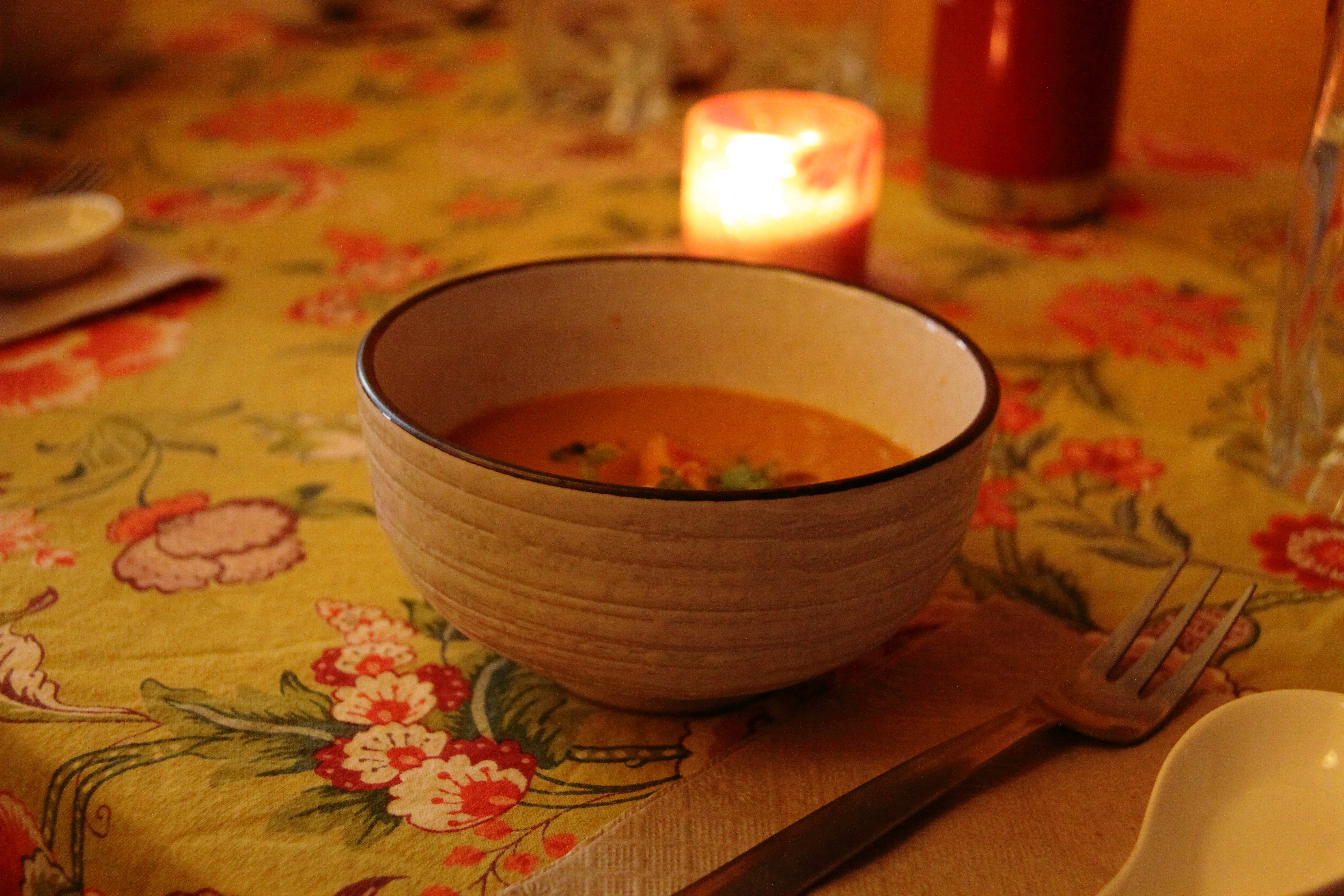
Dohee Lee at OM 18 Dohee Lee at OM 18

My first direct interaction at the office was with Adrienne Cardwell, a pleasant, hard-working young woman who I would later learn was (and remains) the longest  tenured employee other than Mr. Amirkhanian and his co-founder (now President Emeritus) Jim Newman.  Adrienne is in charge of the massive archival goings on and would direct my tasks over the next 2 years.

I worked in the same room as Adam Fong, the associate director at the time (now director of the Center for New Music and a composer/musician in his own right).  I also had the pleasure of working with fund-raisers Emma Moon and later Cynthia Mei who are also highly accomplished musicians and arts advocates.  I had  the pleasure of meeting the Other Minds librarian Steven Upjohn and the hard-working OM radio host Richard Friedman as well as the opportunity to meet interns and even some very interesting scholars and musicians who visited the office while I was there.  In short it was a great volunteer experience which garnered me more than I originally bargained for.

Adam Fong performing at “Something Else” The F... Adam Fong performing at “Something Else” The Fluxus Semicentenary he produced in September, 2011 (Photo credit: Wikipedia)

In the course of those two years I had many conversations with the OM staff particularly with Adam and later Mr. Amirkhanian about music and programming as I went through scanning, filing and doing whatever tasks were needed at the times I was there.  I recall making some references to some relatively obscure composers which resulted in Charles asking me (somewhat rhetorically), “How do you know that?”.   I just replied that I read a lot but later gave some thought about the nature of my relationship with this fine organization as well as the nature of my interest in new music.

Ruggles_cover_1024x1024

In the ensuing two years I would have some fascinating experiences meeting some of my heroes in new music and dabbling in the inner workings of Other Minds.  My enthusiasm was responded to by the staff at OM by allowing me to work on some of their other projects.  I greatly enjoyed the opportunity to participate and I was thanked most wonderfully once from the stage of one of the OM concerts by Charles Amirkhanian and at least a few more times by having special thanks acknowledged in various concert programs and, most notably for me, in the liner notes of their CD release of the complete music of Carl Ruggles (OM-1020-21-2).  I knew and loved those recordings when they were released on vinyl and was ecstatic to participate in the work on the CD release.  It was great on vinyl and it’s even better on CD.

OK, here is where Star Trek comes in:

75px-Star_Trek_TOS_logo_(1)

After some reflection I came up with what I think is an apt metaphor that fairly accurately describes my experience of my relationship with Other Minds.  Some may recall (you can fact check this if you aren’t old enough to have seen the original broadcast) an episode of the original Star Trek series which was titled, “A Piece of the Action”.  The plot involved Captain Kirk and his crew beaming down to a planet where the inhabitants were living out the equivalent of prohibition era gangsters’ lives.  At one  point this little boy (that would be me in this metaphor) offers some information which would allow Kirk and his crew to get over on the bad guys but only at a price.  The price, he says, is, “a piece of the action”.   The resolution of the plot involves the Enterprise crew successfully resolving the conflict and the little boy being able to experience just a taste of the perceived glamour of the experience of the Enterprise crew (dressed as depression era gangsters to fit in), as Captain Kirk says to him in his best cool gangster voice, “There ya go, kid.  A piece of the action.”

Star_Trek_William_Shatner

I came away from my volunteer experience even more impressed and pleased with this organization and I continue to support them in any way I can.  My thanks to Captain Kirk and his crew for bringing out my inner Trekkie and for availing me of more than just one piece of the action.  You guys run a truly great ship.  Live long and prosper.

I look forward to the upcoming 20th Other Minds concerts.  More on that in blogs to come.