Denise Burt’s beautiful design effectively encompasses the scope and meaning of this album in arresting images
Maya Beiser, cellist, Bang on a Can member, listener, composer, innovator, interpreter, and producer. Beiser’s hats are many and each new album traces the musings of a truly interesting artist, ever evolving, revisioning, thinking, growing. She cuts a singular, intelligent, and deeply felt path that is both monolithic and definitive.
Looking back and forward
This latest release on her own Islandia label is another exposition of a powerful musical mind bringing fascinating perspectives, the artist’s singular take on music spanning some 500 years. Beiser is not about “authentic” interpretation (mostly) but rather about lucidly sharing her perspective, her musical visions.
Previous releases gave us her take on living musical icons like Philip Glass and Terry Riley. She also dares to look back upon some of the “sacred cows” of the repertoire like the Bach Cello Suites and Riley’s seminal “In C” among others. Her revisionings are respectful homages and insightful performances that challenge and inform her listeners to maybe hear in a new way. As T.S. Eliot said,
“We shall not cease from exploration And the end of all our exploring Will be to arrive where we started And know the place (or the piece) for the first time”
So it is with the carefully curated selections on this disc. Beginning with a Missy Mazzoli composition featuring vocalist and performance artist Helga Davis (featured most visibly in the most recent iteration of Glass’ “Einstein on the Beach”). Her vocal skills drive these settings of texts by Erin Cressida Wilson. And this piece sets the tone for this album which is both lament and celebration for the experiences of women in history, mythology, and memory.
The first five tracks contain the bittersweet song cycle, Salt, from which the album takes its name. Here the listener is brought into the context of the Biblical story of Lot’s wife, forever imprisoned in a pillar of salt. But, rather than a pedestrian retelling of the tale, this cycle appropriates the context of the story to establish, with painful directness, the tone and direction of what will follow.
Helga Davis (photo from WNYC)
From her mineral prison, a mineral ironically known for its preserving properties, she sings of her crime of looking and remembering. She sings of pain, anger, and sadness, but never with remorse for her “crime”. It is an image that Beiser says lives powerfully in her personal memory. Mazzoli, Davis, and Beiser recontextualize the prisoner as victim, not criminal.
The ghostly images of the women we meet on this album are lamented as well as celebrated for their stories which burn deeply into our collective mythology, into our personal memories. Beiser lovingly dedicates this release first to her daughter, Aurielle Kaminsky, then to the principals whose creativity and energy pervade this album: Missy Mazzoli, Clarice Jensen, Meredith Monk, Erin Cressida Wilson, Helga Davis, Odeya Nani, Beth Morrison, and Christina Jensen.
In Lament to Phaedra, a work by the late British composer John Tavener is heard in an arrangement by Beiser. The 1995 work is sung by Phaedra’s sister Ariadne in response to Phaedra’s suicide by hanging. But here we have a wordless arrangement for cello and electronics that focuses on Tavener’s unique harmonic style and lyrical melodic construction. The result is effectively an affirmation of the lament for her fate.
Then we are treated to yet another transcription of a curiously difficult but very effective use of the early music concept of “hocket”, an interactive counterpoint of two voices. The eponymous Hocket, though vocal in its original form is, like much of Meredith Monk’s work, without a text. Monk’s work is about the voice, or the voices. And her revisioned operatic creations are fed by the mythological streams of women’s stories. This creative arrangement by this artist is an homage to Monk and, by extension, to the women she so beautifully celebrates in her work.
Meredith Monk with Allison Sniffin after a performance of Hocket at the Other Minds Festival in San Francisco (copyright Allan J. Cronin)
Another arrangement follows. It is a Melody from Orfeo ed Euridice, from the late baroque opera by Christopher Willibald Gluck. It is, of course, another ill fated relationship ended by the same infraction of looking and remembering that sealed the fate of Lot’s wife. Here Beiser chooses the gorgeous “Dance of the Blessed Spirits”, another wordless homage that imprints on the listener most effectively.
Next up is yet another wordless work, this one by fellow cellist and composer, Clarice Jensen, whose work has graced these blog pages before in reviews of her singular, drone, minimalist, meditative albums. Whether you call her work “drone” or “minimalism” or whatever you choose, your ears will bask in her meditative sonic ministrations. Jensen’s work, while related by its medium (that of cello and electronics), is a distinctly different style, immersive, meditative, evocative, a sound bath for the listener.
Clarice Jensen (from Jensen Artists page)
From the 21st century we are now transported to 17th century Venice and the work of the early baroque master Claudio Monteverdi. In the only surviving music from his second opera, we hear Ariadne, sister of Phaedra, singing the lament for the sister who had taken her life in shame and sadness.
The penultimate track brings us to this artist’s cultural roots with a song by Yedidya Admon to lyrics by Yitzchak Shenhar.
My Field (Shedemati)
My field, At dawn I sowed it in tears, Let the prayer of the farmer be heard! My field, It is saturated with dew, It is intoxicated by the light of the sun. The grain bends low in front of the reaper. The strides are long, The burnished scythe is raised high.
Odeya Nini provides the voice in this “reimagining“ of this classic song of sadness and lament by the lowly farmer imagined by the poet.
Odeya Nini (unknown copyright)
Fittingly, this last track is about death, endings. It is Beiser’s arrangement of Henry Purcell’s “When I am laid in the earth” from his opera, Dido and Aeneas. The text:
When I am laid, am laid in earth, May my wrongs create No trouble, no trouble in thy breast; Remember me, remember me, but ah! forget my fate. Remember me, but ah! forget my fate.
But forgetting is not allowed here. Beiser begs us to remember. And we cannot avert our ears or eyes.
An overflow crowd packed the lovely auditorium at Berkeley’s David Brower Center this past January 19th. Octogenarians (and younger folks as well) populated both stage and audience in a show of appreciation for a man whose work as music director of KPFA (1969- 1992) and subsequently as an arts promoter and curator of new music in California’s Bay Area continues to enhance the artistic reputation of the Bay Area.
A rare and exciting aspect of this evening were the rare opportunities to hear Charles’ music, including representative sound poetry classics and a recent major opus capped off by a world premiere of a new work.
The hands of the artist. Photo by Allan J. Cronin
The genuine affection, appreciation, and respect was palpable as the honored guest demonstrated his skill at hosting when a couple of technical glitches slowed (but did not stop) the amiable birthday celebration. The audience waited calmly and quietly.
Both the guest of honor and the host (Liam Herb) used a well honed, self effacing humor used most skillfully to entertain the sympathetic audience while the technical difficulties were surmounted in real time.
Panel discussion featuring (left to right) Susan Stone, Anthony Gnazzo, Paul Dresher, Charles Amirkhanian, Sarah Cahill, and Liam Herb (Photo by Allan J. Cronin, Creative Commons license)
Herb, a composer and performer, introduced himself in the midst of the technical resolutions, graciously announcing that, as producer, he accepts responsibility for the glitches. Charles maintained his familiar master of ceremonies crowd pleasing good humor as Herb worked goodnauturedly (if that’s a word) with the rest of the crew to resolve the issues and get on with the show.
The formal opening remarks were given by Other Minds’ associate director, Blaine Todd. And the evening began in force.
Blaine Todd (photo by Allan J. Cronin, Creative Commons license)
The program glided past the initial hiccup to present a film about our guest of honor. The bevy of fans and bona fide new music professionals sat with rapt attention as the film, featuring the familiar faces of several “Bang on a Can” artists.
The late great Robert Black interviewed by Amirkhanian in the streaming premiere of Audible Autopsy. (Photo of film appearance by Allan J. Cronin)
Excerpts from the 2015 Other Minds 20 documentary featured Julia Wolfe, David Lang, and Peter Gordon (now, it seems elder statesmen (and women) in their own right.
Production manager Liam Herb then served as moderator for a conversation or live interview (with Amirkhanian) for the next segment. This was followed by some videos with music by the guest of honor:
Real Time/T.V. Time Video with Amirkhanian’s “Muchrooms”
The film, presented in its entirety was accompanied by “Muchrooms”, from the CD recording of that standalone work.
Next was Amirkhanian’s and Carol Law’s classic collaboration: History of Collage (1981). This is a major work and a great collaboration with his partner in life and arts. I’m pleased to add my own shot from the performance at the Other Minds 23 experience, my favorite OM festival(so far).
History of Collage (1981) photo by Allan J. Cronin taken at the Other Minds 23 wonderful live performance of this work (Photo by Allan J. Cronin is Creative Commons license 2015)
We also heard and saw Audience (1978) with photography by Law and music/poetry by Amirkhanian followed by Chairs with photography by James Petrillo and music/poetry by Amirkhanian (excerpts from Seat Belt, Seat Belt (1973).
There followed a panel discussion led by Carol Law with Betsy Davids discussing David’s’ work and her connections via her work as a book artist. These two embody the experimental visual arts that characterize the skills of these fellow artists both onstage and off tonight. In fact, interactive collaboration and both respect and friendship were everywhere to be seen in this warm and pleasantly nostalgic evening.
Carol Law speaking with Betsy Davids (Photo by Allan J. Cronin, Creative Commons license)
This was followed by a recording of a major opus, Ratchet Attach It (2021) recently played at one of the (still ongoing) Other Minds Festival. This work is a major opus by Mr. Amirkhanian, one I’m pleased to say I heard live at the Chinese Theater in San Francisco a few years ago. Scored for a huge percussion ensemble, with audio recordings, and a conductor who moves between the podium and a space among the performers playing with the ensemble. It is perhaps one of his most integrated and evolved compositions. Stunning to hear it live. Glad to hear the (always too short) excerpts.
In fact Mr. Amirkhanian, a fixture in the arts of the Bay Area, continues to influence musical taste and present new and interesting music as he has for well over 50 years. His work as Executive Director of Other Minds includes the fabulous OM Records as well as the annual Other Minds Festival and a continual flow of carefully curated concert events by luminaries (or soon to be luminaries) throughout the Bay Area and beyond. There is also the huge archive of thousands of hours of interviews and concerts that are available in streaming audio and video via the Other Minds website.
Many of the artists featured in the Other Minds concert series continue to work, innovate, and expand musical concepts. An Other Minds commission, Henry Brant’s Organ Concerto, Ice Field, earned him a Pulitzer Prize. Many have gone on to greater achievements in their respective careers. Of course not every composer started their musical careers at Other Minds concerts. Many mid or late career musicians have joyfully been represented over the years. Its one of those festivals that innovative musicians seek to participate.
Such achievements reflect on Amirkhanian’s leadership and curatorial acumen, but more importantly his relationships with his fellow artists. Charles has earned a reputation for his support and his collaborative nature. Arguably, everyone in the house (and the overflow in the lobby) all have a degree of connection to Charles and his guests. It is why we’re all here tonight.
Charles Amirkhanian and Joseph Bohigian performing with Liam Herb’s electronics (Photo by Allan J. Cronin, Creative Commons license)
Following a brief intermission we were treated to a world premiere of a new work by our guest of honor, Noose Ratchet (2025) for two percussionists and electronics. Amirkhanian performing and/or promoting his own music is a relatively rare event and this alone was certainly worth the trip.
The work is arguably a trio for two percussionists playing ratchets, a curious instrument whose sound, if not entirely ubiquitous, is familiar. And the two play interactively with the electronics (the third member of the trio). Extended techniques and other duties get assigned (when in doubt it’s responsibility of the percussion section, right)?
There followed a lively and friendly panel discussion amongst frequent and past collaborators Susan Stone, Anthony Gnazzo, Paul Dresher, Sarah Cahill, and Liam Herb. This truly felt like a gathering of friends.
Program Berio:Wasserklavier Schubert: Fantasia in F minor for Four Hands Cage:Experiences No. 1 Nancarrow (arr. Thomas Adès): Study No. 6 John Adams:Hallelujah Junction Arvo Pärt:Hymn to a Great City Rachmaninoff:Symphonic Dances
From the very beginning this concert defied convention in so many ways. The Granada Theater hosted a sold out crowd for these two distinctly different rock stars. The two pianos were arranged so that the artists were sitting next to each other, Wang was seated slightly upstage and stage right while Òlafsson was stage left and a bit downstage (the conventional staging for two piano concerts has the pianists facing each other and equally center stage). Also noted was Wang using the iPad score reader whilst Òlafsson had a page turner for the hard copy paper score.
On the surface these two artists have distinctly different personas. Both are possessed of a high level of technical skill along with interpretive abilities that communicate with their audiences. But the juxtaposition of these two pianists is a pairing that had this listener wonder if they could occupy the same space. Òlafsson the contemplative man in the dapper blue suit and the introspective facade contrasted just a bit with Wang’s more extroverted showmanship. And Wang’s fashionable but characteristically flashy outfit (which was even “flashier” after intermission).
The concert began with a brief and generally lesser known piece by the great Italian composer, Luciano Berio (1925-2003), his Wasserklavier (1965). This short, contemplative work functioned as an appetizer as the duo segued directly to Franz Schubert’s (1797-1828) gorgeous Fantasy in F minor (1828). This work originally written for one piano, four hands, was played here on two pianos. The work, written in the year of Schubert’s death is of symphonic dimension. The duo played rather uptempo but delivered a very convincing performance.
After acknowledging applause they gave us a sort of brief palate cleanser, John Cage’s (1918-1997) Experiences No. 1 (1945-8), a work for two pianos. The soft and sparse texture segued to Thomas Adès arrangement of Conlon Nancarrow’s Player Piano Study No. 6 (ca. 1962). This study, one of about 50 studies, sounds gentle and bluesy but belies the actual rhythmic complexities which characterize all the studies. This team handled the complexities most deftly.
This was followed by another work of symphonic dimension, that of John Adams’ (1960- ) Hallelujah Junction (1996). It was this writer’s first hearing of the work and it was a charming and engaging post minimalist work that challenged the virtuosity of the artists and gave ample evidence of how well they performed together. The rousing ovation then took us to intermission.
(Photo by David Bazemore, all rights reserved)
The second half included Wang in a more revealing outfit more characteristic of much of the publicity photos I’ve lately seen of her. But most important is the artist’s virtuosity and interpretive power. She is a force of nature. Òlafsson is just a gentler expression that managed to link most successfully with his upstage partner on this night.
They began with Arvo Pärt’s (1955- ) Hymn to a Great City (1984-2004). This ca. 3 minute work (the city of greatness is not named) was a soft meditative work, perhaps echoing the Berio work which opened the concert.
It led without pause into Rachmaninoff’s (1873-1943) Symphonic Dances (1940) I had only been familiar with the lovely version for large orchestra (apparently written concurrently with the orchestral version) so it took a bit to grasp the intricacies that suggest that this music was written for two skilled pianists. Òlafsson and Wang traded moments to shine in this truly symphonic work but it worked very successfully with these two artists in their respective driver’s seats.
A standing ovation brought the two back to the stage where they sat next to each other for a rendition of Schubert’s bouncy Marche Militaire. A second encore two dances, by Dvorák and Brahms, eased into a calmer Brahms’ familiar Waltz in A-flat Major capped off a truly fine concert, not a union of opposites but rather a collaboration of genius.
This listener hears the influence, or at least some common elements of Morton Feldman, La Monte Young, and a too little known David Toub. What are those common elements? The long, frequently slow development of Feldman and Toub along with long held tones of La Monte Young.
Emilie Cecilia Lebel (photo from composer’s website)
What we have here are two solo piano pieces by Canadian composer Emilie Cecilia Lebel (1983- ). After reviewing her nicely organized website I came to the conclusion that this composer works in drones, long held tones, and long form works that not infrequently bleed into sound installation and ambient musics categories. She writes for piano and other instruments including works that are suitable for traditional concert stages as well as works that function in a more ambient mode like gallery installations or site specific sound design.
These two works are best heard in an environment that allows the listener to focus on the slow development of ideas that both these works share. That environment can be a recital hall or, as in this listener’s case, a CD player attached to some good headphones, reclining with eyes closed. Despite said slow development, these pieces compelled this listener to stay put and really enjoy the way this music unfolds as the initially perceived sparseness gives way to allow the structure and logic to emerge.
Despite the perceived similarities to the sound world of other composers as mentioned above, these pieces have a unique and developed voice. In a sense they are the next generation containing the musical DNA of their predecessors.
One of the things I had to look up was the “e bow drone”. This little electromagnetic device is more commonly found in jazz and fusion, perhaps rock bands as well. Primarily used with electric guitars and basses, this device excites a targeted string on a given instrument to produce long held tones. Exactly how it is used by the performers is doubtless indicated in the score but, suffice it to say that it works well here. These held tone fades from foreground to background and back again as the music relates always to the anchor of the drone.
Both pieces utilize this drone apparently as both a structural and sonic tool. By that I mean that the music unfolds partly via its relationship to the drone tone. Within that framework the pianist plays a variety of chords, arpeggios and near melodic lines that produce cadences which delineate the structure. And here I’m only relating this listener’s experience. I do not have the knowledge to attempt a more sophisticated analysis but I guess the point is that such analysis, while doubtless interesting, is not essential to the appreciation of this music and I respectfully leave this to those with more sophisticated training than I.
The two works presented are here performed by the artists who commissioned them. Technical concerns aside, these works are satisfying to the listener able to focus on the flow of the music. These are well developed, engaging pieces that conceivably could be successful as a concert performance or an ambient sound installation.
This release is another valuable feather in the cap of the Vancouver based Redshift Records. This label celebrates Canadian Composers new and old (mostly new). Interested listeners would do well also to check out Riparian Acoustics, a marketing organization with some fascinating curatorial radar. (N.B. This reviewer has published at least two other Redshift productions reviews here and here).
This is a composer I’m delighted to have made it onto my personal radar. She deserves to be a person of interest for successful artistic transgressions, so to speak. Enjoy!
Terry Riley with a t-shirt displaying the entire score of “In C” (photo from Facebook, copyright unknown)
November 4th, 2024 marks the 60th anniversary of the premiere of Terry Riley’s seminal masterpiece, “In C”. After having completed a variety of respectable compositional efforts, Terry Riley (1935- ) was jolted by the Muse to write this defining work that charted a path very different from that of the western classical mold of the composer’s formal education. It premiered in the very unconventional venue of a house in San Francisco, not in an auditorium designed for concerts. And it’s one of those pieces that now marks the transition from almost purely experimental writing to a style later dubbed “minimalism” (though many composers whose music is subsumed under this title eschew it in varying degrees). And whether you call it minimalism, trance music, drone, etc., the style would come to dominate a huge portion of concert works and recordings.
The score consists of 53 short musical phrases with no specified instrumentation and with no conductor’s score, just parts with a seemingly simple set of instructions. One page is what one might expect of a sketch of a larger work to be, not a complete score but, that’s it, One page with the instruction for the musician to repeat each cell or phrase ad libitum and then move on to the next. It was ostensibly the suggestion of composer/performer Steve Reich to have a pianist play eighth note repetitions of the top two highest octaves on the keyboard. In addition to this “click track” like strategy, the playing of those high “C”s also serves to anchor the tonality much as continuo does in that quasi improvisational baroque practice.
There is simply no finer account and analysis of this music than that of Robert Carl’s “In C”. Robert Carl (1954- ) is a teacher, composer, performer, and musicologist. I do not presume to have as extensive an analysis as he does but I’m interested here in providing a celebratory perspective from where I sit (and have been seated).
This music (as does all art) stands in a context with concurrent and recent events surrounding its conception and performance. Temporally it stands along with other notable compositions from 1964: Witold Lutoslawski- String Quartet, John Coltrane (admittedly one of Riley’s influences)- the albums, “Bessie’s Blues” and “Lonnie’s Lament”, Igor Stravinsky- Elegy for JFK and Variations in Memoriam Aldous Huxley (both men died on November 23rd, 1963), Roger Sessions- Symphony No. 5 and his opera, “Montezuma”, Milton Babbitt- Philomel, Karlheinz Stockhausen- Mixtur, Ben Johnston- Sonata for Microtonal Piano, Luciano Berio- Folksongs (written and premiered at Mills College, the later home of the Tape Music Center where Berio was teaching then), Olivier Messiaen- Et Expecto Ressurectionem Mortuorum, Iannis Xenakis- Eonta, and La Monte Young- (the first iteration of his masterpiece), The Well Tuned Piano.
My little list here is just a sampling of the western classical and jazz works that graced the natal year of “In C”. Admittedly, it is a cornucopia of some more experimental, some less so music that lie in this historical orbit. But, among the works in this list, it is the work of John Coltrane and La Monte Young that shares musical DNA with Riley’s aesthetic in this music. The other works contemporary mentioned represent a sort of “Garden of Forking Paths“ to a panoply of styles very different from the work at hand.
At a time when the style of American pop music had just recently met The Beatles, this work was a sort of coalescence of experiments done by La Monte Young, Steve Reich, and others. “In C” seems to have come out fully formed in its way. It was seemingly influenced by pop, jazz, and blues (whose use of repetition is endemic). 60 years later it is performed frequently and there exists at least 40 or so recordings of the work.
When I began writing this article I realized that Robert Carl’s book on this work fully covers the history and provides a definitive analysis to which I cannot contribute anything additionally useful. I then considered eliciting commentary from musicians and listeners about this music but found little interest because that has been well covered by several previous anniversary essays. So I decided to share a discography and photos of some the recordings I could find that have given me further insights into this touchstone work.
This discography is not comprehensive but my intent here is to celebrate this anniversary with the cover artwork that adorns the ever increasing documenting of this landmark of western art music. I will present what I believe is a representative selection of some 40+ versions.
Your humble author was 8 at the time of this work’s premiere. And my first hearing of ‘In C’ was in 1976 when my local radio station, the great WFMT in Chicago, aired a program curated by Raymond Wilding-White, a composer and professor of music at De Paul University. His task was to present representative works of American music, one for each day of the nation’s bicentennial year. ‘in C’ was one of them.
Since then I have heard many interpretations of this work. The original performance was at 321 Divisadero Street in San Francisco, California on November 4th, 1964. The original performers were: Terry Riley, Steve Reich, Jon Gibson, Pauline Oliveros, Stuart Dempster, Morton Subotnick, Warner Jepson, Tony Martin, William Maginnis, and Ramon Sender (who celebrated his 90th birthday this past week). This venue was the second and last home of the San Francisco Tape Music Center before it relocated and was renamed The Mills College Center for Contemporary Music in 1966 in Oakland.
Here, with brief commentaries, are my favorites. There are at least 38 versions according to the Wikipedia article. Here are my personal favorites in chronological order of release date:
The original Columbia Records release (1968)
If you only have one recording this is probably the one you want. Recorded in 1968, this brought the work effectively to a wide audience via international distribution. The instrumentation (some overdubbed) includes: saxophone, oboe, bassoon, trumpet, clarinet, flute, viola, trombone, vibraphone, marimbaphone.
Riley with the Chinese Film Orchestra (1989)
This important recording was made in China around the time of the Tiananmen Square uprising and the tapes were in effect smuggled out of the country in the aftermath of that incident. It stands as a fascinating document of eastern musicians encountering and interpreting this masterpiece.
The 25th anniversary release on New Albion (1990)
Don’t you just love anniversaries? By the time of this release (1989), this work had been disseminated into wide geographic regions and cultures. This version includes many of the musicians who premiered the work and this “traditional” reading is a loving homage to Riley’s work.
The Bang on a Can release (1998)
The Bang on a Can All Stars are among the finest ambassadors of new music. They have earned the right to put their stamp on any new work they choose and subsequently bring it anew to another generation of listeners.
Prog Rock does homage to Terry Riley (2001)
If you want to hear the wide range of musicians who have chosen to pay homage to this work this is a fine place to start.
The Africa Express release (2015)
Another fine example of the way this work can sound from a Central African perspective. This performance from Mali is absolutely electrifying.
Another fine culturally tinged version (2017)
This album is a personal favorite from the Brooklyn based collective featuring instruments from Hindustani traditions and others alongside western instruments. You can read my enthusiastic review here.
There are probably at least 50 recordings of this work. Some are private, maybe even bootleg versions. Clearly this work continues to become more and more essential and influential piece of music. It is not unlike a musical version of the Iconic monolith from the movie 2001: A Space Odyssey. The anomalous structure was of alien origin and was purported to accelerate the evolution of species who encounter it.
Riley’s work is most .definitely of terrestrial origin (well, San Francisco anyway) but, clearly this work continues to intrigue musicians worldwide and has arguably influenced the development of music itself.
After agonizing about writing a “best of” blog and publishing it before January 1, I decided to take a pause and enjoy the holidays. So here I look back on my 2023 in the rear view mirror but with memories still pretty fresh.
Regular readers of this blog likely already know of my oft shared opinion of the superfluous nature of “best of” lists and of my acquiescence in producing such on an annual basis. I certainly don’t think of this as a meaningless exercise and I think the process has grown on me. It is a chance to achieve a perspective which would be missed by simply plowing on ahead with the usual flow of reviews and articles. But drawing down that 12 month perspective is an opportunity to evaluate those months, to see where we’ve been and to hopefully get a smidgen of insight into where I/we are likely headed.
My Facebook friends will recognize the representative meme at the head of this article which is one of the more cloying aspects of “AI”, whatever that is. So indulge me for a moment to look at this seemingly new intrusion into the reality we thought we knew. So, what is “AI” and what will it do to us? Ultimately I’m not the one to answer that question but I’d like to throw some ideas to add to the speculation.
First, the choices a composer makes, like the choices of a painter, a writer, etc. are the stuff of the mystery of creation itself. Why “A major”, or why that tuning, or scale, or rhythm, or orchestration, etc? So along comes the notion of removing, or at least distancing, the artist from their creative product. That notion started not with famed proponent John Cage but rather with Johannes Chrysostymous Wolfgang Amadeus Mozart in his K. 516f musical dice game. Voila! Algorithmic composition (actually fairly common practice in the classical era). An early manifestation of “AI”? Perhaps.
Lejaren Hiller (1924-1994) was the first composer to employ electronic data processing in a musical work in his Fourth String Quartet subtitled “Iliac Suite” in 1957. There followed similar experiments with various iterations of electronic creations at music centers worldwide including The University of Illinois at Champaign, Columbia-Princeton, Stanford, The University of California Berkeley and San Diego, The San Francisco Tape Music Center (later subsumed into the Mills College Center for Contemporary Music, IRCAM in Paris, Israel Electronic Music Studio, and counterparts in the Nordic countries, Germany, Belgium, etc. Proto “AI”?
While historically interesting I raise this issue to say that, as far as I can tell, “AI” has not made this writer’s greatest hits list but it is interesting and maybe even useful. With that, my concern for the subject officially goes to the back burner for a later time.
2023 has been a year of great personal changes for the writer of this blog. A job change, a geographical relocation, and many things unrelated to this blog characterized a busy year for New Music Buff. So here in a sort of holiday tradition I present my “Best of 2023” from my little listener’s corner of the world. For the sake of simplicity I present a more or less chronological exposition of my sonic adventures. (N.B. Not one portion of this article made use of “AI”).
I begin with not with my 20 most read posts, a practice that characterized previous iterations of this annual exercise. Instead I am providing my top 20 favorite releases that were reviewed in 2023. Please note a couple of caveats. First, I receive a lot of review requests, more than I can even listen to, much less give a reasonably intelligent review. Albums that I’ve not reviewed should not be assumed to be bad or insignificant and my reviews are personal observations. I really only review albums that interest me anyway. Second, this article is only one reviewer’s opinion and not intended to be definitive or to supersede anyone else’s opinions. Third, this is not the end of my attention to music that was released in 2023. Some releases require more time to give a fair listen and a respectful review. There are more to come in 2024.
First a few stats: 2023 saw the publication of some 45 blog posts on New Music Buff, earning me 9693 views for the year. I rarely get comments on my posts (though I welcome and invite comments both positive and negative). Not bad, I think, for the overall less appreciated musical styles that fuel my desire to write about.
Now, in chronological order (of publication) are my personal favorites as a listener:
Neuma 158
Binaural Beats in the Tudor Rainforeststarted my new year with a bang. Reviewing this disc required me to take a closer look at the astounding work of David Tudor and his unique contributions to new music. This important release is a recording of a work which, by its own concept cannot receive a “definitive” performance. But this recording comes mighty close, involving “binaural” recording utilizing a mobile set of binaural microphones which are worn by the recordist. In addition this recording involved a collaboration with Pauline Oliveros and a group called, “Composers Inside Electronics”. The recording was done during Oliveros’ tenure at UCSD. Rainforest IV is so called because it is the fourth iteration of the instructions that form the original concepts of Tudor’s composition, “Rainforest”. It is an immersive sonic experience heard on headphones but actually not bad even heard on stereo speakers. A rich and wonderful release.
Starkland S-236
From a 1960s electroacoustic to a budding 21st Century composer Kotoka Suzuki released on the reliably interesting and even visionary Starkland label. Next Gen Electroacoustic: Kotoka Suzukiwill introduce the listener to this rising star who doubtless will produce more of her compelling compositions.
Sony 194399434826
Igor Levit is a fine concert pianist whose albums are effectively redefining the way we, as listeners, perceive the western classical oeuvre. Igor Levit: Defining Tristandoes for the various musical pieces inspired by the Tristan legend what Levit did for the concept of the great keyboard variations in which he selected Beethoven’s “Diabelli Variations” and Frederic Rzewski’s “El Pueblo Unido Variations” to join his recording of the Bach “Goldberg Variations” in a 3 disc package placing these three large sets of variations as emblematic of the genre in three different centuries (18th, 19th, and 20th). Levit, by his recorded output, is providing a valuable perspective which may influence repertory choices for years to come.
Levit’s traversal of the Tristan legend here ranges from the second recording of Hans Werner Henze’s too seldom heard “Tristan Preludes” back to works by Wagner (of course) and Liszt. He even slips in his wonderful solo piano transcription of the Adagio of Mahler’s unfinished 10th Symphony into the mix. This is a very compelling Tristan anthology by a deservedly still rising star.
Cantaloupe
This Cantaloupe release by Bang on a Can composer and master clarinetist Evan Ziporyn is both masterful and great fun. Evan Ziporyn: Bang on a Popconsists of transcriptions of “pop” songs for multiple clarinets all played by Ziporyn via his very effective multi-track recordings. The album is very personal and pretty much cliche free with these engaging and insightful transcriptions. It is an homage to the songwriters as well as a showcase for Ziporyn both as composer and as performer.
Microfest MF 23
The Young Person’s Guide to Ben Johnston is an ideal way to introduce listeners to the wonderful world of the late Ben Johnston’s music. Johnston, a student and colleague of Harry Partch shows his compositional skills utilizing non-traditional western tunings in these representative works. Johnston here does for some quasi pop tunes what Evan Ziporyn did with his clarinetist perspective for the tunes on Pop Matters. But Johnston’s pretty, accessible work belies fascinating complexities that don’t actually sound complex to the listener. This disc contains Johnston’s last completed work, “Ashokan Farewell” (which Johnston took to be a public domain folk tune but is in fact a piece written by Jay Ungar). It is paired with the 4th String Quartet (a set of ingenious variations on “Amazing Grace”) from 1982 and the 9th String Quartet of 1997. Profound, lovely to listen to, and a great homage.
DVD OM 4001
This DVD is a major addition to the discography of Charles Amirkhanian’s sound poetry as fine sampling of one aspect of Carol Law’s (Amirkhanian’s life partner) complementary visual art. These collaborations are also important contributions to the visual and performative aspect of these collaborative works. Amirkhanian has been a fine curator and promoter of the work of others but he has rather seldom stepped into the spotlight himself. This quirky genre got some fabulous exposure at the 7 day Other Minds 23 festival in 2018 in which Amirkhanian’s work was presented in the (surprisingly varied) context of sound poetry of the amazing international collection of artists who were hosted at those events. This DVD should be in the collection of anyone interested in new music sound poetry and performance art. It is both entertaining and mind bending featuring a juxtaposition of images and sound reviewed in greater detail in the post “Dyadic Dreams”. But words cannot do justice to these works. You really have to see them.
Cedille CDR 90000 210
Readers of this blog know my fondness for the Chicago based label Cedille and their promotion of Chicago based musicians. This disc stands out in this group’s embrace of non-traditional composers alongside more traditional works. The inclusion of works by DJ composer Jlin and the academy based genre defying duo Flutronics alongside composers like Danny Elfman and Philip Glass demonstrate the wide ranging repertoire of Third Coast Percussion. Much more information can be found in Perspectives: Spectacular World Premiere Recordings from Third Coast Percussionon my blog. This one reimagines the percussion ensemble.
Neuma 176
This disc is a good example of why listeners and collectors should pay attention to the Neuma record label. Philip Blackburn, who had been the very successful curator of Innova records, took over the defunct Neuma label which was founded with the intention of promoting largely electroacoustic music though not exclusively.
Agnese Toniutti‘s New Music Visionis actually a review of two discs by this rising star, a dedicated new music pianist that needs to be on your radar. The other Neuma disc contains Toniutti’s traversal of John Cage’s reluctant masterpiece, “Sonatas and Interludes for prepared piano”.
The disc pictured here is Toniutti’s vision beyond the Cage work. This one focuses on mostly living composers Lucia Dlugoszewski, Tan Dun, Philip Corner, and Toniutti’s herself. Basically, if Toniutti plays it, you should probably at least give a listen.
2023 saw the completion of Bay Area pianist Sarah Cahill’s epic survey of piano music by female composers. Cahill is another (predominantly) new music focused pianist about whom I would also assert that, if she plays it, you should probably give at least one listen.
The End of the Beginning: Sarah Cahill’s “The Future is Female” Trilogy Completedwill tell you all you need to know about this trilogy which encompasses about 300 years of music history and sheds light on some fascinating and substantial music written by women. Most of the works on this trilogy of albums are, in fact, world premieres but, fear not, even the pieces which are not premieres are likely not in your collection. This is a brilliant selection of music that effectively throws down the gauntlet to challenge other artists to explore this repertory. This trilogy is a true landmark and a joy to the ears.
This third volume in the wonderful Catalyst Quartet’s survey of another unjustly neglected group of composers focuses on the music of three black Americans of the twentieth century. Catalyzing Blackness, Volume Three: The Catalyst Quartet plays 20th Century music by Black Americans was nominated (but didn’t win) for a Grammy Award and, happily, I’m told that more volumes are in preparation. Again, this music is a pleasant revelation that does for black composers what Sarah Cahill has done for women composers (N.B. The first volume by the Catalyst Quartet focused on the black female composer Florence Price). And here’s hoping that Coleridge Taylor Perkinson, George Walker and William Grant Still will become household names in the concert hall.
Microfest MF 21
Son of Partch, Carrying on a Traditionis a really wonderful disc which, though I reviewed it in exceedingly positive terms, provoked a strongly negative reaction from the artist. The reaction apparently also provoked enough interest to have made this review one of my most read of 2023.
But, aside from the unfortunate negative reaction, I still maintain that this is a fine release worthy of attention from anyone who likes new music, microtonality, and the music of Harry Partch. Cris Forster is a composer, theoretician, and instrument builder clearly descended from the Partch tradition. His work deserves attention and this disc is a very satisfying experience.
Islandia IMR 011
Steven Schick is a master percussionist and conductor. This release is the first volume of his personal choices of solo percussion repertoire. Solo Percussion Manifesto Volume I: Steven Schick’s “A Hard Rain” is a manifesto of sorts and does for solo percussion music what Sarah Cahill has done for women composers and the Catalyst Quartet is doing for black composers. There are not many recordings of solo percussion music and Maestro Schick essentially presents his favorite works in definitive performances on a label produced by Bang on a Can cellist Maya Beiser. The second volume is in my review queue and, if this first volume is any indication, it will be a landmark survey.
Cedille
Rising Star Seth Parker Woods’ “Difficult Grace” is a Classic in the Making. Here’sanother Grammy nominee that did not win but, this second album by this fine American new music cellist is a winner in my book (er, blog). This is actually the audio of what was developed as a staged performance but the music speaks for itself. Keep an eye/ear out for this rising star who, even now, is storming the new music cello scene in invigorating ways.
Neuma 128
A Reason to Listen: Roger Reynolds’ Latest, “For a Reason”,new recordings on Neuma Records. Here we see Neuma following its original electroacoustic mission with this remarkable set in celebration of Roger Reynolds’s 90th year. This is a lavish 2 CD box set with a beautiful booklet and lucid liner notes. It is a worthy production which showcases recent works by this prolific and important American composer.
Readers of this blog likely are aware of my interest in music that is suppressed and/or neglected so this disc grabbed my attention immediately. Israel does a great job of funding the arts and this can be seen in the proliferation of truly fine performers nurtured by that funding. Less well known are the composers who have flourished in the art healthy politics of this country. Some 50 years of history are represented here. This is but a sampling, albeit finely curated, of several generations of composers displaying a plurality of styles with substantial results. This entertaining disc will whet the appetites of intelligent and curious listeners and, hopefully, bring about more recognition of the world class composers who deserve an audience.
It is the duty of performers to infuse their performance with their nuances of interpretive skills until they (and, hopefully, composer and audience) are satisfied that they are doing justice to the music. When the music at hand challenges established norms and expectations that task becomes quite large. One need only look at the plethora of performances of Terry Riley’s seminal “In C” to realize that the nature and structure of this piece invites, by design as it were, experimentation with instrumentation and experimentation with the music itself which consists of 51 short notated cells.
This is the whole score
The original release in 1968 has been followed by at least 40 recordings reflecting choices made related to tempo, instrumentation, etc. In an earlier review of the “In C” version by Brooklyn Raga Massive, I addressed the inherently heretical nature of this music in light of the etymology of the term “heresy” (derived from “hairesis”, the Greek word for decision or choice). And this music demands intelligent choices.
This 1964 composition has been definitively analyzed in Robert Carl’s fine volume, “Terry Riley’s in C” so interested readers should seek out this book for definitive analytical detail. My main point here is that the musics elicits the making of choices much more so than the traditional western classical notated score. And the present release says nearly as much about the performer/producer, as it does about the composer. It is Maya Beiser’s expertise on her instrument, certainly. It is her experience performing at the center of the new music performance scene to have a definitive grasp of the pluralities that are the nature of new music. And, finally, it is her daring to make choices that threaten to make her not merely a performer but virtually a co-composer. All that with managing to flatter the composer and engage adventurous listeners. She did something similar in her Philip Glass album. She even did it with her recording of the Bach cello suites. Now that’s heresy at its best.
There can never be a definitive recording of this work. That is a huge part of this music’s charms as well as its importance as a challenge to the very nature of western classical music. The music itself is heretical.
Not all listeners may appreciate this significantly new, innovative, and very personal performance but the composer shared an appreciative blurb on the album’s back cover and the reviews this writer has seen have been unanimously positive.
Beiser’s use of harmonics and, indeed, quite a few of her instrument’s extended capabilities (pizzicati, harmonics, etc) all conspire to her revisioning of this music. On top of that she even uses her own voice and employs two percussionists to round out her orchestration of the work.
The percussion accentuates the ritual nature of the music. The harmonics and multiphonics place this version in the spectral realm of new music and even suggested to this listener the Phil Spector “wall of sound”, another hallmark of some ritual musics.
It is an album that invites repeated hearings to grasp the subtleties and insights of this interpretation. Beiser here, even at her most transgressive, is not seeking to supplant other interpretations, rather she simply shows the power of this landmark work to inspire another generation of talented performers (and enlightened listeners, for that matter) to experience the enduring cultural significance of this masterpiece. Brava, Maya! And sincere thanks, Terry.
When Bassist Robert Black (1956-2023) succumbed to colon cancer this past June, the music world lost one of its finest advocates, performers, and teachers. This posthumous release of composer John Luther Adams’ (1953- ) works for solo and multiple bassists receive definitively beautiful renditions here in this satisfying release in which Maestro Black plays all parts (two works are for solo double bass and one work is for 5 double basses). It strikes this listener as a fitting eulogy for Robert Black and his fine performance legacy.
Robert Alan Black (1956-2023)
First, let me say that the Cold Blue label has defined its own take on post minimalist experimentation, it’s one of those labels that I recommend you just buy anything they choose to release. So this chamber music by John Luther Adams fits most comfortably within the little niche that Cold Blue defines (sort of). In fact this is Adams’ 9th CD on this label. And Robert Black is perhaps the ideal musician to plumb the sonic depths of this “other John Adams”. This listener can’t imagine these works having been done better. These performances are definitive, an example of interpretation with which all subsequent performers will have to contend.
The opening work, “Those High Places” (2007) is a work in three movements, originally for solo violin, played here for the first time on a double bass. Black pretty much reimagines Adams’ piece for his instrument. This is not mere transcription. This version is virtually a new work in the soloist’s sensitive and insightful hands.
Those three movements serve, as do the last three tracks on this album, as bookends, nicely framing the centerpiece, “Darkness and Scattered Light” (2023). Unlike those bookends, this work is in one large movement and is scored for 5 double basses. This multitrack recording is an essential and very effectively produced effort that does as much justice to the composer’s intent as does the effort of the performer.
The last three tracks are, in their compositional processes, intimately linked to that first three tracks. Both rely on special tunings to produce the intended effects.
This release is also a fine example of the artistic style that characterizes the look that accompanies the sounds within. The photography, the overall design, visually pleasing, creating a metaphor for the sound of the recording, and paying respectful homage to composer and performer. This just fires on all cylinders for me. This is Cold Blue at their best.
There are, by my count, at least 8 discs on this fine audiophile label dedicated to music by composers from Iceland. That country’s musical prowess deserves to be better known as does their world class orchestra. I’m reviewing these back to back releases together because they are both Iceland Symphony recordings presenting new music by (mostly) Icelandic composers. And they have a secret connection.
This first disc is a nice mix of music by five different composers in works that really give the orchestra an opportunity to shine. Under the direction of composer/conductor Daniel Bjarnason we are availed of the sound of now, or at least Bjarnason’s “now”.
Track list
This disc, which seems to have a “outer space”theme in large part, opens with a large orchestral work from the most deservedly best known Icelandic classical composer, Anna Thorvaldsdottir. “Catamorphosis” is a 20+ minute work for full orchestra and then some. Her style initially reminded this listener of the sound mass of music like Ligeti and Penderecki. But her harmonic language is more lush and romantic. She has an astounding skill in writing for large orchestra, producing at times the modern equivalent of Impressionism. Her use of motives suggest she has digested ideas from minimalist/pattern composers. And at the end of the day (or the review), one realizes that she has developed her own voice.
The subtle colors of this work are well defined by the orchestra under Bjarnason’s truly expert guidance but also via the sonics that the Sono Luminus engineers are able to capture. This sounds like a difficult work to perform but Bjarnason manages to create a definitive performance and Sono Luminus’ sonics are, as always first rate.
Catamorphosis (2022) is typical of Thorvaldsdottir’s writing for large orchestra reflecting her skills as an orchestrator as well as her imagination, her ability to create a wide palette of subtle sound forms that suggest a sort of post impressionist style. The poetic and metaphorical titles tell little about the musical content (or structure for that matter). But her ability to create cohesive and compelling compositions such as this provide an experience that will likely evoke images for the listener, a sort of movie for the mind. So feel free to conjure your own images in this 7 part (played without pause) work and/or listen and watch a recent Elephilharmonie performance on YouTube here.
Missy Mazzoli’s comparatively brief “Symphony for Orbiting Spheres” (2014 rev 2016) taps into a vein of inspiration seemingly related to the cosmic images of Thorvaldsdottir. Mazzoli incorporates an electronic keyboard and harmonicas, among several less common instruments used in symphony orchestras, to create her own sonic cosmic fantasy. Please click the link on her name above to learn more about this rising star from her nicely designed website.
Daniel Bjarnason demonstrates his own formidable compositional chops with “From Space I Saw Earth” (2019). And this track also provides a link of sorts to the other album reviewed in this blog entry. This work, written on commission for the 100th anniversary of the LA Philarmonic, is a work that requires three conductors. The premiere was led by Zubin Mehta, Gustavo Dudamel, and Esa-Pekka Salonen, all of whom have significant connections to the orchestra (Mehta as conductor Emeritus, Dudamel as present chief conductor, and Salonen as conductor laureate). That was the premiere but this recording is conducted by Bjarnason along with Kornilios Michalaidis, and the then incoming chief conductor of the Iceland Symphony, Eva Ollikainen. Therein lies the “secret connection” to which I referred earlier.
María Huld Markan Sigfúsdóttir (1980- ) is a violinist and composer. Her orchestral work, “Clockworking” is a sort of post minimalist work with a gently driving Ostinato in the percussion. It reminds this reviewer variously of Birtwistle’s “Chronometer”, Ligeti’s “Poeme Symphonique”, to name a few but it is not derivative of these in any way. It is a very listenable and enjoyable orchestral work.
Bára Gísladóttir (1989- ) is a composer, vocalist, and double bass player based in Copenhagen.This, the briefest work on the album is at times the quietest and at others the loudest work here. I would add that it is also the most avant garde. Relying on a battery of percussion and what appears to be some extended instrumental techniques the composer creates a world that to this reviewer’s ears sound a bit like Gyorgy Ligeti’s work “Atmospheres” (1968). That’s not meant to say it’s derivative, just that it could conceivably be used for that famous psychedelic sequence from Stanley Kubrick’s masterful “2001, A Space Odyssey” where my own young ears first heard the Ligeti work.
DSL- 92268
As fabulous as that first disc is, this release, dedicated entirely to the work of Anna Thorvaldsdottir, is a worthy endeavor. In addition to that we are treated to the sublime and insightful artistry of the first female principal conductor of the Iceland Symphony, Eva Ollikainen who leads the Iceland Symphony on this disc.
Like the above release, the Iceland Symphony Orchestra demonstrates their world class artistry. This is not easy music to play but, under Ollikainen, as they have under her predecessor, they are able to articulate the intricately orchestrated sounds by this really astounding composer.
Just two works here. “Archora” (2022) and “Aion” (2018). Both are works of grand concept and could easily be called symphonies but the composer seems fond of metaphoric poetic titles. Regardless of the names given these works they demonstrate the composer’s grand sonic visions and her mastery of the orchestra, a mastery grasped very clearly by the Iceland Symphony’s new artistic director and conductor, Eva Ollikainen (1982- ). She holds the distinction of being the first woman to hold the post to which she was appointed in 2019.
Track list
There are only two works presented but both are stunning examples of some of the finest new music being produced today. Yes, it’s great to see women having a greater presence (both as composers and conductors) but, truly, Thorvaldsdottir is “the bomb”, so to speak. Her creativity, her mastery of the orchestra are simply a revelatory as well as entertaining listening experience.
Eva Ollikainen
This release is also a landmark which showcases the formidable talent of the Icelandic Symphony’s new conductor. In addition to breaking gender barriers she is quite simply a rising star and one of the finest interpreters of new music today.
“Archora” (2022) is the most recent work here and it’s another of Thorvaldsdottir’s sprawling cinematic tone poems. No specific story here but the composer’s mastery of orchestral color will doubtless evoke images and feelings in the listener. Thorvaldsdottir is creating a sort of sonic (as opposed to literal) mythology. Her reference points seem to be largely in Greek and Roman mythology but also in Nordic and Northern European myths. Eva Ollikainen conducted the world premiere at the 2022 BBC Proms. You can hear that performance on YouTube here. But the Sono Luminus recording captures more of the subtle sound colors of this engaging work.
The composer’s three movement, “Aion” (2018) concludes this recording. Aion is a Greek God of time. The composer is concerned with various aspects of time in her work. This large three movement work is virtually a symphony with an augmented orchestra, extended instrumental techniques, and an optional choreographic accompaniment. (Tell me that’s not cinematic). There is an example of the optional choreography here.
This recording is also a fine introduction to conductor Eva Ollikainen who clearly has a grasp of this music. Various examples of her interpretive genius can be found on YouTube ranging from Beethoven to new contemporary masters.
These are two truly fine discs both musically and for sheer sonic detail. They’re available in streaming and hard copy CD as well as Blue Ray Audio. These are a fabulous listening experience. Enjoy!
Just had to post this for all my readers and friends but especially those living near or able to get to Rome. Curran’s wife, Dr. Susan Levenstein, graciously sent this announcement to me. She is an American physician (and webmaster).Her very entertaining memoir, “Dottoresa” is her accounting of moving her practice to Italy.
Alvin Curran, (1938- ) is the co-founder of the seminal live electric music performance group, “Musica Elletronica Viva” along with his late colleagues Frederic Rzewski (1938-2021) and Richard Teitelbaum (1939-2020). The group formed in 1966 and later included kindred spirits including George Lewis and Garrett List among others. The group did its final tour in 2016.
Click on Curran’s name to look at his fascinating and well organized website which gives a fairly comprehensive accounting of the incredible range of musical styles and a very large bevy of collaborators.
Curran discussing some of his work with interviewer Charles Amirkhanian in Berkeley in 2016 (photo by Allan J. Cronin)
Curran, who taught at the venerable Mills College in Oakland, California is an always welcome visitor in the Bay Area. While he has made his home in Italy for many years now, he is truly an artistic citizen of the world. The warm and affable composer exudes an infectious enthusiasm which doubtless is why he has so many collaborators. His aesthetic which he documented in an article called, “The New Common Practice” in 1994 documents his all inclusive style, one that is very difficult to convey. His works include music for piano, chamber ensembles, orchestra, and even things most folk never thought of as musical.
He is a giant in late twentieth and early twenty first century music and this retrospective is most welcome.
“HEAR ALVIN HERE”
ALVIN CURRAN
…a retrospective
part of the #CHAMBERMUSIC series
The show consists in a listening room where a new sound work plays continuously—a mixtape comprising fragments from many different compositions, improvisations, and installations. It leads the audience on an autobiographical listening journey, freely mixing styles, periods, and languages, from free improvisation to Fluxus to Artificial Intelligence, from compositions for shiphorns to works for hundreds of musicians, from Sargentini’s L’Attico and the Beat 72 to MAXXI and the Tate, from Angelo Mai and The American Pavilion of Expo 58 to No Mans Land and the Théâtre de Chaillot.
The Museum of Contemporary Art of Rome (MACRO), Via Nizza, 138
inauguration September 20, 2023, from 6 pm to 9 pm
running until March 17, 2024
***************
Curran in performance at the Pacific Film Archive in Berkeley in 2014.
Being asked to review this retrospective of the work of this virtually uncategorizable dancer, singer, composer, dramatist is the telling of my personal experience of growing up nurtured by this artist. Monk is not, of course the only artist whose presence has nurtured me and so many friends but her work is a case where I learned how to tune my curious radar to find more of the music that touched me deeply.
I first discovered her work when I purchased her album, “Key” (1971), self released and marketed via the late lamented New Music Distribution Center in New York. That album, later released on the Lovely Music label along with two releases on the great German avant garde label Wergo (Our Lady of Late, 1973 and Songs from the Hill/Tablet, 1979), constitute the minimalist, SOHO loft music which characterizes her style even now. But with her first ECM release she clearly hit her stride. Those early albums are definitely worth hearing but her mature style blossomed on ECM. It was, in retrospect, a sort of quantum leap, if you will.
LP album cover of “Key”“Our Lady of Late”“Songs from The Hill”
In that first album one can find Dick Higgins among the singers and Colin Walcott producing and playing percussion (as well as singing). Walcott, along with the yet to be known Julius Eastman would later participate in the Dolmen Music release. Monk, who studied dance at Sarah Lawrence College along with fellow student Alwyn Nikolais established “The House”, her flexible performing group in 1968 at a time which saw a great deal of artistic energy in and around Manhattan’s SOHO district where she encountered musicians like Philip Glass, Steve Reich, and performers sympathetic to new innovations and ideas. She also taught and continues to teach her characteristic extended vocal techniques. Monk, along with John Cage, Philip Glass, and Robert Ashley was featured in Peter Greenaway’s “Four American Composers (1983).
The release of her first ECM disc, “Dolmen Music” (1981) can now be seen as a sort of watershed event. It was followed by “Turtle Dreams” (1983) a work which was prominently featured at New Music America 1982 in Chicago along with Robert Ashley’s “Perfect Lives”. Monk’s appearance on ECM occurred at about the same time as Steve Reich’s masterful “Music for 18 Musicians”. Monk found her mature voice more or less at the same time that Steve Reich and Philip Glass had found theirs. And anyone following new music in those years will recall the flow of new musical ideas that established many now acknowledged masters as legitimate artists.
While the major masterpiece, “Dolmen Music” dominates the album, Monk’s quirky mix of humor and pathos in pieces like “Gotham Lullaby” and “Biography” remain signature pieces in her oeuvre. And Turtle Dreams was made into a performance film for public television by visual artist Ping Chong in 1983, now available on YouTube.
She followed with “Do You Be” (1987) and “Book of Days” (1990) which also exists in at least two film versions and the CD itself which has been described as a “film for the ears”.
Following “Facing North” (1992) Monk released her only opera (though she refers to much of her works as “operas” this is the only one that comes close to the more generic concept of western music operas) to date, “Atlas” (1993) which was commissioned and subsequently performed at the Houston Opera. This represented another phase in her artistic development as she utilized her structured improvisation techniques along with her now familiar extended vocal techniques with an expanded set of performers both vocal and instrumental. Atlas is arguably similarly creative (and transgressive) as Philip Glass’ 1976 “Einstein on the Beach”. Both were developed in an unconventional manner and uses a similar harmonic language with really none of the standard conventions of western music in opera. Would that we can some day see a filming of this work.
I was privileged to see Monk in person for the first time when she performed excerpts from “Volcano Songs” (1997) in Chicago. Those images involving, among other things, light sensitive areas where Monk lay down and left a ghostly shadow upon arising. In addition to her engaging minimalist inflected music, Monk is a master at creating compelling images.
“Mercy” (2002) was followed by “Impermanence” (2008) which I was thrilled to see at Stanford. “Songs of Ascension” (2011) was another landmark in this piece conceived and performed in conjunction with installation artist Ann Hamilton in her tower in Northern California. Attendees to this event were brought in by bus due to the lack of actual parking facilities in that tower. I wish I could have experienced this but hopefully a cohesive video release will be forthcoming. Excerpts are available for viewing on YouTube and on Monk’s website.
“Piano Songs” (2014) by the wonderful new music championing pianists Bruce Brubaker and Ursula Oppens filled an inexcusable gap in the documentation of Monk’s piano music. And following her receiving the National Medal for the Arts in 2015 she released “On Behalf of Nature”(2016).
Monk is a well documented artist largely due to her productive affiliation with Manfred Eicher and ECM and, while gaps remain these recordings represent a major artistic accomplishment and an enduring legacy for new music, for women composers, for western art music. This lovely box set is truly a joy to behold.
Meredith Monk performing an encore at the final concert of OM 21 (2016) in San Francisco
Aaron Jay Myers’ third album grabbed my attention immediately and didn’t let go til the album ended. Working un-self consciously in a stunning plurality of styles (this guy clearly paid attention to his 20th century music history classes) he has produced some mighty substantial works. His ability to integrate a wide variety of techniques and styles into his artistic persona is simply astounding. His references to other composers’ works, rather than sounding derivative, evoke nostalgic homage, at least in this listeners ears. Indeed there seem to be more references per square inch than in a Thomas Pynchon novel. And the fact that he shares this writer’s passion for Star Trek, Deep Space Nine only endeared him more to me (more on that later).
His very listenable music seemingly embraces the whole of the twentieth century stylistically and his very judicious use of extended techniques for pretty much all instruments including voice demonstrate a firm understanding of where those techniques best serve his artistic vision. Fortunately he has managed to find performers who both meet his technical demands and have a real grasp of his musical vision. This Neuma release is truly something special.
There are six works divided among the thirteen tracks. These chamber works were written between 2011 and 2021. None require more than ten minutes or so of your time and left this listener satisfied with the music and optimistic for the future of classical music in general.
“Save One Life, You Save the World Entire” (2017) for the unusual combination of flute and baritone saxophone opens this album with a surprisingly engaging work. It sounds like a challenge for the musicians who handle those challenges seamlessly and engage the listener in this rather brief essay.
When I listen to “Late Night Banter” (2011 rev. 2015) now, I do so in bare feet (it knocks my socks off). This piece for ten musicians with a conductor is a finely crafted piece that grabbed this listener’s attention by that craftsmanship but also by what seem to be a plethora of sonic references to 20th century music. The style of Stravinsky, an homage to Luciano Berio, etc. These brief references evoked emotional responses which led me to recall similar emotions I had attached to the apparent (at least to me) object of said reference. Even minimalist references occur matter of factly. Such efforts can sound derivative or at least imitative but not so in this piece. Rather it had the quality of a tour of the twentieth century in respectful jogs of memory. But even if you don’t get the references, this is a substantial and entertaining work. The evanescence of those references had me questioning whether they were actually there or just my mental figment. (I guess I’ll just have to listen again). Either way I was thrillingly engaged.
Avery Brooks as Captain Benjamin Sisko, commander of Deep Space Nine
“You Get On My Nerves, And I Don’t Like Your Hat” (2020) is the Deep Space Nine reference mentioned at the beginning of this review. If you haven’t seen this series I highly recommend it. And so, apparently, does Aaron Michael Myers. This work for vocal quartet (SATB) takes its title from a witty utterance by Captain Sisko (my fave Star Trek Captain). Of course you don’t have to know Star Trek lore to appreciate this work, but it helps. It is a challenging work for four unaccompanied soloists which reflects the composer’s sense of humor as well as his connection to pop culture.
Aaron Jay Myers
“Lichens III” (2018) is scored for soprano voice but the singer also does the work of a percussionist. In addition to the vocal challenges the singer is asked to perform on “body percussion”, the various sounds one can make by percussing (pounding) on one’s body. It is more commonly an idiom of folk and blues but soloist Stephanie Lamprea handles both the singing and the percussing as though it is her everyday practice accomplished with ease.
Clairsentience (2016) is another wind instrument duo, this time for clarinet and alto saxophone, a similarly unusual choice of instruments. This one is about twice the duration of that first piece and every bit as engaging as well as challenging.
The last track is a marvel of multitasking. Other than Aaron Trant (who does a fine job) on drums, all of the parts (three electric guitars, and bass) are handled by the composer. “Perception Stains Reality” (2002) is a tour de force consistent with the other works on this disc. Here he shows his rock/pop sensibilities, clearly as essential a part of his artistic endeavors as his “classical” training.
Myers is one to put on your hot list. He is certainly on mine. If you can hear a performance of his work, whether live or recorded, you would do well to check it out.
Professor Yeh has been assistant principal clarinet with the Chicago Symphony since 1977 when he was just 19. As a former Chicagoan I can recall that Yeh’s hiring seems to have marked a change in the more traditional image of an orchestral musician. In addition to being an inspiration to aspiring musicians of Asian heritage his media presence also drew interest from both listeners of Asian Heritage but also young listeners (I turned 21 when he was hired and was pleased to find an artist who communicated to me and my age group).
In addition to his duties with the CSO, he has actively supported music and music making in his adopted home town. It is his support for local composers that he showcases here. This disc features music by Alexander Tcherepnin (1899-1977), Stacy Garrop (1969- ), Leo Sowerby (1895-1968), Shulamit Ran (1949- ), Teresa Reilly (1976- ), and Robert Muczinski (1929-2010).
Alexander Tcherepnin, whose father Nikolai was a student of Rimsky-Korsakov, and whose sons, Serge and Ivan, along with grandsons Sergei and Stephan are all highly accomplished composers comprise a multigenerational artistic dynasty of sorts. Russian born Alexander taught in Chicago thus qualifying him for inclusion in Cedille recordings’ mission to promote artists with a “second city” connection. He is well represented in recordings but is less present in the concert hall these days. His brief Sonata in one movement for clarinet and piano (1939) takes the first track on this fine chamber music release. It is a deservedly popular recital piece with a style that sounds a bit like Shostakovich, one of his contemporaries.
Stacy Garrop is a favorite of this reviewer. Her work has been reviewed elsewhere in this blog. She is a freelance composer of immense talent and skill. Her work is featured on at least 12 Cedille albums as well as other labels. Phoenix Rising (2016-18) was originally for alto saxophone (subsequent versions were made for flute and for violin) is presented here in a world premiere transcription for clarinet. As with all her music, Garrop shows herself to be a master of color and texture. She uses both traditional and extended techniques to achieve her compositional visions. These can be challenging for performers but the end result is always worth the effort. Garrop derives inspiration, as she frequently does, from world mythology. Here, of course, the familiar Phoenix bird that lives some 500 years and rises again from the ashes of its funeral pyre.
Leo Sowerby, long associated with Chicago as an organist, composer, and teacher, is represented here by his 1944 clarinet sonata (here in its world premiere recording). Written in the year which saw him win the Pulitzer Prize for music (for Canticle of the Sun), this sonata takes on near symphonic dimensions in its four movements. Sowerby is generally well represented on recordings (8 discs on Cedille alone). His lyrical writing is expressive and accessible and it is perhaps just a matter of time before someone orchestrates this work to present it as a concerto. At just a bit under 30 minutes, it is the largest work on this release.
Shulamit Ran, Israeli/American composer and pianist, student of the great Ralph Shapey, 1991 Pulitzer Prize winner (for her 1989-90 Symphony), Andrew MacLeish Distinguished Service Professor Emerita at the University of Chicago is represented on this recording by her Spirit for solo clarinet (2017). The work is dedicated to the composer’s friend, clarinetist Laura Flax (1952-2017). This is its world premiere recording. Ran’s music has gotten some recordings but her large and substantial orchestral works like the Symphony and a fine Concerto for Orchestra remain unavailable on recordings (even more egregious is the general lack of representation of her mentor, Ralph Shapey’s music). This solo clarinet work is a testament to her compositional talents. Here’s hoping we get to hear more.
Teresa Reilly is a clarinetist, composer, and life partner of Mr. Yeh. The Forgiveness Train (2020) is described as, in part, a response to the COVID epidemic (Yeh notes that much of this album is similarly inspired). The three movement work is essentially a sonata with a loosely poetical program. It is a lyrical work with nods to minimalism and jazz. This is the world premiere recording.
The disc concludes with the four movement Time Pieces for clarinet and piano (1983). This work (the second longest on the disc) is, like the Sowerby piece, substantially a concerto that waits an orchestrator for the piano part. Robert Muczinski, Chicago born composer studied under Alexander Tcherepnin whose music opens this release. The Opus 43 work was commissioned and premiered by former CSO principal clarinet Mitchell Lurie with Muczinski at the piano.
Mr. Yeh is, as always, a joy to hear. He is most ably supported by pianist Patrick Godon on piano (tracks 1, 4-7, and 12-15) and, of course by (more properly with) Teresa Reilly (tracks 9-11). This release, from the Art Institute depicted in (Chicago artist) Steve Shanabruch’s distinctive cover art to the composers represented, is pure Chicago in the best ways.
This album is satisfying on several levels. It is a return to the label that contained the composer’s his first big release, the three disc set on DG which contained “Drumming” (1971), “Six Pianos”, and “Music for Mallet Instruments, Voices, and Organ” (both from 1973). Of course it was the ECM release of “Music for 18 Musicians” (1974-6) that became his signature work incorporating the experimentation heard in the music in that DG box set into the composer’s now familiar mature compositional language. The present release, also available on vinyl, seemingly reflects the post experimental composer’s grappling with the oh, so classical form of the string quartet. It’s a truly fine release and an homage to the composer.
DG 2740 106
Like many of his peers, Reich eschewed many of the conventions of western art music. His work at the San Francisco Tape Music Center helped him discover “phasing” and use of the speaking voice as a compositional element. His study with master drummers in Ghana taught him about quasi improvisational large ensembles and his subsequent study of Hebrew cantillation further refined his understanding of speech and song in his compositional contexts.
As he is quoted in the accompanying booklet, Reich never thought of attempting to use the string quartet form in his work. But along came the delightfully forward looking and genre breaking Kronos Quartet. That collaboration brought forth his landmark, “Different Trains” (1988). And the rest is, as they say, history. “Triple Quartet” for string quartet and tape (but no voices) came in 1998 and his WTC 9/11 (2010) which used sampled voices much as he did in Different Trains.
To be fair, Reich never appears to have intended to engage with the classical form of the string quartet (or any other classical forms for that matter). He uses the convenient availability of musicians sympathetic and sufficiently skilled to perform his compositions. The fact that they happen to be in string quartets is incidental. Much as the inclusion of a singer (as Schoenberg did) bent the quartet to fit his compositional goals, many have subsequently done similar alterations and additions to that classical ensemble. The difference is that Schoenberg adding a soprano, Kirchner (among others) adding electronics, etc. did so but clearly defined their works as “string quartets”. Reich did not do this but this disengagement with classical forms (string quartet, concerto, symphony, etc.) does not detract from the absolute quality of his music.
It would be unfair and would miss the point to try to judge these works via comparison and contrast with Haydn, Beethoven, Bartok, etc. In fact these works are not a part of that canon. Ultimately they stand on their own as part of Reich’s unique vision as a composer and, as such, they succeed very well.
WTC 9/11 and Different Trains are political statements with specific spoken word samples entered into a musical counterpoint. They succeed very well as protest and memorial for the respective events they frame. Triple Quartet, however, is absolute music concerned solely with Reich’s largely contrapuntal techniques of shifting repeated patterns. All three works succeed very well in their ability to engage audiences. All three are finely wrought compositions by by a major composer true to his maverick, experimental beginnings, true to the artist’s personal vision.
The Mivos Quartet does a fine job of navigating these technically difficult works and produce a fitting homage to a wonderful composer and make a strong case for the deeply substantial nature of this music. This is a great release. Highly recommended.
I had previously reviewed an Innova release by this fine Italian pianist whose compelling musical choices and interpretive skills make him one of the bright lights on the current musical scene. And his European perspective (and affinity for) American composers provide an extremely valuable perspective for both listeners and performers.
It comes as no surprise that that Innova album was produced during Philip Blackburn’s tenure and this release is another illuminating journey guided by Arciuli’s finely tuned curatorial and interpretive skills. The journey here focuses on the late post-minimalist William Duckworth (1943-2012).
The first 12 tracks comprise book I (of two) of Duckworth’s genre defining work, “The Time Curve Preludes” (1977-8). These have been recorded three times, first in 1983 by Neely Bruce (who premiered them in 1979 at Wesleyan). Bruce Brubaker recorded Book I in 2009 and R. Andrew Lee recorded the entire set in 2011.
In addition to Arciuli’s take on this composition (I expect a future release will contain Arciuli’s interpretation of Book II) we get a previously unrecorded set of songs for voice and piano, “Simple Songs About Sex and War” (1983-4) to texts by Hayden Carruth. Here Arciuli is joined by Costanza Savarese, a classical guitarist and vocalist, an artist new to this writer. Here she displays her vocal prowess in these pithy little songs reminiscent in some ways of Barber’s “Hermit Songs”.
Track list
Duckworth deserves more exposure and Arciuli’s work is always revelatory. So what Duckworth will be paired with the Book II recording? Delighted listeners want to know.
William Susman (1960- ) may not be a household name but, since my first encounter (purely by chance) with this man’s work I have heard, enjoyed, and reviewed several fascinating CDs of chamber music and film music which demonstrate a significant musical voice with some mighty substantial compositions. I don’t know how Mr. Susman feels about being called a “minimalist” but that is the most useful way I can convey with words his musical style. That much used word is a sort of catch all for what is in fact a plethora of compositional styles based in some basic, though hardly rigid, set of practices like static harmonies and repetition.
There are, as of this writing, four books of Quiet Rhythms (2010, 2010, 2012, 2013), each book contains 22 pieces further divided into 11 “Prologues” followed by 11 “Actions”. While I have only the vaguest idea of what processes the composer uses in these works (Book I at least) sounds to these ears like music which should share company with the likes of Terry Riley’s “Two Keyboard Studies” (1965), William Duckworth’s “Time Curve Preludes” (1977-78), Jeroen van Veen’s “Minimal Preludes” (four books1999-2013), Philip Glass’ “Etudes” (two volumes1994-2012). Spiritually they share a kinship with antecedents such as Bartok’s “Mikrokosmos” (six volumes1926-1939), and, ultimately I suppose, Bach’s “Well Tempered Clavier” (1722-1742). Yes, these are a diverse set of works for comparison, but to my ears they seem to share attempts to codify and/or experiment with their respective materials. They are the composers’ working out of their ideas.
And, in a delightful coincidence the pianist chosen to interpret these works is none other than Nicolas Horvath, a name that has graced these pages numerous times since our first online meeting in about 2014. Horvath has become a sort of pied piper for minimalist composers. He has performed solo recitals lasting up to 35 hours including Philip Glass’ complete piano music, a solo rendition of Erik Satie’s “Vexations” (1893-94), whose 840 repetitions were first performed by a tag team of pianists helmed by John Cage (of course) in 1963. He has also recently recorded all the piano music of little known French minimalist composer Jean Catoire (1923-2005) and numerous other projects including his own original compositions and sound/art installations.
Horvath was born to play this music and Mr. Susman kindly informed me that he will indeed record the remaining three books. This musician’s curatorial radar is as unique as it is accurate. That is, he knows good music when he sees/hears it and he searches far and wide. He delivers loving and authoritative performances here. It is, after all, his métier.
Susman’s etudes are experimental only in the sense of a composer exploring his inspiration, transcribing the dictation of his muses. The title “Quiet Rhythms” is quite apt as these are really kind of soothing in their harmony and meandering developments. And, more importantly, they have the weight of substance.
Three of these have been recorded before and I’m pleased to say that the remaining 8 compositions are equal in quality to the ones I’d already heard. Each numbered piece is actually two pieces, a prologue of 90-120 seconds followed by a more complex sounding work using similar methods. At first I had wanted to write about each of the pieces but I found myself enraptured by the music and insufficiently skilled in musicology to do a respectable analysis of these works.
So I’ve chosen to simply say that these are fascinating and engaging pieces whose structure is very much secondary to the quality of the musical content. These are truly post minimal works with a much wider harmonic palette than its minimalist predecessors. The sound is quite rich and the pieces engage the listener transporting them to a powerful emotional experience. The music echoes Steve Reich, Philip Glass, Terry Riley but they also are destined to share a place in the repertoire alongside similar works by William Duckworth, Jeroen van Veen, and Simeon ten Holt.
Horvath is truly in his element here and his performances are hypnotically engaging. I can’t imagine these works being done better but, that said, they are attractive concert pieces for adventuresome pianists to program. Above all these are listener friendly despite the feel that they are almost a sort of textbook or manifesto by the composer which describes in music his vision of minimalism/post-minimalism.
If you’re a fan of minimal/post-minimal music this is a must have. but beware and remember to budget for the forthcoming 3 discs. You will want them all.
OK, I admit that using the term “rogue” is a stretch. But titles of reviews should help draw the reader to it. And “clickbait” is the new “catchy”. But, in another sense one doesn’t generally think of the bass clarinet as a standalone recital instrument, even with electronics. Increasingly, it seems, new music purveyors are liberating instruments once unthinkable outside an orchestra or chamber ensemble. Jazz players have long used the bass clarinet as a solo instrument alongside the ubiquitous family of saxophones and the flute as the woodwinds that comprise most jazz ensembles,
Classical music has been slow to accept the bass clarinet until relatively recently. I don’t know when the first use of a bass clarinet either as a standalone solo or as part of a chamber ensemble occurred but certainly post 1950. Without getting in to the “whys” of this one can simply embrace the increasing presence of this instrument and its fascinating players.
Here, we get another of the subgenre of “COVID Isolation music”, itself a category worth further exploration.
There are five selections with composition dates ranging from 1983 to 2020 and composers from the still underappreciated Isang Yun to a new name, Hidiaki Aomori, a composer and friend of the soloist. And the remainder are risen and rising stars including the late conductor/composer Pierre Boulez, Grawmeyer Award winner Unsuk Chin, and the prolific Japanese composer Dai Fujikura.
The Fujikura work opens this isolated recital with a melancholy piece which appears to be a set of variations and has the character of a cadenza calling upon both technical and interpretive skills of the performer. And do I hear a nod to minimalism at the end? “Contour” (2020) is a fine opener where Lee displays her technical skills and insight to the composer’s vision.
Then its back to 1985 with one of the technical peaks of Boulez’ work at IRCAM, “Dialogue de L’Ombre Double” for bass clarinet with inscrutably complex electronics. This once leading edge example of the avant garde in its day actually sounds a bit dated but the soloist here seems to humanize the piece with her warm interpretation. And, despite what you may hear in the other tracks here, it is the only one using electronics on this disc.
Isang Yun (1917-1995), the late prolific Korean master is beginning to get more of a reckoning, and this 1983 piece, “Monolog for Bass Clarinet” is a fine entry to the expanding recorded oeuvre of this mid/late-twentieth century embattled and neglected genius. This piece speaks deeply of alone-ness.
Unsuk Chin (1961- ), a rising star and Grawmeyer Award winner is represented by a bass clarinet solo from her much lauded opera “Alice in Wonderland”. This stand alone solo, titled “Advice from a Caterpillar” is a maze of hallucinatory nods to Gershwin, Carl Stalling, and perhaps Prokofiev (in a “Peter and the Wolf” sense) using multiphonics and seems to expand the possibilities of this instrument to limits which might only be transcended with electronic assistance.
Hideaki Aomori‘s “Split” is a rather personal addition, a submission from one friend to another, a gift from one alone to another alone. It is another fine solo work which sits stylistically somewhere between the technical extremes of Boulez and Unsuk Chin and the more melodic work of Fujikura and Yun.
This is a very personal disc on many levels and it is a fine calling card by which to introduce listeners to this fine musician.
Receiving this album for review the fact is I actually shed a tear when, upon opening my mail, I found the cover of this album cause my emotions to jump to regions of nostalgic memories deeply treasured.
Another fact is that, due to COVID 19, the virtual stoppage of all live concerts, and shifts in my scheduling priorities I had stopped following the career of Mr. Gibson (1940-2020) for the last few years and I wasn’t even aware that this disc had been released. I had heard that he had died in October, 2020. Gibson is a musician I first encountered, as most people had, via his omnipresence at concerts of the Philip Glass Ensemble where he was a founding member. Gibson’s performances of the saxophone solo in Glass’ “Facades”, which I first heard in 1980, are forever etched in my memory. And I caught pretty much every concert they did in or near Chicago from 1980 to perhaps 2000. So that little personal history gives you some idea as to why seeing this album was a “gut punch” of emotion to me.
Albums
I lifted this discography of Gibson’s releases from discogs.com and it does not include his work the Philip Glass Ensemble in which he was a member since 1968. It is probably not definitive but it provides some perspective on Gibson’s range of repertoire and his musical affiliations.
The Dance (CD, Album) Orange Mountain Music 70072013
Relative Calm (CD, Album)New World Records 80783-22016
Jon Gibson’s Visitations Otoroku2017
Violet Fire – An Opera About Nikola Tesla (2xCD, Album) Orange Mountain Music70182019
Songs & Melodies, 1973-1977 (2xLP, Album) Superior ViaductSV1732020
David Behrman with Jon Gibson & Werner Durand -Viewfinder / Hide & Seek (LP, Album, Ltd)Black Truffle BT08220211
Gibson’s brand of minimalism resembles Glass’ at times but Gibson’s eclecticism, his mix of styles bear the fingerprints of a style which will be easily recognized by listeners familiar with some of his previous albums.
This is an album’s worth of music written for a performance piece with choreography by the wonderful Lucinda Childs (who choreographed Philip Glass’ “Einstein on the Beach” and commissioned Gibson in 1981 for this piece). Relative Calm (1981) is in four sections (or movements) each with its own character.
Tracklist
1. Relative Calm (Rise) (1981) Composed By, Wind, Keyboards, Autoharp, Sounds [Field Recording] – Jon Gibson Keyboards – Joseph Kubera Percussion – David Van Tieghem
2. Q-Music (Race) (1981) Composed By, Keyboards – Jon Gibson Keyboards – Joseph Kubera
3. Extensions RC (Reach) (1981) Sopranino Saxophone, Composed By – Jon Gibson
4. Return (Return) (1981) Keyboards – Joseph Kubera Percussion – David Van Tieghem Saxophone, Composed By – Jon Gibson
Gibson’s fondness for jazz is evident here but the dominant style is the composer’s brand of minimalism. Relative Calm was commissioned and choreographed by Lucinda Childs with decor by Robert Wilson, it received its world premiere by the Lucinda Childs Dance Company at Théatre National de Strasbourg in Strasbourg, France on November 26, 1981. It’s wonderful and it is a blessing to have this recording available.
This was released in 2016 on New World Records and is now available for streaming on Bandcamp. The excellent liner notes are by Kyle Gann and Dean Suzuki tell you pretty much all you need to know and the album sounds great. Thanks, Mr. Gibson, RIP.
Were it not for the wishes of some of my valued readers I would not produce such a list. It has no more validity other than, “These are my personal choices”. But there is some joy to be had in contemplating these past 12 months as I have lived them on this blog. So here goes.
My home base is in California, about 90 miles north of Los Angeles though I sometimes travel for work
First I have to tell everyone that March, 2022 will mark the 10th anniversary of this blog, a venture which has been a rich and exciting one. Future blogs will soon include, in addition to album/concert reviews, some articles on subjects which I hope will be of interest to the select group of people who read this material and who share my interest in this music (which I know can be anywhere from difficult to repulsive to many ears). But I have deduced that my readers are my community, a community of kindred spirits freed from the boundaries of geography, a number rather larger than I had imagined was possible and one that I’ve come to cherish. Bravo to all of you out there.
Since February of 2021 I have worked periodically in Washington State, not in a cabin in Mt. Rainier National Park but in Tacoma, just south of Seattle.
COVID 19 has reduced the number of live performances worldwide and I have not attended a live performance since early 2020. But, happily, musicians have continued to produce some amazing work, some of which gets sent to me, and a portion of that gets to be subjected to the analytic scrutiny of my blog.
My lack of attention to any music should never be construed as deprecatory, rather it is simply a matter of limited time to listen. So if I have provided a modicum of understanding or even just alerted someone to something new I am pleased and if ever I have offended, I apologize. All this is my personal celebration of art which has enhanced my spirit and which I want to share with others. Look what Ive found!!!
So, to the task at hand (the “best of” part):
The formula I’ve developed to generate this “favorites retrospective” has been to utilize WordPress’ useful statistics and look at the top viewed posts. From these most visited (and presumably most read) articles I produce a list of ten or so of my greatest hits from there. Please note that there are posts which have had and continue to have a fairly large readership from previous years and they’re not necessarily the ones I might have expected but the stats demand their inclusion here.
Following that I then toss in a few which are my personal faves (please read them) to produce what I hope is a reasonably cogent and readable list. Following my own description of my guiding principles I endeavor to present the perspective of person whose day job and energies are spent in decidedly non-musical efforts but whose interest and passion for new music drives this blog where I share those interests.
As a largely self taught writer (and sometime composer) I qualify my opinions as being those of an educated listener whose allegiances are to what I perceive as pleasing and artistically ideal based on my personal perception of the composer’s/performer’s intent. I am not a voting member for the Grammys and I receive no compensation for favorable reviews. I have the hope/belief that my blogs will ultimately garner a few more listens or performances of art that I hope brings my readers at least some of the joy I feel.
New Music Buff’s Best of 2021
As of this writing I have published 37 blog posts in 2021. COVID, job and personal stressors have resulted in my failing to post at all in December, 2020, January, June, and July of 2021. And only one post in February, 2021. Surprisingly I have managed to get just over 9300 views so far this year (a little more views than last year actually) and it is my plan to publish 4-5 blogs per month going forward into my tenth year.
Me with my listening buddy, Clyde
Not surprisingly, most of my readers are from the United States but I’m pleased to say that I’ve had hits from 192 countries at last count. Thanks to all my readers, apologies to the many countries who didn’t make the cut this year (you’re all welcome to try again in 2022). So, following the United States here are the subsequent top 25 countries who have viewed the blog:
Canada, United Kingdom, Germany, China, France, Netherlands, Spain, Australia, Ireland, India, Italy, Turkey, Nigeria, Japan, Brazil, South Korea, Denmark, Belgium, Sweden, Finland, Russia, Poland, Philippines, Ghana, Norway.
Top Ten Most Read of 2021
The following are the most seen articles of 2021. Some of these are articles whose popularity surprise me as they were written some time ago and are not necessarily, in my opinion, my best work. But readership is readership and I am grateful for that.
Top article, Linda Twine, a Musician You Should Know. Twine is a musician and composer who has worked for some years in New York theater. I chose to profile her and I guess she is well liked because this article from 2018 is one of my top performers. Kudos, Ms. Twine.
Next up is, The Three Black Countertenors, an article suggested by my friend Bill Doggett whose website is a must visit for anyone interested in black classical musicians. This one, from 2014, continues to find readers. It is about the first time three black countertenors appeared on the same stage. Countertenors are themselves a vocal minority when considered in the company of sopranos, baritones, tenors, contraltos, and basses. Being black adds another level of minority in the world of operatic voices so this was indeed historic.
Art and the Reclamation of History is the first of the articles written this year to make the top ten most read. It is about a fabulous album and I hope more people read about it. This Detroit based reed quintet is doing something truly innovative. You really need to hear this.
Centaur CRC 3836
Number four is another from this past year, Kinga Augustyn Tackles the Moderns. This album, kindly sent to me by the artist is worth your time if you like modern music. This young Polish/American violinist has both technique and vision. She is definitely an artist to watch.
Number five is a truly fabulous album from Cedille records, David Schrader Plays Sowerby and Ferko. This double CD just fires on all cylinders, a fine artist, excellent recording, interesting and engaging repertoire, amazing photography, excellent liner notes, and love for all things Chicago. This one is a major classic release.
The Jack Quartet Plays Cenk Ergun was a pleasant surprise to this blogger. The Jack Quartet has chosen wisely in deciding to release this recording of new string quartet music by this young Turkish composer of serious substance. I’m glad that many folks read it.
Number seven on this years hit list among my readers is another album sent directly to me by the artist, one whose work I had reviewed before.
Catherine’s Oboe: Catherine Lee’s New Solo Album, “Alone Together” is among the best of the COVID lockdown inspired releases that flooded the market this year. It is also one of the finest examples of the emerging latest generation of “west coast” composers. Dr. Lee is a master of the oboe and related instruments and she has been nurtured on the artistic ideas/styles that seem to be endemic among composers on the west coast of the United States. She deserves to be heard.
Number Eight is an article from 2014, Classical Protest Music: Hans Werner Henze’s “Essay on Pigs” (Versuch uber Schweine). This 1968 noisy modernist setting of leftist political poetry combines incredible extended vocal techniques with the dissonant modernism of Hans Werner Henze’s work of that era. Also of note is that his use of a Hammond Organ and electric bass guitar was allegedly inspired by his having heard the Rolling Stones. It’s a classic but warn anyone within earshot lest they be terrified.
“Dreams of a New Day”, a Landmark Recording Project from Cedille is a virtual manifesto/survey of art song by black composers. Liverman is an amazing singer and the recording by my favorite Chicago record company is pure beauty. This 2021 release ranks ninth among my most read blogs from the past 12 months.
As it happens there is a three way tie for the number ten spot:
Black Composers Since 1964: Primous Fountain is one of a short series of articles I wrote in 2014. I used the date 1964, 50 years prior to the date of the blog post, because it was the year of the passing of the (still controversial) voting rights act. As a result of this and a few related articles I have found myself on occasion categorized as a sort of de facto expert on black music and musicians. I am no expert there but I have personally discovered a lot of really amazing music by black composers which is way too little known and deserves an audience.
Primous Fountain arrives in Moldova to oversee the performances of his music.
I am pleased to tell you that this too little known composer (and fellow Chicagoan) is being recognized by no less than Michael Tilson Thomas who will conduct an entire program of his works in Miami next year. If my blog has helped in any way then I am pleased but the real honors go, of course, to Mr. Fountain and Mr. Thomas (who first conducted this composer’s music many years ago). Stay tuned.
My “comeback blog”, The Loneliness of the Long Distance Blogger was written to sort of reintroduce myself to the blogosphere and provide some background (excuses?) for my absence. I guess it was a decent read.
And the third contender for my tenth most read of 2021 is, Kenneth Gaburo, the Avant-Garde in the Summer of Love. This is among the first volley of releases on the revived Neuma label with Philip Blackburn at the helm. Blackburn’s instincts guided Innova records to release many wonderful recordings of music rarely on the radar of larger record companies and this first volley was a harbinger of even more wonderful releases to come. Just do a Neuma search and see what I mean.
The Ones That Didn’t Make the Top Ten
I would be negligent and boringly formulaic to simply report on these top ten. This is not a democratic blog after all, lol. So here are my choices for the ones that many of my dear readers may have missed and should definitely check out. It is anything but objective. They are, in no particular order:
Solo Artist Pamela Z releases “a secret code”. This is another Neuma release, one of a truly original and interesting artist who pretty much defies categories but the territory she explores will amaze you.
Lou Harrison: Concerto for Piano with Javanese Gamelan, a very special performance of an underappreciated masterpiece is just unabashedly excellent. It is a recording of a 2017 performance (in honor of the composer’s 100th birthday anniversary) in Cleveland by performers who have had a close relationship with this major American composer. I love the music. I love the performers. It’s a digital only release but you can get a download of the album and the fine liner notes from Bandcamp.
Fixing a Hole to Keep the Music Playing: Starkland brings back Guy Klucevsek’s “Citrus, My Love” is also a digital only release, also available on Bandcamp of an album long out of print but essential to the oeuvre of Guy Klucevsek. Like Philip Blackburn, Tom Steenland (who heads Starkland records) is a musical visionary who has released some of my personal favorite albums. If Tom (or Philip) likes it I will at least give it a listen.
Dennis Weijers: Skill and Nostalgia in an Auspicious Debut Album is a sort of personal discovery for me. This reworking of Philip Glass’ “Glassworks” and Steve Reich’s “Variations for Winds, Strings, and Keyboards” scored for solo accordion and electronics pretty much knocked me over as soon as I heard it. Read the blog to see why but you have to hear this. This is NOT your granddaddy’s accordion.
Vision, Virtuosity, and Interpretive Skill: Igor Levit’s “On DSCH” is an album I just can’t stop listening to. I raved about his earlier set of piano variations by Bach, Beethoven, and the late Frederic Rzewski and I look forward to this man’s musical vision as he expands the concert repertoire with works you probably haven’t heard or at least haven’t heard much. You owe it to yourself to watch this artist.
Black Artists Matter: The Resurrection of the Harlem Arts Festival, 1969 is one of the relatively few times when I write about so called “pop” music. It is wholly unconscionable that these filmed performances from 1969 (many of which predated Woodstock) languished for 50 years in the filmmaker’s basement and were nearly lost. One of the recurring themes in this blog is the lament over unjustly neglected music and this is a glaring example. I was delighted to see that the filmmaker Questlove received an award at the Sundance Festival for his work on this essential documentary of American music.
Less “flashy” but sublimely beautiful is Modern Tuning Scholarship, Authentic Bach Performance: Daniel Lippel’s “Aufs Lautenwerk”. This is a masterpiece of scholarship and a gorgeous recording on a specially made Well-Tempered Guitar played with serious passion and interpretive genius by a man who is essential to the productions of New Focus recordings as well as being a fine musician himself. Read the review or the liner notes for details but just listen. This is another one that I can’t stop listening to.
Unheard Hovhaness, this Sahan Arzruni album really rocked my geeky world. Arzruni, a frequent collaborator with Hovhaness turns in definitive performances of these previously unheard gems from the late American composer. A gorgeous physical production and a lucid recording make this another disc that lives on my “frequently played” shelf.
Only the Lonely, Frank Horvat’s “Music for Self Isolation” is yet another release from this emerging Canadian composer. This is one of my favorite COVID Isolation albums, a unique response to this pandemic from an eminently listenable and endlessly creative composer.
OUR 6.220674
New Music from Faroese Master Sunleif Rasmussen with soloist Michala Petri is an album of world premieres by this master composer from the Faroe Islands. It is also a tribute to the enduring artistry of Michala Petri. I had the honor and pleasure of meeting both of these artists some years ago in San Francisco and anything they do will demand my attention, they’re that good.
Last but not least, as they say, Robert Moran: Points of Departure is another triumph of Philip Blackburn’s curation on Neuma records. I have personally been a fan of Moran’s music since I first heard his work at the Chicago iteration of New Music America in 1982. Blackburn’s service to this composer’s work can be likened to similar service done by David Starobin at Bridge Records (who have embarked on complete works projects with several contemporary composers) and Tom Steenland’s work with Guy Klucevsek and Tod Dockstader at Starkland records. Blackburn had previously released the out of print Argo recordings of Moran’s work and now, at Neuma has released this and a few other new recordings of this major American composer’s work.
My apologies to the albums I’ve reviewed which didn’t make it to this year’s end blog but I have to draw a line somewhere. Peace, health, and music. And thank you for reading.
Laura Kaminsky (1956- ) is a native New Yorker and has plied her trade there for some time. So how does she wind up on a label so intimately dedicated to Chicago music and musicians? Well, the answer is simple, Ursula Oppens. Oppens (a member of the American Academy of Arts and Sciences) is also a New Yorker but her 14 year tenure as Distinguished Professor of Music at Northwestern University (1994-2008) certainly qualifies her as a valued Chicago artist. Realistically she is a highly accomplished and world renowned musician with an admirable history of supporting new music through her many definitive performances and recordings. With the exception of Fantasy, all the music here was commissioned by and/or written for Ursula Oppens, (Reckoning written for Oppens and Lowenthal destined for this recording).
This very welcome disc features three major works: Piano Quintet (2018), Fantasy (2010), and Piano Concerto (2011). as well as Reckoning: Five Miniatures for America (2019), a set of miniatures for piano four hands. As noted on the back cover, all are world premiere recordings. And these are very fine, actually definitive recordings. The Quintet, Fantasy, and Reckoning were all recorded at Brooklyn College, the concerto at Arizona State University. All were produced by the wonderful Judith Sherman and mastering was done by the equally wonderful Bill Maylone.
While Kaminsky works in a largely tonal post-modern idiom, this is not populist music, rather it is music by an accomplished composer who works well within such a medium. Her work is compelling and intriguing as well as entertaining.
Let’s start with the Piano Quintet. This medium is strongly associated with the romantic era. Piano Quintets by the likes of Franz Schubert, Robert Schumann, and Johannes Brahms largely define the genre and there are many lesser known examples which were produced well into the early 20th century. The genre seems to be enjoying a re-emergence and even modernists like Elliott Carter and Iannis Xenakis have penned masterworks in this form.
Kaminsky’s Piano Quintet is very much in the classical/romantic style. It is cast in three movements some of which reflect the variety of influences in her compositional palette. Her compositional skills allow her to evoke pretty much whatever emotion she chooses. Her style shows influences and echoes from classical forms, jazz, pop, minimalism all integrated into a largely tonal/post romantic style which easily engages listeners and manages to be highly expressive. The three movements are generally modeled on classical forms but Kaminsky manages to personalize her wide stylistic gestures and create a work that is celebratory rather than derivative. That said this piece is quite a ride for the listener as well as a significant addition to the repertory.
The Fantasy is a large and challenging work which ventures through a variety of styles and moods. This is a big work whose pianism reminds this writer of Rzewski and his rather Lisztian virtuosity. It might as easily be called, “rhapsody” for its rapid transitions of mood and style. Oppens manages to give form to this complex piece that does not appear to be easily interpreted by any but the best musicians.
The five miniatures that comprise Reckoning are brief but powerful statements written for Oppens and her sometime collaborator, Jerome Lowenthal, another highly skilled artist whose collaboration on a previous Cedille release, the Rzewski “People United” variations. These two are a good match of technical skills as well as interpretive ability.
The concerto is the big work here. Cedille saves the best for last notwithstanding the preceding masterful compositions. Here in a large orchestral piece with piano, Kaminsky demonstrates even more clearly her facility with instrumental colors which she uses to great effect in this grand concerto.
It is a piano concerto very much in the tradition of the classical soloist/orchestra which features the pianistic skills of the soloist. The orchestral “accompaniment”, if one can even call it by that name, derives more from the grand romantic tradition utilizing a large orchestra to which is given the role of coordinating with the pianist. But here the orchestra is given technical challenges nearly equal to the solo piano part. This is as grand as a Brahms concerto with the orchestra given a great deal to do and for the listener to enjoy. In addition to the nearly athletic, fingerbusting piano part, there are delightful passages in the orchestral playing that sort of sneak up on and charm the listener.
Kaminsky’s Piano Concerto was reportedly inspired by visual images of sunlit rivers in New York City and St. Petersburg, Russia. Oppens gave the world premiere with the St. Petersburg Chamber Philharmonic led by its artistic director Jeffery Meyer. On this world-premiere recording, Meyer, who is also director of orchestras at Arizona State University, conducts the ASU Symphony Orchestra and, like Oppens, meets a very challenging task with both grace and insight.
Kaminsky is a solid, disciplined composer who produces music of substance which intelligently engages audiences. This is a fine introduction to her work or a fine addition to an already established collection of her music. Her music was unknown to this writer’s ears before hearing this album and now leaves me wanting to explore more of the work of this fine American composer.
This Lou Harrison (1917-2003) concerto is one of his lesser known works largely due to the unusual instrumentation and the labors needed to tune the piano to the gamelan orchestra. A quick search revealed previous recordings, one by its dedicatee, Belle Bulwinkle with the Bay Area New Gamelan (BANG) recorded at Mills College (and overseen by Jody Diamond) from 1992 (now out of print) and one by pianist Adrienne Varner with Gamelan Pacifica (artists who participated with Harrison during his residency at the Cornish College of the Arts in Seattle) on New World records from 2012.
As a dedicated Harrison fan, I can’t imagine why this work is not better known. It is, in fact, Harrison’s second piano concerto, the first being his 1985 concerto for piano and orchestra. This first concerto has received two recordings by Keith Jarrett (the concerto’s dedicatee) and, more recently by Joanna MacGregor. This concerto also requires tuning the piano but to a just intonation scale, not to the orchestra as in the second concerto. All these recordings were made with significant collaboration with the composer. And here now is a chance to hear this second concerto in a new and defining recording by the next generation of musicians, all of whom have had significant and long term relationships with Mr. Harrison.
The details and complexities of tuning and notation are beyond the scope of this review and, indeed, beyond the expertise of this writer. But suffice it to say that though the performers must run quite a gauntlet of complexity, the listener will likely find this music very accessible. I have included a link here to a PDF of the original score for those who want that sort of detail but this is simply beautiful music when well executed as it is here in this performance.
This new recording of the Concerto for Piano and Gamelan was performed and recorded at the Cleveland Museum of Art in 2017, part of the celebration of Harrison’s centennial. It was one of many such celebrations worldwide of a true American master.
Copy of the title page of the score which also shows the composer’s skillful calligraphy.
This 1986-7 work is from a very productive period in Harrison’s life and demonstrates his deep understanding of writing music for Javanese Gamelan which he studied for many years in Indonesia and later with Jody Diamond. His mixing of western classical music with that of other cultures is one of his claims to fame as is his interest and application of non-traditional tunings and scales. This concerto is one of many pieces he wrote for gamelan and western instruments during the aforementioned residency at the Cornish School in Seattle, Washington.
One of the most striking things about Lou Harrison for this writer has been his connectedness. He was collaborative and very inclusive. He touched many lives via his composition, his teaching, and his general openness to others. Harrison was born in 1917 in Portland, Oregon and this recording is a document of one of the many centennial celebrations of his music which occurred world wide. At one of those events, Other Minds 22, held at the beautiful Mission Dolores Basilica in San Francisco (a church where Harrison went to learn to sing Gregorian Chants as a young man) the master of ceremonies, Charles Amirkhanian took an informal poll of the large audience. He simply asked how many people there had met Lou Harrison. Indeed about 2/3 of the audience raised their hands (this writer included).
Harrison was very connected and his influence continues, a fact very much in evidence in this release. This is one of those discs I would buy just for the performers. Sarah Cahill, Jody Diamond, and Evan Ziporyn are all highly accomplished performers, all with deep connections to Mr. Harrison. Cahill, a very fine pianist with an encyclopedic knowledge and real feeling for modern repertoire, can always be counted upon to provide definitive, exciting interpretations of music which deserves to be heard. Her facility with west coast composers as well as her collaborative relationship with many of them makes her an ideal choice to play scores by the likes of Terry Riley, Dane Rudhyar, Henry Cowell, John Adams, Frederic Rzewski, Pauline Oliveros, Ingram Marshall, and Lou Harrison to name just a few.
Cahill writes in the wonderful liner notes:
“One of the great pleasures of studying Harrison’s music involves his community, as his friends and colleagues have continued his legacy and performance practice. For the Concerto for Piano with Javanese Gamelan, I consulted Belle Bulwinkle, to whom the concerto is dedicated, and met with musicians with the most intimate knowledge of Harrison’s music, including Robert Hughes and William Winant. Best of all was performing the piece with Jody Diamond, who worked so closely with Harrison on his gamelan compositions and was so essential to the premiere in 1987, and with Evan Ziporyn, who has championed Harrison’s music for decades. Our work together culminated in performing and recording at the Cleveland Museum of Art, which brings together its extraordinary collections of Eastern and Western art “for the benefit of all the people forever.” It’s hard to imagine a better home for Lou Harrison’s concerto.”
The Pasadena, CA born Jody Diamond is a composer/performer and scholar who has worked with Gamelan for many years. She was one of the founding members of Gamelan Son of Lion, an American Gamelan ensemble which continues to play traditional music and collaborations with western contemporary composers. She studied gamelan in Indonesia on a Fulbright Fellowship. Diamond writes in the liner notes regarding her relationship with Harrison:
“Jody, you better go help Lou, because he won’t know what all the instruments are supposed to do.” This instruction from my teacher, the eminent K. P. H. Notoprojo, followed his 1976 invitation to Lou Harrison to compose for a Javanese gamelan. This was the beginning of my relationship with Lou, one that would continue until his death in 2003. During that time, I was Harrison’s gamelan teacher, orchestrator, music director, publisher, and friend. Lou and his life partner, Bill Colvig, were the witnesses at my wedding and “honorary Grandpas” to my daughter.
Evan Ziporyn, born in Chicago, Illinois, is the only Midwesterner in the group but his connections and musical proclivities make him a very comfortable fit with Diamond and Cahill. He is a composer, clarinet and saxophone player and, wait for it, a gamelan player. He studied gamelan in Indonesia with the same person who introduced Colin McPhee (1900-1964) to gamelan. McPhee is known for having been the first westerner to do an ethnomusicological study of gamelan. Ziporyn is the founder and director of MIT’s Gamelan Galak Tika which counts Jody Diamond as a former member.
The concerto is cast in three movements much as in the classical style. The first movement is entitled “Bull’s Belle” and is the longest of the three movements. The piano takes the lead and the gamelan enters at first almost unnoticed as its gentle tinkling notes seem as if they come from the piano. This is not the classical call and response between soloist and orchestra best displayed in the classical era (think Mozart) but rather an integration much closer in ways to a baroque concerto grosso where the solo instrument is not as clearly differentiated from the other instruments (think Bach). The piano writing is generally rather muscular and Brahmsian but the sound will remind listeners of the music of Alan Hovhaness and even echoes of Keith Jarrett’s solo improvisatory efforts.
The second movement is without a title. The gamelan opens with its gentle chime like percussions and the piano enters almost surreptitiously mirroring the entrances which occurred in the first movement. Like a classical concerto this is a slower movement with a more lyrical and overall less virtuosic feel.
The third and final movement is entitled, “Belle’s Bull”, begins with the gamelan entering first and then the piano. This movement has a lighter feel overall than the grand first movement and even introduces some minimalist repetition passages.
All told this is a performance against which all subsequent performances should be measured. It is a fitting tribute to Lou Harrison, his instrument builder and life partner Bill Colvig as well as a landmark in the performing careers of Cahill, Diamond, and Ziporyn.
Portraits of William Colvig (l) and Lou Harrison (r) displayed at the Lou Harrison centennial celebration at Mission Dolores Basilica in San Francisco in 2017.
I know this review is “late out the gate” but this disc really needs to be heard. When I did finally listen to this disc in its entirety while on a long drive I was positively mesmerized. This odd mixture of 1/4 tone tunings along with post minimalist repeating patterns takes on the character of drone as well as its own take on minimalism and even spectralism to some degree. These three homages are gestures of respect to three composers whose work obviously has great meaning for Georg Friederich Haas (1953- ). The composers selected for these homages are György Ligeti (1923-2006), Josef Matthias Hauer (1883-1959), and Steve Reich (1936- )
It echoes a similar work by Ligeti, Three Pieces for Two Pianos – Monument – Selbstportrait mit Reich und Riley (und Chopin ist auch dabei) – Bewegung (1976) but with conventional tunings. Haas has had a long interest in microtonal music by composers like Ivan Wyschnegradsky, Alois Hába, as well as the music of Pierre Boulez and Luigi Nono.
It is easy to see why he chose Ligeti for the first homage (written in 1984). Haas’ work owes much to Ligeti’s influence including dissonant harmonies and micropolyphony. This first homage is the longest, clocking in at about 30 minutes. And Steve Reich has met with admiration and homages from many fellow composers but I must admit to having been stumped at the inclusion of Hauer’s work. This one I had to look up. Hauer was a Austrian composer whose substantial oeuvre is not really well known in the United States but deserves at least a second look. Hauer created his own 12 tone system apparently in parallel with Arnold Schoenberg but achieved little recognition despite a large catalog of works. That appears to be the reason why he was chosen. Hauer’s homage is placed second in this performance and Reich’s is last. Both the Hauer and Reich homages were written in 1982. And though this piece requires 2 pianos it also requires only the two hands of a talented pianist.
Mabel Kwan‘s recording is the world premiere of this work which is among Haas’ earliest published works (having heard it a couple of times it is difficult to imagine why it waited so long for a recording). Kwan, a founding member of the Chicago based Dal Niente (whose name literally means, “from nothing” but is used in music to indicate basically a long diminuendo, a fade) is no stranger to new and experimental music.. Her musical credentials are extensive and this world premiere recording is a major feather in her musical cap and a demonstration of her formidable interpretive and performing skills. Brava! Ms. Kwan.
I don’t recall when I first heard Guy Klucevsek but I think it was the early 90s. I grew up hearing a great deal of accordions in polka bands at weddings throughout my childhood. This instrument had, pretty much since its beginnings in the early 19th century, been associated primarily with folk bands and not at all with classical music. I don’t think one can find an accordion used in a classical orchestra before Tchaikovsky’s 1822 Second Orchestral Suite and only sparingly after that. So when I discovered this New York musician via his releases on the Starkland label, Transylvanian Software (1999) and Free Range Accordion (2000) and the CRI disc Manhattan Cascade (1992). I was curious to see what this musician would do with this traditionally “low brow” folk instrument.
Free Range Accordion Starkland ST-209
Transylvanian Software Starkland ST-207
I had come to trust the Starkland label (which began in 1991) as one whose releases were usually very much to my taste and I was not disappointed to hear Klucevsek’s playing of pieces written by him and other composers for this instrument. Unlike Pauline Oliveros who did much to expand the very nature of the instrument itself, Klucevsek retained, and sometimes parodied, the humble folk/pop origins and reputation of the instrument while still pursuing its possibilities in the New York downtown experimental music scene where he worked with people like Laurie Anderson, Bang On a Can, Brave Combo, Anthony Braxton, Anthony Coleman, Dave Douglas, Bill Frisell, Rahim al Haj, Robin Holcomb, Kepa Junkera, the Kronos Quartet, Natalie Merchant, Present Music, Relâche, Zeitgeist, and John Zorn among many others. Klucevsek expanded the role of the accordion in his own way.
Klucevsek later put together a commissioning project called, “Polka from the Fringe” (1992), a project which echoes the 1981 “Waltz Project” by Robert Moran and presages another accordionist William Schimmel’s “The Tango Project” of 2006. All of these commissioning projects utilized dance forms common in the 20th century as a “stepping off” place for a new musical piece. And it was Starkland which rescued the fascinating two disc release of Polka from the Fringe (2013) from over two decades languishing in “out of print” status. These projects are significant in that they invite composers to get out of their comfort zone and demonstrate their take on the given dance form. Like Klucevsek’s earlier releases this Polka collection is a veritable Who’s Who of working composers of the era much as the Variations (1819) project of Anton Diabelli collected some 51 composers’ works based on Diabelli’s waltz-like theme (Beethoven’s gargantuan set of variations was published as volume 1 and the other 50 variations in volume 2 which included composers like Schubert and Liszt).
Polka from the Fringe Starkland ST-218
So here comes Starkland to the rescue again in this (languished for some 25 years after only having been available for two years) very personal recording which displays Klucevsek’s substantial compositional chops as well as his knowledge and use of extended instrumental techniques for his instrument. It presents pieces written for a dance performances and shows a very different side of Klucevsek, one which shows more of his substance as a composer alongside his virtuosic skills on his instrument. In this digital only release there is an option to include (for a mere $3.00 more on the Bandcamp site) a series of 13 videos featuring Guy Klucevsek talking about the music on this album and his various musical interests. A gorgeous 10 page booklet providing further detail including the original liner notes with updates is included in all purchases. The album will also be available on Spotify, You Tube, and other streaming services but the videos are only available on Bandcamp.
Teetering on the Verge of Normalcy Starkland ST-225
Listeners may find this new release has some in common with Starkland’s previous Klucevsek release from Starkland, “Teetering on the Verge of Normalcy” (2016) which features some similar compositional diversity in a disc entirely of Klucevsek’s works. The line from Citrus, My Love to Teetering on the Edge of Normalcy seems to be a logical succession in Klucevsek’s compositional development. In addition to his accordion studies Klucevsek studied composition in Pittsburgh but it was the influence of Morton Subotnick with whom he studied in his independent post graduate work at the California Institute of the Arts that exposed this east coast artist to some of the splendors of the west coast encountering artists like Terry Riley and Pauline Oliveros. Indeed Klucevsek can be said to be “bi-coastal” in his compositional endeavors. And though this is a “tongue in cheek” characterization it does speak to the roots of Klucevsek’s diversity in style.
There are 12 tracks on “Citrus, My Love” representing 3 separate works: the three movement, “Passage North” (1990), the single movement, “Patience and Thyme” (1991), and the eponymous, “Citrus, My Love” (1990) in 8 movements. The production of this album is by none other than Bobby Previte, another valued east coast musician and colleague. The notes have been updated under the guidance of Tom Steenland with input from Klucevsek who, understandably, expresses great joy in having this album available again.
The first three tracks are dedicated to a single work, “Passage North” (1990) written for accordion and string trio consisting of Mary Rowell, violin/viola, Erik Friedlander, cello, and Jonathan Storck, double bass. They are dubbed “The Bantam Orchestra”. This Copland-esque work was commissioned by Angela Caponigro Dance Ensemble. The second movement is for string trio alone and is dedicated to the memory of Aaron Copland who died in 1990.
Patience and Thyme (1991) according to the composer “is a love note to my wife, Jan.” He composed the work while in residence at the Yellow Springs Institute in Pennsylvania, which coincided with his 22nd wedding anniversary. It is scored for piano and string trio, no accordion. Compositionally it seems at home between the larger pieces.
Citrus, My Love was commissioned by Stuart Pimsler for the dance of the same name. It is in 8 scenes and is scored for Klucevsek’s accordion accompanied by his personally chosen Bantam Orchestra. Klucevsek describes the music on this album as representing his transition from hard core minimalism to a more melody driven style and this is the missing link, the “hole” to which I referred in the Beatles metaphor in the title of this review.
For those who already appreciate Klucevsek’s work this album is a must have. To those who have not gotten to know this unique talent this is a good place to start.
For those seeking to get more deeply into Klucevsek’s work (a worthwhile endeavor) and to provide a perspective on the range of this artist’s work I’m appending a discography (shamelessly lifted and updated from the Free Reed Journal) :
SOLOIST/LEADER
Scenes from a Mirage (Review) Who Stole the Polka? (out-of-print) Flying Vegetables of the Apocalypse (Experimental Intermedia) Polka Dots & Laser Beams (out-of-print) Manhattan Cascade (CRI) Transylvanian Softwear (Starkland) Citrus, My Love (Starkland) Stolen Memories (Tzadik) Altered Landscapes (out-of-print) Accordance with Alan Bern (Winter & Winter) Free Range Accordion (Starkland) The Heart of the Andes (Winter & Winter) Tales from the Cryptic with Phillip Johnston (Winter & Winter) Notefalls with Alan Bern (Winter & Winter) Song of Remembrance (Tzadik) Dancing On the Volcano (Tzadik) The Multiple Personality Reunion Tour (Innova) Polka From The Fringe (Starkland) Teetering On the Verge of Normalcy (Starkland)
COMPILATIONS
Great Jewish Music: Burt Bacharach, Who Gets the Guy?, This Guy’s in Love With You (Tzadik) Planet Squeezebox, The Grass, It Is Blue, Ellipsis Arts Legends of Accordion, Awakening (Rhino) The Composer-Performer, Samba D Hiccup (CRI) Koroshi No Blues, Sukiyaki Etoufee, Maki Gami Koechi (Toshiba EMI) Norwegian Wood, Monk’s Intermezzo, Aki Takahashi (Toshiba EMI) Music by Lukas Foss, Curriculum Vitae (CRI) Here and Now, Oscillation No. 2, Relache (Callisto) A Haymish Groove, Transylvanian Softwear (Extraplatte) A Confederacy of Dances, Vol. I. Sylvan Steps (Einstein) A Classic Guide to No Man’s Land, Samba D Hiccup (No Man’s Land)
WITH JOHN ZORN
The Big Gundown (Nonesuch Icon) Cobra (Hat Art) Lost in the Stars: The Music of Kurt Weill, Der Kleine Leutnant Des Lieben Gottes (A&M)
WITH RELACHE
On Edge (Mode) Open Boundaries, Parterre (Minnesota Composers Forum McKnight Recording) Pauline Oliveros: The Well and The Gentle (Hat Art)
WITH OTHERS
Laurie Anderson: Bright Red (Warner Bros) Anthony Braxton: Four Ensemble Compositions, 1992(Black Saint) Mary Ellen Childs: Kilter (XI) Anthony Coleman: Disco by Night (Avante) Nicolas Collins: It Was a Dark and Stormy Night (Trace Elements) Fast Forward: Same Same (XI) Bill Frisell: Have A Little Faith (Elektra Musician) David Garland: Control Songs (Review) Robin Holcomb: Rockabye (Elektra Musician) Guy Klucevsek/Pauline Oliveros: Sounding/Way, private cassette release (out-of-print) Orchestra of Our Time: Virgil Thomson, Four Saints in Three Acts (Nonesuch) Bobby Previte: Claude’s Late Morning (Gramavision)
I feel as though this artist is a personal discovery for me. Whilst surfing You Tube I found a series of his videos which greatly appealed to me and I contacted him via email. I learned that he was about to release his debut as a solo artist. The logistics of sending CDs by mail “across the pond” as the saying goes are fraught with financial and logistical hurdles so I was glad to find that he was releasing via Bandcamp, a music vendor and streaming service whose business model appeals more to me every day. This album is also available on Amazon music and probably other streaming sites as well.
Let me first issue a disclaimer, to wit: that I am an unreformed and unashamed Glass groupie whose live performances with his ensemble will doubtless comfort me well into my waning years. Those memories echo in my head even now.
Dennis Weijers describes himself on his web page as follows:
“Dennis Weijers is a Dutch musician and composer. He followed a traditional education at the conservatories of Rotterdam and Enschede, and got in touch with experimental electroacoustic music after moving to Berlin. Dennis started to merge his accordion with electronics. Dennis works with a variety of instruments and gear (from accordions and modular synths up to a 1948 wire recorder, tape machines and more curiosities). In 2018 he did a concert series in which he performed the complete version of Philip Glass’ Glassworks. In 2021, his debut album Accordion + Modular Synthesizer was released.”
The present disc is apparently one of those “crowd sourced” deals which allows public funding for a given project not easily funded otherwise. I missed this project but I will be on board for his next release. So I delved into his online presence and found a young highly skilled man whose primary instrument is the accordion and whose interests take his composing and transcribing skills into the electroacoustic and sound installation realms. His choice of accordion as primary instrument puts him in the company of other innovators such as Pauline Oliveros, Guy Klucevsek, William Schimmel, Miloš Katanić, and others to whom I apologize for not naming here. Do click on his You Tube link (provided above) to get an idea of his creative foci. They include a excerpts from a couple of sound installation works as well as a bit of Terry Riley’s “Rainbow in Curved Air”.
Dennis Weijers in his studio
But let’s get to the album at hand. This recently release contains a complete performance of Philip Glass’ “Glassworks” arranged for accordion and electronics. This could have been done purely as a recording but it seems clear that Weijers is enamored of live performance so these arrangements can be done live (which is apparently how he developed them).
The “Opening” begins with apparently with a brief section with (apparently to these ears) a lo fi/hi pass filter which sounds like a glitch and shortly morphs into a full spectrum sound for the rest of the performance. In fact compositional notions like glitch, sampling, looping, etc. appear strategically in other movements but I will leave that to the listener to discover. Don’t get me wrong, this is not a recomposition but rather a recasting in which the artist provides a context and uses a few effects judiciously providing a personal touch much as a painter signs a painting.
This faithful, loving rendition segues into the second movement, called “Floe”. For those who have heard Glass’ ensemble do this live (as I did in 1980) you will likely feel nostalgia. The experience is one of a good transcription of a familiar piece and the nostalgia likely comes from the life memories attached to that first hearing.
The third movement, “Islands” is a glorious minimalist slow movement which serves as much to relax the listener as it does to provide a significant contrast in anticipation of the next movement.
Movement 4, “Rubric” is a manic masterpiece which I recall playing so much that I wore out those grooves on my vinyl copy. Weijers really shows his interpretive musical chops here. He makes the piece rock and his rhythmic sensibility suggest a fondness and familiarity with jazz.
Movement 5, “Facades” is one of Glass’ early hits and, as I recall, was liked even by folks who didn’t like his other music. My recollection is that this piece had originally been written for the Godfrey Reggio film, “Koyaanisqatsi” but not used. Like any good composer does it was repurposed into the present multi-movement work. This movement triggers sadness with my nostalgia as I recall reveling in the beautiful playing of the now late Jon Gibson.
“Closing” is basically a reworking, an orchestration of the “Opening” section which kind of opens the door to inviting transcriptions. It is a full orchestration of what had been a solo piano piece at the beginning. Weijers seals the deal on nostalgia when he ends this movement by reintroducing that high pass filter and adding a little vinyl groove scratches at the fade out. That brought a bit of a tear to my eye.
I don’t know Weijers age but I doubt that he was even a twinkle in his parents’ eyes at the time I saw those performances but he has clearly absorbed this music this music completely and shows a deep love and affinity for it. It is a mark, perhaps of genius, that he frames his performance of the complete work with the lo fi/glitch at the opening and vinyl crackles at the end. It was a reminder to this age denying listener that this was indeed long ago. (Over 40 years).
The major work on this album is the following track. It is the performance (excerpted on You Tube) which first gave me that delightful twinge I feel when I believe I have discovered something new and meaningful. It was a performance of a too little known work by Steve Reich (Variations for Winds, Strings, and Keyboards, 1979), another minimalist composer who was a frequent visitor to my turntable. The work, roughly contemporary with Glassworks, was only recorded once by the San Francisco Symphony under Edo De Waart, is an overlooked masterpiece.
It’s impossible to miss the Dutch connections with Glass (whose 1979 opera “Satyagraha” was commissioned by the city of Rotterdam) and the only recorded performance of Reich’s Variations performed by the prominent Dutch conductor Edo de Waart. Well now comes Mr. Weijers delivers a beautiful transcription and spectacular performance which very well might raise this work out of its languished state. At the very least this is a tribute to Reich.
It is wonderful to hear this Reich piece again. I have never heard it live and, as far as I know, Reich never attempted to recast it in a new orchestration (as he did with the “Octet” orchestrated and played more commonly now as “Eight Lines”). The point is that we have a younger generation encountering, appreciating, and celebrating what is now “old school” minimalism. Whether you are encountering these pieces for the first time or basking in the nostalgia of rediscovery through creative and dedicated new performances this is a truly auspicious debut of a musician who has given new life to music which clearly has endured and will likely continue to endure into further generations. Bravo, Mr. Weijers.
As if this weren’t enough the curious collector gets two extra bonus tracks if you download via Bandcamp. They are two brief pieces that provide a peek at Weijers’ other musical efforts. The first is a beautiful meditative tribute to minimalism, a gentle elegiac piece for accordion and electronics. The second, a collaboration with Koen Dijkman, a musician who appears on other releases along with Weijers. This piece has a more prog rock/improv feel.
If old school minimalism appeals to you or contemporary accordion, you will want to hear this album. But regardless I’m willing to bet that you will be hearing more from this wonderful artist. And I bristle with anticipation.
This is not a Philip Glass album. This is also not a tortured Magritte metaphor. It is a Maya Beiser album. Yes, she is playing her transcriptions of several of Philip Glass’ pieces: (Piano) Etude No. 5, Etude No. 2, Mad Rush, Music in Similar Motion, and four movements from Glass’ score to the third of Godfrey Reggio’s trilogy (Koyaanisqatsi, Powaaqatsi, Naqoyqatsi): Naqoyqatsi, Massman, New World, and Old World.
It was after my second hearing of the disc that it occurred to me that Beiser’s transcriptions for cello with electronic looping and layering are in fact her own recompositions of these works in her own image, so to speak. Think Stravinsky’s Tchaikovsky transcriptions in “The Fairy’s Kiss” or Henze’s reworking of Telemann in his Telemanniana (other examples abound). Of course Beiser is working on a smaller scale but she is recomposing these works from a very personal perspective much as those composers did. I had been expecting to not like this album but once heard…
Beiser, a founding and long time member of the Bang on a Can All Stars, cut an elegant figure even when she was at the back of that venerable performing ensemble (got to be good looking cuz she’s so hard to see?). She has always been a highly skilled and accomplished cellist and a thoughtful, intelligent musician. That is true of all the members of the All Stars who started as highly skilled musicians with an interest in new music. Beiser is certainly also a member of the “glam classical” musicians following in the traditions of performers like Nigel Kennedy, Yuja Wang and, well… back at least to Liberace and perhaps Chopin and Liszt. The appellation, “glam classical” is descriptive rather than pejorative in intent. The reality is that all the aforementioned artists remained fine musicians throughout their careers. An imposing physical presence, after all, does not necessarily detract from the music. Quite the opposite sometimes.
Amazon lists this release as Beiser’s 14th album and she comes out strong on all fronts. Her playing, her interpretive skills, and her arrangements make for a very strong, complex, but listenable album. The first two etudes will be familiar to most listeners and are perhaps the most methodical with clear structures though very different from the piano originals. “Mad Rush” (also originally a piano piece) and “Music in Similar Motion” (originally for the Philip Glass Ensemble) both come off as driving ritual symphonic pieces, thrilling new readings of the original compositions (Music in Similar Motion a personal favorite for this writer and this version really rocks). The last four excerpts from Naqoyqatsi are the most lyrical and easy listening works, but again Beiser creates the music in her own personal context, glamorous but authentic and with a warmth that lasts long after the last tones fade. Fabulous album!







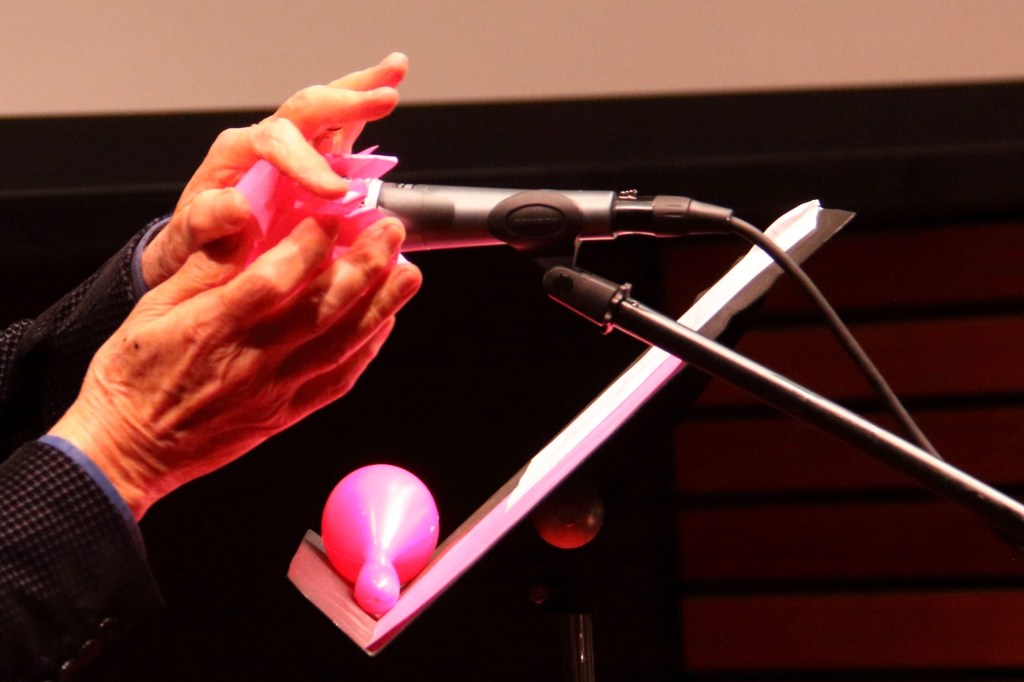


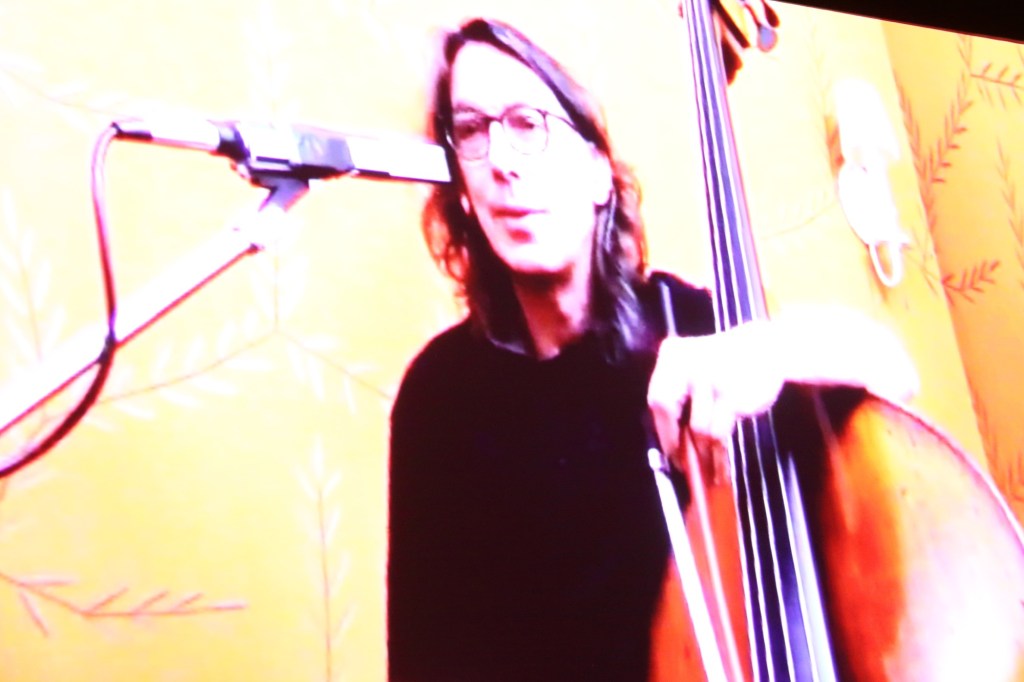


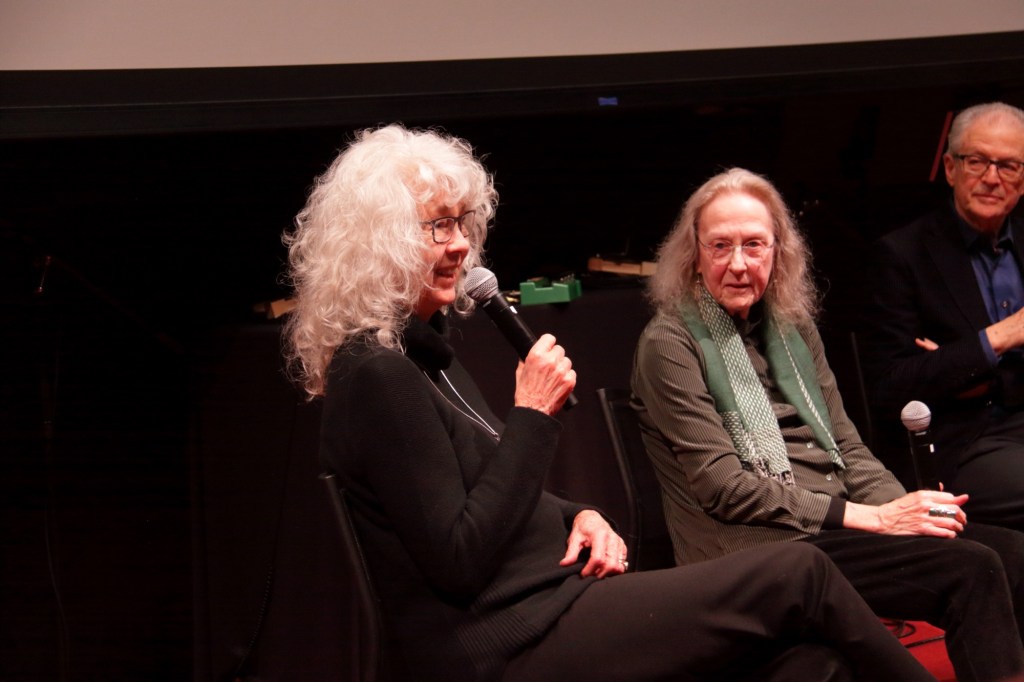


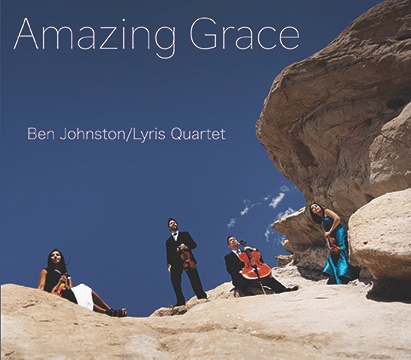


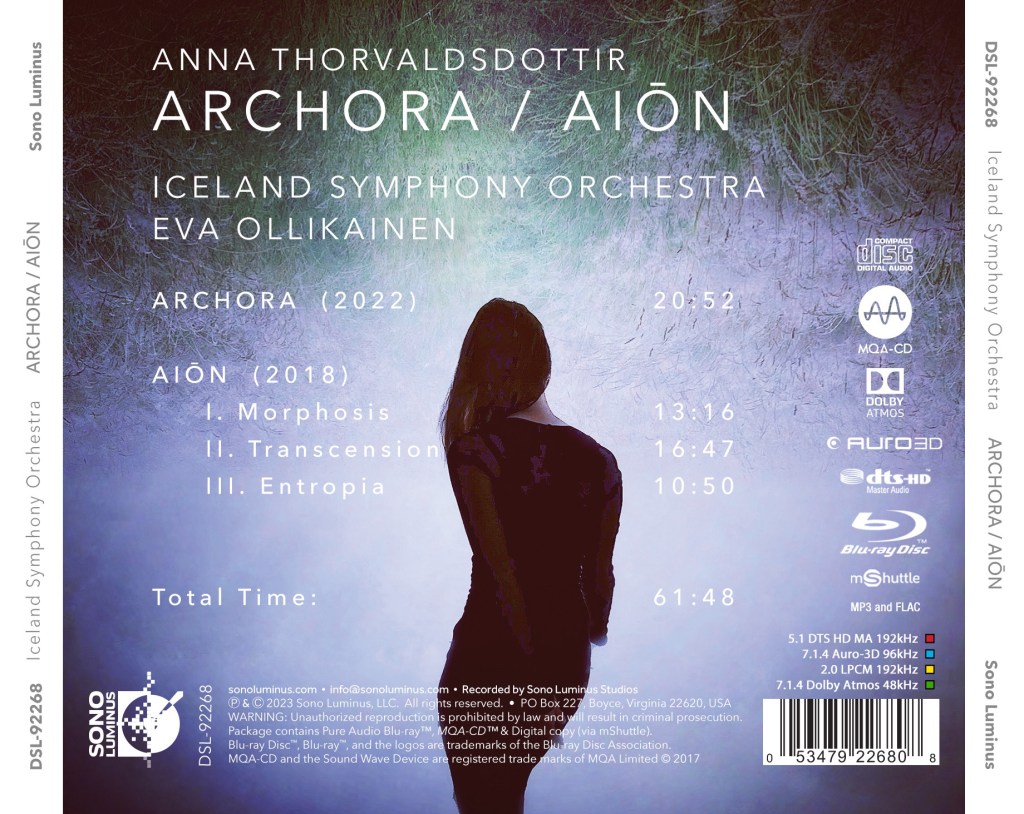
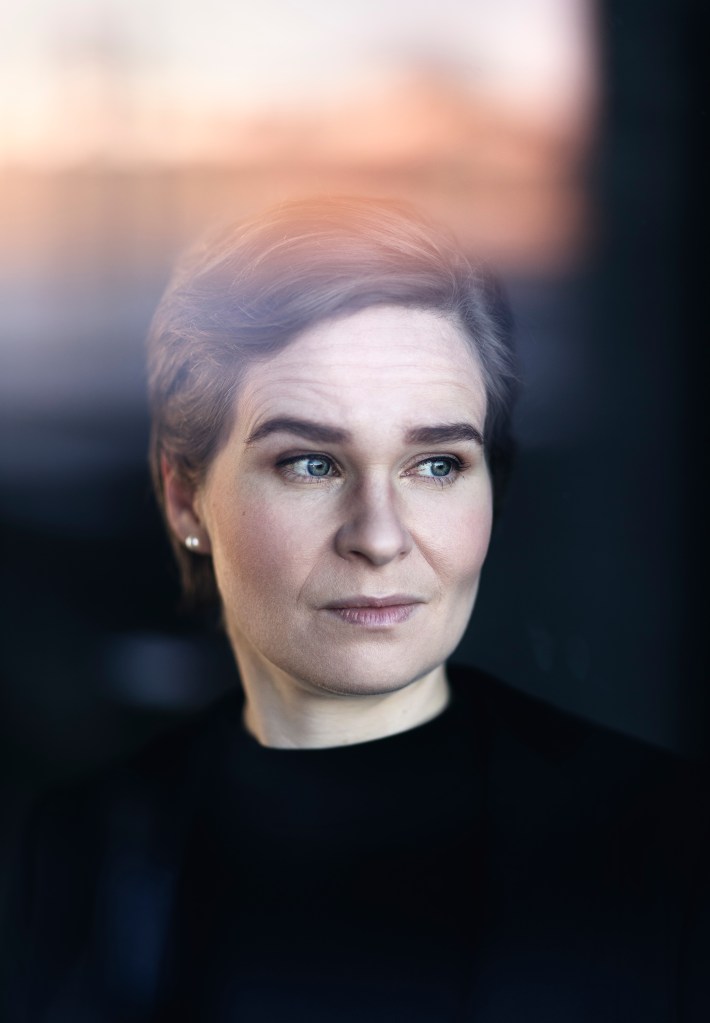

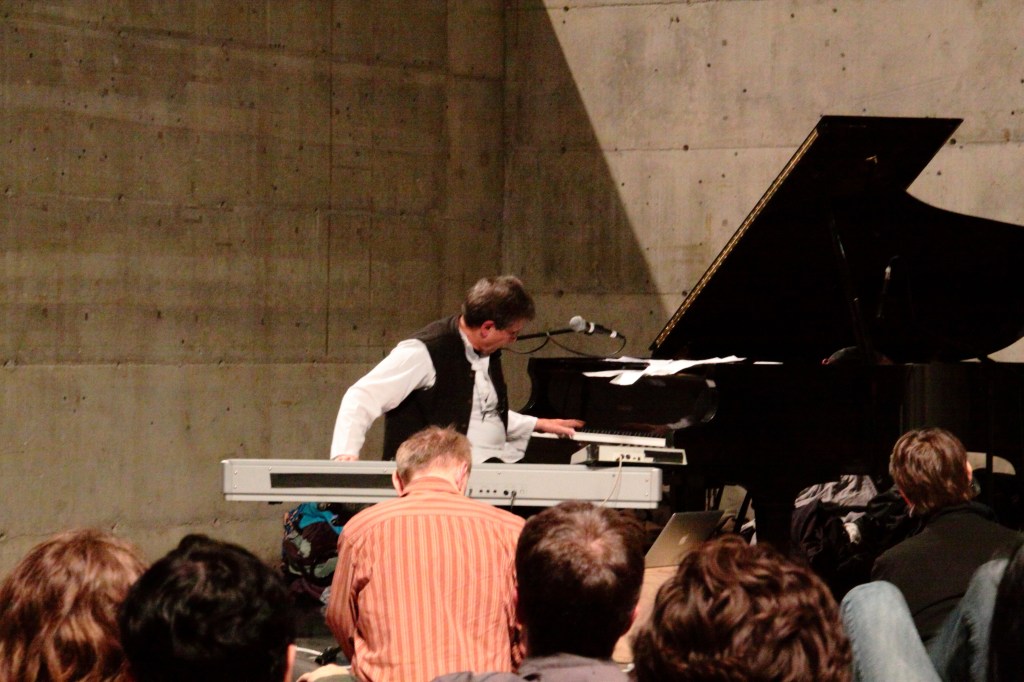

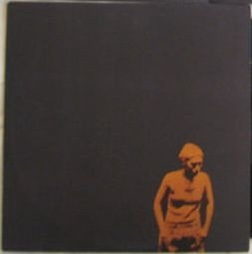


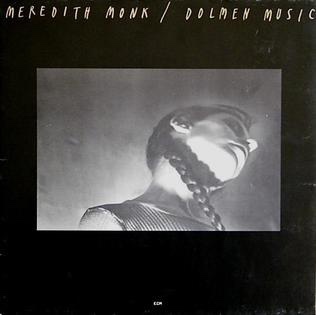


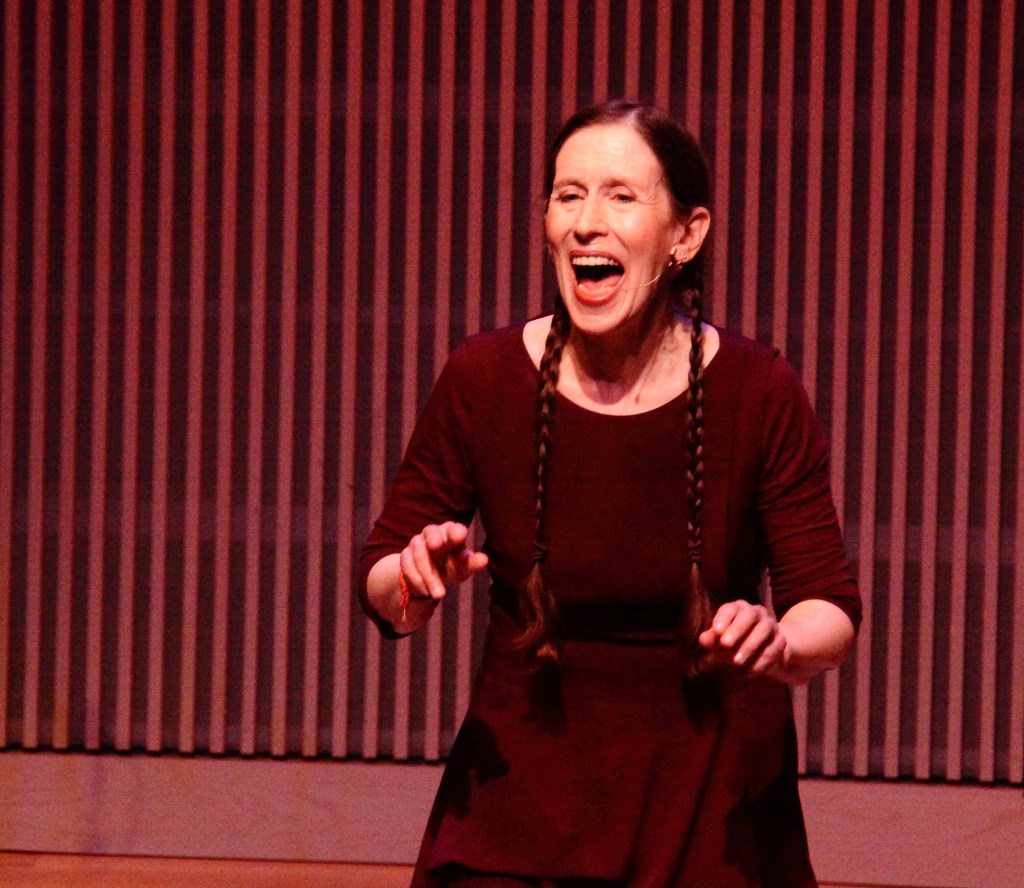
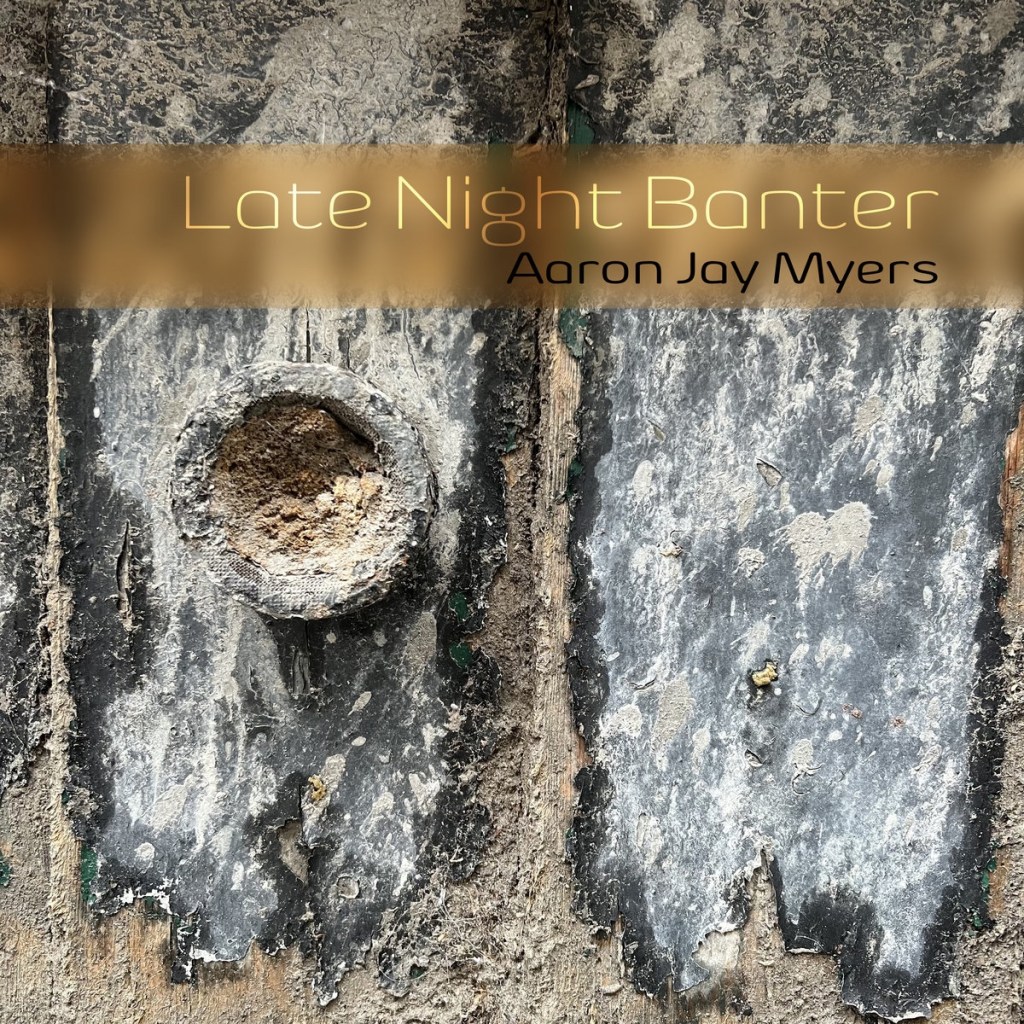
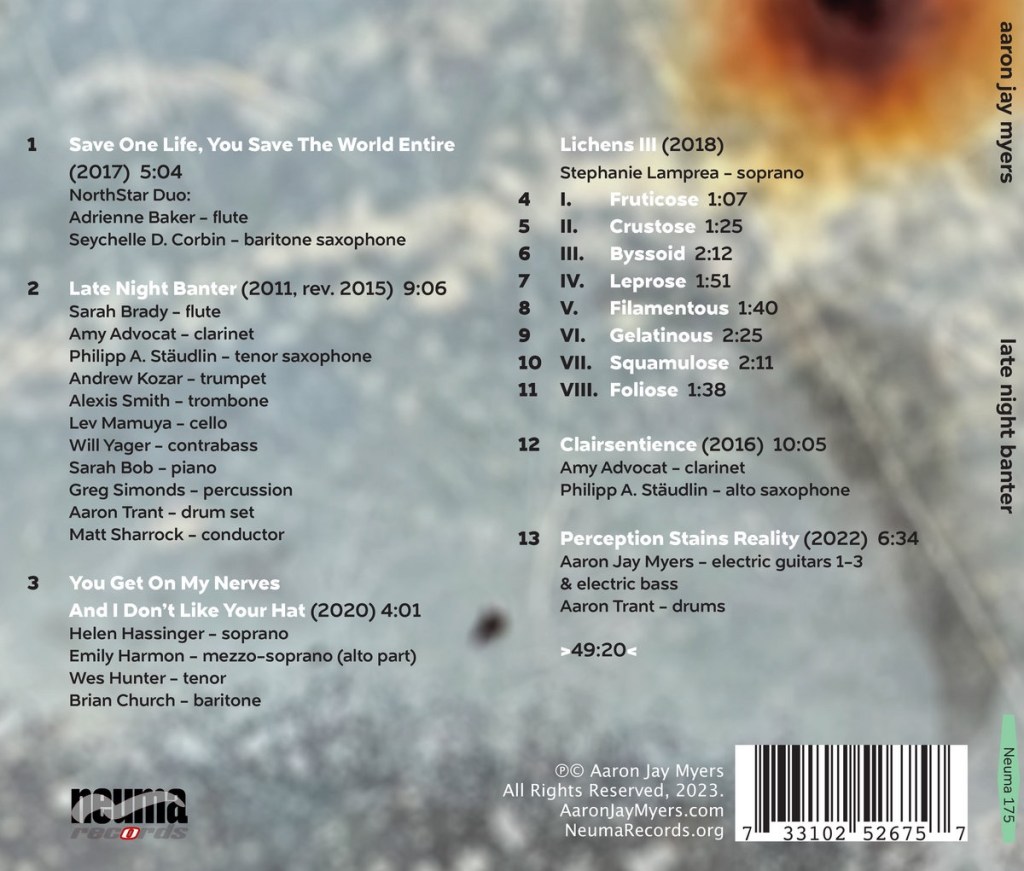


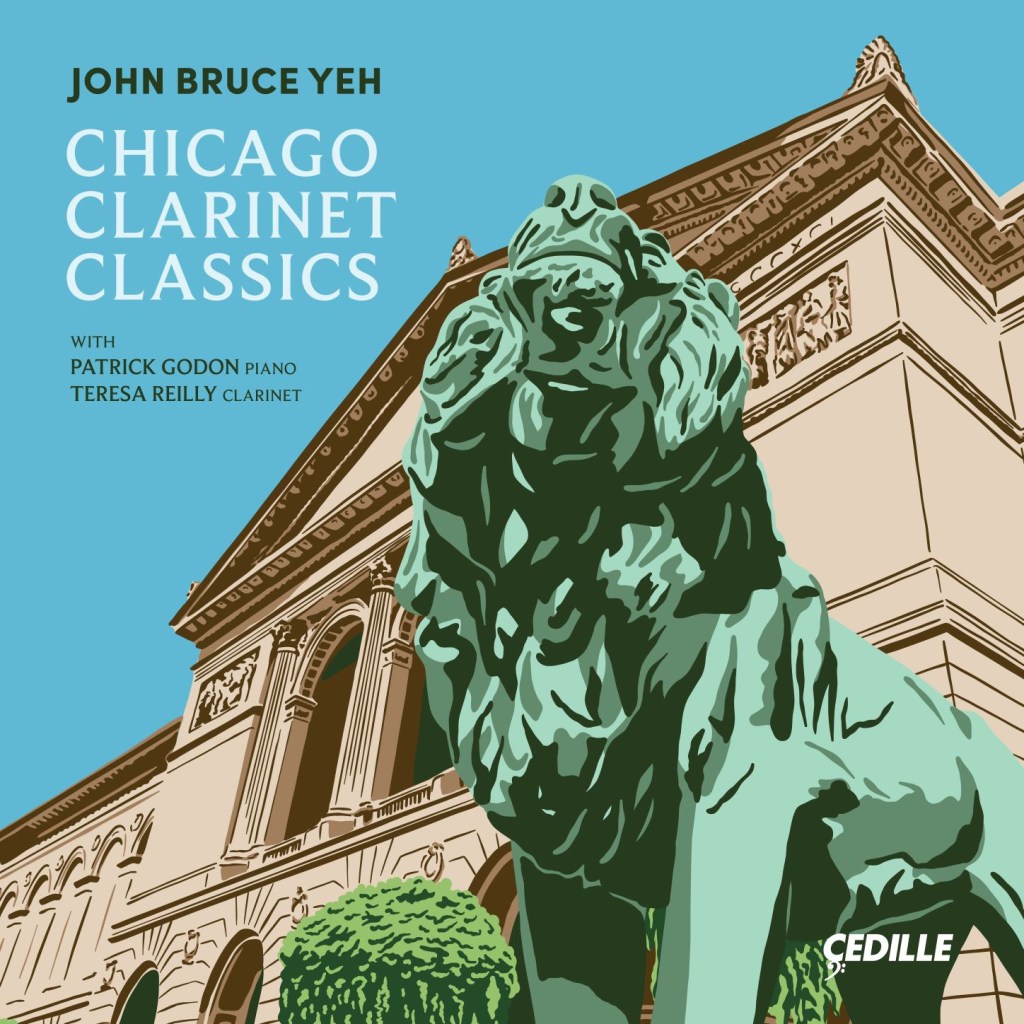
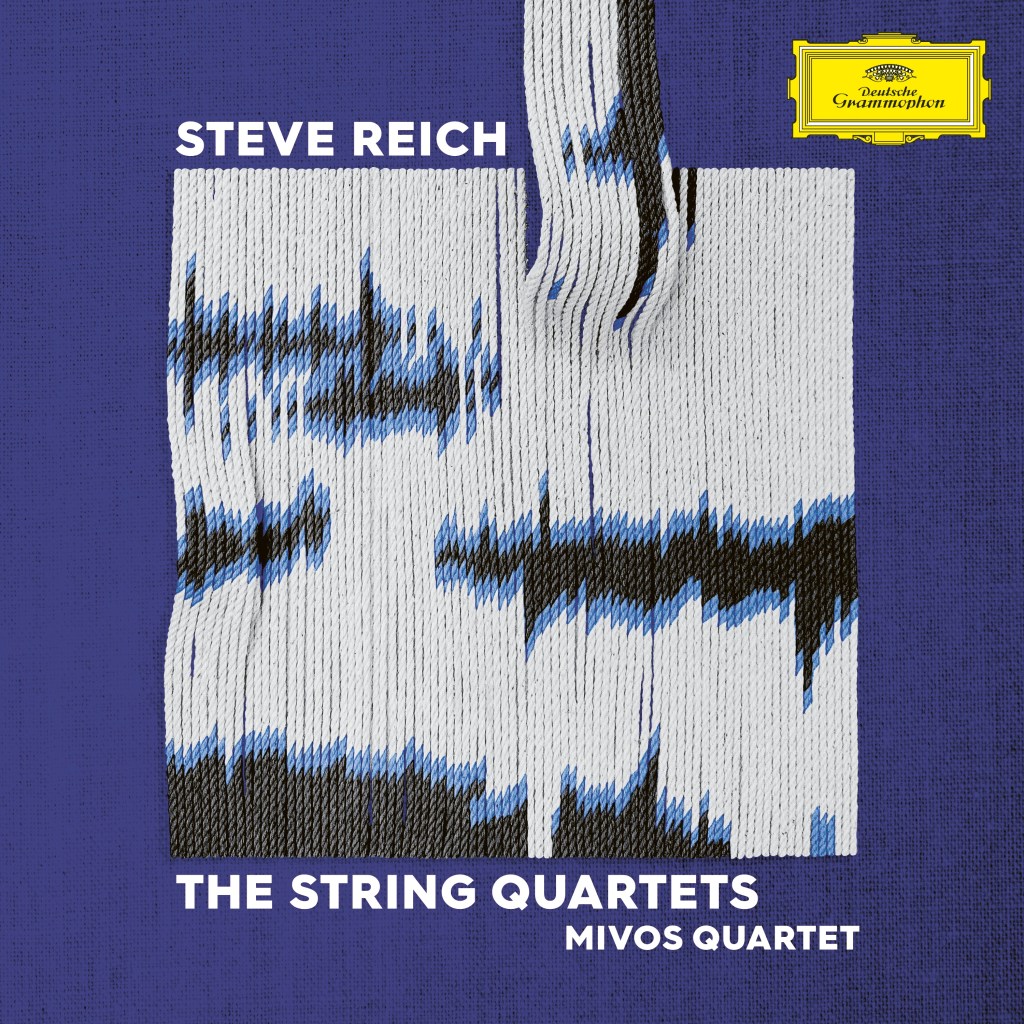
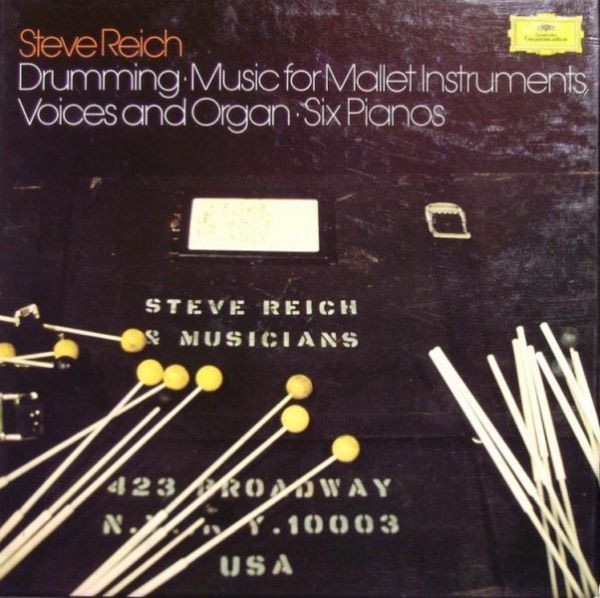






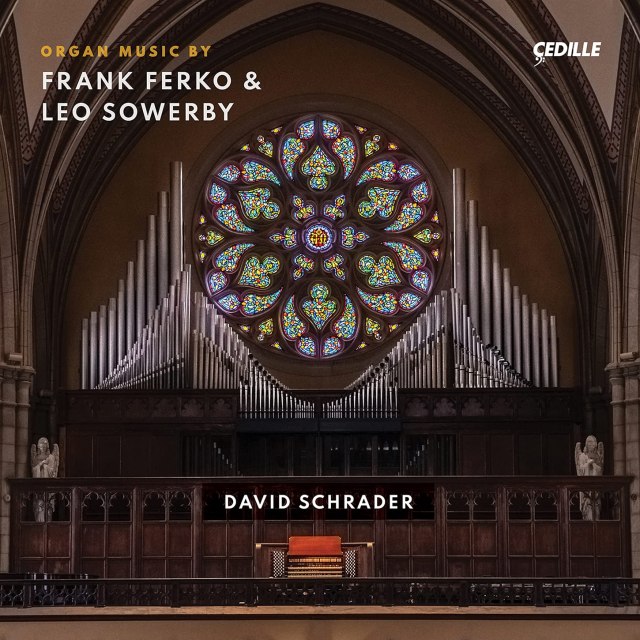
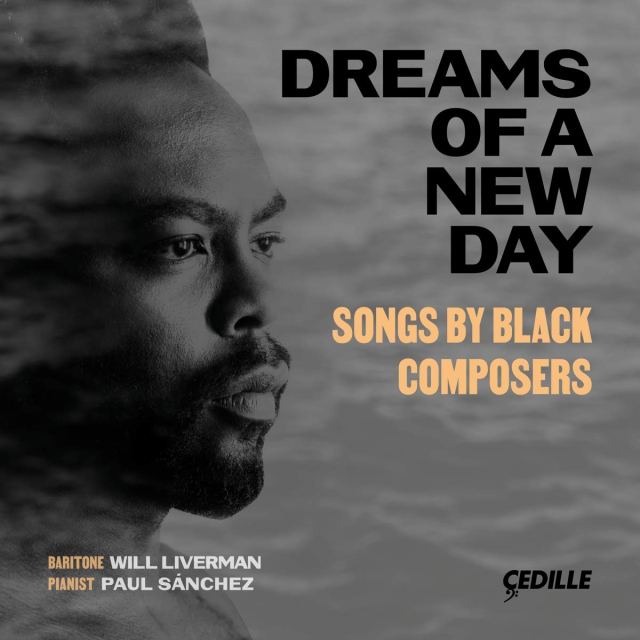
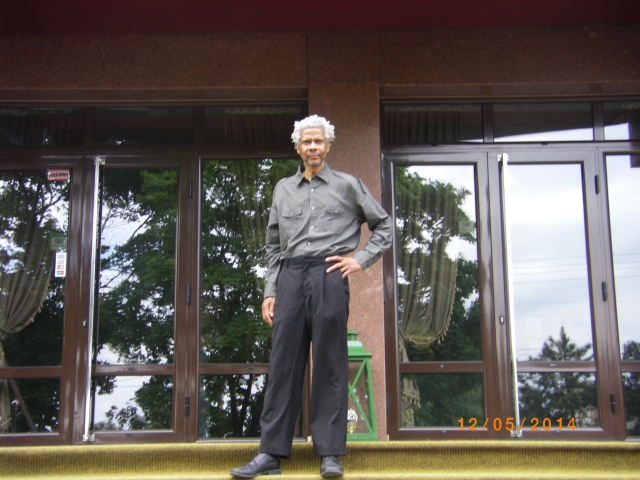
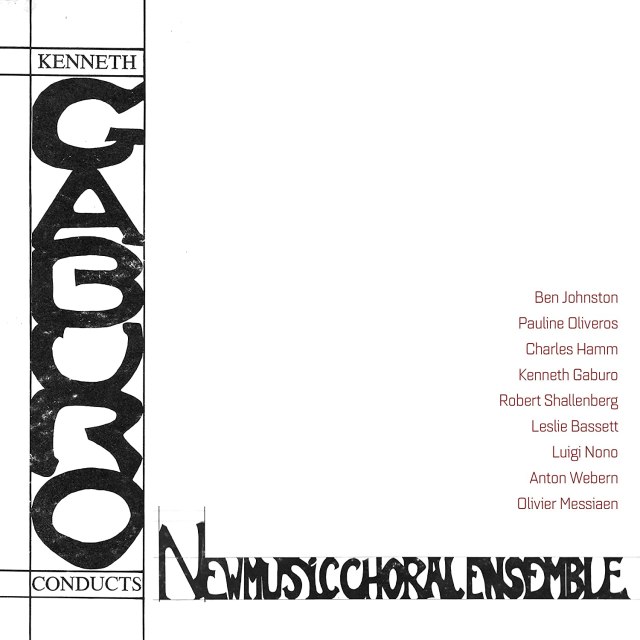

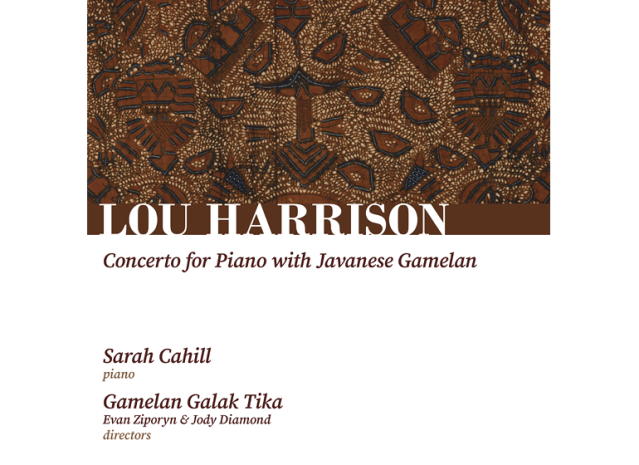



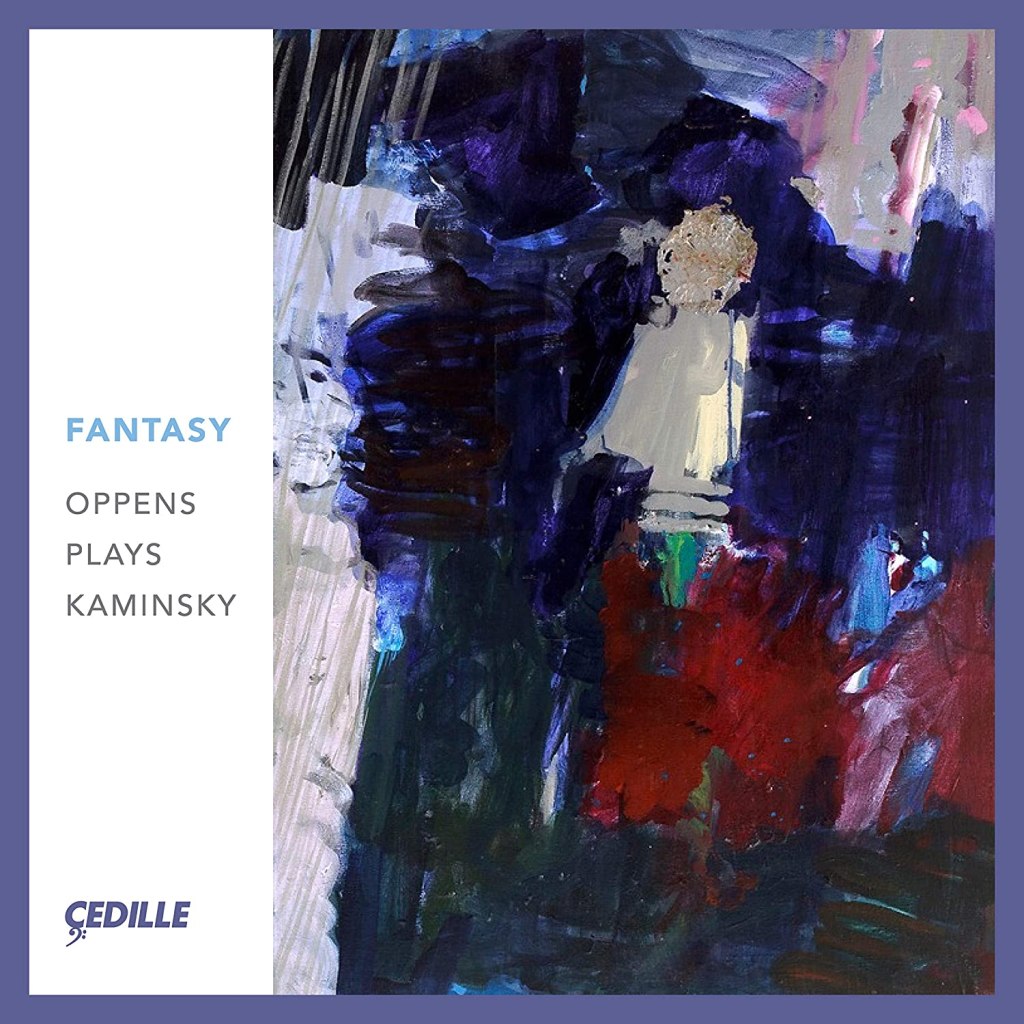


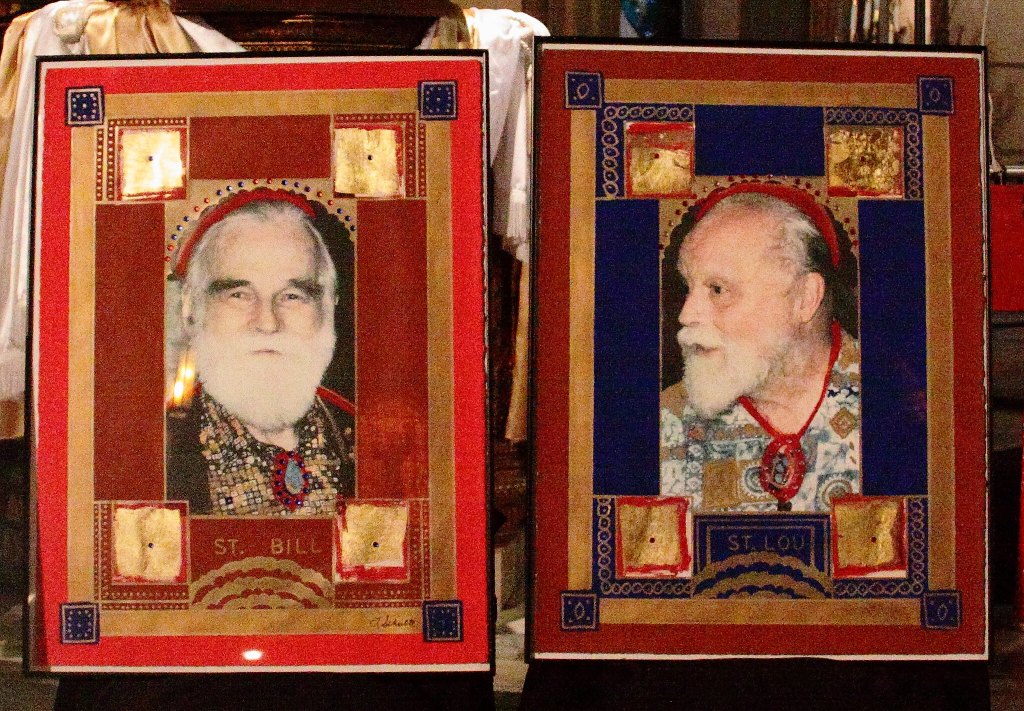



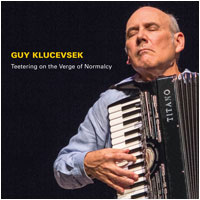


 New Music Buff