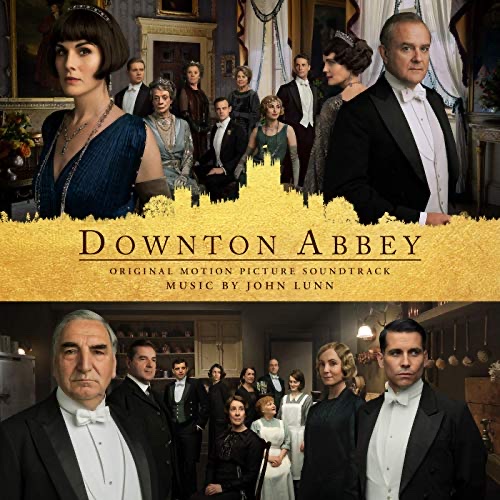
Downton Abbey, the Music


I have little expertise in the area of soundtrack music. It is my opinion that they largely serve as comforting souvenirs almost regardless of their quality.

John Lunn’s score does rise above the ordinary with its quasi post minimalist gentle music for this mini cult film. He is not Prokofiev or Herman but that level is not what is needed to support what is in the end a well written and well acted/directed costume drama.

Lunn does not burden his audience with obtuse or even obvious references to British music (folk or classical). No quotes from Nimrod or Rule Britannia (thank God). Just competent and unobtrusive incidental music for a decent film. Doubtless there will be a few live orchestra performances concurrent with screening the film in a concert setting. Enjoy the memories.

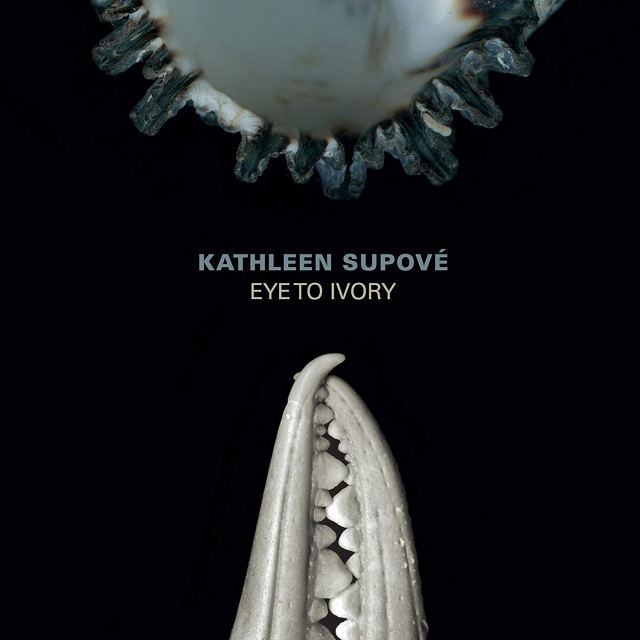
Starkland Captures the Exploding Pianist: Kathleen Supové’s “Eye to Ivory”


eyetoivory

Starkland ST- 233

Kathleen Supové is one of a handful of new music pianists whose repertoire choices are such that anything she does is worthy of at least one listen and most frequently many more.  (She was previously reviewed on this blog for her wonderful The Debussy Effect album from 2017 on New Focus recordings.)  Starkland, analogously, is a label whose choices of both repertoire and artists is similarly reliable.  So it is with this most recent release.

Five composers are represented on 16 tracks.  All but one utilize some form of electronics (computer, sampler, etc.).  It is difficult to characterize the sort of choices Supové makes except to say that she leans toward the experimental but includes a variety of genres that run the gamut from minimalism to obtuse and complex experimentalism.  The issue here is not the genres but the quality of the performer’s choices and that is what makes this release so compelling.

The title track is by the still too little known Mary Ellen Childs (1957- ).  Eye to Ivory (2005) is a commission written for Supové is described in the brief but useful program notes as a composition focused on the sound densities of the various ranges of the keyboard and one which requires a variety of movements by the pianist (including sitting standing, etc.).  Obviously the visual component is not captured here but the sound clusters, no doubt analogous in some way with the movements, make for compelling listening.

Talkback IV (2010/12) by one Guy Barash, a composer new to this reviewer’s ears.  It is described as one of a series of pieces exploring the interaction between the piano and a computer in real time (i.e. the computer responds to what the piano is playing.  Barash does the real time digital processing.  Here is some of the edgy, perhaps even somewhat obtuse (to the casual listener I think) music where Supové and Starkland excel.  Its not easy listening but it is substantial enough to prompt this reviewer to bookmark the composer’s internet page (you should too).

It is with Rama Broom (2000) by Nick Didkovsky aka Dr. Nerve (1958- ) that we begin to hear a more intimate music making via the use of the performer’s voice speaking a text of her own composition. Written for this artist, the piece is an opportunity to showcase her dramatic abilities both as a writer and as a vocal performer.  There are algorithmic composition processes here but the music belies these complexities and what comes through is the drama in music, text, and performance.  Play this one on Halloween (that’s all I’m gonna say).

Also of 2000 vintage and continuing the intimate aspects of this album is the next selection, “In the Privacy of My Own Home” written by the Bang on a Can composer Randall Woolf.  He is also Supové’s husband and a composer of serious note.  If you haven’t yet encountered his work then you owe it to yourself to do so.

The intimacy of the work involves Woolf’s sampling of the pianist’s various types of laughter and playing the laughter on a sampling keyboard more or less simultaneously with the piano.  This twelve movement work has got to be this writer’s favorite of the group both for its melodic invention and the novel use of what is basically involuntary sounds made by or provoke from the pianist.  It’s like, “tickle me, I want to play piano” and it is a piece full of good humor and also deeply personal, even kind of sweet actually.  Will this be played by other artists using Supové’s sampled laugh or will they need to be tickled and sampled?  It is a delightful work.

Dafna Naphtali is yet another composer unfamiliar to this reviewer, also one with a fascinating, now bookmarked, internet page.  Her work Landmine (1999-2017) is another work written for Supové and another work involving real time interaction between a computer (which alters the timbre of the piano).  Its four movements are named with computer code (which adds a curious dimension especially to the tech challenged such as I).  And yes, this is probably one of the more obtuse and complex works but one which, with the curation of this artist, demands at least a listen or two.

Enjoy this album for its sonic beauties (Silas Brown’s mastering is always an event in itself) but also as a sort of advance guard suggesting the path of music yet to come.  It is in some ways similar to the CRI SD 288 recordings discs by the late Robert Helps from 1971 which helped guide this writer into the realms of new music.  It is a rich realm.


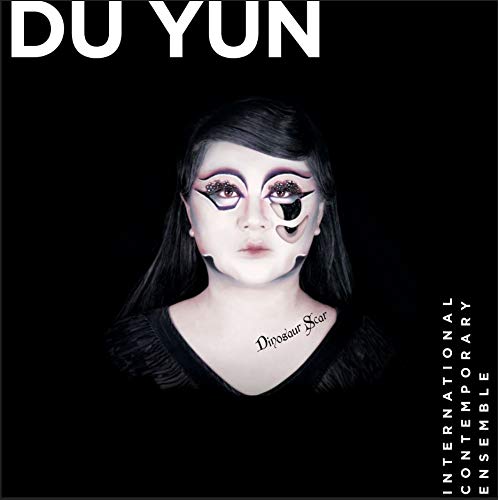
ICE Plays Music of Du Yun, a Powerful Collaboration


duyundino

New Focus/Tundra Recordings

This disc was this reviewer’s first hearing of music by the Chinese American composer Du Yun and OMG, as they say.  Just WOW on so many levels.  The ten tracks contain music written between 1999 and 2015.

It is truly a tour de force on many levels. No surprise that this artist has received so many accolades. This sampling of her work by the always interesting International Contemporary Ensemble released by the increasingly vital New Focus recordings (on their TUNDRA imprint).  There are no fewer than ten works on ten tracks.

This has been one of those “How could I have missed this…” experiences.  There is a wealth of music here ranging in style from free jazz to modernism (think Darmstadt perhaps) to world music and they blend well the style of this major Chinese-American composer.

She is the recipient of numerous prizes (including a Pulitzer for her opera Angel’s Bone in 2017).  She is the regular recipient of commissions from the Fromm Foundation, the Rockefeller Foundation, Opera America, and the Asian Cultural Council among others.  She is also a Guggenheim fellow.

The poetic, sometimes cryptic titles of her works and the liner notes are brief but succinct. The serious listener will want to know more about the composer and her wide ranging talents.  She writes for every genre and ensemble from opera to solo work and from intensely personal music to clever collaborations.

Add to this the fact that the performers are from the wonderful International Contemporary Ensemble (also known as “ICE”).  Anything they do is worth the adventurous listener’s attention and this album supports that contention most successfully.  The irony of  that acronym is hard to miss in the composer’s grant from the Carnegie Foundation’s “Great Immigrants” program.  Perhaps that can rescue the association of said acronym to art rather than regressive politics.

As usual with New Focus (the parent label of this TUNDRA release) the recording is lucid and does justice to the music.  The cover design alone is a striking portrait of the composer (another reason to lament the 12 x 12 format of LPs as a size standard).

It took this listener several listens to begin to grasp this music.  It is varied and sometimes complex but it is always compelling and seems to have depth and substance.  If you don’t know this composer this is a fine place to start and if you already know her work you will want to add this fine recording to your collection.


GVSU’s “Return”, an Intoxicating Adventure in Sound


gvsureturn

                                                                        Innova 983

OK, I’ve listened to this lovely CD numerous times and greatly enjoyed it each time. So why has it languished as a draft and why have I failed to publish this?

Procrastination aside there are several things I can identify as things that make this reviewer pause. First (and perhaps least significant) is unfamiliarity. The disc features three composers completely unknown to me: Daniel Rhode, Adam Cuthbert, and Matt Finch all of whom are listed as doing the additional duty of acting as mixing engineers (they are all students of the ensemble director as well).

GVSU  hails from the state of Michigan and it’s new music ensemble (consisting of Hannah Donnelly on piccolo, flute, alto flute, bass flute; Ryan Schmidt, clarinet, bass clarinet, contrabass clarinet; Darwin McMurray, soprano, alto, tenor, and baritone saxophones; Makenzie Mattes, percussion; Reese Rehkopf, piano; Jenna Michael, violin; Kirk McBrayer, cello; Niko Schroeder, sound engineer; and Bill Ryan, director and producer) is also new on this writer’s radar. Add the participation of the extraordinary violinist Todd Reynolds (on one track) and one’s attention is further piqued. Reynolds is an artist who chooses his repertoire and collaborations judiciously so his presence certainly functions as an endorsement.  But “unknown” is the heart of my interests both as listener and reviewer so that can’t be the reason though the lack of liner notes is a bugaboo (though hardly a fatal one).

On the positive side this is an Innova release and that fact alone lends credibility. Anything that Minnesota based label (the official label of the American Composers Forum) is worth your attention. Label director Philip Blackburn has a finely tuned radar which has led to many revelatory releases over the years.  Truly anything released on this label is worthy of your attention if you are a new music fan.

So we have hear a 15 track CD of 15 new works whose sounds seems to travel between ambient and postminimal. The pieces merge nicely with each other in a production which assures a fine listening experience. One can put this on either as background or for more intensive listening. It works either way. The playing is dedicated and insightful and the recording is top notch.

The pieces range in length from 1:32 to 7:32 and all seem to be just the right length communicating substance but never dallying too long. They’re bite sized, so to speak but they each have their charms as well as their complexities.  All are premiere recordings and all are commissioned by the ensemble.

Check it out. Click on the links provided in this review. And simply enjoy.


Jason Vieaux with the Escher Quartet


vieauxdance

Though this album was actually released a few months before the Sharon Isbin recording containing, purely by chance, two of the same guitar quintets is perhaps an indicator that these quintets are making their way into the active performing repertoire.  I’m not really interested in the differences between the two recordings but I am interested in hearing two of the finest guitarists working today finding the two works on their respective radars at more or less the same time.

The present disc with Jason Vieaux (whose fine work has been reviewed elsewhere in this blog) and the Escher Quartet begins (as Isbin’s does) with the inconceivably little known masterpiece, the Guitar Quintet Op. 148 (1950) of Italian composer Mario Castelnuovo-Tedesco (1895-1968).  The composer’s style sounds pretty much mid-century post romantic with a wealth of Spanish references.  The high romanticism of the quintet format (compare Schubert’s Trout Quintet, Brahms and Schumann’s Piano Quintets) is well served here in an incredibly engaging work which makes significant demands on the musicians but is musically very transparent to the listener.  It is a wonder that this piece is not better known and, for that matter, that the rest of Castelnuovo-Tedesco’s output is not being explored in a big way.

The second work here also deserves more hearings.  Aaron Jay Kernis’ (1960- ) 100 Greatest Dance Hits is another piece which can be described as post romantic and audience friendly.  Kernis uses some extended techniques like using the instruments percussively at times but its basically a consonant melodic experience.  It’s scoring for guitar and string quartet keep the listener in basically the same sound world and, except for Kernis’ curious titlings, this is a guitar quintet in all but name.  And the use of dance forms is a tradition that goes back at least the baroque era.  Like the opening work, it is cast in four movements.

Luigi Boccherini (1743-1805) is a prolific Italian composer who spent a great deal of creative life in Spain and, as a result, has incorporated Spanish rhythms and idioms into his work.  This contemporary of Mozart and Haydn shares a similar late classical style.  The last work here is another four movement Guitar Quintet (1793), the fourth of nine he wrote and probably the best known.  The only difference between this rendition and the one by Isbin and the Pacifica Quartet is the absence of castanets in the fandango last movement.  In fact that may be one of the hooks for completists who want to hear what it sounds like in its original version (both work very well).

The performances are all full of enthusiasm and seemingly easy virtuosity that one expects from musicians of this caliber.  If you are stumped as to which one of these to get I think the only reasonable answer is, of course, both.


Lara Downes Celebrates Women and Love


downesloveofyou

Though she has been performing and recording for a while now I first became aware of Lara Downes when I reviewed her truly excellent, America Again album in 2016.  Since then I have become aware of the incredible range of music which she has chosen to champion.  Her various projects have a distinctive Lara Downes fingerprint which establishes her brand in the music world.  She plays music from the 19th, 20th and 21st centuries with careful attention to women composers, minority composers, and a solid grounding in the more commonly heard recital works.

I jumped at the opportunity to see her play at the “Old First Concerts” in San Francisco later in 2016.  She played a friendly recital of mostly familiar classical works including the solo version of Gershwin’s Rhapsody in Blue and some Schumann pieces and a couple of selections from the just released America Again album.  Having taken some piano lessons I have a bit of awareness of how difficult this music can be but, as the title of my concert review suggested, Downes elevates the music such that it magically comes alive in ways that fledgling or average pianists can only dream.  The notes are the same but she makes them sing and watching her play is reminiscent of an Olympic athlete.  Don’t stand too close, lol.

It is her love of the 19th century romantic piano literature and her mission to highlight female artists that are the motivation behind this recent release.  Clara Schumann turned 200 years old in September, 2019 and this release is a gift to her and an affirmation of a musical romance of grand romantic dimensions.  The album features Schumann’s masterful Concerto as well as a selection of solo pieces by Clara and Robert.

Downes’ own words from her informative website:

I’m the first of three sisters, and I grew up in a house full of girls and women. My sisters and I made music together, put on plays, shared our clothes and secrets, and navigated together the unpredictable waters of our inconstant childhood. We were a pack. The world of women has always been my home. But the world of my music – of my piano teachers and their teachers, the Great Pianists and Great Composers – was a world of male lineage and legacy. Except for Clara Schumann. When I read about her early  life – such a serious, dark-eyed little girl – I found something of myself. I played her music as soon as I could get my hands around it. As I grew up, the themes of her life resonated in my own:  a struggle for independence; a defiant romance, the work/family conflicts of the artist’s life… As my life unfolds, as a musician, a woman, a mother – I wonder at her accomplishments, her choices, her joys and her heartaches.

This beautifully recorded disc (at Skywalker Ranch’s fine studios) opens grandly with a rendition of Schumann’s grand showpiece piano concerto which was written at the behest of Clara and dedicated to her.  She performs with the venerable San Francisco Ballet Orchestra under music director Martin West.  I don’t know other versions of this concerto well enough to make comparisons but it is clearly a piece she knows and loves and the concerto is a tribute to both Robert and Clara.  Her encouragement and collaborative suggestions technically make the piece speak well for both composers (Robert, who was an accomplished pianist, damaged his hand utilizing a mechanical stretching device and couldn’t play well anymore).

She follows this with some early solo piano pieces by Clara Schumann and a set of early works by Robert.  The style and level of compositional expertise is similar in both of their writing and Downes brings them lovingly, magically to life.  One only hopes that this will be but the first volume of more recordings of Clara’s work.  According to her website she has some mighty fascinating projects planned for completion in 2020, designated as “The Year of the Woman”, the 100th anniversary of women’s suffrage in this country.

As it is also an election year seeing more women than ever before in politics, literature, and music 2020 can’t avoid being an auspicious event and Downes will make her mark most decisively.  Meanwhile we can enjoy this first installment in anticipation of exciting developments and releases ahead.  Brava, Ms. Downes.  We’re watching and listening.


The Ecstasy of Enjoyment: Sharon Isbin with the Pacifica Quartet


isbinpacqr

Cedille CDR 9000 190

I was delighted to have had the opportunity to speak with guitarist Sharon Isbin (1956-) about this fine album.  She appeared to be in the midst of a queue of interviewers set up by her press corps but she came across as a confident, relaxed, and skilled interviewee and a gracious person with a palpable passion for music.  Listening to this latest release and having a more than passing interest in this fine musician it is a joy to see her getting recognition.

Originally from the Midwest, Isbin actually began her studies in Italy where her nuclear scientist father was working as a consultant.  Her studies in Varese, Italy began at age 9 with Aldo Minella.  She also counts among her teachers Andre Segovia, Alirio Diaz, and Oscar Ghiglia among her many teachers.

Most curiously she spent time studying Bach with none other than pianist Rosalyn Tureck during the time she was working on her landmark recording of the Bach Lute Suites.  Isbin stated, “I don’t play piano and Tureck doesn’t play guitar but I wanted her insights into the preparation of this music.”  Apparently this collaborative scholarship resulted in the publication (by G. Schirmer) of two of these suites originally written for lute.

As an academic, Isbin is all about research, fact checking, and collaboration and this clearly pays off as listeners will be delighted to find.  But she is also the founder of the Guitar Department at the venerable Julliard School, a department which this year celebrates 30 years hosting students from 20 countries and, this year, establishing a DMA in guitar performance.  Her first graduate, Australian guitarist Alberta Khoury, is the first recipient of this degree.

Asked about being THE musician to start the guitar department at Julliard she related that Segovia had proposed the idea some years ago and was rejected but that she was actually asked to start the department.  An example, perhaps, of the student transcending the teacher.

Isbin plays a great deal of guitar music but, unlike many in her field, she has shown interest and devotion to music of our time as well.  In fact she estimates having at least 80 scores and arrangements either commissioned by her or dedicated to her.  It was with her recording “American Landscapes” featuring concerti commissioned from Lukas Foss, John Corigliano, and Tan Dun that first brought this artist to this reviewer’s attention.  She is the recipient of three Grammys (and this album may very well earn her a fourth).

Regarding the present release, Isbin spoke of the process of preparation involved with this music.  The Pacifica Quartet had been in residence at the University of Chicago and this was the connection (Cedille is a Chicago based, Chicago friendly label) that allowed her collaboration to appear of this fine record label.

She also spoke of the serendipitous discovery of finding that the composer’s granddaughter, Diana Castelnuovo-Tedesco, actually lived near her in New York.  They began discussions and Isbin was able to view and work directly with the manuscript of the Quintet which opens the disc.  Asked about the fact that this very quintet had been recorded about a year ago by Jason Vieaux, Isbin replied that it was pure coincidence but that this piece was considered by the composer to be his finest work of chamber music.

The Italian composer, Mario Castelnuovo-Tedesco (1895-1968) was born in Italy but was forced to flee the Nazis and was able, with the sponsorship of Jascha Heifetz (then a recently minted citizen himself), to come to the United States in 1939 just before the outbreak of WWII.  In fact, his family suffered a similar indignity in 1492 when they were forced from their native Spain when the Alhambra Edict forced the expulsion of Jews from the country.  The composer’s curious hyphenated name, according to Isbin, resulted when a dying friend who had no progeny asked that the composer somehow incorporate his name.  This is both sweetly romantic and evocative of the sensitivities of the man himself.

The Guitar Quintet Op. 143 (1950) is a grand romantic and virtuosic work that deserves to be heard.  It is difficult to imagine an audience not being thrilled by this music.  It is cast in four movements like a classical work (allegro, andante, scherzo, finale).  From the beginning the listener is carried along by beautiful melodies and clever collaborations between the strings and the guitar.  Isbin related that superscriptions on the score saying, “Souvenir of Spain” gave the idea for the title of this album.

This is followed by one of the most recognizable guitar concertos, the Concerto in D Major for guitar and strings by Antonio Vivaldi written about 1730.  The original is written for lute and Isbin uses an edition for guitar by Emilio Pujol with gorgeous ornamentation consistent with late baroque practice added by the present performer.  This performance is with guitar, violin, viola, and cello (no second violin) but manages to make a big sound.  This work is a personal favorite and, unlike the other works on the album, extremely well known and loved by this reviewer.  My baseline favorite recording of this piece will probably always be Julian Bream’s performance on this RCA recording but Isbin’s scholarship provides a fascinating perspective on this work.  So basically I now have two favorite recordings.

Next up is the only piece on the album where the Pacifica Quartet plays without guitar.  Joaquin Turina (1882-1949) is more or less a contemporary of Castelnuovo-Tedesco.  Offered here is Oración del Torero Op. 34 (1925).  Curiously this work was written originally for four lutes or string quartet.  Only the quartet version seems to get much play though the lute version might be interesting as well.  This work, which translates into English as “Bullfighter’s Prayer” is essentially a miniature tone poem whose drama takes on almost cinematic dimensions in its just over 7 minutes.  The Pacifica Quartet does a potent job of delivering an engaging performance.  The Pacifica consists of Simin Ganatra, first violin; Austin Hartman, second violin; Mark Holloway, viola; and Brandon Vamos, cello.  They are based at Indiana University.

Last and certainly not least is another major Quintet by an Italian composer, Luigi Boccherini (1743-1805).  His dates make him a contemporary of Mozart and Haydn, though he was born in Italy, many of his productive years were spent in Spain where he enjoyed royal patronage.  He was a prolific composer who has experienced a significant interest in the 20th century.

He wrote no less than 9 Quintets for guitar and string quartet and this one, in D Major G. 448 dates from about 1798 and is the best known of his works for this combination.  It has the rather unusual attribute of having a percussionist (one Eduardo Leandro) improvise on castanets and tambourine in the last movement, fandango.

The work is cast in three movements (pastorale, allegro, grave assai-fandango) and will remind the listener of Haydn, Mozart, and/or early Beethoven.  The music is both familiar and very entertaining.  The castanets do not appear to be included in the original score and one can find recordings without them but they really rock that last movement.

This is another triumph for Ms. Isbin and a feather in the caps of the Pacifica Quartet.  It is sonically spectacular album as well having employed the producer/engineer team of Judith Sherman and Bill Maylone.  They achieve a lucid and warm sound field with an appropriately dry resonance that makes for an intimate listening experience which reveals the details the musicians coax from the score.  Get this one, you’ll play it often.


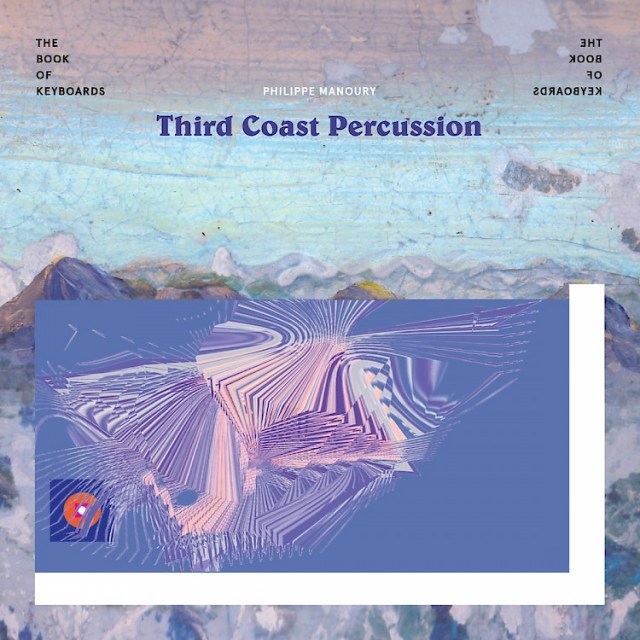
Philippe Manoury’s Book of Keyboards, Third Coast Percussion’s Masterful Rendition


3rdcoastbookofkey

Philippe Manoury (1952- ) is a French composer who worked at IRCAM and is professor emeritus at UCSD.  Knowing just these facts I must admit that I let this one languish a bit before giving it a good listen.  I was just not ready for some obtuse Boulez-oriented complexity.  But Manoury is nothing if not original and even if his music has complexities it does not fail to communicate very well to the listenter.  My apologies to Third Coast Percussion and the ever interesting New Focus recordings for the delay now that I’ve put my fears to rest and given the music a chance.

There are two works on this disc, Le livre des claviers, Six pieces for 6 percussionists (1987) and Métal for sixxens sextett (1995).  The first piece, which translates as, “Book of Keyboards” invites connotations of monolithic masterpieces such as Bach’s Well Tempered Clavier, Boulez’ Livre pour Quatuor, or any of a number of pieces with such aspirations that have the word “book/livre” in the title. The second piece is strikingly similar in sound to the first and is a fitting companion on the recording.

Indeed the 6 movement Livres is a monumental work but its aspirations are to produce a lovely and complex set of pieces for percussion sextet.  Third Coast handles this work, as they do with all they approach, with thought and virtuosity.  This is not a grandiose attempt to create a landmark of western music but rather to add to the oeuvre.  The same can be said for the later work which follows it.

While Manoury has worked with electronics and computers, none of that is in evidence here.  This is purely acoustic, just six virtuoso percussionists and the music is well crafted and shows off the composer’s inventiveness as well as giving these fine young musicians something to show off their considerable skills.  It is absolute music (ie music for the sake of music) and if there are metaphorical aspects they are not immediately evident.

Doubtless there are complexities here, most of which lay beyond the ken of the average listener (your humble reviewer included) but the joys of the sounds and the lucidity of the writing make for an enjoyable experience.  It’s not the minimalism of Philip Glass, nor the complexities of Boulez, nor the dissonances of Xenakis.  This is intelligent, approachable chamber music that will speak to the listener who allows it to unfold.

The first piece has six movements which are named simply for the instruments called for in the score:

  1. 6 Thai Gongs and 2 Marimbas
  2. Marimba Duo
  3. Sixxen
  4. Vibraphone solo
  5. 6 Thai Gongs and 2 Marimbas
  6. Sixxen

As you can see, not all six percussionists are kept equally busy throughout.  Each movement seems to have its own character and probably a great deal of  complexity which will entertain and perhaps frustrate musicologists.  All in all a very entertaining work.

The second work coming in at just over 22 minutes is cast in a single movement and has a more pensive quality.  It does require attention and, like all good music, reveals more on repeated listens.

The recording is, as always with New Focus, lucid and complementary.  This recording also serves to demonstrate the incredible range of this rapidly rising star in the percussion players universe.

Be not afraid, this is great stuff.

Politics and Its Discontents: Sirius Quartet’s New World


siriusnewworld

ZOHO ZM 201908

This is a marvelous disc which functions well on several levels.  First it is a fine disc of new string quartet music played by wonderful musicians (who wrote most of the music here as well).  Second it is a disc of music which is designed to put forth sociopolitical reactions/opinions.  This Zoho label production succeeds quite well in these areas.

Starting with the lovely cover art by Aodán Collins, this Sirius Quartet album is their first full album since 2016.  It is, above all, a political statement, or rather, a series of political statements in the form of inventive compositions by these wonderfully talented musicians.  Each track is incredibly entertaining and each has a closely associated subtext of sorts reflecting a variety of sociopolitical issues.  The Sirius Quartet consists of Fung Chern Hwei and Gregor Huebner, violins; Ron Lawrence, viola; and Jeremy Harman, cello.

This disc contains ten works on ten tracks, each with an underlying political component.  All appear to have been written from 2016 to the present though the composition dates are not given explicitly.

The first work, Beside the Point, is by first violinist Fung Chern Hwei and it is a friendly scherzo-like piece which sets the tone for what is to come.  The composer describes this piece as his statement against discrimination and it is a plea for equality.  It is a relatively brief but very compelling work.

Next up is a track written by cellist Jeremy Harman called Currents.  It is another scherzo-like affair, slightly longer than the first piece and its political subtext is described by the composer as evoking currents of elements both dark and light whose powers affect us daily.  Another well-written and very exciting piece.

The eponymous New World, November 9, 2016 is essentially an angry lament in response to the election of Donald Trump as president on that date.  The work quotes judiciously and effectively from Dvorak and Shostakovich in the longest work here coming in at 10:16.  It relies on some extended techniques at times but is an essentially tonal work as are its companions on this disc.  This piece is also distinguished as having won the 2017 New York Philharmonic’s “New World Initiative” competition’s grand prize and it is acknowledged as the seed work which eventually spawned this entire album.

#Still by second violinist Gregor Huebner is perhaps the most gut wrenching piece here.  It’s based on the Abel Meeropol song, Strange Fruit (whose title refers to lynched bodies hanging from trees) iconically recorded by Billie Holiday in 1939.  Sadly its themes remain painfully relevant today and this heartfelt plea for peace and equality is a strikingly powerful work with an adagio section which rivals the Barber Adagio in its beauty.

Huebner’s cover of the Beatles song, Eleanor Rigby occupies the next track.  It is very much in keeping with the political theme of the album with the song’s words about a sad individual “buried along with her name”.  As such it is also one of the finest transcriptions/covers for string quartet that this reviewer has heard.  This is some seriously interesting writing which elevates this to a well crafted piece in it’s own right and not merely a “this string quartet plays…” generic piece.  Jazz inflections seem to invoke Stephane Grapelli and Django Reinhardt at times and a few extended techniques remind us that we are listening in the 21st century.

More Than We Are by cellist Jeremy Harman is described as an “aspirational” composition which was written after the birth of the composer’s son, Silas.  It is an emotional piece, perhaps a paean to hope.

To a New Day by Fung Chern Hwei is, of all things, a celebration of hope for healing politics in the composer’s native country of Malaysia (politics outside of the US and Europe are important too after all).  May 9, 2018 was the date of an election whose result will hopefully heal political wounds and put that country on a more humane and progressive agenda.  There may be more specific references embedded in the music here but that must be left for listeners and musicologists to debate in the future.  It is another gorgeous example of good string quartet writing.

Hwei describes this next piece, “30th Night, Worshiping Heaven and Earth” as a “repurposed prayer”.  It is, he says, an “unapologetically Chinese/Malaysian piece” which uses a combination of Chinese folk melody and specific attention to language to suggest a subversive theme which seeks to encourage a humane approach from a traditionally oppressive government.  It is the only track with vocals.

The penultimate track is another brilliant arrangement (by Huebner) of a rock/pop song, Radio Head’s “Knives Out”.  The political content is expressed by reference to the song’s lyrics and also by musical references which are inserted throughout.  Again an experience of the cover genre that rises above the ordinary.

The album ends with an arrangement by Fung Chern Hwei of the late Stanley Myers’ lovely Cavatina from his score to “The Deer Hunter”.  Like the previous covers this one stands head and shoulders above the usual level of musical discourse for this genre.

All in all an immensely satisfying album.  Kudos to Grammy winning producer and writer (he wrote the wonderful liner notes here) Kabir Seghal and, of course, to the musicianship of this fine ensemble of composer/musicians.  Art continues to struggle in these uncertain times but its struggle can bring forth some amazing creativity and this one sounds like a winner.


Concertante Music for Flute and Clarinet


71BwJt9fYpL._SL1200_

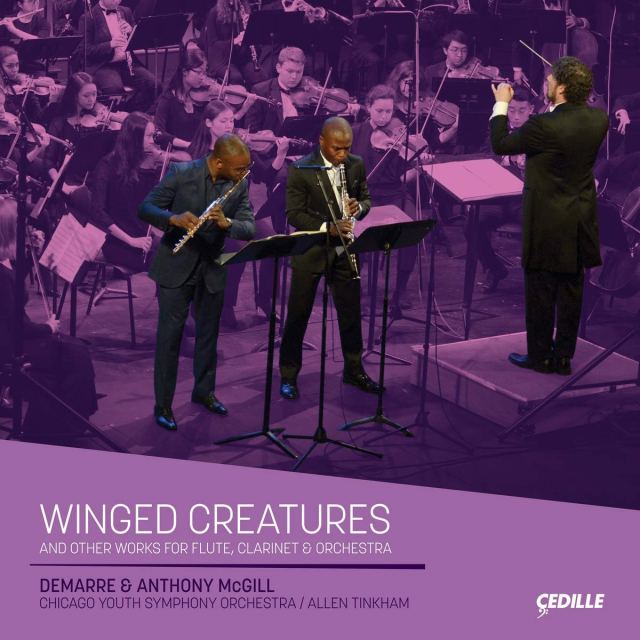
This release is a fine example of a record label fulfilling its mission by highlighting local talent while also making very intelligent selections of repertoire.  Cedille is one of those labels whose every release is worthy of your attention.  Here is a good example of why that is so. We have here four works for the rather uncommon combination of flute and clarinet with orchestra.  Concerti for multiple instruments probably began with Bach’s Brandenburg Concerti but this combination of flute and clarinet limits the repertoire choices considerably.  Nonetheless the folks at Cedille have gathered two 21st century pieces, one from the high romanticism of the late 19th century and a seldom heard gem from the late 18th century, all for these two instruments accompanied by orchestra.

Just for local interest let’s also add an opportunity for a local youth orchestra to show their considerable talents.  The Chicago Youth Symphony under conductor Allan Tinkham demonstrates the remarkably polished and mature sound of this local gem (Cedille is a Chicago label).  And Cedille, in its support of black musicians brings this marvelous pair of brothers with their expertise as soloists.  All in all a classic Cedille style release, intelligent choice of repertoire, promotion of young artists, promotion of artists of color, and quality recordings.

The disc opens with the world premiere recording of the eponymous single movement work, “Winged Creatures” (2018) by one Michael Abels (1962- ).  It is essentially a 12 minute concertante for the soloists with orchestra.  Abels is best known for having scored the brilliant horror genre film “Get Out” from 2017 (if you haven’t seen it, do make a note to yourself).

Winged Creatures is a well written mini concerto which, despite its recent vintage, tends toward a sort of neo-romantic sound.  The composer gives ample opportunity for the soloists to show their mettle and for the orchestra to demonstrate its facility with the music.  It is a delightful showpiece which seems to have a cinematic feel to it.

Next up, and this is typical of the acumen of the folks at Cedille, is a full blown, heretofore unknown (practically) Sinfonia Concertante from a lesser known contemporary of Wolfgang Amadeus Mozart.  Franz Danzi 1763-1826).  This double concerto for flute, clarinet, and orchestra was published in 1813 and sounds like Mozart and/or early Beethoven.  It is a highly entertaining piece, one which listeners will delight in hearing again.  Who knows this piece could become a sensation in the concert hall once again.  It’s about 22 minutes in length.

The third piece is an early work by French composer, pianist, organist, Charles Camille Saint-Saens (1836-1921).  Tarantella Op. 6 (1857) was written in when the composer was only 22 years old.  This is hardly one of his best works but it is a curiosity worthy of being heard and, like most of this composer’s work, it is eminently listenable.

Finally, we have another large scale concerto (and the second world premiere on the disc), “Concert Duo” (2012) by Joel Puckett (1977- ).  In gestures classical, jazzy, contemporary, but as listenable as anything on this release, Puckett’s work in three movements has tantalizing titles for each of the movements suggesting a wealth of non-musical references.

The ample liner notes provide the listener with a guide to the joys to be heard  on this collection and the recording, as usual with this label is lucid.  You can’t go wrong with this one.

Channeling Casals’ Bach: Amit Peled


peled

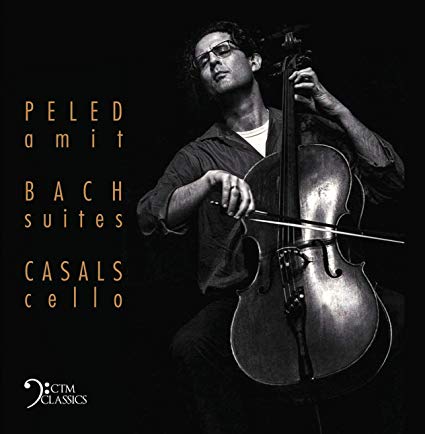
It was in 1936 that the famed Catalan cellist and composer Pablo Casals performed and recorded the now familiar Bach Cello Suites.  Long thought to be intellectual and technical exercises not intended for public performance these works languished for nearly 200 years on manuscript alone.  Casals pretty much single handedly has made these masterworks a staple of the cellists repertory.  Since Casals there have been numerous readings of these works and no sign of any flagging interest.

It is difficult to imagine any really new perspectives on these works and, aside from Kim Kashkashian’s wonderful transcriptions for viola, one gets basically the musician’s take on the music.  So here comes the Israeli cellist Amit Peled who, since 2004 has had the honor (and attendant responsibilities) of playing Casals’ own cello, a 1730 Gofriller personally loaned to him by Casals’ widow.  So in this first volume (second one not out yet as far as I can tell) is the first time Bach’s masterful Cello Suites have been sung by this instrument since it was in Casals’ hands.

What we have here is a sensitive and committed performance that many will want to hear perhaps as “channeling Casals” but ultimately we have a gorgeous performance by a fine musician channeling his own talents and sensitivities to produce a quite viable performance (are those gut strings I hear?).  Perhaps there are nostalgic aspects here as well but whatever your preference, be it channeling, nostalgia, or simply a great performance of these masterpieces you will find all these here.  Can’t wait for volume II.

Mathew Rosenblum: Klezmer, Witches, and the Avant-Garde


Conjuring the spirits of the 1950s/ 60s avant-garde and a few musical references composer Mathew Rosenblum (1954- ) enlists the klezmer spirit of none other than David Krakauer and master conductor Gil Rose with his wonderful Boston Modern Orchestra Project to bring life to this klezmer clarinet concerto.

The concerto, titled, “Lament/Witches Sabbath” (2017) is a tour de force for the soloist and certainly a challenge for the large orchestra.  Using elements of klezmer style along with musical references such as Berlioz in suggesting the evil sabbath revels the composer creates an unusual but fascinating canvas.  Nothing evil here, just some truly exciting musicianship. In addition we hear various noisy avant-garde effects and even voice overs reminiscent of Robert Ashley.  Ultimately it is also a species of classical which has a sociopolitical view and this is both memory and homage to the composer’s past, lamenting the suffering and pondering the evil that fueled it.

Krakauer’s facility with his instrument is simply astonishing.  He has the klezmer thing down but he also brings with him a great virtuosity as a classical clarinetist and a working knowledge of free jazz.  It’s not clear how much creativity this soloist was allowed within the constraints of the piece but the bottom line is that it works very well.  Gil Rose’ expertise in handling all this potential chaos is impressive as always and he delivers ultimately a very enjoyable performance despite those noisy avant-garde moments.  Indeed it is Rose’ ability to select repertoire with which he can grasp and from which he can conjure a compelling performance.  It is Rosenblum’s family biography taking him from the pogroms of the Ukraine to the United States.

The second track (of 4) is a solo for percussion.  Again the avant-garde remains interesting and both performance and recording communicate well with the listener.  Northern Flicker (2013) is no filler, it is an interesting, if rather brief, work.  Lisa Pegher is the busy soloist.

Falling (2013) is a complex work involving pre-recorded audio as well as a chamber group in a song cycle based on the James Dickey poem of the same name.  It is a retelling of an incident in which an airline stewardess who died when she was sucked out of a defective emergency exit in the plane and fell to her death.  The cycle recounts an imagined look into her psyche as she fell to her death.  It is an affecting, if unusual, presentation but Rosenblum’s judicious use of modern elements  while still using recognizable melodies and more traditional techniques make for a listenable, if harrowing, experience.

Here the Pittsburgh New Music Ensemble consisting of Lindsey Goodman, flute; Eric Jacobs, clarinet; Nathalie Shaw, violin; Norbert Lewandowski, cello; Ian Rosenbaum, percussion; and Oscar Micaelsson, piano/keyboard join with soprano Lindsey Kesselman with conductor Kevin Noe to produce this rewarding work.

Finally we get another large work, this time for multi-tracked string quartet with percussion titled Last Round (2015) which is also biographical in that the composer is attempting to evoke a time in the 1980s when he frequented an establishment with fellow composers.  The composer, in his entertaining and informative liner notes recounts his time with fellow composer Lee Hyla and friends and seeks to evoke elements of the downtown scene of that era.  This is a rather large work with its own complexities but one which speaks easily to an audience, even one not experienced in the time and place the composer attempts to evoke.

This is a marvelous recording of a music by a composer unfamiliar to this writer (until now) whose work deserves your attention.

Thomas Kozumplik’s Percussion Symphony, “Child of the Earth”


This is a big work written expressly for these musicians and commissioned by conductor Jonathan Haas. It is titled percussion “symphony” which suggests a grand undertaking. It is the only work on the disc.

The composer, Tomas Kozumplik is an American composer unfamiliar to this writer and most likely to most listeners. Kozumplik is a percussionist and composer based in Brooklyn.  He is perhaps best known as a film composer but his interests and his collaborations reveal him to be embracing a wide variety of musical interests.His website is definitely worth your time as it describes this artist’s range.

This work is neither noisy modernism nor “lite classical”. It is almost neo-romantic at times as it lives up to the grand promise of its title. It is a great example of how to write for percussion. Indeed the genesis of this work lies partly in the collaborative. Kozumplik worked closely with the musicians to mold this work into its final form. Multiple listens reveal more of the structure and unity of this work.  It is not, strictly speaking, difficult music but it is also not simple either.

Indeed, as the titles suggest this piece has a sort of external program, “Child of the Earth” and the subtitle, “Un nino busca a Dios” (which my limited Spanish means, “A child looks to God”) are referred to in greater detail in each track. It’s not clear how these ideas are integrated musically it does couch this work in a sociopolitical genre. The music certainly works well by itself but astute listeners will want to be aware of the meaning these ideas have had for the composer’s and, doubtless, the performers whose intimate investment here is ultimately the joy in this release.

From Appropriation to Incorporation, Cornelius Boots’ Innovative Shakuhachi Trilogy


boots4

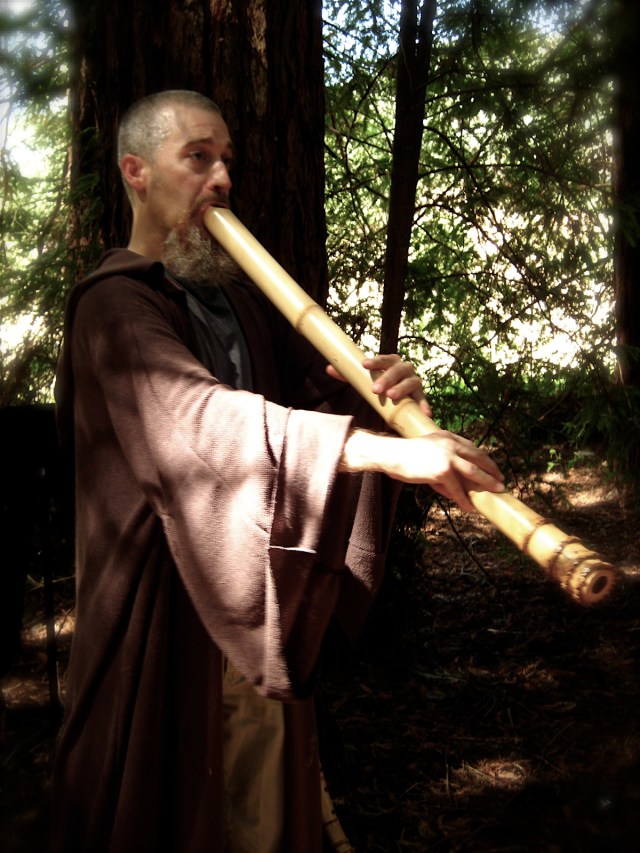
Portrait of composer/performer Cornelius Boots from his website

If one pays any attention to creative music in the Bay Area the name Cornelius Boots will come up with some frequency.  He is a good example of the rich cross cultural traditions which have flourished in this area.  California was (and is) in many ways the ground zero of east/west collaborations and Boots contributes his unique take on music and on some unusual instruments.  He is known for organizing the world’s first Bass Clarinet Quartet named, “Edmund Welles”.  He characterizes himself as, “Pied Piper of the nerdy, strange and enlightened.”  How California is that?

Boots has released a trilogy, virtually a manifesto, of his take on Shakuhachi, the Japanese bamboo flute, and our current musical/cultural proclivities.  In particular he favors the Taimu, described as the “baritone brother” of the shorter, higher pitched shakuhachi which is seen/heard more commonly.  The strange breathy sound of this instrument is widely known in traditional Japanese music and it is associated with Zen Buddhist traditions (Boots uses two different shakuhachis in this recording).  Here is where I derive my title for this review.  What Boots is doing is arguably cultural appropriation.  That pejorative epithet is thrown about rather cavalierly these days but what this artist does in this trilogy is to cross the bridge from mere appropriation to incorporation.  He has absorbed the traditional aspects of the instrument and is now at a point where he can inject his own musical consciousness into and through this unique instrument giving listeners a perspective heretofore unavailable.  That is art.

boots1

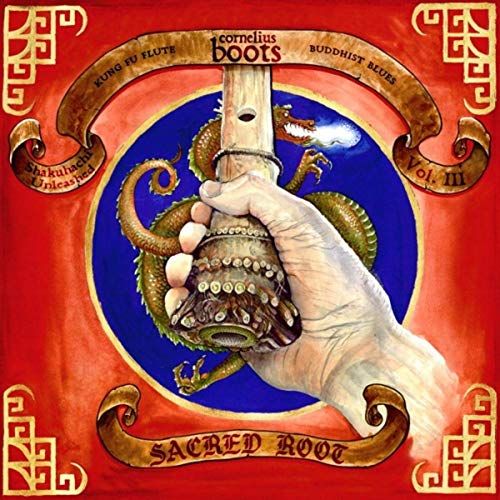
Shakuhachi Unleashed Vol. I

There is a curious unity to this trilogy of albums which suggests a major reckoning by the composer as he draws musical conclusions filtered through the lens of his experience and the traditions of his chosen instrument.  The unique playful cover art (by Nakona MacDonald) is one of the great unifying factors here.  In fact these CDs are dense with ideas and are worthy of close scrutiny to reveal their richness and how well integrated they are into this production.  Even the numbering of the tracks segregating each disc into a virtual “side A and side B” in the tracklist are a reference and homage to the days of vinyl records.  And of course the big unifying factor is the music itself.  All the music is the responsibility of Mr. Boots who also sings.  The only other noise is made by percussionist Karen Stackpole whose stomping is credited.

This first volume (2016) consists of:

Side A: Darkness

  1.  Blacken the Cursed Sun (Lamb of God)
  2. Heaven and Hell (Black Sabbath and Dio)
  3. Purgatory
  4. Until You Call on the Dark (Danzig)
  5. Damaged Soul (Black Sabbath)
  6. No Quarter (Led Zeppelin)

Side B: Salvation

  1. Hymn to the She Dragon of the Deep
  2. The Devil Points
  3. Taste of Nothing
  4. Year of the Gost God of the Flute
  5. Generuslu
  6. Behind the Wall of Sleep (Black Sabbath)
boots2

Shakuhachi Unleashed Vol. II

This second disc:

  1. Run to the Hills (Iron Maiden)
  2. The Wayward Meteor (Man or Astroman?)
  3. Obscured by Clouds (Pink Floyd)
  4. Baby Bear Drinks Tea
  5. One Brown Mouse (Jethro Tull)
  6. Green Swampy Water
  7. Snake Dreams of Dragon
  8. Sycamore Trees (David Lynch and Angelo Badalamenti)
  9. Creature Within the Atom Brain (Roky Erikson)
  10. Shadow of the Wind (Black Sabbath with Dio)
  11. The Greening of Mount Subasio
  12. Hung from the Moon (Earth)
  13. Over the Hills and Far Away (Led Zeppelin)
  14. Freebird (Lynyrd Skynyrd)


boots3

Shakuhachi Unleashed Vol. III

Here now is the latest release:

Side A: Kung Fu Flute

  1. Chim Chim’s Badass Revenge (Fishbone)
  2. Fisticuffs (Primus)
  3. Return and Enter the Dragon (Bruce Lee Movie Themes)
  4. Death of the Samurai
  5. Battle Without Honor or Humanity (Kill Bill movie music)
  6. Big Boss (Bruce Lee movie theme)
  7. Kung Fu and the Silent Flute (David Carradine theme music)
  8. Hey Joe (Jimi Hendrix)
  9. Rebel Rouser (Duane Eddy)

Side B: Buddhist Blues

  1. Black Earth
  2. Purple Haze (Jimi Hendrix)
  3. Shine On You Crazy Diamond Part II (Pink Floyd)
  4. The Mysteries of Harmony and Focus
  5. Beautiful Demon
  6. Shakthamunki
  7. You’re Gonna Find Your Mistake (James Kimbrough)
  8. It Hurts Me Too (Elmore James)
  9. Breathe (Pink Floyd)

There are wide ranging references and playful references like “shakthumunki (shock the monkey)” exist alongside music obviously important to this artist including traditional blues and a curious selection of blues’ baby, rock and roll as well as some very personal compositions.  There is much to ponder here.  There are references to prog rock, movies, Lovecraft, covers of some familiar tunes.  References seem to exist here to beat culture as well as, more prominently, psychedelic culture.  But no Grateful Dead?  Well, that’s another thing to ponder as we follow the piper who calls us to join him.


Contemporary Operatic Portraiture, Mason Bates’ The (R)evolution of Steve Jobs


I’m not sure who started the trend of so-called”portrait operas” but they seem to be on the increase.  Tech Icon Steve Jobs now has a portrait opera as well as a biopic, numerous documentaries, and at least one good biography.  And who better than music techie Mason Bates to write the opera?

So here we have what appears to have been a beautifully staged premiere of said work in a definitive performance by the always innovative Santa Fe Opera.  Steve Jobs is an icon of the tech industry and the business world and people want to hear about him even if it is a romanticization.

Bates is ideally suited to the task and this is likely to get multiple performances.  Of course a video would be a more ideal document but probably prohibited by cost.  This is an eminently listenable work and the enthusiasm of this live audience serves to underscore this reviewer’s personal response to this performance.

There are eight roles (one role is silent), a large orchestra augmented but never overwhelmed by electronics.  The electronics also serves in a metaphorical way to paint a sonic picture of this tech hero.  It also helps remind us that we are in the 21st century in every way.

The cast includes Kelly Markgraf, Edward Parks, Saha Cooke, Wei Wu, Maria Kaganskaya, Johah Sorenson, Garrett Sorensen, Jessica E. Jones, ensemble soloists (I’m guessing that means, “choir”) consisting of Adelaide Boedecker, Adam Bonanni, Kristen Choi, Thaddeus Ennen, Andrew Maughan, Corrie Stallings, and Tyler Zimmerman with the Santa Fe Opera Orchestra marvelously held together by conductor Michael Christie.

Librettist Mark Campbell has an impressive resume and this is an admirable addition to an already impressive list of dramatic successes. Photos of the production in the wonderful booklet which contains the libretto and background information show some visually a creative production. Computer screen shots of Jobs’ various products serve as background and the staging appears to make a few nods to Philip Glass’ Einstein on the Beach, its obvious progenitor.

Only time will tell the ultimate place this work will occupy historically but we can definitely enjoy this really entertaining piece.

Beethoven, Bartok, and Davidovsky with the Julliard Quartet


The Julliard Quartet is a hallowed name in classical music. This release reflecting its current generation of musicians is consistent with their practice of playing established classics alongside the modern. These are interesting choices of string quartets from the 18th, 20th, and 21st centuries.

Many will likely speculate on the motivations for these choices but it is a typical set of choices for a Juilliard Quartet recital, an intelligent mix of standard repertoire, not the “usual suspects” or most popular but musically solid pieces. And, of course, there is their all important embrace of the modern.

The Beethoven and the Barton are lovely choices intelligently played but the real draw, at least for this reviewer is the Davidovsky. Mario Davidovsky (1934- ) is a major American composer who deserves more performances and documentation of his work. Fortunately Bridge Records has taken on this task.

He is best known for his “Synchronisms” series pairing electronics with various acoustic instruments. This won him a Pulitzer Prize. But his music sans electronics is just as substantial and this 2016 String Quartet, his sixth, provides ample evidence of that substance.

Near as I can tell this is only the second recording of any of his quartets but it is sufficiently intriguing to whet the appetite for the other 5.

As a recital disc this one is thoroughly enjoyable and it’s inclusion of the Davidovsky is gloriously consistent with the overall image of the hallowed name of the Juilliard Quartet.

Wilhelmina Smith Plays Contemporary Solo Cello Works


img_2331

Ondine

The selection of repertoire suggests that this release is targeted Stan audience which enjoys contemporary solo cello music.  No pairing with earlier established warhorses such as Brahms Cello Sonatas, and no electronics either.  Just a highly skilled musician and her incredible technique navigating these relatively recent examples of this genre from two acknowledged living masters, Esa-Pekka Salonen and Kaija Saariaho.  It is a daring and unusual program for cellist Wilhelmina Smith but it works as a dazzling display of her skills.

Salonen is, of course, one of the best known composer conductors working today.  This reviewer’s only other exposure to Salonen’s work thus far has been the gorgeous Cello Concerto reviewed here.  No question that this is a name worthy of your attention.

And if you enjoy new music you will be familiar with Kaija Saariaho (1952- ).  Since she first burst on the scene in the early 1980s she has produced one success after another in pretty much all genres.  Like Salonen she is Finnish by birth but has taken her rightful place as an internationally renowned composer.

The performances are virtuosic and deeply felt. The complex range of sounds evoked are rich and stunning.  Highly recommended.

Music of a Forgotten Master: Daniel Wnukowski Plays Karl Rathaus


The displacements of war, genocide, and oppressive politics has condemned legions of composers and their music to languish in obscurity until resurrected by later generations. I recall Aaron Copland opining in an interview that there are likely more than a few masterpieces to be found from the years between the great wars (about 1918 to 1945). This album is a shining example which seems to validate Copland’s assertion. 

Karl Rathaus (1895-1954) was born in the eastern Austro-Hungarian Empire. Like many (primarily) Jewish composers. He emigrated to the United States to avoid the rising fascist regime. Not all such emigres were able to make a living in the Hollywood film industry and Rathaus labored in relative obscurity in the academy, namely Queens College.

Along comes the enterprising Polish-Canadian pianist Daniel Wnukowski whose knowledge of and affinity for Rathaus’ music brings us the present disc. This is virtuosic music that he seems born to play. The music seems to embody elements of Impressionism, Expressionism, Modernism (of the Rudhyar and Cowell variety), and doubtless others not immediately apparent to your humble reviewer.Wnukowski breathes life into these heretofore forgotten works.  

Certainly this is a genre disc that takes its place alongside Decca/London’s “Entartete Musik” and their ilk but it also stands out with a distinctive, powerful, and entertaining voice which serves to illuminate the folly and destructiveness of fascist politics.This is music that deserves serious attention and would likely enthralling a recital audience. 

This is a loving set of interpretations that will probably have listeners anxiously awaiting the next volume in this important series.That is definitely true for this reviewer. 

The Apotheosis of Lenny, a New Recording of “Mass”


Leonard Bernstein’s 1971 Mass was commissioned by Jacqueline Kennedy for the opening of the new John F. Kennedy Center for the Performing Arts in Washington, D.C. The premier generated both controversy and paranoia (by Nixon and his crew) but the recording sold well.

This is by my count the fifth commercial recordings not counting the one DVD release. In addition there are numerous full performances available on YouTube. All have their individual highs and lows.

This work is in many ways the single work that embraces all the facets of a truly multifaceted composer. There is serious classical music passages, cheesy electronic music, excellent choral writing, showtunes, dancing, and, above all, political protest.

This writer fell in love with the original Columbia vinyl boxed set on the mid seventies and that recording remains a critical reference point but the joy of multiple interpretations begins to show the depth and complexity of this work. It is, in this writer’s mind this composer’s song of the earth, struggling with all its complexities both beautiful ones and sad ugly realities.

The present release is very enjoyable but is marred at points by some clunky miking if the singers. No doubt this is due in part to the fact that this is a document taken from several live performances. That makes it difficult to hear the words at times.

Nezet-Seguin is strongest in his interpretation of the orchestral parts where he elevates the discourse effectively placing Bernstein alongside the great masters who he championed as a conductor. If his and the singers’ interpretation don’t swing the way Bernstein’s own did I would assert that it’s OK to hear those passages differently. Every serious interpretation is effectively a dialogue between composer, performers, and audience. And this one is moving.

A Bernstein Masterpiece Deserves More Hearings


This is a spectacular recording of an unjustly lesser known Bernstein masterpiece. It doesn’t have the familiar Broadway inflections found in much of his work but it is a solidly serious symphony/concerto which demonstrates an aspect of the composer’s wide range of compositional ability.

Bernstein wrote only three symphonies (the third and last written in 1963 in response to the assassination of John F. Kennedy) but all deserve attention and this may very well be the best of the three. Is is the only one without a vocal part.

In many ways it is similar to his “Plato’s Symposium” (1945) in that it has an obligato solo part but is not identified as a Concerto. That said, the solo part is substantial and the fine pianist Krystian Zimmerman needed to come to terms with this spectacular work. It is indeed not a Concerto. The piano solo is more like a character in dialogue with the instruments of the orchestra, an analogy for the events of Auden’s Pulitzer Prize winning long poem of 1947 from which it gets its title. It was dedicated to Bernstein’s teacher Serge Koussevitsky who conducted the premiere with the composer at the piano.

Simon Rattle clearly has a grasp of Bernstein’s early symphonic style (he also gets jazz and later Bernstein more readily than most European conductors. I must admit only a passing familiarity with this work but this recording has definitely rekindled my interest and it will likely have that effect on subsequent listeners.

Beautiful performance and recording. Seek this one out. You won’t be disappointed.

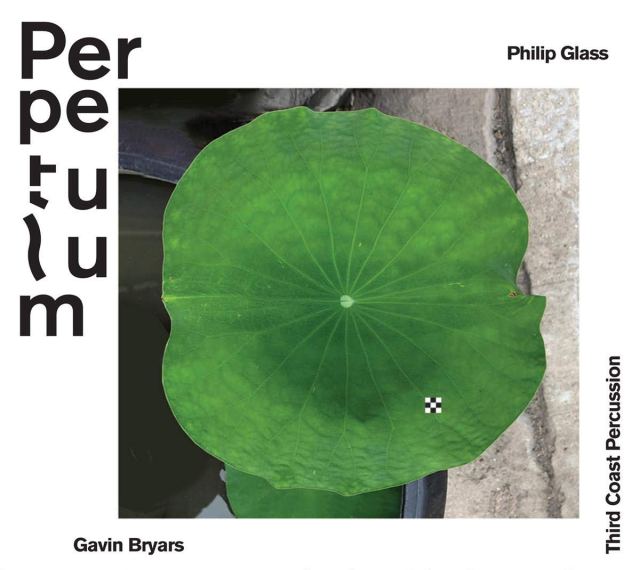
Perpetulum, a Double Album from Third Coast Percussion is a Triumph


perpetulum

Orange Mountain Music OMM 0132

Third Coast Percussion is one of Chicago’s finest musical exports along with groups like Eighth Blackbird and doubtless others with whom I have less familiarity.  Their deservedly Grammy winning album of music by Steve Reich was reviewed here.  All percussion ensembles are somewhat the rage these days judging by the amount of such albums that come my way.  Percussion instruments are common in eastern cultures but only really made its way into western ensembles in a big way in the last 100 years or so largely due to composers like John Cage and Lou Harrison studying music of other cultures and writing new music for both existing and newly invented percussion instruments.

Percussion is like the junk drawer of the orchestra in that any instrument which does not fit into the categories of strings, winds, or brass is handled by the percussionist.  The taxi horns in Gershwin’s American in Paris are a good example.  However what we have here is an ensemble entirely comprised of percussion instruments with some seriously virtuosic players here performing music written for them.

This two CD set from Orange Mountain Music contains five works by five composers.  The first CD is dedicated to the largest work on this release, “Aliens with Extraordinary Abilities” by ensemble member David Skidmore.  It is, at about 35 minutes, the longest piece in this collection and is virtually a symphony for percussion and electronics.  It is in seven movements, each with a cryptic title no doubt related to the musical content.  It is an engaging work of some complexity with fascinating writing for percussion instruments. Multiple close listens will reward you with details not immediately apparent and reveal some of the structure of this large work.

The second CD begins with a shorter work by ensemble member Peter Martin called “Bend”.  It has the characteristics of an orchestral work using largely pitched percussion.  It presents themes, develops them, and has a detectable harmonic structure.  It is a showpiece for the musicians but it does communicate with the listener.

Next up is Philip Glass in his first all percussion work, “Perpetulum” (2018) has four movements and clocks in at about 25 minutes.  This is music by a seasoned composer, not the experimental music of his earlier years (which hooked this listener) but rather a recognizable and comfortably familiar style with some really nice writing for percussion.  Glass has frequently used percussion of various sorts in his works but this is the first thing he has written entirely for percussion ensemble.  It is an audience pleaser and a challenge to the musicians.

This is followed by a work by another member of the group Robert Dillon.  “Ordering-Instincts” (2018) is cast in one movement it is a relatively brief (7min approx) piece which successfully challenges the players and entertains the audience.  It also seems to provide a nice segue to the final cut.

The disc concludes with a major percussion work by British minimalist Gavin Bryars.  “The Other Side of the River” (2018) is a commission by Third Coast Percussion and is a valuable addition to Bryars gentle, pensive oeuvre.  For this listener this piece is the highlight of this collection.  Bryars is at his best in his meditative mood.  Sinking of the Titanic and Farewell to Philosophy come to mind as similarly relaxing and thoughtful.  This is a big piece and well worth the journey of listening.

bryarsOM

Bryars at the Other Minds Festival in San Francisco, 2016 (Creative Commons license by Allan J. Cronin)

This CD set is a massive undertaking and a fine production illustrating the range of compositional interests of Third Coast Percussion as well as their own compositional chops.  It is also a great sounding recording.  Very well done.


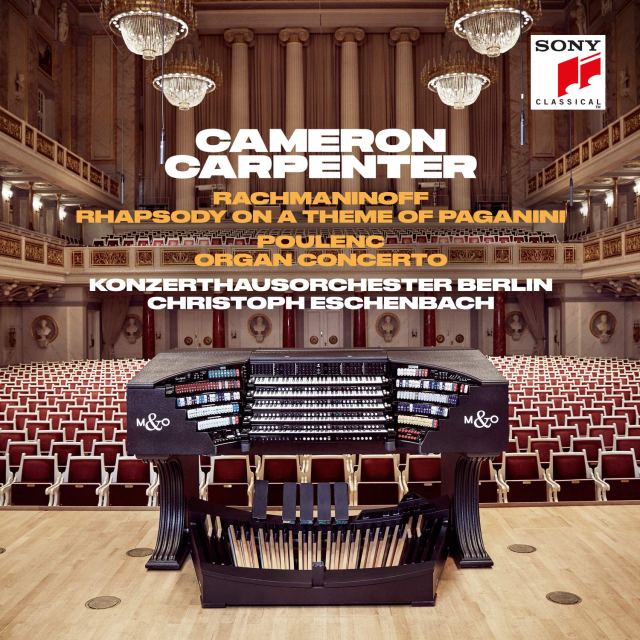
Flash with Substance, Cameron Carpenter Takes on Rachmaninoff and Poulenc


carpenterrachpag

Sony 8898590822

Cameron Carpenter (1981- ) is a spectacular musician and showman.  But don’t let his showmanship fool you.  He is a brilliant and disciplined musician and arranger and belongs to a tradition of flashy virtuosos.  He is also not the first organist to have and use a portable organ either.  Prior to Carpenter people “of a certain age” (your reviewer qualifies) may remember one Virgil Fox (1912-1980) whose musicianship and showmanship delighted audiences of an earlier era.  He too sometimes worked with a portable organ.  In fact he did a show at, of all venues, The Fillmore East with his Rodgers Touring Organ.  This storied home to late 60s rock and rollers included a light show with Fox’s performance of Bach et al.

Another keyboard genius who took on a little flash at one time is Anthony Newman (1941- ) whose enthusiastic and authoritative presentations opened a whole new generation to music of Bach and others as well as introducing them to the organ and harpsichord.  Newman, also a composer of note continues to be a valued concert performer and interested listeners are encouraged to check out his website for more details about this man’s recordings and compositions.

One can’t look at Carpenter with his mod haircuts and stylish clothing without thinking of another wonderful flashy virtuoso, Nigel Kennedy (1956- ), a wonderful violinist with a powerful style and stage presence.  Once again the presence belies the genius just beneath the flash.  Surprisingly he does not have his own web page so I linked to his Wikipedia page.  The Guardian and at Warner Classics also maintain pages on him.  C’mon Nigel, get someone to set up a page for you, dude.

All this is just to put Mr. Carpenter in context (as much for myself as my readers).  So on to the main purpose of this review, the disc.  I don’t know off hand how many discs he has released so far but this one is a fine place to start if you don’t already know this musician’s work.  It includes his work as organist solo and with orchestra, and as arranger in the opening work, Rachmaninoff’s wonderful Rhapsody on a Theme of Paganini (1943).  Originally, of course, the work is for Piano and Orchestra and is a piano concerto in all but name.  (And the disc is indexed so you can choose each variation separately if you wish.)

carpenter

Carpenter posing with his touring instrument

Cameron’s arrangement is effective and entertaining.  I will not give up my love for the original but this arrangement does what a good arrangement should by providing insight to the music.  I can only imagine the difficulties encountered trying to make this piece playable on an organ and balancing the sound with the orchestra.  Fortunately Cameron has a valuable partner in crime here.  The Konzerthausorchester Berlin is led by the brilliant conductor Christoph Eschenbach.  And he uses his portable touring organ which sounds as good as any I’ve heard.  They sound fabulous together and the recording is top notch.

How do you follow the Rachmaninoff?  Well, how about the Francis Poulenc Organ Concerto (1934-8)?  Yes, this concerto for Organ, Strings, and Tympani may be a discovery for many folks.  It is a piece which hooks the listener from the very beginning with a crashing fortissimo chord from the organ.  It goes on to an almost baroque sounding development with modern harmonies throughout.  It is a fitting companion on this disc to the opening piece.

And, finally, the final allegro from the Organ Symphony No. 1 Op. 14 (1898-99) by Louis Vierne (1870-1937) who was the organist at Notre Dame in Paris from 1900 to 1937.  Vierne (who wrote six grand symphonies for solo organ) studied with another grand master of the organ Charles Marie Widor (1844-1937).  He wrote ten organ symphonies and a host of other music as well.  Also worthy of note is the fact that the man who first performed the Poulenc concerto was another grand organist/composer named Maurice Duruflé (1902-1986) who was Vierne’s assistant at Notre Dame for a time.

If you like organ music you will love this album.  And if you like flashy virtuosos then by all means check out Carpenter’s website and YouTube channels.  Enjoy, and play it loudly.

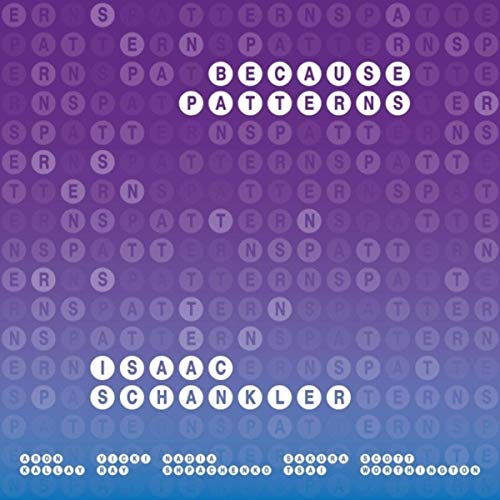
Because Isaac Schankler


schanklerpatterns

aerocade music

Isaac Schankler billed on their own website as “composer, etc.” clearly has a sense of humor but that characterization is as good as any to describe this composer, performer, teacher, writer.  Suffice it to say it is worth your time to check out that web site.

Schankler’s name and music are new to this writer’s eyes/ears bit it is delightful to make the acquaintance of this artist via the present release.  Three electroacoustic works are presented.  Schankler does the electronics and an array of musicians play the acoustic instruments.

Schankler_headshot

Isaac Schankler (from the composer’s web site)

The combination of acoustic instruments with electronics (fixed and/or interactive) goes back at least to Edgar Varese and has practitioners which include Mario Davidovsky, David Behrman, Milton Babbitt, and a host of others too numerous to discuss within the scope of this review.  The point is that Schankler seems to be a part of these traditions and has developed a personal way to work with this hybrid medium.

One of the problems this writer has experienced while trying to understand and write meaningfully about electronic music (with or without acoustic instruments) is that textbooks on such music seem to end their surveys in about 1990.  Add to that the fact that electronic music, once a category banished to a sort of appendix in the days of the Schwann Catalog, has now acquired multiple meanings.  Electronic music now apparently includes dance music, dark ambient musings reminiscent of Pink Floyd and Tangerine Dream, individual experiments typified by artists like David Lee Myers and Kim Cascone, and the original meaning with work by pioneers like Subotnick, Luening, Babbitt, etc.

This disc would have been listed in that little appendix I mentioned earlier if it had been released in the 70s or so.  It is, in this listener’s mind, classical electronic music.  Perhaps one could dance to it but it seems to be written with the intent of presenting musical ideas and highlighting the musical skills of performers on their acoustic instruments.  This one is best heard with headphones and serious attention.

The first track is Because Patterns/Deep State (2019) is a sort of reworking of two earlier pieces Because Patterns (2015) for prepared piano duo (Ray/Kallay Duo) and The Deep State (2017) for double bass and electronics.  There is an interview on Schankler’s website that discusses the composer’s processes in each piece and the reasons for combining the two into the present form.  The solo parts, such as they are, are performed by Aron Kallay and Vicki Ray on keyboards and Scott Worthington on double bass (curiously the soloists were recorded in different studios).

From a listener’s perspective one of the most striking things was how deeply embedded the solo performers are.  This is like a concerto grosso in which the instruments are more embedded in the texture.  It is a complex piece which demands the listener’s attention but ultimately rewards said listener in a musically satisfying way.  In short, your reviewer has only the faintest grasp of the processes involved but appreciates the end product.  At about 25 minutes this is a commitment but one worth tackling.

Mobile I (2009) is written for violin and electronics (interactive) and is described by the composer as an audio analogue of mobile sculpture.  Think Calder set to music perhaps.  Again regardless of the process the main concern for the listener is whether the result actually entertains. Here, where the soloist (Sakura Tsai) is more at the forefront, it is easier to hear the interactive nature of the music as the gestures of the violin are responded to by the electronics.  It is a form of call and response with the soloist in the lead and the electronics answering.

The third and final track is Future Feelings (2018) commissioned and premiered by Nadia Shpachenko and, according to the composer’s website was the result of experiments seeking pleasing sounds for the composer’s first child.  This is not a lullaby but rather a working out of ideas.  It works as a concert piece as intended but is probably not going to make its way onto a “soothing sounds for babies” CD any time soon.

This digital and vinyl release semis to have precious little in the way of notes to guide the listener but this label aerocade can be forgiven on the strength of their choices in repertoire and quality of recorded sound and the composer’s website is nicely designed and informative. Their release of the Post-Haste Duo was reviewed most favorably in these pages earlier and a quick scan of the label’s website suggests that this label (established by Meerenai Shim , who also did the lovely design of the cover, this is the 11th release of a label that deserves the attention of new music fanciers).  Links are provided for the interested listener, all of which will lead to a better understanding and will serve as a guide to find similarly interesting and creative music.

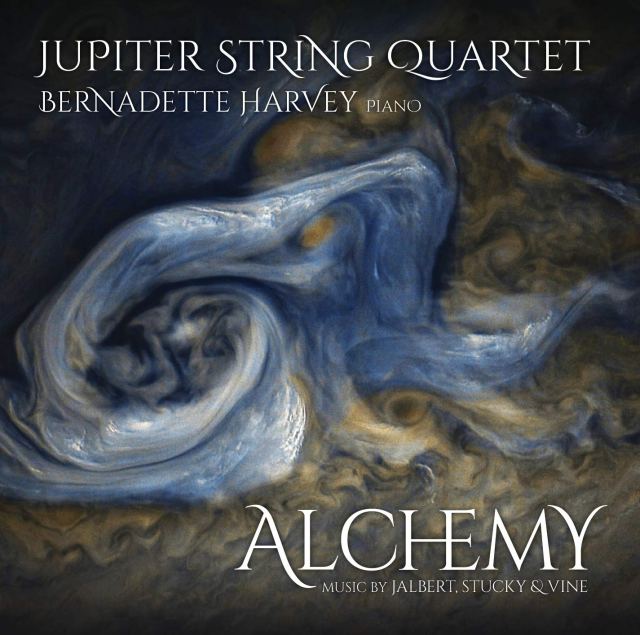
Fantastic New Music for Piano and Strings, The Jupiter Quartet with Bernadette Harvey


alchemy

There is no small irony for this reviewer in the title of this offering.  As soon as it was removed from its packaging I, much as Alice was implored by the comestibles in Wonderland, felt compelled by joyous expectation to consume it with eyes and ears.  And I was not disappointed.

Three composers are represented with one work each (two by Mr. Jalbert) in an album of recent compositions in modern but essentially tonal chamber music for highly skilled musicians. All But one (Secret Alchemy) are world premiere recordings commissioned by the Arizona Friends of Chamber Music and all contribute most handsomely to the piano and strings literature.

The highly skilled musicians are the extraordinary Australian Bernadette Harvey on piano with the Jupiter Quartet (Nelson Lee and Meg Freivogel, violins; Liz Freivogel, viola; and Daniel McDonough, cello).  They play extremely well together despite having to navigate all new and challenging material.  Harvey, in addition to traditional repertoire is a major advocate for living Australian composers.

jalbert

Pierre Jalbert

The album opens with Piano Quintet (2017) by Pierre Jalbert (1967-  ) which draws as much on the romantic tradition (can one hear the ensemble name “piano quintet” without thinking of Schubert, Brahms, and Schumann?) of that ensemble’s configuration as on his more modernist sense of rhythm and harmony.  It is cast in four movements titled, Mannheim Rocket, Kyrie, Scherzo, and Pulse.  This is a major work by a composer new to these ears and apparently very substantial.  This is highly engaging music with romantic leanings perhaps but there is nothing derivative here.  This composer is a voice that deserves an ear or two.

stucky

Steven Stucky

Next up is music by the late lamented Steven Stucky (1949-2016).  While I regret not having gotten to know a lot of his music during his lifetime I find myself enthralled at the power and lyricism of each work I hear (the man was prolific too so I have much listening to catch up on).  This one is no exception, Piano Quartet (2004-5) is in a single movement with multiple sections of varied character.  Anyone who has heard any of Stucky’s music will find this piece both exciting and accessible.

vine

Carl Vine

Carl Vine (1954- ) is a prolific Australian composer (the only non-American composer represented) whose work certainly deserves to be better known outside of his native country.  He does appear to get recognition and respect there and with Fantasia for Piano Quintet (2013) we can see why.  This one movement work is (like the Stucky piece) divided into sections played without pause.  This is another work of both power and virtuosity which holds the listener’s interest and, ultimately, provides a satisfying concert experience.

The program ends with another substantial work from Mr. Jalbert, a piano quintet in all but name.  Secret Alchemy (2012) allows us to hear some earlier chamber music writing by this composer.  Again each movement is given a title but this time they are more like expression markings and less poetic.  They are: Mystical, Agitated, Timeless, and With Great Energy.  Why that’s practically a program note!  And like the piece that opened this disc it indeed has great energy and will engage the listener.

This album exceeded my enthusiastic expectations and I will listen again, probably many times.  Well done.


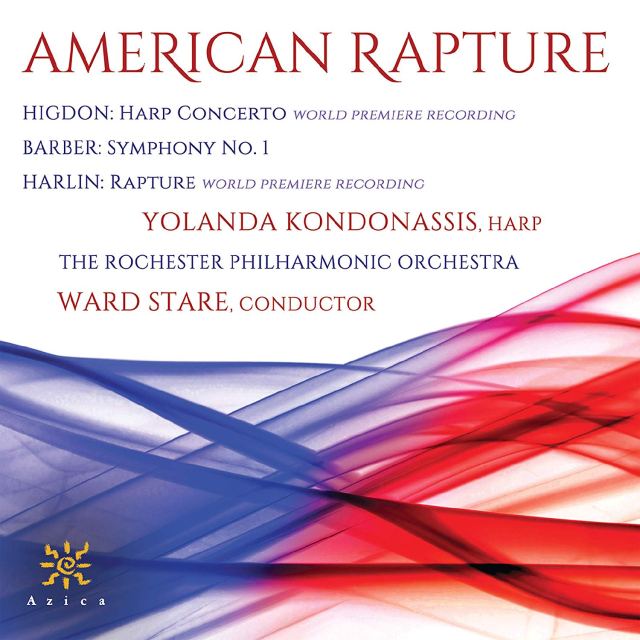
American Neoromantics: Higdon, Barber, and Harlin


higdonrapture

Two contemporary world premieres paired with Samuel Barber’s masterful First Symphony make this disc a delicious sampling of neoromanticism in American music.

The standout here, and the main reason to buy this disc is the glorious Jennifer Higdon Harp Concerto (2017).  Higdon, the third woman to win a Pulitzer Prize (by my count) is clearly schooled in a wide variety of compositional techniques which she uses judiciously.  She is unabashedly a romantic but her sound is hardly retro.  She, like many well trained and talented composers, uses her many skills and techniques judiciously.  Nothing experimental here, just good writing for both orchestra and soloist.

Higdon’s concerto is cast in four movements and grabs the listener’s interest immediately.  Using her gift for writing melody and effective use of extended harmonies she crafts a truly great concerto for the instrument.  It is bright, playful, and engaging.  Her writing for the harp (and Kondonassis’ seemingly easy grasp of astounding virtuosity and lyricism) work well with the orchestral writing making a very satisfying listening experience.

The soloist, Yolanda Kondonassis, is a familiar name to fans of harp music.  Her many albums demonstrate a range of interests and skills that keep her name in the public eye/ear.  Her recording of the Ginastera concerto was reviewed previously on this blog here.  Listeners are advised to explore her web site for more exciting and listenable music.

The second piece, Samuel Barber‘s First Symphony Op. 9 (1936) is an acknowledged masterpiece of the mid-century American neoromantic tradition.  Barber’s music hearkened back to the romanticism of the late 19th century at a time that also saw the birth of a great deal of post-Schoenberg modernism.  Some of the similarities between Barber’s work and Higdon’s is doubtless the reason for the inclusion of this too little heard masterwork.  It is cast in one movement and makes wonderful use of a large orchestral palette.

This is followed by the second world premiere on the disc by one Patrick Harlin, a name unfamiliar to this reviewer but one with, apparently, a similar aesthetic and some serious skills as a composer/orchestrator.  Rapture (2016-7) certainly shares some of the sonic fingerprint of the previous two pieces and raises the specter of another talented composer emerging into the light of said American Rapture.

The Rochester Philharmonic Orchestra is clearly up to the task as is conductor, Ward Stare who is another rising star you’ll want to keep on your collector’s radar.  His grasp of conducting and insight into this music suggests he will continue to surprise and please audiences.

The recording on Cleveland based Azica records is well recorded and all the music supports repeated listenings where the attractive surface of the music gives way to more detail.  All in all a CD that fans of Jennifer Higdon, Yolanda Kondonassis, and American Romanticism will want to own.