I am grateful for this music review aggregator Feedspot. They have declared my blog New Music Buff to be among the top 35 new music blogs. I made number 20 this year.
Here is their review:
20. New Music Buff » Experimental Music
Blog https://newmusicbuff.com/category/experimenta.. Indulge perspectives from an informed new music fan. Enjoy nuanced takes and some amusing anecdotes from artists of Experimental Music. New Music Buff envisages the musical interest and preferences of a long-time listener with a fervent interest in all music new and old.
I am grateful to have achieved this ranking but I am also delighted to be able to see the perceived context of my peers in this area. New Music Buff is a solo effort now going into its 14th year of publication. And that description does a fine job of characterizing my work. I’m grateful to get to see my competitors (though competition is hardly the point).
With the relative demise of print magazines that carried reviews of new releases, listeners now tend to rely upon the blogosphere to find new music to suit their interests. The problem is that the meanings of words like “new music”, “experimental”, “avant garde”, etc. can steer the reader to a great deal of music and not necessarily music that satisfies their thirsts. So this blog aggregator attempts to collect sites and provide brief descriptions that help hungry listeners find items to satisfy their tastes.
One of the very useful aspects of this aggregator is also to provide bloggers a context by defining a purported peer group which I can tell you, has enlightened this blogger/listener. This site is designed in part to provide mailing lists and contacts for musicians, promoters, and publishers. There are various useful products but listeners can find low or no cost items here that can really help searchers find their way.
After agonizing about writing a “best of” blog and publishing it before January 1, I decided to take a pause and enjoy the holidays. So here I look back on my 2023 in the rear view mirror but with memories still pretty fresh.
Regular readers of this blog likely already know of my oft shared opinion of the superfluous nature of “best of” lists and of my acquiescence in producing such on an annual basis. I certainly don’t think of this as a meaningless exercise and I think the process has grown on me. It is a chance to achieve a perspective which would be missed by simply plowing on ahead with the usual flow of reviews and articles. But drawing down that 12 month perspective is an opportunity to evaluate those months, to see where we’ve been and to hopefully get a smidgen of insight into where I/we are likely headed.
My Facebook friends will recognize the representative meme at the head of this article which is one of the more cloying aspects of “AI”, whatever that is. So indulge me for a moment to look at this seemingly new intrusion into the reality we thought we knew. So, what is “AI” and what will it do to us? Ultimately I’m not the one to answer that question but I’d like to throw some ideas to add to the speculation.
First, the choices a composer makes, like the choices of a painter, a writer, etc. are the stuff of the mystery of creation itself. Why “A major”, or why that tuning, or scale, or rhythm, or orchestration, etc? So along comes the notion of removing, or at least distancing, the artist from their creative product. That notion started not with famed proponent John Cage but rather with Johannes Chrysostymous Wolfgang Amadeus Mozart in his K. 516f musical dice game. Voila! Algorithmic composition (actually fairly common practice in the classical era). An early manifestation of “AI”? Perhaps.
Lejaren Hiller (1924-1994) was the first composer to employ electronic data processing in a musical work in his Fourth String Quartet subtitled “Iliac Suite” in 1957. There followed similar experiments with various iterations of electronic creations at music centers worldwide including The University of Illinois at Champaign, Columbia-Princeton, Stanford, The University of California Berkeley and San Diego, The San Francisco Tape Music Center (later subsumed into the Mills College Center for Contemporary Music, IRCAM in Paris, Israel Electronic Music Studio, and counterparts in the Nordic countries, Germany, Belgium, etc. Proto “AI”?
While historically interesting I raise this issue to say that, as far as I can tell, “AI” has not made this writer’s greatest hits list but it is interesting and maybe even useful. With that, my concern for the subject officially goes to the back burner for a later time.
2023 has been a year of great personal changes for the writer of this blog. A job change, a geographical relocation, and many things unrelated to this blog characterized a busy year for New Music Buff. So here in a sort of holiday tradition I present my “Best of 2023” from my little listener’s corner of the world. For the sake of simplicity I present a more or less chronological exposition of my sonic adventures. (N.B. Not one portion of this article made use of “AI”).
I begin with not with my 20 most read posts, a practice that characterized previous iterations of this annual exercise. Instead I am providing my top 20 favorite releases that were reviewed in 2023. Please note a couple of caveats. First, I receive a lot of review requests, more than I can even listen to, much less give a reasonably intelligent review. Albums that I’ve not reviewed should not be assumed to be bad or insignificant and my reviews are personal observations. I really only review albums that interest me anyway. Second, this article is only one reviewer’s opinion and not intended to be definitive or to supersede anyone else’s opinions. Third, this is not the end of my attention to music that was released in 2023. Some releases require more time to give a fair listen and a respectful review. There are more to come in 2024.
First a few stats: 2023 saw the publication of some 45 blog posts on New Music Buff, earning me 9693 views for the year. I rarely get comments on my posts (though I welcome and invite comments both positive and negative). Not bad, I think, for the overall less appreciated musical styles that fuel my desire to write about.
Now, in chronological order (of publication) are my personal favorites as a listener:
Neuma 158
Binaural Beats in the Tudor Rainforeststarted my new year with a bang. Reviewing this disc required me to take a closer look at the astounding work of David Tudor and his unique contributions to new music. This important release is a recording of a work which, by its own concept cannot receive a “definitive” performance. But this recording comes mighty close, involving “binaural” recording utilizing a mobile set of binaural microphones which are worn by the recordist. In addition this recording involved a collaboration with Pauline Oliveros and a group called, “Composers Inside Electronics”. The recording was done during Oliveros’ tenure at UCSD. Rainforest IV is so called because it is the fourth iteration of the instructions that form the original concepts of Tudor’s composition, “Rainforest”. It is an immersive sonic experience heard on headphones but actually not bad even heard on stereo speakers. A rich and wonderful release.
Starkland S-236
From a 1960s electroacoustic to a budding 21st Century composer Kotoka Suzuki released on the reliably interesting and even visionary Starkland label. Next Gen Electroacoustic: Kotoka Suzukiwill introduce the listener to this rising star who doubtless will produce more of her compelling compositions.
Sony 194399434826
Igor Levit is a fine concert pianist whose albums are effectively redefining the way we, as listeners, perceive the western classical oeuvre. Igor Levit: Defining Tristandoes for the various musical pieces inspired by the Tristan legend what Levit did for the concept of the great keyboard variations in which he selected Beethoven’s “Diabelli Variations” and Frederic Rzewski’s “El Pueblo Unido Variations” to join his recording of the Bach “Goldberg Variations” in a 3 disc package placing these three large sets of variations as emblematic of the genre in three different centuries (18th, 19th, and 20th). Levit, by his recorded output, is providing a valuable perspective which may influence repertory choices for years to come.
Levit’s traversal of the Tristan legend here ranges from the second recording of Hans Werner Henze’s too seldom heard “Tristan Preludes” back to works by Wagner (of course) and Liszt. He even slips in his wonderful solo piano transcription of the Adagio of Mahler’s unfinished 10th Symphony into the mix. This is a very compelling Tristan anthology by a deservedly still rising star.
Cantaloupe
This Cantaloupe release by Bang on a Can composer and master clarinetist Evan Ziporyn is both masterful and great fun. Evan Ziporyn: Bang on a Popconsists of transcriptions of “pop” songs for multiple clarinets all played by Ziporyn via his very effective multi-track recordings. The album is very personal and pretty much cliche free with these engaging and insightful transcriptions. It is an homage to the songwriters as well as a showcase for Ziporyn both as composer and as performer.
Microfest MF 23
The Young Person’s Guide to Ben Johnston is an ideal way to introduce listeners to the wonderful world of the late Ben Johnston’s music. Johnston, a student and colleague of Harry Partch shows his compositional skills utilizing non-traditional western tunings in these representative works. Johnston here does for some quasi pop tunes what Evan Ziporyn did with his clarinetist perspective for the tunes on Pop Matters. But Johnston’s pretty, accessible work belies fascinating complexities that don’t actually sound complex to the listener. This disc contains Johnston’s last completed work, “Ashokan Farewell” (which Johnston took to be a public domain folk tune but is in fact a piece written by Jay Ungar). It is paired with the 4th String Quartet (a set of ingenious variations on “Amazing Grace”) from 1982 and the 9th String Quartet of 1997. Profound, lovely to listen to, and a great homage.
DVD OM 4001
This DVD is a major addition to the discography of Charles Amirkhanian’s sound poetry as fine sampling of one aspect of Carol Law’s (Amirkhanian’s life partner) complementary visual art. These collaborations are also important contributions to the visual and performative aspect of these collaborative works. Amirkhanian has been a fine curator and promoter of the work of others but he has rather seldom stepped into the spotlight himself. This quirky genre got some fabulous exposure at the 7 day Other Minds 23 festival in 2018 in which Amirkhanian’s work was presented in the (surprisingly varied) context of sound poetry of the amazing international collection of artists who were hosted at those events. This DVD should be in the collection of anyone interested in new music sound poetry and performance art. It is both entertaining and mind bending featuring a juxtaposition of images and sound reviewed in greater detail in the post “Dyadic Dreams”. But words cannot do justice to these works. You really have to see them.
Cedille CDR 90000 210
Readers of this blog know my fondness for the Chicago based label Cedille and their promotion of Chicago based musicians. This disc stands out in this group’s embrace of non-traditional composers alongside more traditional works. The inclusion of works by DJ composer Jlin and the academy based genre defying duo Flutronics alongside composers like Danny Elfman and Philip Glass demonstrate the wide ranging repertoire of Third Coast Percussion. Much more information can be found in Perspectives: Spectacular World Premiere Recordings from Third Coast Percussionon my blog. This one reimagines the percussion ensemble.
Neuma 176
This disc is a good example of why listeners and collectors should pay attention to the Neuma record label. Philip Blackburn, who had been the very successful curator of Innova records, took over the defunct Neuma label which was founded with the intention of promoting largely electroacoustic music though not exclusively.
Agnese Toniutti‘s New Music Visionis actually a review of two discs by this rising star, a dedicated new music pianist that needs to be on your radar. The other Neuma disc contains Toniutti’s traversal of John Cage’s reluctant masterpiece, “Sonatas and Interludes for prepared piano”.
The disc pictured here is Toniutti’s vision beyond the Cage work. This one focuses on mostly living composers Lucia Dlugoszewski, Tan Dun, Philip Corner, and Toniutti’s herself. Basically, if Toniutti plays it, you should probably at least give a listen.
2023 saw the completion of Bay Area pianist Sarah Cahill’s epic survey of piano music by female composers. Cahill is another (predominantly) new music focused pianist about whom I would also assert that, if she plays it, you should probably give at least one listen.
The End of the Beginning: Sarah Cahill’s “The Future is Female” Trilogy Completedwill tell you all you need to know about this trilogy which encompasses about 300 years of music history and sheds light on some fascinating and substantial music written by women. Most of the works on this trilogy of albums are, in fact, world premieres but, fear not, even the pieces which are not premieres are likely not in your collection. This is a brilliant selection of music that effectively throws down the gauntlet to challenge other artists to explore this repertory. This trilogy is a true landmark and a joy to the ears.
This third volume in the wonderful Catalyst Quartet’s survey of another unjustly neglected group of composers focuses on the music of three black Americans of the twentieth century. Catalyzing Blackness, Volume Three: The Catalyst Quartet plays 20th Century music by Black Americans was nominated (but didn’t win) for a Grammy Award and, happily, I’m told that more volumes are in preparation. Again, this music is a pleasant revelation that does for black composers what Sarah Cahill has done for women composers (N.B. The first volume by the Catalyst Quartet focused on the black female composer Florence Price). And here’s hoping that Coleridge Taylor Perkinson, George Walker and William Grant Still will become household names in the concert hall.
Microfest MF 21
Son of Partch, Carrying on a Traditionis a really wonderful disc which, though I reviewed it in exceedingly positive terms, provoked a strongly negative reaction from the artist. The reaction apparently also provoked enough interest to have made this review one of my most read of 2023.
But, aside from the unfortunate negative reaction, I still maintain that this is a fine release worthy of attention from anyone who likes new music, microtonality, and the music of Harry Partch. Cris Forster is a composer, theoretician, and instrument builder clearly descended from the Partch tradition. His work deserves attention and this disc is a very satisfying experience.
Islandia IMR 011
Steven Schick is a master percussionist and conductor. This release is the first volume of his personal choices of solo percussion repertoire. Solo Percussion Manifesto Volume I: Steven Schick’s “A Hard Rain” is a manifesto of sorts and does for solo percussion music what Sarah Cahill has done for women composers and the Catalyst Quartet is doing for black composers. There are not many recordings of solo percussion music and Maestro Schick essentially presents his favorite works in definitive performances on a label produced by Bang on a Can cellist Maya Beiser. The second volume is in my review queue and, if this first volume is any indication, it will be a landmark survey.
Cedille
Rising Star Seth Parker Woods’ “Difficult Grace” is a Classic in the Making. Here’sanother Grammy nominee that did not win but, this second album by this fine American new music cellist is a winner in my book (er, blog). This is actually the audio of what was developed as a staged performance but the music speaks for itself. Keep an eye/ear out for this rising star who, even now, is storming the new music cello scene in invigorating ways.
Neuma 128
A Reason to Listen: Roger Reynolds’ Latest, “For a Reason”,new recordings on Neuma Records. Here we see Neuma following its original electroacoustic mission with this remarkable set in celebration of Roger Reynolds’s 90th year. This is a lavish 2 CD box set with a beautiful booklet and lucid liner notes. It is a worthy production which showcases recent works by this prolific and important American composer.
Readers of this blog likely are aware of my interest in music that is suppressed and/or neglected so this disc grabbed my attention immediately. Israel does a great job of funding the arts and this can be seen in the proliferation of truly fine performers nurtured by that funding. Less well known are the composers who have flourished in the art healthy politics of this country. Some 50 years of history are represented here. This is but a sampling, albeit finely curated, of several generations of composers displaying a plurality of styles with substantial results. This entertaining disc will whet the appetites of intelligent and curious listeners and, hopefully, bring about more recognition of the world class composers who deserve an audience.
Though this was ostensibly Randall Goosby ’s show, the music making was a wonderfully integrated duo with pianist Zhu Wang, These two fine young musicians shared the virtuosic duties that the music in this concert demands. Both are clearly hard working and dedicated artists. Both have technical and interpretive prowess. And they clearly embody a mutual respect for each other.
Pianist Zhu Wang
The music on the program served to demonstrate the duo’s creative selection of music:
Coleridge-Taylor: Suite for Violin and Piano, op. 3 Brahms: Violin Sonata No. 2 in A Major, op. 100 (“Thun”) Still: Suite for Violin and Piano Price:Two Fantasies Strauss: Violin Sonata in E-flat Major, op. 18
Curiously, due to this reviewer’s lack of familiarity with the violin and piano repertoire and having written some recent reviews of black composers’ music, the only familiar pieces were two of the three pieces by black composers. Now, overall, this is a marvelously chosen set of pieces that reflect the eclecticism and technical skill of both of these musicians.
The classic Paul Freeman conducted set of music by black composers.
The Brahms was perhaps the most familiar to audiences but the other works were equally substantive and worthy of being heard. It is these rather visionary choices that characterizes this duo as fresh and innovative. In addition their obvious knowledge of the music along with their enthusiasm and affection for it conspired to make for a delightful evening and even nudged this reviewer to try to become more familiar with the violin and piano repertory in general.
Samuel Coleridge-Taylor (1875-1912) was a black British composer who has of late had a much needed revival of his music. He was named in honor of the celebrated British poet Samuel Taylor-Coleridge (1772-1834). During his rather brief lifetime, Samuel had been hailed as “the British Mahler but, after his death, his music lay largely fallow until revived by the late, great American black conductor, Paul Freeman (1935-2015). His revelatory series for Columbia records (now Sony) opened listeners’ ears to a fascinating selection of music by black composers internationally.
The Coleridge-Taylor opus 3 Suite for violin and piano (1893) is an early work cast in the high romantic late 19th century style of broad melodies and virtuosic demands. It served as the introduction to an intoxicating evening of (partly) seldom performed works alongside some fairly established works in the repertoire.
The Johannes Brahms (1833-1897) second violin sonata (of three) was written in 1879 and was named “Thun” after the Swiss city where he composed it. The three movements follow the classical fast, slow, fast structure common to this genre.
It is a product of high romanticism and it remains a staple of the repertoire. It, as with most of this composer’s music, is technically challenging for both instrumentalists. It was a fine vehicle to confirm the incredible technical skills of these young artists.
William Grant Still (1895-1978) was one of the finest composers of the early to mid twentieth century. Like Coleridge-Taylor and Florence Price (1887-1953), his music was lauded during his lifetime but was neglected until fairly recently in the aforementioned Black Composers set. These musical choices revealed another aspect of this delightful pair of musicians, that of being essentially musical archeologists uncovering forgotten gems much as Lord Carnarvan’s work availed the world to the marvelous Egyptian art of King Tut’s tomb.
Still’s Suite for Violin and Piano was inspired by three sculptures–Richmond Barthé’s African Dancer, Sargent Johnson’s Mother and Child, and Augusta Savage’s Gamin. Written in 1943, it synthesizes elements of blues, pop, and classical music to create musical description of this ethnically inflected visual art.
Richmond Barthé’s African Dancer
Sargent Claude Johnson’s Mother and Child (ca. 1932)
Augusta Savage’s Gamin
The three movements comprise essentially tone poems based on the visual artwork. It was after the second piece, depicting the Mother and Child sculpture that the spell cast by the duo’s that revealed the “Thrall” of this blog’s title.
Goosby embodies a calm and casual confidence and he let the audience know early on that it is OK to applaud after a single movement if you are so inclined. He has a warmth that put the audience at ease, embracing us in a most genial manner. There is, of course, nothing wrong with musicians who might seem more aloof but Goosby’s warmth was both generous and welcome. However, it became clear that this audience, after hearing that gorgeous second movement so beautifully played, paused in a seemingly hypnotic response to the impassioned performance that captured the beauty of the music. It felt as though we had become collectively and deeply engaged. That is the meaning of “thrall” and that was a beautiful experience that spoke of connections between composer, performers, and audience that represent the pinnacle of the art of chamber music performance. All three movements were wonderfully executed but that moment and the collective reaction was a truly moving experience.
Following a brief intermission we got to hear both of Florence Price’s two Fantasies for Violin and Piano (1933, 1940). Though I’ve become familiar with much of Price’s work (her three surviving symphonies and Goosby’s own reading of her two violin concerti have been released in the last couple of years) I had not heard these fantasies before.
Though written only seven years apart, the works embody distinctively different qualities. Both are certainly “capricious”, embodying a variety of moods, but the second is a bit longer and seemed to reflect the composer’s maturing style. Both works were enjoyable and seemed to please the audience.
This led us to the final work on the program, the Violin and Piano Sonata (1888) by Richard Strauss (1864-1949). Best known for his big orchestral tone poems and his grand operas, this was an early work which has found an audience due to its lyrical and friendly character.
It is cast in three movements, and it was at the end of the slow movement that we again saw/heard a sort of “agreed upon” silence in which the audience seemed to have shared a deep impact from that lovely movement played so passionately. No one applauded as a reverent silence came upon us.
The much busier third movement again presented the virtuosity and broad melodies of high romanticism. And there was applause and, much deserved standing ovations. It was a joy to have heard these talented and hard working musicians in an ecstatic night of chamber music.
For the humble listener, a musician’s technical and interpretive performance skills are one of the most compelling reasons to buy a concert ticket or a recording of said musician. But your humble reviewer has another, perhaps equally important reason for investing time and money in the work of a musician. And that skill is what I like to call “musical radar”. It is the (sometimes uncanny) ability of such gifted musicians to intelligently choose repertoire.
Conductor Kellen Gray demonstrates a keen sense of what music sounds good and also has the weight of substance. Following in the footsteps of incisive conductors like Leopold Stokowski (1882-1977), Dean Dixon (1915-1976), and Paul Freeman (1936-2015) Gray is clearly a champion for contemporary music and is now into the second volume of what this listener hopes will be many more releases of substantive music by black composers whose work has lain fallow for reasons unrelated to quality.
The first volume included early to mid twentieth century masterworks like William Levi Dawson’s 1934 “Negro Folksong Symphony”, William Grant Still’s First Symphony “Afro American” (1930), and George Walker’s “Lyric for Strings” (1946, orch 1990). These are certainly great and foundational works that deserve a place in concert programs but these works have had at least some exposure via recordings. Nonetheless they are fine foundation on which to build this series. Gray demonstrates a depth of understanding for these works and his skills as a conductor were displayed well here. But that was just the first volley in an exciting survey in progress.
In this second volume we see more deeply the acumen of this conductor’s musical radar. These are new commercial recordings of orchestral works by mid to late 20th century black composers, works of obvious substance that remain unjustly neglected. It is this “not the usual suspects” angle that finds this enterprising conductor demonstrating his personal perspective and respect for music history. And they are revelatory. Hearing these definitive performances will leave listeners wanting more as we get to hear some very exciting music that deserves at least a reckoning if not a place in the repertoire.
The four victims of the Birmingham Church bombing.
The disc begins with Margaret Bonds’ “Montgomery Variations” (1964), a classical set of variations, in this case on a gospel tune, “I want Jesus to walk with me”. But this work was “lost” and was only rediscovered in 2017. Its neglect was likely due both to the work being by a black woman, and the fact that it is a response to the 1963 Birmingham church bombing, a hate crime that killed four little girls. So, here it is, Bonds’ only surviving purely orchestral work getting a truly fine hearing. And what a great piece it is.
Margaret Bonds (1913-1972)
The work is structured in distinct sections with titles (Decision, Prayer Meeting, March, Dawn in Dixie, One Sunday in the South, Lament, Benediction). Each title is reflected in the musical mood of each section. It is an overt and powerful denunciation of a horrific hate crime. It is harrowing at times, somber and reverent at others, but Bonds’ composition is also effective in the metaphorical quality of the music itself. It is also very nearly a concerto for orchestra in its broad symphonic dimensions and clever orchestration most deftly handled in this recording.
The genre of “variations” is common throughout musical practice but only took on the guise of monolithic large orchestral works in the late 19th century. Well known examples include, Elgar’s “Enigma Variations”, Britten’s “Variations and Fugue on a theme of Henry Purcell”, Brahms’ “Haydn Variations”, etc. It’s hard to say if this work will find a place in the concert hall alongside those proven classics but Maestro Gray and the talented musicians of his Royal Scottish National Orchestra really make a strong case to do just that.
Ulysses Kay (1917-1995)
Next we are introduced to Ulysses Kay’s “Concerto for Orchestra” (1948). This work, first performed by the similarly incisive conductor, Leopold Stokowski has been sorely in need of a new recording and Maestro Gray serves up a taught and insightful performance that, like all the works on this release, stand as a challenge to performers, broadcasters, and listeners to not let this music fade into obscurity. The “Concerto for Orchestra” genre was first heard in a 1925 Hindemith work with that title and the work best known in the genre is without doubt Bartok’s 1943 “Concerto for Orchestra”. Where Kay’s work will stand in relation to other concerti for orchestra remains to be seen/heard (as with the Bonds work) but at least it now has a chance to be heard in all its glory.
It is one of Kay’s major works and it is of grand symphonic scale. This neoclassical work was written in 1948 and is cast in three movements. The work is eminently listenable but it puts challenges to the orchestra which this orchestra handles quite well.
Coleridge Taylor Perkinson (1932-2004)
The disc concludes with a rather brief work by a composer with whom even adventurous listeners (including myself) have limited familiarity. Coleridge Taylor-Perkinson. It is the only work here that comes from the 21st century. This 2001 Concert Overture subtitled, “Worship” reflects Perkinson’s exposure to black church music which he utilizes in this tone poem written for a sizable orchestra.
Gayle Murchison’s fine liner notes help guide the listener by providing context and by understandable descriptions of the compositional processes. This is an exciting release that builds nicely on the first volume and leaves this listener excitedly anticipating Kellen Gray’s next installment.
Regular readers of this blog are doubtless aware of my “underdog” interests. Whether suppressed by fascist regime, (as in London Records “Entartete Musik” series and Chandos “ARC”ensemble recordings), or just somehow eclipsed by more “spectacular” (by which I mean, “producing a spectacle” like Stravinsky’s Rite of Spring) but, as exemplified by Cedille Records’ “Avant L’ Orage”, music can be oppressed, disliked, or overlooked and such music, in my humble opinion, deserves another listen, a second chance. With this release, NAXOS puts forward a second chance on these stage works by a man better known for his stride piano and ragtime works. No, it’s not Scott Joplin. Guess again.
Esoteric as this my interests have ranged, I couldn’t have guessed that I refer here to James Price Johnson (1894-1955), so don’t feel bad if you guessed wrong. Johnson’s burial site is in Queens, New York. His grave, unmarked since his burial, didn’t get a headstone until 2009. And this is the man whose composition, “Charleston” (1923) became ubiquitous and emblematic of the so called “Jazz Age”.
Apparently Johnson had a fair amount of success as a composer of stage works. And he collaborated and/or influenced people like William Grant Still, Duke Ellington, Count Basie, Jelly Roll Morton, Willie “The Lion” Smith, Art Tatum, and Thelonius Monk, among many others. Fats Waller was one of his students.
Johnson is arguably an artistic descendant of Scott Joplin whose work Johnson both performed and recorded. And in addition to his solo piano work he apparently also wrote stage works. The works presented on this release are short operas, lovingly reconstructed by the late James Dapogny (1940-2019), a composer, pianist, and jazz musicologist. Dapogny provided an accounting of his work reviving these historically and culturally significant works that also happen to be well written and very entertaining.
The liner notes written by University of Michigan doctoral candidate Cody M. Jones provide a very useful context for understanding both the music and it’s unreasonable neglect. Jones identifies these works as part of the “shadow culture” (a concept made by opera historian Naomi André referring to art produced by black artists which was willfully neglected during the “Jim Crow” era).
Jones writes that these works may have been inspired by George Gershwin’s Porgy and Bess (1936). It appears that The Dreamy Kid (1937) was Johnson’s first stage work and De Organizer (ca. 1938-9) was his second (and last) work for the stage.
The Dreamy Kid was written to an existing play by Eugene O’Neill but apparently was never completed. Its fragments were found during Dapogny’s research on De Organizer. So that makes this a world premiere recording of this piece.
Track listing
Two stage works with libretti, one by the estimable hero of the Harlem Renaissance, Langston Hughes, and the other (actually a stage play, not a libretto) by Eugene O’Neill. These recordings owe a debt to the conductor Kenneth Kiesler (1953- ) and the late James Dapogny (1940-2019), composer, musicologist, and jazz musician. Dapogny and Kiesler also contribute the brief but useful program notes.
“De Organizer” (ca. 1930) received acclaimed revival performances in Michigan, New York, and Chicago in 2002. Both the New York Times and the Chicago Tribune featured strongly positive reviews.
“De Organizer” is an apparently complete recording Its libretto was written by the Harlem Renaissance writer Langston Hughes (1902-1967). The work received only one performance in Carnegie Hall in 1941 as a benefit for the International Ladies Garment Workers Union. This work shares a similar fate with that of Marc Blitzstein’s “The Cradle Will Rock” (1937), famously suppressed for its pro union themes.
The second work is a set of excerpts of an incomplete opera called, “The Dreamy Kid” based on a stage play by the great American playwright, Eugene O’Neill (1888-1953) and its tale of racial violence at the hands of police is sadly a timely theme and a precursor of sorts for the politically infused operas of the Pulitzer Prize winning Anthony Davis.
Both works make use of jazz and blues forms (both distinctly African American art forms) and will remind the listener of Gershwin’s admiring appropriation of these forms. Jazz and Blues ubiquitously informed western classical worldwide as seen in the work of Gershwin, Aaron Copland, and Maurice Ravel, among others so the reconstruction and revival of Johnson’s theater works fill a gap in the history of western music as a whole. This is a very entertaining recording of some truly substantial music that can now take its place with Joplin’s “Treemonisha” as great American music.
Samuel Taylor Coleridge begat Samuel Coleridge-Taylor, who begat Coleridge Taylor Perkinson… Wait, that’s not right. But these three men, listed in chronological order, became intertwined, much as they were admired, by their names. Samuel Taylor Coleridge (1792-1834) is the great (white) British poet. Samuel Coleridge-Taylor (1875-1912), named in honor of that poet (and the subject of this review) was a much lauded, though subsequently neglected British composer, as it happens a black British composer. Taylor Coleridge Perkinson (1932-2004), a much lauded and subsequently neglected black American composer named in honor of those predecessors. Stick with me, this comes together (for the purposes of this review) with the name of the orchestra on this recording, “Chineke”, a word taken from the African Igbo religion, meaning, “God”. Add an exclamation point and you get “Chineke!”, the orchestra which was founded in 2015 by the double bass player, Chi-chi Nwanoku CBE, to provide career opportunities for Black and ethnically diverse classical musicians in the UK and Europe.
All that to introduce listeners to this landmark of the recording industry, fulfilling in part the mission of this fine orchestra. This two CD set provides an intelligent selection of the music of Samuel Taylor-Coleridge which is nothing short of revelatory. Knowledge (at least outside of Britain) of his music, up until this release pretty much limited to his fine choral work “Hiawatha’s Wedding Feast” and perhaps a short orchestra movement. The late great Paul Freeman included an aria from that choral work and one movement (Danse Negre) from his African Suite in his defining set of recordings on Columbia/Sony, “Black Composers”. These brief pieces were the introduction for many people, this writer included, to this composer’s work.
The last family Christmas card, 1912
Chineke! now presents a far more representative selection of this man’s work with a truly nice touch of alreleasing the first recording of music by Coleridge-Taylor’s daughter Gwendolyn Avril Coleridge-Taylor (1903-1998) who wrote under the pen name Peter Riley (it is hardly a secret that both black people and women suffer from lack of recognition in the world of classical music).
Coleridge-Taylor’s output was large, comprising some 82 pieces with opus numbers and unpublished works as well. That’s a lot of music from a man who died at age 37 from pneumonia. This two disc set does a very nice job of presenting music from all eras of his brief career. From the Opus 2 Nonet (1894) to the Opus 80 Violin Concerto (1912) this release provides a larger perspective on this artist (dubbed by white musicians in New York, in what today would be judged a pejorative appellation, “The Black Mahler”). My guess is that the same people who would speak condescendingly about Coleridge-Taylor were also not appreciative of that Jewish Austrian conductor/composer.
Though it appears that all these works have appeared previously in recordings (appropriately on mostly British labels) this collection does a great service in demonstrating the arc of his truncated life’s work. Only the Avril Coleridge-Taylor work, “Sussex Landscape” (1940), is a world premiere recording.
Track list
For the purposes of this review I will be discussing these works in chronological order rather than the order on the recordings. Even a short career demonstrably goes through changes over time, led by social, political, historical, and musical experiences. A photo (above) shows the order on the discs.
The Nonet Op. 2 (1894) for strings, winds, and piano was written by the 19 year old (still a student at the Royal College of Music). This unusual combination, nearly a chamber orchestra in dimension as is the grand, late romantic, Brahmsian dimension. His skill in orchestration is evident here and serves to clarify the musical lines in these four large movements. It is virtually a symphony with a virtuoso piano obbligato.
Here, emissaries of the nascent Harlem Renaissance came to England in the the form of a 1896 concert by the Fisk Jubilee Singers who presented a program of “Negro Spirituals” (Fisk is one of the so called “Historically Black Colleges and Universities” which were formed to provide educational opportunities for Black Americans who were barred from admittance to other colleges). The following year Coleridge-Taylor met the Black American poet Paul Laurence Dunbar (1872-1906), who had come to England on a literary tour. His parents were freed slaves in Kentucky. Both of these experiences had a profound effect on Coleridge-Taylor and his music. Coleridge-Taylor would attend the first Pan-African Conference in London in July 1900. There he would explore the ideas and philosophies of Pan-Africanism which emphasised the importance of a shared African heritage. The orchestral works “Ballade in A minor” Op. 33 and the “African Suite” Op. 35, (both 1898) reflect those influences.
The two movement Ballade is a grand romantic work with no particular program but one that demonstrates the composer’s amazing command of the orchestra. The African Suite, one of his more popular works, was directly influenced by the work of Dunbar (whose career, like Coleridge-Taylor’s, also ended prematurely).
The two movement “Romance” Op. 39 (1899) for violin and orchestra is a foreshadowing of the later Violin Concerto. It is a heavily late romantic work with a beautiful and substantial violin part.
His “Petite Suite” Op. 77 (1911) is among his most popular works and arguably served as a precursor to what would later be termed, “Light Music”. The second movement strikes deep into this writer’s memory as one of those pieces whose charm prompted me to find out what it was so I might hear it again. Very charming and immediately listener friendly music.
The first work on this set, The five movement, “Othello” Orchestral Suite Op. 79 was published in 1909 and first performed in 1911. It was conceived and written as an orchestral suite, not a suite of music drawn from another work and is complete as performed here. It is a stunning example of the composer’s skills with orchestration and with dramatic writing.
Maud Powell (1867-1920)
Now we come to the Op. 80 Violin Concerto of 1911-2 which is dedicated to American violinist Maud Powell, a staunch advocate for female musicians, black composers, and new music in general (an early model for the likes of Rachel Barton Pine). This work of high late romanticism echoes Brahms and Bruch in its Melodie’s, it’s harmonies, and the grand sweep of its gorgeously orchestrated three movements. It is easy to imagine this as a regular repertoire piece.
Avril Coleridge Taylor (1903-1998)
Last and most certainly not least is the world premiere recording by Coleridge-Taylor’s daughter, Gwendoline Avril Coleridge-Taylor (1903-1998), her “Sussex Landscape” Op. 27 (1940). This is just a taste of her 60+ compositions but it is compelling enough to prompt listeners (and hopefully progressive organizations such as “Chineke!”) to pursue more exploration of her oeuvre.
Chineke! Truly achieves their goal in producing this wonderful portrait of a composer whose work has, until very recently languished in relative obscurity. Even this writer, whose obsessive interest in the new and interesting, has been seriously transformed by this release. You really have to hear this release. My thanks and congratulations to everyone involved in this fine Chineke! release.
Every solo artist, regardless of what instrument they play seeks to define themselves. Generally that means setting limits. Some set limits by specializing in an era (baroque, classical, etc.). Some specialize in working with electronics, some with jazz, some with experimental music, some with standard recital repertoire, etc. Seth Parker Woods (1984- ) seems almost unaware of such limits. He plays what he chooses. And, oh, what choices. From standard classics to the leading edge of musical creativity woods is poised at the beginning of a very promising career.
Seth Parker Woods (photo from his faculty page at USC Thornton School of Music)
This album is in fact the musical portions of what was produced as a staged presentation with Woods playing, singing, talking. No doubt something is lost without the staging but Woods’ asserts himself with great clarity on the sonic aspect alone. Think of this as a sort of cast album, though it is more than just a souvenir. It is Woods’ second album and it has this writer enthralled at where he may go next. You will be too.
Parker’s first solo release “asinglewordisnotenough” available on bandcamp reveals his dedication to new and recent music.
I feel privileged to have known this artist via digital media and to have watched with increasing interest his development as a true rising star in the new music world. I only recently acquired his first album via bandcamp. It was released “across the pond” when he was completing his Ph.D. at the University of Huddersfield.
Born in Houston, his father, a jazz and gospel singer, Woods was exposed to a great deal of music. He rehearsed in a home studio and somehow came to a fascination and deep appreciation for a wide variety of repertory.
His affiliations continue to be wide ranging from Peter Gabriel to George Lewis. He has appeared on many recordings but this is only the second disc dedicated entirely to Woods as performer and the first such solo efforts on a US label. Woods is apparently able and willing to tackle music of all eras and genres including the wildly experimental, like his “Ice Cello” homage to Charlotte Moorman and the theatrical, which brings to the the album at hand.
Track listing.
Four of the seven works presented are world premieres. And, despite this being a sort of “cast album” which lacks the visuals, this is a major release that presents a characteristic variety of musical choices and is a fine calling card for the artist. This is one classy production.
Frederic Gifford (photo from composer’s website)
He begins with the title track, “Difficult Grace” by Chicago based composer Frederic Gifford (1972- ). It is a setting of poetry by Dudley Randall subjected to some Cageian mesostic like manipulation. This first track tells us we are dealing with modern music and sort of sets the tone of this project. This is a complex work in concept (lucidly described in the composer’s notes) and involves projections of the texts onto the performer as well as electronics which, by careful use of both the sounds and the spoken text (spoken by the cellist) which then contributes to the musical structure. Photographs in the booklet show some of the striking visual design for this project.
Coleridge Taylor Perkinson (photo from Wikipedia)
Woods follows with what is to this listener a stunningly beautiful piece, “Calvary Ostinato” (1973) by the late, sadly neglected Coleridge Taylor Perkinson (1932-2004), a black American composer (actually represented admirably in a fine earlier Cedille release CDR 90000 087). The Ostinato is one movement from Perkinson’s “Lamentations: Black/Folk Song Suite For Solo Cello” (1973). Woods’ performance is available on YouTube. It’s truly enthralling. One gets the feeling that Woods really gets inside the music he performs and that deep feel for the music is delightfully obvious in this track, the second oldest work on the disc and one that is for the solo cello sans electronics or vocals but using a dazzling variety of extended instrumental techniques, none involving a bow.
Monty Adkins (photo from electro cd website)
Then we hear Monty Adkins’ (y. 1972- ) “Winter Tendrils” (2019) written for cellist who, in addition to playing his instrument, is asked to use his voice and work with electronics, albeit in a different manner than the title track. Adkins worked closely with Woods on the creation of this work. The work essentially an impressionistic piece with clever use of counterpoint to depict fresh fallen snow on the branches of a tree.
Nathalie Joachim (1983- ), a Haitian-American vocalist, flautist, and composer, is represented by two works. The first, “The Race 1915” (2019), a work that contributes to the Chicago centered Cedille label by its use of historical quotations from The Defender, a major and influential black newspaper in Chicago. Woods is again asked to use his vocal skills in this work which celebrates efforts to undo social inequalities.
The multitalented Joachim lends her vocal skills to Woods’ performance in Joachim’s second piece on the album, “Dam Men Yo” (2017). The title is Haitian Creole for “they are my ladies”. It is a sort of black feminist peaen celebrating the strength of the women with whom the composer was raised in her native Haiti. (NB: Haiti is the site of the only successful slave revolt in history, a fact that continues to be reflected in their turbulent politics).
Alvin Singleton (photo from Schott website)
In between those two pieces we get to hear perhaps the best known composer in this mix, Alvin Singleton (1940- ). Singleton is represented by “Argoru II” (1970) for solo cello (the Argoru series is a set of pieces for solo instruments akin to Luciano Berio’s “Sequenza” series). The title is from the Twi language (spoken in Ghana) and translates as “to play”. It is a virtuosic piece employing extended instrumental techniques which Woods accomplishes with almost supernatural ease. He does honor to this living elder statesman of American music.
Ted Hearne (photo by Jen Rosenstein from composer’s website)
And here we are back in Chicago now with Maestro Woods’ performance of a work by Chicago born composer Ted Hearne (1982- ), a name which did make it to this writer’s musical radar but one whose work I have just begun to explore. But this is a fine example of one of the reasons for my admiration for Woods’ scope of musical interest. I think he is one of those artists to whom I will turn to look for good new music. His instincts for repertory choices are amazing.
This is perhaps the most unusual entry on this disc as well as one that, if any controversy is forthcoming, it will likely originate with this set of songs to poetry by Keri Alabi. A casual listen to some of Hearne’s music on YouTube suggests a sort of post minimalist ethic but this last work is not discernibly minimal. Like the music that preceded it, this cycle is overtly about politics and equality.
Hearne’s little 6 movement song cycle is a combination of poetry, electronics, cello (of course), and the voice of said cellist. Hearne’s expletive title, “free fucked”, is apparently very much in line with the composer’s assertive and playfully humorous style.
We return in these tracks to the avant garde and complex with which the album opened. Again we have a multitasking role for the cellist demanding his vocal participation and working in a distinctly electroacoustic genre. Hearne lends his voice to the final track of this unusual work.
While political themes and references abound in this release it is as much about black politics and civil rights as well as feminist, gender, and global equality issues. But ultimately this recording is a landmark in the career of this fine young musician who works fearlessly with a variety of composers, poets, designers, political activists, progressive ideas, and new music in general.
Cedille is one of my top favorite new music record labels and has been since they first started in 1987. Their releases (not limited to new music) are consistently well recorded and produced but producer James Ginsburg really pulls out all the stops on this one. From concept to recording, from lucid liner notes to gorgeous package design this has all the marks of a classic and collectible release. I mean, the music is great, but the whole package is something you’ll want to own. That’s right, I’m calling for “collector’s item” status here. Now is the time to get your copy.
Though I have enjoyed Downes’ albums since I first heard “America Again” (2016) I found myself approaching this new release with some trepidation. 24 tracks by multiple composers, most of their names unfamiliar to me left me with few clues as to the character of this album. So I decided to take Lara on a trip with me. I had a few hours of errands to do which required a bit of driving, a fine opportunity to hear this music while strapped into the driver’s seat. This sort of passive listening would give me a first impression and I wouldn’t be tempted to any distractions (other than driving).
After the first two or three tracks I found myself inextricably drawn into Downes’ obviously very personal choices. As with all her albums (this one is her tenth by my count), she shares a diverse cornucopia of music featuring music from Bach to young contemporary composers (women and men) and styles from classical to jazz, gospel, blues, and pop. On all tracks she has ample opportunity to exert her interpretive skills and her virtuosity. These are a quirky but ultimately eye opening (or ear opening?) pieces that draw the listener in. Her choice in repertoire has always been both creative and, some might say, “transgressive” because of her lack of respect for boundaries like “classical”, “jazz”, “pop”, “folk”, “male composers”, “female composers”, etc. whereby Benny Golson stands beside Aaron Copland or Rhiannon Giddens and Judy Collins alongside Bernstein, etc. But I prefer to think of her work as “inclusive”. Music is best appreciated not by racial, political, or gender issues but on its own merits. Here she sets her sights on the elusive concept of “love”, another concept that does best when it transgresses boundaries and embraces inclusion.
Downes’ keyboard mastery and her ability to clearly articulate the inner details of this music succeeded very well in engaging this listener from the very start. After about 12 tracks I had to stop, pull over, and look at the track listings. This far ranging but ultimately cohesive selection sounding at times like a fin de siecle drawing room recital of unabashedly romantic music. Of course many of these pieces are of more recent vintage but Downes succeeds in making her choices sound inevitably related to each other. There is much to explore here and the pieces seem to fit together like a sonic jigsaw puzzle into a cohesive whole while retaining their individual detail and beauty, indeed “love at last.”
Rather than attempting to delve into the individual composers here I am choosing to review this in the context of its presentation. It is a characteristic of Ms. Downes’ releases to identify some sort of context, sometimes fairly specific, sometimes cleverly vague in which to present a carefully chosen portion of her repertoire. Here Ms. Downes gives a loving and personal gift to her fans.
Of course I will look into all the composers and music presented here over time but, for now I just want to listen and savor these gifts. You will too.
Anthony McGill’s star rises rapidly higher with the release of this new album. His previous Cedille release was music for woodwind soloists and orchestra and featured Anthony’s brother, flautist Demarre McGill as well. And this one is a real gem that introduces listeners to four composers whose work defines to significant degree the current state of American music. From the very well known work of Richard Danielpour to three less familiar names listeners will want to know better, this is one fine chamber music recording.
I was first introduced to the clarinet and string quartet genre via the 1957 RCA recording of Mozart’s A major Clarinet Quartet played by Benny Goodman with the Boston String Quartet (paired with Mozart’s Clarinet Concerto and this disc was my first hearing of both works). I later heard the Brahms Clarinet Quintet (McGill recorded both of these on a 2014 Cedille release) and other essays in this genre but the Mozart and Brahms are forever my reference point as I imagine they are for most listeners.
Anthony McGill (photo copyright 2014 by Chris Lee)
All of these works are essentially clarinet quintets though only one bears that specific title. All but one work are recorded premieres but all are fulfilling listening experiences beautifully performed by Mr. McGill and the fabulous Pacifica Quartet . This album is almost as much an homage to the clarinet quintet genre as it is to the people and historical events that provided inspiration for the music. This is music with messages for all who want to hear them.
Pacifica Quartet (photo from their website)
All four works here are inspired by “American Stories”, as Maestro McGill says in his introductory notes, “Through music we connect with our stories.” The music here is about pain, struggle, memorial, and hope. It is more elegy than lamentation and, ultimately more music than history. But, as music, it succeeds very well and one hopes that these works will help preserve the histories described. This is beautiful and lyrical music with immediate appeal and substance that demands repeated hearings.
Richard Danielpour
Richard Danielpour’s “Four Angels” (2020) is in one movement divided into four sections, each lamenting the death of four little girls (Addie May Collins, Carol Denise McNair, Cynthia Wesley, Carole Rosamond Robertson) who were killed in the bombing of the 16th Street Baptist Church in 1963 by Ku Klux Klan members. Danielpour says in his notes, “This music also stands as a small testament to the choice for a better path, one consisting of the compassion and understanding that we must have for one another.”, a statement that could be applied to all the works herein.
James Lee III (photo from composer’s website)
James Lee III is represented by his four movement “Clarinet Quintet”(2019) here in its premiere recording. This rising star states in his liner notes that this quintet is inspired by his reading of the experiences of Native Americans. It is also, via quotation in the first movement, homage to Black American composers who preceded him. The scherzo movement is named “Awashoha”, a Choctaw word meaning, “play here”. The metaphors he attaches to his classical forms are gentle impressionistic clues to his compositional processes. It is a deeply felt work and listeners are advised to explore his well organized website.
Ben Shirley (Photo from composer’s website)
Ben Shirley’s “High Sierra Sonata” (2019) is in three movements and, according to the composer, is somewhat autobiographical, inspired by his fall into addiction and subsequent recovery. He specifically references his experience as a volunteer for an athletic event in the Eastern Sierra Mountains in eastern California where the unpredictable changes in weather provided him with a metaphor for life’s unpredictable nature, both in his life and others.
Valerie Coleman (Photo by Matthew Murphy from the composer’s website)
The recording concludes with “Shotgun Houses” (2000) by Valerie Coleman. This work, the only one on this release that is not a premiere recording, is an homage to fellow Louisville resident Muhammad Ali and references the architectural style known as “shotgun houses” known to both Ali and Coleman when they resided there. She states that the opening movement is a general homage to southern black culture, the second an homage to Ali’s mother, and the third a celebration of Ali’s triumph in the 1960 Olympics which essentially launched his fame.
This album, largely a re-release of Barton’s groundbreaking recording of 1987 without the Violin Concerto No. 4 in D Major by CHEVALIER J.J.O. DE MEUDE-MONPAS (FL. C. 1786) but with the wonderful addition of Florence Price’s Second Violin Concerto of 1952. That alone is worth the price of this disc.
Rachel Barton
Rachel Barton Pine who made her debut at age 10 with the Chicago Symphony is a world renowned violinist and activist. With this, her 22nd release for Cedille she is clearly a darling of that fabulous hometown label. Her wide range of repertoire reflect a unique sensibility and a revelatory exploration of the work of black composers.
Cedille records has a pretty amazing history of paying attention to black composers. Four of their releases featured the late great black conductor Paul Freeman (1936-2015) whose groundbreaking survey of black composers for Columbia records remain indisputable evidence of their inexcusable neglect as artists. The Cedille recordings mentioned are an extension of Freeman’s original survey.
So let’s take a look at this new release.
JOSEPH BOLOGNE, CHEVALIER DE SAINT-GEORGES (1745-1799) Violin Concerto in A major, Op. 5, No. 2 (1775) (23:44) 1 Allegro moderato (10:22) 2 Largo (8:35) 3 Rondeau (4:35)
The new lavish biopic will happily reignite interest in this composer. The late conductor Paul Freeman (1936-2015) is the person who really first rescued this man’s work from oblivion. In the first volume of his landmark Black Composers series released March 8th, 1974. He devoted an entire disc to four works by this composer, a contemporary of Mozart and every bit the Austrian’s equal both as composer and performer. Freeman released recordings of his first (of two) symphonies, the first (of some 18) string quartets, one of the few surviving arias from his first opera, “Ernestine”, and the last of his eight symphonies concertante. Barton’s beautiful reading of the A major violin concerto of 1775 (he wrote 14) is her entry into this much needed and ongoing revival. Her reading is warm and very much up to the challenge of the virtuosity of the writing.
JOSÉ WHITE LAFITTE (1835–1918) Violin Concerto in F-sharp minor (21:32) 4 Allegro (11:39) 5 Adagio ma non troppo (4:50) 6 Allegro moderato (4:58)
This composer, also first brought to light by Maestro Freeman in its premiere recording in volume 7 of the Black Composers series released in June, 1975. The wonderful Aaron Rosand played the violin. Barton’s, released in 1997 is only the second recording of this little known Afro-Cuban composer. The concerto fits with her passion for the high romantic era where virtuosity was (nearly) all.
SAMUEL COLERIDGE-TAYLOR (1875–1912) Romance in G major for Violin and Orchestra, Op. 39 (12:32) Encore Chamber Orchestra Daniel Hege, conductor
This brief Romance for violin and orchestra mirrors similar works by Beethoven and Dvorak. Again her facility with high romanticism serves her well in one of this black English composer’s best known works.
FLORENCE PRICE (1887-1953) Violin Concerto No. 2 (1952) (14:42) Royal Scottish National Orchestra Jonathon Heyward, conductor
This, along with Price’s first concerto, fourth symphony we’re found in 2009 in a now abandoned house that once belonged to Price. The second concerto is presented in its second recording (both concerti were released on Albany Records in 2018. I haven’t heard that one but after hearing this performance from 2022 it’s hard to imagine it being done better.
This is the third volume in the Catalyst Quartet’s wonderful and insightful survey of neglected works by black composers. The first focused on music by the black English composer Samuel Taylor Coleridge (1875-1912), the second on music of late nineteenth to mid-twentieth century American composer Florence Price (1887-1953). The present disc focuses on the works of three men whose musical careers were entirely in the twentieth century: William Grant Still (1895-1978), George Walker (1922-2018), and Coleridge-Taylor Perkinson (1932-2004).
William Grant Still is roughly contemporary with Aaron Copland (1900-1990). Copland has often been called the “Dean of American Composers” and Still has been called the “Dean of Afro-American Composers”. Such honorifics, while well intended, do nothing to describe the true depth and significance of either of these composers.
Similarly their best known works, Copland’s “Appalachian Spring” (1944), and Still’s “Afro-American Symphony” (1930) are fine pieces of music but cannot represent the whole of their respective authors’ outputs. Both produced quite a bit of music and went through stylistic changes as their artistic sensibilities evolved. Copland’s oeuvre is pretty well documented, allowing listeners to grasp its entirety while Still’s work has not enjoyed the same distinction. That is changing, slowly, and that is reason to celebrate.
The Catalyst Quartet (Karla Donehew Perez, violin; Abi Fayette, violin; Paul Laraia, viola; and Karlos Rodriguez, cello) from their website
Still is represented here by his “Lyric Quartette” (published in 1960 but likely written 1939-1945). These three movements for string quartet are intended to represent a plantation, the mountains of Peru, and a pioneer settlement, respectively. This appears to be the first commercial recording of the work, a set of vignettes (Still never wrote a string quartet as such) seemingly published as an afterthought after looking back over his files. That’s not to denigrate the music. It is finely crafted and reflects a composer closer to the folk eclecticism of his contemporaries William L. Dawson (1899-1980) whose use of folk idioms resembles that of Aaron Copland (1900-1990) and Virgil Thomson (1896-1989), two white contemporaries (rather than his later more post romantic style). These composers’ use of folk idioms and the comforting tonal harmonies, very much in vogue when the music was first written, sound rather old fashioned in their year of the Lyric Quartette’s publication. Nonetheless, it is a vital work in understanding Still and his development as a composer. This would make for a great encore or second selection following a Haydn or Mozart Quartet.
George Walker was a sought after concert pianist and he forever holds the distinction of being the first Black American to be awarded the Pulitzer Prize in music (for his 1996 “Lilacs” for voice and orchestra). I learned from one of my personal favorite Chicago broadcasters that he, Bruce Duffie (WNIB host 1975-2001) played Walker’s “Lyric for Strings” (1946, orch. 1990) as the final sign off music at the closing of the beloved independent station (reportedly very satisfying to that terminal audience). The link provided is to a transcript of his subsequent conversation he had with Walker in 2001, worth your time to read.
So what does all this have to do with this release? Well, that, “Lyric for strings” is actually Walker’s orchestration for string orchestra of the second movement, “molto adagio“ of his three movement String Quartet No.1 (1946) “Lyric”. Samuel Barber garnered a great audience with his “Adagio for Strings” from the molto adagio of his String Quartet (1935-36).
The outer movements (1 and 3) of Walker’s quartet (carefully conceived and thoughtfully developed at length) frame the beautiful adagio with a passionate elaborately developed allegro and a high energy, virtuosic finale (much as in the Barber work). The quartet’s title, derived from the slow movement which was originally titled “lament” is dedicated to Walker’s grandmother, a former slave. A very different perspective of America, for sure, but a truly spectacular example of string quartet writing.
I wrote my review in chronological order to clarify my narrative but the actual track order is:
Allegro vivace Lyric Quartet William Grant Still (1895-1978)
The Sentimental One
The Quiet One
The Jovial One String Quartet No. 1 “Lyric” George Walker (1922-2018)
Allegro
Molto adagio
Allegro con fuoco
So String Quartet No. 1 “Calvary” (1956) by Coleridge-Taylor Perkinson is leaving the most recent for last. This work, shares with the other two it’s having been written fairly early in the composer’s career (he was about 24 when he wrote this piece, Still was in his 40s and Walker about 24 when they wrote their respective quartets). So Catalyst adheres to these important but early utterances from these three important artists. And for clarity the name permutations we encounter here comprise: Samuel Taylor Coleridge (1772-1834) is the English poet, Samuel Coleridge-Taylor (1875-1912) is the black English composer honorifically named after that poet, and Coleridge Taylor Perkinson (1932-2004) the black American composer honorifically named in honor of said English composer.
This is another outstanding but neglected American composer who happens to be black. This fine string quartet is defined by its serious tone and elaborate development in a passionate romantic tonal idiom. Of course the composer shares his prominent jazz (Perkins was nothing if not eclectic) influences in rhythms and harmonic structure. Based loosely on the hymn, “Calvary” from which it takes its name, it was actually premiered in Carnegie Hall as part of a memorial for composer and baritone Harry T. Burleigh (1866-1949). The opening allegro is a searching and unsettling matter followed by a calming slow movement characterized by an incessant pizzicato repeating figure. The finale, a touch more hopeful sounds almost improvisatory at times much in the manner of some jazz forms. Truly another outstanding example of good string quartet writing. This is powerful music!
These recordings are both beautifully done and, arguably, definitive in their interpretation of these delightful and essential additions to the quartet literature. The Catalyst does a fine and honorable job in their ongoing mission to reclaim forgotten gems such as these for present and future listeners. Thank you for that. Please keep working on this body of work lest it be lost to history.
The fanciful subtitle of this release, “The Dance” is a follow up to the first volume titled, “In Nature” (a third volume titled, “At Play” is due out in March, 2023). These vague titles are fanciful and more connotative than specific. They seem to reflect the nature of the project and the nature of Sarah Cahill‘s style of conceptualizing what must be an overwhelming undertaking, Beginning with the simple concept of female composers (the term “neglected” would be redundant here) Cahill has produced a sweeping survey ranging from the baroque era (the earliest piece so far in this anthology is from 1687) to the present and her survey seems to know few geographical boundaries in this representative survey of keyboard music. Of course we are talking about basically the paradigm of western classical music but non-western influences are of course included via the composers’ individual talents. Many of these works were presented in Cahill’s fine YouTube series which can give listeners further clues to the pianist’s varied interests.
The cover art (which I had described as “drab” in the first review) now seems to aptly reflect the struggle for equality and now nicely represents this project in an iconic way with the same monochrome cover photo on each of the three volumes and a primary color panel with the disc title. Green for Volume I, Yellow for Volume II (I’m guessing “red” for Vol III?). This survey is shaping up to be an influential as well as hugely entertaining anthology.
What struck this listener is Cahill’s facility with both technique and interpretation of a mighty diverse set of pieces. Known primarily for her work with music written after 1950, she demonstrates in these recordings an impressive command of baroque, classical, romantic, and modern idioms. I have never heard her play Bach but I wouldn’t miss an opportunity to hear her do the Goldberg Variations.
This was particularly striking in her reading of the keyboard suite that opens this release. This is apparently not the first recording of Elisabeth JACQUET DE LA GUERRE‘s (1665-1729) Suite no. 1 in d minor (the complete suites for harpsichord were recorded by harpsichordist Carol Cerasi in 1998) but Cahill seems to channel the spirits of the pioneering efforts of Wanda Landowska and Rosalyn Tureck whose abilities to play harpsichord music effectively on the modern piano helped set the standard for this practice in the twentieth century and beyond. This late French baroque suite is a thoroughly engaging way to draw the listener in. With echoes of Bach and Couperin this virtually unknown composer is seriously engaging and substantive. This recording includes five (of nine) movements of the suite. One hopes to hear more of this woman’s music and Cahill is very much up to the task of providing a definitive performance.
With the next track we hear the music of Clara SCHUMANN (1819-1896), better known as the wife of Robert Schumann (1810-1856). Clara was in fact a highly accomplished virtuoso and composer whose works are only now getting the recognition they deserve. The piece chosen here is her Variations on a Theme of Robert Schumann Op. 20. These seven variations were a gift for her husband on his 43rd birthday in 1853. Sadly it was to be the last birthday he would celebrate with his family. Robert Schumann was infamously institutionalized in 1854 and died in 1856. The work has all the splendor of high romanticism with the virtuosity associated with the great composer/pianists (Brahms, Schumann, Liszt, Rubinstein, et al). And, as with the previous piece, Cahill seems very at home in her reading of this wonderful set of variations.
Germaine TAILLEFERE (1892-1983) is next up with her three movement partita of 1957. The title “Partita” suggests a connection with the baroque suite which opens this collection. The connection is one of form, not harmony or melody. The three movements here are “Perpetuum Mobile”, “Notturno”, and “Allegramente”. Taillefere, who is perhaps best known for her lively Harp Concertino of 1927, was the only female member of France’s celebrated “Les Six” (the other members were, Louis Durey, Georges Auric, Arthur Honneger, Darius Milhaud, and Francis Poulenc). This largely neoclassical group of composers developed their styles in the shadow of Debussy and Ravel. Cahill’s first album was a fine reading of Ravel’s piano music and she is very much in her element with this delightful three movement work which echoes Ravel to some degree,
Zenobia POWELL PERRY (1908-2004) is the first composer in this collection to be born in the twentieth century. She was a black composer/conductor/pianist and teacher. Her work appeared before in this blog in coverage of her opera “Tarawa House” which was given a revival in Modesto, CA in 2014. Her “Rhapsody” (1960) is in a sort of Neo-romantic style with some challenging virtuosity required. This is a fine introduction to her work which deserves serious reassessment and more performances. Musicologist Jeannie Gayle Pool continues to publish, preserve, and advocate for this neglected American artist. Pool maintains the website for this composer and is a useful, informative site,
Madeleine DRING (1923-1977), a British composer/pianist, a new name to this writer, is characterized by her use of popular and jazz idioms. Cahill here plays two (of five) movements of her “Color Suite” (1963). This whets the listener’s appetite for more of this interesting composer whose work was well known during her career but whose star has dimmed since her passing. Dring is one of many women composers of that era whose work, though influential, has not been incorporated into the repertory of contemporary classical musicians.
Betsy JOLAS (1926- ), a French born American composer whose career has included work as a composer, pianist, and teacher. No stranger to the Bay Area, Jolas taught at UC Berkeley and Mills College as well as Harvard and Yale. The listener accessible nature of her music belies the innovation and complexities it contains. Though she has been recognized throughout her career her work is due for a new reckoning. Her brief “Tango Si” (1984) is entertaining and sufficiently compelling to spark interest in her work going forward.
Elena KATS-CHERNIN (1957- ) hails from Uzbekistan and migrated to Australia where she studied at the New South Wales Conservatorium and subsequently with Helmut Lachenmann in Germany. Kats-Chernin has been a prolific composer and is now perhaps mid-career and, happily, pretty well known. “Peggy’s Rag” (1996) is one of a set of several rags written between 1995 and 1999. This work is dedicated to Australian composer Peggy Glanville-Hicks (1912-1990), another artist, another female composer deserving of a revival.
Meredith MONK (1942- ) has long been one of this reviewer’s favorite “downtown” composers whose initial musical ventures were first heard in her New York SOHO loft. She, along with other rising stars, including Philip Glass, Steve Reich, Phill Klein, Rhys Chatham, etc., are now the historically recognized mavericks who’s creative ideas formed in contrast to the power elite of the “uptown” composers heard commonly at Lincoln Center.
Monk was initially trained as a dancer and that has been evident in most of her output. But she is perhaps best known for her exploration of extended vocal techniques (which she also teaches). It is fitting that her “St. Petersburg Waltz” (1997) is included in this dance themed installment of music by women composers. Despite being an “east coast” composer initially, Monk has achieved international recognition and has a particularly large following in the Bay Area. No surprise then that our pianist guide in this journey has a long standing familiarity with Monk’s work. Cahill demonstrates her grasp of Monk’s minimalist inflected style most admirably and, as in the preceding tracks, leaves the listener wanting more.
Gabriela ORTIZ (1964) is a Mexican composer. Born in Mexico, trained in England, and now teaching in Mexico. Her light shines brightly even in the glare of the heavily politicized immigration issues that dominate the media and is another in a long line of world class composers from that underrated country. Ortiz, in addition to her academic appointments, has produced a large number of works in multiple formats from piano and chamber music, to orchestral, dance, and opera. Her work draws in part on the folk music traditions she absorbed in her childhood and she has amassed a significant number of international commissions and recordings.
Ortiz is also an accomplished pianist and the work chosen here is “Preludio y Estudio No. 3″(2011), one of four two part compositions. Cahill’s brief but useful notes provide the listener with her personal insights to the underlying complexities that drive this music. The incorporation of folk and non-classical elements has been embraced by composers for hundreds of years and Ortiz succeeds in incorporating such elements into her personal style,. As with all of these works, Cahill produces interpretations that, if not absolutely definitive (there are always detractors) stand as a challenge to subsequent interpreters, a necessary element in such a grand project.
This volume ends with the most recently composed work by the youngest composer of the lot, Theresa WONG (1976- ). Wong, a graduate of Mills College, is cherished performer in the Bay Area and beyond, As both composer and performer she has maintained an active schedule and has produced a great deal of music documented in a large and growing discography. Her collaborations have included many of the established Bay Area artistic royalty (including Ms. Cahill, of course).
“She Dances Naked Under the Palm Trees” (2019) is a composition for which the backstory (provided in Cahill’s notes) is particularly useful for the listener. It is the incorporation of extramusical ideas and musical. quotation that drive the drama here to some extent.. The music certainly stands on its own but the addition of the technical insights will send the listener back for repeated hearings and the music will guide the listener to seek more of the work of this wonderful artist whose star continues to rise.
The last disc in this landmark anthology (due next year) will ultimately contain only a portion of the approximately 70 pieces which Cahill has chosen. Like her previous anthology (of politically influenced music) “A Sweeter Music” released in 2013, the limitations of time and money prevent a more complete vision of said anthologist but there is more than enough to provoke further interest by listeners and artists and isn’t that the point?
Strictly speaking all women composers are neglected. Despite significant efforts in recent years there remain significant disparities in the representation of women composers in the concert and recital halls. Realistically it will take years just to catch up on those composers whose music has languished in unfair obscurity. Now in this International Women’s Month we are seeing the release of a great deal of music by various artists attempting to correct this neglect each with their own lens. Here we have the first installment of three planned CDs by the Berkeley based pianist, Sarah Cahill. This volume, titled “In Nature” is to be followed by one called “At Play” in November, 2022 and “The Dance” in March, 2023.
Photo by Christine Alicino from Cahill’s web site
Cahill is as much curator as artist, a skill evident in her weekly radio program “Revolutions Per Minute” on Bay Area radio station KALW and any number of creative concerts and musical projects in the San Francisco area. She is an internationally acclaimed recitalist and soloist and her You Tube Channel is one I frequently visit just to see what she’s up to. It is where I first heard many of the women composers featured on the present CD and a place where one can get a sense of her unique choices of repertory that characterize her career. Her husband, acclaimed videographer and video artist John Sanborn does the camera work and I must say that these videos were a welcome respite during the COVID lockdown and an opportunity to experience her musicianship up close and personal (only a page turner at a recital gets a better seat).
The first release in this series contains music spanning some 250+ years. The first selection is by Anna Bon (1739/40-ca.1767) which puts her in the late baroque/early classical era. This is the 5th (of 6) in her Opus 2 sonatas for keyboard. This is the first recording on a piano of this entertaining work by this Venetian composer who died in her 20s. Listeners will discern echoes of Mozart (1756-1791) and Haydn (1732-1809) for whom she sang in the choir at Prince Esterhazy’s, Haydn’s celebrated patron and employer. But the sound of the mature J.S. Bach (1685-1750) certainly dominates this very accomplished sonata. This writer hears it almost as a not too distant relative of the Goldberg Variations.
Next we come to 1846 with the music of Fanny Mendelssohn-Hensel (1805-1847), sister of Felix Mendelssohn (1809-1847). Though Fanny composed some 450 pieces in her short life most remained unknown and some were falsely attributed to her more famous younger brother, Felix. In fact he published some of her work under his name (in his Opus 8 and 9 collections) as women rarely got published at the time and Felix recognized his older sister’s talent.
Cahill has chosen numbers one and three of Fanny’s Opus 8 “Four Lieder for Piano” (a form which her younger brother would later embrace in his “Songs Without Words”). These accomplished early romantic works will leave the listener wanting more of this woman’s music which remains still largely unrecorded. They are a testament to her inventiveness as a composer as well as her virtuosity as a pianist and one hopes for a reassessment of her work.
The next selection comes from a Venezuelan composer, soprano, pianist Teresa Carreño (1853-1917). Sometimes referred to as the “Valkyrie of the Piano”, she had a 54 year career championing the work of luminaries such as Edward MacDowell and Edvard Grieg. Her 1848 etude-meditation, “A Dream at Sea” is a romantic virtuosic work that sounds like a challenge to play but a joy for the listener. This deserves to be in the recitalist’s repertory.
The next unknown gem in this fine collection comes from the pen of Leokadiya Aleksandrovna Kashperova (1872-1940) who was one of Igor Stravinsky’s piano teachers. In a sad echo of present day events Kashperova’s works, though published, were suppressed from performance due to her Bolshevik in exile husband whose politics were, to say the least, unpopular. Cahill here plays her Murmur of the Wheat from the piano suite, “In the Midst of Nature” (1910). Cahill handles the finger busting, Lisztian virtuosity with seeming ease and makes a case both for the further exploration of this woman’s music and the inclusion of it in the performing repertoire. This recording is the commercial recording premiere of the work.
We move now from one of Stravinsky’s piano teachers to one of John Cage’s. American composer, pianist, educator Fannie Charles Dillon (1881-1947) studied composition with Rubin Goldmark (one of Aaron Copland’s teachers) and piano with the great virtuoso Leopold Godowsky.
Years before Olivier Messiaen took up the practice, Dillon, was known for the inclusion of birdsong in her works. One of her 8 Descriptive Pieces, “Birds at Dawn Op. 20 No. 2” (1917) was performed and recorded by early 20th century virtuoso Josef Hoffman. Cahill comments in her fine liner notes, “Dillon’s score is remarkable in its specific notation of bird songs: the Chickadee, Wren-tit, Thrush, Canyon Wren, Vireo, and Warbling Vireo…”. It is indeed a sonic painting of the birds at dawn.
The Czech composer, conductor, pianist Vítězslava Kaprálová (1915-1940) was the daughter of composer, pianist Václav Kaprál (1889-1947). She composed some 50 works in her short life and died at the age of 25 in Montpelier, France two days after France surrendered to the Nazis. Her four “April Preludes Op. 13” were written for the Moravian-American pianist Rudolf Firkušný and are her best known piano works. Cahill has chosen the first and third for this recording. The music is notable for its exploration of extended harmonic language and made this listener curious about her other compositions.
This next work is a classic Cahill achievement. As a pianist known for working with living composers as well as being a producer who knows good music when she hears it this is a bit of musical archeology that brings to life in this world premiere recording a work from 1949 by Hungarian pianist Agi Jambor (1909-1997). Jambor studied with the legendary Edwin Fischer and had a career as a pianist and teacher very tragically interrupted by the events of World War II. She came to the United States in 1947 where her husband passed away two years later. She taught at Bryn Mawr College and was granted Emeritus status in 1974.
Her three movement Piano Sonata “To the Victims of Auschwitz” was brought into a legible and performable score with the assistance of Dr. John DesMarteau who befriended Jambor late in her life and to whom the piece is dedicated. And it was in consultation with Dr. DesMarteau, Cahill writes, that she was assisted in the interpretation of this music. According to Cahill’s liner notes this work attempts to represent sonically some of Jambor’s war time memories. It is a substantial work, a lost and lonely artifact of history given a definitive performance and recording.
The amazing composer Eve Beglarian (1958- ), the only of these composers known to this reviewer prior to receiving this album, provides the next offering, “Fireside” (2001). It is in fact a Cahill commission for a project commemorating the centennial of another neglected female composer, Ruth Crawford (Seeger) (1901-1953). Beglarian takes a poem written by the 13 year old Ruth Crawford hopefully describing her fantasy of what she would be in future years and, utilizing some chords from one of Crawford’s piano pieces, constructs a powerful meditation on the subject at hand. As it turned out Crawford wound up giving up her composing career to work with musicologist Charles Seeger, not exactly tragic, but hardly what her 13 year old self had imagined. Beglarian writes that “Fireside is dedicated to women composers of the future, who will undoubtedly be making devils bargains of their own.”, a cynicism which is hard to deny.
This piece, in its world premiere commercial recording, is one of a genre unique to the 20th and 21st centuries, that of the speaking pianist. This puts in in a category shared by works like Frederic Rzewski’s classic “De Profundis” (1994) and Kyle Gann’s “War is Just a Racket” (2008), a Cahill commission for yet another of her fascinating themed projects and recorded on her CD, “A Sweeter Music” released in 2013.
The penultimate track on this journey is provided by Belfast born (now in London) Irish composer Deirdre Gribbin (1967- ). “Unseen” (2017), in its commercial recording premiere, is described by the composer as a sort of meditation on the innocent victims of violence she has seen in her now home city of London whose presence is frequently unseen by many and, in the composer’s words, “reflects my desire to embrace an awareness more fully of my immediate surroundings in all their beauty and cruel pain”.
Mary D. Watkins (1939- ) is an American pianist and composer, a graduate of Howard University who has penned three operas as we as music for orchestra, chamber ensembles, jazz ensembles, and solo piano. She is a fine pianist, an advocate for Black
At first glance I was struck by Shane Keaney’s dark, drab art work of this album’s cover. It echoes the photographic work of Declan Haun and his contemporaries who documented the harrowing events of the 1960s Civil Rights Movement. But after reading the harrowing stories behind this music I find it entirely apt. There is certainly beauty here but also pain and sadness. The monochrome portraits that make up the inside of this gatefold album charmingly includes Sarah Cahill’s face alongside portraits of the composers within, a reflection of the pianist’s solidarity with them. And the other photos in the booklet by Cahill’s daughter Miranda Sanborn add to the sense of connectedness that seems to characterize her projects. This is a wonderful start to a promising project.
Were it not for the wishes of some of my valued readers I would not produce such a list. It has no more validity other than, “These are my personal choices”. But there is some joy to be had in contemplating these past 12 months as I have lived them on this blog. So here goes.
My home base is in California, about 90 miles north of Los Angeles though I sometimes travel for work
First I have to tell everyone that March, 2022 will mark the 10th anniversary of this blog, a venture which has been a rich and exciting one. Future blogs will soon include, in addition to album/concert reviews, some articles on subjects which I hope will be of interest to the select group of people who read this material and who share my interest in this music (which I know can be anywhere from difficult to repulsive to many ears). But I have deduced that my readers are my community, a community of kindred spirits freed from the boundaries of geography, a number rather larger than I had imagined was possible and one that I’ve come to cherish. Bravo to all of you out there.
Since February of 2021 I have worked periodically in Washington State, not in a cabin in Mt. Rainier National Park but in Tacoma, just south of Seattle.
COVID 19 has reduced the number of live performances worldwide and I have not attended a live performance since early 2020. But, happily, musicians have continued to produce some amazing work, some of which gets sent to me, and a portion of that gets to be subjected to the analytic scrutiny of my blog.
My lack of attention to any music should never be construed as deprecatory, rather it is simply a matter of limited time to listen. So if I have provided a modicum of understanding or even just alerted someone to something new I am pleased and if ever I have offended, I apologize. All this is my personal celebration of art which has enhanced my spirit and which I want to share with others. Look what Ive found!!!
So, to the task at hand (the “best of” part):
The formula I’ve developed to generate this “favorites retrospective” has been to utilize WordPress’ useful statistics and look at the top viewed posts. From these most visited (and presumably most read) articles I produce a list of ten or so of my greatest hits from there. Please note that there are posts which have had and continue to have a fairly large readership from previous years and they’re not necessarily the ones I might have expected but the stats demand their inclusion here.
Following that I then toss in a few which are my personal faves (please read them) to produce what I hope is a reasonably cogent and readable list. Following my own description of my guiding principles I endeavor to present the perspective of person whose day job and energies are spent in decidedly non-musical efforts but whose interest and passion for new music drives this blog where I share those interests.
As a largely self taught writer (and sometime composer) I qualify my opinions as being those of an educated listener whose allegiances are to what I perceive as pleasing and artistically ideal based on my personal perception of the composer’s/performer’s intent. I am not a voting member for the Grammys and I receive no compensation for favorable reviews. I have the hope/belief that my blogs will ultimately garner a few more listens or performances of art that I hope brings my readers at least some of the joy I feel.
New Music Buff’s Best of 2021
As of this writing I have published 37 blog posts in 2021. COVID, job and personal stressors have resulted in my failing to post at all in December, 2020, January, June, and July of 2021. And only one post in February, 2021. Surprisingly I have managed to get just over 9300 views so far this year (a little more views than last year actually) and it is my plan to publish 4-5 blogs per month going forward into my tenth year.
Me with my listening buddy, Clyde
Not surprisingly, most of my readers are from the United States but I’m pleased to say that I’ve had hits from 192 countries at last count. Thanks to all my readers, apologies to the many countries who didn’t make the cut this year (you’re all welcome to try again in 2022). So, following the United States here are the subsequent top 25 countries who have viewed the blog:
Canada, United Kingdom, Germany, China, France, Netherlands, Spain, Australia, Ireland, India, Italy, Turkey, Nigeria, Japan, Brazil, South Korea, Denmark, Belgium, Sweden, Finland, Russia, Poland, Philippines, Ghana, Norway.
Top Ten Most Read of 2021
The following are the most seen articles of 2021. Some of these are articles whose popularity surprise me as they were written some time ago and are not necessarily, in my opinion, my best work. But readership is readership and I am grateful for that.
Top article, Linda Twine, a Musician You Should Know. Twine is a musician and composer who has worked for some years in New York theater. I chose to profile her and I guess she is well liked because this article from 2018 is one of my top performers. Kudos, Ms. Twine.
Next up is, The Three Black Countertenors, an article suggested by my friend Bill Doggett whose website is a must visit for anyone interested in black classical musicians. This one, from 2014, continues to find readers. It is about the first time three black countertenors appeared on the same stage. Countertenors are themselves a vocal minority when considered in the company of sopranos, baritones, tenors, contraltos, and basses. Being black adds another level of minority in the world of operatic voices so this was indeed historic.
Art and the Reclamation of History is the first of the articles written this year to make the top ten most read. It is about a fabulous album and I hope more people read about it. This Detroit based reed quintet is doing something truly innovative. You really need to hear this.
Centaur CRC 3836
Number four is another from this past year, Kinga Augustyn Tackles the Moderns. This album, kindly sent to me by the artist is worth your time if you like modern music. This young Polish/American violinist has both technique and vision. She is definitely an artist to watch.
Number five is a truly fabulous album from Cedille records, David Schrader Plays Sowerby and Ferko. This double CD just fires on all cylinders, a fine artist, excellent recording, interesting and engaging repertoire, amazing photography, excellent liner notes, and love for all things Chicago. This one is a major classic release.
The Jack Quartet Plays Cenk Ergun was a pleasant surprise to this blogger. The Jack Quartet has chosen wisely in deciding to release this recording of new string quartet music by this young Turkish composer of serious substance. I’m glad that many folks read it.
Number seven on this years hit list among my readers is another album sent directly to me by the artist, one whose work I had reviewed before.
Catherine’s Oboe: Catherine Lee’s New Solo Album, “Alone Together” is among the best of the COVID lockdown inspired releases that flooded the market this year. It is also one of the finest examples of the emerging latest generation of “west coast” composers. Dr. Lee is a master of the oboe and related instruments and she has been nurtured on the artistic ideas/styles that seem to be endemic among composers on the west coast of the United States. She deserves to be heard.
Number Eight is an article from 2014, Classical Protest Music: Hans Werner Henze’s “Essay on Pigs” (Versuch uber Schweine). This 1968 noisy modernist setting of leftist political poetry combines incredible extended vocal techniques with the dissonant modernism of Hans Werner Henze’s work of that era. Also of note is that his use of a Hammond Organ and electric bass guitar was allegedly inspired by his having heard the Rolling Stones. It’s a classic but warn anyone within earshot lest they be terrified.
“Dreams of a New Day”, a Landmark Recording Project from Cedille is a virtual manifesto/survey of art song by black composers. Liverman is an amazing singer and the recording by my favorite Chicago record company is pure beauty. This 2021 release ranks ninth among my most read blogs from the past 12 months.
As it happens there is a three way tie for the number ten spot:
Black Composers Since 1964: Primous Fountain is one of a short series of articles I wrote in 2014. I used the date 1964, 50 years prior to the date of the blog post, because it was the year of the passing of the (still controversial) voting rights act. As a result of this and a few related articles I have found myself on occasion categorized as a sort of de facto expert on black music and musicians. I am no expert there but I have personally discovered a lot of really amazing music by black composers which is way too little known and deserves an audience.
Primous Fountain arrives in Moldova to oversee the performances of his music.
I am pleased to tell you that this too little known composer (and fellow Chicagoan) is being recognized by no less than Michael Tilson Thomas who will conduct an entire program of his works in Miami next year. If my blog has helped in any way then I am pleased but the real honors go, of course, to Mr. Fountain and Mr. Thomas (who first conducted this composer’s music many years ago). Stay tuned.
My “comeback blog”, The Loneliness of the Long Distance Blogger was written to sort of reintroduce myself to the blogosphere and provide some background (excuses?) for my absence. I guess it was a decent read.
And the third contender for my tenth most read of 2021 is, Kenneth Gaburo, the Avant-Garde in the Summer of Love. This is among the first volley of releases on the revived Neuma label with Philip Blackburn at the helm. Blackburn’s instincts guided Innova records to release many wonderful recordings of music rarely on the radar of larger record companies and this first volley was a harbinger of even more wonderful releases to come. Just do a Neuma search and see what I mean.
The Ones That Didn’t Make the Top Ten
I would be negligent and boringly formulaic to simply report on these top ten. This is not a democratic blog after all, lol. So here are my choices for the ones that many of my dear readers may have missed and should definitely check out. It is anything but objective. They are, in no particular order:
Solo Artist Pamela Z releases “a secret code”. This is another Neuma release, one of a truly original and interesting artist who pretty much defies categories but the territory she explores will amaze you.
Lou Harrison: Concerto for Piano with Javanese Gamelan, a very special performance of an underappreciated masterpiece is just unabashedly excellent. It is a recording of a 2017 performance (in honor of the composer’s 100th birthday anniversary) in Cleveland by performers who have had a close relationship with this major American composer. I love the music. I love the performers. It’s a digital only release but you can get a download of the album and the fine liner notes from Bandcamp.
Fixing a Hole to Keep the Music Playing: Starkland brings back Guy Klucevsek’s “Citrus, My Love” is also a digital only release, also available on Bandcamp of an album long out of print but essential to the oeuvre of Guy Klucevsek. Like Philip Blackburn, Tom Steenland (who heads Starkland records) is a musical visionary who has released some of my personal favorite albums. If Tom (or Philip) likes it I will at least give it a listen.
Dennis Weijers: Skill and Nostalgia in an Auspicious Debut Album is a sort of personal discovery for me. This reworking of Philip Glass’ “Glassworks” and Steve Reich’s “Variations for Winds, Strings, and Keyboards” scored for solo accordion and electronics pretty much knocked me over as soon as I heard it. Read the blog to see why but you have to hear this. This is NOT your granddaddy’s accordion.
Vision, Virtuosity, and Interpretive Skill: Igor Levit’s “On DSCH” is an album I just can’t stop listening to. I raved about his earlier set of piano variations by Bach, Beethoven, and the late Frederic Rzewski and I look forward to this man’s musical vision as he expands the concert repertoire with works you probably haven’t heard or at least haven’t heard much. You owe it to yourself to watch this artist.
Black Artists Matter: The Resurrection of the Harlem Arts Festival, 1969 is one of the relatively few times when I write about so called “pop” music. It is wholly unconscionable that these filmed performances from 1969 (many of which predated Woodstock) languished for 50 years in the filmmaker’s basement and were nearly lost. One of the recurring themes in this blog is the lament over unjustly neglected music and this is a glaring example. I was delighted to see that the filmmaker Questlove received an award at the Sundance Festival for his work on this essential documentary of American music.
Less “flashy” but sublimely beautiful is Modern Tuning Scholarship, Authentic Bach Performance: Daniel Lippel’s “Aufs Lautenwerk”. This is a masterpiece of scholarship and a gorgeous recording on a specially made Well-Tempered Guitar played with serious passion and interpretive genius by a man who is essential to the productions of New Focus recordings as well as being a fine musician himself. Read the review or the liner notes for details but just listen. This is another one that I can’t stop listening to.
Unheard Hovhaness, this Sahan Arzruni album really rocked my geeky world. Arzruni, a frequent collaborator with Hovhaness turns in definitive performances of these previously unheard gems from the late American composer. A gorgeous physical production and a lucid recording make this another disc that lives on my “frequently played” shelf.
Only the Lonely, Frank Horvat’s “Music for Self Isolation” is yet another release from this emerging Canadian composer. This is one of my favorite COVID Isolation albums, a unique response to this pandemic from an eminently listenable and endlessly creative composer.
OUR 6.220674
New Music from Faroese Master Sunleif Rasmussen with soloist Michala Petri is an album of world premieres by this master composer from the Faroe Islands. It is also a tribute to the enduring artistry of Michala Petri. I had the honor and pleasure of meeting both of these artists some years ago in San Francisco and anything they do will demand my attention, they’re that good.
Last but not least, as they say, Robert Moran: Points of Departure is another triumph of Philip Blackburn’s curation on Neuma records. I have personally been a fan of Moran’s music since I first heard his work at the Chicago iteration of New Music America in 1982. Blackburn’s service to this composer’s work can be likened to similar service done by David Starobin at Bridge Records (who have embarked on complete works projects with several contemporary composers) and Tom Steenland’s work with Guy Klucevsek and Tod Dockstader at Starkland records. Blackburn had previously released the out of print Argo recordings of Moran’s work and now, at Neuma has released this and a few other new recordings of this major American composer’s work.
My apologies to the albums I’ve reviewed which didn’t make it to this year’s end blog but I have to draw a line somewhere. Peace, health, and music. And thank you for reading.
One of the undeniable positive effects of the Black Lives Matter movement is exemplified in this amazing release. The Harlem Arts Festival, which ran from June 29 to August 24, 1969 (on Sundays at 3 PM) featured some profoundly important musicians (only one of whom went on to play at the fabled “Woodstock Festival” which ran from August 15-18, 1969 in Bethel, New York). This festival which was held on six Sundays in the summer of 1969 was documented in about 40 hours of footage which then languished in a basement for some 50 years.
Questlove
Along comes Ahmir Khalib Thompson, known professionally as Questlove, an American musician, songwriter, disc jockey, author, music journalist, and film director. Along with restoring the original footage, Questlove, as director of this auspicious release intercuts contemporary interviews (mostly with people who attended the festival) with carefully chosen performance footage which contextualizes the concert series effectively making this release into a sociological as well as historical document which emphasizes the significance of the festival leaving the viewing audience to contemplate why such important footage had been left to languish in a basement for 50 years.
In fact there had been efforts to capitalize on the popularity of pop concert footage evidenced by Michael Wadleigh’s well documented Woodstock Festival which quickly became a defining document of the era. The fact that production funding was easily obtained for that film (for which the young Martin Scorsese and his frequent collaborator, Thelma Schoonmaker contributed their editing skills)is a matter of record. But the efforts failed and the concert footage of the Harlem Cultural Festival would not be seen until 2021.
A quick look at the lineup for the Harlem Festival (original poster on right) demonstrates the obvious blackness of the performers in direct counterpoint to the equally obvious whiteness of the Woodstock Festival (Quill, Country Joe McDonald, Santana, John Sebastian, Keef Hartley Band, The Incredible String Band, Ravi Shankar, Canned Heat, Mountain, Grateful Dead, Creedence Clearwater Revival, Janis Joplin with The Kozmic Blues Band, Sly and the Family Stone, The Who, Jefferson Airplane, Nicky Hopkins, Joe Cocker and The Grease Band, Country Joe and the Fish, Ten Years After, The Band, Johnny Winter, Edgar Winter, Blood, Sweat & Tears, Crosby, Stills, Nash & Young, Paul Butterfield Blues Band, Sha Na Na, Jimi Hendrix / Gypsy Sun & Rainbows). The only black musicians (ironically in a concert of predominantly blues based rock) at Woodstock were Sly and the Family Stone and Jimi Hendrix. And the audience at each of these festivals pretty much reflected the racial demographic onstage.
Questlove’s effort won “Summer of Soul (…Or, When the Revolution Could Not Be Televised)” both the Grand Jury Prize and an Audience Award at the Sundance Film Festival in 2021. It was released January 28, 2021 (Sundance) and June 25, 2021 (United States) and is currently streaming on Hulu.
Why am I featuring this pop music documentary on this modern classical blog? Well it is a contemporary release of music which has been and continues to be influential in our modern culture. A quick look at some of my previous blogs will reveal reviews of concerts and CDs featuring electric guitars, Hammond Organs, etc. And the repetitive figures and simpler harmonic structures endemic to “rock” have infiltrated the classical realm via minimalism.
Mavis Staples (l) with Mahalia Jackson
We live in an age where the last two Pulitzer Prizes in music went to (very deserving) black composers, Anthony Davis (2020) and Tania Léon (2021). Maestro Davis once shared with me that he seeks inspiration studying the music of James Brown and doubtless there are many more such instances of “pop music” influencing “classical music” which I shall leave for musicologists to explore. But the bottom line is that this film brings to light the fact that there are some 40 hours of amazing concert footage that remains largely unseen and which contains marvelous and significant historical events (the final cut of the film reportedly only uses about 35% of the original film). The moment in which Mahalia Jackson hands the microphone back to Mavis Staples alone is a metaphorical “passing of the torch” from one generation to the next, a truly beautiful moment regardless of one’s race.
It is probably worth noting that the attempt to recreate the success of Woodstock with the December 6, 1969 “Altamont Speedway Free Festival” which was sullied by the tragic death of a concertgoer at the hands of the Hell’s Angels who had been hired to provide security for the event. By contrast, when the New York City Police Department refused to provide security for the Sly and the Family Stone segment of the Harlem Cultural Festival, the Black Panthers were engaged (rather more successfully) to provide security for that event. Read what you will into those facts.
One hopes that the release of Summer of Soul will result in the subsequent release of more of that concert footage from a more innocent (or naive?) time so we may see these fine young musicians near the beginnings of their wonderful careers (well, one could argue that Stevie Wonder was more mid-career at this point). Questlove’s directorial efforts backed by producers David Dinerstein, Robert Fyvolen, and Joseph Patel have brought to light this important cultural event placing it in its proper historical perspective in the development and performance of new music. Festival producer and filmmaker Hal Tulchin documented the six-week festival in 1969 and called the project “Black Woodstock” in hopes of helping the film sell to studios. After everyone turned him down, 40 hours of unseen footage sat in his basement for half a century. Sadly, Tulchin died in 2017.
I haven’t looked to see how many different cuts exist of the Woodstock Film but the 1994 director’s cut clocks in at 224 minutes and the latest CD release contains no fewer than 4 discs. Would that something similar will happen with the yet unseen film of these fine performers. The sort of “cancel culture” that helped keep this film in a basement for 50 years may be seeing its influence wane. Meanwhile there remains joy in both this film and in the anticipation of seeing more of this historic event, a vital part of music history and American history. Bravo Questlove!
Rachel Barton-Pine is one of the finest and most interesting performers working today. Her unique look at the performing repertoire for her instrument continues to be one of the most salient features of her artistry. Certainly her interpretive abilities are foremost but her choices of neglected repertoire make any release of her recordings a reason to pay close attention.
In the past she has recorded many a neglected piece based on her interest in the music. She has featured black composers from the baroque to the present and has managed to resurrect unjustly neglected concerti from composers of pretty much every racial and national description. Here she features two lovely seldom heard concertos. The Dvorak concerto from 1789 and the Khachaturian concerto from 1941. Both are major works and a challenge to the soloist and both fit pretty much into the late romantic genre (arguably that would be “post romantic” for the Khachaturian).
The present recording is released on the Avie label which is a progressive independent label which itself boasts an impressive selection of musical works in very fine performances. This disc is a fine example of the work they do and is a great selection for the listener’s library. These two concertos were popular in their day but have not seen inclusion in live performances or recordings as much as other romantic concertos. One could speculate endlessly on why this is so or one could simply celebrate the fact that we are getting to hear them in these fine and definitive recordings.
The Dvorak from 1879 is as tuneful and entertaining as any of its contemporaries (Bruch, Tchaikovsky, Brahms, etc) but for whatever reason has not received as much attention. Regardless of why this is so I would recommend just listening and drawing your own conclusions. This three movement work is as challenging technically and as entertaining a concerto as any currently in regular performance. This work is one of the finest examples of the high romanticism of the late 19th century and one hope this recording will help cement the piece into a more frequent visitor to both concert halls and recordings.
The Khachaturian (from 1940) began its life during the throes of the WWII under the oppressive political scrutiny of Josef Stalin and his regime. Khachaturian, who is now recognized quite properly as an Armenian composer, was then subsumed into the mix of the vast gaggle of countries and cultures under the rubric of the USSR. And while this is not particularly or obviously ethnic as other music from this region it is important to know that the composer’s identity was “Russian” by default and not by choice. Regardless of those considerations one must be grateful for the fact that the oppressive regime was able to recognize a quality work (also one in three movements) and give it the “Stalin prize”. Doubtless there are influences gleaned from the composer’s efforts to not offend the conservative tastes of the ruling elite but the bottom line here is that we have a true masterpiece of the concerto genre and one which deserves serious attention and continued performances.
The useful liner notes are by the soloist, a fact which spotlights her musicological interests and her ability to communicate with an audience verbally as well as musically. In fact a quick perusal of Rachel’s web site will lead the interested to some of her more pedagogical efforts featuring scores of some of these lesser known masterpieces.
And, oh yes, there are large orchestral duties here too. The wonderful Royal Scottish National Orchestra is led by the rising star conductor/composer Teddy Abrams who recently took over leadership of another supporter of new and/or neglected musics, the venerable Louisville Orchestra. Founded in 1937 they have carried the torch for new music and celebrated the inclusion of all genders and ethnicities in their musical vision, an embodiment of the very intent of the phrase, “E Pluribus Unum” especially in this musical context.
All in all a great disc which is unlikely to duplicate anything in your collection but one to which you will doubtless return for sheer entertainment and joy.
Rachel Barton Pine is one of the brightest lights of the solo violin in Chicago and worldwide. Her partnership with Cedille records (also a venerable Chicago based institution) has been both fruitful and revelatory.
In addition to the standard virtuoso repertoire such as Brahms and Beethoven this soloist has demonstrated a passion and a genuine interpretive feel for music by black composers. Were we living in a less racially charged time this focus would be of minor interest. But the fact remains that music by black composers, regardless of the composer’s national origin or the quality of the music, have been seriously neglected.
Indeed this soloist has become a sort of shepherd of the lost and neglected. Her recorded catalog is testament to her achievements in a really wide range of repertoire from the Bach solo violin music to neglected concertos and occasional pieces ranging from the 17th century to the present.
The present disc was an October, 2018 release I am reviewing for Black History Month. And it is a gem. No fewer than 11 composers, 5 of whom are still living. It is both an acknowledgement of some of the classics produced by black composers over the last 100 years and an introduction to new and emerging voices.
The recently deceased David N. Baker (1931-2016) is represented here in the first track, Blues (Deliver My Soul ) and provides a context immediately. The word “blues” is used to refer to the uniquely black musical form which consists of a poetic form in which the first line is repeated. The vocal styles that are the blues are probably the most recognizable aspect of this musical form. But one can’t miss the persistent subtext of the neglect of such fine music as yet another insult to widen the racial divide.
In fact many of these pieces are not, strictly speaking, blues. But that is not the main point here. Pine, along with her quite able accompanist Matthew Hagle, present a beautiful and wide ranging selection which presents some wonderful music and, for those with a conscience, illustrate what can be lost when listening choices are hampered by prejudice.
The Baker piece helps to create a context. It is followed by Coleridge-TaylorPerkinson’s (1932-2004) Blue/s Forms for solo violin. This man’s career alone is worth a book at least. His eclectic and learned musical style found him writing music for movies, television, and the concert hall. He was also versed in jazz and blues and even played drums with Max Roach for a while. These solo violin songs are a beautiful example of the composer’s melodic gifts. One can easily imagine these pieces programmed alongside the Bach solo music.
William Grant Still (1895-1978), truly the dean of black American composers, is next. His Suite for Violin and Piano is happily performed with some frequency and deserves to be recognized as one of the masterpieces by this really still too little known composer. The piece is in three movements, each a representation in music of a painting.
Noel Da Costa (1929-2002) is a new name to this writer. He hails originally from Nigeria but made his career in New York City. His “Set of Dance Tunes for Solo Violin” makes a nice companion to the Perkinson pieces. This is one of the world premieres on the disc. Here’s hoping we get to hear more of this man’s work.
Clarence Cameron White (1880-1960) is another unfamiliar name. His Levee Dance is next. He was one of the lesser known of the group of early twentieth century black composers which included R. Nathaniel Dett, Dorothy Rudd Moore, Florence Price, and Samuel Coleridge-Taylor.
By far the best known name here is Edward Kennedy “Duke” Ellington (1899-1974). One out of eleven here has “household name” status. He is represented by Wendell Logan’s arrangement of, “In a Sentimental Mood”. This is the premiere of this arrangement.
Now to the living black composers. This is a forward looking recording which pays homage to the past but also acknowledges a living tradition. Dolores White (1932- ). Her “Blues Dialogues for Solo Violin” add admirably to the solo violin repertoire.
Belize born Errollyn Warren is next with her brief, “Boogie Woogie”. Warren is a composer with a wide range and, while this is a fun piece, she has composed a wealth of music for various sized ensembles including orchestra. She was the first black composer to be represented at the famed Proms concerts. Wallen was a featured composer at Other Minds in San Francisco.
A slightly longer piece by Billy Childs (1957- ), “Incident a Larpenteur Avenue” gives the listener a taste of the work of this prolific composer. This is a world premiere which was written for the soloist. Childs won a Grammy for his jazz album, “Rebirth” in 2018.
Daniel Bernard Roumain is of Haitian roots and works in New York City where he works with turntables and digital sampling to augment his classical compositions. His work, “Filter for Unaccompanied Violin” is given its world premiere recording here.
Charles S. Brown (1940- ) concludes this amazing recital with, “A Song Without Words”.
This is a rich and rewarding recital which will take the interested listener into wonderful new territories. Listen, read about these composers, enjoy their artistry. This is just a beginning.
The lovely cover photo for this album by San Francisco born pianist Lara Downes is reminiscent of any number of socially conscious folk/rock stars of the 60s and 70s. It would seem that this is no accident. This delightful album of short pieces by a wide variety of American composers takes its title from the Langston Hughes (1902-1967) poem, Let America Be America Again (1935). By so doing the pianist places this interesting selection of short piano pieces firmly in the context of black racial politics and the artistic expression of black America as well as those influenced by this vital vein of American culture (both musical and literary). It is a graceful and deeply felt effort and I hope that the metaphor of the title of my review is not too tortured a one to reflect that.
This is also a very personal album. Downes seems to share some deeply felt connections with her materials. This artist, born to a white mother and a black father, invokes a careful selection of short piano pieces steeped sometimes in jazz and blues but also the political directness (and optimism) which was characteristic of the inter-war years that brought forth the Hughes poem. There is both sadness and celebration in these virtuosic and technically demanding little gems (most apparently recorded for the first time or at least the first time in a while). The pianist’s comments on each individual piece are also critical to the understanding of this disc as she shares the impact and meaning that the music has had for her.
There are 21 tracks by 19 composers in all and the selections themselves are quite a feat. They range from the 19th to the 21st centuries and are composed by both men and women of a variety of racial and ethnic backgrounds. All seem to share the sort of populist charm befitting the idealized America yearned for in the poem which is to say that they represent a kind of idealized or hopeful nationalism. Downes is well acquainted with a large variety of American music and recognizes no distinction between classical and so-called “vernacular” traditions.
In fact none of these things are atypical for this artist. Her previous albums Exiles Cafe (2013) featured music by composers exiled from their homelands, A Billie Holiday Songbook (2015) celebrated the life of this iconic black artist and her American Ballads (2001) demonstrated her deep mastery and affection for populist (but not jingoistic) nationalism. Her tastefully issue oriented albums define a very individual path and the present album appears to be a very logical and well executed next entry into her discography.
This disc shares a similar heritage to that of Alan Feinberg’s four discs on Argo/Decca entitled, The American Innovator, The American Virtuoso, The American Romantic and Fascinating Rhythm: American Syncopation. Another notable antecedent is Natalie Hinderas’ groundbreaking two disc set of music by African-American composers.
And now on to the music:
Morton Gould (1913-1996) was a Pulitzer Prize winning composer and conductor with a style informed by his study of jazz and blues in a vein similar to that of Bernstein and Copland. He is represented here by American Caprice (1940).
Lou Harrison (1917-2003) was a composer, conductor and teacher. He was a modernist and an innovator in the promotion of non-western musical cultures. His New York Waltzes (1944-1994) are three brief essays in that dance form.
The traditional folk song Shenandoah (apparently in the pianist’s transcription) is next. This tune will be familiar to most listeners as a popular selection by choral groups and the melody is a common metaphor for things American.
Amy Marcy Cheney Beach (1867-1944) was one of the first successful female American composers. Her “From Blackbird Hills” Op. 83 (1922) is representative of her late romantic style and her incorporation of Native American (Omaha) elements in her music.
Samuel Coleridge-Taylor (1875-1912) is a English composer with Creole roots, a black composer, known as the “African Mahler” in his day. Deep River (1905) is his setting of this spiritual which also was one of Marian Anderson’s signature pieces.
Dan Visconti (1982- ) was commissioned by the International Beethoven Festival to write his Lonesome Roads Nocturne (2013) for Lara Downes. It receives its world premiere recording in this collection.
Swiss-American composer and teacher Ernest Bloch (1880-1959) is certainly deserving of more attention. His At Sea (1922) is used here to represent the sea voyages of the many immigrants (willing and unwilling) whose journey defined in part who they were.
George Gershwin (1898-1937) mastered both the vernacular tradition (as one of the finest song writers of the 20th Century) and the classical tradition in his too few compositions written in his sadly abbreviated life. His opera Porgy and Bess (1935) is contemporary with the Langston Hughes poem mentioned earlier. Downes most arrestingly chooses the arrangement of “I loves you, Porgy” by the classically trained iconic singer, musician and civil rights activist Nina Simone (1933-2003). Quoting from Downes’ notes (Nina Simone expresses what she knew) “…about being a woman, being black and about being strong and powerless all at the same time.” Indeed one of the most potent lines of the Hughes poem reads, “America was never America to me.”
Angelica Negrón (1981- ) was born in Puerto Rico and now lives and works in New York. Her Sueno Recurrente (Recurring Dream, 2002) is a lovely little nocturne which is here given its world premiere.
Leonard Bernstein (1918-1990) held credentials as composer, conductor, teacher and ardent civil rights supporter. His Anniversary for Stephen Sondheim (1988) is one of a series of Anniversary piano pieces he wrote. Bernstein did much to help modern audiences (including this reviewer) comprehend the vital musicality of jazz and blues. Like Downes, he drew little distinction between popular and classical and celebrated all the music he believed was good.
David Sanford (1963- ) is a trombonist, teacher and composer who works in both classical and jazz idioms. His work Promise (2009) was written for Downes and this is the world premiere recording.
Howard Hanson (1896-1981) was a conductor, teacher and Pulitzer Prize winning composer (though not at all an advocate of ragtime, jazz or blues). His brief but lovely piano piece Slumber Song (1915) is a nice discovery and one hopes that it will be taken up by more pianists.
Scott Joplin (1867/68-1917) was discovered largely due to the scholarship and recordings of musicologist Joshua Rifkin (who incidentally did some arrangements for folkie Judy Collins) whose three volumes of piano rags on Nonesuch records introduced this wonderful black composer’s work to a wider audience once again. Marvin Hamlisch famously incorporated Joplin’s music into his score for the motion picture The Sting (1973). Downes chooses the Gladiolus Rag (1907) to represent this composer.
Irving Berlin (born Israel Isidore Baline 1888-1989) is another of the greatest song composers this country has produced. In another characteristically clever choice Downes chooses the arrangement of this hugely optimistic song, “Blue Skies”(1926) by the great jazz pianist Art Tatum (1909-1956).
Florence Price (1887-1953) was a black female composer (the first to have one of her orchestral works programmed by a major symphony orchestra) whose work is only recently getting some much needed exposure. Her Fantasy Negre (1929) is based on a spiritual, “Sinner, Please Don’t Let This Harvest Pass”. Price was involved in the New Negro Arts Movement of the Harlem Renaissance and was professionally connected with Langston Hughes among others.
Aaron Copland (1900-1990) is perhaps the most iconic American composer. Dubbed the “Dean of American Composers” his earliest work has strong jazz influences and his later work created the American romantic/nationalist sound incorporating folk songs and rhythms. For this recording the artist chose the first of the composer’s Four Piano Blues (1926) which also appeared on her 2001 album of American Ballads.
Edward Kennedy “Duke” Ellington (1899-1974) was a composer and band leader whose sound virtually defined the Harlem Renaissance during his tenure at the famed Cotton Club. Melancholia (1959) is the piece chosen here, again a nice little discovery.
Roy Harris (1898-1979) was, like Copland, a populist but the Oklahoma born composer studied Native American music as well as American folk songs. His American Ballads (1946) was included on Downes’ American Ballads album. Here she includes an unpublished work from a projected (but never finished) American Ballads Volume II. This piece is a setting of the spiritual, “Lil Boy Named David”.
The album concludes with one of the ultimate hopeful dreamer songs, Harold Arlen’s (1905-1986) Over the Rainbow (1939) from his score for The Wizard of Oz (1939). The adolescent yearning of Dorothy for something better than her dust bowl farm life touched a chord in many over the years and it is a fitting conclusion to this beautiful and hopeful collection.
As mentioned earlier the insightful liner notes by Lara Downes complement this production and tactfully position its politics. She shares a personal journey that is as American as the proverbial apple pie. The album is dedicated to the artist’s ancestors in recognition of their struggles as well as to her children in hopes that dreams for a better future can become their reality.
This beautiful sound of this album is the result of work of Producer Dan Merceruio and Executive Producer Collin J. Rae along with Daniel Shores and David Angell. The lovely photography is by Rik Keller and as with the previous release Skylark: Crossing Over (reviewed here) the graphic design by Caleb Nei deserves special mention for its ability to truly complement this disc.
It is scheduled for release on October 28, 2016.
A shamanic effort to raise consciousness and further socially progressive ideas.
As promised in a previous blog I am here continuing a little personal survey of recordings of music by black classical composers in honor of Black History Month. I suppose it is worth adding that I pursue these recordings because they present interesting and exciting repertoire that has not gotten the circulation it deserves. Sadly this is most likely the result of the failure of producers, performers audiences and investors to look at the value of the art itself, looking instead through the lens of racial prejudice. I hope that readers of these blogs will avail themselves of this music, these performers, these recordings and maybe come to realize that those old prejudices serve only to limit one’s world view and prevent a rewarding artistic experience. Art, like people, must come to be valued by its own merits, not limited on the basis of skin color. MLK definitely phrased that more elegantly.
And further proof of such valuable art can be found in a series of recordings on the Chicago-based label Cedille. In fact their website cedillerecords.org contains a link to the six albums of music by black composers they have thus far issued.
Building on the work he had begun with the Black Composers series for Columbia in the 1970s conductor Paul Freeman released three CDs in the Cedille series called ‘African Heritage Symphonic Series’. With the orchestra he founded Freeman presents music by Samuel Coleridge-Taylor, Fela Sowande, William Grant Still, Ulysses Kay, George Walker, Roque Cordero, Adolphus Hailstork, Hale Smith, David Abel’s, David Baker, William Banfield and Coleridge-Taylor Perkinson. Freeman released a CD dedicated exclusively to the music of Coleridge-Taylor Perkinson as well.
Violinist Rachel Barton-Pine released a disc of violin concertos by 18th and19th century black composers on Cedille and there is a disc of choral music which includes music by black composers.
Let’s turn now to the Albany www.albanyrecords.com label where you can find more of the artistry of Paul Freeman in 18 albums where he presents neglected music of the 20th century by a wide variety of composers black and white. Most of it is by American composers and much of that in styles related to the mid-century styles of the likes of William Schuman, Aaron Copland and their students. While these discs include music by many of the previously mentioned black composers there are no duplications of works or performances. I have heard but a few of these discs but what I have heard is enough to convince me to plan to purchase the others. Freeman, in addition to bringing the music of black composers to the listening audience has done a fine job of documenting many whose work has been little heard until now.
Another composer who fits more or less into the context of the conventions of the western concert traditions whose work has informed my listening is that of Anthony Davis (1951- ). While he has played with musicians from more experimental traditions the influence of the western concert traditions is more easily heard.
His study of jazz as well as western classical and eastern gamelan are all evident in his work (though not necessarily all at the same time). The New York City Opera produced his, ‘X, the Life and Times of Malcolm X’ in 1986 and the Lyric Opera of Chicago produced ‘Amistad’ in 1997. He has written concertos for piano and for violin as well as music for orchestra and smaller ensembles. At the time of this writing he is professor of music at the University of California San Diego.
So far the music we have discussed has been of the sort more commonly heard in concert halls these days. Freeman’s efforts have seemingly jump-started the recording industry to pay some attention to the music of black and other neglected composers. Certainly there is much more gold to be mined there. But we have yet to address the contemporary scene, the new and creative artists who are bringing innovative ideas and sounds and advancing the musical arts for subsequent generations. Following on the innovations of great jazz artists such as Charlie Parker, John Coltrane and Ornette Coleman (among many) there was increasing focus on techniques being used by contemporary “classical” composers
To these ends there is no better place to start than with the AACM, the American Association of Creative Musicians. Founded in Chicago in 1965 this collective has strived to bring various elements of black culture in an incredibly eclectic and experimental milieu which has had and continues to have an influence on music, musicians and audiences. This collective was finally given a proper overview in George Lewis’ book, ‘A Power Stronger Than Itself’. Lewis, a trombonist, composer and currently professor of music at Columbia University in New York was a member of the AACM.
The AACM was not the only such collective but it was one of the most visible, at least to me. And it continues to develop and evolve bringing the complex and innovative musical ideas evolving from the black roots of jazz to a level of recognition and respect formerly accorded pretty much exclusively to European academic models. The AACM, dubbed “Great Black Music” also strives to retain the identity of black music by black peoples of the world looking to non-western models that predate European colonialism marrying them to the best of European models as absorbed by the diaspora. Many of their members now hold academic positions including Roscoe Mitchell, Anthony Braxton, Wadada Leo Smith and Nicole Mitchell.
Perhaps the best known ensemble to come out of the AACM is the flexibly-membered Art Ensemble of Chicago. Their album ‘Third Decade’ released in 1984 is representative of their work and also marks a sort of end to one creative era for this flexibly-membered group. Most listeners will hear this as progressive jazz and it certainly has those elements. But repeated listenings reveal many layers to this work. And this is but one of a large catalog of albums as diverse as they are numerous (about 50 albums and still counting). More on their work at their website www.artensembleofchicago.com.
Another prominent figure that was a member of AACM is Anthony Braxton, saxophonist, composer, chess master who dislikes the term ‘jazz’ in reference to his music. He is currently professor of music at Wesleyan University. And indeed his music which ranges from solo saxophone work to small ensemble and orchestral music and opera are difficult to classify. His experimentalism is related to but not derivative of the work of John Cage. It would be impossible to represent his musical output in a single album but the solo saxophone ‘For Alto’ (1968) and ‘Creative Orchestra Music’ (1976) are good places to start in his discography of well over 100 albums. His website tricentricfoundatio.org offers many of his recordings for sale and even offers free downloads of bootleg recordings.
<a
For the sake of brevity I will discuss only one more artist in this blog entry, Julius Eastman (1940-1990). He was a composer, vocalist, pianist and dancer. As a vocalist he sang and recorded the music of Meredith Monk, Peter Gordon, Morton Feldman, Arthur Russell and Peter Maxwell-Davies. He was very much a part of the avant garde downtown scene in New York of the 1970s.
At the time of his sad death from a heart attack at the age of 49 there were but a few recordings of his work (collected in a nice 3 CD set on the New World label). And many of his scores were lost when he was unceremoniously evicted from his apartment. The composer Mary Jane Leach is attempting to collect and preserve his legacy and has made many of his extant scores on her website http://www.mjleach.com/eastman.htm.
Without a doubt there are many more black classical and avant-garde artists I have yet to discover. I welcome suggestions and I hope that the preceding ideas will stimulate and encourage others to explore these artists and works.
For my third installment I have chosen to highlight that series of recordings by conductor Paul Freeman of music by black composers which I mentioned in a previous blog.
In 1974 Columbia Records issued 9 LPs (originally it was to be 12) over the next few years in a series called, ‘Music by Black Composers’. The music was chosen largely by Paul Freeman who also wrote the liner notes and conducted the performances. He was assisted by musicologist Dominique-Rene de Lerma who contributed his knowledge of pre 20th century black music and also edited some of the pieces for performance.
This set of records was featured by my local radio station (WFMT in Chicago) at the time of its release and opened my listening mind to to this cornucopia of fascinating classical concert music by black composers. The series was so titled in part because it included music from many countries and also because it was released before the term ‘African American’ became Le mot juste (but that is another story).
The series was apparently recorded and released 1974-78 and re-released in 1986 as a set under the Columbia Special Products label. Historically it was an important set of releases much like the series curated by David Behrman called ‘Music of Our Time’ which featured some truly cutting edge music by composers writing in the sixties and seventies. To be sure the black composer series was not cutting edge modernism like that series but gains its cutting edge from collecting in one set music from the 18th to the mid-20th century by a set of composers who, other than having been trained in the discipline of music performance and composition, held in common only a skin color darker than ‘white’.
Billboard announced the plan to issue these records in 1973 saying that they were the fruit of a collaboration between the Irwin-Sweeney Miller Foundation of Columbus, Indiana and, with the encouragement of Dominique-Rene de Lerma, the school of music at Indiana University in Bloomington. Citing “campus politics” professor de Lerma reported that Indiana had lost interest so he phoned Paul Freeman (conductor with the Detroit Symphony at the time) and advised him to contact the ‘Afro-American Music Opportunities Association’ whose support then helped launch this series. The original plan was to release four albums per year for at least three years but a great beginning soon slowed and the 9th album (pictured above) was the final release in the series.
Coming twenty some years after the voting rights act of 1965 it retained the some cachet of the civil rights movement and likely was produced at that time in the hopes that this might help sell the albums to consumers. I don’t know who ultimately bought these albums or what their total sales were but I know that some visionary producers at WFMT piqued my interest and that I bought many of these records and listened with interest when they were scheduled to play (I religiously perused the monthly program guide).
The original releases went out of print in a few years. There was a CD set (currently out of print) compiled by the Columbia University (Chicago) Center for Research in Black Music funded by the Ford Foundation that released a selection of the Detroit Symphony performances (now a pricey collector’s item) from that set as well as a reissue of the complete set on vinyl records with the original cover art and program notes which remains, I am happy to report, available by mail from the College Music Society in Missoula, Montana www.music.org.
The contents are:
Columbia M-32781 (1973); volume 1
Saint-Georges: Symphony concertante, op. 13 (ed. by Barry S. Brook; Miriam Fried, Jaime Laredo, violins; London Symphony Orchestra)
—–: Symphony no. 1 (ed. by D. de Lerma; London Symphony Orchestra)
—–: Scena from Ernestine (ed. by D. de Lerma; Faye Robinson, soprano; London Symphony Orchestra)
—–: String quartet no. 1 (ed. by D. de Lerma; Julliard Quartet)
Columbia M-32782 (1973); volume 2
William Grant Still: Afro-American symphony.
—-: 2 arias from Highway 1, U.S.A. (London Symphony Orchestra; William Brown, tenor)
Samuel Coleridge-Taylor: Danse nègre.
—–: “Onaway, awake, beloved” from Hiawatha’s wedding feast (William Brown, tenor; London Symphony Orchestra)
Columbia M-32783 (1974); volume 3
Ulysses Kay: Markings (London Symphony Orchestra)
George Walker: Trombone concerto (Denis Wick, trombone; London Symphony Orchestra)
Columbia M-33421 (1975); volume 5
José Maurício Nunes-Garcia: Requiem Mass, M. 185 (ed. by D. de Lerma; Doralene Davis, soprano; Betty Allen, mezzo-soprano; William Brown, tenor; Matti Tuloisela, bass-baritone; Helsinki Philharmonic Orchestra; Morgan State University Choir [Nathan Carter, director])
Columbia M-33432 (1975); volume 6
José White: Violin concerto (ed. by Paul Glass and Kermit Moore; Aaron Rosand, violin; London Symphony Orchestra)
David Baker: Cello sonata (Janós Starker, cello; Alain Planès, piano)
Columbia M-33433 (1975); volume 7
William Grant Still: Sahdji (London Symphony Orchestra; Morgan State University Choir [Nathan Carter, director])
Fela Sowande: African suite (3 excerpts; London Symphony Orchestra)
George Walker: Lyric for strings (London Symphony Orchestra)
Columbia M-33434 (1975); volume 8
Olly Wilson: Akwan (Richard Bunger, piano; Baltimore Symphony Orchestra; Richard Bunger, piano)
Thomas Jefferson Anderson: Squares (Baltimore Symphony Orchestra)
Talib Rasul Hakim: Visions of Ishwara (Baltimore Symphony Orchestra)
Columbia M-34556 (1978); volume 9
George Walker: Piano concerto (Natalie Hinderas, piano; Detroit Symphony Orchestra)
Hale Smith: Ritual and incantations (Detroit Symphony Orchestra)
Adolphus Hailstork: Celebration! (Detroit Symphony Orchestra)
Later Freeman began a series on Chicago-based Cedille records that released three further volumes of black composers’ music with his wonderful Chicago Sinfonietta as well as several CDs dedicated entirely to single black composers (more about those and more in another post).
Perhaps an innovative label such as Naxos might some day bring these Columbia recordings back into circulation in their entirety in the CD format. Meanwhile I am pretty happy with my LPs with their copious notes and full-sized beautiful graphics. If you haven’t heard this set I would encourage you to avail yourself of some of this beautiful music.
In honor of Black History Month I want to bring attention in this blog to black music that is not a part of popular culture. I want to highlight some of the black classical composers whose work I find most satisfying and accomplished.
I will begin with the music of Adophus Hailstork. I had been aware of some of this man’s work for some years but it was when I purchased the Naxos recording of his 2nd and 3rd Symphonies that I came to appreciate the power of his work.
Hailstork was born in 1941. He studied piano, organ, voice and violin. He is another of a long line of composers who studied with Nadia Boulanger in Paris. As one would expect, some of his music is concerned with significant events of the civil rights struggles of the 1960s and 70s. ‘American Guernica’ of 1983 is his response to the 1963 bombing of the 16th Street Baptist Church which killed four little girls. Similarly his 1979 composition, ‘Epitaph for a Man Who Dreamed’ is an homage to Dr. Martin Luther King, Jr. who was felled by an assassin’s bullet in 1968.
I purchased the Naxos disc to become more familiar with this man’s music. The first work on the disc is the 3rd Symphony of the late 1990s struck me as a highly entertaining and accomplished work that deserves a place in the symphonic repertoire. It is a joyous and inventive work which, to my ears, echoed the likes of orchestral masters such as William Schuman and Vincent Persichetti as well a hint of minimalist repetitive structures. It is a lavish neo-romantic work with a depth and complexity that demands several hearings but one which has an immediate appeal. The somber 2nd Symphony is imbued with the composer’s reactions to having visited the historical slave market areas of West Africa which, I imagine, must be not unlike visiting the death camps of the former Nazi Germany.
As time and finances permit I intend to pursue more of this American composer’s works. There is precious little reference material to be found on the Internet regarding this prolific masterful composer (as is the case with all the black classical composers i have so far encountered) though, thankfully, there are more recordings.
Paul Freeman
Africlassical.com and its related blog provide some information on about 50 composers and musicians. The now retired daring black conductor Paul Freeman recorded a significant series of music by black composers issued on 9 LPs for Columbia records in the 1970s. He recorded another 3CDs of music by black composers on Chicago-based Cedille records. He founded the Chicago Sinfonietta (billed as the world’s most diverse orchestra) and was its principal conductor for 24 years and continues in its mission of diversity presenting unusual concert repertoire.
More about some of the composers on those Columbia LPs and Cedille CDs as well as others to come in future blogs during this month.


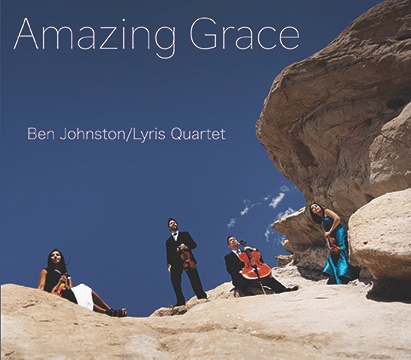


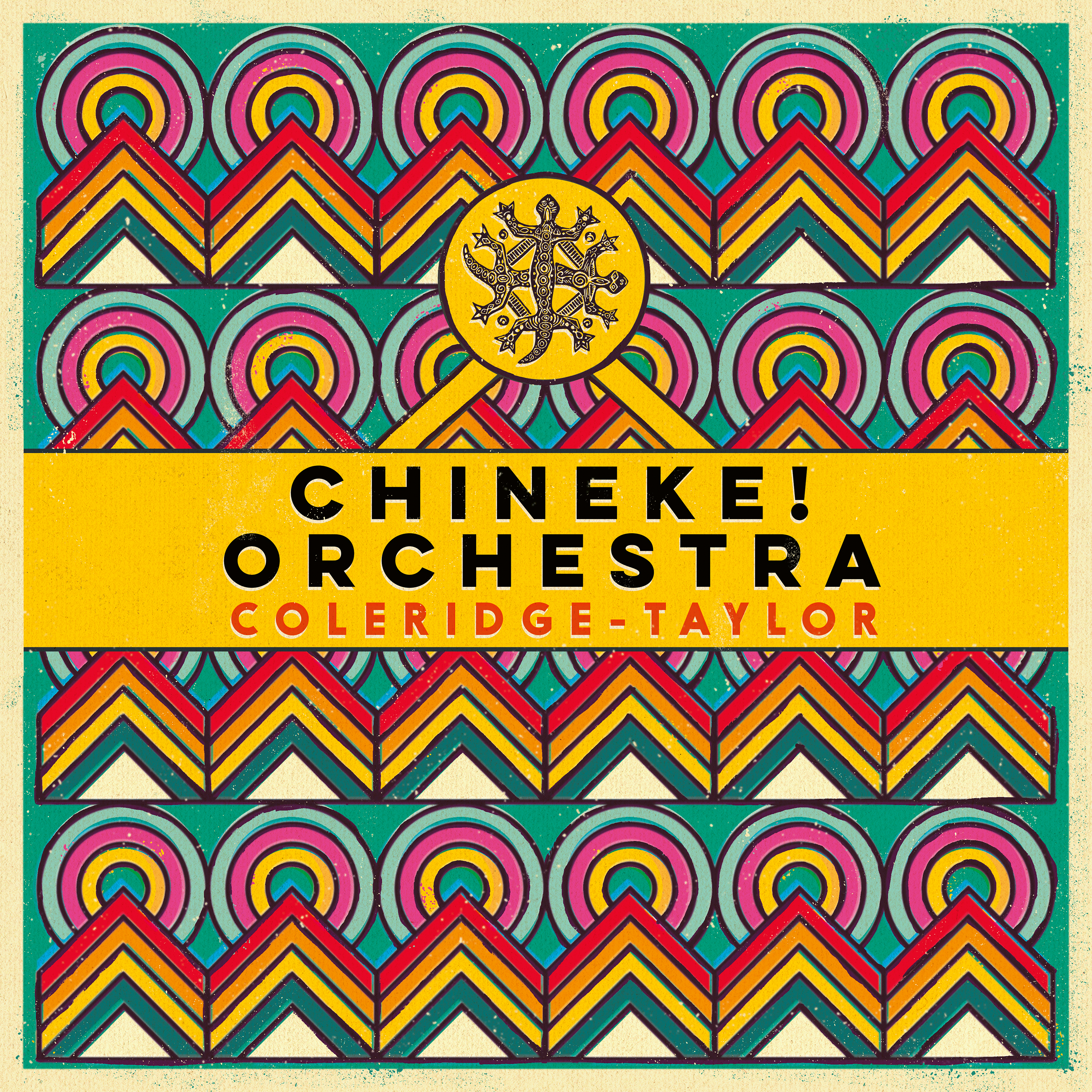


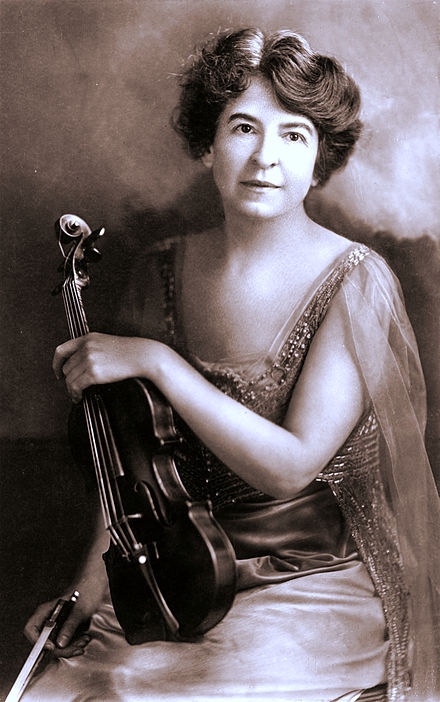


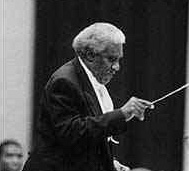


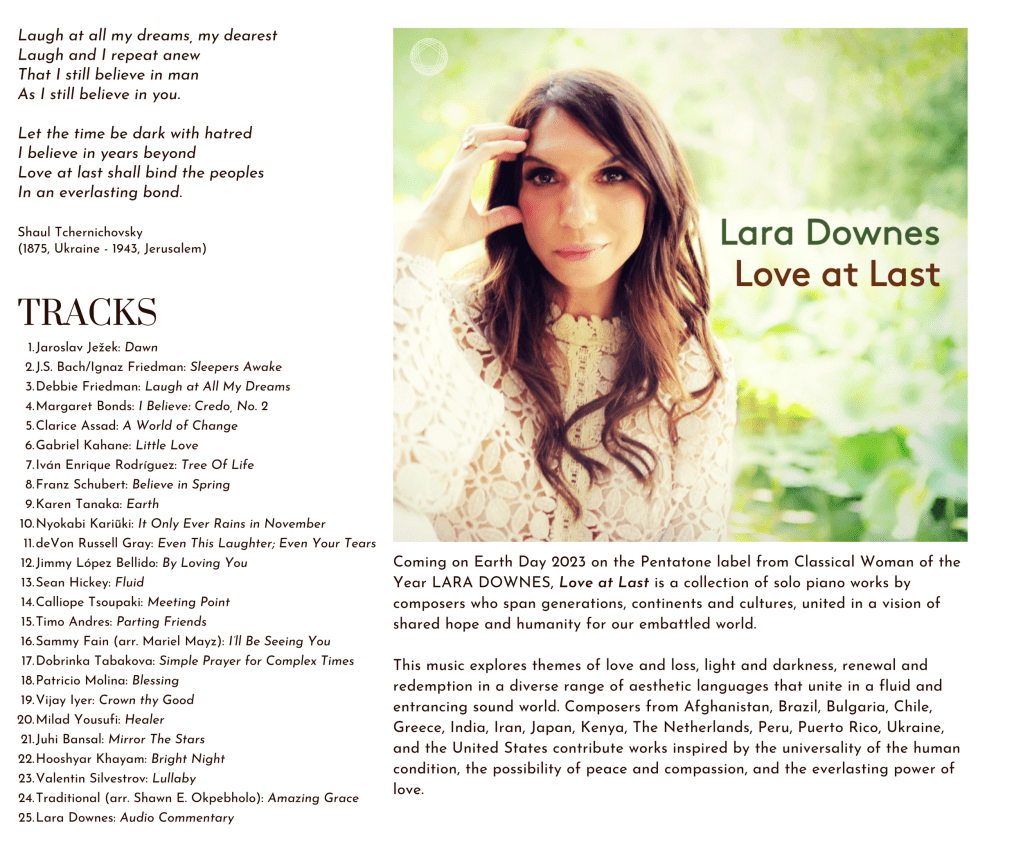
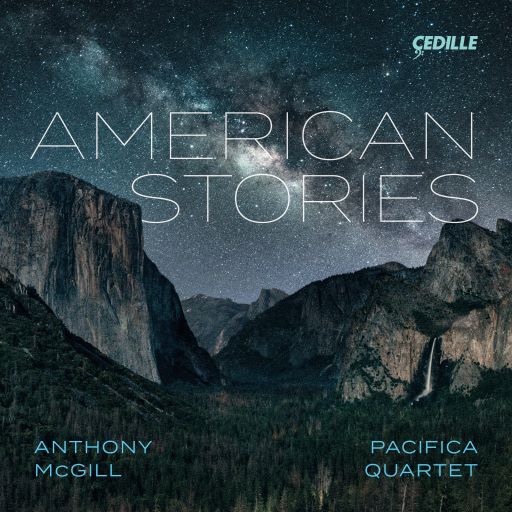


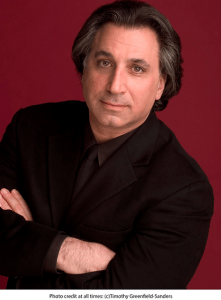



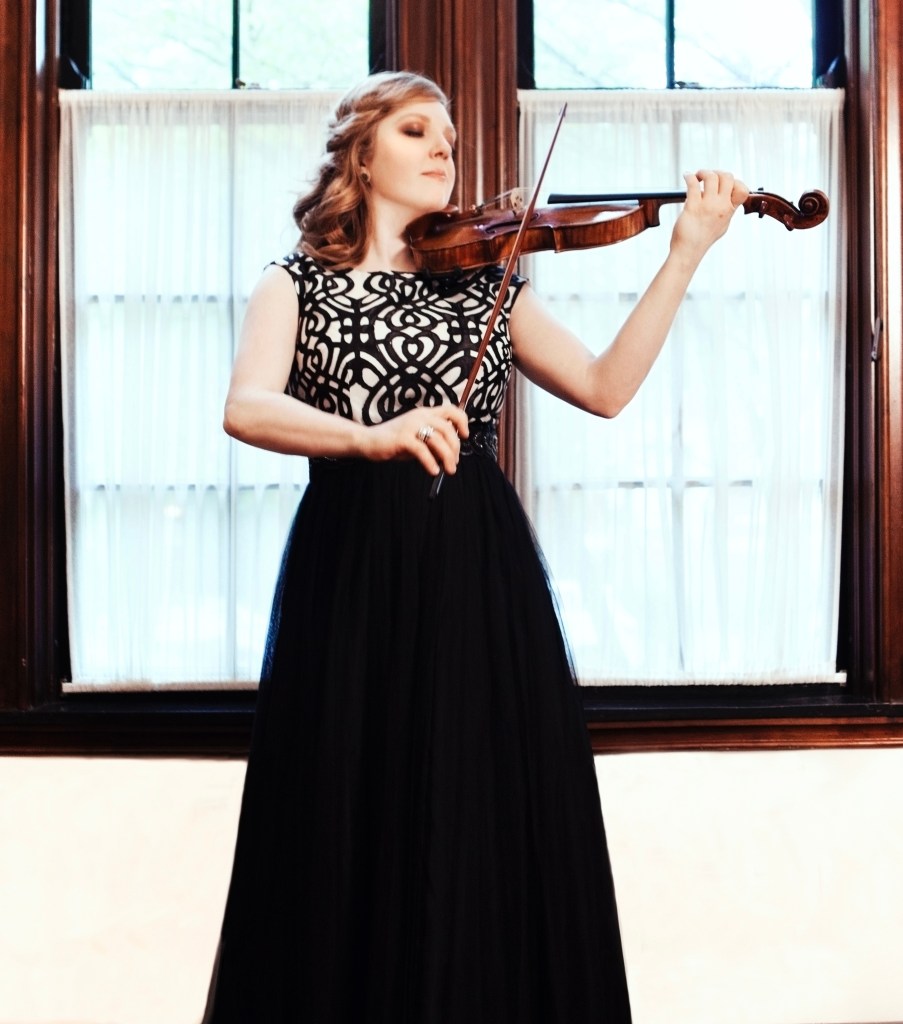
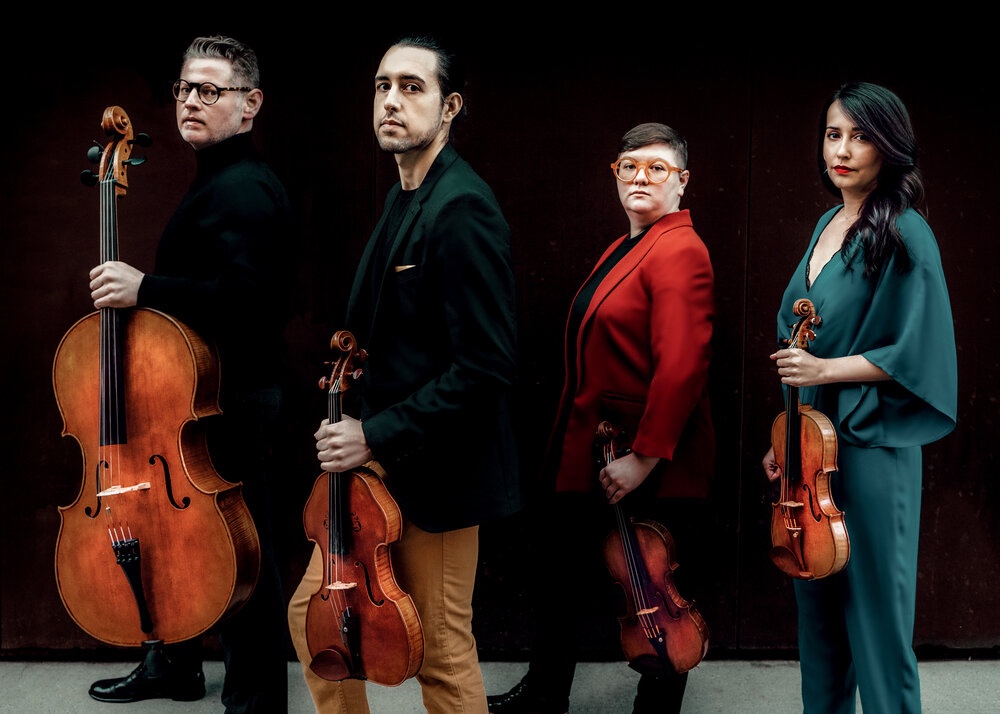
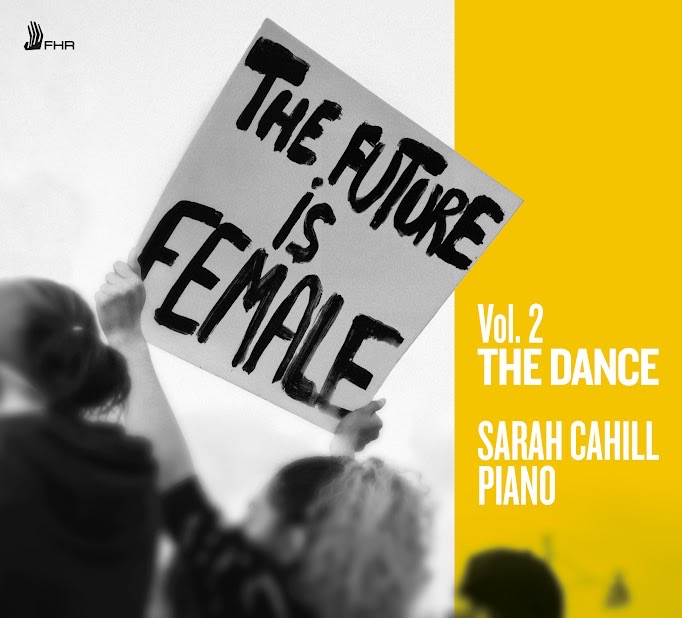




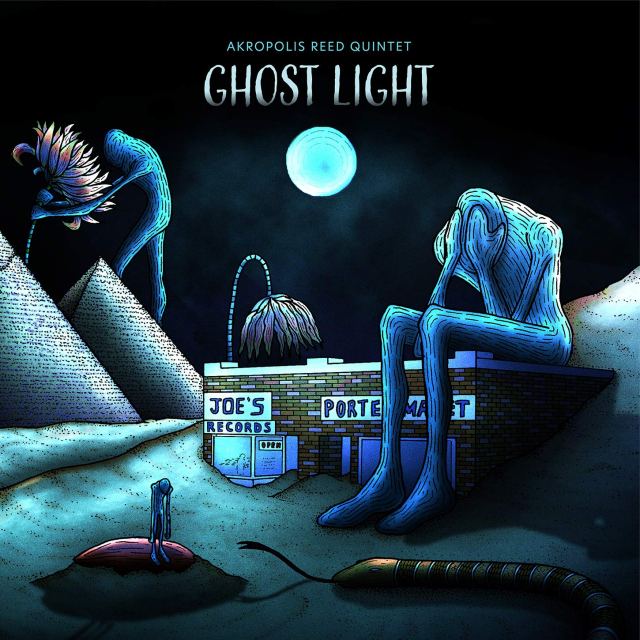
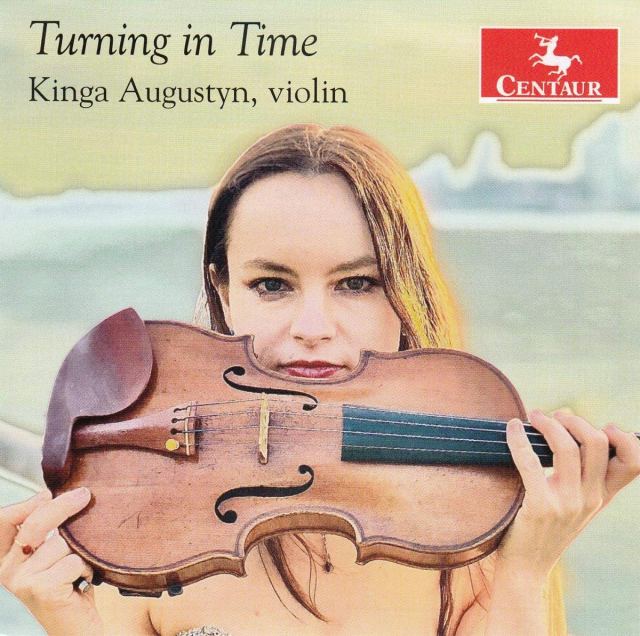
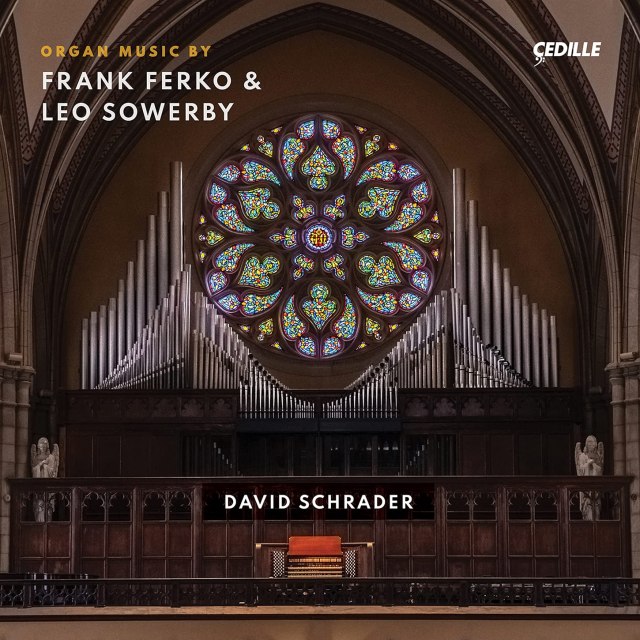
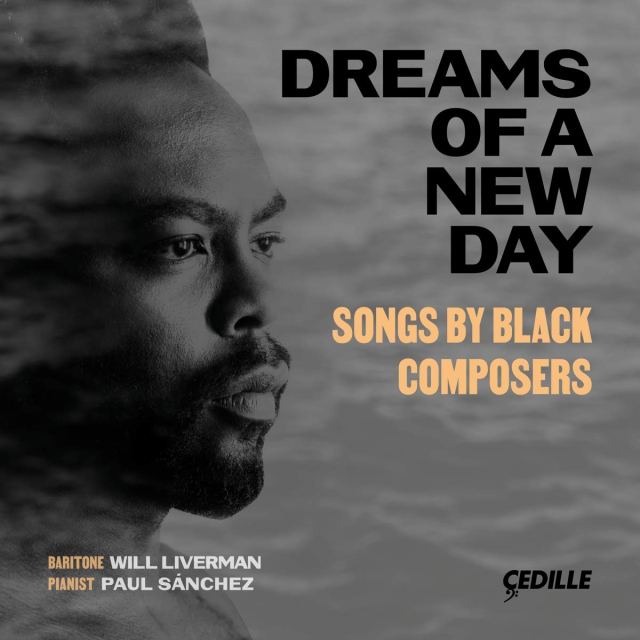
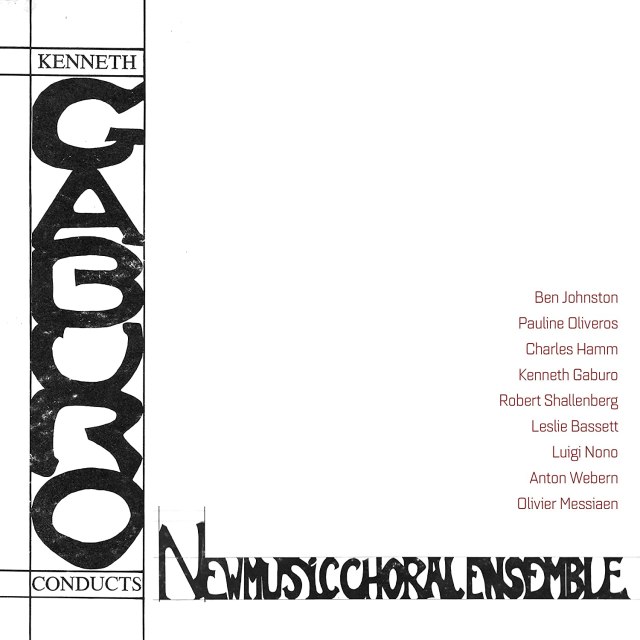

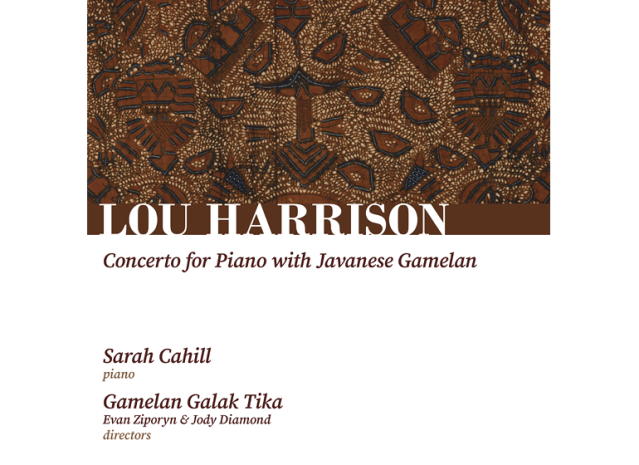
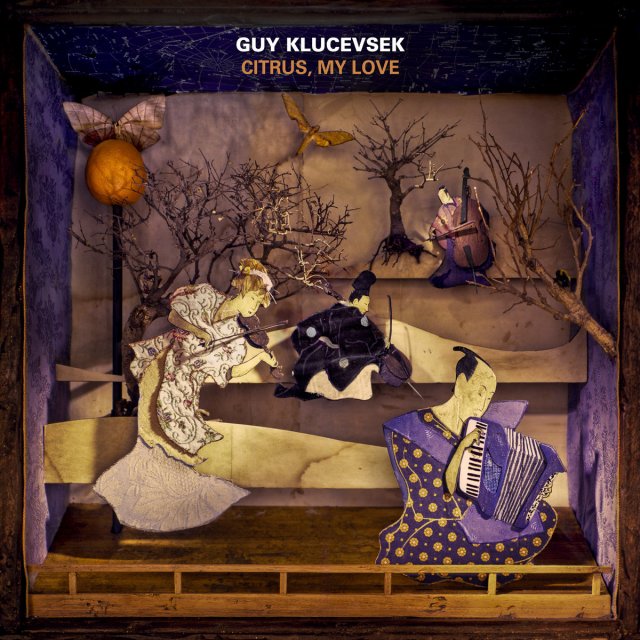

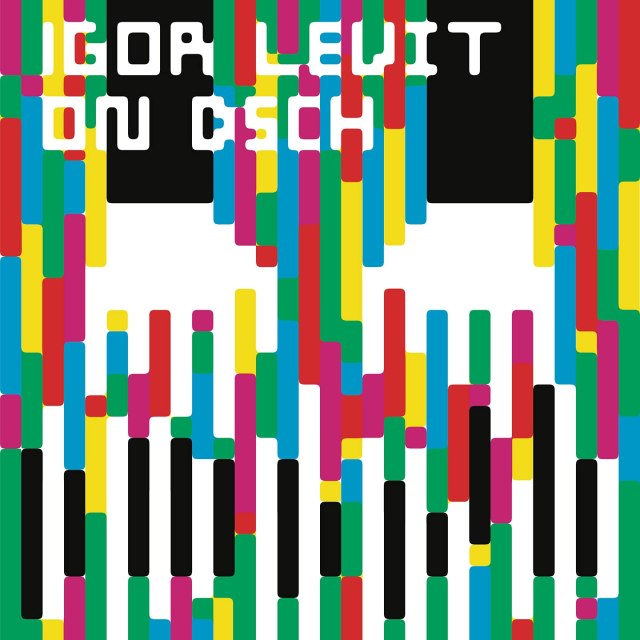
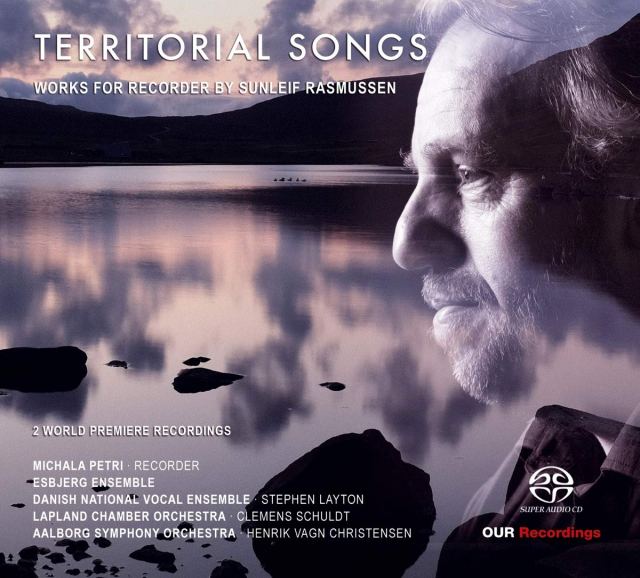
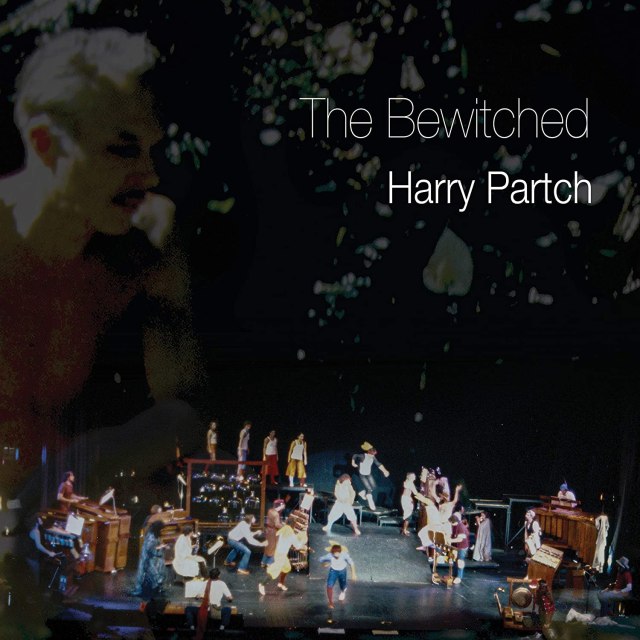

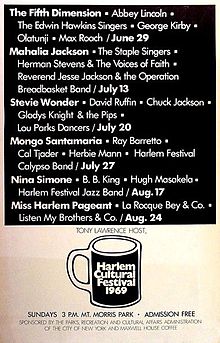
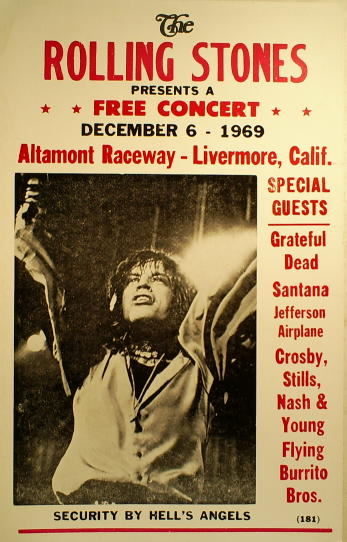


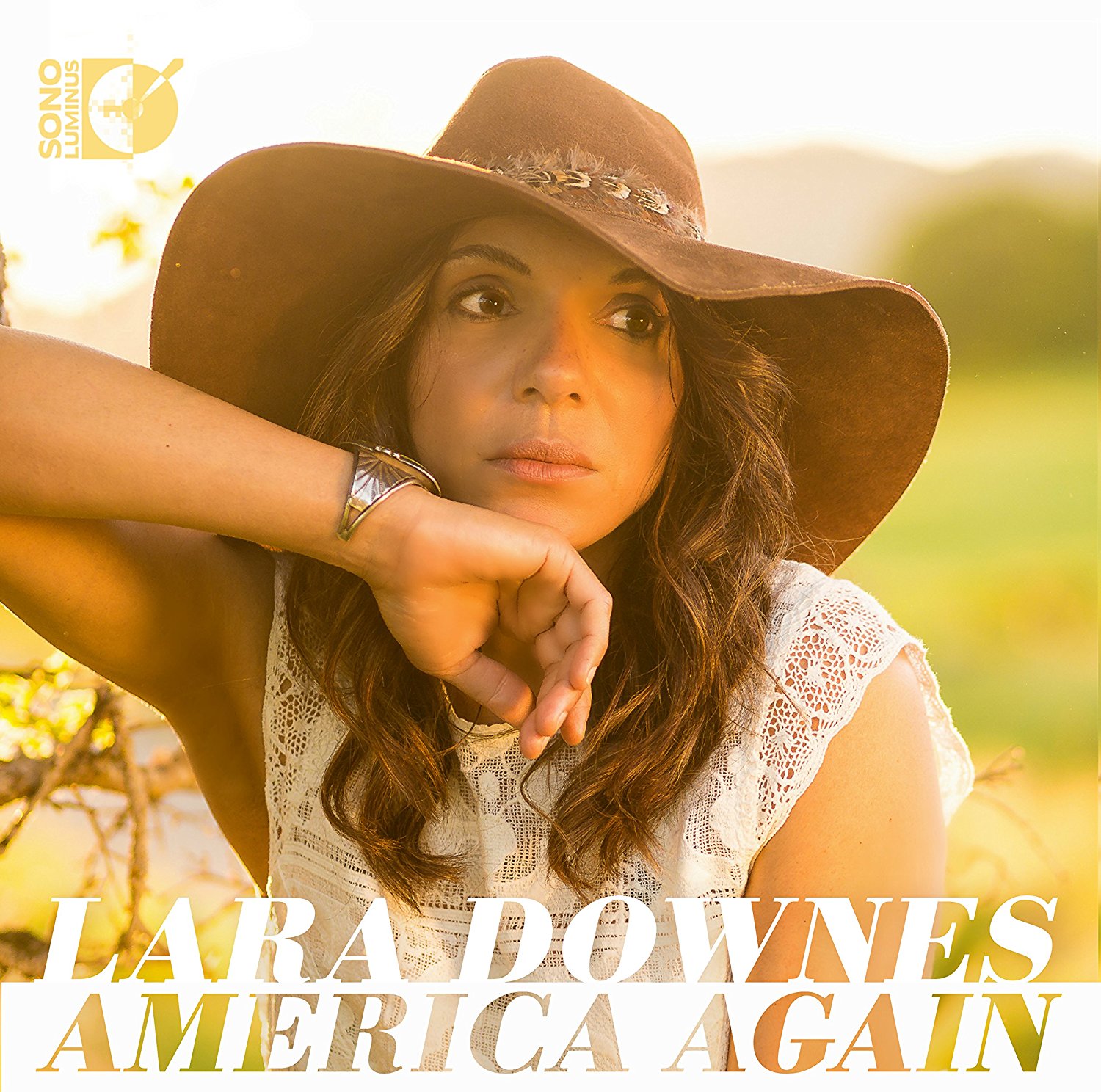
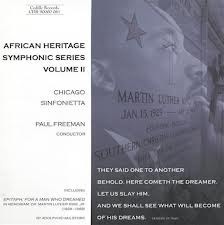

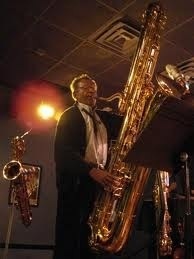


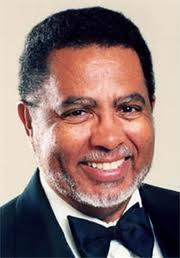
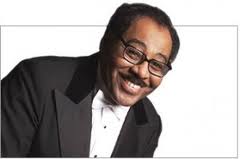
 New Music Buff