Project W: The Chicago Sinfonietta Gloriously Features Women Composers (conductor too)


project w 365

Cedille CDR 90000 185

The attention paid to women composers remains much less than it should be but releases like this latest on Cedille features the Chicago Sinfonietta (Chicago’s second professional orchestra established in 1987 and sporting programs distinctly different from that of the Chicago Symphony) are incrementally correcting that error.  Here for your listening pleasure is a disc with five world premieres, all by female composers, and a world class orchestra conducted by a female conductor, Mei-Ann Chen.  (They also boast that on average the Sinfonietta is 47% women.  Is there an orchestra that can match that?).

florence-final

Florence Price 

With the exception of Florence Price (1887-1953) all are living composers on this release.  The others (who were commissioned by the Sinfonietta to write these pieces) include Clarice Assad (1978- ), Jessie Montgomery (1981- ), Reena Esmail (1983- ), and Jennifer Higdon (1962- ).  Montgomery and Esmail are new names to this reviewer.  Assad and Higdon are generally well known and very accomplished.  Higdon is the second woman to receive a Pulitzer Prize in music (the first was Ellen Taafe Zwilich) and Florence Price is enjoying something of a posthumous revival with recent recordings of several of her larger works and the recent discovery of some of her scores long thought lost.

This disc is pretty much representative of Cedille’s mission to record new music and a selection of older music featuring largely Chicago musicians.  This label has done great service in promoting the music of women and other minority groups and has exposed the record buying/listening public to musical gems that otherwise would languish in that minority wasteland of music which remains unperformed due to sociopolitical rather than aesthetic reasons.

m chen

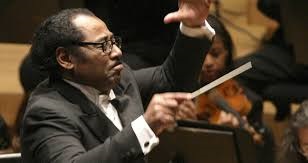
Mei-Ann Chen

This is one of their finest releases.  It is a nice survey of 20/21st century women composers (just a small sampling but an intelligent one) from the early twentieth century to the present.  The works are given definitive readings by a fine ensemble and a clearly accomplished insightful conductor.

pfreeman

The late great Paul Freeman (from Chicago Symphony web site)

The disc opens with music which serves both the theme of presenting women composers and the desire to do honor to the Chicago Sinfonietta’s founding conductor, the late Dr. Paul Freeman.  His advocacy of the music of black composers began with the groundbreaking Columbia release (now Sony) of music by black composers and continued the series on Cedille (African Heritage Symphonic Series: CDR 90000 055, CDR 90000 061, CDR 90000 066 followed by the Coleridge Taylor-Perkinson disc CDR 90000 087).  The disc opens with a set of piano pieces by Ms. Price (Dances in the Canebreaks, 1952) which were orchestrated by no less than the dean of Black American composers, William Grant Still.  These three friendly, light hearted dances will remind listeners of the sort of fare that characterized the jazz inflected classical idioms of the time, a tradition which also gave birth to Rhapsody in Blue.

ClariceAssad_AP2_9091_web

Clarice Assad (from composer’s web site)

Next up is Sin Fronteras (2017) by the Brazilian-American composer Clarice Assad.  She comes from the well known musical family which includes her father, guitarist and composer Sergio Assad.  Her work has a tinge of Aaron Copland and works well as a follow up to the opening track.  She, like Still, seems to have an impressive command of the orchestra which she handles with tremendous skill in this overall light hearted piece.

jessie m

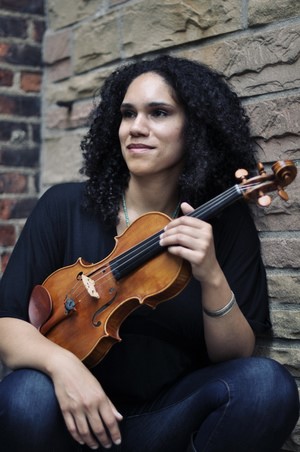
Jessie Montgomery (from the composer’s web site)


Jessie Montgomery (1981- ) is a new name to this reviewer but a look at her well organized web page reveals an astoundingly accomplished young musician.  Her Coincident Dreams (2017) follows in the American traditions of including folk music in her compositions.  Here her material includes non-American folk musics blended into a lucid listenable score that marks her as a musician worth watching.

As with Assad we hear a composer who is comfortable with the sprawling pallet of the modern orchestra where she manages to make the best use of her materials in an entertaining orchestral work.

esmail

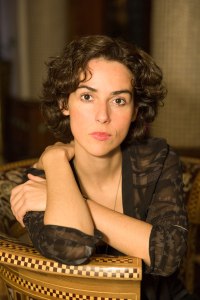
Reena Esmail (from composer’s web site)


Reena Esmail (1983- ) is another name new to this reviewer.  She is the only artist here to have two works on this CD.  The first is a traditional Hindustani piece called Charukeshi Bandish in which she sings the vocal part.  Like many of the composers here she draws on her own cultural heritage and has managed to incorporate these traditions into her more (western) classically oriented works.  In fact she does so in the next track with #metoo (2017), a piece in which she expresses both solidarity and rage at the mistreatment of women worldwide.  Here’s some uncomfortable activism for the concert hall whose time is certainly due.

nytphotohigdon

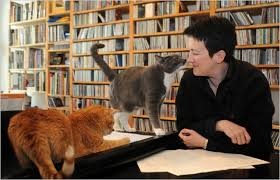
Jennifer Higdon (NYT photo) 

The disc concludes with perhaps the best known living American woman composer, Jennifer Higdon.  In addition to being a recipient of the Pulitzer Prize in music, Higdon is a prolific composer whose work has been heard in concert and opera houses world wide.  Her post-romantic style has made her work popular in concert halls and the depth of her musical invention continues to amaze.  Her five movement “Dance Card” (2017) harkens back to the lighthearted dance music which opened this recording.  But it is tinged with a depth of emotion which reflects not only her personal vision but her solidarity with women world wide, people who would not need a special feature release but for their gender and racial differences which have marginalized them historically.  This release goes a long way to shifting that trend. It’s a gorgeous record.

A Major New Cello Concerto from Esa-Pekka Salonen


Perhaps this is a stroke of marketing genius or maybe some luck is involved but this recording has success written all over it. Yo-Yo Ma is without a doubt one of the finest musicians of our time. The LA Philharmonic is a world class orchestra with a world class conductor at the helm. And though this is but the first encounter by this reviewer with Salonen’s music this work suggests that his compositional skills are at a similar level. 

There is but one work on this disc, a large and very listenable cello concerto which dates from 2016. While the work is clearly modern in its style overall it leans toward romantic and impressionistic textures. Using his conductor’s mastery of the orchestra Salonen traverses territory that embraces the sound of composers such as Ives, Messiaen, Debussy, Barber, etc. Listeners will find familiar gestures but this work is not at all derivative. Rather it ultimately sounds like a complex but very connected improvisation between the soloist and the orchestra neither of whom have easy tasks (though they all play flawlessly).

The rather brief program booklet is basically a program note by the composer/conductor and it is most lucid. It might have been nice to hear as well from Mr. Ma but that is aminor criticism. This is a gorgeous piece given a characteristically powerful performance and this writer was simply enthralled from beginning to end. Now I guess it’s time to look into more of this man’s music. 

E

My 2018 in the Arts


One of the Theater Organs at House on the Rock, Spring Green, WI, a really fun place to visit.


I’m skeptical about year end lists but I have enough people asking me that it would be impertinent to skip this task. I make no claims to having even listened to enough to make any definitive statements about the “best” but I have my own quirky criteria which I hope at least stirs interest. Here goes.

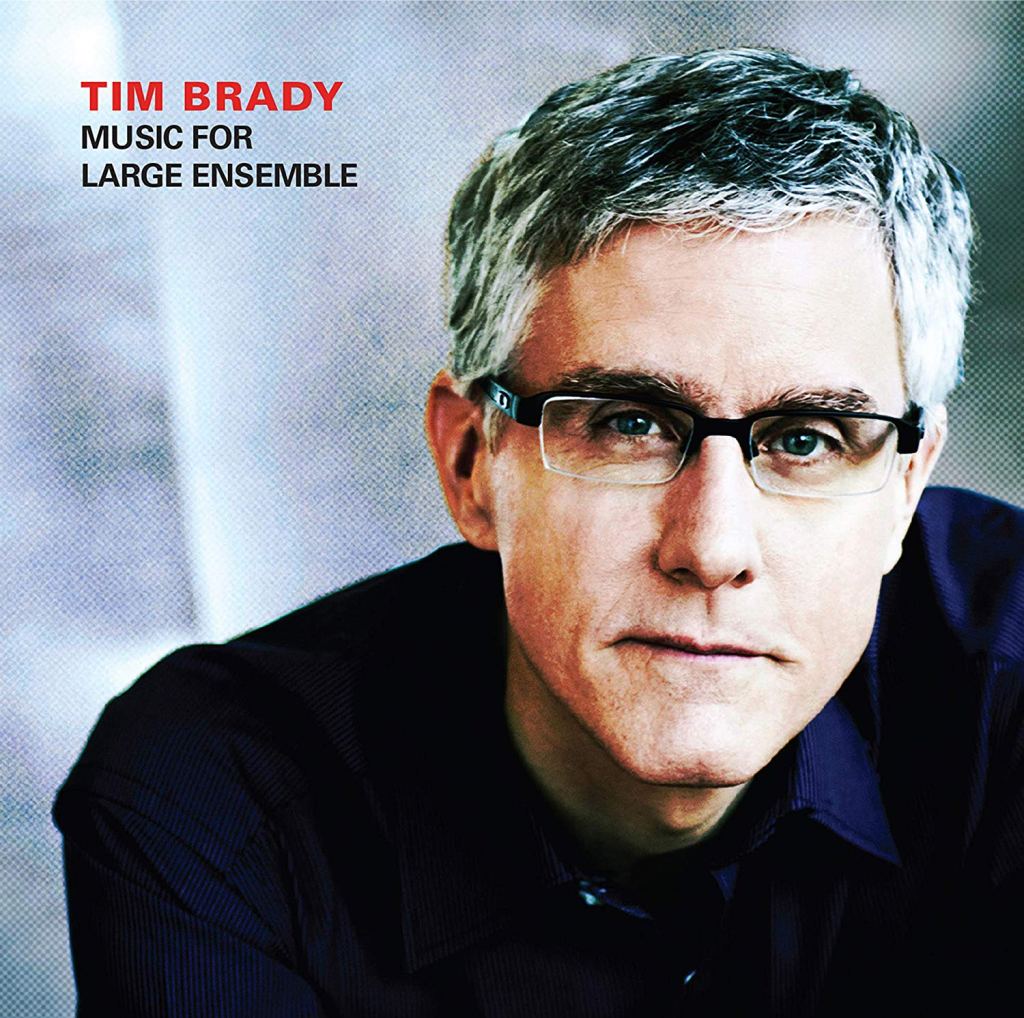
Let’s start with the most read reviews. Without a doubt the prize here goes to Tim Brady’s “Music for Large Ensemble”. This reviewer was enthralled by this recording by this Canadian musician whose work needs to be better known.

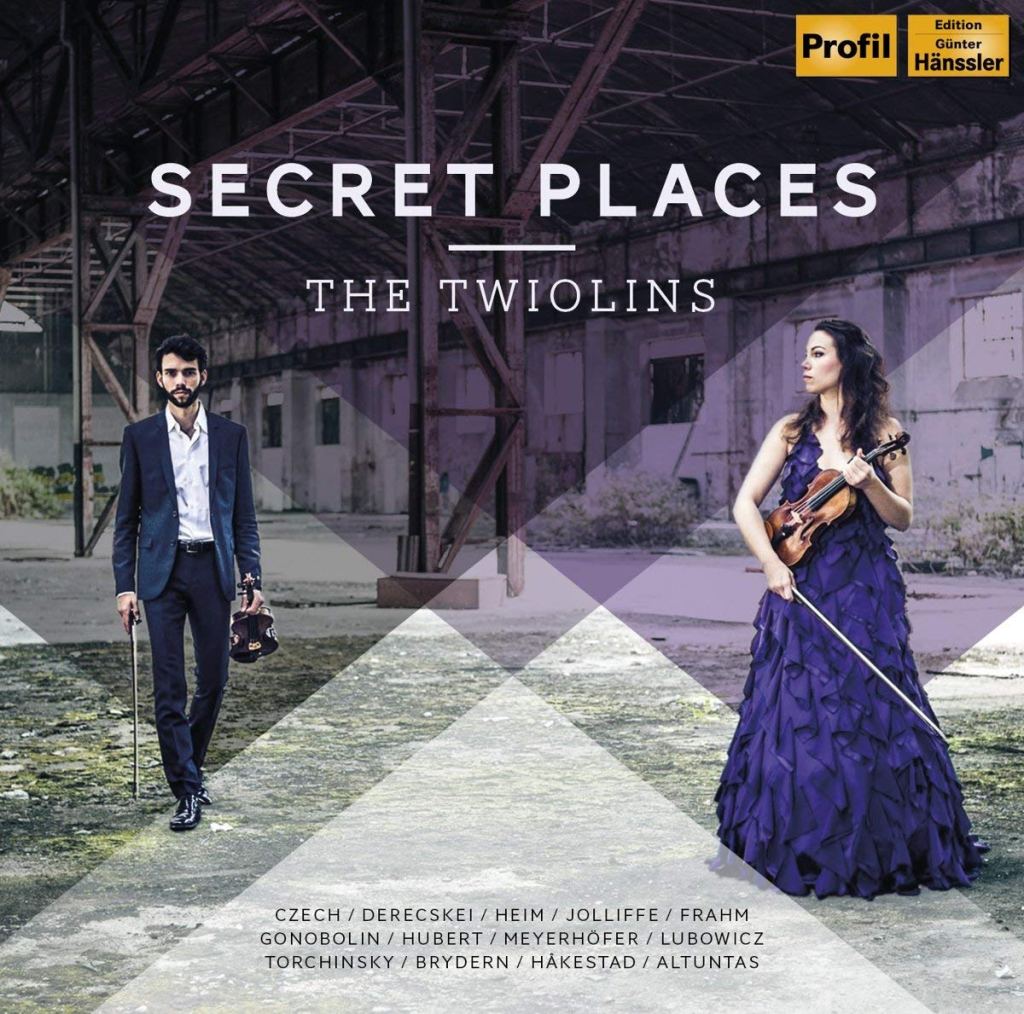
This little gem was sent to me by a producer friend and I liked it immediately. I knew none of these composers but I enjoyed the album tremendously. Don’t let the unusual name “Twiolins” stop you. This is some seriously good music making. It is my sleeper of the year.

Running close behind the Twiolins is the lovely album of post minimalist miniatures by the wonderful Anne Akiko Meyers. Frequently these named soloist albums of miniatures are targeted at a “light music” crowd. Well this isn’t light music but it is quite listenable and entertaining.


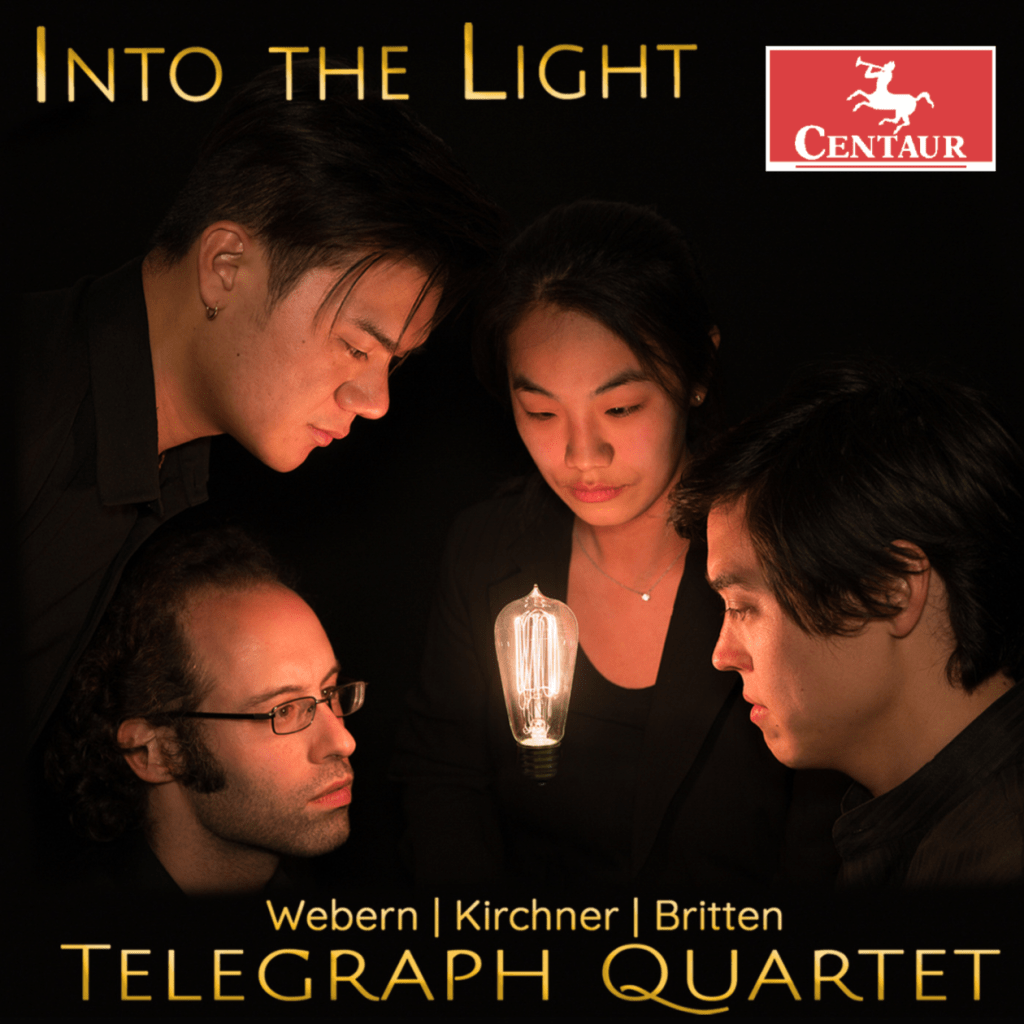
The creative programming and dedicated playing made this a popular review to New Music Buff readers. Definitely want to hear more from the Telegraph Quartet.

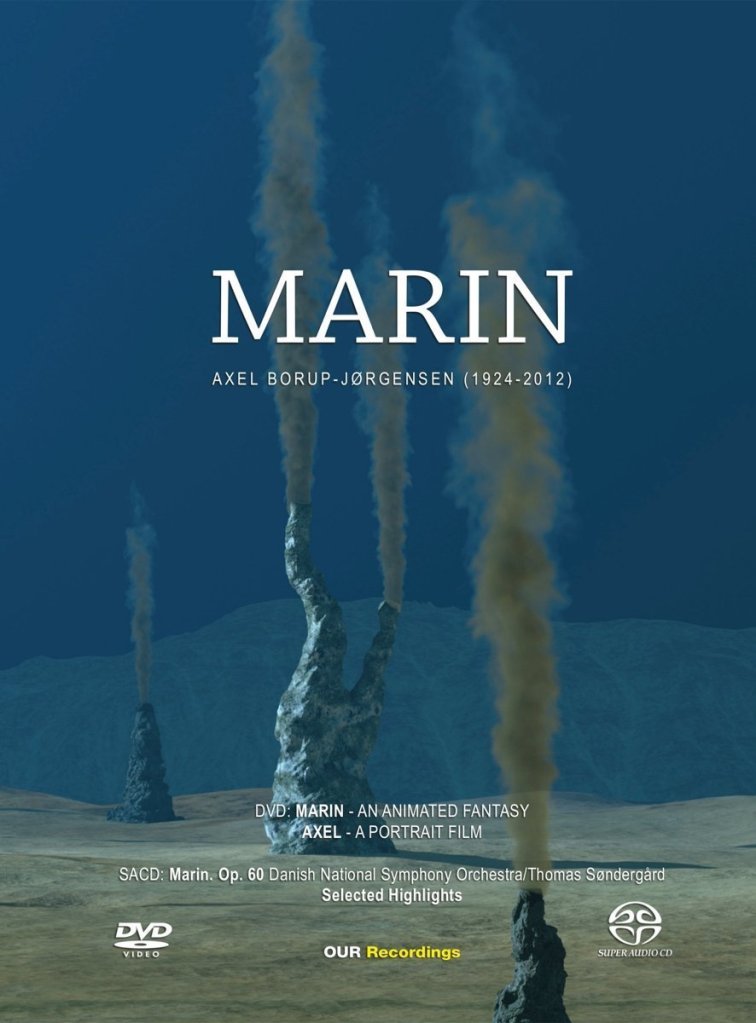
Another disc sent by my friend Joshua. This one is a DVD/CD combo of music by a composer whose existence was only revealed to me a couple of years ago. Marin includes a clever animated video which accompanies the title track.

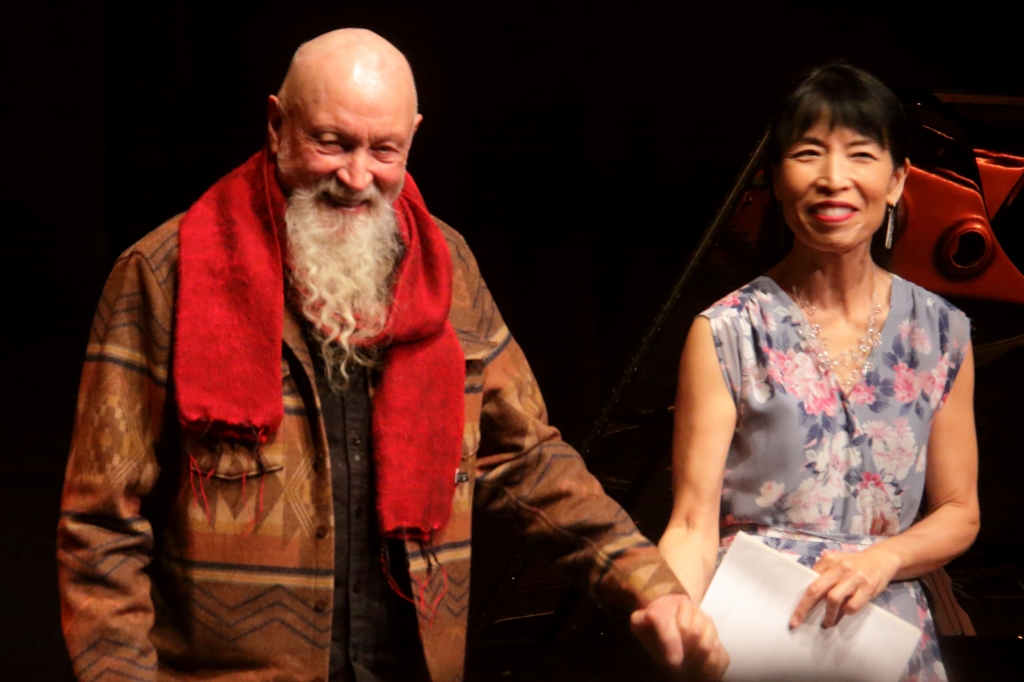
I was fortunate enough to have been able to hear Terry Riley and Gloria Cheng in an all Terry Riley program at the Yerba Buena Center for the Arts. Both were in spectacular form and the audience was quite pleased.

I would be remiss if I didn’t include the fabulous 6 night series of concerts produced by Other Minds. This is why I am a rabid advocate of OM programs. More on that soon with OM 24 coming up.

And lastly I want to tell you about two more composers who are happily on my radar.

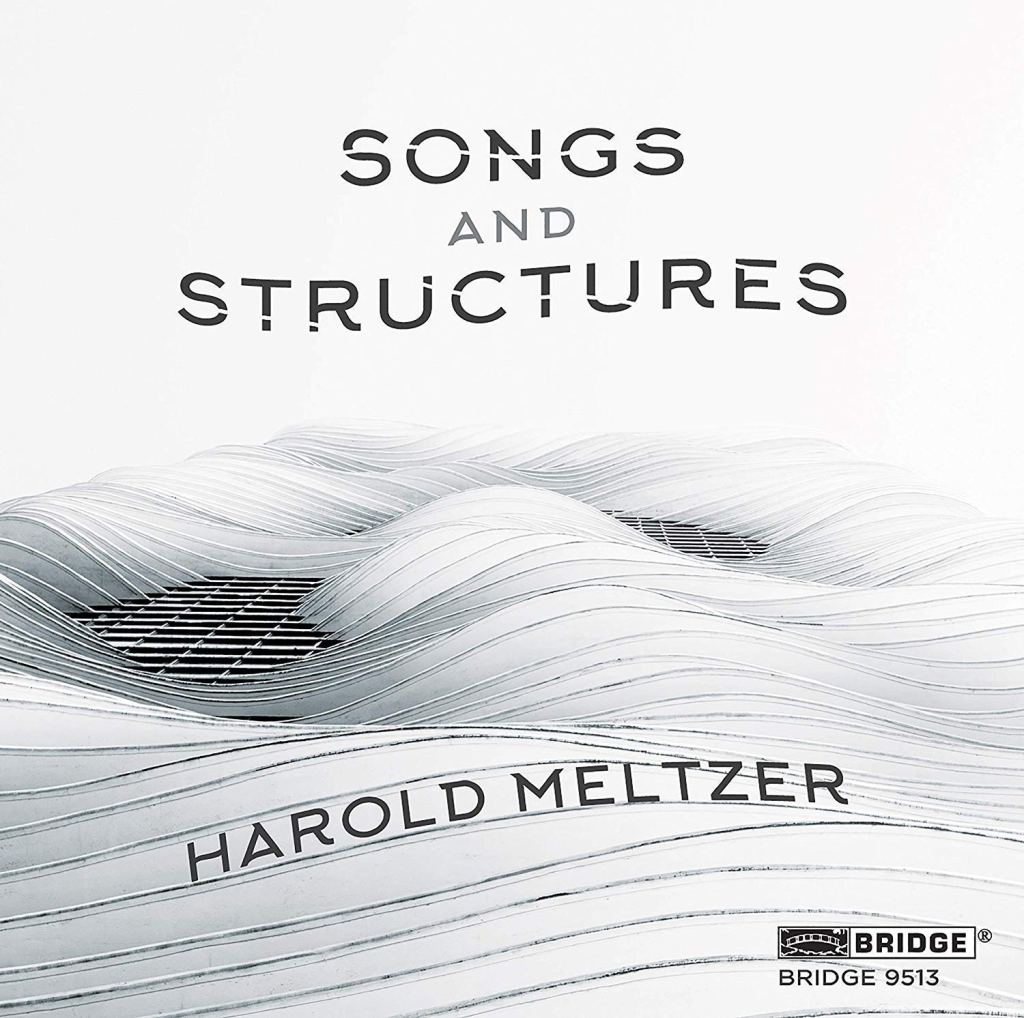
One of the joys of reviewing CDs is the discovery of new artists to follow. Harold Meltzer is now in that group for me. This basically tonal composer has a real feel for writing for the voice and has turned out some seriously interesting chamber music.

Another composer unknown to these ears. I bristle at the term “electroacoustic” because it sometimes means experimental or bad music. Not so here. Moe is fascinating. Definitely worth your time.

OK, gonna can the objectivity here to say that this is possibly the most underappreciated album I’ve heard this year. Combining a recording of the Debussy Preludes along with Schoenberg’s rarely heard “Hanging Gardens”, Webern’s Variations, and Berg’s Piano Sonata creates a picture of a moment in history when music moved from impressionism to expressionism. Jacob Greenberg is very much up to the task. Buy this one and listen, please. It’s wonderful.

Also beyond objectivity is this fascinating major opus by Kyle Gann. It didn’t get much recognition on my blog but it’s a major work that deserves your attention if you like modern music.

Well this is one of my favorite reviews in terms of the quality of my writing. The work is most wonderful as well. Though this review was actually published on December 31st I’m still including it in my 2018.

This is definitely cheating on my part but after that concert at Yerba Buena I can’t resist making folks aware of this wonderful set on the independent label, “Irritable Hedgehog”. Trust me, if you like Riley, you need this set.

I review relatively few books on this site but by far the most intriguing and important book that has made it across my desk to this blog is Gay Guerilla. The efforts of Mary Jane Leach, Renee Levine Packer, Luciano Chessa, and others are now helping to establish an understanding of this composer who died too young. Here’s looking forward to next year.

I know I have left out a great deal in this quirky year end selection but I hope that I have not offended anyone. Peace and music to all.

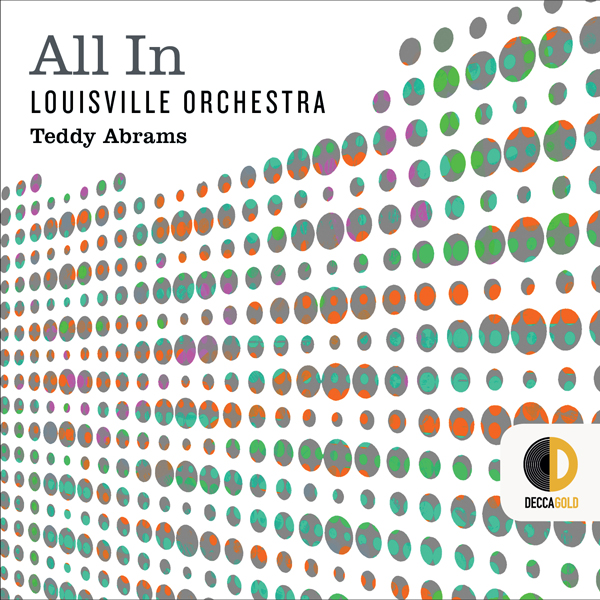
Louisville Orchestra Reboot on CD: All In


Abrams-Louisville-All-In_coverweb

The Louisville Orchestra was established in 1937 and its history has been wonderfully told in a 2010 documentary entitled, Music Makes a City.  Since their founding they released about 150 LPs containing new and interesting music not available anywhere else.  Many of those recordings have become available on the Albany CD label but the orchestra hasn’t released a new recording in about 30 years.

abrams

Teddy Abrams

Along comes new music director, composer, clarinetist Teddy Abrams and now we are graced with a new recording on the Decca Gold label.  Now for a reboot this release is somewhat conservative in it’s musical choices but that’s not to say it isn’t interesing.  This recording, released also in commemoration of the orchestra’s 80th season, reflects a sincere effort to draw younger audiences to the concert hall.

This auspicious release contains as its opening Abrams’ Unified Field, a finely crafted four movement work that channels the late Aaron Copland and his ilk.  It’s style is inflected with elements of jazz and other so called “vernacular” music but it incorporates those styles in much the way that Copland and his contmporaries incorporated folk song as well as jazz/pop rhythms. It is virtually a symphony in its dimensions and is highly entertaining while remaining seriously classical and very finely crafted.  The year of it’s composition is not specified in the notes this writer received but best guess is that it is of recent vintage in this talented composer’s oeuvre.

This is followed, curiously, by three torch songs, one by the able soloist Storm Large, one by Cole Porter, and one by Teddy Abrams.  The stylistic unity of these three songs is striking and Storm Large (who is known for her work with Pink Martini) is a convincing chanteuse.

These are followed by another American masterpiece, the Clarinet Concerto (1948) by Aaron Copland.  Originally written (and subsequently recorded by) Benny Goodman, the concerto is definitely in the repertoire but receives far too few hearings in concert.  This writer had not heard the concerto in many years and was struck both by its quality and by the convincing performance recorded here.  Abrams takes the solo role and the orchestra is conducted with assurance by one Jason Seber.

Abrams’ reading is as convincing and authentic as any and this is a delightful way to close this wonderful recording.  Here’s hoping that this release will be the restart of Louisvilled great recorded legacy and that Abrams tenure as conductor will breath new life into an orchestra which has become a venerable part of America’s cultural history.


Lara Downes’ Bernstein Tribute


lenny

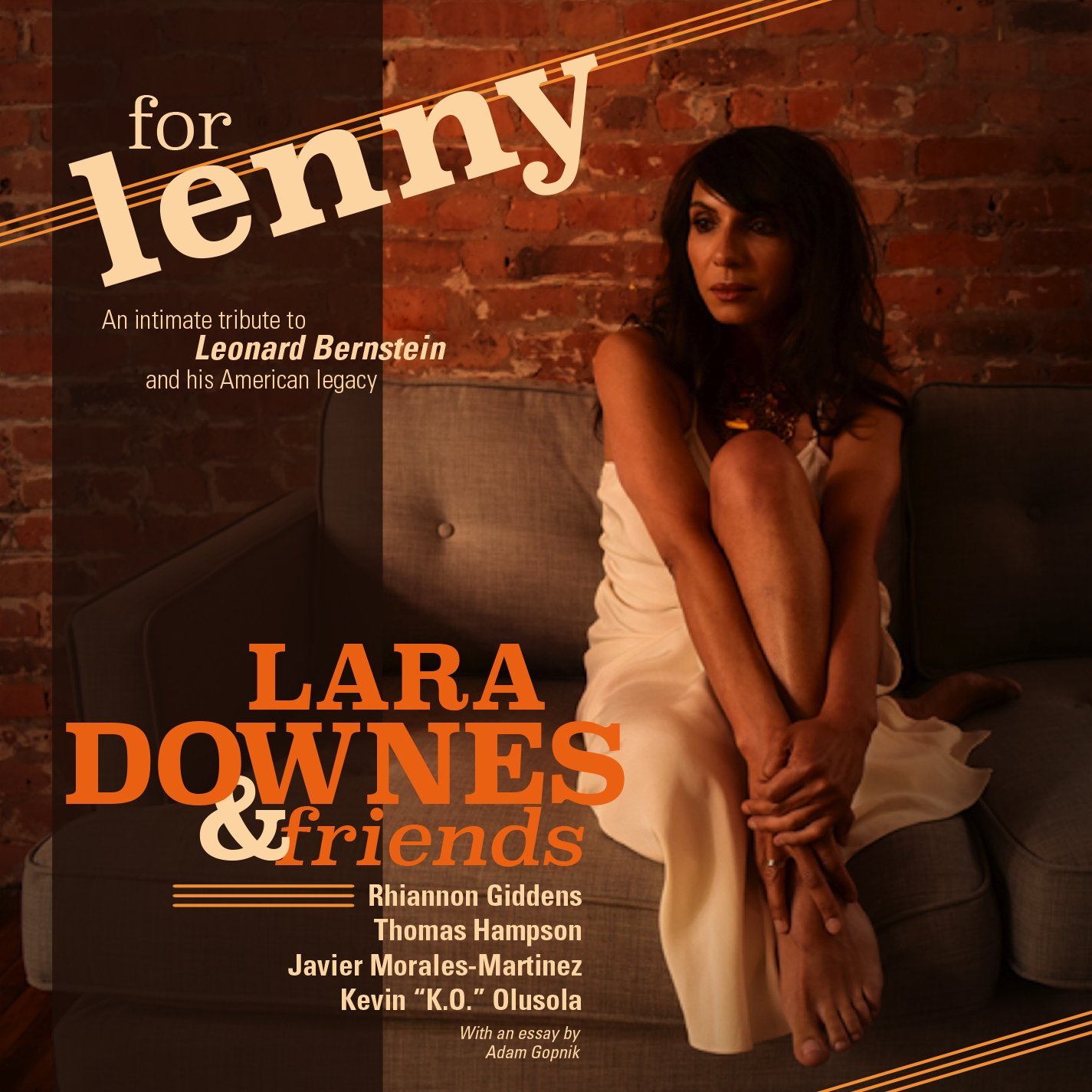
Lara Downes is one of the finest pianists working today.  Her virtuosity and interpretive skills are well established.  She is well versed in the standard repertoire of classical piano music but has chosen to blaze her own unique path in her recorded legacy.  Here she pays homage in her own unique manner with help from some interesting fellow musicians.

The album consists of 29 tracks none of which lasts more than 4 minutes.  Many are by Bernstein including a generous selection of his Anniversaries, each dedicated to a particular person. Some were written in celebration, some in memoriam. Time marches on and we now celebrate the 100th anniversary of Lenny’s birth. So, of course, all these tracks are in memoriam now. In addition to the all too seldom heard Anniversaries there are a few song transcriptions and a nice selection of Anniversary like pieces contributed for this album by a delightful selection of composers including John Corigliano, Lukas Foss, Michael Abels, Ned Rorem, Ricky Ian Gordon, Eleanor Sandresky, Shulamit Ran, Stephen Schwartz, Marc Blitzstein, Theo Bleckmann, and Craig Urquhart.

This album is (thankfully) not a greatest hits collection but rather, as it’s subtitle says, an intimate tribute by people who were affected by Bernstein in one way or another. Bernstein cut a wide swath of influence embracing new music, mastering the established western classical canon, and embracing jazz, blues, and musical theater much like Ms. Downes actually.

Most of the album is solo piano where Downes casts a loving and magical spell. A few judiciously chosen tracks feature banjo virtuoso Rhiannon Giddens, baritone Thomas Hampton, and two musicians unknown to this writer, Javier Morales-Martinez and Kevin “K.D.” Olusola.

My first listen to this album was an uninterrupted one while driving South from San Francisco. The impression was one of Bernstein’s multiple voices being present seamlessly in every track. Only later reading the liner notes did I become aware that some tracks were written by others.

This is an intimate celebration in honor of a musician who touched so many lives.  Many of the artists on this recording knew Bernstein to some degree but the point here is that Bernstein’s art is so pervasive that few can say they have not been touched by it to some degree.  This listener was brought to nostalgic tears a few times.

In keeping with Downes’ eclectic style this is an unusual selection of pieces, most by Bernstein but all imbued with his spirit, a combination of classical sensibilities with a real feel for jazz, blues and the American musical theater.  This disc contains most, if not all of Bernstein’s “Anniversaries”, short piano pieces written variously in honor of or in memory of many of his friends.  Other pieces are by contemporaries of Bernstein and some were written for this recording.  Add to that a few interludes such as Thomas Hampson coming in to sing, “A Simple Song” from Bernstein’s “Mass”, K.D. Olusola riffing on the familiar “Something’s Coming” which opens the disc, Javier Morales-Martinez spicing up “Cool” from “West Side Story” with his clarinet and Rhiannon Giddens sounding so pretty on the track of that title.

This is a love fest and it, appropriately, covers generations much as Lenny affected so many generations whether through his wonderful work as a conductor or his classic musicals and operas that are indeed the American grain incarnate.  And Lenny was also a teacher to children and to adults.  From the Young Peoples Concerts to the Harvard Norton Lectures he thought deeply and taught and stimulated ideas.  Generations have been forever changed by him.

The bulk of this recording depends on Lara Downes amazing virtuosity bringing these brief little poems to life most convincingly and almost magically.  She clearly has a real feel for this music.  This is mostly not the familiar Bernstein that everyone knows.  It is a portrait such as listeners familiar with Downes’ work will recognize, eclectic, intelligent, sometimes nostalgic, a little obscure, frequently virtuosic, and ultimately satisfying.  The disc lists the performers as, “Lara Downes and friends” and that is the feeling of not just the performers but also of the composers whose heartfelt contributions fit so well in this eclectic mix.

This disc represents Downes’ debut on Sony and the only thing this writer can say to that is, “What took them so long?”  Brava!  And cheers to Lenny on his 100th.

Linda Twine, A Musician You Should Know


Linda-K-Twine-Image-page-001

Linda Twine

I have found it strange that the few articles I have written (and, full disclosure, I’m a white guy) on black musicians seem to have placed me in the position of being one of apparently a limited number of writers/bloggers who pay attention to the topic.  Happily these articles have gained an audience.  The rather simple piece I wrote on black conductors, a little essay composed in honor of Black History Month, remains by far one of my most read articles.

The vicissitudes of race and racism are such that we need to say, “black lives matter” because even the most cursory examination of statistics shows that they seem to matter far less than lives with other racial identities.  The same is true with music and musicians..  There are organizations dedicated to the promotion of black musicians because they remain far less well represented.

It is in this spirit that I am writing this little sketch to highlight a black musician who does not have a Wikipedia page or even a personal web page that I have been able to find.  You can find her easily with a Google search but you will find some of the same segregation of which I spoke.  One finds her on the “Broadway Black” website which does a fine job of promoting her and her work.  And what fine work it is.

To be fair she is also on the “Internet Broadway Database“, “Playbill“, the “Internet Movie Database“, and one can find her most recent work listed on the “Broadway World” site.  Her cantata, “Changed My Name” can be found on You Tube.  And it is there where, curiously enough, one can find the most comprehensive information on her.  I present it here:

From the Muskogee Phoenix, 11/10/2007, we have this information about Linda Twine:

Twine, a native of Muskogee, OK, graduated from Oklahoma City University in 1966, with a bachelor of arts degree in music. There, she studied piano with the esteemed Dr. Clarence Burg and Professor Nancy Apgar. After graduating from OCU, Twine studied at the Manhattan School of Music in New York, where she earned a master’s degree, and made New York her home. She began her musical career in New York, teaching music in public school by day and accompanying classical and jazz artists at night. At one of these engagements, she was asked if she would like to substitute for the keyboardist of the Tony Award winning Broadway hit, “The Wiz.” Her positive response began a long career in Broadway musicals from keyboard substitute to assistant conductor of Broadway orchestras. In 1981, to conductor when Lena Horne asked her to conduct her one-woman hit, “Lena Horne: The Lady and Her Music.” This garnered Twine the respect of her peers and as a much sought-after Broadway musical conductor. In addition to “The Wiz” and “Lena Horne,” Twine’s Broadway credits include, “Ain’t Misbehavin’,” “Big River” (the score composed by Oklahoman Roger Miller), “Jelly’s Last Jam,” “Frog and Toad,” “Caroline or Change,” “Purlie,” and the current “The Color Purple,” starring Fantasia. Not only a distinguished conductor, Twine is also a composer and arranger. She composed “Changed My Name,” a cantata inspired by slave women Sojourner Truth and Harriet Tubman, and written for two actresses, four soloists, and a chorus. Her popular spiritual arrangements are published by Hinshaw. As a producer, instrumental and vocal arranger, her work can be seen and heard in the books and CDs of the Silver Burdett Publishing company, which are used by many public schools in the United States. Community commitment and involvement have also marked Twine’s outstanding career. She has arranged and composed for the renowned Boys Choir of Harlem, and she served for 14 years as minister of music for St. James Presbyterian Church of New York. Among her many awards and honors is the “Personal Best Award for Achievement and the Pursuit of Excellence,” for her role as a writer and arranger for the Boys Choir of Harlem, her artistic achievements in the world of Musical Theatre, and her concern for humanity. Twine, a proud Oklahoman, is the granddaughter of William Henry Twine, a pioneer lawyer who made a homestead claim in the 1891 Sac and Fox Run, and along with G.W.F. Sawner and E.I. Saddler established the first black law partnership in Oklahoma Territory.

So here, in honor of Black History Month, I wish to present this fine musician whose art deserves the world’s attention.  Take note please.

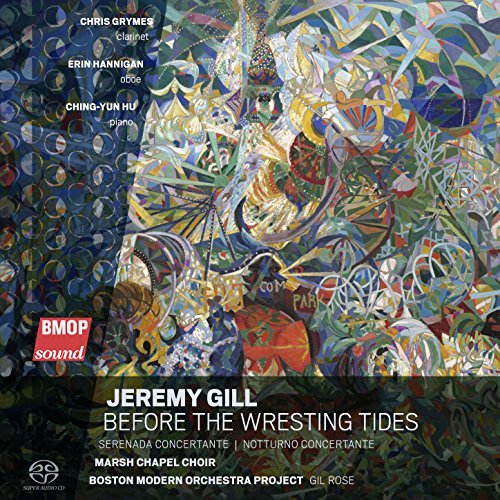
Jeremy Gill: Before the Wresting Tides


gill

BMOP 1055

In this writer’s mind there are two types of releases on the BMOP label. Discs with music or at least composers that have some familiarity to these ears and discs of unfamiliar composers.  This disc fits into the latter category.  Jeremy Gill is a new name to these ears but he is hardly new on the scene with at least 3 or 4 CDs already out devoted mostly to his chamber music.

This disc then will give the listener an idea of how well Gil Rose and his Boston Modern Orchestra Project choose and subsequently perform less familiar new music.  There is a lot of music out there and it takes a special ear to choose wisely such that one can expect a given release to keep its place among the other well chosen music that makes up the BMOP label’s catalog.  It would appear that this was and will remain a wise choice.  Three works are presented in chronological order of their composition.

The first is the title work, Before the Wresting Tides (2012), a choral fantasy setting a poem by American poet Hart Crane (1899-1932).  This was written specifically to function as a companion piece for Beethoven’s rarely performed Choral Fantasy Op. 80 (ca. 1808).  This work shares a similar orchestration and formal plan.  There is an obligatto piano solo written for Gill’s friend and colleague Ching-Yun Hu, a large orchestra, chorus, and vocal solos.  All of this fits into a compact 16 minutes or so.  It is decidedly more modern in orchestration and harmony than Beethoven’s work but it shares a virtuosic piano part, lyrical melodies, and marvelously efficient setting of the text handled beautifully by the Marsh Chapel Choir under Scott Allen Jarrett.  There is a lot going on here but I can’t imagine an audience being anything but entertained by this rather bombastic companion which one hopes will continue to be performed alongside the Beethoven model bringing both works to modern ears.

The second work is titled Serenada Concertante (2013) for oboe and orchestra.  It is sort of an enlarged oboe concerto.  The soloist, Erin Hannigan demonstrates the virtuosic and lyric skills that seem to be endemic to this entire orchestra.  Gill’s writing makes large romantic gestures with plenty of painfully virtuosic opportunities (handled beautifully) for the soloist and the various soli and duettini which occur in the course of this full blown concerto.  The composer’s ability to utilize such a large orchestra yet still produce lucid textures is a mark of genius and, no doubt, one of the reasons that Gill’s music was chosen for this series of recordings.

Our finale is another concerto of sorts, the Notturno Concertante (2014) for clarinet and orchestra.  Again we hear an amazing soloist, Chris Grymes, on clarinet.  Again we hear amazing virtuosity and lyricism played against a large and lucid orchestral fabric.  Very satisfying music for both audience and orchestra.  It is clearly a workout for orchestra, soloist, and conductor but the energies expended produce a very satisfying result.

Whether or not Jeremy Gill winds up being a household name, one of the brightest lights of the 21st century remains to be seen but this is an auspicious release.  This largely romantic sounding composer also seems to have a curiously “American” sound which harkens to the likes of William Schuman, David Diamond, and, well choose your own favorite mid-twentieth century American master after you hear this.  Well done.

Other Minds 22, Resounding Sacred Tributes from Music to Wheaties


OM22052120170026

Nicole Paiement led a touching performance of Lou Harrison’s La Koro Sutro

Nominally this was a celebration of the life and music of Lou Silver Harrison (1917-2003) but this last concert of Other Minds 22nd year celebrated so much more.

OM22052120170011

Curator and Other Minds Executive and artistic director introduces the night’s festivities with these artistic icons titled St. Lou and St. Bill (Lou Harrison and his partner, instrument builder Bill Colvig). The portraits were sold by silent auction.

One can’t celebrate the life and music of Lou Harrison without acknowledging his life partner of 30 years, Bill Colvig (1917-2000).  Colvig was the man who designed and built the American Gamelan percussion instruments used in tonight’s performance.  These repurposed industrial materials were inspired by the Indonesian Gamelan which Lou Harrison encountered at the 1939 world’s fair which took place on Treasure Island just a few miles away.  Amirkhanian added another fascinating historical footnote when he informed the audience that Harrison had come to this very church to learn to sing Gregorian Chant some time in the 1930s.

A further and very intimate context was revealed when Amirkhanian took an informal poll of the audience asking who had met and/or worked with Lou Harrison.  By his count he estimated that about 40% of the audience had encountered “St. Lou” (this writer met the magnanimous gentleman in Chicago in the early 1990s).  Indeed many of the musicians had encountered and/or studied with Harrison and the passion reflected in their performances and the audiences response clearly shows why he (and Bill) were elevated tonight to secular sainthood.

The wonderful acoustics of the Basilica easily accommodated Harrison’s dislike of electrical amplification.  Even the solo and small ensemble music was heard as it was intended.

OM22052120170008

The organ console at the Basilica.

The well attended concert began with an early rather uncharacteristic piece called Praises for Michael the Archangel (1946-7).  It reflected the influence of Arnold Schoenberg, one of Harrison’s teachers (Henry Cowell and K.T.H. Notoprojo were also among his teachers).  Harrison also famously worked with Charles Ives whose Third Symphony he premiered.  He also worked with John Cage and collaborated on at least one composition with him (Double Music).  The angular and dissonant sounds were lovingly interpreted by Jerome Lenk, organist and chorus master at the Basilica.

OM22052120170013

Organist Jerome Lenk acknowledges the audience applause and allows himself just a touch of a satisfied smile for a well wrought performance.

Next was a solo harp piece Threnody for Oliver Daniel (1990).  (Oliver Daniel (1911-1990) was a composer, musicologist, and founder of Composer’s Recording Incorporated.  He was a friend of Harrison’s and a great promoter of new music).

OM22052120170001

The Threnody was performed on this smaller troubador harp in Ptolemy’s soft diatonic tuning.

Meredith Clark played with focused concentration and gave a very moving performance of this brief and beautiful composition.  Harrison was fond of paying homage to his friends through music.

Clark was then joined by cellist Emil Miland for a performance of Suite for Cello and Harp (1948).  Composed just a year after the angular organ piece which opened the program this gentle suite is entirely tonal and very lyrical in its five movements using music repurposed from earlier works.  Clark here used a full sized concert harp.

The artistic connection between these performers clearly added to the intensity of the performance.  Despite the varied sources of the music the suite has a certain unity that, like Bach and indeed many composers, justifies the re-use of material in the creation of a new piece.

This was followed by another organ piece from Mr. Lenk.  This Pedal Sonata (1989) is played solely by the musician’s very busy feet on the pedals alone (no hands on the keyboard).  Listening to the piece it was easy to believe that more than just two agile feet were involved in this challenging and virtuosic composition.  It appeared to be quite a workout but one accomplished with great ease by the performer.

OM22052120170016

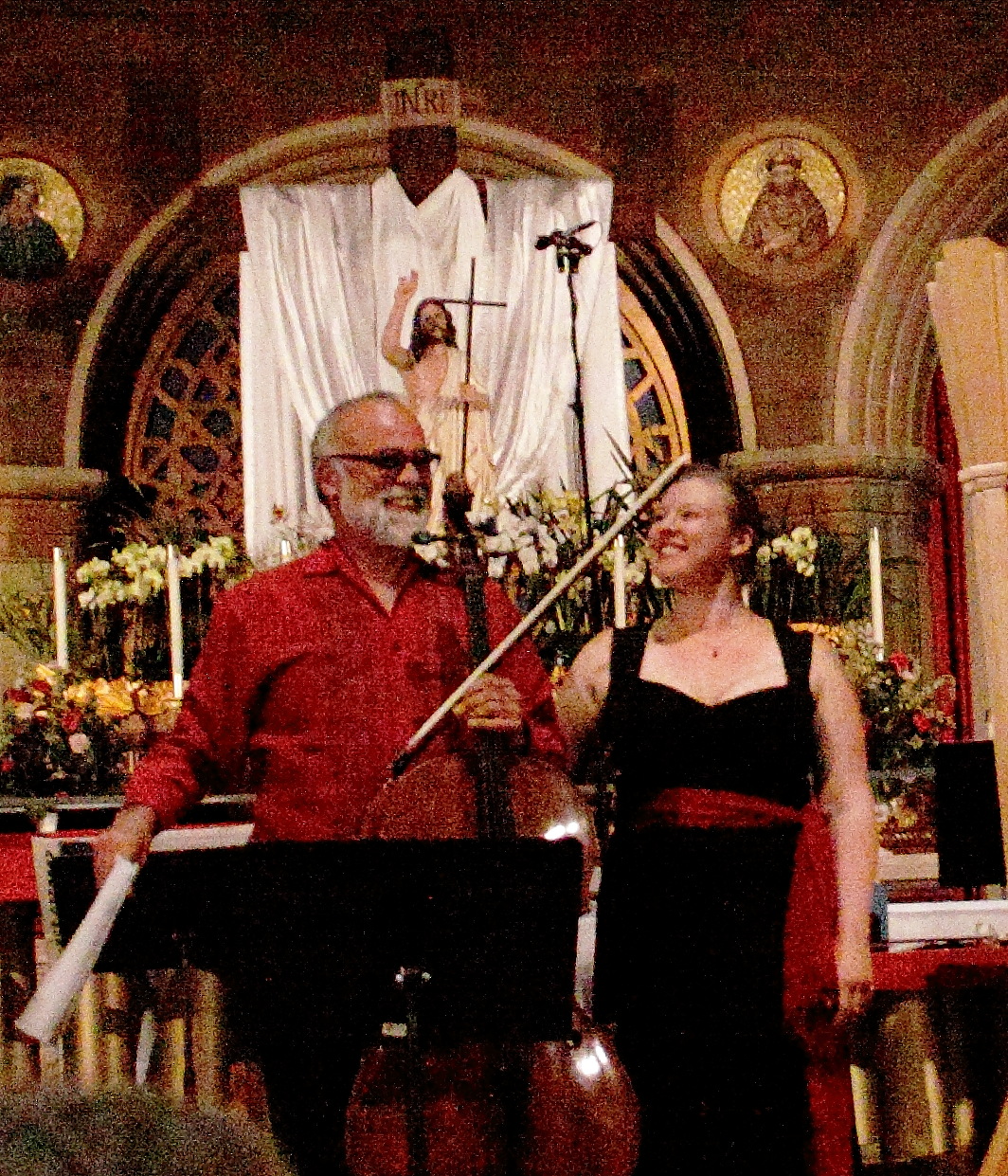
Emil Miland and Meredith Clark smiling in response the the applause following their performance.

Following an extended intermission (owing to a dearth of restroom facilities) there was an awards ceremony.  Charles Amirkhanian was awarded the 2017 Champion of New Music Award (tonight’s conductor Nicole Paiement was also a previous awardee).  Presentation of the award was done by American Composer’s Forum President and CEO John Neuchterlein and Forum member, composer Vivian Fung.

Amirkhanian took the time to pay tribute to his mother (who also would have been 100 this year) his father (who passed away in December at the age of 101) and his charming wife of 49 years, Carol Law, who continues her work as a photographer and her participation in Other Minds and related projects.  He also gave thanks to the staff of Other Minds and his former associates at KPFA where Charles served as music director for over 20 years.

OM22052120170019

American Composer’s Forum President John Neuchterlein looks on as composer Vivian Fung presents the prestigious 2017 Champion of New Music Award to a very pleased Charles Amirkhanian.

OM22052120170020

In a touching and humorous move Mr. Neuchterlein advised the audience that Mr. Amirkhanian would be given yet another award tied to Minnesota which is the home of General Mills (yes, the cereal people).  Amirkhanian (who himself has quite a gentle sense of humor) was surprised and charmed to receive a box of Wheaties emblazoned with his image from whence he can now reign in the rarefied group of breakfast champions in addition to his other roles.

OM22052120170022

The breakfast of new music champions.

The second half of the concert began with the co-composed Suite for Violin and American Gamelan (1974).  Co-composer Richard Dee was in the audience for the performance of this work written two years after La Koro Sutro (1972) and incorporating the same gamelan instrument created for that piece.  The substantial violin solo was handled with assurance and expressivity by Shalini Vijayan, herself a major new music advocate.

OM22052120170025

Composer Richard Dee waving thanks for the performance of Suite for Violin and American Gamelan.

At about 30 minutes in performance the multiple movements all but comprised a concerto with challenging roles for both the percussion orchestra led by the amazing William Winant and his percussion ensemble and the soloist.  All were masterfully coordinated by conductor Nicole Paiement.

OM22052120170024

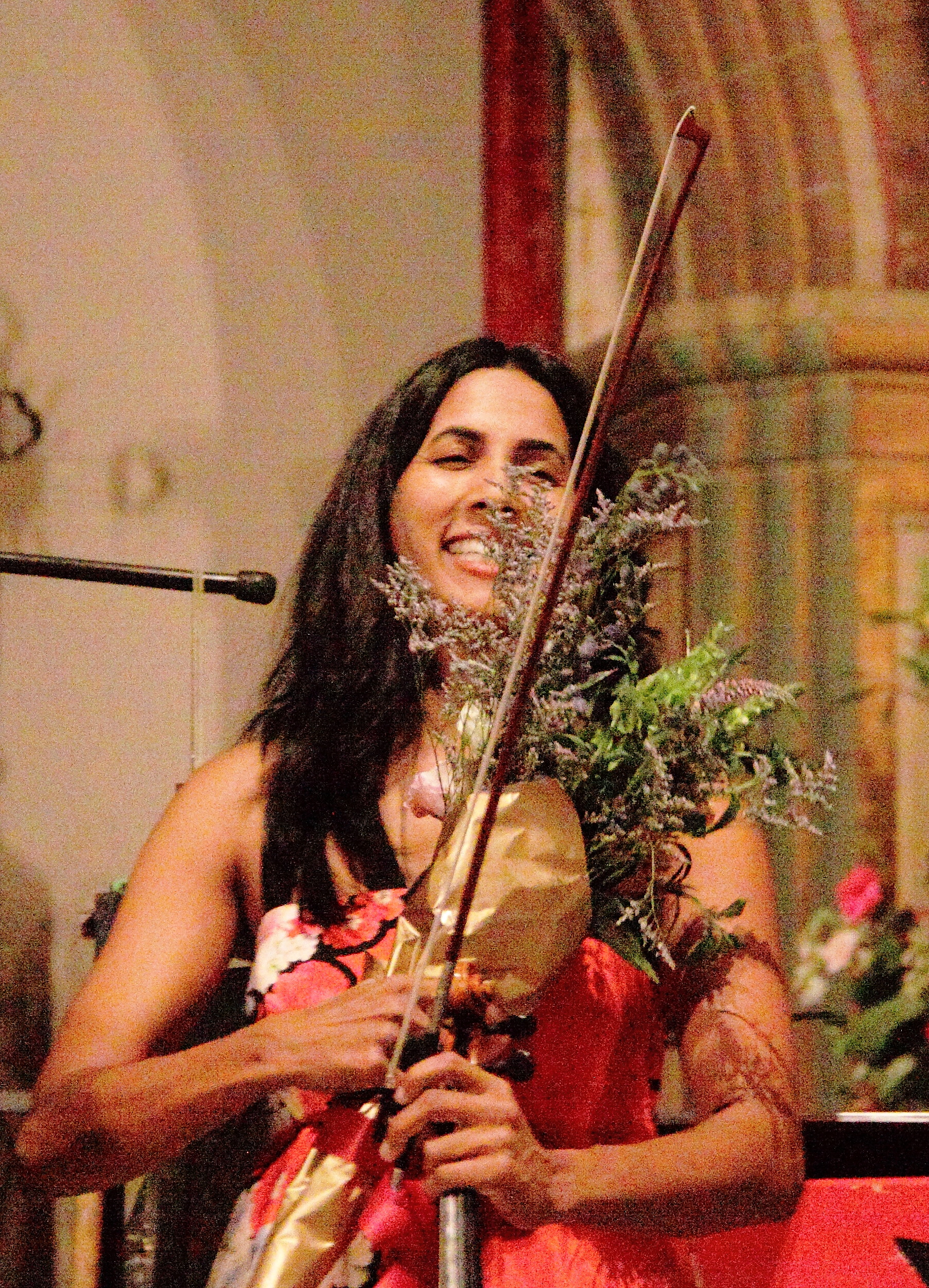
Shalini Vijayan smiles from behind her bouquet acknowledging the thunderous applause following her performance.

In a previous promo blog I had noted that the location of this concert is a designated pilgrimage site, one where the faithful journey as part of a spiritual quest.  Well, having been sidelined by a foot injury for the last 3 1/2 months this amounted to a musico-spiritual pilgrimage for this writer who has not been able to be out to hear music for some time.  The last piece on the concert in particular was a powerful motivation for this personal pilgrimage and I was not disappointed.

The American Gamelan was played by the William Winant percussion group consisting of master percussionist Winant along with Ed Garcia, Jon Meyers, Sean Josey, Henry Wilson, and Sarong Kim.

They were joined by the Resound Choir (Luçik Aprahämian, Music Director), Sacred and Profane (Rebecca Seeman, Music Director), and the Mission Dolores Choir (Jerome Lenk, Music Director).

Meredith Clark joined on concert harp and Mr. Lenk on the small ensemble organ.  All were conducted with both discipline and panache by Nicole Paiement.

This multiple movement work is a setting of the Buddhist Heart Sutra and is done in an Esperanto translation by fellow Esperantist Bruce Kennedy and, though written for the world Esperanto Convention in Portland, Oregon, it was premiered at the University of San Francisco in 1972.  This was the fourth performance in the Bay Area, a fact that reveals the love that this area has had and still has for its beloved citizen Lou Harrison.

OM22052120170029

Warm smiles proliferated as the bouquets were distributed amid a standing ovation from a very appreciative audience.

In fact this concert can be seen as a affirmation of so many things.  Harrison was a composer, teacher, dancer, calligrapher, Esperantist, conductor, musician, musicologist and early gay rights advocate.  It is a testament to Lou that he has been given a most spectacular birthday celebration which gave credence and appreciation to all aspects of this west coast genius and all his extended family.  It happened 50 years after the fabled Summer of Love and apparently the love continues in its way.

OM22052120170028

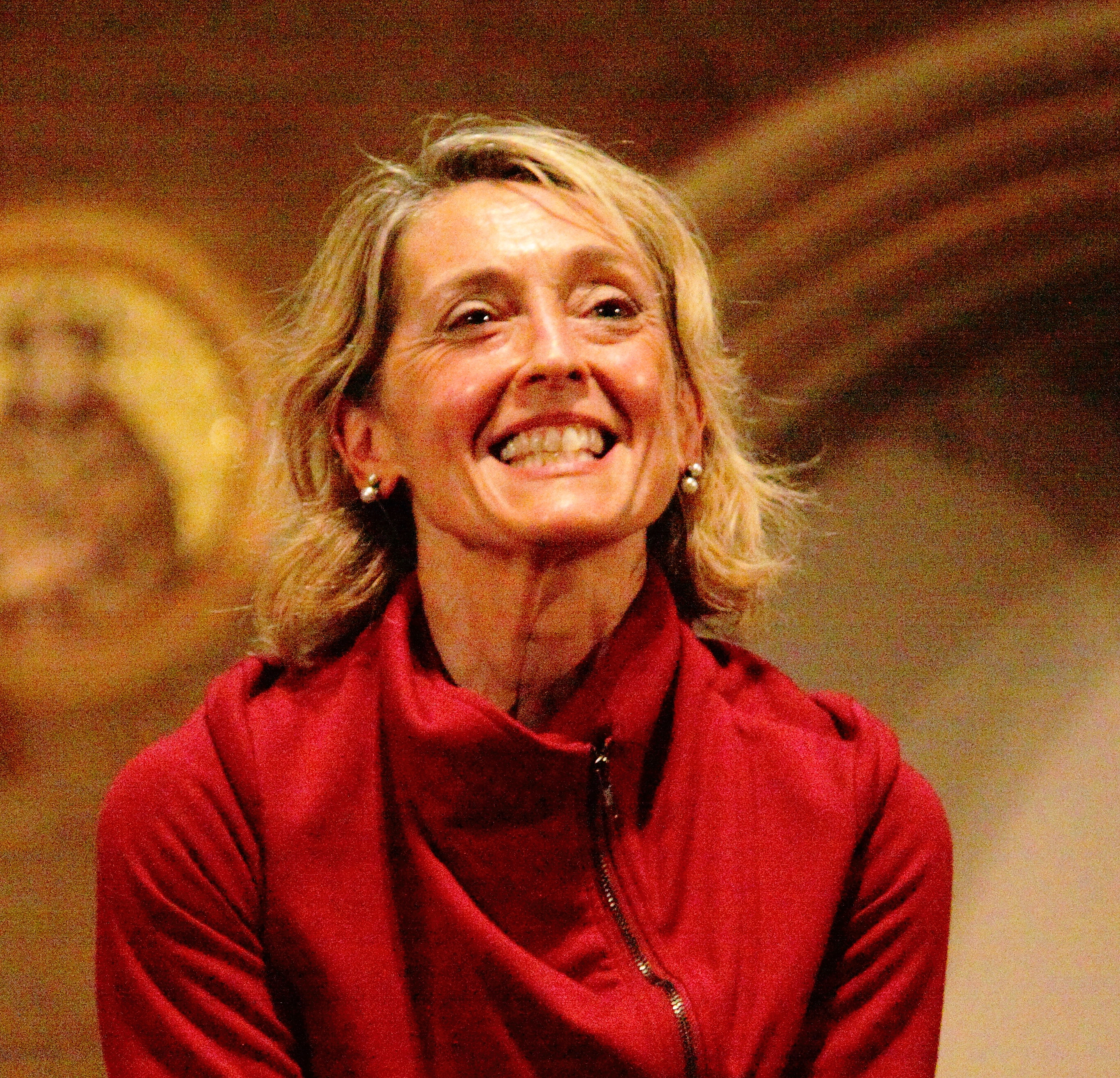
A clearly very happy conductor Nicole Paiement’s smile echoes both her feeling and that of the attendees, a wonderful night.

American Muse, American Master: Steven Stucky on BMOP


BMOP 1050

Steven Stucky (1949-2016) was sadly taken from the world too soon.  But we can rejoice in this wonderful new disc of (mostly) first recordings of some of his wonderful orchestral music and songs.  Boston Modern Orchestra Project adds another entry to their growing discography of must hear American music with this beautiful recording.

Three works are featured, Rhapsodies (2008), American Muse (1999), and Concerto for Orchestra (No. 1, 1987).  Only one, American Muse has been recorded (on Albany Records) before and all are worthy selections from the composer’s ample catalog.

Rhapsodies, the most recent work, is also the shortest at just over 8 minutes.  It was commissioned by the New York Philharmonic and the BBC Symphony and is for large orchestra and sounds as though it could serve as a movement in another Concerto for Orchestra.  Stucky, who was an expert on the music of Witold Lutosławski (1913-1994), was a master orchestrator as was Lutosławski though Stucky’s style is distinctly different reflecting a sort of friendly romantic modernism with serious virtuosity.  This little gem gives the orchestra and, no doubt, the conductor, a run for their money in this virtuosic and highly entertaining little sonic gem.  It was premiered in 2008 under Lorin Maazel.

The Los Angeles Philharmonic commission, American Muse was written with the fine baritone Sanford Sylvan in mind.  It is a four song cycle setting poems by John Berryman, e.e. cummings, A.R. Ammons, and Walt Whitman and was premiered in 1999 under Esa-Pekka Salonen.  Sylvan is a very fine interpreter of American music and first won this reviewer’s heart with his rendition of John Adams’ The Wound Dresser (also a Whitman setting).  One should never miss an opportunity to hear Sylvan’s work.

Again we are treated to Stucky’s acute and subtle sense of orchestration which works with the poetry unobtrusively paralleling the words with the musical accompaniment and seemingly creating its own poetry in sound. Sylvan is in fine voice and seems to be enjoying his performance, a very satisfying experience.

The inclusion of Stucky’s first Concerto for Orchestra which was commissioned by the Philadelphia Orchestra and premiered in 1988 (under Ricardo Muti) will satisfy fans of this composer’s work as it provides an opportunity to hear “the one that got away” so to speak.  It was the runner up for the Pulitzer Prize which he would later win for his Second Concerto for Orchestra (2003) in 2005.

In it’s three movements Stucky is clearly the master of his realm and creates a wonderful listening experience.  His sense of drama and emotion are stunning and serve to underscore the dimension of what the world has lost in his passing.  But it is time to leave sorrow aside and let the music speak and thus provide the composer with a dimension of immortality.

As usual the performance and recording are impeccable and Gil Rose continues to record wonderful music that deserves more frequent hearings and does honor to the memory of a cherished artist.  Now can a recording of Stucky’s 2012 Symphony be far behind?  Let’s hope so.

Grand Celebrations of Finnish Culture


BIS- 9048 SACD


The choice of repertoire, performers, and the quality of their recordings make any BIS records release worthy of attention.  This two disc set is a fine example.  Three major choral/orchestral works which celebrate the justly proud Finnish culture are given very fine performances in this live recording from 2016.

The earliest work, Jean Sibelius’ Kullervo Op. 7 (1892) is one of the less recognized masterpieces by Finland’s best known composer.  Based on the Finnish national epic, The Kalevala, this massive symphony has acquired a bit of its own mythology.  Though several recordings of this work now exist the world world premiere recording by the late Paavo Berglund (1929-2012) from the early 1970s brought this neglected masterpiece to a larger listening audience.  The intelligent liner notes by Andrew Barnett (and Olli Kortekangas) document and dispel the myths that Sibelius suppressed all or portions of this work which was premiered in 1892 yet had to wait until after the composer’s death in 1957 to receive its first twentieth century performance.  

In fact it seems more likely that the large forces required along with programmers’ preference for the composer’s later masterpieces were responsible for the unfortunate neglect of the present work.  It was the more romantically inclined myth of mysterious oppression that greeted Berglund’s triumphant premiere recording and this reviewer recalls being both charmed and intrigued by it.  Whatever the story the music is now a recognized early triumph by its creator and it is given a gorgeous reading by Finnish conductor Osmo Vänskä, (principal conductor of the Minnesota Orchestra which plays powerfully and definitively.

So why a second disc?  Well, Maestro Vänskä saw fit to commission a new work by contemporary Finnish composer Olli Kortekangas to serve as a companion piece to Kullervo and, then include a version with chorus of Sibelius’ best known work, Finlandia.  Together these three works would very satisfyingly fill an entire concert program.

Olli Kortekangas (1955- ) chose poetry by Finnish-American poet Sheila Packa and composed a 7 movement work (three are interludes for orchestra alone) in celebration of the 150th anniversary of modern Finnish migration to the United States.  The work, Migration (2014), is similar in orchestration with its use of male chorus and two soloists backed by a large orchestra.  The composer’s style is a sort of 21st century romantic style with tasteful modern touches.  

The focus of this fine new work is an affirmation of Finnish culture and its impact on the United States.  It seems both fitting and satisfying then that this program conclude with the landmark work of Finnish pride and nationalism, Sibelius’ best known work, Finlandia (1899).  But rather than just another reading of this classic of the concert hall  Vänskä chooses to do a version with chorus.  This was not the composer’s original intent but this version fits remarkably well in the context of this album.  

This is a very enjoyable album, well conceived and executed in every way.  Soloists Lilli Paasikivi and Tommi Hakala sing their roles with skill and passion as does the YL Male Voice Choir.  The applause track at the end of the Finlandia performance echoed the emotional experience of this reviewer and will likely do so for anyone who chooses to avail themselves of this fine example of recording art.

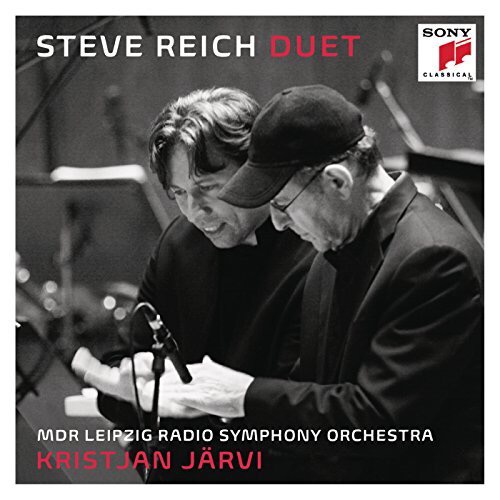
Kristjan Järvi Celebrates Steve Reich’s 80th


Kristjan Järvi (1972- ) is the youngest son of justly famed conductor Neeme Järvi.  He is also a frequent collaborator with the talented and ubiquitous Gene Pritsker among others.  This double CD represents a portion of his concerts in celebration of Reich’s 80th birthday.  There are apparently recordings available on the streaming service Medici TV of several other Reich works including the Three Movements for Orchestra (1983) and Desert Music (1986).  All these stemmed from a residency (2013-2014) that Reich enjoyed with the MDR Leipzig Radio Symphony and Chorus.

This 80th birthday tribute gives us yet another opportunity to hear another generation (other than Reich’s) interpreting this music.  For years only Reich and his ensemble had access to his scores but this is not the case with his orchestral and choral works.  Some may still consider Reich to be a difficult or experimental composer and this has limited the programming (and no doubt the commissioning) of music for such larger ensembles.  It is delightful to hear how other musicians respond to and interpret Reich’s music.  

In fact Reich’s music for larger ensembles is definitely worth hearing and hearing in different interpretations.  This set gives us the world premieres of beefed up orchestrations of You Are and Daniel Variations.  This writer looks forward to the orchestral version of Tehillim (1981) as well.  

This handsome two disc set includes the early Clapping Music (1971), Duet (1993), The Four Sections (1987), You Are Variations (2004),  and Daniel Variations (2006).  It is not a greatest hits compilation.  Rather it is a personal survey by a wonderful young musician.  Kristian Järvi is a conductor, composer and new music raconteur who is at the beginnings of a very promising career.  This album is a love song if you will.  Järvi clearly understands and loves this music and the opportunity to record these works, especially perhaps the intimate Clapping Music with the participation of the composer.

The Four Sections is tantamount to being a concerto for orchestra and is among this reviewer’s favorites among Reich’s works.  It has received too few performances and to date only two recordings.  This is the first live recording and gives insight into the amazing competence of both conductor and orchestra.  The 1993 Duet for Two Violins and String Orchestra is Reich’s homage to a musician of a generation preceding his, the wonderful violinist, conductor, and pedagogue, Yehudi Menuhin on his 80th birthday.  Soloists Andreas Hartmann and Waltraut Wachter handle this all too brief piece with skill and insight.  

The second disc contains studio recordings of the large orchestra versions of two very personal works.  These recordings alone are adequate reason to purchase this set.  Reich has gained much from tapping his Jewish heritage (musical, linguistic, and literary) in service of his art.  Both of these pieces feature texts from a variety of sources including the Bible, Hasidic aphorisms, the writings of Ludwig Wittgenstein among others.  In both works the texts determine to some degree the rhythmic choices of the music. 

You Are Variations is a four movement orchestral/choral work which sets a different aphorism in each movement.  It is among the composer’s more personal works and includes quotations from Wittgenstein (the subject of Reich’s undergraduate studies) along with Biblical and Talmudic texts in a beautiful existential meditation.

Daniel Variations is a powerful overtly political work written in response to the tragic murder of journalist Daniel Pearl who was beheaded by extremists in Pakistan in 2002. It is a deeply felt and very pained work which expresses the tragedy and creatively makes a link with the Book of Daniel as well as Pearl’s own words.  Reich is no stranger to political protest on his music and this is among his finest in that genre.

If you don’t know Reich’s music this is not a bad place to start.  If you are already a fan (as I’ve been for years) you will want this set to round out your collection.  

When Politics and the Arts Clash, OM 22


Isang Yun (1917-1995)


The relationship between politics and music is complex and varied.  There are many instances of clashes between these two disciplines from the politics of state and church sponsored music to its repression by those same institutions.

After centuries of Catholic church sponsored music a decision was made in 1903 to repress the performance of anything but Gregorian chant and any instruments except for the ubiquitous organ.  The reasons for this decree have been discussed but the end result was less work for musicians.

More recently the Nazi “degenerate art” concepts and the later proscriptions on “formalist music” in Soviet Russia similarly put artists and musicians out of work.  In fact many were jailed or killed.  Shostakovich and Prokofiev were high profile musicians who endured bans on performances of their music based ostensibly on claims that it brought (or potentially brought) harm to the state’s political visions.

Even more recently the blacklist created by Joseph McCarthy and his acolytes perpetrated a similar assault on actors, directors and writers like Dalton Trumbo (recently dramatized in the excellent film Trumbo with Bryan Cranston leading the fine cast).  This sad chapter of history did not completely end until the 1970s and only recently have efforts succeeded in restoring suppressed screen credits to these films.  Many lives were destroyed or irreparably harmed.  One hopes, of course, that such travesties will not be repeated but the recent efforts to eliminate the NEA suggest that such struggles remain with us.

On February 18th Other Minds will present a centennial celebration of two composers’ births.  Lou Harrison certainly expressed some political themes in some of his music but did not incur state sponsored political wrath.  Unfortunately this was not the case with the other honoree of Other Minds’ 22nd season.

In 1967 Korean composer Isang Yun was kidnapped by South Korean intelligence officers and taken to South Korea to face accusations of collaboration with the communist government of North Korea.  He was held for two years and was subjected to interrogation and torture based on information later acknowledged to have been fabricated.  Even so South Korea declined to allow the ailing composer’s request to visit his hometown in 1994.  He died the following year in his adoptive home in Berlin, Germany.

A petition signed by over 200 artists including composers Karlheinz Stockhausen, Hans Werner Henze, Gyorgy Ligeti and conductors Otto Klemperer and Joseph Keilberth among the many was sent to the South Korean government in protest.  A fine recent article by K. J. Noh, Republic of Terror, Republic of Torture puts the incident in larger political context. It is a lesson sadly relevant even now in our politically turbulent times.

The concert will feature works from various points in his career, both before and after the aforementioned incident.  It is a fine opportunity to hear the work of this too little known 20th century master.  Conductor and pianist Dennis Russell Davies knew and worked with both Harrison and Isang.  It is so fitting that he will participate along with his wife, justly famed new music pianist Maki Namekawa, in this tribute to the the late composer.  This can’t right the wrongs but what better way to honor a composer than by performing his music?

The performance is at 7:30 PM at the historic Mission Dolores Basilica at 3321 16th Street
San Francisco, CA 94114.  Tickets available (only $20) at Brown Paper Tickets.

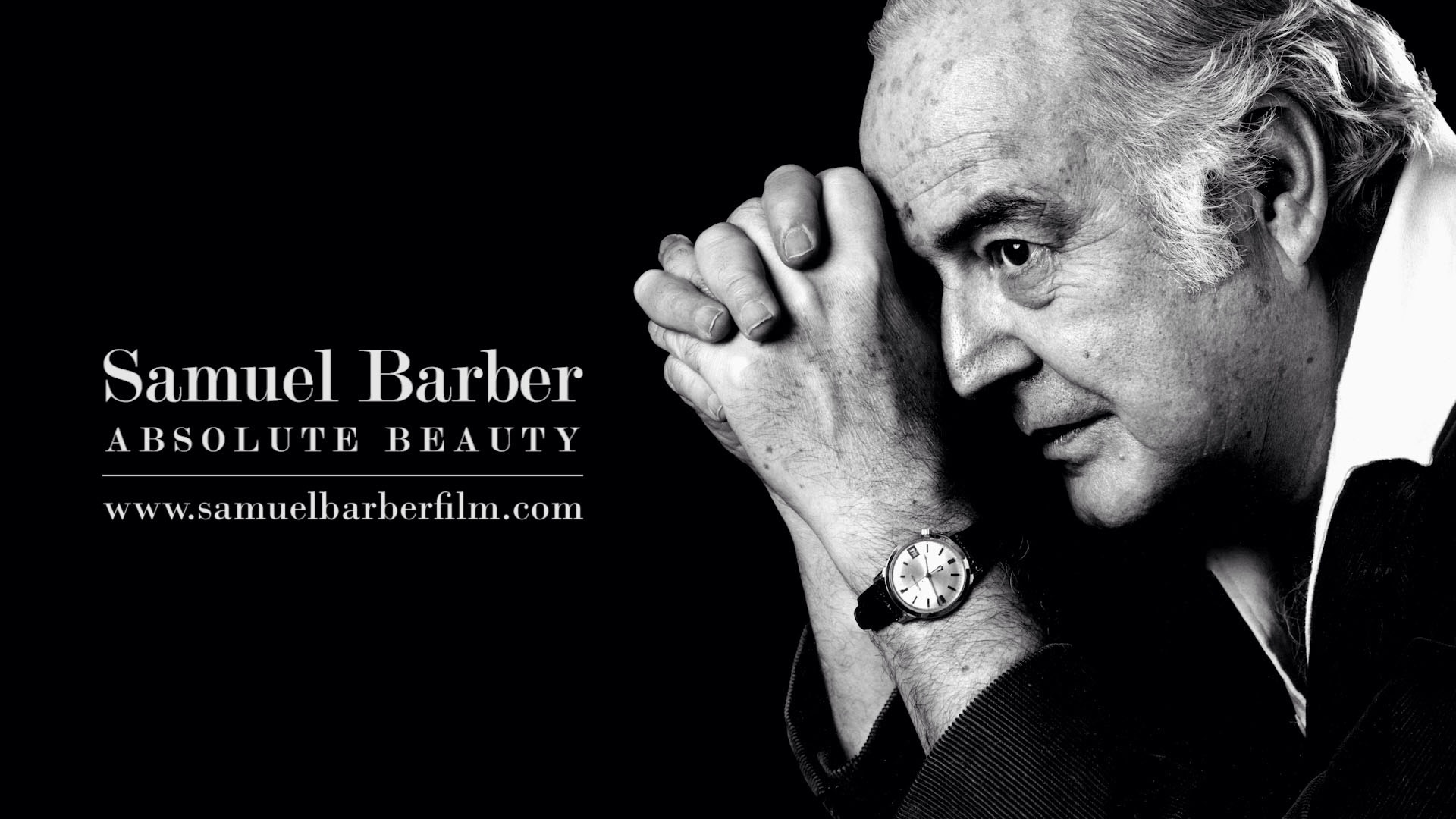
Samuel Barber in Perspective, A New Documentary


It is surprising that this first ever documentary on American composer Samuel Barber (1910-1981) comes some 36 years after his passing.  This two time Pulitzer Prize winner whose now ubiquitous Adagio for strings was first championed by Arturo Toscanini was much lauded and performed during his lifetime.  His two grand operas (Vanessa and Antony and Cleopatra) were performed at the Metropolitan Opera and his increasingly popular Violin Concerto was first recorded by Isaac Stern with Leonard Bernstein and the New York Philharmonic.

Barber’s music is a personal favorite of this writer.  This mid-century neo-romantic master is gaining greater recognition through an increasing number of performances and recordings so this release would seem to be a timely one.  

Filmmaker H. Paul Moon will be screening an discussing the film ahead of its March 23rd release on disc.  The screening will be at the Jarvis Conservatory at 1711 Main Street in Napa, CA at 7 PM on Friday, February 10. It will be preceded by a performance of the justly famed Adagio for Strings in its original form for string quartet.

The trailer is available for viewing at the website noted above and the site contains further info about rental and purchase.

David Rakowski: Stolen Moments, Fabulous New Orchestral Music


rakowski

BMOP 1048

The spirit of jazz and, in particular, that of Duke Ellington and perhaps George Gershwin seem ever present in this recent release from the Boston Modern Orchestra Project.  David Rakowski (1958- ) is a new voice to these ears but clearly a highly developed one well schooled in writing for large orchestra and for piano solo within that context as well.

Two works are presented here, the four movement Stolen Moments (2008/2010) and Piano Concerto No.2 (2011).  Both are large, colorful works in a basically tonal/romantic context but with clear modernist influence.  Nothing experimental here, just sumptuous orchestral writing and a challenging and interesting work for piano and orchestra.  It was only from reading the useful liner notes that I learned Rakowski had been a student of Milton Babbitt (1916-2011), a composer famous for his hard nosed complexity.  In fact Rakowski actually quotes from Babbitt and this music is a tribute to the education received from this man (keep in mind that Babbitt also taught harmony to Stephen Sondheim).

It is as difficult to grasp that Rakowski was taught by Babbitt as it is to believe that, by his own assertion, he knows very little about jazz.  The first work seems to channel the spirits of Duke Ellington and George Gershwin more than Babbitt for sure.  This four movement orchestral suite, in it’s many moods, is melodic, jazzy and engaging in a way that can’t fail to entertain.

briggs

Amy Briggs (image from the artist’s web site)

Amy Briggs has long been a collaborator with Rakowski and is an artist who has successfully made her career exclusively playing contemporary music.  This second of Rakowski’s concertos for this instrument was written for her and she plays it magnificently.  She clearly has a feel for the jazz rhythms and handles the virtuosic writing as though it were second nature.

The concerto ventures into a variety of moods and provides ample opportunities for many BMOP soloists to have their moments.  It is basically a classical three movement structure with multiple subdivisions within each movement.  These large movements come in at nearly 15 minutes each and are practically works unto themselves though they clearly adhere to the same basic vision.  The second movement is dedicated in memory of Rakowski’s teacher Milton Babbitt.  I’m sure he would have approved.

This is in fact the second time that Gil Rose and his massively talented musicians have chosen to survey some of Rakowski’s music.  That alone should be enough to clue listeners in to a potentially good listen.  Rose has been amassing a catalog of music by modern composers whose work deserves attention and, while this is an example of some pretty recent music, Rose and BMOP have done a fine job of giving attention to composers who have been unjustly neglected as well.   They seem to have a fine ear for quality music and this reviewer will listen to anything they choose to record.

As usual with BMOP, the recording is bright and lucid allowing the listener to hear the fantastic details in these big and intricate but entertaining works.  The production is by Gil Rose himself with recording and post-production by Joel Gordon.  Another great volume in the growing BMOP canon.

Alberto Ginastera at 100


ginastera

Oberlin Conservatory OC 16-04

Let me start by saying that the only thing wrong with this album is that it is only one CD. Alberto Ginastera (1916-1983) is without doubt one of the finest composers of the twentieth century.  Stylistically he holds much in common with composers like his contemporaries Aaron Copland (with whom he studied), Carlos Chavez, Leonard Bernstein and others who incorporated the spirit if not always the literal music of his homeland’s folk culture into his music.  In additional to these nationalist works he wrote a substantial amount of traditional concert music which touched on the edges of modernistic trends.

He wrote three operas, two ballets. two piano concertos, two cello concertos, a harp concerto, three string quartets, a bevy of piano music and sundry other items.  It is simply not possible to contain a fair representation of his work on a single CD.  Despite that this disc is not a bad retrospective.  It is lovingly played and recorded and if it does not represent the whole of Ginastera’s oeuvre it is a nice sampling.

The disc begins with the wonderful Harp Concerto Op. 25 (1956, rev. 1968).  Though originally commissioned by Edna Phillips (principal harp of the Philadelphia Orchestra) she had retired before she could perform it and it was premiered in 1965 by the amazing Spanish harpist Nicanor Zabaleta.  This three movement work is certainly one of the composer’s finest works and is beautifully played by Yolanda Kondonassis with the Oberlin Orchestra under Raphael Jiménez.  This piece is one of the finest modern harp concertos and is representative of the composer’s international style with perhaps just a taste of modernism.

Next up is the single movement Pampeana Op. 16 (1947) with the great Gil Shaham on violin and his sister Orli Shaham on piano.  This is a sort of window on Ginastera’s earliest nationalist style full of melody and virtuosity.

The next work is the Sonata for Guitar Op. 47 (1976) played by Grammy winning virtuoso Jason Vieaux.  I had not heard this work and my first hearing was indeed a revelation.  This is a major work for guitar and a wonderful sonata in the classical form.  I gave these four tracks a few listens in an attempt to digest some of their beauty and complexity and I will doubtless give them many more listens.  This is a major piece that belongs in the repertory.

And, finally, we move to the earliest utterance here with the Danzas Argentinas Op. 2 (1937) in an exciting and dedicated performance from Orli Shaham.

The sound is wonderful and there are a geekily satisfying set of liner notes which include a useful analysis by James O’Leary, Frederick B. Selch Assistant Professor of Musicology, Oberlin Conservatory of Music.  All in all a beautiful production and a great introduction to Ginastera’s work but please, don’t stop here.  Make sure you get to hear his other work and perhaps the wonderful folks at Oberlin will consider a volume two?

Jennifer Koh, Putting Tchaikovsky in Context


tchaikoh

Cedille CDR 166

Let me start here with a confession:  I have never been a real big fan of the Tchaikovsky Violin Concerto.  However I am a huge fan of Jennifer Koh and of Cedille Records in their intelligent productions which place music like this in a more proper context.  The usual pairings of this concerto with Brahms or Beethoven only seem to highlight the distinct difference in style rather than a context more conducive to the appreciation of the music. Another problem with Tchaikovsky is that his reputation tends to hang on the 1812 Overture, the Violin Concerto, the first Piano Concerto and the last three Symphonies.  He wrote a lot more than that (including ten operas and three string quartets).

Now with that bit of whining out of the way let’s take a look at the recording at hand.  Jennifer Koh is one of the shining lights of contemporary violin soloists and that alone should be sufficient recommendation to listen to any of her recordings or performances. She holds a special place in this reviewer’s heart for her attention and expertise with contemporary music and for having performed the solo violin part in the most recent production of Philip Glass’ Einstein on the Beach.  In costume with a shaggy wig she brought new and highly virtuosic life to that obbligato violin part.

It is her virtuosity and her perspective as one of the more recent generations of artists to wield this classic string instrument that holds the main interest here.  The Tchaikovsky concerto has been the darling of all the great violinists from Heifetz and Kreisler to Milstein and Stern. I suppose that every violinist must confront this work at some point and it is a genuine challenge as well as a showpiece for virtuosity.

The other works on this disc (which are presented chronologically) are the Serenade Melancolique Op. 26 (1875), the Valse-Scherzo Op. 34 (1877) followed by the Concerto Op. 35 (1878) and finally the Souvenir d’un lieu cher Op. 42 (1878, originally for violin and piano orchestrated by Alexander Glazounov and published in 1896).  Hearing this concerto in the context of the composer’s other works for violin and orchestra does more clearly delineate the composer’s process.

In addition to providing a complete accounting of Tchaikovsky’s violin and orchestra music listeners are able to hear the interpretation by this wonderful artist.  Indeed she does truly grasp the grand romantic sweep of the concerto and the more intimate shorter works. Let me say too that if you like the concerto you will also find much delight in the shorter works which frame it on this disc.  Her virtuosity shines and Koh’s ability to handle romantic as well as modern repertoire certainly mark her as a versatile modern master.

Of course one can’t miss the powerful contribution of the orchestra in considering these performances.  The Odense Symphony Orchestra (Denmark) is absolutely stunning in its clarity and drive.  The conductor Alexander Vedernikov is of Russian musical royalty (both his parents were accomplished musicians) and was the conductor of the Bolshoi from 2001-2009.  He is definitely a name to follow and his feel for this music of his homeland is most genuine and exciting.

This truly excellent recording is produced by Grammy winning veteran producer Judith Sherman.  Session engineering is by Viggo Mangor with post-production and editing respectively by Bill Maylone and Jeanne Velonis.  Audiophiles might even want to have this disc for the sound alone.  It’s that good.

Stacy Garrop, A New Master of the Orchestra


garrop

Cedille has tended to be very supportive of local artists (they are based in Chicago) and this is a fine example of them hitting a bulls eye.  Stacy Garrop boasts about 20 CDs which include her music and she has, as of 2016, began her career as a freelance composer.  She had taught composition at Chicago’s Roosevelt University from 2000-2016.

Her name is a new one to this reviewer but one which will remain on my radar.  This stunning disc contains three major works by her, the five movement Mythology Symphony (2007-2014), the three movement Thunderwalker (1999) which was her doctoral dissertation and Shadow (2001).

A quick look at Garrop’s intelligently designed website shows her to be a very prolific composer with works for almost every imaginable ensemble.  Scores and recordings can be ordered from the site.  Garrop earned degrees in music composition at the University of Michigan-Ann Arbor (B.M.), University of Chicago (M.A.), and Indiana University-Bloomington (D.M.).

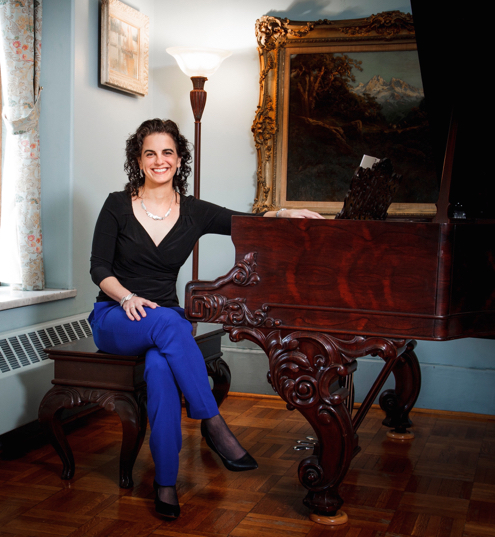
garrop

The composer at the piano (from the composer’s website)

Another of the nice features of this disc is the opportunity to hear the fine musicianship of the Chicago College of Performing Arts Symphony (and their chamber symphony) of Roosevelt University.  Conductors Alondra De La Parra and Markand Thakar are also new to this reviewer but I am glad to be able to acquaint myself with their skills in this recording. Listeners would do well to note these fine artists and to thank Cedille for supporting them. This is a fine example of producer James Ginsburg’s ability to recognize and promote local talent.

alondra_dlp3

Alondra De La Parra (from the conductor’s website)


Markand Thakar photos (c) dennis drenner 2012
www.dennisdrenner.com

Markand Thakar photos (c) dennis drenner 2012

The centerpiece here is, of course, the Mythology Symphony.  Its five movements were composed over several years and the symphony was first performed in its entirety in 2015. One is immediately struck by the directness of the composer’s invention and the elaborate but lucid orchestration.  This work would likely please any concert audience and its color and sense of narrative suggest almost cinematic aspirations.  Indeed Ms. Garrop could undoubtedly write for the screen with her wide ranging palette.

The second work, Thunderwalker, as mentioned above, is Garrop’s doctoral dissertation and the listener will doubtless perceive the fact that her style and skillful handling of the orchestra appear to already have been fully formed in this, her earliest orchestral composition.  The work, which does not have a specific program as does the symphony, still demonstrates the composer’s fascination with the mythological dimension as she weaves classical forms of fugue, pasacaglia and scherzo to describe her imagined image of the Thunderwalker.

Shadow (2001) is described in the notes as a reflection of the composer’s experience at the Yaddo artist colony.  Again her fascination with images to drive the music are present and her style remains remarkably consistent with the other two works on the disc.

The recording was engineered by Bill Maylone at the Benito Juarez Community Academy Performing Arts Center in Chicago.  Graphic design is by Nancy Bieschke with the lovely Medusa cover art by Thalia Took.  The very informative liner notes are by the composer.


Between the Lines, New Percussion Music by Neil Thornock


Between the Lines

Between the Lines

Other than the information on this CD and the composer’s faculty page (here) information seems limited on this composer,.  He earned a BM, Organ Performance, Brigham Young University, 2001, an MM, Music Composition, Brigham Young University, 2003 and a DM, Music Composition, Indiana University Jacobs School of Music, 2006.  Currently he is associate professor of music at BYU where he teaches theory and composition as well as electronic music.

Thornock is that rare breed of percussionist (or is it keyboardist?), a carriloneur  and he takes the opportunity to display those skills on this all percussion release, apparently the first recording of this composer’s music.

It is very difficult to assess a composer based solely on their percussion music and sometimes that genre can take on the insider feel of, say, band music or some more rarefied and sequestered niche of music.  As popular as percussion music has become in the 20-21st century it seems sometimes to be an orphan genre.  This is also, no doubt, due to the all-inclusive nature of the term “percussion” which leaves a huge list of potential instruments to consider.  So an album of tympani music or bongo music or marimba music (conceivably even piano and harp can be included under the percussion rubric).might all be spoken of generically as percussion music.  This recording uses a wide variety of instruments.

Having said that this disc appears to show a composer with a wide palette and knowledge of the medium and it is an opportunity to hear carillon music which is itself a relatively rare experience in recordings.  His writing is accessible and, no doubt, well-tailored to the skills of the musicians.

There is nothing familiar here.  All are new works written, presumably, in the last few years.  It would be interesting to hear more of this composer’s output in the areas of chamber, orchestral and electronic music.  But this little tease will have to do for now.

Matthew Coley, the percussionist, seems to be the real star here.   He plays on all tracks and seems to be a highly skilled player.  His website was the most useful to this reviewer as well.  Along with him are the Iowa Percussion Group, the Iowa State University Percussion Ensemble and, as mentioned earlier, the composer on carillon on tracks 7-10 with Gerard Norris conducting.

This New Focus recording FCR 156 is beautifully recorded and I think that is no simple task given the variety of instruments involved.

BMOP Opening Concert Commemorates Armenian Genocide


BMOP20_logo

ADDENDUM:  Unfortunately the pianist Nareh Arghamanyan will not be able to perform.  BMOP informs me that they are substituting a piece by the wonder.ful Israeli composer Betty Olivero called Neharot Neharot (2006-7) for two string orchestras, accordion, percussion, tape and viola.  It will feature none other than violist extraordinaire Kim Kashkashian.  

The Boston Modern Orchestra Project begins it 20th season on Sunday October 18th with a concert in honor of the 1915 Armenian genocide with a celebration of that country’s artistic heritage.  Titled Resilient Voices 1915-2015, the concert will feature works by Komitas (1869-1935), Alan Hovhaness (1911-2000), Dmitri Shostakovich (1906-1975) and Tigran Mansurian (1939- ).

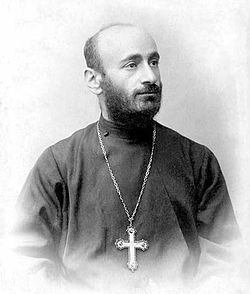
Komitas_1902

Komitas, born Soghomon Soghomonian, is generally regarded as the foundational composer for Armenian classical music in the 20th and 21st centuries.  Like Bartok and Kodaly, he collected and transcribed folk music from his country.  He is considered an early founder of the practice of ethnomusicology collecting Armenian and Kurdish folk music.  He was ordained a priest in the Armenian rite church and took the name Komitas.  The impact of the genocide affected him deeply and he spent the last 20 years of his life in a psychiatric facility where he died in 1935.

Alan Hovhaness

Alan Hovhaness

American composer Alan Hovhaness also embraced a musicological approach to his composition by including Armenian folk songs and that of other musical cultures he had explored including Korean and South Asian. He also acknowledges a debt to Komitas (Hovhaness released a recording on his own Poseidon label of him performing Komitas’ complete piano music).

Hovhaness remains less well-represented than he deserves in the concert hall so this performance of Khrimian Hairig (1944, rev 1948) is a welcome one.  The piece is in three continuous movements titled, “Chalice of Holiness”, “Wings of Compassion” and “Triumph of Faith”.  It is scored for string orchestra with solo trumpet.  The solo here will be played by prominent new music trumpeter Terry Everson (whose talents are to be required in the next piece on the program).  Hairig was a prominent Armenian cleric and mystic of the 19th century.

This work is early in Hovhaness’ prolific output and is characteristic of his Armenian period utilizing Armenian folk melodies and writing on Armenian themes.  He would later gain wider fame when Leopold Stokowski premiered his 2nd Symphony “Mysterious Mountain” in 1955 on NBC television.  Hovhaness died in 2001 leaving over 400 compositions of which 67 are symphonies.

Arghamanyan_Nareh

Nareh Arghamanyan

The Armenian connection to the next piece is apparently the BMOP début of the young Armenian pianist, Nareh Arghamanyan (1989- ) in the First Piano Concerto Op. 35 (1933) of Dmitri Shostakovich.  This unusual piece is scored for piano, string orchestra and trumpet (I told you Everson would be back).  It is one of those neo-baroque experiments and quotes from well-known classical pieces.  It is quite challenge for a pianist and the début of this rising artist will doubtless be one of the highlights of the concert.

The title of the concert is Resilient Voices 1915-2015 and is given in commemoration of the Armenian Genocide (1915-1923) but more so in celebration of the voices and the talents that have endured.  Controversy remains evidenced by the fact that Azerbaijan and Turkey continue to deny the genocide but the estimated death toll was 1.5 million and this is the event for which the term “genocide” was first used.

Artistic Director and Conductor Gil Rose

Artistic Director and Conductor Gil Rose

It is the genius of Gil Rose, conductor and artistic director whose creative vision in a couple of releases  I recently reviewed ( Anthony Davis and Irving Fine) that first alerted me to the work of this fine ensemble (a little late, I know).  But I discovered a great orchestra with some of the most innovative programming with attention to new and recent music.  I was graciously offered a seat at this concert but it will have to be one of my regrets.  This sounds like a fantastic program.

Tigran Mansurian

Tigran Mansurian

How very appropriate then to have the BMOP premiere of the Requiem (2009) by Tigran Mansurian (1930- ) by far Armenia’s best known living composer.  The Requiem was written in memory of the holocaust and is scored for large orchestra, chorus and soprano and baritone soloists (not announced when last I checked yesterday).  Gil Rose conducts the Harvard-Radcliffe Collegium Musicum with the Boston University Marsh Chapel Choir.  This is indeed a species of political music and BMOP is to be applauded for this as a contribution to the recognition of human rights. through music.

Tigran Mansurian at the piano at Other Minds in San Francisco.

Tigran Mansurian at the piano at Other Minds in San Francisco.

Mansurian previously appeared at the Other Minds 20th Anniversary concert (also dedicated to the holocaust) in March of 2015 in San Francisco.  At that concert I captured a moment from the pre-concert discussion in which Mansurian agreed to sing a traditional Armenian song accompanying himself at the piano, a very personal moment from a composer whose art is deeply felt.

Please, BMOP, record this.  Thanks in advance!!!

The Varieties of E#, a new Elliott Sharp Release on Starkland


Elliott Sharp

Elliott Sharp

I think the first time I heard of Elliott Sharp was when a friend played a vinyl copy of 1988s Larynx. I later got hooked on the delightfully noisy string quartets of 1987s Hammer, Anvil, Stirrup. With 89 albums to his credit (according to discogs.com) Sharp writes and plays music in a range of styles and for a range of ensembles.

Only two years older than John Zorn their musical paths are similar in that they both learned multiple instruments as children. While they are both incredibly creative, intelligent and productive artists, Sharp initially took a more traditionally academic path while Zorn is largely self taught (an amazing feat in itself).

Sharp studied music, anthropology, improvisation and electronic music with teachers like Benjamin Boretz, Roswell Rudd, Morton Feldman and Lejaren Hiller. His music frequently uses Fibonacci numbers, fractals, chaos theory and genetic metaphors. His collaborators have included blues guitarist Hubert Sumlin, Qawalli singer Nusret Fateh Ali Khan (and many others) and practically a who’s who of the Downtown New York scene.

He produced the Nonesuch album of Ornette Coleman covers by John Zorn (Spy vs. Spy, 1988) which is definitely worth a listen. It is one of a series of such recordings of covers of various artists which have also included Ennio Morricone among others.

The present recording comprises works written between 2004-2008 and, like the previous release of music by Martin Bresnick (reviewed previously in this blog here), comprises a sort of snapshot of the composer’s recent work. Like the Bresnick disc this recording samples Sharp’s writing for a variety of ensembles and is an effective portrait of his mature style.

As a long-standing performer in the New York downtown scene Sharp experimented with a variety of compositional and  instrumental techniques consistent with his scientific interests.  Now such experimentation by itself is of little interest except on a theoretical level but what we hear in the works in this recording is a composer who has integrated these techniques into a sound that is pretty uniquely identifiable as Elliott Sharp much as J.S. Bach’s techniques are easily recognizable in identifying that composer.

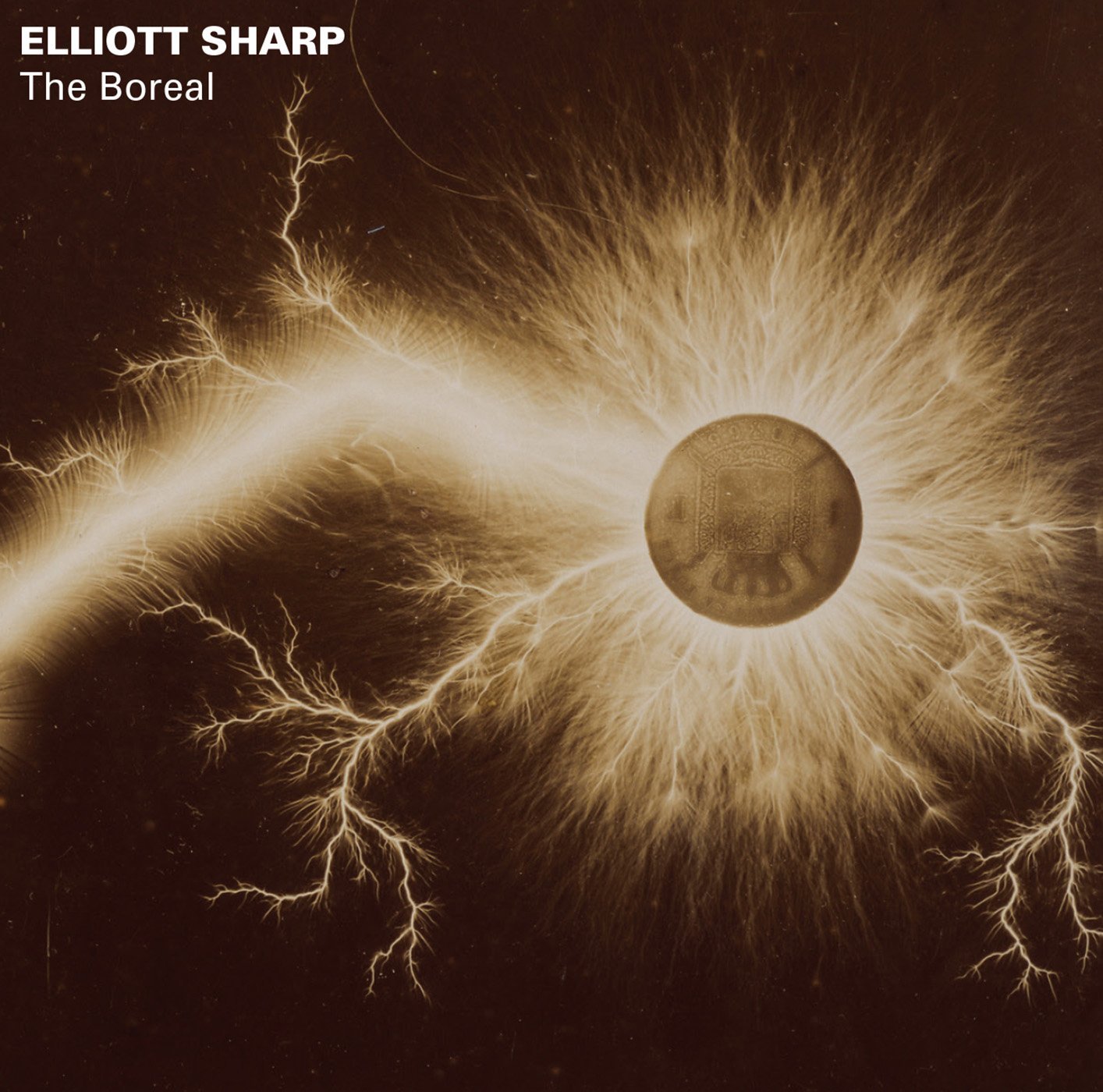
The first work (and the one that lends its title to the album) is The Boreal (2008).  It is the most recent of the compositions and is another chapter in Sharp’s reinvention of string quartet writing.  Written for the noted JACK quartet, it involves the use of different types of non-traditional bows fashioned by the composer and creates sounds full of harmonics. It is probably unlike any string quartet music you have ever heard and it expands the notion of what that traditional classical ensemble can do.  The recording, though recorded live at the Ostrava Festival, is remarkably free of ambient noise which allows the listener to hear the subtleties of the rather wide dynamic range to be heard without the interference.  The work resides in more or less the same sound world as his other quartets and its four movements seem to follow logically creating a conceptual whole as with any of the more conventional quartets in the repertory.

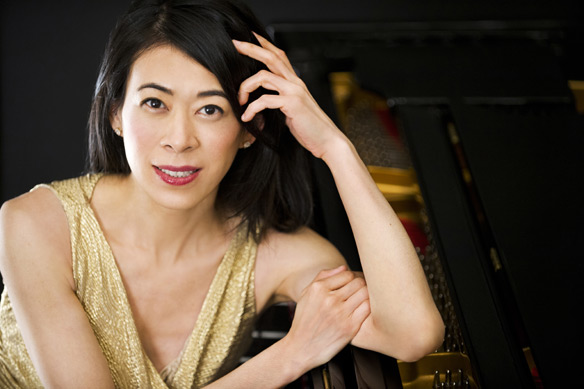
Jenny Lin

Jenny Lin

The second work, Oligosono (2004) is for solo piano.  As the liner notes tell us it is Sharp’s application of extended instrumental techniques which he developed on his guitars to the piano (a pretty interesting accomplishment).  It is written for and played by the wonderful Jenny Lin who navigates the inside of the piano as well as the keyboard in some rhythmically complex and virtuosic playing.  She executes the three movements with seeming ease.

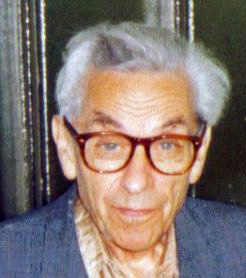
Paul Erdös "Erdos head budapest fall 1992" by Topsy Kretts - Own work. Licensed under CC BY 3.0 via Commons - https://commons.wikimedia.org/wiki/File:Erdos_head_budapest_fall_1992.jpg#/media/File:Erdos_head_budapest_fall_1992.jpg

Paul Erdös

Now we come to the composer’s work for larger ensembles.  Proof of Erdös (2006) is named for the mathematician Paul Erdös (1913-1996) perhaps most famous for the Erdös Number which is an indicator of the degree of separation a given person has with another (Erdös’ number would be a zero and his direct collaborators would be a one.  I’m guessing my Erdös Number with regard to Mr. Sharp would probably be at best a three for having reviewed this album).

Proof of Erdös is a four movement work written for Orchestra Carbon (one of Sharp’s various ensembles) and it is ably conducted by the American composer/conductor David Bloom.  It is a studio recording.  The work shares some of the sound world of the last piece on the album but the ensemble is more of a chamber group than the full orchestra but produces a similarly large and complex sonic image.

On Corlear’s Hook (2007) is a work for full orchestra and, for this reviewer, it is a great opportunity to hear Sharp’s ability to write for large orchestra.  It’s title is taken from a the lower east side neighborhood in Manhattan where Sharp resided with his family.  As the composer says in the notes there is no attempt to be programmatic or pictorial that the music is, “a reflection of the spectra of my existence (there) from one frequency band to another”.

The performance by the fine Janacek Philharmonic is conducted by the German conductor Peter Rundel (1958- ). Rundel, whose credits include a Grand Prix du Disque for his recording of the works of Jean Barraque (1928-1973), delivers a convincing performance of this tour de force.  The four movements, reflecting Sharp’s “spectra” coalesce to a unity which suggests that this piece could easily be called “symphony” if one wanted to use that apparently dated term.  The audience seems attentive or at least respectfully quiet which makes for a pretty definitive recording.

A great debt is acknowledged here to the fine work of the Ostrava Days festival under the guidance of Petr Kotik (1942- ) for curating this amazing annual new music event.  There are very useful liner notes by legendary boundary defying cellist (and sometime Sharp collaborator) Frances-Marie Uitti.   Sharp himself provides notes in the accompanying booklet. As usual with Starkland the recording is of very high quality and Tom Steenland’s gift for graphic design (using an 1888 photo of electrical “effluvia” from the surface of a coin) is well suited to represent the contents of the recording.

The Boreal Starkland ST-222

The Boreal
Starkland ST-222

Like many of Starkland’s releases this album challenges the listener but meeting that challenge and giving this a serious listen is ultimately very rewarding.  This is a fine example of a composer whose work deserves to be better known and this is a good sampling of some of his most refined work.  Hopefully this release will help to position Sharp as a composer with roots in the downtown improv scene who has taken his experimentation successfully into the larger world of the contemporary classical scene.


A Glorious Other Minds 20th Anniversary


The 20th Other Minds festival completed its three concert run on March 6, 7 and 8 of 2015.  This was the first time in which composers who had appeared before came for a second time.  Ten composers were featured and a total of some 25 or so works were performed.  It also marked the first time that a full symphony orchestra was featured.

Ruth Asawa San Francisco School of the Arts Orchestra just fitting on the stage at SF Jazz

Ruth Asawa San Francisco School of the Arts Orchestra just fitting on the stage at SF Jazz

The first night opened with the wonderful guitarist David Tanenbaum performing music by the late Peter Sculthorpe who was to have attended this festival.  Sculthorpe sadly passed away in August of 2014.  Tanenbaum played his “From Kakadu” (1993) a suite for guitar in four movements.  This was moving and quite virtuosic music which was performed with passion and ease.

Lou Harrison (1917-2003)

Lou Harrison (1917-2003)

Tanenbaum followed Sculthorpe’s piece with the last composition by the beloved Lou Harrison called Scenes fromNek Chand (2001-2) played on a National Steel Guitar in just intonation.  As with the Sculthorpe, Tanenbaum displayed his well-known facility in interpretation of new music and left the appreciative audience wanting more.
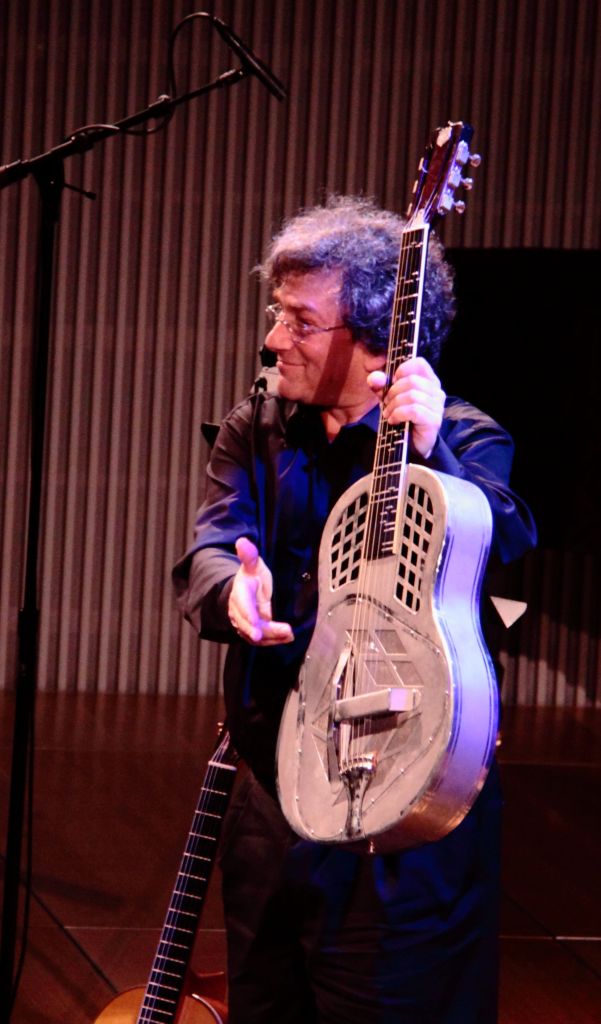
David Tanenbaum holding his National Steel Guitar as he acknowledges the warm applause

David Tanenbaum holding his National Steel Guitar as he acknowledges the warm applause

Next up was a too rare opportunity to hear a composition by Other Minds Artistic Director Charles Amirkhanian.  Bay area violinist Kate Stenberg took the stage to perform the solo violin part with prerecorded tape.  The piece called Rippling the Lamp (2007) is a musical depiction of a visual the composer saw involving the reflection of a lamp in water.  But regardless of the genesis this was a powerful and engaging piece even on a purely musical level.  Stenberg executed her part flawlessly in what was an almost romantic piece at times.

Kate Stenberg playing Amirkhanian's Rippling the Lamp.

Kate Stenberg playing Amirkhanian’s Rippling the Lamp.

Charles Amirkhanian warmly embraces Kate Stenberg following her performance of his piece.

Charles Amirkhanian warmly embraces Kate Stenberg following her performance of his piece.

And the first half concluded with a performance by the Del Sol Quartet of the world premiere of Miya Masaoka‘s Second String Quartet “Tilt” (2014-5).  This was a complex piece requiring a great deal of knowledge of special performance techniques that would be a challenge for any string quartet.  This complex work was difficult to grasp in only one hearing but it was a joy to see how easily these musicians handled the work.

The Del Sol Quartet performing Miya Masaoka's Second String Quartet

The Del Sol Quartet performing Miya Masaoka’s Second String Quartet

Following intermission we came to know what the origami birds were all about.  These along with video projections and a great deal of electronics came together to give utterance to Maja S.K. Ratkje’s Birds and Traces II (2015), another world premiere.  This was by far one of the most complex pieces involving a great deal of media as well as performers Kathy Hinde and accordionist Frode Haltli.  In addition to electronics and voice the musicians used bird whistles, computer controlled slide whistles and animated sculpture along with the projected videos.  This was more of the character of one of Allan Kaprow‘s “happenings” from the 1960s.  Truly a maverick piece in a concert series that prides itself on such.  The audience was clearly entertained.

Maja S.K. Ratkje, voice and electronics

Maja S.K. Ratkje, voice and electronics
OM200018 OM200019

Three scenes from the video

Three scenes from the video

The first night concluded with a performance of Peter Sculthorpe’s String Quartet No. 14 “Quamby”(1998) which includes a didjeridu.  Stephen Kent, who played the didjeridu, spoke a warm dedication in memory of the late composer.  The Del Sol Quartet along with Kent gave a deeply emotional reading of this beautiful work (I went a bought a copy of their recording of all of the composer’s string quartets with didjeridu right after this performance).  I had heard that uniquely Australian instrument before but had no idea how expressive it could be.  The audience was clearly moved and this was a fitting deeply felt tribute to the composer.

OM200023

The Del Sol String Quartet with Stephen Kent on didjeridu

The Del Sol String Quartet with Stephen Kent on didjeridu

I took the opportunity to speak to a few people after this performance and it confirmed for me that this performance affected and moved us all in what I think is the highest achievement of a composer and a performer, that of communicating emotionally with a audience.  We all seemed to share the sadness of Mr. Sculthorpe’s passing but also the joy of his having been with us to make this music which lives on.

Peter Sculthorpe (1929-2014)

Peter Sculthorpe (1929-2014)

Those animated origami sculptures remained (though no longer animated) just above the stage for the remaining two nights and certainly added a bit of unusual flair which distinguished the look of this year’s series.  It is also worth mentioning that the stage management and creative lighting add to the professional and polished look for this series and those commonly unsung heroes deserve credit for their fine work.

Let me also mention that this year’s program booklet surveying the whole of the Other Minds series was chock full of beautiful by resident photographer extraordinaire John Fago.


The second concert opened with what was, for this writer, worth the price of admission, that of Charles Amirkhanian performing his sound poetry live with multi-track tape.  His roles as sort of the Bill Graham of the avant-garde and his previous work as music director at KPFA could satisfy a life’s work just by themselves but he is also an accomplished composer and one of the most interesting and innovative sound poets/artists of the late 20th and early 21st centuries.  So this live performance would have brought me to the theater were it the only thing on the program.
Charles Amirkhanian performing his sound poetry live with tape.

Charles Amirkhanian performing his sound poetry live with tape.

The pieces performed, Dumbek Bookache (1986), Ka Himeni Hehena (The Raving Mad Hymn, 1997) and Marathon (1997) all demonstrate the composer’s love of language and sound and, as Mr. Amirkhanian advised, his background as a percussionist.  This is music that seems to fit somewhere between poetry and music and, prior to hearing his work, I didn’t even know that there was a such a space.  His mellifluous voice, no doubt seasoned by years of hosting radio, executed the complex rhythms in sync with the tape flawlessly, just as the composer intended.

There is a humor and playfulness that is engaging as he deconstructs and reconstructs words and sounds (Amirkhanian is possessed of a great sense of humor).  The first and last pieces were plays on English language words and sounds.  The middle piece utilizes Hawaiian native language as its material.  All reflect the composer’s deep understanding and love of the sounds of languages and are intricately constructed musical compositions that deserve to be heard more frequently.  And recorded too.
Wallen performing her birthday song with the captive host of the evening looking on amused.

Wallen performing her birthday song with the captive host of the evening looking on amused.

Next we met Errollyn Wallen who performed 7 songs from her Errollyn Wallen Songbook but before she did that she surprised Mr. Amirkhanian with a newly composed song for his 70th birthday and for Other Minds 20th.  He sat, captive but appreciative as she rolled out the surreptitiously rehearsed dittie in which she called him “Charlesey” in a clearly affectionate tribute.
Errollyn Wallen at the piano with the Del Sol String Quartet.

Errollyn Wallen at the piano with the Del Sol String Quartet.

Wallen, in her set, sang first at the piano, then standing at a stage mic accompanied by the ever versatile Del Sol Quartet.  She sings a difficult to describe type of song that owes as much to jazz and pop and it does to classical and seems to have as much fun with language in song and Amirkhanian has with spoken words.  Wallen is a skilled and virtuosic performer and, as I found later when I chatted with her in the lobby during intermission, a delightful conversationalist.  Her performance left the audience wanting more but it was time for intermission and, after a grateful bow, she exited the stage.

This is the first time that this writer had heard her work and I can tell you that its friendly melodies and rhythms combined with her facility with lyrics make for a really compelling experience.

Pauline Oliveros, Miya Masaoka and Frode Haltli performing Oliveros' Twins Peeking at Koto (2014)

Pauline Oliveros, Miya Masaoka and Frode Haltli performing Oliveros’ Twins Peeking at Koto (2014)

After intermission we were treated to another world premiere from the great Pauline Oliveros.  Pauline, a beloved teacher and performer in the bay area, is based now in Kingston, New York but, as she acknowledges, she maintains ties with the bay area through performances, teaching, composing and now apparently through leaving her archive to Mills College where she was one of the founders of the Mills Tape Music Center (now the Mills Center for Contemporary Music).  Mr. Amirkhanian referred to her as the “Dean of American Composers”, a title once given to Aaron Copland, but equally suitable for this major composer/theorist/teacher/performer whose very presence adds to the auspicious nature of this series of concerts.

Her score is a written set of instructions for a sort of controlled improvisation that is common in her output.  Pauline’s warm personality and sense of humor are a part of this work which references the San Francisco landmark Twin Peaks and punningly refers to twin accordions as they peek at the koto which was played by Miya Masaoka.  Frode Haltli, who had performed yesterday did double duty as the second accordion in this work which requires, as does most of Oliveros’ work, close listening by performers as they execute the instructions creating the piece.  The most important lesson Oliveros has taught is the active nature of listening and that includes the performers as well as the audience because listening is itself a creative act.  And all who participated in active listening as the performers clearly did came to experience her wonderful view of the world of sound.

OM202024 OM202026 OM202027

Four views of Don Byron and his quartet.

Four views of Don Byron and his quartet.

Don Byron, backed by veterans double bassist Cameron Brown and drummer John Betsch along with a young and interesting Cuban pianist, Aruán Ortiz.  In addition to some amazing work on clarinet (playing sometimes inside the piano) the peripatetic Byron crooned a cover of a blues song in his unique vocal style announcing the disclaimer  that it was a “cover and this was supposed to be all new music but what the hell”.  Byron’s good humor, stage presence and eclecticism was supported well by his quartet who were given some nice opportunities to show off their chops.  A very satisfying set leaving the audience and this writer once again aching for more.
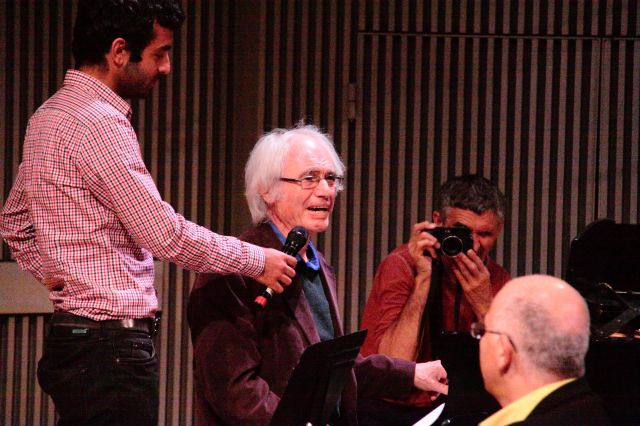
Tigran Mansurian singing an Armenian tune and accompanying himself at the piano.

Tigran Mansurian singing an Armenian tune and accompanying himself at the piano.

The last concert of OM 20 took place uncharacteristically in a matinee performance at 4PM.  This concert, also uncharacteristically, was given a political theme.  Sunday’s concert was dedicated in memory of the victims of the Armenian genocide which took place 100 years ago at the hands of the Ottoman Turks, a fact recognized by most countries but not, unfortunately, by the Turkish government.

This last concert occurred on what would have been the 104th birthday of famed Armenian-American composer Alan Hovhaness and this was acknowledged as well.  In the pre-concert discussion we learned that Mr. Mansurian had met Mr. Hovhaness and very much liked his music.  Then, in what I learned was a spontaneous decision, Charles Amirkhanian asked Mr. Mansurian to play some music by Komitas, an Armenian composer who collected Armenian folk songs and wrote music based on those distinctive tunes.  Komitas stopped composing after the 1915 genocide as he saw these atrocities and had much of his research destroyed.  Tigran Mansurian seemed almost to jump at the opportunity and he immediately went to the piano and gave a very focused rendition of one of his favorite tunes.

Charles Amirkhanian giving the background for his tape composition Miatsoom.

Charles Amirkhanian giving the background for his tape composition Miatsoom.

Opening Sunday afternoon’s concert was another opportunity to hear one Mr. Amirkhanian’s major musical creations.  This one, Miatsoom (1994-7), a word meaning, appropriately for this year’s festival, Reunion was, he said, about the only trip he ever took to Armenia accompanied by his father (born in 1915) to visit relatives in that country.  The piece is a sonic travelogue about that trip.  It features the voice of the composer’s father Benjamin and various sounds and voices from that visit.  Clearly this trip and this piece are very personal and cherished  things close to the composer’s heart.  Bringing the sounds of Armenia and its people into the concert space seemed like a wonderful way to set the tone for this concert as both celebration and memorial.  And isn’t the key to a memorial the act of memory, of remembering?

SOTA orchestral string with piano to accompany soprano Hasmik Papian in Mansurian's Canti Paralleli.

SOTA orchestral string with piano to accompany soprano Hasmik Papian in Mansurian’s Canti Paralleli.

The Canti Paralleli (2007-8) by Tigran Mansurian were written in memory of his late wife who by coincidence had also been one of the soprano soloist’s teachers.  These settings of Armenian poetry were lovingly delivered by Ms. Papian.  Her beautiful voice filled the hall with what seemed to be an air of sadness.  The SOTA orchestra with a pretty accomplished young pianist rendered these somber tunes poignantly in this U.S. premiere.

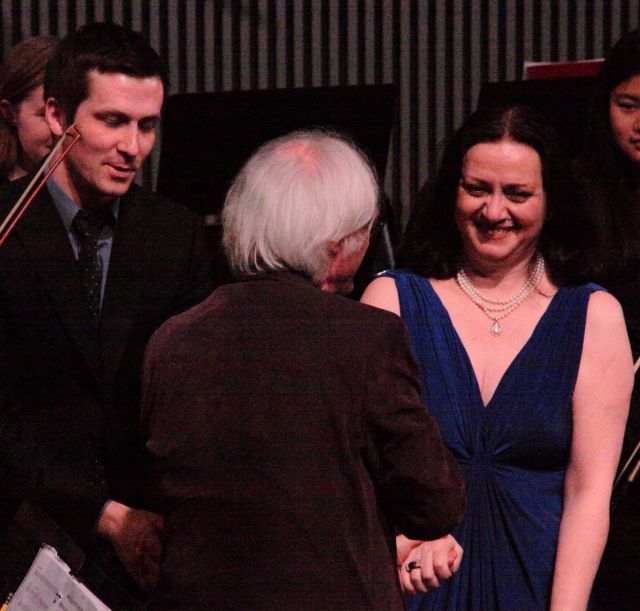
OM203021

The triumphant soloist and conductor accept the gratitude of the audience, the producers and the composer.

The triumphant soloist and conductor accept the gratitude of the audience, the producers and the composer.

Following intermission we were treated to an even more recent work by Mr. Mansurian, the 2011 Romance for Violin and Strings, also in a U.S. premiere.  The violin was played with both passion and virtuosity by the Armenian-American violinist Movses Pogossian.  The orchestra seemed to rally behind him nicely accompanying him in what was a beautiful, almost romantic piece that would no doubt please any concert audience.

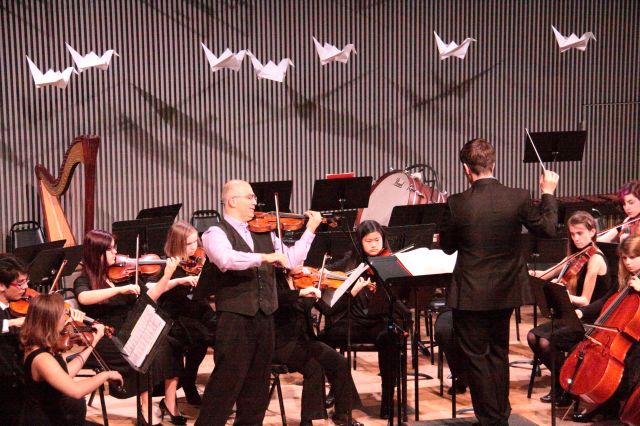
OM203026

Movses Pogossian with the SOTA orchestra conducted by Bradley Hogarth.

Movses Pogossian with the SOTA orchestra conducted by Bradley Hogarth.

I haven’t yet mentioned our young conductor for this evening.  Bradley Hogarth is a trumpet player and an accomplished conductor who leads this wonderful youth orchestra.  Their ability to fit on stage in the final work requiring some 60 musicians was in doubt but fit they did.  And their performance of Michael Nyman’s Second Symphony (2014), another U.S. premiere was nothing short of amazing.


Mr. Nyman, who was unfortunately unable to attend due to illness, began writing symphonies in 2014 and has of the time of this writing written no fewer than 11 such works.  This second symphony was written for a youth orchestra in Mexico where it received its world premiere.  The four movement work traverses familiar territory with Nyman’s characteristic driving rhythms.  It is hard to imagine that he actually had a youth orchestra in mind because this work for strings, woodwinds, brass, piano, percussion and harp was anything but simple or easy to play.  Nonetheless the orchestra under Hogarth’s direction discharged their duties in an electrifying performance that brought the audience to its feet with appreciation.

All in all a very successful and satisfying set of concerts, a successful 20th anniversary.  Time to look forward to OM 21.  It would be hard to top this but I am sure that Other Minds will give its all to do so.  Thanks to all who composed, performed, supported and attended.  And, yes, that’s me sporting the OM 20 t-shirt with Mr. Amirkhanian.  See you next year if not sooner.
New music buff gets a photo-op with Charles Amirkhanian.
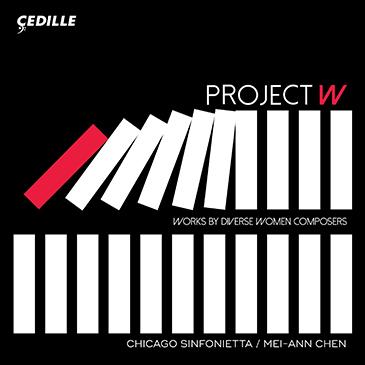
New music buff gets a photo-op with Charles Amirkhanian.
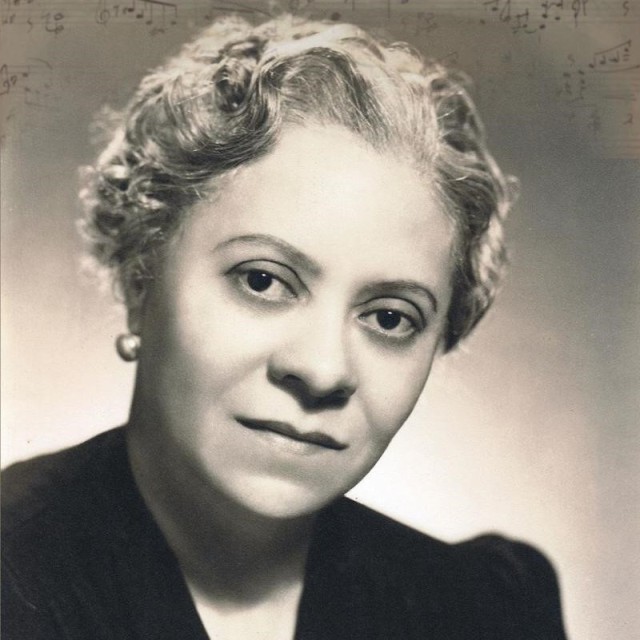
Irving Fine’s Complete Orchestral Music, a vital addition to his discography


BMOP 1041

BMOP 1041

Irving Gifford Fine (1914-1962) was an American composer.  Born in Boston, Massachusetts, Fine studied with Walter Piston at Harvard earning Bachelor’s and Master’s degrees.  He studied  conducting with Serge Koussevitsky and composition with Nadia Boulanger.  At the time of his death at age 47 he completed only a handful of works for orchestra, chorus and various chamber ensemble and solo works.  But what he lacked in quantity did not lack in quality.  The Irving Fine Society maintains a very useful web page which can be found here.

Fine is sometimes identified with a sort of loose knit group of composers called the Boston School which included Fine along with Arthur Berger, Lukas Foss, Alexei Haieff, Harold Shapero and Claudio Spies.  He taught at Brandeis University which now has an endowed chair named in his honor.  Eric Chasalow currently holds  this position.

fine

Curiously his music, which has a generally very friendly neoclassical feel to it, even when he dabbles in twelve tone writing, has received relatively few performances and even fewer recordings.  The Boston Modern Orchestra Project under the inspired guidance of Gil Rose has stepped in to fill a bit of that void in this very welcome and vital addition to Fine’s discography.

This recording of Fine’s complete orchestral music spans his entire musical career with his Symphony being his last completed work from 1962, the year of his death.  Also included are the 1947 Toccata Concertante, Notturno for Strings and Harp (1951), Serious Song (1955) for string orchestra, Blue Towers (1959), Diversions for Orchestra (1960) and Symphony (1962).

All have been recorded before but the Symphony was a release of a live performance by Erich Leinsdorf and the Boston Symphony from 1962 so this is the first studio recording.  The Notturno for Strings and Harp and the Serious Song have received a couple of recordings.  And interested listeners would be advised to locate a recording of Fine’s String Quartet (1952) and Fantasia for String Trio (1957) which I believe to be sort of hidden masterpieces.  Any string quartets out there willing to take on these neglected works?

As usual the BMOP under Gil Rose turn in fantastic performances.  Blue Cathedral and Diversions are among the composer’s lighter fare but deserve at least occasional attention.  But the Toccata, Serious Song and Notturno should be a part of the repertoire with regular performances.  They are masterful and pretty audience friendly.

The big treat here is the Symphony.  As far as I can tell it has not been programmed, much less, recorded, since the Boston Symphony did it under Leinsdorf.  What a shame that this work hasn’t been heard for so long and how wonderful it is to have this great new recording of an American masterpiece.  Cast in three movements (Intrada, Capriccio and Ode) this 20 minute work is one of the composer’s finest pieces and leaves the listener wondering what other works he might have crafted had he lived longer.

Blackness, Race and Music, What I Have Learned So Far


Two years ago, when I was just at the start of my blogging adventures, I decided it would be a good idea to do a few articles in honor of Black History Month. I am not black and I have no expertise in the area of black music but, in keeping with the personal perspective of this blog, I decided that my interest in these subjects is sufficient reason to express some opinions and ideas.  I chose Carl van Vechten’s portrait of William Grant Still, considered by many to the first major black composer to receive recognition in the 20th Century as my symbol for this article.  Much of his music remains unknown and little performed though there have been some significant recordings released in the last few years.

I called that first set of articles “Black Classical”. Curiously my brief article on black conductors has been one of my most read pieces (947  views as of the time I write these words).   So I continued to write on this subject in the following year. For my second set of articles I took the opportunity to look at the 50 year anniversary of the Civil Rights Act of 1964, by all measures a landmark piece of legislation. I asked a question, in part rhetorical because I had a basic idea of the answers I expected, but also to elicit opinions and to discuss issues of race and music.

I sent queries to a random set of composers and conductors and received a few very gracious replies. Comments ranged from carefully worded egalitarian musings on how black music and music by other racial minorities should be integrated and heard throughout the concert seasons to seemingly careful statements suggesting that this might not even be the right question or that it shouldn’t be asked. Not all comments were published but I am grateful to all who replied. And I have been able to continue this discussion in the various groups on Facebook.

I learned in a (yet to be published) interview with Anthony Davis some fascinating perspectives. Professor Davis did not address my question as I originally asked but he provided some valuable food for thought. It is worth noting that Davis is a composer whose politics are frequently very much in evidence in his music. In a discussion of the current state of music he commented regarding John Cage‘s apolitical stance by saying that, “John Cage’s silence is the silence of white privilege.” One could argue that taking an apolitical stance may have contributed to Cage’s ability to get grants and commissions.  Politically charged music generally does not fare as well.

In general I found more or less what I expected. The Civil Rights Act of 1964 has had little, if any, benefit for black musicians and composers. And given the ongoing killing of unarmed black men by police one must wonder if we have been going backwards as a society. But I don’t want to do a grand social critique here. That is a subject for another blog and is a bit outside of my scope at least for now.

I found some musicians who did not want to address racial and discriminatory issues. It seems the issue is too “hot” and that one could face consequences for even asking the question. And some did not feel sufficiently well-versed in Civil Rights history to make a truly informed assessment of this issues.  Perhaps it is a form of white privilege that allows me to ask such a question. We shall see if any reactions result in verbal attacks or (not likely I think) in a reduction in my readership.

What I have learned is that black classical musicians (who are not in short supply) occupy very few prominent positions in academia, in the public sphere of conductors and performers and in the representation in recorded performances of what is a rich but virtually untapped repertoire.  The inequality remains with perhaps some progress but not enough to pronounce the issues here as resolved to a truly significant degree.  But there is a vibrant community of black musicians who are working as did their predecessors to contribute to our collective culture and the discussions are both lively and stimulating.

In 2014 there was a performance by the Cincinnati Symphony of an Oratorio, “The Ordering of Moses” (1937) by R. Nathaniel Dett. The premiere performance of the piece (a beautiful and listener friendly piece of music) was broadcast live. But that broadcast was truncated, leaving out the finale when white listeners complained about music by a black composer getting so much airtime. Happily the entire piece was broadcast uninterrupted and made available in streaming format. However there is no commercial recording of this grand biblical choral work.

I was pleased to be able to review the fully staged performance in May, 2014 of Zenobia Powell Perry‘s opera Tawawa House (1984) in the unlikely venue of Modesto, California by Townsend Opera.  It was a heartfelt and beautiful production and was reviewed here.

Another interesting event in 2014 was the first appearance of three black counter tenors in a performance of a Purcell Opera in Los Angeles.  My blog on this subject can be found here.  I was pleased to make the acquaintance of Mr. Bill Doggett who has been very helpful in keeping me up on the latest developments with black musicians and composers and was the person who alerted me to this historic event.

Coming up in March at the Other Minds festival there will be performances by Errollyn Wallen and Don Byron.

I have been able to dialog with various black musicians on Facebook most notably through the groups Black Composers, The National Association of Negro Composers and Opera Noir.  Composer, performer and conductor Anthony R. Green is posting the name of a black composer every day for the month of February with examples of their work.

Some recent films have done much to tell the very unpretty history of black people in the United States including: 12 Years a Slave (2013), after Solomon Northrup‘s harrowing memoir,  Fruitvale Station (2013), a retelling of the execution style shooting of Oscar Grant at the hands of police in Oakland, California, Selma (2014), a dramatization of the 1965 march in support of voting rights (musical direction by Jason Moran).  And this trend, happily, seems to be on the rise providing artistic historical narratives to aid in the processing of the complex, shameful and painful histories depicted.  The lack of recognition by the motion picture industry supports my arguments for the poor representation and acknowledgement of black artists in general.

I have to mention that the wonderful set of recordings by Paul Freeman originally released on Columbia records remains available as a boxed set of 9 vinyl records with notes from the College Music Society now being offered at only $17.50 (that is not a typo either) via mail order.  I’m going to buy a couple of extra copies to give away as gifts.  It’s a really nice set.

Perhaps the most useful thing I learned is the egalitarian approach by conductor Michael Morgan who stated his desire that music by ethnic groups be integrated into programming on a regular basis rather than being highlighted in a given month.  (I am pleased to report that maestro Morgan will be receiving an award for his service to new music from the American Composers Forum.)  I am now using that approach with this blog in which I will continue to highlight the work of musicians and other artists whose work I find interesting and worth promoting.  So please stay tuned.


My 2014, a Summation and (sort of) “Best of…” List


The stage at Kanbar Hall stands ready to receive performers on opening night of OM 18

The stage at Kanbar Hall stands ready to receive performers on opening night of OM 18

As New Music Buff heads on into its fourth year in the online realm I find that I have a steadily increasing readership averaging 18 hits per day with an international reach of about 88 countries. I say readers, not followers because the stats provided have no way to track returning visitors but you know who you are.  And I thank WordPress for their entertaining summary published earlier here.


Last year I provided a list of my greatest hits (i.e. my most read articles in 2013) so here is a list of 2014’s top ten:

Black Classical Conductors (Black Classical Part Two)
This is a 2013 article which continues to be popular. I did an addendum called: Black Conductors, A Belated Addendum  and received a note from Tania Leon who remarked quite correctly that she is indeed a black American conductor.  Clearly I will need to expand this survey once again.

Maybe Music Remains Forever
This review of the excellent newly released Martin Bresnick CD went the equivalent of viral for my blog and I was pleased to have discovered the work of this wonderful American composer.

Primous Fountain World Tour Begins in Moldova
This relatively little known living black American composer was a child prodigy whose second symphony was commissioned by Quincy Jones had his sixth symphony premiered in Moldova in 2014.

Tawawa House in Modesto?
I was granted a comp ticket to see this really great performance of a little known 20th century opera by a black female American composer, Zenobia Powell Perry.  It was a great experience, a passionate, entertaining performance and put Modesto on the musical map for me.

Other Minds 18, Three Nights on the Leading Edge
Curiously this review was read more than the one about the 2014 Other Minds 19. More to come about the upcoming Other Minds 20.  For anyone who doesn’t know this is my favorite new music festival.

Far Famed Tim Rayborn Takes on the Vikings
This article about a 2013 performance by this very talented multi-instrumentalist, singer and scholar/historian continues to be popular. I’m hoping to catch another of his performances in 2015.

Black Composers Since the 1964 Civil Rights Act: Primous Fountain
I started in 2013 writing an occasional series of articles for Black History Month. I had no idea how popular this would become. The theme for the 2014 series is given in the title and you can rest assured that I will continue the series in 2015.

Tom Johnson and Samuel Vriezen, Great New Recording
A review of a crowd sourced recording project and one of my favorites of 2014.

Black Composers Since the 1964 Civil Rights Act
This is the introductory article for the 2014 series. Many thanks for the comments and support on this article and its successors.  I plan to give my summation of the various responses on this received both on and off the books.

Abraham Lincoln and the Avant Garde
This is one of an ongoing series of articles on political expression in music. It was after I friended Dorothy Martirano on Facebook and mentioned this piece that the article got a few new readers. Perhaps I should have mentioned the composer in my title.  Kudos to the late great Salvatore Martirano, gone too soon and too little known even now some twenty years after his passing.


SOME OF MY FAVORITES FROM 2014

Now regarding my personal favorite recordings of 2014 I have to insert a disclaimer to the effect that I make no claim whatsoever to this list being comprehensive or representing anything more than a few of my personal favorite recordings encountered in this past year. My apologies in advance to those I missed. I hope to catch up some day. So, in no particular order:

Mysterienspiel 2012

Game of the Antichrist by Robert Moran (Innova 251)
I promise a more comprehensive review soon but this is a great CD by a too little known American composer.  Mr. Moran recommended the disc to me after I wrote to him praising his wonderful “Trinity Requiem”.  I plan a more comprehensive article soon.  Meanwhile here is a link to a performance on Vimeo.

AZ spread

Alcatraz/Eberbach by Ingram Marshall and Jim Bengston  (Starkland S-2019)

This DVD is essentially the completion of a collaboration of photographer Jim Bengston and composer Ingram Marshall.  As such it is the most complete artistic statement superseding the audio only release (still worth having by the way) from some years ago.


Who Has the Biggest Sound? by Paul Dolden. (Starkland ST-220)
A difficult to categorize recording that brings two major works by this (previously unknown to me) Canadian composer to the listening audience. I reviewed this disc here.  I am still working on absorbing its subtleties.

221CoverB

Prayers Remain Forever by Martin Bresnick (Starkland ST-221)
In addition to providing me with quite a few readers the opportunity to review this recording introduced me to the work of this too little known living American composer.  My review garnered quite an amazing amount of readers as well as an appreciative response from Mr. Bresnick himself.  And now I find myself buying his other recordings.  Really great music.


Album cover

Album cover

Notes from the Underground by Anthony Davis. (BMOP sound 1036)

I have been a fan on Anthony Davis and his music for some years now and I was pleased to be able to review this disc.   I  was later able to obtain an interview with Professor Davis which will be forthcoming later this year.

download

Tom Johnson/Samuel Vriezen Chord Catalog/Within Fourths, Within Fifths. (Edition Vandelweiser)

I eagerly reviewed this crowd sourced CD in which I was proud to be one of the contributors to its production.  It is only the second recording of Johnson’s landmark of minimalism and an opportunity to hear the work of the fine composer/performer Samuel Vriezen.

basketmonk

Basket Rondo/Jukebox in the Tavern of Love by Meredith Monk/Eric Salzman. (Labor LAB 7094)

This Labor Records release would have escaped my attention were it not for my having run across it while researching another new music article.  New music aficionados might remember Eric Salzman for earlier works such as “Civilization and It’s Discontents” and his involvement with Nonesuch records or one of his many other significant involvements in the new music scene over the last 40 years or so.  This disc is the première recording of Meredith Monk’s “Basket Rondo”, one of her best realized new works as well as the première of a great new sound/music drama by Salzman.  A more thorough review is in the works.
howardhersh2

Something by Howard Hersh ( Snow Leopard Music 888295062350)

Mr. Hersh kindly sent me this CD for review which will be forthcoming but it easily makes it to my favorites list for 2014.

webreaknonclass

I also have to mention another crowd sourced project, “We Break Strings” by Thom Andrews and Dimitri Djuric, a book about the “alternative classical scene in London”.  The book which includes a CD sampler languishes in my “to be read” stack but my initial perusal left me with the impression of a beautifully conceived and executed volume which has much to offer the musically curious.  More about this book in a future blog.


Black Conductors, a belated addendum


Due to the popularity of my earlier black conductors article I was feeling the need to expand this piece a bit.  Again this is by no means comprehensive and I welcome comments, additions and corrections.


The original article was just an occasional piece, far from comprehensive so I have decided to add a few names.  First the black conductors who are no longer with us:


Charles-Richard Lambert (d. 1862)- Born in New York (no date given), settled in New Orleans and was a music teacher and conductor for the Philharmonic Society (the first non-theater orchestra in New Orleans).  He died in Port-au-Prince, Haiti.

Edmond Dédé (1827-1903) Born in New Orléans, he moved to Europe to study music and settled in France where he had a career as a conductor and composer.

Edmond Dede

Edmond Dede

William Grant Still photographed by Carl van Vechten

William Grant Still photographed by Carl van Vechten


William Grant Still  (1895-1978)- In addition to being a major American composer and the first black composer to have a symphony played by a major symphony orchestra to have an opera premiered by a major company (Troubled Island, written in 1939 was premiered by the New York City Opera in 1949), the first black composer to have an opera broadcast on television (Bayou Legend, 1941, not performed until 1974 and broadcast 1976 by the Mississippi Educational Television Authority) he was also the first black conductor to conduct a major American orchestra in the deep south  (New Orleans Philharmonic, 1955)

Calvin E. Simmons

Calvin E. Simmons


Calvin E. Simmons (1950-1982) The first black conductor to be appointed conductor of a major American orchestra (Philadelphia Orchestra).  He died in a canoeing accident near Lake George in New York.  The Calvin Simmons theater at the Henry J. Kaiser Convention Center in Oakland, CA is named in his honor.


And now to those who remain on the earthly plane:


-Thomas Jefferson Anderson (1928- ) Better known perhaps as a composer is an educator he is also an accomplished conductor, educator and orchestrator.  He is well-known for his orchestration of Scott Joplin’s opera Treemonisha (unfortunately this has yet to be recorded).


-Leslie B. Dunner (1956- )Born in New York City, he attended the Eastman School of Music, Queen’s College and received a Master’s Degree in 1979 from the University of Cincinnati Conservatory of Music.  He was the first American (of any color apparently) to win the Arturo Toscanini International Conducting Competition in 1986.  Currently a conductor for the Joffrey Ballet in Chicago, Mr. Dunner has conducted the Chicago Symphony, the Grant Park Orchestra, the New York Philharmonic, Detroit Symphony, L A Philharmonic and many others world-wide.


Leslie B. Dunner

Leslie B. Dunner


William Eddins

William Eddins (Photo credit: Wikipedia)


William Eddins (1964- ) Both a pianist and a conductor, Eddins was a founding member of the New World Symphony in Miami, FL and is currently the principal conductor of the Edmonton Symphony Orchestra since 2005.  He regularly performs music by 20th and 21st Century composers and host a podcast called Classical Connections.


-Robert Keith McFerrin, Jr. (1950- ) Better known as “Bobby McFerrin” is a ten time Grammy award winner.  He is also a popular guest conductor with orchestras such as the San Francisco Symphony, the Chicago Symphony, New York Philharmonic, Detroit Symphony, Israel Philharmonic and many others.

Bobby Mc Ferrin in 2011

Bobby Mc Ferrin in 2011


As I said this is hardly comprehensive but these omissions have bothered me more each time I see that the original post has been read again.  Hopefully this will assuage my guilt and provide useful information.