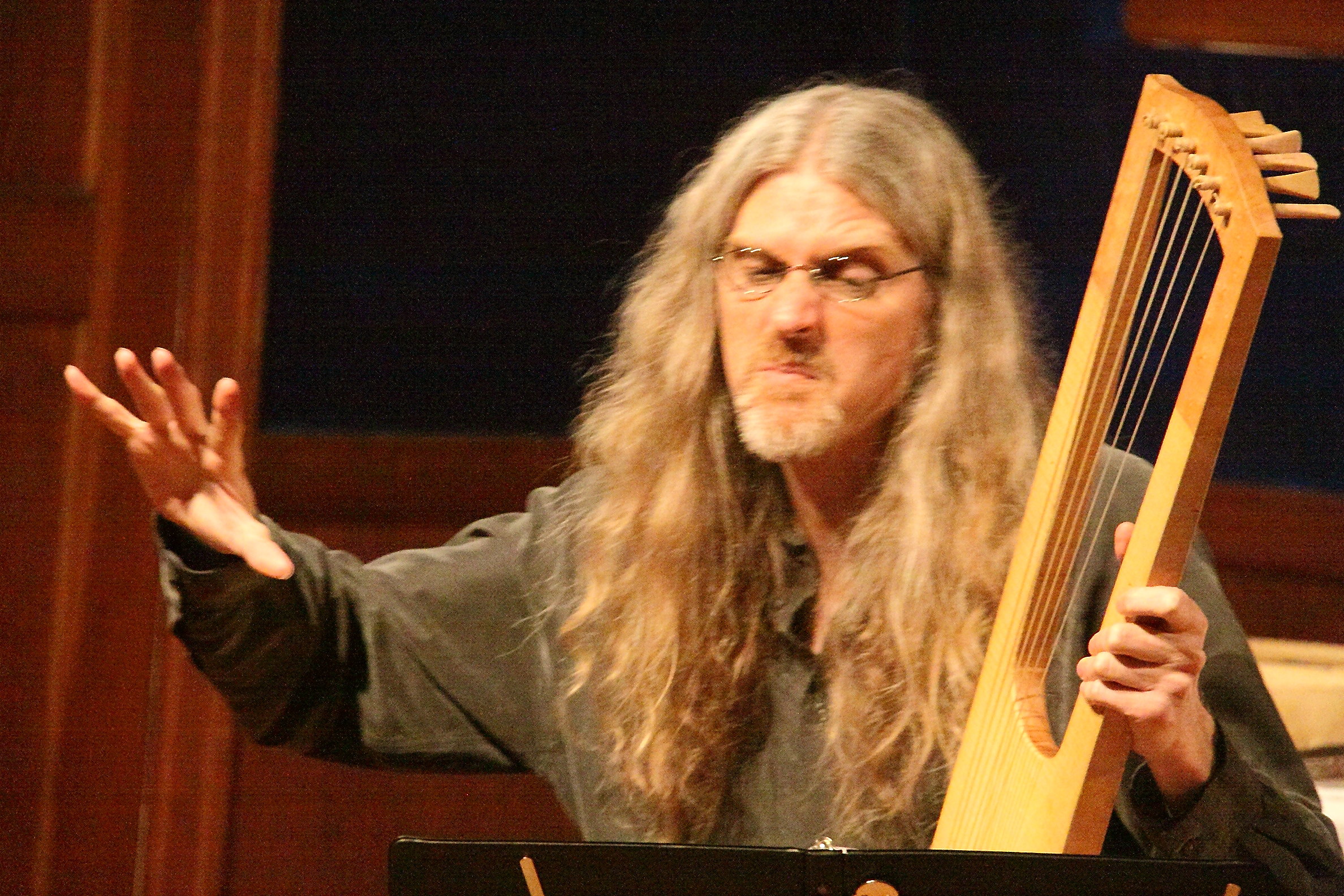
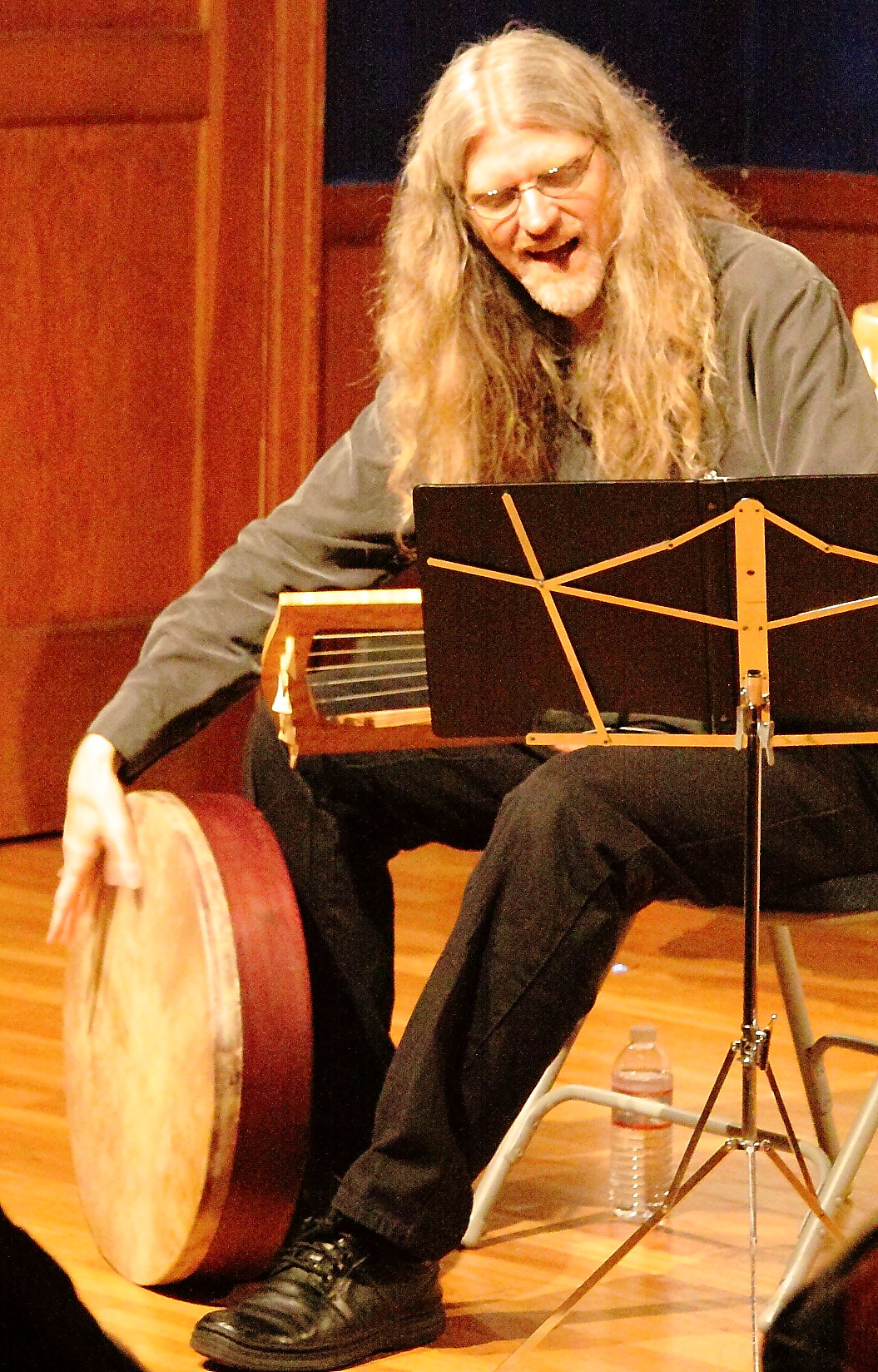
This photo was taken by me on my iPhone. What caught my eye was the effects caused by the raindrops, and the lighting on this commercial mural just off State Street in Santa Barbara. This (mostly) epitomizes the spirit of the title of this speculative essay.
The embattled National Public Radio in the United States happily (in spite of draconian funding cuts) still pursues intelligent discussions on a huge variety of relevant issues present, past, and evolving. Such is the case with a recent series of discussions (some shorter, some longer) that have focused on AI generated music. Of course the primary genre in these discussions is that of “pop” (read “economically viable”). But what of all the music that makes no money? Like mine, lol, but they make me happy.
My point here is not to denigrate NPR, rather to append a perspective on my musings about new classical music and AI. Since I am hardly an expert on this, all I can reasonably do is provide an interesting example that I have stumbled upon.
Henry Lowengard “Living Large”
OK, this is probably my first encounter with AI in music, at least as far as I am aware. It is an album on Bandcamp by a friend of mine. Henry Lowengard is a musician, actor, instrument builder, programmer, hacker, and performer. He was interviewed by another friend of mine who has a radio program out of Kingston, New York. Here is the fascinating program that aired last year in which program host Peter Wetzler interviewed Mr. Lowengard about this album.
Peter Wetzler in his studio
Peter is a composer, pianist, and a driving force in the arts community that is Kingston. His weekly show features music from all times and all places. He frequently plays new music and has introduced this writer to a great deal of music.
So, to the album at hand. Give it a listen. It’s a fascinating album that puts this listener in the mind of composers like Ken Nordine, Robert Ashley, Pamela Z, Charles Amirkhanian, and Laurie Anderson. Not that other listeners will have the same experience.
Henry Lowengard
Give a listen to that broadcast in which Henry talks about how he made the album. That helped me to grasp what was going on. It reminded me of the free floating improvisational texts that comprise Ashley’s operas, in particular, Perfect Lives. The pieces on Lowengard’s album are stream of consciousness. But whose consciousness? Henry’s or AI’s?
Apparently, Henry uses various programs and programs via the large language model of AI. His commands instruct it to produce some kind of music with some kind of texts. He is not actually writing the music or the texts. Rather he is asking AI to interpret his very linguistic ideas to produce both text and sound.
This album surely has its antecedents but, in many ways it also sounds like nothing I’ve heard before. If you like creative experimentation, give this a listen. It is but one incarnation of AI non-pop music. I doubt it will crack the Billboard charts but it made it into my listening queue and I’m glad it did.
İlhan Kemaleddin Mimaroğlu (1926-2012) photo credit unknown, fair use
Portrait of Ahmet M. Ertegun and Nesuhi Ertegun, Turkish Embassy (record room), Washington, D.C., 193- (Photo credit: Wikipedia)
It would be difficult to underestimate the impact of Turkish immigrant brothers Ahmet and Nesuhi Ertegun on the American music industry in the last half of the 20th century with their promotion and production of jazz and rhythm and blues artists. Their lesser known colleague, Ilhan Mimaroglu labored under a slightly different esthetic. In addition to having been involved with the production of many artists’ work on the Atlantic label (including Charles Mingus, Freddie Hubbard, et al) his study of the developing techniques of electronic and tape-based music helped him develop a unique voice as a composer where he worked with electronics, tape, acoustic instruments, musique concrete, and combinations of these media. He was equally skilled in the art of music production and recording and he utilized this knowledge to produce an impressive body of work which deserves to be better known. He also curated the sub label Finnadar to release his own music and that of other artists with similar vision like Anthony Braxton, Frederic Rzewski, Morton Feldman and others.
Mimaroglu wrote a number of works reflecting his political views during the same turbulent years during which Atlantic records shaped the popular soundtrack of the sixties era. Using his knowledge of studio technology in combination with emerging developments in electronic music synthesis he created many purely electronic studies, musique concrete, at least 4 string quartets, solo piano pieces, and more that has yet to be fully catalogued.
First let me clarify the term ‘Agitprop’. This is a hybrid word or ‘portmanteau’ for the terms ‘agitation’ and ‘propaganda’. The word appears to have first been coined and used in conjunction with the Russian Bolshevik revolution and it’s political tactics. The idea was to create a form of propaganda that would not only inform but also encourage action.
This unusual piece, a concatenation of an electronic score, the Freddie Hubbard Quintet, organ, and strings is perhaps his greatest example of Mimaroglu’s brand of political music. It is by no means his only agitprop/ political piece but it may be his finest and one of the best works of this thorny, frequently controversial genre.
The title is a combination of the name of the town (Son My), the location of the My Lai massacre, and the ironic words, “Sing me a song of Songmy”. The collage and non-linear format of the piece actually contains a dizzying mix of concurrent horrors including the Sharon Tate murders and others whose subjects await a comprehensive analysis by a historian and/or a musicologist. The work includes poetry by Fazil Husnu Daglarca, news clippings, etc. Luciano Berio did something similar in his similarly political masterpiece, Sinfonia (1968). That work is rife with musical and textural references subsequently enumerated by the late American composer/musicologist, Alan Stout.
This is also one of the most expensive productions of a mix of evolving musical genres with a strongly controversial and ugly subject. It can stand in comparison to Picasso’s Guernica for its power to provoke. Add the thorny early electronics with the free jazz of Hubbard and the jazz/blues inflected writing, and you have a powerful indictment of war crimes but hardly a best seller. And it is only with the healing of time and the fading of the sting of those memories that this work has begun to be appreciated more fully.
A landmark set of recordings of Schoenberg’s chamber music for strings
The Juilliard Quartet, founded in 1946 by composer William Schuman (1910-1992) is a highly respected and justly lauded ensemble. This fine CD set includes two complete cycles of Arnold Schoenberg’s String Quartets. It also includes the composer’s too little known String Trio of 1945 and a ravishing string sextet version of Verklärte Nacht. This 7 CD set documents a bit of recording history as well, offering the original mono recordings of his numbered string quartets alongside the Grammy winning (Steven Epstein, producer) 1978 stereo recording (which also included an early unnumbered string quartet in D major).
I grew up expanding my musical horizons with that 1978 release, offered here for the first time on CD format. But the present box set was my first hearing of the 1951 mono recordings of the numbered quartets.
I would venture a guess that most listeners, even those drawn to the sorts of modernism that characterizes my blog reviews, probably own no more than one set of the Schoenberg String Quartets. They just don’t seem to get the same love that other modernists like Bartok, Ravel, Debussy, and maybe even Elliott Carter get from fans of new music. (All of these composers, by the way, have had their quartets recorded by the Julliard Quartet). But hearing two readings across just over a thirty year span by two different generations of this iconic ensemble does much to suggest that Arnold deserves at least another reckoning and perhaps an elevation of his reputation as a brilliant musical mind. It is also a fine testament to the enduring creative interpretive skills in the various generations who have been The Julliard String Quartet.
For that reason alone (the inclusion of those 1951 recordings), discerning listeners will want to own this wonderful set. The production is itself a work of homage and respect with some lovely nostalgia inducing reproductions of the original cover art. And the photographic image of a vinyl record that adorns several CD helps set that tone, one which virtually screams “COLLECTOR’S ITEM”.
I fell in love when I opened the box
The Juilliards have helped identify and characterize the whole of string quartet literature much as the Guarneri Quartet, the Arditti, Kronos, etc. have. Having a work performed and recorded by any of these (to name but a few performers) virtually assures the accepted work a place in the actively performed canon of concert works. It is a stamp of authenticity.
The Quartets span most of the creative span of the composer’s career. That early D Major Quartet (1897), First Quartet (1905), and the Second Quartet (1908) were written before his 12 tone method had been fully developed. We hear the 12 tone method in the Third and Fourth Quartets and the Trio.
That Second Quartet is apparently the first time a soprano had been used as an adjunct to the ensemble. Uta Graf sings in the 1951 recording and Benita Valente in the 1975 cycle. The text (curiously not included in the otherwise delightful and intelligent notes) are by poet Stefan George (1868-1933). I include them here in English for interested listeners:
Rapture I feel air from another planet. The faces that once turned to me in friendship Pale in the darkness before me.
And trees and paths that I once loved fade away So that I scarcely recognize them, and you bright Beloved shadow—summoner of my anguish—
Are now extinguished completely in deeper flames In order, after the frenzy of warring confusion, To reappear in a pious display of awe.
I lose myself in tones, circling, weaving, With unfathomable thanks and unnamable praise; Bereft of desire, I surrender myself to the great breath.
A tempestuous wind overwhelms me In the ecstasy of consecration where the fervent cries Of women praying in the dust implore:
Then I see a filmy mist rising In a sun-filled, open expanse That includes only the farthest mountain retreats.
The land looks white and smooth like whey. I climb over enormous ravines. I feel like I am swimming above the furthest cloud
In a sea of crystal radiance— I am only a spark of the holy fire I am only a whisper of the holy voice.
Litany Deep is the sadness that gloomily comes over me, Again I step, Lord, in your house.
Long was the journey, my limbs are weary, The shrines are empty, only anguish is full.
My thirsty tongue desires wine. The battle was hard, my arm is stiff.
Grudge peace to my staggering steps, for my hungry gums break your bread!
Weak is my breath, calling the dream, my hands are hollow, my mouth fevers.
Lend your coolness, douse the fires, rub out hope, send the light!
Still active flames are glowing inside my heart; in my deepest insides a cry awakens.
Kill the longing, close the wound! Take love away from me, and give me your happiness!
Schoenberg said he had been inspired by the poetry to compose these angular, expressionistic melodies. The poetry, like the music reflects tenor of the times.
In addition to the quartet cycles, this set is intelligently filled out by the inclusion of the string sextet version of the 1899 Verklärte Nacht. Here the Julliards (consisting of Robert Mann and Joel Smirnoff, violins; Samuel Rhodes, viola; Joel Krosnick, cello) are augmented by two exceptionally worthy soloists, Yo Yo Ma on cello and Walter Trampler on viola. It is followed on the disc with a powerful reading of the masterful String Trio from 1946. It is an illustration of the historical development of the composer over that 44 year period. I listened casually the first time but more carefully in subsequent hearings as the disc moved from the last track division of Verklärte Nacht to the first of the Trio finding this to be a lucid illustration of the composer’s seemingly natural development from post Wagnerian harmonies of fin de siecle Transfigured Night to those of the now fully developed 12 tone compositional method so beautifully integrated in the post war String Trio (played here by Robert Mann, Samuel Rhodes, and Joel Krosnick).
I used the term “post war” in my previous paragraph as a convenient segue to the last piece in this collection. The Trio is offered in a 1965-6 recording (stereo) played by Robert Mann, Rafael Hillyer, and Claus Adam. It is followed by the anti fascist “Ode to Napoleon Bonaparte” from 1942, a setting of a text by Lord Byron. Here the Julliards are joined by Glenn Gould on piano and speaker John Horton. It is one of Schoenberg’s politically tinged works. It has much in common with A Survivor from Warsaw (1947) and Schoenberg can only really be understood in the context of his turbulent times.
Perhaps there’s a parallel to our turbulent present. Maybe Schoenberg can be better understood if his listeners have experienced a certain amount of existential angst. We certainly have a lot of that. But, ultimately, this box set is a cause for joy and even optimism. It is a loving document of compositional, performance, and recording excellence.
There are many ways to debut on the world stage and there are many ways to represent political activism. Violist Noémie Chemali has chosen, as her important first impression in her recorded debut, a selection of music from young composers whose heritage includes political oppression. The albums profits are promised to MSF, also known as Doctors Without Borders. These works are not directly political, rather they are a carefully curated selection of new works produced by composers who, in varying degrees, have experiences of dealing with or having friends and family whose lives are negatively impacted by political conflicts and oppression. This is gorgeous music by emerging talents.
The good news is that these wonderfully creative artists persevere in creating great art and it is the celebration of that creative drive that lies at the heart of this fine release. While the pieces here variously reference tunings, rhythms, and melodies representative of their individual ethnic heritages, they are not confrontational. Rather the music here stands as evidence of the beauty of artistic invention which stands defiantly in contrast to the cruelty of oppression and warfare. That gentle activism casts a kinder and gentler image of people more commonly represented in the media as terrorists (actually a numerical minority) in a culture with ancient roots and a powerful artistic soul (the better descriptor of the actual majority).
Links to the composers’ web sites can be accessed by clicking the names of said composers.
This, the composer’s Opus 13C, is based on an Arabic rhythm called “Al Mouraba”. It is for solo viola and is cast in the unusual meter of 13/4, using an Arabic scale. The music imitates traditional music which ostensibly enticed horses to dance in times past.
This musical impression of a poem of the same name by Mahmoud Darwish. It is, in the composer’s description, a meditation on the random elements that affect our lives. It is scored for viola, cello, and double bass.
3. Cadenza from “The Brown Texts”; movement one (2017-2020)
4. Cadenza from “The Brown Texts”;movement two
The term “cadenza” derives from the word “cadence” and it generally refers to the improvisations (by the soloist) in a concerto. The notion of a solo cadenza does not appear, as far as this listener’s encounters, until the mid to late twentieth century. Penderecki’s Cadenza for Viola is the only example that immediately comes to mind. Though that work is sometimes performed separate from the viola concerto from which it derives, its origin is in the classical/romantic tradition of a virtuoso work that displays the skills of the soloist. As with the previous work, this one is a musical rendition of originally poetic ideas, those of the late Nadia Tueni. And, unlike any other cadenza I’ve known, it is cast in two separate movements. The piece is a fine showcase for Ms. Chemali’s technical and interpretive skills.
Noemie Chemali:
5. “Kadishat” (2021)
Delightfully, Ms. Chemali has chosen to include one of her own compositions. She describes this as a set of variations on the ancient Aramaic Trisagion “Qadishat aloho”, a tune which has been firmly ensconced in the composer/performer’s consciousness from having heard it since her childhood. One could characterize it as one of the greatest hits of the Eastern Orthodox Church and one of its most deeply felt pieces. Chemali casts this work for violin, viola, and cello. This writer is reminded of another fine example of the incorporation of sacred hymns into the classical music tradition, that of Carolyn Shaw’s fine “In Manus Tuas” which mines that composer’s memory of hearing a sacred chant. Both works reflect the composer’s internal process of hearing and attempt to convey that spiritual experience to the listener.
This piece, another musical expression of a literary work, namely, the Armenian fable that provides the title for this work which is cast for cello, voice, and electronics. It is presented here in a transcription for viola by the soloist. The fable deals with the strength in numbers that rise up against those in positions of power. It is a delightful work with dark implications.
This work, scored for viola, harp, and flute is cleverly written in three movements which, in turn, each give a solo to each of the musicians who are, in turn, accompanied by the others in the group. “Dohree” is an Arabic word which translates as “my turn”.
Six pieces over eight tracks with chamber groups ranging from solo viola to viola with electronics (in the Kouyoumdjian work) and small chamber groupings in the others. All in all a fine and engaging selection of music that bear witness to the beauty and creativity of people living with oppression. This music reflects the human experience that can get erased by merely identifying ethnicity.
In addition to Ms. Chemali this recording includes the following musicians: Shaleah Feinstein, violin; Raffi Boden, violoncello; Kebra-Seyoun Charles, double bass; Lauren Scanio, flute; Deanna Cirielli, harp. They really do honor to the spirit of this music and this album is beautifully recorded as well.
Kouyoumdjian was the only composer known to this reviewer prior to hearing this album but she is apparently in very good company here and listeners would do well to make note of these rising stars. We will doubtless hear from them again. Here’s hoping.
Noemi Chemali (from the Orchestra of St. Luke’s web page)
This is the artist’s biography as it appears on her website (linked above):
French-Lebanese-American violist Noémie Chemali received her Bachelor’s degree from McGill University’s Schulich School of Music, her Artist Diploma from the Robert McDuffie Center for Strings at Mercer University, and her Master’s Degree from The Juilliard School. Her principal teachers include Becca Albers, Hsin-Yun Huang, and Carol Rodland.
During her time at Juilliard, she made her Carnegie Weill Hall solo debut in the UN Chamber Music Society’s Arabic Language Day concert and collaborated with dancers of the New York City Ballet. During her time at the McDuffie Center for Strings, she performed alongside faculty members of the Cavani and Ehnes String Quartets. In 2019, she also performed in “A Night of Georgia Music,” a tour the American South with violinist Robert McDuffie, guitarist Mike Mills of the band R.E.M., and pianist Chuck Leavell of the Allman Brothers Band/Rolling Stones. Some performance highlights from McGill include playing a concert with clarinetist David Krakauer in a program of Klezmer music, being selected to perform a chamber work by John Rea in a concert presented by the Société de musique contemporaine du Québec (SMCQ) alongside Schulich faculty and students, and participating in the 2018 Musical Chairs Chamber Music Festival, where she collaborated with students from the Mozarteum (Austria) and the Yong Siew Toh Conservatory of Music (Singapore).
Noemie has spent her summers at music festivals such as The Music Academy of the West, Sarasota Music Festival, Orford Musique, The Lunenburg Academy of Music Performance (LAMP), Scotia Festival of Music, Manhattan in the Mountains, and Green Mountain music festivals. While Ms. Chemali was a fellow at the Music Academy of the West, she played under the baton of esteemed conductors Larry Rachleff, Stéphane Denève, Gustavo Dudamel, and James Conlon. While at Sarasota Music Festival, she served as principal violist of the festival orchestra under the baton of Jeffrey Kahane and performed in a faculty concert as a member of a quintet with bassoonist Frank Morelli. She has, throughout the years, participated in various masterclasses with artists such as Joseph Silverstein, Ida Kavafian, Cynthia Phelps, Karen Dreyfus, Richard O’Neill, James Dunham, Jutta Puchhammer and the Pacifica String Quartet.
Passionate about diversifying musical audiences, she co-founded the Hildegard Project, which aims to bring music written by women composers to women’s shelters in the greater Montreal area and was invited to speak about her work at the Classical Evolution/Revolution Conference in Santa Barbara, CA. Most recently, she founded Music@Daybreak, an interdisciplinary performance and research project which features performances at homeless shelters in collaboration with the Sociology department at Mercer University.
Noémie is the recipient of a Juilliard Career Grant, George J. Jakob Global Enrichment Grant, Gluck Community Engagement Fellowship, Juilliard Entrepreneurship Grant, Barenboim-Said Foundation (USA) Grant, and a Lower Manhattan Cultural Council Creative Engagement Grant. In January 2024, she will be releasing Opus 961, her debut album of music written by contemporary Lebanese composers.
Her website includes some YouTube videos reflecting the artist’s fascinating choices of repertory. Along with fervent activism, she demonstrates a pretty unique take on what she chooses to play. Her biography evidences an eclectic group of collaborators and influences that will likely characterize her career.
This is quite an impressive first impression from an artist who greets us at the beginnings of what this reviewer believes will be a long and interesting career representing a new generation of musicians with a unique and (hopefully more effective) approach to the ills of our age. Great art inspires, if not action, at least hope. And we desperately need hope. Thanks for that Ms. Chemali.
The primary importance of this new release is, of course, the presentation of these two major works but it also an exposition of the diversity (or do you prefer, “heterogeneity”?) that can become obscured by well intended terms like, “Latino” and “Hispanic”, or even conductor Gustavo Dudamel’s “Pan American”. All are well intended but racial, nationalist, and other categories are insufficient on their own in recognizing the rich diversity inherent in their cultures. Here we go, just in time for Latin History Month.
The concise liner notes tell us that even the album’s title, “Fandango” has multiple meanings depending on cultural contexts. The fact is that no single style or genre can be said to be representative of the marvelous diversity that exists within their intended scope which attempts to represent practically the whole of the western hemisphere as is the case with this release. So, while Fandango is certainly about the musical works presented, it also touches on the issue of diversity by the choice of two major works separated chronologically by some 80 years and representing composers from Argentina on the one hand, and Mexico on the other. Two different cultures that share a language in both words and , to some extent, music.
The centerpiece of this album is, of courses, the concerto that Maestra Akiko-Meyers commissioned from Mexican composer Arturo Márquez Navarro (1950- ). I’m sad to say that I am only now learning of this composer but delighted in his mastery of the orchestra and the grand romantic gestures of a past era along with an acute and personal appreciation of the folk idioms of his culture. At first I was skeptical of a “mariachi” inspired concerto because such attempts, even the most sincere, don’t always seem to work. Well, that is certainly not the case here. This is a strong contender for regular inclusion in the current canon of widely performed violin concertos. This one is a masterpiece which poses challenges to the soloist (which give her a chance to show her virtuosity) and surround it with rich, subtly, ultimately beautiful orchestral textures that support the soloist but which demand much of the orchestra and its conductor as well.
The concerto (written in 2020) is in the traditional three movements. The first, entitled “Folia Tropical” (tropical leaves) embraces the spirit of late romantic concerti like those of Bruch and Brahms. It is an extended movement that introduces and develops many moods and themes. It is a big symphonic movement worthy of a symphony and it gives the soloist much to do and upon which to demonstrate her musical and interpretive skills all the while with a very busy orchestra accompanying her.
The second movement, “Plegaria” (prayer) is a hugely substantive chaconne, the baroque contrapuntal variation form with a repeating bass line and thematic variations over the harmonic structures supported by those notes.. At least that is my listener’s understanding. But what is not necessary to “understand” technically is the emotional impact of this movement. This is an amazing use of the form. The soloist moves into different roles, sometimes very much upstage, sometimes an adjunct to the orchestra, sometimes not there at all. There is a slow, meditative beauty in this movement which is also characteristic of the romantic idiom in which this is written.
The third movement, “Fandanguito” (little Fandango) is a somewhat lighter and very energetic finale one might expect in a movement following the previous deeply emotional ones. And the composer does not disappoint. He writes a joyous, energetic finale which nonetheless stands up as substantially as its predecessors.
The composer Arturo Marquez with Maestro Dudamel and Anne Akiko-Meyers leaving the stage after a successful performance.
The joy, to this listener, is to hear a master composer in collaboration with a fine soloist both technically and interpretively. The composer has integrated his experiences and study of his own cultural folk musics and infuses the spirit of the music into his grand romantic idiom. That is, the concerto does not, for the most part use direct quotation from folk sources but uses structural elements in his composition. Maestra Akiko Meyers discharges her soloist duties with both startling facility and a deep understanding of the music and the composer’s intent.
Gustavo Dudamel is a joyfully rising star who brings his cultural proclivities and his own lens on western orchestral music. He is an exciting and incisive conductor. I don’t know the extent of Dudamel’s study of Latin folk musics but he really gets this work and brings out the composer’s subtleties in this gorgeous and exciting concerto.
The “B side” as they used to be called is no mere filler, it is the entirety of the Alberto Ginastera (1916-1983) ballet, “Estancia” Op. 8 (1941). Here, 15 separate movements are used in a five scene scenario. The work, usually heard in its four movement suite format and, even more frequently, just the spectacular finale, the Malambo.
In addition to its large orchestra, the ballet calls for a singer/speaker soloist who acts as both narrator and as soloist with orchestra. In this performance the challenge is admirably met by baritone GUSTAVO CASTILLO, another shining light cultivated by El Sistema. He performs well in both his baritone vocal duties and his narrator task in which he speaks Spanish in an elegant and, I’d say, almost Shakespearean grasp of the beauty of the language. The man understands drama as well as music.
This ballet is clearly a masterpiece. It reminds this listener of Prokofiev if he was born in Argentina. Nothing derivative here though. This is an intensely entertaining work, as substantial as Romeo and Juliet, similarly constructed in relatively brief musical segments designed to accompany a dance whose scenario is the story of the “gaucho” or cowboy that lived and worked hard lives, lives that were romanticized into a poem by Argentinian poet José Hernández (1834-1886). (click on the word “poem” for a link to an English translation of the poem).
All that to say that this is a truly enjoyable and important release. A valuable addition to the discography of Latin classical music.
Dudamel and his LA Philharmonic at the Hollywood Bowl.
Samuel Taylor Coleridge begat Samuel Coleridge-Taylor, who begat Coleridge Taylor Perkinson… Wait, that’s not right. But these three men, listed in chronological order, became intertwined, much as they were admired, by their names. Samuel Taylor Coleridge (1792-1834) is the great (white) British poet. Samuel Coleridge-Taylor (1875-1912), named in honor of that poet (and the subject of this review) was a much lauded, though subsequently neglected British composer, as it happens a black British composer. Taylor Coleridge Perkinson (1932-2004), a much lauded and subsequently neglected black American composer named in honor of those predecessors. Stick with me, this comes together (for the purposes of this review) with the name of the orchestra on this recording, “Chineke”, a word taken from the African Igbo religion, meaning, “God”. Add an exclamation point and you get “Chineke!”, the orchestra which was founded in 2015 by the double bass player, Chi-chi Nwanoku CBE, to provide career opportunities for Black and ethnically diverse classical musicians in the UK and Europe.
All that to introduce listeners to this landmark of the recording industry, fulfilling in part the mission of this fine orchestra. This two CD set provides an intelligent selection of the music of Samuel Taylor-Coleridge which is nothing short of revelatory. Knowledge (at least outside of Britain) of his music, up until this release pretty much limited to his fine choral work “Hiawatha’s Wedding Feast” and perhaps a short orchestra movement. The late great Paul Freeman included an aria from that choral work and one movement (Danse Negre) from his African Suite in his defining set of recordings on Columbia/Sony, “Black Composers”. These brief pieces were the introduction for many people, this writer included, to this composer’s work.
The last family Christmas card, 1912
Chineke! now presents a far more representative selection of this man’s work with a truly nice touch of alreleasing the first recording of music by Coleridge-Taylor’s daughter Gwendolyn Avril Coleridge-Taylor (1903-1998) who wrote under the pen name Peter Riley (it is hardly a secret that both black people and women suffer from lack of recognition in the world of classical music).
Coleridge-Taylor’s output was large, comprising some 82 pieces with opus numbers and unpublished works as well. That’s a lot of music from a man who died at age 37 from pneumonia. This two disc set does a very nice job of presenting music from all eras of his brief career. From the Opus 2 Nonet (1894) to the Opus 80 Violin Concerto (1912) this release provides a larger perspective on this artist (dubbed by white musicians in New York, in what today would be judged a pejorative appellation, “The Black Mahler”). My guess is that the same people who would speak condescendingly about Coleridge-Taylor were also not appreciative of that Jewish Austrian conductor/composer.
Though it appears that all these works have appeared previously in recordings (appropriately on mostly British labels) this collection does a great service in demonstrating the arc of his truncated life’s work. Only the Avril Coleridge-Taylor work, “Sussex Landscape” (1940), is a world premiere recording.
Track list
For the purposes of this review I will be discussing these works in chronological order rather than the order on the recordings. Even a short career demonstrably goes through changes over time, led by social, political, historical, and musical experiences. A photo (above) shows the order on the discs.
The Nonet Op. 2 (1894) for strings, winds, and piano was written by the 19 year old (still a student at the Royal College of Music). This unusual combination, nearly a chamber orchestra in dimension as is the grand, late romantic, Brahmsian dimension. His skill in orchestration is evident here and serves to clarify the musical lines in these four large movements. It is virtually a symphony with a virtuoso piano obbligato.
Here, emissaries of the nascent Harlem Renaissance came to England in the the form of a 1896 concert by the Fisk Jubilee Singers who presented a program of “Negro Spirituals” (Fisk is one of the so called “Historically Black Colleges and Universities” which were formed to provide educational opportunities for Black Americans who were barred from admittance to other colleges). The following year Coleridge-Taylor met the Black American poet Paul Laurence Dunbar (1872-1906), who had come to England on a literary tour. His parents were freed slaves in Kentucky. Both of these experiences had a profound effect on Coleridge-Taylor and his music. Coleridge-Taylor would attend the first Pan-African Conference in London in July 1900. There he would explore the ideas and philosophies of Pan-Africanism which emphasised the importance of a shared African heritage. The orchestral works “Ballade in A minor” Op. 33 and the “African Suite” Op. 35, (both 1898) reflect those influences.
The two movement Ballade is a grand romantic work with no particular program but one that demonstrates the composer’s amazing command of the orchestra. The African Suite, one of his more popular works, was directly influenced by the work of Dunbar (whose career, like Coleridge-Taylor’s, also ended prematurely).
The two movement “Romance” Op. 39 (1899) for violin and orchestra is a foreshadowing of the later Violin Concerto. It is a heavily late romantic work with a beautiful and substantial violin part.
His “Petite Suite” Op. 77 (1911) is among his most popular works and arguably served as a precursor to what would later be termed, “Light Music”. The second movement strikes deep into this writer’s memory as one of those pieces whose charm prompted me to find out what it was so I might hear it again. Very charming and immediately listener friendly music.
The first work on this set, The five movement, “Othello” Orchestral Suite Op. 79 was published in 1909 and first performed in 1911. It was conceived and written as an orchestral suite, not a suite of music drawn from another work and is complete as performed here. It is a stunning example of the composer’s skills with orchestration and with dramatic writing.
Maud Powell (1867-1920)
Now we come to the Op. 80 Violin Concerto of 1911-2 which is dedicated to American violinist Maud Powell, a staunch advocate for female musicians, black composers, and new music in general (an early model for the likes of Rachel Barton Pine). This work of high late romanticism echoes Brahms and Bruch in its Melodie’s, it’s harmonies, and the grand sweep of its gorgeously orchestrated three movements. It is easy to imagine this as a regular repertoire piece.
Avril Coleridge Taylor (1903-1998)
Last and most certainly not least is the world premiere recording by Coleridge-Taylor’s daughter, Gwendoline Avril Coleridge-Taylor (1903-1998), her “Sussex Landscape” Op. 27 (1940). This is just a taste of her 60+ compositions but it is compelling enough to prompt listeners (and hopefully progressive organizations such as “Chineke!”) to pursue more exploration of her oeuvre.
Chineke! Truly achieves their goal in producing this wonderful portrait of a composer whose work has, until very recently languished in relative obscurity. Even this writer, whose obsessive interest in the new and interesting, has been seriously transformed by this release. You really have to hear this release. My thanks and congratulations to everyone involved in this fine Chineke! release.
Utter the name “Israel” and probably only a handful of people will think, “classical music”. As a lifelong new music fan I’ve made many wonderful discoveries by looking at work done by composers in countries that aren’t part of the typical America, Germany, Italy, France, Russia nexus. Throw in the Nordic countries, Canada, and Australia more recently and you have perhaps 90% of what is marketed (even if not efficiently distributed) as new classical music. Israel, at 75, remains a young country but its participation with world class classical composers and musicians is among their proudest contributions to the world at large and those contributions are both extensive and interesting.
Neuma 177
This fine release gives only the briefest taste with a curious selection of pieces that will likely lead listeners to the “more where that came from” path to discover a huge trove of music that really needs to be heard. The only problem with this release is that it’s not a 20 or 30 CD box set of representative western classical music from a comparatively new country in a very old artistic/cultural hotbed.
This fine Neuma release is actually a very nice taste whetting collection of three generations of Israeli composers. I wish I could call it “representative” but that would be a tall order. It is an intelligent selection that will hopefully inspire further exploration of Israel’s classical music artistic legacy. Israel is, in many ways, a country of challenges and this release is, similarly, an extension of this country’s challenges to the canon of western art music in its way and a gentle nudge to curious listeners.
Professor Robert Fleisher (photo: Darsha Primich, courtesy Navona Records)
This project began with a 1986 Israel residency by American composer/musicologist (now Professor Emeritus at NIU) Robert Fleisher. The culmination of this residency resulted in his marvelous book, “Twenty Israeli Composers” (1997) and all but one track on this disc from an earlier concert at NIU in 1987. which was fortunately recorded rather nicely. You can download the book for free by clicking on the title above. Fleisher wrote the very useful liner notes which are also available as a free download. Those two sources can help guide the avid listener to a wider range of music from Israel’s first 75 years.
Track list
German refugee Paul Frankenburger (1897-1984), better known as Paul Ben-Haim is doubtless the one name in this collection that listeners may have heard. He emigrated to the (then British Mandate of Palestine) in 1933 just ahead of the onslaught of the Third Reich in Germany. He Hebraicized his name when he became an Israeli citizen at that country’s inception in 1948. Truly, he was there at the beginning.
His pupils Tvi Avni, Eliahu Inbal, Henri Lazarof, Ami Maayani, Ben-Zion Orgad, and Shulamit Ran (to name just a few) all went on to make significant impacts on the musical world. Some made their careers in Israel, others established the Israeli artistic diaspora but that is another story.
The disc opens with one of Ben-Haim’s finest and best known compositions, his 1943 protominimal “Toccata” for piano. This brief piece is a virtuoso showpiece that this listener found immediately appealing having heard it played as an encore after a concerto performance. Here, a wonderful rendition by Liora Ziv-Li makes a strong case for this piece to be heard more often. This first release of this live performance is, happily, not the only recording of the work. Ben-Haim whose style is of a post romantic/nationalistic style somewhat like an Israeli Aaron Copland, creative and nationalist with just a dash of liturgical. His work is fairly well represented on recordings and on YouTube but he is far less known outside his adopted country where his pedagogy also sowed further seeds.
This second track is one of two (with Tsippi Fleischer’s “The Gown of Night”) that did not appear on the 1987 concert referenced in the intro. Bashrav (2004) by Betty Olivero (the first Israeli born composer represented on this recording) was recorded in Tel Aviv in 2020. The inclusion of this work can stand as a challenge to get listeners to hear one of the finest living composers from Israel. Olivero (1954- ) is very well known in Israel but less so elsewhere despite the fact that some major American orchestras have embraced her work. She is a lyrical and substantive composer whose work is quite appealing. Bashrav is an instrumental chamber orchestra piece based on a Turkish/Iranian musical form from which the work’s title is drawn. It was commissioned and first performed by the San Francisco Contemporary Chamber Players. This is the first commercial recording.
Now we come to another name changer. Tzvi Avni (1927- ) was born Hermann Jakob Steinke in Saarbrucken, Germany. He, like Ben-Haim (with whom he later studied) fled Germany (in 1935) for the safety of the British Mandate of Palestine and took a name reflecting his adopted national alliance. Avni is probably the second best known Israeli composer outside of Israel. His somewhat Stravinskian (to this listener’s ears) neoclassicism is another voice seriously in need of a wider hearing. His brief Capriccio (1955/1975) for piano has had several recordings and performances and the release of this live recording provides an opportunity to hear the work as well as the opportunity to hear another artist’s interpretation of the work. Avni had the foresight to tap into the emerging world of electronic and computer music and added a stint at the justly famed Columbia Princeton Electronic Music Studio to his musical training. Sadly, though he may have name recognition, his representation in recordings is nothing short of abysmal.
Ami Maayani (1936-2019) is, in this writer’s opinion, the third best known composer of those represented here outside of Israel. He was the founder of several fine Israeli music ensembles including the Israel Youth Orchestra. Like Avni, he chose to supplement his traditional music studies at the fledgling Columbia Princeton Electronic Music Center. He also counts Paul Ben-Haim among his teachers. His musical style derives from Arabic traditional music (one of the few folk musics routinely incorporating the microtonal quarter tone) as well as Ashkenazi and Sephardic folk music. In addition to training in music, he studied architecture and has written several books.
While he has written more experimental work, the majority of his available music sounds basically tonal with folk and sometimes electronic elements. Maayani was a prolific composer who, like his “best known” colleagues, suffers from a distribution problem. His architectural work is represented in several portions of Israel’s infrastructure. His three volume study in Hebrew of Richard Wagner challenged Israel’s (understandable) dislike of Wagner’s music. And now time is nigh for a fair reckoning of Maayani’s own music. This is not the first recording of his Arabesque No. 2 (1973) scored for flute and harp. His sister Ruth Maayani (1948-1921), herself an accomplished musician plays the harp in this 1987 performance. His orchestral work, “Qumran” (1970) was the first Israeli composition to be performed in Germany after World War II (even that took nearly thirty years to achieve).
Now we come to another refugee from early to mid century European fascism. Abel Ehrlich (1915-2003) was born in east Prussia and took a more circuitous route to Israel, arriving in the Palestine Mandate in 1939. Unlike some of his predecessors he made no changes to his name. He did study at the Eretz-Israel Conservatory in Jerusalem and went on to write music and teach at Israel Conservatory, the Rubin Academy of Music, Jerusalem; the Rubin Academy of Music, Tel Aviv; Bar-Ilan University and Oranim Academic College. He was of an age that didn’t create a web page but even Wikipedia has very little to say about him except that he was recognized during his lifetime with various prizes and I was able to find this laudatory 2004 concert review in Ha’aretz which reports a count of some 3500 compositions (sic)! It also makes mention of one of his best known compositions, his 1953 “Bashrav” for solo violin. This is a piece based on the Arabic musical form for which it is named. Astute listeners/readers will recognize the name from the earlier Betty Olivero work with which it shares both its name and structure. Would that a performance could have been included here but listeners can easily find several recordings of that other Bashrav on YouTube.
Abel is represented on this recording by two works, both from 1986 and both world premiere recordings from the 1987 concert that forms the core of this album. Track five documents a piano work called, “The Death of Dan Pagis”. It is a sort of lament for Pagis (1930-1986) some of whose poetry Abel set musically but was sadly never heard by the poet. Track eight gives us a hearing of Ehrlich’s “The Dream About Strange Terrors” for two flutes. Both are brief but effective works and, like much of the music here (and a lot of art) seem to be a form of sublimation, a Freudian derived term which refers to an adaptive psychological mechanism, a transformation of pain, anxiety, anger, etc. into something positive. The otherwise informative liner notes say little about these two works but given the composer’s history, both works would seem to fall into that category. Both are in a sort of mid century post romantic style that challenge the performers but speak pretty directly, in a musical sense, to the listener.
Track six introduces us to another native born Israeli composer, Tsippi Fleischer (1948- ). This one is a graphic score which is realized electronically. “The Gown of Night” (1988) is a setting of a poem. It is performed in the original Arabic. The English translation is below.
THE GOWN OF NIGHT Muhammad Ghana’im
The gown of night Envelops the desert Engulfing tent and well From the boundaries of night The howling of jackals descends To raise the dawn Engulfing tent and well Then came the dawn …
A portion of the graphic score is reproduced in both physical and digital formats of the album. It is one of the pieces that has actually been released before but those releases on small limited distribution independent labels has likely remained obscure to all but the most tenacious listeners and collectors. It is a fine example of purely electronic music and was composed using recordings of Bedouin children reciting the poem.
I was astounded and oh so pleased to learn that all of Fleischer’s recorded output (including liner notes) is available for free downloads via her website the link for which can be accessed by clicking on the composer’s name in this review. Well, brava Maestra Fleischer for striking a blow against obscurity.
Arie Shapira (1915-2013) is another substantial and prolific composer with no personal website, no government generated website, no publisher generated website, and a way too brief Wikipedia page. In fact Professor Fleisher’s book remains the “go to” resource for this man’s work. A quick look on the discogs site, not surprisingly, list only two CD releases.
He is represented in this collection by “Off Piano” (1984) written for the Michal Tal who performs it here. The 1984 premiere was broadcast by Israeli media. This all too brief work immediately suggested the pianistic fireworks of Frederic Rzewski.
Tracks nine, ten, and eleven comprise the second largest offering by time of all the composers on this album. The “Three Romances” (1986) for piano by Ari Ben-Shabetai (1954- )The works, premiered in 1986 and were written for Liora Ziv-Li whose 1987 performance are on the present disc. Ostensibly an homage to Robert Schumann’s similarly titled work are a modernist and highly virtuosic set of pieces.
Lastly we have by far the longest offering of music of all the represented composers with Oded Zehavi’s “Wire” (1986) for chamber orchestra and soprano (Zehavi plays the piano part in the ensemble). Born in 1961, he is by far the youngest composer this collection. Wire is a setting of a poem in Hebrew by Chaya Shenhav, English text given below.
In those awful shadowless minutes before sunset when greenish lights rise from the valley When the trees on the slopes glow with a sudden great light but beingless, perhaps, And the children slowly climb the path, their faces shining with a strange brightness . . . Call out to them quickly, “speak,” “shout,” like the partridges screaming in the valley scream, You see, you know, don’t you? that they are moving away
This release is a testament to Professor Fleisher’s musicological efforts that help raise awareness that Israel has some truly world class composers of new classical music. It is also a fine place for listeners to begin their explorations of this repertoire.
I thought I knew this music. After falling in love with György Ligeti’s (1923-2006) work having heard it so aptly used in Stanley Kubrick’s, “2001: A Space Odyssey” I eagerly purchased both of the complete works surveys on Sony and Telefunken but these fresh, insightful performances by the Danish National Vocal Ensemble under conductor Marcus Creed have made me fall in love again. And, while I have some familiarity with Zoltán Kodály’s (1882-1967) music (he is underappreciated) I did not know his unaccompanied choral works. So this encounter was an absolute revelation.
This release succeeds on several levels. First, it is one of the always reliably fine productions from Lars Hannibal’s OUR Recordings. So, from the physical design to and the the choices of repertoire and performers as well as the sound of the recording, this is a thoroughly enjoyable experience for the listener.
But what brings this release from competent to outstanding is the interpretive skillset of conductor Marcus Creed and the disciplined Danish National Vocal Ensemble. These are fresh, insightful readings that shed new light on these masterful composers and their work. Looking at Creed’s extensive discography it is clear that he commands a wide range of repertoire with a penchant for the twentieth century and beyond. His reading of Ernst Krenek’s massive 12 tone contrapuntal a capella masterpiece from 1941-2, “Lamentatio Jeremiae Prophetae” Op. 93 remains perhaps this challenging work’s finest interpretation in the 1995 Harmonia Mundi recording and a personal favorite of this reviewer. So it should come as no surprise that he is able to breathe new life into these works.
The opening work is probably the most familiar here. Ligeti’s “Lux Aeterna” (1966) was first thrust into the spotlight via its (unpermitted at the time) inclusion is the Kubrick film. This is mid-career Ligeti and one of the most effective uses of his “micropolyphony” and cluster chord harmonies. It is first heard in the Clavius Moonbase scene fairly early in the film. It accompanies the otherwise silent animation of a sort of space shuttle bus as it glides along the lunar surface. Along with the Kyrie of Ligeti’s 1965 Requiem and his orchestral “Atmospheres” (1961) work beautifully in telling the story in this film with its well known paucity of dialogue.
This opening track grabbed my attention immediately. The text, which appears in the traditional Catholic Mass and Requiem Mass is a communion hymn with the following words:
May light eternal shine upon them, O Lord, with Thy Saints for evermore: for Thou art gracious. Eternal rest give to them, O Lord, and let perpetual light shine upon them: With Thy Saints for evermore, for Thou art gracious.
But the experience of this music is positively otherworldly. Its wall of sound ambiance belies a rather complex construction which has become a landmark in the development of compositional practice. And it is vitally that this music, now nearly synonymous with the film, be heard as originally intended. It exists in both worlds now and this reading helps reaffirm it as the masterpiece it is.
The next six tracks are by Ligeti but this is the Ligeti still composing under the powerful spell of Bela Bartok. All date from 1955 but are a quantum leap back from the sound world of the first track. The two brief a capella choruses (the second includes solos for bass and soprano voices) are settings of words by Hungarian poet Sándor Weöres (1913-1989). These settings are ostensibly influenced by the composer’s early encounter with modern music in Vienna (Ligeti ultimately relocated from the artistically and socially oppressive Hungary to Austria). The second of these choruses had to wait until 1968 for a performance which provides some notion of how oppressive the Hungarian regime had been.
Those brief choruses are followed by four folksong settings which take the listener back into the sound world of Bartok and Kodaly with their respective folksong transcriptions. These are very enjoyable travels into Ligeti’s excellent but markedly more conservative beginnings.
Next is another Ligeti work but one from his later years demonstrating that he never stopped evolving as a composer. The “Three Fantasies after Friederich Holderlin” (1982) are themselves a quantum leap stylistically from the 1966 Lux Aeterna. These are also more complex settings and, suffice it to say, they are a powerful experience. What was micropolyphony in the earlier work is replaced by a more traditional style of polyphonic writing but one that could not exist were it not for those earlier efforts.
And then we come further back again to early and mid-career Kodaly in three a capella works, “Evening Song” (1938), “Evening” (1904), and “Matra Pictures” (1931). I say at the beginning of this review that I believe Kodaly’s music to be underappreciated. Indeed but I find myself with no excuse given the easy availability of so much music on You Tube and other online sources. And this is why the inclusion of this fascinating selection of the composer’s significant cache of a capella choral music is so very welcome.
Like, I suppose, many listeners I mostly know Kodaly’s work via his Peacock Variations and excerpts from his opera, “Hary Janos”. Of course I had also been aware of Kodaly’s pedagogy and his methods for learning music (and I was aware even before I saw it in “Close Encounters).
But my encounter with these fine choral works revealed to me the depth of the composer’s skills. This is marvelously written music by a composer intimately familiar with this medium and it has already sent me to exploring more of this composer’s work in all genres. It is not difficult to see Kodaly’s work as a logical predecessor to that of Ligeti. he same skill and invention the same ability to convincingly set text to music. This is a terrific release, highly recommended to lovers of choral music in general and, of course, of these two composers.
The new singing sensation here is a Julliard trained soprano whose debut at the Met in 1991 has resulted in several return engagements. In addition to grand opera she apparently has experience with zarzuela and flamenco as well. The show, titled, “Y Volveré” (“And I’ll be back” in English) will also feature flamenco artists. They highlight the inclusion of song settings of Federico Garcia Lorca suggesting a program of some political conscience.
The opportunity to see this rising diva in a smaller setting singing a variety of vocal works, some from her background may make this one of those “I was there” moments. Below is the press release. And though this artist is a rising world star on the big stage it is delightful to see her other interests and talents featured.
Your humble reviewer/blogger is unable to travel to this one I eagerly await the reviews.
Verónica Villarroel González
OPERA HISPÁNICA PRESENTS FAMED OPERA STAR
VERÓNICA VILLARROEL
IN Y VOLVERÉ AT EL TEATRO OF EL MUSEO DEL BARRIO
ON APRIL 7, 2022
Performing with Verónica Villarroel are ‘Zarzuela King’ Pablo Zinger and Flamenco sensations Sonia Olla and Ismael Fernández
Opera Hispánica is proud to present the great Chilean soprano Verónica Villarroel in a romantic recitaltitled Y Volveré at El Teatro of El Museo del Barrio on April 7th at 7:30 PM, 1230 Fifth Avenue along Museum Mile. The performance will feature popular boleros, tangos and songs from Spain and Latin America along with selections from the Canciones Españolas Antiguas by Federico Garcia Lorca.
This special recital will feature songs including Violeta Parra’s Gracias a la Vida, Armando Manzanero’s Cuando estoy contigo, Maria Grever’s Muñequita linda, and Garcia Lorca’s Las morillas de Jaén. The widely respected music director/pianist Pablo Zinger will lead an instrumental ensemble, with guest appearances by star Flamenco dancer Sonia Olla (who choreographed Madonna’s Rebel Heart Tour Flamenco numbers), and cantaor
This special recital will feature songs including Violeta Parra’s Gracias a la Vida, Armando Manzanero’s Cuando estoy contigo, Maria Grever’s Muñequita linda, and Garcia Lorca’s Las morillas de Jaén. The widely respected music director/pianist Pablo Zinger will lead an instrumental ensemble, with guest appearances by star Flamenco dancer Sonia Olla (who choreographed Madonna’s Rebel Heart Tour Flamenco numbers), and cantaor Ismael Fernández.
Y Volveré is part of Opera Hispánica’s star-studded 2021/2022 season featuring new opera productions, an America premiere, several recitals, traditional and new repertoire, internationally renowned opera stars, fresh young artists, important collaborations and exciting venues.
For additional information and to purchase tickets, please visit www.operahispanica.org or write to info@operahispanica.org. This event is made possible with the generous support of Annabelle P. Mariaca.
About Verónica Villarroel
Verónica Villarroel, arguably the most successful South American soprano of recent times, is regarded as one of the finest singing actresses of our day. She brings passionate intensity to the stage and “her big, forward tone has a Callas-style drama.” (The Guardian, London) Ms. Villarroel has been the recipient of the Plácido Domingo Award as the most important lyrical artist in Latin America (2002), the Medal of Women (2007), the Bicentennial Art Critics Circle Award (2011), and recognition as one of the top 100 women leaders in Chile (2010), among many others.
About Pablo Zinger
Uruguayan-born New Yorker Pablo Zinger is widely acclaimed as a conductor, pianist, composer, arranger, writer, lecturer and narrator, specializing in Astor Piazzolla, tango, Spanish zarzuela, and Latin American music. He accompanied Plácido Domingo at Washington’s Constitution Hall, conducted for Paquito D’Rivera’s Carnegie Hall 50th Anniversary Concert and the Moscow première of Piazzolla’s María de Buenos Aires, and accompanied legendary Spanish diva Sarita Montiel in NYC. He has been called “The King of Zarzuela” by Opera News magazine, and his La verbena de la Paloma (El Paso, ’96) was seen nationwide on PBS. For more information please visit https://en.wikipedia.org/wiki/Pablo_Zinger
About Sonia Olla and Ismael Fernández
Hailed by The New York Times as “a furnace of earthy sensuality”, bailaora of international prestige, director and choreographer of her own shows, Sonia currently resides in New York, where she combines teaching with her performance and choreography career. Described by The Washington Post as the “most charismatic performer”, Ismael Fernández grew up performing in flamenco festivals throughout the world with his internationally renowned family, La Familia Fernández. Sonia and Ismael collaborated with the pop-icon Madonna for her Rebel Heart Tour and worked with Ricky Martin providing Flamenco choreography and vocals for his show All In! For more information please visist http://www.sonia-ismael.com/en/sonia-ismael
About El Teatro of El Museo del Barrio
Originally called The Heckscher Children’s Theater, El Teatro was built in 1921 by the architectural firm of Maynick and Franke as part of an orphanage. A proscenium arch stage with seating for 599, it has been acknowledged as a Landmark Quality Interior venue for its remarkable series of 30-foot murals and stained-glass roundels. Today, the murals and Art Deco interior give El Teatro special status as a Landmark Quality Venue by the Municipal Arts Society and the City of New York Arts Commission. The theatre was the site for a special tribute to Tito Puente as part of the 39th Annual GRAMMY awards. It is now part of New York City’s Historic Music Trail.
About Opera Hispánica
Opera Hispánica is the premier opera company in the United States exclusively to celebrate and to promote opera and vocal works centered around the Latin American and Spanish experience. Opera Hispánica’s mission is to empower Latin artists and develop our communities through groundbreaking cultural productions and musical content. Its goal is to facilitate the development, creation and performance of socially relevant content from the operatic and lyric repertoire to allow opera companies and performing arts organizations to present diverse programming and to reach traditionally underrepresented audiences.
Highlights of Opera Hispánica’s 21/22 season include Cuando el Fuego Abrasa, a double bill featuring Oblivion -a series of tangos by Piazzolla- and El Amor Brujo by Manuel de Falla, with Spanish opera superstar Nancy Fabiola Herrera, in collaboration with Teatro Grattacielo and the support of the Consulate of Spain in New York; Buenos Aires, Then and Now, a tribute to the diverse musical culture of Buenos Aires, in collaboration with New York Festival of Songs; a recital of South-American boleros and canciones by the great Chilean soprano Verónica Villarroel at El Museo del Barrio; and the American premiere of Ñomongeta, the first Guarani opera, in collaboration with the Americas Society and the Smithsonian National Museum of American Indian (this last event has been postponed to the Fall due to COVID concerns.)
Strictly speaking all women composers are neglected. Despite significant efforts in recent years there remain significant disparities in the representation of women composers in the concert and recital halls. Realistically it will take years just to catch up on those composers whose music has languished in unfair obscurity. Now in this International Women’s Month we are seeing the release of a great deal of music by various artists attempting to correct this neglect each with their own lens. Here we have the first installment of three planned CDs by the Berkeley based pianist, Sarah Cahill. This volume, titled “In Nature” is to be followed by one called “At Play” in November, 2022 and “The Dance” in March, 2023.
Photo by Christine Alicino from Cahill’s web site
Cahill is as much curator as artist, a skill evident in her weekly radio program “Revolutions Per Minute” on Bay Area radio station KALW and any number of creative concerts and musical projects in the San Francisco area. She is an internationally acclaimed recitalist and soloist and her You Tube Channel is one I frequently visit just to see what she’s up to. It is where I first heard many of the women composers featured on the present CD and a place where one can get a sense of her unique choices of repertory that characterize her career. Her husband, acclaimed videographer and video artist John Sanborn does the camera work and I must say that these videos were a welcome respite during the COVID lockdown and an opportunity to experience her musicianship up close and personal (only a page turner at a recital gets a better seat).
The first release in this series contains music spanning some 250+ years. The first selection is by Anna Bon (1739/40-ca.1767) which puts her in the late baroque/early classical era. This is the 5th (of 6) in her Opus 2 sonatas for keyboard. This is the first recording on a piano of this entertaining work by this Venetian composer who died in her 20s. Listeners will discern echoes of Mozart (1756-1791) and Haydn (1732-1809) for whom she sang in the choir at Prince Esterhazy’s, Haydn’s celebrated patron and employer. But the sound of the mature J.S. Bach (1685-1750) certainly dominates this very accomplished sonata. This writer hears it almost as a not too distant relative of the Goldberg Variations.
Next we come to 1846 with the music of Fanny Mendelssohn-Hensel (1805-1847), sister of Felix Mendelssohn (1809-1847). Though Fanny composed some 450 pieces in her short life most remained unknown and some were falsely attributed to her more famous younger brother, Felix. In fact he published some of her work under his name (in his Opus 8 and 9 collections) as women rarely got published at the time and Felix recognized his older sister’s talent.
Cahill has chosen numbers one and three of Fanny’s Opus 8 “Four Lieder for Piano” (a form which her younger brother would later embrace in his “Songs Without Words”). These accomplished early romantic works will leave the listener wanting more of this woman’s music which remains still largely unrecorded. They are a testament to her inventiveness as a composer as well as her virtuosity as a pianist and one hopes for a reassessment of her work.
The next selection comes from a Venezuelan composer, soprano, pianist Teresa Carreño (1853-1917). Sometimes referred to as the “Valkyrie of the Piano”, she had a 54 year career championing the work of luminaries such as Edward MacDowell and Edvard Grieg. Her 1848 etude-meditation, “A Dream at Sea” is a romantic virtuosic work that sounds like a challenge to play but a joy for the listener. This deserves to be in the recitalist’s repertory.
The next unknown gem in this fine collection comes from the pen of Leokadiya Aleksandrovna Kashperova (1872-1940) who was one of Igor Stravinsky’s piano teachers. In a sad echo of present day events Kashperova’s works, though published, were suppressed from performance due to her Bolshevik in exile husband whose politics were, to say the least, unpopular. Cahill here plays her Murmur of the Wheat from the piano suite, “In the Midst of Nature” (1910). Cahill handles the finger busting, Lisztian virtuosity with seeming ease and makes a case both for the further exploration of this woman’s music and the inclusion of it in the performing repertoire. This recording is the commercial recording premiere of the work.
We move now from one of Stravinsky’s piano teachers to one of John Cage’s. American composer, pianist, educator Fannie Charles Dillon (1881-1947) studied composition with Rubin Goldmark (one of Aaron Copland’s teachers) and piano with the great virtuoso Leopold Godowsky.
Years before Olivier Messiaen took up the practice, Dillon, was known for the inclusion of birdsong in her works. One of her 8 Descriptive Pieces, “Birds at Dawn Op. 20 No. 2” (1917) was performed and recorded by early 20th century virtuoso Josef Hoffman. Cahill comments in her fine liner notes, “Dillon’s score is remarkable in its specific notation of bird songs: the Chickadee, Wren-tit, Thrush, Canyon Wren, Vireo, and Warbling Vireo…”. It is indeed a sonic painting of the birds at dawn.
The Czech composer, conductor, pianist Vítězslava Kaprálová (1915-1940) was the daughter of composer, pianist Václav Kaprál (1889-1947). She composed some 50 works in her short life and died at the age of 25 in Montpelier, France two days after France surrendered to the Nazis. Her four “April Preludes Op. 13” were written for the Moravian-American pianist Rudolf Firkušný and are her best known piano works. Cahill has chosen the first and third for this recording. The music is notable for its exploration of extended harmonic language and made this listener curious about her other compositions.
This next work is a classic Cahill achievement. As a pianist known for working with living composers as well as being a producer who knows good music when she hears it this is a bit of musical archeology that brings to life in this world premiere recording a work from 1949 by Hungarian pianist Agi Jambor (1909-1997). Jambor studied with the legendary Edwin Fischer and had a career as a pianist and teacher very tragically interrupted by the events of World War II. She came to the United States in 1947 where her husband passed away two years later. She taught at Bryn Mawr College and was granted Emeritus status in 1974.
Her three movement Piano Sonata “To the Victims of Auschwitz” was brought into a legible and performable score with the assistance of Dr. John DesMarteau who befriended Jambor late in her life and to whom the piece is dedicated. And it was in consultation with Dr. DesMarteau, Cahill writes, that she was assisted in the interpretation of this music. According to Cahill’s liner notes this work attempts to represent sonically some of Jambor’s war time memories. It is a substantial work, a lost and lonely artifact of history given a definitive performance and recording.
The amazing composer Eve Beglarian (1958- ), the only of these composers known to this reviewer prior to receiving this album, provides the next offering, “Fireside” (2001). It is in fact a Cahill commission for a project commemorating the centennial of another neglected female composer, Ruth Crawford (Seeger) (1901-1953). Beglarian takes a poem written by the 13 year old Ruth Crawford hopefully describing her fantasy of what she would be in future years and, utilizing some chords from one of Crawford’s piano pieces, constructs a powerful meditation on the subject at hand. As it turned out Crawford wound up giving up her composing career to work with musicologist Charles Seeger, not exactly tragic, but hardly what her 13 year old self had imagined. Beglarian writes that “Fireside is dedicated to women composers of the future, who will undoubtedly be making devils bargains of their own.”, a cynicism which is hard to deny.
This piece, in its world premiere commercial recording, is one of a genre unique to the 20th and 21st centuries, that of the speaking pianist. This puts in in a category shared by works like Frederic Rzewski’s classic “De Profundis” (1994) and Kyle Gann’s “War is Just a Racket” (2008), a Cahill commission for yet another of her fascinating themed projects and recorded on her CD, “A Sweeter Music” released in 2013.
The penultimate track on this journey is provided by Belfast born (now in London) Irish composer Deirdre Gribbin (1967- ). “Unseen” (2017), in its commercial recording premiere, is described by the composer as a sort of meditation on the innocent victims of violence she has seen in her now home city of London whose presence is frequently unseen by many and, in the composer’s words, “reflects my desire to embrace an awareness more fully of my immediate surroundings in all their beauty and cruel pain”.
Mary D. Watkins (1939- ) is an American pianist and composer, a graduate of Howard University who has penned three operas as we as music for orchestra, chamber ensembles, jazz ensembles, and solo piano. She is a fine pianist, an advocate for Black
At first glance I was struck by Shane Keaney’s dark, drab art work of this album’s cover. It echoes the photographic work of Declan Haun and his contemporaries who documented the harrowing events of the 1960s Civil Rights Movement. But after reading the harrowing stories behind this music I find it entirely apt. There is certainly beauty here but also pain and sadness. The monochrome portraits that make up the inside of this gatefold album charmingly includes Sarah Cahill’s face alongside portraits of the composers within, a reflection of the pianist’s solidarity with them. And the other photos in the booklet by Cahill’s daughter Miranda Sanborn add to the sense of connectedness that seems to characterize her projects. This is a wonderful start to a promising project.
Let me say that this disc represents one of the most integrated releases that I have seen/heard. This has the gravitas of a well conceived and executed prog rock concept album (remember those?). This young group of musicians from Detroit present themselves in a photo in the accompanying booklet in casual dress flouting the old fashioned traditions of playing in tuxes much as another creative chamber ensemble (The Kronos Quartet) did many years ago. The Akropolis Reed Quintet is a group of instruments not commonly known (I’ve never heard of any repertoire for this combination of instruments, any musicians/musicologists want to chime in here?) in classical chamber ensembles. Whereas the Kronos began work a with a long held standard ensemble comprising two violins, a viola and a cello, the classical string quartet which can easily trace a long standing tradition going back to Haydn and very much alive today, the Akropolis consists of oboe (Tim Gocklin), clarinet (Kari Landry), saxophone (Matt Landry), bass clarinet (Andrew Koeppe), and bassoon (Ryan Reynolds), an unheard of combo. Its history begins here.
Illustrator Ashton Springer
Unfamiliar music by an unfamiliar group of reed instruments doesn’t exactly shout, “Buy me, listen to me”, but the prospective listener need not fear. The program here consists of all new music for this ensemble. There are no competitors, at least for now. But all this music in truly excellent performances/recordings along with remarkably integrated collaboration with visual artist, British artist and illustrator Ashton Springer, and poet/writer Marsha Music combines in an apparent attempt to reclaim the artistic history that, in the days of the booming automotive industry and the success of Motown Recordings made Detroit a creative center known round the world. Ms. Music (a nom de plume for Marsha Battle Philpot), a Detroit native, is in many ways the heart of this album. Her father was a producer for Motown and her poetic reflections on local history infuses the album with a certain authenticity. The poet states she was “born in a record store”. Indeed it was the Joe’s Records which appears in Ashton’s album cover art to which she refers (metaphorically of course)
Ghost Light brings a variety of things into focus in this paean to Detroit, the home of these artists whose work very organically includes promotion of the arts in local schools and other venues. In works generally focused on themes of birth, death, and rebirth this album tells a sad story of lost history, of razed black neighborhoods, of fond memories, of a once thriving economy now struggling but fully embracing pride of place while seeking resolution of (and forgiveness?) for past injustices while looking optimistically to a better future.
Poet Marsha Music
The art work itself is a nostalgic example of fine cover art which successfully reflects the content and the character of the music contained within. The illustrations which so beautifully attract the eye to the cover are continued in the accompanying booklet which provides concise notes which place the music in the context of the composers’ various intent and processes as well as the nearly cinematic efforts made to represent the intended content of each piece. Though neither the poet nor the illustrator are known to this writer it is reasonable to assume that we will see/hear from them again. That would be my wish.
This is the fourth album by this prize winning chamber group which was formed in 2009 at the University of Michigan. It contains five musical compositions and three poems (which precede movements I, II, and IV of the final work). All the music, as noted above is generally on themes of life, death, and rebirth as well as “ghosts” of the past.
The first work by the only composer here that was known previously to this writer is “Rites for the Afterlife” (2018) by the amazing Stacy Garrop whose facility with melodic invention and subtle use of tone colors permeated her exciting Mythology Symphony. The four movements are roughly analogous to the classical sonata forms with a longer more complex first movement followed by a slow movement, a scherzo-like movement, and a finale which ties them all together. Here she titles her movements: I. Inscriptions from the Book of the Dead, II. Passage Through the Netherworld, III. The Hall of Judgement, and IV. The Field of Reeds. The composer provides a scenario which is recounted in the booklet. Let me say that her tone painting is that of a true master and I advise listeners to collect anything she releases. You will not be disappointed.
Second is “Kinds of Light” (2018) by Michael Gilbertson. This piece, in four brief movements attempting to metaphorically treat each instrument as a pigment. The movements: I. Flicker, II. Twilight, III. Fluorescence, and IV. Ultraviolet utilize timbres and combinations of timbres to represent the visuals implied by the titles. This is probably the most “experimental” of the pieces here but the experiment engages rather than repels.
“Firing Squad” (2018?) by Niloufar Nourbakhsh. If I’m reading those liner notes correctly, the performance of this work is accomplished with the ensemble playing with a recording of themselves playing the work. This is the most overtly political of the works represented here in its intense single movement.
“Seed to Snag” (2018) by Theo Chandler is cast in three movements: I. Sprout, II. Stretch, and III. Sow. Here is a metaphoric evocation of the cycle of life from birth to death utilizing baroque musical structures.
The album concludes with “Homage to Paradise Valley” by Jeff Scott. This is the largest work here clocking in at over 30 minutes including the poetry. Its four movements attempt to describe forgotten neighborhoods of Detroit. The movements are titled: I. Ghosts of black Bottom, II. Hastings Street blues, III. Roho Pumzika Kwa Amani, and IV. Paradise Theater Jump. Movements I, II, and IV are preceded by Detroit poet Marsha Music reading from her work. The beautiful title of the third movement is a phrase in Swahili which translates as, “Spirits, Rest Peacefully”. The other movements channel the ghosts of these nearly forgotten neighborhoods and that third movement invites those ghosts to a place of rest and the peace of knowing that they will not be forgotten.
I’ve placed links throughout this article so that readers can find more detail about the composers and other artists involved. All of the artists involved here deserve at least a second look if not more. Kudos to all who were involved in this project.
Charles Amirkhanian interviewed by Kyle Gann at Berkeley’s David Brower Center (Photo by Allan Cronin, Creative Commons license)
A large and sympathetic crowd filled the Goldman Theater in Berkeley’s David Brower Center on this 19th day of 2020, the 75th birthday of composer, broadcaster, producer, new music catalyst Charles Amirkhanian. His is perhaps not a household name except in the households of the legions of composers, musicians, and fans of new music (this writer’s household definitely included). That is a substantial crowd actually and close to 200 of them were in attendance.
It was somehow fitting that this celebration take place in this particular venue. The Brower Center also contains the office from which he administers the wonderful Other Minds organization, the current outlet for his various projects supporting new music including the annual Other Minds concert series.
Joshua Kosman’s respectful article of January 14th served notice to all of this impending event.
Amirkhanian with his ASCAP Award in the background (Photo by Allan Cronin Creative Commons license)
Charles is the executive and artistic director of the Other Minds Music Festival in San Francisco, which he co-founded with Jim Newman in 1992. That festival will mark its 25th incarnation this year. In addition he produces Other Minds Records and maintains a huge archive of interviews and music as well as a weekly radio broadcast on KALW featuring new and interesting music presented by he and his musical confederates.
His stint as music director for KPFA in San Francisco lasted from 1969 to 1992 during which time he also interviewed most (if not all) the significant new music composers and performers of the time. This writer has dubbed him the “Bill Graham” of new music because of the detail and care he always takes in producing concerts, conversations, recordings, and happenings.
His musicological efforts can be seen in his writings and advocacy of the work of George Antheil (for whom he served as executor of the composer’s estate) and Conlon Nancarrow, expatriate American composer who spent much of his creative life in Mexico City. It was in the composer’s studio there that Charles recorded all of the groundbreaking studies for player piano on the composer’s original instruments (a major undertaking). Indeed Charles’ history of advocacy and support of fellow musicians and composers would be a worthy subject for a book on its own. His advocacy is a large part of his legacy as well.
Photo by Ebbe Roe Yovino-Smith (all rights reserved)
The 178 seat Goldman Theater had but a few empty seats. The crowd was a clearly enthusiastic one comprised of artists and supporters of the arts. The evening commenced with an interview by fellow composer and scholar Kyle Gann, himself long associated with Mr. Amirkhanian (since at least 1982). A professor of music at Bard College, Gann came here to the west coast expressly for this interview.
Kyle Gann, composer, scholar, professor of music (Photo by Ebbe Roe Yovino-Smith)
After a brief intro from Blaine Todd, Other Minds’ Associate Director the interview (actually more of a friendly conversation) began with brief discussion of Amirkhanian’s beginnings and subsequent history in music in the Bay Area (and beyond). Just in this casual conversation we met the man whose experiences has had him cross paths with a virtual Who’s Who of the most significant figures in 20th (and now 21st) century music while pursuing his own compositional efforts.
In many, or dare I say, most cases his relationships have been very beneficial to his peers. This was quite evident in a few conversations which this writer had with fellow audience members. One gentleman asserted that Charles has put his advocacy ahead of his own work in favor of supporting new and emerging talents. Another reminisced about how much he had learned of new music as a result of listening to those KPFA shows and how much this meant in his life. His support of this very blog is another example. It came about during the experience of volunteering at the Other Minds office. And one need only look at the histories of many of the composers hosted at the fabulous Other Minds festival to see the subsequent successes attained by the talented individuals invited to perform at those events. Henry Brant’s Pulitzer Prize winning organ concerto, “Ice Field” (2001) was an Other Minds commission. More examples abound.
Amirkhanian’s sound poetry can be found on albums such as Lexical Music (1979, now on OM records 1032-2), Mental Radio (1985, CRI records, reissued on New World Records), Walking Tune (1997, Starkland Records), and his genre defining anthology “10+2: 12 American Text Sound Pieces (1975, OM 1006).
New World Records 80817
There is more to be had in this one man’s work than one evening could hope to contain but this program was also a CD release event of Amirkhanian’s sound collage works, a distinctly different genre from those who may know his language based works. The two CD set on New World Records, “Loudspeakers” is a compendium of four works, Pianola (Pas de mains) (1997–2000; the subtitle is French for “no hands”), Im Frühling (“In Spring”, 1990), Loudspeakers (1990) , a vocal portrait of Morton Feldman, and Son of Metropolis San Francisco (1987/1997). This release serves as a fine birthday present for the composer and his audience illustrating this important aspect of his oeuvre..
Carol Law
At one point Amirkhanian quipped about his “long suffering wife” Carol Law who is a photographer and visual artist whose work includes some fascinating collaborations with Mr. Amirkhanian. The two spent the mid 1960s traveling and meeting sound poets throughout Europe and the Nordic countries. These efforts were very nicely showcased some of his work in the Other Minds 23 concerts. I include one photo from that festival to give some idea of the significance of the collaboration. Law’s affable presence is a part of all these concerts and, far from suffering, she seems to derive much joy and satisfaction from this work.
Amirkhanian performing his sound poetry in conjunction with Carol Law’s surreal slide show in which Amirkhanian becomes a part of the striking images.
Though Charles once remarked in an interview that one cannot really play these sound collages and expect people to listen in a concert hall (these pieces are originally conceived for presentation on radio) that is exactly what he did at this event. We were treated to some or all of the pieces on this important new release including the entire 20 minutes or so Son of Metropolis. And this sympathetic audience ate it like candy. Indeed these sonic landscapes, the experimental Pianola, and the humorous homage to the late Morton Feldman in the titular Loudspeakers were absorbed by hungry ears and met with appreciative applause. It is clear to those with new music ears that this release is a major event.
Other Minds OM-1025-2
In a role reversal consistent with our guest of honor’s reputation for magnanimity a portion of the event was given to listening to an excerpt (the album is over 2 hours long) from Kyle Gann’s masterful Hyperchromatica, a piece written for three computer controlled disklaviers all tuned to a 33 tone octave and produced by Amirkhanian on Other Minds Records. One cannot accurately describe the sound of this music except that it may remind some of a detuned old piano. It is anything but detuned and Gann owes his inspiration in part to the experiments with tuning from predecessors such as La Monte Young and Ben Johnston (among others). Actually he just recently released his own carefully researched tome on the subject of tuning.
Charles signing his CD
Kyle signing his CD
Amirkhanian briefly took the role of interviewer and provided a very useful introduction to this work prior to hearing one of its movements. As with the earlier pieces the audience listened with respectful attention and responded with warm applause. This Other Minds records release was also available before, at intermission, and at the conclusion of the vent with both Charles and Kyle happily autographing and discussing their work. Both the Hyperchromatica disc and this new book are major additions to the world of new music.
And, of course, no birthday is complete without a cake.
Photo by Ebbe Roe Yovino-Smith
Many lingered following the event (which exceeded its two hour original plan) to chat with the kindred spirits and share in the cake, cookies, and fine UBUNTU brand coffee. It is an event that will live in this writer’s memory and doubtless in the many who attended.
The man of the hour toasting his “semisesquicentennial”.
A very Happy Birthday to you, Mr. Amirkhanian. Your vision and efforts have been and continue to be a blessing to the Bay Area and the new music community in general. Salud!!
Lara Downes has proven herself as a virtuoso pianist in solo, chamber, and with orchestra. She has demonstrated facility with standard repertoire as well as an intelligent selection of contemporary composers. In this sort of mid-career place she has begun releasing a more personal kind of album of which this is the third incarnation. The “series’ to which I refer is the perception of this reviewer, not one defined as such by Ms. Downes but stick with me. Her previous releases have been organized on one level or another on themes just like most album of any stripe. The difference is a more sociopolitical focus.
One look at the eclectic musical choices here and one sees Downes sharing her spotlight with kindred spirits (composers and performers both) while her themes take on more socially conscious ideas. The first of these was America Again (2016) which is a beautiful collection of short piano pieces predominantly though not exclusively by black composers. It is a very personal choice of repertoire reflecting her profound knowledge of the repertoire as well as the neglect of black composers. The second was Lenny (2018), a tribute to Leonard Bernstein. It includes a marvelously varied group of guest artists and, much as Lenny did, blurs the line between the “classical” and the “vernacular”. It was a love song to a cherished artist (this writer included in the cherishing).
She does something similar here in this album whose title is taken, appropriately enough, from Georgia O’Keefe, “I want real things, live people to take hold of, to see, and talk to, music that makes holes in the sky, I want to love as hard as I can.” In the essay that opens the program booklet Downes speaks briefly of her relationship with women in general and women as composers and as performers.
The album opens with a 1949 piece by Florence Price, a black American composer much of whose whose work has recently been rediscovered and recorded. Her work was also featured on the America Again album. This is a mid-century romantic piece for solo piano.
The second track, and the one that hooked this listener big time is this recording of Judy Collins early song, Albatross (1966) which appeared on her album Wildflowers which in turn provided some of the design elements of the album. The liner notes to the present album also note this connection.
In place of detailed liner notes there is a fascinating conversation between two of the women involved with this album, Lara Downes and Judy Collins. A lovely black and white portrait is included in the liner notes. Their discussion centers primarily on the Albatross song but also touches on the nature of political activism in which Downes laments not being active in marches. Collins tells her (and this writer agrees wholeheartedly) she belongs at the piano. Indeed her activism, though of a gentler nature, gets ideas out most effectively utilizing her incredible talents as a pianist, historian, and fellow musician.
Rather than go through an analysis of each of these pieces I am simply going to provide a track list. It appears that this album is designed to be heard and contemplated as a sonic document first and as a research project at a later time (one hopes for more detail at some point because these are interesting pieces).
1. Memory Mist (1949) by Florence Price
2. Albatross (1967) by Judy Collins
3. A Tale of Living Water (2010) by Clarice Assad
4. Dream Variation with Rhiannon Giddens (1959) by Margaret Bonds and Langston Hughes
5. Ellis Island with Simone Dinnerstein (1981) by Meredith Monk
6. Don’t Explain with Leyla McCalla (1944) by Billie Holiday
7. Willow Weep for Me (1932) by Ann Ronel (arr. by Hyungin Choi)
8. Venus Projection (1990) by Paula Kimper
9. Morning on the Limpopo: Matlou Women (2005) by Paola Prestini
10. Farther from The Heart with Hila Pittman (2016) by Eve Beglarian and Jane Bowles
11. Favorite Color (1965) by Joni Mitchell (arr. by Nora Kroll-Rosenbaum)
12. Noises of Gratitude (2017) by Jennifer Higdon
13. Arroyo, Mi Niña with Mogos Herrera (2018) trad. arr. by Lara Downes
14. Music Pink and Blue (2018) by Elena Ruehr
15. Idyll (1946) by Hazel Scott
16. Blue Piece with Rachel Barton Pine (2010) by Libby Larsen
17. Bloom (2018) by Marika Takeuchi
18. Just for a Thrill with Alicia Hall Moran (1936) by Lil Hardin-Armstrong (arr. by Hyungin Choi)
19. Agwani (Doves) (2009) by Mary Kouyoumdjian
20. What Lips My Lips Have Kissed (2014) by Georgia Stitt
21. Rainbow (n.d.) by Abbey Lincoln and Melba Liston (arr. by Laura Karpman)
22. All the Pretty Little Horses with Ifetayo Ali-Landing and The Girls of Musicality (Trad. arr. by Lara Downes and Laura Karpman)
In these 22 tracks all the music is by women composers and, most charmingly a selection of women performers who appear as sort of cameos on different tracks. The music ranges from the mid-twentieth century to the present and embraces a variety of genres (classical, folk, blues, etc.). The end result is a charming and very intimate document but also one which is somehow gently subversive as it presents the best in musical and performance quality as an acknowledgement of the accomplishments of women in general, (to paraphrase Ms. O’Keefe) making music as hard as they can.
I first encountered the composer William Susman (1960- ) when one of his works appeared on a program which included a solo cello and electronics piece by Vivian Fung. This solo electroacoustic piece, the work I was initially asked to review, was nestled in the middle of an interesting program by the San Jose Chamber Orchestra. I chose to review the entire concert which was a fascinating selection of new music. William Susman’s “In a State of Patterns” (2018) struck me immediately as interesting post-minimalist work.
Mr. Susman read my review and rather promptly sent me this 2014 CD on his Belarca label. It contains four of his works from 1992-2010 and is a fine sampling of his work. All works are here performed by the Octet Ensemble which includes: Alan Ferber, trombone; Mike Gurfield, trumpet; Melissa Hughes, vocals; Elaine Kwon, piano; Eleonore Oppenheim, double bass; Demetrius Spaneas, saxophone; Greg Zuber, drums and percussion; and William Susman, electric piano.
There are four pieces on 12 tracks. The disc begins with Camille (2010), a very listenable post-minimal chamber work. It is followed by a melancholy song cycle, Scatter My Ashes (2009) on poems by the composer’s sister Sue Susman.
The third piece is a wonderful piano concerto. There are not a lot of convincing concertos in the minimalist genre but this one is a candidate for being a poster child. It is for piano with chamber ensemble. Here the composer goes not for the finger busting virtuosity that seems to be the current vogue but rather he evokes a latter day Mozart with more technically modest but highly entertaining music that communicates directly. Curiously (is this a carry over from the Steve Reich and/or The Philip Glass Ensemble?) he uses a wordless vocal (Hughes) as a part of the instrumental texture. Elaine Kwon handles the featured keyboard part. It works very well.
He ends with an arrangement for OCTET of Moving in to an Empty Space (1992, arr 2010), another setting of his sister’s lovely poetry. Again he evokes the somber but it is more in the nature of exorcising the demons of sadness much like the mission of the poet.
This is the second Harold Meltzer (1966- ) disc to come across my desk in the last two months or so. This time he is heard on the venerable Bridge label which produces a great deal of quality recordings of new and recent music. This one contains four works spread over 15 tracks and, like his previous CD, includes some vocal music alongside two chamber music pieces without voice.
Meltzer seems to be one of a generation of composers who have absorbed many of the vast styles and methods which flowered in the twentieth century. He is not easy to categorize except as a composer. There are in his music gestures and ideas that span neo-romanticism, minimalism, etc. but he has a distinctive and very affecting style.
Meltzer’s ability to write for the human voice and these songs put this reviewer in the mind of composers like Ned Rorem. I’m not saying he exactly sounds like Rorem, just that he is as effective in his writing. Stylistically there is at times an almost impressionist feel in these songs and, while the piano accompaniment is wonderful, they almost beg to be orchestrated.
There are two song cycles on this disc, the first setting poems of Ted Hughes (Bride of the Island, 2016) and the second setting poems by Ohio poet James Wright (Beautiful Ohio, 2010). Tenor Paul Appleby had his work cut out for him and he delivers wonderful performances with a voice that is well suited to lieder but clearly with operatic ability as well. Pianist Natalya Katyukova handles the intricate accompaniments with deceptive ease in these cycles.
There are two chamber works on this disc. The first is Aqua (2011-12) which is inspired by the architecture of the so-called Aqua building in Chicago by architect Jeanne Gang. In a city known for its fine architecture this 2007 building manages to stand out in its uniqueness. Need I say that his piece suggests impressionism. It’s string writing is complex with a vast mixture of effects that, under the interpretive skill of the Avalon String Quartet, suggest movement in much the way the building itself does. This is genius, the ability to mix all these string techniques into a coherent whole. It is a basically tonal work and it is seriously engaging but listener friendly in the end.
The second chamber work is a piece written for the 50th anniversary of the death of legendary violinist Fritz Kreisler. As it happens the Library of Congress, who commissioned the piece, owns Kreisler’s Guarneri violin and it is they who commissioned this work. Miranda Cuckson does the honors on violin ably accompanied by the trustworthy Blair McMillen. To be sure some of Kreisler’s style is used here but this work, “Kreisleriana” (2012) comes across as more than an homage, more a work informed by Kreisler. It’s a really entertaining piece too.
Thanks in particular to Bridge Records for releasing this. Bridge is one of those labels whose every release deserves at least a bit of attention. This time I think they’ve found a fascinating voice in Meltzer’s works. Now how about some orchestral work?
Well it’s been 100 years since Claude Debussy (1862-1918) left the earthly plane and anniversaries are good times for a re-evaluation. Usually this just means issuing recordings of a given composers works, mostly the composer’s most popular. Jacob Greenberg has chosen to record Debussy’s Preludes for Piano Books I and II (1909-1913). But that alone seems a bit pedestrian so he adds in Alban Berg’s (1885-1935) Op. 1 Piano Sonata (1909), Anton Webern’s (1883-1945) masterful Variations for Piano (1936), and Arnold Schoenberg’s (1874-1951) “Book of the Hanging Gardens” Op. 15 (1908-9) as well as a few additional Debussy pieces. Greenberg is a sort of refugee from the International Contemporary Ensemble. For this recording he also conscripts the fine soprano (and fellow ICE refugee) Tony Arnold. These two have already amassed quite a few recordings of repertory from this era.
This mix provides a context for the listener which shows where the Preludes fit historically and demonstrates some of the similarities in sound between these early 20th Century works. We hear music written between 1908 and 1936 by four composers. Hearing these works together gives the listener a sense of how some of the best “contemporary” compositions of this brief era sounded. Indeed there are similarities here and one can see the emerging style which would become known as “expressionism”. It is clearer how this emerged from Debussy and Ravel’s “impressionism” when you hear related works from the same era.
This reviewer had not been familiar with Schoenberg’s “Book of the Hanging Gardens”. It is one of the less performed of his works. These songs have a militantly atonal sound. Vocalist extraordinaire Tony Arnold puts real muscle into her reading of these songs. The disc is worth acquiring for her performance alone.
In some ways this cycle appears to have been Schoenberg’s “Tristan und Isolde” meaning that he had stretched the limits of tonality and, unlike Wagner, he chose to develop a method which would ensure that there is no tonal center in his music. He developed his method of 12 tone composition and rolled out his first example of this new method in 1925.
What is striking is that this Schoenberg song cycle dates from pretty much the same time as the Debussy Preludes and Alban Berg’s Piano Sonata. One gets a sense of some of the tensions involved here. Try to imagine being in the audience and hearing the wide stylistic differences between these two works and realizing that they are essentially from the same era. Add in the much later Variations by Webern and one gets a sense of how far music could go, stylistically, based on Schoenberg’s methods.
Obviously the Debussy Preludes are the main focus here and these are acknowledged as classics of the repertoire. They are most ably performed here but what struck this listener the most was the sound of those preludes in the context of the other pieces here which were part of that same 30 year span. One can begin to hear perhaps some affinity between the Debussy and the later thornier harmonies and rhythms that typify the expressionistic style which would dominate much of the mid-twentieth century.
This is a fabulously entertaining recording and a sort of music history lesson as well. Greenberg is a strong and assertive musician with an obvious feel for these pieces. His choice of repertoire makes this a particularly good choice for the listener who is just beginning to explore this musical era and an eye-opening program for the seasoned listener. Great set.
Charles Amirkhanian performing one of his spoken word compositions at Other Minds 20 in 2015
Other Minds has been the the darling of composer/producer Charles Amirkhanian since its founding in 1993. Along with television producer and arts patron Jim Newman he has presided over the 25 years of this renowned festival which has consistently brought the finest new music composers and performers to San Francisco.
There is little doubt that this year’s festival has to be very close to Amirkhanian’s heart. Words have been central to his career at least since 1969 when he began his work as a producer at KPFA. In the 23 years he spent there he presented countless hours of musical programming and interviews. He crossed paths with most of the major stars in contemporary classical music and many stars whose genre may not be captured by the classical label. A look at his programming choices and interviews from his time there defined new music for the Bay Area and beyond. After his tenure at KPFA ended in 1992 he continued exploring cutting edge music and musicians bringing them to San Francisco for live performances.
His work as producer and curator has tended to overshadow his work as a composer, sound poet, and spoken word artist. This year’s OM festival is dedicated to speech, sound poetry, and the spoken word. It is about both the history and the present state of the art. In many ways Amirkhanian’s 1975 release “10 + 2: 12 American Text Sound Pieces” on 1750 Arch Records (now on an OM CD 1006-2) can be seen as sort of the starting point for this festival. This masterful anthology includes works by Charles Amirkhanian (1945- ), Clark Coolidge (1939- ), John Cage (1912-1992), John Giorno (1936- ), Anthony Gnazzo (1936- ), Charles Dodge (1942- ), Robert Ashley (1930-2014), Beth Anderson (1950- ), Brion Gysin (1916-1986), Liam O’Gallagher (1917-2007), and Aram Saroyan (1943- ).
“Word! Thou word that I cannot speak!
At the end of the second (and last completed) act of Arnold Schoenberg’s powerful opera “Moses und Aron” (1932) Moses sings, or actually half speaks and half sings this text lamenting his expressive deficits. Speech song or, in German, sprechgesang is an invention by Schoenberg in which the singers are asked to find a point between speech and music. Perhaps this is a good example of some of the artistic thinking going on at about the time when speech music/sound poetry began to take shape.
Kurt Schwitters (1887-1948)
Some of the history of sound poetry is featured in this unprecedented 6 day festival (April 9-14). Some of the earliest practitioners of this unusual genre include the German artist Kurt Schwitters whose composition Ursonate (1922-32) will be performed in its entirety, a rare event by itself.
Another early gem will be the Spoken Music (1930) by German-American composer Ernst Toch. This three movement suite has been known for its last movement, the Geographical Fugue. The other two movements, once thought lost, were discovered in sketches in 2006 and reconstructed by Christopher Caines. The now complete version will be presented I believe on day 3.
Ernst Toch (1887-1964)
It is beyond the scope of this blog post to tell the history of text sound so I will refer readers to the Other Minds website for further details. Or you could come to the festival too I suppose.
With due respect given to the past the festival will move on to the present. San Francisco Beat Poet Michael McClure (1932- ) will make an appearance as will post beat colleagues Anne Waldman (1945- ), Clark Coolidge (yeah the guy from that cool anthology), Aram Saroyan (another guy from the classic text sound disc).
Alvin Curran in conversation last year in Berkeley.
Other Minds alumnus Alvin Curran (1938- ) will be premiering his collaboration with Clark Coolidge entitled, Came Through in the Call Hold. Curran’s eclectic sensibilities will doubtless result in an interesting composition. This event alone, at least for this writer, is worth the price of admission. And this is just the first day!
Other events include workshops, discussions of the history of the art, and even some curious variations on a theme. Apparently the writer Lawrence Weschler is the grandson of Ernst Toch and has written a variation on the Geographical Fugue called, The Medical Fugue which will be premiered at this festival.
The increasingly ubiquitous pianist Sarah Cahill will be present to perform Virgil Thomson’s unusual but entertaining setting of a Gertrude Stein (a one time Oakland resident) text called Capital, Capitals. She will accompany the men of the Other Minds Ensemble. Jaap Blonk will be tasked with performing Schwitters’ Ursonate and, along with Enzo Miranelli will also perform other historical works including some by a couple of Italian Futurists.
Other Minds Administrative Director Randall Wong will end the evening by undertaking a performance of the late great Cathy Berberian’s Stripsody. That promises to be a wild evening I think.
Jaap Blonk (1953- )
Northern Europe, including the Netherlands and the Scandinavian countries will literally have their day. As it turns out they are doing a great deal of creative work in this increasingly diverse genre of speech music. Other Minds is at its best in introducing the new and the innovative from wherever Charles’ radar has tracked it down. Indeed Mr. Amirkhanian and his wife, artist/photographer Carol Law traveled throughout these regions in the early 70s talking with and learning from these diverse artists. (Amirkhanian’s work, Just was recorded in a Scandinavian studio during one of those trips).
As usual homage will be paid to the past with some recorded classics by Sten Hanson, Åke Hodell, and Lily Greenham. Some new voices will be introduced including Tone Åse and Sten Sandell. The Norwegian/Russian-American duo OTTARAS (consisting of visual poet Ottar Ormstad and composer Taras Mashtalir will also perform. One can fully expect a mind expanding experience which will redefine the possibilities of the art form.
Auspiciously or perhaps dangerously Friday the 13th has been reserved for Bay Area talents. First up will be the man of the hour, Charles Amirkhanian. Hearing him do his work live is an uncommon but entirely enjoyable experience. If that alone weren’t enough we will get to hear the even rarer public collaboration between him and his life partner Carol Law whose photography and collage work deserves wider recognition and will happily get that here.
Amy X Neuberg.
Trained in both linguistics and music, Amy X Neuberg will be on hand to perform her indescribable electronic cabaret including the world premiere of “Say it like you mean” and other genre bending work. She is another valued Other Minds alumnus having given numerous performances at the festivals.
Stanford professor Mark Applebaum, another alumnus will present “Three Unlikely Corporate Sponsors” which premiered at Stanford in 2016. Enzo Miranelli will conclude the evening with his theatrical combination of movement and text in “Fame: What I Want to Say”.
Pamela Z
The festival concludes on Saturday April 14th with Jaap Blonk followed by the wonderful San Francisco based Pamela Z who, like Neuberg uses electronics, but creates her own unique sound world. She too is an alumnus of Other Minds.
Another composer from that great anthology, Beth Anderson, will make an appearance to perform “If I Were a Poet”, “I Can’t Stand It”, and “Ocean Mildew Minds”.
The finale will feature Susan Stone and Sheila Davies Sumner performing excerpts from two works, “House with a View” and “Loose Tongues” both dealing with the lives of working class southern women.
This will be both a feast and a marathon but it promises to be one of the finest Other Minds productions maybe ever. Come to be entertained, come to be challenged, come to expand your mind. You’ll never be the same. See you there.
Steven Stucky (1949-2016) was sadly taken from the world too soon. But we can rejoice in this wonderful new disc of (mostly) first recordings of some of his wonderful orchestral music and songs. Boston Modern Orchestra Project adds another entry to their growing discography of must hear American music with this beautiful recording.
Three works are featured, Rhapsodies (2008), American Muse (1999), and Concerto for Orchestra (No. 1, 1987). Only one, American Muse has been recorded (on Albany Records) before and all are worthy selections from the composer’s ample catalog.
Rhapsodies, the most recent work, is also the shortest at just over 8 minutes. It was commissioned by the New York Philharmonic and the BBC Symphony and is for large orchestra and sounds as though it could serve as a movement in another Concerto for Orchestra. Stucky, who was an expert on the music of Witold Lutosławski (1913-1994), was a master orchestrator as was Lutosławski though Stucky’s style is distinctly different reflecting a sort of friendly romantic modernism with serious virtuosity. This little gem gives the orchestra and, no doubt, the conductor, a run for their money in this virtuosic and highly entertaining little sonic gem. It was premiered in 2008 under Lorin Maazel.
The Los Angeles Philharmonic commission, American Muse was written with the fine baritone Sanford Sylvan in mind. It is a four song cycle setting poems by John Berryman, e.e. cummings, A.R. Ammons, and Walt Whitman and was premiered in 1999 under Esa-Pekka Salonen. Sylvan is a very fine interpreter of American music and first won this reviewer’s heart with his rendition of John Adams’ The Wound Dresser (also a Whitman setting). One should never miss an opportunity to hear Sylvan’s work.
Again we are treated to Stucky’s acute and subtle sense of orchestration which works with the poetry unobtrusively paralleling the words with the musical accompaniment and seemingly creating its own poetry in sound. Sylvan is in fine voice and seems to be enjoying his performance, a very satisfying experience.
The inclusion of Stucky’s first Concerto for Orchestra which was commissioned by the Philadelphia Orchestra and premiered in 1988 (under Ricardo Muti) will satisfy fans of this composer’s work as it provides an opportunity to hear “the one that got away” so to speak. It was the runner up for the Pulitzer Prize which he would later win for his Second Concerto for Orchestra (2003) in 2005.
In it’s three movements Stucky is clearly the master of his realm and creates a wonderful listening experience. His sense of drama and emotion are stunning and serve to underscore the dimension of what the world has lost in his passing. But it is time to leave sorrow aside and let the music speak and thus provide the composer with a dimension of immortality.
As usual the performance and recording are impeccable and Gil Rose continues to record wonderful music that deserves more frequent hearings and does honor to the memory of a cherished artist. Now can a recording of Stucky’s 2012 Symphony be far behind? Let’s hope so.
This is a nice little program of pieces for clarinet and piano by 20-21st century composers. It might even be a representation of the state of the art for this genre. All of these pieces are basically tonal and would work well in a recital.
Michael Norsworthy, professor of clarinet at Boston Conservatory at Berklee has an impressive set of credentials in the interpretation and performance and teaching of new music. This performing academic has quite a list of recordings to his credit.
David Gompper is a composer and pianist with a similarly extensive set of credentials in support of new music (his own and others’).
The disc opens with a six movement suite of short pieces by Robert Beaser (1954- ) called, Souvenirs (2001-2). Beaser is one of the finest composers of his generation and his tonal style was a hallmark of his work from the very beginnings. These short, personal sketches are a delightful example of his work. These pieces were originally written for piccolo and piano and are here presented in the composer’s transcription for clarinet and piano.
The next piece, Black Anemones (1980) is originally for flute and piano and is a sort of modern classic (here is a recent review of the flute and piano version). The Pulitzer Prize winning Joseph Schwantner (1943- ) is also among the finest composers working today. This transcription for clarinet by Mr. Norsworthy will most certainly guarantee further performances. This is truly lovely music inspired by poetry of Agueda Pizarro.
Three American Pieces (1944-5) by Lukas Foss (1922-2009) are another sort of classic set of pieces. These are early compositions in a neo-classical/nationalist style characteristic of this period of Foss’ compositional style. It is great to have a new recording of these entertaining pieces. Foss is due for a reckoning I think.
Marti Epstein (1959- ), also a professor at Berklee was represented in an earlier review of a disc (here) dedicated entirely to her gentle music imbued with memories of her upbringing in the great plains of the Midwest. Nebraska Impromptu (2013) is characteristic of this composer’s gentle but substantial music. Her website also contains a very interesting occasional blog that is worth your time.
Derek Bermel (1967- ) is here represented by schiZm (1993-4). Originally for oboe and piano the composer also made this transcription for clarinet and piano. Bermel describes some of the fascinating techniques that underlie the structure of this two movement piece but the result of those techniques is a very interesting piece of music.
Last but definitely not least is the title track Traceur (2014-5) by composer/pianist David Gompper (1954-). It is the longest and most complex of the pieces presented and requires the most involvement on the part of the musicians as well as the listener. I don’t mean to imply that this is difficult music because it isn’t. It is substantial music whose charms demand close listening, an effort for which one will be rewarded.
This lucid recording was produced by Norsworthy and Gompper (with the assistance of Robert Beaser in the recording of his work). It was recorded in 2015 with editing and mastering by Patrick Keating. Very nice disc. Highly recommended.
This is the second album by composer/pianist Brian Buch. He holds a B.M. in composition with emphasis in piano performance from Indiana University and a Doctorate from Boston University.
He studied composition with a variety of notable teachers including Don Freund, P.Q. Phan, Sven-David Sandstrøm, Nancy van de Vate, Sam Headrick and Richard Cornell. He lists his mentor as Alla Cohen, a name unfamiliar to this writer but no doubt a significant teacher and composer.
This album was released in 2015 and contains tracks comprising 5 compositions with multiple movements. These represent a small portion of his output which apparently includes music for various ensembles including vocal, orchestral and chamber music. All the pieces on the present album were written between 2014 and 2015.
These seem to be very personal pieces and the poetic titles reflect a sort of post-romantic style reminiscent of Bartok and Scriabin and perhaps even Debussy. This music benefits from multiple hearings and his performances are engaging and, no doubt, definitive. His muscular and assertive playing matches the poetic intensity of the music.
Poems to Sing at Night 1 and 2 both have poems which are to be recited before each performance though that is not done on the recording for some reason. Both pieces are in four distinct movements while all the others are in three movements.
One hears jazz and classical influences here and the medium is basically tonal.He is not afraid of dissonance and unusual harmonies but the listener need not fear either because the music is always listenable.
John Weston recorded and engineered this album which was recorded in April, 2015 at the Futura Studios in Roslindale, MA. The sound is warm and lucid.
In some ways this album seems to hearken back to the romantic composer/performer of the 19th century with its very personal style and poetic rather than classical forms. This young man (b. 1984) has established and is developing a very personal style which bears watching/listening. Very enjoyable album.
We have here three very different CDs all of which feature composer/performer Gene Pritsker along with a variety of his colleagues and collaborators. Each of these CDs is a unique production and reflects a marvelously creative group of composers and performers.
I first came to know of Pritsker’s work when he sent me a copy of his wonderful chamber opera, Manhattan in Charcoal and when I began to learn of the scope of his work through his numerous You Tube videos and his website I found myself rather overwhelmed and wholly intrigued. In fact I can’t shake a comment which Leonard Bernstein once made about Igor Stravinsky to the effect that he was able to switch between different styles at different times with seeming ease and certainly skill (It was a comment made on a vinyl disc in which Bernstein spoke of Stravinsky in general on one cut and described the imagery of Petroushka on another.). Pritsker’s Russian origins certainly play a part in reminding me of this association but it is the sheer extent and variety of his compositional visions and techniques that drive me to be reminded of this. His virtuosity on the guitar also puts me in the mind of Frank Zappa at times too. And he seems to be doing it pretty much all at once too, utilizing a wide palette of styles selectively with care and subtlety. Pritsker switches between some very classical sounds to rock, jazz, rap, etc. as though the distinctions don’t exist or matter. In the end they don’t matter really. All is music I suppose and he seems be able to use them all pretty well and these discs are a nice sampling of some of this interesting musician’s various guises and interests.
ComCon0030
Fortunately I am not attempting a comprehensive cataloging of all that but rather reviewing a nice little selection of some current releases which Mr. Pritsker was kind enough to entrust to my critical ear. First up here will be a Mozart tribute of sorts. Regular readers may recall another entertaining Mozart-based recording by John Clark (here). Indeed Mr. Clark makes an appearance here both as composer and performer. This curious little disc consists of short, clever glosses on Mozart by Gene Pritsker, Patrick Grant, John Clark, Milica Paranosic, Dan Cooper and David Taylor. Pritsker in particular seems to have a penchant for reworking music by other composers. His Bach-based works also deserve attention as well. But that is another matter.
There are 13 tracks and all have a somewhat improvisational character. Of course variation forms are ubiquitous and varied throughout music history and these are, if not strictly speaking, “variations”, then something close which is why I have chosen the term glosses. But all are entertaining and reflect a sort of new music take on Mozart who appears to have some meaning for each of the composers (Mozart is my desert island composer by the way). I am sure that Mozart himself would have been amused and honored. These are most certainly homage at the very least.
The CompCord Ensemble consists of Charles Coleman, voice; Chanda Rule, voice; Milica Paranosic, voice/gusle; Patrick Grant, voice/harpsichord; Lynn Bechtold, violin; Dan Barrett, cello; John Clark, horn; David Taylor, bass trombone; Gene Pritsker, guitar; Dan Cooper, bass; Javier Diaz, percussion/voice; Gernot Bernroider, drums; Franz Hackl, trumpet.
There are no liner notes here and perhaps that is for the best. I have no doubt that there are a great deal of personal stories here as to how these pieces came about and what they mean to the respective musicians but they do stand on their own as entertainment and to my ear sound like they could even work as a film soundtrack (most likely a non-American film). This is entertaining material, perhaps a bit “inside” with its references but not difficult or obscure. I will leave it to some future musical archaeologist to elucidate those details. The listener need only sit back and be entertained.
ComCon0032
Now to the second disc. This is quite different in character being a duo between a guitarist (Gene Pritsker) and a drummer (Peter Jarvis). Such scant scoring tells one nothing about what is to come. Each of the six tracks is by a different composer (Peter Jarvis, Gene Pritsker, David Saperstein, Joseph Pehrson, Jessica Wells and Daniel Palkowski). As with the previous disc there are no liner notes so one is left with nothing but the sound.
This appears to be much more of an improvisational nature than the previous recording considered above. The style here ranges from free jazz to rock and perhaps some contemporary musical styles as well. Each track is a succinct statement and none of the tracks seem to go longer than necessary. The musicianship is superb so if you are fond of the sound of guitars and drums played creatively and well you will enjoy this disc. These musicians extract a great deal of varied sounds from their instruments.
ComCon0029
Finally we have this disc of song cycles. Now the only song cycles I know at all well are those of Franz Schubert but that is, I think, an adequate place to begin to understand what is going on here (still flying without liner notes).
Eight composers and eight poets are featured in six song cycles. The first and last cycles (tracks 1-3 and 16-19) are the only ones which include instruments in addition to the voice and piano. Only one song here (Inside on track 15) features poetry by the composer. The rest, like Schubert utilized existing poetry.
Most of these composers are unknown to me which is both the joy and the bane of reviewing such discs. All of these fall roughly into the classical art song tradition even with their occasional blues inflections (as in the Pritsker songs) or extended instrumental techniques. David Gutay, Zach Seely, Patrick Hardish, Luis Andrei Cobo, Eleanor Cory are all new names to me and it Mr. Pritsker is to be commended for his efforts to promote others’ music. The two composers here who are familiar are Mr. Pritsker and, another reason for commendation, Lester Trimble (1923-1986), a man embraced by Leonard Bernstein and cut from similar sonic cloth as both Bernstein and Copland. This recording of Trimble’s Canterbury Tales is a welcome addition to the discography of mid to late twentieth century masters who deserve at least another listen.
The poets include: Tony Roberts, Jacob Miller, Dorrie Weiss, Jennifer Michael Hecht, Emily Dickinson, Richard Wilbur, Eleanor Cory and Geoffrey Chaucer.
Performers include Elizabeth Cherry, soprano; Thomas Carlo Bo, piano; Katie Cox, flute; Charles Coleman, voice; Derin Oge, piano; Patricia Songego, soprano; Taka Kigawa, piano; Lynn Norris, soprano; Amir Khorsrowpour, piano; Eleanor Taylor, soprano; Christopher Oldfather, piano; Circadia Ensemble consisting of: Melissa Fogarty, soprano; Kaoru Hinata, flute; Christopher Cullen, clarinet; Jenifer Griesbach, harpsichord (in the Trimble cycle).
The performances are uniformly excellent albeit a collection of separate recordings all mastered, as were the previous two discs by Sheldon Steiger. If you love art song this is a treasure trove of current compositions but with a healthy respect for the past.
The three days of concerts scheduled for March 6, 7 and 8 of this year at the beautiful SF Jazz Center will mark the 20th anniversary of Other Minds opening the ears and minds of bay area new music audiences. Previously composers could only appear once at this festival (thought performers frequently return) but the anniversary celebration is marked by the return of several alumni. In fact the entire program consists of composer alums.
Other Minds is an annual festival of new and unusual music curated by bay area composer, producer, broadcaster Charles Amirkhanian and his crew at Other Minds. Along with co-founder, now president emeritus Jim Newman and a varied and sometimes changing crew of talented and dedicated archivists, fund-raisers and coordinators this festival was born in 1993.
Every year (though the actual month has changed for various reasons related to venue availability and funding) an international group of composers is brought together first at the Djerassi Arts Center just west of Palo Alto where they share their work and ideas with each other for a week in preparation for the performances of their work to come at the concert series. This residency is a sort of private retreat open only to the composers and the staff of the center. And given the range of musical styles it must be a fascinating thing to witness as composers largely unfamiliar with each others’ work gather to share and wonder at each others’ strange and innovative ideas. Who knows what seeds may have been sown?
Sadly, Dr. Carl Djerassi who founded the center passed away on January 30, 2015. His arts advocacy will live on through his beloved Djerassi Arts Center and this OM 20 will be a testament to that legacy.
What makes this festival so significant is the fine tuned and prescient nature of the selected composers. Just a quick look at the list of composers and performers who have participated in the past looks almost like a who’s who of new music as practiced in the late 20th and early 21st centuries. One of their commissions, Henry Brant’s (1913-2008) won a Pulitzer Prize (Ice Field, 2001, Pulitzer Prize, 2002). And it is programming with a uniquely west coast ethic, whatever that means. I just know these programs are a different take on new music than that of the east coast. Not a value judgement there, just a celebration of a different, equally important, point of view.
WHY YOU SHOULDN’T MISS OM 20
First you will find a generous (though hardly complete) selection of music by Charles Amirkhanian (1945- ) who has been at the helm of this festival from the beginning and was for 23 years the music director of KPFA radio where his programming and interviews with composers and performers of new music spanned a wide and eclectic gamut of styles and techniques. Perhaps most significant has been his support of northern California composers whose work would otherwise have been poorly represented. Amirkhanian’s keen ear has introduced a great deal of new and interesting music to bay area audiences and beyond.
Executive Director Charles Amirkhanian in his office with ASCAP award in background (Photo credit: Wikipedia)
In addition to his abilities as producer and interviewer Charles is also a noted composer. Trained as a percussionist, he has written quite a bit of music which deserves recognition for its innovation. His best known works are those with tape recording, sound poetry and the uses of language. His music will be featured in several performances and will be a welcome and tantalizing complement to the overall diverse tone that characterizes OM programming.
Amirkhanian’s oeuvre will be represented by “Rippling the Lamp” (2007) for violin and tape, three short pieces for voice and tape, “Dumbek Bookache IV” (1988), “Ka Himeni” (1997), “Marathon” (1997) and, on the third concert, “Miatsoom” (1994-97), a piece based on sounds (vocal, ambient and musical) recorded during the only trip Charles and his father made to Armenia in 1994. This approximately half hour work is typical of his ability to create a fascinating and meaningful sound collage. Miatsoom is Armenian for reunion, indeed the apparent theme of OM 20.
In an uncharacteristically political expression this year’s festival is in commemoration of the 100th anniversary of the Armenian genocide. Amirkhanian is the descendant (both he and his father Benjamin were born here) of Armenian immigrants and grew up in Fresno, California. The genocide of 1915 (also the year of Benjamin’s birth) was in fact only the most infamous and fatal of the ongoing abuses by the Ottoman Turk government in response to Armenians seeking equal rights (a familiar social issue both then and still today). Charles has been tactfully apolitical in his programming but his music at times has paid respectful homage to his ancestry and their struggles. It seems right to pay respect to one’s ancestors and perhaps acknowledge that we still have much to do and learn in our imperfect world.
Tigran Mansurian
Appropriately the esteemed Armenian composer Tigran Mansurian (1939- ) has been welcomed back and will be represented by two major works. Romance for Violin and Strings (2011) and Canti Paralleli (2007-8) for soprano and string orchestra are both scheduled for the third concert of the festival. I was unable to find any details about these pieces but Mansurian’s work certainly deserves to be better known and these performances are a welcome opportunity to hear this major compositional voice.
Lou Harrison (Photo credit: Wikipedia)
Homage will be paid to two past masters who are no longer with us, American composer Lou Harrison (1917-2003) and Australian composer Peter Sculthorpe (1929-2014). Harrison was a beloved bay area figure whose work with gamelan and other world musics led him to experimentation with alternate tuning systems. Harrison will be represented by his “Scenes from Nek Chand” (2001-2) played on a National Steel Guitar tuned in just intonation by the wonderful guitarist David Tannenbaum who will also play Sculthorpe’s “From Kakadu” (1993) for conventionally tuned classical guitar. Sculthorpe, born in Tasmania, was one of Australia’s best known composers who essayed widely in chamber, choral and orchestral music. His 14th string quartet (with didgeridoo played by Stephen Kent) “Quamby” (1998), played by the amazing Del Sol Quartet (who recorded all 18 of the composer’s string quartets) is scheduled to conclude the first concert.
Peter Sculthorpe
Pauline Oliveros
Pauline Oliveros (1932- ) is one of the grand ladies of new music. Her theoretical work in defining music and the act of listening as partners in the creative process and her subsequent compositions including ground breaking work with early electronics with the San Francisco Tape Music Center and later at Mills College characterize her wide range of interests and her insights. Her principal instrument, strangely enough, is an accordion and she will be performing as well. OM has commissioned a new work from her, “Twins Peeking at a Koto” (2015, world premiere) for two accordions and koto. to be presented at the second concert. Playing the koto will be Miya Masaoka (1958- ) whose second string quartet will receive its world première on the first night by the Del Sol Quartet. Masaoka, Japanese/American native of Washington D.C., is a New York based composer whose work brings her to the west coast frequently where she is a founding member of the Bay Area experimental improv trio Maybe Monday. Her work involves improvisation and frequently uses unusual sound sources like bees and even cockroaches (not to worry, no insects are slated to perform) and creates site specific multi-disciplinary works in collaboration with musicians and dancers.
Miya Masaoka
Errolyn Wallen (1958- ) can be said to embody the OM ethic. Born in Belize, Wallen left the Dance Theater of Harlem to study composition in England and says of her work, “We don’t break down barriers in music…we don’t see any.” Her Percussion Concerto (1994) was the first work by a black woman to have been performed at the London Proms Concerts. Her “London’s Burning and other songs” will be played on the second night by the SOTA string quartet and Wallen voice and piano.
Errollyn Wallen
Don Byron (1958- ) similarly states that he strives for “a sound beyond genre”. Steeped in classical, jazz and folk musics, Byron’s quartet (Don Byron, clarinet; Aruán Ortiz, piano; Cameron Brown, bass; John Betsch, drums) is featured at the conclusion of the second night of the festival.
Don Byron
Maja S.K. Ratkje (1973- ) from Norway whose work is perhaps related to Mr. Amirkhanian’s in her exploration of the possibilities of the human voice. Her “Traces 2” (2014-5) will receive its U.S. premiere on the first night’s concert.
Maja Ratkje
The third concert will be unusual for two reasons. First it will take place beginning at 3PM and, second it will feature a full orchestra. This night will conclude with U.S. premiere of the Second Symphony (2014) by Michael Nyman (1945- ) . Nyman is perhaps best known for his numerous wonderful film scores but is also highly accomplished in his work in the concert hall. In the past three years Nyman has turned for the first time to the Symphony form and has completed to date no fewer than 11 symphonies. Quite a feat.
Michael Nyman in Sant Cugat del Vallès (Photo credit: Wikipedia)
Tickets still available as low as $15/night. Quite a festival!
This latest release from Starkland adds significantly to the discography of the Yale based composer Martin Bresnick. Born in 1946 in the Bronx, New York, he studied at the University of Hartford (B.A., 1967), Stanford (M.A., 1968; DMA, 1972) where he studied with electronic music pioneer John Chowning and Györgi Ligeti. He also studied with Gottfried von Einem in Vienna (1969-70). He has taught at the San Francisco Conservatory of Music, Stanford University and Yale where he is now a professor of composition. Bresnick is a member of the American Academy of Arts and Letters and has been the recipient of numerous prizes and awards. His wife is the wonderful new music pianist Lisa Moore whose work with Bang on a Can as well as her solo efforts have made many valuable additions to new music recordings.
Composer Martin Bresnick
I had heard of Bresnick but had not yet sampled his music so the opportunity to review this disc prompted me to follow-up on my long-planned intent to investigate the work of this American composer. Not wanting to judge him just from this disc alone, I obtained for comparison the CRI recording which contains his second and third string quartets and a couple of other chamber pieces for strings which range from 1973 to 1994 in their composition dates. As I listened to both that disc and the one which is the subject of this review I found myself increasingly intrigued with this unique musical voice.
As it turns out the unsuspecting consumer may have already been exposed to this man’s work in one of several film scores including two of the Cadillac Desert series, The Day After Trinity and an Academy Award nominated short from 1975, Arthur and Lillie. The most recent film score listed on his site was for The Botany of Desire, after Michael Pollan’s best-selling book on human interactions with food. I must confess that I don’t really recall the music from these films but I will be listening closely next time I screen them.
The CRI disc consists of Bresnick’s earlier works for strings. It is an enjoyable if more an academic musical experience. But the present disc, Prayers Remain Forever consists of more recent compositions ranging from the 2010 Going Home to the 2012 Ishi‘s Song. These are much freer compositions concerned more with expression than form. David Lang, who wrote the liner notes on the inside of the gatefold, describes them as being “deeper and more personal.”
A look at Bresnick’s starting places for these pieces gives a clue as to their nature. The composer, writing in the booklet that comes with the disc, cites Kafka, Goya, Ishi (the last of the Yahi-Yani Indian tribe), mortality, religion and his own emotional response to having visited his ancestral home in Belarus. All in all a somber, elegiac set of pieces that deal with deeply personal emotions and memories.
Tracks 1, 3, 5 and 6 were recorded at the Morse Recital Hall, Sprague Hall at Yale University by Eugene Kimball. Tracks 2 and 4 were recorded at Firehouse 12 in New Haven, CT by Nick Lloyd who also mastered this disc.
The first piece on the disc, Going Home-Vysoke, My Jerusalem (2010) is scored for oboe, violin, viola and cello. It was inspired by the composer’s experiences having visited the ancestral home of his family. He speaks of remembering the stories he heard from his grandparents of the “alte heym” (Yiddish for old home) and the suffering they endured, the murder of his great grandparents, the destruction of the town. Bresnick, who is himself a trained oboe player, weaves a beautiful, though painful, picture here. This could conceivably be a film score to the images that are in the composer’s memories. It is, for this writer the most poignant and personal of the pieces on this recording. It is beautifully played by an ensemble who call themselves “Double Entendre” with Christa Robinson, oboe; Caleb Burhans, violin; John Pickford, viola and Brian Snow, cello.
Ishi (ca. 1860-1916)
The second track, Ishi’s Song, was inspired by an actual recording of Ishi, thought to have been the last of his tribe of Yahi-Yani Indians of Northern California. Ishi lived out his life at the University of California at Berkeley under the care of anthropologist Alfred Kroeber and remains a beloved figure to many especially in the San Francisco bay area . Ishi recorded a song he that he had been taught and it is this song that forms the basis (or cantus firmus according to the composer) of this piece for singing pianist. Lisa Moore is no stranger to the repertoire for speaking or singing pianist having recorded Frederic Rzewski’s masterful De Profundis (1992). Her talents are put to good use here in this virtuosic set of variations on the haunting tune.
Kafka at the age of five (Photo credit: Wikipedia)
Josephine, the Singer (2011) is perhaps the most unusual piece here. It is inspired by the Kafka story of the same name which is about a mouse that can sing. This piece is a significant contribution to the solo violin repertoire. It is an expressive piece in a single movement which is played with an easy sense of virtuosity and expression by violinist Sarita Kwok.
Strange Devotion (2010) is a lyrical piano piece sensitively played by Lisa Moore. Bresnick’s inspiration, according to his notes in the accompanying booklet, state that he is here depicting a one scene from Goya’s horrific set of etchings, Disasters of War in which a donkey pulls a cart holding a coffin as people kneel by the roadside while it passes. The “strange devotion” to which he refers is the devotion to religion. The mood here is not one of cynicism it is more like a lament.
A Message from the Emperor (2010) is another piece based on Kafka. This piece is scored for two speaking percussionists who play marimba, vibraphone and small tuned drums. This little narrative follows in the same basic tradition as the speaking pianist piece. The musicians speak sometimes separately, sometimes together coordinating their substantial duties on their instruments as well. The story tells of an important message that, as is characteristic in Kafka’s absurdist world, can never actually be communicated. It’s not clear if this (or, for that matter, the other tracks on this disc) is intended as political protest music but the analogies are certainly there if the listener chooses to apply them..
Yehuda Amichai (1924-2000)
The last work here is inspired by “Gods Come and Go, Prayers Remain Forever”, a poem by famed Israeli poet Yehuda Amichai (1924-2000). One line of the poem, “Tombstones crumble” provides the inspiration for the appropriately somber cover art while the music at hand, Prayers Remain Forever (2011) chooses perhaps a more optimistic line from the poem. Again we have a deeply felt emotional expression here expertly interpreted by TwoSense (Lisa Moore, piano and Ashley Bathgate, cello).
Gods Come and Go, Prayers Remain Forever
I saw in the street on a summer evening
I saw a woman writing words
On a paper spread on a locked wooden door,
She folded it and slipped it between the door and the doorpost
And went off.
I didn’t see her face or the face of the man
Who will read the writing and not the words.
On my desk lies a rock with the inscription “Amen,”
Piece of a tombstone, remnant of a Jewish graveyard
Ruined a thousand years ago in the city of my birth.
One word, “Amen” carved deep in the stone,
Hard and final, Amen to all that was and will not return,
Soft Amen: chanting like a prayer,
Amen, Amen, may it be His will.
Tombstones crumble, words come and go, words are forgotten,
The lips that uttered them turn to dust,
Tongues die like people, other tongues come to life,
Gods in the sky change, gods come and go,
Prayers remain forever.
(found on http://jpbaird.com/2013/11/)
Perhaps these non-literal musical expressions here can be said to be poetic and, like the prayers of Amichai’s poem may even last forever. At least that seems to be the optimistic point Bresnick seems to make here. This is a beautiful recording with talented and dedicated musicians that will continue to make it to my playlists. And I am now compelled to seek out more by this wonderful composer.
Close your eyes and listen intently in the darkened hall. From the back of the hall comes first a growling gutteral sound in an unfamiliar language. This is followed by beats on a drum and the sound of a rattle.
Slowly the primitive creature comes up the center aisle growling, chanting, reciting and playing his drum and rattle moving slowly towards the stage and into view in the light.
He is seated on the stage and continues his chanting, speaking and playing.
He is playing unfamiliar instruments and telling unfamiliar stories.
There is both precision and passion in his playing and reciting.
Tim Rayborn is a resident of Berkeley, a multi-instrumentalist, singer and performer, familiar to local audiences in both his solo performances and with his group Canconiér. His area of focus is authentic performance of music and poetry of the middle ages and before.
But how does one determine the authenticity especially as one goes further back in time and finds fewer records and accounts of how these performances sounded? In the pre-concert lecture Mr. Rayborn spoke of this project, ‘The Far Famed Ones-Music and Poetry of the Vikings’. He told the audience that there are no scores of this music and, like the languages in which the poetry was written, we have only the barest clues as to how these things must have sounded some 1000 years ago.
The clues, he explained, come from archaeology, linguistics and a few extant bare threads of oral tradition…there are pieces, an immense puzzle that some scholars say can’t or shouldn’t be solved. But Rayborn asserts that these puzzles, if not able to be completely solved, are worth time to approximate the answers.
In a very real way this music, this performance is entirely new comprised of minimal facts, educated scholarship, conjecture. No one can ever know what this body of work sounded like without travelling back in time to hear it. Failing that we have the laborious work of Rayborn and his fellow scholars attempting to piece together an approximation of this work, not unlike the re-creation of dinosaurs in Jurassic Park (albeit without the attendant dangers)…a few pieces of evidence held together with educated guesses producing something new, an opportunity to hear these reconstructions of music and ritual as it may have existed those thousand years ago.
The stories and poetry, like the music are very different from what we think of when we use those terms today. The performance of these poems integrating music were a medium of entertainment and communication in a pre-literate society. They varied greatly from one performance to the next dependent on the performers choices. Even the musical instruments varied in style and construction.
In a sense, all performance is an approximation. Any musical score or performance text require interpretation and vary from one performance to the next dependent on the artists’ choices. But choices are more limited in work whose performance practices and directions for performance are more completely communicated and understood.
With this work Tim Rayborn reaches further back than almost anyone has into the darkness of the dark ages to attempt to illuminate some portion of these traditions that would later evolve into poetry, prose and musical compositions. The Viking Age lasted from the 790s to the Norman Conquest of 1066. And while history knows this era for its battles and plunders it was not devoid of culture.
Rayborn is an affable, genial man who is first a serious scholar and a performer second. He speaks with great precision leaving as little ambiguity as possible as one finds with serious academics. His joy and enthusiasm, love for this work combine with that scholarship to make his performances a riveting experience.
He described this performance (January 27th, 2013) at the little church hall in Albany as a ‘work-in-progress’ evolving over time, being tweaked with each new performance to reflect the scholarship and the instincts of the experienced performer. Rayborn is part scholar, part musician and part actor. He is as serious, precise and joyous in each of these endeavors.
Following the opening comments there was a brief intermission which led into the performance without interruption (as the performer requested) of all the pieces on the program.
What followed was an integrated program of performance, poetry, song and music making of perhaps one hour’s duration. There was drama and humor in this entertaining mix. The audience sat respectful and engaged to the end when Rayborn stepped out of character to acknowledge the conclusion. And the far-famed ones came just a little bit closer.
The audience stood applauding loudly this ‘new’ old music dredged from the darkness of the ages like relics recovered from a peat bog, and restored as best as anyone can to most closely resemble what they originally were. What was once thought lost to time has now been restored.
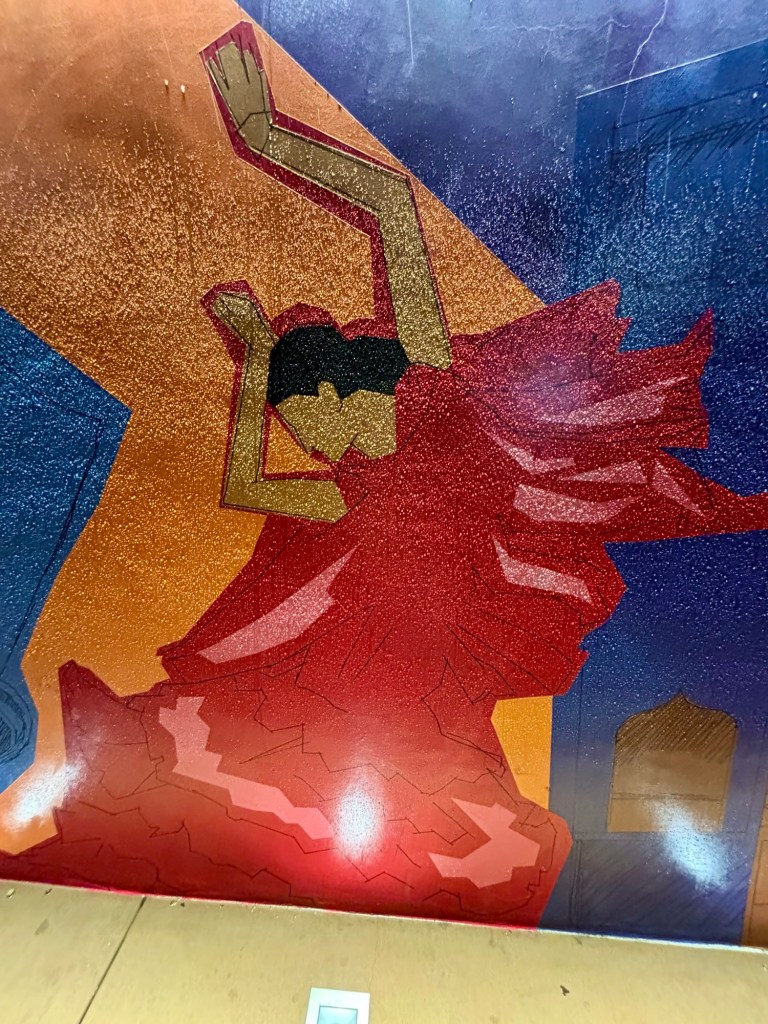


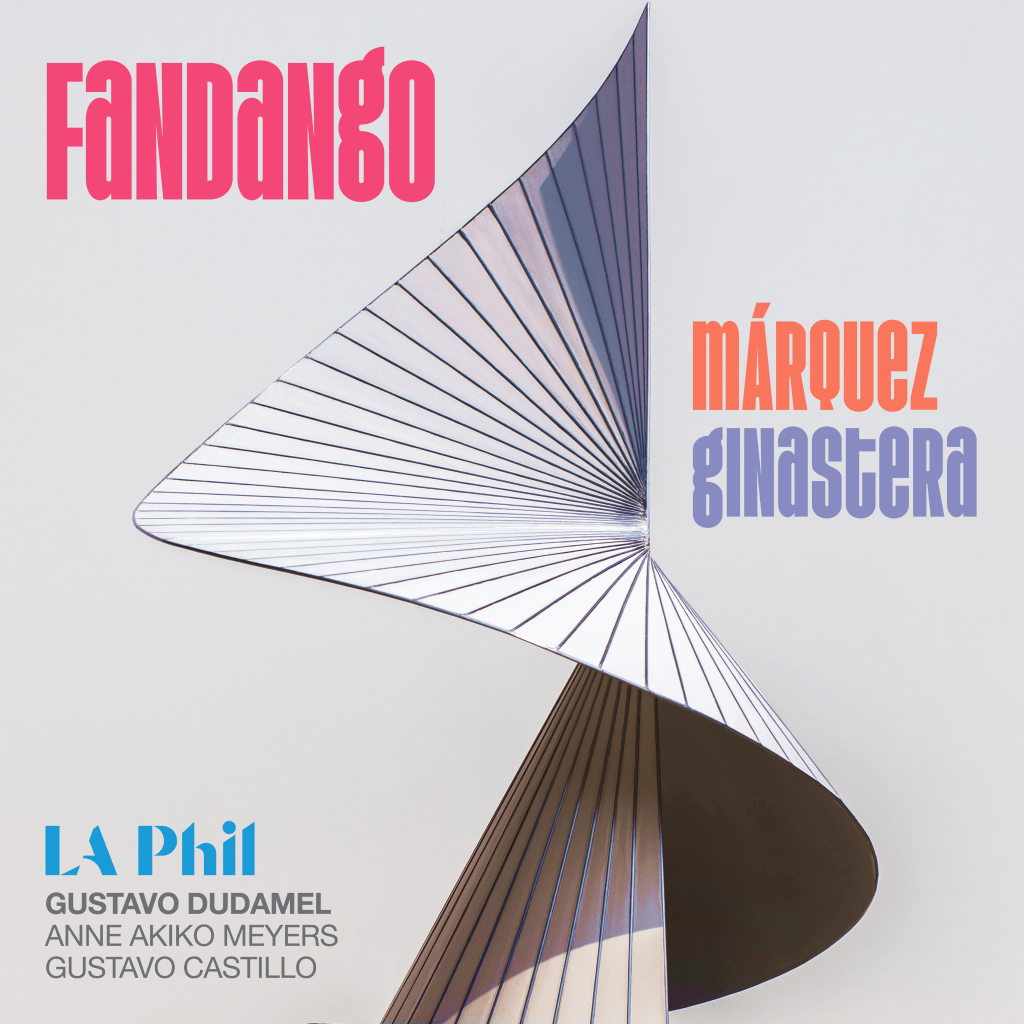
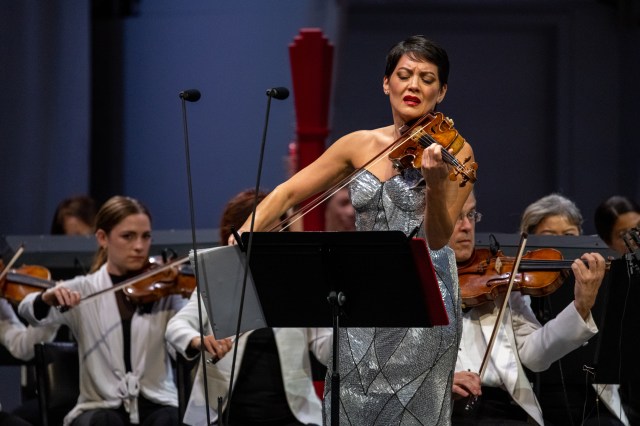
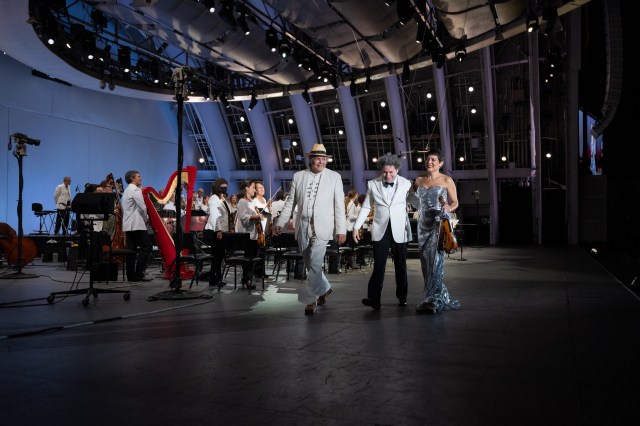

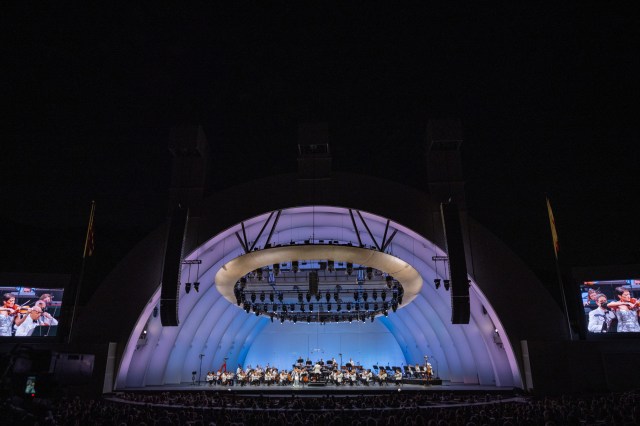
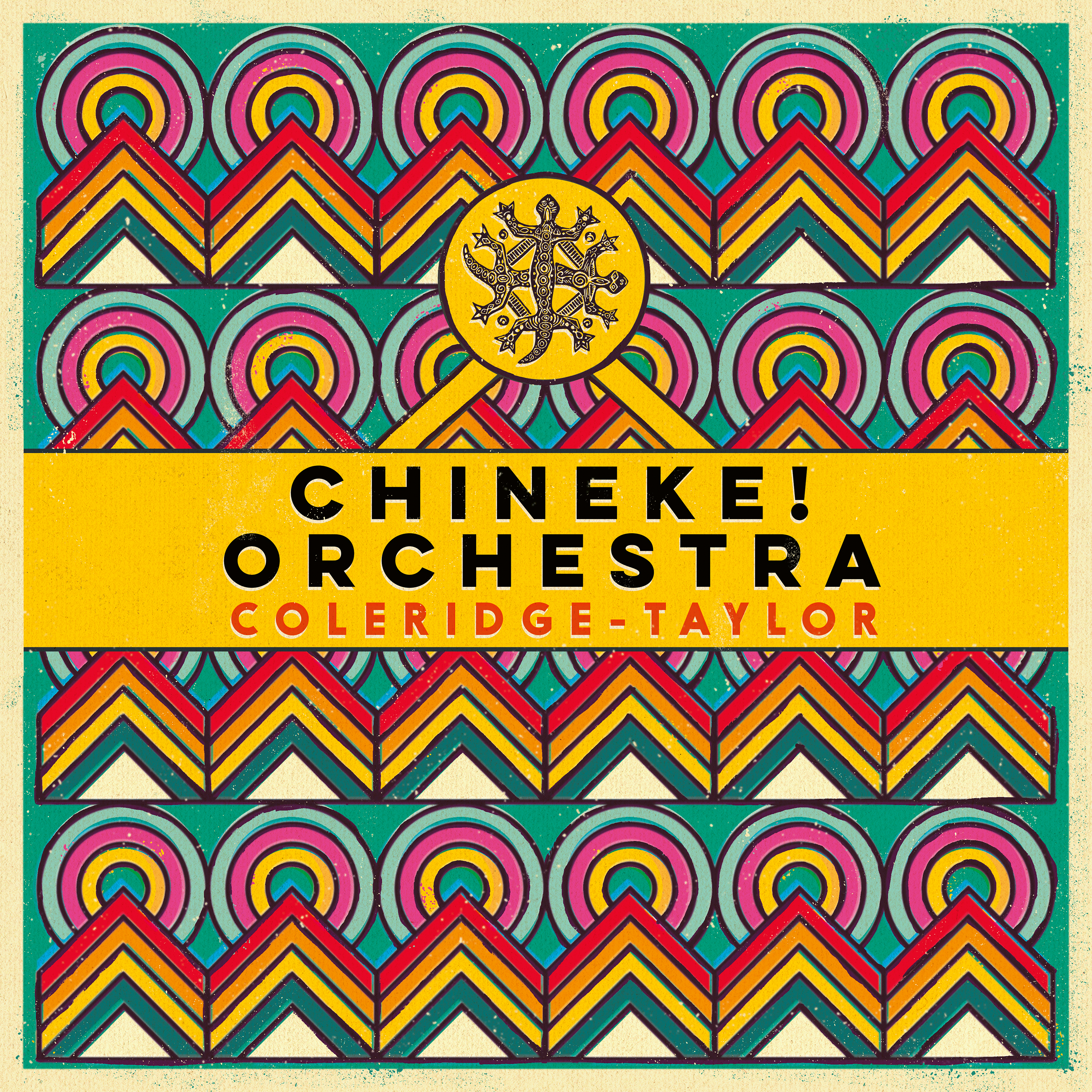


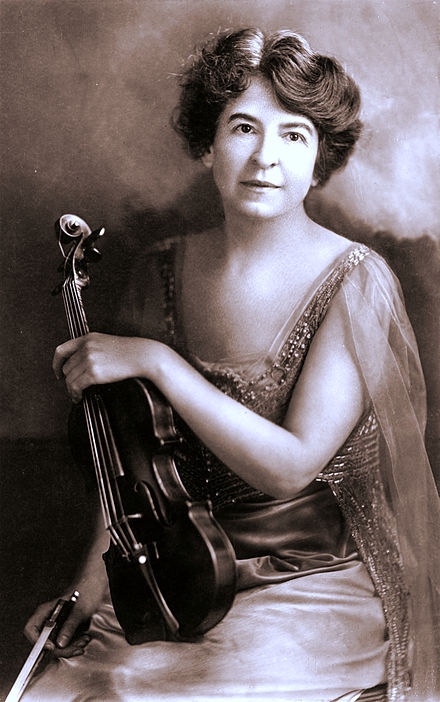


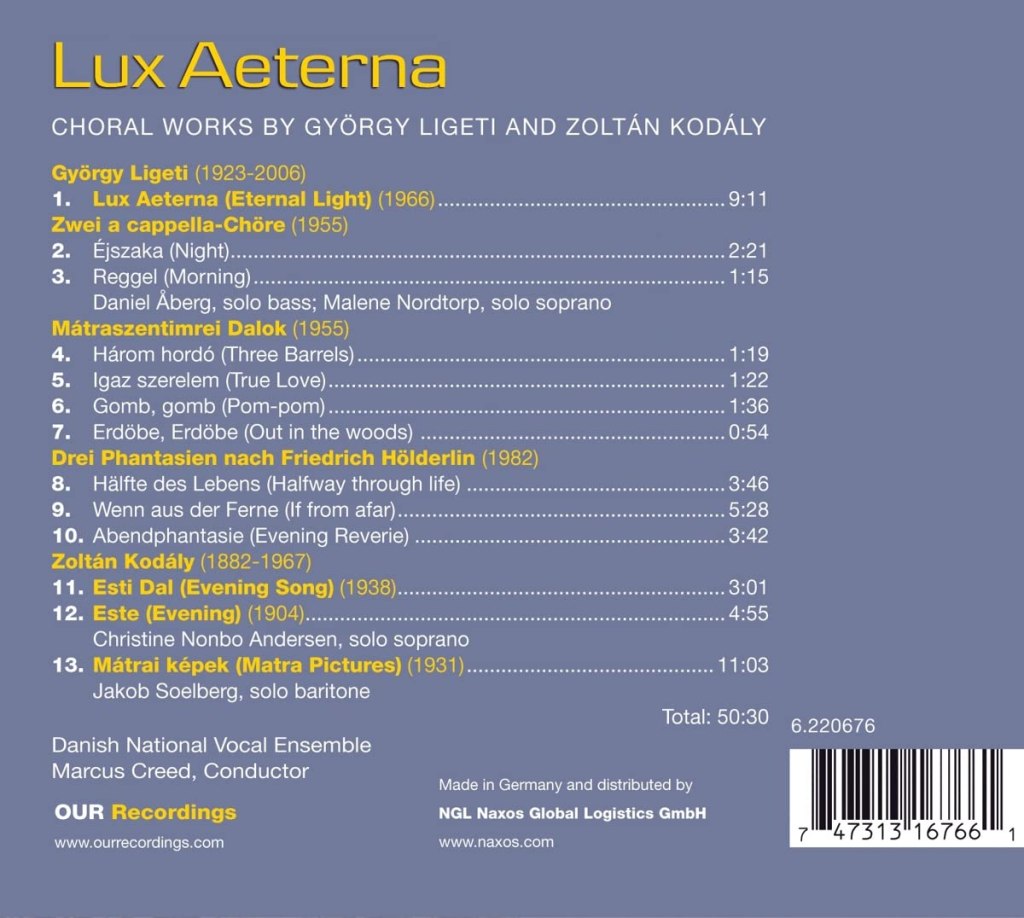


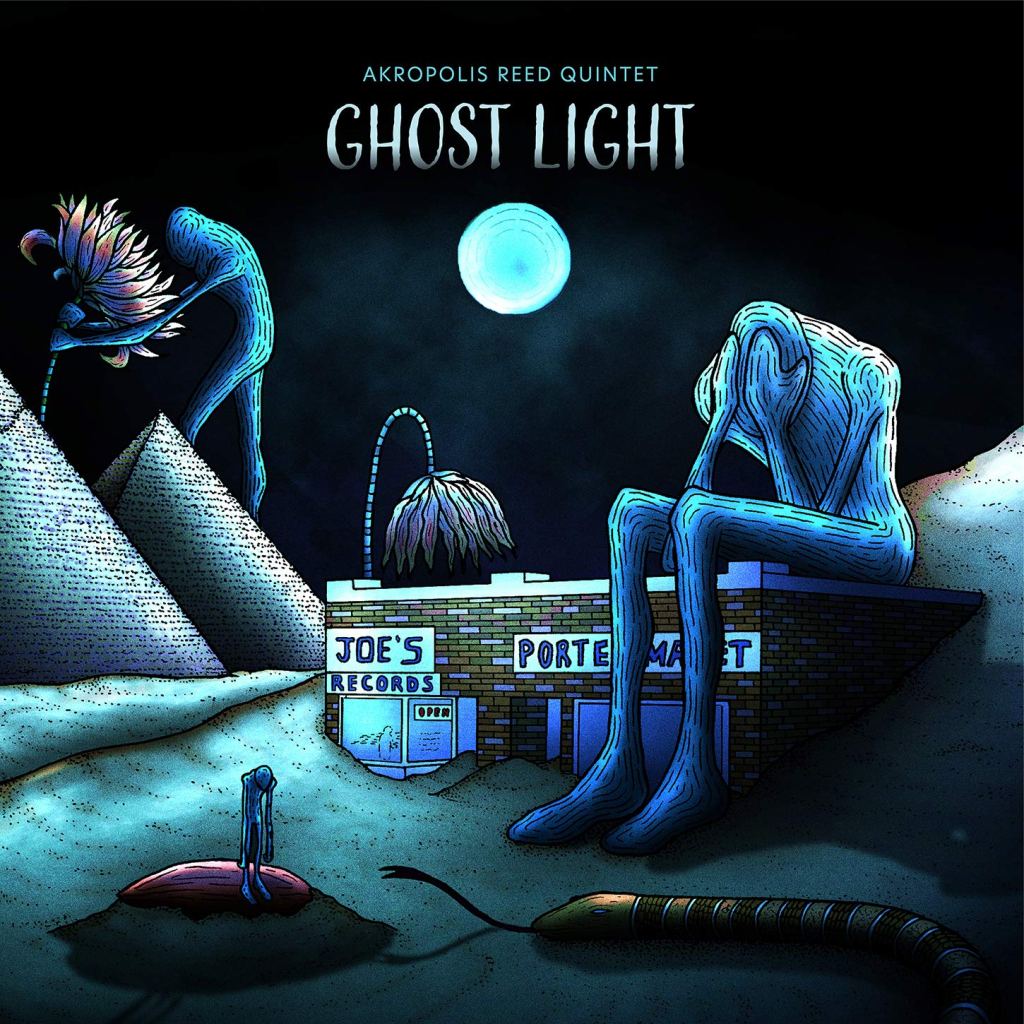

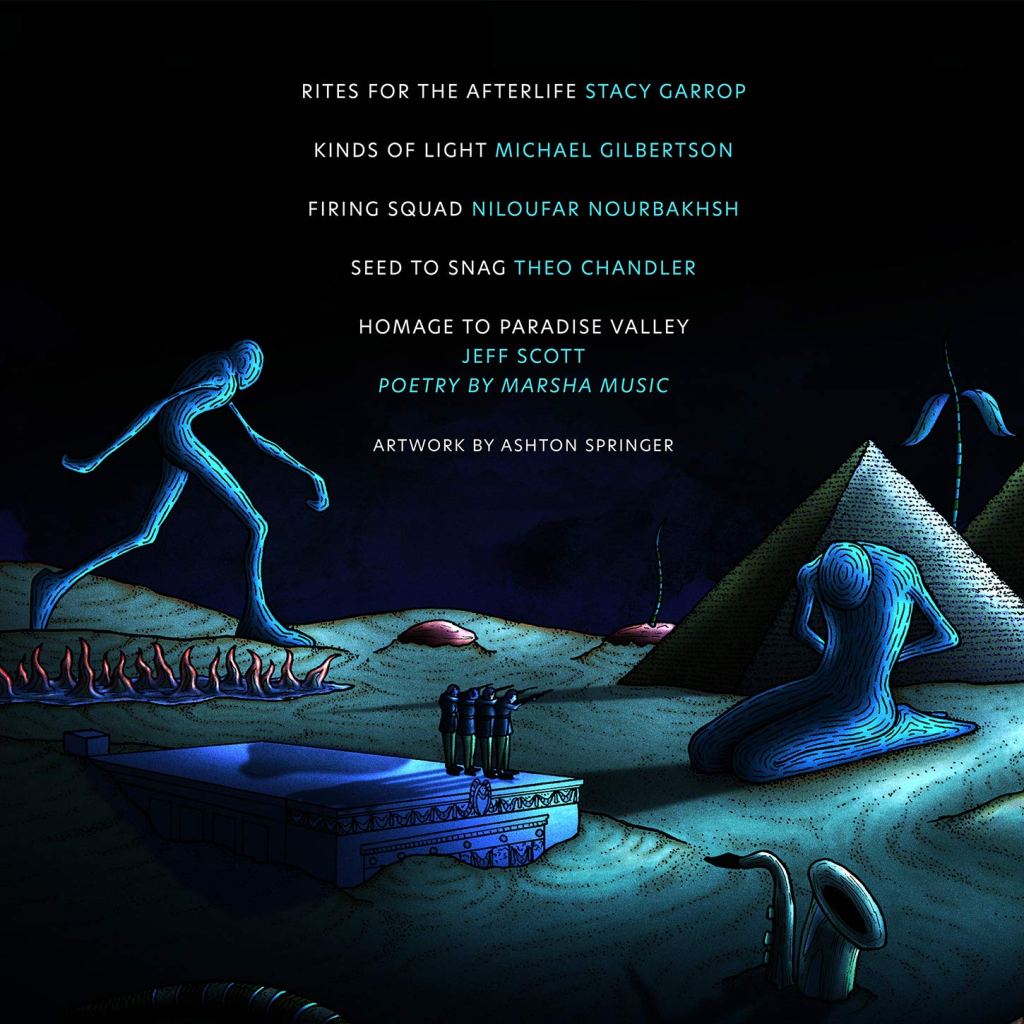
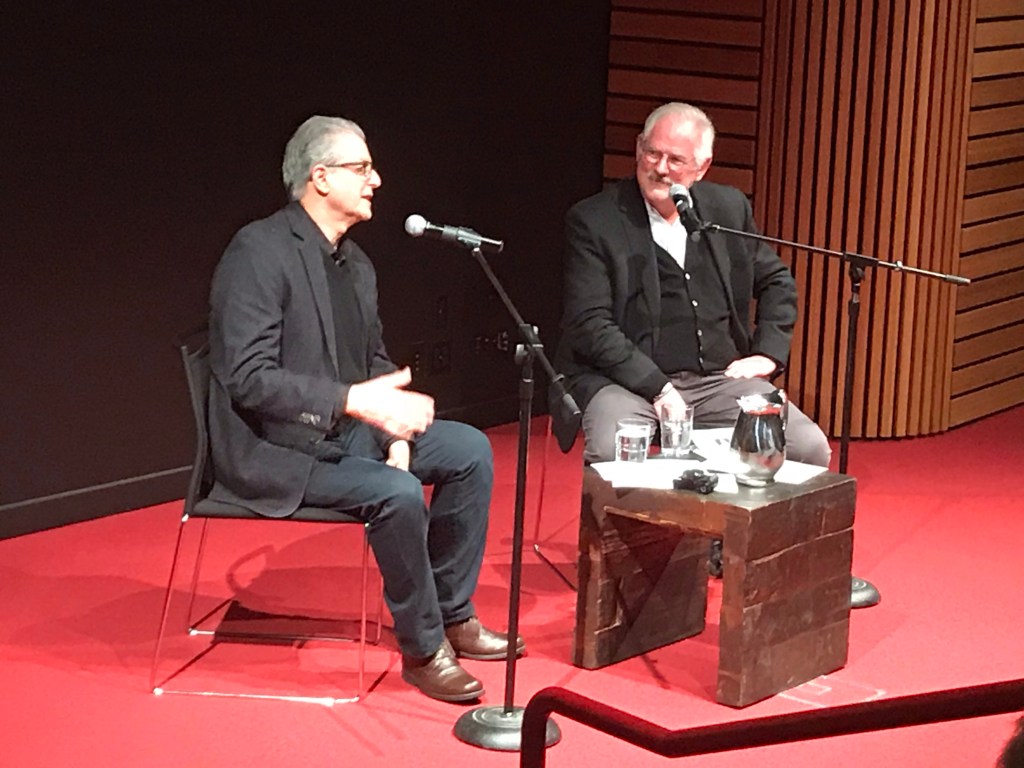

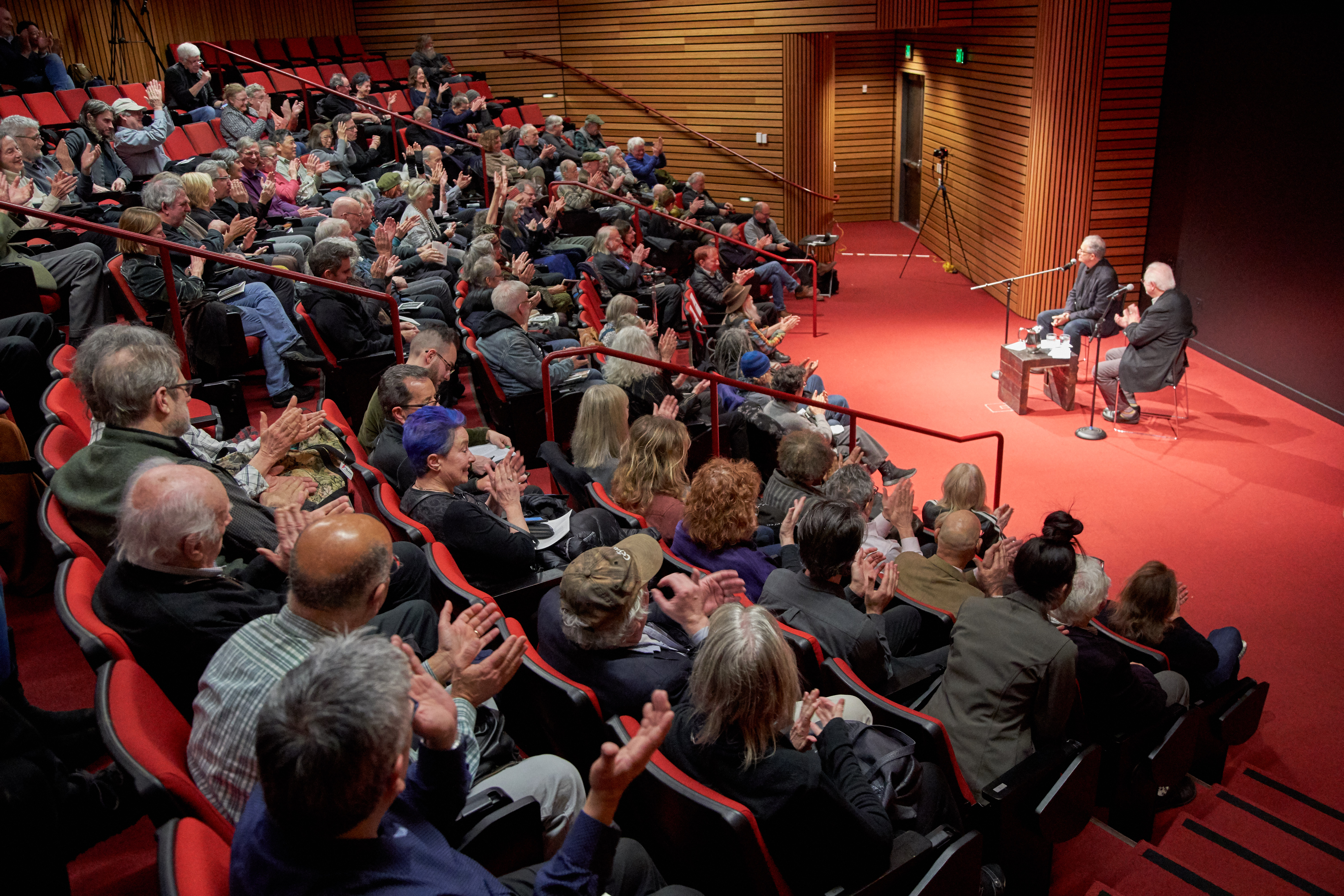
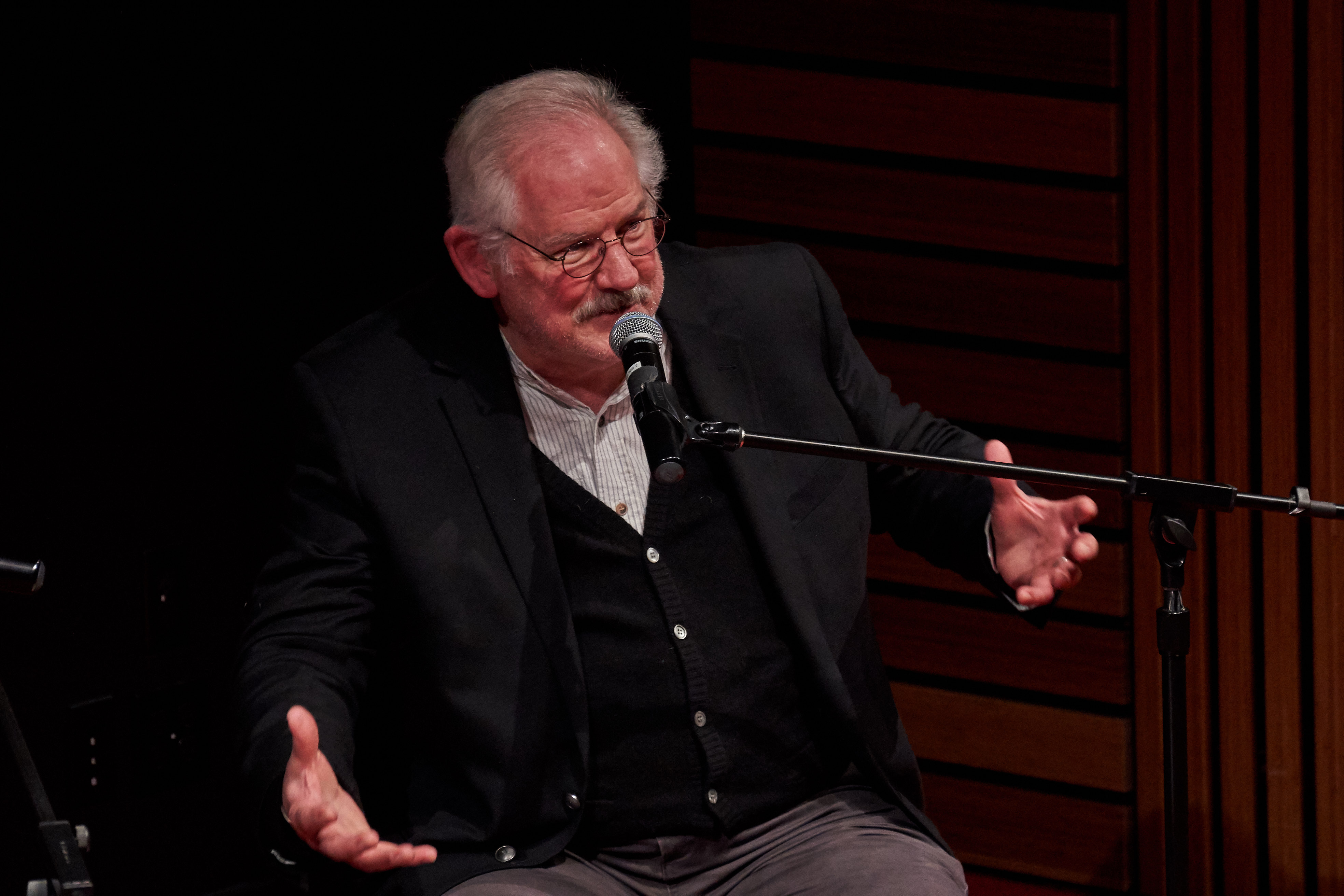
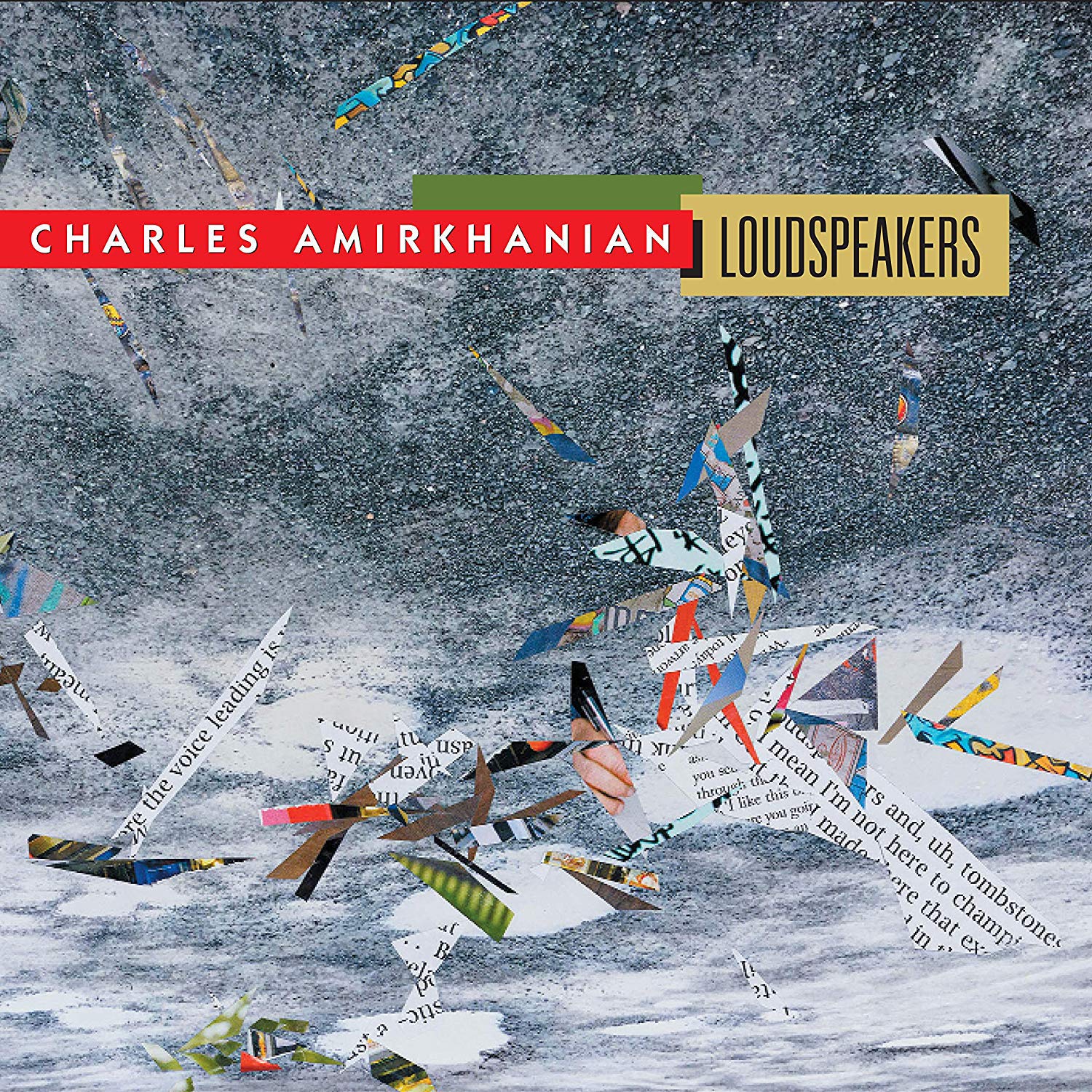


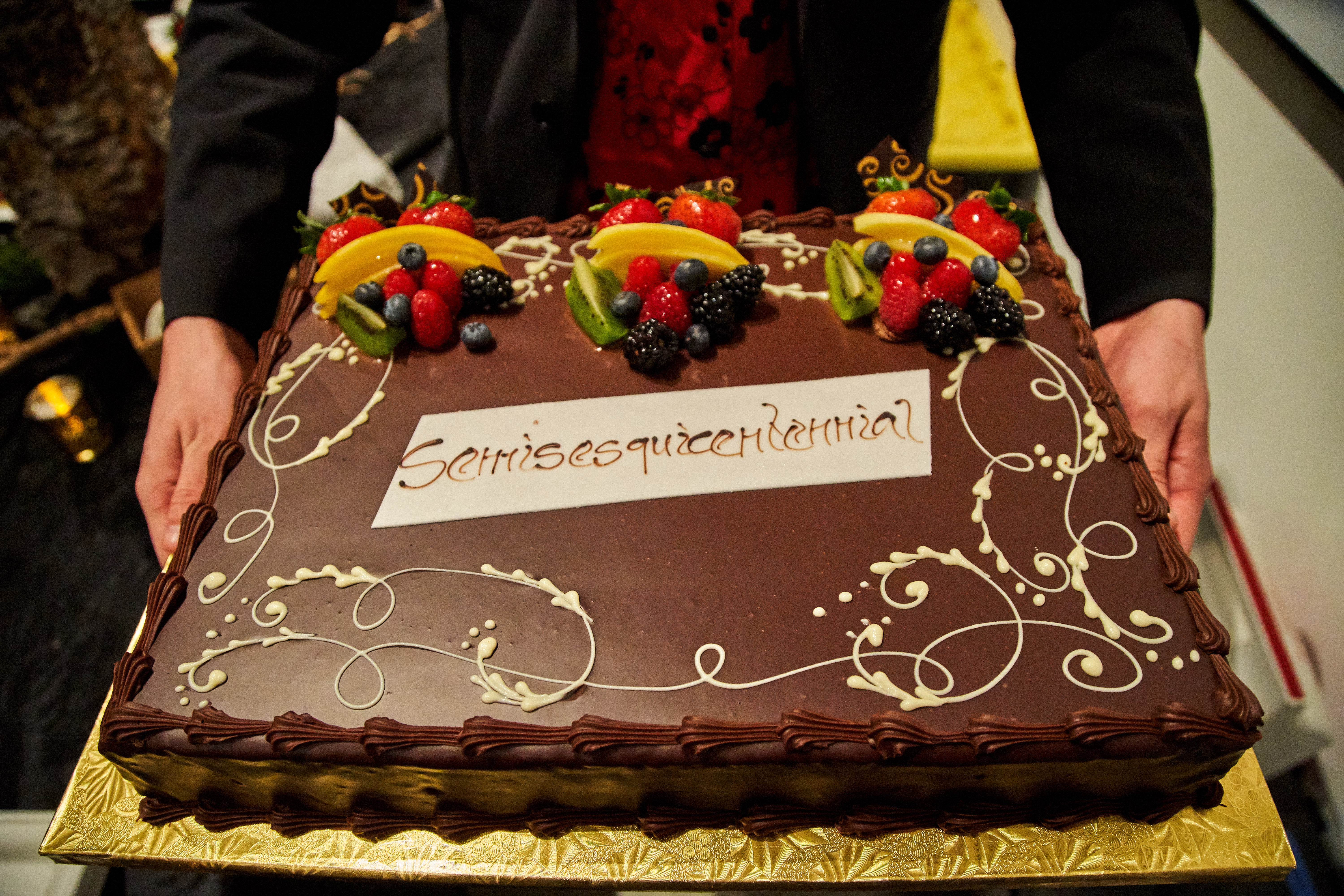

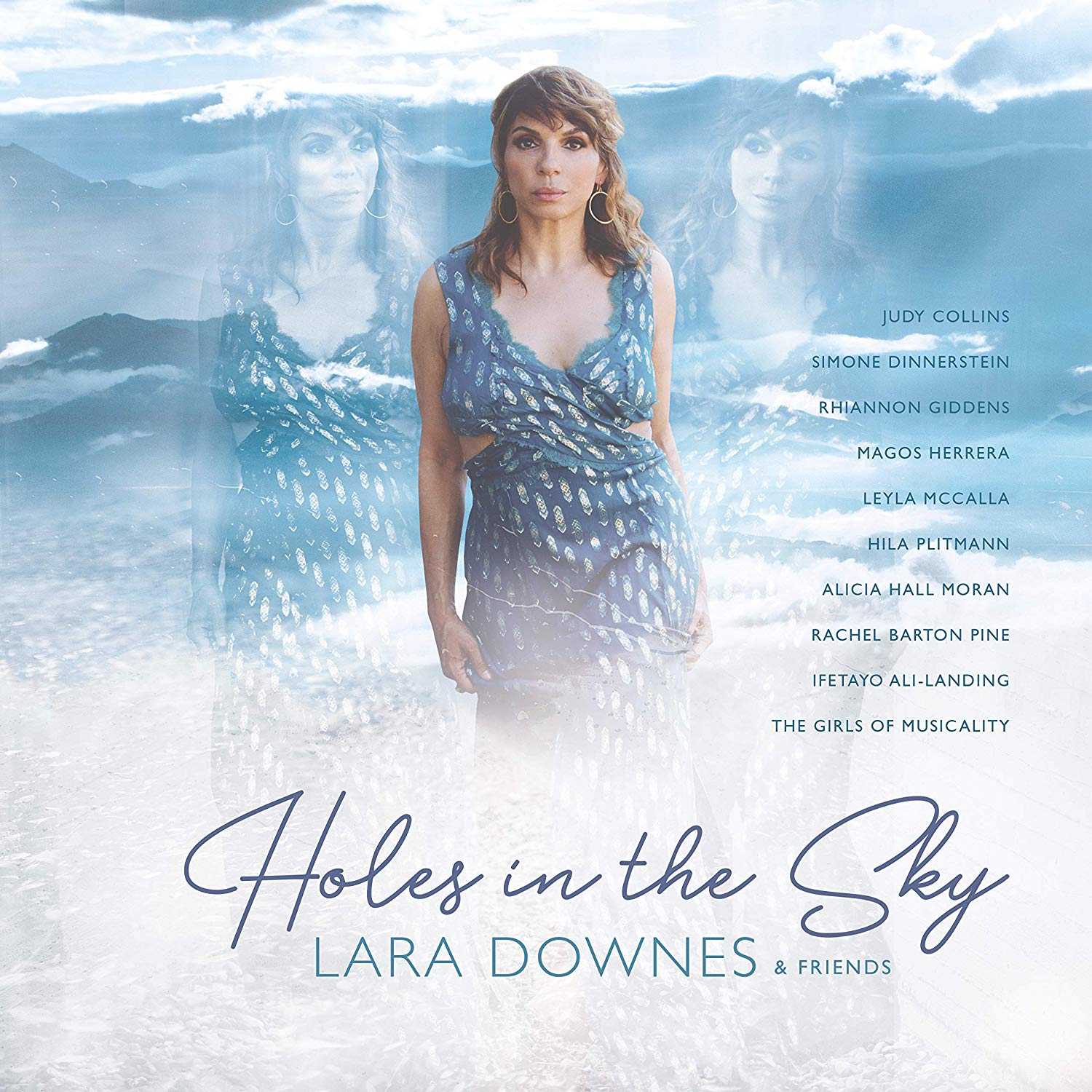


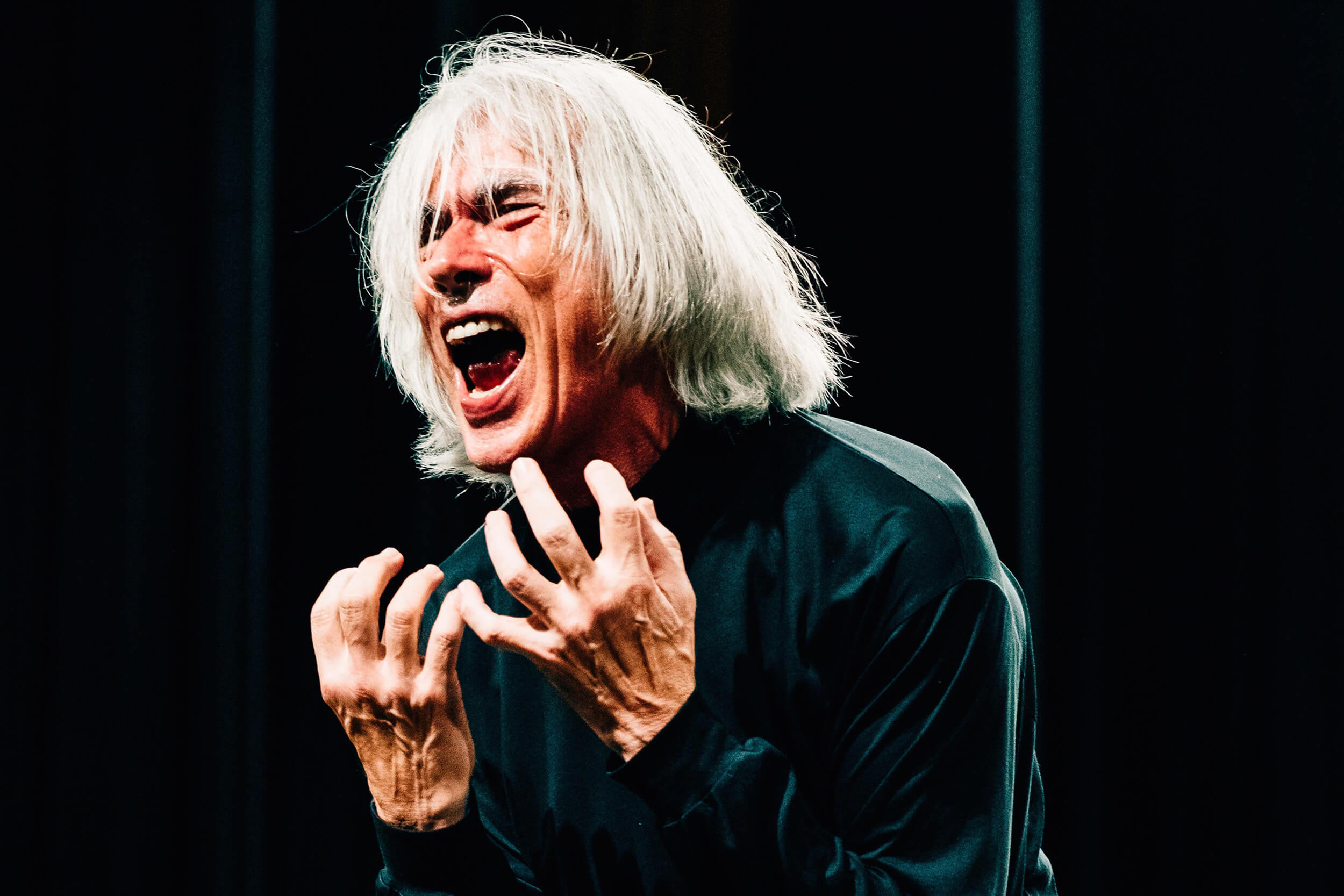




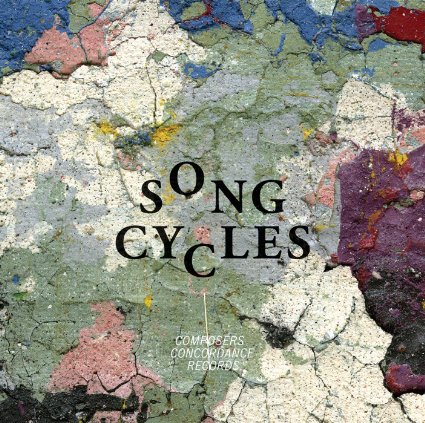




 New Music Buff