Tim Brady: The Canadian Connection


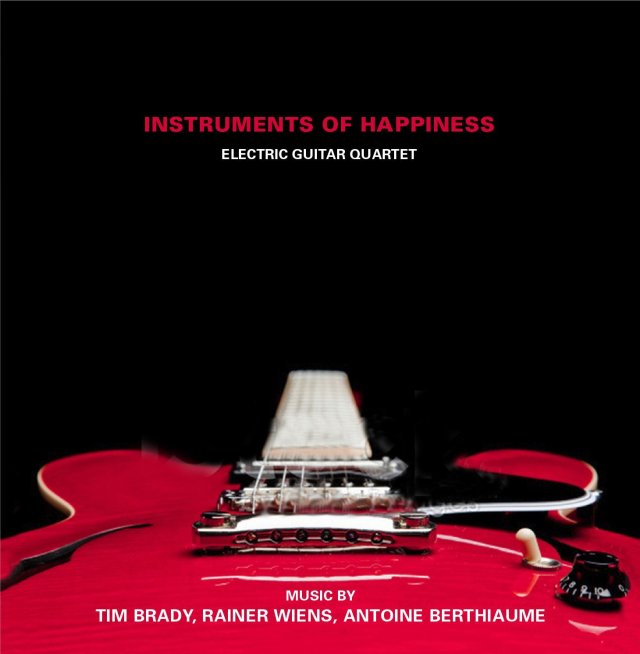
tbradyhappiness

Starkland is one of the few American labels that regularly pays attention to Canadian composers.  I previously reviewed their Paul Dolden release here.  This challenge to the curious apartheid we seem to maintain with Canadian culture is most welcome of course and one can obtain a great deal of Canadian music via Canadian labels but retail distribution of their non-pop music is limited to mail order and Internet sales (and I don’t mean Amazon either).  I strongly recommend perusing the web site of the Canadian Music Center for a truly stunning selection of this too little known recorded repertoire.  I should note that most of Brady’s releases are readily available from actuellecd.com.  You can find several of those other symphonies here as well as many other pieces and collaborative releases.  After hearing this disc I couldn’t resist hearing more  by this artist whose work has been known only faintly to me thus far.  That order is now being shipped.

Now to the disc at hand.  The  use of electric guitars as a primary instrument conjures immediate comparisons to Glenn Branca and Rhys Chatham as well as to rock and blues but this music is quite different from all of these.  This is one aspect of  the work of a composer whose work includes writing for orchestra, chamber and solo instruments as well.  Brady, largely set taught in music until he attended college (Concordia University 1975-78; New England Conservatory 1978-80) is an interesting composer and performer with a widely varied palette.  Brady’s Wikipedia page is surprisingly informative as well.  You can find that here.

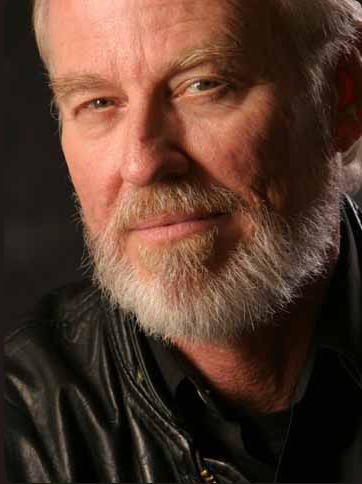
Tim Brady (1956- ) is an artist of many talents and this recording represents his most recent work, a symphony.  It is his fifth essay so titled and his choice of instrumentation for each (of his now 6 symphonies) is unique.  In this case he has chosen to score for four guitars (his Symphony No. 4 is for full orchestra) and also presents a separate solo version backed by electronics.  It is subtitled, “The Same River Twice” (2013) and I struggled a bit initially getting wrapped up in trying to discern the differences between the two versions but realized that is rather beside the point in a way.  What makes this music interesting is the way in which it differs from the likes of Branca and Chatham.  Brady clearly comes from a different perspective.  The myriad ways in which creative musicians find to integrate cross genre elements fascinates me as a listener.  He is 8 years younger than Branca, 4 younger than Chatham but his perspective of the inherently “pop” inflection of the electric guitar differs greatly.  He is writing another vital and welcome chapter in this loosely defined group of guitar based experimental musics of the last 40 years and his work deserves attention.

He seems to have more in common (broadly speaking) with Pat Metheny than Fred Frith and his discography reflects encounters with several ECM artists.  I’m not sure who influences who here but this is a pleasant and intelligent exploration sometimes virtuosic, sometimes drone-like but a consistently engaging piece.

As I said there are two versions of this symphony on the disc.  Along with those are two shorter tracks by Antoine Berthiaume and Rainer Wiens.  Fungi by Berthiaume is another example of the integration of pop motives into a broader quasi-improvisational context and is most successful.  The disc is rounded out with a sort of little summation “remix” by Wiens entitled “What is time?” which reportedly uses breath as a rhythmic determinant.

The playing is competent and intuitive, not flashy or self-consciously experimental.  Rather this is the work of a seasoned composer who uses his materials well .

Recording and mastering, all expertly done, were done in Canada by the artists who also did the useful liner notes (Allan Kozinn writes the gatefold notes).  The cover art and the production of the CD belong to Starkland and it is a very nice production.
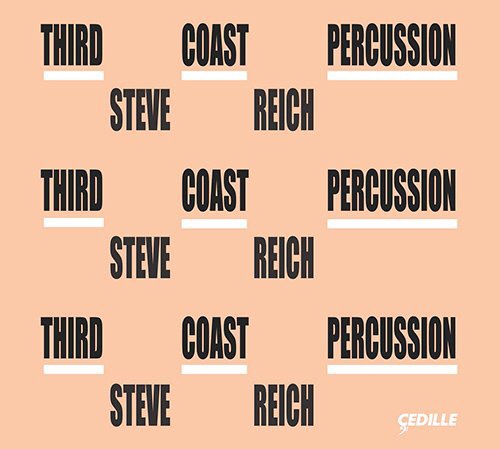
Next Gen Steve Reich: Two Great New Recordings


One of the hurdles on the way to long-term historical recognition is finding the next generation of interpreters for whom the music itself is not new but whose interpretation is needed anew in light of the music’s place in the canon of performed and recorded music. So Mr. Reich has now arrived in two fantastic new recordings.


The first CD here is the Cedille (Cedille 90000 161) label debut by Third Coast Percussion, a young Chicago based group.  The label itself is reason enough to pay attention with their intelligently selected and well-recorded releases.  But even so this one stands out for a couple of reasons.

As  Reich reaches his 80th birthday (as are many composers whose work informed my listening life since the 70s) we are seeing the next generation (or so)  of performers, musicians for whom this music is not new.  (Third Coast Percussion is Sean Connors, Robert Dillon, Peter Martin and David Skidmore. They were founded in Chicago in 2005.). As these dedicated musicians traverse this repertoire they see it from a different perspective and they acknowledge this in the accompanying notes by Robert Dillon.  No doubt they are familiar with the music and have heard some if not all previous recordings. This music is no longer new and novel the way it was to those who first heard it.  And that is what we have here, a new take on music already familiar giving us the perspective of another generation.

The second reason to get this recording is the sheer beauty of the sound.  It is a masterpiece of recorded sound which does justice to the work of these fine musicians as well as the music.  The album was recorded at the University of Notre Dame’s DeBartolo Performing Arts Center (where Third Coast is in residency).  Dan Nichols was the engineer assisted by Matt Ponio.  It was mastered by Jessie Lewis and Kyle Pyke.
The CD opens with the recent Mallett Quartet (2009) which has been recorded only once before.  The piece is in three sections fast-slow-fast split over the first three tracks.  It is one of Reich’s finest compositions showing him as a still vital artist and it will no doubt receive many more performances but it would be hard to imagine a better recording.

The second selection is, for this writer, one of Reich’s more unusual pieces.  The Sextet (1984) is scored for two keyboards (pianos doubling synthesizers used for long held tones) and percussion.  David Friend and Oliver Hagen lend their formidable keyboard skills to this work and help it to swing.

I must admit that this performance has resulted in me giving this work some serious close listening again and I am liking it better.  Some of these movements seem like precursors to some of the writing in Reich’s wonderful The Four Sections (1987), another work that deserves more attention.

The brief but lovely Nagoya Marimbas (1994) is pretty much an accepted staple of the classical marimba repertoire and has also been transcribed and performed on guitars as well.  As with the preceding the performance is faithful and lively.

For the final track a decision was made to go back to early in Reich’s output with Music for Pieces of Wood (1973).  As with much of his early work we see his experimental side focusing as much as possible on a single process.  It uses the same rhythmic pattern as the 1972 Clapping Music but uses additive rather than phasing techniques (I believe), a great example of the roots of minimalism.  The group does some toying with the choice of percussion but, as in the preceding tracks, manage to create a performance worthy of the best interpreters in their generation.  Happy Birthday Mr. Reich!!


This second CD (New Focus fcr 165) is another aspect of crafting a legitimate new interpretation of a given piece of music.  Guitarist Daniel Lippel goes back to some of the roots of Reich’s mature style, Ghanaian drumming.  Reich seems to have achieved his personal artistic synthesis after his encounter and study with the master drummers of Ghana.  It is here that he was finally able to synthesize the gifts received from his study of jazz (Reich was/is a jazz drummer) and his tape music experiments into the larger forms for which he is now known through these studies with West African musicians.  And it is here that Lippel goes, with an assist from musicologist Martin Scherzinger, to create his (re)vision of this classic Reich composition.

Electric Counterpoint (1987) was written for and first recorded by the still wonderful jazz guitarist Pat Metheny.  His recording is certainly definitive but, as with all music performance, hardly the last word.  Several artists have presented their versions (David Tanenbaum’s acoustic guitar version deserves more attention by the way).  It is a very appealing and interesting piece cast in a classic fast-slow-fast format that presents formidable challenges for the musician but not for the listener.

It is difficult (and certainly beyond the scope of this review) to say specifically what Mr. Lippel has done differently but there is clearly a difference (further notes can be found here).  I am loathe to find adjectives to describe this recording except to say that it is well worth your time to hear it.  It provides a different way of hearing much as Glenn Gould has done for Bach.  Just sit back and enjoy.

Getting the Oboe (et al) to Stand on Its Own, Catherine Lee


    Connections can be fascinating and not long after publishing my review of Emily Doolittle’s  release here I received, in addition to a stunning number of readers for that article, a CD by one of her fellow musicians featuring another of Doolittle’s interesting works alongside four other works for solo oboe (or English Horn or Oboe d’amore).  Though certainly kind and timely I did not relish the idea of being subjected to even this short CD single of a soloist with no accompanying musicians playing a series of unknown soliloquies.  My concern was that of having to endure the sincere efforts of a musician who is convinced of her instruments’ solo potentials and who labors to prove this to all but hardly gets past technical achievement like a recording I once heard of the Bach Cello Suites played on a Double Bass, interesting as a technical achievement but…

My fears were clearly unfounded as I listened to each track.  Patience turned to excitement and I think I’ve now heard a sort of new breed of instrumental specialist.  Lee plays oboe as well as the closely related English Horn and the very little known Oboe d’amore with expertise.  But she is not a specialist in the “period ensemble” genre per se. Rather her focus is on the potentialities of her instruments as vehicles for new music, improvisation and solo performances.  There seems to be little threat of a forthcoming rendition of the Telemann Flute Fantasies played on one or all of those.  Instead we have a gifted musician who seems poised to shepherd these instruments into new adventures in the 21st century.

The album consists of 5 tracks, all less than nine minutes in duration but each is a fully realized composition lovingly interpreted by this performer.  I am only familiar with one of the composers here, Emily Doolittle whose Social Sounds from Whales at Night (2007) is the only track which features any accompaniment.  It is a good example of Doolittle’s potentially groundbreaking work with animal sounds.  The other tracks manage to rise above the level of mere effects-ridden etudes to the level of compositions that define their own sound world and subjugate that world to artistic expression.  Very interesting listening.

From the first track it is clear that this is a musician with a deep understanding of the expressive possibilities of her instruments in both traditional and extended techniques as well as a clear sense of how to find music of substance.  Her playing sounds effortless suggesting that she puts a great deal of time into honing her virtuosity but she clearly moves beyond the technical to master the expressive range.
I would certainly be willing to hear just about anything Ms. Lee chooses to play including the relatively obscure repertoire for the oboe d’amore but I have my fingers crossed that we may get to hear her tackling concertos by Morton Feldman, Vincent Persichetti, Witold Lutoslawski and Hans Werner Henze, big projects that are nice to hope for but we do see that her ear for the smaller projects is clearly golden.

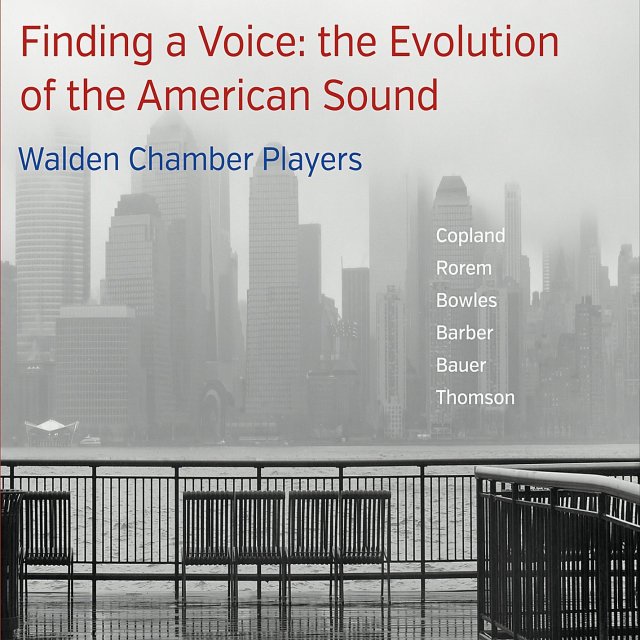
Filling Vital Gaps in the Recorded Repertoire: The Walden Chamber Players Do America


walden ch pl evolution

The only name that might not be familiar to fans of early to mid-twentieth century American music feature in this recording is that of Marion Bauer (1882-1955).  The rest of these composers are clearly established in both recordings and the performing repertoire.  One of the great things about this recording is that the collector runs practically no risk of duplication.  While the Rorem, Barber and Bowles have been recorded before I am not aware of any currently available recordings of the Thomson, Copland and Bauer pieces.

I don’t know how profoundly significant all these works are, only time (and more performances/recordings) will tell.  But these are attractive pieces that fill historical gaps and that is apparently the goal of this clever ensemble.  Even if these are not first order masterpieces they do speak to the historical evolution of the American sound in the twentieth century.

Marion Bauer is herself in need of a reassessment.  This woman, 20 years older than Aaron Copland was essential in the establishment of the foundational institutions of American music.  Few of her works have been recorded and even fewer given good or great recordings.  So this 1944 Trio Sonata No. 1 recording is a very good start.  This, like the other works on the album do not stray far from basic romantic tonality but were the “modern” idiom for the works of their day.  The sound of mid-century neo-romanticism is clearly in evidence in this lovely and lyrical three movement sonata.

Virgil Thomson (1896-1989) is now better known for his excellent music criticism but he was also one of the finest examples of the American neo-romantic tradition (and the only composer to win a Pulitzer Prize for a film score) and his work is sadly under-appreciated. The five brief movements are infused with the composer’s folk and hymn references like much of his work.  I do not think this lovely little Serenade for Flute and Violin (1941) has been recorded before and, hearing it now, I can’t imagine why not.

Aaron Copland (1900-1990) is represented here by two late works from 1971 and 1973, both entitled Threnody.  The first is dedicated to Igor Stravinsky (1882-1971) and the second to Copland’s friend Beatrice Cunningham.

As far as I know this is the first recording of these two works.  They are short and intense pieces whose apparent simplicity most likely belies some complexity but these are very approachable works.  It is a great service to have them available for listening.

Samuel Barber (1910-1981) is probably the foremost representative of American romanticism.  The brief Canzone for Flute and Piano (1961) was originally written for a friend.  The melody made its way into Barber’s Piano Concerto Op. 38 (1962) and has been given the opus number 38a.

Ned Rorem (1923- ), composer and diarist is also a strong contender for the romantic crown in American music.  He is the youngest of the composers represented on this recording (though this reviewer would like to make the case to perhaps include David Del Tredici 1937- for inclusion in this survey of mid-century American romantics).  Best known for his songs, Rorem’s orchestral and chamber music have only recently begun to get the attention they deserve.

His Trio for Flute, Cello and Piano (1960) is very strong example of the quality of his chamber music.  The four movement trio has been recorded before but this performance is about as fine and definitive as one could imagine.

Paul Bowles (1910-1999) is far better known for his literary endeavors and is connected to the beat writers.  His novel, The Sheltering Sky (1949) secured his literary fame.  Bowles spent much less time on composition after 1956 but his music has (though painfully slowly) been going through some reckoning in recent years.  And so it should.  This contemporary of Aaron Copland  has written a fair amount of music, much of that in the form of incidental music for various plays.  This Sonata for Flute and Piano (1932) has been recorded before but it is good to see it made available in a competent recent version.

Ned Rorem, the only composer here still living, gets the final word in The Unquestioned Answer (2002).  It is essentially a reflection on Charles Ives’ The Unanswered Question (1908, rev. 1930-5) and provides a fitting conclusion to this wonderful survey.

I very favorably reviewed a previous release by the Walden Chamber Players (Marianne Gedigian, flute; Curtis Macomber, violin; Tatiana Dimitraes, violin; Christof Huebner, viola; Ashima Scripp, cello and Jonathan Bass, piano).  And they continue their intelligent and very personal survey of chamber music.

This is a very satisfying album which achieves its goal of displaying music which clearly contributes to the collective voice of American music as it developed in the early to mid- twentieth century.  This intelligent selection of music, well-performed, fills gaps in the recorded repertoire and, one hope, will encourage others to bring more of this work to recordings and performances.


A Really Great Brass and Organ Album, Chicago Gargoyle Brass and Organ Ensemble


gargoylebrass

MSR Classics MS 1598

At first this disc seemed to be one of those “audiophile spectacular” niche market items designed to show off one’s stereo system.  I expected a well-recorded album with wide dynamic range and a clarity that would stun the listener but these types of albums frequently have well-recorded but uninteresting music or, worse, cloying showpieces that don’t bear repeated listening.

The first listen dissuaded me from that notion immediately because this is interesting and well-played music.  Except for three clever transcriptions of late 19th/early 20 century pieces all the music is from 2005-2013 (as are the transcriptions for that matter).

The music is, on the whole of a somewhat conservative nature but that is not a negative thing.  All of the music is pleasantly engaging and/or downright exciting.

The first four (of a total of 15) tracks present the music of Carlisle Sharpe (1965- ).  The first work Flourishes (2005/10) is a festive fanfare which was revised for this ensemble. The next three tracks contain the Prelude, Elegy and Scherzo (2012) is a commission by the present artists.

Next we move on to one of the arrangements by Craig Garner (1959- ).  This is, I think, a difficult arrangement to play but is handled with such ease by these players that one could be fooled into thinking it was easy.  The arrangement of the popular drinking song from Verdi’s La Traviata (1853) is a lucid and detailed transcription.  It is the clarify of the recording that makes this obvious as we are able to hear the various challenging lines that allow pretty much everyone in the ensemble to demonstrate their facility.

William Whyte (1983- ) is the next featured composer with a satisfying little suite called Dwarf Planets (2012).  It is in five brief movements.  The piece was also commissioned by and dedicated to Chicago Gargoyle Brass and artistic director Rodney Holmes.

Earthscape (2011) by David Marlatt is cast in a similar vein and, with the previous five tracks these are effectively musical appendices to Holst.  Marlatt, a Canadian composer has written this lyrical piece for the Gargoyle Brass.

Tracks 12 and 13 are another great transcription of a type of work which conductor Sir Thomas Beecham was fond of calling “bon-bons”, an appellation that was a proto-pop concert concept describing short, popular encore pieces.  It is the Polka and Fugue from “Schwanda the Bagpiper” by Jaromir Weinberger (1896-1967), a Czech composer whose reputation lies pretty much entirely on this work.   Originally for orchestra, this engaging work is very effectively arranged for this ensemble.

Tracks 14 and 15 comprise another transcription, this time of two movements from Camille Saint-Saens’ (1835-1921) 3rd Symphony (1886).  This is another truly great piece of music that always plays well with audiences.  The original is for a large orchestra and an organ.  The transcription is remarkably faithful to the score and it’s hard not to get hooked on that finale.  The entire symphony is actually based on the “Dies Irae” chant from the Requiem Mass though this is not a somber piece at all.

The last track is Velvet Blue (2012) by Peter Meechan (1983- ), a British born Canadian composer.  Originally written for a “rock” organ (the Hammond variety) and here played on a traditional pipe organ this is one of the most unusual pieces here.  It’s blues/jazz inflections harken back to big band sounds of the 1930s.

Brass instruments and organs are not instruments known for their agility.  Combine that with the resonant recording space of the churches involved and you have some serious engineering challenges.  Hudson Fair at Hudsonic has met these challenges and succeeded in capturing these performances in lucid detail with a true audiophile recording.  The dynamic range is wide and the the recording is about as clear as I have ever heard done  in this setting.

The musicians Lev Garbar, trumpet; Andrew Hunter, trumpet and flugelhorn; Amy Krueger, horn; Kathryn Swope, horn; John Grodrian, trombone; Graham Middleton, trombone; Ryan Miller, trombone; Andrew Vandevender, tuba; Paul Ramsler, tuba; Joshua Wort, tuba; Michael Schraft, tympani and drum set; Jared Stellmacher, organ; Mark Sudeth, piano; and Steven Squires, conductor all play with precision, lyricism and feeling.

One more piece of what I call “audio porn” is nicely included, the statistics on the two beautiful organs played at the two churches where these recordings were made.  Nice touch. Great fun album.


Between the Lines, New Percussion Music by Neil Thornock


Between the Lines

Between the Lines

Other than the information on this CD and the composer’s faculty page (here) information seems limited on this composer,.  He earned a BM, Organ Performance, Brigham Young University, 2001, an MM, Music Composition, Brigham Young University, 2003 and a DM, Music Composition, Indiana University Jacobs School of Music, 2006.  Currently he is associate professor of music at BYU where he teaches theory and composition as well as electronic music.

Thornock is that rare breed of percussionist (or is it keyboardist?), a carriloneur  and he takes the opportunity to display those skills on this all percussion release, apparently the first recording of this composer’s music.

It is very difficult to assess a composer based solely on their percussion music and sometimes that genre can take on the insider feel of, say, band music or some more rarefied and sequestered niche of music.  As popular as percussion music has become in the 20-21st century it seems sometimes to be an orphan genre.  This is also, no doubt, due to the all-inclusive nature of the term “percussion” which leaves a huge list of potential instruments to consider.  So an album of tympani music or bongo music or marimba music (conceivably even piano and harp can be included under the percussion rubric).might all be spoken of generically as percussion music.  This recording uses a wide variety of instruments.

Having said that this disc appears to show a composer with a wide palette and knowledge of the medium and it is an opportunity to hear carillon music which is itself a relatively rare experience in recordings.  His writing is accessible and, no doubt, well-tailored to the skills of the musicians.

There is nothing familiar here.  All are new works written, presumably, in the last few years.  It would be interesting to hear more of this composer’s output in the areas of chamber, orchestral and electronic music.  But this little tease will have to do for now.

Matthew Coley, the percussionist, seems to be the real star here.   He plays on all tracks and seems to be a highly skilled player.  His website was the most useful to this reviewer as well.  Along with him are the Iowa Percussion Group, the Iowa State University Percussion Ensemble and, as mentioned earlier, the composer on carillon on tracks 7-10 with Gerard Norris conducting.

This New Focus recording FCR 156 is beautifully recorded and I think that is no simple task given the variety of instruments involved.

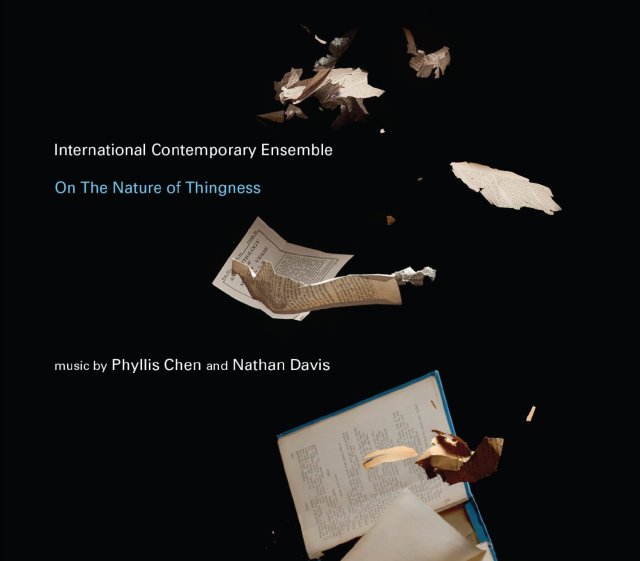
ICE Debuts on Starkland: Music by Phyllis Chen and Nathan Davis


71suob4pdtL._SL1500_

Starkland is one of those labels whose releases seem to be so carefully chosen that one is pretty much guaranteed a great listening experience even if that experience might challenge the ears sometimes.  If one were to purchase their complete catalog (as I pretty much have over the years) one would have a really impressive and wide-ranging selection of new music.

I recently reviewed a very fine ICE (International Contemporary Ensemble) recording of music by Anna Thorvaldsdottir here. The present disc is the first appearance on Starkland of this ensemble whose performance skills and repertoire choices show the same depth of understanding as the producers of the label upon which they now appear.

ICE was founded in Chicago in 2001 by executive director and flautist extraordinaire Claire Chase.  The discography on their website now numbers 21 albums including the present release.  The group features some 30+ artists and musicians including a live sound engineer (like the Philip Glass Ensemble) and a lighting designer.  Do yourself a favor and check out the ICE Vimeo page to get some ideas about why having a lighting designer is a good idea.  Their performances are visually as well as musically compelling.  And who knows, perhaps there is a Starkland DVD release in their future.

About half their albums feature music by members of ICE and that is the case with this release.  One always has to wonder at the process that is involved in choosing repertoire to perform and/or record but there is no doubt that this group seems to have good instincts in regards to such decisions as evidenced by the already wild popularity of this disc on WQXR and the positive initial reviews so far.

chen_phyllis_toypiano3Resized

Phyllis Chen‘s biographical data is a bit sparse on both the ICE website and her own so I am going to assume that this talented young keyboard player likely began playing at an early age.  Like fellow pioneers Margaret Leng Tan and Jeanne Kirstein before her she has embraced toy pianos and, by extension I suppose, music boxes, and electronics into her performing arsenal.  In addition to being a composer she is one of the regular members of ICE.

NathanDavis_Obraz9

Nathan Davis is a regular percussionist with ICE as well as a composer.  His works range from opera to chamber and solo pieces for various instruments as well as electronics.

The tracks on this release pretty much alternate between these two featured composers.

The first track is Ghostlight (2013) by Nathan Davis, a sort of ragged moto perpetuo for “gently”prepared piano.  This is a good example of how these musicians (pianist Jacob Greenberg in this instance) have really fully integrated what were once exotic extended techniques into a comprehensive catalog of timbral options which are used to expand the palette of creative expression.  This is not a second rate John Cage clone but rather another generation’s incorporation of timbral exploration into their integral canon of sonic options.  This is an exciting and well-written tour de force deftly executed.

The next two tracks take us into the different but complimentary sound world of Phyllis Chen.  Hush (2011) for two pianos, toy pianos, bowls (presumably of the Tibetan singing variety) and music boxes is a playful gamelan-like piece played by the composer along with pianist Cory Smythe.

Chimers (2011) is a similarly playful work requiring the assistance of clarinetist Joshua Rubin, violinist Erik Carlson and Eric Lamb (on tuning forks) along with Chen and Smythe once again.  Again we hear these unusual instruments and timbres not as outliers in the musical soundscape but rather simply as artistic elements that are part of the composer’s vision.

Track number 4 features a work for bassoon and live processing.  Davis’ On Speaking a Hundred Names (2010) is played by Rebekah Heller and again the (to this listener) usually uncomfortable fit of acoustic and electronic are achieved very smoothly.  Music like this gives me hope that some day I will be able to drop the inevitable negative connotations I have associated with the term “electroacoustic”.  This is very convincing music and not just in the “golly gee, see what they’re doing” sense either.  The experimentation here (including the multiphonics) appears to have preceded the composition giving us an integrated and satisfying listening experience.

Chen comes back on track 5 with another successful integration of acoustic and electronic in her, Beneath a Trace of Vapor (2011).  Eric Lamb handles the flute here playing with (or against) the composer’s prepared tape.  This electroacoustic trend continues in the following track (also by Chen) called Mobius (201-) in which Chen, Smythe and Lamb are credited with playing “music boxes and electronics”.  Once again the integration of electric and acoustic speaks of a high level of music making.

The final four tracks are the big work here and the work that lends its name to this disc, On the Nature of Thingness (2011) by Nathan Davis.  Apparently taking its title from Lucretius’ On the Nature of Things (ca. 1B.C.) the work earlier also inspired Henry Brant in his spatial composition, On the Nature of Things (1956), but the work in this disc does not seem to make any direct reference to that Roman classic poem except perhaps metaphorically.

tony_8305

Soprano Tony Arnold

The work here is an exploration of language, sound and expression.  This most eclectic and ponderous of the selections is a wonderful opportunity to hear the considerable skills of resident vocalist Tony Arnold who sense of pitch and articulation are incredibly well-suited to this work.  Her performance leaves nothing to be desired and is likely as authoritative as it gets.  The work seems to require a great deal of concentration and coordination on the parts of all involved and ICE takes the opportunity to demonstrate their well-honed skills as they clearly listen to each other and go all out in terms of achieving the subtlety of expression required in this demanding and complex work.

As usual the Starkland recording is clear and detailed without the sense of claustrophobia that such detail can take on and the liner notes are useful without extraneous detail.  This is an ensemble to watch/listen for both for the performers and for the music they choose to program.  You won’t be disappointed.


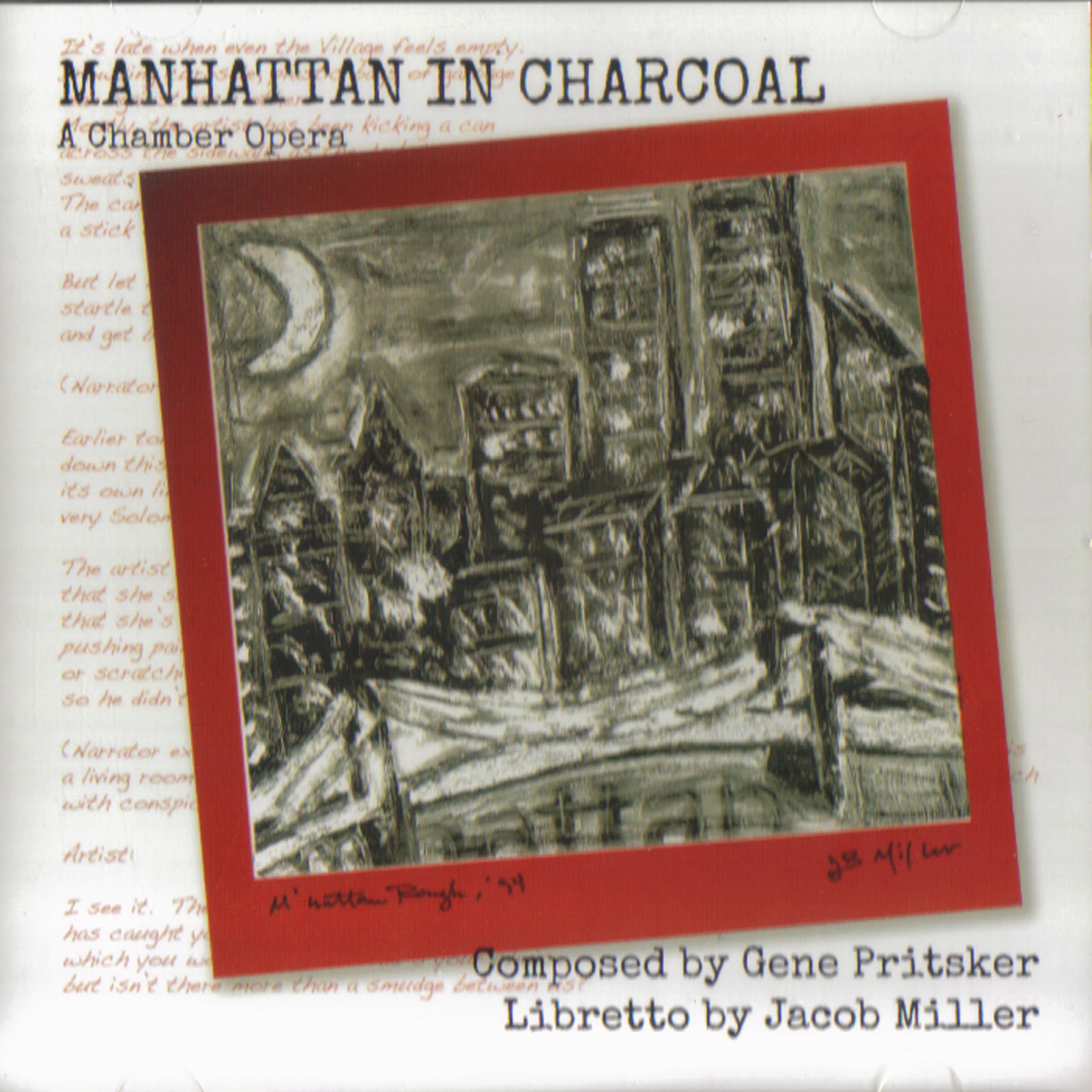
Manhattan in Charcoal, a chamber opera by Gene Pritsker


Manhattan in Charcoal  COMCON 0021

Manhattan in Charcoal
COMCON 0021

The efforts to establish a new and functional role for opera in the late twentieth and early twenty first century have produced a wide variety of styles.  One can certainly see the 1976 Philip Glass opera Einstein on the Beach as a landmark in these efforts in the conventional opera house but the development of chamber opera pioneered composers like recent National Medal of Arts winner Meredith Monk and Eric Salzman (both of whom created innovative works in this genre before Einstein) deserve attention as well.

This recording appears to fit into that tradition of chamber opera.  Manhattan in Charcoal (2014) by Gene Pritsker with libretto by poet Jacob Miller requires six singers and a narrator along with a chamber ensemble of about a dozen musicians.  I don’t know much about how this piece has been staged but it works well as theater for the ears.

I knew little of Pritsker’s work prior to receiving this disc for review and I read that his repertoire of techniques range rather widely from classical, to jazz, rock and rap influences.  So I embarked on a bit of a learning mission.  Fortunately I found his You Tube channel here.  I found his web site a bit too busy and distracting even if it does seem quite comprehensive.  (I dare you to try to sleep after confronting his oeuvre.)

Here is a man born in Russia, moved to Brooklyn at age 8 and attended the Manhattan School of Music graduating in 1994.  While there he teamed up with conductor Kristjan Järvi to create the Absolute Ensemble.   He counts approximately 500 compositions ranging from solo pieces to orchestral and vocal works.  My journey of learning left my head spinning but it was not an unpleasant spin.  Pritsker’s work incorporates jazz, rap, beat boxing and eclectic instrumentation as well.  He has been active in the Manhattan downtown scene and may very well be the next generation of musical magicians to successfully grace that hotbed of musical eclecticism.

His style is mostly tonal and any experiments appear to have been done prior to the composition of the present work.  I must say that his eclecticism and embrace of a wide variety of musical devices puts me in the mind of some of Stravinsky’s work at  times.  But Pritsker is not derivative, rather he wields a large pallete.

What we have here is a form of cabaret, well suited to small venues and friendly to audiences.  It is well within the style and practice of such music and this piece is a good example of the updating of those traditions with contemporary instruments, music and modern performance practice.

The story is not unlike that of La Bohéme and, though hardly Puccini from a musical perspective, is as much a reworking of that old gem as West Side  Story was a reworking of Romeo and Juliet.  Here, however, we don’t see the romantic guise of Puccini but rather the unnecessary tragedy of a Romeo and Juliet beset not by family rivalries but by economic and social realities and perhaps by the inability to see them for what they really are.

This is apparently the first opera (of six) by Pritsker for which he did not write the libretto.  I’m not sure what impact that has had on his overall effort but his ability to set the English language to music is admirable.  All in all a thoroughly satisfying little drama which leaves the audience questioning these issues much as the protagonist has done.

ICE in Iceland, Music of Anna Thorvaldsdottir


In the Light of Air Sono Luminus DSL 92192

In the Light of Air
(Sono Luminus DSL 92192)

For some years now I have greatly enjoyed the contemporary music coming out of the Nordic countries.  Norway, Sweden, Denmark, Finland and the Faeroe Islands.  But I have also been aware of the truly rich musical culture of neighboring Iceland which, it seems, is less well known for its musical heritage.  Composers such as Jón Leifs and Thorkell Sigurbjornssen (among others) have created some wonderful music in the twentieth century that definitely needs to be heard more often and the present composer Anna Thorvaldsdottir is certainly a rising star in the twenty-first century, a proud example of Iceland’s best

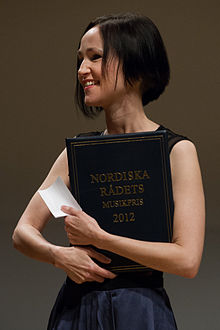
Þorvaldsdottir (in Icelandic script) was born in 1977 in Iceland.  She earned a B.A. in music composition at the Iceland Academy of the Arts in 2004 and went on to an M.A. and Ph.D. in composition at the University of California, San Diego finishing in 2011.  She has received numerous awards, most recently the Nordic Council Music Prize in 2012 for her orchestral work, “Dreaming” (2008).

Anna Thorvalsdottir accepting the Nordic Council Music Prize in 2012.

Anna Thorvalsdottir accepting the Nordic Council Music Prize in 2012.

Her music can be found on 8 CD releases of which three, including the present disc, are devoted entirely to her works. The other two discs devoted to her music can be found on Deutsche Grammaphon  and, now only available as a digital download, a disc originally released on Bandcamp and now also available on Innova.  Worth noting is another disc on the Sono Luminus label that contains her chamber work, “Shades of Silence” (2012).  Here her work is presented along with that of several other Icelandic composers placing her in context with her peers.

In the Light of Air (2013-2014) is a five movement suite written for and performed by ICE (The International Contemporary Ensemble).  The work is scored for viola, piano, cello, percussion, fixed electronics and installation. There is an intended visual component here and there is a high definition video of a performance of this work on Vimeo.  It puts this reviewer in the mind of the work of George Crumb some of whose chamber works (Black Angels and Vox Balenae for example) require various stagings that are not conventional in standard chamber music performances.  You can judge for yourself as to whether the staging enhances the work but the music does stand on its own.

The five movements, Luminance, Serenity, Existence, Remembrance and Transitions flow seamlessly into one another evoking a dream-like, even impressionistic feeling.  It would appear that this composer has studied a great deal of compositional techniques and has integrated those most useful to her in her work.  We hear microtones, glissandi, harmonics, alternate tunings, vocalizations, drones, even some spectral passages.  But throughout these techniques do homage to the past by their use in this clearly 21 st Century music.  There is an overall mysterious, somber and meditative tone that seems to evoke the sometimes barren landscapes of the composer’s native Iceland.  She seems  to travel in sound worlds not too distant from Morton Feldman but also Pauline Oliveros with a dash of Debussy perhaps. I don’t know, but quality (and sometimes lack) of light north of the Arctic Circle must certainly affect the way people think and create.  But keep in mind that Iceland consistently makes the top ten lists for happiest countries in the world. Perhaps funding for the arts, such as they provide, contributes to that happiness.  When the result is music like this one can’t help but feel at least hopeful.

ICE executes the performance with their usual virtuosity and care adding another significant work to their large and growing repertoire of contemporary music.  The recording, in keeping with the Sono Luminus mission is lucid and detailed.  (Unfortunately I was unable to evaluate the DVD 5.1 audio which is included in this release.  I have no doubt that this is a great listening experience but that will have to wait until I upgrade my sound system.)

Having heard this disc and some of the excerpts of other works available on the composer’s web page I think this is an artist whose work certainly deserves attention and one whose star will no doubt rise further.   Kudos to Sono Luminus on promoting this music.  Highly recommended.

End of an Era and a Summation: In the Mood for Food Dinner/Concert Series


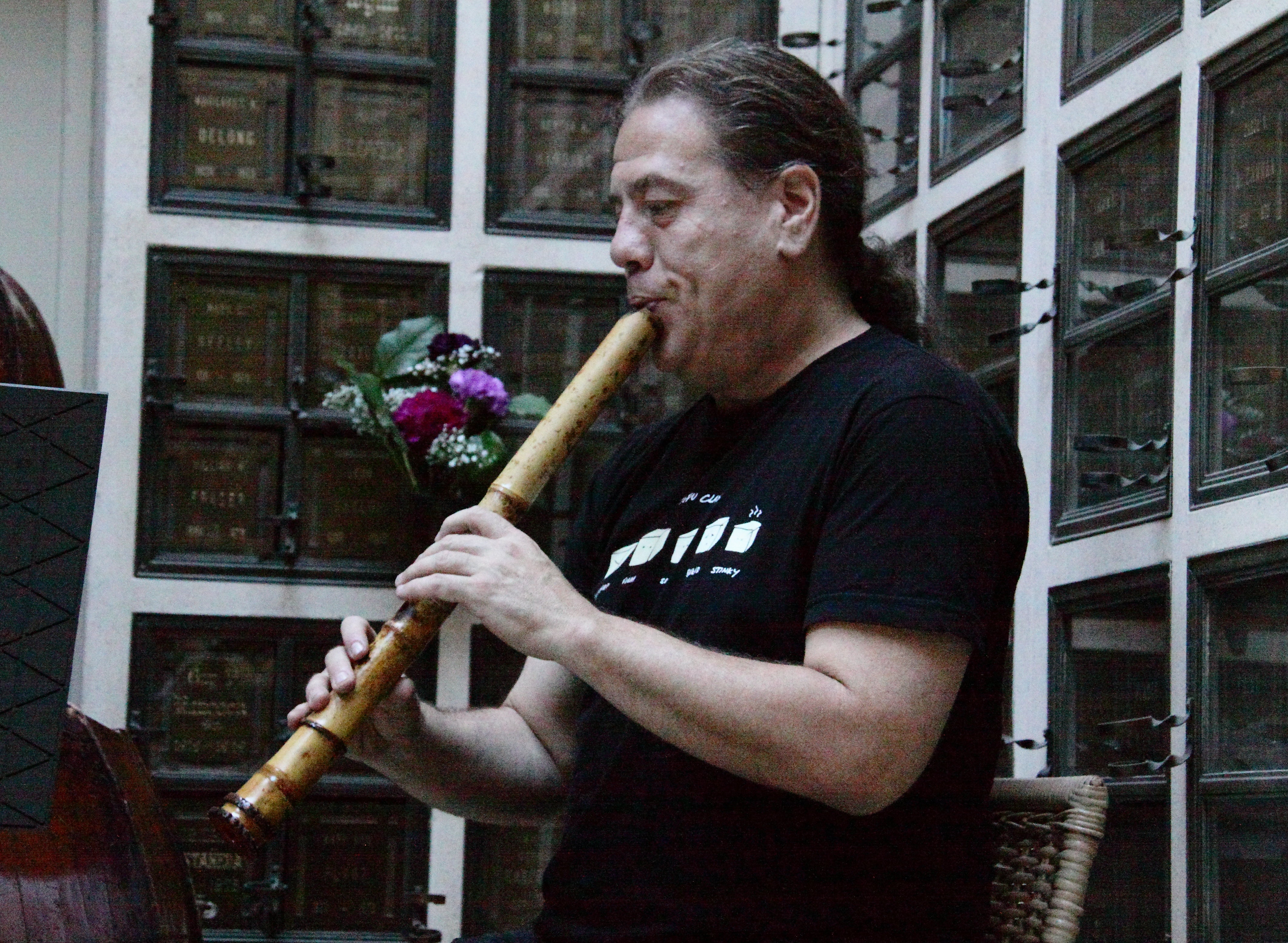
Philip Gelb performing at the June 21, 2015 Garden of Memory Concert at Oakland's Chapel of the Chimes.

Philip Gelb performing at the June 21, 2015 Garden of Memory Concert at Oakland’s Chapel of the Chimes.

For a variety of reasons I have not been able to spend any time with this blog for the last month or two but recent events tell me that I must find the time to get back online and publish.  My apologies to all who are awaiting reviews and such.  They will now be forthcoming.

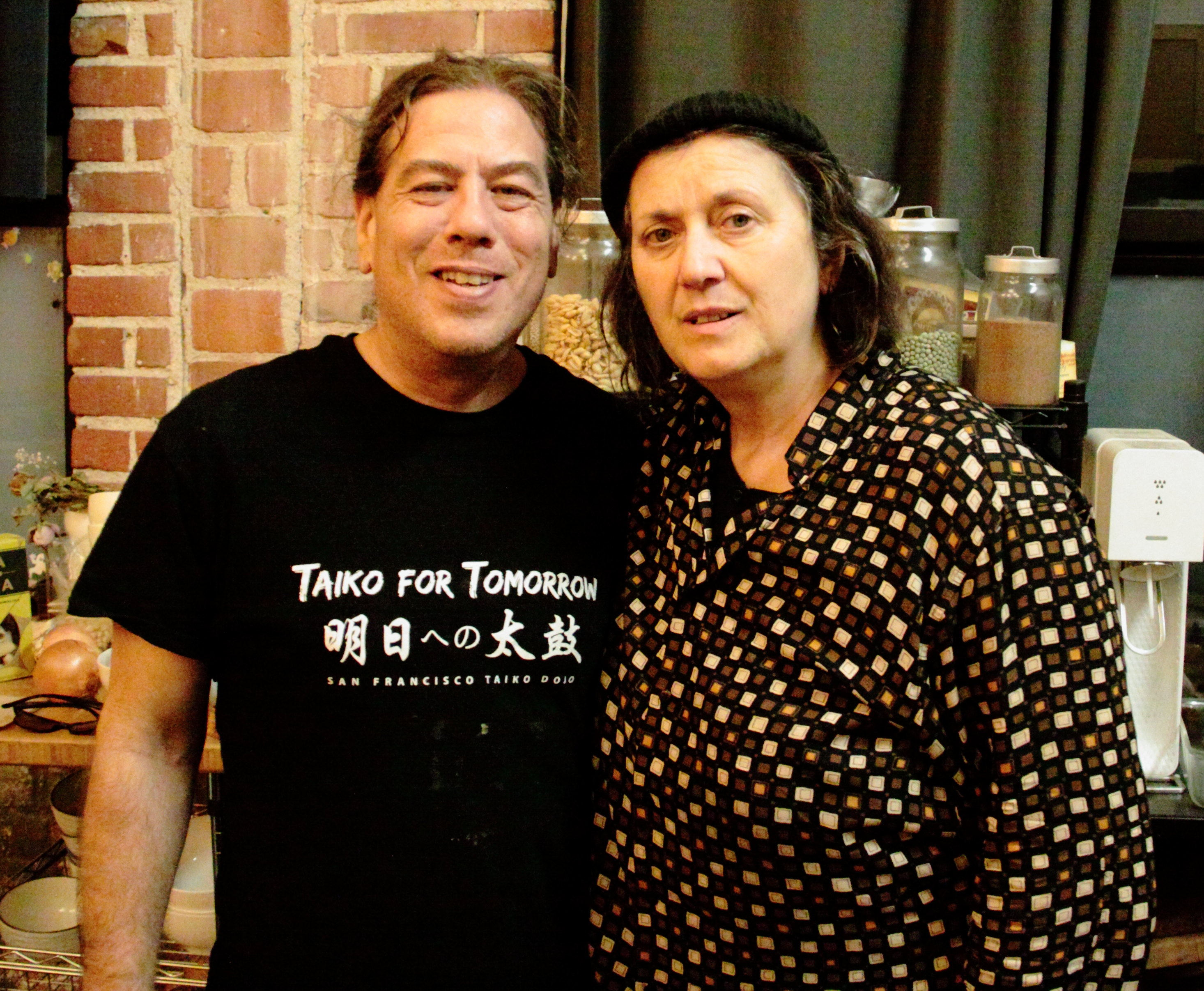
This past Saturday night June 27, 2015 is among the last of this East Bay series which has been with us for the last 10 years.  Philip Gelb, vegan chef extraordinaire, shakuhachi player and teacher has announced that he will be relocating to New York in the next few months.

I personally discovered this series shortly after I moved to the bay area.  In a nondescript West Oakland neighborhood in a modest loft live/work space I found a vegan dinner which also featured a performance by Bay Area composer/performer Pamela Z.  One concert/dinner and I was hooked.   The opportunity to meet and hear many wonderful musicians and enjoy the amazing culinary magic was just too much to resist.  I have been a regular attendee at many of these concerts and they all are valued memories.

Philip Gelb with Joelle Leandre at one of his dinner/concerts.

Philip Gelb with Joelle Leandre at one of his dinner/concerts.

Phil, who studied music, ethnomusicology and shakuhachi has been a familiar performer in the Bay Area.  In addition to performing and teaching the Japanese bamboo flute, Phil has run a vegan catering business and began this series some ten years ago modeled on a creative music series founded in part by the late Sam Rivers.  As a musician Phil has gotten to know many talented and creative musicians who performed on his series.  Phil is a friendly, unpretentious man with great talents which he successfully combined here.

phil1011

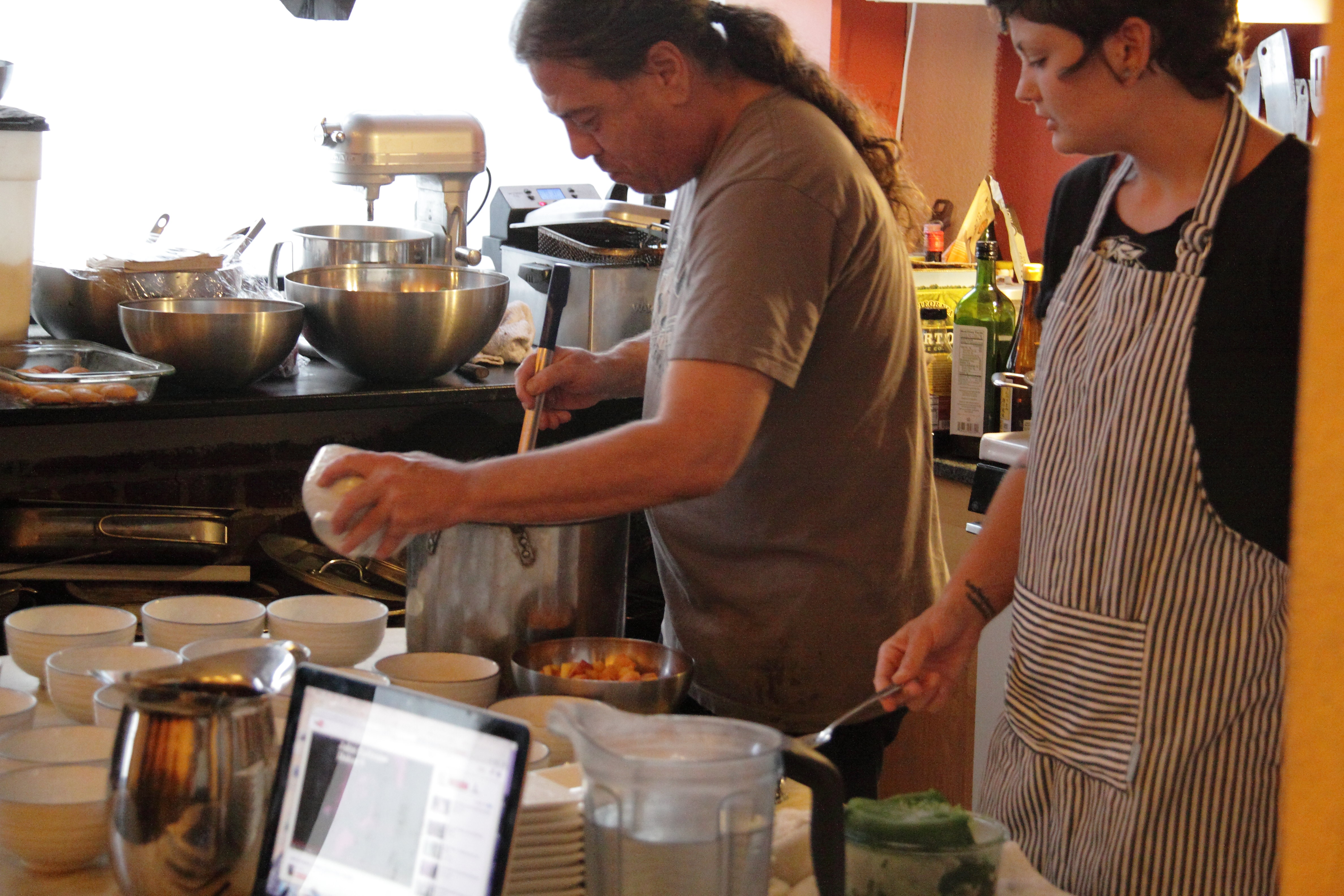
Phil and sous chef Cori preparing the evening’s feast.

The 20 seats were sold out for the annual Masumoto Peach dinner.  At the peak of the harvest each year Phil has put together multiple course dinners featuring locally grown organic peaches from the now four generation Masumoto family orchard near Fresno .  In fact a recent film (information on the Masumoto page linked above) has been made about them called, “Changing Seasons” and one of the filmmakers was in attendance.  There was a short discussion with Q and A at one point.

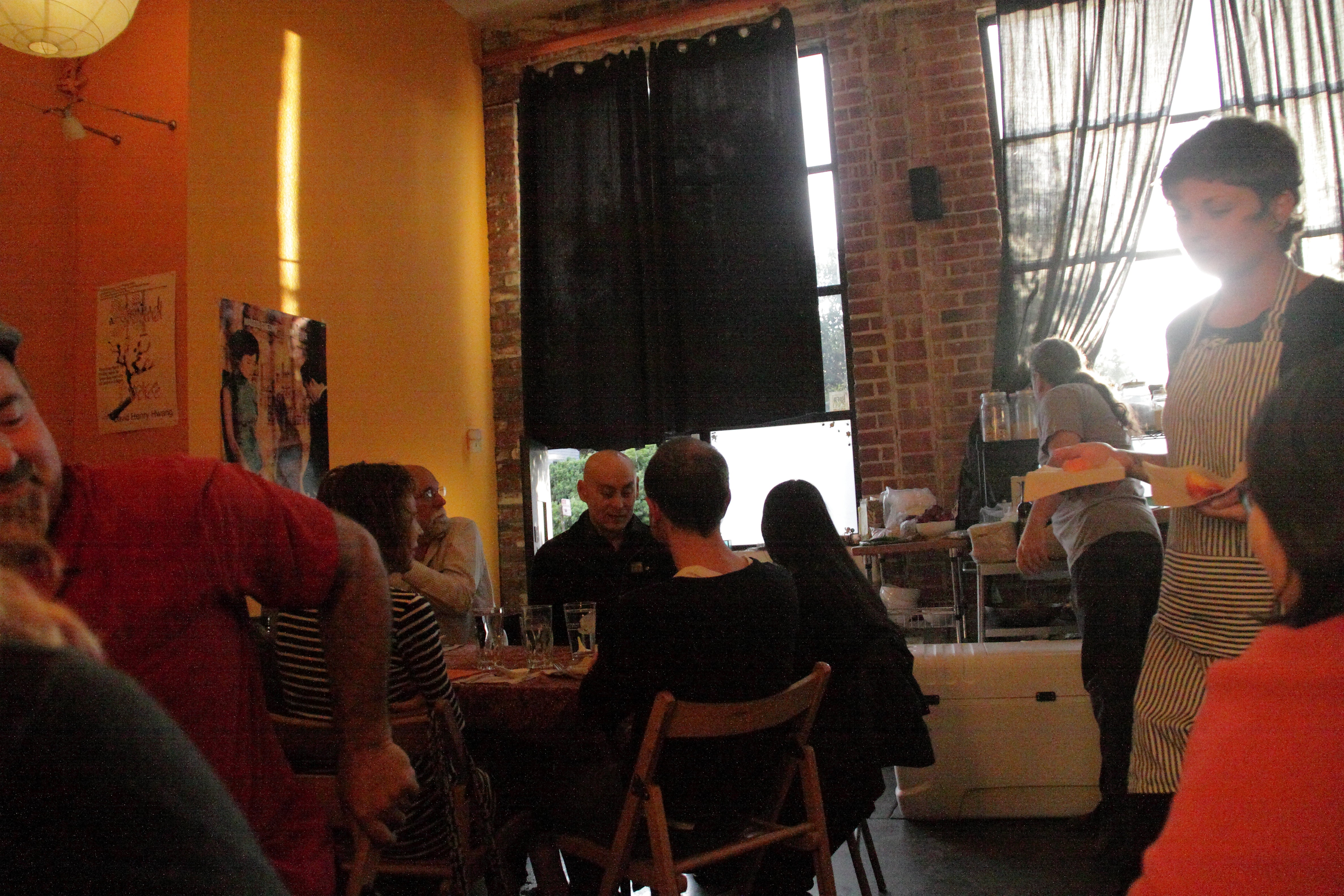
Happy diners anticipating the next course.

Happy diners anticipating the next course.

No music this night but wonderful food and friendly conversations filled the evening.  The meal began with, of course, a taste of the actual peaches.

sous chef Cori serving the peach halves that began the dinner.

sous chef Cori serving the peach halves that began the dinner.

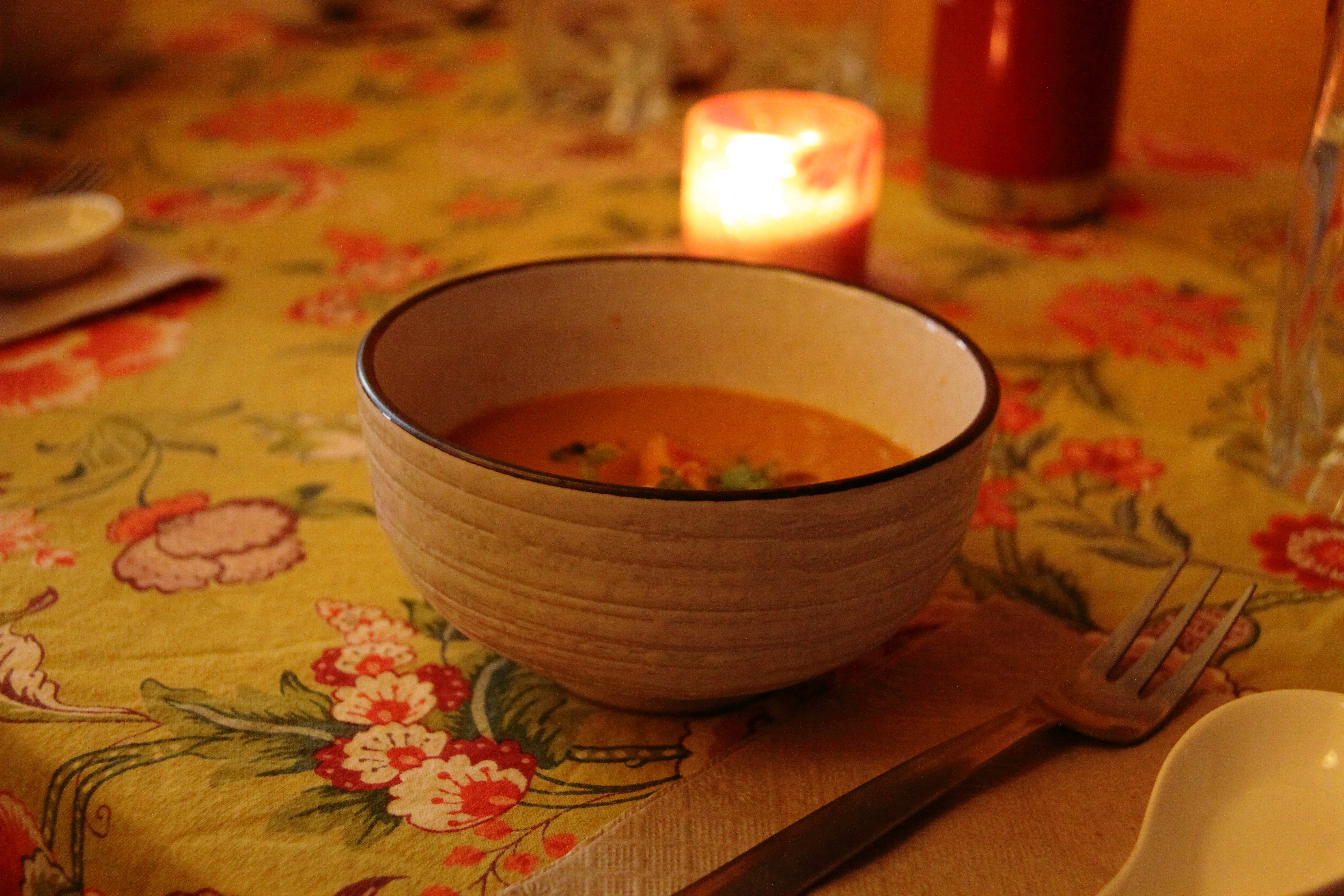
The next course, a peach tomato gazpacho.

phil1014

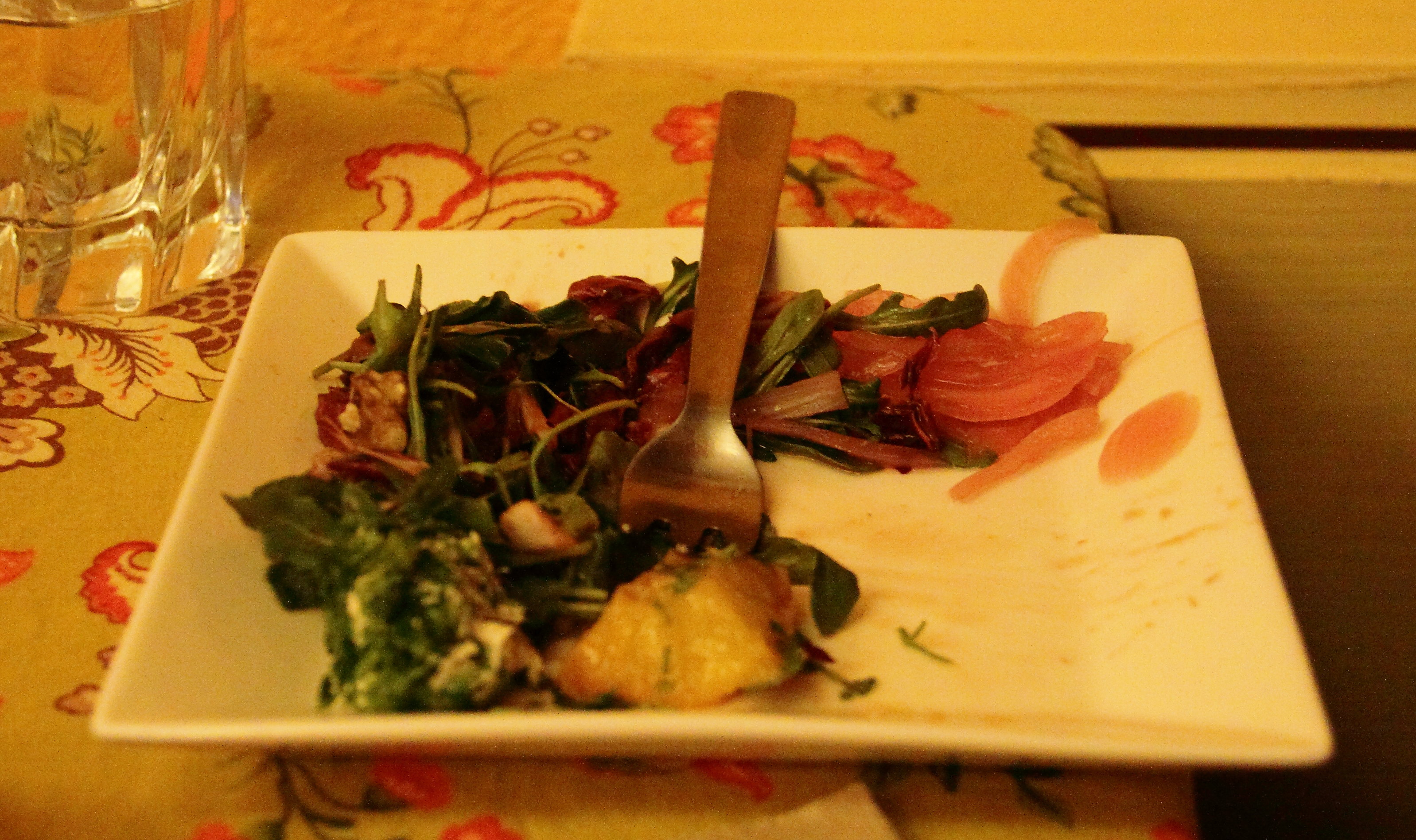
Followed by a grilled peach salad with cashew cheese balls, arugula radicchio,, pickled red onions, and a cherry balsamic dressing.

phil1016

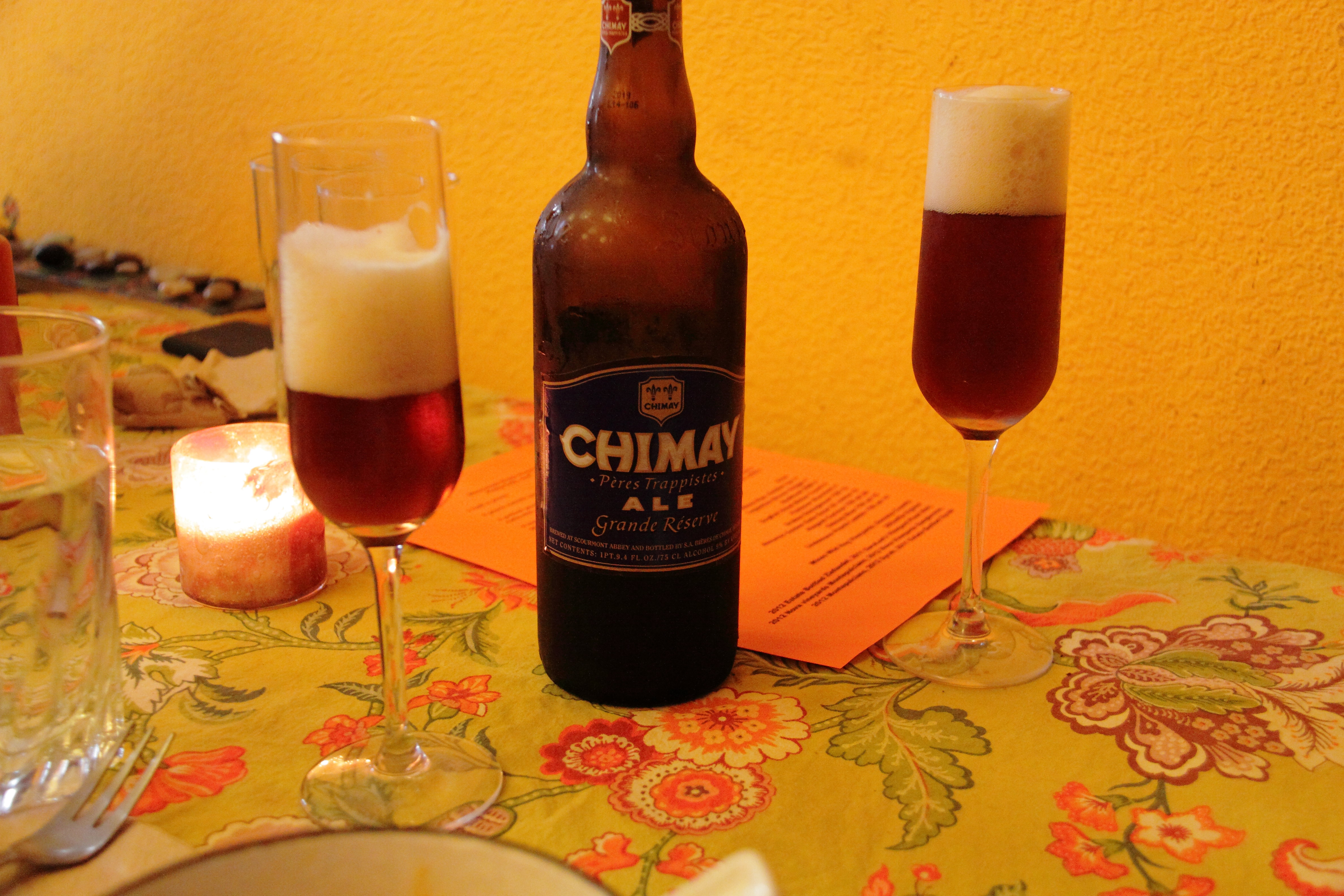
Oh, yes, a nice Chimay to quench the thirst.

phil1015

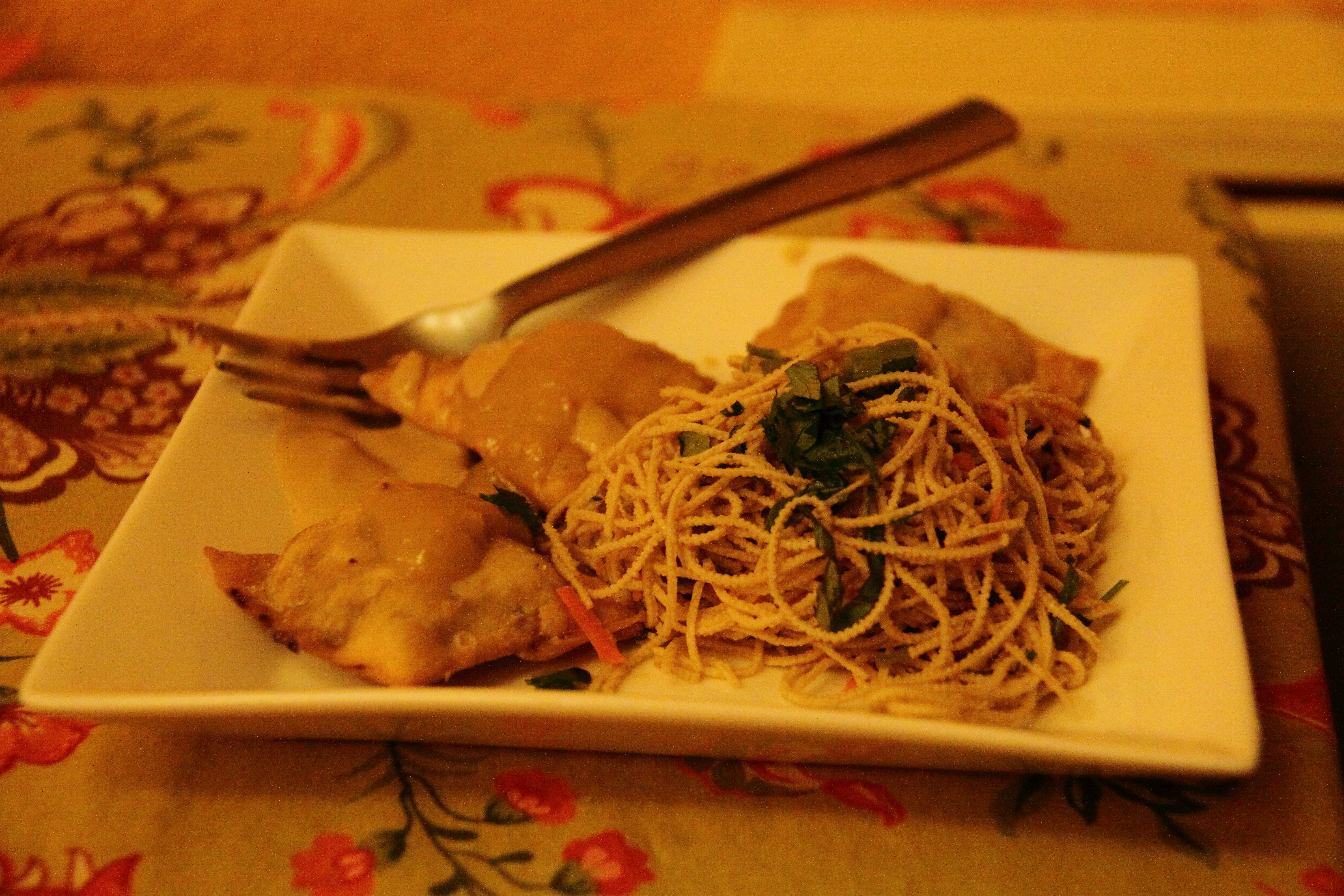
And then tempeh char siu wontons (from the local Rhizocali Tempeh), flat tofu noodles, a really great hot peach mustard and peach sweet and sour sauce.

phil1018

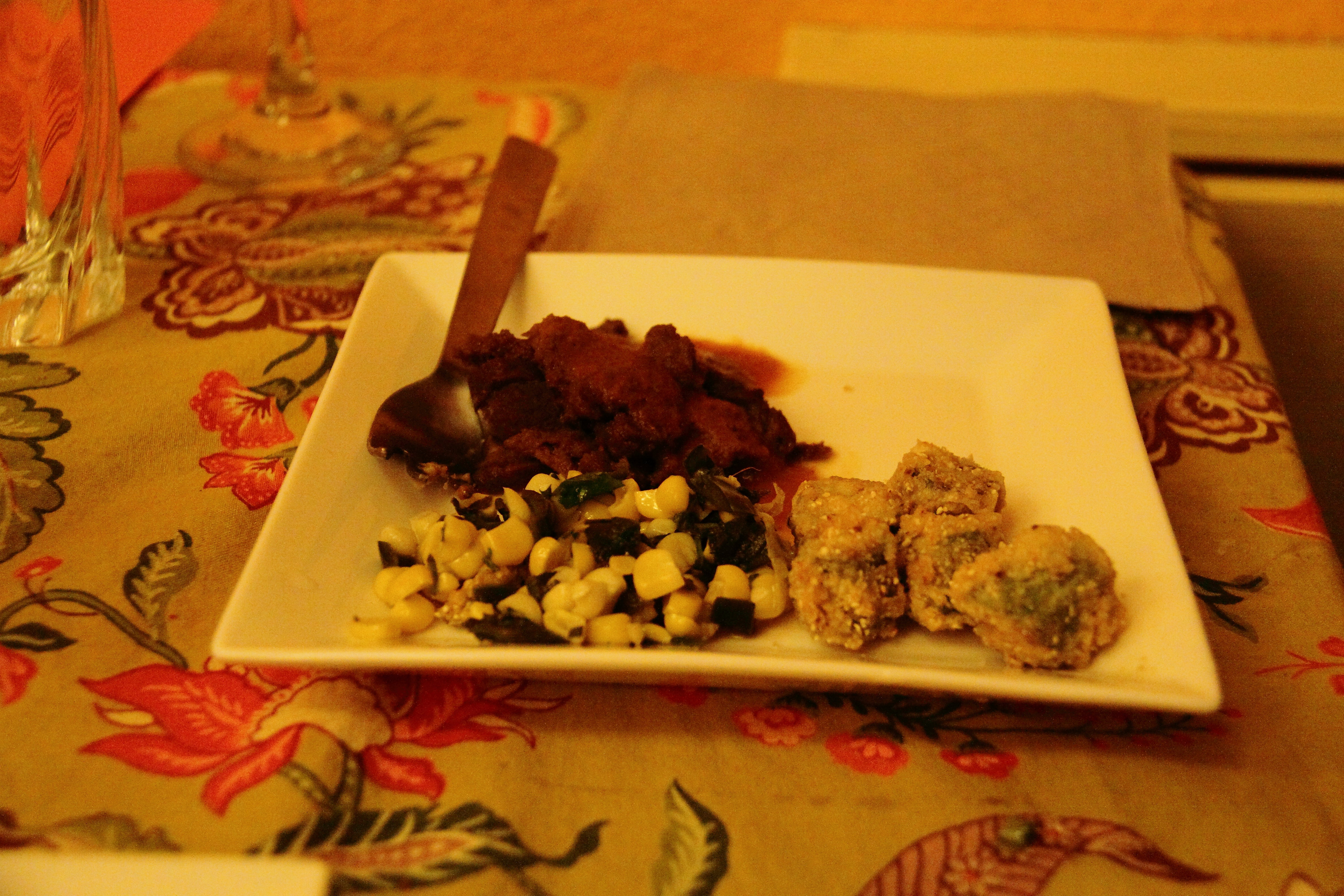
The main course: peach grilled seitan, peach barbecue sauce, roasted corn and peppers, and some crunchy fried okra.

phil1020

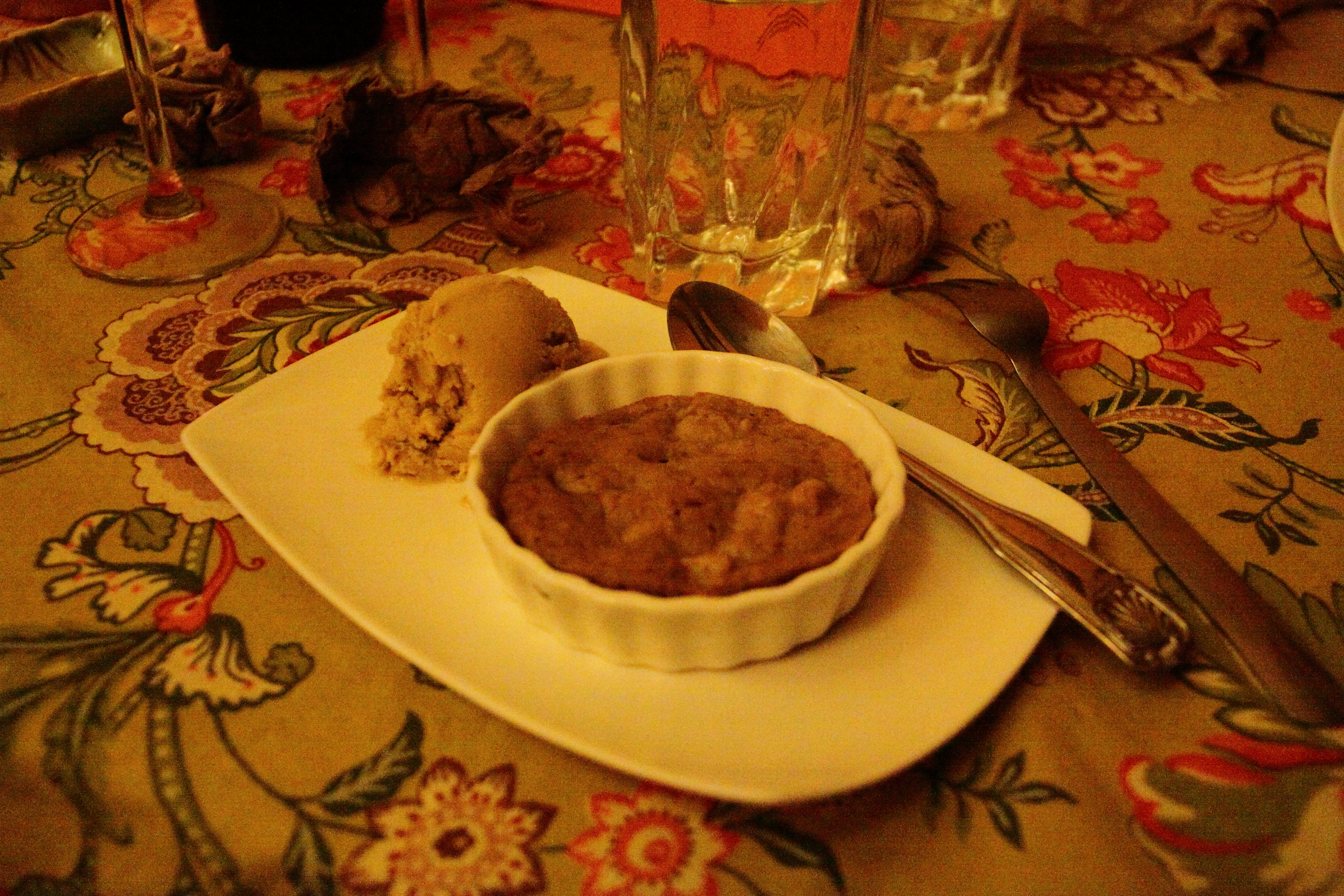
And, for dessert, peach rosewater cake with peach walnut sorbet.  As is his custom Phil went around offering more of that sorbet which most folks, present writer  included, availed themselves.

phil1021

This was a thoroughly enjoyable evening.

But, as I said, this tradition is coming to an end.  Not to fear, however.  Phil is in the process of writing a cookbook sharing the secrets of his culinary mastery and the book will also document some of the many musicians whose talents graced many an evening here.

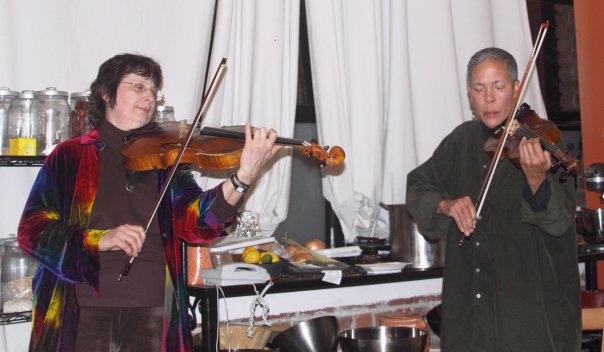
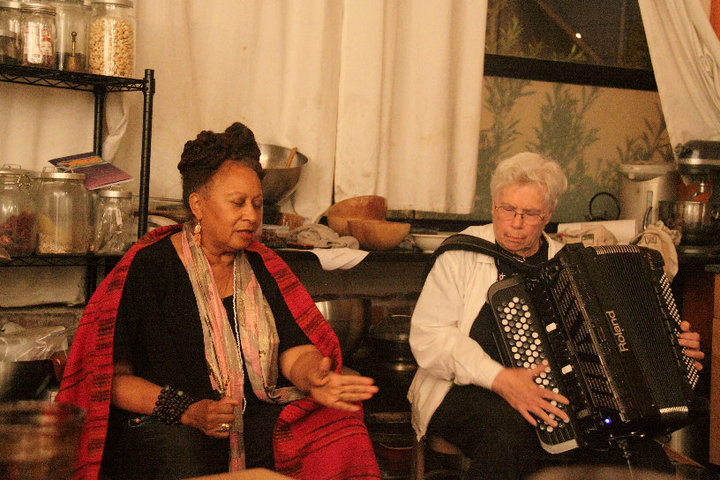
La Donna Smith and India Cooke playing an improvised duet.

La Donna Smith and India Cooke playing an improvised duet.

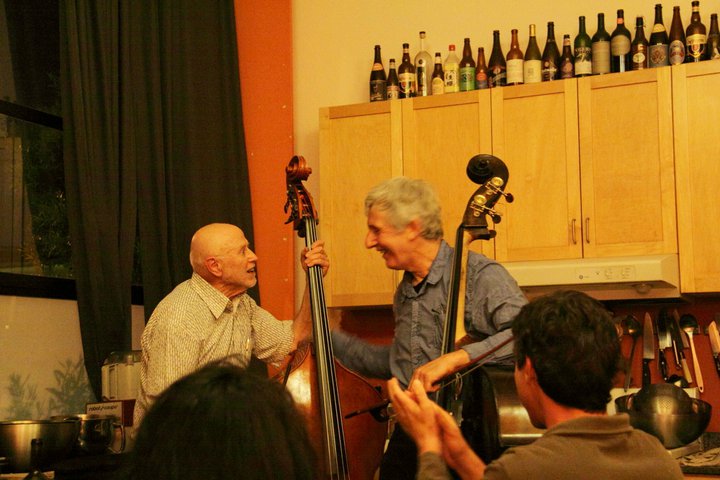
Bassists Mark Dresser and Barre Phillips play together for the first time at In the Mood for Food.

Bassists Mark Dresser and Barre Phillips play together for the first time at In the Mood for Food.

The amazing Stuart Dempster at Phil's loft a few years ago.

The amazing Stuart Dempster at Phil’s loft a few years ago.

Gyan Riley, Terry Riley and Loren Rush attending the dinner/concert which featured Stuart Dempster.

Gyan Riley, Terry Riley and Loren Rush attending the dinner/concert which featured Stuart Dempster.

Pauline Oliveros and her partner Ione performing at a recent dinner.

Pauline Oliveros and her partner Ione performing at a recent dinner.

So this little sampling of photos provides some idea of the scope and significance of this series.  Happily it is being documented in a book for which an Indiegogo campaign is presently in process.  You can donate and receive any or many of a variety of perks ranging from a copy of the book for $40 and perks including an invitation to celebratory dinners planned in both New York and Oakland.  My copy and my dinner invite are reserved.

There are 34 days left in the campaign at the time of this writing and the project is now at 106% of its funding goal.  This is a piece of Bay Area music and culinary history that will please music enthusiasts and those who appreciate creative vegan cuisine.

Here is a list of musicians taken from the campaign site to give you an idea of the scope of the series:

Tim Berne – alto saxophone (Brooklyn)

Shay Black – voice, guitar (Berkeley via Ireland)

Cornelius Boots shakuhachi/bass clarinet

Monique Buzzarte – trombone, electronics (NYC)

Chris Caswell (2) – harp (Berkeley)

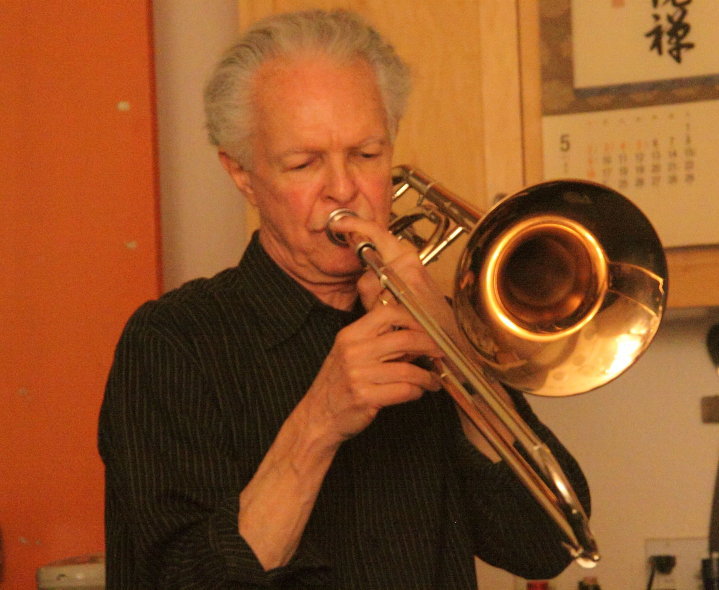
Stuart Dempster – trombone (Seattle)

Robert Dick (flute) NYC

Mark Dresser (2) – bass (Los Angeles)

Mark Dresser/Jen Shyu duet – bass, voice/dance

Sinan Erdemsel – oud (Istanbul)

Sinan Erdemsel/ Sami Shumay duet – oud, violin

Gianni Gebbia – saxophones (Palermo, Italy)

Vinny Golia- winds (Los Angeles)

Lori Goldston – cello (Seattle)

Frank Gratkowski (2) – clarinets, alto sax (Berlin)

Daniel Hoffman/Jeanette Lewicki duet violin, voice/accordion (Berkeley, Tel Aviv)

Shoko Hikage – koto (Japan-San Francisco)

Yang Jing – pipa (Beijing)

Kaoru Kakizakai (4) – shakuhachi (Tokyo)

Marco Lienhard shakuhachi (Zurich-NYC)

Mari Kimura – violin, electronics (Tokyo-NYC)

Yoshio Kurahashi (5) – shakuhachi (Kyoto)

Joelle Leandre – contrabass (Paris)

Oliver Lake – alto sax (NYC)

Riley Lee (2) shakuhachi (Australia)

Jie Ma – pipa (China, LA)

Thollem Mcdonas Jon Raskin duet piano/sax (wanderer/Berkeley)

Roscoe Mitchell – alto, soprano saxophones (Oakland)

David Murray – tenor sax (Paris)

Michael Manring (5) – electric bass (Oakland)

Hafez Modirzadeh – winds (San Jose)

John Kaizan Neptune – shakuhachi (Japan)

Rich O’Donnell – percussion (St. Louis)

Pauline Oliveros (2) – accordion (NY)

Tim Perkis/John Bischoff duet computers (Berkeley)

Barre Phillips solo and duet with Mark Dresser – contrabass (France)

Alcvin Ramos shakuhachi (Vancouver)

Tim Rayborn/Annette duet oud, strings, recorders (Berkeley/Germany)

Jon Raskin/Liz Albee duet sax/trumpet (Berkeley/Berlin)

Jane Rigler – flute (Colorado)

Gyan Riley (5) – guitar (NYC)

Terry Riley (2) – voice, harmonium (universe)

Diana Rowan (2) – harp (Berkeley/Ireland)

Bon Singer/Shira Kammen duet (voice, violin) (Berkeley)

LaDonna Smith/India Cooke duet (2) violin, viola (Birmingham, AL, Oakland)

Lily Storm/Diana Rowan – voice, harp (Oakland/Ireland)

Lily Storm/Dan Cantrell (2) – voice/accordion (Oakland)

Howard Wiley – tenor Saxophone solo and duet with Faye Carol voice

Theresa Wong/ Ellen Fullman duet

Amy X (3) – voice, electronics (Oakland)

Pamela Z – voice, electronics (San Francisco)

The South Shore by Michael Vincent Waller, Radicalism in Context


In 1976 the premiere of Henryk Gorecki‘s tonal and melodic 3rd Symphony stood out as unusual in the context of the usual avant-garde fare heard at the annual Warsaw Autumn Festival.  I recall a similar experience when I first heard the music of Lou Harrison given his association with Henry Cowell and John Cage.  It was not what I expected to hear.

This young composer graciously sent me a copy of this, his major label debut for me to review. I noted that it was on the Experimental Intermedia label which was founded by Phill Niblock and is known for recording of a great deal of challenging and interesting avant-garde music by various composers including Phil Niblock, Jackson Mac Low, Guy Klucevsek, Ellen Fullman, David Behrman and many others. I have been a great fan of this record label for many years and own most of their titles.  But what I heard listening to this beautiful 2 disc set of relatively short pieces mostly for acoustic instruments seems radical in the context of this label’s usual fare.

The Southern Shore  XI  136

The South Shore
XI 136

Don’t get me wrong.  This does not appear to be conservative music.  Waller has studied with La Monte Young, Marian Zazeela and Bunita Marcus giving him a healthy pedigree in the avant-garde.  Indeed his earlier works were concerned with alternate tunings.  By earlier works, of course, I am only referring to a few years before the present music under consideration here because this composer, not yet 30, is presenting a fully developed sound.  Here he is concerned with alternate scales, church modes as opposed to the western diatonic scales.  There are a few instances of the use of quarter tones but, for the most part, he seems concerned with exploring the impact of different modes within the tuning of equal temperament which dominates western music.

For all the technical interest one might have in analyzing this composer’s use of modes the important thing here is the emotional impact of the music.  These frequently somber but beautiful melodies and motives speak very directly to the listener, at least this listener anyway.  This two disc set provides an excellent survey of the composer’s output over the last two or three years.

The titles are somewhat enigmatic and reflect a very personal approach.  He does not seem concerned with classical forms nor is he apparently opposed to them.  Again analysis will not reveal as much as just listening.  He creates beautiful contours of almost vocal quality at times.  I am given to wonder how he will confront music for voices and imagine that his style will serve him well.  I am tempted to compare him to Arvo Part perhaps but I don’t want to suggest that his work is derivative or, for that matter, even influenced by Part’s work.  I just get a similar feeling listening to Waller’s music.

This disc of chamber music for mostly acoustic instruments employs quite of few fine musicians who seem to be inspired to play their best by this music.  Pianists include Yael Manor, Charity Wicks, Nicolas Horvath and Marija Ilic.  Violinists include Conrad Harris, Pauline Kim-Harris, Jessica Park and Esther Noh.  Violists are Daniel Panner, Cyprien Busolini and Erin Wight.  On cello we hear Christine Kim, Deborah Walker and Clara Kennedy.  Carson Cooman is featured on Organ.  Flautists are Amélie Berson, Itay Lantner and Luna Cholang Kang.  Pierre Stéphane Meugé plays alto sax, Didier Aschour plays electric guitar (the only non-acoustic instrument on this recording), Thierry Madiot plays trombone, Katie Porter is on clarinet and Devin Maxwell plays percussion.  All play in various groupings from solo to small chamber ensembles.

The detailed and very helpful liner notes are by “Blue” Gene Tyrrany aka Robert Sheff.  The beautiful cover was photographed by Phill Niblock.

This is an album of miniatures with no track lasting longer than about ten minutes though there are works which are cast in several movements.  The pieces were all written in the last 4 years and constitute an excellent survey of this emerging talent.

Certitude and Joy, the World of Wold


MinMax 019

MinMax 019

This is one of those operas whose title evokes irony right at the start.  Like Ruggero Leoncavallo‘s “Cavalleria Rusticana” (Rustic Chivalry) and Virgil Thomson‘s “Four Saints in Three Acts” the title Certitude and Joy hardly seems to evoke the right emotions in this harrowing story taken right from the headlines of a case in 2005 in which a mother kills her children and dumps their bodies in San Francisco Bay.  This is contrasted with the biblical story of Abraham and Isaac in which God tells Abraham to slay his son.  Of course God stopped Abraham in the bible story but that was not the case with the more recent story.

English: portrait of composer Erling Wold, pai...

English: portrait of composer Erling Wold, painted by Lynne Rutter. oil on panel, 2002 (Photo credit: Wikipedia)

Erling Wold (1958- ) is a composer of whom I had been only distantly aware.  He is a California native and has studied with Andrew Imbrie, Gerard Grisey and John Chowning.  That right there gives you a clue to this man’s compositional range and skills.  He completed a Ph.D. from the University of California Berkeley in 1987 and has worked for Yamaha creating new synthesizer programs in addition to pursuing his musical interests.

The San Francisco Bay Area has such a rich and varied musical culture that it is not all that surprising to me that I hadn’t come to know this fascinating composer.  And it’s taken me a while to absorb enough about Mr. Wold to feel that I could write something intelligent about this CD.

The composer’s web site (click here) contains a plethora of scores and sound recordings of this prolific and interesting composer.  And there are numerous offerings on You Tube and there is a blog linked on his web site in which he discusses a variety of topics not the least of which is his own music.  It seems that he has created several operas including one based on William S. Burroughs’ early but long suppressed novel, Queer.  His chamber operas, A Little Girl Contemplates Taking the Veil and his opera on Pontius Pilate illustrate his interest in both religious and political themes.

I won’t even try to get into his orchestral, chamber and solo piano works.  That is the job of a future blog which I can assure you will happen.  But the main point of this blog is to look at this most recent offering of his chamber opera Certitude and Joy.

As best as I can describe in words, Wold’s accompaniment figures remind me of Philip Glass or John Adams at times but he is not a simple derivative  of these composers.  His vocal lines, almost all sung as opposed to spoken, are more like recitatives than arias and  suggest a more ensemble feel as opposed to the grand opera style of arias, duets, etc.

Aldous Huxley, Famous Last Words

Aldous Huxley, Famous Last Words (Photo credit: Wikipedia)

His libretto, ripped from the headlines so to speak, is a combination of philosophical musings, imagined dialogue and commentary from texts as diverse as Aldous Huxley’s writings on psychedelics and the more pedestrian musings of newspaper columns.  I think there is some affinity for Robert Ashley’s mysterious texts but again nothing derivative.  The work is perhaps political as social commentary but not as social protest.

What is important is that this work, thinly scored (though hardly thin in sound) for two pianos and a cast of singers, speaks directly and affectingly to the audience.  He manages to tell this tale in a fairly straightforward manner with occasional digressions for philosophical commentary.  But he never loses control of the narrative which flows on drawing you in to this sad story and leaves you with the questions he raises, albeit rhetorically, about the nature of religious revelation, mental  illness and the current state of our society and our world.  This is a tall order but Wold manages to fill it with just the right amount of drama and music that leaves the listener (and viewer if you see it live in person or on You Tube) seemingly with exactly the emotions I think the composer wrestled with in writing it.

Like the aforementioned Four Saints and Cavalleria, Certitude and Joy is a listener friendly opera with messages that are disturbing and go to the core of what it means to be human.  The performances by the fine duo piano team of Keisuke Nakagoshi and Eva-Maria Zimmerman (ZOFO) and singers Laura Bohn, Talya Patrick, Jo Vincent Parks, Kerry Mehling, Tranvis Santell Rowland with Bob Ernst, speaker and a cameo by the composer (I’ll leave that for listeners to find).  The beautiful recording on Paul Dresher’s MinMax label is distributed by Starkland and is available on Amazon and other outlets.  A worthwhile experience for all lovers of contemporary opera and drama.

Other Minds 20 and Why You Shouldn’t Miss It


Official Other Minds Logo

Official Other Minds Logo

The three days of concerts scheduled for March 6, 7 and 8 of this year at the beautiful SF Jazz Center will mark the 20th anniversary of Other Minds opening the ears and minds of bay area new music audiences.  Previously composers could only appear once at this festival (thought performers frequently return) but the anniversary celebration is marked by the return of several alumni.  In fact the entire program consists of composer alums.

Other Minds is an annual festival of new and unusual music curated by bay area composer, producer, broadcaster Charles Amirkhanian and his crew at Other Minds.  Along with co-founder, now president emeritus Jim Newman and a varied and sometimes changing crew of talented and dedicated archivists, fund-raisers and coordinators this festival was born in 1993.

OLYMPUS DIGITAL CAMERA

Every year (though the actual month has changed for various reasons related to venue availability and funding) an international group of composers is brought together first at the Djerassi Arts Center just west of Palo Alto where they share their work and ideas with each other for a week in preparation for the performances of their work to come at the concert series.  This residency is a sort of private retreat open only to the composers and the staff of the center.  And given the range of musical styles it must be a fascinating thing to witness as composers largely unfamiliar with each others’ work gather to share and wonder at each others’ strange and innovative ideas.  Who knows what seeds may have been sown?

Sadly, Dr. Carl Djerassi who founded the center passed away on January 30, 2015.  His arts advocacy will live on through his beloved Djerassi Arts Center and this OM 20 will be a testament to that legacy.

What makes this festival so significant is the fine tuned and prescient nature of the selected composers.  Just a quick look at the list of composers and performers who have participated in the past looks almost like a who’s who of new music as practiced in the late 20th and early 21st centuries.  One of their commissions, Henry Brant’s (1913-2008)  won a Pulitzer Prize (Ice Field, 2001, Pulitzer Prize, 2002).  And it is programming with a uniquely west coast ethic, whatever that means.  I just know these programs are a different take on new music than that of the east coast.  Not a value judgement there, just a celebration of a different, equally important, point of view.


WHY YOU SHOULDN’T MISS OM 20

First you will find a generous (though hardly complete) selection of music by Charles Amirkhanian (1945- ) who has been at the helm of this festival from the beginning and was for 23 years the music director of KPFA radio where his programming and interviews with composers and performers of new music spanned a wide and eclectic gamut of styles and techniques.  Perhaps most significant has been his support of northern California composers whose work would otherwise have been poorly represented.  Amirkhanian’s keen ear has introduced a great deal of new and interesting music to bay area audiences and beyond.

Executive Director Charles Amirkhanian in his ...

Executive Director Charles Amirkhanian in his office with ASCAP award in background (Photo credit: Wikipedia)

In addition to his abilities as producer and interviewer Charles is also a noted composer.  Trained as a percussionist, he has written quite a bit of music which deserves recognition for its innovation.  His best known works are those with tape recording, sound poetry and the uses of language.   His music will be featured in several performances and will be a welcome and tantalizing complement to the overall diverse tone that characterizes OM programming.

Amirkhanian’s oeuvre will be represented by “Rippling the Lamp” (2007) for violin and tape, three short pieces for voice and tape, “Dumbek Bookache IV” (1988), “Ka Himeni” (1997), “Marathon” (1997) and, on the third concert, “Miatsoom” (1994-97), a piece based on sounds (vocal, ambient and musical) recorded during the only trip Charles and his father made to Armenia in 1994.  This approximately half hour work is typical of his ability to create a fascinating and meaningful sound collage.  Miatsoom is Armenian for reunion, indeed the apparent theme of OM 20.

In an uncharacteristically political expression this year’s festival is in commemoration of the 100th anniversary of the Armenian genocide.  Amirkhanian is the descendant (both he and his father Benjamin were born here) of Armenian immigrants and grew up in Fresno, California.  The genocide of 1915 (also the year of Benjamin’s birth) was in fact only the most infamous and fatal of the ongoing abuses by the Ottoman Turk government in response to Armenians seeking equal rights (a familiar social issue both then and still today).  Charles has been tactfully apolitical in his programming but his music at times has paid respectful homage to his ancestry and their struggles. It seems right to pay respect to one’s ancestors and perhaps acknowledge that we still have much to do and learn in our imperfect world.

Tigran Mansurian

Tigran Mansurian

Appropriately the esteemed Armenian composer Tigran Mansurian (1939-  ) has been welcomed back and will be represented by two major works.  Romance for Violin and Strings (2011) and Canti Paralleli (2007-8) for soprano and string orchestra are both scheduled for the third concert of the festival.  I was unable to find any details about these pieces but Mansurian’s work certainly deserves to be better known and these performances are a welcome opportunity to hear this major compositional voice.

Lou Harrison

Lou Harrison (Photo credit: Wikipedia)

Homage will be paid to two past masters who are no longer with us, American  composer Lou Harrison (1917-2003) and Australian composer Peter Sculthorpe (1929-2014).  Harrison was a beloved bay area figure whose work with gamelan and other world musics led him to experimentation with alternate tuning systems.  Harrison will be represented by his “Scenes from Nek Chand” (2001-2) played on a National Steel Guitar tuned in just intonation by the wonderful guitarist David Tannenbaum who will also play Sculthorpe’s “From Kakadu” (1993) for conventionally tuned classical guitar.  Sculthorpe, born in Tasmania, was one of Australia’s best known composers who essayed widely in chamber, choral and orchestral music. His 14th string quartet (with didgeridoo played by Stephen Kent) “Quamby” (1998), played by the amazing Del Sol Quartet (who recorded all 18 of the composer’s string quartets) is scheduled to conclude the first concert.

Peter Sculthorpe

Peter Sculthorpe


Pauline Oliveros

Pauline Oliveros

Pauline Oliveros (1932- ) is one of the grand ladies of new music.  Her theoretical work in defining music and the act of listening as partners in the creative process and her subsequent compositions including ground breaking work with early electronics with the San Francisco Tape Music Center and later at Mills College characterize her wide range of interests and her insights.  Her principal instrument, strangely enough, is an accordion and she will be performing as well.  OM has commissioned a new work from her, “Twins Peeking at a Koto” (2015, world premiere) for two accordions and koto.  to be presented at the second concert.  Playing the koto will be Miya Masaoka (1958-  ) whose second string quartet will receive its world première on the first night by the  Del Sol Quartet.  Masaoka, Japanese/American native of Washington D.C., is a New York based composer whose work brings her to the west coast frequently where she is a founding member of the Bay Area experimental improv trio Maybe Monday.  Her work involves improvisation and frequently uses unusual sound sources like bees and even cockroaches (not to worry, no insects are slated to perform) and creates site specific multi-disciplinary works in collaboration with musicians and dancers.

Miya Masaoka

Miya Masaoka

Errolyn Wallen (1958-  ) can be said to embody the OM ethic.  Born in Belize, Wallen  left the Dance Theater of Harlem to study composition in England and says of her work, “We don’t break down barriers in music…we don’t see any.”  Her Percussion Concerto (1994)  was the first work by a black woman to have been performed at the London Proms Concerts.   Her “London’s Burning and other songs” will be played on the second night by the SOTA string quartet and Wallen voice and piano.

Errollyn Wallen

Errollyn Wallen

Don Byron (1958- ) similarly states that he strives for “a sound beyond genre”.  Steeped in classical, jazz and folk musics, Byron’s quartet (Don Byron, clarinet; Aruán Ortiz, piano; Cameron Brown, bass; John Betsch, drums) is featured at the conclusion of the second night of the festival.

Don Byron

Don Byron

Maja S.K. Ratkje (1973- ) from Norway whose work is perhaps related to Mr. Amirkhanian’s  in her exploration of the possibilities of the human voice.  Her “Traces 2” (2014-5) will receive its U.S. premiere on the first night’s concert.

Maja Ratkje

Maja Ratkje

The third concert will be unusual for two reasons.  First it will take place beginning at 3PM and, second it will feature a full orchestra.  This night will conclude with U.S. premiere of the Second Symphony (2014) by Michael Nyman (1945- ) .  Nyman is perhaps best known for his numerous wonderful film scores but is also highly accomplished in his work in the concert hall.  In the past three years Nyman has turned for the first time to the Symphony form and has completed to date no fewer than 11  symphonies.  Quite a feat.

Michael Nyman in Sant Cugat del Vallès

Michael Nyman in Sant Cugat del Vallès (Photo credit: Wikipedia)

Tickets still available as low as $15/night.  Quite a festival!


Finding Angels, Energetic Eclecticism from Howard Hersh


Angels and Watermarks

Angels and Watermarks

Howard Hersh (1940- ) studied music and earned Bachelor’s and Master’s degrees at Stanford University.  He is a California native and he succeeded Charles Amirkhanian as music director at KPFA.  His Pony Concerto (2005), Braided River Nights (2004) and Sonata for Violin and Percussion with String Bass obligato (2000) were released on Albany Records in 2007 and his Dancing at the Pink House (2006) is available as a free download on Bandcamp.

I had not been familiar with Mr. Hersh’s music when I agreed to review this disc but I found that liked it immediately and it made my  list of favorite releases for 2014. The  featured piece here is the Concerto for Piano and Ten Instruments (2008) and it is a tour de force.  Hersh writes in a tonal idiom that sounds to this reviewer’s ears like a mix of Conlon Nancarrow and Francis Poulenc.  This concerto is virtuosic in the extreme but not the empty virtuosity of the romantic composer pianists (Anton Rubinstein bores me to tears).  This work in three movements sounds very difficult to play but manages to remain playful and entertaining, never taking itself too seriously.  Pianist Brenda Tom does a fantastic job (she must have fingers of steel) and is very ably supported by the small ensemble conducted by Barbara Day Turner.  Rapid attacks, scales and arpeggios keep the soloist very busy and the ensemble clearly listens and collaborates in what is an electrifying performance.

The other pieces on the disc are a sort of strange contrast to the concerto.  First is a suite for harpsichord, Angels and Watermarks (2004) was composed during Hersh’s residency at the Djerassi Arts Center.  The piece is in five movements and is a significant contribution to the contemporary literature for that instrument.  Cast in the manner of a baroque suite, each movement plays on familiar forms.  The first movement is a ponderous prelude which is followed by a playful moto perpetuo, a gentle lullaby, then a spectacular jazz inflected toccata and finally a sort of non-literal recapitulation of the prelude.  Again we are treated to the dynamic keyboard work of Brenda Tom who executes each movement flawlessly and with great expressiveness.

The final work on the disc is Dream (2012)  which the composer (who wrote the liner notes) says is his exploration of how to incorporate tonal harmony in his work.  It is a soft, slow meandering piece in which he manages to make his explorations into a beautiful and restful work.  Brenda Tom is the dedicatee of both this and the harpsichord suite and she demonstrates her ability to work with soft expressive textures.

All in all a great CD which will delight any new music fan.  It is available from CD Baby and Amazon.  Highly recommended.

My 2014, a Summation and (sort of) “Best of…” List


The stage at Kanbar Hall stands ready to receive performers on opening night of OM 18

The stage at Kanbar Hall stands ready to receive performers on opening night of OM 18

As New Music Buff heads on into its fourth year in the online realm I find that I have a steadily increasing readership averaging 18 hits per day with an international reach of about 88 countries. I say readers, not followers because the stats provided have no way to track returning visitors but you know who you are.  And I thank WordPress for their entertaining summary published earlier here.


Last year I provided a list of my greatest hits (i.e. my most read articles in 2013) so here is a list of 2014’s top ten:

Black Classical Conductors (Black Classical Part Two)
This is a 2013 article which continues to be popular. I did an addendum called: Black Conductors, A Belated Addendum  and received a note from Tania Leon who remarked quite correctly that she is indeed a black American conductor.  Clearly I will need to expand this survey once again.

Maybe Music Remains Forever
This review of the excellent newly released Martin Bresnick CD went the equivalent of viral for my blog and I was pleased to have discovered the work of this wonderful American composer.

Primous Fountain World Tour Begins in Moldova
This relatively little known living black American composer was a child prodigy whose second symphony was commissioned by Quincy Jones had his sixth symphony premiered in Moldova in 2014.

Tawawa House in Modesto?
I was granted a comp ticket to see this really great performance of a little known 20th century opera by a black female American composer, Zenobia Powell Perry.  It was a great experience, a passionate, entertaining performance and put Modesto on the musical map for me.

Other Minds 18, Three Nights on the Leading Edge
Curiously this review was read more than the one about the 2014 Other Minds 19. More to come about the upcoming Other Minds 20.  For anyone who doesn’t know this is my favorite new music festival.

Far Famed Tim Rayborn Takes on the Vikings
This article about a 2013 performance by this very talented multi-instrumentalist, singer and scholar/historian continues to be popular. I’m hoping to catch another of his performances in 2015.

Black Composers Since the 1964 Civil Rights Act: Primous Fountain
I started in 2013 writing an occasional series of articles for Black History Month. I had no idea how popular this would become. The theme for the 2014 series is given in the title and you can rest assured that I will continue the series in 2015.

Tom Johnson and Samuel Vriezen, Great New Recording
A review of a crowd sourced recording project and one of my favorites of 2014.

Black Composers Since the 1964 Civil Rights Act
This is the introductory article for the 2014 series. Many thanks for the comments and support on this article and its successors.  I plan to give my summation of the various responses on this received both on and off the books.

Abraham Lincoln and the Avant Garde
This is one of an ongoing series of articles on political expression in music. It was after I friended Dorothy Martirano on Facebook and mentioned this piece that the article got a few new readers. Perhaps I should have mentioned the composer in my title.  Kudos to the late great Salvatore Martirano, gone too soon and too little known even now some twenty years after his passing.


SOME OF MY FAVORITES FROM 2014

Now regarding my personal favorite recordings of 2014 I have to insert a disclaimer to the effect that I make no claim whatsoever to this list being comprehensive or representing anything more than a few of my personal favorite recordings encountered in this past year. My apologies in advance to those I missed. I hope to catch up some day. So, in no particular order:

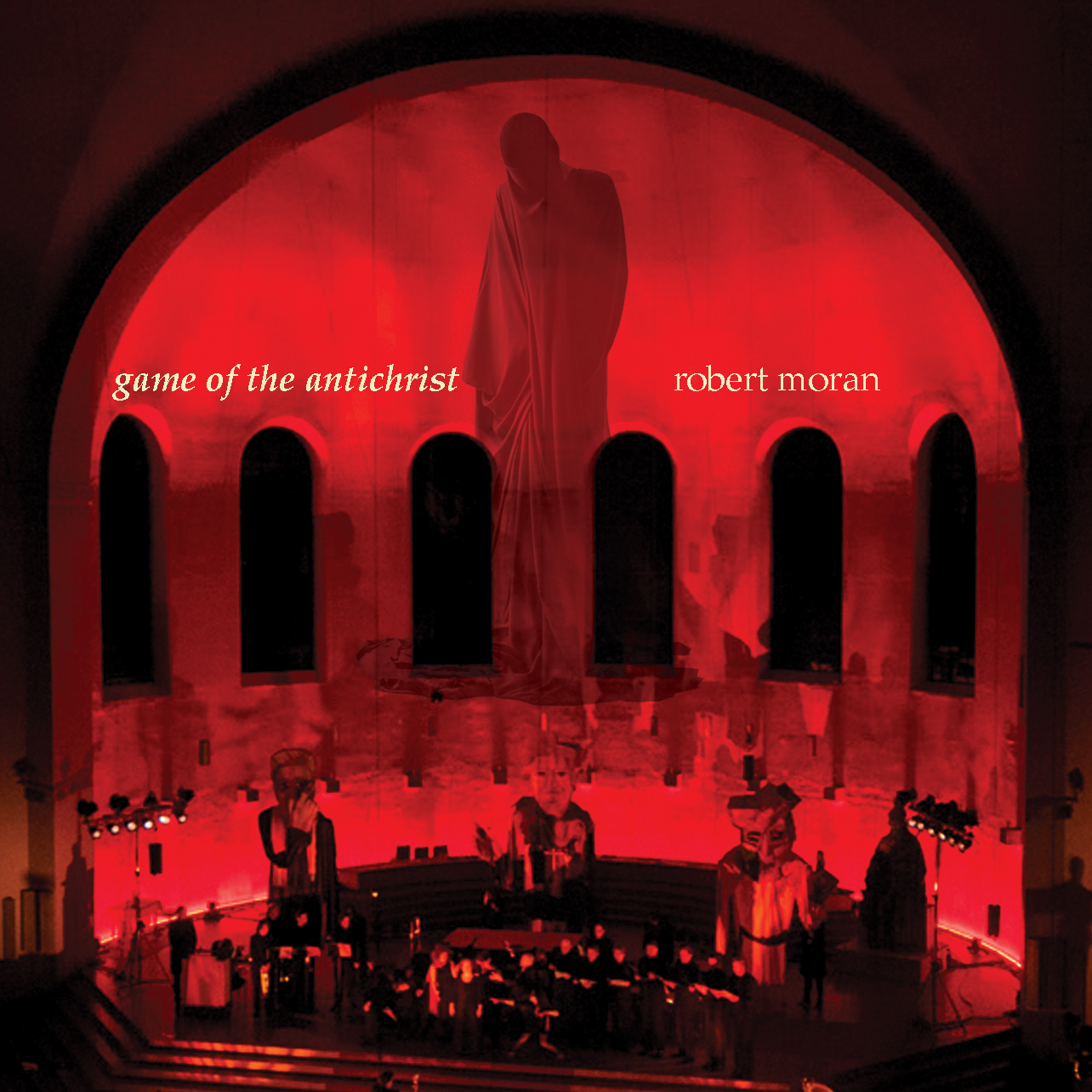
Mysterienspiel 2012

Game of the Antichrist by Robert Moran (Innova 251)
I promise a more comprehensive review soon but this is a great CD by a too little known American composer.  Mr. Moran recommended the disc to me after I wrote to him praising his wonderful “Trinity Requiem”.  I plan a more comprehensive article soon.  Meanwhile here is a link to a performance on Vimeo.

AZ spread

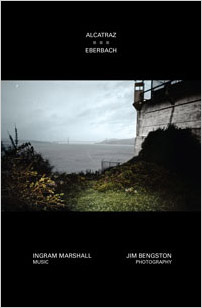
Alcatraz/Eberbach by Ingram Marshall and Jim Bengston  (Starkland S-2019)

This DVD is essentially the completion of a collaboration of photographer Jim Bengston and composer Ingram Marshall.  As such it is the most complete artistic statement superseding the audio only release (still worth having by the way) from some years ago.


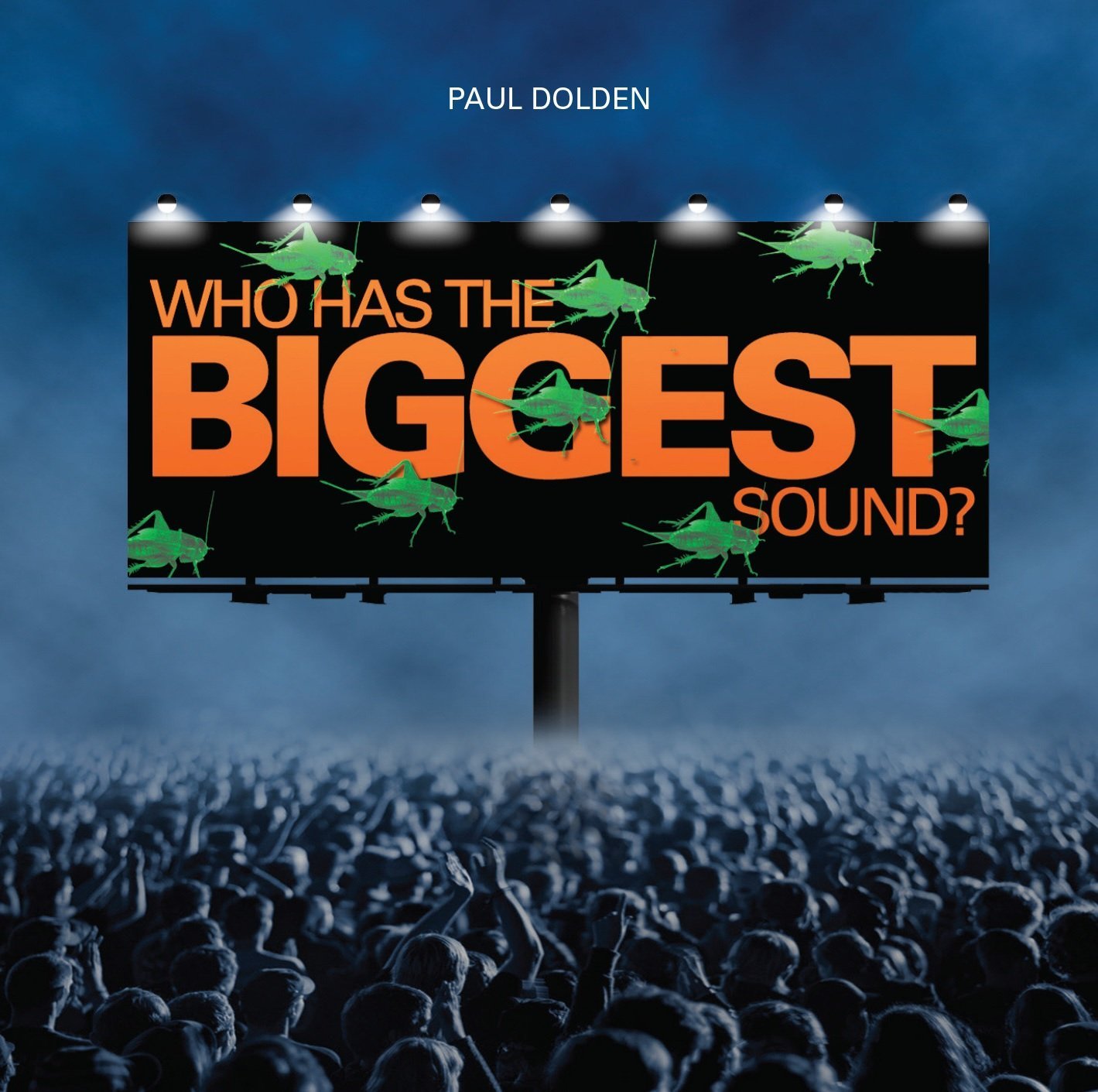
Who Has the Biggest Sound? by Paul Dolden. (Starkland ST-220)
A difficult to categorize recording that brings two major works by this (previously unknown to me) Canadian composer to the listening audience. I reviewed this disc here.  I am still working on absorbing its subtleties.

221CoverB

Prayers Remain Forever by Martin Bresnick (Starkland ST-221)
In addition to providing me with quite a few readers the opportunity to review this recording introduced me to the work of this too little known living American composer.  My review garnered quite an amazing amount of readers as well as an appreciative response from Mr. Bresnick himself.  And now I find myself buying his other recordings.  Really great music.


Album cover

Album cover

Notes from the Underground by Anthony Davis. (BMOP sound 1036)

I have been a fan on Anthony Davis and his music for some years now and I was pleased to be able to review this disc.   I  was later able to obtain an interview with Professor Davis which will be forthcoming later this year.

download

Tom Johnson/Samuel Vriezen Chord Catalog/Within Fourths, Within Fifths. (Edition Vandelweiser)

I eagerly reviewed this crowd sourced CD in which I was proud to be one of the contributors to its production.  It is only the second recording of Johnson’s landmark of minimalism and an opportunity to hear the work of the fine composer/performer Samuel Vriezen.

basketmonk

Basket Rondo/Jukebox in the Tavern of Love by Meredith Monk/Eric Salzman. (Labor LAB 7094)

This Labor Records release would have escaped my attention were it not for my having run across it while researching another new music article.  New music aficionados might remember Eric Salzman for earlier works such as “Civilization and It’s Discontents” and his involvement with Nonesuch records or one of his many other significant involvements in the new music scene over the last 40 years or so.  This disc is the première recording of Meredith Monk’s “Basket Rondo”, one of her best realized new works as well as the première of a great new sound/music drama by Salzman.  A more thorough review is in the works.

howardhersh2

Something by Howard Hersh ( Snow Leopard Music 888295062350)

Mr. Hersh kindly sent me this CD for review which will be forthcoming but it easily makes it to my favorites list for 2014.

webreaknonclass

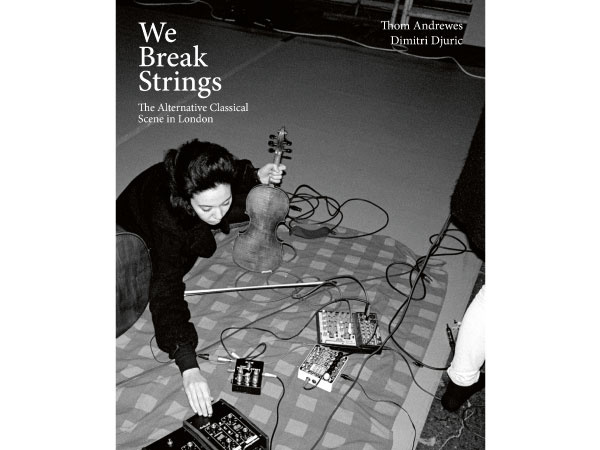
I also have to mention another crowd sourced project, “We Break Strings” by Thom Andrews and Dimitri Djuric, a book about the “alternative classical scene in London”.  The book which includes a CD sampler languishes in my “to be read” stack but my initial perusal left me with the impression of a beautifully conceived and executed volume which has much to offer the musically curious.  More about this book in a future blog.


CD Review-Hegarty, Steinbeck and Robles: Time/Space, an atypical jazz trio


HegartySteinbeck-TimeSpace

An old school twelve tone composer, an AACM composer and Julliard composer walked into a bar.  They sat down to play an out came, well, this album. And the bar I am imagining is perhaps a sort of post beat, post bop version of the bar from Star Wars.  I guess I am awash with metaphors here.

Imagine, if you can, a melding of musical styles.  Take a little Milton Babbitt, a little Anthony Davis, a touch of Wadada Leo Smith and perhaps a bit of Oscar Peterson (there is a little bit of a traditional lounge jazz touch here).  I have struggled to characterize this music and struggled perhaps even more to envision its ideal audience but that is not a criticism and is not intended to say anything negative about this album.

To be fair one of the main reasons I think I am struggling to describe this release is that it is a download only release which fortunately is accompanied by some nice cover art by Anna Hegarty and some liner notes which are essentially a  quote from some reviews but contain very useful information about the musicians and their history.  I guess I would feel differently if this had been a physical instead of digital release but perhaps I am just being nostalgic.  Oh, and keep in mind this is a free download.

The varied backgrounds of these musicians have resulted in a blending of styles creating a unique and enjoyable listening experience.  You can listen to this relatively short pieces as chamber music of a new classical variety but I think that would be missing the point.  This is basically an album of lounge jazz written and performed by some really good musicians who play well together.  Calling it “avant-garde” serves only to add a layer of fear and confusion to what should be a pleasant or at least innocuous experience.   That is why I called these guys an “atypical” jazz trio in the title of this review.

The musicians include James Hegarty on piano, Paul Steinbeck, electric bass and Shane Del Robles on drums.  According to the liner notes these musicians  have a pretty varied experience including free jazz,  AACM jazz, rock and various other projects.  They come together here very well.

In 12 short pieces (a metaphor for serialism?) this album manages to be lyrical and understated.  A few tracks use some studio effect of playing the tape backwards but most of what you hear is just acoustic instruments playing short numbers whose titles may mean more to the musicians than to the music itself but that is consistent with the type of music they are playing.  The music and the musicianship are good and sincere.

I would love to hear these guys play live in a smoky bar while sipping single malt scotch and hobnobbing with some kindred artistic spirits but I’ll have to settle for hearing it on my CD player (you have to hear this on a decent sound system).  I might even try to slip this in to some background music at a party just to see if anyone would notice it as different from whatever other background music might be played.  Very nice album and you can’t beat the price.

Notes From the Underground, A major new recording of Anthony Davis’ orchestral music


Album cover

Album cover

In March, 2014 the Boston Modern Orchestra Project released Notes From the Underground, a major retrospective recording of the composer’s work for large ensembles.  The recording includes Notes from the Underground (1988) a two movement work for orchestra, You Have the Right to Remain Silent (2007) a concerto for clarinet and contra-alto clarinet and Kurzweil processor and a new recording of the piano concerto Wayang No. 5 (1984) with the composer as soloist.  The Boston Modern Orchestra Project is conducted by Gil Rose.

There are liner notes by the composer and also by the great musician/composer/historian George Lewis (and a frequent musical collaborator with Davis).  The notes are relatively brief but contain a wealth of information and provide useful insights into both the musical processes and the sociopolitical forces that drive Davis’ music.  Davis describes his compositional processes and Lewis, a frequent musical collaborator,  places the music in historic and sociopolitical contexts.

Only the Wayang No. 5 has had a previous recording.  It was one of the two works included on the Gramavision release which included the equally engaging Violin Concerto “Maps” (1988) written for and performed by violinist Shem Guibbory.  The concerto reflects Davis’ interest in jazz as well as his study of gamelan music from whence comes the title “Wayang”. Davis has written a series of compositions for various combinations of instruments titled sequentially Wayang No. 1, No. 2, etc.  The term refers to the shadow puppet theater of  Bali which are accompanied by a gamelan orchestra, an ensemble largely of tuned gongs and other percussion instruments.  Davis studied gamelan music and wrote six compositions (so far) titled Wayang of which the fifth is the piano concerto on this recording.

Wayang No. V is the earliest composition on the disc and consists of four movements.  Opening-Dance begins with an improvisatory section with the pianist playing over unresolved harmonies in the orchestra which then leads to the main section of the movement which is characterized by ostinati in the orchestra as well as on the piano.  There is a seamless transition to the second movement Undine, a slow movement with an impressionistic feel.  March also begins without pause from the previous movement.  It is a scherzo like piece where the polyrhythmic structures are quite clear.   The finale, Keçak, a reference to the monkey chant in the ritual enactment of a scene from the Ramayana where the monkey-like Vanara help Prince Rama fight the evil King Ravana.  It begins with a long solo piano introduction followed  by a sort of dialog between the piano and several percussion instruments.  Davis demonstrates his virtuosity here in writing that is indebted as much to gamelan as it is to jazz and modernism from Schoenberg to Bartok, Stravinsky, Hans Werner Henze and Thelonius Monk.

This is a concerto that is more concerned more with expression than empty virtuosity though the piano part could hardly be called easy.  I am amazed that there have been no pianists who have added this wonderful piece to their repertory.  It is a very entertaining piece of music making.

The title track is the orchestral composition, Notes from the Underground (1988).  It is a two movement work dedicated to the writer Ralph Ellison (1914-1994), best known for his National Book Award winning novel The Invisible Man (1952).   The title evokes Dostoevsky’s existential 1864 novel as well as Ellison’s collection of essays, Shadow and Act (1964). The composer describes it as a “riff” on Duke Ellington’s Diminuendo and Crescendo in Blue (1937).  It is, to this listener, a grand set of orchestral variations.

Ralph Ellison

Ralph Ellison (Photo credit: Wikipedia)

The first movement, Shadow, is described by the composer as one that introduces fragments which will be heard in the second movement.  It features a prominent solo for the percussionist.  The second movement, Act is the longer of the two and is described as being written in ten steps with an elaborate polyrhythmic structures described in more detail in the accompanying notes. The writing here probably comes as close to minimalist or process music as anything the composer has done.  It is not minimalism per se  but it is perhaps proto-minimalist techniques whose roots are at least partly in jazz as musicologist Robert Fink suggests.   It produces a ritualistic and meditative feel to this richly orchestrated, reverent and mysterious sounding piece.   It is a fitting tribute to a great American man of letters as well as to the great composer Duke Ellington.

The concerto, You Have the Right to Remain Silent (2007) is the most recent as well as the most overtly political piece on the album and it is a gem.  It is written for clarinet doubling alto clarinet and a Kurzweil synthesizer/sampler and orchestra.  Longtime collaborator, the wonderful J. D. Parran  plays the clarinets winding his way through a balanced hybrid of styles including bebop, modern classical and free jazz styles comprising rhythmic complexity and multiphonics.  One could hardly imagine a soloist better suited for this music.  Earl Howard plays the Kurzweil which intones sampled speech of words from the Miranda Rights which are supposed to be presented at the time of an arrest.  Here they are presented strategically in poetic dialogue with the music controlled by the keyboard player.

Here again the individual movements have their own titles poetically referencing the issues which the composer attempts to invoke in this piece. He says in his notes, “I tried to approach ‘silence’ as, rather than John Cage’s apolitical world of ‘white privilege’, a much more dangerous place.”  The first, Interrogation, is intended to evoke the clarinet as being interrogated by the orchestra.  The second, Loss  features an improvised duet between the Kurzweil and the clarinet.  It ends with an homage to Charles Mingus, a major influence on Davis.  The third, Incarceration includes more text from the Miranda and the Kurzweil processes both the words and the clarinet solo.   And finally, Dance of the Other, intending to evoke the fantasy and the feeling of otherness and presumably alienation.

It is a concerto in the classical sense of a dialogue between soloist and orchestra and it seamlessly blends various classical and jazz harmonies and techniques which challenge the expertise of the soloist.  All the while it clearly presents a political context which meditates on the inhumanities and inequalities inherent in our “correctional” system and in our society as a whole.  As political music it lies within a grand tradition taking a place beside earlier masterpieces of that genre like Henze’s Essay on Pigs (1968) and Rzewski’s Coming Together (1971).  And as a concerto it is a challenge to the soloist and a delight to the listener.

This is a wonderful disc, well recorded and performed.  It presents some amazing and substantial music by one of the living treasures of American composers.  Anthony Davis has had a long and influential presence on the American music scene in his jazz performances as well as his chamber and orchestral music.  His operas like X: The Life and Times of Malcolm X (1986), Amistad(1997 ) and the more recent Wakonda’s Dream (2007) have been performed to critical acclaim. Hopefully this recording will introduce people to this composer’s works and remind those already familiar with the power and depth of Davis’ music.  Bravo to the Boston Modern Orchestra Project for bringing this music to the listening public.  I hope the major orchestras and theaters and recording companies are paying attention so we can hear more from this still too little known composer.

Enhanced by Zemanta

Oh, No! Not Another Minimalist! John McGuire


When I posted my introductory article to the “Not Another Minimalist!” series I got the suggestion on Facebook from composer/writer Walter Zimmerman that I do a piece on John McGuire.  Many will remember Zimmerman for his important book of interviews called Desert Plants (1976) in which he interviewed a series of 23 American composers in the early to mid-1970s.  His choices virtually defined an era much like Robert Ashley’s Music with Roots in the Ether would later do.  He is also a fine composer in his own right and will be featured in a future essay on this blog.  I am honored to receive a challenge from him and I also thought it was a fine selection of a minimalist-type composer whose work deserves wider dissemination so I am using McGuire as my first article in the series.

Unfortunately there is precious little to be found on this American composer.  In Zimmerman’s book he gets only one page so I am essentially updating his earlier efforts.  However, even 38 years later, McGuire does not appear to have a web page and I have been able to find reference to only a few recordings of his music.

mcguire1r

Cover image from one of McGuire’s recordings.

John McGuire (1942- ) studied with Robert Gross at Occidental College in Los Angeles, where he earned his BA in 1964, with Ingolf Dahl at the University of Southern California in Los Angeles and with Seymour Shifrin at the University of California, Berkeley, where he earned his MA in 1970. He also studied composition privately with Karl Kohn, composition and orchestration with Krzysztof Penderecki at the Folkwang Universität der Künste in Essen from 1966–68 and composition with Karlheinz Stockhausen at the Ferienkurse in Darmstadt in 1967–68. He then studied computer composition with Gottfried Michael Koenig at the Instituut voor Sonologie of the Universiteit Utrecht in 1970–71 and electronic music with Hans Ulrich Humpert at the Hochschule für Musik und Tanz in Cologne from 1975–77.

I came to know the work of John McGuire when I found a remaindered copy of a Largo CD containing his 48 variations for two pianos in the great though now sadly gone Rose Records  store in Chicago in the 1980s.  It was a gamble as I had never even heard of this composer but the album somehow spoke to me from the CD bin.

Variations for 2 pianos CD

Variations for 2 pianos CD

My gamble paid off because I had found in that piece a new take  on minimalism and pattern music.  It seemed to be closer to classical variation form than to strict process-oriented patterns but clearly there were rhythmic cells being subjected to development.  It clocks in at about 48 minutes and is a tour de force.

As it turns out McGuire makes use of minimalism as only one of his compositional techniques and has a distinctly different take on it which appears to be informed by the various techniques gleaned from his teachers.  After finding and bonding with this CD I began to look for more of this man’s music.

The intelligent vigilance of Richard Friedman and the Other Minds organization broadcast McGuire’s 1974 Frieze for 4 pianos and his 1985 Cadence Music for 21 Instruments in a RadiOM program dedicated to the composer’s music. Both recordings were broadcast from a 2 CD release on the RZ label.   Again the unmistakable sound of minimalism in a very unique approach.

The east coast equivalent of RadiOM is WNYC’s New Sounds hosted by John Schaefer.  The program of November 12, 2013 included McGuire’s Pulse Music III from 1978.  This is a great example at the composer’s facility with electronics.  This piece realized on tape was apparently originally for a multiple speaker installation  but is mesmerizing even in the stereo presentation which was broadcast.  Another inspired new music show, Kalvos and Damian did a program on the genesis of this music which remains available as streaming content.

McGuire spent 25 years living and working in Germany returning to the United States in 1998.  He then worked for Carl Fischer music as an editor and was a visiting adjunct professor at Columbia from 2000-2002.

I’m not sure I’ve been able to do much more than Walter Zimmerman did in his book but it is my hope that this article may spark interest in musicians, producers and broadcasters to keep this fascinating composer in mind for future projects and performances.

Enhanced by Zemanta

Composers of Northern California, Other Minds 19


OM 19, the final bow.  Left to right: Charles Amirkhanian, Charles Celeste Hutchins, Joseph Byrd, Wendy Reid, Myra Melford, Roscoe Mitchell, John Schott, Mark Applebaum, John Bischoff, Don Buchla

OM 19, the final bow. Left to right: Charles Amirkhanian, Charles Celeste Hutchins, Joseph Byrd, Wendy Reid, Myra Melford, Roscoe Mitchell, John Schott, Mark Applebaum, John Bischoff, Don Buchla

This past Friday and Saturday the San Francisco Jazz Center hosted the 19th annual Other Minds Festival concerts.  This is the first year not to feature an international roster.  Instead the focus was on composers from northern California.  (Strictly speaking these composers’ creative years and present residence is northern California.)  It was not a shift in policy but a focus on a less generally well known group of artists who have not enjoyed the exposure of east coast composers but have produced a formidable body of work that deserves at least a fair assessment.  In fact these concerts presented a fascinating roster of composers from essentially three generations.

The first generation represented was one which came of age in the fabled 1960s and included electronic music pioneer Don Buchla, AACM founding member Roscoe Mitchell and proto-minimalist Joseph Byrd.  The second was represented by Wendy Reid, Myra Melford and John Bischoff.  And the youngest generation by Mark Applebaum and Charles Celeste Hutchins.

The program opened on Friday night with a sort of pantomime work by Stanford associate professor of music Mark Applebaum.  The piece, called Aphasia (2010) consists of an electronic score to which the composer, seated in a chair, responds with a variety of carefully choreographed gestures.  The result was both strange and humorous.  The audience was both amused and appreciative.

Applebaum's Metaphysics of Notation (2008) performed by the Other Minds Ensemble.  Left to right: Myra Melford, John Bischoff, Wendy Reid, John Schott, Joseph Byrd, Charles Amirkhanian and Charles Celeste Hutchins

Applebaum’s Metaphysics of Notation (2008) performed by the Other Minds Ensemble. Left to right: Myra Melford, John Bischoff, Wendy Reid, John Schott, Joseph Byrd, Charles Amirkhanian and Charles Celeste Hutchins

Applebaum’s graphic score Metaphysics of Notation (2008) was projected overhead while the ensemble played their interpretations of that score.  The ensemble, dubbed the Other Minds Ensemble, consisted of most of the composers who participated in the festival including Mr. Amirkhanian displaying his facility with  a percussion battery among other things.  (Presumably Roscoe Mitchell, who was reportedly not feeling well, would have joined the ensemble as well.)  Mr. Applebaum was conspicuously absent perhaps so as to not unduly influence the proceedings.

Ribbons strewn across the stage, a part of the Other Minds Ensemble's interpretation of the Metaphysics of Notation

Ribbons strewn across the stage, a part of the Other Minds Ensemble’s interpretation of the Metaphysics of Notation

The piece was full of minimal musical gestures, humorous events like ribbons strewn across the stage and the popping of little party favors that emitted streamers.  The ensemble appeared to have a great deal of fun with this essentially indeterminate score which they are instructed to interpret in their own individual  ways.  It was a rare opportunity to see and hear Mr. Amirkhanian (who is a percussionist by training) as well as an opportunity for the other composer/performers to demonstrate their skills and their apparent affinity for this type of musical performance.  Again the audience was both amused and appreciative.

Mark Applebaum performing on his invented instrument.

Mark Applebaum performing on his invented instrument.

Projection of Applebaum performing with view of the composer/performer stage right as well.

Projection of Applebaum performing with view of the composer/performer stage right as well.

The third piece by Applebaum featured the composer with his invented instrument and electronics playing on a balcony stage right with a projection of himself on the big screen.  He produced a wide variety of sounds from his fanciful computer controlled contraption that seemed to please the audience.  This is the kind of unusual genre-breaking events which tend to characterize an Other Minds concert.

The second composer of the night was the elusive Joseph Byrd who is perhaps best known for his cult classic album The American Metaphysical Circus by Joe Byrd and the Field Hippies from 1969.  A previous band, The United States of America released a self-titled album which received critical acclaim in 1968.  Both are apparently out of print but available through Amazon.

Joe Byrd studied music with Barney Childs and worked with La Monte Young, cellist Charlotte Moorman, Yoko Ono and Jackson Mac Low.  Byrd went on to produce a great deal of music by others and also wrote music for films and television but his own compositions have only come to light again recently with the release of a New World CD released in 2013 which presents his work from 1960-63.  Mr. Amirkhanian said that it was this disc that got him interested in inviting Byrd to Other Minds (Byrd also taught at the College of the Redwoods in Eureka, California.).

This is the sort of musical archeology for which Other Minds has become known.  Amirkhanian is known for his ability to find and bring to performance and recordings music which has been unjustly neglected.  Hopefully this appearance will be followed by more releases of Byrd’s other music as well.

Byrd was represented here by performances of Water Music (1963) for percussionist and tape with Alan Zimmerman (who was one of the producers of the New World album) played the spare percussion part which integrated well with the analog electronic tape.

Alan Zimmerman performing Joe Byrd's Water Music.

Alan Zimmerman performing Joe Byrd’s Water Music.

A second piece, Animals (1961) was performed by the brilliant and eclectic bay area pianist Sarah Cahill with Alan Zimmerman and Robert Lopez on percussion and the fiercely talented Del Sol String Quartet (Kate Stenberg and Richard Shinozaki, violins, Charlton Lee, viola and Kathryn Bates Williams, cello).  This was another piece with soft, mostly gentle musical gestures involving a prepared piano and predominantly percussive use of the string players.  It was interesting to contemplate how this long unheard music must have sounded in 1961 but it was clear that it communicated well with the audience on this night.

Animals (1961)

Animals (1961)

John Bischoff performing his work Audio Combine (2009)

John Bischoff performing his work Audio Combine (2009)

Following intermission we heard two pieces by Mills composer/performer John Bischoff.  The first was Audio Combine (2009) which featured Bischoff on this laptop producing a variety of digitally manipulated sounds.  It was followed by Surface Effect (2011) with creative lighting effects/animations that nicely complemented the laptop controlled analog circuitry.  Bischoff’s music is generally gentle and clear.  It belies the complexity of its genesis in state of the art computer composition and performance for which he is so well known.

John Bischoff performing Surace Effect (2011)

John Bischoff performing Surace Effect (2011)

All this led to the final performance of the evening by Don Buchla whose modular synthesizers were developed in the early 1960s with input from Ramon Sender, Morton Subotnick, Pauline Oliveros and Terry Riley at the legendary San Francisco Tape Music Center (which later became the Mills Center for Contemporary Music).  Buchla also designed the sound system for Ken Kesey’s bus “Furthur” which featured in the Electric Kool-Aid Acid Test.

Don Buchla on the Buchla Bos and Nannick Buchla on the piano with film projection performing Drop by Drop (2012) in its American premiere.

Don Buchla on the Buchla Bos and Nannick Buchla on the piano with film projection performing Drop by Drop (2012) in its American premiere.

The conclusion of Friday’s program consisted of the American premiere of a Drop by drop by Don Buchla for Buchla 200e, electronically controlled “piano bar”  (another Buchla invention) and film projection.  The film was made in collaboration with bay area film maker Sylvia Matheus.  The sequence of images began with a dripping faucet and proceeded to a waterfall and then to emerging pictures of birds all the while accompanied by the various sounds from the synthesizer and the piano.

OM190028

Nannick and Donald Buchla receiving warm applause from the audience.

The Saturday night performances began with Charles Celeste Hutchins and his laptop improvising system.  Hutchins, a San Jose native, describes his system as related to Iannis Xenakis’ UPIC system and utilizes a live graphic interface which the computer uses to trigger sound events.

Charles Celeste Hutchins at his laptop performing Cloud Drawings (2006-9)

Charles Celeste Hutchins at his laptop performing Cloud Drawings (2006-9)

The drawings were projected onto the overhead screen.  There seemed to be a somewhat indirect correlation between the drawings and the resultant sounds and much of the tension of this performance derived from wondering what sounds would result when the cursor reached that particular drawing object.  The audience is basically watching the score as it is being written, a rather unique experience and the Other Minds audience clearly appreciated the uniqueness.

The projected graphic score for Cloud Drawings.

The projected graphic score for Cloud Drawings.

The Actual Trio: John Schott, guitar, Dan Seamans, bass, John Hanes, drums.

The Actual Trio: John Schott, guitar, Dan Seamans, bass, John Hanes, drums.

John Schott and his Actual Trio then took the stage to perform his own brand of jazz which seemed to be a combination of free jazz, Larry Coryell and perhaps even Jerry Garcia.  But these descriptions are merely fleeting impressions and are not intended to detract from some really solid and inspired music making.  After the conclusion of the set this listener half expected an encore.

But the program moved on toWendy Reid’s performance as we watched the stage being set up with music stands, some electronic equipment and a parrot in a cage.

Tree Piece #55 "lulu variations" with Tom Dambly, trumpet, Wendy Reid, violin and electronics and Lulu Reid on vocals.

Tree Piece #55 “lulu variations” with Tom Dambly, trumpet, Wendy Reid, violin and electronics and Lulu Reid on vocals.

Reid’s Tree Pieces are an ongoing set of compositions incorporating nature sounds with live performance.  This is not unlike some of Pauline Oliveros’ work in that it involves careful listening by the musicians who react within defined parameters to these sounds.

Lulu the parrot appeared nervous and did a lot of preening but did appear to respond at times.  The musicians responded with spare notes on violin and muted trumpet.  It was a whimsical experience which stood in stark contrast to the more declarative music of the previous trio but at least some of  the audience, apparently prepared for such contrasts, was appreciative.

Myra Melford performing selections from Life Carries Me This Way (2013)

Myra Melford performing selections from Life Carries Me This Way (2013)

The diminutive figure of Myra Melford took command of the piano and the hearts of the audience in her rendition of several pieces from her recent CD.  She played sometimes forcefully with thunderous forearm cluster chords and sometimes with extreme delicacy but always with rapt attention to her music.  Her set received a spontaneous standing ovation from a clearly roused audience.  She is a powerful but unpretentious musician who clearly communicates well with her audience.

Roscoe Mitchell, Vinny Golia, Scott Robinson and J.D. Parran  following their performance of Noonah (2013)

Roscoe Mitchell, Vinny Golia, Scott Robinson and J.D. Parran following their performance of Noonah (2013)

The finale of OM 19 was the world premiere of an Other Minds commission, the version for four bass saxophones of Roscoe Mitchell’s Noonah (pronounced no nay ah).  It is the latest incarnation of a piece of music that Mitchell describes as having taken on a life of its own.  It exists now in several different versions from chamber groups to orchestra.

The piece is vintage Roscoe Mitchell, a combination of free jazz and sometimes inscrutable compositional techniques which clearly enthralled the very focused performers.  What the piece seemed to lack in immediate emotional impact it made up in mysterious invention which was brought out grandly by the very experienced and committed players.

Mitchell, who was not able to attend on the previous night, appeared rather tired but played with a focus and enthusiasm that matched his fellow musicians.  Like all of Mitchell’s music there is a depth and complexity that is not always immediately evident but does come with repeated listenings and performances.

Thus concluded another very successful edition of Other Minds.  Now we look forward to the gala 20th anniversary coming up in March, 2015.


Enhanced by Zemanta

Coming Up, Other Minds 19 at the SF Jazz Center


Official Other Minds logo

Official Other Minds logo (Photo credit: Wikipedia)

On February 28 and March 1 the SF Jazz Center will host Other Minds for the first time.  OM 19 is the latest incarnation of this annual festival which presents an amazing range of new music.

The Other Minds Festival, brainchild of filmmaker/producer Jim Newman and musician, composer and broadcaster Charles Amirkhanian, was first heard in 1993 and, except for the years 1994, 1998 and  2007, has been an annual event in San Francisco  gathering mostly new but  always innovative composers to share their inspirations and innovations with each other and with bay area audiences.  Being curious about those apparent gaps in this festival I sent a query to the Other Minds office and received a prompt reply from none other than Charles Amirkhanian.  He stated as follows:

Executive Director Charles Amirkhanian in his ...

Executive Director Charles Amirkhanian in his office with ASCAP award in background (Photo credit: Wikipedia)

“Hi Allan,
Here’s the story:
After our first festival in November 1993, we needed time to raise more funds to produce OM 2 and get back on the Yerba Buena Center’s schedule. So we postponed until March 1995, the next available spot in the Djerassi schedule. Our timing for the festival is determined by when we have access to empty rooms at DRAP, so we need to be there either in Feb/March or November.
In 1997, once again, we needed time to raise more funds and simply postponed to the next available Djerassi time. Same for OM 13.
In each case, the delay was about eight months (for a November event) or four months (for a March event), giving us a festival in succeeding concert seasons, but not “annual” events. (A concert season is Fall ’07 through Spring ’08, for example.)
Thus the mysterious gaps.
Charles”

This internationally known festival is not just a series of concerts.  The diverse selection of composers gathers first for an artistic residency at the Djerassi Resident Artist Program (DRAP in Mr. Amirkhanian’s note), a pastoral setting nestled between the Pacific coastline and the hills west of Palo Alto, where the invited composers live, work and share ideas for a week prior to the public concerts. The Djerassi Foundation for the Arts was founded by biochemist Carl Djerassi whose daughter, an artist, committed suicide in 1978.  The area is a sculpture park and the facility operates all year round with residencies for artists of all media.  Charles Amirkhanian is one of the former directors of this venerable artist colony and is now the executive and artistic director of Other Minds. The selection process for OM artists is based on the incredible range of interests of the Other Minds Operating Board and in consultation with their advisory board which are very open to suggestions from the general public.  Just e-mail them.  They actually read all their e-mails and respond. This along with New Music America, the ONCE festival, the Telluride Festival (also one of Amirkhanian’s efforts) are among the important music festivals which have yet to receive adequate treatment and exposition of their histories. This year’s OM 19 (which also looks forward with eager anticipation to a very promising gala OM 20) includes Mark Applebaum, John Bischoff, Donald Buchla, Joseph Byrd, Charles Celeste Hutchins, Myra Melford, Roscoe Mitchell, Wendy Reid and John Schott.  For the first time in the history of the festival all the composers will be from northern California.  The dates for the festival, which moves this year to the new SF Jazz Center, are Friday February 28 and Saturday March 1. One might think that limiting the selection of composers would be limiting in the variety of artistic efforts to be had but one would be quite wrong.  In fact it would not be difficult to argue that music by musicians from northern California have been unjustly neglected in favor of the more dominant musical cultures of New York City, Chicago and Los Angeles.  A quick look at the roster for OM 19 reveals a great deal of variety:

Mark Applebaum at TEDx Stanford

Mark Applebaum at TEDx Stanford (Photo credit: Tamer Shabani Photography)

The Chicago born Mark Applebaum is currently associate professor of composition and theory at Stanford University.  He counts Brian Ferneyhough, Joji Yuasa, Rand Steiger, Roger Reynolds and Philip Rhodes among his teachers.  He also performs as a jazz pianist. He appears to be the first composer at these concerts to have given a TED talk.  In this talk he speaks of being “bored with music”, at least with traditional music and how he used that boredom to break through to another level of creativity creating new instruments and elaborate scores.  He is an engaging speaker and his presentation will no doubt be fascinating.

John Bischoff (1949- )

John Bischoff (1949- )

John Bischoff studied at the California Institute of the Arts and Mills College.  His teachers include Robert Moran, James Tenney and Robert Ashley.  He is currently visiting professor and composer at Mills College. He is one of the pioneers of live computer performance and he is a frequent performer at the Garden of Memory concerts held annually on the summer solstice at Oakland’s beautiful Chapel of the Chimes. Mills College with its Center for Contemporary Music can be said to be the primary life blood of northern California composers.  Bischoff is part of a long line of composers who  have guided musical pedagogy in the Bay Area and have included Chris Brown, Luciano Berio, Darius Milhaud, Lou Harrison, Steve Reich, Terry Riley, Pauline Oliveros, Morton Subotnick, Ramon Sender, John Cage, Chris Brown, Maryann Amacher, Maggie Payne, Larry Polansky, Robert Ashley, and many others. Bischoff has released 16 albums and numerous publications.  He founded the League of Automatic Composers, the first computer network band and continues to be a driving force in the computer music scene. Don_Buchla_and_200e

Donald Buchla is one of the elder statesmen of new music in California.  His collaboration with Ramon Sender and Morton Subotnick produced one of the first modular synthesizers in 1963.  He continues to develop synthesizers with his Buchla and Associates corporation (founded in Berkeley in 1962) . He studied physics, physiology and music.  His importance in the field of electronic music and music synthesis cannot be underestimated.  His electronics have driven many classical, rock and jazz music.  He and his corporation continue to make new electronic instruments such as the marimba lumina and the piano bar and has made available again some of the classic analog electronics which first made his name familiar to musicians worldwide. I was able to find very little about his musical compositions but it is worth noting that his electronics will power the performances of several of the artists in this concert series in addition to his own.

Joe Byrd in 1968

Joe Byrd in 1968

Kentucky born Joseph Byrd is an electronic musician, composer and producer.  His album, “The American Metaphysical Circus” (1969) is legendary and considered a cult album which has been reissued on CD and can also be heard on You Tube.  His band, Joe Byrd and the Field Hippies never performed live but this work of 60s psychedelia has established itself as a landmark recording and a cult classic.  He also did an album of synthesized Christmas Carols in 1975. Byrd has also been a producer with estimable credits such as producer and arranger of Ry Cooder’s amazing ‘Jazz’ album from 1978.

I can’t imagine how his latest work sounds but I am looking forward to it.

Charles Céleste Hutchins at SOUNDkitchen

Charles Céleste Hutchins at SOUNDkitchen (Photo credit: hellocatfood)

Charles Celeste Hutchins is, as far as I can tell, the first instance in which an Other Minds operating board member has been featured as a composer in this series.  The advisory board consists largely of composers who have already been featured on OM concerts.  Until this booking I was not aware of this man’s work.

Hutchins worked in the dot com business for a time and is now working on his musical interests.  His work involves the digital music program called Supercollider which he uses to manipulate sounds.  Discogs lists an MP3 compilation of some of his work in this area.

Melford in Helsinki, 1993

Melford in Helsinki, 1993

Myra Melford is an internationally known jazz pianist and composer with some 17 albums and some 20 years of playing.  Melford is originally from Illinois.

She has played with AACM musicians like Leroy Jenkins, Joseph Jarman and other musicians including Marty Ehrlich, Henry Threadgill, Mark Dresser, OM alumni Han Benink and Tyshawn Sorey.  Currently she teaches at the University of California Berkeley.

saxophonist Roscoe Mitchell at the Pomigliano ...

saxophonist Roscoe Mitchell at the Pomigliano Jazz Festival (Photo credit: Wikipedia)

Roscoe Mitchell is one of the founding members of the venerable AACM (American Association of Creative Musicians) which redefined both jazz and contemporary classical music from its founding in 1965 to the present.  Other notable members include Anthony Braxton, Lester Bowie, Malachi Favors, George Lewis and Lester Bowie among others.  Mitchell is currently professor of music at Mills College where he holds the Darius Milhaud chair.  He has collaborated with Frederic Rzewski, George Lewis, Anthony Braxton, Joseph Jarman, Malachi Favors, Muhal Richard Abrams, Albert Ayler, Henry Threadgill, Thomas Buckner and many others.

Mitchell is one of the acknowledged living masters of American music and he plays and teaches widely.  In 2012 her performed at the “All Tomorrow’s Parties” festival in Minehead, England.  Any performance by this musician is an event.

Wendy Reid is a new name for me.  She is a composer who works with nature sounds.  I did buy her CD entitled “Tree Music” which features 5 of her Tree Pieces with various combinations of violin, percussion, piano, mandolin, oboe and Don Buchla on “thunder” interacting with nature sounds.  For her OM performance she will be sharing the stage with a parrot.  Yes, it does sound like a Monty Python sketch, but this promises to be interesting if not revelatory.  Her work is clearly concerned with the sounds of nature and is at least distantly related to the work of Pauline Oliveros whose album ‘Troglodyte’s Delight’ involves musicians responding to the sounds of water in a limestone cave.

John Schott is another name with which I am not familiar.  But lack of familiarity spells adventure in this series of concerts.  A quick internet search reveals that he is a Berkeley based composer, guitar player and banjo player.  His web site is a blog which reveals his interest in a wide range of musical styles and literary interests.  He lists 8 CDs which feature his work.  He also lists his “compositions in the classical grain”.  It’s anyone’s guess as to what he will present at Other Minds but if the preceding artists are any indication it will be unique and interesting.

All in all this promises to be a very exciting event with the ‘revelatory’ music which Other Minds uses as a tag line in their publicity materials. I won’t miss it and neither should you.

Enhanced by Zemanta

Music by Gerhard Schedl, a New Recording by the Walden Chamber Players


Suicide, the artificial ending to a life is an inscrutable act, especially so when it takes the life of a talented individual.  So it is with Austrian composer Gerhard Schedl whose life was ended by his own hand in 2001.  I had never heard of this man and his work and I always welcome the opportunity to hear music new to my ears and such an opportunity presented itself recently.

By good fortune and the kindness of cellist and current artistic director Ashima Scripp I received a copy of the Walden Chamber Players latest CD: ‘A Voice Gone Silent too Soon: The Music of Gerhard Schedl.  The disc contains 4 chamber works for various combinations of strings, piano and clarinet.schedl

As it happens I had not been familiar with this ensemble before either so a word about them would seem to be appropriate.  Founded in 1997 this flexible sized ensemble consists of eleven musicians including strings, piano, harp and woodwinds.  The musicians are all highly accomplished and most are on faculty at area Universities.  Their choice of repertoire distinguishes them as they seem to choose new and/or lesser known music that the musicians feel deserve a hearing and hopefully a wider audience.  Their fascinating catalog at the time of this writing consists of 6 discs and includes music by Beethoven, Debussy, Vaughn Williams, Francaix, Gubaidulina and Reger to name a few.

When they choose Beethoven they choose the seldom played string trios and their other choices seem to involve late romantic and early 20th Century composers with a focus on pieces that are little known and rarely played.  From what I have heard they bring a real passion to their performances.  In addition they have a variety of educational and outreach programs that serve to increase interest in chamber music and support new artists in playing this repertoire.

Now to the disc at hand.  At first I did what I usually do after a quick read of the liner notes.  I put the CD in my car stereo to begin some relatively casual listening so I can begin to form some initial impressions.  However this is music of wide dynamic range and some of the most beautiful moments are the quieter ones so I found that it is best heard in a quiet environment and preferably with headphones.  Most of the gestures in this music are the familiar sounds of chamber music.  The music is sometimes melodic, sometimes pointillistic, sometimes impressionistic, sometimes expressionistic.  Schedl seems to be a sort of modern post-romantic who is well-schooled in what a chamber ensemble can do and is apparently influenced by the expressionism of Schoenberg and the Second Viennese School as well as by Mahler, Debussy and perhaps Messiaen.  This being said his music does not actually resemble any of these influences too strongly.  The music is rarely dissonant but there are grand fortissimo gestures as well as glissandi and what sounds like some playing inside the piano and some extended techniques which my ears could not identify with certainty.  But this is not what I would call “experimental music”.  Indeed the music sounds very well planned with an ear for subtleties that the ensemble lovingly interprets.  It sounds like this music is as enjoyable to play as it is to hear.  Though virtuosic it is also expressive if agonized at times and the recording is fantastic.

The first piece, String Trio (1991) for violin, viola and cello is in three movements.  I did not find the tempi descriptions particularly useful as a listener since this composer’s music seems to sustain a variety of tempi and expression within each movement.  Inevitably comparisons to Schoenberg, Webern and perhaps Ernst Krenek will come to mind and it is difficult to predict this piece to stand with those models but it definitely bears additional hearings and would be welcome on any good chamber music program.

The next piece, “A Due”, a Duo for Violin and Cello (2000) is from the last year of the composer’s life.  It is in four movements and is the most angst ridden of the pieces on the disc.  This combination of instruments is relatively rare.  I personally know only the Ravel duo which resembles this piece though that is largely due to the instrumentation, not the style.  This is a concentrated and deeply felt piece which seems to reflect some painful emotions.  Here I am reminded more of Webern and perhaps Wolfgang Rihm with their spare textures and emphatic fortissimi amidst the quieter moments.   As with all the pieces on this disc the execution reflects the intense concentration and dedication of the musicians.

The five movement, “A Tre” for clarinet, violin and piano of 1984 is the earliest composition here.  It comes as a welcome relief emotionally from the previous “A Due”.  This is by far the most whimsical of the pieces featured on this album.  It has an almost orchestral feel to it at times.  Multiple techniques (and, no doubt, careful execution) result in textures that are sometimes rather expansive.  Shades of Messiaen appear to be present sometimes.  They contrast with the more chamber music like gestures familiar from the previous works.

The disc concludes with the 1996-7 “A Cinque” for clarinet, violin, viola, cello and piano.  It is a very serious post-romantic, even neo-classical take on the quintet format.  The piece consists of three movements.  The first two are serious but not terribly dark and showcase the ensemble well.  The last, an adagio, has a sadness mixed with nostalgia that reminds this listener of Mahler. There are none of the abrupt dynamic changes heard in the previous works on this CD, only a soft and gentle ending.

If you enjoy well-performed and recorded chamber music and are interested in exploring something besides the old war horses of the standard repertoire then this disc is for you.  Multiple listenings reveal more detail about the pieces and make this writer curious about this man’s work for larger ensembles as well.

Thank you Walden Chamber Players for a wonderful CD.  I look forward to hearing more from this fine and adventurous ensemble.