At first listen I thought I might have put an Arvo Part album. The familiar calming sounds of what sounds like “holy minimalism” seemed to be coming at me. But who is this young British composer? Well, let me tell you, you need to pay attention to this one.
While the Arvo Part comparison is apt it only describes a small part of this composer’s range. She does seem to fit some sort of incarnation of “minimalist” by virtue of her use of repetition, silences, etc. At times her music leans sweetly toward the romantic but this is hardly light fare. The music evokes a sort of timelessness and calm but there are moments of tension and sadness as well.
From the composer’s web site.
Jane Antonia Cornish (1975- ) is a British composer and, looking at her education and training she appears to come almost out of nowhere. Her music clearly draws on aspects of minimalism but her teachers are not the “usual suspects”. Like a lot of people from her generation she seems to draw on a rather comprehensive training in the ever expanding language of new music and uses what works for her. (Doubtless she is quite capable of writing thorny serial music should she find that useful to her expression.) She currently lives and works in New York City. Her web page can be found here.
Cornish is originally from London, England and she studied composition with Dr. Anthony Gilbert at the Royal Northern College of Music, and completed her master’s degree at the Royal College of Music. She is a recipient of the Edward Hecht Composition Prize, the RNCM Composition Prize and the Associated Board Prize for the Most Outstanding Scholar of the Year. Cornish was also made a Major Scholar of the RNCM. She is also the recipient of a 2005 BAFTA award for her film and television work.
This emerging composer has been quite prolific. The present album is her third and she has also done film scores. Her style seems to be influenced by the post minimalist/holy minimalist school but with a touch of melancholy. Of course it will be necessary to hear more of her work to get a good overall impression but that will be a labor of love. This is really listenable.
This is chamber music, violin, cellos, piano but what a big and warm sound! I liked this album immediately and subsequent listenings have failed to diminish my enthusiasm. This is engaging and substantive music that has enough depth that allows the listener to get past the pretty surface to the complexities and subtleties that lie beneath the surface.
The musicians include: Sæunn Thorsteinsdóttir, Caitlin Sullivan, Claire Bryant, Hamilton Berry, cellos; Anna Elashvili, violin; Vicky Chow, piano. All are fined dedicated musicians and they seem to be enjoying themselves here. You would be doing yourself a favor to got to their respective web sites (linked from here) to see the breadth of these fine young musicians’ activities and interests.
Thank you Innova for the wisdom of recording this composer’s works (Innova has also released her albums Continuum, and Silence). And thank you for sharing your artistic talents Ms. Cornish.
All ready for Women’s History Month is this fine offering which features a fine young woman composer from Lithuania. It comes on the radar of Starkland Records and, happily now, to a new listening audience.
I sincerely hope that no one takes umbrage at my off handed categorization of this music as related to minimalism but I’m not sure what else to call it. This 70 minute work is divided into 10 sections which have poetic titles. It is scored for piano, violin, cello, and electronic sound. It comes from an area of the world (Lithuania, Latvia, Estonia) where individual national identities have long been overshadowed by the annexation of the former USSR. In the last 20 years a style related to minimalism has emerged as a characteristic style from this region (primarily in the work of Arvo Part). Some of that is here but this music is at least a generation removed and has evolved its own identity at the hands of this new composer.
In an unusual (though not unprecedented) move this album was recorded and produced entirely by the composer in Lithuania. In addition some of her fine color photography is featured in the liner notes (which are mostly by the composer). The production values are very much consistent with the high quality one expects from the Starkland label. In addition it must be noted that this is the simplest and sanest packaging now being used for CDs. None of that fragile plastic and still a functional storage sleeve.
So the next question (also common with Starkland releases) is: Who is Žibuoklė Martinaitytė ? Well she is one of the emerging generation of composers from Lithuania. That, along with her having studied with Bronius Kutavičius (I actually started his Wikipedia article many years ago but his and other articles on new Lithuanian composers is limited still) suggested to me that she may be of the branch of minimalism which hails from this part of the world (i.e. Estonia, Latvia, Lithuania). Wrong, but not entirely.
Like a lot of emerging composers we have here an artist fully schooled in a very wide range of musical techniques and possibilities. On first listen one hears elements of drone, ambient, minimalism, extended instrumental techniques, and mysterious but effective use of electronics with this small chamber ensemble. The effect is frequently almost orchestral but also capable of great stillness and silence.
In the liner notes by the composer she speaks of being inspired by her observations whilst visiting Notre Dame in Paris. She speaks of a rather impressionistic notion of hidden or lost beauty. So I guess that throws impressionism into the mix. The composition does have metaphorical devices which do suggest the emerging of ideas and themes from an initial chaos or, to use Ives term, a “silence of the druids”. One must get to the 4th track to really get a sense that there is actually a piano trio on this recording. Very effective actually and then it fades back into the chaos and then the silence.
The album opens with silence into which a drone gradually makes itself known. These meanderings take the listener on a journey which is essentially the artists sonic vision as she walked through and around the iconic cathedral. The listener doesn’t even hear really more conventional musical sounds until about track 4 and concepts like melody and harmony take on a different meaning in this context. It is a large arc of a composition that embraces both chamber and orchestral textures as it tells its sonic tale of the composer’s visions and returns to the chaos of the unfocused mind at the end.
This puts this work in the realm of the earlier release (also on Starkland) of Ingram Marshall’s Alcatraz (1982) and Eberbach (1985). Eberbach was later released with its originally intended photographic component along with Alcatraz on a recent DVD on Starkland. And Mr Marshall provides some insight and reassurance in his liner notes for In Search of Lost Beauty. He affirmed for this listener that one needs to listen more than once to perceive the beauty found herein.
Recorded and produced entirely in Lithuania the artists include Indre Baikstyte, piano; Ingrida Rupaite-Petrikiene, violin, and Povilas Jacunskas, cello. The recording, done in Lithuania was mastered by the always reliable Silas Brown back here in the United States assures the quality listeners have come to expect from this fine independent record label.
OK, so I go to the post-office, to my little PO Box and I find one of those nice flat envelopes with the bubble wrap inside. Nothing unusual so far. When I pull out the disc I see post-apocalyptic cover art that could have come from the pen of Matt Groening (that is a compliment). And looking at the inside I recognize none of the musicians and none of the composers (also not unusual). Bassoon and Saxophone? Sounds iffy at best. And these folks hail from Idaho. Idaho? The last time I heard the name of this state in relation to classical music La Monte Young was being discussed (he was born in Idaho). They now hail from Portland.
Sean Fredenburg
But when I put this disc in my CD player while on one of my longish drives (we drive a lot in California) I was delighted and mesmerized. These two musicians, both professors at Idaho university, seem to have cast their net into minimalist waters. The variety within that definition of a musical style demonstrates the apparently boundless creative ways of working within that style and the limitations of the term in helping listeners know what to expect.
Well, expect virtuosity, expect clever invention, and expect to be entertained. Despite the pop art cover (the entire production will be my exhibit A when I propose a law requiring a minimum 12 x 12 packaging for all music and video releases) the music consists of some really solid compositions which send quite a challenge to the artists while leaving the listener enthralled (no easy task). The only mistake is putting the liner notes one line. Die hards like yours truly will seek out and read these (actually very useful notes) but I think most listeners will not make the effort. Ah, well.
Usually these solo instruments are accompanied by a piano or a guitar when they are not a part of a larger ensemble. When these two instruments play together one might choose a strategy of having one instrument accompany the other. The compositions here utilized a variety of strategies, many of which place some serious physical demands on the musicians. What all these compositions manage to do is to sound as though they were intended to come out exactly as you hear them in this recording (also a daunting and frequently unaccomplished task).
These machinations stem from the efforts of the Post-Haste Reed Duo consisting of Sean Fredenburg on saxophone and Javier Rodriguez on bassoon. These works are commissions written for them (who else?) and presented here in their world premiere recordings.
The composers (Ruby Fulton, Drew Baker, Michael Johanson, Edward J Hines, Andrea Reinkemeyer, and Takuma Itoh) presented me with yet another research task (also not uncommon with the unusual music that comes my way), that of finding out who these people are and, frankly, if I should file these names away in my future successes file, keep them on the radar in the hopes that they will continue to produce work of this quality. I’d say odds are good.
For this listener, traversing contemporary music concerts in the 1980s there appeared a trend to modify the traditional look of classical performers. The first striking example I can recall is the venerable Kronos Quartet performing all in tight black leather outfits. And there are performers who have an intentionally different look such as violinist Nigel Kennedy or Kathleen Supove whose look is decidedly unconventional. Focusing on attire could conceivably detract from a musical performance but the previously mentioned performers have in common with the performer on this disc both virtuosity and a distinctly different look which seems integral to their performance delivering decidedly unconventional music. The photography by Corrie Schneider creates a striking and evocative cover image giving her a sort of superhero ambiance. Why not?
Rebekah Heller, of course, is also one of the members of the wonderful ICE Ensemble, one of the finest working chamber groups focusing on contemporary music. ICE has in common with groups like Bang on a Can, Alarm Will Sound, ACME, and others the fact that they are populated by some of the finest young musicians who seem to be able to meet any challenge…er, commission thrown at them. In addition many of the musicians in these groups are also interesting composers. The others have a profound interest in new music that match their skills and passions oh so well.
In Metafagote Rebekah Heller presents 4 works on 4 tracks. Rand Steiger (1957- ) is a graduate of the Manhattan School of Music and Cal Arts. Steiger has been at UC San Diego since He is a 2015 Guggenheim Award recipient and though his discography is adequate this writer sees his name, hears his music too infrequently.
Steiger’s work opens this disc with Concatenation (2012) for bassoon and live electronics. Steiger is skilled in writing for both conventional instruments and for high tech electronics including spatialization, live processing. Steiger’s work is assertive, pretty much freely atonal, and packs a punch emotionally if memory serves. There was a vinyl record (this composer is younger than me by one year and I’m guessing still hoards at least a selection of LPs. The work was Hexadecathlon: “A New Slain Knight” (1984), basically a horn concerto for horn with chamber ensemble. It burns in my brain still, wonderful 6 minute cadenza at the end too.
Back to Concatenation, it is a sort of all consuming experience, a sound bath if you will. The timbres achieved with the combination of bassoon with electronics creates some grand, almost orchestral textures.
The second work is by one Jason Eckhardt (1971- ), a name vaguely familiar but his work is new to me, Eckhardt earned a B.A. from Berklee in 1992 followed by an M.A. (1994) and a D.M.A. (1998). He has studied with James Dillon, Jonathan Kramer, Milton Babbitt, Brian Ferneyhough, and Karlheinz Stockhausen. That provenance gives one an idea of what to expect…complexity. And he dishes that out for solo bassoon. Heller is up to the challenge in this piece, “Wild Ginger” (2014) from a series of pieces based on native plants in the Catskills. Again, why not?
The third track contains, “Following” (2014) for solo bassoon from a composer whose inspiration also sometimes comes from plants. Dai Fujikura (1977- ) is a prolific Japanese composer who also comes from a legacy of complexity having studied with the likes of Boulez, Taketmitsu, and Ligeti. Fujikura’s music may be complex but his music tends to have a softer edge, more like Takemitsu than Boulez. Again Heller demonstrates her technical skills that rise to meet the challenges posed here.
Last but not least is a piece as large and encompassing as the Steiger. Felipe Lara (1979- ) is an accomplished Brazilian composer. He is represented here by, “Metafagote” (2015), the most recent of the compositions here. It is scored for bassoon and 6 pre-recorded tracks. One is naturally put in the mind of Steve Reich’s counterpoint series for soloist playing against multiple pre-recorded similar instruments. The piece also can, and has been, performed by a soloist with 6 other bassoonists.
While the Reich notion is not the worst place to start, this piece is anything but minimalist. Rather it is distinctively modernist. It is a virtuosic exploration of some fascinating possibilities of the lowly bassoon. Lara owes more to free jazz at times in this epic, almost a concerto, piece.
I don’t know how many bassoon fanciers are out there but if you like new and experimental music of a virtuosic nature this is a great bet.
Let me start with an apology. I received this lovely CD digitally, that is, I had to download it, catalog it (so I don’t lose it), download a picture file, burn a CD, listen and write a review. OK, by now most readers have recognized the whine of a pre-millenial grappling with changes in the music distribution system. The bottom line and the reason for the apology? It took me a bit longer to process this submission.
Miloš Katanić (1991- )
Now let’s get down to the main reason for writing this, the CD itself. Miloš Katanić (1991- ) is a musician who hails from eastern Europe and is just beginning to gain international recognition. This, as far as I can tell is his first release. It consists of twelve short tracks representing ten composers of which this writer is able to recognize three, Philip Glass, Gene Pritsker, and Robert Moran.
Now just a bit about accordions. This writer’s understanding of accordions is that they are a group of instruments which use reeds to generate sound and a bellows to compress air to vibrate those reeds. Sounds like an organ, right? Well, the concept is basically the same only with an accordion (and with those foot pumped organs once popular), the wind is generated by the operator of the instrument.
The accordion certainly has a history in its folk band origins. It is a rather maligned instrument whose provenance fails to connect it to “respectable” instruments such as one would find in an orchestra (though it has had an occasional appearance in orchestras beginning in the late 19th century.
In the mid to late twentieth century several very serious and talented musicians took up this instrument and forever changed the public’s perception. In order by age I am speaking of Pauline Oliveros who took the accordion places no one imagined it could go, Guy Klucevsek who embraced the maligning and the folk aspects of the instrument, and William Schimmel who simply developed it as a classical instrument capable of virtuosity and, most of all, respect.
So along comes Mr. Katanić who now throws his hat in the ring. He is led in part by the most eclectic and prolific Gene Pritsker who I believe directed him to send me this disc. This young musician has a passion for much music which finds a frequent home in one of my audio players. And, as I suspected, the composers whose name were unfamiliar (Tauan Gonzalez Sposito, Antonio Correa, Wolfgang W. Mayer, Anthony Fiumara, Wellington E. Alves, and Ivan Bozicevic) are also of significant interest. The only problem here is the lack of liner notes and hence there is little on these other composers.
No matter really, This is a very enjoyable album by a truly talented musician. Of course my first stop was the Philip Glass Modern Love Waltz (originally for piano but now in many arrangements particularly those by Robert Moran). It is a delightful reading of the piece and hooked the Philip Glass junky in this reviewer in the process.
He manages to include two additional pieces by this really poorly represented master of American music (Moran) as well as two pieces by the also always interesting Gene Pritsker. The remaining pieces are by the composers that are not household names (. This will take a bit more time to listen but in the meantime I think we have here an auspicious debut by a musician who is poised to define his instrument, the accordion, for the 21 st century.
One of the Theater Organs at House on the Rock, Spring Green, WI, a really fun place to visit.
I’m skeptical about year end lists but I have enough people asking me that it would be impertinent to skip this task. I make no claims to having even listened to enough to make any definitive statements about the “best” but I have my own quirky criteria which I hope at least stirs interest. Here goes.
Let’s start with the most read reviews. Without a doubt the prize here goes to Tim Brady’s “Music for Large Ensemble”. This reviewer was enthralled by this recording by this Canadian musician whose work needs to be better known.
This little gem was sent to me by a producer friend and I liked it immediately. I knew none of these composers but I enjoyed the album tremendously. Don’t let the unusual name “Twiolins” stop you. This is some seriously good music making. It is my sleeper of the year.
Running close behind the Twiolins is the lovely album of post minimalist miniatures by the wonderful Anne Akiko Meyers. Frequently these named soloist albums of miniatures are targeted at a “light music” crowd. Well this isn’t light music but it is quite listenable and entertaining.
The creative programming and dedicated playing made this a popular review to New Music Buff readers. Definitely want to hear more from the Telegraph Quartet.
Another disc sent by my friend Joshua. This one is a DVD/CD combo of music by a composer whose existence was only revealed to me a couple of years ago. Marin includes a clever animated video which accompanies the title track.
I was fortunate enough to have been able to hear Terry Riley and Gloria Cheng in an all Terry Riley program at the Yerba Buena Center for the Arts. Both were in spectacular form and the audience was quite pleased.
I would be remiss if I didn’t include the fabulous 6 night series of concerts produced by Other Minds. This is why I am a rabid advocate of OM programs. More on that soon with OM 24 coming up.
And lastly I want to tell you about two more composers who are happily on my radar.
One of the joys of reviewing CDs is the discovery of new artists to follow. Harold Meltzer is now in that group for me. This basically tonal composer has a real feel for writing for the voice and has turned out some seriously interesting chamber music.
Another composer unknown to these ears. I bristle at the term “electroacoustic” because it sometimes means experimental or bad music. Not so here. Moe is fascinating. Definitely worth your time.
OK, gonna can the objectivity here to say that this is possibly the most underappreciated album I’ve heard this year. Combining a recording of the Debussy Preludes along with Schoenberg’s rarely heard “Hanging Gardens”, Webern’s Variations, and Berg’s Piano Sonata creates a picture of a moment in history when music moved from impressionism to expressionism. Jacob Greenberg is very much up to the task. Buy this one and listen, please. It’s wonderful.
Also beyond objectivity is this fascinating major opus by Kyle Gann. It didn’t get much recognition on my blog but it’s a major work that deserves your attention if you like modern music.
Well this is one of my favorite reviews in terms of the quality of my writing. The work is most wonderful as well. Though this review was actually published on December 31st I’m still including it in my 2018.
This is definitely cheating on my part but after that concert at Yerba Buena I can’t resist making folks aware of this wonderful set on the independent label, “Irritable Hedgehog”. Trust me, if you like Riley, you need this set.
I review relatively few books on this site but by far the most intriguing and important book that has made it across my desk to this blog is Gay Guerilla. The efforts of Mary Jane Leach, Renee Levine Packer, Luciano Chessa, and others are now helping to establish an understanding of this composer who died too young. Here’s looking forward to next year.
I know I have left out a great deal in this quirky year end selection but I hope that I have not offended anyone. Peace and music to all.
Ritorna vincitor! I paraphrase from Verdi’s Aida but Charles Amirkhanian introduced this concert telling us that Other Minds held its first concert here 25 years ago. Indeed this was a victorious return (though the first visit was also victorious) featuring, as Amirkhanian correctly emphasized, musicians with a decidedly west coast aesthetic. In fact Mr. Riley was on the board of the nascent Other Minds organization founded under the loving and watchful eyes of Jim Newman (now president emeritus) and Charles Amirkhanian, executive and artistic director.
Charles Amirkhanian, 25 years later and going strong with Other Minds.
Gloria Cheng is a California native and is now professor of contemporary performance at UCLA’s Herb Alpert School of Music. She is a Grammy winning artist and has, for many years now, been a champion of Terry Riley’s music among many others.
Cheng deeply focused.
Terry Riley (1935- ) is also born and educated in the Golden State and is a world renowned composer and performer. His 1964 piece, “In C” pretty much represents the beginning of the “minimalist” style and remains his most performed work.
Terry Riley at 84 still going strong as both composer and performer.
This was your reviewer’s first time hearing Ms. Cheng live and it is an experience not to be missed. Cheng’s command of the piano and of the wide range of musical styles she demonstrated on this night was nothing short of stunning. In particular her command of the varying styles that are Terry Riley including ragtime, barrel house, jazz, classical, modernism, virtuosic romanticism, etc. In addition to that she demonstrated a truly profound command of the keyboard which left the audience so deeply enthralled that they (we) almost forgot to applaud.
The concert began with Ms. Cheng’s performance of Riley’s early Two Pieces for Piano (1958-59). Here she seemed to be channeling Pierre Boulez and that whole school of post-Darmstadt pointillism with an ever present sense of trying to maintain equality for each of the twelve tones used in these pieces.
The uninitiated might have been put off by these early pre-minimalist works that are not generally the sound image conjured by the composer’s name. Rather they represent Riley’s grasp of and subsequent working through of this material that preceded the compositional insights that characterize his mature style. As a serious fan of Stanley Kubrick’s 2001: A Space Odyssey, it is a useful source for a metaphor. On this 50th anniversary of that film’s debut it seems that Riley, like astronaut David Bowman, steps through the star gate and is transformed beyond even his own wild and creative imagination.
By all appearances this audience seemed to be well-prepared and, as the young man who won the little drawing at intermission stated (I’m paraphrasing), Terry Riley’s concerts are always a good bet. While there may have been people who knew less it is clear that no one was less than entertained and many, this writer included, were positively delighted.
The next work, “The Walrus In Memoriam” (1991 rev. 1994) was originally commissioned for Aki Takahashi, one of several pieces based on Beatles tunes, this one a sort of elegy for John Lennon (1940-1980). The CD is well worth seeking for its creative music and Takahashi is always worth hearing.
As if building to a climax, Cheng really put her performance into high gear with the next set of pieces from 1994 entitled, “The Heaven Ladder Book Seven”. Don’t get me wrong, she was focused and in fine form for those first three pieces but when she sat down to perform the Heaven Ladder pieces one could feel an intensity such that the audience seemed hypnotized, paying attention to Cheng’s every gesture. Despite a few stifled coughs (no doubt residue from our recent awful fires here) the audience was laser focused on this performer as she made Riley’s charming pieces come alive.
Intermission was an opportunity to stretch our legs and breathe again knowing that when we returned we would be hearing both Cheng and Riley. It was a gathering of like minds for the most part and many people validated some of my perceptions that Cheng had transfixed the audience.
During intermission there was more talk about the upcoming Other Minds 24 with programs scheduled on March 23rd and June 15 and 16. More on that in future blogs. And now on to the second half of the concert.
Terry Riley’s energy belies his age. Riley will turn 84 in June and continues to compose, perform and travel extensively. And when he sits down at the piano he is magical.
Riley opened with “Simply M” (2007) written in honor of the late Margaret Lyon, a longtime chair of the Mills College Music Department and one of the people who brought Terry Riley there to teach composition. She had previously presided over teaching tenures by Luciano Berio and Darius Milhaud.
The music had a quasi-improvisational feel (like much of Riley’s music) but channeled classical composers along with ragtime, jazz, ragas, and Riley’s usual eclectic mix of styles. It was a free flowing piece going through abrupt changes in character at different points but the piece seems to rely on some basic classical composition techniques which function as a sort of scaffolding or mold into which the composer pours his creative ideas. The piece was highly virtuosic but gave off a charming hypnotic flow.
He acknowledged the appreciative applause and moved right into the second piece on this half, “Requiem for Wally” (1997). This piece is written as a memorial for Riley’s ragtime piano mentor, Wally Rose. In the very useful notes, Riley states that he combines elements of ragtime with the Hindustani Raga Nat Bhairav. In this piece we got to hear Riley’s distinctive tenor trained in raga singing by the late Pandit Pran Nath. It is this ability to combine and synthesize various musics into a coherent style which this audience clearly knows well, Terry Riley.
Following these performances Riley left the stage and came back joined by Gloria Cheng again for the newest music of this evening, “Cheng Tiger Growl Roar” (2018). It is, by the composer’s description, a four movement suite. Like much of Riley’s music, it involves both notated and improvised material.
Riley’s musical training has always involved a great deal of improvisation and that is true in this work. Cheng, a classically trained pianist, mentions feeling challenged by Riley’s music as it asks her to move out of her comfort zone as an artist. Well, except for Cheng mentioning this in her notes, there was no evidence of discomfort on the part of either artist. They played as though they had always played together and their playing was ecstatic suggesting the depth of both artists’ grasp of the material and the affection they shared performing this piece for piano four hands.
Composer Terry Riley warmly greets fellow pianist Gloria Cheng at the end of a wonderful evening of Riley’s piano music from the last 50 years.
The audience, with their laser focus still intact, came out of their trance to share their warm applause. What a transcendent evening! What amazing artists!
The Whole Earth Catalog turned 50 this year. It was in the 1980 edition of this classic publication that this writer stumbled across and embraced a small article which listed, “A Basic 10 Records of American Composers”. It was written by one Peter Garland and forever influenced most of my subsequent listening choices and purchases. For the record they are:
The Complete Music of Carl Ruggles (recently released on CD Other Minds OM 1020-21-2)
Piano Music of Henry Cowell (Folkways FM 3349)
Ameriques, Arcana, Ionisation by Edgar Varese (Columbia M 34552)
Peaens, Stars, Granites: Music by Dane Rudhyar and Ruth Crawford Seeger (CRI S 247)
Ives: Three Places in New England, Copland: Appalachian Spring (Sound 80 DLR 101)
Music of Silvestre Revueltas (RCA)
Conlon Nancarrow: Complete Studies for Player Piano (Other Minds CD 1012-1015-2)
Lou Harrison: Pacifika Rondo and other works (Desto DC 6478)
Harry Partch: Delusion of the Fury (Columbia M2 30576)
John Cage: Three Dances for Two Pianos, Steve Reich: Four Organs (Angel S 36059)
And I start here to illustrate the range of this still too little known composer, musicologist, writer, musician. Peter Garland (1952- ) doesn’t even have a dedicated website as of this writing and this list helps to put him in a context. But a quick look at Google, Wikipedia, and Baker’s Biographical Dictionary will confirm that Garland is indeed a prolific composer as well as an accomplished and dedicated musicologist. The list of albums reflect far ranging tastes and interests. That 1980 article serves to reflect how his scholarship reached effectively beyond academia and reached a much wider audience and the same wide embrace is slowly being realized about his musical output.
Peter Garland
He studied at Cal Arts with James Tenney and Harold Budd. He started Soundings Press after attending a workshop with Dick Higgins. Soundings press published articles by Garland and other musicologists. Garland has focused on Native American and Latin American indigenous musics and is regarded as an expert in these areas. Hie own music employs a variety of styles including minimalism and some use of folk melodies but he doesn’t really sound like anyone else.
His compositions almost seem secondary to his academic pursuits and, despite tantalizing descriptions of Garland’s performances in places like EAR magazine his music was hard to come by for some time. There have been a few recordings and, for those who don’t know his work, here is a little discography:
1992 Border Music (¿What Next?, reissued on OO Disc, 2002)
1992 Walk in Beauty (New Albion)
1993 Nana + Victorio (Avant)
2000 The Days Run Away (Tzadik)
2002 Another Sunrise (Mode)
2005 Love Songs (Tzadik)
2008 Three Strange Angels (Tzadik) reissue of Border Music expanded with live recordings
2009 String Quartets (Cold Blue)
2011 Waves Breaking on Rocks (New World)
2015 After the Wars (Cold Blue) EP with Sarah Cahill
2017 The Birthday Party (New World)
Fortunately there are a few record producers who have recognized Garland’s talents. And it should come as no surprise that these producers are of the independent label variety. Starkland Records is indeed one of those independents with a reliable nose/ear for good new music and have chosen to record a major opus, The Landscape Scrolls.
This choice embodies much of what is great about Peter Garland. In this work we get exposed to his scholarship of the stories and symbols of the scrolls as well as some insight to his interest in experimental and unusual instruments. This is in fact a percussion piece but not the percussion music of your mother’s generation.
Commissioned by and dedicated to percussionist John Lane, The Landscape Scrolls (2010-2011) depicts the 24-hour day cycle in five movements. Garland remarks the work was influenced by Indian ragas, Japanese haiku poetry, and, especially, the famous Landscape Scroll of the Four Seasons by Japan’s 15th century painter Sesshu.
Each of the five movements is a metaphorical monochromatic study, more about resonance and space than melody or harmony: mid-day (Chinese drums); afternoon (rice bowls); after dark (triangles); late (glockenspiel); early morning (tubular bells). Garland notes that, after the fact, he was likely influenced by his fascination with the single-tonal color paintings of Barnett Newman.
John Luther Adams, himself a composer of some significant percussion music lately, provides most of the lucid liner notes. Clearly Garland is respected by his fellow artists. This release provides a fine opportunity to get to know this American master through this major opus. As usual the Starkland production is very well recorded and sounds great. This one was really done right.
Here I sit with an album by a composer with whom I have no familiarity. Fortunately Eric Moe has a delightfully tenacious public relations department (at least with this particular record label) whose prompts did finally get me listening. OMG, it says “electroacoustic”. That could be really bad or obtuse. Well, I did promise to review it so here goes.
Eric Moe (1954- ) is a composer with a very well organized web page. A quick glance at that web page informs that this is the 12th or so disc from a man who boasts what looks like a list of over 100 compositions. Moe is also a performer and participates on this disc. This graduate of Princeton (A.B., Music) and Berkeley (M.A. and Ph.D., music) teaches at the University of Pittsburgh and is also an active performer of both his and others’ music.
This discs contains 6 composition for solo instrument (mostly with) electronics. Now that combination has given this writer pause because the genre given the name “electroacoustic” can be a mixed bag. Sometimes these works can be ponderous or obtuse with meanings obvious to the composer and, hopefully, the performer.
However your reviewer’s neurotic fears were apparently unfounded as the tracks played some truly wonderful compositions. Each track features a different instrument. The instruments, in order, include a drum set played by Paul Vaillancourt, a viola played by Ellen Meyer, a solo 19tet keyboard played by Eric Moe, an unbelievably virtuosic pipa played by Yihan Chen, solo piano played by Eric Moe, and flute played by Lindsey Goodman.
Suffice it to say that all the soloists here come with a high level of virtuosity as well as the ability to interact meaningfully with the electronics. Far from being a nightmare of impenetrable experimental music this is rather a very entertaining set of pieces which tend to avoid the worst cliches of this genre.
Rather than attempting to describe each of these pieces (a task which would likely be more painful to read than write) it is best to simply provide assurances that the combination of this talented composer combined with the more than capable soloists provides a stimulating and interesting listening experience. These are wonderful performers with great material.
The listener will want to hear each track more than once to get a good idea of what the composer is doing but, fear not, this album is much more adventure than ordeal. It shows a composer at the height of his powers producing art which stimulates the senses and provides an emotional experience. While there is clearly intellect behind the creation and performance of these works they tend to speak rather directly to the listener providing a stimulating entertainment that leaves the listener with a shred of hope that classical, even modern classical is far from dead.
Kudos to professor Moe and his collaborators and a nod of thanks to the tenacious publicity folks who would not let this release go quietly into the good night. You shouldn’t either.
Admittedly I am a sucker for nearly all things minimalist and post-minimalist. Such programming can lead to some potentially dull or cloying experiences. Not so with this lovely collection of miniatures though. While minimalists like Glass and Pärt make their appearances the concept here seems to reach for larger goals. We have a mix of relatively simple chamber compositions along with electroacoustic works, a revelatory take on Ravel’s Tzigane and and arrangement for violin and orchestra of a solemn choral piece by Morten Lauridsen.
This eclecticism seems to flow from the artist’s choices rather than choices imposed by a producer. In this respect she reminds this reviewer of pianist Lara Downes whose repertoire choices are similarly eclectic but born very personally from the artists’ experiences and preferences.
The opening Philip Glass Metamorphosis Two (1988) is presented in an arrangement by none other than Glass’ long time champion Michael Riesman. It is followed by two violin and piano pieces by Arvo Pärt, Fratres (1977) and Spiegel im Spiegel (1978). These lovely works serve to draw the listener in most pleasantly. Akira Eguchi is the fine pianist who plays on all but tracks 4, 7, and 8.
Next up is a piece of musical archaeology. Tzigane (1924) was originally written for violin and piano. It was later orchestrated and it is that version which is best known and probably most recorded. Well it turns out that Ravel had made a version for a now defunct instrument called a Luthéal which is an instrument invented in the early 20th century (patented 1919). It’s actually not so much an instrument as an add on. It modifies the sound of a piano. The device now exists in museums but that hasn’t stopped innovative producers from utilizing an electroacoustic version. Elizabeth Pridgen plays the keyboard to which the lutheal is virtually attached.
Apparently this version has been recorded before but this writer encountered it first in this release. It is a very different sound than the piano or orchestral versions and is a lovely take on the music. Many may buy the album for this track alone.
This is followed by a charming lullaby written for Meyers’ youngest daughter. John Corigliano has absorbed only a small bit of the minimalism bug (maybe his 1985 Fantasy on an Ostinato qualifies) but he is one of our finest living composers and he appears to infuse this violin and piano miniature, Lullaby for Natalie (2010) with a tender romanticism that is both sweet and touching. In the notes we learn that it did seem to put her daughter to sleep but I doubt it will do that to most listeners.
The next two tracks are works by one Jakub Ciupinski (1981- ) who also has a stage persona under the name Jakub Ζak under which he performs live electronic music. This Polish born composer is now based in New York and works with various forms of electronics including a theremin. Both “Edo Lullaby” (2018) and “Wreck of the Umbria” (2009) come from a similar place musically. Both use electronics in varying degrees to enhance and accompany the solo violin. Both are delightful little gems that give a nod to some minimalist roots but stand on their own merit and prompt this listener to keep an eye/ear out for more of this composer’s work.
The concluding piece is an arrangement by the composer Morten Lauridsen (1943- ). The performer states she pursued Lauridsen for a new piece and when he finally acquiesced he presented this lovely arrangement of his well known choral piece, “O Magnum Mysterium”. The arrangement is for string orchestra and violin and orchestra here given its world premiere performance. It should come as no surprise to new music fanciers that the Philharmonia Orchestra is conducted by none other than Kristjan Järvi, a fine conductor, composer, and avid new music advocate who can always be found near some interesting musical projects.
This album stands out in that the choices of the musical selections and the personal connections between the composers and the soloist are clearly collaborative and inspired. This is substance rather than fluff but it may appeal to a wider audience. This one can be said to have crossover hopes but it does not pander. This is a wonderful album and will likely prompt listeners who, like this writer, have yet to know this soloist to go and seek more of her recordings and live performances. Brava!
It was only a few days after receiving this CD that I received a visit from a friend similarly interested in new music. Shortly after that visit I discovered that the CD was missing. My friend confessed to having taken it immediately when I asked but I already knew why he had taken it and why I might have done the same thing. After all it’s a Starkland CD and this new performing ensemble have chosen for this, their debut recording, to do an arrangement of one of the finest pieces of political classical music ever. It is their clever interpretation/homage of Frederic Rzewski’s Coming Together (1971) that provoked my friend’s larceny and laid bare my own moral weakness. How could anyone resist that? (I told him took keep it and bought myself a new copy).
Nakedeye Ensemble was founded in 2011 with the intent of performing new music. They were founded in Philadelphia
Curiously, of the six compositions featured on this release, three are “sociopolitical” and the other three I suppose come closer to a category like “absolute music”, the notion that music can be just about music. While all art is a victim (or product) of its sociopolitical, geographical, and economic context one can at least say that there is a continuum in which some music actually depends on those contexts in a greater degree. Sociopolitical music is a pet obsession with your humble reviewer.
The disc begins innocently enough with a fine rendition of Sextet (2010) by Jonathan Russell (1979). This is a pleasant post-minimal work with rock influences and provides a gentle introduction to an apparently carefully constructed playlist designed to demonstrate some of the range of skills possessed by this group. The influence of Steve Reich is present and functions almost like a framework for the post minimal music that emerges. Another generation puts its stamp on this genre which is now older than anyone in this ensemble.
With the second track we get to one of those political pieces and to the second oldest composer represented. Zack Browning‘s Decade of the Dragon (2015) was written to commemorate the 40th anniversary of the end of the Vietnam War and the 50th anniversary of its beginning. Browning (1957- ) is professor emeritus at the University of Illinois and the director of the Salvatore Martirano Composition Award (Sal was also no stranger to politics).
Decade of the Dragon sounds like a post-modern sort of tone poem, evoking through musical quotation and development of original themes, the composer’s memories of the travesties that permeated those years formative to his development much as they were to your reviewer’s and doubtless many whom I imagine to be an ideal target audience for this music (and all the music on this disc actually). And there is a sort of painful irony to hearing the artistic expressions of these sad historical events played (very effectively) by an ensemble for whom the events are solely history.
Rusty Banks‘ (1974- ) “Surface Tensions” (2015) is another playful post-minimalist essay which is not afraid of a little experimentation. Banks is among the younger composers here but this little sampling of his work suggests we will be hearing much more from his pen.
Randal Woolf (1959) is a name which will likely be more familiar to listeners as he is a seasoned member of the so called “downtown” musicians. He applies his considerable compositional skills to a politically infused work, “Punching the Clock” (2015).
There is a dedication and respect communicated by these musicians for their art, the artists whose work they interpret, and for the history that inspired some of them. Nowhere is this better demonstrated than by the last track, Frederic Rzewski’s Coming Together (1971).
This piece has been done by many ensembles over the years but the only recording other than Rzewski’s original on Opus One records is one by the Hungarian ensemble “Amadinda”. The text is spoken clearly, dramatically, and effectively and in English, albeit with a charming Hungarian accent. There are also various lovely and interesting readings to be found on You Tube (including an uncharacteristically hesitant reading by rapper/actor Mos Def) but the arrangement by resident composer Richard Belcastro does a stunning (Am I too old to say “reboot”?) or reworking of the original.
Using different voices, intonations, and inflections this arrangement uses the voices in a sort of pointillistic counterpoint with voices having solos, sometimes answering each other, sometimes together. Ranging from plain speech to whispers to various different vocal inflections this arrangement sort of democratizes the voices and creates a scenario in which the listener could envision their own voice and struggles.
The music here is great all the way through but the special joy of this release is the discovery of these youthful artists whose insights belie their age and whose technical skills suggest that Nakedeye can now take their place (alongside Eighth Blackbird, ICE, Alarm Will Sound, Band on a Can All Stars, etc.) Definitely a group that bears watching/listening.
Wow! What a discovery. This album was kindly sent to me by a friend, one of his most recent discoveries. And from the moment I put this in the CD player I was entranced. Despite the appearance of yet another cute musical duo these are two amazingly talented musicians playing some of the best post-minimal pieces this writer has heard in years.
Twiolins is are violinists with a wide range of interests (their repertoire as reported on their web site is impressive) but with a clear love for post-minimalist music. In fact they are brother and sister, Marie-Luise Dingler and Christopher Dingler. Unlike acts that seem to be designed to reach an audience with mediocre pop-inflected classical music Twiolins here presents 13 works by composers completely unfamiliar to this writer but astoundingly fresh and inventive.
My first impression reminded me of the music of the late great violinist and composer Michael Galasso. There is a remarkable similarity in styles between the composers represented here but all seem to fall basically into a post-minimalist category. The difference is that this music went right to my head (so to speak) and I found this music invaded my nervous system in the same delightful way that my first encounters with minimalism did. My linear thinking was impaired and I found myself carried away, willing to follow wherever the music led me. It was a curious mix of nostalgia and revelation.
There are 13 relatively brief tracks (ranging from 2:13 to 6:46) representing 13 compositions. Once I put the disc in the CD player I just had to hear the whole thing. No pause allowed. There is a consistency of styles with these pieces and the ordering on the disc promotes a nice flow from faster to slower pieces, then faster ones again. And adding to the basic quality of the compositions is a clear sense that these musicians are able to bring out details in the phrasing of their playing that make these compositions shine in ways that would flatter any composer.
Tracklist:
Rebecca Czech, Germany: Ich glaub´, es gibt Regen
András Derecskei, Hungary: Balkanoid
Benjamin Heim, Australia: Trance No.1
Edmund Jolliffe, UK: Waltz Diabolique
Jens Hubert, Germany: Rock you vs. Ballerina
Johannes Meyerhöfer, Germany: Atem • Licht
Nils Frahm, Germany: Hammers
Aleksander Gonobolin, Ukraine: Metamorphosis
Dawid Lubowicz, Poland: Carpathian
Vladimir Torchinsky, Russia: Eight Strings
Benedikt Brydern, USA: Schillers Nachtflug
Andreas Håkestad, Norway: Three Moods, I
Levent Altuntas, Germany: Chasma^2
This is apparently their third album (their first was released in 2011 and another in 2014). It was released in late 2017. I picked these up at Amazon as digital downloads for comparison. It would appear that these musicians have been carefully cultivating their sound and selecting their repertoire.
Granted there is a slightly populist feel here but none of these composers are known to this reviewer so it’s difficult to say if this is typical of their work. These are strong, well-wrought pieces that will delight and move the listener. The term “populist” here is not intended to imply simplicity or lower quality, just a nod to the fact that it will likely have an immediate appeal to listeners. The composers are a nationally diverse set and doubtless have other compositions of interest in their catalogs. Listeners can doubtless anticipate more tasty little miniatures as well as (hopefully) selections from their repertoire of concerti and the like.
This is not a mind bending or taxing album but neither is it negligible. The liner notes give little info about the pieces but that doesn’t really matter because they’re relatively brief and you will either like them or not but this writer is betting on “like”.
Alvin Curran performing from his “Fake Book” at the Pacific Film Archive in Berkeley in 2014
Alvin Curran (1938- ) is one of the finest of that maverick band of composers who came of age in the 1960s as expatriates in Italy. Along with musicians like Frederic Rzewski, Carol Plantamura, Richard Teitelbaum, and Allan Bryant among others they formed the world’s first live electronic improvisation ensemble, “Music Elletronica Viva” in 1966. In this time electronic synthesizers were not generally available and most of their equipment was hand made. All the musicians have since all gone their own very creative ways but in many ways this ensemble has been their touchstone which continues to underlie their work.
Curran told this writer that it was around this time that he began working on a huge series of compositions of (at least initially) an improvisational nature which he collected under the general title of “Fake Book”. Musicians will be familiar with the term which is roughly analogous to a cheat sheet enabling musicians easy access to many chord progressions, songs, and other pieces at their fingertips to please a wide range of tastes in their audiences.
Curran’s Fake Book is a huge collection of scores, digital samples (no doubt he began with analog samples) and sketches. He recently published a hefty selection of this material available on Amazon and is well worth both your time and your money for the insight it provides to this unusual composer. The composer’s web site is an extremely useful reference but nothing can match hearing and seeing this spirited, kinetic shaman of a performer. His creativity and sheer joy of music making is infectious and the music he makes is akin to reading diary excerpts, a musical analogy of sorts to the likes of Anais Nin, the famed mega-diarist of a previous generation.
Curran is, at 80, an energetic and endlessly creative musician, a humanist with deep convictions and quite simply an experience not to be missed. Here is the announcement of this concert which, though this writer is unable to attend, is not to be missed.
This essential collection celebrates the life and work of a composer and performer whose unique presence was nearly eroded to nothing but for the work of composer (and co-editor of this volume) Mary Jane Leach who spearheaded an effort to rescue as many scores and recordings as possible after Eastman’s death in 1990 at the age of 49. The first evidence of this modern archaeological effort came with the release of Unjust Malaise (2005), three CDs which featured some of the recordings that were gathered in that early effort. In addition it should be noted that Leach continues to maintain a resource page with the most up to date information on Eastman scholarship efforts.
Now, along with Renée Levine Packer (whose wonderful history of the Buffalo New Music Days, “This Life of Sounds” (2010) is not to be missed) we have a lovingly edited collection of essays which comprise a sort of biography as well as an appreciation of this very important American composer.
One look at the acknowledgements reveals the wide scope of individuals with whom Eastman came into contact and whose contributions became so essential to this volume. The wonderful introductory essay is so very appropriately written by George E. Lewis whose figure itself continues to loom knowledgeably over late twentieth and early twenty first century music. He takes a characteristically unflinching look at the cultural, historical and socioeconomic factors that contextualize Eastman’s work as well as his untimely demise. Eastman’s frequent use of politically incorrect titles that challenge a smooth vocal delivery in the most seasoned of broadcasters is here made to seem quite understandable (if not comfortably palatable) within the complex forces that defined Eastman’s milieu. Lewis embraces Eastman’s talents and makes the prospect of further study of his work tantalizing. He provides a truly authoritative context which can serve all future work in this area.
There are nine chapters, a chronology and a select bibliography along with photographs and score examples. The essays that comprise each chapter focus from the macro-view of Packer’s biographical sketch and Leach’s timeline to micro-analyses of some of Eastman’s works and some additional personal perspectives. One of the most endearing qualities of this volume is the fact that many of the contributors knew and/or worked with Eastman at one time or another. It is clear that all the contributors were deeply affected by their encounters with Eastman himself and/or with his music and all are rather uniquely suited to be in this volume.
One suspects that Packer’s biographical sketch which opens this volume will henceforth serve as a basic model for all future biographical research. Whether one finds agreements or not the material is presented in as complete and organized a fashion as can be imagined. It paints the picture of a prodigy who, for whatever reason, fell into disarray. Whether there was drug use or symptoms of mental illness will be the debate which will, of course, never be satisfactorily resolved. What shines through though are tantalizing moments and a plethora of relationships, however brief sometimes, that contribute to all we will ever really know of the enigma of the life of this precious artist.
Some of what follows has the quality of memoir and some leans more toward academic analysis. All of these essays, timelines, bibliographies, etc. tie this book together as the first most comprehensive effort at trying to understand the man, his music, his milieu, his unusual personality.
These accounts will always be crucial in any future analysis of the enigmatic talent of Julius Eastman. Though many will attempt to affix labels to his personality variously attributing his quirks to mental or physical illness no one will ever know him the way the people in this book did, as a precious artist whose work was rescued (as much as it could be) from obscurity by his family (both biological and artistic). He was and is loved in perhaps the only way that he would allow, through his work and his deeds.
This book is a fascinating read which serves to put the artist back into his proper place as the genius he was. Much remains to be written, performed, analyzed and recorded but this book will always serve as the reference point for what is to come.
This is heresy. It is not, strictly speaking, faithful to the 1964 score and it is a sort of cultural appropriation which is actually the very basis of Brooklyn Raga Massive, a sort of latter day “Oregon” (to those who recall that band) which takes on all sorts of music and filters it through the unique lens of this flexibly populated group of musicians whose backgrounds range primarily from Hindustani and Carnatic traditions (though hardly in the most classical sense) but also from western classical and jazz. Their “heresy” comes from their choices. The root of heresy is the Greek word, “hairesis” which means choice. There is a lovely selection of their musical heresies on their You Tube Channel.
No this is not purely heresy and it is certainly not blasphemy. Quite the opposite actually. And I would prefer to think of this effort as cultural integration. The choices made here instead lead to some mighty ecstatic music making which pays honor to Terry Riley who turned 80 in 2015 and provides a unique perspective on this classic work.
“In C” (1964) is without doubt Riley’s best known work by far and the one which pretty much defined what would later become known for better or worse as “minimalism”. It is an open score meaning that no instruments are specified for performance making this music heretical in nature as well. In addition there is no conductor’s score as such. Rather there are 53 melodic cells numbered 1 to 53 and the ensemble is held together by the expression of an 8th note pulse played by at least one of the musicians involved. The defining reference on the intricacies of this work is composer/musicologist Robert Carl’s masterful book entitled simply, “In C”. He describes the wide variety of potential choices which can be made in performance and the different results which can be achieved.
There are a great deal of recordings available of this work from the first (released 1968) on Columbia’s “Music of Our Time” series curated by the insightful David Behrman to versions involving a wide variety of instrumental combinations of varying sizes. The first “world music” version this writer has heard is the version for mostly percussion instruments by Africa Express titled, “In C Mali” (released in 2014).
Not surprisingly BRM, as they are known, have chosen a largely Hindustani/Carnatic take on this music. The unprepared listener might easily mistake this for a traditional Indian music recording with the introduction which incorporates a raga scale and adheres to the traditional slow free rhythm improvisation of the introductory “alap” section common to such traditional or classical performances.
The familiar sound of these (largely) South Asian instruments with their rich harmonics sets the tone gently. This writer has at best a perfunctory working knowledge of these complex and beautiful musical traditions but one must surmise that the choice of Raga Bihag may have some intended meaning. Indeed such music is by definition integrated into the larger cosmology of Hinduism, the Vedas, the Gita, the Sanskrit language, and, no doubt other references. This is not discussed in the brief liner notes but is worthy perhaps as a future interview question.
It appears that many of the musical decisions were made by sitarist Neel Murgai though it becomes clear as the performance develops that individual soloists are allowed wonderful improvisational freedoms at various points. The recording is intelligently divided to let the listener know which set of melodic cells is being expressed at a given time.
The alap gives way to the sound of the tablas which initiate the pulse mentioned earlier. The structure of this piece produces a range of musical experiences from a sort of didactic beginning to the swirling psychedelic waves of sound which stereotypically define much of the music born in the mid 1960s in this country. In fact Terry Riley’s deep study of South Asian musics (most famously under vocalist Pandit Pran Nath) did not occur until later in his career. Nonetheless there seems to have always been some affinity between Riley’s vision and the sort of music whose popularity was driven in the United States most famously by the efforts such as Pandit Ravi Shankar and Ustad Alla Rakha in the 1970s.
What follows is a riot of musical ecstasy involving some inspired improvisational riffs and some stunning vocalizations as well giving us a fascinating take on this music which was written well before these musicians came into the world. We have a later generation paying homage to the beloved American composer and to the beautiful traditions of their own eclectic ethnic heritage.
The set concludes in this live and lively recording with a traditional fast paced Jhalla, the traditional ending to classical Indian musical performances. This will likely become known as the “Indian” recording of “In C” but it is so much more than that. It is an homage. It is a look back from the view of at least a couple of generations of artists. And it is heresy in the best sense of that word, choices made judiciously to achieve higher artistic goals. Not all art is heresy and not all heresy is art but the heresies perpetrated here definitely deserve our ears.
The heretics are: Neel Murgai, Sitar and Vocal; Arun Ramamurthy, Violin; Andrew Shantz, Vocal; Josh Geisler, Bansuri; Sameer Gupta, Tabla; Roshni Samlal, Tabla; Eric Fraser, Bansuri; Timothy Hill, vocal; Trina Basu, Violin; Ken Shoji, Violin; Kane Mathis, Oud; Adam Malouf, Cello; Michael Gam, Bass; Lauren Crump, Cajon; David Ellenbogen, Guitar; Max ZT, Hammered Dulcimer; Vin Scialla, Riq and Frame Drum; Aaron Shragge, Dragon Mouth Trumpet.
Had to save this one for Christmas. If ever there was an album that conjures more of the positive intents of the Christmas season this one gets my vote. Imagine celebrating a living acknowledged master artist in a milieu of his actual and artistically extended family. That may seem an extreme notion to some but this writer is utterly charmed and thrilled to hear this “one of a kind” collection. Other interpretations will, of course, be valid but none will ever match this one. It’s like the Carter family of the avant-garde (and I mean that unambiguously with great respect).
Any release by Bay Area pianist Sarah Cahill is reason enough alone to perk up one’s ears but this massive four disc collection of all new recordings in honor of Terry Riley’s 80th birthday (Terry was born in 1935) is a major release of (almost) all of Riley’s music for piano, piano four hands and two pianos. In addition two of the discs are dedicated to pieces commissioned in honor of Riley. This set belongs in the collection of anyone interested in mid to late twentieth century music and especially fans of minimalism and the curiously west coast iterations of modernism.
As a listener I have always treated every Terry Riley release as a major event as well and this collection does about as fine a job as one can imagine in paying homage to one of the brightest artistic lights of the Bay Area. Riley came to prominence (at least historically speaking) with his open score piece, In C (1964). It is among the earliest examples of the style which, for better or worse, became known as “minimalism”. Since then he has continued to produce music in pretty much all genres, chamber music, orchestral music, solo music, concerti, etc.
Riley’s style, however, continued to evolve and his later works show diverse influences from his days playing barrel house piano, his interest in progressive jazz, and his studies of Hindustani and Carnatic musics (under the tutelage of Pandit Pran Nath). Like pretty much every composer of that first wave of “minimalists” Riley has evolved a much deeper and individualized style but, even with the diversity of influences as mentioned, he remains uniquely Terry Riley.
Throughout his career as composer and performer Terry has been a teacher and an advocate of new music. His enthusiasm and talent has affected all who know him and, I dare say, all who have experienced his work.
This collection ranges over his entire career from the early “Two Pieces” (1958/9) to later solo and four hand compositions on the first two discs. It is worth noting that Be Kind to One Another (2008/14) was one of the commissions in Sarah Cahill’s wonderful series of anti-war pieces, “A Sweeter Music”. It then goes on to the homages which, of course, can also be said to be influenced by Riley’s work.
This is not simply a collection of Riley’s piano music. What we have here is a lively celebration of most of Riley’s music for piano, two pianos and piano four hands from the full spectrum of his career (as the liner notes say a couple of large compositions were not included, most likely a matter of space) along with a touching set of homages by composers related musically and aesthetically to Mr. Riley. They range from contemporaries to students, artistic descendants to actual family. It is a multi-generational tribute and a loving artifact that celebrates this artist on a very personal level.
Regina Myers supplies the other two hands in the disc of four hand piano pieces by Riley. She credits another Bay Area composer/teacher/conductor, the Mills College based Steed Cowart for recommending her for this crucial role. Such touches add to the sense of this being a Bay Area family project on so many levels.
The interrelationships that comprise this lovely production make it stand distinctly apart from the (no less significant or lovely) homages to fellow minimalists Philip Glass and Steve Reich. This is a much more personal album which reflects Riley as composer, teacher, inspiration, father, icon and friend. Anyone who has met Terry or experienced him in performance has experienced a certain warmth like that of a wise and gentle guru.
After the two discs of Riley’s music we are treated to music inspired by another generation of artists and, last, by long time colleague, the late great Pauline Oliveros (1932-2016), another wise and gentle guru who died just about a year before the release of this album. She and Terry worked together (along with Morton Subotnick, Ramon Sender, Steve Reich, William Maginnis, and Tony Martin) as founders of the San Francisco Tape Music Center which would become the Mills College Center for Contemporary Music (still operating today). The producers wisely dedicated an entire disc to one of Oliveros’ last compositions, this loving tribute to her friend and colleague. It is now, sadly, a tribute to her memory as well. Samuel Adams shares the performing duties along with Ms. Cahill on this extended homage.
There is little doubt that the other composers whose music graces this tribute will continue on their unique paths to continued success always acknowledging their connections to Mr. Riley. Danny Clay is among the less familiar (to this reviewer) names here but his Circle Songs seem to fit quite well to open the first tribute disc. Gyan Riley is, of course, one of Terry’s children and a fine guitarist and composer in his own right. Anyone who has had the pleasure of seeing Gyan and Terry play together cannot miss the close bond personally and musically of these two. They are a joy to behold. The affectionate Poppy Infinite is a reference to the elder Riley’s Poppy Nogood’s Phantom Band which was the “B side” of his classic Rainbow in Curved Air. Samuel Adams is the son of Pulitzer Prize winner John Adams whose early work China Gates was written for and championed by his fellow classmate at the San Francisco Conservatory, Sarah Cahill. The younger Adams’ contribution here is called Shade Studies.
The eclectic Christine Southworth also seems to embody the (perhaps loosely defined) West Coast style. Her interests in electronics and world music describe this superficially but her sound is a welcome one here as well. Keeril Makan earned his PhD. in music at Berkeley which doubtless has left a stamp on his style. His composition “Before C” makes reference to what is doubtless Terry Riley’s best known work, the oft performed, “In C”. Elena Ruehr is a composer whose connection is not as clear as some of the others here but her work, “In C too” demonstrates her understanding of and her respect for Riley’s work. Last on this disc of tributes is Dylan Mattingly. He is a Berkeley native and can frequently be seen/heard performing in various venues in the Bay Area. His contribution YEAR demonstrates both his individual style and his connection to the West Coast Style mentioned earlier.
The liner notes by Sarah Cahill are part of the tribute and a good description of the various influences behind the man of the hour, Terry Riley. Credit is properly given to the artistic influences that inspired Mr. Riley and a brief description of what must have been an intimidating but loving project. It is likely that there are even more connections involved in this undertaking but that must be left to future musicological and historical research.
The Kronos Quartet has long ago championed Riley’s work for that medium and new versions of his classic, “In C” continue to come on the scene. One can only hope that the energy embodied here will inspire recordings of some of Riley’s lesser known work with orchestra which richly deserves hearings. But regardless there is much to celebrate here and best holiday wishes go out to Mr. Riley and his talented progeny. Happy listening, all.
The strikingly beautiful cover art reminiscent of Magritte is eye catching and make this reviewer nostalgic for the days of the 12×12 format of LP covers. (Album Artwork: Pink Lady (2015), Scarlett Hooft Graafland, Album Design: Laura Grey). It is, perhaps by virtue of its nod to modernism, a metaphor for the content of this album as well as being its title.
Longleash is apparently the oh so clever operations name of a CIA project whose goal was to help proliferate American modern art in the cold war era. These days I guess that would be “weaponizing” art. And this modern piano trio has (curiously) elected this for their stage name.
Well the content of this album is nowhere near your traditional piano trio and may even seem subversive to some listeners. Longleash are modernist throughout. Pala Garcia, violin; John Popham, cello; and Renate Rohlfing, piano self-identify as a group with “traditional instrumentation and a progressive identity.” Indeed they have chosen a rather young and pretty much unknown group of composers: Francesco Filidei (1973- ) is the oldest of the group followed by Clara Iannotta (1983- ), Juan De Dios Magdaleno (1984- ), Christopher Trapani, and Yukiko Watanabe.
Despite the varied backgrounds these composers seem to share a particular segment of a modern aesthetic. They seem fond of judicious use of extended instrumental techniques and quasi-minimalist cells but their styles are quite listenable. They seem to have aspects of pointillism, the occasional terseness of Webern, some rhythmic intricacies and the occasional nod to a melody. In short they seem schooled in the variety of techniques which rose largely out of the twentieth century but seem beholden to none of them seeking instead to judiciously use their skills to create their own unique sound worlds.
There are five works on eight tracks and none of them can be easily described except to say the the combination of listening with the aid of the liner notes can be helpful. That is not to say the works cannot stand on their own. That is a useful experience in itself.
I suppose it might be best to say that these works will likely evoke a variety of reactions from various listeners. This is the sort of album, at least for this listener, that benefits from a direct concentrated listen without distraction but it is also worth experiencing as background music, letting the experience creep in where it might while you do other things. And then a read through the liner notes to try to divine the composers’ intents.
I’m not being facetious here. I think this is a very intriguing album but one which is difficult to characterize in words and one which is beyond this writer’s expertise in terms of any useful analysis. Also the newness of these voices does not allow one to place these works even within the contextual canon of each individual composer’s work. We have free floating modernism which, as was thought in the cold war days, may invade one’s intellect in subversive ways.
The review immediately preceding this one, Soft Aberration, features this piano trio on it’s first track. Now Scott Wollschleger is very closely associated with the Manhattan School of Music. What is curious here is that Longleash has managed to find the present disparate group of emerging composers with no directly discernible connections to the Manhattan School but with a clear affinity for the same sound world. It is the luck of the draw that these reviews have appeared in this sequence but the similarities are striking. So if you like the spare sounds of the New York School (John Cage, Morton Feldman, Earle Brown, Christian Wolff) and their successors in people like Scott Wollschleger, Reiko Futing, and Nils Vigeland (who, along with Pala Garcia provides the useful liner notes) then this will be your cup of tea. But even if you don’t know these folks you are still in for a fascinating journey of cutting edge ideas by emerging composers. And even if it is not “weaponized art” subverting your mind to western ideology you can be assured that it is genuine and uplifting work done by some wonderful performers of composers you will likely hear from again very soon.
Waller’s first release dedicated entirely to his work was the 2 CD The South Shore release on Phill Niblock’s XI label last year. Two disc sets are a risky venture, especially for relatively new artists. But Niblock has always chosen to take the interesting path regardless of risk. Well that risk seems all the less risky now that we see the release of yet another full album (albeit one CD) of more of Waller’s increasingly popular compositions.
This time he is championed by the post-minimalist master pianist R. Andrew Lee and rising star Cellist Seth Parker Woods. The other risk taker here is the producer and engineer Sean McCann whose experimental label Recital is exploring some exciting territory. Now one might take issue with an argument for the increasing popularity of this composer given that his albums are being released self-styled “experimental” labels but two releases in two years is hardly a case for obscurity.
In fact Waller’s work seems to be attracting a great many musicians who sense that he is evoking a genre with ties to various well worn traditions but also one which is developing its own lasting voice. Waller’s background includes studies with La Monte Young, Bunita Marcus, and Elizabeth Hoffman. His works tend to use modes, a style heard more commonly in the work of composers like Lou Harrison (and before that perhaps the 14th century). At first listen one hears a basically tonal sound but gradually one is drawn into the more subtle aspects of Waller’s art and therein lies the beauty of his work.
There are six works here spread over 17 tracks and all are from 2015-2016. With only a couple of exceptions Waller makes his statements in 1-5 minute movements much like Lou Harrison. His penchant for using modes occasionally suggests the music of Alan Hovhaness but Waller is seemingly an unabashed romantic at times too.
The first work “by itself” is one of the longer pieces here at 5’51” and is pretty much representative of the tone of the entire album. That’s not to say that the album is not varied in content, it is.
The second work in the 8 movement, “Visages” which, appropriately conjures a more impressionistic notion. This is not Debussy, rather it is maybe post-impressionistic. It is strongly reminiscent of the best of Lou Harrison’s work with short varied movements but embraces a far more romantic and virtuosic reach.
Lines for cello and piano give the listener the opportunity to hear the fine cellist Seth Parker Woods in this lyrical and beautiful work. Woods really makes these almost vocal lines sing and begs the question as to when we might hear some vocal music from Mr. Waller. This is the most extended piece on this collection at 9’19” in a single movement but one wishes for it to go on much longer. It also prompts one to want to hear more from Mr. Woods.
The three movement Breathing Trajectories is perhaps the most post-minimal of the works here. It is also among the most complex harmonically but the point here seems to be the sound rather than the method per se. It is a three movement meditation on some minimalist-like ideas.
Dreaming Cadenza is one of the more overtly virtuosic works here though it’s mood is not unlike the rest of the pieces here. It is an opportunity for the soloist to demonstrate his skill and Lee does that admirably.
Last but not least, as they say, is the ironically titled, “Laziness”. Its three movements have enough development to suggest calling this work a “sonata” but such choices are left to the composer (as they should be).
Two other salient factors come to light here. One is the rather attractive and intelligently designed slipcase (by label owner Sean McCann) with some lovely photographs by none other than Phill Niblock and room enough for adequate liner notes (thank you).
The other factor, one for which I intentionally truncated by own commentary on the music, is that the liner notes are by none other than “Blue” Gene Tyranny aka Buddy, the world’s greatest piano player from Robert Ashley’s Perfect Lives, aka Robert Sheff. This legendary pianist and composer provides a really insightful set of liner notes and adds so much to the understanding and appreciation of the musical content.
This is a beautiful album brought to life with an auspicious and talented set of people. That alone is reason enough to buy this album but the best reason is that the listener may follow this next step in the trajectories of the composer Michael Vincent Waller.
Steve Reich’s masterful Electric Counterpoint (1987) opens this disc. That work originally written for Pat Metheny and has become pretty much a classic as well as a fine way to demonstrate a musician’s facility with multi-tracked guitar music.
Trevor Babb is a doctoral student at Yale and this appears to be his first album. And what an album it is. The choice of the opening work serves to demonstrate Babb’s ability to interpret, in his own individual manner, a work that has been recorded many times. It remains a classic and very listenable work which belies the difficulties inherent in its performance. Babb seems to take a bit more of a legato approach than previous interpretations but is definitely highly effective and this is a wonderful recording of the work.
It also serves to set the tone for the rest of this truly fine solo guitar and electronics debut album. Electric Counterpoint is the first of 6 total works represented on this disc. The remaining five selections fit the rubric of this collection in the overall sense but are definitely unique and challenging in their ways.
Paul Kerekes is not a familiar name to this writer and perhaps a new name to many. His inclusion here introduces many to this composer and places him in the context of this interesting collection. This young composer is apparently well known in the New York scene and seems to travel in the circles that include some of the most interesting artists currently working. Trail is a very different piece than the Reich but demonstrates the range of the solo guitar and electronics genre. This is a gentler, more meditative piece overall and one which piques interest in hearing more.
David Lang is a well known and very welcome name in new music and is here represented by Warmth, a classic Langian post-minimalist work which delights the listener while challenging the performer.
Septet by the late great James Tenney is one of those masterful compositions that is respected as a masterpiece but not often programmed. This is due at least in part to it’s critical use of alternate tuning. The effects intended by the composer can only be heard if the performer can play accurately the tuning involved. It is a wonderful and listener friendly experience typical of the finest of Tenney’s grasp of how to use such tunings in the compositional process. Babb executes this piece lovingly and this performance will likely help to nudge this work to a more frequent experience in the concert hall.
Babb introduces himself as a composer in Grimace, an impressionistic exercise in which he attempts to imitate both the style of Ligeti and evoke the image of a mask seen in an art exhibit. Long tones and extended techniques predominate in this meditative drone-like work that demonstrates fine technique in both composition and instrumental facility.
The album concludes with Slope 2 by the emerging bass player and composer Carl Testa. Again Babb introduces a new voice for the listener to explore. This extended composition, more drone than pattern based, is one that deserves multiple hearings to discern its substance and to demonstrate its position in the larger rubric of this collection.
Babb produces a great debut here and makes a strong case for the genre of electric guitar with supporting electronics as being a viable format for a live concert. He also seems to be defining that genre much the way that many solo artists are doing these days. He seems to be constructing a repertoire establishing the classics (Reich, Tenney) and promoting the viability of works that he feels deserve a place in that repertoire.
This is a really delightful album and that extends, at least in this writer’s eye, to the cover design as well. Again I will bemoan the loss of the 12 inch square format of LPs which could have made more prominent this lovely design by Colin Meyer and Trevor Babb. Perhaps a 12 inch vinyl release may happen. But until then the listener can settle most comfortably in the warmth of this truly fine release even in the smaller CD format or even as a digital download.
This 2 CD set virtually defines a genre. Following in the traditions of such notable compilations as Robert Helps’ “New Music for the Piano”, Alan Feinberg’s wonderful series of discs on Argo records among many others we see Arciuli displaying his grasp of music in the tradition of the gentle musical anthropology found in the music and scholarship of Peter Garland. The album’s title comes from Garland’s lovely multiple movement Walk in Beauty (1992) released on New World records in the 1990s. The present collection is both nostalgic and forward looking reminding us of great past efforts and introducing us to new work. It is a look at a loosely defined style of mostly late 20th century American piano music through the lens of a non-American artist.
Garland’s interest in Native American myths and music inform his post minimalist ethic and the additional pieces chosen for this two disc set reflect similar artistic sensibilities. Emanuele Arciuli is an Italian pianist whose interests range from the Second Viennese School to the unique compositions of Thelonius Monk. He also has a strong interest in classical music from Native American traditions which puts him very much in sync with Garland’s work as well. Here he has chosen music which he clearly understands and which appear to have deep meaning for him.
There are 28 tracks on 2 discs representing 13 composers. Five of these composers are explicitly affiliated with their respective Native American traditions and the remaining eight composers take their inspiration at least in part from the rich music and/or mythology of those cultures. The bottom line here is that these are carefully and lovingly chosen works which open a window on one fine musician’s perception of a certain Western/Native American/New American style which, at worst, holds up a mirror and, whether we like it or not, it tells us something about who we are and from whence we came.
Connor Chee‘s “Navajo Vocable No. 9” opens the album and sets the tone. This is one of a series of piano pieces by this fascinating composer/pianist whose star is deservedly rising. His work celebrates Navajo culture and is informed as well by his training in traditional western art music.
This is followed by Peter Garland‘s “Walk in Beauty”. This piece is representative of Garland’s post-minimalist, impressionistic style. It was previously recorded so wonderfully by Aki Takahashi on the eponymously titled New World Records album from the early 1990s.
Garland’s music is fairly well documented but deserves a wider audience. (Curiously he does not have a dedicated web site.) His scholarship and promotion of new music also serve to place him very highly among this countries finest artists and scholars. In addition to his compositional output he is known for his Soundings Press publications and his papers are now held by the University of Texas at Austin.
Kyle Gann is, similarly, a scholar and a prolific composer. He has for many years demonstrated a keen interest in Native American myths in his diverse and creative output. Gann is here represented by his “Earth Preserving Chant”.
Michael Daugherty is known for his incorporation of pop culture in his work and has been recognized with no fewer than three Grammy Awards. His work is rooted in pop Americana and “Buffalo Dance” is his homage to Native Americana. And if his homage seems a bit P.T. Barnum at times, that too is Americana.
John Luther Adams, a recent Pulitzer Prize winner for his orchestral work, Become Ocean, is a prolific composer who derives much of his inspiration from the mythology of Alaskan natives. Adams spent many of his creative years in Alaska working with ecological projects as well as musical ones. “Tukiliit” is representative of this work and pays homage to Native American/First Nation peoples.
Raven Chacon is an emerging composer who has produced a great deal of work though little appears to be available on recordings. “Nilchi Shada’ji Nalaghali” (Winds that turn on the side from the Sun) is an electroacoustic work serves as a little sample of this artist’s work and its inclusion in this fine collection alone suggests that the remainder of his work deserves to be explored.
Martin Bresnick is an honored member of the American Institute of Arts and Letters and his work is fortunately well known. The present piece, “Ishii’s Song” is a reference to an American Indian, the last of his tribe who lived out his life under the protection and scrutiny of anthropologist Alfred Kroeber at the University of California Berkeley. His spirit still seems to linger in the Bay Area and this piece is a sort of homage to him.
This set contains two works by Louis W. Ballard (1931-2007) who was a Native American composer that composed classical concert music. His work is steeped in Native American mythology and deserves to be better known. Leave it to a non-American to point out this deficit. Arciuli makes a strong case for listeners and for other musicians to embrace this neglected artist. Disc Two track 2 contains the “Osage Variation” and Disc two tracks 13-16 contain his “Four American Indian Piano Preludes”.
Jennifer Higdon is a star already very much risen on the musical scene and she is here represented by a substantial piano piece called “Secret and Glass Gardens”. Higdon, also a recipient of the Pulitzer Prize, is one of those composers who manages to be friendly and accessible as well as modern. Arciuli seems to perceive similarities in her vision that make this work fit in convincingly in this collection. Hers is seemingly a similar romanticism and nostalgia and Arciuli has convinced at least this listener of the kinship of this piece in the vision of this collection.
Arciuli introduces another composer unknown to this reviewer, Peter Gilbert. This young composer with an impressive resume is the co-director of the composition program at the University of New Mexico. The offering here is his set of four “Intermezzi” for piano.
The inclusion of Carl Ruggles‘ “Evocations-Four Chants for Piano” seem at first to be a strange choice but following the Gilbert Intermezzi one gets the impression that the Americana that is Ruggles is a part of the provenance of this collection. Ruggles coarse and famously racist attitudes hardly fit with the generally romantic vision of this collection but Americana as perceived by a non-American need not edit the unsavory from the overall picture. The music is what this is about and these are indeed masterful little essays and a part of the American grain.
Another new name is given a brief appearance in the “Testament of Atom” by Brent Michael Davids. This young composer’s clever website lists a plethora of works whose titles resemble many of the pieces on these discs. Again we must trust the artist that his inclusion of this work is representative of his vision of this version of Americana.
For his concluding track Arciuli does a wonderful thing by including the work of Talib Rasul Hakim (1940-1988), another too little known American composer. Born Stephen Alexander Chambers, he changed his name in 1973 when he converted to Sufism, a spiritual sect of Islam. The music, “Sound Gone”, is a fitting finale to this beautiful, challenging, and ultimately inclusive collection of Americana. Bravo, Mr. Arciuli and thank you for the gift of showing us some of the best of how we Americans look to you.
This latest release by Howard Hersh reveals more of his range as a composer. His previous release focused on one large concerted work for piano and chamber orchestra as well as some virtuosic writing for piano and for harpsichord. This disc (worth a listen if only for the return engagement of the pianism of Brenda Tom) focuses on some smaller chamber ensembles and a look at the composer’s more impressionistic moods.
This writer is left with the notion that each piece seems to be an intimate telling of a story. Though the stories are not explicit, each piece has a distinct narrative character. Mary Rowell handles the multi-track violin parts on Madam’s Tavern (2014). The piece has an almost symphonic character evoking a variety of styles and meandering most pleasantly through a musical narrative whose details are not as important as the fact that the piece engages very successfully on a purely musical level. It is written for solo violin with a chorus of some 15 tracks of violin accompanying.
Loop (2006) is a sort of cyclic quasi-minimalist work featuring Jonah Kim on cello, Brenda Tom (gently) on piano, and Patricia Niemi on vibraphone. It is a dream-like, perhaps even impressionistic piece whose structure and compositional techniques serve the end goal of being a charming aural object.
I Love You Billy Danger (2012) was written for pianist Brenda Tom. Here she demonstrates her virtuosity and her dramatic and dynamic range in a piece which, though related to Liszt according to the liner notes, seems to evoke the rather Lisztian master Frederic Rzewski as well. Tom is at her fines with this challenging work and she conveys the narrative well.
Night (2013) seems related to the earlier Loop by virtue of being a percussion piece but also by its gentle evocation of a shimmering musical narrative punctuated with a clarinet part that alternately hides within the percussive sounds and comes wailing out in jazzy/bluesy moments. This writer was left with the notion of Gershwin haunting the score (but maybe that is because this review is being written in the Halloween season). José González Granero is on clarinet, Patricia Niemi on marimba, and Nick Matthiessen on percussion.
Dancing at the Pink House (2006) is a musical narrative for clarinet and piano that Hersh has featured as a teaser on his website. It was written for Patricia Shands, clarinet and is accompanied by James Winn on piano. Shands is the owner of said Pink House and she seems to be having a lot of fun with this playful but substantial piece. Both of these musicians appeared on Hersh’s 2007 CD release, Pony Concerto (Albany Records).
Dancing at the Pink House is a valuable addition to Hersh’s discography and reveals more of his range as a composer. This is a highly entertaining recording and leaves the listener wanting more.
Terry Riley (1935- ) turned 80 on June 24, 2015 and happily we are still celebrating this treasure of American music. His iconic work “In C” (1964) is one of the defining works of the minimalist movement and Riley’s trippy album, “Rainbow in Curved Air” (1969) has also endured well. But these works typify his early style and his work has evolved though his primary influences continue to be jazz and Hindustani music for the most part to a very personal style.
His discography boasts at least 30 albums and his compositions range from various chamber music pieces, solo and duo piano music, orchestral music, concertos and even music drama. His influence on musicians is wide ranging and even includes that familiar intro to Baba O’Riley by the The Who (the title is actually an homage to Meher Baba and Terry Riley and that intro derives from Riley’s first Keyboard Study). In recent years he has achieved much deserved success in collaboration with his son Gyan Riley who is a composer in his own right and an extraordinary guitarist. Their collaborations have been a true highlight in both musicians’ careers.
This disc is a production from the truly wonderful Sono Luminus label whose recordings continue to set a high bar for production and excellence in sound as well as in intelligent programming.
Three works are presented here. The first is Dark Queen Mantra (2015) for electric guitar and string quartet. It is obviously the centerpiece and it is a fine work commissioned in honor of Riley’s 80th and written for the forces who perform it here. The amazing and versatile Del Sol Quartet and Gyan Riley seem a natural pairing. These California based musicians seem to pour the whole of their artistic hearts and souls into this performance and Gyan Riley, a fine musician in his own right, always seems to be at his very best in his collaborations with his dad. (Indeed anyone who had the pleasure of seeing their live sets can testify as to their beautiful musical intimacy.)
So it is we have a definitive recording of yet another fine piece from this beloved composer. The choice to follow it with Mas Lugares (2003) by the late Stefano Scodanibbio (1956-2012) is an inspired and very appropriate choice (Riley was fond of this composer and helped promote his work). Scodanibbio collaborated with Riley and recorded two albums with him (Lazy Afternoon Among the Crocodiles, 1997 and Diamond Fiddle Language, 2005). This work for string quartet is dedicated to Luciano Berio and is a sort of deconstruction via the lens of the composer’s vision of madrigals by the early baroque master Claudio Monteverdi. It is truly a joy to hear more of this composer’s music and this serves as a loving homage by the Del Sol and, by association, with Riley.
The concluding music is again by Terry Riley and it comes from the rich period of his collaboration with another set of fine California based musicians, the Kronos Quartet. They Wheel and the Mythic Birds Waltz (1983) first appeared on a Gramavision disc and this is a welcome reprise. It is via his writing for the Kronos that Riley produced most of his string quartet writing and it is a fine repository for his compositional talents.
For its sound and its compositional and performance content this is one of the finest discs to come across this reviewer’s desk and it is a beautiful homage to Riley (father and son), the Del Sol Quartet, the Kronos Quartet and to the late Stefano Scodanibbio. This is a gorgeous and deeply satisfying album. Kudos to all.
This is an epic minimalist masterpiece that has the same sort of almost full orchestral impact that one hears in works like Reich’s ‘Music for 18 Musicians’, Riley’s ‘InC’, and perhaps Glass’ ‘Music with Changing Parts’ or ‘Music in 12 Parts’. The point is that it is entrancing and engaging music that deserves to be heard.
Julius Eastman (1940-1990) was an American singer, performer and composer whose work was little known until after his untimely death. It was the efforts of composer Mary Jane Leach who performed a labor of love essentially saving Eastman’s work from obscurity when she called upon her fellow musicians and artists to help her gather all the extant recordings and scores many of which were lost after Eastman was evicted from his apartment not long before he died. Her Julius Eastman page is a valuable reference and her work has inspired further research and performances of Eastman’s music.
Leach’s substantive initial efforts resulted in the release of the 3 CD set, Unjust Malaise which made available all of the then known serviceable recordings of this composer’s music. Since then this recording became available and it may be the finest that Eastman did.
This is a live recording of a performance from 1974 which is quite lucid and listenable. It starts slowly but quickly finds its rhythm and pace and provides an uninterrupted 70 minutes of consonant, even romantic sounds. It’s relation to femininity or any gender issues is not clear, perhaps not even the point. This piece also seems to have had a companion (called masculine) which is sadly now lost.
Anyone interested and entertained by the minimalist works already cited will find this work very inviting. Hopefully the release of this recording will encourage a revival of this work and it will be performed again soon. We as consumers are blessed to have this major work by this major composer available for listening and study. Eastman deserves recognition as a composer and this disc certainly is a strong support for that.
One of Bach’s last works (It is dated 1748) was thought for many years to have been a sort of academic thesis which was not meant for performance. Even though it has received performances it is problematic in many ways for performers and listeners. it has spawned many different approaches to this score which specifies no instrumentation, no ordering to the separate movements, and leaves it’s last fugue tantalizingly incomplete.
There have been many orchestrations for ensembles ranging from various chamber groupings to full orchestra. It has been done on harpsichord, organ and piano, organ, string quartet, brass ensemble, saxophone quartet to name a few. In fact all of these approaches would seem perfectly appropriate and authentic within the context of baroque performance practice. Undoubtedly we can expect more of this pluralistic approach to come to terms with Bach’s final utterance.
Sometimes the most salient characteristic of a recording of this work is about a new orchestration or some new scholarship, including yet another effort to complete the fugue which Bach left incomplete in the manuscript. In this two disc recording the motivation seems to be simple clarity. Duo Stephanie and Saar (pianists Stephanie Ho and Saar Ahuvia) perform the pieces on piano 4 hands, two pianos and solo piano as befits their artistic vision. They order the pieces by playing the first 12 fugues (or contrapuncti, as Bach refers to them) followed by alternately performing the four canons in between the remaining fugues and ending with the Canon in Augmentation to create a sense of an arch of unity with increasing complexity followed by the comparatively simple postlude of the final canon. As with many of the recordings Stephanie and Saar choose to leave the last fugue incomplete as Bach left it which is slightly jarring, leaving the sensation of having missed a step in the descent of a staircase but the final canon then does serve to bring the listener down gently.
Not until the minimalist movement would we see such a long focus on a single key (D minor), a potential deal breaker for a lesser composer. However the lucidity of these performances and recordings allows the listener to focus on the beautiful intricacy of counterpoint that represents one of the pinnacles of western musical art. Actually I have found that this recording works as well with focused listening as it does as background music where its energy sneaks in to your consciousness in a different but no less exhilarating way. This is doubtless due to the quality of interpretation.
Nothing flashy here, no overblown musicological perspectives, just strong playing by artists who clearly know and love this music. The Art of Fugue is not the easiest of Bach’s works to appreciate. Indeed it took this listener many years and multiple different recordings to finally grasp the depth of the work. And while it may not have been intended for performance per se this recording does a good job of finding the unity in these contrapuntal etudes which are effectively a summing up of the techniques of the high baroque era. Stephanie and Saar take us on a wonderful journey, one you will want to take many times.
David Toub is a composer whose name is known to perhaps relatively few right now but whose star is clearly rising. Born on the east coast he studied at Mannes College and at Julliard with Bruce Adolphe and others but his musical education reached maturity when he was studying at the University of Chicago and running the contemporary music programming at the college radio station. While he had written some twelve tone and freely atonal music it was his encounter with a 1979 WKCR broadcast of Einstein on the Beach that changed his compositional vision. The musics of Philip Glass, Steve Reich, Terry Riley, and protominimalist Morton Feldman would henceforth infuse his style.
David Toub
He is also what I have termed a composer with a day job. Like Charles Ives (who sold insurance) and Alexander Borodin (who was a chemist, physician and surgeon) he makes his livelihood in the decidedly non-musical world of gynecologic surgery. Another analog for people like David would have to be William Carlos Williams, a pediatrician whose place in American letters is assured by his poetry and novels.
I personally discovered David’s music via his website where one can find a great deal of his scores and (very helpful) sound files of many of his works. It is definitely worth your time to browse these scores and sounds if only to get an idea of the scope of the composer’s visions. By his own admission his music resembles that of Philip Glass, Steve Reich and Morton Feldman but perhaps it is more accurate to say that one may be reminded of these composers since his music is anything but derivative.
Some of his music has been championed by the fabulous Monacan pianist Nicolas Horvath whose You Tube Channel is a feast for new music aficionados. In fact Horvath’s reading of “for four” (2012) can be heard and seen there. David also has a You Tube Channel with some live performances that are well worth your time.
Many of David’s scores do fit the more conventional (ca. 20 min) time frame of most concert music but some of his most interesting scores lean toward the extended time frames common to Morton Feldman’s late work (in the liner notes he refers to a recent piano piece which lasts four hours). These require a bit more concentration and multiple hearings to be able to perceive the compositional unity but, having done that, I can tell you that my time was well spent.
Stephane Ginsburgh (from the pianist’s web page)
Stephane Ginsburgh is a Belgian new music pianist whose repertoire traverses some of the work of Morton Feldman as well as Frederic Rzewski and others. He, along with Alessandra Celetti and Louis Goldstein were the dedicatees of the “quartet for piano”. Having been already familiar with Toub’s work I was pleased to find that Mr. Ginsburg’s interpretive skills both do justice and provide insight to these scores which on paper (or in a PDF file) are difficult to grasp. In fact these performances are mesmerizing.
“quartet for piano” (2010) comes in at 46:48 and the second track “for four” (2012) comes in at 22:58 but the timings are ultimately superfluous once the listener allows themselves to be taken by the collaborative adventure of this composer and performer. I don’t think I can do justice speaking of the structure of this music except to say that, in this listener, it was like listening to the slow ringing changes of Zen Temple bells in a distant dream. I have had the opportunity to play this CD without distraction a few times and each time found it transporting with the music taking on almost symphonic dimensions despite it’s outward simplicity.
This is a crowd funded effort in which I was a willing participant. The lovely graphic design is by faberludens utilizing detail from a mysterious photograph by Richard Friedman (long time host of Music from Other Minds) and provides an apt visual metaphor for the music therein. The conversation between the composer and Udo Moll dominate the liner notes and provide very useful insights to the origins and intents behind the composer’s work.
The sonorous piano is a Bösendorfer 225 and the recording was done by Daniel Léon with mastering by Reinhard Kobialka. CD production curated by Udo Moll on Maria de Alvear’s World Edition label. Soon to be available on iTunes and Amazon.
The other supporters named include: Maria de Alvear, Sergio Cervetti, Carson Cooman, Chris Creighton, Kathie Elliott, Paul Epstein, Sue Fischer, Alex Freeman, Richard Friedman, Stephane Ginsburgh, Louie Goldstein, Matthew Greenbaum, Hazem Hallak, Barnabas Helmajer, Christian Hertzog, Robert Kass, Harry Kwan, Steve Layton, Connie Lindenbaum, Richard Malkin, Shadi Mallak, Leah Mayes, Kirk McElhearn, Juhani Nuorvala, Rebecca Pechefsky, Lou Poulain, John Prokop, Simon Rackham, David Reppert, Larry Roche, Larry Rocke, Dave Seidel, Kel Smith, Beth Sussman, Eliyahu Ungar-Sargon, Samuel Vriezen, and Ann Wheeler. The composer also includes his family, Debbie Bernstein, Arielle Toub and Isaac Toub for their emotional support and (in his typical self-effacing humor) “tolerance” of what he calls his “odd compositional habit”. As habits go this one appears to be a winner.
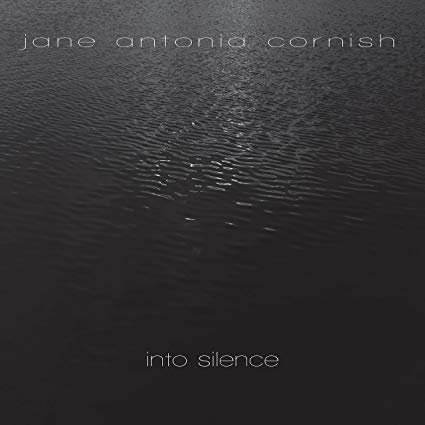
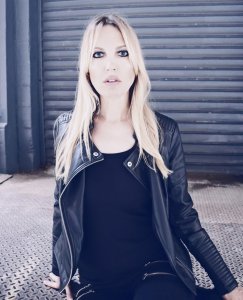


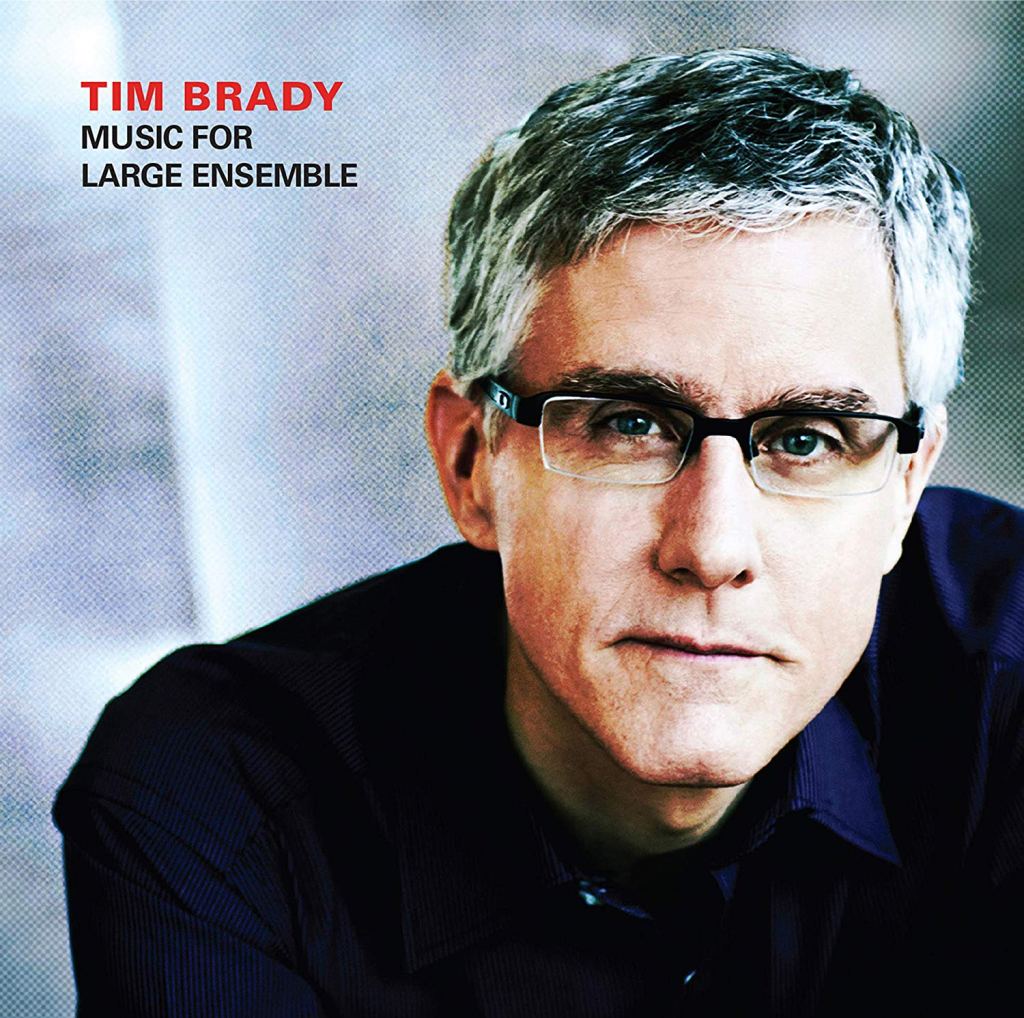


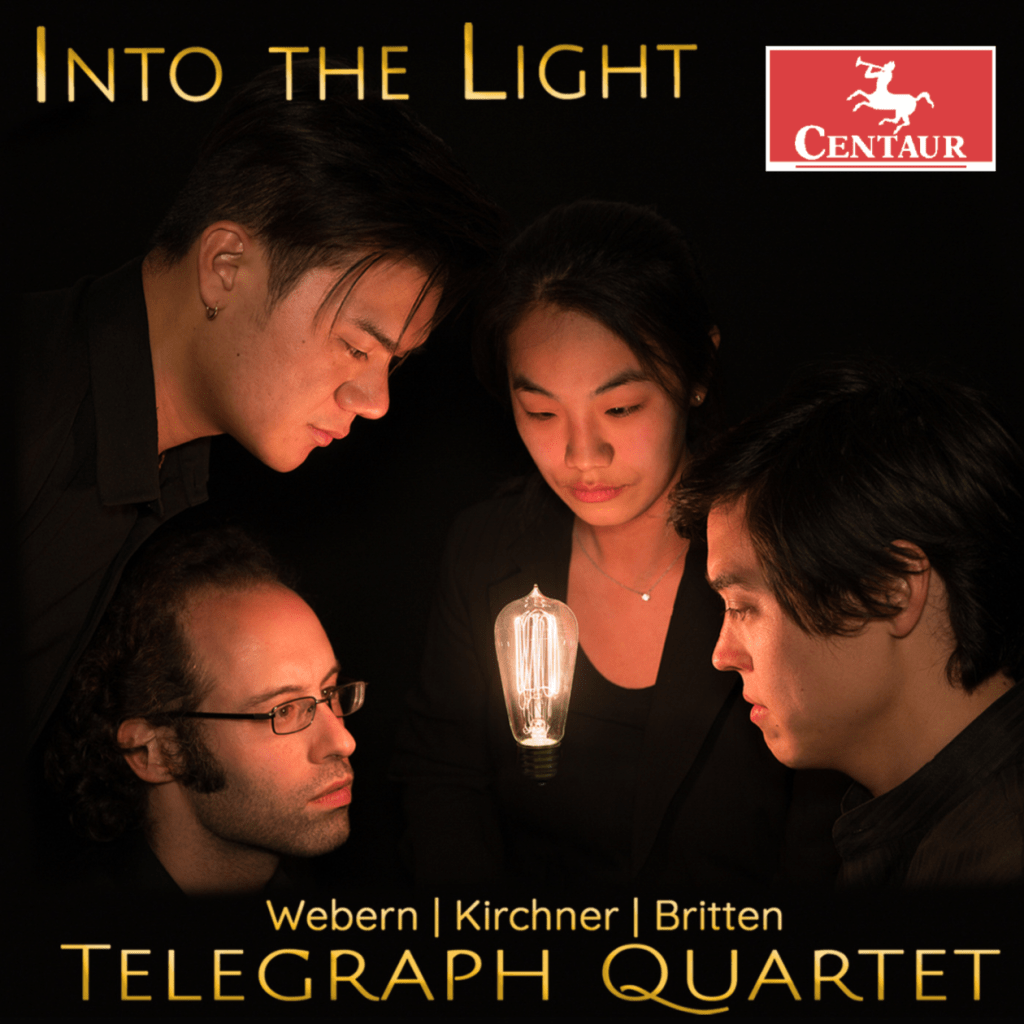
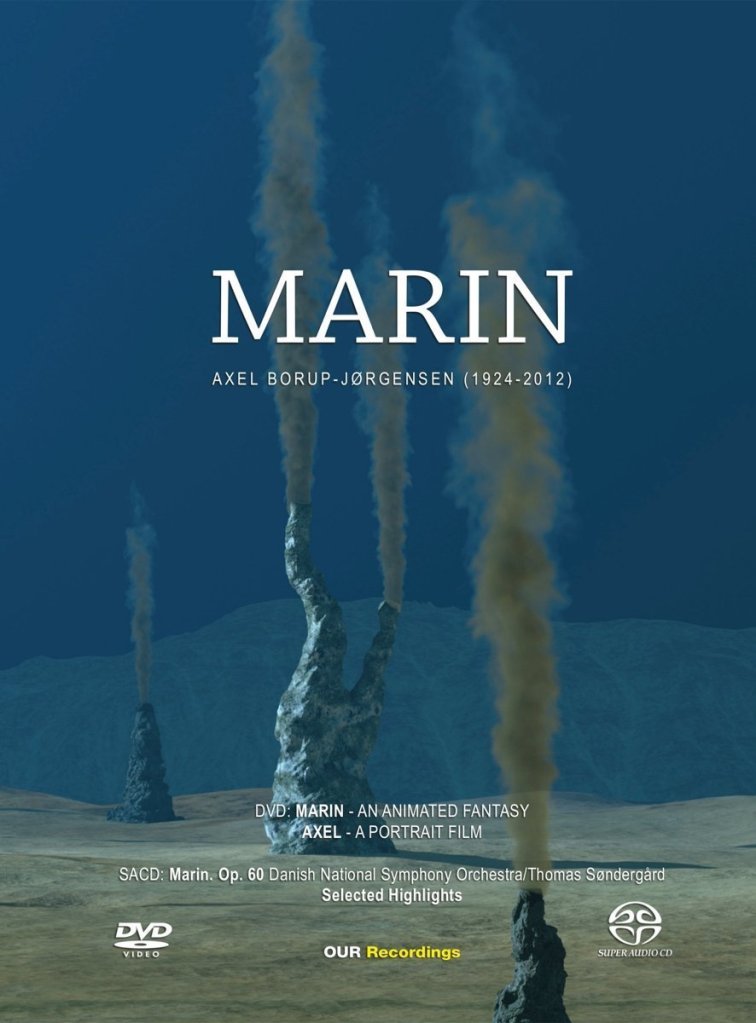
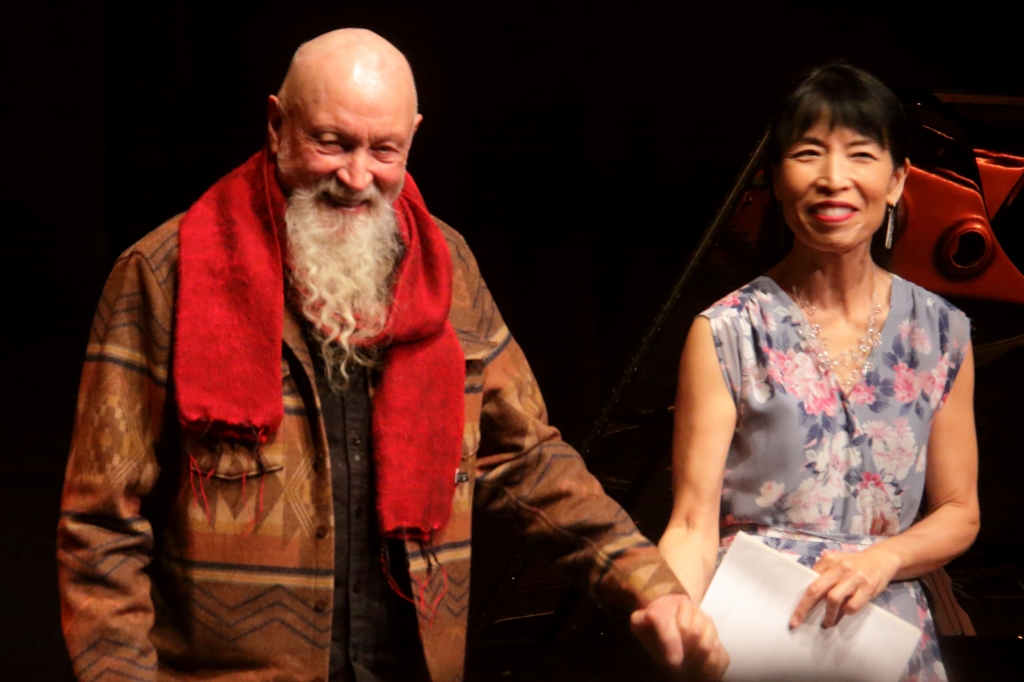

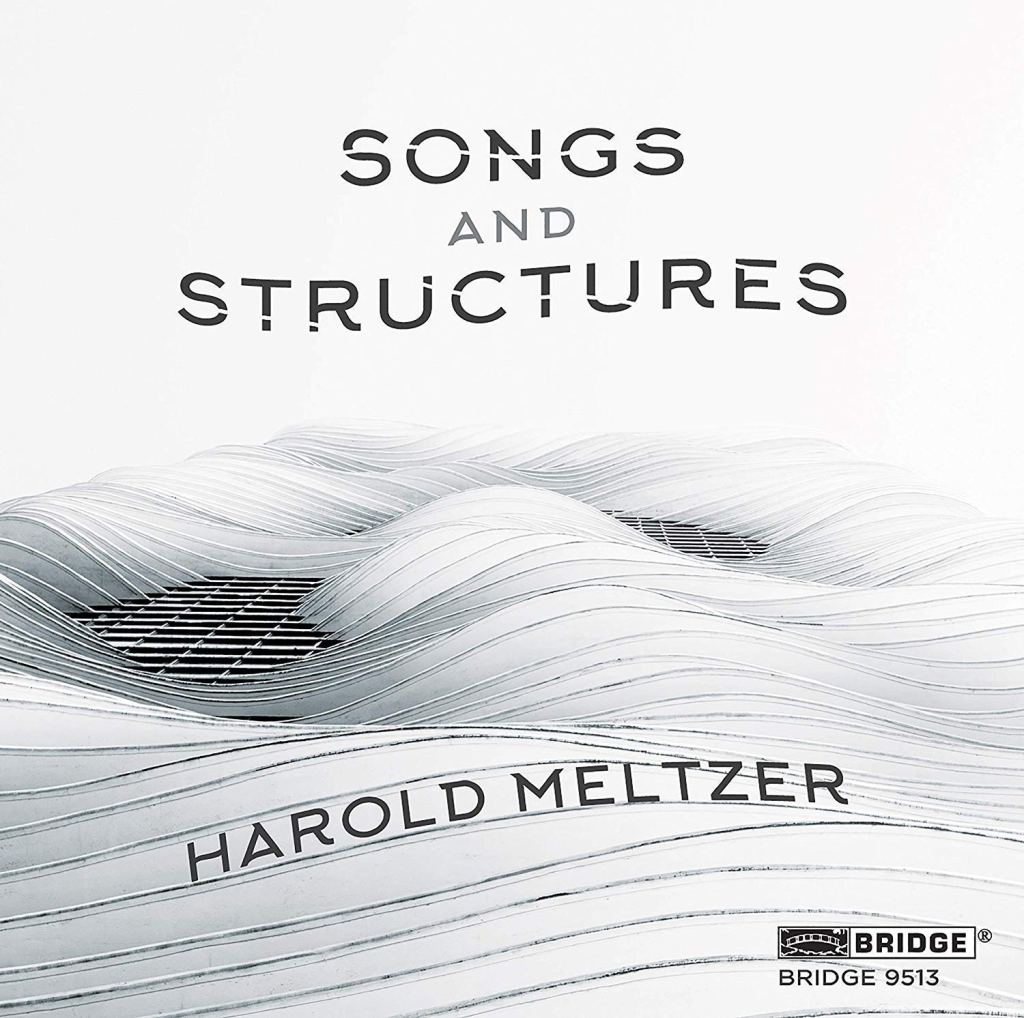


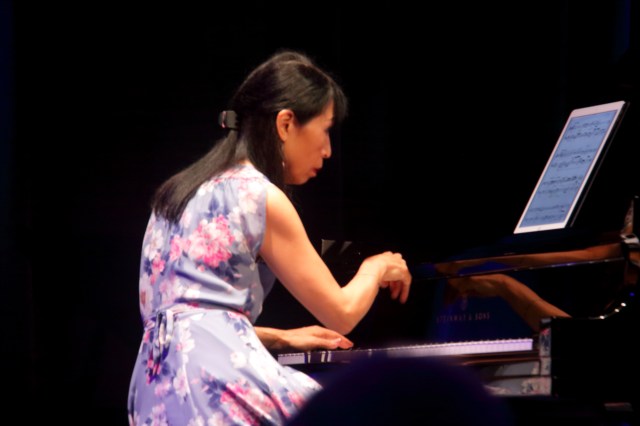

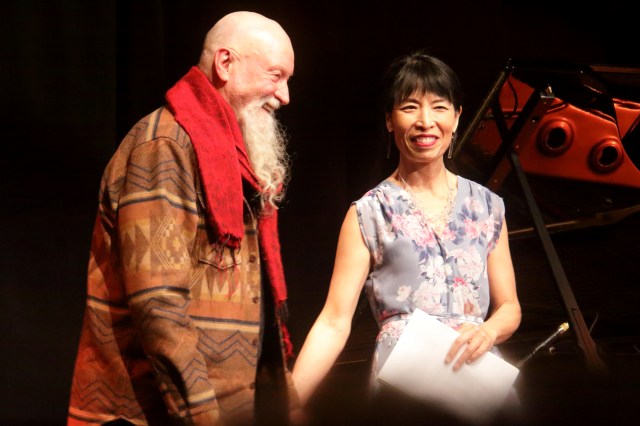


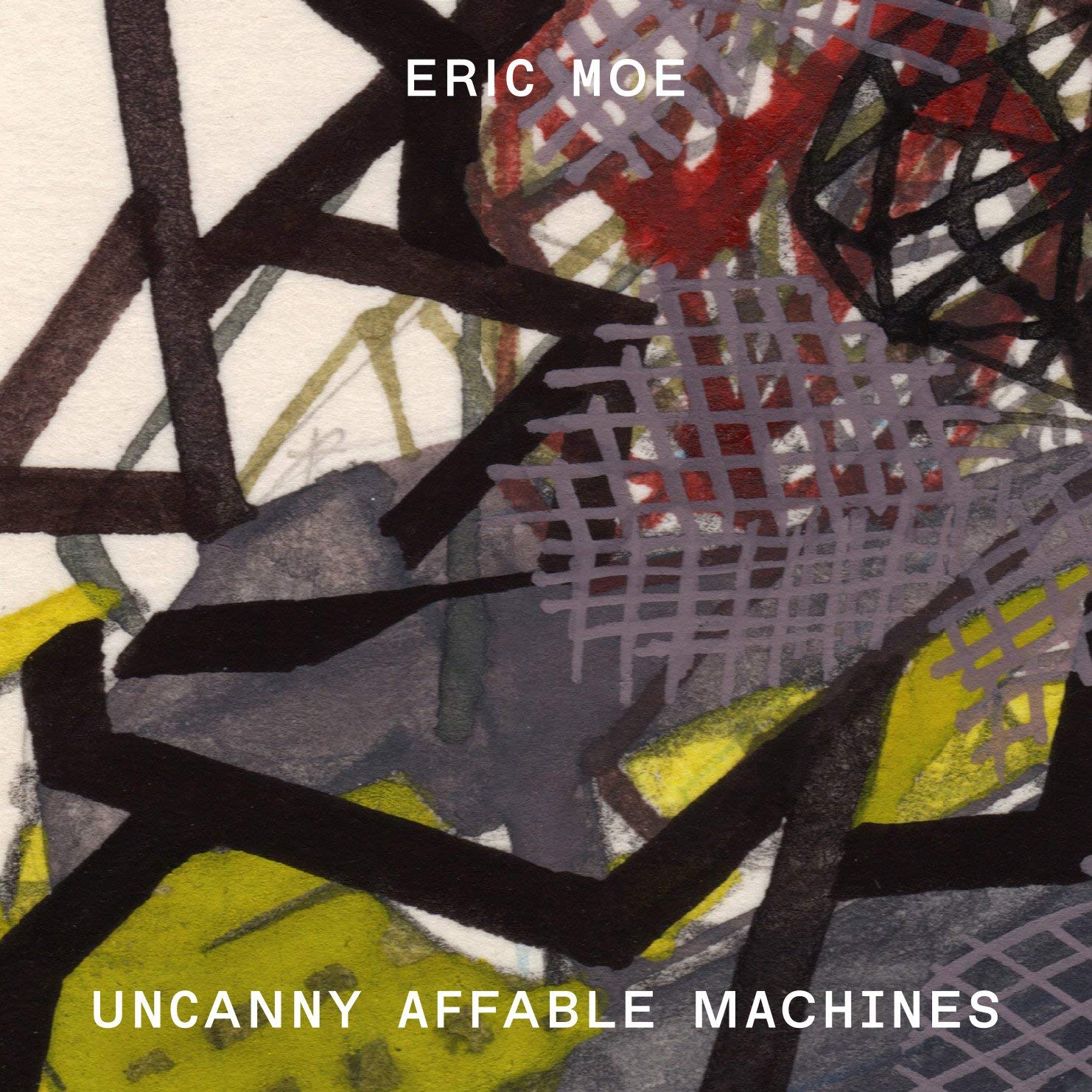


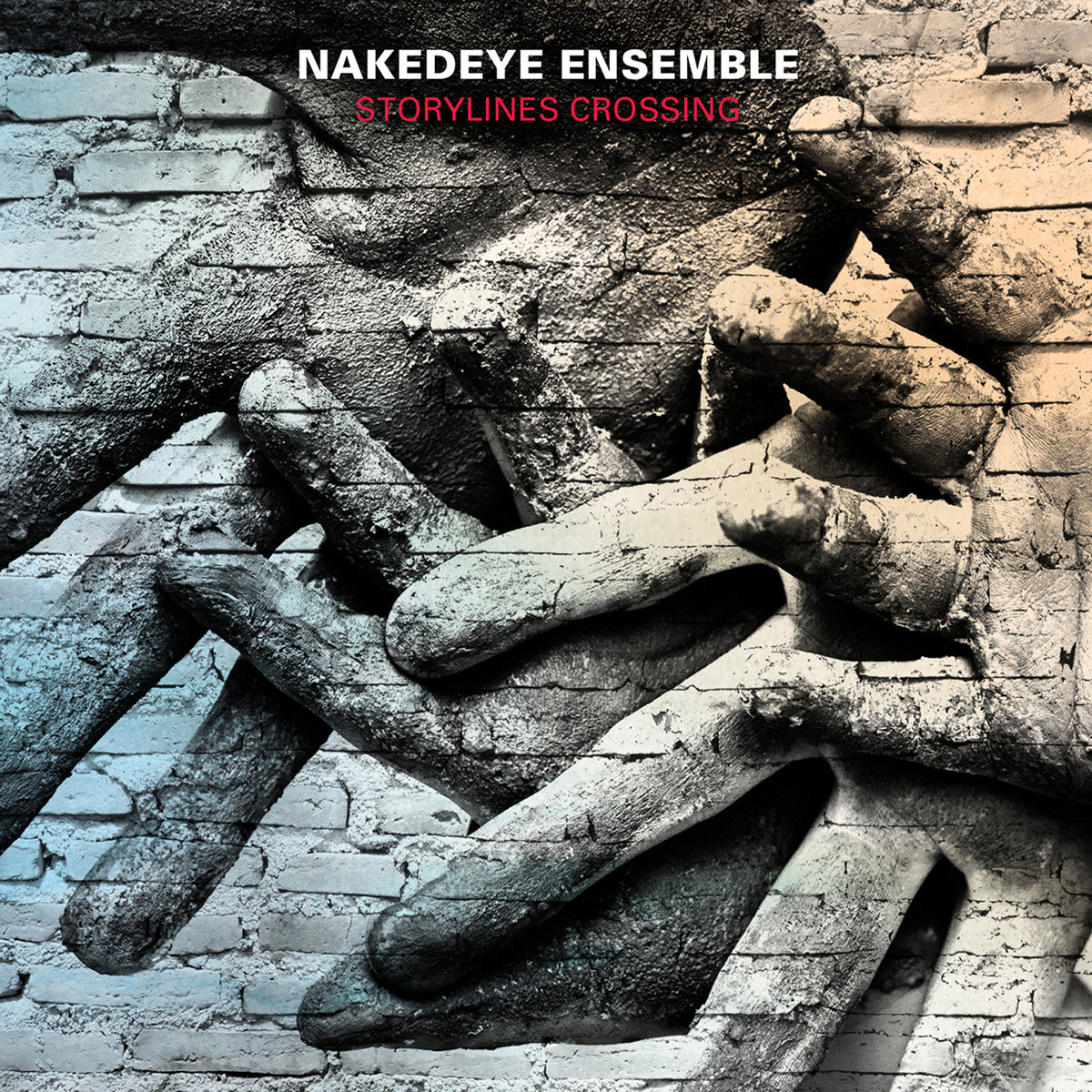


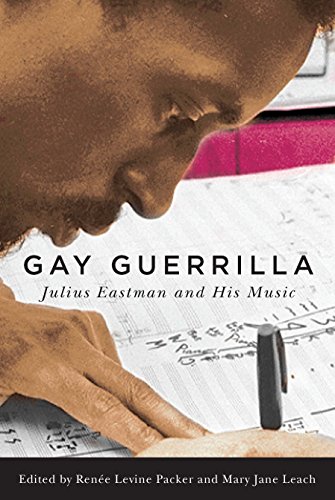
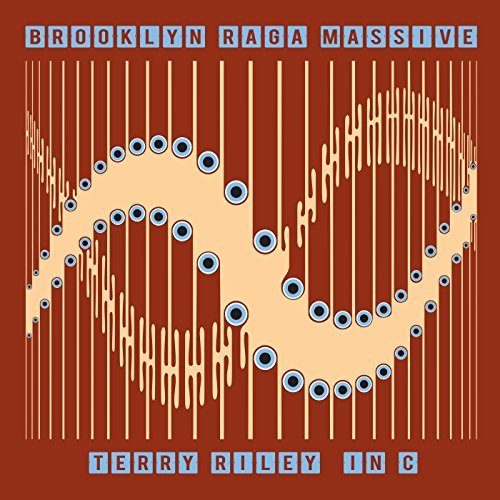




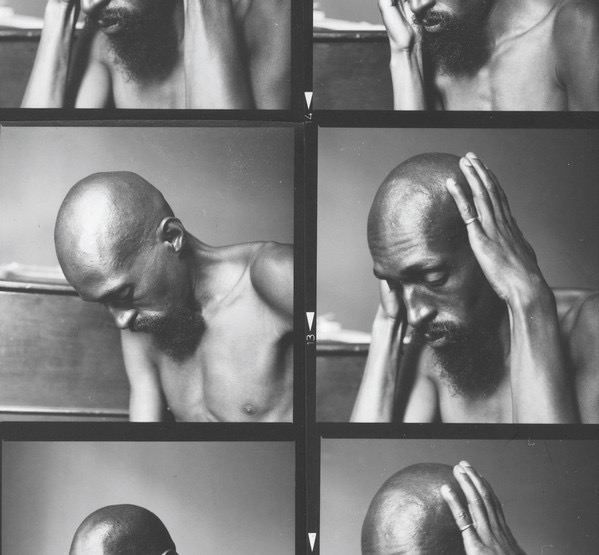


 New Music Buff