…tell the old story for our modern times. Find the beginning.
-Homer, The Odyssey (Emily Wilson translation)
When I first got the email notice of this concert, I was, to say the least, intrigued. A two piano concert at Littlefield Concert Hall on the campus of Mills College featuring two composer/performers who figured prominently in that Temple of new music and in my personal listening life. Alas, I live some 350 miles from that location. But further intrigue came from the featured artists: Sarah Cahill and Joseph Kubera, two of the finest working new music pianists anywhere and both worked with the evening’s composers. This was just too compelling and I decided that I would regret missing this if I failed to go hear it.
So it was, I planned my little odyssey, leaving at about 9AM from Santa Barbara on a nice lightly trafficked trip, more a pilgrimage than an odyssey. A pilgrimage, frequently defined as a personal spiritual journey ostensibly in search of insight or enlightenment is how I’ve come to identify my listener’s adventure to the secular temple of Mills College featuring music of former Mills faculty Robert Ashley (1930-2014) and Robert Sheff (1945-2020), better known by his stage name, “Blue Gene Tyrrany”.
Robert Ashley (copyright unknown)
“Bob and Blue” (copyright by Other Minds)
The two featured composers had a strong connection to the Bay Area, mostly via their work at Mills College. This intelligent but modest production left little room to print program notes so the performers spoke of the music at various points during the concert and the excellent liner notes were made available by a QR code in the program book.
Sarah Cahill, pianist, radio host, producer, tireless advocate for new music (photo copyright by Other Minds)
Joseph Kubera, pianist, member of the SEM ensemble, Downtown Music, and countless collaborations promoting new music with many fine recordings to his name. (Photo copyright by Other Minds)
Our two performers are no strangers to each other or the composers on the program, having collaborated on numerous performances and recordings. The well rehearsed duo turned in riveting performances of this largely unknown repertoire which made a strong case that it be better known. Their playing and choice of repertoire compelled this listener’s attention such that I forgot to take all but a few performance shots. See those program notes for further biographical info on these two fine musical celebrants.
Entrance to Littlefield Concert Hall (copyright by author)
Mills College has long been a temple, a Mecca for new music in the Bay Area of California. Its roster of faculty and students comprises some of the finest post 1945 composers and performers. Darius Milhaud (1892-1974) and Luciano Berio (1925-2003) and students as diverse as Terry Riley (1935- ), Steve Reich (1936- ), and Dave Brubeck (1920-2012) to name but a few. Many artistic spirits musical and otherwise, exert their presence here. It’s a perfect destination for a pilgrimage.
A bust of frequent Mills visitor Lou Silver Harrison (1917-2003) in the lobby, a persistent benevolent spirit. (photo copright by author)
The concert was organized by Charles Amirkhanian and his Other Minds organization, another guiding light in the San Francisco/Oakland new music scene. Pianists Sarah Cahill and Joseph Kubera were to be the celebrants in the concert ritual paying homage to “Bob and Blue” as well as to the oracular Mills College.
Scene from the lobby (photo copyright by author)
Let me tell you about this concert hall. It is the work of legendary California architect Julia Morgan (1872-1957) who famously also worked on Hearst Castle. This is one of her several architectural gems on campus. Her spirit was also witness to this celebration by virtue of her fine architecture.
Stage at Littlefield Hall showing the ornate, colorful detailed designs (photo copyright by the author)
Look at that ceiling and those chandeliers (photo copyright by the author)
Two pianos, a new Steinway stage left and a slightly worn Baldwin stage right were placed such that the pianists seated at their respective keyboards could see each other. The Steinway with its lid open to reflect the sound to the audience and that well worn Baldwin with no lid at all (for reasons to be revealed later). The sonics of the hall and tuning of those pianos were excellent.
Unseen Worlds’ wonderful survey of Blue’s ensemble works.
The concert opened with Blue Gene Tyrrany’s peaen to old Route 66 in his “Decertified Highway of Dreams” (1999) for two pianos. It was clear from this first selection, that our performers were well rehearsed and in sync despite rhythmic complexities inherent in this quite beautiful work. It is cinematic and sweetly nostalgic, a fine example of “Blue”’s genius. The performance was riveting and worthy as the first performance ritual of the evening.
This was followed by a real rarity, a performance of Robert Ashley’s Piano Sonata (1959, 1979, 1985). In fact, it appears to have been the first complete performance of the two piano version of this impressive serially structured piece. Previous recordings are available, one with the composer performing the first movement at the ONCE Festival from 1966, the other by Blue Gene Tyrrany on his album, “Just for the Record”. This writer also found some useful analysis by musicologist Kyle Gann on his website. Gann worked with Ashley and later published a fine survey of Ashley’s music that is well worth your time. The result was a convincing, almost romantic sounding performance of this foundational work in Ashley’s oeuvre.
This was followed by a solo rendition by Joe Kubera of Tyrrany’s “The Drifter” (1994), which was written for Mr. Kubera. He spoke briefly about the structure of this work (which he also recorded on his recent “Horizons” album). This piece has a meandering quality created by the intricate evolving structure. Kubera’s performance was hypnotic and a fine tribute.
The second half began with Ms. Cahill solo at that stage left Steinway playing first Tyranny’s “Nocturne With and Without Memory” (1989), one of his better known works. Then she played his “Spirit” (1996/2002), a piece that is a sort of homage to the experimental composer/performer Henry Cowell (1897-1965). It was rather unusual in that it involved harmonics over which the pianist plays. The title is an homage to Cowell’s famous piano piece, “The Banshee”, a malevolent spirit in Irish mythology. Both were vintage Blue Gene pieces.
Two pianists, one piano.
Then Kubera returned, taking a seat at the blemished Baldwin with Cahill standing at that same piano, at a 90 degree angle to Kubera. Here, in these two obscure Ashley pieces, Viva’s Boy (1991), and “Details” (2b, 1962), Cahill played like a chef at a chef’s table, playing the strings inside the piano while Kubera manned the keyboard. These true rarities getting perhaps their first performance, were certainly a highlight of the concert.
It was Blue Gene Tyrrany’s spirit that was the final ritual celebration on this magical night with both pianists at their respective pianos to give a heartfelt reading of his, “A Letter From Home” (2002). This brought this learned, well rehearsed, beautifully collaborative evening’s ritual to a satisfying close.
The modest, self selected audience, applauded warmly and gave an extended, much deserved ovation and seemed as enthralled as this listener whose musico-spiritual pilgrimage found an ecstatic height. I drove home that same night, blessedly lifted, if only briefly, from the chaos of the world by this wonderful artistic ritual. They will now take this great program to New York.
Terry Riley with a t-shirt displaying the entire score of “In C” (photo from Facebook, copyright unknown)
November 4th, 2024 marks the 60th anniversary of the premiere of Terry Riley’s seminal masterpiece, “In C”. After having completed a variety of respectable compositional efforts, Terry Riley (1935- ) was jolted by the Muse to write this defining work that charted a path very different from that of the western classical mold of the composer’s formal education. It premiered in the very unconventional venue of a house in San Francisco, not in an auditorium designed for concerts. And it’s one of those pieces that now marks the transition from almost purely experimental writing to a style later dubbed “minimalism” (though many composers whose music is subsumed under this title eschew it in varying degrees). And whether you call it minimalism, trance music, drone, etc., the style would come to dominate a huge portion of concert works and recordings.
The score consists of 53 short musical phrases with no specified instrumentation and with no conductor’s score, just parts with a seemingly simple set of instructions. One page is what one might expect of a sketch of a larger work to be, not a complete score but, that’s it, One page with the instruction for the musician to repeat each cell or phrase ad libitum and then move on to the next. It was ostensibly the suggestion of composer/performer Steve Reich to have a pianist play eighth note repetitions of the top two highest octaves on the keyboard. In addition to this “click track” like strategy, the playing of those high “C”s also serves to anchor the tonality much as continuo does in that quasi improvisational baroque practice.
There is simply no finer account and analysis of this music than that of Robert Carl’s “In C”. Robert Carl (1954- ) is a teacher, composer, performer, and musicologist. I do not presume to have as extensive an analysis as he does but I’m interested here in providing a celebratory perspective from where I sit (and have been seated).
This music (as does all art) stands in a context with concurrent and recent events surrounding its conception and performance. Temporally it stands along with other notable compositions from 1964: Witold Lutoslawski- String Quartet, John Coltrane (admittedly one of Riley’s influences)- the albums, “Bessie’s Blues” and “Lonnie’s Lament”, Igor Stravinsky- Elegy for JFK and Variations in Memoriam Aldous Huxley (both men died on November 23rd, 1963), Roger Sessions- Symphony No. 5 and his opera, “Montezuma”, Milton Babbitt- Philomel, Karlheinz Stockhausen- Mixtur, Ben Johnston- Sonata for Microtonal Piano, Luciano Berio- Folksongs (written and premiered at Mills College, the later home of the Tape Music Center where Berio was teaching then), Olivier Messiaen- Et Expecto Ressurectionem Mortuorum, Iannis Xenakis- Eonta, and La Monte Young- (the first iteration of his masterpiece), The Well Tuned Piano.
My little list here is just a sampling of the western classical and jazz works that graced the natal year of “In C”. Admittedly, it is a cornucopia of some more experimental, some less so music that lie in this historical orbit. But, among the works in this list, it is the work of John Coltrane and La Monte Young that shares musical DNA with Riley’s aesthetic in this music. The other works contemporary mentioned represent a sort of “Garden of Forking Paths“ to a panoply of styles very different from the work at hand.
At a time when the style of American pop music had just recently met The Beatles, this work was a sort of coalescence of experiments done by La Monte Young, Steve Reich, and others. “In C” seems to have come out fully formed in its way. It was seemingly influenced by pop, jazz, and blues (whose use of repetition is endemic). 60 years later it is performed frequently and there exists at least 40 or so recordings of the work.
When I began writing this article I realized that Robert Carl’s book on this work fully covers the history and provides a definitive analysis to which I cannot contribute anything additionally useful. I then considered eliciting commentary from musicians and listeners about this music but found little interest because that has been well covered by several previous anniversary essays. So I decided to share a discography and photos of some the recordings I could find that have given me further insights into this touchstone work.
This discography is not comprehensive but my intent here is to celebrate this anniversary with the cover artwork that adorns the ever increasing documenting of this landmark of western art music. I will present what I believe is a representative selection of some 40+ versions.
Your humble author was 8 at the time of this work’s premiere. And my first hearing of ‘In C’ was in 1976 when my local radio station, the great WFMT in Chicago, aired a program curated by Raymond Wilding-White, a composer and professor of music at De Paul University. His task was to present representative works of American music, one for each day of the nation’s bicentennial year. ‘in C’ was one of them.
Since then I have heard many interpretations of this work. The original performance was at 321 Divisadero Street in San Francisco, California on November 4th, 1964. The original performers were: Terry Riley, Steve Reich, Jon Gibson, Pauline Oliveros, Stuart Dempster, Morton Subotnick, Warner Jepson, Tony Martin, William Maginnis, and Ramon Sender (who celebrated his 90th birthday this past week). This venue was the second and last home of the San Francisco Tape Music Center before it relocated and was renamed The Mills College Center for Contemporary Music in 1966 in Oakland.
Here, with brief commentaries, are my favorites. There are at least 38 versions according to the Wikipedia article. Here are my personal favorites in chronological order of release date:
The original Columbia Records release (1968)
If you only have one recording this is probably the one you want. Recorded in 1968, this brought the work effectively to a wide audience via international distribution. The instrumentation (some overdubbed) includes: saxophone, oboe, bassoon, trumpet, clarinet, flute, viola, trombone, vibraphone, marimbaphone.
Riley with the Chinese Film Orchestra (1989)
This important recording was made in China around the time of the Tiananmen Square uprising and the tapes were in effect smuggled out of the country in the aftermath of that incident. It stands as a fascinating document of eastern musicians encountering and interpreting this masterpiece.
The 25th anniversary release on New Albion (1990)
Don’t you just love anniversaries? By the time of this release (1989), this work had been disseminated into wide geographic regions and cultures. This version includes many of the musicians who premiered the work and this “traditional” reading is a loving homage to Riley’s work.
The Bang on a Can release (1998)
The Bang on a Can All Stars are among the finest ambassadors of new music. They have earned the right to put their stamp on any new work they choose and subsequently bring it anew to another generation of listeners.
Prog Rock does homage to Terry Riley (2001)
If you want to hear the wide range of musicians who have chosen to pay homage to this work this is a fine place to start.
The Africa Express release (2015)
Another fine example of the way this work can sound from a Central African perspective. This performance from Mali is absolutely electrifying.
Another fine culturally tinged version (2017)
This album is a personal favorite from the Brooklyn based collective featuring instruments from Hindustani traditions and others alongside western instruments. You can read my enthusiastic review here.
There are probably at least 50 recordings of this work. Some are private, maybe even bootleg versions. Clearly this work continues to become more and more essential and influential piece of music. It is not unlike a musical version of the Iconic monolith from the movie 2001: A Space Odyssey. The anomalous structure was of alien origin and was purported to accelerate the evolution of species who encounter it.
Riley’s work is most .definitely of terrestrial origin (well, San Francisco anyway) but, clearly this work continues to intrigue musicians worldwide and has arguably influenced the development of music itself.
Being asked to review this retrospective of the work of this virtually uncategorizable dancer, singer, composer, dramatist is the telling of my personal experience of growing up nurtured by this artist. Monk is not, of course the only artist whose presence has nurtured me and so many friends but her work is a case where I learned how to tune my curious radar to find more of the music that touched me deeply.
I first discovered her work when I purchased her album, “Key” (1971), self released and marketed via the late lamented New Music Distribution Center in New York. That album, later released on the Lovely Music label along with two releases on the great German avant garde label Wergo (Our Lady of Late, 1973 and Songs from the Hill/Tablet, 1979), constitute the minimalist, SOHO loft music which characterizes her style even now. But with her first ECM release she clearly hit her stride. Those early albums are definitely worth hearing but her mature style blossomed on ECM. It was, in retrospect, a sort of quantum leap, if you will.
LP album cover of “Key”“Our Lady of Late”“Songs from The Hill”
In that first album one can find Dick Higgins among the singers and Colin Walcott producing and playing percussion (as well as singing). Walcott, along with the yet to be known Julius Eastman would later participate in the Dolmen Music release. Monk, who studied dance at Sarah Lawrence College along with fellow student Alwyn Nikolais established “The House”, her flexible performing group in 1968 at a time which saw a great deal of artistic energy in and around Manhattan’s SOHO district where she encountered musicians like Philip Glass, Steve Reich, and performers sympathetic to new innovations and ideas. She also taught and continues to teach her characteristic extended vocal techniques. Monk, along with John Cage, Philip Glass, and Robert Ashley was featured in Peter Greenaway’s “Four American Composers (1983).
The release of her first ECM disc, “Dolmen Music” (1981) can now be seen as a sort of watershed event. It was followed by “Turtle Dreams” (1983) a work which was prominently featured at New Music America 1982 in Chicago along with Robert Ashley’s “Perfect Lives”. Monk’s appearance on ECM occurred at about the same time as Steve Reich’s masterful “Music for 18 Musicians”. Monk found her mature voice more or less at the same time that Steve Reich and Philip Glass had found theirs. And anyone following new music in those years will recall the flow of new musical ideas that established many now acknowledged masters as legitimate artists.
While the major masterpiece, “Dolmen Music” dominates the album, Monk’s quirky mix of humor and pathos in pieces like “Gotham Lullaby” and “Biography” remain signature pieces in her oeuvre. And Turtle Dreams was made into a performance film for public television by visual artist Ping Chong in 1983, now available on YouTube.
She followed with “Do You Be” (1987) and “Book of Days” (1990) which also exists in at least two film versions and the CD itself which has been described as a “film for the ears”.
Following “Facing North” (1992) Monk released her only opera (though she refers to much of her works as “operas” this is the only one that comes close to the more generic concept of western music operas) to date, “Atlas” (1993) which was commissioned and subsequently performed at the Houston Opera. This represented another phase in her artistic development as she utilized her structured improvisation techniques along with her now familiar extended vocal techniques with an expanded set of performers both vocal and instrumental. Atlas is arguably similarly creative (and transgressive) as Philip Glass’ 1976 “Einstein on the Beach”. Both were developed in an unconventional manner and uses a similar harmonic language with really none of the standard conventions of western music in opera. Would that we can some day see a filming of this work.
I was privileged to see Monk in person for the first time when she performed excerpts from “Volcano Songs” (1997) in Chicago. Those images involving, among other things, light sensitive areas where Monk lay down and left a ghostly shadow upon arising. In addition to her engaging minimalist inflected music, Monk is a master at creating compelling images.
“Mercy” (2002) was followed by “Impermanence” (2008) which I was thrilled to see at Stanford. “Songs of Ascension” (2011) was another landmark in this piece conceived and performed in conjunction with installation artist Ann Hamilton in her tower in Northern California. Attendees to this event were brought in by bus due to the lack of actual parking facilities in that tower. I wish I could have experienced this but hopefully a cohesive video release will be forthcoming. Excerpts are available for viewing on YouTube and on Monk’s website.
“Piano Songs” (2014) by the wonderful new music championing pianists Bruce Brubaker and Ursula Oppens filled an inexcusable gap in the documentation of Monk’s piano music. And following her receiving the National Medal for the Arts in 2015 she released “On Behalf of Nature”(2016).
Monk is a well documented artist largely due to her productive affiliation with Manfred Eicher and ECM and, while gaps remain these recordings represent a major artistic accomplishment and an enduring legacy for new music, for women composers, for western art music. This lovely box set is truly a joy to behold.
Meredith Monk performing an encore at the final concert of OM 21 (2016) in San Francisco
Aaron Jay Myers’ third album grabbed my attention immediately and didn’t let go til the album ended. Working un-self consciously in a stunning plurality of styles (this guy clearly paid attention to his 20th century music history classes) he has produced some mighty substantial works. His ability to integrate a wide variety of techniques and styles into his artistic persona is simply astounding. His references to other composers’ works, rather than sounding derivative, evoke nostalgic homage, at least in this listeners ears. Indeed there seem to be more references per square inch than in a Thomas Pynchon novel. And the fact that he shares this writer’s passion for Star Trek, Deep Space Nine only endeared him more to me (more on that later).
His very listenable music seemingly embraces the whole of the twentieth century stylistically and his very judicious use of extended techniques for pretty much all instruments including voice demonstrate a firm understanding of where those techniques best serve his artistic vision. Fortunately he has managed to find performers who both meet his technical demands and have a real grasp of his musical vision. This Neuma release is truly something special.
There are six works divided among the thirteen tracks. These chamber works were written between 2011 and 2021. None require more than ten minutes or so of your time and left this listener satisfied with the music and optimistic for the future of classical music in general.
“Save One Life, You Save the World Entire” (2017) for the unusual combination of flute and baritone saxophone opens this album with a surprisingly engaging work. It sounds like a challenge for the musicians who handle those challenges seamlessly and engage the listener in this rather brief essay.
When I listen to “Late Night Banter” (2011 rev. 2015) now, I do so in bare feet (it knocks my socks off). This piece for ten musicians with a conductor is a finely crafted piece that grabbed this listener’s attention by that craftsmanship but also by what seem to be a plethora of sonic references to 20th century music. The style of Stravinsky, an homage to Luciano Berio, etc. These brief references evoked emotional responses which led me to recall similar emotions I had attached to the apparent (at least to me) object of said reference. Even minimalist references occur matter of factly. Such efforts can sound derivative or at least imitative but not so in this piece. Rather it had the quality of a tour of the twentieth century in respectful jogs of memory. But even if you don’t get the references, this is a substantial and entertaining work. The evanescence of those references had me questioning whether they were actually there or just my mental figment. (I guess I’ll just have to listen again). Either way I was thrillingly engaged.
Avery Brooks as Captain Benjamin Sisko, commander of Deep Space Nine
“You Get On My Nerves, And I Don’t Like Your Hat” (2020) is the Deep Space Nine reference mentioned at the beginning of this review. If you haven’t seen this series I highly recommend it. And so, apparently, does Aaron Michael Myers. This work for vocal quartet (SATB) takes its title from a witty utterance by Captain Sisko (my fave Star Trek Captain). Of course you don’t have to know Star Trek lore to appreciate this work, but it helps. It is a challenging work for four unaccompanied soloists which reflects the composer’s sense of humor as well as his connection to pop culture.
Aaron Jay Myers
“Lichens III” (2018) is scored for soprano voice but the singer also does the work of a percussionist. In addition to the vocal challenges the singer is asked to perform on “body percussion”, the various sounds one can make by percussing (pounding) on one’s body. It is more commonly an idiom of folk and blues but soloist Stephanie Lamprea handles both the singing and the percussing as though it is her everyday practice accomplished with ease.
Clairsentience (2016) is another wind instrument duo, this time for clarinet and alto saxophone, a similarly unusual choice of instruments. This one is about twice the duration of that first piece and every bit as engaging as well as challenging.
The last track is a marvel of multitasking. Other than Aaron Trant (who does a fine job) on drums, all of the parts (three electric guitars, and bass) are handled by the composer. “Perception Stains Reality” (2002) is a tour de force consistent with the other works on this disc. Here he shows his rock/pop sensibilities, clearly as essential a part of his artistic endeavors as his “classical” training.
Myers is one to put on your hot list. He is certainly on mine. If you can hear a performance of his work, whether live or recorded, you would do well to check it out.
This is Tim Brady’s fourth Starkland release, a distinction shared by only two other composers, the late Tod Dockstader and (the delightfully very much living) Guy Klucevsek. And given the impressive track record of the Starkland label’s ability to find and promote innovative composers and performers who later achieve much wider recognition, this is an event that demands serious attention.
ST-232, released in 2019 contained works by Brady along with several associates from his “Instruments of Happiness” ensemble (and others) and is essentially a Brady album which features his “Instruments of Happiness” guitar quartet playing works by various Canadian composers.STS-230, also a 2019 release contained Brady’s Concerto for Electric Guitar and Chamber Ensemble along with Brady’s “Eight Songs for: Symphony No. 7”STS-224, a 2016 release, the recording premiere of this live performance guitar quartet, contained, along with a couple of shorter works by fellow Canadians, two versions of Brady’s Symphony 5.0, one for ensemble and a second version for solo guitar with electronics (arguably Brady’s first solo guitar symphony but the original version is for this guitar quartet).
With a catalog presently numbering some 39 plus CDs and a CV that boasts 4 operas and a massive catalog of compositions for ensembles ranging from solo to large orchestra, this proudly Canadian composer has mounted (metaphorically, of course) an invasion from the United State’s northern border of his distinctive artistic vision prompting this reviewer to suggest a comparison to the pop “invasion” of the Beatles in the early 60s.
Track listing
My admittedly tongue in cheek Beatles comparison is not meant to eclipse the incredible artistry of this obviously very industrious artist. My previous reviews compared his work to electric guitar giants like Rhys Chatham and the late Glenn Branca. But this only serves to illuminate a fraction of this man’s work. I invite listeners to peruse his well organized website to get a perspective.
But let me get back to this release. It is undoubtedly a bold move to use the term “symphony” to describe a work for a solo artist. Charles Valentine Alkan (1813-1888) wrote a symphony for solo piano (opus 39 nos. 4-10 from 1857) Kaikhosru Shapurji Sorabji (1892-1988) referred to his third piano sonata (1922) as a symphony and later wrote six more symphonies for solo piano between 1938 and 1976. And more recently the late Glenn Branca (1948-2018) wrote several works for various configurations of guitars he called symphonies. But this is the first symphony written expressly for solo guitar as far as I can determine.
“Symphony in 18 Parts for solo electric guitar (2021) – 50 minutes For solo electric guitar, FX pedals and looper, in 18 movements” as it is listed on the composer’s website is (if I counted correctly) his 8th Symphony. Brady apparently numbers his symphonies in order of composition without reference to instrumentation. While several of his symphonies involve one or more electric guitars, this is the first solo guitar work to which he gives the weighty title of “Symphony” (unless, as noted above, you count the solo version of Symphony No. 5).
The term “symphony” carries with it connotations, at least, of grandeur, painstaking structure, and serious music making. And this work is very serious and meticulously constructed. It is, of course, reflective of a mid career composer who has written a great deal and has learned from that experience. It has as much a right to be called a “symphony” as any similarly large and painstakingly written piece of music.
First, let me say that, other than a tendency to use one (or a lot more than one) electric guitar in his music, Brady’s music has relatively little in common with Glenn Branca and Rhys Chatham. In fact, Brady seems to have more in common with Steve Reich and Elliott Sharp. But while Chatham and Branca emerged from a music scene dominated by punk in all its iterations, Brady seems more connected to the Beatles and Les Paul.
The work is divided into 18 sections, each running a modest 1.5 to just under 5 minutes. It is a structure similar in this listeners mind to American composer Alan Hovhaness (1911-2008), whose Symphony No. 9 (1949-50) “St. Vartan”, a similarly epic masterpiece in no fewer than 24 short movements. It is the interrelatedness of those movements that make them a part of the whole symphony. And so it is with Brady’s Symphony. David Lang (Pulitzer Prize Winner and founding Bang on a Can” member) says essentially this in his segment of the liner notes that come with the recording. Tim Brady acknowledges much the same in his segment of the liner notes.
The cover art by fellow adventuring guitarist and composer Elliott Sharp is functionally an homage to Brady and his work. The recording by Tim Brady and Morris Apelbaum, mastered by Brady, Apelbaum, and John Klepko is lucid (and great on headphones especially when Brady pans the sounds across the stereo field).
The 18 movements all have titles which are metaphorically related to the music therein. David Lang aptly describes these varied and intense movements as sort of biographical statements about what the composer can do with his instrument. Each movement has both form and development much as one would expect of a symphonic movement.
On the one hand, this symphony is not easy listening. On the other hand it is likely catnip to electric guitarists as well as to new music enthusiasts including your humble reviewer. Brady’s Canadian invasion, far from a takeover, is simply a musician sharing his substantial art from across the northern border and presenting his latest efforts. Like the Beatles, Brady deserves to be welcomed. This prolific composer/performer/teacher/innovator has interesting things to say.
At first I attempted to write something about each of the 18 movements but I don’t think that would have added anything useful for prospective listeners. This piece taken as a whole most aptly deserves the descriptor “tour de force” as each movement seems to have its own character deriving from the composer’s use of various (apparently deeply studied and judiciously chosen) techniques and ideas which sometimes threaten to overwhelm the listener, sometimes with sheer volume, sometimes with dazzling virtuosity, sometimes with softness, sometimes with silence, and always with interesting ideas.
In some ways this is a collections of ideas and techniques the composer has amassed over some 50 + years of playing. Each movement seems to be a more or less self contained exposition of playing techniques and the composers own approach to harmony and invention. That sounds potentially very dull but this is not a collection of etudes didactically accounting for and crystallizing his ideas. It is the organic appropriation of personal achievements in developing his compositional style. And it is an homage to electric guitarists that preceded him. Not a textbook as much as perhaps a signpost defining his present stage of development even as he moves forward with other projects.
I suppose one could challenge the notion of calling this a work for solo guitar given the effects pedals, looping systems, etc. but the use of electronics and looping techniques as a compositional aid or method is so ubiquitous that point is moot. Call it what you like but just listen. Let the music flow over your ears. At the very least this is a defining milestone in Brady’s long and productive career. It’s hard to to imagine what he might do next but I’m sure he’ll think of something.
There were no percussion ensembles in Western music until the early twentieth century, at least not anything close to the size and instrumental diversity we see now, but since then there have been a variety of percussion ensembles which have popped up. some touring, some recording, but all investigating the possibilities of this collection of pitched and unpitched instruments. Notable examples from this writer’s memory include the Paul Price Percussion Ensemble, the Donald Knaack Percussion Ensemble, Amadinda, and the Canadian group, “Nexus”. Each of these ensembles (the list is not comprehensive) has put their own stamp on the flexibly nebulous group subsumed under the title, “Percussion Ensemble”.
All of these groups have chosen which instruments to include in their group, which to exclude, and they have done their own curation of music to expand their respective repertoires and the percussion group repertoire as a whole. And the present recording presents yet another Third Coast Percussion CD on Cedille Records for this busy Chicago based group. The relationship between this energetic ensemble and the equally energetic Cedille Records has been a mutually beneficial one artistically. this release is the fifth release for that label. They have at least nine other albums as a group and have collaborated on many more recordings.
As noted on the album this disc contains all world premiere recordings that reflect varying degrees of collaboration. One of the unifying threads of this CD is the variety of compositional approaches. The Elfman piece being perhaps the most traditionally notated and structured. The others involve different compositional methods which are not exactly traditional in classical music. It is the exploration of such non-traditional methods and the expansion of the definition of composition that is a characteristic of this always interesting classically trained group of musicians.
Let me just start by saying WOW!!!
The first work on the album is by Danny Elfman (1953- ) is best known for his work in movies and television as the composer of “The Simpsons” theme and similarly energetic scores for Tim Burton’s films among others. His roots were in his work with the unusual pop band “Oingo Boingo” whose manic style is still present in much of Elfman’s work. And this is not his first appearance in this new music blog either. His Violin Concerto was reviewed here. He manages to succeed in pop, film, and the concert hall, a feat that few can match.
Elfman’s rather blandly named, Percussion Quartet (2019) is appropriately described in the liner notes as the most conventional work here in terms of how it was written. It is fully notated in in traditional notation and consists of four movements ranging in length from about 4 minutes to about 6 and a half. The work resembles traditional sonata forms with Elfman’s energetic and sometimes quirky melodies that successfully draw the listener through the composer’s journey. That bland title is almost ironic as it belies the really entertaining qualities of this piece. Third Coast’s realization is definitive as one would hope for a world premiere recording.
The second composition is a transcription by Third Coast of a popular Philip Glass piano work, “Metamorphosis No. 1.” But this is a transcription influenced by another transcription, that of the Brazilian group, “Uakti”. So this can be said to be tantamount to a collaboration with another performing ensemble. Clocking in at nearly ten minutes this track is a familiar interlude that cleanses the aural pallet for what is to come.
Photo by Cary Huws
And what does come next is a collaboratively composed seven movement work entitled, “Perspective”. This more poetic title is the source of the album’s title. This work by Jlin (Jerrilynn Patton 1987- ) was originally written by first recording multiple tracks or layers and then working with the musicians of Third Coast to transcribe these ideas into traditional notation and into a form playable by the quartet of percussionists. This, of course, resembles the methodology that brought forth the wonderful Devonte Hynes album (also on Cedille) reviewed here.
The music is arguably entirely composed by Jlin with the orchestration creatively realized by Third Coast Percussion (doubtless in direct discussion with Jlin). What results is a dizzying and energetic set of movements whose styles derive in part from minimalism and from the rhythmic complexities of African drumming and contemporary dance music. Jlin, who hails from Gary, Indiana, works from a perspective of a DJ spinning dance music. But this is hardly your typical DJ. This is a fascinating musical mind who just happened to have started with DJ equipment.
Flutronix (photo from their website)
Another example of Third Coast Percussion’s creative collaborations has resulted in “Rubix”, a three movement work written (mostly) by Flutronix, a genre busting duo. Flutronix is Nathalie Joachim and Allison Loggins-Hull, both classically trained flautists who aren’t afraid to cross dated boundaries to create music that speaks their minds.
This is some high energy music which reflects a variety of styles but always demands much from all players involved. The duo, whose rendition of Steve Reich’s “Vermont Counterpoint” demonstrates their virtuosity and interpretive rigor. Rubix is essentially a chamber work for flutes and percussion but their defiance of categories seems to be as much a critical element of their music as is their virtuosity. Bottom line is that this is engaging, creative work that leaves the listener wanting more even as they may be unsure what they just heard. Kudos, all!
This album is satisfying on several levels. It is a return to the label that contained the composer’s his first big release, the three disc set on DG which contained “Drumming” (1971), “Six Pianos”, and “Music for Mallet Instruments, Voices, and Organ” (both from 1973). Of course it was the ECM release of “Music for 18 Musicians” (1974-6) that became his signature work incorporating the experimentation heard in the music in that DG box set into the composer’s now familiar mature compositional language. The present release, also available on vinyl, seemingly reflects the post experimental composer’s grappling with the oh, so classical form of the string quartet. It’s a truly fine release and an homage to the composer.
DG 2740 106
Like many of his peers, Reich eschewed many of the conventions of western art music. His work at the San Francisco Tape Music Center helped him discover “phasing” and use of the speaking voice as a compositional element. His study with master drummers in Ghana taught him about quasi improvisational large ensembles and his subsequent study of Hebrew cantillation further refined his understanding of speech and song in his compositional contexts.
As he is quoted in the accompanying booklet, Reich never thought of attempting to use the string quartet form in his work. But along came the delightfully forward looking and genre breaking Kronos Quartet. That collaboration brought forth his landmark, “Different Trains” (1988). And the rest is, as they say, history. “Triple Quartet” for string quartet and tape (but no voices) came in 1998 and his WTC 9/11 (2010) which used sampled voices much as he did in Different Trains.
To be fair, Reich never appears to have intended to engage with the classical form of the string quartet (or any other classical forms for that matter). He uses the convenient availability of musicians sympathetic and sufficiently skilled to perform his compositions. The fact that they happen to be in string quartets is incidental. Much as the inclusion of a singer (as Schoenberg did) bent the quartet to fit his compositional goals, many have subsequently done similar alterations and additions to that classical ensemble. The difference is that Schoenberg adding a soprano, Kirchner (among others) adding electronics, etc. did so but clearly defined their works as “string quartets”. Reich did not do this but this disengagement with classical forms (string quartet, concerto, symphony, etc.) does not detract from the absolute quality of his music.
It would be unfair and would miss the point to try to judge these works via comparison and contrast with Haydn, Beethoven, Bartok, etc. In fact these works are not a part of that canon. Ultimately they stand on their own as part of Reich’s unique vision as a composer and, as such, they succeed very well.
WTC 9/11 and Different Trains are political statements with specific spoken word samples entered into a musical counterpoint. They succeed very well as protest and memorial for the respective events they frame. Triple Quartet, however, is absolute music concerned solely with Reich’s largely contrapuntal techniques of shifting repeated patterns. All three works succeed very well in their ability to engage audiences. All three are finely wrought compositions by by a major composer true to his maverick, experimental beginnings, true to the artist’s personal vision.
The Mivos Quartet does a fine job of navigating these technically difficult works and produce a fitting homage to a wonderful composer and make a strong case for the deeply substantial nature of this music. This is a great release. Highly recommended.
Attempts to meld pop, jazz, and classical music are abundant but many, like some of the poorly done string quartet transcriptions (there are a few good ones but most are guaranteed to offend pop and classical audiences alike). But this set of chamber group incorporations of essentially “pop” music is among the most engaging and convincing.
Here the truly fabulous Reed player, composer, conductor, and Bang on a Can member Evan Ziporyn takes listeners on a journey which, to this listener, are a modern equivalent of Aaron Copland’s “Old American Songs” and, for that matter, Luciano Berio’s “Folksongs”. It is a personal selection with (sometimes) quirky but ultimately convincing transcriptions which rise to the level of full blown compositions that function as an homage to the chosen songs.
Actually these “chamber transcriptions” are for multiple clarinets, all played by Maestro Ziporyn. Doubtless many will hear echoes of Steve Reich’s multitracked instrument pieces in his “counterpoint” series. In that sense this is also a set of pieces that does homage to Reich’s work as well.
Tracks 01 UNCLE ALBERT/ADMIRAL HALSEY (5:05) (Wings) Paul & Linda McCartney 02 RIDE CAPTAIN RIDE (5:07) (Blues Image) Mike Pinera, Frank Konte 03 WOODSTOCK (5:32) (Joni Mitchell) Joni Mitchell 04 ALONG COMES MARY (3:00) (The Association) Tandyn Almer 05 WOODSTOCK IMPROVISATION/VILLANOVA JUNCTION (6:42) 06 SHINING STAR (2:17) (Earth Wind & Fire) P. Bailey, L. Dunn, V. White, M. White, S. Burke 07 THAT’S THE WAY OF THE WORLD (5:56) (Earth Wind & Fire) C.Stepney, V. White, M. White 08 PORTRAIT OF TRACY (2:23) (Jaco Pastorius) Jaco Pastorius 09 I LIVE ABOVE THE HOBBY SHOP (3:43) (McFabulous) Benjamin McFadden 10 DEADBEAT CLUB (4:12) (B-52s) C. Wilson, F. Schneider, K. Strickland, K. Pierson 11 STRAWBERRY LETTER #23 (5:24) (Brothers Johnson) Shuggie Otis 12 YOUR GOLD TEETH II (4:03) (Steely Dan) Walter Becker & Donald Fagen
Ziporyn, born in 1959, played in Reich’s ensemble and that sound world is a surprisingly effective one for Ziporyn to share the pop music of his era. Certainly this music can benefit from musicological analysis but it speaks clearly and entertainingly as well to the casual listener. It is helpful but not absolutely necessary that listeners know the music upon which these pieces are based but this may have significant nostalgia for those who do.
Mr. Ziporyn’s familiarity with a wide variety of music ranging from avant garde classical to jazz and pop along with his composer’s acumen of form combine to make this one of, at least for this writer, most convincing and satisfying efforts to appropriate (or perhaps more like simply incorporate) some familiar pop standards. This is a marvelously entertaining album.
Jacob Greenberg will be a name familiar to many primarily for his essential role as the keyboard artist in ICE, one of those fine New York based new music ensembles that can play just about anything. At one time composers were forming their own ensembles to play the strange and difficult music they were writing (Steve Reich, Philip Glass, Michael Nyman, Steve Martland to name a few). Now ensembles like ICE are ready made, able to provide a flexible instrumentation and, with each musician, a stunning level of technical competence and a true affinity for the music of now.
Mr. Greenberg here is one of those multitasking, technically refined artists whose curatorial ear makes him an artist you need to have on your radar. In an earlier blog post I reviewed his solo (mostly) piano release Hanging Gardens in which he created an insightful contextualization by the choices of repertoire he made for the album. In response to this review he sent me a copy of this, the latest of his solo piano (mostly) projects.
The context of this album is of compositions all commissioned by Greenberg and written for him over the span of 2013-2019. It is a marvelously diverse collection which speaks to the wide scope of his interests and skills as well as the range of personal relationships he cultivates with other musicians.
The disc begins with music by probably the best known composer on this release, Japanese composer Dai Fujikura (1977- ). White Rainbow (2016) is a sort of tone poem for harmonium evoking the visual atmospheric phenomenon of a “fogbow” or “white rainbow”. It has an impressionistic feel much like Debussy. This is followed by the more experimental “Bright Codes” (2015-2018) for piano, four pieces which can be played in any order, but with the caveat that they be played without pause.
The next 5 tracks are dedicated to the 2018 “Funf Worte” (Five Words) by Amy Williams, five miniatures, each exploring a single German word. The piece is for harmonium and voice and the voice is the wonderful new music soprano, Tony Arnold. This is followed by a much larger piece for solo piano, “Cineshape 4” (2016) developed after the structure of the film “Run, Lola, Run” (1998). this virtuosic piece starts three times, each time developing differently analogously to said film.
“The Memory of Now” (2021) by IONE. This is a work for harmonium and voice. This time the voice is of the composer IONE, poet, dramatist, musician, playwright, and life partner of the late, great Pauline Oliveros. The piece has improvisational, indeterminate elements which require the performer(s) to listen to internal and external sounds.
The album ends with two large and powerful pieces by Nathan Davis. “Ghostlight” (2013) and “Seedling” (2019). Ghostlight is for “lightly prepared piano” and evokes the ambiance of those small single lights that shines on a darkened stage when the theater is closed. The preparations hep produce the ghostly microtones and gong-like sounds.
Seedling for harmonium and electronics brings us back to the sounds again of a harmonium. This is the only track which has appeared before and it was on the wonderful ICE release on Starkland Records (On the Nature of Thingness).
This sampling of some of the latest in contemporary composition reflects the use of extended instrumental and vocal techniques. It also makes use of experimental compositional techniques that demand deep involvement of the musicians in the execution of the music in ways that diverge from the conventional classical music paradigm. And it is the expansion of old paradigms that are ultimately what makes Greenberg and his ICE colleagues so compelling.
This double album by guitarist, composer, producer, etc. Dan Lippel is sort of his Yellow Brick Road, an album which listeners of a certain age know well. Elton John’s album was more about dropping the shackles of adolescence and conformity but Mirrored Spaces is more about setting aside the shackles of Lippel’s very busy life with ICE (The International Contemporary Ensemble), Flexible Music, and the daunting task of producing for (the also very busy and wonderful) New Focus Records. Here he presents a virtual manifesto of works for solo guitar with electronics which, if only by proximity of release date, suggests a comparison with Jennifer Koh’s Limitless.
Promo photo from the artist’s web site
The present disc is at once a virtual CV of his interests as performer and composer as well as a forward looking compilation by which future new chamber music with guitar will be compared. It is a collection which looks like he culled the best of his current working repertoire to present a sort of photograph of his vision.
The two discs are actually an overwhelming listening experience of new material. Here are the tracks:
Its easy to see the richness and complexity of this release from the track listing alone. Having already demonstrated his facility with minimalist classics like his wonderful recording of Steve Reich’s Electric Counterpoint he presents selections from what appears to be his current active repertoire. It is a joy to see the diversity of composers he has chosen. Clearly he confronts the new and technically challenging works with the same zeal with which he approaches his various other responsibilities as performer and producer. We even get to hear some of his chops as a composer in the live recording of Scaffold as well as his collaborative work with Oriana Webb on the eponymous Mirrored Spaces. These are unusual works, not the “usual suspects” nor the latest rage but new and interesting music. Even the presentation of Kyle Bartlett’s pithy Aphorisms are scattered among the other tracks like pepper on your salad at a restaurant (personally my obsessive nature wants to re-order these tracks in sequence) demonstrating a sensitivity to alternate ways to present music.
I have at best a passing knowledge of most of these composers having heard some of the work of Douglas Boyce and some of Kyle Bartlett. I know Ryan Streber via his work as a recording engineer. the rest of the names are new to these ears. And that is exactly the point of this wonderful collection. I really can’t say much useful about the individual pieces except to say that they are compelling listening. The liner notes included in the CD release are useful and informative. (Now last I looked the CD version is not available on Amazon so you will have to go to Bandcamp to order it but I highly recommend it for the notes alone.) Many of these pieces will have a significant performance life and you heard them here first. Much as Jennifer Koh defines new collaborative adventures in Limitless with her trusty violin, Lippel brings his axe down on some challenging but substantive music in this forward looking collection.
When I learned that you had shuffled off your mortal coil putting an end to a unique and lengthy creative career I was given pause, not because you were the best or my favorite composer (though much of your music is forever a part of my internal soundtrack), but rather because of the timing of when your work entered my life. We never met, I never corresponded with you, and I am not a professional musician/musicologist. I am simply a consumer, audience member who was 14 years old when he first purchased the (thankfully budget priced) recording of Ancient Voices of Children.
The 1971 premiere recording
At a tender time in my life working on the adolescent task of forming an identity I was not enamored of rock and roll, the music of most of my peers. I was a devoted fan of classical music and it was the intelligent programming of Chicago’s WFMT which, as my daily companion, taught me much about classical music old and new. It would be at least four or five years, when I was in college, that I would find others who shared my interests so my incessant listening with liner notes in hand was a solitary experience. But rather than being what one might imagine as a sad and lonely pursuit, I found it thrilling and somehow validating. It felt like a personal discovery and those bold avant-garde sounds combined with the chilling poetry of Lorca resonated deeply with my nascent personality. It was the first modern music to engage me at a time when I had yet to develop an understanding of Schoenberg, yet to encounter Mahler, or have much appreciation for music written before 1900.
Makrokosmos I with score excerpt on cover
It is difficult all these years later to fully recall the thrill of finding this 1974 release in the record bins at Chicago’s iconic Rose Records, a place that became intimately a part of my sense of self with wooden bins in rows that sprawled to a vanishing point. Three floors of browsing ecstasy for my solitary but increasingly confident self. Finding another recording by that composer who touched me so deeply, and one with a portion of the beautiful calligraphy which I learned characterized your work was overwhelmingly compelling. Of course I had to buy it immediately.
Much as I did with that first disc, I listened intensely and repeatedly, again with liner notes close at hand, and that bolstered with what I had learned since studying that first disc. It is a nod to Bartok’s Mikrokosmos, a presumptuous thing to do but the substance of this music is arguably comparable. In addition each of the 12 pieces was named for one of the Zodiac signs, and, a nod to Edward Elgar (who appended initials of friends to each of the “Enigma” variations). I took delight in reading that these pieces were similarly dedicated by appending initials of various people, and that The Phantom Gondolier of Scorpio was the work’s composer and that of Spring-Fire Aries was the performer, David R. Burge. I recall a certain delight when my junior scholar self decoded Crucifixus Capricorn as being fellow composer Ross Lee Finney. I realize now that I don’t know the other references but again I was hooked on the whole concept.
Voice of the Whale on the premiere recording on Columbia Records, 1974
When I heard Vox Balanae (Voice of the Whale) broadcast on WFMT I had already encountered Alan Hovhaness’ use of actual recordings of whale sounds in his orchestral work, “And God Created Great Whales” (1970) and I was stunned at the use of extended instrumental techniques to successfully evoke whale sounds and seagull sounds. It was also my first introduction to your sense of theater, lighting the stage with a blue light, and having the performers wear masks (in addition to asking the musicians to do some unusual things with their instruments and also to use their voices). I’ve since wondered how many musicians rebelled, or at least grumbled, under the weight of those stage directions and then, as now, I am grateful for musicians who aren’t afraid to break boundaries.
Now, this release was on the full priced Columbia label which was out of my budgetary reach. But along comes Rose records with their always delightful “cutout bins” where I would later find this gem at a budget friendly price. It was also a time when a major label took calculated risks releasing truly innovative, experimental music. Indeed Columbia would later introduce me to Terry Riley, Steve Reich, Luciano Berio, Harry Partch, and Conlon Nancarrow and, my gateway drug, Wendy Carlos with Switched on Bach.
Lorca Madrigals 1965-69
I was hitting my stride and using what I had been learning from liner notes and the intelligent broadcast chatter of my beloved WFMT hosts. No surprise then that, when I found this budget album with the names of both George Crumb and Frederico Garcia Lorca, I knew that I was in my milieu. And this album would occupy me nearly as obsessively as the previous ones.
Makrokosmos III
The sheer beauty and distinctive design of the Nonesuch new music releases were my metaphorical dog whistle, so Makrokosmos III practically jumped into my arms at one of my Rose Records junkets. (I was and still am a bit of a completist, that is, if I buy a piece numbered “2”, I would have to find the one marked “1”, and so on). So I was somewhat upset that I had somehow missed Makrokosmos II or, heavens forbid, that no one had bothered to record it. But I easily put that obsession to the side as I became entranced by this new installment of the celestially inspired Makrokosmos series in this larger ensemble work (NB. I did not dabble in any drugs until well into my college days probably 4-5 years distant so I’m reasonably sure that the profundities I experienced were related to the power of the music, though doubtless with some adolescent hormonal effects). For whatever reason this album engulfed me most blissfully.
Robert Miller’s premiere recording of Makrokosmos II
Deus ex machina, I visited Rose records, prowling for more music that resonated with me when I found Robert Miller’s reading of the second Makrokosmos (on Columbia’s budget label, Odyssey) which, with the first Makrokosmos, comprised 24 pieces. I would some years later learn that the Zodiac pieces were in fact an analogy (or homage) to J. S. Bach whose two volumes of preludes and fugues, “The Well Tempered Clavier”, represented all 24 keys of the Western well-tempered scale and are a sort of urtext or manifesto, and which remain towering masterpieces. Now I’m not trying to suggest that Crumb’s work is of similarly immortal status. In fact the comparison is almost of an “apples/oranges” sort. But on the level of innovation in composition that Crumb’s work represents here does suggest strongly to this listener that the this set may do for extended techniques what Bach did for harmony and keyboard playing. (Crumb’s Five Pieces for Piano of 1962, which I did not hear til many years later and it is clear are sort of the “etudes” or “experiments”, if you will that later expanded into larger forms). They are clearly a truly innovative rethinking of what piano music and piano playing can be. They are also a logical successor to John Cage and Marcel Duchamp’s “prepared piano” innovations of a decade or so earlier.
In the decades of the 80s and 90s, I and my concert goin’ pals would make pilgrimages to live performances of Philip Glass, Terry Riley, Steve Reich, AACM, Keith Jarrett, the Arditti Quartet. Chicago Symphony, Civic Orchestra, Contemporary Chamber Players, and, of course, the Kronos Quartet (who I learned were formed shortly after founder and first violin, David Harrington heard Mr. Crumb’s 1970 political/musical masterpiece), “Black Angels”. It was the Kronos, whose beautifully staged and definitively played reading I can still recall (not eidetically complete but I do recall the stage lit from above, one light over each of four music stands with their instruments hung on cables over those desks (which they took down to play after they entered the stage).
After the house lights dimmed, there was a pause which served almost as punctuation, an indicator of a silence which helped get the audience into the mystical space which is deeply embedded in the music by structure, by analogy, by sheer sound, and by the theater. The musicians played standing at their desks (cellist Joan Jenrenaud was afforded a chair, thankfully). References to apocalyptic themes, alchemical symbolism, numerology, extended instrumental techniques, subtexts, epigrams, and striking optics all joined to create a performance that continues to evoke emotional memories. This music, written in protest of the Viet Nam War, also found its way into the score of the hit horror film, “The Exorcist”. Oh, yes, the “Night of the Electric Insects” played by the Electric String Quartet” added no small amount of uneasiness to the film and the music reinforces those emotions curiously well even on its own. The (now ubiquitous) use of amplification gives an “in your face” aspect to the performance of this music. It illuminates what would be barely perceptible extended technique effects and seems to push the music right up to your face and into your ears. Not your typical chamber music experience.
To be fair, while I have continued to follow your music, Mr. Crumb, I have not done so with the same passion as in those early days but I treasure listening to the Pulitzer Prize winning Echoes of Time and the River, Star Child, the early Solo Cello Sonata, and I’m incredibly pleased that David Starobin’s Bridge Records had been collaborating on a complete works edition (still in progress). But my sort of “first love” encounter with your music has been a significant part of making me who I now am and has given me great pleasures to sustain me since those early encounters. I want to thank you for your service to the arts and to let you know that your work has touched me deeply and is forever a part of me, it lives on. Rest in peace, a fan.
Were it not for the wishes of some of my valued readers I would not produce such a list. It has no more validity other than, “These are my personal choices”. But there is some joy to be had in contemplating these past 12 months as I have lived them on this blog. So here goes.
My home base is in California, about 90 miles north of Los Angeles though I sometimes travel for work
First I have to tell everyone that March, 2022 will mark the 10th anniversary of this blog, a venture which has been a rich and exciting one. Future blogs will soon include, in addition to album/concert reviews, some articles on subjects which I hope will be of interest to the select group of people who read this material and who share my interest in this music (which I know can be anywhere from difficult to repulsive to many ears). But I have deduced that my readers are my community, a community of kindred spirits freed from the boundaries of geography, a number rather larger than I had imagined was possible and one that I’ve come to cherish. Bravo to all of you out there.
Since February of 2021 I have worked periodically in Washington State, not in a cabin in Mt. Rainier National Park but in Tacoma, just south of Seattle.
COVID 19 has reduced the number of live performances worldwide and I have not attended a live performance since early 2020. But, happily, musicians have continued to produce some amazing work, some of which gets sent to me, and a portion of that gets to be subjected to the analytic scrutiny of my blog.
My lack of attention to any music should never be construed as deprecatory, rather it is simply a matter of limited time to listen. So if I have provided a modicum of understanding or even just alerted someone to something new I am pleased and if ever I have offended, I apologize. All this is my personal celebration of art which has enhanced my spirit and which I want to share with others. Look what Ive found!!!
So, to the task at hand (the “best of” part):
The formula I’ve developed to generate this “favorites retrospective” has been to utilize WordPress’ useful statistics and look at the top viewed posts. From these most visited (and presumably most read) articles I produce a list of ten or so of my greatest hits from there. Please note that there are posts which have had and continue to have a fairly large readership from previous years and they’re not necessarily the ones I might have expected but the stats demand their inclusion here.
Following that I then toss in a few which are my personal faves (please read them) to produce what I hope is a reasonably cogent and readable list. Following my own description of my guiding principles I endeavor to present the perspective of person whose day job and energies are spent in decidedly non-musical efforts but whose interest and passion for new music drives this blog where I share those interests.
As a largely self taught writer (and sometime composer) I qualify my opinions as being those of an educated listener whose allegiances are to what I perceive as pleasing and artistically ideal based on my personal perception of the composer’s/performer’s intent. I am not a voting member for the Grammys and I receive no compensation for favorable reviews. I have the hope/belief that my blogs will ultimately garner a few more listens or performances of art that I hope brings my readers at least some of the joy I feel.
New Music Buff’s Best of 2021
As of this writing I have published 37 blog posts in 2021. COVID, job and personal stressors have resulted in my failing to post at all in December, 2020, January, June, and July of 2021. And only one post in February, 2021. Surprisingly I have managed to get just over 9300 views so far this year (a little more views than last year actually) and it is my plan to publish 4-5 blogs per month going forward into my tenth year.
Me with my listening buddy, Clyde
Not surprisingly, most of my readers are from the United States but I’m pleased to say that I’ve had hits from 192 countries at last count. Thanks to all my readers, apologies to the many countries who didn’t make the cut this year (you’re all welcome to try again in 2022). So, following the United States here are the subsequent top 25 countries who have viewed the blog:
Canada, United Kingdom, Germany, China, France, Netherlands, Spain, Australia, Ireland, India, Italy, Turkey, Nigeria, Japan, Brazil, South Korea, Denmark, Belgium, Sweden, Finland, Russia, Poland, Philippines, Ghana, Norway.
Top Ten Most Read of 2021
The following are the most seen articles of 2021. Some of these are articles whose popularity surprise me as they were written some time ago and are not necessarily, in my opinion, my best work. But readership is readership and I am grateful for that.
Top article, Linda Twine, a Musician You Should Know. Twine is a musician and composer who has worked for some years in New York theater. I chose to profile her and I guess she is well liked because this article from 2018 is one of my top performers. Kudos, Ms. Twine.
Next up is, The Three Black Countertenors, an article suggested by my friend Bill Doggett whose website is a must visit for anyone interested in black classical musicians. This one, from 2014, continues to find readers. It is about the first time three black countertenors appeared on the same stage. Countertenors are themselves a vocal minority when considered in the company of sopranos, baritones, tenors, contraltos, and basses. Being black adds another level of minority in the world of operatic voices so this was indeed historic.
Art and the Reclamation of History is the first of the articles written this year to make the top ten most read. It is about a fabulous album and I hope more people read about it. This Detroit based reed quintet is doing something truly innovative. You really need to hear this.
Centaur CRC 3836
Number four is another from this past year, Kinga Augustyn Tackles the Moderns. This album, kindly sent to me by the artist is worth your time if you like modern music. This young Polish/American violinist has both technique and vision. She is definitely an artist to watch.
Number five is a truly fabulous album from Cedille records, David Schrader Plays Sowerby and Ferko. This double CD just fires on all cylinders, a fine artist, excellent recording, interesting and engaging repertoire, amazing photography, excellent liner notes, and love for all things Chicago. This one is a major classic release.
The Jack Quartet Plays Cenk Ergun was a pleasant surprise to this blogger. The Jack Quartet has chosen wisely in deciding to release this recording of new string quartet music by this young Turkish composer of serious substance. I’m glad that many folks read it.
Number seven on this years hit list among my readers is another album sent directly to me by the artist, one whose work I had reviewed before.
Catherine’s Oboe: Catherine Lee’s New Solo Album, “Alone Together” is among the best of the COVID lockdown inspired releases that flooded the market this year. It is also one of the finest examples of the emerging latest generation of “west coast” composers. Dr. Lee is a master of the oboe and related instruments and she has been nurtured on the artistic ideas/styles that seem to be endemic among composers on the west coast of the United States. She deserves to be heard.
Number Eight is an article from 2014, Classical Protest Music: Hans Werner Henze’s “Essay on Pigs” (Versuch uber Schweine). This 1968 noisy modernist setting of leftist political poetry combines incredible extended vocal techniques with the dissonant modernism of Hans Werner Henze’s work of that era. Also of note is that his use of a Hammond Organ and electric bass guitar was allegedly inspired by his having heard the Rolling Stones. It’s a classic but warn anyone within earshot lest they be terrified.
“Dreams of a New Day”, a Landmark Recording Project from Cedille is a virtual manifesto/survey of art song by black composers. Liverman is an amazing singer and the recording by my favorite Chicago record company is pure beauty. This 2021 release ranks ninth among my most read blogs from the past 12 months.
As it happens there is a three way tie for the number ten spot:
Black Composers Since 1964: Primous Fountain is one of a short series of articles I wrote in 2014. I used the date 1964, 50 years prior to the date of the blog post, because it was the year of the passing of the (still controversial) voting rights act. As a result of this and a few related articles I have found myself on occasion categorized as a sort of de facto expert on black music and musicians. I am no expert there but I have personally discovered a lot of really amazing music by black composers which is way too little known and deserves an audience.
Primous Fountain arrives in Moldova to oversee the performances of his music.
I am pleased to tell you that this too little known composer (and fellow Chicagoan) is being recognized by no less than Michael Tilson Thomas who will conduct an entire program of his works in Miami next year. If my blog has helped in any way then I am pleased but the real honors go, of course, to Mr. Fountain and Mr. Thomas (who first conducted this composer’s music many years ago). Stay tuned.
My “comeback blog”, The Loneliness of the Long Distance Blogger was written to sort of reintroduce myself to the blogosphere and provide some background (excuses?) for my absence. I guess it was a decent read.
And the third contender for my tenth most read of 2021 is, Kenneth Gaburo, the Avant-Garde in the Summer of Love. This is among the first volley of releases on the revived Neuma label with Philip Blackburn at the helm. Blackburn’s instincts guided Innova records to release many wonderful recordings of music rarely on the radar of larger record companies and this first volley was a harbinger of even more wonderful releases to come. Just do a Neuma search and see what I mean.
The Ones That Didn’t Make the Top Ten
I would be negligent and boringly formulaic to simply report on these top ten. This is not a democratic blog after all, lol. So here are my choices for the ones that many of my dear readers may have missed and should definitely check out. It is anything but objective. They are, in no particular order:
Solo Artist Pamela Z releases “a secret code”. This is another Neuma release, one of a truly original and interesting artist who pretty much defies categories but the territory she explores will amaze you.
Lou Harrison: Concerto for Piano with Javanese Gamelan, a very special performance of an underappreciated masterpiece is just unabashedly excellent. It is a recording of a 2017 performance (in honor of the composer’s 100th birthday anniversary) in Cleveland by performers who have had a close relationship with this major American composer. I love the music. I love the performers. It’s a digital only release but you can get a download of the album and the fine liner notes from Bandcamp.
Fixing a Hole to Keep the Music Playing: Starkland brings back Guy Klucevsek’s “Citrus, My Love” is also a digital only release, also available on Bandcamp of an album long out of print but essential to the oeuvre of Guy Klucevsek. Like Philip Blackburn, Tom Steenland (who heads Starkland records) is a musical visionary who has released some of my personal favorite albums. If Tom (or Philip) likes it I will at least give it a listen.
Dennis Weijers: Skill and Nostalgia in an Auspicious Debut Album is a sort of personal discovery for me. This reworking of Philip Glass’ “Glassworks” and Steve Reich’s “Variations for Winds, Strings, and Keyboards” scored for solo accordion and electronics pretty much knocked me over as soon as I heard it. Read the blog to see why but you have to hear this. This is NOT your granddaddy’s accordion.
Vision, Virtuosity, and Interpretive Skill: Igor Levit’s “On DSCH” is an album I just can’t stop listening to. I raved about his earlier set of piano variations by Bach, Beethoven, and the late Frederic Rzewski and I look forward to this man’s musical vision as he expands the concert repertoire with works you probably haven’t heard or at least haven’t heard much. You owe it to yourself to watch this artist.
Black Artists Matter: The Resurrection of the Harlem Arts Festival, 1969 is one of the relatively few times when I write about so called “pop” music. It is wholly unconscionable that these filmed performances from 1969 (many of which predated Woodstock) languished for 50 years in the filmmaker’s basement and were nearly lost. One of the recurring themes in this blog is the lament over unjustly neglected music and this is a glaring example. I was delighted to see that the filmmaker Questlove received an award at the Sundance Festival for his work on this essential documentary of American music.
Less “flashy” but sublimely beautiful is Modern Tuning Scholarship, Authentic Bach Performance: Daniel Lippel’s “Aufs Lautenwerk”. This is a masterpiece of scholarship and a gorgeous recording on a specially made Well-Tempered Guitar played with serious passion and interpretive genius by a man who is essential to the productions of New Focus recordings as well as being a fine musician himself. Read the review or the liner notes for details but just listen. This is another one that I can’t stop listening to.
Unheard Hovhaness, this Sahan Arzruni album really rocked my geeky world. Arzruni, a frequent collaborator with Hovhaness turns in definitive performances of these previously unheard gems from the late American composer. A gorgeous physical production and a lucid recording make this another disc that lives on my “frequently played” shelf.
Only the Lonely, Frank Horvat’s “Music for Self Isolation” is yet another release from this emerging Canadian composer. This is one of my favorite COVID Isolation albums, a unique response to this pandemic from an eminently listenable and endlessly creative composer.
OUR 6.220674
New Music from Faroese Master Sunleif Rasmussen with soloist Michala Petri is an album of world premieres by this master composer from the Faroe Islands. It is also a tribute to the enduring artistry of Michala Petri. I had the honor and pleasure of meeting both of these artists some years ago in San Francisco and anything they do will demand my attention, they’re that good.
Last but not least, as they say, Robert Moran: Points of Departure is another triumph of Philip Blackburn’s curation on Neuma records. I have personally been a fan of Moran’s music since I first heard his work at the Chicago iteration of New Music America in 1982. Blackburn’s service to this composer’s work can be likened to similar service done by David Starobin at Bridge Records (who have embarked on complete works projects with several contemporary composers) and Tom Steenland’s work with Guy Klucevsek and Tod Dockstader at Starkland records. Blackburn had previously released the out of print Argo recordings of Moran’s work and now, at Neuma has released this and a few other new recordings of this major American composer’s work.
My apologies to the albums I’ve reviewed which didn’t make it to this year’s end blog but I have to draw a line somewhere. Peace, health, and music. And thank you for reading.
I know this review is “late out the gate” but this disc really needs to be heard. When I did finally listen to this disc in its entirety while on a long drive I was positively mesmerized. This odd mixture of 1/4 tone tunings along with post minimalist repeating patterns takes on the character of drone as well as its own take on minimalism and even spectralism to some degree. These three homages are gestures of respect to three composers whose work obviously has great meaning for Georg Friederich Haas (1953- ). The composers selected for these homages are György Ligeti (1923-2006), Josef Matthias Hauer (1883-1959), and Steve Reich (1936- )
It echoes a similar work by Ligeti, Three Pieces for Two Pianos – Monument – Selbstportrait mit Reich und Riley (und Chopin ist auch dabei) – Bewegung (1976) but with conventional tunings. Haas has had a long interest in microtonal music by composers like Ivan Wyschnegradsky, Alois Hába, as well as the music of Pierre Boulez and Luigi Nono.
It is easy to see why he chose Ligeti for the first homage (written in 1984). Haas’ work owes much to Ligeti’s influence including dissonant harmonies and micropolyphony. This first homage is the longest, clocking in at about 30 minutes. And Steve Reich has met with admiration and homages from many fellow composers but I must admit to having been stumped at the inclusion of Hauer’s work. This one I had to look up. Hauer was a Austrian composer whose substantial oeuvre is not really well known in the United States but deserves at least a second look. Hauer created his own 12 tone system apparently in parallel with Arnold Schoenberg but achieved little recognition despite a large catalog of works. That appears to be the reason why he was chosen. Hauer’s homage is placed second in this performance and Reich’s is last. Both the Hauer and Reich homages were written in 1982. And though this piece requires 2 pianos it also requires only the two hands of a talented pianist.
Mabel Kwan‘s recording is the world premiere of this work which is among Haas’ earliest published works (having heard it a couple of times it is difficult to imagine why it waited so long for a recording). Kwan, a founding member of the Chicago based Dal Niente (whose name literally means, “from nothing” but is used in music to indicate basically a long diminuendo, a fade) is no stranger to new and experimental music.. Her musical credentials are extensive and this world premiere recording is a major feather in her musical cap and a demonstration of her formidable interpretive and performing skills. Brava! Ms. Kwan.
I feel as though this artist is a personal discovery for me. Whilst surfing You Tube I found a series of his videos which greatly appealed to me and I contacted him via email. I learned that he was about to release his debut as a solo artist. The logistics of sending CDs by mail “across the pond” as the saying goes are fraught with financial and logistical hurdles so I was glad to find that he was releasing via Bandcamp, a music vendor and streaming service whose business model appeals more to me every day. This album is also available on Amazon music and probably other streaming sites as well.
Let me first issue a disclaimer, to wit: that I am an unreformed and unashamed Glass groupie whose live performances with his ensemble will doubtless comfort me well into my waning years. Those memories echo in my head even now.
Dennis Weijers describes himself on his web page as follows:
“Dennis Weijers is a Dutch musician and composer. He followed a traditional education at the conservatories of Rotterdam and Enschede, and got in touch with experimental electroacoustic music after moving to Berlin. Dennis started to merge his accordion with electronics. Dennis works with a variety of instruments and gear (from accordions and modular synths up to a 1948 wire recorder, tape machines and more curiosities). In 2018 he did a concert series in which he performed the complete version of Philip Glass’ Glassworks. In 2021, his debut album Accordion + Modular Synthesizer was released.”
The present disc is apparently one of those “crowd sourced” deals which allows public funding for a given project not easily funded otherwise. I missed this project but I will be on board for his next release. So I delved into his online presence and found a young highly skilled man whose primary instrument is the accordion and whose interests take his composing and transcribing skills into the electroacoustic and sound installation realms. His choice of accordion as primary instrument puts him in the company of other innovators such as Pauline Oliveros, Guy Klucevsek, William Schimmel, Miloš Katanić, and others to whom I apologize for not naming here. Do click on his You Tube link (provided above) to get an idea of his creative foci. They include a excerpts from a couple of sound installation works as well as a bit of Terry Riley’s “Rainbow in Curved Air”.
Dennis Weijers in his studio
But let’s get to the album at hand. This recently release contains a complete performance of Philip Glass’ “Glassworks” arranged for accordion and electronics. This could have been done purely as a recording but it seems clear that Weijers is enamored of live performance so these arrangements can be done live (which is apparently how he developed them).
The “Opening” begins with apparently with a brief section with (apparently to these ears) a lo fi/hi pass filter which sounds like a glitch and shortly morphs into a full spectrum sound for the rest of the performance. In fact compositional notions like glitch, sampling, looping, etc. appear strategically in other movements but I will leave that to the listener to discover. Don’t get me wrong, this is not a recomposition but rather a recasting in which the artist provides a context and uses a few effects judiciously providing a personal touch much as a painter signs a painting.
This faithful, loving rendition segues into the second movement, called “Floe”. For those who have heard Glass’ ensemble do this live (as I did in 1980) you will likely feel nostalgia. The experience is one of a good transcription of a familiar piece and the nostalgia likely comes from the life memories attached to that first hearing.
The third movement, “Islands” is a glorious minimalist slow movement which serves as much to relax the listener as it does to provide a significant contrast in anticipation of the next movement.
Movement 4, “Rubric” is a manic masterpiece which I recall playing so much that I wore out those grooves on my vinyl copy. Weijers really shows his interpretive musical chops here. He makes the piece rock and his rhythmic sensibility suggest a fondness and familiarity with jazz.
Movement 5, “Facades” is one of Glass’ early hits and, as I recall, was liked even by folks who didn’t like his other music. My recollection is that this piece had originally been written for the Godfrey Reggio film, “Koyaanisqatsi” but not used. Like any good composer does it was repurposed into the present multi-movement work. This movement triggers sadness with my nostalgia as I recall reveling in the beautiful playing of the now late Jon Gibson.
“Closing” is basically a reworking, an orchestration of the “Opening” section which kind of opens the door to inviting transcriptions. It is a full orchestration of what had been a solo piano piece at the beginning. Weijers seals the deal on nostalgia when he ends this movement by reintroducing that high pass filter and adding a little vinyl groove scratches at the fade out. That brought a bit of a tear to my eye.
I don’t know Weijers age but I doubt that he was even a twinkle in his parents’ eyes at the time I saw those performances but he has clearly absorbed this music this music completely and shows a deep love and affinity for it. It is a mark, perhaps of genius, that he frames his performance of the complete work with the lo fi/glitch at the opening and vinyl crackles at the end. It was a reminder to this age denying listener that this was indeed long ago. (Over 40 years).
The major work on this album is the following track. It is the performance (excerpted on You Tube) which first gave me that delightful twinge I feel when I believe I have discovered something new and meaningful. It was a performance of a too little known work by Steve Reich (Variations for Winds, Strings, and Keyboards, 1979), another minimalist composer who was a frequent visitor to my turntable. The work, roughly contemporary with Glassworks, was only recorded once by the San Francisco Symphony under Edo De Waart, is an overlooked masterpiece.
It’s impossible to miss the Dutch connections with Glass (whose 1979 opera “Satyagraha” was commissioned by the city of Rotterdam) and the only recorded performance of Reich’s Variations performed by the prominent Dutch conductor Edo de Waart. Well now comes Mr. Weijers delivers a beautiful transcription and spectacular performance which very well might raise this work out of its languished state. At the very least this is a tribute to Reich.
It is wonderful to hear this Reich piece again. I have never heard it live and, as far as I know, Reich never attempted to recast it in a new orchestration (as he did with the “Octet” orchestrated and played more commonly now as “Eight Lines”). The point is that we have a younger generation encountering, appreciating, and celebrating what is now “old school” minimalism. Whether you are encountering these pieces for the first time or basking in the nostalgia of rediscovery through creative and dedicated new performances this is a truly auspicious debut of a musician who has given new life to music which clearly has endured and will likely continue to endure into further generations. Bravo, Mr. Weijers.
As if this weren’t enough the curious collector gets two extra bonus tracks if you download via Bandcamp. They are two brief pieces that provide a peek at Weijers’ other musical efforts. The first is a beautiful meditative tribute to minimalism, a gentle elegiac piece for accordion and electronics. The second, a collaboration with Koen Dijkman, a musician who appears on other releases along with Weijers. This piece has a more prog rock/improv feel.
If old school minimalism appeals to you or contemporary accordion, you will want to hear this album. But regardless I’m willing to bet that you will be hearing more from this wonderful artist. And I bristle with anticipation.
Ramón Sender Barayón at Arion Press in San Francisco (Photo Creative Commons 2011 by Allan J. Cronin)
This crowd sourced video opens with a sort of exposition of the various identities of its subject Ramón Sender Barayón (also known as Ramon Sender, Ramon Sender Morningstar, Ray Sender, and Ramon Sender Barayón). His father was the renowned Spanish novelist Ramón J. Sender whose work was unappreciated (to say the least) by the Franco regime resulting in his spending the last part of his life as an expatriate in the United States of America. His mother Amparo Barayón fared far less well. Her short life and her death at the hands of the Franco regime are memorialized in her son’s book, “A Death in Zamora“, an experience which has understandably informed his life. As a writer, in order to distinguish himself from his father, he adopted his mother’s maiden name appended to his given name. Happily this and some of his other works are making it to the kindle format.
The film unfortunately does not appear to be available in any commercial outlets at the time of this writing but one hopes that Amazon or some internet distributor will make it more widely available. One small critique is the use of sometimes English narration and sometimes Spanish narration with attendant translation subtitles in the opposite languages is a bit difficult to get used to but hardly an insurmountable issue.
Sender’s personal website continues to be a source of useful information. Links can be found here to many of his writings and other work as well as some discussion of his musical compositions.
In addition to being a writer he is an acknowledged pioneer in the area of experimental music. He, along with Morton Subotnick, Pauline Oliveros, Joseph Byrd, William Maginnis, Tony Martin, Joseph Byrd, and Terry Riley (among others) founded the San Francisco Tape Music Center in 1962. This later became the Mills College Center for Contemporary Music and remains in operation as of the date of this review. Barayon’s ” novelized history of this time in his life titled, “Naked Close Up” finally found itself in a Kindle release after having circulated in PDF format for years on the internet. (This history is also further documented in David Bernstein’s excellent, “The San Francisco Tape Music Center: 1960s Counterculture and the Avant-Garde“)
His curiosity and wide ranging interests saw him participating in alternative commune living situations (beginning in 1966) in northern California exploring spirituality and challenging established social norms through the exploration of viable alternatives. He writes most eloquently about this in his recently published “Home Free Home“, a large edited tome on the Morningstar Ranch and Wheeler’s Ahimsa Ranch which includes material by several other former residents. The book is as much compilation as it is historical writing and memoir. It is a fascinating read and is filled with historically significant recollections and commentary by many of those one time residents of these (now sadly defunct) communities.
This DVD is one of those increasingly popular crowd sourced productions (here is the Indiegogo link) which has allowed independent publication of countless books and CDs and countless other projects which stimulate little interest among traditional venues despite the significance of their content. The content here is of a profoundly important nature to fans of new music as well as fans of alternative living experiments and 60s counterculture and philosophy. It is contemporary history and biography.
Ramón is man possessed of both wisdom and humor as well as deep thought. This film is the first documentary to cover the diverse interest and involvement of this affable cultural polymath. It begins with an interview of Mr. Sender in the living room of his home in San Francisco. From there it traverses more or less chronologically among the dizzyingly diverse events which comprise his life thus far.
From his birth in Spain in 1934 to his present role as a sort of spiritual/intellectual guru running a lecture series called, “Odd Mondays” in San Francisco’s Noe Valley neighborhood which he and Judith Levy have managed for some 17 years with a variety of carefully chosen speakers. The film covers a variety of topics and while it leaves out details at times it is a cogent and balanced biographical documentary.
His early involvement in the establishment of the influential San Francisco Tape Music Center finds him connected with fellow luminaries such as Pauline Oliveros, Terry Riley, Morton Subotnick, William Maginnis, Steve Reich, Joseph Byrd, Tony Martin, and Donald Buchla. This institution, now relocated as the Center for Contemporary Music at Mills College, saw the creation of a great deal of musical technology and significant musical compositions (Terry Riley’s groundbreaking “In C” was first performed there in 1964).
Sender was one of the organizers of the Trips Festival in 1966 along with Stewart Brand (later of Whole Earth Catalog fame), Bill Graham, Ken Kesey with his Merry Pranksters. Following this he left San Francisco for Sonoma County in northern California.
He states at one point that he has not wanted to be identified with a single career (as his father was) so, following his experimental music work, he became among the first to experiment with communal living in the Morningstar Ranch and later in the Wheeler Ranch in Sonoma County, California. These are now well documented in his book, “Home Free Home” mentioned earlier.
Happily the film does a nice job of acknowledging the role that his wife Judith Levy has played in his life since their marriage in 1982. In particular her support in Sender’s research into his mother’s death at the hands of Franco’s thugs in Spain is both sweet and heartbreaking. The two appear to be constant companions in a mutually supportive relationship he sought for many years. They are frequently seen together.
A segment of his work which gets less attention here are his fiction and spiritual writings including Zero Weather, Being of the Sun (co-authored with Alicia Bay Laurel), Zero Summer, and Planetary Sojourn. He has a collection of unpublished manuscripts and is reportedly now working on his autobiography. Something which will doubtless be worth the wait.
Sender with unidentified man walking out of the Pauline Oliveros Memorial Concert at Oakland’s Chapel of the Chimes in December, 2016 (Photo Creative Commons 2016 by Allan J. Cronin)
This recent release by Cedille Records (which turned 30 this year) is a fitting example of their vision as well as daring. It is in some ways characteristic of Third Coast Percussion whose albums range widely in their creative explorations ranging from definitive performances of accepted masterpieces as well as of works written for them and/or co-created by them with their own compositional and improvisational skills. Their Steve Reich disc, Perpetulum, and Book of Keyboards CDs have been reviewed here and can be seen to represent the range about which I speak.
The present disc is by an English musician, composer, and producer Devonte Hynes. He is better known by his pseudonym Blood Orange under which he has released several albums whose style might be described as electronic dance music. One might think it unusual that someone who works in a sort of “Pop” genre would have his work appear on a basically “classical” label. And one would be wrong. One need only think of David Byrne’s on The Knee Plays and his work written for string quartet or the incursions into modern classical by Brian Eno on albums like Music for Airports.
So here we have three works by Mr. Hynes played by one of Chicago’s finest musical exports, Third Coast Percussion. The music was entirely written by Hynes on a digital work station, not on score paper (goodbye 20th Century) and transcribed (on to score paper) for the percussion quartet by the musicians. One of the difficulties in writing for an instrument you don’t play is learning exactly how to write for a given instrument. That is where the members of the percussion quartet add their expertise to this collaborative effort. The results will likely surprise many listeners. There are echoes (or homages) to Philip Glass and likely other such echoes as well. The bottom line is that this music will not fail to engage.
Hynes’ style might be described as post minimal (as might a lot of dance music) with an eclectic spectrum. The first work, For All Its Fury is a sequence of 11 distinct sections ranging from just over a minute to just over six minutes for a total of just over 35 minutes of music. One hear the variety of musical ideas that comprise the composer’s style (s). Rather than try to describe or identify these styles I will only say that the music is a journey which is designed to be experienced as a whole. As such it is a very listenable and engaging piece. It is followed by two single movement works titled respectively Perfectly Voiceless and There Was Nothing, each coming in at around 12 minutes.
While there are some clues to the meaning or intent of the music and titles the listener is basically left with the sound object to contemplate. But wait, and this is perhaps one of my tired “memes” but the design and artwork of the album and accompanying booklet are themselves a joy to behold as visual objects (oh, for the 12 inch by 12 inch format). Perhaps there are clues one might glean from this packaging as meanings underlying the sounds therein but I would be seriously remiss to fail to credit Sonnenzimmer, the collective output of artists Nick Butcher and Nadine Nakanishi. And the photographers Stephanie Bassos and Timothy Burkhart of People vs. Places, another collaborative. These images are strikingly beautiful and they serve to augment this release in a way that can’t be done on radio or any of the streaming services. What we have here is closer to an art object with sound. Congrats to Cedille, Third Coast Percussion and Devonte Hynes (aka Blood Orange) and Happy New Year to all!
Bridge Records is one of those labels whose every release is worth one’s attention. Their series of music of Elliott Carter, George Crumb, et al are definitive. And while this listener has yet to hear the first two volumes of the Harry Partch series this third volume suggests that Bridge continues to maintain a high standard as they do in all the releases that I’ve heard.
Harry Partch (1901-1974), like Philip Glass and Steve Reich would later do, formed his own group of musicians to perform his works. For Glass and Reich they could not find performers who understood and wanted to play their music. For Partch this issue was further complicated by the fact that he needed specially built instruments which musicians had to learn to play to perform the very notes he asked of them. And keep in mind that Partch managed to do a significant portion of his work during the depression. He is as important to the history of tonality as Bach, Wagner, and Schoenberg.
I will confess a long term fascination with Partch’s music. Ever since hearing a snippet of Castor and Pollux on that little 7 inch vinyl sampler that came packaged with my prized copy of Switched on Bach I was hooked. That little sampler also pointed this (then 13 year old) listener to Berio’s Sinfonia, Nancarrow, Steve Reich, and Terry Riley. And so it continues. But it is not just nostalgia that recommends this disc, it is the definitive nature of the scholarship, the intelligence of the production, and the quality of both performances and recordings that make this an essential part of any serious collector of Partch, microtonal music, musicology, and good recordings in general.
With the aforementioned interest/fascination I reached a point where I had pretty much collected and listened to all I could find of Partch’s music. Certainly everything of his had been recorded, right? Well ain’t this a welcome kick in an old collector’s slats? Not only have the folks at Bridge (read John Schneider) found and recorded a heretofore practically known composition but they’ve done it with a brand of reverence, scholarship, and quality of both recording and performances such that this is a collector’s dream and a major contribution to the history of microtonal musics and American music in general.
John Schneider from a You Tube screen capture
Let me start with the liner notes by producer John Schneider. As one who is given to complain about the lack of liner notes I am so pleased to encounter such as these. They alone are worth the price of the CD and read at times like the adventure they describe, to wit, this recording. The tasteful and well designed (by one Casey Siu) booklet provides an intelligent guide to the music which enhances the listening experience. Schneider’s web site also provides a wealth of information and references for further research. Many would think that these liner notes are comprehensive as they are and there should be no need for anything more…so the link provided to even more info on the web site of the performing group on this disc, PARTCH. These folks are Grammy winners and they perform on scholarly copies of the original Partch instruments executed by Schneider and his associates. This release is solidly built from the ground up.
PARTCH performing at RedCat copyright Redcat
PARTCH includes: Erin Barnes (Diamond Marimba, Cymbal, Bass), Alison Bjorkedal (Canons, Kitharas), Matt Cook (Canon, Cloud Chamber Bowls, Spoils of War), Vicki Ray (Canons, Chromelodeon, Surrogate Kithara), John Schneider (Adapted Guitars, Bowls, Canons, Spoils, Surrogate Kithara, Adapted Viols, Voice), Nick Terry (Boo, Hypobass), T.J. Troy (Adapted Guitar II, Bass Marimba, Voice), Alex Wand (Adapted Guitar III, Canons, Surrogate Kithara)
The 21 tracks contain five Partch compositions. It opens with one of Partch’s more unusual pieces (for him), Ulysses at the Edge of the World (1962). This piece was written for Chet Baker but Baker never got to play it. It kind of sits a bit outside of Partch’s work and is his most direct use of the medium of “jazz”. The piece has been recorded twice before. For this recording two fine new music/jazz musicians were chosen, saxophonist Ulrich Krieger and trumpet player extraordinaire Daniel Rosenboom. Excellent choices for this too little performed piece.
Tracks 2-13 contain the Twelve Intrusions (1950) which is basically an accompanied song cycle with instrumental pieces placed at the beginning. These are great vintage Partch works but do read the liner notes on the evolution of Partch as he was writing these. They describe some of Partch’s evolution during that time.
Next is another discovery (or restoration if you will). Partch’s scores exist in various versions for various reasons. Windsong (1958) was written as a film score for the Madeline Tourtelot film of that name. It was later reworked into a dance drama (Daphne of the Dunes, 1967). Here we have a live performance of the entire score which (read them notes) includes things not heard before, not to mention the most lucid sound of this recording.
Now to the putative star of this release, the Sonata Dementia (1950). It too comes with some nice detective work allowing listeners to hear substantially what Partch intended but neither recorded nor rejected. There are three movements and let me just say that they are captivating and substantial. This deserves to be heard again and again.
Now two little bonus tracks (reminiscent in nature but not in content of the sampler I mentioned earlier) add significantly to Partch and his place in music history. First is a Edison cylinder recording from 1904 of a traditional Isleta Indian chant which Partch, who had been hired to transcribe these songs, later incorporated into his music. It’s early date and the nature of that old recording method provide a picture of early ethnomusicological work.
Photo of Partch with adapted guitar found on web
The second bonus is a real gem. Again, read the liner notes for more fascinating details.This is an important find, an acetate recording made of Partch performing his Barstow (1941) for an appreciative audience at the Eastman School of Music from November 3, 1942. This early version (of at least three) for adapted guitar and voice was reconstructed by John Schneider and released on the Just West Coast album of 1993 (Bridge BCD 9041) and later performed so beautifully at Other Minds 14 in 2009. But I believe that Schneider’s reconstruction predated the discovery of this recording. Pretty validating to hear this now I would think.
It is this reviewer’s fondest hope that this wonderful Partch project will continue with its definitive survey of Partch’s work. Bravo!!
This is, by my count, the third Tim Brady CD released by Starkland. The other two, Instruments of Happiness and Music for Large Ensemble, represent only a small portion of his output and I highly recommend exploring his other releases. You can find a listing on his web page here. Since being introduced to Brady’s work in the Instruments of Happiness album I have purchased and enjoyed several of his earlier CDs. Initially one necessarily wants to lump Brady in with the massed guitar masters such as Glenn Branca, Jeffrey Lohn, and Rhys Chatham. That’s a fine starting point but as one listens to Brady’s work it becomes clear that he has his own vision and that vision is shared with like minded artists. Some of those like minded artists are on this fine CD.
In some ways this is a sequel or a volume two to the Instruments of Happiness CD of 2016. Despite this being chamber music with only four musicians the nature of electric guitars is to make a bigger sound. It is always interesting to see how different artists work with a given ensemble configuration and that is the real thrill here. One track features Brady’s music and the other tracks feature Scott Godin, Jordan Nobles, Maxime McKinley, Gordon Fitzell , and Emily Hall. All are individual creations commissioned for this quartet. The liner notes are definitely useful but there is much to be gleaned from the ‘composers’ web sites as well, trust me.
The disc contains six works on 10 tracks and, like the earlier Instruments of Happiness release on Starkland, this is an interesting and revelatory sampling of the marvelous invention of these composers and the amazing range and utility of the electric guitar. If anyone questions the place of electric guitars in classical music this is a fine example of some of the potential and a teaser for the future as well. The vision is more like that of a string quartet (another ensemble that has managed to establish itself) seeking innovative composers for some portable music making.
Familiarity with the composers mentioned earlier (Branca, Lohn, Chatham) will provide the listener with a context but the work here is seemingly almost unrelated to their work excepting that they used electric guitars. This is a new generation of composers to whom, electric guitars were a given, not a new invention and whose use, increasingly ubiquitous in classical music, is simply one of their compositional options.
And now the music. The album opens with an homage to the late British composer Steve Martland (1959-2013) whose rhythmic, driving music resembles that of Michael Nyman but closer to a rock aesthetic. Martlandia (2016) by Scott Godin engages the listener (and will likely send him/her in search of Steve Martland CDs) with its long tone meditative beginning that acts like a slow introduction to a symphony of the classical era and then moves into faster quasi-minimalist sections that remind this listener favorably of some of Steve Reich’s work. This is practically a miniature symphony. It is an engaging piece and a loving tribute to the late composer.
Equal and Opposite Reaction (2016) is Mr. Brady’s submission to the album. It also opens with a slow section and then goes into the manic virtuosity that is typical of Brady’s work. I’m not saying he can’t write a decent slow movement, he can and does, but much of his work moves rather quickly and with a variety of guitar techniques in his expanded palette of sounds. Like all the works here the harmonic language is largely tonal and the development of thematic material owes much to classical compositional techniques though his rhythmic choices owe something to rock and jazz.
Jordan Nobles’ Deep Field (2016) is a tribute the the iconic Hubble Telescope. (If you haven’t seen at least one photo from Hubble’s catalog then you may have been in suspended animation for the last 20 years.) Suffice it to say that the Hubble’s images have inspired a great deal of artists and this is yet another example. This is one of the more meditative pieces on the album at its opening but, like the other pieces there are several contiguous sections.
Reflets de Francesca Woodman (2017) by Maxime McKinley is another homage. This time the subject is an American photographer Francesca Stern Woodman (1958-1981) who took her own life in 1981 and left a posthumous legacy. Aptly this is one of the more somber and disturbing tracks on the album. I’m sorry to say I don’t know her work but this tribute certainly sparks interest.
Going with that melancholy theme is the next track, Gordon Fitzell’s Bomb Crater Garden (2016) is the most avant garde sounding track (as well as the longest at 11:16) and the most exquisitely disturbing in its post apocalyptic vision. The piece has optional narration and video but the music gives the listener a pretty good idea of what those images and ideas are. So much for happiness.
Finally we have The Happiness Handbook (2016) by Emily Hall. Like Brady’s flexibly peopled ensemble of the same name the theme of happiness comes to the fore once again. As explained in the liner notes the notion of guitars as instruments associated with happiness is the concern. There are five movements varied in style that make this piece function like a little symphony. It is a celebration of the plethora of techniques and compositional possibilities of this modern guitar ensemble and will leave the astute listener ultimately in a happy place.
I first encountered the composer William Susman (1960- ) when one of his works appeared on a program which included a solo cello and electronics piece by Vivian Fung. This solo electroacoustic piece, the work I was initially asked to review, was nestled in the middle of an interesting program by the San Jose Chamber Orchestra. I chose to review the entire concert which was a fascinating selection of new music. William Susman’s “In a State of Patterns” (2018) struck me immediately as interesting post-minimalist work.
Mr. Susman read my review and rather promptly sent me this 2014 CD on his Belarca label. It contains four of his works from 1992-2010 and is a fine sampling of his work. All works are here performed by the Octet Ensemble which includes: Alan Ferber, trombone; Mike Gurfield, trumpet; Melissa Hughes, vocals; Elaine Kwon, piano; Eleonore Oppenheim, double bass; Demetrius Spaneas, saxophone; Greg Zuber, drums and percussion; and William Susman, electric piano.
There are four pieces on 12 tracks. The disc begins with Camille (2010), a very listenable post-minimal chamber work. It is followed by a melancholy song cycle, Scatter My Ashes (2009) on poems by the composer’s sister Sue Susman.
The third piece is a wonderful piano concerto. There are not a lot of convincing concertos in the minimalist genre but this one is a candidate for being a poster child. It is for piano with chamber ensemble. Here the composer goes not for the finger busting virtuosity that seems to be the current vogue but rather he evokes a latter day Mozart with more technically modest but highly entertaining music that communicates directly. Curiously (is this a carry over from the Steve Reich and/or The Philip Glass Ensemble?) he uses a wordless vocal (Hughes) as a part of the instrumental texture. Elaine Kwon handles the featured keyboard part. It works very well.
He ends with an arrangement for OCTET of Moving in to an Empty Space (1992, arr 2010), another setting of his sister’s lovely poetry. Again he evokes the somber but it is more in the nature of exorcising the demons of sadness much like the mission of the poet.
For this listener, traversing contemporary music concerts in the 1980s there appeared a trend to modify the traditional look of classical performers. The first striking example I can recall is the venerable Kronos Quartet performing all in tight black leather outfits. And there are performers who have an intentionally different look such as violinist Nigel Kennedy or Kathleen Supove whose look is decidedly unconventional. Focusing on attire could conceivably detract from a musical performance but the previously mentioned performers have in common with the performer on this disc both virtuosity and a distinctly different look which seems integral to their performance delivering decidedly unconventional music. The photography by Corrie Schneider creates a striking and evocative cover image giving her a sort of superhero ambiance. Why not?
Rebekah Heller, of course, is also one of the members of the wonderful ICE Ensemble, one of the finest working chamber groups focusing on contemporary music. ICE has in common with groups like Bang on a Can, Alarm Will Sound, ACME, and others the fact that they are populated by some of the finest young musicians who seem to be able to meet any challenge…er, commission thrown at them. In addition many of the musicians in these groups are also interesting composers. The others have a profound interest in new music that match their skills and passions oh so well.
In Metafagote Rebekah Heller presents 4 works on 4 tracks. Rand Steiger (1957- ) is a graduate of the Manhattan School of Music and Cal Arts. Steiger has been at UC San Diego since He is a 2015 Guggenheim Award recipient and though his discography is adequate this writer sees his name, hears his music too infrequently.
Steiger’s work opens this disc with Concatenation (2012) for bassoon and live electronics. Steiger is skilled in writing for both conventional instruments and for high tech electronics including spatialization, live processing. Steiger’s work is assertive, pretty much freely atonal, and packs a punch emotionally if memory serves. There was a vinyl record (this composer is younger than me by one year and I’m guessing still hoards at least a selection of LPs. The work was Hexadecathlon: “A New Slain Knight” (1984), basically a horn concerto for horn with chamber ensemble. It burns in my brain still, wonderful 6 minute cadenza at the end too.
Back to Concatenation, it is a sort of all consuming experience, a sound bath if you will. The timbres achieved with the combination of bassoon with electronics creates some grand, almost orchestral textures.
The second work is by one Jason Eckhardt (1971- ), a name vaguely familiar but his work is new to me, Eckhardt earned a B.A. from Berklee in 1992 followed by an M.A. (1994) and a D.M.A. (1998). He has studied with James Dillon, Jonathan Kramer, Milton Babbitt, Brian Ferneyhough, and Karlheinz Stockhausen. That provenance gives one an idea of what to expect…complexity. And he dishes that out for solo bassoon. Heller is up to the challenge in this piece, “Wild Ginger” (2014) from a series of pieces based on native plants in the Catskills. Again, why not?
The third track contains, “Following” (2014) for solo bassoon from a composer whose inspiration also sometimes comes from plants. Dai Fujikura (1977- ) is a prolific Japanese composer who also comes from a legacy of complexity having studied with the likes of Boulez, Taketmitsu, and Ligeti. Fujikura’s music may be complex but his music tends to have a softer edge, more like Takemitsu than Boulez. Again Heller demonstrates her technical skills that rise to meet the challenges posed here.
Last but not least is a piece as large and encompassing as the Steiger. Felipe Lara (1979- ) is an accomplished Brazilian composer. He is represented here by, “Metafagote” (2015), the most recent of the compositions here. It is scored for bassoon and 6 pre-recorded tracks. One is naturally put in the mind of Steve Reich’s counterpoint series for soloist playing against multiple pre-recorded similar instruments. The piece also can, and has been, performed by a soloist with 6 other bassoonists.
While the Reich notion is not the worst place to start, this piece is anything but minimalist. Rather it is distinctively modernist. It is a virtuosic exploration of some fascinating possibilities of the lowly bassoon. Lara owes more to free jazz at times in this epic, almost a concerto, piece.
I don’t know how many bassoon fanciers are out there but if you like new and experimental music of a virtuosic nature this is a great bet.
Had to save this one for Christmas. If ever there was an album that conjures more of the positive intents of the Christmas season this one gets my vote. Imagine celebrating a living acknowledged master artist in a milieu of his actual and artistically extended family. That may seem an extreme notion to some but this writer is utterly charmed and thrilled to hear this “one of a kind” collection. Other interpretations will, of course, be valid but none will ever match this one. It’s like the Carter family of the avant-garde (and I mean that unambiguously with great respect).
Any release by Bay Area pianist Sarah Cahill is reason enough alone to perk up one’s ears but this massive four disc collection of all new recordings in honor of Terry Riley’s 80th birthday (Terry was born in 1935) is a major release of (almost) all of Riley’s music for piano, piano four hands and two pianos. In addition two of the discs are dedicated to pieces commissioned in honor of Riley. This set belongs in the collection of anyone interested in mid to late twentieth century music and especially fans of minimalism and the curiously west coast iterations of modernism.
As a listener I have always treated every Terry Riley release as a major event as well and this collection does about as fine a job as one can imagine in paying homage to one of the brightest artistic lights of the Bay Area. Riley came to prominence (at least historically speaking) with his open score piece, In C (1964). It is among the earliest examples of the style which, for better or worse, became known as “minimalism”. Since then he has continued to produce music in pretty much all genres, chamber music, orchestral music, solo music, concerti, etc.
Riley’s style, however, continued to evolve and his later works show diverse influences from his days playing barrel house piano, his interest in progressive jazz, and his studies of Hindustani and Carnatic musics (under the tutelage of Pandit Pran Nath). Like pretty much every composer of that first wave of “minimalists” Riley has evolved a much deeper and individualized style but, even with the diversity of influences as mentioned, he remains uniquely Terry Riley.
Throughout his career as composer and performer Terry has been a teacher and an advocate of new music. His enthusiasm and talent has affected all who know him and, I dare say, all who have experienced his work.
This collection ranges over his entire career from the early “Two Pieces” (1958/9) to later solo and four hand compositions on the first two discs. It is worth noting that Be Kind to One Another (2008/14) was one of the commissions in Sarah Cahill’s wonderful series of anti-war pieces, “A Sweeter Music”. It then goes on to the homages which, of course, can also be said to be influenced by Riley’s work.
This is not simply a collection of Riley’s piano music. What we have here is a lively celebration of most of Riley’s music for piano, two pianos and piano four hands from the full spectrum of his career (as the liner notes say a couple of large compositions were not included, most likely a matter of space) along with a touching set of homages by composers related musically and aesthetically to Mr. Riley. They range from contemporaries to students, artistic descendants to actual family. It is a multi-generational tribute and a loving artifact that celebrates this artist on a very personal level.
Regina Myers supplies the other two hands in the disc of four hand piano pieces by Riley. She credits another Bay Area composer/teacher/conductor, the Mills College based Steed Cowart for recommending her for this crucial role. Such touches add to the sense of this being a Bay Area family project on so many levels.
The interrelationships that comprise this lovely production make it stand distinctly apart from the (no less significant or lovely) homages to fellow minimalists Philip Glass and Steve Reich. This is a much more personal album which reflects Riley as composer, teacher, inspiration, father, icon and friend. Anyone who has met Terry or experienced him in performance has experienced a certain warmth like that of a wise and gentle guru.
After the two discs of Riley’s music we are treated to music inspired by another generation of artists and, last, by long time colleague, the late great Pauline Oliveros (1932-2016), another wise and gentle guru who died just about a year before the release of this album. She and Terry worked together (along with Morton Subotnick, Ramon Sender, Steve Reich, William Maginnis, and Tony Martin) as founders of the San Francisco Tape Music Center which would become the Mills College Center for Contemporary Music (still operating today). The producers wisely dedicated an entire disc to one of Oliveros’ last compositions, this loving tribute to her friend and colleague. It is now, sadly, a tribute to her memory as well. Samuel Adams shares the performing duties along with Ms. Cahill on this extended homage.
There is little doubt that the other composers whose music graces this tribute will continue on their unique paths to continued success always acknowledging their connections to Mr. Riley. Danny Clay is among the less familiar (to this reviewer) names here but his Circle Songs seem to fit quite well to open the first tribute disc. Gyan Riley is, of course, one of Terry’s children and a fine guitarist and composer in his own right. Anyone who has had the pleasure of seeing Gyan and Terry play together cannot miss the close bond personally and musically of these two. They are a joy to behold. The affectionate Poppy Infinite is a reference to the elder Riley’s Poppy Nogood’s Phantom Band which was the “B side” of his classic Rainbow in Curved Air. Samuel Adams is the son of Pulitzer Prize winner John Adams whose early work China Gates was written for and championed by his fellow classmate at the San Francisco Conservatory, Sarah Cahill. The younger Adams’ contribution here is called Shade Studies.
The eclectic Christine Southworth also seems to embody the (perhaps loosely defined) West Coast style. Her interests in electronics and world music describe this superficially but her sound is a welcome one here as well. Keeril Makan earned his PhD. in music at Berkeley which doubtless has left a stamp on his style. His composition “Before C” makes reference to what is doubtless Terry Riley’s best known work, the oft performed, “In C”. Elena Ruehr is a composer whose connection is not as clear as some of the others here but her work, “In C too” demonstrates her understanding of and her respect for Riley’s work. Last on this disc of tributes is Dylan Mattingly. He is a Berkeley native and can frequently be seen/heard performing in various venues in the Bay Area. His contribution YEAR demonstrates both his individual style and his connection to the West Coast Style mentioned earlier.
The liner notes by Sarah Cahill are part of the tribute and a good description of the various influences behind the man of the hour, Terry Riley. Credit is properly given to the artistic influences that inspired Mr. Riley and a brief description of what must have been an intimidating but loving project. It is likely that there are even more connections involved in this undertaking but that must be left to future musicological and historical research.
The Kronos Quartet has long ago championed Riley’s work for that medium and new versions of his classic, “In C” continue to come on the scene. One can only hope that the energy embodied here will inspire recordings of some of Riley’s lesser known work with orchestra which richly deserves hearings. But regardless there is much to celebrate here and best holiday wishes go out to Mr. Riley and his talented progeny. Happy listening, all.
Multiple similars seems to be a meme in contemporary music. The notion of using an ensemble of the same or similar instruments is most frequently encountered in teaching situations where music departments have enough students to form trombone ensembles, cello ensembles, etc. But such combinations had been far less common in the concert hall until fairly recently.
Henry Brant was certainly an outlier when he wrote his Concerto for Flute and Flute Orchestra (1931) but the notion of a large ensemble of similar instruments developed further in the 20th century. Brazilian composer Heitor Villa-Lobos in his Bachianas Brasilieras Nos. 1 (1930) and 5 (1938) used a cello octet.
It wasn’t until much later in the 20th century that one would encounter Steve Reich’s Counterpoint works beginning with Vermont Counterpoint (1982) for flute solo and multi-tracked flutes, New York Counterpoint (1985) for solo clarinet and multi-tracked clarinets, Electric Counterpoint (1987) for guitar and multi-tracked guitars, and Cello Counterpoint (2003).
Mary Jane Leach, an American composer based in New York also writes for multiples in such works as 4BC (1984) for 4 bass clarinets, Tricky Pan (1999) for solo countertenor and 8 countertenors on tape, Bach’s Set (2007) for solo cello and 8 celli on tape, and Dowland’s Tears (2011) for 10 flutes.
The present disc is another incarnation of the ensemble of similars which is as different in sound as each of the above described sets of music for similar instruments. Here we have an ensemble of flutes with music written by Elainie Lillios, Cornelius Boots, and Mike Sempert.
Areon Flutes consists of Jill Heinke Moen, Kassey Plaha, and Sasha Launer. This performing, teaching, commissioning ensemble has been in existence since 2004 and is based in the San Francisco Bay Area. According to their website: Since 2004, Areon Flutes’ mission has been to make flute chamber music an equal voice in the chamber music world.
This is their third album and their first for Innova Records. This is a 2016 release so I must acknowledge a bit of a delay in getting this review out but I blame the beauty and complexity of both their mission and the works here represented for a part of that delay.
There are three compositions: Elainie Lillios’ two movement Summer Sketches, Cornelius Boots’ three movement Cthonic Suite, and Mike Sempert’s Uncanny Valley.
This is a stunning disc which redefines the ensemble of similars and helps to carve out a lasting place for the flute ensemble in the classical world. But even terms like “classical world” might be limiting as a way to describe this album. It is innovative but not really experimental. It is beautiful without being simple and it is virtuosic without being pure and empty showmanship. This is a substantial set of challenging works played with virtuosity and interpretive skill that will leave the listener stunned and unable to write a review (oops, sorry about the excuses again).
But seriously this is entertaining and substantial music making by a wonderful ensemble that serious listeners will want to keep on their radar.
Steve Reich’s masterful Electric Counterpoint (1987) opens this disc. That work originally written for Pat Metheny and has become pretty much a classic as well as a fine way to demonstrate a musician’s facility with multi-tracked guitar music.
Trevor Babb is a doctoral student at Yale and this appears to be his first album. And what an album it is. The choice of the opening work serves to demonstrate Babb’s ability to interpret, in his own individual manner, a work that has been recorded many times. It remains a classic and very listenable work which belies the difficulties inherent in its performance. Babb seems to take a bit more of a legato approach than previous interpretations but is definitely highly effective and this is a wonderful recording of the work.
It also serves to set the tone for the rest of this truly fine solo guitar and electronics debut album. Electric Counterpoint is the first of 6 total works represented on this disc. The remaining five selections fit the rubric of this collection in the overall sense but are definitely unique and challenging in their ways.
Paul Kerekes is not a familiar name to this writer and perhaps a new name to many. His inclusion here introduces many to this composer and places him in the context of this interesting collection. This young composer is apparently well known in the New York scene and seems to travel in the circles that include some of the most interesting artists currently working. Trail is a very different piece than the Reich but demonstrates the range of the solo guitar and electronics genre. This is a gentler, more meditative piece overall and one which piques interest in hearing more.
David Lang is a well known and very welcome name in new music and is here represented by Warmth, a classic Langian post-minimalist work which delights the listener while challenging the performer.
Septet by the late great James Tenney is one of those masterful compositions that is respected as a masterpiece but not often programmed. This is due at least in part to it’s critical use of alternate tuning. The effects intended by the composer can only be heard if the performer can play accurately the tuning involved. It is a wonderful and listener friendly experience typical of the finest of Tenney’s grasp of how to use such tunings in the compositional process. Babb executes this piece lovingly and this performance will likely help to nudge this work to a more frequent experience in the concert hall.
Babb introduces himself as a composer in Grimace, an impressionistic exercise in which he attempts to imitate both the style of Ligeti and evoke the image of a mask seen in an art exhibit. Long tones and extended techniques predominate in this meditative drone-like work that demonstrates fine technique in both composition and instrumental facility.
The album concludes with Slope 2 by the emerging bass player and composer Carl Testa. Again Babb introduces a new voice for the listener to explore. This extended composition, more drone than pattern based, is one that deserves multiple hearings to discern its substance and to demonstrate its position in the larger rubric of this collection.
Babb produces a great debut here and makes a strong case for the genre of electric guitar with supporting electronics as being a viable format for a live concert. He also seems to be defining that genre much the way that many solo artists are doing these days. He seems to be constructing a repertoire establishing the classics (Reich, Tenney) and promoting the viability of works that he feels deserve a place in that repertoire.
This is a really delightful album and that extends, at least in this writer’s eye, to the cover design as well. Again I will bemoan the loss of the 12 inch square format of LPs which could have made more prominent this lovely design by Colin Meyer and Trevor Babb. Perhaps a 12 inch vinyl release may happen. But until then the listener can settle most comfortably in the warmth of this truly fine release even in the smaller CD format or even as a digital download.
This is an epic minimalist masterpiece that has the same sort of almost full orchestral impact that one hears in works like Reich’s ‘Music for 18 Musicians’, Riley’s ‘InC’, and perhaps Glass’ ‘Music with Changing Parts’ or ‘Music in 12 Parts’. The point is that it is entrancing and engaging music that deserves to be heard.
Julius Eastman (1940-1990) was an American singer, performer and composer whose work was little known until after his untimely death. It was the efforts of composer Mary Jane Leach who performed a labor of love essentially saving Eastman’s work from obscurity when she called upon her fellow musicians and artists to help her gather all the extant recordings and scores many of which were lost after Eastman was evicted from his apartment not long before he died. Her Julius Eastman page is a valuable reference and her work has inspired further research and performances of Eastman’s music.
Leach’s substantive initial efforts resulted in the release of the 3 CD set, Unjust Malaise which made available all of the then known serviceable recordings of this composer’s music. Since then this recording became available and it may be the finest that Eastman did.
This is a live recording of a performance from 1974 which is quite lucid and listenable. It starts slowly but quickly finds its rhythm and pace and provides an uninterrupted 70 minutes of consonant, even romantic sounds. It’s relation to femininity or any gender issues is not clear, perhaps not even the point. This piece also seems to have had a companion (called masculine) which is sadly now lost.
Anyone interested and entertained by the minimalist works already cited will find this work very inviting. Hopefully the release of this recording will encourage a revival of this work and it will be performed again soon. We as consumers are blessed to have this major work by this major composer available for listening and study. Eastman deserves recognition as a composer and this disc certainly is a strong support for that.
Kristjan Järvi (1972- ) is the youngest son of justly famed conductor Neeme Järvi. He is also a frequent collaborator with the talented and ubiquitous Gene Pritsker among others. This double CD represents a portion of his concerts in celebration of Reich’s 80th birthday. There are apparently recordings available on the streaming service Medici TV of several other Reich works including the Three Movements for Orchestra (1983) and Desert Music (1986). All these stemmed from a residency (2013-2014) that Reich enjoyed with the MDR Leipzig Radio Symphony and Chorus.
This 80th birthday tribute gives us yet another opportunity to hear another generation (other than Reich’s) interpreting this music. For years only Reich and his ensemble had access to his scores but this is not the case with his orchestral and choral works. Some may still consider Reich to be a difficult or experimental composer and this has limited the programming (and no doubt the commissioning) of music for such larger ensembles. It is delightful to hear how other musicians respond to and interpret Reich’s music.
In fact Reich’s music for larger ensembles is definitely worth hearing and hearing in different interpretations. This set gives us the world premieres of beefed up orchestrations of You Are and Daniel Variations. This writer looks forward to the orchestral version of Tehillim (1981) as well.
This handsome two disc set includes the early Clapping Music (1971), Duet (1993), The Four Sections (1987), You Are Variations (2004), and Daniel Variations (2006). It is not a greatest hits compilation. Rather it is a personal survey by a wonderful young musician. Kristian Järvi is a conductor, composer and new music raconteur who is at the beginnings of a very promising career. This album is a love song if you will. Järvi clearly understands and loves this music and the opportunity to record these works, especially perhaps the intimate Clapping Music with the participation of the composer.
The Four Sections is tantamount to being a concerto for orchestra and is among this reviewer’s favorites among Reich’s works. It has received too few performances and to date only two recordings. This is the first live recording and gives insight into the amazing competence of both conductor and orchestra. The 1993 Duet for Two Violins and String Orchestra is Reich’s homage to a musician of a generation preceding his, the wonderful violinist, conductor, and pedagogue, Yehudi Menuhin on his 80th birthday. Soloists Andreas Hartmann and Waltraut Wachter handle this all too brief piece with skill and insight.
The second disc contains studio recordings of the large orchestra versions of two very personal works. These recordings alone are adequate reason to purchase this set. Reich has gained much from tapping his Jewish heritage (musical, linguistic, and literary) in service of his art. Both of these pieces feature texts from a variety of sources including the Bible, Hasidic aphorisms, the writings of Ludwig Wittgenstein among others. In both works the texts determine to some degree the rhythmic choices of the music.
You Are Variations is a four movement orchestral/choral work which sets a different aphorism in each movement. It is among the composer’s more personal works and includes quotations from Wittgenstein (the subject of Reich’s undergraduate studies) along with Biblical and Talmudic texts in a beautiful existential meditation.
Daniel Variations is a powerful overtly political work written in response to the tragic murder of journalist Daniel Pearl who was beheaded by extremists in Pakistan in 2002. It is a deeply felt and very pained work which expresses the tragedy and creatively makes a link with the Book of Daniel as well as Pearl’s own words. Reich is no stranger to political protest on his music and this is among his finest in that genre.
If you don’t know Reich’s music this is not a bad place to start. If you are already a fan (as I’ve been for years) you will want this set to round out your collection.


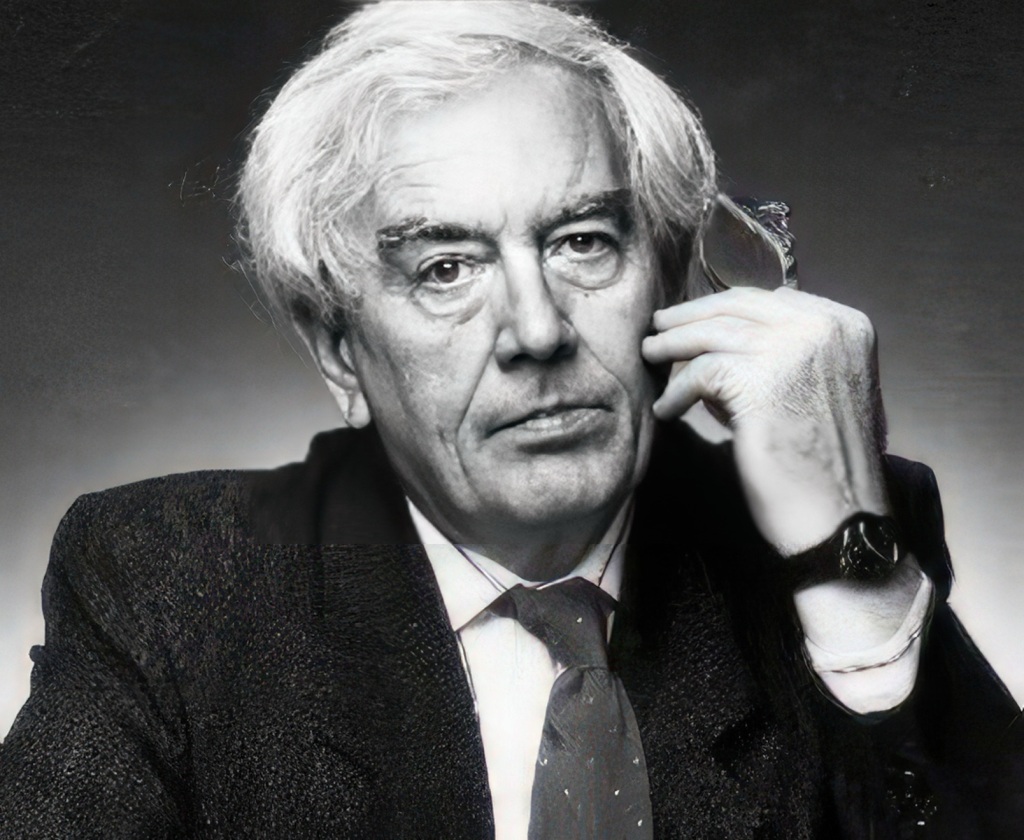


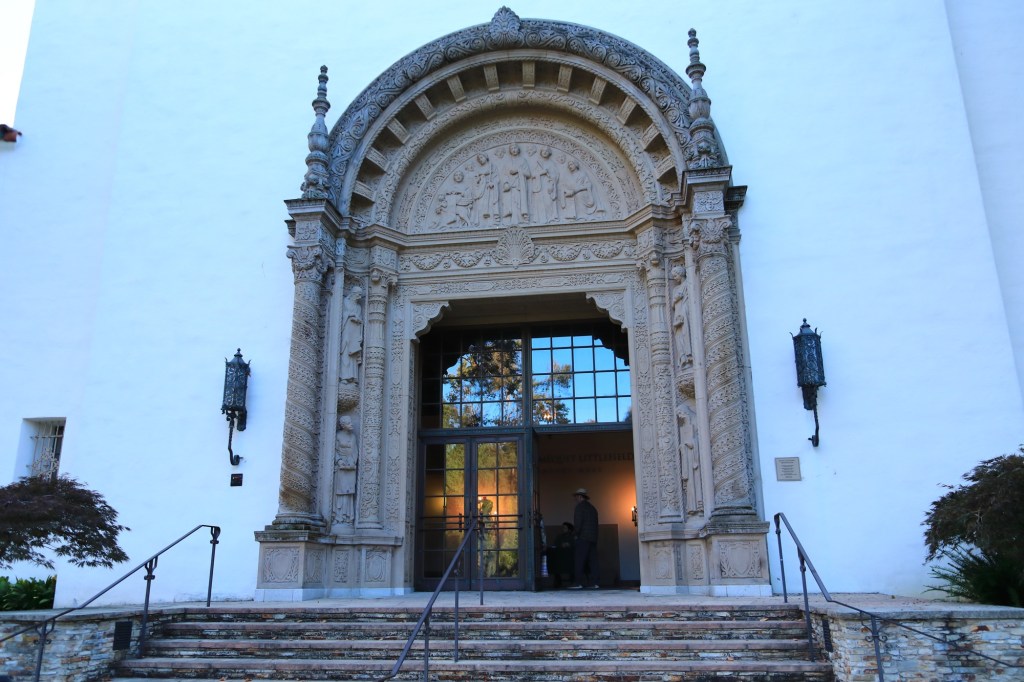


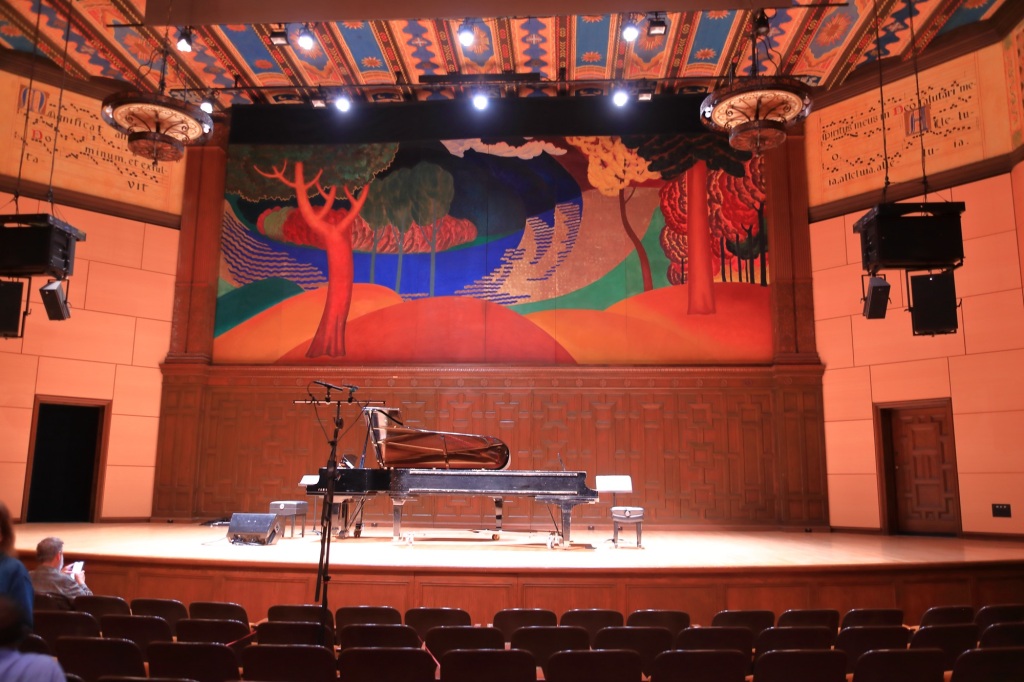
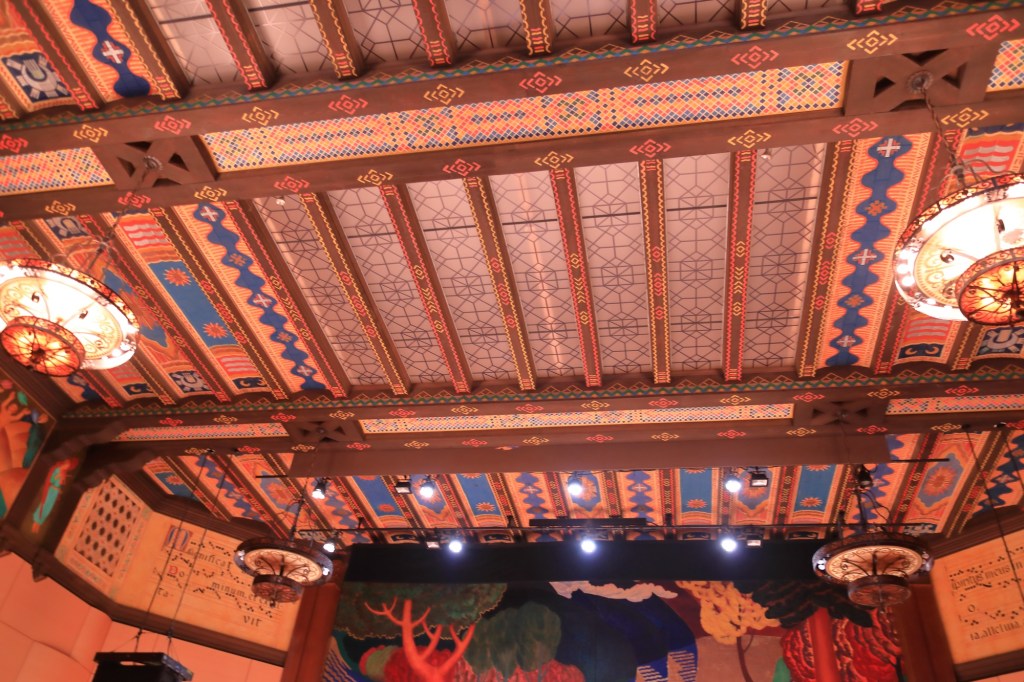
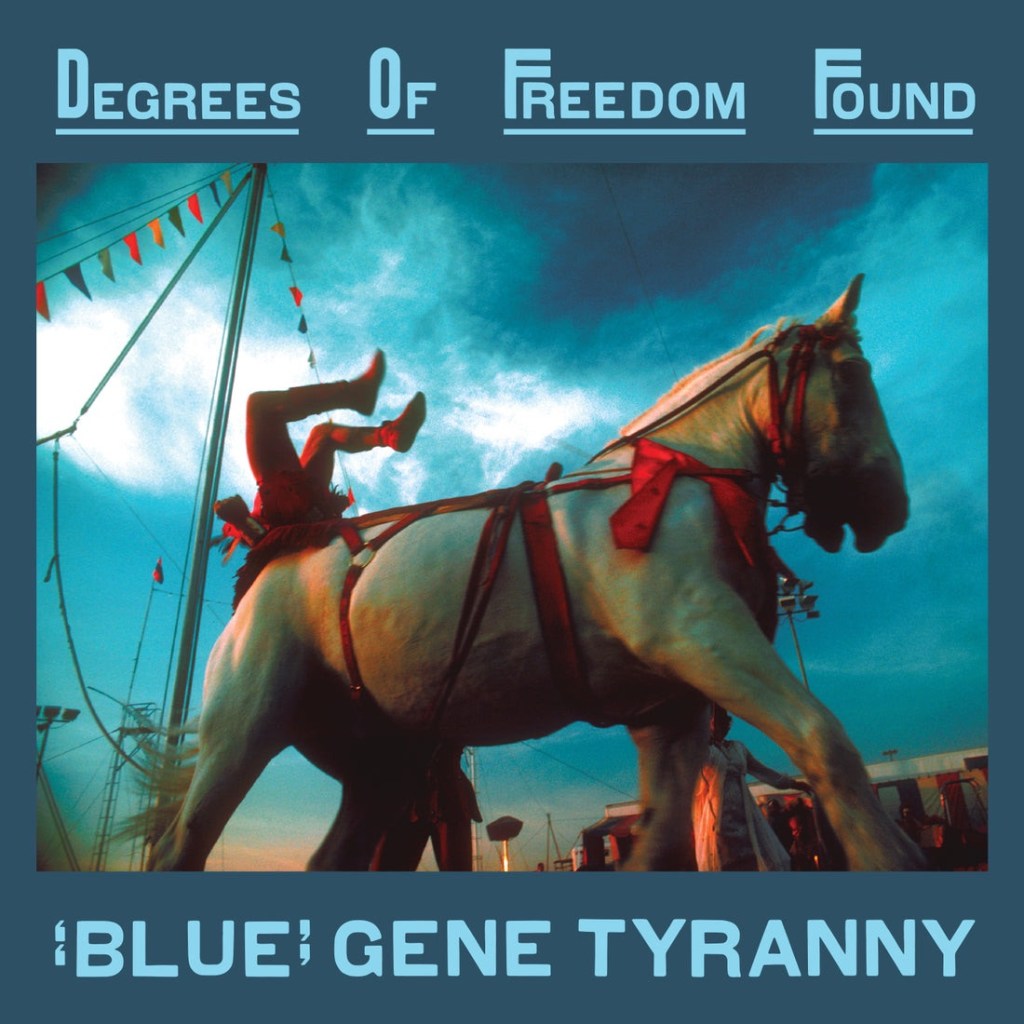




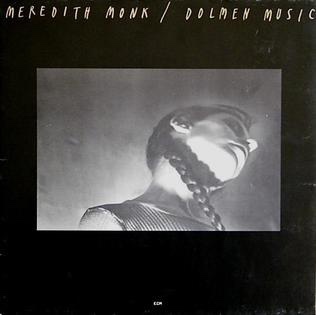


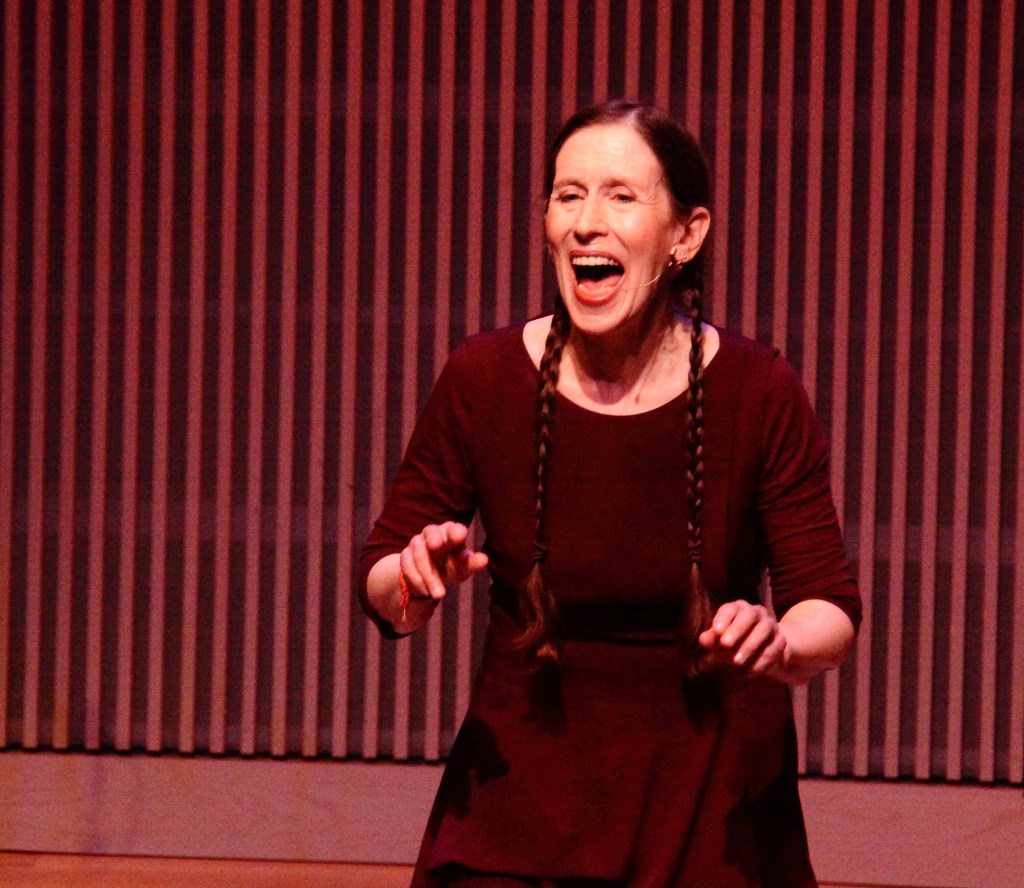
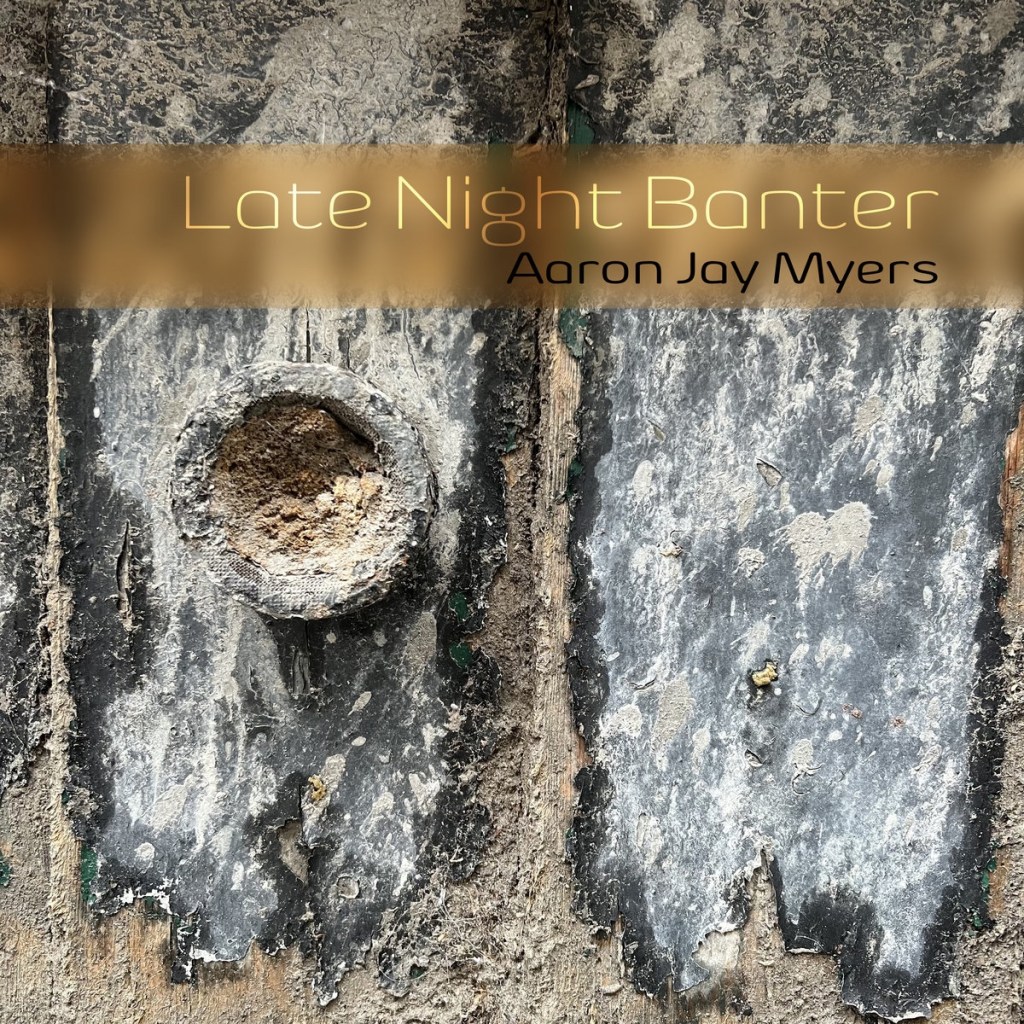
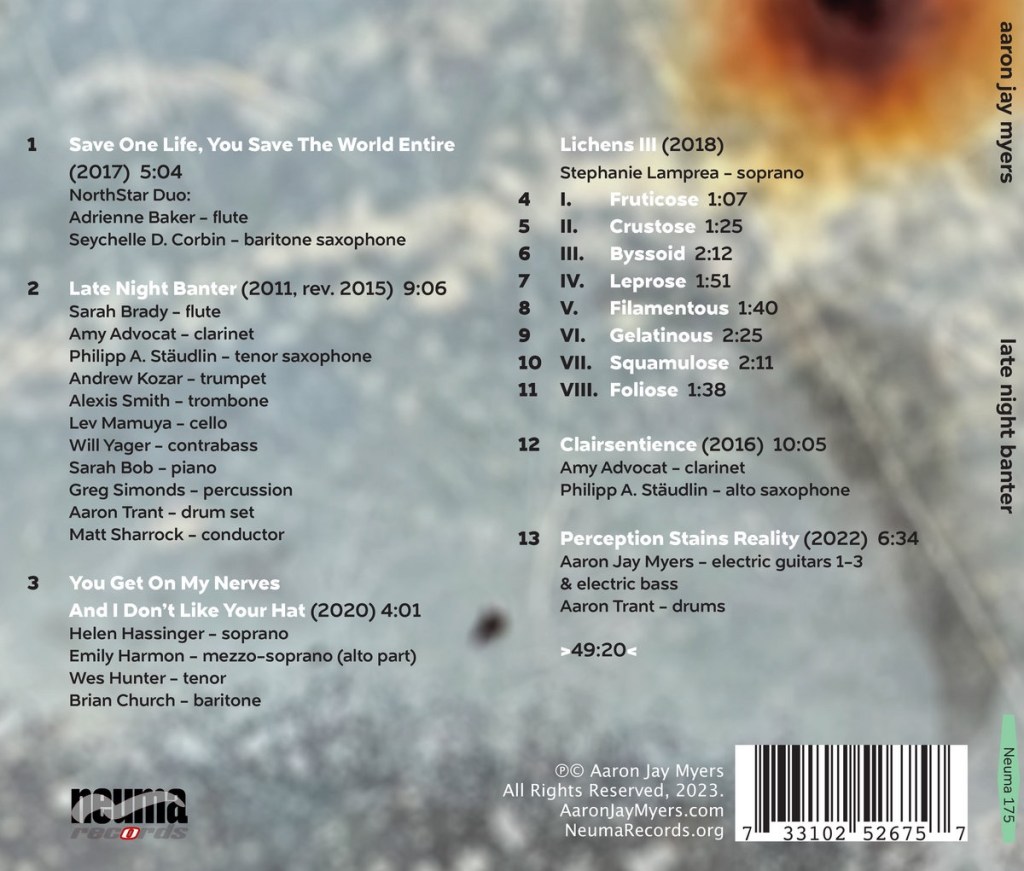



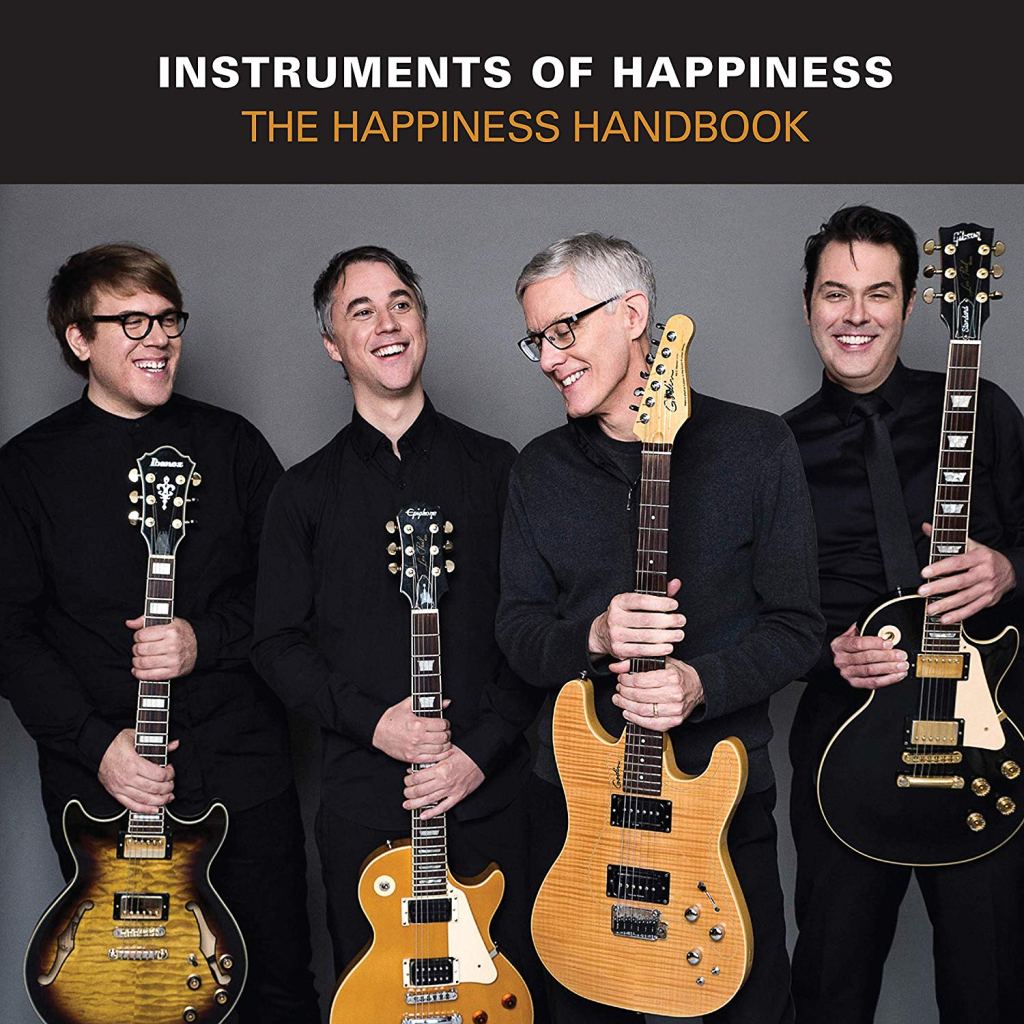
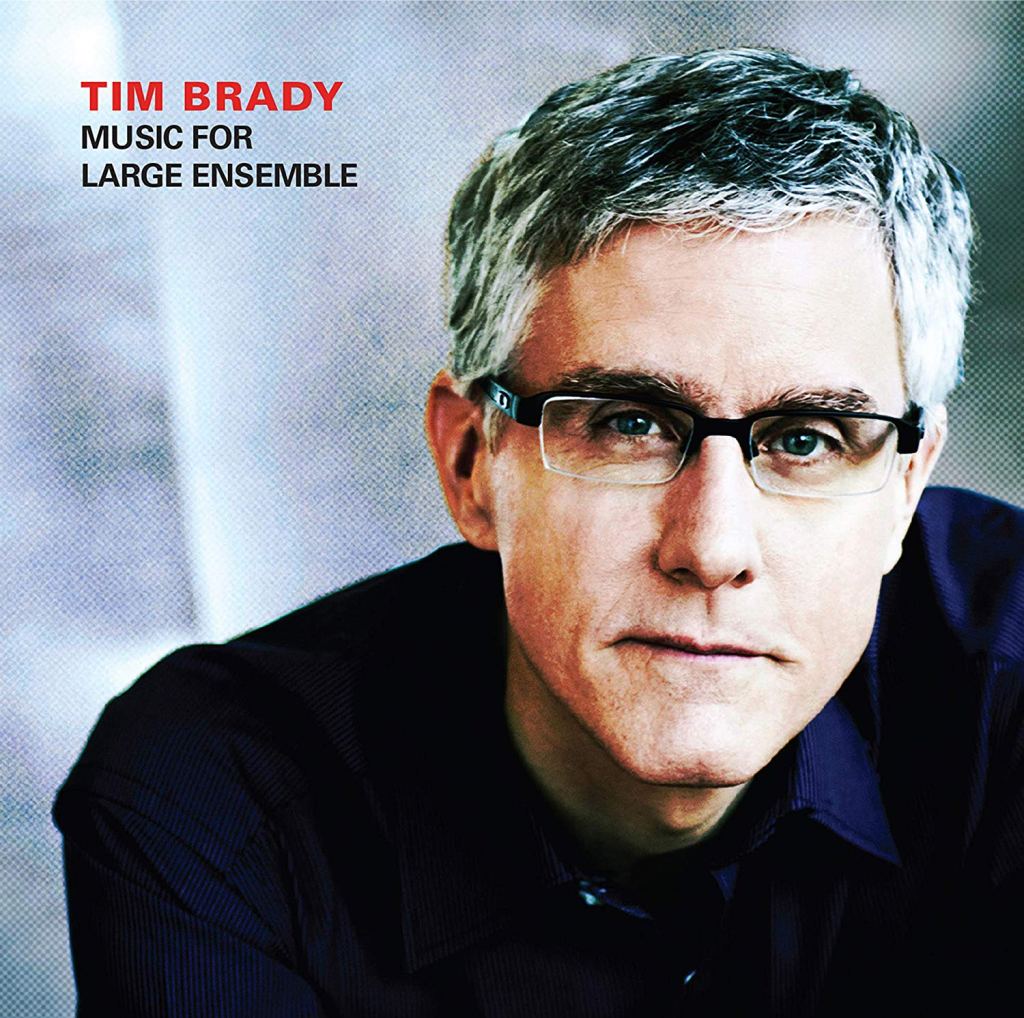
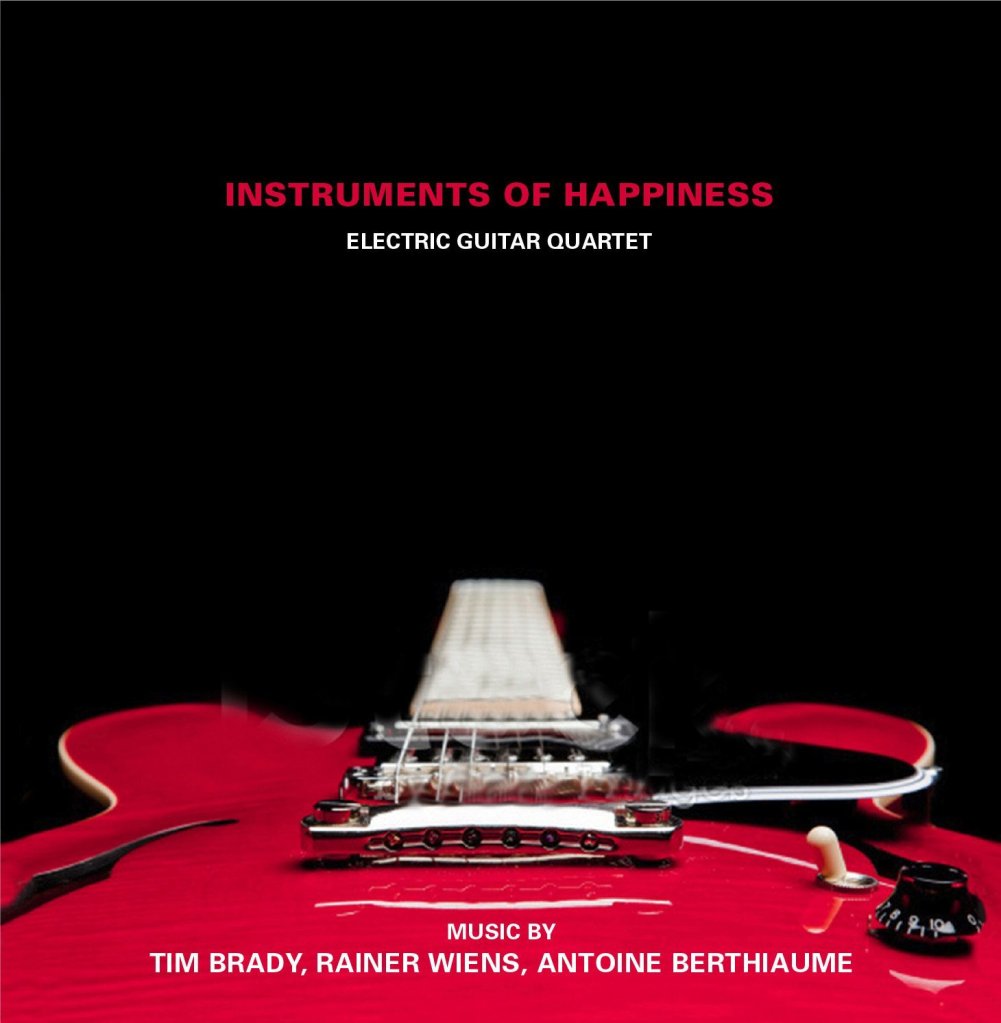


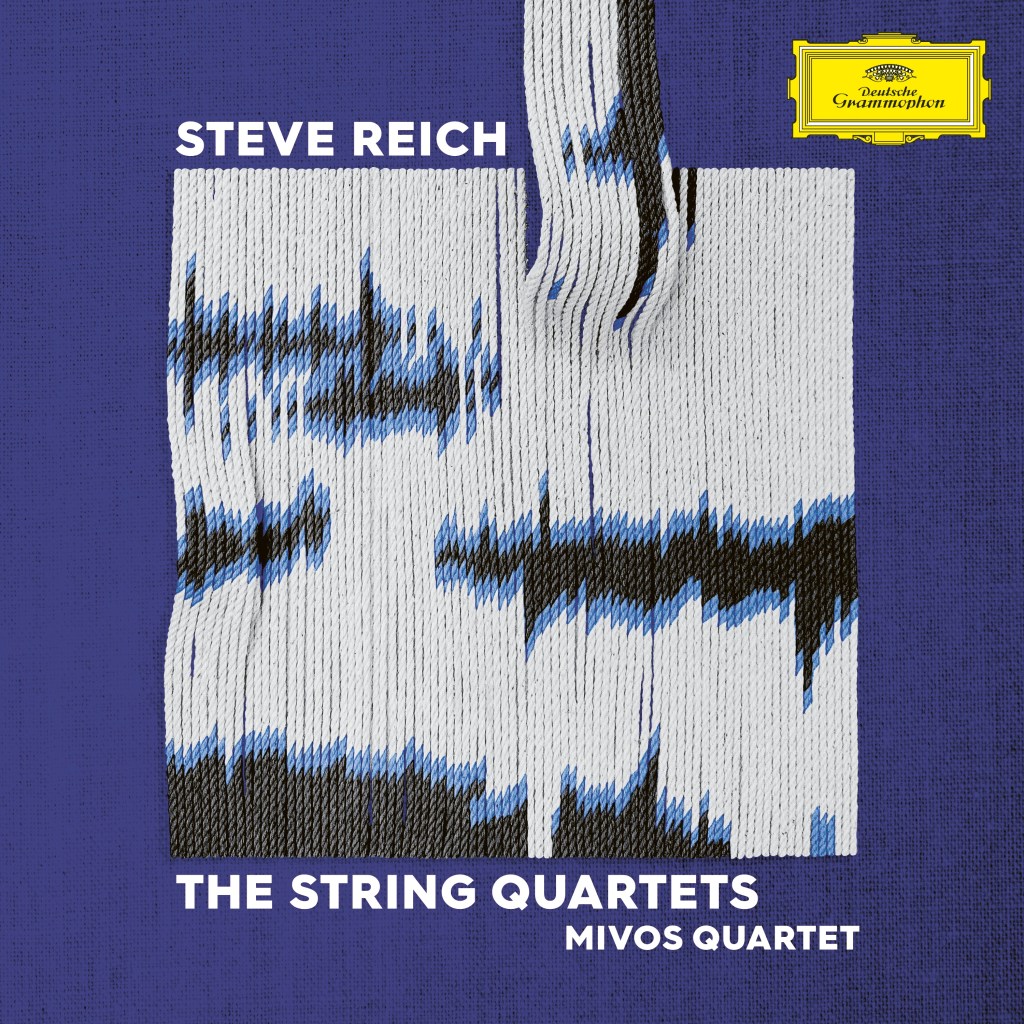
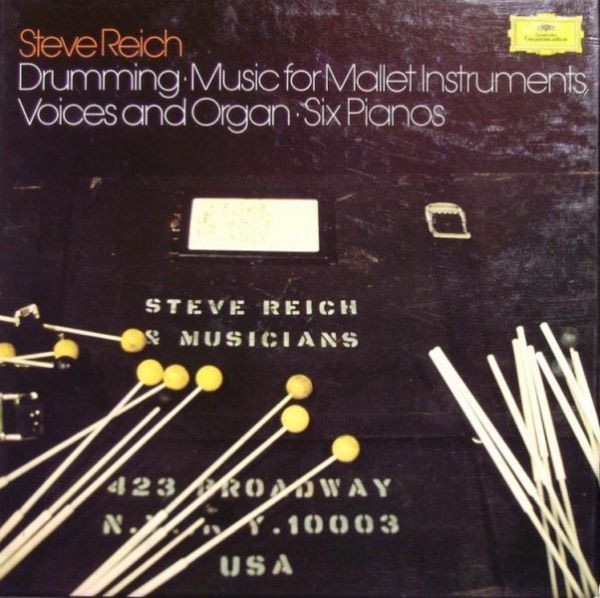

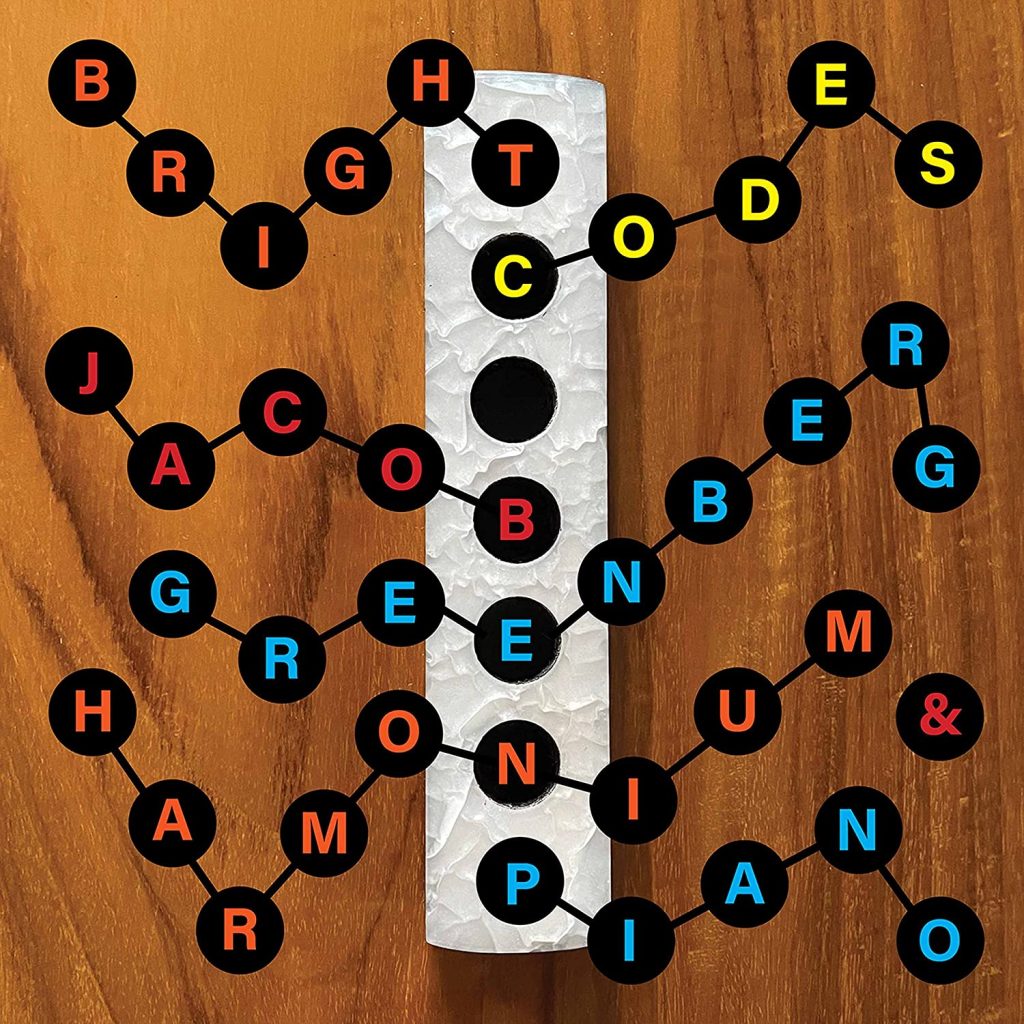


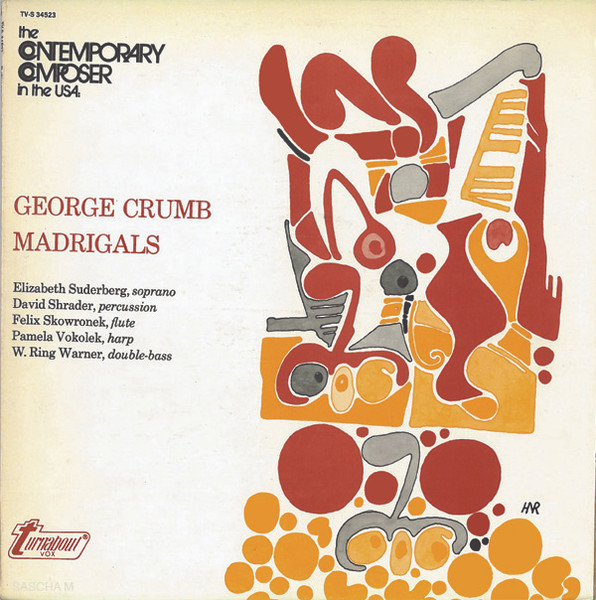

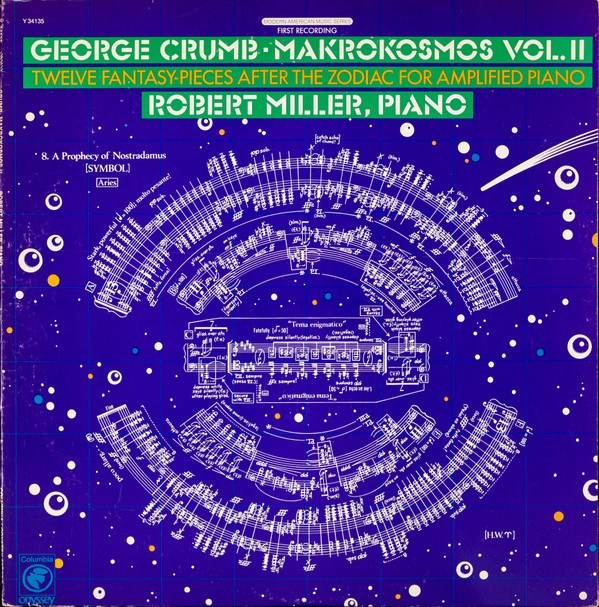


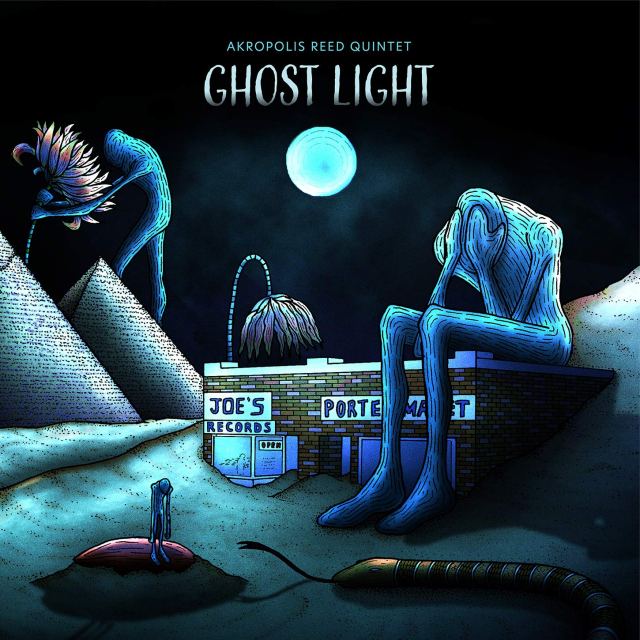
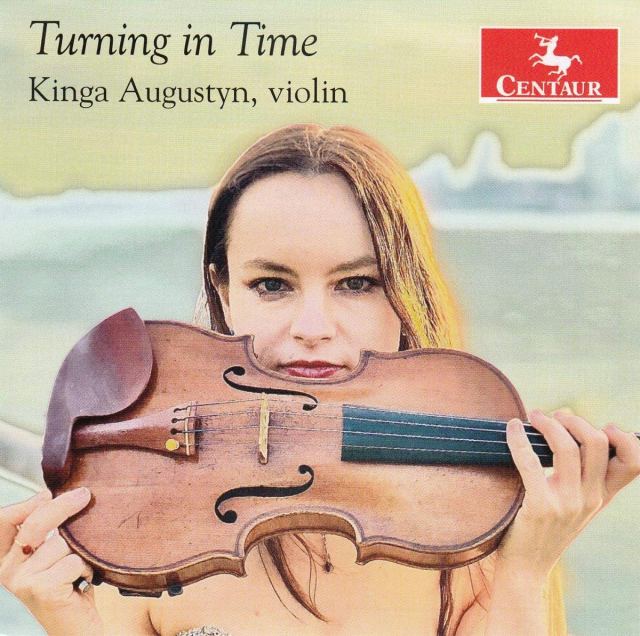
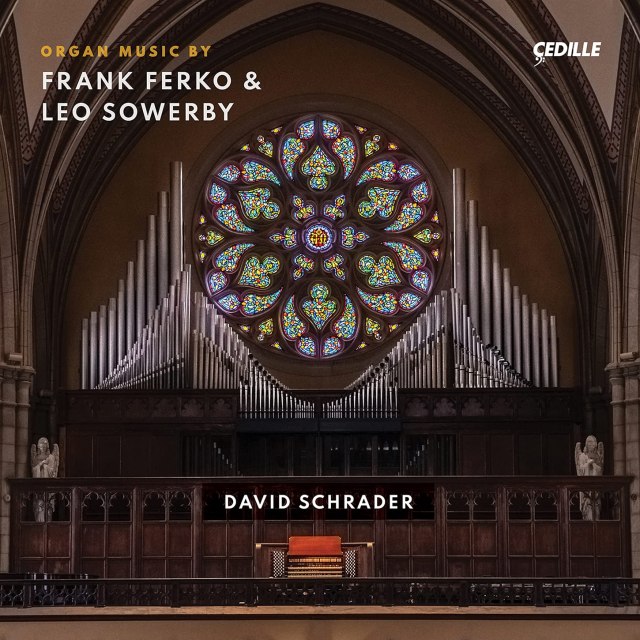
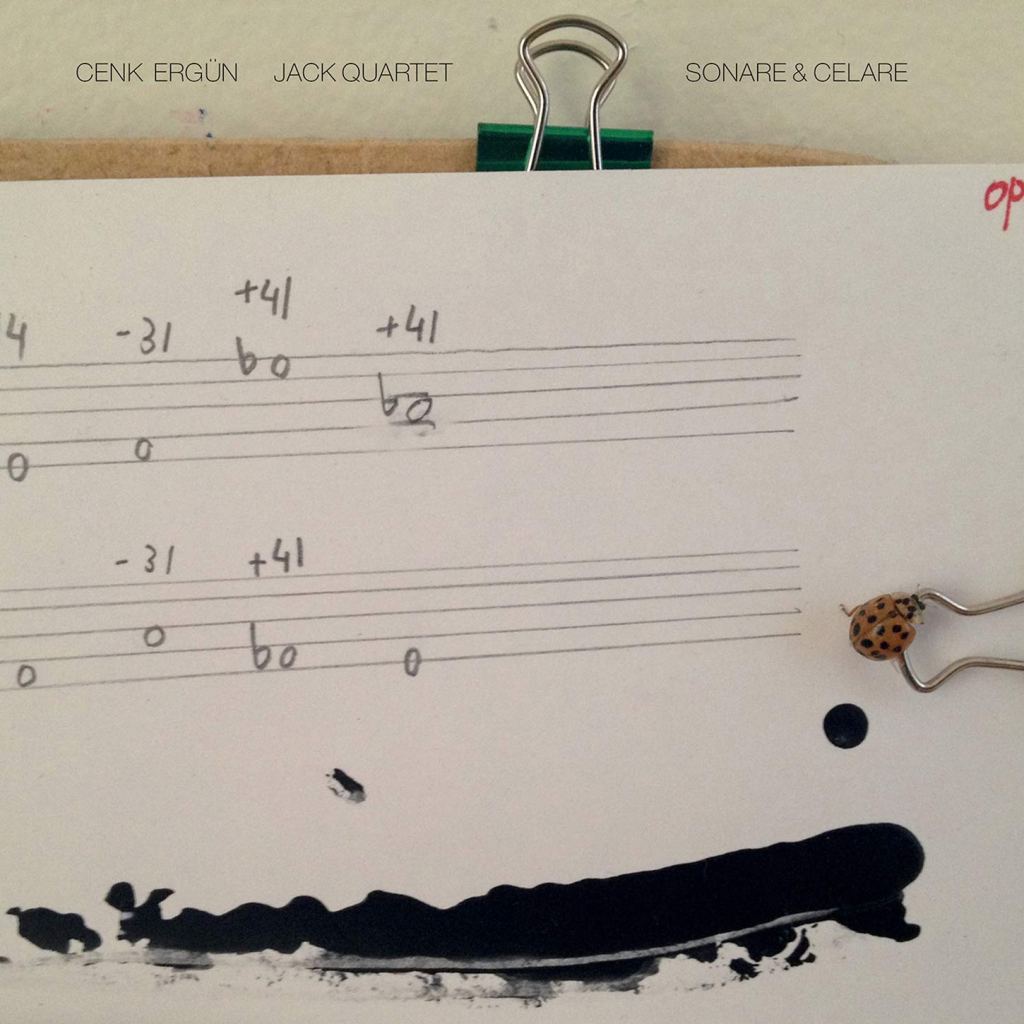
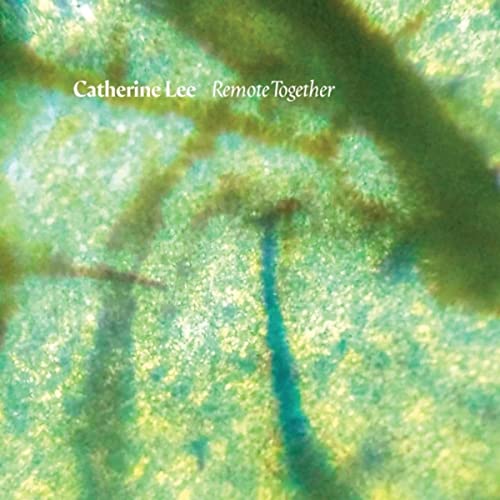
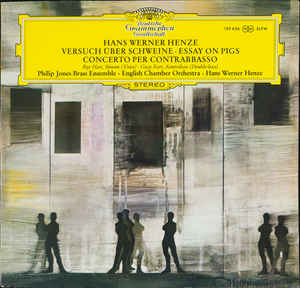
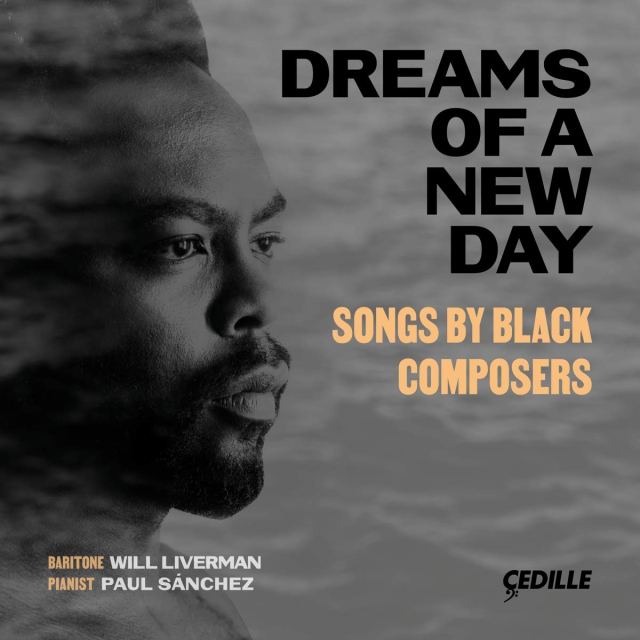
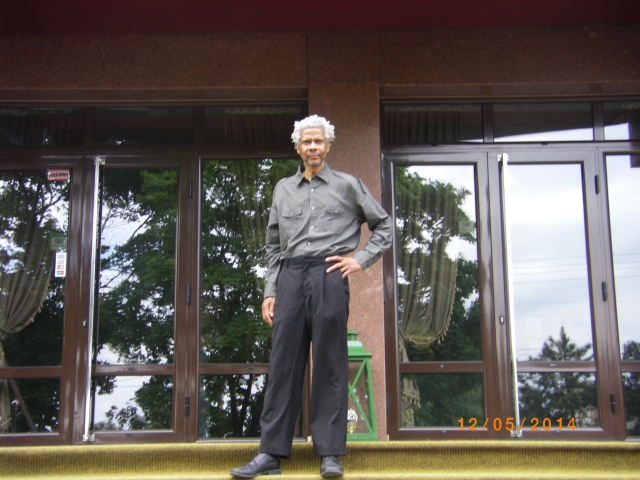
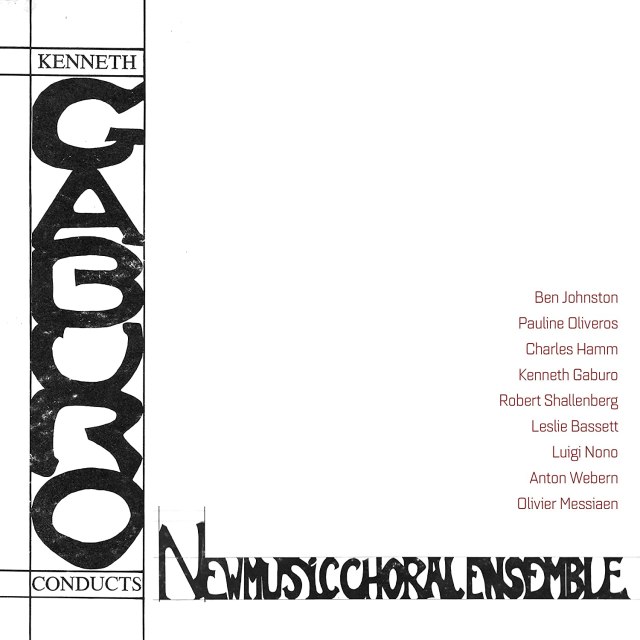

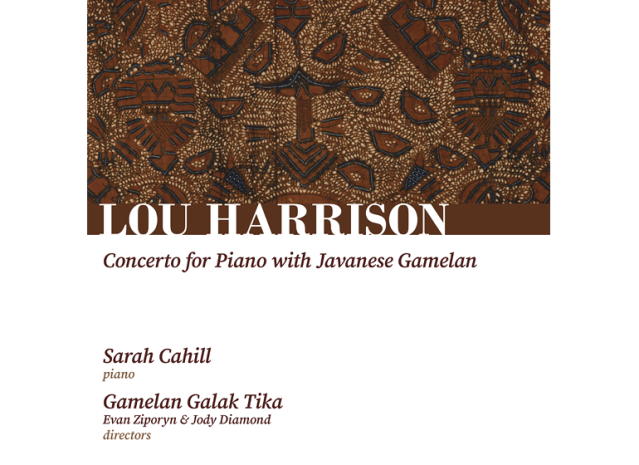
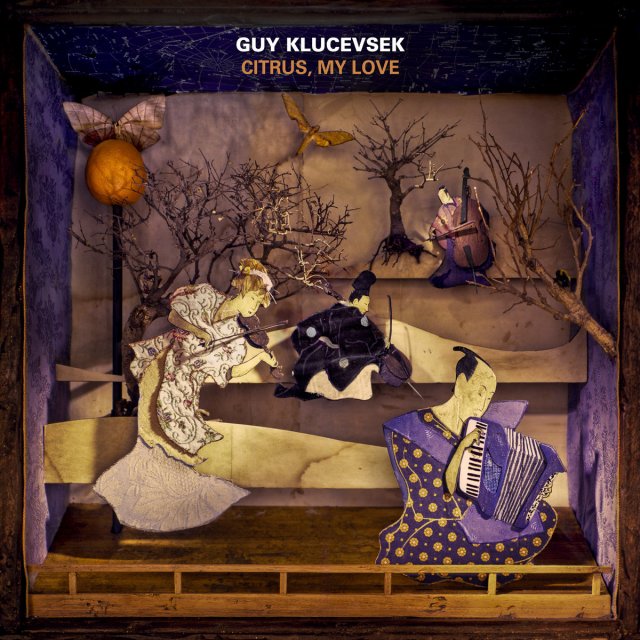

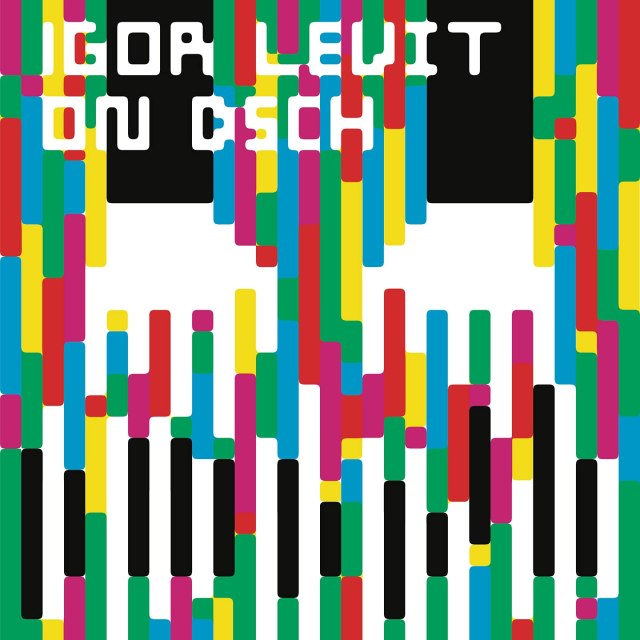
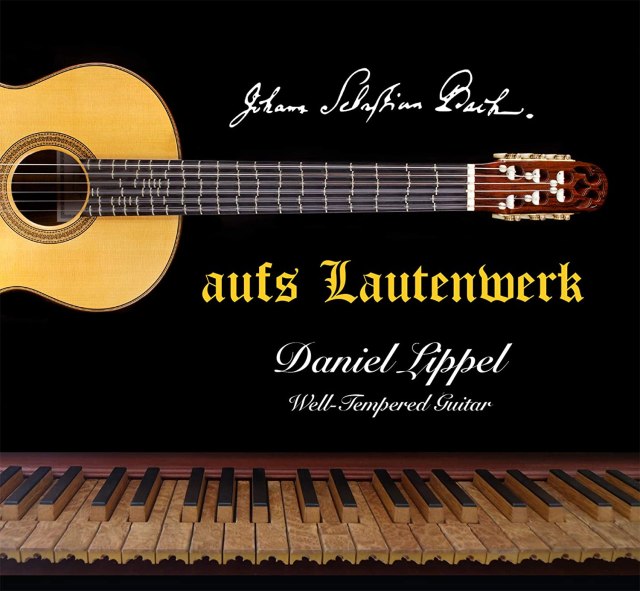
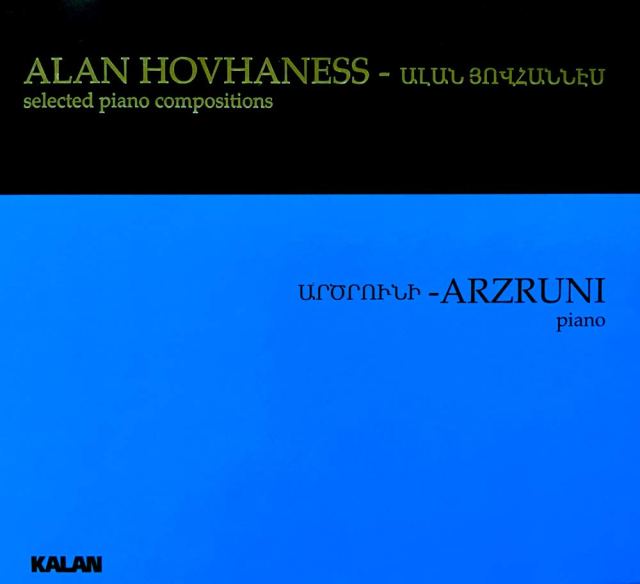
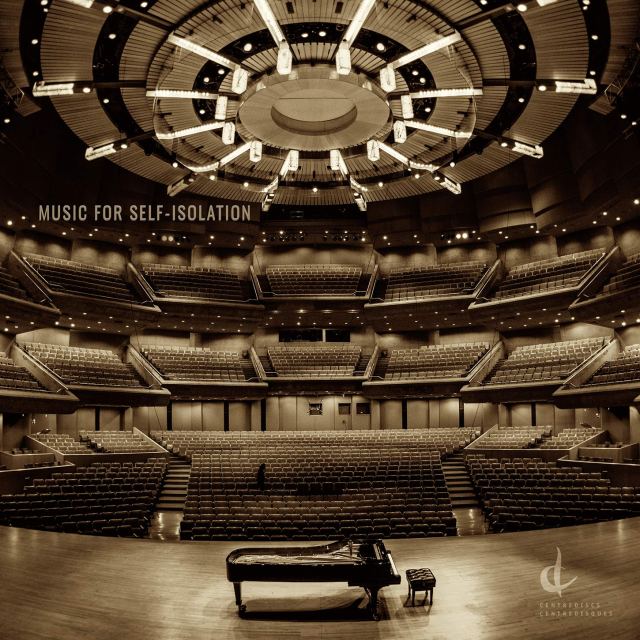
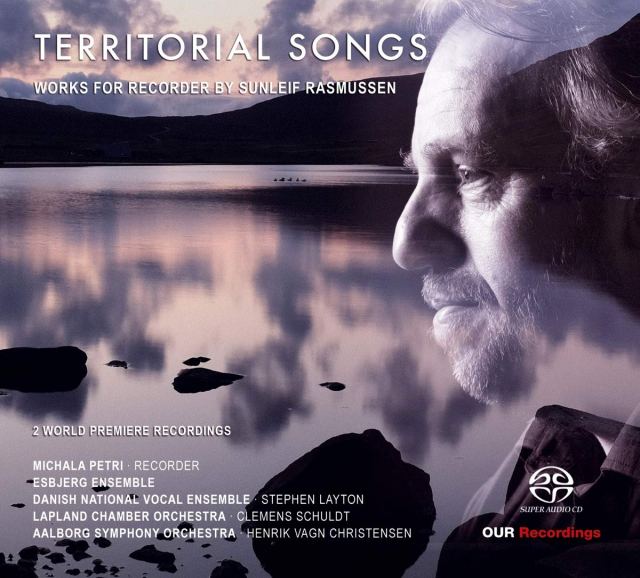
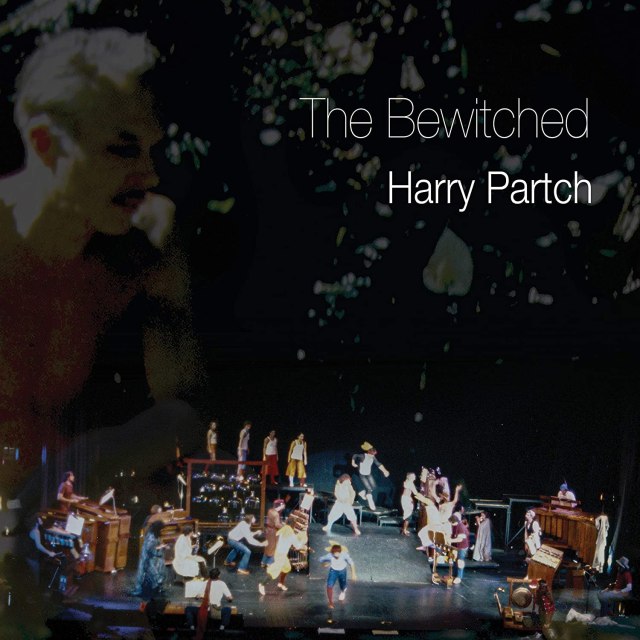
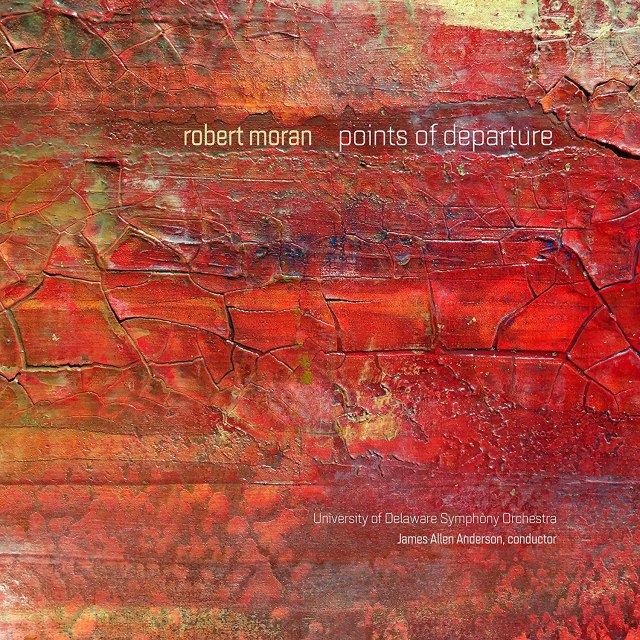







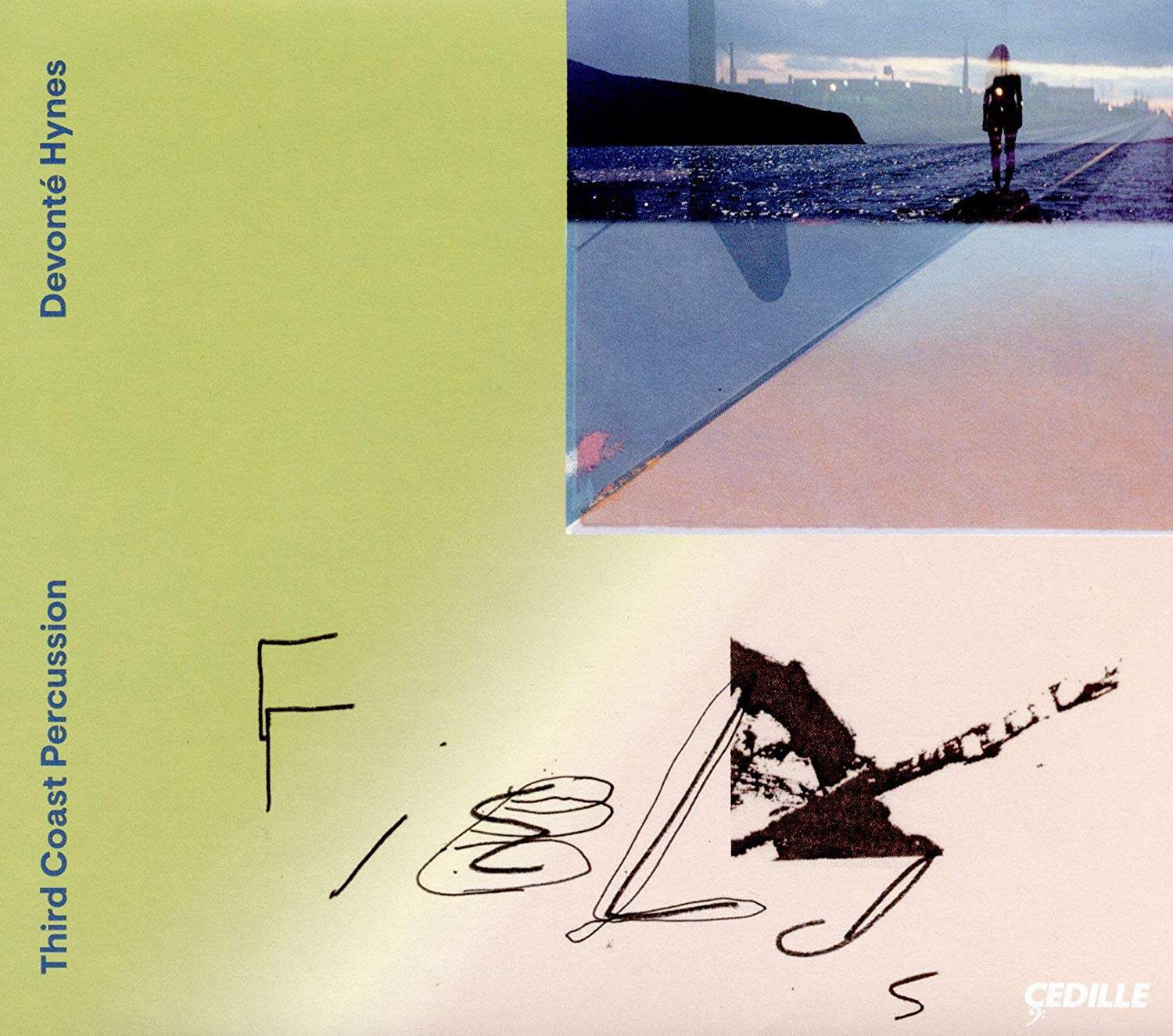

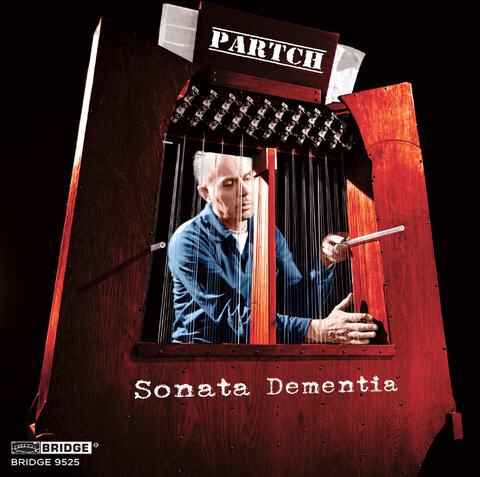
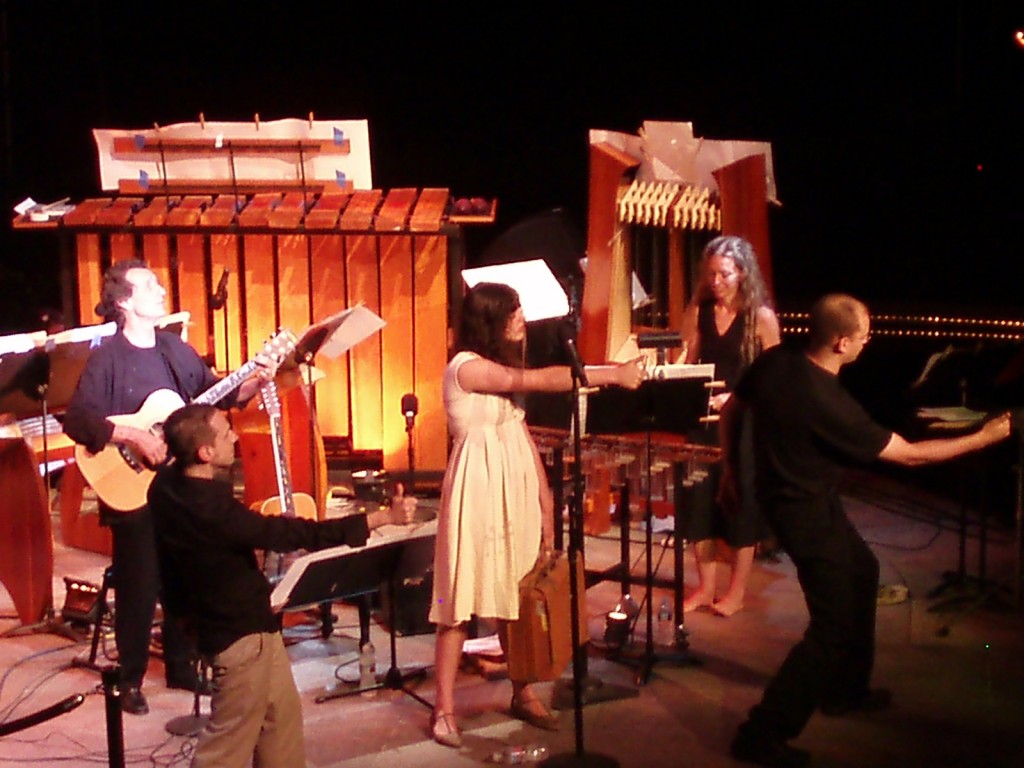
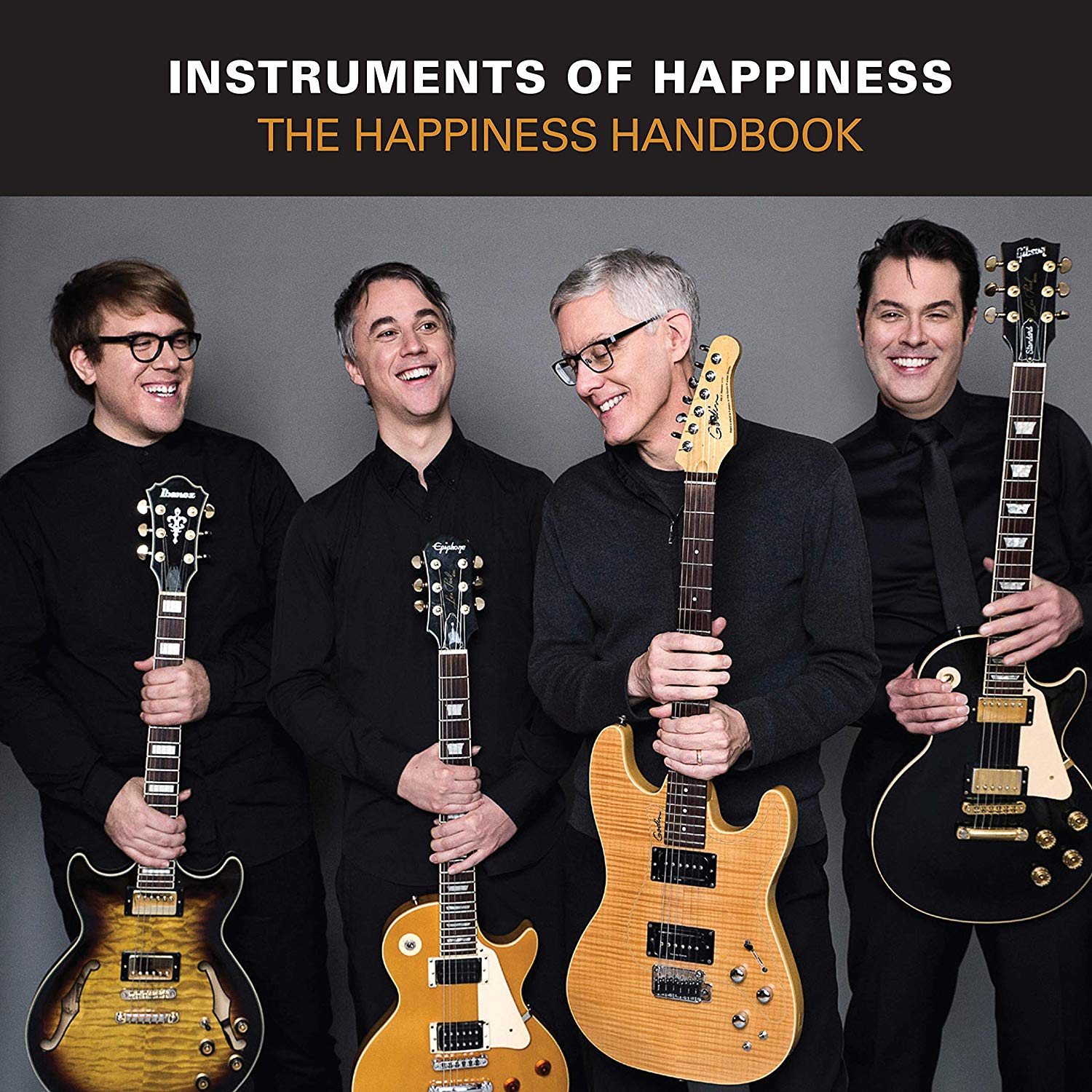


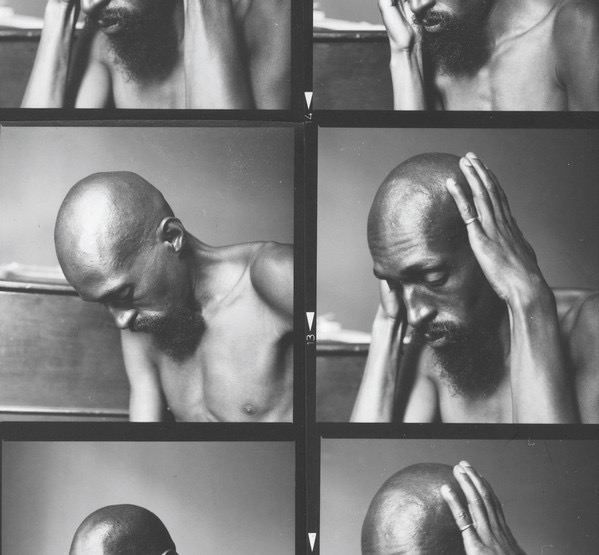
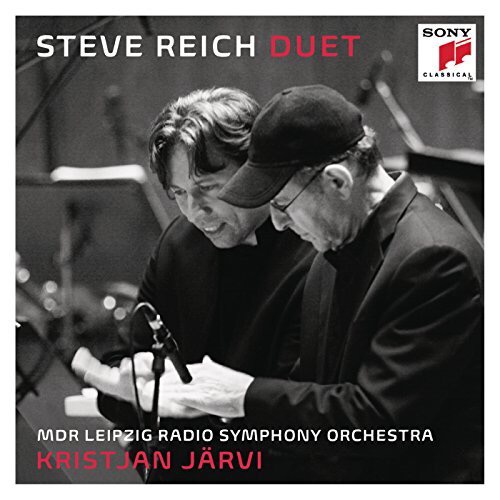
 New Music Buff