Gloria Cheng and Terry Riley Rock the Yerba Buena Center for the Arts


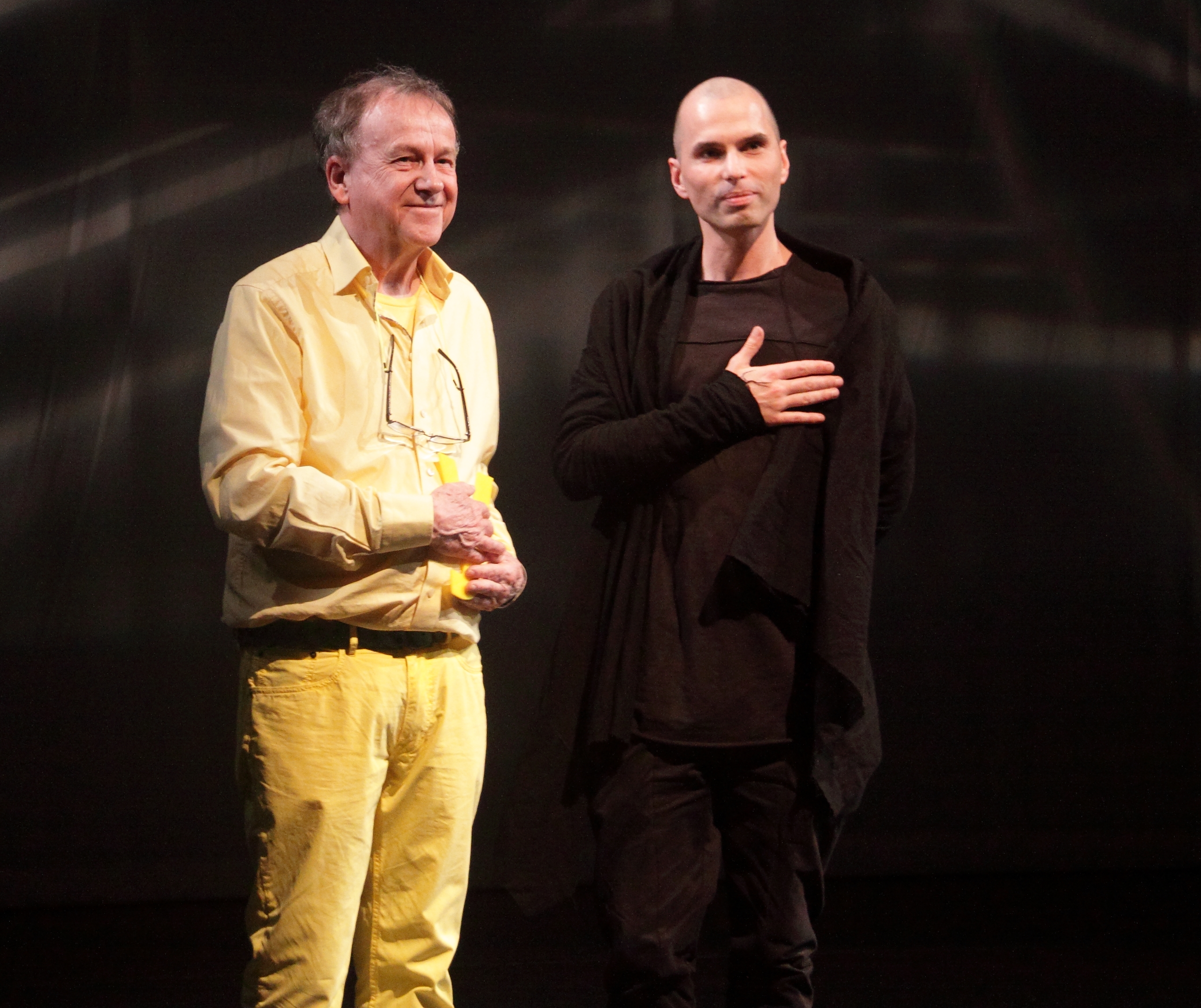
Ritorna vincitor!  I paraphrase from Verdi’s Aida but Charles Amirkhanian introduced this concert telling us that Other Minds held its first concert here 25 years ago.  Indeed this was a victorious return (though the first visit was also victorious)  featuring, as Amirkhanian correctly emphasized, musicians with a decidedly west coast aesthetic. In fact Mr. Riley was on the board of the nascent Other Minds organization founded under the loving and watchful eyes of Jim Newman (now president emeritus) and Charles Amirkhanian, executive and artistic director.

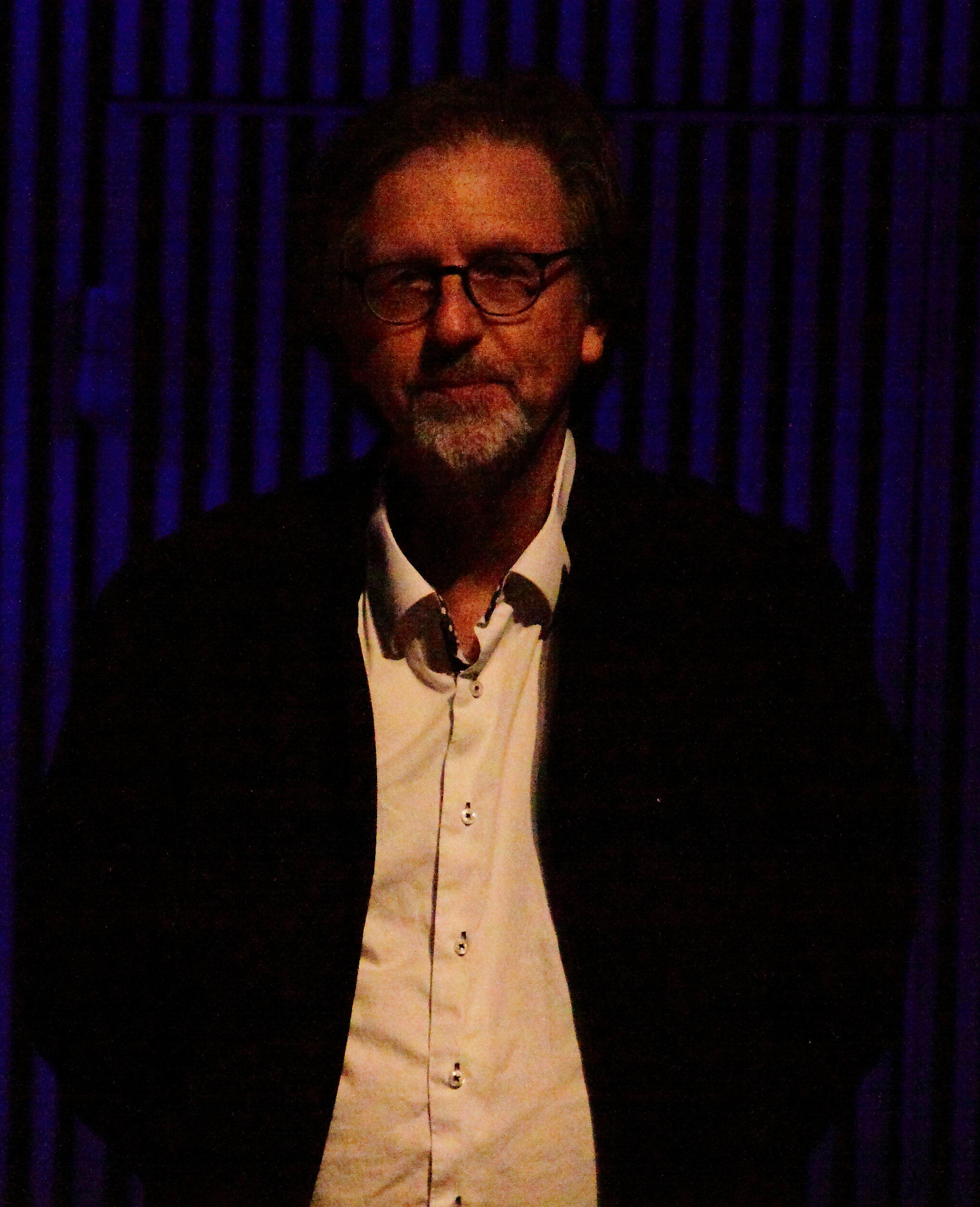
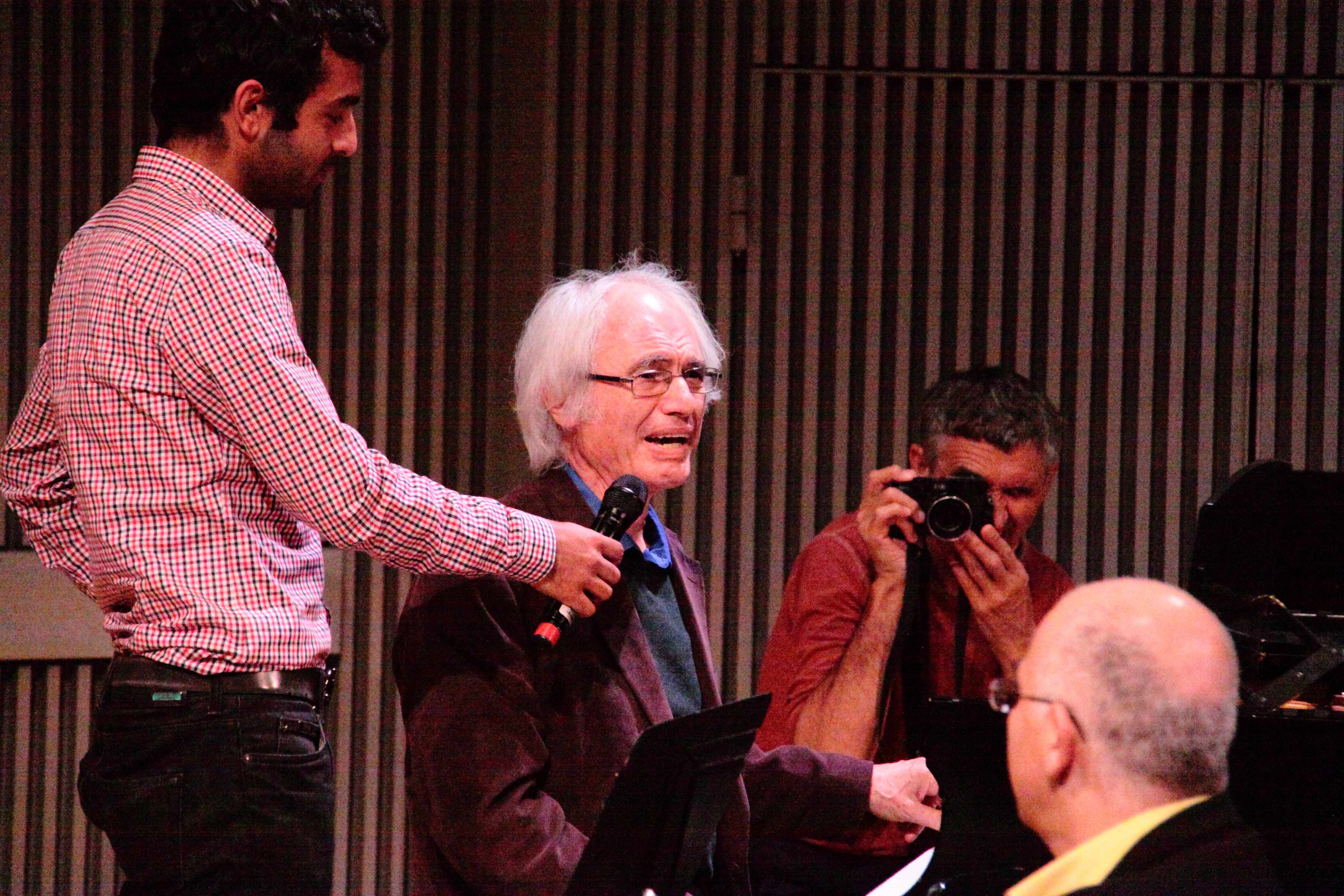
Charles Amirkhanian, 25 years later and going strong with Other Minds.

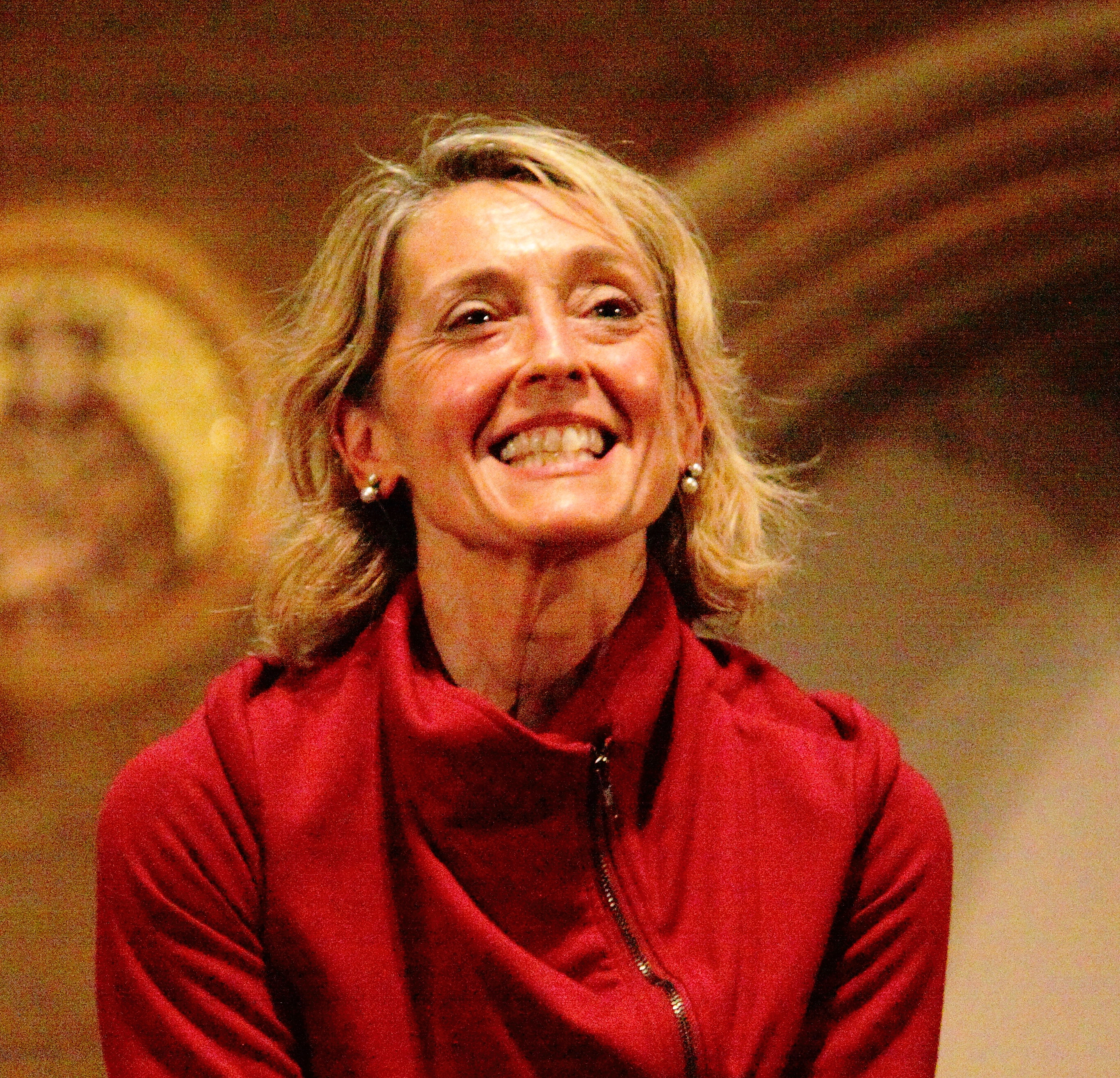
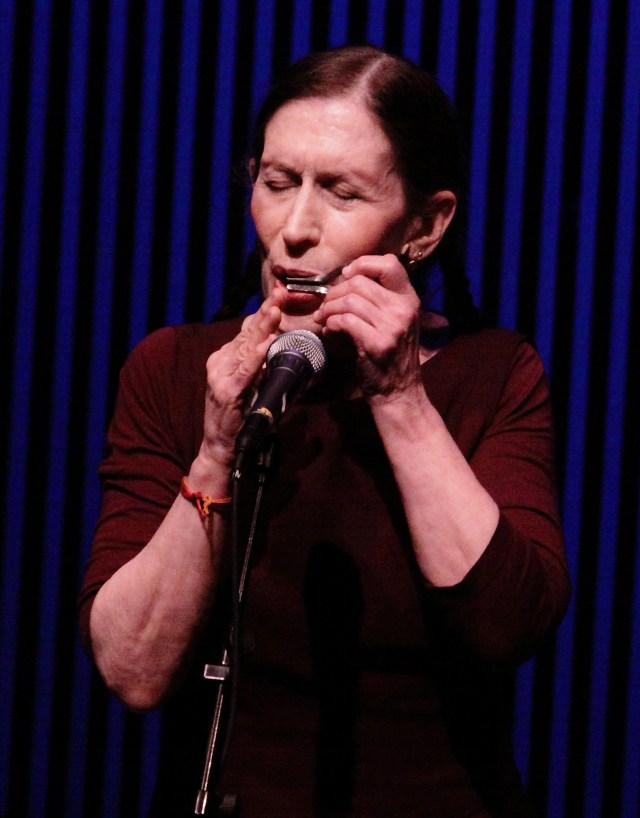
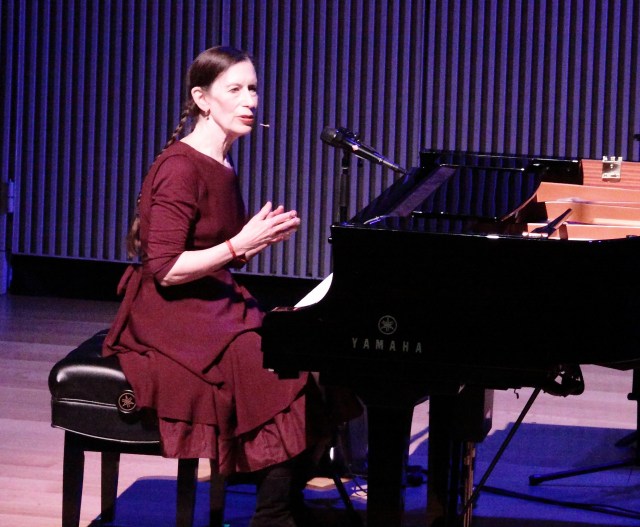
Gloria Cheng is a California native and is now professor of contemporary performance at UCLA’s Herb Alpert School of Music.  She is a Grammy winning artist and has, for many years now, been a champion of Terry Riley’s music among many others.  

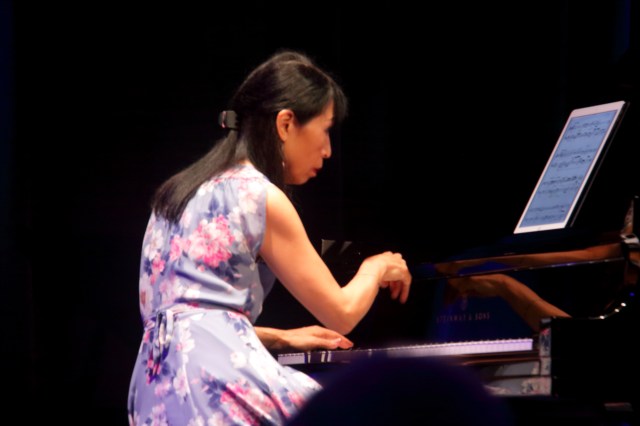
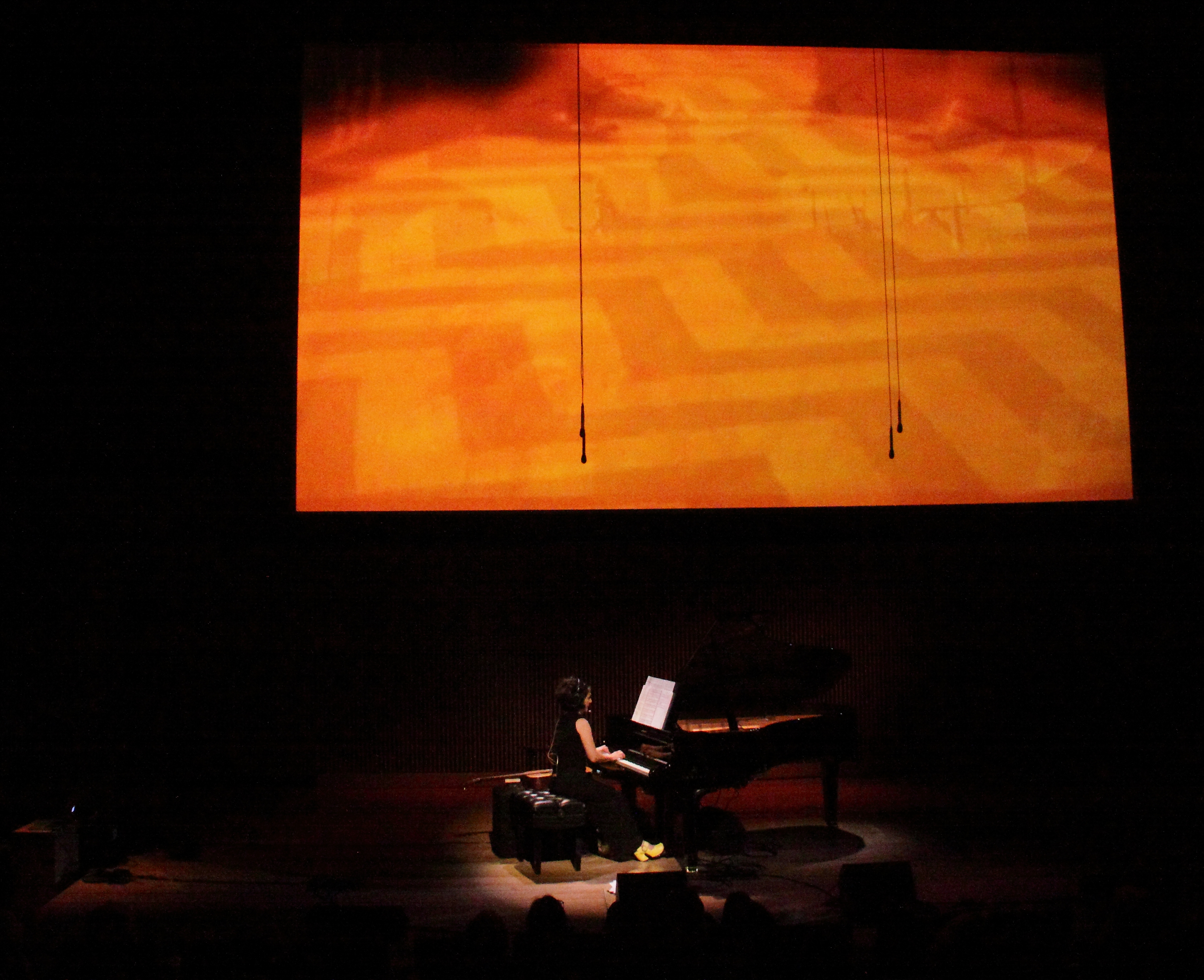
Cheng deeply focused.

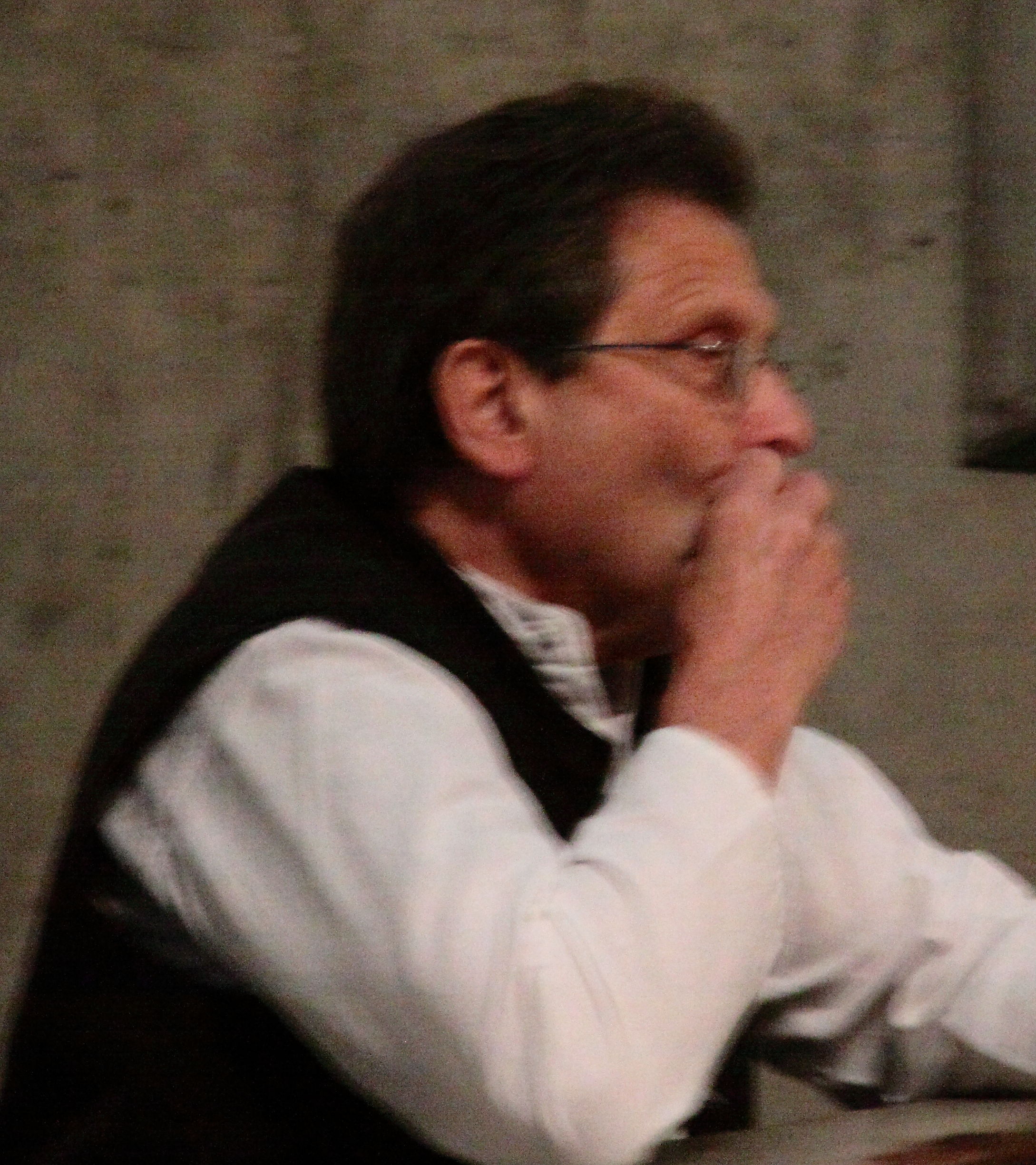
Terry Riley (1935- ) is also born and educated in the Golden State and is a world renowned composer and performer.  His 1964 piece, “In C” pretty much represents the beginning of the “minimalist” style and remains his most performed work.

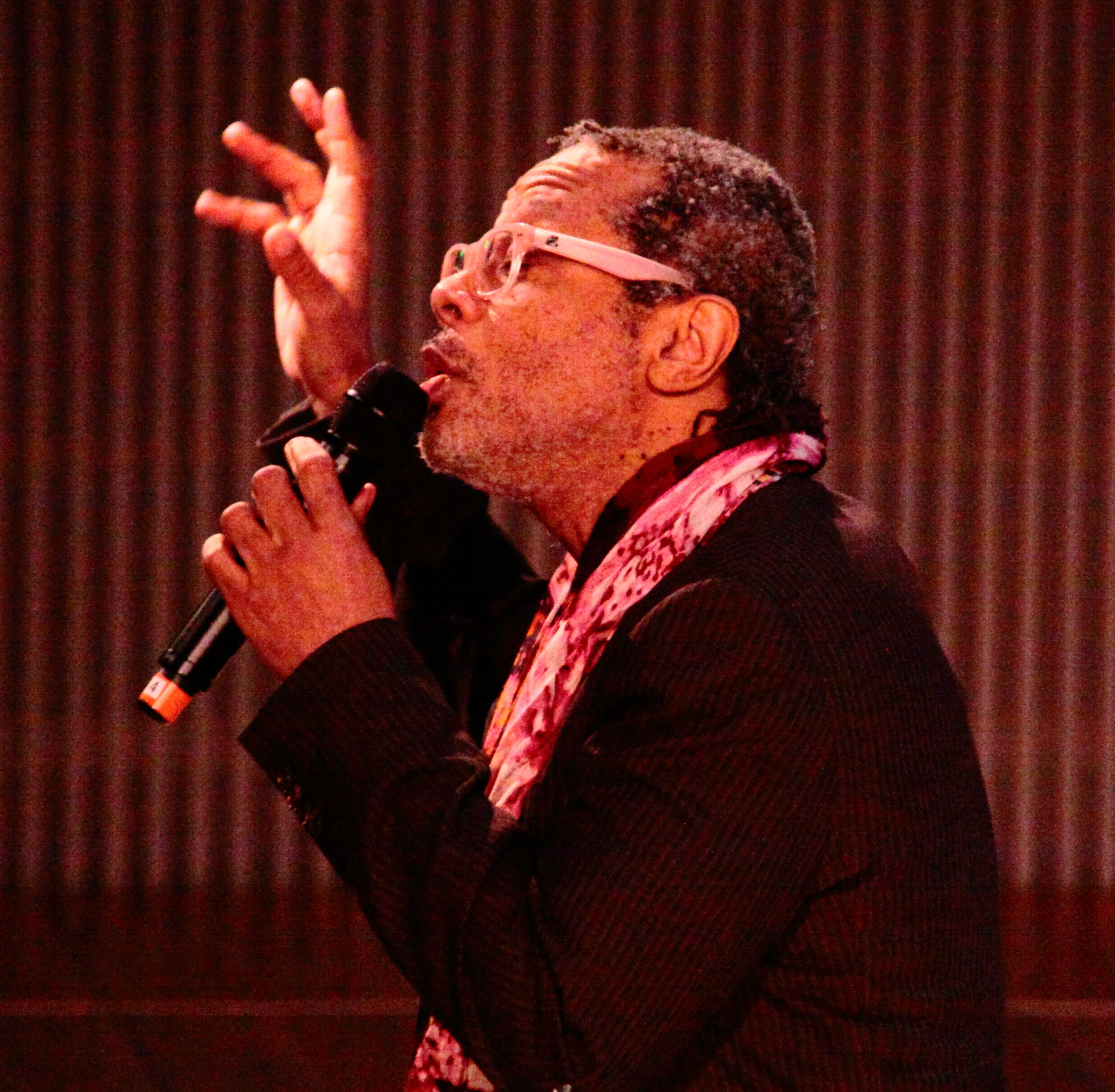
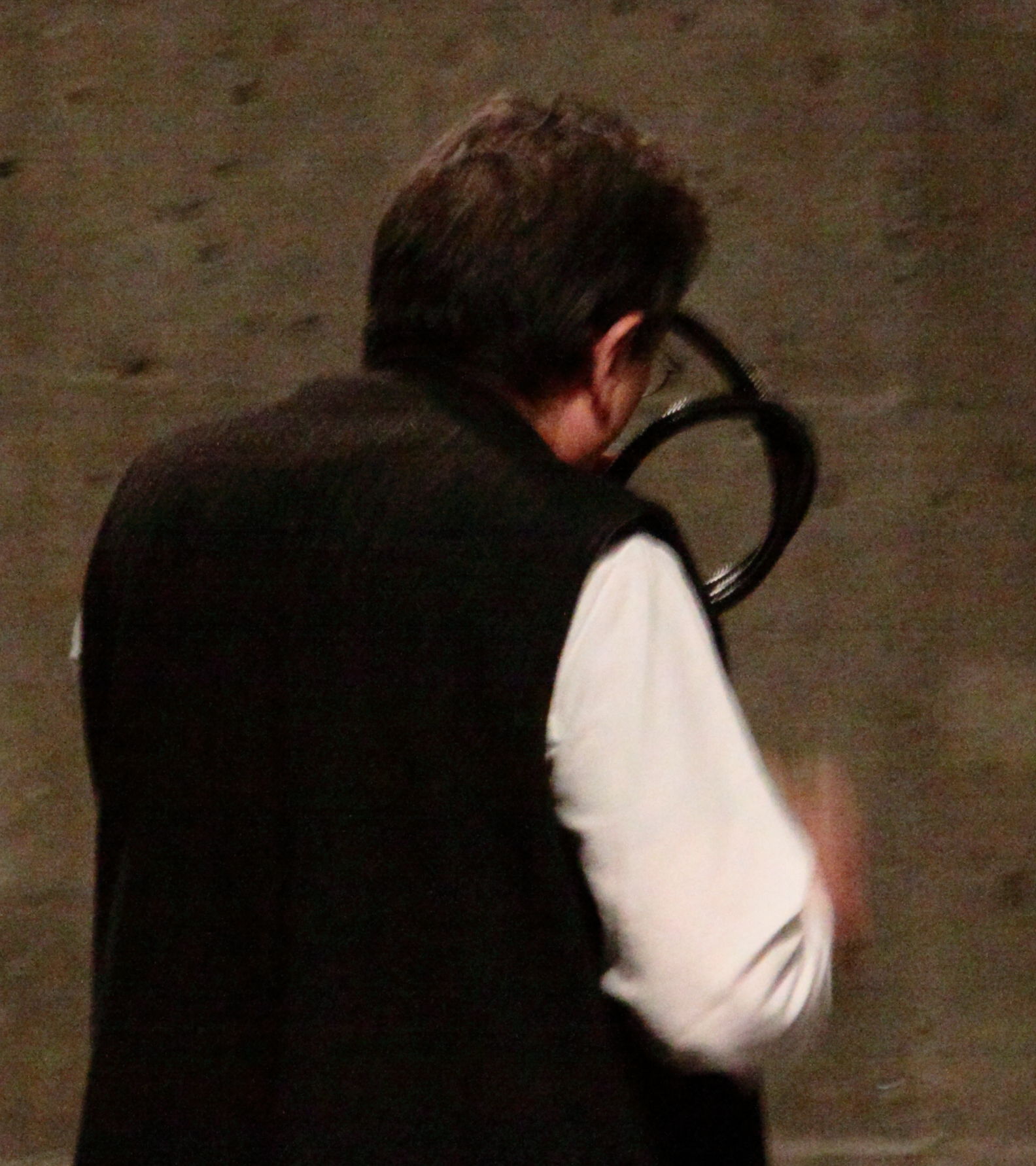
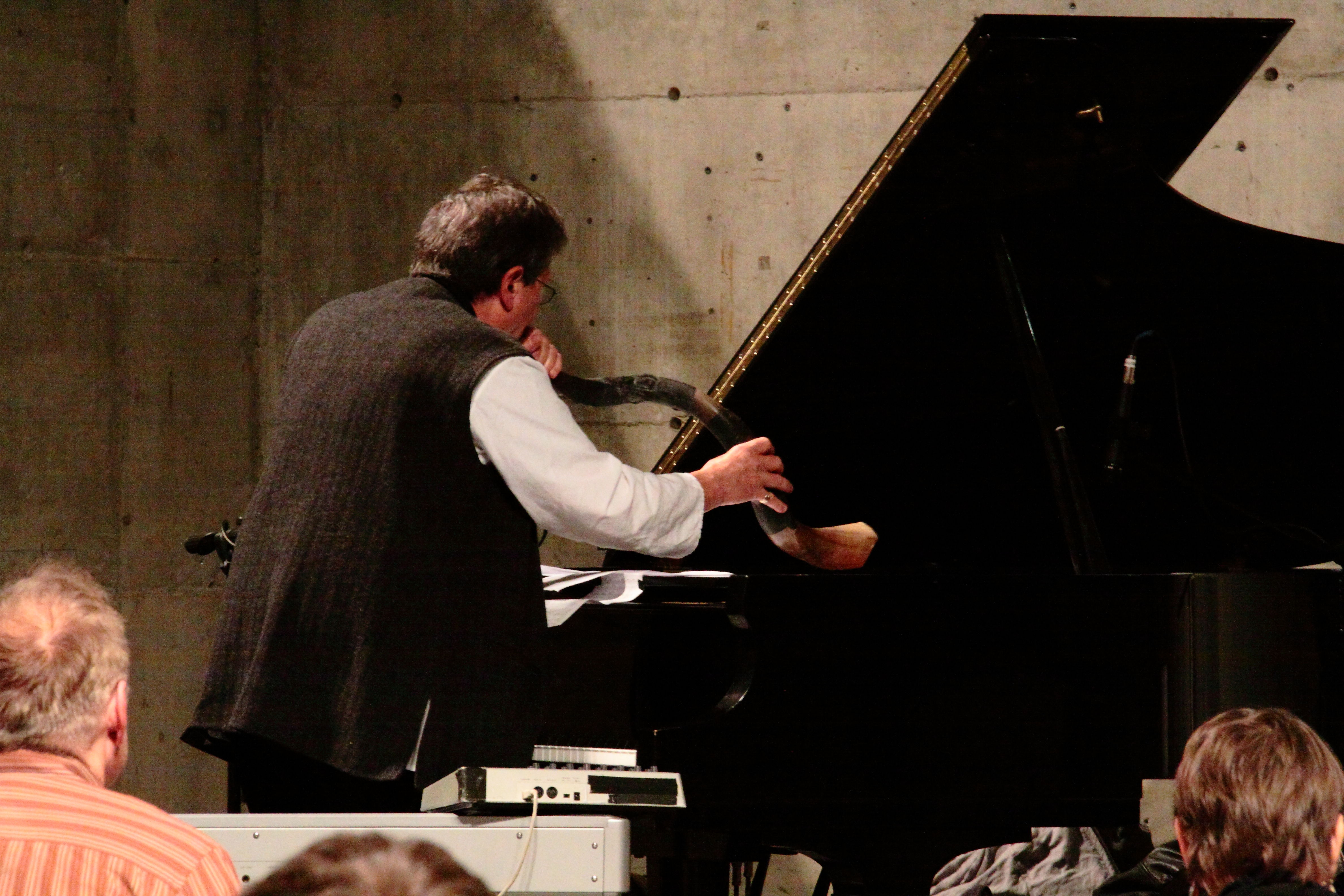
Terry Riley at 84 still going strong as both composer and performer.

This was your reviewer’s first time hearing Ms. Cheng live and it is an experience not to be missed.  Cheng’s command of the piano and of the wide range of musical styles she demonstrated on this night was nothing short of stunning.  In particular her command of the varying styles that are Terry Riley including ragtime, barrel house, jazz, classical, modernism, virtuosic romanticism, etc.  In addition to that she demonstrated a truly profound command of the keyboard which left the audience so deeply enthralled that they (we) almost forgot to applaud.  

The concert began with Ms. Cheng’s performance of Riley’s early Two Pieces for Piano (1958-59).  Here she seemed to be channeling Pierre Boulez and that whole school of post-Darmstadt pointillism with an ever present sense of trying to maintain equality for each of the twelve tones used in these pieces.

The uninitiated might have been put off by these early pre-minimalist works that are not generally the sound image conjured by the composer’s name.  Rather they represent Riley’s grasp of and subsequent working through of this material that preceded the compositional insights that characterize his mature style.  As a serious fan of Stanley Kubrick’s 2001: A Space Odyssey, it is a useful source for a metaphor.  On this 50th anniversary of  that film’s debut it seems that Riley, like astronaut David Bowman, steps through the star gate and is transformed beyond even his own wild and creative imagination.

By all appearances this audience seemed to be well-prepared and, as the young man who won the little drawing at intermission stated (I’m paraphrasing), Terry Riley’s concerts are always a good bet.  While  there may have been people who knew less it is clear that no one was less than entertained and many, this writer included, were positively delighted.

The next work, “The Walrus In Memoriam” (1991 rev. 1994) was originally commissioned for Aki Takahashi, one of several pieces based on Beatles tunes, this one a sort of elegy for John Lennon (1940-1980).  The CD is well worth seeking for its creative music and Takahashi is always worth hearing.

As if building to a climax, Cheng really put her performance into high gear with the next set of pieces from 1994 entitled, “The Heaven Ladder Book Seven”.  Don’t get me wrong, she was focused and in fine form for those first three pieces but when she sat down to perform the Heaven Ladder pieces one could feel an intensity such that the audience seemed hypnotized, paying attention to Cheng’s every gesture.  Despite a few stifled coughs (no doubt residue from our recent awful fires here) the audience was laser focused on this performer as she made Riley’s charming pieces come alive.

Intermission was an opportunity to stretch our legs and breathe again knowing that when we returned we would be hearing both Cheng and Riley.  It was a gathering of like minds for the most part and many people validated some of my perceptions that Cheng had transfixed the audience.  

During intermission there was more talk about the upcoming Other Minds 24 with programs scheduled on March 23rd and June 15 and 16.  More on that in future blogs.  And now on to the second half of the concert.

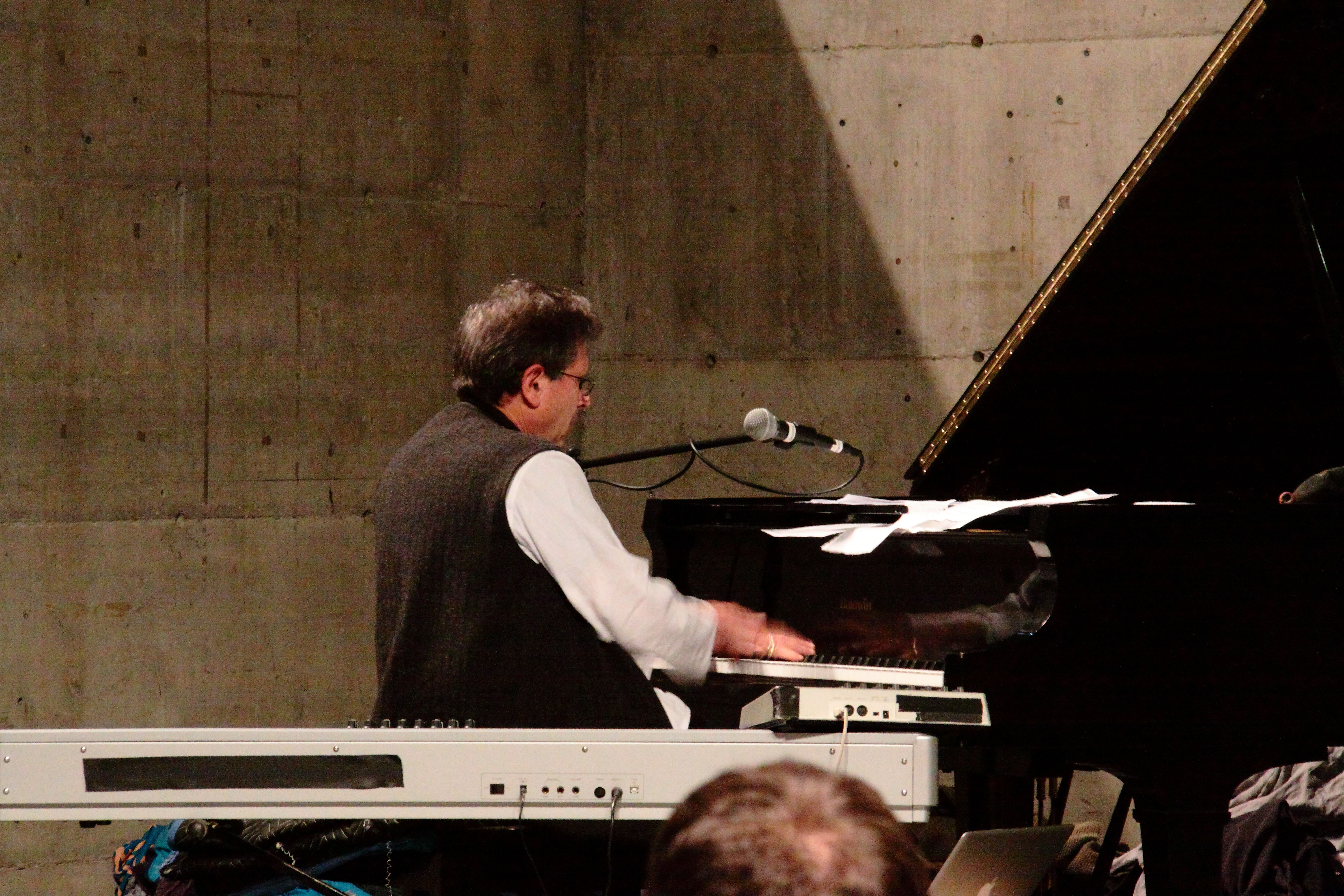
Terry Riley’s energy belies his age.  Riley will turn 84 in June and continues to compose, perform and travel extensively.  And when he sits down at the piano he is magical.

Riley opened with “Simply M” (2007) written in honor of the late Margaret Lyon, a longtime chair of the Mills College Music Department and one of the people who brought Terry Riley there to teach composition.  She had previously presided over teaching tenures by Luciano Berio and Darius Milhaud.

The music had a quasi-improvisational feel (like much of Riley’s music) but channeled classical composers along with ragtime, jazz, ragas, and Riley’s usual eclectic mix of styles.  It was a free flowing piece going through abrupt changes in character at different points but the piece seems to rely on some basic classical composition techniques which function as a sort of scaffolding or mold into which the composer pours his creative ideas.  The piece was highly virtuosic but gave off a charming hypnotic flow.

He acknowledged the appreciative applause and moved right into the second piece on this half, “Requiem for Wally” (1997).  This piece is written as a memorial for Riley’s ragtime piano mentor, Wally Rose.  In the very useful notes, Riley states that he combines elements of ragtime with the Hindustani Raga Nat Bhairav.  In this piece we got to hear Riley’s distinctive tenor trained in raga singing by the late Pandit Pran Nath.  It is this ability to combine and synthesize various musics into a coherent style which this audience clearly knows well, Terry Riley.

Following these performances Riley left the stage and came back joined by Gloria Cheng again for the newest music of this evening, “Cheng Tiger Growl Roar” (2018).  It is, by the composer’s description, a four movement suite.  Like much of Riley’s music, it involves both notated and improvised material.  

Riley’s musical training has always involved a great deal of improvisation and that is true in this work.  Cheng, a classically trained pianist, mentions feeling challenged by Riley’s music as it asks her to move out of her comfort zone as an artist.  Well, except for Cheng mentioning this in her notes, there was no evidence of discomfort on the part of either artist.  They played as though they had always played together and their playing was ecstatic suggesting the depth of both artists’ grasp of the material and the affection they shared performing this piece for piano four hands.

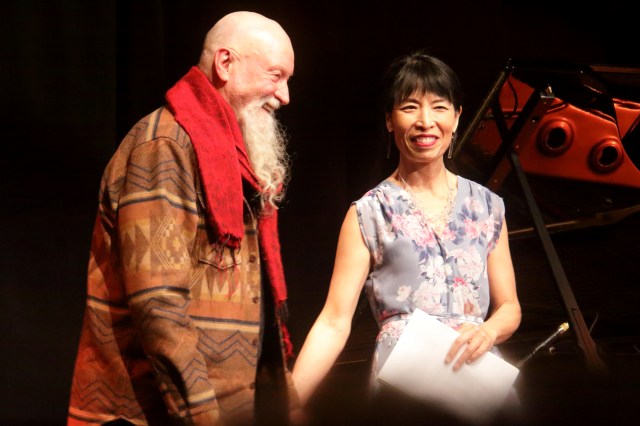
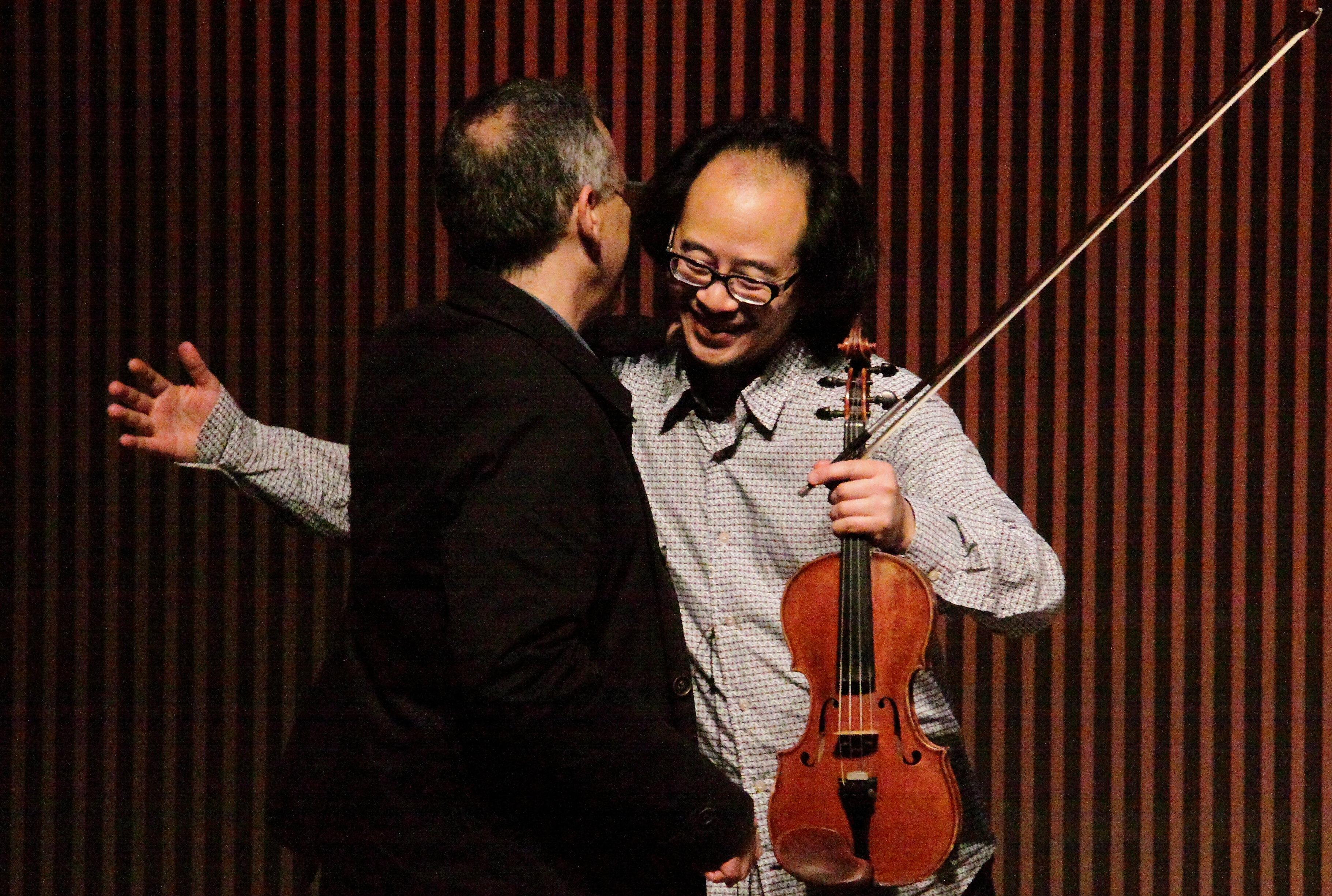
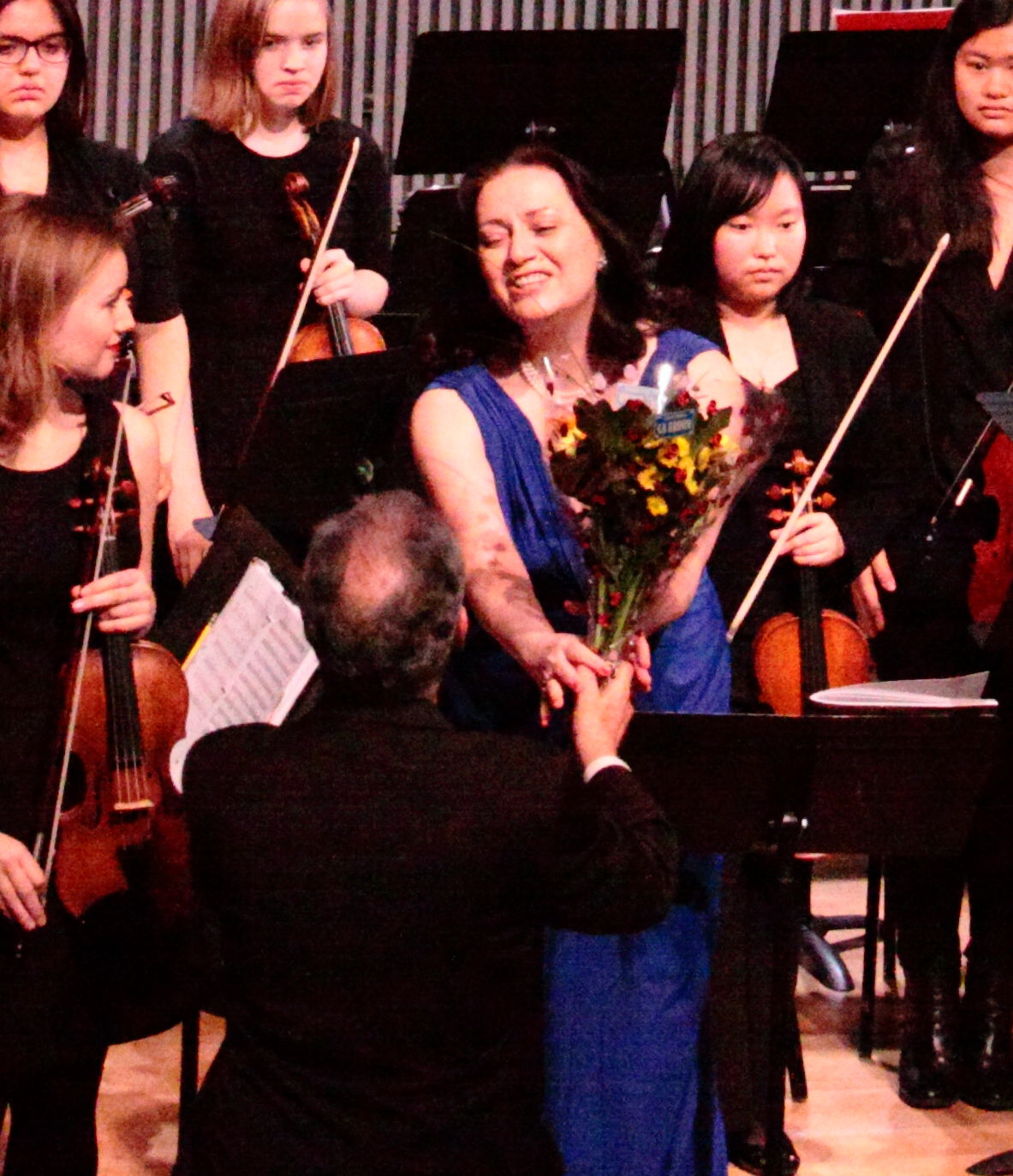
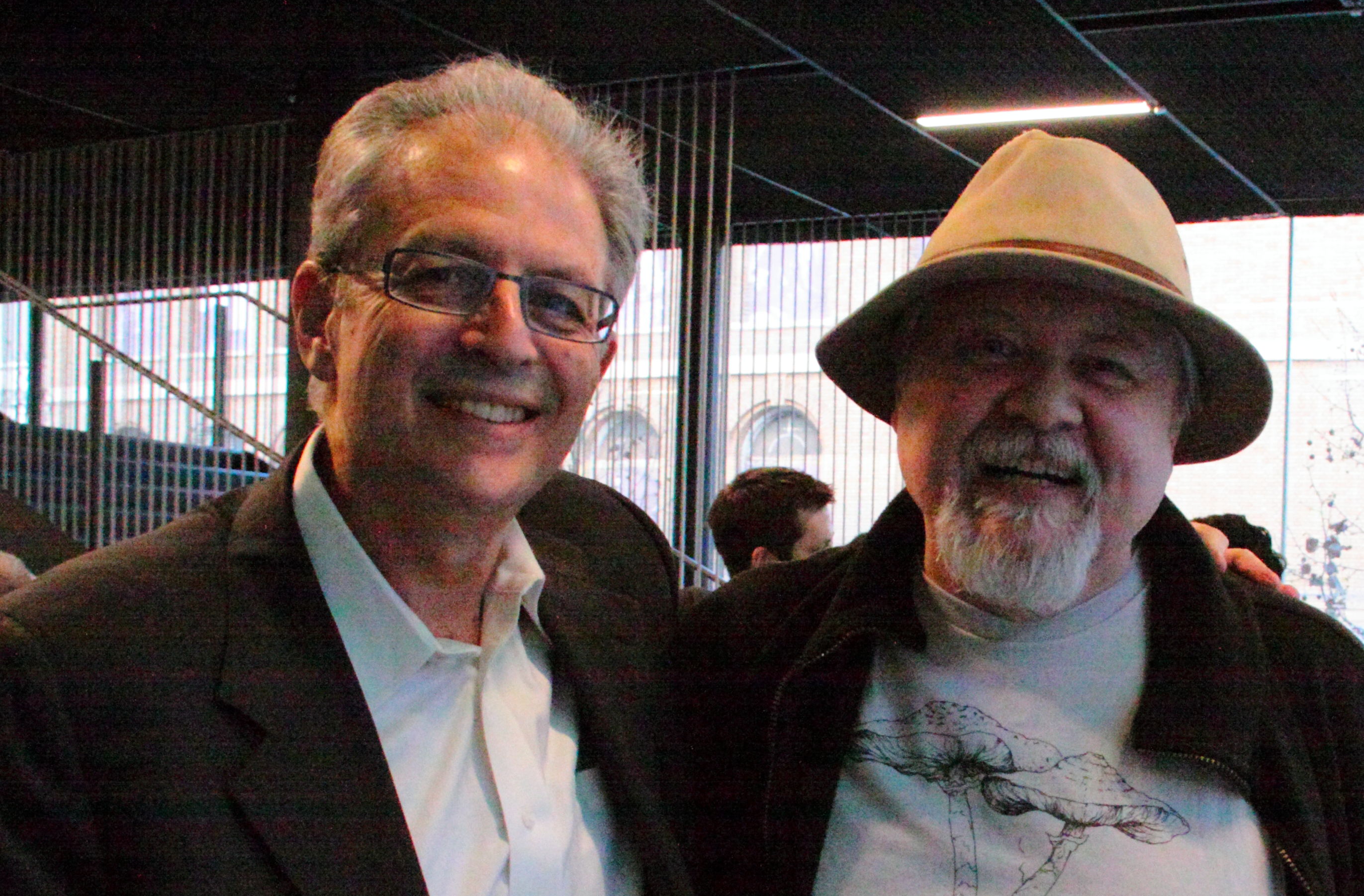
Composer Terry Riley warmly greets fellow pianist Gloria Cheng at the end of a wonderful evening of Riley’s piano music from the last 50 years.

The audience, with their laser focus still intact, came out of their trance to share their warm applause.  What a transcendent evening!  What amazing artists!

J. P. Jofre Double Concerto


jofredouble

This writer’s first encounter with a bandoneon was the electroacoustic “cybersonic bandoneon” of Gordon Mumma from about 1966.  In fact the instrument has its origins around the beginning of the 20th century.  It is a small accordion-like instrument which relies on the performer operating a bellows while pushing buttons on the instrument which force air past reeds which vibrate at their tuned pitch.  It is a folk instrument in Germany and Argentina where it became best known as the workhorse of the tango bands of the time where it continues to be popular.

It’s appearance in the avant garde with experimentalists such as Mumma did occur but the instrument became best known through the work of Astor Piazzolla (1921-1992) who incorporated tango in much the way Aaron Copland incorporated American folk songs into his classical works.  Despite his popularization of the instrument it remains largely just one of the instruments in local tango bands and the classical world appears to have largely withdrawn its interest since Piazzolla’s passing.

JPJofre

Juan Pablo Jofre (from his web site)

Well along comes native Argentinian Juan Pablo Jofre Romarion (1983- ) who appears to want to change that.  In addition to running his own tango band and promoting the music of his predecessor Piazzolla he now ventures into the classical realm with no less than a double concerto for bandoneon (of course) and violin.

Now this is not the avant garde stylings of the 1960s and 70s such as that typified by Gordon Mumma.  It is also not the sort of experimentation done by Piazzolla as he incorporated his native folk musics into the realm of the classical stage.  Instead we have a classically trained virtuoso bandoneon player forging his own style which is in fact quite listenable and seems to be treading a path of significance that may rival his teachers and mentors.  If you need a category for this disc try neo-romantic or just world music.

It is not difficult to imagine Jofre writing for the instrument of his own virtuosity but he also manages to write a substantial part for the other instrument in this double concerto, a violin.  He engages Belgian classical violinist Michael Guttman to share the stage in this large and substantial composition from 2016-17 and gives him a great deal to do.

Jofre has distinguished himself as one of the important interpreters of tango with his own band and, in particular, the works of Astor Piazzolla.  Now we get to hear the next phase of this emerging artist as he ventures into the world of the classical stage bringing his diminutive folk instrument to the fore.

In this tasty little recording we get to hear two highly skilled soloists and none other than the Orpheus Chamber Orchestra who do justice to Mr. Jofre’s first (and one hopes not the last) concerto for bandoneon and violin with chamber orchestra.  It is difficult to say if Jofre is going to be able to handle large musical forms (like symphonies, opera for example) but he is quite adept at writing for these three to five minute movements which constitute the concerto’s structure.

Jofre is at his best writing for the two solo instruments and some of it is ravishingly beautiful.  All of it is quite listenable and one must surmise that Jofre is a rising star with great talent and that he will continue to write music of this quality and passion.  It would be wonderful to hear more of the possibilities of combining the bandoneon with other classical instruments, maybe a concerto for accordion and bandoneon (of course the possibilities are boundless).  Clearly this is just the beginning for this emerging artist who seems poised to take on the mantle of Argentina’s other great tango composer, Astor Piazzolla both in his compositional and performance skills.

This substantial concerto (which chooses to split the outer movements into two parts) covers five of the six tracks on this disc.  The remaining three tracks are for bandoneon and violin.  These duos provide a glimpse of the powerful and intimate nature of Jofre’s compositional skills.  This is beautiful music and here’s hoping  that this disc will be the start of a mini renaissance of tango, Piazzola, etc.

It may be some time before the bandoneon is a common instrument in classical concert halls (or maybe it will never become common) but there is no doubt that Jofre’s instrument and his music deserve serious attention.  I would stay tuned if I were you.

Luke Cissell’s Thinking/Feeling,Gently Defying Genre


cissell

Silver Squid Music

I believe the composer himself sent me this disc.  I was not familiar with this composer/musician prior to receiving this but, a quick search on Amazon revealed several albums by this artist.  Cissell‘s web page validates my initial impression of an artist who will not easily fit in a category.  That is to say that this music wears several hats.

There is nothing experimental or difficult about this CD nor is it exactly pop or easy listening.  It is a rather personal recording.  Indeed the composer plays most of the parts and the concept is entirely his own.  Not having heard Cissell’s other recordings it is difficult to say whether this most recent one is a continuation of a style or a departure.  What is clear is that this music is easy to listen to but difficult to market efficiently.

This entirely self composed and produced album consists of 13 tracks ranging from 2 to 5 minutes or so in length.  The instrumentation consists of mandolin, electric bass, strings, and electronics and all are performed by the composer.  He identifies the track, “Follies” as being most appropriate for classical radio and the track, “Serf Shop” for pop/alternative radio.  It is lovely material with some folk leanings as well as classical leanings.  Cissell has classical training and that comes across in his writing but suffice it to say that his influences are eclectic and wide ranging.  He clearly is well trained in his ability to write effectively for these instruments and hearing this work makes one wonder what his more classically oriented work sounds like.

If this disc has languished for longer than it should have in my “to be reviewed” queue then blame it in part on the reviewer’s organizational strategy but also on the difficulty pigeon holing such a release.  There is little doubt that most who hear this album will find it entertaining but it is not clear how easy it will be for fans to find such a release unless they are searching for this specific composer.

In reviewing “classical” recordings one can rely on the “sounds like” strategy to provide listeners with some idea of what to expect.  That does not seem to work here.  The music is very listenable but it is not strictly classical and not exactly pop so while it is a very good disc I’m not sure how easily it will find an appreciative audience.

This reviewer will pay attention to this composer and looks forward to hearing his more classically oriented work as well.  Kudos, Mr. Cissell.

Jacob Greenberg Putting Debussy in Context


hanging

New Focus FCR 192

Well it’s been 100 years since Claude Debussy (1862-1918) left the earthly plane and anniversaries are good times for a re-evaluation.  Usually this just means issuing recordings of a given composers works, mostly the composer’s most popular.   Jacob Greenberg has chosen to record Debussy’s Preludes for Piano Books I and II (1909-1913).  But that alone seems a bit pedestrian so he adds in Alban Berg’s (1885-1935) Op. 1 Piano Sonata (1909), Anton Webern’s (1883-1945) masterful Variations for Piano (1936), and Arnold Schoenberg’s (1874-1951) “Book of the Hanging Gardens” Op. 15 (1908-9) as well as a few additional Debussy pieces.  Greenberg is a sort of refugee from the International Contemporary Ensemble.  For this recording he also conscripts the fine soprano (and fellow ICE refugee) Tony Arnold.  These two have already amassed quite a few recordings of repertory from this era.

greenberbdebussy813HMwi-pPL._SL1500_

This mix provides a context for the listener which shows where the Preludes fit historically and demonstrates some of the similarities in sound between these early 20th Century works.  We hear music written between 1908 and 1936 by four composers.  Hearing these works together gives the listener a sense of how some of the best “contemporary” compositions of this brief era sounded.  Indeed there are similarities here and one can see the emerging style which would become known as “expressionism”.  It is clearer how this emerged from Debussy and Ravel’s “impressionism” when you hear related works from the same era.

This reviewer had not been familiar with Schoenberg’s “Book of the Hanging Gardens”.  It is one of the less performed of his works.  These songs have a militantly atonal sound. Vocalist extraordinaire Tony Arnold puts real muscle into her reading of these songs.  The disc is worth acquiring for her performance alone.

In some ways this cycle appears to have been Schoenberg’s “Tristan und Isolde” meaning that he had stretched the limits of tonality and, unlike Wagner, he chose to develop a method which would ensure that there is no tonal center in his music.  He developed his method of 12 tone composition and rolled out his first example of this new method in 1925.

What is striking is that this Schoenberg song cycle dates from pretty much the same time as the Debussy Preludes and Alban Berg’s Piano Sonata.  One gets a sense of some of the tensions involved here.  Try to imagine being in the audience and hearing the wide stylistic differences between these two works and realizing that they are essentially from the same era.  Add in the much later Variations by Webern and one gets a sense of how far music could go, stylistically, based on Schoenberg’s methods.

Obviously the Debussy Preludes are the main focus here and these are acknowledged as classics of the repertoire.  They are most ably performed here but what struck this listener the most was the sound of those preludes in the context of the other pieces here which were part of that same 30 year span.  One can begin to hear perhaps some affinity between the Debussy and the later thornier harmonies and rhythms that typify the expressionistic style which would dominate much of the mid-twentieth century.

This is a fabulously entertaining recording and a sort of music history lesson as well.  Greenberg is a strong and assertive musician with an obvious feel for these pieces.  His choice of repertoire makes this a particularly good choice for the listener who is just beginning to explore this musical era and an eye-opening program for the seasoned listener.  Great set.

Telegraph Quartet Debut: Into the Light


TelegraphQuartet_IntoTheLight_AlbumCoverThis is the debut album for the Telegraph Quartet who are based in the San Francisco Bay Area.  They have chosen some curious works from the quartet repertoire to represent this nascent ensemble, Anton Webern’s Op. 5 Fünf Satze (1909, Benjamin Britten’s Three Divertimenti (1936), and Leon Kirchner’s String Quartet No. 1 (1949).

Webern is, of course well known, but relatively seldom played.  His pithy, brief, pieces belie a complexity which may delight musicologists but his music, for all of it’s craft, is never going to be a crowd pleaser like Haydn or Beethoven.  It appears that The Telegraph folks are putting together a carefully selected intro to their work.  They execute these little masterpieces with care and manage to squeeze the expression out so that the audience can begin to appreciate it.

The Benjamin Britten (1913-1976) Divertimenti were unfamiliar to this listener and, doubtless, will be a pleasant surprise to many.  Britten wrote three string quartets and a few other miscellaneous pieces for quartet.  It is a bit surprising that these little Britten gems have gone with so little notice before now.  These are three brief (though not as brief as the Webern) but engaging little compositions that clearly deserve at least an occasional performance.  The Telegraphs handle these with a powerful almost romantic interpretation.  It’s hard to say not ever having heard any other performance but these are engaging pieces.

Leaving the best for last we get to hear music by Leon Kirchner (1919-2009).  This Pulitzer Prize winning composer (he won for his Third String Quartet from 1967).  Kirchner wrote 4 quartets in total which vary widely in style.  They date from 1949, 1958, 1966, and 2006 (which remains unrecorded…hint, hint).  Kirchner wrote in pretty much all genres and even worked with electronics.  It is time for a new reckoning of his work.

The first quartet is the least heard of the lot and is of a sort of romantic quality.  It is a passionate composition that is influenced by a variety of styles but it precedes his 12 tone compositions.  This quartet seems to have an affinity for romantic gesture and singing melodies and listeners will doubtless want to hear this work multiple times.

Some may recall a Columbia album from the 1970s that recorded Kirchner Schoenbergian second quartet as a “B side” to an album which contained Kirchner’s drama, Lily, based on Saul Bellow’s “The Rain King”.  That disc was almost a Kirchner sampler displaying two major aspects of the composer’s output.

All the works here are bound to please a concert audience and this little collection of works dating a forty year period from 1909 to 1949 are excellent vehicles for this ensemble which sports a lush sound and a feeling for the proper shaping of melodies.

The Telegraph Quartet consists of Joseph Maile and Eric Chin (who apparently share the role of first violin with the other taking the second violin), Pei-Ling Lin, viola, and Jeremiah Shaw cello.  It’s difficult to say how this new quartet will fare but this album suggests that they are already on their way musically and, judging from their choice of repertoire, they are likely to unearth (and probably commission) unheard delights of the quartet repertoire.  Well done!

Other Minds 23: Whereof One Cannot Speak…


“Fragment #3”
speaking is speakingWe repeat
what we speak
and then we are
speaking again and that
speaking is speaking.

TokyoJune sometime, 1976                                                                         Richard Brautigan (1935-1984)
OM230007

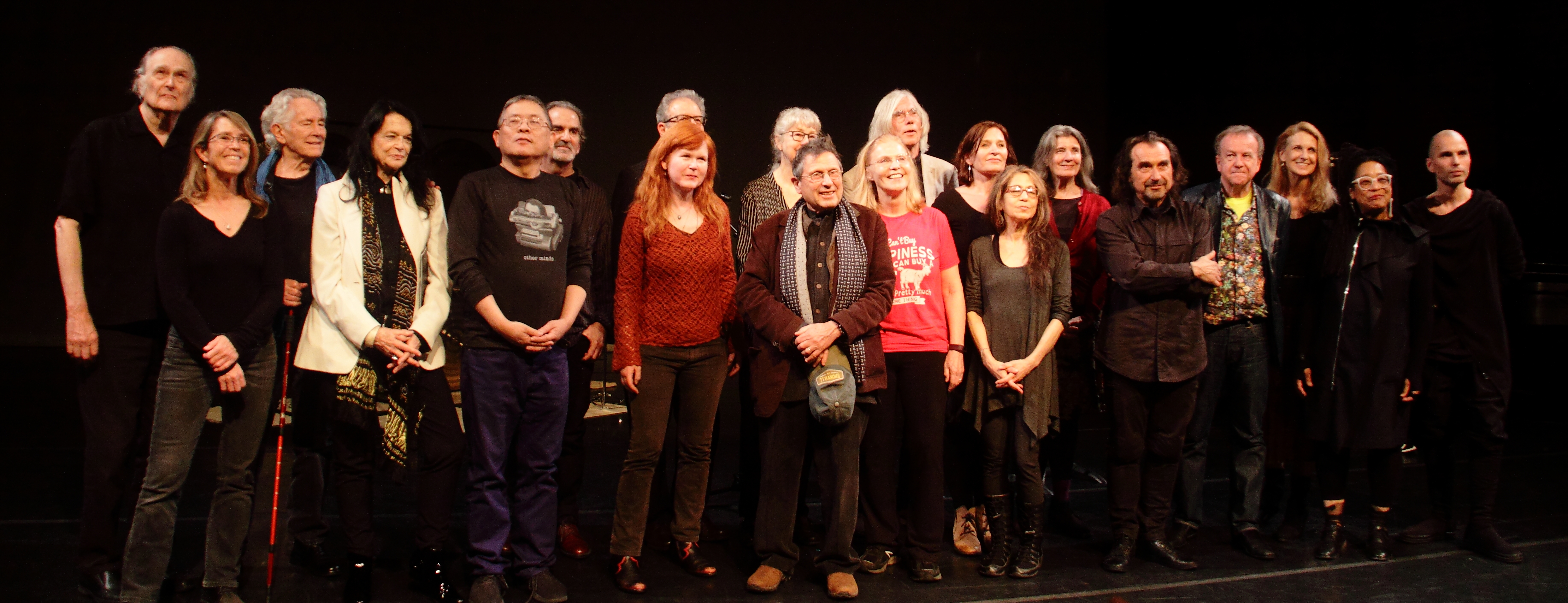
(Left to right: Clark Coolidge, Karen Stackpole, Michael McClure, Anne Waldman, Randall Wong, Aram Saroyan, Sarah Cahill, Charles Amirkhanian, Carol Law, Alvin Curran, Beth Anderson, Jaap Blonk, Tone Åse, Amy X Neuberg, Sheila Davies Sumner, Enzo Minarelli, Ottar Ormstad, Susan Stone, Pamela Z, Taras Mashtalir)

The last statement in Ludwig Wittgenstein’s 1921 Tractatus Logico-Philosophicus (Whereof one cannot speak, thereof one must remain silent) is well known among philosophy students and has taken on the quality of an aphorism or truism.  But the six days of this most recent Other Minds Festival was functionally an effective refutation of this concept.  And the controversy over the awarding of the most recent Pulitzer Prize in music to a rap/hip-hop artist (a species of sound poetry?) which was announced on April 16th, 2 days after the end of this festival of sound poetry seems to reflect the prescience and presence of mind of the Other Minds organization.  Apparently words are “in” even if Wittgenstein and the critics of the Pulitzer Foundation say otherwise.

The Wages of Syntax

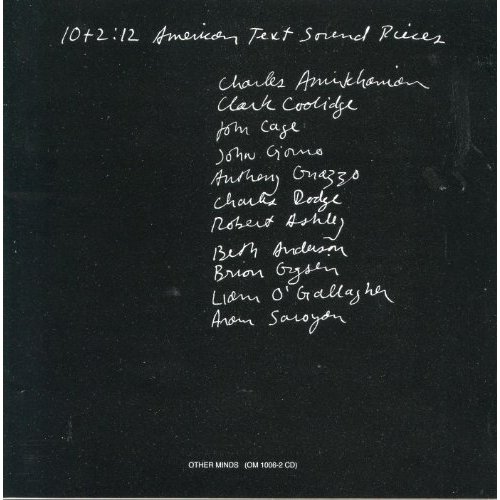
Other Minds 23 (April 9-14, 2018) in many ways began with the release in 1975, of one of the first (and still arguably the finest and still in print) anthologies of a strange, somewhat nebulous species of what can loosely be termed “sound poetry”.  That anthology was called “10+2: 12 American Text Sound Pieces” curated by the man behind this week’s vast expansion on that anthology, Charles Amirkhanian.
american text sound

Amirkhanian and his wife, artist and photographer Carol Law took a long strange trip in the early 1970s.  No, they did not follow the Grateful Dead.  Rather they sought a little known group of artists who walked a line seemingly between poetry and music.  From the Nordic countries to northern Europe, France and Italy they encountered artists who used the voice (though not necessarily language per se) to produce a sonic art form which nearly defies categorization.

1280px-Amirkhanian

Amirkhanian  in his office

Charles Amirkhanian is himself a composer and percussionist in addition to being a producer and promoter of contemporary music.  As a composer, as it was with his long radio career, his voice has been his main instrument.  His resonant, articulate baritone voice has served him well these years and this festival provided a rare opportunity to see/hear Amirkhanian perform his own work live.

This unprecedented 6 day festival marks the longest in the series of the Other Minds annual music festivals.  As relatively obscure as this art form may seem to the casual observer this series managed to provide historical context, current practices, and a tantalizing look/listen at the future of what is in fact a vast body of work.  The ability of Other Minds to find hidden treasures of sonic art continues to amaze.

Day one,subtitled, “The Wages of Syntax”, was the gala opening featuring some of the leading artists in the field.  After the obligatory intros the Italian master Enzo Minarelli presented the world premiere of his tribute to Stephane Mallarmé, “Ptyx”.

OM230013

The piece, comprised of phonemes rather than syntactical sounds, was an apt introduction to the weird and wonderful world of sound poetry.  Minarelli was passionate and expressive, a beautiful performance.  Only later in this series would we come to know the depth of scholarship, preparation, and experience that informed this and all his performances.  More on that a bit later.

Next up was one of the elder statesmen of San Francisco poets, the wonderful Michael McClure.  At 85 he sported a walking stick (no not really a cane) needed due to a recent fall.  He also required assistance of one of the stage managers to help him to the little chair and desk set up for him.  But none of that mattered once he opened his little bookmarked book of poetry and began to read “Marilyn Monroe Thou Hast Passed the Dark Barrier” and some of his Ghost Tantras from 1962.  His voice was strong, his delivery both certain and witty.  His combinations of words and non-syntactical sounds were delivered with the same joy, humor, and pathos which appears to have inspired them in the first place.  The audience responded very warmly to his ecstatic delivery.

OM230015

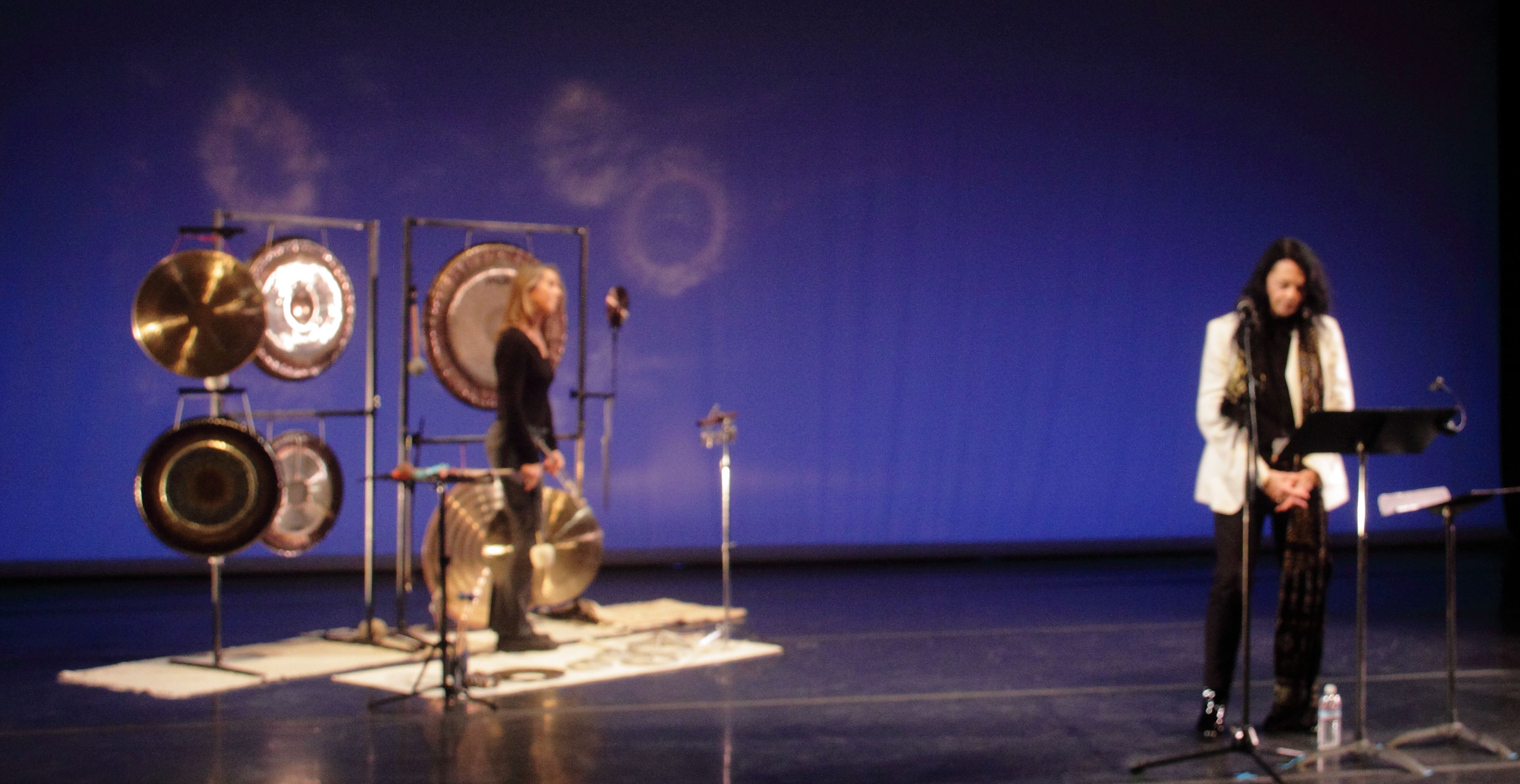
After a bit of stage preparation we were treated to one of the most prominent members of the next generation of American poets that followed Mr. McClure (can I be forgiven for saying beat poets?), Anne Waldman.  She was accompanied (as her texts required) by percussionist Karen Stackpole.  Waldman presented from her “New and Selected Poems”, “Pieces of an Hour (for John Cage)”, excerpts from “Voices Daughter of a Heart Yet to Be Born”, and excerpts from “Trickster Feminism”.  Her characteristically forceful and peripatetic performance carried her between the microphone and Stackpole’s percussion instruments and back again.  It was a charged and sincere performance which clearly charmed (some might say stunned) the audience.

Waldman’s ties to the world of sound poetry go back to her New York roots and her involvement in the St. Mark’s Poetry Project and the Dial-a Poem Poets whose recordings have included her work and that of John Cage, Charles Amirkhanian, Clark Coolidge, and Michael McClure among others.  Small world.
OM230021

Next up was the venerable Aram Saroyan.  I suppose Saroyan (yes, the son of Pulitzer Prize winner William Saroyan) can be said to be part of the same post beat generation artists as Waldman.  Perhaps best known for his “minimalist poetry” he is also an accomplished biographer (Genesis Angels deserves to be better known IMHO) and literary innovator.  It was Saroyan’s poem “Crickets” (1965) which ended the first side of that anthology mentioned at the beginning of this article.  It was in an infinite loop in the end groove of side one of the LP playing the one word which comprises the poem, “crickets”.  And it was this little gem that he performed on this night….with a twist.  After a few repetitions he invited the audience (many apparently still trying to figure out what was going on) to join…which we did…,at first hesitantly, in unison…and then, in a touch of group inspiration, just like real crickets, not all in unison.  It was a strange sort of call and response that charmed the audience and brought a smile to the poet as well.  And that only brought us to intermission.
OM230004

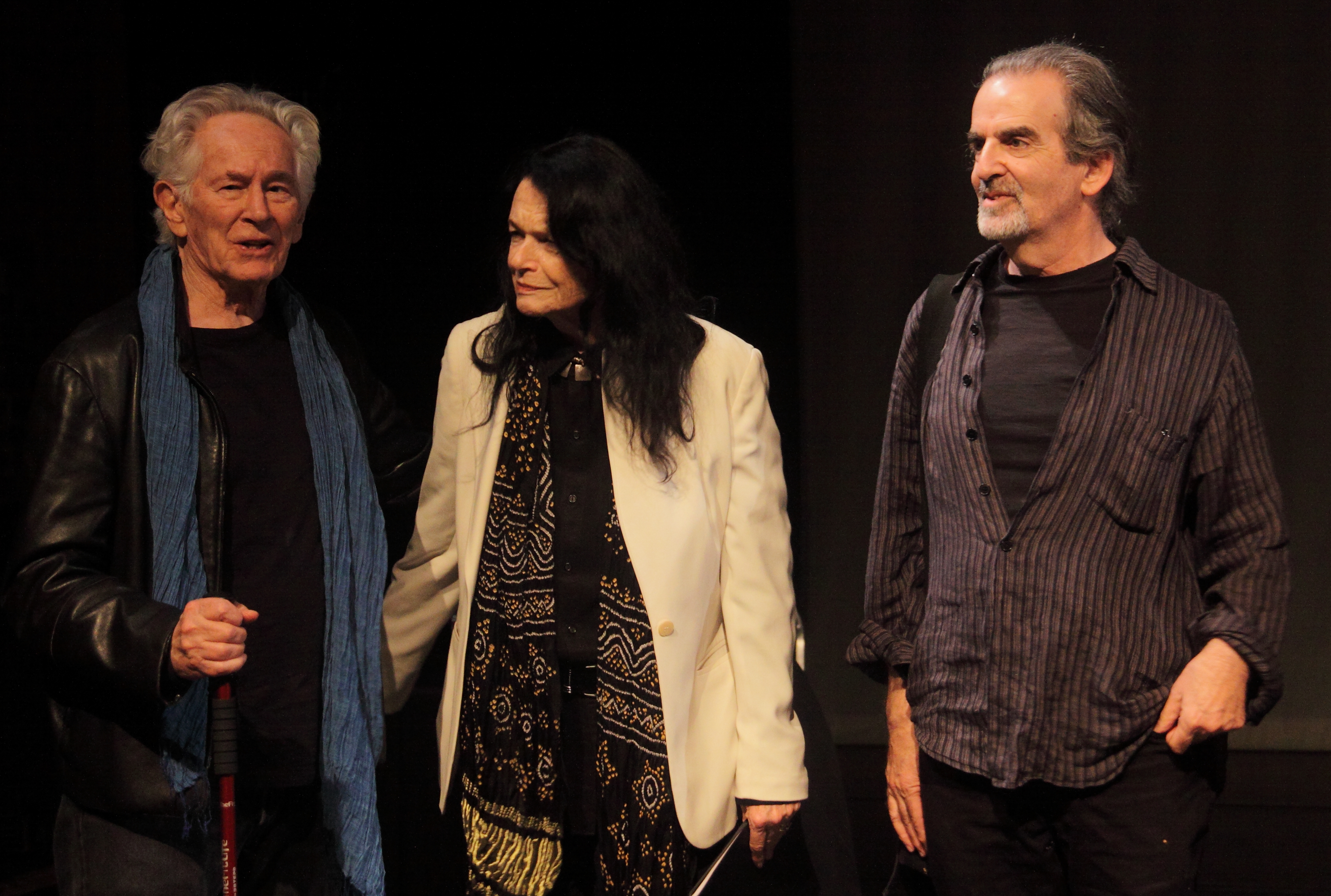
Michael McClure, Anne Waldman, and Aram Saroyan

The second half introduced the first of the international stars, Jaap Blonk, the Dutch sound poet and performance artist.  He began with one of his own works, Obbele Boep ‘m Pam (a bebop sound poem).  It was a sound poetry homage to that 1950s species of jazz which inspired the beats, Bebop.  It was a sequence of sounds and words in a made up (by the performer) language intended to imitate the sound of his native Dutch language.

His second performance was of a sound poem from 1916 by the man who coined the term, “phonetic poem”, Hugo Ball (1886-1927).  This poem, based on phonemes common to the Swiss and German languages, was called, “Seepferdchen und Flugfische” (in English “Seahorses and Flying Fish”).  Blonk’s delivery of this turn of the century classic was the first of what would be several such revivals of revered early material of this nascent artistic genre.

OM230026

Jaap Blonk

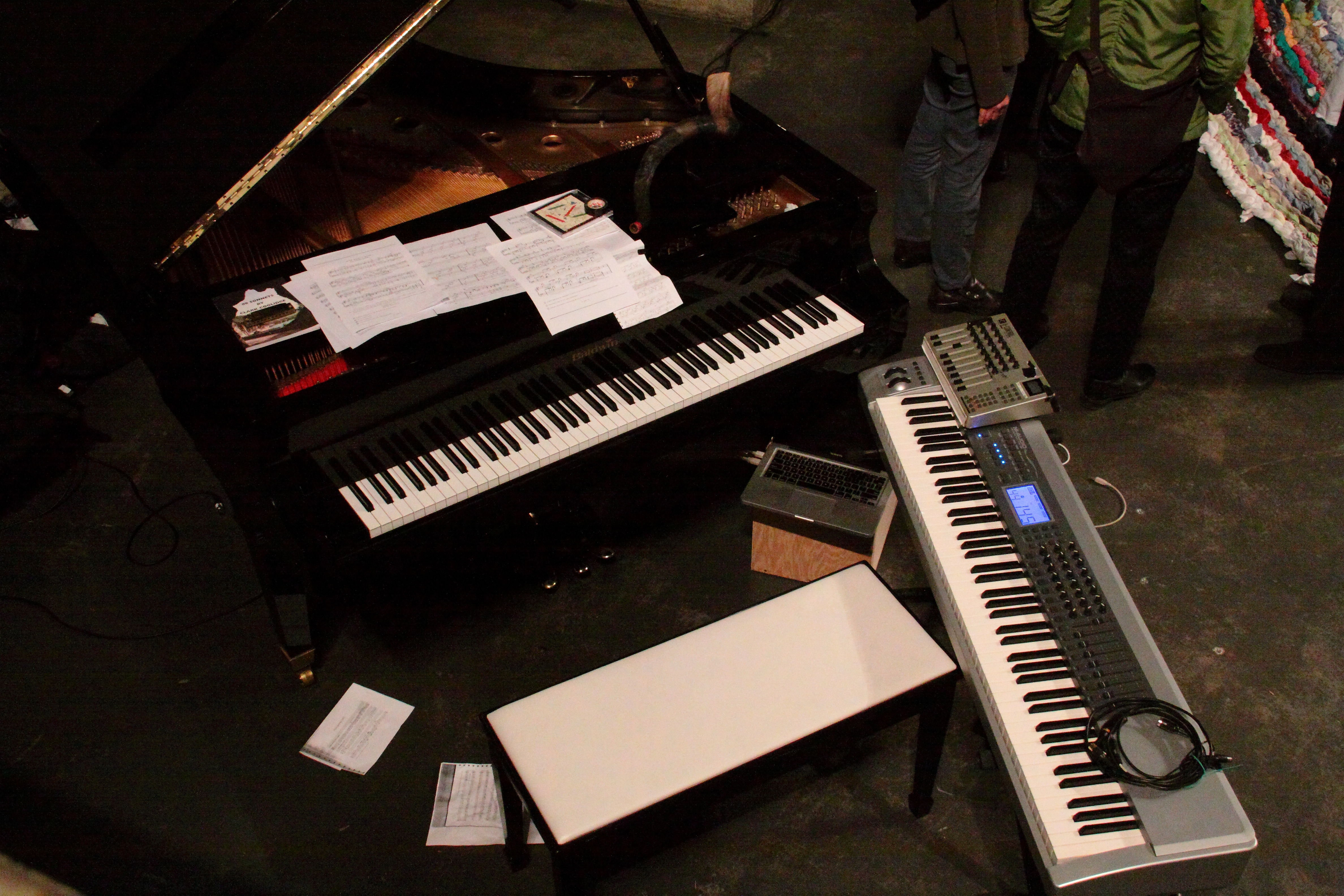
Blonk was followed by the grand finale which returned us to the local roots with poet Clark Coolidge and the ever innovative Alvin Curran.  We learned that the two went to high school together and this was a strange and wonderful reunion with Coolidge reading his manic stream of consciousness poetry accompanied (sort of) by Curran’s musical ministering at both a grand piano and a sampling keyboard in a world premiere collaboration.

Though Curran now lives in Rome (and has for many years) he will always be welcome in the Bay Area where he lived, taught, and performed for many years.  Curran is no stranger to Other Minds either having performed at Other Minds 7 in 2001 and, more recently, at the Nature of Music series.  He is a musician, not a poet but his eclecticism has allowed him to collaborate successfully with a wide variety of artists in a long and varied career which continues to command attention.

The nature of the interactions which characterized this world premiere performance of “Just Out of Nowhere” were not obvious though it is a fair assumption that a degree of improvisation was used and, no doubt, some of the successful confluences on this night were first encountered in rehearsals.  Coolidge’s stream of consciousness rhythmic ramblings were ever present but never overwhelming.  In response, Curran moved back and forth between the grand piano and the sampling keyboard working with serious concentration to provide his musical support for the words.

It was an intense performance as inscrutably mind expanding as all that went before.  Curran signaled the end (as has become his performance custom) by blowing the sacred shofar over the undampened piano strings which resonated in kind and faded to silence which, in turn, was held for a moment by the audience as they disengaged from their attention to offer warm and appreciative applause.  It was a striking collaboration and a reunion of two beloved artists.

OM230033

The audience seemed to feel the pure emotion of this performance and the two performers embraced warmly before acknowledging the accolades of the charmed audience.

OM230035

Sadly this writer had to miss the second night of the festival which consisted of a lecture by Enzo Minarelli on the history of sound poetry followed in the evening by a workshop on how to do sound poetry run by Jaap Blonk.  Both were apparently well received and it is my understanding that they will soon be available for streaming on the Other Minds web site.  Definitely gonna check that out.

The second night was given the subtitle, “No Poets Don’t Own Words”.  Even for those who were fortunate enough to have attended this extended Tuesday program it is worth noting that there is a wealth of resources easily available to the interested listener.  The Other Minds website has links to a wealth of archives which include interviews and performances by a variety of artists.  In fact (and this was a creative touch) you get a free CD entitled, “What is sound poetry?”, an archived KPFA radio program when you buy one of the unique t-shirts (designed by none other than Carol Law) from the Other Minds Web Store.  Get this stuff while you can folks.

Also worthy of note (this writer has lost many hours browsing here) is Ubuweb, an online archive of music, texts, films, and sound poetry.  The fact is that these six evenings ultimately could only serve as an introduction to the unusual and entertaining genre.  And those whose appetites have been whetted by this series will want to hear more.

The History Channel
OM230039

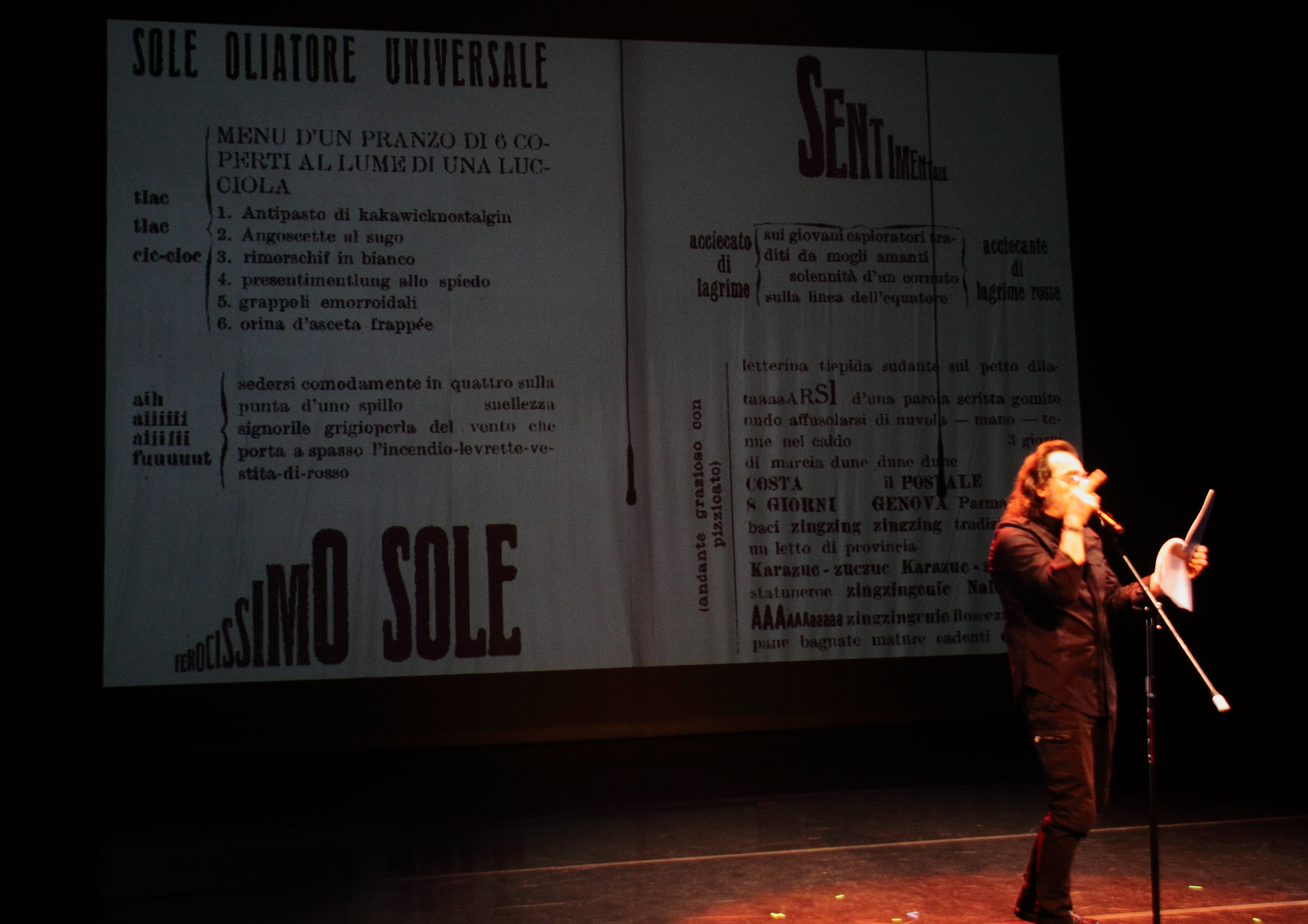
Day 3, April 11th.  The subtitle for this night’s performance was, appropriately, The History Channel.  It was an opportunity to display some of the origins and early foundational masterworks of sound poetry.  Enzo Minarelli displayed his academic skills and interests as he interpreted several classic “scores” (which were projected on the back wall) as the performer brought them to life in what appears to have been as authentic a performance as could be had with this material from the early twentieth century.

Minarelli did readings of: “Dune (parole in libertå)” (1914) and “Zang Tumb Tuuum: Adrianopoli, 1912” (1914) by Filippo Tommaso Marinetti; Fortunato Depero’s “Subway” (1939), “Verbalizzazione astratta di signora” (1927), and “Graticieli” (Skyscrapers, 1929).  He finished with one more by Marinetti, “Savoia” (1917).  In addition to the passion of Minarelli’s performance the look of the score, essentially artistically printed pages of words and phonemes, and the choices made by the performer to interpret those scores itself provided its own sense of drama.  The lighting and projection were simple and effective, supporting the live performance.
OM230042

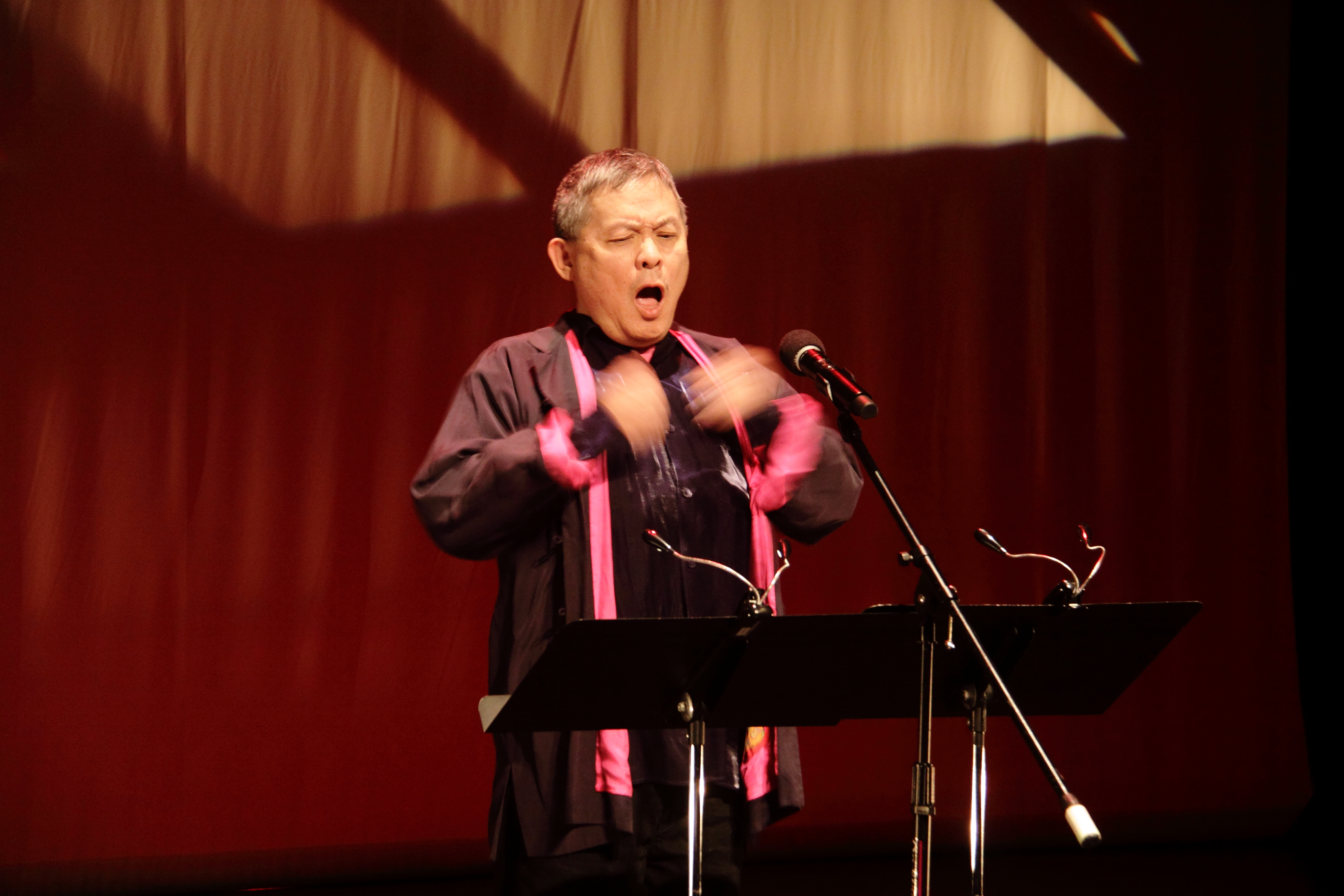
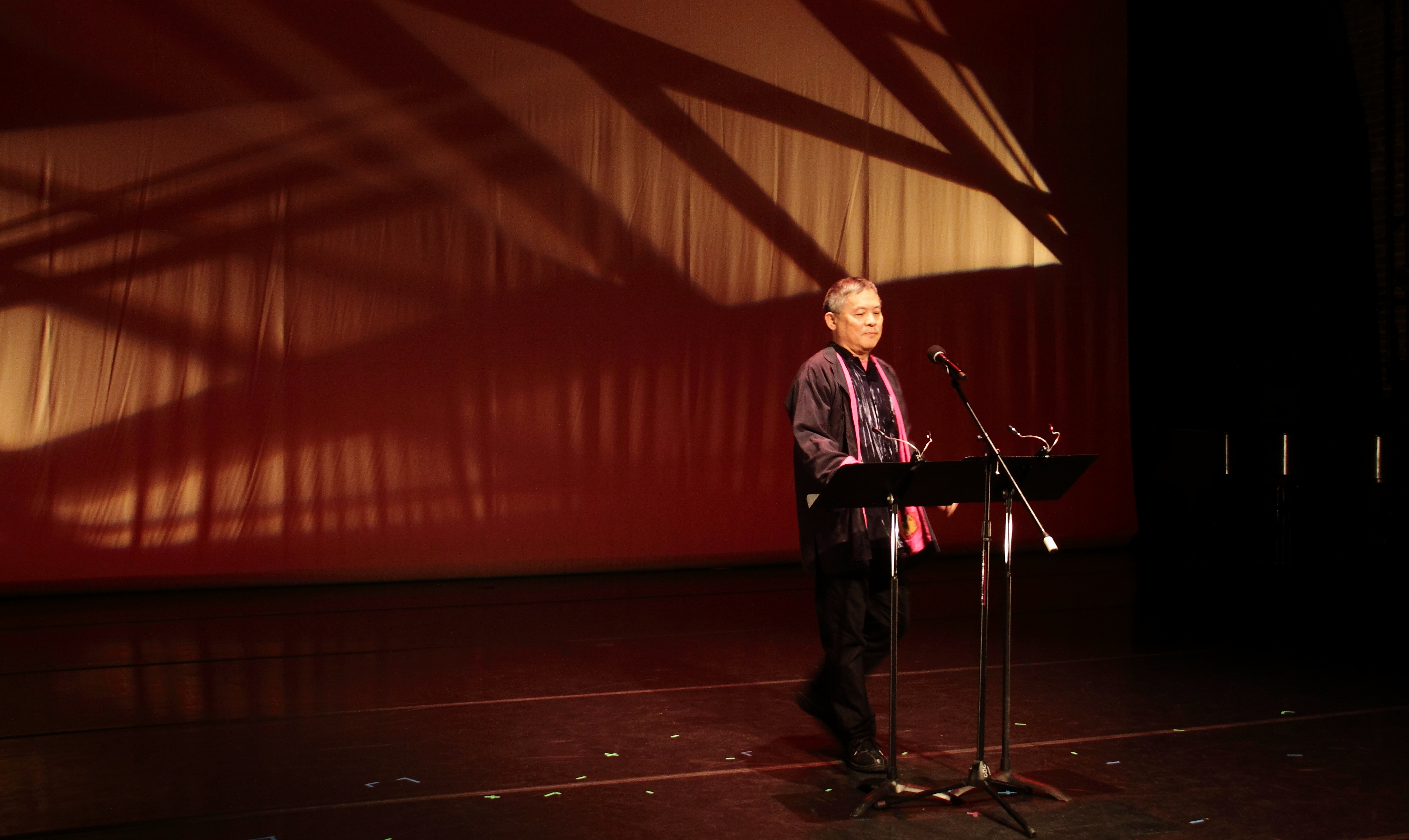
No major stage changes were needed for the next performer, just a little music stand with a microphone and small lights to illuminate the score.  Randall Wong, currently administrative director at Other Minds is an accomplished singer.  He is in fact a male soprano who specializes in baroque vocal scores including opera.  No stranger to new music, Wong has also demonstrated his formidable vocal skills singing with the Meredith Monk Ensemble among others.  It was those extended vocal skills that were called upon this night.

One could hardly have found a more appropriate casting to perform this next item on the program, “Stripsody” (1966) by the deservedly celebrated new music soprano Cathy Berberian.  Similarly to Wong, Berberian’s career took her from baroque opera to a plethora of modern music (Berberian was married for a time to Italian modernist composer Luciano Berio who wrote many a score for her).  What is lesser known is that Berberian wrote some music designed and inspired by her own vocal skills.

OM230045

Stripsody is difficult to describe.

OM230043

It is, in fact, a combination of sounds, specialized vocal utterances, and visual theater and is a sort of homage to comic strips (hence the title).  Utilizing onomatopoetic sounds, imitations of real world sounds and the sheer range of Berberian’s vocal instrument the performer becomes a sort of live comic character.  This piece is demanding but highly entertaining and contains humor and a variety of references.  Never did the audience lose track of the virtuosity involved or the intensity of the performer’s stage presence.  Wong’s performance was at once accurate, virtuosic, and a touching evocation of the memory of Ms. Berberian.

OM230044

It was an immersive experience for both performer and audience witnessing the sounds, the gestures, the facial expressions, the sheer concentration required to convey both the humor and joy of this work.  Wong demonstrated serious stamina and seemed to have enjoyed himself.

OM230047

Now what is history without a bit of archaeology added in?  Charles Amirkhanian introduced writer Lawrence Weschler who is (bear with me now) the grandson of the composer Ernst Toch.  Toch is responsible for writing what is perhaps the best known example of the genre represented by OM 23 this year.

In 1930 he wrote a three part composition entitled, “Gesprochene Musik” (Spoken Music).  Two of the three parts of this composition had long been thought lost.  However choreographer Christopher Caines apparently did a reconstruction for his dance piece, Spoken Music (2006).  Tonight’s performance was the American premiere of substantially what Toch had originally intended way back in 1930.

OM230049

The last of the three pieces, “Geographical Fugue” is by far the best known of Toch’s spoken music (indeed the probably the best known of all his music despite a truly substantial catalog and a Pulitzer Prize, no less).  In addition to the Gesprochene Musik there was a performance of a much later work by Toch which parodies chatter at cocktail parties, “Valse”(1962).

All of these were performed by The Other Minds Ensemble which consists of Kevin Baum, tenor; Randall Wong, tenor (yes, he can handle both soprano and tenor); Joel Chapman, baritone; Sidney Chen, bass, Amy X Neuberg, and Pamela Z.

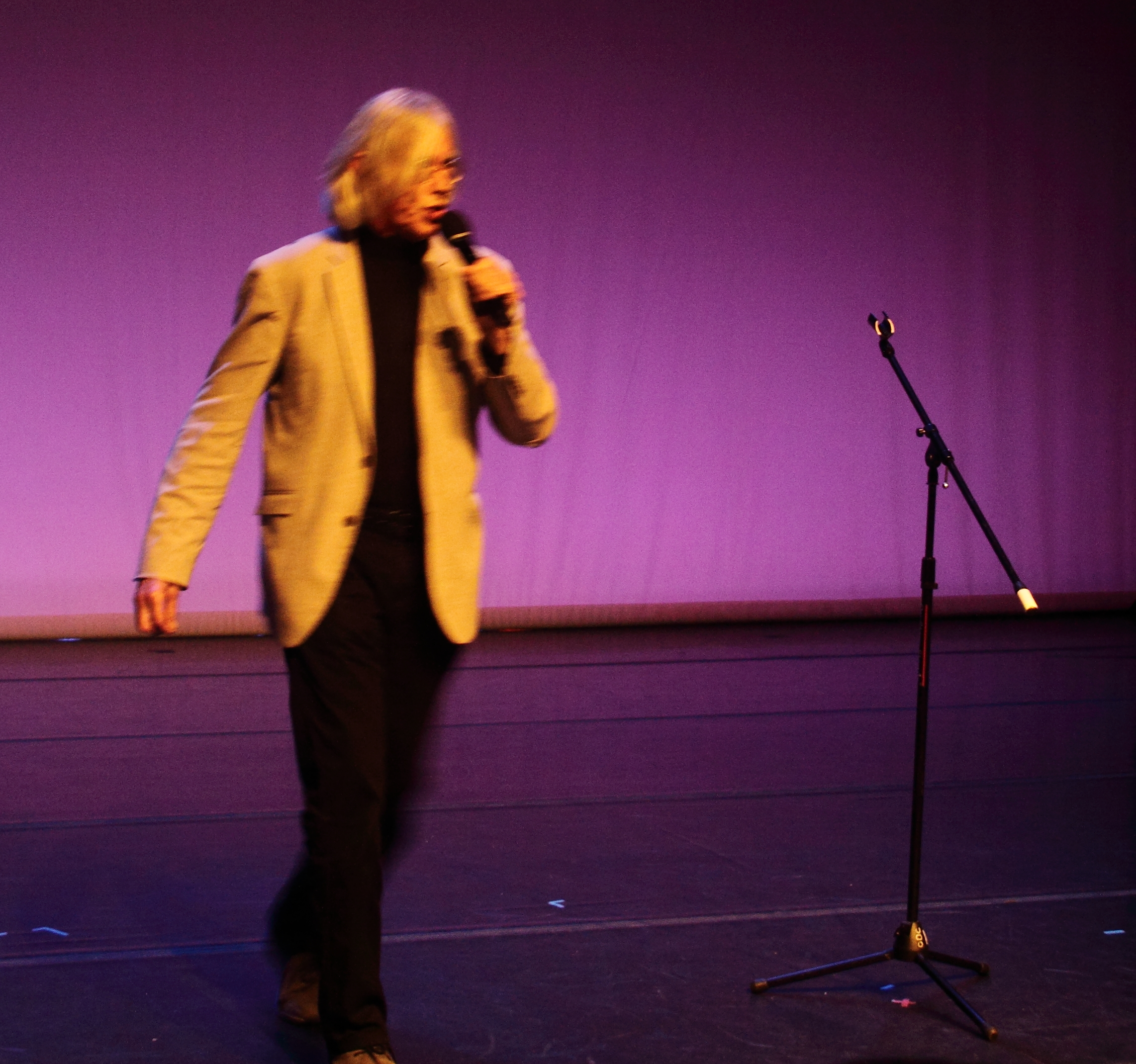
Fast forward now to 2014  when grandson, executor, and writer Lawrence Weschler came up, on a whim, with a medical text to fit to the original Geographical Fugue.  Tonight we were treated to the world premiere performance of Medical Fugue with the same ensemble.  Weschler’s facility with language allowed him to choose the phonetics which worked as effectively as Toch did in his original. No doubt grandaddy would have been proud.
OM230054

Following intermission Jaap Blonk again took the stage, this time doing a historical performance for which he has become quite well known.  Tonight he performed (from memory, no less) “Ursonate” (1932) by Kurt Schwitters.  This large and complex work in several sections (or movements) utilizes vocal sounds fit together in the manner of classical sonata form in music.  Blonk has been performing this work for many years now and he obviously both knows and loves this piece.  His sincere, kinetic performance brought the audience back to the time frame of those years between the wars most effectively.

Two pieces on tape were next: “La Poinçonneuse, Passe Partot No. 2” (1970) by Bernard Heidsieck (1928-2014) and “If I told him (a completed portrait of Pablo Picasso) (1934) by Gertrude Stein (1874-1946).  Both were presented with the theater darkened and a simple card projected on the back wall of the name of the work and the composer.

The Heidsieck piece is a poignant and bittersweet scenario alleged to be at least partly autobiographical.  The Stein was a poetic portrait of her friend, Pablo Picasso.  It was in Stein’s own unique take on language and left one wondering why Stein’s work is not even better known than it is.

OM230057

And for the finale the Other Minds Ensemble was joined by a frequent guest artist, the justly renowned pianist Sarah Cahill in a seldom performed work by American Composer (and Gertrude Stein collaborator) Virgil Thomson (1896-1989).  “Capital Capitals” (1917-1927) utilizes a Stein text.  Thomson and Stein enjoyed several successful collaborations (including two operas) with Thomson setting Stein’s words to music.

The text, designed with musical analogies in mind, was presented uncensored with a disclaimer in the program.  The text, a bit dated, would not be considered politically correct by today’s standards.  It is a celebration of the ancient capitals of Provence (Aix, Arles, Avignon, and Les Baux).  The music was written ten years after the text and shows the same collaborative affinity demonstrated in the operas.

The ensemble appeared to have a great deal of fun with the punning language and the music such a good fit. The audience clearly agreed.

Scandalnavians

Day 4:  One of the things that has characterized Other Minds concerts over the years is the attempt to include the world outside of the United States.  This year the international artists mostly come from that same territory which Mr. Amirkhanian and Ms. Law traversed on their journey in the early 1970s.  Jaap Blonk, who had already performed in from the Netherlands, Enzo Minarelli, from Italy.  We would on this night also be introduced to Sten Hanson (1936-2013), Ottar Ormstad , Taras Mashtalir , Lily Greenham, Åke Hodell, Sten Sandell, and Tone Åse.

The evening opened with tape presentations of two pieces by Sten Hanson (1936-2013).  Che (1968) and How Are You (1989).  The first was a deconstruction of words of Che Guevara and the second a phonemic deconstruction and electronic manipulation of the three words of the title.

OM230064

Then, in a significantly darkened hall, we were introduced to the work of Ottaras, a duo consisting of Russian composer Taras Mashtalir and Norwegian poet/artist Ottar Ormstad.  Standing stage left of the projection screen which covered almost the entire back wall Mashtalir worked on his laptop (producing some heavy rumbling that shook the walls and was felt in the listener’s body).  This writer’s first impression was that of some sort of IDM (Intelligent Dance Music) or ambient rave soundtrack.  It accompanied some striking (mostly) black and white images which took center stage on the screen at the back wall.  Slowly, at first imperceptibly, Ormstad wove some vocal sounds into the fabric.  It was the U.S. premiere of a 2018 work entitled, “Concrete”.  It was in four sections (or movements if you will) each separately titled, “Long Rong Song”, “Navn Nome Name”, “Kakaoase”, and “Sol”.
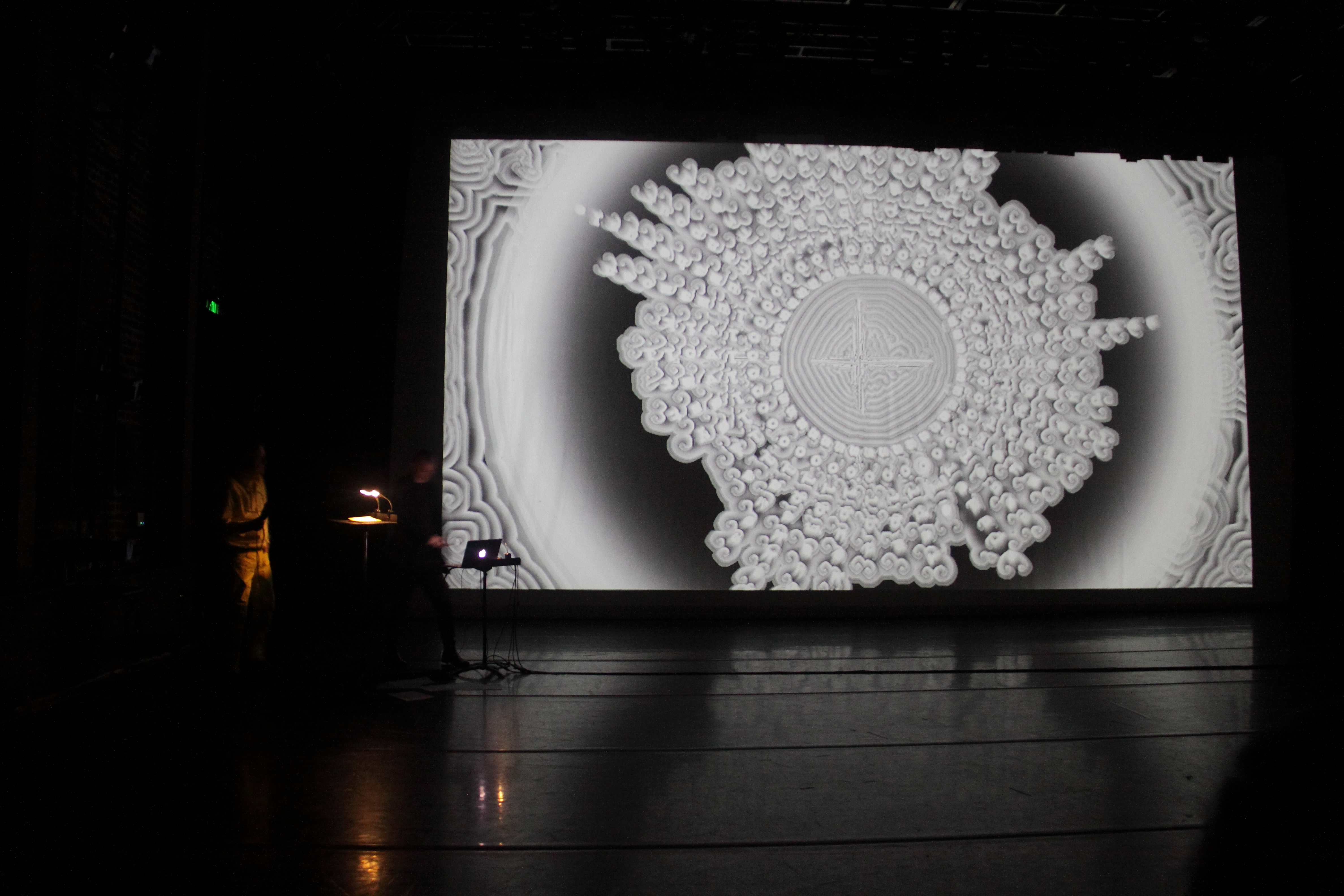
OM230065

The strange swirling images, sometimes with words or parts of words moved across the back screen while the two performers, barely visible, worked with their instruments (computer and voice) to create a soundtrack for the images.  Much like the non-syntactic use of sounds and language, the musical accompaniment was comprised of rather minimalistic utterances orchestrated in a wide range of frequencies with frequent heavy bass sound which provided a tactile component. All in all a rather mystical experience, exactly the cutting edge one looks for when attending an Other Minds production.
OM230067

The performers seemed touched, perhaps even a bit surprised by the very warm response from the audience who seemed to connect rather easily to this unusual and very sensual experience.

The first half of this night’s concert concluded with the presentation of two more tape pieces, Lily Greenham’s “Outsider” (1973) and Åke Hodell’s “Mr. Smith Goes to Rhodesia” (1970).  As in previous tape presentations a static photograph with titles was projected on the back wall in the darkened theater.

The Greenham piece is a solo monodrama in which the speaker (Greenham) is accompanied by an electronic chorus of her own voice.  Hodell’s piece is clearly a protest piece about racial oppression by Ian Smith (Rhodesian Prime Minister 1964-1979) in Rhodesia (now Zimbabwe and Zambia).  It is like the Greenham piece in that it utilizes a chorus but here the chorus is actual children gathered by the artist to speak/echo the lines of the narrative which contrasts the colonial narrative with both Hodell and the children periodically intoning, “Mr. Smith is a murderer.”  The contrast was chilling and the pause for intermission a welcome respite.
OM230071

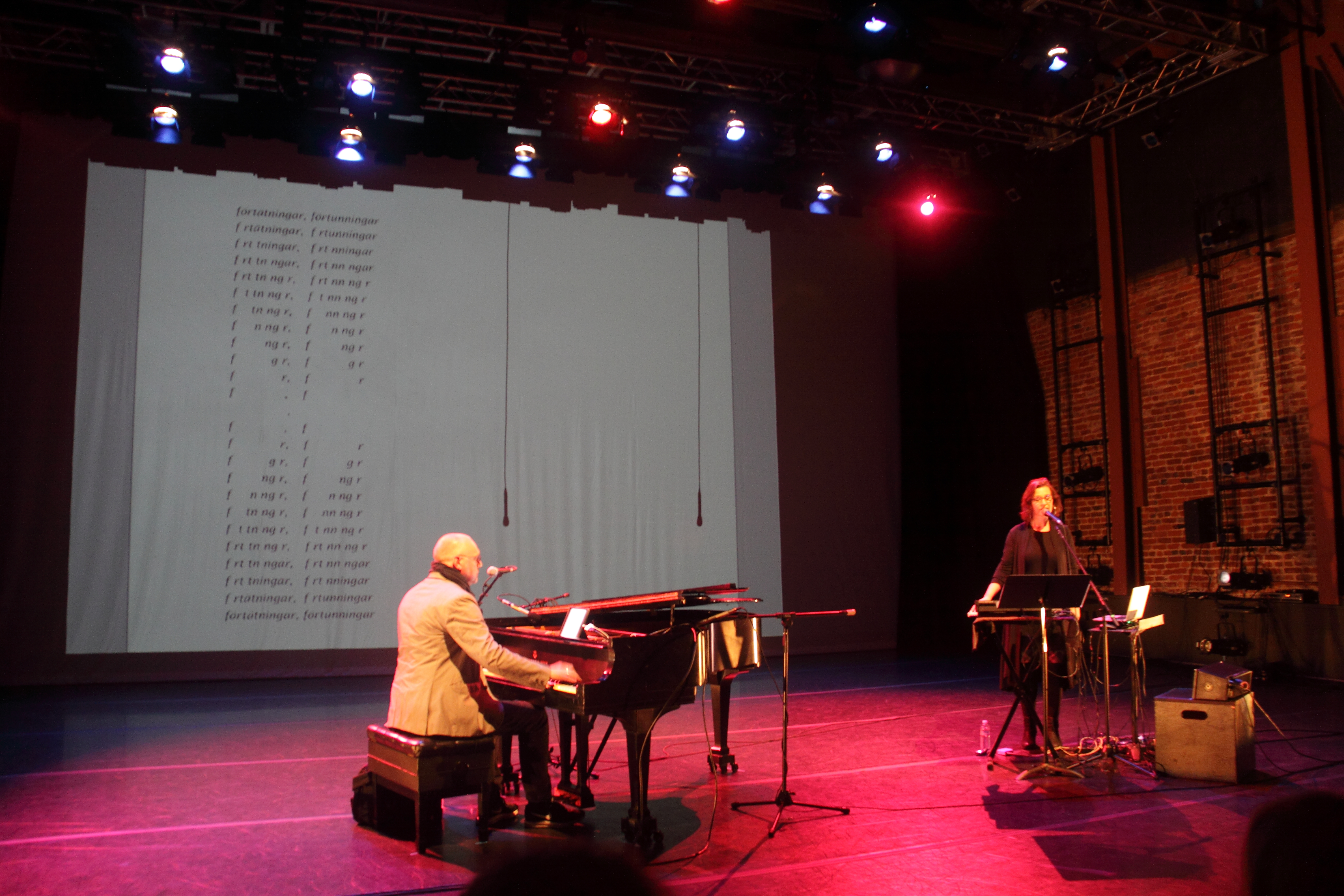
The second half of the program began with a solo performance by Tone Åse, another world premiere.  She performed her work, Ka? (2018) for voice and electronics.  In this piece she works with the sounds of questions, hesitations, and the sound of dubiousness deconstructing words, phrases, sounds and manipulating them vocally and electronically in a piece whose low volume and sparse sounds certainly evoked the intended emotions.

After a brief acknowledgement of the appreciative applause the next performer, Sten Sandell sat down at the keyboard stage left and began the performance of Voices Inside the Language (2018), another world premiere.  Again this experience had a similar sparse, almost minimalist approach.  It was a collaboration that echoed the first night’s Coolidge and Curran performance and presented an entirely different sound world.

OM230073

Almost before the audience realized the collaboration was over Åse discreetly left the stage leaving Sandell to perform his work, “vertikalakustik: med horisontell prosodi” (2017).  Here was a near complete deconstruction of language using simply phonemes, individual sounds.  With voice, piano, and projections on the back screen, Sandell delivered his necessarily minimalistic piece.

Both Sandell and Åse briefly acknowledged the applause bringing to an end this most satisfying international segment of the festival.

Good Luck with/for/on/in/at Friday the 13th

Described as an antidote for triskaidekaphobia (fear of the number 13), this evening’s program featured primarily California based artists including Amy X Neuberg, Mark Applebaum, Charles Amirkhanian, Carol Law, and (the one non-Californian) Enzo Minarelli.

The most famous victim of triskaidekaphobia was the Austrian/American composer Arnold Schoenberg (1874-1951).  Curiously for the sake of the present subject matter, Schoenberg invented sprechstimme (speech song), a sort of half sung/half spoken style of performance for many of his vocal scores.  His unfinished opera, Moses und Aron (1932) uses it and ends the second (and last completed) act with Moses singing/speaking the following words: “O Wort, du Wort, das mir fehlt!” (in English: “O word, thou word, that I lack!”)  Indeed the theme in the composer’s libretto is centered in part around Moses’ inability to articulate his ideas.  (Aaron was the man of words, Moses the charismatic leader)  Here, tonight, we were presented with artists who have grappled similarly (as all artists do) with the issue of expression and their unique solutions to the problem.  (By the way the spelling, “Aron” is not a German spelling, it is Schoenberg’s truncation of the name so that the title would not have 13 letters.)  The poor man probably wouldn’t have survived this night.
OM190013

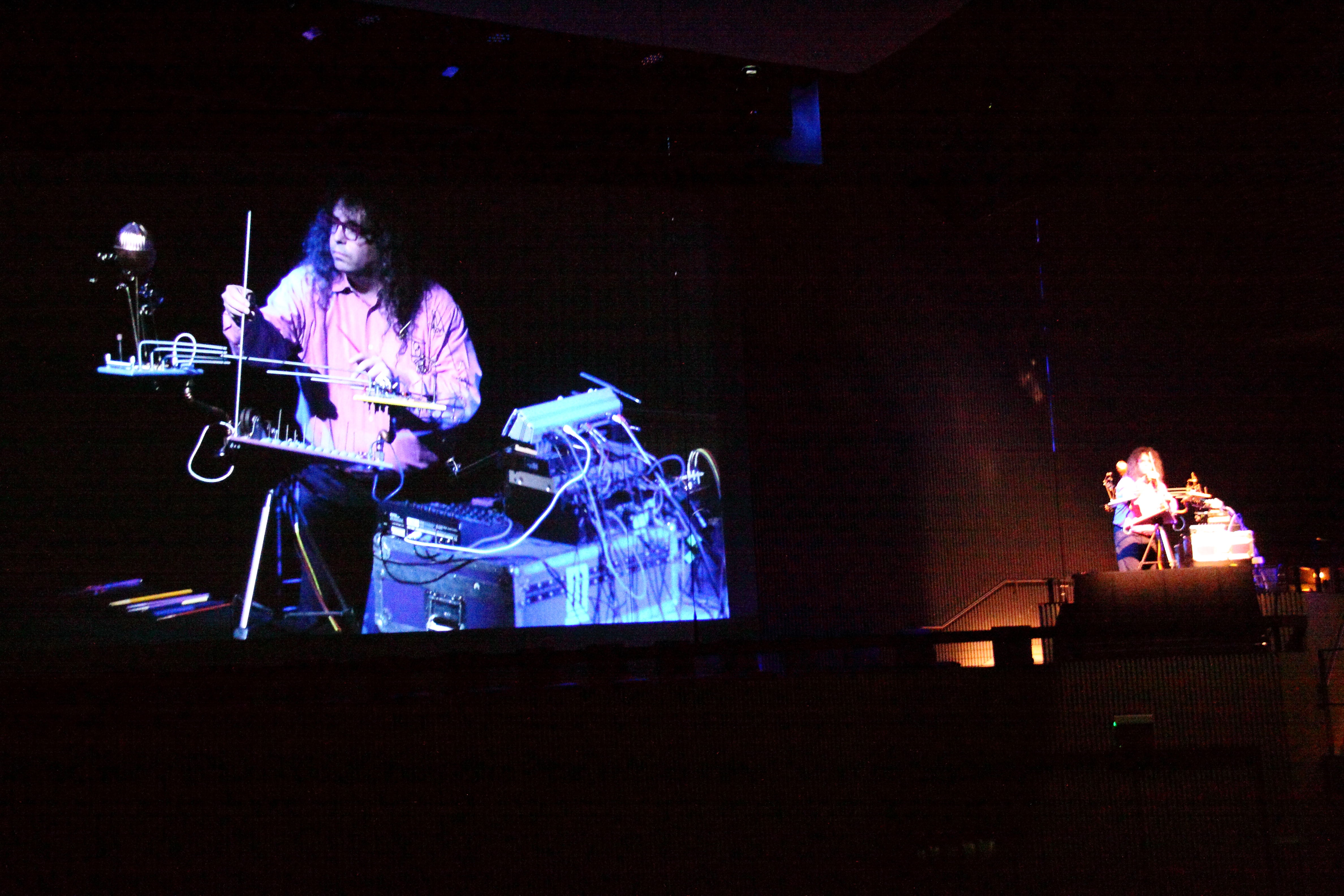
Projection of Applebaum performing with view of the composer/performer stage right as well.

The night opened to a darkened stage with the projection of one of those info/program note cards on the back wall.  The presentation was of a tape piece by Stanford professor (and Other Minds alumnus) Mark Applebaum.  Since the darkened stage and the all too brief bow taken by the composer exceeded the limits of this writer’s photographic skills I offer the above photo of Mr. Applebaum from previous Other Minds program.

The piece at hand on this Friday the 13th was, “Three Unlikely Corporate Sponsorships” (2016) which had it’s premiere at Stanford.  The three sections were entitled, “Nestlé”, “General Motors”, and “Haliburton”.  The mocking and humorous content was such that there was no doubt that the three named corporations were not involved in the creation and funding of this work.  Like some of his predecessors this week Applebaum is prone to political commentary in his music whose sound appeared to take place in a stereo sound field with some antiphonal effects.  Words were used, deconstructed, used again and never once were they used in a complementary fashion.  This is, in its way, a protest piece.

As I said, Applebaum came out only briefly (with a smile on his face) to acknowledge the very amused and appreciative audience.  One senses that protest against corporate greed is hardly an unpopular theme with this self selected audience which greeted this work with obvious satisfaction.

OM230078

Amy X Neuberg is a well known performer in the Bay Area and is also an alumnus of Other Minds.  Neuberg studied both linguistics and voice (at Oberlin College), and electronic music (at Mills College).  She has a strong well-honed soprano voice and has developed her own unique mix of language and music in compositions that defy easy categorization.

Neuberg graced us with “My Go”, “Christmas Truce: a journal of landlord/tenant situations”, yet another world premiere for this series, “Say it like you mean”, “That’s a great question (A Jerry Hunt Song Drape)”, and, one of her classics, “Life Stepped In”.

Neuberg’s work is a striking and unique combination of linguistic wizardry, cabaret style song writing, probably some rock and pop sensibilities, and the indefinably unique way in which she integrates voice and electronics with a touch of drama at times.  Her work is permeated with humor but also with social critique.  As is always the case (at least in this writer’s experience) her performance was greeted with warmth and appreciation.

OM230080

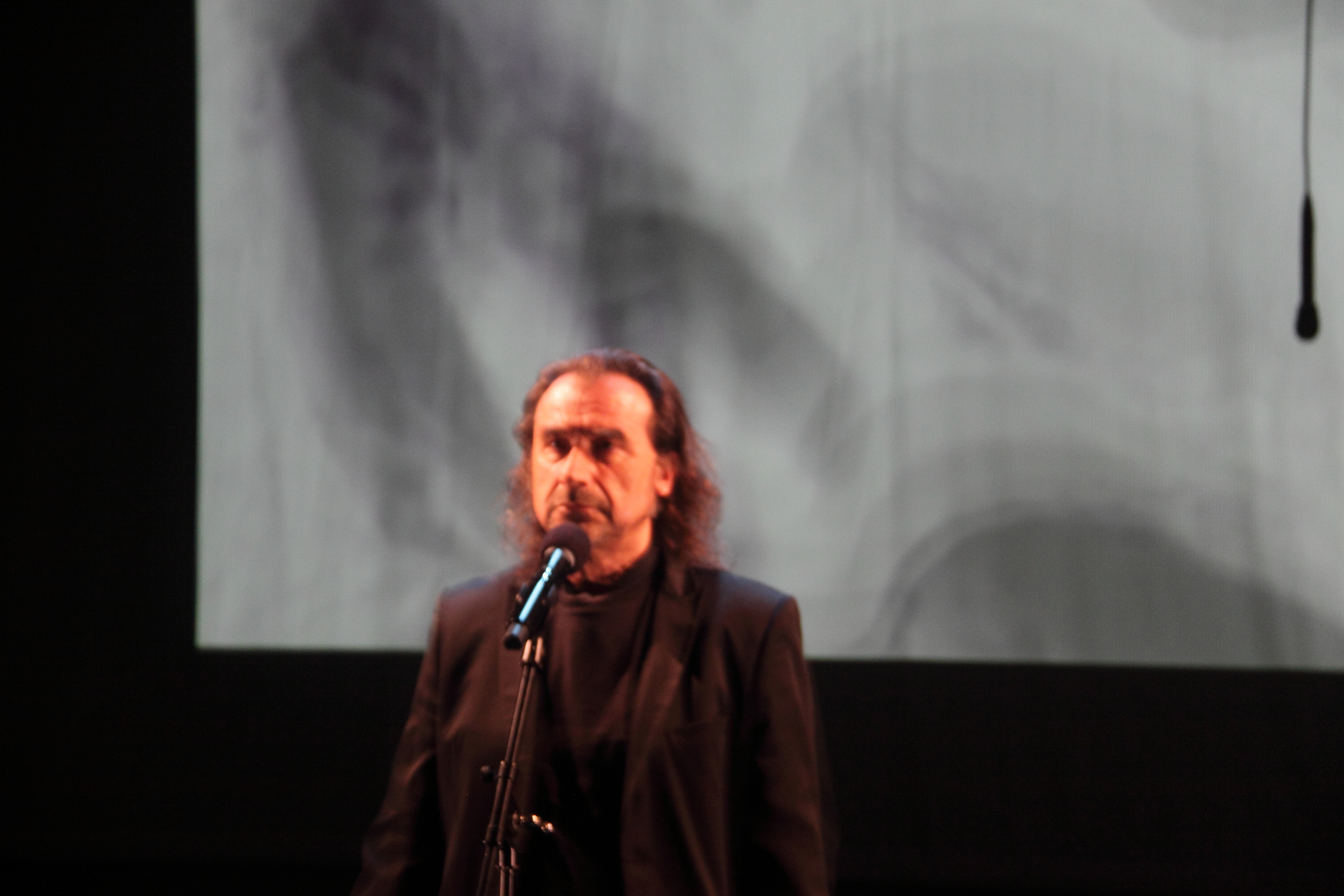
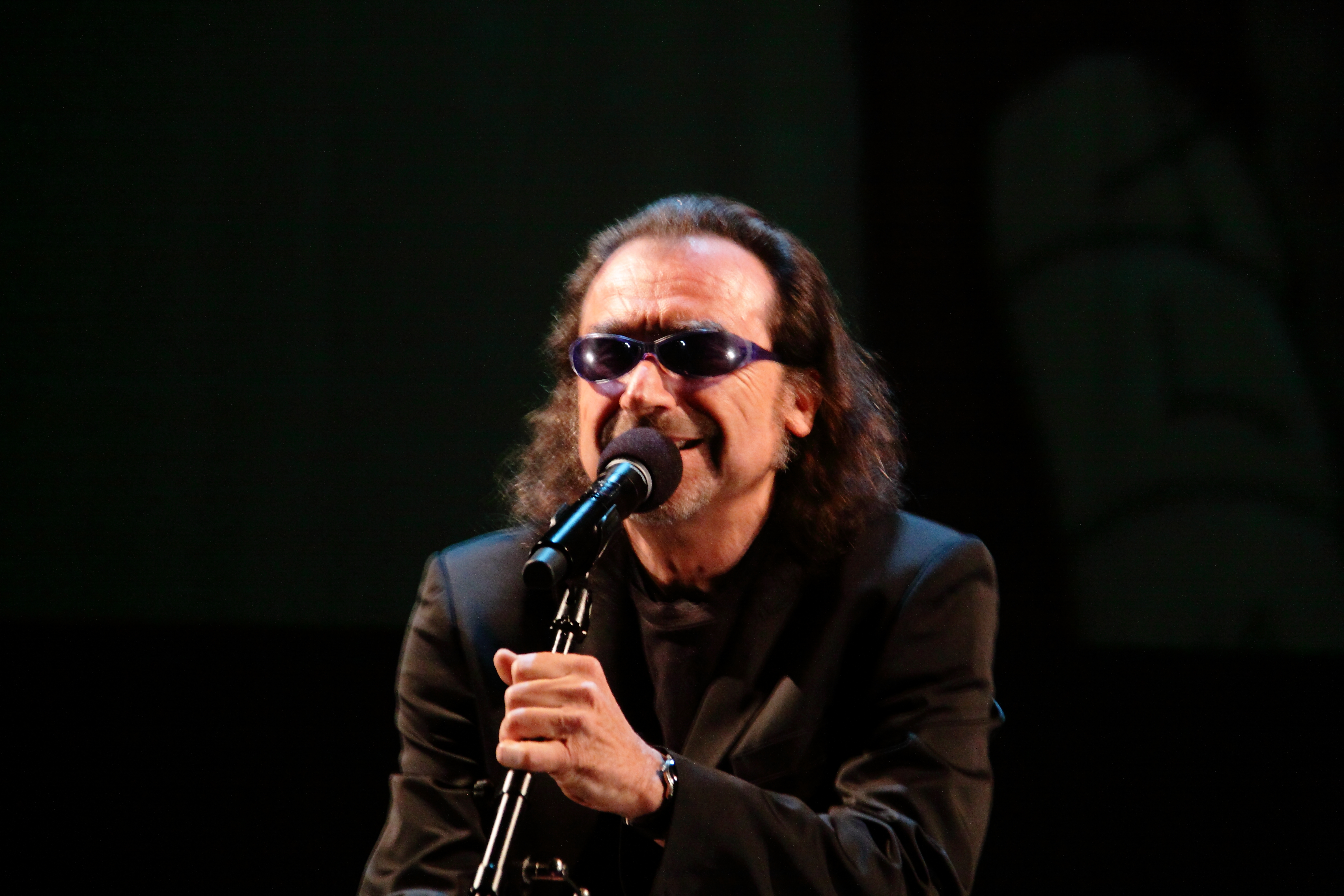
Following intermission we were again treated to the substantial performing skills of Enzo Minarelli who graced us with a generous selection of his own works including, “La grandeur di Ghengis Khan” (The grandeur of Ghengis Khan) comprised of eight vocal tracks and three noise tracks, “Il supere scopo di vita” (Knowledge as the purpose of life) “I nomi delle città come inno nazionale per Sinclair Lewis” (The names of the cities as national anthem to Sinclair Lewis) another multi-track work, and Excerpts from Fama: “Ciò chevoglio dire” (Fame: What I Want to Say): “Affermasi senza chiedere” (To succeed without asking), “Che teme il dolore (use la medicine della religion)” (Those who fear pain fuse the medicine of religion), “Alla ricerca del suono farmacopeo” (Seeking the pharmaceutical sound) and “Poema”.

In addition to their described meanings and verbal content these works were about the beauty of the Italian language and the beauty of the sound of the performer’s voice as well as the accompanying performance.  Minarelli is apparently a performer of high energy.  He performed on five of the six days and attended the last night as well seemingly all in a weeks work.
OM230086

Once again the fairly minimalist lighting strategies were remarkably effective.  Projections on the back wall along with Minarelli’s strong stage presence made for a striking performance of these works.

OM230091

Minarelli was like a poet from a cabaret in some lost Fellini film fraught with intelligence, drama, passion, and humor.
OM230092

Any of the above led the audience in some degree to the notion that what had just transpired would be a tough act to follow.  Certainly this was true for Mr. Minarelli but, rather than a denouement or even a cooling down there was a shift of gears, a transition if you will, to yet another universe of creativity.

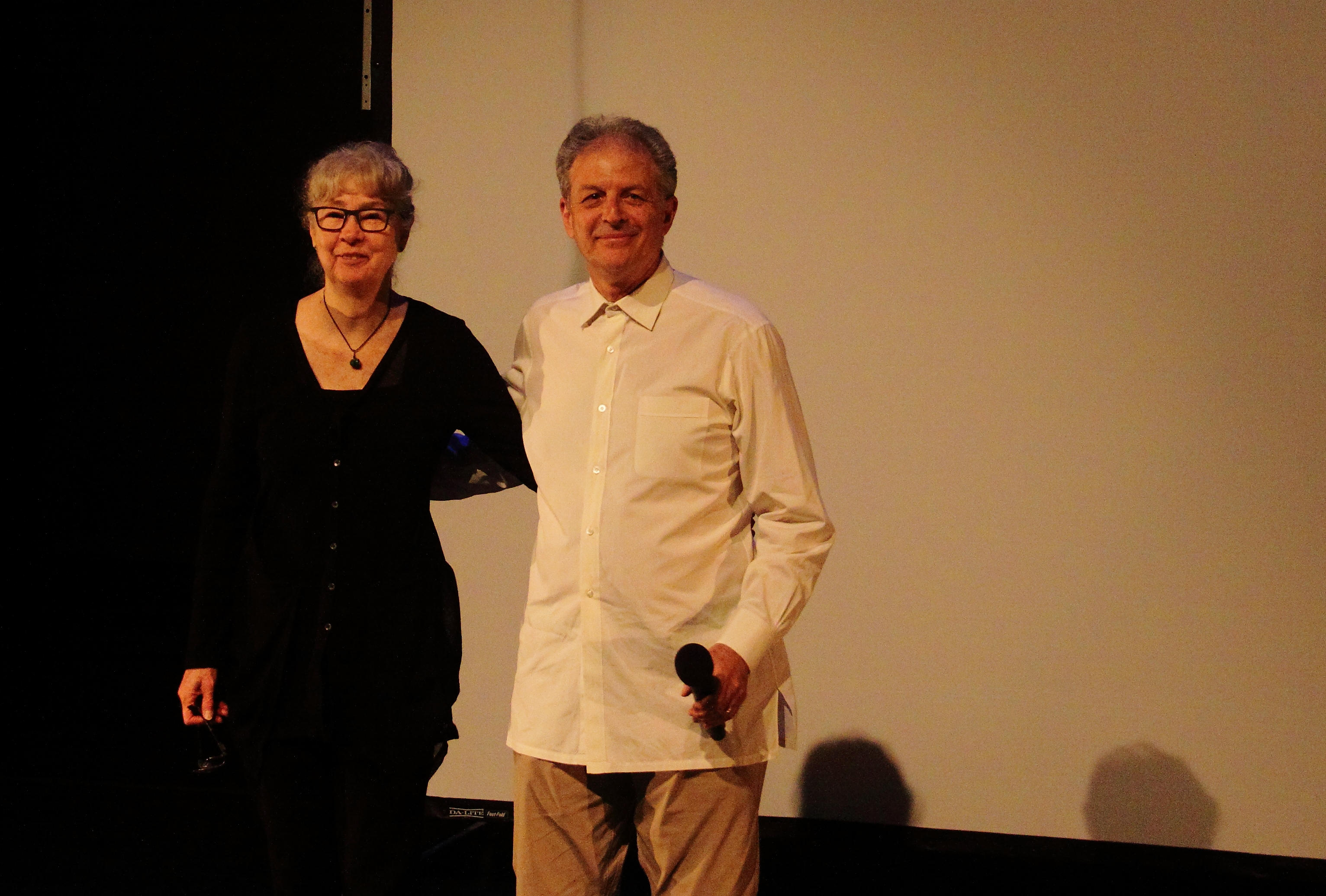
We were next presented with a fairly rare experience.  We got to hear Other Minds’ executive and artistic director perform some of his own dalliances with languages and vocal utterances.  Charles Amirkhanian, no longer wearing his jacket but rather a long white shirt, came on stage with this wife and partner, in both life and artistic crimes, Carol Law.  Together they shared some of the inspirations of their (obviously still in progress) long strange trip.

OM230097

In addition to being a photographer, Carol Law is a collage artist and has also been involved in the design of a few of pieces of Other Minds collectibles such as the t-shirts created for this year and several from previous years.  What is a bit lesser known are her collaborative efforts with Charles Amirkhanian.  The above image, for example, demonstrates the striking, slightly disturbing images that characterize the first work on tonight’s program, “History of Collage” (1981).  Carol’s images were accompanied by a live recitation by Charles of a text which is actually about collage but is manipulated by a cut up technique.  Here we saw images and heard the spoken text.  For the next two collaborations Amirkhanian took his microphone and did his recitation in front of the projection screen creating effects not unlike the light shows and projections one might have seen in one of Bill Graham’s productions at the Fillmore Theater some 50 years ago.  That is not to say that the intent or effect was nostalgic or historical, just that it seems to exist in a parallel universe.  The long white shirt thus became a part of the projection screen with Amirkhanian moving dynamically along with the speaking of the disjointed texts.

OM230100

The visual imagery was both striking and unique and held this writer, if not the entire audience, in thrall to a powerful sensual onslaught.

Hypothetical Moments (in the intellectual life of Southern California) (1981) is another of these cut up texts, this time an intercutting of Edith Wharton’s, “Glimpses of the Moon” and what Amirkhanian describes as “the gruff drugged-out reportage of a Yankee baseball game”, Ted Berrigan and Harris Schiff’s, “Yo-Yo’s with Money” (Amirkhanian is an avowed baseball fan).  These were spoken over an improvisation done on an out of tune harpsichord modified by an Eventide Harmonizer.

OM230101

The pair stepped on stage together to acknowledge the very appreciative applause.  Indeed this was a rare and precious experience seeing them perform together and, though they did not eclipse the previous artists, they clearly established their parallel universe in the shared multiverse of sound poetry.  These are wonderful performance pieces.
OM230104

So…how do you follow that?  Well, apparently with some solo Amirkhanian.  As noted previously, Charles has been writing and performing his brand of vocal gymnastics since at least 1969.  Two of his works, “Just” (1972), and “Heavy Aspirations” (1973) were included on that anthology mentioned at the beginning of this review.

OM230113

Amirkhanian has taken the stage at least twice before at Other Minds performing his own text sound works.  Tonight he presented, “Maroa” (1981), a sort of homage to a street in his home town of Fresno, “Ka Himeni Hehena” (The Raving Mad Hymn, 1997), a  celebration/deconstruction of the Hawaiian language, “Marathon” (1997), a two voice poem which is like a nostalgic parody of the fundraising which Charles did so many times for KPFA, and, one of this best known works, the gently humorous “Dutiful Ducks” (1977) which involves rhythmic speaking and deconstruction of words on tape to which he reads live and (mostly) in sync.  As with most of what we all heard on these days, live performance IS the point.

INK Conclusion

OM230118

Day 6 featured beloved Bay Area diva (and Other Minds alumnus) Pamela Z.  While one might note that, like Amy X Neuberg, she has a powerful, trained soprano voice and relies on electronics, her results are an entirely different animal.  Some of Z’s specialized proximity controlled electronics are artistic creations themselves and play a part in the theatrical component of her performances.
OM230121

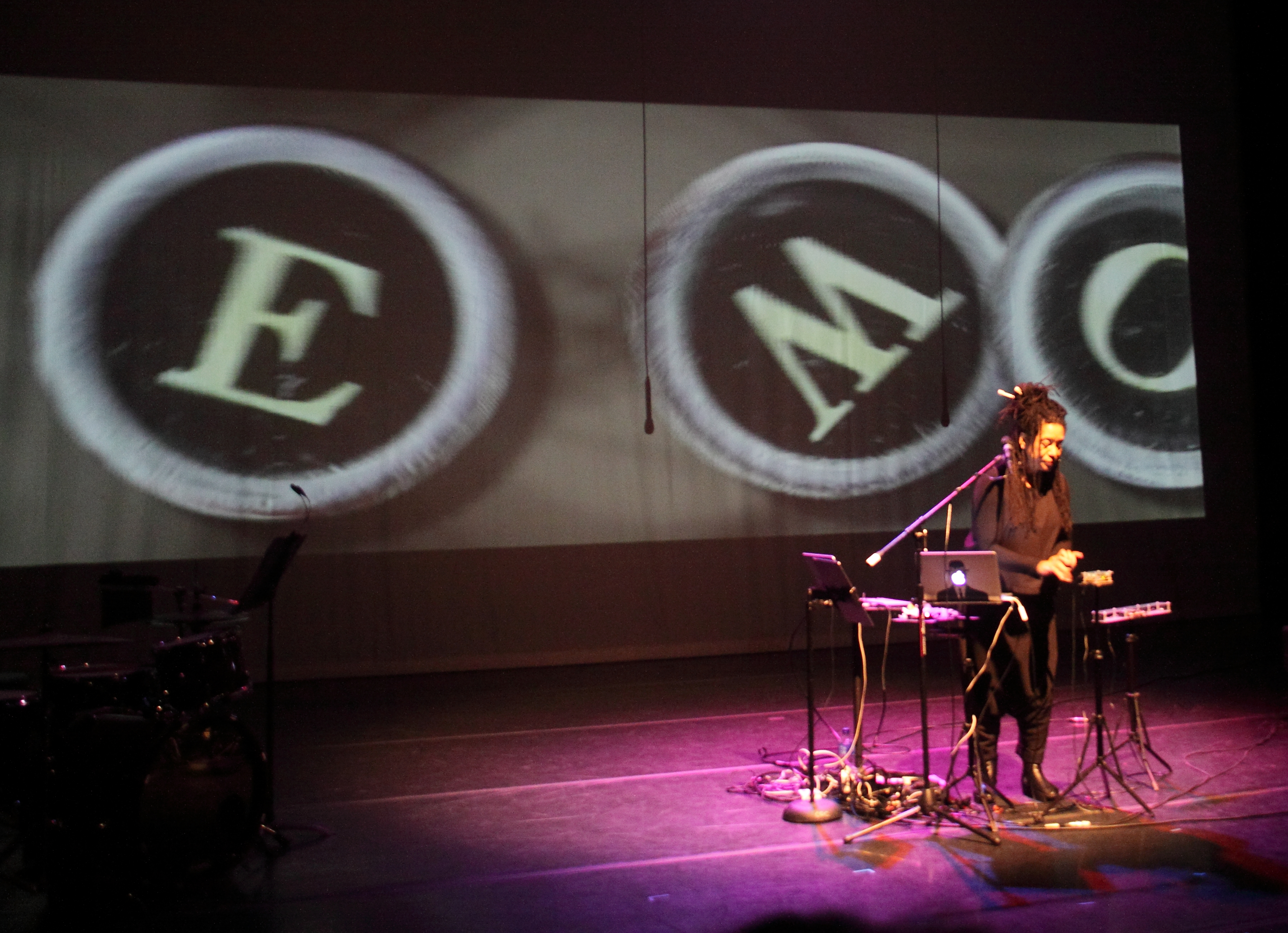
Pamela Z’s performances were enhanced tonight with video and slides such as this projection which supported her performance of Typewriter/Declaratives.

Like Neuberg, Pamela Z does a sort of cabaret style performance.  On this night she graced us with, “Quatre Couches/Flare Stains” (2015), “Typewriter/Declaratives” (2015), “33 Arches” (from a larger work called, Span, 2015), “Pop Titles: You” (1986) and the SF premiere of “Other Rooms” (2018).

OM230123

Z’s skills at writing for chamber ensemble were displayed in 33 Arches, a section of a larger work called Span.

Most commonly seen as a soloist with electronics, it was a wonderful opportunity to hear a portion of one of her recent works which involved writing for more conventional instruments in addition to her voice and electronics.  This was done also in conjunction with video.

OM230124

Pamela concluded with a performance of one of her classic works, “Pop Titles ‘You'” (1986) enhanced by the back wall projection of the text source for the work, a page of the now defunct Phonolog report which was commonly found in record stores “back in the day” as they say.  Z worked for a time at Tower Records.

Like Amy X Neuberg, Pamela Z was treated to a warm round of appreciation from this adoring home town Bay Area audience.
OM230128

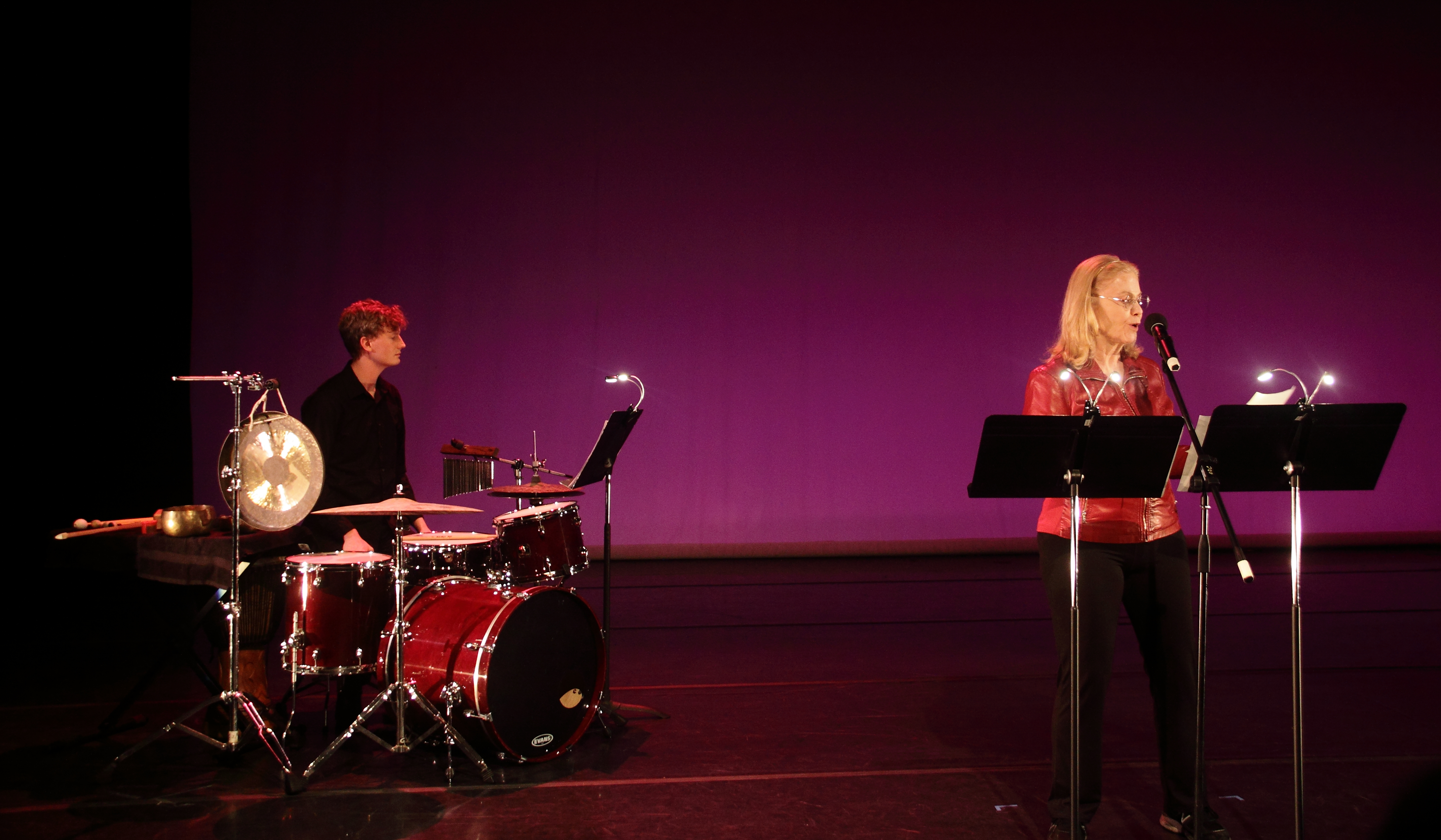
Next came another of the artists who appeared on the 10+2 anthology, Beth Anderson-Harold.  She was accompanied by Other Minds intern and percussionist, Michael Jones.  Beth Anderson, originally from Kentucky, exudes a sort of midwest wholesomeness that belies a complex and assertive artist.  She is now based in New York but has strong roots in the Bay Area having worked with Charles Shere, John Cage, Terry Riley, Robert Ashley, and Larry Austin.

Her performances of “If I Were a Poet” (1975), I Can’t Stand It” (1976), “Crackers and Checkers” (1977), “Country Time” (1981), “Killdeer and Chicory” (2005), “Ocean, Motion, Mildew, Mind” (1979), and “Yes Sir Ree” (1978) were delivered with a powerful energy and enthusiasm.  She seemed almost surprised at the warm reception her performance received.  It was yet another example of the incredible variety that this genre of music embodies.

OM230131

Anderson’s delivery was powerful, ecstatic, and assertive.

OM230133

This sixth day of the varieties of sound poetry was brought to a conclusion first with three tape works by fellow KPFA (1990-2005) radio producer Susan Stone.  The works presented were, “Couch” (from House with a View, 1989), “Ruby” (from House with a View, 1993), and “Loose Tongues” (1990).  All are basically Stone’s personal take on radio theater which she describes as, “Cinema in the Head”.  Stone took an all too brief bow to acknowledge the applause.
OM230135

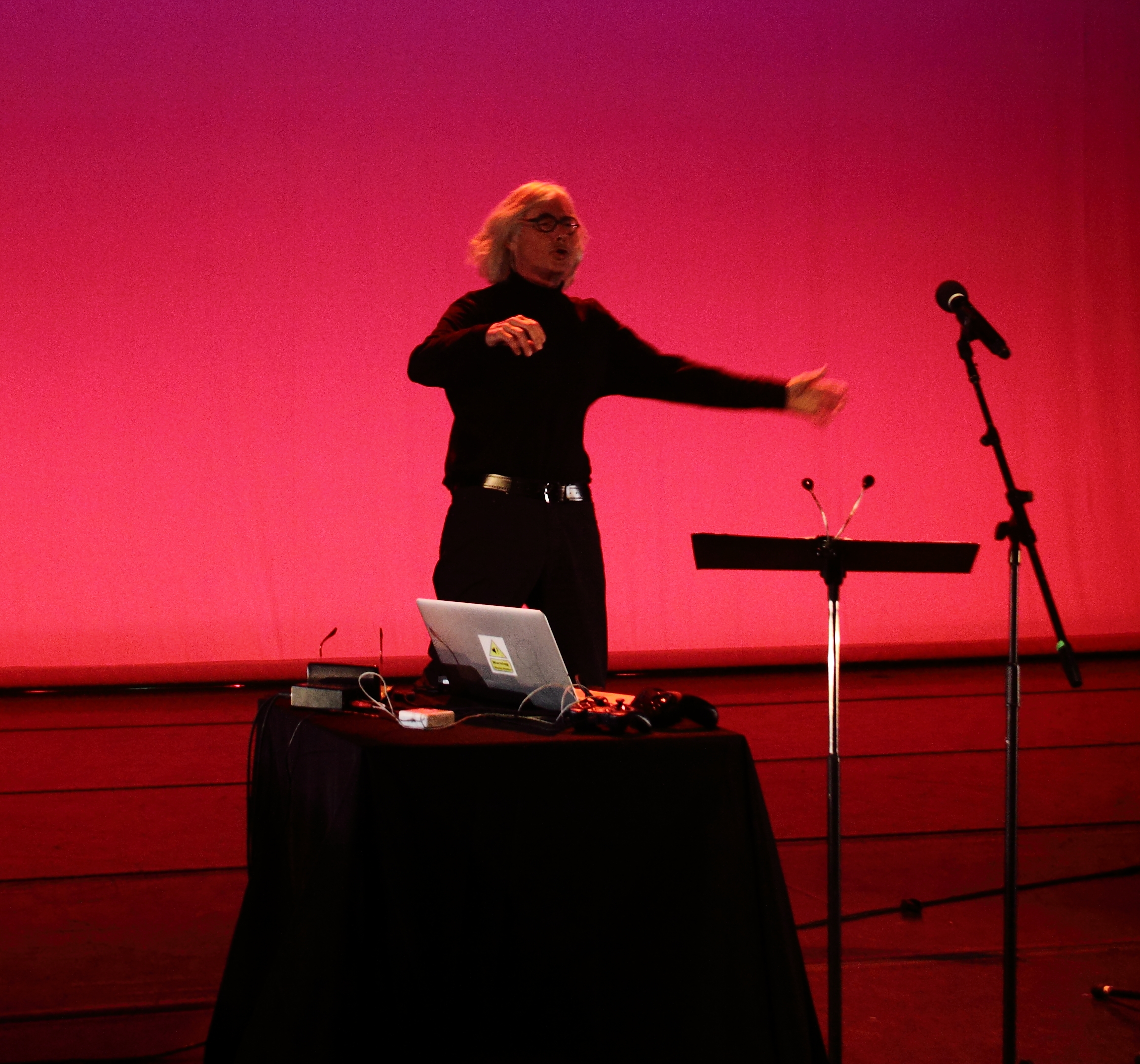
Though the audience’s attention seemed not yet to have flagged we were given an infusion of energy from the seemingly always energetic Jaap Blonk.  He presented six of his works to conclude the evening, “Dr. Voxoid’s Next Move”, “Onderland” (Underland, excerpts), “Rhotic (Phonetic Study #1, about the R), “Muzikaret (Music Made of Rubber)”, “Cheek-a-Synth (Solo for Cheek Synthesizer)”, and “Hommage à A.A. (for Antonin Artaud).

OM230137

Blonk’s seemingly boundless energy took him around the stage at times.

Blonk did a lovely thing to cap off this mind bending week (almost) of performances.  He engaged the audience in a call and response improvisation.  As these things generally go he began with fairly simple sounds and progressed to longer and more complex sound groupings which challenged the audiences attention and repetition skills, a task they/we performed with great joy and amusement.

OM230142

Blonk leading the call and response performance with the audience which concluded the series.

Twenty performers, four of whom had appeared on that wonderful anthology, kept the ODC Theater packed to near capacity on all six nights.  That alone is a feat.  What cannot be satisfactorily communicated in a mere article is the energy and focus of both the performers and the enraptured audience whose attention never seemed to flag as they/we were lead down unfamiliar paths to little heard universes of ideas and sounds.

This expanded festival also included one of the most spectacular program books this writer has ever seen from Other Minds.  Mark Abramson did the eye popping graphic design which featured no fewer than four different covers and very useful texts and photographs documenting the works performed and their history.  The t-shirts were another of Carol Law’s successful designs.  These may be highly collectible and, as of this writing, are still available through the Other Minds website.

In an promotional article entitled, “Other Minds 23: In the Beginning was the Word” I obviously used a biblical quotation (John 1: 1 for those interested).  In fact the only religious thing going on here was the spiritual magic of astoundingly talented performers, and a mighty unusual gathering of Other Minds in terms of the enthusiastic audience.  But I would be remiss if I did not take note of the fact that this fabulous marathon was done in six days.  I’m guessing we all rested on the seventh.

Osmo Vänskä’s Mahler 6th on BIS


mahler6vanska

I have heard varying opinions on the conducting skills of Osmo Vänskä.  He is the music director of the Minnesota Orchestra since 2003 and, prior to that, a conductor of the wonderful Lahti Symphony Orchestra.  I very favorably reviewed his Kullervo disc from last year.

The Mahler 6th and, I suppose, with pretty much any Mahler there are many critiques of the music and the performances.  So many complexities with tempo, handling the massive orchestra to bring out one nuance or another, order of movements, etc.  One thing is for certain, no Mahler aficionado will be satisfied with only one recording of each of his works.  There appear to be no definitive recordings agreed upon by all.  By contrast most people seem satisfied with perhaps Herbert von Karajan’s interpretation of the Beethoven Symphonies as being at least a good starting point.

One must recall that Mahler’s music was not well appreciated for a number of years.  Though he gave performances of all his major works interest in them faded rather quickly after his death in 1911.  Performances did occur but critics generally regarded Mahler’s music as dismissable efforts calling it “conductor’s music”.  It wasn’t until Leonard Bernstein began earnestly performing these works that the current cult of Mahler actually took root.

I preface my review with these comments to say that I enjoyed this disc immensely with its gorgeous sonics (as always with BIS).  Vänskä produces a lucid performance which differs from many in tempo choices and such but seems, to this reviewer’s ears, to do justice to this large and masterful work.  In the end the experience is one of a valid performance (he places the slow movement as second) which provides another view of this complex work.  And part of the cult of Mahler, it seems, is the need to own multiple performances.

This may not be the only Mahler Sixth you will want to own but it is definitely worth hearing, preferably on a good sound system.

The @realAlvin Curran at the Armory


curranfake0005

Alvin Curran performing from his “Fake Book” at the Pacific Film Archive in Berkeley in 2014

Alvin Curran (1938- ) is  one of the finest of that maverick band of composers who came of age in the 1960s as expatriates in Italy.  Along with musicians like Frederic Rzewski, Carol Plantamura, Richard Teitelbaum, and Allan Bryant among others they formed the world’s first live electronic improvisation ensemble, “Music Elletronica Viva” in 1966.  In this time electronic synthesizers were not generally available and most of their equipment was hand made.  All the musicians have since all gone their own very creative ways but in many ways this ensemble has been their touchstone which continues to underlie their work.

Curran told this writer that it was around this time that he began working on a huge series of compositions of (at least initially) an improvisational nature which he collected under the general title of “Fake Book”.  Musicians will be familiar with the term which is roughly analogous to a cheat sheet enabling musicians easy access to many chord progressions, songs, and other pieces at their fingertips to please a wide range of tastes in their audiences.

curranfake0012

Curran’s Fake Book is a huge collection of scores, digital samples (no doubt he began with analog samples) and sketches.  He recently published a hefty selection of this material available on Amazon and is well worth both your time and your money for the insight it provides to this unusual composer.  The composer’s web site is an extremely useful reference but nothing can match hearing and seeing this spirited, kinetic shaman of a performer.  His creativity and sheer joy of music making is infectious and the music he makes is akin to reading diary excerpts, a musical analogy of sorts to the likes of Anais Nin, the famed mega-diarist of a previous generation.

Curran is, at 80, an energetic and endlessly creative musician, a humanist with deep convictions and quite simply an experience not to be missed.  Here is the announcement of this concert which, though this writer is unable to attend, is not to be missed.

Alvin Curran
performs
“The Alvin Curran Fakebook”
on shofar, piano, keyboard, and electronics
at the Veterans Room
Thompson Arts Center at Park Avenue Armory
643 Park Avenue (66th-67th St.)
Wednesday March 14, 2018, at 7.00 pm & 9.00 pm
or call the box office (212) 933-5812 Mon-Fri, 10.00 am-6.00 pm

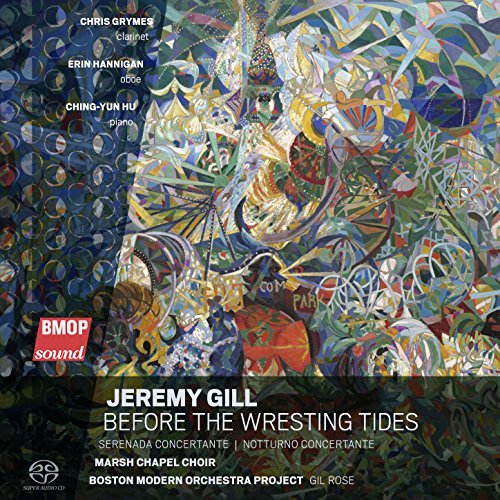
Jeremy Gill: Before the Wresting Tides


gill

BMOP 1055

In this writer’s mind there are two types of releases on the BMOP label. Discs with music or at least composers that have some familiarity to these ears and discs of unfamiliar composers.  This disc fits into the latter category.  Jeremy Gill is a new name to these ears but he is hardly new on the scene with at least 3 or 4 CDs already out devoted mostly to his chamber music.

This disc then will give the listener an idea of how well Gil Rose and his Boston Modern Orchestra Project choose and subsequently perform less familiar new music.  There is a lot of music out there and it takes a special ear to choose wisely such that one can expect a given release to keep its place among the other well chosen music that makes up the BMOP label’s catalog.  It would appear that this was and will remain a wise choice.  Three works are presented in chronological order of their composition.

The first is the title work, Before the Wresting Tides (2012), a choral fantasy setting a poem by American poet Hart Crane (1899-1932).  This was written specifically to function as a companion piece for Beethoven’s rarely performed Choral Fantasy Op. 80 (ca. 1808).  This work shares a similar orchestration and formal plan.  There is an obligatto piano solo written for Gill’s friend and colleague Ching-Yun Hu, a large orchestra, chorus, and vocal solos.  All of this fits into a compact 16 minutes or so.  It is decidedly more modern in orchestration and harmony than Beethoven’s work but it shares a virtuosic piano part, lyrical melodies, and marvelously efficient setting of the text handled beautifully by the Marsh Chapel Choir under Scott Allen Jarrett.  There is a lot going on here but I can’t imagine an audience being anything but entertained by this rather bombastic companion which one hopes will continue to be performed alongside the Beethoven model bringing both works to modern ears.

The second work is titled Serenada Concertante (2013) for oboe and orchestra.  It is sort of an enlarged oboe concerto.  The soloist, Erin Hannigan demonstrates the virtuosic and lyric skills that seem to be endemic to this entire orchestra.  Gill’s writing makes large romantic gestures with plenty of painfully virtuosic opportunities (handled beautifully) for the soloist and the various soli and duettini which occur in the course of this full blown concerto.  The composer’s ability to utilize such a large orchestra yet still produce lucid textures is a mark of genius and, no doubt, one of the reasons that Gill’s music was chosen for this series of recordings.

Our finale is another concerto of sorts, the Notturno Concertante (2014) for clarinet and orchestra.  Again we hear an amazing soloist, Chris Grymes, on clarinet.  Again we hear amazing virtuosity and lyricism played against a large and lucid orchestral fabric.  Very satisfying music for both audience and orchestra.  It is clearly a workout for orchestra, soloist, and conductor but the energies expended produce a very satisfying result.

Whether or not Jeremy Gill winds up being a household name, one of the brightest lights of the 21st century remains to be seen but this is an auspicious release.  This largely romantic sounding composer also seems to have a curiously “American” sound which harkens to the likes of William Schuman, David Diamond, and, well choose your own favorite mid-twentieth century American master after you hear this.  Well done.

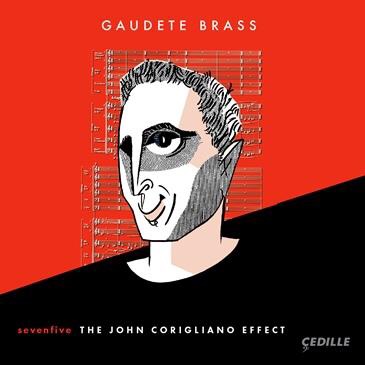
A Brassy 75th Birthday Celebration for John Corigliano


Cedille CDR 90000 169

John Corigliano (1938- ) is one of America’s finest composers.  He is to classical music in New York what Woody Allen is to the movies.  Corigliano is musical royalty.  His father was concertmaster under Leonard Bernstein among others (in fact he apparently worked as assistant to the producer on several of the Young Peoples’ Concerts).  His own accomplishments musically are many including a the very first Grawemeyer Award for his first symphony and a Pulitzer Prize for his second.  One could hardly find another musician as deserving of being honored.

From the very New Yorker style cover art this album affirms this composer’s iconic status.  But the artists here are good Chicago Brass players.  As a native born Chicagoan I have become accustomed to assuming that one can find some of the world’s finest brass players there and this album lays testament to that.  Gaudete Brass is an ensemble that definitely deserves your attention.

This is a fine tribute album featuring mostly world premieres but also some nice transcriptions.  This is effective though not overwhelmingly modern music for brass.  It is intended as and functions very well as entertainment and, from the sound of it, is also fun to play.

The original works are welcome as are the transcriptions of Corigliano’s Gazebo Dances. by the long time Chicago musician/conductor Cliff Colnot.  (One transcription is by the composer).  There are a total of three Corigliano pieces here and 13 by others.  One can only imagine the joy the composer will feel on hearing these tributes and the joy that any number of brass players will experience hearing this fine album.  As usual the Cedille recording is lucid giving a clear sound image of some truly fine musicianship.

The pieces here are good middle of the road compositions which pose challenges on the players but manage to be entertaining and nothing here sounds like an academic exercise.  Rather this disc is about celebration exactly as it purports.  Very enjoyable disc.

Both Homage and Nostalgia for Sergeant Pepper at the UC Theater


Sgt Pepper20170002

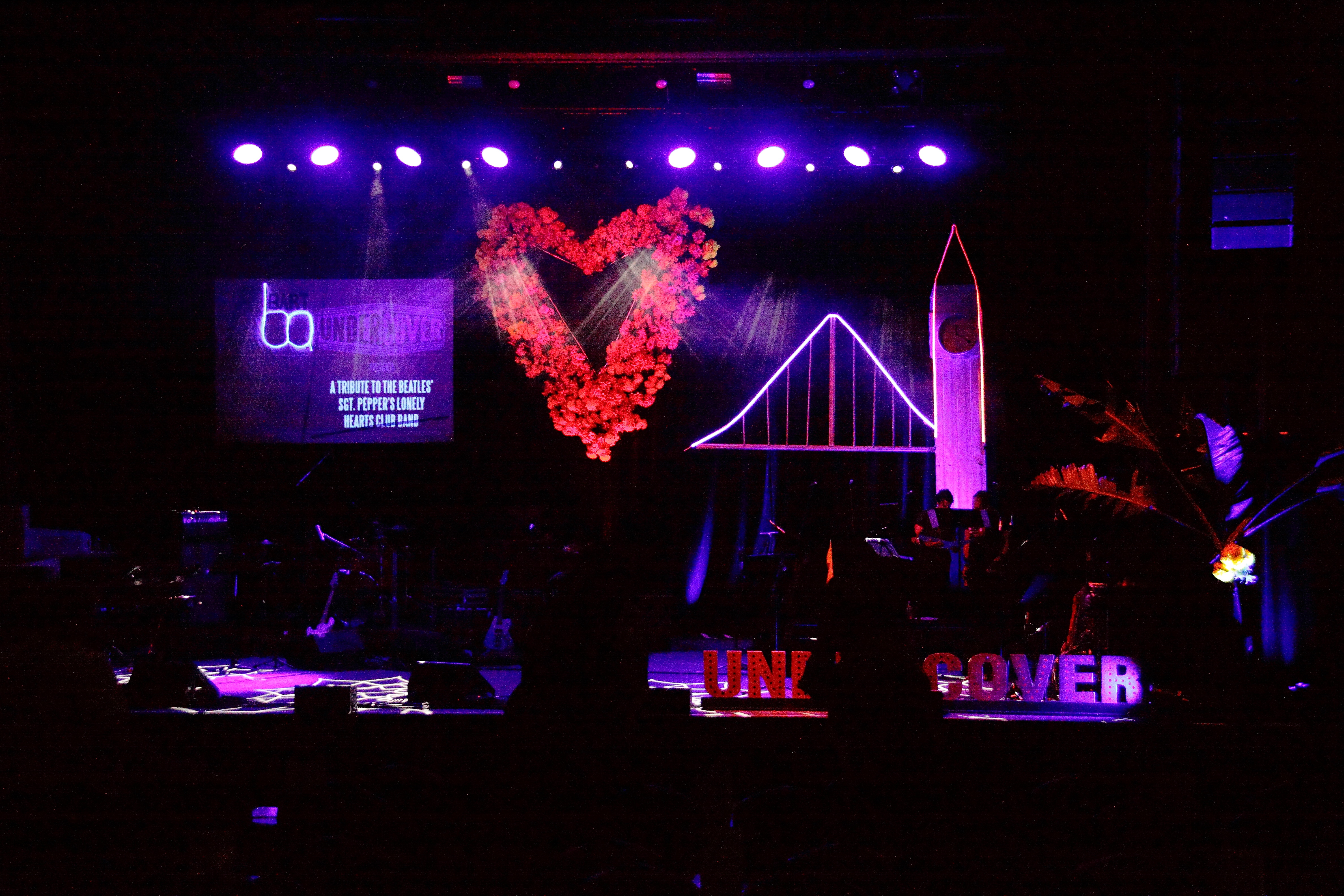
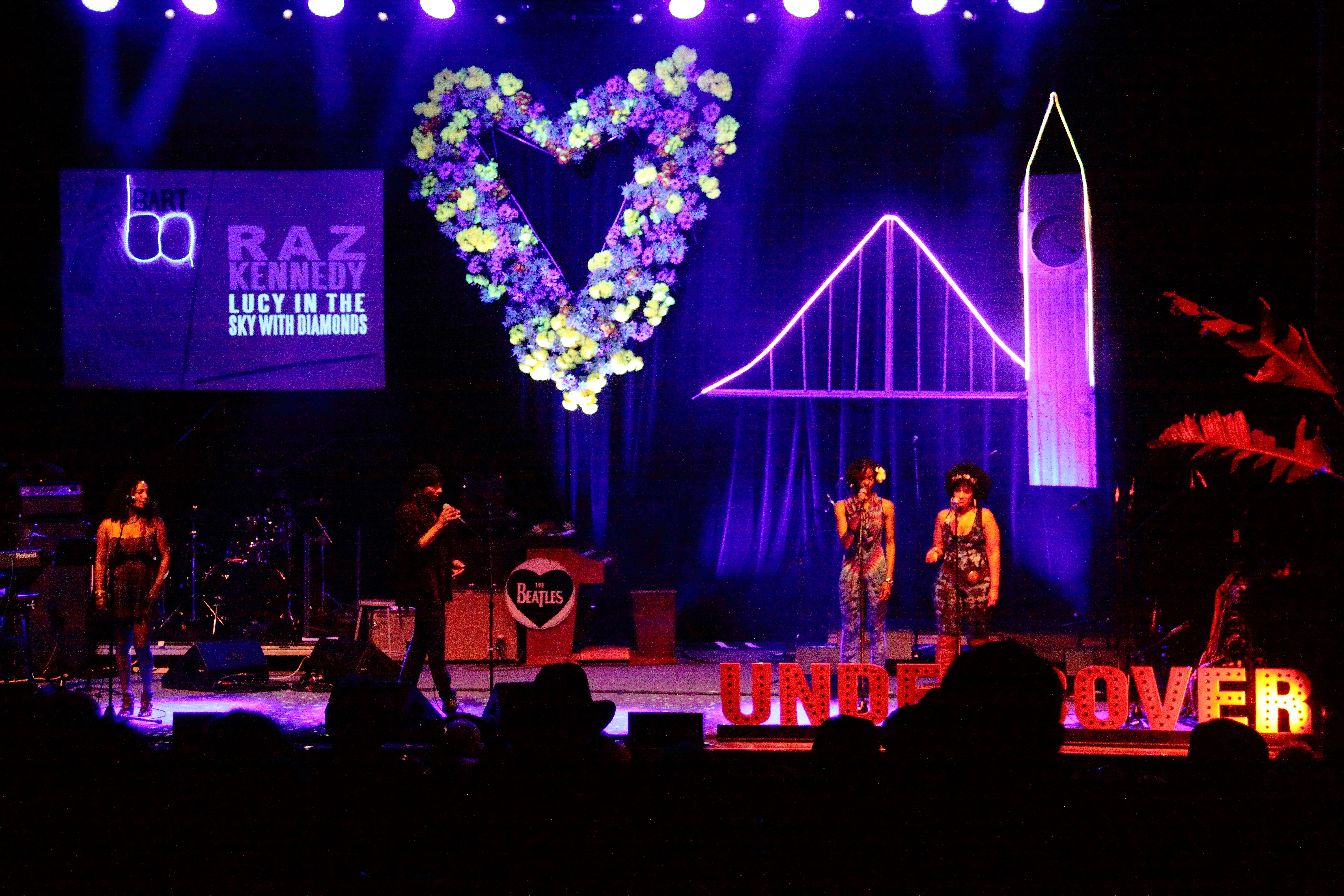
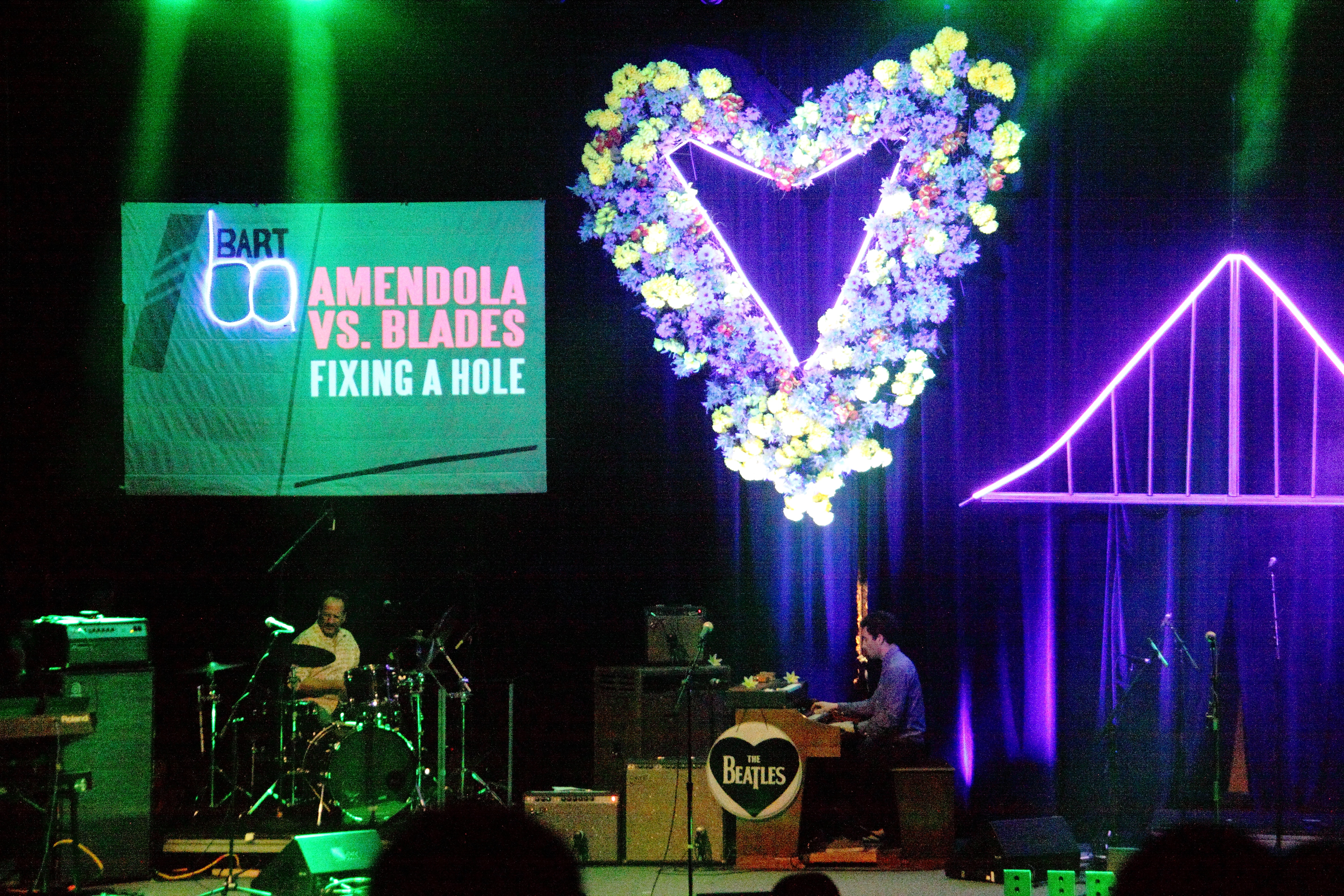
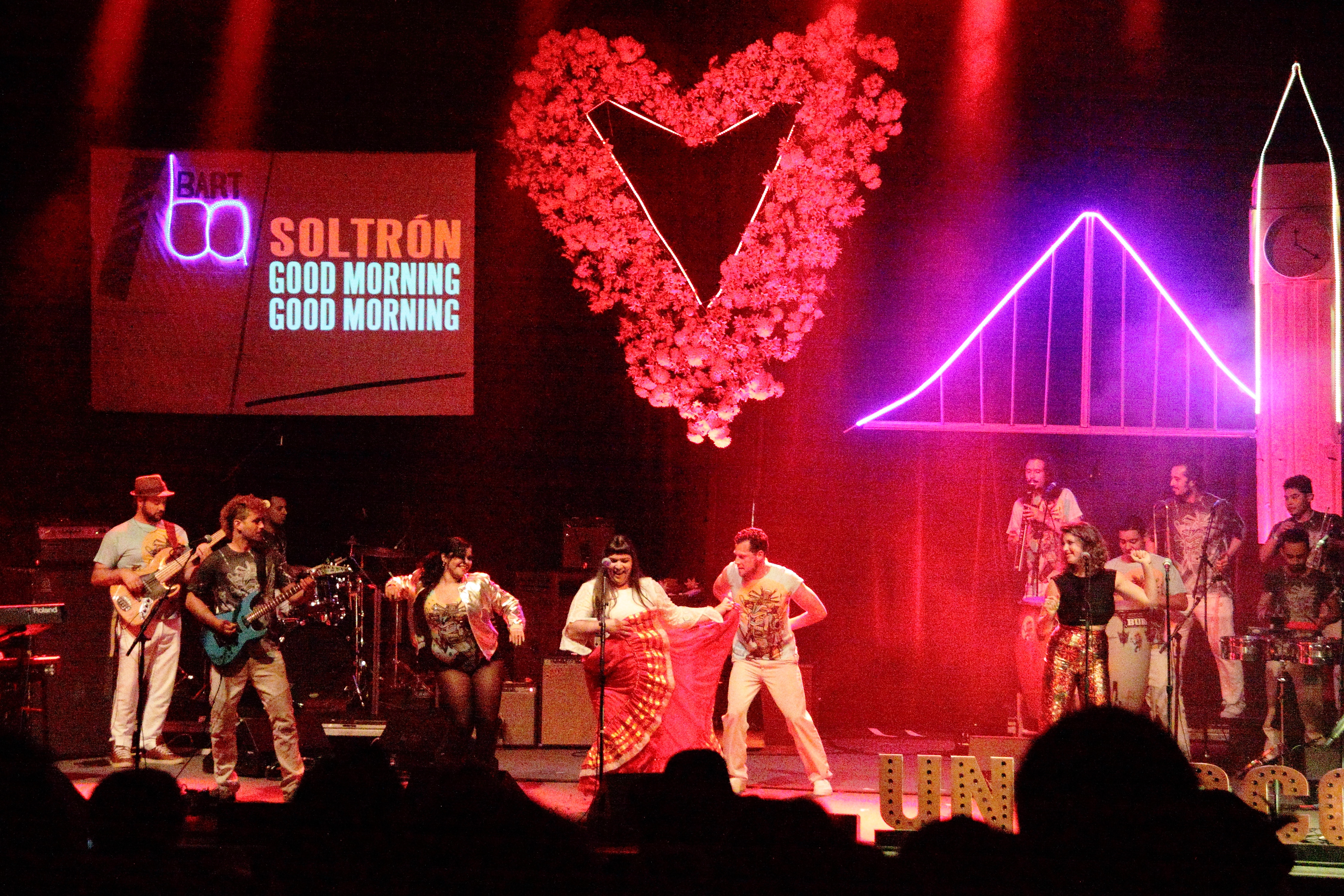
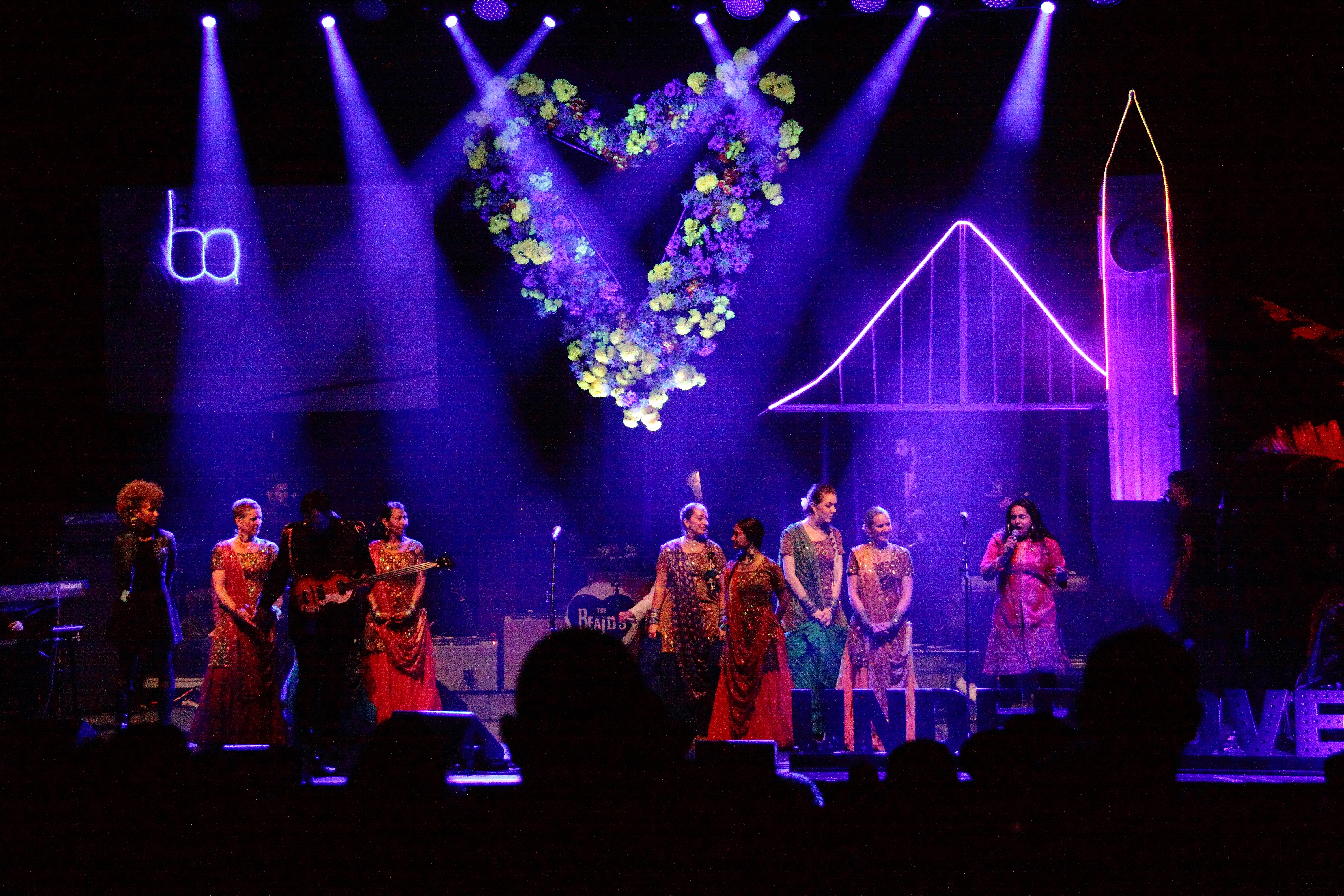
Creative, practical staging and lighting was a unifying factor in this triumph from Undercover Presents.

There was a full house at the UC Theater on this Saturday, June 3rd in Berkeley.  It was the only performance of this homage to the Beatles’ Sergeant Pepper album which was released 50 years ago (actually June 2, 1967).  Most of the performers were not even a twinkle in their parents’ eyes when this landmark of music came on the scene.  The “Summer of Love” was happening in the Bay Area and this album was unquestionably an influence then.  Tonight’s show demonstrated how that influence continues.

The audience was a mix of aging hippies (and non-hippies) and younger hipsters (is it OK to use that term and have no negative connotation?).  Some, no doubt, came for a bit of nostalgia remembering where they were when they first heard the original.  Some came to hear the creativity of local artists meeting such a challenge.

It would have been easy to simply do average covers of the songs and cater only to the nostalgia but Lyz Luke’s Undercover Presents, as usual, aimed higher than that (and hit their mark).  They, under the direction of guest producer Joe Bagale, curated a show of creative interpretations of each of the 13 tracks utilizing some of the finest of the massive talents that call the Bay Area home.  The end result was a true homage from another generation of marvelously diverse artists who put their stamp on the iconic songs without losing any respect for the power of the originals.

Simple but effective stage design by Bridget Stagnitto was reminiscent of the iconic album cover with creative lighting and functional information integrated into the tableau.  Ryan John and Brendan Dreaper were lead sound engineers.

Sgt Pepper20170008

As is customary for these shows the bands played the tracks in their original order beginning with the Electric Squeezebox Orchestra’s instrumental cover of the opening track.  Principal trombone Rob Ewing’s arrangement captured the essence of that opening and effectively set the stage for what was to follow.

(Correction:  Per Joe Bagale the opening number was arranged by soprano saxophone player Michael Zilber.)

Sgt Pepper20170009

Sgt Pepper20170010

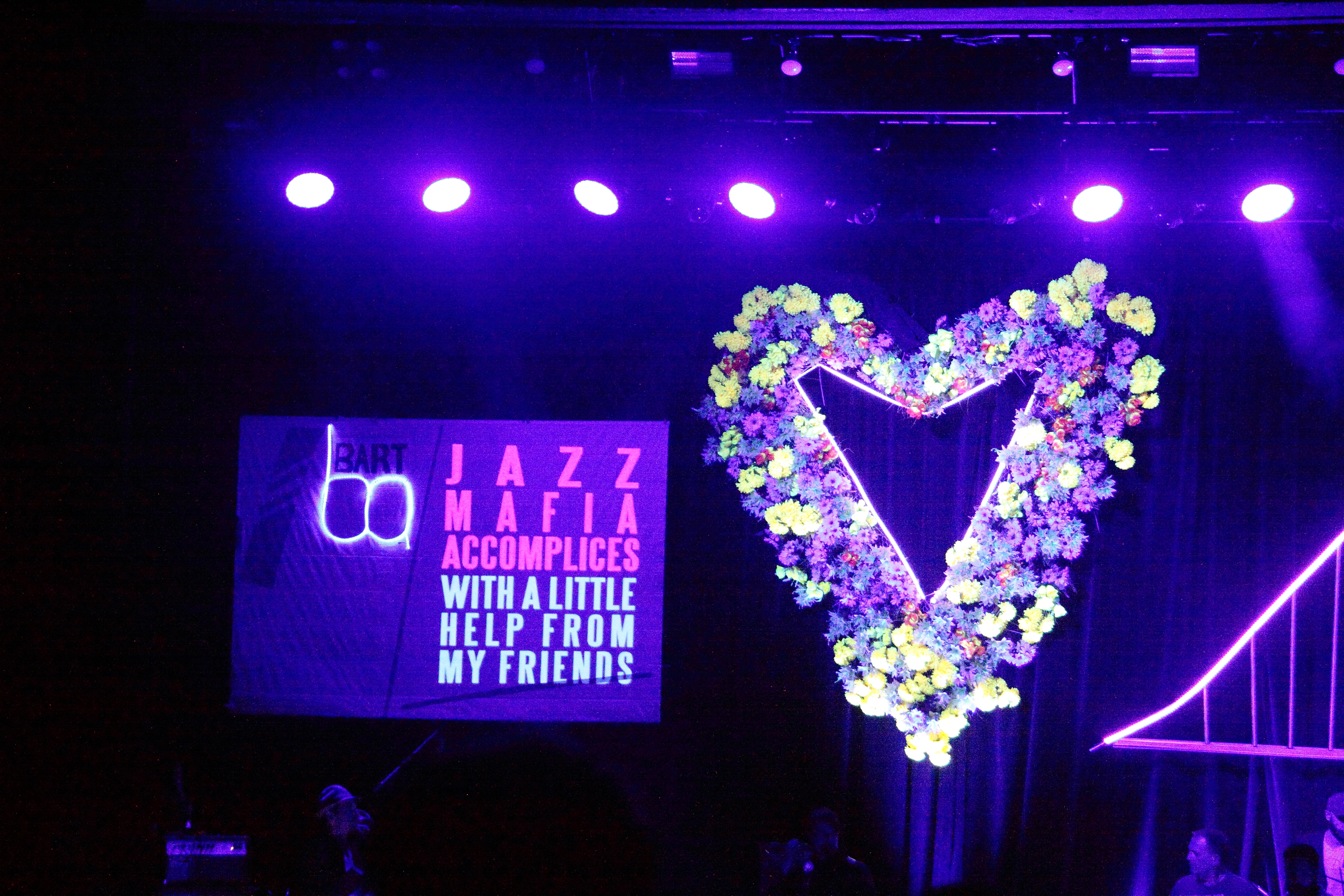
Vocalist Dublin sang a bluesy solo version of “With a Little Help From My Friends”, those friends being the Jazz Mafia Accomplices

Guitarist Jon Monahan takes responsibility for this arrangement which veered just a bit off of nostalgia to deliver a very effective solo vocal version (the original you may recall had that call and answer thing going on) of this, one of the best known tracks on the album.  Though it was not obvious, perhaps there was some homage intended to the late Joe Cocker who first saw the bluesy potential here when he presented his justly famed version at Woodstock in 1969.

Sgt Pepper20170014

Raz Kennedy made effective use of backup singers in his soulful take on “Lucy in the Sky with Diamonds”.  He shared arranging credit with Nick Milo.  The spirit of the Supremes, Gladys Knight (and of course the Pips), and maybe a touch of James Brown seemed to be present in the house and this arrangement got a great review from the audience.  What a voice!

Sgt Pepper20170016

Eyes on the Shore shared arranging credits in their digital synth inflected take on Getting Better.  They went further afield with the material than some and may have briefly lost the pure nostalgia seekers but the arrangement clearly succeeded in pleasing the crowd. One would expect that psychedelia be transformed by the digital world, right?  And so it was.

Sgt Pepper20170018


The Avant Jazz Funk duo of Scott Amendola on percussion and Will Blades on Hammond Organ (how’s that for nostalgia?) and Clavinet turned in a very intense and rich improvisational battle in their purely instrumental version of “Fixing a Hole”.  Sometimes the melody was there and sometimes it was transformed in a musically psychedelic way that went quite a distance from the original.  But the use of the Hammond Organ and Clavinet themselves provided reassurance that they wouldn’t go too far.  The performances were blazingly intense and the whole house felt it.

Sgt Pepper20170022

We again were treated to soul with backup singers as Nino Moschella transformed the innocent ballad of adolescent alienation, “She’s Leaving Home”, into a more darkly hued version that seemed to reflect an understanding of the loss of that innocence that we all must face eventually.  Nothing somber here but clearly a different understanding consistent with the overall mission of having another generation’s way of remembering this material.

Sgt Pepper20170025


South Asian music and philosophy are inextricably linked to the psychedelic sounds of the mid to late 1960s and nowhere is this more obvious than with the Beatles whose study of Transcendental Meditation with their guru Maharishi Mahesh Yogi (born Mahesh Prasad Varma 1918-2008) while George Harrison studied sitar with Pandit Ravi Shankar (1920-2012).

Rohan Krishnamurthy (Mridangam, Hadjira frame drum), Prasant Radakrishnan (saxophone), and Colin Hogan (keyboard) share credits for their creative instrumental arrangement of “For Mr. Kite”.  Eschewing lyrics (which are etched in most of the audience’s minds anyway) they performed a stunningly unique rendition of this familiar song. Interestingly these musicians trace their influences to the southern Indian Carnatic tradition (somewhat different from the Hindustani traditions which influenced the Beatles) adding yet another layer of richness to the evening’s goings on.

Sgt Pepper20170029

Colin Hogan indicts himself yet again in his arrangement of “Within You Without You”, that spacey Hindustani inflected song.  The Hogan Brothers (Steve Hogan, bass; Colin Hogan, accordion; Julian Hogan, drums; Moorea Dickason, vocals; Charlie Gurke, baritone sax) turned in a marvelous world fusion rendition of the tune (lyrics and all) to a hugely appreciative response.

Sgt Pepper20170035

Iranian born Sahba Minikia, steeped in both Iranian and western classical traditions provided a touching arrangement of the classic, “When I’m Sixty Four”.  Featuring Mina Momeni on guitar and vocals (on video) accompanied by the Awesöme Orchestra in a song whose premise looks to the future as far as this evening looked into the past to ponder the endurance of romance.

In retrospect it is almost surprising that the marvelous diversity didn’t generate a presidential tweet of dissatisfaction.  Indeed a woman singing would produce more than a tweet of dissatisfaction in Tehran, birthplace of photographer and singer Momemi who also teaches visual arts in Canada.

Sgt Pepper20170040


Vocalist Kendra McKinley practically turned “Lovely Rita” into a feminist anthem with some retro pop group choreography and background vocals to boot.  The visuals and the energy of the performance practically had the whole house dancing.
Sgt Pepper20170045

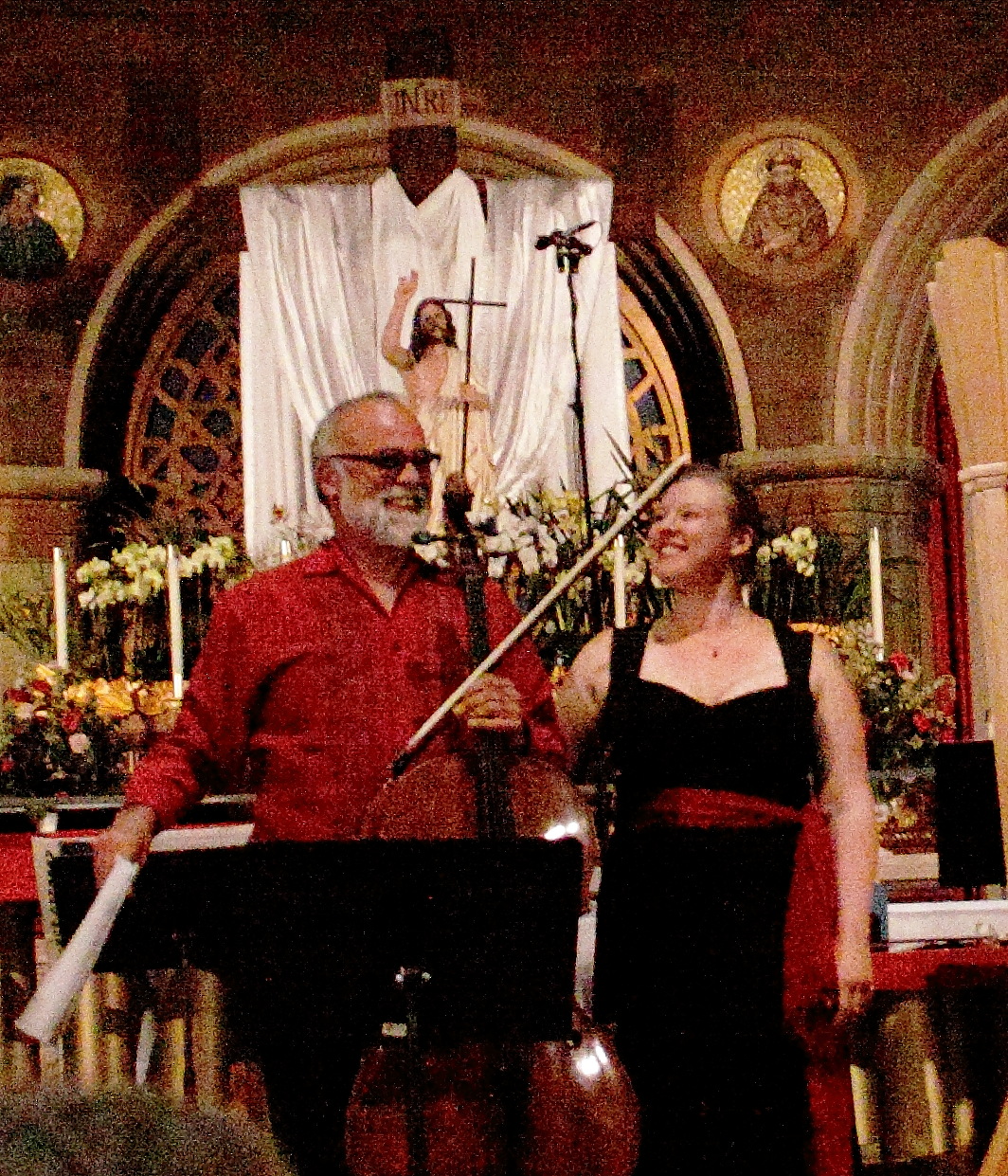
Soltrón added Latin percussion and energetic dance to the already electrified atmosphere with their arrangement of the raucous “Good Morning”.  Kendra McKinley could be seen and heard tying in her energy from the previous performance as backup singer here.

Sgt Pepper20170047

Lyz Luke stepped in to introduce the penultimate Sgt Pepper Reprise.

Sgt Pepper20170048

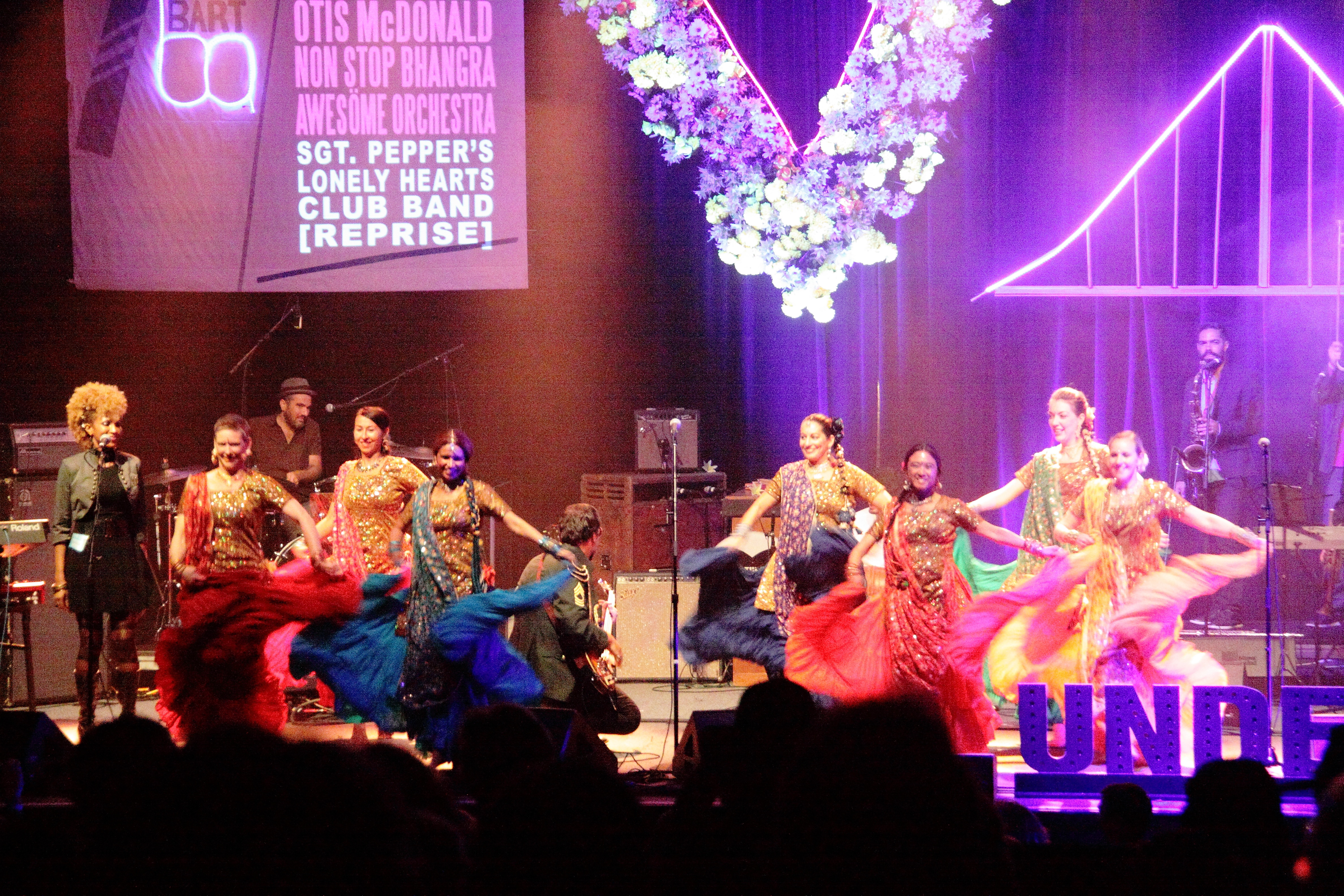
The dancing energy was carried on by the colorful and energetic dancers of Non-Stop Bhangra.  They accompanied Rohan Krishnamurthy and Otis McDonald in Joe Bagale’s rocking arrangement (replete with lyrics) of the reprise of the opening.  It was like a live action version of the studio executed original performance with a stage filled with ecstatic musicians and dancers.

Sgt Pepper20170052

Joe Bagale in his Sgt Pepper duds sings the lyrics hoping we’d enjoyed the show.

Sgt Pepper20170060

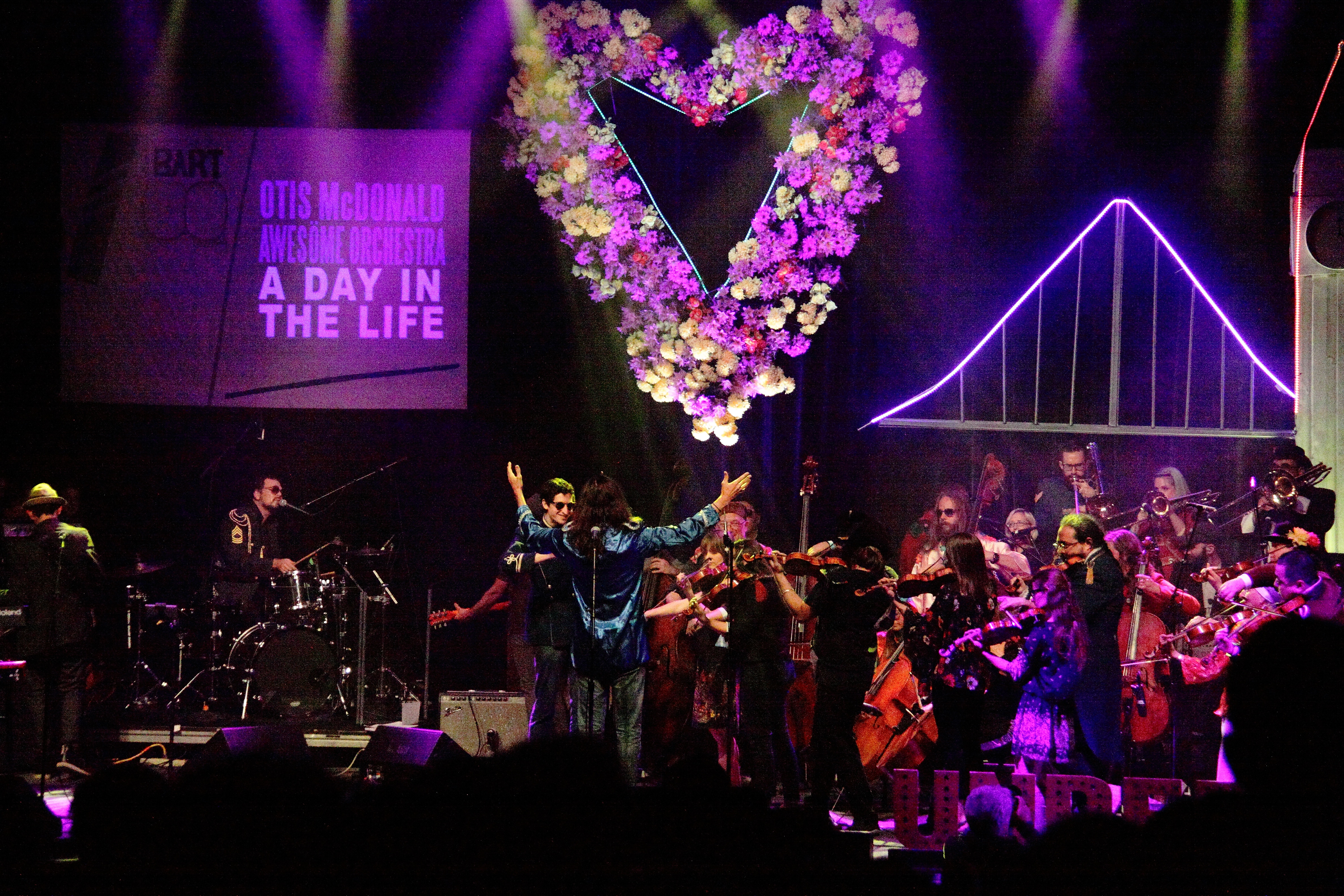
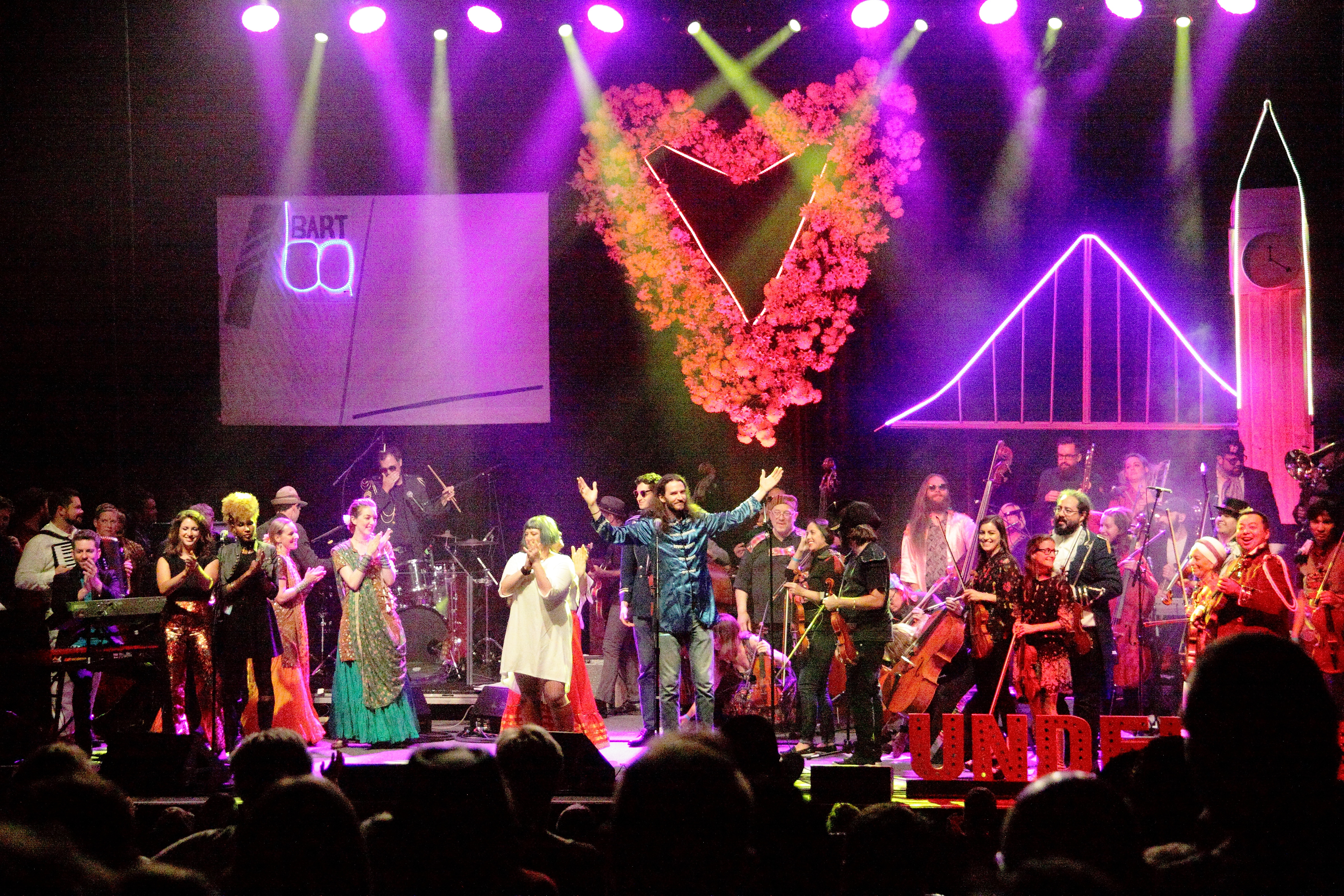
The apocalyptic, “A Day in the Life” concluded the mission of homage and nostalgia in a bigger than life tableau of talent and diversity that connected the “there and then” to the “here and now”.  The famous extended last chord crashed in a peak of energetic music making to bring the performances to a close.

Sgt Pepper20170062

The visuals were strongly reminiscent of the iconic album cover.

Sgt Pepper20170065

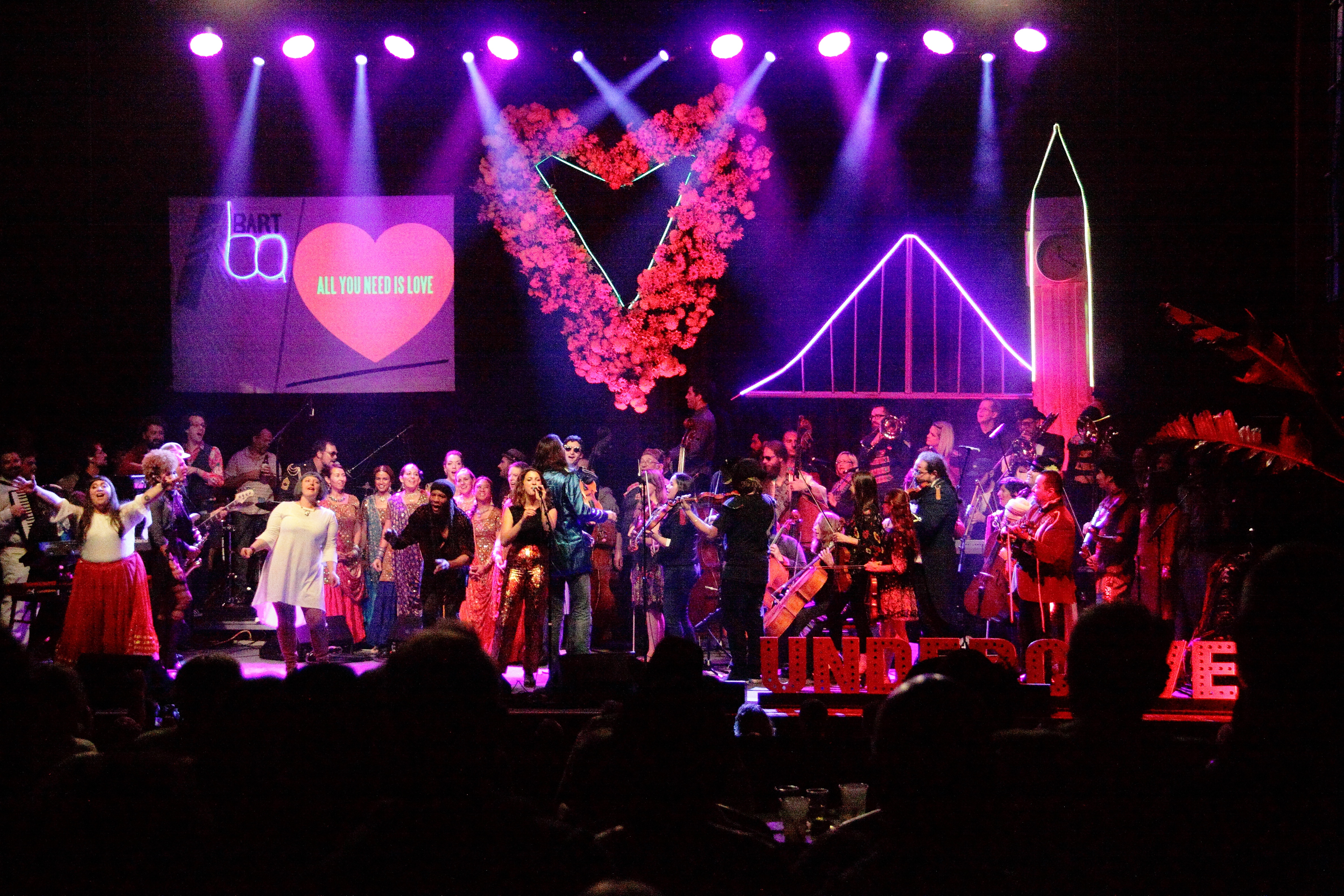
There was no need to encourage the audience to sing along to the encore of “All You Need is Love”.  Fifty years hence we still need it and if we still don’t have it everywhere at least we had it here this night.


Other Minds 22, Resounding Sacred Tributes from Music to Wheaties


OM22052120170026

Nicole Paiement led a touching performance of Lou Harrison’s La Koro Sutro

Nominally this was a celebration of the life and music of Lou Silver Harrison (1917-2003) but this last concert of Other Minds 22nd year celebrated so much more.

OM22052120170011

Curator and Other Minds Executive and artistic director introduces the night’s festivities with these artistic icons titled St. Lou and St. Bill (Lou Harrison and his partner, instrument builder Bill Colvig). The portraits were sold by silent auction.

One can’t celebrate the life and music of Lou Harrison without acknowledging his life partner of 30 years, Bill Colvig (1917-2000).  Colvig was the man who designed and built the American Gamelan percussion instruments used in tonight’s performance.  These repurposed industrial materials were inspired by the Indonesian Gamelan which Lou Harrison encountered at the 1939 world’s fair which took place on Treasure Island just a few miles away.  Amirkhanian added another fascinating historical footnote when he informed the audience that Harrison had come to this very church to learn to sing Gregorian Chant some time in the 1930s.

A further and very intimate context was revealed when Amirkhanian took an informal poll of the audience asking who had met and/or worked with Lou Harrison.  By his count he estimated that about 40% of the audience had encountered “St. Lou” (this writer met the magnanimous gentleman in Chicago in the early 1990s).  Indeed many of the musicians had encountered and/or studied with Harrison and the passion reflected in their performances and the audiences response clearly shows why he (and Bill) were elevated tonight to secular sainthood.

The wonderful acoustics of the Basilica easily accommodated Harrison’s dislike of electrical amplification.  Even the solo and small ensemble music was heard as it was intended.

OM22052120170008

The organ console at the Basilica.

The well attended concert began with an early rather uncharacteristic piece called Praises for Michael the Archangel (1946-7).  It reflected the influence of Arnold Schoenberg, one of Harrison’s teachers (Henry Cowell and K.T.H. Notoprojo were also among his teachers).  Harrison also famously worked with Charles Ives whose Third Symphony he premiered.  He also worked with John Cage and collaborated on at least one composition with him (Double Music).  The angular and dissonant sounds were lovingly interpreted by Jerome Lenk, organist and chorus master at the Basilica.

OM22052120170013

Organist Jerome Lenk acknowledges the audience applause and allows himself just a touch of a satisfied smile for a well wrought performance.

Next was a solo harp piece Threnody for Oliver Daniel (1990).  (Oliver Daniel (1911-1990) was a composer, musicologist, and founder of Composer’s Recording Incorporated.  He was a friend of Harrison’s and a great promoter of new music).

OM22052120170001

The Threnody was performed on this smaller troubador harp in Ptolemy’s soft diatonic tuning.

Meredith Clark played with focused concentration and gave a very moving performance of this brief and beautiful composition.  Harrison was fond of paying homage to his friends through music.

Clark was then joined by cellist Emil Miland for a performance of Suite for Cello and Harp (1948).  Composed just a year after the angular organ piece which opened the program this gentle suite is entirely tonal and very lyrical in its five movements using music repurposed from earlier works.  Clark here used a full sized concert harp.

The artistic connection between these performers clearly added to the intensity of the performance.  Despite the varied sources of the music the suite has a certain unity that, like Bach and indeed many composers, justifies the re-use of material in the creation of a new piece.

This was followed by another organ piece from Mr. Lenk.  This Pedal Sonata (1989) is played solely by the musician’s very busy feet on the pedals alone (no hands on the keyboard).  Listening to the piece it was easy to believe that more than just two agile feet were involved in this challenging and virtuosic composition.  It appeared to be quite a workout but one accomplished with great ease by the performer.

OM22052120170016

Emil Miland and Meredith Clark smiling in response the the applause following their performance.

Following an extended intermission (owing to a dearth of restroom facilities) there was an awards ceremony.  Charles Amirkhanian was awarded the 2017 Champion of New Music Award (tonight’s conductor Nicole Paiement was also a previous awardee).  Presentation of the award was done by American Composer’s Forum President and CEO John Neuchterlein and Forum member, composer Vivian Fung.

Amirkhanian took the time to pay tribute to his mother (who also would have been 100 this year) his father (who passed away in December at the age of 101) and his charming wife of 49 years, Carol Law, who continues her work as a photographer and her participation in Other Minds and related projects.  He also gave thanks to the staff of Other Minds and his former associates at KPFA where Charles served as music director for over 20 years.

OM22052120170019

American Composer’s Forum President John Neuchterlein looks on as composer Vivian Fung presents the prestigious 2017 Champion of New Music Award to a very pleased Charles Amirkhanian.

OM22052120170020

In a touching and humorous move Mr. Neuchterlein advised the audience that Mr. Amirkhanian would be given yet another award tied to Minnesota which is the home of General Mills (yes, the cereal people).  Amirkhanian (who himself has quite a gentle sense of humor) was surprised and charmed to receive a box of Wheaties emblazoned with his image from whence he can now reign in the rarefied group of breakfast champions in addition to his other roles.

OM22052120170022

The breakfast of new music champions.

The second half of the concert began with the co-composed Suite for Violin and American Gamelan (1974).  Co-composer Richard Dee was in the audience for the performance of this work written two years after La Koro Sutro (1972) and incorporating the same gamelan instrument created for that piece.  The substantial violin solo was handled with assurance and expressivity by Shalini Vijayan, herself a major new music advocate.

OM22052120170025

Composer Richard Dee waving thanks for the performance of Suite for Violin and American Gamelan.

At about 30 minutes in performance the multiple movements all but comprised a concerto with challenging roles for both the percussion orchestra led by the amazing William Winant and his percussion ensemble and the soloist.  All were masterfully coordinated by conductor Nicole Paiement.

OM22052120170024

Shalini Vijayan smiles from behind her bouquet acknowledging the thunderous applause following her performance.

In a previous promo blog I had noted that the location of this concert is a designated pilgrimage site, one where the faithful journey as part of a spiritual quest.  Well, having been sidelined by a foot injury for the last 3 1/2 months this amounted to a musico-spiritual pilgrimage for this writer who has not been able to be out to hear music for some time.  The last piece on the concert in particular was a powerful motivation for this personal pilgrimage and I was not disappointed.

The American Gamelan was played by the William Winant percussion group consisting of master percussionist Winant along with Ed Garcia, Jon Meyers, Sean Josey, Henry Wilson, and Sarong Kim.

They were joined by the Resound Choir (Luçik Aprahämian, Music Director), Sacred and Profane (Rebecca Seeman, Music Director), and the Mission Dolores Choir (Jerome Lenk, Music Director).

Meredith Clark joined on concert harp and Mr. Lenk on the small ensemble organ.  All were conducted with both discipline and panache by Nicole Paiement.

This multiple movement work is a setting of the Buddhist Heart Sutra and is done in an Esperanto translation by fellow Esperantist Bruce Kennedy and, though written for the world Esperanto Convention in Portland, Oregon, it was premiered at the University of San Francisco in 1972.  This was the fourth performance in the Bay Area, a fact that reveals the love that this area has had and still has for its beloved citizen Lou Harrison.

OM22052120170029

Warm smiles proliferated as the bouquets were distributed amid a standing ovation from a very appreciative audience.

In fact this concert can be seen as a affirmation of so many things.  Harrison was a composer, teacher, dancer, calligrapher, Esperantist, conductor, musician, musicologist and early gay rights advocate.  It is a testament to Lou that he has been given a most spectacular birthday celebration which gave credence and appreciation to all aspects of this west coast genius and all his extended family.  It happened 50 years after the fabled Summer of Love and apparently the love continues in its way.

OM22052120170028

A clearly very happy conductor Nicole Paiement’s smile echoes both her feeling and that of the attendees, a wonderful night.

Oakland Raga Mini With Tempeh


David Boyce, saxophones and Sameer Gupta, tablas at Sound and Savor

Vegan chef and shakuhachi player Philip Gelb’s dinner/concerts have been one of the great joys of the east bay for over ten years now.  Regular readers of this blog will be familiar with my enthusiasm for this series.  Once again Gelb has woven magic in his impeccably creative vegan cuisine and his ability to attract astoundingly talented musicians.


I had to steal this photo from Phil’s Facebook page because I got so caught up in the fine conversation and food that I forgot to take pictures of any of the five courses except for the dessert.


Four wonderful food courses preceded the musical segment of this evening beginning with a hearty soup followed by some deliciously roasted brussel sprouts and the main course of vegan mac and cheese with deep fried tempeh.

Here is the menu:

“Cheesy” broccoli chowder (practically a meal in itself).

Roasted brussel sprouts with scallion ginger oil.  

Southern Fried Tempeh, Macaroni and “cheese” with stewed greens, black eyed peas, Cajun roasted cauliflower, pickled daikon with Meyer lemon and mango chutney (pictured above but must be tasted to be believed, excellent!)

Chocolate waffle bowls withsoursop coconut ice cream, mango ice cream, blood orange marmalade, pineapple sauce and maple walnuts (all vegan and sinfully delicious)
As is customary in these events the musicians played just before dessert was served.  A word about these musicians.  Sameer Gupta , now heading up the wonderfully creative fusion ensemble Brooklyn Raga Massive hails from San Francisco.  David Boyce is originally from New York but is now based in the Bay Area, has appeared on numerous recordings and his band, The Supplicants, can be heard in the Bay Area.  Both are seasoned and extremely creative musicians.

Gupta began first by tuning his four drums (instead of the customary two found in most Hindustani music) and created bell like sounds as well as a rhythmic pulse before Boyce entered with his mellifluous sax.  The music, clearly informed by melodic jazz and by traditional Hindustani elements took off in a high energy duet and became a unique and wonderful music which clearly energized the audience.  The two had played together before though not in this particular configuration.  

Here is a short video sample:


Three improvs were performed, one each with Boyce on soprano sax, tenor sax and bass clarinet.  This unusual duo pairing sounded remarkably comfortable.  They have performed together before and one could sense it in how well they meshed their individual styles.

The audience was understandably enthusiastic and appreciative after each performance.  The combination of these fine musicians, clearly enthused about their music, and the intimate setting of this West Oakland loft made for a powerful experience, among the best this writer has heard in this venue.

Also worthy of mention was the amicable atmosphere with friendly interesting fellow diners, a common experience in this series.  

Gupta and Boyce enjoying the vegan ice cream dessert after their performance.

Missed this one?  There is another dinner concert featuring Mitch Butler on trombone and Howard Wiley on saxophone on Wednesday March 15th.  Menu not yet announced.  I hope you can make it.  

Tickets are at:  https://eventium.io/events/393278541021381/mitch-butler-howard-wiley-dinner-concert-march-15-2017

February 18th, Mark Your Calendars: Other Minds 22, A Must Hear


OMDI1Harrison

Lou Harrison (1917-2003)

The American composer Lou Harrison (1917-2003) and Korean composer Isang Yun (1917-1995) turn 100 this year and Other Minds 22 has a wonderful celebration that is not to be missed.  On February 18th at 7:30 PM in the beautiful, historic Mission Dolores Basilica in San Francisco’s famed Mission District.  This is actually only the first of two concerts which will comprise the Other Minds season 22 which is subtitled, “Pacific Rim Centennials”.  It is curated by Charles Amirkhanian, the reliable arbiter of modern musical tastes in the Bay Area and beyond.  (The second concert, scheduled for May 20, will be an all Lou Harrison concert closer to the composer’s May 14th birthday.)

yun_isang

Yun Isang (1917-1995)

Harrison is well known to new music aficionados, especially on the west coast for his compositions as well as his scholarship and teaching.  His extensive catalog contains symphonies, concertos, sonatas and other such traditional classical forms as well as some of the finest of what we now call “world music” featuring instruments from non-western cultures including the Indonesian gamelan.  He is also the man responsible for the preparation and premiere of Charles Ives’ Third Symphony in 1946 which was subsequently awarded a Pulitzer Prize.

Yun is perhaps less of a household name but is known for his many finely crafted compositions in the modern western classical tradition and, later, incorporating instruments and techniques from his native Korea.  He was infamously kidnapped by South Korean intelligence officers in 1967 and taken from his Berlin home to South Korea where he was held and tortured due to allegations (later proven fabricated) of collaboration with North Korea.  Over two hundred composers and other artists signed a petition for his release.  After several years he was returned to his adopted home in Berlin in 1969 where he continued to compose prolifically and teach until his death in 1995.

dennis-russell-davies

                              Dennis Russell Davies (from the American Composers Orchestra site)

This celebratory and memorial concert will feature world renowned artists including Grammy Award winning conductor and pianist Dennis Russell Davies who knew and collaborated with both Harrison and Isang.  Other artists will include pianist Maki Namekawa, violinist Yumi Hwang-Williams, percussionist William Winant (with his percussion group), and the Other Minds Ensemble.

The program is slated to consist of:

Sonata No. 3 for Piano

(1938, Lou Harrison)

Dennis Russell Davies

Kontraste I for Solo Violin

(1987, Isang Yun)

Yumi Hwang-Williams

Gasa, for Violin & Piano

(1963, Isang Yun)

Yumi Hwang-Williams, Dennis Russell Davies

Grand Duo for Violin and Piano (excerpts)

(1988, Lou Harrison)

IIII. Air
II. Stampede

Yumi Hwang-Williams, Dennis Russell Davies

Intermission

Canticle No. 3

(1941, Lou Harrison)

William Winant Percussion Group
Joanna Martin, ocarina
Brian Baumbusch, guitar
Dan Kennedy, Loren Mach, Ben Paysen, William Winant, Nick Woodbury, percussion
Dennis Russell Davies, conductor

Interludium A

(1982, Isang Yun)

Maki Namekawa, piano

Suite for Violin, Piano & Small Orchestra

(1951, Lou Harrison)

I. Overture
II. Elegy
III. First Gamelan
IIII. Aria
V. Second Gamelan
VI. Chorale

Yumi Hwang-Williams, violin
Maki Namekawa, piano
The Other Minds Ensemble:
Joanna Martin and Janet Woodhans, flute
Kyle Bruckman, oboe
Meredith Clark, harp
Evelyn Davis, celesta
Andrew Jamieson, tack piano
Emil Miland and Crystal Pascucci, cello
Scott Padden, bass
William Winant, percussion
Dennis Russell Davies, conductor

Other Minds is also co-sponsoring (with the Berkeley Art Museum/Pacific Film Archive) a screening of the 2015 German television produced film, Isang Yun: In Between North and South Korea on February 19th (4:15PM) at the Pacific Film Archive in Berkeley.  Dennis Russell Davies and composer Charles Boone will also be present to discuss the film.

If you do know these composers you probably already have your tickets but if you don’t know them you owe it to yourself to check out these performances.


The Piano is Calling Me: Nicolas Horvath’s New Music Pilgrimages


Nicolas Horvath Lyon

Nicolas Horvath at the piano in Lyon

I first heard of this young Monacan pianist and composer when a composer friend, David Toub, told me that he was going to program one of this piano pieces.  That piece along with quite a few other performances are available on Nicolas Horvath’s You Tube video channel here.

Horvath developed a strong interest in contemporary music from Gerard Frémy among others and has been programming a great deal of new music ranging from the more familiar such as Philip Glass to a host of others including quite a few pieces written for or premiered by him as well as his own transcriptions and reconstructions.  He is known for his concerts in non-traditional venues with very non-traditional lengths of performance as well as traditional concerts.

His current projects include Night of Minimalism in which he performs continuously for 10-15 hours with a wide variety of minimalist and post-minimalist pieces and Glass Worlds in which he performs the complete solo piano works of Philip Glass (approximately 15 hours) along with pieces by an international list of composers written in tribute to Glass.  He is also an electroacoustic composer (he counts Francois Bayle among his teachers) and a visual artist all with a passion for contemporary works.

inside my own exhibit

The artist standing in one of his installations.

We had corresponded via e-mail over the last year or so and when I suggested the idea of interviewing him he responded by arranging time after a (traditional length) concert he gave in Minsk, Belarus on December 1, 2014.  I prepared for what I anticipated would be a one hour interview after which I imagined he would probably need to get to sleep.  But when I attempted to wrap up our conversation (at a couple of points) he immediately asked, “Don’t you have any more questions?”.  What followed resulted in approximately three and an half hours of delightful and wide-ranging conversation about this man and his art which he ended with the comment, “I must go, the piano is calling me.”  It appears that his seemingly boundless energy extends well beyond the stage.  The following January (2015) he gave the world premiere performance of all of Philip Glass’ 20 Etudes in none other than Carnegie Hall.

Nicolas Horvath (c) Jean Thierry Boisseau

Horvath with spent score pages as he traverses one of his extended performance ventures. (copyright Jean Therry Boisseau)

Since that time we have continued our correspondence and this affable, patient young artist continues on various projects and no sign of his interest or energy waning.  He recently sent me various photos of him in various settings pursuing his varied artistic interests for this article.

SONY DSC

Composer as well as performer in an electroacoustic performance without piano.

Horvath was born in Monaco in 1977.  He studied piano at the Académie de Musique Rainier III de Monaco and the École  Normale de Musique de Paris.  At 16, Lawrence Foster took notice of him in a concert and, securing a three year scholarship for him from the Princess Grace Foundation, was able to invite him to the Aspen Music Festival. After his studies in the École Normale de Musique in Paris, he worked for three years with
Bruno-Léonardo Gelber, Gérard Frémy who instilled in him a sensitivity to music of our time as well as Eric Heidsieck, Gabriel Tacchino, Nelson Delle-Vigne, Philippe Entremont and Oxana Yablonskaya. Leslie Howard got to know him and invited him to perform before the Liszt Society in the United Kingdom. He has been playing professionally for 7 years and puts his own characteristic style into his productions and performances.

In a move reminiscent of Terry Riley’s all night solo improv fests Horvath has performed several lengthy programs.  He has performed Erik Satie’s proto-minimalist Vexations (1893) in performances that ranged widely in length. One notable performance at the Palais de Tokyo lasted 35 hours, the longest solo piano performance on record as far as I can determine.  Previously this piece has been performed by tag teams of pianists (the first in 1967 in New York was curated by John Cage) to perform the 840 repetitions of the piece whose tempo or recommended duration is not specified.  Horvath, taking on a musicological mantle is preparing his own edition of this unique work.  He has published an 24 hour version on his You Tube channel here.

Given his intense schedule and vast repertoire he has been remarkably responsive and has an irrepressibly strong appetite for new music.  He tells me that he had worked on a project in which he planned to play all the piano music of the French composer Jean Catoire (1923-2005),  some 35 hours of material (in a single program, of course). Unfortunately that composer’s relative obscurity seems to have resulted  in insufficient support for the project which is, for now, on hold.  Here’s hoping that this can be realized sometime soon.

Horvath’s fascination with authenticity, completeness and performances of unconventional lengths uninterrupted by applause where audiences are invited to lay on the floor with blankets and sleeping bags and approach the piano seems unusual but he has been getting enthusiastic audiences and has enjoyed overflow crowds.  Like Terry Riley and perhaps even some of Keith Jarrett’s solo concerts there is a ritual feel to these marathon performances.  Regrettably I have not yet been able to attend one but I would love to partake in what must be a powerful shared experience.  He invites people to come to the piano and to watch, look at the score.  It is unlike the conventional recital and therein lies some of its charm.  At least one of his videos features a small sign which reads, “Don’t feed the pianist” and attests to his warmth and wonderful sense of humor.

His passion has parallels in his spirituality and he has pursued sacred pilgrimages which require a great deal of time and energy but without doubt fill a very deep and sincere need. More details and photos are available on his blog.  And, as with music, he is very open to discussing this very personal aspect of his life.

SONY DSC

The artist braving the elements on one of his pilgrimages.

There are conventional two hour with intermission style recitals in more conventional concert venues that he has played and Horvath also enjoys playing with an orchestra.  His performances of both of Philip Glass’ piano concertos can be viewed on You Tube and you can see the intensity of his execution.  This came through in the course of our interview as well when Mr. Horvath would speak of the music and then verbally imitate the rhythms (no doubt endlessly practiced) which drive his enthusiasm.  The music seems to be deeply integrated into his very being.

His first solo commercial recording was released in 2012.  It consists of Franz Liszt’s ‘Christus’, an oratorio composed in 1862-66 for narrator, soloists, chorus and orchestra.  Horvath plays a piano reduction done by the composer.  This is the first known recording of this unique and virtuosic set of piano works.  It is certainly an unusual choice for a debut recording but it is consistent with his very personal tastes.  (He lists Scriabin and Chopin as among his favorite composers.).   He is in the process of recording all of Philip Glass’ piano music for Grand Piano records distributed by Naxos.  At the time of this writing four well-received volumes have been released.  He is also planning to record all of Satie’s piano music and he has just recently released his rendition of Cornelius Cardew’s indeterminate masterpiece, Treatise.

I have seldom encountered a musician with such intensity and drive.  He is also one of the most skilled in using the internet to promote himself and his projects.  And though this is no doubt a man with a considerable ego he is in fact very unpretentious and very genuinely turned on, driven by the music itself.  Don’t get me wrong, he is concerned with developing his image and career but he seems happy to be doing the work he has been doing and he is, like any really good musician, self-critical and a perfectionist.

A quick look at his YouTube channel here reveals some of the range of his interests which include the standard repertoire along with interest in contemporary works.  Just released is a creative video with Horvath playing Glass’ Morning Passages while he apparently experiences a reverie involving a beautiful woman which could have been on MTV at its height.  Perhaps he is even channeling Oscar Levant who embraced roles in films along with his pianistic talents.  His website is a good resource for updates on his various projects and performances.

c _______ ______

Focused concentration at the keyboard.

As of the time of this writing his discography includes:

horvathchristus

Hortus Records 100 (2012)

A very unusual choice for a debut recording.  Nonetheless this is a distinctive recording which reflects the virtuosity as well as the careful scholarship which continues to characterize his work.  He managed to locate a couple of previously lost pieces in this set of composer transcriptions.  One also can’t miss the spiritual dimension here, as close to his heart as music and an equally important aspect of his personality.

glassw1

Grand Piano GP 677 (2015)

This first disc in the series manages to provide the listener with truly inspired interpretations of Glass’ keyboard oeuvre and gives us a world premiere recording of How Now as well.

glassw2

Grand Piano GP 690 (2015)

The complete Piano Etudes by the man who premiered the set at Carnegie Hall.  These etudes were also recorded by the wonderful Maki Namekawa and the opportunity to hear these really different takes is positively revelatory.

glassw3

Grand Piano GP 691 (2016)

The third disc in the traversal of Glass’ piano music (original and transcribed) also offers world premieres.  Horvath’s inclusion of Glass’ early Sonatina No. 2 reflects his work under the tutelage of Darius Milhaud and provides insight into the composer’s early development before he developed his more familiar mature style.

glassw4

Grand Piano GP 692 (2016)

Haven’t yet heard this disc but I have in queued for ordering in the next few weeks.

acedia

Demerara Records (2016)

Haven’t heard this one yet either but, again, it’s in my Amazon shopping cart.


horvathcardewtreat

Horvath’s interpretation of this important work by Cornelius Cardew

Cornelius Cardew (1936-1981) was sort of England’s John Cage, a major voice in 20th Century experimental music.  Scholarship has yet to do justice to the late composer’s work but this disc is an important contribution toward that end..

Horvath’s career is characterized by innovation and passion combined with astute scholarship and a keen sense of what is new and interesting in music  while clearly being schooled in the classic repertoire.  The piano calls him as do his other passions and I highly recommend paying attention as he answers those calls.  He is truly an artist to watch.
N.B.  Mr. Horvath generously read and approved an advance draft of this article shortly after arriving in the United States for concerts at Steinway Hall in Rockville with a Chopin program and a recital at The Spectrum in New York City which will include two pieces written for him by Michael Vincent Waller along with some Chopin pieces.

Other Minds 21, the Dawn of a New Chapter and the Raising of the Dead


BHM160008

Charles Amirkhanian with the composers of OM 21

Much needed rain pummeled the city by the bay on all three days of OM 21 dampening, perhaps, some attendance but not the enthusiasm of the audience or the performers.  In most ways this concert was a continuation of the celebration begun last year commemorating 20 years of this festival.  Returning this year were Gavin Bryars (OM7) and Meredith Monk (OM1).

Until last year no composer had appeared more than once at this series.  For those unfamiliar with OM it is worth noting that the process has been for the 8-10 selected composers spend a week at the Djerassi Arts Center in Woodside, California sharing and discussing their work before coming to San Francisco for performances of their work.

As it turns out this year’s concert series will be the last to follow that format.  Apparently OM has become the victim of gentrification and has had to move out of its Valencia Street offices and will now opt for various concerts throughout the year as they have done but without the big three-day annual festival and the residency at Djerassi.

The archives of OM are now going to be housed at the University of California Santa Cruz where they will reside along with the Grateful Dead archives.  I do believe that Mr. Amirkhanian lived near Phil Lesh of the Grateful Dead when he lived in San Francisco some years ago so it seems fitting that these two archives will peacefully coexist in that space (also coming to UCSC will be OM 21 composer Larry Polansky though not in an archive).

This is certainly a change but this is a festival which has endured various changes in time and venue led throughout by the steady hand of the Bill Graham of contemporary music concerts, Charles Amirkhanian (both men have had a huge impact on music in the bay area as well as elsewhere and it is worth noting that the Contemporary Jewish Museum will have a tribute to Graham this year).

Actually Other Minds traces its provenance to the Telluride, Colorado Composer to Composer festival (also led by Amirkhanian) and later morphed into OM with the leadership of president (now emeritus) Jim Newman back in the early 1990s.  There is a short excellent film describing OM’s history on Vimeo here.

It is the end of a chapter but, as Amirkhanian explained, there are many exciting concerts coming up which will keep Other Minds in the earshot of the astute contemporary music aficionados on the west coast.  Next year, for example, will include several very exciting concerts celebrating the 100th birthday anniversary of beloved bay area composer Lou Harrison.

My apologies for the delay in posting which was due to both the richness of the experience and the exigencies of my day job and other responsibilities.  I hope that readers will find this post to have been worth the wait.

BHM160009

Nordic Voices

Starting our rainy day were the extremely talented singers known as Nordic Voices.  Lasse Thoresen‘s Solbøn ( Sun Prayer) (2012) and Himmelske Fader (Heavenly Father) (2012) both required keen listening and required the use of extended vocal techniques such as multiphonics.  The singing appeared effortless and even fun for the ensemble but that speaks more to their expertise and preparedness than any ease in terms of the score.

It is always difficult to judge a composer’s work by only a small selection from their output  but Thoresen’s virtuosity and subtle use of vocal effects suggests a highly developed artist and it would seem worth one’s time to explore more of this gentleman’s oeuvre.

BHM160010

Lasse Thoresen takes the stage to acknowledge the applause.

Next was an unusual, humorous/dramatic work by Cecile Ore called Dead Pope on Trial (2015/16) with a libretto by Bibbi Moslet.   This Other Minds commission was given its world premiere at this concert.  The work is based on the story of a medieval pope who was taken from his grave no fewer than six times for various perceived offenses.  It is a mix of irony and humor in a sort of madrigal context.  The work was in English and had the nature of a conversation between the singers.  No doubt a challenging piece, it was sung very well and the composer seemed as pleased with the performance as much as the audience.

BHM160011

Cecile Ore smiling as she acknowledges the applause for the wonderful premiere performance of her new work, Dead Pope on Trial.

As if in a demonstration of sheer stamina in addition to virtuosity Nordic Voices took the stage again, this time for some Madrigals (2002/2016) by returning artist Gavin Bryars.  Bryars is no stranger to Other Minds or to madrigals and such older musical forms from the renaissance and before.  He has extensively explored vocal writing and medieval harmonies in many previous works.  Though categorized as being a “minimalist”, Bryars actually has produced a huge range of music in all forms including opera, chamber and orchestral music.

His madrigals have been written for the Hilliard Ensemble and each book is distinguished by the madrigals having been written on a specific day of the week.  The first book on Mondays, etc.  They are settings of Petrach’s sonnets and are sung in the original Italian of his day.  On this night we were treated to four madrigals from Book Two and the premiere of a madrigal from Book Four.  That madrigal was dedicated to Benjamin Amirkhanian, the father of Charles Amirkhanian who celebrates his 101st birthday this summer.

I had the opportunity to meet and speak briefly with the affable Mr. Bryars.  His generous spirit pervaded our conversation and he spoke very highly of both his visits to Other Minds.  If you don’t know this man’s music you are doing yourself a great disservice.

BHM160016

A very pleased Gavin Bryars deflects the applause and adulation to the amazing Nordic Voices for their astounding performance of five of his madrigals.

The singers of Nordic Voices sustained a high level of virtuosity as well as sheer stamina as they sang for nearly two hours in the opening pieces of this concert series.  No time was lost setting the stage for the performance of the next piece, another premiere, Algebra of Need (2016) for electronic sampling and string quartet by Bang on a Can member Phil Kline.

BHM160045

FLUX Quartet playing at SF Jazz, 2016

The Flux Quartet was featured in the next two (and last) works on this long program.  Algebra of Need is Kline’s meditation on the words and the cadences of the iconic writing and voice of the late William S. Burroughs (gone 19 years as of this writing).  The familiar voice seemed to go in and out of clearly audible, at times mixed more closely with the string writing in this intense homage.

BHM160014

A satisfied looking Phil Kline leans in to embrace the first violin of the Flux Quartet after their premiere of his Algebra of Need.

The Bang on a Can collective was also represented tonight by Michael Gordon.  The Sad Park (2008) for string quartet and electronics put a most decidedly disturbing conclusion on the evening.  This piece, which samples the voices of children (one of them Gordon’s) as they spoke of their experience of the 9/11 Twin Towers attacks.

The effect was, as no doubt intended, harrowing leaving a pretty strange and unsettling feeling as we walked away from the concert into the still rainy night.

BHM160017

Michael Gordon embraces the FLUX Quartet’s first violin after a stunning performance of The Sad Park.

The rain continued on Saturday but the crowd was noticeably larger for the second night which opened with the usual panel discussion.

BHM160030

left to right: Meredith Monk, John Oswald, Nicole Lizee, Eliot Simpson, Larry Polansky, Oliver Lake and Charles Amirkhanian in a panel discussion prior to the concert

This evening began with a performance by the wonderful bay area violinist Kate Stenberg of a piece which was a sort of antidote to the somber, The Sad Park from the previous night.  Again the composer was Michael Gordon and the piece was Light is Calling (2004), a collaboration with filmmaker Bill Morrison.  Though hardly a happy piece Light is Calling is perhaps elegiac and the composer seems to achieve some of his stated intent to find some healing in the wake of a disaster to which he was all too close.

BHM160031

Kate Stenberg plays violin beneath the projection of a Bill Morrison film in Michael Gordon’s, Light is Calling

BHM160032

Michael Gordon and Kate Stenberg accepting the applause of an appreciative audience.

Next up was John Oswald, a Canadian composer whose career took off in infamy when his Plunderphonic CD, released to radio stations in the early 1980s, became the subject of legal battles over the meaning of copyright law in light of digital sampling.  Fortunately Oswald won the right to publish his work and his Plundrphonics concepts now underlie much of his compositional process.  Until this night I had not heard any but his Plunderphonic CDs so the introduction to his live music was a revelation.

BHM160033

Pianist and (at least here) multi-instrumentalist Eve Egoyan performing with a Yamaha Disklavier and other instruments.

The first piece she did was called Homonymy (1998/2015) was originally written for chamber orchestra and was then transcribed for Egoyan and her prepared disklavier et al.  It is a piece based on linguistic elements and with a visual component as well.

BHM160034

Eve Egoyan performing Homonymy with overhead projections.

Nicole Lizee’s David Lynch Etudes (2015) was the next piece  and also made use of the projection screen.  The subtitle of the piece indicates it is for “disklavier and glitch”.  Well life imitated art as some sort of glitch prevented the projection from functioning at first but this was rather quickly resolved and we were treated to excerpts of scenes from several David Lynch films with the piano playing some of the rhythms of the dialog in an exchange that puts this writer in the mind of music like Scott Johnson’s “John Somebody” and Steve Reich’s incorporation of speech rhythms in works like, “The Cave”.

Nicole Lizee is a Canadian composer and was the youngest composer on this year’s program.

BHM160035

Eve Egoyan playing Nicole Lizee’s David Lynch Etudes with projected scenes/glitches from Lynch’s films.

The work is one of a series of pieces inspired by films and was executed with apparent ease by pianist Eve Egoyan who played the disklavier (both the keyboard and directly on the strings), a guitar and perhaps other gadgets .  The piece kept her quite busy and the associations I described above sound nothing like this work actually.  These etudes were a unique, typically Other Minds sort of experience, one that expands the definition of musical composition.

BHM160036

Nicole Lizee (l) with Eve Egoyan absorbing the audience’s appreciation of the David Lynch Etudes.

Two more John Oswald compositions graced the program next.  Palimpia (2016) is a six movement piece for disklavier with pianist playing as well.  Oswald says it is actually his first composition for piano.

BHM160046

John Oswald embracing pianist Egoyan and enjoying the audience applause for his work.

Well I did say there were two more Oswald pieces but this last one was a masterful plunder by this truly unusual composer.  Here Oswald conjured the playing as well as the image of the late great Glenn Gould who was seen actually playing Invaria (1999) with the disklavier performing along with the film of Gould performing this music.  It was, for this writer, a spellbinding experience.  He has raised the dead in the name of music.  Wow!  It was an amazing and heartfelt homage to a fellow great Canadian musician.

BHM160038

Glenn Gould playing John Oswald

Larry Polansky (1954- ) is well known as a teacher and as a composer but one is hard pressed to find much in the conventional discography of his work.  The few discs out of his amazing electronic music (and one disc of piano variations) represent only a small fraction of his output and represent only one genre of music which he has mastered.  However the astute listener needs to be advised to look online to look, listen and hear some of the bounty of his creative output.  Check out the following sites: Frog Peak Music (Polansky’s publishing site which includes music and scores by a great many interesting composer in addition to himself and Dartmouth Page (which contains link to various recordings, writings, computer software, etc.

BHM160039

Giacomo Fiore (left) and Larry Polansky playing Polansky’s ii-v-i (1997)

As an amateur musician who has enough trouble simply tuning a guitar it made my knees weak to watch these musicians effortlessly retune as they played.   Polansky’s experimentation with alternate tunings is an essential part of many of his compositions.

BHM160040

Fiore and Polansky changing their tunings mid-phrase in a stunning demonstration of virtuosity with pitch changes.

The program then moved from the electric to the acoustic realm with Polansky’s folk song arrangements.  Eliot Simpson, the pedagogical progeny of the great David Tanenbaum (who played these concerts last year at OM 20), played the just intonation National Steel Guitar and sang.

Let me say just two things here.  First, these are not arrangements like Copland’s Old American Songs and second, I will never hear these folk songs quite the same way again.  Polansky’s interest in folk music and Hebrew cantillation along with alternate tunings produces what the ears hear as perhaps a different focus.  In these pieces he did not stray too far from the original (as he does in his Cantillation Studies) but one is left with distinctly different ways of hearing and thinking about this music and the listener is left richer for that.  It is a journey worth taking and Simpson played with both passion and command.

Eliot Simpson playing a selection of Larry Plansky's Songs and Toods

Eliot Simpson playing a selection of Larry Plansky’s Songs and Toods

Polansky returned to the stage for a performance of his 34 Chords (Christian Wolff in Hanover and Royalton) (1995). Again we were treated to the virtuosic use of alternate tunings performed live (and again with live re-tunings) by the composer.

Oliver Lake delivering a blistering free jazz improvisation.

Oliver Lake delivering a blistering free jazz improvisation.

Continuing with the solo performer theme we were privileged to hear the virtuosic jams of Oliver Lake (1942- ) whose long career is legendary in the jazz world.  The “mostly improvised” (according to the composer) Stick was played on two different saxophones in what appeared to be as intense an experience for the performer as it was for the audience.

Oliver Lake takes a final bow at the end of the second concert of OM 21

Oliver Lake takes a final bow at the end of the second concert of OM 21

The emotional workout was received warmly by the audience.

Charles Amirkhanian introduces Meredith Monk on the final day of OM 21

Charles Amirkhanian introduces Meredith Monk on the final day of OM 21

There was no panel discussion on the third day of OM 21.  This matinée was dedicated entirely to the work of Meredith Monk (1942) who, fittingly was one of the featured artists in the first Other Minds gathering in 1993.  Now a recipient of the National Medal of the Arts this beloved artist returns to OM 21.  Though the rain continued the house appeared to be full.

Meredith Monk playing a Jaw Harp in one of her early solo songs.

Meredith Monk playing a Jaw Harp and singing in one of her early solo songs.

Monk played a selection of material from various periods in her career in a mostly chronological survey which she called The Soul’s Messenger.  She began with selections from her solo songs and proceeded to her voice and piano music, then to her work with multiple voices and instruments.

Meredith Monk performing her signature Gotham Lullaby

Meredith Monk performing her signature Gotham Lullaby

Most of the audience seemed to have a comfortable familiarity with the individual works she offered on this night which effectively gave a picture of her career.  Monk was in good voice and appeared to enjoy her performance.

Long time collaborator Katie Geissinger and Allson Sniffin joined in the next selection

Long time collaborator Katie Geissinger and Allson Sniffin joined in the next selection

The stage was set to allow for the dance/movement that is an essential part of Monk’s works.  She originally trained as a dancer.

Monk and long time collaborator Katie Geissinger reacting to the appreciative audience

Monk and long time collaborator Katie Geissinger reacting to the appreciative audience

In addition to the grand piano the stage was set with two electronic keyboards, an essential sound in many of Monk’s works.

Monk at one of the electronic keyboards

Monk at one of the electronic keyboards

Woodwind player Bodhan Hilash joined the ensemble for the last set of pieces.

From left: Bodhan Hilash, Meredith Monk, Allison Sniffin and Katie Geissinger

From left: Bodhan Hilash, Meredith Monk, Allison Sniffin and Katie Geissinger

The audience gave a standing ovation at the end resulting in 3 curtain calls.

Left to right Allison Sniffin, Meredith Monk, Katie Geissinger and Bodhan Hilash receiving a standing ovation.

Left to right Allison Sniffin, Meredith Monk, Katie Geissinger and Bodhan Hilash receiving a standing ovation.

And the properly prepared artist came back for an encore of her song Details.

Meredith Monk performing an encore at the final concert of OM 21

Meredith Monk performing an encore at the final concert of OM 21


It was a fitting finale to a great OM 21, fitting to have this artist who appeared on the first iteration of Other Minds returning now crowned with a National Medal of the Arts and clearly beloved by the audience.  Her music like her lovely smile fade to the edge of memory like that of the Cheshire Cat on a truly triumphant finale.

And, despite some format changes, who knows what treasures continue to lie in store?  I will be watching/listening and so, apparently will many others.  Keep an eye on www.otherminds.org .  I know I will.


ICE Debuts on Starkland: Music by Phyllis Chen and Nathan Davis


71suob4pdtL._SL1500_

Starkland is one of those labels whose releases seem to be so carefully chosen that one is pretty much guaranteed a great listening experience even if that experience might challenge the ears sometimes.  If one were to purchase their complete catalog (as I pretty much have over the years) one would have a really impressive and wide-ranging selection of new music.

I recently reviewed a very fine ICE (International Contemporary Ensemble) recording of music by Anna Thorvaldsdottir here. The present disc is the first appearance on Starkland of this ensemble whose performance skills and repertoire choices show the same depth of understanding as the producers of the label upon which they now appear.

ICE was founded in Chicago in 2001 by executive director and flautist extraordinaire Claire Chase.  The discography on their website now numbers 21 albums including the present release.  The group features some 30+ artists and musicians including a live sound engineer (like the Philip Glass Ensemble) and a lighting designer.  Do yourself a favor and check out the ICE Vimeo page to get some ideas about why having a lighting designer is a good idea.  Their performances are visually as well as musically compelling.  And who knows, perhaps there is a Starkland DVD release in their future.

About half their albums feature music by members of ICE and that is the case with this release.  One always has to wonder at the process that is involved in choosing repertoire to perform and/or record but there is no doubt that this group seems to have good instincts in regards to such decisions as evidenced by the already wild popularity of this disc on WQXR and the positive initial reviews so far.

chen_phyllis_toypiano3Resized

Phyllis Chen‘s biographical data is a bit sparse on both the ICE website and her own so I am going to assume that this talented young keyboard player likely began playing at an early age.  Like fellow pioneers Margaret Leng Tan and Jeanne Kirstein before her she has embraced toy pianos and, by extension I suppose, music boxes, and electronics into her performing arsenal.  In addition to being a composer she is one of the regular members of ICE.

NathanDavis_Obraz9

Nathan Davis is a regular percussionist with ICE as well as a composer.  His works range from opera to chamber and solo pieces for various instruments as well as electronics.

The tracks on this release pretty much alternate between these two featured composers.

The first track is Ghostlight (2013) by Nathan Davis, a sort of ragged moto perpetuo for “gently”prepared piano.  This is a good example of how these musicians (pianist Jacob Greenberg in this instance) have really fully integrated what were once exotic extended techniques into a comprehensive catalog of timbral options which are used to expand the palette of creative expression.  This is not a second rate John Cage clone but rather another generation’s incorporation of timbral exploration into their integral canon of sonic options.  This is an exciting and well-written tour de force deftly executed.

The next two tracks take us into the different but complimentary sound world of Phyllis Chen.  Hush (2011) for two pianos, toy pianos, bowls (presumably of the Tibetan singing variety) and music boxes is a playful gamelan-like piece played by the composer along with pianist Cory Smythe.

Chimers (2011) is a similarly playful work requiring the assistance of clarinetist Joshua Rubin, violinist Erik Carlson and Eric Lamb (on tuning forks) along with Chen and Smythe once again.  Again we hear these unusual instruments and timbres not as outliers in the musical soundscape but rather simply as artistic elements that are part of the composer’s vision.

Track number 4 features a work for bassoon and live processing.  Davis’ On Speaking a Hundred Names (2010) is played by Rebekah Heller and again the (to this listener) usually uncomfortable fit of acoustic and electronic are achieved very smoothly.  Music like this gives me hope that some day I will be able to drop the inevitable negative connotations I have associated with the term “electroacoustic”.  This is very convincing music and not just in the “golly gee, see what they’re doing” sense either.  The experimentation here (including the multiphonics) appears to have preceded the composition giving us an integrated and satisfying listening experience.

Chen comes back on track 5 with another successful integration of acoustic and electronic in her, Beneath a Trace of Vapor (2011).  Eric Lamb handles the flute here playing with (or against) the composer’s prepared tape.  This electroacoustic trend continues in the following track (also by Chen) called Mobius (201-) in which Chen, Smythe and Lamb are credited with playing “music boxes and electronics”.  Once again the integration of electric and acoustic speaks of a high level of music making.

The final four tracks are the big work here and the work that lends its name to this disc, On the Nature of Thingness (2011) by Nathan Davis.  Apparently taking its title from Lucretius’ On the Nature of Things (ca. 1B.C.) the work earlier also inspired Henry Brant in his spatial composition, On the Nature of Things (1956), but the work in this disc does not seem to make any direct reference to that Roman classic poem except perhaps metaphorically.

tony_8305

Soprano Tony Arnold

The work here is an exploration of language, sound and expression.  This most eclectic and ponderous of the selections is a wonderful opportunity to hear the considerable skills of resident vocalist Tony Arnold who sense of pitch and articulation are incredibly well-suited to this work.  Her performance leaves nothing to be desired and is likely as authoritative as it gets.  The work seems to require a great deal of concentration and coordination on the parts of all involved and ICE takes the opportunity to demonstrate their well-honed skills as they clearly listen to each other and go all out in terms of achieving the subtlety of expression required in this demanding and complex work.

As usual the Starkland recording is clear and detailed without the sense of claustrophobia that such detail can take on and the liner notes are useful without extraneous detail.  This is an ensemble to watch/listen for both for the performers and for the music they choose to program.  You won’t be disappointed.


Young American Inventions: Music by Steven Ricks


Young American Inventions (New Focus FCR 158)

Young American Inventions
(New Focus FCR 158)

Let me say at the beginning here that this disc contains music of a rather experimental nature.  It has underlying complexities and this is not the kind of CD one would have playing at most parties except perhaps to clear the room.  That being said this is not bad music but it is challenging listening.

I had not been familiar with Steven Ricks (1969- ) or his music prior to receiving this disc for review.   Ricks earned his B.M. in Composition in 1993 from Brigham Young University, and M.M. (also in composition) from the University of Illinois at Urbana in 1995, a Certificate of Advanced Musical Studies from King’s College in 2000 and  Ph.D. from the University of Utah in 2001.  His teachers have included Morris Rosenzweig, Sir Harrison Birtwistle, Bill Brooks, and Michael Hicks.

He is currently on the Board of Advisors of the Barlow Endowment, and an Associate Professor of Music Theory and Composition at BYU where he also directs the Electronic Music Studio.  His works fall primarily into the realm of the “electroacoustic”.  His training and interests seem to put him into orbits that likely include Milton Babbitt, Mario Davidovsky, Lejaren Hiller and perhaps Salvatore Martirano (all, by my definition, great composers but difficult listening and with electroacoustic outputs primarily).

I must confess that I know relatively little about the forefront of electronic music these days and I am working on catching up on this history (which seems to exist almost completely separate from classical music per se).  Even the hybrid of “electroacoustic” music seems, for this writer at least, to remain rather marginal in terms of its listening audience and its prevalence in the concert hall.

Now, having loaded the reader with these prefaces, apologies and excuses, I move on to the music itself.

I listened numerous times to the tracks on this disc.  Sometimes I listened with direct intention and concentration, other times I listened with this disc playing ambiently (can I use that term here?) whilst pursuing other tasks (not recommended).  The music is assertive and, at times downright intrusive.

I get the feeling overall of a great deal of experimentation and complexity that nearly raises Milton Babbitt’s famous question, “Who cares if you listen?”.  Certainly the composer and performers care but that doesn’t rule out the likelihood that this music may speak to a limited audience who are better trained and more familiar with these techniques/ideas.

What I like about this disc, though, is that bold, experimental, doesn’t matter who is listening approach.  Were it not for such innovation a lot of good musical ideas would never have been expressed.  This music is experimental and perhaps more than a little “inside”, meaning that other composers/scholars might get things that the average listener would probably miss.  Call it an adventure.

Curiously I was/am intrigued by Ricks’ interest in algorithmic composition (an iffy genre as well, I know).  I was pleased to find that he has available for free download on his site a program he wrote called Universal Music Machine and I have been rather entertained by it both as a compositional tool and as a teaching/learning method.   And I promise to post mp3 files of any masterpieces I might generate.

There are 9 separately identified pieces here written between 2001-2014.  Two are multi-movement works and all but two involve electronics in performance to some degree.

The opening track, Ten Short Musical Thoughts (2002) serves well as an introduction.  It makes use of sampling and of algorithmic composition.  Indeed these are short musical ideas with some spoken word comments integrated with the music.

If you are not watching/listening closely you may miss the transition between the opening track and the next, “Young American Inventions” (2007) for solo piano and electronics.  The title, a mashup of David Bowie’s “Young Americans” and Steve Martland’s “American Inventions” reflects Ricks’ eclectic interests and fascination with both contemporary classical as well as popular culture.  Pianist Scott Holden navigates the challenging keyboard part accompanied by the electronic score.  Here is where Ricks’ work reminds me of Mario Davidovsky’s “Synchronisms” series.

The four movement, “Extended Play” (2007) continues the pop culture references as the composer states that those four movements are intended to mimic or approximate the four tracks which are found on most vinyl EP productions.  The ensemble composition, which is also full of more specific references to both classical and popular music, is executed by Flexible Music and is the most easily accessible work on this disc (to this listener’s ear).

“Ossifying (Keeping us from…) (2012), listed as “electroacoustic” is a piece of sound art like the opening track (no live performers in the concert hall here) and is one of the most experimental pieces on the disc.  It seems both deeply personal and inextricably self-referential.

“Geometria Situs” (2012) is the musical portion of a multimedia work called “WRENCH” which was written for and performed by Hexnut.  Mezzo-soprano Michaela Riener handles the delicate vocal lines with grace and ease.

“Sounded along dove dôve” (1999) is the last of the non-live “electroacoustic” pieces and, like its predecessors, is similarly cryptic and self-referential, a puzzle perhaps, in which the components of language itself are used as determinants of the settings of the texts.

A bit of an “aww” moment occurs with “Waves/Particles” (2008) which is performed by the Canyonlands Ensemble conducted by the composer’s former teacher Morris Rosenzweig.  Rosenzweig founded the ensemble in 1977.  This is both homage and acknowledgement between the two generations of artists.  It is lovingly played.

“Young American Inventions REMIX” (2014) invokes another pop culture metaphor of remixing a song.  This is another iteration/elaboration of the material in the earlier version of this piece.  Scott Holden is the soloist once again with the electronics.

“Stilling” (1997, rev. 2011) is a piece for solo piano.  This is described by the composer as being an impressionistic piece, perhaps a sort of tone poem.  The language is thorny and modern.  The very capable pianist here is Keith Kirchoff.

The lucid liner notes are by Jeremy Grimshaw.  The New Focus recording is clean and clear.  So if you enjoy adventures in experimental/electroacoustic music this is your disc.


The Big Piano Variations, a great new recording of Bach, Beethoven and Rzewski


71Dr+79MpxL._SL1200_

Let me start by saying that I specifically requested the opportunity to review this October, 2015 release because I was pleased and fascinated to see this representation of three major masterworks of the large variation form included in a single collection.  To my knowledge this is the first time that these three works have been represented in a single release.

Variation form is one of the staples of the composer’s arsenal of techniques for well over 400 years now but the form is most commonly used as one technique in one  of several movements of a larger work. Consequently these types of variations generally last a few minutes.  A favorite example is the variations movement from Schubert’s “Trout” Quintet, a set of variations on his song, “Die Forelle” (trout in English) which subsequently lends the title to the entire work for piano quintet. This variation movement runs about 7 minutes or so in performance.  The Goldberg Variations (1741) can run up to 2 hours if one includes all the repeats but generally performances take about an hour.

So, along comes Johann Sebastian Bach who is commissioned by one Count Herman Karl von Keyserling (1697-1764) to compose some music for harpsichord (the predominant keyboard instrument of the day) to be performed by his personal musician Johann Gottlieb Goldberg (1727-1756) to aid the count’s insomnia.  The original intent apparently was to have the player perform one or two of said variations as a sleep-inducing remedy upon the Count’s request.  The work, using a brief Sarabande from the Bach’s own Anna Magdalena Notebook collection of pieces, has since taken the performer’s name as the Goldberg Variations.

It is not clear when the practice of performing the work in it’s entirety began but there is little doubt that Glenn Gould’s 1955 recording for Columbia Records (now Sony Classical) placed this piece firmly in the repertoire and in the minds and hearts of musicians and the listening public.  The variations had been recorded before by Rudolf Serkin, Wanda Landowska, Claudio Arrau, Ralph Kirkpatrick, Gustav Leonhardt and Roslyn Tureck but Gould’s quirky interpretation apparently defined a moment.

In 1819 the publisher Anton Diabelli composed a waltz and sent it out to many composers of the time asking them to write a variation on his piece with the promise that the collection would then be published.  This was not an uncommon practice at the time and it is certainly a workable business plan.

Indeed Diabelli did publish a compendium of these 50 plus variations by many composers of the day (including Franz Schubert and the 11 year old Franz Liszt) as Vaterländischer Künstlerverein (the link will take you to the downloadable score of the non-Beethoven variations on the waltz) but these are largely now forgotten.  Beethoven apparently balked at the idea or simply saw a larger potential in Diabelli’s brief waltz because he chose to write not one but 33 variations on the theme which subsequently became Volume II of Diabelli’s project.

Unlike the Goldberg Variations the Diabelli Variations (1823) were intended as a concert piece to be performed in its entirety.  Like most of Beethoven’s music this piece found a place in the repertoire and remains a staple for many pianists.  It is not clear if Beethoven was familiar with Bach’s work but the gesture is certainly similar in creating a large cohesive set of variations.

In 1975 the fabulous pianist Ursula Oppens commissioned Frederic Rzewski to write a set of variations that could be a companion piece to the Diabelli Variations.  Rzewski composed the music and Oppens premiered it in 1976.  Her subsequent recording from 1979 was nominated for a Grammy Award.

Frederic Rzewski (1938- ) is a composer/performer as were Bach and Beethoven.  He is a highly virtuosic pianist and a prolific composer whose influence extends widely from his involvement in the European avant garde including his own innovative use of early electronics in his ensemble Musica Elletronica Viva with Alvin Curran, Richard Teitelbaum, Allan Bryant, Carol Plantamura and John Phetteplace.

Rzewski’s variations are based on a revolutionary song by Sergio Ortega called, “El Pueblo Unido Jamás Será Vencido” (The People United Will Never Be Defeated), a song popular during the Chilean revolution that deposed Salvador Allende.  Unlike Bach and Beethoven, Rzewski’s music frequently takes on political associations, usually pretty explicitly as seen in this piece.

There are  36 Variations (6 groups of 6) and, like the preceding pieces are a reflection of much of the performance practice of their respective times.  Various “extended techniques” include slamming the lid of the keyboard, whistling and others are carefully integrated into this very cohesive mostly tonal work.

This piece seems to be gaining ground as familiar repertoire in the concert hall and, whether by accident or design, the inclusion of this piece along with the other two by Sony (who, you will recall released the establishing version of the Goldberg Variations) in effect is a major acknowledgement of this piece as perhaps the foremost representation of the large variation form in the 20th century much as the Goldberg and Diabelli Variations represent the 18th and 19th.  Bravo, Sony!

The interest here too is the emergence of a new artist, the Russian pianist Igor Levit (1987- ). This is his third release on Sony Classical, the previous two being the 2 disc set of the Beethoven late piano sonatas and the 2 disc set of the Bach Partitas for keyboard.

I won’t go into the nuances of interpretation that distinguish Levit from other performers of these variations except to say that he has to my ears a lighter touch, more Chopin in spirit than Liszt perhaps.  His performances leave no doubt as to his virtuosity and interpretive abilities but, of course, there are always discussions of individual preferences for one or another pianist in such repertoire.  What is undeniable is his ability to grasp the larger picture and to perform these large masterpieces in such a way as to convince the listener of the integrity of each work and to hold the interest of the listener throughout the performances.  There is, in the end, no definitive recording of any music really but these are certainly candidates in the debate.

In short this is a fine set of discs, beautifully recorded, which would please anyone interested in classical music and piano music in general.  Over time one might want to hear other interpretations but these recordings are extremely satisfying and represent  their composers as well as any I’ve heard.

End of an Era and a Summation: In the Mood for Food Dinner/Concert Series


Philip Gelb performing at the June 21, 2015 Garden of Memory Concert at Oakland's Chapel of the Chimes.

Philip Gelb performing at the June 21, 2015 Garden of Memory Concert at Oakland’s Chapel of the Chimes.

For a variety of reasons I have not been able to spend any time with this blog for the last month or two but recent events tell me that I must find the time to get back online and publish.  My apologies to all who are awaiting reviews and such.  They will now be forthcoming.

This past Saturday night June 27, 2015 is among the last of this East Bay series which has been with us for the last 10 years.  Philip Gelb, vegan chef extraordinaire, shakuhachi player and teacher has announced that he will be relocating to New York in the next few months.

I personally discovered this series shortly after I moved to the bay area.  In a nondescript West Oakland neighborhood in a modest loft live/work space I found a vegan dinner which also featured a performance by Bay Area composer/performer Pamela Z.  One concert/dinner and I was hooked.   The opportunity to meet and hear many wonderful musicians and enjoy the amazing culinary magic was just too much to resist.  I have been a regular attendee at many of these concerts and they all are valued memories.

Philip Gelb with Joelle Leandre at one of his dinner/concerts.

Philip Gelb with Joelle Leandre at one of his dinner/concerts.

Phil, who studied music, ethnomusicology and shakuhachi has been a familiar performer in the Bay Area.  In addition to performing and teaching the Japanese bamboo flute, Phil has run a vegan catering business and began this series some ten years ago modeled on a creative music series founded in part by the late Sam Rivers.  As a musician Phil has gotten to know many talented and creative musicians who performed on his series.  Phil is a friendly, unpretentious man with great talents which he successfully combined here.

phil1011

Phil and sous chef Cori preparing the evening’s feast.

The 20 seats were sold out for the annual Masumoto Peach dinner.  At the peak of the harvest each year Phil has put together multiple course dinners featuring locally grown organic peaches from the now four generation Masumoto family orchard near Fresno .  In fact a recent film (information on the Masumoto page linked above) has been made about them called, “Changing Seasons” and one of the filmmakers was in attendance.  There was a short discussion with Q and A at one point.

Happy diners anticipating the next course.

Happy diners anticipating the next course.

No music this night but wonderful food and friendly conversations filled the evening.  The meal began with, of course, a taste of the actual peaches.

sous chef Cori serving the peach halves that began the dinner.

sous chef Cori serving the peach halves that began the dinner.

The next course, a peach tomato gazpacho.

phil1014

Followed by a grilled peach salad with cashew cheese balls, arugula radicchio,, pickled red onions, and a cherry balsamic dressing.

phil1016

Oh, yes, a nice Chimay to quench the thirst.

phil1015

And then tempeh char siu wontons (from the local Rhizocali Tempeh), flat tofu noodles, a really great hot peach mustard and peach sweet and sour sauce.

phil1018

The main course: peach grilled seitan, peach barbecue sauce, roasted corn and peppers, and some crunchy fried okra.

phil1020

And, for dessert, peach rosewater cake with peach walnut sorbet.  As is his custom Phil went around offering more of that sorbet which most folks, present writer  included, availed themselves.

phil1021

This was a thoroughly enjoyable evening.

But, as I said, this tradition is coming to an end.  Not to fear, however.  Phil is in the process of writing a cookbook sharing the secrets of his culinary mastery and the book will also document some of the many musicians whose talents graced many an evening here.

La Donna Smith and India Cooke playing an improvised duet.

La Donna Smith and India Cooke playing an improvised duet.

Bassists Mark Dresser and Barre Phillips play together for the first time at In the Mood for Food.

Bassists Mark Dresser and Barre Phillips play together for the first time at In the Mood for Food.

The amazing Stuart Dempster at Phil's loft a few years ago.

The amazing Stuart Dempster at Phil’s loft a few years ago.

Gyan Riley, Terry Riley and Loren Rush attending the dinner/concert which featured Stuart Dempster.

Gyan Riley, Terry Riley and Loren Rush attending the dinner/concert which featured Stuart Dempster.

Pauline Oliveros and her partner Ione performing at a recent dinner.

Pauline Oliveros and her partner Ione performing at a recent dinner.

So this little sampling of photos provides some idea of the scope and significance of this series.  Happily it is being documented in a book for which an Indiegogo campaign is presently in process.  You can donate and receive any or many of a variety of perks ranging from a copy of the book for $40 and perks including an invitation to celebratory dinners planned in both New York and Oakland.  My copy and my dinner invite are reserved.

There are 34 days left in the campaign at the time of this writing and the project is now at 106% of its funding goal.  This is a piece of Bay Area music and culinary history that will please music enthusiasts and those who appreciate creative vegan cuisine.

Here is a list of musicians taken from the campaign site to give you an idea of the scope of the series:

Tim Berne – alto saxophone (Brooklyn)

Shay Black – voice, guitar (Berkeley via Ireland)

Cornelius Boots shakuhachi/bass clarinet

Monique Buzzarte – trombone, electronics (NYC)

Chris Caswell (2) – harp (Berkeley)

Stuart Dempster – trombone (Seattle)

Robert Dick (flute) NYC

Mark Dresser (2) – bass (Los Angeles)

Mark Dresser/Jen Shyu duet – bass, voice/dance

Sinan Erdemsel – oud (Istanbul)

Sinan Erdemsel/ Sami Shumay duet – oud, violin

Gianni Gebbia – saxophones (Palermo, Italy)

Vinny Golia- winds (Los Angeles)

Lori Goldston – cello (Seattle)

Frank Gratkowski (2) – clarinets, alto sax (Berlin)

Daniel Hoffman/Jeanette Lewicki duet violin, voice/accordion (Berkeley, Tel Aviv)

Shoko Hikage – koto (Japan-San Francisco)

Yang Jing – pipa (Beijing)

Kaoru Kakizakai (4) – shakuhachi (Tokyo)

Marco Lienhard shakuhachi (Zurich-NYC)

Mari Kimura – violin, electronics (Tokyo-NYC)

Yoshio Kurahashi (5) – shakuhachi (Kyoto)

Joelle Leandre – contrabass (Paris)

Oliver Lake – alto sax (NYC)

Riley Lee (2) shakuhachi (Australia)

Jie Ma – pipa (China, LA)

Thollem Mcdonas Jon Raskin duet piano/sax (wanderer/Berkeley)

Roscoe Mitchell – alto, soprano saxophones (Oakland)

David Murray – tenor sax (Paris)

Michael Manring (5) – electric bass (Oakland)

Hafez Modirzadeh – winds (San Jose)

John Kaizan Neptune – shakuhachi (Japan)

Rich O’Donnell – percussion (St. Louis)

Pauline Oliveros (2) – accordion (NY)

Tim Perkis/John Bischoff duet computers (Berkeley)

Barre Phillips solo and duet with Mark Dresser – contrabass (France)

Alcvin Ramos shakuhachi (Vancouver)

Tim Rayborn/Annette duet oud, strings, recorders (Berkeley/Germany)

Jon Raskin/Liz Albee duet sax/trumpet (Berkeley/Berlin)

Jane Rigler – flute (Colorado)

Gyan Riley (5) – guitar (NYC)

Terry Riley (2) – voice, harmonium (universe)

Diana Rowan (2) – harp (Berkeley/Ireland)

Bon Singer/Shira Kammen duet (voice, violin) (Berkeley)

LaDonna Smith/India Cooke duet (2) violin, viola (Birmingham, AL, Oakland)

Lily Storm/Diana Rowan – voice, harp (Oakland/Ireland)

Lily Storm/Dan Cantrell (2) – voice/accordion (Oakland)

Howard Wiley – tenor Saxophone solo and duet with Faye Carol voice

Theresa Wong/ Ellen Fullman duet

Amy X (3) – voice, electronics (Oakland)

Pamela Z – voice, electronics (San Francisco)

A Glorious Other Minds 20th Anniversary


The 20th Other Minds festival completed its three concert run on March 6, 7 and 8 of 2015.  This was the first time in which composers who had appeared before came for a second time.  Ten composers were featured and a total of some 25 or so works were performed.  It also marked the first time that a full symphony orchestra was featured.

Ruth Asawa San Francisco School of the Arts Orchestra just fitting on the stage at SF Jazz

Ruth Asawa San Francisco School of the Arts Orchestra just fitting on the stage at SF Jazz

The first night opened with the wonderful guitarist David Tanenbaum performing music by the late Peter Sculthorpe who was to have attended this festival.  Sculthorpe sadly passed away in August of 2014.  Tanenbaum played his “From Kakadu” (1993) a suite for guitar in four movements.  This was moving and quite virtuosic music which was performed with passion and ease.

Lou Harrison (1917-2003)

Lou Harrison (1917-2003)

Tanenbaum followed Sculthorpe’s piece with the last composition by the beloved Lou Harrison called Scenes fromNek Chand (2001-2) played on a National Steel Guitar in just intonation.  As with the Sculthorpe, Tanenbaum displayed his well-known facility in interpretation of new music and left the appreciative audience wanting more.

David Tanenbaum holding his National Steel Guitar as he acknowledges the warm applause

David Tanenbaum holding his National Steel Guitar as he acknowledges the warm applause

Next up was a too rare opportunity to hear a composition by Other Minds Artistic Director Charles Amirkhanian.  Bay area violinist Kate Stenberg took the stage to perform the solo violin part with prerecorded tape.  The piece called Rippling the Lamp (2007) is a musical depiction of a visual the composer saw involving the reflection of a lamp in water.  But regardless of the genesis this was a powerful and engaging piece even on a purely musical level.  Stenberg executed her part flawlessly in what was an almost romantic piece at times.

Kate Stenberg playing Amirkhanian's Rippling the Lamp.

Kate Stenberg playing Amirkhanian’s Rippling the Lamp.

Charles Amirkhanian warmly embraces Kate Stenberg following her performance of his piece.

Charles Amirkhanian warmly embraces Kate Stenberg following her performance of his piece.

And the first half concluded with a performance by the Del Sol Quartet of the world premiere of Miya Masaoka‘s Second String Quartet “Tilt” (2014-5).  This was a complex piece requiring a great deal of knowledge of special performance techniques that would be a challenge for any string quartet.  This complex work was difficult to grasp in only one hearing but it was a joy to see how easily these musicians handled the work.

The Del Sol Quartet performing Miya Masaoka's Second String Quartet

The Del Sol Quartet performing Miya Masaoka’s Second String Quartet

Following intermission we came to know what the origami birds were all about.  These along with video projections and a great deal of electronics came together to give utterance to Maja S.K. Ratkje’s Birds and Traces II (2015), another world premiere.  This was by far one of the most complex pieces involving a great deal of media as well as performers Kathy Hinde and accordionist Frode Haltli.  In addition to electronics and voice the musicians used bird whistles, computer controlled slide whistles and animated sculpture along with the projected videos.  This was more of the character of one of Allan Kaprow‘s “happenings” from the 1960s.  Truly a maverick piece in a concert series that prides itself on such.  The audience was clearly entertained.

Maja S.K. Ratkje, voice and electronics

Maja S.K. Ratkje, voice and electronics

OM200018 OM200019

Three scenes from the video

Three scenes from the video

The first night concluded with a performance of Peter Sculthorpe’s String Quartet No. 14 “Quamby”(1998) which includes a didjeridu.  Stephen Kent, who played the didjeridu, spoke a warm dedication in memory of the late composer.  The Del Sol Quartet along with Kent gave a deeply emotional reading of this beautiful work (I went a bought a copy of their recording of all of the composer’s string quartets with didjeridu right after this performance).  I had heard that uniquely Australian instrument before but had no idea how expressive it could be.  The audience was clearly moved and this was a fitting deeply felt tribute to the composer.

OM200023

The Del Sol String Quartet with Stephen Kent on didjeridu

The Del Sol String Quartet with Stephen Kent on didjeridu

I took the opportunity to speak to a few people after this performance and it confirmed for me that this performance affected and moved us all in what I think is the highest achievement of a composer and a performer, that of communicating emotionally with a audience.  We all seemed to share the sadness of Mr. Sculthorpe’s passing but also the joy of his having been with us to make this music which lives on.

Peter Sculthorpe (1929-2014)

Peter Sculthorpe (1929-2014)

Those animated origami sculptures remained (though no longer animated) just above the stage for the remaining two nights and certainly added a bit of unusual flair which distinguished the look of this year’s series.  It is also worth mentioning that the stage management and creative lighting add to the professional and polished look for this series and those commonly unsung heroes deserve credit for their fine work.

Let me also mention that this year’s program booklet surveying the whole of the Other Minds series was chock full of beautiful by resident photographer extraordinaire John Fago.


The second concert opened with what was, for this writer, worth the price of admission, that of Charles Amirkhanian performing his sound poetry live with multi-track tape.  His roles as sort of the Bill Graham of the avant-garde and his previous work as music director at KPFA could satisfy a life’s work just by themselves but he is also an accomplished composer and one of the most interesting and innovative sound poets/artists of the late 20th and early 21st centuries.  So this live performance would have brought me to the theater were it the only thing on the program.

Charles Amirkhanian performing his sound poetry live with tape.

Charles Amirkhanian performing his sound poetry live with tape.

The pieces performed, Dumbek Bookache (1986), Ka Himeni Hehena (The Raving Mad Hymn, 1997) and Marathon (1997) all demonstrate the composer’s love of language and sound and, as Mr. Amirkhanian advised, his background as a percussionist.  This is music that seems to fit somewhere between poetry and music and, prior to hearing his work, I didn’t even know that there was a such a space.  His mellifluous voice, no doubt seasoned by years of hosting radio, executed the complex rhythms in sync with the tape flawlessly, just as the composer intended.

There is a humor and playfulness that is engaging as he deconstructs and reconstructs words and sounds (Amirkhanian is possessed of a great sense of humor).  The first and last pieces were plays on English language words and sounds.  The middle piece utilizes Hawaiian native language as its material.  All reflect the composer’s deep understanding and love of the sounds of languages and are intricately constructed musical compositions that deserve to be heard more frequently.  And recorded too.

Wallen performing her birthday song with the captive host of the evening looking on amused.

Wallen performing her birthday song with the captive host of the evening looking on amused.

Next we met Errollyn Wallen who performed 7 songs from her Errollyn Wallen Songbook but before she did that she surprised Mr. Amirkhanian with a newly composed song for his 70th birthday and for Other Minds 20th.  He sat, captive but appreciative as she rolled out the surreptitiously rehearsed dittie in which she called him “Charlesey” in a clearly affectionate tribute.

Errollyn Wallen at the piano with the Del Sol String Quartet.

Errollyn Wallen at the piano with the Del Sol String Quartet.

Wallen, in her set, sang first at the piano, then standing at a stage mic accompanied by the ever versatile Del Sol Quartet.  She sings a difficult to describe type of song that owes as much to jazz and pop and it does to classical and seems to have as much fun with language in song and Amirkhanian has with spoken words.  Wallen is a skilled and virtuosic performer and, as I found later when I chatted with her in the lobby during intermission, a delightful conversationalist.  Her performance left the audience wanting more but it was time for intermission and, after a grateful bow, she exited the stage.

This is the first time that this writer had heard her work and I can tell you that its friendly melodies and rhythms combined with her facility with lyrics make for a really compelling experience.

Pauline Oliveros, Miya Masaoka and Frode Haltli performing Oliveros' Twins Peeking at Koto (2014)

Pauline Oliveros, Miya Masaoka and Frode Haltli performing Oliveros’ Twins Peeking at Koto (2014)

After intermission we were treated to another world premiere from the great Pauline Oliveros.  Pauline, a beloved teacher and performer in the bay area, is based now in Kingston, New York but, as she acknowledges, she maintains ties with the bay area through performances, teaching, composing and now apparently through leaving her archive to Mills College where she was one of the founders of the Mills Tape Music Center (now the Mills Center for Contemporary Music).  Mr. Amirkhanian referred to her as the “Dean of American Composers”, a title once given to Aaron Copland, but equally suitable for this major composer/theorist/teacher/performer whose very presence adds to the auspicious nature of this series of concerts.

Her score is a written set of instructions for a sort of controlled improvisation that is common in her output.  Pauline’s warm personality and sense of humor are a part of this work which references the San Francisco landmark Twin Peaks and punningly refers to twin accordions as they peek at the koto which was played by Miya Masaoka.  Frode Haltli, who had performed yesterday did double duty as the second accordion in this work which requires, as does most of Oliveros’ work, close listening by performers as they execute the instructions creating the piece.  The most important lesson Oliveros has taught is the active nature of listening and that includes the performers as well as the audience because listening is itself a creative act.  And all who participated in active listening as the performers clearly did came to experience her wonderful view of the world of sound.

OM202024 OM202026 OM202027

Four views of Don Byron and his quartet.

Four views of Don Byron and his quartet.

Don Byron, backed by veterans double bassist Cameron Brown and drummer John Betsch along with a young and interesting Cuban pianist, Aruán Ortiz.  In addition to some amazing work on clarinet (playing sometimes inside the piano) the peripatetic Byron crooned a cover of a blues song in his unique vocal style announcing the disclaimer  that it was a “cover and this was supposed to be all new music but what the hell”.  Byron’s good humor, stage presence and eclecticism was supported well by his quartet who were given some nice opportunities to show off their chops.  A very satisfying set leaving the audience and this writer once again aching for more.

Tigran Mansurian singing an Armenian tune and accompanying himself at the piano.

Tigran Mansurian singing an Armenian tune and accompanying himself at the piano.

The last concert of OM 20 took place uncharacteristically in a matinee performance at 4PM.  This concert, also uncharacteristically, was given a political theme.  Sunday’s concert was dedicated in memory of the victims of the Armenian genocide which took place 100 years ago at the hands of the Ottoman Turks, a fact recognized by most countries but not, unfortunately, by the Turkish government.

This last concert occurred on what would have been the 104th birthday of famed Armenian-American composer Alan Hovhaness and this was acknowledged as well.  In the pre-concert discussion we learned that Mr. Mansurian had met Mr. Hovhaness and very much liked his music.  Then, in what I learned was a spontaneous decision, Charles Amirkhanian asked Mr. Mansurian to play some music by Komitas, an Armenian composer who collected Armenian folk songs and wrote music based on those distinctive tunes.  Komitas stopped composing after the 1915 genocide as he saw these atrocities and had much of his research destroyed.  Tigran Mansurian seemed almost to jump at the opportunity and he immediately went to the piano and gave a very focused rendition of one of his favorite tunes.

Charles Amirkhanian giving the background for his tape composition Miatsoom.

Charles Amirkhanian giving the background for his tape composition Miatsoom.

Opening Sunday afternoon’s concert was another opportunity to hear one Mr. Amirkhanian’s major musical creations.  This one, Miatsoom (1994-7), a word meaning, appropriately for this year’s festival, Reunion was, he said, about the only trip he ever took to Armenia accompanied by his father (born in 1915) to visit relatives in that country.  The piece is a sonic travelogue about that trip.  It features the voice of the composer’s father Benjamin and various sounds and voices from that visit.  Clearly this trip and this piece are very personal and cherished  things close to the composer’s heart.  Bringing the sounds of Armenia and its people into the concert space seemed like a wonderful way to set the tone for this concert as both celebration and memorial.  And isn’t the key to a memorial the act of memory, of remembering?

SOTA orchestral string with piano to accompany soprano Hasmik Papian in Mansurian's Canti Paralleli.

SOTA orchestral string with piano to accompany soprano Hasmik Papian in Mansurian’s Canti Paralleli.

The Canti Paralleli (2007-8) by Tigran Mansurian were written in memory of his late wife who by coincidence had also been one of the soprano soloist’s teachers.  These settings of Armenian poetry were lovingly delivered by Ms. Papian.  Her beautiful voice filled the hall with what seemed to be an air of sadness.  The SOTA orchestra with a pretty accomplished young pianist rendered these somber tunes poignantly in this U.S. premiere.

OM203021

The triumphant soloist and conductor accept the gratitude of the audience, the producers and the composer.

The triumphant soloist and conductor accept the gratitude of the audience, the producers and the composer.

Following intermission we were treated to an even more recent work by Mr. Mansurian, the 2011 Romance for Violin and Strings, also in a U.S. premiere.  The violin was played with both passion and virtuosity by the Armenian-American violinist Movses Pogossian.  The orchestra seemed to rally behind him nicely accompanying him in what was a beautiful, almost romantic piece that would no doubt please any concert audience.

OM203026

Movses Pogossian with the SOTA orchestra conducted by Bradley Hogarth.

Movses Pogossian with the SOTA orchestra conducted by Bradley Hogarth.

I haven’t yet mentioned our young conductor for this evening.  Bradley Hogarth is a trumpet player and an accomplished conductor who leads this wonderful youth orchestra.  Their ability to fit on stage in the final work requiring some 60 musicians was in doubt but fit they did.  And their performance of Michael Nyman’s Second Symphony (2014), another U.S. premiere was nothing short of amazing.


Mr. Nyman, who was unfortunately unable to attend due to illness, began writing symphonies in 2014 and has of the time of this writing written no fewer than 11 such works.  This second symphony was written for a youth orchestra in Mexico where it received its world premiere.  The four movement work traverses familiar territory with Nyman’s characteristic driving rhythms.  It is hard to imagine that he actually had a youth orchestra in mind because this work for strings, woodwinds, brass, piano, percussion and harp was anything but simple or easy to play.  Nonetheless the orchestra under Hogarth’s direction discharged their duties in an electrifying performance that brought the audience to its feet with appreciation.

All in all a very successful and satisfying set of concerts, a successful 20th anniversary.  Time to look forward to OM 21.  It would be hard to top this but I am sure that Other Minds will give its all to do so.  Thanks to all who composed, performed, supported and attended.  And, yes, that’s me sporting the OM 20 t-shirt with Mr. Amirkhanian.  See you next year if not sooner.

New music buff gets a photo-op with Charles Amirkhanian.

New music buff gets a photo-op with Charles Amirkhanian.

Other Minds 20 and Why You Shouldn’t Miss It


Official Other Minds Logo

Official Other Minds Logo

The three days of concerts scheduled for March 6, 7 and 8 of this year at the beautiful SF Jazz Center will mark the 20th anniversary of Other Minds opening the ears and minds of bay area new music audiences.  Previously composers could only appear once at this festival (thought performers frequently return) but the anniversary celebration is marked by the return of several alumni.  In fact the entire program consists of composer alums.

Other Minds is an annual festival of new and unusual music curated by bay area composer, producer, broadcaster Charles Amirkhanian and his crew at Other Minds.  Along with co-founder, now president emeritus Jim Newman and a varied and sometimes changing crew of talented and dedicated archivists, fund-raisers and coordinators this festival was born in 1993.

OLYMPUS DIGITAL CAMERA

Every year (though the actual month has changed for various reasons related to venue availability and funding) an international group of composers is brought together first at the Djerassi Arts Center just west of Palo Alto where they share their work and ideas with each other for a week in preparation for the performances of their work to come at the concert series.  This residency is a sort of private retreat open only to the composers and the staff of the center.  And given the range of musical styles it must be a fascinating thing to witness as composers largely unfamiliar with each others’ work gather to share and wonder at each others’ strange and innovative ideas.  Who knows what seeds may have been sown?

Sadly, Dr. Carl Djerassi who founded the center passed away on January 30, 2015.  His arts advocacy will live on through his beloved Djerassi Arts Center and this OM 20 will be a testament to that legacy.

What makes this festival so significant is the fine tuned and prescient nature of the selected composers.  Just a quick look at the list of composers and performers who have participated in the past looks almost like a who’s who of new music as practiced in the late 20th and early 21st centuries.  One of their commissions, Henry Brant’s (1913-2008)  won a Pulitzer Prize (Ice Field, 2001, Pulitzer Prize, 2002).  And it is programming with a uniquely west coast ethic, whatever that means.  I just know these programs are a different take on new music than that of the east coast.  Not a value judgement there, just a celebration of a different, equally important, point of view.


WHY YOU SHOULDN’T MISS OM 20

First you will find a generous (though hardly complete) selection of music by Charles Amirkhanian (1945- ) who has been at the helm of this festival from the beginning and was for 23 years the music director of KPFA radio where his programming and interviews with composers and performers of new music spanned a wide and eclectic gamut of styles and techniques.  Perhaps most significant has been his support of northern California composers whose work would otherwise have been poorly represented.  Amirkhanian’s keen ear has introduced a great deal of new and interesting music to bay area audiences and beyond.

Executive Director Charles Amirkhanian in his ...

Executive Director Charles Amirkhanian in his office with ASCAP award in background (Photo credit: Wikipedia)

In addition to his abilities as producer and interviewer Charles is also a noted composer.  Trained as a percussionist, he has written quite a bit of music which deserves recognition for its innovation.  His best known works are those with tape recording, sound poetry and the uses of language.   His music will be featured in several performances and will be a welcome and tantalizing complement to the overall diverse tone that characterizes OM programming.

Amirkhanian’s oeuvre will be represented by “Rippling the Lamp” (2007) for violin and tape, three short pieces for voice and tape, “Dumbek Bookache IV” (1988), “Ka Himeni” (1997), “Marathon” (1997) and, on the third concert, “Miatsoom” (1994-97), a piece based on sounds (vocal, ambient and musical) recorded during the only trip Charles and his father made to Armenia in 1994.  This approximately half hour work is typical of his ability to create a fascinating and meaningful sound collage.  Miatsoom is Armenian for reunion, indeed the apparent theme of OM 20.

In an uncharacteristically political expression this year’s festival is in commemoration of the 100th anniversary of the Armenian genocide.  Amirkhanian is the descendant (both he and his father Benjamin were born here) of Armenian immigrants and grew up in Fresno, California.  The genocide of 1915 (also the year of Benjamin’s birth) was in fact only the most infamous and fatal of the ongoing abuses by the Ottoman Turk government in response to Armenians seeking equal rights (a familiar social issue both then and still today).  Charles has been tactfully apolitical in his programming but his music at times has paid respectful homage to his ancestry and their struggles. It seems right to pay respect to one’s ancestors and perhaps acknowledge that we still have much to do and learn in our imperfect world.

Tigran Mansurian

Tigran Mansurian

Appropriately the esteemed Armenian composer Tigran Mansurian (1939-  ) has been welcomed back and will be represented by two major works.  Romance for Violin and Strings (2011) and Canti Paralleli (2007-8) for soprano and string orchestra are both scheduled for the third concert of the festival.  I was unable to find any details about these pieces but Mansurian’s work certainly deserves to be better known and these performances are a welcome opportunity to hear this major compositional voice.

Lou Harrison

Lou Harrison (Photo credit: Wikipedia)

Homage will be paid to two past masters who are no longer with us, American  composer Lou Harrison (1917-2003) and Australian composer Peter Sculthorpe (1929-2014).  Harrison was a beloved bay area figure whose work with gamelan and other world musics led him to experimentation with alternate tuning systems.  Harrison will be represented by his “Scenes from Nek Chand” (2001-2) played on a National Steel Guitar tuned in just intonation by the wonderful guitarist David Tannenbaum who will also play Sculthorpe’s “From Kakadu” (1993) for conventionally tuned classical guitar.  Sculthorpe, born in Tasmania, was one of Australia’s best known composers who essayed widely in chamber, choral and orchestral music. His 14th string quartet (with didgeridoo played by Stephen Kent) “Quamby” (1998), played by the amazing Del Sol Quartet (who recorded all 18 of the composer’s string quartets) is scheduled to conclude the first concert.

Peter Sculthorpe

Peter Sculthorpe


Pauline Oliveros

Pauline Oliveros

Pauline Oliveros (1932- ) is one of the grand ladies of new music.  Her theoretical work in defining music and the act of listening as partners in the creative process and her subsequent compositions including ground breaking work with early electronics with the San Francisco Tape Music Center and later at Mills College characterize her wide range of interests and her insights.  Her principal instrument, strangely enough, is an accordion and she will be performing as well.  OM has commissioned a new work from her, “Twins Peeking at a Koto” (2015, world premiere) for two accordions and koto.  to be presented at the second concert.  Playing the koto will be Miya Masaoka (1958-  ) whose second string quartet will receive its world première on the first night by the  Del Sol Quartet.  Masaoka, Japanese/American native of Washington D.C., is a New York based composer whose work brings her to the west coast frequently where she is a founding member of the Bay Area experimental improv trio Maybe Monday.  Her work involves improvisation and frequently uses unusual sound sources like bees and even cockroaches (not to worry, no insects are slated to perform) and creates site specific multi-disciplinary works in collaboration with musicians and dancers.

Miya Masaoka

Miya Masaoka

Errolyn Wallen (1958-  ) can be said to embody the OM ethic.  Born in Belize, Wallen  left the Dance Theater of Harlem to study composition in England and says of her work, “We don’t break down barriers in music…we don’t see any.”  Her Percussion Concerto (1994)  was the first work by a black woman to have been performed at the London Proms Concerts.   Her “London’s Burning and other songs” will be played on the second night by the SOTA string quartet and Wallen voice and piano.

Errollyn Wallen

Errollyn Wallen

Don Byron (1958- ) similarly states that he strives for “a sound beyond genre”.  Steeped in classical, jazz and folk musics, Byron’s quartet (Don Byron, clarinet; Aruán Ortiz, piano; Cameron Brown, bass; John Betsch, drums) is featured at the conclusion of the second night of the festival.

Don Byron

Don Byron

Maja S.K. Ratkje (1973- ) from Norway whose work is perhaps related to Mr. Amirkhanian’s  in her exploration of the possibilities of the human voice.  Her “Traces 2” (2014-5) will receive its U.S. premiere on the first night’s concert.

Maja Ratkje

Maja Ratkje

The third concert will be unusual for two reasons.  First it will take place beginning at 3PM and, second it will feature a full orchestra.  This night will conclude with U.S. premiere of the Second Symphony (2014) by Michael Nyman (1945- ) .  Nyman is perhaps best known for his numerous wonderful film scores but is also highly accomplished in his work in the concert hall.  In the past three years Nyman has turned for the first time to the Symphony form and has completed to date no fewer than 11  symphonies.  Quite a feat.

Michael Nyman in Sant Cugat del Vallès

Michael Nyman in Sant Cugat del Vallès (Photo credit: Wikipedia)

Tickets still available as low as $15/night.  Quite a festival!


Primous Fountain World Music Tour Begins in Moldova


Primous Fountain arrives in Moldova to oversee the performances of his music.

Primous Fountain arrives in Moldova to oversee the performances of his music.

There has been quite a bit of interest in my earlier post on this composer.  Since then I have had the pleasure of exchanging quite a few e-mails with Mr. Fountain in which he has generously shared more details about himself and his work.  It turns out that he had been preparing for a tour of concerts of his music the first of which will occur in Chisinau, Moldova on May 19th.

Mr. Fountain has now completed 6 symphonies in addition to other orchestral and chamber works.  His first orchestral work, Manifestation (1969) was premiered by the Chicago Symphony when the composer was just 19.  He is a graduate of Wendell Phillips High School in Chicago and studied at De Paul University and the New England Conservatory with Gunther Schuller.  His Second Symphony was commissioned by Quincy Jones and it was a performance of this work that caught the interest of Gheorghes Mustea, a composer, conductor and cultural icon in Moldova who later agreed to this all Primous Fountain concert.

Maestro Gheorghes Mustea with his Orchestra of Teleradio Moldova Corporation.

Maestro Gheorghes Mustea with his Orchestra of Teleradio Moldova Corporation.

The 6th Symphony received its world première at this concert along with movements 7 and 8 of his composition, String Orchestra and an arrangement for trumpet and strings of a portion of his 2nd Symphony.  The concert will be recorded on video for later broadcast.  It was broadcast live on Radio Moldova and streamed on the internet.

Primous Fountain in the Radio Moldova Studio for his interview.

Primous Fountain with Maestro Gheorghes Mustea in the Radio Moldova Studio for his interview.

This was apparently the first time this orchestra had done a world première by a living American composer and I spoke with the very helpful orchestra manager Vasile Oleinic who told me that the conductor and musicians are very excited about this opportunity.  Mr. Oleinic has been sending me the photographs which illustrate this post.

This is the first of a planned series of concerts to be announced at a later date in what is billed as the Primous Fountain World Music Tour.  Mr. Fountain kindly sent me a copy of a promotional flyer which you can access here: PrimousFountainTour

This is the first article in what I hope to be a series devoted to Mr. Fountain’s concert series.  Stay tuned.

Primous Fountain working with the conductor at rehearsal.

Primous Fountain working with the conductor at rehearsal.


Enhanced by Zemanta

Tawawa House in Modesto? A New Staging of Zenobia Perry’s Opera.


Modesto California is not a common destination for new music productions but I learned of an upcoming performance of Tawawa House by Zenobia Powell Perry (1908-2004).  It was written in 1984 and premiered in 1987 at Central State University in Wilberforce, Ohio (actually the geographic setting of this opera) where she was part of the music faculty from 1955-1982.

I only learned of this performance due to my Facebook contact with Bill Doggett, a bay area business developer and marketing consultant who focuses on music by people of color.  The production is staged by Townsend Opera at the Gallo Center for the Arts in Modesto, CA.  It was the world première of a revised libretto and orchestration by Perry scholar Jeannie Gayle Poole.

After a mostly pleasant two-hour drive I arrived for my first visit to the central valley town.  I  located the beautiful arts complex and proceeded from a warm sunny spring day into one of several theaters housed in the same building, an arts multiplex, if you will.  The theater was about 2/3 full, a good sign.  It is a large and well-designed theater with great site lines, comfortable seats and a large fully equipped stage with a nicely nested orchestra pit.

The program book listed other productions that Townsend has done and it is an impressive list.  While they program popular standard repertory like La Boheme and Aida (no small feat) I did note that they have also done less frequently performed works such as Menotti’s Amahl and the Night Visitors and Offenbach;s Christopher Columbus.  Under the direction of Matthew Buckman since 2008 this is their first world premiere and perhaps their most adventurous production.

The staging (Heike Hambly), costumes (Tara Roe), lighting (Erik Vose), choreography (Erikka Reenstierna) and scenic design (Jean-Francois Revon) were excellent and well suited to what is essentially a chamber opera with spoken dialogue.  The singers were simply amazing both in their vocal artistry and their acting and dancing abilities.  The cast appeared quite comfortable with each other and clearly enjoyed what they were doing.  The orchestra was most ably led by conductor Ryan Murray.  This was a loving, beautiful production with amazing singers who appeared to put their hearts and souls along with their sizable talents to this opera.

The spectacular vocal cast included baritone Lawrence Craig, tenor Anthony P. McGlaun, baritone V. Savoy McIlwain, soprano Leslie Sandefur, baritone Barry Robinson and soprano Shawnette Sulker along with supporting singers and chorus.  These artists alone justified the price of a seat for this performance.

Dramatically staged scene from the second act.

Dramatically staged scene from the second act.

Tawawa House is based on a real place which existed in Ohio and served both as a luxury hotel for white visitors with purported healing waters as well as a major stop on the underground railroad with socially progressive whites assisting in the rescue of slaves from their forced servitude even before the emancipation proclamation.  The story begins before the civil war and ends just after.  It is a story nearly lost to history and one that deserves to be told.

The joyful multiple weddings scene as one happy couple "jumps the broom" in a traditional practice of the era.

The joyful multiple weddings scene as one happy couple “jumps the broom” in a traditional practice of the era.

As an opera it is cast in a conservative musical style relying on spirituals and popular songs of the era with some quotation of both genres.  It consists of choral sections, a few arias and some ensemble singing.  Like many operas this one suffers from a weak libretto at times which nonetheless serves to support the overall structure of the musical work.  This is a gentle retelling of a tale from a sordid and shameful time in our collective history.

The orchestration ranged from a theater orchestra style to some Hollywood-like film score that one might hear in motion pictures from the 1940s.  I don’t know how this edition differed from the original 1987 performance or why the decision was made to revise it.

The cast taking their first bow to the appreciative audience.

The cast taking their first bow to the appreciative audience.

It is difficult to say where this work will take its place in musical history but it certainly deserves to be revived.  I hope that the success of this production will encourage adventurous opera companies such as Townsend to seek out other neglected works in that deserve revival and, in many cases, first performances.

Despite some minor weaknesses the performance was very professionally executed,  full of joy and clearly pleased the audience.  After all theater goers are accustomed to the sometimes silly plots common to a lot of operas and musicals but they are seeking entertainment by talented performers and that is definitely what they got.  This was a wonderful production which now puts Townsend opera on my radar.  Looking forward  to more from this company.  Congratulations on a great show!


Enhanced by Zemanta

Alvin Curran’s Fake Book at the Berkeley Arts Museum


Staging set up for the Alvin Curran solo performance at the Berkeley Arts Museum

Staging set up for the Alvin Curran solo performance at the Berkeley Arts Museum

On a cool Friday evening in Berkeley April 11th I proceeded to the Berkeley Arts Museum which sits across the street from the University.  It is a beautiful modern architectural creation with a large and resonant space where there was a large and colorful rug, a series of pillows and behind that a set of conventional chairs for the audience.  Many chose to sit on the rug close to the performer.

The set up consisted of a piano on loan from the Piedmont Piano Company, an electronic keyboard on loan from Paul Dresher along with Mr. Curran’s computer and and amplifier driving two speakers on either side of the keyboards.  The open space is just off the entry way of the museum and tends to have a fair amount of traffic and ambient noise of the people on the various levels.

Curran, now 75, has been a prominent figure on the contemporary music scene internationally since about 1964 when he was partnered with fellow expatriates Frederic Rzewski, Allan Bryant, Richard Teitlebaum and Carol Plantamura among others in the ground breaking Musica  Elletronica Viva.  They created events and happenings using live electronics in the days before such things were easily accessible.  He has continued to explore the leading edge of musical creativity throughout his long and ongoing career.

Curran playing a harmonica at the opening of the concert.

Curran playing a harmonica at the opening of the concert.

The concert began with Curran circumnavigating the audience in clockwise fashion beginning stage right and going around the audience making a full circle and returning to the front of the audience stage center.  he began by playing two simple chords on the instrument repeating them several times.  He then switched to another woodwind type instrument playing some unusual sounds.  When he took his place in front of the keyboards he set those instruments down.

Curran completing his circumnavigation which opened the performance.

Curran completing his circumnavigation which opened the performance.

He alternated between playing the piano and the electronic keyboard sometimes playing both.  He began with some simple sounding piano music and then turned to the electronic keyboard and began playing some of the samples on it.  They ranged from speech to electronic sounds.

At first the ambient noise of the crowd echoed gently in the museum along with the music.  Gradually as the music became more complex and louder the audience seemed entranced, taken on the ritualistic journey that comprises Curran’s work, Fake Book, a reference to books of musical lead sheets that musicians have used over the years to quickly and easily access a variety of materials for live performances.

The louder music then suddenly changed back to a softer dynamic and the reduction in the ambient noise of the audience and casual museum goers had noticeably decreased and one sense an increased attention and focus on the music.  All seemed to be drawn in to the variety of sounds and styles which Curran refers to as his “common practice”, a practice in which the composer uses any and all sounds, instruments and styles strategically to evoke the things the composer wishes to express.

Alvin Curran at the keyboards performing his Fake Book.

Alvin Curran at the keyboards performing his Fake Book.

Curran played for just over an hour without pause an encyclopedic diversity of styles and ideas evoking the musical past in classical sounds, jazz sounds, modernist sounds.  The electronic keyboard samples played voices, radio snippets, electronic sounds and electronic manipulations of these sounds.

Curran effectively involved us all in a ritual performance respectfully evoking the past and blending it all into our experience of the moment.  From the beginning as he walked clockwise around the audience and through the complex collage of musical and sonic ideas he created a genuine ritual, a sacred performance if you will.  His music this night was an homage to the past and a celebration of the present.

Curran blowing the ancient shofar (ram's horn) over the undamped piano strings.

Curran blowing the ancient shofar (ram’s horn) over the undamped piano strings.

He signaled the end of the performance as he blew the ancient shofar, an instrument fashioned from a ram’s horn, over the undamped piano strings creating a beautiful sympathetic resonance.

The audience responded with warm applause and appreciation.  Curran, who told me that he began work on this music while he was in residence at nearby Mills College, is clearly embraced and appreciated by the local audience.  He continues his tour and will return to his adopted  home in Rome, Italy but this evening he was clearly one of our own.

Overhead view of the keyboard set  up for the April 11th performance.

Overhead view of the keyboard set up for the April 11th performance.

Enhanced by Zemanta