Jenny Q Chai brings Synaesthesia to CNMAT in Berkeley


choi20190001

All is set up in the diminutive performance space at CNMAT.

Jenny Q. Chai is a graduate of Curtis Institute and the Manhattan School of Music.  She is trained as a pianist but she is in the process of expanding that role somewhat.  Chai is one of an unusual group of people called “synaesthetes”, that is, people who see sounds and hear colors.  Her program tonight is entitled, “Sonorous Brushes”.

I am not a synaesthete and it is most likely that most of the audience was more like me.  The actual prevalence of synaesthesia in which stimulation of one sense (such as sound) simultaneously stimulates another sensory or cognitive pathway (such as color or emotion) is estimated to occur in about 4% of the general population (estimates vary).  This condition is unusual but is not pathological.  The interest or the challenge here is the artist’s attempt to convey her personal synaesthetic perceptions in a way that can be understood by those not similarly wired.

choi20190007

Chai spoke eloquently about her research to the audience.

The program was divided into sections.  In the first Chai performed some mostly conventional repertoire from the early twentieth century namely Debussy, Ravel, Messiaen.  The four Debussy pieces with which Ms. Chai opened this recital (two etudes, “Pour les huits doigts” and “Pour les quartes” and preludes 11 and 12 from book 2) left absolutely  and no doubt as to  and the artist’s virtuosity and interpretive skills.  She then launched into a Ravel homage by one Frederic Durieux followed by Ravel’s Oiseaux Tristes and a  truly athletic Messiaen piece.  Understandably these pieces inspired visual creations by this artist and seemed to be the seed for her ongoing research.

choi20190015

It is curious and somehow very fitting that this musical exploration begin with music that was inspired by the visual.  Impressionism was pretty much paralleled by the music which appears to have been inspired by the visual art, an early argument for synaesthesia.  There is little doubt that many artists (and non-artists) have had this condition for better or worse but it is likely that such unusual perceptions would have been classified as pathological and not the topic of polite conversation back in the 19th century and before.

choi20190008

On this night it would be not merely a topic of conversation but an introduction to research which began with a grant Chai received from the French government for research into synaesthesia and presenting these ideas to a wider audience.  Far from pathology, this could even be seen as a deficit in those who lack this ability.  The key then is to explore synaesthesia as a potential asset.  Of course a complete and detailed explanation was not the goal of the evening.  This was to whet our appetites.

choi20190010

Composer Jarosław Kapuściński explains some of the technology behind his compositions and the visual art that accompanied these performances.


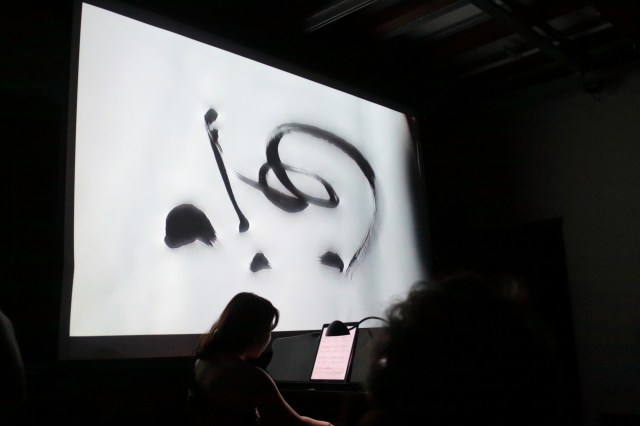
This next part of the program involved the work of Jarosław Kapuściński (Warsaw, 1964-) whose two pieces were slated for the last portion of the program.  He is, since 2016, the chair of the music department at Stanford University and no doubt spends time with CCRMA (Stanford’s equivalent of CNMAT) investigating music, sound and computers.  He spoke of being inspired by a calligrapher who was also well known to Ms. Chai, a Chinese woman and master calligrapher named Shanshan Zhao (the film was done at the Shanghai Conservatory of Music).  While he did not go into great detail the composer basically shared his visual inspirations and spoke a bit about how his composition program “listens” to the performer (see the photo with the two mikes inside the piano below) and responds in some way.  This sounds like another chapter in the book which includes David Behrman’s early computer/performer interactive experiments.  Some 50 years later (this piece, “Calligraphies for Ziqi” is from 2018 and got its US premiere here tonight).  Another generation shows its expertise.

choi20190003

Note the two black microphones inside the piano. No, its not the Russians.

The title, “Calligraphies for Ziqi” (2018) references Ziqi, a man whose listening was so perfect that the musician destroyed his instrument after Ziqi died because he knew he would never find a better listener.  This ancient Chinese story (approx 770-476 BC) is also about the merging of sound and image in its way.  Several calligraphies are displayed in process during the performance with the music reflecting the moods of the Chinese characters being displayed.  Each movement involves a different Chinese character and a different attempt at calligraphy.  There may be extramusical references here but the music does a satisfying job of standing with the visuals and further analysis can be left to musicologists and program annotators.

In addition Kapuściński is no stranger to Asian arts.  He has explored eastern musics and incorporated aspects of them into some of his works.  He is also no stranger to computers and their use in composition.  His appreciation of disparate artistic techniques effectively spanning 5000 years and utilizing them effectively is a mark of genius in this writer’s opinion.  This is a challenging piece for the soloist but it is a sensual journey for the audience.  While the geekier folks (this reviewer definitely included) would like to know much more about the technical aspects of this gorgeous music, suffice it to say that such knowledge is not a prerequisite for enjoying the art.

choi20190012

Chai playing the interactive piano part to the visuals in “Calligraphies for Ziqi” (2018), This was the California premiere.

This was followed by another visual/musical collaboration, Side Effects (2017) also by Kapuściński involves music set to videos by Kacper Kowalski who shoots from a perspective 150 meters directly above his subjects.  Think a latter day Koyaanisqatsi (do I need to footnote that reference?).  Again we see affecting music which captures the composer’s reaction to the visuals.  I didn’t get the sense that there was any computer interaction here, just some good music to some stunning visuals.

choi20190014

Chai playing the music to the visuals in “Side Effects” (2017)

The capacity audience (the room capacity is only 49) was very appreciative and gave a standing ovation which compelled no less than two encores.  Forgive your reviewer for not being able to recall the first but there seemed to be a new magic afoot when this pianist launched into the second, a wonderful rendition of the aria from Bach’s Goldberg Variations.  It was a loving and intense interpretation (no doubt full of colors as well) and it left the audience satisfied as a dessert would cap the climax of a fine meal.  Brava, Ms. Chai.  And thank you Mr. Kapuściński.

Jennifer Koh and Kaija Saariaho, a Glorious Collaboration


Cedille

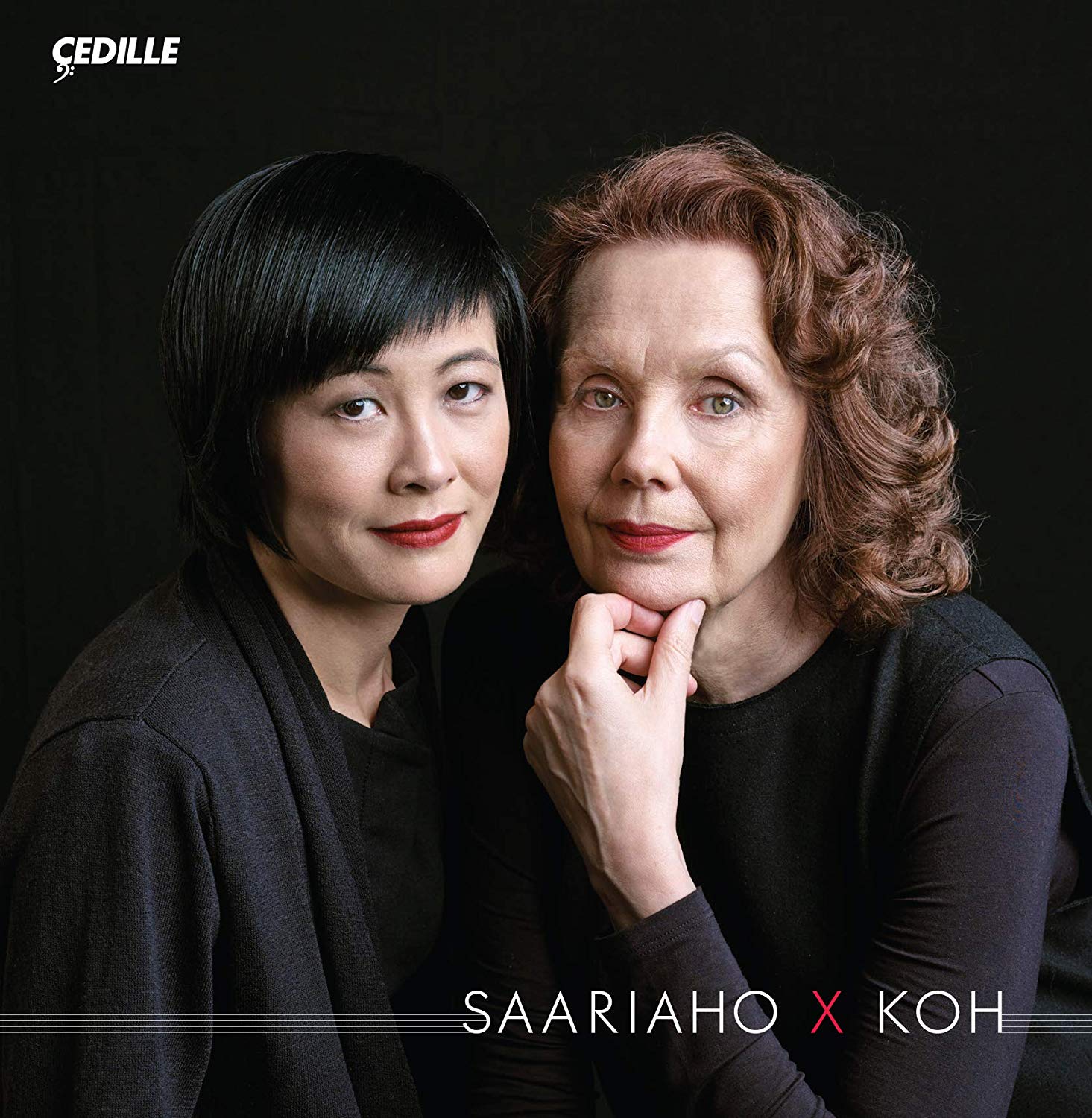
The arrestingly beautiful portrait that graces the cover of this album should be enough of  a cover to judge this release favorably. Just the presence of these two women suggests that you’re in for some serious music making. Add to that the fact that this is one of those impeccable Cedille releases and you know that you, the listener, will not be disappointed. Here is another offering for Women’s History Month (even though the disc was released in November, 2018).

Kaija Saariaho (1952- ) is possibly the hottest composer to come out of Finland since Sibelius. Her career has steadily grown and she has written for chamber ensemble, stage, and orchestra. It is somehow satisfying to have this little portrait of her work. (This reviewer’s first encounter with the composer was in 1987 when the Kronos Quartet premiered her Nymphea for string quartet and electronics.) Five works are selected here and, if you don’t know this composer’s work, think Debussy, Takemitsu, and their ilk. No electronics on this disc though. Her work is a unique expression and pretty much listener friendly whether or not she uses electronics.

There are four chamber music pieces and a nice new performance of her masterful violin concerto, “Graal Théâtre”. Saariaho is so prolific such that one can only do a sort of “snapshot” selection of her work on a single CD. A decent retrospective would likely require several more discs.

Jennifer Koh is without doubt one of the finest violinists working today, especially in contemporary music. She even broke ground in one of the coolest blind castings in contemporary performance playing Einstein in Glass’ opera, “Einstein on the Beach”. For those who are unfamiliar the role of Einstein requires a violinist wearing a wig who plays some mighty difficult violin music at different points during the opera. This writer heard her in performance of this role at the revival in Berkeley a few years ago and it is a mark of Koh’s expertise that she made the role her own. Her range (which includes more conventional repertoire like Mozart, Tchaikovsky, etc.) is simply astounding and her technical ability puts her in competition for an ever growing list of commissions and other works she has added to her repertoire.

On this CD we get to hear Koh in the intimate settings of chamber music where the skills of listening to others is so critical as the individual voices weave their parts though the texture. While Saariaho is basically a well trained modernist romanticism and perhaps impressionism still remain a part of her palette. Joining Koh in the chamber pieces are: Nicholas Hodges, piano; Hsin Yun Huang, viola; Wilhelmina Smith, cello; Anssi Karttunen, cello;

Of course the big showpiece here is the violin concerto from 1994. This large scale work is actually as lucid and detailed as her chamber music, albeit with a larger range of sounds. It is a masterful composition and this appears to be the second recording it has received though apparently the first recording of the version with reduced orchestra played by the Curtis 20/21 Ensemble conducted by Conner Gray Covington (another reason to want this album). I wasn’t able to locate the other recording with Gidon Kremer but it is a good sign when you have more than one top soloist recording your work. Brava Ms. Koh and Ms. Saariaho! This is a collaboration blessed by the Gods. Saariaho x Koh = bliss.

Post Holy Minimalism? New Music from Lithuania


Starkland ST-231

All ready for Women’s History Month is this fine offering which features a fine young woman composer from Lithuania. It comes on the radar of Starkland Records and, happily now, to a new listening audience.

I sincerely hope that no one takes umbrage at my off handed categorization of this music as related to minimalism but I’m not sure what else to call it. This 70 minute work is divided into 10 sections which have poetic titles. It is scored for piano, violin, cello, and electronic sound. It comes from an area of the world (Lithuania, Latvia, Estonia) where individual national identities have long been overshadowed by the annexation of the former USSR. In the last 20 years a style related to minimalism has emerged as a characteristic style from this region (primarily in the work of Arvo Part). Some of that is here but this music is at least a generation removed and has evolved its own identity at the hands of this new composer.

In an unusual (though not unprecedented) move this album was recorded and produced entirely by the composer in Lithuania. In addition some of her fine color photography is featured in the liner notes (which are mostly by the composer). The production values are very much consistent with the high quality one expects from the Starkland label. In addition it must be noted that this is the simplest and sanest packaging now being used for CDs. None of that fragile plastic and still a functional storage sleeve.

So the next question (also common with Starkland releases) is: Who is
Žibuoklė Martinaitytė ? Well she is one of the emerging generation of composers from Lithuania. That, along with her having studied with Bronius Kutavičius (I actually started his Wikipedia article many years ago but his and other articles on new Lithuanian composers is limited still) suggested to me that she may be of the branch of minimalism which hails from this part of the world (i.e. Estonia, Latvia, Lithuania). Wrong, but not entirely.

Like a lot of emerging composers we have here an artist fully schooled in a very wide range of musical techniques and possibilities. On first listen one hears elements of drone, ambient, minimalism, extended instrumental techniques, and mysterious but effective use of electronics with this small chamber ensemble. The effect is frequently almost orchestral but also capable of great stillness and silence.

In the liner notes by the composer she speaks of being inspired by her observations whilst visiting Notre Dame in Paris. She speaks of a rather impressionistic notion of hidden or lost beauty. So I guess that throws impressionism into the mix. The composition does have metaphorical devices which do suggest the emerging of ideas and themes from an initial chaos or, to use Ives term, a “silence of the druids”. One must get to the 4th track to really get a sense that there is actually a piano trio on this recording. Very effective actually and then it fades back into the chaos and then the silence.

The album opens with silence into which a drone gradually makes itself known. These meanderings take the listener on a journey which is essentially the artists sonic vision as she walked through and around the iconic cathedral. The listener doesn’t even hear really more conventional musical sounds until about track 4 and concepts like melody and harmony take on a different meaning in this context. It is a large arc of a composition that embraces both chamber and orchestral textures as it tells its sonic tale of the composer’s visions and returns to the chaos of the unfocused mind at the end.

This puts this work in the realm of the earlier release (also on Starkland) of Ingram Marshall’s Alcatraz (1982) and Eberbach (1985). Eberbach was later released with its originally intended photographic component along with Alcatraz on a recent DVD on Starkland. And Mr Marshall provides some insight and reassurance in his liner notes for In Search of Lost Beauty. He affirmed for this listener that one needs to listen more than once to perceive the beauty found herein.

Recorded and produced entirely in Lithuania the artists include Indre Baikstyte, piano; Ingrida Rupaite-Petrikiene, violin, and Povilas Jacunskas, cello. The recording, done in Lithuania was mastered by the always reliable Silas Brown back here in the United States assures the quality listeners have come to expect from this fine independent record label.

Collectif9: No Time for Chamber Music or Mahler Lite


Collectif9 based in Montreal bills themselves, aptly, as a “string band”. This is their second album and I haven’t heard the first but this one is a hoot!

Drawing on the age old practice of transcribing music for chamber groups which used to be common in taverns and such back in the 18th and 19th  centuries they create delightful riffs on the music they chose.  Here they chose Gustav Mahler. If the appellation of my title, “Mahler Lite” seems pejorative fear not.  This album is sheer delight.

There are 8 tracks drawing variously from the first, second, and fifth symphonies as well as Das Lied and the Wayfarer Songs.  The last track is a fantasy by Philip Hersant on themes of Mahler.  Nine musicians, all on bowed string instruments, do a marvelous job of evoking a big sound out of their ensemble.

Transcription is a true art and this is a shining example.  Anyone familiar with Mahler’s work will find a comforting familiarity in these pieces.  What struck this listener was their ability to evoke the orchestral instruments with some clever extended techniques.  Tympani, trumpets, trombones, tympani, etc. are all slyly and successfully implied in their playing.

While the liner notes don’t go into much technical detail they are all the average listener will need.  The charming thing here is the reproduction of the painting (apparently common in nurseries in Austria) which inspired the third movement of his first symphony.  If you don’t know the painting it depicts a bunch of animals carrying a dead hunter which, perhaps, they have killed.  And it is printed on the fold out liner notes.  Mahler uses Brother John (in a minor key) as a starting place for a set of variations with the intent of evoking this image.

The design by Kanelloscob.com deserves mention.  It deserves a closer look.  They manage to integrate a group photo, a track list, credits, commentary, and a large reproduction of that nursery art.  And they do it all with paper, no plastic to crack and become unusable.  It’s low key but a really beautiful production.

Collectif9 is John Corban, Yubin Kim, Robert Margaryam, and Elizabeth Skinner on violins; Xavier Lepage-Brault and Jennifer Thiessen on violas; Jérémie Cloutier and Andrea Stewart on celli; and Thibault Bertin-Maghit on double bass (who actually did these wonderful transcriptions).

Of course the music is the main point and that is the best reason to buy this disc.  Who knows? Maybe we’ll start seeing/hearing chamber groups like this in our coffee shops. Wouldn’t that be cool?

Alan Courtis’ “Buchla Guitar”, an Homage of Sorts


Firework Edition Records FER 1122

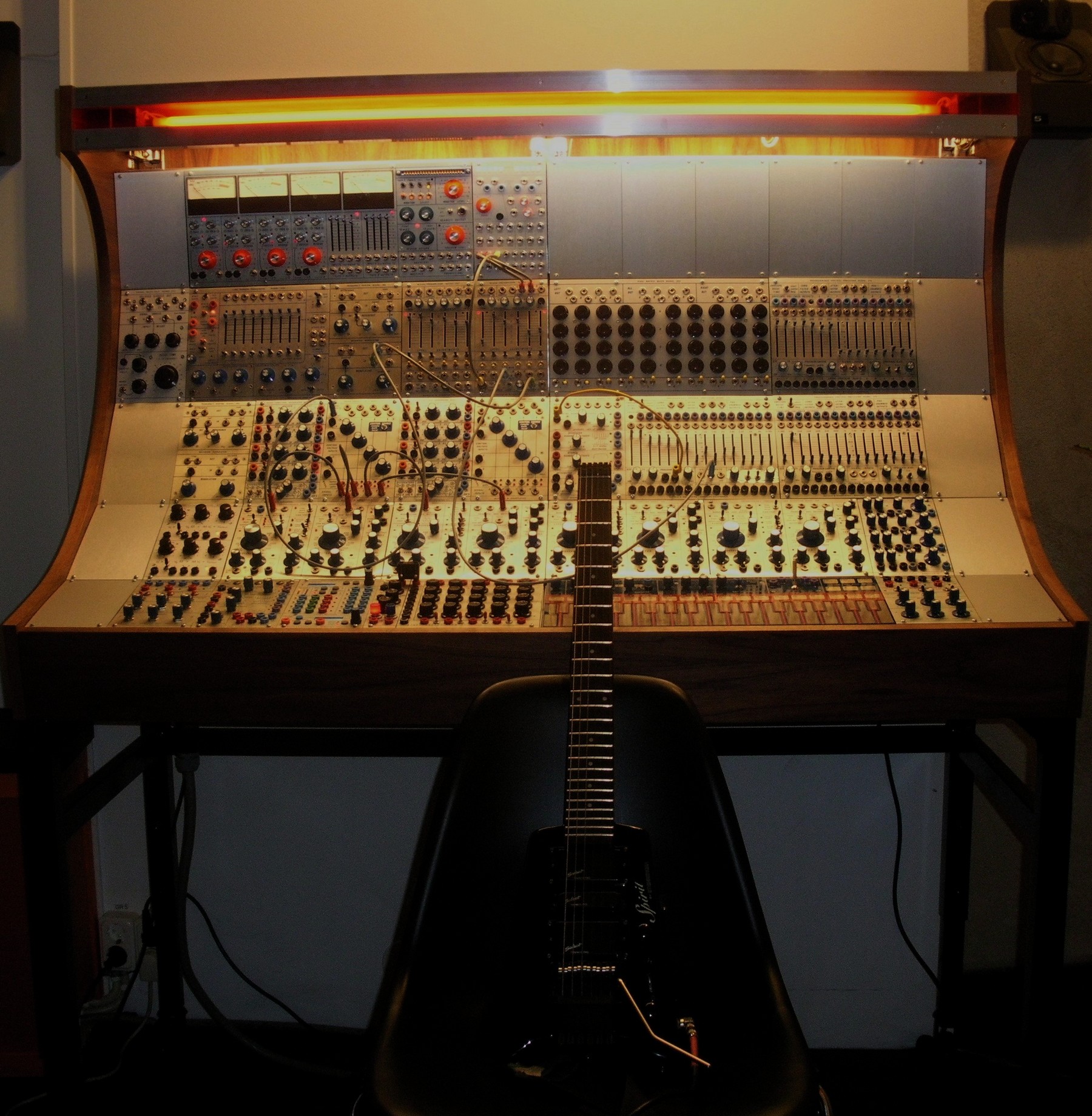
The late Donald Buchla (1937-2016) Invented many instruments from his keyboardless Model 100 (pictured here is a Buchla 200), the Marimba Lumina, but no guitar. So along comes one Alan Courtis and he creates what Buchla did not live to invent.

Courtis is an Argentine guitarist who was the founder of the group Reynols who collaborated in recordings with Pauline Oliveros. Oliveros was one of the composer/design consultants with whom Donald Buchla collaborated along with Ramon Sender and Morton Subotnick. So this album returns this busy, eclectic musician to his roots back to the days of the Tape Music Center.

Well, it surely doesn’t sound like a guitar for much of the time but the star here (or maybe co-star is more accurate) is the Buchla 200 which is the instrument through which the composer processes his guitar and which widens the range of what he can do with his instrument immeasurably. This album will remind listeners of the work of Morton Subotnick and perhaps early Pauline Oliveros.

There are four tracks, no titles, just absolute music. Courtis is clearly skilled and schooled in the operation of the Buchla 200, so much so that his guitar playing is rather eclipsed. This is likely by design. This is in many ways a tribute to Buchla and peaen to the heady days of radical invention that was the Tape Music Center (later moved to Mills College) and its luminaries

This is not easy listening but it it is a must for anyone interested in the various orbits which surround this historic and creative enclave. I don’t know if this album will appeal to many listeners but it is a huge effort and is, in effect, another brick in the wall as far as the history of electronic music on the west coast of the United States (and its dissemination to Argentina and points beyond)..

While this album came to me as a digital download (something which tests the limits of my technical skills) it does contain at least a little bit of liner notes. More would be nice but Courtis and Reynols seem more concerned with making interesting sounds and compositions and seem rather unconcerned with telling us how they got there except in the most general ways. Bravo Mr. Courtis.

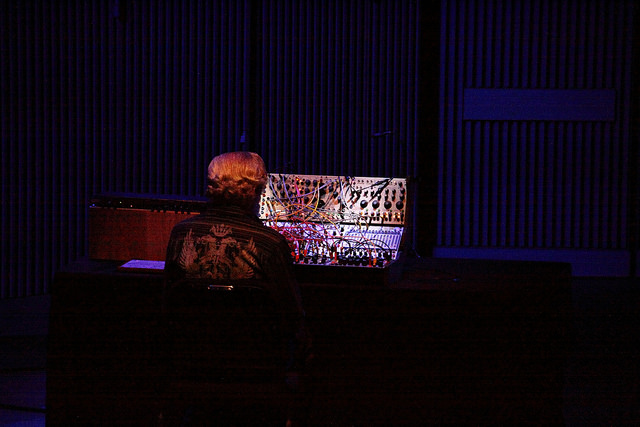
Don Buchla in his last major appearance performing at Other Minds 20.
Don Buchla at a Buchla 100 at the Other Minds Festival 20 in 2015

Clarice Jensen Solo Debut Album


jensenmiasmah

Miasmah Records MIA041 

Another refugee from one of those new music groups comes forth with a debut album.  This time it is cellist Clarice Jensen who also serves as artistic director of the American Contemporary Music Ensemble (ACME).  And what amazes this listener is the sheer diversity one can find in solo cello recordings.

This recording focuses on the special tunings by La Monte Young student Michael Harrison who has carved his own unique compositional style as well as some interesting work by the late Johan Johannson and by the soloist herself.  

There are 4 tracks: 
bc by Clarice Jensen and Jóhann Jóhannsson
Cello Constellations by Michael Harrison 
For this from that will be filled (a) by Clarice Jensen
For this from that will be filled (b) by Clarice Jensen

While there are consistencies between the sound world of these pieces they have their own identity.  Johansson’s work opens the disc and sets the tone for all that comes after.  This is not simply a cellist with a set of cool effects pedals.  Rather this is a soloist seeking to become one with her instrument (which includes the electronics).

Michael Harrison’s work is heard too infrequently.  The former student of La Monte Young carries on the tradition of exploring new tunings in a manner one might expect of the next generation of this practice.  Harrison (no relation to Lou) creates dream like worlds with the psychological  effects of these tunings and this work is a stunning example.

Jensen plays the two parts of the title track, “For this from that will be fulfilled”.  Multiple generations beyond the kitschy “one man band” novelty concept, Jensen’s playing must be a mesmerizing live experience.  This track was originally designed to accompany visuals by one Jonathan Turner who did the striking photography of the album’s cover.

The review copy lacked liner notes (a personal bugaboo) and the press release and notes on the soloist’s site and that of Bandcamp also tell precious little.  Fortunately this is music which speaks pretty directly and can easily be  enjoyed with no knowledge of whence it came.  Just sit back, relax, and enjoy.  Jensen’s playing is magical.

Jensen in performance (photo from web site)

Metafagote, Rebekah Heller on Solo Bassoon (mostly)


hellerfagote

For this listener, traversing contemporary music concerts in the 1980s there appeared a trend to modify the traditional look of classical performers. The first striking example I can recall is the venerable Kronos Quartet performing all in tight black leather outfits. And there are performers who have an intentionally different look such as violinist Nigel Kennedy or Kathleen Supove whose look is decidedly unconventional. Focusing on attire could conceivably detract from a musical performance but the previously mentioned performers have in common with the performer on this disc both virtuosity and a distinctly different look which seems integral to their performance delivering decidedly unconventional music.  The photography by Corrie Schneider creates a striking and evocative cover image giving her a sort of superhero ambiance.  Why not?

Rebekah Heller, of course, is also one of the members of the wonderful ICE Ensemble, one of the finest working chamber groups focusing on contemporary music. ICE has in common with groups like Bang on a Can, Alarm Will Sound, ACME, and others the fact that they are populated by some of the finest young musicians who seem to be able to meet any challenge…er, commission thrown at them. In addition many of the musicians in these groups are also interesting composers.  The others have a profound interest in new music that match their skills and passions oh so well.

In Metafagote Rebekah Heller presents 4 works on 4 tracks.  Rand Steiger (1957- ) is a graduate of the Manhattan School of Music and Cal Arts.  Steiger has been at UC San Diego since He is a 2015 Guggenheim Award recipient and though his discography is adequate this writer sees his name, hears his music too infrequently.

Steiger’s work opens this disc with Concatenation (2012) for bassoon and live electronics.  Steiger is skilled in writing for both conventional instruments and for high tech electronics including spatialization, live processing.  Steiger’s work is assertive, pretty much freely atonal, and packs a punch emotionally if memory serves.  There was a vinyl record (this composer is younger than me by one year and I’m guessing still hoards at least a selection of LPs.  The work was Hexadecathlon: “A New Slain Knight” (1984), basically a horn concerto for horn with chamber ensemble.  It burns in my brain still, wonderful 6 minute cadenza at the end too.

Back to Concatenation, it is a sort of all consuming experience, a sound bath if you will.  The timbres achieved with the combination of bassoon with electronics creates some grand, almost orchestral textures.

The second work is by one Jason Eckhardt (1971- ), a name vaguely familiar but his work is new to me,  Eckhardt earned a B.A. from Berklee in 1992 followed by an M.A. (1994) and a D.M.A. (1998).  He has studied with James Dillon, Jonathan Kramer, Milton Babbitt, Brian Ferneyhough, and Karlheinz Stockhausen.  That provenance gives one an idea of what to expect…complexity.  And he dishes that out for solo bassoon.  Heller is up to the challenge in this piece, “Wild Ginger” (2014) from a series of pieces based on native plants in the Catskills.  Again, why not?

The third track contains, “Following” (2014) for solo bassoon from a composer whose inspiration also sometimes comes from plants.  Dai Fujikura (1977- ) is a prolific Japanese composer who also comes from a legacy of complexity having studied with the likes of Boulez, Taketmitsu, and Ligeti.  Fujikura’s music may be complex but his music tends to have a softer edge, more like Takemitsu than Boulez.  Again Heller demonstrates her technical skills that rise to meet the challenges posed here.

Last but not least is a piece as large and encompassing as the Steiger.  Felipe Lara (1979- ) is an accomplished Brazilian composer.  He is represented here  by, “Metafagote” (2015), the most recent of the compositions here.  It is scored for bassoon and 6 pre-recorded tracks.  One is naturally put in the mind of Steve Reich’s counterpoint series for soloist playing against multiple pre-recorded similar instruments.  The piece also can, and has been, performed by a soloist with 6 other bassoonists.

While the Reich notion is not the worst place to start, this piece is anything but minimalist.  Rather it is distinctively modernist.  It is a virtuosic exploration of some fascinating possibilities of the lowly bassoon.  Lara owes more to free jazz at times in this epic, almost a concerto, piece.

I don’t know how many bassoon fanciers are out there but if you like new and experimental music of a virtuosic nature this is a great bet.

A New Voice for the Accordion, Miloš Katanić’ The Breath


Let me start with an apology. I received this lovely CD digitally, that is, I had to download it, catalog it (so I don’t lose it), download a picture file, burn a CD, listen and write a review. OK, by now most readers have recognized the whine of a pre-millenial grappling with changes in the music distribution system. The bottom line and the reason for the apology? It took me a bit longer to process this submission.


Miloš Katanić (1991- )

Now let’s get down to the main reason for writing this, the CD itself.
Miloš Katanić (1991- ) is a musician who hails from eastern Europe and is just beginning to gain international recognition. This, as far as I can tell is his first release. It consists of twelve short tracks representing ten composers of which this writer is able to recognize three, Philip Glass, Gene Pritsker, and Robert Moran.

Now just a bit about accordions. This writer’s understanding of accordions is that they are a group of instruments which use reeds to generate sound and a bellows to compress air to vibrate those reeds. Sounds like an organ, right? Well, the concept is basically the same only with an accordion (and with those foot pumped organs once popular), the wind is generated by the operator of the instrument.

The accordion certainly has a history in its folk band origins. It is a rather maligned instrument whose provenance fails to connect it to “respectable” instruments such as one would find in an orchestra (though it has had an occasional appearance in orchestras beginning in the late 19th century.

In the mid to late twentieth century several very serious and talented musicians took up this instrument and forever changed the public’s perception. In order by age I am speaking of Pauline Oliveros who took the accordion places no one imagined it could go, Guy Klucevsek who embraced the maligning and the folk aspects of the instrument, and William Schimmel who simply developed it as a classical instrument capable of virtuosity and, most of all, respect.

So along comes Mr. Katanić who now throws his hat in the ring. He is led in part by the most eclectic and prolific Gene Pritsker who I believe directed him to send me this disc. This young musician has a passion for much music which finds a frequent home in one of my audio players. And, as I suspected, the composers whose name were unfamiliar (Tauan Gonzalez Sposito, Antonio Correa, Wolfgang W. Mayer, Anthony Fiumara, Wellington E. Alves, and Ivan Bozicevic) are also of significant interest. The only problem here is the lack of liner notes and hence there is little on these other composers.

No matter really, This is a very enjoyable album by a truly talented musician. Of course my first stop was the Philip Glass Modern Love Waltz (originally for piano but now in many arrangements particularly those by Robert Moran). It is a delightful reading of the piece and hooked the Philip Glass junky in this reviewer in the process.

He manages to include two additional pieces by this really poorly represented master of American music (Moran) as well as two pieces by the also always interesting Gene Pritsker. The remaining pieces are by the composers that are not household names (. This will take a bit more time to listen but in the meantime I think we have here an auspicious debut by a musician who is poised to define his instrument, the accordion, for the 21 st century.

My 2018 in the Arts


One of the Theater Organs at House on the Rock, Spring Green, WI, a really fun place to visit.


I’m skeptical about year end lists but I have enough people asking me that it would be impertinent to skip this task. I make no claims to having even listened to enough to make any definitive statements about the “best” but I have my own quirky criteria which I hope at least stirs interest. Here goes.

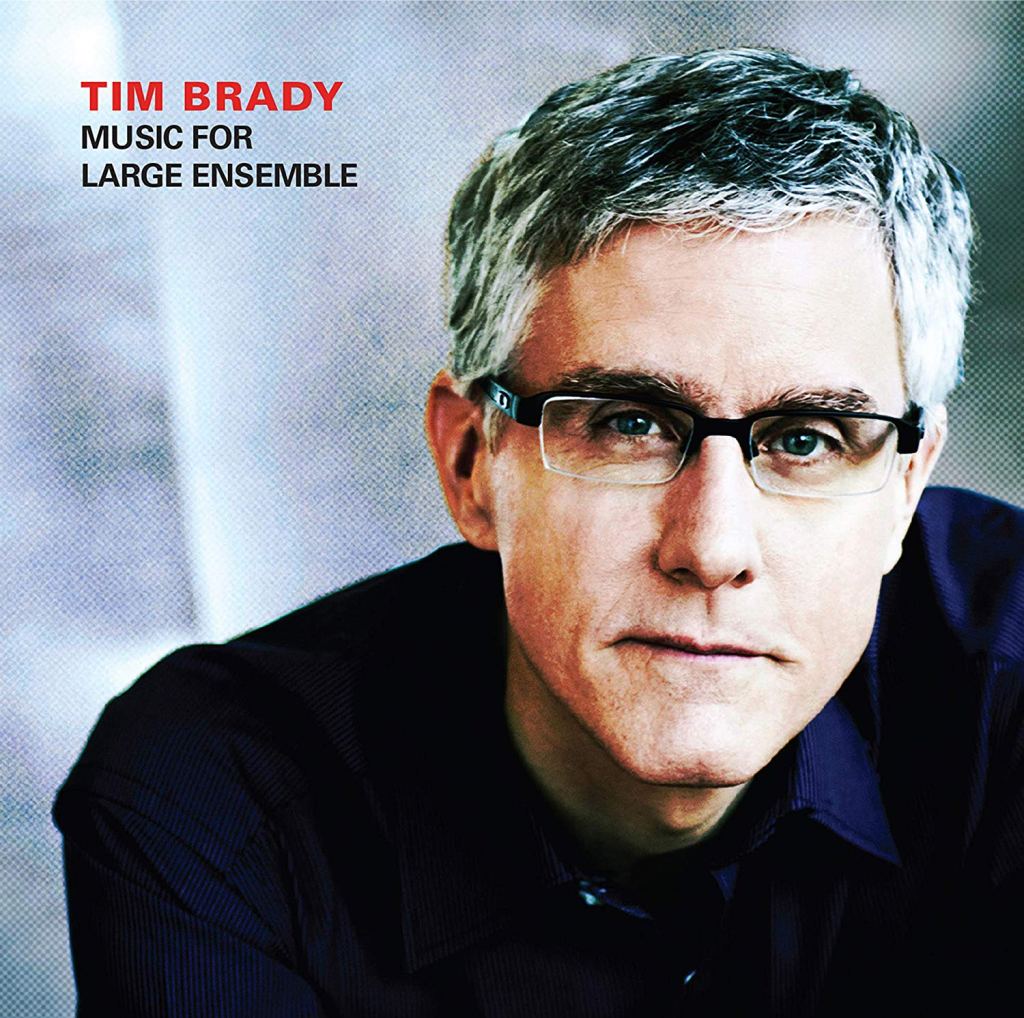
Let’s start with the most read reviews. Without a doubt the prize here goes to Tim Brady’s “Music for Large Ensemble”. This reviewer was enthralled by this recording by this Canadian musician whose work needs to be better known.

This little gem was sent to me by a producer friend and I liked it immediately. I knew none of these composers but I enjoyed the album tremendously. Don’t let the unusual name “Twiolins” stop you. This is some seriously good music making. It is my sleeper of the year.

Running close behind the Twiolins is the lovely album of post minimalist miniatures by the wonderful Anne Akiko Meyers. Frequently these named soloist albums of miniatures are targeted at a “light music” crowd. Well this isn’t light music but it is quite listenable and entertaining.


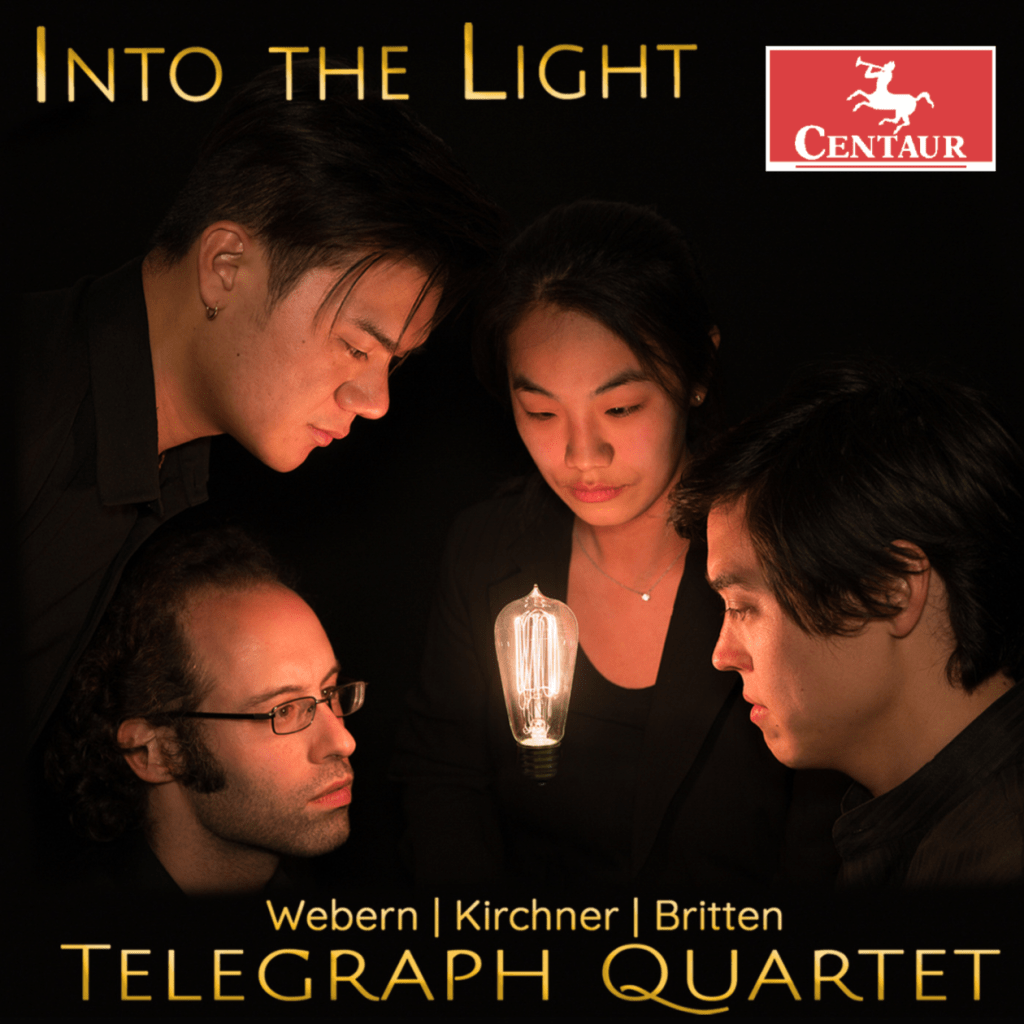
The creative programming and dedicated playing made this a popular review to New Music Buff readers. Definitely want to hear more from the Telegraph Quartet.

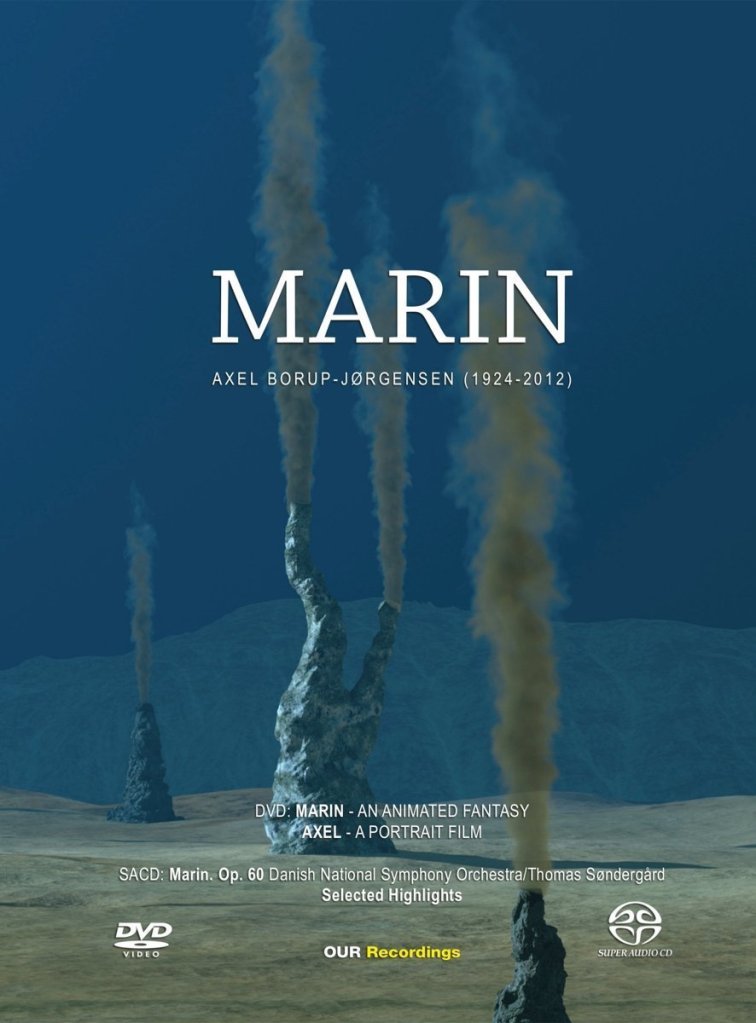
Another disc sent by my friend Joshua. This one is a DVD/CD combo of music by a composer whose existence was only revealed to me a couple of years ago. Marin includes a clever animated video which accompanies the title track.

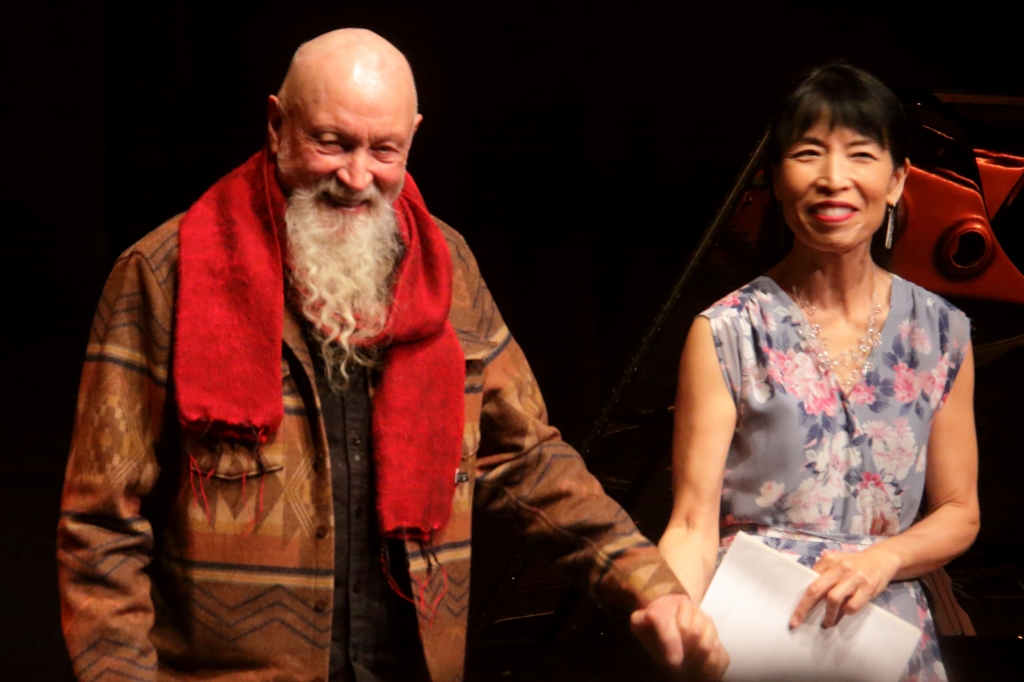
I was fortunate enough to have been able to hear Terry Riley and Gloria Cheng in an all Terry Riley program at the Yerba Buena Center for the Arts. Both were in spectacular form and the audience was quite pleased.

I would be remiss if I didn’t include the fabulous 6 night series of concerts produced by Other Minds. This is why I am a rabid advocate of OM programs. More on that soon with OM 24 coming up.

And lastly I want to tell you about two more composers who are happily on my radar.

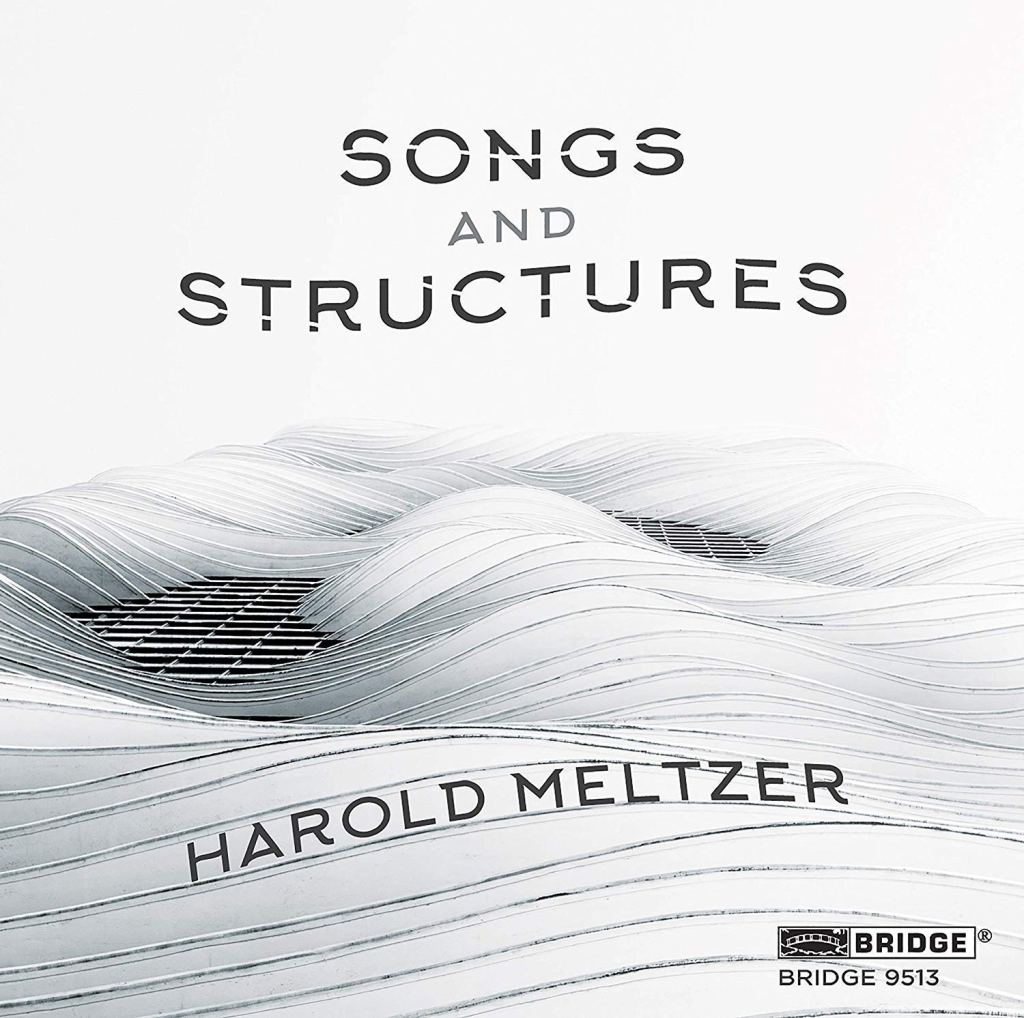
One of the joys of reviewing CDs is the discovery of new artists to follow. Harold Meltzer is now in that group for me. This basically tonal composer has a real feel for writing for the voice and has turned out some seriously interesting chamber music.

Another composer unknown to these ears. I bristle at the term “electroacoustic” because it sometimes means experimental or bad music. Not so here. Moe is fascinating. Definitely worth your time.

OK, gonna can the objectivity here to say that this is possibly the most underappreciated album I’ve heard this year. Combining a recording of the Debussy Preludes along with Schoenberg’s rarely heard “Hanging Gardens”, Webern’s Variations, and Berg’s Piano Sonata creates a picture of a moment in history when music moved from impressionism to expressionism. Jacob Greenberg is very much up to the task. Buy this one and listen, please. It’s wonderful.

Also beyond objectivity is this fascinating major opus by Kyle Gann. It didn’t get much recognition on my blog but it’s a major work that deserves your attention if you like modern music.

Well this is one of my favorite reviews in terms of the quality of my writing. The work is most wonderful as well. Though this review was actually published on December 31st I’m still including it in my 2018.

This is definitely cheating on my part but after that concert at Yerba Buena I can’t resist making folks aware of this wonderful set on the independent label, “Irritable Hedgehog”. Trust me, if you like Riley, you need this set.

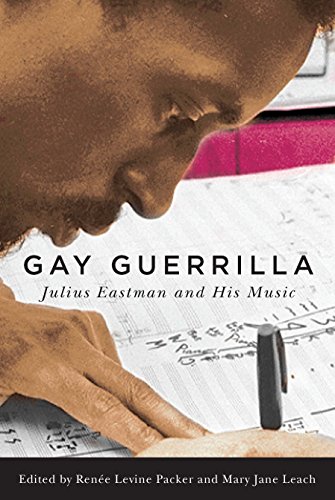
I review relatively few books on this site but by far the most intriguing and important book that has made it across my desk to this blog is Gay Guerilla. The efforts of Mary Jane Leach, Renee Levine Packer, Luciano Chessa, and others are now helping to establish an understanding of this composer who died too young. Here’s looking forward to next year.

I know I have left out a great deal in this quirky year end selection but I hope that I have not offended anyone. Peace and music to all.

Mechanical and Microtonal: Kyle Gann’s “Hyperchromatica”


gannchrom

Other Minds OM 1025-2

Kyle Gann‘s interest in the microtonal has been evident at least since his opera Custer and Sitting Bull (1997-99).  Many will be familiar with his justly famed monograph on Conlon Nancarrow’s player piano works.  Given that history this release seems almost inevitable, a series of works (or perhaps it is one big work) written for 3 computer controlled pianos tuned to his 33 note scale based on the harmonics of the E flat scale.

This is also hardly Gann’s first foray into the world of the player piano (as it was called in a different age).  His 2005 Nude Rolling Down an Escalator album contains some of his etudes for this computer controlled instrument which is the modern equivalent of the player piano.  And in addition to his fascination with alternate tunings and scales it should be noted that Gann is also somewhat of an expert as regards the player piano itself.  Gann authored one of the finest books on that composer’s music, “The Music of Conlon Nancarrow” (1995).  So it appears intuitive that he would write a magnum opus for the modern equivalent of the player piano, the disklavier, a computer controlled piano.

Gann refers to this work as being the longest composition for a keyboard in alternate tuning.  Indeed this would appear to be the case but a listener could easily hear these as  individual works with poetic titles like one encounters in Debussy’s Preludes.  Like those works one can listen to them individually or as a complete set.  But regardless of how you may choose to file these in your head this is an intriguing and engaging work (or set of works).

A work of  this dimension will necessarily invite comparisons to The Well Tempered Clavier, The Art of Fugue, and similar works because it effectively demonstrates the scales and the various musical possibilities unlocked by the different tuning much as Bach did nearly 300 years ago with well tempered tuning (or, in the latter example, the possibilities of counterpoint).  This work is like a major thesis on alternate tunings and the effects it has on melody and harmony.  Some listeners will be familiar with the interesting but less comprehensive Microtonal Music (1996) CD by Easley Blackwood.  Using a synthesizer Blackwood explores tonal and melodic relationships of various different tunings achieving some of the same goals as Gann.

The titles the composer uses reflect his ongoing fascination with things cosmic as he did with his, “The Planets” (1994-2008).  In this respect we hear Gann, the romantic, writing little tone poems.  Now these tone poems put the listener into a different universe but they fit the same logical category as tone poems written in a more familiar tuning system and hence have the more romantic quality of representational (as opposed to absolute) music.  Of course the composer’s intention of exploring this tuning system keeps this work also in the category of absolute music meaning that it is in large part about the tuning system.  Unlike the Blackwood experiments which were about finding functional harmonies (at least in the commonly understood western music definition) Gann’s work is about expression, motives, melodies.  It is, if you will, a logical step for one who has worked intensely with the complex rhythms endemic to Nancarrow and the fascination with alternate tuning systems gleaned from both western music history and world musics.

Since the end of the Baroque era western music adopted well tempered tuning as a standard and the result is that hearing these alternate tunings sounds wrong to most ears.  One of the things Gann is doing here is to make a foray into what will likely be a more common practice, that being the use of alternate tunings.  They are quite approachable and listenable in this context.


A Wonderful Survey of Helmut Lachenmann via his Clarinet Music


aestheticapp

New Focus FCR 196

Helmut Lachenmann (1935- ) is a composer who has been “on my radar” for some years now but, like a lot of names I get, I had yet to hear much of his music.  Along comes Gregory Oakes  from, of all places, Iowa.  The Midwest in the United States doesn’t have much of a reputation for embracing the avant garde (though they actually do).  So into the CD player goes this one and…wow, I really need to hear more Lachenmann and whoever this Oakes guy is I want to pay attention to what he is doing with that clarinet.
Admittedly this disc languished a bit before I heard it but I am now glad I did.

This disc consists of only three tracks comprising three works by this major German composer from three different periods in his career.  Dal Niente (Interiur III), Trio Fluido, and Allegro Sostenuto.

Dal Niente (1970) is for solo clarinet and, as the title prescribes, the music is to be played as “from nothing” the meaning of the title.  In fact this seems to be practically a textbook of extended techniques for the clarinet.  But far from being a dull accounting of dry techniques, this is a tour de force which will challenge the skills of even the most experienced players.  It is quite musical and listenable but the virtuosity will knock your socks off.  Oakes pulls it off with a deceptive ease that demonstrates his rather profound knowledge of his instrument.  It is easy to see the seeming cross pollination between the avant garde and free jazz here.

Next up is Trio Fluido (1966-68) which is a respectably avant garde trio for clarinet, viola, and percussion with Matthew Coley, percussion, and Jonathan Sturm, viola.  Like the previous work this one is also about extended techniques (for all three instruments this time).  This is a fine example of mid-twentieth century modernism and deserves a place in the repertoire.  All three musicians are challenged to play their instruments in unconventional ways and the effect is almost like some of the electronic music of the era.  It is a complex and pointillistic texture that has a strong and serious content.

Finally Allegro Sostenuto (1986-88) is another trio, this time for clarinet, cello, and piano.  So while this work would make a fine companion work to the Brahms clarinet trio the work is unambiguously avant garde in the finest Darmstadt traditions.  It is, at about 30 minutes, the longest piece here and it reflects the further maturity of the composer as he creates another challenging but almost surprisingly satisfying work.

This album serves as a nice way to be introduced to Helmut Lachenmann and to get to know some major new champions of the avant garde.  And one would do well to stay informed about the work being done by this fine new music clarinetist.


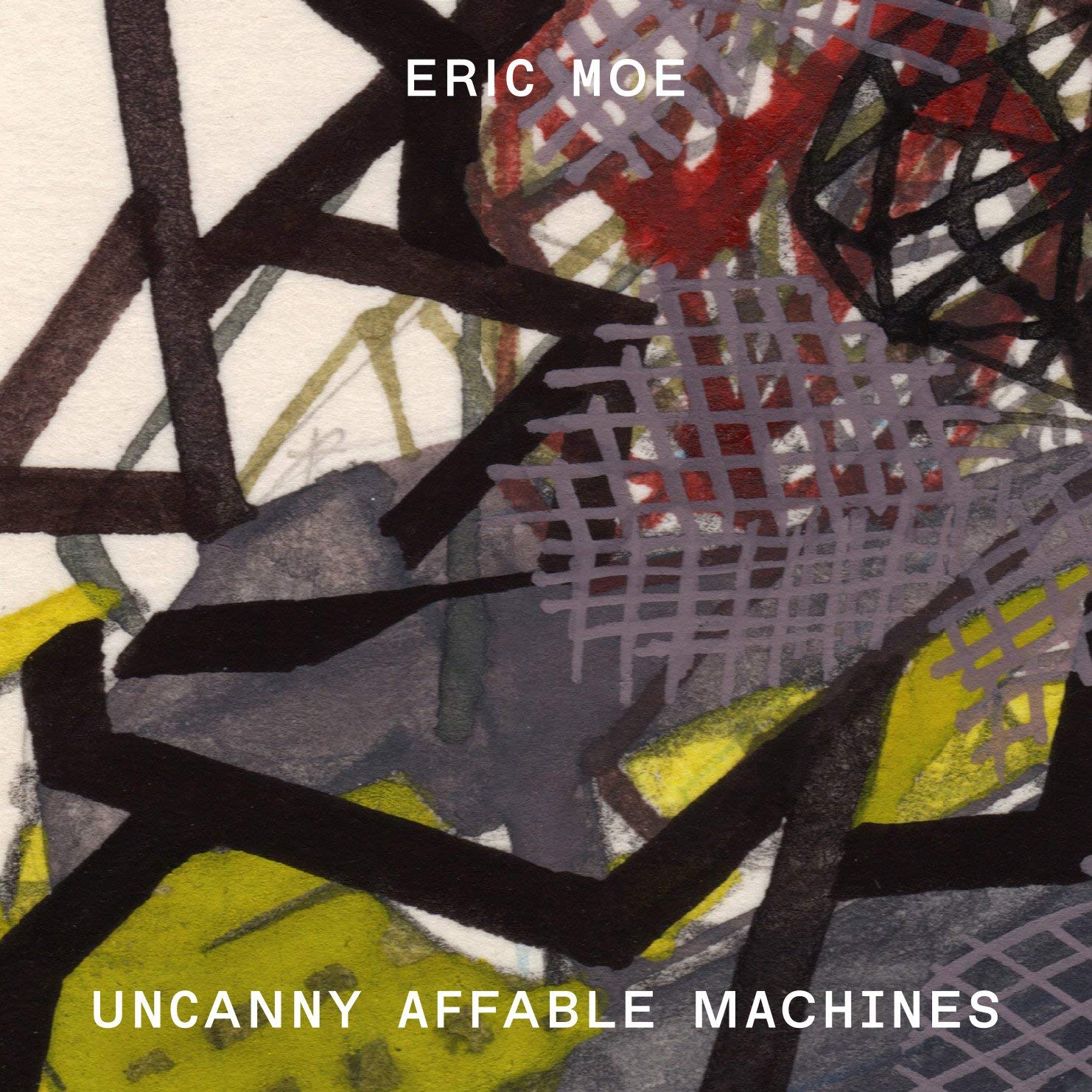
Eric Moe, Uncanny and Affable (and very interesting)


moeuncanny

New Focus FCR 212

Here I sit with an album by a composer with whom I have no familiarity.  Fortunately Eric Moe has a delightfully tenacious public relations department (at least with this particular record label) whose prompts did finally get me listening.  OMG, it says “electroacoustic”.   That could be really bad or obtuse.  Well, I did promise to review it so here goes.

Eric Moe (1954- ) is a composer with a very well organized web page.  A quick glance at that web page informs that this is the 12th or so disc from a man who boasts what looks like a list of over 100 compositions.  Moe is also a performer and participates on this disc.  This graduate of Princeton (A.B., Music) and Berkeley (M.A. and Ph.D., music) teaches at the University of Pittsburgh and is also an active performer of both his and others’ music.

moekeyb

This discs contains 6 composition for solo instrument (mostly with) electronics.  Now that combination has given this writer pause because the genre given the name “electroacoustic” can be a mixed bag.  Sometimes these works can be ponderous or obtuse with meanings obvious to the composer and, hopefully, the performer.

However your reviewer’s neurotic fears were apparently unfounded as the tracks played some truly wonderful compositions.  Each track features a different instrument.  The instruments, in order, include a drum set played by Paul Vaillancourt, a viola played by Ellen Meyer, a solo 19tet keyboard played by Eric Moe, an unbelievably virtuosic pipa played by Yihan Chen, solo piano played by Eric Moe, and flute played by Lindsey Goodman.

Suffice it to say that all the soloists here come with a high level of virtuosity as well as the ability to interact meaningfully with the electronics.  Far from being a nightmare of impenetrable experimental music this is rather a very entertaining set of pieces which tend to avoid the worst cliches of this genre.

Rather than attempting to describe each of these pieces (a task which would likely be more painful to read than write) it is best to simply provide assurances that the combination of this talented composer combined with the more than capable soloists provides a stimulating and interesting listening experience.  These are wonderful performers with great material.

The listener will want to hear each track more than once to get a good idea of what the composer is doing but, fear not, this album is much more adventure than ordeal.  It shows a composer at the height of his powers producing art which stimulates the senses and provides an emotional experience.  While there is clearly intellect behind the creation and performance of these works they tend to speak rather directly to the listener providing a stimulating entertainment that leaves the listener with a shred of hope that classical, even modern classical is far from dead.

Kudos to professor Moe and his collaborators and a nod of thanks to the tenacious publicity folks who would not let this release go quietly into the good night.  You shouldn’t either.

Josh Modney’s “Engage”, New Music for Violin Solo and Not Solo


modneyengage

New Focus FCR 211

This is an awesome undertaking.  I recall when pop musicians were cautioned that it may be unwise to release a so called “double album” for fear that their inspiration (or talent) may not be up to the task.  Well here comes Josh Modney violinist and Executive Director of the Wet Ink Ensemble , a member of the International Contemporary Ensemble (ICE), and a performer with the Mivos Quartet for eight years.  This 3 CD set is his solo violin debut album.  And what an album it is.  There is no lack of talent, skill, or imagination here.  This is essentially three faces of Josh Modney a sort of sonic CV.

The first disc features four tracks of music by contemporary composers for violin with soprano, piano, and/or electronics.  All four are fairly recent compositions:  Sam Pluta’s “Jem Altieri with a Ring Modulator Circuit (2011), Taylor Brook’s “Vocalise” (2009), Kate Soper’s “Cipher” (2011), and Anthony Braxton’s “Composition No. 22” (1998).All of these are challenging for the musicians and none are easy listening but all demonstrate aspects of Modney’s skills as a musician

The second disc features J. S. Bach’s “Ciacona” or “Chaconne” (1720) from the second violin partita.  But this is not just another performance of this towering masterwork of the solo violin repertoire.  Modney has chosen to perform it in just intonation.  Now how’s that for versatile?

The effect is subtle and may even be lost on some listeners but fanciers of Bach and alternate tunings will likely find this to be anywhere from mildly interesting to revelatory.  It is a fine performance and it is interesting to hear it in just intonation and amazing to know that this performer has this uncommon skill of playing accurately in an alternate tuning on the violin.

Filling out the second disc is a piece by pianist Eric Wubbels, “the children of fire come looking for fire” (2012).  This is a very different piece and I’m not sure why it was paired with the Bach except that it fit the available space.  Wubbels contribution is a sort of electroacoustic collage.
The third (and last) disc is of solo violin compositions by Josh Modney.  Again we move into contemporary and experimental compositions which reflect Modney’s skill with the instrument as well as his insights into it’s potentials.  Again there are no echoes of Bach here but rather more of the experimental/avant garde/free jazz style which dominates this album.  The solo violin repertoire is not huge so it is reasonable to assume that these little gems will find a place there.

This is a lovely production with striking cover art and excellent sound.  If you like cutting edge violin music you will have a wonderful time with these discs.  And if you’re looking for a wildly skilled and imaginative musician check this set out and get ready to be wowed.


Gourmet Vegan with Solo Bass


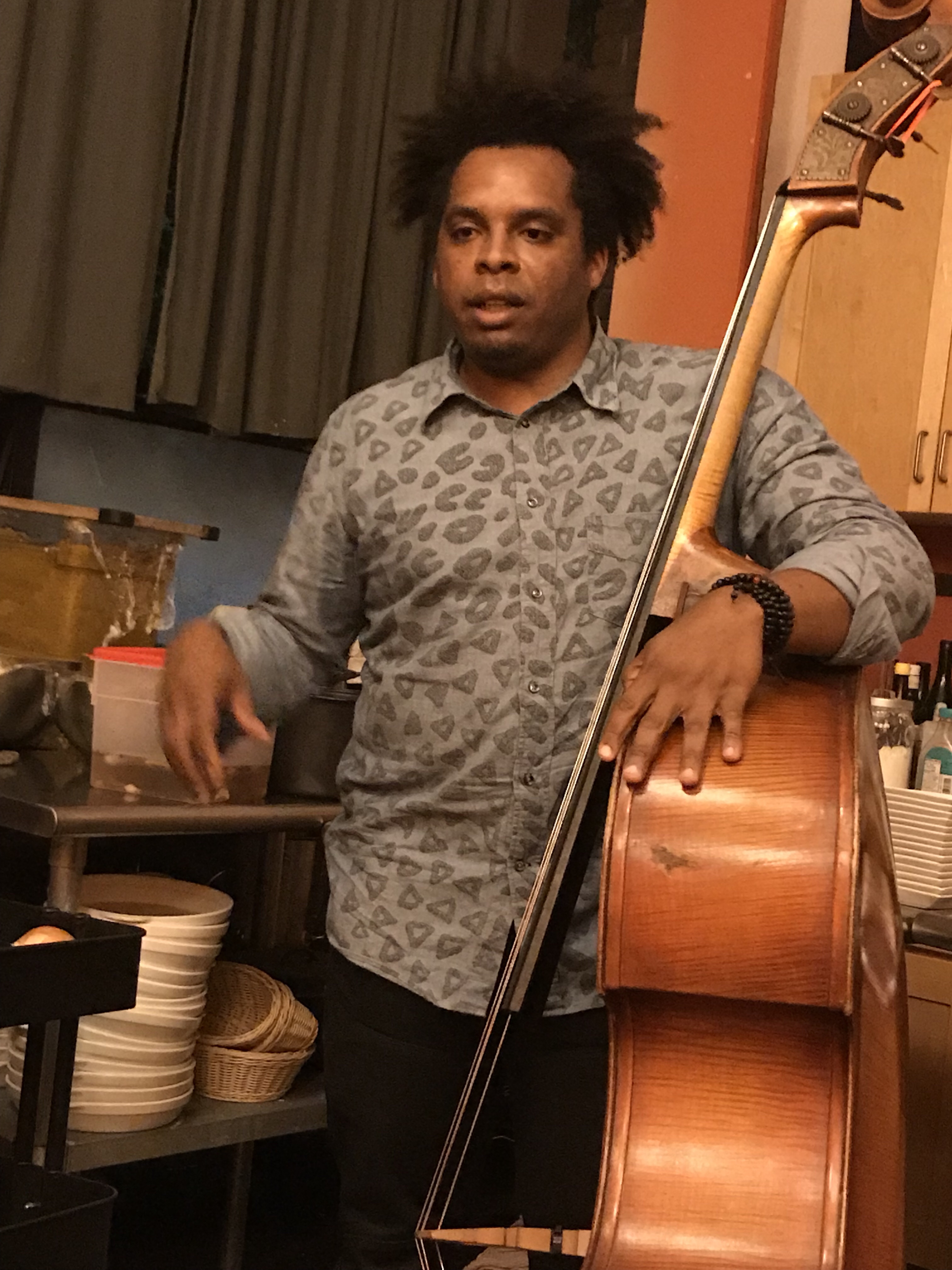
Chef and host Philip Gelb (left) introduces Rashaan Carter

Friday August 17th was one of the last of Mr. Gelb’s famed Masumoto peach dinners incorporating the incredible peak of the harvest peaches into his magical vegan creations.  It is ostensibly among the last of his famed dinner concert series which has now run about 13 years.  Whether the series is ending remains to be seen but the opportunity to partake of Gelb’s culinary art should never be missed and this night we had the opportunity to hear a fine young musician as well.

img_0277

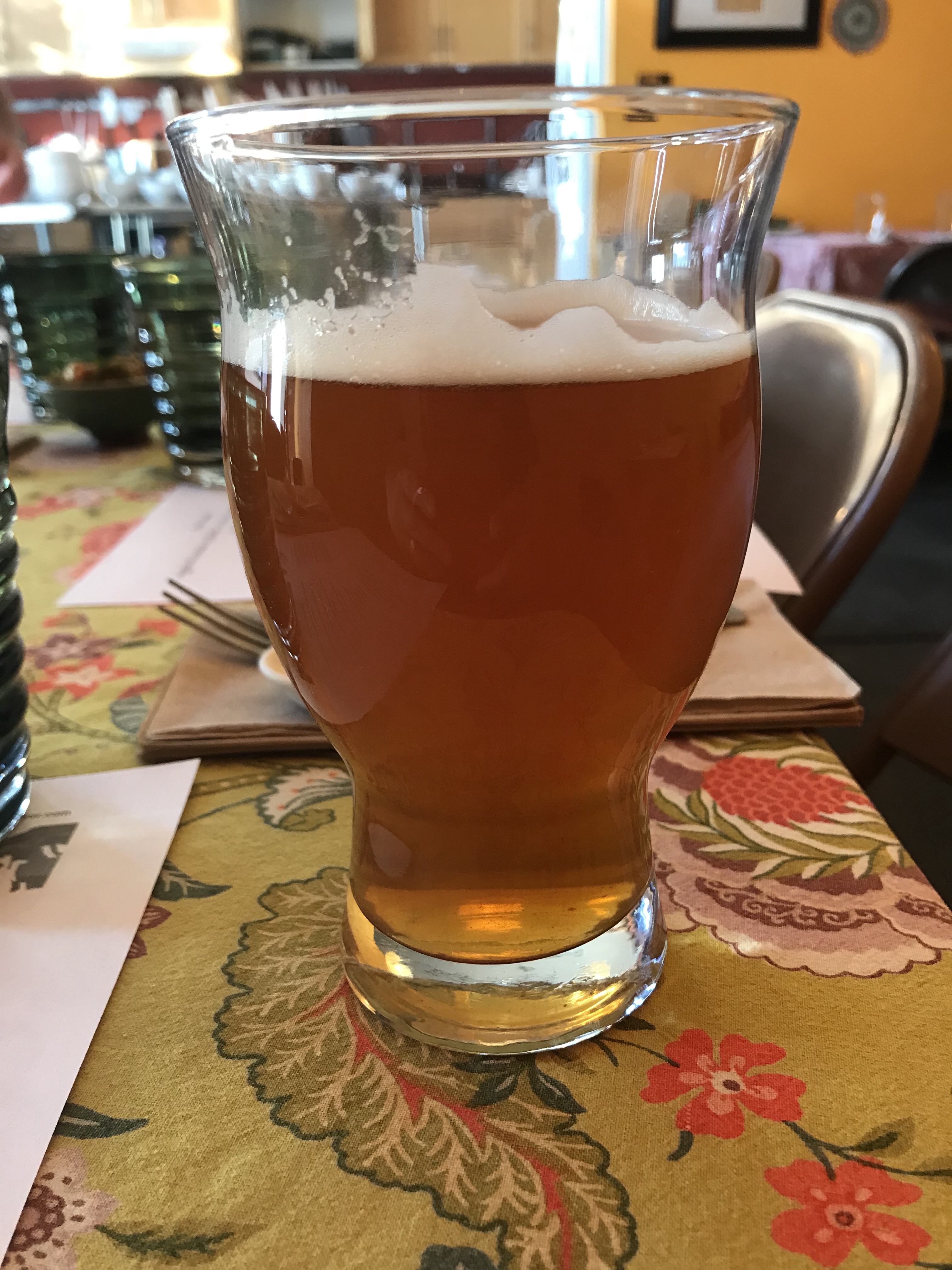
Phil started me with this tasty IPA, perhaps the only item that was not peach related.

img_0278

Dinner for about twenty happy diners began with this delicious corn soup.  Gelb has an eye for artistic presentation.

img_0279

A little peach based salsa added a bit of fire for those of us who enjoy spicy things.

img_0281

And on to the Baiganee (eggplant fritters) with peach kuchela and peach chutney.

img_0283

The main course was Jerk Stewed Tempeh, Rice, and Peas Calaloo.  Unfortunately my eating got a bit ahead of my picture taking but you get the idea.

Peaches are, as I said earlier, from the Masumoto family farm near Fresno where three generations have been producing some of the finest fruit in the state.  The tempeh is also locally sourced from Rhizocali Tempeh of Oakland.  It doesn’t get better than this.

img_0289

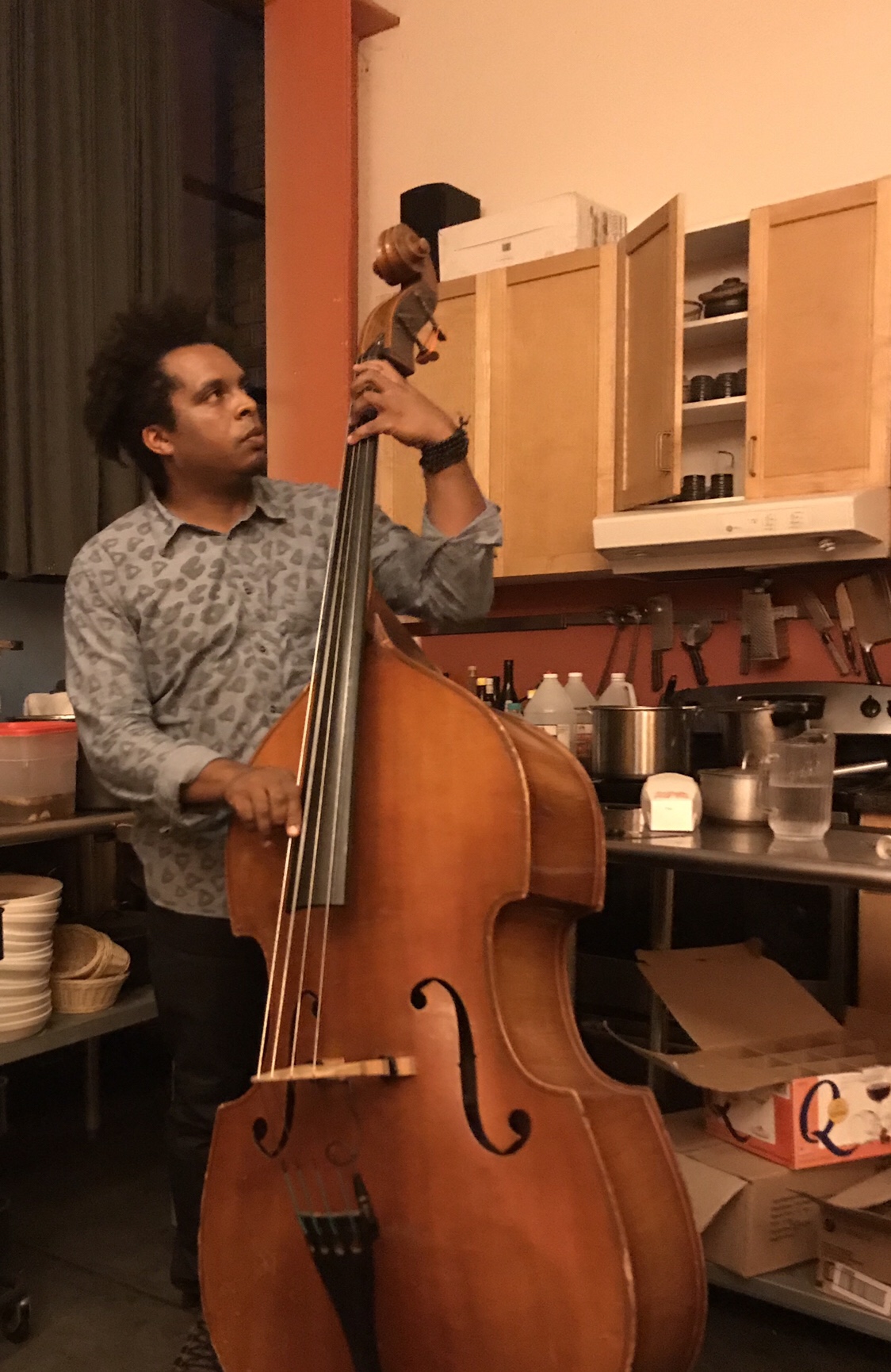
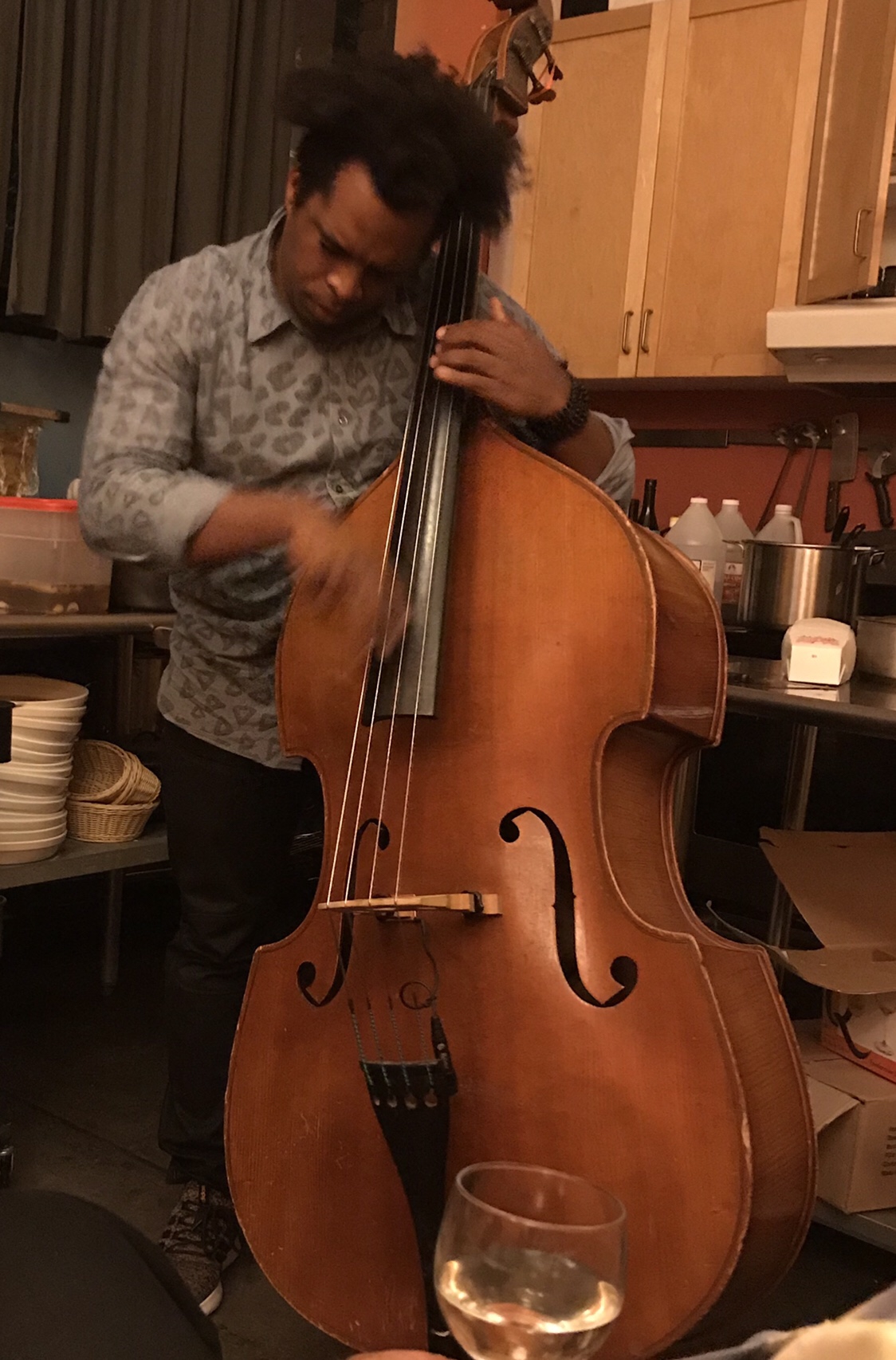
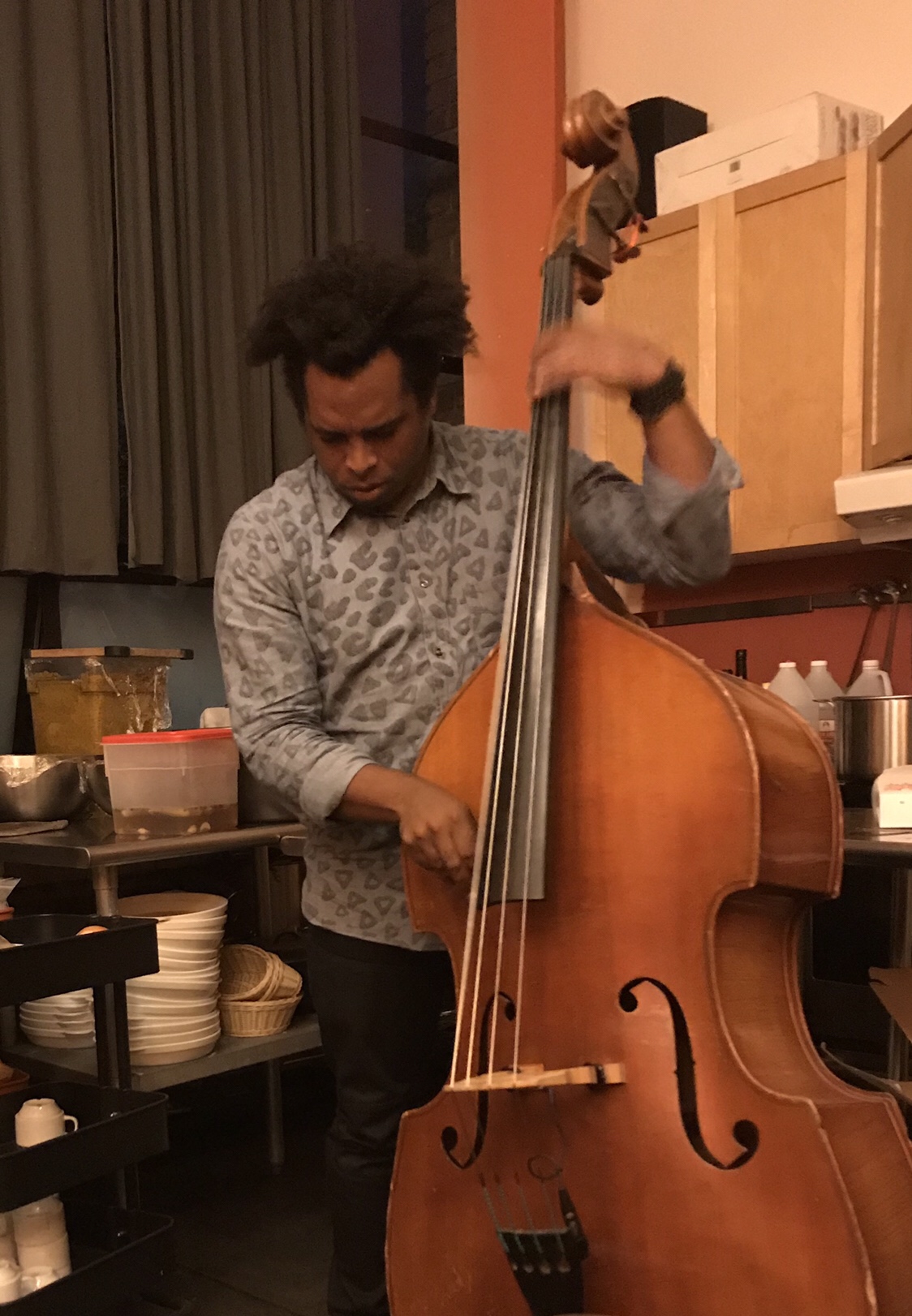
The tradition here puts the musician on stage just before dessert.  Rashaan Carter is an American musician from Washington D.C. who now resides in New York.  He was passing through the bay area and Philip Gelb extended an invitation which he graciously accepted.

He began with an improvisation which he had initially done for a dance piece depicting the lynching of a black American woman Laura Nelson and her son in Oklahoma in 1911.  Now this could really bring down the mood of the evening but for the fact that Carter spoke of and subsequently played this piece with such passion that all one could really feel is the tragedy of the act and the heroic expression of what is essentially protest music dedicated to her memory.

img_0290

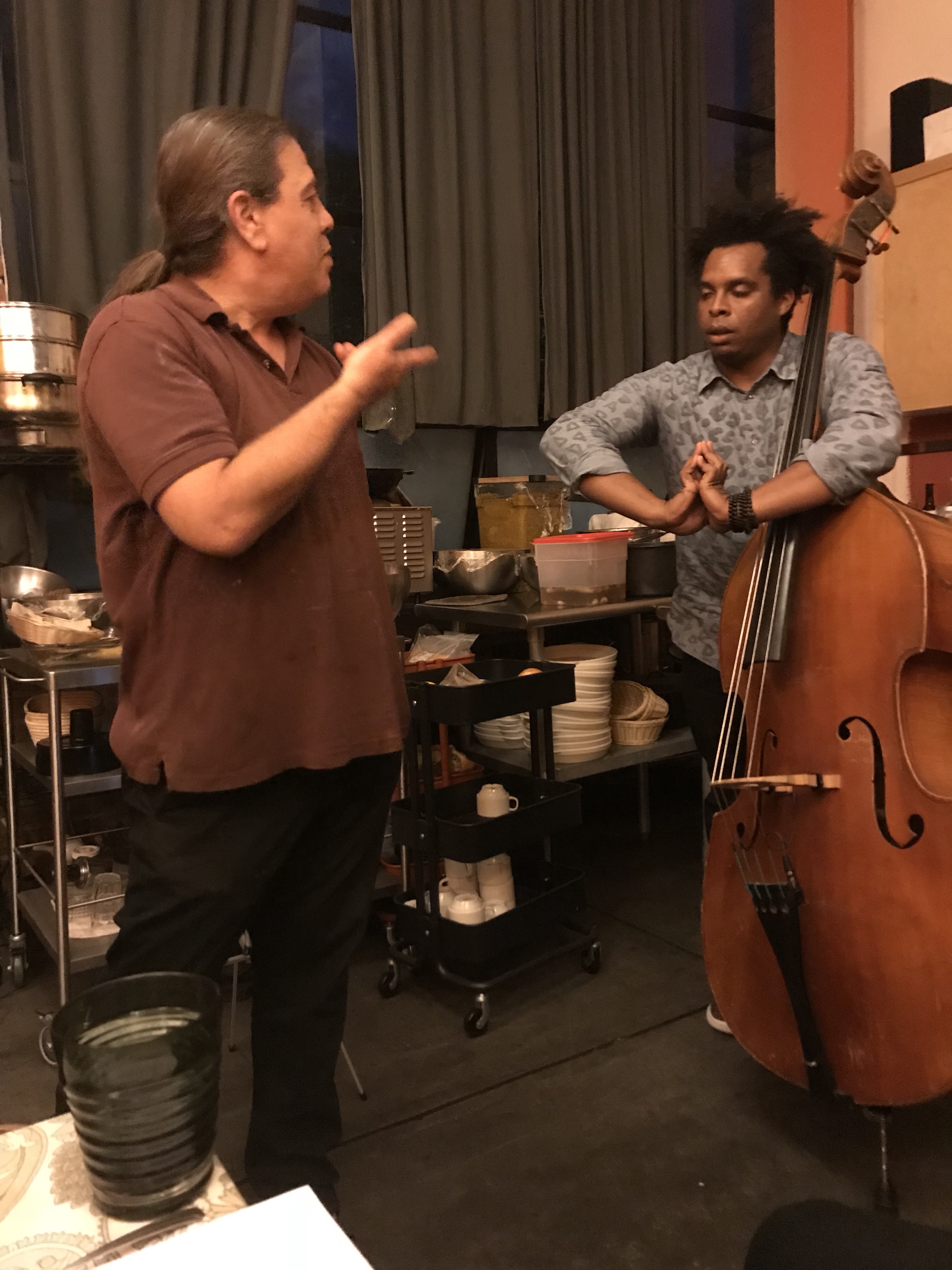
Rashaan has no small bit of the Blarney.  His running commentary during the performance was as entertaining as that of a stand up comic as he engaged most thoughtfully with the evening’s clearly appreciative audience.

He graced us with what he said was originally intended to be a performance of a Charlie Haden piece but decided he wanted to do his own piece as a sort of homage.  Indeed he captured Haden’s spirit oh so well in another virtuosic and passionate performance.
img_0286

He ended with another sort of tribute, this time to Henry Threadgill.  Again his gift of gab provided just the right segue into the next piece and his familiarity with Threadgill was immediately apparent.  His facility with the acoustic bass produced nearly vocal sounding lines in a performance that did honor to Threadgill and left the evening’s audience very pleased.

We concluded with Blueberry polenta cake with peach ice cream and blueberry raspberry sauce, all vegan, all absolutely delicious.

img_0288

And we will all keep an ear out for Rashaan Carter from this point on.  Bravo!

Duo Noire, Guitar Duo Revisioned


unnamed

New Focus FCR 210

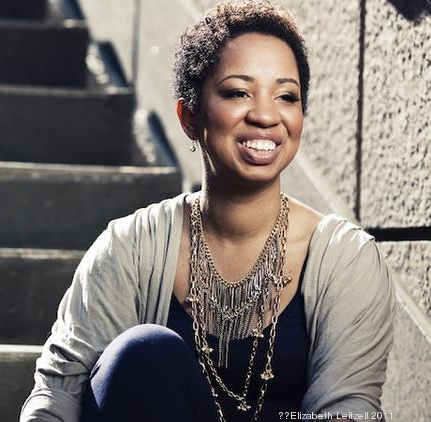
Duo Noire consists of Thomas Flippin and Christopher Mallet.  These guitarists are graduates of the Yale School of Music.  For this, their debut album, they have chosen to feature a program of all women composers.  Add to that the fact that these fine emerging artists are African-American (also the first African American graduates of Yale School of Music) and you have a glorious celebration of gender/cultural diversity as well as some mind blowing compositional efforts ably handled by these visionary musicians.

duonoir

The demographics are necessarily prominent especially in these contentious times when racial and gender discrimination are, sadly, huge and difficult issues that remain largely unresolved.  But the real story here is creative music and musicians.  This duo seems to have a unique sound and are clearly schooled in their instruments to the point that they even seem to be expanding the very possibilities of a guitar duo.  Above all this is an intelligent album.

The composers Clarice Assad (1978- ), Mary Kouyoumdjian (1983- ), Courtney Bryan (1982- ), Golfam Khayam (1983- ), Gity Razaz (1986- ), and Gabriella Smith (1991- ) are mostly unfamiliar names to this writer and, likely, to most listeners.  But don’t let that put you off.  This is a highly inventive set of compositions and these performers are doing the job of discovering these compositional talents.

There on six compositions on this thirteen track CD which has over an hour of music on it and it appears to be a landmark release for identifying new composers contributing to the guitar duo genre.  Guitar duos are not an unusual instrumental grouping but this collection suggests fresh new directions that extend the possibilities of this instrumental configuration.

assad

Clarice Assad

Of course the guitar duo is hardly a new idea.  On the more pop side we have had Les Paul and Mary Ford and on the classical side many listeners will be familiar with Sergio and Odair Assad.  And that brings us to Clarice Assad who is the daughter of Sergio Assad.  Her composition,  Hocus Pocus (2016) is in three movements, each ostensibly describing an aspect of magic.  Clearly Assad is familiar with both traditional and extended techniques of composition for guitar.  This is a sort of impressionistic work which calls upon the musicians to utilize a variety of techniques to evoke moods and images of each of the three movements, Abracadabra!, Shamans, and Klutzy Witches.

kouyoumdjian-headshot-web-quality_orig

Mary Kouyoumdjian


Byblos (2017) by Mary Kouyoumdjian embraces her Persian roots as well as the conflicts which have plagued this area of the world.  Here she is evoking an ancient town in Lebanon.  This is the most extended single movement on the disc and demonstrates the composer’s mastery of form while it challenges the instrumentalists to evoke the ancient and mystical sounds of her classical culture.


bryan

Courtney Bryan

The only African-American composer featured on this recording is Courtney Bryan.  Her “Solo Dei Gloria” (2017) which was commissioned by Duo Noire takes the listener on a sonic journey through the composer’s impression of the inner process of prayer.  That’s a mighty abstract concept and she manages accomplish it with just the two guitars (and, of course, two talented musicians).


The three movement, “Night Triptych” (2017) was also written for Duo Noire and has the honor of being the title track for this truly eclectic and innovative album.  This has more the feel of an abstract musical work than the others featured but one does hear the influences of her ethnic origin (Persian/Iranian).  Despite the more extended nature of this composition this work, like all the works presented here, is a sampling of the composer’s work and the astute listener will have many reasons to seek out more of this young composer’s work.

golfam

Golfam Kayam


Gity_228-1-8x10

Gity Razaz


Four Haikus (2017) was also written for Duo Noire.  This Iranian born composer is rapidly becoming established internationally as an accomplished composer.  Like the previous work these four short movements are of a more abstract nature.  Another sampling that will prompt listeners to seek out more of this emerging composer’s work.

gsmith

Gabriella Smith

Last but not least is the second most extended work here by the youngest of the composers represented.  “Loop the Fractal Hold of Rain” (2017) is another Duo Noire commission.  This is probably the most abstract and modern composition on the disc.

Many works here have at least the suggestion of dealing with politics, conflict, and the impact of such things on individuals.

It is admittedly unusual (though clearly not risky) to program compositions by all women composers.  This is a wonderful collection with performances that are incisive and intriguing enough to leave their listeners wanting more.  This is a group to watch/listen to.


Crazy Nigger, Gay Guerrilla, Precious Artist: Julius Eastman Examined


eastman

This essential collection celebrates the life and work of a composer and performer whose unique presence was nearly eroded to nothing but for the work of composer (and co-editor of this volume) Mary Jane Leach who spearheaded an effort to rescue as many scores and recordings as possible after Eastman’s death in 1990 at the age of 49.  The first evidence of this modern archaeological effort came with the release of Unjust Malaise (2005), three CDs which featured some of the recordings that were gathered in that early effort.  In addition it should be noted that Leach continues to maintain a resource page with the most up to date information on Eastman scholarship efforts.

Now, along with Renée Levine Packer (whose wonderful history of the Buffalo New Music Days, “This Life of Sounds” (2010) is not to be missed) we have a lovingly edited collection of essays which comprise a sort of biography as well as an appreciation of this very important American composer.

One look at the acknowledgements reveals the wide scope of individuals with whom Eastman came into contact and whose contributions became so essential to this volume.  The wonderful introductory essay is so very appropriately written by George E. Lewis whose figure itself continues to loom knowledgeably over late twentieth and early twenty first century music.  He takes a characteristically unflinching look at the cultural, historical and socioeconomic factors that contextualize Eastman’s work as well as his untimely demise.  Eastman’s frequent use of politically incorrect titles that challenge a smooth vocal delivery in the most seasoned of broadcasters is here made to seem quite understandable (if not comfortably palatable) within the complex forces that defined Eastman’s milieu.  Lewis embraces Eastman’s talents and makes the prospect of further study of his work tantalizing.  He provides a truly authoritative context which can serve all future work in this area.

There are nine chapters, a chronology and a select bibliography along with photographs and score examples.  The essays that comprise each chapter focus from the macro-view of Packer’s biographical sketch and Leach’s timeline to micro-analyses of some of Eastman’s works and some additional personal perspectives.  One of the most endearing qualities of this volume is the fact that many of the contributors knew and/or worked with Eastman at one time or another.  It is clear that all the contributors were deeply affected by their encounters with Eastman himself and/or with his music and all are rather uniquely suited to be in this volume.

One suspects that Packer’s biographical sketch which opens this volume will henceforth serve as a basic model for all future biographical research.  Whether one finds agreements or not the material is presented in as complete and organized a fashion as can be imagined.  It paints the picture of a prodigy who, for whatever reason, fell into disarray.  Whether there was drug use or symptoms of mental illness will be the debate which will, of course, never be satisfactorily resolved.  What shines through though are tantalizing moments and a plethora of relationships, however brief sometimes, that contribute to all we will ever really know of the enigma of the life of this precious artist.

Some of what follows has the quality of memoir and some leans more toward academic analysis.  All of these essays, timelines, bibliographies, etc. tie this book together as the first most comprehensive effort at trying to understand the man, his music, his milieu, his unusual personality.

These accounts will always be crucial in any future analysis of the enigmatic talent of Julius Eastman.  Though many will attempt to affix labels to his personality variously attributing his quirks to mental or physical illness no one will ever know him the way the people in this book did, as a precious artist whose work was rescued (as much as it could be) from obscurity by his family (both biological and artistic).  He was and is loved in perhaps the only way that he would allow, through his work and his deeds.

This book is a fascinating read which serves to put the artist back into his proper place as the genius he was.  Much remains to be written, performed, analyzed and recorded but this book will always serve as the reference point for what is to come.

Areon Flutes: Thriiive


areon

Innova 955


Multiple similars seems to be a meme in contemporary music.  The notion of using an ensemble of the same or similar instruments is most frequently encountered in teaching situations where music departments have enough students to form trombone ensembles, cello ensembles, etc.  But such combinations had been far less common in the concert hall until fairly recently.

Henry Brant was certainly an outlier when he wrote his Concerto for Flute and Flute Orchestra (1931) but the notion of a large ensemble of similar instruments developed further in the 20th century.  Brazilian composer Heitor Villa-Lobos in his Bachianas Brasilieras Nos. 1 (1930) and 5 (1938) used a cello octet.

It wasn’t until much later in the 20th century that one would encounter Steve Reich’s Counterpoint works beginning with Vermont Counterpoint (1982) for flute solo and multi-tracked flutes, New York Counterpoint (1985) for solo clarinet and multi-tracked clarinets, Electric Counterpoint (1987) for guitar and multi-tracked guitars, and Cello Counterpoint (2003).

Mary Jane Leach, an American composer based in New York also writes for multiples in such works as 4BC (1984) for 4 bass clarinets, Tricky Pan (1999) for solo countertenor and 8 countertenors on tape, Bach’s Set (2007) for solo cello and 8 celli on tape, and Dowland’s Tears (2011) for 10 flutes.

The present disc is another incarnation of the ensemble of similars which is as different in sound as each of the above described sets of music for similar instruments.  Here we have an ensemble of flutes with music written by Elainie Lillios, Cornelius Boots, and Mike Sempert.

Areon Flutes consists of Jill Heinke Moen, Kassey Plaha, and Sasha Launer.  This performing, teaching, commissioning ensemble has been in existence since 2004 and is based in the San Francisco Bay Area.  According to their website: Since 2004, Areon Flutes’ mission has been to make flute chamber music an equal voice in the chamber music world.

This is their third album and their first for Innova Records.  This is a 2016 release so I must acknowledge a bit of a delay in getting this review out but I blame the beauty and complexity of both their mission and the works here represented for a part of that delay.

There are three compositions: Elainie Lillios’ two movement Summer Sketches, Cornelius Boots’ three movement Cthonic Suite, and Mike Sempert’s Uncanny Valley.

This is a stunning disc which redefines the ensemble of similars and helps to carve out a lasting place for the flute ensemble in the classical world.  But even terms like “classical world” might be limiting as a way to describe this album.  It is innovative but not really experimental.  It is beautiful without being simple and it is virtuosic without being pure and empty showmanship.  This is a substantial set of challenging works played with virtuosity and interpretive skill that will leave the listener stunned and unable to write a review (oops, sorry about the excuses again).

But seriously this is entertaining and substantial music making by a wonderful ensemble that serious listeners will want to keep on their radar.

Longleash: Incorporating the Modern


longleash

The strikingly beautiful cover art reminiscent of Magritte is eye catching and make this reviewer nostalgic for the days of the 12×12 format of LP covers.  (Album Artwork: Pink Lady (2015), Scarlett Hooft Graafland, Album Design: Laura Grey).  It is, perhaps by virtue of its nod to modernism, a metaphor for the content of this album as well as being its title.

Longleash is apparently the oh so clever operations name of a CIA project whose goal was to help proliferate American modern art in the cold war era.  These days I guess that would be “weaponizing” art.  And this modern piano trio has (curiously) elected this for their stage name.

Well the content of this album is nowhere near your traditional piano trio and may even seem subversive to some listeners.  Longleash are modernist throughout.  Pala Garcia, violin; John Popham, cello; and Renate Rohlfing, piano self-identify as a group with “traditional instrumentation and a progressive identity.”  Indeed they have chosen a rather young and pretty much unknown group of composers: Francesco Filidei (1973- ) is the oldest of the group followed by Clara Iannotta (1983- ), Juan De Dios Magdaleno (1984- ), Christopher Trapani, and Yukiko Watanabe.

Despite the varied backgrounds these composers seem to share a particular segment of a modern aesthetic.  They seem fond of judicious use of extended instrumental techniques and quasi-minimalist cells but their styles are quite listenable.  They seem to have aspects of pointillism, the occasional terseness of Webern, some rhythmic intricacies and the occasional nod to a melody.  In short they seem schooled in the variety of techniques which rose largely out of the twentieth century but seem beholden to none of them seeking instead to judiciously use their skills to create their own unique sound worlds.

There are five works on eight tracks and none of them can be easily described except to say the the combination of listening with the aid of the liner notes can be helpful.  That is not to say the works cannot stand on their own.  That is a useful experience in itself.

I suppose it might be best to say that these works will likely evoke a variety of reactions from various listeners.  This is the sort of album, at least for this listener, that benefits from a direct concentrated listen without distraction but it is also worth experiencing as background music, letting the experience creep in where it might while you do other things.  And then a read through the liner notes to try to divine the composers’ intents.

I’m not being facetious here.  I think this is a very intriguing album but one which is difficult to characterize in words and one which is beyond this writer’s expertise in terms of any useful analysis.  Also the newness of these voices does not allow one to place these works even within the contextual canon of each individual composer’s work.  We have free floating modernism which, as was thought in the cold war days, may invade one’s intellect in subversive ways.

The review immediately preceding this one, Soft Aberration, features this piano trio on it’s first track.  Now Scott Wollschleger is very closely associated with the Manhattan School of Music.  What is curious here is that Longleash has managed to find the present disparate group of emerging composers with no directly discernible connections to the Manhattan School but with a clear affinity for the same sound world.  It is the luck of the draw that these reviews have appeared in this sequence but the similarities are striking.  So if you like the spare sounds of the New York School (John Cage, Morton Feldman, Earle Brown, Christian Wolff) and their successors in people like Scott Wollschleger, Reiko Futing, and Nils Vigeland (who, along with Pala Garcia provides the useful liner notes) then this will be your cup of tea.  But even if you don’t know these folks you are still in for a fascinating journey of cutting edge ideas by emerging composers.  And even if it is not “weaponized art” subverting your mind to western ideology you can be assured that it is genuine and uplifting work done by some wonderful performers of composers you will likely hear from again very soon.


Scott Wollschleger’s Soft Aberration


wollschlegersoft

New Focus FCR182

The cover and the booklet that come with this CD contain art that is a remarkably fitting metaphor for the music contained herein.  The almost monochromatic images with sometimes barely visible lines defining a space which requires serious concentration to discern effectively at times is very much like the music we hear on the disc.

Scott Wollschleger (1980- ) is an American composer who studied with Nils Vigeland at the Manhattan School of Music.  His work has been compared to that of Morton Feldman and, more generally, to the other members of the so-called New York School.  Vigeland has been active throughout his career performing and recording definitive versions of some of the best of Morton Feldman, John Cage, Earle Brown, and Christian Wolff.  It would appear that these voices and stylistic leanings are very much favored at the Manhattan School of Music.  A previous disc reviewed here with music by head of the composition department Reiko Futing, evokes a similar sound world.

This disc of chamber music contains five works on eight tracks ranging from 1’43” to 14’27” and all require almost as much concentration on the part of the listener as the extended techniques and performance requirements demand of the performers.  The dynamic range is from (generous) silences to forte.

The first track is by the seriously entertaining and odd piano trio called Longleash.  They demonstrate their expertise and concentration as well as their love for this musical genre in their performance of Brontal Symmetry (2015).  Unlike the other pieces here, Brontal Symmetry makes use of ostinati and there is a consistent sound field punctuated with silences.  It is an unusual but ultimately engaging piece.  Longleash consists of Pala Garcia, violin; John Popham, cello; and Renate Rohlfing, piano.

It is followed by the titular and sparse Soft Aberration (2013) for viola and piano played by Anne Lanzilotti, viola and Karl Larson, piano.  Though approximately the same length as the opening work the silences nearly suspend the perception of time and create a sense of sounds suspended in space in a sort of sculptural way.

Bring Something Incomprehensible into this World (2015) is for trumpet and soprano.  The three parts of this work are spread across the disc (tracks 3, 5, and 8) creating an even more spare sense.  It is interesting to play the three movements manually without the interruption of the intended track sequence to get a sense of the piece.  Again we have silences predominating with extended techniques demanded of the performers.  Andy Kozar plays trumpet and the soprano is Corrine Byrne.  The first movement at 6’39” is the longest followed by the second at 3’25” and the last at 1’43”.

America (2013) is a solo cello piece here played by John Popham (of Longleash).  It is a pointillistic mix of silence and extended instrumental techniques which makes reference to an art work by Glenn Ligon.

White Wall (2013) is for string quartet and is played by the Mivos Quartet consisting of Olivia De Prato, violin; Josh Modney, violin; Victor Lowrie, viola; and Mariel Roberts, cello.  This is an amalgam of unfolding processes which seem to be indiosyncratic to the composer.  It is very intimate music in that sense.  The piece is in two substantial movements.

The album concludes with the brief last part of Bring Something Incomprehensible Into This World.  Suffice it to say that there are attempts here to tie in philosophical as well as visual metaphors.  Wollschleger is apparently enamored of the writings of Deleuze, Nietzsche, and Brecht.  Her lies another tie in to the New York School with their love of visual metaphors and philosophy.  This is not an easy listen but it is a serious effort deserving of some attention.  The listener can decide whether the artists have indeed brought something comprehensible into this world…or not.


Coming Out Electric: Trevor Babb’s Warmth


Steve Reich’s masterful Electric Counterpoint (1987) opens this disc.  That work originally written for Pat Metheny  and has become pretty much a classic as well as a fine way to demonstrate a musician’s facility with multi-tracked guitar music.

Trevor Babb is a doctoral student at Yale and this appears to be his first album.  And what an album it is.  The choice of the opening work serves to demonstrate Babb’s ability to interpret, in his own individual manner, a work that has been recorded many times.  It remains a classic and very listenable work which belies the difficulties inherent in its performance.  Babb seems to take a bit more of a legato approach than previous interpretations but is definitely highly effective and this is a wonderful recording of the work.

It also serves to set the tone for the rest of this truly fine solo guitar and electronics debut album.  Electric Counterpoint is the first of 6 total works represented on this disc.  The remaining five selections fit the rubric of this collection in the overall sense but are definitely unique and challenging in their ways.

Paul Kerekes is not a familiar name to this writer and perhaps a new name to many.  His inclusion here introduces many to this composer and places him in the context of this interesting collection.  This young composer is apparently well known in the New York scene and seems to travel in the circles that include some of the most interesting artists currently working.  Trail is a very different piece than the Reich but demonstrates the range of the solo guitar and electronics genre.  This is a gentler, more meditative piece overall and one which piques interest in hearing more.

David Lang is a well known and very welcome name in new music and is here represented by Warmth, a classic Langian post-minimalist work which delights the listener while challenging the performer.

Septet by the late great James Tenney is one of those masterful compositions that is respected as a masterpiece but not often programmed.  This is due at least in part to it’s critical use of alternate tuning.  The effects intended by the composer can only be heard if the performer can play accurately the tuning involved.  It is a wonderful and listener friendly experience typical of the finest of Tenney’s grasp of how to use such tunings in the compositional process.  Babb executes this piece lovingly and this performance will likely help to nudge this work to a more frequent experience in the concert hall.

Babb introduces himself as a composer in Grimace, an impressionistic exercise in which he attempts to imitate both the style of Ligeti and evoke the image of a mask seen in an art exhibit.  Long tones and extended techniques predominate in this meditative drone-like work that demonstrates fine technique in both composition and instrumental facility.

The album concludes with Slope 2 by the emerging bass player and composer Carl Testa.   Again Babb introduces a new voice for the listener to explore.  This extended composition, more drone than pattern based, is one that deserves multiple hearings to discern its substance and to demonstrate its position in the larger rubric of this collection.

Babb produces a great debut here and makes a strong case for the genre of electric guitar with supporting electronics as being a viable format for a live concert.  He also seems to be defining that genre much the way that many solo artists are doing these days.  He seems to be constructing a repertoire establishing the classics (Reich, Tenney) and promoting the viability of works that he feels deserve a place in that repertoire.

This is a really delightful album and that extends, at least in this writer’s eye, to the cover design as well.  Again I will bemoan the loss of the 12  inch square format of LPs which could have made more prominent this lovely design by Colin Meyer and Trevor Babb.  Perhaps a 12 inch vinyl release may happen.  But until then the listener can settle most comfortably in the warmth of this truly fine release even in the smaller CD format or even as a digital download.


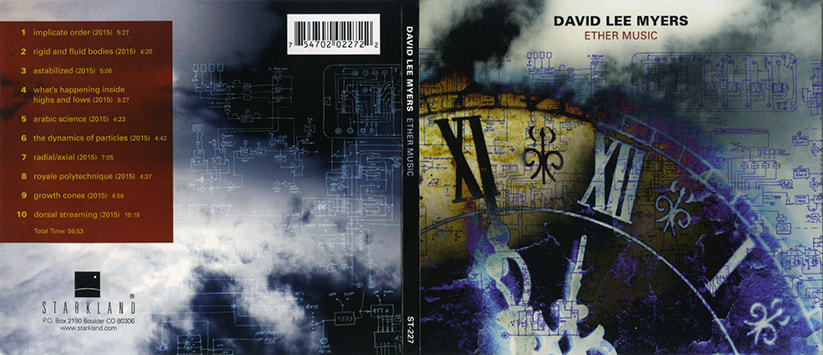
David Lee Myers’ Ether Music: A Nearly Lost Thread of Electronic Music


ethermusic-large_orig

Starkland 227

There is a certain nostalgia here both in the sound of this album and its provenance.  David Lee Myers (1949- ) is perhaps best known for his work under the rubric of Arcane Device from 1987-1993.  Under that name one finds 23 albums on the discogs web site.

Myers has collaborated with people like Asmus Tietchens (1947- ), a German electronic composer (with a hefty discography), Kim Cascone  (1955- ), an American electronic composer and producer, Marco Oppedisano (1971- ), an American guitarist and composer, Ellen Band, an American electronic composer, and Tod Dockstader (1932-2015), among others.  His output has been in the electronic music genre, i.e. no live components and he works in a style which he calls, “feedback music”.  Like Dockstader, Myers has worked outside of the academy and has relied upon home made electronics and techniques he has developed over the years to produce a rather unique musical style.

tod-dockstader-01

Tod Dockstader with tapes and score notes.

More so than the other mentioned collaborators Myers’ work with Dockstader is the “thread” to which the title of this review refers.  The release of the long out of print early work of Tod Dockstader was effectively the genesis of Starkland Records.  With the release of Quatermass (1992) and Apocalypse (1993) Dockstader was forced out of obscurity and motivated to begin composing and releasing recordings again.  Those Starkland releases were of some long out of print LPs from the early 1960s and Dockstader, who had been working in the music industry but no longer releasing his compositions was inspired to bring that aspect of his work again to the public.  Two of those efforts included the collaboration of David Lee Myers, Pond (2004) and Bijou (2005).  (After Dockstader’s death Starkland surprised the musical world by releasing heretofore unknown gems from the composer’s archive in From the Archives (2016).)

myers

David Lee Myers with some of his electronics.

It is both beyond the scope of this review and beyond this reviewer’s expertise to comment meaningfully about the compositional processes by which Myers achieves his ends but, thankfully, the liner notes by Dan Visconti provide significant insight in this area.  One can assume that his innovations in electronics as well as the devices themselves will become a treasured part of the history of electronic music along with the recordings themselves.

There are ten tracks here all written in 2015, and all utilizing Myers’ “feedback music” techniques.  The CD booklet includes both some of Myers’ beautiful circuit sketches as well as photos of some of his self made electronic processing equipment.  (This actually seems to echo the similar production of the booklet from that “From the Archives” disc of Dockstader’s work.)  Also worth noting is that the mastering is done by Silas Brown whose expertise contributed so significantly to the success of that last Dockstader disc.

The listener is free to dwell on the technical notes and ponder how these sounds and processings come together to produce the final product or simply let the experience flow over you.  There are doubtless many riches to be found in the pursuit of the technical and the analytic.   But the most important thing is that you listen, just listen.  This reviewer’s first hearing of this disc was on a long, leisurely late night drive which allowed an uninterrupted experience of the entire disc.  It was only later that I chose to take in the liner notes and booklet.  And while these enhanced the experience the tracks are sufficiently substantive in themselves to carry the listener into Myers’ unique technological vision which is unlike any other save perhaps for that of the aforementioned thread to Dockstader.

Though related by this thread, Myers’ vision is truly like none other in the field of electronic classical music.  If anything this seems to be a nearly lost thread, one of the self-sufficient tinkerer and explorer who shares his discoveries with anyone who dares to listen.  So, listen, I dare you.  You won’t be disappointed.

Release date scheduled for November 10, 2017.


Recurrence: New Icelandic Orchestral Music


“Well I’ve never been to Iceland, but I really like the music.”  Please excuse the Hoyt Axton paraphrase but this music brings joy to this listener’s heart.

Wow!  Even as a writer with an avowed fondness for music from the Nordic regions I am pleased to say that I am just stunned at this recording.  This is all new music written in the last few years by Icelandic composers and performed by the Iceland Symphony which seems well prepared to handle these large works.

These seven tracks document five works by living composers and, I dare say, rising stars in the classical orchestral realm as well.  Only one of these composers is likely to ring a bell in all but a few listeners and that is Anna Thorvaldsdottir, probably the best known musician from Iceland since Björk.  And it is worth noting that three of the five works are by female composers.

There is a consistency in the large orchestral sounds from these composers that provide a unity for the listener and a challenge for the recording engineers.  In fact this is ideal to show off the sonic facility of the Sono Luminus label and the skills of producer Dan Merceruio and recording engineer Daniel Shores.  This is the sort of album that stereo salons use to show off the range of their amps and speakers.  It is indeed thrilling to hear and the better your sound system, the more exciting this will be.  Those blessed with Blue Ray Audio capability will doubtless get the best sound of all.  Both standard CD and Blue Ray Audio discs are included in this package.

In order of appearance the composers are: Thurídur Jónsdóttir (1967- ), Hlynur Vilmarsson, María Huld Markan Sigfúsdóttir (1980- ), Daniel Bjarnason (1979- ), and Anna Thorvaldsdottir (1977- ).  Bjarnason is also the very capable conductor of the Iceland Symphony in this recording.

The music, Flow and Fusion, bd, Aequora, Emergence (three movements), and Dreaming are not given composition dates but are presumably recent compositions by these young artists.  There are liner notes which are useful to the listener but the main point here seems to be the glorious sound.  One hears influence and/or homage to some of the great sonic experimenters of the late 1950s and 60s like Penderecki, Xenakis, Lutoslawski and probably some Icelandic composers whose works have yet to be heard outside of Iceland.

The album has the notation below the title of “ISO Project 1” so here’s hoping that there will be at least a second volume and that we be given the opportunity to hear more from the rich musical landscape of Iceland.  Bravo!  Brava!  Keep it coming.


Oceanus Procellarum: Gareth Davis and Elliot Sharp


oceanus

I recall excitedly taking a class in college in the late 70s which dealt with post 1950 composition.  The professor emphasized that the reigning characteristic of this music is “pluralism”, that is to say that anything goes and one gets less useful information from labels like, “classical”, “baroque”, “romantic”, “post-romantic”, “post-modern”, etc.  There is no question that this maxim remains very true and we now are seeing composers well-versed in virtually every technique known to the world of composition.

This album is a fine example of such pluralism.  Seeing names such as Elliott Sharp and Gareth Davis one might expect something of the “free jazz” genre and that would not necessarily be an inaccurate description.  But it would fail to capture the wonderful writing for Ensemble Resonanz by the eclectic (yes, pluralistic too) Elliott Sharp.  As a composer Sharp draws on late twentieth century modern/post-modern compositional techniques along with a fair amount of his own creative innovations gleaned from his own experimentation and, no doubt, from his exposure to the wildly creative milieu of the Downtown New York scene of the 80s and 90s.

The result is like listening to shades of Penderecki and Xenakis as they wrote in the late 1950s though the 70s.  This is far more homage than derivation however and the achievement here is how well the soloists on guitar and bass clarinet fit into the work as a whole.  They fit remarkably well.

This could easily be called “Symphony for Ensemble with Obligatto Guitar and Bass Clarinet” or even Concerto if you like.  The point is that Sharp is an engaging composer whose works are very substantial.  From his beginnings on the New York Downtown scene with its mix of jazz, experimental and classical he has continued to explore and grow as a composer and that is what ultimately makes this release so compelling.

The musicianship here from Ensemble Resonanz, Sharp and Davis is of the first order and there is a certain sense of a tight fit such that, whatever may be improvised here sounds as though it were carefully written into this large orchestral fabric.  This is a powerful piece of music and repeated listenings will doubtless reveal more and more depth.  This is a very engaging piece.

Sharp is clearly evolving and growing as a composer and still hasn’t lost his marvelous collaborative and improvisatorial abilities.  This is a major work and a lovely recording.


Dane Rousay’s Blip


cover

Dane Rousay is a San Antonio based percussionist and this is the first of several planned releases.  This is a solo effort largely with drum kit and perhaps a couple of enhancements or additional percussive hardware.  There are 8 rather brief tracks on this album, all of an experimental nature and all very well recorded.

One small disclaimer:  I generally don’t review download only releases but Mr. Rousay was persistent and kind in his requests for a review.  Another aspect is that there appears to be an increase in this purely digital release format and to ignore that in favor of a demand for a physical product would likely be missing an opportunity to hear some good work.

Despite the brevity there is much for the ear.  The percussion seems to be closely miked and that is apparently the point here.  Each track is like a mini-etude or experiment which will presumably be used as material for other work.  Whether this is jazz, free jazz, new music, classical, etc. is actually beside the point.  The point appears to be the sound itself.

There are no liner notes and little in the way of explanation to be found even on the composer’s web site.  (That’s not necessarily a negative thing either.)  It is not clear if this music is improvised or composed or if there is any predetermined structure and there appears to be no intended connection between each of the tracks.  Most of the work is mallets or sticks of some sort hitting the targeted percussive surface though he does make use of extended techniques such as rubbing the mallets across the surface creating rich harmonics in the manner of the spectralists.

After multiple listens this reviewer is left with the impression of having visited the artist’s studio for a rather personal tour of some of his working ideas.  If you are a percussionist or a fan of percussion music this album will doubtless interest you.  It is not easy listening but it does appear to be a very personal exploration of this artist’s techniques and ideas.

I am looking forward to more from this interesting and seemingly uncompromising artist.


Exploding Debussy, Kathleen Supové


New Focus FCR 170


Increasingly it seems that new music performers take on a persona which includes a unique selection of repertoire and frequently a distinctive physical presence.  Kathleen Supové is a fine example.  Her distinctive physical appearance and attire becomes a metaphor for her very personal and intelligent choice of repertoire which sets her apart from her peers.  In addition to unquestioned virtuosity and beautiful interpretive skills her persona takes on an adjectival quality which prompts this reviewer to ponder the “Supovian” experience.


I may live to regret that neologism but the present album is offered as exhibit one (of about 20 albums) attesting to the distinctive choices of music that characterize her work.  This two disc album, The Debussy Effect, is a very modern homage (even sometimes with apologies) to the impressionist master.  Twelve tracks on the two discs feature seven contemporary composers.  Only three tracks are for solo piano.  The rest involve electronic enhancements and or “soundtracks”.

Initially I had hoped to be able to say something useful (if not particularly insightful) to prospective listeners/buyers of this album about each of the pieces here but after several listens I can only reliably say that the material makes for a great and entertaining listening experience.  It harbors complexities that cannot be fairly recounted in such a brief review.  (And this reviewer has a limited knowledge of Debussy as well.)

Here are works by some of the finest of the New York “downtown” music traditions that reflect some amazing and very deep appreciations that will likely change the way you hear Debussy.

Here is the track list:

Disc One

1.  Storefront Diva: a dreamscape by Joan La Barbara

2.  Dr. Gradus vs. Rev. Powell by Matt Marks

3.  Layerings 3 by Eric Kenneth Malcolm Clark

4.  What Remains of a Rembrandt by Randall Woolf

Disc Two

1-4.  Shattered Apparitions of the Western Wind by Annie Gosfield

5-7.  Cakewalking (Sorry Claude) by Daniel Felsenfeld

8. La plus que plus que lente by Jacob Cooper

All are engineered by the wonderful Sheldon Steiger for the New Focus recordings label.

So the take away here is as follows:  If you are a Debussy fan you will want to hear this album.  If you are a Kathleen Supové fan you will want to hear this album.  It is the second reason the seems the most salient here.  I expect to be listening to this many more times.  Enjoy.