…tell the old story for our modern times. Find the beginning.
-Homer, The Odyssey (Emily Wilson translation)
When I first got the email notice of this concert, I was, to say the least, intrigued. A two piano concert at Littlefield Concert Hall on the campus of Mills College featuring two composer/performers who figured prominently in that Temple of new music and in my personal listening life. Alas, I live some 350 miles from that location. But further intrigue came from the featured artists: Sarah Cahill and Joseph Kubera, two of the finest working new music pianists anywhere and both worked with the evening’s composers. This was just too compelling and I decided that I would regret missing this if I failed to go hear it.
So it was, I planned my little odyssey, leaving at about 9AM from Santa Barbara on a nice lightly trafficked trip, more a pilgrimage than an odyssey. A pilgrimage, frequently defined as a personal spiritual journey ostensibly in search of insight or enlightenment is how I’ve come to identify my listener’s adventure to the secular temple of Mills College featuring music of former Mills faculty Robert Ashley (1930-2014) and Robert Sheff (1945-2020), better known by his stage name, “Blue Gene Tyrrany”.
Robert Ashley (copyright unknown)
“Bob and Blue” (copyright by Other Minds)
The two featured composers had a strong connection to the Bay Area, mostly via their work at Mills College. This intelligent but modest production left little room to print program notes so the performers spoke of the music at various points during the concert and the excellent liner notes were made available by a QR code in the program book.
Sarah Cahill, pianist, radio host, producer, tireless advocate for new music (photo copyright by Other Minds)
Joseph Kubera, pianist, member of the SEM ensemble, Downtown Music, and countless collaborations promoting new music with many fine recordings to his name. (Photo copyright by Other Minds)
Our two performers are no strangers to each other or the composers on the program, having collaborated on numerous performances and recordings. The well rehearsed duo turned in riveting performances of this largely unknown repertoire which made a strong case that it be better known. Their playing and choice of repertoire compelled this listener’s attention such that I forgot to take all but a few performance shots. See those program notes for further biographical info on these two fine musical celebrants.
Entrance to Littlefield Concert Hall (copyright by author)
Mills College has long been a temple, a Mecca for new music in the Bay Area of California. Its roster of faculty and students comprises some of the finest post 1945 composers and performers. Darius Milhaud (1892-1974) and Luciano Berio (1925-2003) and students as diverse as Terry Riley (1935- ), Steve Reich (1936- ), and Dave Brubeck (1920-2012) to name but a few. Many artistic spirits musical and otherwise, exert their presence here. It’s a perfect destination for a pilgrimage.
A bust of frequent Mills visitor Lou Silver Harrison (1917-2003) in the lobby, a persistent benevolent spirit. (photo copright by author)
The concert was organized by Charles Amirkhanian and his Other Minds organization, another guiding light in the San Francisco/Oakland new music scene. Pianists Sarah Cahill and Joseph Kubera were to be the celebrants in the concert ritual paying homage to “Bob and Blue” as well as to the oracular Mills College.
Scene from the lobby (photo copyright by author)
Let me tell you about this concert hall. It is the work of legendary California architect Julia Morgan (1872-1957) who famously also worked on Hearst Castle. This is one of her several architectural gems on campus. Her spirit was also witness to this celebration by virtue of her fine architecture.
Stage at Littlefield Hall showing the ornate, colorful detailed designs (photo copyright by the author)
Look at that ceiling and those chandeliers (photo copyright by the author)
Two pianos, a new Steinway stage left and a slightly worn Baldwin stage right were placed such that the pianists seated at their respective keyboards could see each other. The Steinway with its lid open to reflect the sound to the audience and that well worn Baldwin with no lid at all (for reasons to be revealed later). The sonics of the hall and tuning of those pianos were excellent.
Unseen Worlds’ wonderful survey of Blue’s ensemble works.
The concert opened with Blue Gene Tyrrany’s peaen to old Route 66 in his “Decertified Highway of Dreams” (1999) for two pianos. It was clear from this first selection, that our performers were well rehearsed and in sync despite rhythmic complexities inherent in this quite beautiful work. It is cinematic and sweetly nostalgic, a fine example of “Blue”’s genius. The performance was riveting and worthy as the first performance ritual of the evening.
This was followed by a real rarity, a performance of Robert Ashley’s Piano Sonata (1959, 1979, 1985). In fact, it appears to have been the first complete performance of the two piano version of this impressive serially structured piece. Previous recordings are available, one with the composer performing the first movement at the ONCE Festival from 1966, the other by Blue Gene Tyrrany on his album, “Just for the Record”. This writer also found some useful analysis by musicologist Kyle Gann on his website. Gann worked with Ashley and later published a fine survey of Ashley’s music that is well worth your time. The result was a convincing, almost romantic sounding performance of this foundational work in Ashley’s oeuvre.
This was followed by a solo rendition by Joe Kubera of Tyrrany’s “The Drifter” (1994), which was written for Mr. Kubera. He spoke briefly about the structure of this work (which he also recorded on his recent “Horizons” album). This piece has a meandering quality created by the intricate evolving structure. Kubera’s performance was hypnotic and a fine tribute.
The second half began with Ms. Cahill solo at that stage left Steinway playing first Tyranny’s “Nocturne With and Without Memory” (1989), one of his better known works. Then she played his “Spirit” (1996/2002), a piece that is a sort of homage to the experimental composer/performer Henry Cowell (1897-1965). It was rather unusual in that it involved harmonics over which the pianist plays. The title is an homage to Cowell’s famous piano piece, “The Banshee”, a malevolent spirit in Irish mythology. Both were vintage Blue Gene pieces.
Two pianists, one piano.
Then Kubera returned, taking a seat at the blemished Baldwin with Cahill standing at that same piano, at a 90 degree angle to Kubera. Here, in these two obscure Ashley pieces, Viva’s Boy (1991), and “Details” (2b, 1962), Cahill played like a chef at a chef’s table, playing the strings inside the piano while Kubera manned the keyboard. These true rarities getting perhaps their first performance, were certainly a highlight of the concert.
It was Blue Gene Tyrrany’s spirit that was the final ritual celebration on this magical night with both pianists at their respective pianos to give a heartfelt reading of his, “A Letter From Home” (2002). This brought this learned, well rehearsed, beautifully collaborative evening’s ritual to a satisfying close.
The modest, self selected audience, applauded warmly and gave an extended, much deserved ovation and seemed as enthralled as this listener whose musico-spiritual pilgrimage found an ecstatic height. I drove home that same night, blessedly lifted, if only briefly, from the chaos of the world by this wonderful artistic ritual. They will now take this great program to New York.
Who knew? I mean I’ve read many books on this, my desert island composer. Alfred Einstein, Peter Gay, the Dover edition of the collected letters, etc. Perhaps I missed the mention of a starling somewhere in there. But, here we have it, an naturalist writer augmenting mountains of musicology with this delightful volume chronicling this ornithologist’s efforts to find and raise an actual contemporary starling after learning that Mozart had bought one to keep as a pet (curiously, one who charmed Mozart by singing the tune from his most recent piano concerto as a way of greeting the composer at the pet shop).
Lyanda Fern Lynn Haupt is a naturalist, avid birder, environmentalist, and writer based in Seattle, Washington. The book at hand in this belated review was published in 2017. I don’t recall how I came across this charming and engaging account of the author finding, raising, and keeping a starling as a household pet some time after learning that famed Viennese composer, Wolfgang Amadeus Mozart had had a pet starling. Most likely NPR, Amazon, or even Facebook are to blame.
This book is a curious mixture of ornithology, history, musicology, and autobiographical memoir. The author’s seemingly encyclopedic knowledge of things avian adds meaningfully to this unique and adventurous volume. She has hands on, intimate knowledge of rescuing and raising many bird species.
The book is a seriously engaging read even if you know little about birds or Mozart. It reads like an intellectual and very personal account by an astute and compassionate writer who draws you in to her infectious curiosity. I guess it’s safe to call this one a “page turner”.
Here is the book with its star (ling).
Apparently Mozart was enamored of song birds and birds in general. One he would echo in his later opera, “The Magic Flute”. It is this work, more specifically the “Vogelfänger” or “bird catcher” character from which I derived my (hopefully clickable) title.
Mozart acquired this bird in 1784 in a Viennese pet shop where the bird demonstrated his talent at vocal mimicry by singing the opening tune of the last movement of Mozart’s just recently finished Piano Concerto No. 17 K. 453 of 1784. It’s a minor mystery as to how the bird learned this but it has been suggested that Mozart may have taught it to the quick little learner. That’s a charming and satisfying explanation anyway.
In fact the author pens an imagined version of Mozart’s bringing the new pet into their home. As the author acknowledges, the story of this little pet is omitted by many of Mozart’s many biographers. But she manages to put together a charming and believable narrative which serves to satisfy fans of the composer while using this imagined narrative to also discuss the characteristics of this often maligned bird species.
She goes on to recount how starlings (which are not native to North America) were introduced by one Eugene Schieffelin, an Anglophile pharmacist from the Bronx who, as a result of his love of Shakespeare joined with the curiously named “American Acclimatization Society of New York” endeavoring to bring all the birds mentioned in Shakespeare to New York. And while many of the bird species perished, the starlings flourished in an invasive manner.
The author speculates that those 80 or so birds released in 1890 were likely the direct genetic antecedents of the very bird she captured and raised. This, she says, explains the lack of many genetic characteristics of the starling species (apparently 80 birds is an insufficient sample of the full genetic expression of the species). So we have, essentially a North American variant of that which resides in Stratford on Avon.
The writing moves its focus deftly from telling the stories of her experience with a starling she kidnapped and raised to interesting facts about starlings in general, to her reconstruction (absent a wealth of facts faded in over 200 years of history) of the experiences Mozart must have had. This includes a trip ti Vienna.
I’m going to stop my summation here and suggest that there is much more to the narratives within this volume. It is part science, part mystery, ornithology, history, autobiography, and an intellectual quest.
If you like music, like Mozart, like birds, like a good adventure story, here is a gorgeously written book that is a compelling, entertaining, and informative read.
İlhan Kemaleddin Mimaroğlu (1926-2012) photo credit unknown, fair use
Portrait of Ahmet M. Ertegun and Nesuhi Ertegun, Turkish Embassy (record room), Washington, D.C., 193- (Photo credit: Wikipedia)
It would be difficult to underestimate the impact of Turkish immigrant brothers Ahmet and Nesuhi Ertegun on the American music industry in the last half of the 20th century with their promotion and production of jazz and rhythm and blues artists. Their lesser known colleague, Ilhan Mimaroglu labored under a slightly different esthetic. In addition to having been involved with the production of many artists’ work on the Atlantic label (including Charles Mingus, Freddie Hubbard, et al) his study of the developing techniques of electronic and tape-based music helped him develop a unique voice as a composer where he worked with electronics, tape, acoustic instruments, musique concrete, and combinations of these media. He was equally skilled in the art of music production and recording and he utilized this knowledge to produce an impressive body of work which deserves to be better known. He also curated the sub label Finnadar to release his own music and that of other artists with similar vision like Anthony Braxton, Frederic Rzewski, Morton Feldman and others.
Mimaroglu wrote a number of works reflecting his political views during the same turbulent years during which Atlantic records shaped the popular soundtrack of the sixties era. Using his knowledge of studio technology in combination with emerging developments in electronic music synthesis he created many purely electronic studies, musique concrete, at least 4 string quartets, solo piano pieces, and more that has yet to be fully catalogued.
First let me clarify the term ‘Agitprop’. This is a hybrid word or ‘portmanteau’ for the terms ‘agitation’ and ‘propaganda’. The word appears to have first been coined and used in conjunction with the Russian Bolshevik revolution and it’s political tactics. The idea was to create a form of propaganda that would not only inform but also encourage action.
This unusual piece, a concatenation of an electronic score, the Freddie Hubbard Quintet, organ, and strings is perhaps his greatest example of Mimaroglu’s brand of political music. It is by no means his only agitprop/ political piece but it may be his finest and one of the best works of this thorny, frequently controversial genre.
The title is a combination of the name of the town (Son My), the location of the My Lai massacre, and the ironic words, “Sing me a song of Songmy”. The collage and non-linear format of the piece actually contains a dizzying mix of concurrent horrors including the Sharon Tate murders and others whose subjects await a comprehensive analysis by a historian and/or a musicologist. The work includes poetry by Fazil Husnu Daglarca, news clippings, etc. Luciano Berio did something similar in his similarly political masterpiece, Sinfonia (1968). That work is rife with musical and textural references subsequently enumerated by the late American composer/musicologist, Alan Stout.
This is also one of the most expensive productions of a mix of evolving musical genres with a strongly controversial and ugly subject. It can stand in comparison to Picasso’s Guernica for its power to provoke. Add the thorny early electronics with the free jazz of Hubbard and the jazz/blues inflected writing, and you have a powerful indictment of war crimes but hardly a best seller. And it is only with the healing of time and the fading of the sting of those memories that this work has begun to be appreciated more fully.
A landmark set of recordings of Schoenberg’s chamber music for strings
The Juilliard Quartet, founded in 1946 by composer William Schuman (1910-1992) is a highly respected and justly lauded ensemble. This fine CD set includes two complete cycles of Arnold Schoenberg’s String Quartets. It also includes the composer’s too little known String Trio of 1945 and a ravishing string sextet version of Verklärte Nacht. This 7 CD set documents a bit of recording history as well, offering the original mono recordings of his numbered string quartets alongside the Grammy winning (Steven Epstein, producer) 1978 stereo recording (which also included an early unnumbered string quartet in D major).
I grew up expanding my musical horizons with that 1978 release, offered here for the first time on CD format. But the present box set was my first hearing of the 1951 mono recordings of the numbered quartets.
I would venture a guess that most listeners, even those drawn to the sorts of modernism that characterizes my blog reviews, probably own no more than one set of the Schoenberg String Quartets. They just don’t seem to get the same love that other modernists like Bartok, Ravel, Debussy, and maybe even Elliott Carter get from fans of new music. (All of these composers, by the way, have had their quartets recorded by the Julliard Quartet). But hearing two readings across just over a thirty year span by two different generations of this iconic ensemble does much to suggest that Arnold deserves at least another reckoning and perhaps an elevation of his reputation as a brilliant musical mind. It is also a fine testament to the enduring creative interpretive skills in the various generations who have been The Julliard String Quartet.
For that reason alone (the inclusion of those 1951 recordings), discerning listeners will want to own this wonderful set. The production is itself a work of homage and respect with some lovely nostalgia inducing reproductions of the original cover art. And the photographic image of a vinyl record that adorns several CD helps set that tone, one which virtually screams “COLLECTOR’S ITEM”.
I fell in love when I opened the box
The Juilliards have helped identify and characterize the whole of string quartet literature much as the Guarneri Quartet, the Arditti, Kronos, etc. have. Having a work performed and recorded by any of these (to name but a few performers) virtually assures the accepted work a place in the actively performed canon of concert works. It is a stamp of authenticity.
The Quartets span most of the creative span of the composer’s career. That early D Major Quartet (1897), First Quartet (1905), and the Second Quartet (1908) were written before his 12 tone method had been fully developed. We hear the 12 tone method in the Third and Fourth Quartets and the Trio.
That Second Quartet is apparently the first time a soprano had been used as an adjunct to the ensemble. Uta Graf sings in the 1951 recording and Benita Valente in the 1975 cycle. The text (curiously not included in the otherwise delightful and intelligent notes) are by poet Stefan George (1868-1933). I include them here in English for interested listeners:
Rapture I feel air from another planet. The faces that once turned to me in friendship Pale in the darkness before me.
And trees and paths that I once loved fade away So that I scarcely recognize them, and you bright Beloved shadow—summoner of my anguish—
Are now extinguished completely in deeper flames In order, after the frenzy of warring confusion, To reappear in a pious display of awe.
I lose myself in tones, circling, weaving, With unfathomable thanks and unnamable praise; Bereft of desire, I surrender myself to the great breath.
A tempestuous wind overwhelms me In the ecstasy of consecration where the fervent cries Of women praying in the dust implore:
Then I see a filmy mist rising In a sun-filled, open expanse That includes only the farthest mountain retreats.
The land looks white and smooth like whey. I climb over enormous ravines. I feel like I am swimming above the furthest cloud
In a sea of crystal radiance— I am only a spark of the holy fire I am only a whisper of the holy voice.
Litany Deep is the sadness that gloomily comes over me, Again I step, Lord, in your house.
Long was the journey, my limbs are weary, The shrines are empty, only anguish is full.
My thirsty tongue desires wine. The battle was hard, my arm is stiff.
Grudge peace to my staggering steps, for my hungry gums break your bread!
Weak is my breath, calling the dream, my hands are hollow, my mouth fevers.
Lend your coolness, douse the fires, rub out hope, send the light!
Still active flames are glowing inside my heart; in my deepest insides a cry awakens.
Kill the longing, close the wound! Take love away from me, and give me your happiness!
Schoenberg said he had been inspired by the poetry to compose these angular, expressionistic melodies. The poetry, like the music reflects tenor of the times.
In addition to the quartet cycles, this set is intelligently filled out by the inclusion of the string sextet version of the 1899 Verklärte Nacht. Here the Julliards (consisting of Robert Mann and Joel Smirnoff, violins; Samuel Rhodes, viola; Joel Krosnick, cello) are augmented by two exceptionally worthy soloists, Yo Yo Ma on cello and Walter Trampler on viola. It is followed on the disc with a powerful reading of the masterful String Trio from 1946. It is an illustration of the historical development of the composer over that 44 year period. I listened casually the first time but more carefully in subsequent hearings as the disc moved from the last track division of Verklärte Nacht to the first of the Trio finding this to be a lucid illustration of the composer’s seemingly natural development from post Wagnerian harmonies of fin de siecle Transfigured Night to those of the now fully developed 12 tone compositional method so beautifully integrated in the post war String Trio (played here by Robert Mann, Samuel Rhodes, and Joel Krosnick).
I used the term “post war” in my previous paragraph as a convenient segue to the last piece in this collection. The Trio is offered in a 1965-6 recording (stereo) played by Robert Mann, Rafael Hillyer, and Claus Adam. It is followed by the anti fascist “Ode to Napoleon Bonaparte” from 1942, a setting of a text by Lord Byron. Here the Julliards are joined by Glenn Gould on piano and speaker John Horton. It is one of Schoenberg’s politically tinged works. It has much in common with A Survivor from Warsaw (1947) and Schoenberg can only really be understood in the context of his turbulent times.
Perhaps there’s a parallel to our turbulent present. Maybe Schoenberg can be better understood if his listeners have experienced a certain amount of existential angst. We certainly have a lot of that. But, ultimately, this box set is a cause for joy and even optimism. It is a loving document of compositional, performance, and recording excellence.
Ever since the introduction of digital recording in the 1980s there has been an ongoing controversy as to the merits of the new medium over the old. And unlike the leap from acoustic to electrical recording which happened about 1929 and the move to stereo recording in the mid 1950s the adoption of digital recording in the 1980s was not universally embraced as a step forward in recording technology by audiophiles.
So what is the issue? Well it’s really quite simple. Acoustic recording involved a needle connected to a membrane which vibrated analogously (more or less) to the sounds stimulating that membrane. Electrical recording basically extended this technology by having the membrane (in the microphone) translate the sounds into analogous electrical impulses which were then recorded to a disc and later to magnetic tape. This in turn would be used to drive a cutting lathe which cut the vinyl discs. The discs are played with a needle in the groove which reads the little bumps and translates them into electrical impulses which are amplified to drive speaker cones which excite the air and produce sound.
Digital recording involves a sampling technique in which certain sounds or parts of sounds get encoded digitally and then reproduced or re-converted back to electrical impulses which then drive speaker cones. The problem is that this is a sampling involving choices on the part of programmers as to which sounds/parameters will get encoded. So potentially this would not be as accurate a representation of the sound as analog recording which responded directly to the sound as it occurred. Of course more sampling containing more information produces a better recording than one which uses less sampling.
Now to be fair, all recording technologies have their flaws. Even the best analog recordings do not reproduce the experience of hearing the sound live and in person. Characteristics and flaws in the analog equipment can and do limit aspects of the recording. There is a limit to what this equipment can record so there are choices made even in the best case scenario as to what portions of the sound spectrum will get captured. The frequency range and dynamic range are limited for example. But the sonic experience of an analog recording is said by connoisseurs to be a warmer and more genuine sound than digital.
Certainly most people can hear the difference between early digital recordings and more recent ones. That is because the sampling has gotten better, a wider range of frequencies and dynamics are being included. But die hards will insist that analog recording was the finest recording technology for reproducing a satisfying listening experience and for faithfully reproducing the experience of the live sound.
I am not an engineer but as a person with ears I still enjoy the warm sound of analog recording. Of course I listen to digital recordings because it is the dominant technology and I want to hear new recordings. I am not advocating a change here, just pointing out the essential differences.
OK, you ask, this is all about sound but your title said it wasn’t all about sound. So what gives?
Well my intention here is to use this simple exposition of recording technology as a metaphor for the digital sampling of opinions which are rampant in today’s business driven culture. Everywhere we are asked for our opinions. Whether you are approached by an interviewer, filling out a warranty card, or evaluating some experience you’ve just had at a concert or theater your opinions are being surveyed and placed into some sort of database which in turn undergoes some kind of analysis and that analysis, in turn, drives future choices made in a given business model.
Most of the audience at the première of Igor Stravinsky‘s Le Sacre du Printemps (The Rite of Spring) were rather famously not pleased with their listening experience on that night in 1913. Yet today there are few people who would deny that this music is one of the most significant compositions of the twentieth century. Modern business practices however would dictate that such music should not be programmed because it displeased the audience who would likely not return if they expected a repeat of such an experience.
The great musicologist/conductor/composer Nicolas Slonimsky (1894-1995) identified this phenomenon in his marvelous Lexicon of Musical Invective (1953) in which he documents quite a number of critical reviews of music which is now acknowledged as great but which, on first hearing by said critics, was described as inferior. The point is well-taken. Our initial experience of a new piece of music may be very different from our subsequent opinion after hearing it again.
With the elevation of statistical modeling to a religious practice there is increasing belief that those models embody the essence of truth and clear vision. But what are the motivations behind this modeling? Anyone who has taken a statistics course or who thinks about it for a bit will realize that statistics can obscure outcomes just as efficiently as they can clarify it. So if the motivation is profit (as it should be in a business model) then there would necessarily be less of a focus on quality (whatever that is).
I have had many exciting and joyful experiences of hearing a new piece of music at a concert which I had never heard before. I have experience the exhilaration of discovery. Now not every new piece of music has this effect and, as I’ve said before, I have had that exhilaration of discovery after a second or third hearing.
I used to be very much a fan of classical broadcast radio. At the time, in my adolescence, classical music was an adventure of discovery. Of course I heard a lot of average and even poor music alongside the masterpieces but I also recall that there was an element of risk at times in programming new and less familiar music. Sometimes I was bored, sometimes I was repelled, but sometimes I discovered something new to add to my listening repertoire choices.
That was in Chicago in the 1970s and 80s with Zenith’s WEFM, WFMT and the late lamented independent WNIB. But radio seems to have changed in similar fashion in terms of its programming to that of the concert hall. Those radio stations frequently broadcast concerts of various orchestras including the Chicago Symphony, Milwaukee Symphony, Boston Symphony and various foreign orchestras. Their programming also contained a fair amount of new music.
Over the last 5-10 years or so I have found classical broadcast radio to be increasingly dull and predictable. Sure it’s good to hear Beethoven Symphonies and Mozart Piano Concertos but some stations have gone to a “request” model for their broadcasting which has resulted in an over representation of Bolero, the 1812 Overture and the broadcasting of what one writer called “wallpaper music”. Wallpaper music is a reference to any number of newly recorded repertoire which is so mediocre as to make me almost scream with boredom and ennui.
I am not advocating ditching digital recording or a libertarian approach to concert programming. Certainly both radio stations and concert organizations need to make at least a slim profit to survive. What I am advocating is the inclusion of adventure and discovery in those business models to which I referred earlier.
Democratizing musical programming and playing to the center or the majority appears to produce mediocrity. Every concert program and every broadcast classical station now are largely the same. Of course there are notable exceptions as some orchestras employ resident composers and play the occasional premiere of a new work. Less common is a second performance of a new work.
There are adventurous festivals of new music which program interesting music. But these stand outside of the vast majority of classical programming today. So, at the end of the day (or the end of this little essay) listen to what gives you joy, but don’t be afraid of new musical ideas. And just be aware of new (and old) sound recording/reproducing technology and its impact on what you hear. It is not just about the music, it’s about the sound.
Cover of the original vinyl release of “Der Floss der Medusa”
The 1913 riotous premiere of Stravinsky’s “Rite of Spring” is pretty well known in classical music history. Sandwiching the premiere of his masterpiece of modernism between well known conservative chestnuts such as “Les Sylphides” (an orchestration by Alexander Glazunov of piano music by Chopin, 1907-9) which opened the concert along with Carl Maria von Weber’s “Les Spectre de la Rose” (an 1841 Berlioz orchestration of Weber’s 1819 piano piece, “Invitation to the Dance”) and Alexander Borodin’s “Polovtsian Dances” from his opera “Prince Igor” (1887-1890) which were programmed to follow it. Combine these (familiar to audiences) conservative works with the Rite’s original choreography by Vaclav Nijinsky and the subject of pagan ritual that form the scenario played before an audience consisting of elite concert goers seeking a familiar easy experience along with a burgeoning group of bohemian leaning audience members (who loved the Rite’s loud, subversive nature of both music and staging) and you have a formula for conflict. Speculation is that Stravinsky and/or his producers planned this event to create a contrast for his new modernist work but more likely it was a largely a product of its time and of human nature.
Fifty two years later, Hans Werner Henze appears to have had nothing in mind (at least initially) other than the premiere of his new work, “Das Floß der Medusa” (The Raft of the Medusa) on December 9, 1968 in Hamburg’s “Planten und Blomen” Hall. The recording which was later released on DGG LPs had been done sans audience on the previous days, December 4-8th, and preparations were being made for that night’s world premiere performance before an audience.
An article would later run in the German magazine Der Spiegel describing the event. I present the text of that article in my own translation:
Der Spiegel, December 12, 1968
“What is necessary”, says Hans Werner Henze, 42, “are not museums, opera houses and world premieres … What is necessary is the creation of mankind’s greatest work of art: the world revolution.”
Last Monday, Henze’s “Das Floss der Medusa,” an “Oratorio volgare e militare, in due parti” commissioned by the NDR, was to be premiered in Hamburg — instead, there was a revolution in the hall.
The 1060 seats in Hall B by Planten un Blomen were fully occupied, the NDR Symphony Orchestra was already tuning the instruments, on the podium were ready: Edda Moser (soprano), Dietrich Fischer-Dieskau (baritone) and Charles Regnier (speaker) , the North German Radio Choir, the RIAS Chamber Choir and the St. Nikolai Boys’ Choir. The game could begin, and it began — a duo volgare e militare between NDR and SDS.
Because the Berlin SDS friends under Gaston Salvatore, summoned by Henze, didn’t want to do without this premiere of the APO (Außerparlamentarische Opposition) man Henze any more than the socialist students of the Hamburg Music Academy — albeit for different reasons: The Hamburgers cared about Henze’s music as reactionary to expose the Berliners, to bring their Hamburg colleagues to reason and to divert attention to the middle-class audience. Action against Henze, argued the Berlin “Project Group Culture and Revolution,” would only benefit the bourgeois enemy.
Che Guevara (1928-1967)
After three days of palaver, the Hamburg wing was lame. For example, the intention to ask the composer to explain the structures of his music when he played Medusa was abandoned, as was the plan to intervene in the choral singing, and the attempt to expose Henze’s listeners to Henze as culinary Henze consumers.
On Monday evening, Berliners and Hamburgers moved in socialist harmony to Planten un Blomen, the premiere location that Henze claims to have confused with Blohm & Voss. At least that’s how the Berlin SDS had informed the Hamburg SDS.
NDR program director Franz Reinholz, to whom Henze owes the “Medusa” commission, knows otherwise: “Henze,” Reinholz assures, “inspected the hall himself beforehand. He was also informed about the audience.” shipyard workers, it was, the socialist students recognized once again, an audience of “rich bastards.”
Shortly before 8 p.m. the squad was ready for action in Hall B. And before the conductor Henze stepped out of the artist’s room, Che was already in the hall: the agitators had pinned a Che Guevara portrait to the desk; it was intended to remind us of what had been concealed in the program with Henze’s approval: the oratorio is dedicated to the Latin American freedom fighter.
NDR program director Franz Reinholz didn’t appreciate this memento at all – he tore down the poster. He felt that politics and art did not go together.
The students didn’t think so. They put up a new poster and hoisted the red flag, and a team of anarchists, who had come with duck decoys and other hunting instruments, hung a black one next to it. Then the radio hit, the police joined in, the RIAS Chamber Choir began, but not in unison. “Lower the red flag,” demanded one singer, two singers left sobbing: “We are Berliners and have had enough of red flags.” to whose honor they should sing, left the stage and never came back.
The composer, however, was determined to prove his revolutionary sentiment to his comrades for the first time by saying, “The red flag,” said Henze, “it stays.”
While NDR director Gerhard Schröder (SPD), long since in the safe broadcasting van, stopped the live tumult at 8:19 p.m. and radioed his listeners a recording of the dress rehearsal, his deputy, Freiherr von Hammerstein-Equord (CDU), countered in the hall the resistance of the demonstrators banners and placards; A little later, a squad of 25 police officers, visors on combat helmets, broke into the hall. “Nazis!” “Fascists!” shouted the audience. One artist yelled enthusiastically, “Down with the Reds!”
“The police,” Hammerstein explained, “were ready at the request of the NDR, which considered demonstrations possible and had to ensure the safety of its employees, the audience and valuable instruments.”
Ernst Schnabel, librettist
NDR employee Ernst Schnabel, librettist of “Medusa”, felt the precautions thoroughly. Several police officers threw him through a glass door, expedited him with six other delinquents to police headquarters, took his fingerprints, and locked him in cell 7 until midnight. Schnabel to Hammerstein-Equord: “We don’t have breakfast together anymore.”
Meanwhile, Hammerstein kept order in Planten un Blomen. When Henze informed the audience: “The intervention of the police prevented the discussion,” Hammerstein snatched the microphone from his hand. The hands in the stalls responded with rhythmic Ho Chi Minh clapping, and Henze clapped along — three times. Then he disappeared through a back door.
At that time the “raft of the Medusa” was already well advanced in the ether waves — on the usual counter-revolutionary course.
“Wherever”, the “Süddeutsche Zeitung” judged, “the choirs sang, there was the old, floating, iridescent Henze sound, which doesn’t hurt anyone and never becomes distinctive. The orchestra … strangely often reminded of Richard Strauss.”
The music critic Heinrich von Lüttwitz saw “Medusa” as a “tragi-comic absurdity” full of “romantic colours”, with “sometimes clumsy, sometimes fussy recitatives and melodramas”.
Henze biographer Klaus Geitel saw the “raft” in the “ocean of an emotional but overly extended, lyrically colored monotony”.
It may be that, as Henze puts it, this evening “brought him a little further” politically. But the Henze fans in the APO have failed — that’s how the currently most thoroughly analyzing music theorist Heinz-Klaus Metzger, who identifies with the “anti-authoritarian wing of the SDS,” puts it.
‘The APO, Metzger predicts, ‘will only have created meaningful conditions when German musicians no longer refuse to perform under a red or even a black flag, but instead perform a work by Henze. And for strictly musical reasons. Unfortunately, not even Tucholsky’s bon mot applies to this composer: “Because of bad weather, the German revolution took place in music.”
______________________________________
——————————————————–
So it went in 1968. The Oratorio performance was cancelled and the world premiere had to wait until January 29, 1971 when it was performed in Vienna by the ORF Orchestra conducted by Miltiades Carides. The recording of the first performance was achieved prior to the performance with the audience. That recording was released in 1969.
Many more performances followed but one of those performances, in 2001, was attended by a former chorister, Henning Sidow. He was twelve years old at that 1968 non-concert. And the following article on his experiences of that attempted performance was published in Der Spiegel in 2013.
————————————————–
__________________________________
Blaze at the choral-concert. How the “Raft of the Medusa” went down.
He was anxiously awaiting the big performance: when he was twelve, Henning Sidow was supposed to perform on stage with the NDR boys’ choir in Hamburg. And indeed, the live performance of the oratorio was exciting – but for completely unexpected reasons.
The boys’ choir was founded in 1960 as the choir of the North German Radio and has been connected to the main church of St. Nikolai since 1967.
“As a twelve-year-old in 1968, I had only vague ideas about the political and social turmoil of the time. But on December 9th, as a member of the St. Nikolai boys’ choir, they became tangible experiences for me as a result of the unsuccessful premiere of the oratorio “Das Raft der Medusa” by composer Hans Werner Henze in Hall B in Hamburg’s Planten un Blomen Park.
I had been in the boys’ choir for four years, which belonged to the NDR until 1967 and was then taken over by the St. Nikolai parish in Hamburg. We “experienced” boys felt quite up to the task of taking part in Henze’s musically demanding oratorio and also appearing in a world premiere that was to be broadcast live on the radio.
The play tells the tragic story of the French frigate “Medusa”, which ran aground as the only ship in a convoy on the way to Senegal in 1816. Since there were not enough lifeboats for the 400 people on board, the crew built a raft that could accommodate around 150 men, women and children and which was to be pulled ashore by the boats. But the officers fled in the boats, leaving the people on the raft to fend for themselves. On the day of the accidental rescue 13 days later, there were only 15 survivors. The others fell victim to starvation, lack of water or cannibalism.”
Hide and seek in the empty hall
“Our boys’ choir was supposed to portray the children on the raft – first as living, then as dead. A difficult piece with a socially critical background, this “Raft of the Medusa”, we knew that. It meant not only intensive rehearsals, but also many afternoons and evenings of rehearsals. What we didn’t know was that the premiere was never to take place.
The location of the event and the preparations fascinated me. The hall seemed huge to me as a child. Large platforms were set up here for the performance, with countless instruments on them. There were people everywhere: stagehands, technicians, orchestra musicians, choristers and soloists – it was just teeming. Now we guys were added.
We had a lot of waiting time and were able to explore everything. So we crawled under the stage construction, played hide and seek, crawled under the platforms and shimmied over wooden struts until we got too many splinters in our fingers. And right next door there was another hall, several stories high – a gigantic glass box. There was no event taking place at the time, so the hall was yawning and unlit. We strolled through them, hearts in our pants because of the darkness and the eerie acoustics of the room.”
Protest in the concert hall
“Then things got serious, rehearsals began. In my memory, Hans Werner Henze was a small man who was already a bit bald at the time, but incredibly energetic. He radiated a mixture of warmth, ingenious artistry and normality. We boys found him sympathetic, but he had no airs and graces and met everyone completely naturally, friendly and patiently. He treated us as if we were adults, which I found very beneficial. When I was a child, I was used to other well-known personalities whom we had met here and there through our performances to be treated and professionally not taken very seriously.
Henze was excellent at conveying his music to the participants, it was lively, colorful and exciting like the story itself. The dramatic story and the historical background that he and the music told us captivated me even then. Conducting, however, was not his thing, I remember his somewhat awkward gestures. But that’s not so important in a professional ensemble, as long as the right impulses and cues come. In any case, we children liked and admired him and his music.
On December 9, 1968, as far as I can remember, the hall was filled to the last seat with an audience. There was talk of more than 1000 guests. Henze was already at the desk. But just before it started, there was a small crowd in front of the stage. A few protesting students stood directly in front of the podium and hung red flags to the left and right of Henze’s desk. It was not clear whether the master just put up with this or whether it had been agreed with him, as was later speculated. In any case, he didn’t seem to put up much resistance to the activities.”
The situation is escalating
“Shortly thereafter, the audience and the choir became restless. Because one of the choirs, the RIAS Chamber Choir, came from Berlin, the enclosed city. Red flags were literally a red rag for many who lived there. At first I – and I’m sure my fellow boys too – didn’t understand much of what was happening down there. But when voices from the Berlin choir grew louder and louder, refusing to sing under “the red flag”, I understood what it was all about. The adults feared that they and the music would be exploited by demonstrating communist students. In addition, a large portrait of Ché Guevara has now been erected, to which the work is dedicated.
Henze’s efforts to get the performance started were nipped in the bud by the boycott of the Berlin singers. The removal of the communist symbols was demanded louder and louder from the podium, before they would refuse to sing a single note. In the meantime it was getting more and more restless in the auditorium and in front of the stage there were small scuffles between the demonstrators and some spectators who got involved. Negotiations between the choir and the composer were taking place behind the scenes as to the conditions under which the performance could still take place.
We boys watched the whole thing with suspense, since the circumstances had now reversed: the auditorium had become the stage, and we on the podium had a box view of this live cultural scandal. Music was out of the question. In the back of the hall, the doors flew open and police officers in full riot gear marched in. Like a horde of ants, they came down the aisles from several sides to the podium. I don’t remember how many there were, maybe a hundred. They looked particularly martial with their helmets with full visors and the shields they – to protect against what actually: a few students, musicians and false notes? – carried in front of them.”
A dark chapter
“Henze had meanwhile disappeared unnoticed and downstairs young people were having their arms twisted behind their backs in order to be taken away. Among them was Ernst Schnabel, who wrote the text of the play. He was later charged with “resisting the authority of the state”. On the other hand, part of the audience did not like the actions of the police and protested, which did not prevent the state authorities from their plan to convict the “perpetrators” in flagrante delicto.
I can’t remember exactly how long the commotion lasted. In any case, it never came to a performance, and at some point we left the stage disappointed. It was incomprehensible to us children why a few red flags and the likeness of a bearded South American led to such an uproar. For us it was about art, about music. We felt cheated of our work.
The newspapers reported extensively on this event in the following days. Some tabloids insisted on turning it into a real political scandal. To this day it is unclear to me what the state authorities were thinking when they made this appearance. That’s for sure
That she was thin-skinned in those times and liked to overreact on such occasions. The fear that the ideology that prevailed behind the Iron Curtain could also spread to the West was too great.
For Hans Werner Henze, who died in 2012, this scandal is said to have been a dark chapter in his artistic career. Later, it is said, he did not want to be reminded of it.
My own memories of that evening only surfaced again years later: at the much delayed premiere in June 2001 in Hamburg’s Laeiszhalle. After 33 years I experienced “The Raft of the Medusa” a second time. The fact that I was still able to silently speak and sing along to the lyrics and the music showed how much the piece and the story it was based on had impressed me at the time. None of it was lost. I left the performance deeply touched.”
So, here we are some 46 years after the riotous non-premiere of Henze’s fine oratorio/requiem, 111 years since the famed “riots at the Rite”. The Stravinsky has since firmly taken its place in the commonly performed orchestral and ballet repertory. The Henze work, never laying any claim to the seminal and visionary compositional methods that characterize Stravinsky’s landmark work, continues to receive performances and recordings having established itself as a substantial work, and himself as a significant composer with a rich and varied career.
NB: All translations are my own efforts. Historical photos are included under fair use terms.
After agonizing about writing a “best of” blog and publishing it before January 1, I decided to take a pause and enjoy the holidays. So here I look back on my 2023 in the rear view mirror but with memories still pretty fresh.
Regular readers of this blog likely already know of my oft shared opinion of the superfluous nature of “best of” lists and of my acquiescence in producing such on an annual basis. I certainly don’t think of this as a meaningless exercise and I think the process has grown on me. It is a chance to achieve a perspective which would be missed by simply plowing on ahead with the usual flow of reviews and articles. But drawing down that 12 month perspective is an opportunity to evaluate those months, to see where we’ve been and to hopefully get a smidgen of insight into where I/we are likely headed.
My Facebook friends will recognize the representative meme at the head of this article which is one of the more cloying aspects of “AI”, whatever that is. So indulge me for a moment to look at this seemingly new intrusion into the reality we thought we knew. So, what is “AI” and what will it do to us? Ultimately I’m not the one to answer that question but I’d like to throw some ideas to add to the speculation.
First, the choices a composer makes, like the choices of a painter, a writer, etc. are the stuff of the mystery of creation itself. Why “A major”, or why that tuning, or scale, or rhythm, or orchestration, etc? So along comes the notion of removing, or at least distancing, the artist from their creative product. That notion started not with famed proponent John Cage but rather with Johannes Chrysostymous Wolfgang Amadeus Mozart in his K. 516f musical dice game. Voila! Algorithmic composition (actually fairly common practice in the classical era). An early manifestation of “AI”? Perhaps.
Lejaren Hiller (1924-1994) was the first composer to employ electronic data processing in a musical work in his Fourth String Quartet subtitled “Iliac Suite” in 1957. There followed similar experiments with various iterations of electronic creations at music centers worldwide including The University of Illinois at Champaign, Columbia-Princeton, Stanford, The University of California Berkeley and San Diego, The San Francisco Tape Music Center (later subsumed into the Mills College Center for Contemporary Music, IRCAM in Paris, Israel Electronic Music Studio, and counterparts in the Nordic countries, Germany, Belgium, etc. Proto “AI”?
While historically interesting I raise this issue to say that, as far as I can tell, “AI” has not made this writer’s greatest hits list but it is interesting and maybe even useful. With that, my concern for the subject officially goes to the back burner for a later time.
2023 has been a year of great personal changes for the writer of this blog. A job change, a geographical relocation, and many things unrelated to this blog characterized a busy year for New Music Buff. So here in a sort of holiday tradition I present my “Best of 2023” from my little listener’s corner of the world. For the sake of simplicity I present a more or less chronological exposition of my sonic adventures. (N.B. Not one portion of this article made use of “AI”).
I begin with not with my 20 most read posts, a practice that characterized previous iterations of this annual exercise. Instead I am providing my top 20 favorite releases that were reviewed in 2023. Please note a couple of caveats. First, I receive a lot of review requests, more than I can even listen to, much less give a reasonably intelligent review. Albums that I’ve not reviewed should not be assumed to be bad or insignificant and my reviews are personal observations. I really only review albums that interest me anyway. Second, this article is only one reviewer’s opinion and not intended to be definitive or to supersede anyone else’s opinions. Third, this is not the end of my attention to music that was released in 2023. Some releases require more time to give a fair listen and a respectful review. There are more to come in 2024.
First a few stats: 2023 saw the publication of some 45 blog posts on New Music Buff, earning me 9693 views for the year. I rarely get comments on my posts (though I welcome and invite comments both positive and negative). Not bad, I think, for the overall less appreciated musical styles that fuel my desire to write about.
Now, in chronological order (of publication) are my personal favorites as a listener:
Neuma 158
Binaural Beats in the Tudor Rainforeststarted my new year with a bang. Reviewing this disc required me to take a closer look at the astounding work of David Tudor and his unique contributions to new music. This important release is a recording of a work which, by its own concept cannot receive a “definitive” performance. But this recording comes mighty close, involving “binaural” recording utilizing a mobile set of binaural microphones which are worn by the recordist. In addition this recording involved a collaboration with Pauline Oliveros and a group called, “Composers Inside Electronics”. The recording was done during Oliveros’ tenure at UCSD. Rainforest IV is so called because it is the fourth iteration of the instructions that form the original concepts of Tudor’s composition, “Rainforest”. It is an immersive sonic experience heard on headphones but actually not bad even heard on stereo speakers. A rich and wonderful release.
Starkland S-236
From a 1960s electroacoustic to a budding 21st Century composer Kotoka Suzuki released on the reliably interesting and even visionary Starkland label. Next Gen Electroacoustic: Kotoka Suzukiwill introduce the listener to this rising star who doubtless will produce more of her compelling compositions.
Sony 194399434826
Igor Levit is a fine concert pianist whose albums are effectively redefining the way we, as listeners, perceive the western classical oeuvre. Igor Levit: Defining Tristandoes for the various musical pieces inspired by the Tristan legend what Levit did for the concept of the great keyboard variations in which he selected Beethoven’s “Diabelli Variations” and Frederic Rzewski’s “El Pueblo Unido Variations” to join his recording of the Bach “Goldberg Variations” in a 3 disc package placing these three large sets of variations as emblematic of the genre in three different centuries (18th, 19th, and 20th). Levit, by his recorded output, is providing a valuable perspective which may influence repertory choices for years to come.
Levit’s traversal of the Tristan legend here ranges from the second recording of Hans Werner Henze’s too seldom heard “Tristan Preludes” back to works by Wagner (of course) and Liszt. He even slips in his wonderful solo piano transcription of the Adagio of Mahler’s unfinished 10th Symphony into the mix. This is a very compelling Tristan anthology by a deservedly still rising star.
Cantaloupe
This Cantaloupe release by Bang on a Can composer and master clarinetist Evan Ziporyn is both masterful and great fun. Evan Ziporyn: Bang on a Popconsists of transcriptions of “pop” songs for multiple clarinets all played by Ziporyn via his very effective multi-track recordings. The album is very personal and pretty much cliche free with these engaging and insightful transcriptions. It is an homage to the songwriters as well as a showcase for Ziporyn both as composer and as performer.
Microfest MF 23
The Young Person’s Guide to Ben Johnston is an ideal way to introduce listeners to the wonderful world of the late Ben Johnston’s music. Johnston, a student and colleague of Harry Partch shows his compositional skills utilizing non-traditional western tunings in these representative works. Johnston here does for some quasi pop tunes what Evan Ziporyn did with his clarinetist perspective for the tunes on Pop Matters. But Johnston’s pretty, accessible work belies fascinating complexities that don’t actually sound complex to the listener. This disc contains Johnston’s last completed work, “Ashokan Farewell” (which Johnston took to be a public domain folk tune but is in fact a piece written by Jay Ungar). It is paired with the 4th String Quartet (a set of ingenious variations on “Amazing Grace”) from 1982 and the 9th String Quartet of 1997. Profound, lovely to listen to, and a great homage.
DVD OM 4001
This DVD is a major addition to the discography of Charles Amirkhanian’s sound poetry as fine sampling of one aspect of Carol Law’s (Amirkhanian’s life partner) complementary visual art. These collaborations are also important contributions to the visual and performative aspect of these collaborative works. Amirkhanian has been a fine curator and promoter of the work of others but he has rather seldom stepped into the spotlight himself. This quirky genre got some fabulous exposure at the 7 day Other Minds 23 festival in 2018 in which Amirkhanian’s work was presented in the (surprisingly varied) context of sound poetry of the amazing international collection of artists who were hosted at those events. This DVD should be in the collection of anyone interested in new music sound poetry and performance art. It is both entertaining and mind bending featuring a juxtaposition of images and sound reviewed in greater detail in the post “Dyadic Dreams”. But words cannot do justice to these works. You really have to see them.
Cedille CDR 90000 210
Readers of this blog know my fondness for the Chicago based label Cedille and their promotion of Chicago based musicians. This disc stands out in this group’s embrace of non-traditional composers alongside more traditional works. The inclusion of works by DJ composer Jlin and the academy based genre defying duo Flutronics alongside composers like Danny Elfman and Philip Glass demonstrate the wide ranging repertoire of Third Coast Percussion. Much more information can be found in Perspectives: Spectacular World Premiere Recordings from Third Coast Percussionon my blog. This one reimagines the percussion ensemble.
Neuma 176
This disc is a good example of why listeners and collectors should pay attention to the Neuma record label. Philip Blackburn, who had been the very successful curator of Innova records, took over the defunct Neuma label which was founded with the intention of promoting largely electroacoustic music though not exclusively.
Agnese Toniutti‘s New Music Visionis actually a review of two discs by this rising star, a dedicated new music pianist that needs to be on your radar. The other Neuma disc contains Toniutti’s traversal of John Cage’s reluctant masterpiece, “Sonatas and Interludes for prepared piano”.
The disc pictured here is Toniutti’s vision beyond the Cage work. This one focuses on mostly living composers Lucia Dlugoszewski, Tan Dun, Philip Corner, and Toniutti’s herself. Basically, if Toniutti plays it, you should probably at least give a listen.
2023 saw the completion of Bay Area pianist Sarah Cahill’s epic survey of piano music by female composers. Cahill is another (predominantly) new music focused pianist about whom I would also assert that, if she plays it, you should probably give at least one listen.
The End of the Beginning: Sarah Cahill’s “The Future is Female” Trilogy Completedwill tell you all you need to know about this trilogy which encompasses about 300 years of music history and sheds light on some fascinating and substantial music written by women. Most of the works on this trilogy of albums are, in fact, world premieres but, fear not, even the pieces which are not premieres are likely not in your collection. This is a brilliant selection of music that effectively throws down the gauntlet to challenge other artists to explore this repertory. This trilogy is a true landmark and a joy to the ears.
This third volume in the wonderful Catalyst Quartet’s survey of another unjustly neglected group of composers focuses on the music of three black Americans of the twentieth century. Catalyzing Blackness, Volume Three: The Catalyst Quartet plays 20th Century music by Black Americans was nominated (but didn’t win) for a Grammy Award and, happily, I’m told that more volumes are in preparation. Again, this music is a pleasant revelation that does for black composers what Sarah Cahill has done for women composers (N.B. The first volume by the Catalyst Quartet focused on the black female composer Florence Price). And here’s hoping that Coleridge Taylor Perkinson, George Walker and William Grant Still will become household names in the concert hall.
Microfest MF 21
Son of Partch, Carrying on a Traditionis a really wonderful disc which, though I reviewed it in exceedingly positive terms, provoked a strongly negative reaction from the artist. The reaction apparently also provoked enough interest to have made this review one of my most read of 2023.
But, aside from the unfortunate negative reaction, I still maintain that this is a fine release worthy of attention from anyone who likes new music, microtonality, and the music of Harry Partch. Cris Forster is a composer, theoretician, and instrument builder clearly descended from the Partch tradition. His work deserves attention and this disc is a very satisfying experience.
Islandia IMR 011
Steven Schick is a master percussionist and conductor. This release is the first volume of his personal choices of solo percussion repertoire. Solo Percussion Manifesto Volume I: Steven Schick’s “A Hard Rain” is a manifesto of sorts and does for solo percussion music what Sarah Cahill has done for women composers and the Catalyst Quartet is doing for black composers. There are not many recordings of solo percussion music and Maestro Schick essentially presents his favorite works in definitive performances on a label produced by Bang on a Can cellist Maya Beiser. The second volume is in my review queue and, if this first volume is any indication, it will be a landmark survey.
Cedille
Rising Star Seth Parker Woods’ “Difficult Grace” is a Classic in the Making. Here’sanother Grammy nominee that did not win but, this second album by this fine American new music cellist is a winner in my book (er, blog). This is actually the audio of what was developed as a staged performance but the music speaks for itself. Keep an eye/ear out for this rising star who, even now, is storming the new music cello scene in invigorating ways.
Neuma 128
A Reason to Listen: Roger Reynolds’ Latest, “For a Reason”,new recordings on Neuma Records. Here we see Neuma following its original electroacoustic mission with this remarkable set in celebration of Roger Reynolds’s 90th year. This is a lavish 2 CD box set with a beautiful booklet and lucid liner notes. It is a worthy production which showcases recent works by this prolific and important American composer.
Readers of this blog likely are aware of my interest in music that is suppressed and/or neglected so this disc grabbed my attention immediately. Israel does a great job of funding the arts and this can be seen in the proliferation of truly fine performers nurtured by that funding. Less well known are the composers who have flourished in the art healthy politics of this country. Some 50 years of history are represented here. This is but a sampling, albeit finely curated, of several generations of composers displaying a plurality of styles with substantial results. This entertaining disc will whet the appetites of intelligent and curious listeners and, hopefully, bring about more recognition of the world class composers who deserve an audience.
There is an aptness that accompanies the publication of my first blog of the new year. Much as we aspire to review our past year and resolve improvements for the next, this book effectively plays a similar role.
Arnold Schoenberg (1874-1951) was born into tumultuous times. His life intersected with political change, social changes, two world wars, and huge changes in the way music would be written and heard. His life and the above mentioned changes in the world are the subjects of Harvey Sachs’ relatively brief review of Schoenberg’s life and career. But the relative brevity does not sacrifice the apparent aim of presenting this composer’s work in the context of the times thereby providing the reader/listener with a perspective that aids an understanding of the man, his music, and his (arguably still evolving) place in history.
“You can see it isn’t easy to get on with me. But don’t lose heart because of that.”- Arnold Schoenberg
At 272 pages this book wisely focuses on the composer’s published work and the drama of its performance along with critical and audience responses. This is not a comprehensive review of all things Schoenberg. While Sachs makes references to the composer’s earlier works, he focuses primarily on the published music and the responses of musicians, critics, and audiences. More importantly he focuses on the massive socio-political changes that paralleled the music thereby providing a useful context for future listeners and performers to better understand Schoenberg and his place in musical history.
Sachs places less emphasis on the composer’s paintings and even his writings. What the author achieves is a very readable and understandable essay that listeners (your humble reviewer included) can use to take another look/listen and to come to a new reckoning of Schoenberg and his place in the world. To, as the subtitle suggests, better understand, “Why he matters.”
I must admit that I did not understand and appreciate the music of Arnold Schoenberg immediately, and even when I ventured to read this volume, I found that my familiarity with this composer was limited primarily to “Transfigured Night”, “Pierrot Lunaire”, the “Second String Quartet”, Moses und Aron” (the Solti recording), Piano Concerto, Violin Concerto, the String Trio, and a fleeting listen or two to the piano music.
The joy of this book was in its chronological exposition of all of the composer’s major works and their historical and political contexts. As a result I found myself listening for the first time (or at least the first in many years) to the two chamber symphonies, the other string quartets, etc. It was an opportunity to reset my perceptions/misperceptions and acquire a better understanding and appreciation of his oeuvre.
As Sachs concludes:
“There are cycles in the arts. Perhaps we have reached the end of one great, centuries long cycle of individualistic European Art Music and its global offshoots. We cannot know. But, in the unlikely case that the subspecies Homo Sapiens Sapiens doesn’t destroy itself in the meantime, there is good reason to expect that sooner or later a new cycle will begin. And, for now, we have an enormous treasure of outstanding creations that continue to speak to anyone who is willing to listen to them.”
Utter the name “Israel” and probably only a handful of people will think, “classical music”. As a lifelong new music fan I’ve made many wonderful discoveries by looking at work done by composers in countries that aren’t part of the typical America, Germany, Italy, France, Russia nexus. Throw in the Nordic countries, Canada, and Australia more recently and you have perhaps 90% of what is marketed (even if not efficiently distributed) as new classical music. Israel, at 75, remains a young country but its participation with world class classical composers and musicians is among their proudest contributions to the world at large and those contributions are both extensive and interesting.
Neuma 177
This fine release gives only the briefest taste with a curious selection of pieces that will likely lead listeners to the “more where that came from” path to discover a huge trove of music that really needs to be heard. The only problem with this release is that it’s not a 20 or 30 CD box set of representative western classical music from a comparatively new country in a very old artistic/cultural hotbed.
This fine Neuma release is actually a very nice taste whetting collection of three generations of Israeli composers. I wish I could call it “representative” but that would be a tall order. It is an intelligent selection that will hopefully inspire further exploration of Israel’s classical music artistic legacy. Israel is, in many ways, a country of challenges and this release is, similarly, an extension of this country’s challenges to the canon of western art music in its way and a gentle nudge to curious listeners.
Professor Robert Fleisher (photo: Darsha Primich, courtesy Navona Records)
This project began with a 1986 Israel residency by American composer/musicologist (now Professor Emeritus at NIU) Robert Fleisher. The culmination of this residency resulted in his marvelous book, “Twenty Israeli Composers” (1997) and all but one track on this disc from an earlier concert at NIU in 1987. which was fortunately recorded rather nicely. You can download the book for free by clicking on the title above. Fleisher wrote the very useful liner notes which are also available as a free download. Those two sources can help guide the avid listener to a wider range of music from Israel’s first 75 years.
Track list
German refugee Paul Frankenburger (1897-1984), better known as Paul Ben-Haim is doubtless the one name in this collection that listeners may have heard. He emigrated to the (then British Mandate of Palestine) in 1933 just ahead of the onslaught of the Third Reich in Germany. He Hebraicized his name when he became an Israeli citizen at that country’s inception in 1948. Truly, he was there at the beginning.
His pupils Tvi Avni, Eliahu Inbal, Henri Lazarof, Ami Maayani, Ben-Zion Orgad, and Shulamit Ran (to name just a few) all went on to make significant impacts on the musical world. Some made their careers in Israel, others established the Israeli artistic diaspora but that is another story.
The disc opens with one of Ben-Haim’s finest and best known compositions, his 1943 protominimal “Toccata” for piano. This brief piece is a virtuoso showpiece that this listener found immediately appealing having heard it played as an encore after a concerto performance. Here, a wonderful rendition by Liora Ziv-Li makes a strong case for this piece to be heard more often. This first release of this live performance is, happily, not the only recording of the work. Ben-Haim whose style is of a post romantic/nationalistic style somewhat like an Israeli Aaron Copland, creative and nationalist with just a dash of liturgical. His work is fairly well represented on recordings and on YouTube but he is far less known outside his adopted country where his pedagogy also sowed further seeds.
This second track is one of two (with Tsippi Fleischer’s “The Gown of Night”) that did not appear on the 1987 concert referenced in the intro. Bashrav (2004) by Betty Olivero (the first Israeli born composer represented on this recording) was recorded in Tel Aviv in 2020. The inclusion of this work can stand as a challenge to get listeners to hear one of the finest living composers from Israel. Olivero (1954- ) is very well known in Israel but less so elsewhere despite the fact that some major American orchestras have embraced her work. She is a lyrical and substantive composer whose work is quite appealing. Bashrav is an instrumental chamber orchestra piece based on a Turkish/Iranian musical form from which the work’s title is drawn. It was commissioned and first performed by the San Francisco Contemporary Chamber Players. This is the first commercial recording.
Now we come to another name changer. Tzvi Avni (1927- ) was born Hermann Jakob Steinke in Saarbrucken, Germany. He, like Ben-Haim (with whom he later studied) fled Germany (in 1935) for the safety of the British Mandate of Palestine and took a name reflecting his adopted national alliance. Avni is probably the second best known Israeli composer outside of Israel. His somewhat Stravinskian (to this listener’s ears) neoclassicism is another voice seriously in need of a wider hearing. His brief Capriccio (1955/1975) for piano has had several recordings and performances and the release of this live recording provides an opportunity to hear the work as well as the opportunity to hear another artist’s interpretation of the work. Avni had the foresight to tap into the emerging world of electronic and computer music and added a stint at the justly famed Columbia Princeton Electronic Music Studio to his musical training. Sadly, though he may have name recognition, his representation in recordings is nothing short of abysmal.
Ami Maayani (1936-2019) is, in this writer’s opinion, the third best known composer of those represented here outside of Israel. He was the founder of several fine Israeli music ensembles including the Israel Youth Orchestra. Like Avni, he chose to supplement his traditional music studies at the fledgling Columbia Princeton Electronic Music Center. He also counts Paul Ben-Haim among his teachers. His musical style derives from Arabic traditional music (one of the few folk musics routinely incorporating the microtonal quarter tone) as well as Ashkenazi and Sephardic folk music. In addition to training in music, he studied architecture and has written several books.
While he has written more experimental work, the majority of his available music sounds basically tonal with folk and sometimes electronic elements. Maayani was a prolific composer who, like his “best known” colleagues, suffers from a distribution problem. His architectural work is represented in several portions of Israel’s infrastructure. His three volume study in Hebrew of Richard Wagner challenged Israel’s (understandable) dislike of Wagner’s music. And now time is nigh for a fair reckoning of Maayani’s own music. This is not the first recording of his Arabesque No. 2 (1973) scored for flute and harp. His sister Ruth Maayani (1948-1921), herself an accomplished musician plays the harp in this 1987 performance. His orchestral work, “Qumran” (1970) was the first Israeli composition to be performed in Germany after World War II (even that took nearly thirty years to achieve).
Now we come to another refugee from early to mid century European fascism. Abel Ehrlich (1915-2003) was born in east Prussia and took a more circuitous route to Israel, arriving in the Palestine Mandate in 1939. Unlike some of his predecessors he made no changes to his name. He did study at the Eretz-Israel Conservatory in Jerusalem and went on to write music and teach at Israel Conservatory, the Rubin Academy of Music, Jerusalem; the Rubin Academy of Music, Tel Aviv; Bar-Ilan University and Oranim Academic College. He was of an age that didn’t create a web page but even Wikipedia has very little to say about him except that he was recognized during his lifetime with various prizes and I was able to find this laudatory 2004 concert review in Ha’aretz which reports a count of some 3500 compositions (sic)! It also makes mention of one of his best known compositions, his 1953 “Bashrav” for solo violin. This is a piece based on the Arabic musical form for which it is named. Astute listeners/readers will recognize the name from the earlier Betty Olivero work with which it shares both its name and structure. Would that a performance could have been included here but listeners can easily find several recordings of that other Bashrav on YouTube.
Abel is represented on this recording by two works, both from 1986 and both world premiere recordings from the 1987 concert that forms the core of this album. Track five documents a piano work called, “The Death of Dan Pagis”. It is a sort of lament for Pagis (1930-1986) some of whose poetry Abel set musically but was sadly never heard by the poet. Track eight gives us a hearing of Ehrlich’s “The Dream About Strange Terrors” for two flutes. Both are brief but effective works and, like much of the music here (and a lot of art) seem to be a form of sublimation, a Freudian derived term which refers to an adaptive psychological mechanism, a transformation of pain, anxiety, anger, etc. into something positive. The otherwise informative liner notes say little about these two works but given the composer’s history, both works would seem to fall into that category. Both are in a sort of mid century post romantic style that challenge the performers but speak pretty directly, in a musical sense, to the listener.
Track six introduces us to another native born Israeli composer, Tsippi Fleischer (1948- ). This one is a graphic score which is realized electronically. “The Gown of Night” (1988) is a setting of a poem. It is performed in the original Arabic. The English translation is below.
THE GOWN OF NIGHT Muhammad Ghana’im
The gown of night Envelops the desert Engulfing tent and well From the boundaries of night The howling of jackals descends To raise the dawn Engulfing tent and well Then came the dawn …
A portion of the graphic score is reproduced in both physical and digital formats of the album. It is one of the pieces that has actually been released before but those releases on small limited distribution independent labels has likely remained obscure to all but the most tenacious listeners and collectors. It is a fine example of purely electronic music and was composed using recordings of Bedouin children reciting the poem.
I was astounded and oh so pleased to learn that all of Fleischer’s recorded output (including liner notes) is available for free downloads via her website the link for which can be accessed by clicking on the composer’s name in this review. Well, brava Maestra Fleischer for striking a blow against obscurity.
Arie Shapira (1915-2013) is another substantial and prolific composer with no personal website, no government generated website, no publisher generated website, and a way too brief Wikipedia page. In fact Professor Fleisher’s book remains the “go to” resource for this man’s work. A quick look on the discogs site, not surprisingly, list only two CD releases.
He is represented in this collection by “Off Piano” (1984) written for the Michal Tal who performs it here. The 1984 premiere was broadcast by Israeli media. This all too brief work immediately suggested the pianistic fireworks of Frederic Rzewski.
Tracks nine, ten, and eleven comprise the second largest offering by time of all the composers on this album. The “Three Romances” (1986) for piano by Ari Ben-Shabetai (1954- )The works, premiered in 1986 and were written for Liora Ziv-Li whose 1987 performance are on the present disc. Ostensibly an homage to Robert Schumann’s similarly titled work are a modernist and highly virtuosic set of pieces.
Lastly we have by far the longest offering of music of all the represented composers with Oded Zehavi’s “Wire” (1986) for chamber orchestra and soprano (Zehavi plays the piano part in the ensemble). Born in 1961, he is by far the youngest composer this collection. Wire is a setting of a poem in Hebrew by Chaya Shenhav, English text given below.
In those awful shadowless minutes before sunset when greenish lights rise from the valley When the trees on the slopes glow with a sudden great light but beingless, perhaps, And the children slowly climb the path, their faces shining with a strange brightness . . . Call out to them quickly, “speak,” “shout,” like the partridges screaming in the valley scream, You see, you know, don’t you? that they are moving away
This release is a testament to Professor Fleisher’s musicological efforts that help raise awareness that Israel has some truly world class composers of new classical music. It is also a fine place for listeners to begin their explorations of this repertoire.
“Music in Exile” is but one of many projects that are attempting to find, perform, and in many cases publish music neglected for many reasons, mostly political. Alberto Hemsi (1898-1975) is not a familiar name to this reviewer and will likely not be familiar to the average listener. But such are the hazards of resurrecting neglected music. This release in the 6th in the Music in Exile series and, like it’s predecessors, it is a loving adventure of discovery.
The ARC (artists of the royal conservatory) Ensemble here bring to a CD player near you an (apparently representative selection) of the extant works of this composer and ethnomusicologist. Hemsi spent 17 years collecting and publishing harmonizations of Sephardic Melodie’s he collected throughout the countries of the former Ottoman Empire.
Alberto Hemsi (photo from University of Michigan website fair use)
The composer’s widow donated his manuscripts to the European Institute of Jewish Music in 2004 where The Hemsi Collection has become a significant part of one the largest collections of Judeo-Spanish music. Spain, in 1492, famously funded Christopher Columbus’ expedition of discovery and, infamously in that same year, officially exiled all of the Jews in Spain. Now some 500 years later the work of Hemsi is helping to preserve some of that culture.
Of course, like Bartok, Kodaly, Copland, and sundry like minded composers who incorporated similar song collecting ventures into the late romantic nationalist traditions in the late 19th and early to mid 20th century classical compositions. But this disc is actually more about Hemsi’s own compositions.
Track listing
The two works that comprise the first six tracks of this recording, the “Danzi Nuziali Greche” Op. 37 bis (1957) for cello and piano, and the “Tre Arie Antiche” Op. 30 (ca. 1945) for string quartet are fine examples of Hemsi’s direct incorporation of his collected folk musics into these charming chamber works.
But, for this listener, the pre 1945 works provide a compelling insight to this fine composer’s works that are not explicitly expositions of folk songs. Don’t get me wrong. All of these works are receiving world premiere recordings in this release, making them valuable additions to the history of music. But this listener was pleasantly drawn to Hemsi’s contributions to the western classical canon.
The three movement Violin and Piano Sonata Op. 27 (1942) is the longest work here and demonstrates the composer’s facility with larger compositional architectures. The same can be said of the “Quintet for Viola and String Quartet Op. 28 (ca. 1943). This very substantial music, composed in the shadow of the Second World War reveal a hopeful and talented composer producing music that would not see public performance in his lifetime.
The album concludes with the Meditation Op. 16 (ca. 1930). It Carrie’s the subtitle “in Armenian Style”. Hemsi’s folk song documentation also included Armenian Melodie’s, music of yet another culture of exile. It is doubtless influenced by some sense of the reality of the Armenian genocide which was vehemently denied until the 21st century.
We have yet another album of suppressed, oppressed, neglected music to add to an important and growing collection of music that arguably began with that of the Nazi declared “Entartete Musik” where music and composers were vilified viciously and directly. But this collection reminds listeners that the neglect and marginalization of art neither began or ended with “The Third Reich” and that there remains a great deal of research to be done and much joy to be derived from bringing such music to light as this disc does admirably.
Kudos to Chandos records and the fine Canadians of the ARC Ensemble for the joyful presentations of music that needs no longer languish in obscurity.
Though I have enjoyed Downes’ albums since I first heard “America Again” (2016) I found myself approaching this new release with some trepidation. 24 tracks by multiple composers, most of their names unfamiliar to me left me with few clues as to the character of this album. So I decided to take Lara on a trip with me. I had a few hours of errands to do which required a bit of driving, a fine opportunity to hear this music while strapped into the driver’s seat. This sort of passive listening would give me a first impression and I wouldn’t be tempted to any distractions (other than driving).
After the first two or three tracks I found myself inextricably drawn into Downes’ obviously very personal choices. As with all her albums (this one is her tenth by my count), she shares a diverse cornucopia of music featuring music from Bach to young contemporary composers (women and men) and styles from classical to jazz, gospel, blues, and pop. On all tracks she has ample opportunity to exert her interpretive skills and her virtuosity. These are a quirky but ultimately eye opening (or ear opening?) pieces that draw the listener in. Her choice in repertoire has always been both creative and, some might say, “transgressive” because of her lack of respect for boundaries like “classical”, “jazz”, “pop”, “folk”, “male composers”, “female composers”, etc. whereby Benny Golson stands beside Aaron Copland or Rhiannon Giddens and Judy Collins alongside Bernstein, etc. But I prefer to think of her work as “inclusive”. Music is best appreciated not by racial, political, or gender issues but on its own merits. Here she sets her sights on the elusive concept of “love”, another concept that does best when it transgresses boundaries and embraces inclusion.
Downes’ keyboard mastery and her ability to clearly articulate the inner details of this music succeeded very well in engaging this listener from the very start. After about 12 tracks I had to stop, pull over, and look at the track listings. This far ranging but ultimately cohesive selection sounding at times like a fin de siecle drawing room recital of unabashedly romantic music. Of course many of these pieces are of more recent vintage but Downes succeeds in making her choices sound inevitably related to each other. There is much to explore here and the pieces seem to fit together like a sonic jigsaw puzzle into a cohesive whole while retaining their individual detail and beauty, indeed “love at last.”
Rather than attempting to delve into the individual composers here I am choosing to review this in the context of its presentation. It is a characteristic of Ms. Downes’ releases to identify some sort of context, sometimes fairly specific, sometimes cleverly vague in which to present a carefully chosen portion of her repertoire. Here Ms. Downes gives a loving and personal gift to her fans.
Of course I will look into all the composers and music presented here over time but, for now I just want to listen and savor these gifts. You will too.
This release completes Sarah Cahill’s monumental survey of piano music written by women which saw its first two CD volumes last year.last year. This, the third volume titled “At Play”, follows the first two as seen below. This trilogy is not, of course, the last word, the end on the subject of piano works by women. There can be no last word but these selections are a reflection of Cahill’s perspective as a performer but also a producer/programmer whose scholarship and advocacy are well known and respected worldwide. These releases speak to women, certainly. But they also speak to audiences in general, producers, and fellow musicians. They comprise a careful sampling of some three hundred years of music which effectively demonstrates that “there’s gold in them thar hills” (after all Cahill is a Californian). Here’s hoping that this survey will help start a metaphorical gold rush to unearth the gold that can be found in this neglected music.
The first two volumes (both previously reviewed in this blog).
Other Minds OM 1022-2
I recall my fascination with Cahill’s earlier commissioning project which resulted in her CD “A Sweeter Music” (2013). I recall attending a very preliminary recital at Mills College where she did brief run through of some of the compositions and spoke about the project. She later toured the music (sometimes with John Sanborn’s wonderful accompanying visuals, sometimes without). Little did Cahill know that she hit upon a genre of classical music dear to this listener’s heart, that of politically inflected classical music. As a result, my interest in her artistry and choices of repertoire escalated tremendously (I heard two of her Bay Area recitals of this music and reviewed the recording in the early incarnation of this very blog). So another project, this time supporting female composers, with even greater dimension than that earlier project has similarly grabbed my attention in this landmark collection of music by women composers which has largely been neglected by mainstream artists, producers, and programmers.
This trilogy of recordings hardly solves the egregious neglect of this music but it does contribute rather authoritatively to the canon (there is one now) of music by non-male composers. Cahill is not the first artist to do this, and there are multiple ongoing projects exploring the work of female composers, but this project deserves top billing as it casts a mighty wide net with its three volumes covering about 300 years (of neglect). These recordings of some 30 pieces are but a fraction of music by women composers in this pianist’s repertoire. But, more than simply righting wrongs, this is about celebrating a legacy of artists getting their due recognition. (The “bad idea” Biblical metaphor of hiding a lamp beneath a basket comes to mind). Just look, er, listen at/to what’s been under that basket!
Cahill playing at the Chapel of the Chimes Solstice Concerts in 2013, a major annual Bay Area event created and managed by her. (Photo by Allan Cronin Creative Commons License)
This now completed trilogy doubtless will not mark the end of Cahill’s advocacy but it will stand as a major manifesto of sorts and will hopefully bring more performers and producers to be open to performing and recording them. Simply hearing these recordings exposes the listener to music of stunning substance selected by an artist whose curatorial radar is finely tuned and whose choices will speak definitively to listeners (and likely fellow performing artists) for years to come. (N.B. Listeners would do well to check out Cahill’s YouTube channel where one can find a gold mine of music which reflects the scope of her performances and advocacy, not just for women composers, but for an amazing range of artists.)
This third volume is entitled, “At Play”. Like the previously released volumes, this collection gets a collective title that vaguely hints at the character of the music herein. The sequencing of the music is, like the previous two volumes, pretty much chronological. The essential program notes by Ms. Cahill (in all three volumes) provide just enough background to provide useful contexts for the listener. And you have to love the “Cahill and friends” photo galleries (on each volume) reflecting the deeply personal nature of this undertaking. That may sound hyperbolic but just listen to this music and feel the love, the passion, the connections, the sincerity, and the incisive playing. (Should I throw in a “Pied Piper” metaphor?) Listen and you’ll likely get hooked.
Track listings
There are 16 tracks comprising nine works by nine female composers over nearly three centuries. Four of the nine works receive here receive their first (or first commercial) recordings. As noted earlier, the track sequence is chronological. (N.B. That makes 30 + works over the 3 CDs), a little less than half of the total commissions.
We begin with the last of 9 sonatas by Hélène de Montgeroult (1764-1836). Her lifespan covers the classical to the early romantic eras in western musical history but recordings of her music didn’t begin to appear until about 2006 when Jérôme Dorival published a biography of her. Listeners will likely find this music similar to that of Mozart, Haydn, and early Beethoven but with a level of virtuosic writing that anticipates Chopin and Liszt. This three movement sonata was published in 1811. This is apparently the second recording of this work as another new music champion, Nicolas Horvath, released a recording of all nine of these in 2021, further testament that time has come for this composer (and perhaps women composers in general).
Next is the Thème varié, Op. 98 (1895) by Cécile CHAMINADE (1857–1944). This late romantic composer is probably the only name with which most listeners may be acquainted. A recording of her Concertino for flute and orchestra (1902) continues to receive attention by classical broadcasters but most of her work remains very little known. Cahill makes a strong case for this music with her interpretation of this virtuosic early romantic styled work. She is far better known in her native France. It is time we see what the French have been hiding.
Grażyna BACEWICZ (1909–1969), represented here by her Scherzo (1934), has gotten recognition in her native Poland but has only fairly recently become known internationally. This early work, less modernist than her later work, has apparently been recorded before but is new to this reviewer’s ears. Bacewicz was a prolific composer and this fine piece, a virtuosic showpiece, is likely to encourage listeners to further explore her extensive catalog which includes Symphonies, Concertos for violin, viola, cello, and for piano, 7 string quartets, symphonies, operas, songs, and much more.
Now Cahill brings us into present time, featuring living composers, beginning with the music of Chinese-American composer Chen YI (b. 1953). Guessing (1989) is a small piano piece which incorporates a Chinese folk song in a set of variations.
This is the first commercial recording of this music. To be honest, I am not familiar with much of this composer’s work (nor most of them here) save for Oliveros and Wong) but this piece as with all the selections here are sufficiently intriguing to prompt listeners to explore further. That is the point of an anthology such as this, to spark curiosity, suggest another path for the journey. Mission accomplished.
Franghiz ALI-ZADEH (b. 1947), born in Azerbaijan, incorporates elements from her ethnic heritage into modern classical idioms. Music for Piano (1989/1997) utilizes Cagean-like preparations, in this case a glass beaded necklace laid across the strings. The resulting sound, evoking Alan Hovhaness and/or Henry Cowell at times, is intended to evoke that of the traditional Azerbaijani string instrument called “tar” (not a reference to the recent film). The composers use of different scales also seems to derive from folk models. The piece is in several sections delineated by dynamics and by register in which is, I believe, an ingenious use of register used to control when to allow for those prepared strings to sound. The piece is by a composer with a wide expressive pallete and the ability to use those methods judiciously toward her unique creative ends.
Next, in the briefest entry at just over 4 minutes, we get one piece from a set of commissions (all by women composers) Cahill made to honor the 100th birthday of American composer Ruth Crawford (1901-1953). Pauline OLIVEROS (1932–2016) submitted this work (her first notated composition since the 60s) which uses her own unique approach to indeterminate composition in Quintuplets Play Pen: Homage to Ruth Crawford (2001), here in its world premiere recording. Oliveros, who exerted a profound influence on a generation of composers, performers, and listeners via her work in electronic music and improvisation, but most powerfully via her “Deep Listening” concepts which effectively define the role of the listener as being a part of the compositional process.
A clearly happy Pauline Oliveros acknowledges the warm applause of the Other Minds 20 audience after her performance at the SF Jazz Center in 2015. Her gentle spirit and powerful intellect preside over this trilogy and continue to influence all who knew her and her work. She would have loved these recordings. (Photo by Allan Cronin Creative Commons license)
I’m claiming fair use in publishing this lovely photo ad for an expensive perfume inspired by the same poem. Kinda Freudian, no?
Hannah KENDALL (b. 1984) is a black British composer whose three movement “On the Chequer’d Field Array’d” (2013) is based on the 1763 poem Caissa by Sir William Jones and depicts the three sections of a game of chess. The lengthy Elizabethan styled poem can easily be read as protofeminist given that the female chess piece heroically wins. Read it if you don’t believe me. And there are musical metaphors as well. It is these: mindplay, middlegame, and coda into which the work is divided. The music, like the poem is an intimate perspective which invites the reader (or hearer of the music) to create their own meanings here.
Aida SHIRAZI (b. 1987), an Iranian born composer, takes the performer inside the piano. Her blandly titled, “Albumblatt” (2017) belies her deep understanding of the piano and its possibilities. This is arguably the most avant garde (or modernist if you prefer) composition of the trilogy. Cahill’s choices reflect her eclectic approach to music programming.
In addition to a chronological approach, this trilogy is stylistically diverse. This music borrows from forbears such as John Cage and Morton Feldman as well as Henry Cowell. This meditative music only reveals itself fully to the focused listener. This is like an etude comprised of sounds you rarely hear (intentionally) from a piano. Played much of the time inside the piano but also at the keyboard more conventionally, the piece also demands close attention to dynamics (down to silence). Here is where the recordist’s art shines through. The subtleties of dynamics and the ability to capture the variety of harmonics evoked. Of course said performer had to accomplish rather large postural changes and do so silently if the performance adheres to the score, lol. And both are accomplished here in what sounds like a single take. This is a pretty great listen.
Regina HARRIS BAIOCCHI (b. 1956), a native Chicagoan poet and composer is given the last word with her, “Piano Poems” (2020). Last but not least by any means is a testament to Cahill’s singular but relevant choices as well as her advocacy of young composers as their stars begin to rise. This artist is new on my radar but one that will remain there. As both poet and composer, this young artist, commissioned by Cahill with a request that the music be about poetry, specifically by fellow (adopted) Chicagoans Gwendoline Brooks (one of this formerly Chicagoan reviewer’s personal faves) and Richard Wright.
The response was these 4 meditations on Brooks, Wright, and on the composer’s own poetical musings. The language here seemingly derives, appropriately, from 30s to 40s jazz of Ellington and Basie and a seemingly latter day version of that in the last two pieces describing the composer’s own literary utterances. Both virtuosic and apparently written by a composer very familiar with the instrument, a fitting and hopeful glimpse to the future.
Each of these discs contains at least one piece that reflects a deeper than average commitment by the performer. Cahill’s collaborative wok (with Dr. John DesMarteau) in the Agi Jambor sonata in volume I, her advocacy of Teresa Wong premiering the first performance of (She dances Naked…),the justly celebrated bay area artist’s selection on volume II. And her reaching out to Regina HARRIS BAIOCCHI for a commission (in volume III) all reflect another valued aspect of this performer.
The recording by Matt Carr is very listener friendly demonstrating serious skills at times in dealing with the many sonic challenges. This album and its two predecessors belong in any serious collector’s library. If the future is indeed female, then this is a fine soundtrack. Listeners, performers, Brava!!
Make no mistake. This release, a long time in coming, is an essential document of the work of two Bay Area artists whose contributions (frequently behind the scenes) receives some richly deserved attention.
The dyad here consists of Carol Law and Charles Amirkhanian, partners in both life and art, collaborators in sound and image now release this collection of their collaborative works from 1973 to 1985 entitled, “Hypothetical Moments: Collaborative Works (1975-1985)”. This lovingly produced DVD brings together a series of performance art pieces demonstrating an intimate set of collaborations between these two Bay Area artists. Law is a photographer and visual artist whose art works have been displayed internationally in several galleries. Her designs can also be found in some of the striking wearable art she made as promotional/souvenir collectible items sold at concerts and online from the OM store. Amirkhanian is a composer and sound artist as well as a broadcaster and producer who has curated concerts and produced radio programs promoting new and innovative music in the bay area (and beyond) since about 1969.
Carol Law and Charles Amirkhanian acknowledging audience applause at OM 23 in 2018 (Photo by Allan Cronin, Creative Commons License)
Their respective artistic outputs include both individual and collaborative works but, until now, the only chance to experience their collaborative efforts has been in the rare occasions in which these works were performed live. The booklet accompanying this DVD gives a partial list of live performances the most recent of which was in 2018 when OM 23 “The Wages of Syntax” presented a 6 day series of concerts which was an international survey of linguistic sonic arts. Visual analogues and deconstructions of vocal sounds as practiced by artists inspired by language and the expansion of the very definition of art, music, and performance.
Dominic Murcott, peripatetic conductor/drummer about to lead a major new opus by Charles Amirkhanian. (Photo by Allan Cronin, Creative Commons license)
My tardiness in completing this review afforded me a unanticipated perspective on Amirkhanian’s art. The performance of his new composition, “Ratchet Attach It” (2021) at OM 26, pictured here integrates his roots as a percussionist with his penchant for spoken word and sound sampling.
Charles Amirkhanian performing in front of images by Carol Law at OM 23 in 2018 (Photo by Allan Cronin, Creative Commons License)
The collaborations here have roots going back at least to the early twentieth century with the experimental visual innovations of Vassily Kandinsky, Picasso, Miro, and the photographic experiments of Man Ray, etc. Their sonic antecedents include the work of Gertrude Stein, James Joyce, Antonin Artaud, Luigi Russolo, and a panoply of sound artists that Law and Amirkhanian visited in the late 1960s.
In addition to these early experiments one must understand that these creative meldings of sonic and visual art were flourishing in the Bay Area, most obviously in San Francisco where Allan Kaprow’s “happenings”, Bill Graham’s rock concert productions, and similar sound/light shows dominated the fare at performance venues like the Fillmore and similar spaces where innovation in pop/rock music mixed with innovation in visual light shows combined with bands performing for audiences immersing them in mind manifesting artistic assaults that drew crowds frequently also experimenting with not yet illegal psychedelic drugs (the word “psychedelic” is a neologism which means “mind manifesting”). The emblematic event here was the so called “Trips Festival“, a three day event held in 1966 at the Longshoreman’s Hall. I have elsewhere referred to Mr. Amirkhanian as the “Bill Graham of new music”, a comparison which still seems valid.
speaking is speaking (by Bay Area poet Richard Brautigan)
We repeat what we speak and then we are speaking again and that speaking is speaking. Tokyo June sometime, 1976
Well, drugs are not the issue here but mind expansion is. What is documented here is the multimedia collaboration of two essential Bay Area artists who, via their individual and collective efforts effectively expanded the possibilities of both visual and sonic media. These are innovative on many levels. Amirkhanian’s unique take on sound poetry (his anthology “10 + 2: 12 American Text Sound Pieces”) is an essential survey of that genre released on vinyl (now available on OM records ). And Law’s photographs, design, deconstruction and collage methods are integrated into her own unique style of visual art. The performances on this DVD constitute another uniquely San Francisco Bay Area chapter in multimedia, collaborative performance art now made available to a larger audience.
Other Minds (OM 1006-2)
This defining anthology of Law and Amirkhanian’s explorations of sound poetry (first released on vinyl in 1975 on the now defunct 1750 Arch Records) has defined the genre for many (this writer included). Aram Saroyan, Clark Coolidge and Beth Anderson would later appear live at Other Minds 23 in 2018 which outdid the aforementioned “Trips Festival” in a week long festival of sound poetry from an international roster of poets and sound artists.
Now keep in mind that the original presentations of these works from the early 80s utilized the technology of its era, analog recording, magnetic tape, and slide projectors (remember those?). So this 21st century rendition takes this work into contemporary technology and makes available for the first time since their premieres the original marriage of sound and image as intended by the artists. Without getting into McLuhan-esque analyses of the differences and subsequent meanings of the original media versus those on this DVD one need only celebrate the fact that listeners/viewers can now see these works with their originally intended melding of sound and image.
There are 12 tracks:
History of Collage (1981) (original audio release on Mental Radio CRI, 1985)
Audience (1978)
Tremolo Bank (1982)
Dog of Stravinsky (1982) (original audio release on Mental Radio CRI, 1985)
Maroa (1981) (original audio release on Mental Radio CRI, 1985)
Hypothetical Moments (in the intellectual life of southern California) (1981) (original audio release on Mental Radio CRI, 1985)
Awe (1973)
Andas (1982)
Dreams Freud Dreamed (1979)
Too True (1982)
The first nine tracks are the digital adaptation of sound and image accomplished by Dave Taylor. These are the pieces originally performed live in an era using equipment as distant from current technology as MP 3 files are now from magnetic tape. The last three bonus tracks are actual live performance videos (restored by Jim Petrillo) of three 1985 performances which give some of the flavor of the original experience of these works.
Several of these pieces have been released as audio only tracks on Amirkhanian’s CD releases (as noted) and, while they certainly work as audio only experiences, the images add a welcome dimension. The equally striking design by OM resident design master Mark Abramson add a deserving touch of class to the videos and the accompanying booklet which features informative texts on the works as well as a nostalgic collection of photographs featuring the dyadic duo.
I am honored to have a quote reprinted there from my blog review of OM 23 where I and a sizable audience were treated to a fabulous week long live experience of sound poetry featuring this duo’s work alongside that of exhilarating selections of other similar minds’ work. Of course nothing can take the place of the live experience but this production comes close.
This is a must have collectible document for anyone interested in sound poetry and Bay Area artists.
“Whereof one cannot speak, thereof one must remain silent.”- Ludwig Wittgenstein (1921)
Let me start with a positive image from a brief photography trip which I managed this year. It was one of the highlights of what has been a difficult year for many of us. Weather, politics, COVID, itinerant employment issues, financial, and personal difficulties were an encumbrance but now stand in relief to the many positive aspects of 2022.
First, let me say that nothing musical fell into the category of “worst of” so fear not, what follows is essentially my “best of” from 2022. In my head I blame the aforementioned encumbrances for delays and sheer lack of production on my part. Whether that is the ultimate truth does not matter really so here, for better or worse, is my celebration of the positive experiences enumerated in this music blog in 2022.
This is one of the albums that stoked my interest.
My first post for the year struck a sad note. It was my personal tribute to a composer, A Belated Fan Letter: Homage to George Crumb described George Crumb, who had been one of my “gateway drugs”, so to speak, which helped put me on the exciting roads of new music upon with I continue to travel with great joy. Recordings of his complete works are still being released on the visionary Bridge Records.
Hannah Collins debut on Sono Luminus was a compelling offering from this rising star.
Carolyn Shaw’s striking and much performed “In Manus Tuas” (on solo viola as well as solo cello) was originally written for Collins. Her selections on this album, including that Shaw work, suggest to this writer/listener that she has both vision and an encyclopedic knowledge of music, especially that written for her instrument. She will be among the major shapers of this repertoire via her vision as well as her interpretive talents. And Sono Luminus’ superb sonics certainly helps make this a great release.
The first volume of Sarah Cahill’s landmark trilogy of piano music by women composers.
I have followed the work of Sarah Cahill since her first solo CD (music of Ravel). Like Collins, she has been an artist who, by her intelligent selection of repertoire, serves as a guide to listeners (and musicians) as well. She has championed many composers as a pianist and as a broadcaster on her weekly KALW broadcasts. Her curation of concerts throughout the Bay Area, such as her solstice concerts at Oakland’s Chapel of the Chimes, have showcased a large variety of creative performers.
As she focuses her lens on women composers (neglected is implied) she embraces a stunning range of styles from the baroque era to the present and it seems as though she can play anything she chooses well. She is also collaborative with an amazing ability to discern the substance in the works she chooses to play. And she has discovered (or rescued?) much music from obscurity via scholarship and intelligent collaboration. Can’t wait for the next release. She is consistently interesting and relevant.
This release on Lars Hannibal’s OUR records was a brilliant new recording of some of Ligeti’s music and introduced me to Kodaly’s solo choral works.
This album was sent to me by a friend. I knew the Ligeti pieces but heard them with new ears in this release and I was amazed by the Kodaly works too. Marcus Creed may not be as well known in the U.S. as he is across the pond but he should be.
Another debut album by a cellist.
This album was kindly sent to me for review by John Schneider of Microfest records. Read the review. Listen to this album. And watch for more from Chris Votek, another rising star in 2022.
Dan Lippel’s virtual manifesto displaying his vision and skill as he furthers the mission of the guitarist in all their guises.
Dan Lippel is one of the founders of the fabulous new music label, New Focus Recordings. Here he is acoustic, electric, conventional, and experimental but always interesting. Keep his name on your radar.
Languishing no longer.
This is a gorgeously designed, very collectible art object. It is a beautiful hard cover, full color book which also contains a CD of a recording (from acetate masters) which had languished in the archives of the Eastman/Rochester Music School where Harry Partch gave this lucid lecture/performance in 1942. Mr. Schneider, who sent me the Votek release as well, fronts an ensemble called PARTCH which, in addition to performing Harry Partch ‘s work, is recording Partch’s complete works for David and Becky Starobin’s Bridge label. This one is both eye and ear candy to my ears.
Rescuing those acetate masters from obscurity is a major find that rises in significance (in the musical sense) almost to the level of the archeological discovery of Tut’s Tomb. Schneider is a musician, a composer, a radio broadcaster, and an archivist and now a sonic archeologist I suppose. He also sports a collection of authentic copies of Partch’s curious instruments which were built to play the microtonal scales required. Partch is a major American composer whose work is now gaining its rightful place among the best of American classical music.
Seminal work by an American post minimalist composer.
I first discovered Mr. Susman’s work when I was asked to review a performance of another composer’s work. I heard one of his works played by the remarkable San Jose Chamber Orchestra on that same concert. Here we have another multi volume release of these lovely and significant piano works. The remarkable pianist (mentioned often in these pages) has contracted to record all 4 books of this sort of “Well Tempered Clavier” type gesture which effectively provides much insight to this composer. Nicolas Horvath, known for marathon concerts performing (and subsequently recording) all of Philip Glass’ piano music, among others. (We’re talking 15 hours or so. There is also a 35 hour live rendition of Erik Satie’s “Vexations” on you tube.) Who better to record these? The remaining three volumes are due some time this year. Who better to take on this post minimalist set of pieces? Can’t wait for the next volume.
Kondonassis’ new music manifesto for the Harp (and the earth).
Yolanda Kondonassis is about as household a name that you can find among harpists. These five minute (more or less) pieces are a significant addition to the solo harp repertoire. They are forward looking works for her instrument. Very interesting work, excellently performed.
New piano music written for Jacob Greenberg
I remain in awe at the curatorial and historically aware work of this truly fine pianist. Greenberg helped me grasp the historical context of the Second Viennese School in a new way with his earlier release “Book of the Hanging Gardens”. In that release he played all the Debussy Preludes along with Schoenberg’s pre twelve tone song cycle, Webern’s Variations, and the Berg Sonata which helped this listener to better grasp the historical context of this music. This small collection of works written for him reflects a collaborative and visionary ethic akin to that of Sarah Cahill’s. Keep an ear out for this guy.
Lou Harrison’s brief Solo Violin Sonata
I have received some good natured teasing about the fact that this, one of my longer reviews, is of a 15 minute piece of music. But this act of musical archeology by the bay area’s Kate Stenberg (who is a regular collaborator with Sarah Cahill BTW) has made the first recording of this little work. It’s Webernian duration belies a style very much in character with this beloved composer’s other work. My review was as much about the music and the recording as it was about the dedication of Stenberg to new music. This release is from Other Minds, another shining example of advocacy of new music and collaboration among composers and performers. Get it. Listen to it. And don’t miss a chance to hear Stenberg live performances or to hear anything Harrison has written.
Music between the wars
The Chicago based Cedille label is one of my favorite classical music labels. Producer James Ginsburg has a golden ear and Cedille is the finest Chicago based classical label since the justly fabled Mercury records. All their releases deserve attention but this two disc set of little known works for String Trio written between the world wars is a feast of substantive, if slightly conservative, voices. This one is a great listen and, trust me, none of this music is in your collection.
Other Minds Executive and Artistic Director of Other Minds Charles Amirkhanian applauds a rare performance of his own music at OM 26.
While circumstances conspired to limit my attendance to only one of the three days of OM 26, I would be loathe to leave this world class music festival off my “best of” list. My first published blog of 2023 was of the 30th anniversary celebration which showcased Marc-Andre Hamelin’s stunning reading of Charles Ives’ massive Concord Sonata. Anything OM does deserves your attention but the roughly annual festival continues to present composers and performers from around the world. Not to be missed.
Volume two of three
Another exciting release of Cahill’s visionary series. Like the previous volume (and the aforementioned Cedille release) the consumer will suffer no unnecessary duplications if the music herein. Fascinating and expertly done. This set (the third volume due this year) is a testament to Cahill’s encyclopedic knowledge of piano music as well as her collaborative nature and, of course, her skills as a pianist.
A new voice in electroacoustic composition Kataro Suzuki.
I’m cheating a bit here since I wasn’t able to complete my review until 2023 but this Starkland disc was released in 2022 and definitely earns its place in my “best of” list. This rising star is another one to watch. Starkland, run by the dynamic Tom Steenland is one of those labels that reliably finds interesting and substantive new music. This one is no exception. It goes a long way to alleviating my skepticism of the electroacoustic genre.
DVD OM 4001
And, in order to be fair I must cheat equitably. Charles Amirkhanian kindly sent me this exciting and excellent DVD of his collaboration with his partner in life and in artistic crimes, Carol Law. My more extensive review will appear shortly but this was a major release in 2022. Amirkhanian spends far less time promoting and performing his own unique compositions so this is an especially welcome release.
Neuma
Last but not least of my best of 2022 is this wonderful Neuma release which, when I began my research to write a cogent and informed review, left me stunned at how little I actually knew about composer David Tudor and the astounding dimensions of this unusual piece that evolves with every performance. After gathering a whole ton of data I finally decided that I could not write a comprehensive review without more research so I settled on a tasteful (I hope) summary with the expectation that I will write a larger piece on Tudor and his work. The review will be out very shortly. This is an amazing and significant release.
Happy 2023 to all my readers and thanks to those who kept reading my blog during more fallow times. I have many blogs currently in preparation that I look forward to sharing in the months to come. Peace, health, and music to all.
On the back of the CD case, in the right upper hand corner, like a warning on the back of a medicine bottle, an entreaty:
“Binaural Recording: Please use headphones.”
Even those of you who think they know this masterpiece of experimental electronics by David Tudor (1926-1996) will find here a unique and important collaboration in this production initiated by Pauline Oliveros, then director of the Center for Music Experiment (CME) at UCSD. She invited a group called CIE (Composers Inside Electronics). And the resulting product of that collaboration documented here advances the understanding of this music and will henceforth be an influence on all future performances.
Unfortunately for this writer’s timing, the wealth of information gathered in the course of researching this review, the sheer volume of possibilities in performance and the wider scope of historical and technical elements embraced by this work required a deeper reading and contemplation on my part. In short, it has taken some time for this reviewer to get a grasp of how to express the significance of the deeply substantive work at hand. I simply didn’t know enough about the history of electronic music and the work of this seminal musician.
So now, after some serious study, this is my perspective on this landmark composition and, in particular, the deeper significance of this performance. In short, there will likely be many more performances of this work but this one will always be a standout. Not the ultimate version perhaps, but one of the most memorable.
David Tudor ca. 1950
David Tudor was a pianist who championed contemporary piano music and then began a career as a composer. But he was no ordinary composer. Taking inspiration from the composers whose work he championed, Tudor developed musical ideas with structures that contain indeterminate elements within a larger structure. Such is the case with Rainforest which was first developed in 1968 against a cultural backdrop of the height of the psychedelic sixties and the political “days of rage”, a time of artistic innovation like Allen Kaprow’s “happenings” which expanded the concepts of what constituted art, a time of wild experimentation. His work crossed paths with the San Francisco Tape Music Center (which later became the Mills College New Music Center). Tudor traversed some of the same territory as Donald Buchla, Pauline Oliveros, Maggie Payne, Morton Subotnick, Ramon Sender, as well as many others.
The first iteration of Tudor’s innovative and experimental “Rainforest” was in 1968. It is a testament to Tudor’s creativity to have created a structure that contains the indeterminate sonic events called for in the score (not a formal score but a set of performance instructions) in such a way that the piece evolves with each iteration, each performance. That, rather than the varying sonic content, is the heart of this major work of contemporary sonic art.
First, this is a binaural recording, meaning that it was recorded with a technology intended to deliver the sound directly to headphones of the listener hopefully producing an experience much as would have been experienced by sitting in the audience. Earlier versions of this technology involved, basically, microphones embedded in the ear canals of an anthropomorphic head which is placed in front of the performance as a listener would sit in their seat. However, the present recording recording involved another generation of this technology which is particularly well suited to this music. Here the microphones are worn in the ears of the recordist(s) as they meander through the space in which the piece is being performed. The result is the listener being able to (almost literally) get inside the head of the person wandering within the space and listening to the sounds created, sometimes at a distance, sometimes more closely.
Despite the entreaty that the listener wear headphones when listening to this recording (you really should try that at least once), one can play this recording as one would any other musical recording. It can also be appreciated by playing it on speakers in any space as a sort of sound installation. This piece challenges conventional concepts of music and its audience.
This is John Pitts‘ second incursion into adapting non-western music for the conventional piano. In doing so he follows a long tradition of fascination with non-western musics by western composers. Listeners will likely be familiar with Beethoven or Mozart who imitated Turkish music to add an exotic dimension to their compositions (Beethoven with his Turkish March sequence in the finale of the 9th Symphony; Mozart imitating Turkish music to add the exotic sound to enhance the geographic setting of his opera, The Abduction from the Seraglio). This fascination gained traction over the years as the great romantics such as Rimsky-Korsakov, Stravinsky, Debussy (whose encounter with gamelan music at the Paris World Fair was formative), and their successors took on similarly exotic interests in their music.
Serious study of non-western music with attention to tunings and rhythms is virtually unknown in the western canon before the twentieth century. Colin McPhee, the Canadian-American composer did his landmark study of Balinese Gamelan music in the 1920s and 1930s (some of which is influenced Benjamin Britten’s ballet, The Prince of the Pagodas) which was the first of a series of such explorations done subsequently by the likes of Lou Harrison, Terry Riley, La Monte Young, Alan Hovhaness, David Fanshawe, and others of Balinese, Javanese, Chinese, Japanese, Korean, and other cultures. Unlike their forebears, this new generation studied tunings, instrument construction, rhythmic construction, performance practice, compositional methods, etc. instead of basically just fitting the music to the mold of the western paradigm.
The present volume is, as mentioned, the second such effort by British composer/musicologist John Pitts. His first effort detailed suggestions for playing Hindustani Ragas (raags in the British spelling) and was reviewed here on this blog. In that study, as in this one, Pitts takes the fixed tuning of the piano that is familiar to western ears as a given, without getting into the complex issues of tuning (that is a subject unto itself). Neither Hindustani Ragas nor Javanese composition can be played on pianos tuned to the current western standard of twelve tone equal temperament but there are riches to be had in understanding compositional techniques other than tuning and harmony. Pitts uses the piano as a starting point from which to learn about music of other cultures. This appears to have grown out of his own efforts as a western trained musician trying to learn what techniques can be incorporated into the creative processes of western music. Many of the author’s compositions appear to be in part the product of lessons learned from his study of various musical systems including gamelan (Javanese and Balinese), Hindustani raga, and balafon music from Burkina Faso.
For the present volume Pitts consulted with western gamelan masters including Jody Diamond and other members of the international gamelan community. He did his homework well and one of the strengths of this book is in its remarkably lucid exposition of javanese music in a way that is understandable by anyone with a reasonable grasp of western music theory. Here is where the use of the piano serves as a springboard from which one might grasp this musical system in part via the differences in the two. It is this pedagogical aspect to which I refer in my parody in the title of this article. As one with a largely self driven learning of music this volume presents an opportunity to expand my knowledge of gamelan music. It is a friendly approach which makes me no longer “afraid to ask” or afraid to learn.
In the space of approximately 50 pages the author provides a marvelous distillation of the essentials of gamelan music including terminology, descriptions of the various traditional instruments commonly used, and, most crucially, descriptions of some of the processes of composition, melody, and performance practice. There seems to be more data here than one would reasonably expect to fit in those pages. It is a concise reference which many listeners and musicians will want to keep close at hand. These pages alone are worth the price of the book.
What follows is about seventy pages of transcriptions by the author of a traditional javanese composition playable by one or more pianists. Don’t get me wrong, this doesn’t simplify the learning of these processes. Rather it clarifies the material so that these concepts are learnable by motivated individuals. The transcriptions are the musical description, if you will, of the processes outlined in the preceding chapters. These are basically teaching etudes in lucidly engraved western notation. Even if the reader lacks sufficient skill at the keyboard (as is the case with your humble reviewer) to actually play these works, the illustration of the concepts described verbally can be understood more completely when one sees them in western notation.
As a listener to a wide variety of music I personally find it useful to be able to learn about music which had previously been just a bit out of reach due to my perception of its impenetrable nature and the lack of easily accessible guides such as this. While it has taken me a while to grasp some of the concepts so as to be able to write a reasonably coherent review of the book I’m gaining insights that are aiding my understanding of gamelan music. The book requires some work to understand largely due to the unusual nature of this music but grasping more as I continue to read and re-read, I find it both compelling and rewarding.
Mr. Pitts concludes with a comprehensive and insightful description of his justification of using the ubiquitous piano as his starting point. He compares it briefly with the common nineteenth century practice of imitating various asian musics with western instruments as noted at the beginning of this review and goes on to enumerate other benefits to be had by using the piano as a learning tool in the study of this music. The book concludes with a very useful bibliography and links to internet resources for those who want to go further in gamelan studies. Far from the dreaded “cultural appropriation”, Pitts’ work is more of a respectful anthropological exploration which acknowledges the value of this music and looks to learn from it. That is celebration and it is invaluable.
It is thanks to the ever industrious Guitarist/composer/producer (et al) John Schneider for doing the research and navigating legal quagmires to obtain permission to release this marvelous private recording of a lecture/demonstration of Harry Partch’s musical theories in a sort of lecture/recital given on November 3, 1942 in Kilbourn Hall at the Eastman School of Music. This (apparently stereo) direct to disc recording languished in an archive and has now been liberated and released to Partch historians, fans and friends of new music..
First let me say that the physical product here is both a valuable historic artifact and a “fetish level” collectible. And by that I mean it is a hardcover book measuring 6 x 8 inches with boards and spine covered tastefully with images and text. Save for the heavy stock end papers the pages are glossy satin coated pages. They contain the liner notes, relevant texts as well as historical photographs and some fascinating historical material that helps put this sonic document in its proper context. It is a beautifully conceived and executed release on the ever adventurous MicroFest Records. (Of course you can get the excellent recording and the texts, learned liner notes, and historical photos on a pdf file, the recording on a digital file, but collectors will long cherish this museum quality document. Suffice it to say that some of my Christmas shopping is done now.)
This is in effect a sort of appendix to the Bridge Records Volume I, (“Bitter Music” released in 2011) of their visionary complete Partch recording project. Both “Bitter music” and “Harry Partch, 1942” are basically variations on Partch’s work with “speech music”.
Partch’s work here seems to be anchored not only to ancient Greek antecedents for the tunings and the performance practices of poetry but also in the genre of “sound poetry” as practiced in the early twentieth century and even perhaps forward to later incarnations of this genre like Charles Dodge’s pioneering 1980s “Speech Songs” using computerized vocal synthesis algorithms. All are plays on the intertwining of speech and music, the artistic territory that exists between music, poetry, and spoken word.
Partch is connected to sound poetry via his explorations of early Greek culture which had a tradition of performing poetry with music. He is a contemporary of Thomas Wolfe, Jack Kerouac, Allen Ginsberg (maybe even Bob Dylan), and can be said to be in the lineage of beatniks, folk singers, street theater, sound poets, and an exponent of music theater. And Partch’s work on tunings precedes and informs the later work of Ben Johnston (who played in Partch’s own ensemble) as well as La Monte Young. This hour with the master sheds light on his theories, his art, and his genius which will thrill fans of his work. This is one exciting release.
That “Bitter Music” of the Bridge release (Bridge 9349A) is a contemporary performance version, a faithful realization of a written diary but the present document is a chance to hear the mid-career Partch (the Bitter Music journal dates from 1935-7) showing and telling his audience how its done. Partch did some speaking in a lot of the CRI discs which contained digitally remastered transcriptions of the 78 rpm discs released on the composer’s Gate 5 label but these were largely brief, scripted, and informational comments preceding the recorded performances. By contrast Partch, 1942 is a lucidly informative lecture demonstration with an (mostly) unscripted Partch speaking in his own voice, a professor presenting his research. Partch’s exposition of his theories is well constructed and his musical performances are heartfelt and, well, definitive.
The disc (which sits neatly in a pocket on the inside of the back cover) clocks in at about an hour and, for reasons likely lost to history, the recording begins with the introduction “already in progress”. This single CD contains the material on the four original direct to disc live recordings. The sound is surprisingly good.
So whether you just want to hear the performance or want to own this objet d’art in all its glory this is a fine way to introduce yourself or a friend to this unique American genius.
Though one could cite composers like Mozart and Beethoven having imitated the exotic ethnic music of Turkey and the late nineteenth century fascination with “orientalism”, the actual study of ethnic and non-western musical traditions probably started in earnest with the folk song collecting done by Bela Bartok and Zoltan Kodaly in eastern Europe and similar work by Charles Seeger and the Lomaxes in the United States. The work of Colin McPhee then took the study of ethnic musical traditions into the academic realm. But, for this listener, it was the Yehudi Menuhin collaborations with Ravi Shankar and Alla Rakha that brought non-western musical systems to the public in a big way via the LP record. Hindustani music and dance did not even get any representation in film until Satyajit Ray’s 1958 masterpiece, “The Music Room”.
And since Hindustani music has traditions going back hundreds of years among diverse practitioners in a large geographic area, it is not surprising that there are traditions and styles that reflect such diversity and that western musicians continue to explore and learn the varieties and subtleties of practices. This album is certainly a fine example of Mr. Votek’s mastery of the vocal tradition of Gayaki-Ang which is another of the rich traditions of the vast practice of Hindustani and Carnatic musical practices. What I’m ultimately saying now is that the familiarity with those great Menuhin/Shankar recordings affords the listener but a “tip of the iceberg” perspective of the depth of the traditions and practices of Hindustani/Carnatic music. Chris Votek is a part of a new generation of artists who are breathing fresh life into these practices and incorporating them in their own compositional and performance practices. And therein lies the significance of this release.
Chris Votek with this cello. Photo Credit Hannah Arista from composer’s web site
So now, on to the music. The album begins with a work for string quintet, in this case a string quartet with a second cello. While this will necessarily invoke comparisons to the classical string quintet repertoire such as Mozart and Schubert this composition both pays homage to the classical tradition and infuses it with the composer’s take on diverse musical worlds which reach far back into musical history. He takes medieval melodies and harmonies incorporating these into a work in three distinct movements titled, “Serpents”, “Fossil Dance”, and “Migration of the Fires”. Each of the movements has its own character as the composer finds ways to work with this material.
Whether you choose to experience this as three separate pieces or, as this writer does, as a single work, this is the composer working with old western music incorporating it into a work for a String Quintet titled, “Memories of a Shadow”. It works as individual movements but, as a unified whole it represents a stage of Votek’s compositional development with this material. And while his encounters with Hindustani music is not explicit here, it is undoubtedly a part of his compositional thought as well.
The result is a gentle three movement String Quintet that could be programmed alongside Schubert’s essay in the medium. It is, of course, stylistically different from Schubert but the instrumentation is the same and it provides a contrast to Schubert’s work from 200 years earlier. Add to that the incorporation of medieval music (in Votek’s work) and you get some delightful contrasts indeed. It is a work that shows its charms more clearly with each hearing and is a substantial addition to the repertory regardless of what else shares the program.
Neelamjit Dhillon with Chris Votek. Photo credit Kat Nockels from the composer’s web site
Track 4 is dedicated to the performance of a single piece, a traditional raga played in a Hindustani vocal style called, “Gayaki-Ang”. Accompanied by tabla player Neelamjit Dhillon, Votek performs on his cello the vocal part of this raga. This evokes for this writer memories of the late Arthur Russel whose vocalizations along with his cello playing had roots, at least peripherally, in a similar sound space. This is a traditional raga, a tradition that extends back hundreds of years to a sound world that paralleled but did not interact with western music of the medieval era heard in the earlier work. Happily, the interaction begun between early western collaborators with Hindustani musicians such as Menuhin and Shankar continues here most joyfully to explore the splendorous riches of that tradition.
While this is first disc dedicated exclusively to his own work listeners will want to peruse his collaborations listed on this well organized web site. He is an artist that is poised to create some thoughtful new music. This CD can be obtained via Microfest Records as well as other outlets.
Microtones and alternate tuning systems are increasingly one of the most significant streams in new classical music as well as in the revisioning of old classical music to capture the sound of the music in its original milieu, which is not current performance practice. In the liner notes John Schneider says that hearing Bach in 12 tone equal temperament (current performance practice) is analogous to “exhibiting Rembrandt paintings with wax paper taped over them.”
That image conjures for me a childhood memory of my mother bringing home some of the promotional gimmicks by one of the Chicago based supermarkets. It involved prints of famous paintings with a wax textured surface to imitate the look of oil paint on canvas. It’s a tortured metaphor for the present recording but it speaks of “cheesy imitation”. The present recording is one of an increasing number of recordings done with the scholarship of the very complex area of tuning, the surprisingly varied types of scales devised to solve harmonic complexities that occur due to the physics of sound itself. And by so doing, placing earlier efforts as “cheesy” by contrast.
In fact, Schneider (who kindly sent this disc to me), is one of the scholars at the forefront of recreating the musical scales as they existed at the time of the compositions so to get a clearer idea of how it must have sounded at the time. Toward that end one can now obtain guitars capable of being tuned to the subtleties of the scales. Another such disc was reviewed here. In fact guitarist Dan Lippel, in that recording played one of Mr. Schneider’s guitars.
I am working to learn more about the fascinating field of alternate tuning systems to better understand the various tunings in the flow of new music that comes to my desk. But listeners need not concern themselves with these details. The curious fact for this listener is that, on first hearing, the subtle differences in tunings were not immediately obvious (Well Tempered Kirnberger III on this recording). A better trained musical ear would doubtless hear these differences much sooner than I had but I have noticed that I have begun to hear these subtleties having been listening to this disc and some of the similar efforts on the aforementioned Lippel recordings and other titles on Mr. Schneider’s fine Microfest label. It seems like a sort of learning curve in which my brain learns to process these sounds and to hear them as more natural rather than altered.
I apologize for all this chatter but this album is not just about Bach, it is about hearing Bach as he heard it, freed from the shackles of the dominant western paradigms of how to tune a scale. It is a revelation but a gentle one whose radiance is clearer in the light of the retuning of the scale, removing the “wax paper” of the familiar western tuning to reveal a clarity not heard since the composer’s time. It is analogous to the 2018 restoration of the Rose Window (1210) in Chartres Cathedral bringing light in ways not seen in a very long time.
The fine Slovenian guitarist, Mak Grgic is a new name to this writer but one I hope to hear from again. In his selection of repertoire as well as his distinctive playing he makes a compelling and loving case for this music. His well organized web site details his work as musician, teacher, musicologist, composer, and international performer. This release is (by discogs) his seventh appearance on CD and his second recording for Microfest Records.
These are apparently Grgic’s transcriptions, not the “usual suspects” one might expect from a new Bach recording with the exception of the Cello Suite in D. This is apparently a very personal selection of music chosen with curational care. I’ve included a photo of the back cover to show the unique selections.
The Rose Window depicts the revelation and the final judgement of mankind. The present audio document is a gentle revelation but doubtless not the final word on Bach. But the scholarship is fascinating and the sound simply gorgeous. The wax paper has been removed.
I thought I knew this music. After falling in love with György Ligeti’s (1923-2006) work having heard it so aptly used in Stanley Kubrick’s, “2001: A Space Odyssey” I eagerly purchased both of the complete works surveys on Sony and Telefunken but these fresh, insightful performances by the Danish National Vocal Ensemble under conductor Marcus Creed have made me fall in love again. And, while I have some familiarity with Zoltán Kodály’s (1882-1967) music (he is underappreciated) I did not know his unaccompanied choral works. So this encounter was an absolute revelation.
This release succeeds on several levels. First, it is one of the always reliably fine productions from Lars Hannibal’s OUR Recordings. So, from the physical design to and the the choices of repertoire and performers as well as the sound of the recording, this is a thoroughly enjoyable experience for the listener.
But what brings this release from competent to outstanding is the interpretive skillset of conductor Marcus Creed and the disciplined Danish National Vocal Ensemble. These are fresh, insightful readings that shed new light on these masterful composers and their work. Looking at Creed’s extensive discography it is clear that he commands a wide range of repertoire with a penchant for the twentieth century and beyond. His reading of Ernst Krenek’s massive 12 tone contrapuntal a capella masterpiece from 1941-2, “Lamentatio Jeremiae Prophetae” Op. 93 remains perhaps this challenging work’s finest interpretation in the 1995 Harmonia Mundi recording and a personal favorite of this reviewer. So it should come as no surprise that he is able to breathe new life into these works.
The opening work is probably the most familiar here. Ligeti’s “Lux Aeterna” (1966) was first thrust into the spotlight via its (unpermitted at the time) inclusion is the Kubrick film. This is mid-career Ligeti and one of the most effective uses of his “micropolyphony” and cluster chord harmonies. It is first heard in the Clavius Moonbase scene fairly early in the film. It accompanies the otherwise silent animation of a sort of space shuttle bus as it glides along the lunar surface. Along with the Kyrie of Ligeti’s 1965 Requiem and his orchestral “Atmospheres” (1961) work beautifully in telling the story in this film with its well known paucity of dialogue.
This opening track grabbed my attention immediately. The text, which appears in the traditional Catholic Mass and Requiem Mass is a communion hymn with the following words:
May light eternal shine upon them, O Lord, with Thy Saints for evermore: for Thou art gracious. Eternal rest give to them, O Lord, and let perpetual light shine upon them: With Thy Saints for evermore, for Thou art gracious.
But the experience of this music is positively otherworldly. Its wall of sound ambiance belies a rather complex construction which has become a landmark in the development of compositional practice. And it is vitally that this music, now nearly synonymous with the film, be heard as originally intended. It exists in both worlds now and this reading helps reaffirm it as the masterpiece it is.
The next six tracks are by Ligeti but this is the Ligeti still composing under the powerful spell of Bela Bartok. All date from 1955 but are a quantum leap back from the sound world of the first track. The two brief a capella choruses (the second includes solos for bass and soprano voices) are settings of words by Hungarian poet Sándor Weöres (1913-1989). These settings are ostensibly influenced by the composer’s early encounter with modern music in Vienna (Ligeti ultimately relocated from the artistically and socially oppressive Hungary to Austria). The second of these choruses had to wait until 1968 for a performance which provides some notion of how oppressive the Hungarian regime had been.
Those brief choruses are followed by four folksong settings which take the listener back into the sound world of Bartok and Kodaly with their respective folksong transcriptions. These are very enjoyable travels into Ligeti’s excellent but markedly more conservative beginnings.
Next is another Ligeti work but one from his later years demonstrating that he never stopped evolving as a composer. The “Three Fantasies after Friederich Holderlin” (1982) are themselves a quantum leap stylistically from the 1966 Lux Aeterna. These are also more complex settings and, suffice it to say, they are a powerful experience. What was micropolyphony in the earlier work is replaced by a more traditional style of polyphonic writing but one that could not exist were it not for those earlier efforts.
And then we come further back again to early and mid-career Kodaly in three a capella works, “Evening Song” (1938), “Evening” (1904), and “Matra Pictures” (1931). I say at the beginning of this review that I believe Kodaly’s music to be underappreciated. Indeed but I find myself with no excuse given the easy availability of so much music on You Tube and other online sources. And this is why the inclusion of this fascinating selection of the composer’s significant cache of a capella choral music is so very welcome.
Like, I suppose, many listeners I mostly know Kodaly’s work via his Peacock Variations and excerpts from his opera, “Hary Janos”. Of course I had also been aware of Kodaly’s pedagogy and his methods for learning music (and I was aware even before I saw it in “Close Encounters).
But my encounter with these fine choral works revealed to me the depth of the composer’s skills. This is marvelously written music by a composer intimately familiar with this medium and it has already sent me to exploring more of this composer’s work in all genres. It is not difficult to see Kodaly’s work as a logical predecessor to that of Ligeti. he same skill and invention the same ability to convincingly set text to music. This is a terrific release, highly recommended to lovers of choral music in general and, of course, of these two composers.
Were it not for the wishes of some of my valued readers I would not produce such a list. It has no more validity other than, “These are my personal choices”. But there is some joy to be had in contemplating these past 12 months as I have lived them on this blog. So here goes.
My home base is in California, about 90 miles north of Los Angeles though I sometimes travel for work
First I have to tell everyone that March, 2022 will mark the 10th anniversary of this blog, a venture which has been a rich and exciting one. Future blogs will soon include, in addition to album/concert reviews, some articles on subjects which I hope will be of interest to the select group of people who read this material and who share my interest in this music (which I know can be anywhere from difficult to repulsive to many ears). But I have deduced that my readers are my community, a community of kindred spirits freed from the boundaries of geography, a number rather larger than I had imagined was possible and one that I’ve come to cherish. Bravo to all of you out there.
Since February of 2021 I have worked periodically in Washington State, not in a cabin in Mt. Rainier National Park but in Tacoma, just south of Seattle.
COVID 19 has reduced the number of live performances worldwide and I have not attended a live performance since early 2020. But, happily, musicians have continued to produce some amazing work, some of which gets sent to me, and a portion of that gets to be subjected to the analytic scrutiny of my blog.
My lack of attention to any music should never be construed as deprecatory, rather it is simply a matter of limited time to listen. So if I have provided a modicum of understanding or even just alerted someone to something new I am pleased and if ever I have offended, I apologize. All this is my personal celebration of art which has enhanced my spirit and which I want to share with others. Look what Ive found!!!
So, to the task at hand (the “best of” part):
The formula I’ve developed to generate this “favorites retrospective” has been to utilize WordPress’ useful statistics and look at the top viewed posts. From these most visited (and presumably most read) articles I produce a list of ten or so of my greatest hits from there. Please note that there are posts which have had and continue to have a fairly large readership from previous years and they’re not necessarily the ones I might have expected but the stats demand their inclusion here.
Following that I then toss in a few which are my personal faves (please read them) to produce what I hope is a reasonably cogent and readable list. Following my own description of my guiding principles I endeavor to present the perspective of person whose day job and energies are spent in decidedly non-musical efforts but whose interest and passion for new music drives this blog where I share those interests.
As a largely self taught writer (and sometime composer) I qualify my opinions as being those of an educated listener whose allegiances are to what I perceive as pleasing and artistically ideal based on my personal perception of the composer’s/performer’s intent. I am not a voting member for the Grammys and I receive no compensation for favorable reviews. I have the hope/belief that my blogs will ultimately garner a few more listens or performances of art that I hope brings my readers at least some of the joy I feel.
New Music Buff’s Best of 2021
As of this writing I have published 37 blog posts in 2021. COVID, job and personal stressors have resulted in my failing to post at all in December, 2020, January, June, and July of 2021. And only one post in February, 2021. Surprisingly I have managed to get just over 9300 views so far this year (a little more views than last year actually) and it is my plan to publish 4-5 blogs per month going forward into my tenth year.
Me with my listening buddy, Clyde
Not surprisingly, most of my readers are from the United States but I’m pleased to say that I’ve had hits from 192 countries at last count. Thanks to all my readers, apologies to the many countries who didn’t make the cut this year (you’re all welcome to try again in 2022). So, following the United States here are the subsequent top 25 countries who have viewed the blog:
Canada, United Kingdom, Germany, China, France, Netherlands, Spain, Australia, Ireland, India, Italy, Turkey, Nigeria, Japan, Brazil, South Korea, Denmark, Belgium, Sweden, Finland, Russia, Poland, Philippines, Ghana, Norway.
Top Ten Most Read of 2021
The following are the most seen articles of 2021. Some of these are articles whose popularity surprise me as they were written some time ago and are not necessarily, in my opinion, my best work. But readership is readership and I am grateful for that.
Top article, Linda Twine, a Musician You Should Know. Twine is a musician and composer who has worked for some years in New York theater. I chose to profile her and I guess she is well liked because this article from 2018 is one of my top performers. Kudos, Ms. Twine.
Next up is, The Three Black Countertenors, an article suggested by my friend Bill Doggett whose website is a must visit for anyone interested in black classical musicians. This one, from 2014, continues to find readers. It is about the first time three black countertenors appeared on the same stage. Countertenors are themselves a vocal minority when considered in the company of sopranos, baritones, tenors, contraltos, and basses. Being black adds another level of minority in the world of operatic voices so this was indeed historic.
Art and the Reclamation of History is the first of the articles written this year to make the top ten most read. It is about a fabulous album and I hope more people read about it. This Detroit based reed quintet is doing something truly innovative. You really need to hear this.
Centaur CRC 3836
Number four is another from this past year, Kinga Augustyn Tackles the Moderns. This album, kindly sent to me by the artist is worth your time if you like modern music. This young Polish/American violinist has both technique and vision. She is definitely an artist to watch.
Number five is a truly fabulous album from Cedille records, David Schrader Plays Sowerby and Ferko. This double CD just fires on all cylinders, a fine artist, excellent recording, interesting and engaging repertoire, amazing photography, excellent liner notes, and love for all things Chicago. This one is a major classic release.
The Jack Quartet Plays Cenk Ergun was a pleasant surprise to this blogger. The Jack Quartet has chosen wisely in deciding to release this recording of new string quartet music by this young Turkish composer of serious substance. I’m glad that many folks read it.
Number seven on this years hit list among my readers is another album sent directly to me by the artist, one whose work I had reviewed before.
Catherine’s Oboe: Catherine Lee’s New Solo Album, “Alone Together” is among the best of the COVID lockdown inspired releases that flooded the market this year. It is also one of the finest examples of the emerging latest generation of “west coast” composers. Dr. Lee is a master of the oboe and related instruments and she has been nurtured on the artistic ideas/styles that seem to be endemic among composers on the west coast of the United States. She deserves to be heard.
Number Eight is an article from 2014, Classical Protest Music: Hans Werner Henze’s “Essay on Pigs” (Versuch uber Schweine). This 1968 noisy modernist setting of leftist political poetry combines incredible extended vocal techniques with the dissonant modernism of Hans Werner Henze’s work of that era. Also of note is that his use of a Hammond Organ and electric bass guitar was allegedly inspired by his having heard the Rolling Stones. It’s a classic but warn anyone within earshot lest they be terrified.
“Dreams of a New Day”, a Landmark Recording Project from Cedille is a virtual manifesto/survey of art song by black composers. Liverman is an amazing singer and the recording by my favorite Chicago record company is pure beauty. This 2021 release ranks ninth among my most read blogs from the past 12 months.
As it happens there is a three way tie for the number ten spot:
Black Composers Since 1964: Primous Fountain is one of a short series of articles I wrote in 2014. I used the date 1964, 50 years prior to the date of the blog post, because it was the year of the passing of the (still controversial) voting rights act. As a result of this and a few related articles I have found myself on occasion categorized as a sort of de facto expert on black music and musicians. I am no expert there but I have personally discovered a lot of really amazing music by black composers which is way too little known and deserves an audience.
Primous Fountain arrives in Moldova to oversee the performances of his music.
I am pleased to tell you that this too little known composer (and fellow Chicagoan) is being recognized by no less than Michael Tilson Thomas who will conduct an entire program of his works in Miami next year. If my blog has helped in any way then I am pleased but the real honors go, of course, to Mr. Fountain and Mr. Thomas (who first conducted this composer’s music many years ago). Stay tuned.
My “comeback blog”, The Loneliness of the Long Distance Blogger was written to sort of reintroduce myself to the blogosphere and provide some background (excuses?) for my absence. I guess it was a decent read.
And the third contender for my tenth most read of 2021 is, Kenneth Gaburo, the Avant-Garde in the Summer of Love. This is among the first volley of releases on the revived Neuma label with Philip Blackburn at the helm. Blackburn’s instincts guided Innova records to release many wonderful recordings of music rarely on the radar of larger record companies and this first volley was a harbinger of even more wonderful releases to come. Just do a Neuma search and see what I mean.
The Ones That Didn’t Make the Top Ten
I would be negligent and boringly formulaic to simply report on these top ten. This is not a democratic blog after all, lol. So here are my choices for the ones that many of my dear readers may have missed and should definitely check out. It is anything but objective. They are, in no particular order:
Solo Artist Pamela Z releases “a secret code”. This is another Neuma release, one of a truly original and interesting artist who pretty much defies categories but the territory she explores will amaze you.
Lou Harrison: Concerto for Piano with Javanese Gamelan, a very special performance of an underappreciated masterpiece is just unabashedly excellent. It is a recording of a 2017 performance (in honor of the composer’s 100th birthday anniversary) in Cleveland by performers who have had a close relationship with this major American composer. I love the music. I love the performers. It’s a digital only release but you can get a download of the album and the fine liner notes from Bandcamp.
Fixing a Hole to Keep the Music Playing: Starkland brings back Guy Klucevsek’s “Citrus, My Love” is also a digital only release, also available on Bandcamp of an album long out of print but essential to the oeuvre of Guy Klucevsek. Like Philip Blackburn, Tom Steenland (who heads Starkland records) is a musical visionary who has released some of my personal favorite albums. If Tom (or Philip) likes it I will at least give it a listen.
Dennis Weijers: Skill and Nostalgia in an Auspicious Debut Album is a sort of personal discovery for me. This reworking of Philip Glass’ “Glassworks” and Steve Reich’s “Variations for Winds, Strings, and Keyboards” scored for solo accordion and electronics pretty much knocked me over as soon as I heard it. Read the blog to see why but you have to hear this. This is NOT your granddaddy’s accordion.
Vision, Virtuosity, and Interpretive Skill: Igor Levit’s “On DSCH” is an album I just can’t stop listening to. I raved about his earlier set of piano variations by Bach, Beethoven, and the late Frederic Rzewski and I look forward to this man’s musical vision as he expands the concert repertoire with works you probably haven’t heard or at least haven’t heard much. You owe it to yourself to watch this artist.
Black Artists Matter: The Resurrection of the Harlem Arts Festival, 1969 is one of the relatively few times when I write about so called “pop” music. It is wholly unconscionable that these filmed performances from 1969 (many of which predated Woodstock) languished for 50 years in the filmmaker’s basement and were nearly lost. One of the recurring themes in this blog is the lament over unjustly neglected music and this is a glaring example. I was delighted to see that the filmmaker Questlove received an award at the Sundance Festival for his work on this essential documentary of American music.
Less “flashy” but sublimely beautiful is Modern Tuning Scholarship, Authentic Bach Performance: Daniel Lippel’s “Aufs Lautenwerk”. This is a masterpiece of scholarship and a gorgeous recording on a specially made Well-Tempered Guitar played with serious passion and interpretive genius by a man who is essential to the productions of New Focus recordings as well as being a fine musician himself. Read the review or the liner notes for details but just listen. This is another one that I can’t stop listening to.
Unheard Hovhaness, this Sahan Arzruni album really rocked my geeky world. Arzruni, a frequent collaborator with Hovhaness turns in definitive performances of these previously unheard gems from the late American composer. A gorgeous physical production and a lucid recording make this another disc that lives on my “frequently played” shelf.
Only the Lonely, Frank Horvat’s “Music for Self Isolation” is yet another release from this emerging Canadian composer. This is one of my favorite COVID Isolation albums, a unique response to this pandemic from an eminently listenable and endlessly creative composer.
OUR 6.220674
New Music from Faroese Master Sunleif Rasmussen with soloist Michala Petri is an album of world premieres by this master composer from the Faroe Islands. It is also a tribute to the enduring artistry of Michala Petri. I had the honor and pleasure of meeting both of these artists some years ago in San Francisco and anything they do will demand my attention, they’re that good.
Last but not least, as they say, Robert Moran: Points of Departure is another triumph of Philip Blackburn’s curation on Neuma records. I have personally been a fan of Moran’s music since I first heard his work at the Chicago iteration of New Music America in 1982. Blackburn’s service to this composer’s work can be likened to similar service done by David Starobin at Bridge Records (who have embarked on complete works projects with several contemporary composers) and Tom Steenland’s work with Guy Klucevsek and Tod Dockstader at Starkland records. Blackburn had previously released the out of print Argo recordings of Moran’s work and now, at Neuma has released this and a few other new recordings of this major American composer’s work.
My apologies to the albums I’ve reviewed which didn’t make it to this year’s end blog but I have to draw a line somewhere. Peace, health, and music. And thank you for reading.
I first came to know these Shostakovich Preludes and Fugues Op. 87 (1950-1) in the recording by Keith Jarrett on ECM some years ago (1992). At the time I was not familiar with this post-Bach set of compositions (one might even call it a “meme”) written to showcase the newly codified “Well Tempered Tuning” but I was intrigued by Jarrett’s choices of repertoire. Not surprisingly, I immediately liked this gargantuan undertaking. I appreciated these pieces as listenable, stimulating musical compositions and a good choice of repertoire by the always interesting Mr. Jarrett. Many pianists have recorded this cycle of works though I can’t recall a recital of the entire set being performed live as occurs fairly frequently with the Bach cycles (he wrote two sets of 24 preludes and fugues in each of the 24 keys of the western musical scale).
Readers of this blog may recall my fawning over an earlier Levit release, a 3 disc set of piano variations containing Bach’s “Goldberg Variations” (1741), Beethoven’s “Diabelli Variations” (1819-23), and Frederic Rzewski’s “The People United Will Never Be Defeated” (1975). I asserted that Sony, whose recording (1955) of Glenn Gould playing the Goldberg Variations helped elevate that work into the popular repertoire, had at least implied that these three large sets of variations are musically on the same level of significance thus potentially elevating the Rzewski piece to the more mainstream repertory.
Now comes yet another 3 disc set from this fine Russian/German pianist who seems to be possessed of vision as well as virtuosity and interpretive skills. Levit is clearly comfortable with the “usual suspects”, the common repertoire of live piano recitals (Beethoven’s Sonatas, Schubert, Schumann, Debussy, Liszt, etc.) but is clearly interested in expanding the general repertoire by discovering lesser known works that he finds deserve to be heard more often. A quick look at the pianists other releases reveals a similar pattern even in works of a less grand scale than those discussed in this essay.
Anselm Cybinski’s fine liner notes derive from his reading of history, Shostakovich’s and Stevenson’s biographies, and his conversations with Mr. Levit. Here he describes what Shostakovich was enduring in the years when he brought forth these compositions, post WWII, life in the repressive Stalinist regime, recent censure by said regime, and his attempts to be return from this censure and be allowed to have his works performed again. He relates the story of the then 21 year old Tatiana Nikolayeva who premiered this work and played it before the committee. He also sketches the impact of various historical events on Shostakovich and his music.
The preludes are described as emotional responses to these varied events, a sort of exorcising of the emotional turmoil these events had on the composer. He describes in these notes the contexts which clearly impact the pianist in his understanding and subsequent interpretation of this music, contexts which help the listener grasp the deeper levels of meaning inherent (or at least implied) in these works.
He does the same with the Stevenson work, itself a response to the sufferings of a fellow artist, a sort of artistic dialogue analogous to that of songwriters and other musicians who used their art to make a point (Lynyrd Skynyrd writing, “Sweet Home Alabama” in response to Neil Young’s, “Southern Man” or Leonard Bernstein’s performance of Haydn’s “Mass in Time of War” concurrently with the second inaugural concert for Richard Nixon as a political counterpoint are two such examples), not the same situations perhaps but artistic dialogues nonetheless.
Apparently Ronald Stevenson (1928-1915) wrote his gargantuan “Passacaglia on DSCH” in 1960 as a tribute to his fellow composer. There are many examples of Shostakovich using the German note spelling of “D”, “Es” (pronounced, “S”), “C”, “H” (German notation for “B”) all of which translates to the actual notes of D, E flat, C, B as a motif in his work so Stevenson’s use of it is quite apt.
This Passacaglia is a work which I had “known of” but never heard before hearing this recording. It is a marvelous work, not exactly easy listening but a very satisfying work which improves with subsequent hearings, revealing itself as a multi-layered masterpiece. And it is Levit’s vision that effectively gives this work, and the Shostakovich cycle a significant and, thanks again to Sony, a very large public nudge to get this music heard and played more often.
No doubt many reviewers will spend time comparing the various recordings of the Shostakovich Preludes and Fugues and the Stevenson Passacaglia. For the record I did a quick search and found four recordings of the Stevenson work and at least 12 complete recordings of the Shostakovich. However, for the purposes of this review I will leave discussion of the merits and shortcomings of the various interpretations to people better qualified than I. The takeaway I hope to share with my readers is, “Get this set and enjoy it” and to musicians and producers, “Pay attention to Igor Levit’s artistic radar”.
This album works so very well on many levels. It is a great example of the state of the art in tuning scholarship, a lovely recording of a fine instrument, and a deeply engaging example of authentic and thoughtful performance practice. From the moment I first heard this CD I was entranced by the very musical experience. There is as much to appreciate in the depth and accuracy of the scholarship involved as there is in the deeply committed and learned performance. This recording is “definitive” in that it represents state of the art tuning theory, instrument making, and baroque performance practice.
Readers of this blog know that I rarely review music written before 1950 but this is a rather special case of contemporary scholarship that, in its way, occupies both the old and the new. It is Bach in the context of the modern scholar providing a unique insight for the modern listener. And, having reviewed much of Mr. Lippel’s work with contemporary music this journey to the past provides a useful perspective on the artist’s range.
This is NOT the complete Bach music for guitar (the modern guitar did not exist in Bach’s time). This is NOT the complete Bach music for lute played on guitar. Rather this is the complete Bach music for “Lautenwerk“, a curious instrument which was a cross between a lute and a harpsichord. While there have been reconstructions of this unusual instrument there are no known extant instruments from Bach’s time. The instrument featured gut strings (rather than metal) which produced a softer sound. The strings were plucked by quills controlled by a keyboard in the manner of a harpsichord and pretty much anyone who played keyboard could play this instrument.
This is a performance on a guitar tuned to the “well tempered” tuning which inspired Bach’s definitive masterpiece, “The Well Tempered Clavier” which demonstrated the utility of the well tempered tuning system (Andreas Werckmeister’s to be specific). This differs considerably from equal temperament tuning which permeates most of the music we commonly hear in western classical traditions. While the technicalities of tuning are well beyond the scope of this review (more information is available at http://www.MicroFestRecords.com and in any number of learned theses on tuning) the critical fact is that this recording provides, as much as possible, the experience of hearing this music on an instrument tuned in the manner which Bach and his contemporaries used. This is about as close as one could come to hearing what Bach’s audiences heard.
All this attention to tuning scholarship, authentic instrument building, and authentic performance practice place this album in the lineage of similarly definitive recordings by the likes of Noah Greenberg and the New York Pro Musica along with artists such as David Munrow, Julian Bream, Alfred Deller, and their successors. The scholarship here draws on the work of scholars whose lineage includes Harry Partch and Ben Johnston. The liner notes are written by one of the living royalty of microtonal scholars, John Schneider (himself a guitarist and composer who is in the process of recording definitive editions of all of Harry Partch’s work). Also mentioned is the assertion by another living royalty of tuning scholarship, the composer/scholar Kyle Gann who suggests that, “hearing performances of Bach’s Well Tempered Clavier in modern equal temperament is like viewing Rembrandt’s work through wax paper”. The analogy is apt and the value of this recording is the “removal of the wax paper” (so to say), allowing the listener to hear something much closer to the composer’s original intent.
Of course a standard guitar cannot play these tunings so the artist turned to German luthier (guitar builder) Walter Vogt whose invention, The Fine Tunable Fretboard, graces the beautiful instrument seen on the album cover. This is the instrument we hear in this recording. It is tuned to Johann Kirnberger’s keyboard well tempered tuning system.
And now to the artist. Daniel Lippel is a guitarist, producer, and new music advocate. Though he did release a Bach on guitar recording in 2007 the majority of his work on recordings has been dominated by music composed after 1950 and actually mostly after 2000. Hearing his affinity for baroque performance practice is indeed a revelation by itself. Lippel whose virtuosity and facility with new music is well known demonstrates his facility with baroque performance turning in a ravishingly beautiful recording of this music.
There are three works on this disc, the 6 movement Suite in E minor BWV 996, the four movement Suite in C minor BWV 997, and the Prelude, Fuga, and Allegro BWV 998. The performances are candy for the ears and food for the soul. This is a level of excellence that has this writer hoping for more.
Let me say that this disc represents one of the most integrated releases that I have seen/heard. This has the gravitas of a well conceived and executed prog rock concept album (remember those?). This young group of musicians from Detroit present themselves in a photo in the accompanying booklet in casual dress flouting the old fashioned traditions of playing in tuxes much as another creative chamber ensemble (The Kronos Quartet) did many years ago. The Akropolis Reed Quintet is a group of instruments not commonly known (I’ve never heard of any repertoire for this combination of instruments, any musicians/musicologists want to chime in here?) in classical chamber ensembles. Whereas the Kronos began work a with a long held standard ensemble comprising two violins, a viola and a cello, the classical string quartet which can easily trace a long standing tradition going back to Haydn and very much alive today, the Akropolis consists of oboe (Tim Gocklin), clarinet (Kari Landry), saxophone (Matt Landry), bass clarinet (Andrew Koeppe), and bassoon (Ryan Reynolds), an unheard of combo. Its history begins here.
Illustrator Ashton Springer
Unfamiliar music by an unfamiliar group of reed instruments doesn’t exactly shout, “Buy me, listen to me”, but the prospective listener need not fear. The program here consists of all new music for this ensemble. There are no competitors, at least for now. But all this music in truly excellent performances/recordings along with remarkably integrated collaboration with visual artist, British artist and illustrator Ashton Springer, and poet/writer Marsha Music combines in an apparent attempt to reclaim the artistic history that, in the days of the booming automotive industry and the success of Motown Recordings made Detroit a creative center known round the world. Ms. Music (a nom de plume for Marsha Battle Philpot), a Detroit native, is in many ways the heart of this album. Her father was a producer for Motown and her poetic reflections on local history infuses the album with a certain authenticity. The poet states she was “born in a record store”. Indeed it was the Joe’s Records which appears in Ashton’s album cover art to which she refers (metaphorically of course)
Ghost Light brings a variety of things into focus in this paean to Detroit, the home of these artists whose work very organically includes promotion of the arts in local schools and other venues. In works generally focused on themes of birth, death, and rebirth this album tells a sad story of lost history, of razed black neighborhoods, of fond memories, of a once thriving economy now struggling but fully embracing pride of place while seeking resolution of (and forgiveness?) for past injustices while looking optimistically to a better future.
Poet Marsha Music
The art work itself is a nostalgic example of fine cover art which successfully reflects the content and the character of the music contained within. The illustrations which so beautifully attract the eye to the cover are continued in the accompanying booklet which provides concise notes which place the music in the context of the composers’ various intent and processes as well as the nearly cinematic efforts made to represent the intended content of each piece. Though neither the poet nor the illustrator are known to this writer it is reasonable to assume that we will see/hear from them again. That would be my wish.
This is the fourth album by this prize winning chamber group which was formed in 2009 at the University of Michigan. It contains five musical compositions and three poems (which precede movements I, II, and IV of the final work). All the music, as noted above is generally on themes of life, death, and rebirth as well as “ghosts” of the past.
The first work by the only composer here that was known previously to this writer is “Rites for the Afterlife” (2018) by the amazing Stacy Garrop whose facility with melodic invention and subtle use of tone colors permeated her exciting Mythology Symphony. The four movements are roughly analogous to the classical sonata forms with a longer more complex first movement followed by a slow movement, a scherzo-like movement, and a finale which ties them all together. Here she titles her movements: I. Inscriptions from the Book of the Dead, II. Passage Through the Netherworld, III. The Hall of Judgement, and IV. The Field of Reeds. The composer provides a scenario which is recounted in the booklet. Let me say that her tone painting is that of a true master and I advise listeners to collect anything she releases. You will not be disappointed.
Second is “Kinds of Light” (2018) by Michael Gilbertson. This piece, in four brief movements attempting to metaphorically treat each instrument as a pigment. The movements: I. Flicker, II. Twilight, III. Fluorescence, and IV. Ultraviolet utilize timbres and combinations of timbres to represent the visuals implied by the titles. This is probably the most “experimental” of the pieces here but the experiment engages rather than repels.
“Firing Squad” (2018?) by Niloufar Nourbakhsh. If I’m reading those liner notes correctly, the performance of this work is accomplished with the ensemble playing with a recording of themselves playing the work. This is the most overtly political of the works represented here in its intense single movement.
“Seed to Snag” (2018) by Theo Chandler is cast in three movements: I. Sprout, II. Stretch, and III. Sow. Here is a metaphoric evocation of the cycle of life from birth to death utilizing baroque musical structures.
The album concludes with “Homage to Paradise Valley” by Jeff Scott. This is the largest work here clocking in at over 30 minutes including the poetry. Its four movements attempt to describe forgotten neighborhoods of Detroit. The movements are titled: I. Ghosts of black Bottom, II. Hastings Street blues, III. Roho Pumzika Kwa Amani, and IV. Paradise Theater Jump. Movements I, II, and IV are preceded by Detroit poet Marsha Music reading from her work. The beautiful title of the third movement is a phrase in Swahili which translates as, “Spirits, Rest Peacefully”. The other movements channel the ghosts of these nearly forgotten neighborhoods and that third movement invites those ghosts to a place of rest and the peace of knowing that they will not be forgotten.
I’ve placed links throughout this article so that readers can find more detail about the composers and other artists involved. All of the artists involved here deserve at least a second look if not more. Kudos to all who were involved in this project.
As far as I can tell this is only the second recording of Harry Partch’s 1958 dance theater masterpiece. The recording that most folks know is likely the CRI release which used that awful simulated stereo (which is rather unpleasant heard on headphones). That recording (thankfully remastered in the original mono for New World Records) is of the 1958 premiere of this inventive and groundbreaking work originally released on the composer’s Gate 5 label.
Neumann KU100 microphone used to record binaural sound (Photo from Wikipedia)
This release of the 1980 (six years after the composer’s death) Berlin performance is here released for the first time on Neuma records under Philip Blackburn’s new tenure. Neuma’s tagline, “Food for the Mind’s Ear” is curiously reflected in the recording method used here. Binaural recording was pioneered in the late 1960s using two microphones facing away from each other inside a dummy head with anatomically accurate human inner and outer ears. The idea was to produce recordings which, when heard on headphones, simulated the experience of being present in the audience. Of course one can listen on conventional speakers but it is truly worth one’s time and money to get a good set of headphones to appreciate this amazing performance.
This is the second Neuma release which embraces Kenneth Gaburo’s legacy. The above recording (reviewed in an earlier blog post) is of a 1967 choral concert curated and conducted by Kenneth Gaburo at the University of Illinois at Champaign where, nearly ten years before that event, the premiere of Partch’s Bewitched was first imposed on a audience. It is Gaburo’s skills as a musical theater director that come into play in the 1980 Berlin production which features the Harry Partch Ensemble conducted by Danlee Mitchell, a long time Partch collaborator and performer.
The recording has a refreshingly superior sound to the 1958 mono premiere but the crucial significance of this release is of Kenneth Gaburo’s holistic theatrical vision which draws upon world music theater conventions such as Japanese Noh, Hindu Mahabharata performances, Gamelan accompanied Balinese Shadow Puppet theater, and the “happenings” of Allan Kaprow as well as ancient Greek theater. Gaburo rehearsed the musicians and dancers to channel Partch’s grand vision in this, the first of his three major dance/theater works (the others being Revelations in the Courthouse Park, 1960; and Delusion of the Fury, 1965-66). It is a masterpiece of American music.
back cover
The Harry Partch Ensemble in this recording consisted of Isabella Tercero (The Witch), Peter Hamlin (Adapted Koto), Phil Keeney (Spoils of War), Cris Forster (Marimba Eroica), Randy Hoffman (Cloud Chamber Bowls), Francis Thumm (Chromelodeon I), John Szanto (New Boo I), Dan Maureen (Bass Clarinet), Donna Caruso (Piccolo and Flute), Robert Paredes (Clarinet), David Dunn (Adapted Viola), Robin Gillette and Anna Mitchell (Kithara II), Ron Caruso (Diamond Marimba), Gary Irvine (Bass Marimba), David Savage and Paul William Simons (Harmonic Canon II), Ron Engel (Surrogate Kithara). Lou Blankenburg (choreographer/associate director) and Kenneth Gaburo (director). The Partch instruments are as much characters in this piece as the musicians and dancers.
The original recording done by RIAS (Radio In the American Sector) was restored and mastered by David Dunn. The booklet includes commentary from clarinetist Bob Paredes as well as Partch’s original scenario taken from the published score.
The Bewitched is a visionary politically progressive music/dance theatrical satire that parallels the work of Julian Beck and Judith Malina’s Living Theater and presages theatrical and musical trends that would later characterize the 1960s and beyond. This recording is a very significant historical document and a great sounding CD, an essential recording for fanciers of Partch’s work, and a performance that sets a standard for the future.
If you don’t already have a good pair of headphones get one and buy this CD. You won’t regret it.


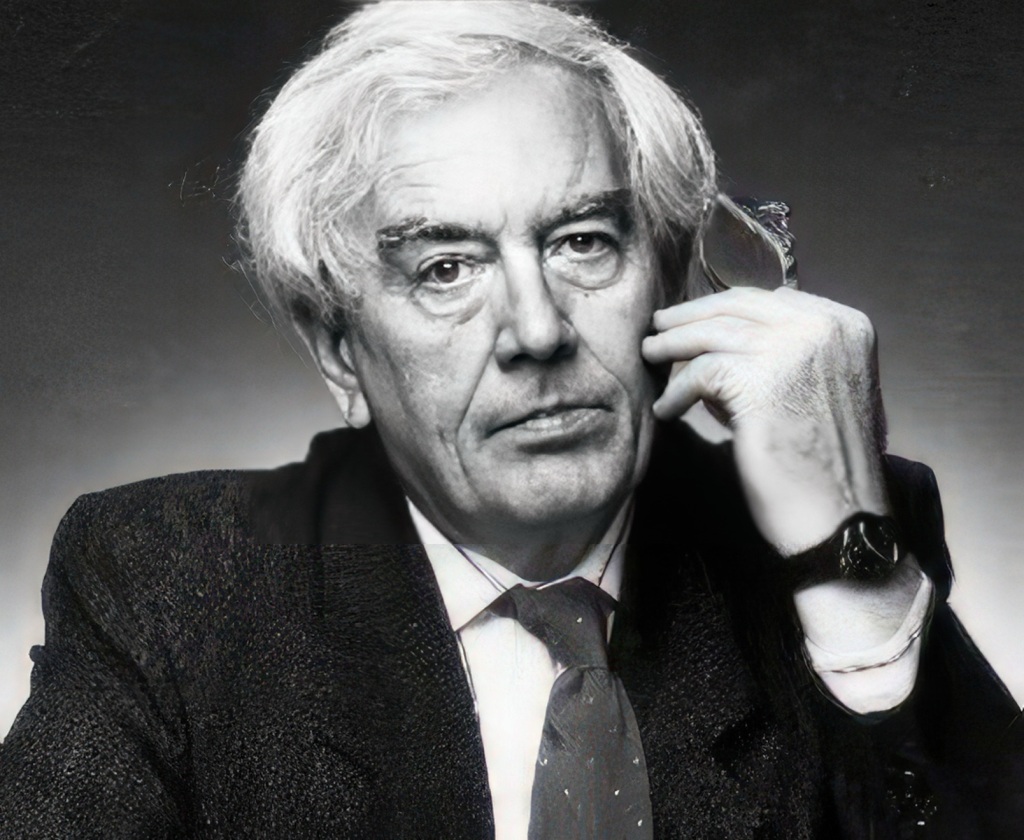


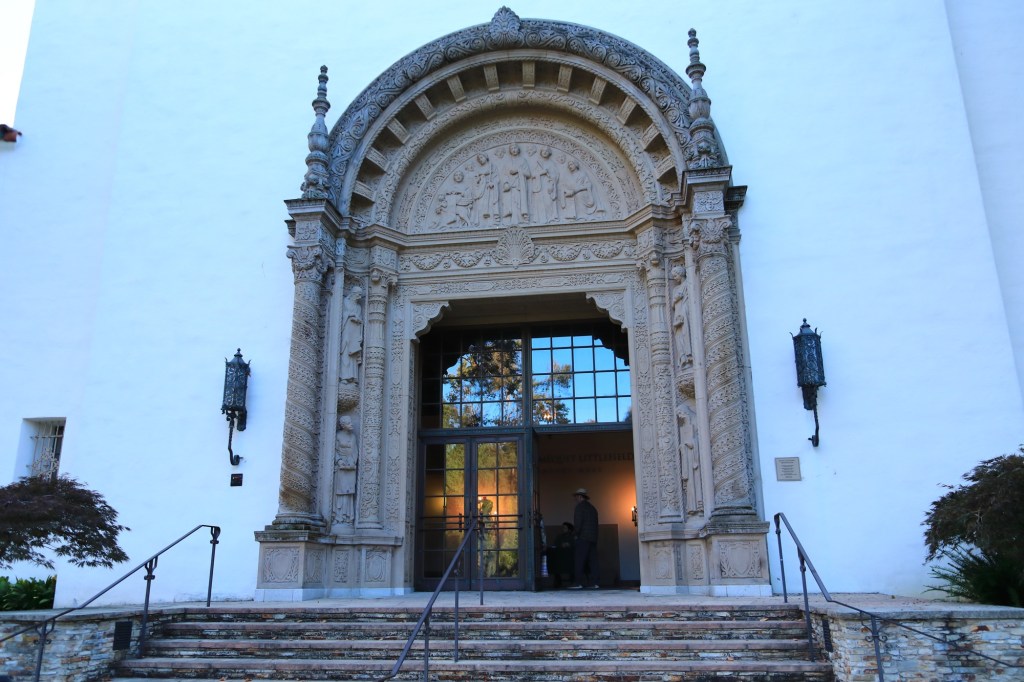


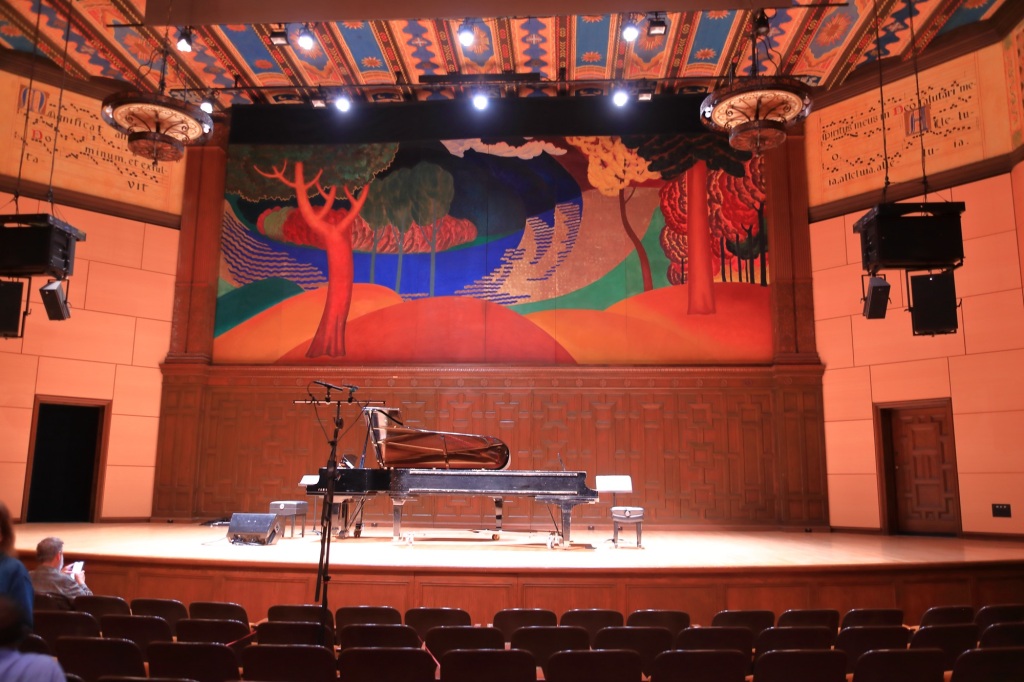
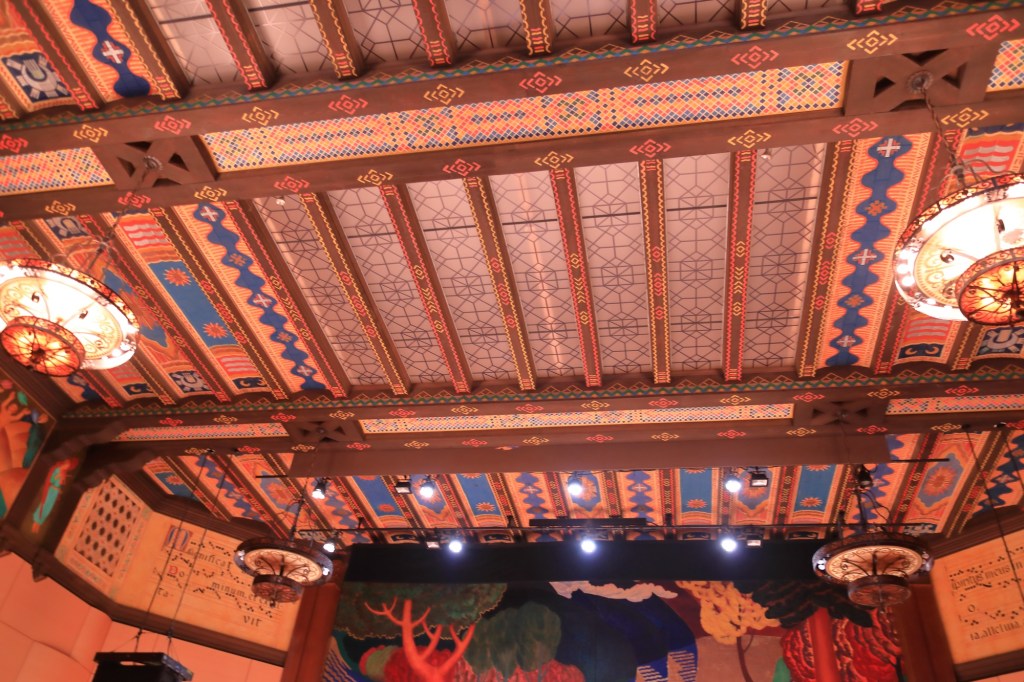
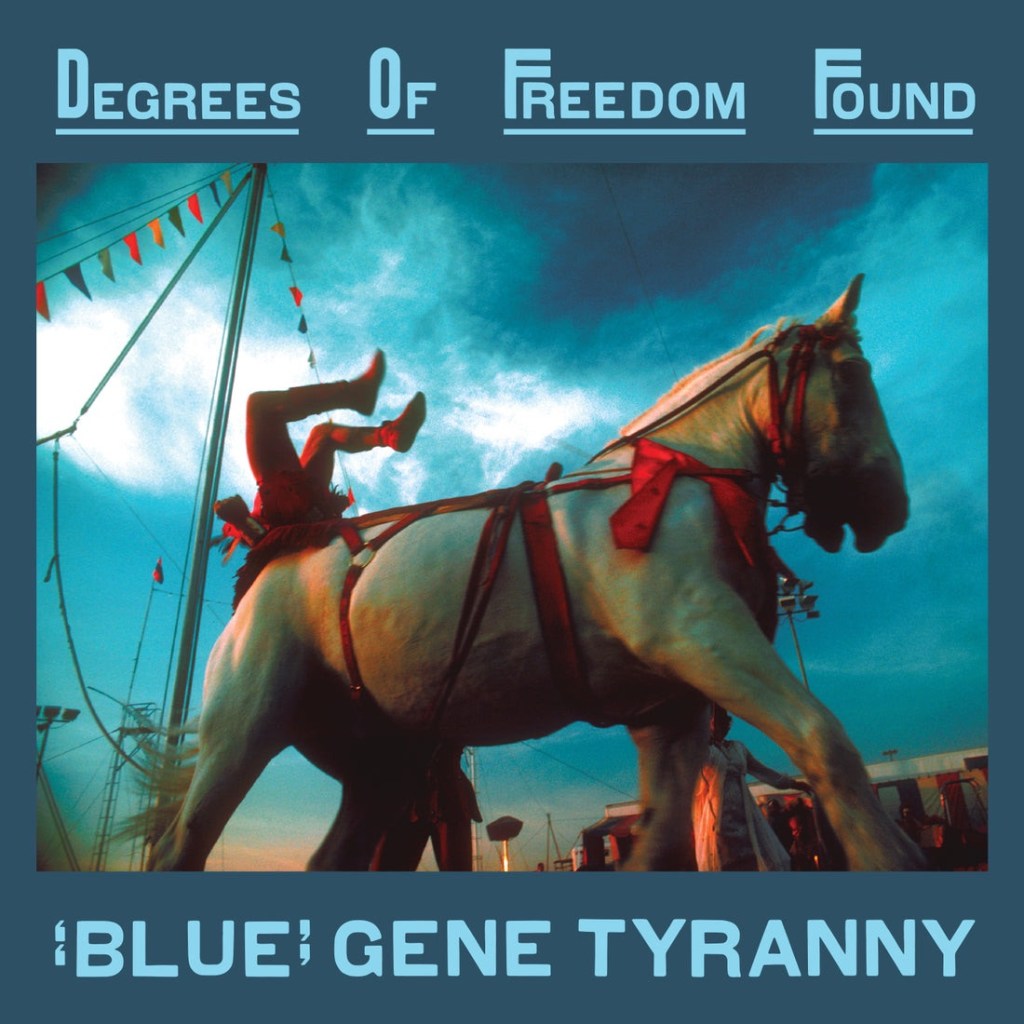


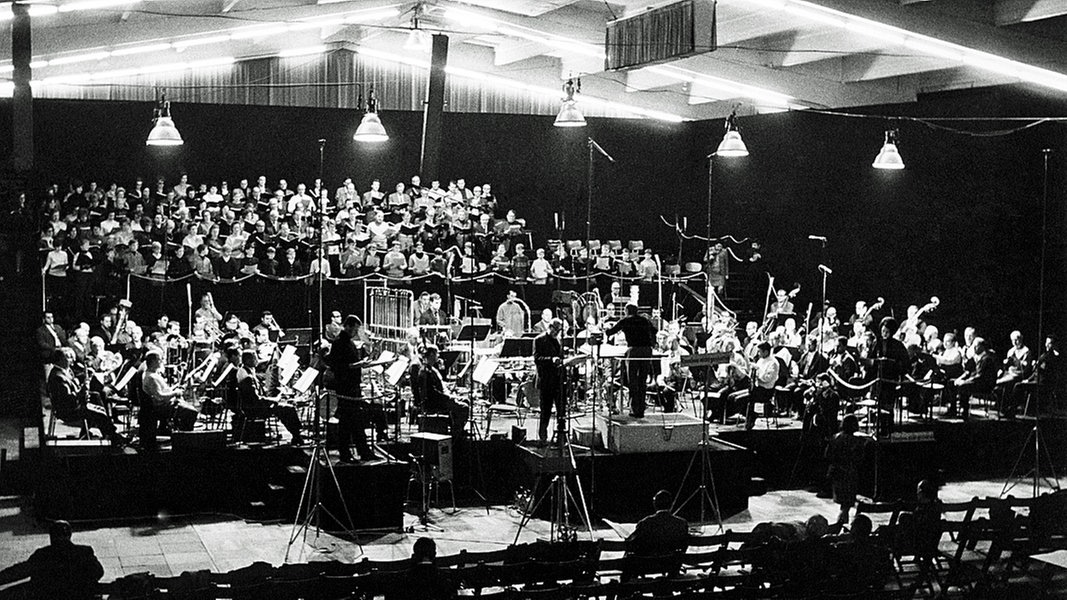
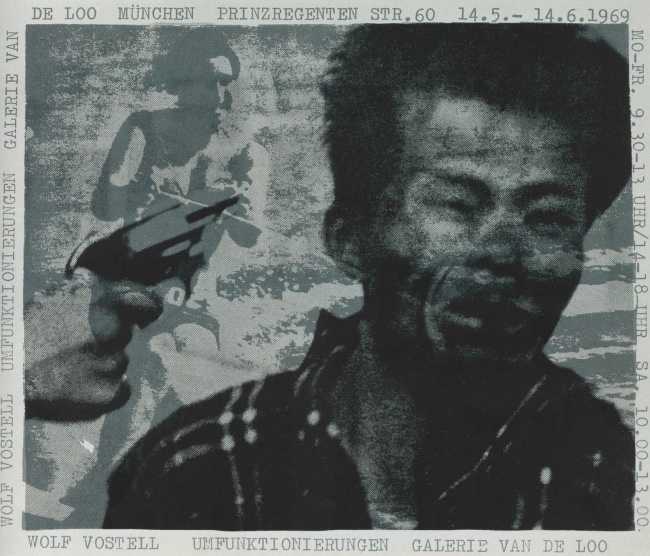
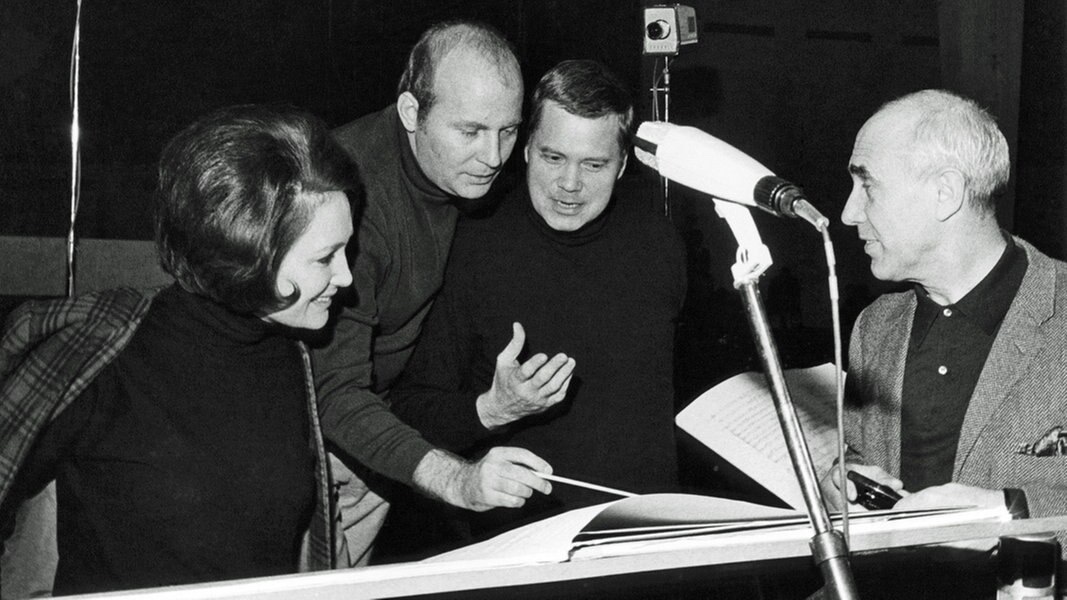
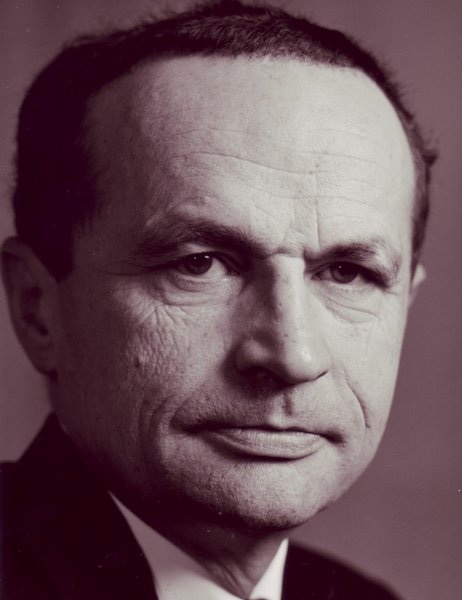


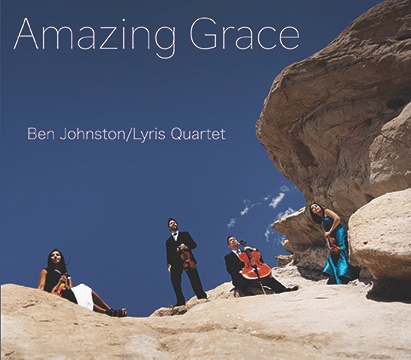


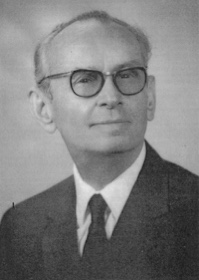


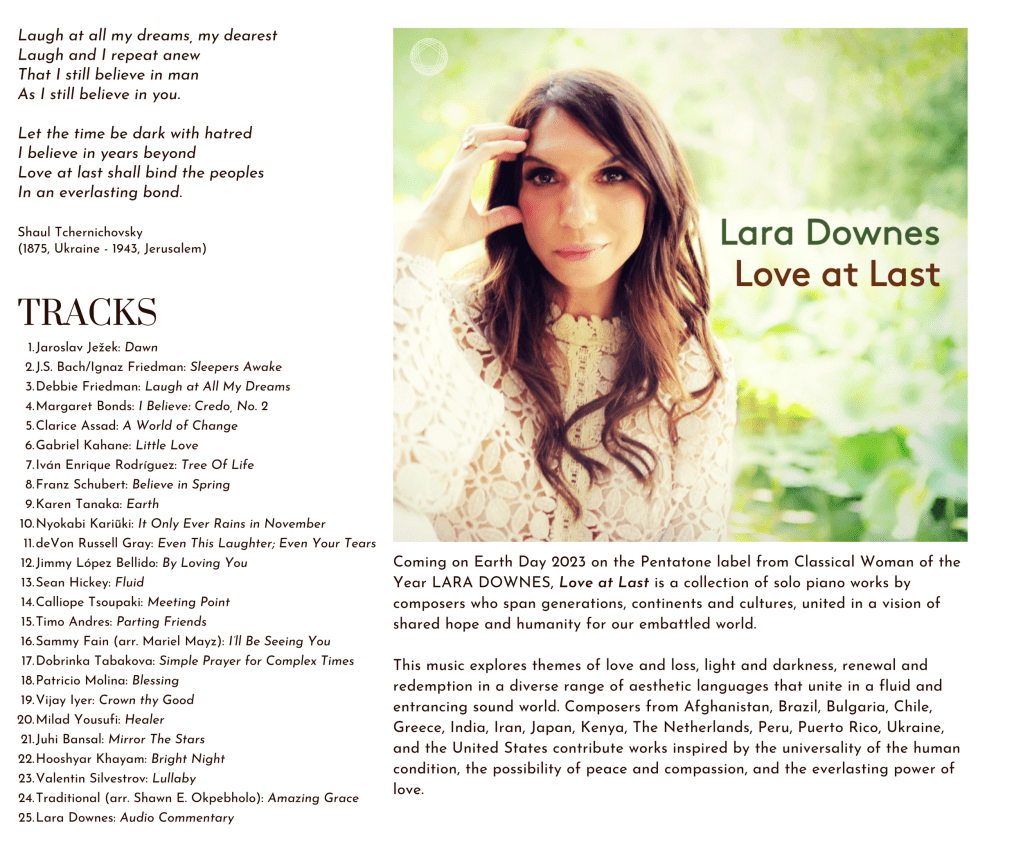

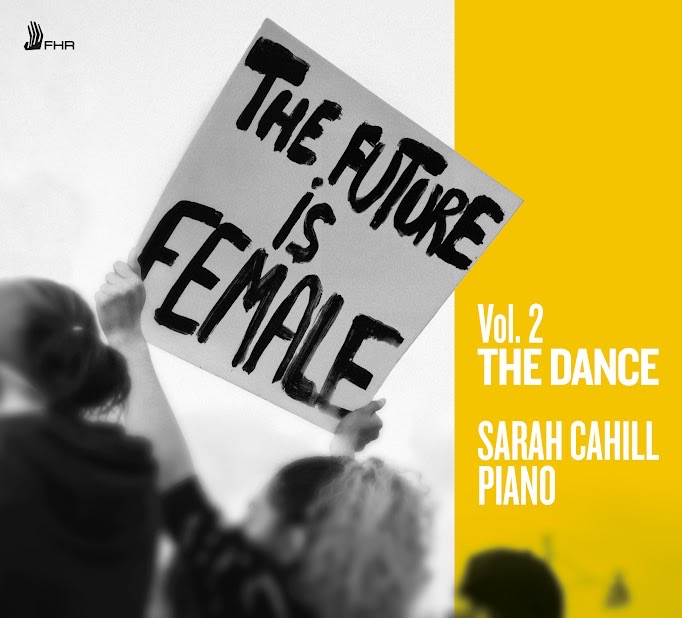

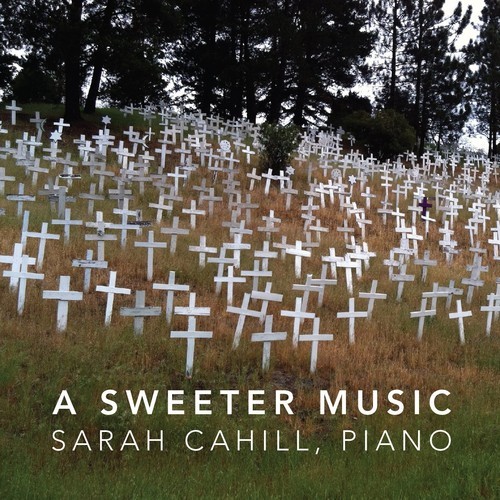











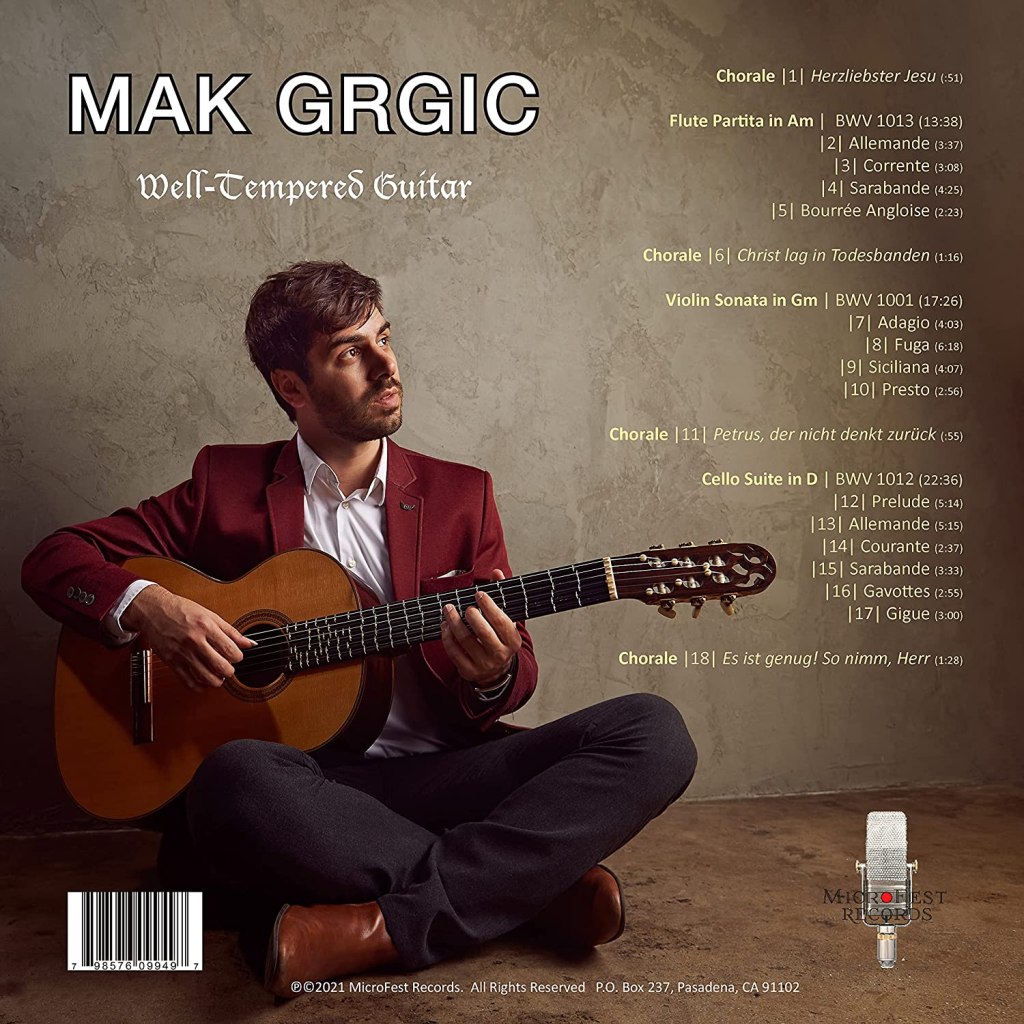
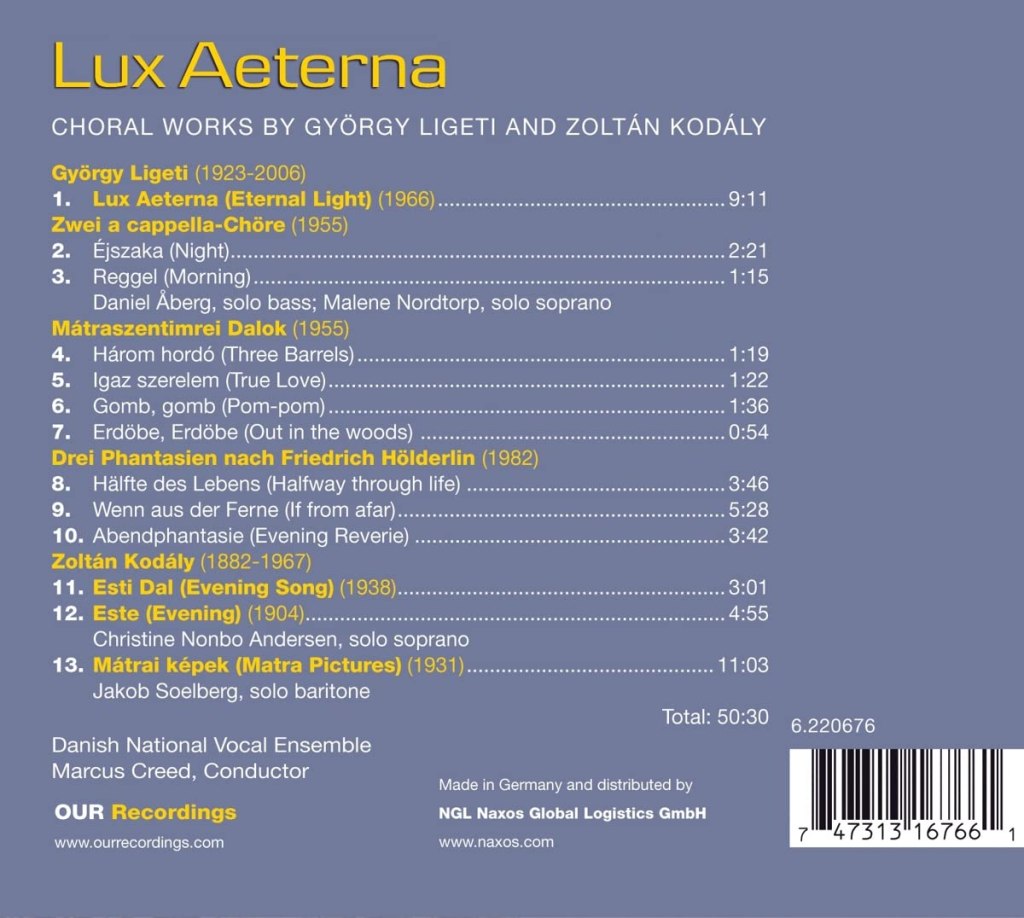



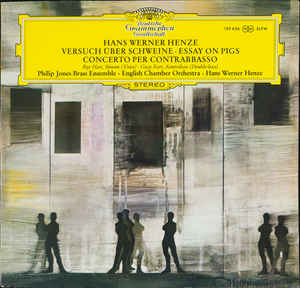
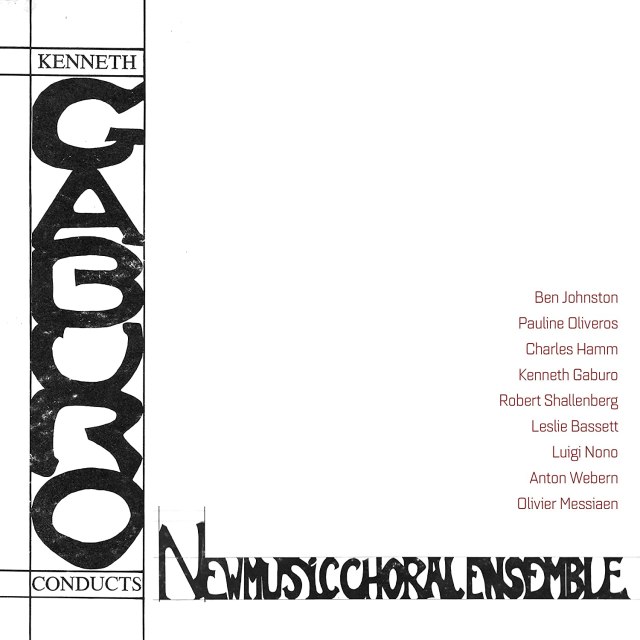

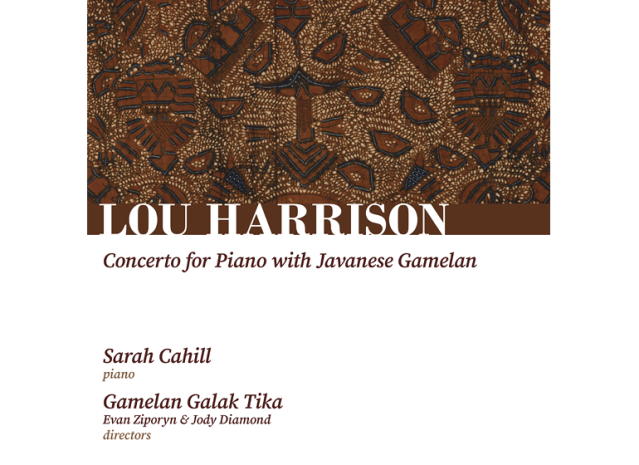
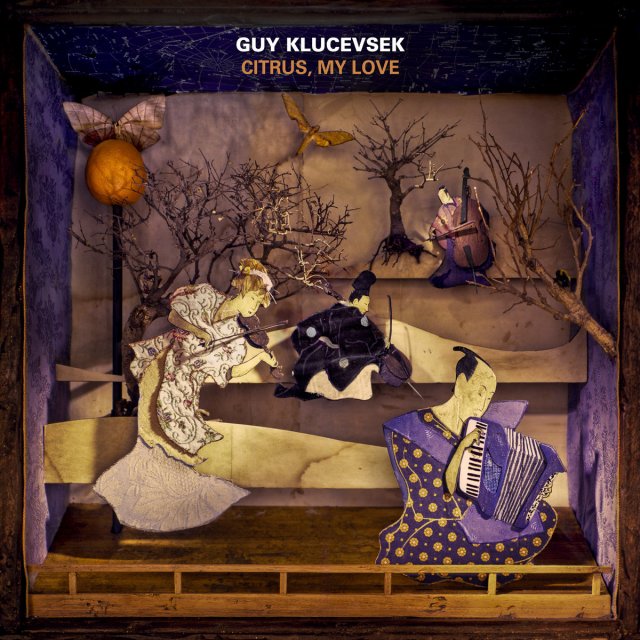

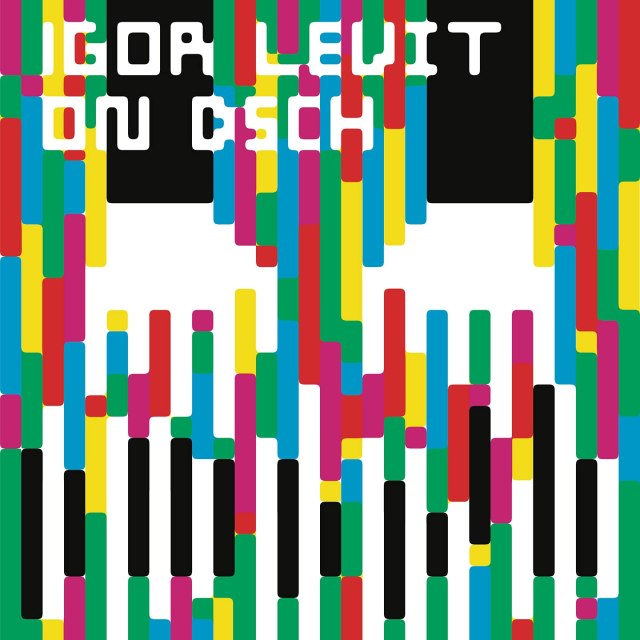

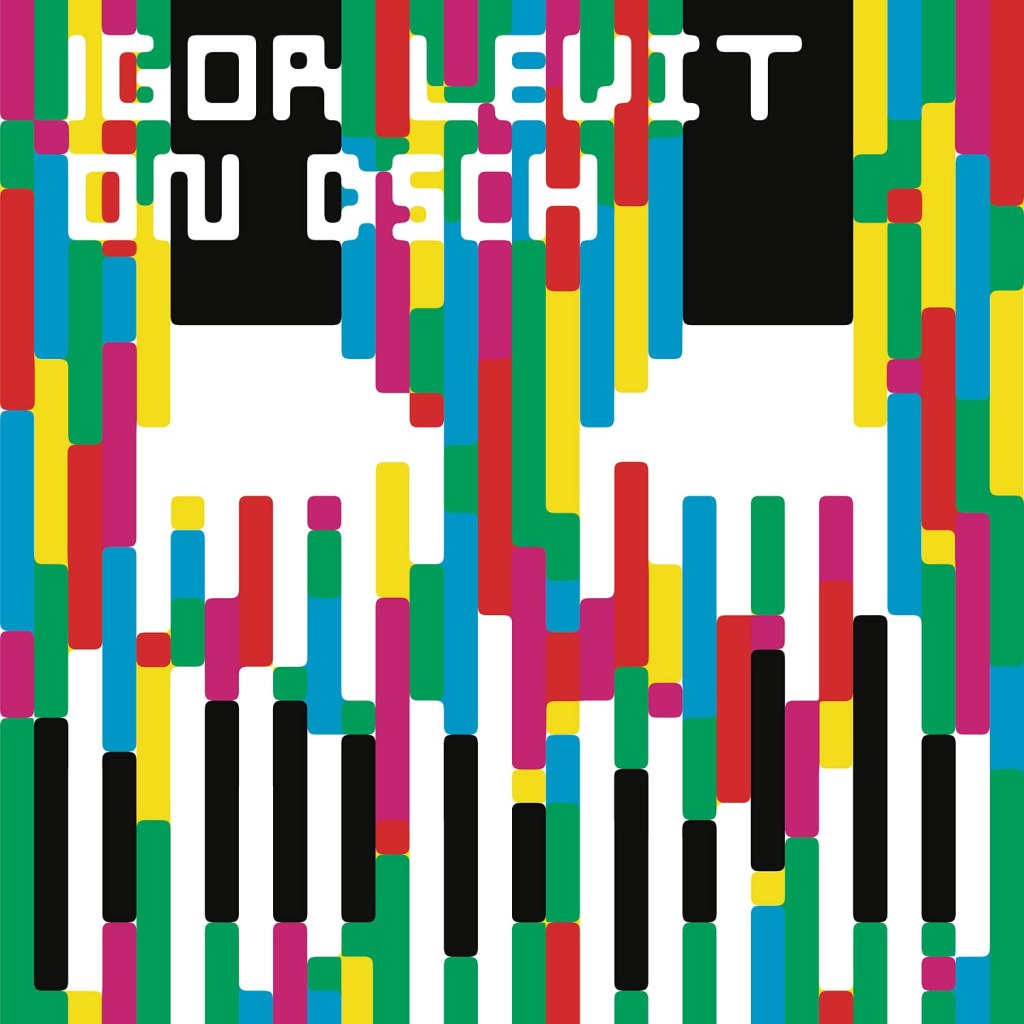




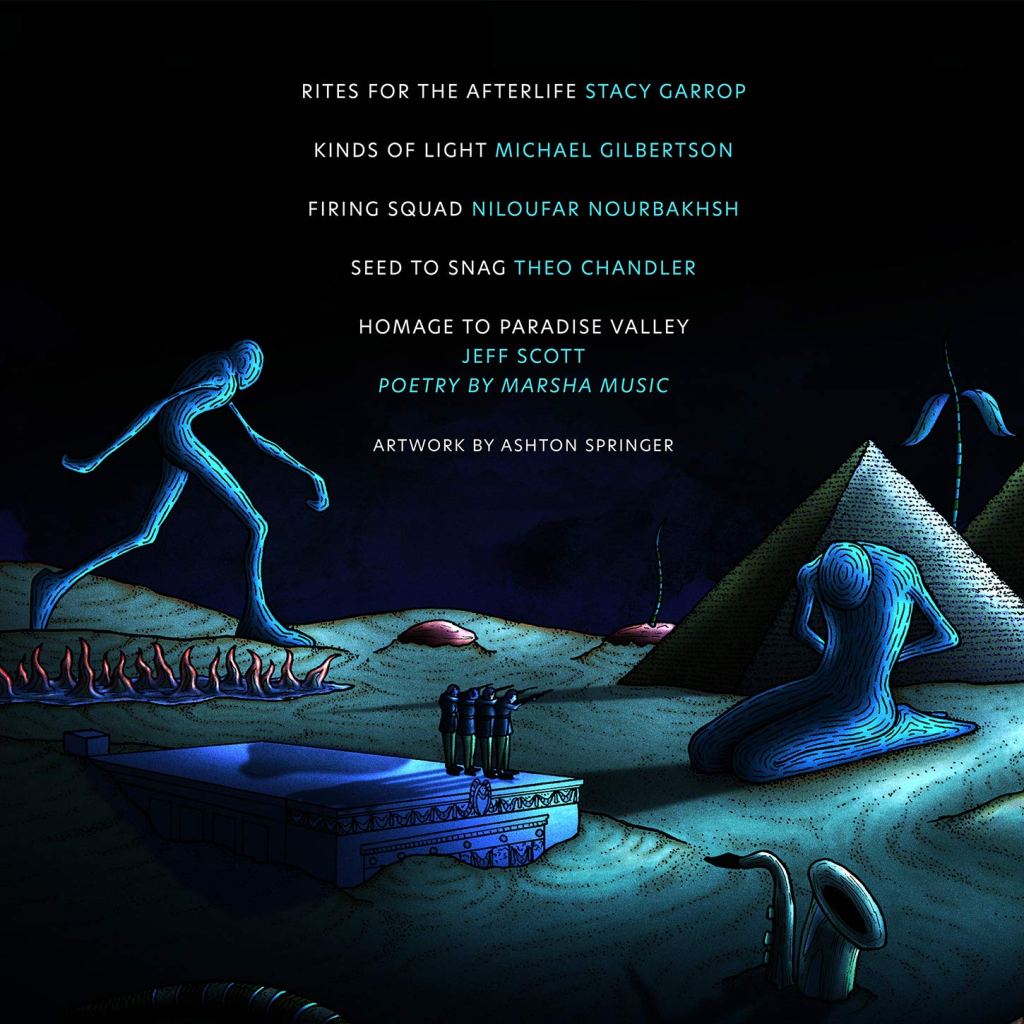


 New Music Buff