Leonard Bernstein‘s liberal political sympathies are well known. But they were never as clearly presented in his music as they were in his ‘Mass’ from 1971. The work was commissioned for the opening of the Kennedy Center for the Performing Arts in Washington, DC and dedicated to the memory of John F. Kennedy.
In using the structure of the Catholic Mass Bernstein echoes the embrace of Christianity of previous Jewish composers like Schoenberg and Mahler. Mahler embraced Christianity at least partly to get work in the increasingly antisemitic atmosphere of late nineteenth century Europe. Schoenberg’s dalliance with Christianity was more that of an existential crisis as he watched the rise of the Nazi party and their genocidal horrors. Bernstein’s embrace of Christianity seems a combination of homage and disappointment. He knew well the glories of liturgical settings of the traditional texts by the likes of Bach, Haydn, Mozart and Beethoven and had himself made an a capella setting of the mass using music he had originally written for Jean Anouilh’s play, “The Lark”.
He also knew well the suffering and deaths occurring in the protests against the Vietnam war and the struggles of American citizens for equality in the Civil Rights movement as well as the struggles in the war itself and the failure of religious institutions to stem the tide of violence.
Bernstein had dealt with religious themes in his first Symphony from 1942, which set texts from the Biblical “Lamentations of Jeremiah” in the last movement. His Chichester Psalms of 1965 set three Psalms in Hebrew. And, his Third Symphony, “Kaddish” (1963) can be seen as a forerunner to the 1974 “Mass”. His final symphony became a post hoc requiem subsequently dedicated to John F. Kennedy when, just weeks before the premiere, he was assassinated in Dallas. The composer dedicated the work to the late president. He also performed Mahler’s “Resurrection” symphony the day after John F. Kennedy’s assassination presenting it as a peaceful response to the murder.
Bernstein was no stranger to politics and progressive ideas and his activism is central to his life and legacy.
The traditional mass is a ritual of sacrifice which the composer uses to talk about the sacrifices of lives and culture occurring during the ongoing Vietnam war. It laments the ineffectiveness of religion in dealing with sociopolitical crises. The full title of the score at hand is ‘Mass, a piece for singers, players, and dancers’. It was commissioned by Jacqueline Kennedy as the inaugural work for the opening of the newly completed Kennedy Center for the Performing Arts in Washington D.C. The first performance took place at the new Kennedy Center on September 8, 1971.
Richard Nixon had declined to attend ostensibly to not draw focus from Jacqueline Kennedy Onassis but subsequent research has determined that he had been warned by FBI headJ. Edgar Hoover of the possibility of “subversive” texts within the piece. He was apparently referring to the latin texts of the mass. So, for “security” reasons, Nixon stayed home that night.
Cover of the original vinyl release of “Der Floss der Medusa”
The 1913 riotous premiere of Stravinsky’s “Rite of Spring” is pretty well known in classical music history. Sandwiching the premiere of his masterpiece of modernism between well known conservative chestnuts such as “Les Sylphides” (an orchestration by Alexander Glazunov of piano music by Chopin, 1907-9) which opened the concert along with Carl Maria von Weber’s “Les Spectre de la Rose” (an 1841 Berlioz orchestration of Weber’s 1819 piano piece, “Invitation to the Dance”) and Alexander Borodin’s “Polovtsian Dances” from his opera “Prince Igor” (1887-1890) which were programmed to follow it. Combine these (familiar to audiences) conservative works with the Rite’s original choreography by Vaclav Nijinsky and the subject of pagan ritual that form the scenario played before an audience consisting of elite concert goers seeking a familiar easy experience along with a burgeoning group of bohemian leaning audience members (who loved the Rite’s loud, subversive nature of both music and staging) and you have a formula for conflict. Speculation is that Stravinsky and/or his producers planned this event to create a contrast for his new modernist work but more likely it was a largely a product of its time and of human nature.
Fifty two years later, Hans Werner Henze appears to have had nothing in mind (at least initially) other than the premiere of his new work, “Das Floß der Medusa” (The Raft of the Medusa) on December 9, 1968 in Hamburg’s “Planten und Blomen” Hall. The recording which was later released on DGG LPs had been done sans audience on the previous days, December 4-8th, and preparations were being made for that night’s world premiere performance before an audience.
An article would later run in the German magazine Der Spiegel describing the event. I present the text of that article in my own translation:
Der Spiegel, December 12, 1968
“What is necessary”, says Hans Werner Henze, 42, “are not museums, opera houses and world premieres … What is necessary is the creation of mankind’s greatest work of art: the world revolution.”
Last Monday, Henze’s “Das Floss der Medusa,” an “Oratorio volgare e militare, in due parti” commissioned by the NDR, was to be premiered in Hamburg — instead, there was a revolution in the hall.
The 1060 seats in Hall B by Planten un Blomen were fully occupied, the NDR Symphony Orchestra was already tuning the instruments, on the podium were ready: Edda Moser (soprano), Dietrich Fischer-Dieskau (baritone) and Charles Regnier (speaker) , the North German Radio Choir, the RIAS Chamber Choir and the St. Nikolai Boys’ Choir. The game could begin, and it began — a duo volgare e militare between NDR and SDS.
Because the Berlin SDS friends under Gaston Salvatore, summoned by Henze, didn’t want to do without this premiere of the APO (Außerparlamentarische Opposition) man Henze any more than the socialist students of the Hamburg Music Academy — albeit for different reasons: The Hamburgers cared about Henze’s music as reactionary to expose the Berliners, to bring their Hamburg colleagues to reason and to divert attention to the middle-class audience. Action against Henze, argued the Berlin “Project Group Culture and Revolution,” would only benefit the bourgeois enemy.
Che Guevara (1928-1967)
After three days of palaver, the Hamburg wing was lame. For example, the intention to ask the composer to explain the structures of his music when he played Medusa was abandoned, as was the plan to intervene in the choral singing, and the attempt to expose Henze’s listeners to Henze as culinary Henze consumers.
On Monday evening, Berliners and Hamburgers moved in socialist harmony to Planten un Blomen, the premiere location that Henze claims to have confused with Blohm & Voss. At least that’s how the Berlin SDS had informed the Hamburg SDS.
NDR program director Franz Reinholz, to whom Henze owes the “Medusa” commission, knows otherwise: “Henze,” Reinholz assures, “inspected the hall himself beforehand. He was also informed about the audience.” shipyard workers, it was, the socialist students recognized once again, an audience of “rich bastards.”
Shortly before 8 p.m. the squad was ready for action in Hall B. And before the conductor Henze stepped out of the artist’s room, Che was already in the hall: the agitators had pinned a Che Guevara portrait to the desk; it was intended to remind us of what had been concealed in the program with Henze’s approval: the oratorio is dedicated to the Latin American freedom fighter.
NDR program director Franz Reinholz didn’t appreciate this memento at all – he tore down the poster. He felt that politics and art did not go together.
The students didn’t think so. They put up a new poster and hoisted the red flag, and a team of anarchists, who had come with duck decoys and other hunting instruments, hung a black one next to it. Then the radio hit, the police joined in, the RIAS Chamber Choir began, but not in unison. “Lower the red flag,” demanded one singer, two singers left sobbing: “We are Berliners and have had enough of red flags.” to whose honor they should sing, left the stage and never came back.
The composer, however, was determined to prove his revolutionary sentiment to his comrades for the first time by saying, “The red flag,” said Henze, “it stays.”
While NDR director Gerhard Schröder (SPD), long since in the safe broadcasting van, stopped the live tumult at 8:19 p.m. and radioed his listeners a recording of the dress rehearsal, his deputy, Freiherr von Hammerstein-Equord (CDU), countered in the hall the resistance of the demonstrators banners and placards; A little later, a squad of 25 police officers, visors on combat helmets, broke into the hall. “Nazis!” “Fascists!” shouted the audience. One artist yelled enthusiastically, “Down with the Reds!”
“The police,” Hammerstein explained, “were ready at the request of the NDR, which considered demonstrations possible and had to ensure the safety of its employees, the audience and valuable instruments.”
Ernst Schnabel, librettist
NDR employee Ernst Schnabel, librettist of “Medusa”, felt the precautions thoroughly. Several police officers threw him through a glass door, expedited him with six other delinquents to police headquarters, took his fingerprints, and locked him in cell 7 until midnight. Schnabel to Hammerstein-Equord: “We don’t have breakfast together anymore.”
Meanwhile, Hammerstein kept order in Planten un Blomen. When Henze informed the audience: “The intervention of the police prevented the discussion,” Hammerstein snatched the microphone from his hand. The hands in the stalls responded with rhythmic Ho Chi Minh clapping, and Henze clapped along — three times. Then he disappeared through a back door.
At that time the “raft of the Medusa” was already well advanced in the ether waves — on the usual counter-revolutionary course.
“Wherever”, the “Süddeutsche Zeitung” judged, “the choirs sang, there was the old, floating, iridescent Henze sound, which doesn’t hurt anyone and never becomes distinctive. The orchestra … strangely often reminded of Richard Strauss.”
The music critic Heinrich von Lüttwitz saw “Medusa” as a “tragi-comic absurdity” full of “romantic colours”, with “sometimes clumsy, sometimes fussy recitatives and melodramas”.
Henze biographer Klaus Geitel saw the “raft” in the “ocean of an emotional but overly extended, lyrically colored monotony”.
It may be that, as Henze puts it, this evening “brought him a little further” politically. But the Henze fans in the APO have failed — that’s how the currently most thoroughly analyzing music theorist Heinz-Klaus Metzger, who identifies with the “anti-authoritarian wing of the SDS,” puts it.
‘The APO, Metzger predicts, ‘will only have created meaningful conditions when German musicians no longer refuse to perform under a red or even a black flag, but instead perform a work by Henze. And for strictly musical reasons. Unfortunately, not even Tucholsky’s bon mot applies to this composer: “Because of bad weather, the German revolution took place in music.”
______________________________________
——————————————————–
So it went in 1968. The Oratorio performance was cancelled and the world premiere had to wait until January 29, 1971 when it was performed in Vienna by the ORF Orchestra conducted by Miltiades Carides. The recording of the first performance was achieved prior to the performance with the audience. That recording was released in 1969.
Many more performances followed but one of those performances, in 2001, was attended by a former chorister, Henning Sidow. He was twelve years old at that 1968 non-concert. And the following article on his experiences of that attempted performance was published in Der Spiegel in 2013.
————————————————–
__________________________________
Blaze at the choral-concert. How the “Raft of the Medusa” went down.
He was anxiously awaiting the big performance: when he was twelve, Henning Sidow was supposed to perform on stage with the NDR boys’ choir in Hamburg. And indeed, the live performance of the oratorio was exciting – but for completely unexpected reasons.
The boys’ choir was founded in 1960 as the choir of the North German Radio and has been connected to the main church of St. Nikolai since 1967.
“As a twelve-year-old in 1968, I had only vague ideas about the political and social turmoil of the time. But on December 9th, as a member of the St. Nikolai boys’ choir, they became tangible experiences for me as a result of the unsuccessful premiere of the oratorio “Das Raft der Medusa” by composer Hans Werner Henze in Hall B in Hamburg’s Planten un Blomen Park.
I had been in the boys’ choir for four years, which belonged to the NDR until 1967 and was then taken over by the St. Nikolai parish in Hamburg. We “experienced” boys felt quite up to the task of taking part in Henze’s musically demanding oratorio and also appearing in a world premiere that was to be broadcast live on the radio.
The play tells the tragic story of the French frigate “Medusa”, which ran aground as the only ship in a convoy on the way to Senegal in 1816. Since there were not enough lifeboats for the 400 people on board, the crew built a raft that could accommodate around 150 men, women and children and which was to be pulled ashore by the boats. But the officers fled in the boats, leaving the people on the raft to fend for themselves. On the day of the accidental rescue 13 days later, there were only 15 survivors. The others fell victim to starvation, lack of water or cannibalism.”
Hide and seek in the empty hall
“Our boys’ choir was supposed to portray the children on the raft – first as living, then as dead. A difficult piece with a socially critical background, this “Raft of the Medusa”, we knew that. It meant not only intensive rehearsals, but also many afternoons and evenings of rehearsals. What we didn’t know was that the premiere was never to take place.
The location of the event and the preparations fascinated me. The hall seemed huge to me as a child. Large platforms were set up here for the performance, with countless instruments on them. There were people everywhere: stagehands, technicians, orchestra musicians, choristers and soloists – it was just teeming. Now we guys were added.
We had a lot of waiting time and were able to explore everything. So we crawled under the stage construction, played hide and seek, crawled under the platforms and shimmied over wooden struts until we got too many splinters in our fingers. And right next door there was another hall, several stories high – a gigantic glass box. There was no event taking place at the time, so the hall was yawning and unlit. We strolled through them, hearts in our pants because of the darkness and the eerie acoustics of the room.”
Protest in the concert hall
“Then things got serious, rehearsals began. In my memory, Hans Werner Henze was a small man who was already a bit bald at the time, but incredibly energetic. He radiated a mixture of warmth, ingenious artistry and normality. We boys found him sympathetic, but he had no airs and graces and met everyone completely naturally, friendly and patiently. He treated us as if we were adults, which I found very beneficial. When I was a child, I was used to other well-known personalities whom we had met here and there through our performances to be treated and professionally not taken very seriously.
Henze was excellent at conveying his music to the participants, it was lively, colorful and exciting like the story itself. The dramatic story and the historical background that he and the music told us captivated me even then. Conducting, however, was not his thing, I remember his somewhat awkward gestures. But that’s not so important in a professional ensemble, as long as the right impulses and cues come. In any case, we children liked and admired him and his music.
On December 9, 1968, as far as I can remember, the hall was filled to the last seat with an audience. There was talk of more than 1000 guests. Henze was already at the desk. But just before it started, there was a small crowd in front of the stage. A few protesting students stood directly in front of the podium and hung red flags to the left and right of Henze’s desk. It was not clear whether the master just put up with this or whether it had been agreed with him, as was later speculated. In any case, he didn’t seem to put up much resistance to the activities.”
The situation is escalating
“Shortly thereafter, the audience and the choir became restless. Because one of the choirs, the RIAS Chamber Choir, came from Berlin, the enclosed city. Red flags were literally a red rag for many who lived there. At first I – and I’m sure my fellow boys too – didn’t understand much of what was happening down there. But when voices from the Berlin choir grew louder and louder, refusing to sing under “the red flag”, I understood what it was all about. The adults feared that they and the music would be exploited by demonstrating communist students. In addition, a large portrait of Ché Guevara has now been erected, to which the work is dedicated.
Henze’s efforts to get the performance started were nipped in the bud by the boycott of the Berlin singers. The removal of the communist symbols was demanded louder and louder from the podium, before they would refuse to sing a single note. In the meantime it was getting more and more restless in the auditorium and in front of the stage there were small scuffles between the demonstrators and some spectators who got involved. Negotiations between the choir and the composer were taking place behind the scenes as to the conditions under which the performance could still take place.
We boys watched the whole thing with suspense, since the circumstances had now reversed: the auditorium had become the stage, and we on the podium had a box view of this live cultural scandal. Music was out of the question. In the back of the hall, the doors flew open and police officers in full riot gear marched in. Like a horde of ants, they came down the aisles from several sides to the podium. I don’t remember how many there were, maybe a hundred. They looked particularly martial with their helmets with full visors and the shields they – to protect against what actually: a few students, musicians and false notes? – carried in front of them.”
A dark chapter
“Henze had meanwhile disappeared unnoticed and downstairs young people were having their arms twisted behind their backs in order to be taken away. Among them was Ernst Schnabel, who wrote the text of the play. He was later charged with “resisting the authority of the state”. On the other hand, part of the audience did not like the actions of the police and protested, which did not prevent the state authorities from their plan to convict the “perpetrators” in flagrante delicto.
I can’t remember exactly how long the commotion lasted. In any case, it never came to a performance, and at some point we left the stage disappointed. It was incomprehensible to us children why a few red flags and the likeness of a bearded South American led to such an uproar. For us it was about art, about music. We felt cheated of our work.
The newspapers reported extensively on this event in the following days. Some tabloids insisted on turning it into a real political scandal. To this day it is unclear to me what the state authorities were thinking when they made this appearance. That’s for sure
That she was thin-skinned in those times and liked to overreact on such occasions. The fear that the ideology that prevailed behind the Iron Curtain could also spread to the West was too great.
For Hans Werner Henze, who died in 2012, this scandal is said to have been a dark chapter in his artistic career. Later, it is said, he did not want to be reminded of it.
My own memories of that evening only surfaced again years later: at the much delayed premiere in June 2001 in Hamburg’s Laeiszhalle. After 33 years I experienced “The Raft of the Medusa” a second time. The fact that I was still able to silently speak and sing along to the lyrics and the music showed how much the piece and the story it was based on had impressed me at the time. None of it was lost. I left the performance deeply touched.”
So, here we are some 46 years after the riotous non-premiere of Henze’s fine oratorio/requiem, 111 years since the famed “riots at the Rite”. The Stravinsky has since firmly taken its place in the commonly performed orchestral and ballet repertory. The Henze work, never laying any claim to the seminal and visionary compositional methods that characterize Stravinsky’s landmark work, continues to receive performances and recordings having established itself as a substantial work, and himself as a significant composer with a rich and varied career.
NB: All translations are my own efforts. Historical photos are included under fair use terms.
For the humble listener, a musician’s technical and interpretive performance skills are one of the most compelling reasons to buy a concert ticket or a recording of said musician. But your humble reviewer has another, perhaps equally important reason for investing time and money in the work of a musician. And that skill is what I like to call “musical radar”. It is the (sometimes uncanny) ability of such gifted musicians to intelligently choose repertoire.
Conductor Kellen Gray demonstrates a keen sense of what music sounds good and also has the weight of substance. Following in the footsteps of incisive conductors like Leopold Stokowski (1882-1977), Dean Dixon (1915-1976), and Paul Freeman (1936-2015) Gray is clearly a champion for contemporary music and is now into the second volume of what this listener hopes will be many more releases of substantive music by black composers whose work has lain fallow for reasons unrelated to quality.
The first volume included early to mid twentieth century masterworks like William Levi Dawson’s 1934 “Negro Folksong Symphony”, William Grant Still’s First Symphony “Afro American” (1930), and George Walker’s “Lyric for Strings” (1946, orch 1990). These are certainly great and foundational works that deserve a place in concert programs but these works have had at least some exposure via recordings. Nonetheless they are fine foundation on which to build this series. Gray demonstrates a depth of understanding for these works and his skills as a conductor were displayed well here. But that was just the first volley in an exciting survey in progress.
In this second volume we see more deeply the acumen of this conductor’s musical radar. These are new commercial recordings of orchestral works by mid to late 20th century black composers, works of obvious substance that remain unjustly neglected. It is this “not the usual suspects” angle that finds this enterprising conductor demonstrating his personal perspective and respect for music history. And they are revelatory. Hearing these definitive performances will leave listeners wanting more as we get to hear some very exciting music that deserves at least a reckoning if not a place in the repertoire.
The four victims of the Birmingham Church bombing.
The disc begins with Margaret Bonds’ “Montgomery Variations” (1964), a classical set of variations, in this case on a gospel tune, “I want Jesus to walk with me”. But this work was “lost” and was only rediscovered in 2017. Its neglect was likely due both to the work being by a black woman, and the fact that it is a response to the 1963 Birmingham church bombing, a hate crime that killed four little girls. So, here it is, Bonds’ only surviving purely orchestral work getting a truly fine hearing. And what a great piece it is.
Margaret Bonds (1913-1972)
The work is structured in distinct sections with titles (Decision, Prayer Meeting, March, Dawn in Dixie, One Sunday in the South, Lament, Benediction). Each title is reflected in the musical mood of each section. It is an overt and powerful denunciation of a horrific hate crime. It is harrowing at times, somber and reverent at others, but Bonds’ composition is also effective in the metaphorical quality of the music itself. It is also very nearly a concerto for orchestra in its broad symphonic dimensions and clever orchestration most deftly handled in this recording.
The genre of “variations” is common throughout musical practice but only took on the guise of monolithic large orchestral works in the late 19th century. Well known examples include, Elgar’s “Enigma Variations”, Britten’s “Variations and Fugue on a theme of Henry Purcell”, Brahms’ “Haydn Variations”, etc. It’s hard to say if this work will find a place in the concert hall alongside those proven classics but Maestro Gray and the talented musicians of his Royal Scottish National Orchestra really make a strong case to do just that.
Ulysses Kay (1917-1995)
Next we are introduced to Ulysses Kay’s “Concerto for Orchestra” (1948). This work, first performed by the similarly incisive conductor, Leopold Stokowski has been sorely in need of a new recording and Maestro Gray serves up a taught and insightful performance that, like all the works on this release, stand as a challenge to performers, broadcasters, and listeners to not let this music fade into obscurity. The “Concerto for Orchestra” genre was first heard in a 1925 Hindemith work with that title and the work best known in the genre is without doubt Bartok’s 1943 “Concerto for Orchestra”. Where Kay’s work will stand in relation to other concerti for orchestra remains to be seen/heard (as with the Bonds work) but at least it now has a chance to be heard in all its glory.
It is one of Kay’s major works and it is of grand symphonic scale. This neoclassical work was written in 1948 and is cast in three movements. The work is eminently listenable but it puts challenges to the orchestra which this orchestra handles quite well.
Coleridge Taylor Perkinson (1932-2004)
The disc concludes with a rather brief work by a composer with whom even adventurous listeners (including myself) have limited familiarity. Coleridge Taylor-Perkinson. It is the only work here that comes from the 21st century. This 2001 Concert Overture subtitled, “Worship” reflects Perkinson’s exposure to black church music which he utilizes in this tone poem written for a sizable orchestra.
Gayle Murchison’s fine liner notes help guide the listener by providing context and by understandable descriptions of the compositional processes. This is an exciting release that builds nicely on the first volume and leaves this listener excitedly anticipating Kellen Gray’s next installment.
Regular readers of this blog are doubtless aware of my “underdog” interests. Whether suppressed by fascist regime, (as in London Records “Entartete Musik” series and Chandos “ARC”ensemble recordings), or just somehow eclipsed by more “spectacular” (by which I mean, “producing a spectacle” like Stravinsky’s Rite of Spring) but, as exemplified by Cedille Records’ “Avant L’ Orage”, music can be oppressed, disliked, or overlooked and such music, in my humble opinion, deserves another listen, a second chance. With this release, NAXOS puts forward a second chance on these stage works by a man better known for his stride piano and ragtime works. No, it’s not Scott Joplin. Guess again.
Esoteric as this my interests have ranged, I couldn’t have guessed that I refer here to James Price Johnson (1894-1955), so don’t feel bad if you guessed wrong. Johnson’s burial site is in Queens, New York. His grave, unmarked since his burial, didn’t get a headstone until 2009. And this is the man whose composition, “Charleston” (1923) became ubiquitous and emblematic of the so called “Jazz Age”.
Apparently Johnson had a fair amount of success as a composer of stage works. And he collaborated and/or influenced people like William Grant Still, Duke Ellington, Count Basie, Jelly Roll Morton, Willie “The Lion” Smith, Art Tatum, and Thelonius Monk, among many others. Fats Waller was one of his students.
Johnson is arguably an artistic descendant of Scott Joplin whose work Johnson both performed and recorded. And in addition to his solo piano work he apparently also wrote stage works. The works presented on this release are short operas, lovingly reconstructed by the late James Dapogny (1940-2019), a composer, pianist, and jazz musicologist. Dapogny provided an accounting of his work reviving these historically and culturally significant works that also happen to be well written and very entertaining.
The liner notes written by University of Michigan doctoral candidate Cody M. Jones provide a very useful context for understanding both the music and it’s unreasonable neglect. Jones identifies these works as part of the “shadow culture” (a concept made by opera historian Naomi André referring to art produced by black artists which was willfully neglected during the “Jim Crow” era).
Jones writes that these works may have been inspired by George Gershwin’s Porgy and Bess (1936). It appears that The Dreamy Kid (1937) was Johnson’s first stage work and De Organizer (ca. 1938-9) was his second (and last) work for the stage.
The Dreamy Kid was written to an existing play by Eugene O’Neill but apparently was never completed. Its fragments were found during Dapogny’s research on De Organizer. So that makes this a world premiere recording of this piece.
Track listing
Two stage works with libretti, one by the estimable hero of the Harlem Renaissance, Langston Hughes, and the other (actually a stage play, not a libretto) by Eugene O’Neill. These recordings owe a debt to the conductor Kenneth Kiesler (1953- ) and the late James Dapogny (1940-2019), composer, musicologist, and jazz musician. Dapogny and Kiesler also contribute the brief but useful program notes.
“De Organizer” (ca. 1930) received acclaimed revival performances in Michigan, New York, and Chicago in 2002. Both the New York Times and the Chicago Tribune featured strongly positive reviews.
“De Organizer” is an apparently complete recording Its libretto was written by the Harlem Renaissance writer Langston Hughes (1902-1967). The work received only one performance in Carnegie Hall in 1941 as a benefit for the International Ladies Garment Workers Union. This work shares a similar fate with that of Marc Blitzstein’s “The Cradle Will Rock” (1937), famously suppressed for its pro union themes.
The second work is a set of excerpts of an incomplete opera called, “The Dreamy Kid” based on a stage play by the great American playwright, Eugene O’Neill (1888-1953) and its tale of racial violence at the hands of police is sadly a timely theme and a precursor of sorts for the politically infused operas of the Pulitzer Prize winning Anthony Davis.
Both works make use of jazz and blues forms (both distinctly African American art forms) and will remind the listener of Gershwin’s admiring appropriation of these forms. Jazz and Blues ubiquitously informed western classical worldwide as seen in the work of Gershwin, Aaron Copland, and Maurice Ravel, among others so the reconstruction and revival of Johnson’s theater works fill a gap in the history of western music as a whole. This is a very entertaining recording of some truly substantial music that can now take its place with Joplin’s “Treemonisha” as great American music.
There are, by my count, at least 8 discs on this fine audiophile label dedicated to music by composers from Iceland. That country’s musical prowess deserves to be better known as does their world class orchestra. I’m reviewing these back to back releases together because they are both Iceland Symphony recordings presenting new music by (mostly) Icelandic composers. And they have a secret connection.
This first disc is a nice mix of music by five different composers in works that really give the orchestra an opportunity to shine. Under the direction of composer/conductor Daniel Bjarnason we are availed of the sound of now, or at least Bjarnason’s “now”.
Track list
This disc, which seems to have a “outer space”theme in large part, opens with a large orchestral work from the most deservedly best known Icelandic classical composer, Anna Thorvaldsdottir. “Catamorphosis” is a 20+ minute work for full orchestra and then some. Her style initially reminded this listener of the sound mass of music like Ligeti and Penderecki. But her harmonic language is more lush and romantic. She has an astounding skill in writing for large orchestra, producing at times the modern equivalent of Impressionism. Her use of motives suggest she has digested ideas from minimalist/pattern composers. And at the end of the day (or the review), one realizes that she has developed her own voice.
The subtle colors of this work are well defined by the orchestra under Bjarnason’s truly expert guidance but also via the sonics that the Sono Luminus engineers are able to capture. This sounds like a difficult work to perform but Bjarnason manages to create a definitive performance and Sono Luminus’ sonics are, as always first rate.
Catamorphosis (2022) is typical of Thorvaldsdottir’s writing for large orchestra reflecting her skills as an orchestrator as well as her imagination, her ability to create a wide palette of subtle sound forms that suggest a sort of post impressionist style. The poetic and metaphorical titles tell little about the musical content (or structure for that matter). But her ability to create cohesive and compelling compositions such as this provide an experience that will likely evoke images for the listener, a sort of movie for the mind. So feel free to conjure your own images in this 7 part (played without pause) work and/or listen and watch a recent Elephilharmonie performance on YouTube here.
Missy Mazzoli’s comparatively brief “Symphony for Orbiting Spheres” (2014 rev 2016) taps into a vein of inspiration seemingly related to the cosmic images of Thorvaldsdottir. Mazzoli incorporates an electronic keyboard and harmonicas, among several less common instruments used in symphony orchestras, to create her own sonic cosmic fantasy. Please click the link on her name above to learn more about this rising star from her nicely designed website.
Daniel Bjarnason demonstrates his own formidable compositional chops with “From Space I Saw Earth” (2019). And this track also provides a link of sorts to the other album reviewed in this blog entry. This work, written on commission for the 100th anniversary of the LA Philarmonic, is a work that requires three conductors. The premiere was led by Zubin Mehta, Gustavo Dudamel, and Esa-Pekka Salonen, all of whom have significant connections to the orchestra (Mehta as conductor Emeritus, Dudamel as present chief conductor, and Salonen as conductor laureate). That was the premiere but this recording is conducted by Bjarnason along with Kornilios Michalaidis, and the then incoming chief conductor of the Iceland Symphony, Eva Ollikainen. Therein lies the “secret connection” to which I referred earlier.
María Huld Markan Sigfúsdóttir (1980- ) is a violinist and composer. Her orchestral work, “Clockworking” is a sort of post minimalist work with a gently driving Ostinato in the percussion. It reminds this reviewer variously of Birtwistle’s “Chronometer”, Ligeti’s “Poeme Symphonique”, to name a few but it is not derivative of these in any way. It is a very listenable and enjoyable orchestral work.
Bára Gísladóttir (1989- ) is a composer, vocalist, and double bass player based in Copenhagen.This, the briefest work on the album is at times the quietest and at others the loudest work here. I would add that it is also the most avant garde. Relying on a battery of percussion and what appears to be some extended instrumental techniques the composer creates a world that to this reviewer’s ears sound a bit like Gyorgy Ligeti’s work “Atmospheres” (1968). That’s not meant to say it’s derivative, just that it could conceivably be used for that famous psychedelic sequence from Stanley Kubrick’s masterful “2001, A Space Odyssey” where my own young ears first heard the Ligeti work.
DSL- 92268
As fabulous as that first disc is, this release, dedicated entirely to the work of Anna Thorvaldsdottir, is a worthy endeavor. In addition to that we are treated to the sublime and insightful artistry of the first female principal conductor of the Iceland Symphony, Eva Ollikainen who leads the Iceland Symphony on this disc.
Like the above release, the Iceland Symphony Orchestra demonstrates their world class artistry. This is not easy music to play but, under Ollikainen, as they have under her predecessor, they are able to articulate the intricately orchestrated sounds by this really astounding composer.
Just two works here. “Archora” (2022) and “Aion” (2018). Both are works of grand concept and could easily be called symphonies but the composer seems fond of metaphoric poetic titles. Regardless of the names given these works they demonstrate the composer’s grand sonic visions and her mastery of the orchestra, a mastery grasped very clearly by the Iceland Symphony’s new artistic director and conductor, Eva Ollikainen (1982- ). She holds the distinction of being the first woman to hold the post to which she was appointed in 2019.
Track list
There are only two works presented but both are stunning examples of some of the finest new music being produced today. Yes, it’s great to see women having a greater presence (both as composers and conductors) but, truly, Thorvaldsdottir is “the bomb”, so to speak. Her creativity, her mastery of the orchestra are simply a revelatory as well as entertaining listening experience.
Eva Ollikainen
This release is also a landmark which showcases the formidable talent of the Icelandic Symphony’s new conductor. In addition to breaking gender barriers she is quite simply a rising star and one of the finest interpreters of new music today.
“Archora” (2022) is the most recent work here and it’s another of Thorvaldsdottir’s sprawling cinematic tone poems. No specific story here but the composer’s mastery of orchestral color will doubtless evoke images and feelings in the listener. Thorvaldsdottir is creating a sort of sonic (as opposed to literal) mythology. Her reference points seem to be largely in Greek and Roman mythology but also in Nordic and Northern European myths. Eva Ollikainen conducted the world premiere at the 2022 BBC Proms. You can hear that performance on YouTube here. But the Sono Luminus recording captures more of the subtle sound colors of this engaging work.
The composer’s three movement, “Aion” (2018) concludes this recording. Aion is a Greek God of time. The composer is concerned with various aspects of time in her work. This large three movement work is virtually a symphony with an augmented orchestra, extended instrumental techniques, and an optional choreographic accompaniment. (Tell me that’s not cinematic). There is an example of the optional choreography here.
This recording is also a fine introduction to conductor Eva Ollikainen who clearly has a grasp of this music. Various examples of her interpretive genius can be found on YouTube ranging from Beethoven to new contemporary masters.
These are two truly fine discs both musically and for sheer sonic detail. They’re available in streaming and hard copy CD as well as Blue Ray Audio. These are a fabulous listening experience. Enjoy!
Samuel Taylor Coleridge begat Samuel Coleridge-Taylor, who begat Coleridge Taylor Perkinson… Wait, that’s not right. But these three men, listed in chronological order, became intertwined, much as they were admired, by their names. Samuel Taylor Coleridge (1792-1834) is the great (white) British poet. Samuel Coleridge-Taylor (1875-1912), named in honor of that poet (and the subject of this review) was a much lauded, though subsequently neglected British composer, as it happens a black British composer. Taylor Coleridge Perkinson (1932-2004), a much lauded and subsequently neglected black American composer named in honor of those predecessors. Stick with me, this comes together (for the purposes of this review) with the name of the orchestra on this recording, “Chineke”, a word taken from the African Igbo religion, meaning, “God”. Add an exclamation point and you get “Chineke!”, the orchestra which was founded in 2015 by the double bass player, Chi-chi Nwanoku CBE, to provide career opportunities for Black and ethnically diverse classical musicians in the UK and Europe.
All that to introduce listeners to this landmark of the recording industry, fulfilling in part the mission of this fine orchestra. This two CD set provides an intelligent selection of the music of Samuel Taylor-Coleridge which is nothing short of revelatory. Knowledge (at least outside of Britain) of his music, up until this release pretty much limited to his fine choral work “Hiawatha’s Wedding Feast” and perhaps a short orchestra movement. The late great Paul Freeman included an aria from that choral work and one movement (Danse Negre) from his African Suite in his defining set of recordings on Columbia/Sony, “Black Composers”. These brief pieces were the introduction for many people, this writer included, to this composer’s work.
The last family Christmas card, 1912
Chineke! now presents a far more representative selection of this man’s work with a truly nice touch of alreleasing the first recording of music by Coleridge-Taylor’s daughter Gwendolyn Avril Coleridge-Taylor (1903-1998) who wrote under the pen name Peter Riley (it is hardly a secret that both black people and women suffer from lack of recognition in the world of classical music).
Coleridge-Taylor’s output was large, comprising some 82 pieces with opus numbers and unpublished works as well. That’s a lot of music from a man who died at age 37 from pneumonia. This two disc set does a very nice job of presenting music from all eras of his brief career. From the Opus 2 Nonet (1894) to the Opus 80 Violin Concerto (1912) this release provides a larger perspective on this artist (dubbed by white musicians in New York, in what today would be judged a pejorative appellation, “The Black Mahler”). My guess is that the same people who would speak condescendingly about Coleridge-Taylor were also not appreciative of that Jewish Austrian conductor/composer.
Though it appears that all these works have appeared previously in recordings (appropriately on mostly British labels) this collection does a great service in demonstrating the arc of his truncated life’s work. Only the Avril Coleridge-Taylor work, “Sussex Landscape” (1940), is a world premiere recording.
Track list
For the purposes of this review I will be discussing these works in chronological order rather than the order on the recordings. Even a short career demonstrably goes through changes over time, led by social, political, historical, and musical experiences. A photo (above) shows the order on the discs.
The Nonet Op. 2 (1894) for strings, winds, and piano was written by the 19 year old (still a student at the Royal College of Music). This unusual combination, nearly a chamber orchestra in dimension as is the grand, late romantic, Brahmsian dimension. His skill in orchestration is evident here and serves to clarify the musical lines in these four large movements. It is virtually a symphony with a virtuoso piano obbligato.
Here, emissaries of the nascent Harlem Renaissance came to England in the the form of a 1896 concert by the Fisk Jubilee Singers who presented a program of “Negro Spirituals” (Fisk is one of the so called “Historically Black Colleges and Universities” which were formed to provide educational opportunities for Black Americans who were barred from admittance to other colleges). The following year Coleridge-Taylor met the Black American poet Paul Laurence Dunbar (1872-1906), who had come to England on a literary tour. His parents were freed slaves in Kentucky. Both of these experiences had a profound effect on Coleridge-Taylor and his music. Coleridge-Taylor would attend the first Pan-African Conference in London in July 1900. There he would explore the ideas and philosophies of Pan-Africanism which emphasised the importance of a shared African heritage. The orchestral works “Ballade in A minor” Op. 33 and the “African Suite” Op. 35, (both 1898) reflect those influences.
The two movement Ballade is a grand romantic work with no particular program but one that demonstrates the composer’s amazing command of the orchestra. The African Suite, one of his more popular works, was directly influenced by the work of Dunbar (whose career, like Coleridge-Taylor’s, also ended prematurely).
The two movement “Romance” Op. 39 (1899) for violin and orchestra is a foreshadowing of the later Violin Concerto. It is a heavily late romantic work with a beautiful and substantial violin part.
His “Petite Suite” Op. 77 (1911) is among his most popular works and arguably served as a precursor to what would later be termed, “Light Music”. The second movement strikes deep into this writer’s memory as one of those pieces whose charm prompted me to find out what it was so I might hear it again. Very charming and immediately listener friendly music.
The first work on this set, The five movement, “Othello” Orchestral Suite Op. 79 was published in 1909 and first performed in 1911. It was conceived and written as an orchestral suite, not a suite of music drawn from another work and is complete as performed here. It is a stunning example of the composer’s skills with orchestration and with dramatic writing.
Maud Powell (1867-1920)
Now we come to the Op. 80 Violin Concerto of 1911-2 which is dedicated to American violinist Maud Powell, a staunch advocate for female musicians, black composers, and new music in general (an early model for the likes of Rachel Barton Pine). This work of high late romanticism echoes Brahms and Bruch in its Melodie’s, it’s harmonies, and the grand sweep of its gorgeously orchestrated three movements. It is easy to imagine this as a regular repertoire piece.
Avril Coleridge Taylor (1903-1998)
Last and most certainly not least is the world premiere recording by Coleridge-Taylor’s daughter, Gwendoline Avril Coleridge-Taylor (1903-1998), her “Sussex Landscape” Op. 27 (1940). This is just a taste of her 60+ compositions but it is compelling enough to prompt listeners (and hopefully progressive organizations such as “Chineke!”) to pursue more exploration of her oeuvre.
Chineke! Truly achieves their goal in producing this wonderful portrait of a composer whose work has, until very recently languished in relative obscurity. Even this writer, whose obsessive interest in the new and interesting, has been seriously transformed by this release. You really have to hear this release. My thanks and congratulations to everyone involved in this fine Chineke! release.
This album, largely a re-release of Barton’s groundbreaking recording of 1987 without the Violin Concerto No. 4 in D Major by CHEVALIER J.J.O. DE MEUDE-MONPAS (FL. C. 1786) but with the wonderful addition of Florence Price’s Second Violin Concerto of 1952. That alone is worth the price of this disc.
Rachel Barton
Rachel Barton Pine who made her debut at age 10 with the Chicago Symphony is a world renowned violinist and activist. With this, her 22nd release for Cedille she is clearly a darling of that fabulous hometown label. Her wide range of repertoire reflect a unique sensibility and a revelatory exploration of the work of black composers.
Cedille records has a pretty amazing history of paying attention to black composers. Four of their releases featured the late great black conductor Paul Freeman (1936-2015) whose groundbreaking survey of black composers for Columbia records remain indisputable evidence of their inexcusable neglect as artists. The Cedille recordings mentioned are an extension of Freeman’s original survey.
So let’s take a look at this new release.
JOSEPH BOLOGNE, CHEVALIER DE SAINT-GEORGES (1745-1799) Violin Concerto in A major, Op. 5, No. 2 (1775) (23:44) 1 Allegro moderato (10:22) 2 Largo (8:35) 3 Rondeau (4:35)
The new lavish biopic will happily reignite interest in this composer. The late conductor Paul Freeman (1936-2015) is the person who really first rescued this man’s work from oblivion. In the first volume of his landmark Black Composers series released March 8th, 1974. He devoted an entire disc to four works by this composer, a contemporary of Mozart and every bit the Austrian’s equal both as composer and performer. Freeman released recordings of his first (of two) symphonies, the first (of some 18) string quartets, one of the few surviving arias from his first opera, “Ernestine”, and the last of his eight symphonies concertante. Barton’s beautiful reading of the A major violin concerto of 1775 (he wrote 14) is her entry into this much needed and ongoing revival. Her reading is warm and very much up to the challenge of the virtuosity of the writing.
JOSÉ WHITE LAFITTE (1835–1918) Violin Concerto in F-sharp minor (21:32) 4 Allegro (11:39) 5 Adagio ma non troppo (4:50) 6 Allegro moderato (4:58)
This composer, also first brought to light by Maestro Freeman in its premiere recording in volume 7 of the Black Composers series released in June, 1975. The wonderful Aaron Rosand played the violin. Barton’s, released in 1997 is only the second recording of this little known Afro-Cuban composer. The concerto fits with her passion for the high romantic era where virtuosity was (nearly) all.
SAMUEL COLERIDGE-TAYLOR (1875–1912) Romance in G major for Violin and Orchestra, Op. 39 (12:32) Encore Chamber Orchestra Daniel Hege, conductor
This brief Romance for violin and orchestra mirrors similar works by Beethoven and Dvorak. Again her facility with high romanticism serves her well in one of this black English composer’s best known works.
FLORENCE PRICE (1887-1953) Violin Concerto No. 2 (1952) (14:42) Royal Scottish National Orchestra Jonathon Heyward, conductor
This, along with Price’s first concerto, fourth symphony we’re found in 2009 in a now abandoned house that once belonged to Price. The second concerto is presented in its second recording (both concerti were released on Albany Records in 2018. I haven’t heard that one but after hearing this performance from 2022 it’s hard to imagine it being done better.
This is the third volume in the Catalyst Quartet’s wonderful and insightful survey of neglected works by black composers. The first focused on music by the black English composer Samuel Taylor Coleridge (1875-1912), the second on music of late nineteenth to mid-twentieth century American composer Florence Price (1887-1953). The present disc focuses on the works of three men whose musical careers were entirely in the twentieth century: William Grant Still (1895-1978), George Walker (1922-2018), and Coleridge-Taylor Perkinson (1932-2004).
William Grant Still is roughly contemporary with Aaron Copland (1900-1990). Copland has often been called the “Dean of American Composers” and Still has been called the “Dean of Afro-American Composers”. Such honorifics, while well intended, do nothing to describe the true depth and significance of either of these composers.
Similarly their best known works, Copland’s “Appalachian Spring” (1944), and Still’s “Afro-American Symphony” (1930) are fine pieces of music but cannot represent the whole of their respective authors’ outputs. Both produced quite a bit of music and went through stylistic changes as their artistic sensibilities evolved. Copland’s oeuvre is pretty well documented, allowing listeners to grasp its entirety while Still’s work has not enjoyed the same distinction. That is changing, slowly, and that is reason to celebrate.
The Catalyst Quartet (Karla Donehew Perez, violin; Abi Fayette, violin; Paul Laraia, viola; and Karlos Rodriguez, cello) from their website
Still is represented here by his “Lyric Quartette” (published in 1960 but likely written 1939-1945). These three movements for string quartet are intended to represent a plantation, the mountains of Peru, and a pioneer settlement, respectively. This appears to be the first commercial recording of the work, a set of vignettes (Still never wrote a string quartet as such) seemingly published as an afterthought after looking back over his files. That’s not to denigrate the music. It is finely crafted and reflects a composer closer to the folk eclecticism of his contemporaries William L. Dawson (1899-1980) whose use of folk idioms resembles that of Aaron Copland (1900-1990) and Virgil Thomson (1896-1989), two white contemporaries (rather than his later more post romantic style). These composers’ use of folk idioms and the comforting tonal harmonies, very much in vogue when the music was first written, sound rather old fashioned in their year of the Lyric Quartette’s publication. Nonetheless, it is a vital work in understanding Still and his development as a composer. This would make for a great encore or second selection following a Haydn or Mozart Quartet.
George Walker was a sought after concert pianist and he forever holds the distinction of being the first Black American to be awarded the Pulitzer Prize in music (for his 1996 “Lilacs” for voice and orchestra). I learned from one of my personal favorite Chicago broadcasters that he, Bruce Duffie (WNIB host 1975-2001) played Walker’s “Lyric for Strings” (1946, orch. 1990) as the final sign off music at the closing of the beloved independent station (reportedly very satisfying to that terminal audience). The link provided is to a transcript of his subsequent conversation he had with Walker in 2001, worth your time to read.
So what does all this have to do with this release? Well, that, “Lyric for strings” is actually Walker’s orchestration for string orchestra of the second movement, “molto adagio“ of his three movement String Quartet No.1 (1946) “Lyric”. Samuel Barber garnered a great audience with his “Adagio for Strings” from the molto adagio of his String Quartet (1935-36).
The outer movements (1 and 3) of Walker’s quartet (carefully conceived and thoughtfully developed at length) frame the beautiful adagio with a passionate elaborately developed allegro and a high energy, virtuosic finale (much as in the Barber work). The quartet’s title, derived from the slow movement which was originally titled “lament” is dedicated to Walker’s grandmother, a former slave. A very different perspective of America, for sure, but a truly spectacular example of string quartet writing.
I wrote my review in chronological order to clarify my narrative but the actual track order is:
Allegro vivace Lyric Quartet William Grant Still (1895-1978)
The Sentimental One
The Quiet One
The Jovial One String Quartet No. 1 “Lyric” George Walker (1922-2018)
Allegro
Molto adagio
Allegro con fuoco
So String Quartet No. 1 “Calvary” (1956) by Coleridge-Taylor Perkinson is leaving the most recent for last. This work, shares with the other two it’s having been written fairly early in the composer’s career (he was about 24 when he wrote this piece, Still was in his 40s and Walker about 24 when they wrote their respective quartets). So Catalyst adheres to these important but early utterances from these three important artists. And for clarity the name permutations we encounter here comprise: Samuel Taylor Coleridge (1772-1834) is the English poet, Samuel Coleridge-Taylor (1875-1912) is the black English composer honorifically named after that poet, and Coleridge Taylor Perkinson (1932-2004) the black American composer honorifically named in honor of said English composer.
This is another outstanding but neglected American composer who happens to be black. This fine string quartet is defined by its serious tone and elaborate development in a passionate romantic tonal idiom. Of course the composer shares his prominent jazz (Perkins was nothing if not eclectic) influences in rhythms and harmonic structure. Based loosely on the hymn, “Calvary” from which it takes its name, it was actually premiered in Carnegie Hall as part of a memorial for composer and baritone Harry T. Burleigh (1866-1949). The opening allegro is a searching and unsettling matter followed by a calming slow movement characterized by an incessant pizzicato repeating figure. The finale, a touch more hopeful sounds almost improvisatory at times much in the manner of some jazz forms. Truly another outstanding example of good string quartet writing. This is powerful music!
These recordings are both beautifully done and, arguably, definitive in their interpretation of these delightful and essential additions to the quartet literature. The Catalyst does a fine and honorable job in their ongoing mission to reclaim forgotten gems such as these for present and future listeners. Thank you for that. Please keep working on this body of work lest it be lost to history.
Let me start with a positive image from a brief photography trip which I managed this year. It was one of the highlights of what has been a difficult year for many of us. Weather, politics, COVID, itinerant employment issues, financial, and personal difficulties were an encumbrance but now stand in relief to the many positive aspects of 2022.
First, let me say that nothing musical fell into the category of “worst of” so fear not, what follows is essentially my “best of” from 2022. In my head I blame the aforementioned encumbrances for delays and sheer lack of production on my part. Whether that is the ultimate truth does not matter really so here, for better or worse, is my celebration of the positive experiences enumerated in this music blog in 2022.
This is one of the albums that stoked my interest.
My first post for the year struck a sad note. It was my personal tribute to a composer, A Belated Fan Letter: Homage to George Crumb described George Crumb, who had been one of my “gateway drugs”, so to speak, which helped put me on the exciting roads of new music upon with I continue to travel with great joy. Recordings of his complete works are still being released on the visionary Bridge Records.
Hannah Collins debut on Sono Luminus was a compelling offering from this rising star.
Carolyn Shaw’s striking and much performed “In Manus Tuas” (on solo viola as well as solo cello) was originally written for Collins. Her selections on this album, including that Shaw work, suggest to this writer/listener that she has both vision and an encyclopedic knowledge of music, especially that written for her instrument. She will be among the major shapers of this repertoire via her vision as well as her interpretive talents. And Sono Luminus’ superb sonics certainly helps make this a great release.
The first volume of Sarah Cahill’s landmark trilogy of piano music by women composers.
I have followed the work of Sarah Cahill since her first solo CD (music of Ravel). Like Collins, she has been an artist who, by her intelligent selection of repertoire, serves as a guide to listeners (and musicians) as well. She has championed many composers as a pianist and as a broadcaster on her weekly KALW broadcasts. Her curation of concerts throughout the Bay Area, such as her solstice concerts at Oakland’s Chapel of the Chimes, have showcased a large variety of creative performers.
As she focuses her lens on women composers (neglected is implied) she embraces a stunning range of styles from the baroque era to the present and it seems as though she can play anything she chooses well. She is also collaborative with an amazing ability to discern the substance in the works she chooses to play. And she has discovered (or rescued?) much music from obscurity via scholarship and intelligent collaboration. Can’t wait for the next release. She is consistently interesting and relevant.
This release on Lars Hannibal’s OUR records was a brilliant new recording of some of Ligeti’s music and introduced me to Kodaly’s solo choral works.
This album was sent to me by a friend. I knew the Ligeti pieces but heard them with new ears in this release and I was amazed by the Kodaly works too. Marcus Creed may not be as well known in the U.S. as he is across the pond but he should be.
Another debut album by a cellist.
This album was kindly sent to me for review by John Schneider of Microfest records. Read the review. Listen to this album. And watch for more from Chris Votek, another rising star in 2022.
Dan Lippel’s virtual manifesto displaying his vision and skill as he furthers the mission of the guitarist in all their guises.
Dan Lippel is one of the founders of the fabulous new music label, New Focus Recordings. Here he is acoustic, electric, conventional, and experimental but always interesting. Keep his name on your radar.
Languishing no longer.
This is a gorgeously designed, very collectible art object. It is a beautiful hard cover, full color book which also contains a CD of a recording (from acetate masters) which had languished in the archives of the Eastman/Rochester Music School where Harry Partch gave this lucid lecture/performance in 1942. Mr. Schneider, who sent me the Votek release as well, fronts an ensemble called PARTCH which, in addition to performing Harry Partch ‘s work, is recording Partch’s complete works for David and Becky Starobin’s Bridge label. This one is both eye and ear candy to my ears.
Rescuing those acetate masters from obscurity is a major find that rises in significance (in the musical sense) almost to the level of the archeological discovery of Tut’s Tomb. Schneider is a musician, a composer, a radio broadcaster, and an archivist and now a sonic archeologist I suppose. He also sports a collection of authentic copies of Partch’s curious instruments which were built to play the microtonal scales required. Partch is a major American composer whose work is now gaining its rightful place among the best of American classical music.
Seminal work by an American post minimalist composer.
I first discovered Mr. Susman’s work when I was asked to review a performance of another composer’s work. I heard one of his works played by the remarkable San Jose Chamber Orchestra on that same concert. Here we have another multi volume release of these lovely and significant piano works. The remarkable pianist (mentioned often in these pages) has contracted to record all 4 books of this sort of “Well Tempered Clavier” type gesture which effectively provides much insight to this composer. Nicolas Horvath, known for marathon concerts performing (and subsequently recording) all of Philip Glass’ piano music, among others. (We’re talking 15 hours or so. There is also a 35 hour live rendition of Erik Satie’s “Vexations” on you tube.) Who better to record these? The remaining three volumes are due some time this year. Who better to take on this post minimalist set of pieces? Can’t wait for the next volume.
Kondonassis’ new music manifesto for the Harp (and the earth).
Yolanda Kondonassis is about as household a name that you can find among harpists. These five minute (more or less) pieces are a significant addition to the solo harp repertoire. They are forward looking works for her instrument. Very interesting work, excellently performed.
New piano music written for Jacob Greenberg
I remain in awe at the curatorial and historically aware work of this truly fine pianist. Greenberg helped me grasp the historical context of the Second Viennese School in a new way with his earlier release “Book of the Hanging Gardens”. In that release he played all the Debussy Preludes along with Schoenberg’s pre twelve tone song cycle, Webern’s Variations, and the Berg Sonata which helped this listener to better grasp the historical context of this music. This small collection of works written for him reflects a collaborative and visionary ethic akin to that of Sarah Cahill’s. Keep an ear out for this guy.
Lou Harrison’s brief Solo Violin Sonata
I have received some good natured teasing about the fact that this, one of my longer reviews, is of a 15 minute piece of music. But this act of musical archeology by the bay area’s Kate Stenberg (who is a regular collaborator with Sarah Cahill BTW) has made the first recording of this little work. It’s Webernian duration belies a style very much in character with this beloved composer’s other work. My review was as much about the music and the recording as it was about the dedication of Stenberg to new music. This release is from Other Minds, another shining example of advocacy of new music and collaboration among composers and performers. Get it. Listen to it. And don’t miss a chance to hear Stenberg live performances or to hear anything Harrison has written.
Music between the wars
The Chicago based Cedille label is one of my favorite classical music labels. Producer James Ginsburg has a golden ear and Cedille is the finest Chicago based classical label since the justly fabled Mercury records. All their releases deserve attention but this two disc set of little known works for String Trio written between the world wars is a feast of substantive, if slightly conservative, voices. This one is a great listen and, trust me, none of this music is in your collection.
Other Minds Executive and Artistic Director of Other Minds Charles Amirkhanian applauds a rare performance of his own music at OM 26.
While circumstances conspired to limit my attendance to only one of the three days of OM 26, I would be loathe to leave this world class music festival off my “best of” list. My first published blog of 2023 was of the 30th anniversary celebration which showcased Marc-Andre Hamelin’s stunning reading of Charles Ives’ massive Concord Sonata. Anything OM does deserves your attention but the roughly annual festival continues to present composers and performers from around the world. Not to be missed.
Volume two of three
Another exciting release of Cahill’s visionary series. Like the previous volume (and the aforementioned Cedille release) the consumer will suffer no unnecessary duplications if the music herein. Fascinating and expertly done. This set (the third volume due this year) is a testament to Cahill’s encyclopedic knowledge of piano music as well as her collaborative nature and, of course, her skills as a pianist.
A new voice in electroacoustic composition Kataro Suzuki.
I’m cheating a bit here since I wasn’t able to complete my review until 2023 but this Starkland disc was released in 2022 and definitely earns its place in my “best of” list. This rising star is another one to watch. Starkland, run by the dynamic Tom Steenland is one of those labels that reliably finds interesting and substantive new music. This one is no exception. It goes a long way to alleviating my skepticism of the electroacoustic genre.
DVD OM 4001
And, in order to be fair I must cheat equitably. Charles Amirkhanian kindly sent me this exciting and excellent DVD of his collaboration with his partner in life and in artistic crimes, Carol Law. My more extensive review will appear shortly but this was a major release in 2022. Amirkhanian spends far less time promoting and performing his own unique compositions so this is an especially welcome release.
Neuma
Last but not least of my best of 2022 is this wonderful Neuma release which, when I began my research to write a cogent and informed review, left me stunned at how little I actually knew about composer David Tudor and the astounding dimensions of this unusual piece that evolves with every performance. After gathering a whole ton of data I finally decided that I could not write a comprehensive review without more research so I settled on a tasteful (I hope) summary with the expectation that I will write a larger piece on Tudor and his work. The review will be out very shortly. This is an amazing and significant release.
Happy 2023 to all my readers and thanks to those who kept reading my blog during more fallow times. I have many blogs currently in preparation that I look forward to sharing in the months to come. Peace, health, and music to all.
I thought I knew this music. After falling in love with György Ligeti’s (1923-2006) work having heard it so aptly used in Stanley Kubrick’s, “2001: A Space Odyssey” I eagerly purchased both of the complete works surveys on Sony and Telefunken but these fresh, insightful performances by the Danish National Vocal Ensemble under conductor Marcus Creed have made me fall in love again. And, while I have some familiarity with Zoltán Kodály’s (1882-1967) music (he is underappreciated) I did not know his unaccompanied choral works. So this encounter was an absolute revelation.
This release succeeds on several levels. First, it is one of the always reliably fine productions from Lars Hannibal’s OUR Recordings. So, from the physical design to and the the choices of repertoire and performers as well as the sound of the recording, this is a thoroughly enjoyable experience for the listener.
But what brings this release from competent to outstanding is the interpretive skillset of conductor Marcus Creed and the disciplined Danish National Vocal Ensemble. These are fresh, insightful readings that shed new light on these masterful composers and their work. Looking at Creed’s extensive discography it is clear that he commands a wide range of repertoire with a penchant for the twentieth century and beyond. His reading of Ernst Krenek’s massive 12 tone contrapuntal a capella masterpiece from 1941-2, “Lamentatio Jeremiae Prophetae” Op. 93 remains perhaps this challenging work’s finest interpretation in the 1995 Harmonia Mundi recording and a personal favorite of this reviewer. So it should come as no surprise that he is able to breathe new life into these works.
The opening work is probably the most familiar here. Ligeti’s “Lux Aeterna” (1966) was first thrust into the spotlight via its (unpermitted at the time) inclusion is the Kubrick film. This is mid-career Ligeti and one of the most effective uses of his “micropolyphony” and cluster chord harmonies. It is first heard in the Clavius Moonbase scene fairly early in the film. It accompanies the otherwise silent animation of a sort of space shuttle bus as it glides along the lunar surface. Along with the Kyrie of Ligeti’s 1965 Requiem and his orchestral “Atmospheres” (1961) work beautifully in telling the story in this film with its well known paucity of dialogue.
This opening track grabbed my attention immediately. The text, which appears in the traditional Catholic Mass and Requiem Mass is a communion hymn with the following words:
May light eternal shine upon them, O Lord, with Thy Saints for evermore: for Thou art gracious. Eternal rest give to them, O Lord, and let perpetual light shine upon them: With Thy Saints for evermore, for Thou art gracious.
But the experience of this music is positively otherworldly. Its wall of sound ambiance belies a rather complex construction which has become a landmark in the development of compositional practice. And it is vitally that this music, now nearly synonymous with the film, be heard as originally intended. It exists in both worlds now and this reading helps reaffirm it as the masterpiece it is.
The next six tracks are by Ligeti but this is the Ligeti still composing under the powerful spell of Bela Bartok. All date from 1955 but are a quantum leap back from the sound world of the first track. The two brief a capella choruses (the second includes solos for bass and soprano voices) are settings of words by Hungarian poet Sándor Weöres (1913-1989). These settings are ostensibly influenced by the composer’s early encounter with modern music in Vienna (Ligeti ultimately relocated from the artistically and socially oppressive Hungary to Austria). The second of these choruses had to wait until 1968 for a performance which provides some notion of how oppressive the Hungarian regime had been.
Those brief choruses are followed by four folksong settings which take the listener back into the sound world of Bartok and Kodaly with their respective folksong transcriptions. These are very enjoyable travels into Ligeti’s excellent but markedly more conservative beginnings.
Next is another Ligeti work but one from his later years demonstrating that he never stopped evolving as a composer. The “Three Fantasies after Friederich Holderlin” (1982) are themselves a quantum leap stylistically from the 1966 Lux Aeterna. These are also more complex settings and, suffice it to say, they are a powerful experience. What was micropolyphony in the earlier work is replaced by a more traditional style of polyphonic writing but one that could not exist were it not for those earlier efforts.
And then we come further back again to early and mid-career Kodaly in three a capella works, “Evening Song” (1938), “Evening” (1904), and “Matra Pictures” (1931). I say at the beginning of this review that I believe Kodaly’s music to be underappreciated. Indeed but I find myself with no excuse given the easy availability of so much music on You Tube and other online sources. And this is why the inclusion of this fascinating selection of the composer’s significant cache of a capella choral music is so very welcome.
Like, I suppose, many listeners I mostly know Kodaly’s work via his Peacock Variations and excerpts from his opera, “Hary Janos”. Of course I had also been aware of Kodaly’s pedagogy and his methods for learning music (and I was aware even before I saw it in “Close Encounters).
But my encounter with these fine choral works revealed to me the depth of the composer’s skills. This is marvelously written music by a composer intimately familiar with this medium and it has already sent me to exploring more of this composer’s work in all genres. It is not difficult to see Kodaly’s work as a logical predecessor to that of Ligeti. he same skill and invention the same ability to convincingly set text to music. This is a terrific release, highly recommended to lovers of choral music in general and, of course, of these two composers.
Gail Thompson Kubik (1914-1984) was born in Oklahoma, educated at the Eastman School of Music, Chicago’s American Conservatory (where he studied with Leo Sowerby), and Harvard (where he studied with Walter Piston). He is also among the long list of composers who studied with Nadia Boulanger.
Gail Kubik
Kubik joined NBC radio in 1940 and was music director for the Office of War Information where he composed and conducted music for their Motion Picture Bureau. He taught at Monmouth College, Columbia Teacher’s College (now Columbia University), and Scripps College.
To this writer’s ears his style is similar to that of Aaron Copland (14 years his senior) and contemporaries who included jazz influences in a mid-century post romantic tonal fabric. The pieces recorded here are roughly contemporary with Stravinsky’s neoclassical era and similar gestures can be heard in them. Carl Stalling’s music is also a likely influence.
Doubtless Kubik’s film work for the war department helped contribute to his success in a basically populist style which served him well. And also like Copland, he wrote for the concert hall producing 3 Symphonies, Violin Concertos for Jascha Heifetz and Ruggiero Ricci along with other orchestral works, chamber music, and two operas.
The present recording is focused on his post war concert music. Four works are presented here, from his Dr. Seuss collaboration of 1950 for narrator, orchestra, and percussion, “Gerald Mc Boing Boing” (possibly the only example from this era in which the music preceded the cartoon film), his two Divertimenti for diverse chamber groups (1958 and 1959), to his best known work, the Symphony Concertante for Piano, Trumpet, and Viola which won him the Pulitzer Prize for Music in 1952. (Without doing any research I would venture to say that this is a unique combination of solo instruments). Soloists Vivian Choi (piano), Terry Everson (trumpet), and Jing Peng (viola) handle the challenging solo parts with confidence and skill. This new realization alone is a reason to purchase this disc.
Like Copland and other film composers Kubik repurposed some of his film music as a source for his concert music. Without getting too much into the musicological analysis, the composer himself has related that the Symphony Concertante was repurposing of the music he wrote for the low budget noir film, “C-Man” (1949) which starred Dean Jagger and John Carradine, among others.
The two divertimenti for diverse chamber ensembles are like baroque suites consisting of brief pithy movements. They are analogous to works like Copland’s too seldom heard Music for the Theater (1925) with jazzy rhythms and harmonies throughout. Their unusual groupings of instruments likely limit the occasions on which they might be performed live so these recordings are very welcome.
The “Gerald Mc Boing Boing” cartoon took on a life of its own following its concert presentation, spawning a series of shorts furthering the myth of the title character. And during the research for this review I was fascinated to learn that the famed film sound designer, Walter Murch, once revealed that he was sometimes known by the nickname of that character due to an analogous childhood affectation. In addition, many actors voiced the narrator in the the many recordings that have been made of the purely audio recording as heard here. The demands of the narration are similar to those of the soloists in the concertante work. Narrator Frank Kelley delivers a performance that makes this very much his own, using it as a springboard to which he applies his skills as a voice actor. He really seems to enjoy himself here.
Much of Kubik’s music has been recorded before but not for some time, so this release by masterful curator and conductor Gil Rose and his incredibly talented ensemble, the Boston Modern Orchestra Project is a very welcome revival of this very talented and technically skilled composer. The four works on this recording may be a reasonable sampling of some of Kubik’s best work but it would be hard to say that it is a complete portrait without hearing some of the composer’s other large concert works. Mr. Rose and his musicians have shown a tendency to release more than one disc of one of these nearly forgotten composers so listeners charmed by these may anticipate more such gems in, the future, that is, if other ensembles don’t beat them to the punch. Either way this is a very welcome installment in BMOP’s ongoing survey of music that simply deserves to be heard because it’s good.
Were it not for the wishes of some of my valued readers I would not produce such a list. It has no more validity other than, “These are my personal choices”. But there is some joy to be had in contemplating these past 12 months as I have lived them on this blog. So here goes.
My home base is in California, about 90 miles north of Los Angeles though I sometimes travel for work
First I have to tell everyone that March, 2022 will mark the 10th anniversary of this blog, a venture which has been a rich and exciting one. Future blogs will soon include, in addition to album/concert reviews, some articles on subjects which I hope will be of interest to the select group of people who read this material and who share my interest in this music (which I know can be anywhere from difficult to repulsive to many ears). But I have deduced that my readers are my community, a community of kindred spirits freed from the boundaries of geography, a number rather larger than I had imagined was possible and one that I’ve come to cherish. Bravo to all of you out there.
Since February of 2021 I have worked periodically in Washington State, not in a cabin in Mt. Rainier National Park but in Tacoma, just south of Seattle.
COVID 19 has reduced the number of live performances worldwide and I have not attended a live performance since early 2020. But, happily, musicians have continued to produce some amazing work, some of which gets sent to me, and a portion of that gets to be subjected to the analytic scrutiny of my blog.
My lack of attention to any music should never be construed as deprecatory, rather it is simply a matter of limited time to listen. So if I have provided a modicum of understanding or even just alerted someone to something new I am pleased and if ever I have offended, I apologize. All this is my personal celebration of art which has enhanced my spirit and which I want to share with others. Look what Ive found!!!
So, to the task at hand (the “best of” part):
The formula I’ve developed to generate this “favorites retrospective” has been to utilize WordPress’ useful statistics and look at the top viewed posts. From these most visited (and presumably most read) articles I produce a list of ten or so of my greatest hits from there. Please note that there are posts which have had and continue to have a fairly large readership from previous years and they’re not necessarily the ones I might have expected but the stats demand their inclusion here.
Following that I then toss in a few which are my personal faves (please read them) to produce what I hope is a reasonably cogent and readable list. Following my own description of my guiding principles I endeavor to present the perspective of person whose day job and energies are spent in decidedly non-musical efforts but whose interest and passion for new music drives this blog where I share those interests.
As a largely self taught writer (and sometime composer) I qualify my opinions as being those of an educated listener whose allegiances are to what I perceive as pleasing and artistically ideal based on my personal perception of the composer’s/performer’s intent. I am not a voting member for the Grammys and I receive no compensation for favorable reviews. I have the hope/belief that my blogs will ultimately garner a few more listens or performances of art that I hope brings my readers at least some of the joy I feel.
New Music Buff’s Best of 2021
As of this writing I have published 37 blog posts in 2021. COVID, job and personal stressors have resulted in my failing to post at all in December, 2020, January, June, and July of 2021. And only one post in February, 2021. Surprisingly I have managed to get just over 9300 views so far this year (a little more views than last year actually) and it is my plan to publish 4-5 blogs per month going forward into my tenth year.
Me with my listening buddy, Clyde
Not surprisingly, most of my readers are from the United States but I’m pleased to say that I’ve had hits from 192 countries at last count. Thanks to all my readers, apologies to the many countries who didn’t make the cut this year (you’re all welcome to try again in 2022). So, following the United States here are the subsequent top 25 countries who have viewed the blog:
Canada, United Kingdom, Germany, China, France, Netherlands, Spain, Australia, Ireland, India, Italy, Turkey, Nigeria, Japan, Brazil, South Korea, Denmark, Belgium, Sweden, Finland, Russia, Poland, Philippines, Ghana, Norway.
Top Ten Most Read of 2021
The following are the most seen articles of 2021. Some of these are articles whose popularity surprise me as they were written some time ago and are not necessarily, in my opinion, my best work. But readership is readership and I am grateful for that.
Top article, Linda Twine, a Musician You Should Know. Twine is a musician and composer who has worked for some years in New York theater. I chose to profile her and I guess she is well liked because this article from 2018 is one of my top performers. Kudos, Ms. Twine.
Next up is, The Three Black Countertenors, an article suggested by my friend Bill Doggett whose website is a must visit for anyone interested in black classical musicians. This one, from 2014, continues to find readers. It is about the first time three black countertenors appeared on the same stage. Countertenors are themselves a vocal minority when considered in the company of sopranos, baritones, tenors, contraltos, and basses. Being black adds another level of minority in the world of operatic voices so this was indeed historic.
Art and the Reclamation of History is the first of the articles written this year to make the top ten most read. It is about a fabulous album and I hope more people read about it. This Detroit based reed quintet is doing something truly innovative. You really need to hear this.
Centaur CRC 3836
Number four is another from this past year, Kinga Augustyn Tackles the Moderns. This album, kindly sent to me by the artist is worth your time if you like modern music. This young Polish/American violinist has both technique and vision. She is definitely an artist to watch.
Number five is a truly fabulous album from Cedille records, David Schrader Plays Sowerby and Ferko. This double CD just fires on all cylinders, a fine artist, excellent recording, interesting and engaging repertoire, amazing photography, excellent liner notes, and love for all things Chicago. This one is a major classic release.
The Jack Quartet Plays Cenk Ergun was a pleasant surprise to this blogger. The Jack Quartet has chosen wisely in deciding to release this recording of new string quartet music by this young Turkish composer of serious substance. I’m glad that many folks read it.
Number seven on this years hit list among my readers is another album sent directly to me by the artist, one whose work I had reviewed before.
Catherine’s Oboe: Catherine Lee’s New Solo Album, “Alone Together” is among the best of the COVID lockdown inspired releases that flooded the market this year. It is also one of the finest examples of the emerging latest generation of “west coast” composers. Dr. Lee is a master of the oboe and related instruments and she has been nurtured on the artistic ideas/styles that seem to be endemic among composers on the west coast of the United States. She deserves to be heard.
Number Eight is an article from 2014, Classical Protest Music: Hans Werner Henze’s “Essay on Pigs” (Versuch uber Schweine). This 1968 noisy modernist setting of leftist political poetry combines incredible extended vocal techniques with the dissonant modernism of Hans Werner Henze’s work of that era. Also of note is that his use of a Hammond Organ and electric bass guitar was allegedly inspired by his having heard the Rolling Stones. It’s a classic but warn anyone within earshot lest they be terrified.
“Dreams of a New Day”, a Landmark Recording Project from Cedille is a virtual manifesto/survey of art song by black composers. Liverman is an amazing singer and the recording by my favorite Chicago record company is pure beauty. This 2021 release ranks ninth among my most read blogs from the past 12 months.
As it happens there is a three way tie for the number ten spot:
Black Composers Since 1964: Primous Fountain is one of a short series of articles I wrote in 2014. I used the date 1964, 50 years prior to the date of the blog post, because it was the year of the passing of the (still controversial) voting rights act. As a result of this and a few related articles I have found myself on occasion categorized as a sort of de facto expert on black music and musicians. I am no expert there but I have personally discovered a lot of really amazing music by black composers which is way too little known and deserves an audience.
Primous Fountain arrives in Moldova to oversee the performances of his music.
I am pleased to tell you that this too little known composer (and fellow Chicagoan) is being recognized by no less than Michael Tilson Thomas who will conduct an entire program of his works in Miami next year. If my blog has helped in any way then I am pleased but the real honors go, of course, to Mr. Fountain and Mr. Thomas (who first conducted this composer’s music many years ago). Stay tuned.
My “comeback blog”, The Loneliness of the Long Distance Blogger was written to sort of reintroduce myself to the blogosphere and provide some background (excuses?) for my absence. I guess it was a decent read.
And the third contender for my tenth most read of 2021 is, Kenneth Gaburo, the Avant-Garde in the Summer of Love. This is among the first volley of releases on the revived Neuma label with Philip Blackburn at the helm. Blackburn’s instincts guided Innova records to release many wonderful recordings of music rarely on the radar of larger record companies and this first volley was a harbinger of even more wonderful releases to come. Just do a Neuma search and see what I mean.
The Ones That Didn’t Make the Top Ten
I would be negligent and boringly formulaic to simply report on these top ten. This is not a democratic blog after all, lol. So here are my choices for the ones that many of my dear readers may have missed and should definitely check out. It is anything but objective. They are, in no particular order:
Solo Artist Pamela Z releases “a secret code”. This is another Neuma release, one of a truly original and interesting artist who pretty much defies categories but the territory she explores will amaze you.
Lou Harrison: Concerto for Piano with Javanese Gamelan, a very special performance of an underappreciated masterpiece is just unabashedly excellent. It is a recording of a 2017 performance (in honor of the composer’s 100th birthday anniversary) in Cleveland by performers who have had a close relationship with this major American composer. I love the music. I love the performers. It’s a digital only release but you can get a download of the album and the fine liner notes from Bandcamp.
Fixing a Hole to Keep the Music Playing: Starkland brings back Guy Klucevsek’s “Citrus, My Love” is also a digital only release, also available on Bandcamp of an album long out of print but essential to the oeuvre of Guy Klucevsek. Like Philip Blackburn, Tom Steenland (who heads Starkland records) is a musical visionary who has released some of my personal favorite albums. If Tom (or Philip) likes it I will at least give it a listen.
Dennis Weijers: Skill and Nostalgia in an Auspicious Debut Album is a sort of personal discovery for me. This reworking of Philip Glass’ “Glassworks” and Steve Reich’s “Variations for Winds, Strings, and Keyboards” scored for solo accordion and electronics pretty much knocked me over as soon as I heard it. Read the blog to see why but you have to hear this. This is NOT your granddaddy’s accordion.
Vision, Virtuosity, and Interpretive Skill: Igor Levit’s “On DSCH” is an album I just can’t stop listening to. I raved about his earlier set of piano variations by Bach, Beethoven, and the late Frederic Rzewski and I look forward to this man’s musical vision as he expands the concert repertoire with works you probably haven’t heard or at least haven’t heard much. You owe it to yourself to watch this artist.
Black Artists Matter: The Resurrection of the Harlem Arts Festival, 1969 is one of the relatively few times when I write about so called “pop” music. It is wholly unconscionable that these filmed performances from 1969 (many of which predated Woodstock) languished for 50 years in the filmmaker’s basement and were nearly lost. One of the recurring themes in this blog is the lament over unjustly neglected music and this is a glaring example. I was delighted to see that the filmmaker Questlove received an award at the Sundance Festival for his work on this essential documentary of American music.
Less “flashy” but sublimely beautiful is Modern Tuning Scholarship, Authentic Bach Performance: Daniel Lippel’s “Aufs Lautenwerk”. This is a masterpiece of scholarship and a gorgeous recording on a specially made Well-Tempered Guitar played with serious passion and interpretive genius by a man who is essential to the productions of New Focus recordings as well as being a fine musician himself. Read the review or the liner notes for details but just listen. This is another one that I can’t stop listening to.
Unheard Hovhaness, this Sahan Arzruni album really rocked my geeky world. Arzruni, a frequent collaborator with Hovhaness turns in definitive performances of these previously unheard gems from the late American composer. A gorgeous physical production and a lucid recording make this another disc that lives on my “frequently played” shelf.
Only the Lonely, Frank Horvat’s “Music for Self Isolation” is yet another release from this emerging Canadian composer. This is one of my favorite COVID Isolation albums, a unique response to this pandemic from an eminently listenable and endlessly creative composer.
OUR 6.220674
New Music from Faroese Master Sunleif Rasmussen with soloist Michala Petri is an album of world premieres by this master composer from the Faroe Islands. It is also a tribute to the enduring artistry of Michala Petri. I had the honor and pleasure of meeting both of these artists some years ago in San Francisco and anything they do will demand my attention, they’re that good.
Last but not least, as they say, Robert Moran: Points of Departure is another triumph of Philip Blackburn’s curation on Neuma records. I have personally been a fan of Moran’s music since I first heard his work at the Chicago iteration of New Music America in 1982. Blackburn’s service to this composer’s work can be likened to similar service done by David Starobin at Bridge Records (who have embarked on complete works projects with several contemporary composers) and Tom Steenland’s work with Guy Klucevsek and Tod Dockstader at Starkland records. Blackburn had previously released the out of print Argo recordings of Moran’s work and now, at Neuma has released this and a few other new recordings of this major American composer’s work.
My apologies to the albums I’ve reviewed which didn’t make it to this year’s end blog but I have to draw a line somewhere. Peace, health, and music. And thank you for reading.
Laura Kaminsky (1956- ) is a native New Yorker and has plied her trade there for some time. So how does she wind up on a label so intimately dedicated to Chicago music and musicians? Well, the answer is simple, Ursula Oppens. Oppens (a member of the American Academy of Arts and Sciences) is also a New Yorker but her 14 year tenure as Distinguished Professor of Music at Northwestern University (1994-2008) certainly qualifies her as a valued Chicago artist. Realistically she is a highly accomplished and world renowned musician with an admirable history of supporting new music through her many definitive performances and recordings. With the exception of Fantasy, all the music here was commissioned by and/or written for Ursula Oppens, (Reckoning written for Oppens and Lowenthal destined for this recording).
This very welcome disc features three major works: Piano Quintet (2018), Fantasy (2010), and Piano Concerto (2011). as well as Reckoning: Five Miniatures for America (2019), a set of miniatures for piano four hands. As noted on the back cover, all are world premiere recordings. And these are very fine, actually definitive recordings. The Quintet, Fantasy, and Reckoning were all recorded at Brooklyn College, the concerto at Arizona State University. All were produced by the wonderful Judith Sherman and mastering was done by the equally wonderful Bill Maylone.
While Kaminsky works in a largely tonal post-modern idiom, this is not populist music, rather it is music by an accomplished composer who works well within such a medium. Her work is compelling and intriguing as well as entertaining.
Let’s start with the Piano Quintet. This medium is strongly associated with the romantic era. Piano Quintets by the likes of Franz Schubert, Robert Schumann, and Johannes Brahms largely define the genre and there are many lesser known examples which were produced well into the early 20th century. The genre seems to be enjoying a re-emergence and even modernists like Elliott Carter and Iannis Xenakis have penned masterworks in this form.
Kaminsky’s Piano Quintet is very much in the classical/romantic style. It is cast in three movements some of which reflect the variety of influences in her compositional palette. Her compositional skills allow her to evoke pretty much whatever emotion she chooses. Her style shows influences and echoes from classical forms, jazz, pop, minimalism all integrated into a largely tonal/post romantic style which easily engages listeners and manages to be highly expressive. The three movements are generally modeled on classical forms but Kaminsky manages to personalize her wide stylistic gestures and create a work that is celebratory rather than derivative. That said this piece is quite a ride for the listener as well as a significant addition to the repertory.
The Fantasy is a large and challenging work which ventures through a variety of styles and moods. This is a big work whose pianism reminds this writer of Rzewski and his rather Lisztian virtuosity. It might as easily be called, “rhapsody” for its rapid transitions of mood and style. Oppens manages to give form to this complex piece that does not appear to be easily interpreted by any but the best musicians.
The five miniatures that comprise Reckoning are brief but powerful statements written for Oppens and her sometime collaborator, Jerome Lowenthal, another highly skilled artist whose collaboration on a previous Cedille release, the Rzewski “People United” variations. These two are a good match of technical skills as well as interpretive ability.
The concerto is the big work here. Cedille saves the best for last notwithstanding the preceding masterful compositions. Here in a large orchestral piece with piano, Kaminsky demonstrates even more clearly her facility with instrumental colors which she uses to great effect in this grand concerto.
It is a piano concerto very much in the tradition of the classical soloist/orchestra which features the pianistic skills of the soloist. The orchestral “accompaniment”, if one can even call it by that name, derives more from the grand romantic tradition utilizing a large orchestra to which is given the role of coordinating with the pianist. But here the orchestra is given technical challenges nearly equal to the solo piano part. This is as grand as a Brahms concerto with the orchestra given a great deal to do and for the listener to enjoy. In addition to the nearly athletic, fingerbusting piano part, there are delightful passages in the orchestral playing that sort of sneak up on and charm the listener.
Kaminsky’s Piano Concerto was reportedly inspired by visual images of sunlit rivers in New York City and St. Petersburg, Russia. Oppens gave the world premiere with the St. Petersburg Chamber Philharmonic led by its artistic director Jeffery Meyer. On this world-premiere recording, Meyer, who is also director of orchestras at Arizona State University, conducts the ASU Symphony Orchestra and, like Oppens, meets a very challenging task with both grace and insight.
Kaminsky is a solid, disciplined composer who produces music of substance which intelligently engages audiences. This is a fine introduction to her work or a fine addition to an already established collection of her music. Her music was unknown to this writer’s ears before hearing this album and now leaves me wanting to explore more of the work of this fine American composer.
Sunleif Rasmussen is the best known composer from the Faroe Islands which are about mid way between Iceland and Denmark. He turned 60 on March 19th. He is certainly lauded in his homeland but his works have demonstrated him to be an artist whose reputation can hardly be contained by a single country. His works favorably compare with the finest composers from all of the Nordic countries (Iceland, Faroe Islands, Sweden, Norway, Denmark, and Finland). His work is known, as it should be, internationally.
This most recent release on the Danish label OUR Recordings contains music written between 2009 and 2014. All of these works are collaborations with the wonderful recorder player Michala Petri, a Danish artist whose name is as easily recognized as predecessors like David Munrow and Frans Brüggen. She is arguably the first lady of the recorder and the instruments most prominent advocate having first taken up the instrument at the age of three. and gone on to play over 4000 concerts.
The recorder is featured in several different contexts from solo to collaborations with choral, chamber, and orchestral groups. These contexts serve to demonstrate Petri’s facility as a performer as well as Rasmussen’s range of compositional vision.
The album opens with Flow (2012) for recorder and string trio. Here Petri is joined by the Esbjerg Ensemble String Trio with Bogdan Bozovic, violin; Michele Camile, viola; and Pau Codina Masferrer, cello. The piece was conceived as a companion piece to Mozart’s Flute Quartet K.285 (for flute and string trio). This work, in three movements utilizes a variety of extended techniques on the recorder and Petri’s collaboration was essential to provide the composer with information of the possibilities of such techniques with her instrument. The string writing is also laden with harmonics and techniques that were virtually unknown in Mozart’s time. To be clear, this “companion” piece is more homage than imitation but there are phrases which are clearly neoclassical nods to the Austrian master.
“I” (2011) is for the unusual grouping of recorder with chamber choir (with alto and tenor soloists) in a setting of a poem by Danish poet Inger Christensen whose text is a response to Wallace Stevens’ “Thirteen Ways of Looking at a Blackbird”(1917). Christensen’s poem is a personal (and dare I say feminist) response to Stevens’ classic work. Lyrical writing in the composer’s essentially tonal idiom belie the intricate structures of this brief setting. It is clearly a challenge for all but the Danish National Vocal Ensemble under their director Stephen Layton, along with Petri, deliver a truly excellent performance.
Next up is a piece for solo recorder, “Sorrow and Joy Fantasy” (2011), essentially a set of variations on a theme. It is based on a folk melody which was applied to the Thomas Kingo (1634-1703) sacred poem/hymn, Sorrow and Joy. There are twelve variations each with increasing demands on the soloist. It is a stunning vehicle for Petri’s lyricism and virtuosity.
Next is “Winter Echoes” (2014), an homage to the late Danish master Axel Borup-Jørgensen whose work has been championed by OUR records. This piece, scored for recorder and 13 solo strings. Petri is accompanied by the Lapland Chamber Orchestra under Clemens Schuldt. It sounds like a concerto in all but name. The piece requires Petri to play bass, tenor, alto, soprano and sopranino recorders as the piece progresses from low to high, dark to light. Extended instrumental techniques are present for the recorder soloist and the the string players.
The final piece, and the one from which this album derives its title, is “Territorial Songs” (2009). This concerto for recorder and orchestra finds Petri accompanied by the Aaborg Symphony Orchestra under Henrik Vagn Christensen. It is cast in five movements. The composer states that he was inspired by bird song in composing this piece, an inspiration shared by Olivier Messiaen most famously but also by composers who have written for the recorder. Again we have music that is lyrical, basically tonal, and virtuosic for both soloist and orchestra. Rasmussen’s facility with orchestral color make for an exciting listening experience and, as always, Petri meets the considerable demands with grace and seeming ease.
The recording, as seems to be the case with all The OUR Recordings that have met these ears, is bright and clear. The liner notes include a statement from the composer and a very welcome and useful set of liner notes by my friend and colleague Joshua Cheek who alerted me to this release. He provides insight and detail that enhance one’s appreciation of the music. The photography and design are both beautiful and distinctive. Lars Hannibal deserves high marks for his work as producer. It is a fine 60th birthday gift to Maestro Rasmussen and a major release for Ms. Petri. If you don’t know Rasmussen’s work (or Petri’s for that matter) this is a fine introduction that will have the listener craving more.
Michala Petri and Sunleif Rasmussen at Other Minds in San Francisco, 2013
The amazing Stuart Dempster at a house 2015 house concert at Philip Gelb’s Sound and Savor.
In many ways this has been a year of reckoning. I kept my promise to myself to double down on writing this blog and have already reached more viewers than any previous year. I am now averaging a little more than 1000 hits a month from (at last count) 192 countries and have written 74 pieces (compared to 48 last year). I need to keep this up just to be able to stay in touch with similarly minded folks (thanks to all my readers). Add to that the fact that a piece of music I wrote 15 years ago was tracked down by the enterprising Thorson and Thurber Duo. They will provide me with my very first public performance this coming July in Denmark. Please stop by if you can. After having lost all my scores (since 1975) in a fire and subsequently the rest of my work on a stolen digital hard drive I had pretty much let go of that aspect of my life but now…well, maybe not.
Well one of my tasks (little nudges via email have been steadily coming in) is to create a year end “best of” list. Keep in mind that my personal list is tempered by the fact that I have a day job which at times impinges on my ability to do much else such as my ability to attend concerts. However I am pleased to say that I did get to 2 of the three Other Minds concerts this past year. The first one featured all the music for string quartet and string trio by Ivan Wyschnegradsky (1893-1979). The second one featured music by the same composer written for four pianos (with two tuned a quarter tone down). Both of these concerts exceeded my expectations and brought to light an amazing cache of music which really deserves a wider audience. These are major musical highlights for this listener this year.
The Arditti Quartet acknowledging the applause at the Wyschnegradsky Concert.
Read the blog reviews for details but I must say that Other Minds continues to be a artistic and musical treasure. Under the leadership of composer/producer/broadcaster Charles Amirkhanian (who turns 75 in January) the organization is about to produce their 25th anniversary concert with a 4 day series beginning in April, 2020. For my money its one of the reasons to be in the Bay Area if you love new music. He is scheduled for a live interview on the actual day of his birthday, January 19th as a guest on his own series, The Nature of Music. This series of live interviews (sometimes with performance material) with composers and sound artists he has hosted since 2016.
Amirkhanian performing at OM 23 (2018)
Next I will share with you my most obvious metric, how many views my various blog posts got. I have decided to share all those which received more than 100 views.
A rather brief post written and published in February, 2018 for Black History Month. It was entirely based on internet research and it got 59 views that year. As of this writing in 2019 it has been seen 592 times. I have no idea why this “went viral” as they say. I just hope it serves only to her benefit. Amazing musician.
Charming little album of lesser known romantic violin and piano pieces played by a husband and wife duo. This self produced album seems to have had little distribution but for some reason people are enjoying reading about it. I only hope that the exposure will boost their sales. This is a fun album.
I’m guessing this is one of my “viral” posts. I wrote it in 2014 and it continues to get escalating hits, 180 this year. The title pretty much says it all. First time three black countertenors appeared on the same stage.
This concert was an all too brief presentation of some very interesting work. Quite a pianist too. File this artist’s name in your “pay attention” category.
Giya Kancheli (1935-2019), one of the artists we lost this year (I refuse to do that list). If you don’t know his work you should. He wrote I think 7 Symphonies and various concertos, film scores, and other works. He was sort of elected to the “Holy Minimalists” category but that only describes a portion of the man’s work. Very pretty album actually.
This composer new to me, works with electronics, and maintains an entertaining presence on Twitter. Frankly, I’m not sure exactly what to make of this music except to say I keep coming back to it. Very leading edge material.
A very different music from that of Schankler listed just above. But another recording to which I find myself returning. Thanks to Mr. Eamonn Quinn for turning me on to this one.
I pretty sure that Gene Pritsker can shoulder at least part of the blame for connecting me with this great new musician The accordion has come a long way and this guy leads it gently forward.
Loved this one. I had only listened to this work three or four times and probably not with adequate attention. Hearing this performance was revelatory. It’s a great work deserving of a place in the standard repertoire/
Charles Dean Dixon (1915-1976)
Carl Van Vechten’s 1961 portrait of Marilyn Horne with her husband Henry Lewis.
Written in 2013, just an occasional piece about black conductors for Black History Month. It’s now been read over 2000 times. It is my most read article. It’s embarrassingly incomplete and in need of a great deal of recent history but that’s a whole ‘nother project.
OK, I meet this guy at a vegan underground restaurant (whose proprietor is noted Shakuhachi player, Philip Gelb). A little casual conversation, a few vegan courses (Phil can seriously cook), and whaddya know? About a month or so later he sends me this gorgeous self produced set of him playing shakuhachi…but the upshot is that this is the distillation of the artist’s sensibilities filtering his very personal take on the world via his instrument. It has collectible written all over it and that is as much due to the music itself as to the integrated graphics and packaging. You really have to see and hear this trilogy. It got over 100 hits. Thanks to Cornelius Boots and Philip Gelb (musical and culinary concierge).
That’s it. Everything else (300 plus articles total with 74 from this year) got less than 100 views.
Personal Favorites
It was a great year for recordings and I listened to more than I did last year. Some may have noticed some experimentation with writing style and length of review here. The problem is that the very nature of my interest is the new and unknown so I have to do the research and have to share at least some of that to hopefully provide some context to potential consumers that will ignite the idea, “gotta check that out” without then boring them to death.
For this last section I will provide the reader with a list in reverse order of the publication of my reviews of CD and streaming releases that prompt this listener to seek out another listen and hopefully draw birds of a feather to listen as well.
Keep yer ears peeled. This young accordion virtuoso is an artist to watch. This was also one of my most read review articles. This guy is making the future of the instrument. Stay tuned.
This artist continues to draw my attention in wonderful ways. Her scope of repertoire ranges hundreds of years and she brings heretofore unknown or lesser known gems to a grateful listening audience. Blues Dialogues is a fine example. It is also reflective of the larger vision of the Chicago based Cedille label.
I found myself really taken by this solo debut album by American Contemporary Ensemble (ACME) director Clarice Jensen. In particular her collaboration with La Monte Young student Michael Harrison puts this solo cello (with electronics) debut in a class all its own, This independent release is worth your time.
This album of string chamber music arrangements of Mahler is utterly charming. No Time for Chamber Music is a seriously conceived and played homage.
Canadian composer Frank Horvat’s major string quartet opus is a modern classic of political classical music. It is a tribute to 35 Thai activists who lost their lives in the execution of their work. His method of translating their names into a purely musical language has created a haunting and beautiful musical work which is a monument to human rights.
Donut Robot is a playful but seriously executed album. The kitschy cover art belies a really entertaining set of short pieces commissioned for this duet of saxophone and bassoon. Really wonderful album.
It has been my contention that anything released on the Starkland label requires the intelligent listener’s attention. This release is a fine example which supports that contention. Unlike most such releases this one was performed and recorded in Lithuania by the composer. Leave it to the new music bloodhound, producer Tom Steenland to find it. In Search of Lost Beauty is a major new work by a composer who deserves our attention.
My favorite big label release. This new Cello Concerto from conductor/composer Esa-Peka Salonen restores my faith that all the great music has been written and that all new music is only getting attention from independent labels. Granted, Sony is mostly mainstream and “safe” but banking on the superstar talent of soloist Yo-Yo Ma they have done great service to new music with this release. Not easy listening but deeply substantive.
This release typifies the best of Chicago based Cedille records’ vision. Under the guidance of producer James Ginsburg, this local label blazes important paths in the documentation of great music. “W” is a disc of classical orchestra pieces written by women and conducted by the newly appointed woman conductor, Mei-Ann Chen. She succeeds the late great Paul Freeman who founded Chicago’s great “second orchestra”, the Chicago Sinfonietta. Ginsburg taps into Chicago’s progressive political spirit (I guess its still there) to promote quality music, far beyond the old philosophy of “dead white men” as the only acceptable arbiters of culture. Bravo to Mr Ginsburg who launched Cedille Records 30 years ago while he was a student at the University of Chicago.
Become Desert will forever be in my memory as the disc that finally got me hooked on John Luther Adams. Yes, I had been aware of his work and even purchased and listened to albums like Dream in White on White and Songbirdsongs. I heard the broadcast of the premiere of the Pulitzer Prize winning Become Ocean. I liked his music, but this recording was a quantum change experience that leads me to seek out (eventually) pretty much anything he has done. Gorgeous music beautifully performed and recorded.
OK, I’m a sucker for political classical. But Freedom and Faith just does such a great job of advancing progressive political ideas in both social and musical ways. This is a clever reimagining of the performance possibilities of the string quartet and a showcase for music in support of progressive political ideas.
Michala Petri is the reigning virtuoso on the recorder. Combine that with the always substantial production chops of Lars Hannibal and American Recorder Concertos becomes a landmark recording. Very listenable and substantive music.
I have admired and sought the music of Harry Partch since I first heard that excerpt from Castor and Pollux on the little 7 inch promotional LP that came packaged with my copy of Switched on Bach. Now this third volume in the encyclopedic survey of the composer’s work on Bridge Records not only documents but updates, clarifies and, in this case, unearths a previously unknown work by the master. Sonata Dementia is a profoundly important entry into the late composer’s discography. I owe PARTCH director, the composer/guitarist John Schneider a sort of apology. I had the pleasure of interviewing him about this album and the planned future recordings of Partch’s music but that has not yet been completed. You will see it in 2020 well before the elections.
The aforementioned Shakuhachi Trilogy is a revelatory collection which continues to occupy my thoughts and my CD player.
Gil Rose, David Krakauer, klezmer and the inventive compositional talent of Mathew Rosenblum have made this album a personal favorite. Lament/Witches Sabbath is a must hear album.
Another Cedille disc makes the cut here, Souvenirs of Spain and Italy. The only actual Chicago connection is that the fine Pacifica Quartet had been in residence at the University of Chicago. But what a fine disc this is! The musicianship and scholarship are astounding. Guitar soloist Sharon Isbin celebrates the 30th anniversary of her founding the department of guitar studies at Julliard, a feat that stands in parallel with the 30th anniversary of the founding of Cedille records. This great disc resurrects a major chamber work by Mario Castelnuovo-Tedesco and presents a definitive program of chamber music for guitar and string quartet. This one has Grammy written all over it.
This New Focus recording was my personal introduction to the music of Du Yun and I’m still reeling. What substance! What force! Dinosaur Scar is quite an experience.
Another Starkland release, this album of music by the great new music pianist is a personal vision of the pianist and the creators of this forward looking repertoire. Eye to Ivory is a release containing music by several composers and championed most ably by Kathleen Supové.
Chicago born Jennifer Koh is one of the finest and most forward looking performers working today. Limitless is a collaboration between a curious but fascinating bunch of composers who have written music that demands and receives serious collaboration from this open minded ambassador for good music no matter how new it is. And Cedille scores another must hear.
Many recordings remain to be reviewed and some will bleed over into the new year so don’t imagine for a second that this list is comprehensive. It is just a personal list I wished to share. Happy listening and reading to all.
This is a helluva introduction to the wide ranging talents of violinist Margaret Batjer, currently the concert master of the Los Angeles Chamber Orchestra. OMG, why doesn’t this woman have her own web page? Well this BIS recording is a sort of, “here’s what I can do across 300+ year of repertoire”. BIS is a Swedish based record label with a well earned reputation both for quality sound recording as well as intelligent choice of repertoire. This recording succeeds on both counts.
Batjer opens with a new work by American composer Pierre Jalbert (1967- ) whose star is rising steadily on the reputation of his intense and engaging music. This is the longest work on the disc and perhaps the most challenging technically. It is a marvelous violin concerto of a modern but quite accessible composer. Jalbert’s fantastic Piano Quintet was reviewed here.
She follows this with a classic of the western canon, Bach’s A minor concerto, then an arrangement for violin and string orchestra with percussion of Arvo Pärt’s “Fratres” (it exists in an arrangement for nearly any ensemble one could imagine), a classic of so called “holy minimalism”.
And she concludes her program with a longer piece (his second violin concerto) by another holy minimalist, Peteris Vasks (1946- ), a composer who also needs a web page. His Lonely Angel (2006) was written for Gidon Kremer and follows in the tradition of meditative consonance that characterizes the holy minimalist genre.
She plays with her familiar colleagues in the Los Angeles Chamber Orchestra under conductor Jeffrey Kahane in an arrestingly beautiful recording of music spanning nearly 300 years. The combination of technical skills and interpretive skills (by orchestra and soloist) along with a wonderful sound recording make this a welcome debut for this soloist and leaves this writer wanting to hear more from her and this wonderful little orchestra.
Rachel Barton-Pine is one of the finest and most interesting performers working today. Her unique look at the performing repertoire for her instrument continues to be one of the most salient features of her artistry. Certainly her interpretive abilities are foremost but her choices of neglected repertoire make any release of her recordings a reason to pay close attention.
In the past she has recorded many a neglected piece based on her interest in the music. She has featured black composers from the baroque to the present and has managed to resurrect unjustly neglected concerti from composers of pretty much every racial and national description. Here she features two lovely seldom heard concertos. The Dvorak concerto from 1789 and the Khachaturian concerto from 1941. Both are major works and a challenge to the soloist and both fit pretty much into the late romantic genre (arguably that would be “post romantic” for the Khachaturian).
The present recording is released on the Avie label which is a progressive independent label which itself boasts an impressive selection of musical works in very fine performances. This disc is a fine example of the work they do and is a great selection for the listener’s library. These two concertos were popular in their day but have not seen inclusion in live performances or recordings as much as other romantic concertos. One could speculate endlessly on why this is so or one could simply celebrate the fact that we are getting to hear them in these fine and definitive recordings.
The Dvorak from 1879 is as tuneful and entertaining as any of its contemporaries (Bruch, Tchaikovsky, Brahms, etc) but for whatever reason has not received as much attention. Regardless of why this is so I would recommend just listening and drawing your own conclusions. This three movement work is as challenging technically and as entertaining a concerto as any currently in regular performance. This work is one of the finest examples of the high romanticism of the late 19th century and one hope this recording will help cement the piece into a more frequent visitor to both concert halls and recordings.
The Khachaturian (from 1940) began its life during the throes of the WWII under the oppressive political scrutiny of Josef Stalin and his regime. Khachaturian, who is now recognized quite properly as an Armenian composer, was then subsumed into the mix of the vast gaggle of countries and cultures under the rubric of the USSR. And while this is not particularly or obviously ethnic as other music from this region it is important to know that the composer’s identity was “Russian” by default and not by choice. Regardless of those considerations one must be grateful for the fact that the oppressive regime was able to recognize a quality work (also one in three movements) and give it the “Stalin prize”. Doubtless there are influences gleaned from the composer’s efforts to not offend the conservative tastes of the ruling elite but the bottom line here is that we have a true masterpiece of the concerto genre and one which deserves serious attention and continued performances.
The useful liner notes are by the soloist, a fact which spotlights her musicological interests and her ability to communicate with an audience verbally as well as musically. In fact a quick perusal of Rachel’s web site will lead the interested to some of her more pedagogical efforts featuring scores of some of these lesser known masterpieces.
And, oh yes, there are large orchestral duties here too. The wonderful Royal Scottish National Orchestra is led by the rising star conductor/composer Teddy Abrams who recently took over leadership of another supporter of new and/or neglected musics, the venerable Louisville Orchestra. Founded in 1937 they have carried the torch for new music and celebrated the inclusion of all genders and ethnicities in their musical vision, an embodiment of the very intent of the phrase, “E Pluribus Unum” especially in this musical context.
All in all a great disc which is unlikely to duplicate anything in your collection but one to which you will doubtless return for sheer entertainment and joy.
This is not, strictly speaking, an autobiography. It is perhaps more in the style of a memoir. It traces the career and life of a woman whose voice drove much of the avant garde from the 1950’s to the 1980’s. It is told with a sober tone as the artist looks back on the highs and lows of life and career well spent. She tactfully shares just enough of her personal life and relationships to provide a context for her tales.
Anyone with an interest in new music during those years had to encounter Beardslee’s carefully cultivated soprano voice. Along with names like Phyllis Bryn-Julson, Cathy Berberian, and Jan De Gaetani, hers was a very familiar and welcome voice which led listeners (including this writer) reliably and frequently definitively through the plurality of styles that comprise the 20th Century. Of course she was trained in and also sang the so called “classics” meaning Mozart, Beethoven, Schubert, Schumann etc. but she will likely be best known for her extraordinary service to new music.
Beardslee’s lengthy and sometimes rambling tome is a very personal look at a long and productive career. She recounts teachers, other singers, composers, conductors, accompanists, and husbands over the span of a rich and interesting career. The rambling quality of her prose serves only to cast an even more personal light on these accounts of her life and artistry. Never is there a dull moment and this book will delight singers, composers, historians, and just plain listeners.
In the end this was a very satisfying read and the intelligent decision to include a discography as well as a list of Ms. Beardslee’s world and US premieres makes this book a useful document for further research into her career and the music which drove it.
OK, I’ve listened to this lovely CD numerous times and greatly enjoyed it each time. So why has it languished as a draft and why have I failed to publish this?
Procrastination aside there are several things I can identify as things that make this reviewer pause. First (and perhaps least significant) is unfamiliarity. The disc features three composers completely unknown to me: Daniel Rhode, Adam Cuthbert, and Matt Finch all of whom are listed as doing the additional duty of acting as mixing engineers (they are all students of the ensemble director as well).
GVSU hails from the state of Michigan and it’s new music ensemble (consisting of Hannah Donnelly on piccolo, flute, alto flute, bass flute; Ryan Schmidt, clarinet, bass clarinet, contrabass clarinet; Darwin McMurray, soprano, alto, tenor, and baritone saxophones; Makenzie Mattes, percussion; Reese Rehkopf, piano; Jenna Michael, violin; Kirk McBrayer, cello; Niko Schroeder, sound engineer; and Bill Ryan, director and producer) is also new on this writer’s radar. Add the participation of the extraordinary violinist Todd Reynolds (on one track) and one’s attention is further piqued. Reynolds is an artist who chooses his repertoire and collaborations judiciously so his presence certainly functions as an endorsement. But “unknown” is the heart of my interests both as listener and reviewer so that can’t be the reason though the lack of liner notes is a bugaboo (though hardly a fatal one).
On the positive side this is an Innova release and that fact alone lends credibility. Anything that Minnesota based label (the official label of the American Composers Forum) is worth your attention. Label director Philip Blackburn has a finely tuned radar which has led to many revelatory releases over the years. Truly anything released on this label is worthy of your attention if you are a new music fan.
So we have hear a 15 track CD of 15 new works whose sounds seems to travel between ambient and postminimal. The pieces merge nicely with each other in a production which assures a fine listening experience. One can put this on either as background or for more intensive listening. It works either way. The playing is dedicated and insightful and the recording is top notch.
The pieces range in length from 1:32 to 7:32 and all seem to be just the right length communicating substance but never dallying too long. They’re bite sized, so to speak but they each have their charms as well as their complexities. All are premiere recordings and all are commissioned by the ensemble.
Check it out. Click on the links provided in this review. And simply enjoy.
Though she has been performing and recording for a while now I first became aware of Lara Downes when I reviewed her truly excellent, America Again album in 2016. Since then I have become aware of the incredible range of music which she has chosen to champion. Her various projects have a distinctive Lara Downes fingerprint which establishes her brand in the music world. She plays music from the 19th, 20th and 21st centuries with careful attention to women composers, minority composers, and a solid grounding in the more commonly heard recital works.
I jumped at the opportunity to see her play at the “Old First Concerts” in San Francisco later in 2016. She played a friendly recital of mostly familiar classical works including the solo version of Gershwin’s Rhapsody in Blue and some Schumann pieces and a couple of selections from the just released America Again album. Having taken some piano lessons I have a bit of awareness of how difficult this music can be but, as the title of my concert review suggested, Downes elevates the music such that it magically comes alive in ways that fledgling or average pianists can only dream. The notes are the same but she makes them sing and watching her play is reminiscent of an Olympic athlete. Don’t stand too close, lol.
It is her love of the 19th century romantic piano literature and her mission to highlight female artists that are the motivation behind this recent release. Clara Schumann turned 200 years old in September, 2019 and this release is a gift to her and an affirmation of a musical romance of grand romantic dimensions. The album features Schumann’s masterful Concerto as well as a selection of solo pieces by Clara and Robert.
“I’m the first of three sisters, and I grew up in a house full of girls and women. My sisters and I made music together, put on plays, shared our clothes and secrets, and navigated together the unpredictable waters of our inconstant childhood. We were a pack. The world of women has always been my home. But the world of my music – of my piano teachers and their teachers, the Great Pianists and Great Composers – was a world of male lineage and legacy. Except for Clara Schumann. When I read about her early life – such a serious, dark-eyed little girl – I found something of myself. I played her music as soon as I could get my hands around it. As I grew up, the themes of her life resonated in my own: a struggle for independence; a defiant romance, the work/family conflicts of the artist’s life… As my life unfolds, as a musician, a woman, a mother – I wonder at her accomplishments, her choices, her joys and her heartaches.”
This beautifully recorded disc (at Skywalker Ranch’s fine studios) opens grandly with a rendition of Schumann’s grand showpiece piano concerto which was written at the behest of Clara and dedicated to her. She performs with the venerable San Francisco Ballet Orchestra under music director Martin West. I don’t know other versions of this concerto well enough to make comparisons but it is clearly a piece she knows and loves and the concerto is a tribute to both Robert and Clara. Her encouragement and collaborative suggestions technically make the piece speak well for both composers (Robert, who was an accomplished pianist, damaged his hand utilizing a mechanical stretching device and couldn’t play well anymore).
She follows this with some early solo piano pieces by Clara Schumann and a set of early works by Robert. The style and level of compositional expertise is similar in both of their writing and Downes brings them lovingly, magically to life. One only hopes that this will be but the first volume of more recordings of Clara’s work. According to her website she has some mighty fascinating projects planned for completion in 2020, designated as “The Year of the Woman”, the 100th anniversary of women’s suffrage in this country.
As it is also an election year seeing more women than ever before in politics, literature, and music 2020 can’t avoid being an auspicious event and Downes will make her mark most decisively. Meanwhile we can enjoy this first installment in anticipation of exciting developments and releases ahead. Brava, Ms. Downes. We’re watching and listening.
I’m not sure who started the trend of so-called”portrait operas” but they seem to be on the increase. Tech Icon Steve Jobs now has a portrait opera as well as a biopic, numerous documentaries, and at least one good biography. And who better than music techie Mason Bates to write the opera?
So here we have what appears to have been a beautifully staged premiere of said work in a definitive performance by the always innovative Santa Fe Opera. Steve Jobs is an icon of the tech industry and the business world and people want to hear about him even if it is a romanticization.
Bates is ideally suited to the task and this is likely to get multiple performances. Of course a video would be a more ideal document but probably prohibited by cost. This is an eminently listenable work and the enthusiasm of this live audience serves to underscore this reviewer’s personal response to this performance.
There are eight roles (one role is silent), a large orchestra augmented but never overwhelmed by electronics. The electronics also serves in a metaphorical way to paint a sonic picture of this tech hero. It also helps remind us that we are in the 21st century in every way.
The cast includes Kelly Markgraf, Edward Parks, Saha Cooke, Wei Wu, Maria Kaganskaya, Johah Sorenson, Garrett Sorensen, Jessica E. Jones, ensemble soloists (I’m guessing that means, “choir”) consisting of Adelaide Boedecker, Adam Bonanni, Kristen Choi, Thaddeus Ennen, Andrew Maughan, Corrie Stallings, and Tyler Zimmerman with the Santa Fe Opera Orchestra marvelously held together by conductor Michael Christie.
Librettist Mark Campbell has an impressive resume and this is an admirable addition to an already impressive list of dramatic successes. Photos of the production in the wonderful booklet which contains the libretto and background information show some visually a creative production. Computer screen shots of Jobs’ various products serve as background and the staging appears to make a few nods to Philip Glass’ Einstein on the Beach, its obvious progenitor.
Only time will tell the ultimate place this work will occupy historically but we can definitely enjoy this really entertaining piece.
This is the second album I’ve had the pleasure of reviewing by this wonderfully talented composer and conductor from Iceland. The other album which put his name forever into my watch list was Recurrence. Daniel Bjarnason conducted on that recording which features his work as well as that of fellow Icelandic composers.
The present release is also conducted by Bjarnason and features three amazing works by this young composer and conductor. The works include, “Blow Bright” (2013) for orchestra, “The Isle is Full of Noises” (2012) for chorus and orchestra, and the title work, “Collider” (2015).
Blow Bright and Collider are performed by the lucid Icelandic Symphony. They are joined by the Hamrahild Choir for the three movement, Isle Full of Noises. The recording is also listener friendly (with detail that sent this listener to find headphones to hear them).
It is a mark of genius that this composer already has a clearly defined sound all his own. Hearing these left this listener wanting to hear these pieces again and to hear more of this man’s work.
Blow Bright and Collider are significant contributions to the modern orchestral repertoire and Isle Full of Noises is an opportunity to hear Bjarnason’s vocal writing with orchestra. This listener, no surprise was charmed. His facility in melodic invention, judicious use of modern harmonies make for very listener friendly music that challenge gently but always entertain. Classical music is alive and well…at least in Iceland.
Since her debut in the mid 1970s Michala Petri has proven herself as one of the great masters of the recorder. The recorder is an instrument which, until the 20th century was pretty much only heard in music written before 1750 or so. Many previous masters such as David Munrow and Franz Brüggen restricted their playing to early music. Petri has certainly broken that mold. She has mastered baroque, renaissance and contemporary music for her instrument as her recent releases demonstrate. And her skills as a musician have only grown stronger and more convincing.
This disc is her celebration of American music for the recorder. We hear four 21st century concerti for the recorder. Composers include Roberto Sierra (1953- ), Steven Stucky (1949-2016), Anthony Newman (1941- ), and (a new name to this reviewer) Sean Hickey (1970- ). These are fine compositions but they are basically mainstream sort of neo-romantic/neo-classical/neo-baroque works. These are all finely crafted compositions but nothing here is experimental. Despite the names all are basically concerti which highlight the interplay between soloist and ensemble. Therein lies the joy.
The disc begins with Roberto Sierra (1953- ) wrote his “Prelude, Habanera, and Perpetual Motion (2016) as an expansion of an earlier recorder and guitar piece but, obviously, with a great deal of expansion and orchestration. Despite its colorful title the work is basically a concerto and a fine one at that. Petri here performs with the Tivoli Copenhagen Philharmonic under Alexander Shelley. From Sierra’s web page there is a link to a video of the premiere here. Sierra, born in Puerto Rico, affirms his skills as a composer in this exciting work.
Next up is music of the late Steven Stucky (1949-2016) sadly known almost as much for his recent demise as for his compositions. However Petri’s performance of his “Etudes” (2000) for recorder and orchestra goes a long way to affirming some of the gravity of the talent we lost and the wonderful legacy he left. The Danish National Symphony under Lan Shui do a fine job of handling the complex orchestral accompaniment and Petri shines as always. This concerto is in three movements titled: Scales, Glides, and Arpeggios respectively.
Anthony Newman (1941- ) is a name that must be familiar to classical recording buyers in the late 1970s into the 1980s when Newman’s exciting recordings of Bach dominated record sales. It is no wonder that he composed an essentially neo-baroque concerto pitting the recorder against an ensemble consisting of a harpsichord (deliciously played by Newman) and a string quartet (in this case the Nordic String Quartet). Clearly a more suitable sized ensemble that might have been used in the 18th century. This is the only piece on this album that is actually called a concerto by its composer. Concerto for recorder, harpsichord, and strings (2016) in four movements (Toccata, Devil’s Dance, Lament, and Furie) shows this performer, musicologist, and composer at the height of his powers in this lovingly crafted work.
Last (and certainly not least as the cliché goes) least is by a composer unfamiliar to this reviewer, Sean Hickey (1970- ) is also the youngest composer here. His A Pacifying Weapon (2015) is subtitled, “Concerto for Recorder, Winds, Brass, Percussion and Harp” which tells you about the rather gargantuan dimensions of his work. While not representing a specific “program” the work is the only one on this CD that espouses some political content. The title reflects the composer’s desire to use this concerto to represent some of his response to “current events”. The three movements are simply numbered 1, 2, and 3. I can only begin to imagine the problems of balancing the little recorder against such a huge and loud ensemble but the Royal Danish Academy of Music under conductor Jean Thorel are clearly up to the task.
Hickey originally hails from Detroit and is now based in New York. A quick perusal of his web page suggests that listeners like your humble reviewer have much to hear from this up and coming young composer.
All these are world premiere recordings which show Michala Petri at the height of her powers. Indeed she is an international treasure whose instrumental skills and her range of repertory continue to amaze and entertain her audience. The recording under Lars Hannibal’s direction is, as usual, lucid and very listenable. Joshua Cheeks liner notes save this writer a great deal of research time and pretty much answered all this listener’s questions.
Happy listening all. This recording has it going on at many levels.
This is the third work in a series which began with Become River (2010). It remains to be seen if this series will be capped as a trilogy or will go on to further installments but, for this reviewer the very name of John Luther Adams (1953- ) has a strong positive bias. I have been a fan since I first heard Songbirdsongs (1974-80) in its original Opus One release. Though I have not followed all of his most recent work I was again drawn in in a big way with his Pulitzer Prize winning Become Ocean (2013).
J.L. Adams is generally speaking a post minimalist composer to the extent that such categories matter. He is without a doubt the highest profile composer at the moment to focus so much on the natural world and his web site linked above is a fine guide to his recordings and listings of works yet to get such documentation.
Become Desert (2018) is a truly welcome installment in this prolific composer’s oeuvre. It is a one track CD but one would be at a loss to make any divisions by dividing this recording in tracks. The work is a coherent whole much in the spirit of his previous work but distinct in its sound world as are all of his pieces (at least that this reviewer has heard). It is a slowly unfolding work with a large orchestra and chorus used judiciously and softly. The Seattle Symphony and Chorus under Ludovic Morlot (who also premiered Become Ocean) are at the height of their interpretive powers and the recording is first rate.
The release also contains a DVD featuring some of Adams’ stunning photography along with the music is a nice feature but the music also works well all by itself. Reviewing this CD will doubtless find me “preaching to the choir” to the established fans of the composer but it will likely help him find and even wider audience. Much has already been written about this disc so let me just say it is beautiful and, hearing it in your favorite relaxed setting without distraction, is a calming and spiritual experience.
ADDENDUM: I usually publish the text of my reviews on the Amazon website. Given what I tend to review mine is usually the first and frequently the only review. So be it. Though not shocked I was a little surprised to find no reviews as of 6/21/2019 and the invitation link titled, “Be the first to review this item”. I guess that chorus to whom I imagined I preached might not shop on Amazon.
The staging was simple and practical but nonetheless imposing for this third and last OM 24 concert series. Imagine four Steinway concert grand pianos arranged in a semicircle with a conductor and a music stand at the apex. The heavy black curtain at the back served to emphasize the instruments and the musicians in a visually standard concert presentation.
But, and this is significant, pianos 2 and 4 (looking stage left to stage right) had been tuned down 1/4 step. I had the pleasure of speaking with Jim Callahan of Piedmont Pianos (who provided the instruments for this event). When I inquired about this he replied quickly and authoritatively, “From stage left to right, pianos 1 and 3 are A 440 (concert pitch) and the others are tuned down 1/4 step. When there are two pianos the one stage left is concert pitch and the one on the right tuned down.”
If you have any familiarity with the piano keyboard you know that there are black keys and white keys which correspond to the twelve divisions of the octave (from middle C to C) common to most western music. A quarter tone is half way from the note you hear when you hit a white key and the note you hear if you hit the adjacent black key. Ivan Wyschnegradsky was not the first person to seek more divisions to create the sound he sought. 1/4 tones are common in some middle eastern cultures but not seen in western music much before the twentieth century.
Ivan Wyschnegradsky (1893-1979) was a Russian born composer who spent much of his creative years in Paris. It was there that tonight’s producer, Charles Amirkhanian and his wife Carol Law met him and learned of his work. This concert along with the first OM 24 concert heard in March by the Arditti String Quartet (reviewed here) constitute a lovely revival of this unjustly forgotten composer as well as a personal connection to this “missing link” in music history.
Charles Amirkhanian addressing the small but enthusiastic audience.
While some of this composer’s work uses the conventional western music scales (examples were present in this concert) his extensive work with other tunings necessarily limited performances of his music. That, along with his rhythmic complexities, limited the amount of performances he would be able to receive. One hopes that these concerts will spur further interest in his work.
The program booklet, prepared under the direction of Other Minds production director Mark Abramson, contains a wealth of information, knowledge and photographs. You can download a PDF file of the program here. It is a gorgeous production loaded with information for further exploration.
One might have expected 1/4 tones to create a very dissonant harmony but the surprise tonight was that the harmonies sounded like an extension of the work of Debussy and the impressionist composers. Rather than harsh sounds, much of this music comes across like an impressionist painting might sound if it were music. Tuning is a whole subject unto itself and a good resource can be found in the web pages by another Other Minds alumnus, Kyle Gann. His extensive information on the subject can be found here.
The concert opened with Cosmos Op. 28 (1939-40, rev. 1945) for 4 pianos. It is unusual to see a conductor at a multiple piano concert but the logistics of performance required a conductor to guide them through the complexities of rhythm and even the complex use of sustain pedals. The pianists Sarah Gibson, Thomas Kotcheff, Vicki Ray, and Steven Vanhauwaert were ably led by conductor Donald Crockett. This was a US premiere.
Overall the music has echoes of Stravinsky, Messiaen, Debussy, and Schoenberg (from his pre 12 tone days). This large work, according to the program notes, does not have a specific program, rather it is a grand exploration of densities and registers. It does have a cinematic quality that suggests a program.
Martine Joste receives a bouquet as Donald Crockett looks on.
Next on the program was Étude sur le carré Op. 40 (1934, rev. 1960-70) for solo piano (another US premiere). The French title translates as “Study on the Musical Magic Square”. It is a reference to the structure of the piece which involves repetitions of melodic sequences analogous to the magic square with words or numbers. What is important is the musicality of course and Martine Joste played it with passion and intensity providing the audience with a performance that sounds absolutely definitive. Her amazing technique at the keyboard and her focus on this music truly brought life to this technically difficult piece.
Joste is a master pianist and president of the Association Ivan Wyschnegradsky and has been active in the performance of contemporary music along with the better known classical canon of works. She would appear in the second half of the program.
If you are exploring the limits of composition with a new technique it makes sense to write some music that will demonstrate that technique. Much as Bach wrote his Well Tempered Clavier to showcase the (now standard) well tempered tuning. So Wyschnegradsky composed his 24 Preludes Op. 22a (1934 rev. 1960-70) to demonstrate his ideas.
Shot of the two piano stage set up. Remember the concert pitch instrument is stage left.
It was from this collection that we next heard Preludes Nos. 1, 3, 4, 5, 9, 10, 15, 16, 19, 20, 23, and 24 played by the performing duo Hocket. As if they are not busy enough as solo pianists (and composers in their own right) Sarah Gibson and Thomas Kotcheff perform as a duo. The link to their work in that area can provide more information,
Sarah Gibson (l) and Thomas Kotcheff (r) performing as the Hocket Duo
They managed to navigate the complexities of these pieces nimbly, as though they had been playing them all their lives. It certainly sparked this listener’s curiosity about the remaining preludes which we did not hear on this night.
Again the 1/4 tones sounded strange to western ears at times but never really harsh.
Following intermission the usual OM raffle of various prizes were drawn. As if the fates intervened the colorful Ivan Wyschnegradsky clock went to master microtonalist John Schneider, another OM alumnus. This clock is available in the Other Minds Store along with a cache of really interesting CDs, clothing, etc.
The four pianists, Gibson, Kotcheff, Ray, and Vanhauwaert again teamed up for a performance of Étude sur les mouvements rotatoires, Op. 45 (1961, rev. 1963). This time they performed without a conductor. Here the magic square becomes a magic octagon, at least metaphorically. This is another example of using extramusical principles applied to organize music differently. And again, as in the previous pieces, the harmonies were friendly and actually quite beautiful.
Mme. Joste returned to the stage for a solo performance (and the third US premiere) of Three Pieces for Piano, Op. 38: Prelude (1957), Elévation (1964), and Solitude (1959). Again we were treated to virtuosity and a seemingly definitive performance. The title puts one in the mind of Schoenberg and his voice, along with that of Messiaen, Debussy, et al were present. What was striking was her energetic and fluid performance which made the notes on the page (Joste performed from traditional paper scores, not the iPads used by the others) come alive in a delightful way.
The stage had to be reconfigured for the final piece, another 4 piano work which took perhaps a minute or two. Mr. Crockett again led these young and enthusiastic performers in Ainsi parlait Zarathustra, an early work which was originally written for a quarter tone piano played by six hands(such things do exist), a quarter tone harmonium (4 hands), a quarter tone clarinet, string ensemble, and percussion. This score has been lost but we heard the 4 piano transcription tonight. It is a sprawling work with four defined sections much like a symphony. The movements are titled Tempo Giusto, Scherzando, Lento, and Allegro con fuoco.
This piece takes its title from the same Nietszsche novel that inspired Richard Strauss’ tone poem “Also Sprach Zarathustra” or, in English, “Thus Spake Zarathustra”. Only Wyschnegradsky’s Zarathustra seems more pained and less the romantic hero of Strauss’ 1896 orchestral work.
Wyschnegradsky’s piece is virtually a symphony and, though one can scarcely imagine how the now lost orchestration might have sounded, there was still a grand romantic sweep to it. With a scherzo worthy of Bruckner the piece was a coherent whole with the last movement recapitulating, if not literally, the spirit of the fire dance that ended the first movement. This was also a premiere and surely another definitive performance of a true masterpiece.
On this night we witnessed nothing short of a resurrection of the art of a very important 20th century composer. The audience, like the performers were enthusiastic in their response.

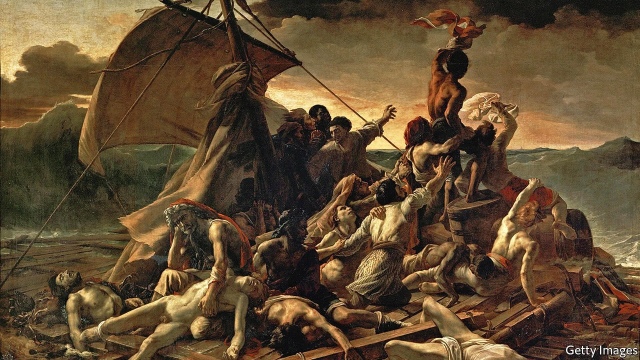

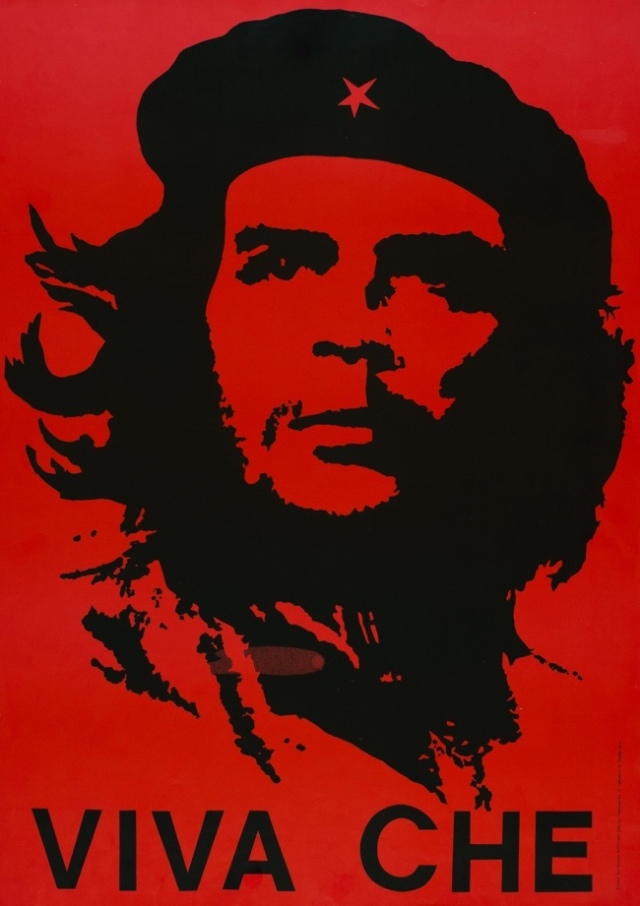


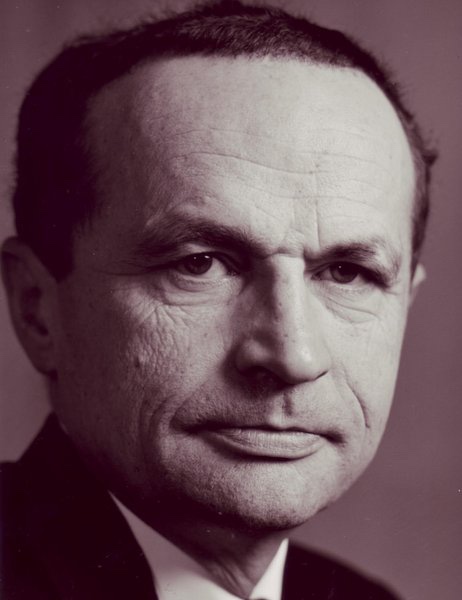


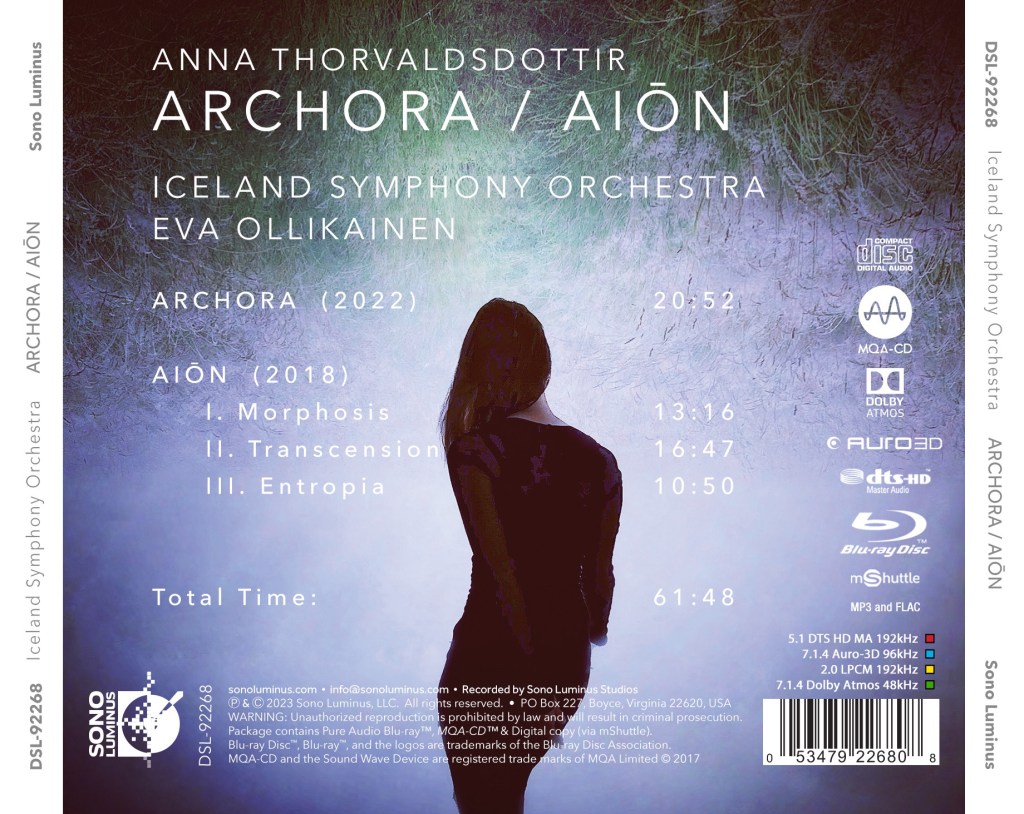
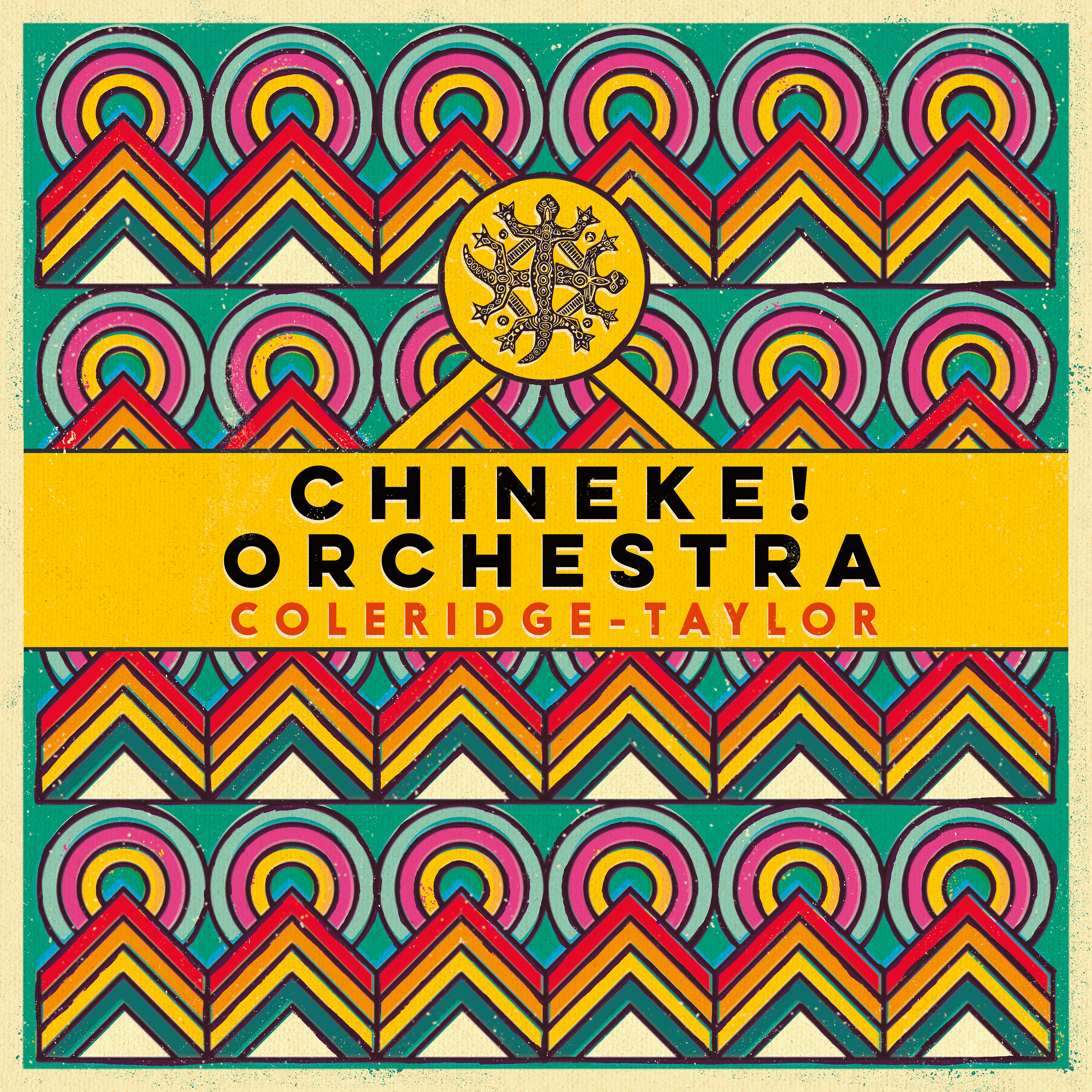


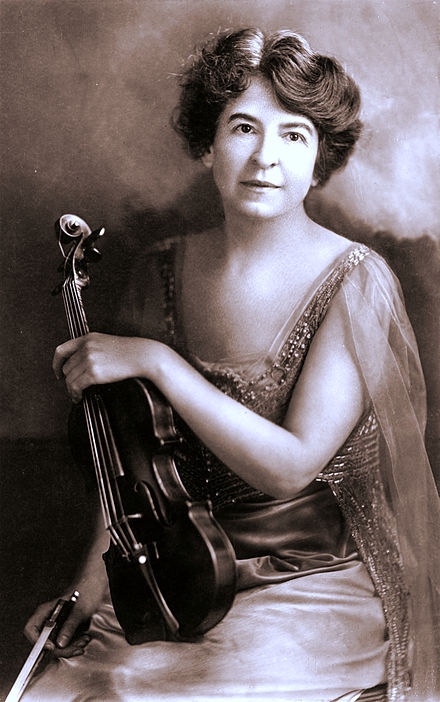


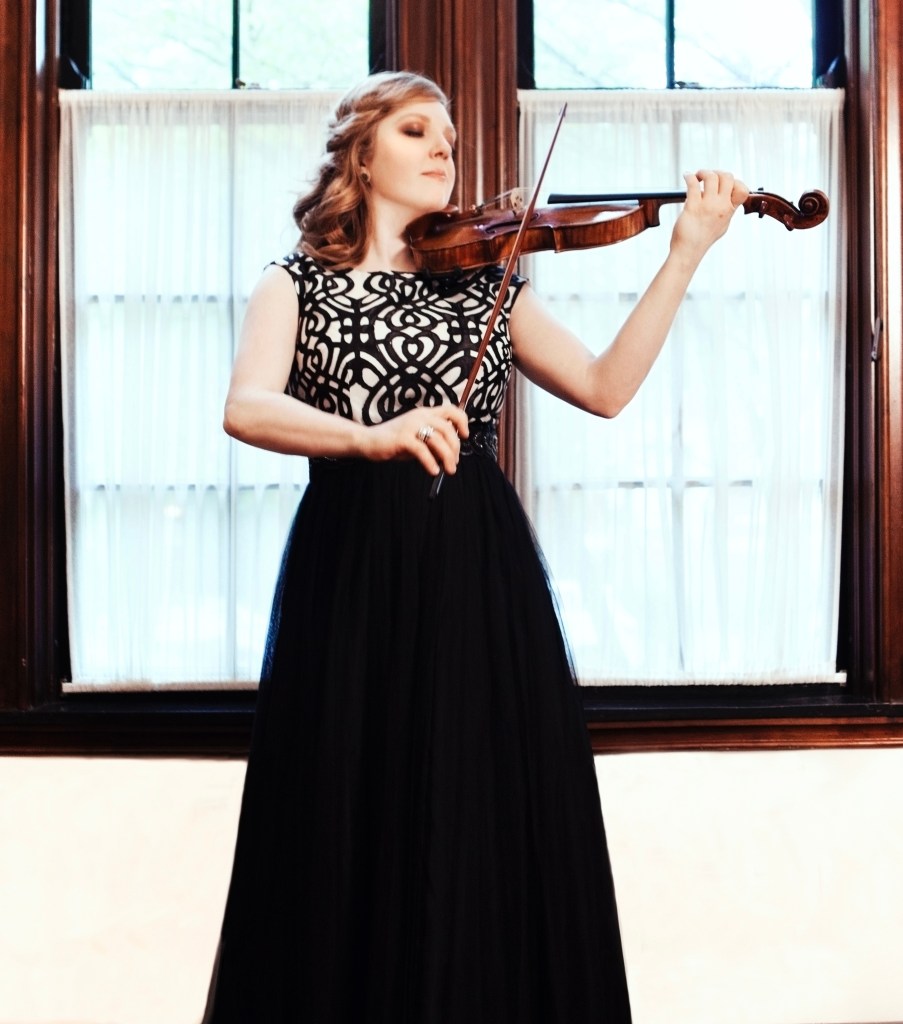

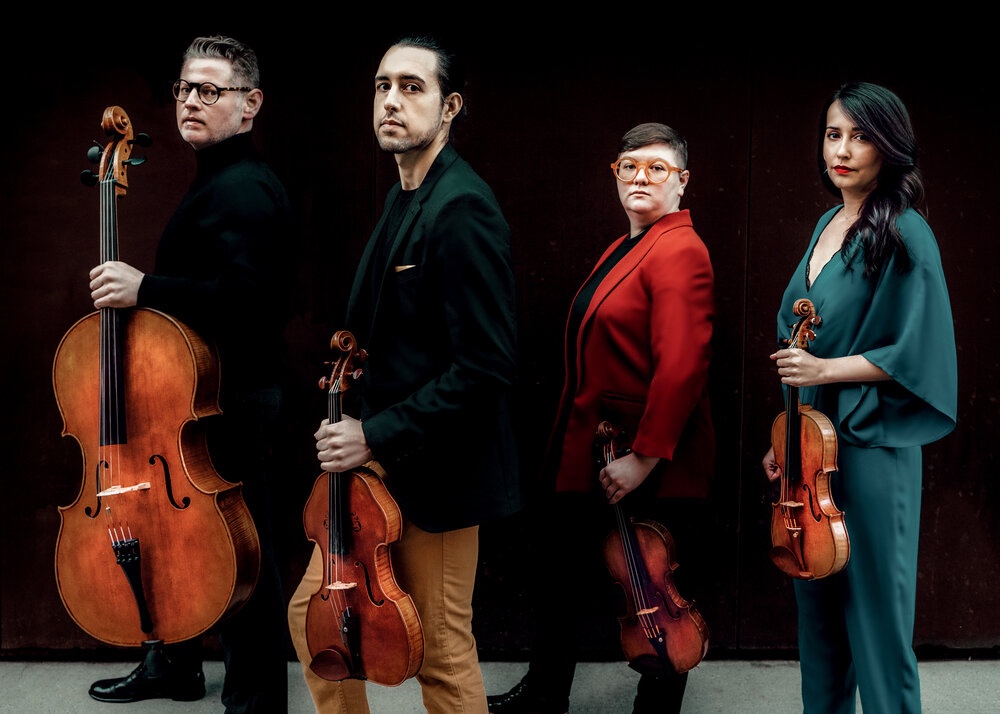


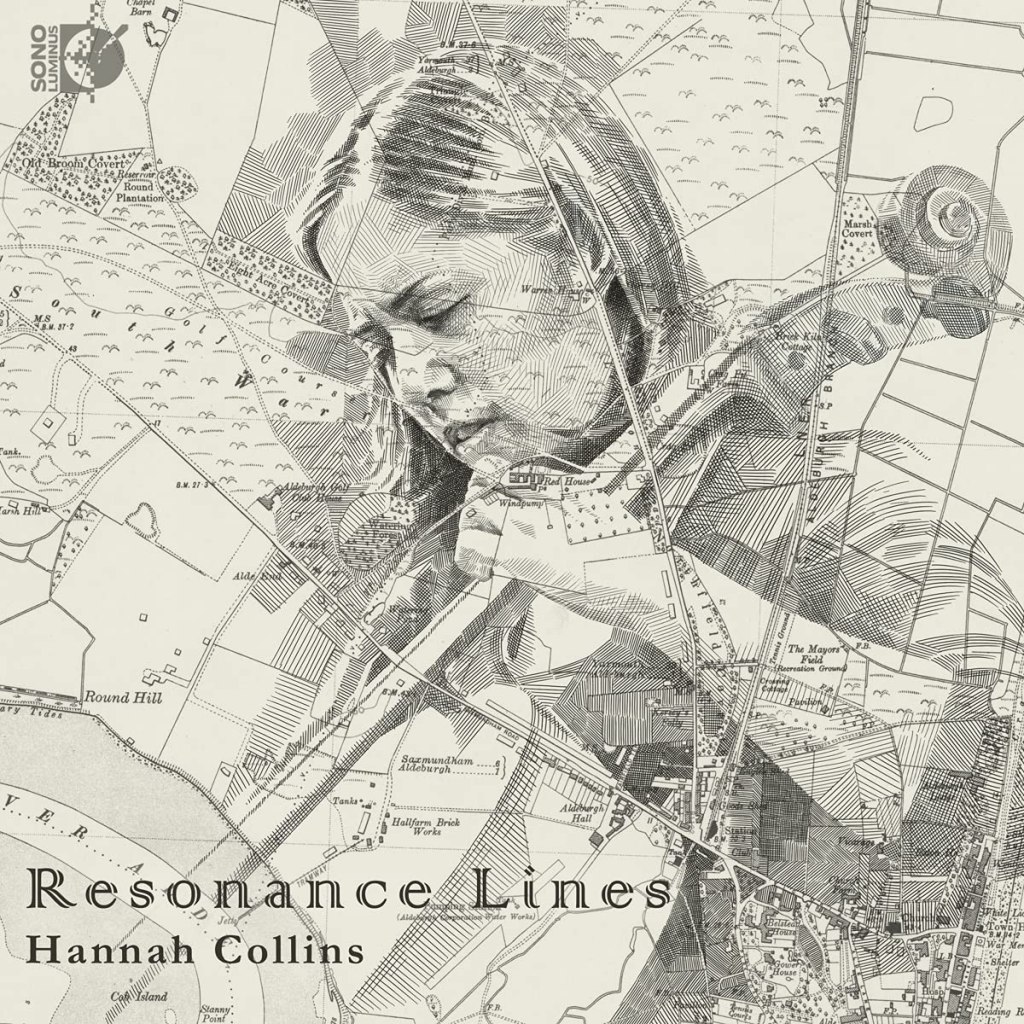


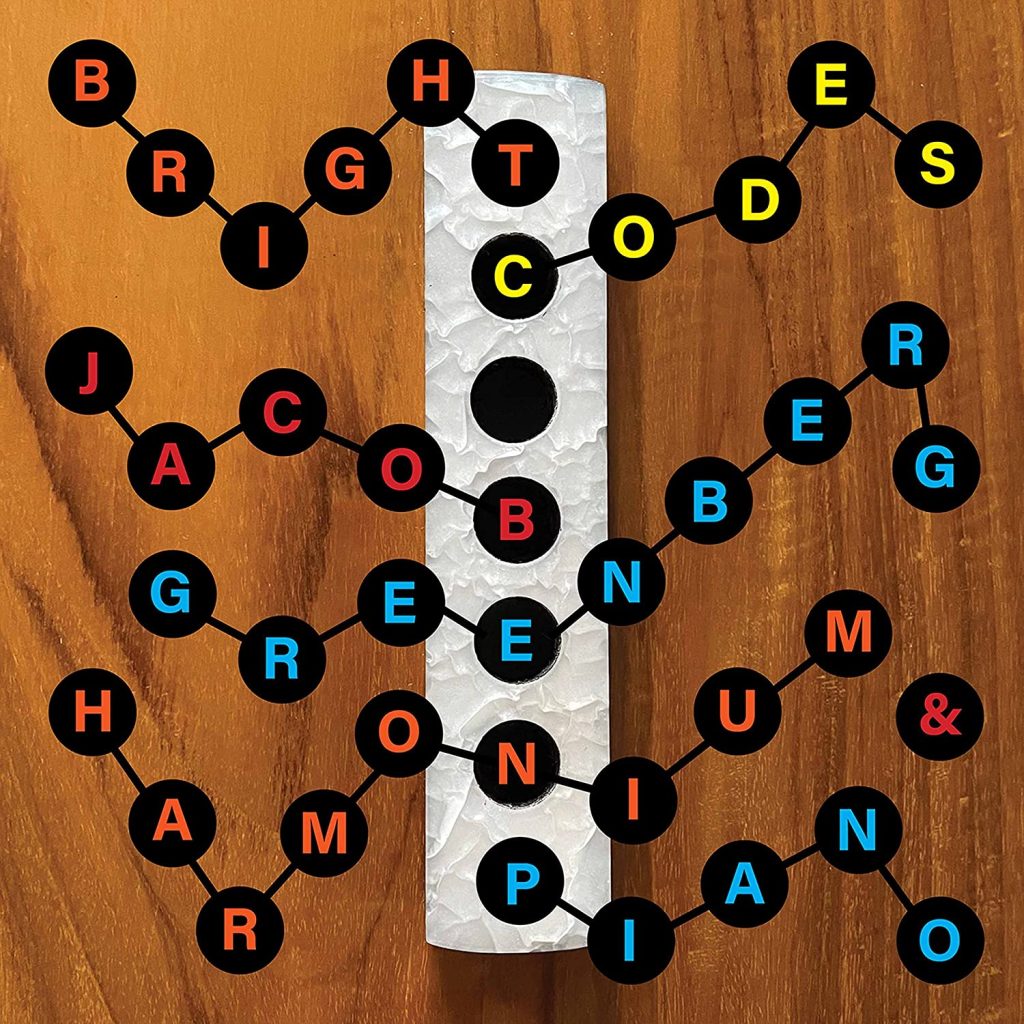


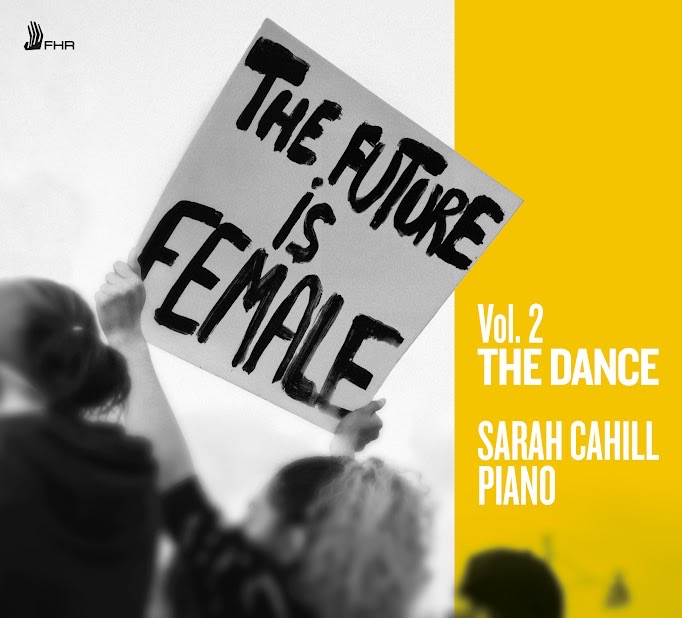


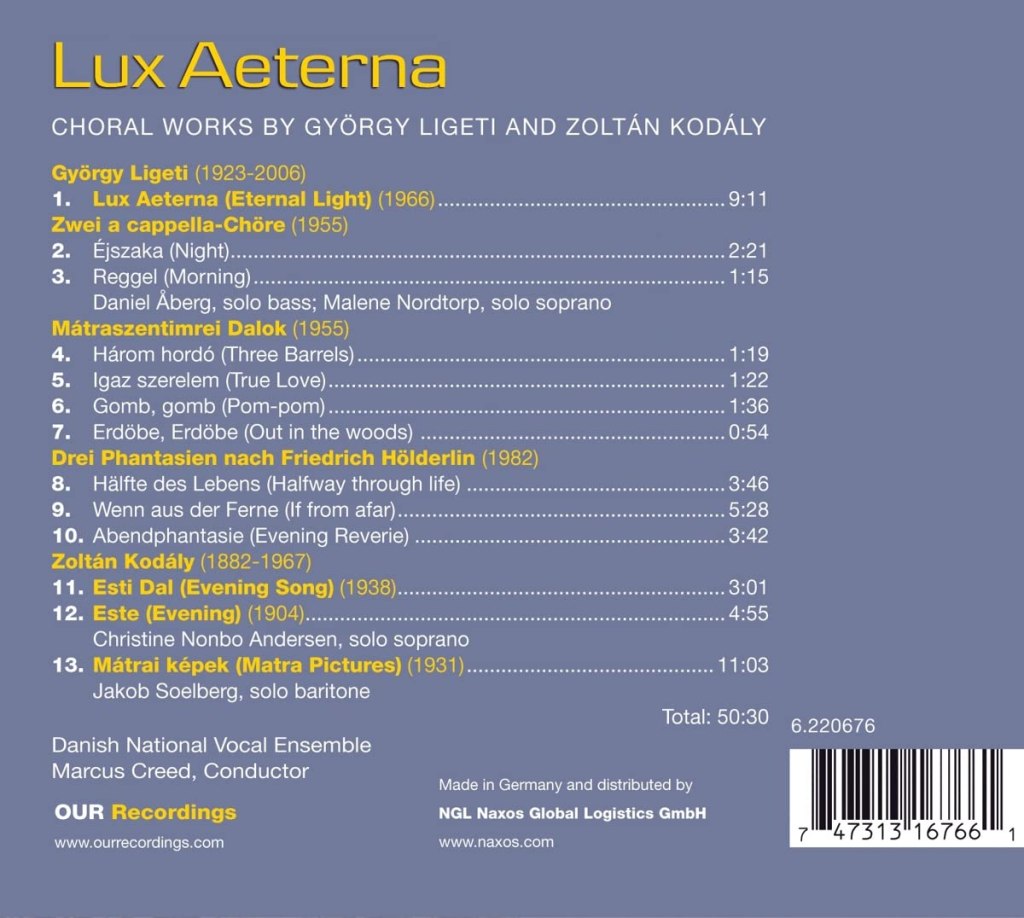

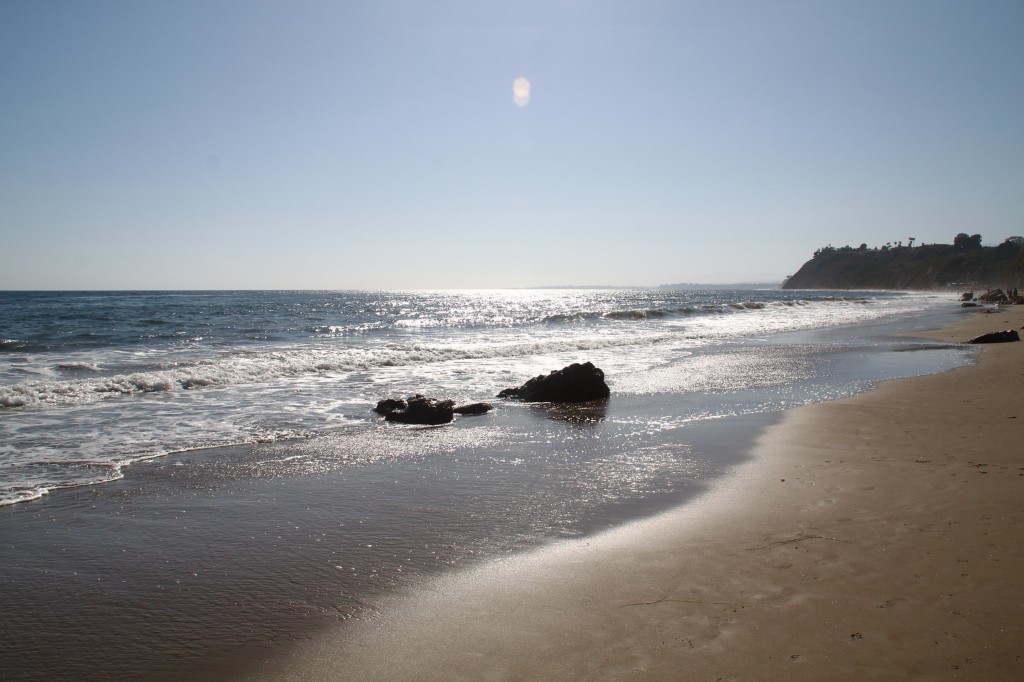


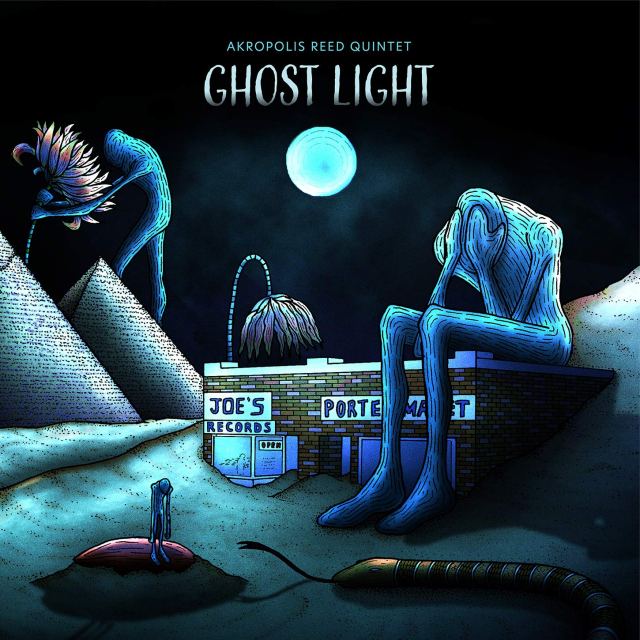
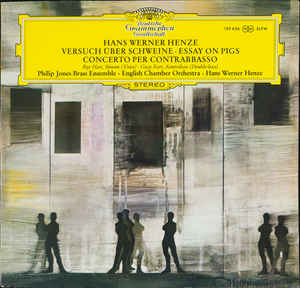

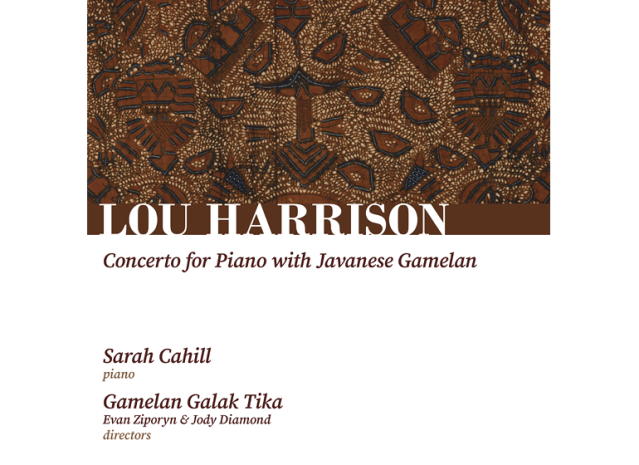
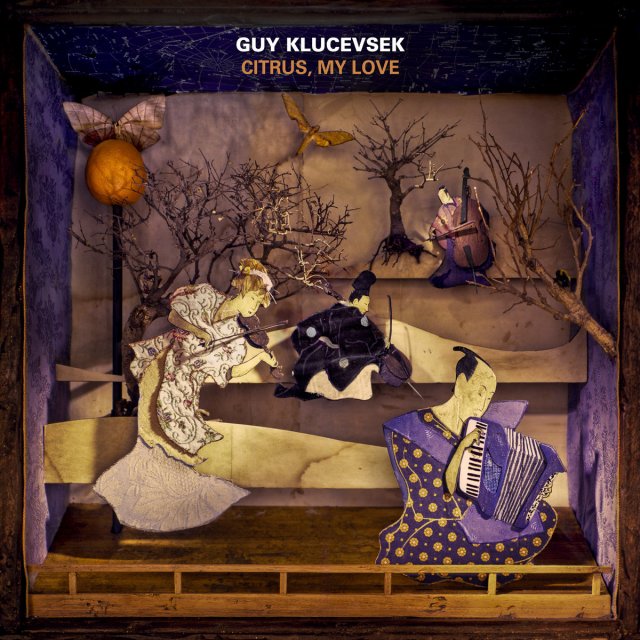

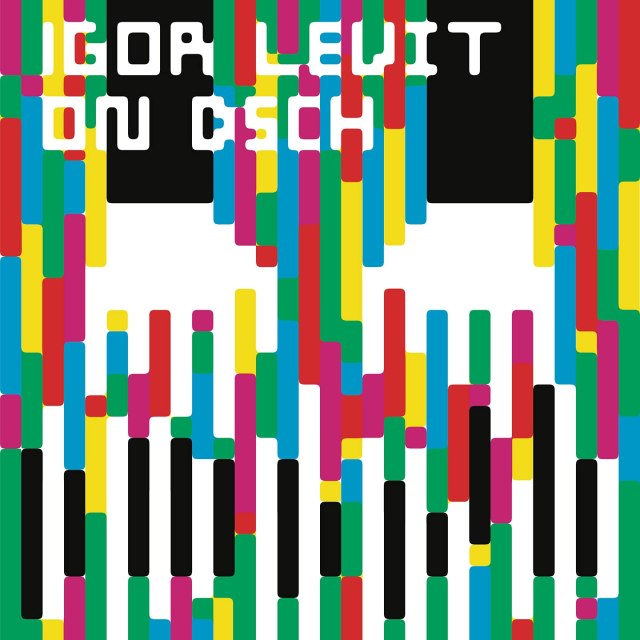
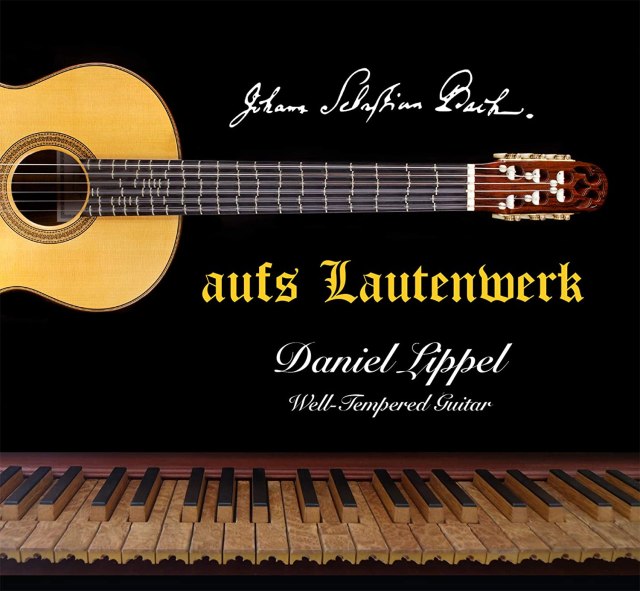
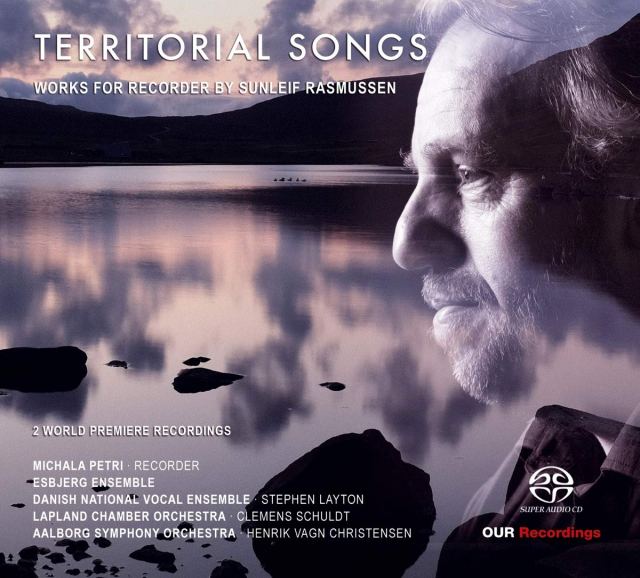
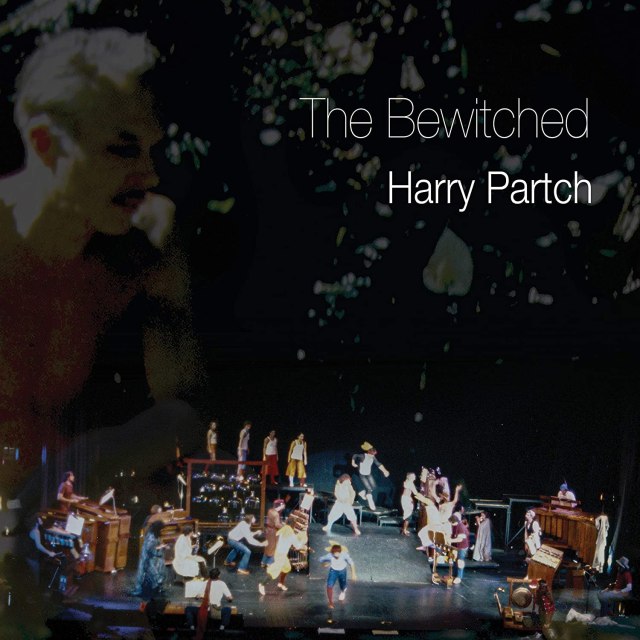


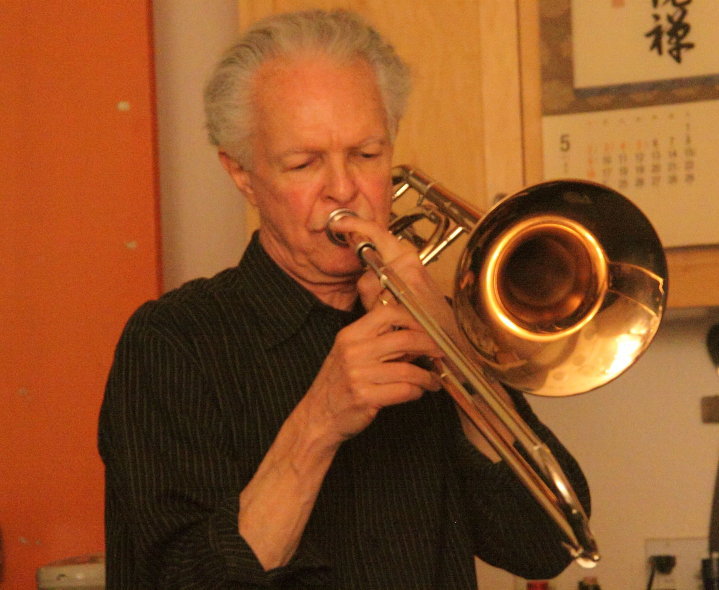


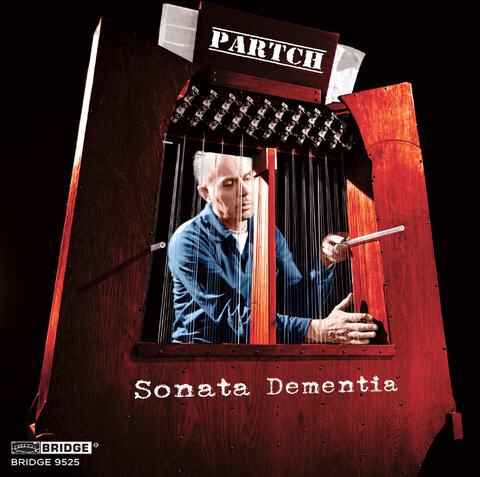


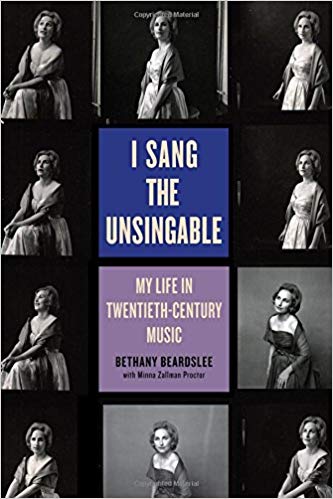
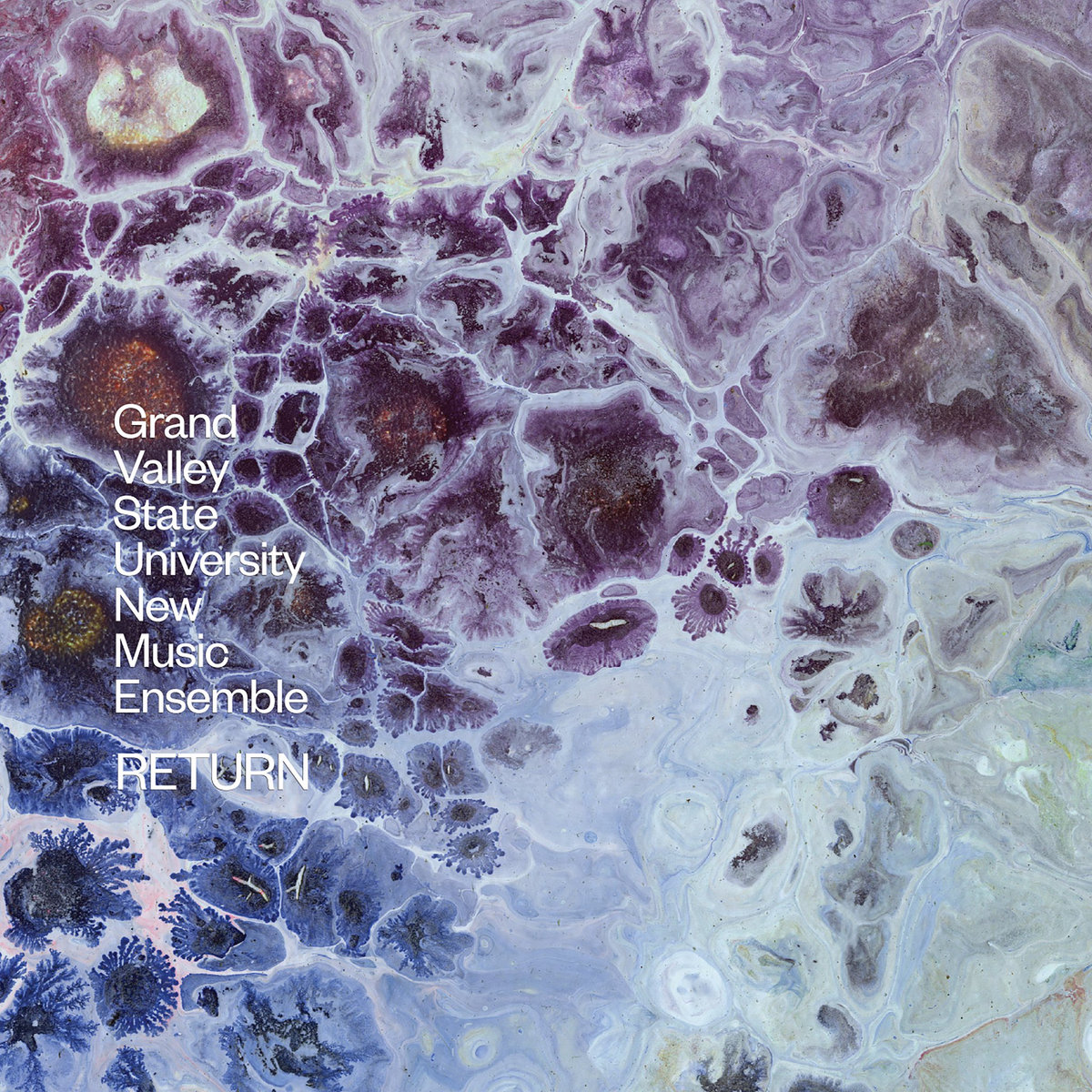
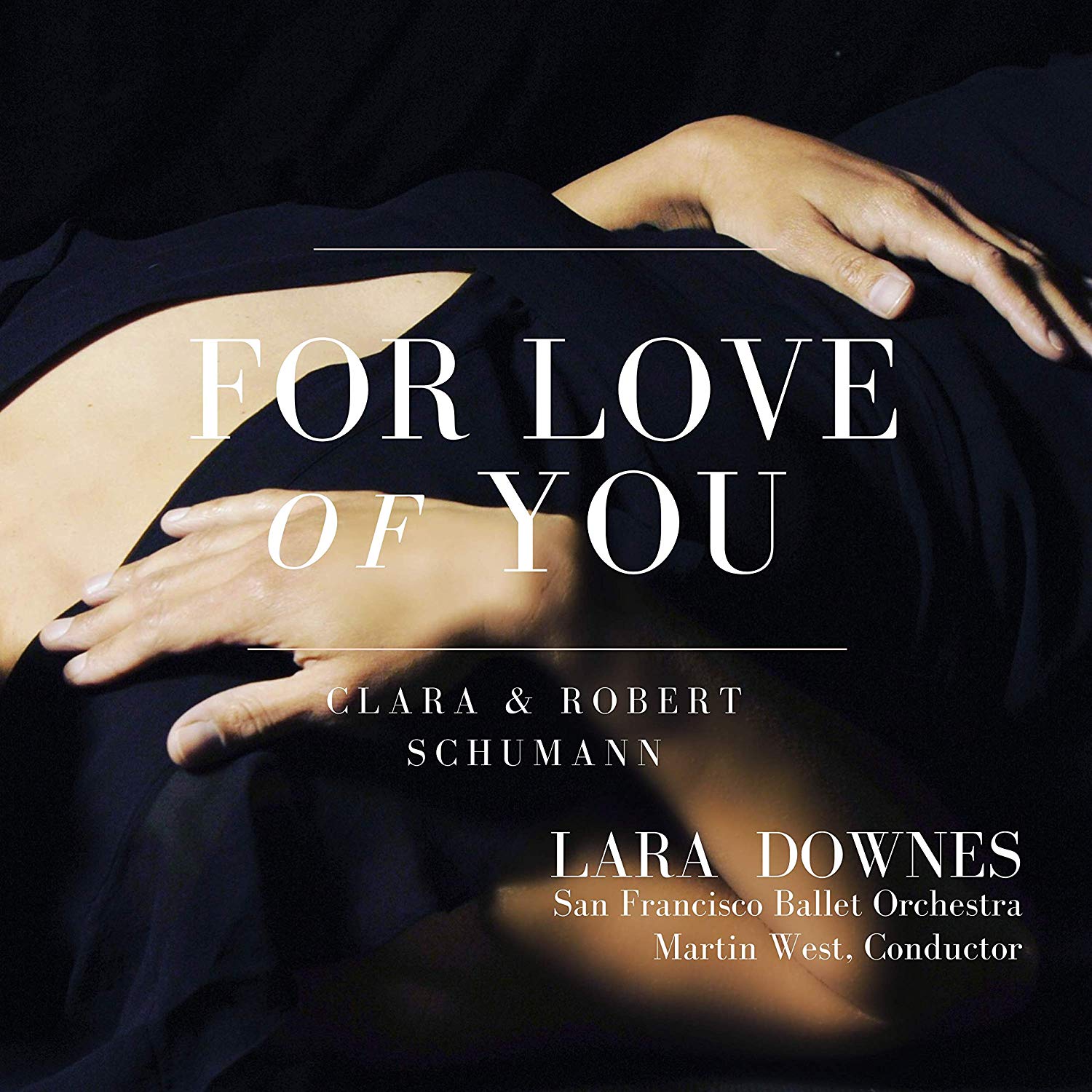

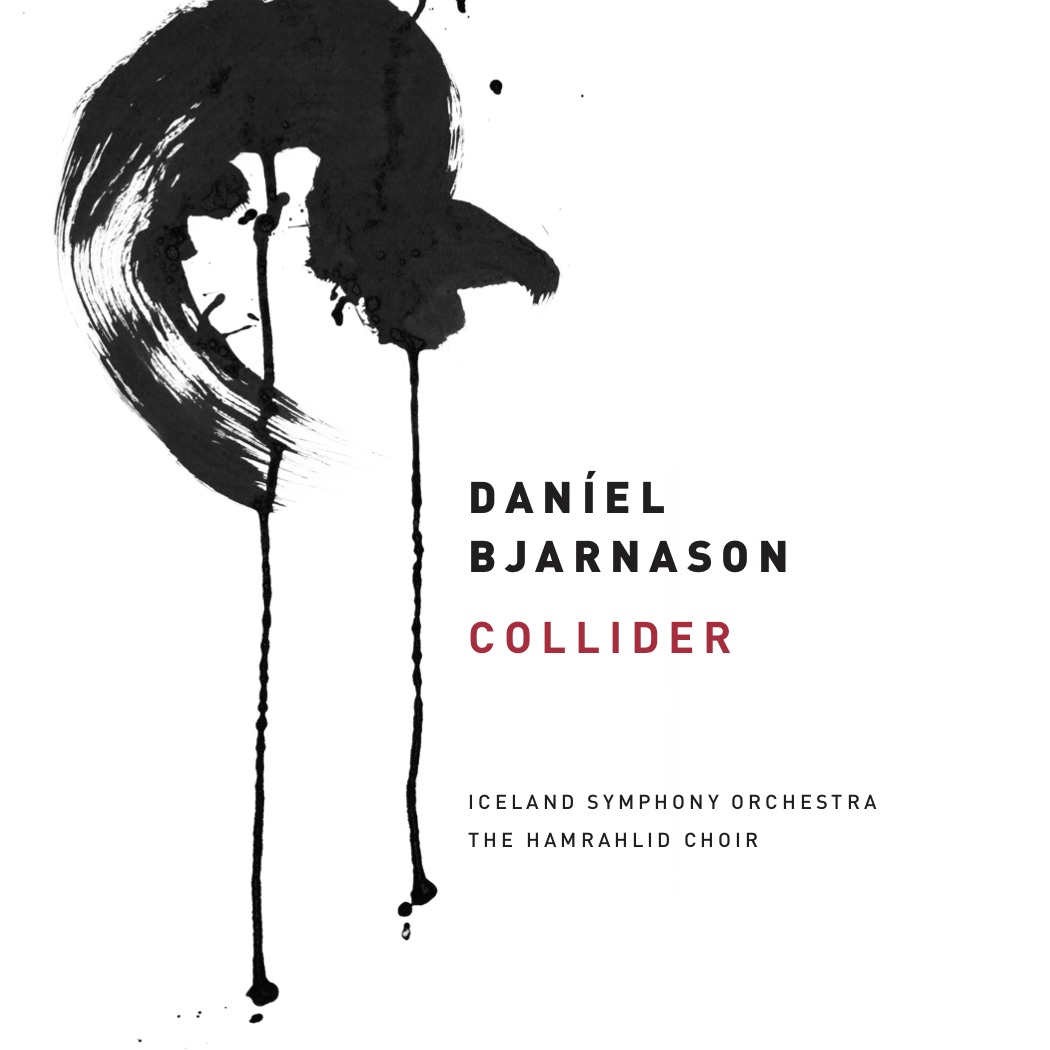
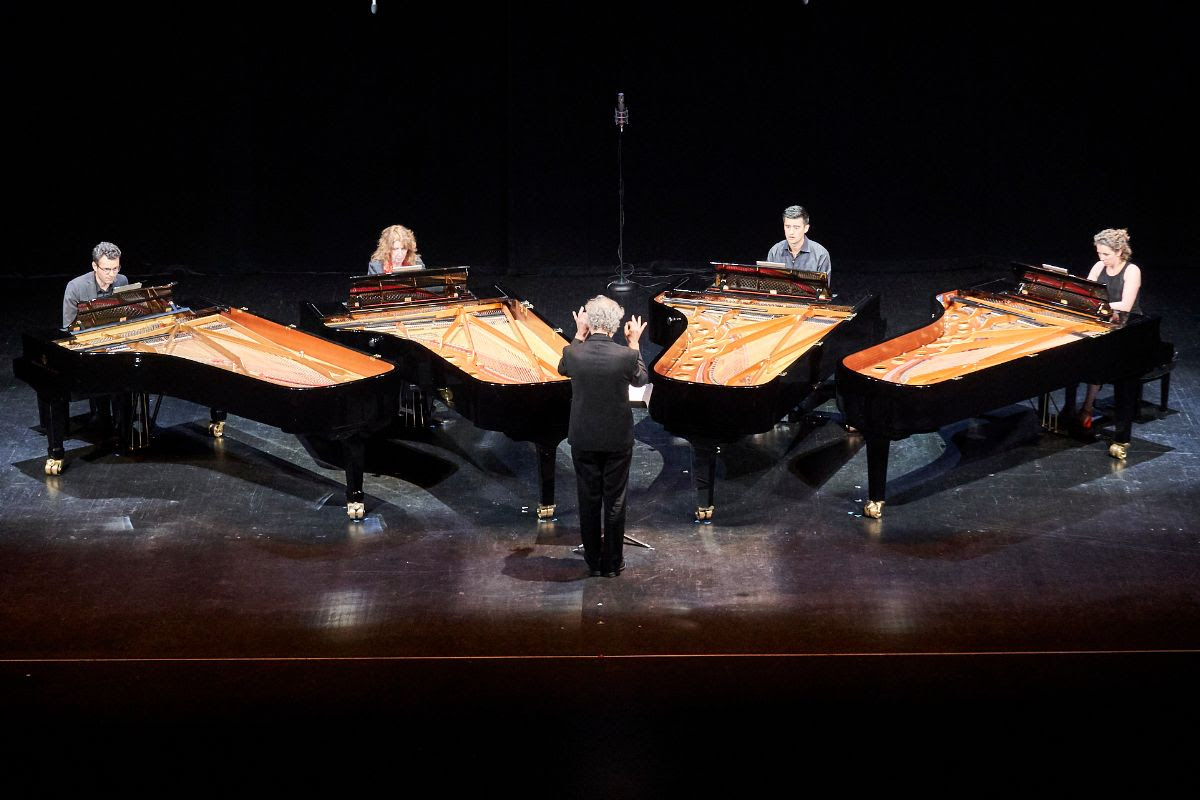

 New Music Buff