PUBLIQuartet: Freedom & Faith


publiquartfreedom

Bright Shiny Things BSTC 0126

There are seemingly more string quartets performing these days than ever before and they are fine musicians.  Whether we’re talking about the Kronos Quartet, Arditti Quartet, Pacifica, Telegraph, etc. all contain truly finely trained and virtuosic musicians.  The problem is to distinguish one’s self (or one’s ensemble) in some way.  I’m not going to go into how each of the mentioned string quartets have done this so don’t worry.

My point here is to review this fine disc by yet another new music quartet called PULBIQuartet.  They have chosen, at least in this, their second release, to continue their efforts at “genre bending”, exploring music and transcribing music that is atypical of the standard quartet repertoire.  Like their colleagues they are aiming at a redefinition or perhaps a revitalization of the string quartet genre.  The performers are: Curtis Stewart, Jannina Norpoth, violins; Nick Revel, viola; and Amanda Gookin, cello.

The album at hand, titled “Freedom and Faith” presents music predominantly written by or associated with women.  Get into the Now (2017) by Jessica Meyer is classical in the sense that it uses the standard 2 violins, viola,and cello and is divided into three movements played with short pauses.  Content wise this is a strong piece which requires a great deal of virtuosity and a handful of extended techniques involving percussive use of the bodies of the instruments themselves and even a few spots that require the musicians to vocalize.  All in all a riot of a piece with good humor.  It lasts about 20 minutes and begs to be heard again.  Very entertaining!

The next 9 tracks fit into the PUBLIQuartet’s project called Mind|the|Gap which is at the heart of their efforts to breathe new life into the string quartet and, hopefully, garner some new fans.  All members of the quartet share arrangement and, at times, co-compositional duties.

Tracks 4, 5, and 6 contain transcriptions of sacred vocal music by female composers.  The Medieval Hildegard von Bingen’s, “O ignee Spiritus” is followed by Francesca Caccini’s, “Regina Coeli”, and then Chiara Margarita Cozzolani’s, “O quam suavis est Domine spiritus tuus”.  The vocal originals must be quite lovely but these works seem to retain their sacred ambiance even without the words.  So ends the section which contributes to the “faith” in the title of the album.

Who knew that “A tisket, a tasket…” was by Ella Fitzgerald’s arranger Van Alexander.  The PUBLIs (if you’ll forgive the truncation) do a marvelous and entertaining arrangement of this novelty song.  It provides a sort of comic relief dividing the faith segment of the program to the “freedom” segment.

The next 4 tracks focus on transcriptions of popular music.  These are serious pieces, not the “pop” type songs that are basically feel good or dance tunes but the type of music that is in the shadow of serious social issues.  Who better  than Nina Simone?  These are loving and strikingly original arrangements of Herb Sacker/Nina Simone’s, “Blackbird”, Leslie Bricusse/Anthony Newly’s, “Feelin Good”, Nina Simone/Weldon Irvine’s, “Young Gifted and Black”, and Nina Simone’s powerful antiracist reproach in her, “Mississippi Goddam”.

These transcriptions are done in a free manner with echoes of Stephane Grappelli, Cajun music and, doubtless, references that this reviewer has not grasped.  They are highly entertaining.

The album ends with another string quartet.  This one is by Shelley Washington and it is a powerful piece.  In its relatively short ten minutes or so she manages to create some memorable sound worlds.  There are few program notes that give a clue as to the background and intended meanings of the purely instrumental works (those not derived from vocal music) but one senses political stirrings.

All in all a unique little recital which at least challenges the common notions of this chamber grouping and, frequently, succeeds.


Other Minds 24, Concert Three, Reviving the Music of a Forgotten Master


wysschnegradsky4p

Photo: Ebbe Yovino-Smith

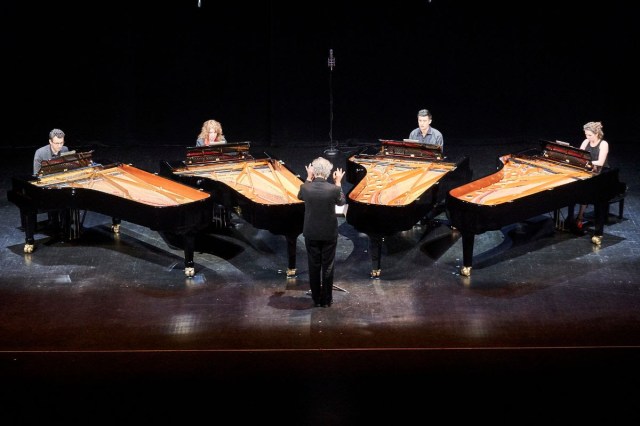
The staging was simple and practical but nonetheless imposing for this third and last OM 24 concert series.  Imagine four Steinway concert grand pianos arranged in a semicircle with a conductor and a music stand at the apex.  The heavy black curtain at the back served to emphasize the instruments and the musicians in a visually standard concert presentation.

jimcallahan

But, and this is significant, pianos 2 and 4 (looking stage left to stage right) had been tuned down 1/4 step.  I had the pleasure of speaking with Jim Callahan of Piedmont Pianos (who provided the instruments for this event).  When I inquired about this he replied quickly and authoritatively, “From stage left to right, pianos 1 and 3 are A 440 (concert pitch) and the others are tuned down 1/4 step.  When there are two pianos the one stage left is concert pitch and the one on the right tuned down.”

If you have any familiarity with the piano keyboard you know that there are black keys and white keys which correspond to the twelve divisions of the octave (from middle C to C) common to most western music.  A quarter tone is half way from the note you hear when you hit a white key and the note you hear if you hit the adjacent black key.  Ivan Wyschnegradsky was not the first person to seek more divisions to create the sound he sought.  1/4 tones are common in some middle eastern cultures but not seen in western music much before the twentieth century.

Ivan Wyschnegradsky (1893-1979) was a Russian born composer who spent much of his creative years in Paris.  It was there that tonight’s producer, Charles Amirkhanian and his wife Carol Law met him and learned of his work.  This concert along with the first OM 24 concert heard in March by the Arditti String Quartet (reviewed here) constitute a lovely revival of this unjustly forgotten composer as well as a personal connection to this “missing link” in music history.

CharlesatOM24

Charles Amirkhanian addressing the small but enthusiastic audience.

While some of this composer’s work uses the conventional western music scales (examples were present in this concert) his extensive work with other tunings necessarily limited performances of his music.  That, along with his rhythmic complexities, limited the amount of performances he would be able to receive.  One hopes that these concerts will spur further interest in his work.

The program booklet, prepared under the direction of Other Minds production director Mark Abramson, contains a wealth of information, knowledge and photographs.  You can download a PDF file of the program here.  It is a gorgeous production loaded with information for further exploration.

One might have expected 1/4 tones to create a very dissonant harmony but the surprise tonight was that the harmonies sounded like an extension of the work of Debussy and the impressionist composers.  Rather than harsh sounds, much of this music comes across like an impressionist painting might sound if it were music.  Tuning is a whole subject unto itself and a good resource can be found in the web pages by another Other Minds alumnus, Kyle Gann.  His extensive information on the subject can be found here.

The concert opened with Cosmos Op. 28 (1939-40, rev. 1945) for 4 pianos.  It is unusual to see a conductor at a multiple piano concert but the logistics of performance required a conductor to guide them through the complexities of rhythm and even the complex use of sustain pedals.  The pianists Sarah Gibson, Thomas Kotcheff, Vicki Ray, and Steven Vanhauwaert were ably led by conductor Donald Crockett.  This was a US premiere.

Overall the music has echoes of Stravinsky, Messiaen, Debussy, and Schoenberg (from his pre 12 tone days).  This large work, according to the program notes, does not have a specific program, rather it is a grand exploration of densities and registers. It does have a cinematic quality that suggests a program.

OM 240005

Martine Joste receives a bouquet as Donald Crockett looks on.

Next on the program was Étude sur le carré Op. 40 (1934, rev. 1960-70) for solo piano (another US premiere).  The French title translates as “Study on the Musical Magic Square”.  It is a reference to the structure of the piece which involves repetitions of melodic sequences analogous to the magic square with words or numbers.  What is important is the musicality of course and Martine Joste played it with passion and intensity providing the audience with a performance that sounds absolutely definitive.  Her amazing technique at the keyboard and her focus on this music truly brought life to this technically difficult piece.

Joste is a master pianist and president of the Association Ivan Wyschnegradsky and has been active in the performance of contemporary music along with the better known classical canon of works.  She would appear in the second half of the program.

If you are exploring the limits of composition with a new technique it makes sense to write some music that will demonstrate that technique.  Much as Bach wrote his Well Tempered Clavier to showcase the (now standard) well tempered tuning.  So Wyschnegradsky composed his 24 Preludes Op. 22a (1934 rev. 1960-70) to demonstrate his ideas.

OM 240002

Shot of the two piano stage set up.  Remember the concert pitch instrument is stage left.

It was from this collection that we next heard Preludes Nos. 1, 3, 4, 5, 9, 10, 15, 16, 19, 20, 23, and 24 played by the performing duo Hocket.  As if they are not busy enough as solo pianists (and composers in their own right) Sarah Gibson and Thomas Kotcheff perform as a duo.  The link to their work in that area can provide more information,
OM 240001

Sarah Gibson (l) and Thomas Kotcheff (r) performing as the Hocket Duo

They managed to navigate the complexities of these pieces nimbly, as though they had been playing them all their lives.  It certainly sparked this listener’s curiosity about the remaining preludes which we did not hear on this night.

Again the 1/4 tones sounded strange to western ears at times but never really harsh.

Following intermission the usual OM raffle of various prizes were drawn.  As if the fates intervened the colorful Ivan Wyschnegradsky clock went to master microtonalist John Schneider, another OM alumnus.  This clock is available in the Other Minds Store along with a cache of really interesting CDs, clothing, etc.

The four pianists, Gibson, Kotcheff, Ray, and Vanhauwaert again teamed up for a performance of Étude sur les mouvements rotatoires, Op. 45 (1961, rev. 1963).  This time they performed without a conductor.  Here the magic square becomes a magic octagon, at least metaphorically.  This is another example of using extramusical principles applied to organize music differently.  And again, as in the previous pieces, the harmonies were friendly and actually quite beautiful.

Mme. Joste returned to the stage for a solo performance (and the third US premiere) of Three Pieces for Piano, Op. 38:  Prelude (1957), Elévation (1964), and Solitude (1959).  Again we were treated to virtuosity and a seemingly definitive performance.  The title puts one in the mind of Schoenberg and his voice, along with that of Messiaen, Debussy, et al were present.  What was striking was her energetic and fluid performance which made the notes on the page (Joste performed from traditional paper scores, not the iPads used by the others) come alive in a delightful way.

OM 240006

The stage had to be reconfigured for the final piece, another 4 piano work which took perhaps a minute or two.  Mr. Crockett again led these young and enthusiastic performers in Ainsi parlait Zarathustra, an early work which was originally written for a quarter tone piano played by six hands(such things do exist), a quarter tone harmonium (4 hands), a quarter tone clarinet, string ensemble, and percussion.  This score has been lost but we heard the 4 piano transcription tonight.  It is a sprawling work with four defined sections much like a symphony.  The movements are titled Tempo Giusto, Scherzando, Lento, and Allegro con fuoco.

This piece takes its title from the same Nietszsche novel that inspired Richard Strauss’ tone poem “Also Sprach Zarathustra” or, in English, “Thus Spake Zarathustra”.  Only Wyschnegradsky’s Zarathustra seems more pained and less the romantic hero of Strauss’ 1896 orchestral work.

Wyschnegradsky’s piece is virtually a symphony and, though one can scarcely imagine how the now lost orchestration might have sounded, there was still a grand romantic sweep to it.  With a scherzo worthy of Bruckner the piece was a coherent whole with the last movement recapitulating, if not literally, the spirit of the fire dance that ended the first movement.  This was also a premiere and surely another definitive performance of a true masterpiece.

On this night we witnessed nothing short of a resurrection of the art of a very important 20th century composer.  The audience, like the performers were enthusiastic in their response.

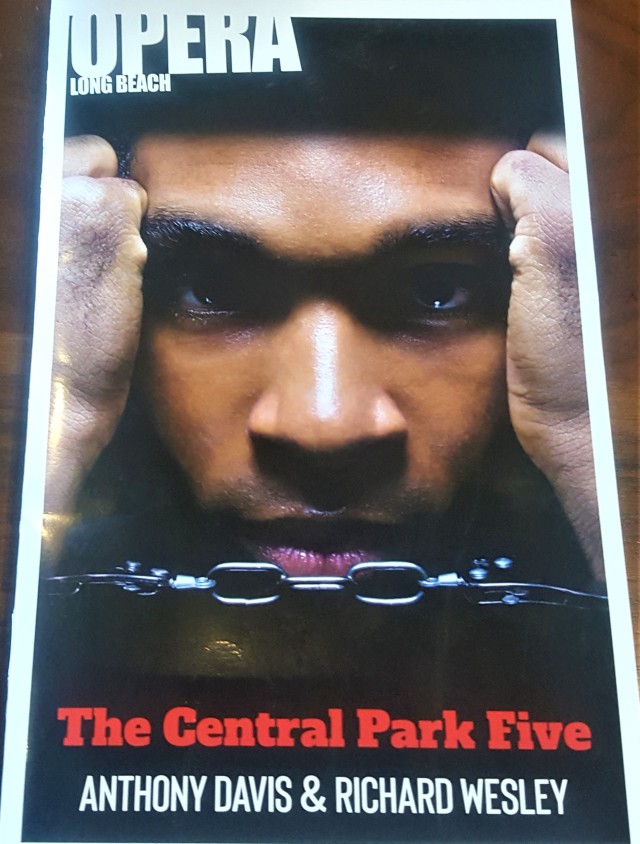
Guest Blogger Bill Doggett Reporting on the World Premiere of Anthony Davis’ “Central Park Five”


cp5 davis

Today I am pleased to have a guest blogger, Mr. Bill Doggett.  He has appeared in this blog before.  His bio can be found at the end of the article and, while the photos and the opinions are his own (though I’m in agreement) and I’m glad to be able to share his thoughts on attending this important world premiere.

Here we are:

Implicit Bias, Racism , White Supremacy, Forced Confessions, Restorative Justice:1989-2019, The foundational ideas that continue to mark the world of The Central Park Five
Dateline, June 15th, 2019, The Warner Grand Theater, San Pedro California, a restored Art Deco movie palace was the showcase location for the world premiere of Long Beach Opera’s commissioned presentation of Anthony Davis’ The Central Park Five.

cP5

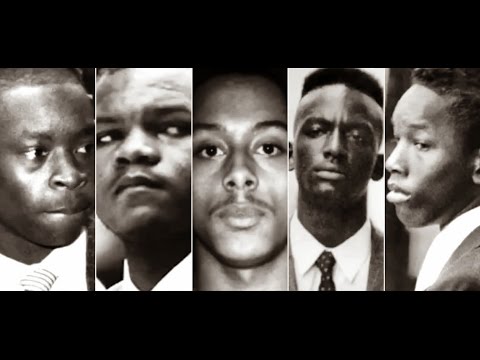
Composite photo of the “Central Park Five”

Presented two weeks after Ava Duvernay Netflix Series “When They See Us” on The Central Park Five, a diverse and large audience was treated to a cutting edge new opera that added a new dimension, with an exceptional new score that enlarged the pallete of iconic operas by the great Anthony Davis.

Renowned for his 1986 landmark opera, X, The Life and Times of Malcolm X , Amistad, the opera about the slave ship rebellion and Tania, the story about the abduction/kidnapping of Patty Hearst and related drama with The Symbionese Liberation Army, Wakonda’s Dream about the plight of American Indians in Nebraska, Anthony Davis’ operas are landmarks of political discourse and exploration of historical and contemporary topics in American history.

Davis’ operas are richly hewn in intricate African polyrhythms, jazz improvisation, electronics and extraordinary vocal writing. In all of his operas, the expressive use of Rhythm advances the unfoldment of the drama in powerful ways.

The music of The Central Park Five expanded upon Davis’ rich compositional palette with intricate ensemble block scoring writing for the voices of the five Principal male singers that was fresh and impactful .
In the pre concert talk, Mr Davis expounded on some of the influences to this idea of block scoring and harmonization vocal writing that is associated with the well known Jazz and Gospel ensemble, Take Six and the sound worlds of Duke Ellington and Billy Strayhorn.

A complex score conducted brilliantly by the renowned Leslie B Dunner with Direction/Production design by Long Beach Opera’s Artistic and General Director, Andreas Mitisek, Davis’ opera provides both a discourse and exploration of the historical and contemporary issues of implicit bias, Institutional Racism in the Criminal Justice System and historic and contemporary issues of the Impact of Racism and ideas of White Supremacy that were deeply embedded in the world of 1989 New York City.

This world of racism and white supremacy is embedded in the opera’s sung and spoken character, The Masque who appears throughout the opera.

Donald Trump who began his political career taking out $85,000 ads in major New York newspapers calling for the death penalty of The Central Park Five also shows up in a role that represents not only the nemesis of the youth but additionally represents a clairvoyance for white nationalist ideas that have empowered his Presidency.

Davis and Wesley’s The Central Park Five Five is indeed an impactful and dynamic opera that addresses all of the issues central to The Black Lives Matter Movement.

Provocative in 1989 and in 2019, the opera explicitly deals with forced confessions, police brutality, disingenuous prosecution without collaborating Evidence, the death penalty and the tragedy of lengthy incarceration sentences for black and brown Americans for crimes not committed.

The five principals who sing the roles of The Central Park Five were brilliant in their portrayals of the intricate vocal writing. They are Derrell Acon{Antron McCray},Nathan Granner{Korey Wise} Orson Van Gay {Raymond Santana} Cedric Berry {Yusef Salaam} and Bernard Holcomb{Kevin Richardson}. They are assisted in comparable brilliance by Babatunde Akinboboye {Matias Reyes-the man who committed the crime}, Lindsay Patterson and Joelle Lamarre, the mothers of Yusef and Antron and Ashley Faatoalia who plays Antron’s father. The roles of Donald Trump, The District Attorney and The Masque are performed by Thomas Segen, Jessica Mamey and Zeffin Quinn Holis.


There are two more performances of this impactful new opera by Anthony Davis and Richard Wesley on
June 22nd and June 23rd. For tickets, visit http://www.longbeachopera.org


About the author, Bill Doggett is a well respected historian, archivist and published specialist in African American Performing Arts History. During 2013, he worked as the marketing agent for Anthony Davis on his new chamber opera, Lear on The Second Floor and promotion for the revival of X, The Life and Times of Malcolm X focused for the 2015 50th anniversary of the assassination of Malcolm X.


(Just a note from the blogmaster):  I wish to thank Mr. Doggett for his wonderful coverage of this important premiere.  I already had a soft spot for Anthony Davis’ work (which I consider a latter day Luigi Nono who held that one can never separate politics from art) but I never imagined that I would be indexing Donald Trump in this blog space and this context but here he is, lol.  Thanks, Bill.

It is also very important to note that Anthony Davis has been commissioned to write an opera by Opera Tulsa on the subject of the Tulsa race massacre of 1919.  It is scheduled for a premiere next year.


Hee-Young Lim: French Cello Concertos


lim

Sony 80358118425

Normally I don’t review a lot of popular best seller CDs or recordings of music written before 1900 (I like most all music but that I just don’t think I have much useful to say about it) but this one has the happy exception of including a 20th Century work and it is an example of truly thoughtful and creative programming.

This is the major label debut of Korean born cellist Hee-Young Lim.  She is, according to her website, currently professor of cello at Beijing Central Conservatory.  With this disc she demonstrates her facility with the technical aspects of her instrument as well as a gift for interpretation.  In addition she is known as an advocate of new music, hence the inclusion of the Milhaud Cello Concerto.

This is such a delightful disc combining two lesser heard major cello concertos with some tasty filler material.  But the real gem here is the too rarely heard Milhaud concerto of 1936.  Wow, what a great work!

The disc opens with a true classic, the Saint-Saens’ (1835-1921)  Cello Concerto No. 1 of 1872.  This is one of the great concertos for the instrument.  It is not heard with the frequency of say the Dvorak concerto but it is every bit as good and as challenging.  Ms. Lim handles this romantic gem with both ease and grace.

The second offering is a real rarity, the Cello Concerto (1877) of Èdouard Lalo (1823-1892).  It is not clear why this major work gets heard so rarely (Lalo’s work is way overdue for a reappraisal and some recordings).  It is a wonderful romantic era concerto and Lim handles it like the seasoned professional she is.

The highlight of this disc for me personally is the also rarely heard Cello Concerto No. 1 (1934) of Darius Milhaud (1892-1974).  It is one of two such works by the wonderfully prolific composer.  This work is surely recognizable for some modernist features (Lim seems quite comfortable with the more modern idiom here, a mark of a master it would seem).  Maybe a little dissonance here or there but this is basically a post-romantic work with appropriate nods toward some modernism.  The point is that it is an expressive work that deserves a place in the repertory.  Hopefully this recording will contribute to helping this music achieve its deserved place in history.  And of course there’s the eager anticipation of her recording the second Milhaud Concerto for Cello.

The disc ends with two short romantic bonbons, Jacques Offenbach’s “Les Larmes de Jacqueline” and the too rarely heard Meditation from Jules Massenet’s opera “Thais”.

Scott Yoo conducts the always competent London Symphony.  The useful and well written liner notes by James Inverne are so well researched and written I won’t complain about the microscopic typeface.  The sound is handled well by engineer Jin Choi at the iconic Abbey Road Studios in London town.

The multilingual program notes suggest that this disc looks forward to an international reputation for this fine young artist and it looks/sounds like that is what is happening here.  Let us welcome her to the international music community and look excitedly forward to hearing more from her.  Brava! Ms. Lim!

Blue Violet Duo: American Souvenirs


blueviolet

Blue Violet Records


This release actually makes a nice companion to the just recently reviewed Rachel Barton-Pine album. Both feature the classic chamber music combo of violin and piano and both bring life to American music that has languished for want of skilled and interested performers.  Let’s consider this release to be another selection in celebration of Women’s History Month.  Of course the only women here are the performers.  Alas no women made it into the mix this time.  But this is, after all, only their first release.
The Blue Violet Duo is just what is needed here.  These young artists make their recording debut with this fine selection of mid-twentieth to early twenty first century American music for violin and piano.  Included here are less familiar names such as Norman Dello Joio, Paul Schoenfeld, William Bolcom, and John Adams (if you know any names here you know this last one).  All are highly accomplished composers who work in basically a tonal language incorporating elements of blues and jazz.  Kate Carter plays violin and Louise Chan handles the keyboard in this interesting selection of lesser known but really entertaining and substantive music.  
The earliest work is the Variations and Capriccio (1948) by Norman Dello Joio (1913-2008). It sets the tone for this album of jazz influenced violin and piano music.  The two movements go through a variety of moods and demand a high level of virtuosity.
Next up is the wonderful Second Violin Sonata (1978) by William Bolcom (1938- ) who is known as much as a ragtime composer as well as classical.  His embrace of so called vernacular music is characteristic of much of his work. Carter and Chan appear to have a solid grasp of vernacular styles which they incorporate seamlessly as though they belonged (which, of course they do).John Adams (1947- ) is represented by his playful, Road Movies (1995). Adams’ take on pop and vernacular musical is somehow different and the listener will realize that one of the joys here is hearing the way in which these composers respond to their encounters with popular musics.  Adams also demands much of his musicians in terms of technical expertise but his music here always remains playful.
For the last selection Paul Schoenfeld (1947- ) was chosen and he is one that deserves more attention.  Like Adams he works as a classical composer who incorporates other styles into his work. Four Souvenirs (1990) makes a fitting finale to this collection.The real joy here is having such fine renditions of lesser known repertoire.  On hearing these pieces listeners will likely want to hear them again.  The hope is that these pieces will become more regularly performed.  The Blue Violet Duo has given this repertoire a boost in that direction.  Brava!


My 2018 in the Arts


One of the Theater Organs at House on the Rock, Spring Green, WI, a really fun place to visit.


I’m skeptical about year end lists but I have enough people asking me that it would be impertinent to skip this task. I make no claims to having even listened to enough to make any definitive statements about the “best” but I have my own quirky criteria which I hope at least stirs interest. Here goes.

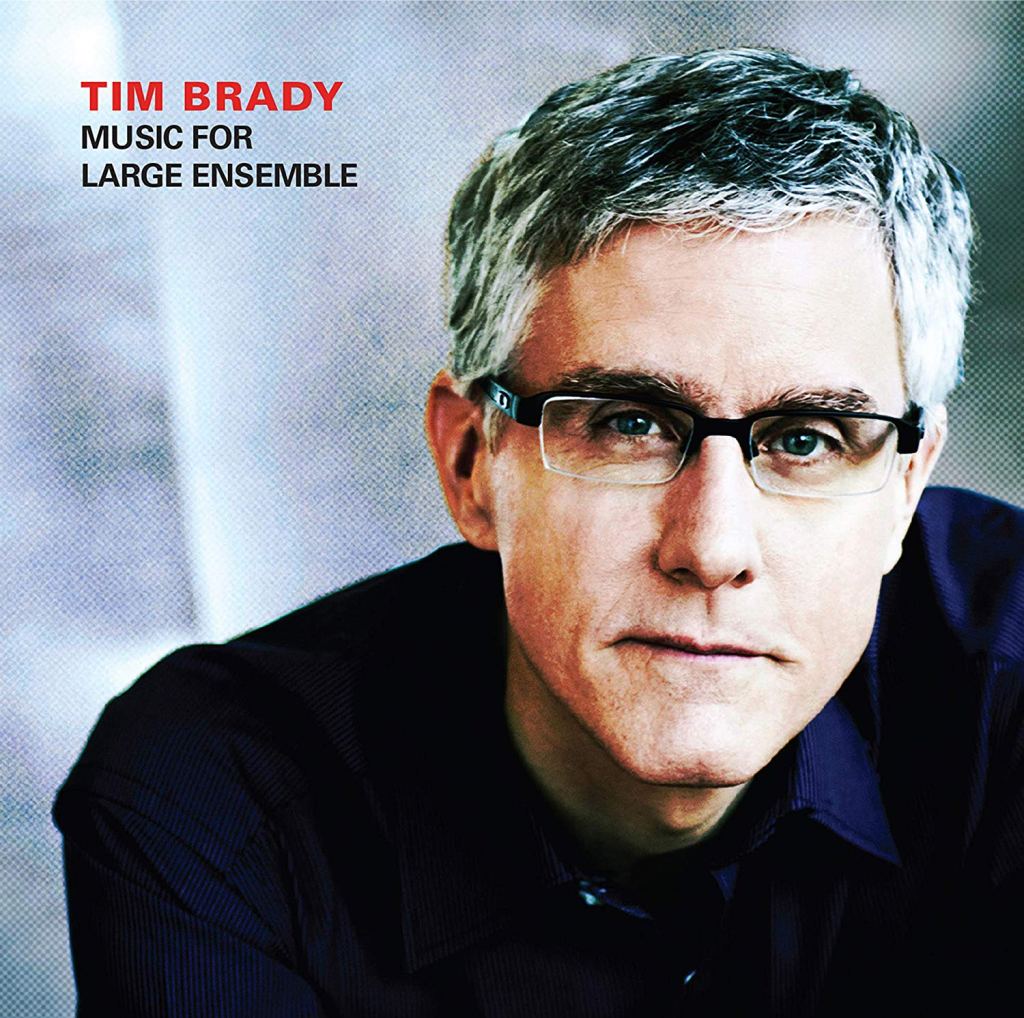
Let’s start with the most read reviews. Without a doubt the prize here goes to Tim Brady’s “Music for Large Ensemble”. This reviewer was enthralled by this recording by this Canadian musician whose work needs to be better known.

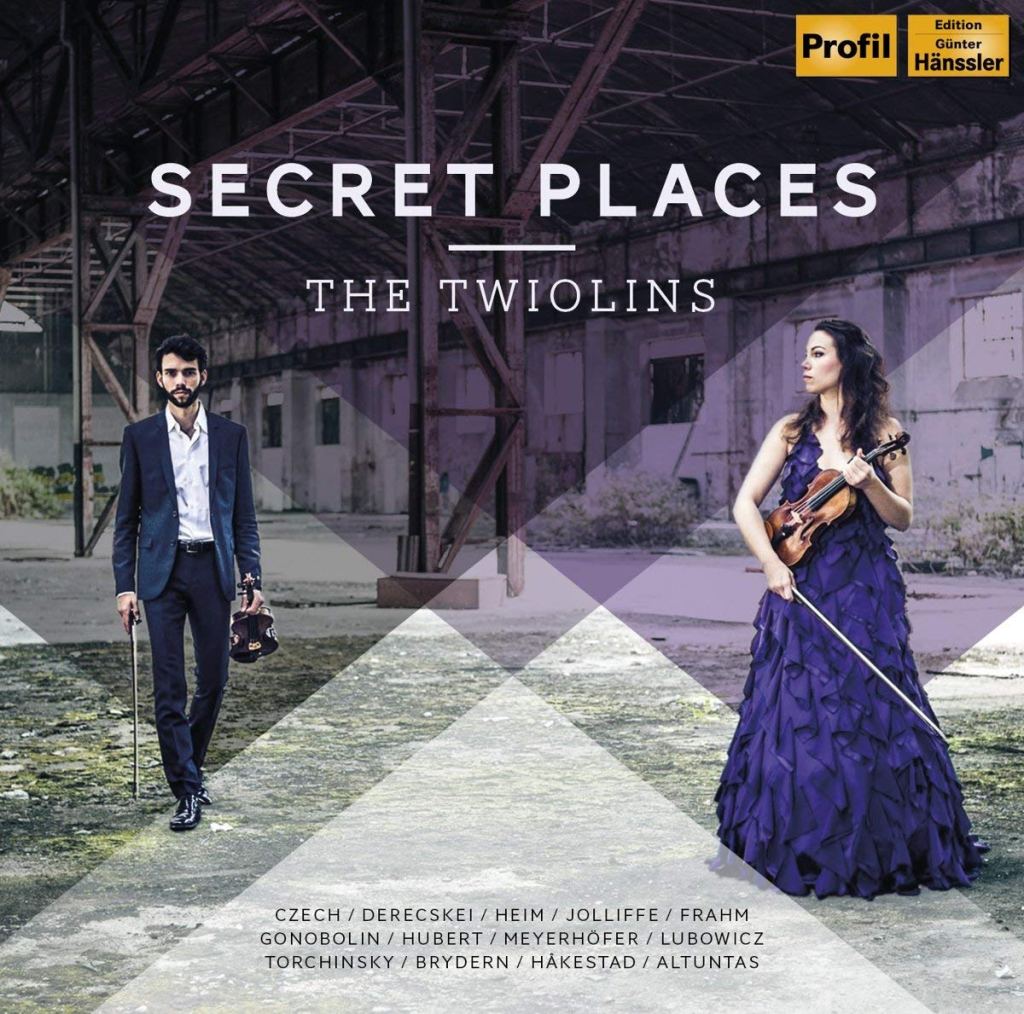
This little gem was sent to me by a producer friend and I liked it immediately. I knew none of these composers but I enjoyed the album tremendously. Don’t let the unusual name “Twiolins” stop you. This is some seriously good music making. It is my sleeper of the year.

Running close behind the Twiolins is the lovely album of post minimalist miniatures by the wonderful Anne Akiko Meyers. Frequently these named soloist albums of miniatures are targeted at a “light music” crowd. Well this isn’t light music but it is quite listenable and entertaining.


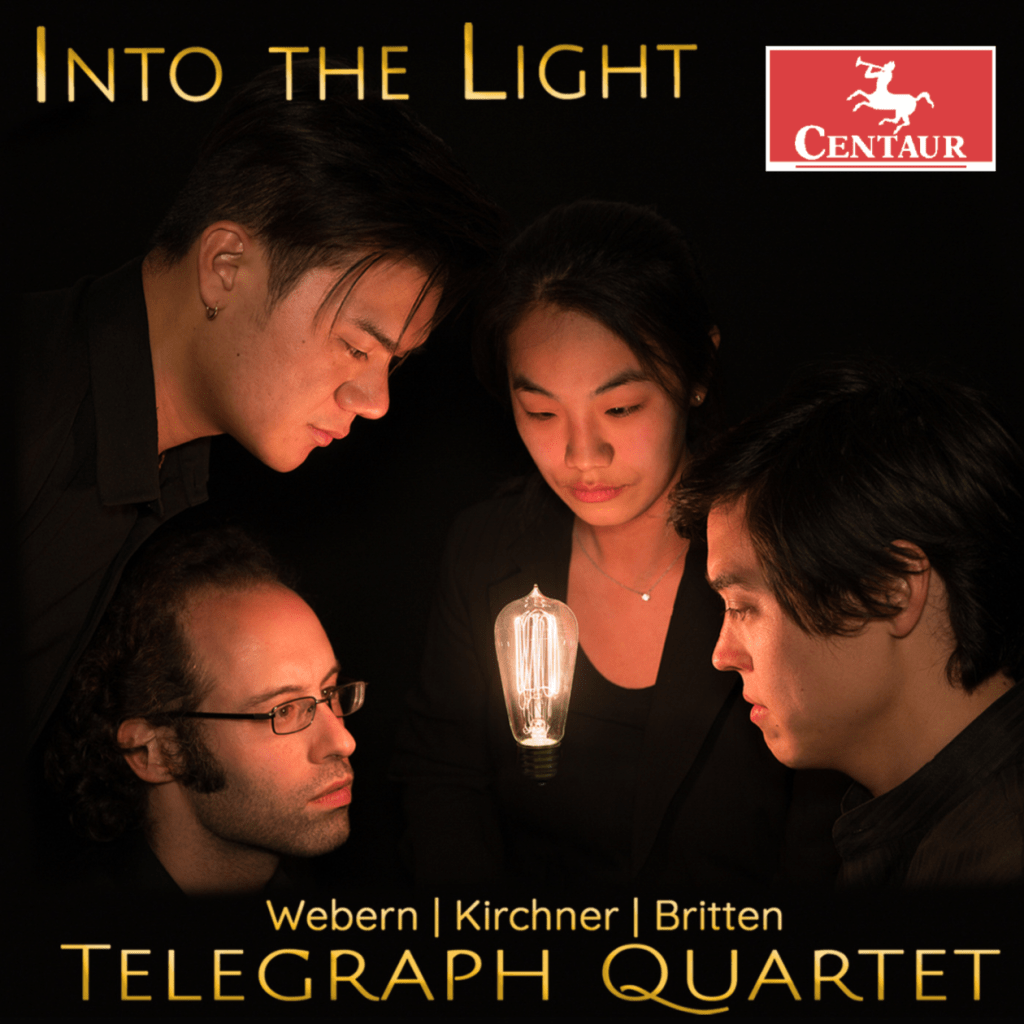
The creative programming and dedicated playing made this a popular review to New Music Buff readers. Definitely want to hear more from the Telegraph Quartet.

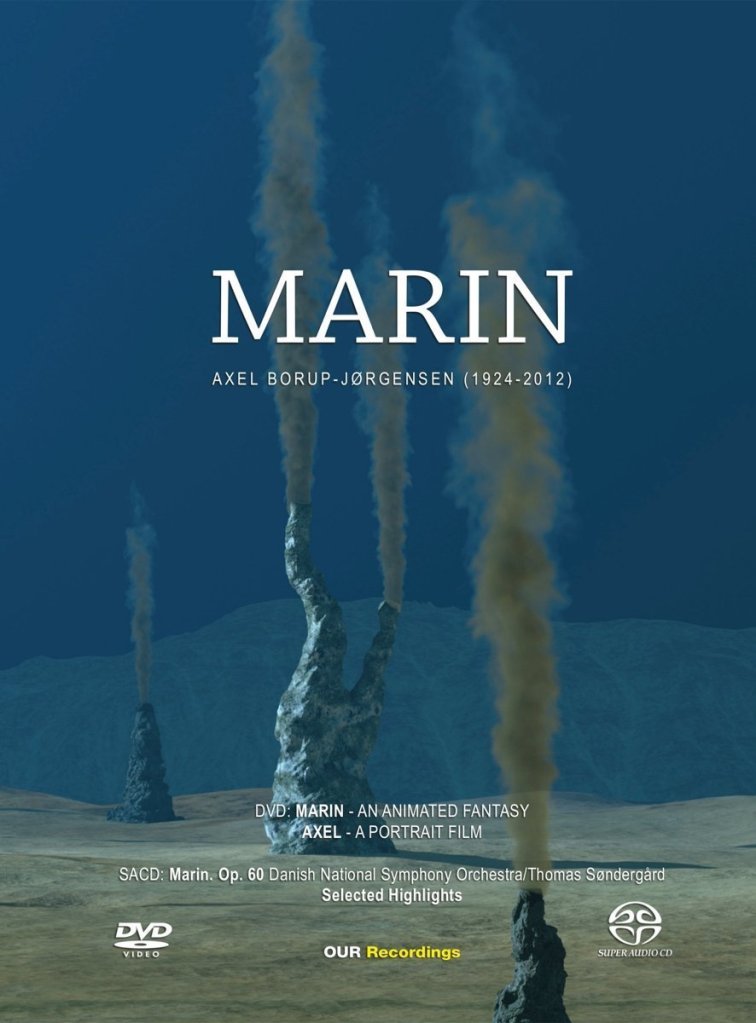
Another disc sent by my friend Joshua. This one is a DVD/CD combo of music by a composer whose existence was only revealed to me a couple of years ago. Marin includes a clever animated video which accompanies the title track.

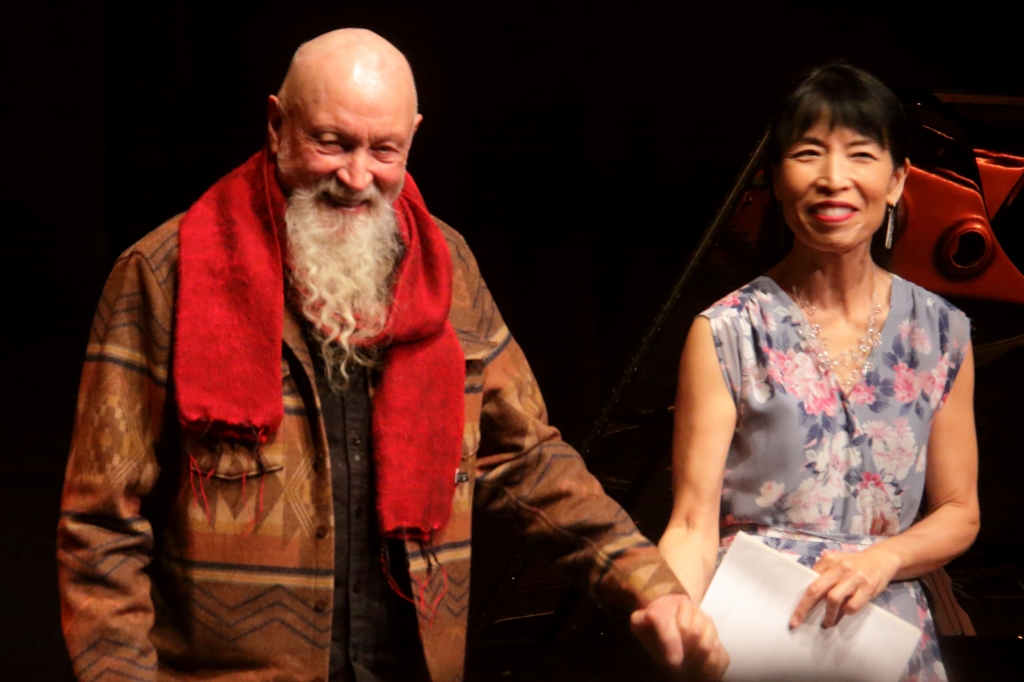
I was fortunate enough to have been able to hear Terry Riley and Gloria Cheng in an all Terry Riley program at the Yerba Buena Center for the Arts. Both were in spectacular form and the audience was quite pleased.

I would be remiss if I didn’t include the fabulous 6 night series of concerts produced by Other Minds. This is why I am a rabid advocate of OM programs. More on that soon with OM 24 coming up.

And lastly I want to tell you about two more composers who are happily on my radar.

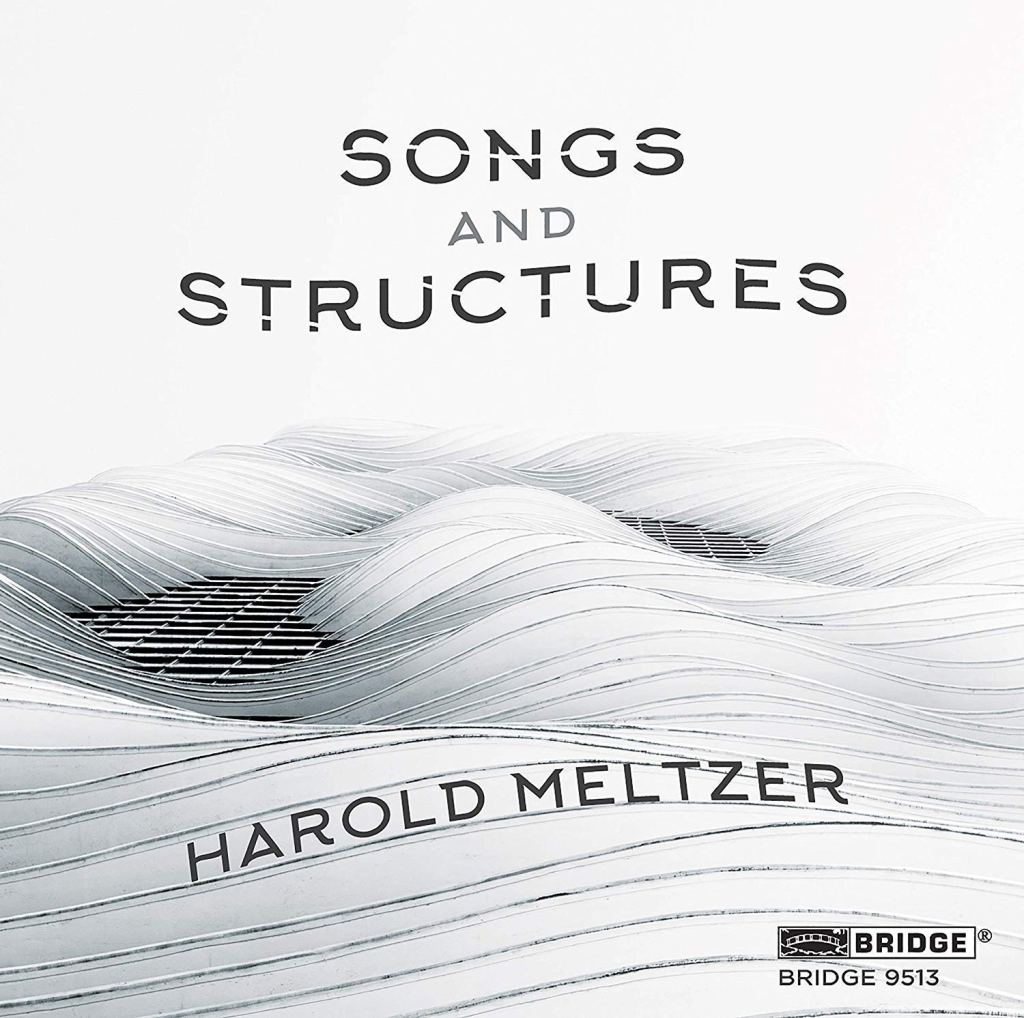
One of the joys of reviewing CDs is the discovery of new artists to follow. Harold Meltzer is now in that group for me. This basically tonal composer has a real feel for writing for the voice and has turned out some seriously interesting chamber music.

Another composer unknown to these ears. I bristle at the term “electroacoustic” because it sometimes means experimental or bad music. Not so here. Moe is fascinating. Definitely worth your time.

OK, gonna can the objectivity here to say that this is possibly the most underappreciated album I’ve heard this year. Combining a recording of the Debussy Preludes along with Schoenberg’s rarely heard “Hanging Gardens”, Webern’s Variations, and Berg’s Piano Sonata creates a picture of a moment in history when music moved from impressionism to expressionism. Jacob Greenberg is very much up to the task. Buy this one and listen, please. It’s wonderful.

Also beyond objectivity is this fascinating major opus by Kyle Gann. It didn’t get much recognition on my blog but it’s a major work that deserves your attention if you like modern music.

Well this is one of my favorite reviews in terms of the quality of my writing. The work is most wonderful as well. Though this review was actually published on December 31st I’m still including it in my 2018.

This is definitely cheating on my part but after that concert at Yerba Buena I can’t resist making folks aware of this wonderful set on the independent label, “Irritable Hedgehog”. Trust me, if you like Riley, you need this set.

I review relatively few books on this site but by far the most intriguing and important book that has made it across my desk to this blog is Gay Guerilla. The efforts of Mary Jane Leach, Renee Levine Packer, Luciano Chessa, and others are now helping to establish an understanding of this composer who died too young. Here’s looking forward to next year.

I know I have left out a great deal in this quirky year end selection but I hope that I have not offended anyone. Peace and music to all.

Mechanical and Microtonal: Kyle Gann’s “Hyperchromatica”


gannchrom

Other Minds OM 1025-2

Kyle Gann‘s interest in the microtonal has been evident at least since his opera Custer and Sitting Bull (1997-99).  Many will be familiar with his justly famed monograph on Conlon Nancarrow’s player piano works.  Given that history this release seems almost inevitable, a series of works (or perhaps it is one big work) written for 3 computer controlled pianos tuned to his 33 note scale based on the harmonics of the E flat scale.

This is also hardly Gann’s first foray into the world of the player piano (as it was called in a different age).  His 2005 Nude Rolling Down an Escalator album contains some of his etudes for this computer controlled instrument which is the modern equivalent of the player piano.  And in addition to his fascination with alternate tunings and scales it should be noted that Gann is also somewhat of an expert as regards the player piano itself.  Gann authored one of the finest books on that composer’s music, “The Music of Conlon Nancarrow” (1995).  So it appears intuitive that he would write a magnum opus for the modern equivalent of the player piano, the disklavier, a computer controlled piano.

Gann refers to this work as being the longest composition for a keyboard in alternate tuning.  Indeed this would appear to be the case but a listener could easily hear these as  individual works with poetic titles like one encounters in Debussy’s Preludes.  Like those works one can listen to them individually or as a complete set.  But regardless of how you may choose to file these in your head this is an intriguing and engaging work (or set of works).

A work of  this dimension will necessarily invite comparisons to The Well Tempered Clavier, The Art of Fugue, and similar works because it effectively demonstrates the scales and the various musical possibilities unlocked by the different tuning much as Bach did nearly 300 years ago with well tempered tuning (or, in the latter example, the possibilities of counterpoint).  This work is like a major thesis on alternate tunings and the effects it has on melody and harmony.  Some listeners will be familiar with the interesting but less comprehensive Microtonal Music (1996) CD by Easley Blackwood.  Using a synthesizer Blackwood explores tonal and melodic relationships of various different tunings achieving some of the same goals as Gann.

The titles the composer uses reflect his ongoing fascination with things cosmic as he did with his, “The Planets” (1994-2008).  In this respect we hear Gann, the romantic, writing little tone poems.  Now these tone poems put the listener into a different universe but they fit the same logical category as tone poems written in a more familiar tuning system and hence have the more romantic quality of representational (as opposed to absolute) music.  Of course the composer’s intention of exploring this tuning system keeps this work also in the category of absolute music meaning that it is in large part about the tuning system.  Unlike the Blackwood experiments which were about finding functional harmonies (at least in the commonly understood western music definition) Gann’s work is about expression, motives, melodies.  It is, if you will, a logical step for one who has worked intensely with the complex rhythms endemic to Nancarrow and the fascination with alternate tuning systems gleaned from both western music history and world musics.

Since the end of the Baroque era western music adopted well tempered tuning as a standard and the result is that hearing these alternate tunings sounds wrong to most ears.  One of the things Gann is doing here is to make a foray into what will likely be a more common practice, that being the use of alternate tunings.  They are quite approachable and listenable in this context.


A Wonderful Survey of Helmut Lachenmann via his Clarinet Music


aestheticapp

New Focus FCR 196

Helmut Lachenmann (1935- ) is a composer who has been “on my radar” for some years now but, like a lot of names I get, I had yet to hear much of his music.  Along comes Gregory Oakes  from, of all places, Iowa.  The Midwest in the United States doesn’t have much of a reputation for embracing the avant garde (though they actually do).  So into the CD player goes this one and…wow, I really need to hear more Lachenmann and whoever this Oakes guy is I want to pay attention to what he is doing with that clarinet.
Admittedly this disc languished a bit before I heard it but I am now glad I did.

This disc consists of only three tracks comprising three works by this major German composer from three different periods in his career.  Dal Niente (Interiur III), Trio Fluido, and Allegro Sostenuto.

Dal Niente (1970) is for solo clarinet and, as the title prescribes, the music is to be played as “from nothing” the meaning of the title.  In fact this seems to be practically a textbook of extended techniques for the clarinet.  But far from being a dull accounting of dry techniques, this is a tour de force which will challenge the skills of even the most experienced players.  It is quite musical and listenable but the virtuosity will knock your socks off.  Oakes pulls it off with a deceptive ease that demonstrates his rather profound knowledge of his instrument.  It is easy to see the seeming cross pollination between the avant garde and free jazz here.

Next up is Trio Fluido (1966-68) which is a respectably avant garde trio for clarinet, viola, and percussion with Matthew Coley, percussion, and Jonathan Sturm, viola.  Like the previous work this one is also about extended techniques (for all three instruments this time).  This is a fine example of mid-twentieth century modernism and deserves a place in the repertoire.  All three musicians are challenged to play their instruments in unconventional ways and the effect is almost like some of the electronic music of the era.  It is a complex and pointillistic texture that has a strong and serious content.

Finally Allegro Sostenuto (1986-88) is another trio, this time for clarinet, cello, and piano.  So while this work would make a fine companion work to the Brahms clarinet trio the work is unambiguously avant garde in the finest Darmstadt traditions.  It is, at about 30 minutes, the longest piece here and it reflects the further maturity of the composer as he creates another challenging but almost surprisingly satisfying work.

This album serves as a nice way to be introduced to Helmut Lachenmann and to get to know some major new champions of the avant garde.  And one would do well to stay informed about the work being done by this fine new music clarinetist.


A Major Peter Garland Work


garlandlandscape

The Whole Earth Catalog turned 50 this year.  It was in the 1980 edition of this classic publication that this writer stumbled across and embraced a small article which listed, “A Basic 10 Records of American Composers”.  It was written by one Peter Garland and forever influenced most of my subsequent listening choices and purchases.  For the record they are:

The Complete Music of Carl Ruggles (recently released on CD Other Minds OM 1020-21-2)

Piano Music of Henry Cowell (Folkways FM 3349)

Ameriques, Arcana, Ionisation by Edgar Varese (Columbia M 34552)

Peaens, Stars, Granites: Music by Dane Rudhyar and Ruth Crawford Seeger (CRI  S 247)

Ives: Three Places in New England, Copland: Appalachian Spring (Sound 80 DLR 101)

Music of Silvestre Revueltas (RCA)

Conlon Nancarrow: Complete Studies for Player Piano (Other Minds CD 1012-1015-2)

Lou Harrison: Pacifika Rondo and other works (Desto DC 6478)

Harry Partch: Delusion of the Fury (Columbia M2 30576)

John Cage: Three Dances for Two Pianos, Steve Reich: Four Organs (Angel S 36059)

And I start here to illustrate the range of this still too little known composer, musicologist, writer, musician.  Peter Garland (1952- ) doesn’t even have a dedicated website as of this writing and this list helps to put him in a context.  But a quick look at Google, Wikipedia, and Baker’s Biographical Dictionary will confirm that Garland is indeed a prolific composer as well as an accomplished and dedicated musicologist. The list of albums reflect far ranging tastes and interests. That 1980 article serves to reflect how his scholarship reached effectively beyond academia and reached a much wider audience and the same wide embrace is slowly being realized about his musical output.

pgarland

Peter Garland

He studied at Cal Arts with James Tenney and Harold Budd.  He started Soundings Press after attending a workshop with Dick Higgins.  Soundings press published articles by Garland and other musicologists.  Garland has focused on Native American and Latin American indigenous musics and is regarded as an expert in these areas.  Hie own music employs a variety of styles including minimalism and some use of folk melodies but he doesn’t really sound like anyone else.

His compositions almost seem secondary to his academic pursuits and, despite tantalizing descriptions of Garland’s performances in places like EAR magazine his music was hard to come by for some time. There have been a few recordings and, for those who don’t know his work, here is a little discography:

  • 1982 Matachin Dances (EP, Cold Blue)
  • 1986 Peñasco Blanco (Cold Blue, reissued on Nana + Victorio, 1993)
  • 1992 Border Music (¿What Next?, reissued on OO Disc, 2002)
  • 1992 Walk in Beauty (New Albion)
  • 1993 Nana + Victorio (Avant)
  • 2000 The Days Run Away (Tzadik)
  • 2002 Another Sunrise (Mode)
  • 2005 Love Songs (Tzadik)
  • 2008 Three Strange Angels (Tzadik) reissue of Border Music expanded with live recordings
  • 2009 String Quartets (Cold Blue)
  • 2011 Waves Breaking on Rocks (New World)
  • 2015 After the Wars (Cold Blue) EP with Sarah Cahill
  • 2017 The Birthday Party (New World)

Fortunately there are a few record producers who have recognized Garland’s talents.  And it should come as no surprise that these producers are of the independent label variety.  Starkland Records is indeed one of those independents with a reliable nose/ear for good new music and have chosen to record a major opus, The Landscape Scrolls.

This choice embodies much of what is great about Peter Garland.  In this work we get exposed to his scholarship of the stories and symbols of the scrolls as well as some insight to his interest in experimental and unusual instruments.  This is in fact a percussion piece but not the percussion music of your mother’s generation.

Commissioned by and dedicated to percussionist John Lane, The Landscape Scrolls (2010-2011) depicts the 24-hour day cycle in five movements. Garland remarks the work was influenced by Indian ragas, Japanese haiku poetry, and, especially, the famous Landscape Scroll of the Four Seasons by Japan’s 15th century painter Sesshu.

Each of the five movements is a metaphorical monochromatic study, more about resonance and space than melody or harmony: mid-day (Chinese drums); afternoon (rice bowls); after dark (triangles); late (glockenspiel); early morning (tubular bells). Garland notes that, after the fact, he was likely influenced by his fascination with the single-tonal color paintings of Barnett Newman.

John Luther Adams, himself a composer of some significant percussion music lately, provides most of the lucid liner notes.  Clearly Garland is respected by his fellow artists.  This release provides a fine opportunity to get to know this American master through this major opus.  As usual the Starkland production is very well recorded and sounds great.  This one was really done right.


Ken Thomson’s Amazing “Sextet”


thomsonsextet

Panoramic Recordings

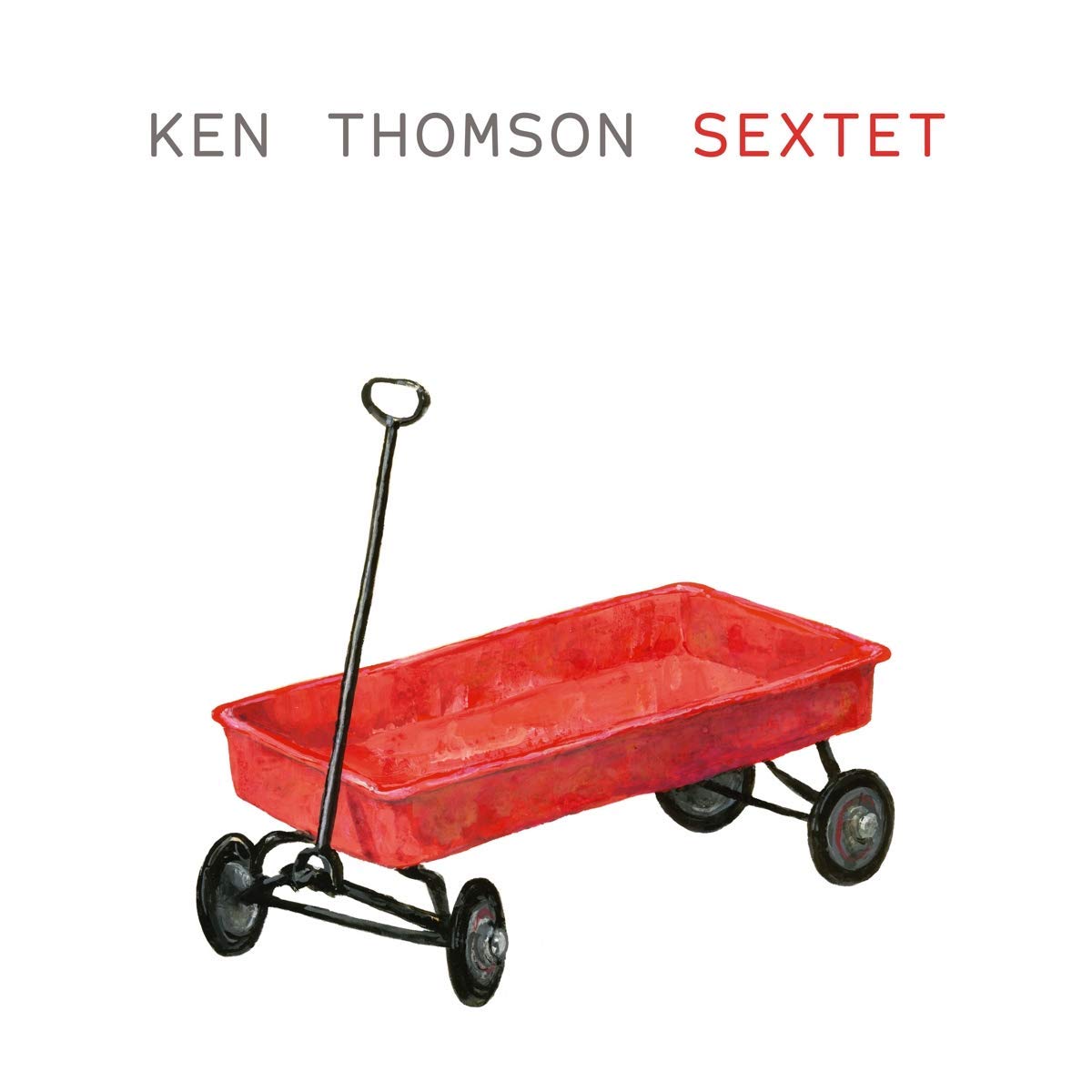
First of all this packaging is about twice the size of a normal CD package.  It is lovingly designed by Jason Das and visually suggests a sort of nostalgia for innocence, for childhood perhaps.  The performers are all of that “New York Downtown”/modern music background and this is a set of rigorously trained musicians.    Put them together as a sextet and tap their virtuosity as well as their improvisational abilities and some clever programming and you get this album.

It is an unusual but ultimately very satisfying album.  It starts with (of all things) a transcription of music by the late Hungarian master Gyorgy Ligeti, his Pasacaglia Ungherese (1978) which is originally for harpsichord.   This is hardly a “jazz” piece and one wonders at the choice of this particular work to be the one to make that all important first impression.  The transcription (by Ken Thomson) is quite effective however and very entertaining.  I’m not sure why the it was chosen but it works well here.

This leaves us with the remaining six tracks (all composed by Ken Thomson) which are more clearly in the realm of “jazz” the way most listeners are accustomed to hearing it.  Drums keeping the beat, a recognizable bass line, and improvisational solos over the harmonic progression.  These virtuosos are given a challenge by said composer and the solos which populate these tracks are one of the best things about this release.  Clearly these musicians are comfortable with their virtuosity and they seem to understand jazz.  They got and held this listener’s attention most immediately.

The Ken Thomson Sextet consists of Ken Thomson, composer and alto saxophone; Anna Webber, tenor saxophone; Russ Johnson, trumpet; Alan Ferber, trombone; Adam Armstrong, bass; and Daniel Dor, drums.  Clearly all these folks have a thorough knowledge of jazz performance and can take their audience on a mighty exciting ride.  The solos will stick in your head long after the initial thrill of your first hearing and this is a nicely balanced group functioning almost as a single entity.  Very cool.

This is chamber jazz at its finest.


J. P. Jofre Double Concerto


jofredouble

This writer’s first encounter with a bandoneon was the electroacoustic “cybersonic bandoneon” of Gordon Mumma from about 1966.  In fact the instrument has its origins around the beginning of the 20th century.  It is a small accordion-like instrument which relies on the performer operating a bellows while pushing buttons on the instrument which force air past reeds which vibrate at their tuned pitch.  It is a folk instrument in Germany and Argentina where it became best known as the workhorse of the tango bands of the time where it continues to be popular.

It’s appearance in the avant garde with experimentalists such as Mumma did occur but the instrument became best known through the work of Astor Piazzolla (1921-1992) who incorporated tango in much the way Aaron Copland incorporated American folk songs into his classical works.  Despite his popularization of the instrument it remains largely just one of the instruments in local tango bands and the classical world appears to have largely withdrawn its interest since Piazzolla’s passing.

JPJofre

Juan Pablo Jofre (from his web site)

Well along comes native Argentinian Juan Pablo Jofre Romarion (1983- ) who appears to want to change that.  In addition to running his own tango band and promoting the music of his predecessor Piazzolla he now ventures into the classical realm with no less than a double concerto for bandoneon (of course) and violin.

Now this is not the avant garde stylings of the 1960s and 70s such as that typified by Gordon Mumma.  It is also not the sort of experimentation done by Piazzolla as he incorporated his native folk musics into the realm of the classical stage.  Instead we have a classically trained virtuoso bandoneon player forging his own style which is in fact quite listenable and seems to be treading a path of significance that may rival his teachers and mentors.  If you need a category for this disc try neo-romantic or just world music.

It is not difficult to imagine Jofre writing for the instrument of his own virtuosity but he also manages to write a substantial part for the other instrument in this double concerto, a violin.  He engages Belgian classical violinist Michael Guttman to share the stage in this large and substantial composition from 2016-17 and gives him a great deal to do.

Jofre has distinguished himself as one of the important interpreters of tango with his own band and, in particular, the works of Astor Piazzolla.  Now we get to hear the next phase of this emerging artist as he ventures into the world of the classical stage bringing his diminutive folk instrument to the fore.

In this tasty little recording we get to hear two highly skilled soloists and none other than the Orpheus Chamber Orchestra who do justice to Mr. Jofre’s first (and one hopes not the last) concerto for bandoneon and violin with chamber orchestra.  It is difficult to say if Jofre is going to be able to handle large musical forms (like symphonies, opera for example) but he is quite adept at writing for these three to five minute movements which constitute the concerto’s structure.

Jofre is at his best writing for the two solo instruments and some of it is ravishingly beautiful.  All of it is quite listenable and one must surmise that Jofre is a rising star with great talent and that he will continue to write music of this quality and passion.  It would be wonderful to hear more of the possibilities of combining the bandoneon with other classical instruments, maybe a concerto for accordion and bandoneon (of course the possibilities are boundless).  Clearly this is just the beginning for this emerging artist who seems poised to take on the mantle of Argentina’s other great tango composer, Astor Piazzolla both in his compositional and performance skills.

This substantial concerto (which chooses to split the outer movements into two parts) covers five of the six tracks on this disc.  The remaining three tracks are for bandoneon and violin.  These duos provide a glimpse of the powerful and intimate nature of Jofre’s compositional skills.  This is beautiful music and here’s hoping  that this disc will be the start of a mini renaissance of tango, Piazzola, etc.

It may be some time before the bandoneon is a common instrument in classical concert halls (or maybe it will never become common) but there is no doubt that Jofre’s instrument and his music deserve serious attention.  I would stay tuned if I were you.

Josh Modney’s “Engage”, New Music for Violin Solo and Not Solo


modneyengage

New Focus FCR 211

This is an awesome undertaking.  I recall when pop musicians were cautioned that it may be unwise to release a so called “double album” for fear that their inspiration (or talent) may not be up to the task.  Well here comes Josh Modney violinist and Executive Director of the Wet Ink Ensemble , a member of the International Contemporary Ensemble (ICE), and a performer with the Mivos Quartet for eight years.  This 3 CD set is his solo violin debut album.  And what an album it is.  There is no lack of talent, skill, or imagination here.  This is essentially three faces of Josh Modney a sort of sonic CV.

The first disc features four tracks of music by contemporary composers for violin with soprano, piano, and/or electronics.  All four are fairly recent compositions:  Sam Pluta’s “Jem Altieri with a Ring Modulator Circuit (2011), Taylor Brook’s “Vocalise” (2009), Kate Soper’s “Cipher” (2011), and Anthony Braxton’s “Composition No. 22” (1998).All of these are challenging for the musicians and none are easy listening but all demonstrate aspects of Modney’s skills as a musician

The second disc features J. S. Bach’s “Ciacona” or “Chaconne” (1720) from the second violin partita.  But this is not just another performance of this towering masterwork of the solo violin repertoire.  Modney has chosen to perform it in just intonation.  Now how’s that for versatile?

The effect is subtle and may even be lost on some listeners but fanciers of Bach and alternate tunings will likely find this to be anywhere from mildly interesting to revelatory.  It is a fine performance and it is interesting to hear it in just intonation and amazing to know that this performer has this uncommon skill of playing accurately in an alternate tuning on the violin.

Filling out the second disc is a piece by pianist Eric Wubbels, “the children of fire come looking for fire” (2012).  This is a very different piece and I’m not sure why it was paired with the Bach except that it fit the available space.  Wubbels contribution is a sort of electroacoustic collage.

The third (and last) disc is of solo violin compositions by Josh Modney.  Again we move into contemporary and experimental compositions which reflect Modney’s skill with the instrument as well as his insights into it’s potentials.  Again there are no echoes of Bach here but rather more of the experimental/avant garde/free jazz style which dominates this album.  The solo violin repertoire is not huge so it is reasonable to assume that these little gems will find a place there.

This is a lovely production with striking cover art and excellent sound.  If you like cutting edge violin music you will have a wonderful time with these discs.  And if you’re looking for a wildly skilled and imaginative musician check this set out and get ready to be wowed.


Anne Akiko Meyers’ Romantic Post Minimalism Enthralls


aameyers

Avie AV 2386

Admittedly I am a sucker for nearly all things minimalist and post-minimalist.  Such programming can lead to some potentially dull or cloying experiences.  Not so with this lovely collection of miniatures though.  While minimalists like Glass and Pärt make their appearances the concept here seems to reach for larger goals.  We have a mix of relatively simple chamber compositions along with electroacoustic works, a revelatory take on Ravel’s Tzigane and and arrangement for violin and orchestra of a solemn choral piece by Morten Lauridsen.

This eclecticism seems to flow from the artist’s choices rather than choices imposed by a producer.  In this respect she reminds this reviewer of pianist Lara Downes whose repertoire choices are similarly eclectic but born very personally from the artists’ experiences and preferences.

The opening Philip Glass Metamorphosis Two (1988) is presented in an arrangement by none other than Glass’ long time champion Michael Riesman.  It is followed by two violin and piano pieces by Arvo Pärt, Fratres (1977) and Spiegel im Spiegel (1978).  These lovely works serve to draw the listener in most pleasantly.  Akira Eguchi is the fine pianist who plays on all but tracks 4, 7, and 8.

Next up is a piece of musical archaeology.  Tzigane (1924) was originally written for violin and piano.  It was later orchestrated and it is that version which is best known and probably most recorded.  Well it turns out that Ravel had made a version for a now defunct instrument called a Luthéal which is an instrument invented in the early 20th century (patented 1919).  It’s actually not so much an instrument as an add on.  It modifies the sound of a piano.  The device now exists in museums but that hasn’t stopped innovative producers from utilizing an electroacoustic version.  Elizabeth Pridgen plays the keyboard to which the lutheal is virtually attached.

Apparently this version has been recorded before but this writer encountered it first in this release.  It is a very different sound than the piano or orchestral versions and is a lovely take on the music.  Many may buy the album for this track alone.

This is followed by a charming lullaby written for Meyers’ youngest daughter.  John Corigliano has absorbed only a small bit of the minimalism bug (maybe his 1985 Fantasy on an Ostinato  qualifies) but he is one of our finest living composers and he appears to infuse this violin and piano miniature, Lullaby for Natalie (2010) with a tender romanticism that is both sweet and touching.  In the notes we learn that it did seem to put her daughter to sleep but I doubt it will do that to most listeners.

The next two tracks are works by one Jakub Ciupinski  (1981- ) who also has a stage persona under the name Jakub Ζak under which he performs live electronic music.  This Polish born composer is now based in New York and works with various forms of electronics including a theremin.  Both “Edo Lullaby” (2018) and “Wreck of the Umbria” (2009) come from a similar place musically.  Both use electronics in varying degrees to enhance and accompany the solo violin.  Both are delightful little gems that give a nod to some minimalist roots but stand on their own merit and prompt this listener to keep an eye/ear out for more of this composer’s work.

The concluding piece is an arrangement by the composer Morten Lauridsen (1943-  ).  The performer states she pursued Lauridsen for a new piece and when he finally acquiesced he presented this lovely arrangement of his well known choral piece, “O Magnum Mysterium”.  The arrangement is for string orchestra and violin and orchestra here given its world premiere performance.  It should come as no surprise to new music fanciers that the Philharmonia Orchestra is conducted by none other than Kristjan Järvi, a fine conductor, composer, and avid new music advocate who can always be found near some interesting musical projects.

This album stands out in that the choices of the musical selections and the personal connections between the composers and the soloist are clearly collaborative and  inspired.  This is substance rather than fluff but it may appeal to a wider audience.  This one can be said to have crossover hopes but it does not pander.  This is a wonderful album and will likely prompt listeners who, like this writer, have yet to know this soloist to go and seek more of her recordings and live performances.  Brava!


Quince Ensemble: Motherland


quince

New Focus FRC 203

I looked at the rather drab cover.  I had never heard of the Quince Ensemble nor any of the composers featured on this disc.  I looked again at the cover.  Clearly it was labeled with one of those parental advisory warnings which one rarely sees on a classical recording.

My usual practice is to do some research before spinning a given disc but I decided to just put this one in the CD player cold.  I had about an hour’s drive ahead and I decided to just let the disc speak for itself.  But my spidey sense suggested I might be in for a rather dull listen.

So much for my superhero powers.  From the moment the first track played I felt drawn in.  What I heard seemed to be a mixture of Peter Kotik (of Many, Many Women in particular), Meredith Monk, a touch of La Mystere de Voix Bulgare, the west coast group Kitka, and a few others).  That is to say that this disc grabbed my attention and had echoes of a few other contemporary vocal music styles.  What I heard was very compelling, creative, practiced, passionate.

This is mostly an a capella group though they made very effective use of harmonicas as drone material at one point.  Even after reaching my destination (achieved before the disc ended) I couldn’t bring myself to shut it off so I stayed parked and listening til I had heard the entire disc.  Yes, it was THAT compelling.

Complicating the reviewer’s task further is that the disc contains four compositions by four composers whose first appearance on this writer’s radar was from this very disc.  All four are world premiere recordings and all are by women composers.

The Quince Ensemble consists of Liz Pearse (soprano), Kayleigh Butcher (mezzo soprano), Amanda DeBoer Bartlett (soprano), and Carrie Henneman Shaw (soprano).  And this is the fourth album dedicated entirely to this ensemble’s work.  Two previous albums were appearances and collaborations.

The featured composers are (in order of their appearance on this release): Gilda Lyons (1975- ); Laura Steenberge; Cara Haxo (1991- ); and Jennifer Jolley (1981- ).  All appear to be Calfornia based and at the beginnings of what will doubtless be some interesting careers.  I will leave it to the interested reader to look into the details available at these various web sites but, after listening to the music, most listeners will want to know more.

The pieces range from Lyon’s Bone “Needles” coming in at just over 4 minutes to the next two multiple movement pieces and finally Jolley’s “Prisoner of Conscience” which is an homage to the politically active musical group, “Pussy Riot”.  This is the longest and most political piece on the album.

From the initial (and incorrect) assumption that this would be a dull disc to the end of this listening journey I came to see this disc in quite a different light.  The cover now seems friendly and appropriately representative of the album.

Rather than go into a bland or potentially inaccurate analysis of these pieces suffice it to say that this is effective and affecting music by a delightfully talented and energetic ensemble.  If you like vocal music, political music, music by women, or are just looking for something to lift you from your daily malaise give this one a try.  You will be both challenged and entertained.  No doubt this group would be fantastic in a live performance but for now we shall have to make do with this wonderful recording.


Osmo Vänskä’s Mahler 6th on BIS


mahler6vanska

I have heard varying opinions on the conducting skills of Osmo Vänskä.  He is the music director of the Minnesota Orchestra since 2003 and, prior to that, a conductor of the wonderful Lahti Symphony Orchestra.  I very favorably reviewed his Kullervo disc from last year.

The Mahler 6th and, I suppose, with pretty much any Mahler there are many critiques of the music and the performances.  So many complexities with tempo, handling the massive orchestra to bring out one nuance or another, order of movements, etc.  One thing is for certain, no Mahler aficionado will be satisfied with only one recording of each of his works.  There appear to be no definitive recordings agreed upon by all.  By contrast most people seem satisfied with perhaps Herbert von Karajan’s interpretation of the Beethoven Symphonies as being at least a good starting point.

One must recall that Mahler’s music was not well appreciated for a number of years.  Though he gave performances of all his major works interest in them faded rather quickly after his death in 1911.  Performances did occur but critics generally regarded Mahler’s music as dismissable efforts calling it “conductor’s music”.  It wasn’t until Leonard Bernstein began earnestly performing these works that the current cult of Mahler actually took root.

I preface my review with these comments to say that I enjoyed this disc immensely with its gorgeous sonics (as always with BIS).  Vänskä produces a lucid performance which differs from many in tempo choices and such but seems, to this reviewer’s ears, to do justice to this large and masterful work.  In the end the experience is one of a valid performance (he places the slow movement as second) which provides another view of this complex work.  And part of the cult of Mahler, it seems, is the need to own multiple performances.

This may not be the only Mahler Sixth you will want to own but it is definitely worth hearing, preferably on a good sound system.

In the Beginning Was the Word: Other Minds 23


OM202006

Charles Amirkhanian performing one of his spoken word compositions at Other Minds 20 in 2015

Other Minds has been the the darling of composer/producer Charles Amirkhanian since its founding in 1993.  Along with television producer and arts patron Jim Newman he has presided over the 25 years of this renowned festival which has consistently brought the finest new music composers and performers to San Francisco.

There is little doubt that this year’s festival has to be very close to Amirkhanian’s heart.  Words have been central to his career at least since 1969 when he began his work as a producer at KPFA.  In the 23 years he spent there he presented countless hours of musical programming and interviews.  He crossed paths with most of the major stars in contemporary classical music and many stars whose genre may not be captured by the classical label.  A look at his programming choices and interviews from his time there defined new music for the Bay Area and beyond.  After his tenure at KPFA ended in 1992 he continued exploring cutting edge music and musicians bringing them to San Francisco for live performances.

His work as producer and curator has tended to overshadow his work as a composer, sound poet, and spoken word artist.  This year’s OM festival is dedicated to speech, sound poetry, and the spoken word.  It is about both the history and the present state of the art.  In many ways Amirkhanian’s 1975 release “10 + 2: 12 American Text Sound Pieces” on 1750 Arch Records (now on an OM CD 1006-2) can be seen as sort of the starting point for this festival.  This masterful anthology includes works by Charles Amirkhanian (1945- ), Clark Coolidge (1939- ), John Cage (1912-1992), John Giorno (1936- ), Anthony Gnazzo (1936- ), Charles Dodge (1942- ), Robert Ashley (1930-2014), Beth Anderson (1950- ), Brion Gysin (1916-1986), Liam O’Gallagher (1917-2007), and Aram Saroyan (1943- ).


“Word! Thou word that I cannot speak!

At the end of the second (and last completed) act of Arnold Schoenberg’s powerful opera “Moses und Aron” (1932) Moses sings, or actually half speaks and half sings this text lamenting his expressive deficits.  Speech song or, in German, sprechgesang is an invention by Schoenberg in which the singers are asked to find a point between speech and music.  Perhaps this is a good example of some of the artistic thinking going on at about the time when speech music/sound poetry began to take shape.

bio_schwitters_kurt

Kurt Schwitters (1887-1948)

Some of the history of sound poetry is featured in this unprecedented 6 day festival (April 9-14).  Some of the earliest practitioners of this unusual genre include the German artist Kurt Schwitters whose composition Ursonate (1922-32) will be performed in its entirety, a rare event by itself.

Another early gem will be the Spoken Music (1930) by German-American composer Ernst Toch.  This three movement suite has been known for its last movement, the Geographical Fugue.  The other two movements, once thought lost, were discovered in sketches in 2006 and reconstructed by Christopher Caines.  The now complete version will be presented I believe on day 3.

Composer-Ernst-Toch-810

Ernst Toch (1887-1964)


It is beyond the scope of this blog post to tell the history of text sound so I will refer readers to the Other Minds website for further details.  Or you could come to the festival too I suppose.

With due respect given to the past the festival will move on to the present.  San Francisco Beat Poet Michael McClure (1932- ) will make an appearance as will post beat colleagues Anne Waldman (1945- ), Clark Coolidge (yeah the guy from that cool anthology), Aram Saroyan (another guy from the classic text sound disc).

curran20160010

Alvin Curran in conversation last year in Berkeley.

Other Minds alumnus Alvin Curran (1938- ) will be premiering his collaboration with Clark Coolidge entitled, Came Through in the Call Hold.  Curran’s eclectic sensibilities will doubtless result in an interesting composition.  This event alone, at least for this writer, is worth the price of admission.  And this is just the first day!

Other events include workshops, discussions of the history of the art, and even some curious variations on a theme.  Apparently the writer Lawrence Weschler is the grandson of Ernst Toch and has written a variation on the Geographical Fugue called, The Medical Fugue which will be premiered at this festival.

The increasingly ubiquitous pianist Sarah Cahill will be present to perform Virgil Thomson’s unusual but entertaining setting of a Gertrude Stein (a one time Oakland resident) text called Capital, Capitals.  She will accompany the men of the Other Minds Ensemble.  Jaap Blonk will be tasked with performing Schwitters’ Ursonate and, along with Enzo Miranelli will also perform other historical works including some by a couple of Italian Futurists.

Other Minds Administrative Director Randall Wong will end the evening by undertaking a performance of the late great Cathy Berberian’s Stripsody.  That promises to be a wild evening I think.

blonk_75_2500crop

Jaap Blonk (1953- )

Northern Europe, including the Netherlands and the Scandinavian countries will literally have their day.  As it turns out they are doing a great deal of creative work in this increasingly diverse genre of speech music.  Other Minds is at its best in introducing the new and the innovative from wherever Charles’ radar has tracked it down.  Indeed Mr. Amirkhanian and his wife, artist/photographer Carol Law traveled throughout these regions in the early 70s talking with and learning from these diverse artists.  (Amirkhanian’s work, Just was recorded in a Scandinavian studio during one of those trips).

As usual homage will be paid to the past with some recorded classics by Sten Hanson, Åke Hodell, and Lily Greenham.  Some new voices will be introduced including Tone Åse and Sten Sandell.  The Norwegian/Russian-American duo OTTARAS (consisting of visual poet Ottar Ormstad and composer Taras Mashtalir will also perform.   One can fully expect a mind expanding experience which will redefine the possibilities of the art form.

Auspiciously or perhaps dangerously Friday the 13th has been reserved for Bay Area talents.  First up will be the man of the hour, Charles Amirkhanian.  Hearing him do his work live is an uncommon but entirely enjoyable experience.  If that alone weren’t enough we will get to hear the even rarer public collaboration between him and his life partner Carol Law whose photography and collage work deserves wider recognition and will happily get that here.

Amy X Neuberg

Amy X Neuberg.

Trained in both linguistics and music, Amy X Neuberg will be on hand to perform her indescribable electronic cabaret including the world premiere of “Say it like you mean” and other genre bending work.  She is another valued Other Minds alumnus having given numerous performances at the festivals.

Stanford professor Mark Applebaum, another alumnus will present “Three Unlikely Corporate Sponsors” which premiered at Stanford in 2016.  Enzo Miranelli will conclude the evening with his theatrical combination of movement and text in “Fame: What I Want to Say”.

20130218-132303.jpg

Pamela Z

The festival concludes on Saturday April 14th with Jaap Blonk followed by the wonderful San Francisco based Pamela Z who, like Neuberg uses electronics, but creates her own unique sound world.  She too is an alumnus of Other Minds.

Another composer from that great anthology, Beth Anderson, will make an appearance to perform “If I Were a Poet”, “I Can’t Stand It”, and “Ocean Mildew Minds”.

The finale will feature Susan Stone and Sheila Davies Sumner performing excerpts from two works, “House with a View” and “Loose Tongues” both dealing with the lives of working class southern women.

This will be both a feast and a marathon but it promises to be one of the finest Other Minds productions maybe ever.  Come to be entertained, come to be challenged, come to expand your mind.  You’ll never be the same.  See you there.

The Alchemy of Diversity at Sound and Savor


bialys

Freshly baked bialys right out of the oven opened the brunch.

This is another in the continuing account of my encounters with Philip Gelb’s underground vegan salon now called Sound and Savor.  For some twelve years now he has hosted a series of dinners, brunches, and cooking classes.  Many of the multi-course meals also feature some of the finest musicians, many from San Francisco and the east bay.

Today’s brunch started with fresh brewed coffee with a dollop of ginger (vegan) ice cream along with fresh baked bialys with cashew cream, pickled red onions, and “carrot lox”.  So we began with a vegan Jewish theme.  Needless to say these were delicious and the coffee helped waken anyone not ready for this 11AM start.

img_0204

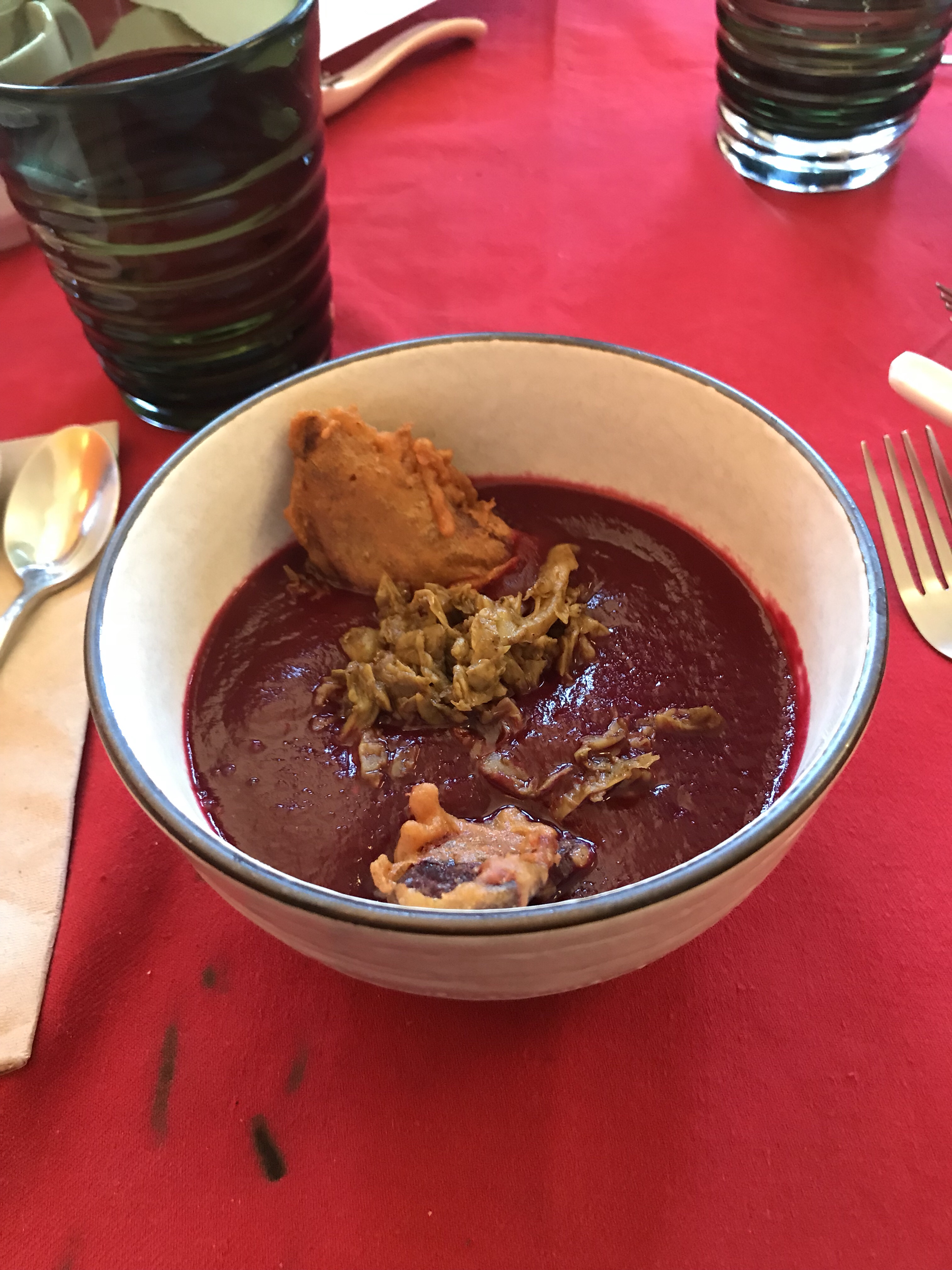
The next course was a similarly delicious borscht (beet soup) with beet pakoras.  And clearly Phil has introduced this traditionally Indian dish which worked remarkably well with that soup.  Again all were hot out of the pot/fryer clearly in our view.

As Phil performed his culinary alchemy in the kitchen we were most attentively served by his assistant for this meal, Letitia, a smiling joy of a woman who seems to have the knowledge and genuine caring of customer service in her blood.  She was equally attentive to all in the crowd of about twenty diners with the usual mix of familiar faces and few new ones.  Indeed the beautifully presented courses came at just the right pace.

img_0205

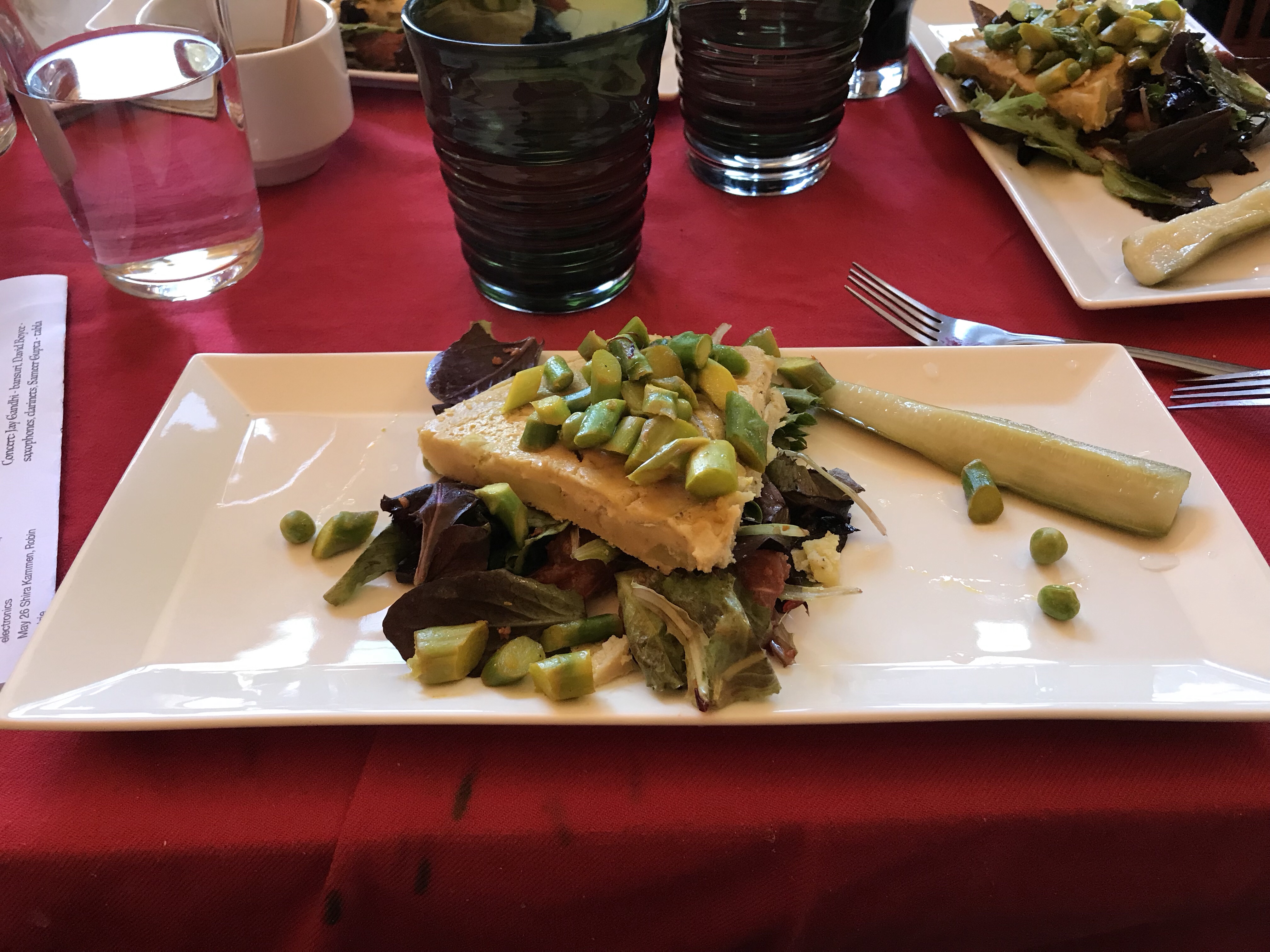
The main course in this brunch was a Potato-Onion Tortilla, blood orange salad.  And once again the diversity of cultures mixed to truly savory results as the friendly conversations flowed.  At this point even the hungriest would hope for a pause and that’s exactly what happened.

img_0210

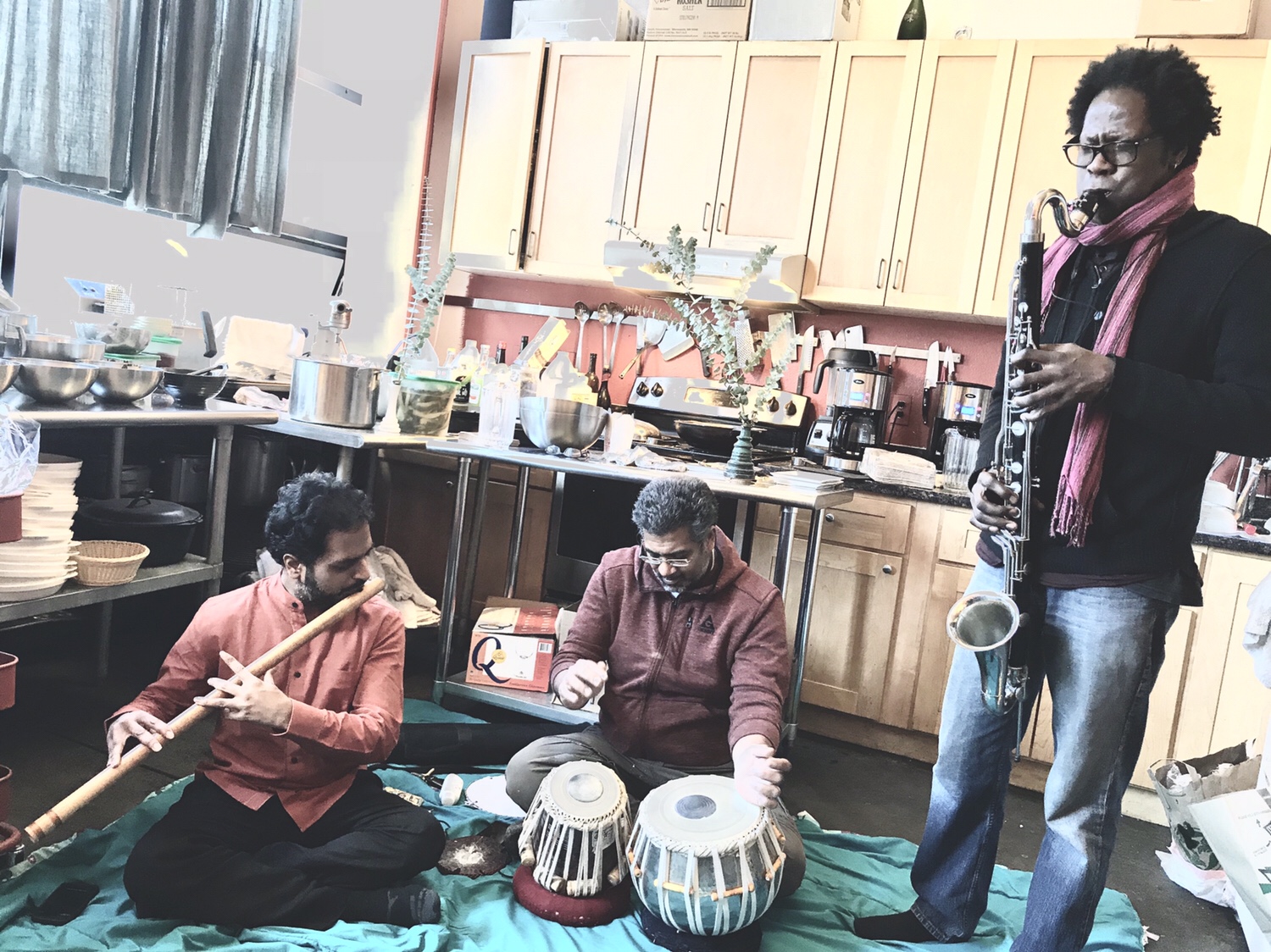
With a judicious touch of rearranging Phil prepared a performance space for the three musicians who graced us on this beautiful sunny Oakland day.  Jay Ghandi, bansuri (Indian Flute), Sameer Gupta, tablas (a staple of Hindustani music), and David Boyce, saxophone and bass clarinet (need I say a staple of jazz?).  The alchemy of the food would now find an analogy in this jam session.  Boyce and Gupta had played here about a year ago and Ghandi is a frequent collaborator with both musicians.  All three had played yesterday in San Jose and were scheduled to play in San Francisco at the Red Poppy Art House.  They are touring to promote their recent release A Circle Has No Beginning.  These are just three of the musicians who participated in this crowd sourced disc which is itself worth your attention.

The energy was immediately palpable as seen in this excerpt from one of three pieces they played.

This last excerpt demonstrates the ease of communication between these musicians who blend diverse backgrounds of jazz and Hindustani musics seamlessly into something new and wonderful.  The audience was energized to a level beyond what coffee could do and broke into appreciative applause after each piece.

The brunch ended with a dessert of (again fresh baked) Citrus Semolina Cake and more of that delicious coffee and ice cream.  And, of course, more conversation.

These events have become a regular part of this writer’s recreational time and a real reason to celebrate living in the diverse and creative east bay.  Phil’s judicious blend of cultures in his culinary experiments provide a parallel to his curation of some of the finest musicians with the only purpose in both case to entertain and enlighten.  He achieved both is a big way this day.  Thanks to all who participated.

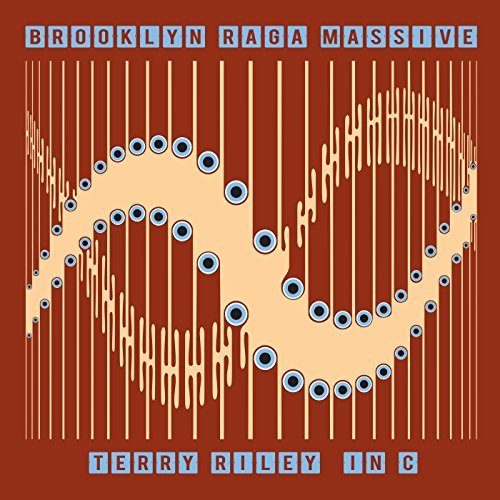
The Heresy and the Ecstasy: Brooklyn Raga Massive Does “In C”


brminc

This is heresy.  It is not, strictly speaking, faithful to the 1964 score and it is a sort of cultural appropriation which is actually the very basis of Brooklyn Raga Massive, a sort of latter day “Oregon” (to those who recall that band) which takes on all sorts of music and filters it through the unique lens of this flexibly populated group of musicians whose backgrounds range primarily from Hindustani and Carnatic traditions (though hardly in the most classical sense) but also from western classical and jazz.  Their “heresy” comes from their choices.  The root of heresy is the Greek word, “hairesis” which means choice.  There is a lovely selection of their musical heresies on their You Tube Channel.

No this is not purely heresy and it is certainly not blasphemy.  Quite the opposite actually.  And I would prefer to think of this effort as cultural integration.  The choices made here instead lead to some mighty ecstatic music making which pays honor to Terry Riley who turned 80 in 2015 and provides a unique perspective on this classic work.

“In C” (1964) is without doubt Riley’s best known work by far and the one which pretty much defined what would later become known for better or worse as “minimalism”.  It is an open score meaning that no instruments are specified for performance making this music heretical in nature as well.  In addition there is no conductor’s score as such.  Rather there are 53 melodic cells numbered 1 to 53 and the ensemble is held together by the expression of an 8th note pulse played by at least one of the musicians involved.  The defining reference on the intricacies of this work is composer/musicologist Robert Carl’s masterful book entitled simply, “In C”.  He describes the wide variety of potential choices which can be made in performance and the different results which can be achieved.

There are a great deal of recordings available of this work from the first (released 1968)  on Columbia’s “Music of Our Time” series curated by the insightful David Behrman to versions involving a wide variety of instrumental combinations of varying sizes.  The first “world music” version this writer has heard is the version for mostly percussion instruments by Africa Express titled, “In C Mali” (released in 2014).

Not surprisingly BRM, as they are known, have chosen a largely Hindustani/Carnatic take on this music.  The unprepared listener might easily mistake this for a traditional Indian music recording with the introduction which incorporates a raga scale and adheres to the traditional slow free rhythm improvisation of the introductory “alap” section common to such traditional or classical performances.

The familiar sound of these (largely) South Asian instruments with their rich harmonics sets the tone gently.  This writer has at best a perfunctory working knowledge of these complex and beautiful musical traditions but one must surmise that the choice of Raga Bihag may have some intended meaning.  Indeed such music is by definition integrated into the larger cosmology of Hinduism, the Vedas, the Gita, the Sanskrit language, and, no doubt other references.  This is not discussed in the brief liner notes but is worthy perhaps as a future interview question.

It appears that many of the musical decisions were made by sitarist Neel Murgai though it becomes clear as the performance develops that individual soloists are allowed wonderful improvisational freedoms at various points.  The recording is intelligently divided to let the listener know which set of melodic cells is being expressed at a given time.

The alap gives way to the sound of the tablas which initiate the pulse mentioned earlier.  The structure of this piece produces a range of musical experiences from a sort of didactic beginning to the swirling psychedelic waves of sound which stereotypically define much of the music born in the mid 1960s in this country.  In fact Terry Riley’s deep study of South Asian musics (most famously under vocalist Pandit Pran Nath) did not occur until later in his career.  Nonetheless there seems to have always been some affinity between Riley’s vision and the sort of music whose popularity was driven in the United States most famously by the efforts such as Pandit Ravi Shankar and Ustad Alla Rakha in the 1970s.

What follows is a riot of musical ecstasy involving some inspired improvisational riffs and some stunning vocalizations as well giving us a fascinating take on this music which was written well before these musicians came into the world.  We have a later generation paying homage to the beloved American composer and to the beautiful traditions of their own eclectic ethnic heritage.

The set concludes in this live and lively recording with a traditional fast paced Jhalla, the traditional ending to classical Indian musical performances. This will likely become known as the “Indian” recording of “In C” but it is so much more than that.  It is an homage.  It is a look back from the view of at least a couple of generations of artists.  And it is heresy in the best sense of that word, choices made judiciously to achieve higher artistic goals.  Not all art is heresy and not all heresy is art but the heresies perpetrated here definitely deserve our ears.

The heretics are: Neel Murgai, Sitar and Vocal; Arun Ramamurthy, Violin; Andrew Shantz, Vocal; Josh Geisler, Bansuri; Sameer Gupta, Tabla; Roshni Samlal, Tabla; Eric Fraser, Bansuri; Timothy Hill, vocal; Trina Basu, Violin; Ken Shoji, Violin; Kane Mathis, Oud; Adam Malouf, Cello; Michael Gam, Bass; Lauren Crump, Cajon; David Ellenbogen, Guitar; Max ZT, Hammered Dulcimer; Vin Scialla, Riq and Frame Drum; Aaron Shragge, Dragon Mouth Trumpet.

Namaste, folks.


The Rite Through an Eclectic Spectrum


spring

Composers Concordance com/con 0041

Gene Pritsker strikes again.  In this new work just released on CD he manages to pay homage to Igor Stravinsky in this eclectic parody of The Rite of Spring.  And one can’t possibly miss this as being a reference to Gil Evans orchestrations of Rodrigo in the classic Miles Davis album Sketches of Spain.

This is a parody in the classical sense that it uses melodies from the original to create a different musical context.  This is neither an imitation of Stravinsky nor of the Davis/Evans disc.  It is more like an updating of the Evans/Davis concept with an eclectic mix of musical styles which incorporates jazz and classical elements and is perhaps freer harmonically than the older disc and more angular in its treatment of themes.

Franz Hackl’s prominent trumpet takes on the initial bassoon riff which opens the actual ballet and along with Pritsker’s guitar these two instruments seem to provide a sort of backbone for the later inclusion of Chanda Rule (what a voice!) and the four other musicians.  Everyone gets a chance to shine much like traditional jazz and the listener will likely always be able to identify the section referenced from the original score.  This is not a deconstruction…well, not entirely anyway.

What is very clear is that these musicians are having a lot of fun (and so is the audience from the few moments where you can hear them).  There are 8 discrete tracks all recorded live (which tells you much about the musicians’ confidence in their virtuosity).  This writer can’t get over the impression that much of the inspiration here comes from  1970s musical styles.  Now that is not generally thought of as the high point of musical inspiration in the pop world but here it functions as nostalgic fun.  There is fusion reminiscent of some incarnations of Gong, guitar solos that would be the envy of any hair band guitarist, vocals, scat singing and rap that put this writer in the mind of Earth, Wind, and Fire at various times and perhaps even a touch of Chick Corea as he tried to hang a tapestry of jazz on Alice in Wonderland.

Each of the sections makes reference more or less directly to various sections of the original ballet score and the entire ballet is pretty much represented (or torn apart) depending on your point of view.  This is serious high energy virtuosic jazz by a truly driven and dedicated group consisting of: Gene Pritsker (guitar, rap, DJ), Chanda Rule (voice), Max Pollak (tap dancer, percussion, rap), Franz Hackl (trumpet), Greg Baker (guitar), Philipp Moll (bass), Gernot Bernroider (drums).

This is a very appealing album though all Stravinsky fans might not like it and maybe all jazz fans might not like it.  But those same statements could be made about the Miles Davis/Gil Evans recording reference earlier.

This live recording from the Outreach Music Festival 2014 in Austria was recorded by Sigi Konzett and Andreas Wein with mixing by Wein.  This release is on Composers Concordance Records.  It was set for release on December 8th.  Check it out.  It will rock your world.

Scott Wollschleger’s Soft Aberration


wollschlegersoft

New Focus FCR182

The cover and the booklet that come with this CD contain art that is a remarkably fitting metaphor for the music contained herein.  The almost monochromatic images with sometimes barely visible lines defining a space which requires serious concentration to discern effectively at times is very much like the music we hear on the disc.

Scott Wollschleger (1980- ) is an American composer who studied with Nils Vigeland at the Manhattan School of Music.  His work has been compared to that of Morton Feldman and, more generally, to the other members of the so-called New York School.  Vigeland has been active throughout his career performing and recording definitive versions of some of the best of Morton Feldman, John Cage, Earle Brown, and Christian Wolff.  It would appear that these voices and stylistic leanings are very much favored at the Manhattan School of Music.  A previous disc reviewed here with music by head of the composition department Reiko Futing, evokes a similar sound world.

This disc of chamber music contains five works on eight tracks ranging from 1’43” to 14’27” and all require almost as much concentration on the part of the listener as the extended techniques and performance requirements demand of the performers.  The dynamic range is from (generous) silences to forte.

The first track is by the seriously entertaining and odd piano trio called Longleash.  They demonstrate their expertise and concentration as well as their love for this musical genre in their performance of Brontal Symmetry (2015).  Unlike the other pieces here, Brontal Symmetry makes use of ostinati and there is a consistent sound field punctuated with silences.  It is an unusual but ultimately engaging piece.  Longleash consists of Pala Garcia, violin; John Popham, cello; and Renate Rohlfing, piano.

It is followed by the titular and sparse Soft Aberration (2013) for viola and piano played by Anne Lanzilotti, viola and Karl Larson, piano.  Though approximately the same length as the opening work the silences nearly suspend the perception of time and create a sense of sounds suspended in space in a sort of sculptural way.

Bring Something Incomprehensible into this World (2015) is for trumpet and soprano.  The three parts of this work are spread across the disc (tracks 3, 5, and 8) creating an even more spare sense.  It is interesting to play the three movements manually without the interruption of the intended track sequence to get a sense of the piece.  Again we have silences predominating with extended techniques demanded of the performers.  Andy Kozar plays trumpet and the soprano is Corrine Byrne.  The first movement at 6’39” is the longest followed by the second at 3’25” and the last at 1’43”.

America (2013) is a solo cello piece here played by John Popham (of Longleash).  It is a pointillistic mix of silence and extended instrumental techniques which makes reference to an art work by Glenn Ligon.

White Wall (2013) is for string quartet and is played by the Mivos Quartet consisting of Olivia De Prato, violin; Josh Modney, violin; Victor Lowrie, viola; and Mariel Roberts, cello.  This is an amalgam of unfolding processes which seem to be indiosyncratic to the composer.  It is very intimate music in that sense.  The piece is in two substantial movements.

The album concludes with the brief last part of Bring Something Incomprehensible Into This World.  Suffice it to say that there are attempts here to tie in philosophical as well as visual metaphors.  Wollschleger is apparently enamored of the writings of Deleuze, Nietzsche, and Brecht.  Her lies another tie in to the New York School with their love of visual metaphors and philosophy.  This is not an easy listen but it is a serious effort deserving of some attention.  The listener can decide whether the artists have indeed brought something comprehensible into this world…or not.


A Brassy 75th Birthday Celebration for John Corigliano


Cedille CDR 90000 169

John Corigliano (1938- ) is one of America’s finest composers.  He is to classical music in New York what Woody Allen is to the movies.  Corigliano is musical royalty.  His father was concertmaster under Leonard Bernstein among others (in fact he apparently worked as assistant to the producer on several of the Young Peoples’ Concerts).  His own accomplishments musically are many including a the very first Grawemeyer Award for his first symphony and a Pulitzer Prize for his second.  One could hardly find another musician as deserving of being honored.

From the very New Yorker style cover art this album affirms this composer’s iconic status.  But the artists here are good Chicago Brass players.  As a native born Chicagoan I have become accustomed to assuming that one can find some of the world’s finest brass players there and this album lays testament to that.  Gaudete Brass is an ensemble that definitely deserves your attention.

This is a fine tribute album featuring mostly world premieres but also some nice transcriptions.  This is effective though not overwhelmingly modern music for brass.  It is intended as and functions very well as entertainment and, from the sound of it, is also fun to play.

The original works are welcome as are the transcriptions of Corigliano’s Gazebo Dances. by the long time Chicago musician/conductor Cliff Colnot.  (One transcription is by the composer).  There are a total of three Corigliano pieces here and 13 by others.  One can only imagine the joy the composer will feel on hearing these tributes and the joy that any number of brass players will experience hearing this fine album.  As usual the Cedille recording is lucid giving a clear sound image of some truly fine musicianship.

The pieces here are good middle of the road compositions which pose challenges on the players but manage to be entertaining and nothing here sounds like an academic exercise.  Rather this disc is about celebration exactly as it purports.  Very enjoyable disc.

Dane Rousay’s Blip


cover

Dane Rousay is a San Antonio based percussionist and this is the first of several planned releases.  This is a solo effort largely with drum kit and perhaps a couple of enhancements or additional percussive hardware.  There are 8 rather brief tracks on this album, all of an experimental nature and all very well recorded.

One small disclaimer:  I generally don’t review download only releases but Mr. Rousay was persistent and kind in his requests for a review.  Another aspect is that there appears to be an increase in this purely digital release format and to ignore that in favor of a demand for a physical product would likely be missing an opportunity to hear some good work.

Despite the brevity there is much for the ear.  The percussion seems to be closely miked and that is apparently the point here.  Each track is like a mini-etude or experiment which will presumably be used as material for other work.  Whether this is jazz, free jazz, new music, classical, etc. is actually beside the point.  The point appears to be the sound itself.

There are no liner notes and little in the way of explanation to be found even on the composer’s web site.  (That’s not necessarily a negative thing either.)  It is not clear if this music is improvised or composed or if there is any predetermined structure and there appears to be no intended connection between each of the tracks.  Most of the work is mallets or sticks of some sort hitting the targeted percussive surface though he does make use of extended techniques such as rubbing the mallets across the surface creating rich harmonics in the manner of the spectralists.

After multiple listens this reviewer is left with the impression of having visited the artist’s studio for a rather personal tour of some of his working ideas.  If you are a percussionist or a fan of percussion music this album will doubtless interest you.  It is not easy listening but it does appear to be a very personal exploration of this artist’s techniques and ideas.

I am looking forward to more from this interesting and seemingly uncompromising artist.


New Orchestral Music from Rain Worthington


Rain Worthington herself kindly sent this CD to me for review.  There seems to be very little biographical information online about this very interesting composer.  Her current  credentials available on her website are impressive but there is little to be found on her training and influences. (Time to talk to the webmaster I suppose)  This appears to be the first disc dedicated solely to her music and it is an great one.

There are seven tracks representing seven orchestral pieces dating from 2001 to 2012. Like the album title, all are given poetic titles which make no reference to musical structure.  No doubt there are stories behind each of these but there is no information  in the liner notes as to the inspirations or intended meanings of this music.

This reviewer is fond of detailed liner notes but their absence is hardly a hindrance to the appreciation of these little tone poems for various sized orchestras.  There is a remarkable consistency of style here suggesting that this composer has a clearly established voice.  Clearly Worthington is a master of orchestration as she wields complex orchestral pallets where dissonance as well as orchestration contribute to the color in a basically tonal framework.

The music here is about motive and gesture rather than melody per se.  Perhaps that is a “minimalist” method but the impression to this listener suggests influences as diverse as Claude Debussy, Jacob Druckman, Daniel Asia, Toru Takemitsu, and Anton Bruckner. This is beautiful though not “pretty” music with complex emotional content that leans in somber, wistful, sometimes haunting, and even nostalgic directions much as an impressionist painting.

The lovely cover photograph, a time exposure of a night scene with a blurring of stars over a lake, works as a metaphor for the album’s content.

Three orchestras (none of them American) under three different conductors are employed in this very satisfying release.  Multiple listenings will definitely contribute new layers of understanding for the listener.  This listener found that initial impressions of seemingly simple, pretty romantic/impressionistic leanings give way to things deeper and perhaps even disturbing.

One of the conductors, Robert Ian Winstin (1959-2010) was an American composer and conductor (whose compositional efforts deserve some serious review) is at the helm of the Czech Philharmonic Orchestra on two tracks.  Petr Vronsky leads the Moravian Philharmonic Orchestra on four tracks and Ovidiu Marinescu leads the Russian Philharmonic on one track.  It is amazing how well these orchestras handle the challenges here.  These are some excellent musicians.

Kudos to producer Bob Lord for his bold choice in releasing this disc.  Hopefully we will soon be seeing more of this composer’s work in the near future.  My thanks to Ms. Worthington for sending this my way.


Exploding Debussy, Kathleen Supové


New Focus FCR 170


Increasingly it seems that new music performers take on a persona which includes a unique selection of repertoire and frequently a distinctive physical presence.  Kathleen Supové is a fine example.  Her distinctive physical appearance and attire becomes a metaphor for her very personal and intelligent choice of repertoire which sets her apart from her peers.  In addition to unquestioned virtuosity and beautiful interpretive skills her persona takes on an adjectival quality which prompts this reviewer to ponder the “Supovian” experience.


I may live to regret that neologism but the present album is offered as exhibit one (of about 20 albums) attesting to the distinctive choices of music that characterize her work.  This two disc album, The Debussy Effect, is a very modern homage (even sometimes with apologies) to the impressionist master.  Twelve tracks on the two discs feature seven contemporary composers.  Only three tracks are for solo piano.  The rest involve electronic enhancements and or “soundtracks”.

Initially I had hoped to be able to say something useful (if not particularly insightful) to prospective listeners/buyers of this album about each of the pieces here but after several listens I can only reliably say that the material makes for a great and entertaining listening experience.  It harbors complexities that cannot be fairly recounted in such a brief review.  (And this reviewer has a limited knowledge of Debussy as well.)

Here are works by some of the finest of the New York “downtown” music traditions that reflect some amazing and very deep appreciations that will likely change the way you hear Debussy.

Here is the track list:

Disc One

1.  Storefront Diva: a dreamscape by Joan La Barbara

2.  Dr. Gradus vs. Rev. Powell by Matt Marks

3.  Layerings 3 by Eric Kenneth Malcolm Clark

4.  What Remains of a Rembrandt by Randall Woolf

Disc Two

1-4.  Shattered Apparitions of the Western Wind by Annie Gosfield

5-7.  Cakewalking (Sorry Claude) by Daniel Felsenfeld

8. La plus que plus que lente by Jacob Cooper

All are engineered by the wonderful Sheldon Steiger for the New Focus recordings label.

So the take away here is as follows:  If you are a Debussy fan you will want to hear this album.  If you are a Kathleen Supové fan you will want to hear this album.  It is the second reason the seems the most salient here.  I expect to be listening to this many more times.  Enjoy.


Both Homage and Nostalgia for Sergeant Pepper at the UC Theater


Sgt Pepper20170002

Creative, practical staging and lighting was a unifying factor in this triumph from Undercover Presents.

There was a full house at the UC Theater on this Saturday, June 3rd in Berkeley.  It was the only performance of this homage to the Beatles’ Sergeant Pepper album which was released 50 years ago (actually June 2, 1967).  Most of the performers were not even a twinkle in their parents’ eyes when this landmark of music came on the scene.  The “Summer of Love” was happening in the Bay Area and this album was unquestionably an influence then.  Tonight’s show demonstrated how that influence continues.

The audience was a mix of aging hippies (and non-hippies) and younger hipsters (is it OK to use that term and have no negative connotation?).  Some, no doubt, came for a bit of nostalgia remembering where they were when they first heard the original.  Some came to hear the creativity of local artists meeting such a challenge.

It would have been easy to simply do average covers of the songs and cater only to the nostalgia but Lyz Luke’s Undercover Presents, as usual, aimed higher than that (and hit their mark).  They, under the direction of guest producer Joe Bagale, curated a show of creative interpretations of each of the 13 tracks utilizing some of the finest of the massive talents that call the Bay Area home.  The end result was a true homage from another generation of marvelously diverse artists who put their stamp on the iconic songs without losing any respect for the power of the originals.

Simple but effective stage design by Bridget Stagnitto was reminiscent of the iconic album cover with creative lighting and functional information integrated into the tableau.  Ryan John and Brendan Dreaper were lead sound engineers.

Sgt Pepper20170008

As is customary for these shows the bands played the tracks in their original order beginning with the Electric Squeezebox Orchestra’s instrumental cover of the opening track.  Principal trombone Rob Ewing’s arrangement captured the essence of that opening and effectively set the stage for what was to follow.

(Correction:  Per Joe Bagale the opening number was arranged by soprano saxophone player Michael Zilber.)

Sgt Pepper20170009

Sgt Pepper20170010

Vocalist Dublin sang a bluesy solo version of “With a Little Help From My Friends”, those friends being the Jazz Mafia Accomplices

Guitarist Jon Monahan takes responsibility for this arrangement which veered just a bit off of nostalgia to deliver a very effective solo vocal version (the original you may recall had that call and answer thing going on) of this, one of the best known tracks on the album.  Though it was not obvious, perhaps there was some homage intended to the late Joe Cocker who first saw the bluesy potential here when he presented his justly famed version at Woodstock in 1969.

Sgt Pepper20170014

Raz Kennedy made effective use of backup singers in his soulful take on “Lucy in the Sky with Diamonds”.  He shared arranging credit with Nick Milo.  The spirit of the Supremes, Gladys Knight (and of course the Pips), and maybe a touch of James Brown seemed to be present in the house and this arrangement got a great review from the audience.  What a voice!

Sgt Pepper20170016

Eyes on the Shore shared arranging credits in their digital synth inflected take on Getting Better.  They went further afield with the material than some and may have briefly lost the pure nostalgia seekers but the arrangement clearly succeeded in pleasing the crowd. One would expect that psychedelia be transformed by the digital world, right?  And so it was.

Sgt Pepper20170018


The Avant Jazz Funk duo of Scott Amendola on percussion and Will Blades on Hammond Organ (how’s that for nostalgia?) and Clavinet turned in a very intense and rich improvisational battle in their purely instrumental version of “Fixing a Hole”.  Sometimes the melody was there and sometimes it was transformed in a musically psychedelic way that went quite a distance from the original.  But the use of the Hammond Organ and Clavinet themselves provided reassurance that they wouldn’t go too far.  The performances were blazingly intense and the whole house felt it.

Sgt Pepper20170022

We again were treated to soul with backup singers as Nino Moschella transformed the innocent ballad of adolescent alienation, “She’s Leaving Home”, into a more darkly hued version that seemed to reflect an understanding of the loss of that innocence that we all must face eventually.  Nothing somber here but clearly a different understanding consistent with the overall mission of having another generation’s way of remembering this material.

Sgt Pepper20170025


South Asian music and philosophy are inextricably linked to the psychedelic sounds of the mid to late 1960s and nowhere is this more obvious than with the Beatles whose study of Transcendental Meditation with their guru Maharishi Mahesh Yogi (born Mahesh Prasad Varma 1918-2008) while George Harrison studied sitar with Pandit Ravi Shankar (1920-2012).

Rohan Krishnamurthy (Mridangam, Hadjira frame drum), Prasant Radakrishnan (saxophone), and Colin Hogan (keyboard) share credits for their creative instrumental arrangement of “For Mr. Kite”.  Eschewing lyrics (which are etched in most of the audience’s minds anyway) they performed a stunningly unique rendition of this familiar song. Interestingly these musicians trace their influences to the southern Indian Carnatic tradition (somewhat different from the Hindustani traditions which influenced the Beatles) adding yet another layer of richness to the evening’s goings on.

Sgt Pepper20170029

Colin Hogan indicts himself yet again in his arrangement of “Within You Without You”, that spacey Hindustani inflected song.  The Hogan Brothers (Steve Hogan, bass; Colin Hogan, accordion; Julian Hogan, drums; Moorea Dickason, vocals; Charlie Gurke, baritone sax) turned in a marvelous world fusion rendition of the tune (lyrics and all) to a hugely appreciative response.

Sgt Pepper20170035

Iranian born Sahba Minikia, steeped in both Iranian and western classical traditions provided a touching arrangement of the classic, “When I’m Sixty Four”.  Featuring Mina Momeni on guitar and vocals (on video) accompanied by the Awesöme Orchestra in a song whose premise looks to the future as far as this evening looked into the past to ponder the endurance of romance.

In retrospect it is almost surprising that the marvelous diversity didn’t generate a presidential tweet of dissatisfaction.  Indeed a woman singing would produce more than a tweet of dissatisfaction in Tehran, birthplace of photographer and singer Momemi who also teaches visual arts in Canada.

Sgt Pepper20170040


Vocalist Kendra McKinley practically turned “Lovely Rita” into a feminist anthem with some retro pop group choreography and background vocals to boot.  The visuals and the energy of the performance practically had the whole house dancing.

Sgt Pepper20170045

Soltrón added Latin percussion and energetic dance to the already electrified atmosphere with their arrangement of the raucous “Good Morning”.  Kendra McKinley could be seen and heard tying in her energy from the previous performance as backup singer here.

Sgt Pepper20170047

Lyz Luke stepped in to introduce the penultimate Sgt Pepper Reprise.
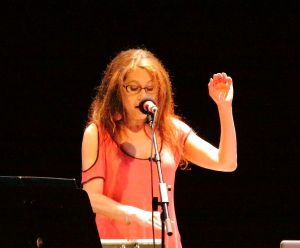
Sgt Pepper20170048

The dancing energy was carried on by the colorful and energetic dancers of Non-Stop Bhangra.  They accompanied Rohan Krishnamurthy and Otis McDonald in Joe Bagale’s rocking arrangement (replete with lyrics) of the reprise of the opening.  It was like a live action version of the studio executed original performance with a stage filled with ecstatic musicians and dancers.

Sgt Pepper20170052

Joe Bagale in his Sgt Pepper duds sings the lyrics hoping we’d enjoyed the show.

Sgt Pepper20170060

The apocalyptic, “A Day in the Life” concluded the mission of homage and nostalgia in a bigger than life tableau of talent and diversity that connected the “there and then” to the “here and now”.  The famous extended last chord crashed in a peak of energetic music making to bring the performances to a close.

Sgt Pepper20170062

The visuals were strongly reminiscent of the iconic album cover.
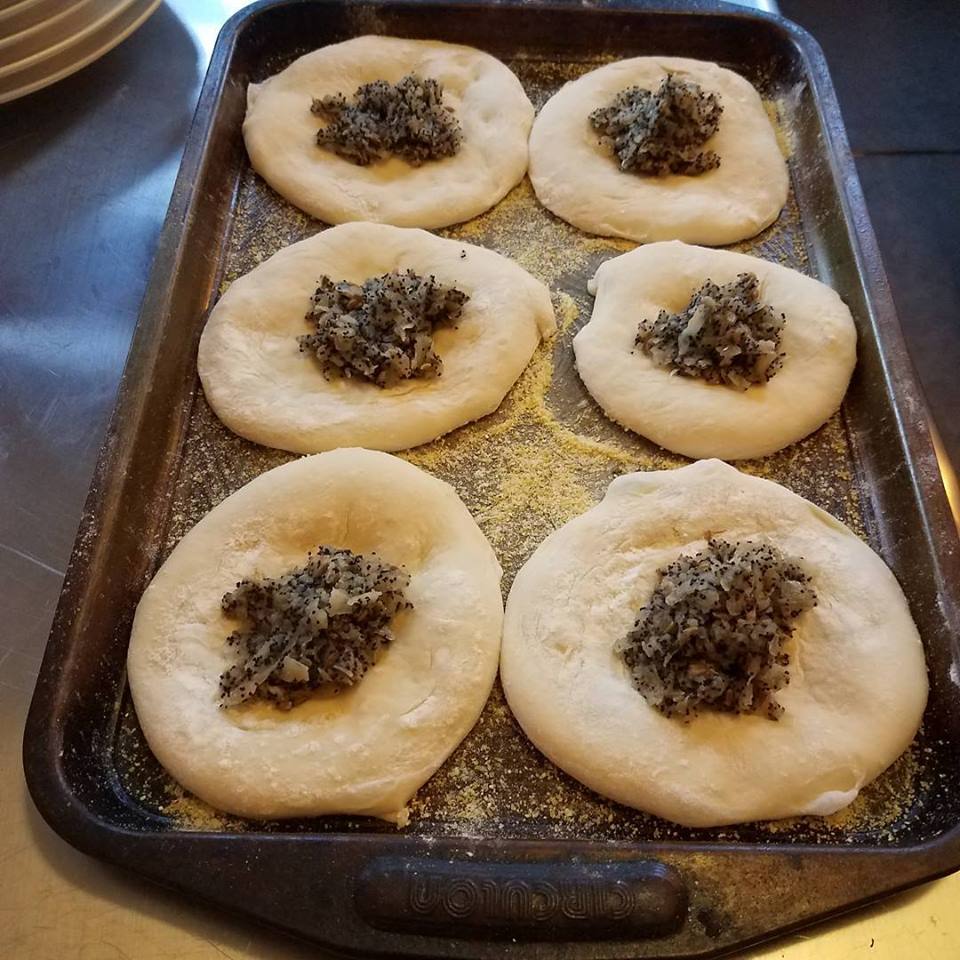
Sgt Pepper20170065

There was no need to encourage the audience to sing along to the encore of “All You Need is Love”.  Fifty years hence we still need it and if we still don’t have it everywhere at least we had it here this night.