Indian Raags for Piano made easy


raags easy

Last year I reviewed Mr. Pitts’ How to Play Indian Sitar Raags on a Piano.  It was an enthusiastic review and the book continues to have a valued place on my piano as it opens a whole world of ideas.   Now the author has done a kind and useful service by issuing this simplified version of that work.

In fact this simplified version is more in line with the rather unpracticed keyboard skills of your humble reviewer.  The author chooses 6 raags or ragas which provide a good starting point for similarly humble musicians to begin this approach to Hindustani music.

Hindustani music became pretty much ubiquitous, or at least familiarly cliché in western musical culture largely due to the efforts of Indian musicians such as Ravi Shankar and Alla Rakha.  In fact it is an endlessly fascinating musical system whose logic has much to offer both musicians and composers.

In the past one had to learn traditional Indian instruments to gain much familiarity with these ancient musical systems but Pitts’ book offers an alternative to musicians whose familiarity is limited to the western keyboard.  Purists may denigrate this approach but even if it does not perfectly represent all aspects of Hindustani musical theory at least it provides a manageable entry point for amateur musicians and professionals alike.

Having struggled somewhat with the previous book I was particularly delighted to have these simplified examples which fall nearer to my skills level.  Even if I don’t wind up incorporating this into performance or compositional efforts I have no doubt that the exposure to the actual practice of this music will leave a valuable bit of programming in my neural circuits that will enhance my musical thinking and ability to appreciate other musics.

As with the first book, this too is highly recommended.  Kudos Mr. Pitts!

In the Beginning Was the Word: Other Minds 23


OM202006

Charles Amirkhanian performing one of his spoken word compositions at Other Minds 20 in 2015

Other Minds has been the the darling of composer/producer Charles Amirkhanian since its founding in 1993.  Along with television producer and arts patron Jim Newman he has presided over the 25 years of this renowned festival which has consistently brought the finest new music composers and performers to San Francisco.

There is little doubt that this year’s festival has to be very close to Amirkhanian’s heart.  Words have been central to his career at least since 1969 when he began his work as a producer at KPFA.  In the 23 years he spent there he presented countless hours of musical programming and interviews.  He crossed paths with most of the major stars in contemporary classical music and many stars whose genre may not be captured by the classical label.  A look at his programming choices and interviews from his time there defined new music for the Bay Area and beyond.  After his tenure at KPFA ended in 1992 he continued exploring cutting edge music and musicians bringing them to San Francisco for live performances.

His work as producer and curator has tended to overshadow his work as a composer, sound poet, and spoken word artist.  This year’s OM festival is dedicated to speech, sound poetry, and the spoken word.  It is about both the history and the present state of the art.  In many ways Amirkhanian’s 1975 release “10 + 2: 12 American Text Sound Pieces” on 1750 Arch Records (now on an OM CD 1006-2) can be seen as sort of the starting point for this festival.  This masterful anthology includes works by Charles Amirkhanian (1945- ), Clark Coolidge (1939- ), John Cage (1912-1992), John Giorno (1936- ), Anthony Gnazzo (1936- ), Charles Dodge (1942- ), Robert Ashley (1930-2014), Beth Anderson (1950- ), Brion Gysin (1916-1986), Liam O’Gallagher (1917-2007), and Aram Saroyan (1943- ).


“Word! Thou word that I cannot speak!

At the end of the second (and last completed) act of Arnold Schoenberg’s powerful opera “Moses und Aron” (1932) Moses sings, or actually half speaks and half sings this text lamenting his expressive deficits.  Speech song or, in German, sprechgesang is an invention by Schoenberg in which the singers are asked to find a point between speech and music.  Perhaps this is a good example of some of the artistic thinking going on at about the time when speech music/sound poetry began to take shape.

bio_schwitters_kurt

Kurt Schwitters (1887-1948)

Some of the history of sound poetry is featured in this unprecedented 6 day festival (April 9-14).  Some of the earliest practitioners of this unusual genre include the German artist Kurt Schwitters whose composition Ursonate (1922-32) will be performed in its entirety, a rare event by itself.

Another early gem will be the Spoken Music (1930) by German-American composer Ernst Toch.  This three movement suite has been known for its last movement, the Geographical Fugue.  The other two movements, once thought lost, were discovered in sketches in 2006 and reconstructed by Christopher Caines.  The now complete version will be presented I believe on day 3.

Composer-Ernst-Toch-810

Ernst Toch (1887-1964)


It is beyond the scope of this blog post to tell the history of text sound so I will refer readers to the Other Minds website for further details.  Or you could come to the festival too I suppose.

With due respect given to the past the festival will move on to the present.  San Francisco Beat Poet Michael McClure (1932- ) will make an appearance as will post beat colleagues Anne Waldman (1945- ), Clark Coolidge (yeah the guy from that cool anthology), Aram Saroyan (another guy from the classic text sound disc).

curran20160010

Alvin Curran in conversation last year in Berkeley.

Other Minds alumnus Alvin Curran (1938- ) will be premiering his collaboration with Clark Coolidge entitled, Came Through in the Call Hold.  Curran’s eclectic sensibilities will doubtless result in an interesting composition.  This event alone, at least for this writer, is worth the price of admission.  And this is just the first day!

Other events include workshops, discussions of the history of the art, and even some curious variations on a theme.  Apparently the writer Lawrence Weschler is the grandson of Ernst Toch and has written a variation on the Geographical Fugue called, The Medical Fugue which will be premiered at this festival.

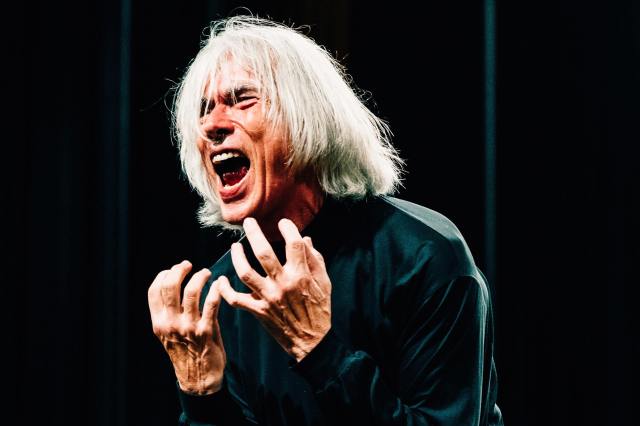
The increasingly ubiquitous pianist Sarah Cahill will be present to perform Virgil Thomson’s unusual but entertaining setting of a Gertrude Stein (a one time Oakland resident) text called Capital, Capitals.  She will accompany the men of the Other Minds Ensemble.  Jaap Blonk will be tasked with performing Schwitters’ Ursonate and, along with Enzo Miranelli will also perform other historical works including some by a couple of Italian Futurists.

Other Minds Administrative Director Randall Wong will end the evening by undertaking a performance of the late great Cathy Berberian’s Stripsody.  That promises to be a wild evening I think.
blonk_75_2500crop

Jaap Blonk (1953- )

Northern Europe, including the Netherlands and the Scandinavian countries will literally have their day.  As it turns out they are doing a great deal of creative work in this increasingly diverse genre of speech music.  Other Minds is at its best in introducing the new and the innovative from wherever Charles’ radar has tracked it down.  Indeed Mr. Amirkhanian and his wife, artist/photographer Carol Law traveled throughout these regions in the early 70s talking with and learning from these diverse artists.  (Amirkhanian’s work, Just was recorded in a Scandinavian studio during one of those trips).

As usual homage will be paid to the past with some recorded classics by Sten Hanson, Åke Hodell, and Lily Greenham.  Some new voices will be introduced including Tone Åse and Sten Sandell.  The Norwegian/Russian-American duo OTTARAS (consisting of visual poet Ottar Ormstad and composer Taras Mashtalir will also perform.   One can fully expect a mind expanding experience which will redefine the possibilities of the art form.

Auspiciously or perhaps dangerously Friday the 13th has been reserved for Bay Area talents.  First up will be the man of the hour, Charles Amirkhanian.  Hearing him do his work live is an uncommon but entirely enjoyable experience.  If that alone weren’t enough we will get to hear the even rarer public collaboration between him and his life partner Carol Law whose photography and collage work deserves wider recognition and will happily get that here.

Amy X Neuberg

Amy X Neuberg.

Trained in both linguistics and music, Amy X Neuberg will be on hand to perform her indescribable electronic cabaret including the world premiere of “Say it like you mean” and other genre bending work.  She is another valued Other Minds alumnus having given numerous performances at the festivals.

Stanford professor Mark Applebaum, another alumnus will present “Three Unlikely Corporate Sponsors” which premiered at Stanford in 2016.  Enzo Miranelli will conclude the evening with his theatrical combination of movement and text in “Fame: What I Want to Say”.

20130218-132303.jpg

Pamela Z

The festival concludes on Saturday April 14th with Jaap Blonk followed by the wonderful San Francisco based Pamela Z who, like Neuberg uses electronics, but creates her own unique sound world.  She too is an alumnus of Other Minds.

Another composer from that great anthology, Beth Anderson, will make an appearance to perform “If I Were a Poet”, “I Can’t Stand It”, and “Ocean Mildew Minds”.

The finale will feature Susan Stone and Sheila Davies Sumner performing excerpts from two works, “House with a View” and “Loose Tongues” both dealing with the lives of working class southern women.

This will be both a feast and a marathon but it promises to be one of the finest Other Minds productions maybe ever.  Come to be entertained, come to be challenged, come to expand your mind.  You’ll never be the same.  See you there.

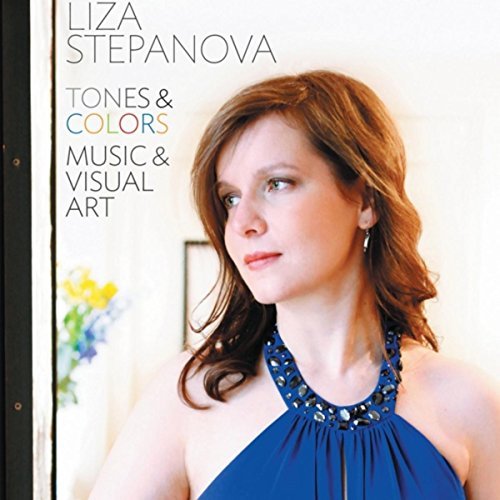
300 Years of Virtuosity, Liza Stepanova’s Tones and Colors


stepanova

Concert Artist Guild CAG 120

This is the solo piano debut of this talented and incredibly virtuosic artist.  This hard working pianist can be heard on a previous CD (After a Dream) with the Lysander Piano Trio.  Her web site can provide a good idea of the range of solo, chamber, and orchestral music in her repertory.

This CD is a good example of creating a brand, a practice which seems to be the current rage especially among artists who specialize in new music.  I have previously commented on the brands of pianists like Sarah Cahill, Kathleen Supové, Nicolas Horvath, and Stephane Ginsburgh to name a few.  All are amazing musicians but each seems to have been able to carve out an identifiable niche which sets them apart from each other and defines their various artistic missions.  Granted these are soft definitions in that they do not preclude them from playing anything they choose but it gives audiences a sort of general idea of what to expect when they do a program.

Liza Stepanova appears to have chose virtuosity as her signature.  She plays what sounds like fingerbreakingly difficult music with both ease and expressiveness.  Here she chooses to basically survey virtuosity from J. S. Bach to György  Ligeti.  In addition she has chosen to pair each composition with an analogous piece of visual art.

The pairing of music and visual art is as old as dirt and has always seemed to have an inherent validity.  Tone poems like Mussorgsky’s Pictures at an Exhibition or Debussy’s Clair de Lune are familiar examples of music as a visual analog.  But music sometimes suggests pictures even if it was not the stated intent of the composer too.  Stepanova covers the visual territory from the representative to the abstract in this entertaining collection.

Perhaps the most interesting aspect of this recording is the pianist’s choice of music.  She does go with the familiar at times such as Debussy’s Goldfish but the majority of this disc contains music that is seldom heard by lesser known composers such as Maurice Ohana (1913-1992), Joaquin Turina (1882-1949), Fanny Hensel (1805-1847), and Lionel Feininger (1871-1956).  There are better known names such as Enrique Granados (1867–1916), Bohuslav Martinú and Leopold Godowsky (1870-1938).  And the most familiar names such as J. S. Bach (1885-1750), Franz Liszt (1811-1886). Claude Debussy (1862-1918), George Crumb (1929- ), and György Ligeti (1923-2006).

There are 13 tracks grouped into 4 visual art themes (A Spanish Room, Nature and Impressionism, Conversations Across Time, and Wagner, Infinity, and an Encore).  The only problem I have here is the photos of the art (which thankfully are included in the little booklet) are necessarily small and really don’t give the consumer the full intended effect.  One would do well to obtain some art books or some larger prints of these to gain the intended effect.

I won’t go into detail about each individual piece.  Suffice it to say that they are all technically challenging and intelligently chosen pieces.  This is a very entertaining program from this emerging artist.

This reviewer is given to speculation as to Stepanova’s next release.  Perhaps Sorabji with some Dada works?  Whatever it is will doubtless be as interesting and entertaining as this disc.  Brava, Ms. Stepanova!


The @realAlvin Curran at the Armory


curranfake0005

Alvin Curran performing from his “Fake Book” at the Pacific Film Archive in Berkeley in 2014

Alvin Curran (1938- ) is  one of the finest of that maverick band of composers who came of age in the 1960s as expatriates in Italy.  Along with musicians like Frederic Rzewski, Carol Plantamura, Richard Teitelbaum, and Allan Bryant among others they formed the world’s first live electronic improvisation ensemble, “Music Elletronica Viva” in 1966.  In this time electronic synthesizers were not generally available and most of their equipment was hand made.  All the musicians have since all gone their own very creative ways but in many ways this ensemble has been their touchstone which continues to underlie their work.

Curran told this writer that it was around this time that he began working on a huge series of compositions of (at least initially) an improvisational nature which he collected under the general title of “Fake Book”.  Musicians will be familiar with the term which is roughly analogous to a cheat sheet enabling musicians easy access to many chord progressions, songs, and other pieces at their fingertips to please a wide range of tastes in their audiences.

curranfake0012

Curran’s Fake Book is a huge collection of scores, digital samples (no doubt he began with analog samples) and sketches.  He recently published a hefty selection of this material available on Amazon and is well worth both your time and your money for the insight it provides to this unusual composer.  The composer’s web site is an extremely useful reference but nothing can match hearing and seeing this spirited, kinetic shaman of a performer.  His creativity and sheer joy of music making is infectious and the music he makes is akin to reading diary excerpts, a musical analogy of sorts to the likes of Anais Nin, the famed mega-diarist of a previous generation.

Curran is, at 80, an energetic and endlessly creative musician, a humanist with deep convictions and quite simply an experience not to be missed.  Here is the announcement of this concert which, though this writer is unable to attend, is not to be missed.

Alvin Curran
performs
“The Alvin Curran Fakebook”
on shofar, piano, keyboard, and electronics
at the Veterans Room
Thompson Arts Center at Park Avenue Armory
643 Park Avenue (66th-67th St.)
Wednesday March 14, 2018, at 7.00 pm & 9.00 pm
or call the box office (212) 933-5812 Mon-Fri, 10.00 am-6.00 pm

Lara Downes’ Bernstein Tribute


lenny

Lara Downes is one of the finest pianists working today.  Her virtuosity and interpretive skills are well established.  She is well versed in the standard repertoire of classical piano music but has chosen to blaze her own unique path in her recorded legacy.  Here she pays homage in her own unique manner with help from some interesting fellow musicians.

The album consists of 29 tracks none of which lasts more than 4 minutes.  Many are by Bernstein including a generous selection of his Anniversaries, each dedicated to a particular person. Some were written in celebration, some in memoriam. Time marches on and we now celebrate the 100th anniversary of Lenny’s birth. So, of course, all these tracks are in memoriam now. In addition to the all too seldom heard Anniversaries there are a few song transcriptions and a nice selection of Anniversary like pieces contributed for this album by a delightful selection of composers including John Corigliano, Lukas Foss, Michael Abels, Ned Rorem, Ricky Ian Gordon, Eleanor Sandresky, Shulamit Ran, Stephen Schwartz, Marc Blitzstein, Theo Bleckmann, and Craig Urquhart.

This album is (thankfully) not a greatest hits collection but rather, as it’s subtitle says, an intimate tribute by people who were affected by Bernstein in one way or another. Bernstein cut a wide swath of influence embracing new music, mastering the established western classical canon, and embracing jazz, blues, and musical theater much like Ms. Downes actually.

Most of the album is solo piano where Downes casts a loving and magical spell. A few judiciously chosen tracks feature banjo virtuoso Rhiannon Giddens, baritone Thomas Hampton, and two musicians unknown to this writer, Javier Morales-Martinez and Kevin “K.D.” Olusola.

My first listen to this album was an uninterrupted one while driving South from San Francisco. The impression was one of Bernstein’s multiple voices being present seamlessly in every track. Only later reading the liner notes did I become aware that some tracks were written by others.

This is an intimate celebration in honor of a musician who touched so many lives.  Many of the artists on this recording knew Bernstein to some degree but the point here is that Bernstein’s art is so pervasive that few can say they have not been touched by it to some degree.  This listener was brought to nostalgic tears a few times.

In keeping with Downes’ eclectic style this is an unusual selection of pieces, most by Bernstein but all imbued with his spirit, a combination of classical sensibilities with a real feel for jazz, blues and the American musical theater.  This disc contains most, if not all of Bernstein’s “Anniversaries”, short piano pieces written variously in honor of or in memory of many of his friends.  Other pieces are by contemporaries of Bernstein and some were written for this recording.  Add to that a few interludes such as Thomas Hampson coming in to sing, “A Simple Song” from Bernstein’s “Mass”, K.D. Olusola riffing on the familiar “Something’s Coming” which opens the disc, Javier Morales-Martinez spicing up “Cool” from “West Side Story” with his clarinet and Rhiannon Giddens sounding so pretty on the track of that title.

This is a love fest and it, appropriately, covers generations much as Lenny affected so many generations whether through his wonderful work as a conductor or his classic musicals and operas that are indeed the American grain incarnate.  And Lenny was also a teacher to children and to adults.  From the Young Peoples Concerts to the Harvard Norton Lectures he thought deeply and taught and stimulated ideas.  Generations have been forever changed by him.

The bulk of this recording depends on Lara Downes amazing virtuosity bringing these brief little poems to life most convincingly and almost magically.  She clearly has a real feel for this music.  This is mostly not the familiar Bernstein that everyone knows.  It is a portrait such as listeners familiar with Downes’ work will recognize, eclectic, intelligent, sometimes nostalgic, a little obscure, frequently virtuosic, and ultimately satisfying.  The disc lists the performers as, “Lara Downes and friends” and that is the feeling of not just the performers but also of the composers whose heartfelt contributions fit so well in this eclectic mix.

This disc represents Downes’ debut on Sony and the only thing this writer can say to that is, “What took them so long?”  Brava!  And cheers to Lenny on his 100th.

The Alchemy of Diversity at Sound and Savor


bialys

Freshly baked bialys right out of the oven opened the brunch.

This is another in the continuing account of my encounters with Philip Gelb’s underground vegan salon now called Sound and Savor.  For some twelve years now he has hosted a series of dinners, brunches, and cooking classes.  Many of the multi-course meals also feature some of the finest musicians, many from San Francisco and the east bay.

Today’s brunch started with fresh brewed coffee with a dollop of ginger (vegan) ice cream along with fresh baked bialys with cashew cream, pickled red onions, and “carrot lox”.  So we began with a vegan Jewish theme.  Needless to say these were delicious and the coffee helped waken anyone not ready for this 11AM start.

img_0204

The next course was a similarly delicious borscht (beet soup) with beet pakoras.  And clearly Phil has introduced this traditionally Indian dish which worked remarkably well with that soup.  Again all were hot out of the pot/fryer clearly in our view.

As Phil performed his culinary alchemy in the kitchen we were most attentively served by his assistant for this meal, Letitia, a smiling joy of a woman who seems to have the knowledge and genuine caring of customer service in her blood.  She was equally attentive to all in the crowd of about twenty diners with the usual mix of familiar faces and few new ones.  Indeed the beautifully presented courses came at just the right pace.

img_0205

The main course in this brunch was a Potato-Onion Tortilla, blood orange salad.  And once again the diversity of cultures mixed to truly savory results as the friendly conversations flowed.  At this point even the hungriest would hope for a pause and that’s exactly what happened.

img_0210

With a judicious touch of rearranging Phil prepared a performance space for the three musicians who graced us on this beautiful sunny Oakland day.  Jay Ghandi, bansuri (Indian Flute), Sameer Gupta, tablas (a staple of Hindustani music), and David Boyce, saxophone and bass clarinet (need I say a staple of jazz?).  The alchemy of the food would now find an analogy in this jam session.  Boyce and Gupta had played here about a year ago and Ghandi is a frequent collaborator with both musicians.  All three had played yesterday in San Jose and were scheduled to play in San Francisco at the Red Poppy Art House.  They are touring to promote their recent release A Circle Has No Beginning.  These are just three of the musicians who participated in this crowd sourced disc which is itself worth your attention.

The energy was immediately palpable as seen in this excerpt from one of three pieces they played.

This last excerpt demonstrates the ease of communication between these musicians who blend diverse backgrounds of jazz and Hindustani musics seamlessly into something new and wonderful.  The audience was energized to a level beyond what coffee could do and broke into appreciative applause after each piece.

The brunch ended with a dessert of (again fresh baked) Citrus Semolina Cake and more of that delicious coffee and ice cream.  And, of course, more conversation.

These events have become a regular part of this writer’s recreational time and a real reason to celebrate living in the diverse and creative east bay.  Phil’s judicious blend of cultures in his culinary experiments provide a parallel to his curation of some of the finest musicians with the only purpose in both case to entertain and enlighten.  He achieved both is a big way this day.  Thanks to all who participated.

Marin: An Unknown Danish Master Gets His Due Marvellously


marin

I have made no secret of my passion for the music which has been coming out of the Scandinavian portion of our planet.  My knowledge of these musical traditions is mostly limited to the twentieth century up to the present but what a horn of plenty there is to be had.  There are so many composers that it is forgivable if one of them fails to get worldwide attention and acclaim during their lifetime.  Or is it?

Well if sins of omission that have been committed all can now be forgiven and the memory of Axel Borup-Jørgenson (1924-2012) is likely guaranteed to remain solidly in the history of music of the twentieth century.  The Danes take their music very seriously it seems (check out the You Tube Channel for the Danish National Symphony Orchestra if you don’t believe me) and producer Lars Hannibal and his crew have labored tirelessly to bring this formerly obscure master most deservingly to light in this DVD/CD combo pack featuring some of his finest works.

This truly major release contains a DVD with a gorgeous animated feature synced to the late composer’s swan song big orchestral piece, Marin op. 60 (1963-70) a really beautifully produced documentary (“Axel”) on the composer featuring some of his fellow composers including, Finn Savery, Pelle Gudmunsen-Holmgreen, Bent Sørensen, Sunleif Rasmussen, Per Nørgard, Gert Mortensen, Ib Nørholm, Michala Petri, and producer Lars Hannibal along with family and other musicians and producers.

The animated feature looks like one of the finer entries one might find on Vimeo.  The animation was done by Lùckow Film and works well with the music.  The biographical feature does a spectacular job of placing the composer in context with his Nordic contemporaries and with contemporary music in general.  The people interviewed give about as definitive a description of the man’s work as can be done in a film biography and the intervening or connecting scenes bespeak a high level concept of cinematography that makes this film both compelling and a delight for the eyes as well as the mind.  The concept of the composer’s use of silence as a compositional tool seems to be reflected in these transitional scenes.

The CD consists of seven carefully selected pieces on seven tracks.  The disc opens with the big orchestra piece which was heard behind the animation on the DVD, Marin Op. 60 (1963-70) followed by Music for Percussion and Viola Op. 18 (1955-56), For Cembalo and Orgel Op. 133 (1989), Nachtstuck Op. 181 (1987) (played here by the composer’s daughter, Elisabeth Selin), Winter Pieces Op. 30b (1959) for piano, Pergolato Op. 182 (2011) for treble recorder, and Coast of Sirens Op. 100 (1980-85) for flute, clarinet, violin, cello, guitar, piano, percussion, and multivoice tape.  This is truly a balanced portrait with examples of orchestral, solo instrument, keyboard, chamber and electroacoustic works from 1959-2011, a more than fair sampling of the composer’s output both by genre and by time.

The music seems to move between post-romantic tonality and expressionistic experiments such as one hears in the music of Gyorgy Ligeti.  The music is evocative and very listenable especially if one avails one’s self of the introductory film.  It certainly seemed to tune this reviewer’s ears properly.  It is helped as well by some very fine recordings that capture the subtlety of the composer’s work.

Lars Hannibal is clearly the guiding hand in this project but his genius (he is a fine guitarist as well as a producer) is his ability to engage all these fine musicians, artists, producers, and family in what is one of the most loving portraits this writer has ever seen.  Now that is the way to blast someone out of obscurity forever.

And this is but one entry in a larger project to record the composer’s complete output.  Two previous releases were reviewed on this blog and, presumably there are more to come.  But in the meantime there is much to savor here and one hopes that this will introduce this music into the general repertoire.  I’m sure Axel would be pleased to be placed as he is now among the masters of Danish composers.


The Heresy and the Ecstasy: Brooklyn Raga Massive Does “In C”


brminc

This is heresy.  It is not, strictly speaking, faithful to the 1964 score and it is a sort of cultural appropriation which is actually the very basis of Brooklyn Raga Massive, a sort of latter day “Oregon” (to those who recall that band) which takes on all sorts of music and filters it through the unique lens of this flexibly populated group of musicians whose backgrounds range primarily from Hindustani and Carnatic traditions (though hardly in the most classical sense) but also from western classical and jazz.  Their “heresy” comes from their choices.  The root of heresy is the Greek word, “hairesis” which means choice.  There is a lovely selection of their musical heresies on their You Tube Channel.

No this is not purely heresy and it is certainly not blasphemy.  Quite the opposite actually.  And I would prefer to think of this effort as cultural integration.  The choices made here instead lead to some mighty ecstatic music making which pays honor to Terry Riley who turned 80 in 2015 and provides a unique perspective on this classic work.

“In C” (1964) is without doubt Riley’s best known work by far and the one which pretty much defined what would later become known for better or worse as “minimalism”.  It is an open score meaning that no instruments are specified for performance making this music heretical in nature as well.  In addition there is no conductor’s score as such.  Rather there are 53 melodic cells numbered 1 to 53 and the ensemble is held together by the expression of an 8th note pulse played by at least one of the musicians involved.  The defining reference on the intricacies of this work is composer/musicologist Robert Carl’s masterful book entitled simply, “In C”.  He describes the wide variety of potential choices which can be made in performance and the different results which can be achieved.

There are a great deal of recordings available of this work from the first (released 1968)  on Columbia’s “Music of Our Time” series curated by the insightful David Behrman to versions involving a wide variety of instrumental combinations of varying sizes.  The first “world music” version this writer has heard is the version for mostly percussion instruments by Africa Express titled, “In C Mali” (released in 2014).

Not surprisingly BRM, as they are known, have chosen a largely Hindustani/Carnatic take on this music.  The unprepared listener might easily mistake this for a traditional Indian music recording with the introduction which incorporates a raga scale and adheres to the traditional slow free rhythm improvisation of the introductory “alap” section common to such traditional or classical performances.

The familiar sound of these (largely) South Asian instruments with their rich harmonics sets the tone gently.  This writer has at best a perfunctory working knowledge of these complex and beautiful musical traditions but one must surmise that the choice of Raga Bihag may have some intended meaning.  Indeed such music is by definition integrated into the larger cosmology of Hinduism, the Vedas, the Gita, the Sanskrit language, and, no doubt other references.  This is not discussed in the brief liner notes but is worthy perhaps as a future interview question.

It appears that many of the musical decisions were made by sitarist Neel Murgai though it becomes clear as the performance develops that individual soloists are allowed wonderful improvisational freedoms at various points.  The recording is intelligently divided to let the listener know which set of melodic cells is being expressed at a given time.

The alap gives way to the sound of the tablas which initiate the pulse mentioned earlier.  The structure of this piece produces a range of musical experiences from a sort of didactic beginning to the swirling psychedelic waves of sound which stereotypically define much of the music born in the mid 1960s in this country.  In fact Terry Riley’s deep study of South Asian musics (most famously under vocalist Pandit Pran Nath) did not occur until later in his career.  Nonetheless there seems to have always been some affinity between Riley’s vision and the sort of music whose popularity was driven in the United States most famously by the efforts such as Pandit Ravi Shankar and Ustad Alla Rakha in the 1970s.

What follows is a riot of musical ecstasy involving some inspired improvisational riffs and some stunning vocalizations as well giving us a fascinating take on this music which was written well before these musicians came into the world.  We have a later generation paying homage to the beloved American composer and to the beautiful traditions of their own eclectic ethnic heritage.

The set concludes in this live and lively recording with a traditional fast paced Jhalla, the traditional ending to classical Indian musical performances. This will likely become known as the “Indian” recording of “In C” but it is so much more than that.  It is an homage.  It is a look back from the view of at least a couple of generations of artists.  And it is heresy in the best sense of that word, choices made judiciously to achieve higher artistic goals.  Not all art is heresy and not all heresy is art but the heresies perpetrated here definitely deserve our ears.

The heretics are: Neel Murgai, Sitar and Vocal; Arun Ramamurthy, Violin; Andrew Shantz, Vocal; Josh Geisler, Bansuri; Sameer Gupta, Tabla; Roshni Samlal, Tabla; Eric Fraser, Bansuri; Timothy Hill, vocal; Trina Basu, Violin; Ken Shoji, Violin; Kane Mathis, Oud; Adam Malouf, Cello; Michael Gam, Bass; Lauren Crump, Cajon; David Ellenbogen, Guitar; Max ZT, Hammered Dulcimer; Vin Scialla, Riq and Frame Drum; Aaron Shragge, Dragon Mouth Trumpet.

Namaste, folks.


Sarah Cahill et al: By and for Terry Riley


Sarah Cahill - Eighty Trips Around the Sun- Music by and for Terry Riley - cover.png

Had to save this one for Christmas.  If ever there was an album that conjures more of the positive intents of the Christmas season this one gets my vote.  Imagine celebrating a living acknowledged master artist in a milieu of his actual and artistically extended family.  That may seem an extreme notion to some but this writer is utterly charmed and thrilled to hear this “one of a kind” collection.  Other interpretations will, of course, be valid but none will ever match this one.  It’s like the Carter family of the avant-garde (and I mean that unambiguously with great respect).

Any release by Bay Area pianist Sarah Cahill is reason enough alone to perk up one’s ears but this massive four disc collection of all new recordings in honor of Terry Riley’s 80th birthday (Terry was born in 1935) is a major release of (almost) all of Riley’s music for piano, piano four hands and two pianos.  In addition two of the discs are dedicated to pieces commissioned in honor of Riley.  This set belongs in the collection of anyone interested in mid to late twentieth century music and especially fans of minimalism and the curiously west coast iterations of modernism.

As a listener I have always treated every Terry Riley release as a major event as well and this collection does about as fine a job as one can imagine in paying homage to one of the brightest artistic lights of the Bay Area.  Riley came to prominence (at least historically speaking) with his open score piece, In C (1964).  It is among the earliest examples of the style which, for better or worse, became known as “minimalism”.  Since then he has continued to produce music in pretty much all genres, chamber music, orchestral music, solo music, concerti, etc.

Riley’s style, however, continued to evolve and his later works show diverse influences from his days playing barrel house piano, his interest in progressive jazz, and his studies of Hindustani and Carnatic musics (under the tutelage of Pandit Pran Nath).  Like pretty much every composer of that first wave of “minimalists” Riley has evolved a much deeper and individualized style but, even with the diversity of influences as mentioned, he remains uniquely Terry Riley.

Throughout his career as composer and performer Terry has been a teacher and an advocate of new music.  His enthusiasm and talent has affected all who know him and, I dare say, all who have experienced his work.

This collection ranges over his entire career from the early “Two Pieces” (1958/9) to later solo and four hand compositions on the first two discs.  It is worth noting that Be Kind to One Another (2008/14) was one of the commissions in Sarah Cahill’s wonderful series of anti-war pieces, “A Sweeter Music”.  It then goes on to the homages which, of course, can also be said to be influenced by Riley’s work.

This is not simply a collection of Riley’s piano music.  What we have here is a lively celebration of most of Riley’s music for piano, two pianos and piano four hands from the full spectrum of his career (as the liner notes say a couple of large compositions were not included, most likely a matter of space) along with a touching set of homages by composers related musically and aesthetically to Mr. Riley.  They range from contemporaries to students, artistic descendants to actual family.  It is a multi-generational tribute and a loving artifact that celebrates this artist on a very personal level.

Regina Myers supplies the other two hands in the disc of four hand piano pieces by Riley.  She credits another Bay Area composer/teacher/conductor, the Mills College based Steed Cowart for recommending her for this crucial role.  Such touches add to the sense of this being a Bay Area family project on so many levels.

The interrelationships that comprise this lovely production make it stand distinctly apart from the (no less significant or lovely) homages to fellow minimalists Philip Glass and Steve Reich.  This is a much more personal album which reflects Riley as composer, teacher, inspiration, father, icon and friend.  Anyone who has met Terry or experienced him in performance has experienced a certain warmth like that of a wise and gentle guru.

After the two discs of Riley’s music we are treated to music inspired by another generation of artists and, last, by long time colleague, the late great Pauline Oliveros (1932-2016), another wise and gentle guru who died just about a year before the release of this album.  She and Terry worked together (along with Morton Subotnick, Ramon Sender, Steve Reich, William Maginnis, and Tony Martin) as founders of the San Francisco Tape Music Center which would become the Mills College Center for Contemporary Music (still operating today).  The producers wisely dedicated an entire disc to one of Oliveros’ last compositions, this loving tribute to her friend and colleague. It is now, sadly, a tribute to her memory as well.   Samuel Adams shares the performing duties along with Ms. Cahill on this extended homage.

There is little doubt that the other composers whose music graces this tribute will continue on their unique paths to continued success always acknowledging their connections to Mr. Riley.  Danny Clay is among the less familiar (to this reviewer) names here but his Circle Songs seem to fit quite well to open the first tribute disc.  Gyan Riley is, of course, one of Terry’s children and a fine guitarist and composer  in his own right.  Anyone who has had the pleasure of seeing Gyan and Terry play together cannot miss the close bond personally and musically of these two.  They are a joy to behold.  The affectionate Poppy Infinite is a reference to the elder Riley’s Poppy Nogood’s Phantom Band which was the “B side” of his classic Rainbow in Curved Air.  Samuel Adams is the son of Pulitzer Prize winner John Adams whose early work China Gates was written for and championed by his fellow classmate at the San Francisco Conservatory, Sarah Cahill.  The younger Adams’ contribution here is called Shade Studies.

The eclectic Christine Southworth also seems to embody the (perhaps loosely defined) West Coast style.  Her interests in electronics and world music describe this superficially but her sound is a welcome one here as well.  Keeril Makan earned his PhD. in music at Berkeley which doubtless has left a stamp on his style.  His composition “Before C” makes reference to what is doubtless Terry Riley’s best known work, the oft performed, “In C”.  Elena Ruehr is a composer whose connection is not as clear as some of the others here but her work, “In C too” demonstrates her understanding of and her respect for Riley’s work.  Last on this disc of tributes is Dylan Mattingly.  He is a Berkeley native and can frequently be seen/heard performing in various venues in the Bay Area.  His contribution YEAR demonstrates both his individual style and his connection to the West Coast Style mentioned earlier.

The liner notes by Sarah Cahill are part of the tribute and a good description of the various influences behind the man of the hour, Terry Riley.  Credit is properly given to the artistic influences that inspired Mr. Riley and a brief description of what must have been an intimidating but loving project.  It is likely that there are even more connections involved in this undertaking but that must be left to future musicological and historical research.

The Kronos Quartet has long ago championed Riley’s work for that medium and new versions of his classic, “In C” continue to come on the scene.  One can only hope that the energy embodied here will inspire recordings of some of Riley’s lesser known work with orchestra which richly deserves hearings.  But regardless there is much to celebrate here and best holiday wishes go out to Mr. Riley and his talented progeny.  Happy listening, all.


LA Percussion in High Definition


Having been a bit overwhelmed with a LOT of percussion recordings lately I placed this Los Angeles Percussion Quartet recording a bit further back in my review queue.  My apologies but I did it because I really wanted to give this recording my full attention and then to have something useful to say.

So I listened.  I put this on in my car when making a trip long enough to allow me to hear one of the two discs without interruption.  And I chose a relatively non-distracting drive in which I could actually pay attention to the music without incurring some danger on the road.

Of course the first thing that strikes the listener here is the lucidity of the recording.  Sono Luminus is showing off their signal processing prowess as well as their sensitivity with things like microphone placement and all the things that only great engineers know.

Let me make one thing very clear.  I am not a fan of sonic spectacle for its own sake.  I recall one incarnation of vinyl/analog fetish releases which a friend drooled over but whose content bored me to death.  Fortunately Sono Luminus seems to be steering clear of that sand trap.

This two disc set (well, three if you count the Blu-Ray Audio disc) collects music by largely little known composers (at least to these ears).  But fear not, this is not music that sounds like someone knocked over the stainless steel pot rack at Sur le Table.  Quite the opposite.  This is some intelligent music which compels the listener to stick with each piece and follow its development.  This is apparently the fourth album by LAPQ, the previous three also being Sono Luminus productions.

The first disc begins with the first of two Icelandic composers both of whom were represented on a previously reviewed discDaniel Bjarnason is a conductor and composer and his Qui Tollis, a work of wide dynamic range and a variety of moods from more assertive to more contemplative.  The second work is by the current darling of Icelandic classical music.  I am speaking, of course, of the very talented Anna Thorvaldsdottir.  Her work, Aura, is more consistently contemplative in nature and, like all her work, the listener is rewarded for paying close attention as she weaves magical impressionistic tapestries.

Memory Palace by Brooklyn based Christopher Cerrone piqued serious interest in this listener.  This man would seem to be a composer whose work deserves watching/listening.  This five movement suite for percussion indeed makes for compelling listening as he moves through a variety of moods and isn’t afraid of frank melodic invention during the journey.  This does not strike this reviewer as run of the mill percussion music (not that the preceding two works did either).  Rather this work suggests a distinctive compositional voice worthy of further attention.  Mr. Cerrone’s collection of awards including a Rome Prize and a runner up for a Pulitzer Prize suggests that he will be heard from again soon.

Fear-Release by Ellen Reid is a shorter though no less rewarding journey down yet another compositional path for percussion.  At just short of nine minutes this is a compact movement which relies on a fairly wide dynamic range and strategic use of silences and is a fitting close to the first disc.

The brief, rather poetic, liner notes draw a parallel between the multiplicity of languages found in the Los Angeles area and the multiplicity of musical languages found on this recording.  Indeed these are distinctive voices that extract a wide variety of sound from this percussion quartet.  This reviewer is somehow strongly reminded of Nexus, the Canadian percussion group which dominated the 1990s for a bit.  The similarity is in their enthusiasm and in their musical skills.  LAPQ is a distinct ensemble in its way and is a group that is not shy to be innovative.

I have to say, though, that I could have used a great deal more info and commentary on these compositions.  As one would benefit from multilingual dictionaries in Los Angeles the listener could gain much from learning more about the structure and intentions behind these fascinating compositions.  And, unless I have failed to find them (I looked closely) the liner notes carry lovely photos but fail to name the musicians whose sound was so lovingly preserved.  They are: Matt Cook, Justin DeHart, Nick Terry, and Justin Hills.

The concluding work coming in at almost 40 minutes is divided into tracks but is in fact one large movement.  It is probably the most contemplative work here though it has some pretty assertive moments.  I Hold the Lion’s Paw by Andrew McIntosh is a great show piece for demonstrating the range of these musicians.  Though continuous this piece delves through a variety of moods and uses apparently a wide variety of instruments as well.

Fans of percussion will love this disc as will fans of audio porn (there is something erotic about technology for the ears).  This is not easy listening and though seeking innovation makes no moves toward populism.  This is serious music making.


Areon Flutes: Thriiive


areon

Innova 955


Multiple similars seems to be a meme in contemporary music.  The notion of using an ensemble of the same or similar instruments is most frequently encountered in teaching situations where music departments have enough students to form trombone ensembles, cello ensembles, etc.  But such combinations had been far less common in the concert hall until fairly recently.

Henry Brant was certainly an outlier when he wrote his Concerto for Flute and Flute Orchestra (1931) but the notion of a large ensemble of similar instruments developed further in the 20th century.  Brazilian composer Heitor Villa-Lobos in his Bachianas Brasilieras Nos. 1 (1930) and 5 (1938) used a cello octet.

It wasn’t until much later in the 20th century that one would encounter Steve Reich’s Counterpoint works beginning with Vermont Counterpoint (1982) for flute solo and multi-tracked flutes, New York Counterpoint (1985) for solo clarinet and multi-tracked clarinets, Electric Counterpoint (1987) for guitar and multi-tracked guitars, and Cello Counterpoint (2003).

Mary Jane Leach, an American composer based in New York also writes for multiples in such works as 4BC (1984) for 4 bass clarinets, Tricky Pan (1999) for solo countertenor and 8 countertenors on tape, Bach’s Set (2007) for solo cello and 8 celli on tape, and Dowland’s Tears (2011) for 10 flutes.

The present disc is another incarnation of the ensemble of similars which is as different in sound as each of the above described sets of music for similar instruments.  Here we have an ensemble of flutes with music written by Elainie Lillios, Cornelius Boots, and Mike Sempert.

Areon Flutes consists of Jill Heinke Moen, Kassey Plaha, and Sasha Launer.  This performing, teaching, commissioning ensemble has been in existence since 2004 and is based in the San Francisco Bay Area.  According to their website: Since 2004, Areon Flutes’ mission has been to make flute chamber music an equal voice in the chamber music world.

This is their third album and their first for Innova Records.  This is a 2016 release so I must acknowledge a bit of a delay in getting this review out but I blame the beauty and complexity of both their mission and the works here represented for a part of that delay.

There are three compositions: Elainie Lillios’ two movement Summer Sketches, Cornelius Boots’ three movement Cthonic Suite, and Mike Sempert’s Uncanny Valley.

This is a stunning disc which redefines the ensemble of similars and helps to carve out a lasting place for the flute ensemble in the classical world.  But even terms like “classical world” might be limiting as a way to describe this album.  It is innovative but not really experimental.  It is beautiful without being simple and it is virtuosic without being pure and empty showmanship.  This is a substantial set of challenging works played with virtuosity and interpretive skill that will leave the listener stunned and unable to write a review (oops, sorry about the excuses again).

But seriously this is entertaining and substantial music making by a wonderful ensemble that serious listeners will want to keep on their radar.

Longleash: Incorporating the Modern


longleash

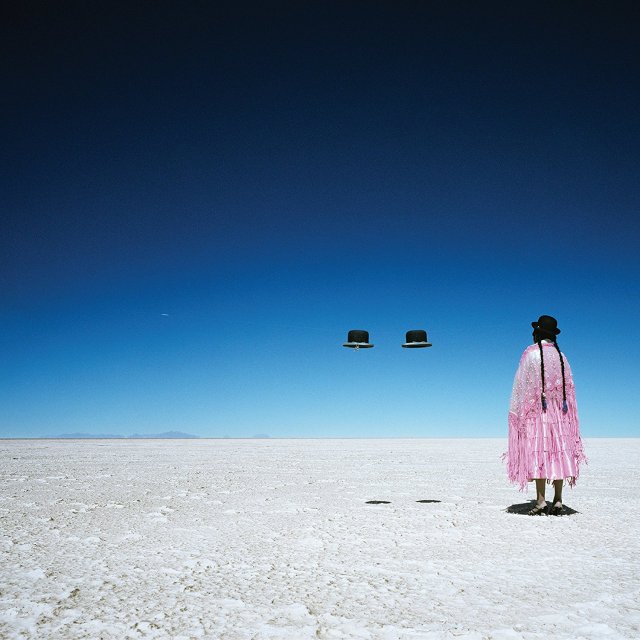
The strikingly beautiful cover art reminiscent of Magritte is eye catching and make this reviewer nostalgic for the days of the 12×12 format of LP covers.  (Album Artwork: Pink Lady (2015), Scarlett Hooft Graafland, Album Design: Laura Grey).  It is, perhaps by virtue of its nod to modernism, a metaphor for the content of this album as well as being its title.

Longleash is apparently the oh so clever operations name of a CIA project whose goal was to help proliferate American modern art in the cold war era.  These days I guess that would be “weaponizing” art.  And this modern piano trio has (curiously) elected this for their stage name.

Well the content of this album is nowhere near your traditional piano trio and may even seem subversive to some listeners.  Longleash are modernist throughout.  Pala Garcia, violin; John Popham, cello; and Renate Rohlfing, piano self-identify as a group with “traditional instrumentation and a progressive identity.”  Indeed they have chosen a rather young and pretty much unknown group of composers: Francesco Filidei (1973- ) is the oldest of the group followed by Clara Iannotta (1983- ), Juan De Dios Magdaleno (1984- ), Christopher Trapani, and Yukiko Watanabe.

Despite the varied backgrounds these composers seem to share a particular segment of a modern aesthetic.  They seem fond of judicious use of extended instrumental techniques and quasi-minimalist cells but their styles are quite listenable.  They seem to have aspects of pointillism, the occasional terseness of Webern, some rhythmic intricacies and the occasional nod to a melody.  In short they seem schooled in the variety of techniques which rose largely out of the twentieth century but seem beholden to none of them seeking instead to judiciously use their skills to create their own unique sound worlds.

There are five works on eight tracks and none of them can be easily described except to say the the combination of listening with the aid of the liner notes can be helpful.  That is not to say the works cannot stand on their own.  That is a useful experience in itself.

I suppose it might be best to say that these works will likely evoke a variety of reactions from various listeners.  This is the sort of album, at least for this listener, that benefits from a direct concentrated listen without distraction but it is also worth experiencing as background music, letting the experience creep in where it might while you do other things.  And then a read through the liner notes to try to divine the composers’ intents.

I’m not being facetious here.  I think this is a very intriguing album but one which is difficult to characterize in words and one which is beyond this writer’s expertise in terms of any useful analysis.  Also the newness of these voices does not allow one to place these works even within the contextual canon of each individual composer’s work.  We have free floating modernism which, as was thought in the cold war days, may invade one’s intellect in subversive ways.

The review immediately preceding this one, Soft Aberration, features this piano trio on it’s first track.  Now Scott Wollschleger is very closely associated with the Manhattan School of Music.  What is curious here is that Longleash has managed to find the present disparate group of emerging composers with no directly discernible connections to the Manhattan School but with a clear affinity for the same sound world.  It is the luck of the draw that these reviews have appeared in this sequence but the similarities are striking.  So if you like the spare sounds of the New York School (John Cage, Morton Feldman, Earle Brown, Christian Wolff) and their successors in people like Scott Wollschleger, Reiko Futing, and Nils Vigeland (who, along with Pala Garcia provides the useful liner notes) then this will be your cup of tea.  But even if you don’t know these folks you are still in for a fascinating journey of cutting edge ideas by emerging composers.  And even if it is not “weaponized art” subverting your mind to western ideology you can be assured that it is genuine and uplifting work done by some wonderful performers of composers you will likely hear from again very soon.


Michael Vincent Waller: Trajectories (further explorations of a gentle radicalism)


trajectories

Waller’s first release dedicated entirely to his work was the 2 CD The South Shore release on Phill Niblock’s XI label last year.  Two disc sets are a risky venture, especially for relatively new artists.  But Niblock has always chosen to take the interesting path regardless of risk.  Well that risk seems all the less risky now that we see the release of yet another full album (albeit one CD) of more of Waller’s increasingly popular compositions.

This time he is championed by the post-minimalist master pianist R. Andrew Lee and rising star Cellist Seth Parker Woods.  The other risk taker here is the producer and engineer Sean McCann whose experimental label Recital is exploring some exciting territory.  Now one might take issue with an argument for the increasing popularity of this composer given that his albums are being released self-styled “experimental” labels but two releases in two years is hardly a case for obscurity.

In fact Waller’s work seems to be attracting a great many musicians who sense that he is evoking a genre with ties to various well worn traditions but also one which is developing its own lasting voice.  Waller’s background includes studies with La Monte Young, Bunita Marcus, and Elizabeth Hoffman.  His works tend to use modes, a style heard more commonly in the work of composers like Lou Harrison (and before that perhaps the 14th century).  At first listen one hears a basically tonal sound but gradually one is drawn into the more subtle aspects of Waller’s art and therein lies the beauty of his work.

There are six works here spread over 17 tracks and all are from 2015-2016.  With only a couple of exceptions Waller makes his statements in 1-5 minute movements much like Lou Harrison.  His penchant for using modes occasionally suggests the music of Alan Hovhaness but Waller is seemingly an unabashed romantic at times too.

The first work “by itself” is one of the longer pieces here at 5’51” and is pretty much representative of the tone of the entire album.  That’s not to say that the album is not varied in content, it is.

The second work in the 8 movement, “Visages” which, appropriately conjures a more impressionistic notion.  This is not Debussy, rather it is maybe post-impressionistic.  It is strongly reminiscent of the best of Lou Harrison’s work with short varied movements but embraces a far more romantic and virtuosic reach.

Lines for cello and piano give the listener the opportunity to hear the fine cellist Seth Parker Woods in this lyrical and beautiful work.  Woods really makes these almost vocal lines sing and begs the question as to when we might hear some vocal music from Mr. Waller.  This is the most extended piece on this collection at 9’19” in a single movement but one wishes for it to go on much longer.  It also prompts one to want to hear more from Mr. Woods.

The three movement Breathing Trajectories is perhaps the most post-minimal of the works here.  It is also among the most complex harmonically but the point here seems to be the sound rather than the method per se.  It is a three movement meditation on some minimalist-like ideas.

Dreaming Cadenza is one of the more overtly virtuosic works here though it’s mood is not unlike the rest of the pieces here.  It is an opportunity for the soloist to demonstrate his skill and Lee does that admirably.

Last but not least, as they say, is the ironically titled, “Laziness”.  Its three movements have enough development to suggest calling this work a “sonata” but such choices are left to the composer (as they should be).

Two other salient factors come to light here.  One is the rather attractive and intelligently designed slipcase (by label owner Sean McCann) with some lovely photographs by none other than Phill Niblock and room enough for adequate liner notes (thank you).
The other factor, one for which I intentionally truncated by own commentary on the music, is that the liner notes are by none other than “Blue” Gene Tyranny aka Buddy, the world’s greatest piano player from Robert Ashley’s Perfect Lives, aka Robert Sheff.  This legendary pianist and composer provides a really insightful set of liner notes and adds so much to the understanding and appreciation of the musical content.

This is a beautiful album brought to life with an auspicious and talented set of people.  That alone is reason enough to buy this album but the best reason is that the listener may follow this next step in the trajectories of the composer Michael Vincent Waller.

Howard Hersh’s Chamber Music: Dancing at the Pink House


hersh pink

This latest release by Howard Hersh reveals more of his range as a composer.  His previous release focused on one large concerted work for piano and chamber orchestra as well as some virtuosic writing for piano and for harpsichord.  This disc (worth a listen if only for the return engagement of the pianism of Brenda Tom) focuses on some smaller chamber ensembles and a look at the composer’s more impressionistic moods.

This writer is left with the notion that each piece seems to be an intimate telling of a story.  Though the stories are not explicit, each piece has a distinct narrative character.  Mary Rowell handles the multi-track violin parts on Madam’s Tavern (2014).  The piece has an almost symphonic character evoking a variety of styles and meandering most pleasantly through a musical narrative whose details are not as important as the fact that the piece engages very successfully on a purely musical level.  It is written for solo violin with a chorus of some 15 tracks of violin accompanying.

Loop (2006) is a sort of cyclic quasi-minimalist work featuring Jonah Kim on cello, Brenda Tom (gently) on piano, and Patricia Niemi on vibraphone.  It is a dream-like, perhaps even impressionistic piece whose structure and compositional techniques serve the end goal of being a charming aural object.

I Love You Billy Danger (2012) was written for pianist Brenda Tom.  Here she demonstrates her virtuosity and her dramatic and dynamic range in a piece which, though related to Liszt according to the liner notes, seems to evoke the rather Lisztian master Frederic Rzewski as well.  Tom is at her fines with this challenging work and she conveys the narrative well.

Night (2013) seems related to the earlier Loop by virtue of being a percussion piece but also by its gentle evocation of a shimmering musical narrative punctuated with a clarinet part that alternately hides within the percussive sounds and comes wailing out  in jazzy/bluesy moments.  This writer was left with the notion of Gershwin haunting the score (but maybe that is because this review is being written in the Halloween season).  José González Granero is on clarinet, Patricia Niemi on marimba, and Nick Matthiessen on percussion.

Dancing at the Pink House (2006) is a musical narrative for clarinet and piano that Hersh has featured as a teaser on his website.  It was written for Patricia Shands, clarinet and is accompanied by James Winn on piano.  Shands is the owner of said Pink House and she seems to be having a lot of fun with this playful but substantial piece.  Both of these musicians appeared on Hersh’s 2007 CD release, Pony Concerto (Albany Records).

Dancing at the Pink House is a valuable addition to Hersh’s discography and reveals more of his range as a composer.  This is a highly entertaining recording and leaves the listener wanting more.

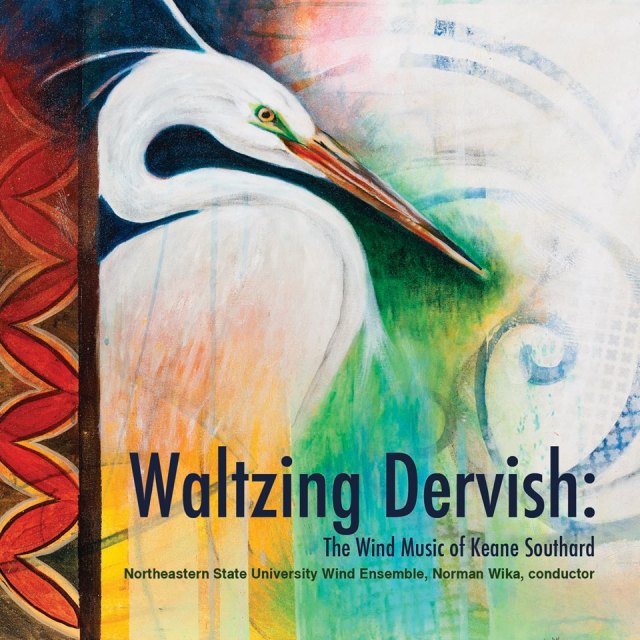
Visions of a Dreamer: Keane Southard’s Waltzing Dervish


dervish

Keane Southard (1987- ) is a composer and pianist whose work is influenced by a variety of styles including standard classical and pop and folk influences.  This major debut disc is a fine sampling of his work though it is important to realize that his work is for diverse ensembles of pretty much every description and the present sampling is of music for wind ensemble.

Just like every specialized grouping, be it string quartet, string orchestra, wind quintet, solo piano, full orchestra, etc., one encounters composers with varying degrees of facility in each configuration.  Southard seems very much at home with the wind ensemble/band and its possibilities.  A quick look through his extensive works list at his site suggests a hugely prolific musician with a wide variety of skill sets in a variety of musical configurations.  Wind ensemble is clearly one of his strengths and the Northeastern State University Wind Ensemble of Oklahoma under conductor Norman Wika are up to the challenges.  Southard playfully refers to this grouping as a “wind powered” ensemble using it as a metaphor for ecologically sustainable power systems.

There are nine tracks of which three are transcriptions of other composers’ work and the remaining six are by Southard.  His metaphors are as eclectic as his musical choices but fear not, his choices are friendly ones.  The first track, Waltzing Dervish sets the tone as an original and substantial composition of some ten minutes duration in which he takes on the waltz and its various meanings both public and personal to create an original band composition concerned as much with ecological metaphor as with a striving for multicultural diversity in an optimistic and thoughtful exploration of what can easily be a tired dance form.

The second piece is an arrangement of a piece by Francisco Mignone (1897-1986), one of the composers whose music he encountered during his 2013 Fulbright Fellowship in Brazil.  The piece is scored for optional choir (not used in this recording) and band, an arrangement Southard made with the intention of sharing this music as a highly viable selection for concert band.  It is indeed a joyous affair and one could easily imagine this being adopted as a staple in the rarefied realm of concert band music.

Do You Know How Many You Are? is the composer’s 2013 band arrangement of a 2010 choral piece which he describes as having basically come to him in a dream.

Claude Debussy’s Menuet (ca. 1890) was originally a piano piece which Southard envisioned in this orchestrated form during the course of his studies of orchestration.  That sort of inspiration is not uncommon for a composer but the result is not always as ideal as the composer imagined.  Fortunately this orchestration works quite well and again would proudly fit in a given band’s repertoire as an audience pleasing piece.

The next piece, originally an orchestral piece from 2013 is presented in the composer’s own arrangement for band.  No Interior Do Rio De Janeiro (2013/15) is another of the inspirations from the composer’s 2013 Fulbright Fellowship and was inspired by his work with “Orquestrando a Vida”, a Brazilian music project inspired by Venezuela’s famed “El Sistema”.  The band version was written on a commission from the present NSU Wind Ensemble.  Here is perhaps a departure from the dance theme of the first three tracks.  It seems to be a thesis or musical diary entry reflecting his personal take on the experience of working with this project though the spirit of the dance remains throughout.

Carousel (2008/2010) is the arrangement for band of the third movement of a mini-symphony (perhaps a scherzo?) for orchestra.  Curiously he describes his inspiration as coming from the sound of the calliope, a sort of steam driven organ common in circuses of the late 19th and early 20th centuries.

Cortège et Litanie (1922) by French composer and organist Marcel Dupré (1886-1971) is a bit of a departure.  Neither a dance nor derived from Brazilian sources this piece was originally written for organ.  The organ (like the calliope in the previous piece) is arguably a wind instrument and this transcription retains some of the ambiance of that grand instrument.  It is among Dupré’s better known pieces and seems a natural for band.

Uma Pasacalha Brasiliera (2015) is a commission from a the Arrowhead Union High School Wind Ensemble and conductor Jacob T. Polancich.  The composer describes various influences in the circuitous path the the completion of this work but it is basically a sort of homage to the baroque form of the pasacaglia (variations over a repeating bass line) as well as to some of the great folk song influenced composers such as Percy Grainger.  Brazilian influences dominate much of the composer’s work from this period and they combine with the aforementioned baroque and folk influences to form a wonderfully creative take on that form of baroque counterpoint.

Finally the big finale is presented in another transcription, this time of a concerto for piano and organ from 2008.  Of course the organ again lends it’s sound easily to a band transcription and we have this Concertino for Piano and Wind Band (2008 rev. 2015) which allows us to hear the considerable keyboard skills of the composer.  This is the most substantial work on the disc and provides a satisfying finale to this portrait of a prolific and optimistic young composer at the very successful beginnings of what this writer (optimistically) hopes will be a long and productive career.


Dark Queen Mantra, Celebrating Terry Riley at 80


Terry Riley (1935- ) turned 80 on June 24, 2015 and happily we are still celebrating this treasure of American music.  His iconic work “In C” (1964) is one of the defining works of the minimalist movement and Riley’s trippy album, “Rainbow in Curved Air” (1969) has also endured well.  But these works typify his early style and his work has evolved though his primary influences continue to be jazz and Hindustani music for the most part to a very personal style.

His discography boasts at least 30 albums and his compositions range from various chamber music pieces, solo and duo piano music, orchestral music, concertos and even music drama.  His influence on musicians is wide ranging and even includes that familiar intro to Baba O’Riley by the The Who (the title is actually an homage to Meher Baba and Terry Riley and that intro derives from Riley’s first Keyboard Study).  In recent years he has achieved much deserved success in collaboration with his son Gyan Riley who is a composer in his own right and an extraordinary guitarist.  Their collaborations have been a true highlight in both musicians’ careers.

This disc is a production from the truly wonderful Sono Luminus label whose recordings continue to set a high bar for production and excellence in sound as well as in intelligent programming.

Three works are presented here.  The first is Dark Queen Mantra (2015) for electric guitar and string quartet.  It is obviously the centerpiece and it is a fine work commissioned in honor of Riley’s 80th and written for the forces who perform it here. The amazing and versatile Del Sol Quartet and Gyan Riley seem a natural pairing.  These California based musicians seem to pour the whole of their artistic hearts and souls into this performance and Gyan Riley, a fine musician in his own right, always seems to be at his very best in his collaborations with his dad.  (Indeed anyone who had the pleasure of seeing their live sets can testify as to their beautiful musical intimacy.)

So it is we have a definitive recording of yet another fine piece from this beloved composer.  The choice to follow it with Mas Lugares (2003) by the late Stefano Scodanibbio (1956-2012) is an inspired and very appropriate choice (Riley was fond of this composer and helped promote his work).  Scodanibbio collaborated with Riley and recorded two albums with him (Lazy Afternoon Among the Crocodiles, 1997 and Diamond Fiddle Language, 2005).  This work for string quartet is dedicated to Luciano Berio and is a sort of deconstruction via the lens of the composer’s vision of madrigals by the early baroque master Claudio Monteverdi.  It is truly a joy to hear more of this composer’s music and this serves as a loving homage by the Del Sol and, by association, with Riley.

The concluding music is again by Terry Riley and it comes from the rich period of his collaboration with another set of fine California based musicians, the Kronos Quartet. They Wheel and the Mythic Birds Waltz (1983) first appeared on a Gramavision disc and this is a welcome reprise.  It is via his writing for the Kronos that Riley produced most of his string quartet writing and it is a fine repository for his compositional talents.

For its sound and its compositional and performance content this is one of the finest discs to come across this reviewer’s desk and it is a beautiful homage to Riley (father and son), the Del Sol Quartet, the Kronos Quartet and to the late Stefano Scodanibbio.  This is a gorgeous and deeply satisfying album.  Kudos to all.

Nadudim: Ethnic Memories from the Fifth House Ensemble


This is a really pretty album.  It is apparently one of the passions of Cedille to release folk musics from middle eastern and Mediterranean sources.  What distinguishes this release is its thoughtful, tasteful arrangements.  This writer is tempted to compare it to Berio’s Folksongs or Copland’s Old American Songs to capture the ideas behind the creative arrangements done by the four composers involved.  I don’t think this is quite the same undertaking as those works but this album is a serious musical effort by some marvelously talented musicians and is recorded with the lucidity one comes to expect from this unique Chicago based label.

Nedudim is the Hebrew word for wanderings and this is a great title for this album which takes the listener on a journey through the middle east and its musical riches. This is the second album that the Fifth House Ensemble, here joined by Baladino, has released on Cedille and it will leave the listener wanting more.

Various traditional instruments are mixed with classical instruments and gorgeous vocals in this song cycle.  It is a journey which reveals the diverse energies to be found in these local song traditions.  They are entertaining and even infectious in their joy.


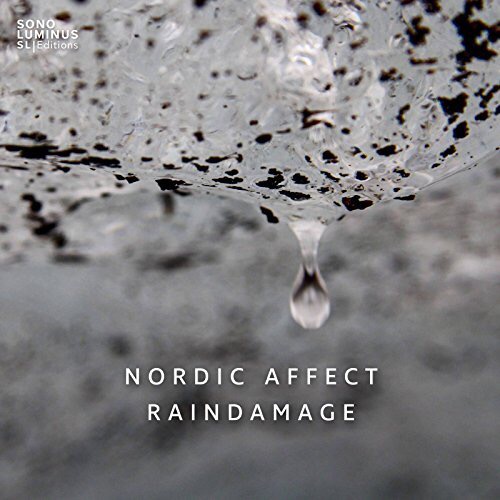
Nordic Affect: Raindamage, Wonderful Music from Iceland


Sono Luminus SLE-70008

Definitely an unusual beginning to this sonorous album of chamber music from the happy, creative place called Iceland.  Some of these tracks are electroacoustic combining some sort of electronic sound producing and/or manipulating components along with the live musical performance.

Nothing familiar here but a lot worth listening to.  This is a collection of recent chamber music from what is apparently some of the finest composers working in Iceland today. And as a Sono Luminus product it is a sound object of the highest order.  It is a beautifully recorded set of pieces that goes a long way to demonstrate the high quality and creativity of both the compositional and performance to be found in this distant corner of the world.

There are six works represented here.  Three are exclusively electronic, one for acoustic instruments with electronics and two are for acoustic instruments alone.  All seem to share the eclecticism of modern composers and, to this writer’s ear, a rather distinct style which seems to come out of the Nordic regions these days.

Iceland has a long and proud musical history and has amassed a large creative classical repertoire in (at least) the 20th and 21st centuries.  Perhaps one can hear the “sounds of the north” in these works or perhaps that is simply the analogous associations of this listener’s mind but there does seem to be some affinity between the lovely cover photograph of melting ice and some of the sounds herein.

At any rate this is fascinating music beautifully performed by Nordic Affect, a more or less fixed ensemble of violin, viola, cello, and harpsichord with occasional electronic supplementation.  Performers include Halla Steinun Stefásdóttir, Violin; Guòrún Hrund Haróardóttir, Viola; Hanna Loftsdóttir, Cello; Guòrún Óskarsdóttir, Harpsichord with Nava Dunkelman on drum in the last track.

The composers Úlfur Hansson, Valgeir Sigurðsson, and Hlynur Aðils Vilmarsson are completely unknown to this writer though it is noted that Hansson studied at Mills College in California, itself quite a hotbed of new music innovation.  No matter, though, these are some amazing composers doing cutting edge work and deserve your attention.

All in all this is one fine disc of chamber music.


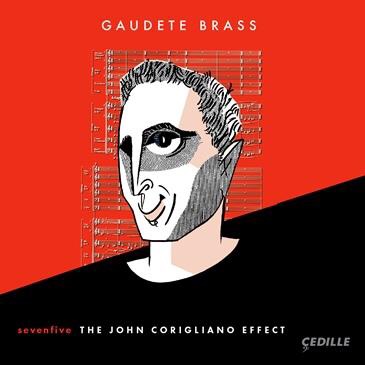
A Brassy 75th Birthday Celebration for John Corigliano


Cedille CDR 90000 169

John Corigliano (1938- ) is one of America’s finest composers.  He is to classical music in New York what Woody Allen is to the movies.  Corigliano is musical royalty.  His father was concertmaster under Leonard Bernstein among others (in fact he apparently worked as assistant to the producer on several of the Young Peoples’ Concerts).  His own accomplishments musically are many including a the very first Grawemeyer Award for his first symphony and a Pulitzer Prize for his second.  One could hardly find another musician as deserving of being honored.

From the very New Yorker style cover art this album affirms this composer’s iconic status.  But the artists here are good Chicago Brass players.  As a native born Chicagoan I have become accustomed to assuming that one can find some of the world’s finest brass players there and this album lays testament to that.  Gaudete Brass is an ensemble that definitely deserves your attention.

This is a fine tribute album featuring mostly world premieres but also some nice transcriptions.  This is effective though not overwhelmingly modern music for brass.  It is intended as and functions very well as entertainment and, from the sound of it, is also fun to play.

The original works are welcome as are the transcriptions of Corigliano’s Gazebo Dances. by the long time Chicago musician/conductor Cliff Colnot.  (One transcription is by the composer).  There are a total of three Corigliano pieces here and 13 by others.  One can only imagine the joy the composer will feel on hearing these tributes and the joy that any number of brass players will experience hearing this fine album.  As usual the Cedille recording is lucid giving a clear sound image of some truly fine musicianship.

The pieces here are good middle of the road compositions which pose challenges on the players but manage to be entertaining and nothing here sounds like an academic exercise.  Rather this disc is about celebration exactly as it purports.  Very enjoyable disc.

Dane Rousay’s Blip


cover

Dane Rousay is a San Antonio based percussionist and this is the first of several planned releases.  This is a solo effort largely with drum kit and perhaps a couple of enhancements or additional percussive hardware.  There are 8 rather brief tracks on this album, all of an experimental nature and all very well recorded.

One small disclaimer:  I generally don’t review download only releases but Mr. Rousay was persistent and kind in his requests for a review.  Another aspect is that there appears to be an increase in this purely digital release format and to ignore that in favor of a demand for a physical product would likely be missing an opportunity to hear some good work.

Despite the brevity there is much for the ear.  The percussion seems to be closely miked and that is apparently the point here.  Each track is like a mini-etude or experiment which will presumably be used as material for other work.  Whether this is jazz, free jazz, new music, classical, etc. is actually beside the point.  The point appears to be the sound itself.

There are no liner notes and little in the way of explanation to be found even on the composer’s web site.  (That’s not necessarily a negative thing either.)  It is not clear if this music is improvised or composed or if there is any predetermined structure and there appears to be no intended connection between each of the tracks.  Most of the work is mallets or sticks of some sort hitting the targeted percussive surface though he does make use of extended techniques such as rubbing the mallets across the surface creating rich harmonics in the manner of the spectralists.

After multiple listens this reviewer is left with the impression of having visited the artist’s studio for a rather personal tour of some of his working ideas.  If you are a percussionist or a fan of percussion music this album will doubtless interest you.  It is not easy listening but it does appear to be a very personal exploration of this artist’s techniques and ideas.

I am looking forward to more from this interesting and seemingly uncompromising artist.


Eclipse of the Son: Mischa Zupko


zupko

Mischa Zupko (1971- ) is a composer, a pianist, and a professor of music at Chicago’s De Paul University.  He is the son of avant garde composer Ramon Zupko (1932- ).  Mischa’s work featured on this Cedille release suggests that the proverbial apple has fallen quite a distance from the family musical tree.  That is neither bad nor good but it is striking.

The elder Zupko’s work, despite its significance, is too little known.  A few recordings exist on the old CRI recordings label and this writer recalls being impressed by them. According to the Chicago Reader article he really didn’t want his son to go into the music business but apparently what is in the blood is in the blood.  A curious note too is that one can find articles on both these composers on Wikipedia but not the English/American one, rather curiously both are to be found on the Dutch Wikipedia site.

The present disc is apparently the first dedicated entirely to this emerging composer’s work (now numbering some 50 pieces).  It is a disc of chamber music and from the first the listener is immediately aware that the younger Zupko is possessed of a sort of retro romantic bent.  Think of the great virtuoso composer/pianists of the 19th century like Franz Liszt and Anton Rubinstein.  He does gratefully acknowledge his father as inspiration but clearly follows a different path.

This music is about passion and virtuosity.  The composer defines this clearly in his liner notes.  The performers Mischa Zupko on piano, Wendy Warner on cello, and Sang Mee Lee on violin demonstrate both passion and virtuosity on this lucid recording.  They play very well together and they all have ample opportunities to show off their respective skills.

There are seven works on ten tracks dating from 2005 to 2015.  The first five tracks consist of “Rising” (violin and piano, 2009), “Fallen” (cello and piano, 2010), “From Twilight” (solo violin, 2015), “Eclipse” (violin and cello, 2014), and, “Nebula” (solo cello, 2015).

There then follows the four movement”Shades of Grey” (2005) for violin and piano.  This is the earliest work on the disc but stylistically it is consistent with the rest of the disc. Zupko certainly develops as a composer but his style seems pretty firmly established.

The last track seems to be the big feature here.  “Love Obsession” (cello, piano, 6 pre-recorded cello tracks; 2013) is perhaps the most adventurous and grand of the works on this recording.  As with the other works on the disc the composer cites various literary influences and inspirations consistent with the apparently romantic ethic which seems to drive his creativity.  And as with the other tracks we hear a tonal romantic idiom filled with passion.

My title for this review is not intended to suggest that the younger Zupko has surpassed his father in any way except perhaps in that his work has, whether by accident, timing, design, or whatever, gotten more attention.  This is not a case of Johann Strauss Jr. and Sr. in jealous competition, this is simply another generation responding to it’s muse and that is worth celebrating.


Duo Stephanie and Saar: Bach Art of Fugue


duo bach

New Focus Recordings FCR 181

One of Bach’s last works (It is dated 1748) was thought for many years to have been a sort of academic thesis which was not meant for performance.  Even though it has received performances it is problematic in many ways for performers and listeners. it has spawned many different approaches to this score which specifies no instrumentation, no ordering to the separate movements, and leaves it’s last fugue tantalizingly incomplete.

There have been many orchestrations for ensembles ranging from various chamber groupings to full orchestra.  It has been done on harpsichord, organ and piano, organ, string quartet, brass ensemble, saxophone quartet to name a few.  In fact all of these approaches would seem perfectly appropriate and authentic within the context of baroque performance practice.  Undoubtedly we can expect more of this pluralistic approach to come to terms with Bach’s final utterance.

Sometimes the most salient characteristic of a recording of this work is about a new orchestration or some new scholarship, including yet another effort to complete the fugue which Bach left incomplete in the manuscript.  In this two disc recording the motivation seems to be simple clarity.  Duo Stephanie and Saar (pianists Stephanie Ho and Saar Ahuvia) perform the pieces on piano 4 hands, two pianos and solo piano as befits their artistic vision.  They order the pieces by playing the first 12 fugues (or contrapuncti, as Bach refers to them) followed by alternately performing the four canons in between the remaining fugues and ending with the Canon in Augmentation to create a sense of an arch of unity with increasing complexity followed by the comparatively simple postlude of the final canon.  As with many of the recordings Stephanie and Saar choose to leave the last fugue incomplete as Bach left it which is slightly jarring, leaving the sensation of having missed a step in the descent of a staircase but the final canon then does serve to bring the listener down gently.

Not until the minimalist movement would we see such a long focus on a single key (D minor), a potential deal breaker for a lesser composer.  However the lucidity of these performances and recordings allows the listener to focus on the beautiful intricacy of counterpoint that represents one of the pinnacles of western musical art.  Actually I have found that this recording works as well with focused listening as it does as background music where its energy sneaks in to your consciousness in a different but no less exhilarating way.  This is doubtless due to the quality of interpretation.

Nothing flashy here, no overblown musicological perspectives, just strong playing by artists who clearly know and love this music.  The Art of Fugue is not the easiest of Bach’s works to appreciate.  Indeed it took this listener many years and multiple different recordings to finally grasp the depth of the work.  And while it may not have been intended for performance per se this recording does a good job of finding the unity in these contrapuntal etudes which are effectively a summing up of the techniques of the high baroque era.  Stephanie and Saar take us on a wonderful journey, one you will want to take many times.

Michala Petri Goes Brazilian


OUR Recordings 6.220618

Since her debut in 1969 at the tender age of 11 Danish born recorder virtuoso Michala Petri has been one of the finest masters of the recorder.  This ancient instrument, a forerunner of the flute, has existed since the Middle Ages and has amassed a huge repertoire and Petri seems to have demonstrated mastery over all of it and has been an advocate and promoter of new music for her instrument as well.  She has inspired composers to write new works for her and she continues to entertain audiences and has assembled an ever growing discography of startling range and diversity.  Nearly single handed she has managed to honor past repertoire and firmly ensconce this instrument in the 21st century.

In this release, produced by Lars Hannibal (himself a fine guitarist and frequent Petri collaborator) Petri takes on the music of Brazil and, despite the fact that recorders have seldom found their way into the music of this geographic region, she delivers a convincing and hugely entertaining program on this disc.  Along with Marilyn Mazur on percussion and Daniel Murray on guitar the listener is given an entertaining cross section of Brazilian music ranging from the more classically oriented work of Heitor Villa-Lobos (1887-1959) and Ernesto Nazareth (1863-1934) to the smooth jazz/pop sounds of Antonio Carlos Jobim (1925-1994) and Egberto Gismonti (1947- ).  In between are included works by the album’s guitarist Daniel Murray (1981- ) and a few names unfamiliar to this reviewer including Paulo Porto Alegre (1953- ), Paulo Bellinati (1950- ), Hermeto Pascoal (1936- ), and Antonio Ribero (1971- ).

There is a remarkable unity in this Danish production which stems from a meeting between producer Lars Hannibal and Daniel Murray in Vienna in 2014.  Hannibal’s ear found a kindred spirit whose musicality is a good match for that of Petri.  And like a good chef he added the delicate and necessary spice of the tastefully understated (but extraordinary) percussionist Marilyn Mazur to create a unique trio that sounds as though they’ve played together for years.  Here’s hoping that they’ve secretly recorded enough material for a second album.

All the tracks appear to be transcriptions though the transcriber is not named (I’m guessing they’re collaborative).  What’s nice is that there is nothing artificial or uncomfortable about these arrangements.  The overall impression left is that of a skilled ensemble and listeners encountering the original forms of these works might well assume those to be the transcriptions.  So convincing are these performances.

One last thing.  The sound.  This super audio CD release was engineered by Mikkel Nymand and Preben Iwan and the sound is fabulous.  I don’t have a machine that can read the super audio tracks on this hybrid disc but what I can hear is a lucid recording which embraces the subtleties of this unique ensemble.  Enjoy!

Other Minds 22, Resounding Sacred Tributes from Music to Wheaties


OM22052120170026

Nicole Paiement led a touching performance of Lou Harrison’s La Koro Sutro

Nominally this was a celebration of the life and music of Lou Silver Harrison (1917-2003) but this last concert of Other Minds 22nd year celebrated so much more.

OM22052120170011

Curator and Other Minds Executive and artistic director introduces the night’s festivities with these artistic icons titled St. Lou and St. Bill (Lou Harrison and his partner, instrument builder Bill Colvig). The portraits were sold by silent auction.

One can’t celebrate the life and music of Lou Harrison without acknowledging his life partner of 30 years, Bill Colvig (1917-2000).  Colvig was the man who designed and built the American Gamelan percussion instruments used in tonight’s performance.  These repurposed industrial materials were inspired by the Indonesian Gamelan which Lou Harrison encountered at the 1939 world’s fair which took place on Treasure Island just a few miles away.  Amirkhanian added another fascinating historical footnote when he informed the audience that Harrison had come to this very church to learn to sing Gregorian Chant some time in the 1930s.

A further and very intimate context was revealed when Amirkhanian took an informal poll of the audience asking who had met and/or worked with Lou Harrison.  By his count he estimated that about 40% of the audience had encountered “St. Lou” (this writer met the magnanimous gentleman in Chicago in the early 1990s).  Indeed many of the musicians had encountered and/or studied with Harrison and the passion reflected in their performances and the audiences response clearly shows why he (and Bill) were elevated tonight to secular sainthood.

The wonderful acoustics of the Basilica easily accommodated Harrison’s dislike of electrical amplification.  Even the solo and small ensemble music was heard as it was intended.

OM22052120170008

The organ console at the Basilica.

The well attended concert began with an early rather uncharacteristic piece called Praises for Michael the Archangel (1946-7).  It reflected the influence of Arnold Schoenberg, one of Harrison’s teachers (Henry Cowell and K.T.H. Notoprojo were also among his teachers).  Harrison also famously worked with Charles Ives whose Third Symphony he premiered.  He also worked with John Cage and collaborated on at least one composition with him (Double Music).  The angular and dissonant sounds were lovingly interpreted by Jerome Lenk, organist and chorus master at the Basilica.

OM22052120170013

Organist Jerome Lenk acknowledges the audience applause and allows himself just a touch of a satisfied smile for a well wrought performance.

Next was a solo harp piece Threnody for Oliver Daniel (1990).  (Oliver Daniel (1911-1990) was a composer, musicologist, and founder of Composer’s Recording Incorporated.  He was a friend of Harrison’s and a great promoter of new music).

OM22052120170001

The Threnody was performed on this smaller troubador harp in Ptolemy’s soft diatonic tuning.

Meredith Clark played with focused concentration and gave a very moving performance of this brief and beautiful composition.  Harrison was fond of paying homage to his friends through music.

Clark was then joined by cellist Emil Miland for a performance of Suite for Cello and Harp (1948).  Composed just a year after the angular organ piece which opened the program this gentle suite is entirely tonal and very lyrical in its five movements using music repurposed from earlier works.  Clark here used a full sized concert harp.

The artistic connection between these performers clearly added to the intensity of the performance.  Despite the varied sources of the music the suite has a certain unity that, like Bach and indeed many composers, justifies the re-use of material in the creation of a new piece.

This was followed by another organ piece from Mr. Lenk.  This Pedal Sonata (1989) is played solely by the musician’s very busy feet on the pedals alone (no hands on the keyboard).  Listening to the piece it was easy to believe that more than just two agile feet were involved in this challenging and virtuosic composition.  It appeared to be quite a workout but one accomplished with great ease by the performer.

OM22052120170016

Emil Miland and Meredith Clark smiling in response the the applause following their performance.

Following an extended intermission (owing to a dearth of restroom facilities) there was an awards ceremony.  Charles Amirkhanian was awarded the 2017 Champion of New Music Award (tonight’s conductor Nicole Paiement was also a previous awardee).  Presentation of the award was done by American Composer’s Forum President and CEO John Neuchterlein and Forum member, composer Vivian Fung.

Amirkhanian took the time to pay tribute to his mother (who also would have been 100 this year) his father (who passed away in December at the age of 101) and his charming wife of 49 years, Carol Law, who continues her work as a photographer and her participation in Other Minds and related projects.  He also gave thanks to the staff of Other Minds and his former associates at KPFA where Charles served as music director for over 20 years.

OM22052120170019

American Composer’s Forum President John Neuchterlein looks on as composer Vivian Fung presents the prestigious 2017 Champion of New Music Award to a very pleased Charles Amirkhanian.

OM22052120170020

In a touching and humorous move Mr. Neuchterlein advised the audience that Mr. Amirkhanian would be given yet another award tied to Minnesota which is the home of General Mills (yes, the cereal people).  Amirkhanian (who himself has quite a gentle sense of humor) was surprised and charmed to receive a box of Wheaties emblazoned with his image from whence he can now reign in the rarefied group of breakfast champions in addition to his other roles.

OM22052120170022

The breakfast of new music champions.

The second half of the concert began with the co-composed Suite for Violin and American Gamelan (1974).  Co-composer Richard Dee was in the audience for the performance of this work written two years after La Koro Sutro (1972) and incorporating the same gamelan instrument created for that piece.  The substantial violin solo was handled with assurance and expressivity by Shalini Vijayan, herself a major new music advocate.

OM22052120170025

Composer Richard Dee waving thanks for the performance of Suite for Violin and American Gamelan.

At about 30 minutes in performance the multiple movements all but comprised a concerto with challenging roles for both the percussion orchestra led by the amazing William Winant and his percussion ensemble and the soloist.  All were masterfully coordinated by conductor Nicole Paiement.

OM22052120170024

Shalini Vijayan smiles from behind her bouquet acknowledging the thunderous applause following her performance.

In a previous promo blog I had noted that the location of this concert is a designated pilgrimage site, one where the faithful journey as part of a spiritual quest.  Well, having been sidelined by a foot injury for the last 3 1/2 months this amounted to a musico-spiritual pilgrimage for this writer who has not been able to be out to hear music for some time.  The last piece on the concert in particular was a powerful motivation for this personal pilgrimage and I was not disappointed.

The American Gamelan was played by the William Winant percussion group consisting of master percussionist Winant along with Ed Garcia, Jon Meyers, Sean Josey, Henry Wilson, and Sarong Kim.

They were joined by the Resound Choir (Luçik Aprahämian, Music Director), Sacred and Profane (Rebecca Seeman, Music Director), and the Mission Dolores Choir (Jerome Lenk, Music Director).

Meredith Clark joined on concert harp and Mr. Lenk on the small ensemble organ.  All were conducted with both discipline and panache by Nicole Paiement.

This multiple movement work is a setting of the Buddhist Heart Sutra and is done in an Esperanto translation by fellow Esperantist Bruce Kennedy and, though written for the world Esperanto Convention in Portland, Oregon, it was premiered at the University of San Francisco in 1972.  This was the fourth performance in the Bay Area, a fact that reveals the love that this area has had and still has for its beloved citizen Lou Harrison.

OM22052120170029

Warm smiles proliferated as the bouquets were distributed amid a standing ovation from a very appreciative audience.

In fact this concert can be seen as a affirmation of so many things.  Harrison was a composer, teacher, dancer, calligrapher, Esperantist, conductor, musician, musicologist and early gay rights advocate.  It is a testament to Lou that he has been given a most spectacular birthday celebration which gave credence and appreciation to all aspects of this west coast genius and all his extended family.  It happened 50 years after the fabled Summer of Love and apparently the love continues in its way.

OM22052120170028

A clearly very happy conductor Nicole Paiement’s smile echoes both her feeling and that of the attendees, a wonderful night.

Words Fail and Music Succeeds: Violinist Yevgeny Kutik


Marquis 774718147721

Politics requires words and indeed fails at times but music very much succeeds in this fine recording.  This charming collection organized loosely around songs without words is the third album by this emerging artist.

The music is largely 20th to 21st century (if you count the date of the transcriptions) but the sound and mood of the album ranges from the romanticism of Mendelssohn and Tchaikovsky, the post-romantic Mahler, to the neo-classicism of Prokofiev and a dash of modernism from Messiaen, Gandolfi, Andres, and Auerbach.  No words, no politics, just some really beautiful music.

There are 14 tracks of which the Mendelssohn and the Mahler will be the most familiar to listeners.  What is interesting here is a certain unity in these seemingly disparate works which range over nearly 200 years of compositional invention.  In fact this recital program strongly resembles in spirit the justly popular programs of Jascha Heifetz and his acolytes.  That is to say that this is at heart a romantic recital program sure to please any aficionado of the violin and piano genre.

Two of the tracks, those by Michael Gandolfi and Lera Auerbach are for solo violin.  The unaccompanied violin repertoire best represented by J.S. Bach’s Sonatas and Partitas is a relatively small one and one fraught with difficulties for composers as well as performers.  Fear not though, these pieces are well wrought and represent significant contributions to the solo violin literature.

The Gandolfi (1956- ) Arioso doloroso/Ecstatico (2016) was commissioned by Mr. Kutik and this is the world premiere recording.  The composer utilizes a basically romantic sounding style with clear references to Bach at moments to create a very satisfying piece imbued with depth but eminently listenable.  Gandolfi’s eclectic oeuvre is by itself worthy of further exploration.

Lera Auerbach’s (1973- ) T’Filah (2015) is a reverent (though not excessively somber) prayer written in memory of the victims of the Nazi holocaust.  Auerbach shares some Russian roots with the soloist and this brief composition will leave most listeners wanting to hear more from this fine and prolific composer.

Timo Andrés (1985- ) plays the piano on the eponymous track Words fail (2015), the second of the two works commissioned by Kutik and premiered on this disc.  He is a skilled composer using a wide variety of compositional and instrumental techniques (which he mentions in his liner notes) to create a sort of modern song without words that fits so well in this program.  Andrés is certainly among the rising stars both as composer and performer.

One should definitely pay attention to the fine work of Kutik’s accompanist John Novacek whose precision and interpretive skill so well compliment the soloist.  The art of the accompanist shines very clearly here.

Overall a great recital disc from a soloist from whom we will doubtless continue to hear great things.