An overflow crowd packed the lovely auditorium at Berkeley’s David Brower Center this past January 19th. Octogenarians (and younger folks as well) populated both stage and audience in a show of appreciation for a man whose work as music director of KPFA (1969- 1992) and subsequently as an arts promoter and curator of new music in California’s Bay Area continues to enhance the artistic reputation of the Bay Area.
A rare and exciting aspect of this evening were the rare opportunities to hear Charles’ music, including representative sound poetry classics and a recent major opus capped off by a world premiere of a new work.
The hands of the artist. Photo by Allan J. Cronin
The genuine affection, appreciation, and respect was palpable as the honored guest demonstrated his skill at hosting when a couple of technical glitches slowed (but did not stop) the amiable birthday celebration. The audience waited calmly and quietly.
Both the guest of honor and the host (Liam Herb) used a well honed, self effacing humor used most skillfully to entertain the sympathetic audience while the technical difficulties were surmounted in real time.
Panel discussion featuring (left to right) Susan Stone, Anthony Gnazzo, Paul Dresher, Charles Amirkhanian, Sarah Cahill, and Liam Herb (Photo by Allan J. Cronin, Creative Commons license)
Herb, a composer and performer, introduced himself in the midst of the technical resolutions, graciously announcing that, as producer, he accepts responsibility for the glitches. Charles maintained his familiar master of ceremonies crowd pleasing good humor as Herb worked goodnauturedly (if that’s a word) with the rest of the crew to resolve the issues and get on with the show.
The formal opening remarks were given by Other Minds’ associate director, Blaine Todd. And the evening began in force.
Blaine Todd (photo by Allan J. Cronin, Creative Commons license)
The program glided past the initial hiccup to present a film about our guest of honor. The bevy of fans and bona fide new music professionals sat with rapt attention as the film, featuring the familiar faces of several “Bang on a Can” artists.
The late great Robert Black interviewed by Amirkhanian in the streaming premiere of Audible Autopsy. (Photo of film appearance by Allan J. Cronin)
Excerpts from the 2015 Other Minds 20 documentary featured Julia Wolfe, David Lang, and Peter Gordon (now, it seems elder statesmen (and women) in their own right.
Production manager Liam Herb then served as moderator for a conversation or live interview (with Amirkhanian) for the next segment. This was followed by some videos with music by the guest of honor:
Real Time/T.V. Time Video with Amirkhanian’s “Muchrooms”
The film, presented in its entirety was accompanied by “Muchrooms”, from the CD recording of that standalone work.
Next was Amirkhanian’s and Carol Law’s classic collaboration: History of Collage (1981). This is a major work and a great collaboration with his partner in life and arts. I’m pleased to add my own shot from the performance at the Other Minds 23 experience, my favorite OM festival(so far).
History of Collage (1981) photo by Allan J. Cronin taken at the Other Minds 23 wonderful live performance of this work (Photo by Allan J. Cronin is Creative Commons license 2015)
We also heard and saw Audience (1978) with photography by Law and music/poetry by Amirkhanian followed by Chairs with photography by James Petrillo and music/poetry by Amirkhanian (excerpts from Seat Belt, Seat Belt (1973).
There followed a panel discussion led by Carol Law with Betsy Davids discussing David’s’ work and her connections via her work as a book artist. These two embody the experimental visual arts that characterize the skills of these fellow artists both onstage and off tonight. In fact, interactive collaboration and both respect and friendship were everywhere to be seen in this warm and pleasantly nostalgic evening.
Carol Law speaking with Betsy Davids (Photo by Allan J. Cronin, Creative Commons license)
This was followed by a recording of a major opus, Ratchet Attach It (2021) recently played at one of the (still ongoing) Other Minds Festival. This work is a major opus by Mr. Amirkhanian, one I’m pleased to say I heard live at the Chinese Theater in San Francisco a few years ago. Scored for a huge percussion ensemble, with audio recordings, and a conductor who moves between the podium and a space among the performers playing with the ensemble. It is perhaps one of his most integrated and evolved compositions. Stunning to hear it live. Glad to hear the (always too short) excerpts.
In fact Mr. Amirkhanian, a fixture in the arts of the Bay Area, continues to influence musical taste and present new and interesting music as he has for well over 50 years. His work as Executive Director of Other Minds includes the fabulous OM Records as well as the annual Other Minds Festival and a continual flow of carefully curated concert events by luminaries (or soon to be luminaries) throughout the Bay Area and beyond. There is also the huge archive of thousands of hours of interviews and concerts that are available in streaming audio and video via the Other Minds website.
Many of the artists featured in the Other Minds concert series continue to work, innovate, and expand musical concepts. An Other Minds commission, Henry Brant’s Organ Concerto, Ice Field, earned him a Pulitzer Prize. Many have gone on to greater achievements in their respective careers. Of course not every composer started their musical careers at Other Minds concerts. Many mid or late career musicians have joyfully been represented over the years. Its one of those festivals that innovative musicians seek to participate.
Such achievements reflect on Amirkhanian’s leadership and curatorial acumen, but more importantly his relationships with his fellow artists. Charles has earned a reputation for his support and his collaborative nature. Arguably, everyone in the house (and the overflow in the lobby) all have a degree of connection to Charles and his guests. It is why we’re all here tonight.
Charles Amirkhanian and Joseph Bohigian performing with Liam Herb’s electronics (Photo by Allan J. Cronin, Creative Commons license)
Following a brief intermission we were treated to a world premiere of a new work by our guest of honor, Noose Ratchet (2025) for two percussionists and electronics. Amirkhanian performing and/or promoting his own music is a relatively rare event and this alone was certainly worth the trip.
The work is arguably a trio for two percussionists playing ratchets, a curious instrument whose sound, if not entirely ubiquitous, is familiar. And the two play interactively with the electronics (the third member of the trio). Extended techniques and other duties get assigned (when in doubt it’s responsibility of the percussion section, right)?
There followed a lively and friendly panel discussion amongst frequent and past collaborators Susan Stone, Anthony Gnazzo, Paul Dresher, Sarah Cahill, and Liam Herb. This truly felt like a gathering of friends.
After agonizing about writing a “best of” blog and publishing it before January 1, I decided to take a pause and enjoy the holidays. So here I look back on my 2023 in the rear view mirror but with memories still pretty fresh.
Regular readers of this blog likely already know of my oft shared opinion of the superfluous nature of “best of” lists and of my acquiescence in producing such on an annual basis. I certainly don’t think of this as a meaningless exercise and I think the process has grown on me. It is a chance to achieve a perspective which would be missed by simply plowing on ahead with the usual flow of reviews and articles. But drawing down that 12 month perspective is an opportunity to evaluate those months, to see where we’ve been and to hopefully get a smidgen of insight into where I/we are likely headed.
My Facebook friends will recognize the representative meme at the head of this article which is one of the more cloying aspects of “AI”, whatever that is. So indulge me for a moment to look at this seemingly new intrusion into the reality we thought we knew. So, what is “AI” and what will it do to us? Ultimately I’m not the one to answer that question but I’d like to throw some ideas to add to the speculation.
First, the choices a composer makes, like the choices of a painter, a writer, etc. are the stuff of the mystery of creation itself. Why “A major”, or why that tuning, or scale, or rhythm, or orchestration, etc? So along comes the notion of removing, or at least distancing, the artist from their creative product. That notion started not with famed proponent John Cage but rather with Johannes Chrysostymous Wolfgang Amadeus Mozart in his K. 516f musical dice game. Voila! Algorithmic composition (actually fairly common practice in the classical era). An early manifestation of “AI”? Perhaps.
Lejaren Hiller (1924-1994) was the first composer to employ electronic data processing in a musical work in his Fourth String Quartet subtitled “Iliac Suite” in 1957. There followed similar experiments with various iterations of electronic creations at music centers worldwide including The University of Illinois at Champaign, Columbia-Princeton, Stanford, The University of California Berkeley and San Diego, The San Francisco Tape Music Center (later subsumed into the Mills College Center for Contemporary Music, IRCAM in Paris, Israel Electronic Music Studio, and counterparts in the Nordic countries, Germany, Belgium, etc. Proto “AI”?
While historically interesting I raise this issue to say that, as far as I can tell, “AI” has not made this writer’s greatest hits list but it is interesting and maybe even useful. With that, my concern for the subject officially goes to the back burner for a later time.
2023 has been a year of great personal changes for the writer of this blog. A job change, a geographical relocation, and many things unrelated to this blog characterized a busy year for New Music Buff. So here in a sort of holiday tradition I present my “Best of 2023” from my little listener’s corner of the world. For the sake of simplicity I present a more or less chronological exposition of my sonic adventures. (N.B. Not one portion of this article made use of “AI”).
I begin with not with my 20 most read posts, a practice that characterized previous iterations of this annual exercise. Instead I am providing my top 20 favorite releases that were reviewed in 2023. Please note a couple of caveats. First, I receive a lot of review requests, more than I can even listen to, much less give a reasonably intelligent review. Albums that I’ve not reviewed should not be assumed to be bad or insignificant and my reviews are personal observations. I really only review albums that interest me anyway. Second, this article is only one reviewer’s opinion and not intended to be definitive or to supersede anyone else’s opinions. Third, this is not the end of my attention to music that was released in 2023. Some releases require more time to give a fair listen and a respectful review. There are more to come in 2024.
First a few stats: 2023 saw the publication of some 45 blog posts on New Music Buff, earning me 9693 views for the year. I rarely get comments on my posts (though I welcome and invite comments both positive and negative). Not bad, I think, for the overall less appreciated musical styles that fuel my desire to write about.
Now, in chronological order (of publication) are my personal favorites as a listener:
Neuma 158
Binaural Beats in the Tudor Rainforeststarted my new year with a bang. Reviewing this disc required me to take a closer look at the astounding work of David Tudor and his unique contributions to new music. This important release is a recording of a work which, by its own concept cannot receive a “definitive” performance. But this recording comes mighty close, involving “binaural” recording utilizing a mobile set of binaural microphones which are worn by the recordist. In addition this recording involved a collaboration with Pauline Oliveros and a group called, “Composers Inside Electronics”. The recording was done during Oliveros’ tenure at UCSD. Rainforest IV is so called because it is the fourth iteration of the instructions that form the original concepts of Tudor’s composition, “Rainforest”. It is an immersive sonic experience heard on headphones but actually not bad even heard on stereo speakers. A rich and wonderful release.
Starkland S-236
From a 1960s electroacoustic to a budding 21st Century composer Kotoka Suzuki released on the reliably interesting and even visionary Starkland label. Next Gen Electroacoustic: Kotoka Suzukiwill introduce the listener to this rising star who doubtless will produce more of her compelling compositions.
Sony 194399434826
Igor Levit is a fine concert pianist whose albums are effectively redefining the way we, as listeners, perceive the western classical oeuvre. Igor Levit: Defining Tristandoes for the various musical pieces inspired by the Tristan legend what Levit did for the concept of the great keyboard variations in which he selected Beethoven’s “Diabelli Variations” and Frederic Rzewski’s “El Pueblo Unido Variations” to join his recording of the Bach “Goldberg Variations” in a 3 disc package placing these three large sets of variations as emblematic of the genre in three different centuries (18th, 19th, and 20th). Levit, by his recorded output, is providing a valuable perspective which may influence repertory choices for years to come.
Levit’s traversal of the Tristan legend here ranges from the second recording of Hans Werner Henze’s too seldom heard “Tristan Preludes” back to works by Wagner (of course) and Liszt. He even slips in his wonderful solo piano transcription of the Adagio of Mahler’s unfinished 10th Symphony into the mix. This is a very compelling Tristan anthology by a deservedly still rising star.
Cantaloupe
This Cantaloupe release by Bang on a Can composer and master clarinetist Evan Ziporyn is both masterful and great fun. Evan Ziporyn: Bang on a Popconsists of transcriptions of “pop” songs for multiple clarinets all played by Ziporyn via his very effective multi-track recordings. The album is very personal and pretty much cliche free with these engaging and insightful transcriptions. It is an homage to the songwriters as well as a showcase for Ziporyn both as composer and as performer.
Microfest MF 23
The Young Person’s Guide to Ben Johnston is an ideal way to introduce listeners to the wonderful world of the late Ben Johnston’s music. Johnston, a student and colleague of Harry Partch shows his compositional skills utilizing non-traditional western tunings in these representative works. Johnston here does for some quasi pop tunes what Evan Ziporyn did with his clarinetist perspective for the tunes on Pop Matters. But Johnston’s pretty, accessible work belies fascinating complexities that don’t actually sound complex to the listener. This disc contains Johnston’s last completed work, “Ashokan Farewell” (which Johnston took to be a public domain folk tune but is in fact a piece written by Jay Ungar). It is paired with the 4th String Quartet (a set of ingenious variations on “Amazing Grace”) from 1982 and the 9th String Quartet of 1997. Profound, lovely to listen to, and a great homage.
DVD OM 4001
This DVD is a major addition to the discography of Charles Amirkhanian’s sound poetry as fine sampling of one aspect of Carol Law’s (Amirkhanian’s life partner) complementary visual art. These collaborations are also important contributions to the visual and performative aspect of these collaborative works. Amirkhanian has been a fine curator and promoter of the work of others but he has rather seldom stepped into the spotlight himself. This quirky genre got some fabulous exposure at the 7 day Other Minds 23 festival in 2018 in which Amirkhanian’s work was presented in the (surprisingly varied) context of sound poetry of the amazing international collection of artists who were hosted at those events. This DVD should be in the collection of anyone interested in new music sound poetry and performance art. It is both entertaining and mind bending featuring a juxtaposition of images and sound reviewed in greater detail in the post “Dyadic Dreams”. But words cannot do justice to these works. You really have to see them.
Cedille CDR 90000 210
Readers of this blog know my fondness for the Chicago based label Cedille and their promotion of Chicago based musicians. This disc stands out in this group’s embrace of non-traditional composers alongside more traditional works. The inclusion of works by DJ composer Jlin and the academy based genre defying duo Flutronics alongside composers like Danny Elfman and Philip Glass demonstrate the wide ranging repertoire of Third Coast Percussion. Much more information can be found in Perspectives: Spectacular World Premiere Recordings from Third Coast Percussionon my blog. This one reimagines the percussion ensemble.
Neuma 176
This disc is a good example of why listeners and collectors should pay attention to the Neuma record label. Philip Blackburn, who had been the very successful curator of Innova records, took over the defunct Neuma label which was founded with the intention of promoting largely electroacoustic music though not exclusively.
Agnese Toniutti‘s New Music Visionis actually a review of two discs by this rising star, a dedicated new music pianist that needs to be on your radar. The other Neuma disc contains Toniutti’s traversal of John Cage’s reluctant masterpiece, “Sonatas and Interludes for prepared piano”.
The disc pictured here is Toniutti’s vision beyond the Cage work. This one focuses on mostly living composers Lucia Dlugoszewski, Tan Dun, Philip Corner, and Toniutti’s herself. Basically, if Toniutti plays it, you should probably at least give a listen.
2023 saw the completion of Bay Area pianist Sarah Cahill’s epic survey of piano music by female composers. Cahill is another (predominantly) new music focused pianist about whom I would also assert that, if she plays it, you should probably give at least one listen.
The End of the Beginning: Sarah Cahill’s “The Future is Female” Trilogy Completedwill tell you all you need to know about this trilogy which encompasses about 300 years of music history and sheds light on some fascinating and substantial music written by women. Most of the works on this trilogy of albums are, in fact, world premieres but, fear not, even the pieces which are not premieres are likely not in your collection. This is a brilliant selection of music that effectively throws down the gauntlet to challenge other artists to explore this repertory. This trilogy is a true landmark and a joy to the ears.
This third volume in the wonderful Catalyst Quartet’s survey of another unjustly neglected group of composers focuses on the music of three black Americans of the twentieth century. Catalyzing Blackness, Volume Three: The Catalyst Quartet plays 20th Century music by Black Americans was nominated (but didn’t win) for a Grammy Award and, happily, I’m told that more volumes are in preparation. Again, this music is a pleasant revelation that does for black composers what Sarah Cahill has done for women composers (N.B. The first volume by the Catalyst Quartet focused on the black female composer Florence Price). And here’s hoping that Coleridge Taylor Perkinson, George Walker and William Grant Still will become household names in the concert hall.
Microfest MF 21
Son of Partch, Carrying on a Traditionis a really wonderful disc which, though I reviewed it in exceedingly positive terms, provoked a strongly negative reaction from the artist. The reaction apparently also provoked enough interest to have made this review one of my most read of 2023.
But, aside from the unfortunate negative reaction, I still maintain that this is a fine release worthy of attention from anyone who likes new music, microtonality, and the music of Harry Partch. Cris Forster is a composer, theoretician, and instrument builder clearly descended from the Partch tradition. His work deserves attention and this disc is a very satisfying experience.
Islandia IMR 011
Steven Schick is a master percussionist and conductor. This release is the first volume of his personal choices of solo percussion repertoire. Solo Percussion Manifesto Volume I: Steven Schick’s “A Hard Rain” is a manifesto of sorts and does for solo percussion music what Sarah Cahill has done for women composers and the Catalyst Quartet is doing for black composers. There are not many recordings of solo percussion music and Maestro Schick essentially presents his favorite works in definitive performances on a label produced by Bang on a Can cellist Maya Beiser. The second volume is in my review queue and, if this first volume is any indication, it will be a landmark survey.
Cedille
Rising Star Seth Parker Woods’ “Difficult Grace” is a Classic in the Making. Here’sanother Grammy nominee that did not win but, this second album by this fine American new music cellist is a winner in my book (er, blog). This is actually the audio of what was developed as a staged performance but the music speaks for itself. Keep an eye/ear out for this rising star who, even now, is storming the new music cello scene in invigorating ways.
Neuma 128
A Reason to Listen: Roger Reynolds’ Latest, “For a Reason”,new recordings on Neuma Records. Here we see Neuma following its original electroacoustic mission with this remarkable set in celebration of Roger Reynolds’s 90th year. This is a lavish 2 CD box set with a beautiful booklet and lucid liner notes. It is a worthy production which showcases recent works by this prolific and important American composer.
Readers of this blog likely are aware of my interest in music that is suppressed and/or neglected so this disc grabbed my attention immediately. Israel does a great job of funding the arts and this can be seen in the proliferation of truly fine performers nurtured by that funding. Less well known are the composers who have flourished in the art healthy politics of this country. Some 50 years of history are represented here. This is but a sampling, albeit finely curated, of several generations of composers displaying a plurality of styles with substantial results. This entertaining disc will whet the appetites of intelligent and curious listeners and, hopefully, bring about more recognition of the world class composers who deserve an audience.
There is an aptness that accompanies the publication of my first blog of the new year. Much as we aspire to review our past year and resolve improvements for the next, this book effectively plays a similar role.
Arnold Schoenberg (1874-1951) was born into tumultuous times. His life intersected with political change, social changes, two world wars, and huge changes in the way music would be written and heard. His life and the above mentioned changes in the world are the subjects of Harvey Sachs’ relatively brief review of Schoenberg’s life and career. But the relative brevity does not sacrifice the apparent aim of presenting this composer’s work in the context of the times thereby providing the reader/listener with a perspective that aids an understanding of the man, his music, and his (arguably still evolving) place in history.
“You can see it isn’t easy to get on with me. But don’t lose heart because of that.”- Arnold Schoenberg
At 272 pages this book wisely focuses on the composer’s published work and the drama of its performance along with critical and audience responses. This is not a comprehensive review of all things Schoenberg. While Sachs makes references to the composer’s earlier works, he focuses primarily on the published music and the responses of musicians, critics, and audiences. More importantly he focuses on the massive socio-political changes that paralleled the music thereby providing a useful context for future listeners and performers to better understand Schoenberg and his place in musical history.
Sachs places less emphasis on the composer’s paintings and even his writings. What the author achieves is a very readable and understandable essay that listeners (your humble reviewer included) can use to take another look/listen and to come to a new reckoning of Schoenberg and his place in the world. To, as the subtitle suggests, better understand, “Why he matters.”
I must admit that I did not understand and appreciate the music of Arnold Schoenberg immediately, and even when I ventured to read this volume, I found that my familiarity with this composer was limited primarily to “Transfigured Night”, “Pierrot Lunaire”, the “Second String Quartet”, Moses und Aron” (the Solti recording), Piano Concerto, Violin Concerto, the String Trio, and a fleeting listen or two to the piano music.
The joy of this book was in its chronological exposition of all of the composer’s major works and their historical and political contexts. As a result I found myself listening for the first time (or at least the first in many years) to the two chamber symphonies, the other string quartets, etc. It was an opportunity to reset my perceptions/misperceptions and acquire a better understanding and appreciation of his oeuvre.
As Sachs concludes:
“There are cycles in the arts. Perhaps we have reached the end of one great, centuries long cycle of individualistic European Art Music and its global offshoots. We cannot know. But, in the unlikely case that the subspecies Homo Sapiens Sapiens doesn’t destroy itself in the meantime, there is good reason to expect that sooner or later a new cycle will begin. And, for now, we have an enormous treasure of outstanding creations that continue to speak to anyone who is willing to listen to them.”
Roger Reynolds (1934- ) turns 90 next year. This prolific American artist’s work is being collected and preserved by the Library of Congress. The present recording is the most recent release documenting Reynolds’ music, now numbering about 30 CDs and DVDs. And this is but a fraction of his musical works.
I first encountered Reynolds’ music when I heard a broadcast of the first commercial recording of his music. The disc, released in 1969 on Nonesuch records documented performances of Frederic Myrow’s “Songs from the Japanese” (1964) paired with Reynolds’ “Quick are the Mouths of the Earth” (1965), a work that actually uses the text of the title to derive the music. I recall that the sound of this music sent chills up my spine and sent me to a record store to purchase a copy. This first encounter was a visceral experience, one of many I would encounter as I heard his subsequent music, and that of his contemporaries.
Reynolds has been a prolific composer, writer, and reader. His father was an architect, Roger would go on initially to study engineering and then also encountered some of the new interest in experimental music at the ONCE Festival in Ann Arbor, Michigan in the early 60s. His studies in music and literature continued to be wide ranging and the fine liner notes by Thomas May in “For a Reason” are extremely useful in grasping the range of inspirations that inform Reynolds’ music. This is one of those gorgeous new music releases that will likely become one of those odd but much sought after collectibles. The booklet jdesign by Karen Reynolds, Stacie Birky Greene, and producer Philip Blackburn is by itself, worth the price of this release.
While listeners can certainly appreciate Reynolds’ work without those details, they add a dimension of understanding and provide contexts as well. In some ways, Reynolds is unclassifiable but this writer finds him to be the consummate experimentalist and modernist, two aspects that appear to have been in his work from the very beginning. His work is rarely easy listening but, even if you don’t get it on first hearing, his compositions tend to reveal weight and substance with repeated listenings.
That said, Reynolds’ music produces sounds that might be heard as romantic, expressionist, and even classical at times. Much of his work, as is the case with most of this 2 CD set, is electroacoustic. It is not heavily dissonant or overly complex to the listener’s ear but his music presents unique challenges to performers. And, as mentioned, this beautifully designed set includes a decent set of liner notes to help navigate this voyage.
Three of the four works here are “electroacoustic”, meaning that some form of electronics interacts with the performer. The one work that does not fit that category pretty much needs it’s own category. Pieces for speaking pianist are getting more common in the last 20 years or so but pieces for speaking percussionist are far less common. Frederic Rzewski’s “To the Earth” for speaking percussionist playing on clay flower pots comes to mind. Of course John Cage also wrote in this genre but Reynolds’ essay is the longest, most complex work this listener has encountered for solo percussionist with speaking duties.
The first track is “Dream Mirror” (2010), the first of Reynolds’ “Sharespace” series of compositions in which an instrumental performer interacts in the shared performance space with a computer musician in a duet. This first sharespace work is for guitar and computer musician. It features the fine Mexican guitarist, Pablo Gomez Cano. The fact that Cano is not a familiar name is likely that his work has focused on challenging new music such as this. Dream Mirror is a big work, at over 20 minutes in performance, but it has a chamber music quality consistent with the composer’s focus on the interaction of this duet in their shared performance space.
The second track introduces listeners to the fourth in the Sharespace series, this time, for violin. “Shifting/Drifting” (2015) was written for Irvine Arditti, one of the finest working musicians of our time supporting new music via his solo efforts and his work with his esteemed “Arditti Quartet”. Like the preceding track, this big duet takes some 20+ minutes in performance.
On to CD 2 for the third offering, “Here and There” (2018), both the longest work and the most recent. This one is for solo percussionist with a substantial speaking part designed to be spoken by the percussionist (in this case, Steven Schick, one of Reynolds’ fellow faculty at UCSD). Solo percussion works are relatively uncommon, though readers will want to familiarize themselves with volume one of Mr. Schick’s ongoing series of the solo percussion repertoire Hard Rain.
This will likely become a showpiece but, at the time of this writing only Schick and the ubiquitous William Winant come to mind as being both willing and able to perform this work right now. And it is apparently a beast of a challenge for the performer but remarkably engaging for the listener. The texts, from Samuel Beckett, are referenced in the liner notes. Not surprisingly, Schick delivers a stunning performance, setting a bar for successive performers and performances. The texts are non-narrative and have a more musical than didactic or dramatic function.
Last but not least is the earliest work on the album, “Sketchbook”(1985), originally written for Joan LaBarbara but never performed. Here, singer, Liz Pearse effectively took a page from Irvine Arditti (whose doctoral studies resulted in research that culminated in John Cage being able to finish his partially completed solo violin work, “Freeman Etudes”). Pearse, also pursuing doctoral studies came upon this work and collaborated with Reynolds in creating a performance. His texts here come from Milan Kundera. The work, while dramatic and challenging, is not a species of opera or monodrama but, like the preceding works, a piece that, like Reynolds, thrives on collaboration. In addition to requiring some pianistic skills, the singer collaborates with interactive computer electronics.
These four works, despite their differences, clearly fit Reynolds’ interest in literature, collaboration, and in various technical aspects described in the well documented liner notes. Those notes provide technical detail and insights beyond the scope of your humble reviewer’s skills but what I can tell you is that this release is a marvelously engaging experience revealing fascinating aspects of this composer’s work.
The experience of listening and reading and the visual experience of the graphics was an immersive one and a delightful use of my time. Heads up to all my fellow new music aficionados. This is truly spectacular.
Being asked to review this retrospective of the work of this virtually uncategorizable dancer, singer, composer, dramatist is the telling of my personal experience of growing up nurtured by this artist. Monk is not, of course the only artist whose presence has nurtured me and so many friends but her work is a case where I learned how to tune my curious radar to find more of the music that touched me deeply.
I first discovered her work when I purchased her album, “Key” (1971), self released and marketed via the late lamented New Music Distribution Center in New York. That album, later released on the Lovely Music label along with two releases on the great German avant garde label Wergo (Our Lady of Late, 1973 and Songs from the Hill/Tablet, 1979), constitute the minimalist, SOHO loft music which characterizes her style even now. But with her first ECM release she clearly hit her stride. Those early albums are definitely worth hearing but her mature style blossomed on ECM. It was, in retrospect, a sort of quantum leap, if you will.
LP album cover of “Key”“Our Lady of Late”“Songs from The Hill”
In that first album one can find Dick Higgins among the singers and Colin Walcott producing and playing percussion (as well as singing). Walcott, along with the yet to be known Julius Eastman would later participate in the Dolmen Music release. Monk, who studied dance at Sarah Lawrence College along with fellow student Alwyn Nikolais established “The House”, her flexible performing group in 1968 at a time which saw a great deal of artistic energy in and around Manhattan’s SOHO district where she encountered musicians like Philip Glass, Steve Reich, and performers sympathetic to new innovations and ideas. She also taught and continues to teach her characteristic extended vocal techniques. Monk, along with John Cage, Philip Glass, and Robert Ashley was featured in Peter Greenaway’s “Four American Composers (1983).
The release of her first ECM disc, “Dolmen Music” (1981) can now be seen as a sort of watershed event. It was followed by “Turtle Dreams” (1983) a work which was prominently featured at New Music America 1982 in Chicago along with Robert Ashley’s “Perfect Lives”. Monk’s appearance on ECM occurred at about the same time as Steve Reich’s masterful “Music for 18 Musicians”. Monk found her mature voice more or less at the same time that Steve Reich and Philip Glass had found theirs. And anyone following new music in those years will recall the flow of new musical ideas that established many now acknowledged masters as legitimate artists.
While the major masterpiece, “Dolmen Music” dominates the album, Monk’s quirky mix of humor and pathos in pieces like “Gotham Lullaby” and “Biography” remain signature pieces in her oeuvre. And Turtle Dreams was made into a performance film for public television by visual artist Ping Chong in 1983, now available on YouTube.
She followed with “Do You Be” (1987) and “Book of Days” (1990) which also exists in at least two film versions and the CD itself which has been described as a “film for the ears”.
Following “Facing North” (1992) Monk released her only opera (though she refers to much of her works as “operas” this is the only one that comes close to the more generic concept of western music operas) to date, “Atlas” (1993) which was commissioned and subsequently performed at the Houston Opera. This represented another phase in her artistic development as she utilized her structured improvisation techniques along with her now familiar extended vocal techniques with an expanded set of performers both vocal and instrumental. Atlas is arguably similarly creative (and transgressive) as Philip Glass’ 1976 “Einstein on the Beach”. Both were developed in an unconventional manner and uses a similar harmonic language with really none of the standard conventions of western music in opera. Would that we can some day see a filming of this work.
I was privileged to see Monk in person for the first time when she performed excerpts from “Volcano Songs” (1997) in Chicago. Those images involving, among other things, light sensitive areas where Monk lay down and left a ghostly shadow upon arising. In addition to her engaging minimalist inflected music, Monk is a master at creating compelling images.
“Mercy” (2002) was followed by “Impermanence” (2008) which I was thrilled to see at Stanford. “Songs of Ascension” (2011) was another landmark in this piece conceived and performed in conjunction with installation artist Ann Hamilton in her tower in Northern California. Attendees to this event were brought in by bus due to the lack of actual parking facilities in that tower. I wish I could have experienced this but hopefully a cohesive video release will be forthcoming. Excerpts are available for viewing on YouTube and on Monk’s website.
“Piano Songs” (2014) by the wonderful new music championing pianists Bruce Brubaker and Ursula Oppens filled an inexcusable gap in the documentation of Monk’s piano music. And following her receiving the National Medal for the Arts in 2015 she released “On Behalf of Nature”(2016).
Monk is a well documented artist largely due to her productive affiliation with Manfred Eicher and ECM and, while gaps remain these recordings represent a major artistic accomplishment and an enduring legacy for new music, for women composers, for western art music. This lovely box set is truly a joy to behold.
Meredith Monk performing an encore at the final concert of OM 21 (2016) in San Francisco
Steven Schick is a multi-talented and skilled musician. A quick look at his website demonstrates the sheer scope of his musical career. He is probably best known as a master percussionist having played with the San Diego Symphony and a host of others internationally. He is also a fine conductor and composer. His website is a must visit to grasp the scope of this man’s work.
Steven Schick (photo from composer’s website)
Now, solo percussionists are somewhat of a rarity even in the 21st century. Percussion is ostensibly the “junk drawer” of the orchestra by which I mean it becomes the home to pretty much anything that doesn’t fit into the categories of keyboards, strings, woodwinds, and brass instruments. Anyone who has studied any theoretical taxonomy knows that you have to have a “junk drawer” (so to speak) to place things that don’t fit elsewhere at least until you can find a useful category in which to place them. The point here is that a solo percussionist has a huge amount of instruments from which to choose and subsequently master (some of which might also fit other categories like piano, harp, etc. but also things like taxi horns, for example, which Gershwin used in his tone poem, “An American in Paris”). Add to that the artists who regularly add instruments to this group and the task of mastering these becomes even more daunting.
Percussion, aside from tympani and the occasional military drum is largely absent from western music. That began to change with the work of Henry Cowell, John Cage, and Lou Harrison in the early 20th century. As interest grew, so did repertoire.
Despite attending many contemporary music concerts I cannot recall any by a single percussionist. Percussion ensembles began to appear in the early 20th century including Paul Price (1921-1986), Donald Knaack, and Les Percussions de Strasbourg. After 1962 or so the number of percussion ensembles increased along with a rapidly growing repertoire.
With this release Steven Schick begins what appears to be the first of a multi-volume survey of works for solo percussion under the collective title of “Weather Systems”. This first volume is subtitled, “A Hard Rain”, a two disc set that is both manifesto and innovation. It is released by Bang on a Can cellist Maya Beiser’s Islandia Records, not to be confused with the pop music Island Records.
Schick’s book on percussion published in 2006 is a sort of precursor to this CD release.
Here, Schick appears to be doing two related things. First, he is establishing a repertoire for the solo percussionist. And, second, he is presenting his own insights and ideas to both define and expand that repertoire. Having already released definitive recordings of percussion music by Xenakis and Stockhausen, among others, he is apparently ready to blaze a trail that will increase the possibility of hearing a solo percussion concert and establishing a canon of music for those concerts.
There are 7 works (3 by German composers, 4 by American composers) on these two discs largely focused on mid 20th century works and presented (mostly) in chronological order:
1. John Cage (1912-1992) 27’10.554” for a percussionist (1956) arguably one of the must difficult of the pieces here. It is more like a set of tasks than a conventional score and may be the first great solo percussion piece.
2. Karlheinz Stockhausen (1928-2007) Zyklus (1959) experimenting differently from Cage but producing a similarly difficult and masterful work.
3. Morton Feldman (1926-1987) “The King of Denmark” (1964) the second name in the self defined “New York School” of composers, this is about soft sounds and, like the Cage work, unconventionally scored.
4. Charles Wourinen (1938-2020) “Jannissary Music” (1966) a lifelong devotee of post Schoebergian 12 tone music manages to be relevant. And this one of his earliest masterpieces.
5. Helmet Lachenmann (1935- ) “Intérieur I” (1966), this is among the earliest acknowledged works by this prolific German composer.
6. William Hibbard (1939-1989) “Parson’s Piece” (1968), an early work by an artist who died in mid career.
7. Kurt Schwitters (1887-1948) “Ursonate” (1922-1932). This realization of Schwitters’ spoken vocal score is a modern revisioning of this unusual dada-like work. Many recorded versions exist (including one by Schwitters) demonstrating a surprising diversity of interpretation, sometimes with visual components. This is actually pretty frequently performed but this is the first version explicitly designed with a percussionist in mind. It is here that Schick is at his most transgressional and creative. In addition to his percussion Schick includes his voice in the mix and teams with Sharokh Shadegari on electronics and voice. This is the only non-solo work on this set and it is a radically effective take on Schwitters’ strange opus.
All are engaging and all will thrill percussionists who work in new music as well as new music enthusiasts. It remains to be seen if solo percussion performances begin to proliferate but, after all, this is only volume one.
The first time I heard Native American Music was on a Pete Seeger album when I was in high school. Later I heard the Native American flute player R. Carlos Nakai whose artistry was being marketed in a “new age” context.
I had known for some years that American composer Charles Wakefield Cadman (1881-1946), famed for his song, based on “indian themes” which was famously conscripted for use in a beer commercial. Many on the baby boomer ranks will likely recall the melody if I provide a small portion of the lyrics, “From the land of sky blue waters…”
In fact there was a relatively short lived group of American composers known as “ Indianists” who attempted to incorporate Native American music into their work. This group flourished from roughly 1880 to about 1920 and included Cadman along with Charles Sanford Skilton, Arthur Nevin, and Arthur Farwell among a few others. This interest parallels the burgeoning interests in the incorporation of “folk music”, especially that of the land of the composers’ origin. Bela Bartok and Zoltan Kodaly famously travelled the Eastern European countryside recording and transcribing music that would later be included in their own compositions. This archeology of sound approach was also done in the United States with people like Charles Seeger and his second wife, Ruth Crawford collected and transcribed American folk music. John and Alan Lomax carried this on further in their massive sound recording projects.
Florence Tsianina Evans (1882-1985), known as Tsianina Redfeather, a member of the Creek/Muskogee Nation, was a s classically trained singer, activist and educator who toured with Charles Wakefield Cadman singing his “Indianist” compositions including an opera “Shanewis” (produced at the Met) in which she collaborated on the libretto and sang the title role.
As far as I can determine, the majority of music collected by these people paid most attention to music whose origins come from three distinct sources, first are the colonialists who brought their folk traditions with them, second are the music of the forcibly relocated slave populations, and third, Native American music. Interest in “American” folk music and the parallel folk traditions of slaves drove much of the folk revival of the 1950s and 60s as well as driving the folk nationalism of American classical composers. Much less attention was given to actual indigenous musics.
To be fair, many native Americans seem to have a different relationship to music but that’s the realm of cultural anthropologists. I’m just glad to see/hear indigenous composers getting some exposure. It’s beautiful and it’s now a part of the whole of “American music”, a part that deserves to be better known. And, of course, mention must be made that Raven Chacon, a Navajo composer, was the first Native American to win a Pulitzer Prize in music for 2022.
So the recording being reviewed here can be seen as a reckoning of sorts. It presents classical music written by indigenous artists and incorporating indigenous music. Therein lies the importance of this release. The Lakota Music Project is a lovingly produced album giving voice to five Native American composers who work largely in the western classical idiom but composers whose work reveals distinct creative voices worthy of a wider audience.
Credit must be given to innovative conductor Delta David Gier who appears to be one of those visionary musicians poised to make change and open minds as well as ears. This writer fondly hopes that this release will be the first of many by the South Dakota Symphony and by musicians in general exploring these uniquely American voices.
This disc, the first commercial recording by the South Dakota Symphony, features five commissioned compositions by four Native American composers:
Brent Michael Davids (photo courtesy composer)
1. Black Hills Olowan by Brent Michael Davids (13:25) The album opens with this hybrid orchestral/choral work that embraces the western classical tradition as well as the indigenous music of Native Americans. David’s works as a film composer and this seems evident in the rich sound painting in his work.
Jeffrey Paul (from website)
2.Wind on Clear Lake by Jeffery Paul II is one of two works by this composer/performer who also happens to be the principal oboe of the South Dakota Symphony. This work incorporates a Lakota song.
Jerod Impichchaachaaha’ Tate–Photo by Shevaun Williams
3. Waktégliolówaŋ (Victory Songs) by Jerod Impichchaachaaha’ Tate. Perhaps the most familiar name in this list of composers, Tate is known as a composer, conductor, and pianist of Chickasaw heritage. His entry here is the largest work on the album, a major song cycle. Tate was composer in residence with the South Dakota Symphony in 2017.
4. Desert Wind by by Jeffrey Paul II is the second entry on the disc by Mr. Paul. It is a sort of mini concerto for cedar flute and orchestra.
5. Amazing Grace (Arr. T. Wiprud for Orchestra) is an interesting set of variations on the familiar hymn. Wiprud is a fantastically busy musician which he documents nicely on his website. He is the successor to Tate as composer in residence.The choice of this song and this arrangement make for a rather spectacular finale to this forward looking collections of new music by Native American composers. The song, an old tune, was given new lyrics by a slave trader after he had the personally devastating revelation of the evils of his pursuits. It was incorporated into civil rights efforts and is arguably one of the most familiar hymn tunes. It’s use here can be read as a sort of attempt at reconciliation for the colonial atrocities that have plagued the United States since it’s “discovery” by Christopher Columbus in 1492.
Much work needs to be done investigating and celebrating the plurality of music subsumed under the term, “Native American Music” and this album takes a significant step in promoting the living composers, singers, dancers, and musicians who’s work was the whole of “American Music”.
Aaron Jay Myers’ third album grabbed my attention immediately and didn’t let go til the album ended. Working un-self consciously in a stunning plurality of styles (this guy clearly paid attention to his 20th century music history classes) he has produced some mighty substantial works. His ability to integrate a wide variety of techniques and styles into his artistic persona is simply astounding. His references to other composers’ works, rather than sounding derivative, evoke nostalgic homage, at least in this listeners ears. Indeed there seem to be more references per square inch than in a Thomas Pynchon novel. And the fact that he shares this writer’s passion for Star Trek, Deep Space Nine only endeared him more to me (more on that later).
His very listenable music seemingly embraces the whole of the twentieth century stylistically and his very judicious use of extended techniques for pretty much all instruments including voice demonstrate a firm understanding of where those techniques best serve his artistic vision. Fortunately he has managed to find performers who both meet his technical demands and have a real grasp of his musical vision. This Neuma release is truly something special.
There are six works divided among the thirteen tracks. These chamber works were written between 2011 and 2021. None require more than ten minutes or so of your time and left this listener satisfied with the music and optimistic for the future of classical music in general.
“Save One Life, You Save the World Entire” (2017) for the unusual combination of flute and baritone saxophone opens this album with a surprisingly engaging work. It sounds like a challenge for the musicians who handle those challenges seamlessly and engage the listener in this rather brief essay.
When I listen to “Late Night Banter” (2011 rev. 2015) now, I do so in bare feet (it knocks my socks off). This piece for ten musicians with a conductor is a finely crafted piece that grabbed this listener’s attention by that craftsmanship but also by what seem to be a plethora of sonic references to 20th century music. The style of Stravinsky, an homage to Luciano Berio, etc. These brief references evoked emotional responses which led me to recall similar emotions I had attached to the apparent (at least to me) object of said reference. Even minimalist references occur matter of factly. Such efforts can sound derivative or at least imitative but not so in this piece. Rather it had the quality of a tour of the twentieth century in respectful jogs of memory. But even if you don’t get the references, this is a substantial and entertaining work. The evanescence of those references had me questioning whether they were actually there or just my mental figment. (I guess I’ll just have to listen again). Either way I was thrillingly engaged.
Avery Brooks as Captain Benjamin Sisko, commander of Deep Space Nine
“You Get On My Nerves, And I Don’t Like Your Hat” (2020) is the Deep Space Nine reference mentioned at the beginning of this review. If you haven’t seen this series I highly recommend it. And so, apparently, does Aaron Michael Myers. This work for vocal quartet (SATB) takes its title from a witty utterance by Captain Sisko (my fave Star Trek Captain). Of course you don’t have to know Star Trek lore to appreciate this work, but it helps. It is a challenging work for four unaccompanied soloists which reflects the composer’s sense of humor as well as his connection to pop culture.
Aaron Jay Myers
“Lichens III” (2018) is scored for soprano voice but the singer also does the work of a percussionist. In addition to the vocal challenges the singer is asked to perform on “body percussion”, the various sounds one can make by percussing (pounding) on one’s body. It is more commonly an idiom of folk and blues but soloist Stephanie Lamprea handles both the singing and the percussing as though it is her everyday practice accomplished with ease.
Clairsentience (2016) is another wind instrument duo, this time for clarinet and alto saxophone, a similarly unusual choice of instruments. This one is about twice the duration of that first piece and every bit as engaging as well as challenging.
The last track is a marvel of multitasking. Other than Aaron Trant (who does a fine job) on drums, all of the parts (three electric guitars, and bass) are handled by the composer. “Perception Stains Reality” (2002) is a tour de force consistent with the other works on this disc. Here he shows his rock/pop sensibilities, clearly as essential a part of his artistic endeavors as his “classical” training.
Myers is one to put on your hot list. He is certainly on mine. If you can hear a performance of his work, whether live or recorded, you would do well to check it out.
NB, I have made corrections on errors very publicly posted on the composer’s website. The changes are factual corrections and copyright citations. My blog is intended to provide the perspective of an avid listener and to promote music which I believe deserves attention and I believe I have done that. I’m always happy to correct errors of fact but I retain the right to my opinion. To be clear, I like the album very much.
I hope that my flippant title for this review does not offend. But an artist who creates new acoustic instruments of unusual tunings which he plays and for which he has written music sounds a lot like spiritual progeny to Harry Partch. Partch had no children and even if he did it is unlikely they would have followed in his footsteps. Strictly speaking, Cris Forster may be more like “nephew of Partch” given that he is following his own distinct trajectory and is doing so in a very different time. But he embodies the ethic and has made it his life’s work to compose in non-standard tunings and to create instruments capable of playing those tunes accurately and effectively. Forster is, in a metaphorical sense, a sort of spiritual progeny, one that would have made daddy proud.
The instruments are themselves works of art. This is Chrysalis II. Chrysalis I is on the album cover. Photos from CD booklet.
Cris Forster (1948- ) was born in Brazil, became a US citizen in 1966, and earned a degree in history from UC Santa Cruz in 1970. After graduating in 1974 from Lone Mountain College (now the University of San Francisco) with a degree in piano performance, he began building his own instruments in 1975 and, in 1976 (two years after Partch died), he began a four year stint as curator, archivist, and performer for the Harry Partch Foundation. While there he maintained the original Partch instruments, created what I’m calling “Post Partch” instruments, and subsequently performing both Partch’s music and his own compositions. In 2000 he published “Musical Mathematics”, a comprehensive accounting of his researches.
Harmonic/Melodic Canon, another beautiful “post Partch” instrument.
Forster also wrote this nearly 1000 page tome to describe his work, available on Amazon. It is arguably a continuation of Harry Partch’s defining book, “Genesis of a New Music”. I guess that makes this a “post Partch” book.
It is fairly easy to write about Forster, his book, his CD. But it is extremely difficult to communicate meaningfully about the sound of his music and how these beautiful but odd looking instruments are played. To that end I will provide a few YouTube links so that readers can experience the music itself: “A child said What is the grass” (1986); “Blue Nights” (2013). These are from Forster’s YouTube channel where you can see/hear more. Don’t worry about the unusual tuning. After a few listens (at least for this listener) one begins to hear it as the beautiful music that it is, a worthy successor to the Partch legacy.
There are eleven tracks featuring selections from two large works, Song of Myself: Intoned Poems of Walt Whitman (1977) written for Chrysalis I, Harmonic/Melodic Canon, and Voice; and Ellis Island/Angel Island (1978-2023) for a larger ensemble but without voice consisting of four groups of instruments: Stringed instruments: Chrysalis I, Chrysalis II, Harmonic/Melodic Canon, Bass Canon, and Just Keys; percussion instruments: Diamond Marimba I, Diamond Marimba II, and Bass Marimba; friction instrument: Glassdance; and wind instruments: Simple Flutes. And the informative liner notes are by Heidi Forster who also plays in the ensemble.
1.Song of Myself: Intoned Poems of Walt Whitman Song of Myself (Excerpts): No. 2, “A Child Said What Is the Grass?” Cris Forster: voice, Chrysalis I
2. Ellis Island/Angel Island (Excerpts): X. Blue Nights David Boyden, Heidi Forster, Isabelle Jotterand, Benjamin Koscielak playing Glassdance, Just Keys, Bass Canon, and Bass Marimba
3. Ellis Island/Angel Island (Excerpts): IX. Dream Time Jacob Richards playing Diamond Marimba II
4. Song of Myself (Excerpts): No. 10, “The Past and Present Wilt – I Have Fill’d Them, Emptied Them” Voice and Harmonic/Melodic Canon played by David Boyden
5. Song of Myself (Excerpts): No. 11, “The Spotted Hawk Swoops by and Accuses Me, He Complains of My Gab and My Loitering Voice and Harmonic/Melodic Canon played by David Boyden
6. Ellis Island/Angel Island (Excerpts): “I. Good-Bye” Just Keys played by Isabelle Jotterand
7. Ellis Island/Angel Island (Excerpts): “II. Farewell” Just Keys played by Isabelle Jotterand
8. Ellis Island/Angel Island (Excerpts): “III. Far Away” Just Keys played by Cris Forster
9. Ellis Island/Angel Island (Excerpts): “VII. Lullaby” Glassdance played by Heidi Forster
10. Ellis Island/Angel Island (Excerpts): XI. Wild Flower Cris Forster and Benjamin Koscielak playing Diamond Marimba II and Bass Marimba
11. Ellis Island/Angel Island (Excerpts):“IV. The Harbor” Heidi Forster, Benjamin Koscielak, and Jacob Richards playing Glassdance, Bass Marimba, and Diamond Marimba II
The tuning sounds unusual at first but it grows on the listener. Happily there are plans to release the rest of the Whitman settings. Meanwhile we have this lovely release produced by John Schneider and Heidi Forster (with Cris Foster doing the recording and Scott Fraser the mastering) to listen to while we wait.
Let me start with a positive image from a brief photography trip which I managed this year. It was one of the highlights of what has been a difficult year for many of us. Weather, politics, COVID, itinerant employment issues, financial, and personal difficulties were an encumbrance but now stand in relief to the many positive aspects of 2022.
First, let me say that nothing musical fell into the category of “worst of” so fear not, what follows is essentially my “best of” from 2022. In my head I blame the aforementioned encumbrances for delays and sheer lack of production on my part. Whether that is the ultimate truth does not matter really so here, for better or worse, is my celebration of the positive experiences enumerated in this music blog in 2022.
This is one of the albums that stoked my interest.
My first post for the year struck a sad note. It was my personal tribute to a composer, A Belated Fan Letter: Homage to George Crumb described George Crumb, who had been one of my “gateway drugs”, so to speak, which helped put me on the exciting roads of new music upon with I continue to travel with great joy. Recordings of his complete works are still being released on the visionary Bridge Records.
Hannah Collins debut on Sono Luminus was a compelling offering from this rising star.
Carolyn Shaw’s striking and much performed “In Manus Tuas” (on solo viola as well as solo cello) was originally written for Collins. Her selections on this album, including that Shaw work, suggest to this writer/listener that she has both vision and an encyclopedic knowledge of music, especially that written for her instrument. She will be among the major shapers of this repertoire via her vision as well as her interpretive talents. And Sono Luminus’ superb sonics certainly helps make this a great release.
The first volume of Sarah Cahill’s landmark trilogy of piano music by women composers.
I have followed the work of Sarah Cahill since her first solo CD (music of Ravel). Like Collins, she has been an artist who, by her intelligent selection of repertoire, serves as a guide to listeners (and musicians) as well. She has championed many composers as a pianist and as a broadcaster on her weekly KALW broadcasts. Her curation of concerts throughout the Bay Area, such as her solstice concerts at Oakland’s Chapel of the Chimes, have showcased a large variety of creative performers.
As she focuses her lens on women composers (neglected is implied) she embraces a stunning range of styles from the baroque era to the present and it seems as though she can play anything she chooses well. She is also collaborative with an amazing ability to discern the substance in the works she chooses to play. And she has discovered (or rescued?) much music from obscurity via scholarship and intelligent collaboration. Can’t wait for the next release. She is consistently interesting and relevant.
This release on Lars Hannibal’s OUR records was a brilliant new recording of some of Ligeti’s music and introduced me to Kodaly’s solo choral works.
This album was sent to me by a friend. I knew the Ligeti pieces but heard them with new ears in this release and I was amazed by the Kodaly works too. Marcus Creed may not be as well known in the U.S. as he is across the pond but he should be.
Another debut album by a cellist.
This album was kindly sent to me for review by John Schneider of Microfest records. Read the review. Listen to this album. And watch for more from Chris Votek, another rising star in 2022.
Dan Lippel’s virtual manifesto displaying his vision and skill as he furthers the mission of the guitarist in all their guises.
Dan Lippel is one of the founders of the fabulous new music label, New Focus Recordings. Here he is acoustic, electric, conventional, and experimental but always interesting. Keep his name on your radar.
Languishing no longer.
This is a gorgeously designed, very collectible art object. It is a beautiful hard cover, full color book which also contains a CD of a recording (from acetate masters) which had languished in the archives of the Eastman/Rochester Music School where Harry Partch gave this lucid lecture/performance in 1942. Mr. Schneider, who sent me the Votek release as well, fronts an ensemble called PARTCH which, in addition to performing Harry Partch ‘s work, is recording Partch’s complete works for David and Becky Starobin’s Bridge label. This one is both eye and ear candy to my ears.
Rescuing those acetate masters from obscurity is a major find that rises in significance (in the musical sense) almost to the level of the archeological discovery of Tut’s Tomb. Schneider is a musician, a composer, a radio broadcaster, and an archivist and now a sonic archeologist I suppose. He also sports a collection of authentic copies of Partch’s curious instruments which were built to play the microtonal scales required. Partch is a major American composer whose work is now gaining its rightful place among the best of American classical music.
Seminal work by an American post minimalist composer.
I first discovered Mr. Susman’s work when I was asked to review a performance of another composer’s work. I heard one of his works played by the remarkable San Jose Chamber Orchestra on that same concert. Here we have another multi volume release of these lovely and significant piano works. The remarkable pianist (mentioned often in these pages) has contracted to record all 4 books of this sort of “Well Tempered Clavier” type gesture which effectively provides much insight to this composer. Nicolas Horvath, known for marathon concerts performing (and subsequently recording) all of Philip Glass’ piano music, among others. (We’re talking 15 hours or so. There is also a 35 hour live rendition of Erik Satie’s “Vexations” on you tube.) Who better to record these? The remaining three volumes are due some time this year. Who better to take on this post minimalist set of pieces? Can’t wait for the next volume.
Kondonassis’ new music manifesto for the Harp (and the earth).
Yolanda Kondonassis is about as household a name that you can find among harpists. These five minute (more or less) pieces are a significant addition to the solo harp repertoire. They are forward looking works for her instrument. Very interesting work, excellently performed.
New piano music written for Jacob Greenberg
I remain in awe at the curatorial and historically aware work of this truly fine pianist. Greenberg helped me grasp the historical context of the Second Viennese School in a new way with his earlier release “Book of the Hanging Gardens”. In that release he played all the Debussy Preludes along with Schoenberg’s pre twelve tone song cycle, Webern’s Variations, and the Berg Sonata which helped this listener to better grasp the historical context of this music. This small collection of works written for him reflects a collaborative and visionary ethic akin to that of Sarah Cahill’s. Keep an ear out for this guy.
Lou Harrison’s brief Solo Violin Sonata
I have received some good natured teasing about the fact that this, one of my longer reviews, is of a 15 minute piece of music. But this act of musical archeology by the bay area’s Kate Stenberg (who is a regular collaborator with Sarah Cahill BTW) has made the first recording of this little work. It’s Webernian duration belies a style very much in character with this beloved composer’s other work. My review was as much about the music and the recording as it was about the dedication of Stenberg to new music. This release is from Other Minds, another shining example of advocacy of new music and collaboration among composers and performers. Get it. Listen to it. And don’t miss a chance to hear Stenberg live performances or to hear anything Harrison has written.
Music between the wars
The Chicago based Cedille label is one of my favorite classical music labels. Producer James Ginsburg has a golden ear and Cedille is the finest Chicago based classical label since the justly fabled Mercury records. All their releases deserve attention but this two disc set of little known works for String Trio written between the world wars is a feast of substantive, if slightly conservative, voices. This one is a great listen and, trust me, none of this music is in your collection.
Other Minds Executive and Artistic Director of Other Minds Charles Amirkhanian applauds a rare performance of his own music at OM 26.
While circumstances conspired to limit my attendance to only one of the three days of OM 26, I would be loathe to leave this world class music festival off my “best of” list. My first published blog of 2023 was of the 30th anniversary celebration which showcased Marc-Andre Hamelin’s stunning reading of Charles Ives’ massive Concord Sonata. Anything OM does deserves your attention but the roughly annual festival continues to present composers and performers from around the world. Not to be missed.
Volume two of three
Another exciting release of Cahill’s visionary series. Like the previous volume (and the aforementioned Cedille release) the consumer will suffer no unnecessary duplications if the music herein. Fascinating and expertly done. This set (the third volume due this year) is a testament to Cahill’s encyclopedic knowledge of piano music as well as her collaborative nature and, of course, her skills as a pianist.
A new voice in electroacoustic composition Kataro Suzuki.
I’m cheating a bit here since I wasn’t able to complete my review until 2023 but this Starkland disc was released in 2022 and definitely earns its place in my “best of” list. This rising star is another one to watch. Starkland, run by the dynamic Tom Steenland is one of those labels that reliably finds interesting and substantive new music. This one is no exception. It goes a long way to alleviating my skepticism of the electroacoustic genre.
DVD OM 4001
And, in order to be fair I must cheat equitably. Charles Amirkhanian kindly sent me this exciting and excellent DVD of his collaboration with his partner in life and in artistic crimes, Carol Law. My more extensive review will appear shortly but this was a major release in 2022. Amirkhanian spends far less time promoting and performing his own unique compositions so this is an especially welcome release.
Neuma
Last but not least of my best of 2022 is this wonderful Neuma release which, when I began my research to write a cogent and informed review, left me stunned at how little I actually knew about composer David Tudor and the astounding dimensions of this unusual piece that evolves with every performance. After gathering a whole ton of data I finally decided that I could not write a comprehensive review without more research so I settled on a tasteful (I hope) summary with the expectation that I will write a larger piece on Tudor and his work. The review will be out very shortly. This is an amazing and significant release.
Happy 2023 to all my readers and thanks to those who kept reading my blog during more fallow times. I have many blogs currently in preparation that I look forward to sharing in the months to come. Peace, health, and music to all.
Jacob Greenberg will be a name familiar to many primarily for his essential role as the keyboard artist in ICE, one of those fine New York based new music ensembles that can play just about anything. At one time composers were forming their own ensembles to play the strange and difficult music they were writing (Steve Reich, Philip Glass, Michael Nyman, Steve Martland to name a few). Now ensembles like ICE are ready made, able to provide a flexible instrumentation and, with each musician, a stunning level of technical competence and a true affinity for the music of now.
Mr. Greenberg here is one of those multitasking, technically refined artists whose curatorial ear makes him an artist you need to have on your radar. In an earlier blog post I reviewed his solo (mostly) piano release Hanging Gardens in which he created an insightful contextualization by the choices of repertoire he made for the album. In response to this review he sent me a copy of this, the latest of his solo piano (mostly) projects.
The context of this album is of compositions all commissioned by Greenberg and written for him over the span of 2013-2019. It is a marvelously diverse collection which speaks to the wide scope of his interests and skills as well as the range of personal relationships he cultivates with other musicians.
The disc begins with music by probably the best known composer on this release, Japanese composer Dai Fujikura (1977- ). White Rainbow (2016) is a sort of tone poem for harmonium evoking the visual atmospheric phenomenon of a “fogbow” or “white rainbow”. It has an impressionistic feel much like Debussy. This is followed by the more experimental “Bright Codes” (2015-2018) for piano, four pieces which can be played in any order, but with the caveat that they be played without pause.
The next 5 tracks are dedicated to the 2018 “Funf Worte” (Five Words) by Amy Williams, five miniatures, each exploring a single German word. The piece is for harmonium and voice and the voice is the wonderful new music soprano, Tony Arnold. This is followed by a much larger piece for solo piano, “Cineshape 4” (2016) developed after the structure of the film “Run, Lola, Run” (1998). this virtuosic piece starts three times, each time developing differently analogously to said film.
“The Memory of Now” (2021) by IONE. This is a work for harmonium and voice. This time the voice is of the composer IONE, poet, dramatist, musician, playwright, and life partner of the late, great Pauline Oliveros. The piece has improvisational, indeterminate elements which require the performer(s) to listen to internal and external sounds.
The album ends with two large and powerful pieces by Nathan Davis. “Ghostlight” (2013) and “Seedling” (2019). Ghostlight is for “lightly prepared piano” and evokes the ambiance of those small single lights that shines on a darkened stage when the theater is closed. The preparations hep produce the ghostly microtones and gong-like sounds.
Seedling for harmonium and electronics brings us back to the sounds again of a harmonium. This is the only track which has appeared before and it was on the wonderful ICE release on Starkland Records (On the Nature of Thingness).
This sampling of some of the latest in contemporary composition reflects the use of extended instrumental and vocal techniques. It also makes use of experimental compositional techniques that demand deep involvement of the musicians in the execution of the music in ways that diverge from the conventional classical music paradigm. And it is the expansion of old paradigms that are ultimately what makes Greenberg and his ICE colleagues so compelling.
It is thanks to the ever industrious Guitarist/composer/producer (et al) John Schneider for doing the research and navigating legal quagmires to obtain permission to release this marvelous private recording of a lecture/demonstration of Harry Partch’s musical theories in a sort of lecture/recital given on November 3, 1942 in Kilbourn Hall at the Eastman School of Music. This (apparently stereo) direct to disc recording languished in an archive and has now been liberated and released to Partch historians, fans and friends of new music..
First let me say that the physical product here is both a valuable historic artifact and a “fetish level” collectible. And by that I mean it is a hardcover book measuring 6 x 8 inches with boards and spine covered tastefully with images and text. Save for the heavy stock end papers the pages are glossy satin coated pages. They contain the liner notes, relevant texts as well as historical photographs and some fascinating historical material that helps put this sonic document in its proper context. It is a beautifully conceived and executed release on the ever adventurous MicroFest Records. (Of course you can get the excellent recording and the texts, learned liner notes, and historical photos on a pdf file, the recording on a digital file, but collectors will long cherish this museum quality document. Suffice it to say that some of my Christmas shopping is done now.)
This is in effect a sort of appendix to the Bridge Records Volume I, (“Bitter Music” released in 2011) of their visionary complete Partch recording project. Both “Bitter music” and “Harry Partch, 1942” are basically variations on Partch’s work with “speech music”.
Partch’s work here seems to be anchored not only to ancient Greek antecedents for the tunings and the performance practices of poetry but also in the genre of “sound poetry” as practiced in the early twentieth century and even perhaps forward to later incarnations of this genre like Charles Dodge’s pioneering 1980s “Speech Songs” using computerized vocal synthesis algorithms. All are plays on the intertwining of speech and music, the artistic territory that exists between music, poetry, and spoken word.
Partch is connected to sound poetry via his explorations of early Greek culture which had a tradition of performing poetry with music. He is a contemporary of Thomas Wolfe, Jack Kerouac, Allen Ginsberg (maybe even Bob Dylan), and can be said to be in the lineage of beatniks, folk singers, street theater, sound poets, and an exponent of music theater. And Partch’s work on tunings precedes and informs the later work of Ben Johnston (who played in Partch’s own ensemble) as well as La Monte Young. This hour with the master sheds light on his theories, his art, and his genius which will thrill fans of his work. This is one exciting release.
That “Bitter Music” of the Bridge release (Bridge 9349A) is a contemporary performance version, a faithful realization of a written diary but the present document is a chance to hear the mid-career Partch (the Bitter Music journal dates from 1935-7) showing and telling his audience how its done. Partch did some speaking in a lot of the CRI discs which contained digitally remastered transcriptions of the 78 rpm discs released on the composer’s Gate 5 label but these were largely brief, scripted, and informational comments preceding the recorded performances. By contrast Partch, 1942 is a lucidly informative lecture demonstration with an (mostly) unscripted Partch speaking in his own voice, a professor presenting his research. Partch’s exposition of his theories is well constructed and his musical performances are heartfelt and, well, definitive.
The disc (which sits neatly in a pocket on the inside of the back cover) clocks in at about an hour and, for reasons likely lost to history, the recording begins with the introduction “already in progress”. This single CD contains the material on the four original direct to disc live recordings. The sound is surprisingly good.
So whether you just want to hear the performance or want to own this objet d’art in all its glory this is a fine way to introduce yourself or a friend to this unique American genius.
I thought I knew this music. After falling in love with György Ligeti’s (1923-2006) work having heard it so aptly used in Stanley Kubrick’s, “2001: A Space Odyssey” I eagerly purchased both of the complete works surveys on Sony and Telefunken but these fresh, insightful performances by the Danish National Vocal Ensemble under conductor Marcus Creed have made me fall in love again. And, while I have some familiarity with Zoltán Kodály’s (1882-1967) music (he is underappreciated) I did not know his unaccompanied choral works. So this encounter was an absolute revelation.
This release succeeds on several levels. First, it is one of the always reliably fine productions from Lars Hannibal’s OUR Recordings. So, from the physical design to and the the choices of repertoire and performers as well as the sound of the recording, this is a thoroughly enjoyable experience for the listener.
But what brings this release from competent to outstanding is the interpretive skillset of conductor Marcus Creed and the disciplined Danish National Vocal Ensemble. These are fresh, insightful readings that shed new light on these masterful composers and their work. Looking at Creed’s extensive discography it is clear that he commands a wide range of repertoire with a penchant for the twentieth century and beyond. His reading of Ernst Krenek’s massive 12 tone contrapuntal a capella masterpiece from 1941-2, “Lamentatio Jeremiae Prophetae” Op. 93 remains perhaps this challenging work’s finest interpretation in the 1995 Harmonia Mundi recording and a personal favorite of this reviewer. So it should come as no surprise that he is able to breathe new life into these works.
The opening work is probably the most familiar here. Ligeti’s “Lux Aeterna” (1966) was first thrust into the spotlight via its (unpermitted at the time) inclusion is the Kubrick film. This is mid-career Ligeti and one of the most effective uses of his “micropolyphony” and cluster chord harmonies. It is first heard in the Clavius Moonbase scene fairly early in the film. It accompanies the otherwise silent animation of a sort of space shuttle bus as it glides along the lunar surface. Along with the Kyrie of Ligeti’s 1965 Requiem and his orchestral “Atmospheres” (1961) work beautifully in telling the story in this film with its well known paucity of dialogue.
This opening track grabbed my attention immediately. The text, which appears in the traditional Catholic Mass and Requiem Mass is a communion hymn with the following words:
May light eternal shine upon them, O Lord, with Thy Saints for evermore: for Thou art gracious. Eternal rest give to them, O Lord, and let perpetual light shine upon them: With Thy Saints for evermore, for Thou art gracious.
But the experience of this music is positively otherworldly. Its wall of sound ambiance belies a rather complex construction which has become a landmark in the development of compositional practice. And it is vitally that this music, now nearly synonymous with the film, be heard as originally intended. It exists in both worlds now and this reading helps reaffirm it as the masterpiece it is.
The next six tracks are by Ligeti but this is the Ligeti still composing under the powerful spell of Bela Bartok. All date from 1955 but are a quantum leap back from the sound world of the first track. The two brief a capella choruses (the second includes solos for bass and soprano voices) are settings of words by Hungarian poet Sándor Weöres (1913-1989). These settings are ostensibly influenced by the composer’s early encounter with modern music in Vienna (Ligeti ultimately relocated from the artistically and socially oppressive Hungary to Austria). The second of these choruses had to wait until 1968 for a performance which provides some notion of how oppressive the Hungarian regime had been.
Those brief choruses are followed by four folksong settings which take the listener back into the sound world of Bartok and Kodaly with their respective folksong transcriptions. These are very enjoyable travels into Ligeti’s excellent but markedly more conservative beginnings.
Next is another Ligeti work but one from his later years demonstrating that he never stopped evolving as a composer. The “Three Fantasies after Friederich Holderlin” (1982) are themselves a quantum leap stylistically from the 1966 Lux Aeterna. These are also more complex settings and, suffice it to say, they are a powerful experience. What was micropolyphony in the earlier work is replaced by a more traditional style of polyphonic writing but one that could not exist were it not for those earlier efforts.
And then we come further back again to early and mid-career Kodaly in three a capella works, “Evening Song” (1938), “Evening” (1904), and “Matra Pictures” (1931). I say at the beginning of this review that I believe Kodaly’s music to be underappreciated. Indeed but I find myself with no excuse given the easy availability of so much music on You Tube and other online sources. And this is why the inclusion of this fascinating selection of the composer’s significant cache of a capella choral music is so very welcome.
Like, I suppose, many listeners I mostly know Kodaly’s work via his Peacock Variations and excerpts from his opera, “Hary Janos”. Of course I had also been aware of Kodaly’s pedagogy and his methods for learning music (and I was aware even before I saw it in “Close Encounters).
But my encounter with these fine choral works revealed to me the depth of the composer’s skills. This is marvelously written music by a composer intimately familiar with this medium and it has already sent me to exploring more of this composer’s work in all genres. It is not difficult to see Kodaly’s work as a logical predecessor to that of Ligeti. he same skill and invention the same ability to convincingly set text to music. This is a terrific release, highly recommended to lovers of choral music in general and, of course, of these two composers.
When I learned that you had shuffled off your mortal coil putting an end to a unique and lengthy creative career I was given pause, not because you were the best or my favorite composer (though much of your music is forever a part of my internal soundtrack), but rather because of the timing of when your work entered my life. We never met, I never corresponded with you, and I am not a professional musician/musicologist. I am simply a consumer, audience member who was 14 years old when he first purchased the (thankfully budget priced) recording of Ancient Voices of Children.
The 1971 premiere recording
At a tender time in my life working on the adolescent task of forming an identity I was not enamored of rock and roll, the music of most of my peers. I was a devoted fan of classical music and it was the intelligent programming of Chicago’s WFMT which, as my daily companion, taught me much about classical music old and new. It would be at least four or five years, when I was in college, that I would find others who shared my interests so my incessant listening with liner notes in hand was a solitary experience. But rather than being what one might imagine as a sad and lonely pursuit, I found it thrilling and somehow validating. It felt like a personal discovery and those bold avant-garde sounds combined with the chilling poetry of Lorca resonated deeply with my nascent personality. It was the first modern music to engage me at a time when I had yet to develop an understanding of Schoenberg, yet to encounter Mahler, or have much appreciation for music written before 1900.
Makrokosmos I with score excerpt on cover
It is difficult all these years later to fully recall the thrill of finding this 1974 release in the record bins at Chicago’s iconic Rose Records, a place that became intimately a part of my sense of self with wooden bins in rows that sprawled to a vanishing point. Three floors of browsing ecstasy for my solitary but increasingly confident self. Finding another recording by that composer who touched me so deeply, and one with a portion of the beautiful calligraphy which I learned characterized your work was overwhelmingly compelling. Of course I had to buy it immediately.
Much as I did with that first disc, I listened intensely and repeatedly, again with liner notes close at hand, and that bolstered with what I had learned since studying that first disc. It is a nod to Bartok’s Mikrokosmos, a presumptuous thing to do but the substance of this music is arguably comparable. In addition each of the 12 pieces was named for one of the Zodiac signs, and, a nod to Edward Elgar (who appended initials of friends to each of the “Enigma” variations). I took delight in reading that these pieces were similarly dedicated by appending initials of various people, and that The Phantom Gondolier of Scorpio was the work’s composer and that of Spring-Fire Aries was the performer, David R. Burge. I recall a certain delight when my junior scholar self decoded Crucifixus Capricorn as being fellow composer Ross Lee Finney. I realize now that I don’t know the other references but again I was hooked on the whole concept.
Voice of the Whale on the premiere recording on Columbia Records, 1974
When I heard Vox Balanae (Voice of the Whale) broadcast on WFMT I had already encountered Alan Hovhaness’ use of actual recordings of whale sounds in his orchestral work, “And God Created Great Whales” (1970) and I was stunned at the use of extended instrumental techniques to successfully evoke whale sounds and seagull sounds. It was also my first introduction to your sense of theater, lighting the stage with a blue light, and having the performers wear masks (in addition to asking the musicians to do some unusual things with their instruments and also to use their voices). I’ve since wondered how many musicians rebelled, or at least grumbled, under the weight of those stage directions and then, as now, I am grateful for musicians who aren’t afraid to break boundaries.
Now, this release was on the full priced Columbia label which was out of my budgetary reach. But along comes Rose records with their always delightful “cutout bins” where I would later find this gem at a budget friendly price. It was also a time when a major label took calculated risks releasing truly innovative, experimental music. Indeed Columbia would later introduce me to Terry Riley, Steve Reich, Luciano Berio, Harry Partch, and Conlon Nancarrow and, my gateway drug, Wendy Carlos with Switched on Bach.
Lorca Madrigals 1965-69
I was hitting my stride and using what I had been learning from liner notes and the intelligent broadcast chatter of my beloved WFMT hosts. No surprise then that, when I found this budget album with the names of both George Crumb and Frederico Garcia Lorca, I knew that I was in my milieu. And this album would occupy me nearly as obsessively as the previous ones.
Makrokosmos III
The sheer beauty and distinctive design of the Nonesuch new music releases were my metaphorical dog whistle, so Makrokosmos III practically jumped into my arms at one of my Rose Records junkets. (I was and still am a bit of a completist, that is, if I buy a piece numbered “2”, I would have to find the one marked “1”, and so on). So I was somewhat upset that I had somehow missed Makrokosmos II or, heavens forbid, that no one had bothered to record it. But I easily put that obsession to the side as I became entranced by this new installment of the celestially inspired Makrokosmos series in this larger ensemble work (NB. I did not dabble in any drugs until well into my college days probably 4-5 years distant so I’m reasonably sure that the profundities I experienced were related to the power of the music, though doubtless with some adolescent hormonal effects). For whatever reason this album engulfed me most blissfully.
Robert Miller’s premiere recording of Makrokosmos II
Deus ex machina, I visited Rose records, prowling for more music that resonated with me when I found Robert Miller’s reading of the second Makrokosmos (on Columbia’s budget label, Odyssey) which, with the first Makrokosmos, comprised 24 pieces. I would some years later learn that the Zodiac pieces were in fact an analogy (or homage) to J. S. Bach whose two volumes of preludes and fugues, “The Well Tempered Clavier”, represented all 24 keys of the Western well-tempered scale and are a sort of urtext or manifesto, and which remain towering masterpieces. Now I’m not trying to suggest that Crumb’s work is of similarly immortal status. In fact the comparison is almost of an “apples/oranges” sort. But on the level of innovation in composition that Crumb’s work represents here does suggest strongly to this listener that the this set may do for extended techniques what Bach did for harmony and keyboard playing. (Crumb’s Five Pieces for Piano of 1962, which I did not hear til many years later and it is clear are sort of the “etudes” or “experiments”, if you will that later expanded into larger forms). They are clearly a truly innovative rethinking of what piano music and piano playing can be. They are also a logical successor to John Cage and Marcel Duchamp’s “prepared piano” innovations of a decade or so earlier.
In the decades of the 80s and 90s, I and my concert goin’ pals would make pilgrimages to live performances of Philip Glass, Terry Riley, Steve Reich, AACM, Keith Jarrett, the Arditti Quartet. Chicago Symphony, Civic Orchestra, Contemporary Chamber Players, and, of course, the Kronos Quartet (who I learned were formed shortly after founder and first violin, David Harrington heard Mr. Crumb’s 1970 political/musical masterpiece), “Black Angels”. It was the Kronos, whose beautifully staged and definitively played reading I can still recall (not eidetically complete but I do recall the stage lit from above, one light over each of four music stands with their instruments hung on cables over those desks (which they took down to play after they entered the stage).
After the house lights dimmed, there was a pause which served almost as punctuation, an indicator of a silence which helped get the audience into the mystical space which is deeply embedded in the music by structure, by analogy, by sheer sound, and by the theater. The musicians played standing at their desks (cellist Joan Jenrenaud was afforded a chair, thankfully). References to apocalyptic themes, alchemical symbolism, numerology, extended instrumental techniques, subtexts, epigrams, and striking optics all joined to create a performance that continues to evoke emotional memories. This music, written in protest of the Viet Nam War, also found its way into the score of the hit horror film, “The Exorcist”. Oh, yes, the “Night of the Electric Insects” played by the Electric String Quartet” added no small amount of uneasiness to the film and the music reinforces those emotions curiously well even on its own. The (now ubiquitous) use of amplification gives an “in your face” aspect to the performance of this music. It illuminates what would be barely perceptible extended technique effects and seems to push the music right up to your face and into your ears. Not your typical chamber music experience.
To be fair, while I have continued to follow your music, Mr. Crumb, I have not done so with the same passion as in those early days but I treasure listening to the Pulitzer Prize winning Echoes of Time and the River, Star Child, the early Solo Cello Sonata, and I’m incredibly pleased that David Starobin’s Bridge Records had been collaborating on a complete works edition (still in progress). But my sort of “first love” encounter with your music has been a significant part of making me who I now am and has given me great pleasures to sustain me since those early encounters. I want to thank you for your service to the arts and to let you know that your work has touched me deeply and is forever a part of me, it lives on. Rest in peace, a fan.
Were it not for the wishes of some of my valued readers I would not produce such a list. It has no more validity other than, “These are my personal choices”. But there is some joy to be had in contemplating these past 12 months as I have lived them on this blog. So here goes.
My home base is in California, about 90 miles north of Los Angeles though I sometimes travel for work
First I have to tell everyone that March, 2022 will mark the 10th anniversary of this blog, a venture which has been a rich and exciting one. Future blogs will soon include, in addition to album/concert reviews, some articles on subjects which I hope will be of interest to the select group of people who read this material and who share my interest in this music (which I know can be anywhere from difficult to repulsive to many ears). But I have deduced that my readers are my community, a community of kindred spirits freed from the boundaries of geography, a number rather larger than I had imagined was possible and one that I’ve come to cherish. Bravo to all of you out there.
Since February of 2021 I have worked periodically in Washington State, not in a cabin in Mt. Rainier National Park but in Tacoma, just south of Seattle.
COVID 19 has reduced the number of live performances worldwide and I have not attended a live performance since early 2020. But, happily, musicians have continued to produce some amazing work, some of which gets sent to me, and a portion of that gets to be subjected to the analytic scrutiny of my blog.
My lack of attention to any music should never be construed as deprecatory, rather it is simply a matter of limited time to listen. So if I have provided a modicum of understanding or even just alerted someone to something new I am pleased and if ever I have offended, I apologize. All this is my personal celebration of art which has enhanced my spirit and which I want to share with others. Look what Ive found!!!
So, to the task at hand (the “best of” part):
The formula I’ve developed to generate this “favorites retrospective” has been to utilize WordPress’ useful statistics and look at the top viewed posts. From these most visited (and presumably most read) articles I produce a list of ten or so of my greatest hits from there. Please note that there are posts which have had and continue to have a fairly large readership from previous years and they’re not necessarily the ones I might have expected but the stats demand their inclusion here.
Following that I then toss in a few which are my personal faves (please read them) to produce what I hope is a reasonably cogent and readable list. Following my own description of my guiding principles I endeavor to present the perspective of person whose day job and energies are spent in decidedly non-musical efforts but whose interest and passion for new music drives this blog where I share those interests.
As a largely self taught writer (and sometime composer) I qualify my opinions as being those of an educated listener whose allegiances are to what I perceive as pleasing and artistically ideal based on my personal perception of the composer’s/performer’s intent. I am not a voting member for the Grammys and I receive no compensation for favorable reviews. I have the hope/belief that my blogs will ultimately garner a few more listens or performances of art that I hope brings my readers at least some of the joy I feel.
New Music Buff’s Best of 2021
As of this writing I have published 37 blog posts in 2021. COVID, job and personal stressors have resulted in my failing to post at all in December, 2020, January, June, and July of 2021. And only one post in February, 2021. Surprisingly I have managed to get just over 9300 views so far this year (a little more views than last year actually) and it is my plan to publish 4-5 blogs per month going forward into my tenth year.
Me with my listening buddy, Clyde
Not surprisingly, most of my readers are from the United States but I’m pleased to say that I’ve had hits from 192 countries at last count. Thanks to all my readers, apologies to the many countries who didn’t make the cut this year (you’re all welcome to try again in 2022). So, following the United States here are the subsequent top 25 countries who have viewed the blog:
Canada, United Kingdom, Germany, China, France, Netherlands, Spain, Australia, Ireland, India, Italy, Turkey, Nigeria, Japan, Brazil, South Korea, Denmark, Belgium, Sweden, Finland, Russia, Poland, Philippines, Ghana, Norway.
Top Ten Most Read of 2021
The following are the most seen articles of 2021. Some of these are articles whose popularity surprise me as they were written some time ago and are not necessarily, in my opinion, my best work. But readership is readership and I am grateful for that.
Top article, Linda Twine, a Musician You Should Know. Twine is a musician and composer who has worked for some years in New York theater. I chose to profile her and I guess she is well liked because this article from 2018 is one of my top performers. Kudos, Ms. Twine.
Next up is, The Three Black Countertenors, an article suggested by my friend Bill Doggett whose website is a must visit for anyone interested in black classical musicians. This one, from 2014, continues to find readers. It is about the first time three black countertenors appeared on the same stage. Countertenors are themselves a vocal minority when considered in the company of sopranos, baritones, tenors, contraltos, and basses. Being black adds another level of minority in the world of operatic voices so this was indeed historic.
Art and the Reclamation of History is the first of the articles written this year to make the top ten most read. It is about a fabulous album and I hope more people read about it. This Detroit based reed quintet is doing something truly innovative. You really need to hear this.
Centaur CRC 3836
Number four is another from this past year, Kinga Augustyn Tackles the Moderns. This album, kindly sent to me by the artist is worth your time if you like modern music. This young Polish/American violinist has both technique and vision. She is definitely an artist to watch.
Number five is a truly fabulous album from Cedille records, David Schrader Plays Sowerby and Ferko. This double CD just fires on all cylinders, a fine artist, excellent recording, interesting and engaging repertoire, amazing photography, excellent liner notes, and love for all things Chicago. This one is a major classic release.
The Jack Quartet Plays Cenk Ergun was a pleasant surprise to this blogger. The Jack Quartet has chosen wisely in deciding to release this recording of new string quartet music by this young Turkish composer of serious substance. I’m glad that many folks read it.
Number seven on this years hit list among my readers is another album sent directly to me by the artist, one whose work I had reviewed before.
Catherine’s Oboe: Catherine Lee’s New Solo Album, “Alone Together” is among the best of the COVID lockdown inspired releases that flooded the market this year. It is also one of the finest examples of the emerging latest generation of “west coast” composers. Dr. Lee is a master of the oboe and related instruments and she has been nurtured on the artistic ideas/styles that seem to be endemic among composers on the west coast of the United States. She deserves to be heard.
Number Eight is an article from 2014, Classical Protest Music: Hans Werner Henze’s “Essay on Pigs” (Versuch uber Schweine). This 1968 noisy modernist setting of leftist political poetry combines incredible extended vocal techniques with the dissonant modernism of Hans Werner Henze’s work of that era. Also of note is that his use of a Hammond Organ and electric bass guitar was allegedly inspired by his having heard the Rolling Stones. It’s a classic but warn anyone within earshot lest they be terrified.
“Dreams of a New Day”, a Landmark Recording Project from Cedille is a virtual manifesto/survey of art song by black composers. Liverman is an amazing singer and the recording by my favorite Chicago record company is pure beauty. This 2021 release ranks ninth among my most read blogs from the past 12 months.
As it happens there is a three way tie for the number ten spot:
Black Composers Since 1964: Primous Fountain is one of a short series of articles I wrote in 2014. I used the date 1964, 50 years prior to the date of the blog post, because it was the year of the passing of the (still controversial) voting rights act. As a result of this and a few related articles I have found myself on occasion categorized as a sort of de facto expert on black music and musicians. I am no expert there but I have personally discovered a lot of really amazing music by black composers which is way too little known and deserves an audience.
Primous Fountain arrives in Moldova to oversee the performances of his music.
I am pleased to tell you that this too little known composer (and fellow Chicagoan) is being recognized by no less than Michael Tilson Thomas who will conduct an entire program of his works in Miami next year. If my blog has helped in any way then I am pleased but the real honors go, of course, to Mr. Fountain and Mr. Thomas (who first conducted this composer’s music many years ago). Stay tuned.
My “comeback blog”, The Loneliness of the Long Distance Blogger was written to sort of reintroduce myself to the blogosphere and provide some background (excuses?) for my absence. I guess it was a decent read.
And the third contender for my tenth most read of 2021 is, Kenneth Gaburo, the Avant-Garde in the Summer of Love. This is among the first volley of releases on the revived Neuma label with Philip Blackburn at the helm. Blackburn’s instincts guided Innova records to release many wonderful recordings of music rarely on the radar of larger record companies and this first volley was a harbinger of even more wonderful releases to come. Just do a Neuma search and see what I mean.
The Ones That Didn’t Make the Top Ten
I would be negligent and boringly formulaic to simply report on these top ten. This is not a democratic blog after all, lol. So here are my choices for the ones that many of my dear readers may have missed and should definitely check out. It is anything but objective. They are, in no particular order:
Solo Artist Pamela Z releases “a secret code”. This is another Neuma release, one of a truly original and interesting artist who pretty much defies categories but the territory she explores will amaze you.
Lou Harrison: Concerto for Piano with Javanese Gamelan, a very special performance of an underappreciated masterpiece is just unabashedly excellent. It is a recording of a 2017 performance (in honor of the composer’s 100th birthday anniversary) in Cleveland by performers who have had a close relationship with this major American composer. I love the music. I love the performers. It’s a digital only release but you can get a download of the album and the fine liner notes from Bandcamp.
Fixing a Hole to Keep the Music Playing: Starkland brings back Guy Klucevsek’s “Citrus, My Love” is also a digital only release, also available on Bandcamp of an album long out of print but essential to the oeuvre of Guy Klucevsek. Like Philip Blackburn, Tom Steenland (who heads Starkland records) is a musical visionary who has released some of my personal favorite albums. If Tom (or Philip) likes it I will at least give it a listen.
Dennis Weijers: Skill and Nostalgia in an Auspicious Debut Album is a sort of personal discovery for me. This reworking of Philip Glass’ “Glassworks” and Steve Reich’s “Variations for Winds, Strings, and Keyboards” scored for solo accordion and electronics pretty much knocked me over as soon as I heard it. Read the blog to see why but you have to hear this. This is NOT your granddaddy’s accordion.
Vision, Virtuosity, and Interpretive Skill: Igor Levit’s “On DSCH” is an album I just can’t stop listening to. I raved about his earlier set of piano variations by Bach, Beethoven, and the late Frederic Rzewski and I look forward to this man’s musical vision as he expands the concert repertoire with works you probably haven’t heard or at least haven’t heard much. You owe it to yourself to watch this artist.
Black Artists Matter: The Resurrection of the Harlem Arts Festival, 1969 is one of the relatively few times when I write about so called “pop” music. It is wholly unconscionable that these filmed performances from 1969 (many of which predated Woodstock) languished for 50 years in the filmmaker’s basement and were nearly lost. One of the recurring themes in this blog is the lament over unjustly neglected music and this is a glaring example. I was delighted to see that the filmmaker Questlove received an award at the Sundance Festival for his work on this essential documentary of American music.
Less “flashy” but sublimely beautiful is Modern Tuning Scholarship, Authentic Bach Performance: Daniel Lippel’s “Aufs Lautenwerk”. This is a masterpiece of scholarship and a gorgeous recording on a specially made Well-Tempered Guitar played with serious passion and interpretive genius by a man who is essential to the productions of New Focus recordings as well as being a fine musician himself. Read the review or the liner notes for details but just listen. This is another one that I can’t stop listening to.
Unheard Hovhaness, this Sahan Arzruni album really rocked my geeky world. Arzruni, a frequent collaborator with Hovhaness turns in definitive performances of these previously unheard gems from the late American composer. A gorgeous physical production and a lucid recording make this another disc that lives on my “frequently played” shelf.
Only the Lonely, Frank Horvat’s “Music for Self Isolation” is yet another release from this emerging Canadian composer. This is one of my favorite COVID Isolation albums, a unique response to this pandemic from an eminently listenable and endlessly creative composer.
OUR 6.220674
New Music from Faroese Master Sunleif Rasmussen with soloist Michala Petri is an album of world premieres by this master composer from the Faroe Islands. It is also a tribute to the enduring artistry of Michala Petri. I had the honor and pleasure of meeting both of these artists some years ago in San Francisco and anything they do will demand my attention, they’re that good.
Last but not least, as they say, Robert Moran: Points of Departure is another triumph of Philip Blackburn’s curation on Neuma records. I have personally been a fan of Moran’s music since I first heard his work at the Chicago iteration of New Music America in 1982. Blackburn’s service to this composer’s work can be likened to similar service done by David Starobin at Bridge Records (who have embarked on complete works projects with several contemporary composers) and Tom Steenland’s work with Guy Klucevsek and Tod Dockstader at Starkland records. Blackburn had previously released the out of print Argo recordings of Moran’s work and now, at Neuma has released this and a few other new recordings of this major American composer’s work.
My apologies to the albums I’ve reviewed which didn’t make it to this year’s end blog but I have to draw a line somewhere. Peace, health, and music. And thank you for reading.
Pamela Z first came to this writer’s attention when the fine Starkland label under the very insightful guidance of Tom Steenland released a cutting edge, surround sound 5.1 DVD release in 2000 which featured her along with other similarly interesting musicians in a forward looking recording.
Starkland ST-213
The first CD dedicated entirely to Ms. Z’s work was also a Starkland release (A Delay is Better, 2004) was quickly added to my music collection when I was still a Chicago resident. Since moving to California in 2005 I have had the pleasure of seeing Pamela’s work live on numerous occasions (something which I highly recommend). She is a fascinating performer to watch as well as hear. These releases are the only ones dedicated entirely to her work currently available to the general public though her crowd funded DVD, Baggage Allowance may be obtainable through her web site. Much of her presence on recorded media is as a collaborator so this new disc of largely new work is a truly welcome addition to her catalog and an opportunity to see a unique talent.
Pamela Z performing at Other Minds 23 in 2018
Her visual presence and gestures are an important part of her work but it is the hearing part with which we are concerned here. Philip Blackburn at Neuma records has chosen to release a new disc consisting of performances of more recent compositions. Z maintains a busy schedule of composing and performing world wide and her quirky creativity has not failed her. Let me say that I use the word “quirky” just to indicate that her work is unique, a technological expansion of the tired “one man band” cliché in which she uses a variety of compositional electronics (some made exclusively for her) to facilitate her uniquely recognizable style. It is difficult to describe her work in a way that can easily be understood without actually having heard her work. Suffice it to say that, generally speaking, she works with live recording and subsequent looping of those sounds. She is able to turn loops on and off as the piece progresses. Her texts come from a variety of sources, including found texts. And the presentation of these texts are sometimes sung and sometimes spoken.
She has had great success as a collaborator with spoken word narration, singing (she also has a beautifully trained soprano voice), and performing with other musicians. These collaborations are listed on her web site and are worth your time to explore.
The photo of the back cover of this new album serves both to provide a listing of the tracks but also to display one of the wearable electronic devices mad for her which she uses (to pleasantly theatrical effect) in performance. From her web site: “She uses MAX MSP and Isadora software on a MacBook Pro along with custom MIDI controllers that allow her to manipulate sound and image with physical gestures.”
Z is a vocalist, an operatically trained singer and voice over artist who has pioneered the use of complex delay and looping systems to produce her work. She is apparently enamored of language (she has studied English, French, Italian, and Japanese). Her combination of spoken and sung passages combined with the looping/delay technology, and, increasingly, writing for other instrumentalists is the basic medium(s) with which she works.
In my mind she shares conceptual space with artists like Amy X Neuberg, Meredith Monk, and Diamanda Galas, at least that is the way I have them filed in my collection. In fact, each of these performers has their own distinct style and aesthetic, each a separate origin story. What they have in common in this listener’s mind is the fact that they are women, the fact that their voice is their primary instrument, and the fact that each uses that voice, sometimes with some augmentation, to achieve their compositional and performance goals. (I nurture a personal fantasy of some day hearing one or all of these women doing their cover of a piece like Rzewski’s “Coming Together” or some similar speaking pianist type work but that’s a topic for another blog).
The ten tracks on this release represent Ms. Z’s more recent work. Taken as a whole this album has an almost existential/apocalyptic character at times. There are 10 tracks ranging from about 4 to 10 minutes each and they span the years from 2003 to 2018 with one track from 1995. The overall feel of this is rather darker in tone than the Starkland disc but it also reflects her further artistic development and that alone is worth the purchase price. The album is recorded, edited, and mixed by the artist who also supplies the brief but clear and useful liner notes.
The first track, Quatre Couches/Flare Stains is a studio mix of two pieces (Quatre Couche from 2015 and Flare Stains from 2010), two works she has combined in her live performances. So this is mix is a 2021 artistic mashup reflecting what she has gleaned from her live performances and incorporating that learning into a new compositional experience.
Unknown Person (2010) is an excerpt from the aforementioned “Baggage Allowance” (2010) which uses found texts collected during the composition process as lyrics and is a work with many metaphorical dimensions that touch on existential ideas that touch us all.
Other Rooms (2018) is constructed around vocal samples of an interview with playwright Paul David Young.
A piece of π (2012) utilizes the first 200 digits which express the value of that mathematical constant. Z recounts further details of her process in the liner notes.
Site Four (2017) is a section of music which was composed for a dance work.
He Says Yes (2018) is an excerpt from music for a theater piece.
Typewriter (1995) is the outlier here. It is one of Z’s live performance staples which utilizes the beautifully designed MIDI controllers which she wears and which control the electronics as she moves her body through the performance space. Even without the visuals, one can get an idea of this seminal work and how it influenced her later developments.
The disc ends with a trilogy of works, The Timepiece Triptych, which consists of Declaratives in the First Person (2005), Syrinx (2003), and De-Spangled (2003). This trilogy is a virtual compendium of the techniques which Z has thus far developed. Using sampling, linguistics, spoken voice, singing voice, and her signature electronics this artist presents work which functions on many levels. It is entertaining, it is thought provoking, it is funny, it is sad, it is personal, it is self referential, it refers to us all. Denotation, connotation, musical/electronic alchemy, language (both spoken and sung) all come together to create art which is engaging and, watch out, sometimes subversive.
Though I earlier made reference to my filing preferences for this and (what I consider) similar artists there is, in the end no one quite like Pamela. She is the Alpha and the Omega, the A and, of course, the Z.
Ah, those sneaky Canadians. This disc was surreptitiously slipped in with another mailing of a disc sent for review. The sender, aware of my interest and admiration for Canadian art music sent me this little gem of a recording. It is a fine example of cultural incorporation (as opposed to the pejorative, “cultural appropriation”). It is about the celebration of “first nations” people and their culture rather than the exploitation of it.
“Take the Dog Sled” (2008) by Alexina Louie is in eight movements that clock in at 21:48 total time making this a sort of CD single. And I’m happy to say that this is a happy little musical journey much in the spirit of Leopold Mozart’s “Musikalische Schlittenfahrt” or (“Musical Sleigh Ride” in English), an unusual piece of program music from 1755 (the year before the birth of his ultimately more famous son, Wolfgang). In fact these two works might make for an interesting program heard back to back.
Alexina Louie (1949- ) is a justly much lauded Canadian composer. Her prolific output includes orchestral, chamber, solo music, and film scores. She is a living artistic treasure and the recipient of Canada’s highest civilian honor when she was named an “Officer of the Order of Canada” in 2005. This is just one of many awards and she continues to produce exciting music in a variety of genres and has demonstrated facility with electronics as well as conventional acoustic instruments.
But first a word about “throat singers”. Many people familiar with this term have probably heard the singing of Tibetan Monks who produce multiple tones via their ability to emphasize one or more of the natural overtones of the fundamental note they are singing. (The process is beyond this writer’s understanding of vocal physiology and, if you haven’t heard it, you probably can’t imagine it.) But the point of this is that there are different varieties of “throat singers” and, while I can’t tell you the specifics of what makes them different, the listener should be aware that the singers heard here do not sound like Tibetan Monks or Tuvan Throat Singers or David Hykes and his Harmonic Choir. Rather you will hear the Inuit style of throat singing.
The throat singers are featured in movements 2, 3, 5, 7, and 8. Movements 1, 4, and 6 are given solely to the seven piece chamber orchestra, the amazing Espirit Orchestra. All are conducted by the the wonderful conductor, educator, and advocate of Canadian composers, (and spouse of the composer) Alex Pauk. The singers Evie Mark and Akinise Sivuarapik are both natives of northern Quebec (“Nunavik” in their native language) and life long throat singers and their collaboration with Louie is a delightful accomplishment.
This piece was written in response to a commission from the fine conductor Kent Nagano in conjunction with the Montreal Symphony Orchestra (where he was principal conductor at the time) for a performance in three towns (Inukjuak, Kangiqsujuak, and Kuujjuuaq) in far northern Quebec (Nunavik). Ms. Louie worked with the throat singers, listening to their songs, talking with them and, ultimately, choosing the songs which would become a part of this piece.
Not surprisingly these performances were well received and listeners are in for a treat with this recording. It does honor to first nations folk artistry and effectively includes them in the definition of music as a whole, incorporating traditions and instruments in the traditional classical sphere while still doing honor to the traditions from which they sprung. The music is accessible but never trite and reflects what appears to have been a respectful collaboration. One hopes that this will not be their last collaboration. You may or may not want to take a ride on a dog sled but give a listen and find the delight from which it draws.
I first encountered the work of Michael Harrison (1958- ) while searching for Lou Harrison CDs. I came across the New Albion release, “From Ancient Worlds” (1992). It is a disc of short piano compositions played by the composer on an instrument of his own invention, The Harmonic Piano, which was conceived in 1979 and built by1986. Harrison was a student/apprentice of the Godfather of American Minimalism and Guru of non-western tunings, La Monte Young. He has also enjoyed a close relationship with yet another icon of contemporary music and non-western tunings, Terry Riley. Via these associations, Harrison has also studied with Pandit Pran Nath (famously a teacher of both Young and Riley) and Ustad Mashkoor Ali Khan.
He holds a B.M. in composition from the University of Oregon, and and M.M. in composition from the Manhattan School of Music where he studied with Reiko Füting. His collaborations put him in touch with progressive musicians on both the east and west coasts of the United States and he seems to derive a great deal of joy sharing his enthusiasm with many talented artists imparting his knowledge and learning from them as well.
Mr. Harrison’s major opus, “Revelation” (2002-7) for solo harmonic piano is a sort of manifesto or “urtext” and has been the source and inspiration for much of his subsequent work both directly and indirectly. At his 2009 appearance at the Other Minds Festival 14 he premiered “Tone Clouds” (2008) which incorporated a string quartet (Del Sol Quartet) along with the composer at the piano utilizing material from Revelation. Subsequent recordings with cellists Maya Beiser and Clarice Jensen further expanded his use of string instruments along with the piano.
So here we come to Harrison’s second release on Cantaloupe Records (his first was the Maya Beiser release in 2012) this time incorporating Tim Fain (violin), Caleb Burhans (viola), Ashley Bathgate (cello), Payton MacDonald (vocals), Ina Filip (vocals), Ritvik Yaparpalvi (tabla), and Roomful of Teeth, the Grammy winning vocal ensemble in a work which strikes this listener as a grand nearly symphonic effort reminiscent of Mahler’s Das Lied von der Erde. Also, like Mahler, the composer uses non-western (Sufi) texts and (unlike Mahler) non-western tunings derived in part from Hindustani and Carnatic influences, and from his studies with Pran Nath, Terry Riley, and Mashkoor Ali Khan.
The eight sections vary in style but have echoes of Arvo Part, Hindustani/Carnatic musics, minimalism, etc. all integrated into a large form neatly bookended by a prelude and epilogue. It is, in effect, a song cycle and, guess what? It’s about the earth, well, sort of. It is, according to the liner notes by W.H.S. Gebel, music which corresponds to the seven stages of universal awakening outlined in that author’s book, “Nature’s Hidden Dimension”. Maybe Mahler for the New Age?
Only the second movement, “Hayy: Revealing the Tones” derives directly from the aforementioned Revelation but it is clear that Harrison has integrated his diverse musical studies into a personal style descended from artistic and philosophical ancestors. The work struck this listener as being a successfully unified whole and a landmark in this composers still burgeoning career. This is grand and gorgeous music.
Like many innovative young artists in New York City in the early 60s Meredith Monk had to train musicians to work with her unusual vocal methods. Her first album, Key (1971), was the first time her vocal art began to be dispersed outside the intimate, neo-bohemian loft space where the album was recorded. After graduating from Sarah Lawrence College in 1964 Monk moved to Manhattan where she and many other young, creative experimental musicians populated what became known as the “downtown scene” or SOHO. Many musicians worked with her over the years including composer/cellist Robert Een, Pianist Anthony De Mare both of whom incorporated their extended vocal techniques learned in the loft of the master herself.
Bang on a Can was formed from a very similar aesthetic (that of providing an alternative to the “uptown scene” which generally refers to the “establishment” or “mainstream” of classical music epitomized by Julliard and Lincoln Center. Founded in 1987, Bang on a Can and their subsequent touring group, Bang on a Can All Stars (begun in 1992) can be said to be another generation’s effort to achieve what Monk and the many musicians who followed such as Philip Glass, Steve Reich, LaMonte Young, among many others whose musical vision stood in contrast to the established uptown, more academic leanings.
It was Bang on a Can’s transcription of Brian Eno’s famous studio produced album (no live musicians), “Music for Airports” that demonstrated their ability to revision some of the work of their forebears and bring it into the concert hall. This is pretty much what we see here in this loving collaboration/tribute to one of New York’s finest composer/performers from the early downtown/SOHO era.
Monk began her artistic life as a dancer and dance/choreography remains an essential part of her artistic vision. 2014-2015 marks the 50th anniversary of Meredith Monk as a performer. “–M—EM–O-R—Y —-G-A—-ME—” (2020) is a wonderful production which sits somewhere between a “greatest hits” record and that of another generation’s reverent celebration of a unique artist. Bang on a Can shares the duties of transcription and performing with Monk and her ensemble. Most of Monk’s work involves (generally) one to five musicians (playing minimalist style music) onstage but here we see an expansion into a larger ensemble not unlike her collaborations which resulted in one of her largest works, the masterful “Atlas” (1993) produced by the Houston Opera. (Would that a new recording of Atlas may eventually come from such a collaboration).
back cover
So what we have here is a combination of transcription, performance, but most importantly a respectful sharing out of a mutual educational experience between Monk’s ensemble and that of BOC. There are nine tracks comprising nine distinct compositions from Monk’s oeuvre. BOC composers provided transcriptions of “Spaceship” (Michael Gordon), “Memory Song” (Julia Wolfe), “Downfall” (Ken Thomson), “Totentanz” and “Double Fiesta” (David Lang). The other tracks appear in transcriptions by members of Monk’s ensemble: “Gamemaster’s Song” and “Migration” (Monk), “Waltz in 5s” (Monk and Sniffin), and “Tokyo Cha Cha” (Sniffin).
Monk’s ensemble in this recording consists of Meredith Monk, Theo Bleckmann, Katie Geissinger, Allison Sniffin, and guest artist Michael Cerveris. The Bang on a Can All Stars include Ashley Bathgate, cello and voice; Robert Black, electric and acoustic bass; Vicky Chow, piano, keyboard, and melodica; David Cossin, percussion; Mark Stewart, electric guitar, banjo, and voice; and Ken Thomson, clarinets and saxophones. The expansion of the ensemble adds favorably to the sound (as it did in Atlas) and the transcriptions enhance the music (as was the case in “Music for Airports”).
The 2012 collaboration produced by Monk’s House Foundation deserves mention here because it is a crowd sourced two CD production of covers by a variety of artists paying homage to Monk’s work. It is not clear if this release had any influence over the Memory Game album but it does speak to the influence of the artist.
The House Foundation for the Arts ASIN : B00A1JCY1I
Fans of Meredith Monk and her various music/dance/theater works will find a comforting familiarity in these performances of music which, at one time were the leading edge of the new and experimental, now become familiar and, more importantly, embraced by another generation who clearly took the time to look, listen, and understand the work of this now acknowledged American Master. Those unfamiliar will find this a great introduction to Monk’s legacy.
Though chosen from a variety of compositions which date from 1983 to 2006, this selection comes together in a satisfying unity. The very tasteful album design is itself an homage to the look of Monk’s ECM recordings (under Manfred Eicher’s direction) who released the majority of her work. Kudos to the production team of David Cossin and Rob Friedman whose work here is among the finest of Bang on a Can Allstars’ recordings and a very satisfying addition to Monk’s discography. The little liner notes booklet includes an essay by the composer as well as a copy of the lyrics to “Migration” and “Memory Song”, just enough to inform and not overwhelm the casual listener. This is one fantastic release.
Meredith Monk performing her signature Gotham Lullaby in San Francisco, 2016 Other Minds
The amazing Stuart Dempster at a house 2015 house concert at Philip Gelb’s Sound and Savor.
In many ways this has been a year of reckoning. I kept my promise to myself to double down on writing this blog and have already reached more viewers than any previous year. I am now averaging a little more than 1000 hits a month from (at last count) 192 countries and have written 74 pieces (compared to 48 last year). I need to keep this up just to be able to stay in touch with similarly minded folks (thanks to all my readers). Add to that the fact that a piece of music I wrote 15 years ago was tracked down by the enterprising Thorson and Thurber Duo. They will provide me with my very first public performance this coming July in Denmark. Please stop by if you can. After having lost all my scores (since 1975) in a fire and subsequently the rest of my work on a stolen digital hard drive I had pretty much let go of that aspect of my life but now…well, maybe not.
Well one of my tasks (little nudges via email have been steadily coming in) is to create a year end “best of” list. Keep in mind that my personal list is tempered by the fact that I have a day job which at times impinges on my ability to do much else such as my ability to attend concerts. However I am pleased to say that I did get to 2 of the three Other Minds concerts this past year. The first one featured all the music for string quartet and string trio by Ivan Wyschnegradsky (1893-1979). The second one featured music by the same composer written for four pianos (with two tuned a quarter tone down). Both of these concerts exceeded my expectations and brought to light an amazing cache of music which really deserves a wider audience. These are major musical highlights for this listener this year.
The Arditti Quartet acknowledging the applause at the Wyschnegradsky Concert.
Read the blog reviews for details but I must say that Other Minds continues to be a artistic and musical treasure. Under the leadership of composer/producer/broadcaster Charles Amirkhanian (who turns 75 in January) the organization is about to produce their 25th anniversary concert with a 4 day series beginning in April, 2020. For my money its one of the reasons to be in the Bay Area if you love new music. He is scheduled for a live interview on the actual day of his birthday, January 19th as a guest on his own series, The Nature of Music. This series of live interviews (sometimes with performance material) with composers and sound artists he has hosted since 2016.
Amirkhanian performing at OM 23 (2018)
Next I will share with you my most obvious metric, how many views my various blog posts got. I have decided to share all those which received more than 100 views.
A rather brief post written and published in February, 2018 for Black History Month. It was entirely based on internet research and it got 59 views that year. As of this writing in 2019 it has been seen 592 times. I have no idea why this “went viral” as they say. I just hope it serves only to her benefit. Amazing musician.
Charming little album of lesser known romantic violin and piano pieces played by a husband and wife duo. This self produced album seems to have had little distribution but for some reason people are enjoying reading about it. I only hope that the exposure will boost their sales. This is a fun album.
I’m guessing this is one of my “viral” posts. I wrote it in 2014 and it continues to get escalating hits, 180 this year. The title pretty much says it all. First time three black countertenors appeared on the same stage.
This concert was an all too brief presentation of some very interesting work. Quite a pianist too. File this artist’s name in your “pay attention” category.
Giya Kancheli (1935-2019), one of the artists we lost this year (I refuse to do that list). If you don’t know his work you should. He wrote I think 7 Symphonies and various concertos, film scores, and other works. He was sort of elected to the “Holy Minimalists” category but that only describes a portion of the man’s work. Very pretty album actually.
This composer new to me, works with electronics, and maintains an entertaining presence on Twitter. Frankly, I’m not sure exactly what to make of this music except to say I keep coming back to it. Very leading edge material.
A very different music from that of Schankler listed just above. But another recording to which I find myself returning. Thanks to Mr. Eamonn Quinn for turning me on to this one.
I pretty sure that Gene Pritsker can shoulder at least part of the blame for connecting me with this great new musician The accordion has come a long way and this guy leads it gently forward.
Loved this one. I had only listened to this work three or four times and probably not with adequate attention. Hearing this performance was revelatory. It’s a great work deserving of a place in the standard repertoire/
Charles Dean Dixon (1915-1976)
Carl Van Vechten’s 1961 portrait of Marilyn Horne with her husband Henry Lewis.
Written in 2013, just an occasional piece about black conductors for Black History Month. It’s now been read over 2000 times. It is my most read article. It’s embarrassingly incomplete and in need of a great deal of recent history but that’s a whole ‘nother project.
OK, I meet this guy at a vegan underground restaurant (whose proprietor is noted Shakuhachi player, Philip Gelb). A little casual conversation, a few vegan courses (Phil can seriously cook), and whaddya know? About a month or so later he sends me this gorgeous self produced set of him playing shakuhachi…but the upshot is that this is the distillation of the artist’s sensibilities filtering his very personal take on the world via his instrument. It has collectible written all over it and that is as much due to the music itself as to the integrated graphics and packaging. You really have to see and hear this trilogy. It got over 100 hits. Thanks to Cornelius Boots and Philip Gelb (musical and culinary concierge).
That’s it. Everything else (300 plus articles total with 74 from this year) got less than 100 views.
Personal Favorites
It was a great year for recordings and I listened to more than I did last year. Some may have noticed some experimentation with writing style and length of review here. The problem is that the very nature of my interest is the new and unknown so I have to do the research and have to share at least some of that to hopefully provide some context to potential consumers that will ignite the idea, “gotta check that out” without then boring them to death.
For this last section I will provide the reader with a list in reverse order of the publication of my reviews of CD and streaming releases that prompt this listener to seek out another listen and hopefully draw birds of a feather to listen as well.
Keep yer ears peeled. This young accordion virtuoso is an artist to watch. This was also one of my most read review articles. This guy is making the future of the instrument. Stay tuned.
This artist continues to draw my attention in wonderful ways. Her scope of repertoire ranges hundreds of years and she brings heretofore unknown or lesser known gems to a grateful listening audience. Blues Dialogues is a fine example. It is also reflective of the larger vision of the Chicago based Cedille label.
I found myself really taken by this solo debut album by American Contemporary Ensemble (ACME) director Clarice Jensen. In particular her collaboration with La Monte Young student Michael Harrison puts this solo cello (with electronics) debut in a class all its own, This independent release is worth your time.
This album of string chamber music arrangements of Mahler is utterly charming. No Time for Chamber Music is a seriously conceived and played homage.
Canadian composer Frank Horvat’s major string quartet opus is a modern classic of political classical music. It is a tribute to 35 Thai activists who lost their lives in the execution of their work. His method of translating their names into a purely musical language has created a haunting and beautiful musical work which is a monument to human rights.
Donut Robot is a playful but seriously executed album. The kitschy cover art belies a really entertaining set of short pieces commissioned for this duet of saxophone and bassoon. Really wonderful album.
It has been my contention that anything released on the Starkland label requires the intelligent listener’s attention. This release is a fine example which supports that contention. Unlike most such releases this one was performed and recorded in Lithuania by the composer. Leave it to the new music bloodhound, producer Tom Steenland to find it. In Search of Lost Beauty is a major new work by a composer who deserves our attention.
My favorite big label release. This new Cello Concerto from conductor/composer Esa-Peka Salonen restores my faith that all the great music has been written and that all new music is only getting attention from independent labels. Granted, Sony is mostly mainstream and “safe” but banking on the superstar talent of soloist Yo-Yo Ma they have done great service to new music with this release. Not easy listening but deeply substantive.
This release typifies the best of Chicago based Cedille records’ vision. Under the guidance of producer James Ginsburg, this local label blazes important paths in the documentation of great music. “W” is a disc of classical orchestra pieces written by women and conducted by the newly appointed woman conductor, Mei-Ann Chen. She succeeds the late great Paul Freeman who founded Chicago’s great “second orchestra”, the Chicago Sinfonietta. Ginsburg taps into Chicago’s progressive political spirit (I guess its still there) to promote quality music, far beyond the old philosophy of “dead white men” as the only acceptable arbiters of culture. Bravo to Mr Ginsburg who launched Cedille Records 30 years ago while he was a student at the University of Chicago.
Become Desert will forever be in my memory as the disc that finally got me hooked on John Luther Adams. Yes, I had been aware of his work and even purchased and listened to albums like Dream in White on White and Songbirdsongs. I heard the broadcast of the premiere of the Pulitzer Prize winning Become Ocean. I liked his music, but this recording was a quantum change experience that leads me to seek out (eventually) pretty much anything he has done. Gorgeous music beautifully performed and recorded.
OK, I’m a sucker for political classical. But Freedom and Faith just does such a great job of advancing progressive political ideas in both social and musical ways. This is a clever reimagining of the performance possibilities of the string quartet and a showcase for music in support of progressive political ideas.
Michala Petri is the reigning virtuoso on the recorder. Combine that with the always substantial production chops of Lars Hannibal and American Recorder Concertos becomes a landmark recording. Very listenable and substantive music.
I have admired and sought the music of Harry Partch since I first heard that excerpt from Castor and Pollux on the little 7 inch promotional LP that came packaged with my copy of Switched on Bach. Now this third volume in the encyclopedic survey of the composer’s work on Bridge Records not only documents but updates, clarifies and, in this case, unearths a previously unknown work by the master. Sonata Dementia is a profoundly important entry into the late composer’s discography. I owe PARTCH director, the composer/guitarist John Schneider a sort of apology. I had the pleasure of interviewing him about this album and the planned future recordings of Partch’s music but that has not yet been completed. You will see it in 2020 well before the elections.
The aforementioned Shakuhachi Trilogy is a revelatory collection which continues to occupy my thoughts and my CD player.
Gil Rose, David Krakauer, klezmer and the inventive compositional talent of Mathew Rosenblum have made this album a personal favorite. Lament/Witches Sabbath is a must hear album.
Another Cedille disc makes the cut here, Souvenirs of Spain and Italy. The only actual Chicago connection is that the fine Pacifica Quartet had been in residence at the University of Chicago. But what a fine disc this is! The musicianship and scholarship are astounding. Guitar soloist Sharon Isbin celebrates the 30th anniversary of her founding the department of guitar studies at Julliard, a feat that stands in parallel with the 30th anniversary of the founding of Cedille records. This great disc resurrects a major chamber work by Mario Castelnuovo-Tedesco and presents a definitive program of chamber music for guitar and string quartet. This one has Grammy written all over it.
This New Focus recording was my personal introduction to the music of Du Yun and I’m still reeling. What substance! What force! Dinosaur Scar is quite an experience.
Another Starkland release, this album of music by the great new music pianist is a personal vision of the pianist and the creators of this forward looking repertoire. Eye to Ivory is a release containing music by several composers and championed most ably by Kathleen Supové.
Chicago born Jennifer Koh is one of the finest and most forward looking performers working today. Limitless is a collaboration between a curious but fascinating bunch of composers who have written music that demands and receives serious collaboration from this open minded ambassador for good music no matter how new it is. And Cedille scores another must hear.
Many recordings remain to be reviewed and some will bleed over into the new year so don’t imagine for a second that this list is comprehensive. It is just a personal list I wished to share. Happy listening and reading to all.
This is not, strictly speaking, an autobiography. It is perhaps more in the style of a memoir. It traces the career and life of a woman whose voice drove much of the avant garde from the 1950’s to the 1980’s. It is told with a sober tone as the artist looks back on the highs and lows of life and career well spent. She tactfully shares just enough of her personal life and relationships to provide a context for her tales.
Anyone with an interest in new music during those years had to encounter Beardslee’s carefully cultivated soprano voice. Along with names like Phyllis Bryn-Julson, Cathy Berberian, and Jan De Gaetani, hers was a very familiar and welcome voice which led listeners (including this writer) reliably and frequently definitively through the plurality of styles that comprise the 20th Century. Of course she was trained in and also sang the so called “classics” meaning Mozart, Beethoven, Schubert, Schumann etc. but she will likely be best known for her extraordinary service to new music.
Beardslee’s lengthy and sometimes rambling tome is a very personal look at a long and productive career. She recounts teachers, other singers, composers, conductors, accompanists, and husbands over the span of a rich and interesting career. The rambling quality of her prose serves only to cast an even more personal light on these accounts of her life and artistry. Never is there a dull moment and this book will delight singers, composers, historians, and just plain listeners.
In the end this was a very satisfying read and the intelligent decision to include a discography as well as a list of Ms. Beardslee’s world and US premieres makes this book a useful document for further research into her career and the music which drove it.
Kathleen Supové is one of a handful of new music pianists whose repertoire choices are such that anything she does is worthy of at least one listen and most frequently many more. (She was previously reviewed on this blog for her wonderful The Debussy Effect album from 2017 on New Focus recordings.) Starkland, analogously, is a label whose choices of both repertoire and artists is similarly reliable. So it is with this most recent release.
Five composers are represented on 16 tracks. All but one utilize some form of electronics (computer, sampler, etc.). It is difficult to characterize the sort of choices Supové makes except to say that she leans toward the experimental but includes a variety of genres that run the gamut from minimalism to obtuse and complex experimentalism. The issue here is not the genres but the quality of the performer’s choices and that is what makes this release so compelling.
The title track is by the still too little known Mary Ellen Childs (1957- ). Eye to Ivory (2005) is a commission written for Supové is described in the brief but useful program notes as a composition focused on the sound densities of the various ranges of the keyboard and one which requires a variety of movements by the pianist (including sitting standing, etc.). Obviously the visual component is not captured here but the sound clusters, no doubt analogous in some way with the movements, make for compelling listening.
Talkback IV (2010/12) by one Guy Barash, a composer new to this reviewer’s ears. It is described as one of a series of pieces exploring the interaction between the piano and a computer in real time (i.e. the computer responds to what the piano is playing. Barash does the real time digital processing. Here is some of the edgy, perhaps even somewhat obtuse (to the casual listener I think) music where Supové and Starkland excel. Its not easy listening but it is substantial enough to prompt this reviewer to bookmark the composer’s internet page (you should too).
It is with Rama Broom (2000) by Nick Didkovsky aka Dr. Nerve (1958- ) that we begin to hear a more intimate music making via the use of the performer’s voice speaking a text of her own composition. Written for this artist, the piece is an opportunity to showcase her dramatic abilities both as a writer and as a vocal performer. There are algorithmic composition processes here but the music belies these complexities and what comes through is the drama in music, text, and performance. Play this one on Halloween (that’s all I’m gonna say).
Also of 2000 vintage and continuing the intimate aspects of this album is the next selection, “In the Privacy of My Own Home” written by the Bang on a Can composer Randall Woolf. He is also Supové’s husband and a composer of serious note. If you haven’t yet encountered his work then you owe it to yourself to do so.
The intimacy of the work involves Woolf’s sampling of the pianist’s various types of laughter and playing the laughter on a sampling keyboard more or less simultaneously with the piano. This twelve movement work has got to be this writer’s favorite of the group both for its melodic invention and the novel use of what is basically involuntary sounds made by or provoke from the pianist. It’s like, “tickle me, I want to play piano” and it is a piece full of good humor and also deeply personal, even kind of sweet actually. Will this be played by other artists using Supové’s sampled laugh or will they need to be tickled and sampled? It is a delightful work.
Dafna Naphtali is yet another composer unfamiliar to this reviewer, also one with a fascinating, now bookmarked, internet page. Her work Landmine (1999-2017) is another work written for Supové and another work involving real time interaction between a computer (which alters the timbre of the piano). Its four movements are named with computer code (which adds a curious dimension especially to the tech challenged such as I). And yes, this is probably one of the more obtuse and complex works but one which, with the curation of this artist, demands at least a listen or two.
Enjoy this album for its sonic beauties (Silas Brown’s mastering is always an event in itself) but also as a sort of advance guard suggesting the path of music yet to come. It is in some ways similar to the CRI SD 288 recordings discs by the late Robert Helps from 1971 which helped guide this writer into the realms of new music. It is a rich realm.
Bridge Records is one of those labels whose every release is worth one’s attention. Their series of music of Elliott Carter, George Crumb, et al are definitive. And while this listener has yet to hear the first two volumes of the Harry Partch series this third volume suggests that Bridge continues to maintain a high standard as they do in all the releases that I’ve heard.
Harry Partch (1901-1974), like Philip Glass and Steve Reich would later do, formed his own group of musicians to perform his works. For Glass and Reich they could not find performers who understood and wanted to play their music. For Partch this issue was further complicated by the fact that he needed specially built instruments which musicians had to learn to play to perform the very notes he asked of them. And keep in mind that Partch managed to do a significant portion of his work during the depression. He is as important to the history of tonality as Bach, Wagner, and Schoenberg.
I will confess a long term fascination with Partch’s music. Ever since hearing a snippet of Castor and Pollux on that little 7 inch vinyl sampler that came packaged with my prized copy of Switched on Bach I was hooked. That little sampler also pointed this (then 13 year old) listener to Berio’s Sinfonia, Nancarrow, Steve Reich, and Terry Riley. And so it continues. But it is not just nostalgia that recommends this disc, it is the definitive nature of the scholarship, the intelligence of the production, and the quality of both performances and recordings that make this an essential part of any serious collector of Partch, microtonal music, musicology, and good recordings in general.
With the aforementioned interest/fascination I reached a point where I had pretty much collected and listened to all I could find of Partch’s music. Certainly everything of his had been recorded, right? Well ain’t this a welcome kick in an old collector’s slats? Not only have the folks at Bridge (read John Schneider) found and recorded a heretofore practically known composition but they’ve done it with a brand of reverence, scholarship, and quality of both recording and performances such that this is a collector’s dream and a major contribution to the history of microtonal musics and American music in general.
John Schneider from a You Tube screen capture
Let me start with the liner notes by producer John Schneider. As one who is given to complain about the lack of liner notes I am so pleased to encounter such as these. They alone are worth the price of the CD and read at times like the adventure they describe, to wit, this recording. The tasteful and well designed (by one Casey Siu) booklet provides an intelligent guide to the music which enhances the listening experience. Schneider’s web site also provides a wealth of information and references for further research. Many would think that these liner notes are comprehensive as they are and there should be no need for anything more…so the link provided to even more info on the web site of the performing group on this disc, PARTCH. These folks are Grammy winners and they perform on scholarly copies of the original Partch instruments executed by Schneider and his associates. This release is solidly built from the ground up.
PARTCH performing at RedCat copyright Redcat
PARTCH includes: Erin Barnes (Diamond Marimba, Cymbal, Bass), Alison Bjorkedal (Canons, Kitharas), Matt Cook (Canon, Cloud Chamber Bowls, Spoils of War), Vicki Ray (Canons, Chromelodeon, Surrogate Kithara), John Schneider (Adapted Guitars, Bowls, Canons, Spoils, Surrogate Kithara, Adapted Viols, Voice), Nick Terry (Boo, Hypobass), T.J. Troy (Adapted Guitar II, Bass Marimba, Voice), Alex Wand (Adapted Guitar III, Canons, Surrogate Kithara)
The 21 tracks contain five Partch compositions. It opens with one of Partch’s more unusual pieces (for him), Ulysses at the Edge of the World (1962). This piece was written for Chet Baker but Baker never got to play it. It kind of sits a bit outside of Partch’s work and is his most direct use of the medium of “jazz”. The piece has been recorded twice before. For this recording two fine new music/jazz musicians were chosen, saxophonist Ulrich Krieger and trumpet player extraordinaire Daniel Rosenboom. Excellent choices for this too little performed piece.
Tracks 2-13 contain the Twelve Intrusions (1950) which is basically an accompanied song cycle with instrumental pieces placed at the beginning. These are great vintage Partch works but do read the liner notes on the evolution of Partch as he was writing these. They describe some of Partch’s evolution during that time.
Next is another discovery (or restoration if you will). Partch’s scores exist in various versions for various reasons. Windsong (1958) was written as a film score for the Madeline Tourtelot film of that name. It was later reworked into a dance drama (Daphne of the Dunes, 1967). Here we have a live performance of the entire score which (read them notes) includes things not heard before, not to mention the most lucid sound of this recording.
Now to the putative star of this release, the Sonata Dementia (1950). It too comes with some nice detective work allowing listeners to hear substantially what Partch intended but neither recorded nor rejected. There are three movements and let me just say that they are captivating and substantial. This deserves to be heard again and again.
Now two little bonus tracks (reminiscent in nature but not in content of the sampler I mentioned earlier) add significantly to Partch and his place in music history. First is a Edison cylinder recording from 1904 of a traditional Isleta Indian chant which Partch, who had been hired to transcribe these songs, later incorporated into his music. It’s early date and the nature of that old recording method provide a picture of early ethnomusicological work.
Photo of Partch with adapted guitar found on web
The second bonus is a real gem. Again, read the liner notes for more fascinating details.This is an important find, an acetate recording made of Partch performing his Barstow (1941) for an appreciative audience at the Eastman School of Music from November 3, 1942. This early version (of at least three) for adapted guitar and voice was reconstructed by John Schneider and released on the Just West Coast album of 1993 (Bridge BCD 9041) and later performed so beautifully at Other Minds 14 in 2009. But I believe that Schneider’s reconstruction predated the discovery of this recording. Pretty validating to hear this now I would think.
It is this reviewer’s fondest hope that this wonderful Partch project will continue with its definitive survey of Partch’s work. Bravo!!
One of the Theater Organs at House on the Rock, Spring Green, WI, a really fun place to visit.
I’m skeptical about year end lists but I have enough people asking me that it would be impertinent to skip this task. I make no claims to having even listened to enough to make any definitive statements about the “best” but I have my own quirky criteria which I hope at least stirs interest. Here goes.
Let’s start with the most read reviews. Without a doubt the prize here goes to Tim Brady’s “Music for Large Ensemble”. This reviewer was enthralled by this recording by this Canadian musician whose work needs to be better known.
This little gem was sent to me by a producer friend and I liked it immediately. I knew none of these composers but I enjoyed the album tremendously. Don’t let the unusual name “Twiolins” stop you. This is some seriously good music making. It is my sleeper of the year.
Running close behind the Twiolins is the lovely album of post minimalist miniatures by the wonderful Anne Akiko Meyers. Frequently these named soloist albums of miniatures are targeted at a “light music” crowd. Well this isn’t light music but it is quite listenable and entertaining.
The creative programming and dedicated playing made this a popular review to New Music Buff readers. Definitely want to hear more from the Telegraph Quartet.
Another disc sent by my friend Joshua. This one is a DVD/CD combo of music by a composer whose existence was only revealed to me a couple of years ago. Marin includes a clever animated video which accompanies the title track.
I was fortunate enough to have been able to hear Terry Riley and Gloria Cheng in an all Terry Riley program at the Yerba Buena Center for the Arts. Both were in spectacular form and the audience was quite pleased.
I would be remiss if I didn’t include the fabulous 6 night series of concerts produced by Other Minds. This is why I am a rabid advocate of OM programs. More on that soon with OM 24 coming up.
And lastly I want to tell you about two more composers who are happily on my radar.
One of the joys of reviewing CDs is the discovery of new artists to follow. Harold Meltzer is now in that group for me. This basically tonal composer has a real feel for writing for the voice and has turned out some seriously interesting chamber music.
Another composer unknown to these ears. I bristle at the term “electroacoustic” because it sometimes means experimental or bad music. Not so here. Moe is fascinating. Definitely worth your time.
OK, gonna can the objectivity here to say that this is possibly the most underappreciated album I’ve heard this year. Combining a recording of the Debussy Preludes along with Schoenberg’s rarely heard “Hanging Gardens”, Webern’s Variations, and Berg’s Piano Sonata creates a picture of a moment in history when music moved from impressionism to expressionism. Jacob Greenberg is very much up to the task. Buy this one and listen, please. It’s wonderful.
Also beyond objectivity is this fascinating major opus by Kyle Gann. It didn’t get much recognition on my blog but it’s a major work that deserves your attention if you like modern music.
Well this is one of my favorite reviews in terms of the quality of my writing. The work is most wonderful as well. Though this review was actually published on December 31st I’m still including it in my 2018.
This is definitely cheating on my part but after that concert at Yerba Buena I can’t resist making folks aware of this wonderful set on the independent label, “Irritable Hedgehog”. Trust me, if you like Riley, you need this set.
I review relatively few books on this site but by far the most intriguing and important book that has made it across my desk to this blog is Gay Guerilla. The efforts of Mary Jane Leach, Renee Levine Packer, Luciano Chessa, and others are now helping to establish an understanding of this composer who died too young. Here’s looking forward to next year.
I know I have left out a great deal in this quirky year end selection but I hope that I have not offended anyone. Peace and music to all.
I looked at the rather drab cover. I had never heard of the Quince Ensemble nor any of the composers featured on this disc. I looked again at the cover. Clearly it was labeled with one of those parental advisory warnings which one rarely sees on a classical recording.
My usual practice is to do some research before spinning a given disc but I decided to just put this one in the CD player cold. I had about an hour’s drive ahead and I decided to just let the disc speak for itself. But my spidey sense suggested I might be in for a rather dull listen.
So much for my superhero powers. From the moment the first track played I felt drawn in. What I heard seemed to be a mixture of Peter Kotik (of Many, Many Women in particular), Meredith Monk, a touch of La Mystere de Voix Bulgare, the west coast group Kitka, and a few others). That is to say that this disc grabbed my attention and had echoes of a few other contemporary vocal music styles. What I heard was very compelling, creative, practiced, passionate.
This is mostly an a capella group though they made very effective use of harmonicas as drone material at one point. Even after reaching my destination (achieved before the disc ended) I couldn’t bring myself to shut it off so I stayed parked and listening til I had heard the entire disc. Yes, it was THAT compelling.
Complicating the reviewer’s task further is that the disc contains four compositions by four composers whose first appearance on this writer’s radar was from this very disc. All four are world premiere recordings and all are by women composers.
The Quince Ensemble consists of Liz Pearse (soprano), Kayleigh Butcher (mezzo soprano), Amanda DeBoer Bartlett (soprano), and Carrie Henneman Shaw (soprano). And this is the fourth album dedicated entirely to this ensemble’s work. Two previous albums were appearances and collaborations.
The featured composers are (in order of their appearance on this release): Gilda Lyons (1975- ); Laura Steenberge; Cara Haxo (1991- ); and Jennifer Jolley (1981- ). All appear to be Calfornia based and at the beginnings of what will doubtless be some interesting careers. I will leave it to the interested reader to look into the details available at these various web sites but, after listening to the music, most listeners will want to know more.
The pieces range from Lyon’s Bone “Needles” coming in at just over 4 minutes to the next two multiple movement pieces and finally Jolley’s “Prisoner of Conscience” which is an homage to the politically active musical group, “Pussy Riot”. This is the longest and most political piece on the album.
From the initial (and incorrect) assumption that this would be a dull disc to the end of this listening journey I came to see this disc in quite a different light. The cover now seems friendly and appropriately representative of the album.
Rather than go into a bland or potentially inaccurate analysis of these pieces suffice it to say that this is effective and affecting music by a delightfully talented and energetic ensemble. If you like vocal music, political music, music by women, or are just looking for something to lift you from your daily malaise give this one a try. You will be both challenged and entertained. No doubt this group would be fantastic in a live performance but for now we shall have to make do with this wonderful recording.

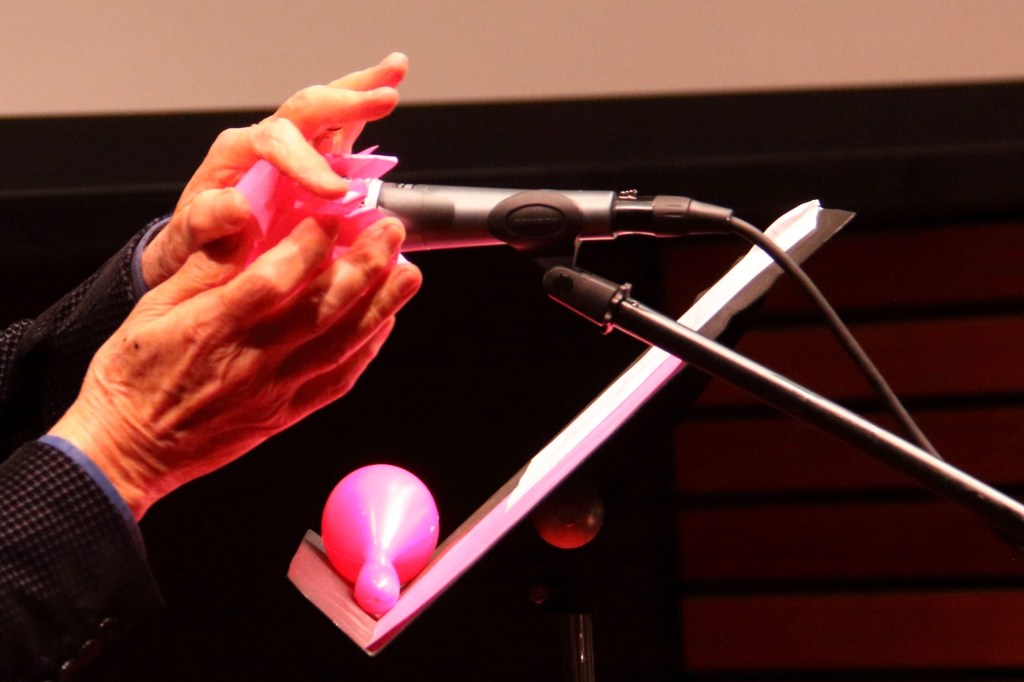


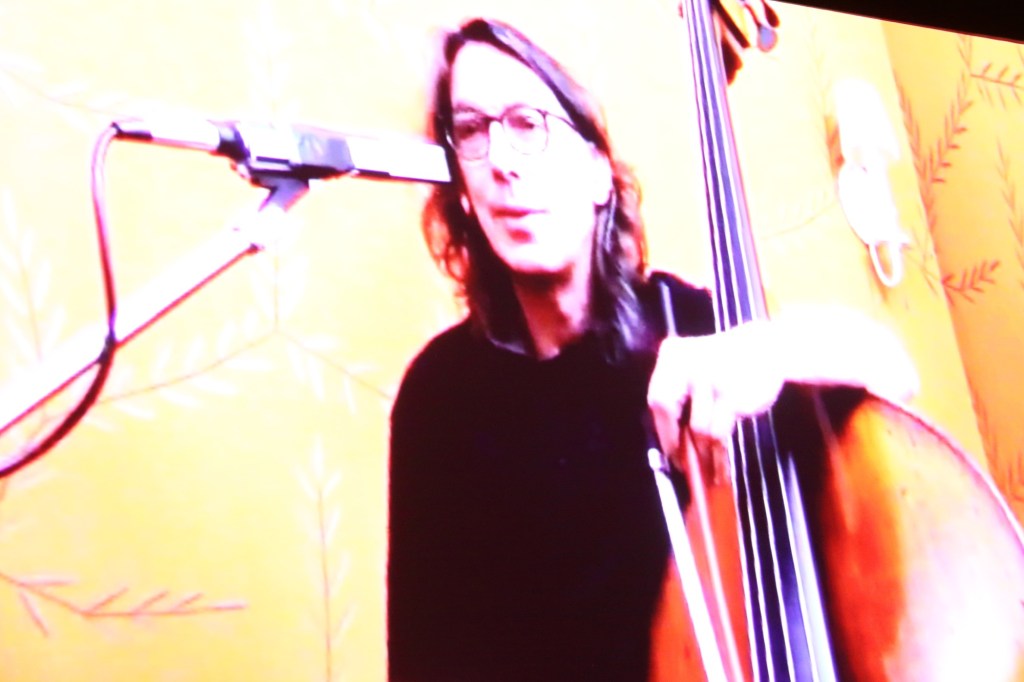


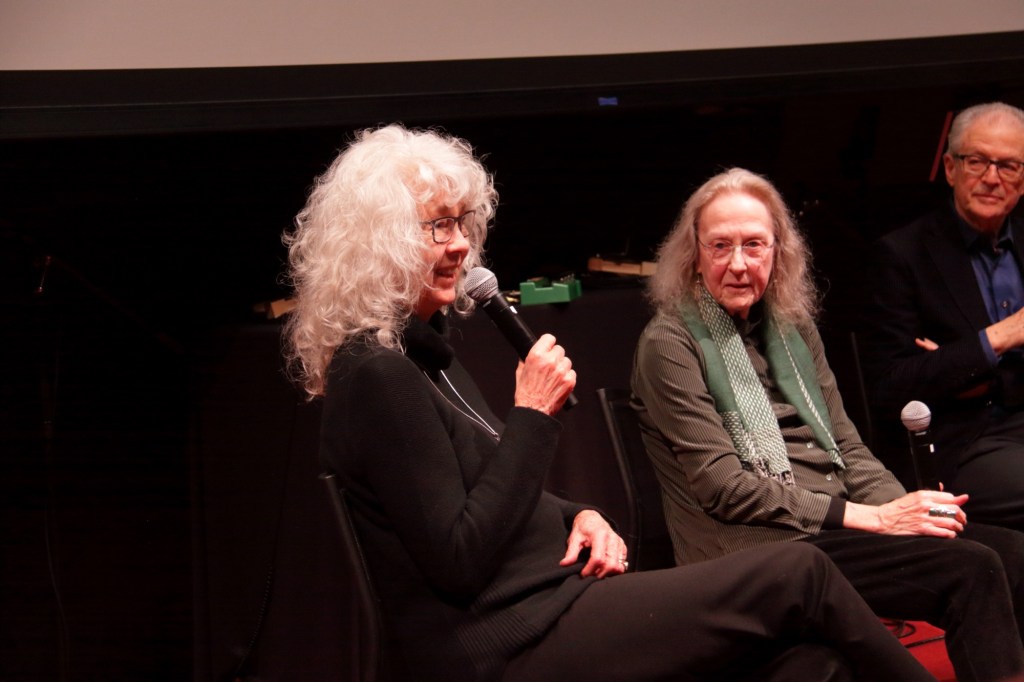


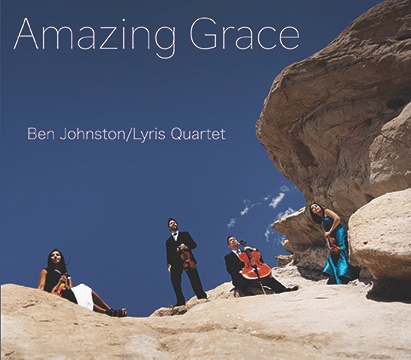


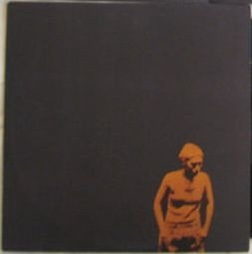


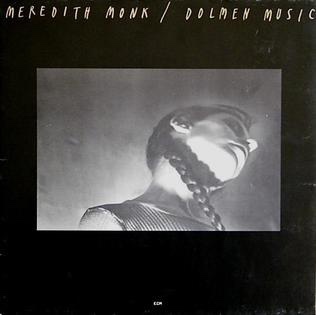


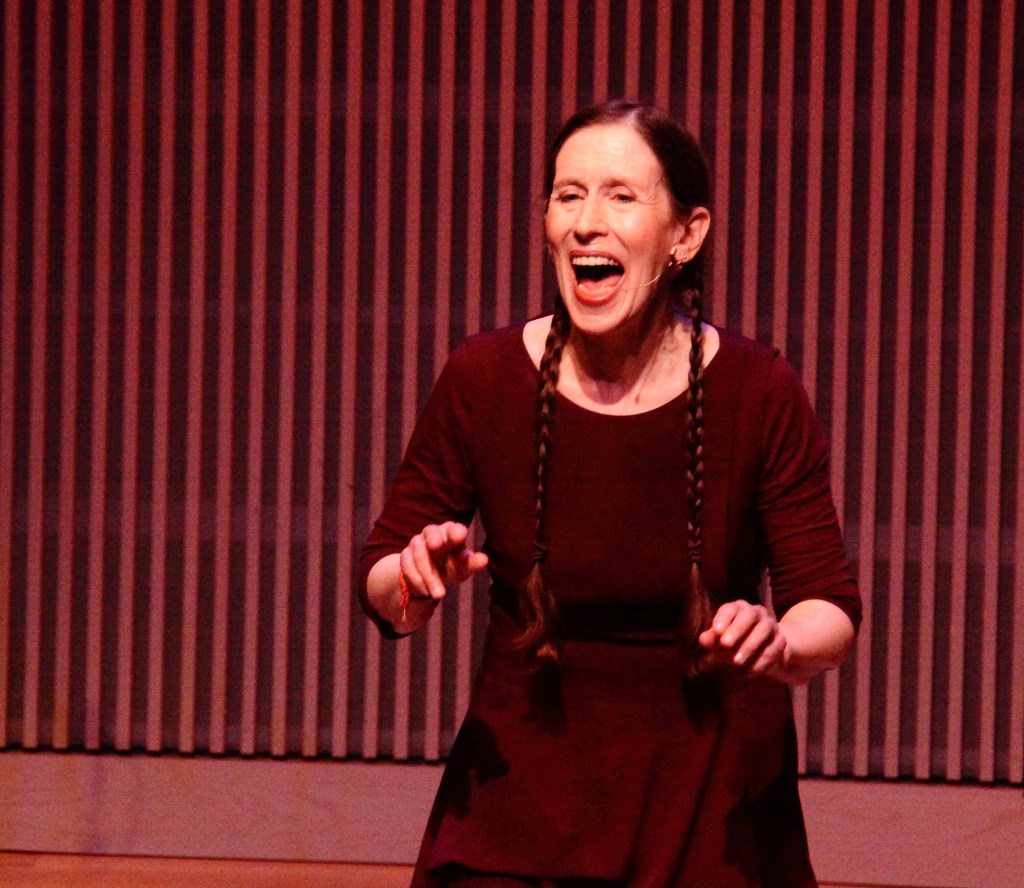


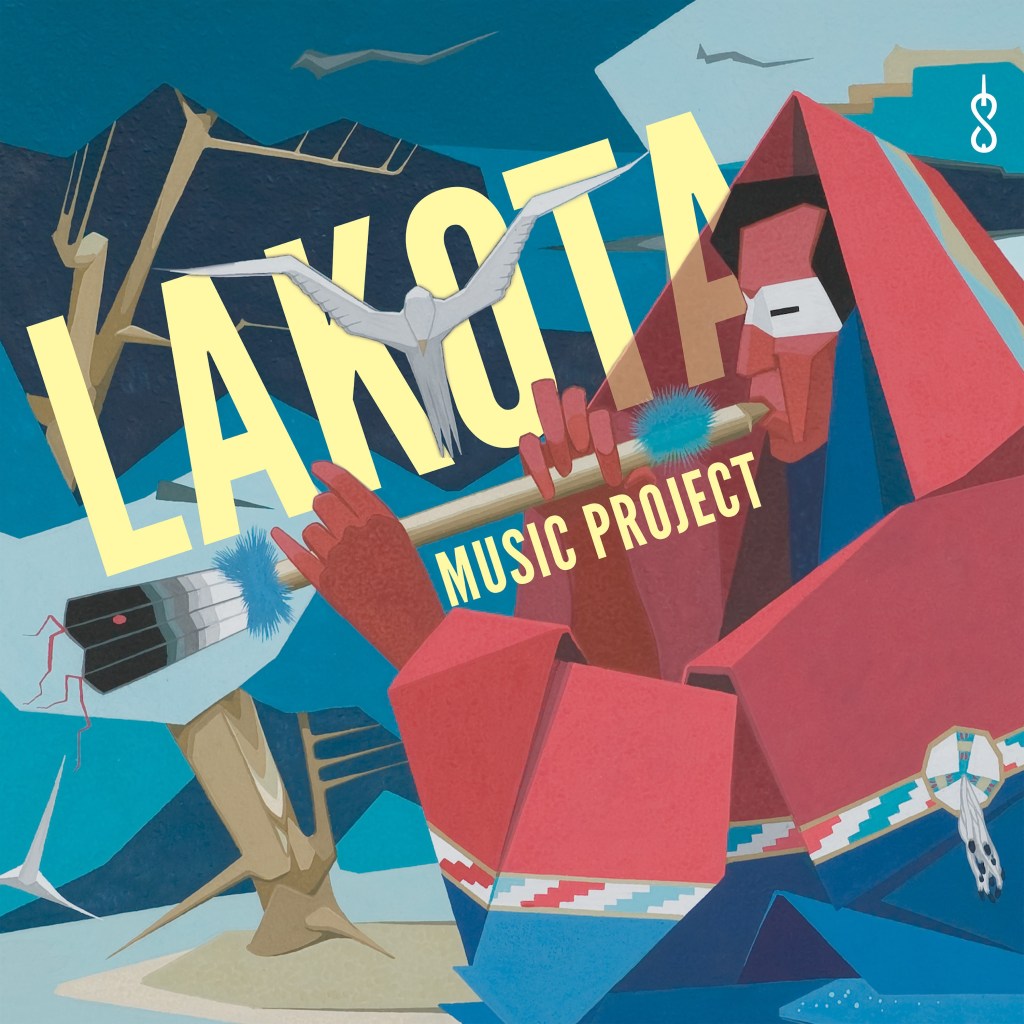
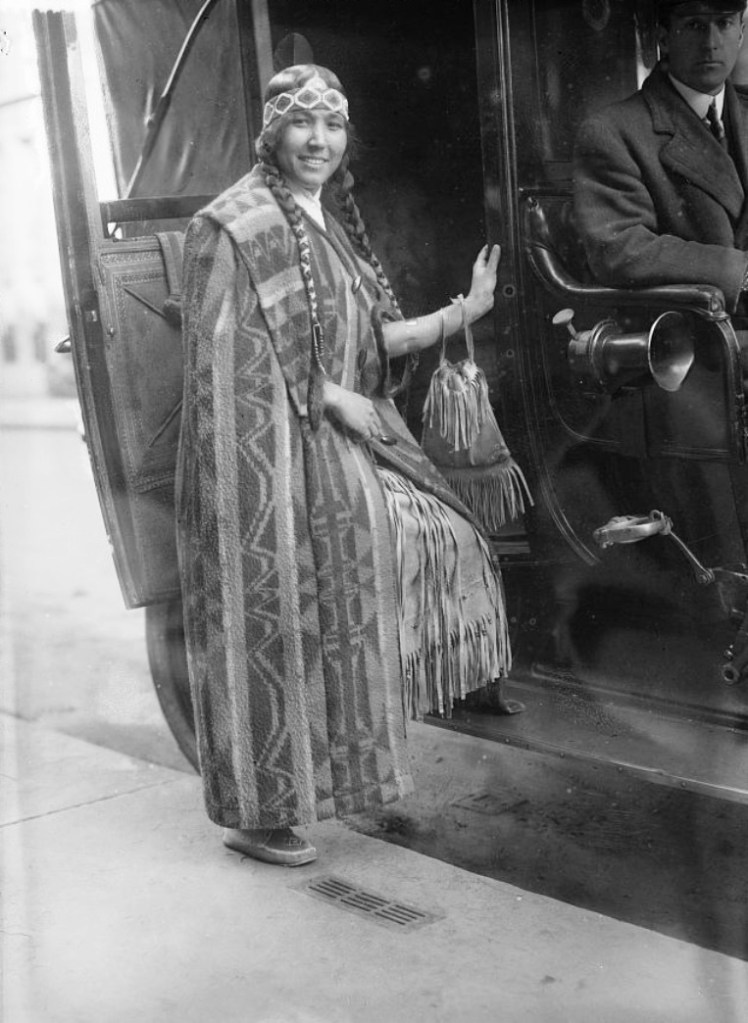


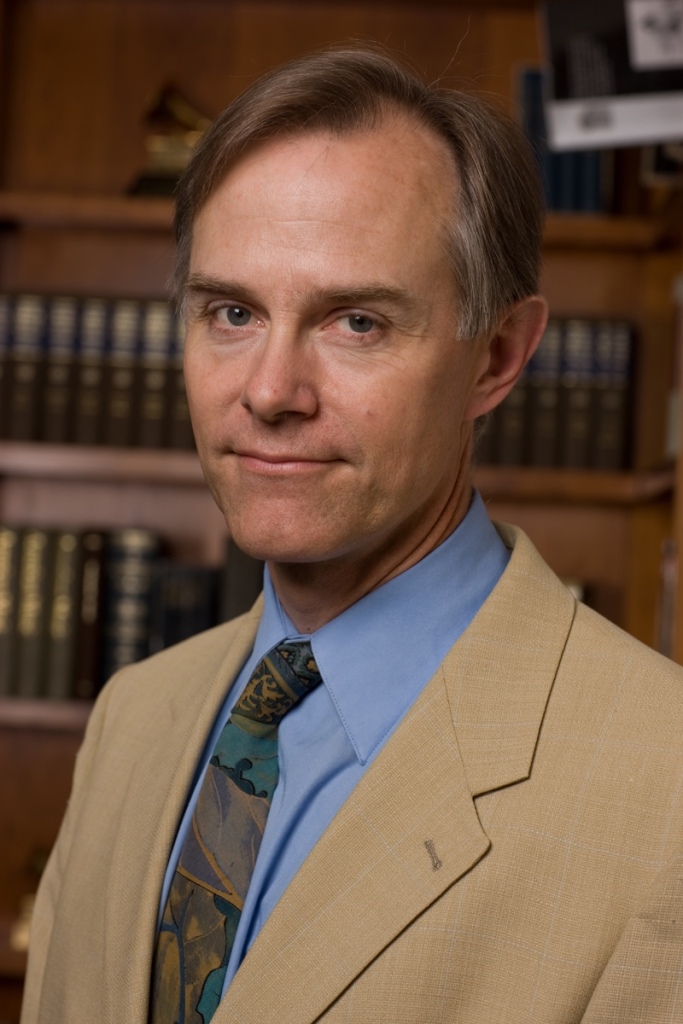
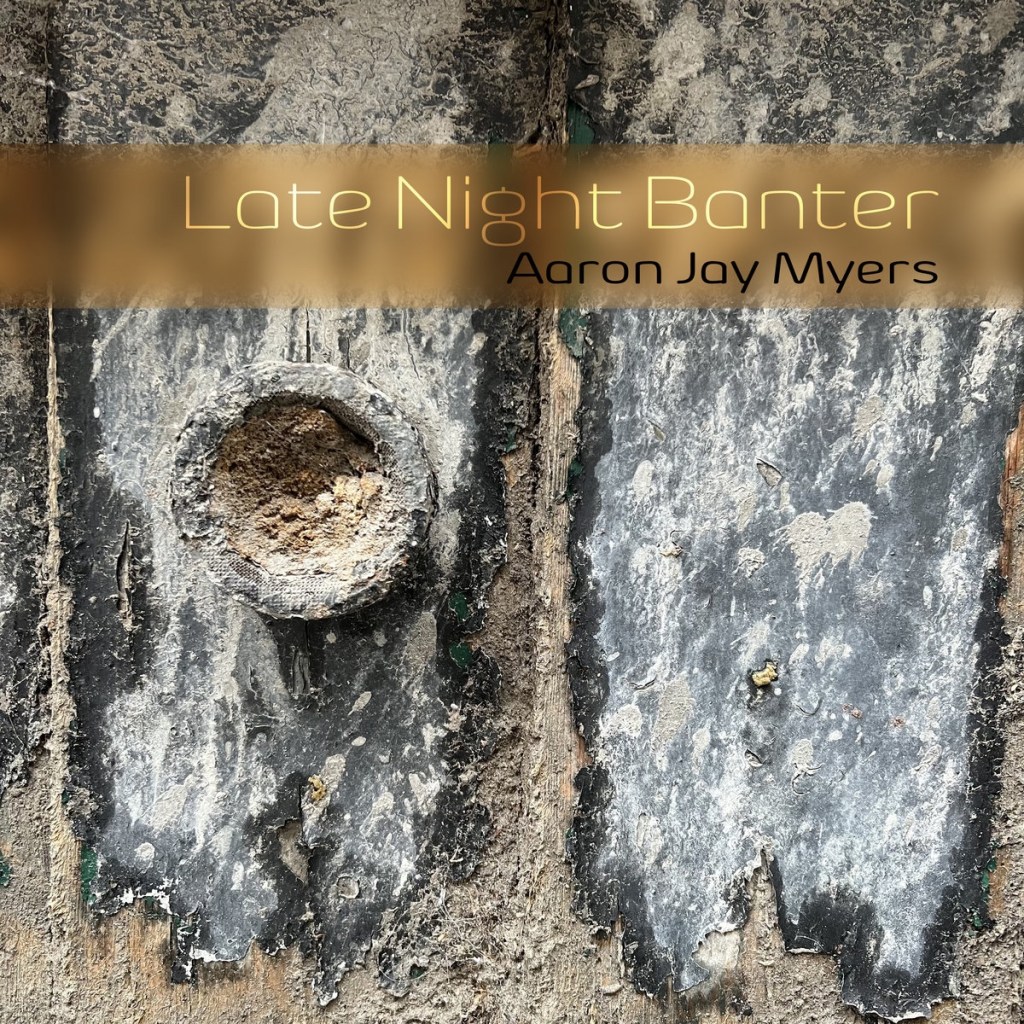
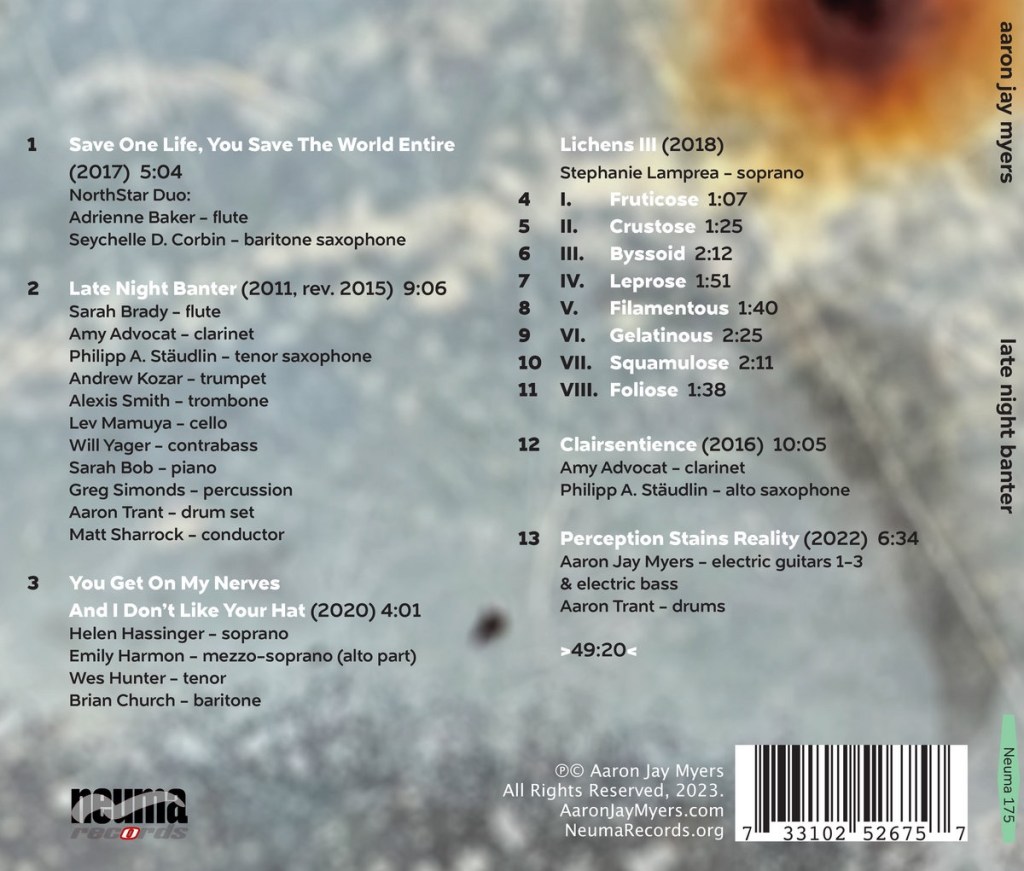
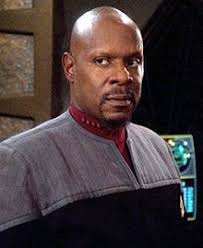




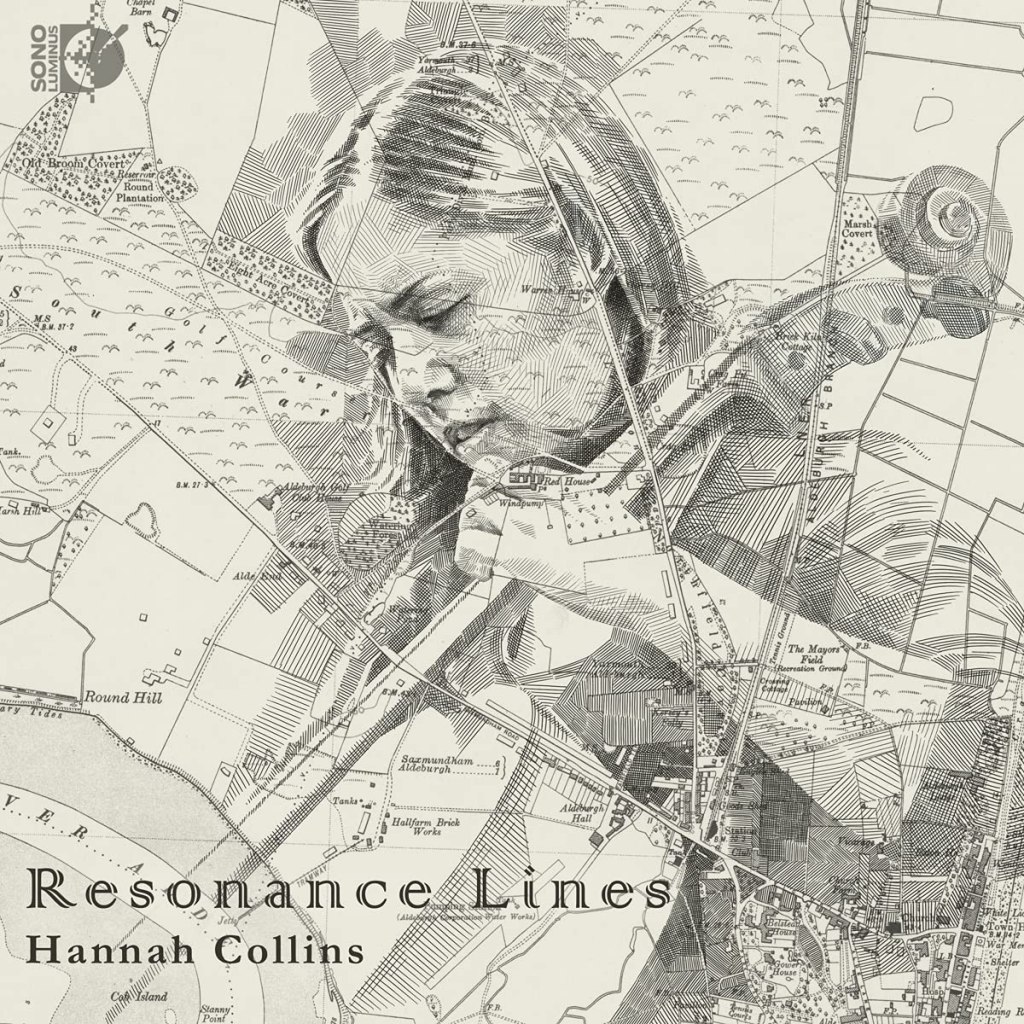


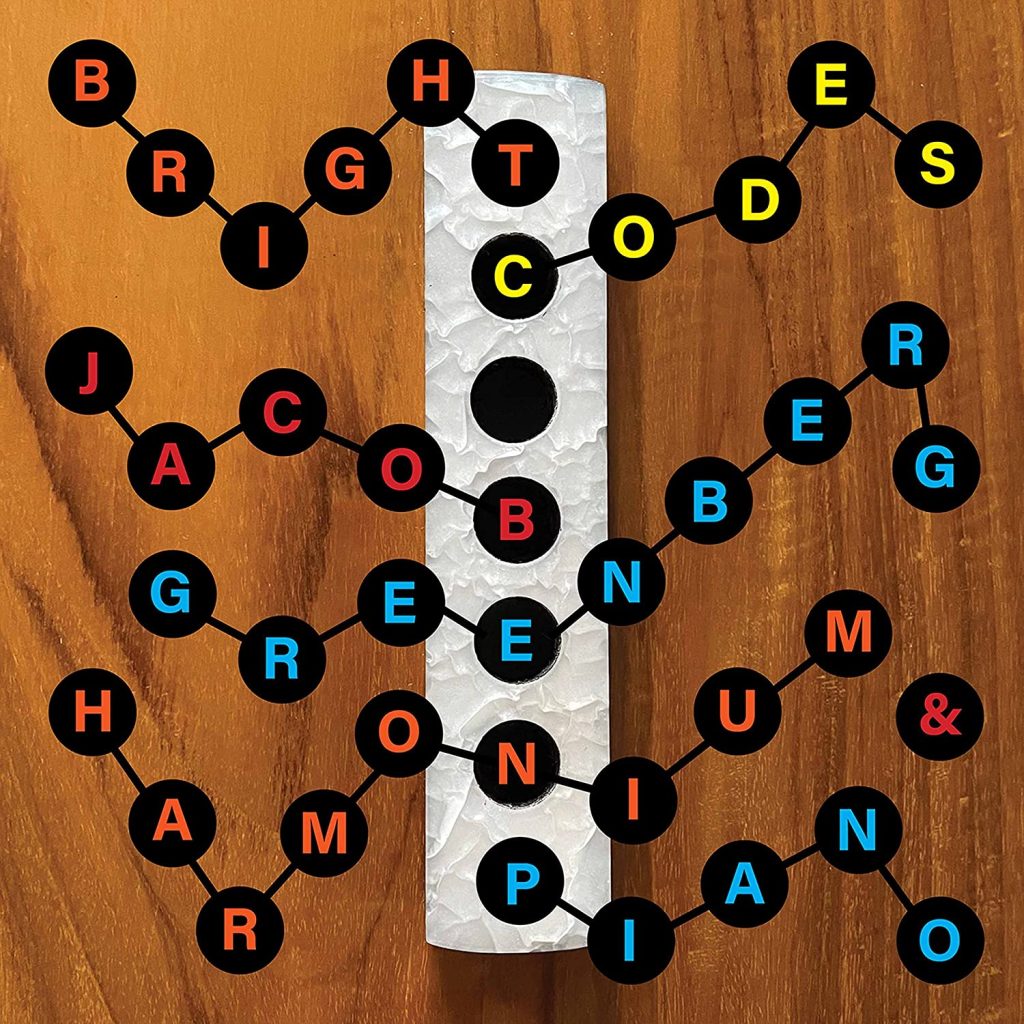


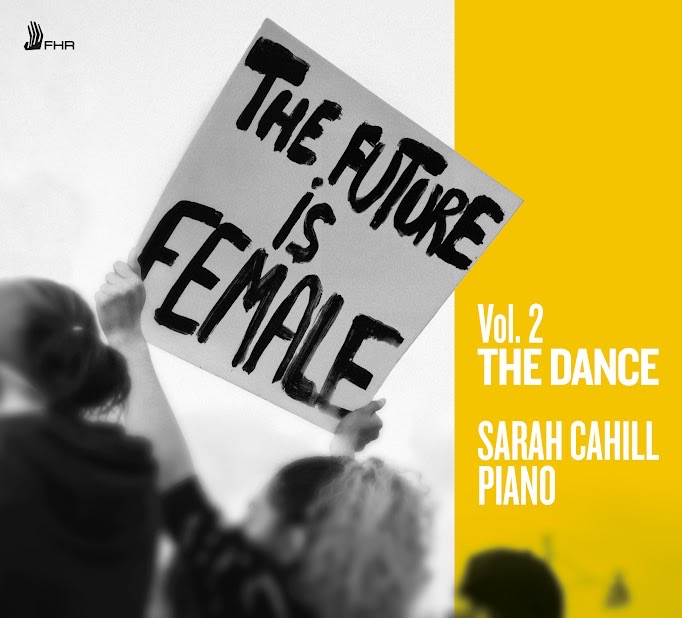


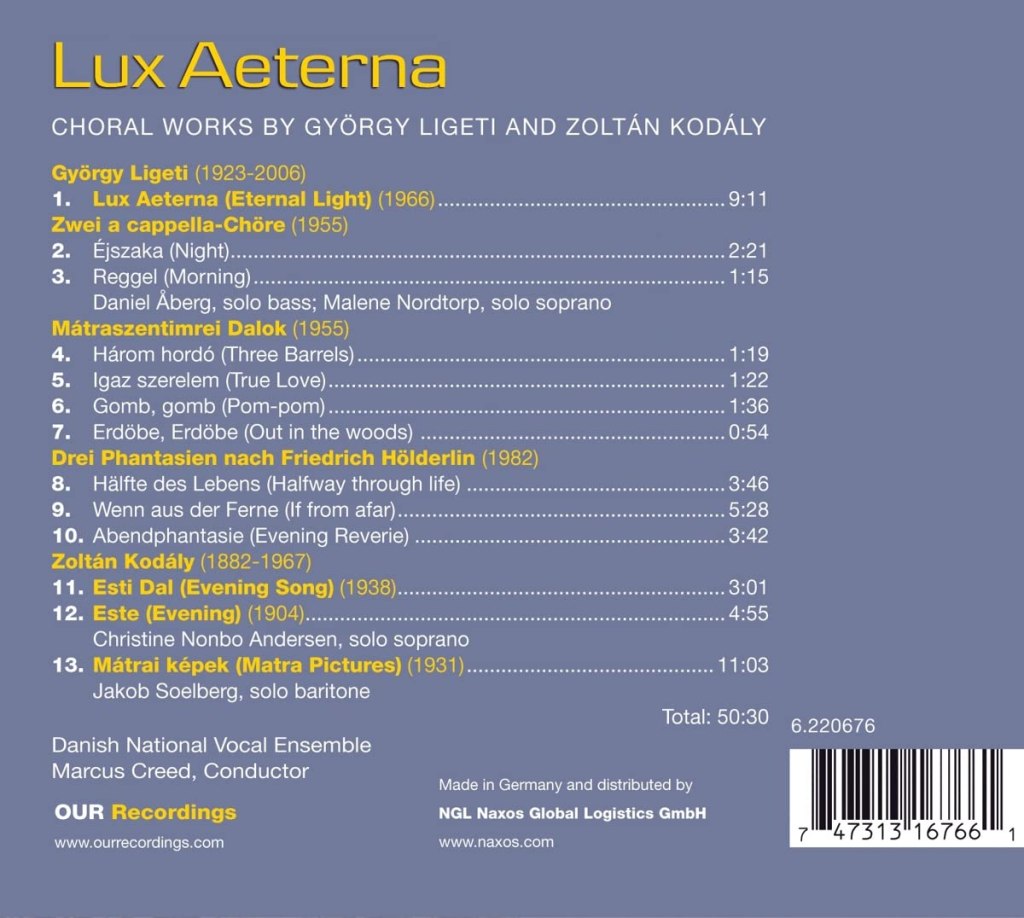


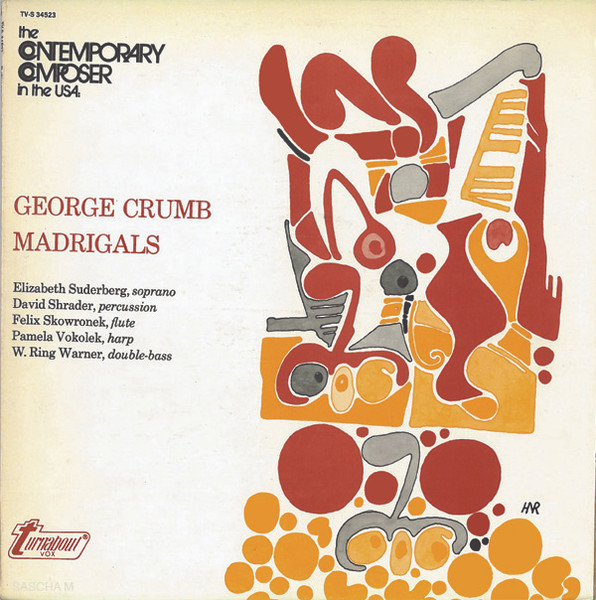

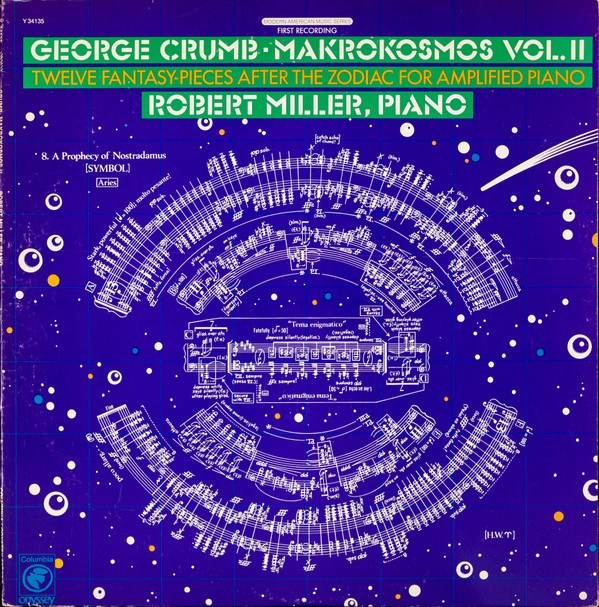
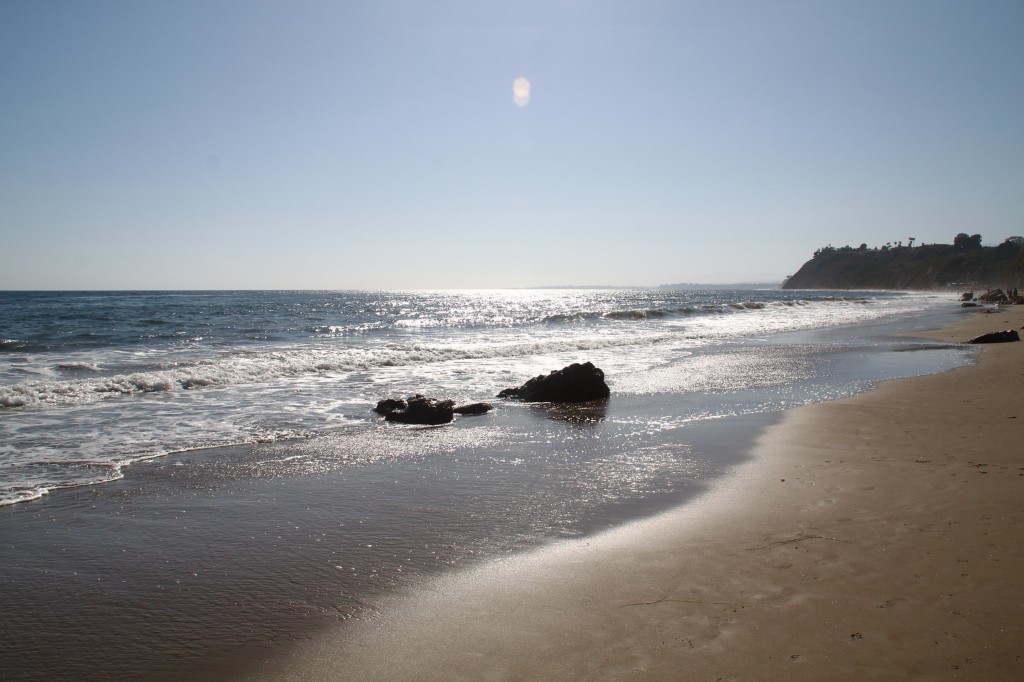


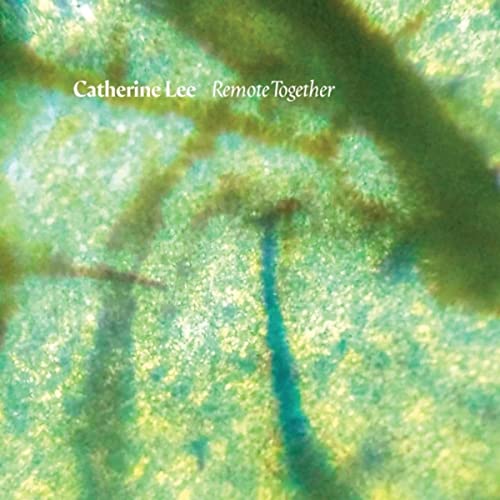
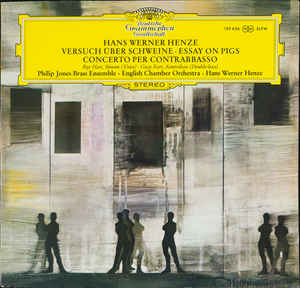
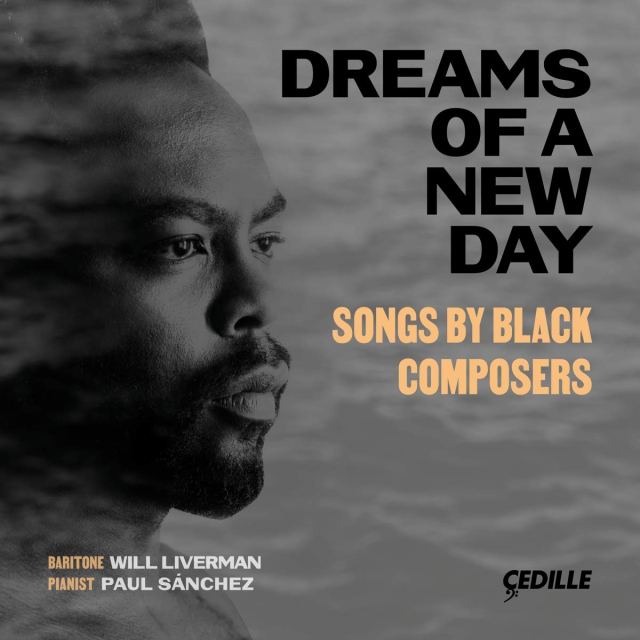
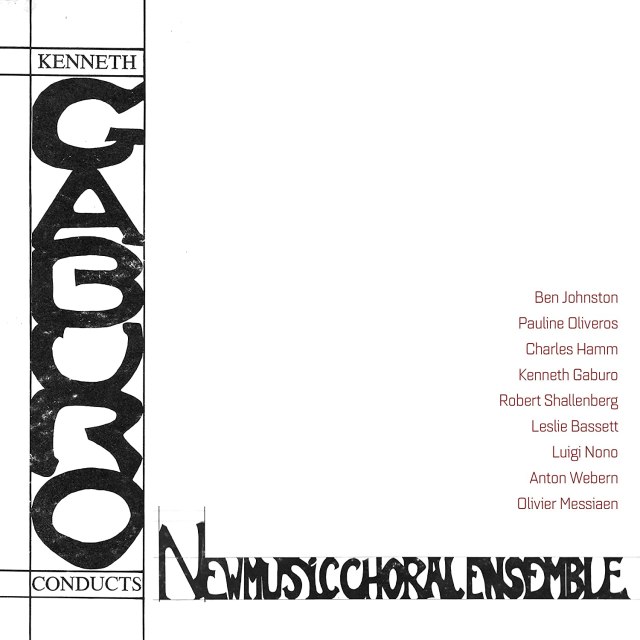

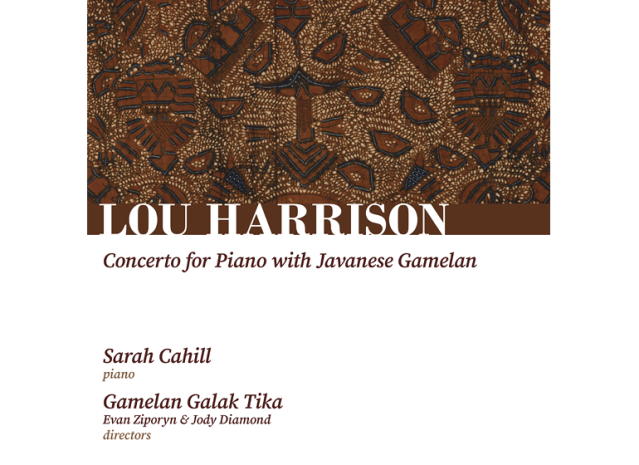

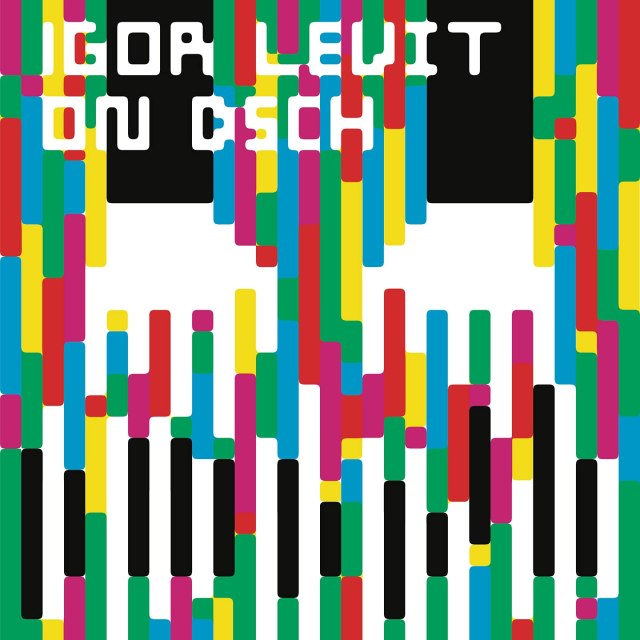
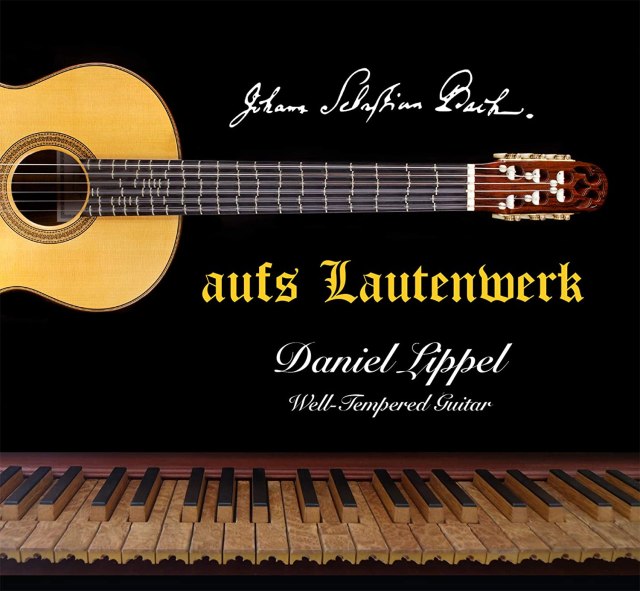
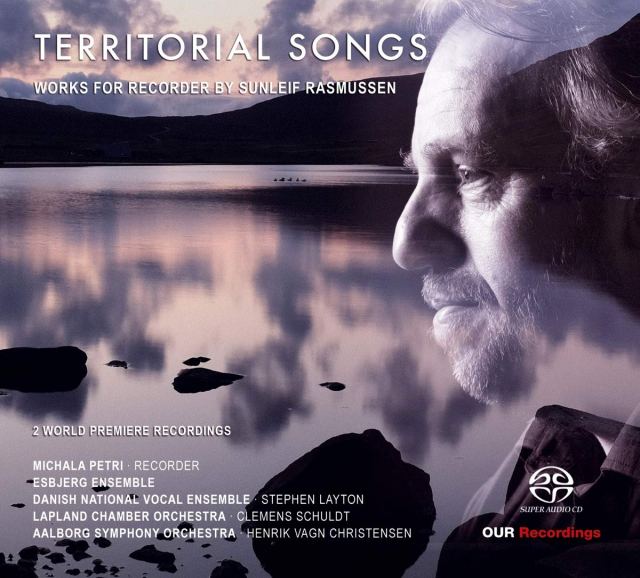
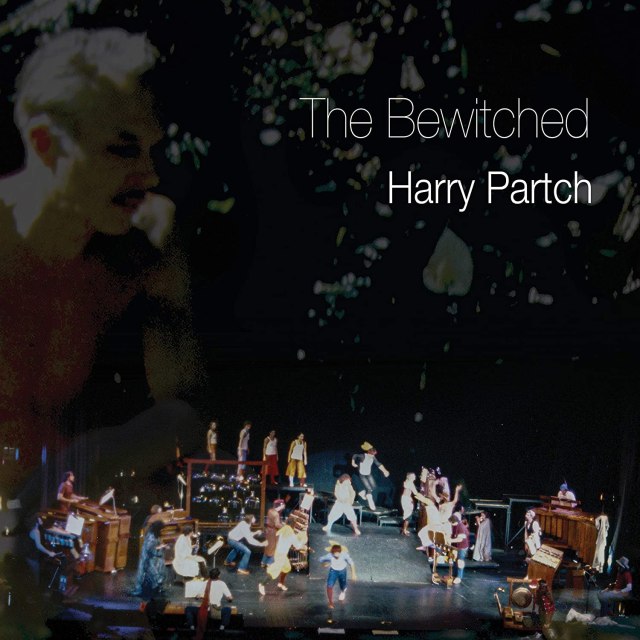


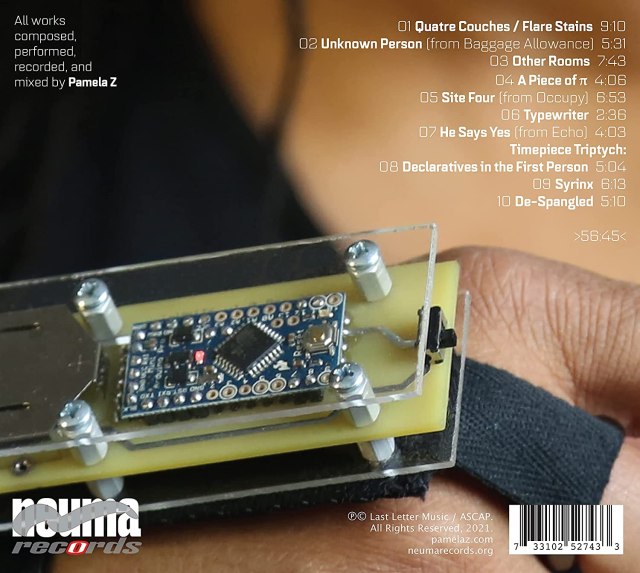
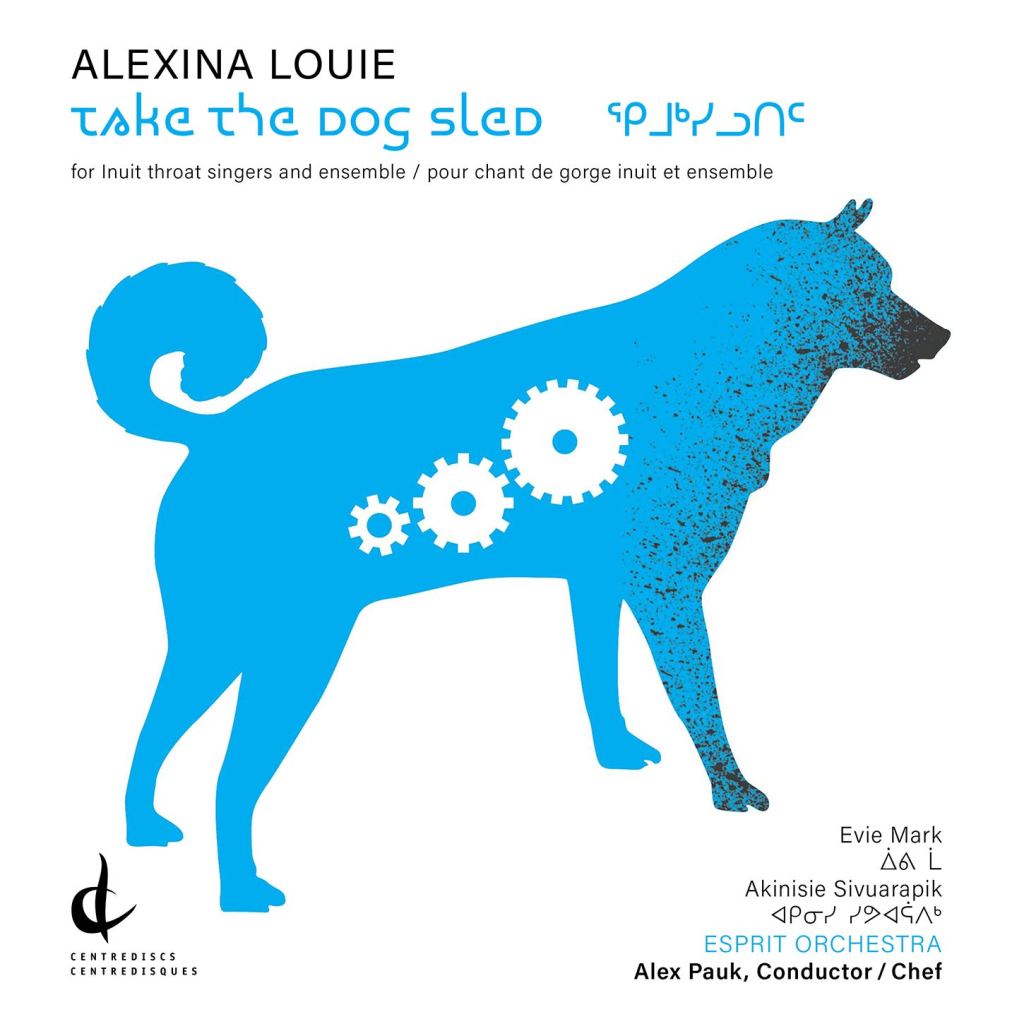
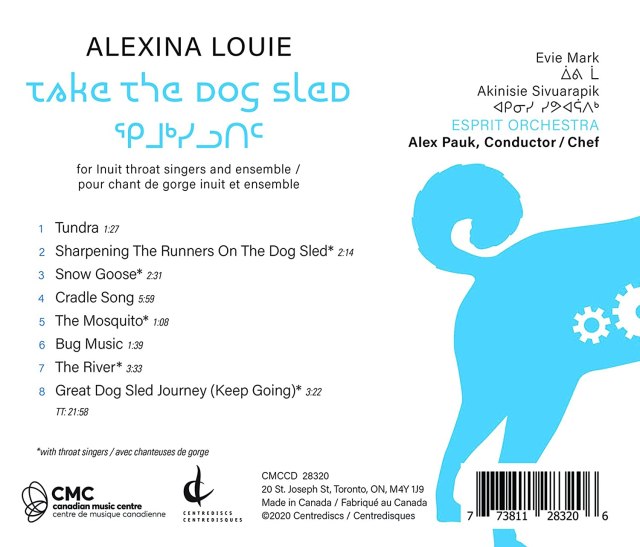
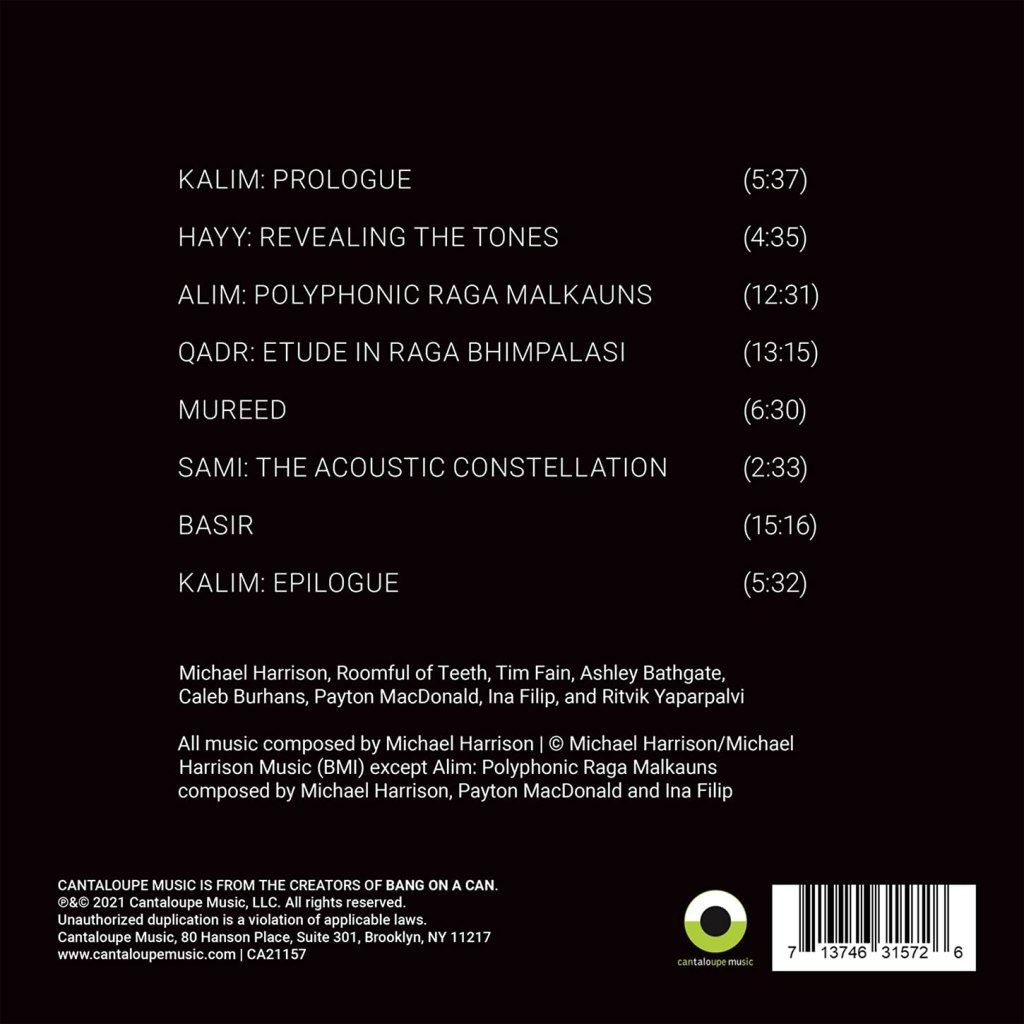
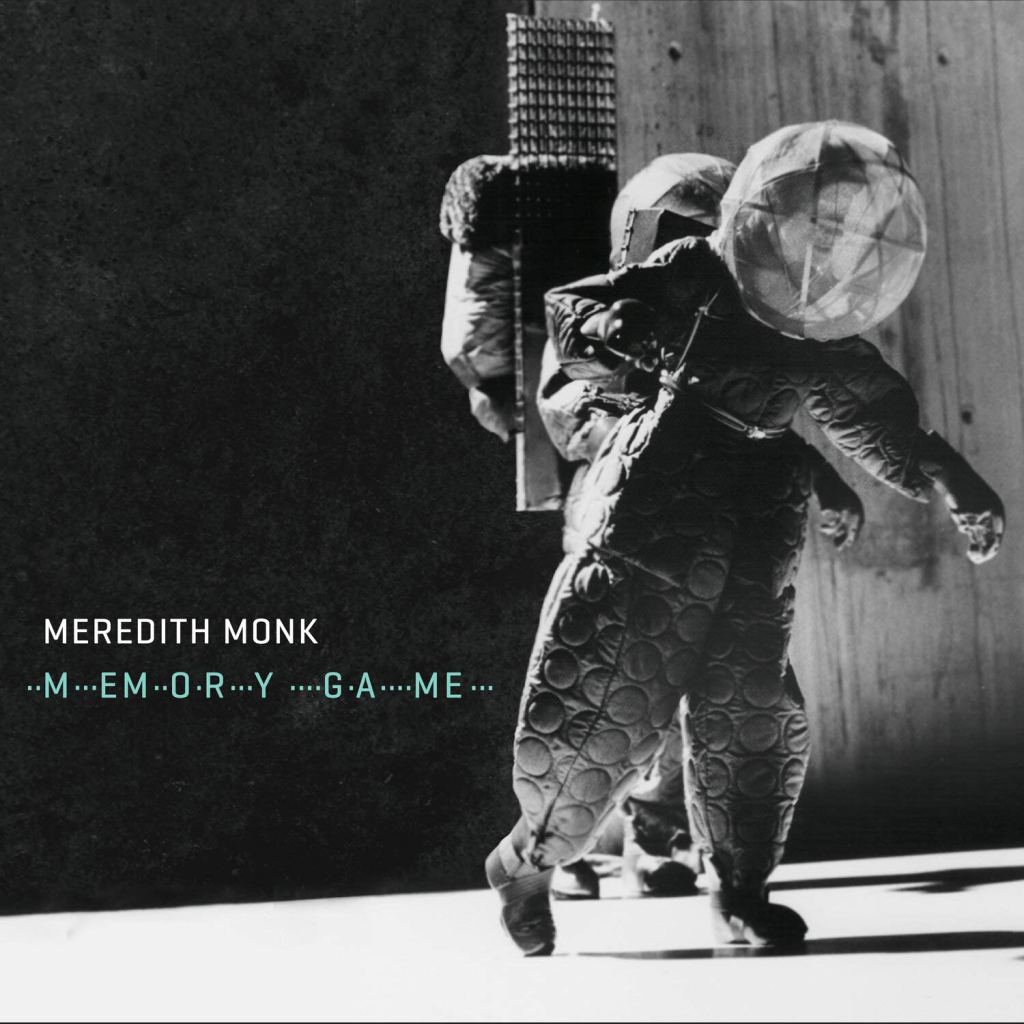
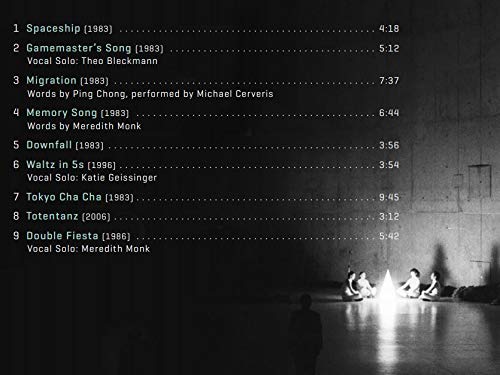
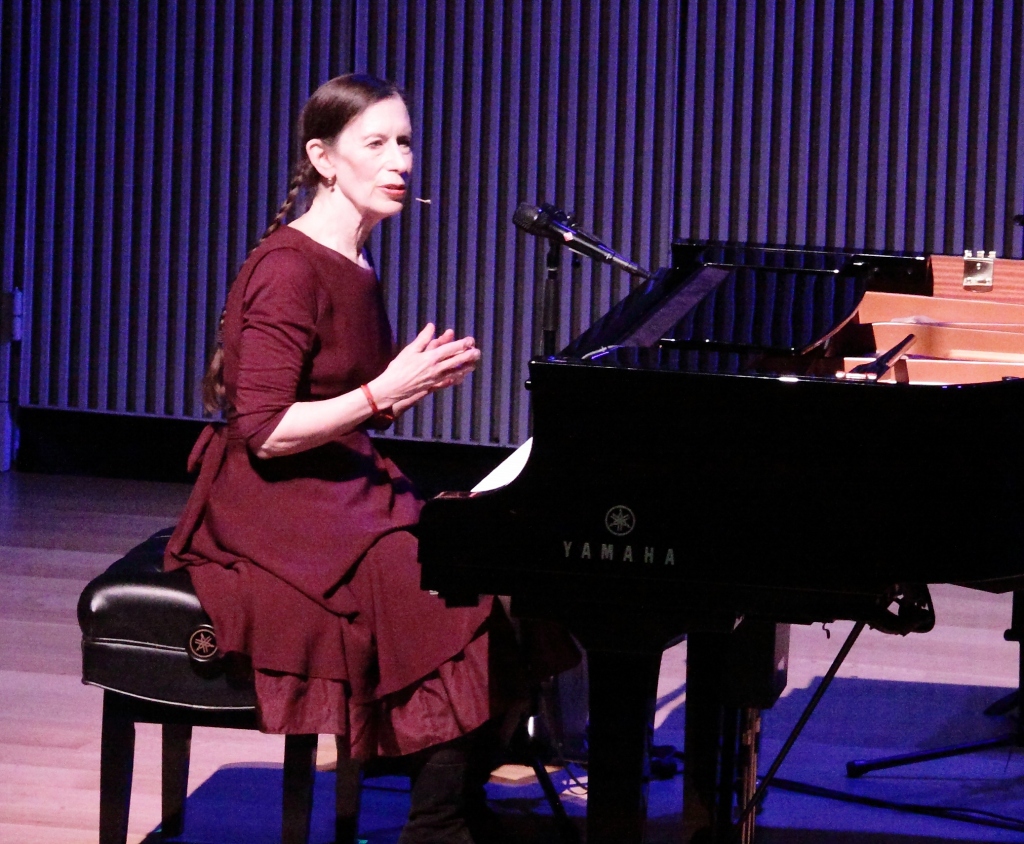


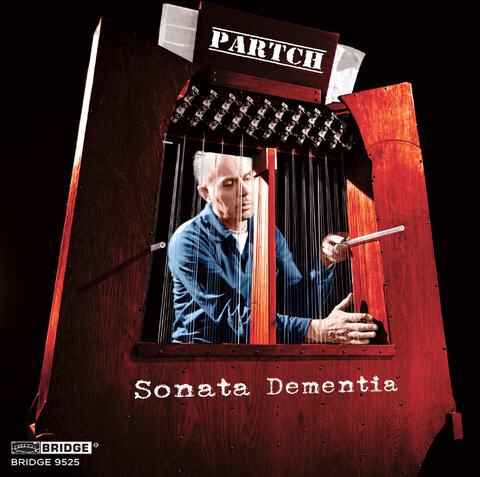


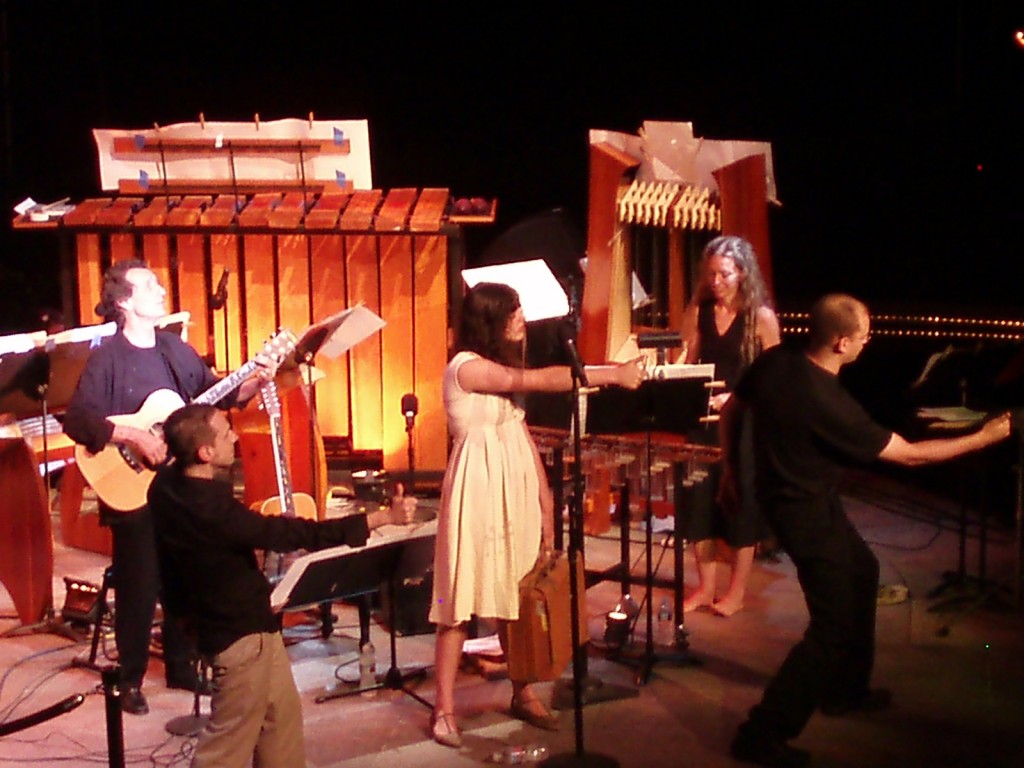


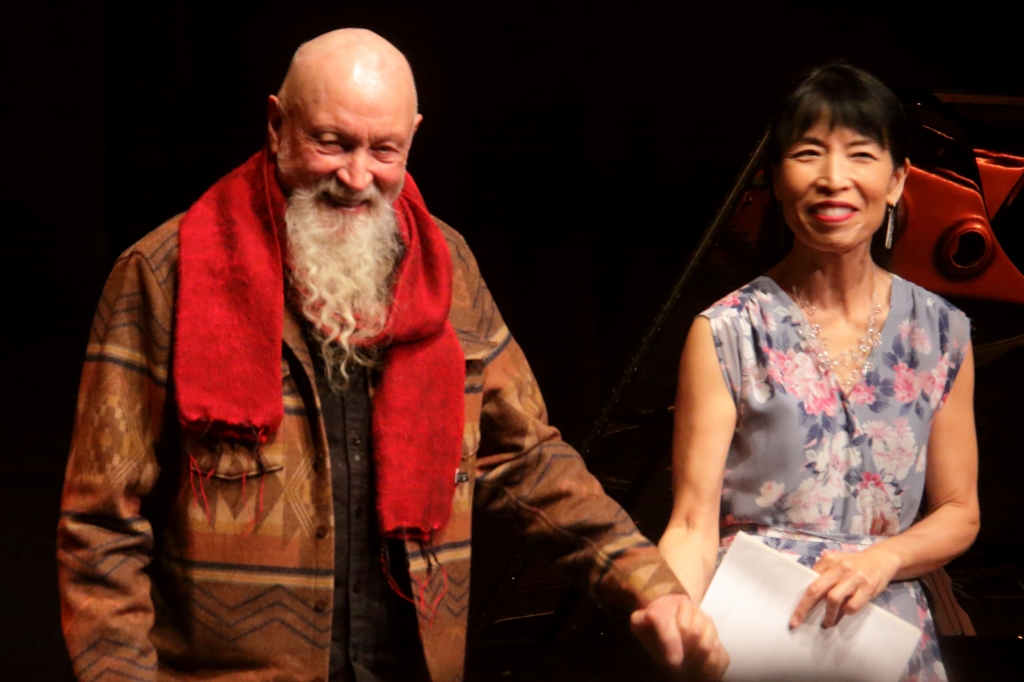



 New Music Buff