Mechanical and Microtonal: Kyle Gann’s “Hyperchromatica”


gannchrom

Other Minds OM 1025-2

Kyle Gann‘s interest in the microtonal has been evident at least since his opera Custer and Sitting Bull (1997-99).  Many will be familiar with his justly famed monograph on Conlon Nancarrow’s player piano works.  Given that history this release seems almost inevitable, a series of works (or perhaps it is one big work) written for 3 computer controlled pianos tuned to his 33 note scale based on the harmonics of the E flat scale.

This is also hardly Gann’s first foray into the world of the player piano (as it was called in a different age).  His 2005 Nude Rolling Down an Escalator album contains some of his etudes for this computer controlled instrument which is the modern equivalent of the player piano.  And in addition to his fascination with alternate tunings and scales it should be noted that Gann is also somewhat of an expert as regards the player piano itself.  Gann authored one of the finest books on that composer’s music, “The Music of Conlon Nancarrow” (1995).  So it appears intuitive that he would write a magnum opus for the modern equivalent of the player piano, the disklavier, a computer controlled piano.

Gann refers to this work as being the longest composition for a keyboard in alternate tuning.  Indeed this would appear to be the case but a listener could easily hear these as  individual works with poetic titles like one encounters in Debussy’s Preludes.  Like those works one can listen to them individually or as a complete set.  But regardless of how you may choose to file these in your head this is an intriguing and engaging work (or set of works).

A work of  this dimension will necessarily invite comparisons to The Well Tempered Clavier, The Art of Fugue, and similar works because it effectively demonstrates the scales and the various musical possibilities unlocked by the different tuning much as Bach did nearly 300 years ago with well tempered tuning (or, in the latter example, the possibilities of counterpoint).  This work is like a major thesis on alternate tunings and the effects it has on melody and harmony.  Some listeners will be familiar with the interesting but less comprehensive Microtonal Music (1996) CD by Easley Blackwood.  Using a synthesizer Blackwood explores tonal and melodic relationships of various different tunings achieving some of the same goals as Gann.

The titles the composer uses reflect his ongoing fascination with things cosmic as he did with his, “The Planets” (1994-2008).  In this respect we hear Gann, the romantic, writing little tone poems.  Now these tone poems put the listener into a different universe but they fit the same logical category as tone poems written in a more familiar tuning system and hence have the more romantic quality of representational (as opposed to absolute) music.  Of course the composer’s intention of exploring this tuning system keeps this work also in the category of absolute music meaning that it is in large part about the tuning system.  Unlike the Blackwood experiments which were about finding functional harmonies (at least in the commonly understood western music definition) Gann’s work is about expression, motives, melodies.  It is, if you will, a logical step for one who has worked intensely with the complex rhythms endemic to Nancarrow and the fascination with alternate tuning systems gleaned from both western music history and world musics.

Since the end of the Baroque era western music adopted well tempered tuning as a standard and the result is that hearing these alternate tunings sounds wrong to most ears.  One of the things Gann is doing here is to make a foray into what will likely be a more common practice, that being the use of alternate tunings.  They are quite approachable and listenable in this context.


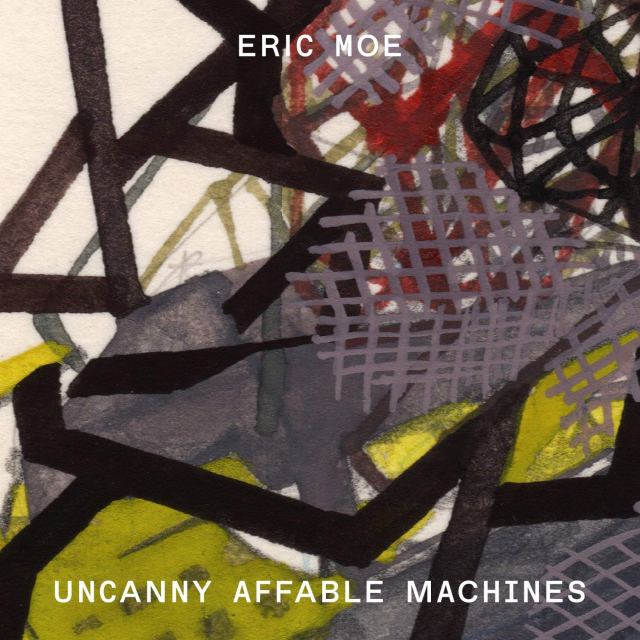
Eric Moe, Uncanny and Affable (and very interesting)


moeuncanny

New Focus FCR 212

Here I sit with an album by a composer with whom I have no familiarity.  Fortunately Eric Moe has a delightfully tenacious public relations department (at least with this particular record label) whose prompts did finally get me listening.  OMG, it says “electroacoustic”.   That could be really bad or obtuse.  Well, I did promise to review it so here goes.

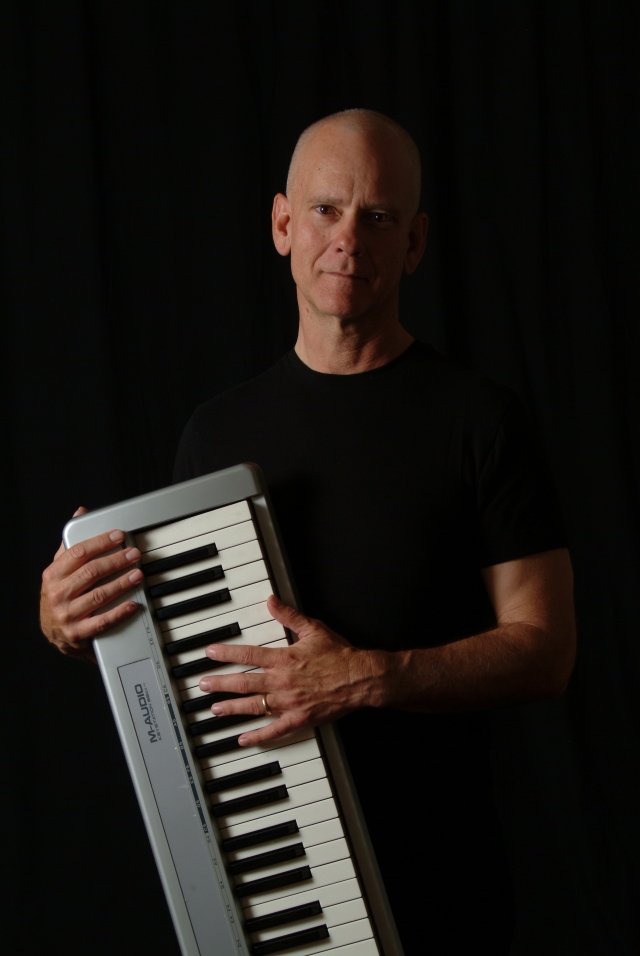
Eric Moe (1954- ) is a composer with a very well organized web page.  A quick glance at that web page informs that this is the 12th or so disc from a man who boasts what looks like a list of over 100 compositions.  Moe is also a performer and participates on this disc.  This graduate of Princeton (A.B., Music) and Berkeley (M.A. and Ph.D., music) teaches at the University of Pittsburgh and is also an active performer of both his and others’ music.

moekeyb

This discs contains 6 composition for solo instrument (mostly with) electronics.  Now that combination has given this writer pause because the genre given the name “electroacoustic” can be a mixed bag.  Sometimes these works can be ponderous or obtuse with meanings obvious to the composer and, hopefully, the performer.

However your reviewer’s neurotic fears were apparently unfounded as the tracks played some truly wonderful compositions.  Each track features a different instrument.  The instruments, in order, include a drum set played by Paul Vaillancourt, a viola played by Ellen Meyer, a solo 19tet keyboard played by Eric Moe, an unbelievably virtuosic pipa played by Yihan Chen, solo piano played by Eric Moe, and flute played by Lindsey Goodman.

Suffice it to say that all the soloists here come with a high level of virtuosity as well as the ability to interact meaningfully with the electronics.  Far from being a nightmare of impenetrable experimental music this is rather a very entertaining set of pieces which tend to avoid the worst cliches of this genre.

Rather than attempting to describe each of these pieces (a task which would likely be more painful to read than write) it is best to simply provide assurances that the combination of this talented composer combined with the more than capable soloists provides a stimulating and interesting listening experience.  These are wonderful performers with great material.

The listener will want to hear each track more than once to get a good idea of what the composer is doing but, fear not, this album is much more adventure than ordeal.  It shows a composer at the height of his powers producing art which stimulates the senses and provides an emotional experience.  While there is clearly intellect behind the creation and performance of these works they tend to speak rather directly to the listener providing a stimulating entertainment that leaves the listener with a shred of hope that classical, even modern classical is far from dead.

Kudos to professor Moe and his collaborators and a nod of thanks to the tenacious publicity folks who would not let this release go quietly into the good night.  You shouldn’t either.

Jacob Greenberg Putting Debussy in Context


hanging

New Focus FCR 192

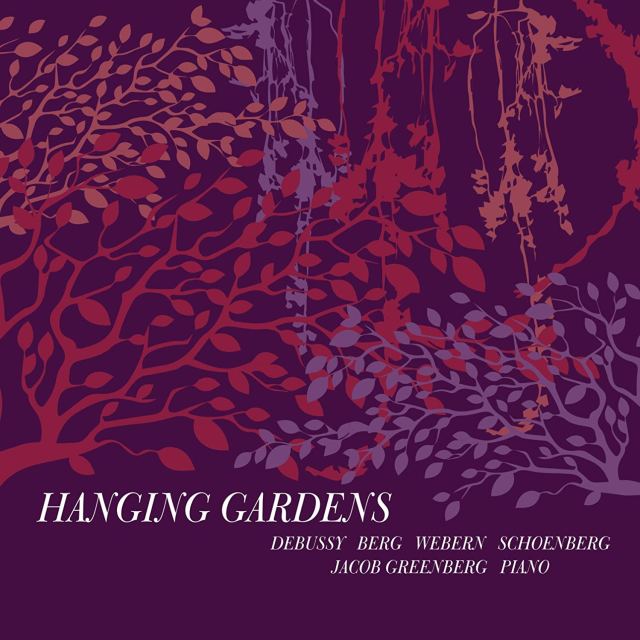
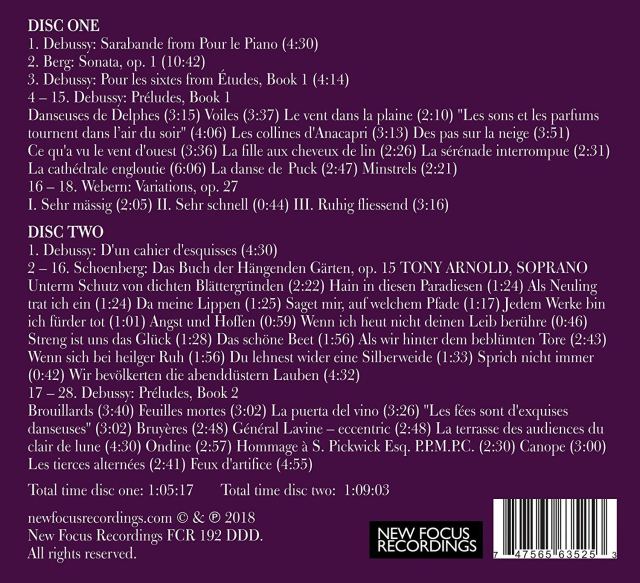
Well it’s been 100 years since Claude Debussy (1862-1918) left the earthly plane and anniversaries are good times for a re-evaluation.  Usually this just means issuing recordings of a given composers works, mostly the composer’s most popular.   Jacob Greenberg has chosen to record Debussy’s Preludes for Piano Books I and II (1909-1913).  But that alone seems a bit pedestrian so he adds in Alban Berg’s (1885-1935) Op. 1 Piano Sonata (1909), Anton Webern’s (1883-1945) masterful Variations for Piano (1936), and Arnold Schoenberg’s (1874-1951) “Book of the Hanging Gardens” Op. 15 (1908-9) as well as a few additional Debussy pieces.  Greenberg is a sort of refugee from the International Contemporary Ensemble.  For this recording he also conscripts the fine soprano (and fellow ICE refugee) Tony Arnold.  These two have already amassed quite a few recordings of repertory from this era.

greenberbdebussy813HMwi-pPL._SL1500_

This mix provides a context for the listener which shows where the Preludes fit historically and demonstrates some of the similarities in sound between these early 20th Century works.  We hear music written between 1908 and 1936 by four composers.  Hearing these works together gives the listener a sense of how some of the best “contemporary” compositions of this brief era sounded.  Indeed there are similarities here and one can see the emerging style which would become known as “expressionism”.  It is clearer how this emerged from Debussy and Ravel’s “impressionism” when you hear related works from the same era.

This reviewer had not been familiar with Schoenberg’s “Book of the Hanging Gardens”.  It is one of the less performed of his works.  These songs have a militantly atonal sound. Vocalist extraordinaire Tony Arnold puts real muscle into her reading of these songs.  The disc is worth acquiring for her performance alone.

In some ways this cycle appears to have been Schoenberg’s “Tristan und Isolde” meaning that he had stretched the limits of tonality and, unlike Wagner, he chose to develop a method which would ensure that there is no tonal center in his music.  He developed his method of 12 tone composition and rolled out his first example of this new method in 1925.

What is striking is that this Schoenberg song cycle dates from pretty much the same time as the Debussy Preludes and Alban Berg’s Piano Sonata.  One gets a sense of some of the tensions involved here.  Try to imagine being in the audience and hearing the wide stylistic differences between these two works and realizing that they are essentially from the same era.  Add in the much later Variations by Webern and one gets a sense of how far music could go, stylistically, based on Schoenberg’s methods.

Obviously the Debussy Preludes are the main focus here and these are acknowledged as classics of the repertoire.  They are most ably performed here but what struck this listener the most was the sound of those preludes in the context of the other pieces here which were part of that same 30 year span.  One can begin to hear perhaps some affinity between the Debussy and the later thornier harmonies and rhythms that typify the expressionistic style which would dominate much of the mid-twentieth century.

This is a fabulously entertaining recording and a sort of music history lesson as well.  Greenberg is a strong and assertive musician with an obvious feel for these pieces.  His choice of repertoire makes this a particularly good choice for the listener who is just beginning to explore this musical era and an eye-opening program for the seasoned listener.  Great set.

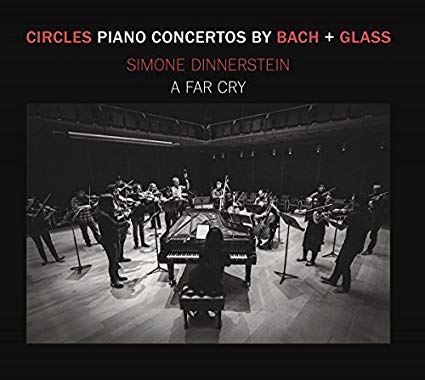
Simone Dinnerstein: Bach and Glass


dinnerglass

It has been interesting to watch the progression of Philip Glass’ career.  From his driving amplified ensemble music that so entranced this writer to as near groupie status as he will ever be to the more mainstream orchestral work of his work since at least the 90s the fascination remains at some level.

The familiar arpeggios are still to be found along with basically diatonic harmony with occasional polytonal sections.  What is interesting about Glass’ third piano concerto is a sort of chamber romanticism.  A Far Cry is a small chamber orchestra ideally suited to works like the Bach first piano concerto. Though technically originally written for harpsichord pianists have successfully broken the taboo on strict adherence to using the harpsichord and have developed techniques to optimize the sound of the piano (which has very different qualities from a harpsichord).

Simone Dinnerstein is an artist who I first met (albeit virtually) on Facebook.  Her reading of the Goldberg Variations from a few years ago seemed to signal her entrance into the mainstream of performers.  The choice of works on this disc are a sort of characterization of her interests.  She is an accomplished Bach performer with, obviously, an interest in new music.  So pairing her as soloist with A Far Cry whose interests appear to be in a similar range was perfect.

The performance of the Bach G minor piano concerto (No.7) is as delightful as it gets.  Dinnerstein and the ensemble seem work together very well.  These intense little chamber orchestras seem to be proliferating and one could speculate on the economic and political reasons for that but what is more interesting is the commitment and intensity that these small ensembles can bring to music.

The Glass concerto has the feel of a sort of miniature romanticism.  This writer heard it as echoes of Brahms but on a far more intimate scale.  It is difficult to say whether this new work (or for that matter, the other two piano concertos) will become a regular part of the repertory but it is clear that Glass continues to have his champions both in musicians and listeners.

There is nothing groundbreaking here and that is not what is apparently intended.  What we get in this recording is a couple of dedicated and thoroughly enjoyable performances by clearly dedicated musicians.  This is not an original instruments or musicological discoveries type of album.  It is simply good music making.

If you are a fan of Philip Glass and/or Simone Dinnerstein you will want this disc.  But don’t forget to pay attention the this little chamber group.  They are superb and energetic musicians and this reviewer expects to be hearing more from them in the near future.  Maybe we will get a new set of Bach and/or Mozart concertos.  Here’s hoping.

Indian Raags for Piano made easy


raags easy

Last year I reviewed Mr. Pitts’ How to Play Indian Sitar Raags on a Piano.  It was an enthusiastic review and the book continues to have a valued place on my piano as it opens a whole world of ideas.   Now the author has done a kind and useful service by issuing this simplified version of that work.

In fact this simplified version is more in line with the rather unpracticed keyboard skills of your humble reviewer.  The author chooses 6 raags or ragas which provide a good starting point for similarly humble musicians to begin this approach to Hindustani music.

Hindustani music became pretty much ubiquitous, or at least familiarly cliché in western musical culture largely due to the efforts of Indian musicians such as Ravi Shankar and Alla Rakha.  In fact it is an endlessly fascinating musical system whose logic has much to offer both musicians and composers.

In the past one had to learn traditional Indian instruments to gain much familiarity with these ancient musical systems but Pitts’ book offers an alternative to musicians whose familiarity is limited to the western keyboard.  Purists may denigrate this approach but even if it does not perfectly represent all aspects of Hindustani musical theory at least it provides a manageable entry point for amateur musicians and professionals alike.

Having struggled somewhat with the previous book I was particularly delighted to have these simplified examples which fall nearer to my skills level.  Even if I don’t wind up incorporating this into performance or compositional efforts I have no doubt that the exposure to the actual practice of this music will leave a valuable bit of programming in my neural circuits that will enhance my musical thinking and ability to appreciate other musics.

As with the first book, this too is highly recommended.  Kudos Mr. Pitts!

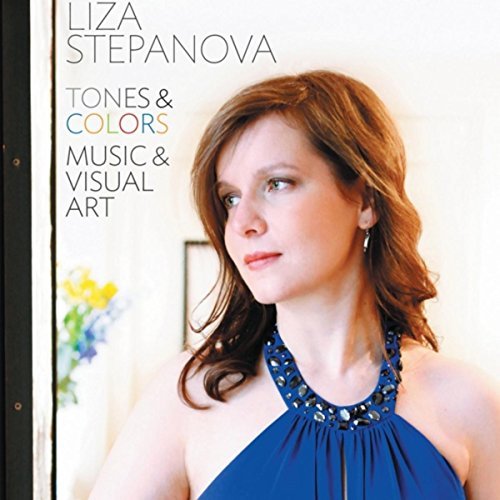
300 Years of Virtuosity, Liza Stepanova’s Tones and Colors


stepanova

Concert Artist Guild CAG 120

This is the solo piano debut of this talented and incredibly virtuosic artist.  This hard working pianist can be heard on a previous CD (After a Dream) with the Lysander Piano Trio.  Her web site can provide a good idea of the range of solo, chamber, and orchestral music in her repertory.

This CD is a good example of creating a brand, a practice which seems to be the current rage especially among artists who specialize in new music.  I have previously commented on the brands of pianists like Sarah Cahill, Kathleen Supové, Nicolas Horvath, and Stephane Ginsburgh to name a few.  All are amazing musicians but each seems to have been able to carve out an identifiable niche which sets them apart from each other and defines their various artistic missions.  Granted these are soft definitions in that they do not preclude them from playing anything they choose but it gives audiences a sort of general idea of what to expect when they do a program.

Liza Stepanova appears to have chose virtuosity as her signature.  She plays what sounds like fingerbreakingly difficult music with both ease and expressiveness.  Here she chooses to basically survey virtuosity from J. S. Bach to György  Ligeti.  In addition she has chosen to pair each composition with an analogous piece of visual art.

The pairing of music and visual art is as old as dirt and has always seemed to have an inherent validity.  Tone poems like Mussorgsky’s Pictures at an Exhibition or Debussy’s Clair de Lune are familiar examples of music as a visual analog.  But music sometimes suggests pictures even if it was not the stated intent of the composer too.  Stepanova covers the visual territory from the representative to the abstract in this entertaining collection.

Perhaps the most interesting aspect of this recording is the pianist’s choice of music.  She does go with the familiar at times such as Debussy’s Goldfish but the majority of this disc contains music that is seldom heard by lesser known composers such as Maurice Ohana (1913-1992), Joaquin Turina (1882-1949), Fanny Hensel (1805-1847), and Lionel Feininger (1871-1956).  There are better known names such as Enrique Granados (1867–1916), Bohuslav Martinú and Leopold Godowsky (1870-1938).  And the most familiar names such as J. S. Bach (1885-1750), Franz Liszt (1811-1886). Claude Debussy (1862-1918), George Crumb (1929- ), and György Ligeti (1923-2006).

There are 13 tracks grouped into 4 visual art themes (A Spanish Room, Nature and Impressionism, Conversations Across Time, and Wagner, Infinity, and an Encore).  The only problem I have here is the photos of the art (which thankfully are included in the little booklet) are necessarily small and really don’t give the consumer the full intended effect.  One would do well to obtain some art books or some larger prints of these to gain the intended effect.

I won’t go into detail about each individual piece.  Suffice it to say that they are all technically challenging and intelligently chosen pieces.  This is a very entertaining program from this emerging artist.

This reviewer is given to speculation as to Stepanova’s next release.  Perhaps Sorabji with some Dada works?  Whatever it is will doubtless be as interesting and entertaining as this disc.  Brava, Ms. Stepanova!


Lara Downes’ Bernstein Tribute


lenny

Lara Downes is one of the finest pianists working today.  Her virtuosity and interpretive skills are well established.  She is well versed in the standard repertoire of classical piano music but has chosen to blaze her own unique path in her recorded legacy.  Here she pays homage in her own unique manner with help from some interesting fellow musicians.

The album consists of 29 tracks none of which lasts more than 4 minutes.  Many are by Bernstein including a generous selection of his Anniversaries, each dedicated to a particular person. Some were written in celebration, some in memoriam. Time marches on and we now celebrate the 100th anniversary of Lenny’s birth. So, of course, all these tracks are in memoriam now. In addition to the all too seldom heard Anniversaries there are a few song transcriptions and a nice selection of Anniversary like pieces contributed for this album by a delightful selection of composers including John Corigliano, Lukas Foss, Michael Abels, Ned Rorem, Ricky Ian Gordon, Eleanor Sandresky, Shulamit Ran, Stephen Schwartz, Marc Blitzstein, Theo Bleckmann, and Craig Urquhart.

This album is (thankfully) not a greatest hits collection but rather, as it’s subtitle says, an intimate tribute by people who were affected by Bernstein in one way or another. Bernstein cut a wide swath of influence embracing new music, mastering the established western classical canon, and embracing jazz, blues, and musical theater much like Ms. Downes actually.

Most of the album is solo piano where Downes casts a loving and magical spell. A few judiciously chosen tracks feature banjo virtuoso Rhiannon Giddens, baritone Thomas Hampton, and two musicians unknown to this writer, Javier Morales-Martinez and Kevin “K.D.” Olusola.

My first listen to this album was an uninterrupted one while driving South from San Francisco. The impression was one of Bernstein’s multiple voices being present seamlessly in every track. Only later reading the liner notes did I become aware that some tracks were written by others.

This is an intimate celebration in honor of a musician who touched so many lives.  Many of the artists on this recording knew Bernstein to some degree but the point here is that Bernstein’s art is so pervasive that few can say they have not been touched by it to some degree.  This listener was brought to nostalgic tears a few times.

In keeping with Downes’ eclectic style this is an unusual selection of pieces, most by Bernstein but all imbued with his spirit, a combination of classical sensibilities with a real feel for jazz, blues and the American musical theater.  This disc contains most, if not all of Bernstein’s “Anniversaries”, short piano pieces written variously in honor of or in memory of many of his friends.  Other pieces are by contemporaries of Bernstein and some were written for this recording.  Add to that a few interludes such as Thomas Hampson coming in to sing, “A Simple Song” from Bernstein’s “Mass”, K.D. Olusola riffing on the familiar “Something’s Coming” which opens the disc, Javier Morales-Martinez spicing up “Cool” from “West Side Story” with his clarinet and Rhiannon Giddens sounding so pretty on the track of that title.

This is a love fest and it, appropriately, covers generations much as Lenny affected so many generations whether through his wonderful work as a conductor or his classic musicals and operas that are indeed the American grain incarnate.  And Lenny was also a teacher to children and to adults.  From the Young Peoples Concerts to the Harvard Norton Lectures he thought deeply and taught and stimulated ideas.  Generations have been forever changed by him.

The bulk of this recording depends on Lara Downes amazing virtuosity bringing these brief little poems to life most convincingly and almost magically.  She clearly has a real feel for this music.  This is mostly not the familiar Bernstein that everyone knows.  It is a portrait such as listeners familiar with Downes’ work will recognize, eclectic, intelligent, sometimes nostalgic, a little obscure, frequently virtuosic, and ultimately satisfying.  The disc lists the performers as, “Lara Downes and friends” and that is the feeling of not just the performers but also of the composers whose heartfelt contributions fit so well in this eclectic mix.

This disc represents Downes’ debut on Sony and the only thing this writer can say to that is, “What took them so long?”  Brava!  And cheers to Lenny on his 100th.

Marin: An Unknown Danish Master Gets His Due Marvellously


marin

I have made no secret of my passion for the music which has been coming out of the Scandinavian portion of our planet.  My knowledge of these musical traditions is mostly limited to the twentieth century up to the present but what a horn of plenty there is to be had.  There are so many composers that it is forgivable if one of them fails to get worldwide attention and acclaim during their lifetime.  Or is it?

Well if sins of omission that have been committed all can now be forgiven and the memory of Axel Borup-Jørgenson (1924-2012) is likely guaranteed to remain solidly in the history of music of the twentieth century.  The Danes take their music very seriously it seems (check out the You Tube Channel for the Danish National Symphony Orchestra if you don’t believe me) and producer Lars Hannibal and his crew have labored tirelessly to bring this formerly obscure master most deservingly to light in this DVD/CD combo pack featuring some of his finest works.

This truly major release contains a DVD with a gorgeous animated feature synced to the late composer’s swan song big orchestral piece, Marin op. 60 (1963-70) a really beautifully produced documentary (“Axel”) on the composer featuring some of his fellow composers including, Finn Savery, Pelle Gudmunsen-Holmgreen, Bent Sørensen, Sunleif Rasmussen, Per Nørgard, Gert Mortensen, Ib Nørholm, Michala Petri, and producer Lars Hannibal along with family and other musicians and producers.

The animated feature looks like one of the finer entries one might find on Vimeo.  The animation was done by Lùckow Film and works well with the music.  The biographical feature does a spectacular job of placing the composer in context with his Nordic contemporaries and with contemporary music in general.  The people interviewed give about as definitive a description of the man’s work as can be done in a film biography and the intervening or connecting scenes bespeak a high level concept of cinematography that makes this film both compelling and a delight for the eyes as well as the mind.  The concept of the composer’s use of silence as a compositional tool seems to be reflected in these transitional scenes.

The CD consists of seven carefully selected pieces on seven tracks.  The disc opens with the big orchestra piece which was heard behind the animation on the DVD, Marin Op. 60 (1963-70) followed by Music for Percussion and Viola Op. 18 (1955-56), For Cembalo and Orgel Op. 133 (1989), Nachtstuck Op. 181 (1987) (played here by the composer’s daughter, Elisabeth Selin), Winter Pieces Op. 30b (1959) for piano, Pergolato Op. 182 (2011) for treble recorder, and Coast of Sirens Op. 100 (1980-85) for flute, clarinet, violin, cello, guitar, piano, percussion, and multivoice tape.  This is truly a balanced portrait with examples of orchestral, solo instrument, keyboard, chamber and electroacoustic works from 1959-2011, a more than fair sampling of the composer’s output both by genre and by time.

The music seems to move between post-romantic tonality and expressionistic experiments such as one hears in the music of Gyorgy Ligeti.  The music is evocative and very listenable especially if one avails one’s self of the introductory film.  It certainly seemed to tune this reviewer’s ears properly.  It is helped as well by some very fine recordings that capture the subtlety of the composer’s work.

Lars Hannibal is clearly the guiding hand in this project but his genius (he is a fine guitarist as well as a producer) is his ability to engage all these fine musicians, artists, producers, and family in what is one of the most loving portraits this writer has ever seen.  Now that is the way to blast someone out of obscurity forever.

And this is but one entry in a larger project to record the composer’s complete output.  Two previous releases were reviewed on this blog and, presumably there are more to come.  But in the meantime there is much to savor here and one hopes that this will introduce this music into the general repertoire.  I’m sure Axel would be pleased to be placed as he is now among the masters of Danish composers.


Sarah Cahill et al: By and for Terry Riley


Sarah Cahill - Eighty Trips Around the Sun- Music by and for Terry Riley - cover.png

Had to save this one for Christmas.  If ever there was an album that conjures more of the positive intents of the Christmas season this one gets my vote.  Imagine celebrating a living acknowledged master artist in a milieu of his actual and artistically extended family.  That may seem an extreme notion to some but this writer is utterly charmed and thrilled to hear this “one of a kind” collection.  Other interpretations will, of course, be valid but none will ever match this one.  It’s like the Carter family of the avant-garde (and I mean that unambiguously with great respect).

Any release by Bay Area pianist Sarah Cahill is reason enough alone to perk up one’s ears but this massive four disc collection of all new recordings in honor of Terry Riley’s 80th birthday (Terry was born in 1935) is a major release of (almost) all of Riley’s music for piano, piano four hands and two pianos.  In addition two of the discs are dedicated to pieces commissioned in honor of Riley.  This set belongs in the collection of anyone interested in mid to late twentieth century music and especially fans of minimalism and the curiously west coast iterations of modernism.

As a listener I have always treated every Terry Riley release as a major event as well and this collection does about as fine a job as one can imagine in paying homage to one of the brightest artistic lights of the Bay Area.  Riley came to prominence (at least historically speaking) with his open score piece, In C (1964).  It is among the earliest examples of the style which, for better or worse, became known as “minimalism”.  Since then he has continued to produce music in pretty much all genres, chamber music, orchestral music, solo music, concerti, etc.

Riley’s style, however, continued to evolve and his later works show diverse influences from his days playing barrel house piano, his interest in progressive jazz, and his studies of Hindustani and Carnatic musics (under the tutelage of Pandit Pran Nath).  Like pretty much every composer of that first wave of “minimalists” Riley has evolved a much deeper and individualized style but, even with the diversity of influences as mentioned, he remains uniquely Terry Riley.

Throughout his career as composer and performer Terry has been a teacher and an advocate of new music.  His enthusiasm and talent has affected all who know him and, I dare say, all who have experienced his work.

This collection ranges over his entire career from the early “Two Pieces” (1958/9) to later solo and four hand compositions on the first two discs.  It is worth noting that Be Kind to One Another (2008/14) was one of the commissions in Sarah Cahill’s wonderful series of anti-war pieces, “A Sweeter Music”.  It then goes on to the homages which, of course, can also be said to be influenced by Riley’s work.

This is not simply a collection of Riley’s piano music.  What we have here is a lively celebration of most of Riley’s music for piano, two pianos and piano four hands from the full spectrum of his career (as the liner notes say a couple of large compositions were not included, most likely a matter of space) along with a touching set of homages by composers related musically and aesthetically to Mr. Riley.  They range from contemporaries to students, artistic descendants to actual family.  It is a multi-generational tribute and a loving artifact that celebrates this artist on a very personal level.

Regina Myers supplies the other two hands in the disc of four hand piano pieces by Riley.  She credits another Bay Area composer/teacher/conductor, the Mills College based Steed Cowart for recommending her for this crucial role.  Such touches add to the sense of this being a Bay Area family project on so many levels.

The interrelationships that comprise this lovely production make it stand distinctly apart from the (no less significant or lovely) homages to fellow minimalists Philip Glass and Steve Reich.  This is a much more personal album which reflects Riley as composer, teacher, inspiration, father, icon and friend.  Anyone who has met Terry or experienced him in performance has experienced a certain warmth like that of a wise and gentle guru.

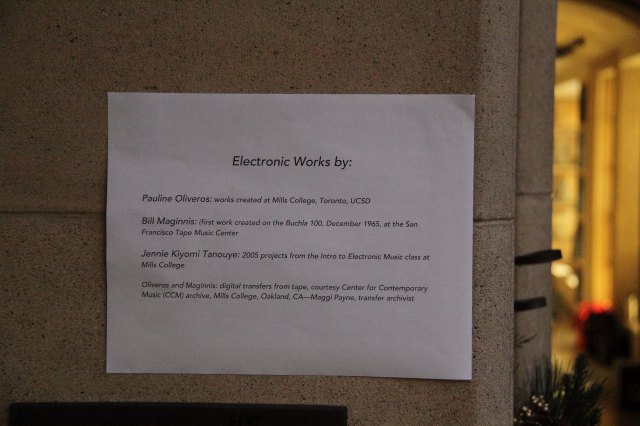
After the two discs of Riley’s music we are treated to music inspired by another generation of artists and, last, by long time colleague, the late great Pauline Oliveros (1932-2016), another wise and gentle guru who died just about a year before the release of this album.  She and Terry worked together (along with Morton Subotnick, Ramon Sender, Steve Reich, William Maginnis, and Tony Martin) as founders of the San Francisco Tape Music Center which would become the Mills College Center for Contemporary Music (still operating today).  The producers wisely dedicated an entire disc to one of Oliveros’ last compositions, this loving tribute to her friend and colleague. It is now, sadly, a tribute to her memory as well.   Samuel Adams shares the performing duties along with Ms. Cahill on this extended homage.

There is little doubt that the other composers whose music graces this tribute will continue on their unique paths to continued success always acknowledging their connections to Mr. Riley.  Danny Clay is among the less familiar (to this reviewer) names here but his Circle Songs seem to fit quite well to open the first tribute disc.  Gyan Riley is, of course, one of Terry’s children and a fine guitarist and composer  in his own right.  Anyone who has had the pleasure of seeing Gyan and Terry play together cannot miss the close bond personally and musically of these two.  They are a joy to behold.  The affectionate Poppy Infinite is a reference to the elder Riley’s Poppy Nogood’s Phantom Band which was the “B side” of his classic Rainbow in Curved Air.  Samuel Adams is the son of Pulitzer Prize winner John Adams whose early work China Gates was written for and championed by his fellow classmate at the San Francisco Conservatory, Sarah Cahill.  The younger Adams’ contribution here is called Shade Studies.

The eclectic Christine Southworth also seems to embody the (perhaps loosely defined) West Coast style.  Her interests in electronics and world music describe this superficially but her sound is a welcome one here as well.  Keeril Makan earned his PhD. in music at Berkeley which doubtless has left a stamp on his style.  His composition “Before C” makes reference to what is doubtless Terry Riley’s best known work, the oft performed, “In C”.  Elena Ruehr is a composer whose connection is not as clear as some of the others here but her work, “In C too” demonstrates her understanding of and her respect for Riley’s work.  Last on this disc of tributes is Dylan Mattingly.  He is a Berkeley native and can frequently be seen/heard performing in various venues in the Bay Area.  His contribution YEAR demonstrates both his individual style and his connection to the West Coast Style mentioned earlier.

The liner notes by Sarah Cahill are part of the tribute and a good description of the various influences behind the man of the hour, Terry Riley.  Credit is properly given to the artistic influences that inspired Mr. Riley and a brief description of what must have been an intimidating but loving project.  It is likely that there are even more connections involved in this undertaking but that must be left to future musicological and historical research.

The Kronos Quartet has long ago championed Riley’s work for that medium and new versions of his classic, “In C” continue to come on the scene.  One can only hope that the energy embodied here will inspire recordings of some of Riley’s lesser known work with orchestra which richly deserves hearings.  But regardless there is much to celebrate here and best holiday wishes go out to Mr. Riley and his talented progeny.  Happy listening, all.


Michael Vincent Waller: Trajectories (further explorations of a gentle radicalism)


trajectories

Waller’s first release dedicated entirely to his work was the 2 CD The South Shore release on Phill Niblock’s XI label last year.  Two disc sets are a risky venture, especially for relatively new artists.  But Niblock has always chosen to take the interesting path regardless of risk.  Well that risk seems all the less risky now that we see the release of yet another full album (albeit one CD) of more of Waller’s increasingly popular compositions.

This time he is championed by the post-minimalist master pianist R. Andrew Lee and rising star Cellist Seth Parker Woods.  The other risk taker here is the producer and engineer Sean McCann whose experimental label Recital is exploring some exciting territory.  Now one might take issue with an argument for the increasing popularity of this composer given that his albums are being released self-styled “experimental” labels but two releases in two years is hardly a case for obscurity.

In fact Waller’s work seems to be attracting a great many musicians who sense that he is evoking a genre with ties to various well worn traditions but also one which is developing its own lasting voice.  Waller’s background includes studies with La Monte Young, Bunita Marcus, and Elizabeth Hoffman.  His works tend to use modes, a style heard more commonly in the work of composers like Lou Harrison (and before that perhaps the 14th century).  At first listen one hears a basically tonal sound but gradually one is drawn into the more subtle aspects of Waller’s art and therein lies the beauty of his work.

There are six works here spread over 17 tracks and all are from 2015-2016.  With only a couple of exceptions Waller makes his statements in 1-5 minute movements much like Lou Harrison.  His penchant for using modes occasionally suggests the music of Alan Hovhaness but Waller is seemingly an unabashed romantic at times too.

The first work “by itself” is one of the longer pieces here at 5’51” and is pretty much representative of the tone of the entire album.  That’s not to say that the album is not varied in content, it is.

The second work in the 8 movement, “Visages” which, appropriately conjures a more impressionistic notion.  This is not Debussy, rather it is maybe post-impressionistic.  It is strongly reminiscent of the best of Lou Harrison’s work with short varied movements but embraces a far more romantic and virtuosic reach.

Lines for cello and piano give the listener the opportunity to hear the fine cellist Seth Parker Woods in this lyrical and beautiful work.  Woods really makes these almost vocal lines sing and begs the question as to when we might hear some vocal music from Mr. Waller.  This is the most extended piece on this collection at 9’19” in a single movement but one wishes for it to go on much longer.  It also prompts one to want to hear more from Mr. Woods.

The three movement Breathing Trajectories is perhaps the most post-minimal of the works here.  It is also among the most complex harmonically but the point here seems to be the sound rather than the method per se.  It is a three movement meditation on some minimalist-like ideas.

Dreaming Cadenza is one of the more overtly virtuosic works here though it’s mood is not unlike the rest of the pieces here.  It is an opportunity for the soloist to demonstrate his skill and Lee does that admirably.

Last but not least, as they say, is the ironically titled, “Laziness”.  Its three movements have enough development to suggest calling this work a “sonata” but such choices are left to the composer (as they should be).

Two other salient factors come to light here.  One is the rather attractive and intelligently designed slipcase (by label owner Sean McCann) with some lovely photographs by none other than Phill Niblock and room enough for adequate liner notes (thank you).

The other factor, one for which I intentionally truncated by own commentary on the music, is that the liner notes are by none other than “Blue” Gene Tyranny aka Buddy, the world’s greatest piano player from Robert Ashley’s Perfect Lives, aka Robert Sheff.  This legendary pianist and composer provides a really insightful set of liner notes and adds so much to the understanding and appreciation of the musical content.

This is a beautiful album brought to life with an auspicious and talented set of people.  That alone is reason enough to buy this album but the best reason is that the listener may follow this next step in the trajectories of the composer Michael Vincent Waller.

Howard Hersh’s Chamber Music: Dancing at the Pink House


hersh pink

This latest release by Howard Hersh reveals more of his range as a composer.  His previous release focused on one large concerted work for piano and chamber orchestra as well as some virtuosic writing for piano and for harpsichord.  This disc (worth a listen if only for the return engagement of the pianism of Brenda Tom) focuses on some smaller chamber ensembles and a look at the composer’s more impressionistic moods.

This writer is left with the notion that each piece seems to be an intimate telling of a story.  Though the stories are not explicit, each piece has a distinct narrative character.  Mary Rowell handles the multi-track violin parts on Madam’s Tavern (2014).  The piece has an almost symphonic character evoking a variety of styles and meandering most pleasantly through a musical narrative whose details are not as important as the fact that the piece engages very successfully on a purely musical level.  It is written for solo violin with a chorus of some 15 tracks of violin accompanying.

Loop (2006) is a sort of cyclic quasi-minimalist work featuring Jonah Kim on cello, Brenda Tom (gently) on piano, and Patricia Niemi on vibraphone.  It is a dream-like, perhaps even impressionistic piece whose structure and compositional techniques serve the end goal of being a charming aural object.

I Love You Billy Danger (2012) was written for pianist Brenda Tom.  Here she demonstrates her virtuosity and her dramatic and dynamic range in a piece which, though related to Liszt according to the liner notes, seems to evoke the rather Lisztian master Frederic Rzewski as well.  Tom is at her fines with this challenging work and she conveys the narrative well.

Night (2013) seems related to the earlier Loop by virtue of being a percussion piece but also by its gentle evocation of a shimmering musical narrative punctuated with a clarinet part that alternately hides within the percussive sounds and comes wailing out  in jazzy/bluesy moments.  This writer was left with the notion of Gershwin haunting the score (but maybe that is because this review is being written in the Halloween season).  José González Granero is on clarinet, Patricia Niemi on marimba, and Nick Matthiessen on percussion.

Dancing at the Pink House (2006) is a musical narrative for clarinet and piano that Hersh has featured as a teaser on his website.  It was written for Patricia Shands, clarinet and is accompanied by James Winn on piano.  Shands is the owner of said Pink House and she seems to be having a lot of fun with this playful but substantial piece.  Both of these musicians appeared on Hersh’s 2007 CD release, Pony Concerto (Albany Records).

Dancing at the Pink House is a valuable addition to Hersh’s discography and reveals more of his range as a composer.  This is a highly entertaining recording and leaves the listener wanting more.

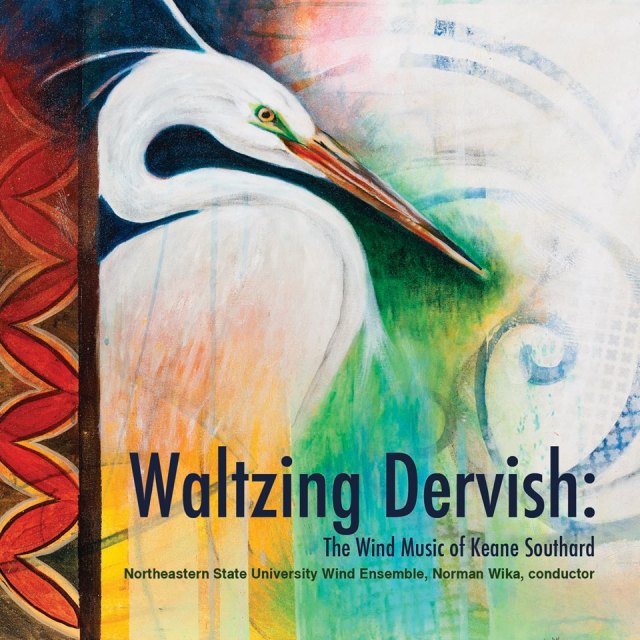
Visions of a Dreamer: Keane Southard’s Waltzing Dervish


dervish

Keane Southard (1987- ) is a composer and pianist whose work is influenced by a variety of styles including standard classical and pop and folk influences.  This major debut disc is a fine sampling of his work though it is important to realize that his work is for diverse ensembles of pretty much every description and the present sampling is of music for wind ensemble.

Just like every specialized grouping, be it string quartet, string orchestra, wind quintet, solo piano, full orchestra, etc., one encounters composers with varying degrees of facility in each configuration.  Southard seems very much at home with the wind ensemble/band and its possibilities.  A quick look through his extensive works list at his site suggests a hugely prolific musician with a wide variety of skill sets in a variety of musical configurations.  Wind ensemble is clearly one of his strengths and the Northeastern State University Wind Ensemble of Oklahoma under conductor Norman Wika are up to the challenges.  Southard playfully refers to this grouping as a “wind powered” ensemble using it as a metaphor for ecologically sustainable power systems.

There are nine tracks of which three are transcriptions of other composers’ work and the remaining six are by Southard.  His metaphors are as eclectic as his musical choices but fear not, his choices are friendly ones.  The first track, Waltzing Dervish sets the tone as an original and substantial composition of some ten minutes duration in which he takes on the waltz and its various meanings both public and personal to create an original band composition concerned as much with ecological metaphor as with a striving for multicultural diversity in an optimistic and thoughtful exploration of what can easily be a tired dance form.

The second piece is an arrangement of a piece by Francisco Mignone (1897-1986), one of the composers whose music he encountered during his 2013 Fulbright Fellowship in Brazil.  The piece is scored for optional choir (not used in this recording) and band, an arrangement Southard made with the intention of sharing this music as a highly viable selection for concert band.  It is indeed a joyous affair and one could easily imagine this being adopted as a staple in the rarefied realm of concert band music.

Do You Know How Many You Are? is the composer’s 2013 band arrangement of a 2010 choral piece which he describes as having basically come to him in a dream.

Claude Debussy’s Menuet (ca. 1890) was originally a piano piece which Southard envisioned in this orchestrated form during the course of his studies of orchestration.  That sort of inspiration is not uncommon for a composer but the result is not always as ideal as the composer imagined.  Fortunately this orchestration works quite well and again would proudly fit in a given band’s repertoire as an audience pleasing piece.

The next piece, originally an orchestral piece from 2013 is presented in the composer’s own arrangement for band.  No Interior Do Rio De Janeiro (2013/15) is another of the inspirations from the composer’s 2013 Fulbright Fellowship and was inspired by his work with “Orquestrando a Vida”, a Brazilian music project inspired by Venezuela’s famed “El Sistema”.  The band version was written on a commission from the present NSU Wind Ensemble.  Here is perhaps a departure from the dance theme of the first three tracks.  It seems to be a thesis or musical diary entry reflecting his personal take on the experience of working with this project though the spirit of the dance remains throughout.

Carousel (2008/2010) is the arrangement for band of the third movement of a mini-symphony (perhaps a scherzo?) for orchestra.  Curiously he describes his inspiration as coming from the sound of the calliope, a sort of steam driven organ common in circuses of the late 19th and early 20th centuries.

Cortège et Litanie (1922) by French composer and organist Marcel Dupré (1886-1971) is a bit of a departure.  Neither a dance nor derived from Brazilian sources this piece was originally written for organ.  The organ (like the calliope in the previous piece) is arguably a wind instrument and this transcription retains some of the ambiance of that grand instrument.  It is among Dupré’s better known pieces and seems a natural for band.

Uma Pasacalha Brasiliera (2015) is a commission from a the Arrowhead Union High School Wind Ensemble and conductor Jacob T. Polancich.  The composer describes various influences in the circuitous path the the completion of this work but it is basically a sort of homage to the baroque form of the pasacaglia (variations over a repeating bass line) as well as to some of the great folk song influenced composers such as Percy Grainger.  Brazilian influences dominate much of the composer’s work from this period and they combine with the aforementioned baroque and folk influences to form a wonderfully creative take on that form of baroque counterpoint.

Finally the big finale is presented in another transcription, this time of a concerto for piano and organ from 2008.  Of course the organ again lends it’s sound easily to a band transcription and we have this Concertino for Piano and Wind Band (2008 rev. 2015) which allows us to hear the considerable keyboard skills of the composer.  This is the most substantial work on the disc and provides a satisfying finale to this portrait of a prolific and optimistic young composer at the very successful beginnings of what this writer (optimistically) hopes will be a long and productive career.


Exploding Debussy, Kathleen Supové


New Focus FCR 170

Increasingly it seems that new music performers take on a persona which includes a unique selection of repertoire and frequently a distinctive physical presence.  Kathleen Supové is a fine example.  Her distinctive physical appearance and attire becomes a metaphor for her very personal and intelligent choice of repertoire which sets her apart from her peers.  In addition to unquestioned virtuosity and beautiful interpretive skills her persona takes on an adjectival quality which prompts this reviewer to ponder the “Supovian” experience.


I may live to regret that neologism but the present album is offered as exhibit one (of about 20 albums) attesting to the distinctive choices of music that characterize her work.  This two disc album, The Debussy Effect, is a very modern homage (even sometimes with apologies) to the impressionist master.  Twelve tracks on the two discs feature seven contemporary composers.  Only three tracks are for solo piano.  The rest involve electronic enhancements and or “soundtracks”.

Initially I had hoped to be able to say something useful (if not particularly insightful) to prospective listeners/buyers of this album about each of the pieces here but after several listens I can only reliably say that the material makes for a great and entertaining listening experience.  It harbors complexities that cannot be fairly recounted in such a brief review.  (And this reviewer has a limited knowledge of Debussy as well.)

Here are works by some of the finest of the New York “downtown” music traditions that reflect some amazing and very deep appreciations that will likely change the way you hear Debussy.

Here is the track list:

Disc One

1.  Storefront Diva: a dreamscape by Joan La Barbara

2.  Dr. Gradus vs. Rev. Powell by Matt Marks

3.  Layerings 3 by Eric Kenneth Malcolm Clark

4.  What Remains of a Rembrandt by Randall Woolf

Disc Two

1-4.  Shattered Apparitions of the Western Wind by Annie Gosfield

5-7.  Cakewalking (Sorry Claude) by Daniel Felsenfeld

8. La plus que plus que lente by Jacob Cooper

All are engineered by the wonderful Sheldon Steiger for the New Focus recordings label.

So the take away here is as follows:  If you are a Debussy fan you will want to hear this album.  If you are a Kathleen Supové fan you will want to hear this album.  It is the second reason the seems the most salient here.  I expect to be listening to this many more times.  Enjoy.


When Politics and the Arts Clash, OM 22


Isang Yun (1917-1995)


The relationship between politics and music is complex and varied.  There are many instances of clashes between these two disciplines from the politics of state and church sponsored music to its repression by those same institutions.

After centuries of Catholic church sponsored music a decision was made in 1903 to repress the performance of anything but Gregorian chant and any instruments except for the ubiquitous organ.  The reasons for this decree have been discussed but the end result was less work for musicians.

More recently the Nazi “degenerate art” concepts and the later proscriptions on “formalist music” in Soviet Russia similarly put artists and musicians out of work.  In fact many were jailed or killed.  Shostakovich and Prokofiev were high profile musicians who endured bans on performances of their music based ostensibly on claims that it brought (or potentially brought) harm to the state’s political visions.

Even more recently the blacklist created by Joseph McCarthy and his acolytes perpetrated a similar assault on actors, directors and writers like Dalton Trumbo (recently dramatized in the excellent film Trumbo with Bryan Cranston leading the fine cast).  This sad chapter of history did not completely end until the 1970s and only recently have efforts succeeded in restoring suppressed screen credits to these films.  Many lives were destroyed or irreparably harmed.  One hopes, of course, that such travesties will not be repeated but the recent efforts to eliminate the NEA suggest that such struggles remain with us.

On February 18th Other Minds will present a centennial celebration of two composers’ births.  Lou Harrison certainly expressed some political themes in some of his music but did not incur state sponsored political wrath.  Unfortunately this was not the case with the other honoree of Other Minds’ 22nd season.

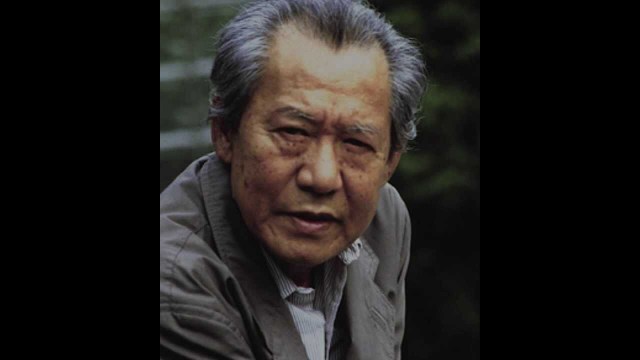
In 1967 Korean composer Isang Yun was kidnapped by South Korean intelligence officers and taken to South Korea to face accusations of collaboration with the communist government of North Korea.  He was held for two years and was subjected to interrogation and torture based on information later acknowledged to have been fabricated.  Even so South Korea declined to allow the ailing composer’s request to visit his hometown in 1994.  He died the following year in his adoptive home in Berlin, Germany.

A petition signed by over 200 artists including composers Karlheinz Stockhausen, Hans Werner Henze, Gyorgy Ligeti and conductors Otto Klemperer and Joseph Keilberth among the many was sent to the South Korean government in protest.  A fine recent article by K. J. Noh, Republic of Terror, Republic of Torture puts the incident in larger political context. It is a lesson sadly relevant even now in our politically turbulent times.

The concert will feature works from various points in his career, both before and after the aforementioned incident.  It is a fine opportunity to hear the work of this too little known 20th century master.  Conductor and pianist Dennis Russell Davies knew and worked with both Harrison and Isang.  It is so fitting that he will participate along with his wife, justly famed new music pianist Maki Namekawa, in this tribute to the the late composer.  This can’t right the wrongs but what better way to honor a composer than by performing his music?

The performance is at 7:30 PM at the historic Mission Dolores Basilica at 3321 16th Street
San Francisco, CA 94114.  Tickets available (only $20) at Brown Paper Tickets.

February 18th, Mark Your Calendars: Other Minds 22, A Must Hear


OMDI1Harrison

Lou Harrison (1917-2003)

The American composer Lou Harrison (1917-2003) and Korean composer Isang Yun (1917-1995) turn 100 this year and Other Minds 22 has a wonderful celebration that is not to be missed.  On February 18th at 7:30 PM in the beautiful, historic Mission Dolores Basilica in San Francisco’s famed Mission District.  This is actually only the first of two concerts which will comprise the Other Minds season 22 which is subtitled, “Pacific Rim Centennials”.  It is curated by Charles Amirkhanian, the reliable arbiter of modern musical tastes in the Bay Area and beyond.  (The second concert, scheduled for May 20, will be an all Lou Harrison concert closer to the composer’s May 14th birthday.)

yun_isang

Yun Isang (1917-1995)

Harrison is well known to new music aficionados, especially on the west coast for his compositions as well as his scholarship and teaching.  His extensive catalog contains symphonies, concertos, sonatas and other such traditional classical forms as well as some of the finest of what we now call “world music” featuring instruments from non-western cultures including the Indonesian gamelan.  He is also the man responsible for the preparation and premiere of Charles Ives’ Third Symphony in 1946 which was subsequently awarded a Pulitzer Prize.

Yun is perhaps less of a household name but is known for his many finely crafted compositions in the modern western classical tradition and, later, incorporating instruments and techniques from his native Korea.  He was infamously kidnapped by South Korean intelligence officers in 1967 and taken from his Berlin home to South Korea where he was held and tortured due to allegations (later proven fabricated) of collaboration with North Korea.  Over two hundred composers and other artists signed a petition for his release.  After several years he was returned to his adopted home in Berlin in 1969 where he continued to compose prolifically and teach until his death in 1995.

dennis-russell-davies

                              Dennis Russell Davies (from the American Composers Orchestra site)

This celebratory and memorial concert will feature world renowned artists including Grammy Award winning conductor and pianist Dennis Russell Davies who knew and collaborated with both Harrison and Isang.  Other artists will include pianist Maki Namekawa, violinist Yumi Hwang-Williams, percussionist William Winant (with his percussion group), and the Other Minds Ensemble.

The program is slated to consist of:

Sonata No. 3 for Piano

(1938, Lou Harrison)

Dennis Russell Davies

Kontraste I for Solo Violin

(1987, Isang Yun)

Yumi Hwang-Williams

Gasa, for Violin & Piano

(1963, Isang Yun)

Yumi Hwang-Williams, Dennis Russell Davies

Grand Duo for Violin and Piano (excerpts)

(1988, Lou Harrison)

IIII. Air
II. Stampede

Yumi Hwang-Williams, Dennis Russell Davies

Intermission

Canticle No. 3

(1941, Lou Harrison)

William Winant Percussion Group
Joanna Martin, ocarina
Brian Baumbusch, guitar
Dan Kennedy, Loren Mach, Ben Paysen, William Winant, Nick Woodbury, percussion
Dennis Russell Davies, conductor

Interludium A

(1982, Isang Yun)

Maki Namekawa, piano

Suite for Violin, Piano & Small Orchestra

(1951, Lou Harrison)

I. Overture
II. Elegy
III. First Gamelan
IIII. Aria
V. Second Gamelan
VI. Chorale

Yumi Hwang-Williams, violin
Maki Namekawa, piano
The Other Minds Ensemble:
Joanna Martin and Janet Woodhans, flute
Kyle Bruckman, oboe
Meredith Clark, harp
Evelyn Davis, celesta
Andrew Jamieson, tack piano
Emil Miland and Crystal Pascucci, cello
Scott Padden, bass
William Winant, percussion
Dennis Russell Davies, conductor

Other Minds is also co-sponsoring (with the Berkeley Art Museum/Pacific Film Archive) a screening of the 2015 German television produced film, Isang Yun: In Between North and South Korea on February 19th (4:15PM) at the Pacific Film Archive in Berkeley.  Dennis Russell Davies and composer Charles Boone will also be present to discuss the film.

If you do know these composers you probably already have your tickets but if you don’t know them you owe it to yourself to check out these performances.


Of Mourning and Unity, 2016


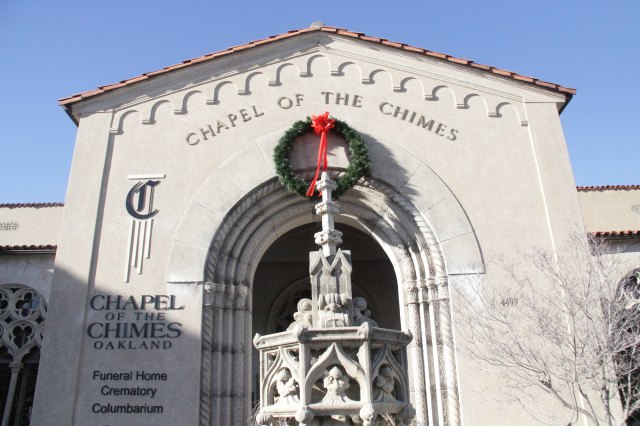
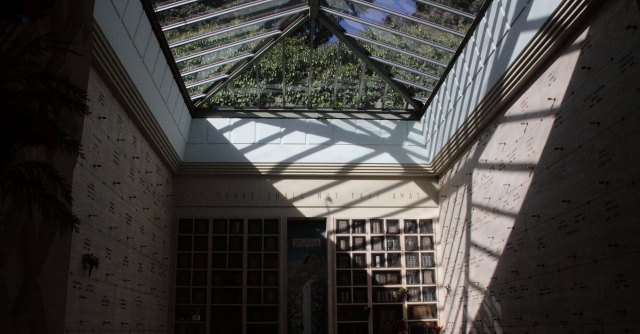
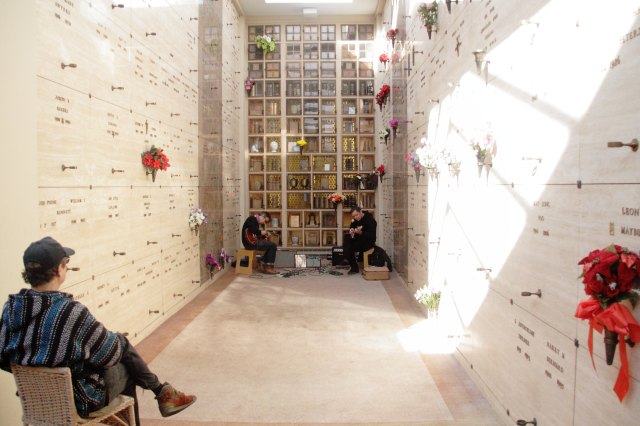
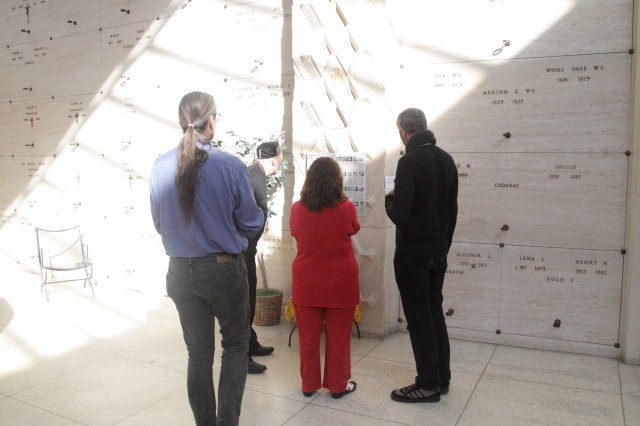
oliverosolstice20160075Every year on June 21st, the Summer Solstice, there is a rather unique concert event in which musicians from the Bay Area and beyond gather in celebratory splendor in the sacred space of the Chapel of the Chimes in Oakland.  The chapel is a columbarium  (a resting place for cremated remains) and a mausoleum.  The space is in part the work of famed California architect Julia Morgan.

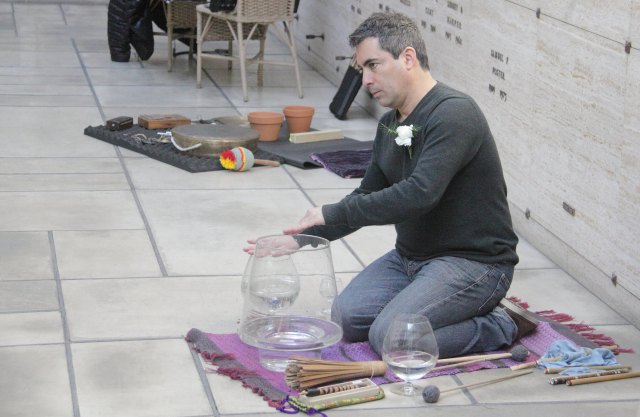
On December 19th Sarah Cahill with New Music Bay Area secured permission to use this space for four hours from 11AM to 3PM.  She invited many musicians who had been involved in one way or another with Pauline Oliveros whose death preceded by a week or two the tragic “Ghost Ship Fire” as it’s become known.  The idea was to pay homage to both this wonderful theorist, composer, performer and teacher and also to pay homage and to mourn the losses of some 36 young artists who will now never realize their ambitions.

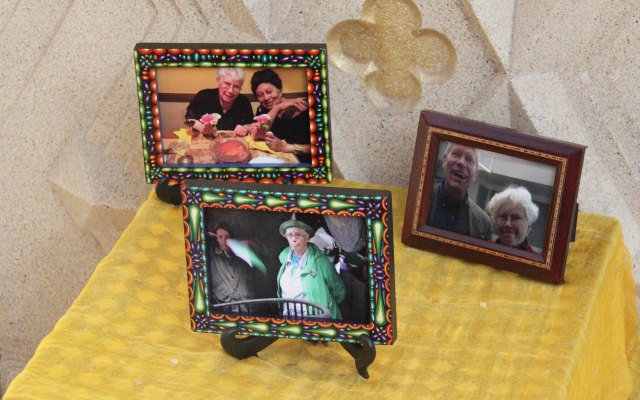
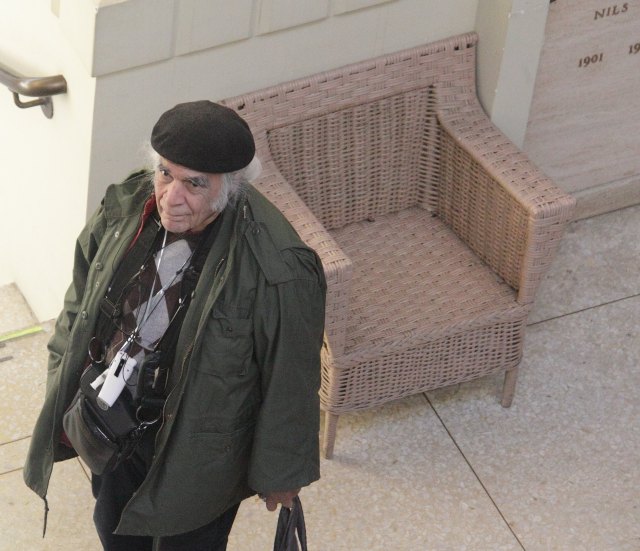
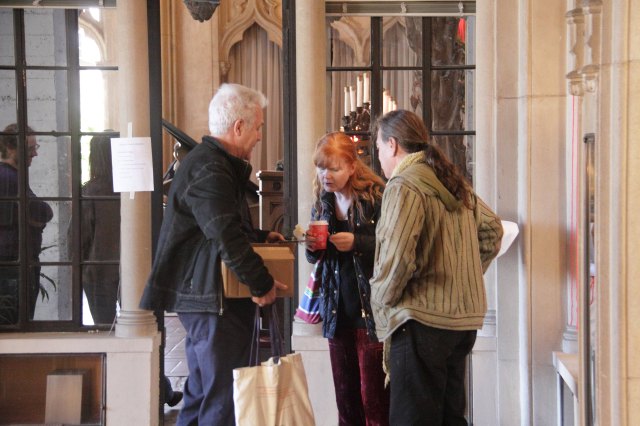
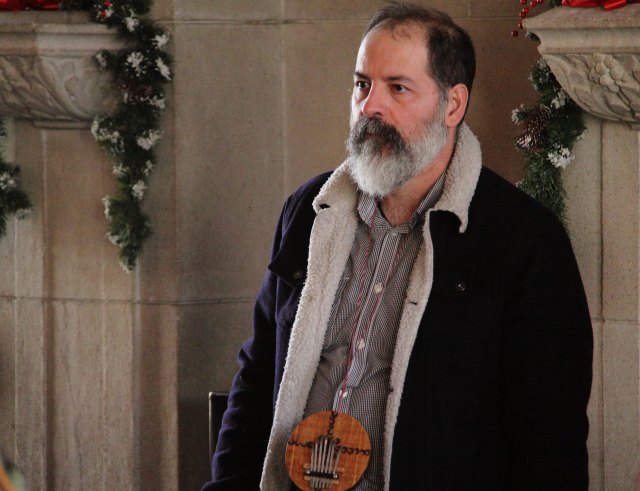
What follows here is a simple photo essay of my personal impressions of this event.  The slant of the winter light added a dimension to those beautiful spaces as a large roster of musicians played pieces by and about Pauline Oliveros.  It was a lovely and reverent experience.

oliverosolstice20160003

oliverosolstice20160005

The angle of the winter light adds its dimension.

oliverosolstice20160012

oliverosolstice20160010

oliverosolstice20160019

oliverosolstice20160014

oliverosolstice20160011

oliverosolstice20160021

oliverosolstice20160022

oliverosolstice20160024

oliverosolstice20160025

oliverosolstice20160040

oliverosolstice20160026

oliverosolstice20160044

oliverosolstice20160037

oliverosolstice20160066

oliverosolstice20160063

oliverosolstice20160043

oliverosolstice20160062

oliverosolstice20160035

OM202022

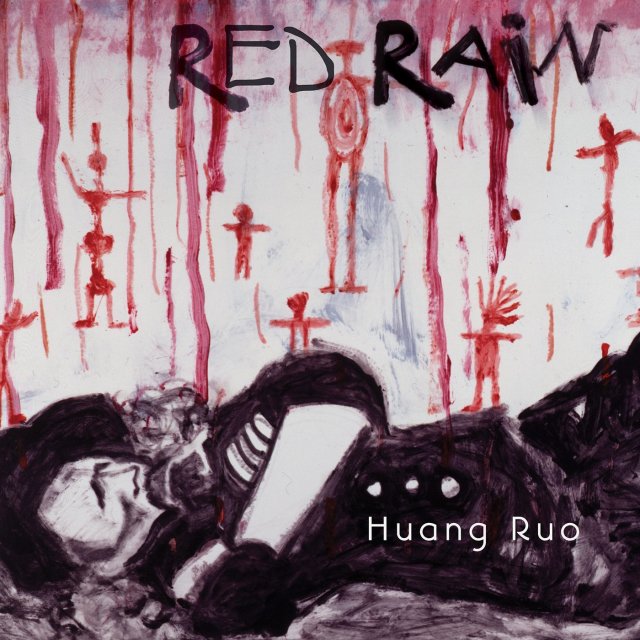
Huang Ruo: Red Rain, a New Generation From the East Makes Itself Known


redrain

This recording grabbed my attention in wonderful ways from the very beginning and didn’t cease to amaze me until it ended.  Huang Ruo (1976- ) is one of the most striking new voices this reviewer has heard in some time.  This Chinese born American composer draws on his ancestral culture, modern culture and synthesizes it with contemporary compositional techniques in new and interesting ways.  He provokes the same sort of excitement in this reviewer that first contact with the music of Bright Sheng and Ge Gan Ru did when they first came into earshot some years ago.

huangruo

Huang Ruo (1976- )

(Perhaps it is due to the rising star nature of this artist but there seems to be relatively little reliable info on him.  His website is apparently not yet complete and even his Theodore Presser page fails to even give dates for his scores.  I’m hoping these glitches get resolved soon because I think this is a composer who deserves serious attention.)

The very first track, Four Fragments (2006?) in the version for cello solo (apparently there is a version for violin solo but it is not clear which came first) is a powerful and virtuosic piece loaded with various pizzicati, glissandi and other effects that perhaps only a score could really tell you with certainty.  What is interesting is the really organic nature of these effects, that is to say that they serve the composition and aren’t simply “golly gee what a virtuoso” type fireworks. The amazing Canadian Korean cellist Soo Bae handles this work beautifully and seemingly with relative ease.  This is the second longest (by about ten seconds) of the pieces on this disc and the music, the performance snagged me immediately.  What a powerful piece!

After that I was prepared for perhaps a let down, something more “ordinary”.  But, no, the next track, the title track, Red Rain (200?) for piano played by the wonderful Emanuele Arciuli is another distinctive statement which seems to mine the riches of the composer’s native culture and place it anew in a contemporary and relevant modern context.  At 10:50 it is a substantial piano work.  Like the cello piece it seems to use some unconventional idioms for the instrument and by that I mean it sounds nothing like Mozart, Beethoven, Debussy or even Boulez or Stockhausen.  It seems infused with an eastern musical flavor no doubt gained from techniques native to non-western traditions.

In another assault to any expectations I might have had the three movements of Shifting Shades have the pianist using a whistle such as your gym coach likely used with the pea inside to create a tremolo.  Here the pianist whistles (and plays some sort of flute, maybe a recorder or shakuhachi? at one point; he also apparently plays directly on the piano strings at times) whilst playing the rapid tremolos and the drones that seem to characterize Huang’s keyboard writing. Stephen Buck is the hard working pianist here.

Buck comes back again for the Tree Without Wind for piano (this time played a bit more conventionally).  This is the longest piece on the disc at 13:57 and rewards the listener’s attention.  It seems to probe mythological depths and was suggested by a Chan Buddhist narrative by Hui Neng.  Tremolos, clusters, drones and melodic fragments take on a symphonic grandeur at times.  There is a wide range of dynamics and tempi as the pianist recounts in sounds the meaning of movement and silence.

Three Pieces for Piano gives names to the short movements.  Prelude: Diffluent, Postlude: Left… and, Interlude: Points and Lines all contain the same techniques as the other piano pieces here (though without any additional instruments this time).  These sound like they might be earlier works and perhaps studies investigating different techniques though they seem fully fleshed out and complete in themselves.  The three movements are varied and the last one is apparently the composer’s only dalliance with twelve tone techniques and is by far the most conventional sounding work here though Huang’s distinctive fingerprint is present.  Once again we hear Stephen Buck navigating the score.

In the last track we get to hear the composer himself at the piano with Arash Amini (a member of the American Modern Ensemble) on cello in Wind Blows…  Like the previous tracks and as indicated in the fine notes by Stephen Buck this piece utilizes specialized effects to produce a unique sonic image.  The piano part is referred to as a “drone” and it is indeed static at least in relation to the part for cello. Unlike the preceding pieces there seems to be less concern about evoking images and more concern for just the sound itself which is described aptly as “meditative”.   In fact it is powerfully lyrical, even “Brahmsian” if I can be forgiven for that comparison.

The brief biography in the overall fascinating liner notes describe the composer as having been influenced by a wide variety of musical styles ranging from traditional Chinese folk musics to Chinese Opera, various western classical traditions including modernists such as Lutoslawski and various “pop” traditions as well.  He studied at the Shanghai Conservatory and he appears to have achieved a fascinating synthesis in what seems to be his mature style.  He is a composer, conductor and vocalist.  His music is unique and beautiful as a Taoist painting but grounded in traditions that embrace perhaps the entire world as filtered through his creative mind. Bravo Innova for bringing this music to light in this fine and interesting CD.

Definitely keep and eye and ear out for this guy.  He has many things to say and interesting ways to say them.

David Toub’s Ataraxia, a unique compositional vision


ataraxia

World Edition 0029

David Toub is a composer whose name is known to perhaps relatively few right now but whose star is clearly rising.  Born on the east coast he studied at Mannes College and at Julliard with Bruce Adolphe and others but his musical education reached maturity when he was studying at the University of Chicago and running the contemporary music programming at the college radio station.  While he had written some twelve tone and freely atonal music it was his encounter with a 1979 WKCR broadcast of Einstein on the Beach that changed his compositional vision.  The musics of Philip Glass, Steve Reich, Terry Riley, and protominimalist Morton Feldman would henceforth infuse his style.

drtoub

David Toub

He is also what I have termed a composer with a day job.  Like Charles Ives (who sold insurance) and Alexander Borodin (who was a chemist, physician and surgeon) he makes his livelihood in the decidedly non-musical world of gynecologic surgery.  Another analog for people like David would have to be William Carlos Williams, a pediatrician whose place in American letters is assured by his poetry and novels.

I personally discovered David’s music via his website where one can find a great deal of his scores and (very helpful) sound files of many of his works.  It is definitely worth your time to browse these scores and sounds if only to get an idea of the scope of the composer’s visions.  By his own admission his music resembles that of Philip Glass, Steve Reich and Morton Feldman but perhaps it is more accurate to say that one may be reminded of these composers since his music is anything but derivative.

Some of his music has been championed by the fabulous Monacan pianist Nicolas Horvath whose You Tube Channel is a feast for new music aficionados.  In fact Horvath’s reading of “for four” (2012) can be heard and seen there.  David also has a You Tube Channel with some live performances that are well worth your time.

Many of David’s scores do fit the more conventional (ca. 20 min) time frame of most concert music but some of his most interesting scores lean toward the extended time frames common to Morton Feldman’s late work (in the liner notes he refers to a recent piano piece which lasts four hours).  These require a bit more concentration and multiple hearings to be able to perceive the compositional unity but, having done that, I can tell you that my time was well spent.

ginsburgh-de-face

Stephane Ginsburgh (from the pianist’s web page)

Stephane Ginsburgh is a Belgian new music pianist whose repertoire traverses some of the work of Morton Feldman as well as Frederic Rzewski and others.  He, along with Alessandra Celetti and Louis Goldstein were the dedicatees of the “quartet for piano”.   Having been already familiar with Toub’s work I was pleased to find that Mr. Ginsburg’s interpretive skills both do justice and provide insight to these scores which on paper (or in a PDF file) are difficult to grasp.  In fact these performances are mesmerizing.

“quartet for piano” (2010) comes in at 46:48 and the second track “for four” (2012) comes in at 22:58 but the timings are ultimately superfluous once the listener allows themselves to be taken by the collaborative adventure of this composer and performer.  I don’t think I can do justice speaking of the structure of this music except to say that, in this listener, it was like listening to the slow ringing changes of Zen Temple bells in a distant dream.  I have had the opportunity to play this CD without distraction a few times and each time found it transporting with the music taking on almost symphonic dimensions despite it’s outward simplicity.

This is a crowd funded effort in which I was a willing participant.  The lovely graphic design is by faberludens utilizing detail from a mysterious photograph by Richard Friedman (long time host of Music from Other Minds) and provides an apt visual metaphor for the music therein.  The conversation between the composer and Udo Moll dominate the liner notes and provide very useful insights to the origins and intents behind the composer’s work.

The sonorous piano is a Bösendorfer 225 and the recording was done by Daniel Léon with mastering by Reinhard Kobialka.  CD production curated by Udo Moll on Maria de Alvear’s World Edition label.  Soon to be available on iTunes and Amazon.

The other supporters named include: Maria de Alvear, Sergio Cervetti, Carson Cooman, Chris Creighton, Kathie Elliott, Paul Epstein, Sue Fischer, Alex Freeman, Richard Friedman, Stephane Ginsburgh, Louie Goldstein, Matthew Greenbaum, Hazem Hallak, Barnabas Helmajer, Christian Hertzog, Robert Kass, Harry Kwan, Steve Layton, Connie Lindenbaum, Richard Malkin, Shadi Mallak, Leah Mayes, Kirk McElhearn, Juhani Nuorvala, Rebecca Pechefsky, Lou Poulain, John Prokop, Simon Rackham, David Reppert, Larry Roche, Larry Rocke, Dave Seidel, Kel Smith, Beth Sussman, Eliyahu Ungar-Sargon, Samuel Vriezen, and Ann Wheeler.  The composer also includes his family, Debbie Bernstein, Arielle Toub and Isaac Toub for their emotional support and (in his typical self-effacing humor) “tolerance” of what he calls his “odd compositional habit”.  As habits go this one appears to be a winner.


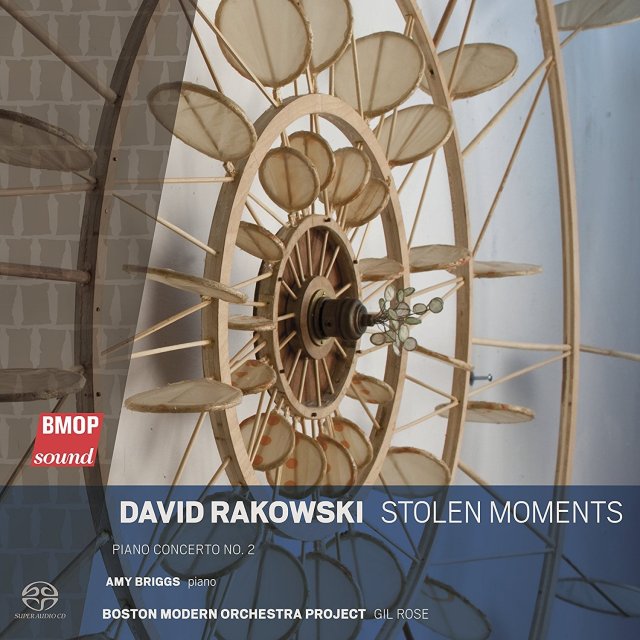
David Rakowski: Stolen Moments, Fabulous New Orchestral Music


rakowski

BMOP 1048

The spirit of jazz and, in particular, that of Duke Ellington and perhaps George Gershwin seem ever present in this recent release from the Boston Modern Orchestra Project.  David Rakowski (1958- ) is a new voice to these ears but clearly a highly developed one well schooled in writing for large orchestra and for piano solo within that context as well.

Two works are presented here, the four movement Stolen Moments (2008/2010) and Piano Concerto No.2 (2011).  Both are large, colorful works in a basically tonal/romantic context but with clear modernist influence.  Nothing experimental here, just sumptuous orchestral writing and a challenging and interesting work for piano and orchestra.  It was only from reading the useful liner notes that I learned Rakowski had been a student of Milton Babbitt (1916-2011), a composer famous for his hard nosed complexity.  In fact Rakowski actually quotes from Babbitt and this music is a tribute to the education received from this man (keep in mind that Babbitt also taught harmony to Stephen Sondheim).

It is as difficult to grasp that Rakowski was taught by Babbitt as it is to believe that, by his own assertion, he knows very little about jazz.  The first work seems to channel the spirits of Duke Ellington and George Gershwin more than Babbitt for sure.  This four movement orchestral suite, in it’s many moods, is melodic, jazzy and engaging in a way that can’t fail to entertain.

briggs

Amy Briggs (image from the artist’s web site)

Amy Briggs has long been a collaborator with Rakowski and is an artist who has successfully made her career exclusively playing contemporary music.  This second of Rakowski’s concertos for this instrument was written for her and she plays it magnificently.  She clearly has a feel for the jazz rhythms and handles the virtuosic writing as though it were second nature.

The concerto ventures into a variety of moods and provides ample opportunities for many BMOP soloists to have their moments.  It is basically a classical three movement structure with multiple subdivisions within each movement.  These large movements come in at nearly 15 minutes each and are practically works unto themselves though they clearly adhere to the same basic vision.  The second movement is dedicated in memory of Rakowski’s teacher Milton Babbitt.  I’m sure he would have approved.

This is in fact the second time that Gil Rose and his massively talented musicians have chosen to survey some of Rakowski’s music.  That alone should be enough to clue listeners in to a potentially good listen.  Rose has been amassing a catalog of music by modern composers whose work deserves attention and, while this is an example of some pretty recent music, Rose and BMOP have done a fine job of giving attention to composers who have been unjustly neglected as well.   They seem to have a fine ear for quality music and this reviewer will listen to anything they choose to record.

As usual with BMOP, the recording is bright and lucid allowing the listener to hear the fantastic details in these big and intricate but entertaining works.  The production is by Gil Rose himself with recording and post-production by Joel Gordon.  Another great volume in the growing BMOP canon.

Ken Thomson’s Restless: a Feast of New Chamber Music


restless-cover-2000x2000

Ken Thomson is one of the rapidly rising stars of the New York music scene and beyond. His involvement with his group Slow/Fast which includes Ken Thomson, Russ Johnson, Nir Felder, Adam Armstrong and Fred Kennedy as well as Bang on a Can and others in the new music/new jazz community demonstrates his level of drive.  Thomson is a saxophone player and a composer.

The present album showcases his talents as a composer and are different than what I had expected from a musician with roots in free jazz and with saxophone as his principal instrument.  This is a set of two suites in the classical manner, a collection of movements. They do not appear to have any direct influence from jazz but rather they are quite clearly in a classical new music vein.

The first, Restless (2014) is a four movement piece for cello and piano.  It could have been called a sonata for all its complexity and development.  It is a lyrical and very listenable piece which is restless at times (though I think the title actually suggests multiple meanings) and loaded with fascinating musical ideas.  The writing for both the cello and the piano are apparently technically challenging but both are handled very well by Ashley Bathgate (cello) and Karl Larson (piano).  This disc is worth the price if only for the fantastic musicianship of these performers.

ashleybathgate-karllarson_photo1_photographer_gabrielgomez

Ashley Bathgate (cellist) and Karl Larson (pianist) (Photo by Gabriel Gomez, all rights reserved)

The three movement suite, Me vs. (2012) is a pianistic tour de force that makes great use of various pianistic effects involving judicious use of the sustain pedal and the creation of after image type effects which allow the harmonics to vibrate on strings not struck by the keys.  Again the nod to a basic three movement classical piano sonata with a complex first movement followed by a lyrical slow movement and a spritely virtuosic finale which resembles a moto perpetuo.

More about the internal dialogue that went on in the composer’s head is available in his commentary but this music doesn’t really require much explanation.  It is pretty clear and very effective music.  This is simply a wonderful recording of some fascinating new music.

Christopher Bailey: Glimmering Webs, New Piano Music


glimwebs

I admit to some trepidation when I received this 2 disc set of piano music by an unfamiliar composer.  Even in the best of circumstances the “double album” concept can be a trying thing even to fans of a given artist.  I think I recall some similar trepidation confronting the newly released Elton John Yellow Brick Road double album.  I invoke some pop sensibility here in part for humor but also because that sensibility is one of the many threads that imbue this rather massive collection of pieces.

bailey2

Christopher Bailey

Christopher Bailey is a freelance composer who holds degrees from Eastman (BA, 1995) and Columbia University (MA, 1997 and PhD, 2002).  This is the eighth disc to contain his music though only the second to be dedicated entirely to his works (and his first double album).

The first disc is a journey of styles ranging from electroacoustic music (like the opening track which resembles the work of Mario Davidovsky at times) to several whose inspiration seems to venture closer to that of Pierre Boulez and ends with a lengthy sort of post minimalist piece appropriately titled, Meditation.  The composer says in his liner notes that this piece is his homage to “ambient music” and in particular, Harold Budd. The second track is a piece which is a sort of deconstruction of a Hall and Oates song, the pop sensibility to which I referred earlier.  And, yes, there is some nod to microtonalism as well.  Can you say eclectic?

The second disc contains the large Piano Sonata and a host of smaller works in various styles ranging from neo-classical to microtonal.

In the rambling liner notes the composer provides useful clues as to the genesis and intent of some of his ideas.  One need not read the notes to appreciate the music but the clarity that they provide was useful to this listener. More notes would have been appreciated though.  The composer’s and the pianists’ web sites are certainly useful but I doubt that the average listener will spend that much time researching these things and is then left with gaps in information and consequently in understanding.

The composition dates here range from 1994 to 2013 and embrace a wide swath of styles all with a strongly virtuosic aspect.  The second disc starts with the brief Prelude-Fantasy on the So-Called Armageddon Chord (2011).  The title is almost longer than the piece and, while it’s a fine work, the placement at the beginning of the disc preceding the major opus of his four movement Piano Sonata (1994/1996/2006) is a bit confusing.

I don’t mean to quibble with such things as track order and such but I was left with a sense of difficulty focusing.  Here is a large collection of music which ranges through pretty much the entire gamut of the last 200 years of music and it is presented en masse.  I think some re-ordering might have been helpful but that is one of the difficulties with multiple disc issues.  I listened numerous times to these discs and find the sheer volume and diversity a bit overwhelming.  It is as though this is too much for a single release.

Bailey says that the sonata is an homage to Stravinsky and those neo-classical elements are certainly clear but this listener hears some ghosts of Charles Ives and the polystylism of Alfred Schnittke as well.  The Sonata seems to be the highlight here.   It is wonderfully complex, kaleidoscopic, loaded with quotation, even grandiose at times, but eminently listenable and it is a highly entertaining piece also because of it’s virtuosity which is ably handled by the performer.

There are apparently three pianists on this recording, Jacob Rhodebeck, Shiau-Uen Ding and Augustus Arnone.  The problem is that it is not clear from the labeling or the notes who plays what.  This is actually a fascinating and engaging collection, well played, but I was surprised to be unable to attribute the various virtuosities to the deserving performers.

The recording, mastered by Silas Brown, is as good as it gets.  Overall quite a collection but one that left me with many questions as well.  Perhaps that was, at least partly, the intent but it is my hope that these ambiguities will not distract the listener and that more releases will be forthcoming.  This is very interesting music deserving of serious attention.


Alberto Ginastera at 100


ginastera

Oberlin Conservatory OC 16-04

Let me start by saying that the only thing wrong with this album is that it is only one CD. Alberto Ginastera (1916-1983) is without doubt one of the finest composers of the twentieth century.  Stylistically he holds much in common with composers like his contemporaries Aaron Copland (with whom he studied), Carlos Chavez, Leonard Bernstein and others who incorporated the spirit if not always the literal music of his homeland’s folk culture into his music.  In additional to these nationalist works he wrote a substantial amount of traditional concert music which touched on the edges of modernistic trends.

He wrote three operas, two ballets. two piano concertos, two cello concertos, a harp concerto, three string quartets, a bevy of piano music and sundry other items.  It is simply not possible to contain a fair representation of his work on a single CD.  Despite that this disc is not a bad retrospective.  It is lovingly played and recorded and if it does not represent the whole of Ginastera’s oeuvre it is a nice sampling.

The disc begins with the wonderful Harp Concerto Op. 25 (1956, rev. 1968).  Though originally commissioned by Edna Phillips (principal harp of the Philadelphia Orchestra) she had retired before she could perform it and it was premiered in 1965 by the amazing Spanish harpist Nicanor Zabaleta.  This three movement work is certainly one of the composer’s finest works and is beautifully played by Yolanda Kondonassis with the Oberlin Orchestra under Raphael Jiménez.  This piece is one of the finest modern harp concertos and is representative of the composer’s international style with perhaps just a taste of modernism.

Next up is the single movement Pampeana Op. 16 (1947) with the great Gil Shaham on violin and his sister Orli Shaham on piano.  This is a sort of window on Ginastera’s earliest nationalist style full of melody and virtuosity.

The next work is the Sonata for Guitar Op. 47 (1976) played by Grammy winning virtuoso Jason Vieaux.  I had not heard this work and my first hearing was indeed a revelation.  This is a major work for guitar and a wonderful sonata in the classical form.  I gave these four tracks a few listens in an attempt to digest some of their beauty and complexity and I will doubtless give them many more listens.  This is a major piece that belongs in the repertory.

And, finally, we move to the earliest utterance here with the Danzas Argentinas Op. 2 (1937) in an exciting and dedicated performance from Orli Shaham.

The sound is wonderful and there are a geekily satisfying set of liner notes which include a useful analysis by James O’Leary, Frederick B. Selch Assistant Professor of Musicology, Oberlin Conservatory of Music.  All in all a beautiful production and a great introduction to Ginastera’s work but please, don’t stop here.  Make sure you get to hear his other work and perhaps the wonderful folks at Oberlin will consider a volume two?

Lara Downes Making Magic at Noon in San Francisco


cordell0007

Old St. Mary’s Cathedral in San Francisco

A much needed light rain fell as I ventured out to hear Lara Downes play at the noontime concert series at Old St. Mary’s Cathedral in San Francisco’s Chinatown neighborhood.  I had just recently reviewed this artist’s new CD release (here) and I jumped at the opportunity to hear her live.

The trip from my home in Alameda to this venue, a distance of some 15 miles took me almost two hours.  Construction rules right now.  In the course of the concert Ms. Downes commented that it took her 45 minutes to get there from her hotel in San Francisco (no doubt less than 2 miles).

Being familiar with this trip I managed to arrive at about 12:15PM.  When I arrived I was a bit surprised to find a service in progress so I sat quietly observing this beautiful little church.  Though raised Catholic I haven’t ventured into a church in some years.  The experience did place a sort of spiritual context on my concert experience.

cordell0002

Priest saying mass at Old St. Mary’s Cathedral

The service ended a little after 12:30 and, after some of the congregants left I moved closer to the front.  Technicians moved the piano in place and Ms. Downes was introduced.

cordell0004

Downes intensely focused as she plays Schumann’s Fantasy Pieces

She chose to open with Robert Schumann’s (1810-1856) Op. 12 Fantasy Pieces Nos. 1, 2, 3 and 5 (1837).  I have but a passing knowledge of Schumann’s music.  It is highly virtuosic romanticism. Beautiful melodies, classical harmonies with just a dash of dissonance and a very high level of technical difficulty which characterizes these pieces.  Downes played them with confidence and ease seemingly casting a spell as she did.  She played the set without interruption and received much deserved applause from the somewhat sparse audience of perhaps 50 or so people.

She followed with a selection from her upcoming release America Again, Samuel Coleridge-Taylor’s (1875-1912) setting of the spiritual Deep River Op. 59 No. 10 (1905), one of a set of 24 so-called “Negro Melodies”. Coleridge-Taylor was a black British composer of the late 19th century sometimes referred to as the “African Mahler”.  This setting, very much in the same spirit as the Schumann was pretty much what one might have expected had Schumann encountered black spirituals.  This selection added again to the spiritual dimension.  Deep River is a majestic and celebratory piece which, like the Schumann, was well received.

Downes deviated from the printed program to play another selection from that forthcoming album, Morton Gould’s (1913-1996) American Caprice.  This short piece was a delightful foray into jazz reminding us of Gould’s connections with his contemporaries like Aaron Copland and George Gershwin.  Gould is a composer whose work deserves more attention and this listener is grateful to the artist for bringing this little masterpiece back into the light.

cordell0006

Downes making Rhapsody in Blue sound anew.

In some ways this functioned like a precursor to the next piece on the program, Gershwin’s (1898-1937) Rhapsody in Blue (1924) in the composer’s arrangement for solo piano. Downes, whose speaking was as comfortable and natural as her playing, asked the audience to try to hear this oh so familiar piece with new ears.  Indeed her fluid and dynamic playing put her own stamp on this popular gem and demonstrated again her seasoned virtuosity.  She played the work with passion but also with ease and confidence.

The ample applause and standing ovation brought her back for a wonderful encore.  It was Gershwin again for sure but this time in an amazing arrangement by Nina Simone (1933-2003) whose spirit seemed to be channeled by Downes.  “I loves you Porgy” from Porgy and Bess is featured on her new CD and it brought the afternoon to a very pleasing close.

I took the opportunity to meet and thank Ms. Downes who was, in turn, gracious and pleasant.  I went back out to the ordinary world charmed and invigorated and that is what I had hoped for.


Black Notes Matter: Lara Downes’ America Again


laradownes

Sono Luminus DSL-92207

The lovely cover photo for this album by San Francisco born pianist Lara Downes is reminiscent of any number of socially conscious folk/rock stars of the 60s and 70s. It would seem that this is no accident.  This delightful album of short pieces by a wide variety of American composers takes its title from the Langston Hughes (1902-1967) poem, Let America Be America Again (1935).  By so doing the pianist places this interesting selection of short piano pieces firmly in the context of black racial politics and the artistic expression of black America as well as those influenced by this vital vein of American culture (both musical and literary).  It is a graceful and deeply felt effort and I hope that the metaphor of the title of my review is not too tortured a one to reflect that.

This is also a very personal album.  Downes seems to share some deeply felt connections with her materials.  This artist, born to a white mother and a black father, invokes a careful selection of short piano pieces steeped sometimes in jazz and blues but also the political directness (and optimism) which was characteristic of the inter-war years that brought forth the Hughes poem.  There is both sadness and celebration in these virtuosic and technically demanding little gems (most apparently recorded for the first time or at least the first time in a while).  The pianist’s comments on each individual piece are also critical to the understanding of this disc as she shares the impact and meaning that the music has had for her.

There are 21 tracks by 19 composers in all and the selections themselves are quite a feat. They range from the 19th to the 21st centuries and are composed by both men and women of a variety of racial and ethnic backgrounds.  All seem to share the sort of  populist charm befitting the idealized America yearned for in the poem which is to say that they represent a kind of idealized or hopeful nationalism.  Downes is well acquainted with a large variety of American music and recognizes no distinction between classical and so-called “vernacular” traditions.

In fact none of these things are atypical for this artist.  Her previous albums Exiles Cafe (2013) featured music by composers exiled from their homelands, A Billie Holiday Songbook (2015) celebrated the life of this iconic black artist and her American Ballads (2001) demonstrated her deep mastery and affection for populist (but not jingoistic) nationalism.  Her tastefully issue oriented albums define a very individual path and the present album appears to be a very logical and well executed next entry into her discography.

This disc shares a similar heritage to that of Alan Feinberg’s four discs on Argo/Decca entitled, The American Innovator, The American Virtuoso, The American Romantic and Fascinating Rhythm: American Syncopation.  Another notable antecedent is Natalie Hinderas’ groundbreaking two disc set of music by African-American composers.

And now on to the music:

Morton Gould (1913-1996) was a Pulitzer Prize winning composer and conductor with a style informed by his study of jazz and blues in a vein similar to that of Bernstein and Copland.  He is represented here by American Caprice (1940).

Lou Harrison (1917-2003)  was a composer, conductor and teacher.  He was a modernist and an innovator in the promotion of non-western musical cultures.  His New York Waltzes (1944-1994) are three brief essays in that dance form.

The traditional folk song Shenandoah (apparently in the pianist’s transcription) is next.   This tune will be familiar to most listeners as a popular selection by choral groups and the melody is a common metaphor for things American.

Amy Marcy Cheney Beach (1867-1944) was one of the first successful female American composers.  Her “From Blackbird Hills” Op. 83 (1922) is representative of her late romantic style and her incorporation of Native American (Omaha) elements in her music.

Samuel Coleridge-Taylor (1875-1912) is a English composer with Creole roots, a black composer, known as the “African Mahler” in his day.  Deep River (1905) is his setting of this spiritual which also was one of Marian Anderson’s signature pieces.

Dan Visconti (1982- ) was commissioned by the International Beethoven Festival to write his Lonesome Roads Nocturne (2013) for Lara Downes.  It receives its world premiere recording in this collection.

Swiss-American composer and teacher Ernest Bloch (1880-1959) is certainly deserving of more attention.  His At Sea (1922) is used here to represent the sea voyages of the many immigrants (willing and unwilling) whose journey defined in part who they were.

George Gershwin (1898-1937) mastered both the vernacular tradition (as one of the finest song writers of the 20th Century) and the classical tradition in his too few compositions written in his sadly abbreviated life.  His opera Porgy and Bess (1935) is contemporary with the Langston Hughes poem mentioned earlier.  Downes most arrestingly chooses the arrangement of “I loves you, Porgy” by the classically trained iconic singer, musician and civil rights activist Nina Simone (1933-2003).  Quoting from Downes’ notes (Nina Simone expresses what she knew) “…about being a woman, being black and about being strong and powerless all at the same time.”  Indeed one of the most potent lines of the Hughes poem reads, “America was never America to me.”

Angelica Negrón (1981- ) was born in Puerto Rico and  now lives and works in New York. Her Sueno Recurrente (Recurring Dream, 2002) is a lovely little nocturne which is here given its world premiere.

Leonard Bernstein (1918-1990) held credentials as composer, conductor, teacher and ardent civil rights supporter.  His Anniversary for Stephen Sondheim (1988) is one of a series of Anniversary piano pieces he wrote.  Bernstein did much to help modern audiences (including this reviewer) comprehend the vital musicality of jazz and blues. Like Downes, he drew little distinction between popular and classical and celebrated all the music he believed was good.

David Sanford (1963- ) is a trombonist, teacher and composer who works in both classical and jazz idioms.  His work Promise (2009) was written for Downes and this is the world premiere recording.

Howard Hanson (1896-1981) was a conductor, teacher and Pulitzer Prize winning composer (though not at all an advocate of ragtime, jazz or blues).  His brief but lovely piano piece Slumber Song (1915) is a nice discovery and one hopes that it will be taken up by more pianists.

Scott Joplin (1867/68-1917) was discovered largely due to the scholarship and recordings of musicologist Joshua Rifkin (who incidentally did some arrangements for folkie Judy Collins) whose three volumes of piano rags on Nonesuch records introduced this wonderful black composer’s work to a wider audience once again.  Marvin Hamlisch famously incorporated Joplin’s music into his score for the motion picture The Sting (1973).  Downes chooses the Gladiolus Rag (1907) to represent this composer.

Irving Berlin (born Israel Isidore Baline 1888-1989) is another of the greatest song composers this country has produced.  In another characteristically clever choice Downes chooses the arrangement of this hugely optimistic song, “Blue Skies”(1926) by the great jazz pianist Art Tatum (1909-1956).

Florence Price (1887-1953) was a black female composer (the first to have one of her orchestral works programmed by a major symphony orchestra) whose work is only recently getting some much needed exposure.  Her Fantasy Negre (1929) is based on a spiritual, “Sinner, Please Don’t Let This Harvest Pass”.  Price was involved in the New Negro Arts Movement of the Harlem Renaissance and was professionally connected with Langston Hughes among others.

Aaron Copland (1900-1990) is perhaps the most iconic American composer.  Dubbed the “Dean of American Composers” his earliest work has strong jazz influences and his later work created the American romantic/nationalist sound incorporating folk songs and rhythms.  For this recording the artist chose the first of the composer’s Four Piano Blues (1926) which also appeared on her 2001 album of American Ballads.

Edward Kennedy “Duke” Ellington (1899-1974) was a composer and band leader whose sound virtually defined the Harlem Renaissance during his tenure at the famed Cotton Club.  Melancholia (1959) is the piece chosen here, again a nice little discovery.

Roy Harris (1898-1979) was, like Copland, a populist but the Oklahoma born composer studied Native American music as well as American folk songs.  His American Ballads (1946) was included on Downes’ American Ballads album.  Here she includes an unpublished work from a projected (but never finished) American Ballads Volume II.  This piece is a setting of the spiritual, “Lil Boy Named David”.

The album concludes with one of the ultimate hopeful dreamer songs, Harold Arlen’s (1905-1986) Over the Rainbow (1939) from his score for The Wizard of Oz (1939).  The adolescent yearning of Dorothy for something better than her dust bowl farm life touched a chord in many over the years and it is a fitting conclusion to this beautiful and hopeful collection.

As mentioned earlier the insightful liner notes by Lara Downes complement this production and tactfully position its politics.  She shares a personal journey that is as American as the proverbial apple pie.  The album is dedicated to the artist’s ancestors in recognition of their struggles as well as to her children in hopes that dreams for a better future can become their reality.

This beautiful sound of this album is the result of work of Producer Dan Merceruio and Executive Producer Collin J. Rae along with Daniel Shores and David Angell.  The lovely photography is by Rik Keller and as with the previous release Skylark: Crossing Over (reviewed here) the graphic design by Caleb Nei deserves special mention for its ability to truly complement this disc.

It is scheduled for release on October 28, 2016.


A shamanic effort to raise consciousness and further socially progressive ideas.
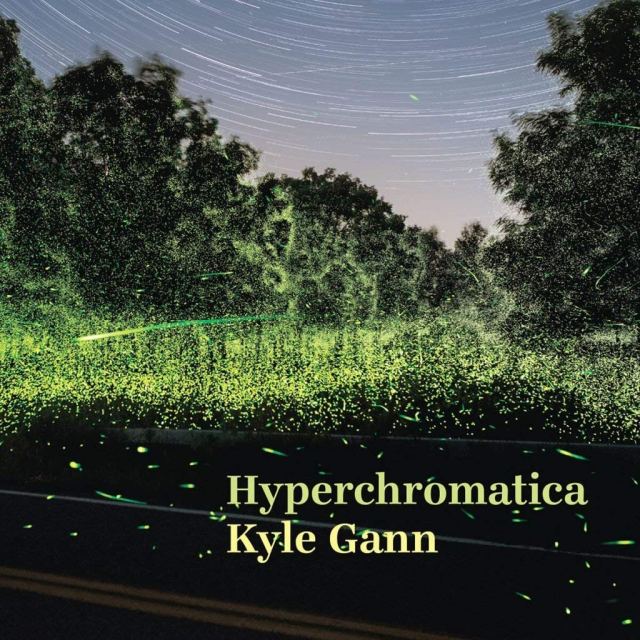
Memories and Memorials: Guy Klucevsek’s “Teetering on the Verge of Normalcy”


klucevsek

Starkland ST-225

As someone who grew up attending Polish weddings and hearing more than his share of polka music I was fascinated at the unusual role of the accordion as I began to get interested in new music. People like Pauline Oliveros and Guy Klucevsek completely upended my notions of what this instrument is and what it can do.  The accordion came into being in the early 19th century and was primarily associated with folk and popular musics until the early 20th century.  It has been used by composers as diverse as Tchaikovsky and Paul Hindemith but the developments since the 1960s have taken this folk instrument into realms not even dreamed of by its creators.

guyklu

Guy Klucevsek with some of his accordions

Guy Klucevsek  (1947- ) brought the accordion to the burgeoning New York “downtown” new music scene in the 1970s.  He began his accordion studies in 1955, holds a B.A. in theory and composition from Indiana University of Pennsylvania and an M.A. (also in theory and composition) from the University of Pittsburgh.  He also did post graduate work at the California Institute of the Arts.  His composition teachers have included Morton Subotnick, Gerald Shapiro and Robert Bernat.  He draws creatively on his instrument’s past even as he blazes new trails expanding its possibilities.  The accordion will never be the same.

Klucevsek has worked with most all of the major innovators in new music over the years including Laurie Anderson, Bang on a Can, Brave Combo, Anthony Braxton, Dave Douglas, Bill Frisell, Rahim al Haj, Robin Holcomb, Kepa Junkera, the Kronos Quartet, Natalie Merchant, Present Music, Relâche, Zeitgeist, and John Zorn (who also recorded him on his wonderful Tzadik label).  He has released over 20 albums and maintains an active touring schedule.  He recently completed a residency (April, 2016) at Sausalito’s Headlands Center for the Arts.

transoft

Starkland ST-225

freerange

Starkland ST-209

Starkland has released no fewer than three previous albums by this unusual artist (all of which found their way into my personal collection over the years) including a re-release of his Polka from the Fringe recordings from the early 1990s. This landmark set of new music commissions from some 28 composers helped to redefine the polka (as well as the accordion) in much the same way as Michael Sahl’s 1981 Tango and Robert Moran’s 1976 Waltz projects did for those dance genres.

polkfringe

Starkland ST-218

The present recording, Teetering on the Edge of Normalcy (scheduled for release on September 30, 2016), continues this composer/performer’s saga.  His familiar humor and his unique experimentalism remain present but there is also a bittersweet aspect in that most of these compositions are homages and many of the dedicatees have passed from this world.  Klucevsek himself will turn 70 in February of 2017 and it is fitting that he has chosen to release this compilation honoring his colleagues.

On first hearing, many of Klucevsek’s compositions sound simple and straightforward but the complexities lie just beneath the surface.  What sounds like a simple accordion tune is written in complex meters and sometimes maniacal speed.  To be sure there are conservative elements melodically and harmonically but these belie the subversive nature of Klucevsek’s work which put this formerly lowly folk instrument in the forefront with the best of the “downtown” scene described by critics such as Tom Johnson and Kyle Gann.  You might mistake yourself as hearing a traditional music only to find that you had in fact wandered into the universe next door.

Many favorite collaborators have been recruited for this recording.  Most tracks feature the composer with other musicians.  Four tracks feature solo accordion, two are for solo piano and the rest are little chamber groupings from duets to small combos with drum kit.

The first three tracks are duets with the fine violinist Todd Reynolds.  Klucevsek’s playful titles are more evocative than indicative and suggest a framework with which to appreciate the music.  There follows two solo piano tracks ably handled by Alan Bern. Bern (who has collaborated on several albums) and Klucevsek follow on the next track with a duet between them.

Song of Remembrance is one of the more extended pieces on the album featuring the beautiful voice of Kamala Sankaram along with Todd Reynolds and Peggy Kampmeier on piano.  No accordion on this evocative song which had this listener wanting to hear more of Sankaram’s beautiful voice.

The brief but affecting post minimalist Shimmer (In Memory of William Duckworth) for solo accordion is then followed by the longer but equally touching Bob Flath Waltzes with the Angels.  William Duckworth (1943-2012) is generally seen as the inventor of the post-minimalist ethic (with his 1977-8 Time Curve Preludes) and he was, by all reports, a wonderful teacher, writer and composer.  Bob Flath (1928-2014) was philanthropist and supporter of new music who apparently worked closely with Klucevsek.

Tracks 10-12 feature small combos with drum kit.  The first two include (in addition to Klucevsek) Michael Lowenstern on mellifluous bass clarinet with Peter Donovan on bass and Barbara Merjan on drums.  Lowenstern who almost threatens to play klezmer tunes at times sits out on the last of these tracks.   Little Big Top is in memory of film composer Nino Rota and Three Quarter Moon in memory of German theater composer Kurt Weill. These pieces would not be out of place in that bar in Star Wars with their pithy humor that swings. They also evoke a sort of nostalgia for the downtown music scene of the 70s and 80s and the likes of Peter Gordon and even the Lounge Lizards.

The impressionistic Ice Flowers for solo accordion, inspired by ice crystals outside the composer’s window during a particularly harsh winter, is then followed by four more wonderful duets with Todd Reynolds (The Asphalt Orchid is in memory of composer Astor Piazolla) and then the brief, touching For Lars, Again (in memory of Lars Hollmer) to bring this collection to a very satisfying end.  Hollmer (1948-2008) was a Swedish accordionist and composer who died of cancer.

As somber as all of this may sound the recording is actually a pretty upbeat experience with some definitely danceable tracks and some beautiful impressionistic ones.  Like Klucevsek’s previous albums this is a fairly eclectic mix of ideas imbued as much with humor and clever invention as with sorrow and nostalgia.  This is not a retrospective, though that would be another good idea for a release, but it is a nice collection of pieces not previously heard which hold a special significance for the artists involved.  Happily I think we can expect even more from this unique artist in the future.

klucevsek

Guy Klucevsek, looking back but also forward.

The informative gatefold notes by the great Bay Area pianist/producer/radio host Sarah Cahill also suggest the affinity of this east coast boy for the aesthetic of the west coast where he is gratefully embraced and which is never far from his heart (after all he did study at the California Institute of the Arts and has worked with various Bay Area artists). Booklet notes are by the composer and give some personal clues as to the meaning of some of the works herein.  Recordings are by John Kilgore, George Wellington and Bryce Goggin.  Mastering is by the wonderful Silas Brown.  All of this, of course, overseen by Thomas Steenland, executive producer at Starkland.

Fans of new music, Guy Klucevsek, accordions, great sound…you will want this disc.