Fatu Duo: Unusual and Beautiful Romantic Gems for Violin and Piano


fa2

Tzigane Music 192914643470

No, this is not your typical violin and piano recital disc.  At first hearing it conjured memories (seen on television) of Jascha Heifetz performing his unique selection of virtuosic and popular short works for violin and piano.  The spirit here is essentially the same but the choice of repertoire distinguishes this recording.  Its name “Treasures from home”.  Here they present a very personal selection of music from their Russian and Romanian backgrounds much as Heifetz chose his repertoire.

There are 13 tracks by 13 composers and I seriously doubt you will duplicate anything you may have currently in your collection.  This album is, in a way, an updating of one of those Heifetz recitals in spirit.  Here the focus is on music mostly from the ancestral lands of the performers which includes Russia, Romania, and related regions.  However it is important to view these choices as musical interests, not a nationalist statements.

Mention needs to be made of the intelligent choices made.  We get and Ave Maria but not Schubert’s or Bach/Gounod, we get one by Astor Piazzola.  The too seldom heard Meditation from Thais gets a gorgeous reading.  The Fritz Kreisler piece speaks to a violinist perhaps a half generation older than Heifetz whose tradition inspired Heifetz.  All in all a thoughtful but ultimately enjoyable selection.  This is virtually a calling card for some musicians who are worth watching.

My only complaint here is, perhaps, a minor one.  There are few notes and nothing on the background of any of the composers.  Rather than try to correct this I will simply provide a list of the compositions recorded.  They do stand well on their own as compositions but listeners like your reviewer here thirst for more.  Anyway here is the list:

Jo Knümann: Rumanisch

Bela Kovacs: Sholom Alekhem Rov Friedman

John Williams: Schindler’s List Theme

Isidore Burdin/F. Dobrinescu: Hora Primaverii

Grigoras Dinicu: Hora Martisorului

Jules Massenet: Meditation from Thais

Matthew Jackfert: Hootenanny

Grigoras Dinicu: Ciocarlia

Antonio Bazzini: The Dance of the Goblins

Astor Piazzola: Ave Maria

Fritz Kreisler: Miniature Viennese March

Myroslav Skoric: Melodya

Vittorio Monti: Csardas

Williams, Kreisler, Massenet, and Piazzola are familiar names to this writer.  The rest I shall leave to the curious listener to learn more.  The end result, though, is a thoroughly enjoyable recital played with love and  passion.  It would be a nice addition to any collection of violin and piano chamber music.


Other Minds 24, Concert Three, Reviving the Music of a Forgotten Master


wysschnegradsky4p

Photo: Ebbe Yovino-Smith

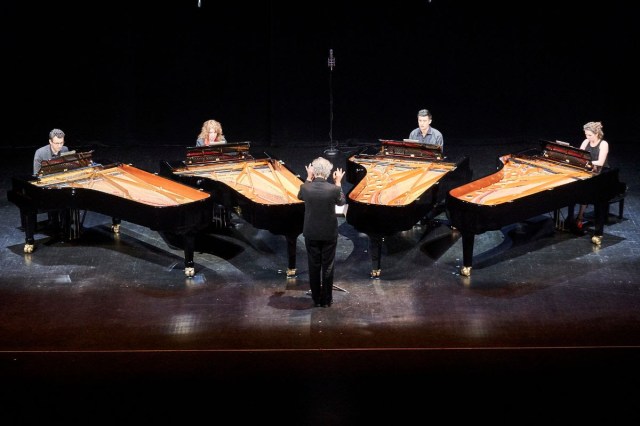
The staging was simple and practical but nonetheless imposing for this third and last OM 24 concert series.  Imagine four Steinway concert grand pianos arranged in a semicircle with a conductor and a music stand at the apex.  The heavy black curtain at the back served to emphasize the instruments and the musicians in a visually standard concert presentation.

jimcallahan

But, and this is significant, pianos 2 and 4 (looking stage left to stage right) had been tuned down 1/4 step.  I had the pleasure of speaking with Jim Callahan of Piedmont Pianos (who provided the instruments for this event).  When I inquired about this he replied quickly and authoritatively, “From stage left to right, pianos 1 and 3 are A 440 (concert pitch) and the others are tuned down 1/4 step.  When there are two pianos the one stage left is concert pitch and the one on the right tuned down.”

If you have any familiarity with the piano keyboard you know that there are black keys and white keys which correspond to the twelve divisions of the octave (from middle C to C) common to most western music.  A quarter tone is half way from the note you hear when you hit a white key and the note you hear if you hit the adjacent black key.  Ivan Wyschnegradsky was not the first person to seek more divisions to create the sound he sought.  1/4 tones are common in some middle eastern cultures but not seen in western music much before the twentieth century.

Ivan Wyschnegradsky (1893-1979) was a Russian born composer who spent much of his creative years in Paris.  It was there that tonight’s producer, Charles Amirkhanian and his wife Carol Law met him and learned of his work.  This concert along with the first OM 24 concert heard in March by the Arditti String Quartet (reviewed here) constitute a lovely revival of this unjustly forgotten composer as well as a personal connection to this “missing link” in music history.

CharlesatOM24

Charles Amirkhanian addressing the small but enthusiastic audience.

While some of this composer’s work uses the conventional western music scales (examples were present in this concert) his extensive work with other tunings necessarily limited performances of his music.  That, along with his rhythmic complexities, limited the amount of performances he would be able to receive.  One hopes that these concerts will spur further interest in his work.

The program booklet, prepared under the direction of Other Minds production director Mark Abramson, contains a wealth of information, knowledge and photographs.  You can download a PDF file of the program here.  It is a gorgeous production loaded with information for further exploration.

One might have expected 1/4 tones to create a very dissonant harmony but the surprise tonight was that the harmonies sounded like an extension of the work of Debussy and the impressionist composers.  Rather than harsh sounds, much of this music comes across like an impressionist painting might sound if it were music.  Tuning is a whole subject unto itself and a good resource can be found in the web pages by another Other Minds alumnus, Kyle Gann.  His extensive information on the subject can be found here.

The concert opened with Cosmos Op. 28 (1939-40, rev. 1945) for 4 pianos.  It is unusual to see a conductor at a multiple piano concert but the logistics of performance required a conductor to guide them through the complexities of rhythm and even the complex use of sustain pedals.  The pianists Sarah Gibson, Thomas Kotcheff, Vicki Ray, and Steven Vanhauwaert were ably led by conductor Donald Crockett.  This was a US premiere.

Overall the music has echoes of Stravinsky, Messiaen, Debussy, and Schoenberg (from his pre 12 tone days).  This large work, according to the program notes, does not have a specific program, rather it is a grand exploration of densities and registers. It does have a cinematic quality that suggests a program.

OM 240005

Martine Joste receives a bouquet as Donald Crockett looks on.

Next on the program was Étude sur le carré Op. 40 (1934, rev. 1960-70) for solo piano (another US premiere).  The French title translates as “Study on the Musical Magic Square”.  It is a reference to the structure of the piece which involves repetitions of melodic sequences analogous to the magic square with words or numbers.  What is important is the musicality of course and Martine Joste played it with passion and intensity providing the audience with a performance that sounds absolutely definitive.  Her amazing technique at the keyboard and her focus on this music truly brought life to this technically difficult piece.

Joste is a master pianist and president of the Association Ivan Wyschnegradsky and has been active in the performance of contemporary music along with the better known classical canon of works.  She would appear in the second half of the program.

If you are exploring the limits of composition with a new technique it makes sense to write some music that will demonstrate that technique.  Much as Bach wrote his Well Tempered Clavier to showcase the (now standard) well tempered tuning.  So Wyschnegradsky composed his 24 Preludes Op. 22a (1934 rev. 1960-70) to demonstrate his ideas.

OM 240002

Shot of the two piano stage set up.  Remember the concert pitch instrument is stage left.

It was from this collection that we next heard Preludes Nos. 1, 3, 4, 5, 9, 10, 15, 16, 19, 20, 23, and 24 played by the performing duo Hocket.  As if they are not busy enough as solo pianists (and composers in their own right) Sarah Gibson and Thomas Kotcheff perform as a duo.  The link to their work in that area can provide more information,
OM 240001

Sarah Gibson (l) and Thomas Kotcheff (r) performing as the Hocket Duo

They managed to navigate the complexities of these pieces nimbly, as though they had been playing them all their lives.  It certainly sparked this listener’s curiosity about the remaining preludes which we did not hear on this night.

Again the 1/4 tones sounded strange to western ears at times but never really harsh.

Following intermission the usual OM raffle of various prizes were drawn.  As if the fates intervened the colorful Ivan Wyschnegradsky clock went to master microtonalist John Schneider, another OM alumnus.  This clock is available in the Other Minds Store along with a cache of really interesting CDs, clothing, etc.

The four pianists, Gibson, Kotcheff, Ray, and Vanhauwaert again teamed up for a performance of Étude sur les mouvements rotatoires, Op. 45 (1961, rev. 1963).  This time they performed without a conductor.  Here the magic square becomes a magic octagon, at least metaphorically.  This is another example of using extramusical principles applied to organize music differently.  And again, as in the previous pieces, the harmonies were friendly and actually quite beautiful.

Mme. Joste returned to the stage for a solo performance (and the third US premiere) of Three Pieces for Piano, Op. 38:  Prelude (1957), Elévation (1964), and Solitude (1959).  Again we were treated to virtuosity and a seemingly definitive performance.  The title puts one in the mind of Schoenberg and his voice, along with that of Messiaen, Debussy, et al were present.  What was striking was her energetic and fluid performance which made the notes on the page (Joste performed from traditional paper scores, not the iPads used by the others) come alive in a delightful way.

OM 240006

The stage had to be reconfigured for the final piece, another 4 piano work which took perhaps a minute or two.  Mr. Crockett again led these young and enthusiastic performers in Ainsi parlait Zarathustra, an early work which was originally written for a quarter tone piano played by six hands(such things do exist), a quarter tone harmonium (4 hands), a quarter tone clarinet, string ensemble, and percussion.  This score has been lost but we heard the 4 piano transcription tonight.  It is a sprawling work with four defined sections much like a symphony.  The movements are titled Tempo Giusto, Scherzando, Lento, and Allegro con fuoco.

This piece takes its title from the same Nietszsche novel that inspired Richard Strauss’ tone poem “Also Sprach Zarathustra” or, in English, “Thus Spake Zarathustra”.  Only Wyschnegradsky’s Zarathustra seems more pained and less the romantic hero of Strauss’ 1896 orchestral work.

Wyschnegradsky’s piece is virtually a symphony and, though one can scarcely imagine how the now lost orchestration might have sounded, there was still a grand romantic sweep to it.  With a scherzo worthy of Bruckner the piece was a coherent whole with the last movement recapitulating, if not literally, the spirit of the fire dance that ended the first movement.  This was also a premiere and surely another definitive performance of a true masterpiece.

On this night we witnessed nothing short of a resurrection of the art of a very important 20th century composer.  The audience, like the performers were enthusiastic in their response.

From the Simpsons to the Concert Hall,Classical Gems by Danny Elfman


Album Art

Danny Elfman (1953-) has had a varied and successful musical career working in diverse areas.  From his days as lead singer and songwriter for Oingo Boingo, he has cultivated his love of film music into a successful career having scored numerous films and television shows.

Now a great divide seems to exist between composers who score films and composers who compose for the concert hall.  Few have demonstrated the ability to be successful in both arenas.  Erich Wolfgang Korngold is a notable exception as is Aaron Copland.  Both men have succeeded rather famously in both film and classical concert hall music.  In fact John Williams, though known primarily as a film and television composer has written quite a bit for the concert hall as well.

Now here comes Danny Elfman, known best perhaps as the composer of the Simpsons them for the long running animated series.  He has gotten the bug to write for the concert hall and this recording presents two major works.  The first is his violin concerto “11/11)(2017) with soloist Sandy Cameron.  You can read the liner notes about the composer’s obsession with the number 11 or you can relax and enjoy a genuine violin concerto, not a reworking of themes as one might expect from a lesser composer.  The second is a nice addition to the chamber music repertoire, a piano quartet (2017).

The concerto is played by the wonderful Royal Scottish National Orchestra under the direction of the esteemed John Mauceri.  Sandy Cameron is the soloist who handles the concertos four movements flawlessly and does justice to Elfman’s work.  It’s really a beautiful piece.  Only time will tell the work’s eventual place in history but we can certainly enjoy it for what it is, a good and entertaining violin concerto.

The Piano Quartet is played by the Philharmonic Piano Quartet Berlin which consists of Andreas Buschatz, violin ; Matthew Hunter, viola; Knut Weber, cello; and Marcus Groh, piano.  This five movement work would happily grace any chamber music recital.  It is in turn pithy, melodic, humorous, and serious.

This is stronger music than this reviewer had imagined would come from this composer’s pen.  I can’t say, “If you like his film scores you’ll like his music” but there are, perhaps inevitably, snippets of his film music style which work actually quite well.

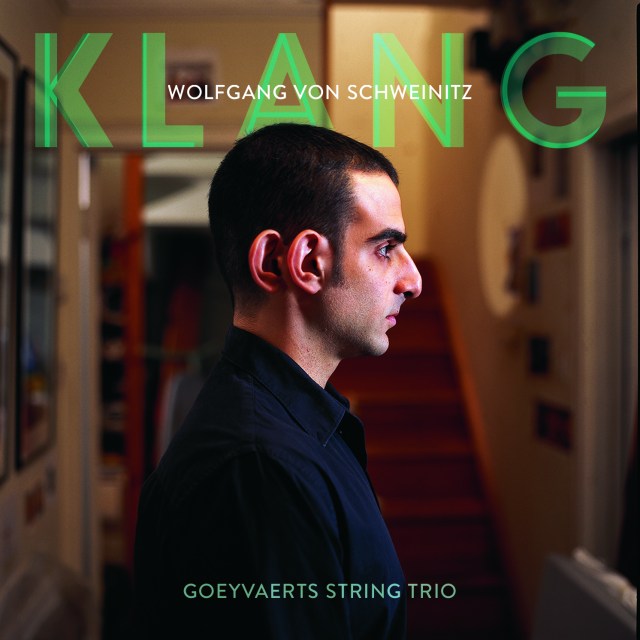
Wolfgang von Schweinitz’s “Klang”, Gorgeous Postminimalism


LCMS1903

I must confess that Ireland is hardly near the top of my list for countries that are producing interesting contemporary music but this new release will soon have me checking out their Contemporary Music Center to see what else is happening.  Let me be clear, I’m not criticizing Ireland, just lamenting the fact that, like many countries, their contemporary classical music rarely gets to U.S. ears.

As if to magically remedy my wish for a more democratic distribution of said music producer Eamonn Quinn kindly sent me this single track CD containing a work influenced by (among others) the Godfather of minimalism, La Monte Young. He commented to me about the ultimate marketability of a one track CD but his instincts are well placed in this CD recorded February 2019, hot off the presses.   This is my first encounter with the composer, Wolfgang von Schweinitz (1953- ) whose name is now programmed into my surveillance engines as a voice to be followed.  Definitely want to hear more from him.  Born in Hamburg, he now teaches at Cal Arts.  A list of his works can be found here.  (While there you will want to avail yourself of the rest of this great site about just intonation composer at Plainsound)

While I share Mr. Quinn’s concern about the marketability of a single track CD (it is about 45 min), this is an ideal presentation for a work in just intonation by a string trio and the uninterrupted 45 minute interval is integral to the experience of the music.  This work is like the grandchild of La Monte Young’s String Trio (1958).  I am now having fantasies about curating a program of this work paired with its spiritual grandfather.  The single track, just intonation hits at my geeky minimalist heart and I know I’m not alone in that.

The brief but lucid and useful program notes are by the wonderful Paul Griffiths and the recording by Peter Furmanczyk captures the rich overtones well.  The Goeyvaerts String Trio has earned a place in my media alerts now as well.  They perform this work with insight and passion.

Now, past the name dropping and background stuff to the music itself.  If you know the long tones of La Monte Young’s String Trio, which is of similar length, you might hear it as a more melodic version of that.  That is not to say that this work is derivative, it is evolved its predecessor’s DNA, so to speak.  It is postminimalism (or file under “ambient” if you prefer) from that branch of the family tree.

The full title of KLANG” is given as ” PLAINSOUND STRING TRIO KLANG AUF SCHÖN BERG LA MONTE YOUNG…” Op. 39 (1999, rev 2013),  and while the musical references to Schoenberg and Berg are there, the experience is that of an almost romantic tableau of long tones and rich harmonics descended from the Urtext of minimalism that is La Monte Young. The spirit of Morton Feldman appears to reside here as well, maybe even a wisp of Brian Eno.  The kaleidoscopic effect of the just intonation with all the rich harmonic overtones evoke a great deal and probably will provoke different memories for different listeners. It is a maybe even a sort of Verklärte Nacht for the millennium though what is ultimately transformed is the listener themselves.  You can choose your own metaphor, but first you’ll be charmed by the music.

And dontcha have to love that cover graphic?

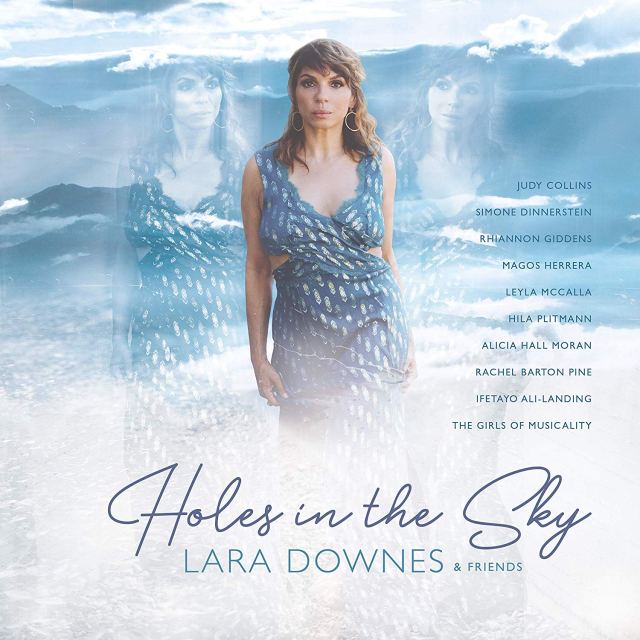
Holes in the Sky, Lara Downes Channels the Collective Artistry of the Feminine


downesholes

Sony/Portrait

Lara Downes has proven herself as a virtuoso pianist in solo, chamber, and with orchestra.  She has demonstrated facility with standard repertoire as well as an intelligent selection of contemporary composers.  In this sort of mid-career place she has begun releasing a more personal kind of album of which this is the third incarnation.  The “series’ to which I refer is the perception of this reviewer, not one defined as such by Ms. Downes but stick with me. Her previous releases have been organized on one level or another on themes just like most album of any stripe.  The difference is a more sociopolitical focus.

One look at the eclectic musical choices here and one sees Downes sharing her spotlight with kindred spirits (composers and performers both) while her themes take on more socially conscious ideas.  The first of these was America Again (2016) which is a beautiful collection of short piano pieces predominantly though not exclusively by black composers.  It is a very personal choice of repertoire reflecting her profound knowledge of the repertoire as well as the neglect of black composers.  The second was Lenny (2018), a tribute to Leonard Bernstein.  It includes a marvelously varied group of guest artists and, much as Lenny did, blurs the line between the “classical” and the “vernacular”.  It was a love song to a cherished artist (this writer included in the cherishing).

She does something similar here in this album whose title is taken, appropriately enough, from Georgia O’Keefe, “I want real things, live people to take hold of, to see, and talk to, music that makes holes in the sky, I want to love as hard as I can.”  In the essay that opens the program booklet Downes speaks briefly of her relationship with women in general and women as composers and as performers.

The album opens with a 1949 piece by Florence Price, a black American composer much of whose whose work has recently been rediscovered and recorded.  Her work was also featured on the America Again album.  This is a mid-century romantic piece for solo piano.

The second track, and the one that hooked this listener big time is this recording of Judy Collins early song, Albatross (1966) which appeared on her album Wildflowers which in turn provided some of the design elements of the album.  The liner notes to the present album also note this connection.

In place of detailed liner notes there is a fascinating conversation between two of the women involved with this album, Lara Downes and Judy Collins.  A lovely black and white portrait is included in the liner notes.  Their discussion centers primarily on the Albatross song but also touches on the nature of political activism in which Downes laments not being active in marches.  Collins tells her (and this writer agrees wholeheartedly) she belongs at the piano.  Indeed her activism, though of a gentler nature, gets ideas out most effectively utilizing her incredible talents as a pianist, historian, and fellow musician.

Rather than go through an analysis of each of these pieces I am simply going to provide a track list.  It appears that this album is designed to be heard and contemplated as a sonic document first and as a research project at a later time (one hopes for more detail at some point because these are interesting pieces).

1. Memory Mist (1949) by Florence Price

2. Albatross (1967) by Judy Collins

3. A Tale of Living Water (2010) by Clarice Assad

4. Dream Variation with Rhiannon Giddens (1959) by Margaret Bonds and Langston     Hughes

5. Ellis Island with Simone Dinnerstein (1981) by Meredith Monk

6. Don’t Explain with Leyla McCalla (1944) by Billie Holiday

7. Willow Weep for Me (1932) by Ann Ronel (arr. by Hyungin Choi)

8. Venus Projection (1990) by Paula Kimper

9. Morning on the Limpopo: Matlou Women (2005) by Paola Prestini

10. Farther from The Heart with Hila Pittman (2016) by Eve Beglarian and Jane Bowles

11. Favorite Color (1965) by Joni Mitchell (arr. by Nora Kroll-Rosenbaum)

12. Noises of Gratitude (2017) by Jennifer Higdon

13. Arroyo, Mi Niña with Mogos Herrera (2018) trad. arr. by Lara Downes

14. Music Pink and Blue (2018) by Elena Ruehr

15. Idyll (1946) by Hazel Scott

16. Blue Piece with Rachel Barton Pine (2010) by Libby Larsen

17. Bloom (2018) by Marika Takeuchi

18. Just for a Thrill with Alicia Hall Moran (1936) by Lil Hardin-Armstrong (arr. by               Hyungin Choi)

19. Agwani (Doves) (2009) by Mary Kouyoumdjian

20. What Lips My Lips Have Kissed (2014) by Georgia Stitt

21. Rainbow (n.d.) by Abbey Lincoln and Melba Liston (arr. by Laura Karpman)

22. All the Pretty Little Horses with Ifetayo Ali-Landing and The Girls of Musicality (Trad. arr. by Lara Downes and Laura Karpman)

In these 22 tracks all the music is by women composers and, most charmingly a selection of women performers who appear as sort of cameos on different tracks.  The music ranges from the mid-twentieth century to the present and embraces a variety of genres (classical, folk, blues, etc.).  The end result is a charming and very intimate document but also one which is somehow gently subversive as it presents the best in musical and performance quality as an acknowledgement of the accomplishments of women in general, (to paraphrase Ms. O’Keefe) making music as hard as they can.


Heavenly Violin and Piano Music by Giya Kancheli


kanchelisun

For this reviewer, my relationship with the music of Giya Kancheli (1935- ) began with the symphonies (I think there’s seven now) with the character of some outrageous dynamic contrasts such that they spawned warning levels on the package containing the CD.  It was only after that, when ECM began to release the “holy minimalist” type works, that I first heard those.

bednarz

Frederic Bednarz


Now comes Canadian violinist Frederic Bednarz  who, along with pianist Natsuki Hiratsuka and bandoneon player Jonathan Goldman have recorded some incredibly lovely chamber music which has not been previously released or widely distributed.  


Well its hard to say why these have not been widely heard because they are just beautiful.  These are miniatures, all clock in at less than 4 minutes but all have a certain charm that relies neither on the dynamic range or the “holy minimalist” meme.  These are simply delightful neo-romantic pieces that could not fail to charm a recital audience.
Bednarz clearly knows and loves these little gems.  His playing is both sincere and, I think, definitive.  In this album he shows this lesser known aspect of the composer’s work.  Certainly there have been releases of Kancheli’s chamber orchestra pieces and a string quartet but this is the first recording this reviewer has heard of the violin and piano (and bandoneon) music.

Doubtless there are musical and musicological aspects to this music which escape the average listener (this one included) so no attempt will be made here to analyze these works.  Bednarz provides concise but useful liner notes in the gatefold cover to the CD.

Once again our neighbors to the north have scaled the metaphorical art barrier between our adjacent countries to bring this delightful music to light.  It is a welcome addition to the Kancheli discography and a delight in your CD player.  Whether as calm background or for intense listening this disc is a gem.

N.B. As of this writing the physical disc does not appear to be available from Amazon but it is available through the usual streaming services.  If you can get the physical disc it is worth it for the notes though.


Bearthoven: Post Minimal, Post New York School


wollschlegeramdream

Cantaloupe CA 21145

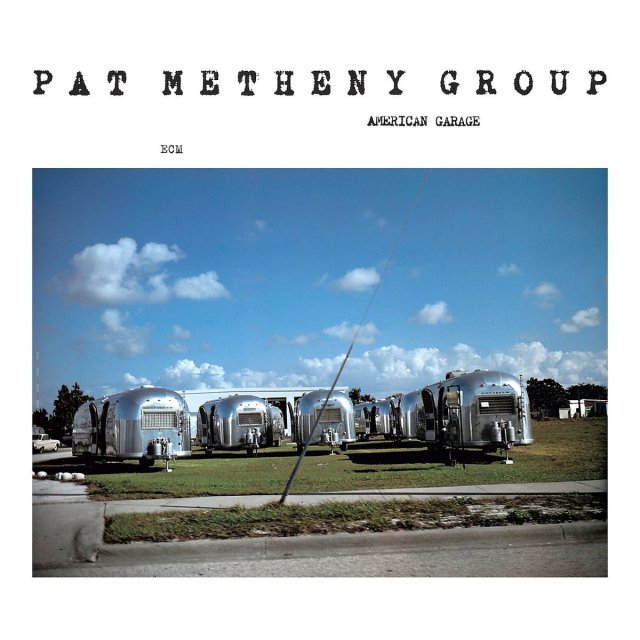
So many associations here.  Jaime Boddorf‘s lovely photography complements the sparse evocations of the music but this writer immediately flashed on the old Pat Metheny album, “American Garage”.

methenygarage


This is most definitely not a Pat Metheny album but the somewhat spare sound world of Scott Wollschleger is reflected (metaphorically of course) in the cover photo and the others on the inside. In fact the resemblance stops with the visuals. And don’t jump to conclusions about the name, “Bearthoven”. It’s not Beethoven either.

bear2


So what is American Dream and who is “Bearthoven”?


Well, a look at their website suggests we have a classical ensemble spiritually patterned in a way like a prog rock design school dalliance.  Think Talking Heads. For the record, they are (left to right): Matt Evans , percussion; Karl Larson , piano; and Pat Swoboda , bass.  bear1

Well, no, don’t think about Talking Heads or Pat Metheny.  At least for a minute.  And here’s why.

wolls


This is Scott Wollschleger (1980- ), originally from Erie, Pennsylvania, now resides in New York.  The fact that he studied at the Manhattan School with Nils Vigeland suggests an educational provenance which can be traced most directly to Morton Feldman.  But this is not a case of derivation as much as it is of evolution and incorporation of styles inherited from his teachers and his experiences upon which he attempts to improve for better or worse.  Isn’t that the basic way an artist works?

Whether such musings hold any water will wait the test of time while we consider the actual music here.  This reviewer encountered this letter laden composer’s work here.  This previous album, Soft Aberration which was a wider ranging sort of snapshot of the composer’s work made a similar impression.  His use of fragments is seemingly idiosyncratic.  I can’t figure out exactly what he is doing but that is secondary to the fact that I like what he is doing. And a quick look at the track titles on American Garage and then reading Wollshleger’s commentary one sees some philosophical/metaphorical confluences.

His intriguing and evolving compositional style draws the listener in.  Like the Soft Aberration Album (in art design and musical content) this album relies heavily on metaphor.  So it is with the impressions penned by the musicians involved which are included in . And it is oh so consistent with the metaphorical tone of the photos as well.  There is something amazingly integrated here.

Going into details about these pieces is both outside my expertise and certainly above my pay grade but I can tell you these works touched me on an emotional level and, like the best in art, will continue to speak to those who want to hear.  This is highly evocative music which, if you listen patiently, will gently surprise you.


Bis Recordings Takes on Ben-Haim


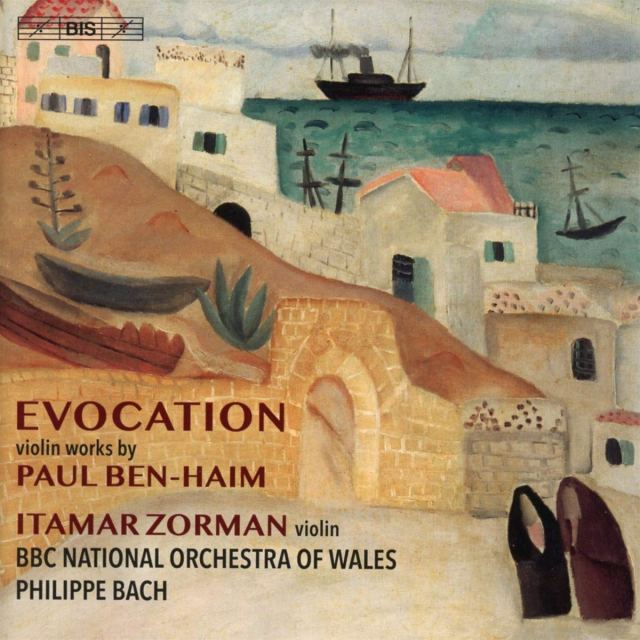
benhaim

BIS 2398

Israeli composers are too little known so this album of the music of Paul Ben-Haim is particularly welcome.  BIS records is known for its quality recordings and its attention to neglected repertoire.  Hopefully this is only the first release and BIS will go on to record more of this man’s work as they have with so many other neglected masters.

Paul Ben-Haim (1897-1984) was born Paul Frankenburger in Munich.  He moved to the British Mandate of Palestine in 1933 as the Nazis took power.  He has become known, for better or worse, as the Israeli Aaron Copland.  Indeed there are parallels between the two composers in terms of their embrace of mid-twentieth century romanticism and, to some degree, nationalism.  He worked as an assistant to Bruno Walter at one point.

Paul-Ben-Haim_0001

Portrait of Paul Ben-Haim from Wikipedia

A quick glance at Wikipedia will reveal that he mentored many composers including Ben Zion-Orgad, Zvi Avni, Eliahu Inbal, Henri Lazarof, Shulamit Ran, and Ami Maayani among many others.  Leonard Bernstein recorded Ben-Haim’s “Sweet Psalmist of Israel” and was supportive of the composer’s work.  He was very influential during his lifetime and the neglect of his work is hard to fathom.

Much of Ben-Haim’s work has been recorded to be sure but it tends to get little airplay and few concert performances.  As is true for many countries it is difficult to get music by Israeli composers in the United States (Is this true in other countries?).  This release from the Swedish based BIS records with its distribution network may be a partial remedy to that problem.

The Violin Concerto of 1960 is the big work here.  It has been recorded previously, most notably by the wonderful Israeli violinist Itzhak Perlman.  It is filled out with his 1942 Evocation “Yizkor” for violin and orchestra and some chamber pieces, the Three Songs Without Words (1951) and Berceuse Sfaradite (1945) both for violin and piano.  In addition there is an arrangement for violin and piano of the composer’s well known Toccata (1943) for piano.  And in keeping with the violin theme the world premiere recording of his Three Studies (1981) for solo violin rounds out this wonderful survey of the composer’s work.

Itamar Zorman is the soloist and this, not his first release, is a major statement in his career.  Zorman previously released a violin and piano album with more conventional repertoire but this is his first release playing with an orchestra.  Having demonstrated his facility with the conventional repertoire he seems to be blazing a path beyond.

zorman

Portrait of the Artist from his website

The album opens with the highly romantic Evocation “Yizkor” (1942) reflecting the composer’s style as developed in his native Germany.  The disc basically follows the order of composition except for the last two tracks.  This gives some sense of the composer’s evolution over his substantial career and the album includes the composer’s last work.

The BBC National Orchestra of Wales is ably conducted by Philippe Bach in the Evocation and the Concerto and Amy Yang is the very busy accompanist in the violin and piano pieces.  Mr. Zorman himself contributed the lucid liner notes.

Having just reviewed another fine album which included a Ben-Haim piece it was particularly delightful to receive this recording.  It brings this important music to a new generation of listeners.  Also toward that goal the following link will take the interested reader to a comprehensive list of the the recordings of this composer’s work.  The link is here.


Mariel Roberts’ Cartography: New Cello Music


This is another of those releases that is functionally a business card if you will. By that I mean that I’m finding a fair amount of solo instrumental discs (some with electronics, like this one, some not) in which the artist demonstrates their skill with their instrument but, more importantly, their familiarity and facility with the segment of the repertoire they embrace.  Actually this is the second such album from this artist, the previous (yet unheard by this listener) having been released in 2012.

Mariel Roberts is one of those New York based musicians whose milieu puts her in contact with the cutting edge (at least in New York) of modern composition.  Roberts has appeared as a soloist and chamber musician across four continents, most notably as a member of the Mivos Quartet, Wet Ink Ensemble, International Contemporary Ensemble (ICE), Bang on a Can All Stars, and Ensemble Signal. Her skills and her talent seem boundless.

Here she features four rather large works for cello, solo, with piano, and/or with electronics.  The composers featured include: George Lewis, Eric Wubbels, David Brynjar Franzson, and a collaborative work she wrote with Cenk Ergun.  Not the usual suspects but a panoply of interesting and creative composers.

Rather than attempt any analysis of the works presented here let me just say that all require a high level of virtuosity. An essential aspect of this virtuosity is whatever coordination is required of the soloist interacting with electronics. The lack of detailed liner notes make it difficult to know the nature of this interaction but one can certainly enjoy the resulting performance even without those details.

This is NOT easy listening by any means but it is a tasty sampling of some truly creative music for the right ears. Multiple listenings will be needed but the listener will be rewarded for their effort.


Tim Brady’s Happiness Handbook, massed guitars, massed invention


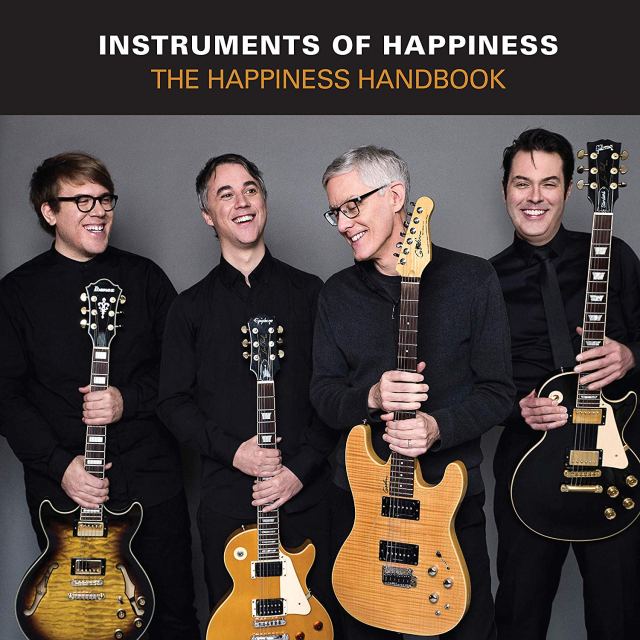
happinesshandbook

Starkland ST-232

This is, by my count, the third Tim Brady CD released by Starkland.  The other two, Instruments of Happiness and Music for Large Ensemble, represent only a small portion of his output and I highly recommend exploring his other releases.  You can find a listing on his web page here.  Since being introduced to Brady’s work in the Instruments of Happiness album I have purchased and enjoyed several of his earlier CDs.  Initially one necessarily wants to lump Brady in with the massed guitar masters such as Glenn Branca, Jeffrey Lohn, and Rhys Chatham.  That’s a fine starting point but as one listens to Brady’s work it becomes clear that he has his own vision and that vision is shared with like minded artists.  Some of those like minded artists are on this fine CD.

In some ways this is a sequel or a volume two to the Instruments of Happiness CD of 2016.  Despite this being chamber music with only four musicians the nature of electric guitars is to make a bigger sound.  It is always interesting to see how different artists work with a given ensemble configuration and that is the real thrill here.  One track features Brady’s music and the other tracks feature Scott Godin, Jordan Nobles, Maxime McKinley, Gordon Fitzell , and Emily Hall.  All are individual creations commissioned for this quartet.  The liner notes are definitely useful but there is much to be gleaned from the ‘composers’ web sites as well, trust me.

The disc contains six works on 10 tracks and, like the earlier Instruments of Happiness release on Starkland, this is an interesting and revelatory sampling of the marvelous invention of these composers and the amazing range and utility of the electric guitar.  If anyone questions the place of electric guitars in classical music this is a fine example of some of the potential and a teaser for the future as well.  The vision is more like that of a string quartet (another ensemble that has managed to establish itself) seeking innovative composers for some portable music making.

Familiarity with the composers mentioned earlier (Branca, Lohn, Chatham) will provide the listener with a context but the work here is seemingly almost unrelated to their work excepting that they used electric guitars.  This is a new generation of composers to whom, electric guitars were a given, not a new invention and whose use, increasingly ubiquitous in classical music, is simply one of their compositional options.

And now the music.  The album opens with an homage to the late British composer Steve Martland (1959-2013) whose rhythmic, driving music resembles that of Michael Nyman but closer to a rock aesthetic.  Martlandia (2016) by Scott Godin engages the listener (and will likely send him/her in search of Steve Martland CDs) with its long tone meditative beginning that acts like a slow introduction to a symphony of the classical era and then moves into faster quasi-minimalist sections that remind this listener favorably of some of Steve Reich’s work.  This is practically a miniature symphony.  It is an engaging piece and a loving tribute to the late composer.

Equal and Opposite Reaction (2016) is Mr. Brady’s submission to the album.  It also opens with a slow section and then goes into the manic virtuosity that is typical of Brady’s work.  I’m not saying he can’t write a decent slow movement, he can and does, but much of his work moves rather quickly and with a variety of guitar techniques in his expanded palette of sounds.  Like all the works here the harmonic language is largely tonal and the development of thematic material owes much to classical compositional techniques though his rhythmic choices owe something to rock and jazz.

Jordan Nobles’ Deep Field (2016) is a tribute the the iconic Hubble Telescope.  (If you haven’t seen at least one photo from Hubble’s catalog then you may have been in suspended animation for the last 20 years.)  Suffice it to say that the Hubble’s images have inspired a great deal of artists and this is yet another example.  This is one of the more meditative pieces on the album at its opening but, like the other pieces there are several contiguous sections.

Reflets de Francesca Woodman (2017) by Maxime McKinley is another homage.  This time the subject is an American photographer Francesca Stern Woodman (1958-1981) who took her own life in 1981 and left a posthumous legacy.  Aptly this is one of the more somber and disturbing tracks on the album. I’m sorry to say I don’t know her work but this tribute certainly sparks interest.

Going with that melancholy theme is the next track, Gordon Fitzell’s Bomb Crater Garden (2016) is the most avant garde sounding track (as well as the longest at 11:16) and the most exquisitely disturbing in its post apocalyptic vision.  The piece has optional narration and video but the music gives the listener a pretty good idea of what those images and ideas are.  So much for happiness.

Finally we have The Happiness Handbook (2016) by Emily Hall.  Like Brady’s flexibly peopled ensemble of the same name the theme of happiness comes to the fore once again.  As explained in the liner notes the notion of guitars as instruments associated with happiness is the concern.  There are five movements varied in style that make this piece function like a little symphony.  It is a celebration of the plethora of techniques and compositional possibilities of this modern guitar ensemble and will leave the astute listener ultimately in a happy place.


William Susman’s Scatter My Ashes


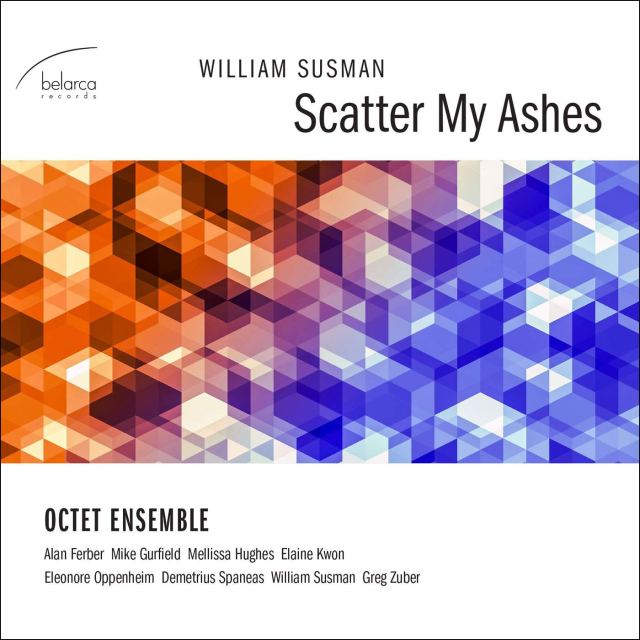
susmanscatter

I first encountered the composer William Susman (1960- ) when one of his works appeared on a program which included a solo cello and electronics piece by Vivian Fung.  This solo electroacoustic piece, the work I was initially asked to review, was nestled in the middle of an interesting program by the San Jose Chamber Orchestra.  I chose to review the entire concert which was a fascinating selection of new music.  William Susman’s “In a State of Patterns” (2018) struck me immediately as interesting post-minimalist work.

Susman_at_piano

Mr. Susman read my review and rather promptly sent me this 2014 CD on his Belarca label.  It contains four of his works from 1992-2010 and is a fine sampling of his work.  All works are here performed by the Octet Ensemble which includes: Alan Ferber, trombone; Mike Gurfield, trumpet; Melissa Hughes, vocals; Elaine Kwon, piano; Eleonore Oppenheim, double bass; Demetrius Spaneas, saxophone; Greg Zuber, drums and percussion; and William Susman, electric piano.

There are four pieces on 12 tracks.  The disc begins with Camille (2010), a very listenable post-minimal chamber work.  It is followed by a melancholy song cycle, Scatter My Ashes (2009) on poems by the composer’s sister Sue Susman.

The third piece is a wonderful piano concerto.  There are not a lot of convincing concertos in the minimalist genre but this one is a candidate for being a poster child.  It is for piano with chamber ensemble.  Here the composer goes not for the finger busting virtuosity that seems to be the current vogue but rather he evokes a latter day Mozart with more technically modest but highly entertaining music that communicates directly.  Curiously (is this a carry over from the Steve Reich and/or The Philip Glass Ensemble?) he uses a wordless vocal (Hughes) as a part of the instrumental texture.  Elaine Kwon handles the featured keyboard part.  It works very well.

He ends with an arrangement for OCTET of Moving in to an Empty Space (1992, arr 2010), another setting of his sister’s lovely poetry.  Again he evokes the somber but it is more in the nature of exorcising the demons of sadness much like the mission of the poet.


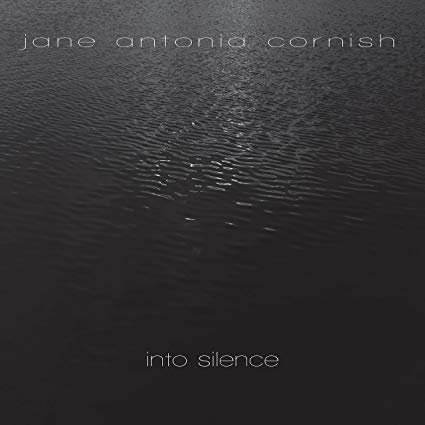
Jane Antonia Cornish, Post Modern Calm


At first listen I thought I might have put an Arvo Part album. The familiar calming sounds of what sounds like “holy minimalism” seemed to be coming at me. But who is this young British composer? Well, let me tell you, you need to pay attention to this one.

While the Arvo Part comparison is apt it only describes a small part of this composer’s range. She does seem to fit some sort of incarnation of “minimalist” by virtue of her use of repetition, silences, etc. At times her music leans sweetly toward the romantic but this is hardly light fare. The music evokes a sort of timelessness and calm but there are moments of tension and sadness as well.

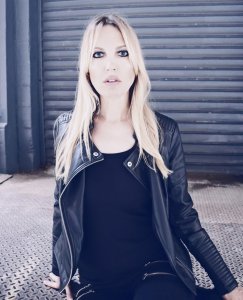
Jane-Antonia-Cornish (1)

From the composer’s web site.

Jane Antonia Cornish (1975- ) is a British composer and, looking at her education and training she appears to come almost out of nowhere. Her music clearly draws on aspects of minimalism but her teachers are not the “usual suspects”. Like a lot of people from her generation she seems to draw on a rather comprehensive training in the ever expanding language of new music and uses what works for her. (Doubtless she is quite capable of writing thorny serial music should she find that useful to her expression.)  She currently lives and works in New York City.  Her web page can be found here.

Cornish is originally from London, England and she studied composition with Dr. Anthony Gilbert at the Royal Northern College of Music, and completed her master’s degree at the Royal College of Music. She is a recipient of the Edward Hecht Composition Prize, the RNCM Composition Prize and the Associated Board Prize for the Most Outstanding Scholar of the Year. Cornish was also made a Major Scholar of the RNCM.  She is also the recipient of a 2005 BAFTA award for her film and television work.

This emerging composer has been quite prolific.  The present album is her third and she has also done film scores.  Her style seems to be influenced by the post minimalist/holy minimalist school but with a touch of melancholy.  Of course it will be necessary to hear more of her work to get a good overall impression but that will be a labor of love.  This is really listenable.

This is chamber music, violin, cellos, piano but what a big and warm sound!  I liked this album immediately and subsequent listenings have failed to diminish my enthusiasm.  This is engaging and substantive music that has enough depth that allows the listener to get past the pretty surface to the complexities and subtleties that lie beneath the surface.

The musicians include: Sæunn Thorsteinsdóttir, Caitlin Sullivan, Claire Bryant, Hamilton Berry, cellos; Anna Elashvili, violin; Vicky Chow, piano.  All are fined dedicated musicians and they seem to be enjoying themselves here.  You would be doing yourself a favor to got to their respective web sites (linked from here) to see the breadth of these fine young musicians’ activities and interests.  

Thank you Innova for the wisdom of recording this composer’s works (Innova has also released her albums Continuum, and Silence).  And thank you for sharing your artistic talents Ms. Cornish.


Other Minds 24 Revives the Quartets of Ivan Wyschnegradsky in San Francisco


I admit to some trepidation as I proceeded to the beautiful War Memorial Opera House in downtown San Francisco.  While I had heard of this composer, Ivan Wyschnegradsky (1893-1979), it was only through one work which was contained on a disc with other microtonal works by John Cage and Harry Partch performed variously by Joshua Pierce, Dorothy Jonas, and Johnny Reinhard (among others).  And microtonal music can be tedious in some hands.

OM 240001

This helpful sign in the elevator directed concert goers to the 4th floor recital room known as the Dianne and Tad Taube Atrium Theater

Adding to the sense of obscurity, the concert was in a small chamber music hall on the fourth floor.  Other events ran concurrently on this night.  The hall was nearly filled to its capacity of just under 300 people most of whom I would guess have never heard of this composer.  But they likely had heard of the Arditti Quartet and clearly put their trust in the amazing ear and mind of executive and artistic director Charles Amirkhanian to deliver a satisfying musical experience which he does most reliably.  This concert was no exception.

OM 240003

The stage awaits the performers with that OM logo projected on the floor.

The Arditti Quartet was formed in 1974 and quickly became known as one of the finest interpreters of contemporary string quartet music.  Their repertoire is vast and they do not shy away from technical difficulty or other artistic challenges.  In fact they had recorded the Wyschnegradsky Quartets but, sadly, that recording is out of print.  Even more interesting is the fact that tonight’s performance constitutes U.S. premieres for all the works on this concert except for the Haas Quartet (included at the suggestion of Mr. Arditti to fill out the program).  Another astonishing fact shared by Amirkhanian is that this is the only time that the quartet has been asked to play this music in concert.  There are plans to release those recordings in the near future pending negotiations with record companies.

OM 240006

Amirkhanian reminded the audience to silence those pesky cell phones.

Mention needs to be made of the talents of OM’s graphic designer (and stage manager among other duties), Mark Abramson.  His work on this and last year’s program booklets take things to a new level of excellence.  The program notes by Charles Amirkhanian, Randall Wong, and Blaine Todd are both lucid and comprehensive (a very necessary thing in dealing with new and obscure music).  And the photos of the composer and the performers along with some of the composer’s own art work make this another true collector’s item.  Previous programs were certainly well done but this is a step up.

OM 240010

The Arditti Quartet

I chose to just listen and to read the notes later rather than get caught up in details.  Indeed that was a good choice.  Wyschnegradsky’s approach to the use of microtones seems more focused on the possibilities of extending melodic language than the harmonic and my understanding of complex harmony is admittedly limited anyway.  Of course the harmony is necessarily different than the western models of the 18th and 19th centuries but the music, at least in the hands of such talented interpreter’s such as the Arditti speaks rather directly to the listener.

The music was presented chronologically in order of the years these pieces were composed (String Quartet No.1, 1923-4, rev. 1953-4), (String Quartet No. 2, 1930-1), (String Quartet No. 3, 1945, rev. 1958-9), and (Composition for string quartet, 1960, rev. 1966-70) completed the first half of the program.  There was surprisingly little in the way of dissonance and the quartet played with a palpable intensity and concentration creating very convincing performances.


OM 240019.JPG

Blaine Todd holds the OM bag (a Carol Law design) as Amirkhanian picks two raffle winners after intermission.

The second half began with Wyschnegradsky’s last composition, a String Trio (1978-9).  Incomplete at the time of his death the trio was revised completed by Claude Ballif.  Again what one hears is not what you might expect from microtonality.  The composer has realized a uniquely effective way to use microtones.  Hearing this survey makes the composer’s vision clear and places him in the company of such as Alois Hába (1893-1973), Harry Partch (1901-1974), and Ben Johnston (1926- ) to name a few.  

OM 240020.JPG

The Arditti Quartet sans second violin Asot Sarkissjian on stage to play the Wyschnegradsky Trio

The revelation for this listener was hearing a good sampling of the composer’s vision and a creative way to use microtones unlike any other composer really.  And it became clear too why Charles chose to revive this unique voice in the musical world.  This is beautiful music.

OM 240021.JPG

As mentioned earlier Mr. Arditti had remarked that the Wyschnegradsky Quartet and Trio music would not quite fill an evening and he suggested they play the Second String Quartet (of about 6 now I believe) by Austrian born composer Georg Friedrich Haas (1953- ).  It was the only work which was not a U.S. premiere.

Arditti’s ear for programming was finely as tuned as ever and this quartet provided a very satisfying finale to the evening filled with wonderful discoveries.  While this particular quartet uses some microtones the style is denser and more dissonant overall than the preceding music.  This is not to say that it was not entertaining, rather it is illustrative of the rich possibilities of microtonal composition.  The Arditti again shows itself to be at the forefront of the finest interpreters of the modern string quartet and clearly Haas is a name worth knowing as well.  Bravo!

OM 240022.JPG

The musicians acknowledge the standing ovation and warm applause

Save the dates June 15 and 16 for the last two concerts in this year’s Other Minds 24 program.

Jenny Q Chai brings Synaesthesia to CNMAT in Berkeley


choi20190001

All is set up in the diminutive performance space at CNMAT.

Jenny Q. Chai is a graduate of Curtis Institute and the Manhattan School of Music.  She is trained as a pianist but she is in the process of expanding that role somewhat.  Chai is one of an unusual group of people called “synaesthetes”, that is, people who see sounds and hear colors.  Her program tonight is entitled, “Sonorous Brushes”.

I am not a synaesthete and it is most likely that most of the audience was more like me.  The actual prevalence of synaesthesia in which stimulation of one sense (such as sound) simultaneously stimulates another sensory or cognitive pathway (such as color or emotion) is estimated to occur in about 4% of the general population (estimates vary).  This condition is unusual but is not pathological.  The interest or the challenge here is the artist’s attempt to convey her personal synaesthetic perceptions in a way that can be understood by those not similarly wired.

choi20190007

Chai spoke eloquently about her research to the audience.

The program was divided into sections.  In the first Chai performed some mostly conventional repertoire from the early twentieth century namely Debussy, Ravel, Messiaen.  The four Debussy pieces with which Ms. Chai opened this recital (two etudes, “Pour les huits doigts” and “Pour les quartes” and preludes 11 and 12 from book 2) left absolutely  and no doubt as to  and the artist’s virtuosity and interpretive skills.  She then launched into a Ravel homage by one Frederic Durieux followed by Ravel’s Oiseaux Tristes and a  truly athletic Messiaen piece.  Understandably these pieces inspired visual creations by this artist and seemed to be the seed for her ongoing research.

choi20190015

It is curious and somehow very fitting that this musical exploration begin with music that was inspired by the visual.  Impressionism was pretty much paralleled by the music which appears to have been inspired by the visual art, an early argument for synaesthesia.  There is little doubt that many artists (and non-artists) have had this condition for better or worse but it is likely that such unusual perceptions would have been classified as pathological and not the topic of polite conversation back in the 19th century and before.

choi20190008

On this night it would be not merely a topic of conversation but an introduction to research which began with a grant Chai received from the French government for research into synaesthesia and presenting these ideas to a wider audience.  Far from pathology, this could even be seen as a deficit in those who lack this ability.  The key then is to explore synaesthesia as a potential asset.  Of course a complete and detailed explanation was not the goal of the evening.  This was to whet our appetites.

choi20190010

Composer Jarosław Kapuściński explains some of the technology behind his compositions and the visual art that accompanied these performances.


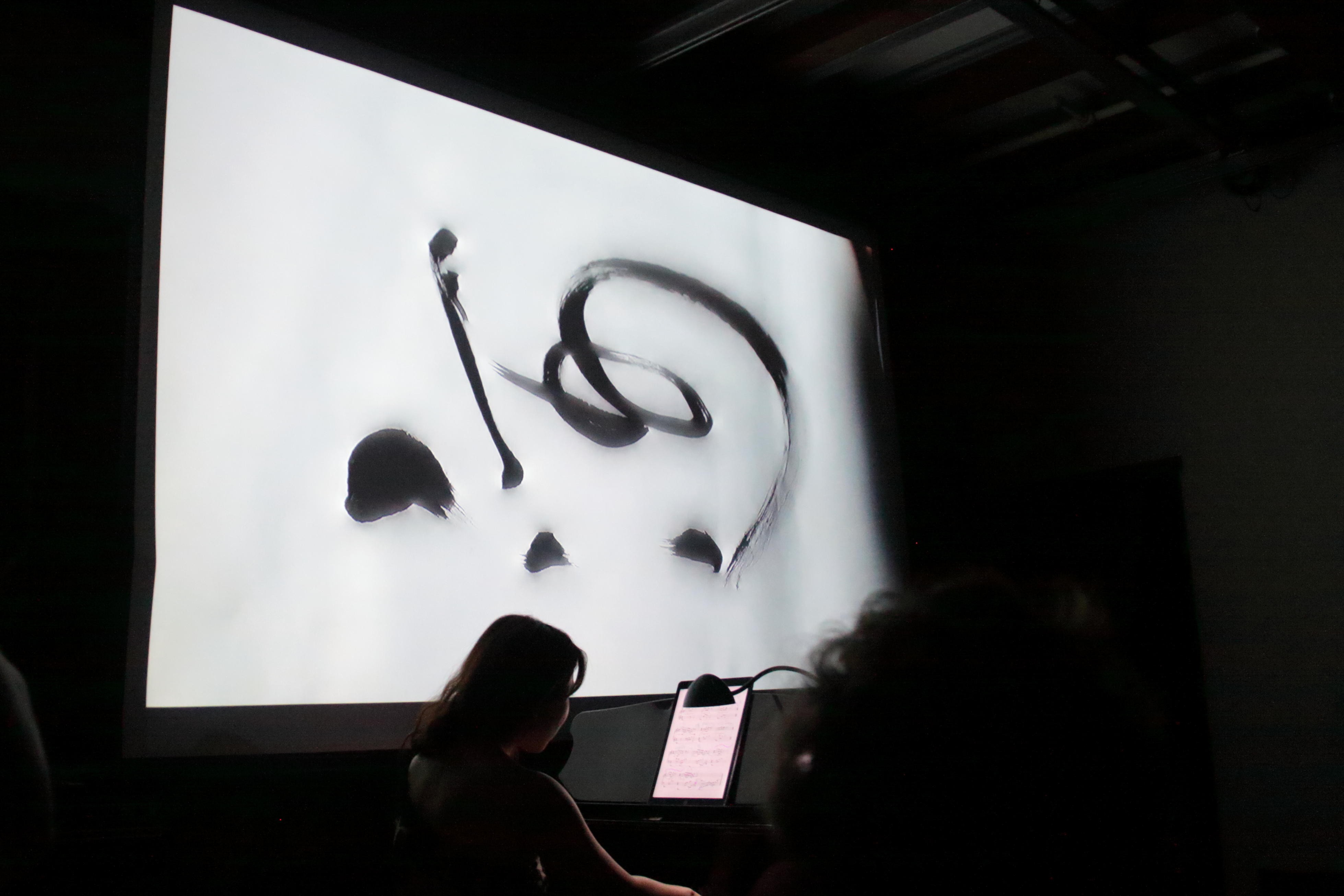
This next part of the program involved the work of Jarosław Kapuściński (Warsaw, 1964-) whose two pieces were slated for the last portion of the program.  He is, since 2016, the chair of the music department at Stanford University and no doubt spends time with CCRMA (Stanford’s equivalent of CNMAT) investigating music, sound and computers.  He spoke of being inspired by a calligrapher who was also well known to Ms. Chai, a Chinese woman and master calligrapher named Shanshan Zhao (the film was done at the Shanghai Conservatory of Music).  While he did not go into great detail the composer basically shared his visual inspirations and spoke a bit about how his composition program “listens” to the performer (see the photo with the two mikes inside the piano below) and responds in some way.  This sounds like another chapter in the book which includes David Behrman’s early computer/performer interactive experiments.  Some 50 years later (this piece, “Calligraphies for Ziqi” is from 2018 and got its US premiere here tonight).  Another generation shows its expertise.

choi20190003

Note the two black microphones inside the piano. No, its not the Russians.

The title, “Calligraphies for Ziqi” (2018) references Ziqi, a man whose listening was so perfect that the musician destroyed his instrument after Ziqi died because he knew he would never find a better listener.  This ancient Chinese story (approx 770-476 BC) is also about the merging of sound and image in its way.  Several calligraphies are displayed in process during the performance with the music reflecting the moods of the Chinese characters being displayed.  Each movement involves a different Chinese character and a different attempt at calligraphy.  There may be extramusical references here but the music does a satisfying job of standing with the visuals and further analysis can be left to musicologists and program annotators.

In addition Kapuściński is no stranger to Asian arts.  He has explored eastern musics and incorporated aspects of them into some of his works.  He is also no stranger to computers and their use in composition.  His appreciation of disparate artistic techniques effectively spanning 5000 years and utilizing them effectively is a mark of genius in this writer’s opinion.  This is a challenging piece for the soloist but it is a sensual journey for the audience.  While the geekier folks (this reviewer definitely included) would like to know much more about the technical aspects of this gorgeous music, suffice it to say that such knowledge is not a prerequisite for enjoying the art.

choi20190012

Chai playing the interactive piano part to the visuals in “Calligraphies for Ziqi” (2018), This was the California premiere.

This was followed by another visual/musical collaboration, Side Effects (2017) also by Kapuściński involves music set to videos by Kacper Kowalski who shoots from a perspective 150 meters directly above his subjects.  Think a latter day Koyaanisqatsi (do I need to footnote that reference?).  Again we see affecting music which captures the composer’s reaction to the visuals.  I didn’t get the sense that there was any computer interaction here, just some good music to some stunning visuals.

choi20190014

Chai playing the music to the visuals in “Side Effects” (2017)

The capacity audience (the room capacity is only 49) was very appreciative and gave a standing ovation which compelled no less than two encores.  Forgive your reviewer for not being able to recall the first but there seemed to be a new magic afoot when this pianist launched into the second, a wonderful rendition of the aria from Bach’s Goldberg Variations.  It was a loving and intense interpretation (no doubt full of colors as well) and it left the audience satisfied as a dessert would cap the climax of a fine meal.  Brava, Ms. Chai.  And thank you Mr. Kapuściński.

Blue Violet Duo: American Souvenirs


blueviolet

Blue Violet Records


This release actually makes a nice companion to the just recently reviewed Rachel Barton-Pine album. Both feature the classic chamber music combo of violin and piano and both bring life to American music that has languished for want of skilled and interested performers.  Let’s consider this release to be another selection in celebration of Women’s History Month.  Of course the only women here are the performers.  Alas no women made it into the mix this time.  But this is, after all, only their first release.
The Blue Violet Duo is just what is needed here.  These young artists make their recording debut with this fine selection of mid-twentieth to early twenty first century American music for violin and piano.  Included here are less familiar names such as Norman Dello Joio, Paul Schoenfeld, William Bolcom, and John Adams (if you know any names here you know this last one).  All are highly accomplished composers who work in basically a tonal language incorporating elements of blues and jazz.  Kate Carter plays violin and Louise Chan handles the keyboard in this interesting selection of lesser known but really entertaining and substantive music.  
The earliest work is the Variations and Capriccio (1948) by Norman Dello Joio (1913-2008). It sets the tone for this album of jazz influenced violin and piano music.  The two movements go through a variety of moods and demand a high level of virtuosity.
Next up is the wonderful Second Violin Sonata (1978) by William Bolcom (1938- ) who is known as much as a ragtime composer as well as classical.  His embrace of so called vernacular music is characteristic of much of his work. Carter and Chan appear to have a solid grasp of vernacular styles which they incorporate seamlessly as though they belonged (which, of course they do).John Adams (1947- ) is represented by his playful, Road Movies (1995). Adams’ take on pop and vernacular musical is somehow different and the listener will realize that one of the joys here is hearing the way in which these composers respond to their encounters with popular musics.  Adams also demands much of his musicians in terms of technical expertise but his music here always remains playful.
For the last selection Paul Schoenfeld (1947- ) was chosen and he is one that deserves more attention.  Like Adams he works as a classical composer who incorporates other styles into his work. Four Souvenirs (1990) makes a fitting finale to this collection.The real joy here is having such fine renditions of lesser known repertoire.  On hearing these pieces listeners will likely want to hear them again.  The hope is that these pieces will become more regularly performed.  The Blue Violet Duo has given this repertoire a boost in that direction.  Brava!


Jennifer Koh and Kaija Saariaho, a Glorious Collaboration


Cedille

The arrestingly beautiful portrait that graces the cover of this album should be enough of  a cover to judge this release favorably. Just the presence of these two women suggests that you’re in for some serious music making. Add to that the fact that this is one of those impeccable Cedille releases and you know that you, the listener, will not be disappointed. Here is another offering for Women’s History Month (even though the disc was released in November, 2018).

Kaija Saariaho (1952- ) is possibly the hottest composer to come out of Finland since Sibelius. Her career has steadily grown and she has written for chamber ensemble, stage, and orchestra. It is somehow satisfying to have this little portrait of her work. (This reviewer’s first encounter with the composer was in 1987 when the Kronos Quartet premiered her Nymphea for string quartet and electronics.) Five works are selected here and, if you don’t know this composer’s work, think Debussy, Takemitsu, and their ilk. No electronics on this disc though. Her work is a unique expression and pretty much listener friendly whether or not she uses electronics.

There are four chamber music pieces and a nice new performance of her masterful violin concerto, “Graal Théâtre”. Saariaho is so prolific such that one can only do a sort of “snapshot” selection of her work on a single CD. A decent retrospective would likely require several more discs.

Jennifer Koh is without doubt one of the finest violinists working today, especially in contemporary music. She even broke ground in one of the coolest blind castings in contemporary performance playing Einstein in Glass’ opera, “Einstein on the Beach”. For those who are unfamiliar the role of Einstein requires a violinist wearing a wig who plays some mighty difficult violin music at different points during the opera. This writer heard her in performance of this role at the revival in Berkeley a few years ago and it is a mark of Koh’s expertise that she made the role her own. Her range (which includes more conventional repertoire like Mozart, Tchaikovsky, etc.) is simply astounding and her technical ability puts her in competition for an ever growing list of commissions and other works she has added to her repertoire.

On this CD we get to hear Koh in the intimate settings of chamber music where the skills of listening to others is so critical as the individual voices weave their parts though the texture. While Saariaho is basically a well trained modernist romanticism and perhaps impressionism still remain a part of her palette. Joining Koh in the chamber pieces are: Nicholas Hodges, piano; Hsin Yun Huang, viola; Wilhelmina Smith, cello; Anssi Karttunen, cello;

Of course the big showpiece here is the violin concerto from 1994. This large scale work is actually as lucid and detailed as her chamber music, albeit with a larger range of sounds. It is a masterful composition and this appears to be the second recording it has received though apparently the first recording of the version with reduced orchestra played by the Curtis 20/21 Ensemble conducted by Conner Gray Covington (another reason to want this album). I wasn’t able to locate the other recording with Gidon Kremer but it is a good sign when you have more than one top soloist recording your work. Brava Ms. Koh and Ms. Saariaho! This is a collaboration blessed by the Gods. Saariaho x Koh = bliss.

Post Holy Minimalism? New Music from Lithuania


Starkland ST-231

All ready for Women’s History Month is this fine offering which features a fine young woman composer from Lithuania. It comes on the radar of Starkland Records and, happily now, to a new listening audience.

I sincerely hope that no one takes umbrage at my off handed categorization of this music as related to minimalism but I’m not sure what else to call it. This 70 minute work is divided into 10 sections which have poetic titles. It is scored for piano, violin, cello, and electronic sound. It comes from an area of the world (Lithuania, Latvia, Estonia) where individual national identities have long been overshadowed by the annexation of the former USSR. In the last 20 years a style related to minimalism has emerged as a characteristic style from this region (primarily in the work of Arvo Part). Some of that is here but this music is at least a generation removed and has evolved its own identity at the hands of this new composer.

In an unusual (though not unprecedented) move this album was recorded and produced entirely by the composer in Lithuania. In addition some of her fine color photography is featured in the liner notes (which are mostly by the composer). The production values are very much consistent with the high quality one expects from the Starkland label. In addition it must be noted that this is the simplest and sanest packaging now being used for CDs. None of that fragile plastic and still a functional storage sleeve.

So the next question (also common with Starkland releases) is: Who is
Žibuoklė Martinaitytė ? Well she is one of the emerging generation of composers from Lithuania. That, along with her having studied with Bronius Kutavičius (I actually started his Wikipedia article many years ago but his and other articles on new Lithuanian composers is limited still) suggested to me that she may be of the branch of minimalism which hails from this part of the world (i.e. Estonia, Latvia, Lithuania). Wrong, but not entirely.

Like a lot of emerging composers we have here an artist fully schooled in a very wide range of musical techniques and possibilities. On first listen one hears elements of drone, ambient, minimalism, extended instrumental techniques, and mysterious but effective use of electronics with this small chamber ensemble. The effect is frequently almost orchestral but also capable of great stillness and silence.

In the liner notes by the composer she speaks of being inspired by her observations whilst visiting Notre Dame in Paris. She speaks of a rather impressionistic notion of hidden or lost beauty. So I guess that throws impressionism into the mix. The composition does have metaphorical devices which do suggest the emerging of ideas and themes from an initial chaos or, to use Ives term, a “silence of the druids”. One must get to the 4th track to really get a sense that there is actually a piano trio on this recording. Very effective actually and then it fades back into the chaos and then the silence.

The album opens with silence into which a drone gradually makes itself known. These meanderings take the listener on a journey which is essentially the artists sonic vision as she walked through and around the iconic cathedral. The listener doesn’t even hear really more conventional musical sounds until about track 4 and concepts like melody and harmony take on a different meaning in this context. It is a large arc of a composition that embraces both chamber and orchestral textures as it tells its sonic tale of the composer’s visions and returns to the chaos of the unfocused mind at the end.

This puts this work in the realm of the earlier release (also on Starkland) of Ingram Marshall’s Alcatraz (1982) and Eberbach (1985). Eberbach was later released with its originally intended photographic component along with Alcatraz on a recent DVD on Starkland. And Mr Marshall provides some insight and reassurance in his liner notes for In Search of Lost Beauty. He affirmed for this listener that one needs to listen more than once to perceive the beauty found herein.

Recorded and produced entirely in Lithuania the artists include Indre Baikstyte, piano; Ingrida Rupaite-Petrikiene, violin, and Povilas Jacunskas, cello. The recording, done in Lithuania was mastered by the always reliable Silas Brown back here in the United States assures the quality listeners have come to expect from this fine independent record label.

Donut Robot! Post-Haste Duo


OK, so I go to the post-office, to my little PO Box and I find one of those nice flat envelopes with the bubble wrap inside. Nothing unusual so far. When I pull out the disc I see post-apocalyptic cover art that could have come from the pen of Matt Groening (that is a compliment). And looking at the inside I recognize none of the musicians and none of the composers (also not unusual). Bassoon and Saxophone? Sounds iffy at best. And these folks hail from Idaho. Idaho? The last time I heard the name of this state in relation to classical music La Monte Young was being discussed (he was born in Idaho). They now hail from Portland.

Sean Fredenburg

But when I put this disc in my CD player while on one of my longish drives (we drive a lot in California) I was delighted and mesmerized. These two musicians, both professors at Idaho university, seem to have cast their net into minimalist waters. The variety within that definition of a musical style demonstrates the apparently boundless creative ways of working within that style and the limitations of the term in helping listeners know what to expect.

Well, expect virtuosity, expect clever invention, and expect to be entertained. Despite the pop art cover (the entire production will be my exhibit A when I propose a law requiring a minimum 12 x 12 packaging for all music and video releases) the music consists of some really solid compositions which send quite a challenge to the artists while leaving the listener enthralled (no easy task). The only mistake is putting the liner notes one line. Die hards like yours truly will seek out and read these (actually very useful notes) but I think most listeners will not make the effort. Ah, well.

Usually these solo instruments are accompanied by a piano or a guitar when they are not a part of a larger ensemble. When these two instruments play together one might choose a strategy of having one instrument accompany the other. The compositions here utilized a variety of strategies, many of which place some serious physical demands on the musicians. What all these compositions manage to do is to sound as though they were intended to come out exactly as you hear them in this recording (also a daunting and frequently unaccomplished task).

These machinations stem from the efforts of the Post-Haste Reed Duo consisting of Sean Fredenburg on saxophone and Javier Rodriguez on bassoon. These works are commissions written for them (who else?) and presented here in their world premiere recordings.

The composers (Ruby Fulton, Drew Baker, Michael Johanson, Edward J Hines, Andrea Reinkemeyer, and Takuma Itoh) presented me with yet another research task (also not uncommon with the unusual music that comes my way), that of finding out who these people are and, frankly, if I should file these names away in my future successes file, keep them on the radar in the hopes that they will continue to produce work of this quality. I’d say odds are good.

Isang Yun: Sunrise Falling


PTC 5186-693

2018 marks the 100th birth anniversary of Korea’s best known composer, Isang Yun (1918-1995). His work has received many performances and recordings but he is not exactly a household name and live performances are still not very common.

Yun is well known for his having been kidnapped by the South Korean secret service from his home in Germany in 1967 due to alleged espionage. He remained a prisoner for two years and was subjected to torture and forced interrogations. It took intervention from the artistic community to secure his release and the petition included signatures of Igor Stravinsky, Herbert von Karajan, Luigi Dallapiccola, Hans Werner Henze, Heinz Holliger, Mauricio Kagel, Joseph Keilberth, Otto Klemperer, György Ligeti, Arne Mellnäs, Per Nørgård, Karlheinz Stockhausen, and Bernd Alois Zimmermann. He was held for the better part of two years and never again returned to South Korea.

This fine 2 CD set is the first release in what this writer hopes will be a series of recordings of Yun’s major works. Dennis Russell Davies has demonstrated both knowledge and mastery of new and unusual repertoire as well as that of established works of the western canon. Despite many recordings of his work in the past those recordings were (and still are) notoriously difficult to find so this set is especially welcome.

Here Davies joins forces with the Bruckner Orchestra Linz and the talents of soloists Matt Haimovitz, Yumi Hwang-Williams, and Maki Namekawa to record a sampling of Yun’s works. In addition to the first (of three) Violin concerto (1981), the Cello concerto (1976), and a sampling of chamber works including Interludium in A (1982) for piano, Glisees (1970) for solo cello, Kontraste (1987) for solo violin, Gasa (1965) for violin and piano (probably the composer’s best known piece), and a short orchestral piece, Fanfare and Memorial (1979).

If you don’t know Yun’s work this is a fine place to start. If you already know his work you will want to hear these performances.  These are definitive and will set the standard for all that follows.

The concertos are somewhat thorny and dissonant but deeply substantive affairs that challenge both orchestra and soloist. Yun’s style draws more from modernist (think Darmstadt) than romanticism but he is capable of great beauty within that context.  In both concertos the soloists must deal with virtuosic challenges but each concerto provides a marvelous showcase for their skills.  Hearing them played by musicians of this caliber they are shown to be masterpieces of the genre.

The chamber music is similarly thorny at times but always interesting. This composer deserves to be better known and recordings like this with quality performances and recordings makes a great step in that direction. Yun was a prolific composer of pretty consistent quality so even a two disc retrospective such as this can only be a brief sampling.  The choices of what to record can’t avoid taking on a personal dimension. Intelligent choices of repertoire combined with defining performances such as these will send the listener on a quest to explore more of his work.

Political Classical: Frank Horvat’s “For Those Who Died Trying”


horvatdiedtrying

Atma ACD2 2788

Frank Horvat (1974- )is a Canadian composer and musician with a profound interest in social justice and human rights.  In this 35 movement string quartet he is concerned with memorializing the lives of 35 activists who died while furthering the cause of human rights.  This work is made even more compelling by including photos from a photo essay of the subjects taken by Luke Duggleby, a Thai-based photographer and journalist.

Without a doubt this is a shining example of what I have termed, “Political Classical”, a genre of protest music which seems to have emerged in the twentieth century.  This work takes its place now with Frederic Rzewski’s Pueblo Unido Variations, and works by composers like Luigi Nono, Hans Werner Henze, and countless others who have chosen to use their expertise in the classical genre to write works analogous to the folk protest music which is perhaps better known to the listening public.

With songs one has the words which can directly or indirectly evoke the particular issue being addressed.  But, other than a dedication in the program notes, how does one imbue their music with the intended meaning for a given protest work.  Well, Mr. Horvat has chosen to utilize only the letters from these victims’ names to form the musical material for each portrait.  That is he uses the letters which correspond to musical notes.  Most famously this practice is known through the B, A, C, H (corresponding in German notation as B flat, A, C, B) theme which is the basis for Bach’s Art of Fugue.

By itself this can be a bland and meaningless exercise but Horvat manages to work within this carefully limited framework to create 35 very convincing portraits of these Human Rights Heroes.  The 35 movements are relatively brief and put this listener in the mind of composers who have  succeeded quite well with such a format such as Alan Hovhaness and Lou Harrison.  Both of these composers and the man in discussion here work in a basically tonal framework with a balanced and judicious use of dissonance.  What is curious is how he seems to succeed in evoking these people purely through sound.

In comes the Mivos Quartet whose job it is to make sense of the composer’s intentions and breath life into the notes on the page.  This New York based string quartet consists of Olivia de Prato, violin; Maya Bennardo, violin; Victor Lowrie Tafoya, viola; and Tyler J. Borden, cello.  And let’s just say they are up to the task.  Each movement takes on its individual character but retains a larger connection to the work as a whole.  Perhaps this is also a metaphor for the nature of individuality as part of the larger concept of humanity and why each perspective is vital to our collective survival.

Before I wax too philosophical let me just say that, at least in terms of this recording, this is a document of classical string quartet which also serves as a memorial to the victims it references and, hopefully, as a sort of wake up call to those who, for whatever reason, are unaware of these atrocities.  Ultimately, I suppose, the goal is the amelioration of inhumane practices.  But until then we may find comfort in the beauty which this composer has brought to this work.  This would seem to be a stab at acknowledgement of sacrifice in the name of human rights seeking justice but, for now, we must settle for beauty even if it brings tears which are a mix of both sadness and joy.

Collectif9: No Time for Chamber Music or Mahler Lite


Collectif9 based in Montreal bills themselves, aptly, as a “string band”. This is their second album and I haven’t heard the first but this one is a hoot!

Drawing on the age old practice of transcribing music for chamber groups which used to be common in taverns and such back in the 18th and 19th  centuries they create delightful riffs on the music they chose.  Here they chose Gustav Mahler. If the appellation of my title, “Mahler Lite” seems pejorative fear not.  This album is sheer delight.

There are 8 tracks drawing variously from the first, second, and fifth symphonies as well as Das Lied and the Wayfarer Songs.  The last track is a fantasy by Philip Hersant on themes of Mahler.  Nine musicians, all on bowed string instruments, do a marvelous job of evoking a big sound out of their ensemble.

Transcription is a true art and this is a shining example.  Anyone familiar with Mahler’s work will find a comforting familiarity in these pieces.  What struck this listener was their ability to evoke the orchestral instruments with some clever extended techniques.  Tympani, trumpets, trombones, tympani, etc. are all slyly and successfully implied in their playing.

While the liner notes don’t go into much technical detail they are all the average listener will need.  The charming thing here is the reproduction of the painting (apparently common in nurseries in Austria) which inspired the third movement of his first symphony.  If you don’t know the painting it depicts a bunch of animals carrying a dead hunter which, perhaps, they have killed.  And it is printed on the fold out liner notes.  Mahler uses Brother John (in a minor key) as a starting place for a set of variations with the intent of evoking this image.

The design by Kanelloscob.com deserves mention.  It deserves a closer look.  They manage to integrate a group photo, a track list, credits, commentary, and a large reproduction of that nursery art.  And they do it all with paper, no plastic to crack and become unusable.  It’s low key but a really beautiful production.

Collectif9 is John Corban, Yubin Kim, Robert Margaryam, and Elizabeth Skinner on violins; Xavier Lepage-Brault and Jennifer Thiessen on violas; Jérémie Cloutier and Andrea Stewart on celli; and Thibault Bertin-Maghit on double bass (who actually did these wonderful transcriptions).

Of course the music is the main point and that is the best reason to buy this disc.  Who knows? Maybe we’ll start seeing/hearing chamber groups like this in our coffee shops. Wouldn’t that be cool?

Alan Courtis’ “Buchla Guitar”, an Homage of Sorts


Firework Edition Records FER 1122

The late Donald Buchla (1937-2016) Invented many instruments from his keyboardless Model 100 (pictured here is a Buchla 200), the Marimba Lumina, but no guitar. So along comes one Alan Courtis and he creates what Buchla did not live to invent.

Courtis is an Argentine guitarist who was the founder of the group Reynols who collaborated in recordings with Pauline Oliveros. Oliveros was one of the composer/design consultants with whom Donald Buchla collaborated along with Ramon Sender and Morton Subotnick. So this album returns this busy, eclectic musician to his roots back to the days of the Tape Music Center.

Well, it surely doesn’t sound like a guitar for much of the time but the star here (or maybe co-star is more accurate) is the Buchla 200 which is the instrument through which the composer processes his guitar and which widens the range of what he can do with his instrument immeasurably. This album will remind listeners of the work of Morton Subotnick and perhaps early Pauline Oliveros.

There are four tracks, no titles, just absolute music. Courtis is clearly skilled and schooled in the operation of the Buchla 200, so much so that his guitar playing is rather eclipsed. This is likely by design. This is in many ways a tribute to Buchla and peaen to the heady days of radical invention that was the Tape Music Center (later moved to Mills College) and its luminaries

This is not easy listening but it it is a must for anyone interested in the various orbits which surround this historic and creative enclave. I don’t know if this album will appeal to many listeners but it is a huge effort and is, in effect, another brick in the wall as far as the history of electronic music on the west coast of the United States (and its dissemination to Argentina and points beyond)..

While this album came to me as a digital download (something which tests the limits of my technical skills) it does contain at least a little bit of liner notes. More would be nice but Courtis and Reynols seem more concerned with making interesting sounds and compositions and seem rather unconcerned with telling us how they got there except in the most general ways. Bravo Mr. Courtis.

Don Buchla in his last major appearance performing at Other Minds 20.
Don Buchla at a Buchla 100 at the Other Minds Festival 20 in 2015

Clarice Jensen Solo Debut Album


jensenmiasmah

Miasmah Records MIA041 

Another refugee from one of those new music groups comes forth with a debut album.  This time it is cellist Clarice Jensen who also serves as artistic director of the American Contemporary Music Ensemble (ACME).  And what amazes this listener is the sheer diversity one can find in solo cello recordings.

This recording focuses on the special tunings by La Monte Young student Michael Harrison who has carved his own unique compositional style as well as some interesting work by the late Johan Johannson and by the soloist herself.  

There are 4 tracks: 
bc by Clarice Jensen and Jóhann Jóhannsson
Cello Constellations by Michael Harrison 
For this from that will be filled (a) by Clarice Jensen
For this from that will be filled (b) by Clarice Jensen

While there are consistencies between the sound world of these pieces they have their own identity.  Johansson’s work opens the disc and sets the tone for all that comes after.  This is not simply a cellist with a set of cool effects pedals.  Rather this is a soloist seeking to become one with her instrument (which includes the electronics).

Michael Harrison’s work is heard too infrequently.  The former student of La Monte Young carries on the tradition of exploring new tunings in a manner one might expect of the next generation of this practice.  Harrison (no relation to Lou) creates dream like worlds with the psychological  effects of these tunings and this work is a stunning example.

Jensen plays the two parts of the title track, “For this from that will be fulfilled”.  Multiple generations beyond the kitschy “one man band” novelty concept, Jensen’s playing must be a mesmerizing live experience.  This track was originally designed to accompany visuals by one Jonathan Turner who did the striking photography of the album’s cover.

The review copy lacked liner notes (a personal bugaboo) and the press release and notes on the soloist’s site and that of Bandcamp also tell precious little.  Fortunately this is music which speaks pretty directly and can easily be  enjoyed with no knowledge of whence it came.  Just sit back, relax, and enjoy.  Jensen’s playing is magical.

Jensen in performance (photo from web site)

The Shostakovich Fourth, the Symphony That Almost Wasn’t


Shostakovich dealt with a great deal of adversity as a result of wars, the revolution, and Stalinism. That is sad but it makes for some really amazing stories. So it is with this symphony.

It was composed in 1936 and would mark the entry of more post-romantic elements into the composer’s work which gives it a Mahler-like cast at times. Unfortunately the politics resulted in the composer withdrawing the symphony. During WWII the score was lost and reconstructed from surviving orchestral parts and the present two piano transcription by the composer. The world premiere occurred in 1961 under Kiril Kondrashin.

It is the two piano “reduction” which is featured here. Reduction refers to the transcription of the piece for two pianos but the grand symphonic nature shines through with amazing lucidity. Of course this is as much due to the skill of the transcription but also of the artists. If you have never heard a great transcription this will amaze you.

Davies and Namekawa have established quite a name for themselves as a duo piano team. Davies, the long established conductor and his life partner Namekawa, herself a dazzling pianist have collaborated for some time now as a duo and this recording is testament to what they can do. Here they joyfully share their interests and insights on this masterpiece. Even if you have and know the orchestral version you will want to hear this.

There are three movements here. The outer movements are long extended compositions with a small(but amazing) interlude in between. This is not the Shostakovich of the famed 5th symphony. Rather it is a sort of transitional piece between the student work of the first symphony and the social realism of the second and third symphonies. While deeply intelligent the work has no intended program and one could almost pass this off stylistically as a lost Mahler work.

Fear not, though, the composer’s fingerprint is here. After all this is his 4th essay in the symphony genre. Unfortunately a perfect storm of politics conspired to almost destroy this work. Fortunately both this reduction and the reconstruction make the work available. It is especially curious for the Shostakovich enthusiast to listen to this work and imagine the care that must have been taken to avoid being associated with non state-approved music. It’s a good example of how politics places additional meaning on a piece of music that originally had none.

The recordings is lucid and is due for release on February 8th. One added sort of irony. The work is scheduled for its west coast premiere in San Francisco on February 10th.

Rachel Barton Pine: Black and Blue


Cedille CDR 9000 182


Rachel Barton Pine is one of the brightest lights of the solo violin in Chicago and worldwide. Her partnership with Cedille records (also a venerable Chicago based institution) has been both fruitful and revelatory.

In addition to the standard virtuoso repertoire such as Brahms and Beethoven this soloist has demonstrated a passion and a genuine interpretive feel for music by black composers. Were we living in a less racially charged time this focus would be of minor interest. But the fact remains that music by black composers, regardless of the composer’s national origin or the quality of the music, have been seriously neglected.

Indeed this soloist has become a sort of shepherd of the lost and neglected. Her recorded catalog is testament to her achievements in a really wide range of repertoire from the Bach solo violin music to neglected concertos and occasional pieces ranging from the 17th century to the present.

The present disc was an October, 2018 release I am reviewing for Black History Month. And it is a gem. No fewer than 11 composers, 5 of whom are still living. It is both an acknowledgement of some of the classics produced by black composers over the last 100 years and an introduction to new and emerging voices.

The recently deceased David N. Baker (1931-2016) is represented here in the first track, Blues (Deliver My Soul ) and provides a context immediately. The word “blues” is used to refer to the uniquely black musical form which consists of a poetic form in which the first line is repeated. The vocal styles that are the blues are probably the most recognizable aspect of this musical form. But one can’t miss the persistent subtext of the neglect of such fine music as yet another insult to widen the racial divide.

In fact many of these pieces are not, strictly speaking, blues. But that is not the main point here. Pine, along with her quite able accompanist Matthew Hagle, present a beautiful and wide ranging selection which presents some wonderful music and, for those with a conscience, illustrate what can be lost when listening choices are hampered by prejudice.

The Baker piece helps to create a context. It is followed by Coleridge-TaylorPerkinson’s (1932-2004) Blue/s Forms for solo violin. This man’s career alone is worth a book at least. His eclectic and learned musical style found him writing music for movies, television, and the concert hall. He was also versed in jazz and blues and even played drums with Max Roach for a while. These solo violin songs are a beautiful example of the composer’s melodic gifts. One can easily imagine these pieces programmed alongside the Bach solo music.

William Grant Still (1895-1978), truly the dean of black American composers, is next. His Suite for Violin and Piano is happily performed with some frequency and deserves to be recognized as one of the masterpieces by this really still too little known composer. The piece is in three movements, each a representation in music of a painting.

Noel Da Costa (1929-2002) is a new name to this writer. He hails originally from Nigeria but made his career in New York City. His “Set of Dance Tunes for Solo Violin” makes a nice companion to the Perkinson pieces. This is one of the world premieres on the disc. Here’s hoping we get to hear more of this man’s work.

Clarence Cameron White (1880-1960) is another unfamiliar name. His Levee Dance is next. He was one of the lesser known of the group of early twentieth century black composers which included R. Nathaniel Dett, Dorothy Rudd Moore, Florence Price, and Samuel Coleridge-Taylor.

By far the best known name here is Edward Kennedy “Duke” Ellington (1899-1974). One out of eleven here has “household name” status. He is represented by Wendell Logan’s arrangement of, “In a Sentimental Mood”. This is the premiere of this arrangement.

Now to the living black composers. This is a forward looking recording which pays homage to the past but also acknowledges a living tradition. Dolores White (1932- ). Her “Blues Dialogues for Solo Violin” add admirably to the solo violin repertoire.

Belize born Errollyn Warren is next with her brief, “Boogie Woogie”. Warren is a composer with a wide range and, while this is a fun piece, she has composed a wealth of music for various sized ensembles including orchestra. She was the first black composer to be represented at the famed Proms concerts. Wallen was a featured composer at Other Minds in San Francisco.

A slightly longer piece by Billy Childs (1957- ), “Incident a Larpenteur Avenue” gives the listener a taste of the work of this prolific composer. This is a world premiere which was written for the soloist. Childs won a Grammy for his jazz album, “Rebirth” in 2018.

Daniel Bernard Roumain is of Haitian roots and works in New York City where he works with turntables and digital sampling to augment his classical compositions. His work, “Filter for Unaccompanied Violin” is given its world premiere recording here.

Charles S. Brown (1940- ) concludes this amazing recital with, “A Song Without Words”.

This is a rich and rewarding recital which will take the interested listener into wonderful new territories. Listen, read about these composers, enjoy their artistry. This is just a beginning.