Charles in Charge, Composer/Producer/Impresario Charles Amirkhanian at 80


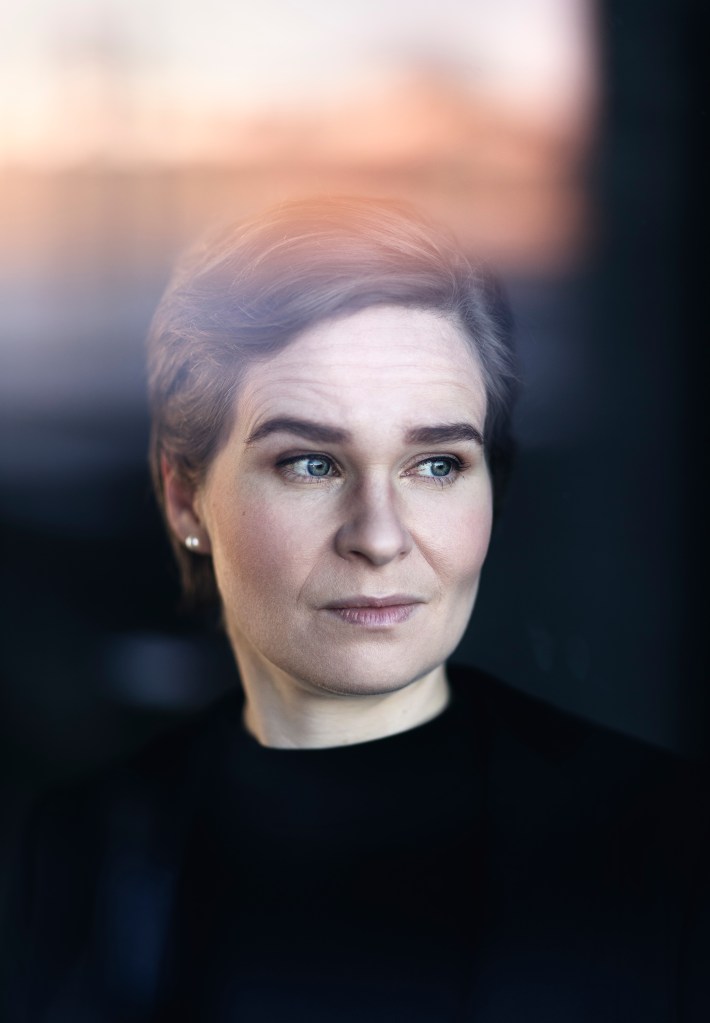
Charles Amirkhanian (photo by Carol Law, all rights reserved)

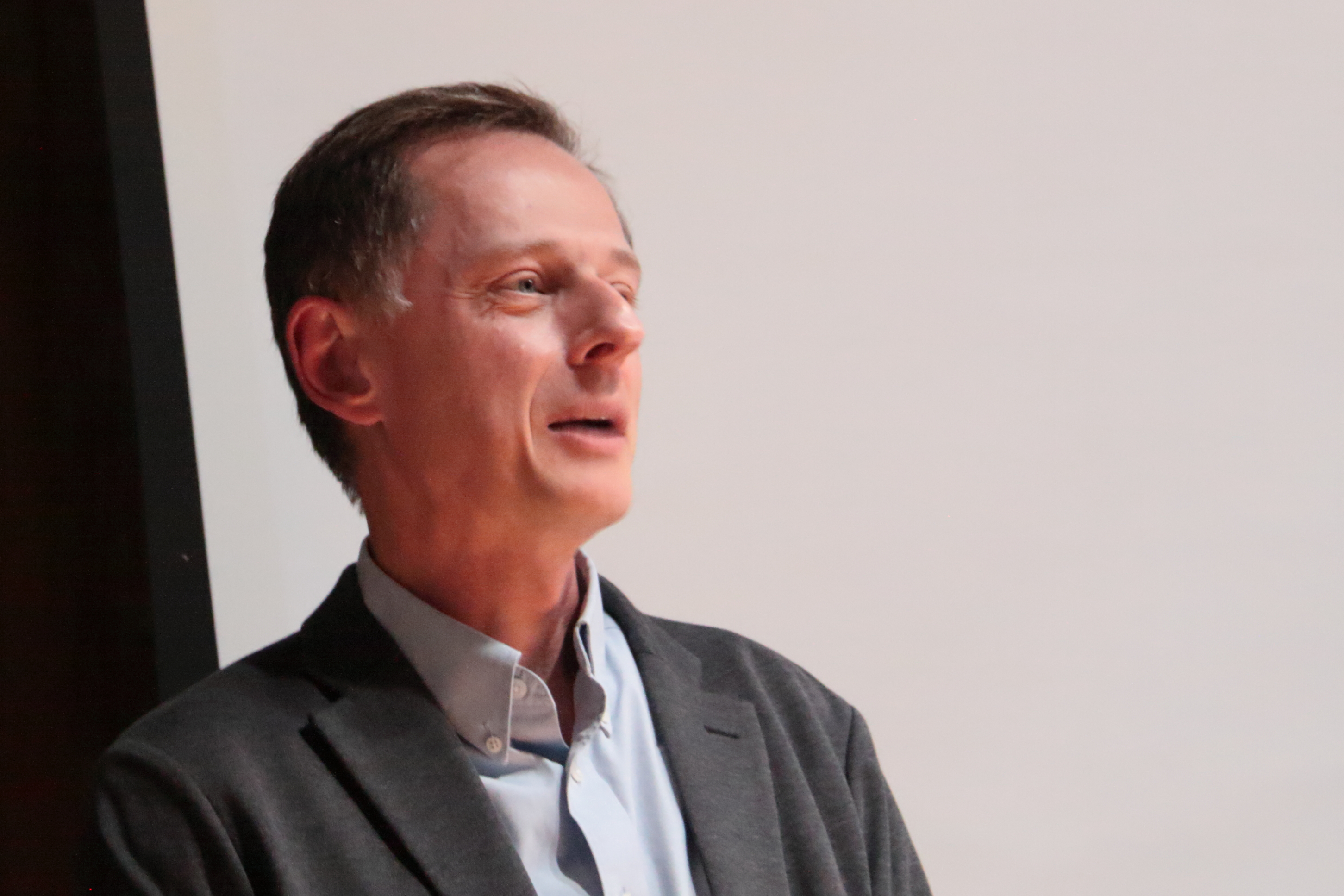
An overflow crowd packed the lovely auditorium at Berkeley’s David Brower Center this past January 19th. Octogenarians (and younger folks as well) populated both stage and audience in a show of appreciation for a man whose work as music director of KPFA (1969- 1992) and subsequently as an arts promoter and curator of new music in California’s Bay Area continues to enhance the artistic reputation of the Bay Area.

A rare and exciting aspect of this evening were the rare opportunities to hear Charles’ music, including representative sound poetry classics and a recent major opus capped off by a world premiere of a new work.

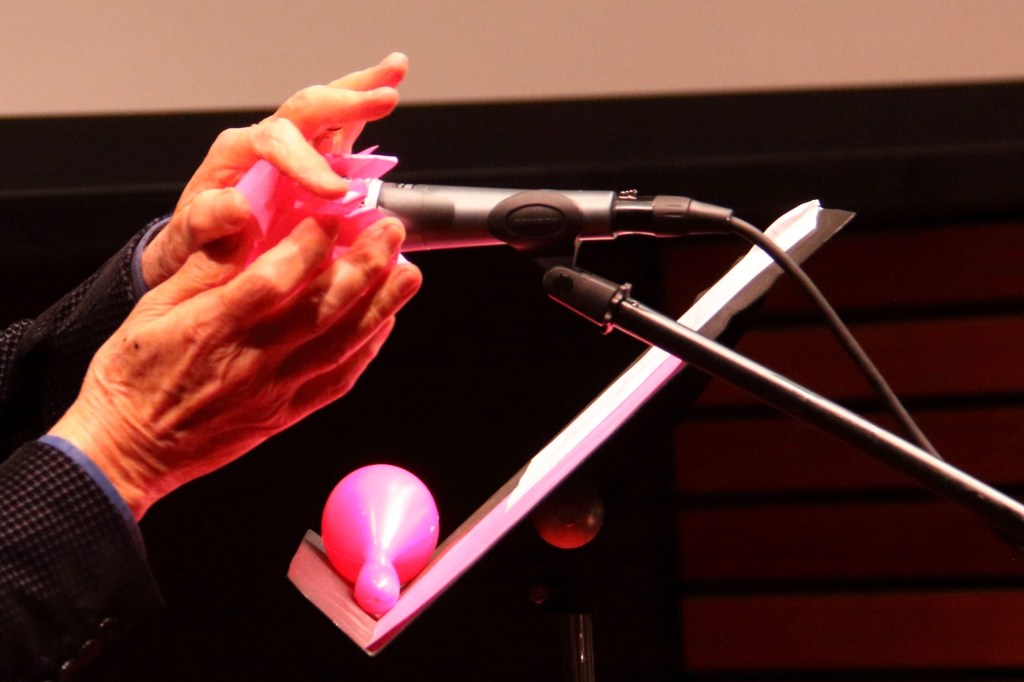
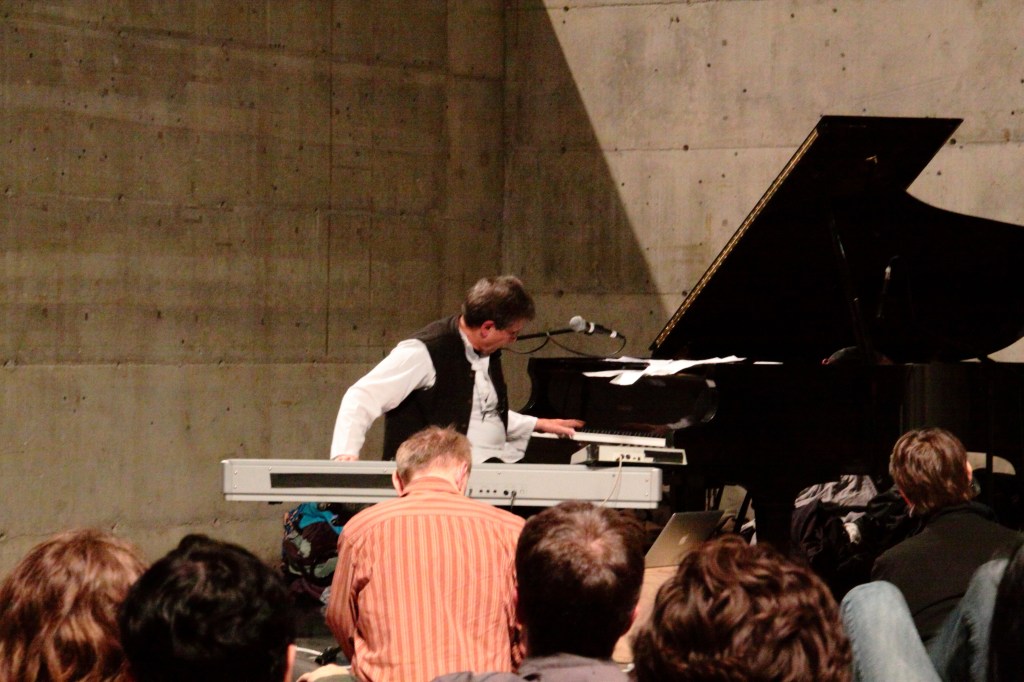
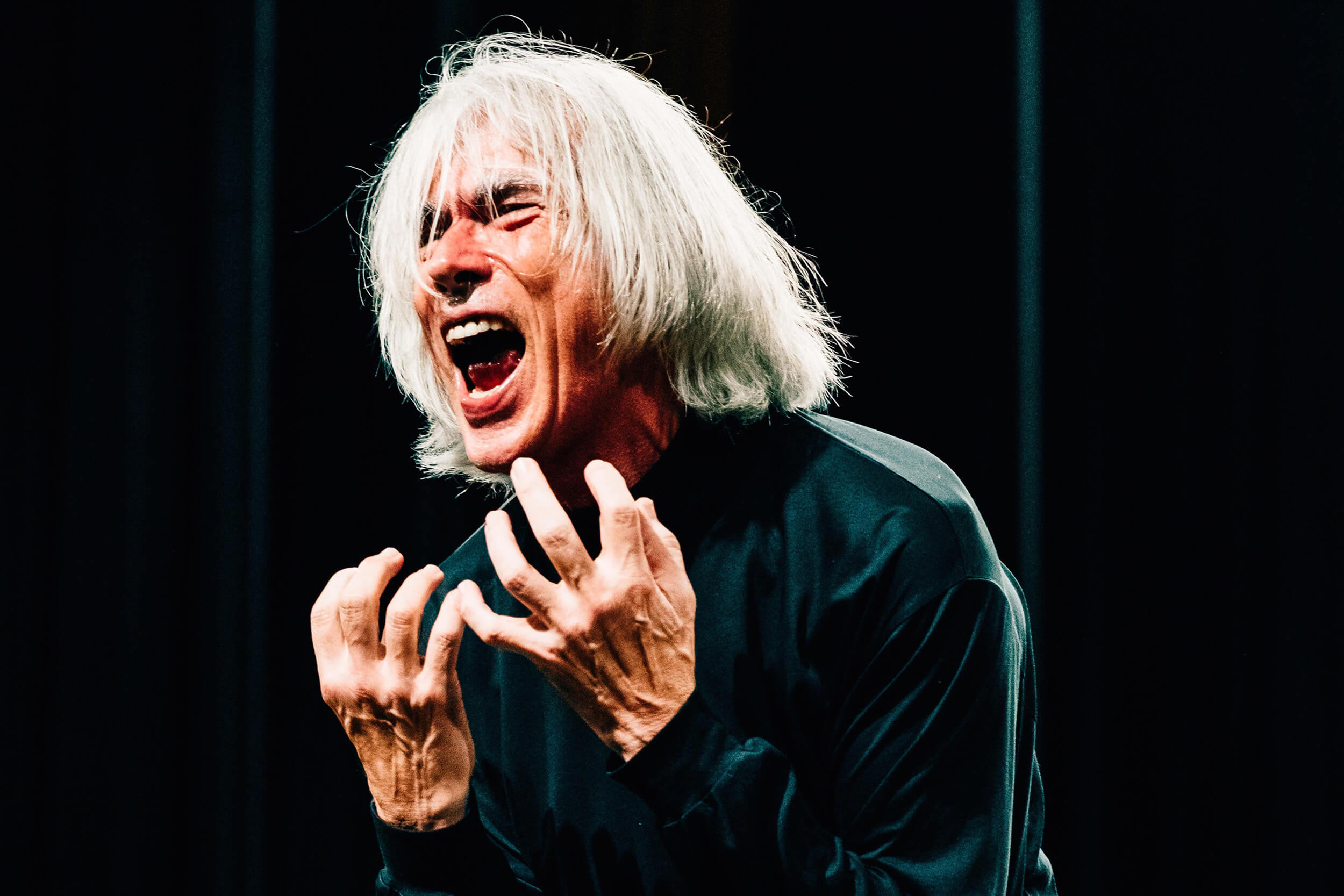
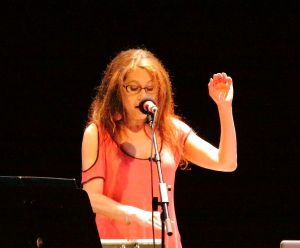
The hands of the artist. Photo by Allan J. Cronin

The genuine affection, appreciation, and respect was palpable as the honored guest demonstrated his skill at hosting when a couple of technical glitches slowed (but did not stop) the amiable birthday celebration. The audience waited calmly and quietly.

Both the guest of honor and the host (Liam Herb) used a well honed, self effacing humor used most skillfully to entertain the sympathetic audience while the technical difficulties were surmounted in real time.

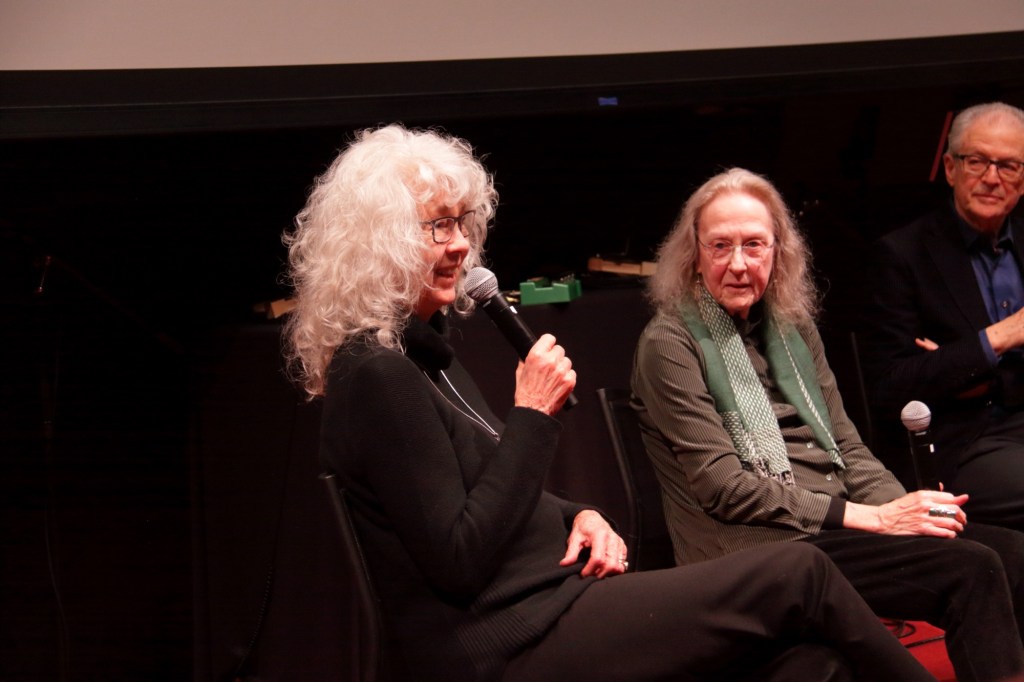
Panel discussion featuring (left to right) Susan Stone, Anthony Gnazzo, Paul Dresher, Charles Amirkhanian, Sarah Cahill, and Liam Herb (Photo by Allan J. Cronin, Creative Commons license)

Herb, a composer and performer, introduced himself in the midst of the technical resolutions, graciously announcing that, as producer, he accepts responsibility for the glitches. Charles maintained his familiar master of ceremonies crowd pleasing good humor as Herb worked goodnauturedly (if that’s a word) with the rest of the crew to resolve the issues and get on with the show.

The formal opening remarks were given by Other Minds’ associate director, Blaine Todd. And the evening began in force.

Blaine Todd (photo by Allan J. Cronin, Creative Commons license)

The program glided past the initial hiccup to present a film about our guest of honor. The bevy of fans and bona fide new music professionals sat with rapt attention as the film, featuring the familiar faces of several “Bang on a Can” artists.

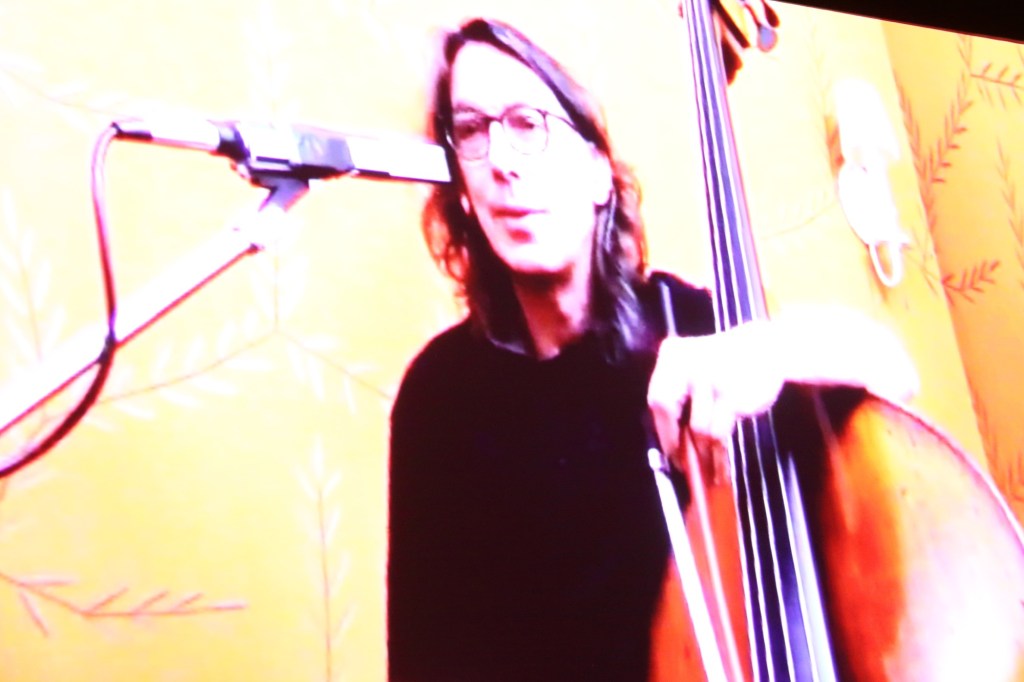
The late great Robert Black interviewed by Amirkhanian in the streaming premiere of Audible Autopsy. (Photo of film appearance by Allan J. Cronin)

Excerpts from the 2015 Other Minds 20 documentary featured Julia Wolfe, David Lang, and Peter Gordon (now, it seems elder statesmen (and women) in their own right.

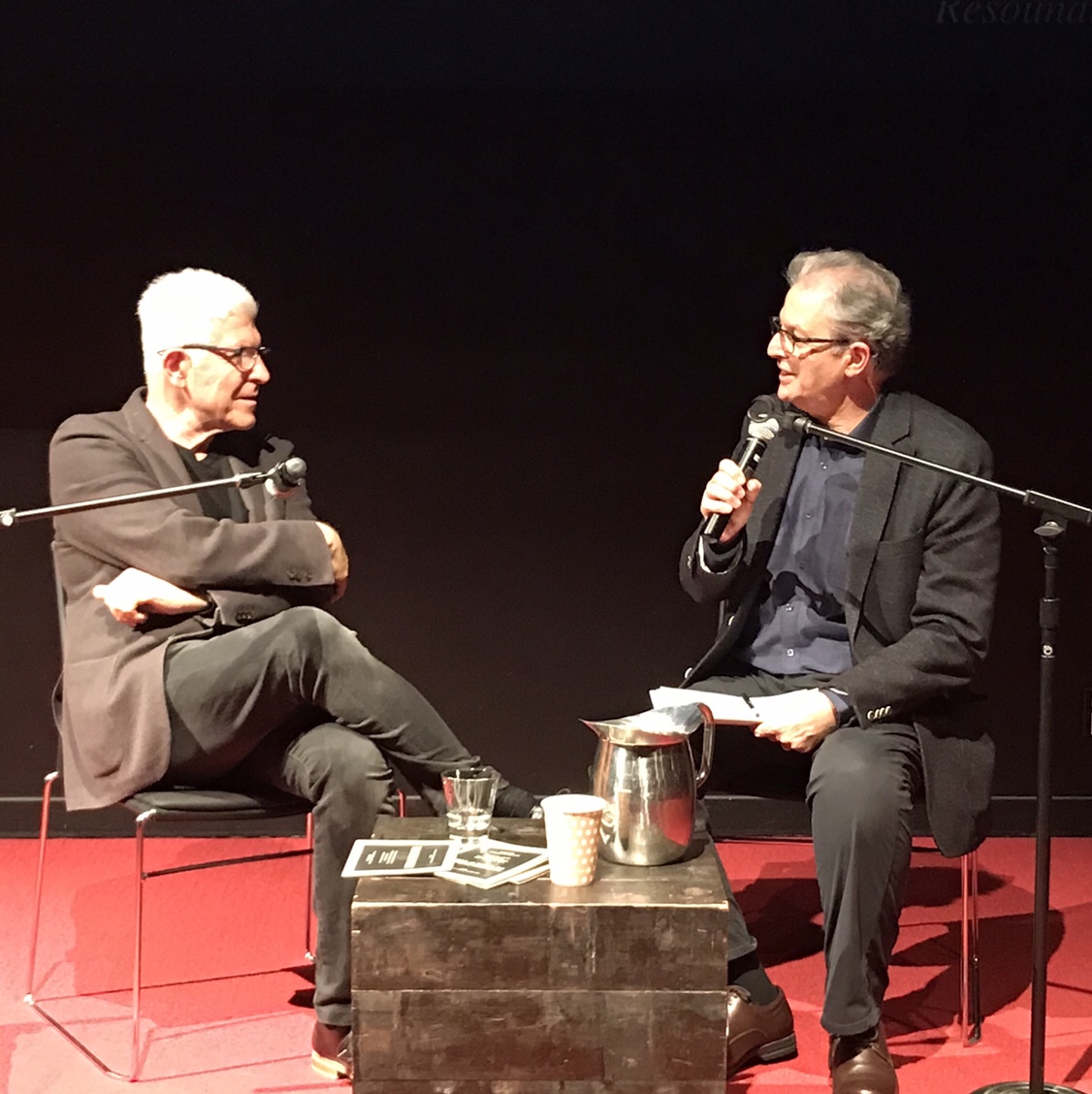
Production manager Liam Herb then served as moderator for a conversation or live interview (with Amirkhanian) for the next segment. This was followed by some videos with music by the guest of honor:

Real Time/T.V. Time Video with Amirkhanian’s “Muchrooms”

The film, presented in its entirety was accompanied by “Muchrooms”, from the CD recording of that standalone work.

Next was Amirkhanian’s and Carol Law’s classic collaboration: History of Collage (1981). This is a major work and a great collaboration with his partner in life and arts. I’m pleased to add my own shot from the performance at the Other Minds 23 experience, my favorite OM festival(so far).

History of Collage (1981) photo by Allan J. Cronin taken at the Other Minds 23 wonderful live performance of this work (Photo by Allan J. Cronin is Creative Commons license 2015)

We also heard and saw Audience (1978) with photography by Law and music/poetry by Amirkhanian followed by Chairs with photography by James Petrillo and music/poetry by Amirkhanian (excerpts from Seat Belt, Seat Belt (1973).

There followed a panel discussion led by Carol Law with Betsy Davids discussing David’s’ work and her connections via her work as a book artist. These two embody the experimental visual arts that characterize the skills of these fellow artists both onstage and off tonight. In fact, interactive collaboration and both respect and friendship were everywhere to be seen in this warm and pleasantly nostalgic evening.

Carol Law speaking with Betsy Davids (Photo by Allan J. Cronin, Creative Commons license)

This was followed by a recording of a major opus, Ratchet Attach It (2021) recently played at one of the (still ongoing) Other Minds Festival. This work is a major opus by Mr. Amirkhanian, one I’m pleased to say I heard live at the Chinese Theater in San Francisco a few years ago. Scored for a huge percussion ensemble, with audio recordings, and a conductor who moves between the podium and a space among the performers playing with the ensemble. It is perhaps one of his most integrated and evolved compositions. Stunning to hear it live. Glad to hear the (always too short) excerpts.

In fact Mr. Amirkhanian, a fixture in the arts of the Bay Area, continues to influence musical taste and present new and interesting music as he has for well over 50 years. His work as Executive Director of Other Minds includes the fabulous OM Records as well as the annual Other Minds Festival and a continual flow of carefully curated concert events by luminaries (or soon to be luminaries) throughout the Bay Area and beyond. There is also the huge archive of thousands of hours of interviews and concerts that are available in streaming audio and video via the Other Minds website.

Many of the artists featured in the Other Minds concert series continue to work, innovate, and expand musical concepts. An Other Minds commission, Henry Brant’s Organ Concerto, Ice Field, earned him a Pulitzer Prize. Many have gone on to greater achievements in their respective careers. Of course not every composer started their musical careers at Other Minds concerts. Many mid or late career musicians have joyfully been represented over the years. Its one of those festivals that innovative musicians seek to participate.

Such achievements reflect on Amirkhanian’s leadership and curatorial acumen, but more importantly his relationships with his fellow artists. Charles has earned a reputation for his support and his collaborative nature. Arguably, everyone in the house (and the overflow in the lobby) all have a degree of connection to Charles and his guests. It is why we’re all here tonight.

Charles Amirkhanian and Joseph Bohigian performing with Liam Herb’s electronics (Photo by Allan J. Cronin, Creative Commons license)

Following a brief intermission we were treated to a world premiere of a new work by our guest of honor, Noose Ratchet (2025) for two percussionists and electronics. Amirkhanian performing and/or promoting his own music is a relatively rare event and this alone was certainly worth the trip.

The work is arguably a trio for two percussionists playing ratchets, a curious instrument whose sound, if not entirely ubiquitous, is familiar. And the two play interactively with the electronics (the third member of the trio). Extended techniques and other duties get assigned (when in doubt it’s responsibility of the percussion section, right)?

There followed a lively and friendly panel discussion amongst frequent and past collaborators Susan Stone, Anthony Gnazzo, Paul Dresher, Sarah Cahill, and Liam Herb. This truly felt like a gathering of friends.

Happy Birthday, Charles.

Two Sono Luminus Discs of New Music by Icelandic Composers (mostly)


DSL- 92267

There are, by my count, at least 8 discs on this fine audiophile label dedicated to music by composers from Iceland. That country’s musical prowess deserves to be better known as does their world class orchestra. I’m reviewing these back to back releases together because they are both Iceland Symphony recordings presenting new music by (mostly) Icelandic composers. And they have a secret connection.

This first disc is a nice mix of music by five different composers in works that really give the orchestra an opportunity to shine. Under the direction of composer/conductor Daniel Bjarnason we are availed of the sound of now, or at least Bjarnason’s “now”.

Track list

This disc, which seems to have a “outer space”theme in large part, opens with a large orchestral work from the most deservedly best known Icelandic classical composer, Anna Thorvaldsdottir. “Catamorphosis” is a 20+ minute work for full orchestra and then some. Her style initially reminded this listener of the sound mass of music like Ligeti and Penderecki. But her harmonic language is more lush and romantic. She has an astounding skill in writing for large orchestra, producing at times the modern equivalent of Impressionism. Her use of motives suggest she has digested ideas from minimalist/pattern composers. And at the end of the day (or the review), one realizes that she has developed her own voice.

The subtle colors of this work are well defined by the orchestra under Bjarnason’s truly expert guidance but also via the sonics that the Sono Luminus engineers are able to capture. This sounds like a difficult work to perform but Bjarnason manages to create a definitive performance and Sono Luminus’ sonics are, as always first rate.

Catamorphosis (2022) is typical of Thorvaldsdottir’s writing for large orchestra reflecting her skills as an orchestrator as well as her imagination, her ability to create a wide palette of subtle sound forms that suggest a sort of post impressionist style. The poetic and metaphorical titles tell little about the musical content (or structure for that matter). But her ability to create cohesive and compelling compositions such as this provide an experience that will likely evoke images for the listener, a sort of movie for the mind. So feel free to conjure your own images in this 7 part (played without pause) work and/or listen and watch a recent Elephilharmonie performance on YouTube here.

Missy Mazzoli’s comparatively brief “Symphony for Orbiting Spheres” (2014 rev 2016) taps into a vein of inspiration seemingly related to the cosmic images of Thorvaldsdottir. Mazzoli incorporates an electronic keyboard and harmonicas, among several less common instruments used in symphony orchestras, to create her own sonic cosmic fantasy. Please click the link on her name above to learn more about this rising star from her nicely designed website.

Daniel Bjarnason demonstrates his own formidable compositional chops with “From Space I Saw Earth” (2019). And this track also provides a link of sorts to the other album reviewed in this blog entry. This work, written on commission for the 100th anniversary of the LA Philarmonic, is a work that requires three conductors. The premiere was led by Zubin Mehta, Gustavo Dudamel, and Esa-Pekka Salonen, all of whom have significant connections to the orchestra (Mehta as conductor Emeritus, Dudamel as present chief conductor, and Salonen as conductor laureate). That was the premiere but this recording is conducted by Bjarnason along with Kornilios Michalaidis, and the then incoming chief conductor of the Iceland Symphony, Eva Ollikainen. Therein lies the “secret connection” to which I referred earlier.

María Huld Markan Sigfúsdóttir (1980- ) is a violinist and composer. Her orchestral work, “Clockworking” is a sort of post minimalist work with a gently driving Ostinato in the percussion. It reminds this reviewer variously of Birtwistle’s “Chronometer”, Ligeti’s “Poeme Symphonique”, to name a few but it is not derivative of these in any way. It is a very listenable and enjoyable orchestral work.

Bára Gísladóttir (1989- ) is a composer, vocalist, and double bass player based in Copenhagen. This, the briefest work on the album is at times the quietest and at others the loudest work here. I would add that it is also the most avant garde. Relying on a battery of percussion and what appears to be some extended instrumental techniques the composer creates a world that to this reviewer’s ears sound a bit like Gyorgy Ligeti’s work “Atmospheres” (1968). That’s not meant to say it’s derivative, just that it could conceivably be used for that famous psychedelic sequence from Stanley Kubrick’s masterful “2001, A Space Odyssey” where my own young ears first heard the Ligeti work.

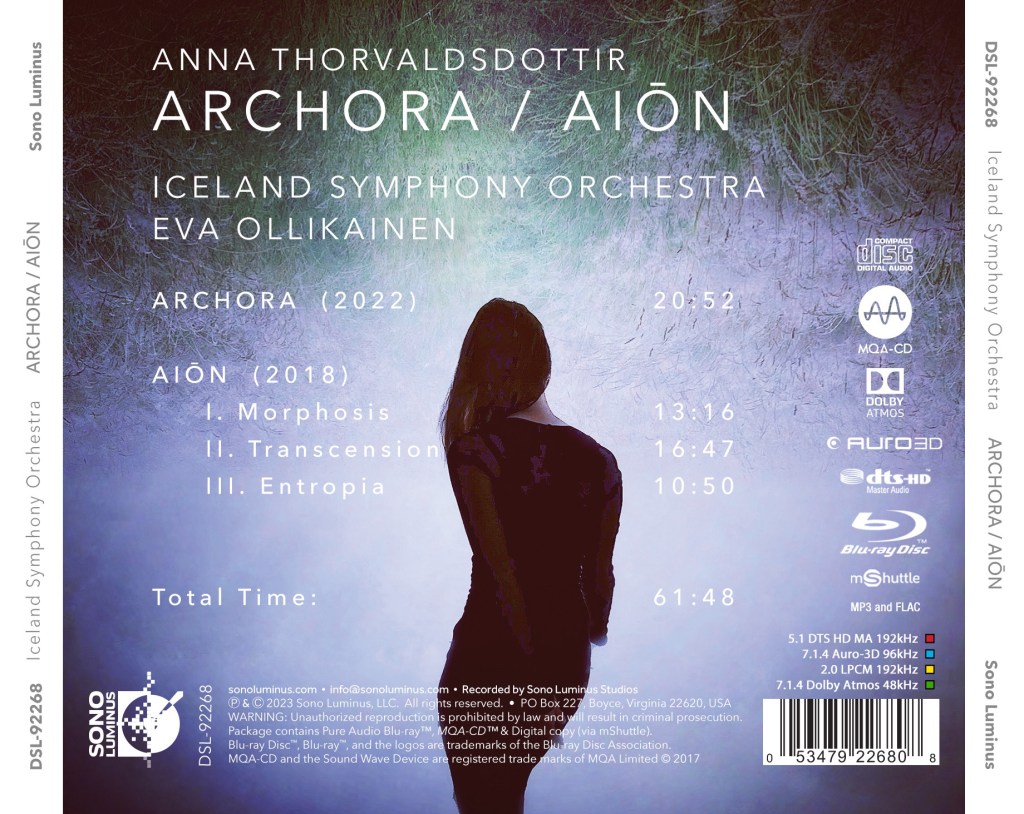
DSL- 92268

As fabulous as that first disc is, this release, dedicated entirely to the work of Anna Thorvaldsdottir, is a worthy endeavor. In addition to that we are treated to the sublime and insightful artistry of the first female principal conductor of the Iceland Symphony, Eva Ollikainen who leads the Iceland Symphony on this disc.

Like the above release, the Iceland Symphony Orchestra demonstrates their world class artistry. This is not easy music to play but, under Ollikainen, as they have under her predecessor, they are able to articulate the intricately orchestrated sounds by this really astounding composer.

Just two works here. “Archora” (2022) and “Aion” (2018). Both are works of grand concept and could easily be called symphonies but the composer seems fond of metaphoric poetic titles. Regardless of the names given these works they demonstrate the composer’s grand sonic visions and her mastery of the orchestra, a mastery grasped very clearly by the Iceland Symphony’s new artistic director and conductor, Eva Ollikainen (1982- ). She holds the distinction of being the first woman to hold the post to which she was appointed in 2019.

Track list

There are only two works presented but both are stunning examples of some of the finest new music being produced today. Yes, it’s great to see women having a greater presence (both as composers and conductors) but, truly, Thorvaldsdottir is “the bomb”, so to speak. Her creativity, her mastery of the orchestra are simply a revelatory as well as entertaining listening experience.

Eva Ollikainen

This release is also a landmark which showcases the formidable talent of the Icelandic Symphony’s new conductor. In addition to breaking gender barriers she is quite simply a rising star and one of the finest interpreters of new music today.

“Archora” (2022) is the most recent work here and it’s another of Thorvaldsdottir’s sprawling cinematic tone poems. No specific story here but the composer’s mastery of orchestral color will doubtless evoke images and feelings in the listener. Thorvaldsdottir is creating a sort of sonic (as opposed to literal) mythology. Her reference points seem to be largely in Greek and Roman mythology but also in Nordic and Northern European myths. Eva Ollikainen conducted the world premiere at the 2022 BBC Proms. You can hear that performance on YouTube here. But the Sono Luminus recording captures more of the subtle sound colors of this engaging work.

The composer’s three movement, “Aion” (2018) concludes this recording. Aion is a Greek God of time. The composer is concerned with various aspects of time in her work. This large three movement work is virtually a symphony with an augmented orchestra, extended instrumental techniques, and an optional choreographic accompaniment. (Tell me that’s not cinematic). There is an example of the optional choreography here.

This recording is also a fine introduction to conductor Eva Ollikainen who clearly has a grasp of this music. Various examples of her interpretive genius can be found on YouTube ranging from Beethoven to new contemporary masters.

These are two truly fine discs both musically and for sheer sonic detail. They’re available in streaming and hard copy CD as well as Blue Ray Audio. These are a fabulous listening experience. Enjoy!

When in Rome…an Alvin Curran Retrospective Installation in Rome


Alvin Curran, Rome, 1980. Adriano Mordenti

Just had to post this for all my readers and friends but especially those living near or able to get to Rome. Curran’s wife, Dr. Susan Levenstein, graciously sent this announcement to me. She is an American physician (and webmaster).Her very entertaining memoir, “Dottoresa” is her accounting of moving her practice to Italy.

Alvin Curran, (1938- ) is the co-founder of the seminal live electric music performance group, “Musica Elletronica Viva” along with his late colleagues Frederic Rzewski (1938-2021) and Richard Teitelbaum (1939-2020). The group formed in 1966 and later included kindred spirits including George Lewis and Garrett List among others. The group did its final tour in 2016.

Click on Curran’s name to look at his fascinating and well organized website which gives a fairly comprehensive accounting of the incredible range of musical styles and a very large bevy of collaborators.

Curran discussing some of his work with interviewer Charles Amirkhanian in Berkeley in 2016 (photo by Allan J. Cronin)

Curran, who taught at the venerable Mills College in Oakland, California is an always welcome visitor in the Bay Area. While he has made his home in Italy for many years now, he is truly an artistic citizen of the world. The warm and affable composer exudes an infectious enthusiasm which doubtless is why he has so many collaborators. His aesthetic which he documented in an article called, “The New Common Practice” in 1994 documents his all inclusive style, one that is very difficult to convey. His works include music for piano, chamber ensembles, orchestra, and even things most folk never thought of as musical.

He is a giant in late twentieth and early twenty first century music and this retrospective is most welcome.

“HEAR ALVIN HERE

ALVIN CURRAN

…a retrospective

part of the #CHAMBERMUSIC series

The show consists in a listening room where a new sound work plays continuously—a mixtape comprising fragments from many different compositions, improvisations, and installations. It leads the audience on an autobiographical listening journey, freely mixing styles, periods, and languages, from free improvisation to Fluxus to Artificial Intelligence, from compositions for shiphorns to works for hundreds of musicians, from Sargentini’s L’Attico and the Beat 72 to MAXXI and the Tate, from Angelo Mai and The American Pavilion of Expo 58 to No Mans Land and the Théâtre de Chaillot.

The Museum of Contemporary Art of Rome (MACRO), Via Nizza, 138

inauguration September 20, 2023, from 6 pm to 9 pm

running until March 17, 2024

***************

Curran in performance at the Pacific Film Archive in Berkeley in 2014.

75 Years of Classical Music in Israel


Utter the name “Israel” and probably only a handful of people will think, “classical music”. As a lifelong new music fan I’ve made many wonderful discoveries by looking at work done by composers in countries that aren’t part of the typical America, Germany, Italy, France, Russia nexus. Throw in the Nordic countries, Canada, and Australia more recently and you have perhaps 90% of what is marketed (even if not efficiently distributed) as new classical music. Israel, at 75, remains a young country but its participation with world class classical composers and musicians is among their proudest contributions to the world at large and those contributions are both extensive and interesting.

Neuma 177

This fine release gives only the briefest taste with a curious selection of pieces that will likely lead listeners to the “more where that came from” path to discover a huge trove of music that really needs to be heard. The only problem with this release is that it’s not a 20 or 30 CD box set of representative western classical music from a comparatively new country in a very old artistic/cultural hotbed.

This fine Neuma release is actually a very nice taste whetting collection of three generations of Israeli composers. I wish I could call it “representative” but that would be a tall order. It is an intelligent selection that will hopefully inspire further exploration of Israel’s classical music artistic legacy. Israel is, in many ways, a country of challenges and this release is, similarly, an extension of this country’s challenges to the canon of western art music in its way and a gentle nudge to curious listeners.

Professor Robert Fleisher (photo: Darsha Primich, courtesy Navona Records)

This project began with a 1986 Israel residency by American composer/musicologist (now Professor Emeritus at NIU) Robert Fleisher. The culmination of this residency resulted in his marvelous book, “Twenty Israeli Composers” (1997) and all but one track on this disc from an earlier concert at NIU in 1987. which was fortunately recorded rather nicely. You can download the book for free by clicking on the title above. Fleisher wrote the very useful liner notes which are also available as a free download. Those two sources can help guide the avid listener to a wider range of music from Israel’s first 75 years.

Track list

German refugee Paul Frankenburger (1897-1984), better known as Paul Ben-Haim is doubtless the one name in this collection that listeners may have heard. He emigrated to the (then British Mandate of Palestine) in 1933 just ahead of the onslaught of the Third Reich in Germany. He Hebraicized his name when he became an Israeli citizen at that country’s inception in 1948. Truly, he was there at the beginning.

His pupils Tvi Avni, Eliahu Inbal, Henri Lazarof, Ami Maayani, Ben-Zion Orgad, and Shulamit Ran (to name just a few) all went on to make significant impacts on the musical world. Some made their careers in Israel, others established the Israeli artistic diaspora but that is another story.

The disc opens with one of Ben-Haim’s finest and best known compositions, his 1943 protominimal “Toccata” for piano. This brief piece is a virtuoso showpiece that this listener found immediately appealing having heard it played as an encore after a concerto performance. Here, a wonderful rendition by Liora Ziv-Li makes a strong case for this piece to be heard more often. This first release of this live performance is, happily, not the only recording of the work. Ben-Haim whose style is of a post romantic/nationalistic style somewhat like an Israeli Aaron Copland, creative and nationalist with just a dash of liturgical. His work is fairly well represented on recordings and on YouTube but he is far less known outside his adopted country where his pedagogy also sowed further seeds.

This second track is one of two (with Tsippi Fleischer’s “The Gown of Night”) that did not appear on the 1987 concert referenced in the intro. Bashrav (2004) by Betty Olivero (the first Israeli born composer represented on this recording) was recorded in Tel Aviv in 2020. The inclusion of this work can stand as a challenge to get listeners to hear one of the finest living composers from Israel. Olivero (1954- ) is very well known in Israel but less so elsewhere despite the fact that some major American orchestras have embraced her work. She is a lyrical and substantive composer whose work is quite appealing. Bashrav is an instrumental chamber orchestra piece based on a Turkish/Iranian musical form from which the work’s title is drawn. It was commissioned and first performed by the San Francisco Contemporary Chamber Players. This is the first commercial recording.

Now we come to another name changer. Tzvi Avni (1927- ) was born Hermann Jakob Steinke in Saarbrucken, Germany. He, like Ben-Haim (with whom he later studied) fled Germany (in 1935) for the safety of the British Mandate of Palestine and took a name reflecting his adopted national alliance. Avni is probably the second best known Israeli composer outside of Israel. His somewhat Stravinskian (to this listener’s ears) neoclassicism is another voice seriously in need of a wider hearing. His brief Capriccio (1955/1975) for piano has had several recordings and performances and the release of this live recording provides an opportunity to hear the work as well as the opportunity to hear another artist’s interpretation of the work. Avni had the foresight to tap into the emerging world of electronic and computer music and added a stint at the justly famed Columbia Princeton Electronic Music Studio to his musical training. Sadly, though he may have name recognition, his representation in recordings is nothing short of abysmal.

Ami Maayani (1936-2019) is, in this writer’s opinion, the third best known composer of those represented here outside of Israel. He was the founder of several fine Israeli music ensembles including the Israel Youth Orchestra. Like Avni, he chose to supplement his traditional music studies at the fledgling Columbia Princeton Electronic Music Center. He also counts Paul Ben-Haim among his teachers. His musical style derives from Arabic traditional music (one of the few folk musics routinely incorporating the microtonal quarter tone) as well as Ashkenazi and Sephardic folk music. In addition to training in music, he studied architecture and has written several books.

While he has written more experimental work, the majority of his available music sounds basically tonal with folk and sometimes electronic elements. Maayani was a prolific composer who, like his “best known” colleagues, suffers from a distribution problem. His architectural work is represented in several portions of Israel’s infrastructure. His three volume study in Hebrew of Richard Wagner challenged Israel’s (understandable) dislike of Wagner’s music. And now time is nigh for a fair reckoning of Maayani’s own music. This is not the first recording of his Arabesque No. 2 (1973) scored for flute and harp. His sister Ruth Maayani (1948-1921), herself an accomplished musician plays the harp in this 1987 performance. His orchestral work, “Qumran” (1970) was the first Israeli composition to be performed in Germany after World War II (even that took nearly thirty years to achieve).

Now we come to another refugee from early to mid century European fascism. Abel Ehrlich (1915-2003) was born in east Prussia and took a more circuitous route to Israel, arriving in the Palestine Mandate in 1939. Unlike some of his predecessors he made no changes to his name. He did study at the Eretz-Israel Conservatory in Jerusalem and went on to write music and teach at Israel Conservatory, the Rubin Academy of Music, Jerusalem; the Rubin Academy of Music, Tel Aviv; Bar-Ilan University and Oranim Academic College. He was of an age that didn’t create a web page but even Wikipedia has very little to say about him except that he was recognized during his lifetime with various prizes and I was able to find this laudatory 2004 concert review in Ha’aretz which reports a count of some 3500 compositions (sic)! It also makes mention of one of his best known compositions, his 1953 “Bashrav” for solo violin. This is a piece based on the Arabic musical form for which it is named. Astute listeners/readers will recognize the name from the earlier Betty Olivero work with which it shares both its name and structure. Would that a performance could have been included here but listeners can easily find several recordings of that other Bashrav on YouTube.

Abel is represented on this recording by two works, both from 1986 and both world premiere recordings from the 1987 concert that forms the core of this album. Track five documents a piano work called, “The Death of Dan Pagis”. It is a sort of lament for Pagis (1930-1986) some of whose poetry Abel set musically but was sadly never heard by the poet. Track eight gives us a hearing of Ehrlich’s “The Dream About Strange Terrors” for two flutes. Both are brief but effective works and, like much of the music here (and a lot of art) seem to be a form of sublimation, a Freudian derived term which refers to an adaptive psychological mechanism, a transformation of pain, anxiety, anger, etc. into something positive. The otherwise informative liner notes say little about these two works but given the composer’s history, both works would seem to fall into that category. Both are in a sort of mid century post romantic style that challenge the performers but speak pretty directly, in a musical sense, to the listener.

Track six introduces us to another native born Israeli composer, Tsippi Fleischer (1948- ). This one is a graphic score which is realized electronically. “The Gown of Night” (1988) is a setting of a poem. It is performed in the original Arabic. The English translation is below.

THE GOWN OF NIGHT
Muhammad Ghana’im


The gown of night
Envelops the desert
Engulfing tent and well
From the boundaries of night
The howling of jackals descends
To raise the dawn
Engulfing tent and well
Then came the dawn …

A portion of the graphic score is reproduced in both physical and digital formats of the album. It is one of the pieces that has actually been released before but those releases on small limited distribution independent labels has likely remained obscure to all but the most tenacious listeners and collectors. It is a fine example of purely electronic music and was composed using recordings of Bedouin children reciting the poem.

I was astounded and oh so pleased to learn that all of Fleischer’s recorded output (including liner notes) is available for free downloads via her website the link for which can be accessed by clicking on the composer’s name in this review. Well, brava Maestra Fleischer for striking a blow against obscurity.

Arie Shapira (1915-2013) is another substantial and prolific composer with no personal website, no government generated website, no publisher generated website, and a way too brief Wikipedia page. In fact Professor Fleisher’s book remains the “go to” resource for this man’s work. A quick look on the discogs site, not surprisingly, list only two CD releases.

He is represented in this collection by “Off Piano” (1984) written for the Michal Tal who performs it here. The 1984 premiere was broadcast by Israeli media. This all too brief work immediately suggested the pianistic fireworks of Frederic Rzewski.

Tracks nine, ten, and eleven comprise the second largest offering by time of all the composers on this album. The “Three Romances” (1986) for piano by Ari Ben-Shabetai (1954- )The works, premiered in 1986 and were written for Liora Ziv-Li whose 1987 performance are on the present disc. Ostensibly an homage to Robert Schumann’s similarly titled work are a modernist and highly virtuosic set of pieces.

Lastly we have by far the longest offering of music of all the represented composers with Oded Zehavi’s “Wire” (1986) for chamber orchestra and soprano (Zehavi plays the piano part in the ensemble). Born in 1961, he is by far the youngest composer this collection. Wire is a setting of a poem in Hebrew by Chaya Shenhav, English text given below.

Chaya Shenhav, “Strange Brightness,”
(‘Thread: Poems’), Hakibbutz Hameuchad
Publishers Ltd, 1984, p. 22; Translated by
Oded Zehavi. ©All rights reserved.


In those awful shadowless
minutes before sunset
when greenish lights rise
from the valley
When the trees on the slopes
glow with a sudden great light
but beingless, perhaps,
And the children slowly climb the path,
their faces shining with a strange brightness . . .
Call out to them quickly, “speak,” “shout,”
like the partridges screaming in the valley
scream,
You see, you know, don’t you?
that they are moving away

This release is a testament to Professor Fleisher’s musicological efforts that help raise awareness that Israel has some truly world class composers of new classical music. It is also a fine place for listeners to begin their explorations of this repertoire.

Dyadic Dreams and Parallel Perspectives: Collaborative Works in Sound and Image by Charles Amirkhanian and Carol Law


DVD OM 4001

Make no mistake. This release, a long time in coming, is an essential document of the work of two Bay Area artists whose contributions (frequently behind the scenes) receives some richly deserved attention.

The dyad here consists of Carol Law and Charles Amirkhanian, partners in both life and art, collaborators in sound and image now release this collection of their collaborative works from 1973 to 1985 entitled, “Hypothetical Moments: Collaborative Works (1975-1985)”. This lovingly produced DVD brings together a series of performance art pieces demonstrating an intimate set of collaborations between these two Bay Area artists. Law is a photographer and visual artist whose art works have been displayed internationally in several galleries. Her designs can also be found in some of the striking wearable art she made as promotional/souvenir collectible items sold at concerts and online from the OM store. Amirkhanian is a composer and sound artist as well as a broadcaster and producer who has curated concerts and produced radio programs promoting new and innovative music in the bay area (and beyond) since about 1969.

Carol Law and Charles Amirkhanian acknowledging audience applause at OM 23 in 2018 (Photo by Allan Cronin, Creative Commons License)

Their respective artistic outputs include both individual and collaborative works but, until now, the only chance to experience their collaborative efforts has been in the rare occasions in which these works were performed live. The booklet accompanying this DVD gives a partial list of live performances the most recent of which was in 2018 when OM 23 “The Wages of Syntax” presented a 6 day series of concerts which was an international survey of linguistic sonic arts. Visual analogues and deconstructions of vocal sounds as practiced by artists inspired by language and the expansion of the very definition of art, music, and performance.

Dominic Murcott, peripatetic conductor/drummer about to lead a major new opus by Charles Amirkhanian. (Photo by Allan Cronin, Creative Commons license)

My tardiness in completing this review afforded me a unanticipated perspective on Amirkhanian’s art. The performance of his new composition, “Ratchet Attach It” (2021) at OM 26, pictured here integrates his roots as a percussionist with his penchant for spoken word and sound sampling.

Charles Amirkhanian performing in front of images by Carol Law at OM 23 in 2018 (Photo by Allan Cronin, Creative Commons License)

The collaborations here have roots going back at least to the early twentieth century with the experimental visual innovations of Vassily Kandinsky, Picasso, Miro, and the photographic experiments of Man Ray, etc. Their sonic antecedents include the work of Gertrude Stein, James Joyce, Antonin Artaud, Luigi Russolo, and a panoply of sound artists that Law and Amirkhanian visited in the late 1960s.

In addition to these early experiments one must understand that these creative meldings of sonic and visual art were flourishing in the Bay Area, most obviously in San Francisco where Allan Kaprow’s “happenings”, Bill Graham’s rock concert productions, and similar sound/light shows dominated the fare at performance venues like the Fillmore and similar spaces where innovation in pop/rock music mixed with innovation in visual light shows combined with bands performing for audiences immersing them in mind manifesting artistic assaults that drew crowds frequently also experimenting with not yet illegal psychedelic drugs (the word “psychedelic” is a neologism which means “mind manifesting”). The emblematic event here was the so called “Trips Festival“, a three day event held in 1966 at the Longshoreman’s Hall. I have elsewhere referred to Mr. Amirkhanian as the “Bill Graham of new music”, a comparison which still seems valid.

speaking is speaking (by Bay Area poet Richard Brautigan)

We repeat
what we speak
and then we are
speaking again and that
speaking is speaking.
Tokyo
June sometime, 1976

Well, drugs are not the issue here but mind expansion is. What is documented here is the multimedia collaboration of two essential Bay Area artists who, via their individual and collective efforts effectively expanded the possibilities of both visual and sonic media. These are innovative on many levels. Amirkhanian’s unique take on sound poetry (his anthology “10 + 2: 12 American Text Sound Pieces”) is an essential survey of that genre released on vinyl (now available on OM records ). And Law’s photographs, design, deconstruction and collage methods are integrated into her own unique style of visual art. The performances on this DVD constitute another uniquely San Francisco Bay Area chapter in multimedia, collaborative performance art now made available to a larger audience.

Other Minds (OM 1006-2)

This defining anthology of Law and Amirkhanian’s explorations of sound poetry (first released on vinyl in 1975 on the now defunct 1750 Arch Records) has defined the genre for many (this writer included). Aram Saroyan, Clark Coolidge and Beth Anderson would later appear live at Other Minds 23 in 2018 which outdid the aforementioned “Trips Festival” in a week long festival of sound poetry from an international roster of poets and sound artists.

Now keep in mind that the original presentations of these works from the early 80s utilized the technology of its era, analog recording, magnetic tape, and slide projectors (remember those?). So this 21st century rendition takes this work into contemporary technology and makes available for the first time since their premieres the original marriage of sound and image as intended by the artists. Without getting into McLuhan-esque analyses of the differences and subsequent meanings of the original media versus those on this DVD one need only celebrate the fact that listeners/viewers can now see these works with their originally intended melding of sound and image.

There are 12 tracks:

  1. History of Collage (1981) (original audio release on Mental Radio CRI, 1985)
  2. Audience (1978)
  3. Tremolo Bank (1982)
  4. Dog of Stravinsky (1982) (original audio release on Mental Radio CRI, 1985)
  5. Maroa (1981) (original audio release on Mental Radio CRI, 1985)
  6. The Real Perpetuum Mobile (1984)
  7. Mahogany Ballpark (1976) (original audio release on “Lexical Music” 1750 Arch, 1975)
  8. Hypothetical Moments (in the intellectual life of southern California) (1981) (original audio release on Mental Radio CRI, 1985)
  9. Awe (1973)
  10. Andas (1982)
  11. Dreams Freud Dreamed (1979)
  12. Too True (1982)

The first nine tracks are the digital adaptation of sound and image accomplished by Dave Taylor. These are the pieces originally performed live in an era using equipment as distant from current technology as MP 3 files are now from magnetic tape. The last three bonus tracks are actual live performance videos (restored by Jim Petrillo) of three 1985 performances which give some of the flavor of the original experience of these works.

Several of these pieces have been released as audio only tracks on Amirkhanian’s CD releases (as noted) and, while they certainly work as audio only experiences, the images add a welcome dimension. The equally striking design by OM resident design master Mark Abramson add a deserving touch of class to the videos and the accompanying booklet which features informative texts on the works as well as a nostalgic collection of photographs featuring the dyadic duo.

I am honored to have a quote reprinted there from my blog review of OM 23 where I and a sizable audience were treated to a fabulous week long live experience of sound poetry featuring this duo’s work alongside that of exhilarating selections of other similar minds’ work. Of course nothing can take the place of the live experience but this production comes close.

This is a must have collectible document for anyone interested in sound poetry and Bay Area artists.

“Whereof one cannot speak, thereof one must remain silent.”- Ludwig Wittgenstein (1921)

Achim Freyer meets Don Giovanni at Checkpoint Charlie: Alvin Curran’s Tribute


Achim Freyer (Photo from German Wikipedia)

Who? and Who? American composer Alvin Curran (1938- ) returns to his roots…well, some of his roots, in this streaming composition, a tribute to German dramaturge Achim Freyer (1934- ). Curran’s composition, a tribute to the dramatist/costume designer/stage director, is presented in streaming format via Deutschlandradio. and is available at the following link:

Streaming link: https://www.hoerspielundfeature.de/klangkunst-achim-freyer-trifft-100.html

I mention the link to allow my readers to access the program stream so as to be able to hear the work (obviously) but also because Maestro Curran has been at the forefront of adopting social media as both a medium for access and distribution for his compositions but also as a part of the the work (at least in the Mc Luhan-esque sense, “the medium is the message”). More details on Curran’s work can be found on his excellent website.

His Kristallnacht memorial work, “Crystal Psalms”, used multiple radio stations with performers in each location throughout northern Europe which Curran mixed live for the broadcast, the final mix released on CD format is a classic of the genre and a powerful sociopolitical statement. The point is that Curran continues to be at the forefront of integrating current technology in his art. His distinctly personal use of synthesizers, sampling keyboards, and other electronics continues to characterize his creative process.

Alvin Curran in San Francisco in 2016

Achim Freyer became known to me when I saw Michael Blackwood‘s film, “A Composer’s Notes…” (1985) which documented two simultaneous staging of Philip Glass’ opera “Akhnaten” by the geographically distant opera companies who co-commissioned the work. The Houston Opera production was designed by David Freeman, and the Stuttgart production by Achim Freyer. Freeman cast the work in a realistic historical tableau in ancient Egypt whereas Freyer’s designs evoked a sort of hallucinatory, dreamlike, mythical set of images. Both are beautiful and quite viable productions but they are very different visions. It is that very different vision that characterizes Freyer’s work and gets him the accolades that drive the commissioning of Curran’s tribute. This musical tribute now is added to the metaphorical mantle where Freyer’s accolades reside. You can also download an audio MP3 here.

When you listen to the streaming version or the conveniently downloadable MP3 you will be greeted by about 5 minutes of German language narration followed by approximately 35 minutes of Curran’s sound collage work incorporating the composer’s unique approach to the inclusion of digital sampling technologies along with his extensive knowledge of electronic sound production and manipulation.

Like any great work of art this work will have varying impacts and leave a variety of impressions. Beginning with the playful title it is doubtless full of referential quotes that probably rival Elgar’s “Enigma Variations” (1899) or the panoply of quotations in Luciano Berio’s “Sinfonia” (1968-9). Don’t get me wrong, this streamed work is very different than either of these predecessors. Rather it appears to be a sonic portrait using concrete sounds alongside musical sounds to create an impressionistic tableau of Herr Freyer. The composition is reflective of Curran’s “New Common Practice” concept in which the composer is free to use whatever sounds and techniques he or she chooses to complete a musical piece.

Even a cursory look at Alvin Curran’s oeuvre reveals the incredible diversity of his compositional sound sources. From conversations, to creaking doors, footsteps, musical snippets, and the sound of the ethnic/mythic shofar (the ram’s horn has become a signature sound for the composer). They are all mixed carefully (this sounds like a carefully crafted collage) to create a non-linear narrative or sonic poem in tribute to an artist and a mutually beneficial friendship between Curran and Freyer. Please forgive my admittedly clumsy appropriation of Friedrich Schiller (in turn via Beethoven) when I say, in my limited German, a phrase which can be said to characterize both the composer’s work and that of its subject Achim Freyer: The final embrace, the feeling at the end of Beethoven’s 9th symphony as the chorus sings: “Diese Kunst umfasst die ganze Welt” (This Art embraces the entire World).

Monk and the Memories


Cantaloupe CA21153

Like many innovative young artists in New York City in the early 60s Meredith Monk had to train musicians to work with her unusual vocal methods. Her first album, Key (1971), was the first time her vocal art began to be dispersed outside the intimate, neo-bohemian loft space where the album was recorded. After graduating from Sarah Lawrence College in 1964 Monk moved to Manhattan where she and many other young, creative experimental musicians populated what became known as the “downtown scene” or SOHO. Many musicians worked with her over the years including composer/cellist Robert Een, Pianist Anthony De Mare both of whom incorporated their extended vocal techniques learned in the loft of the master herself.

Bang on a Can was formed from a very similar aesthetic (that of providing an alternative to the “uptown scene” which generally refers to the “establishment” or “mainstream” of classical music epitomized by Julliard and Lincoln Center. Founded in 1987, Bang on a Can and their subsequent touring group, Bang on a Can All Stars (begun in 1992) can be said to be another generation’s effort to achieve what Monk and the many musicians who followed such as Philip Glass, Steve Reich, LaMonte Young, among many others whose musical vision stood in contrast to the established uptown, more academic leanings.

It was Bang on a Can’s transcription of Brian Eno’s famous studio produced album (no live musicians), “Music for Airports” that demonstrated their ability to revision some of the work of their forebears and bring it into the concert hall. This is pretty much what we see here in this loving collaboration/tribute to one of New York’s finest composer/performers from the early downtown/SOHO era.

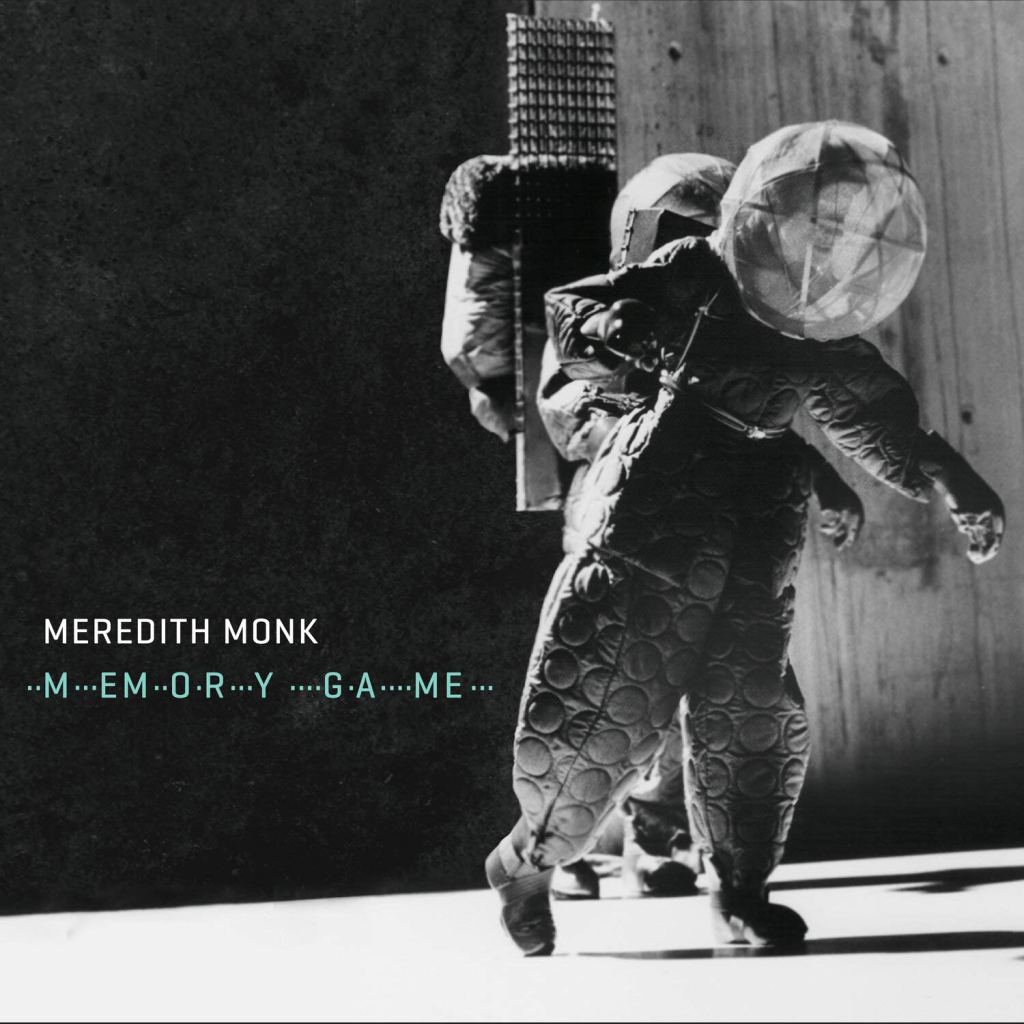
Monk began her artistic life as a dancer and dance/choreography remains an essential part of her artistic vision. 2014-2015 marks the 50th anniversary of Meredith Monk as a performer. “–M—EM–O-R—Y —-G-A—-ME—” (2020) is a wonderful production which sits somewhere between a “greatest hits” record and that of another generation’s reverent celebration of a unique artist. Bang on a Can shares the duties of transcription and performing with Monk and her ensemble. Most of Monk’s work involves (generally) one to five musicians (playing minimalist style music) onstage but here we see an expansion into a larger ensemble not unlike her collaborations which resulted in one of her largest works, the masterful “Atlas” (1993) produced by the Houston Opera. (Would that a new recording of Atlas may eventually come from such a collaboration).

back cover

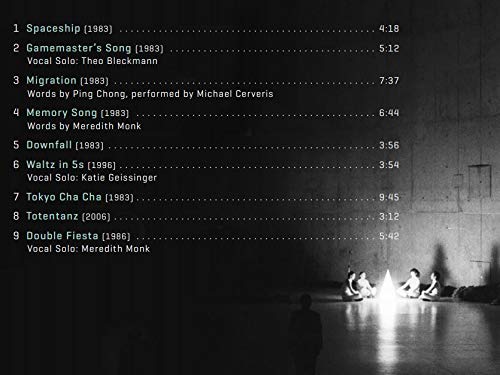
So what we have here is a combination of transcription, performance, but most importantly a respectful sharing out of a mutual educational experience between Monk’s ensemble and that of BOC. There are nine tracks comprising nine distinct compositions from Monk’s oeuvre. BOC composers provided transcriptions of “Spaceship” (Michael Gordon), “Memory Song” (Julia Wolfe), “Downfall” (Ken Thomson), “Totentanz” and “Double Fiesta” (David Lang). The other tracks appear in transcriptions by members of Monk’s ensemble: “Gamemaster’s Song” and “Migration” (Monk), “Waltz in 5s” (Monk and Sniffin), and “Tokyo Cha Cha” (Sniffin).

Monk’s ensemble in this recording consists of Meredith Monk, Theo Bleckmann, Katie Geissinger, Allison Sniffin, and guest artist Michael Cerveris. The Bang on a Can All Stars include Ashley Bathgate, cello and voice; Robert Black, electric and acoustic bass; Vicky Chow, piano, keyboard, and melodica; David Cossin, percussion; Mark Stewart, electric guitar, banjo, and voice; and Ken Thomson, clarinets and saxophones. The expansion of the ensemble adds favorably to the sound (as it did in Atlas) and the transcriptions enhance the music (as was the case in “Music for Airports”).

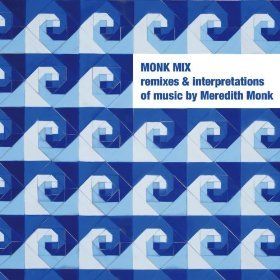
The 2012 collaboration produced by Monk’s House Foundation deserves mention here because it is a crowd sourced two CD production of covers by a variety of artists paying homage to Monk’s work. It is not clear if this release had any influence over the Memory Game album but it does speak to the influence of the artist.

The House Foundation for the Arts
ASIN : B00A1JCY1I

Fans of Meredith Monk and her various music/dance/theater works will find a comforting familiarity in these performances of music which, at one time were the leading edge of the new and experimental, now become familiar and, more importantly, embraced by another generation who clearly took the time to look, listen, and understand the work of this now acknowledged American Master. Those unfamiliar will find this a great introduction to Monk’s legacy.

Though chosen from a variety of compositions which date from 1983 to 2006, this selection comes together in a satisfying unity. The very tasteful album design is itself an homage to the look of Monk’s ECM recordings (under Manfred Eicher’s direction) who released the majority of her work. Kudos to the production team of David Cossin and Rob Friedman whose work here is among the finest of Bang on a Can Allstars’ recordings and a very satisfying addition to Monk’s discography. The little liner notes booklet includes an essay by the composer as well as a copy of the lyrics to “Migration” and “Memory Song”, just enough to inform and not overwhelm the casual listener. This is one fantastic release.

Meredith Monk performing her signature Gotham Lullaby in San Francisco, 2016 Other Minds

Charles Amirkhanian, Catalyst of New Music Turns 75


Charles Amirkhanian interviewed by Kyle Gann at Berkeley’s David Brower Center (Photo by Allan Cronin, Creative Commons license)

A large and sympathetic crowd filled the Goldman Theater in Berkeley’s David Brower Center on this 19th day of 2020, the 75th birthday of composer, broadcaster, producer, new music catalyst Charles Amirkhanian. His is perhaps not a household name except in the households of the legions of composers, musicians, and fans of new music (this writer’s household definitely included).  That is a substantial crowd actually and close to 200 of them were in attendance.  

It was somehow fitting that this celebration take place in this particular venue. The Brower Center also contains the office from which he administers the wonderful Other Minds organization, the current outlet for his various projects supporting new music including the annual Other Minds concert series. 

Joshua Kosman’s respectful article of January 14th served notice to all of this impending event.   

1280px-Amirkhanian

Amirkhanian with his ASCAP Award in the background (Photo by Allan Cronin Creative Commons license)

Charles is the executive and artistic director of the Other Minds Music Festival in San Francisco, which he co-founded with Jim Newman in 1992.  That festival will mark its 25th incarnation this year.  In addition he produces Other Minds Records and maintains a huge archive of interviews and music as well as a weekly radio broadcast on KALW featuring new and interesting music presented by he and his musical confederates.  

His stint as music director for KPFA in San Francisco lasted from 1969 to 1992 during which time he also interviewed most (if not all) the significant new music composers and performers of the time.  This writer has dubbed him the “Bill Graham” of new music because of the detail and care he always takes in producing concerts, conversations, recordings, and happenings.

His musicological efforts can be seen in his writings and advocacy of the work of George Antheil (for whom he served as executor of the composer’s estate) and Conlon Nancarrow, expatriate American composer who spent much of his creative life in Mexico City.  It was in the composer’s studio there that Charles recorded all of the groundbreaking studies for player piano on the composer’s original instruments (a major undertaking).  Indeed Charles’ history of advocacy and support of fellow musicians and composers would be a worthy subject for a book on its own.  His advocacy is a large part of his legacy as well.

EBB03436

Photo by Ebbe Roe Yovino-Smith (all rights reserved)

The 178 seat Goldman Theater had but a few empty seats.  The crowd was a clearly enthusiastic one comprised of artists and supporters of the arts.  The evening commenced with an interview by fellow composer and scholar Kyle Gann, himself long associated with Mr. Amirkhanian (since at least 1982).  A professor of music at Bard College, Gann came here to the west coast expressly for this interview.  

EBB03324

Kyle Gann, composer, scholar, professor of music (Photo by Ebbe Roe Yovino-Smith)

After a brief intro from Blaine Todd, Other Minds’ Associate Director the interview (actually more of a friendly conversation) began  with brief discussion of Amirkhanian’s beginnings and subsequent history in music in the Bay Area (and beyond).  Just in this casual conversation we met the man whose experiences has had him cross paths with a virtual Who’s Who of the most significant figures in 20th (and now 21st) century music while pursuing his own compositional efforts.  

In many, or dare I say, most cases his relationships have been very beneficial to his peers.  This was quite evident in a few conversations which this writer had with fellow audience members.  One gentleman asserted that Charles has put his advocacy ahead of his own work in favor of supporting new and emerging talents.  Another reminisced about how much he had learned of new music as a result of listening to those KPFA shows and how much this meant in his life.  His support of this very blog is another example.  It came about during the experience of volunteering at the Other Minds office.  And one need only look at the histories of many of the composers hosted at the fabulous Other Minds festival to see the subsequent successes attained by the talented individuals invited to perform at those events.  Henry Brant’s Pulitzer Prize winning organ concerto, “Ice Field” (2001) was an Other Minds commission.  More examples abound.


Amirkhanian’s sound poetry can be found on albums such as Lexical Music (1979, now on OM records 1032-2), Mental Radio (1985, CRI records, reissued on New World Records), Walking Tune (1997, Starkland Records), and his genre defining anthology “10+2: 12 American Text Sound Pieces (1975, OM 1006).  

Loudspeakers

New World Records 80817

There is more to be had in this one man’s work than one evening could hope to contain but this program was also a CD release event of Amirkhanian’s sound collage works, a distinctly different genre from those who may know his language based works.  The two CD set on New World Records, “Loudspeakers” is a compendium of four works, Pianola (Pas de mains) (1997–2000; the subtitle is French for “no hands”), Im Frühling (“In Spring”, 1990), Loudspeakers (1990) ,  a vocal portrait of Morton Feldman, and Son of Metropolis San Francisco (1987/1997).  This release serves as a fine birthday present for the composer and his audience illustrating this important aspect of his oeuvre..

_73A2550

Carol Law

At one point Amirkhanian quipped about his “long suffering wife” Carol Law who is a photographer and visual artist whose work includes some fascinating collaborations with Mr. Amirkhanian.  The two spent the mid 1960s traveling and meeting sound poets throughout Europe and the Nordic countries.  These efforts were very nicely showcased some of his work in the Other Minds 23 concerts.  I include one photo from that festival to give some idea of the significance of the collaboration. Law’s affable presence is a part of all these concerts and, far from suffering, she seems to derive much joy and satisfaction from this work.

OM230100

Amirkhanian performing his sound poetry in conjunction with Carol Law’s surreal slide show in which Amirkhanian becomes a part of the striking images.


Though Charles once remarked in an interview that one cannot really play these sound collages and expect people to listen in a concert hall (these pieces are originally conceived for presentation on radio) that is exactly what he did at this event.  We were treated to some or all of the pieces on this important new release including the entire 20 minutes or so Son of Metropolis.  And this sympathetic audience ate it like candy.  Indeed these sonic landscapes, the experimental Pianola, and the humorous homage to the late Morton Feldman in the titular Loudspeakers were absorbed by hungry ears and met with appreciative applause.  It is clear to those with new music ears that this release is a major event.

gannchrom

Other Minds OM-1025-2

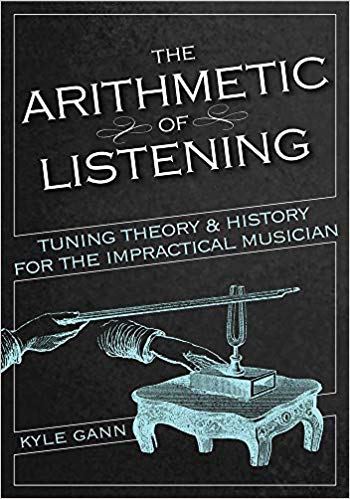
In a role reversal consistent with our guest of honor’s reputation for magnanimity a portion of the event was given to listening to an excerpt (the album is over 2 hours long) from Kyle Gann’s masterful Hyperchromatica, a piece written for three computer controlled disklaviers all tuned to a 33 tone octave and produced by Amirkhanian on Other Minds Records.  One cannot accurately describe the sound of this music except that it may remind some of a detuned old piano.  It is anything but detuned and Gann owes his inspiration in part to the experiments with tuning from predecessors such as La Monte Young and Ben Johnston (among others).  Actually he just recently released his own carefully researched tome on the subject of tuning.  

kyletune

Amirkhanian briefly took the role of interviewer and provided a very useful introduction to this work prior to hearing one of its movements.  As with the earlier pieces the audience listened with respectful attention and responded with warm applause.  This Other Minds records release was also available before, at intermission, and at the conclusion of the vent with both Charles and Kyle happily autographing and discussing their work.  Both the Hyperchromatica disc and this new book are major additions to the world of new music.


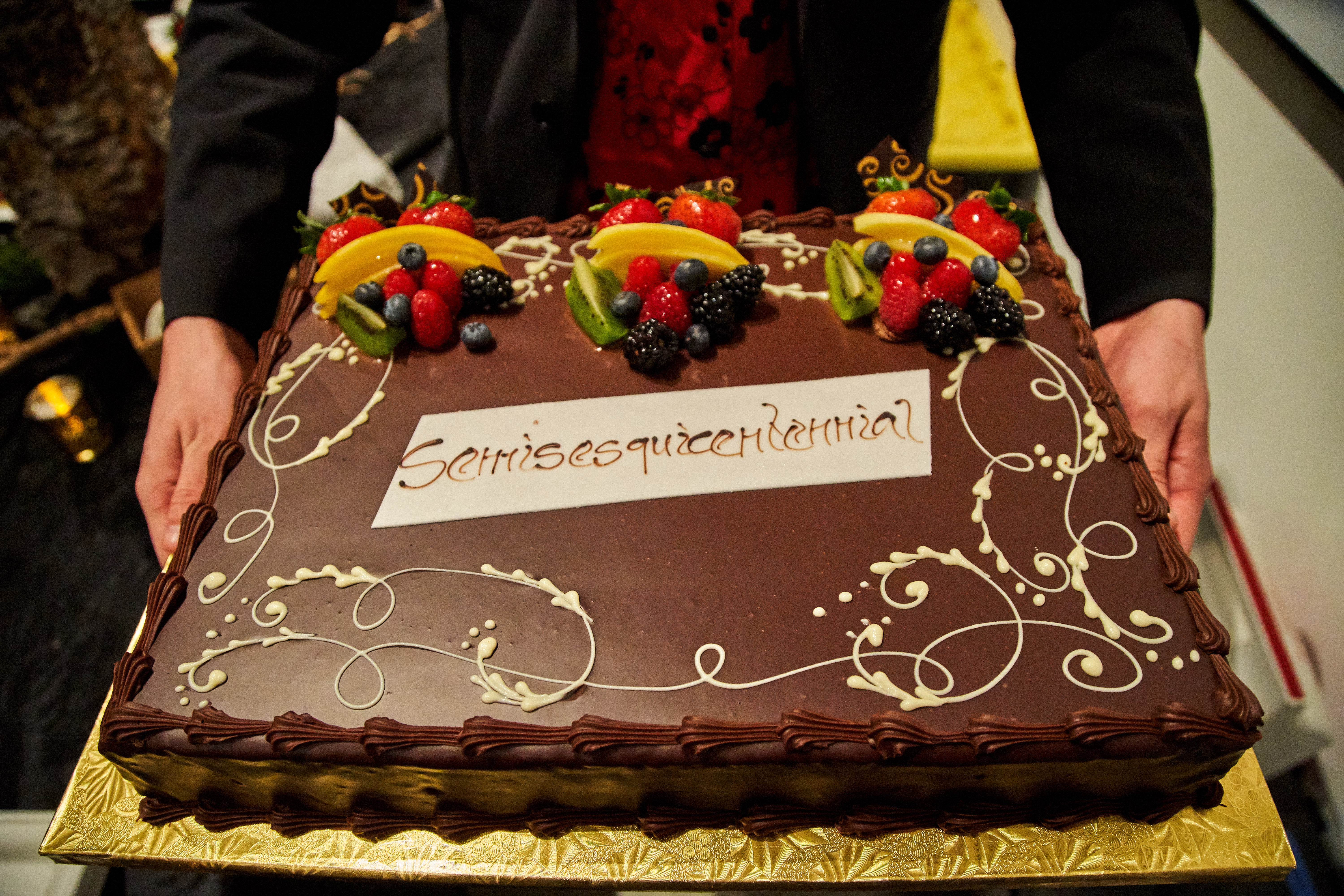
And, of course, no birthday is complete without a cake.

EBB03353

Photo by Ebbe Roe Yovino-Smith

Many lingered following the event (which exceeded its two hour original plan) to chat with the kindred spirits and share in the cake, cookies, and fine UBUNTU brand coffee.  It is an event that will live in this writer’s memory and doubtless in the many who attended.

EBB03588

The man of the hour toasting his “semisesquicentennial”.

A very Happy Birthday to you, Mr. Amirkhanian.  Your vision and efforts have been and continue to be a blessing to the Bay Area and the new music community in general.  Salud!!


Ramón Sender Barayón, Always Going Toward the Light


Raysender

Ramón Sender Barayón at Arion Press in San Francisco (Photo Creative Commons 2011 by Allan J. Cronin)


This crowd sourced video opens with a sort of exposition of the various identities of its subject Ramón Sender Barayón (also known as Ramon Sender, Ramon Sender Morningstar, Ray Sender, and Ramon Sender Barayón).  His father was the renowned Spanish novelist Ramón J. Sender whose work was unappreciated (to say the least) by the Franco regime resulting in his spending the last part of his life as an expatriate in the United States of America.  His mother Amparo Barayón fared far less well.  Her short life and her death at the hands of the Franco regime are memorialized in her son’s book, “A Death in Zamora“, an experience which has understandably informed his life.  As a writer, in order to distinguish himself from his father, he adopted his mother’s maiden name appended to his given name.  Happily this and some of his other works are making it to the kindle format.

img_0745

The film unfortunately does not appear to be available in any commercial outlets at the time of this writing but one hopes that Amazon or some internet distributor will make it more widely available.  One small critique is the use of sometimes English narration and sometimes Spanish narration with attendant translation subtitles in the opposite languages is a bit difficult to get used to but hardly an insurmountable issue.

Sender’s personal website continues to be a source of useful information.  Links can be found here to many of his writings and other work as well as some discussion of his musical compositions.

deathzamora

In addition to being a writer he is an acknowledged pioneer in the area of experimental music.  He, along with Morton Subotnick, Pauline Oliveros, Joseph Byrd, William Maginnis, Tony Martin, Joseph Byrd, and Terry Riley (among others) founded the San Francisco Tape Music Center in 1962.  This later became the Mills College Center for Contemporary Music and remains in operation as of the date of this review.  Barayon’s ” novelized history of this time in his life titled, “Naked Close Up” finally found itself in a Kindle release after having circulated in PDF format for years on the internet.  (This history is also further documented in David Bernstein’s excellent, “The San Francisco Tape Music Center: 1960s Counterculture and the Avant-Garde“)

His curiosity and wide ranging interests saw him participating in alternative commune living situations (beginning in 1966) in northern California exploring spirituality and challenging established social norms through the exploration of viable alternatives.  He writes most eloquently about this in his recently published “Home Free Home“, a large edited tome on the Morningstar Ranch and Wheeler’s Ahimsa Ranch which includes material by several other former residents.  The book is as much compilation as it is historical writing and memoir.  It is a fascinating read and is filled with historically significant recollections and commentary by many of those one time residents of these (now sadly defunct) communities.

homefree

This DVD is one of those increasingly popular crowd sourced productions (here is the Indiegogo link) which has allowed independent publication of countless books and CDs and countless other projects which stimulate little interest among traditional venues despite the significance of their content.  The content here is of a profoundly important nature to fans of new music as well as fans of alternative living experiments and 60s counterculture and philosophy.  It is contemporary history and biography.

Ramón is man possessed of both wisdom and humor as well as deep thought.  This film is the first documentary to cover the diverse interest and involvement of this affable cultural polymath.  It begins with an interview of Mr. Sender in the living room of his home in San Francisco.  From there it traverses more or less chronologically among the dizzyingly diverse events which comprise his life thus far.

From his birth in Spain in 1934 to his present role as a sort of spiritual/intellectual guru running a lecture series called, “Odd Mondays” in San Francisco’s Noe Valley neighborhood which he and Judith Levy have managed for some 17 years with a variety of carefully chosen speakers.  The film covers a variety of topics and while it leaves out details at times it is a cogent and balanced biographical documentary.

His early involvement in the establishment of the influential San Francisco Tape Music Center finds him connected with fellow luminaries such as Pauline Oliveros, Terry Riley, Morton Subotnick, William Maginnis, Steve Reich, Joseph Byrd, Tony Martin, and Donald Buchla.  This institution, now relocated as the Center for Contemporary Music at Mills College, saw the creation of a great deal of musical technology and significant musical compositions (Terry Riley’s groundbreaking “In C” was first performed there in 1964).

Sender was one of the organizers of the Trips Festival in 1966 along with Stewart Brand (later of Whole Earth Catalog fame), Bill Graham, Ken Kesey with his Merry Pranksters. Following this he left San Francisco for Sonoma County in northern California.

He states at one point that he has not wanted to be identified with a single career (as his father was) so, following his experimental music work, he became among the first to experiment with communal living in the Morningstar Ranch and later in the Wheeler Ranch in Sonoma County, California.  These are now well documented in his book, “Home Free Home” mentioned earlier.

Happily the film does a nice job of acknowledging the role that his wife Judith Levy has played in his life since their marriage in 1982.  In particular her support in Sender’s research into his mother’s death at the hands of Franco’s thugs in Spain is both sweet and heartbreaking.  The two appear to be constant companions in a mutually supportive relationship he sought for many years.  They are frequently seen together.

A segment of his work which gets less attention here are his fiction and spiritual writings including Zero Weather, Being of the Sun (co-authored with Alicia Bay Laurel), Zero Summer, and Planetary Sojourn.  He has a collection of unpublished manuscripts and is reportedly now working on his autobiography.  Something which will doubtless be worth the wait.

senderchapelchimes

Sender with unidentified man walking out of the Pauline Oliveros Memorial Concert at Oakland’s Chapel of the Chimes in December, 2016 (Photo Creative Commons 2016 by Allan J. Cronin)

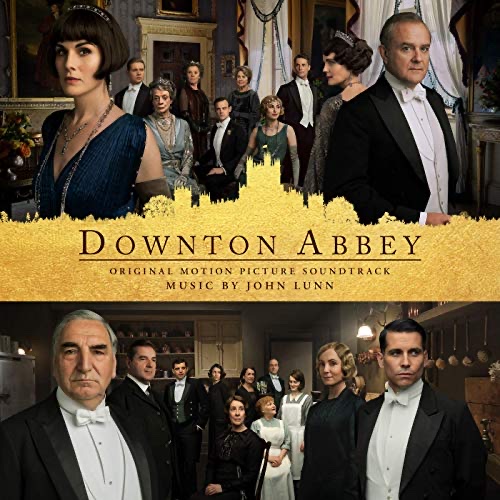
Downton Abbey, the Music


I have little expertise in the area of soundtrack music. It is my opinion that they largely serve as comforting souvenirs almost regardless of their quality.

John Lunn’s score does rise above the ordinary with its quasi post minimalist gentle music for this mini cult film. He is not Prokofiev or Herman but that level is not what is needed to support what is in the end a well written and well acted/directed costume drama.

Lunn does not burden his audience with obtuse or even obvious references to British music (folk or classical). No quotes from Nimrod or Rule Britannia (thank God). Just competent and unobtrusive incidental music for a decent film. Doubtless there will be a few live orchestra performances concurrent with screening the film in a concert setting. Enjoy the memories.

The Apotheosis of Lenny, a New Recording of “Mass”


Leonard Bernstein’s 1971 Mass was commissioned by Jacqueline Kennedy for the opening of the new John F. Kennedy Center for the Performing Arts in Washington, D.C. The premier generated both controversy and paranoia (by Nixon and his crew) but the recording sold well.

This is by my count the fifth commercial recordings not counting the one DVD release. In addition there are numerous full performances available on YouTube. All have their individual highs and lows.

This work is in many ways the single work that embraces all the facets of a truly multifaceted composer. There is serious classical music passages, cheesy electronic music, excellent choral writing, showtunes, dancing, and, above all, political protest.

This writer fell in love with the original Columbia vinyl boxed set on the mid seventies and that recording remains a critical reference point but the joy of multiple interpretations begins to show the depth and complexity of this work. It is, in this writer’s mind this composer’s song of the earth, struggling with all its complexities both beautiful ones and sad ugly realities.

The present release is very enjoyable but is marred at points by some clunky miking if the singers. No doubt this is due in part to the fact that this is a document taken from several live performances. That makes it difficult to hear the words at times.

Nezet-Seguin is strongest in his interpretation of the orchestral parts where he elevates the discourse effectively placing Bernstein alongside the great masters who he championed as a conductor. If his and the singers’ interpretation don’t swing the way Bernstein’s own did I would assert that it’s OK to hear those passages differently. Every serious interpretation is effectively a dialogue between composer, performers, and audience. And this one is moving.

Jenny Q Chai brings Synaesthesia to CNMAT in Berkeley


choi20190001

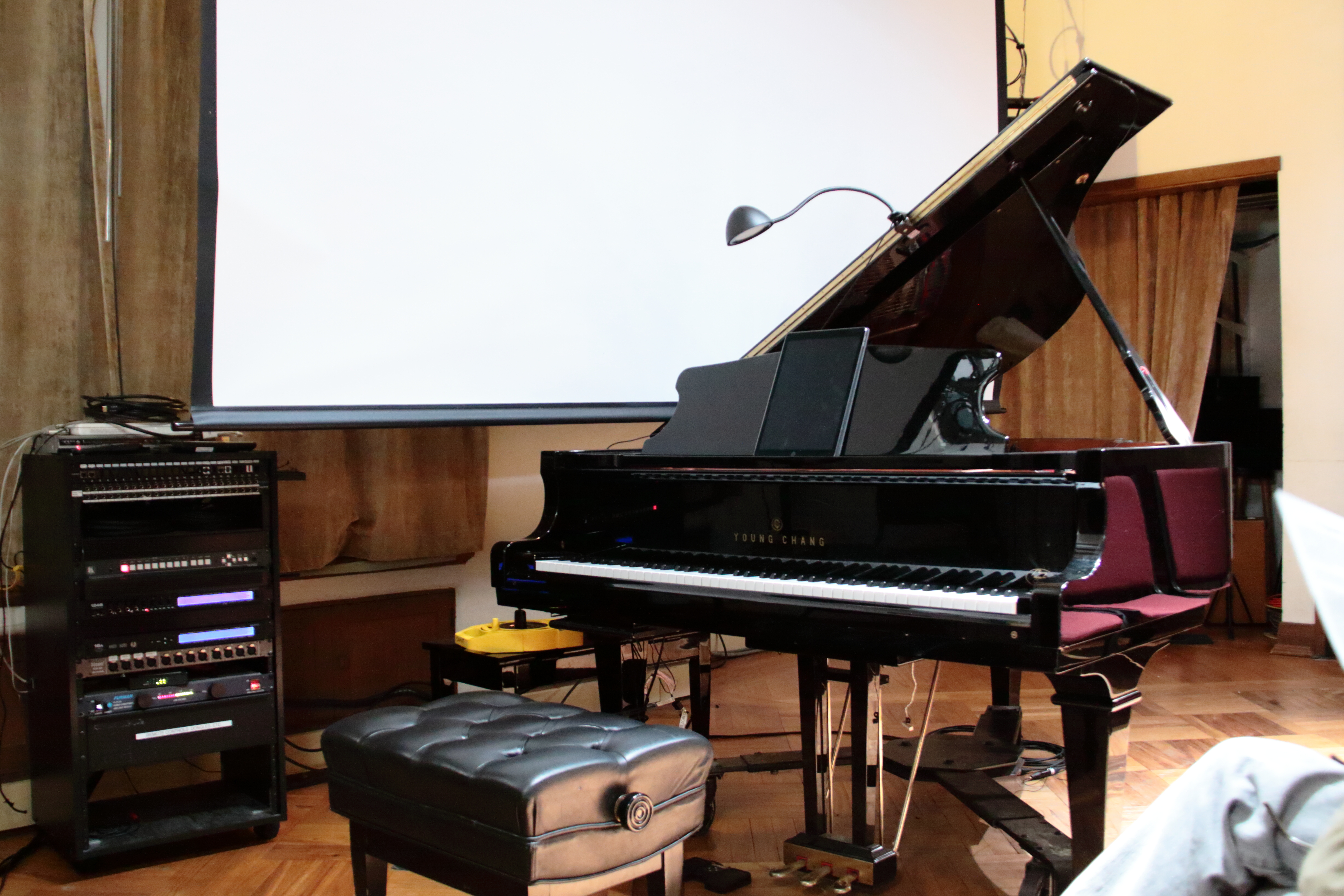
All is set up in the diminutive performance space at CNMAT.

Jenny Q. Chai is a graduate of Curtis Institute and the Manhattan School of Music.  She is trained as a pianist but she is in the process of expanding that role somewhat.  Chai is one of an unusual group of people called “synaesthetes”, that is, people who see sounds and hear colors.  Her program tonight is entitled, “Sonorous Brushes”.

I am not a synaesthete and it is most likely that most of the audience was more like me.  The actual prevalence of synaesthesia in which stimulation of one sense (such as sound) simultaneously stimulates another sensory or cognitive pathway (such as color or emotion) is estimated to occur in about 4% of the general population (estimates vary).  This condition is unusual but is not pathological.  The interest or the challenge here is the artist’s attempt to convey her personal synaesthetic perceptions in a way that can be understood by those not similarly wired.

choi20190007

Chai spoke eloquently about her research to the audience.

The program was divided into sections.  In the first Chai performed some mostly conventional repertoire from the early twentieth century namely Debussy, Ravel, Messiaen.  The four Debussy pieces with which Ms. Chai opened this recital (two etudes, “Pour les huits doigts” and “Pour les quartes” and preludes 11 and 12 from book 2) left absolutely  and no doubt as to  and the artist’s virtuosity and interpretive skills.  She then launched into a Ravel homage by one Frederic Durieux followed by Ravel’s Oiseaux Tristes and a  truly athletic Messiaen piece.  Understandably these pieces inspired visual creations by this artist and seemed to be the seed for her ongoing research.

choi20190015

It is curious and somehow very fitting that this musical exploration begin with music that was inspired by the visual.  Impressionism was pretty much paralleled by the music which appears to have been inspired by the visual art, an early argument for synaesthesia.  There is little doubt that many artists (and non-artists) have had this condition for better or worse but it is likely that such unusual perceptions would have been classified as pathological and not the topic of polite conversation back in the 19th century and before.

choi20190008

On this night it would be not merely a topic of conversation but an introduction to research which began with a grant Chai received from the French government for research into synaesthesia and presenting these ideas to a wider audience.  Far from pathology, this could even be seen as a deficit in those who lack this ability.  The key then is to explore synaesthesia as a potential asset.  Of course a complete and detailed explanation was not the goal of the evening.  This was to whet our appetites.

choi20190010

Composer Jarosław Kapuściński explains some of the technology behind his compositions and the visual art that accompanied these performances.


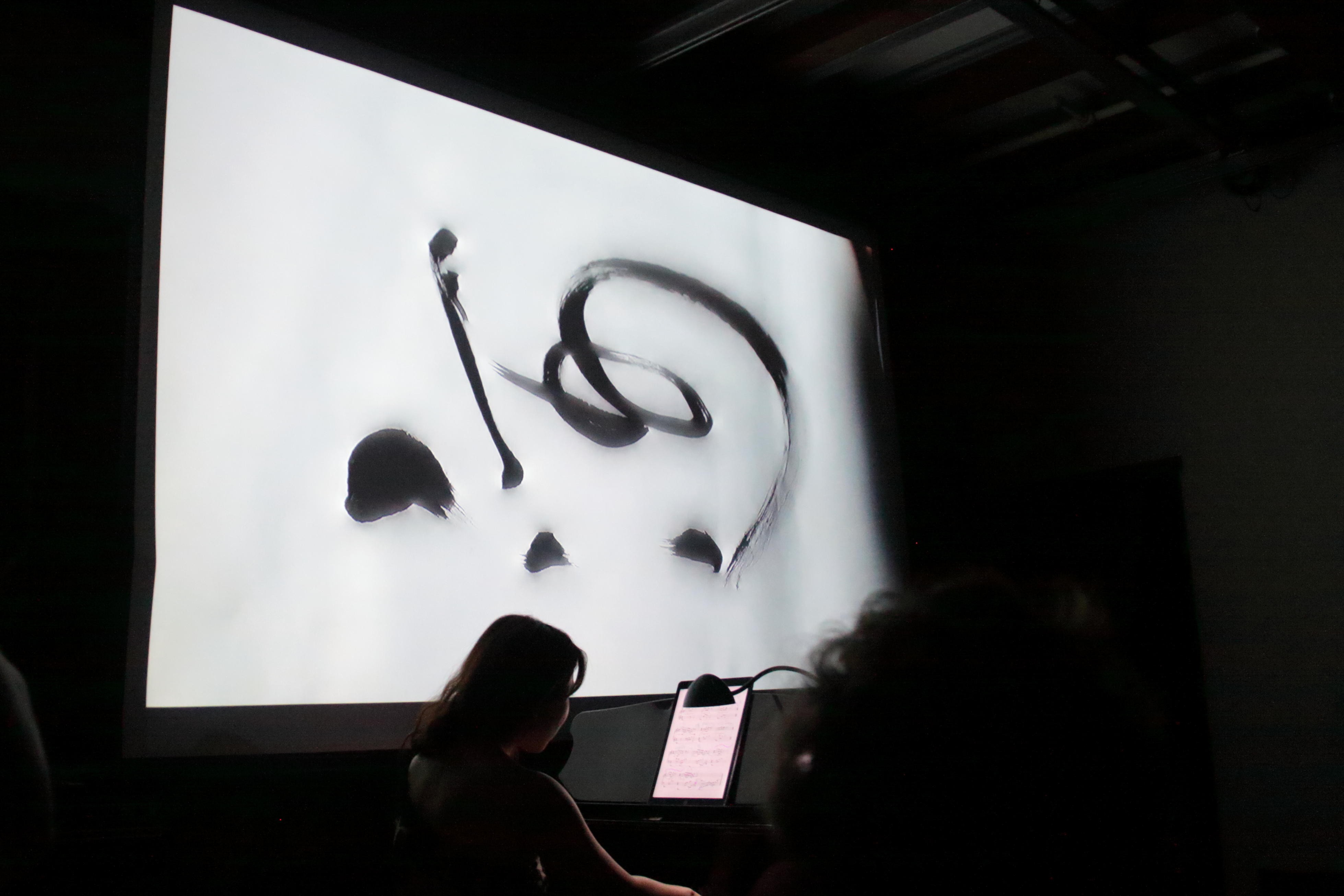
This next part of the program involved the work of Jarosław Kapuściński (Warsaw, 1964-) whose two pieces were slated for the last portion of the program.  He is, since 2016, the chair of the music department at Stanford University and no doubt spends time with CCRMA (Stanford’s equivalent of CNMAT) investigating music, sound and computers.  He spoke of being inspired by a calligrapher who was also well known to Ms. Chai, a Chinese woman and master calligrapher named Shanshan Zhao (the film was done at the Shanghai Conservatory of Music).  While he did not go into great detail the composer basically shared his visual inspirations and spoke a bit about how his composition program “listens” to the performer (see the photo with the two mikes inside the piano below) and responds in some way.  This sounds like another chapter in the book which includes David Behrman’s early computer/performer interactive experiments.  Some 50 years later (this piece, “Calligraphies for Ziqi” is from 2018 and got its US premiere here tonight).  Another generation shows its expertise.

choi20190003

Note the two black microphones inside the piano. No, its not the Russians.

The title, “Calligraphies for Ziqi” (2018) references Ziqi, a man whose listening was so perfect that the musician destroyed his instrument after Ziqi died because he knew he would never find a better listener.  This ancient Chinese story (approx 770-476 BC) is also about the merging of sound and image in its way.  Several calligraphies are displayed in process during the performance with the music reflecting the moods of the Chinese characters being displayed.  Each movement involves a different Chinese character and a different attempt at calligraphy.  There may be extramusical references here but the music does a satisfying job of standing with the visuals and further analysis can be left to musicologists and program annotators.

In addition Kapuściński is no stranger to Asian arts.  He has explored eastern musics and incorporated aspects of them into some of his works.  He is also no stranger to computers and their use in composition.  His appreciation of disparate artistic techniques effectively spanning 5000 years and utilizing them effectively is a mark of genius in this writer’s opinion.  This is a challenging piece for the soloist but it is a sensual journey for the audience.  While the geekier folks (this reviewer definitely included) would like to know much more about the technical aspects of this gorgeous music, suffice it to say that such knowledge is not a prerequisite for enjoying the art.

choi20190012

Chai playing the interactive piano part to the visuals in “Calligraphies for Ziqi” (2018), This was the California premiere.

This was followed by another visual/musical collaboration, Side Effects (2017) also by Kapuściński involves music set to videos by Kacper Kowalski who shoots from a perspective 150 meters directly above his subjects.  Think a latter day Koyaanisqatsi (do I need to footnote that reference?).  Again we see affecting music which captures the composer’s reaction to the visuals.  I didn’t get the sense that there was any computer interaction here, just some good music to some stunning visuals.

choi20190014

Chai playing the music to the visuals in “Side Effects” (2017)

The capacity audience (the room capacity is only 49) was very appreciative and gave a standing ovation which compelled no less than two encores.  Forgive your reviewer for not being able to recall the first but there seemed to be a new magic afoot when this pianist launched into the second, a wonderful rendition of the aria from Bach’s Goldberg Variations.  It was a loving and intense interpretation (no doubt full of colors as well) and it left the audience satisfied as a dessert would cap the climax of a fine meal.  Brava, Ms. Chai.  And thank you Mr. Kapuściński.

Political Classical: Frank Horvat’s “For Those Who Died Trying”


horvatdiedtrying

Atma ACD2 2788

Frank Horvat (1974- )is a Canadian composer and musician with a profound interest in social justice and human rights.  In this 35 movement string quartet he is concerned with memorializing the lives of 35 activists who died while furthering the cause of human rights.  This work is made even more compelling by including photos from a photo essay of the subjects taken by Luke Duggleby, a Thai-based photographer and journalist.

Without a doubt this is a shining example of what I have termed, “Political Classical”, a genre of protest music which seems to have emerged in the twentieth century.  This work takes its place now with Frederic Rzewski’s Pueblo Unido Variations, and works by composers like Luigi Nono, Hans Werner Henze, and countless others who have chosen to use their expertise in the classical genre to write works analogous to the folk protest music which is perhaps better known to the listening public.

With songs one has the words which can directly or indirectly evoke the particular issue being addressed.  But, other than a dedication in the program notes, how does one imbue their music with the intended meaning for a given protest work.  Well, Mr. Horvat has chosen to utilize only the letters from these victims’ names to form the musical material for each portrait.  That is he uses the letters which correspond to musical notes.  Most famously this practice is known through the B, A, C, H (corresponding in German notation as B flat, A, C, B) theme which is the basis for Bach’s Art of Fugue.

By itself this can be a bland and meaningless exercise but Horvat manages to work within this carefully limited framework to create 35 very convincing portraits of these Human Rights Heroes.  The 35 movements are relatively brief and put this listener in the mind of composers who have  succeeded quite well with such a format such as Alan Hovhaness and Lou Harrison.  Both of these composers and the man in discussion here work in a basically tonal framework with a balanced and judicious use of dissonance.  What is curious is how he seems to succeed in evoking these people purely through sound.

In comes the Mivos Quartet whose job it is to make sense of the composer’s intentions and breath life into the notes on the page.  This New York based string quartet consists of Olivia de Prato, violin; Maya Bennardo, violin; Victor Lowrie Tafoya, viola; and Tyler J. Borden, cello.  And let’s just say they are up to the task.  Each movement takes on its individual character but retains a larger connection to the work as a whole.  Perhaps this is also a metaphor for the nature of individuality as part of the larger concept of humanity and why each perspective is vital to our collective survival.

Before I wax too philosophical let me just say that, at least in terms of this recording, this is a document of classical string quartet which also serves as a memorial to the victims it references and, hopefully, as a sort of wake up call to those who, for whatever reason, are unaware of these atrocities.  Ultimately, I suppose, the goal is the amelioration of inhumane practices.  But until then we may find comfort in the beauty which this composer has brought to this work.  This would seem to be a stab at acknowledgement of sacrifice in the name of human rights seeking justice but, for now, we must settle for beauty even if it brings tears which are a mix of both sadness and joy.

My 2018 in the Arts


One of the Theater Organs at House on the Rock, Spring Green, WI, a really fun place to visit.


I’m skeptical about year end lists but I have enough people asking me that it would be impertinent to skip this task. I make no claims to having even listened to enough to make any definitive statements about the “best” but I have my own quirky criteria which I hope at least stirs interest. Here goes.

Let’s start with the most read reviews. Without a doubt the prize here goes to Tim Brady’s “Music for Large Ensemble”. This reviewer was enthralled by this recording by this Canadian musician whose work needs to be better known.

This little gem was sent to me by a producer friend and I liked it immediately. I knew none of these composers but I enjoyed the album tremendously. Don’t let the unusual name “Twiolins” stop you. This is some seriously good music making. It is my sleeper of the year.

Running close behind the Twiolins is the lovely album of post minimalist miniatures by the wonderful Anne Akiko Meyers. Frequently these named soloist albums of miniatures are targeted at a “light music” crowd. Well this isn’t light music but it is quite listenable and entertaining.


The creative programming and dedicated playing made this a popular review to New Music Buff readers. Definitely want to hear more from the Telegraph Quartet.

Another disc sent by my friend Joshua. This one is a DVD/CD combo of music by a composer whose existence was only revealed to me a couple of years ago. Marin includes a clever animated video which accompanies the title track.

I was fortunate enough to have been able to hear Terry Riley and Gloria Cheng in an all Terry Riley program at the Yerba Buena Center for the Arts. Both were in spectacular form and the audience was quite pleased.

I would be remiss if I didn’t include the fabulous 6 night series of concerts produced by Other Minds. This is why I am a rabid advocate of OM programs. More on that soon with OM 24 coming up.

And lastly I want to tell you about two more composers who are happily on my radar.

One of the joys of reviewing CDs is the discovery of new artists to follow. Harold Meltzer is now in that group for me. This basically tonal composer has a real feel for writing for the voice and has turned out some seriously interesting chamber music.

Another composer unknown to these ears. I bristle at the term “electroacoustic” because it sometimes means experimental or bad music. Not so here. Moe is fascinating. Definitely worth your time.

OK, gonna can the objectivity here to say that this is possibly the most underappreciated album I’ve heard this year. Combining a recording of the Debussy Preludes along with Schoenberg’s rarely heard “Hanging Gardens”, Webern’s Variations, and Berg’s Piano Sonata creates a picture of a moment in history when music moved from impressionism to expressionism. Jacob Greenberg is very much up to the task. Buy this one and listen, please. It’s wonderful.

Also beyond objectivity is this fascinating major opus by Kyle Gann. It didn’t get much recognition on my blog but it’s a major work that deserves your attention if you like modern music.

Well this is one of my favorite reviews in terms of the quality of my writing. The work is most wonderful as well. Though this review was actually published on December 31st I’m still including it in my 2018.

This is definitely cheating on my part but after that concert at Yerba Buena I can’t resist making folks aware of this wonderful set on the independent label, “Irritable Hedgehog”. Trust me, if you like Riley, you need this set.

I review relatively few books on this site but by far the most intriguing and important book that has made it across my desk to this blog is Gay Guerilla. The efforts of Mary Jane Leach, Renee Levine Packer, Luciano Chessa, and others are now helping to establish an understanding of this composer who died too young. Here’s looking forward to next year.

I know I have left out a great deal in this quirky year end selection but I hope that I have not offended anyone. Peace and music to all.

In the Beginning Was the Word: Other Minds 23


OM202006

Charles Amirkhanian performing one of his spoken word compositions at Other Minds 20 in 2015

Other Minds has been the the darling of composer/producer Charles Amirkhanian since its founding in 1993.  Along with television producer and arts patron Jim Newman he has presided over the 25 years of this renowned festival which has consistently brought the finest new music composers and performers to San Francisco.

There is little doubt that this year’s festival has to be very close to Amirkhanian’s heart.  Words have been central to his career at least since 1969 when he began his work as a producer at KPFA.  In the 23 years he spent there he presented countless hours of musical programming and interviews.  He crossed paths with most of the major stars in contemporary classical music and many stars whose genre may not be captured by the classical label.  A look at his programming choices and interviews from his time there defined new music for the Bay Area and beyond.  After his tenure at KPFA ended in 1992 he continued exploring cutting edge music and musicians bringing them to San Francisco for live performances.

His work as producer and curator has tended to overshadow his work as a composer, sound poet, and spoken word artist.  This year’s OM festival is dedicated to speech, sound poetry, and the spoken word.  It is about both the history and the present state of the art.  In many ways Amirkhanian’s 1975 release “10 + 2: 12 American Text Sound Pieces” on 1750 Arch Records (now on an OM CD 1006-2) can be seen as sort of the starting point for this festival.  This masterful anthology includes works by Charles Amirkhanian (1945- ), Clark Coolidge (1939- ), John Cage (1912-1992), John Giorno (1936- ), Anthony Gnazzo (1936- ), Charles Dodge (1942- ), Robert Ashley (1930-2014), Beth Anderson (1950- ), Brion Gysin (1916-1986), Liam O’Gallagher (1917-2007), and Aram Saroyan (1943- ).


“Word! Thou word that I cannot speak!

At the end of the second (and last completed) act of Arnold Schoenberg’s powerful opera “Moses und Aron” (1932) Moses sings, or actually half speaks and half sings this text lamenting his expressive deficits.  Speech song or, in German, sprechgesang is an invention by Schoenberg in which the singers are asked to find a point between speech and music.  Perhaps this is a good example of some of the artistic thinking going on at about the time when speech music/sound poetry began to take shape.

bio_schwitters_kurt

Kurt Schwitters (1887-1948)

Some of the history of sound poetry is featured in this unprecedented 6 day festival (April 9-14).  Some of the earliest practitioners of this unusual genre include the German artist Kurt Schwitters whose composition Ursonate (1922-32) will be performed in its entirety, a rare event by itself.

Another early gem will be the Spoken Music (1930) by German-American composer Ernst Toch.  This three movement suite has been known for its last movement, the Geographical Fugue.  The other two movements, once thought lost, were discovered in sketches in 2006 and reconstructed by Christopher Caines.  The now complete version will be presented I believe on day 3.

Composer-Ernst-Toch-810

Ernst Toch (1887-1964)


It is beyond the scope of this blog post to tell the history of text sound so I will refer readers to the Other Minds website for further details.  Or you could come to the festival too I suppose.

With due respect given to the past the festival will move on to the present.  San Francisco Beat Poet Michael McClure (1932- ) will make an appearance as will post beat colleagues Anne Waldman (1945- ), Clark Coolidge (yeah the guy from that cool anthology), Aram Saroyan (another guy from the classic text sound disc).

curran20160010

Alvin Curran in conversation last year in Berkeley.

Other Minds alumnus Alvin Curran (1938- ) will be premiering his collaboration with Clark Coolidge entitled, Came Through in the Call Hold.  Curran’s eclectic sensibilities will doubtless result in an interesting composition.  This event alone, at least for this writer, is worth the price of admission.  And this is just the first day!

Other events include workshops, discussions of the history of the art, and even some curious variations on a theme.  Apparently the writer Lawrence Weschler is the grandson of Ernst Toch and has written a variation on the Geographical Fugue called, The Medical Fugue which will be premiered at this festival.

The increasingly ubiquitous pianist Sarah Cahill will be present to perform Virgil Thomson’s unusual but entertaining setting of a Gertrude Stein (a one time Oakland resident) text called Capital, Capitals.  She will accompany the men of the Other Minds Ensemble.  Jaap Blonk will be tasked with performing Schwitters’ Ursonate and, along with Enzo Miranelli will also perform other historical works including some by a couple of Italian Futurists.

Other Minds Administrative Director Randall Wong will end the evening by undertaking a performance of the late great Cathy Berberian’s Stripsody.  That promises to be a wild evening I think.

blonk_75_2500crop

Jaap Blonk (1953- )

Northern Europe, including the Netherlands and the Scandinavian countries will literally have their day.  As it turns out they are doing a great deal of creative work in this increasingly diverse genre of speech music.  Other Minds is at its best in introducing the new and the innovative from wherever Charles’ radar has tracked it down.  Indeed Mr. Amirkhanian and his wife, artist/photographer Carol Law traveled throughout these regions in the early 70s talking with and learning from these diverse artists.  (Amirkhanian’s work, Just was recorded in a Scandinavian studio during one of those trips).

As usual homage will be paid to the past with some recorded classics by Sten Hanson, Åke Hodell, and Lily Greenham.  Some new voices will be introduced including Tone Åse and Sten Sandell.  The Norwegian/Russian-American duo OTTARAS (consisting of visual poet Ottar Ormstad and composer Taras Mashtalir will also perform.   One can fully expect a mind expanding experience which will redefine the possibilities of the art form.

Auspiciously or perhaps dangerously Friday the 13th has been reserved for Bay Area talents.  First up will be the man of the hour, Charles Amirkhanian.  Hearing him do his work live is an uncommon but entirely enjoyable experience.  If that alone weren’t enough we will get to hear the even rarer public collaboration between him and his life partner Carol Law whose photography and collage work deserves wider recognition and will happily get that here.

Amy X Neuberg

Amy X Neuberg.

Trained in both linguistics and music, Amy X Neuberg will be on hand to perform her indescribable electronic cabaret including the world premiere of “Say it like you mean” and other genre bending work.  She is another valued Other Minds alumnus having given numerous performances at the festivals.

Stanford professor Mark Applebaum, another alumnus will present “Three Unlikely Corporate Sponsors” which premiered at Stanford in 2016.  Enzo Miranelli will conclude the evening with his theatrical combination of movement and text in “Fame: What I Want to Say”.

20130218-132303.jpg

Pamela Z

The festival concludes on Saturday April 14th with Jaap Blonk followed by the wonderful San Francisco based Pamela Z who, like Neuberg uses electronics, but creates her own unique sound world.  She too is an alumnus of Other Minds.

Another composer from that great anthology, Beth Anderson, will make an appearance to perform “If I Were a Poet”, “I Can’t Stand It”, and “Ocean Mildew Minds”.

The finale will feature Susan Stone and Sheila Davies Sumner performing excerpts from two works, “House with a View” and “Loose Tongues” both dealing with the lives of working class southern women.

This will be both a feast and a marathon but it promises to be one of the finest Other Minds productions maybe ever.  Come to be entertained, come to be challenged, come to expand your mind.  You’ll never be the same.  See you there.

300 Years of Virtuosity, Liza Stepanova’s Tones and Colors


stepanova

Concert Artist Guild CAG 120

This is the solo piano debut of this talented and incredibly virtuosic artist.  This hard working pianist can be heard on a previous CD (After a Dream) with the Lysander Piano Trio.  Her web site can provide a good idea of the range of solo, chamber, and orchestral music in her repertory.

This CD is a good example of creating a brand, a practice which seems to be the current rage especially among artists who specialize in new music.  I have previously commented on the brands of pianists like Sarah Cahill, Kathleen Supové, Nicolas Horvath, and Stephane Ginsburgh to name a few.  All are amazing musicians but each seems to have been able to carve out an identifiable niche which sets them apart from each other and defines their various artistic missions.  Granted these are soft definitions in that they do not preclude them from playing anything they choose but it gives audiences a sort of general idea of what to expect when they do a program.

Liza Stepanova appears to have chose virtuosity as her signature.  She plays what sounds like fingerbreakingly difficult music with both ease and expressiveness.  Here she chooses to basically survey virtuosity from J. S. Bach to György  Ligeti.  In addition she has chosen to pair each composition with an analogous piece of visual art.

The pairing of music and visual art is as old as dirt and has always seemed to have an inherent validity.  Tone poems like Mussorgsky’s Pictures at an Exhibition or Debussy’s Clair de Lune are familiar examples of music as a visual analog.  But music sometimes suggests pictures even if it was not the stated intent of the composer too.  Stepanova covers the visual territory from the representative to the abstract in this entertaining collection.

Perhaps the most interesting aspect of this recording is the pianist’s choice of music.  She does go with the familiar at times such as Debussy’s Goldfish but the majority of this disc contains music that is seldom heard by lesser known composers such as Maurice Ohana (1913-1992), Joaquin Turina (1882-1949), Fanny Hensel (1805-1847), and Lionel Feininger (1871-1956).  There are better known names such as Enrique Granados (1867–1916), Bohuslav Martinú and Leopold Godowsky (1870-1938).  And the most familiar names such as J. S. Bach (1885-1750), Franz Liszt (1811-1886). Claude Debussy (1862-1918), George Crumb (1929- ), and György Ligeti (1923-2006).

There are 13 tracks grouped into 4 visual art themes (A Spanish Room, Nature and Impressionism, Conversations Across Time, and Wagner, Infinity, and an Encore).  The only problem I have here is the photos of the art (which thankfully are included in the little booklet) are necessarily small and really don’t give the consumer the full intended effect.  One would do well to obtain some art books or some larger prints of these to gain the intended effect.

I won’t go into detail about each individual piece.  Suffice it to say that they are all technically challenging and intelligently chosen pieces.  This is a very entertaining program from this emerging artist.

This reviewer is given to speculation as to Stepanova’s next release.  Perhaps Sorabji with some Dada works?  Whatever it is will doubtless be as interesting and entertaining as this disc.  Brava, Ms. Stepanova!


More Than the Ears Can Hear: Bill Fontana in Conversation


img_0200

Despite being possessed of a rabid and eclectic interest in all music I had not been aware of Bill Fontana until I found this presentation sponsored by Other Minds and curated by Charles Amirkhanian (whose radar seems to capture just about everything).  This entry into the Nature of Music series last night featured this artist who extends the very meaning of composition and the very reach of our ability to hear.

This series is hosted by the David Brower Center in Berkeley, CA.  The center is a state of the art environmentally friendly building which serves, appropriately, as a center for ecological awareness and hosts various organizations within its walls (including the Berkeley office of Other Minds) whose missions serve various environmental concerns.  The Nature of Music series attempts to address ecological concerns and indeed the featured artists have all demonstrated connections to the environment in various creative ways.

Bill Fontana (1947- ) is a San Francisco resident but his art takes him all over the world.  He presented audio and video excerpts from his installation works in Kyoto, Lisbon, San Francisco, London, and Iceland.  The basic concepts behind his work seem to be the extension of hearing and, to some degree, of seeing.  He uses multiple microphones and transducers to extract sound from objects such as bridges, bells (when not ringing), musical instruments (not playing), etc.  His multi-layered video experiments are at least partly analogous to this.

The first presentation was perhaps the most striking.  Fontana showed a video of an old Zen Temple bell which was just hanging there in a still video recording.  He had attached a sonic transducer to pick up the subtle vibrations of the bell as it reacted to the ambient sounds around it, something it had been doing for its entire existence (though no one knew until this).  He quipped that the monk whose job it was to care for said bell was somewhat anxious about what Fontana was doing.  When the monk heard the sound that this “silent” bell made he was astonished.  What one learns is that there are sounds made which our ears do not hear.

img_0199

Another “not ringing” bell in a New York tower revealed its reactions to its environment sonically and in a still video overlooking Manhattan from the high atop the lonely tower.

One installation involved 8 microphones arranged around San Francisco Bay which transmitted the sounds they captured to an installation of 8 loudspeakers located at Fort Mason.  The effect was of having ears that could hear all of these sounds which were so geographically distant that one pair of ears could not hear them in this way.  This 1982 installation is scheduled to have the recordings of those captured sounds from the original presentation played continuously in a permanent installation at Fort Mason.

Other installations included a bridge and a river in Lisbon and some hydrothermal installations in a couple of places.  What these all had in common was this extension of hearing (and vision) and how this increases one’s awareness of the environment both sonically and visually.  The artist acknowledged a passion for environmentalism and took the time to answer the questions of a medium sized but very engaged audience.

There are things in his work that echo the work of John Cage, Annea Lockwood (who appeared on a previous Nature of Music program), Pauline Oliveros, and any number of drone/noise composers.  But his vision is clearly a unique one and it was revelatory to have been able to hear/see this little exposition.  Fontana is truly a phenomenon whose roots fit comfortably on the west coast but whose vision is global.

It is well worth your time to peruse Fontana’s web site which is full of videos and sound files depicting his unique visions from various locations all over the world.  Fontana seemed a warm and unpretentious figure led all these years and still going with a child-like sense of wonder and a spectacular imagination.  All in all a mind-blowing and entertaining evening.

Linda Twine, A Musician You Should Know


Linda-K-Twine-Image-page-001

Linda Twine

I have found it strange that the few articles I have written (and, full disclosure, I’m a white guy) on black musicians seem to have placed me in the position of being one of apparently a limited number of writers/bloggers who pay attention to the topic.  Happily these articles have gained an audience.  The rather simple piece I wrote on black conductors, a little essay composed in honor of Black History Month, remains by far one of my most read articles.

The vicissitudes of race and racism are such that we need to say, “black lives matter” because even the most cursory examination of statistics shows that they seem to matter far less than lives with other racial identities.  The same is true with music and musicians..  There are organizations dedicated to the promotion of black musicians because they remain far less well represented.

It is in this spirit that I am writing this little sketch to highlight a black musician who does not have a Wikipedia page or even a personal web page that I have been able to find.  You can find her easily with a Google search but you will find some of the same segregation of which I spoke.  One finds her on the “Broadway Black” website which does a fine job of promoting her and her work.  And what fine work it is.

To be fair she is also on the “Internet Broadway Database“, “Playbill“, the “Internet Movie Database“, and one can find her most recent work listed on the “Broadway World” site.  Her cantata, “Changed My Name” can be found on You Tube.  And it is there where, curiously enough, one can find the most comprehensive information on her.  I present it here:

From the Muskogee Phoenix, 11/10/2007, we have this information about Linda Twine:

Twine, a native of Muskogee, OK, graduated from Oklahoma City University in 1966, with a bachelor of arts degree in music. There, she studied piano with the esteemed Dr. Clarence Burg and Professor Nancy Apgar. After graduating from OCU, Twine studied at the Manhattan School of Music in New York, where she earned a master’s degree, and made New York her home. She began her musical career in New York, teaching music in public school by day and accompanying classical and jazz artists at night. At one of these engagements, she was asked if she would like to substitute for the keyboardist of the Tony Award winning Broadway hit, “The Wiz.” Her positive response began a long career in Broadway musicals from keyboard substitute to assistant conductor of Broadway orchestras. In 1981, to conductor when Lena Horne asked her to conduct her one-woman hit, “Lena Horne: The Lady and Her Music.” This garnered Twine the respect of her peers and as a much sought-after Broadway musical conductor. In addition to “The Wiz” and “Lena Horne,” Twine’s Broadway credits include, “Ain’t Misbehavin’,” “Big River” (the score composed by Oklahoman Roger Miller), “Jelly’s Last Jam,” “Frog and Toad,” “Caroline or Change,” “Purlie,” and the current “The Color Purple,” starring Fantasia. Not only a distinguished conductor, Twine is also a composer and arranger. She composed “Changed My Name,” a cantata inspired by slave women Sojourner Truth and Harriet Tubman, and written for two actresses, four soloists, and a chorus. Her popular spiritual arrangements are published by Hinshaw. As a producer, instrumental and vocal arranger, her work can be seen and heard in the books and CDs of the Silver Burdett Publishing company, which are used by many public schools in the United States. Community commitment and involvement have also marked Twine’s outstanding career. She has arranged and composed for the renowned Boys Choir of Harlem, and she served for 14 years as minister of music for St. James Presbyterian Church of New York. Among her many awards and honors is the “Personal Best Award for Achievement and the Pursuit of Excellence,” for her role as a writer and arranger for the Boys Choir of Harlem, her artistic achievements in the world of Musical Theatre, and her concern for humanity. Twine, a proud Oklahoman, is the granddaughter of William Henry Twine, a pioneer lawyer who made a homestead claim in the 1891 Sac and Fox Run, and along with G.W.F. Sawner and E.I. Saddler established the first black law partnership in Oklahoma Territory.

So here, in honor of Black History Month, I wish to present this fine musician whose art deserves the world’s attention.  Take note please.

Marin: An Unknown Danish Master Gets His Due Marvellously


marin

I have made no secret of my passion for the music which has been coming out of the Scandinavian portion of our planet.  My knowledge of these musical traditions is mostly limited to the twentieth century up to the present but what a horn of plenty there is to be had.  There are so many composers that it is forgivable if one of them fails to get worldwide attention and acclaim during their lifetime.  Or is it?

Well if sins of omission that have been committed all can now be forgiven and the memory of Axel Borup-Jørgenson (1924-2012) is likely guaranteed to remain solidly in the history of music of the twentieth century.  The Danes take their music very seriously it seems (check out the You Tube Channel for the Danish National Symphony Orchestra if you don’t believe me) and producer Lars Hannibal and his crew have labored tirelessly to bring this formerly obscure master most deservingly to light in this DVD/CD combo pack featuring some of his finest works.

This truly major release contains a DVD with a gorgeous animated feature synced to the late composer’s swan song big orchestral piece, Marin op. 60 (1963-70) a really beautifully produced documentary (“Axel”) on the composer featuring some of his fellow composers including, Finn Savery, Pelle Gudmunsen-Holmgreen, Bent Sørensen, Sunleif Rasmussen, Per Nørgard, Gert Mortensen, Ib Nørholm, Michala Petri, and producer Lars Hannibal along with family and other musicians and producers.

The animated feature looks like one of the finer entries one might find on Vimeo.  The animation was done by Lùckow Film and works well with the music.  The biographical feature does a spectacular job of placing the composer in context with his Nordic contemporaries and with contemporary music in general.  The people interviewed give about as definitive a description of the man’s work as can be done in a film biography and the intervening or connecting scenes bespeak a high level concept of cinematography that makes this film both compelling and a delight for the eyes as well as the mind.  The concept of the composer’s use of silence as a compositional tool seems to be reflected in these transitional scenes.

The CD consists of seven carefully selected pieces on seven tracks.  The disc opens with the big orchestra piece which was heard behind the animation on the DVD, Marin Op. 60 (1963-70) followed by Music for Percussion and Viola Op. 18 (1955-56), For Cembalo and Orgel Op. 133 (1989), Nachtstuck Op. 181 (1987) (played here by the composer’s daughter, Elisabeth Selin), Winter Pieces Op. 30b (1959) for piano, Pergolato Op. 182 (2011) for treble recorder, and Coast of Sirens Op. 100 (1980-85) for flute, clarinet, violin, cello, guitar, piano, percussion, and multivoice tape.  This is truly a balanced portrait with examples of orchestral, solo instrument, keyboard, chamber and electroacoustic works from 1959-2011, a more than fair sampling of the composer’s output both by genre and by time.

The music seems to move between post-romantic tonality and expressionistic experiments such as one hears in the music of Gyorgy Ligeti.  The music is evocative and very listenable especially if one avails one’s self of the introductory film.  It certainly seemed to tune this reviewer’s ears properly.  It is helped as well by some very fine recordings that capture the subtlety of the composer’s work.

Lars Hannibal is clearly the guiding hand in this project but his genius (he is a fine guitarist as well as a producer) is his ability to engage all these fine musicians, artists, producers, and family in what is one of the most loving portraits this writer has ever seen.  Now that is the way to blast someone out of obscurity forever.

And this is but one entry in a larger project to record the composer’s complete output.  Two previous releases were reviewed on this blog and, presumably there are more to come.  But in the meantime there is much to savor here and one hopes that this will introduce this music into the general repertoire.  I’m sure Axel would be pleased to be placed as he is now among the masters of Danish composers.


Both Homage and Nostalgia for Sergeant Pepper at the UC Theater


Sgt Pepper20170002

Creative, practical staging and lighting was a unifying factor in this triumph from Undercover Presents.

There was a full house at the UC Theater on this Saturday, June 3rd in Berkeley.  It was the only performance of this homage to the Beatles’ Sergeant Pepper album which was released 50 years ago (actually June 2, 1967).  Most of the performers were not even a twinkle in their parents’ eyes when this landmark of music came on the scene.  The “Summer of Love” was happening in the Bay Area and this album was unquestionably an influence then.  Tonight’s show demonstrated how that influence continues.

The audience was a mix of aging hippies (and non-hippies) and younger hipsters (is it OK to use that term and have no negative connotation?).  Some, no doubt, came for a bit of nostalgia remembering where they were when they first heard the original.  Some came to hear the creativity of local artists meeting such a challenge.

It would have been easy to simply do average covers of the songs and cater only to the nostalgia but Lyz Luke’s Undercover Presents, as usual, aimed higher than that (and hit their mark).  They, under the direction of guest producer Joe Bagale, curated a show of creative interpretations of each of the 13 tracks utilizing some of the finest of the massive talents that call the Bay Area home.  The end result was a true homage from another generation of marvelously diverse artists who put their stamp on the iconic songs without losing any respect for the power of the originals.

Simple but effective stage design by Bridget Stagnitto was reminiscent of the iconic album cover with creative lighting and functional information integrated into the tableau.  Ryan John and Brendan Dreaper were lead sound engineers.

Sgt Pepper20170008

As is customary for these shows the bands played the tracks in their original order beginning with the Electric Squeezebox Orchestra’s instrumental cover of the opening track.  Principal trombone Rob Ewing’s arrangement captured the essence of that opening and effectively set the stage for what was to follow.

(Correction:  Per Joe Bagale the opening number was arranged by soprano saxophone player Michael Zilber.)

Sgt Pepper20170009

Sgt Pepper20170010

Vocalist Dublin sang a bluesy solo version of “With a Little Help From My Friends”, those friends being the Jazz Mafia Accomplices

Guitarist Jon Monahan takes responsibility for this arrangement which veered just a bit off of nostalgia to deliver a very effective solo vocal version (the original you may recall had that call and answer thing going on) of this, one of the best known tracks on the album.  Though it was not obvious, perhaps there was some homage intended to the late Joe Cocker who first saw the bluesy potential here when he presented his justly famed version at Woodstock in 1969.

Sgt Pepper20170014

Raz Kennedy made effective use of backup singers in his soulful take on “Lucy in the Sky with Diamonds”.  He shared arranging credit with Nick Milo.  The spirit of the Supremes, Gladys Knight (and of course the Pips), and maybe a touch of James Brown seemed to be present in the house and this arrangement got a great review from the audience.  What a voice!

Sgt Pepper20170016

Eyes on the Shore shared arranging credits in their digital synth inflected take on Getting Better.  They went further afield with the material than some and may have briefly lost the pure nostalgia seekers but the arrangement clearly succeeded in pleasing the crowd. One would expect that psychedelia be transformed by the digital world, right?  And so it was.

Sgt Pepper20170018


The Avant Jazz Funk duo of Scott Amendola on percussion and Will Blades on Hammond Organ (how’s that for nostalgia?) and Clavinet turned in a very intense and rich improvisational battle in their purely instrumental version of “Fixing a Hole”.  Sometimes the melody was there and sometimes it was transformed in a musically psychedelic way that went quite a distance from the original.  But the use of the Hammond Organ and Clavinet themselves provided reassurance that they wouldn’t go too far.  The performances were blazingly intense and the whole house felt it.

Sgt Pepper20170022

We again were treated to soul with backup singers as Nino Moschella transformed the innocent ballad of adolescent alienation, “She’s Leaving Home”, into a more darkly hued version that seemed to reflect an understanding of the loss of that innocence that we all must face eventually.  Nothing somber here but clearly a different understanding consistent with the overall mission of having another generation’s way of remembering this material.

Sgt Pepper20170025


South Asian music and philosophy are inextricably linked to the psychedelic sounds of the mid to late 1960s and nowhere is this more obvious than with the Beatles whose study of Transcendental Meditation with their guru Maharishi Mahesh Yogi (born Mahesh Prasad Varma 1918-2008) while George Harrison studied sitar with Pandit Ravi Shankar (1920-2012).

Rohan Krishnamurthy (Mridangam, Hadjira frame drum), Prasant Radakrishnan (saxophone), and Colin Hogan (keyboard) share credits for their creative instrumental arrangement of “For Mr. Kite”.  Eschewing lyrics (which are etched in most of the audience’s minds anyway) they performed a stunningly unique rendition of this familiar song. Interestingly these musicians trace their influences to the southern Indian Carnatic tradition (somewhat different from the Hindustani traditions which influenced the Beatles) adding yet another layer of richness to the evening’s goings on.

Sgt Pepper20170029

Colin Hogan indicts himself yet again in his arrangement of “Within You Without You”, that spacey Hindustani inflected song.  The Hogan Brothers (Steve Hogan, bass; Colin Hogan, accordion; Julian Hogan, drums; Moorea Dickason, vocals; Charlie Gurke, baritone sax) turned in a marvelous world fusion rendition of the tune (lyrics and all) to a hugely appreciative response.

Sgt Pepper20170035

Iranian born Sahba Minikia, steeped in both Iranian and western classical traditions provided a touching arrangement of the classic, “When I’m Sixty Four”.  Featuring Mina Momeni on guitar and vocals (on video) accompanied by the Awesöme Orchestra in a song whose premise looks to the future as far as this evening looked into the past to ponder the endurance of romance.

In retrospect it is almost surprising that the marvelous diversity didn’t generate a presidential tweet of dissatisfaction.  Indeed a woman singing would produce more than a tweet of dissatisfaction in Tehran, birthplace of photographer and singer Momemi who also teaches visual arts in Canada.

Sgt Pepper20170040


Vocalist Kendra McKinley practically turned “Lovely Rita” into a feminist anthem with some retro pop group choreography and background vocals to boot.  The visuals and the energy of the performance practically had the whole house dancing.

Sgt Pepper20170045

Soltrón added Latin percussion and energetic dance to the already electrified atmosphere with their arrangement of the raucous “Good Morning”.  Kendra McKinley could be seen and heard tying in her energy from the previous performance as backup singer here.

Sgt Pepper20170047

Lyz Luke stepped in to introduce the penultimate Sgt Pepper Reprise.

Sgt Pepper20170048

The dancing energy was carried on by the colorful and energetic dancers of Non-Stop Bhangra.  They accompanied Rohan Krishnamurthy and Otis McDonald in Joe Bagale’s rocking arrangement (replete with lyrics) of the reprise of the opening.  It was like a live action version of the studio executed original performance with a stage filled with ecstatic musicians and dancers.

Sgt Pepper20170052

Joe Bagale in his Sgt Pepper duds sings the lyrics hoping we’d enjoyed the show.

Sgt Pepper20170060

The apocalyptic, “A Day in the Life” concluded the mission of homage and nostalgia in a bigger than life tableau of talent and diversity that connected the “there and then” to the “here and now”.  The famous extended last chord crashed in a peak of energetic music making to bring the performances to a close.

Sgt Pepper20170062

The visuals were strongly reminiscent of the iconic album cover.

Sgt Pepper20170065

There was no need to encourage the audience to sing along to the encore of “All You Need is Love”.  Fifty years hence we still need it and if we still don’t have it everywhere at least we had it here this night.


Paula Matthusen’s Pieces for People


matthusen

This is the first disc devoted entirely to the music of Paula Matthusen who as of July is a newly minted associate professor at Wesleyan University where she walks at least partly in the footsteps of emeritus professor Alvin Lucier whose course Music 109 she inherited from him.  I had the pleasure of meeting Ms. Matthusen at Other Minds 18 where she was one of the featured composers.  In our all too brief conversation she was affable and unpretentious but certainly passionate about music.

Paula Matthusen

Paula Matthusen performing her work, ‘…and believing in…’ at Other Minds in 2013


She holds a B.M. from the University of Wisconsin and an M.A. and PhD. from New York University.  She announced her recent promotion to associate professor on Facebook as is, I suppose, customary for people of her generation.  It is on Facebook that I contacted her to request a review copy of this CD to which she quickly and graciously agreed.

This CD contains 9 tracks representing 8 works.  They range from solo to small ensemble works, some with electronics as well.  Her musical ideas seem to have much in common with her emeritus colleague Alvin Lucier but her sound world is her own despite some similarities in techniques, especially her attention to sonic spaces and her use of electronics to amplify sonic micro-events which might even include her heartbeat.


sparrows in supermarkets (2011) for recorder looks at the sound of birds in the acoustic space of a supermarket and their melodic repetition.  It is for recorder (Terri Hron) and electronics

limerance (2008) is another solo work, this time for banjo (James Moore) with electronics.  She says she is working with the concept of reciprocation here but that seems rather a subjective construct.  Like the previous piece this is a contemplative and spare work with some spectral sounds as well.

the days are nouns (2013) is for soprano and percussion ensemble and electronics.  Here she is concerned with resonances within the vibrators of the instruments as well as the acoustics of the room.  It is a dreamy, impressionistic setting of a poem by Naomi Shihab Nye whose poem supplies the title but the text is fragments of a Norwegian table prayer.  A very subtle and effective work.

AEG (2011) is represented by two movements (of four?) all of which were written for the Estonian ballet.  It is similarly concerned with resonances and words at times.  Of course it would be interesting to hear those other movements but perhaps another time.

of architecture and accumulation (2012) is the first of two purely acoustic compositions on this disc.  This one is for organ solo (Will Smith) and explores long tones within the acoustic space.  It is a very satisfying work even if one doesn’t go into the underlying complexities.

corpo/Cage (2009) is  the longest and largest work here and is the second purely acoustic piece on this recording.  It has echoes of Stravinsky at and it is an enticing example of Matthusen’s writing for orchestra.  This reviewer certainly looks forward to hearing more of this composer’s works for larger ensembles.  Very effective writing.

in absentia (2008) is the earliest work here.  It is written for violin, piano, glasses and miniature electronics (not quite sure what that means).  Like many of the works on this disc the concern or focus seems to be on small events and sounds.  This is a rather contemplative piece that nicely rounds out the recording.

Matthusen resembles Lucier in some of her techniques and focus on small sounds otherwise missed and she certainly owes a debt to people like Pauline Oliveros.  But in truth she sounds like no one as much as Paula Matthusen.  The composer presents a strong and intelligent voice and one wishes for more from this interesting artist.  Thank you for the opportunity to review this.

Other Minds 21, the Dawn of a New Chapter and the Raising of the Dead


BHM160008

Charles Amirkhanian with the composers of OM 21

Much needed rain pummeled the city by the bay on all three days of OM 21 dampening, perhaps, some attendance but not the enthusiasm of the audience or the performers.  In most ways this concert was a continuation of the celebration begun last year commemorating 20 years of this festival.  Returning this year were Gavin Bryars (OM7) and Meredith Monk (OM1).

Until last year no composer had appeared more than once at this series.  For those unfamiliar with OM it is worth noting that the process has been for the 8-10 selected composers spend a week at the Djerassi Arts Center in Woodside, California sharing and discussing their work before coming to San Francisco for performances of their work.

As it turns out this year’s concert series will be the last to follow that format.  Apparently OM has become the victim of gentrification and has had to move out of its Valencia Street offices and will now opt for various concerts throughout the year as they have done but without the big three-day annual festival and the residency at Djerassi.

The archives of OM are now going to be housed at the University of California Santa Cruz where they will reside along with the Grateful Dead archives.  I do believe that Mr. Amirkhanian lived near Phil Lesh of the Grateful Dead when he lived in San Francisco some years ago so it seems fitting that these two archives will peacefully coexist in that space (also coming to UCSC will be OM 21 composer Larry Polansky though not in an archive).

This is certainly a change but this is a festival which has endured various changes in time and venue led throughout by the steady hand of the Bill Graham of contemporary music concerts, Charles Amirkhanian (both men have had a huge impact on music in the bay area as well as elsewhere and it is worth noting that the Contemporary Jewish Museum will have a tribute to Graham this year).

Actually Other Minds traces its provenance to the Telluride, Colorado Composer to Composer festival (also led by Amirkhanian) and later morphed into OM with the leadership of president (now emeritus) Jim Newman back in the early 1990s.  There is a short excellent film describing OM’s history on Vimeo here.

It is the end of a chapter but, as Amirkhanian explained, there are many exciting concerts coming up which will keep Other Minds in the earshot of the astute contemporary music aficionados on the west coast.  Next year, for example, will include several very exciting concerts celebrating the 100th birthday anniversary of beloved bay area composer Lou Harrison.

My apologies for the delay in posting which was due to both the richness of the experience and the exigencies of my day job and other responsibilities.  I hope that readers will find this post to have been worth the wait.

BHM160009

Nordic Voices

Starting our rainy day were the extremely talented singers known as Nordic Voices.  Lasse Thoresen‘s Solbøn ( Sun Prayer) (2012) and Himmelske Fader (Heavenly Father) (2012) both required keen listening and required the use of extended vocal techniques such as multiphonics.  The singing appeared effortless and even fun for the ensemble but that speaks more to their expertise and preparedness than any ease in terms of the score.

It is always difficult to judge a composer’s work by only a small selection from their output  but Thoresen’s virtuosity and subtle use of vocal effects suggests a highly developed artist and it would seem worth one’s time to explore more of this gentleman’s oeuvre.
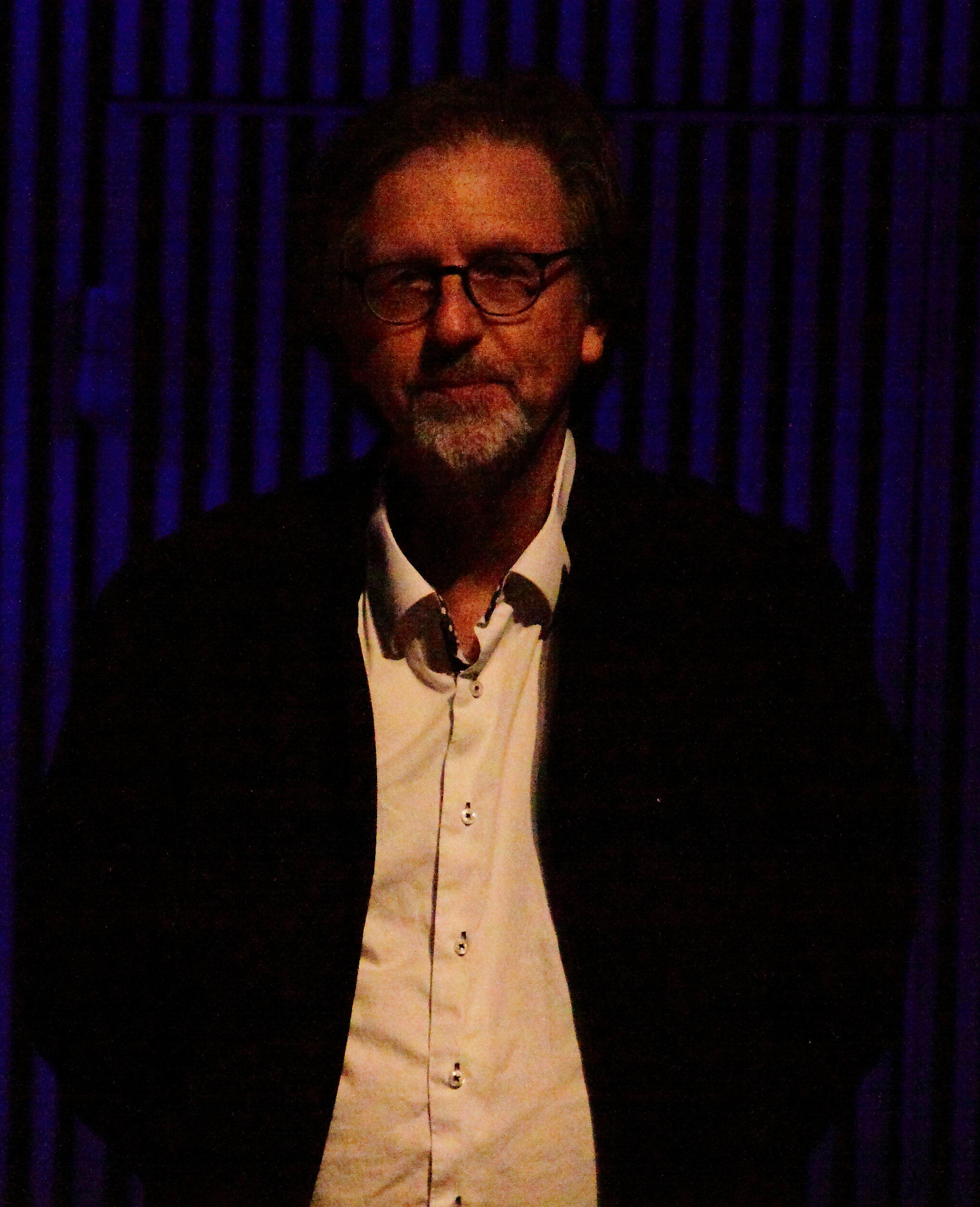
BHM160010

Lasse Thoresen takes the stage to acknowledge the applause.

Next was an unusual, humorous/dramatic work by Cecile Ore called Dead Pope on Trial (2015/16) with a libretto by Bibbi Moslet.   This Other Minds commission was given its world premiere at this concert.  The work is based on the story of a medieval pope who was taken from his grave no fewer than six times for various perceived offenses.  It is a mix of irony and humor in a sort of madrigal context.  The work was in English and had the nature of a conversation between the singers.  No doubt a challenging piece, it was sung very well and the composer seemed as pleased with the performance as much as the audience.

BHM160011

Cecile Ore smiling as she acknowledges the applause for the wonderful premiere performance of her new work, Dead Pope on Trial.

As if in a demonstration of sheer stamina in addition to virtuosity Nordic Voices took the stage again, this time for some Madrigals (2002/2016) by returning artist Gavin Bryars.  Bryars is no stranger to Other Minds or to madrigals and such older musical forms from the renaissance and before.  He has extensively explored vocal writing and medieval harmonies in many previous works.  Though categorized as being a “minimalist”, Bryars actually has produced a huge range of music in all forms including opera, chamber and orchestral music.

His madrigals have been written for the Hilliard Ensemble and each book is distinguished by the madrigals having been written on a specific day of the week.  The first book on Mondays, etc.  They are settings of Petrach’s sonnets and are sung in the original Italian of his day.  On this night we were treated to four madrigals from Book Two and the premiere of a madrigal from Book Four.  That madrigal was dedicated to Benjamin Amirkhanian, the father of Charles Amirkhanian who celebrates his 101st birthday this summer.

I had the opportunity to meet and speak briefly with the affable Mr. Bryars.  His generous spirit pervaded our conversation and he spoke very highly of both his visits to Other Minds.  If you don’t know this man’s music you are doing yourself a great disservice.

BHM160016

A very pleased Gavin Bryars deflects the applause and adulation to the amazing Nordic Voices for their astounding performance of five of his madrigals.

The singers of Nordic Voices sustained a high level of virtuosity as well as sheer stamina as they sang for nearly two hours in the opening pieces of this concert series.  No time was lost setting the stage for the performance of the next piece, another premiere, Algebra of Need (2016) for electronic sampling and string quartet by Bang on a Can member Phil Kline.

BHM160045

FLUX Quartet playing at SF Jazz, 2016

The Flux Quartet was featured in the next two (and last) works on this long program.  Algebra of Need is Kline’s meditation on the words and the cadences of the iconic writing and voice of the late William S. Burroughs (gone 19 years as of this writing).  The familiar voice seemed to go in and out of clearly audible, at times mixed more closely with the string writing in this intense homage.

BHM160014

A satisfied looking Phil Kline leans in to embrace the first violin of the Flux Quartet after their premiere of his Algebra of Need.

The Bang on a Can collective was also represented tonight by Michael Gordon.  The Sad Park (2008) for string quartet and electronics put a most decidedly disturbing conclusion on the evening.  This piece, which samples the voices of children (one of them Gordon’s) as they spoke of their experience of the 9/11 Twin Towers attacks.

The effect was, as no doubt intended, harrowing leaving a pretty strange and unsettling feeling as we walked away from the concert into the still rainy night.
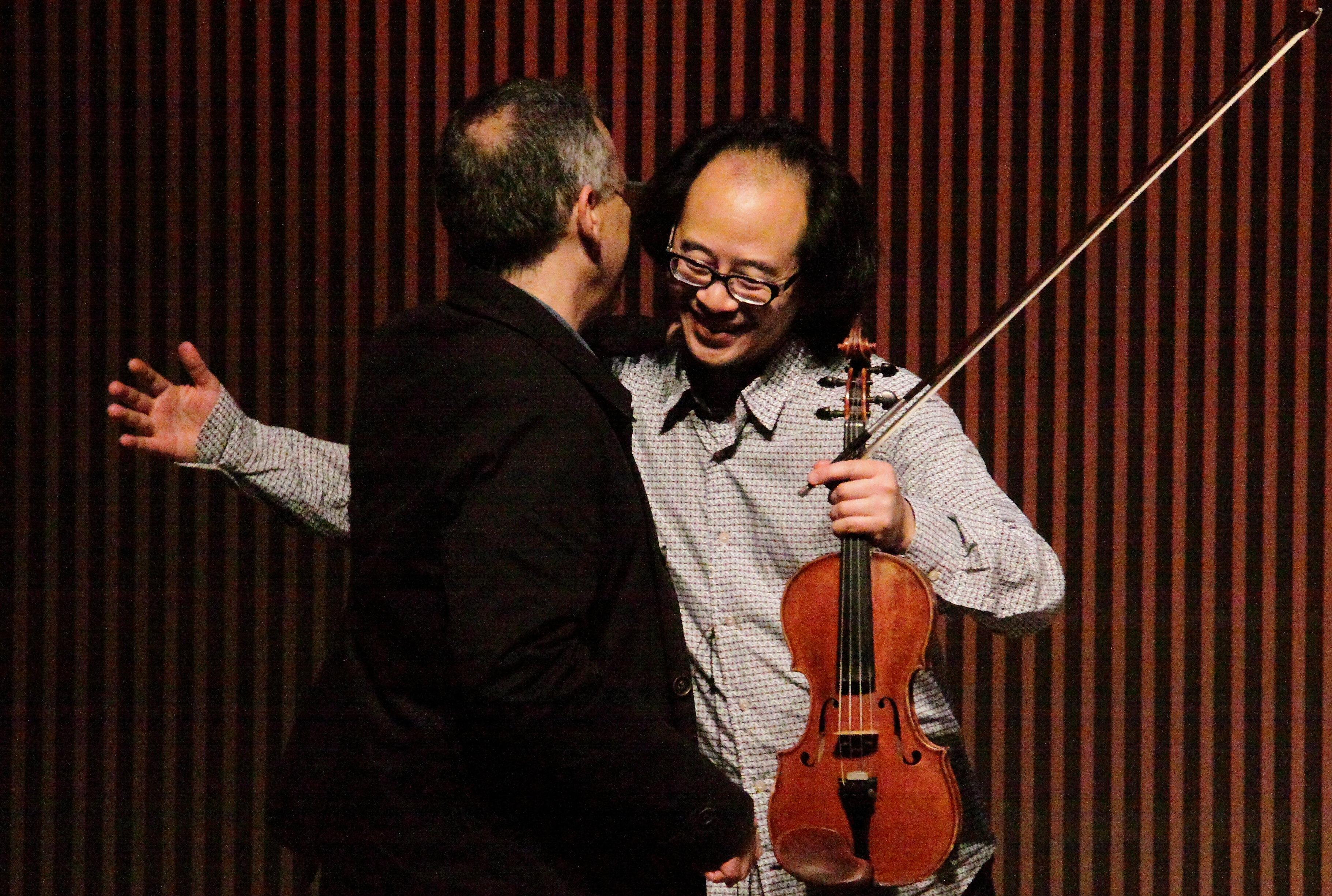
BHM160017

Michael Gordon embraces the FLUX Quartet’s first violin after a stunning performance of The Sad Park.

The rain continued on Saturday but the crowd was noticeably larger for the second night which opened with the usual panel discussion.

BHM160030

left to right: Meredith Monk, John Oswald, Nicole Lizee, Eliot Simpson, Larry Polansky, Oliver Lake and Charles Amirkhanian in a panel discussion prior to the concert

This evening began with a performance by the wonderful bay area violinist Kate Stenberg of a piece which was a sort of antidote to the somber, The Sad Park from the previous night.  Again the composer was Michael Gordon and the piece was Light is Calling (2004), a collaboration with filmmaker Bill Morrison.  Though hardly a happy piece Light is Calling is perhaps elegiac and the composer seems to achieve some of his stated intent to find some healing in the wake of a disaster to which he was all too close.

BHM160031

Kate Stenberg plays violin beneath the projection of a Bill Morrison film in Michael Gordon’s, Light is Calling

BHM160032

Michael Gordon and Kate Stenberg accepting the applause of an appreciative audience.

Next up was John Oswald, a Canadian composer whose career took off in infamy when his Plunderphonic CD, released to radio stations in the early 1980s, became the subject of legal battles over the meaning of copyright law in light of digital sampling.  Fortunately Oswald won the right to publish his work and his Plundrphonics concepts now underlie much of his compositional process.  Until this night I had not heard any but his Plunderphonic CDs so the introduction to his live music was a revelation.

BHM160033

Pianist and (at least here) multi-instrumentalist Eve Egoyan performing with a Yamaha Disklavier and other instruments.

The first piece she did was called Homonymy (1998/2015) was originally written for chamber orchestra and was then transcribed for Egoyan and her prepared disklavier et al.  It is a piece based on linguistic elements and with a visual component as well.

BHM160034

Eve Egoyan performing Homonymy with overhead projections.

Nicole Lizee’s David Lynch Etudes (2015) was the next piece  and also made use of the projection screen.  The subtitle of the piece indicates it is for “disklavier and glitch”.  Well life imitated art as some sort of glitch prevented the projection from functioning at first but this was rather quickly resolved and we were treated to excerpts of scenes from several David Lynch films with the piano playing some of the rhythms of the dialog in an exchange that puts this writer in the mind of music like Scott Johnson’s “John Somebody” and Steve Reich’s incorporation of speech rhythms in works like, “The Cave”.

Nicole Lizee is a Canadian composer and was the youngest composer on this year’s program.
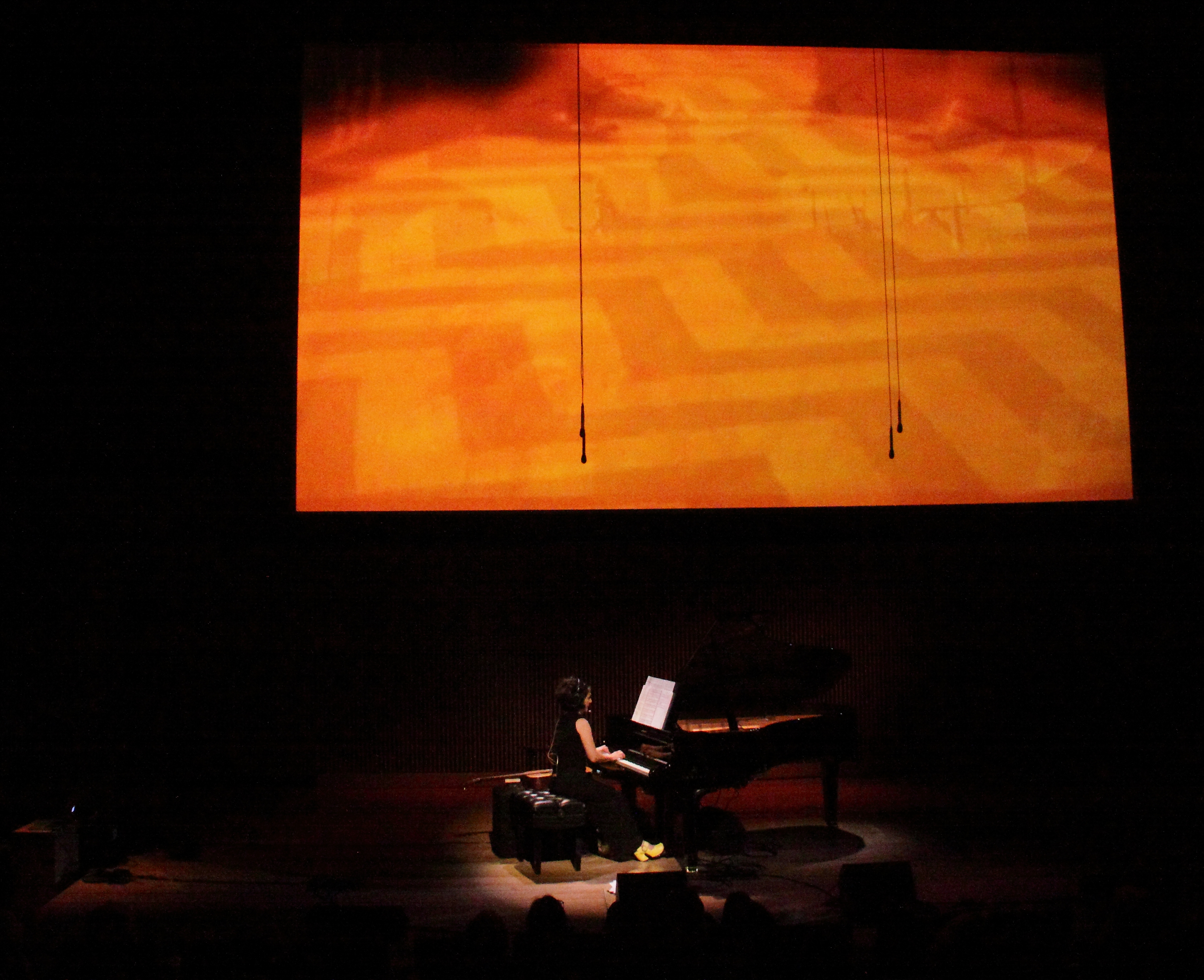
BHM160035

Eve Egoyan playing Nicole Lizee’s David Lynch Etudes with projected scenes/glitches from Lynch’s films.

The work is one of a series of pieces inspired by films and was executed with apparent ease by pianist Eve Egoyan who played the disklavier (both the keyboard and directly on the strings), a guitar and perhaps other gadgets .  The piece kept her quite busy and the associations I described above sound nothing like this work actually.  These etudes were a unique, typically Other Minds sort of experience, one that expands the definition of musical composition.

BHM160036

Nicole Lizee (l) with Eve Egoyan absorbing the audience’s appreciation of the David Lynch Etudes.

Two more John Oswald compositions graced the program next.  Palimpia (2016) is a six movement piece for disklavier with pianist playing as well.  Oswald says it is actually his first composition for piano.

BHM160046

John Oswald embracing pianist Egoyan and enjoying the audience applause for his work.

Well I did say there were two more Oswald pieces but this last one was a masterful plunder by this truly unusual composer.  Here Oswald conjured the playing as well as the image of the late great Glenn Gould who was seen actually playing Invaria (1999) with the disklavier performing along with the film of Gould performing this music.  It was, for this writer, a spellbinding experience.  He has raised the dead in the name of music.  Wow!  It was an amazing and heartfelt homage to a fellow great Canadian musician.

BHM160038

Glenn Gould playing John Oswald

Larry Polansky (1954- ) is well known as a teacher and as a composer but one is hard pressed to find much in the conventional discography of his work.  The few discs out of his amazing electronic music (and one disc of piano variations) represent only a small fraction of his output and represent only one genre of music which he has mastered.  However the astute listener needs to be advised to look online to look, listen and hear some of the bounty of his creative output.  Check out the following sites: Frog Peak Music (Polansky’s publishing site which includes music and scores by a great many interesting composer in addition to himself and Dartmouth Page (which contains link to various recordings, writings, computer software, etc.

BHM160039

Giacomo Fiore (left) and Larry Polansky playing Polansky’s ii-v-i (1997)

As an amateur musician who has enough trouble simply tuning a guitar it made my knees weak to watch these musicians effortlessly retune as they played.   Polansky’s experimentation with alternate tunings is an essential part of many of his compositions.
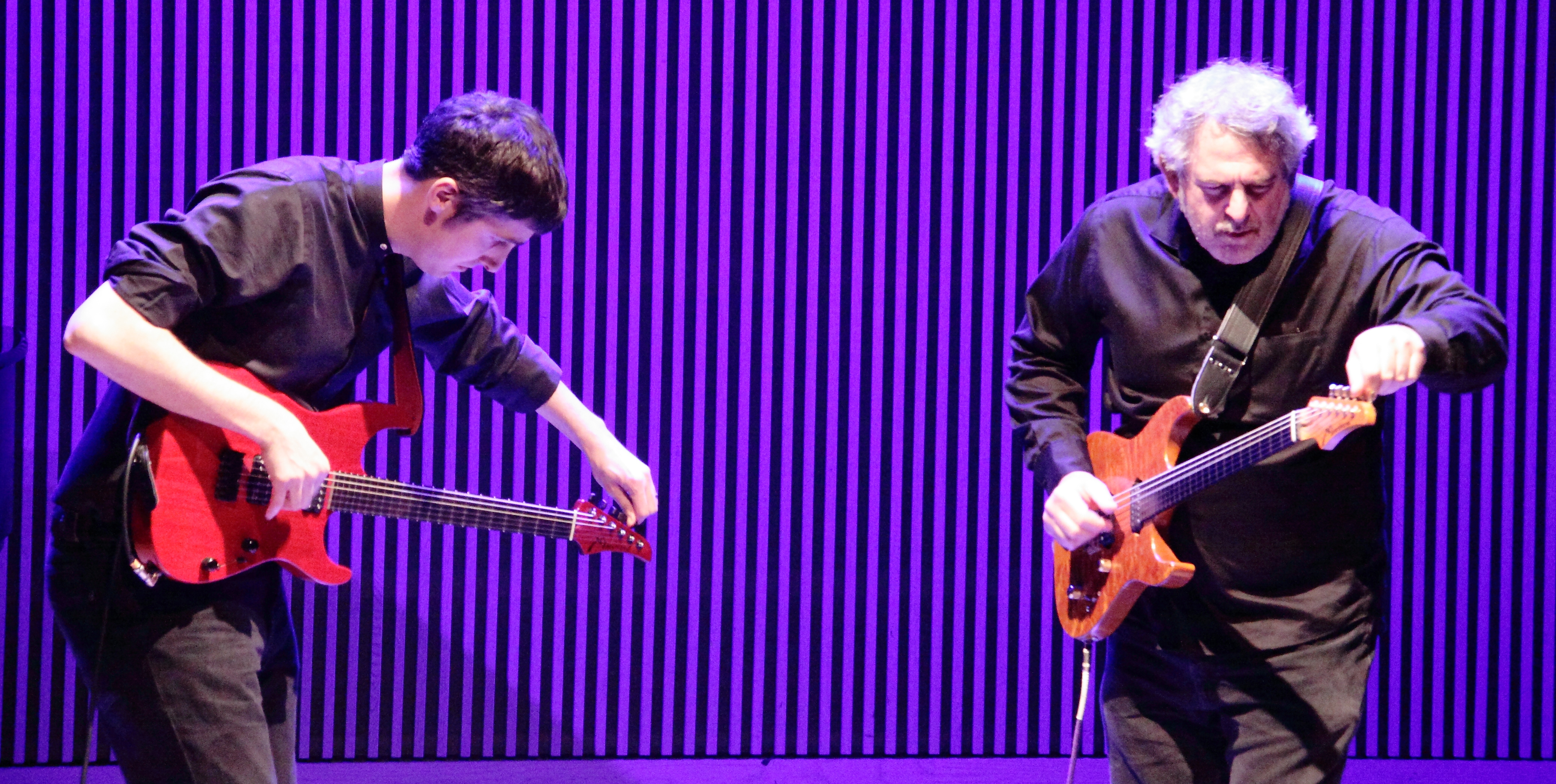
BHM160040

Fiore and Polansky changing their tunings mid-phrase in a stunning demonstration of virtuosity with pitch changes.

The program then moved from the electric to the acoustic realm with Polansky’s folk song arrangements.  Eliot Simpson, the pedagogical progeny of the great David Tanenbaum (who played these concerts last year at OM 20), played the just intonation National Steel Guitar and sang.

Let me say just two things here.  First, these are not arrangements like Copland’s Old American Songs and second, I will never hear these folk songs quite the same way again.  Polansky’s interest in folk music and Hebrew cantillation along with alternate tunings produces what the ears hear as perhaps a different focus.  In these pieces he did not stray too far from the original (as he does in his Cantillation Studies) but one is left with distinctly different ways of hearing and thinking about this music and the listener is left richer for that.  It is a journey worth taking and Simpson played with both passion and command.

Eliot Simpson playing a selection of Larry Plansky's Songs and Toods

Eliot Simpson playing a selection of Larry Plansky’s Songs and Toods

Polansky returned to the stage for a performance of his 34 Chords (Christian Wolff in Hanover and Royalton) (1995). Again we were treated to the virtuosic use of alternate tunings performed live (and again with live re-tunings) by the composer.

Oliver Lake delivering a blistering free jazz improvisation.

Oliver Lake delivering a blistering free jazz improvisation.

Continuing with the solo performer theme we were privileged to hear the virtuosic jams of Oliver Lake (1942- ) whose long career is legendary in the jazz world.  The “mostly improvised” (according to the composer) Stick was played on two different saxophones in what appeared to be as intense an experience for the performer as it was for the audience.

Oliver Lake takes a final bow at the end of the second concert of OM 21

Oliver Lake takes a final bow at the end of the second concert of OM 21

The emotional workout was received warmly by the audience.

Charles Amirkhanian introduces Meredith Monk on the final day of OM 21

Charles Amirkhanian introduces Meredith Monk on the final day of OM 21

There was no panel discussion on the third day of OM 21.  This matinée was dedicated entirely to the work of Meredith Monk (1942) who, fittingly was one of the featured artists in the first Other Minds gathering in 1993.  Now a recipient of the National Medal of the Arts this beloved artist returns to OM 21.  Though the rain continued the house appeared to be full.
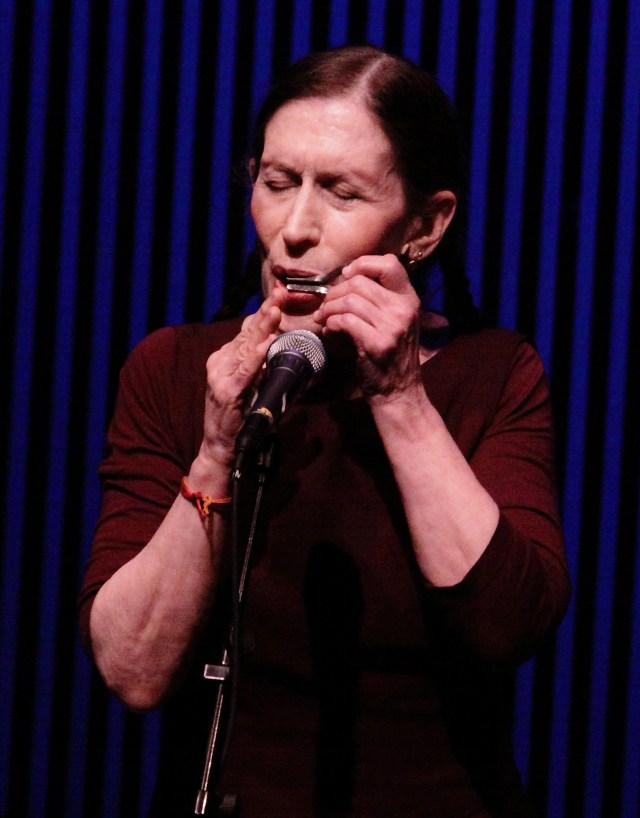
Meredith Monk playing a Jaw Harp in one of her early solo songs.

Meredith Monk playing a Jaw Harp and singing in one of her early solo songs.

Monk played a selection of material from various periods in her career in a mostly chronological survey which she called The Soul’s Messenger.  She began with selections from her solo songs and proceeded to her voice and piano music, then to her work with multiple voices and instruments.
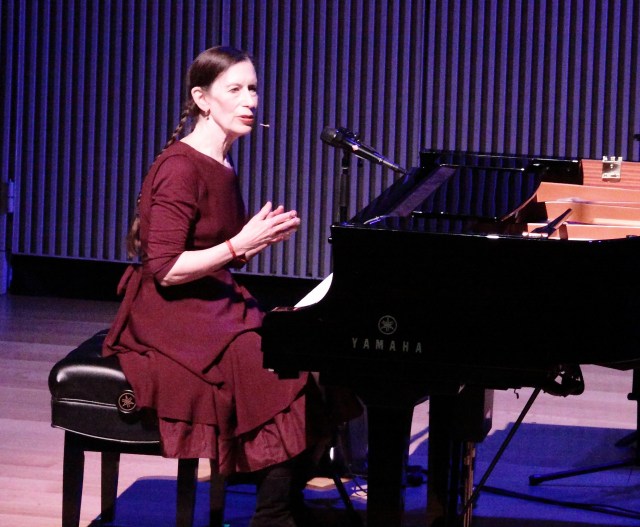
Meredith Monk performing her signature Gotham Lullaby

Meredith Monk performing her signature Gotham Lullaby

Most of the audience seemed to have a comfortable familiarity with the individual works she offered on this night which effectively gave a picture of her career.  Monk was in good voice and appeared to enjoy her performance.

Long time collaborator Katie Geissinger and Allson Sniffin joined in the next selection

Long time collaborator Katie Geissinger and Allson Sniffin joined in the next selection

The stage was set to allow for the dance/movement that is an essential part of Monk’s works.  She originally trained as a dancer.

Monk and long time collaborator Katie Geissinger reacting to the appreciative audience

Monk and long time collaborator Katie Geissinger reacting to the appreciative audience

In addition to the grand piano the stage was set with two electronic keyboards, an essential sound in many of Monk’s works.

Monk at one of the electronic keyboards

Monk at one of the electronic keyboards

Woodwind player Bodhan Hilash joined the ensemble for the last set of pieces.

From left: Bodhan Hilash, Meredith Monk, Allison Sniffin and Katie Geissinger

From left: Bodhan Hilash, Meredith Monk, Allison Sniffin and Katie Geissinger

The audience gave a standing ovation at the end resulting in 3 curtain calls.

Left to right Allison Sniffin, Meredith Monk, Katie Geissinger and Bodhan Hilash receiving a standing ovation.

Left to right Allison Sniffin, Meredith Monk, Katie Geissinger and Bodhan Hilash receiving a standing ovation.

And the properly prepared artist came back for an encore of her song Details.

Meredith Monk performing an encore at the final concert of OM 21

Meredith Monk performing an encore at the final concert of OM 21


It was a fitting finale to a great OM 21, fitting to have this artist who appeared on the first iteration of Other Minds returning now crowned with a National Medal of the Arts and clearly beloved by the audience.  Her music like her lovely smile fade to the edge of memory like that of the Cheshire Cat on a truly triumphant finale.

And, despite some format changes, who knows what treasures continue to lie in store?  I will be watching/listening and so, apparently will many others.  Keep an eye on www.otherminds.org .  I know I will.


ICE Debuts on Starkland: Music by Phyllis Chen and Nathan Davis


71suob4pdtL._SL1500_

Starkland is one of those labels whose releases seem to be so carefully chosen that one is pretty much guaranteed a great listening experience even if that experience might challenge the ears sometimes.  If one were to purchase their complete catalog (as I pretty much have over the years) one would have a really impressive and wide-ranging selection of new music.

I recently reviewed a very fine ICE (International Contemporary Ensemble) recording of music by Anna Thorvaldsdottir here. The present disc is the first appearance on Starkland of this ensemble whose performance skills and repertoire choices show the same depth of understanding as the producers of the label upon which they now appear.

ICE was founded in Chicago in 2001 by executive director and flautist extraordinaire Claire Chase.  The discography on their website now numbers 21 albums including the present release.  The group features some 30+ artists and musicians including a live sound engineer (like the Philip Glass Ensemble) and a lighting designer.  Do yourself a favor and check out the ICE Vimeo page to get some ideas about why having a lighting designer is a good idea.  Their performances are visually as well as musically compelling.  And who knows, perhaps there is a Starkland DVD release in their future.

About half their albums feature music by members of ICE and that is the case with this release.  One always has to wonder at the process that is involved in choosing repertoire to perform and/or record but there is no doubt that this group seems to have good instincts in regards to such decisions as evidenced by the already wild popularity of this disc on WQXR and the positive initial reviews so far.

chen_phyllis_toypiano3Resized

Phyllis Chen‘s biographical data is a bit sparse on both the ICE website and her own so I am going to assume that this talented young keyboard player likely began playing at an early age.  Like fellow pioneers Margaret Leng Tan and Jeanne Kirstein before her she has embraced toy pianos and, by extension I suppose, music boxes, and electronics into her performing arsenal.  In addition to being a composer she is one of the regular members of ICE.

NathanDavis_Obraz9

Nathan Davis is a regular percussionist with ICE as well as a composer.  His works range from opera to chamber and solo pieces for various instruments as well as electronics.

The tracks on this release pretty much alternate between these two featured composers.

The first track is Ghostlight (2013) by Nathan Davis, a sort of ragged moto perpetuo for “gently”prepared piano.  This is a good example of how these musicians (pianist Jacob Greenberg in this instance) have really fully integrated what were once exotic extended techniques into a comprehensive catalog of timbral options which are used to expand the palette of creative expression.  This is not a second rate John Cage clone but rather another generation’s incorporation of timbral exploration into their integral canon of sonic options.  This is an exciting and well-written tour de force deftly executed.

The next two tracks take us into the different but complimentary sound world of Phyllis Chen.  Hush (2011) for two pianos, toy pianos, bowls (presumably of the Tibetan singing variety) and music boxes is a playful gamelan-like piece played by the composer along with pianist Cory Smythe.

Chimers (2011) is a similarly playful work requiring the assistance of clarinetist Joshua Rubin, violinist Erik Carlson and Eric Lamb (on tuning forks) along with Chen and Smythe once again.  Again we hear these unusual instruments and timbres not as outliers in the musical soundscape but rather simply as artistic elements that are part of the composer’s vision.

Track number 4 features a work for bassoon and live processing.  Davis’ On Speaking a Hundred Names (2010) is played by Rebekah Heller and again the (to this listener) usually uncomfortable fit of acoustic and electronic are achieved very smoothly.  Music like this gives me hope that some day I will be able to drop the inevitable negative connotations I have associated with the term “electroacoustic”.  This is very convincing music and not just in the “golly gee, see what they’re doing” sense either.  The experimentation here (including the multiphonics) appears to have preceded the composition giving us an integrated and satisfying listening experience.

Chen comes back on track 5 with another successful integration of acoustic and electronic in her, Beneath a Trace of Vapor (2011).  Eric Lamb handles the flute here playing with (or against) the composer’s prepared tape.  This electroacoustic trend continues in the following track (also by Chen) called Mobius (201-) in which Chen, Smythe and Lamb are credited with playing “music boxes and electronics”.  Once again the integration of electric and acoustic speaks of a high level of music making.

The final four tracks are the big work here and the work that lends its name to this disc, On the Nature of Thingness (2011) by Nathan Davis.  Apparently taking its title from Lucretius’ On the Nature of Things (ca. 1B.C.) the work earlier also inspired Henry Brant in his spatial composition, On the Nature of Things (1956), but the work in this disc does not seem to make any direct reference to that Roman classic poem except perhaps metaphorically.

tony_8305

Soprano Tony Arnold

The work here is an exploration of language, sound and expression.  This most eclectic and ponderous of the selections is a wonderful opportunity to hear the considerable skills of resident vocalist Tony Arnold who sense of pitch and articulation are incredibly well-suited to this work.  Her performance leaves nothing to be desired and is likely as authoritative as it gets.  The work seems to require a great deal of concentration and coordination on the parts of all involved and ICE takes the opportunity to demonstrate their well-honed skills as they clearly listen to each other and go all out in terms of achieving the subtlety of expression required in this demanding and complex work.

As usual the Starkland recording is clear and detailed without the sense of claustrophobia that such detail can take on and the liner notes are useful without extraneous detail.  This is an ensemble to watch/listen for both for the performers and for the music they choose to program.  You won’t be disappointed.


Young American Inventions: Music by Steven Ricks


Young American Inventions (New Focus FCR 158)

Young American Inventions
(New Focus FCR 158)

Let me say at the beginning here that this disc contains music of a rather experimental nature.  It has underlying complexities and this is not the kind of CD one would have playing at most parties except perhaps to clear the room.  That being said this is not bad music but it is challenging listening.

I had not been familiar with Steven Ricks (1969- ) or his music prior to receiving this disc for review.   Ricks earned his B.M. in Composition in 1993 from Brigham Young University, and M.M. (also in composition) from the University of Illinois at Urbana in 1995, a Certificate of Advanced Musical Studies from King’s College in 2000 and  Ph.D. from the University of Utah in 2001.  His teachers have included Morris Rosenzweig, Sir Harrison Birtwistle, Bill Brooks, and Michael Hicks.

He is currently on the Board of Advisors of the Barlow Endowment, and an Associate Professor of Music Theory and Composition at BYU where he also directs the Electronic Music Studio.  His works fall primarily into the realm of the “electroacoustic”.  His training and interests seem to put him into orbits that likely include Milton Babbitt, Mario Davidovsky, Lejaren Hiller and perhaps Salvatore Martirano (all, by my definition, great composers but difficult listening and with electroacoustic outputs primarily).

I must confess that I know relatively little about the forefront of electronic music these days and I am working on catching up on this history (which seems to exist almost completely separate from classical music per se).  Even the hybrid of “electroacoustic” music seems, for this writer at least, to remain rather marginal in terms of its listening audience and its prevalence in the concert hall.
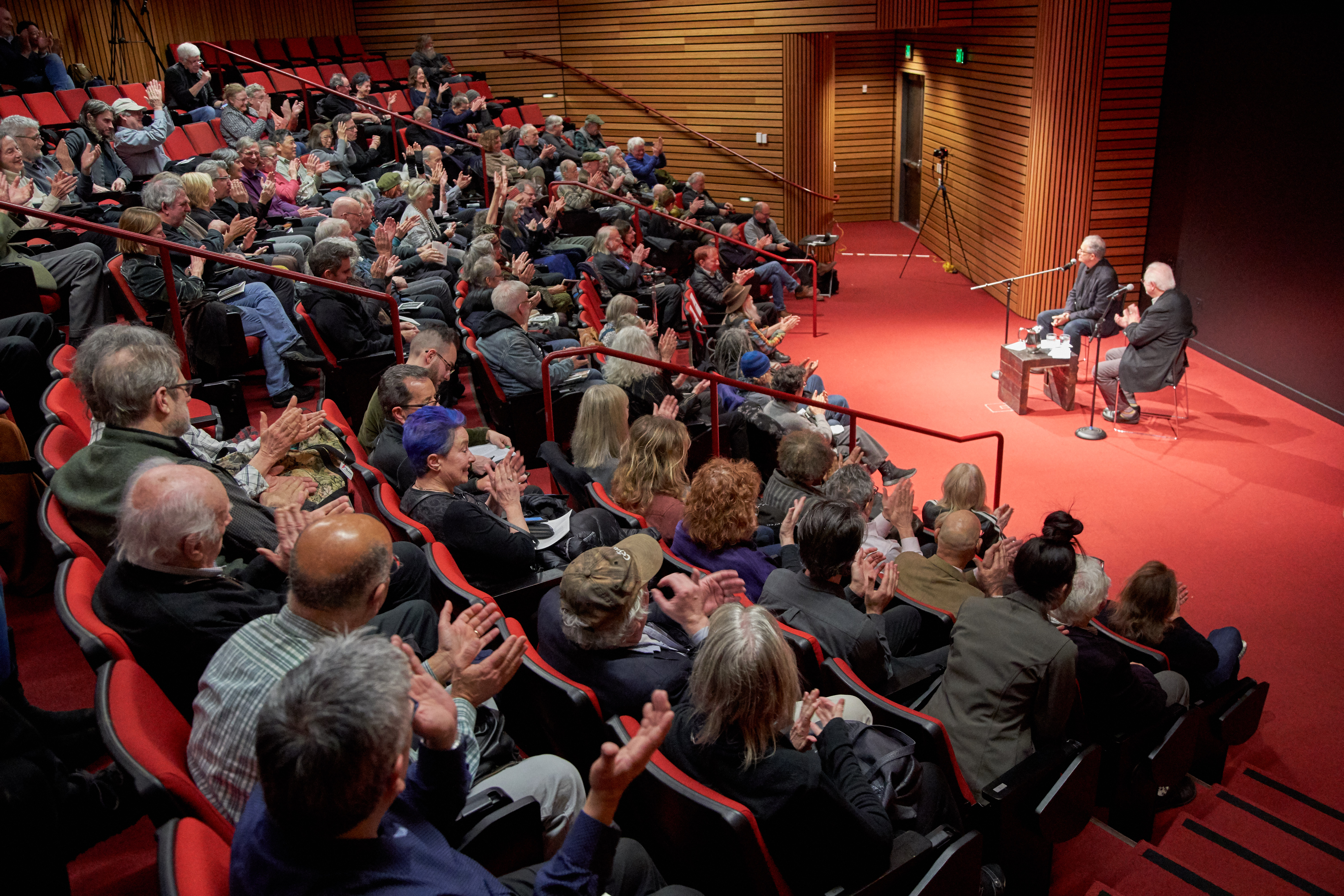
Now, having loaded the reader with these prefaces, apologies and excuses, I move on to the music itself.

I listened numerous times to the tracks on this disc.  Sometimes I listened with direct intention and concentration, other times I listened with this disc playing ambiently (can I use that term here?) whilst pursuing other tasks (not recommended).  The music is assertive and, at times downright intrusive.

I get the feeling overall of a great deal of experimentation and complexity that nearly raises Milton Babbitt’s famous question, “Who cares if you listen?”.  Certainly the composer and performers care but that doesn’t rule out the likelihood that this music may speak to a limited audience who are better trained and more familiar with these techniques/ideas.

What I like about this disc, though, is that bold, experimental, doesn’t matter who is listening approach.  Were it not for such innovation a lot of good musical ideas would never have been expressed.  This music is experimental and perhaps more than a little “inside”, meaning that other composers/scholars might get things that the average listener would probably miss.  Call it an adventure.

Curiously I was/am intrigued by Ricks’ interest in algorithmic composition (an iffy genre as well, I know).  I was pleased to find that he has available for free download on his site a program he wrote called Universal Music Machine and I have been rather entertained by it both as a compositional tool and as a teaching/learning method.   And I promise to post mp3 files of any masterpieces I might generate.

There are 9 separately identified pieces here written between 2001-2014.  Two are multi-movement works and all but two involve electronics in performance to some degree.

The opening track, Ten Short Musical Thoughts (2002) serves well as an introduction.  It makes use of sampling and of algorithmic composition.  Indeed these are short musical ideas with some spoken word comments integrated with the music.

If you are not watching/listening closely you may miss the transition between the opening track and the next, “Young American Inventions” (2007) for solo piano and electronics.  The title, a mashup of David Bowie’s “Young Americans” and Steve Martland’s “American Inventions” reflects Ricks’ eclectic interests and fascination with both contemporary classical as well as popular culture.  Pianist Scott Holden navigates the challenging keyboard part accompanied by the electronic score.  Here is where Ricks’ work reminds me of Mario Davidovsky’s “Synchronisms” series.

The four movement, “Extended Play” (2007) continues the pop culture references as the composer states that those four movements are intended to mimic or approximate the four tracks which are found on most vinyl EP productions.  The ensemble composition, which is also full of more specific references to both classical and popular music, is executed by Flexible Music and is the most easily accessible work on this disc (to this listener’s ear).

“Ossifying (Keeping us from…) (2012), listed as “electroacoustic” is a piece of sound art like the opening track (no live performers in the concert hall here) and is one of the most experimental pieces on the disc.  It seems both deeply personal and inextricably self-referential.
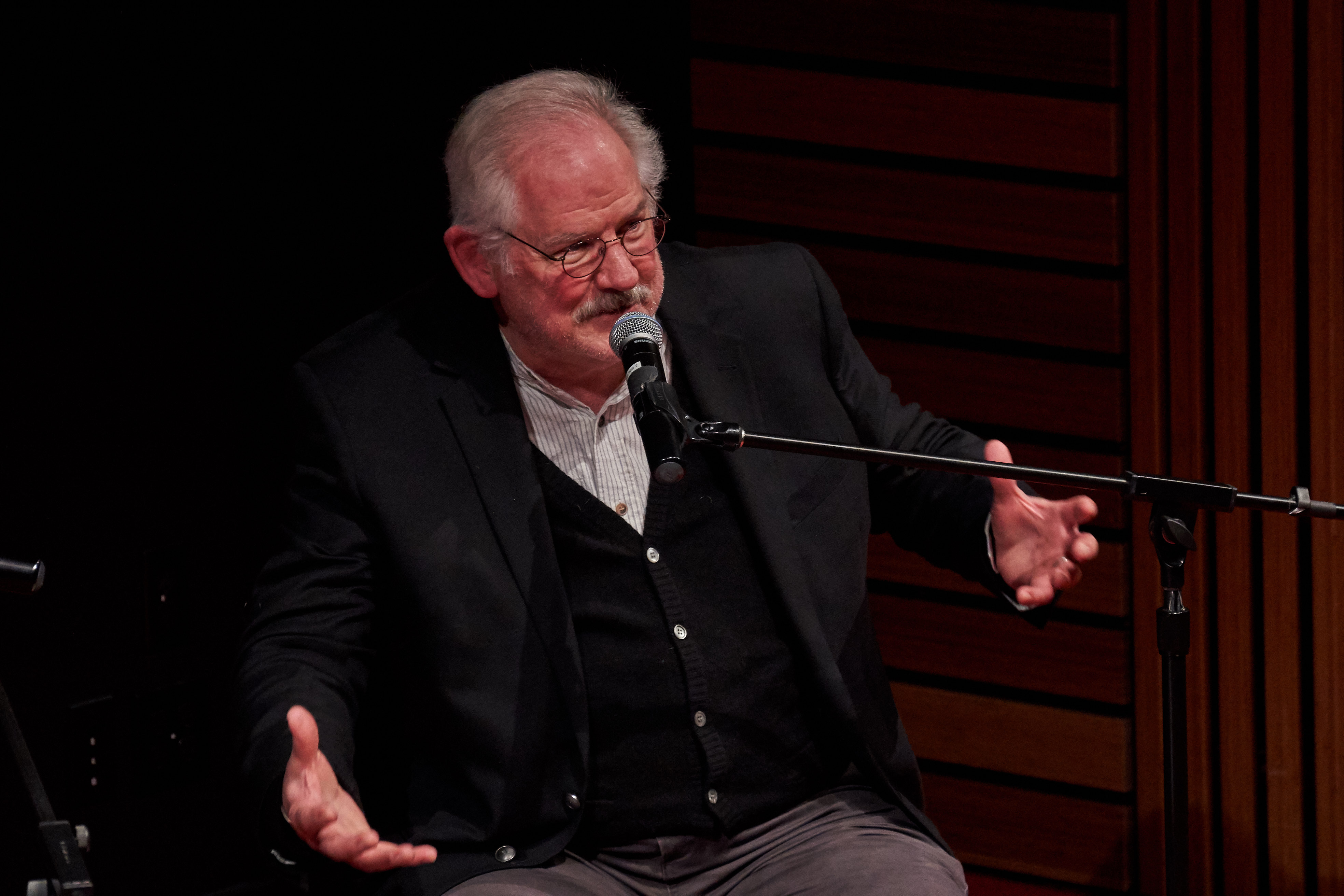
“Geometria Situs” (2012) is the musical portion of a multimedia work called “WRENCH” which was written for and performed by Hexnut.  Mezzo-soprano Michaela Riener handles the delicate vocal lines with grace and ease.
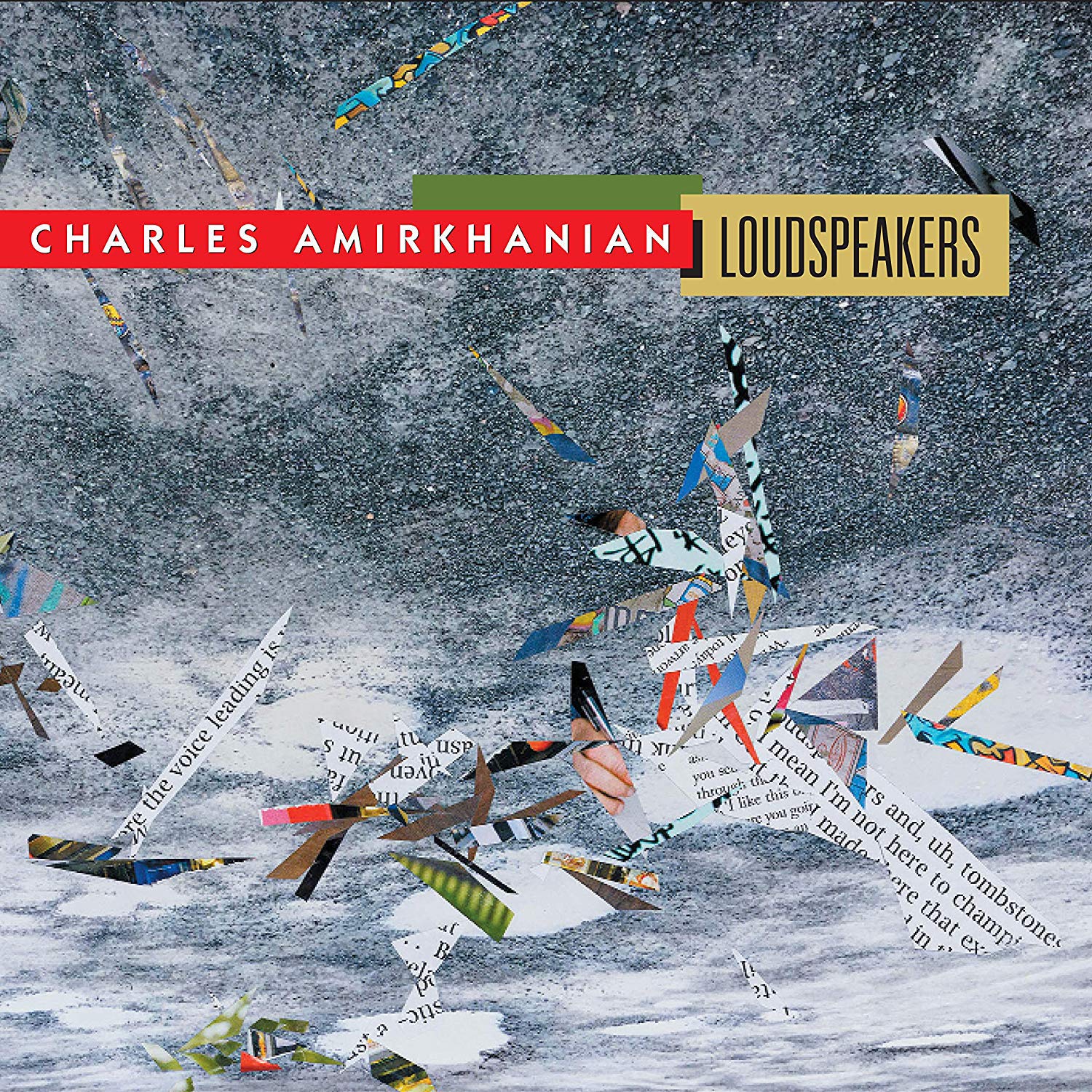
“Sounded along dove dôve” (1999) is the last of the non-live “electroacoustic” pieces and, like its predecessors, is similarly cryptic and self-referential, a puzzle perhaps, in which the components of language itself are used as determinants of the settings of the texts.

A bit of an “aww” moment occurs with “Waves/Particles” (2008) which is performed by the Canyonlands Ensemble conducted by the composer’s former teacher Morris Rosenzweig.  Rosenzweig founded the ensemble in 1977.  This is both homage and acknowledgement between the two generations of artists.  It is lovingly played.

“Young American Inventions REMIX” (2014) invokes another pop culture metaphor of remixing a song.  This is another iteration/elaboration of the material in the earlier version of this piece.  Scott Holden is the soloist once again with the electronics.

“Stilling” (1997, rev. 2011) is a piece for solo piano.  This is described by the composer as being an impressionistic piece, perhaps a sort of tone poem.  The language is thorny and modern.  The very capable pianist here is Keith Kirchoff.

The lucid liner notes are by Jeremy Grimshaw.  The New Focus recording is clean and clear.  So if you enjoy adventures in experimental/electroacoustic music this is your disc.


Manhattan in Charcoal, a chamber opera by Gene Pritsker


Manhattan in Charcoal  COMCON 0021

Manhattan in Charcoal
COMCON 0021

The efforts to establish a new and functional role for opera in the late twentieth and early twenty first century have produced a wide variety of styles.  One can certainly see the 1976 Philip Glass opera Einstein on the Beach as a landmark in these efforts in the conventional opera house but the development of chamber opera pioneered composers like recent National Medal of Arts winner Meredith Monk and Eric Salzman (both of whom created innovative works in this genre before Einstein) deserve attention as well.
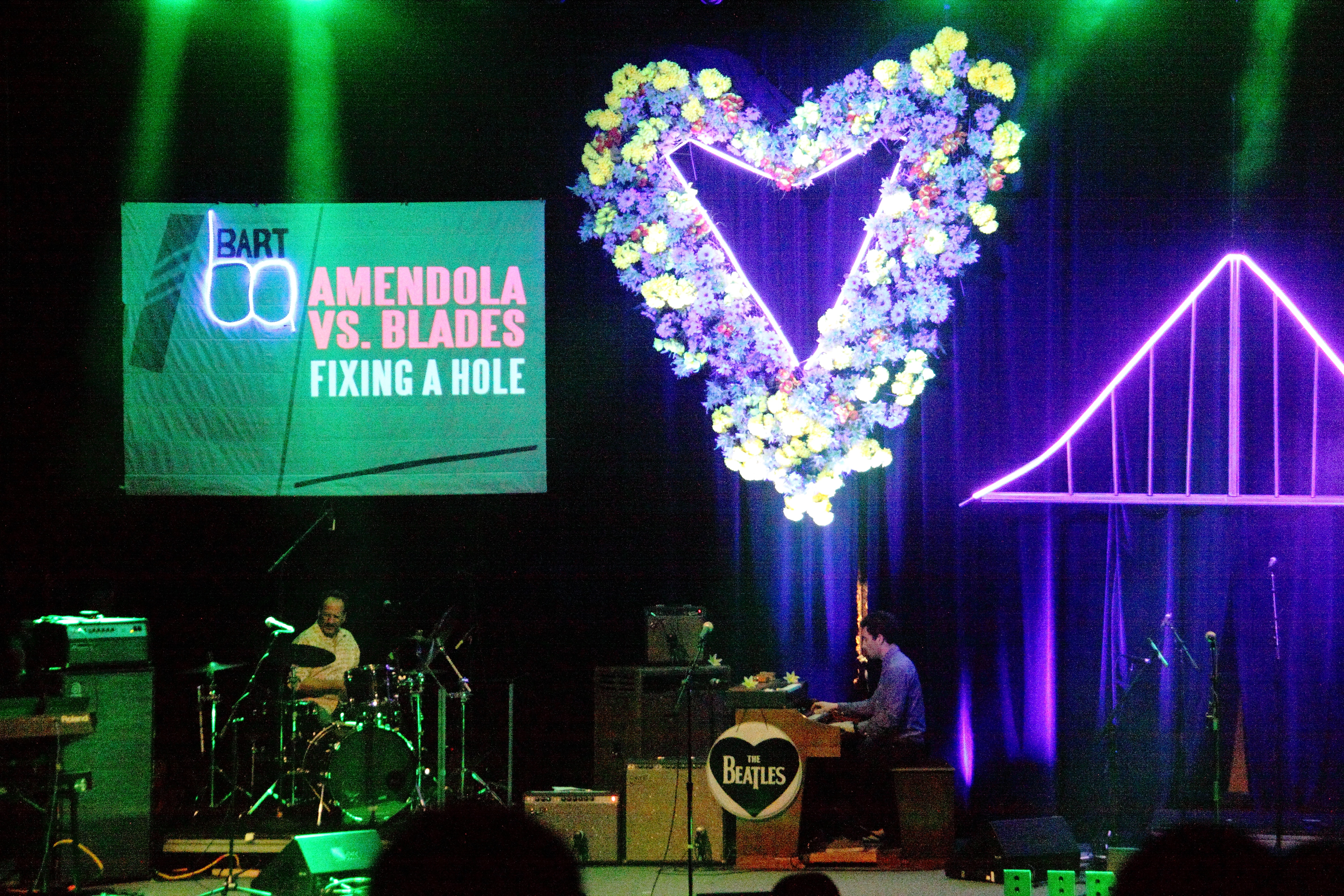
This recording appears to fit into that tradition of chamber opera.  Manhattan in Charcoal (2014) by Gene Pritsker with libretto by poet Jacob Miller requires six singers and a narrator along with a chamber ensemble of about a dozen musicians.  I don’t know much about how this piece has been staged but it works well as theater for the ears.

I knew little of Pritsker’s work prior to receiving this disc for review and I read that his repertoire of techniques range rather widely from classical, to jazz, rock and rap influences.  So I embarked on a bit of a learning mission.  Fortunately I found his You Tube channel here.  I found his web site a bit too busy and distracting even if it does seem quite comprehensive.  (I dare you to try to sleep after confronting his oeuvre.)

Here is a man born in Russia, moved to Brooklyn at age 8 and attended the Manhattan School of Music graduating in 1994.  While there he teamed up with conductor Kristjan Järvi to create the Absolute Ensemble.   He counts approximately 500 compositions ranging from solo pieces to orchestral and vocal works.  My journey of learning left my head spinning but it was not an unpleasant spin.  Pritsker’s work incorporates jazz, rap, beat boxing and eclectic instrumentation as well.  He has been active in the Manhattan downtown scene and may very well be the next generation of musical magicians to successfully grace that hotbed of musical eclecticism.

His style is mostly tonal and any experiments appear to have been done prior to the composition of the present work.  I must say that his eclecticism and embrace of a wide variety of musical devices puts me in the mind of some of Stravinsky’s work at  times.  But Pritsker is not derivative, rather he wields a large pallete.

What we have here is a form of cabaret, well suited to small venues and friendly to audiences.  It is well within the style and practice of such music and this piece is a good example of the updating of those traditions with contemporary instruments, music and modern performance practice.

The story is not unlike that of La Bohéme and, though hardly Puccini from a musical perspective, is as much a reworking of that old gem as West Side  Story was a reworking of Romeo and Juliet.  Here, however, we don’t see the romantic guise of Puccini but rather the unnecessary tragedy of a Romeo and Juliet beset not by family rivalries but by economic and social realities and perhaps by the inability to see them for what they really are.

This is apparently the first opera (of six) by Pritsker for which he did not write the libretto.  I’m not sure what impact that has had on his overall effort but his ability to set the English language to music is admirable.  All in all a thoroughly satisfying little drama which leaves the audience questioning these issues much as the protagonist has done.